Review

Advancing Green Analytical Chemistry Principles for Trace Metal Analysis Using Atomic Spectrometry Techniques—An Overview


INCDO INOE 2000, Research Institute for Analytical Instrumentation, Donath, 67, 400293 Cluj-Napoca, Romania
Sustain. Chem. 2026, 7(3), 28; https://doi.org/10.3390/suschem7030028 (registering DOI)
Submission received: 12 May 2026 / Revised: 15 June 2026 / Accepted: 24 June 2026 / Published: 25 June 2026

Abstract

In recent years, there has been growing awareness of the potential harmful effects that analytical methods can have on human health and the environment. Green analytical chemistry (GAC) integrates sustainability into chemical analysis by emphasizing a reduction in waste, energy consumption, and hazardous reagents while maintaining analytical performance. This review summarizes the most recent developments in atomic spectrometry techniques used for analyzing trace metals in various types of samples. Key advances include green metrics, sampling methods, direct analysis, and instrument miniaturization. Since direct sample analysis via spectrometric methods is rarely feasible, recent developments in sample pretreatment, which align with the 12 principles of GAC, are also discussed. Passive sampling can serve as a valuable approach for conducting analyses with reduced sample pretreatment steps and overall costs, thereby addressing these concerns. Current green assessment metrics and their application in atomic spectrometry are also reviewed. This article aims to provide researchers with detailed information to improve the determination of trace metals in accordance with GAC principles.

1. Introduction

Trace metals that are present in the environment may pose significant risks to both ecosystems and human health, highlighting the need for highly sensitive and accurate analytical methods for their reliable determination [1,2,3]. Metals constitute three-quarters of the elements in the periodic table, with most being essential for living organisms. However, elements such as Cd, Pb, Hg, As, and Al have no known biological role and have been shown to pose risks to both environmental and human health, even at relatively low levels [4]. Meanwhile, certain trace elements that are essential, including Cu, Cr, Zn, Fe, V, Mn, Se, and Mo, can become toxic when their concentrations increase [5,6]. Current traditional methods used for trace metal analysis often rely on acid digestion, thus necessitating large volumes of chemicals and generating hazardous waste, as well as dependence on high-energy-consuming instrumentation, thus conflicting with the sustainability goals [7].
Environmentally friendly practices are becoming increasingly essential across all fields, including analytical chemistry [8]. Sustainable development has been recognized as a crucial concept since the late 20th century, when the United Nations Brundtland Commission described it as the capacity to fulfill the needs of present human populations without jeopardizing the ability of future generations to satisfy their own needs, considering social, economic, and environmental factors from a multidimensional viewpoint [9].
In 1998, Anastas and Warner introduced the concept of green chemistry, also known as Sustainable Chemistry, outlining its 12 guiding principles in their book [10]. In response to green chemistry principles, analytical chemists strive to replace hazardous chemicals with safer alternatives and minimize waste production [11]. The discipline of green analytical chemistry (GAC) emerged in 2000, originating from the broader concept of green chemistry, when Gałuszka et al. [12] revised green chemistry’s twelve principles, making them applicable to green analytical chemistry. The 12 green analytical chemistry (GAC) principles focus on reducing or eliminating chemicals used in sample preparation, conservation, and analysis, thus reducing energy consumption, promoting efficient waste management, and enhancing operator safety [12].
The integration of green analytical chemistry principles is of growing importance within modern analytical methodologies. In recent years, considerable progress has been made in analytical science by introducing miniaturized instruments, as well as minimizing solvent use and using non-toxic reagents [13,14]. Methods used to detect contaminants should follow environmentally friendly practices and comply with GAC guidelines [15]. Making analytical approaches greener involves modifying traditional techniques for greater sustainability or inventing new eco-conscious methods. Although classic procedures can be adjusted for more sustainable operation, they are typically inadequate for field environmental monitoring, especially during emergencies such as hazardous waste spills or sudden toxic incidents. In these situations, fast, portable, affordable solutions, and, when possible, mobile devices, are essential for efficient pollutant detection [7].
While numerous studies have focused on the application of GAC principles to methods such as chromatography and molecular spectroscopy, primarily targeting the determination of organic analytes, the implementation of GAC principles in analytical atomic spectrometry has received comparatively less attention [16,17].
In the determination of trace metals, several analytical techniques are primarily applied, including atomic-absorption spectroscopy (AAS), inductively coupled plasma–optical emission spectrometry (ICP-OES), and inductively coupled plasma–mass spectrometry (ICP-MS) [18,19]. Cost-effective options, such as microwave-induced plasma–optical emission spectrometry (MP-OES), are presently available commercially [20], whereas miniaturized instrumentation is still under development in research settings [21,22]. However, liquid-sampling analytical methods require the thorough digestion of samples, which is time-consuming and reagent- and labor-intensive. Alternatives are techniques with direct solid analysis approaches, such as X-ray fluorescence spectrometry (XRF), laser-induced breakdown spectrometry (LIBS), or electrothermal vaporization (ETV) [23,24,25]. While direct solid techniques are highly suitable for rapid screening and field-deployable measurements, their precision and accuracy are affected in complex or heterogeneous matrices (e.g., soils, biological tissues). Also, their limitation of detection is often higher than in the case of liquid-sampling analytical methods; therefore, at trace-level concentrations and heterogeneous matrices, digestion-based spectrometry usually remains superior and is required for reliable results [26].
Extensive research was conducted to improve the environmental sustainability of the sample preparation procedures. Moving to greener contaminant analysis depends on reducing solvent use, a major part of traditional methods. While solvents are essential in sample preparation, their widespread use creates serious environmental and safety issues [7]. To integrate sample preparation into GAC, López-Lorente et al. formulated the ten principles of green sample preparation [26].
This review evaluates the approaches and factors essential for enhancing the sustainability of trace metal analysis. This paper outlines various greenness assessment tools, recent innovations in spectrometric instrumentation, and sample preparation methodologies designed to better align with GAC principles. It also discusses the in situ passive sampling approach as a method to reduce sample preparation steps. With ongoing progress in the field of analysis, the development of efficient strategies for environmentally responsible trace metal testing has become crucial for promoting sustainability and ensuring a more conscientious future.

2. Green Profile Assessment Tools

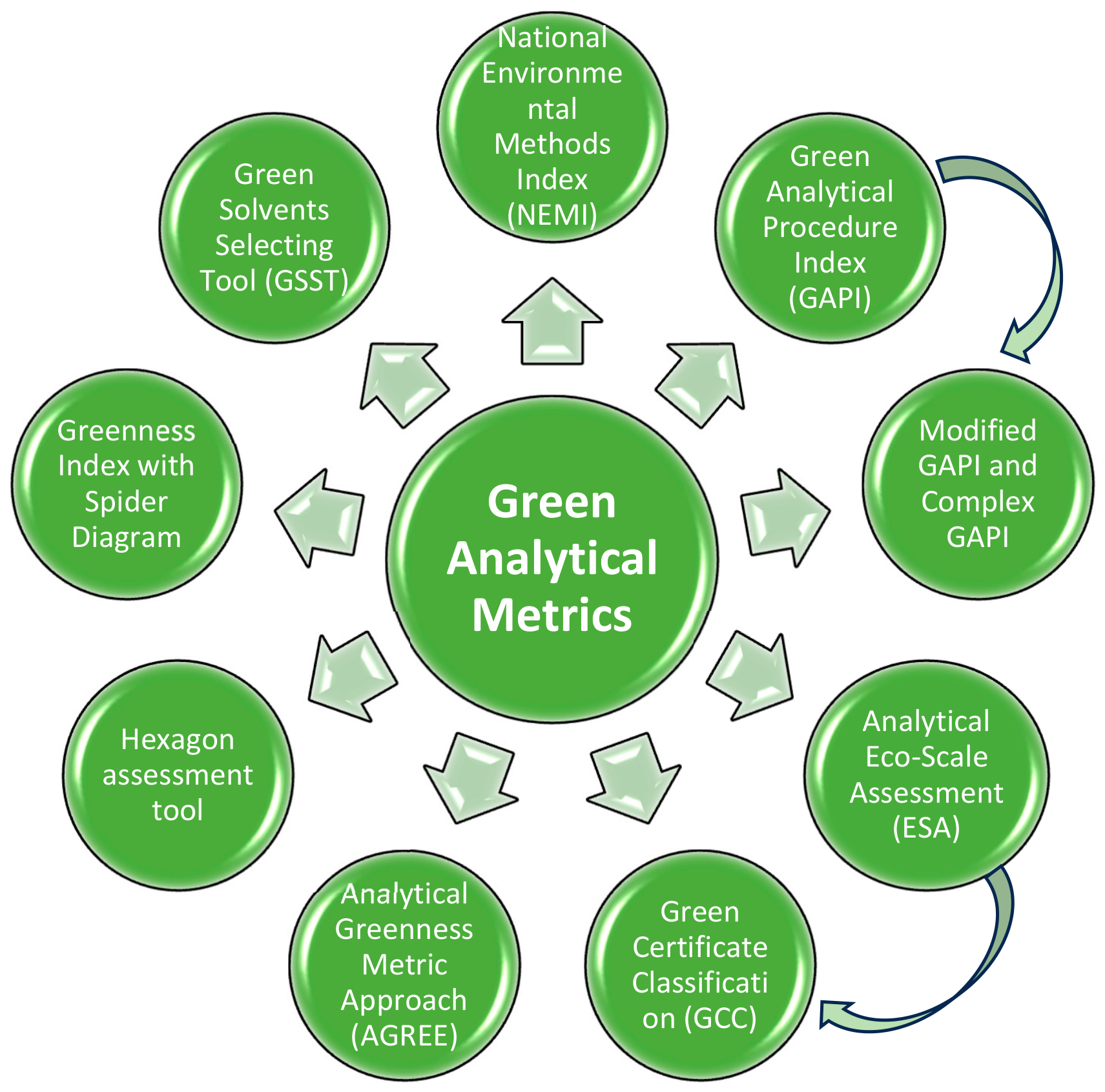
In 1998, Anastas and Warner provided an in-depth overview of the twelve principles of green chemistry as they relate to GAC [8]. Originally, these principles targeted organic chemical processes and were typically not extended to analytical techniques. Therefore, those principles were subsequently redefined to provide more relevant information to analytical chemistry methods [12]. Often, analytical methodologies are complex and comprise more stages, causing a difficult evaluation of their general environmental impact. Many analytical techniques have been created and labeled as green by their developers, but they lack clear, established criteria for assessment. The initial outcomes of attempts to create tools for evaluating environmental friendliness are the Life Cycle Assessment (LCA) and Environmental Impact Assessment (EIA). The LCA provides a method that can evaluate an entire process from start to finish; however, while these tools provide an overall understanding of environmental impacts, they tend to be time-intensive [27,28]. Consequently, some procedures for GAC metrics have been established. Utilizing these tools allows for the assessment of the environmental profile, as well as the strengths and weaknesses of the method from various perspectives. This section reviews the tools that have been developed and diversified since their initial introduction, focusing on their range, benefits, and drawbacks. In Figure 1, the most well-known greenness assessment tools with applicability to spectrometric techniques used for metals determination [15] are shown.

2.1. National Environmental Methods Index

The National Environmental Methods Index (NEMI) is one of the first GAC metrics, developed by the Methods and Data Comparability Board (MDCB) [29]. The evaluation criteria consist of four components: persistence–bioaccumulation–toxicity, hazard level, corrosiveness, and the quantity of waste produced. These four factors encompass the 12 principles of green analytical chemistry. The findings are displayed using a four-quadrant diagram. These quadrants denote the following: (1) PBT (persistent, bioaccumulative, and toxic), (2) Hazardous, (3) Corrosive, and (4) Waste. Mohamed and Fouad [30] reported the use of the NEMI assessment, and examples of NEMI pictograms can be found in their work.

2.2. Green Analytical Procedure Index

The Green Analytical Procedure Index (GAPI) is an integrative tool that appraises a method’s greenness, from sampling to final measurement, developed by Potka-Wasylka in 2018 [31]. In GAPI, a particular symbol, split into five pentagram components, serves as the conceptual base for this metric instrument. It includes sampling steps, preservation, transport, and storage, used reagents and solvents for sample preparation, analytical instrumentation, and the method of quantification. The GAPI uses three colors to measure the environmental influence of each characteristic: green, yellow, and red. Green signifies that a procedure is eco-friendly, yellow signifies a moderate environmental impact, while red indicates a non-eco-friendly procedure. Examples of GAPI pictograms can be found in several references [29,30,31].

2.3. Modified GAPI and ComplexMoGAPI

The Modified GAPI (MoGAPI) tool is a modification of the GAPI tool, developed in 2024 [32]. It presents, in addition to the pictogram of the GAPI, an overall score of up to 100. Parameters like sample treatment, chemicals, solvents, and analytical instrumentation are assessed by using 15 criteria. ComplexMoGAPI is an enhanced version of MoGAPI, offering a more thorough evaluation process that yields specific scores with detailed calculations. Additionally, its method comparison is more accurate [33].
The MoGAPI tool and software were developed to assess method greenness. In addition to the familiar red, yellow, and green GAPI pictograms, they provide an overall greenness score for the method. The software is accessible as an open source on https://bit.ly/ComplexMoGAPI (accessed on 10 May 2026). This pictogram refinement enables the GAPI to provide an overall evaluation of a method’s greenness rather than assessing each step individually. Examples of pictograms with MoGAPI scores can be found in reference [32], while pictograms with ComplexMoGAPI scores are available in reference [33].

2.4. Analytical Eco-Scale Assessment

The Analytical Eco-Scale Assessment (ESA) was created as a semi-quantitative tool for estimating a method’s greenness profile [34]. The score calculation in this case starts with 100 points, from which penalty points are subtracted based on the chemicals used, energy consumption, produced waste, etc. As such, 100 points correspond to ideal greenness, while a total score that is higher than 75 corresponds to excellent greenness. A score in a range from 50 to 75 suggests that the method is acceptably green. If the score is below 50, the method is inadequate [35]. This tool is relatively easy to use, being very useful for comparing different analytical techniques. This tool does not use pictograms; instead, it typically features a table detailing penalty points used to calculate the ESA score as a numerical value [34].

2.5. Green Certificate Classification

The Green Certificate Classification (GCC) is a new arrangement of the ESA. Similarly, penalty points are applied to analytical procedures that use hazardous substances, high-energy-consuming instruments, or produce high amounts of hazardous waste. The difference between the GCC and ESA is that the scale known as the “Green Certificate” uses a color code accompanied by a letter. Analytical procedures classified as “A,” represented by dark green, are considered the most environmentally friendly, since they have fewer than ten negative penalty points. In contrast, methods in class “G,” marked in red, are believed to have more than eighty-one negative penalty points [36]. For example, Furió-Sanz and colleagues used the GCC to assess the greenness of an analytical method, and a pictogram illustrating this is presented in their paper [36].

2.6. Analytical Greenness Metric and Greenness of Sample Preparation

The analytical greenness (AGREE) metric was developed in 2020 by Pena-Pereira et al. [37], and its calculation criteria are established based on the twelve principles of GAC, developed by Gałuszka et al. [12], as follows:
  • Use direct analytical methods to eliminate the need for sample preparation.
  • Aim to use the smallest possible sample size and the fewest number of samples.
  • Conduct measurements directly in situ.
  • Combining analytical steps and operations helps conserve energy and reduces reagent consumption.
  • Choose automated and miniaturized techniques.
  • Avoid the use of derivatization.
  • Prevent the production of large amounts of analytical waste and ensure proper waste management.
  • Prefer methods that analyze multiple analytes or parameters simultaneously rather than one at a time.
  • Minimize energy consumption.
  • Favor reagents derived from renewable sources.
  • Eliminate or substitute toxic reagents.
  • Enhance the safety of the operator.
The software AGREE is freely downloadable from https://mostwiedzy.pl/AGREE (accessed on 10 May 2026). The AGREE metrics software is a very practical and easy-to-use program and is related to the GAC assumptions; this software functions in the Graphical User Interface mode. The outcome is a pictogram divided into 12 segments, each corresponding to a specific parameter with a central circle displaying the overall score, ranging from 0 to 1. The results can also be interpreted by using colors like red, yellow, and green within the pictogram. On the final score scale, 0 represents unsatisfactory, while 1 signifies satisfactory [15].
In 2022, Wojnowski et al. developed a new metric, AGREEprep, built on 10 classes of impact that were calculated on a 0–1 scale of sub-scores [38]. The assessment is based on the chemicals and solvents used, waste produced, sample size, energy consumption, and sample throughput. Calculation is also built on the option to distinguish between the criteria’s importance by giving them weights. The open-access software can be obtained at http://mostwiedzy.pl/AGREEprep (accessed on 10 May 2026). Examples of pictograms with AGREEprep scores can be found in reference [38].

2.7. Hexagon Assessment Tool

The Hexagon Assessment Tool was first presented by Ballester-Caudet et al. [39] as a tool for assessing and selecting analytical methods based on their performance parameters, waste, sustainability, financial costs, and environmental impact. Each category receives a score ranging from 0 to 4. The results are displayed as a hexagon shared into six equal triangles, with each triangle representing a different parameter of the method. The method deemed most environmentally friendly is the one with the highest number of zeros.
This tool has been used to evaluate several analytical procedures in the water industry. In practice, the assessment involves assigning penalty points to each variable of the method under study. A figure depicting a regular hexagon composed of six equilateral triangles, used to evaluate the sustainability of an analytical procedure, can be found in reference [39].

2.8. Greenness Index Tool

The Greenness Index Tool was created to holistically assess the impact of used chemicals in different industries on the environment, health, and safety [40]. The analysis performed by this tool is based on information obtained from reagent Safety Data Sheets, and in addition, metrics for different effects when the substance is used in a specific application. Five groups of attributes—General Properties, Health Impact, Odor, Stability, and Fire Safety—were developed to create an overall assessment, drawing on widely recognized sustainability frameworks like the twelve principles of green chemistry. Scores are shown in a graphical format to aid in visualizing the reagent’s relative greenness. A Safety Data Sheet can contain up to sixteen sections, each covering different reagent properties used as attributes or factors in the Greenness Index evaluation. An example of a Greenness Index evaluation can be found in reference [40].

2.9. Green Solvents Selecting Tool

The Green Solvents Selecting Tool (GSST) was developed for the simple identification of efficient and “green” alternative solvents. In summary, the tool categorizes a wide range of solvents based on their Hansen solubility constraints, ink characteristics, and sustainability factors, and by using a systematic iterative process, it provides recommendations for environmentally friendly alternative solvents that have comparable dissolving abilities to the existing non-sustainable solvents [41]. Scores between 1 and 10 are calculated to assess the solvent’s desired sustainability and greenness, where high scores indicate that the solvent meets the criteria of high sustainability and greenness. An example of a GSST application can be found in reference [41].

2.10. Concept of White Analytical Chemistry

The above procedures were developed for green profile assessment, which usually overlook other crucial elements of analytical methods, such as analytical performance, usefulness, and broad applicability. Because of these limitations, a novel approach was developed to evaluate analytical methods, concentrating on performance parameters, environmental impact, and financial aspects in sample analysis. Nowak et al., in 2021, proposed the concept of White Analytical Chemistry (WAC) [42]. This concept is founded on the Red (analytical performance), Green (green chemistry), and Blue (practical aspects) principles, collectively referred to as the RGB 12 procedure, to comprehensively assess analytical methods [43].
A concise comparison covering the main greenness assessment tools, with emphasis on their criteria, strengths, and limits, is presented in Table 1.
A key distinction is that some tools are screening-oriented and others are workflow-oriented. The NEMI and Green Certificate Classification are easier to communicate, but they are less discriminating than the GAPI, AGREE, or Eco-Scale. The GAPI and its modified versions are better for showing where environmental burdens occur along the method, while AGREE and AGREEprep are better when you want standardized scoring and clearer identification of weak points.
For spectrometric methods, the most relevant tools are usually the GAPI, AGREE, AGREEprep, and Eco-Scale because they can capture solvent use, sample preparation, waste, and energy demand more effectively than very simple pictogram systems. White Analytical Chemistry is useful as a broader interpretive framework when the reviewer wants to stress that a method should not only be green, but also accurate, robust, and practical.
No single greenness metric fully captures the sustainability of analytical methods; therefore, the complementary use of workflow-based tools such as the GAPI, score-based tools such as Eco-Scale and AGREE, and concept-based frameworks such as White Analytical Chemistry provides a more balanced assessment of sustainability methods.

3. Green Aspects in Sampling Techniques for Trace Elements Analysis

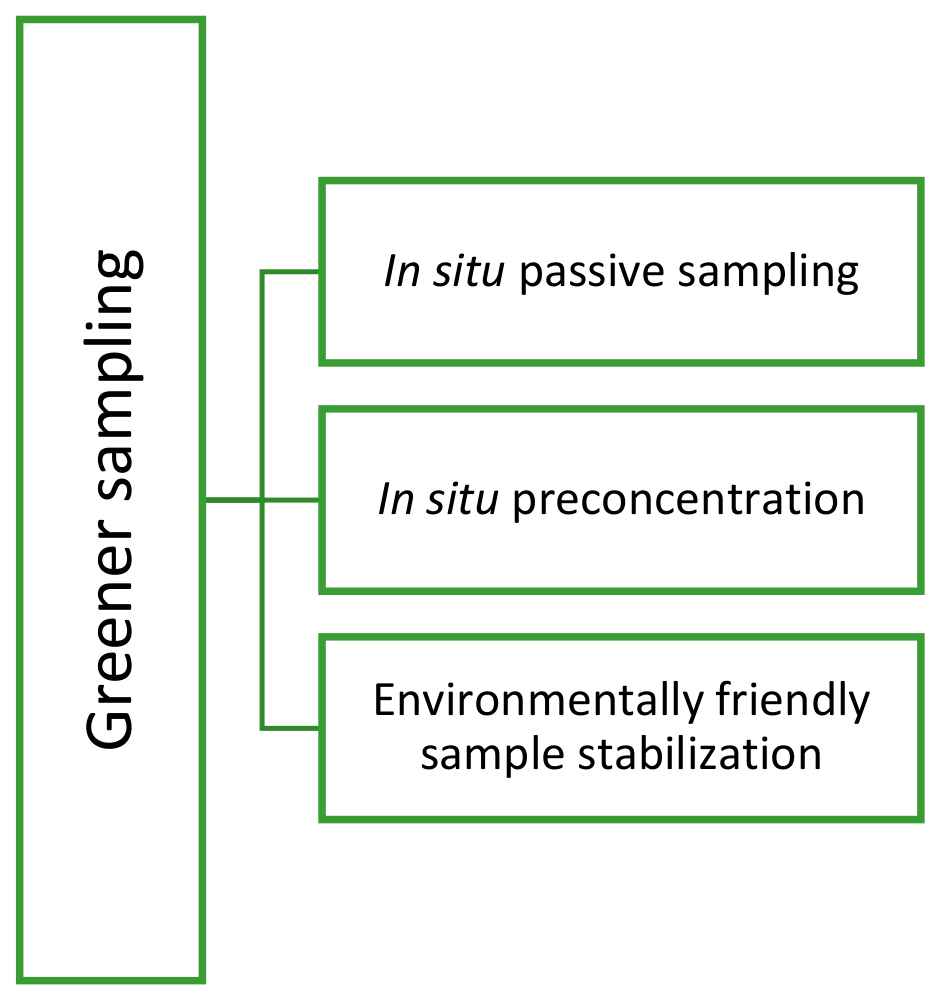
Sampling is a crucial step in analysis that can significantly influence the analytical results. The use of preservation and stabilization agents, like acids, solvents, and buffers, along with filters, containers, and refrigeration, involves environmentally harmful toxic substances. Given that billions of samples are collected each year for monitoring environmental, health, or food quality, adopting environmentally friendly sampling methods can have a substantial positive impact. The use of direct analytical methods that eliminate the need for sample collection, transportation, pretreatment, or preparation is an example of emerging trends in GAC [44]. However, direct determination is not always possible, which has led to innovations aimed at making the sampling step more environmentally friendly. Several possibilities for achieving this goal are systematically presented in Figure 2.

3.1. In Situ Passive Sampling

The transition toward GAC in trace element determination is increasingly focused on reducing the environmental footprint of sample preparation and handling. The adoption of passive sampling techniques offers a significant reduction in the overall costs associated with environmental monitoring programs. Using these, laboratories can achieve substantial savings in labor, equipment, and waste management, which often constitute the primary expenditure in long-term monitoring sites [45].
Typically, passive samplers are devices that include a receiving phase designed to collect target compounds. The sampling rates of these passive samplers are utilized to calculate the analyte concentration in the test environment based on the amount of analyte collected in the receiving phase [46].
The traditional approach to sampling involves gathering discrete spot samples, transporting them to a laboratory, and then performing pretreatment and analytical measurements. This method cannot detect sudden pollution incidents. To obtain more representative data, increasing the frequency of spot sampling is an option, but this makes the process more labor-intensive and costly. Passive sampling has emerged as an alternative for environmental monitoring. This technique enables the simultaneous collection, preconcentration, and preservation of analytes within a small volume or mass of a receiving phase. It offers several benefits, including reduced overall costs and time for sample collection and pretreatment, as well as offering the potential to use less sensitive analytical methods, employing easier transport and deployment, and using fewer reagents [47,48,49]. The most well-known passive sampling techniques for metal determination are diffusive gradients in thin films (DGT) and polymer inclusion membranes (PIMs).
The diffusive gradient in thin film technique (DGT) was initially developed by Davison and Zhang [50]. DGT captures analytes that pass through a diffusive gel on a binding layer. It collects elements that are free or weakly bound, known as the DGT-labile fraction. The DGT passive sampler contains a binding gel and a diffusive gel, protected by a membrane filter. This membrane allows free ions and labile complexes to diffuse through the diffusive layer, where they are irreversibly captured by the specific binding layer. This method accumulates the analyte in the binding layer over time, following Fick’s first law of diffusion, which connects the diffusion flux to the concentration gradient. This gradient creates a steady diffusion flux, which can vary depending on factors such as the temperature, physical properties of the gel, and concentration of labile metals in bulk solution [46]. Since the diffusion coefficients of various chemical species through diffusive gels and the elution factors for binding layers are well known or can be calculated, it is possible to quantitatively determine the target analyte in the sample being analyzed. However, it is recommended that the diffusion coefficients, as well as the elution and recovery rates, be tested for each specific matrix to obtain accurate results [51].
Since its first development, this method has been intensively refined and utilized across a broad range of aquatic environments [52], soil [53,54], materials [55], and sediments [56]. By targeting the labile fraction, which is the most bioavailable, DGT provides a better assessment of the effects on organisms [57]. A key benefit of DGT compared to traditional sampling methods is its ability to extract analytes directly in situ, preventing errors that can occur due to changes in analyte speciation during sample pretreatment [58,59,60]. Also, it allows the extraction of analytes from complex matrices and offers analyte preconcentration, making this technique suitable for analysis of complex food matrices [61,62].
Polymer inclusion membranes (PIMs) consist of a base polymer combined with a liquid membrane phase. The base polymer offers mechanical support to the liquid membrane by trapping the liquid phase within its intertwined polymer chains [63]. The liquid phase involves an extractant, used to bind the analyte, and in this case, a metal. PIMs are regarded as environmentally friendly because they do not use toxic organic solvents, unlike liquid extraction methods. Many commonly used carriers in PIMs, such as di-(2-345 ethylhexyl)phosphoric acid (D2EHPA) or quaternary ammonium salts (Aliquat 336), were originally developed for solvent extraction and are not integrally green; nevertheless, the overall extraction process is often considered greener because the extractant is immobilized within the membrane rather than dissolved in large volumes of organic solvent. Also, many PIMs can be used repeatedly for multiple extraction cycles. Compared with single-use extraction solvents, this decreases material consumption [14]. Furthermore, only a very small quantity of extractant or carriers is needed to produce a PIM, which makes the use of costly carriers economically feasible. Additionally, the loss of extractant into the water phase(s) is generally minimal. In environmental monitoring, PIMs can be used in various analytical methods such as passive sampling, sample treatment, or sensing [63].
In passive sampling, PIMs serve as semi-permeable barriers that allow the target analyte to be continuously transferred and collected in the receiving solution throughout the duration of the passive sampler’s deployment. Due to metal accumulation, PIMs offer matrix separation and preconcentration [64]. Although only a limited number of applications have been documented in the literature to date, it is clear that PIM-based passive samplers can be utilized to measure the time-weighted concentration of metallic ions in the environment [65,66]. Therefore, it is anticipated that passive sampling techniques using PIMs will see further development in the future.
A key limitation of using passive samplers is that they have a limited capacity to bind substances. If the levels of target metals are very high or the deployment period is too long, the binding material can become saturated. When this happens, the sampler can no longer accurately collect the analyte, leading to an underestimation of the actual pollutant concentration [67].
In the determination of metals by atomic spectrometry, passive sampling is used for several primary purposes: on-site monitoring, determining time-averaged concentrations, preconcentration and sample matrix separation, chemical fractionation, and chemical speciation. In passive sampling, a device is placed in water, sediment, or soil and allowed to accumulate contaminants naturally over time. It is widely used in environmental monitoring because it is inexpensive, sensitive, and capable of capturing fluctuating contaminant exposures that conventional grab sampling may miss [68].
Passive samplers have been widely used for numerous metals and metalloids in the aquatic environment. Rougerie et al. [69] employed DGT devices with three distinct receiving phases—Chelex, TiO2, and ZrO—to measure aluminum accumulation in freshwater. Ten elements (Al, As, Cd, Cu, Cr, Ni, Pb, Se, Sb, and Zn) were measured using both grab sampling and DGT passive sampling methods. Two types of binding phases were employed: Chelex-100 for capturing cations, and zirconium oxide for binding oxyanions of As, Se, and Sb [70].
As presented in the references above, passive sampling is well integrated within the 12 principles of GAC because it eliminates or combines steps in sample preparation, removes the need to collect large volumes of water samples, and reduces the number of samples required for monitoring by providing time-averaged concentrations. It also prevents the production of large amounts of analytical waste, helps eliminate or reduce the use of toxic reagents, and ensures safety for the analyst.
In situ preconcentration for trace metal analysis involves techniques that concentrate the trace metals directly within the sample environment or at the collection site instead of relying on complex laboratory sample preparation. This method greatly reduces the chances of contamination and loss of analytes that can occur during sample transport and storage, while also improving the detection sensitivity of spectrometric methods [71,72]. In this approach, incorporating functionalized nanomaterials to enhance analytical performance is an alternative strategy in GAC because it can minimize sample handling and manipulation, as well as significantly reduce the quantity of reagents used [73,74,75].

3.2. Environmentally Friendly Sample Stabilization

Sample stabilization is necessary when analytes degrade or are lost immediately after collection [76]. Conventional stabilization often involves the addition of concentrated mineral acids to the sample, which pose disposal challenges and can interfere with subsequent trace element analysis. While acidification remains the standard method for maintaining metal solubility, emerging best practices prioritize laboratory-based preservation to enhance control and sustainability. Performing acidification in the laboratory enables the use of high-purity reagents with precise volumes within a dust-free, clean-room setting, minimizing the amount of hazardous materials that field teams need to carry and manage. However, if conserving the samples requires chemical stabilizers, the time between sampling and analysis must be shortened to the period during which the analytes remain stable [44]. Special attention should be paid mainly when performing speciation analysis [77].

4. Advances in Sample Preparation

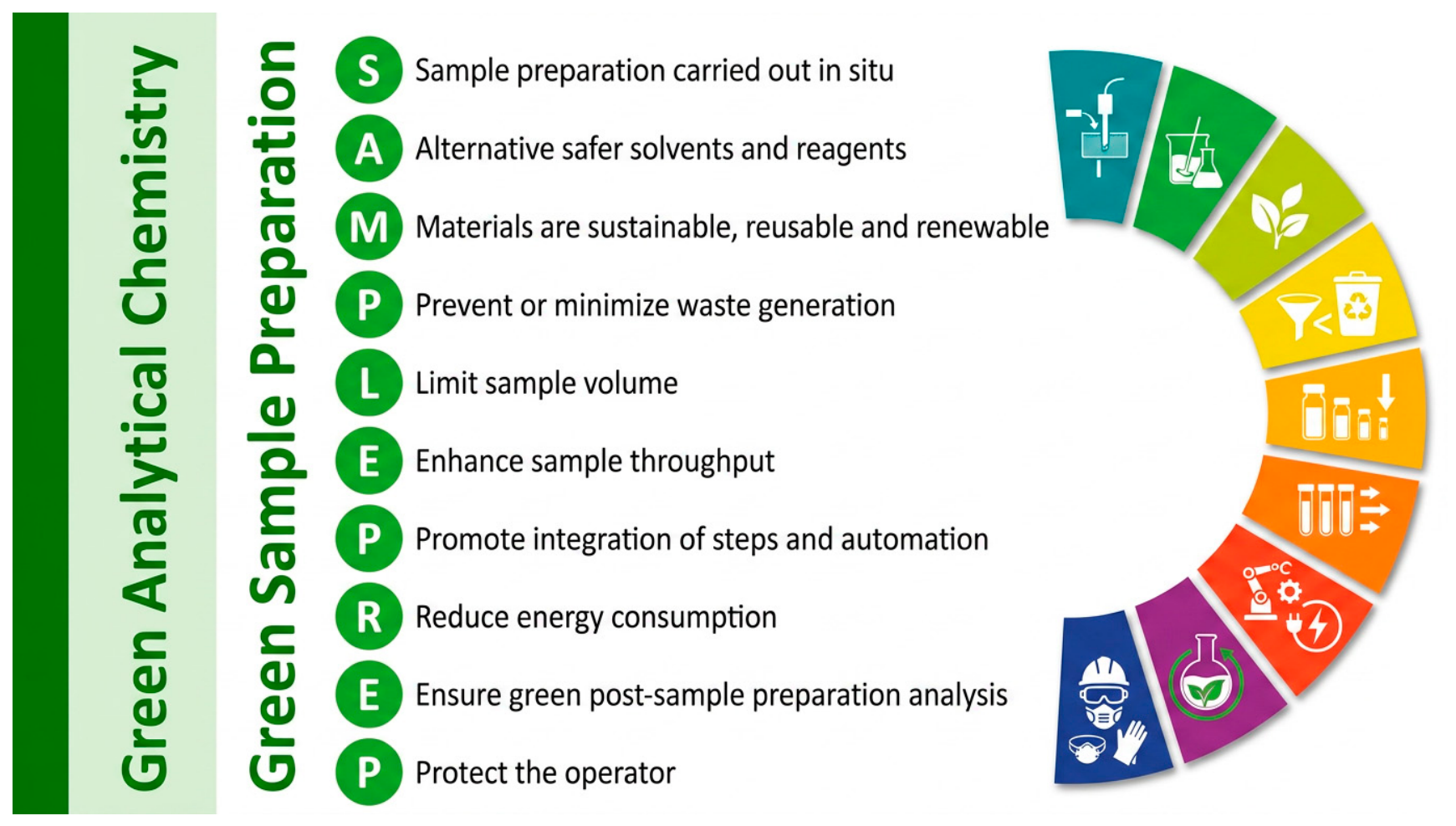
Sample preparation is a fundamental and essential stage in analytical methods. This stage often involves the highest use of chemicals, including strong acids, oxidizing agents, and harmful organic solvents. Considering the growing demand for environmentally sustainable practices in analytical chemistry, analytical chemists are striving to substitute dangerous chemicals with safer alternatives and to minimize the waste [11]. To integrate sample preparation in GAC, López-Lorente et al. [26] formulated the ten principles of green sample preparation (GSP), as presented in Figure 3.
The ten principles of GSP are specifically focused on sample preparation and highlight the comprehensive scope of GSP. These principles incorporate the necessary design elements to promote environmental friendliness in sample preparation and reduce negative effects on both the environment and human health. They provide guidelines addressing factors such as solvents, materials, energy consumption, waste generation, speed, miniaturization, simplification or automation of procedures, and the safety of the operator. Additionally, GSP links the sampling and measurement stages closely [26]. The GSP principles are incorporated into the AGREEprep tool for the evaluation of sample preparation greenness. Below, recent developments in sample preparation for spectrometric trace metal analysis are presented in the context of the GSP principles.
Sample digestion methods used for metal determination can be categorized into dry ashing and wet decomposition (which include microwave-assisted and ultrasound-assisted methods). The choice depends not only on the sample matrix, but also on the instrumental technique used for final determination. Dry ashing typically requires the use of large quantities of chemicals, such as carbonates, alkali metal hydroxides, or borates. Wet digestion involves oxidizing agents, like some mineral acids, hydrogen peroxide, or their mixtures. In both cases, these factors lead to high costs and the generation of hazardous waste [78].
GSP can deliver measurable reductions in solvent use, waste generation, and energy demand. GSP aims to reduce or eliminate waste production and views all associated activities as essential components closely connected to environmentally friendly practices. The goal of zero waste has not yet been achieved in most sample preparation methods. Based on the AGREE metric, the highest possible score for the waste generation criterion is given when the waste produced is 0.1 g (or milliliters) or less. In contrast, producing 100 g (or milliliters) of waste would only earn 10% of the score for this criterion [26].
Solvents and other substances, including acids, bases, and derivatization agents used in sample preparation, are the primary contributors to chemical waste. Reducing or eliminating the use of solvents can be achieved by, for instance, using safer materials instead of solvents or by employing microextraction techniques. For example, solid-phase microextraction combined with thermal desorption is regarded as a solvent-free method [26]. Microwave-assisted and other accelerated sample preparation methods reduce heating and overall preparation time, which translates into lower energy demand than prolonged conventional heating or evaporation steps. Lowering energy use not only lessens the environmental effects but also improves the laboratory’s cost effectiveness [79].
Over the past twenty years, ionic liquids (ILs) have attracted significant interest as potential green solvents because of their properties, like low vapor pressure, non-flammability, recyclability, high thermal stability, and strong solubilizing ability [80]. However, challenges associated with ILs include limited biodegradability and biocompatibility, and some ILs, along with their breakdown products, can be toxic, which means that they cannot be regarded as environmentally friendly solvents. As an alternative, deep eutectic solvents (DES) have been developed. When natural primary metabolites or cellular compounds such as organic acids, amino acids, sugars, choline chloride, and urea are used in specific molar ratios as DES precursors, the resulting solvents are known as natural deep eutectic solvents (NADES) [81,82]. Traditional extraction techniques often rely on volatile organic compounds such as hexane, dichloromethane, chloroform, or acetonitrile, which can be toxic, flammable, and environmentally harmful. DESs can replace these solvents with mixtures that are generally less hazardous [83]. Creating new NADES is an important, growing area of green chemistry. Using a mixture design can be an effective approach in finding the ideal combination of components for NADES synthesis, helping to identify the best balance of proportions. Although many published studies on DESs focus on organic analytes, an increasing number now address inorganic analytes.
Santana et al. [82] prepared three NADES using malic acid, citric acid, and xylitol. The solvents were used in ultrasound-assisted extraction (UAE) and microwave-assisted extraction (MAE) of biological samples for the measurement of As, Cd, Pb, Hg, V, and Se by ICP-MS. The Analytical Eco-Scale tool was utilized to assess the environmental friendliness of the proposed analytical methods. The results indicated that both the UAE and MAE techniques achieved excellent green analysis ratings, while the microwave-assisted acid digestion method was considered an acceptable green procedure. The primary difference in scores for the NADES-assisted methods was attributed to energy consumption. The results obtained by UAE and MAE were comparable to those obtained by classical microwave-assisted acid digestion.
Erbas et al. [84] developed a liquid-phase microextraction method using DES for the separation and preconcentration of Ni(II) by its complexation with sodium diethyldithiocarbamate (NaDDTC) before its determination by micro-sampling flame atomic-absorption spectrometry. The DES was prepared using a 1:3 molar ratio of tetrabutylammonium chloride to decanoic acid. Even if no tool was used to assess method greenness, the use of micro-volumes of solvent (0.1 mL) aligns with the principles of GAC. The method provided a preconcentration factor of 60. The authors reported recoveries for certified reference material analysis ranging between 97 and 105%.
Ruzik and Dyoniziak [85] used NADES prepared from choline chloride, betaine, and β-alanine as hydrogen bond acceptors, and glycerol, citric acid, and glucose as hydrogen bond donors as extractants to fractionate compounds of trace elements from plant samples. The authors considered NADES helpful for method integration within GAC principles by obtaining renewable sources, replacing toxic reagents, and allowing the use of multi-analyte techniques with a minimal sample size.
In a recent study, Marco et al. [86] used a green eutectic mixture containing menthol: decanoic acid, in a ratio of 2:1, mixed with 1-hexyl-3-methylimidazolium chloride (a non-toxic ionic liquid) for the dissolution of trace metals from tea samples. The authors reported recoveries of nearly 100% and insignificant matrix effects. Also, a choline chloride-based deep eutectic solvent was used for liquid–liquid microextraction of Cd, Cu, Pb, Ni, and Fe from oil samples prior to ICP-OES determination. The authors reported minimal matrix effects and very good recoveries. The extraction method that combines electrochemistry with liquid–liquid microextraction aligns well with the 12 principles of GAC due to its low energy consumption and the use of safer, less toxic reagents [87].
Amino acid-based deep eutectic solvents (AADES) were employed as solvents in ultrasound-assisted matrix solid-phase dispersion (UA-MSPD) and microwave-assisted extraction (MAE) methods for the extraction of As from medicinal herbs. The developed methods were evaluated using the Analytical Eco-Scale and RGB 12 approaches, demonstrating their environmental friendliness [88]. A new magnetic covalent organic framework, modified with a deep eutectic solvent, was created for the selective extraction and measurement of trace amounts of Cu2+ in plants and environmental samples [89]. Although no specific tool was used to assess the method’s greenness, the use of low solvent volumes and energy-saving measures aligns with the principles of GAC.
Botella et al. [90] reported a method for inorganic Se speciation that uses a hydrophobic natural deep eutectic solvent in vortex-assisted liquid–liquid microextraction based on the solidification of floating NADES. Only 50 μL of a thymol:decanoic acid (1:2) NADES was used for extraction. Because microextraction requires only a very small volume of extractant, it is a greener sample preparation option than conventional liquid–liquid extraction. The greenness method was assessed using the AGREE calculator and obtained a greenness score of 0.55, comparable to or higher than scores reported in previous papers. Kandhro et al. [91] developed a method based on a deep eutectic solvent, prepared from choline chloride–oxalic acid (ChCl–Ox), for As, Cd, and Pb determination in milk samples. Choline chloride-based DESs were used to extract heavy metals from litterfall before ICP-OES analysis. The optimized choline chloride–maleic acid DES achieved the highest extraction efficiencies for Cd, Cu, Zn, and Fe, at 98.5%, 88.4%, 90.2%, and 93.7%, respectively. The DES-based extraction process was considered safer because it avoids high acid concentrations and high-pressure conditions [92]. DESs based on choline chloride, urea, carboxylic acids, and polyols were evaluated for the extraction of 14 metals from plant samples. Carboxylic acids proved to be key DES precursors for effective metal separation. Among the tested solvents, the choline chloride–malic acid DES gave the greatest extraction recoveries, ranging from 73% to 88% [93].
Table 2 summarizes recent studies aimed at developing greener sample digestion methods for trace element determination.
Despite their green credentials, DES/NADES still face limitations related to matrix effects, variable reproducibility due to formulation-dependent properties, and possible losses in analytical sensitivity caused by high viscosity, incomplete mass transfer, slow extraction kinetics, and co-extracted interferents. This problem frequently requires additional methods like dilution, heating, or applying external energy sources such as ultrasonication or vortexing. It also involves optimizing the extraction time or using dispersing agents, which can somewhat reduce the straightforwardness of the extraction procedure [94]. The carbon footprint of deep eutectic solvents varies substantially with their composition and production route. DESs are often described as green solvents because they can be prepared by simply mixing two or more components under mild heating, avoiding energy-intensive synthesis. In addition, some components, such as glycerol, citric acid, lactic acid, sugars, and amino acids, can be sourced from renewable biomass [95]. However, their carbon footprint may still be considerable in some cases. For example, choline chloride is typically produced industrially and carries upstream emissions, whereas urea production is energy-intensive and linked to ammonia synthesis [96,97]. Likewise, the footprint of fermentation-derived organic acids depends strongly on the energy source used during fermentation [98].
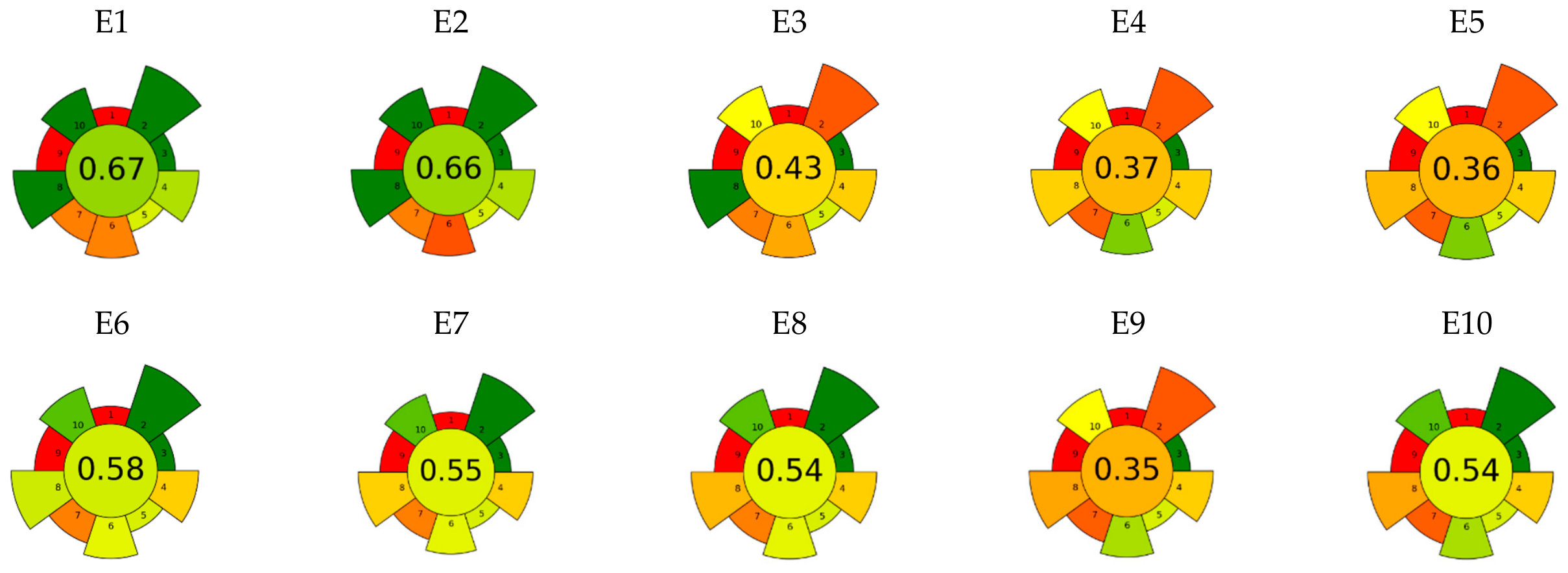
Even some liquid samples, if they have a complex matrix, require sample digestion. Recent studies present new approaches based on acid-free digestion. For example, the analysis of metals in wine samples was reported using direct analysis using ICP-OES, or only after sample dilution with purified water [99]. Using the AGREEprep software, the greenness scores for 10 types of sample pretreatment methodologies (E1–E10) were developed to evaluate the matrix interferences in the analysis of metals in wine [100]. The AGREEprep scores are presented in Figure 4.
The pictograms for each pretreatment method attribute a colored inner circle with a number in the center that indicates the overall greenness of the sample treatment [100]. For trace Cu, Fe, and Zn analysis in biological samples by ICP-OES, an environmentally friendly pretreatment based on acid-free sonochemical extraction (AFSE) was developed. The method was proven to be a sustainable option for metal determination, posing performance similar to conventional digestion approaches, with lowered environmental impact [101].
Therefore, although sample preparation is often one of the most polluting steps in chemical analysis, it can still be carried out in an environmentally friendly way in trace metal determination.

5. Green Analytical Chemistry Aspects in Spectrometric Instrumentation

Direct analysis is considered one of the most environmentally friendly analytical approaches because it examines untreated samples, eliminating most time-consuming and labor-intensive steps. In the field of trace metal determination in solid samples, this approach is known as solid sampling. According to the principles of green analytical chemistry (GAC), solid sampling offers several advantages over wet acid digestion, including simpler sample pretreatment, improved metal detectability since the samples are not diluted, reduced risk of analyte loss or sample contamination, and the avoidance of harmful reagents. Additionally, these techniques require only a small sample quantity and ensure rapid analysis [102].
Classical spectrometric techniques that enable the direct analysis of trace elements in solid samples include those based on X-ray fluorescence, arc optical emission spectrometry, and glow discharge optical emission spectrometry. In other traditional spectrometric methods, modifications to components allow for direct solid sample analysis. For example, laser ablation (LA) can be coupled with ICP-MS, and electrothermal vaporization (ETV) or boat-type platforms can be used for solid sample analysis [103]. A summary of spectrometric techniques used for direct analysis of trace elements in solid samples is presented in Table 3.
As shown in Table 3, it is evident that direct solid sampling has been developed for various analytical techniques and a wide range of sample types. By eliminating supplementary sample digestion steps, these analytical methods significantly advance the development of sustainable atomic spectrometric techniques. Typically, they offer high sample throughput and excellent detection limits. Although these techniques generally exhibit lower precision and suffer from interferences caused by the sample matrix compared to methods involving sample digestion, they are well-suited for screening purposes or for analyzing materials that are difficult to digest.
Equipment miniaturization represents another key strategy in achieving greener analytical methodologies for trace metals analysis. Equipment miniaturization focuses on a reduction in reagents and energy consumption and decreasing the amount of waste produced, thus addressing specific principles of GAC [7]. Miniaturization can apply to the radiation source, atomizer, detector, sample introduction system, or the whole spectrometer. One promising direction is the development of miniaturized spectrometric instruments that incorporate microplasma as a spectral source for different analytical applications. This type of equipment has advantages such as low inert gas consumption, low energy usage, and transportability, while its analytical performance for certain specific applications is comparable to that of standard spectrometric instruments [114].
A miniaturized equipment using a capacitively coupled plasma microtorch consisting of a microelectrode of Mo and a miniaturized free-running generator was developed for Hg determination in seafood samples [115]. Later, a similar system based on electrothermal vaporization–capacitively coupled plasma microtorch optical emission spectrometry (SSETV-μCCP-OES) was coupled with DGT passive sampling for the determination of Cd, Pb, Cu, Zn, and Hg in surface water [22]. Microplasma-based instruments have been mostly reported for the analysis of samples with a simple matrix and a simple pretreatment procedure. This is still an area of future research to improve their characteristics for complex matrices and to make them applicable for field analysis.

6. Conclusions and Perspectives

Adopting sustainable methods in analytical chemistry has become essential rather than just a desirable objective. More and more research is being conducted on developing sustainable and safe methods. This article provides an overview of recent developments in atomic spectrometry methods for trace metal analysis, focusing on their incorporation into the principles of GAC. Important progress has been made in green metrics, sampling techniques, analytical instruments that allow direct analysis, and the miniaturization of instruments. Since direct analysis of samples using spectrometric methods is often not possible, sample pretreatment that complies with GAC principles is receiving growing attention.
Because numerous analytical methods have been developed and termed green by their creators without well-defined evaluation standards, certain procedures for GAC metrics have been introduced. Using direct analytical methods that avoid the need for sample collection, transportation, pretreatment, or preparation exemplifies environmentally friendly practices with a potentially significant positive effect. In particular, passive sampling techniques provide considerable savings in labor, equipment, and waste management costs, which are often the main expenses at long-term monitoring locations. Sample preparation based on the use of deep eutectic solvents (DES) has also been developed. Natural substances such as choline chloride, organic acids, amino acids, sugars, and urea are increasingly used as natural deep eutectic solvents for sample preparation.
In analytical spectrometric instruments, solid sampling provides multiple benefits compared to wet acid digestion. These include easier sample preparation, enhanced detection of metals since the samples remain undiluted, lower chances of losing analytes or contaminating the sample, and the elimination of the need for hazardous chemicals. Miniaturizing equipment is another important approach to developing more environmentally friendly analytical methods for trace metal analysis. The development of miniaturized and compact devices capable of analyzing complex matrices is a promising area for future research. Considering the current technological advances in electronics, the miniaturization of spectrometric instruments is now allowing their rapid extension.
The future of analytical chemistry could expand by focusing on automation, portable sensing technologies, and artificial intelligence as important emerging trends. Automation has the potential to increase throughput, enhance consistency, and minimize variability caused by operators in routine procedures. Portable sensing devices are becoming more important for quick on-site analysis and decentralized testing. At the same time, artificial intelligence is anticipated to increasingly contribute to optimizing experiments, processing signals, and interpreting complex analytical data. Together, these advancements are expected to enable more efficient, reliable, and smart analytical methods.

Funding

This work was supported by a grant from the Ministry of Research, Innovation, and Digitization, CCCDI UEFISCDI, project number PN-IV-P7-7.1-PED-2024-0029, within PNCDI IV and the Core Program within the National Research Development and Innovation Plan 2022–2027, with the support of MCID, project no. PN 23 05.

Institutional Review Board Statement

Not applicable.

Informed Consent Statement

Not applicable.

Data Availability Statement

No new data were created or analyzed in this study. Data sharing is not applicable to this article.

Conflicts of Interest

The author declares no conflicts of interest.

References

  1. Khatoon, N.; Ali, S.; Li, Z.; Xue, M.; Han, Y.; Pan, T.; Zhang, X.; Yu, Z.; Zhao, X. From source to prediction: Heavy metals toxicity, health risks, detection techniques and AI-enhanced predictive models (2019–2024). J. Hazard. Mater. Adv. 2026, 21, 100981. [Google Scholar] [CrossRef]
  2. Tapia-Quiroz, G.E.; Valencia-Leal, S.A.; Vázquez-Guerrero, A.; Alfaro-Cuevas-Villanueva, R.; Escudero-García, R.; Cortés-Martínez, R. Surfactant-Enhanced Guava Seed Biosorbent for Lead and Cadmium Removal: Kinetics, Thermodynamics, and Reusability Insights. Sustain. Chem. 2025, 6, 5. [Google Scholar] [CrossRef]
  3. Sur, I.M.; Prodan, V.C.; Micle, V.; Nasui, M.; Hegyi, A.; Pop, V.S.; Scurtu, L.I. Washing Procedure with Several Reagents for Ecological Rehabilitation of Soil Polluted with Heavy Metals. Soil. Syst. 2025, 9, 130. [Google Scholar] [CrossRef]
  4. Balali-Mood, M.; Naseri, K.; Tahergorabi, Z.; Khazdair, M.R.; Sadeghi, M. Toxic Mechanisms of Five Heavy Metals: Mercury, Lead, Chromium, Cadmium, and Arsenic. Front. Pharmacol. 2021, 12, 643972. [Google Scholar] [CrossRef] [PubMed]
  5. Mukherjee, A.G.; Wanjari, U.R.; Renu, K.; Vellingiri, B.; Gopalakrishnan, A.V. Heavy metal and metalloid-induced reproductive toxicity. Environ. Toxicol. Pharmacol. 2022, 92, 103859. [Google Scholar] [CrossRef] [PubMed]
  6. Senila, M.; Senila, L.; Resz, M.-A. Chemical Composition and Nutritional Characteristics of Popular Wild Edible Mushroom Species Collected from North-Western Romania. J. Food Compos. Anal. 2024, 134, 106504. [Google Scholar] [CrossRef]
  7. Fuente-Ballesteros, A.; Ares, A.M.; Bernal, J. Paving the Way towards Green Contaminant Analysis: Strategies and Considerations for Sustainable Analytical Chemistry. Green. Anal. Chem. 2025, 12, 100221. [Google Scholar] [CrossRef]
  8. Anastas, P.T. Green Chemistry and the role of analytical methodology development. Crit. Rev. Anal. Chem. 1999, 29, 167–175. [Google Scholar] [CrossRef]
  9. Reginato, F.; Menegaes, J.F.; Heryque, R. Green Chemistry for Sustainable Production and Consumption Patterns. In Encyclopedia of the UN Sustainable Development Goals; Springer: Berlin/Heidelberg, Germany, 2019; pp. 1–14. [Google Scholar] [CrossRef]
  10. Anastas, P.T.; Warner, J.C. Green Chemistry: Theory and Practice; Oxford University Press: New York, NY, USA, 1998. [Google Scholar]
  11. Andruch, V.; Vojteková, V.; Kalyniukova, A.; Zengin, G.; Hagarová, I.; Yordanova, T. Application of Deep Eutectic Solvents for the Determination of Inorganic Analytes. Adv. Sample Prep. 2025, 13, 100158. [Google Scholar] [CrossRef]
  12. Gałuszka, A.; Migaszewski, Z.; Namiesnik, J. The 12 principles of green analytical chemistry and the SIGNIFICANCE mnemonic of green analytical practices. Trends Anal. Chem. 2013, 50, 78–84. [Google Scholar] [CrossRef]
  13. Esteve-Turrillas, F.A.; Garrigues, S.; de la Guardia, M. Green extraction techniques in green analytical chemistry: A 2019–2023 update. TrAC Trends Anal. Chem. 2024, 170, 117464. [Google Scholar] [CrossRef]
  14. Senila, M. Polymer Inclusion Membranes (PIMs) for Metal Separation—Toward Environmentally Friendly Production and Applications. Polymers 2025, 17, 725. [Google Scholar] [CrossRef] [PubMed]
  15. Eissa, M.S.; Darweish, E. Insights on ecological spectroscopic techniques recently adopted for pharmaceutical analysis: A comprehensive review from the perspective of greenness assessment metrics systems application. TrAC Trends Anal. Chem. 2024, 170, 117435. [Google Scholar] [CrossRef]
  16. Bendicho, C.; Lavilla, I.; Pena-Pereira, F.; Romero, V. Green chemistry in analytical atomic spectrometry: A review. J. Anal. At. Spectrom. 2012, 27, 1831. [Google Scholar] [CrossRef]
  17. Hosny, N.M.; Frontera, A.; Obaydo, R.H.; Ali, M.F.B. Advancing green and white assessment: DFT-assisted spectrofluorimetry for accurate favipiravir quantification in human plasma. Spectrochim. Acta Part A Mol. Biomol. Spectrosc. 2025, 336, 125983. [Google Scholar] [CrossRef] [PubMed]
  18. Douvris, C.; Vaughan, T.; Bussan, D.; Bartzas, G.; Thomas, R. How ICP-OES changed the face of trace element analysis: Review of the global application landscape. Sci. Total Environ. 2023, 905, 167242. [Google Scholar] [CrossRef] [PubMed]
  19. Senila, M.; Kovacs, E.; Senila, L. Essential and Nonessential Elements, Lipids and Volatile Compounds in Coffee and Transfer to Coffee Brews: Assessment of the Benefits and Potential Risks for Human Health. Food Sci. Nutr. 2025, 13, e4640. [Google Scholar] [CrossRef] [PubMed]
  20. Vignali, L.; Bernardi, E.; Sassoni, E.; Cappelletti, M.; Cofini, E.; Cespi, D. Evaluating the greenness of MP-AES spectroscopy through AGREE metrics. Talanta 2026, 304, 129536. [Google Scholar] [CrossRef] [PubMed]
  21. Pena-Pereira, F.; Bendicho, C.; Mutavdžić Pavlović, D.; Martín-Esteban, A.; Díaz-Álvarez, M.; Pan, Y.; Cooper, J.; Yang, Z.; Safarik, I.; Pospiskova, K.; et al. Miniaturized analytical methods for determination of environmental contaminants of emerging concern—A review. Anal. Chim. Acta 2021, 1158, 238108. [Google Scholar] [CrossRef] [PubMed]
  22. Angyus, S.B.; Senila, M.; Frentiu, T.; Ponta, M.; Frentiu, M.; Covaci, E. In-situ Diffusive Gradients in thin-films passive sampling coupled with ex-situ small-sized electrothermal vaporization capacitively coupled plasma microtorch optical emission spectrometry as green and white method for the simultaneous determination of labile species of toxic elements in surface water. Talanta 2023, 259, 124551. [Google Scholar] [CrossRef] [PubMed]
  23. Dastageer, M.M.; Siraj, K.; Pedarnig, J.D.; Zhang, D.; Qasim, M.; Rahim, M.S.A.; Mushtaq, S.; Younas, Q.; Hussain, B. From Fundamentals of Laser-Induced Breakdown Spectroscopy to Recent Advancements in Cancer Detection and Calcified Tissues Analysis: An Overview (2015–2025). Molecules 2025, 30, 4176. [Google Scholar] [CrossRef] [PubMed]
  24. Friebel, D.; Pietschner, T.; Vogt, T.; Vogt, C. Direct process accompanying analysis of plant-based biomass samples for critical elements in combusting processes with ETV-ICP-OES. Biomass Futures 2026, 1, 100027. [Google Scholar] [CrossRef]
  25. Li, L.; Xu, Y.; Lan, G.; Yao, Z.; Chen, X.; Liu, M.; Shi, H.; Li, X.; Mao, X. A novel AgNPs spongy trap coupled with portable XRF: A field-ready strategy for sensitive mercury analysis in soils. Anal. Chim. Acta 2026, 1407, 345528. [Google Scholar] [CrossRef] [PubMed]
  26. López-Lorente, Á.I.; Pena-Pereira, F.; Pedersen-Bjergaard, S.; Zuin, V.G.; Ozkan, S.A.; Psillakis, E. The Ten Principles of Green Sample Preparation. TrAC Trends Anal. Chem. 2022, 148, 116530. [Google Scholar] [CrossRef]
  27. Cetinkaya, A.; Kaya, S.I.; Ozkan, S.A. An overview of the current progress in green analytical chemistry by evaluating recent studies using greenness assessment tools. TrAC Trends Anal. Chem. 2023, 168, 117330. [Google Scholar] [CrossRef]
  28. Youssef, S.H.; Abdella, S.; Garg, S. Development and validation of a novel tool for assessing the environmental impact of 3D printing technologies: A pharmaceutical perspective. Pharmaceutics 2022, 14, 933. [Google Scholar] [CrossRef] [PubMed]
  29. Syrgabek, Y.; Alimzhanova, M.; García-Encina, P.A.; Jiménez, J.J.; López-Serna, R. Greenness evaluation of sample preparation methods by GAPI for the determination of pesticides in grape: A review. Trends Environ. Anal. Chem. 2023, 39, e00206. [Google Scholar] [CrossRef]
  30. Mohamed, D.; Fouad, M.M. Application of NEMI, Analytical Eco-Scale and GAPI tools for greenness assessment of three developed chromatographic methods for quantification of sulfadiazine and trimethoprim in bovine meat and chicken muscles: Comparison to greenness profile of reported HPLC methods. Microchem. J. 2020, 157, 104873. [Google Scholar] [CrossRef]
  31. Płotka-Wasylka, J. A new tool for the evaluation of the analytical procedure: Green Analytical Procedure Index. Talanta 2018, 181, 204–209. [Google Scholar] [CrossRef] [PubMed]
  32. Mansour, F.R.; Płotka-Wasylka, J.; Locatelli, M. Modified GAPI (MoGAPI) Tool and Software for the Assessment of Method Greenness: Case Studies and Applications. Analytica 2024, 5, 451–457. [Google Scholar] [CrossRef]
  33. Mansour, F.R.; Omer, K.M.; Płotka-Wasylka, J. A Total Scoring System and Software for Complex Modified GAPI (ComplexMoGAPI) Application in the Assessment of Method Greenness. Green. Anal. Chem. 2024, 10, 100126. [Google Scholar] [CrossRef]
  34. Shi, M.; Zheng, X.; Zhang, N.; Guo, Y.; Liu, M.; Yin, L. Overview of sixteen green analytical chemistry metrics for evaluation of the greenness of analytical methods. TrAC Trends Anal. Chem. 2023, 166, 117211. [Google Scholar] [CrossRef]
  35. Gałuszka, A.; Migaszewski, Z.M.; Konieczka, P.; Namieśnik, J. Analytical Eco-Scale for Assessing the Greenness of Analytical Procedures. TrAC Trends Anal. Chem. 2012, 37, 61–72. [Google Scholar] [CrossRef]
  36. Furió-Sanz, C.; Gallart-Mateu, D.; Armenta, S.; Garrigues, S.; de la Guardia, M. A green evaluation of ecstasy determination methods by using different greenness criteria. Talanta Open 2023, 7, 100195. [Google Scholar] [CrossRef]
  37. Pena-Pereira, F.; Wojnowski, W.; Tobiszewski, M. Agree-analytical GREEnness metric approach and software. Anal. Chem. 2020, 92, 10076–10082. [Google Scholar] [CrossRef] [PubMed]
  38. Wojnowski, W.; Tobiszewski, M.; Pena-Pereira, F.; Psillakis, E. AGREEprep–Analytical greenness metric for sample preparation. TrAC Trends Anal. Chem. 2022, 149, 116553. [Google Scholar] [CrossRef]
  39. Ballester-Caudet, A.; Campíns-Falcó, P.; Pérez, B.; Sancho, R.; Lorente, M.; Sastre, G.; González, C. A new tool for evaluating and/or selecting analytical methods: Summarizing the information in a hexagon. TrAC Trends Anal. Chem. 2019, 118, 538–547. [Google Scholar] [CrossRef]
  40. Shen, Y.; Lo, C.; Nagaraj, D.R.; Farinato, R.; Essenfeld, A.; Somasundaran, P. Development of Greenness Index as an evaluation tool to assess reagents: Evaluation based on SDS (Safety Data Sheet) information. Miner. Eng. 2016, 94, 1–9. [Google Scholar] [CrossRef]
  41. Larsen, C.; Lundberg, P.; Tang, S.; Ràfols-Ribé, J.; Sandström, A.; Lindh, E.M.; Wang, J.; Edman, L. A tool for identifying green solvents for printed electronics. Nat. Commun. 2021, 12, 4510. [Google Scholar] [CrossRef] [PubMed]
  42. Nowak, P.M.; Wietecha-Posłuszny, R.; Pawliszyn, J. White Analytical Chemistry: An approach to reconcile the principles of Green Analytical Chemistry and functionality. Trends Anal. Chem. 2021, 138, 116223. [Google Scholar] [CrossRef]
  43. Saleh, S.S.; Obaydo, R.H.; El Hamd, M.A.; Rostom, Y.; Mohamed, D.; Lotfy, H.M. Guidelines for accurate application of green and white analytical concepts: Merits Versus demerits with insights of significant milestones of assessment tools applied for antiviral drugs. Microchem. J. 2024, 199, 109917. [Google Scholar] [CrossRef]
  44. Gómez Ariza, J.L.; García Barrera, T. Chapter 5 Greening Sampling Techniques in Handbook of Green Analytical Chemistry, 1st ed.; de la Guardia, M., Garrigues, S., Eds.; John Wiley & Sons, Ltd.: Hoboken, NJ, USA, 2012; pp. 67–80. [Google Scholar]
  45. Miège, C.; Mazzella, N.; Allan, I.; Dulio, V.; Smedes, F.; Tixier, C.; Vermeirssen, E.; Brant, J.; O’Toole, S.; Budzinski, H.; et al. Position paper on passive sampling techniques for the monitoring of contaminants in the aquatic environment–Achievements to date and perspectives. Trends Environ. Anal. Chem. 2015, 8, 20–26. [Google Scholar] [CrossRef]
  46. Marrugo-Madrid, S.; Turull, M.; Zhang, H.; Diez, S. Diffusive gradients in thin films for the measurement of labile metal species in water and soils: A review. Environ. Chem. Lett. 2021, 19, 3761–3788. [Google Scholar] [CrossRef]
  47. Kuswandi, B.; Nitti, F.; Almeida, M.I.G.S.; Kolev, S.D. Water monitoring using polymer inclusion membranes: A review. Environ. Chem. Lett. 2020, 18, 129–150. [Google Scholar] [CrossRef]
  48. Wang, R.; Lu, J.; Wu, J.; Lin, Y.; Li, F.; Zhang, C.; Wang, J.; Zhou, Y.; Yue, X. Use of the diffusive gradients in thin-films (DGT) technique for smart rapid biomonitoring of trace metals in aquaculture systems. Mar. Environ. Res. 2025, 204, 106913. [Google Scholar] [CrossRef] [PubMed]
  49. Fang, Z.; Hu, X.; Yu, Y.; Yin, Q.; Qin, Q. Seasonal dynamics of multiple pollutants across a spectrum of aquatic environments: Insights from long-term diffusive gradients in thin-films (DGT) technique field monitoring. Environ. Pollut. 2026, 393, 127721. [Google Scholar] [CrossRef] [PubMed]
  50. Davison, W.; Zhang, H. In situ speciation measurements of trace components in natural waters using thin-film gels. Nature 1994, 367, 546–548. [Google Scholar] [CrossRef]
  51. Reichstädter, M.; Divis, P.; Abdulbur Alfakhory, E.; Gao, Y. Simultaneous determination of mercury, cadmium and lead in fish sauce using Diffusive Gradients in Thin-films technique. Talanta 2020, 217, 121059. [Google Scholar] [CrossRef] [PubMed]
  52. Gonzalez, J.L.; Amouroux, I.; Guesdon, S.; Menet-Nedelec, F.; Ponzevera, E.; Montero, N.; Marras, B.; Schintu, M.; Caetano, M.; Dos Santos, M.C.; et al. An international intercomparison exercise on passive samplers (DGT) for monitoring metals in marine waters under a regulatory context. Sci. Total Environ. 2022, 847, 157499. [Google Scholar] [CrossRef] [PubMed]
  53. Galceran, J.; Li, G.; Sans Duñó, J.; Rey-Castro, C.; Puy, J.; Gao, Y.; Cecília, J. Chemical availability in soils and sediments interpreted by coupled transport–reaction models of DGT (Diffusive Gradients in Thin-films) fluxes: Roles of dissolved ligands and finite sorption capacity. Geoderma 2026, 468, 117717. [Google Scholar] [CrossRef]
  54. Gao, G.; Zhang, C.; Zuo, J.; Sun, J.; Liu, W.; Wang, Z.; Zhao, Y. Development and application of a layered double hydroxides binding layer based DGT technique for simultaneous sampling low molecular weight organic acids and arsenic in soil. Talanta 2026, 300, 129255. [Google Scholar] [CrossRef] [PubMed]
  55. Senila, M.; Levei, E.A.; Senila, L.; Cadar, O. Validation of microwave acid digestion, diffusive gradients in thin-film preconcentration and inductively coupled plasma optical emission spectrometry methodology for the determination of REEs in natural zeolites. Anal. Methods 2024, 16, 4807–4816. [Google Scholar] [CrossRef] [PubMed]
  56. Long, Z.; Zhu, Z.; Peng, H.; Chen, F.; Wu, Y.; Bing, H.; Huang, Y. Sediment properties dominate the spatial distribution of DGT-labile trace metals in China’s coastal sediments at a continental scale. Water Res. 2026, 289, 124890. [Google Scholar] [CrossRef] [PubMed]
  57. Senila, M.; Levei, E.A.; Frentiu, T.; Mihali, C.; Angyus, S.B. Assessment of mercury bioavailability in garden soils around a former nonferrous metal mining area using DGT, accumulation in vegetables, and implications for health risk. Environ. Monit. Assess. 2023, 195, 1554. [Google Scholar] [CrossRef] [PubMed]
  58. Senila, M.; Angyus, S.B. Determination of copper labile species in wine using diffusive gradients in thin-films technique with open and restricted diffusive gels. Microchem. J. 2025, 215, 114330. [Google Scholar] [CrossRef]
  59. Zeng, Y.; Liu, Z.; Jiang, Y.; Li, Y.; Yu, W.; Yu, R.; Xu, X.; Xiao, M. Development and validation of a copolymerized thiol-silica based DGT technique for the assessment of bioavailable As(III) speciation. Environ. Geochem. Health 2026, 48, 227. [Google Scholar] [CrossRef] [PubMed]
  60. Tu, Y.; Jin, Z.; Li, Y.; Zhang, F.; Wang, J.; Liu, S.; Duan, Y. Migration and Transformation of Antimony at the Sediment–Water Interface: Insights from DGT Technique and Laboratory Simulation. Environ. Sci. Technol. 2026, 60, 4540–4551. [Google Scholar] [CrossRef] [PubMed]
  61. Diviš, P.; Reichstädter, M.; Gao, Y.; Leermakers, M.; Křikala, J. Determination of Mercury in Fish Sauces by Thermal Decomposition Gold Amalgamation Atomic Absorption Spectroscopy after Preconcentration by Diffusive Gradients in Thin Films Technique. Foods 2020, 9, 1858. [Google Scholar] [CrossRef] [PubMed]
  62. Senila, M.; Cadar, O.; Frentiu, T.; Senila, L.; Angyus, S.B. Diffusive Gradients in Thin-films as passive sampling tool for the measurement of labile species in fractionation analysis of metals (Fe, Mn, Cu, Zn and Pb) in beer. Microchem. J. 2024, 198, 110195. [Google Scholar] [CrossRef]
  63. Maiphetlho, K.; Chimuka, L.; Tutu, H.; Richards, H. Technical design and optimisation of polymer inclusion membranes (PIMs) for sample pre-treatment and passive sampling—A review. Sci. Total Environ. 2021, 799, 149483. [Google Scholar] [CrossRef] [PubMed]
  64. Chillè, D.; Marguí, E.; Anticó, E.; Foti, C.; Fontàs, C. Facilitating inorganic arsenic speciation and quantification in waters: Polymer inclusion membrane preconcentration and X-ray fluorescence detection. Anal. Chim. Acta 2024, 1324, 343098. [Google Scholar] [CrossRef] [PubMed]
  65. Govindappa, H.; Abdi, G.; Uthappa, U.T.; Sriram, G.; Han, S.S.; Kurkuri, M. Efficient separation of arsenic species of oxyanion As (III) and As (V) by using effective polymer inclusion membranes (PIM). Chemosphere 2023, 316, 137851. [Google Scholar] [CrossRef] [PubMed]
  66. Macías, M.; Rodríguez de San Miguel, E. On the Use of Polymer Inclusion Membranes for the Selective Separation of Pb(II), Cd(II), and Zn(II) from Seawater. Membranes 2023, 13, 512. [Google Scholar] [CrossRef] [PubMed]
  67. Richer, C.; Alliot, F.; Thiebault, T. Passive sampling of chemical targets in wastewater-based epidemiology: Promise, pitfalls and pathway forward. TrAC Trends Anal. Chem. 2026, 196, 118690. [Google Scholar] [CrossRef]
  68. Amouroux, I.; Gonzalez, J.L.; Guesdon, S.; Belzunce-Segarra, M.J.; Bersuder, P.; Bolam, T.; Caetano, M.; Dos Santos, M.C.; Larreta, J.; Lebrun, L.; et al. A new approach to using Diffusive Gradient in Thin-films (DGT) labile concentration for Water Framework Directive chemical status assessment: Adaptation of Environmental Quality Standard to DGT for cadmium, nickel and lead. Environ. Sci. Eur. 2023, 35, 29. [Google Scholar] [CrossRef]
  69. Rougerie, J.; Buzier, R.; Simon, S.; Guibaud, G. Aluminum sampling by Chelex, titanium dioxide and zirconium oxide DGT: Influence of pH on accumulation behaviors. Environ. Technol. Innov. 2021, 24, 101931. [Google Scholar] [CrossRef]
  70. Rougerie, J.; de Barros, R.M.; Buzier, R.; Devillers, D.; Fondanèche, P.; Lissalde, S.; Leblanc, J.; Saüt, M.; Rebillard, J.-P.; Mazzella, N.; et al. Diffusive gradients in thin films (DGT): A suitable tool for metals/metalloids monitoring in continental waterbodies at the large network scale. Sci. Total Environ. 2021, 754, 142147. [Google Scholar] [CrossRef] [PubMed]
  71. Kim, H.U.; Lee, Y.; Yang, W.; Foster, R.I.; Choi, S. Quantitative Analysis of Trace Metal Ions in Aqueous Solutions Using Electrodeposition-Assisted Laser-Induced Breakdown Spectroscopy (EA-LIBS). Korean J. Chem. Eng. 2024, 42, 1197–1205. [Google Scholar] [CrossRef]
  72. Lu, Y.; Zeng, W.; Hu, J.; Hou, X. Adsorption on UiO-66 for preconcentration, matrix separation, slurry sampling and in situ hydride generation-atomic fluorescence spectrometric determination of trace bismuth in alloy and water. Microchem. J. 2023, 195, 109437. [Google Scholar] [CrossRef]
  73. Soulis, D.; Mermiga, E.; Pagkali, V.; Trachioti, M.; Kokkinos, C.; Prodromidis, M.; Economou, A. Multifolding Vertical-Flow Electrochemical Paper-Based Devices with Tunable Dual Preconcentration for Enhanced Multiplexed Assays of Heavy Metals. Anal. Chem. 2025, 97, 1457–1464. [Google Scholar] [CrossRef] [PubMed]
  74. Küçüksakalli, M.; Salamat, Q.; Tireli, B.; Elçi, Ş.G. Magnetic solid-phase extraction technique based on Fe3O4@coPPy-PTH nanocomposite for extraction of cobalt, chromium, and nickel prior to determination by microsample injection system-flame atomic absorption spectrometry in alcoholic and nonalcoholic beverages. Turk. J. Chem. 2024, 48, 620–630. [Google Scholar] [CrossRef] [PubMed]
  75. de la Calle, I.; Fernández-Rodríguez, D.; Lavilla, I.; Bendicho, C. Silver Nanoparticle-Cellulose Composite for Thin-Film Microextraction of Cd and Pb as Dithiocarbamate Derivatives Followed by Inductively Coupled Plasma Mass Spectrometry Determination. Adv. Sample Prep. 2022, 4, 100041. [Google Scholar] [CrossRef]
  76. Schulze, B.; Heffernan, A.L.; Thomas, K.V.; Kaserzon, S.L. Influence of Sample Stability on Non-Target Analysis during Long Batch Acquisitions. ACS EST Water 2023, 3, 2874–2882. [Google Scholar] [CrossRef]
  77. King, D.; Watts, M.; Hamilton, E.; Mortimer, R.; Coffey, M.; Osano, O.; Di Bonito, M. Mercury speciation in environmental samples associated with artisanal small-scale gold mines using a novel solid-phase extraction approach to sample collection and preservation. Environ. Geochem. Health 2024, 46, 481. [Google Scholar] [CrossRef] [PubMed]
  78. dos Reis, M.L.C.M.; Santos, T.J.; Albuquerque, L.A.; Felix, C.S.A.; Teixeira, L.S.G.; Dias, F.S. Comparison of green analytical procedures based on activated persulfate reactions for organic chemical degradation for multi-element determination in honey samples by ICP OES. Microchem. J. 2025, 210, 112926. [Google Scholar] [CrossRef]
  79. Carasek, E.; Santos, A.V.; Turazzi, F.C.; Morés, L.; Effting, L.; Barra, G.M.D.O. Recent Trends in the Development of Green Analytical Sample Preparation Methods Using Advanced Materials. J. Sep. Sci. 2025, 48, e70177. [Google Scholar] [CrossRef] [PubMed]
  80. Singh, S.K.; Savoy, A.W. Ionic liquids synthesis and applications: An overview. J. Mol. Liq. 2020, 297, 112038. [Google Scholar] [CrossRef]
  81. Santana, A.P.R.; Mora-Vargas, J.A.; Guimarães, T.G.S.; Amaral, C.D.B.; Oliveira, A.; Gonzalez, M.H. Sustainable synthesis of natural deep eutectic solvents (NADES) by different methods. J. Mol. Liq. 2019, 293, 111452. [Google Scholar] [CrossRef]
  82. Santana, A.P.R.; Andrade, D.F.; Guimarães, T.G.S.; Amaral, C.D.B.; Oliveira, A.; Gonzalez, M.H. Synthesis of natural deep eutectic solvents using a mixture design for extraction of animal and plant samples prior to ICP-MS analysis. Talanta 2020, 216, 120956. [Google Scholar] [CrossRef] [PubMed]
  83. Meher, A.K.; Zarouri, A. Green Analytical Chemistry—Recent Innovations. Analytica 2025, 6, 10. [Google Scholar] [CrossRef]
  84. Erbas, Z.; Soylak, M.; Yilmaz, E.; Dogan, M. Deep eutectic solvent based liquid phase microextraction of nickel at trace level as its diethyldithiocarbamate chelate from environmental samples. Microchem. J. 2019, 145, 745–750. [Google Scholar] [CrossRef]
  85. Ruzik, L.; Dyoniziak, A. Natural Deep Eutectic Solvents as a Key Metal Extractant for Fractionation in Speciation Analysis. Molecules 2022, 27, 1063. [Google Scholar] [CrossRef] [PubMed]
  86. Marco, A.; Aguirre, M.Á.; Quijada, C.; Hidalgo, M. Electrochemically controlled liquid–liquid microextraction: An innovative methodology for heavy metal extraction from tea using non-toxic menthol-based eutectic mixture. Anal. Chim. Acta 2025, 1375, 344542. [Google Scholar] [CrossRef] [PubMed]
  87. Marco, A.; Pertusa, B.; Aguirre, M.Á.; Quijada, C.; Hidalgo, M. Sensitive elemental analysis of edible oil samples using a hydrophilic eutectic mixture as green solvent in electrochemically controlled liquid–liquid microextraction. Anal. Chim. Acta 2026, 1381, 344785. [Google Scholar] [CrossRef] [PubMed]
  88. Guimarães, T.G.S.; Costa, F.S.; Menezes, I.M.N.R.; Santana, A.P.R.; Andrade, D.F.; Oliveira, A.; Amaral, C.D.B.; Gonzalez, M.H. Green approaches with amino acids-based deep eutectic solvents (AADES) for determining As in medicinal herbs by ICP-MS. J. Mol. Liq. 2023, 381, 121801. [Google Scholar] [CrossRef]
  89. Liu, Y.; Yang, X.; Hu, J.; Lu, N.; He, D.; Chi, H.; Liu, Y.; Yang, S.; Wen, X. A novel deep eutectic solvent modified magnetic covalent organic framework for the selective separation and determination of trace copper ion in medicinal plants and environmental samples. Anal. Chim. Acta 2024, 1290, 342197. [Google Scholar] [CrossRef] [PubMed]
  90. Botella, M.B.; Oviedo, M.N.; Pacheco, P.; Wuilloud, R.G. Highly efficient natural deep eutectic solvent-based liquid–liquid microextraction and inductively coupled plasma mass spectrometry for selective determination of inorganic selenium species in nut samples. Spectrochim. Acta Part B 2024, 211, 106832. [Google Scholar] [CrossRef]
  91. Kandhro, F.; Kazi, T.G.; Afridi, H.I.; Baig, J.A.; Lashari, A.A.; Lashari, A. Determination of toxic elemental levels in whey milk of different cattle and human using an innovative digestion method: Risk assessment for children < 6.0 months to 5 years. Environ. Sci. Pollut. Res. 2023, 30, 41923–41936. [Google Scholar] [CrossRef] [PubMed]
  92. Zhong, J.; Wang, Z.; Chen, Y.; Huan, W.; Shi, M.; Lei, L.; Yu, X.; Chen, L. Determination of trace heavy metal elements in litterfall by inductively coupled plasma optical emission spectrometry after extraction using choline chloride-based deep eutectic solvents. RSC Adv. 2024, 14, 22497–22503. [Google Scholar] [CrossRef] [PubMed]
  93. Shishov, A.; Gerasimov, A.; Bulatov, A. Deep eutectic solvents based on carboxylic acids for metals separation from plant samples: Elemental analysis by ICP-OES. Food Chem. 2022, 366, 130634. [Google Scholar] [CrossRef] [PubMed]
  94. Abdel-Monem, M.M.; Eid, M.; Aly, F.A.; Abdallah, N.A. Deep eutectic solvents for advancing sustainable analysis of pharmaceuticals in complex matrices: Design, mechanisms, analytical performance, and future perspectives. Microchem. J. 2026, 226, 118475. [Google Scholar] [CrossRef]
  95. Satija, P.; Chambyal, A.; Singh, G.; Ritvik; Singh, G.; Devi, S.; Singh, J. Natural Deep Eutectic Solvents (NADES): Manufacture, Characteristics, and Their Significance as Designer Solvents. ChemistrySelect 2024, 9, e202401212. [Google Scholar] [CrossRef]
  96. Escribà-Gelonch, M.; Hessel, V.; Van Duc Long, N.; Canela-Garayoa, R. Flow chemistry synthesis and sustainability assessment for choline chloride, a deep eutectic solvent constituent. RSC Sustain. 2026, 4, 2565–2580. [Google Scholar] [CrossRef]
  97. Milani, D.; Kiani, A.; Haque, N.; Giddey, S.; Feron, P. Green pathways for urea synthesis: A review from Australia’s perspective. Sustain. Chem. Clim. Action. 2022, 1, 100008. [Google Scholar] [CrossRef]
  98. Gabriele, M.; Peres Fabbri, L.; Ventimiglia, M.; Łepecka, A. From Waste to Worth: The Role of Fermentation in a Sustainable Future. Foods 2026, 15, 664. [Google Scholar] [CrossRef] [PubMed]
  99. Jakkielska, D.; Dasteridis, I.; Kubicki, M.; Frankowski, M.; Zioła-Frankowska, A. Determination of Metal Content by Inductively Coupled Plasma-Mass Spectrometry in Polish Red and White Wine Samples in Relation to Their Type, Origin, Grape Variety and Health Risk Assessment. Foods 2023, 12, 3205. [Google Scholar] [CrossRef] [PubMed]
  100. Senila, M.; Cadar, O. Determination of metals in wine by ICP-OES: Comparative study of matrix effects and greenness of different sample preparation approaches. J. Food Compos. Anal. 2025, 148, 108331. [Google Scholar] [CrossRef]
  101. de Jesus, J.R.; Yang, K.X.; Donati, G.L. Green sample preparation method based on acid-free sonochemical extraction for trace element determination in biological samples. Microchem. J. 2025, 219, 116116. [Google Scholar] [CrossRef]
  102. Machado, R.C.; Andrade, D.F.; Babos, D.V.; Castro, J.P.; Costa, V.C.; Sperança, M.A.; Garcia, J.A.; Gamela, R.R.; Pereira-Filho, E.R. Solid sampling: Advantages and challenges for chemical element determination—A critical review. J. Anal. At. Spectrom. 2020, 35, 54–77. [Google Scholar] [CrossRef]
  103. Di Fusco, G.; Calia, A. Advances in (LA)-ICP-MS techniques and applications for the in elemental analysis the field of cultural heritage: A review. Talanta 2026, 303, 129492. [Google Scholar] [CrossRef] [PubMed]
  104. Cuervo, S.; Mendiguchía, C.; Moreno, C. A dual solid and liquid solvent bar microextraction coupled with portable X-ray fluorescence for lead determination in seawater. Anal. Chim. Acta 2026, 1408, 345569. [Google Scholar] [CrossRef] [PubMed]
  105. Zhang, B.; Zheng, P.; Wang, J.; Luo, X.; Li, J.; Xiang, J.; Guo, L.; Tian, H.; Dong, D. Solution cathode glow discharge-atomic emission spectrometry using automated standard dilution analysis for the determination of Ca, Fe, and Zn in glucose oral solution. J. Anal. At. Spectrom. 2026, 41, 271–281. [Google Scholar] [CrossRef]
  106. Foppiano, D.; Jonsson, E.; Bao, S.; Skår, Ø.; Slagstad, T.; Kumar, P.; Wallin, M.; Mervič, K.; Šala, M.; van der Eijk, C. Exploring the potential of secondary resources: LA-ICP-MS for critical raw materials characterization. Talanta 2026, 303, 129478. [Google Scholar] [CrossRef] [PubMed]
  107. Zeng, X.; Zhang, W.; Deng, X.; Huang, F.; Fang, Y.; Hu, Z.; Luo, T.; Liu, Z. In-situ silver isotope analysis of Electrum and Ag2S using LA-MC-ICP-MS: Application to the Yixingzhai gold deposit. Chem. Geol. 2026, 708, 123347. [Google Scholar] [CrossRef]
  108. Lan, G.; Chen, L.; Xu, Y.; Li, X.; Feng, L.; Mao, X. Rapid and simultaneous detection of lead and cadmium in foods using solid sampling electrothermal vaporization coupled with a composite MgO/quartz trap. Talanta 2026, 301, 129302. [Google Scholar] [CrossRef] [PubMed]
  109. Wang, Y.; Kienast, S.J.; Beauchemin, D. Quick determination of fourteen rare earth elements in powdered refractory materials using electrothermal vaporization with detection by inductively coupled plasma optical emission spectrometry. Anal. Chem. 2025, 97, 19168–19176. [Google Scholar] [CrossRef] [PubMed]
  110. Silva, J.S.; Henn, A.S.; Mello, G.M.; Dressler, V.L.; Moraes, É.M. Mercury determination at ultra-trace level in eye shadow by a new electrothermal vaporization system coupled to ICP-MS. Braz. J. Anal. Chem. 2025, 12, 295–308. [Google Scholar] [CrossRef]
  111. Zhang, Z.; Dong, J.; Feng, L.; Chen, L.; Xing, P.; Du, Y.; Li, S.; Qian, R.; Zheng, H.; Liu, X.; et al. Rapid and sensitive determination of trace Cd in carbonate samples using direct solid sampling electrothermal vaporization atomic absorption spectrometry. Microchem. J. 2024, 201, 110612. [Google Scholar] [CrossRef]
  112. Vieira, A.L.; Ferreira, E.C.; Oliveira, S.R.; Barbosa, F.; Gomes Neto, J.A. Simultaneous determination of Fe and Zn in dried blood spot by HR-CS GF AAS using solid sampling. Microchem. J. 2021, 160, 105637. [Google Scholar] [CrossRef]
  113. Senila, M.; Covaci, E.; Cadar, O.; Ponta, M.; Frentiu, M.; Frentiu, T. Mercury speciation in fish tissue by eco-scale thermal decomposition atomic absorption spectrometry: Method validation and risk exposure to methylmercury. Chem. Pap. 2018, 72, 441–448. [Google Scholar] [CrossRef]
  114. Angyus, S.B.; Senila, M.; Covaci, E.; Ponta, M.; Frentiu, M.; Frentiu, T. Simultaneous determination of Cd, Pb, Cu and Zn as total and labile fractions in soil using a small-sized electrothermal vaporization capacitively coupled plasma microtorch optical emission spectrometer after diffusive gradients in thin-film passive accumulation. J. Anal. At. Spectrom. 2024, 39, 141. [Google Scholar] [CrossRef]
  115. Covaci, E.; Angyus, S.B.; Senila, M.; Ponta, M.; Darvasi, E.; Frentiu, M.; Frentiu, T. Eco-scale non-chromatographic method for mercury speciation in fish using formic acid extraction and UV–Vis photochemical vapor generation capacitively coupled plasma microtorch optical emission spectrometry. Microchem. J. 2018, 141, 155–162. [Google Scholar] [CrossRef]
Figure 1. Summary of greenness assessment tools with applicability to spectrometric techniques used for metals determination [29,30,31,32].
Suschem 07 00028 g001
Figure 2. Possibilities for achieving greener sampling techniques [45,46].
Suschem 07 00028 g002
Figure 3. The ten green sample preparation principles [26].
Suschem 07 00028 g003
Figure 4. AGREEPrep scores obtained by evaluation of 10 sample pretreatment procedures for metal determination in wine samples: E1—no digestion or dilution; E2—dilution with water to a ratio of 1:1; E3—digestion with 3 mL of HNO3 and 2 mL of H2O2 at room temperature; E4—digestion with 3 mL of HNO3 and 2 mL of H2O2 after alcohol evaporation by heating; E5—digestion with 3 mL of HNO3 and 2 mL of H2O2 after alcohol evaporation by heating and reflux; E6—digestion with 10 mL of H2O2 at room temperature; E7—digestion with 10 mL of H2O2 after alcohol evaporation by heating; E8—digestion with 10 mL of H2O2 after alcohol evaporation by heating and reflux; E9—microwave-assisted digestion with 3 mL of HNO3 and 2 mL of H2O2; E10—microwave-assisted digestion with 10 mL of H2O2 [100].
Suschem 07 00028 g004
Table 1. Comparison covering the main greenness assessment tools.
ToolCore Evaluation BasisMain OutputAdvantagesLimitationsBest Fit
National Environmental Methods Index (NEMI)Four simple environmental flags: persistent, bioaccumulative, toxic, and hazardous waste-related criteriaFour-quadrant pictogramFast, easy to understand, useful for initial screeningLow discrimination; methods can look similar, so they can be considered too coarseQuick preliminary check of methods
Green Analytical Procedure Index (GAPI)Entire analytical workflow, from sample collection to final waste handlingFive-level color-coded pictogramBroad workflow coverage, captures multiple stages of analysisIntricate to apply and interpretDetailed method profiling
Modified GAPIAdapted version of GAPI with more detailed workflow illustrationEnhanced pictorial profileBetter detail than the original GAPI, more sensitive to method differencesMethod-dependentComparative studies need superior distinction
ComplexMoGAPIFurther extended version of GAPI for complex analytical workflowsMore elaborate pictorial toolBetter suited to multistep, high-complexity proceduresIncreased complexity reduces ease of use Complex analytical methods
Analytical Eco-Scale Assessment (ESA)Penalty-point system based on chemical hazards, waste, and energy consumptionScore out of 100 pointsSimple numerical rankingMay not fully reflect all sustainability dimensionsDirect comparison of some methods
Green Certificate ClassificationEco-scale-derived certification approachClass label or certificate-style ratingEasy to share, useful for method classificationLess quantitative detail than a full scoring toolReporting and communication-oriented categorization
Analytical greenness metric and greenness of sample preparationGreenness of sample preparation steps, based on the 12 principles of GACNormalized score and diagnostic pictogramFocuses specifically on sample preparation, a hotspot in many studiesNarrower scope than whole-method toolsMethods where sample prep dominates environmental problem
Hexagon Assessment Tool Six-domain assessment of method attributesHexagonal visual summaryGives a balanced overview and multidimensional assessmentLess standardized than AGREE or Eco-scaleBroad method appraisal
Greenness Index ToolGeneral index-based greenness scoring is used to review environmental performanceNumerical or semi-quantitative indexEasy to compare across methodsExact criteria and weighting may vary by implementationFast ranking of methods with a simple score
Green Solvents Selecting ToolA tool for choosing solvents based on toxicity and environmental impactSolvent rankingReforming method chemistry at the solvent-selection stageNot a full greenness assessment tool methodSolvent substitution decisions
White Analytical ChemistryEvaluation of greenness, analytical performance, and practical applicabilityConceptual framework, not a single scoreMore realistic than greenness-only evaluationConceptual and broader, so it is less directly comparableMethod quality, practicality, and sustainability must all be weighed
Table 2. Examples of greener approaches used for sample digestion in trace metal analysis.
AnalytesType of SamplesGreen Sample Digestion MethodReferences
As, Cd, Pb, Hg, V, and SeBiological samplesThree NADES were prepared with malic acid, citric acid, and xylitol, and used in ultrasound-assisted extraction and microwave-assisted extraction[82]
NiEnvironmental samplesLiquid-phase microextraction method using DES (sodium diethyldithiocarbamate (NaDDTC) for Ni2+ complexation[84]
Trace elementsBarleyNADES prepared from choline chloride, betaine, β-alanine, glycerol, citric acid, and glucose[85]
Cd, Cu, Pb, Ni, and FeOil samplesMenthol: decanoic acid, in a ratio of 2:1, mixed with 1-hexyl-3-methylimidazolium chloride[87]
AsMedicinal herbs Amino acid-based DES (β-alanine, citric acid, water)[88]
CuMedicinal plants, soil, waterMagnetic covalent organic frameworks modified with chloline chlorides combined with microwave digestion[89]
SeNut samplesThymol and decanoic acids are used as DES in liquid–liquid microextraction[90]
As, Cd, and PbMilkChloline chloride and oxalic acid as DES[91]
Cu, Cd, Fe, and ZnLitterfallChloline chloride and maleic acid as DES[92]
Ba, Cu, Ca, Fe, Mn, Mg, Mo, K, Na, Pb, Ni, Sn, V, and ZnPlant samplesCholine chloride, carboxylic acids, urea, and polyols are used as DES[93]
Table 3. Examples of spectrometric techniques used for direct analysis of trace elements in solid samples.
Analytes SamplesTechnique and ApproachesReferences
PbMicroextraction system, carbon nanotubes functionalized with carboxylic groupsPortable X-ray fluorescence
Pb extracted from seawater using microextraction processes, then measured using XRF
[104]
Ca, Fe, ZnGlucose oral solutionGlow discharge-atomic emission spectrometry (SCGD-AES) [105]
Rare earth elementsCritical raw materialsA simplified LA-ICP-MS powder calibration was developed based on a non-matrix-matched method[106]
Ag isotopesMining oresLA-ICP-MS Several matrix-matched Au-Ag alloy reference materials were produced[107]
Cd and PbFoodsETV using a composite trap based on gas-phase enrichment[108]
REEs (Ce, Er, Dy, Eu, Gd, La, Ho, Nd, Lu, Pr, Tm, Sm, Y, Yb)Geological MaterialsETV-ICP-OES
ETV coupled with ICP-OES for the direct determination of REEs in refractory materials, eliminates the digestion step
[109]
HgEye shadow samplesETV-ICP-MS
Determination of Hg at ultra-trace level directly in solid samples
[110]
CdCarbonate samplesETV-AAS
Determination of Cd at trace levels directly in solid samples
Ethylene diamine tetraacetic acid disodium salt used as matrix modifier
[111]
Fe, ZnDried blood spotSolid Sampling High-Resolution Continuum Source Graphite Furnace Atomic Absorption Spectrometry (SS HR-CS GF AAS)
Solid sampling made with a ‘boat-type’ platform
[112]
HgFoodsThermal decomposition atomic-absorption spectrometry (TDAAS)
Solid sampling made with a ‘boat-type’ platform
[113]
Disclaimer/Publisher’s Note: The statements, opinions and data contained in all publications are solely those of the individual author(s) and contributor(s) and not of MDPI and/or the editor(s). MDPI and/or the editor(s) disclaim responsibility for any injury to people or property resulting from any ideas, methods, instructions or products referred to in the content.