
Review

Mapping Inclusive Development: A Global Bibliometric Performance Analysis

1
Department of Mathematics, Physics and Statistics, University of Guyana, Turkeyen Campus, Georgetown P.O. Box 101110, Guyana
2
School for the Future of Innovation in Society, Arizona State University, Tempe, AZ 85287, USA
*
Author to whom correspondence should be addressed.
World 2026, 7(2), 17; https://doi.org/10.3390/world7020017
Submission received: 12 December 2025 / Revised: 16 January 2026 / Accepted: 19 January 2026 / Published: 23 January 2026
(This article belongs to the Section Inclusive and Regenerative Development)

Abstract

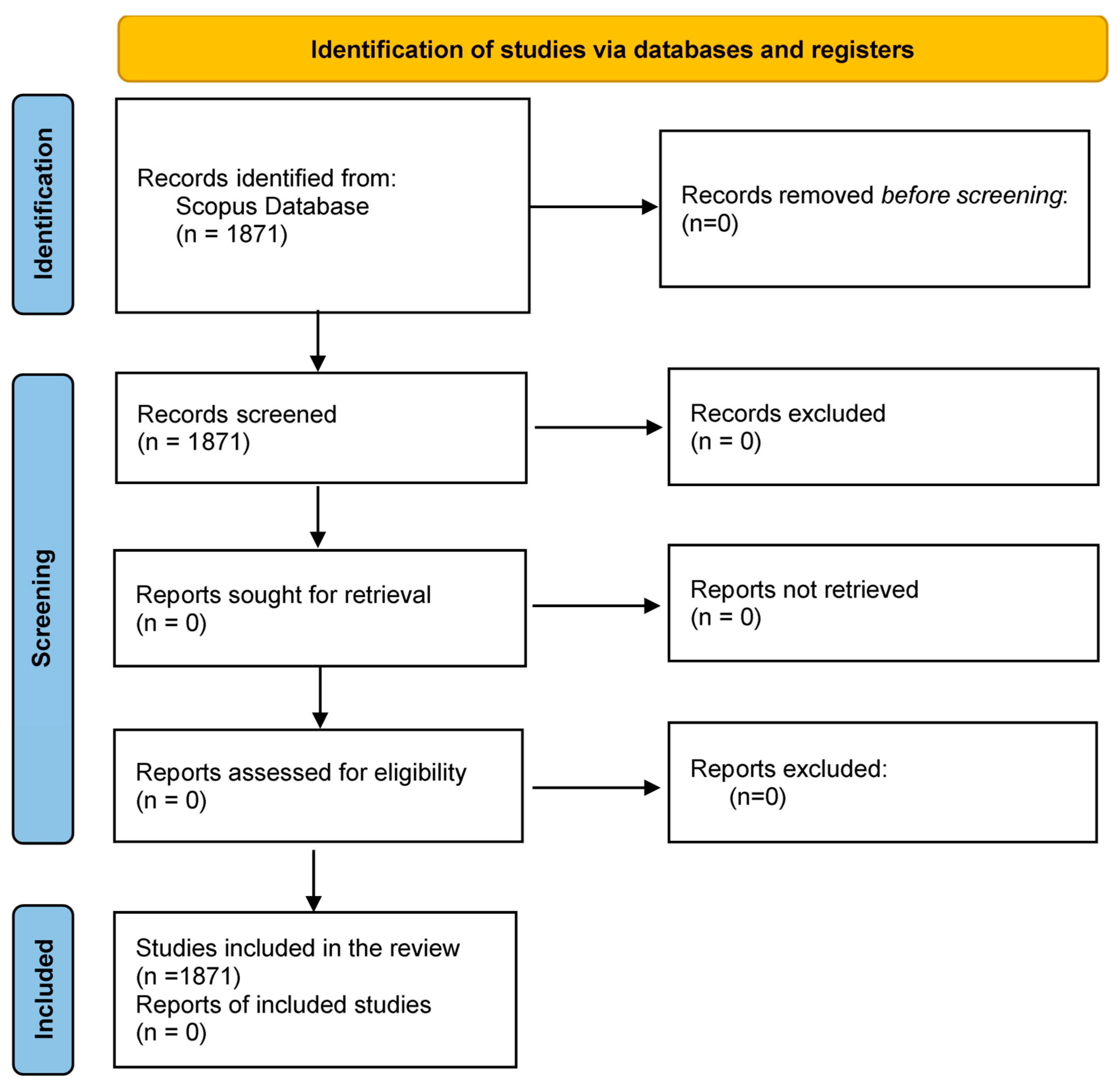
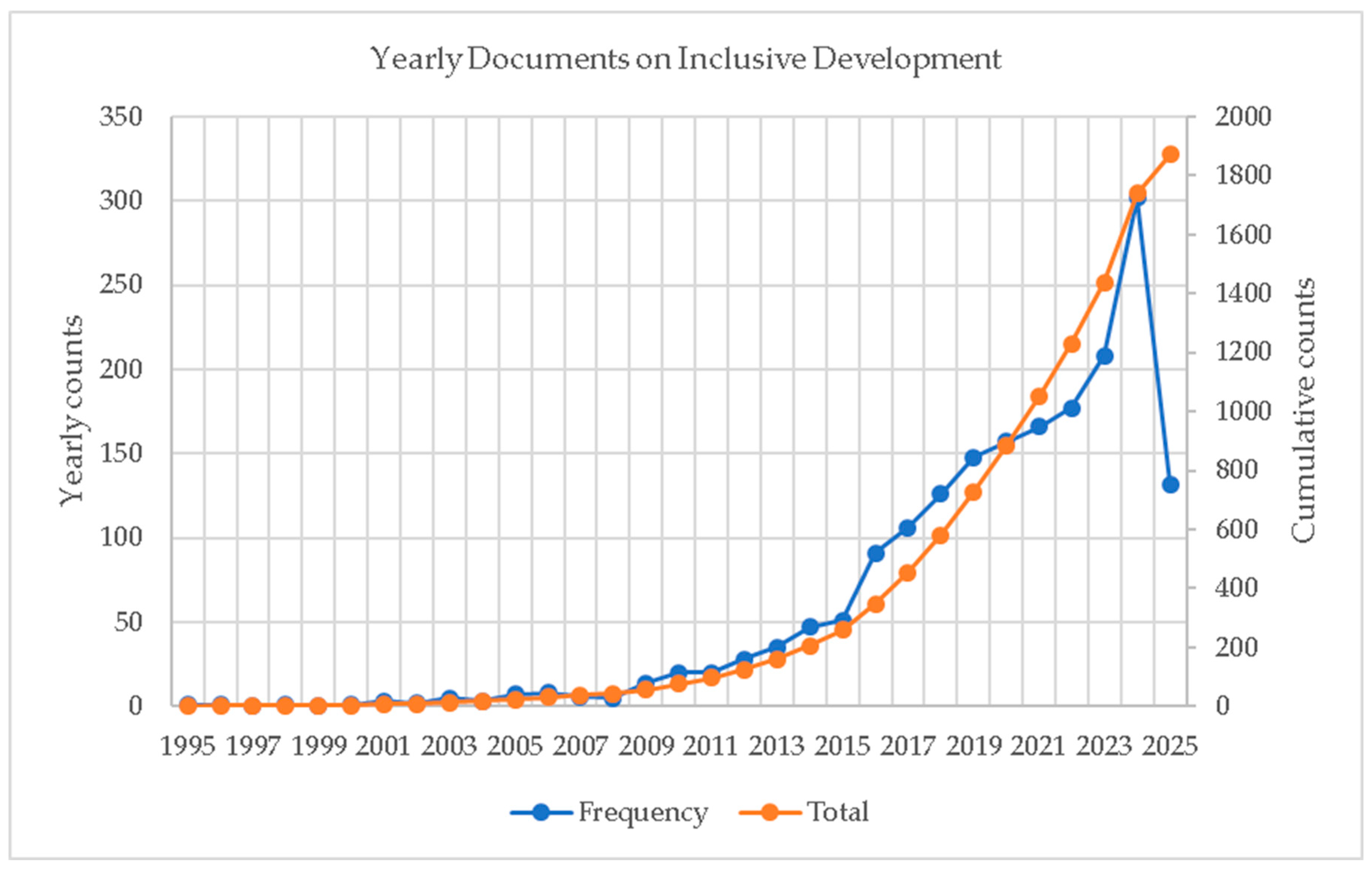
The growing prominence of inclusive development reflects persistent dissatisfaction with traditional growth-centric paradigms that failed to integrate social equity and environmental sustainability. However, the literature discourse of inclusive development lacks systematic analyses of its theoretical and conceptual structures. This paper presents a bibliometric analysis of inclusive development, mapping its intellectual structure, research dynamics, and scholarly contributions. Using bibliographic data from the Scopus and analytical tools including R version 4.5.1 and VOSviewer version 1.6.19, we assess the publication trends and citation patterns. The term first appeared in 1995, emerged slowly, and saw an exponential increase in publications around 2015, coinciding with the Sustainable Development Goals. There are 1871 publications (302 were published in 2024), with over 4500 scholars across 143 countries, publishing in over 1000 sources. The results feature prolific and influential authors, sources, countries, larger geographic regions, and publications. We find disparities among countries, anomalies between influential and prolific contributors, and hints of distinct author groupings. Findings suggest scholars and practitioners risk forming skewed conceptualizations of inclusive development without a clear understanding of the field’s structure. This paper provides such structure, highlighting the value of periodic assessments in consolidating theoretical coherence, strengthening cross-constituency scholarship, and advancing inclusive development’s role in sustainability science.
Keywords: bibliometric analysis; global development; inclusive development; performance analysis; sustainability science; Sustainable Development Goals (SDGs) bibliometric analysis; global development; inclusive development; performance analysis; sustainability science; Sustainable Development Goals (SDGs)