


Abstract
The global space economy, valued at approximately USD 400–630 billion (depending on definitional scope), is projected to expand rapidly, crossing USD 1 trillion as early as 2032 and reaching up to about USD 1.8 trillion by 2035. This growth has been driven by a surge (a roughly twelvefold increase) in satellite launches over the past decade, transforming Earth’s orbits into an increasingly congested domain plagued by space debris. The proliferation of space junk poses an escalating threat to orbital sustainability, yet effective governance mechanisms remain limited. This paper examines why conventional solutions for managing common-pool resources (command-and-control regulation, Pigouvian taxes, private property rights, allocation of tradable permits, and horizontal governance regimes) are not fully effective or are difficult to implement in addressing the orbital debris problem. Using a system dynamics perspective, the study qualitatively maps hypothesized feedback mechanisms shaping orbital expansion and space debris accumulation. It suggests that, under the assumed causal structure, reinforcing growth loops associated with geopolitical rivalry and commercial cost reductions linked to the New Space paradigm currently dominate over delayed balancing effects arising from the finite nature of orbital space, whose regenerative capacity is progressively degraded. There exists a threshold of exploitation beyond which orbital space effectively behaves as a non-renewable resource. The analysis suggests that, without binding international coordination, meaningful intervention may require the occurrence of a catalyzing crisis—e.g., a localized cascade of orbital object collisions that could transform stakeholder perceptions and enables active debris removal deployment.
1. Introduction
The value of the global space economy is currently estimated at roughly USD 400–630 billion, depending on definitional scope and accounting boundary [1,2,3,4], and is projected to grow substantially—crossing the USD 1 trillion mark as soon as 2032 according to [3] and reaching about USD 1.8 trillion by 2035 according to [4]. Although the observable universe has a diameter of approximately 93 billion light-years [5], in today’s practice, the bulk of space activity remains confined within the geostationary orbit, at an altitude of 35,786 km above the equator [6]. The material foundation of the space economy consists of satellites orbiting the Earth, which together form an invisible layer of critical infrastructure supporting transportation, finance, communications, environmental monitoring, and—last but not least—military capabilities supporting surveillance, navigation, and operational coordination.
Despite its importance, this space-based infrastructure is exposed to vulnerabilities [7]. The annual number of satellites launched into orbit increased roughly twelvefold between 2013 and 2023 [8]. This rapid expansion of space activities—driven by the “New Space” revolution and intensifying geopolitical competition—has transformed Earth’s orbital environment from a relatively pristine domain into an increasingly congested and contested resource, particularly due to the rapid growth of megaconstellations. Consider SpaceX’s Starlink, with 8300 satellites in orbit as of September 2025 (growth plan: 42,000). Between December 2024 and May 2025, Starlink performed 144,404 collision-avoidance maneuvers, highlighting escalating operational challenges. One should also take into account Eutelsat’s OneWeb (648; no further plans), Amazon’s Kuiper (129; plan: 3236), and three Chinese projects (total: 212; total plan: 30,004) [9].
This rapid increase in orbital congestion raises concerns about space debris. Since the beginning of the space age, non-operational objects have consistently outnumbered active satellites in Earth orbit [10]. At present, only about 4% of the hazardous debris population—estimated at roughly one million objects larger than 1 cm—is continuously tracked [8]. When fragments larger than 1 mm are included, the share of tracked objects falls to approximately 0.4‰, corresponding to more than 130 million debris pieces in orbit [10].
The accumulation of space debris generates tangible and growing risks. As orbital density increases, the probability of collisions rises in a non-linear manner. Beyond a certain density of objects in orbit, collisions may trigger a self-reinforcing cascade, generating debris faster than it can be removed and rendering entire orbital regions effectively unusable [11]. The total value of economic activity currently exposed to orbital risk is estimated at USD 191 billion [8]. While the broader economic and societal consequences of a partial or systemic orbital “blackout” are difficult to quantify, they would be severe. As orbital activity continues to expand rapidly, the question of long-term sustainability has therefore become increasingly urgent.
The space debris problem represents a quintessential “wicked problem,” characterized by high complexity, deep uncertainty, divergent stakeholder interests, and the absence of a global regulatory authority. Rittel and Webber [12] coined the term “wicked” to denote problems that are “malignant”, “vicious”, “tricky”, or “aggressive”. They warned that it becomes objectionable “to treat a wicked problem as though it were a tame one, or to tame a wicked problem prematurely, or to refuse to recognize the inherent wickedness of social problems” [12] (p. 161). While the issue is frequently framed through the lens of the economic theory of common-pool resource, conventional economic solutions face implementation obstacles or effectiveness barriers in the international space context.
This paper aims to critically examine why standard economic remedies for managing common-pool resources may prove inadequate for addressing orbital debris accumulation. Specifically, two research questions guide this analysis:
- RQ1: What are features of Earth’s orbits as global common-pool resources, and why do economic policy instruments face fundamental implementation obstacles in the orbital debris context?
- RQ2: How can system dynamics enhance understanding of the space debris problem beyond static economic frameworks, and what implications does this hold for policy aimed at tackling it?
To address these questions, the paper first characterizes the space debris problem and its relationship to the expanding space economy (Section 2), then analyzes it from an economic perspective as a common-pool resource dilemma and evaluates the reliability and effectiveness of proposed solutions, discussing their limitations (Section 3). Finally, Section 4 employs a systems-thinking tool, a Causal Loop Diagram, to qualitatively map hypothesized dynamic feedback mechanisms shaping orbital expansion and debris accumulation. This analysis examines how reinforcing growth loops can, under the assumed structure, outweigh delayed balancing effects, and under what conditions policy interventions might stabilize the system.
2. The Nature of the Space Debris Problem
From the perspective of the whole, the dynamics of the solar system are governed mainly by gravity [13]. The pull of gravity could be visualized by the concept of a gravity well. Anything placed on a celestial body is considered to be at the bottom of such a well and escaping it requires achieving escape velocity. The vast majority of economic activity in space is based on satellites orbiting around the Earth. Orbital motion can be seen in two ways. First, a satellite’s motion can be imagined as a constant fall toward the center of the Earth while moving parallel to its surface. As a result, the satellite’s trajectory curves. If the speed of this parallel movement is set correctly, the trajectory becomes a closed curve—that is—an orbit. The satellite will circle the Earth, constantly falling toward it, but never hitting the surface. Second, orbital motion can be seen as the result of balancing gravity with centrifugal force, which occurs when the speed parallel to the Earth’s surface is high enough. Because gravitational force decreases with the square of the distance from Earth, the centrifugal force needed to balance it is also lower at higher altitudes. This leads to an important relationship: the higher the orbit, the lower the satellite’s speed. It is worth noting that the speed required to keep a satellite in orbit does not depend on its mass. Once a satellite reaches its orbit, it does not need further propulsion. On the other hand, this principle also applies to space debris, which tends to accumulate over time, creating a growing problem [14].
Space debris refers to all human-made objects in Earth’s orbit or re-entering the atmosphere that no longer serve any operational purpose, including both intact items and their fragments or components [15,16]. Since the beginning of the space age, non-operational objects have always outnumbered active satellites in Earth’s orbit [10] and this remains true today; however, in very recent years the growth rate of spacecraft has exceeded the rate of increase in space junk, which can be broadly categorized into fragmentation debris, rocket bodies, and mission-related debris (cf. Figure 1). It should be noted, however, that despite the recent exponential increase in the number of active spacecrafts, the growth of tracked debris has so far remained comparatively modest. This divergence reflects a structural delay between spacecraft deployment and debris accumulation. New satellites are initially intact and operational, while debris emerges later through aging, failures, explosions, and collisions. One could also note the pronounced jump in the debris population between 2000 and 2010 (clearly visible in Figure 1). It can be traced to two discrete, high-impact events: the Chinese anti-satellite (ASAT) test conducted in 2007, which deliberately destroyed the Fengyun-1C satellite, and the accidental collision in 2009 between the operational Iridium-33 satellite and the defunct Russian Cosmos-2251 spacecraft [7,17].
Figure 1.
Number of objects cataloged by U.S. Space Surveillance Network in Earth orbit by types in the period 1970–2025. Source: own based on [18] (p. 8).
The statistics presented in Figure 1 refer only to objects cataloged by the U.S. Space Surveillance Network. According to the European Space Agency’s estimate (1 August 2024), the total number of space objects in Earth’s orbit is as follows:
- 54,000 objects greater than 10 cm (including about 9300 active payloads);
- 1.2 million objects between 1 and 10 cm;
- 130 million objects between 1 mm and 1 cm [10].
With the velocities of 7–8 km/s typical for Low Earth Orbits (cf. Table 1), where the number of space debris is the highest, even a 1 mm piece of metal has still harmful potential due to the hypervelocity regime in which shock-driven cratering, material vaporization, plasma formation, and extensive spallation produce damage vastly disproportionate to its small size and nominal kinetic energy [19].
Table 1.
Selected values for the speed and orbital period for main types of orbits and selected altitudes.
The proliferation of space junk in Earth’s orbits causes problems not only in space but also on the ground. It was estimated in 2014 that, on average, 10–40% of the mass of spacecraft or rocket bodies above 2000 kg that re-enter the atmosphere uncontrollably reach the Earth’s surface each week [20] (p. 9). The more recent analysis covering re-entries from 2010 to 2023 shows that over 4400 metric tons of material returned to the atmosphere, while the annual ground casualty risk from uncontrolled re-entries rose from 0.8% in 2010 to 3.5% in 2023. Thus, the number of re-entries of large spacecraft able to reach the ground is increasing. In 2023, 70% of the casualty probability was associated with orbital rocket stages, 20% with satellites and 10% with large debris fragments [21]. In 2024, the collective casualty probability for people on the ground was between 4.5% and 9.8%, while the individual annual casualty probability was not more than 10−11 [22].
Historically, the space economy was dominated by governments, whose civil and military agencies generated demand for orbital infrastructure, met through the production of launch vehicles, spacecraft, and ground subsystems [1]. Deregulation in the United States and Europe in the late 1970s and 1980s enabled the commercialization of satellite communications, followed in the 2000s by a shift toward private satellite operators [23,24,25]. However, the major breakthrough associated with the New Space revolution began in the launch segment (cf. Figure 2).
Figure 2.
Number of global and SpaceX orbital launches in the decade 2014–2023. Source: own based on [3,26,27].
The success of SpaceShipOne (2004) demonstrated that small private teams could build suborbital vehicles, enabling the emergence of Virgin Galactic and Virgin Orbit [28,29,30]. Blue Origin advanced suborbital reusability with New Shepard in 2015 and later achieved orbital capability with New Glenn in 2025 [31,32,33,34,35]. SpaceX delivered the decisive shift: Falcon 1 in 2008 proved that private actors could achieve orbital access, after decades of the Shuttle’s costly underperformance. Despite early Falcon 1 failures, SpaceX survived and went on to introduce the Falcon 9 rocket and Dragon capsule. Reusable Falcon 9 boosters reduced launch prices to a fraction of Shuttle-era levels [31,32,36,37,38,39]. ITAR restrictions and reduced access to Russian and Chinese launchers—intensified by sanctions imposed after 2014 and 2022—deepened reliance on U.S. providers, supporting SpaceX’s rise [40,41,42] (cf. Figure 2). Falling launch costs drove exponential satellite deployment, while advances in microelectronics and miniaturization shifted missions toward SmallSats. LEO megaconstellations (Starlink, OneWeb) further expanded this class [43,44,45,46,47], and Starlink revenues now fund Starship development and the pursuit of full reusability [48]. Overall, the sector has shifted from a state-led system to one shaped by private capital, a Silicon Valley mindset, modularization, miniaturization, and fixed-price procurement. Roettgen’s “triple whammy”—cheaper hardware per kilogram, higher capability density, and collapsing launch prices—captures the essence of this transformation [49] (p. 29).
Space objects, in general, and space debris, in particular, are not spread evenly across orbits; some orbital regions (LEO and GEO) are defined as protected because most traffic takes place within them [10]. However, debris persistence and collision dynamics differ strongly across altitude regimes, so space debris risk cannot be treated as uniform across orbits. It is therefore useful to outline the key features of Earth’s orbits, commonly classified into Low Earth Orbit (LEO), Medium Earth Orbit (MEO), and Geostationary Orbit (GEO).
LEO extends to 2000 km. A Very Low Earth Orbit (VLEO) sub-region of LEO is sometimes described as ‘self-cleaning’, because atmospheric drag can remove both satellites and debris on relatively short timescales. Most LEO missions operate between 500 and 1000 km, as lower altitudes experience rapid orbital decay due to residual atmosphere. This creates an incentive to consider VLEO operations for some missions, because shorter natural lifetimes can reduce long-term debris persistence. On the other hand, altitudes above 1000 km encounter radiation from the inner Van Allen belt. LEO offers the highest orbital speeds and short periods (about 90–105 min) and is the most crowded region due to its low launch cost and suitability for Earth observation, intelligence, and large broadband constellations [14,50,51,52]. At the same time, within LEO the long-term accumulation problem is most severe in higher LEO bands where orbital lifetimes are long, whereas lower LEO/VLEO benefit from faster atmospheric clean-out.
From the space-debris-removal perspective, the crucial feature of lower LEO is the presence of atmospheric particles that slow down both active satellites and debris, driving the deorbiting process. This strong altitude dependence is precisely why debris persistence differ across LEO sub-regions. According to Tory Bruno [53], the former CEO of United Launch Alliance, orbital lifetimes by altitude can be estimated as follows: about 150 km—hours, about 250 km—weeks, between 250 and 550 km—months, about 550 km—years, about 800 km—decades, and about 1000 km—centuries. These differences can be illustrated by the very early history of space exploration. The first satellite, Sputnik 1 (1957), was launched into a relatively low elliptical orbit (215–939 km). The launch vehicle remained in orbit for only two months, while the satellite itself burned up during atmospheric re-entry one month later. By contrast, the fourth artificial satellite to orbit Earth and the second launched by the United States, Vanguard 1 (1958), remained operational for six years and is still orbiting as debris in an elliptical trajectory ranging from 654 km to 3969 km [20] (p. 2).
MEO spans roughly 2000–35,586 km. Here, atmospheric drag is no longer relevant, but radiation from the Van Allen belts imposes significant operational constraints. Consequently, many MEO satellites are placed between the belts (8000–12,000 km), while GNSS systems such as GPS and Galileo operate on semi-synchronous orbits at about 20,200 km, which demands special technical solutions due to high radiation exposure. Certain telecommunications networks, such as SES’s, also operate in MEO to balance global coverage with moderate latency. Orbital periods in MEO range from several hours to nearly a day [14,50,51,54].
Geostationary orbit (GEO) is a special case of geosynchronous orbit at 35,786 km above the equator (NASA defines geosynchronous orbits as a band 35,586–35,986 km), where satellites match Earth’s rotation and appear fixed over a single longitude. GEO provides visibility of 43% of Earth’s surface and is highly advantageous for telecommunications, since ground receivers require only fixed antennas. Although high latency limits GEO’s usefulness for internet services, it remains suitable for radio and television broadcasting. GEO’s distance demands large, powerful spacecraft and exposes them to increased solar-wind flux, which requires robust shielding [14,50,51,54,55,56,57].
Figure 3 depicts the spread of objects cataloged by the U.S. Space Surveillance Network across the Earth’s orbit. The vast majority of the total cataloged objects are placed in LEO. Although LEO is defined as protected region, actual orbital activity is concentrated within relatively narrow bands [10]. One should note that there is not a uniform risk of debris persistence across all LEO altitudes. Lower LEO bands have much shorter natural lifetimes due to atmospheric drag.
Figure 3.
Number of objects cataloged by U.S. Space Surveillance Network in Earth orbit by orbit types in the period 1990–2025. Source: own based on [54] (p. 9).
The most densely populated bands in LEO have shifted over time. Table 2 shows that the highest density is getting closer to the Earth’s surface. This trend results from major transformations driven by the New Space revolution, including the democratization of access to orbit (with 78 states having launched satellites by 2024) and rapid commercialization (commercial operators accounted for more than 85% of satellites in LEO in 2023), enabled by decreasing launch costs and the deployment of large constellations such as Starlink operating at 540–572 km [8,10]. In 2023, the most congested 10 km bin in LEO was located at 540–550 km altitude, with more than 2.1 thousand objects (Table 2). According to more recent ESA data, two altitude bands currently dominate LEO occupancy. The first, at 500–600 km, contains about 7500 objects, the majority of which are maneuverable and active payloads. The second, at 750–850 km, contains about 4200 objects, most of which are inactive payloads and other non-operational objects [10].
Table 2.
Ten km bin in LEO most densely populated by objects cataloged by the U.S. Space Surveillance Network between January 2000 and September 2023.
Oltrogge and Alfano [59] estimated annual collision risk in LEO based only on cataloged objects (as of 2018). They distinguished three types of collision risk: active-on-active spacecraft, active spacecraft-on-debris, and debris-on-debris. Their analysis identified the highest accumulated risk within the 25 km bin around 775 km altitude, where the estimated annual collision rate exceeds 6.2% for debris-on-debris encounters. For active-on-inactive interactions, the highest risk—about 2.9%—occurs in the band around 500 km. The same 25 km bin also shows the highest risk of active-on-active spacecraft collisions (more than 1.85%). Because the study included only cataloged objects, the actual risk is considerably higher. Moreover, the situation has intensified since 2018 due to the exponential growth of the space economy and the rapidly increasing number of spacecraft (cf. Figure 1 and Figure 2).
The exponential growth of traffic in orbit, particularly in LEO, could lead to a critical density at which more debris is generated not only due to increased activity of operational satellites but also as a result of cascading collisions and explosions in orbit. This could trigger a chain reaction and, as a consequence, lead to an uncontrollable increase in the amount of space junk known as the Kessler Syndrome [8,10,11,20] (cf. Figure 4A–C).
Figure 4.
Visualization of the Kessler Syndrome (A–C) and its analogy to Hardin’s example of the Tragedy of the Commons (D–F). (A) sustainable number of satellites, (B) increase in satellites and debris due to short-term maximization of benefits, (C) Kessler Syndrome—unstoppable chain reaction due to cascade of collisions and explosions, irreversible loss of orbit functionality, (D) both herders respected limit of natural regeneration of the pasture, (E) one herder seeking to maximize his own benefit tends to overgraze, (F) race to the bottom by increasing herds leads to destruction of pasture and its capacity for regeneration. Source: AI-generated graphics (Grok-3 and Gemini 2.5 Flash) based on author’s own prompts.
There are four stages of increasingly aggressive means, which could be used to deal with the space debris problem:
- (1)
- Identifying, characterizing, and bounding the problem;
- (2)
- Establishing normative behaviors;
- (3)
- Mitigation;
- (4)
- Remediation [7] (p. xvi).
Addressing the orbital debris problem begins with defining, recognizing, and bounding the issue as one of shared concern. Once the problem is identified and bounded, spacefaring actors typically adopt informal normative expectations regarding acceptable behavior, e.g., that states should not intentionally pollute the orbital environment if they can avoid doing so. While widely acknowledged—though non-binding—such expectations exert a moderating influence; they are insufficient to deter all agents. Therefore, the next stage requires a shift from voluntary expectations to formal mitigation measures such as regulations sanctioned by penalties or imposed incentives. Mitigation aims to prevent further deterioration by reducing the likelihood or severity of harmful events (like orbital collisions and explosions), which could trigger a cascade of further events. Mitigation, however, cannot address hazards already present in orbit. Remediation, therefore, constitutes the final stage: reactive, targeted interventions. Unlike mitigation, which seeks to prevent degradation, remediation attempts to reverse harm by relocating debris to safer orbits or eliminating it entirely [7].
As progression through these stages moves from left to right (Figure 5), indicating increasingly aggressive measures, the magnitude of the risk generated by space debris decreases at each step. Accordingly, Baiocchi and Welser [7] argue that this progression is determined by the risk tolerance of the affected entities. In fact, the objective of the measures undertaken is not the total elimination of the problem but rather the reduction in risk to a level acceptable to the relevant stakeholders. However, one has to bear in mind that stakeholders may have a low perception of risk because cause and effect can be separated by long spans of time [7], which is precisely the case for space debris.
Figure 5.
Four stages of increasingly aggressive measures to address the space debris problem and their effectiveness in reducing risk. Source: Author’s elaboration based on ideas from [7].
3. The Economic Perspective on Space Debris and Its Limitations
Usually, the space junk issue is economically conceptualized as a tragedy of the commons [60,61,62,63,64,65,66,67]. Let us start with the typical classification of goods/resources—namely, rivalry in use and excludability—see Table 3. Olson identifies “collective goods” as those where, if person Xi in the group X1, …, Xi, …, Xn enjoys these goods, then it is not feasible for the remaining members of the group to prevent Xi from consuming them [68] (p. 14).
Table 3.
Classification of goods.
According to the Outer Space Treaty, space shall be free for use by all states [71] (Article I). Over time, growing congestion (cf. Figure 1) has increased rivalry in use—e.g., “once a spacecraft or even a piece of debris is in a given orbital slot, another spacecraft cannot simultaneously occupy the same location” [62] (p. 2). Therefore, Earth’s orbits shift from a natural public good toward common-pool resource (CPR) characteristics (Table 3).
There is a longstanding legacy of arguing that people may neglect shared resources when they prioritize private interests. Aristotle in his “Politics” observed: “for that what is common to the greatest number has the least care bestowed upon it. Everyone thinks chiefly of his own, hardly at all of the common interest” [72] (p. 37). A classic illustration of the CPR problem is Hardin’s metaphor of overuse of a common pasture in “The Tragedy of the Commons” [73]. Assume two herders (the first owning bright cows, the second dark cows) share a pasture with forage capacity L. A reasonable individual limit is L/2. If both respect this limit, both benefit and the pasture can regenerate (Figure 4D). If the first herder tries to maximize his own benefit, he increases his herd and starts to overgraze (Figure 4E). The second herder responds by also increasing his herd. In this way, both drive the pasture into overexploitation and degrade its regenerative potential [73,74] (Figure 4F). The basic insight is that when a resource is both non-excludable and rivalrous, individually rational expansion can lead to collective ruin [73] (p. 1244)—an analogy for orbital overexploitation culminating in the Kessler Syndrome (cf. Figure 4C,F). As in Hardin’s pastoral metaphor, space operators—whether national or commercial—behave rationally when maximizing their own orbital use. They appropriate the full private benefits of additional launches, while the costs of congestion are dispersed among all users. This asymmetry makes it individually rational to launch satellites, even when doing so harms the collective interest.
The common-resource problem is just a special case of a broader economic issue called externalities. Similarly, pure public goods are regarded as a polar form of externality. Externalities arise when the actions of individuals or firms impose uncompensated costs or benefits on others. Air pollution, or scientific research spillovers alter welfare on third parties while bearing only their private production costs without corresponding compensation or remuneration. Therefore, externalities may be negative, such as congestion and resource depletion, or positive, as in the case of efforts to remove negative impact on the environment. In all such cases, private incentives diverge systematically from socially desirable outcomes: activities generating negative externalities are overproduced, while those generating positive externalities are underprovided [75,76].
The inefficiency produced by externalities can be represented analytically by the wedge between marginal private and marginal social costs or benefits. Unregulated markets equate marginal private magnitudes, while efficiency requires equating social ones; externalities cause markets to misallocate resources by disconnecting private and social incentives (Figure 6). The resulting welfare loss reflects unrealized gains from moving toward the socially optimal allocation [75,76].
Figure 6.
Negative externality depicted by the space debris problem. Source: own.
3.1. Hierarchical Solutions
Several policy instruments may correct these distortions. Hardin’s recommendation is “mutual coercion, mutually agreed upon” [73] (p. 1247). Many other authors dealing with common-pool resource problems speak in a similar tone. According to Ophuls: “because of the tragedy of the commons, environmental problems cannot be solved through cooperation (…) and the case for government equipped with strong coercive powers is overwhelming” (quoted in [74], pp. 8–9). Thus, the most obvious reaction to the Tragedy of the Commons is hierarchical (top-down) intervention. Governments could create command-and-control regulations or modulate economic incentives through taxes or subsidies to align private and social costs [75,76] of operating in space. For example, governments could mandate debris mitigation standards through licensing requirements concerning deorbiting, passivation of rocket upper stages, collision-avoidance maneuvers, and similar measures. Non-compliance would result in license denial, launch restrictions, or monetary penalties.
National governments can regulate or intervene within their own jurisdictions—and some of them do. Malinowska and Szwajewski [77] presented details illustrating technical licensing requirements regarding space debris adopted by some countries. They found that the U.S. offers the most consistent set of standards and procedures, while India, despite being very active in the space sector, lacks such regulation.
Regulatory approaches vary across spacefaring nations, creating heterogeneity in compliance burdens and enforcement rigor. States that benefit from lax standards could simply refuse to participate in stricter regulatory efforts. A unilaterally imposed strict debris mitigation regime could trigger regulatory arbitrage and incentivize operators to seek more permissive jurisdictions. The fundamental problem is that orbital congestion is a global issue, while there is no world government able to impose its command-and-control regulation on sovereign states. On the other hand, large players like the United States can impose extraterritorial effects, giving U.S. regulation broader reach than formal jurisdiction suggests.
Let us consider the case of the U.S. start-up Swarm Technologies, which in December 2017 was refused authorization by the U.S. FCC. The decision was justified on the grounds that their SpaceBees satellites would be too small to be tracked reliably by the U.S. Space Surveillance Network. Nevertheless, Swarm launched SpaceBees in January 2018 on an Indian launch vehicle. However, the company transmitted signals between Earth stations in Georgia and the satellite, thus falling under FCC jurisdiction and finally paying a penalty of USD 900,000 to the U.S. Treasury [77,78]. One could also notice the first sanction for debris mitigation violation. DISH Network paid a USD 150,000 penalty in 2023 for failing to properly deorbit the EchoStar-7 satellite to the designated graveyard orbit, leaving it in GEO [79].
Another kind of measure consists of those based on creating or modulating the economic incentives towards social optimum. Pigouvian tax constitutes a mechanism for internalizing externalities by equating private and social marginal costs (cf. Figure 6). By imposing a charge equal to the marginal external harm, this instrument reshapes individual payoff structure. Subsidies represent the symmetric intervention for activities that generate positive externalities [75,80].
A Pigouvian tax could be applied to the act of launching objects into orbit, etc. (Figure 6). For example, Adilov et al. [81] demonstrated that Pigouvian tax could be used to reduce excessive launch activity pushing competing operators to “the social optimum”. Rao et al. [82] estimated that “optimal” (according to their assumption) Pigouvian tax, which they called OUF (orbital-use fee) should start at roughly USD 14,900 per satellite-year in 2022 and escalate at roughly USD 235,000 per satellite-year in 2040. Conversely, investments in debris mitigation, passivation, or active debris removal generate positive externalities. Therefore, governments could subsidize mitigation efforts or active debris removal and, in this way, correct the underprovision of positive externalities.
Governmental pathway of dealing with CPRs’ problems was questioned by Ostrom [74]. She emphasized that government intervention itself generates problems. Government or its agencies never possess complete information. Coase’s [83] critique of “blackboard economics” applies here. “The policy under consideration is one which is implemented on the blackboard. All the information needed is assumed to be available and the teacher plays all the parts. He fixes prices, imposes taxes, and distributes subsidies (on the blackboard) to promote the general welfare. But there is no counterpart to the teacher within the real economic system” [83] (p. 19). Calculating optimal fees requires quantifying external costs in monetary terms [62]. This varies by orbital regime, satellite characteristics, and background debris levels in ways that are technically complex and scientifically uncertain (cf. [17]).
Adilov et al. [81] explore “the industry’s optimal number of satellite launches as determined by a social planner who maximizes the discounted sum of expected firm profits and consumer surplus” (p. 89) However as Coase [83] argued, there is no all-knowing equivalent in real life. The figure of the “social planner” allows one to escape from the information asymmetry problem. Such a reductionist approach allows one to compute “optimal” orbital-use fees (cf. [82]), but it is worth asking how, in practice, such a tax could balance the negative externalities (space debris) with the positive spillover effects produced by the space economy itself—effects that are tremendous, however extremely difficult to measure themselves. It looks like an attempt “to treat a wicked problem as though it were a tame one” [12] (p. 161).
Taking into account the global context, developing nations could frame orbital-use fees as wealthy countries erecting barriers to access space, thereby reproducing terrestrial inequalities in outer space (cf. the analogous discussion by [84] regarding slot allocation in GEO). An additional obstacle is resistance to new taxes. Finding funds to finance subsidies is also a challenge in itself [62]. Of course, if implemented as complements, taxes could finance subsidies. However, distributing the subsidies would be contentious. Should they fund debris removal targeting all operators’ debris proportionally? Subsidize developing nations’ space programs? Compensate those harmed by collisions? Each allocation mechanism entails different equity implications and mobilizes different constituencies.
Even setting aside all these challenges, the fundamental problem of taxes and subsidies remains the same as in command-and-control regulations; there is no global government able to impose taxes or financing subsidies. Also, there is no other international entity which possesses legitimate authority to levy taxes on space activities on behalf of the international community, as advocated by Meyer [85]. This postulate is unlikely to receive enough international support [62]. Individual nations could impose unilateral fees. However, imposed locally Pigouvian tax risks undermining international competitiveness of the national space companies and invites regulatory arbitrage. Therefore, despite theoretical elegance, the economic incentive approach faces fundamental execution obstacles in the global context, which explains why it is not implemented notwithstanding academic advocacy.
3.2. Property Rights Approach
Some authors point to private property as the appropriate remedy. For example, Alchian and Demsetz [86] indicate the conversion of common rights into private rights as the cure. Privatization of common property goods is also advocated by [87,88,89,90].
The existence of clearly defined property rights that can be acquired by actors willing to pay for the use of a given resource is a necessary condition for market functioning [83]. Some authors have explored how such logic might be extended to outer space. Cooper [91] suggests dividing space resources into parcels and allocating them to states, for example, via lottery. It will be equivalent to privatization regarding states as private actors in the context of global externalities.
Similarly, Elhefnawy [92] argues that a form of “territorialization of space” could shift governance from the international level to the state level, enabling the regulatory capacities of national governments to operate more effectively. In practice, one unsuccessful attempt to assert such claims was made through the Bogotá Declaration, in which equatorial states sought to establish sovereignty over segments of the geostationary orbit. In general, allocating property rights to states would allow for the successful use of the hierarchical solutions discussed above. However, the Outer Space Treaty explicitly prohibits national appropriation of outer space [71] (Article II), rendering territorial sovereignty-based solutions incompatible with the existing legal framework [62]. Moreover, the physical characteristics of orbits other than GEO—where satellites continuously traverse orbital paths rather than occupy fixed locations—undermine spatial notions of territorialization and ownership [93].
One solution similar to the private allocation of property rights to commons is known from terrestrial environmental protection. There are schemes that allow the emission of a certain quantity of pollutants [94], e.g., well known emissions trading schemes for CO2. This application of property-rights logic focuses not on assets or territory but on the source of externality itself—namely, the generation of space debris. Tradable permits address externalities by fixing the aggregate quantity of the negative-externality-generating activity and by allowing agents to exchange rights within that cap. Through market transactions, the marginal costs of abating the negative externality become equalized across participants, ensuring that a given collective target is met at minimum aggregate cost [75,76].
One could design rights that permit operators to generate a specified amount of debris, with these rights being tradable on a market [93]. Such tradable debris-risk quotas would cap aggregated congestion, while allowing operators to seek least-cost compliance pathways. Firms or states would decide, based on their cost structures, whether to use their allocated rights or sell them. As orbital activity expands, permit prices would rise, strengthening incentives to adopt debris-efficient technologies or invest in active debris removal [62]. However, there is no central coordinator capable of imposing such a regime and verifying compliance and accountability. Despite their conceptual appeal, allocation of property rights faces substantial practical and legal challenges.
3.3. Horizontal Coordination
Ostrom [74] shows that some CPR communities can address overexploitation through self-governance rather than only through government intervention or privatization. Users do not necessarily have to be “powerless individuals” condemned to a “relentless tragedy” [74] (pp. 6–7). She summarizes the key conditions for long-enduring CPR governance, including clearly defined boundaries, monitoring with graduated sanctions, and workable conflict-resolution arrangements [74] (pp. 90–102). Thus, there is potential for resolving the “tragedy of the commons” within communities—by the users themselves. The next option for avoiding the tragedy of the orbital commons is based on horizontal coordination, including a polycentric or Ostromian governance system. Within international relations, regime theory offers some insights here. Regime could be understood as a collection of principles, norms, rules, and decision-making processes that align entities’ expectations within a specific domain of international relations. Regimes foster this alignment, set behavioral benchmarks, and promote a shared sense of duty. By countering the inherent anarchy of international relations, they could enable overcoming collective action problems by enhancing cooperation among states and various non-state actors (firms, groups, NGOs). Although numerous regimes are linked to formal organizations (e.g., the UN, WTO, IMF), they may also comprise a more flexible array of norms, principles, and procedures that shape actors’ expectations and guide their behavior [95].
According to Morin and Richard [62], the space governance system consists of plenty of overlapping regimes; thus, it fits into a “regime complex” category. A regime complex denotes an intermediate form of international governance situated between a single, comprehensive legal regime and fully fragmented arrangements. It consists of multiple, relatively narrow regimes that are loosely connected and overlap in scope. Such complexes tend to emerge when interests among key actors diverge and institutional integration is not feasible or desirable, leading to coordination through parallel and partially competing forums rather than a unified regulatory framework [96].
The actors involved in orbital debris governance (space and military agencies, space companies, NGOs, universities) are linked world-wide through many forums, such as the UN Working Group on the Longterm Sustainability of Outer Space Activities, the European Space Research and Technology Centre, Inter-Agency Space Debris Coordination Comittee, the International Telecommunication Union, and many others. Over time, they have adopted numerous guidelines, standards, and best practices at various levels [62]. These create soft law, which could mitigate the space debris problem to some extent; however, its effectiveness is subject to doubt. For example, as the ESA’s newest report summarizes, although global adoption of and compliance with space debris mitigation practices has gradually increased, current compliance levels remain insufficient to ensure long-term orbital sustainability. Despite these developments, prevailing patterns of orbital use, ongoing fragmentation events, and limited disposal success rates suggest a persistent risk of collision cascades over the long term, even in scenarios with no additional launches [10].
Some authors classify existing international space law (treaties) as hierarchical regulation in contrast to polycentric governance systems [62]. This classification reflects the binding character of the rules rather than the presence of a global sovereign and is therefore conceptually problematic. A vertical authority capable of issuing commands and enforcing compliance is absent from the international legal order, and treaty compliance emerges primarily from interdependence and the costs of non-cooperation rather than from centralized enforcement capacity. International space law is therefore better understood not as a hierarchical system of command and control, but as a formally binding regime that coordinates state behavior under conditions of decentralization at the supranational level. Accordingly, the term “horizontal governance” is used here to denote non-centralized, multi-actor coordination processes for managing orbital common-pool resources, ranging from problem identification and soft law arrangements to internationally binding treaties. In this sense, global treaties such as the Outer Space Treaty [71] can be interpreted as institutionalized outcomes of horizontal coordination among sovereign actors rather than as manifestations of centralized governance.
The international legal framework of space activity consist of legally binding documents, such as the Outer Space Treaty—OST [71], the Convention on International Liability for Damage Caused by Space Objects—LC [97], and the Convention on Registration of Objects Launched into Outer Space—RC [98]. While the obligation to preserve the space environment can be derived from OST, it lacks specific provisions necessary to clarify obligations. The other documents, such as LC and RC, define more specific duties—such as liability for damages caused by space objects and the obligation to register them—but they do not clarify any obligations regarding debris prevention [77]. “There is a general consensus in space law doctrine that space treaties neither explicitly prohibit space debris nor impose an obligation on states and their space entities to remove space objects from orbit (…) even the concept of space debris is not defined” [77] (p. 3). One could also note that the presence of non-registered objects can complicate monitoring and attribution, weakening liability/consent mechanisms. Some authors recommend developing a new, more precise obligatory regime [77,99,100,101,102].
However, even beyond the absence of explicit debris obligations, the practical force of OST principles is constrained by weak enforceability and by national-level reinterpretations. As discussed by Cozzi [103], the U.S. Commercial Space Launch Competitiveness Act (2015) [104] recognizes private title over extracted space resources while formally referring to U.S. international obligations. This direction was reinforced by the 2020 U.S. Executive Order on space resources [105], which explicitly rejects treating outer space as a ‘global commons’. In parallel, the Artemis Accords—adopted outside any supranational body and signed by 43 states by June 2024—state that resource extraction is not inherently ‘national appropriation’ under OST Article II and introduced safety zones that may functionally resemble exclusive-use areas. These developments illustrate how treaty-level principles can be stretched or bypassed through domestic law and soft-law arrangements. Cozzi [103] also notes that U.S. legislation inspired similar national approaches (e.g., Luxembourg, UAE, Japan), illustrating the broader trend toward unilateral national solutions in contested space. Table 4 juxtaposes the potential economic solutions discussed above with a slightly modified four-stage framework for addressing space debris [7]—cf. Figure 5. As can be observed, no fully reliable or effective solution is currently available. Accordingly, several instruments discussed in the literature remain largely aspirational—or ‘utopian’—under current geopolitical conditions. Feasibility is strongly conditioned by geopolitics. Under strategic rivalry, many coordination-based instruments face weak enforceability, limited willingness to disclose sensitive orbital activities, and incentives to defect or free-ride. In addition, incomplete transparency—including non-registered or deliberately non-transparent objects—can further weaken monitoring and attribution, making the introduction of effective incentives even more difficult.
Table 4.
Potential economic solutions across the four stages of addressing space debris.
Partial progress in binding mitigation standards imposed by national governments is likewise inadequate to resolve the problem. However, when such measures apply to a country as significant for the space economy as the United States, they may nevertheless exert a noticeable impact. The achievements of horizontal coordination, including polycentric governance, deserve recognition; however, existing approaches remain effective only to a very limited extent and are clearly insufficient to eliminate the threat to continued access to Earth’s orbits in the long-term. Therefore, both national state interventions through command-and-control regulations, as well as the emergence of non-binding soft-law regimes, have reduced debris generation relative to an unregulated baseline. However, they do not have sufficient potential to secure the sustainability of the orbital environment for future generations.
Addressing space debris entails intertwined legal, technical, economic, and political difficulties that together constitute an unresolved challenge. Thus, in public policy terms, space debris can be characterized as a “wicked problem” [12,106]. Its wickedness stems primarily from three features: the high level of complexity involved, significant uncertainty regarding risks and the consequences of intervention, and deep divergences in perspectives and values among stakeholders. Accordingly, a holistic approach is required [7,107]. Some wicked problems take the form of creeping crises, in which impacts accumulate slowly over time and uncertainty persists when they warrant high priority [1]. The space debris problem exhibits these characteristics, making system approach particularly well suited to analyze it. The wicked character of the space debris problem implies that its dynamics cannot be understood as a set of isolated, linear cause–effect relationships, but rather as the complex outcome of interacting reinforcing and balancing feedback loops, as well as time lags. Consequently, let us enhance the economic perspective with system dynamics (cf. [108,109,110]).
4. Enhancing the Economic Perspective Through Systems Thinking
The preceding chapter approached space debris primarily through a standard economic lens: commercial agents expand orbital use and generate negative externalities, which could be addressed, inter alia, by governmental regulation or incentive-based instruments. Yet, framing the problem in this way risks overlooking that states are not only exogenous regulators or interveners, but also endogenous actors engaged in the game. Moreover, what is crucial for the space debris problem is that it manifests across different levels and issues—national and global, private and social costs, and benefits and welfare (note that the social welfare from a particular national point of view does not inevitably equal the welfare of the global community [6]). The aim of this section, therefore, is not to replace economic reasoning but to embed it within a broad, dynamic, feedback-oriented representation of the orbital system.
In this section, the Causal Loop Diagram (CLD) is used as a qualitative system dynamics device to articulate hypothesized mechanisms, feedback structures, and delays that may generate characteristic behavioral tendencies in the orbital system. The CLD in Figure 7 does not constitute a quantitative model, does not estimate parameters, and does not empirically validate causal magnitudes. Consequently, statements derived from it should be interpreted as qualitative implications of the assumed causal structure—useful for diagnosis, hypothesis formation, and locating potential leverage points, rather than as results in the sense of tested predictions, calibrated trajectories, or numerically grounded forecasts. The Causal Loop Diagram (CLD) developed here represents a conceptual synthesis. It adopts deliberately broad system boundaries (Figure 7) because it treats the space economy not as a purely commercial complex, but as a system in which states are not merely regulators but also major demand drivers and investors. Thus, governments act in a triple role: as providers of national security (defense establishments and military space organizations), as sponsors of civil space exploration (space agencies, science and technology policy), and last but not least, as regulators, tax imposers, or actors seeking to build or obstruct collective, horizontal regimes. This matters because the current acceleration of space activity is increasingly conditioned by geopolitical rivalry and security competition—the unfolding New Space Race [6] elevates the long-run debris stock and collision risk.
Figure 7.
Conceptual framework illustrating the interaction between the space economy and the accumulation of orbital debris in the form of a Causal Loop Diagram (CLD). Notes: Boxes represent endogenous variables in the system, including variables highlighted in blue, which denote the debris subsystem. Purple labels indicate exogenous drivers; orange labels and capital letters mark policy intervention points. Arrows indicate causal relationships; green arrows and “+” denote positive effects, while red arrows and “–” denote negative effects. Double slashes on arrows indicate delays in relationships. Source: own.
According to Elvis [111], people engage in challenging endeavors for three fundamental motivations: love, the pursuit of gain, and fear. These drivers are evident in space exploration and utilization—manifesting as curiosity (love of knowledge), the pursuit of economic returns, and concerns over strategic or political subordination to others (the inverse expression of ambitions for power and dominance) [6].
Some adhere to an idealistic vision of the peaceful conquest of space, driven by the efforts of scientists and engineers motivated by a love for knowledge and a quest for technological breakthroughs. Of course, the journey toward space exploration begins with the vision of a few pioneering scientists [112,113]. Yet, scientific curiosity alone was insufficient to initiate space activities; substantial financial resources were required, and, at that early stage, the technical ambitions were far too speculative to be sustained by commercial incentives. Instead, the first concrete steps toward spaceflight were taken within the context of the military programs of two totalitarian regimes—Nazi Germany and the Soviet Union [112,113]. As Bowen [50] argues, the foundational technologies of spaceflight were developed primarily as instruments of warfare; therefore, he coined the origins of space exploration as an “original sin”. The Space Race was one of the key aspects of the Cold War, a high-stakes competition between two superpowers (U.S. and USSR) fundamentally driven by a geopolitical struggle for superiority and dominance [36,50,112,113,114]. After the collapse of the USSR, one could observe the relaxation of geopolitical tensions and the advent of global cooperation with the most emblematic symbol of the International Space Station ISS [114,115].
However, with rising geopolitical tensions cooperation has weakened. China has emerged as the principal rival to the United States, not only as a second world economy but also as a competitor in space exploration and exploitation, which surpassed Russia. China has made significant progress across multiple space technologies, including lunar exploration and human spaceflight [50,51,116,117].
Global government spending on space reached a record level of approximately USD 135 billion in 2024. The United States accounted for about USD 79.7 billion, followed by China with over USD 19 billion [118]. This represents a significant shift compared with 2013, when total global public spending amounted to USD 53.6 billion and China invested only USD 3.7 billion [119]. Although China’s space expenditures remain roughly four times lower than those of the United States, the growth dynamics of Chinese spending are substantially stronger [118]. The U.S. share of global public space spending declined from approximately 75% in the early 2000s to 59% in 2024 [118,119], despite the establishment of the United States Space Force and its rapidly growing budget (e.g., USD 15.4 billion in 2021 and USD 30.3 billion in 2024) [120]. In parallel, the People’s Liberation Army has been evolving from a force primarily focused on nuclear deterrence into one capable of conducting a broad range of coercive operations in, from, and to space [117].
In 2018, global military expenditures accounted for 37% of total governmental spending on space [119]. According to the ESA report [2], this share has increased steadily since then, slightly surpassing civilian spending and reaching 50.2% of total global governmental space expenditures in 2023.
These data are consistent with the view that a New Space Race is unfolding [6] and is increasingly driven by the pursuit of geopolitical dominance, with defense and military spending beginning to outperform civilian expenditures (many of which nevertheless support dual-use technologies). This motivates a plausible scenario in which the near-term future of space exploration and utilization may be characterized by increasingly assertive approaches to space policy, potentially including further steps toward weaponization (cf. [51]). While this trajectory may sustain growth pressures in public spending and accelerate space economy growth, it is associated with heightened risks including those of space debris.
Figure 7 presents a Causal Loop Diagram of the hypothesized interaction between the space economy and the accumulation of orbital debris, illustrating how the assumed structure can generate the jointly acting reinforcing and balancing loops. Figure 7 should be read as a conceptual map of endogenous variables (boxes) and their hypothesized causal interdependencies, complemented by two annotated classes of factors: (1) exogenous drivers (purple labels), which are not being generated by the internal feedback structure, and (2) policy intervention points (orange labels, capitals), which represent deliberate attempts to introduce additional impact channels. The central mediating variable is the expansion of the space economy (satellites in orbit), which aggregates military, civil, and commercial activity in Earth orbit. In the CLD, expansion can be reinforced by four reinforcing feedback loops (described below), while at the same time increased orbital activity generates debris, which raises collision risks; therefore, the Kessler Syndrome can, with delays, erode economic efficiency, knowledge generation, and security capabilities. The diagram is intended to capture a coupled growth–constraint structure in which strong reinforcing dynamics coexist with endogenous limits arising from the congestion of a depletable open-access resource. Policy and operational measures (put into the diagram as orange variables in capital letters) are represented as additional balancing intervention channels. They will be discussed further.
Let us start with the model without any exogenous variables and without any interventions (Figure 7 without purple and orange labels). The diagram characterizes potential sources of dynamics via relations (depicted in the diagram by arrows) between elements (variables), while double slashes denote delays. Each link has a defined polarity, which describes the direction of influence that one variable, X, has on another variable, Y. A link is said to be positive (green arrows denoted by a “+” mark) when, holding all else constant, an increase in X causes Y to increase relative to what it would otherwise have been. A link is said to be negative (red arrows dentoed by a “–” mark) when, holding all else constant, an increase in X causes Y to decrease relative to what it would otherwise have been. Note that in the case of chain consisting of two relations, two negative links equals positive impact. For example: Launch costs → (−) Commercial demand for space exploration and utilization, while Increasing scale economies and learning-by-doing effects → (−) Launch costs. Therefore, Increasing scale economies and learning-by-doing effects impacts positively on Commercial demand for space exploration and utilization through decreasing Launch cost.
When this section discusses reinforcing and balancing structures, it is intended as a qualitative interpretation consistent with the diagram’s feedback logic, not as empirical confirmation nor as time-specific claims about the onset, magnitude, or probability of particular outcomes.
Four endogenous reinforcing mechanisms (positive feedback loops) are theorized to drive the dynamics of the Expansion of the space economy (satellites on the orbit):
- R1. Geopolitical rivalry (New Space Race) loop
Drive for dominance/fear of strategic subordination → (+) Military demand for space exploration and utilization → (+) Expansion of the space economy → (+) Effectiveness of national security capabilities → (+) Relative outcome of the space race → (+) Drive for dominance/fear of strategic subordination;
- R2. Commercial cost reduction loop
Increasing scale economies and learning-by-doing effects → (− on both) Launch costs and Satellite manufacturing and operating costs → (from both −) Commercial demand for space exploration and utilization → (+) Expansion of the space economy → (+) Increasing scale economies and learning-by-doing effects;
- R3. Commercial demand-driven loop
Commercial demand for space exploration and utilization → (+) Expansion of the space economy → (+) Commercial activity effectiveness and efficiency → (+) Commercial demand for space exploration and utilization;
- R4. Civil public-sector demand-driven loop
Civil public-sector demand for space exploration and utilization → (+) Expansion of the space economy → (+) Effectiveness of scientific and technological knowledge gaining → (+) Civil public-sector demand for space exploration and utilization.
There is an additional endogenous reinforcing mechanism in the system, which rules the dynamics of the Space debris accumulation—namely, R5. Debris collision cascade: Space debris accumulation → (+) Frequency of collisions and explosions → (+) Space debris accumulation. This fifth positive feedback loop is linked with the previous four via Expansion of the space economy, however with a lag in the relation.
There are three balancing loops that can, with uncertain time lags, counteract the Expansion dynamics of the space economy (satellites in orbit):
- B1. Debris impact on national security capabilities
Space debris accumulation → (delay−) Effectiveness of national security capabilities → (+) Relative outcome of the space race → (+) Drive for dominance/fear of strategic subordination → (+) Military demand for space exploration and utilization → (+) Expansion of the space economy → (delay+) Space debris accumulation;
- B2. Debris impact on commercial performance
Space debris accumulation → (delay−) Commercial activity efficiency → (+) Commercial demand for space exploration and utilization → (+) Expansion of the space economy → (delay+) Space debris accumulation;
- B3. Debris impact on knowledge generation
Space debris accumulation → (delay−) Effectiveness of scientific and technological knowledge gaining → (+) Civil public-sector demand for space exploration and utilization → (+) Expansion of the space economy → (delay+) Space debris accumulation.
Senge noted that “one of the most important and potentially most empowering, insights to come from (…) system thinking is that certain patterns of structure recur again and again” [108] (p. 93). Those patterns are called “archetypes”. In general, the conceptual pattern depicted in Figure 7 can be interpreted through the lens of the ‘limits to growth’ archetype. The main mechanism of this generic structure is the interrelation between two feedback mechanisms: the reinforcing process and the balancing process; the last one being characterized by delayed and non-linear constraints [108,109,110].
In the proposed framework, activating the reinforcing loops would theoretically lead to amplifying growth. One could hypothesize that R1–R4 loops may initially dominate (the interaction of the growth engines creates vicious cycle of growth), while B1–B3 constraints are delayed and may be less salient initially; thus, the structure is consistent with strong expansionary pressure. As the expansion develops, the balancing process has approached a limiting condition, and the debris subsystem can act as a ‘drag’. If, however, all actors are all up against the same limit and the expansion does not slow down enough, the debris effects become severe and can, in principle, shift from ‘drag’ to catastrophic failure modes due to chain reactions and cascading effects triggered by expansion. At this point, the “limits to growth” archetype is shifting to the “tragedy of the commons” archetype [121] (p. 24), where individually rational expansion decisions collectively degrade a shared congestible orbital environment. Space debris accumulation may progressively (plausibly in non-linear, self-reinforcing manner) undermine commercial performance, national security capabilities, and scientific and technological effectiveness.
One could also find that R1 loop resembles “escalation” or “arms-race” archetype [108,109,110]. Consider two states each see their national security as depending on a relative advantage over the other (think about Relative outcome of the space race in Figure 7 as one aspect of the broader arms race due to the “New Cold War”). When one state gains ground, the other interprets this shift as an increased threat and responds by intensifying its own efforts to restore the balance. This reaction, in turn, is perceived by the first state as threatening, prompting further escalation. Although each side tends to interpret its own actions as defensive, the reciprocal nature of these responses generates a self-reinforcing dynamic that drives behavior well beyond what either actor initially intended. The resulting escalation can be rapid and self-reinforcing and can reach extreme levels with surprising speed, potentially becoming self-limiting through disruption, exhaustion, or external shocks of one of the rivals (cf. The loss of strategic relevance of the space race due to a decisive war between superpowers in Figure 7).
The model also includes several exogenous drivers (purple labels in Figure 7), which do not arise endogenously from interactions within the system. On the reinforcing side are:
- ER1. Paradigm shift toward the New Space (Silicon Valley comes into the space industry) constitutes an external impulse; the entry of private capital, and Silicon Valley–style innovation ecosystems into the space sector lowered entry barriers, accelerated technological cycles, and intensified commercialization; this shift strengthens multiple reinforcing loops simultaneously, particularly R2 loop (directly) and R3 loop (indirectly);
- ER2. Increase in societal willingness to bear costs expands public-sector financial resources allocated to both military and civilian space initiatives;
- ER3. Increase in economic capacity (GDP) strengthens public budgetary commitments to military and civilian space programs.
On the balancing side are:
- EB1. The loss of strategic relevance of the space race due to a decisive war between superpowers or other geopolitical shocks could abruptly weaken R1 loop by breaking the link between relative space capabilities and national security payoffs;
- EB2. Technological breakthroughs. This exogenous driver acts as a balancing influence indirectly by shaping the feasibility and effectiveness of active debris removal (the policy instrument discussed in the following paragraphs).
These five variables operate outside the core feedback structure but shape the strength, persistence, and dominance of the internal loops.
Having outlined the theorized dynamics of the system in the absence of intervention, the framework can now be used to conceptually analyze potential policy instruments as deliberate attempts to introduce additional balancing intervention channels (orange labels in capital letters in Figure 7):
- B4. Externality pricing channel
Pigouvian tax or permit price → (+ on both) Launch costs and Satellite manufacturing and operating costs → (from both −) Commercial demand for space exploration and utilization → (+) Expansion of the space economy → (+) Space debris accumulation;
- B5. Situational awareness and collision-avoidance channel (1)
Situational awareness and collision avoidance → (+) Satellite manufacturing and operating costs → (−) Commercial demand for space exploration and utilization → (+) Expansion of the space economy → (+) Space debris accumulation → (+);
- B6. Situational awareness and collision-avoidance channel (2)
Situational awareness and collision avoidance → (−) Frequency of collisions and explosions→ (+) Space debris accumulation;
- B7. Debris mitigation channel
Debris mitigation → (+ on both) Launch costs and Satellite manufacturing and operating costs → (from both −) Commercial demand for space exploration and utilization → (+) Expansion of the space economy → (+) Space debris accumulation;
- B8. Active debris removal channel
Active debris removal → (–) Space debris accumulation → (+) Frequency of collisions and explosions→ (+) Space debris accumulation. The effectiveness of this balancing channel depends on exogenous driver EB2. Technological breakthroughs, which condition the practical feasibility and real-world performance of active debris removal as a policy instrument.
Given the diagram’s asymmetry (fast reinforcing links vs. delayed constraints), reinforcing loops R1–R4 may remain more salient for prolonged intervals without some kind of interventions, while balancing effects associated with debris accumulation (B1–B3 loops) can act only with long delays and increasing non-linearity. The Causal Loop Diagram (Figure 7) highlights a fundamental structural asymmetry. While the current growth of the space economy is driven by several reinforcing mechanisms; the accumulation of orbital debris introduces balancing effects that can operate with long and uncertain delays. This asymmetry explains why debris-related risks tend to be underestimated in the short run while becoming increasingly destabilizing in the long run. This configuration is consistent with an overshoot risk, potentially followed by stagnation or, in extreme cases, abrupt degradation if critical thresholds in the debris subsystem are approached. Policy instruments therefore should aim at weakening the threats of debris cascade before the system reaches those thresholds. However, their effectiveness and feasibility differ substantially.
Regarding Pigouvian tax or tradable permit price, a key practical question concerns their required strength: how strongly should such instruments dampen the dynamics of the space economy in the presence of a powerful and persistent trend of declining costs, including launch costs? For example, the weighted average cost of launching one kilogram of payload to LEO (in 2021 dollars) for medium-lift rockets fell from approximately USD 38,600 in the Triad countries in the 1960s–1980s to USD 9135 in the twenty-first century—and to USD 2600 in the case of Falcon 9 [6] (p. 27). This trend is expected to continue as Starship rocket becomes fully operational and as competitive rivalry intensifies further (e.g., with New Glenn rocket).
It is unclear whether a globally coordinated effort should seek to dampen these achievements, thereby risking the loss of benefits caused by the expansion of the space economy, including substantial spillover effects for the terrestrial economy. Moreover, the valuation of the relevant externalities remains deeply uncertain. At present, the cost of debris externalities due to launching an additional satellite appears relatively low, suggesting that any genuine Pigouvian tax would also be low and thus largely dominated by the strong downward trend in launch costs. To meaningfully slow the expansion of the space economy, tax rates would therefore have to be probably set far above estimated externality cost—at which point the instrument would cease to be Pigouvian in nature.
Finally, it remains unclear who would be able—and on what basis—to balance the benefits of reducing debris-related risk against the opportunity costs of constraining an activity characterized by large positive externalities, including technological spillovers and knowledge creation. Moreover, in contrast to measures that directly address the debris stock, Pigouvian pricing operates indirectly and seems to be structurally ill suited to counter delayed, non-linear accumulation dynamics. Taken together, these considerations suggest that instruments focusing on internalizing externality face structural limitations and questionable effectiveness as standalone solutions for addressing the long-term dynamics of orbital debris accumulation.
Situational awareness and collision avoidance introduce balancing feedback that operate primarily by reducing the Frequency of collisions and explosions, rather than by directly lowering the existing debris stock. These measures act basically on the collision-generation mechanism itself, weakening the reinforcing debris-cascade loop (R5). It also acts by increasing Satellite manufacturing and operating costs; however, analogously to the Pigouvian tax, it is unlikely it could severely dampen the drivers of orbital expansion in that way. This instrument is intended to reduce collision probability (especially among maneuverable assets); however, it does not reverse the accumulation of debris. Consequently, it is unlikely to be sufficient as a standalone approach for ensuring long-term orbital sustainability.
Debris mitigation—such as passivation requirements, end-of-life deorbiting, and design-for-demise standards—also operates as balancing feedback. It acts by reducing the rate at which future debris is created and therefore slows down Space debris accumulation. It also acts by increasing Launch costs, as well as Satellite manufacturing and operating costs; however, its dampening potential seems to not be strong enough to moderate overwhelming impact of cost reduction trend accompanying the New Space revolution. Thus, mitigation is likely to moderate the inflow of new debris per unit of orbital activity, thereby weakening the coupling between expansion of the space economy and debris accumulation; however, it leaves the large and growing legacy stock untouched. As a result, its stabilizing effect unfolds slowly and is highly sensitive to compliance levels across operators. In a contemporary environment strongly driven by geopolitical tensions, mitigation standards are vulnerable to uneven implementation. They therefore contribute to slowing degradation, but may not, on their own, be adequate to prevent long-run destabilization once debris density approaches critical thresholds.
Active debris removal (ADR) differs qualitatively from the previous instruments because it directly targets the outflow from the debris stock. Within this framework, ADR represents the only intervention theoretically capable of structurally relaxing the binding constraint imposed by accumulated debris and of weakening the reinforcing collision-cascade loop at its source. For this reason, it represents potentially the most powerful stabilizing mechanism in the system.
At the same time, ADR remains the least mature and institutionally most problematic option. Proven scalable technologies do not yet exist beyond early-stage demonstrators, and operational deployment would require substantial, long-term financing and highly robust coordination mechanisms. Accordingly, in the CLD (Figure 7) this constraint is represented as an exogenous driver (EB2. Technological breakthroughs), which conditions whether ADR can become feasible and effective at scale—and thus whether the balancing channel B8 can be activated in practice. Beyond technical and economic barriers, ADR is additionally constrained by unresolved legal and political issues. Under the Liability Convention [97]—states retain responsibility and potential liability for space objects, including defunct satellites and debris, which complicates consent, risk allocation, and compensation frameworks for removal operations. Moreover, as Bowen [122] emphasizes, ADR systems are inherently dual use: capabilities required for rendezvous, capture, and deorbiting debris are technically indistinguishable from those needed for anti-satellite operations, making ADR politically sensitive. These legal ambiguities and security perceptions raise the risk that unilateral or fragmented ADR initiatives could provoke strategic mistrust, rather than cooperation. Moreover, the benefits of debris removal are largely non-excludable, while costs of deployment technology are immediate and beared by concrete entity—creating strong free-rider incentives.
Free-rider issue is often conceptualized by the prisoner’s dilemma—namely, as a cooperation problem [61,123]. In a prisoner’s dilemma, each agent has a clear incentive to act opportunistically (free riding) regardless of what the other player does, because opportunism always yields a higher individual payoff. When both players reason in this way, the outcome is mutual opportunism. This result is stable (Nash equilibrium), however, collectively inefficient (lacks Pareto optimality). Both players would be better off if they cooperated, but individual self-interest prevents them from reaching this outcome [124]. The prisoner’s dilemma therefore illustrates a fundamental tension between individual rationality and collective welfare, and as such could explain a broad class of problems, from climate change to space debris.
Let us consider Barrett, who ask the question: “does the prospect of approaching catastrophes make international cooperation to limit emissions any easier?” [125] (p. 1). He found, that if the catastrophe threshold is known with certainty, such awareness fundamentally alters the challenge by transforming a cooperation problem into a coordination problem. In the words of game theory, such certain knowledge switches the prisoner’s dilemma (challenge: collective aim achievement) into a battle of the sexes game (challenge: consistent behavior achievement) [126]. Diekert [61] adopts Barrett’s insight to the space debris and reformulates it using the metaphor of a “cliff edge” (p. 1784). If all agents, who are walking over the cliff can clearly see the location of the cliff (catastrophic threshold), they can coordinate on stopping before reaching it [61]. When a catastrophe threshold is known with certainty, “nature herself creates the conditions that allow the international agreements to be effective” [125] (p. 1), because unilateral deviation becomes uniquely unattractive once it risks triggering “a discontinuous jump in the damages” [61] (p. 1784).
Once the location of the cliff is uncertain, obscured by “fog”, the coordination logic breaks down. Actors no longer know how close they are to the precipice, nor whether their individual restraint is pivotal—“it is so foggy, that they do not see anything, and do not know where exactly to stop” [61] (p. 1785). The problem then remains a difficult-to-enforce cooperation setting, characterized by free riding, rather than a focal-point coordination game [61,125]. Applied to space debris, the implication is clear. Even broadly shared awareness of a potential Kessler-like catastrophe is insufficient to stabilize behavior, because expert assessments disagree on the timing of the threshold, ranging from decades to centuries depending on assumptions.
For example, in 1978, Kessler and Cour-Palais wrote that “satellite collisions would produce orbiting fragments, each of which would increase the probability of further collisions, leading to the growth of a belt of debris around the Earth. Under certain conditions the belt could begin to form within this century and could be a significant problem during the next century” [11] (p. 2637). However, about three decades after this seminal paper, Kessler and colleagues became less alarmist, noting that “current population densities would require decades to produce a significant change in the small debris environment and much longer to approach a condition where Earth might be ‘completely cut off from space’” [127] (p. 2). Nozawa et al. [128] studied debris impacts on GDP over a 200-year horizon and operationalized the Kessler Syndrome using a debris-stock threshold (approximately 350,000 pieces larger than 10 cm), which would have reached between 2080 and 2140 depending on the countermeasures undertaken. The same time horizon was used by Bongers et al. [129], who found in their simulations that dramatic changes would begin only after 2150.
Adilov et al. [130] made a crucial distinction between the physical and the economic Kessler Syndrome, based on whether an orbit is physically or economically usable. The physical syndrome describes a self-sustaining collision chain reaction that renders an orbit physically unusable, while the economic syndrome occurs at a lower debris threshold, where collision risk makes the orbit economically unprofitable; in their economic model, this can be expressed as a cutoff beyond which firms stop launching satellites (i.e., the equilibrium launch rate falls to zero). The physical syndrome is understood as a threshold at which the collision probability equals one, i.e., all functioning satellites are hit within a year. In Bongers et al.’s [129] simulations, no such threshold is reached; however, in the laissez-faire scenario the probability of collisions rises to 0.6 by 2223. This is still far from the physical unusability threshold; but, it can already be economically critical, because the ‘economic Kessler Syndrome’ is defined at lower, economically based thresholds—for example, when launches cease because operating becomes unprofitable (Adilov et al. [130]), or when the satellite population begins to decline despite continued capital accumulation on Earth and sustained economic growth (Bongers et al. [129], p. 2148). A recent study by Rao and Rodina [131] predicts that the Kessler Syndrome may emerge between 2040 and 2184, with the precise timing being highly sensitive to parameter calibration.
That short review above indicates both (1) that the Kessler Syndrome is a very long-term issue and (2) that there is huge uncertainty about the catastrophic threshold and its proximity. This uncertainty concerns not only timing, but also how the threshold is defined and measured (debris-stock thresholds, collision-probability thresholds, or economically defined viability thresholds). Such uncertainty allows agents to rationally take further steps forward, even as the system approaches a potentially catastrophic shift. Let us return to Figure 5. The progression across stages does not necessarily have to be gradual. As Baiocchi and Welser [7] emphasize, a single critical event can abruptly alter collective risk tolerance and propel decision-makers across several stages at once.
A simple analog is the 2010 Deepwater Horizon accident in the Gulf of Mexico. It was an offshore oil well blowout that caused a large oil spill and visible environmental and economic damage. As Baiocchi and Welser [7] discuss, such a critical event can quickly reduce tolerance for risk and increase political will to act, impose constraints, and fund remediation. However, the case also shows that political pressure is not enough if the remedy is not ready for real operations: several early containment attempts failed or worked poorly in deepwater conditions, and the reliable solution required several months, specialized capabilities, and substantial funding. The implication for orbital debris governance is that a catalyzing crisis may speed up coordination and funding for remediation, but effective action still depends on having scalable and proven ADR capabilities.
In the orbital context, a severe, localized cascade of object collisions—effectively, a localized minor catastrophe in one of the key LEO bands—could function as such a trigger. By transforming an abstract, future risk into an immediate and observable loss of orbital functionality, such an event could collapse uncertainty about thresholds and temporarily convert the problem from a hard cooperation setting into one resembling Barrett’s [125] known-with-certainty catastrophe case. Under these conditions, active debris removal (the “Remediate” stage in Figure 5) may shift from being politically infeasible to becoming an urgent response aimed at restoring risk to a level deemed tolerable by the spacefaring community. This appears to be a plausible scenario for how the space debris problem may ultimately be addressed. However, it presupposes the availability of developed and proven ADR technologies. In this context, early investment in ADR may represent a risky but potentially highly rewarding strategy for those states and firms willing to pursue it, positioning them as first movers once remediation becomes unavoidable.
5. Concluding Remarks
This paper argues that the space debris problem, while conceptually analogous to terrestrial common-pool resource challenges, has unique characteristics that make standard economic solutions potentially ineffective or difficult to implement. Economic theory provides coherent proposals for addressing externalities, congestion, and common-pool resource degradation at the local or national level. However, there exists no global government empowered to levy Pigouvian tax, allocate property rights, enforce command-and-control regulations, or coordinate tradable permit schemes. Horizontal governance regimes, while valuable for establishing information-sharing mechanisms and soft-law norms, may be insufficient.
The system dynamics analysis suggest that reinforcing feedback loops—especially geopolitical rivalry and increased orbital affordability due to cost reductions—currently drive vigorous expansion of the space economy. In contrast, balancing processes linked to limited orbital capacity operate with long delays and are obscured by uncertainty fog. This imbalance is consistent with an overshoot risk and the possibility of abrupt system shifts. Within this conceptual framework, active debris removal (ADR) is uniquely positioned among the discussed instruments because it directly addresses the accumulated debris stock and can weaken the collision-cascade reinforcing feedback loop at its source. However, ADR faces severe technological, economic, legal, and political obstacles.
The analysis suggests a plausible—if troubling—pathway forward: meaningful action may require a catalyzing crisis. A severe, localized cascade of orbital object collisions that demonstrably degrades orbital functionality could transform the problem from a difficult cooperation dilemma into a coordination challenge with a focal solution. Such an event would collapse uncertainty about catastrophic thresholds and make ADR deployment both politically feasible and commercially viable. This scenario underscores the importance of early investment in ADR technologies, positioning first movers to capture significant strategic and economic advantages when remediation becomes unavoidable.
This study’s limitations stem primarily from its analytical rather than empirical approach. While the Causal Loop Diagram used here offers some interesting insights based on hypotheses about the key feedback structures, it does not provide quantitative predictions, empirical validation, simulation results, and optimal policy parameters. The CLD is qualitative in nature and does not generate numerical results or probability estimations. Therefore, statements about system behavior should be interpreted as theoretical propositions derived from the conceptual framework, rather than empirically demonstrated facts. Nevertheless, the CLD has capacity to organize and synthesize diverse factors and causal mechanisms that operate across multiple domains (economic, political, physical) and temporal scales. Moreover, it makes explicit the plausible feedback structures that are often overlooked in static analyses focused on one domain. Thus, it could facilitate an interdisciplinary dialog. Future research could advance along two complementary trajectories. First, systems-thinking applications could extend beyond qualitative structural modeling based on Causal Loop Diagram (CLD) to include quantitative system dynamics simulations with sensitivity analyses, enabling explorations of tipping points, policy leverage points, and long-term paths under alternative scenarios. Second, strategic analysis could examine the opportunities and threats associated with investment in active debris removal, including first-mover advantages, investment timing decisions, strategic positioning, and competitive dynamics in nascent remediation markets.
Funding
This research received no external funding.
Institutional Review Board Statement
Not applicable.
Informed Consent Statement
Not applicable.
Data Availability Statement
No new data were created or analyzed in this study.
Acknowledgments
During the preparation of this manuscript, the author used Grok-3 and Gemini 2.5 Flash for the purposes of generating graphics in Figure 4. The author has reviewed and edited the output and take full responsibility for the content of this publication.
Conflicts of Interest
The author declares no conflicts of interest.
References
- ESA. Report of the Space Economy; ESA: Paris, France, 2024; Available online: https://space-economy.esa.int/documents/b61btvmeaf6Tz2osXPu712bL0dwO3uqdOrFAwNTQ.pdf (accessed on 31 October 2025).
- Bryce Tech. State of the Satellite Industry Report. 2024. Available online: https://broadbandbreakfast.com/content/files/2024/08/SIA-State-of-the-Communications.pdf (accessed on 31 October 2025).
- The Space Report 2025 Q2 Highlights: Record $613 Billion Global Space Economy for 2024, Driven by Strong Commercial Sector Growth. 2025. Available online: https://www.spacefoundation.org/2025/07/22/the-space-report-2025-q2/ (accessed on 18 January 2026).
- World Economic Forum; McKinsey & Company. Space: The $1.8 Trillion Opportunity for Global Economic Growth. 2024. Available online: https://www3.weforum.org/docs/WEF_Space_2024.pdf (accessed on 18 January 2026).
- Britannica. Observable Universe. Available online: https://www.britannica.com/topic/observable-universe (accessed on 17 September 2025).
- Pietrzak, M. Economic and Social Aspects of the Space Sector Development Based on the Modified Structure--Conduct--Performance Framework. World 2025, 6, 79. [Google Scholar] [CrossRef] [Scilit]
- Baiocchi, D.; Welser, W. Confronting Space Debris: Strategies and Warnings from Comparable Examples Including Deepwater Horizon; Rand Corporation: Santa Monica, CA, USA, 2010. [Google Scholar]
- OECD. The Economics of Space Sustainability: Delivering Economic Evidence to Guide Government Action; OECD Publishing: Paris, France, 2024. [Google Scholar] [CrossRef] [Scilit]
- O’Callaghan, J. Heavy Traffic Ahead. 2025. Available online: https://aerospaceamerica.aiaa.org/features/heavy-traffic-ahead/ (accessed on 17 December 2025).
- ESA. ESA’S Annual Space Environment Report; ESA: Darmstadt, Germany, 2025; Available online: https://www.sdo.esoc.esa.int/environment_report/Space_Environment_Report_latest.pdf (accessed on 31 October 2025).
- Kessler, D.J.; Cour-Palais, B.G. Collision frequency of artificial satellites: The creation of a debris belt. J. Geophys. Res. Space Phys. 1978, 83, 2637–2646. [Google Scholar]
- Rittel, H.; Webber, M. Dilemmas in a general theory of planning. Policy Sci. 1973, 4, 155–169. [Google Scholar] [CrossRef] [Scilit]
- Artymowicz, P. Astrofizyka Układów Planetarnych; PWN: Warszawa, Poland, 1995. [Google Scholar]
- Wright, D.; Grego, L.; Gronlund, L. The Physics of Space Security: A Reference Manual. 2005. Available online: https://aerospace.csis.org/wp-content/uploads/2019/06/physics-space-security.pdf (accessed on 31 October 2025).
- NASA. What is Orbital Debris (OD)? Available online: https://sma.nasa.gov/sma-disciplines/orbital-debris (accessed on 13 September 2025).
- Inter-Agency Space Debris Coordination Committee. Space Debris Mitigation Guidelines; Inter-Agency Space Debris Coordination Committee: Toulouse, France, 2002.
- Pardini, C.; Anselmo, L. Assessment of the consequences of the Fengyun-1C breakup in low Earth orbit. Adv. Space Res. 2018, 62, 2650–2668. [Google Scholar] [CrossRef] [Scilit]
- National Aeronautics and Space Administration. Orbital Debris Quarterly News; National Aeronautics and Space Administration: Washington, DC, USA, 2025; Volume 29, Issue 1, pp. 1–8.
- Schonberg, W. Studies of hypervelocity impact phenomena as applied to the protection of spacecraft operating in the MMOD environment. Procedia Eng. 2017, 204, 4–42. [Google Scholar] [CrossRef] [Scilit]
- Hall, L. The History of Space Debris. In Proceedings of the Space Traffic Management Conference, Daytona Beach, FL, USA, 5–6 November 2014; Available online: https://commons.erau.edu/cgi/viewcontent.cgi?article=1000&context=stm (accessed on 4 September 2025).
- Pardini, C.; Anselmo, L. Orbital re-entries of human-made space objects: Drawbacks for the upper atmosphere and the safety of people. J. Space Saf. Eng. 2025, 12, 274–283. [Google Scholar]
- Pardini, C.; Anselmo, L. Casualty Risk Assessment of Uncontrolled Reentries After the Deployment of the First Large Satellite Constellations. In Proceedings of the 9th European Conference on Space Debris, Bonn, Germany, 1–4 April 2025; Lemmens, S., Flohrer, T., Schmitz, F., Eds.; ESA Space Debris Office: Darmstadt, Germany, 2025. Available online: http://conference.sdo.esoc.esa.int (accessed on 8 September 2025).
- Pelton, J.N. History of Satellite Communications. In Handbook of Satellite Applications; Pelton, J.N., Madry, S., Camacho-Lara, S., Eds.; Springer: New York, NY, USA, 2017; pp. 31–72. [Google Scholar]
- Whalen, D.J. Communications Satellites: Making the Global Village Possible. NASA History Division. Available online: https://www.nasa.gov/history/communications-satellites/ (accessed on 31 October 2025).
- OECD. Satellite Communication: Structural Change and Competition; OECD Digital Economy Papers: Paris, France, 1995. [Google Scholar] [CrossRef]
- Statista. Orbital Space Launches Worldwide 1957–2022. 2024. Available online: https://www.statista.com/statistics/1343344/orbital-space-launches-global/ (accessed on 31 October 2025).
- Statista. Number of Launches of SpaceX by Type 2006–2031. 2024. Available online: https://www.statista.com/statistics/1266914/spacex-number-of-launches-by-type/ (accessed on 31 October 2025).
- Guthrie, J. How to Make a Spaceship: A Band of Renegades, an Epic Race, and the Birth of Private Space-flight; Penguin Books: New York, NY, USA, 2016. [Google Scholar]
- Wikipedia. Virgin Galactic. Available online: https://en.wikipedia.org/wiki/Virgin_Galactic (accessed on 31 October 2025).
- Wikipedia. Virgin Orbit. Available online: https://en.wikipedia.org/wiki/Virgin_Orbit (accessed on 31 October 2025).
- Fernholz, T. Rocket Billionaires: Elon Musk, Jeff Bezos, and the New Space Race; Mariner Books: Boston, MA, USA, 2018. [Google Scholar]
- Davenport, C. The Space Barons: Elon Musk, Jeff Bezos, and the Quest to Colonize the Cosmos; Public Affairs: New York, NY, USA, 2019. [Google Scholar]
- Blue Origin. New Shepard NS-31 Mission. Available online: https://www.blueorigin.com/news/new-shepard-ns-31-mission (accessed on 31 October 2025).
- Wikipedia. New Shepard. Available online: https://en.wikipedia.org/wiki/New_Shepard (accessed on 31 October 2025).
- Wikipedia. Blue Origin. Available online: https://en.wikipedia.org/wiki/Blue_Origin (accessed on 31 October 2025).
- Weinzierl, M.; Rosseau, B. Space to Grow: Unlocking the Final Economic Frontier; Harvard Business Review Press: Boston, MA, USA, 2025. [Google Scholar]
- Berger, E. Liftoff: Elon Musk and the Desperate Early Days That Launched SpaceX; William Morrow: New York, NY, USA, 2021. [Google Scholar]
- Issacson, W. Elon Musk; Simon & Schuster: New York, NY, USA, 2023. [Google Scholar]
- Vance, A. Elon Musk: Tesla, SpaceX, and the Quest for a Fantastic Future; HarperCollins: New York, NY, USA, 2015. [Google Scholar]
- Handberg, R. The American Bubble: International Traffic in Arms Regulations and Space Commerce. Space Def. 2008, 2, 9–16. [Google Scholar]
- Gurtuna, O. Fundamentals of Space Business and Economics; Springer: New York, NY, USA, 2013. [Google Scholar]
- Space Foundation. ITAR and the U.S. Space Industry. Available online: https://www.spacefoundation.org/reports/itar-and-the-u-s-space-industry/ (accessed on 31 October 2025).
- Barnhart, D.A.; Rughani, R. Comparing Platform Paradigms: CubeSats Versus SmallSats. In Next Generation CubeSats and SmallSats; Branz, F., Cappelletti, C., Ricco, A.J., Hines, J.W., Eds.; Elsevier: Amsterdam, The Netherlands, 2023; pp. 57–78. [Google Scholar]
- Song, Y.; Gnyawali, D.; Qian, L. From Early Curiosity to Space Wide Web: The Emergence of the Small Satellite Innovation Ecosystem. Res. Policy 2024, 53, 104932. [Google Scholar] [CrossRef] [Scilit]
- Spaceflight Now. SpaceX Unveils First Batch of Larger Upgraded Starlink Satellites. Available online: https://spaceflightnow.com/2023/02/26/spacex-unveils-first-batch-of-larger-upgraded-starlink-satellites/ (accessed on 31 October 2025).
- Wikipedia. Starlink. Available online: https://en.wikipedia.org/wiki/Starlink (accessed on 31 October 2025).
- Wikipedia. Eutelsat OneWeb. Available online: https://en.wikipedia.org/wiki/Eutelsat_OneWeb (accessed on 31 October 2025).
- Zubrin, R. The Case for Space; Prometheus Books: Amherst, NY, USA, 2019. [Google Scholar]
- Roettgen, R. To Infinity: The Space Economy; How You Can Participate; Space Business Institute: Noordwijk, The Netherlands, 2024. [Google Scholar]
- Bowen, B.E. Original Sin: Power, Technology and War in Outer Space; Hurst & Co.: London, UK, 2022. [Google Scholar]
- Kopeć, R. Militaryzacja Przestrzeni Kosmicznej w Ujęciu Bezpieczeństwa Międzynarodowego; Wydawnictwo Naukowe UP: Kraków, Poland, 2022. [Google Scholar]
- Wikipedia. Low Earth Orbit. Available online: https://en.wikipedia.org/wiki/Low_Earth_orbit (accessed on 31 October 2025).
- Bruno, T. How to Fix the Pollution of Orbital Debris. 2023. Available online: https://medium.com/@ToryBrunoULA/how-to-fix-the-pollution-of-orbital-debris-d4a766c563ee (accessed on 14 September 2025).
- National Aeronautics and Space Administration. Orbital Debris Quarterly News; National Aeronautics and Space Administration: Washington, DC, USA, 2025; Volume 29, Issue 3, pp. 1–9.
- Wikipedia. Medium Earth Orbit. Available online: https://en.wikipedia.org/wiki/Medium_Earth_orbit (accessed on 31 October 2025).
- Wikipedia. Geostationary Orbit. Available online: https://en.wikipedia.org/wiki/Geostationary_orbit (accessed on 31 October 2025).
- Wikipedia. Geosynchronous Orbit. Available online: https://en.wikipedia.org/wiki/Geosynchronous_orbit (accessed on 31 October 2025).
- National Aeronautics and Space Administration. Orbital Debris Quarterly News; National Aeronautics and Space Administration: Washington, DC, USA, 2023; Volume 27, Issue 4, pp. 1–11.
- Oltrogge, D.L.; Alfano, S. The Technical Challenges of Better Space Situational Awareness and Space Traffic Management. J. Space Saf. Eng. 2019, 6, 72–79. [Google Scholar] [CrossRef] [Scilit]
- Adilov, N.; Alexander, P.J.; Cunningham, B.M. The Economics of Orbital Debris Generation, Accumulation, Mitigation, and Remediation. J. Space Saf. Eng. 2020, 7, 447–450. [Google Scholar] [CrossRef] [Scilit]
- Diekert, F.K. The Tragedy of the Commons from a Game-Theoretic Perspective. Sustainability 2012, 4, 1776–1786. [Google Scholar] [CrossRef] [Scilit]
- Morin, J.-F.; Richard, B. Astro-Environmentalism: Towards a Polycentric Governance of Space Debris. Glob. Policy 2021, 12, 568–573. [Google Scholar] [CrossRef] [Scilit]
- Impey, C. Space: An Increasingly Congested and Contested Frontier. Space Educ. Strateg. Appl. J. 2023, 4, 47–56. [Google Scholar] [CrossRef] [Scilit]
- Lambach, D.; Wesel, L. Tackling the Space Debris Problem: Practical Proposals from a Global Commons Perspective. In Proceedings of the 8th European Conference on Space Debris, Darmstadt, Germany, 20–23 April 2021; Flohrer, T., Lemmens, S., Schmitz, F., Eds.; ESA Space Debris Office: Darmstadt, Germany, 2021. Available online: https://conference.sdo.esoc.esa.int/proceedings/sdc8/paper/230/SDC8-paper230.pdf (accessed on 27 November 2025).
- Nomura, K.; Rella, S.; Merritt, H.; Baltussen, M.; Bird, D.; Tjuka, A.; Falk, D. Tipping Points of Space Debris in Low Earth Orbit. Int. J. Commons 2024, 18, 17–31. [Google Scholar] [CrossRef] [Scilit]
- Salter, A.W. Space Debris: A Law and Economics Analysis of the Orbital Commons. Stanford Technol. Law Rev. 2016, 19, 221–238. [Google Scholar] [CrossRef] [Scilit]
- Undseth, M.; Jolly, C.; Olivari, M. The Economics of Space Debris in Perspective. In Proceedings of the 8th European Conference on Space Debris, Darmstadt, Germany, 20–23 April 2021; Flohrer, T., Lemmens, S., Schmitz, F., Eds.; ESA Space Debris Office: Darmstadt, Germany, 2021. Available online: https://conference.sdo.esoc.esa.int/proceedings/sdc8/paper/12/SDC8-paper12.pdf (accessed on 21 October 2025).
- Olson, M. The Logic of Collective Action. Public Goods and the Theory of Groups; Harvard University Press: Cambridge, MA, USA, 1971. [Google Scholar]
- Jakubowski, M. Dobra Publiczne i Dobra Wspólne. In Teoria Wyboru Publicznego. Główne Nurty i Zastosowania; Wilkin, J., Ed.; Wyd. Naukowe Scholar: Warszawa, Poland, 2012; pp. 42–65. [Google Scholar]
- Ostrom, E. How Types of Good and Property Rights Jointly Affect Collective Action. J. Theor. Polit. 2003, 15, 239–270. [Google Scholar] [CrossRef] [Scilit]
- Outer Space Treaty. Resolution Adopted by the General Assembly 2222 (XXI). Treaty on Principles Governing the Activities of States in the Exploration and Use of Outer Space, including the Moon and Other Celestial Bodies. 1967. Available online: https://www.unoosa.org/oosa/en/ourwork/spacelaw/treaties/outerspacetreaty.html (accessed on 6 November 2025).
- Aristotle. Politics; Jowett, B., Translator; Dover Publications: Mineola, NY, USA, 1997; (Original work published ca. 350 B.C.E.). [Google Scholar]
- Hardin, G. The Tragedy of the Commons. Science 1968, 162, 1243–1248. [Google Scholar] [CrossRef] [Scilit]
- Ostrom, E. Governing the Commons. The Evolution of Institutions for Collective Action; Cambridge University Press: Cambridge, UK, 2011. [Google Scholar]
- Stiglitz, J.E. Economics of the Public Sector; W.W. Norton & Company: New York, NY, USA, 2000. [Google Scholar]
- Samuelson, P.A.; Nordhaus, W.D. Economics; McGraw-Hill: Boston, MA, USA, 2010. [Google Scholar]
- Malinowska, K.; Szwajewski, M. The Importance of Engineering Models for the Prediction of Debris and the Impact of Debris on Spacecraft in Terms of Legal Authorization of Launch. In Proceedings of the 8th European Conference on Space Debris, Darmstadt, Germany, 20–23 April 2021; Flohrer, T., Lemmens, S., Schmitz, F., Eds.; ESA Space Debris Office: Darmstadt, Germany, 2021. Available online: https://conference.sdo.esoc.esa.int/proceedings/sdc8/paper/192/SDC8-paper192.pdf (accessed on 17 November 2025).
- Federal Communications Commission. FCC Reaches $900,000 Settlement with Swarm for Unauthorized Satellite Launch. Company Agrees to Substantial Penalty and Strict Compliance Plan. 2018. Available online: https://docs.fcc.gov/public/attachments/DOC-355578A1.pdf (accessed on 17 October 2025).
- Federal Communications Commission. FCC Takes First Space Debris Enforcement Action. Settles Investigation of DISH for Failing to Comply with Deorbiting Plan. 2023. Available online: https://docs.fcc.gov/public/attachments/DOC-397412A1.pdf (accessed on 1 September 2025).
- Pigou, A.C. The Economics of Welfare; Macmillan and Co.: London, UK, 1932. [Google Scholar]
- Adilov, N.; Alexander, P.J.; Cunningham, B.M. An economic analysis of Earth orbit pollution. Environ. Resour. Econ. 2015, 60, 81–98. [Google Scholar] [CrossRef] [Scilit]
- Rao, A.; Burgess, M.G.; Kaffine, D. Orbital-use fees could more than quadruple the value of the space industry. Proc. Natl. Acad. Sci. USA 2020, 117, 12756–12762. [Google Scholar] [CrossRef] [Scilit]
- Coase, R.H. The Firm, the Market, and the Law; The University of Chicago Press: Chicago, IL, USA, 1990. [Google Scholar]
- Kopeć, R. Geostationary Belt—State’s Territory or Province of Mankind? Rev. Natl. 2018, 8, 167–178. [Google Scholar] [CrossRef] [Scilit]
- Meyer, Z. Private Commercialization of Space in an International Regime: A Proposal for a Space District. Northwest. J. Int. Law Bus. 2010, 30, 241–261. [Google Scholar]
- Alchian, A.A.; Demsetz, H. The Property Rights Paradigm. In The Collected Works of Armen A. Alchian. Volume 2: Property Rights and Economic Behavior; Liberty Fund: Indianapolis, IN, USA, 2006; pp. 84–95. [Google Scholar]
- Demsetz, H. Toward a Theory of Property Rights. Am. Econ. Rev. 1967, 57, 347–359. [Google Scholar]
- Johnson, O.E.G. Economic Analysis, the Legal Framework and Land Tenure Systems. J. Law Econ. 1972, 15, 259–276. [Google Scholar] [CrossRef] [Scilit]
- Sinn, H.W. Common Property Resources, Storage Facilities and Ownership Structures: A Cournot Model of the Oil Market. Economica 1984, 51, 234–252. [Google Scholar] [CrossRef] [Scilit]
- Smith, R.J. Resolving the Tragedy of the Commons by Creating Private Property Rights in Wildlife. CATO J. 1981, 1, 439–468. [Google Scholar]
- Cooper, L.A. Encouraging Space Exploration Through a New Application of Space Property Rights. Space Policy 2003, 19, 111–118. [Google Scholar] [CrossRef] [Scilit]
- Elhefnawy, N. Territorializing Space? Revisiting an Old Idea. Astropolitics 2003, 1, 55–63. [Google Scholar] [CrossRef] [Scilit]
- Taylor, P.A. Allocating property rights on the moon and Mars: In support of a simple registration system. Georgetown Int. Environ. Law Rev. 2011, 23, 247–278. [Google Scholar]
- Welch, W.P. The Political Feasibility of Full Ownership Property Rights: The Cases of Pollution and Fisheries. Policy Sci. 1983, 16, 165–180. [Google Scholar] [CrossRef] [Scilit]
- Bradford, A. Regime Theory. Max Planck Encyclopedia of Public International Law 2007. Available online: https://papers.ssrn.com/sol3/papers.cfm?abstract_id=2770647 (accessed on 18 October 2025).
- Keohane, R.O.; Victor, D.G. The Regime Complex for Climate Change. Perspect. Polit. 2011, 9, 7–23. [Google Scholar] [CrossRef] [Scilit]
- Convention on the International Liability for Damage Caused by Space Objects (Liability Convention). United Nations Treaty Series 1972, 961, 187. Available online: https://treaties.un.org/doc/Publication/UNTS/Volume%20961/volume-961-I-13810-English.pdf (accessed on 24 November 2025).
- Convention on Registration of Objects Launched into Outer Space. United Nations. 1975. Available online: https://treaties.un.org/doc/Treaties/1976/09/19760915%2003-08%20AM/Ch_XXIV_01p.pdf (accessed on 18 January 2026).
- Gupta, V. Critique of the International law on Protection of the Outer Space Environment. Astropolitics 2016, 14, 20–43. [Google Scholar] [CrossRef] [Scilit]
- Hollingsworth, G. Space Junk: Why the United Nations Must Step in to Save Access to Space. Santa Clara Law Rev. 2013, 53, 239–266. [Google Scholar]
- Imburgia, J.S. Space Debris and its Threat to National Security: A Proposal for a Binding International Agreement to Clean Up the Junk. Vanderbilt J. Transnatl. Law 2011, 44, 589–641. [Google Scholar]
- Malinowska, K. Protection of the Space Environment and Sustainable Development as a Paradigm for the Development of Space Legislation. Stud. Iuridica 2023, 97, 87–111. [Google Scholar] [CrossRef] [Scilit]
- Cozzi, E. Władcy Wszechświata. Wyścig o Geopolityczny Podbój Kosmosu; Szczeliny: Kraków, Poland, 2025. [Google Scholar]
- U.S. Congress. H.R. 2262—U.S. Commercial Space Launch Competitiveness Act. 2015. Available online: https://www.congress.gov/bill/114th-congress/house-bill/2262 (accessed on 18 January 2026).
- Executive Office of the President. Encouraging International Support for the Recovery and Use of Space Resources (Executive Order 13914). Fed. Regist. 2020, 85, 20381–20382. Available online: https://www.federalregister.gov/documents/2020/04/10/2020-07800/encouraging-international-support-for-the-recovery-and-use-of-space-resources (accessed on 18 January 2026).
- Head, B.W. Wicked problems in public policy. Public Policy 2008, 3, 101–118. [Google Scholar]
- Head, B.W. Wicked Problems in Public Policy. Understanding and Responding to Complex Challenges; Palgrave Macmillan: Cham, Switzerland, 2022. [Google Scholar]
- Senge, P.M. The Fifth Discipline: The Art and Practice of the Learning Organization; Random House: Chatham, UK, 2006. [Google Scholar]
- Kim, D.H. Systems Archetypes I: Diagnosing Systemic Issues and Designing High-Leverage Interventions; Pegasus Communications: Waltham, MA, USA, 2000; Available online: https://thesystemsthinker.com/wp-content/uploads/2016/03/Systems-Archetypes-I-TRSA01_pk.pdf (accessed on 9 November 2025).
- Meadows, D.H. Thinking in Systems: A Primer; Earthscan: London, UK, 2009. [Google Scholar]
- Elvis, M. Asteroids: How Love, Fear, and Greed Will Determine Our Future in Space; Yale University Press: New Haven, CT, USA, 2021. [Google Scholar]
- Brona, G.; Zambrzycka, E. Człowiek—Istota Kosmiczna; Społeczny Instytut Wydawniczy Znak: Kraków, Poland, 2019. [Google Scholar]
- Sommariva, A. The Political Economy of the Space Age; Vernon Press: Wilmington, DE, USA, 2019. [Google Scholar]
- Dolman, E.C. Astropolitik: Classical Geopolitics in the Space Age; Routledge: London, UK, 2002. [Google Scholar]
- Wikipedia. International Space Station. Available online: https://en.wikipedia.org/wiki/International_Space_Station (accessed on 31 October 2025).
- Marshall, T. The Future of Geography: How Power and Politics in Space Will Change Our World; Elliott & Thompson: London, UK, 2023. [Google Scholar]
- Pollpeter, K. Coercive Space Activities: The View from PRC Sources; CNA Report: Singapore, 2024; Available online: https://www.airuniversity.af.edu/Portals/10/CASI/documents/Research/Space/2024-02-26%20Coercive%20Space%20Activities.pdf (accessed on 31 October 2025).
- Statista. Government Space Program Spending of the Leading Countries in the World, 2021–2024. 2025. Available online: https://www.statista.com/statistics/745717/global-governmental-spending-on-space-programs-leading-countries/ (accessed on 6 October 2025).
- Seminari, S. A Euroconsult Analysis: Examining Government Space Budgets. 2019. Available online: http://www.satmagazine.com/story.php?number=289878940 (accessed on 31 October 2025).
- US Space Force. About Space Force History. Available online: https://www.spaceforce.mil/About-Us/About-Space-Force/History/ (accessed on 8 October 2025).
- Braun, W. The System Archetypes. 2002. Available online: https://ctl.mit.edu/sites/ctl.mit.edu/files/attachments/tab%204c%20Pacheco%20-%20system%20archetypes.pdf (accessed on 17 September 2025).
- Bowen, B.E. Cascading crises: Orbital debris and the widening of space security. Astropolitics 2014, 12, 46–68. [Google Scholar] [CrossRef] [Scilit]
- Axelrod, R. The Evolution of Cooperation; Basic Books: New York, NY, USA, 2006. [Google Scholar]
- Pietrzak, M. Fundamentals of Trust in Interorganizational Relations. In Trust and Supply Chains: Information Asymmetry in the Agri-Food Sector; Pietrzak, M., Domagała, J., Chlebicka, A., Eds.; Routledge: New York, NY, USA, 2024; pp. 60–85. [Google Scholar]
- Barrett, S. Climate treaties and approaching catastrophes. J. Environ. Econ. Manage 2013, 66, 235–250. [Google Scholar] [CrossRef] [Scilit]
- Kay, J. Foundations of Corporate Success: How Business Strategies Add Value; Oxford University Press: Oxford, UK, 1993. [Google Scholar]
- Kessler, D.J.; Johnson, N.L.; Liou, J.-C.; Matney, M. The Kessler Syndrome: Implications to Future Space Operations. In Proceedings of the 33rd Annual AAS Guidance and Control Conference, Breckenridge, CO, USA, 6–10 February 2010; Available online: https://www.threecountrytrustedbroker.com/media/kesseler_syndrome.pdf (accessed on 18 January 2026).
- Nozawa, W.; Kurita, K.; Tamaki, T.; Managi, S. To what extent will space debris impact economy? Space Policy 2023, 66, 101580. [Google Scholar] [CrossRef] [Scilit]
- Bongers, A.; Ortiz, C.; Torres, J.L. DISE: A Dynamic Integrated Space-Economy Model for Orbital Debris Mitigation Policy Evaluation. Environ. Resour. Econ. 2025, 88, 2125–2156. [Google Scholar] [CrossRef] [Scilit]
- Adilov, N.; Alexander, P.J.; Cunningham, B.M. An economic “Kessler Syndrome”: A dynamic model of earth orbit debris. Econ. Lett. 2018, 166, 79–82. [Google Scholar] [CrossRef] [Scilit]
- Rao, A.; Rondina, G. The economics of orbit use: Open access, external costs, and runaway debris growth. J. Assoc. Environ. Resour. Econ. 2025, 12, 353–388. [Google Scholar] [CrossRef] [Scilit]
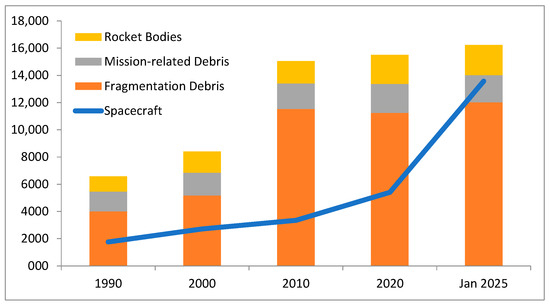
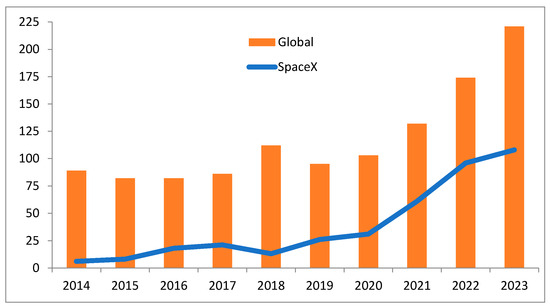
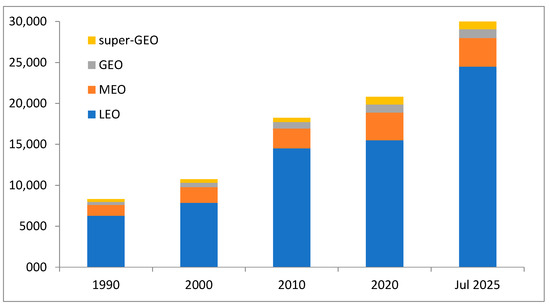
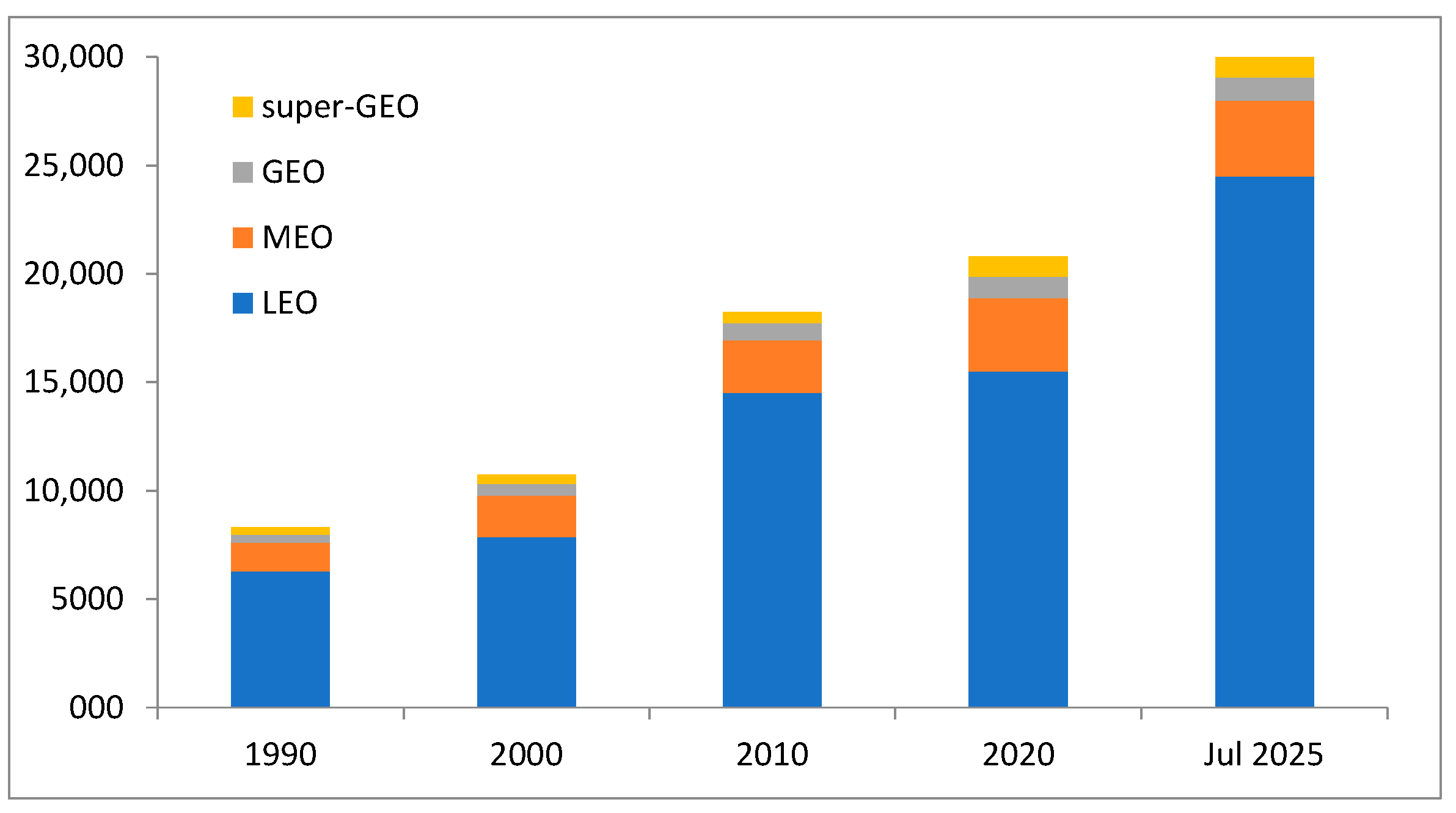
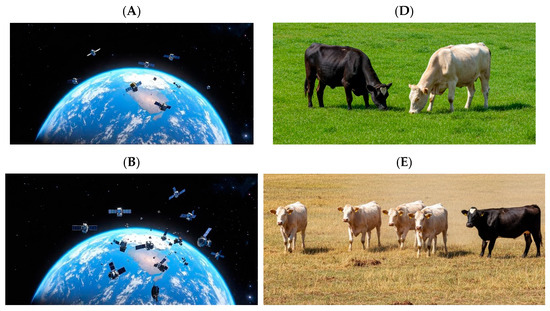
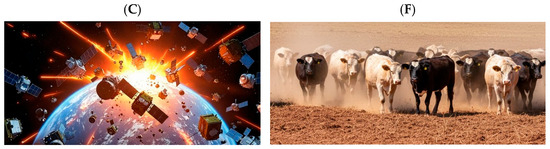
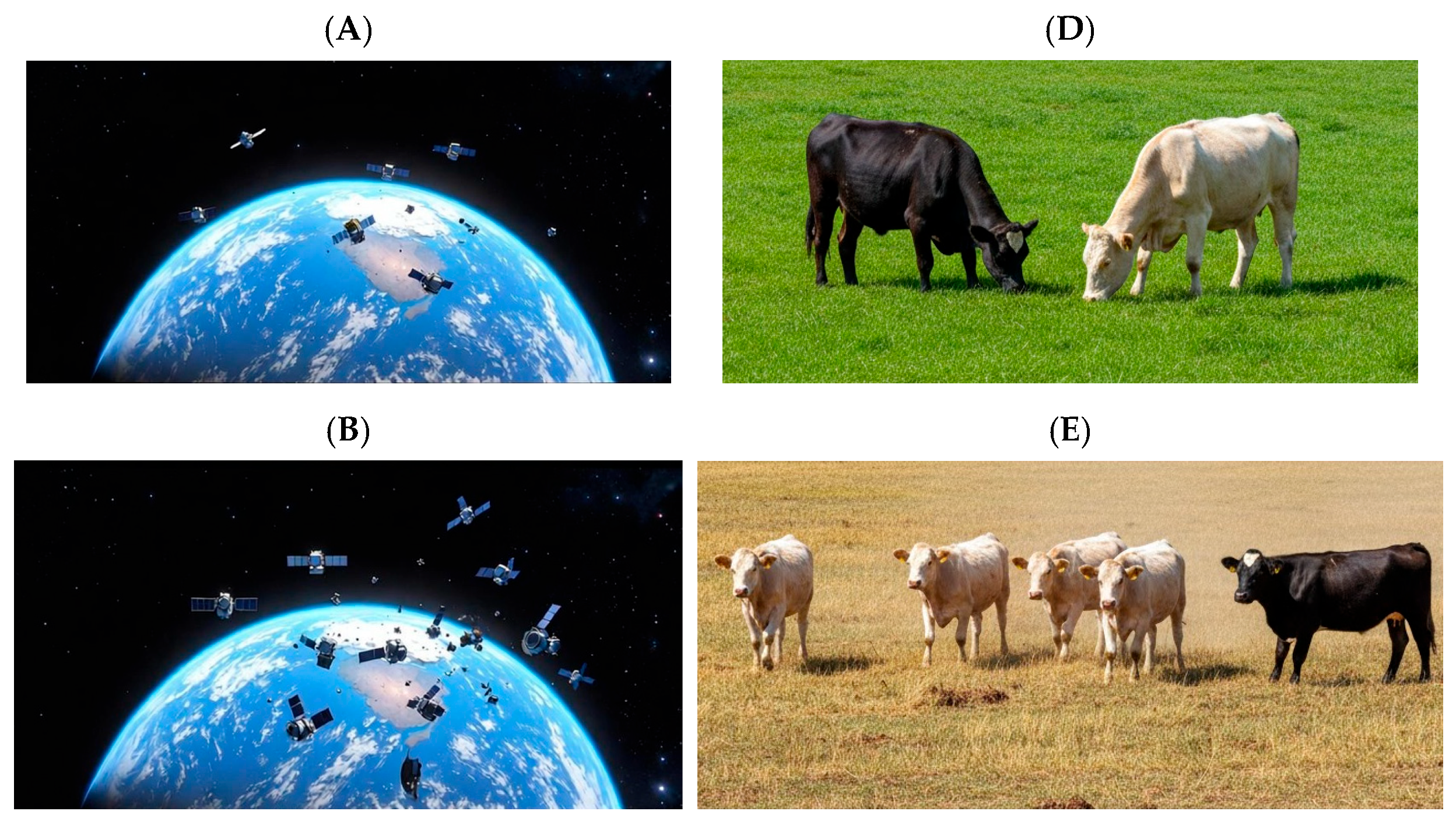
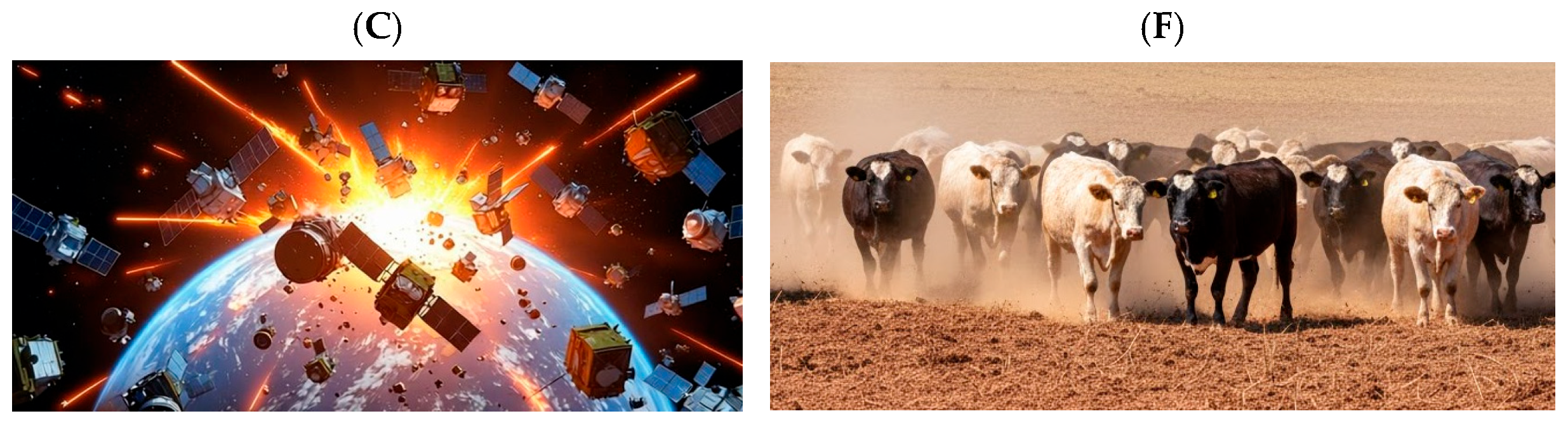
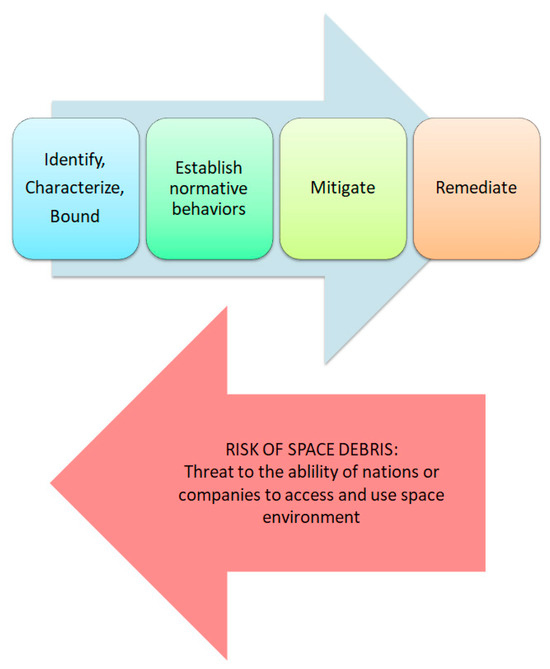
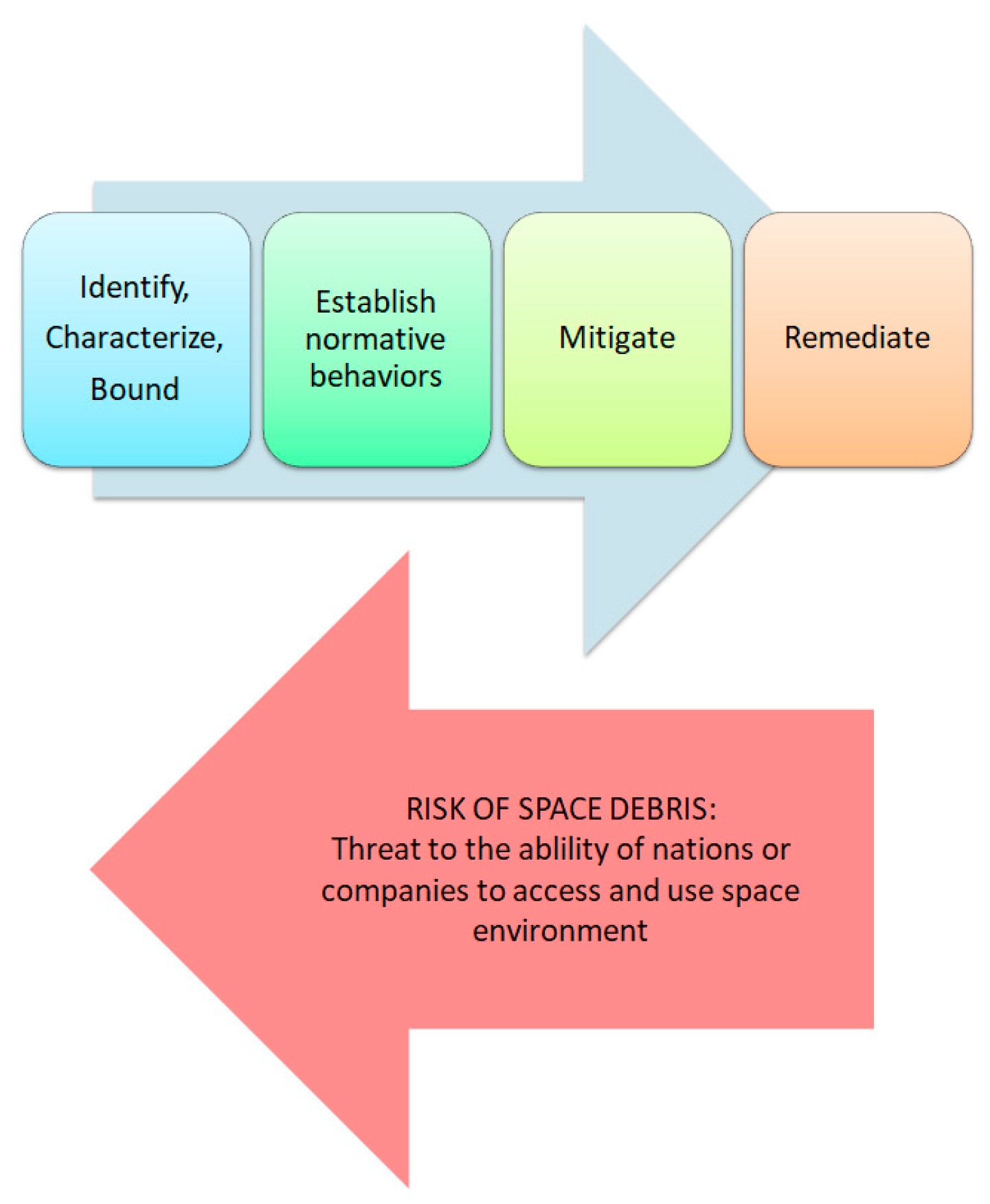
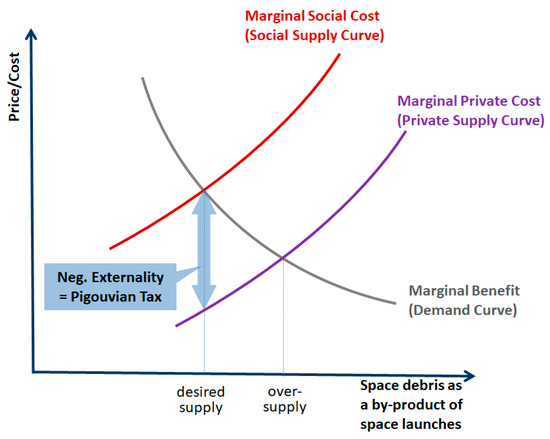
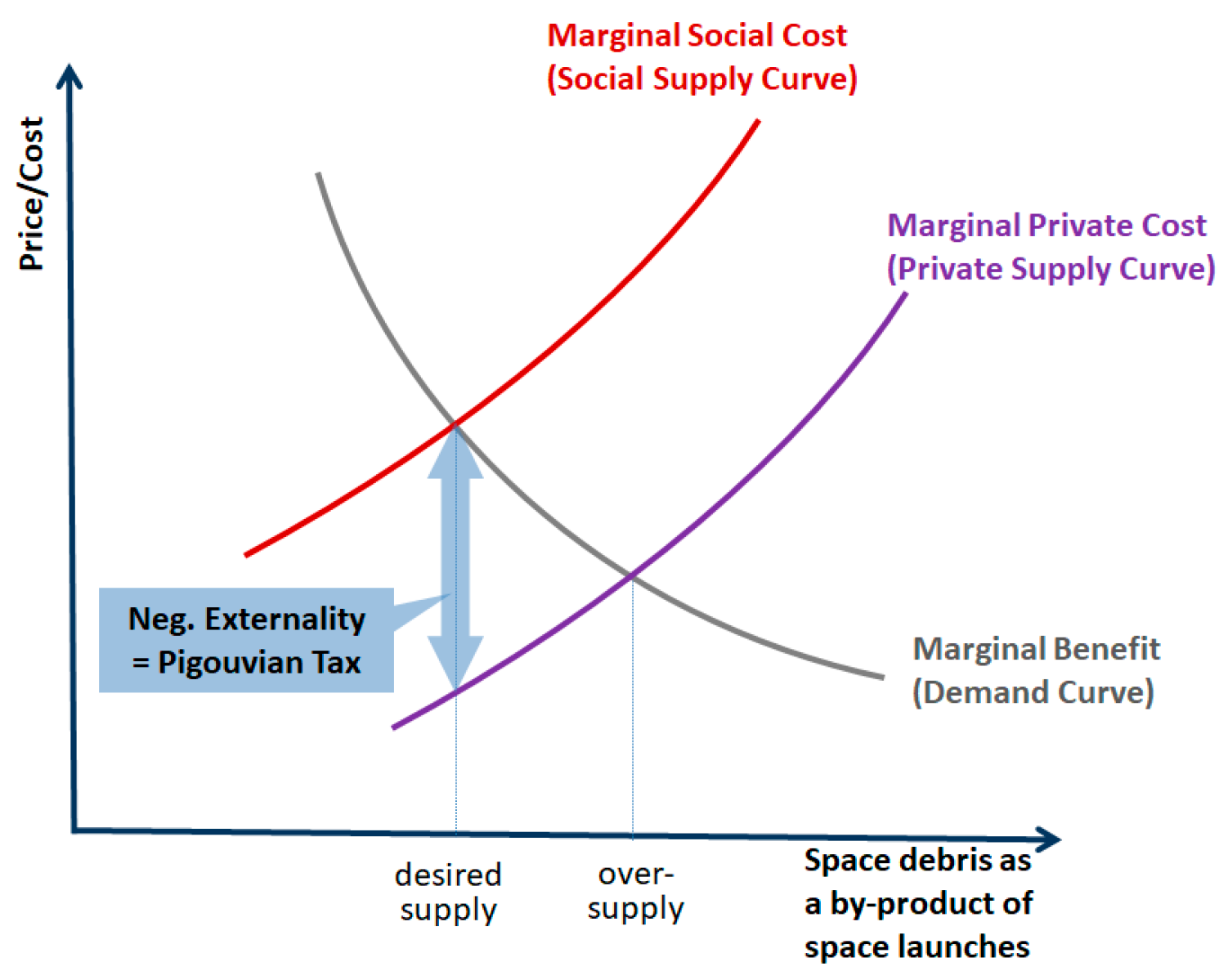
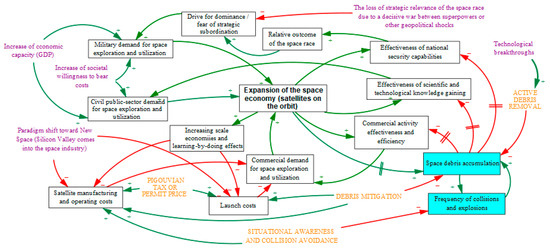
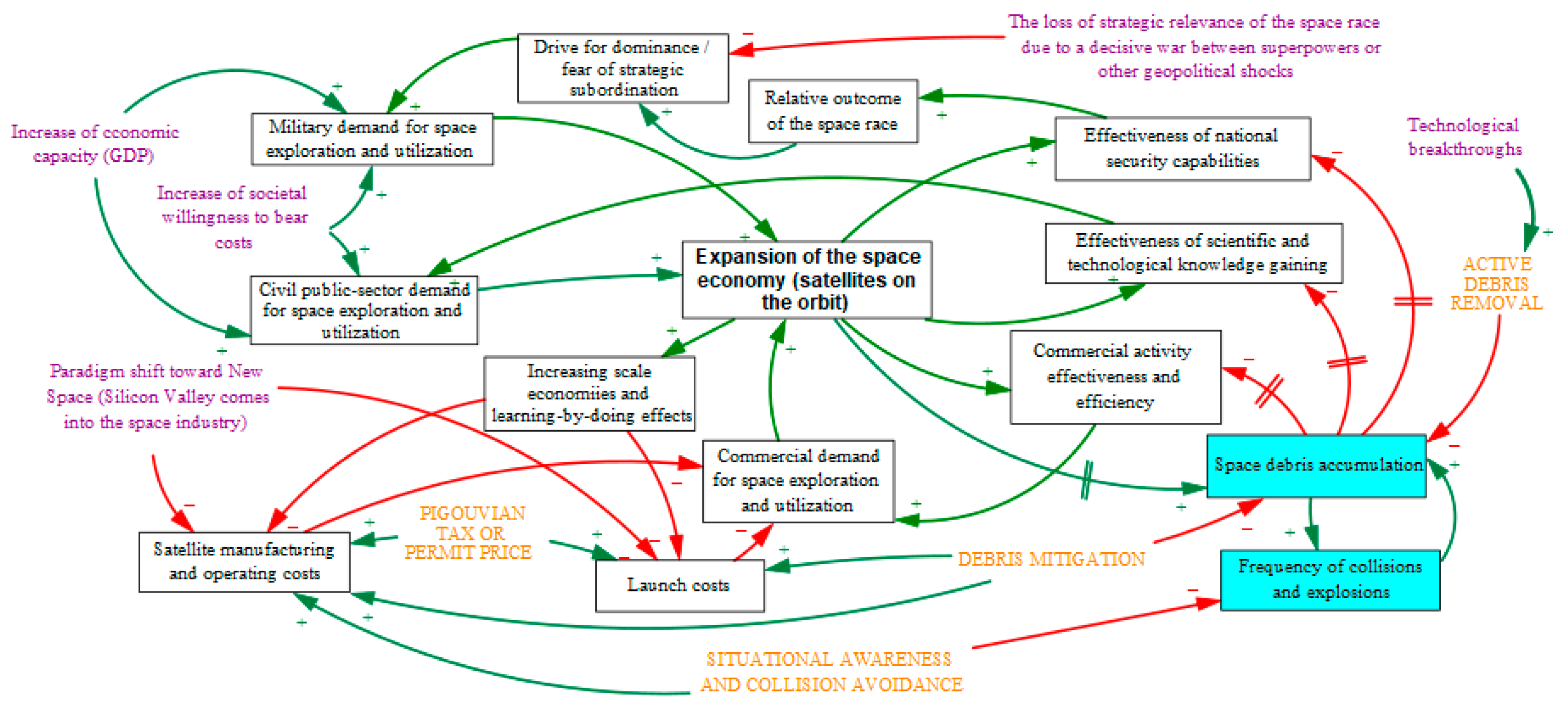

Disclaimer/Publisher’s Note: The statements, opinions and data contained in all publications are solely those of the individual author(s) and contributor(s) and not of MDPI and/or the editor(s). MDPI and/or the editor(s) disclaim responsibility for any injury to people or property resulting from any ideas, methods, instructions or products referred to in the content. |
© 2026 by the author. Licensee MDPI, Basel, Switzerland. This article is an open access article distributed under the terms and conditions of the Creative Commons Attribution (CC BY) license.