Article

High-Efficiency Direct Torque Control of Induction Motor Driven by Three-Level VSI for Photovoltaic Water Pumping System in Kairouan, Tunisia: MPPT-Based Fuzzy Logic Approach


LATIS—Laboratory of Advanced Technology and Intelligent Systems, Ecole Nationale d’Ingénieurs de Sousse, Université de Sousse, Sousse 4023, Tunisia
*
Author to whom correspondence should be addressed.
Automation 2026, 7(2), 53; https://doi.org/10.3390/automation7020053

Submission received: 17 February 2026 / Revised: 12 March 2026 / Accepted: 18 March 2026 / Published: 24 March 2026
(This article belongs to the Section Control Theory and Methods)

Abstract

This paper presents an efficient stand-alone photovoltaic water pumping system (PVWPS) intended for agricultural irrigation applications, operating without energy storage. The system employs a three-phase induction motor supplied by a three-level neutral point clamped (NPC) inverter. The proposed control strategy integrates the advantages of two distinct controllers to enhance both energy extraction and drive performance. On the photovoltaic side, a fuzzy logic-based maximum power point tracking (MPPT) algorithm is implemented to ensure continuous operation at the global maximum power point under rapidly varying irradiance conditions. On the motor drive side, a direct torque control (DTC) scheme is combined with the multilevel NPC inverter to regulate electromagnetic torque and stator flux. The use of a multilevel inverter significantly mitigates the inherent drawbacks of conventional DTC, notably torque and flux ripples, as well as stator current harmonic distortion. The overall control architecture maximizes power transfer from the photovoltaic generator to the pumping system, resulting in improved dynamic response and energy efficiency. The proposed system is validated through detailed MATLAB/Simulink simulations under abrupt irradiance variations and a realistic daily solar profile corresponding to August conditions in Kairouan, Tunisia. Simulation results demonstrate substantial performance improvements, including an 88% reduction in torque ripples, a 50% decrease in flux ripple, a 77.9% reduction in stator current THD, and a 33.3% enhancement in speed transient response compared to conventional DTC-based systems.

1. Introduction

The continuing growth in worldwide energy consumption emphasizes the need for cleaner power generation methods, aiming to reduce reliance on fossil fuels, along with their environmental impacts, namely carbon emissions, contributing to global warming. Consequently, various policies have been introduced to promote the expanded use of other sustainable and renewable energy resources [1]. In addition, water is essential for human survival and socio-economic development, where the quality of life hinges on water availability and purity. However, water is frequently not easily accessible in areas where it is most needed, necessitating the extraction of water from distant sources through pumping [2]. Therefore, water pumping systems play a vital role in supporting human life, offering a consistent supply for drinking water requirements, as well as agricultural irrigation.
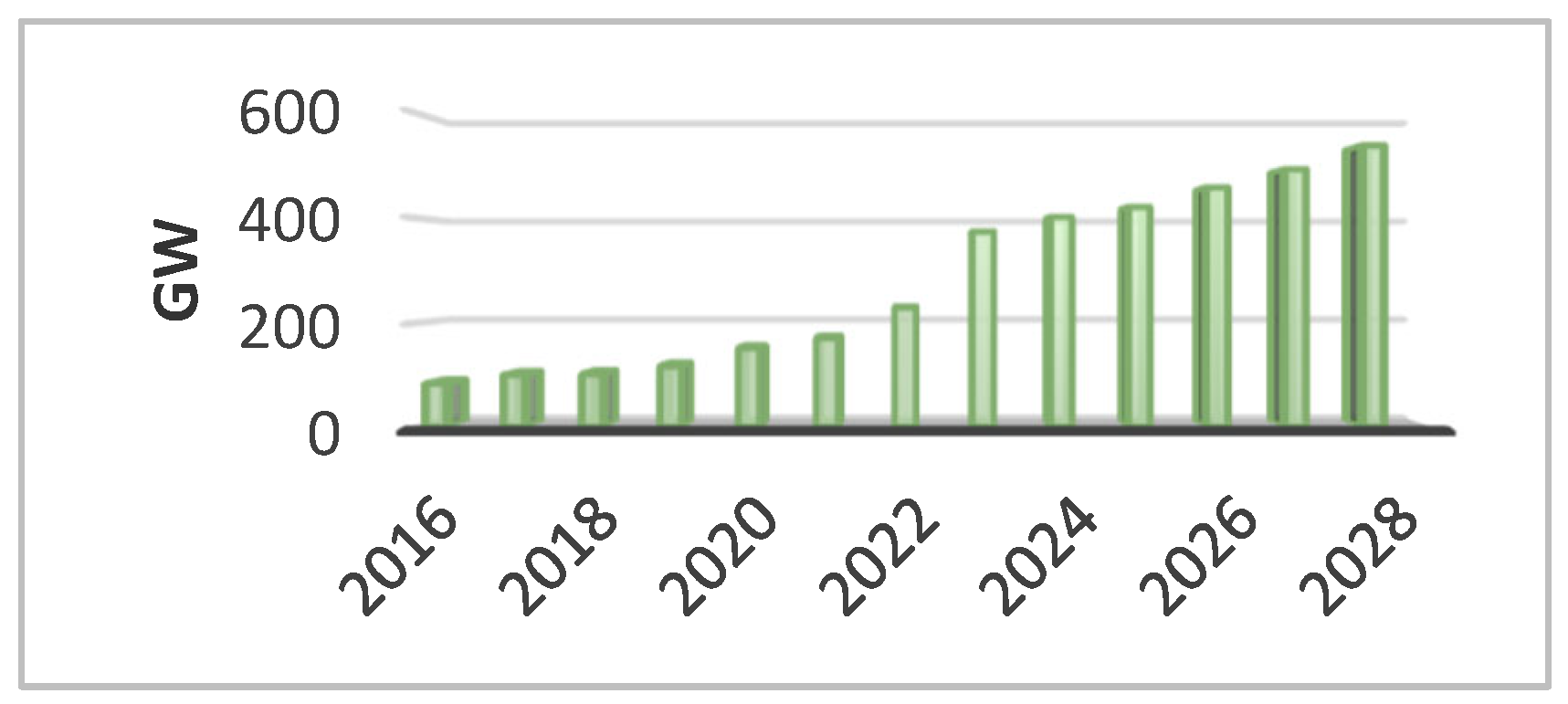
Most commercially available water pumps are powered by electricity or diesel fuel. Traditionally, electricity for these pumps has been supplied via national grids, primarily generated from fossil fuel combustion. However, this dependency poses challenges in providing water access to remote locations that lack direct connections to grid infrastructure. To overcome these challenges, integrating renewable energy sources (RES) to power water pumps becomes a practical and viable solution, placing these technologies at the forefront of the global energy transition [3,4]. This approach promotes more sustainable methods of managing water resources by increasing water accessibility and supporting international initiatives to switch toward greener and more eco-friendly energy systems. Various forms of renewable energy sources can be employed to supply water pumping systems, as outlined in [3]. Among them, solar energy has gained significant attention over the last few years, and it is quickly becoming a widely competitive alternative to traditional energy sources, mainly in water pumping applications, particularly in regions with abundant sunlight [2,5]. For these reasons, the deployment of photovoltaic (PV) systems emerges as a strategically advantageous approach, thereby stimulating sustained research efforts to optimize their energy conversion efficiency. The proportionate expansion of solar PV-generated energy worldwide is depicted in Figure 1 [6]. This expansion emphasizes how important solar-based technologies are in addressing global energy challenges and fulfilling climate objectives [7].
In this regard, Tunisia, located in the Mediterranean and within the North African solar belt, benefits from exceptionally high solar radiation, making it an ideal candidate for the deployment of photovoltaic (PV) technologies. The country’s agricultural sector, a key pillar of the national economy, is increasingly challenged by persistent droughts and falling groundwater levels, highlighting the urgent need for sustainable irrigation solutions. PV-powered pumping systems offer an effective alternative to traditional diesel pumps, reducing reliance on fossil fuels while providing a dependable water supply for irrigation. Supportive national policies encouraging renewable energy adoption further promote the integration of these systems, in line with Tunisia’s goals to lower greenhouse gas emissions. In this framework, solar-driven irrigation not only aids in climate change adaptation for agriculture but also contributes significantly to energy security and sustainable rural development.
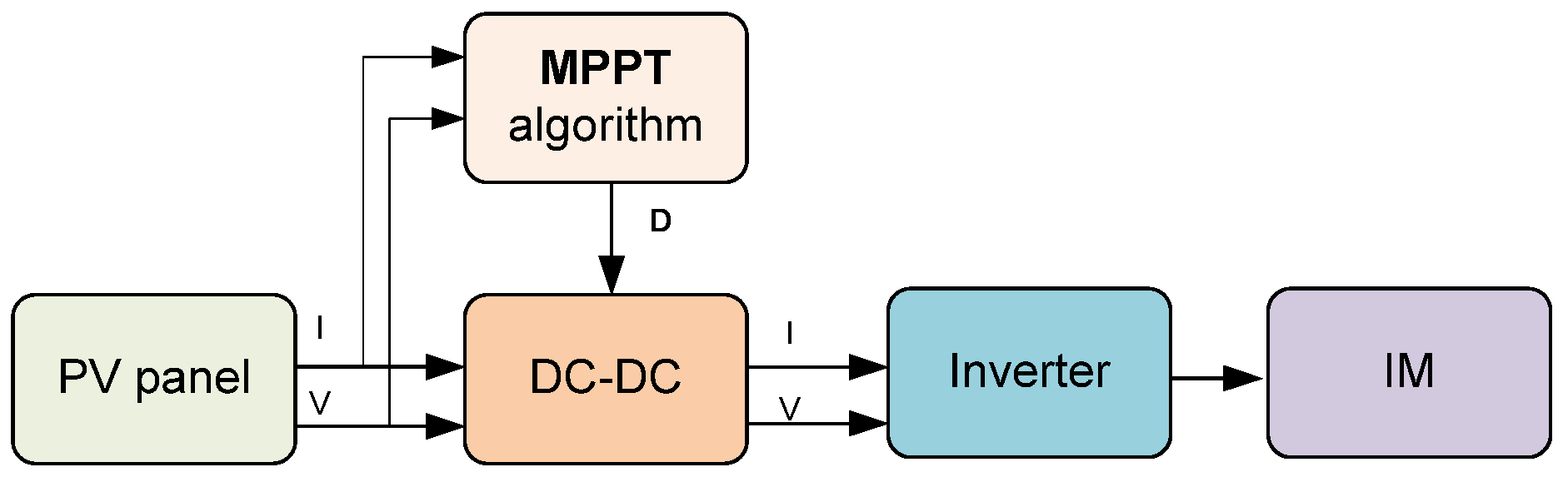
Numerous studies on Photovoltaic Water Pumping System (PVWPS) have been conducted in the literature [8,9,10]. However, its efficiency can be influenced by two primary factors: variability in solar insolation and ambient temperature, as well as the characteristics of the load, which can lead to an energy loss of up to 25% [11]. These challenges can be addressed through the application of Maximum Power Point Tracking (MPPT) algorithms that continuously extract and maintain maximum available power from the PV array under varying environmental conditions. Thus, various MPPT methods have been explored. These techniques primarily focus on adjusting the DC-DC converter duty cycle, allowing the photovoltaic system to function at its optimal power point, as illustrated in Figure 2.
Among the available MPPT algorithms are Perturb and Observe (P&O) [12], Incremental Conductance (INC) [13], and Constant Voltage (CV) [14]. The P&O algorithm is favored for its simplicity and ease of implementation, but often suffers from steady-state oscillations around the maximum power point during rapidly changing irradiance. The INC method offers improved accuracy and dynamic response but requires increased computational resources and can be sensitive to measurement noise. The CV technique does not actively track changes in irradiance or temperature, so it struggles to maintain optimal power extraction when environmental conditions fluctuate quickly. The fixed voltage setpoint may no longer correspond to the actual MPP, leading to power losses [15]. To overcome these shortcomings, many researchers have assessed various metaheuristic approaches, including Particle Swarm Optimization (PSO) and soft computing MPPT methods, employing artificial intelligence (AI) as alternative techniques, including artificial neural network control, fuzzy logic control (FLC), and genetic algorithms [16].
Although PSO is known for its ability to locate the global maximum power point under complex and varying conditions, its high computational demand can hinder its applicability in real-time PV control systems. To address this concern, we chose to implement FLC. As one of the leading AI-based MPPT techniques, FLC offers a robust and efficient alternative, particularly due to its capacity to manage nonlinearities and uncertainties commonly encountered in solar energy systems. Additionally, FLC operates effectively without the need for a precise mathematical model, making it highly adaptable to fluctuating environmental conditions [17]. Consequently, improving and attaining better performance in fuzzy logic-based MPPT methods has become a significant area of research.
Table 1 presents a concise comparison of the most commonly used MPPT techniques in PVWPS applications.
A PVWPS includes a PV generator, power electronic converters, an electric drive unit (motor) to regulate the water pump flow rate, and a pump. The choice of motors for a solar-powered water pumping system relies on many factors such as effectiveness, availability, cost, and reliability. Accordingly, various types of motors have been explored. Researchers have focused on DC motors due to their simple design. However, they necessitate regular maintenance. Therefore, alternative studies have focused on AC motor options as effective and highly recommended solutions. Among them, the induction motor (IM) has emerged as a particularly attractive solution. An IM is an asynchronous AC machine in which rotor currents are induced by the rotating magnetic field produced by the stator windings, eliminating the need for brushes or permanent magnets. This structure ensures mechanical robustness, reduced maintenance, and cost-effectiveness [18]. Moreover, recent advances in mathematical modeling and dynamic analysis of induction machines have further improved their suitability for high-performance applications, making them suitable for sustainable pumping systems. Nevertheless, the coupling effect between torque and flux in IMs makes their control a challenging task. In fact, both torque and flux depend on the stator and rotor currents, which vary with load and operating conditions. Consequently, effective motor control requires the integration of modern solutions to achieve the decoupling of these parameters [19]. Vector control, alternatively known as field-oriented control (FOC), is commonly used to address this issue. It enables independent control of both torque and flux. However, this approach is affected by IM parameter variations and disturbances caused by external loads [20]. To overcome such difficulties, researchers proposed Direct Torque Control (DTC) as a viable approach [21]. It exhibits relatively high robustness against parameter variations, ensuring reliable operation. Nonetheless, using hysteresis controllers in this control strategy results in significant undesirable fluctuations in stator flux and electromagnetic torque, especially in low-speed operation. These variations induce mechanical vibrations, which in turn contribute to the generation of acoustic noise. Accordingly, multi-level converters, particularly three-level inverters, are suggested to drive the IM used for a PVWPS. Indeed, employing a three-level inverter based on the neutral-point clamped (NPC) topology helps minimize torque and flux ripples, offering improved efficiency by lowering switching losses relative to standard two-level voltage source inverters (VSI) [22,23]. Based on the aforementioned advantages of IM supplied by a three-level inverter and commanded under DTC strategy, as well as the viability of intelligent control methods for MPPT algorithm, this work aims to achieve optimal water flow rate performance in pumping systems despite the fluctuation in solar irradiance.
This paper is structured as follows: the introductory section outlines an overview of the entire photovoltaic water pumping system. In Section 2, an MPPT strategy based on fuzzy logic is proposed. Section 3 provides the DTC control approach for the IM supplied by a three-level inverter and coupled with a centrifugal pump. Section 4 details the simulation results and provides a comprehensive analysis of the photovoltaic water pumping system (PVWPS) performance under two distinct irradiance scenarios: a step change in solar irradiance and a representative daily irradiance profile for August in the Kairouan region, Tunisia. The discussion highlights the system dynamic response, efficiency, and adaptability to rapid and gradual variations in solar input, offering insights into the operational robustness of the proposed control strategy under realistic environmental conditions. Finally, the conclusion of this study is provided in Section 5.

2. PV-Based Water Pumping System Design

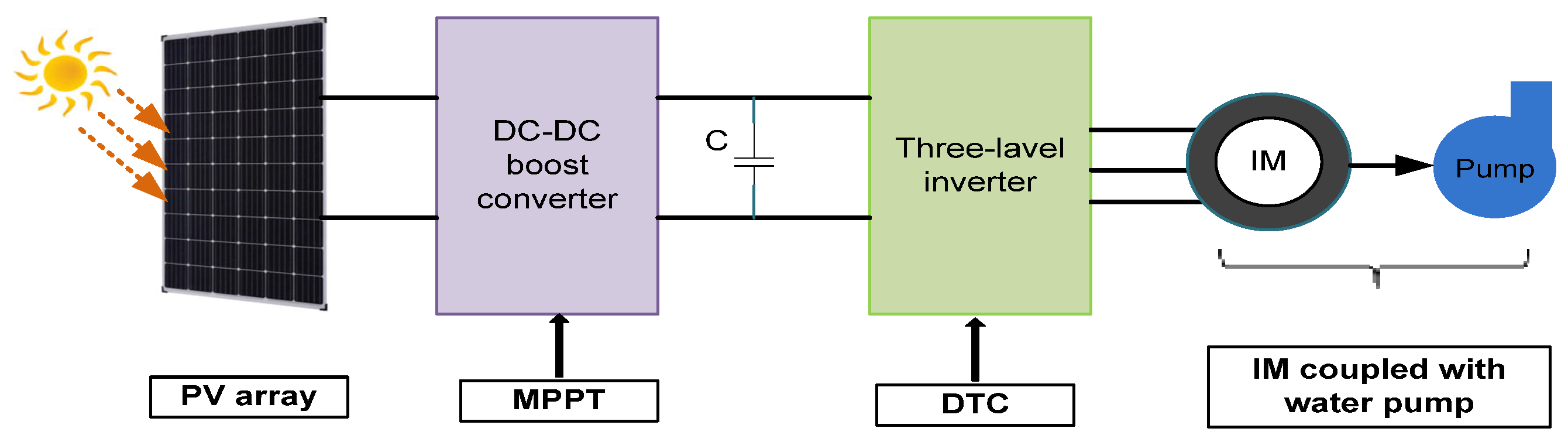
Figure 3 depicts the configuration of the developed solar-powered water pumping system incorporating a photovoltaic array, a DC-DC boost converter, a three-phase 3L voltage source inverter, and a squirrel-cage induction motor connected to a centrifugal pump. The maximum power point tracking controller optimizes the extraction of power from the solar panel by regulating the boost converter duty cycle, while the DTC strategy is dedicated to driving the IM via the VSI, ensuring efficient motor control and stable operation of the pump under varying conditions.

2.1. PV Panel Modeling

The electrical modeling of a photovoltaic panel/module is designed to represent its electrical performances under specific environmental conditions, primarily solar radiation (irradiance) and cell temperature. The power generation module chosen for implementation in this study is SST235-60P, whose characteristics are reported in Table 2.
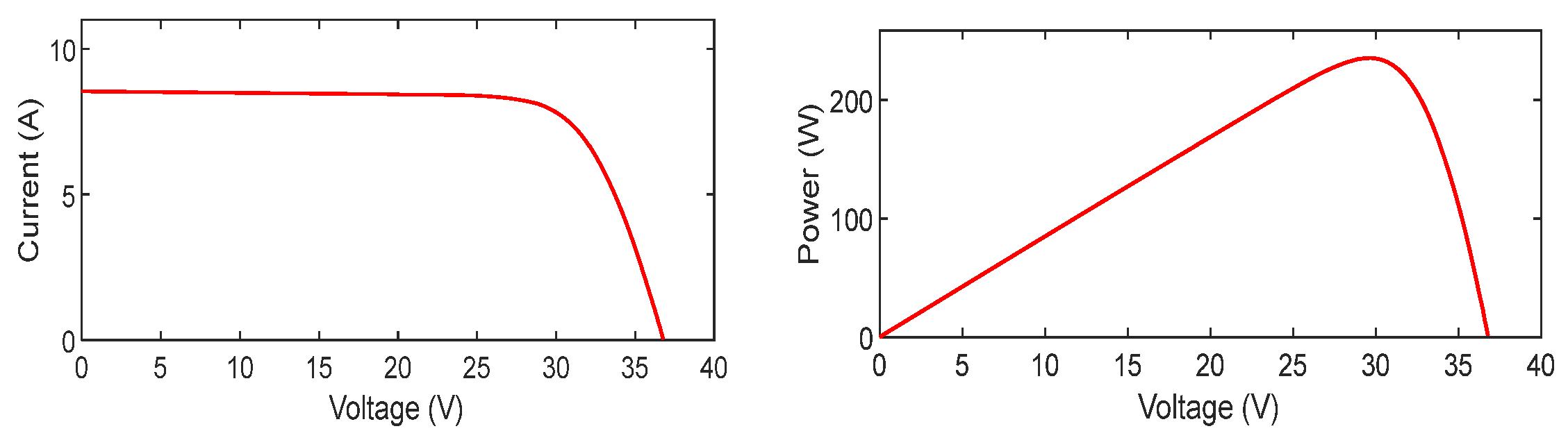
The current–voltage (I-V) and power–voltage (P-V) characteristics obtained from the simulation of the photovoltaic panel in the Simulink environment under Standard Test Conditions (STC) are provided in Figure 4.
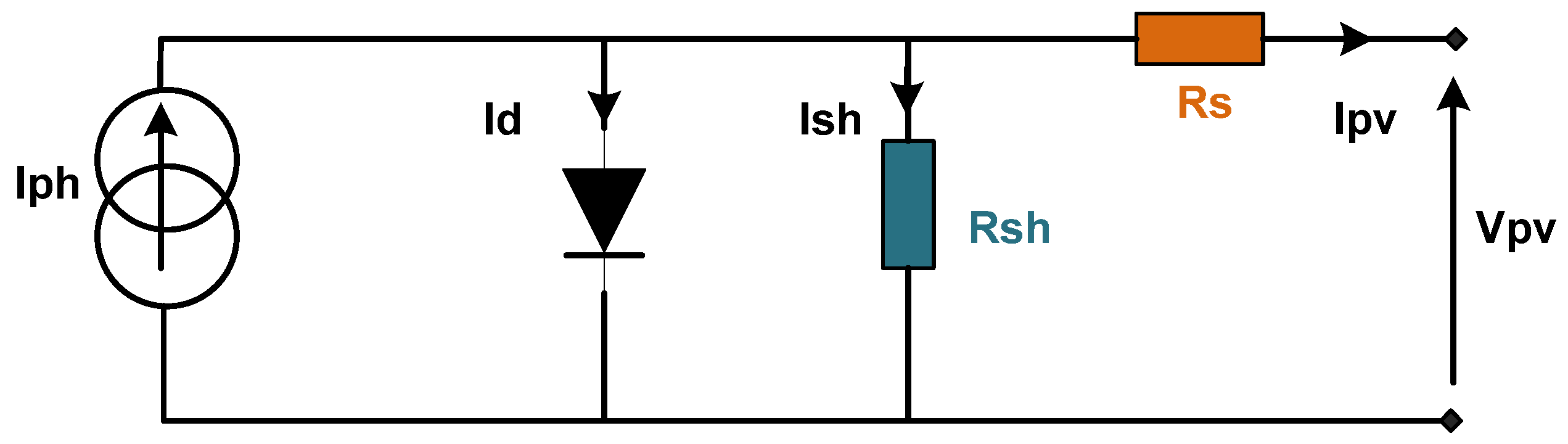
The equivalent circuit model used in this study, which is depicted in Figure 5, consists of four key components: A current source Ω dc representing the photocurrent, a diode, a parallel shunt resistor Rsh, and a series resistor Rs.
The required number of PV panels is computed in accordance with the rated power of the IM, which is 1.5 kW in this study. Given that the PVWPS incurs certain losses, the extracted power should exceed the nominal power of the motor to maintain effective system performance.
Generally, the behavior of the photovoltaic cell is mathematically represented by the equation below, which is based on the single-diode equivalent model.
I pv = I ph I d I sh = I ph I d V pv + R s × I pv R p
where Ish is the shunt current, and Ipv is the output current of the PV cell. Vpv denotes the output voltage of the PV cell. Rs and Rp are, respectively, the series and shunt resistances of the PV cell, and Id is the current flowing through the diode, which varies in direct proportion to the saturation current I0, and its equation is given by the Shockley diode equation:
I d = I 0 e V p v + R s I p v A V t 1
V t is the thermal voltage of the PV, which varies with temperature according to the following relation:
V t = N s × K × T q
where K = 1.38 × 10 23   J / K , q = 1.6 × 10 19   C , and Ns is the number of series-connected cells.

2.2. DC-DC Boost Converter Modeling

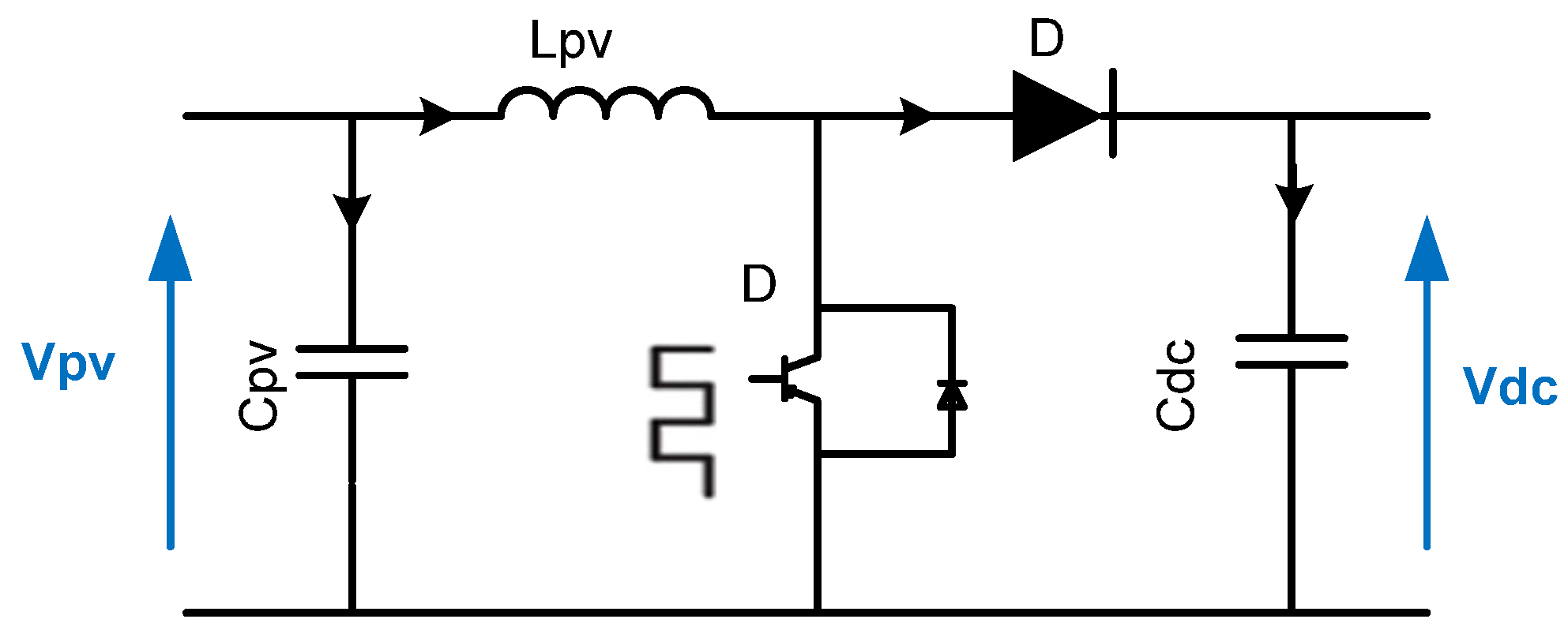
Figure 6 presents the basic circuit configuration of a DC-DC boost converter. It is positioned in the intermediate stage connecting the PV array to the inverter. It delivers and maintains a suitable DC-link voltage ( V d c ).
The output of the circuit is regulated by modulating the duty cycle of the power semiconductor switch by using the following expression:
V d c = 1 1 D V p v
where V p v represents the input provided by the PV source to the converter, and V d c is the regulated output voltage produced by the DC-DC boost converter.
The DC-link voltage applied to the input stage of the inverter is obtained through the application of the following equation:
V d c = 2 2 3 U M
where UM (V) denotes the RMS value of the stator phase voltage of the induction motor. This parameter corresponds to the rated phase voltage required by the machine to ensure proper operation of the inverter-fed drive system.

2.3. Induction Motor

The parameters of the induction machine (IM) used in the simulations are provided in the Appendix A.
In the (α-β) reference frame, the induction motor model is characterized by the following mathematical expressions:
d d t i s α = 1 σ R s L s + R r L r i s α ω i s β + R r σ L s L r φ s α + ω σ L s φ s β + 1 σ L s V s α d d t i s β = ω i s α + 1 σ R s L s + R r L r i s β ω σ L s φ s α + R r σ L s L r φ s β + 1 σ L s V s β
where σ = 1 M s r 2 L s L r represents the Blondel coefficient. i and i are the stator current components, and V and V are the stator voltage components. Rs, Rr, Ls, and Lr denote, respectively, stator and rotor resistances and stator and rotor inductances.
The dynamic equation representing the mechanical behavior of the induction motor is established as follows:
J d d t Ω = T e m f   Ω T load

2.4. Water Pump Modeling

The load torque T load of the centrifugal pump is often assumed to follow a square-law dependence on motor speed, as given in Equation (8) [24]:
T load = K 1 × Ω 2
where K 1 is a constant specific to the used centrifugal pump. This constant can be estimated based on the nominal values of the IM, which are 10 Nm and 1435 tr/min.
K 1 = T e m n o min Ω no min 2 = 10 2 π × 1435 60 2 = 4.4 × 10 4 N m / rad / s 2
The power required to drive the centrifugal pump depends on the energy required to transport the fluid through the system [25]. It can be determined using the following equation:
P = ρ × g × H × Q η
η is typically between 0.5 and 0.9 [26].
Based on the affinity laws describing the relationship between the key parameters of a pump and the speed of rotation, the new characteristics H2 and Q2 can be obtained using the following equations:
Q 2 Q 1 = Ω 2 Ω 1
H 2 H 1 = Ω 2 Ω 1 2

3. Control Strategies for PVWPS

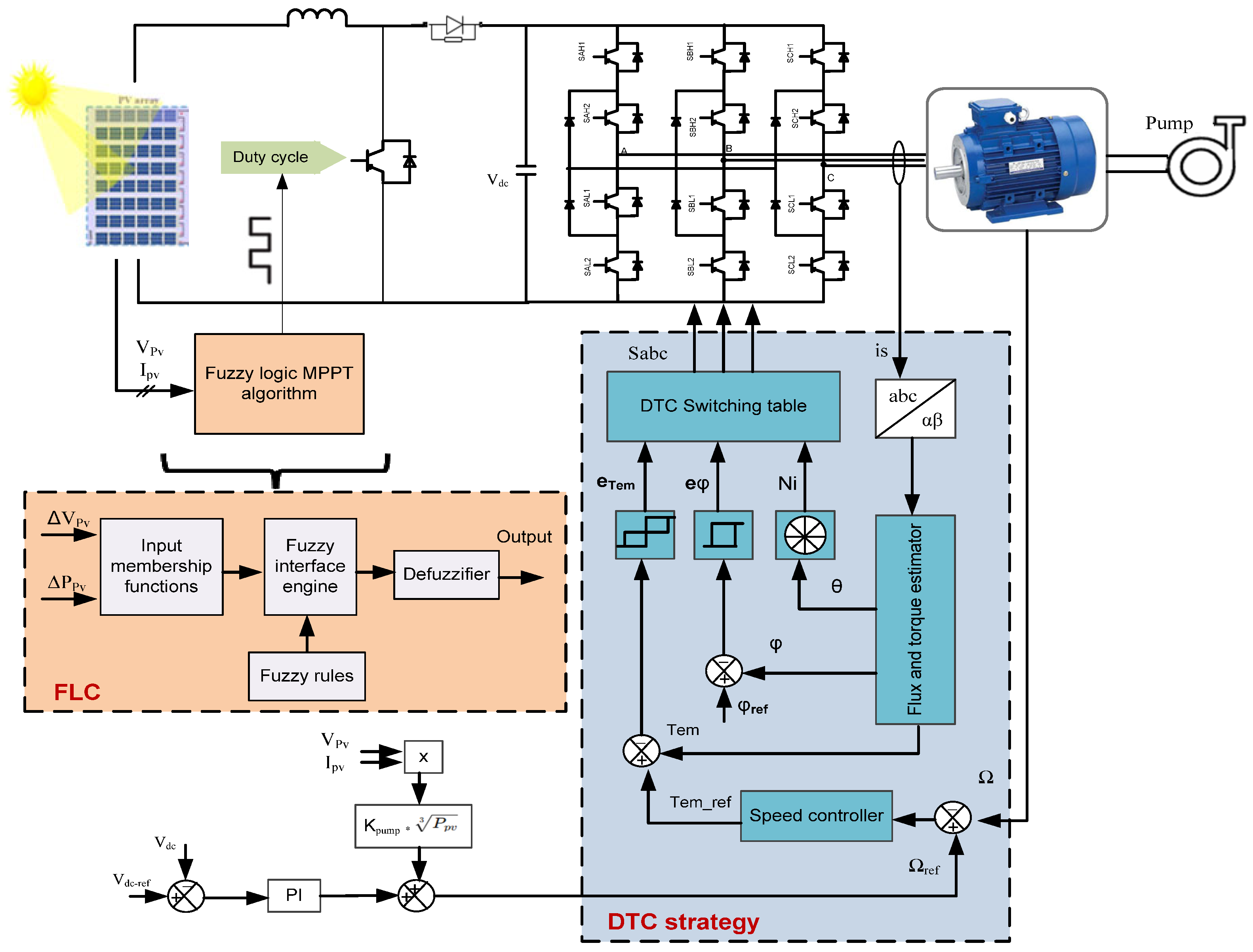
The proposed system architecture integrates two types of power converters to efficiently manage energy from a photovoltaic PV panel and supply it to an IM powering a centrifugal pump. The system integrates two converters: The first one is a DC-DC boost converter controlled by a fuzzy logic MPPT algorithm to ensure maximum power extraction from the photovoltaic array under dynamic irradiance conditions. The second one is a three-level inverter responsible for converting DC voltage into three-phase AC power necessary for driving the IM. To optimize system performance, a Direct Torque Control strategy is employed, which enhances the dynamic response while improving the energy efficiency of the system [27,28,29]. This configuration offers a reliable and effective approach for renewable energy-driven pumping applications.
The overall system is depicted in Figure 7.

3.1. MPPT-Based Fuzzy Logic Controller

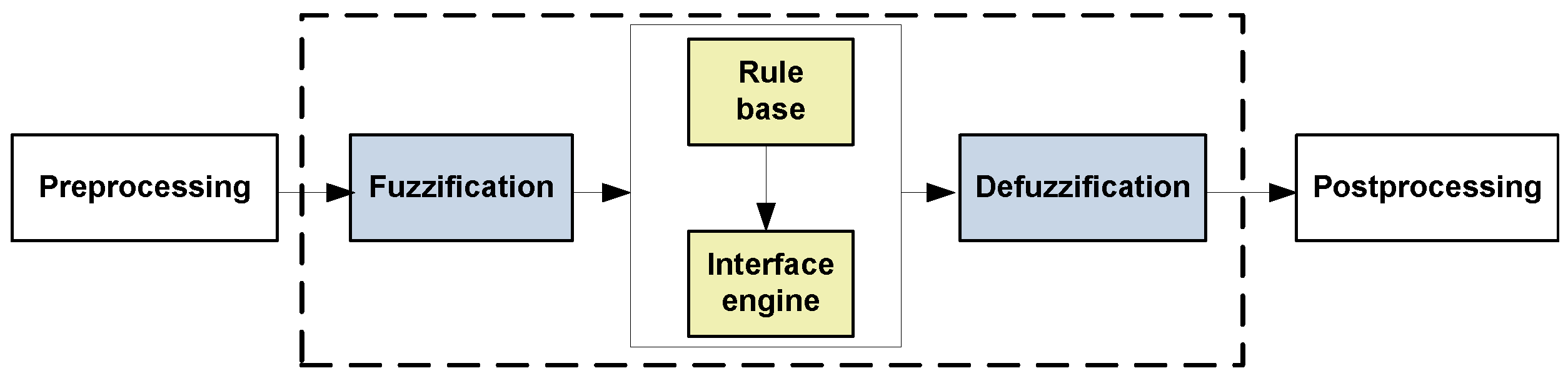
Fuzzy logic serves as a crucial bridge between human expertise and linguistic representations within control systems. In PV systems, employing FLC for MPPT enables the creation of an intelligent system capable of efficiently optimizing the power extraction process. The design and operation of a fuzzy logic controller are structured into three primary phases, as given in Figure 8.
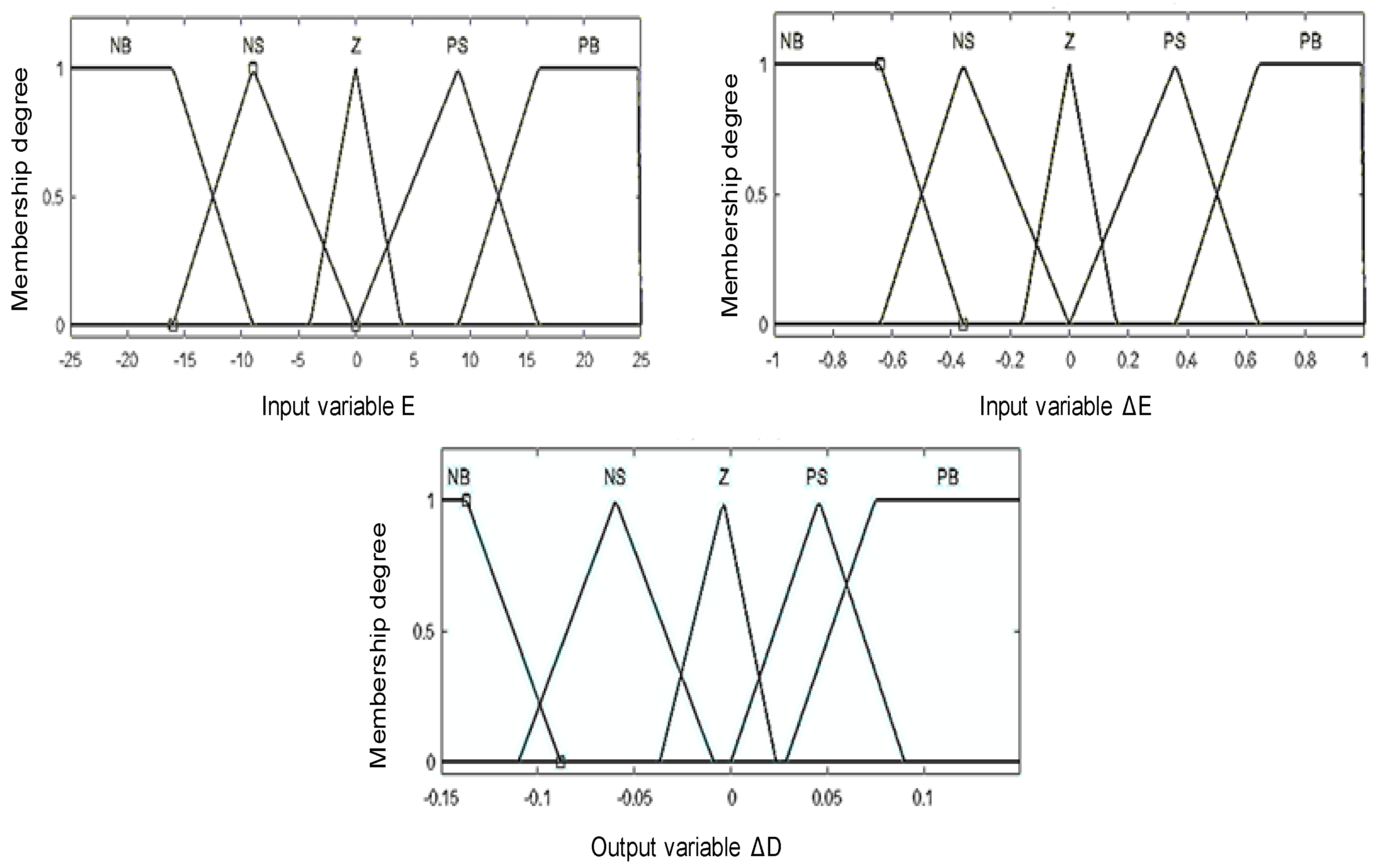
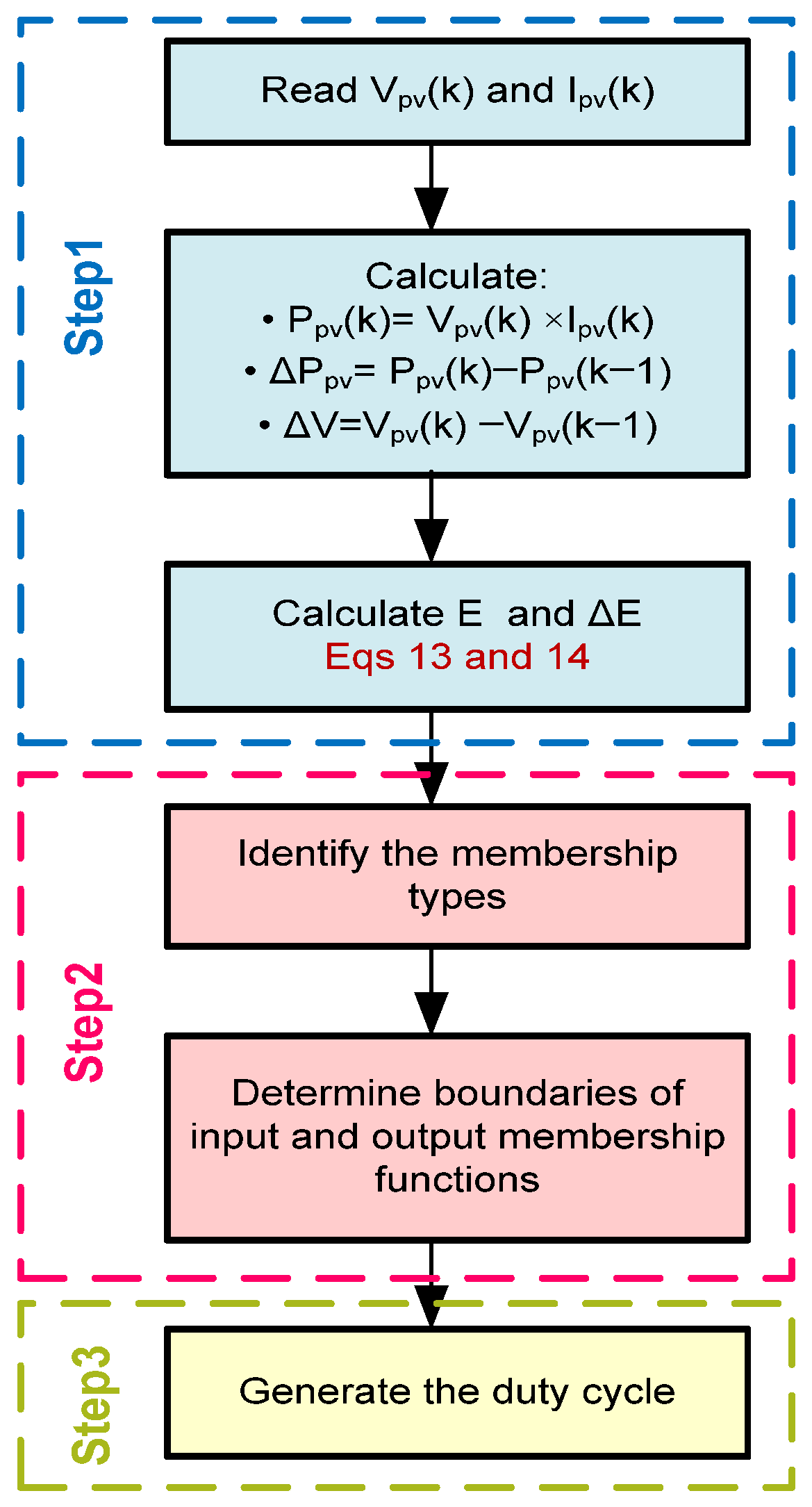
The first step entails the conversion of input variables into their linguistic equivalents through predefined membership functions. A rule base built on the “if-then” logic is used to process these linguistic variables in the second stage, which reflects the system’s intended behavior. Finally, the FL controller uses the output membership functions in the third stage to transform the linguistic outputs into numerical values, which produce the corresponding analog signal to drive and control the power converter [7]. The fuzzy logic controller designed for this work is designed with two input variables and one output variable. The input variables are the Error (E) and the change of error (ΔE), which are mathematically defined in Equations (13) and (14) for discrete sample times k.
E ( k ) = Δ P Δ V = P ( k ) P ( k 1 ) V ( k ) V ( k 1 )
Δ E ( k ) = E ( k ) E ( k 1 )
where P(k) and V(k) represent the instantaneous power and voltage, respectively, of the PV generator.
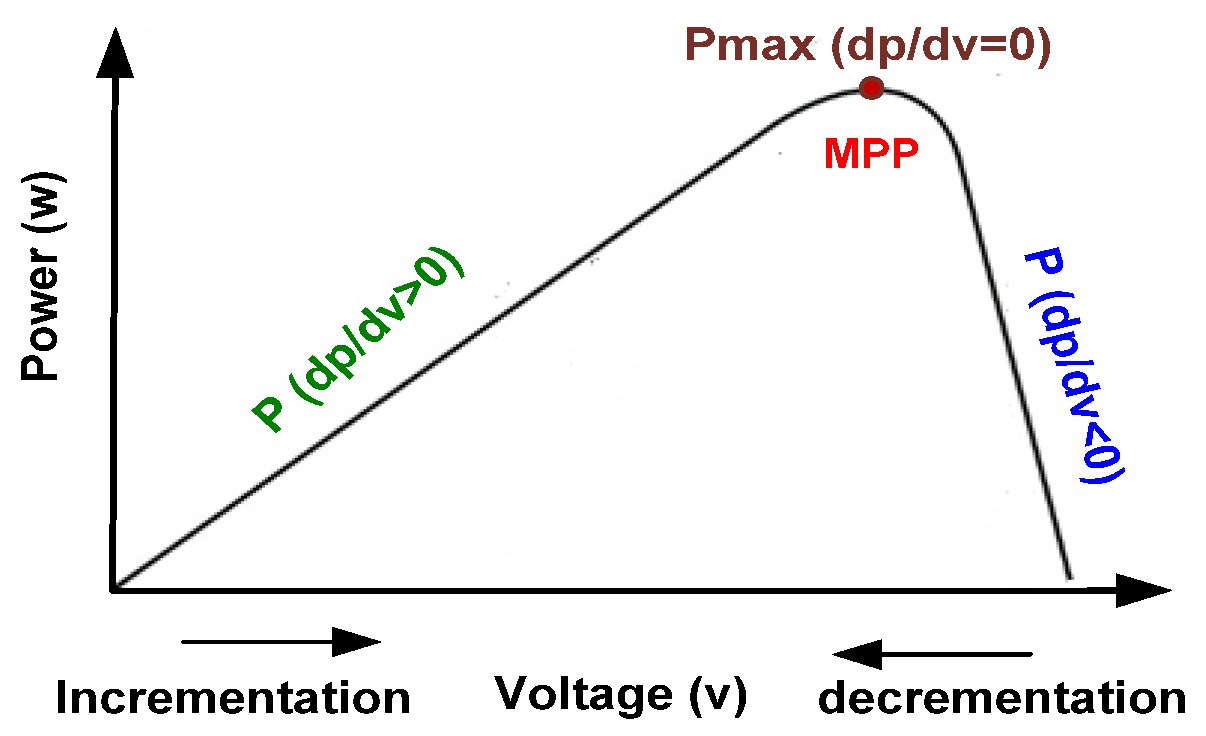
The input E(k), representing the slope of the P-V characteristic curve, is used to identify the location of the maximum power point (MPP) within the PV module. The second input, ΔE(k), provides insight into whether the operating point is approaching or receding from the MPP, as presented in Figure 9. The output variable, ΔD, corresponds to the change of duty cycle. This output is transmitted to the boost converter to manage and drive the load.
The variables serving as inputs and the resulting output variable are represented using five linguistic descriptors, “Negative Big”, “Negative Small”, “Zero”, “Positive Small”, and “Positive Big”, as outlined in Figure 10.
Table 3 includes 25 fuzzy control rules within its rule set. To control the DC-DC converter and facilitate MPPT of the PV module, a set of fuzzy rules is employed. These rules are processed by an inference engine, which operates as follows:
IF E(k) is … and ∆E is … Then the output (D) is ….
The rule evaluation within the fuzzy controller is carried out using the Mamdani inference method, and the resulting control action is obtained through the centroid-based defuzzification technique. This configuration enables efficient and dynamic tracking of the MPP across varying irradiance, while also minimizing steady-state fluctuations commonly observed in conventional MPPT strategies.
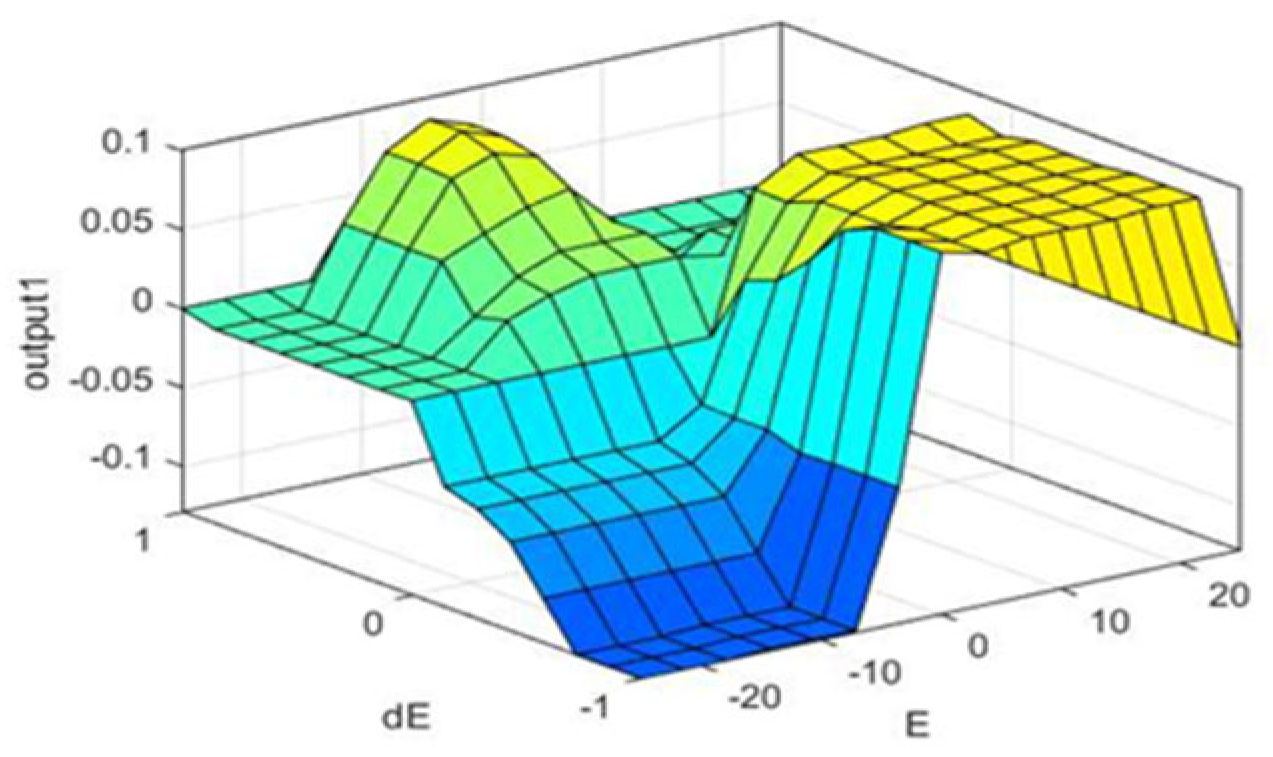
Figure 11 shows a 3D surface plot of the input and output membership functions (MFs) for the proposed MPPT method-based FLC.
To recapitulate, the suggested MPPT flowchart-based FLC is illustrated in Figure 12. In the first step, the parameters of the controller are calculated based on the measured current and voltage from the photovoltaic module. In the second stage, the types and limits of the input membership functions are specified. The third phase is dedicated to establishing the fuzzy rules in order to generate the regulator output, which defines the duty cycle necessary for the boost converter’s operation.

3.2. Description of the DTC Methodology Used for 3L NPC Inverter

Applying DTC to a three-level inverter has demonstrated significant improvements in AC motor drive performances, particularly in reducing torque ripple, enhancing dynamic response, and increasing overall system efficiency in comparison with a conventional inverter.
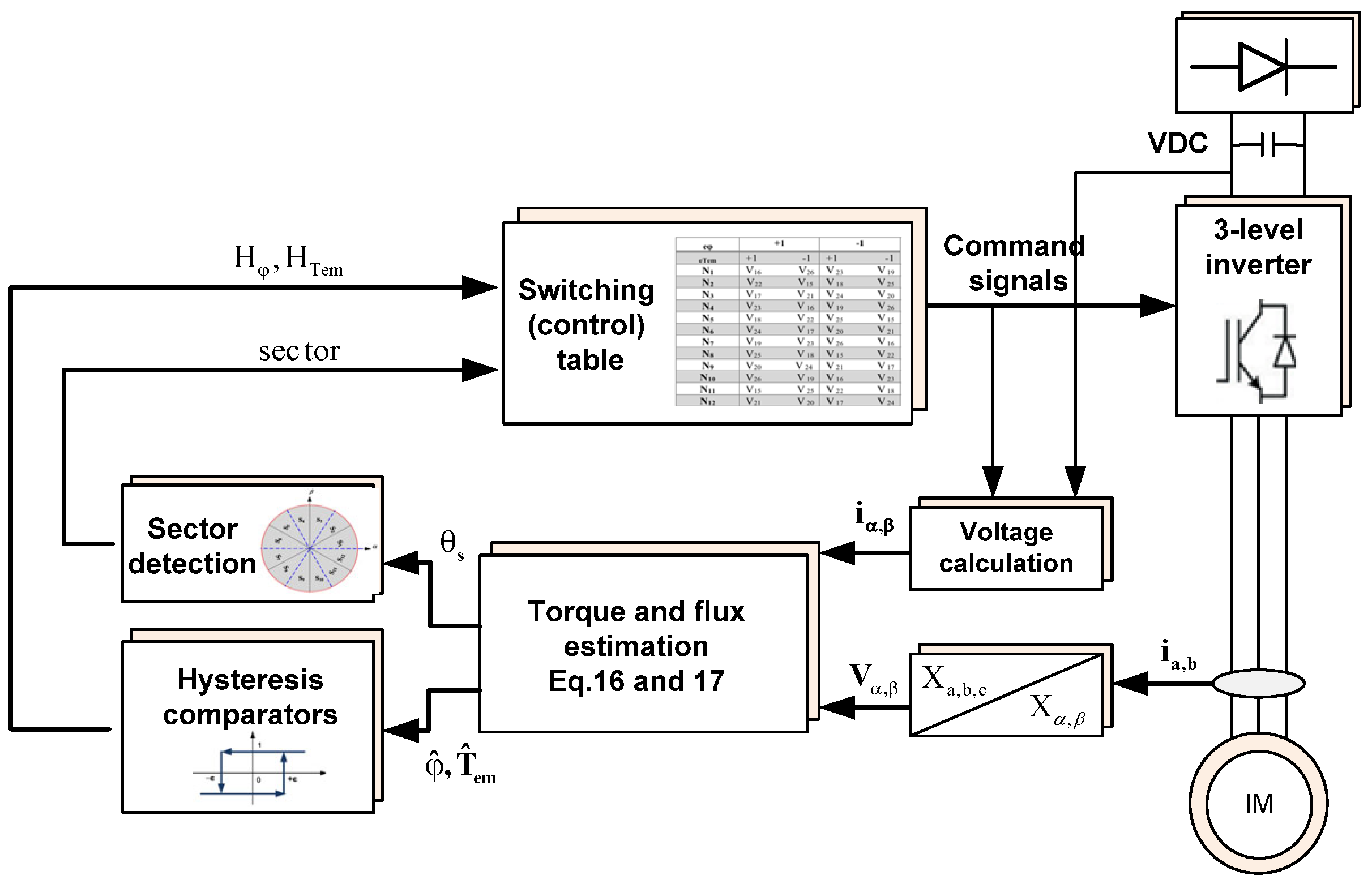
As illustrated in Figure 13, the DTC approach is built upon the direct calculation of switching sequences for the voltage inverter, which are governed by a predefined control table [30]. This switching table is constructed using three input variables: the values of the Boolean variables Hφ and HTem generated from the hysteresis regulators, and the stator flux sector, which indicates the position of the flux vector within the (α, β) plane.
A concise explanation of the functioning of this scheme is provided below: DTC operates through the comparison of the actual torque and flux values with their corresponding reference values. Through hysteresis controllers, it identifies the optimal inverter switching states to minimize deviations in torque and flux [31,32,33]. The stator flux is divided into 12 equally sized sectors, each covering 30°, permitting the choice of the most effective voltage vector from a predetermined lookup table to satisfy control objectives. The motor current and voltage measurements are converted into the stationary two-phase (α, β) coordinate system from the original three-phase (a, b, c) system, as given in Equation (15), to estimate the torque and flux effectively, as expressed in Equation (16).
Χ α Χ β = 2 3 1 1 2 1 2 0 3 2 3 2 X a X b X c
φ s α = V s α R s × i s α d t φ s β = V s β R s × i s β d t
Based on Equation (17), the electromagnetic torque is determined from the estimated flux components and the stator current measurement as given below:
T e m = 3 2 × n p ( φ s α . i s β φ s β . i s α )
where np denotes the number of pole pairs.
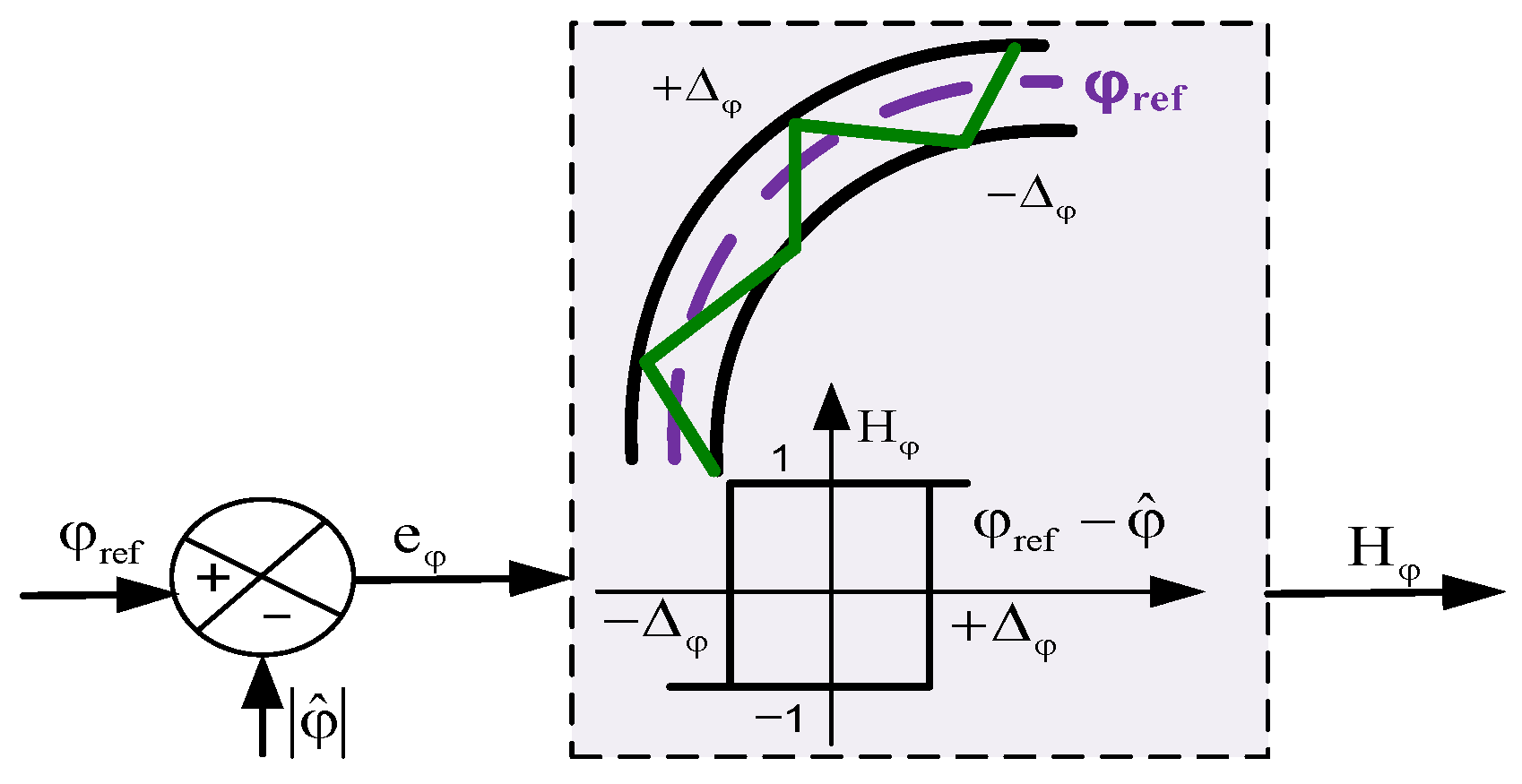
Regarding the hysteresis flux controller, it is designed to maintain the flux vector within a specified circular band. In fact, a two-level hysteresis controller receives the error between the reference and estimated flux to generate a Boolean control signal Hφ, as shown in Figure 14. This variable determines whether the flux amplitude should be increased (Hφ = 1) or decreased (Hφ = −1) to maintain the deviation between the estimated and reference flux within the hysteresis band Δ φ . We proceed in the same way for the torque hysteresis regulator.
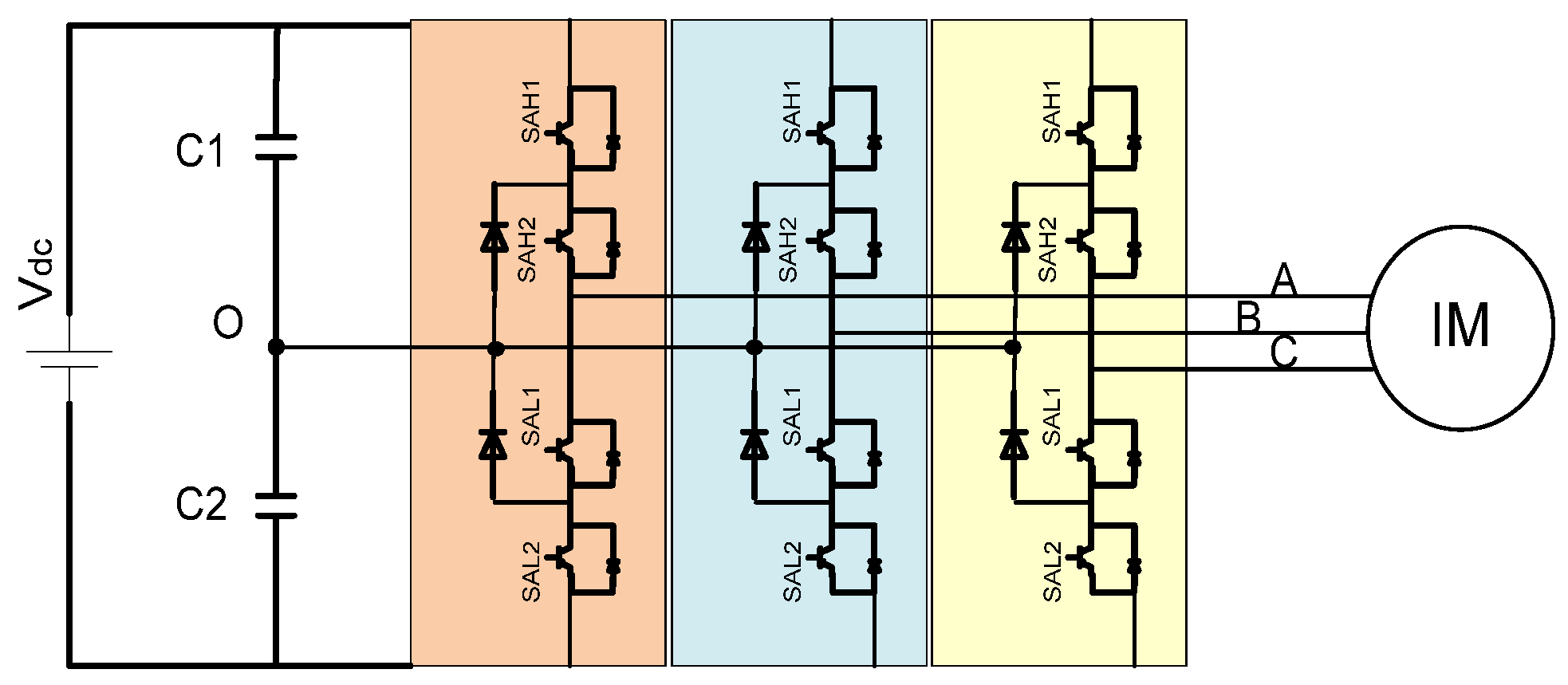
The 3L Neutral-Point-Clamped (NPC) inverter topology is used in this work to overcome the challenges associated with conventional two-level inverters, such as high harmonic distortion, increased switching losses, and increased voltage stress on power devices. By introducing an intermediate voltage level (0), the NPC inverter effectively reduces total harmonic distortion (THD) and ensures balanced voltage sharing across switching devices, thereby enhancing both efficiency and reliability. This 3L inverter generates output levels of +Vdc/2, 0, and −Vdc/2 with high precision while maintaining balance across the DC-link capacitors through the use of clamping diodes. The resulting output exhibits lower harmonic content and improved voltage quality, reducing electromagnetic interference (EMI) and the thermal burden on the motor. Furthermore, the multilevel configuration leads to lower switching losses, making the system highly suitable for photovoltaic applications operating under dynamically changing irradiance conditions.
Figure 15 illustrates the schematic of a 3L NPC inverter. The topology comprises three legs, each supplied by a pair of constant voltage sources. Each arm of the inverter integrates 4 transistors as well as two clamped diodes.
Table 4 illustrates the switching states and phase voltage of phase A. In the switching states, a “1” represents the switch being in the ON state, while a “0” signifies the switch being in the OFF state.

4. Simulation Results

4.1. Simulation Results Under Irradiance Variation Profile

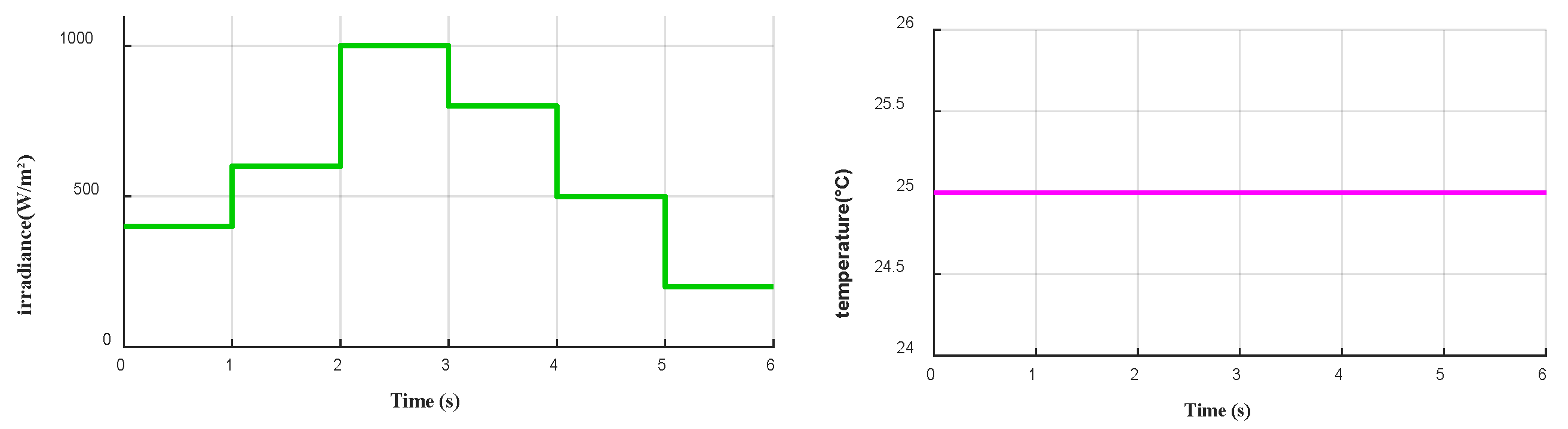
This section presents a comparative simulation study of the PVWPS using the Conventional DTC (CDTC) and the proposed DTC based on the 3L inverter method. The MPP is tracked using FLC. Assuming the ambient temperature is held constant at 25 °C throughout the entire study, the complete system, along with the proposed control strategies, is simulated using the MATLAB/Simulink environment. The solar pumping system performances are tested under varying irradiance conditions and constant temperature, as depicted in Figure 16. This irradiance profile incorporates step changes, serving as a thorough test for assessing the performance of the PVWPS.
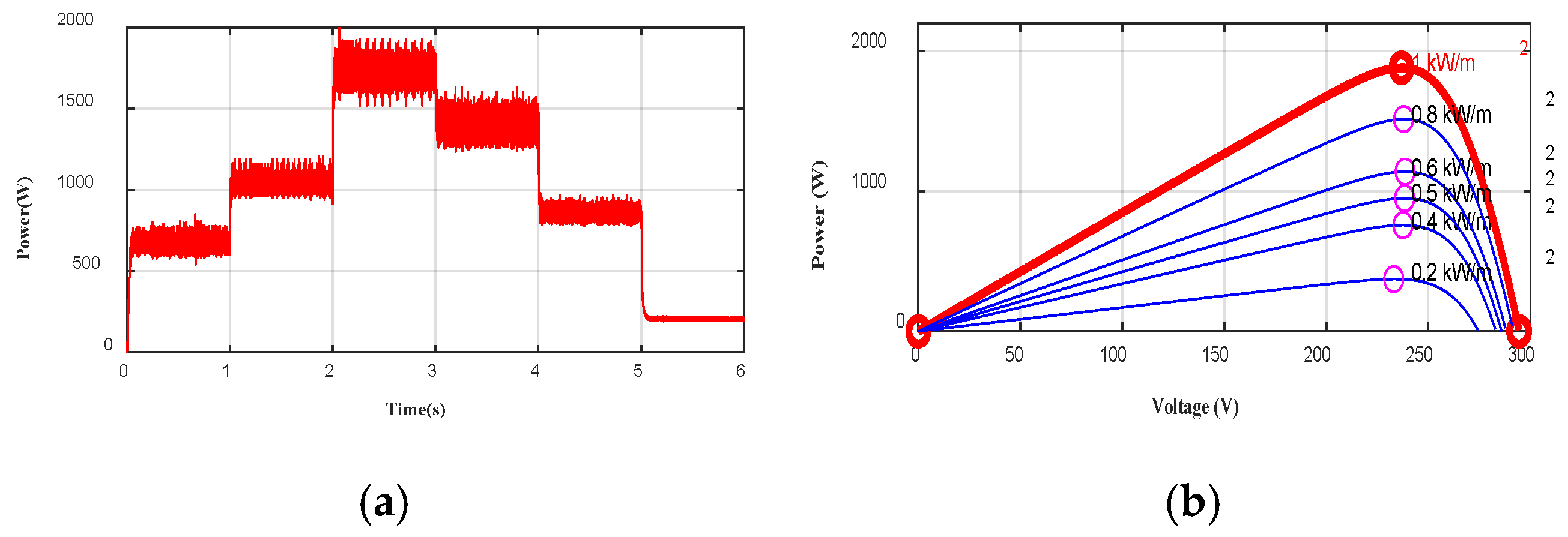
Figure 17a presents the generated PV power using the suggested control method. It is evident that the output power progressively aligns with the maximum extractable power, reflecting the effectiveness of the FLC MPPT strategy.
The quantitative performance metrics associated with this convergence are reported in Table 5. The average conversion efficiency is computed as the ratio of the extracted output power Pout to the theoretical maximum power available from the photovoltaic generator Pmax, which is given in Figure 17b.
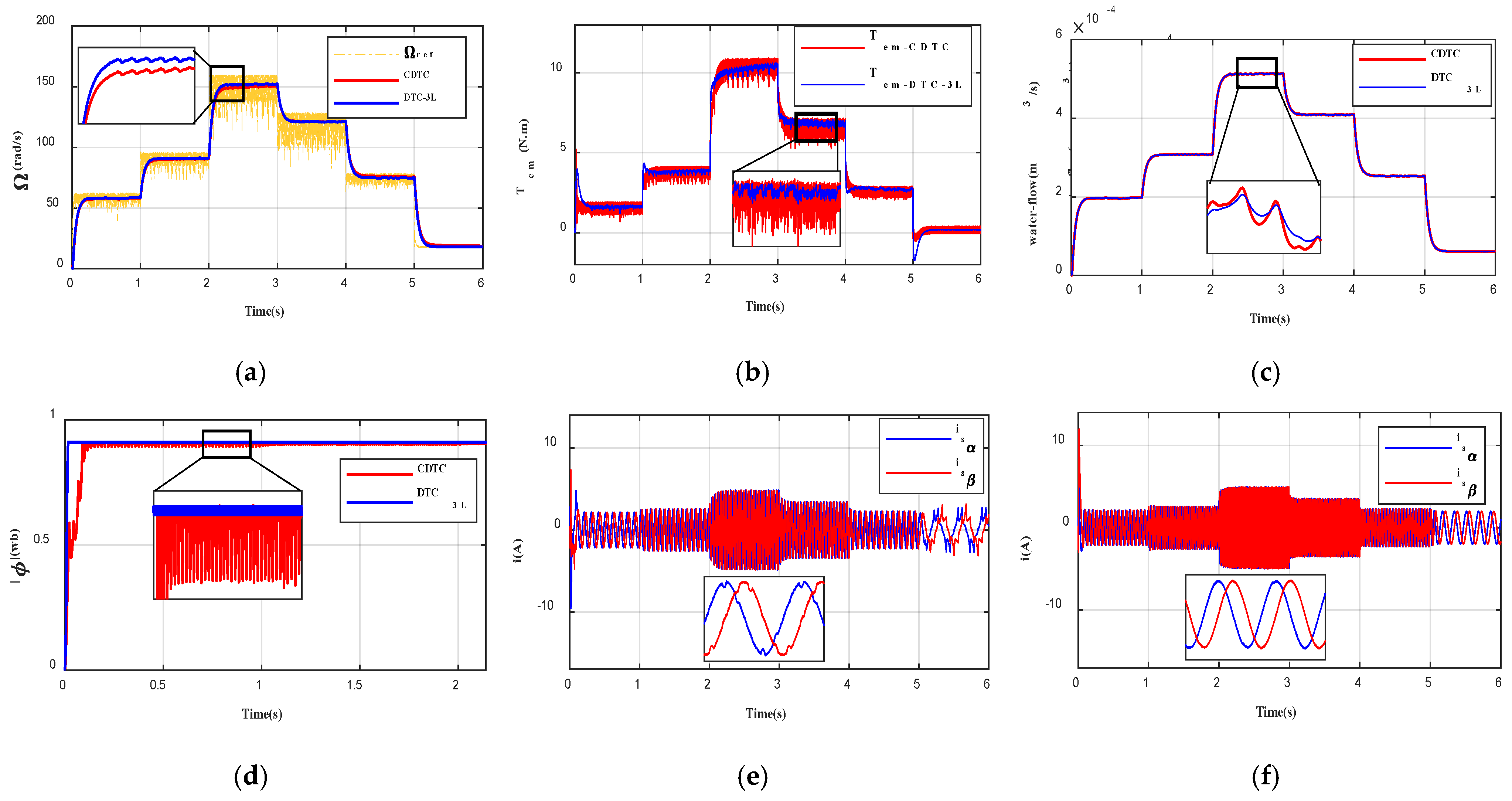
Figure 18 depicts the temporal evolution of the PVWPS electrical, mechanical, and hydraulic parameters: Figure 18a illustrates the temporal evolution of the motor-pump rotational speed, along with its reference trajectory. A close examination reveals that the DTC_3L method ensures improved speed tracking accuracy and response time compared to CDTC. Figure 18b presents the torque responses for both strategies. The DTC_3L controller yields smoother torque dynamics, with reduced ripple content, thereby contributing to enhanced mechanical reliability of the system. Figure 18c displays the water flow rate delivered by the pumping system. It closely follows the variations in irradiance and the energy harvested from the PV module. The stator flux trajectories, as shown in Figure 18d, reflect better response time and lower oscillatory behavior in the DTC_3L case, confirming enhanced flux regulation capability. Figure 18e,f further compare the stator current waveforms obtained under CDTC and DTC_3L schemes, respectively. Notably, the DTC_3L controller, in conjunction with MPPT fuzzy logic tuning, results in improved current quality with lower harmonic distortion and smoother transients. These enhancements collectively contribute to a more energy-efficient and robust PV-driven pumping system. The use of multilevel inverters in combination with intelligent control offers significant performance gains across electrical, mechanical, and hydraulic domains. Hence, the proposed DTC_3L, based on the fuzzy logic control technique in optimizing solar energy extraction, demonstrates its potential as a viable solution for high-performance water pumping applications powered by renewable energy sources.
Additional comparative insights under irradiance conditions (1000 W/m2) are presented in Table 6.

4.2. Simulation Results Under a Daily Irradiance Profile

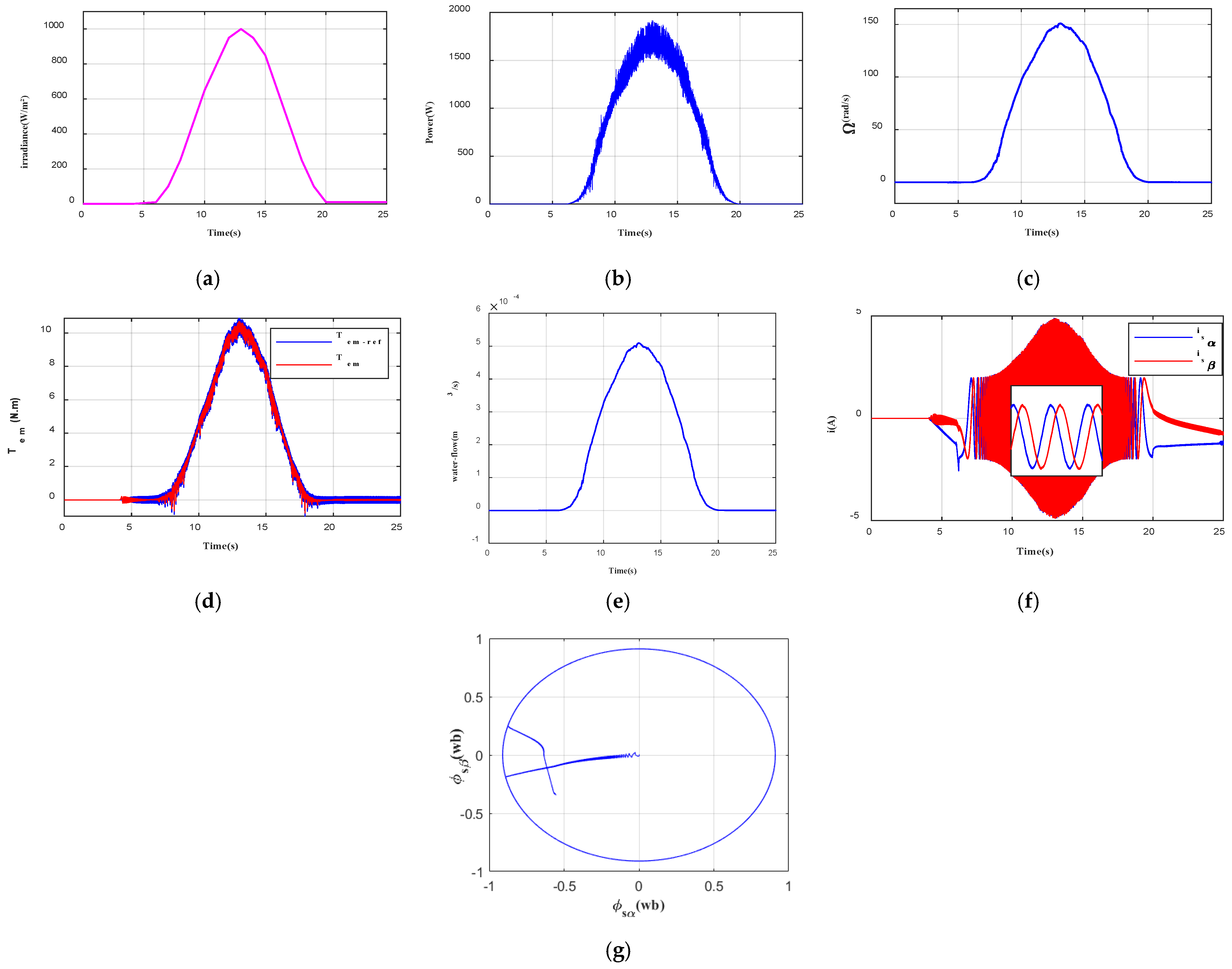
The second phase of simulation aims to evaluate the effectiveness of the proposed control strategies for the system under investigation, namely the DTC technique based on a three-level inverter and the fuzzy logic algorithm, using a daily irradiance profile, as shown in Figure 19a. This profile summarizes the solar irradiance data for the Kairouan region (latitude 35.818, longitude 10.585, central-eastern Tunisia) for August, using PVGIS-SARAH3 solar database calculations. The farm under consideration encompasses 1.5 hectares and contains 150 olive trees. The irrigation is scheduled for 12 h daily. Each olive tree requires about 120 L of water per day during peak summer conditions commonly found in Tunisia. Hence, the total daily flow rate is approximately 4.17 × 10⁻⁴ m3/s.
Figure 19b shows the variation in PV power output, which changes throughout the day as a function of varying irradiance levels. Before sunrise, the power stays low or at zero initially, and then gradually increases as solar radiation increases in the morning. It reaches its peak at midday, coinciding with the highest irradiance, before gradually decreasing as the sun sets. Additionally, the figure highlights the rapid and accurate tracking of MPP throughout the day, demonstrating the accuracy and robustness of the suggested MPPT-based fuzzy algorithm. Figure 19d depicts the electromagnetic torque response of the induction motor, representing the expected torque demand from the water pump, of the studied system throughout the day under varying irradiance conditions. Figure 19c,e represent the speed of the motor and the flow of water, respectively, for the PVWPS. It can be observed that the suggested DTC enables the system to follow the desired speed setpoint throughout the day, effectively maintaining the pump speed with precise accuracy. Figure 19f represents the stator currents of the IM. It reveals a sinusoidal waveform, indicative of low harmonic distortion. This behavior reflects a high-quality power supply and efficient energy transfer to the machine. This characteristic not only enhances the overall performance of the system but also enhances its lifespan by mitigating negative effects such as vibrations and excessive heating. By reducing these disturbances, the system operates more smoothly and reliably, preventing potential disruptions in functionality. The stator flux evolution in the α-β reference frame is shown in Figure 19g, exhibiting a nearly circular path. The trajectory remains well-centered, indicating stable flux regulation. Its average magnitude is approximately 0.91 Wb, reflecting effective control of the magnetic flux.

5. Conclusions

This study is centered on analyzing and controlling the PVWPS without the need for battery storage using advanced control techniques. The proposed control strategy integrates a Maximum Power Point Tracking based on a fuzzy logic algorithm to enhance power extraction from the photovoltaic generator under fluctuating solar irradiance conditions. Additionally, a Direct Torque Control approach is implemented to regulate the response of speed and torque of the IM supplied with a three-level NPC inverter, ensuring optimal operating performances and efficient energy conversion. Simulation findings demonstrate that the integration based of MPPT-based fuzzy logic control within the three-level DTC scheme significantly enhances system performance under variable solar irradiance.
Specifically, the proposed strategy achieves an 88% reduction in torque ripple, a 50% decrease in stator flux ripple, and a 77% reduction in current total harmonic distortion. These improvements confirm the controller’s suitability for efficient off-grid photovoltaic water pumping applications. These attributes also enhance the overall efficiency and stability of the system, ensuring optimal energy utilization and reliable motor pump operation. These advancements contribute to more sustainable agricultural irrigation by lowering energy consumption costs, prolonging the lifespan of agricultural irrigation systems, and enhancing the water output flow rate. The results highlight a limitation inherent to the proposed approach, which is the presence of fluctuations in the electromagnetic torque. These fluctuations can potentially be mitigated through the application of advanced estimation techniques. Furthermore, by estimating the speed, it would be possible to eliminate the need for a speed sensor, thereby contributing to improved overall efficiency and cost-effectiveness of the system. Addressing these limitations will be the focus of our future work.

Author Contributions

Conceptualization, S.J. and A.K.; methodology, S.J.; software, S.J.; validation, S.J. and A.K.; investigation, S.J.; writing—original draft preparation, S.J.; writing—review and editing, S.J. and A.K.; visualization, S.J.; supervision, A.K. All authors have read and agreed to the published version of the manuscript.

Funding

This research received no external funding.

Data Availability Statement

The original contributions presented in this study are included in the article. Further inquiries can be directed to the corresponding author.

Conflicts of Interest

The authors declare no conflicts of interest.

Appendix A

The parameters of the IM used for simulations are expressed in SI units.
Rated power (1.5 kW); rated speed (1435 r/min); rated current (5.5/3.2 A); rated voltage (230 V); rated torque (10 N·m); rated Flux (0.91 Wb); number of pole pairs (2); stator resistance (5.72 Ω); rotor resistance (4.28 Ω); stator and rotor inductances (0.464 H); mutual inductance (0.44 H); moment of inertia (0.0049 kg·m2); viscous friction coefficient (0.002).

References

  1. Abidi, M.; Rhouma, A.B.; Belhadj, J. Optimal coordinated planning of water-energy system-based MILP algorithm of a multi-pump PV water station by deeming power commitment. Electr. Power Syst. Res. 2023, 220, 109343. [Google Scholar] [CrossRef]
  2. Aliyu, M.; Hassan, G.; Said, S.A.; Siddiqui, M.U.; Alawami, A.T.; Elamin, I.M. A review of solar-powered water pumping systems. Renew. Sustain. Energy Rev. 2018, 87, 61–76. [Google Scholar] [CrossRef]
  3. Cordeiro, A.; Pires, V.F.; Foito, D.; Pires, A.J.; Martins, J.F. Three-level quadratic boost DC-DC converter associated to a SRM drive for water pumping photovoltaic powered systems. Sol. Energy 2020, 209, 42–56. [Google Scholar] [CrossRef]
  4. Odou, O.D.T.; Bhandari, R.; Adamou, R. Hybrid off-grid renewable power system for sustainable rural electrification in Benin. Renew. Energy 2020, 145, 1266–1279. [Google Scholar] [CrossRef]
  5. Rachaputi, B.P.; Rathinadurai Louis, J.; Sridharan, M. Novel sliding mode control of single-stage induction motor drive for solar water pumping applications. Electr. Eng. 2023, 105, 3019–3032. [Google Scholar] [CrossRef]
  6. International Energy Agency. “Solar PV,” [En Ligne]. Available online: https://www.iea.org/energy-system/renewables/solar-pv (accessed on 28 October 2024).
  7. Sarvi, M.; Azadian, A. A comprehensive review and classified comparison of MPPT algorithms in PV systems. Energy Syst. 2022, 13, 281–320. [Google Scholar] [CrossRef]
  8. Altimania, M.R.; Elsonbaty, N.A.; Enany, M.A.; Gamil, M.M.; Alzahrani, S.; Alraddadi, M.H.; Alsulami, R.; Alhartomi, M.; Alghuson, M.; Alatawi, F.; et al. Optimal performance of photovoltaic-powered water pumping system. Mathematics 2023, 11, 731. [Google Scholar] [CrossRef]
  9. Ahmed, N.M.; Hassan, A.M.; Kassem, M.A.; Hegazi, A.M.; Elsaadawi, Y.F. Reliability and performance evaluation of a solar PV-powered underground water pumping system. Sci. Rep. 2023, 13, 14174. [Google Scholar] [CrossRef]
  10. Joshua, K.P.; Rangasamy, L.V.; Reddy, C.V.K.; Veeruchinnan, R. Energy management of solar photovoltaic fed water pumping system-based BLDC motor drive using NBO–SDRN approach. Electr. Eng. 2024, 106, 3045–3059. [Google Scholar] [CrossRef]
  11. Román, E.; Alonso, R.; Ibañez, P.; Elorduizapatarietxe, S.; Goitia, D. Intelligent PV module for grid-connected PV systems. IEEE Trans. Ind. Electron. 2006, 53, 1066–1073. [Google Scholar] [CrossRef]
  12. Elgendy, M.A.; Zahawi, B.; Atkinson, D.J. Assessment of perturb and observe MPPT algorithm implementation techniques for PV pumping applications. IEEE Trans. Sustain. Energy 2011, 3, 21–33. [Google Scholar] [CrossRef]
  13. Elgendy, M.A.; Zahawi, B.; Atkinson, D.J. Assessment of the incremental conductance maximum power point tracking algorithm. IEEE Trans. Sustain. Energy 2012, 4, 108–117. [Google Scholar] [CrossRef]
  14. Elgendy, M.A.; Zahawi, B.; Atkinson, D.J. Comparison of directly connected and constant voltage controlled photovoltaic pumping systems. IEEE Trans. Sustain. Energy 2010, 1, 184–192. [Google Scholar] [CrossRef]
  15. Toka, E.; Samikannu, R.; Elavarasi, R.; Begam, K.M.; Senthil, K.M.; Kanimozhi, G. Design and Implementation of Solar Photovoltaic Powered Water Pumping System with Water Quality Monitoring. In 2025 10th International Conference on Communication and Electronics Systems (ICCES); IEEE: New York, NY, USA, 2025; pp. 165–170. [Google Scholar]
  16. Pandey, A.K.; Singh, V.; Jain, S. Maximum power point tracking algorithm based on fuzzy logic control using PV and IV characteristics for PV array. IEEE Trans. Ind. Appl. 2023, 59, 4572–4583. [Google Scholar] [CrossRef]
  17. Rezk, H.; Aly, M.; Al-Dhaifallah, M.; Shoyama, M. Design and hardware implementation of new adaptive fuzzy logic-based MPPT control method for photovoltaic applications. IEEE Access 2019, 7, 106427–106438. [Google Scholar] [CrossRef]
  18. Marina, K. Induction motor dynamics regimes: A comprehensive study of mathematical models and validation. Appl. Sci. 2025, 15, 1527. [Google Scholar] [CrossRef]
  19. Jnayah, S.; Khedher, A. DTC of induction motor drives fed by two and three-level inverter: Modeling and simulation. In Proceedings of the 2019 19th International Conference on Sciences and Techniques of Automatic Control and Computer Engineering (STA), Sousse, Tunisia, 24–26 March 2019; pp. 376–381. [Google Scholar]
  20. Jnayah, S.; Khedher, A. Fuzzy-self-tuning PI speed regulator for DTC of three-level inverter fed IM. In Proceedings of the 2020 17th International Multi-Conference on Systems, Signals & Devices (SSD), Monastir, Tunisia, 20–23 July 2020; pp. 709–714. [Google Scholar]
  21. Jnayah, S.; Khedher, A. Improvement of DTC performance of three level inverter fed IM drive with high gain flux observer. In International Conference on Digital Technologies and Applications, Fez, Morocco, 28–30 January 2022; Springer International Publishing: Cham, Switzerland, 2022; pp. 785–794. [Google Scholar]
  22. Moussaoui, A.; Attous, D.B.; Benbouhenni, H.; Bekakra, Y.; Nedjadi, B.; Elbarbary, Z.M.S. Enhanced direct torque control based on intelligent approach for doubly-fed induction machine fed by three-level inverter. Heliyon 2024, 10, e39738. [Google Scholar] [CrossRef]
  23. Mencou, S.; Benyakhlef, M.; Tazi, E. Enhancing DTC control of IM using fuzzy logic and three-level inverter: A comparative study. Turk. J. Electr. Eng. Comput. Sci. 2024, 32, 732–745. [Google Scholar] [CrossRef]
  24. Errouha, M.; Derouich, A.; Motahhir, S.; Zamzoum, O. Optimal control of induction motor for photovoltaic water pumping system. Technol. Econ. Smart Grids Sustain. Energy 2020, 5, 6. [Google Scholar] [CrossRef]
  25. Sakran, H.K.; Abdul Aziz, M.S.; Khor, C.Y. Effect of Blade number on the energy dissipation and centrifugal pump performance based on the entropy generation theory and fluid–structure interaction. Arab. J. Sci. Eng. 2024, 49, 11031–11052. [Google Scholar] [CrossRef]
  26. Poompavai, T.; Kowsalya, M. Control and energy management strategies applied for solar photovoltaic and wind energy fed water pumping system: A review. Renew. Sustain. Energy Rev. 2019, 107, 108–122. [Google Scholar] [CrossRef]
  27. Jnayah, S.; Khedher, A. Sensorless DTC-SVM applied to an induction motor controlled by a three-level inverter using SMSFO. COMPEL-Int. J. Comput. Math. Electr. Electron. Eng. 2023, 42, 1349–1371. [Google Scholar] [CrossRef]
  28. Melhaoui, M.; Rhiat, M.; Oukili, M.; Atmane, I.; Hirech, K.; Bossoufi, B.; Almalki, M.M.; Alghamdi, T.A.H.; Alenezi, M. Hybrid fuzzy logic approach for enhanced MPPT control in PV systems. Sci. Rep. 2025, 15, 19235. [Google Scholar] [CrossRef]
  29. Balakumar, S.; Lemma, M.; Godato, M. Solar-powered ANN-based MPPT with zeta converter for BLDC motor water pumping in rural Ethiopia for sustainable agriculture. Discov. Sustain. 2025, 6, 140. [Google Scholar] [CrossRef]
  30. Kumar, R.; Naik, M.V. Enhanced photovoltaic water pumping system employing Kalman filter-based MPPT coupled with multilevel inverter-driven DTC–IM. J. Power Electron. 2026, 26, 201–213. [Google Scholar] [CrossRef]
  31. Khedher, A.; Mimouni, M.F. Sensorless-adaptive DTC of double star induction motor. Energy Convers. Manag. 2010, 51, 2878–2892. [Google Scholar] [CrossRef]
  32. Hadla, H.; Santos, F. Performance comparison of field-oriented control, direct torque control, and model-predictive control for SynRMs. Chin. J. Electr. Eng. 2022, 8, 24–37. [Google Scholar] [CrossRef]
  33. Elgbaily, M.; Anayi, F.; Alshbib, M.M. A combined control scheme of direct torque control and field-oriented control algorithms for three-phase induction motor: Experimental validation. Mathematics 2022, 10, 3842. [Google Scholar] [CrossRef]
Figure 1. Global renewable electricity capacity additions from PV technology between 2016 and 2028.
Automation 07 00053 g001
Figure 2. MPPT-driven Photovoltaic System.
Automation 07 00053 g002
Figure 3. PVWPS structure.
Automation 07 00053 g003
Figure 4. PV current–voltage and power–voltage curves.
Automation 07 00053 g004
Figure 5. The equivalent electrical model for a PV cell.
Automation 07 00053 g005
Figure 6. DC-DC boost converter.
Automation 07 00053 g006
Figure 7. Architecture of the PV water pumping system based on a three-level inverter.
Automation 07 00053 g007
Figure 8. The fuzzy controller structure.
Automation 07 00053 g008
Figure 9. MPPT concept of FLC.
Automation 07 00053 g009
Figure 10. Membership function design associated with the input and output variables in the FLC.
Automation 07 00053 g010
Figure 11. The generated surface structure.
Automation 07 00053 g011
Figure 12. The flowchart of the FLC.
Automation 07 00053 g012
Figure 13. DTC structure of an IM fed by a 3L-NPC inverter.
Automation 07 00053 g013
Figure 14. Flux hysteresis controller.
Automation 07 00053 g014
Figure 15. 3L-NPC-VSI topology.
Automation 07 00053 g015
Figure 16. Irradiance and temperature profile for evaluating the performance of the PVWPS.
Automation 07 00053 g016
Figure 17. (a) Generated PV power and (b) Ppv-Vpv characteristics.
Automation 07 00053 g017
Figure 18. Efficiency analysis of PVWPS with varying solar irradiance levels: (a) speed evolution, (b) electromagnetic torque responses under CDTC and DTC_3L, (c) water flow rates, (d) stator flux magnitudes, (e) stator currents under CDTC, and (f) stator currents of IM controlled with DTC_3L.
Automation 07 00053 g018
Figure 19. PVWPS operating according to daily profile irradiance: (a) daily irradiance profile, (b) photovoltaic power, (c) motor speed, (d) electromagnetic and reference torques, (e) water flow, (f) stator flux trajectory, and (g) stator currents using DTC based on a 3L inverter.
Automation 07 00053 g019
Table 1. Comparative summary of common MPPT Techniques.
MPPTAdvantagesLimitations
P&OSimple, easy to implementOscillations near MPP, poor under fast irradiance changes
INCGood accuracy, fast convergenceComplex implementation, sensitive to noise
CVVery simple, low-costFixed point, poor accuracy in variable conditions
PSOGlobal optimum trackingHigh computational cost, slower response
FLCRobust to nonlinearities and disturbancesRequires tuning and expert knowledge
Table 2. PV module specifications.
ParameterValue
Maximum Power (W)235
Current at maximum power point Imp (A)7.94
Voltage at maximum power point Vmp (V)29.6
Open-circuit voltage Voc (V)36.8
Short-circuit current Isc (A)8.54
Number of modules arranged in series per photovoltaic string8
Number of cells60
Table 3. Rule base of the FLC.
ΔENBNSZPSPB
E
NBNBNSZZZ
NSNBNSZPSPB
ZPBPSZPSPS
PSPBPBPBZZ
PBPBPBPBPSZ
Table 4. Phase A Switching States.
SAH1SAH2SAL1SAL2Output Voltage
1100 + V d c / 2
01100
0011 V d c / 2
Table 5. Efficiency of the MPPT technique based on FLC.
Irradiance (W/m2)Pmax (W)Pout (W) μ = P o u t P max (%)
40075774097.7
6001139110196.6
10001880185998.8
8001514150299.2
50094994099
20037226170
Table 6. Performance comparison between CDTC and the proposed DTC strategy.
MetricCDTCProposed DTCImprovement (%)
Torque ripple (N·m)10.1288
Flux ripple (Wb)0.020.0150
Current THD (%)21.224.6977.9
Response time of Ω (s)0.330.2233.3
Disclaimer/Publisher’s Note: The statements, opinions and data contained in all publications are solely those of the individual author(s) and contributor(s) and not of MDPI and/or the editor(s). MDPI and/or the editor(s) disclaim responsibility for any injury to people or property resulting from any ideas, methods, instructions or products referred to in the content.