Article

Photodynamic Agents of Synthetic Curcuminoids with Antibacterial and Anticancer Activities

1
Department of Dermatology, Hualien Tzu Chi Hospital, Buddhist Medical Foundation, Hualien 970473, Taiwan
2
Department of Dermatology, School of Medicine, Tzu Chi University, Hualien 970374, Taiwan
3
Department of Biochemistry, School of Medicine, Tzu Chi University, Hualien 970374, Taiwan
4
Department of Laboratory Medicine and Biotechnology, Tzu Chi University, Hualien 970374, Taiwan
5
Institute of Medical Sciences, Tzu Chi University, Hualien 970374, Taiwan
6
Department of Chemistry, Tamkang University, New Taipei City 251301, Taiwan
7
Ph.D. Program in Pharmacology and Toxicology, School of Medicine, Tzu Chi University, Hualien 970374, Taiwan
8
Integration Center of Traditional Chinese and Modern Medicine, Hualien Tzu Chi Hospital, Hualien 970473, Taiwan
*
Authors to whom correspondence should be addressed.
These authors contributed equally to this work.
Organics 2026, 7(1), 1; https://doi.org/10.3390/org7010001
Submission received: 12 September 2025 / Revised: 12 December 2025 / Accepted: 18 December 2025 / Published: 23 December 2025

Abstract

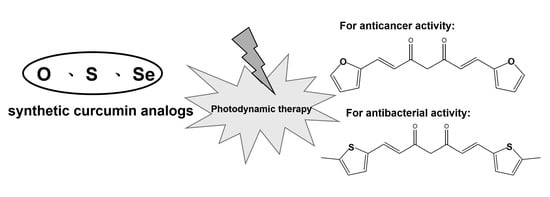
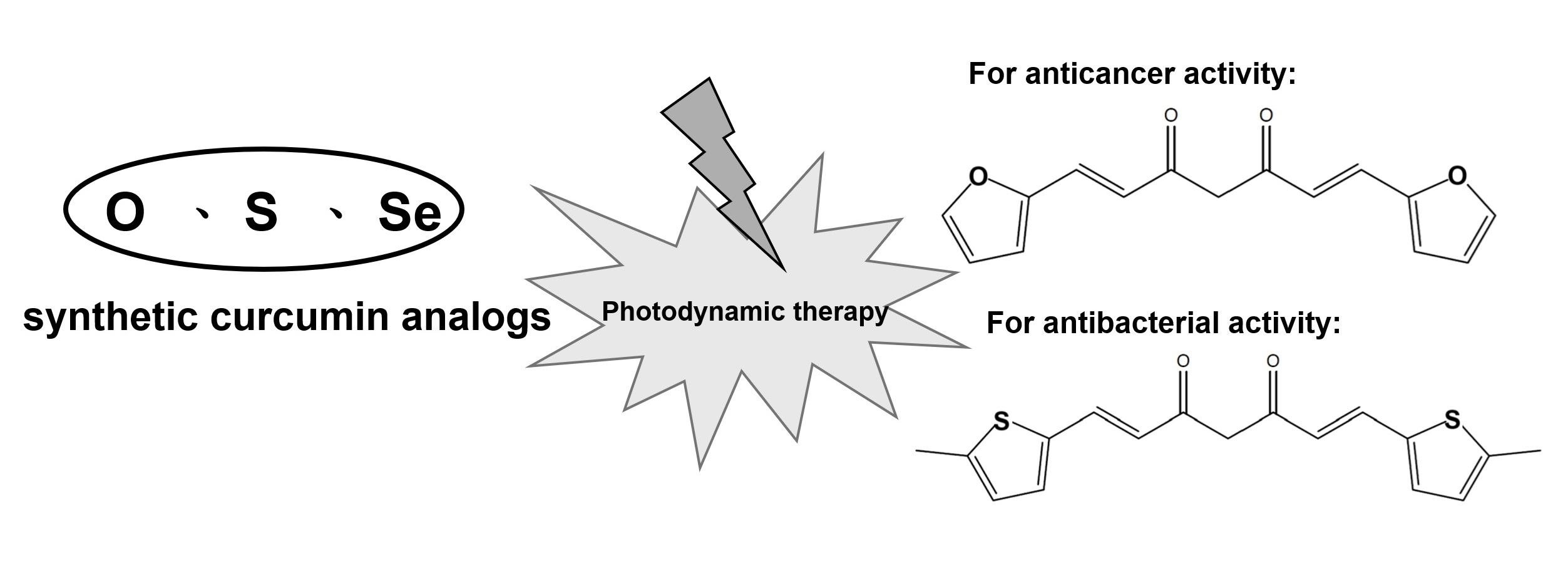
Our previous study demonstrated that thiophene-substituted synthetic curcumin analogs possessed better antibacterial activity and stability than natural curcumin, demethoxycurcumin, or bisdemethoxycurcumin in antibacterial photodynamic therapy (aPDT). In addition, the activity of the furan-substituted analogs was weaker than that of the thiophene-substituted compounds. As oxygen, sulfur, and selenium belong to the same group in the periodic table, the antibacterial and anticancer activities of these three different elemental analogs were compared and investigated. The thiophene-substituted analog (compound 3) exhibited the most potent antibacterial activity in aPDT experiments. However, the furan-substituted analog (compound 1) exhibited the most potent anticancer activity. These results indicate that the differences in atomic radii or energy levels in these compounds produce different cell-attack results on generated free radicals. Ruthenium(II) complexes have a good reputation for use in PDT for cancer treatment. Our results show that complexation of ruthenium(II) with thiophene-substituted curcumin analogs does not enhance their antibacterial or anticancer activity.

Graphical Abstract

1. Introduction

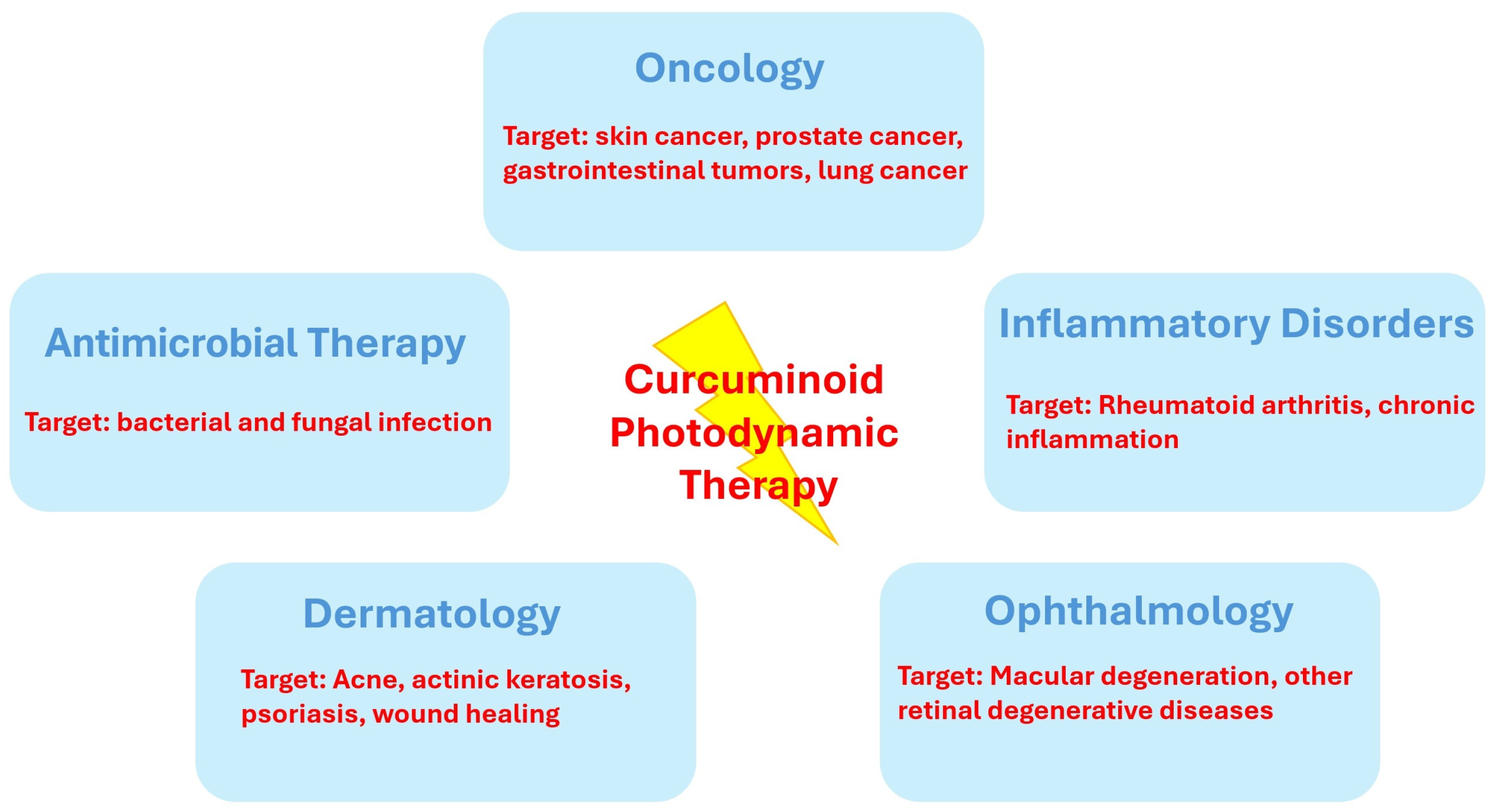
The application of photodynamic therapy (PDT) in alternative treatment is quite broad, including anticancer, chemotherapy, surgery, ionizing radiation, and antimicrobials (Figure 1) [1,2]. Its mechanism mainly comes from the reactions between a photosensitizer, a photodynamically active compound, light irradiation, and oxygen [3,4]. After administration of the photosensitizer and irradiation by light, cell death was caused by the produced reactive oxygen species. Finding novel photosensitizers plays an important role in improving the efficacy of PDT.
The drawbacks of most clinically used photosensitizers, such as porphyrins, chlorins, and phthalocyanines, basically involve low water solubility, low photo-stability, and complications in preparation [5,6,7]. More recently, ruthenium(II) complexes featuring polypyridyl ligands appear to be an ideal alternative for PDT. The advantage of this transition metal complex include the following: (1) multiple entry pathway to target cells, including passive diffusion, active transport, and endocytosis; (2) the versatile ability to target various intracellular organelles, like cell nuclei, mitochondria, or lysosomes; (3) multiple cytotoxicity mechanisms to impair or kill cancer cells, including DNA intercalation, protein interaction, and ROS production; (4) the low systemic toxicity with selective anti-metastatic properties [8,9,10].
On the other hand, curcumin is also a natural photosensitizer that exhibits one absorption band in the visible range (410–430 nm) and another in the ultraviolet region, with maximum absorption at 265 nm [11]. It is isolated from the plant Curcuma longa [12]. Curcumin has been extensively researched, owing to its diverse therapeutic attributes, which include anti-inflammatory, antioxidant, antibiotic, immunomodulatory, antiproliferative, antitumor, and anticarcinogenic effects [13]. Significantly, curcumin’s complexation with ruthenium(II) offered a strong foundation for creating curcumin-based anticancer drugs, as reported previously [14].
Our previous results have shown that a furan-substituted curcumin analog, (1E,6E)-1,7-Di(furan-2-yl)hepta-1,6-diene-3,5-dione (1), has a much stronger antimicrobial photodynamic therapy (aPDT) activity than natural curcumin and bisdemethoxycurcumin [15]. However, the other two thiophene-substituted synthetic curcumin analogs, (1E,6E)-1,7-Di(thiophen-2-yl)hepta-1,6-diene-3,5-dione (2) and (1E,6E)-1,7-Bis(5-methylthiophen-2-yl)hepta-1,6-diene-3,5-dione (3), possess the strongest aPDT activity among all compounds tested. Investigating whether ruthenium(II) complexes with these two sulfur-substituted curcumin analogs can enhance their biological activity in PDT is of great interest.
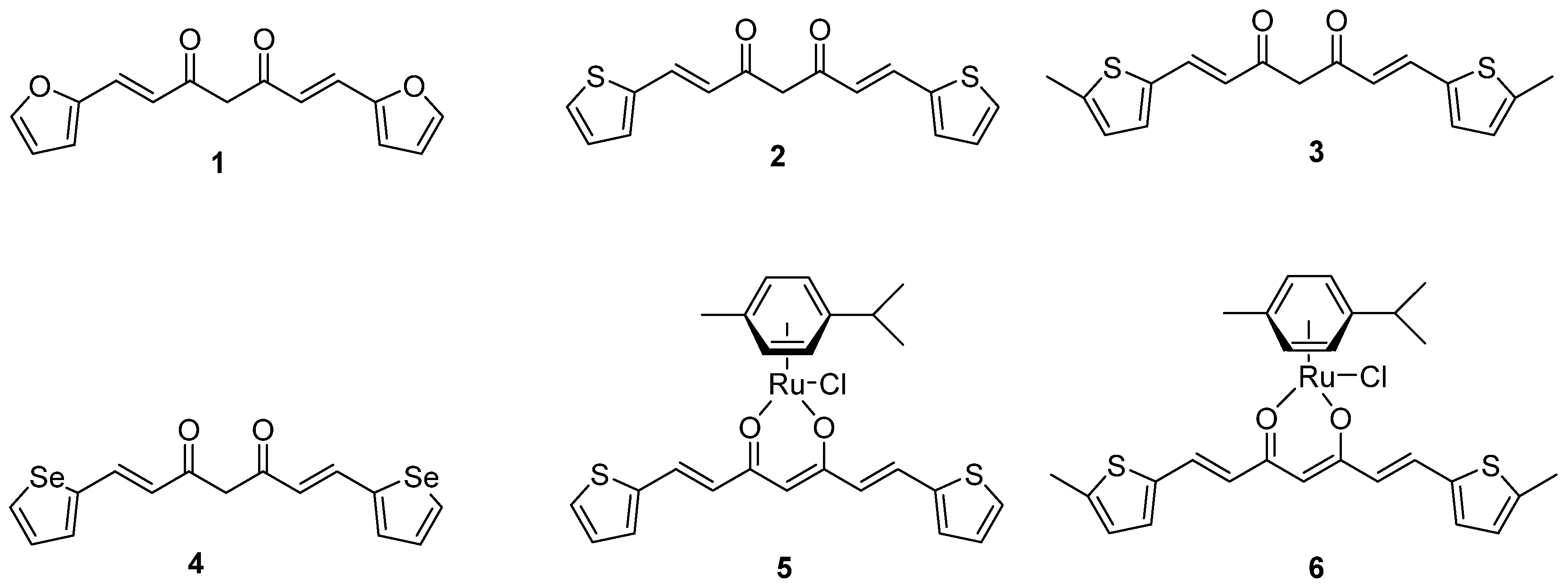
Because oxygen, sulfur, and selenium belong to the same group of elements on the periodic table, the order of atomic radius is oxygen > sulfur > selenium. The longer the atomic radius, the easier it is for electrons to be excited. Determining whether the selenophene-substituted curcumin analog (4) possesses more relevant photo-induced activity is also of great interest. Here, we report on the antibacterial and anticancer activities of a series of synthetic curcuminoids (Figure 2).

2. Materials and Methods

2.1. Synthesis of Curcumin Analogs 16

All chemicals were commercially available and obtained from Alfa, Acros, or purchased from UniWorld company in Taiwan and used without further purification. Purification was performed via flash column chromatography on silica gel (230–400 mesh, SiliaFlash® P60, 40–63 μm 60 Å, SiliCycle® Inc. (Quebec City, QC, Canada). The reaction progression was monitored using thin-layer chromatography (Item: Durasil-254UV, Macherey-Nagel GmbH & Co. KG, Dueren, Germany) and visualized via UV light at 254 nm and 365 nm or KMnO4 or p-anisaldehyde solutions. The NMR data were recorded on a 600 MHz Bruker Ultrashield instrument. The chemical shifts were reported in parts per million (ppm), relative to the residual solvents: 1H NMR (600 MHz) for CDCl3 and DMSO-d6 at 7.26 and 2.50 ppm, respectively; 13C NMR (150 MHz) for CDCl3 and DMSO-d6 at 77.0 and 39.51 ppm, respectively. Abbreviation: s = singlet, d = doublet, t = triplet, q = quartet, and m = multiplet. The purity determination of the synthesized compound was performed using quantitative 1H NMR. A specific proton signal belonging to the target product (representing one proton equivalent) was chosen as the internal reference and assigned an integration value of 1.0. The integration value of the impurity signal (e.g., an aromatic proton peak, also corresponding to one proton) was measured against this internal reference, and the compound’s purity was derived from the resulting ratio of the integrals. The melting point was measured on the MP-2D apparatus (Fargo, New Taipei City, Taiwan) by an open capillary tube and was uncorrected. High-resolution mass spectroscopy (HRMS) was recorded on an Orbitrap Fusion Lumos Tribrid mass spectrometer (ThermoFisher Scientific, Waltham, MA, USA). The instrument was equipped with a heated electrospray ionization (HESI) source.
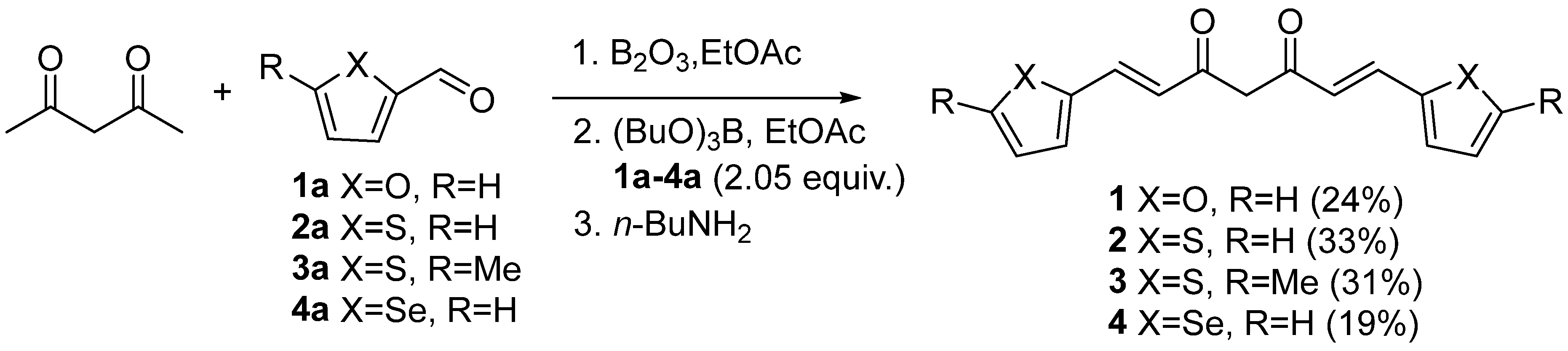
We have previously reported the synthesis of compounds 2 and 3 [16]. The synthesis of curcumins 4 starts from pentane-2,4-dione to react with the corresponding aldehydes 4a, following the established procedure (Figure 3). Compounds 1a3a are commercially available, except 4a, which is prepared by treating selenophene with DMF and POCl3 to provide a 69% yield [17].
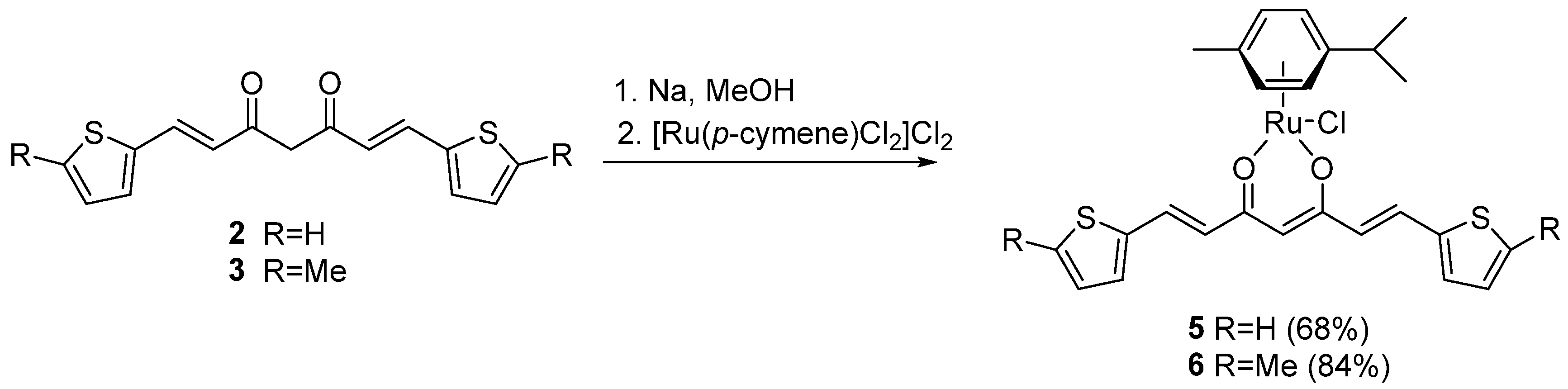
Synthesis of compounds 5 and 6 was prepared by treating 2 and 3 with sodium and [Ru(p-cymene)Cl2]2 (Figure 4).

2.1.1. Compound 1 [18]

Pentane-2,4-dione (0.291 g, 2.906 mmol) and B2O3 (0.2022 g, 2.906 mmol) were dissolved in EtOAc (15.0 mL) and heated at 55 °C for 30 min. To this mixture, 1a (0.5724 g, 5.958 mmol) and tri-n-butyl borate [(BuO)3B] (2.006 g, 8.718 mmol) in EtOAc (30.0 mL) were added, followed by the slow addition of n-butylamine (n-BuNH2, 0.149 g, 2.034 mmol) in EtOAc (5.0 mL). The reaction mixture was stirred at the same temperature for 16 h. Upon completion, the mixture was treated with an excess amount of H2O and 2 N HCl and stirred for 15 min. The organic layer was separated and concentrated. The resulting solid was filtered, washed with ether, and recrystallized from CH2Cl2 and hexane to afford compound 1 (0.175 g, 0.684 mmol) as a yellow solid in 24% yield. 1H NMR (600 MHz, DMSO-d6) δ 7.87 (s, 2H), 7.44 (d, J = 15.7 Hz, 2H), 6.95 (d, J = 3.4 Hz, 2H), 6.65 (dd, J = 3.3, 1.7 Hz, 2H), 6.56 (d, J = 15.7 Hz, 2H), 6.19 (s, 1H). 13C NMR (150 MHz, CDCl3) δ 182.5, 151.0, 146.1, 126.9, 121.2, 161.2, 113.1, 102. The NMR spectra are all consistent with the published data [15]. The purity of synthesized compound 1 was estimated to be >98% according to the NMR spectrum (Figure S1).

2.1.2. Compound 4

This followed the same procedure as in the synthesis of 1. Pentane-2,4-dione (0.0423 g, 0.423 mmol). 4a (0.1380 g, 0.867 mmol). B2O3 (0.0294 g, 0.423 mmol). (BuO)3B (0.2920 g, 1.269 mmol). n-BuNH2 (0.0217 g, 0.296 mmol). EtOAc (30 mL). Mp 115–117 °C. 1H NMR (600 MHz, CDCl3) δ 8.34 (d, J = 5.4 Hz, 2H), 7.81 (d, J = 15.6 Hz, 2H), 7.68 (d, J = 3.6 Hz, 2H), 7.35 (dd, J = 5.4, 3.6 Hz, 2H), 6.49 (d, J = 5.4, 3.6 Hz, 2H), 6.15 (s, 1H). 13C NMR (150 MHz, CDCl3) δ 182.5, 145.9, 135.9, 135.7, 135.2, 130.9, 123.9, 101.5. HRMS (ESI) calculated for C15H13O280Se78Se [M + H]+ 382.9824. Found: 382.9253 (Figure S2). The purity of synthesized compound 4 was estimated to be >94% according to the NMR spectrum (Figure S3).

2.1.3. Compound 5

Compound 2 (0.1000 g, 0.3470 mmol) was dissolved in dry MeOH (7.0 mL) under a nitrogen atmosphere, and sodium (0.0050 g, 0.2173 mmol) was added to the mixture. The inert gas was then replaced with argon, followed by the addition of [Ru(p-cymene)Cl2]2 (0.0955 g, 0.156 mmol). The reaction mixture was stirred at ambient temperature for 24 h. After completion, the solid was filtered, MeOH was removed, and the residue was purified by flash column chromatography (Et2O:EtOAc:Hexane = 1:0.5:3–1:1:1). The resulting solid was recrystallized from CH2Cl2 and hexane to afford 5 (0.119 g, 0.1940 mmol) as a dark-red solid in 68% yield, Mp 219–223 °C. 1H NMR (600 MHz, DMSO-d6) δ 7.66 (d, J = 15.6 Hz, 2H), 7.65 (d, J = 5.1 Hz, 1H), 7.42 (d, J = 3.6 Hz, 2H), 7.12 (dd, J = 5.1, 3.6 Hz, 2H), 6.40 (d, J = 15.6 Hz, 2H), 5.71 (d, J = 6.0 Hz, 2H), 5.54 (s, 1H), 5.43 (d, J = 6.0 Hz, 2H), 2.85 (septet, J = 6.6 Hz, 1H), 2.19 (s, 3H), 1.30 (d, J = 6.6 Hz, 6H). 13C NMR (150 MHz, DMSO-d6) δ 177.0. 140.5, 130.7, 130.3, 128.6, 128.5, 126.6, 101.9, 98.4, 97.1, 82.9, 78.5, 30.3, 22.0, 17.5. HRMS (ESI) calculated for C25H25O2RuS2 [M-Cl]+ 523.0334. Found: 523.0340 (Figure S4). The purity of synthesized compound 5 was estimated to be >93% according to the NMR spectrum (Figure S5).

2.1.4. Compound 6

This followed the same procedure as in the synthesis of compound 5. Compound 3 (0.1000 g, 0.316 mmol). [Ru(p-cymene)Cl2]2 (0.0871 g, 0.142 mmol). Sodium (0.0050 g, 0.2173 mmol). Purification by flash column chromatography (Et2O:EtOAc:Hexane = 1: 0.5:3–1:1:1) afforded 6 (0.140 g, 0.2380 mmol) in 84% yield as a dark-red color. Mp 228–229 °C (decomposed). 1H NMR (600 MHz, DMSO-d6) δ 7.55 (d, J = 15.4 Hz, 2H), 7.20 (d, J = 3.4 Hz, 2H), 6.82 (d, J = 3.4 Hz, 2H), 6.23 (d, J = 15.4 Hz, 2H), 5.68 (d, J = 5.8 Hz, 2H), 5.46 (s, 1H), 5.41 (d, J = 5.8 Hz, 2 H), 2.83 (septet, J = 6.6 Hz, 1H), 2.46 (s, 3H), 2.17 (s, 3H), 1.29 (d, J = 6.6 Hz, 6H).13C NMR (150 MHz, DMSO-d6) δ 176.9, 142.5, 138.5, 131.0, 130.9, 127.1, 125.4, 101.7, 98.3, 78.5, 30.3, 22.0, 17.4, 15.4. HRMS (ESI) calculated for C27H29O2RuS2 [M-Cl]+ 551.0647. Found: 551.0650 (Figure S6). The purity of synthesized compound 6 was estimated to be >92% according to the NMR spectrum (Figure S7).

2.1.5. UV-Visible Spectra Measurement

About 1 mg of solid compounds 1, 2, 3, 4, 5, and 6 was dissolved in 1 mL DMSO. This DMSO stock was then diluted to make a 0.05 mg/mL DMSO solution for measurements. The UV-visible spectra were recorded using NanoDrop™ 2000 Spectrophotometers (Thermo Fisher Scientific Inc., Waltham, MA, USA).

2.1.6. Infrared (IR) Spectra Measurement

Infrared (IR) spectra were recorded on a Bruker Tensor 27 FT-IR spectrometer (Billerica, MA, USA) with a resolution of 4 cm−1 over the range of 4000–400 cm−1. Samples were prepared as thin films by dissolving the compound in a minimal amount of CH2Cl2, applying the solution to NaCl plates, and allowing the solvent to fully evaporate prior to measurement.

2.2. Photodynamic Antibacterial Studies

The photo-irradiation device for microbial viability studies was basically modified from previous reports [15]. Blue light LED (3.0 mW/cm2), powered by a DC 5V supply, was generated by the Vetalux Company (Tainan, Taiwan). The LED’s emission spectrum ranged from 410 to 510 nm, with a λmax of 462 nm. Staphylococcus epidermidis TCU-1 BCRC 81267 and S. aureus subsp. aureus TCU-2 BCRC 81268 were deposited in the Bioresource Collection and Research Center, Hsinchu, Taiwan.
Both bacterial strains grew in LB medium at 37 °C until OD600 reached 1.0. The number of bacteria was about 109 CFU/mL. Curcumin analogs were dissolved in 100% DMSO, and the concentration of this stock was 300 mM. These DMSO curcumin stocks were diluted with LB medium to make a 10 μM solution. In total, 1 mL of the 10 μM curcumin analog solution was then mixed with 1 mL 500-fold-diluted bacterial cultures (2 × 10⁶ CFU/mL) and irradiated with LED blue light for 1 min (equivalent to radiant exposure of 0.18 J/cm2). To assess microbial viability, cultures were serially diluted, then plated on the LB agar. Following overnight incubation at 37 °C, colony counts were performed, and the killing ratio was calculated based on the following [15]:
Killing ratio (%) = [1 − T(CFU/mL)/C(CFU/mL)] × 100%, where T is the colony number of the synthetic curcumin analog-treated group, and C is the colony number of the control group (DMSO only) without light irradiation. The experiments were performed in triplicate, and the data are expressed as mean ± standard deviation of three individual experiments. The data were assessed via analysis of a sample t-test using GraphPad Prism 9 (GraphPad Software, Boston, MA, USA).

2.3. Anticancer Cell Viability Assay

Murine B16-F10 melanoma cell lines BCRC 60031 obtained from the Bioresource Collection and Research Center, Hsinchu, Taiwan, and maintained in 1X Dulbecco’s modified Eagle’s medium (Gibco, Waltham, MA, USA), 10% fetal bovine serum (Gibco, Waltham, MA, USA), 1% penicillin/streptomycin, and 1% MEM non-essential amino acids (Gibco, Waltham, MA, USA). Cells were combined at 37 °C in a 5% CO2 humidified atmosphere [19]. About 2 × 10³–5 × 10³ B16-F10 cells in 100 μL were seeded into 96-well plates and treated with 20 μL curcumin DMSO stock. The cells in 96-well plates were irradiated with LED blue light for 5 min (equivalent to a radiant exposure of 0.9 J/cm2) and grown for 48 h. The working concentrations of synthetic curcumin analogs were 125, 25, 5, 1, and 0.2 μg/mL.
For the MTT assay, 100 μL of 0.1 mg/mL MTT solution was added to each well. Cells were incubated at 37 °C for 6 h. Absorbance was detected at OD 570 nm. Cell viability rate (%) = [(T − B)/(C − B)] × 100%, where T is the absorbance of the curcumin analog treatment group, B is the absorbance of the DMSO and MTT group, and C is the absorbance of the control group without curcumin analog treatment. All tests were performed in quadruplicate. IC50 values (half maximal inhibitory concentration) of each curcumin analog were determined by nonlinear regression using GraphPad Prism 9.

3. Results and Discussion

3.1. Synthesis and Characterization of Curcumin Analogs

We previously reported the synthesis of selenophene-containing chalcones [20], flavonols, and 2-styrylchromones, which showed strong inhibitory activity against human lung cancer cell lines (A549) as well as normal lung fibroblast MRC-5 cells [21]. Based on these findings, we hypothesized that incorporating a selenophene moiety into the curcuminoid framework might likewise confer significant biological potential. Generally speaking, the synthetic method described in Figure 3 consistently produced similar yields for compounds 14, irrespective of whether they were oxygen-, sulfur-, or selenium-containing analogs.
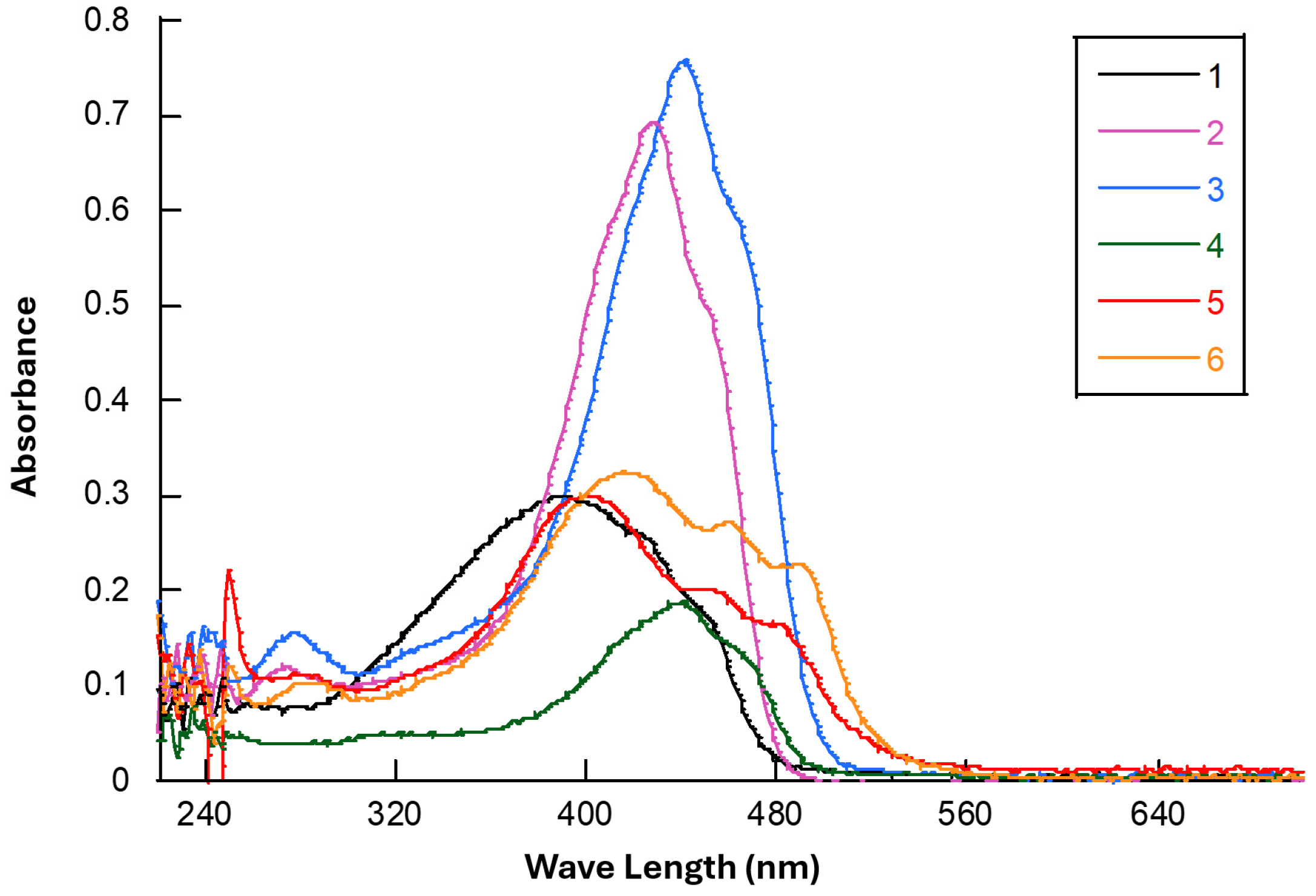
The discovery of metal complexes as anticancer agents has demonstrated significant pharmaceutical potential [22]. We previously reported ruthenium-based flavonols that exhibited both anti-inflammatory activity and cytotoxic effects against human non-small-cell lung cancer A549 cells [23]. Building on this work, we synthesized compounds 5 and 6 by treating precursors 2 and 3 with sodium and [Ru(p-cymene)Cl2]2 with high yield (Figure 4). The UV-visible spectra of compounds 16 in DMSO were also recorded (Figure 5).
The molar extinction coefficients (ε) are 15,375.6 cm−1M−1 (absorbance max at 388 nm) for compound 1, 39,969.5 cm−1M−1 (absorbance max at 428 nm) for compound 2, 47,907.5 cm−1M−1 (absorbance max at 441 nm) for compound 3, 14,293.5 cm−1M−1 (absorbance max at 440 nm) for compound 4, 33,607.2 cm−1M−1 (absorbance max at 404 nm) for compound 5, and 38,231.7 cm−1M−1 (absorbance max at 415 nm) for compound 6.
The IR spectra of compounds 16 are highly similar, as illustrated in Figures S8–S13 (Supplementary Information). As summarized in Table 1, the characteristic C=O stretching frequency of free curcumin is observed at 1628 cm−1. For compounds 24, the C=O band exhibits a slight shift to a lower wavenumber compared to free curcumin, except for compound 1. Critically, a more substantial reduction in the C=O frequency is observed for compounds 5 and 6 compared to compounds 14. This greater shift is attributed to a pronounced decrease in the C=O bond order/strength upon coordination. These spectroscopic shifts are consistent with reported values for curcumin–metal complexes in the literature [24].

3.2. Antimicrobial Activity of Compounds 16 with Blue Light Irradiation

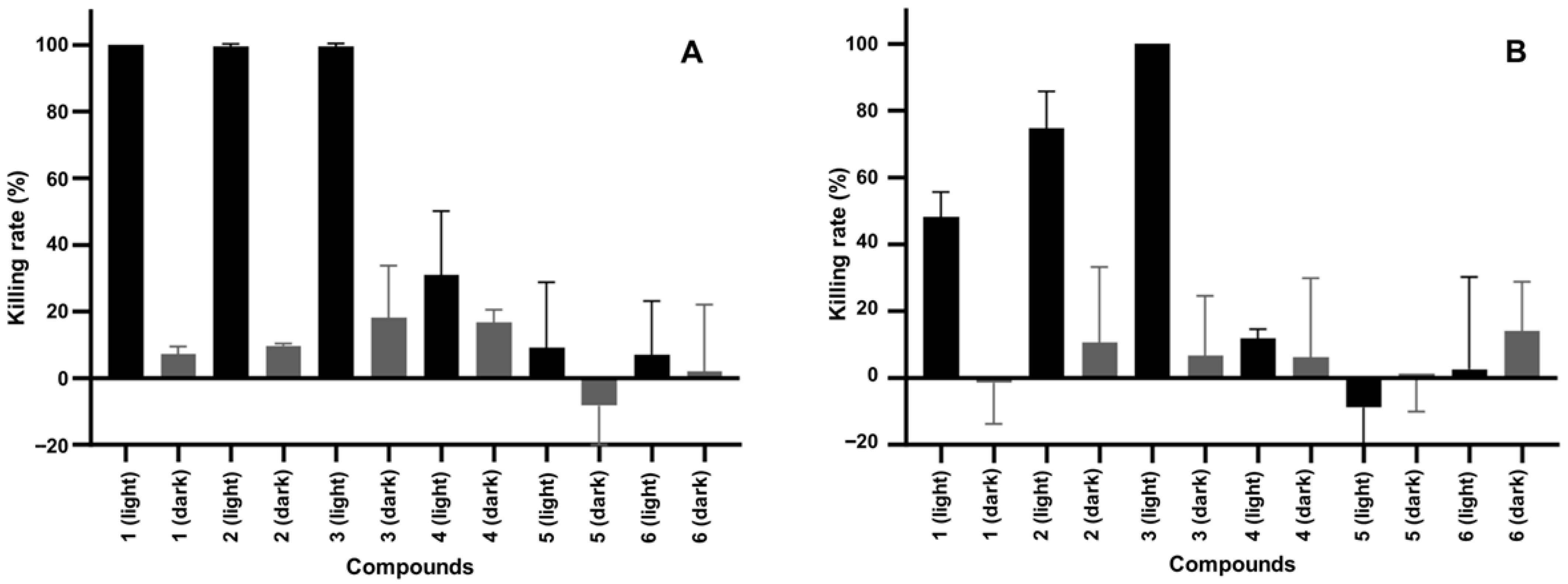
Due to the difference in cell membrane structure, Gram-positive bacteria are generally more susceptible to photosensitizers in antibacterial PDT than Gram-negative bacteria. Accordingly, our previous results also show that synthetic curcumin analogs are more effective against Gram-positive bacteria [15]. Therefore, this study also used the common multidrug-resistant pathogenic Gram-positive bacteria Staphylococcus aureus and S. epidermidis for antibacterial experiments. As shown in Figure 6 and Table 2, compound 3 was the most effective among the six compounds. The activity of selenium-substituted compound 4 is the weakest one among the five-member ring analogs 14 examined, and the activity in aPDT is in the following order: 3 > 2 > 1 > 4. After irradiation of blue light and compound 3, the previous scanning electron microscopy analysis showed that the bacterial cell membrane integrity was significantly disrupted and cellular morphology was altered [15]. Because the target radical-sensitive protein or molecules on the cell membrane are still unclear, this result suggests that the radius or the energy levels of the sulfur atom in these compounds can provide the most appropriate attack results for the free radicals generated. Ruthenium(II) complexes have a good reputation in PDT to kill cancer cells. However, the activity in aPDT of ruthenium(II) complexes 5 and 6 is weak. This result suggests that complexation of ruthenium(II) with compound 3 disturbs the interactions between compound 3 and its target protein, and ruthenium(II) itself cannot produce antibacterial activity upon blue light irradiation to these two Gram-positive Staphylococcus bacteria. The antibacterial mechanism of these photodynamic agents is totally different from that of classical antibiotics. The working concentration of compound 3 to achieve a 100% killing rate in this experiment was 5 μM. In contrast, the minimal bactericidal concentrations of methicillin for various S. aureus strains were between 16 and 256 μg/mL (42–673 μM) [25]. Therefore, compound 3 has a satisfactory bactericidal effect.

3.3. Anticancer Activity of Curcumin Analogs with Blue Light Irradiation

PDT is able to effectively treat accessible basal cell carcinoma of the head and neck [26,27], but is often clinically ineffective against metastatic melanomas. The main reason is that their melanin pigment blocks the irradiated light [28]. However, light can fully penetrate melanoma cell layers in vitro growth conditions. More recently, the ruthenium(II) complex has been reported in the application of the PDT treatment of metastatic melanoma [29].
The anti-melanoma activity in PDT for these synthetic curcumin analogs and ruthenium(II) complex curcumin analog derivatives was investigated. As shown in Table 3, compound 1 was the most effective among the six compounds. The activity of selenium-substituted compound 4 is the weakest among the five-member ring analogs 14 examined, and the activity in PDT is in the following order: 1 > 3 > 2 > 4. All compounds show a relatively low degree of cytotoxicity in the dark. It is apparent that clinical applications of photodynamic agents are largely confined to topical administration. In contrast to oral medications, the human body exhibits higher tolerance to the cytotoxicity of topically applied drugs. Unlike the results of antibacterial activity, compound 1 possesses the most potent anticancer activity in PDT among element oxygen, sulfur, and selenium-substituted synthetic curcumin analogs. Ruthenium(II) complex with sulfur-substituted synthetic curcumin analogs (5 and 6) cannot enhance their anticancer activity in PDT.

4. Conclusions

Our previous study demonstrated that thiophene-substituted synthetic curcumin analogs possessed better antibacterial activity and stability than natural curcumin, demethoxycurcumin, or bisdemethoxycurcumin in antibacterial photodynamic therapy (aPDT) [15]. In addition, the antibacterial and anticancer activities of six curcumin analogs against Gram-positive aerobic bacteria, S. epidermidis and S. aureus, and murine B6-F10 melanoma cells were investigated by the photodynamic inactivation method here. Thiophene-substituted (compound 3) and furan-substituted (compound 1) curcumin analogs possess the most potent antibacterial and anticancer activity in PDT, respectively. UV-Vis spectra of synthesized curcumin show that optical absorption in the visible-light region of thiophene-substituted analogs (compounds 2 and 3) is much stronger than that of furan-substituted (compound 1) and selenophene-substituted (compound 4) analogs, suggesting that the sulfur atom can better generate more energy levels with the curcumin-conjugated double-bond system to absorb visible light than the oxygen and selenium atoms.
The ruthenium–flavonol complexes exhibited stronger nitric oxide-inhibitory activity than their corresponding free flavonols [23], suggesting that a similar approach may be applicable to curcuminoids. However, unlike the previous report, complexation of ruthenium(II) with synthetic curcumin analog 6 cannot enhance their antibacterial or anticancer activity [14]. The complexation of ruthenium(II) might interfere with the radical formation or electronic configuration induced by blue light, which could have influenced the observed antibacterial or anticancer activity.

Supplementary Materials

The following supporting information can be downloaded at https://www.mdpi.com/article/10.3390/org7010001/s1: Figure S1: 1H NMR (DMSO-d6) of compound 1. Figure S2: Mass data of compound 4. Figure S3: 1H NMR (DMSO-d6) of compound 4. Figure S4: Mass data of compound 5. Figure S5: 1H NMR (DMSO-d6) of compound 5. Figure S6: Mass data of compound 6. Figure S7: 1H NMR (DMSO-d6) of compound 6. Figure S8: IR spectrum of compound 1. Figure S9: IR spectrum of compound 2. Figure S10: IR spectrum of compound 3. Figure S11: IR spectrum of compound 4. Figure S12: IR spectrum of compound 5. Figure S13: IR spectrum of compound 6.

Author Contributions

Conceptualization, S.-J.H. and H.-P.C.; methodology, K.-C.C., A.H., and T.-L.S.; validation, S.-J.H., T.-L.S., and H.-P.C.; formal Analysis, T.-L.S. and H.-P.C.; investigation, L.-Y.C., Y.-A.H., Y.-J.C., H.-Y.W., and H.H.; resources, K.-C.C. and A.H.; data curation, L.-Y.C., T.-L.S., and H.-P.C.; writing—original draft preparation, T.-L.S. and H.-P.C.; writing—review and editing, T.-L.S. and H.-P.C.; visualization, S.-J.H. and H.-P.C.; supervision, S.-J.H., T.-L.S., and H.-P.C.; funding acquisition, S.-J.H., T.-L.S., and H.-P.C. All authors have read and agreed to the published version of the manuscript.

Funding

This work was supported by grant number TCMRC-P-111008 from Tzu Chi University, Hualien, Taiwan, to H.P. Chen, grant number TCRD-112-045 from Hualien Tzu Chi Hospital to S.J. Hung, and grant number NSTC-114-2113-M-032-003 from National Science and Technology Council, Taipei, Taiwan to T.L. Shih.

Data Availability Statement

The original contributions presented in this study are included in the article/Supplementary Materials. Further inquiries can be directed to the corresponding authors.

Conflicts of Interest

The authors declare no conflicts of interest.

References

  1. Kübler, A.C. Photodynamic therapy. Med. Laser Appl. 2005, 20, 37–45. [Google Scholar] [CrossRef]
  2. Yang, M.-Y.; Chang, K.-C.; Chen, L.-Y.; Hu, A. Low-dose blue light irradiation enhances the antimicrobial activities of curcumin against Propionibacterium acnes. J. Photochem. Photobiol. B 2018, 189, 21–28. [Google Scholar] [CrossRef]
  3. Spikes, J.D. Photodynamic action: From paramecium to photochemotherapy. Photochem. Photobiol. 1997, 65, 142S–147S. [Google Scholar] [CrossRef]
  4. Luksiene, Z. Photodynamic therapy: Mechanism of action and ways to improve the efficiency of treatment. Medicina 2003, 39, 1137–1150. [Google Scholar] [PubMed]
  5. Gallardo-Villagrán, M.; Leger, D.Y.; Liagre, B.; Therrien, B. Photosensitizers used in the photodynamic therapy of rheumatoid arthritis. Int. J. Mol. Sci. 2019, 20, 3339. [Google Scholar] [CrossRef] [PubMed]
  6. Karges, J.; Basu, U.; Blacque, O.; Chao, H.; Gasser, G. Polymeric encapsulation of novel homoleptic bis (dipyrrinato) zinc (II) complexes with long lifetimes for applications as photodynamic therapy photosensitisers. Angew. Chem. Int. Ed. 2019, 131, 14472–14478. [Google Scholar] [CrossRef]
  7. Qindeel, M.; Sargazi, S.; Hosseinikhah, S.M.; Rahdar, A.; Barani, M.; Thakur, V.K.; Pandey, S.; Mirsafaei, R. Porphyrin-based nanostructures for cancer theranostics: Chemistry, fundamentals and recent advances. ChemistrySelect 2021, 6, 14082–14099. [Google Scholar] [CrossRef]
  8. Cervinka, J.; Gobbo, A.; Biancalana, L.; Markova, L.; Novohradsky, V.; Guelfi, M.; Zacchini, S.; Kasparkova, J.; Brabec, V.; Marchetti, F. Ruthenium (II)–tris-pyrazolylmethane complexes inhibit cancer cell growth by disrupting mitochondrial calcium homeostasis. J. Med. Chem. 2022, 65, 10567–10587. [Google Scholar] [CrossRef]
  9. Demoro, B.; Bento-Oliveira, A.; Marques, F.; Costa Pessoa, J.; Otero, L.; Gambino, D.; de Almeida, R.F.M.; Tomaz, A.I. Interaction with blood proteins of a ruthenium (II) nitrofuryl semicarbazone complex: Effect on the antitumoral activity. Molecules 2019, 24, 2861. [Google Scholar] [CrossRef]
  10. Zeng, L.; Gupta, P.; Chen, Y.; Wang, E.; Ji, L.; Chao, H.; Chen, Z.-S. The development of anticancer ruthenium (II) complexes: From single molecule compounds to nanomaterials. Chem. Soc. Rev. 2017, 46, 5771–5804. [Google Scholar] [CrossRef]
  11. Heger, M.; van Golen, R.F.; Broekgaarden, M.; Michel, M.C. The molecular basis for the pharmacokinetics and pharmacodynamics of curcumin and its metabolites in relation to cancer. Pharmacol. Rev. 2014, 66, 222–307. [Google Scholar] [CrossRef]
  12. Winter, S.; Tortik, N.; Kubin, A.; Krammer, B.; Plaetzer, K. Back to the roots: Photodynamic inactivation of bacteria based on water-soluble curcumin bound to polyvinylpyrrolidone as a photosensitizer. Photochem. Photobiol. Sci. 2013, 12, 1795–1802. [Google Scholar] [CrossRef] [PubMed]
  13. Carolina Alves, R.; Perosa Fernandes, R.; Fonseca-Santos, B.; Damiani Victorelli, F.; Chorilli, M. A critical review of the properties and analytical methods for the determination of curcumin in biological and pharmaceutical matrices. Crit. Rev. Anal. Chem. 2019, 49, 138–149. [Google Scholar] [CrossRef] [PubMed]
  14. Bonfili, L.; Pettinari, R.; Cuccioloni, M.; Cecarini, V.; Mozzicafreddo, M.; Angeletti, M.; Lupidi, G.; Marchetti, F.; Pettinari, C.; Eleuteri, A.M. Arene–RuII complexes of curcumin exert antitumor activity via proteasome inhibition and apoptosis induction. ChemMedChem 2012, 7, 2010–2020. [Google Scholar] [CrossRef]
  15. Hung, S.-J.; Hong, Y.-A.; Lin, K.-Y.; Hua, Y.-W.; Kuo, C.-J.; Hu, A.; Shih, T.-L.; Chen, H.-P. Efficient photodynamic killing of Gram-positive bacteria by synthetic curcuminoids. Int. J. Mol. Sci. 2020, 21, 9024. [Google Scholar] [CrossRef]
  16. Cheng, Y.-J.; Li, C.-W.; Kuo, C.-L.; Shih, T.-L.; Chen, J.-J. Improved synthesis of asymmetric curcuminoids and their assessment as antioxidants. Molecules 2022, 27, 2547. [Google Scholar] [CrossRef]
  17. Murthy, A.B.; Palaniappan, V.; Chandramohan, A.; Narasimhan, M. Silver in dermatology-From ancient use to modern innovations. J. Ski. Sex. Transm. Dis. 2025, 7, 14–24. [Google Scholar] [CrossRef]
  18. Khan, M.A.; El-Khatib, R.; Rainsford, K.; Whitehouse, M. Synthesis and anti-inflammatory properties of some aromatic and heterocyclic aromatic curcuminoids. Bioorg. Chem. 2012, 40, 30–38. [Google Scholar] [CrossRef] [PubMed]
  19. Tung, C.H.; Lu, Y.T.; Kao, W.T.; Liu, J.W.; Lai, Y.H.; Jiang, S.J.; Chen, H.P.; Shih, T.L. Discovery of a more potent anticancer agent than C4-benzazole 1, 8-naphthalimide derivatives against murine melanoma. J. Chin. Chem. Soc.-Taip 2020, 67, 1254–1262. [Google Scholar] [CrossRef]
  20. Chen, Y.C.; Li, C.W.; Chen, J.J.; Shih, T.L. Synthesis of selenophene-based chalcone analogs and assessment of their biological activity as anticancer agents. Arch. Pharm. 2023, 356, 2200486. [Google Scholar] [CrossRef]
  21. Chen, Y.C.; Chang, C.H.; Tang, M.H.; Ding, Y.C.; Wu, I.C.; Ye, W.T.; Shih, T.L. Synthesis of selenophene-containing flavonols and 2-styrylchromones: Evaluation of their activities compared with selenophene-containing chalcones as potential anticancer agents. Arch. Pharm. 2024, 357, 2400242. [Google Scholar] [CrossRef]
  22. Adhikari, S.; Nath, P.; Das, A.; Datta, A.; Baildya, N.; Duttaroy, A.K.; Pathak, S. A review on metal complexes and its anti-cancer activities: Recent updates from in vivo studies. Biomed. Pharmacother. 2024, 171, 116211. [Google Scholar] [CrossRef]
  23. Wu, T.W.; Chu, Y.C.; Chang, C.H.; Hsieh, Y.H.; Tang, M.H.; Hsu, P.H.; Wu, H.Y.; Chen, J.J.; Shih, T.L. Flavonol-ruthenium complexes as antioxidant and anticancer agents. ChemMedChem 2024, 19, e202400313. [Google Scholar] [CrossRef]
  24. Priya, R.; Balachandran, S.; Daisy, J.; Mohanan, P. Reactive centers of curcumin and the possible role of metal complexes of curcumin as antioxidants. Univ. J. Phys. Appl 2015, 9, 6–16. [Google Scholar]
  25. Marks, L.R.; Clementi, E.A.; Hakansson, A.P. Sensitization of Staphylococcus aureus to methicillin and other antibiotics in vitro and in vivo in the presence of HAMLET. PLoS ONE 2013, 8, e63158. [Google Scholar] [CrossRef]
  26. Lanoue, J.; Goldenberg, G. Basal cell carcinoma: A comprehensive review of existing and emerging nonsurgical therapies. J. Clin. Aesthet. Dermatol. 2016, 9, 26. [Google Scholar]
  27. Kubizna, M.; Fiegler-Rudol, J.; Niemczyk, W.; Wiench, R. The Efficacy of Curcumin-Mediated Photodynamic Therapy in the Treatment of Oral Squamous Cell Carcinoma: A Systematic Review of In Vitro Studies. Life 2025, 15, 924. [Google Scholar] [CrossRef] [PubMed]
  28. Slominski, R.M.; Zmijewski, M.A.; Slominski, A.T. The role of melanin pigment in melanoma. Exp. Dermatol. 2015, 24, 258. [Google Scholar] [CrossRef] [PubMed]
  29. Sweigert, P.; Xu, Z.; Hong, Y.; Swavey, S. Nickel, copper, and zinc centered ruthenium-substituted porphyrins: Effect of transition metals on photoinduced DNA cleavage and photoinduced melanoma cell toxicity. Dalton Trans. 2012, 41, 5201–5208. [Google Scholar] [CrossRef] [PubMed]
Figure 1. Possible biomedical application of curcuminoids through PDT.
Organics 07 00001 g001
Figure 2. Chemical structures of the synthetic curcuminoids 16.
Organics 07 00001 g002
Figure 3. Synthesis of curcuminoids 14.
Organics 07 00001 g003
Figure 4. Synthesis of curcuminoids 5 and 6.
Organics 07 00001 g004
Figure 5. UV-Vis spectra of synthesized curcumin analogs 16 in DMSO.
Organics 07 00001 g005
Figure 6. Antibacterial activities of curcumin analogs 16 on inhibition of aerobic bacterium (A) S. epidermidis and (B) S. aureus. All experiments were performed in triplicate. All data are expressed as the mean ± standard deviation.
Organics 07 00001 g006
Table 1. The absorbance observed at around 2200 cm−1 in compounds 16 can be explained as the overtone of the aromatic ring.
Compound123456
νC=O (cm−1)162816151611161415251516
Table 2. Killing rate of curcumin analogs 16: Comparison between S. epidermidis and S. aureus. Abbreviation: BL; blue light.
Bacterial StrainS. epidermidisS. aureus
1 (in dark)7.2 ± 1.3%−1.4 ± 7.1%
1 (with BL irradiation)100%48.2 ± 4.3%
2 (in dark)9.7 ± 0.4%10.7 ± 11.3%
2 (with BL irradiation)99.6 ± 0.4%74.7 ± 6.4%
3 (in dark)18.1 ± 9.1%6.6 ± 9.0%
3 (with BL irradiation)99.5 ± 0.5%100%
4 (in dark)16.8 ± 2.2%6.2 ± 13.7%
4 (with BL irradiation)31.0 ± 11.4%11.8 ± 1.6%
5 (in dark)−8.3 ± 17.2%−0.6 ± 4.7%
5 (with BL irradiation)9.2 ± 9.9%−8.8 ± 11.1%
6 (in dark)1.9 ± 10.1%14.0 ± 7.4%
6 (with BL irradiation)6.9 ± 8.1%2.6 ± 13.8%
Table 3. Anti-melanoma activities of curcumin analogs 16. Abbreviation: BL; blue light.
CompoundIC50 (µM)
BL Irradiation
IC50 (µM)
in Dark
17.0 ± 4.7109.1 ± 13.3
270.0 ± 28.8401.2 ± 138.3
325.0 ± 17.1218.4 ± 37.6
490.3 ± 13.9143.4 ± 57.5
534.3 ± 2.398.3 ± 12.4
651.9 ± 7.1>212.2
Disclaimer/Publisher’s Note: The statements, opinions and data contained in all publications are solely those of the individual author(s) and contributor(s) and not of MDPI and/or the editor(s). MDPI and/or the editor(s) disclaim responsibility for any injury to people or property resulting from any ideas, methods, instructions or products referred to in the content.