2. Literature Review
Over the past several years, the question of ensuring reliable mobile communication along railway corridors has attracted growing attention from both researchers and industry. This interest is largely driven by the transition from the legacy GSM-R system towards the 5G-based Future Railway Mobile Communication System (FRMCS). Unlike a straightforward technological upgrade, FRMCS represents a fundamental redesign of railway communication concepts, introducing substantially stricter requirements in terms of continuity, latency and overall system robustness. As outlined by the official 5GRAIL program description [
3] and supported by recent peer-reviewed studies [
4], FRMCS is intended to support advanced railway services such as next-generation traffic management, predictive maintenance and continuous real-time data exchange across large-scale railway networks. Meeting these requirements inevitably depends on a detailed understanding of radio propagation characteristics in railway environments.
A considerable share of recent research therefore focuses on signal behaviour along railway tracks. In contrast to typical urban or rural deployments, railway lines form elongated, corridor-like environments with repetitive structural elements, including catenary masts, noise barriers, embankments and tunnels. These elements exert a persistent influence on radio propagation and lead to channel characteristics that cannot be accurately captured by generic models without adaptation. Experimental studies confirm the distinct nature of railway propagation. For instance, Liang et al. (2024) [
5] carried out extensive channel measurements at 2.1 GHz and evaluated several commonly used propagation models. Their results show that, while a number of classical models provide reasonable path-loss estimates, the 3GPP TR 38.901 model [
6] consistently achieves the lowest prediction error for mainline railway scenarios. In addition, the study demonstrates how small-scale fading parameters vary with distance and track geometry—information that is essential for optimizing base-station placement and antenna configuration [
5].
Railway tunnels represent a separate and particularly challenging case. Owing to their partially waveguide-like behaviour and often complex cross-sectional shapes, tunnel environments significantly affect signal distribution. Recent work based on parabolic wave equation (PWE) methods offers a more realistic description of antenna performance in tunnels, showing that even minor adjustments in antenna height or beam tilt can noticeably alter the resulting field patterns. Such findings are especially relevant for FRMCS deployments, where continuous connectivity must be ensured throughout all sections of the line [
7].
In contrast, high-density areas such as stations and railway yards pose a different set of challenges. Here, high user density and rich multipath propagation motivate the use of complementary technologies, including millimetre-wave (mmWave) systems in selected hotspots. Results from the mmW4Rail project indicate that, although mmWave links are sensitive to blockage, they can deliver substantial capacity gains in well-defined micro-environments, particularly indoors or in confined open spaces where beam management can be effectively controlled. At the system level, European research increasingly supports multi-layer communication architectures. In such architectures, FRMCS operating in sub-GHz and low-GHz bands serves as a reliable backbone, while additional layers—such as public 5G networks or mmWave systems—provide supplementary capacity in specific locations. Within this context, the 5GRAIL project has played a key role by validating FRMCS requirements through field trials and by proposing interoperable frameworks for cross-border railway operations [
4].
Another issue widely discussed in the literature concerns handover performance in high-mobility railway scenarios. Due to the linear deployment of base stations, trains encounter cell borders frequently, which may result in excessive or unnecessary handover events. This problem becomes especially pronounced at speeds exceeding 200 km/h. Previous studies have shown that handovers remain a key source of communication instability under such conditions. To mitigate this, mobility-aware and predictive handover strategies have been proposed. For example, Duan et al. (2021) demonstrated that incorporating train motion parameters into handover decisions can significantly reduce failure rates and service interruptions [
8]. More recent work further explores machine-learning-based approaches, including reinforcement learning and LSTM models, to anticipate channel variations and improve handover reliability.
For Latvia and the wider Baltic region, these developments are particularly relevant in view of the Rail Baltica project. Beyond its role as a transport corridor, Rail Baltica is increasingly viewed as a potential digital backbone linking several EU member states. Recent studies focusing on communication planning along Via Baltica and Rail Baltica underline the importance of harmonized 5G and FRMCS deployment, coordinated site planning and the reuse of existing mast and fiber infrastructure. Taken together, these findings suggest that Latvia is well positioned to implement a future-oriented and interoperable railway communication system [
9].
Overall, the reviewed literature indicates a clear trend towards integrated, multi-technology railway communication systems that are closely shaped by the physical characteristics of railway corridors and by the growing data demands of intelligent railway operations. This trajectory is highly relevant for Latvia as it modernizes its transport infrastructure and strengthens its role within the European digital ecosystem. The insights provided by recent studies offer practical guidance for designing, testing and refining wireless systems capable of maintaining robust performance under the complex and dynamic conditions inherent to railway environments.
4. Simulation Results and Practical Insights
4.1. Simulation Framework for Attenuation and Railway-Specific Propagation Constraints
To investigate the propagation constraints outlined in
Section 3.2, a set of three-dimensional attenuation simulations was performed across five operational frequency bands relevant to legacy LTE and emerging FRMCS/5G systems. The objective of these simulations is to capture the distance-dependent loss, lateral decay, elevation-dependent variations, and shadowing effects that naturally occur along railway corridors, where terrain undulation, cuttings, embankments, vegetation, and structural obstacles significantly impact signal quality.
The simulation environment was designed to emulate typical railway surroundings by incorporating parameters that reflect the constraints described earlier, including:
Multipath and interference effects caused by open terrain, side slopes, and reflective structures;
Shadowing due to elevation changes, such as railway embankments and valleys;
Lateral attenuation across the corridor width, which becomes critical in multi-track or station-area deployments;
Height-dependent propagation, relevant for both track-level receivers and elevated railway infrastructure.
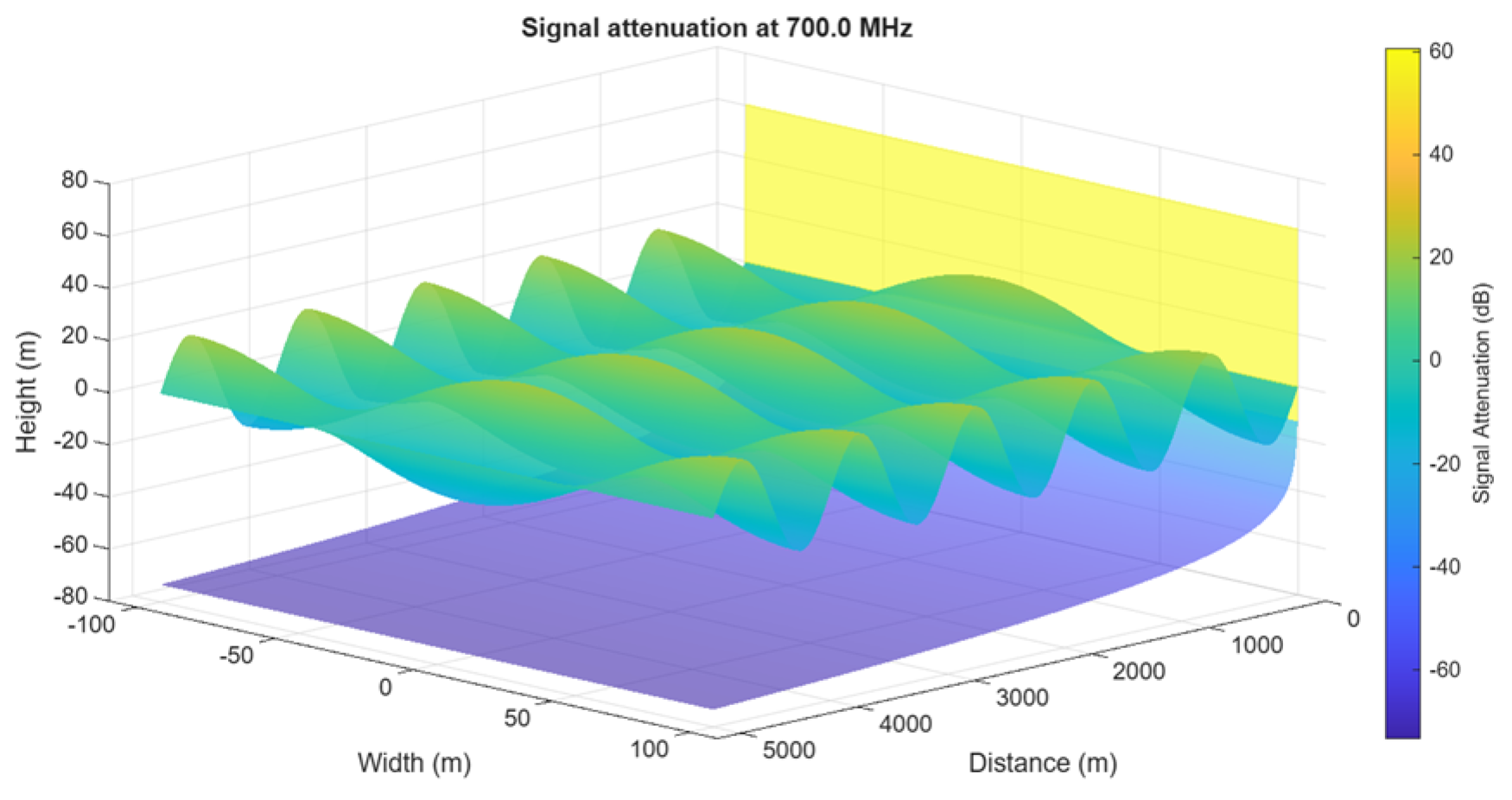
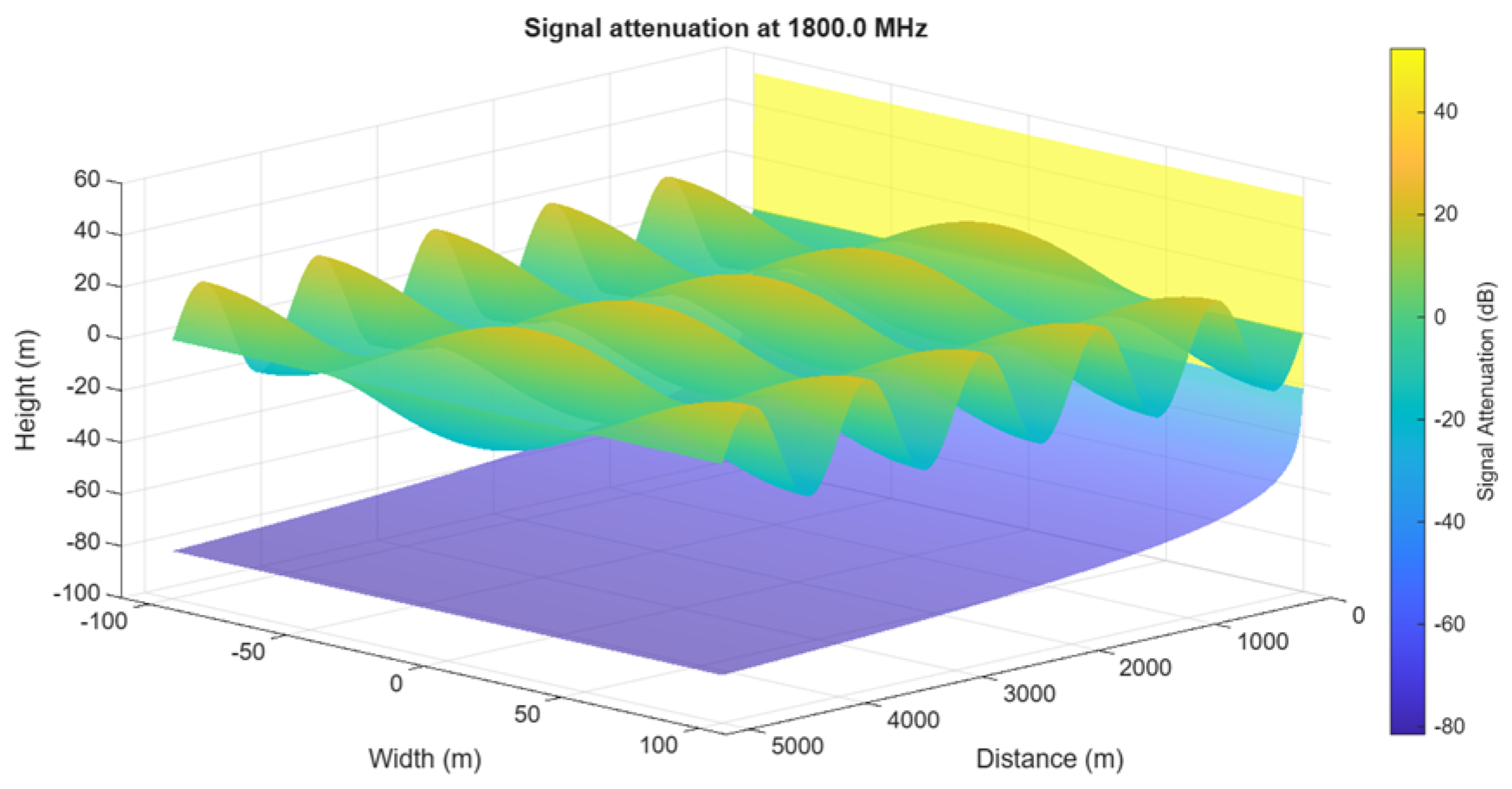
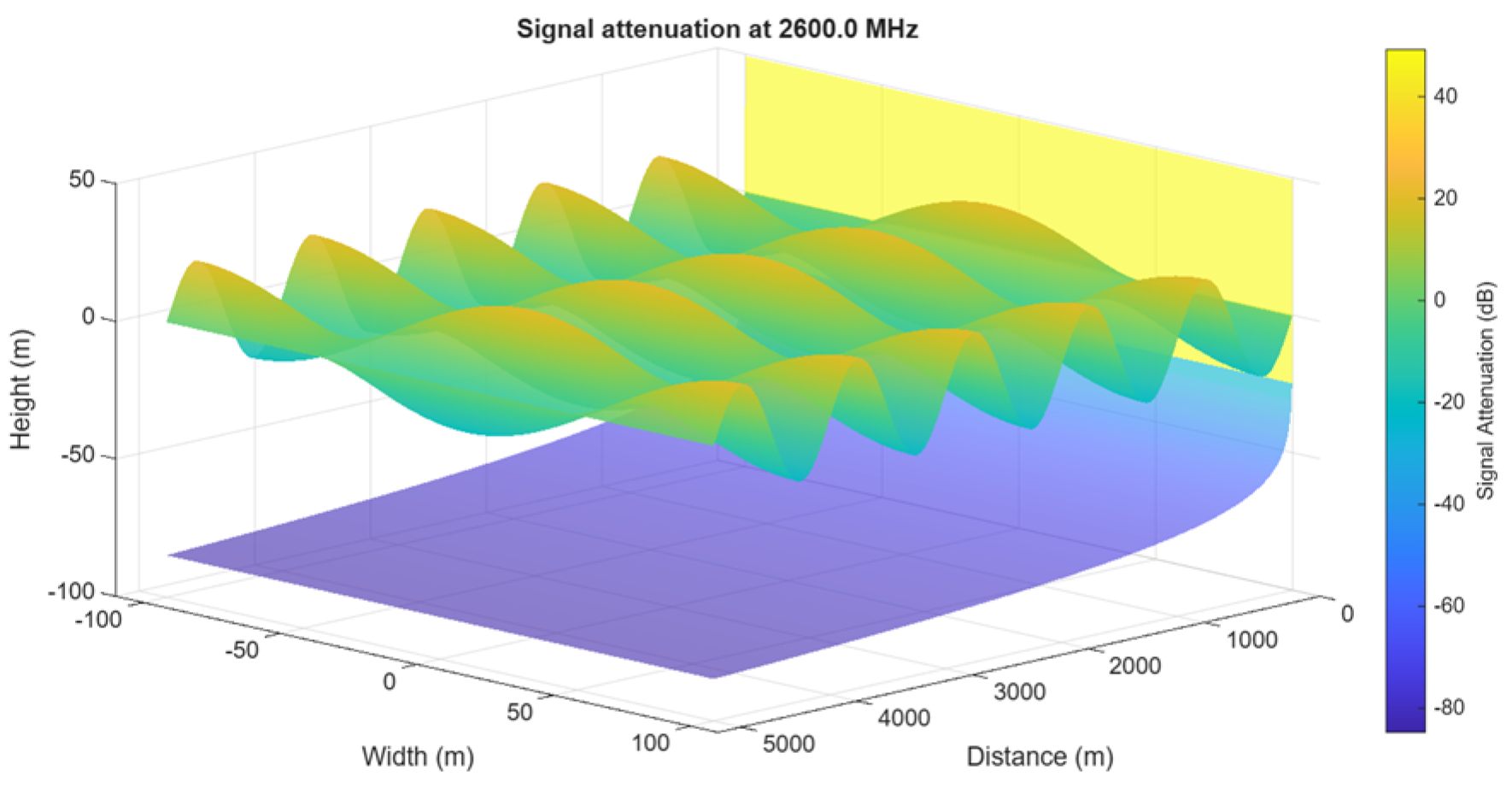
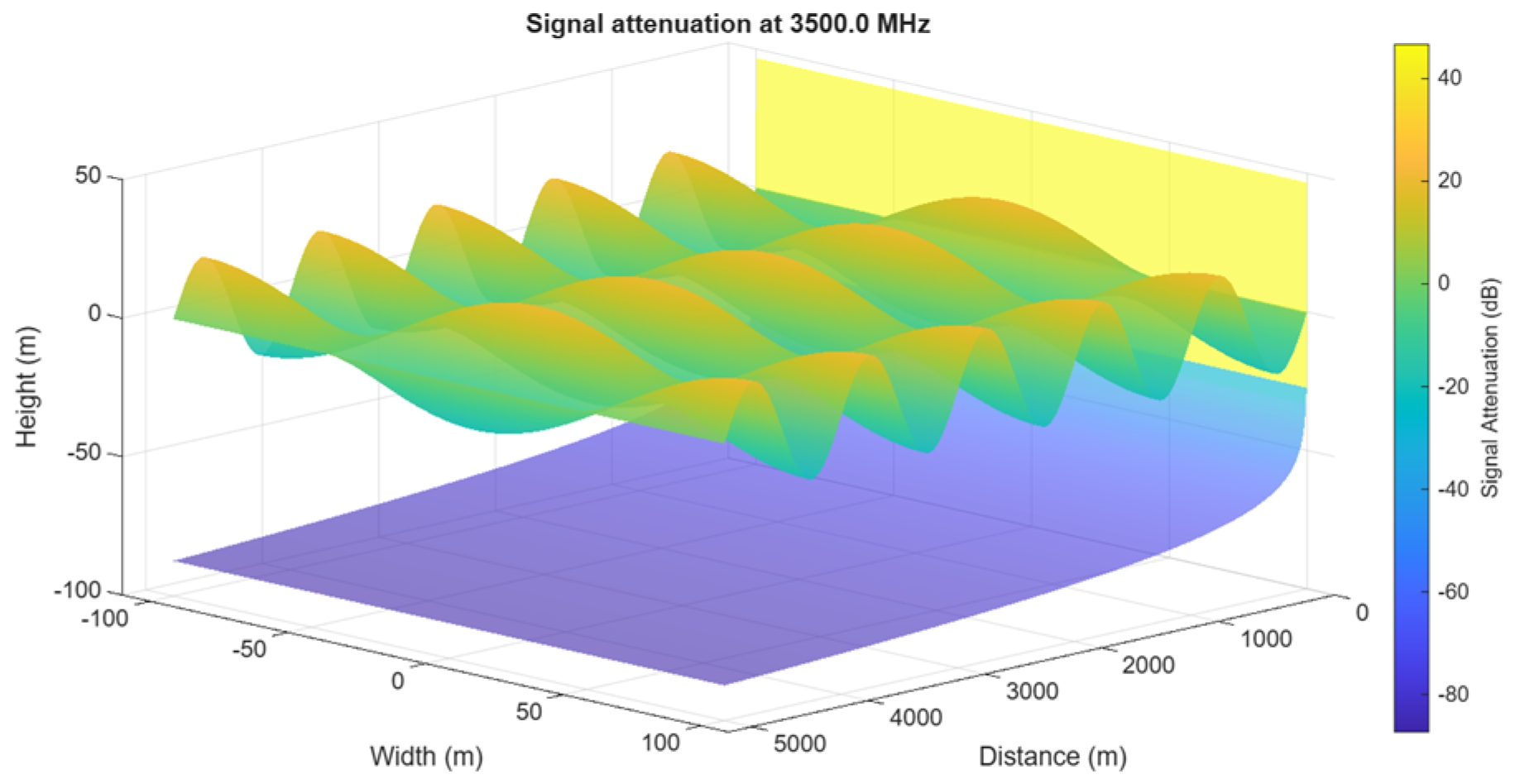
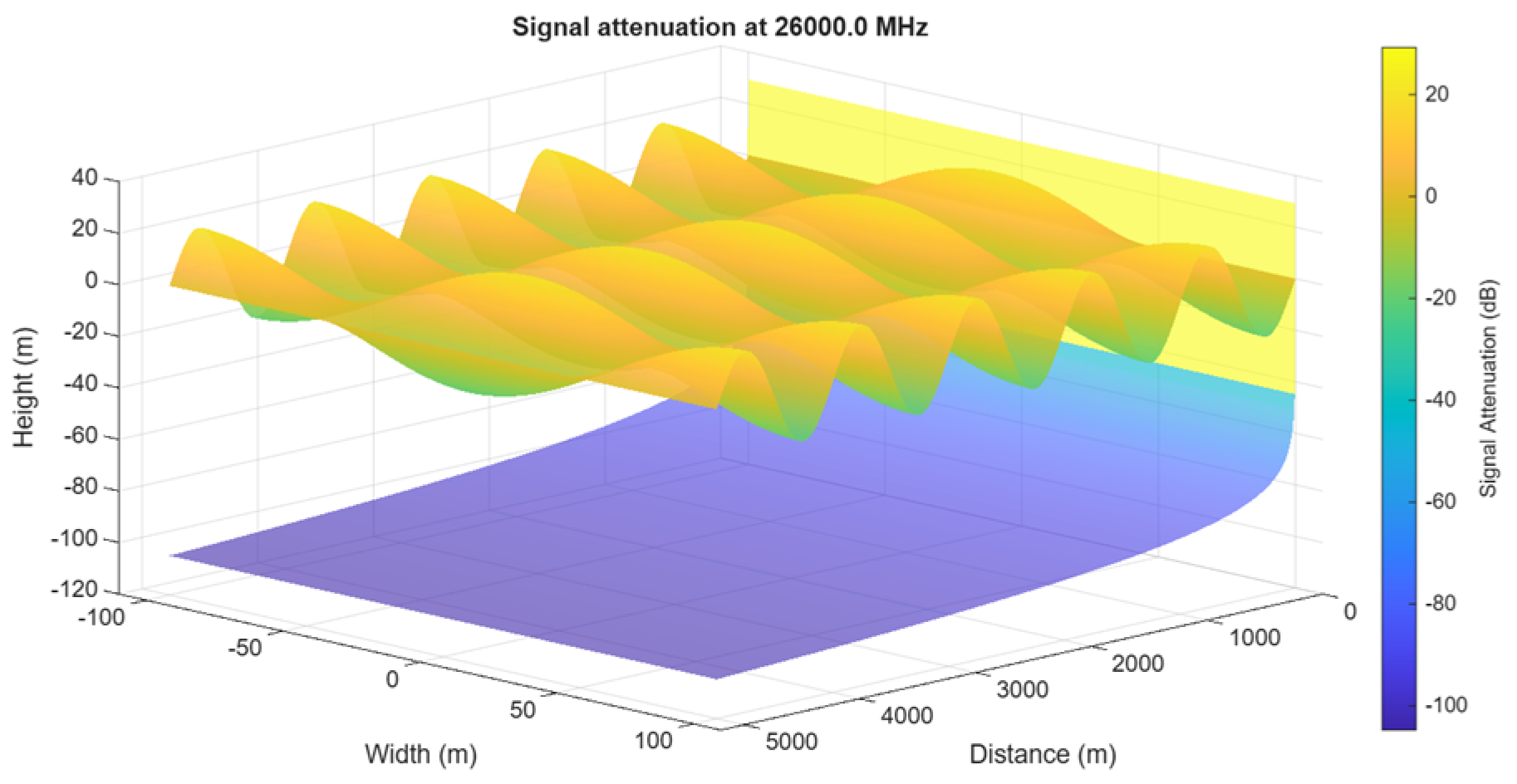
For each selected frequency 700 MHz, 1800 MHz, 2600 MHz, 3500 MHz, and 26 GHz an attenuation surface was computed as a function of distance, corridor width, and height, allowing a detailed visualization of how propagation characteristics evolve across the three spatial dimensions most relevant to railway communication systems.
Figure 10,
Figure 11,
Figure 12,
Figure 13 and
Figure 14 illustrate these attenuation fields.
The 700 MHz simulation shows slow attenuation over distance and minimal sensitivity to height and lateral offset. This confirms the band’s suitability for wide-area coverage, particularly along long, open railway segments where continuous connectivity is required.
The 1800 MHz and 2600 MHz bands demonstrate more pronounced oscillations caused by reflections and constructive/destructive interference. Attenuation increases at a faster rate compared to 700 MHz, especially at greater heights and lateral offsets. These bands remain well-suited for capacity enhancement in suburban and moderately dense environments.
The 3500 MHz model exhibits stronger attenuation gradients, indicating increased sensitivity to terrain and elevation. While still capable of providing reliable coverage, the band requires denser base station spacing to maintain consistent signal quality—an important consideration for FRMCS deployment planning.
As expected, the 26 GHz simulation shows the steepest attenuation and the strongest dependence on both height and lateral displacement. mmWave coverage diminishes rapidly beyond the first few hundred meters. This confirms that 26 GHz cannot serve as a primary coverage layer along railways and is practical only for localized high-capacity hotspots such as stations, depots, or yards.
This simulation framework provides a direct quantitative extension of the constraints previously discussed in
Section 3.2. While
Section 3.2 characterized the physical mechanisms limiting propagation,
Section 4.3 now demonstrates how these mechanisms manifest across different frequency bands, thereby enabling a more comprehensive assessment of suitable deployment strategies for FRMCS.
4.2. Field Measurement Results: RSRP Comparison Across Two Mobile Operators
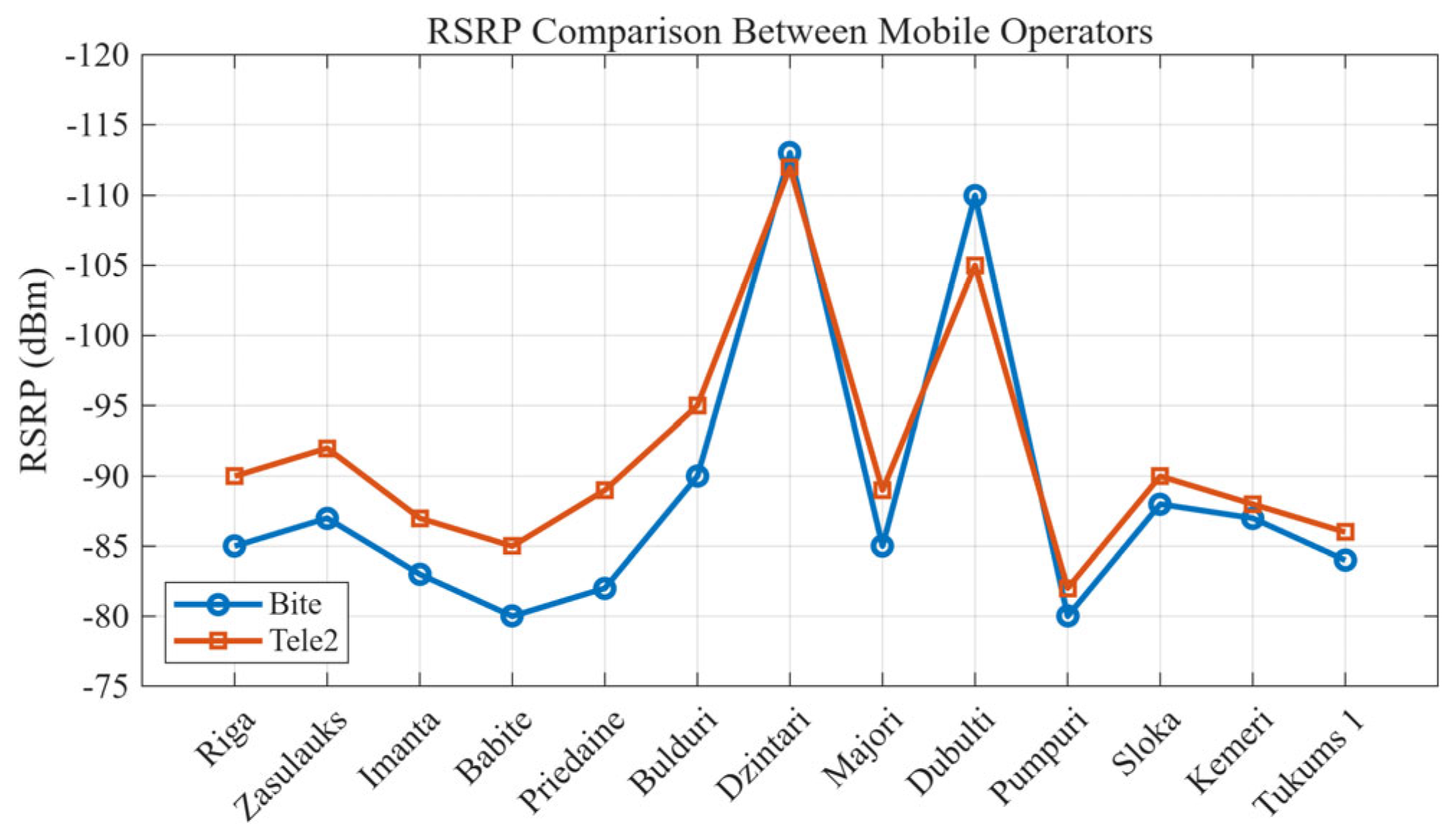
To complement the simulation-based analysis, empirical RSRP measurements were conducted along the Riga–Tukums railway line using two Android-based smartphones (Samsung Galaxy S21 FE and Samsung Galaxy S25, Samsung Electronics Co., Ltd., Suwon, South Korea) connected to different mobile operators in Latvia. Both devices recorded LTE/5G RSRP values under identical movement conditions, enabling a direct comparison of coverage consistency and signal quality across operators. Measurements were taken at station platforms and in transit between stations, reflecting realistic passenger connectivity conditions.
The dataset includes readings from key stations such as Riga, Imanta, Babīte, Bulduri, Dzintari, Majori, Dubulti, Pumpuri, Sloka, and Ķemeri. The results for both operators (Bite and Tele2) are presented in
Figure 15.
To complement the simulation results, practical RSRP measurements were performed along the Riga–Tukums railway line using two Android-based smartphones connected to different mobile operators. Both devices recorded signal levels simultaneously under identical movement conditions, which allowed a direct comparison of coverage behaviour across stations and intermediate track segments. The measurement route included a variety of environments dense urban areas, open suburban stretches, and forested coastal sections, providing a realistic representation of the propagation challenges described earlier.
The collected data show that overall signal levels remain within a stable operating range across most stations, typically between −80 dBm and −90 dBm. This range ensures reliable connectivity for everyday passenger applications and aligns with the expected performance of LTE/5G networks along established transport corridors. In several areas, both operators demonstrated nearly identical RSRP curves, suggesting that the dominant factors influencing performance are environmental rather than operator-specific.
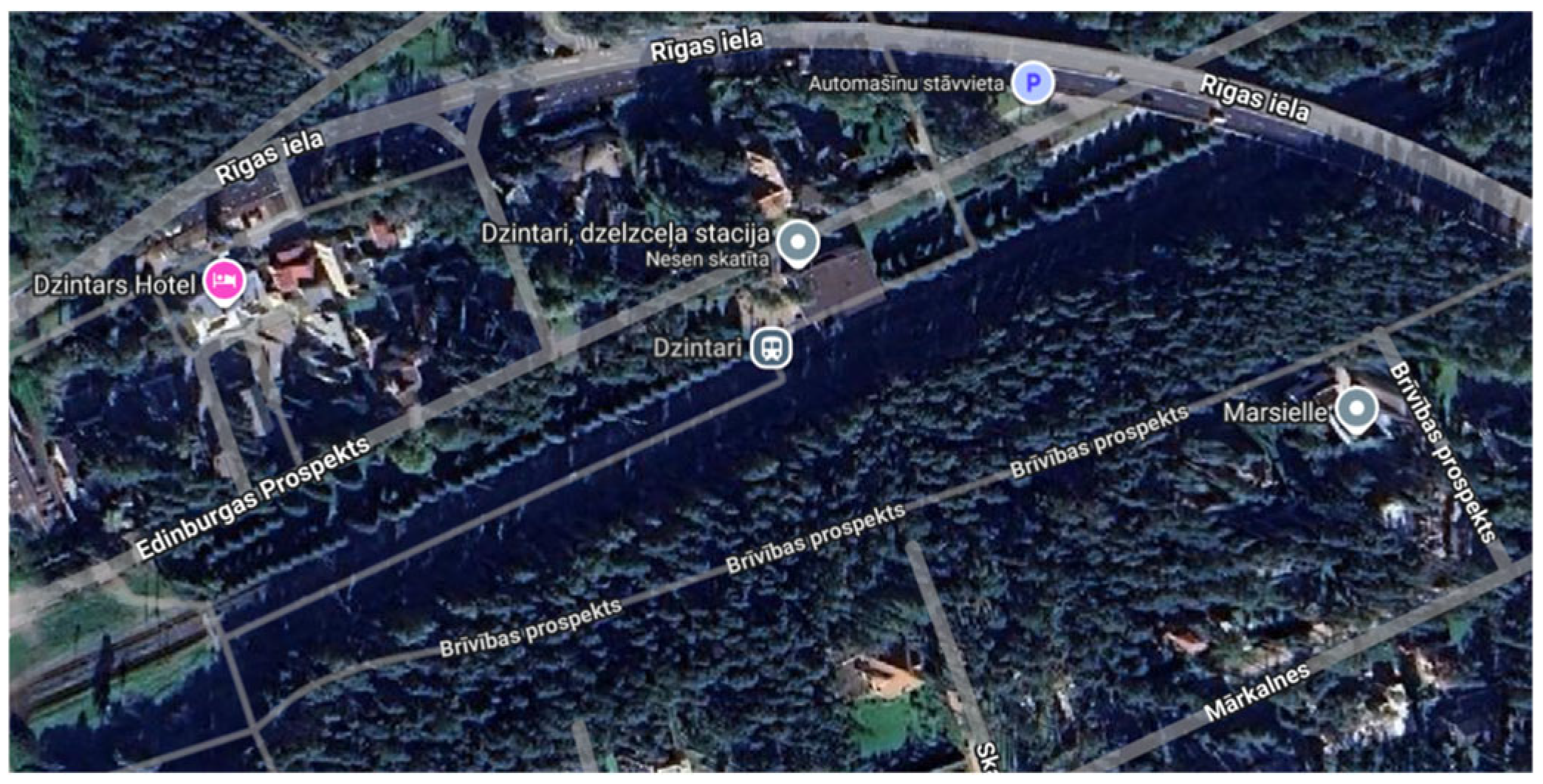
The most critical coverage degradation detected during the field measurements occurs in the vicinity of Dzintari station, where both mobile operators exhibit a pronounced drop in RSRP values, reaching levels below −110 dBm. To better understand the cause of this behaviour, a satellite view of the station area is provided in
Figure 16. The map clearly illustrates the environmental characteristics surrounding the railway line: dense forest coverage, limited open space, and a slight curvature of the track as it passes through the wooded zone.
These geographical features have a direct impact on radio propagation. The combination of tall trees, irregular vegetation density, and the orientation of the railway corridor results in substantial shadowing, particularly for signals arriving from nearby base stations located outside the forested area. The curved geometry further contributes to non-line-of-sight conditions, increasing attenuation and reducing the stability of the received signal. Since both operators demonstrate nearly identical performance drops at this location, the issue can be attributed to the propagation environment rather than operator-specific network configuration.
This observation confirms the relevance of the constraints discussed earlier: in segments where forested areas closely surround the railway, signal levels can fluctuate sharply due to a mix of diffraction loss, vegetation absorption, and multipath interference. As a result, Dzintari emerges as the most sensitive point along the measurement route, highlighting the need for targeted coverage improvements in this area, especially in the context of future FRMCS or enhanced 5G railway communication deployments.
4.3. Proposed Solution for Improving Network Coverage in the Dzintari Area
Based on the results obtained from both the simulations and field measurements, several areas with insufficient coverage and noticeable signal degradation were identified along the railway line. The most critical of these is the section near Dzintari station, where a sharp reduction in signal strength occurs across multiple frequency bands, including 4G (796 MHz) and 5G (3.5 GHz and 26 GHz). The primary cause of this degradation is the dense forest surrounding the station and the absence of a clear line-of-sight toward the nearest serving base stations. A similar issue is also observed at Bulduri station, where the alignment of the urban development and railway infrastructure creates additional obstructions that impact propagation.
To address these coverage deficiencies, a new base station deployment is proposed, informed by the technical characteristics of existing infrastructure. Using the CellMapper v.5.6.5. application, the parameters of the nearest active site were examined, showing the following configuration:
Network type: LTE;
Frequency band: B20 (800 MHz);
Channel bandwidth: 10 MHz;
Maximum recorded RSRP: (−73 dBm);
RSRQ: (−4 dB);
SNR: 12 dB;
Downlink throughput (Max/Avg): 17/9 Mbps;
Uplink frequency: 837 MHz;
Downlink frequency: 796 MHz;
Antenna height: 50 m.
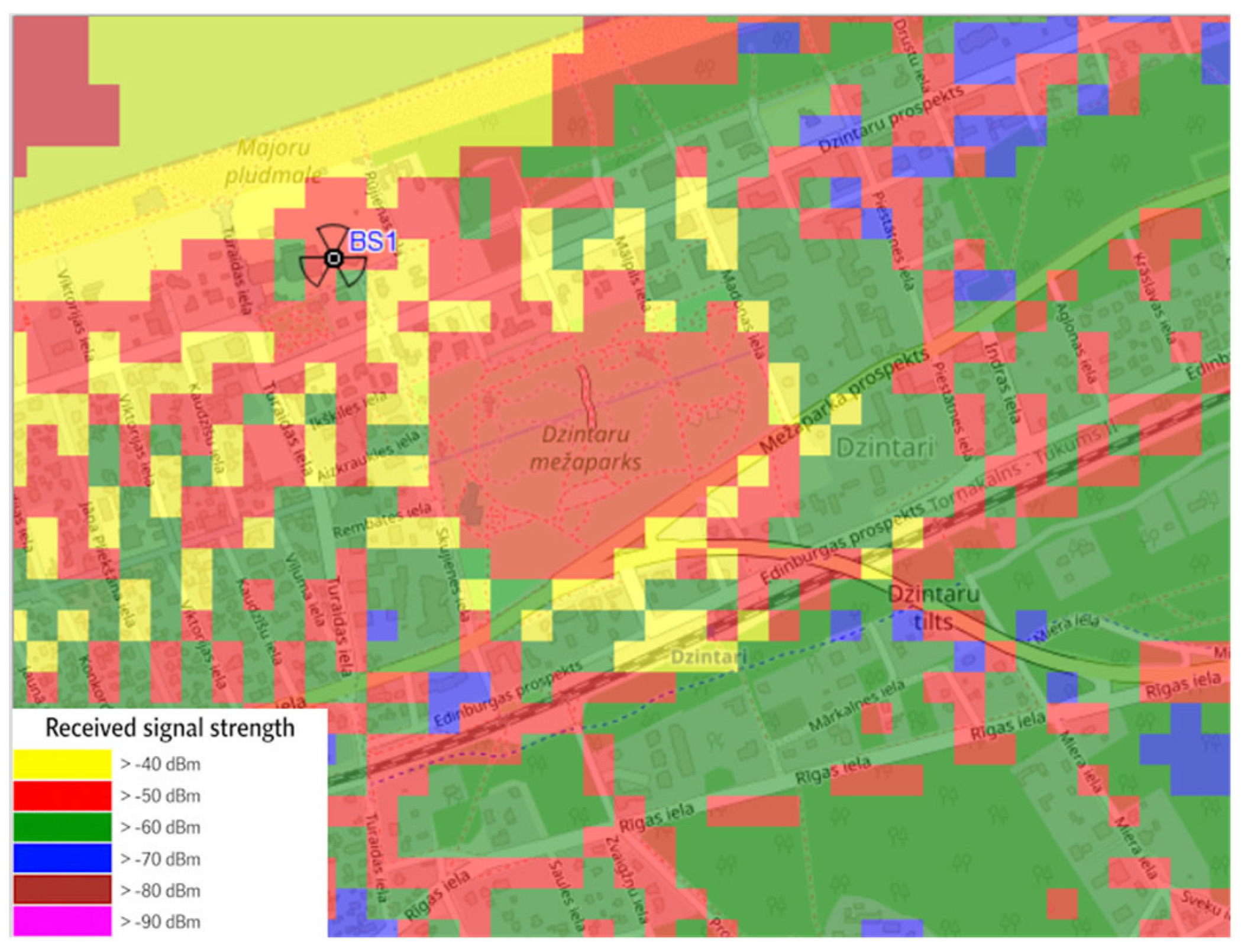
These measurements confirm that the existing site performs adequately under open conditions but struggles to deliver stable coverage in heavily shadowed segments such as Dzintari. To evaluate potential improvements, a dedicated network coverage simulation was carried out using the RadioPlanner 3 v.3.0. trial software. Although the trial version of the tool imposed certain limitations such as restricted adjustment of environmental parameters and a reduced set of model configurations the simulation still provided valuable insight into the expected behaviour of the network. A standard LTE 800 MHz template was used as the baseline configuration, as it most closely matched the real parameters of the serving operator. The resulting prediction map is shown in
Figure 17. The simulation reflects the expected signal distribution after introducing the proposed BS1 site near Dzintari, capturing the combined effects of vegetation, terrain variation, and the railway corridor geometry.
Figure 17 illustrates several weak-signal regions, marked in red and dark red, where the received signal level remains below −90 dBm. These areas correspond closely to the coverage gaps identified during the field measurements, particularly around the Dzintari bridge and the dense forested section near the station. The simulation therefore confirms that the dominant limitations arise from shadowing caused by trees and the absence of a direct line-of-sight to the nearest serving site. The deployment of BS1 results in a noticeable improvement in the central Dzintari area, represented by yellow and green signal zones, indicating stronger and more stable coverage. Nevertheless, local variations persist due to the surrounding vegetation density and uneven terrain. These findings suggest that while BS1 significantly reduces the most critical coverage gaps, additional adjustments such as optimizing antenna tilt, height, and azimuth would further enhance performance along the railway track and ensure more reliable connectivity for future FRMCS deployments.
The conducted simulation and field measurements consistently indicate that the existing network infrastructure is unable to provide stable coverage along several critical sections of the railway corridor near Dzintari. Although the 700 MHz band offers favorable propagation characteristics over long distances, the current base-station configuration does not sufficiently cover all key areas, particularly those located within dense vegetation zones and near the railway tracks. As shown in the measurements, signal degradation becomes especially severe in the direction of the tracks, confirming the strong influence of forest shadowing, terrain irregularities, and potential multipath reflections from the rail infrastructure. Upgrading the existing BS1 alone either by increasing its transmit power or replacing equipment provides only limited benefit due to the physical constraints of the environment. The combination of dense vegetation, urban development, and the curved railway geometry imposes restrictions on the effective expansion of its coverage footprint. Even after improving BS1 parameters, several low-signal clusters remain, which indicates that structural limitations dominate over simple configuration adjustments.
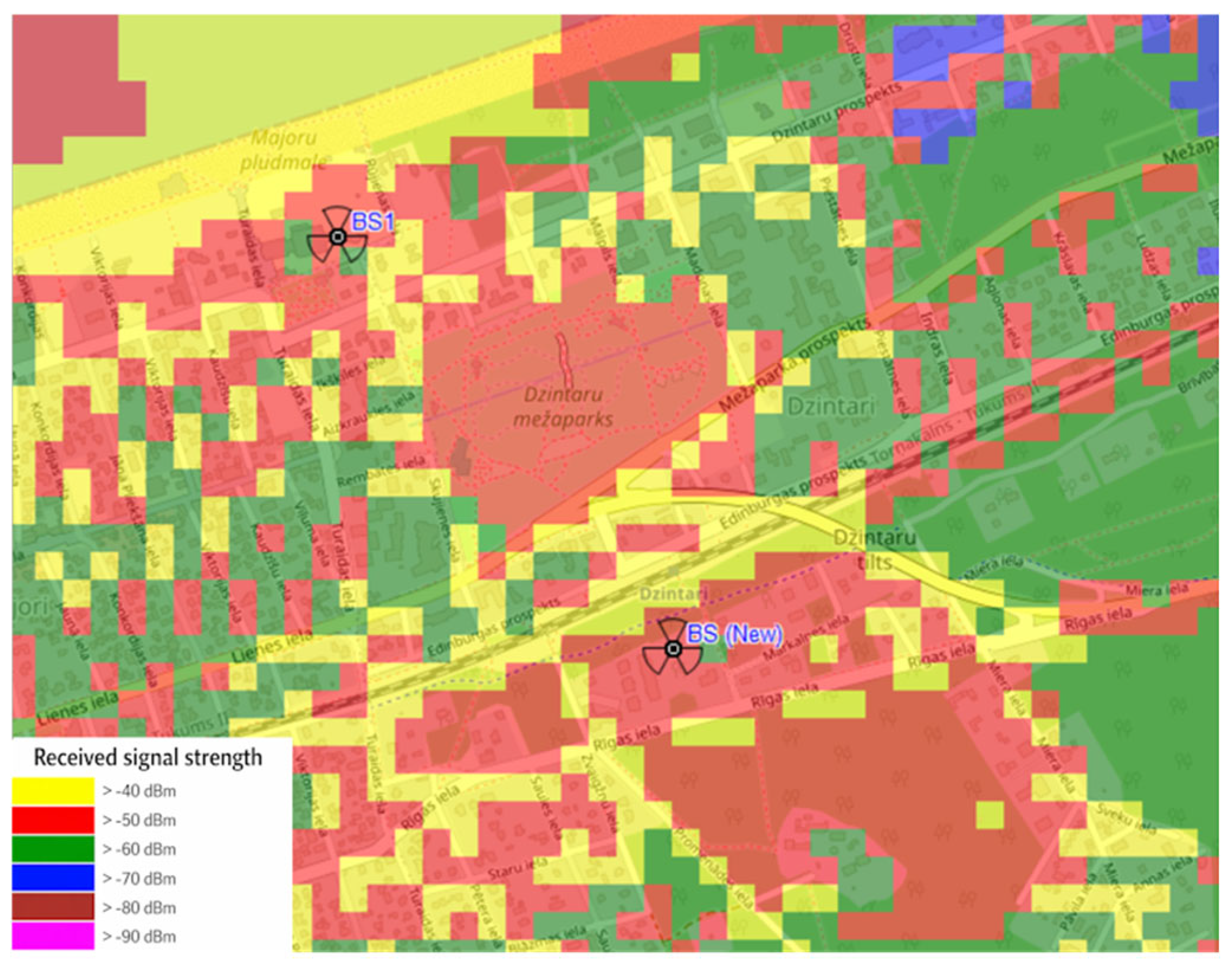
To address these challenges, the proposed solution is to deploy an additional base station near Dzintari station. The placement of the new site (designated as BS (New)) is illustrated in
Figure 18. Its strategic location allows it to directly target areas that remain underserved by BS1, filling the deep coverage gaps and ensuring improved signal distribution along the railway line. By splitting the load between the two sites, the new station not only enhances coverage robustness but also increases overall network capacity an essential factor given the growing passenger traffic and the planned evolution toward 5G and FRMCSs.
Furthermore, the introduction of an additional site improves the network’s readiness for future demand, providing better support for high-bandwidth services and ensuring coverage continuity in areas where infrastructure limitations previously restricted performance. The simulation confirms that BS (New) effectively mitigates the most problematic zones, particularly those with received signal levels below −90 dBm, offering a noticeable improvement in both coverage stability and service quality.
Figure 18 presents the updated simulation results using identical parameters to the previous configuration, with the new base station added. The improvement is clearly visible across the railway corridor and adjacent residential areas, demonstrating the strategic value of the proposed deployment.
The updated simulation confirms a substantial improvement in signal levels across the most critical areas. The majority of the Dzintari region now receives between −70 dBm and −50 dBm, indicating a significantly more stable and reliable coverage footprint. This enhancement is particularly important in high-density locations, such as the station platform and the adjacent pedestrian areas, where consistent connectivity is essential for passengers. The addition of the new base station also redistributes traffic load between BS1 and BS (New), which results in better service quality during peak periods such as the tourist season or high-activity hours. The improved coverage now extends across nearly the entire Dzintari area, eliminating the previously identified low-signal clusters and providing a solid foundation for the deployment of advanced technologies, including 5G and future FRMCS services. These results demonstrate that installing an additional base station is not only an effective but also a cost-efficient strategy for enhancing network performance and ensuring readiness for growing user demands. The updated 800 MHz coverage data can therefore be directly used for further planning and optimization of the new site configuration.
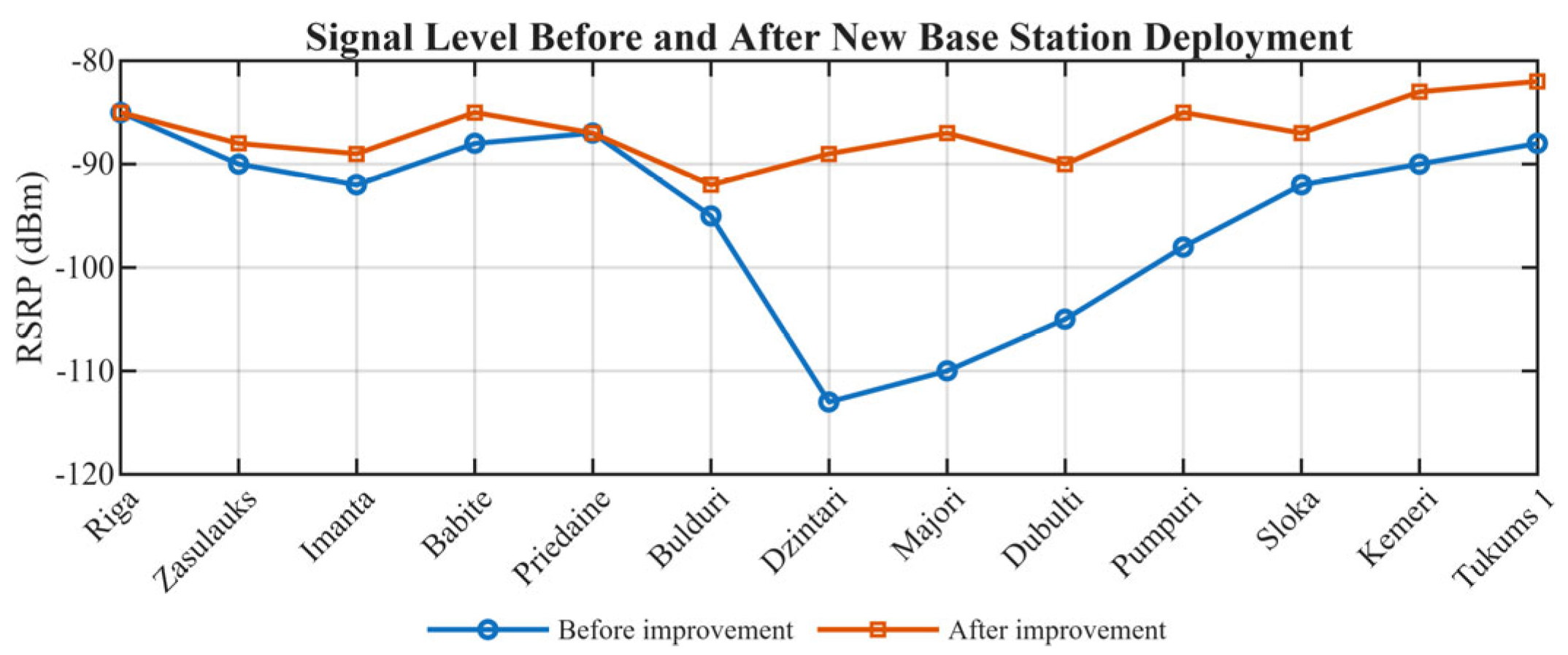
To validate the impact of the proposed improvement, field measurements were compared before and after the inclusion of the new base station. The results are summarized in
Figure 19, which illustrates the RSRP levels along the full measurement route. A clear improvement is observed at nearly all locations, with the most substantial change occurring in the Dzintari area, where the original measurements indicated the lowest signal levels of the entire route.
Before the upgrade, the RSRP at Dzintari dropped to nearly −115 dBm, confirming the severe shadowing caused by dense vegetation and the absence of line-of-sight to the serving site. After the addition of BS (New), the signal level increased by more than 20 dB, bringing the RSRP into the −90 to −85 dBm range. This shift marks a transition from a marginal or unusable connection to a stable and serviceable quality. Improvements are also visible in nearby stations such as Bulduri, Majori, Dubulti, and Pumpuri, indicating that the redistribution of network load between BS1 and the new site contributes to more consistent and predictable performance along the entire railway corridor. The reduced variance in signal levels demonstrates that the proposed deployment not only addresses localized coverage gaps but also enhances overall network robustness.
These results confirm that the introduction of an additional base station near Dzintari is an effective and well-justified measure. The improvement aligns with the simulation predictions and provides a measurable enhancement of service quality across the corridor, supporting the reliability requirements expected from future FRMCS and 5G-R deployments.
4.5. Proposed 5G NR (3500 MHz) Small-Cell Deployment for Dzintari Station
In addition to improving the LTE coverage along the railway corridor, a dedicated 5G NR layer was designed and evaluated for the Dzintari station area. The motivation for this deployment arises from two critical observations: (i) the existing macro-layer at 700 MHz and 1800 MHz cannot provide sufficiently stable coverage in dense vegetation zones surrounding the railway, and future railway communication systems, including FRMCS, are expected to rely on 5G NR capabilities such as enhanced mobile broadband (eMBB) and ultra-reliable low-latency communication (URLLC). Therefore, a preliminary 5G small-cell layout was developed in order to assess the feasibility of high-capacity service delivery in one of the most challenging railway segments along the Riga–Tukums line.
The 3.4–3.8 GHz band (commonly referred to as the 3500 MHz band) is the primary mid-band spectrum allocated for 5G deployments across Europe. Its physical properties—moderate propagation range, availability of large contiguous bandwidths, and suitability for beamforming—make it ideal for achieving the high-capacity requirements of densely populated public transport hubs. However, the same band suffers from increased path loss compared to sub-GHz LTE frequencies, particularly in forested or non-line-of-sight (NLOS) conditions. The Dzintari station area includes a large forest park, several dense residential blocks, and the curvature of the railway line, which collectively create a complex propagation environment. Because of this, traditional macro-site solutions prove insufficient to guarantee seamless 5G coverage. To address this, the study evaluates a micro-cellular architecture based on small cells placed at a height of 10 m. These cells aim to minimize shadowing caused by vegetation while restricting interference toward nearby residential zones.
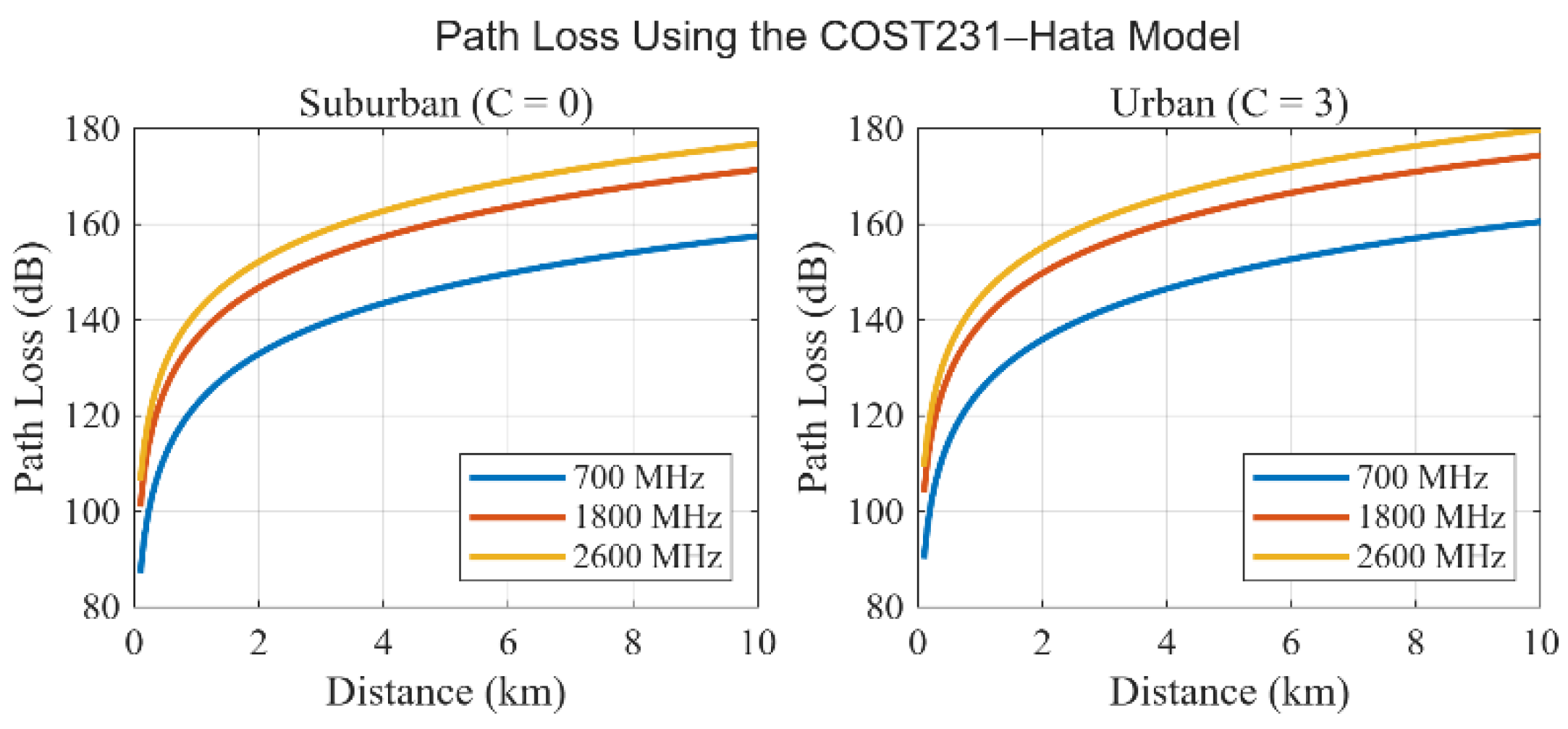
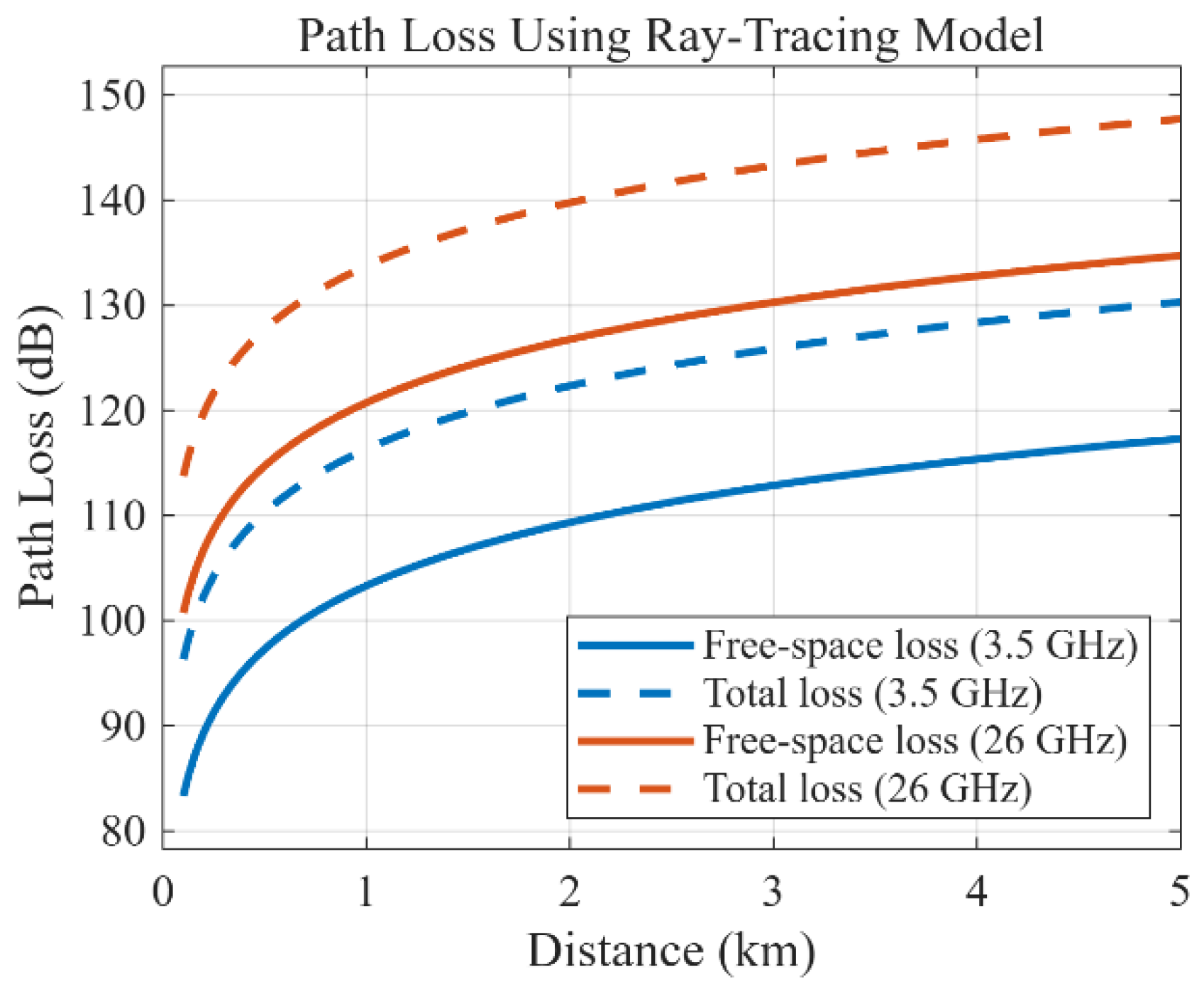
The proposed 5G network layout consists of five small-cell nodes distributed along the railway corridor. Their placement was determined based on field measurements conducted for LTE networks, results of earlier path-loss simulations using COST231-Hata and ray-tracing models, and local geographical constraints such as tree lines, street canyons, and the positioning of railway infrastructure. Each small cell in the simulated design uses the following parameters:
Frequency: 3500 MHz (5G NR band n78);
Transmit power: 10 W (40 dBm);
Antenna gain: 10 dBi omnidirectional pattern;
Height: 10 m above ground;
Approximate cell radius: 450–500 m;
Primary objective: enhance coverage continuity and increase capacity in high-demand railway station zones.
This configuration reflects a realistic and cost-effective early-stage 5G rollout strategy, in accordance with European railway digitalization directives. Coverage predictions for the 3500 MHz layer were produced using the ITU-R P.1812-4 model, which is supported by the RadioPlanner 3 v.3.0. trial software. This model was selected due to its robustness in mixed urban–forest environments and its ability to incorporate terrain irregularities, clutter categories, diffraction, and atmospheric absorption. Despite the limitations of the RadioPlanner trial version, the model provided sufficient detail for preliminary feasibility assessment. Simulation inputs included:
Detailed clutter data distinguishing forest, low-rise residential, and transport corridors;
Terrain elevation profiles along the full railway axis;
Local environmental conditions affecting mid-band propagation.
These calculations were combined with earlier ray-tracing results from
Section 3, allowing cross-validation of attenuation patterns at 3.5 GHz.
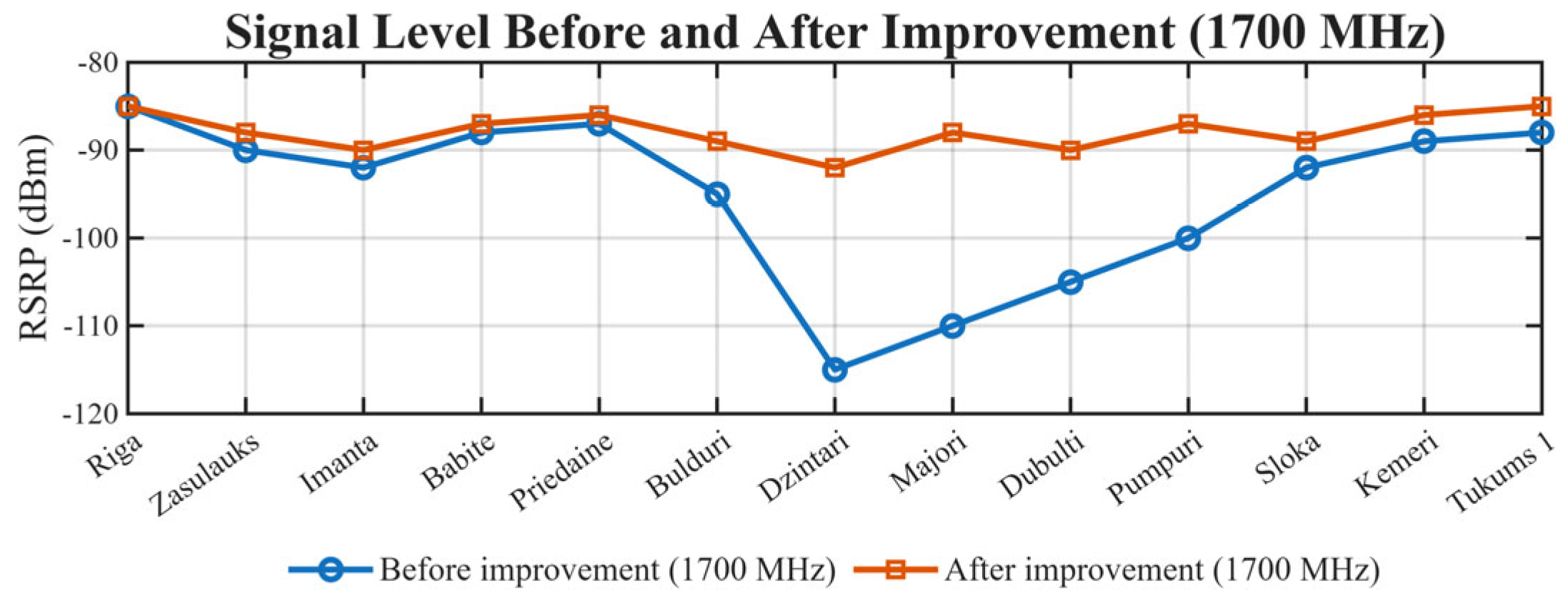
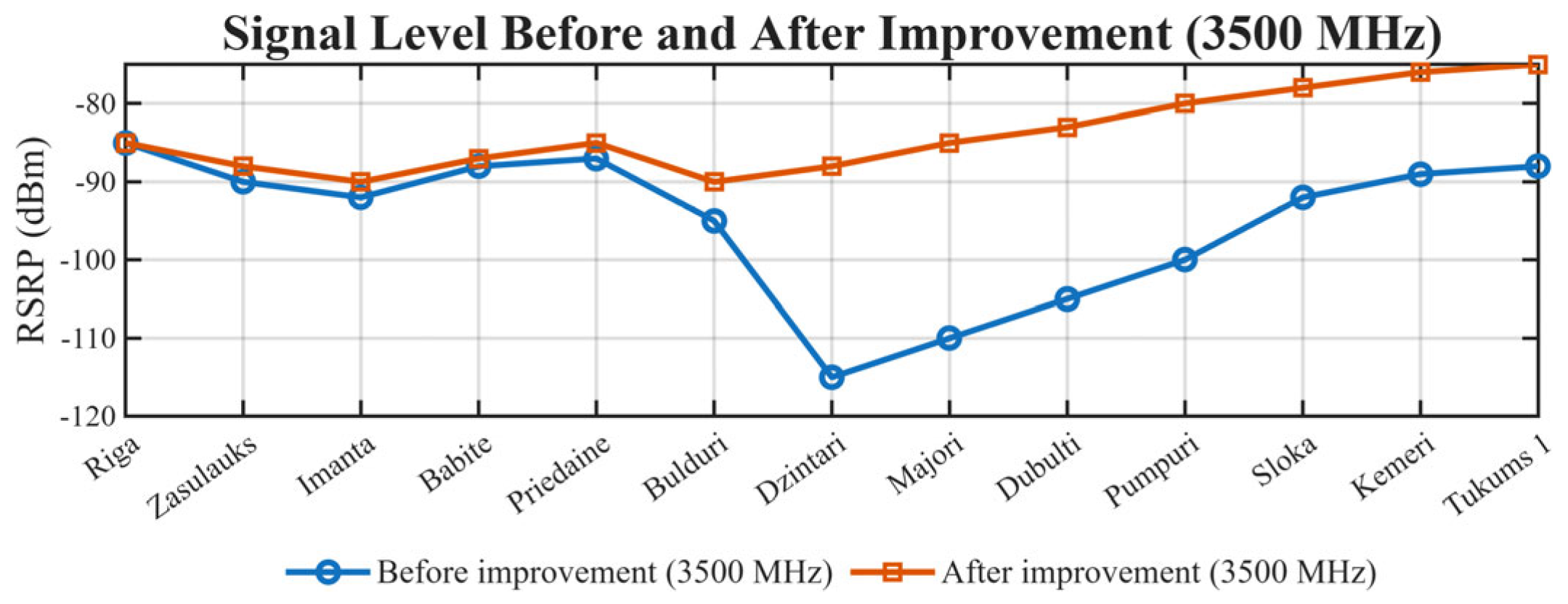
The impact of the newly introduced small cells was evaluated by comparing received RSRP values before and after the deployment.
Figure 21 illustrates the difference in averaged signal levels at all observed railway stations along the route.
Before the enhancement, the 3500 MHz layer exhibited severe signal degradation in multiple segments, particularly between Bulduri and Dzintari, where vegetation density is the highest. The measured RSRP values dropped to −110 dBm or lower, resulting in intermittent connectivity and extremely limited downlink throughput. After the introduction of small cells, the coverage improved significantly. The majority of locations now demonstrate RSRP levels between −85 and −78 dBm, which is sufficient to maintain a stable 5G NR connection and to support data-demanding applications used by passengers. The most critical improvements are observed in the Dzintari woodlands, where a shift from −115 dBm to approximately −88 dBm constitutes a 25–30 dB gain in link quality.
The analysis of the proposed 5G NR small-cell deployment along the Dzintari railway segment shows that mid-band densification is an effective approach for addressing the coverage limitations inherent to macro-layer systems operating at lower frequencies. While the existing LTE infrastructure provides satisfactory coverage in open and suburban areas, it consistently struggles in environments characterized by dense vegetation, irregular terrain, and constrained visibility—conditions commonly found along the Dzintari corridor. The simulation results confirm that supplementing the legacy network with strategically positioned 3500 MHz small cells leads to substantial improvements in signal strength, coverage uniformity, and overall communication reliability. This enhancement is especially evident in the areas previously identified as high-risk from a connectivity perspective, including the wooded zone near the Dzintari station and the surrounding residential blocks. After densification, signal levels in these segments increased by approximately 25–30 dB, ensuring that both passengers and railway infrastructure systems can benefit from stable 5G connectivity. The improvement demonstrates not only the technical feasibility of deploying small cells in challenging mixed environments but also the practical value such deployments bring to railway operations. Furthermore, the findings reinforce the importance of adopting a layered network architecture for future railway communication systems. A combination of wide-area low-band coverage and localized mid-band capacity layers is likely to be the most effective strategy for meeting both near-term service requirements and the long-term objectives set by frameworks such as FRMCS and 5G-R. The Dzintari case serves as a representative example of how operators can gradually evolve their networks through targeted enhancements rather than large-scale infrastructure replacements.
In summary, the proposed 3500 MHz deployment demonstrates a clear improvement in connectivity performance and provides valuable insights into the design principles relevant for next-generation railway communication systems. These results contribute to a broader understanding of how mid-band 5G technologies can be integrated into existing railway corridors, offering a practical pathway for future expansion and modernization efforts.




 ,
,