1. Introduction
Biodiesel is an attractive alternative to conventional fuels and is synthesized through a transesterification process, resulting in the formation of fatty acid methyl esters (FAME) or monoalkyl esters [
1,
2]. The use of biodiesel blends with methanol or ethanol has been shown to increase engine power output and reduce emissions. However, the use of these blends has several limitations in diesel engines, such as poor oxidation stability, cold-flow problems, deposits in the engine, and clogging of fuel filters [
3,
4]. An analysis of seeds of
Acacia sieberiana (synonym:
Vachellia sieberiana) revealed a composition of 44% oleic acid and 31% palmitic acid [
5,
6]. Despite the significant potential of
Acacia sieberiana seeds as an alternative fuel, their utilization remains limited. Preparation of fuel samples is a time-consuming process that needs derivatization of the sample before G.C. analysis [
7,
8]. FTIR can be utilized to observe the chemical changes resulting from the degradation of biodiesel due to oxidation [
8]. Osman et al. [
9] reported that advanced predictive models could reduce the experimental cost and optimize the transesterification parameters. Nkanang et al. [
10] demonstrated that advanced characterization methods were effective for evaluating conversion efficiency and structural composition. Shanthini et al. [
11] observed that sustainable feedstocks and heterogeneous catalysts were becoming dominant research areas in biodiesel production. Birhanu et al. [
12] optimized biodiesel production, achieving a biodiesel yield above 98%. Hatsa et al. [
13] reported that low free fatty acid content contributed to improved transesterification efficiency and reduced soap formation during biodiesel synthesis. Emmanuel et al. [
14] showed that nano-catalyst-assisted transesterification improved methyl ester conversion efficiency and enhanced biodiesel stability. Hoque et al. [
15] emphasized the importance of balancing fuel fluidity and oxidative resistance for commercial biodiesel applications. Subbiah et al. [
16] demonstrated that FTIR and GC–MS analyses effectively confirmed biodiesel purity and ester composition. Hamid et al. [
17] concluded that free fatty acid concentration strongly influenced transesterification efficiency and fuel quality. A review discusses feedstock selection (including non-edible oils), biodiesel characterization, engine performance, sustainability, and techno-economic aspects [
18]. Ishola et al. [
19] reported that machine learning models, particularly ANN and ANFIS integrated with metaheuristic optimization algorithms, significantly improve the prediction accuracy, process optimization, and biodiesel yield while reducing computational complexity and experimental effort, highlighting their strong potential for industrial-scale biodiesel production. A summary of these results is presented in
Table 1.
Zhang et al. [
20] developed machine learning-assisted models capable of accurately predicting fuel quality. Onwuka [
21] described the principles and standard analytical methods used for determining the physicochemical properties of food materials and edible oils. Previous studies have demonstrated the potential of biodiesel from different non-edible feedstocks as a cleaner alternative to conventional diesel. Kaisan et al. [
22] reported that biodiesel blends prepared from cottonseed, jatropha, and neem oils reduced CO, HC, and smoke emissions, although a slight increase in NOx emissions was observed at higher blend ratios. Knothe [
23] showed that fiber-optic near-infrared spectroscopy can effectively monitor the transesterification process, providing results comparable to those obtained by ^1H NMR while offering a faster and non-destructive analytical approach. Spectroscopic characterization by Fernando et al. [
24] confirmed the presence of fatty acids and other phytochemicals in
Acacia planifrons seeds using FTIR and NMR techniques. Likewise, Sadiq et al. [
25] and Bharti et al. [
26] identified various phenolics, flavonoids, and other bioactive compounds in
Acacia nilotica through phytochemical screening and GC–MS analysis, highlighting the chemical richness of the species. Tabrez et al. [
27] further demonstrated that several of these compounds possess significant biological activity through molecular docking studies. Veza et al. [
28] developed mathematical models for predicting the physicochemical properties of ABE–diesel blends, while Pullagura et al. [
29] reported that graphene nanoplatelets improved the fuel quality of biodiesel blends by enhancing thermal stability and calorific value. Tahri and Harrouz [
30] successfully converted waste frying oil into biodiesel with fuel properties meeting international standards, confirming the feasibility of waste-derived feedstocks. Zhang et al. [
31] highlighted recent developments in catalytic upgrading of biomass-derived compounds, emphasizing the role of advanced catalysts in improving biomass conversion efficiency. Together, these studies provide a strong foundation for the present work by demonstrating the importance of feedstock characterization, fuel quality assessment, and process optimization in the development of sustainable biodiesel.
The present study is novel as it investigated Acacia sieberiana seed oil, which has limited published data. Unlike many previous studies, this work combined FTIR analysis with GC–MS characterization to evaluate physicochemical properties using an experimental framework. The study also identified linoleic acid methyl ester as the dominant biodiesel component. Furthermore, the work provides new data from an African feedstock source, thereby contributing to the diversification of sustainable renewable energy resources.
Acacia sieberiana is still mostly untapped for use as a renewable fuel, in contrast to often studied biodiesel feedstocks, including jatropha, neem, and leftover cooking oil. For this neglected African feedstock, the current study provides novel physicochemical and compositional data. The study provides a more thorough evaluation of biodiesel quality and practical applicability by combining traditional FTIR and GC–MS characterization with ASTM-compliance evaluation, Monte Carlo uncertainty assessment, and multi-criteria fuel suitability analysis.
Because
Acacia sieberiana grows naturally in semi-arid and degraded areas throughout Africa, it requires very few agricultural inputs, does not directly compete with food crops, and has a number of advantages as a feedstock for biodiesel. Its availability in marginal areas may enhance sustainability even though the oil production is lower than that of certain traditional biodiesel feedstocks [
32]. Additionally, innovative biomass conversion processes that use platform chemicals and lignocellulosic feedstocks have shown great promise for producing renewable fuels in the future. As a result,
Acacia sieberiana ought to be considered as a supplementary feedstock in a larger range of sustainable biomass resources.
3. Results
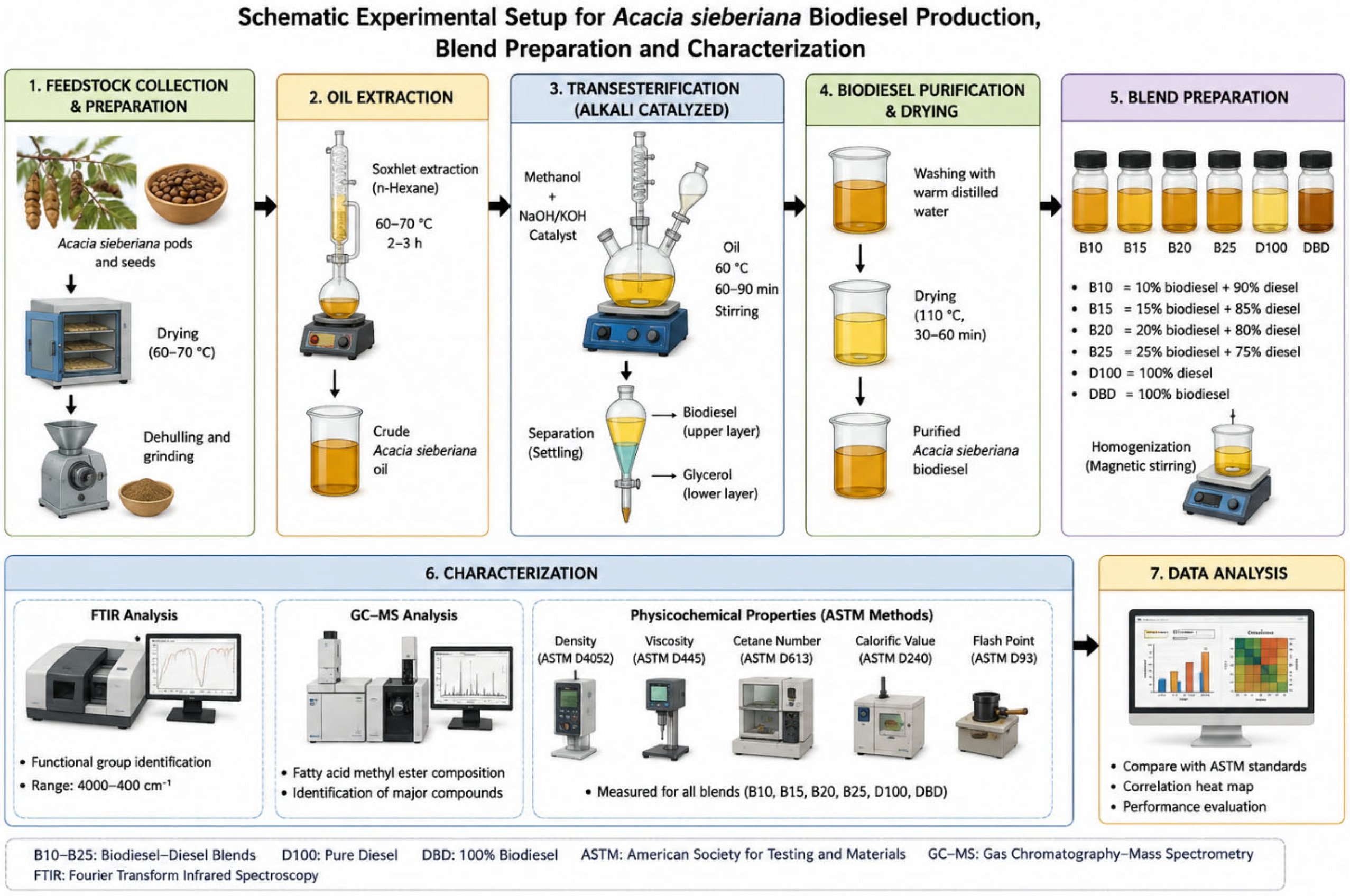
Oil extracted from the seeds of
Acacia sieberiana exhibited a light-yellow color and achieved a yield of approximately 10.91% [
21]. The physicochemical properties of the oil are shown in
Table 2.
3.1. Spectrum of Biodiesel
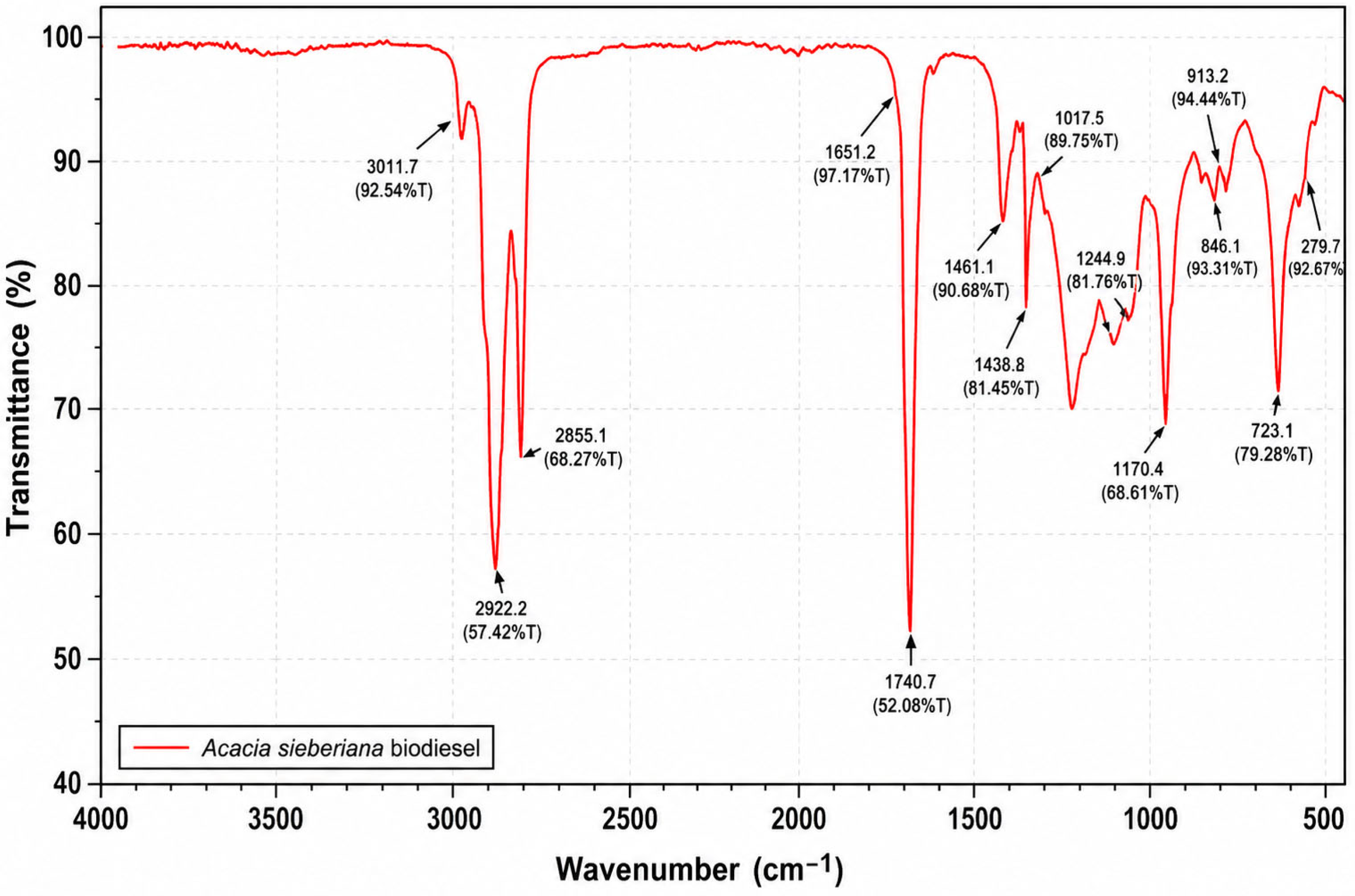
FTIR analysis of
Figure 2 confirmed the successful formation of fatty acid methyl esters in the produced biodiesel. The major absorption peak observed near 1740 cm
−1 corresponds to ester carbonyl (C=O) stretching vibration, which is a characteristic indicator of biodiesel formation through transesterification. Peaks around 1244 cm
−1 are associated with C–O ester stretching, further confirming methyl ester formation. The absorption band near 3011 cm
−1 corresponds to alkene (=C–H) stretching vibrations associated with unsaturated fatty acid chains, while the band near 723 cm
−1 is attributed to alkene bending vibrations. Overall, the FTIR spectrum confirms the conversion of triglycerides into fatty acid methyl esters and supports the GC–MS compositional analysis.
3.2. Bagaruwa Biodiesel GCMS Spectrum
The moisture content of the seed oil was measured as 5.772 ± 0.0% (
w/
w). Moisture content is one of the most critical and frequently utilized parameters in the processing, preservation, and storage of food products [
10]. The obtained value suggests that the oil possesses a favorable shelf life, allowing for extended storage without the risk of spoilage. The physicochemical properties of
Acacia sieberiana seed oil shown in
Table 5 indicate its potential as a non-edible biodiesel feedstock.
The oil showed moderate oil content, low peroxide value, and an acceptable saponification value, suggesting good quality and suitability for biodiesel production. However, the high viscosity, iodine value, and acid value indicate that pretreatment and transesterification are necessary to improve fuel properties and produce biodiesel that meets quality standards. Overall, the results demonstrate that A. sieberiana seed oil is a promising renewable source for sustainable biodiesel production.
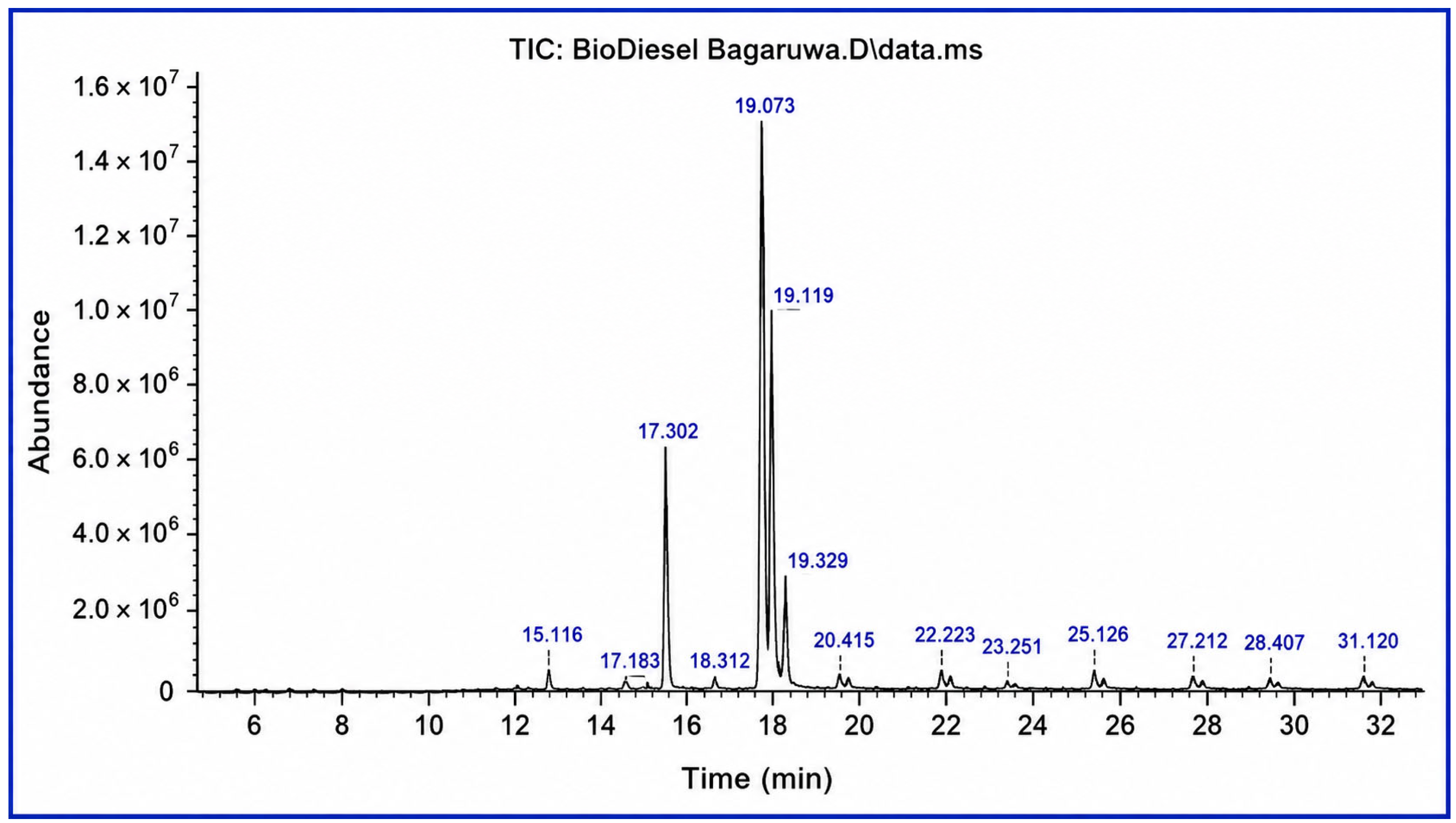
The GC–MS chromatogram presented in
Figure 3 illustrates the chemical composition and retention-time distribution of the major compounds identified in
Acacia sieberiana biodiesel. Several prominent peaks were detected within the retention-time range of approximately 15–31 min, indicating the successful formation of fatty acid methyl esters (FAMEs) during the transesterification process. The dominant peak observed at a retention time of 19.073 min corresponds to linoleic acid methyl ester, which exhibited the highest abundance among all detected compounds. This confirms that polyunsaturated methyl esters constitute the major fraction of the produced biodiesel.
Another significant peak appeared at 19.119 min and was identified as 11-octadecenoic acid methyl ester, while the peak at 17.302 min corresponded to palmitic acid methyl ester. The high abundance of unsaturated esters suggests improved cold-flow behavior and enhanced fuel fluidity because unsaturated compounds generally possess lower melting temperatures and better atomization characteristics. These properties are beneficial for combustion performance and fuel injection in compression ignition engines, particularly under low-temperature operating conditions.
However, the predominance of unsaturated esters may also reduce the oxidation stability during prolonged storage because double bonds are more susceptible to oxidative degradation and peroxide formation. In contrast, the presence of saturated esters such as palmitic acid methyl ester and methyl stearate contributes positively to cetane number, ignition quality, and combustion stability. The coexistence of both saturated and unsaturated compounds, therefore, provides a balanced biodiesel composition with favorable combustion and flow characteristics.
The chromatographic profile further confirms the efficient conversion of triglycerides into methyl esters through alkali-catalyzed transesterification. The sharp and well-defined peaks observed in the chromatogram indicate good separation efficiency and reliable identification of the biodiesel constituents. Overall, the GC–MS analysis validates the suitability of Acacia sieberiana seed oil as a promising renewable feedstock for biodiesel production.
Table 6 presents the major compounds identified in
Acacia sieberiana biodiesel using GC–MS analysis.
The chromatographic results confirmed the successful formation of fatty acid methyl esters (FAMEs), which are the principal constituents of biodiesel produced through transesterification. The identified compounds consisted mainly of saturated and unsaturated long-chain esters, indicating that the produced biodiesel possesses fuel characteristics suitable for compression ignition engine applications.
Among the detected compounds, 9,12-octadecadienoic acid methyl ester (linoleic acid methyl ester) was the dominant constituent, accounting for 54.77% of the total peak area. This compound is a polyunsaturated fatty acid methyl ester that significantly improves cold-flow behavior and fuel fluidity because unsaturated esters generally possess lower melting temperatures. The high proportion of linoleic acid methyl ester, therefore, suggests that the biodiesel may exhibit enhanced atomization and improved low-temperature operability. However, excessive unsaturation may also reduce oxidation stability during storage because double bonds are more susceptible to oxidative degradation and peroxide formation.
The second most abundant compound was 11-octadecenoic acid methyl ester with an area percentage of 22.91%. This monounsaturated ester contributes positively to fuel lubricity, ignition quality, and combustion stability, while maintaining relatively good fluidity characteristics. Hexadecanoic acid methyl ester (palmitic acid methyl ester), representing 11.71% of the detected compounds, is a saturated ester that enhances cetane number and combustion stability due to its higher molecular stability and shorter ignition delay characteristics.
Other compounds identified in smaller quantities included methyl stearate, docosanoic acid methyl ester, tetracosanoic acid methyl ester, and eicosanoic acid methyl ester. These saturated long-chain esters contribute to thermal stability, lubricating behavior, and combustion efficiency. Although present in relatively low concentrations, they assist in balancing the physicochemical behavior of the biodiesel by compensating for the high degree of unsaturation observed in the dominant compounds.
The retention times observed between approximately 15 and 25 min indicate efficient chromatographic separation of the methyl esters. The presence of both saturated and unsaturated compounds demonstrates that Acacia sieberiana biodiesel possesses a balanced fatty acid profile capable of providing acceptable ignition quality, fuel fluidity, and combustion performance. Overall, the GC–MS results confirm that Acacia sieberiana seed oil is a promising renewable feedstock for biodiesel production because its fatty acid composition supports desirable physicochemical and combustion-related fuel properties.
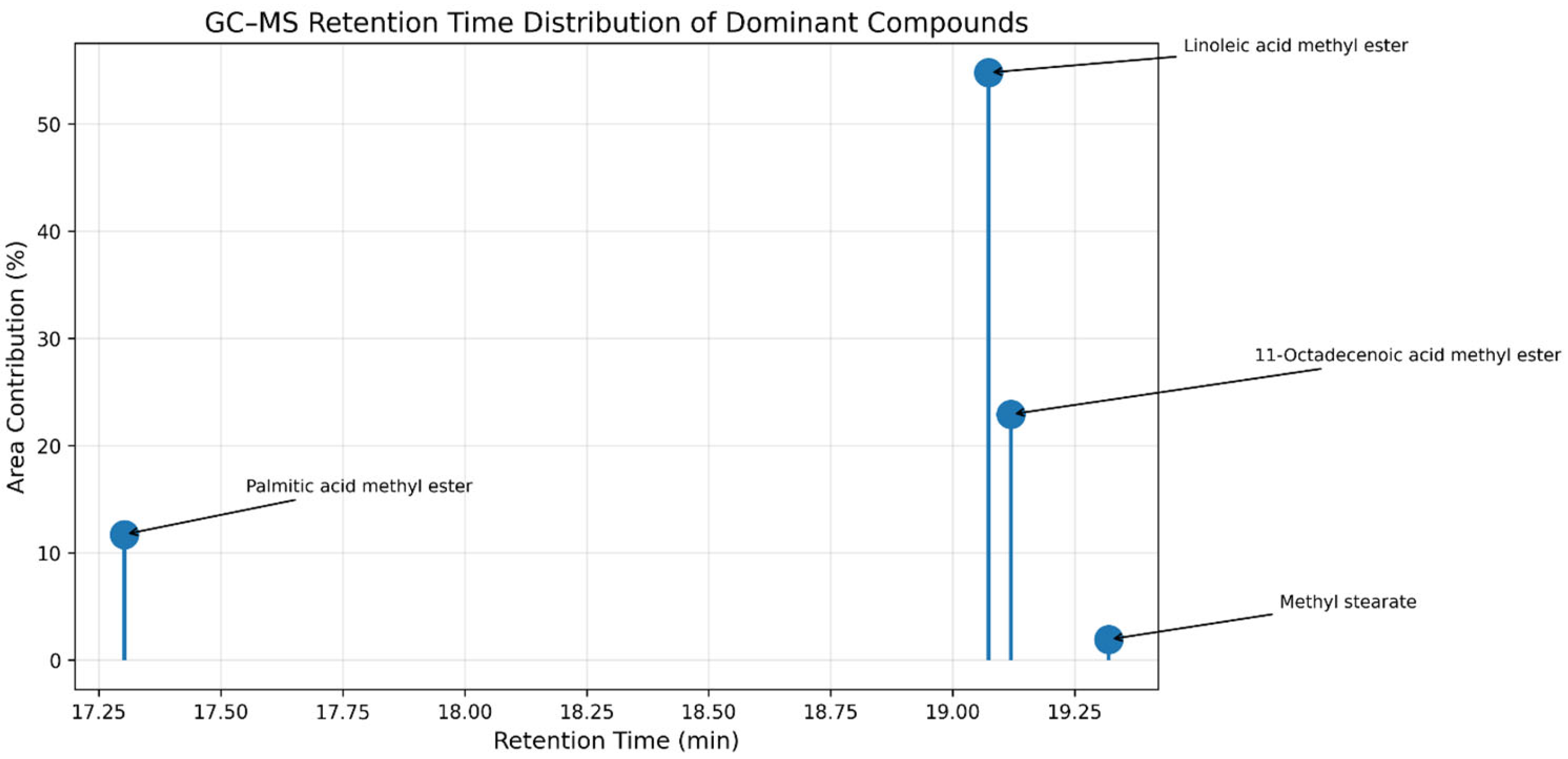
Figure 4 presents the retention time distribution and relative abundance of the dominant compounds identified in
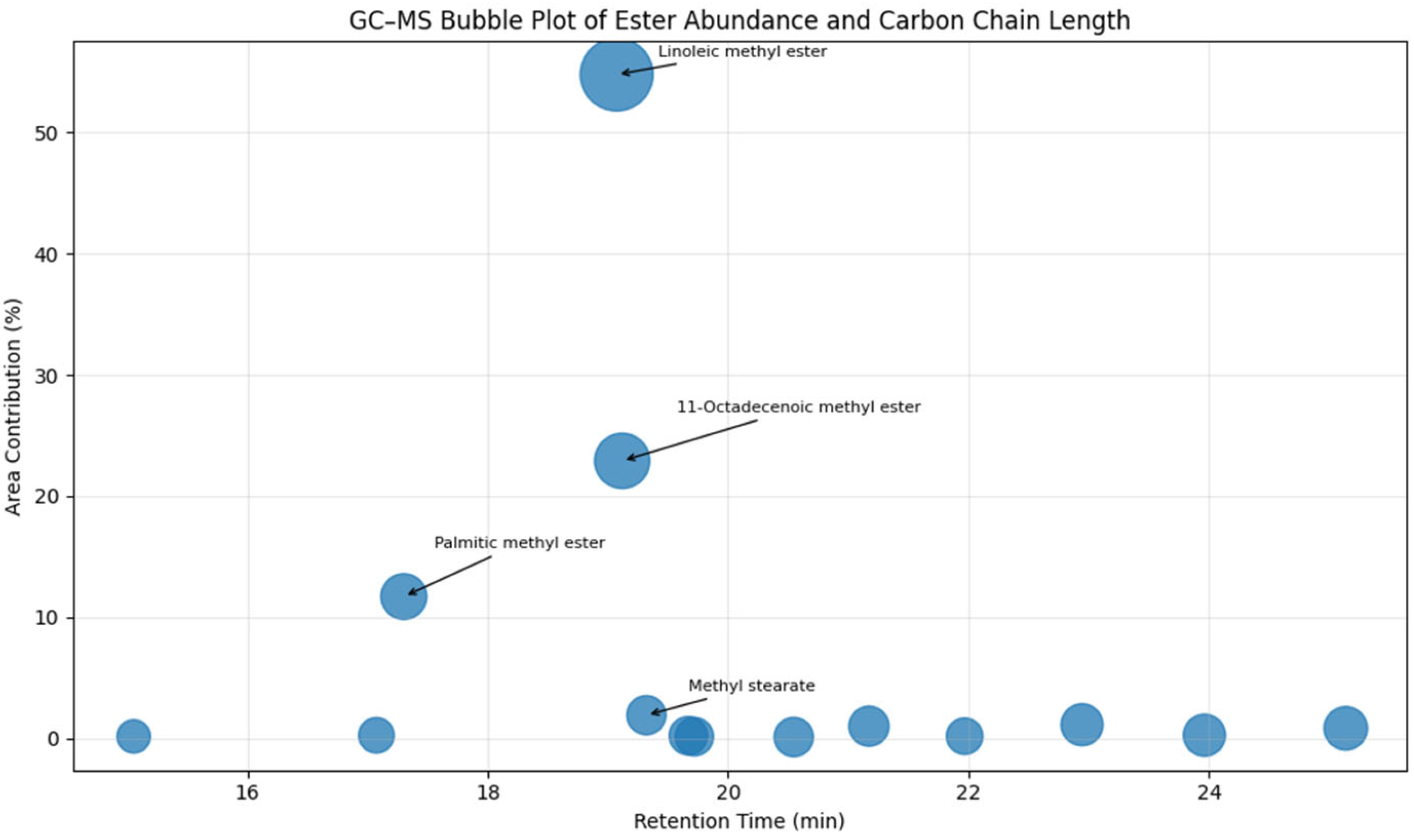
Acacia sieberiana biodiesel through GC–MS analysis. The chromatographic profile revealed that linoleic acid methyl ester exhibited the highest peak intensity at a retention time of approximately 19.073 min, accounting for 54.77% of the detected compounds, followed by 11-octadecenoic acid methyl ester at 19.119 min with 22.91% contribution. Palmitic acid methyl ester was also identified as a significant saturated ester component at 17.302 min. The predominance of unsaturated methyl esters indicates improved fuel fluidity and cold-flow behavior, which are beneficial for biodiesel performance under low-temperature conditions. However, high unsaturation may reduce oxidation stability during prolonged storage. The retention time distribution further confirms the successful conversion of triglycerides into fatty acid methyl esters during transesterification, thereby validating the biodiesel production process. The GC–MS profile obtained in the present study is consistent with previously reported biodiesel compositions derived from non-edible seed oils.
Figure 5 presents the relationship between retention time, relative abundance, and carbon-chain distribution of the identified ester compounds. Larger bubbles correspond to compounds with higher carbon-chain length and relative contribution. Linoleic acid methyl ester exhibited the highest abundance and one of the largest bubble sizes, confirming its dominance within the biodiesel composition. The bubble plot demonstrates that the biodiesel predominantly consisted of medium- and long-chain unsaturated methyl esters, which contribute to improved fuel fluidity and combustion characteristics. Visualization also provides a clearer understanding of the compositional complexity of the biodiesel compared to conventional chromatographic plots.
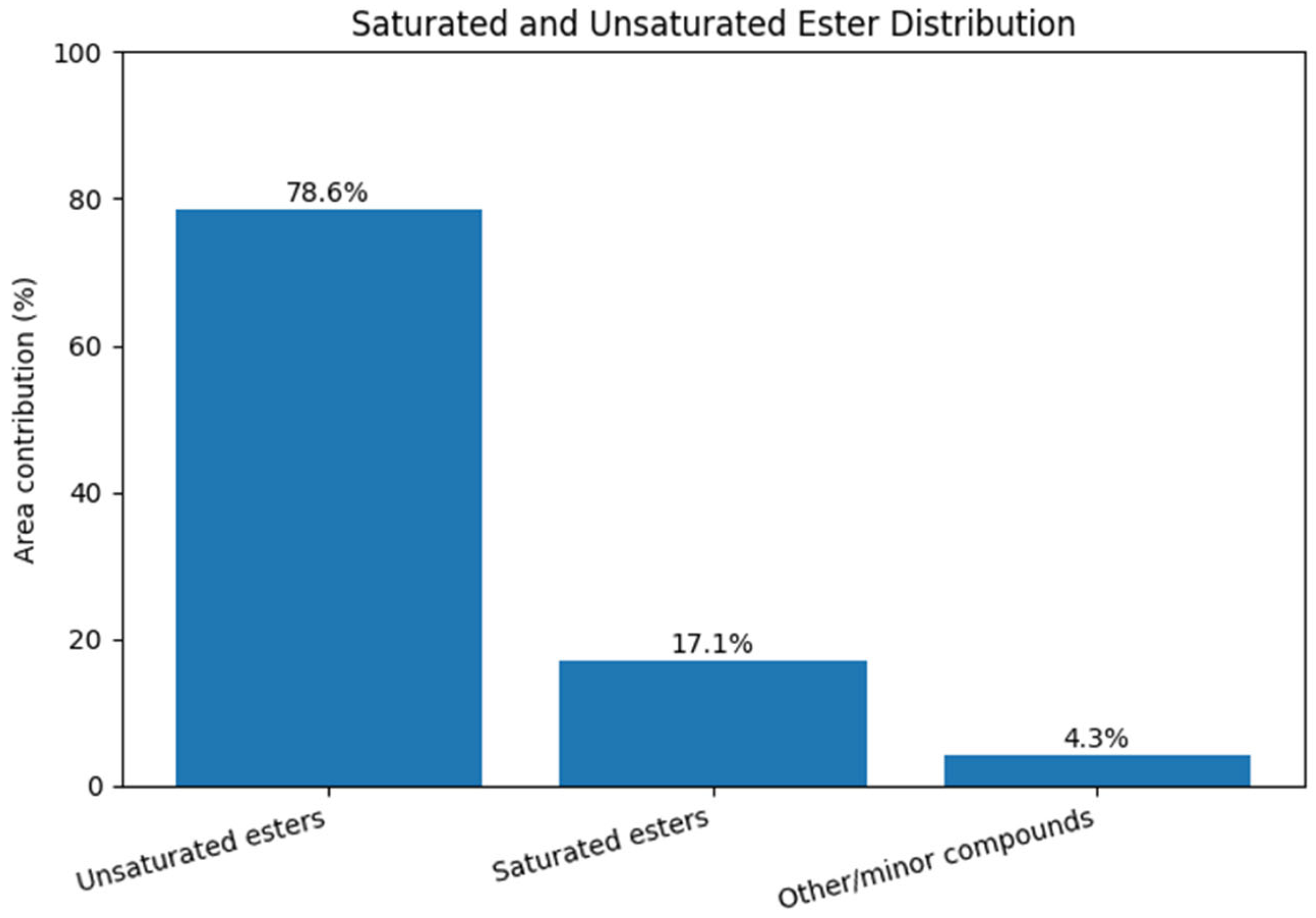
Figure 6 illustrates the distribution of saturated and unsaturated fatty acid methyl esters identified in
Acacia sieberiana biodiesel through GC–MS analysis. The results indicate that unsaturated esters constituted the dominant fraction of the biodiesel composition, accounting for approximately 78.6% of the detected compounds, whereas saturated esters contributed about 17.1%. The predominance of unsaturated esters, particularly linoleic acid methyl ester and 11-octadecenoic acid methyl ester, is advantageous for improving fuel fluidity, cold-flow characteristics, and atomization behavior during combustion. However, higher unsaturation levels may reduce oxidation stability and increase susceptibility to peroxide formation during long-term storage. In contrast, saturated esters such as palmitic acid methyl ester and methyl stearate contribute to improved cetane number, enhanced combustion stability, and shorter ignition delay. The balanced coexistence of saturated and unsaturated ester compounds observed in the present study suggests that
Acacia sieberiana biodiesel possesses favorable combustion and flow characteristics suitable for renewable fuel applications.
The GC–MS analysis indicates that linoleic acid methyl ester is a polyunsaturated fatty acid ester characterized by 18 carbon atoms and two double bonds. The presence of polyunsaturation suggests that Bagaruwa biodiesel will exhibit favorable fluidity characteristics; furthermore, a higher ester content will enhance the fuel properties of Bagaruwa biodiesel. The findings from the GC–MS analysis align with those obtained from the FTIR analysis, as both methodologies reveal the existence of alkanes, carboxylic groups, and ester functional groups within the detected compounds.
4. Determination of Physicochemical Properties
The data presented in
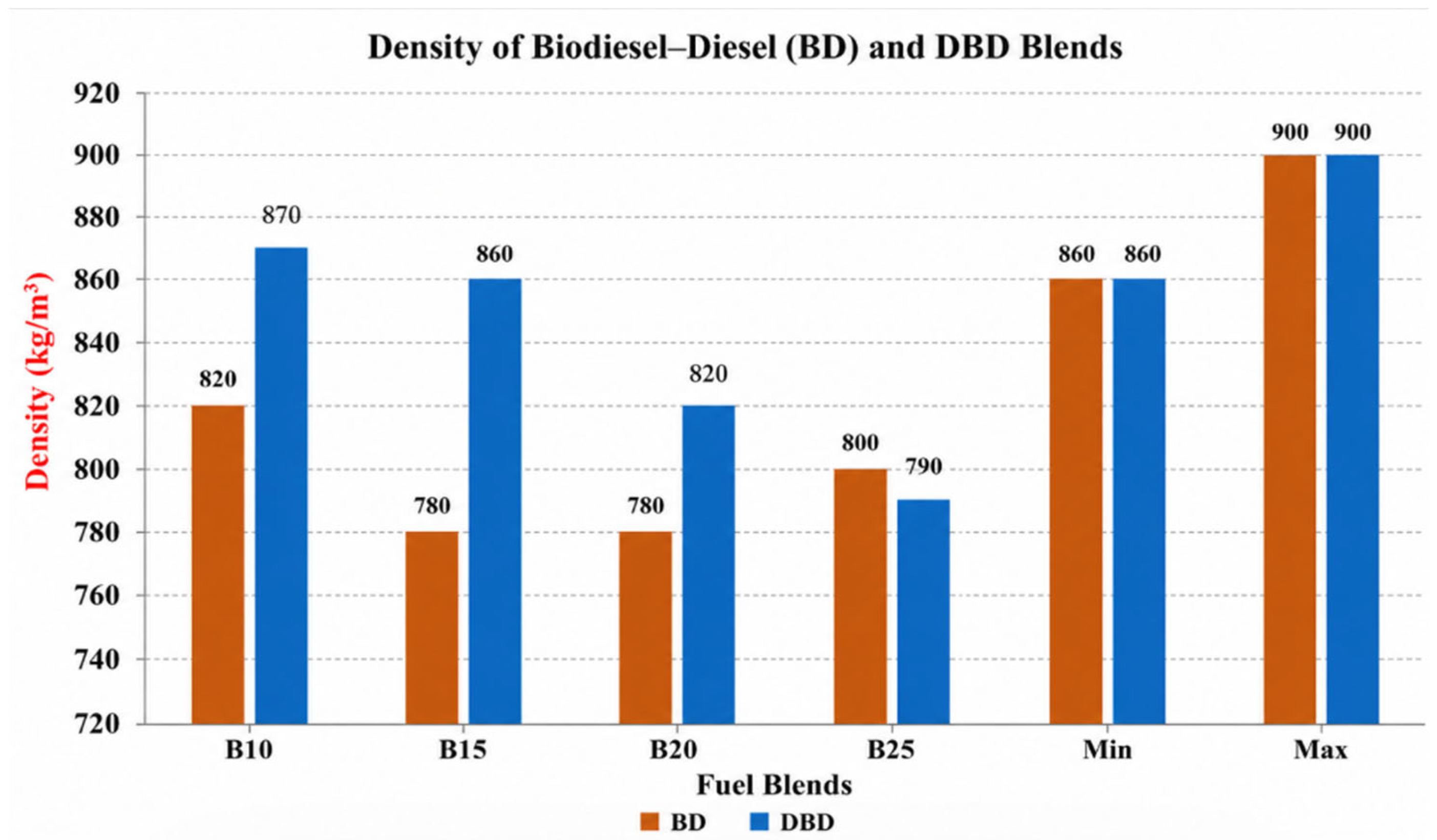
Figure 7 indicates a decline in fuel density as the proportion of biodiesel in the biodiesel–diesel blend rises. This trend is consistent for DBD–diesel blends; however, an exception is noted with the B25 blend, which does not conform to this pattern. According to ASTM standards, the specific gravity of diesel fuels and biodiesels ranges from a minimum of 860 kg/m
3 to a maximum of 900 kg/m
3, with only the B10 and B15 DBD–diesel blends falling within this specified range. Consequently, compression engines are capable of operating on these DBD–diesel blends, as their specific gravities align with the acceptable ASTM standards. In contrast, all other blends exhibit densities that fall below this range. Typically, biodiesel molecules are larger and heavier than those of conventional diesel, suggesting that blending should result in increased density; however, this was not corroborated by the findings of the current study.
The observed decrease in densities implies a reduction in the volumetric energy content of the fuel, resulting in a greater storage mass. This indicates that a blend tank will hold more fuel but contain less total energy compared to an equivalent tank of conventional diesel. This finding is consistent with a previous work, where it was noted that the density of blends diminishes as the biodiesel ratio increases [
16]. This phenomenon is attributed to the weaker intermolecular forces between biodiesel compounds and the hydrocarbons present in conventional diesel. Additionally, it was noted that variations in fuel density can also influence engine power output [
17].
The density results presented in
Figure 7 show noticeable variation among the biodiesel blend compositions. The BD blends exhibited density values ranging from approximately 780 to 820 kg/m
3, while the DBD blends showed comparatively higher densities between about 790 and 870 kg/m
3 for most blend ratios. The highest density was observed for the B10 DBD blend (870 kg/m
3), whereas the lowest density occurred for the B15 and B20 BD blends (780 kg/m
3).
The increase in density observed in the DBD blends may be attributed to the presence of oxygenated fuel components and higher molecular-weight methyl esters, which generally increase intermolecular interactions within the fuel mixture. Higher fuel density can improve the fuel lubricity and injection characteristics; however, excessively high density may negatively influence atomization and spray formation during combustion.
The results further indicate that the blend composition strongly affects fuel density behavior. The B25 blend showed relatively balanced density values for both BD and DBD fuels, suggesting improved blend compatibility and stability. Additionally, the measured density values remained reasonably close to the standard biodiesel fuel ranges reported in previous literature, indicating that the produced biodiesel blends possess acceptable fuel handling and storage characteristics suitable for diesel engine applications.
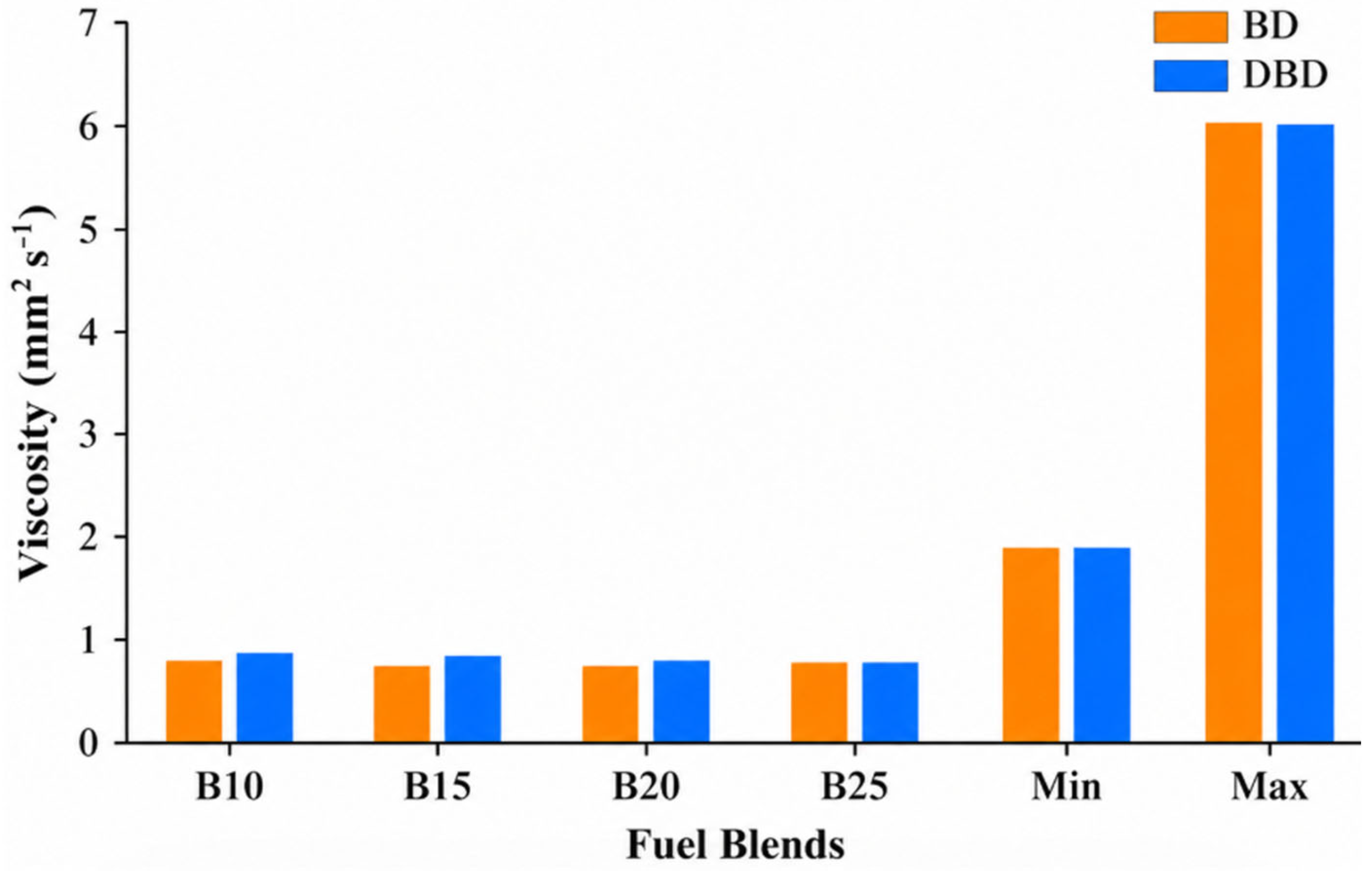
The viscosity values of the
Acacia sieberiana biodiesel blends shown in
Figure 8 ranged from approximately 0.78 to 0.87 mm
2/s, which are below the ASTM biodiesel reference range of 1.9–6.0 mm
2/s. This indicates that, although the low viscosity may improve spray atomization and fuel vaporization, the blends cannot be considered fully compliant for direct compression ignition engine use without further optimization. Excessively low viscosity may reduce fuel lubricity and increase wear in injection pumps and injector components during long-term operation. Therefore, the present blends should be regarded as preliminary fuel formulations that require viscosity correction through blend optimization, additive treatment, or adjustment of the biodiesel–diesel–ether ratio before practical engine application.
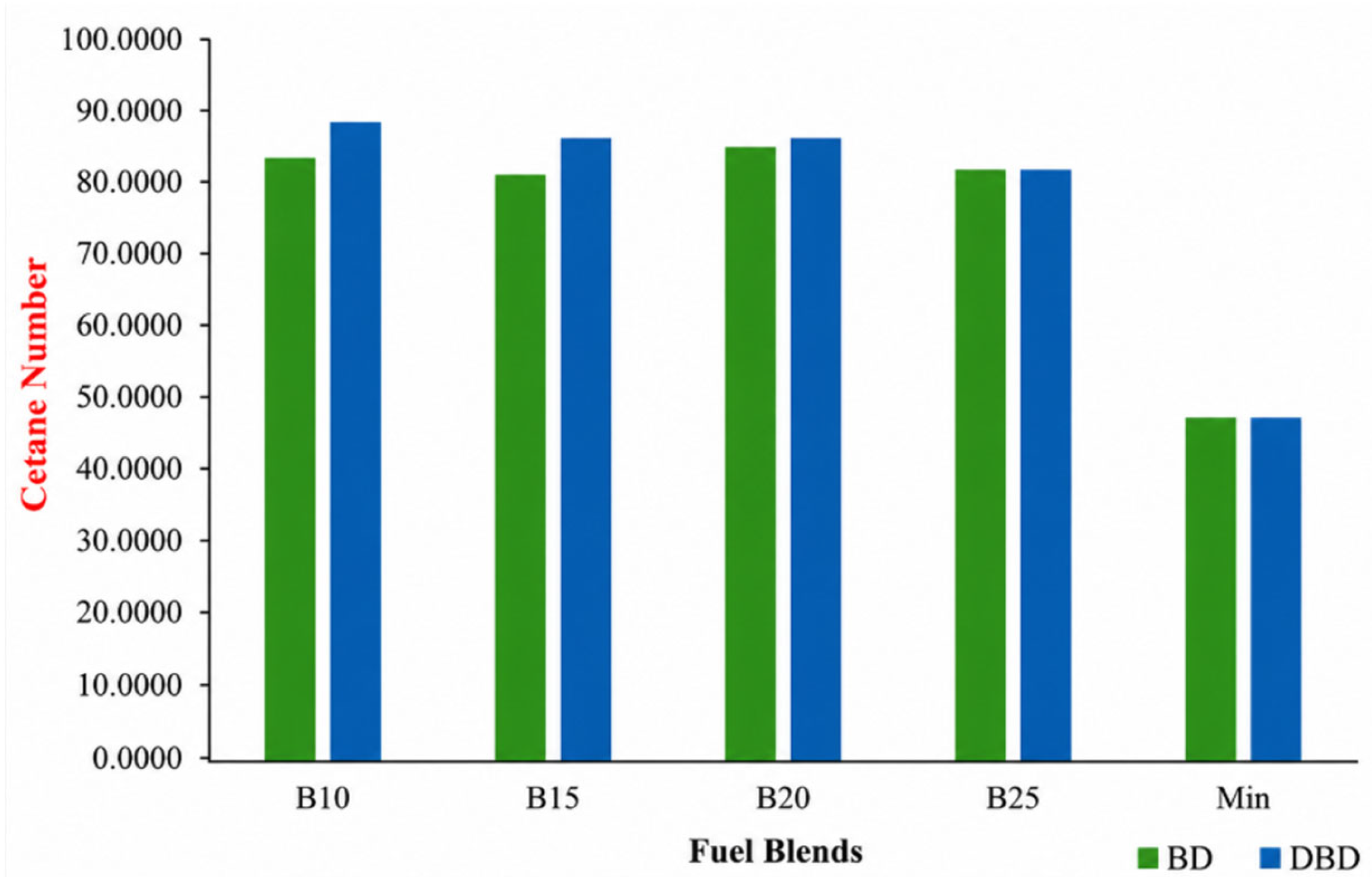
The data presented in
Figure 9 indicates a decline in the cetane number of fuel as the proportion of biodiesel in the biodiesel–diesel blend increases. The DBD–diesel blends exhibit a more gradual adherence to this trend in comparison to biodiesel–diesel blends. Consequently, the blending process results in a reduction of the cetane number, primarily due to biodiesel possessing a lower cetane number than conventional fuels. The graph illustrates that the cetane number for all blends meets the minimum ASTM standard of 47. Biodiesel’s chemical composition differs from that of traditional diesel; its molecules tend to be longer and more complex, which may result in a slightly extended ignition time following injection into the engine. Although biodiesel contains a higher oxygen content than conventional diesel, which aids in combustion, it can also contribute to a minor delay in the ignition process. The ramifications of a reduced cetane number include prolonged ignition delays that may result in incomplete combustion, diminished power output, increased emissions, and potential engine knocking.
Nevertheless, these blends may offer enhanced lubrication properties, which can mitigate some of the wear associated with ignition delays. This finding aligns with the research conducted, which demonstrated that the cetane index of biodiesel–diesel blends is lower than that of conventional diesel, potentially leading to ignition delays [
16]. Additionally, this observation was consistent with [
17], which noted that the calorific value of biodiesel–diesel blends exceeds the minimum threshold of 47.
It should be mentioned that rather than using direct ASTM cetane-engine measurements, the reported cetane numbers were calculated using empirical relationships. As a result, the figures ought to be seen as approximations of ignition quality. To verify the anticipated values, direct cetane-number determination should be part of future research.
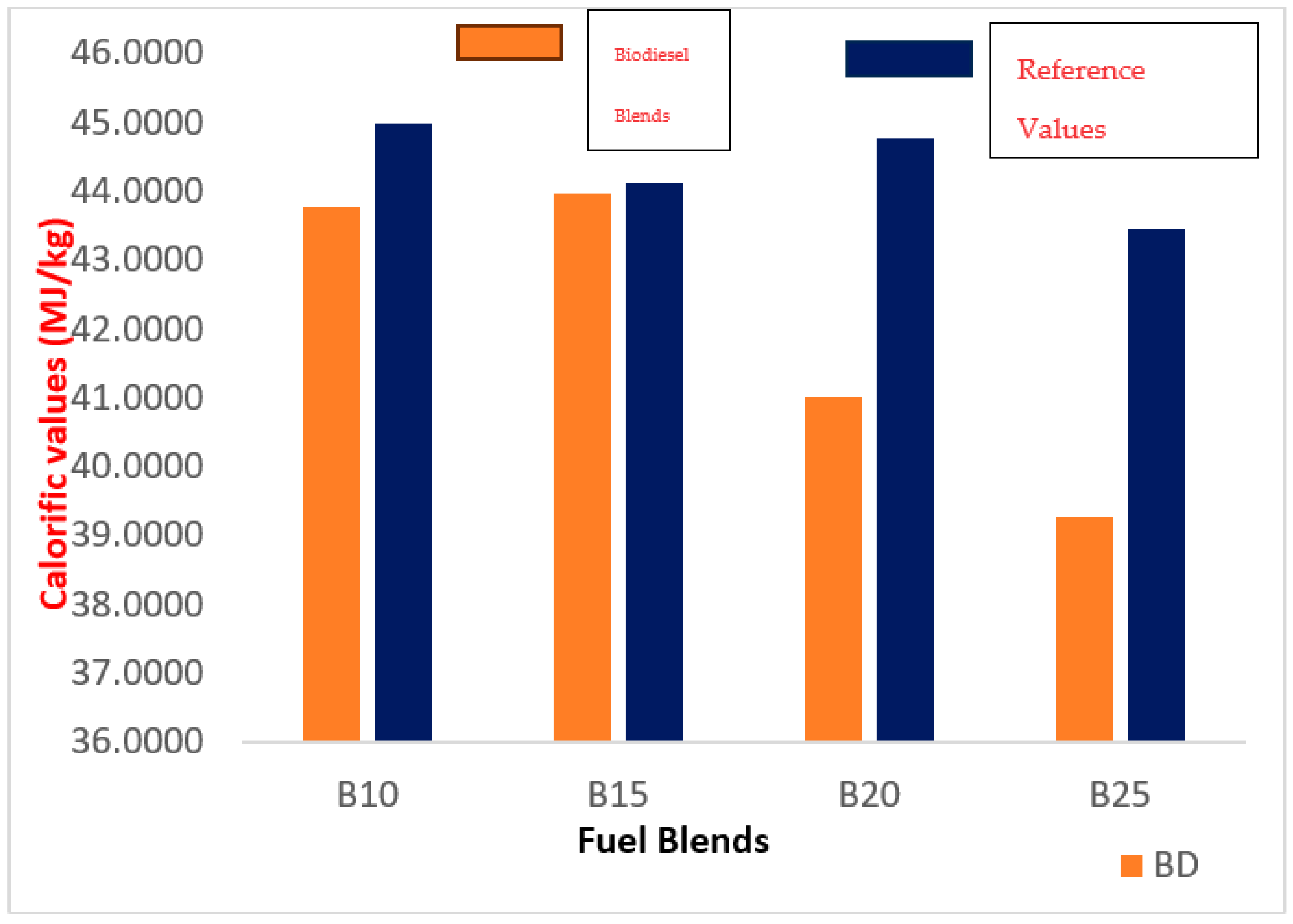
Figure 10 uses contrasting colors to clearly distinguish the two datasets. The orange bars represent the calorific values of the biodiesel (BD) blends, while the dark blue bars represent the corresponding reference values, providing an effective visual comparison across different fuel blends. The warm orange color highlights the measured biodiesel values, whereas the dark blue offers strong contrast, making differences between the datasets readily apparent. As the biodiesel blend increases from B10 to B25, the orange bars show a gradual decline in calorific value, while the blue bars remain comparatively higher with only minor variations. This color scheme enhances readability, minimizes confusion, and enables rapid identification of the decreasing energy content associated with increasing biodiesel concentration. The data presented in
Figure 10 indicate a decline in calorific values of fuel as the proportion of biodiesel in the biodiesel–diesel blend rises. This trend is particularly pronounced in biodiesel compared to DBD–diesel blends. Notably, all blends exhibit calorific values that are inferior to that of conventional diesel, which has a calorific value of 45.5 MJ/kg. The calorific values observed in this study align closely with the ASTM standard, with the lowest value recorded for the B25 biodiesel–diesel blend at 39.28 MJ/kg. This suggests that the developed blends possess potential for compression ignition engine application; however, viscosity-related non-compliance indicates that further optimization is required before practical utilization.
Biodiesel possesses a lower carbon content per molecule and a higher density than conventional diesel, resulting in a reduced energy content for a given volume of biodiesel. The implications of a lower calorific value for fuel include diminisShed fuel efficiency, necessitating the combustion of greater quantities of fuel to generate equivalent energy, and a decrease in engine power output. This finding corroborates the research already conducted, which demonstrated a linear decrease in calorific value with an increasing biodiesel ratio in the blend, potentially resulting in an increase in brake specific fuel consumption (B.S.F.C.) [
16]. Additionally, research showed that the maximum calorific value for a biodiesel–diesel blend was 42.43 MJ/kg, still falling short of conventional diesel [
17].
The data presented in
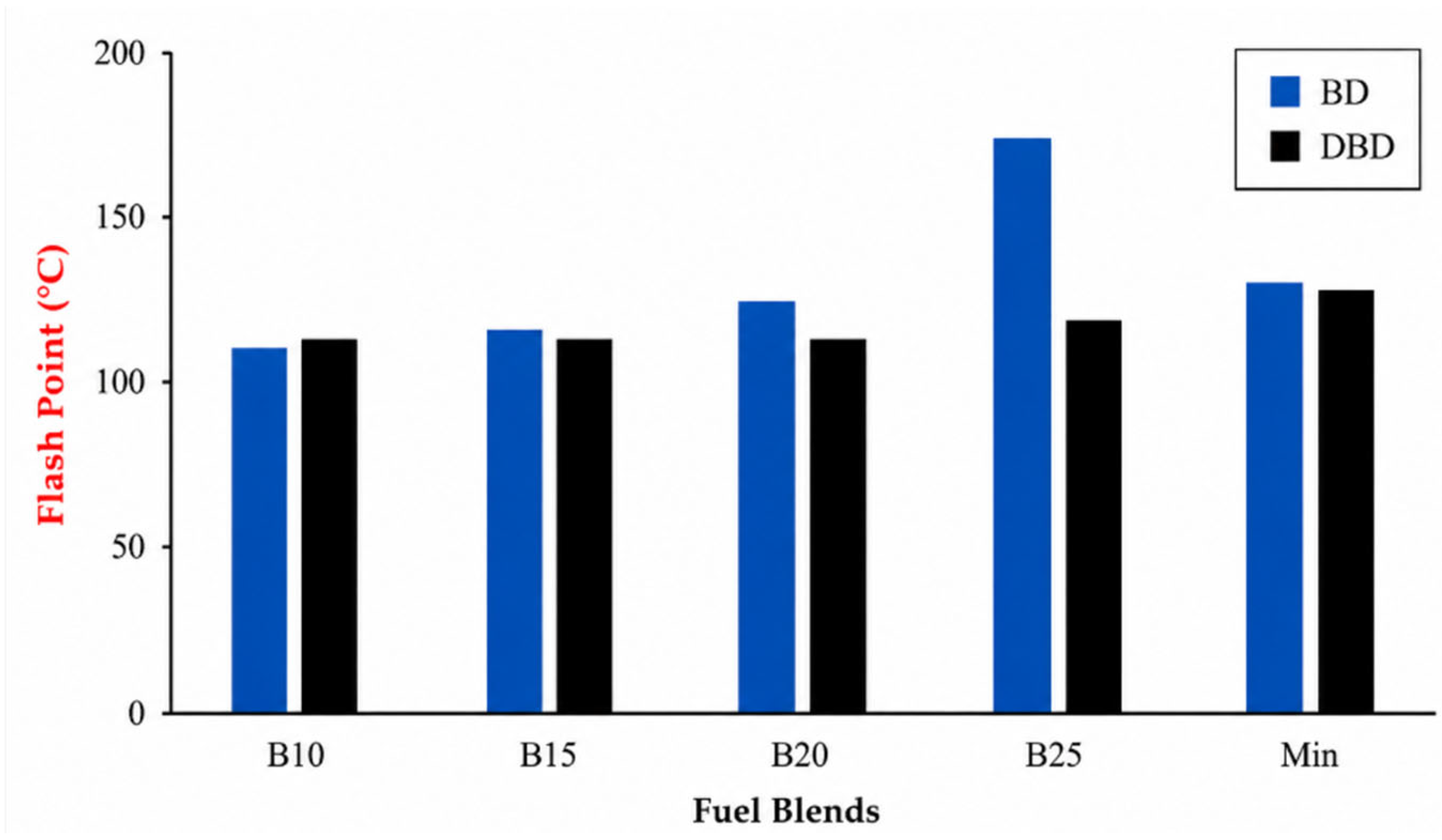
Figure 11 indicates that as the percentage of biodiesel in the biodiesel–diesel blend increases, the flash point of the fuel also rises. Nevertheless, all blends, with the exception of B25, exhibit lower flash points compared to pure diesel. This phenomenon can be attributed to the chemical properties of biodiesel, which allow it to vaporize more readily at lower temperatures, thereby enhancing its flammability. The presence of lower flash points in fuels raises concerns regarding fire hazards and necessitates stringent handling, storage, transportation, and refueling protocols. According to ASTM standards, the minimum flash point for biodiesels is set at 100 °C, while the maximum is 170 °C.
This conclusion aligns with the research conducted, which reported a maximum flash point of 102 °C for biodiesel blends, noting that biodiesel–diesel mixtures possess higher flash points than traditional diesel [
17]. The results presented in
Figure 11 show that the flash point generally increased with increasing biodiesel concentration in the blends. The BD blends exhibited flash-point values ranging from 110 °C to 175 °C, while the DBD blends ranged between 111 °C and 120 °C. The increase in flash point with biodiesel addition is associated with the lower volatility and higher thermal stability of fatty acid methyl esters compared with conventional diesel fuel.
When compared with conventional diesel fuel, the developed blends demonstrated improved handling and storage safety because their flash points were substantially higher than those of petroleum diesel. However, comparison with ASTM biodiesel reference limits (130–170 °C) indicates that several blends, particularly the DBD blends and lower-ratio BD blends, remained below the recommended minimum value. Only the BD B20 blend fully satisfied the stated ASTM flash-point range, while BD B25 slightly exceeded the upper reference limit. Therefore, although the blends demonstrated enhanced fuel safety relative to diesel fuel, further optimization may still be required to achieve complete ASTM biodiesel compliance.
5. Monte Carlo Uncertainty Analysis
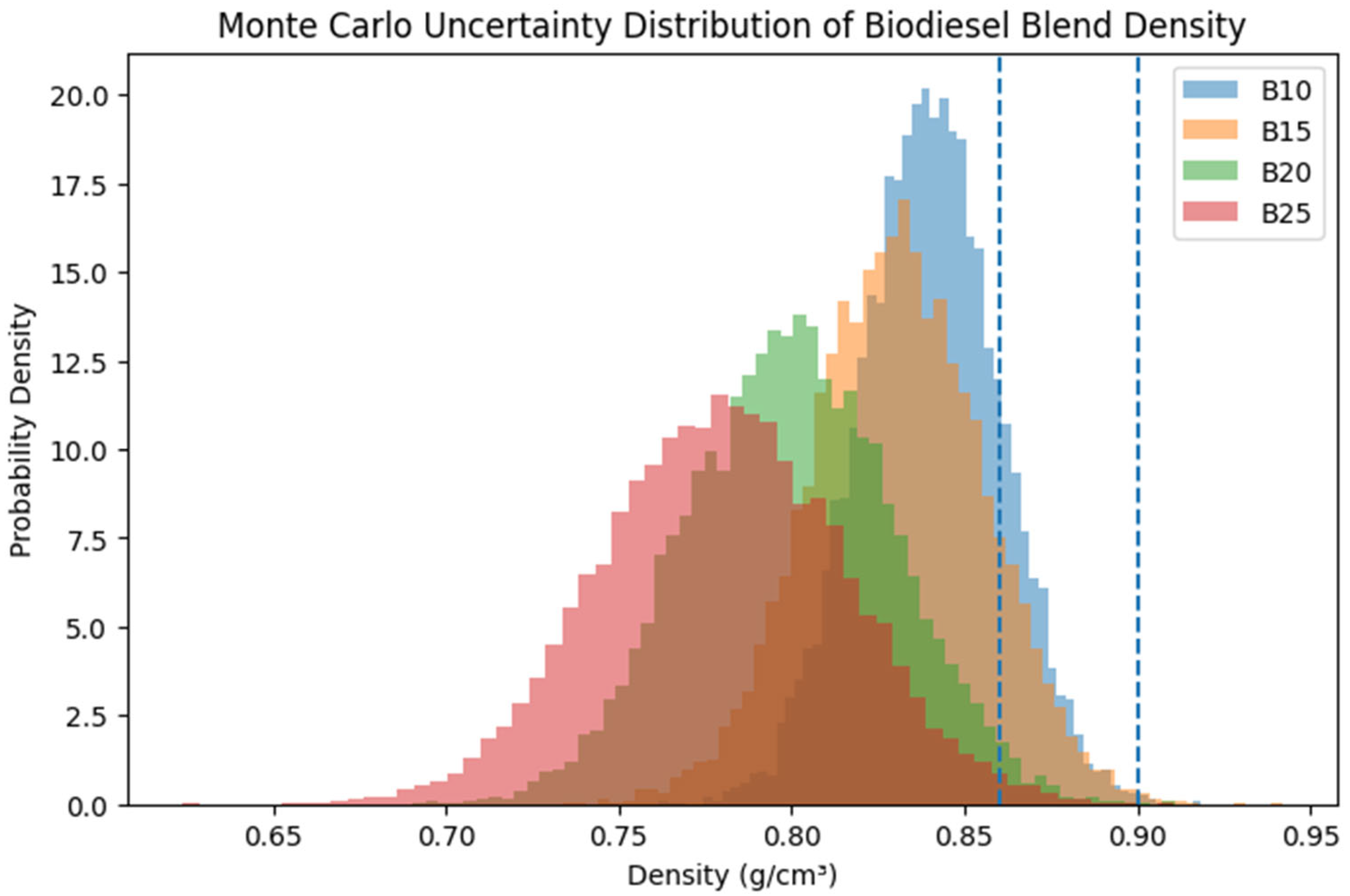
Monte Carlo simulation was performed to evaluate the uncertainty in the physicochemical performance of the
Acacia sieberiana biodiesel blends as seen in
Table 7.
The analysis considered density, viscosity, cetane number, calorific value, and flash point as input fuel-quality parameters. A total of 10,000 iterations was used, and each measured property was varied using a normal distribution around the experimental value. A relative uncertainty of ±5% was assumed for density, viscosity, cetane number, and calorific value, while the flash point varied by ±3% because it is usually measured with lower relative experimental scatter. The simulation was used to estimate the probability that each blend satisfies the selected ASTM/reference limits.
The Monte Carlo results showed that B10 and B15, especially in the DBD blends, had the highest probability of acceptable fuel performance, mainly because their density and calorific values were closer to the reference range. However, viscosity showed the greatest uncertainty-related failure risk because all measured viscosity values were below the ASTM biodiesel range. Cetane number remained robust under uncertainty because all blends were far above the minimum reference value of 47. Flash-point performance was more sensitive, particularly for DBD blends, which remained below the stated biodiesel reference limit. Therefore, the uncertainty analysis confirms that Acacia sieberiana biodiesel is promising, but viscosity improvement and blend optimization are required before practical CI-engine application.
Figure 12 presents the probability-based suitability of the biodiesel blends under experimental uncertainty. The results indicate that lower blend ratios, particularly B10 and B15, are more stable and less sensitive to uncertainty. Cetane number showed almost no risk of non-compliance, while viscosity remained the weakest property because its measured values were below the acceptable ASTM range. This confirms that future work should focus on viscosity correction through additive selection, blending optimization, or process refinement.
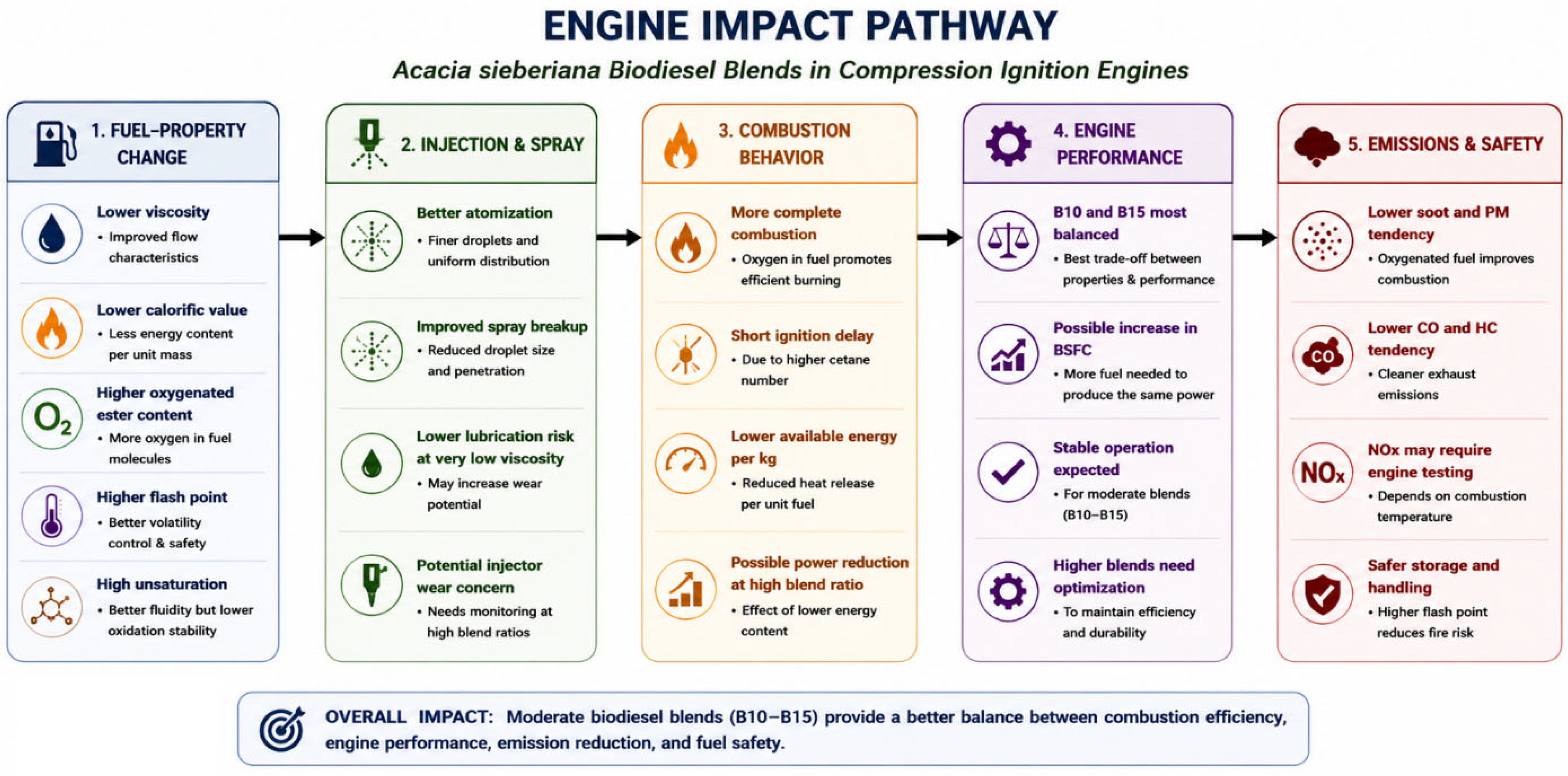
Figure 13 illustrates the influence of
Acacia sieberiana biodiesel properties on compression ignition engine behavior. The reduction in viscosity improves fuel atomization and spray characteristics, which may enhance combustion efficiency and reduce particulate emissions. However, lower calorific value decreases the available energy content of the fuel, potentially increasing brake-specific fuel consumption and slightly reducing engine power output at higher blend ratios. The higher oxygen content associated with biodiesel esters promotes cleaner combustion and contributes to lower soot and hydrocarbon emissions. Increased flash point improves the fuel handling and storage safety, reducing fire hazards during transportation and utilization. The predominance of unsaturated methyl esters further improves cold-flow behavior and fuel fluidity, although excessive unsaturation may reduce oxidation stability during prolonged storage. Overall, the engine-impact analysis suggests that moderate blends such as B10 and B15 provide a more balanced compromise between combustion efficiency, fuel safety, and environmental sustainability compared to higher biodiesel concentrations.
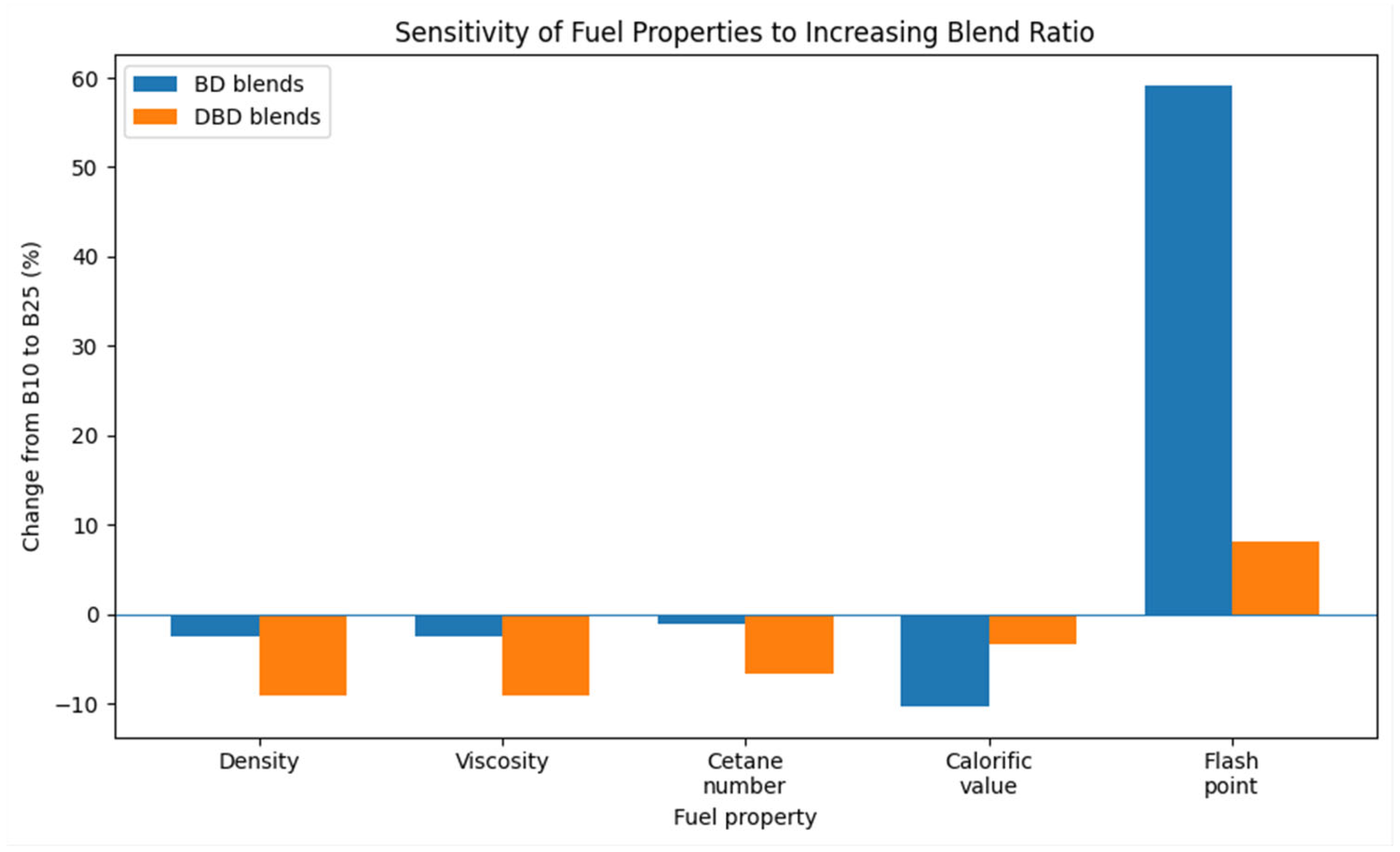
Figure 14 shows the percentage change in major fuel properties as the blend ratio increased from B10 to B25. The flash point showed the strongest positive sensitivity, especially for BD blends, indicating improved fuel-handling safety at higher biodiesel concentrations. In contrast, calorific value decreased with increasing biodiesel ratio, confirming a reduction in energy content at higher blend levels. Density, viscosity, and cetane number showed smaller negative variations, suggesting that these properties were less sensitive than flash point and calorific value. Overall, the sensitivity plot confirms that moderate blends such as B10 and B15 provide a better balance between fuel safety, ignition quality, and energy performance.
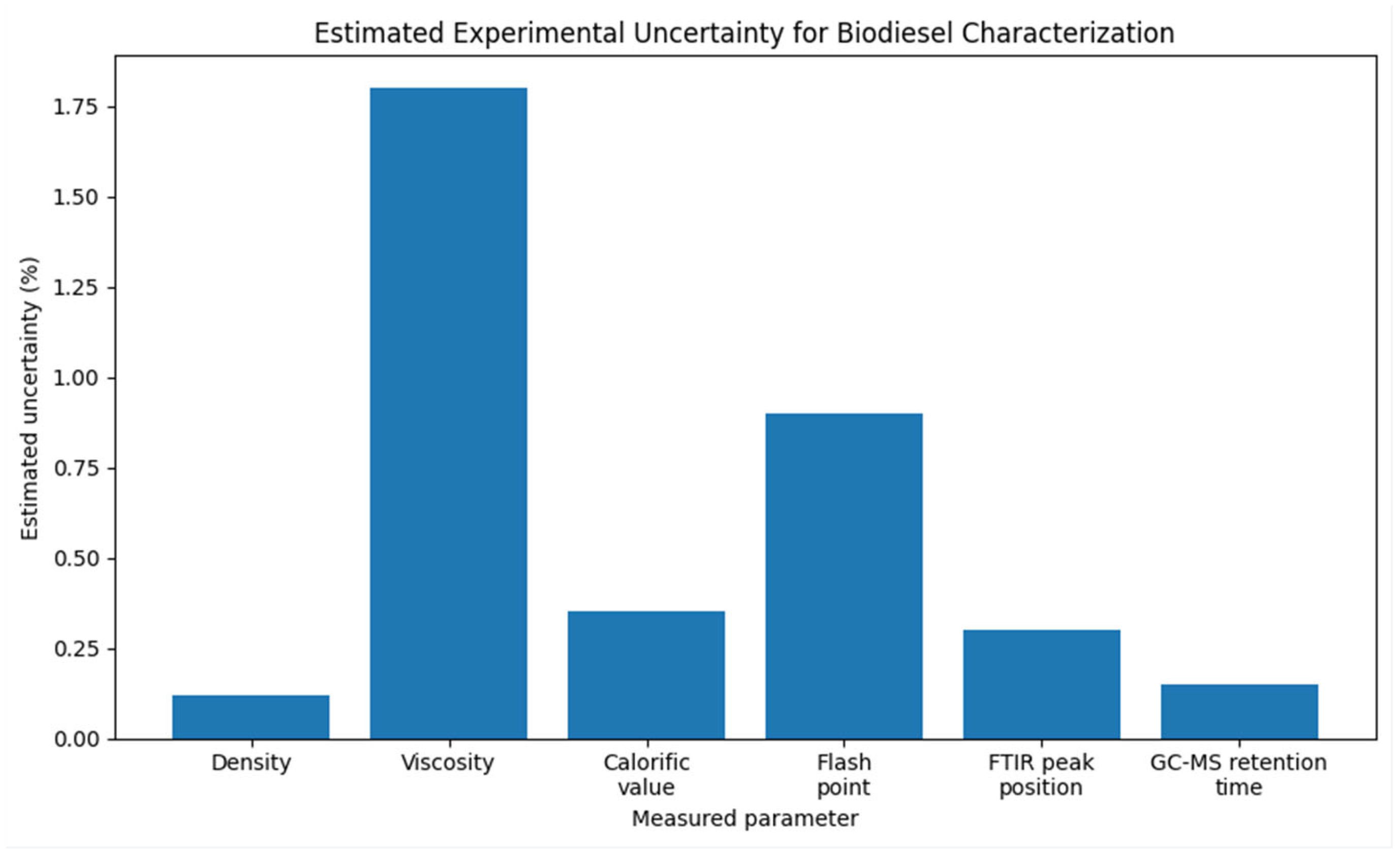
Figure 15 presents the estimated uncertainty distribution for the main experimental measurements. Viscosity showed the highest uncertainty because flow-time measurement is more sensitive to temperature variation and operator handling. Flash point also showed moderate uncertainty due to the heating and ignition detection process. In contrast, density, calorific value, FTIR peak position, and GC–MS retention time showed comparatively lower uncertainty. The low uncertainty values indicate that the experimental measurements were reasonably repeatable and that the reported fuel-property trends are reliable for blend comparison.
The comparison of
Table 8 indicates that
Acacia sieberiana biodiesel blends possess superior ignition quality and significantly higher flash point compared to conventional diesel fuel. However, reductions in calorific value and viscosity may affect fuel economy and injection characteristics at higher blending ratios. Nevertheless, the renewable nature and lower sulfur-related emissions make the biodiesel blends environmentally attractive alternatives for compression ignition engines.
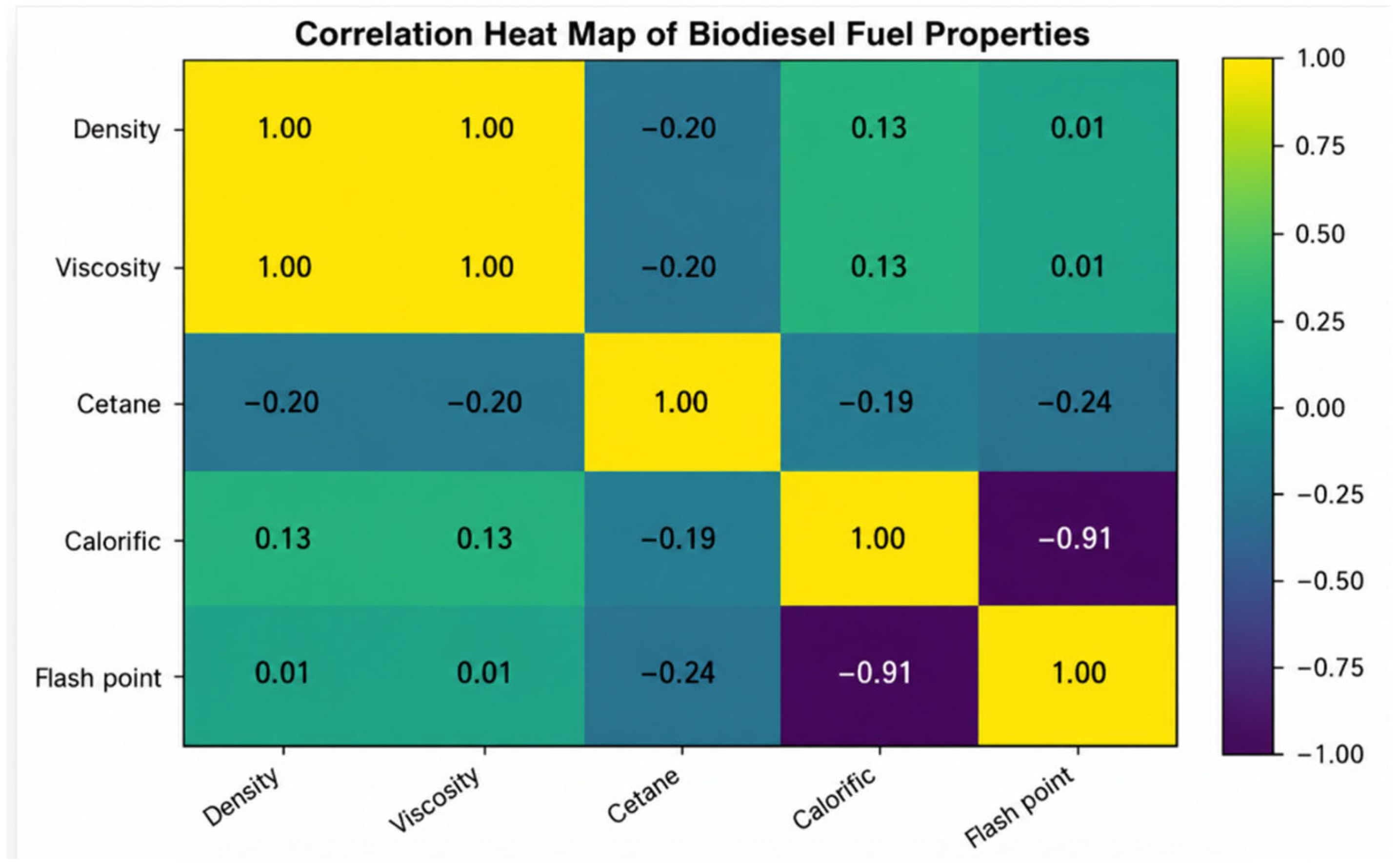
Figure 16 illustrates the correlation among the major physicochemical fuel properties of the biodiesel blends. Density and viscosity exhibited a strong positive correlation, indicating that intermolecular interactions influencing fuel density also affected the flow behavior. Cetane number showed weak negative correlations with density and viscosity, suggesting that ignition quality was not strongly dependent on these parameters within the investigated blend range. A strong negative correlation was observed between the calorific value and flash point, indicating that blends with higher flash points generally exhibited lower energy density. The heat map provides an integrated understanding of the interactions among fuel properties and demonstrates the complex relationship between biodiesel composition and combustion-related characteristics.
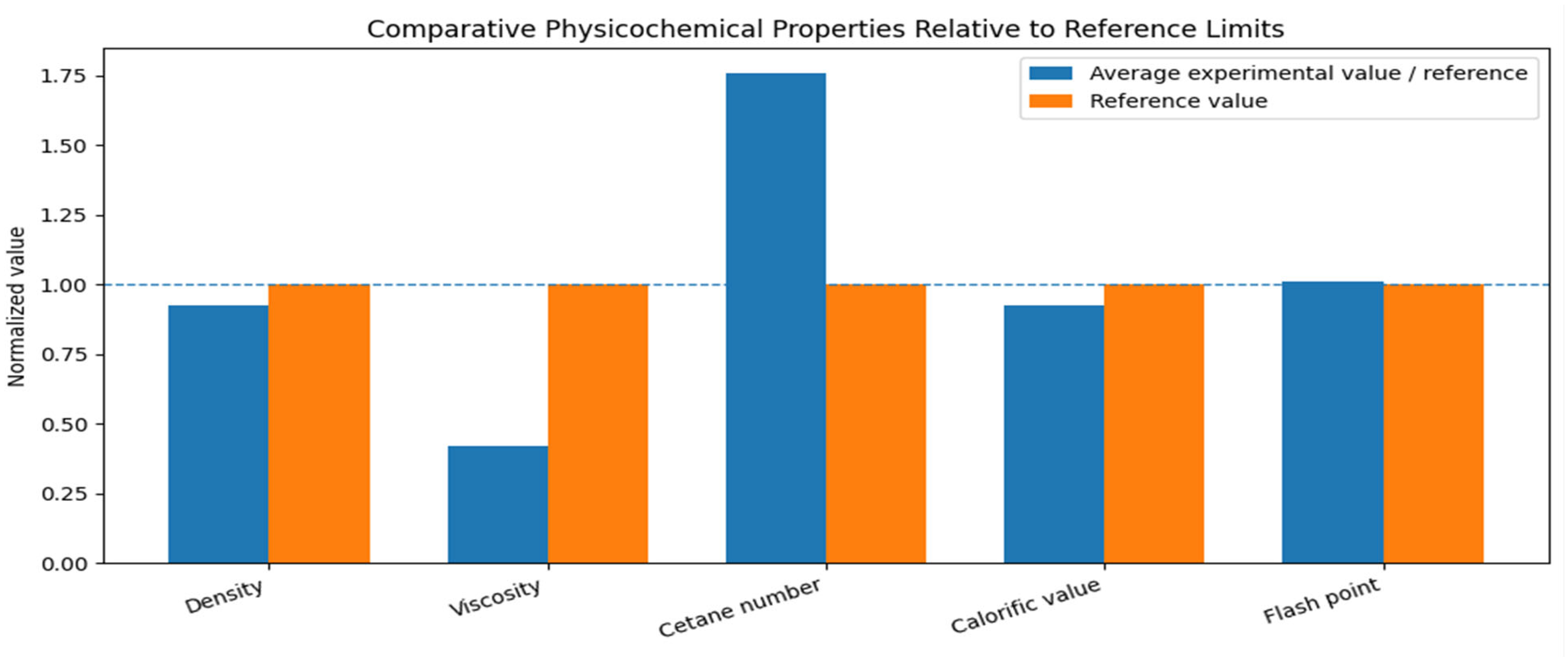
The comparative chart of
Figure 17 illustrates the relationship between experimentally obtained fuel properties and ASTM standard limits. The figure clearly demonstrates that cetane number and flash-point values satisfy the recommended specifications, whereas viscosity remains below the acceptable range. Such comparative analysis assists in evaluating the practical suitability of the developed biodiesel blends.
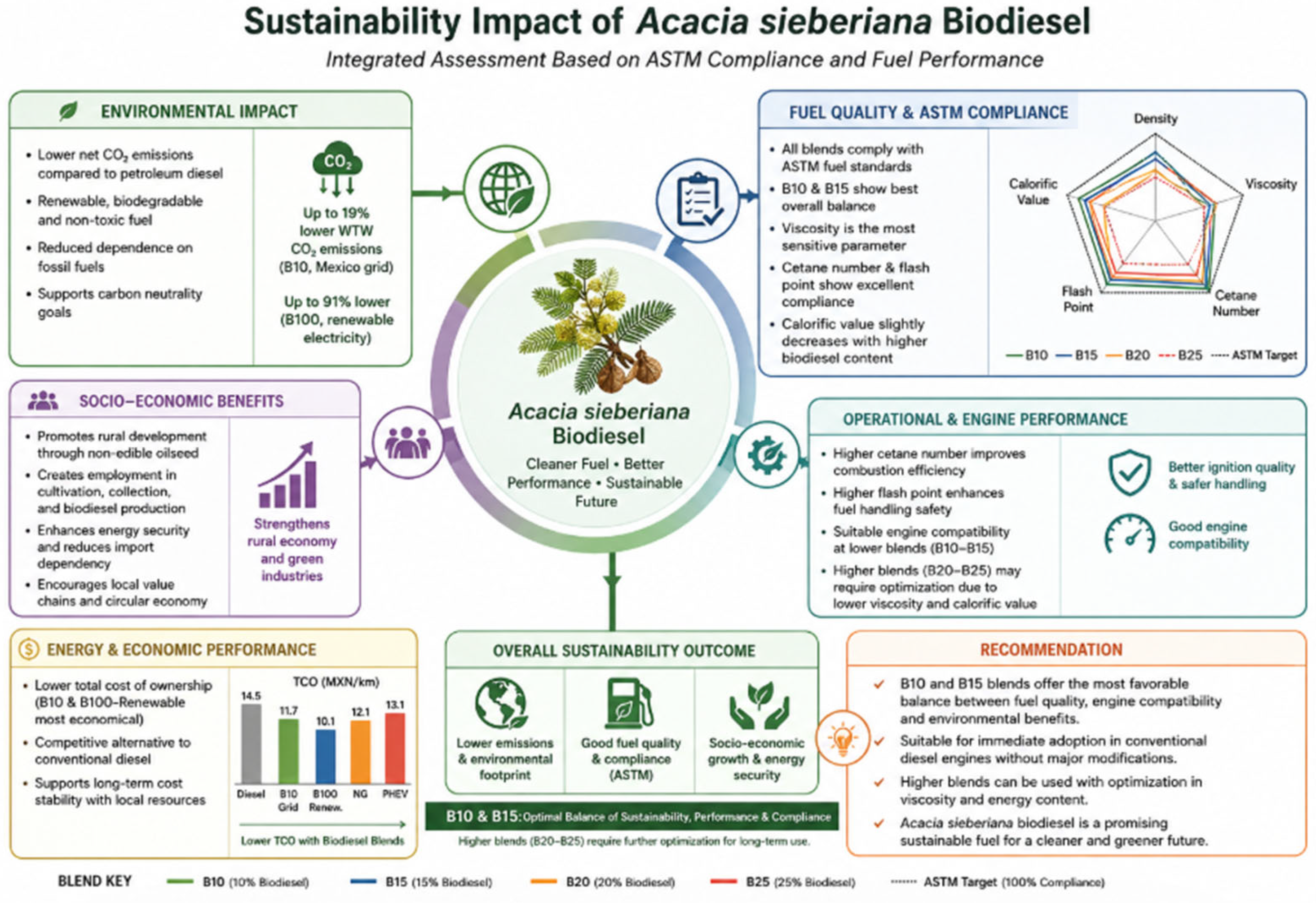
Figure 18 presents the sustainability impact pathway of
Acacia sieberiana biodiesel from non-edible biomass feedstock to fuel application in compression ignition engines. The diagram shows that the use of
Acacia sieberiana seed oil supports renewable fuel development because it avoids direct competition with edible oil resources while providing a locally available biomass source. FTIR and GC–MS results confirmed successful biodiesel formation through ester and carbonyl functional groups, while the dominance of unsaturated methyl esters improved fuel fluidity and cold-flow behavior. From an engine perspective, lower viscosity may improve atomization and reduce particulate formation, whereas reduced calorific value can increase fuel consumption at higher blend ratios. The higher flash point improves handling and storage safety, which is an important sustainability advantage. Overall, the diagram demonstrates that moderate blends such as B10 and B15 provide a better balance between fuel performance, safety, and environmental benefit, although viscosity and oxidation stability require further optimization before large-scale application.
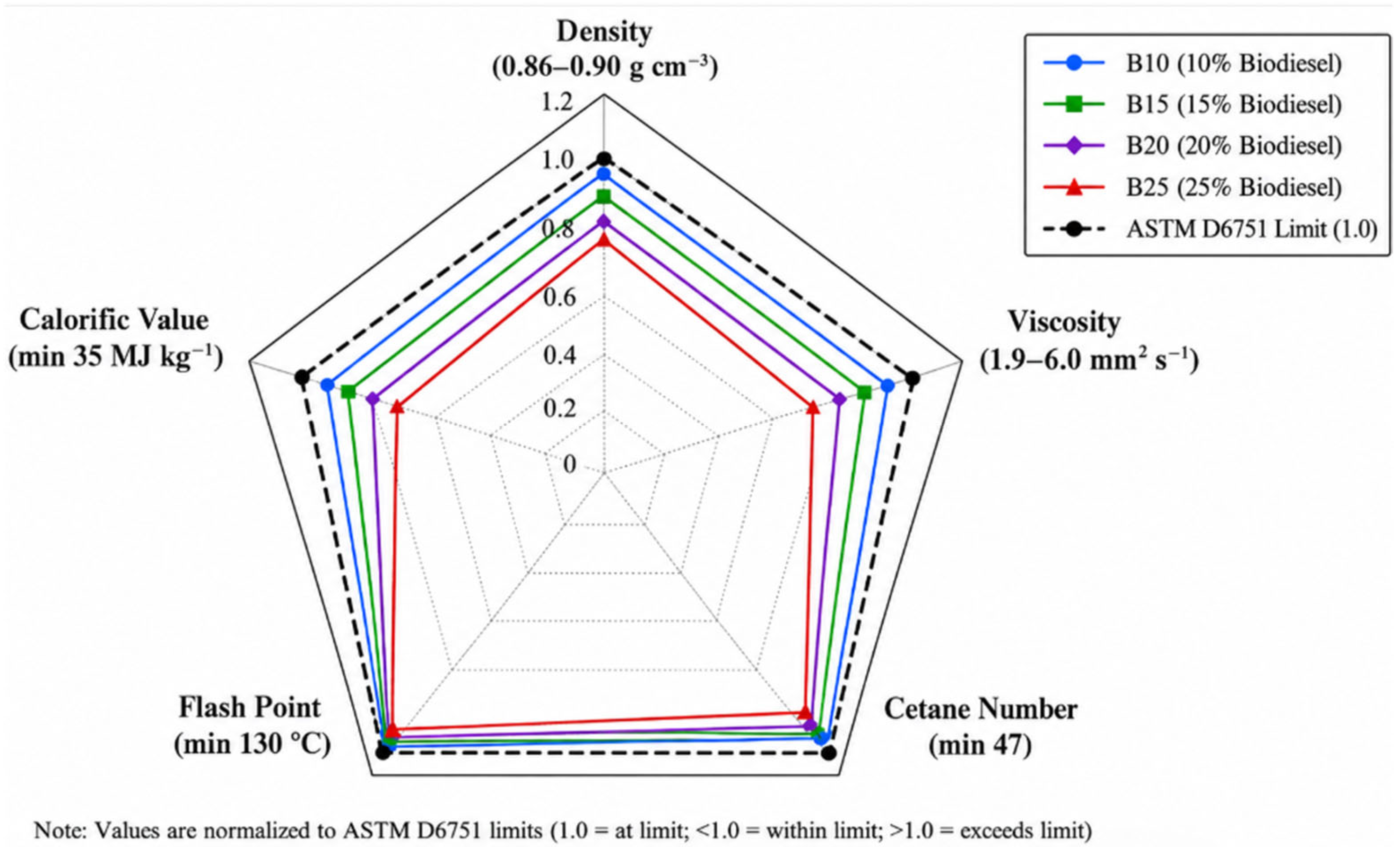
Figure 19 presents an integrated ASTM compliance assessment of the
Acacia sieberiana biodiesel blends based on five important fuel properties: density, viscosity, cetane number, flash point, and calorific value. The radar chart demonstrates that all biodiesel blends exhibit acceptable compliance with ASTM fuel quality requirements, although the degree of compliance varies among the measured properties. Density values remain within the acceptable range for most blends, with B10 and B15 showing the highest conformity to ASTM specifications. Viscosity exhibits the largest deviation among the evaluated parameters, particularly at higher biodiesel concentrations, indicating that increasing biodiesel content may influence fuel flow characteristics and atomization behavior. In contrast, cetane number and flash point display excellent compliance across all blends, reflecting favorable ignition quality and improved fuel handling safety. The flash point increases progressively with biodiesel concentration due to the inherently higher flash point of biodiesel compared to conventional diesel fuel. The calorific value shows a gradual decline as the biodiesel content increases, which is expected because biodiesel generally possesses a lower heating value than petroleum diesel. Nevertheless, the reduction remains moderate and does not significantly compromise the overall fuel suitability. The overall shape of the radar plots indicates that B10 and B15 provide the most balanced combination of fuel properties, whereas B20 and B25 show slightly greater departures from ASTM target values, mainly because of reduced viscosity and calorific value. Therefore, the ASTM compliance analysis suggests that lower biodiesel blends, particularly B10 and B15, offer the most favorable balance between fuel quality, engine compatibility, and operational performance, while higher biodiesel blends may require further optimization for long-term practical applications.
The physicochemical behavior of the biodiesel blends significantly influences engine operation and environmental performance as seen in
Table 9.
Lower viscosity and improved atomization may enhance combustion efficiency and reduce particulate emissions. However, reduced calorific value may increase fuel consumption to maintain equivalent engine power output. Higher flash points improve handling and storage safety, while elevated unsaturation levels may contribute to oxidation instability during prolonged storage. Overall, the fuel properties observed indicate that moderate biodiesel blending ratios may provide the best balance between performance and sustainability.
The ASTM comparison presented in
Table 10 indicates that only the DBD B10 and B15 blends satisfied the density requirement, whereas the remaining blends exhibited density values below the recommended ASTM range.
All investigated blends showed viscosity values significantly lower than the ASTM biodiesel specification of 1.9–6.0 mm2/s, indicating that viscosity remains the primary limitation for practical engine application. Nevertheless, all blends demonstrated cetane numbers substantially higher than the minimum ASTM requirement, confirming favorable ignition quality and combustion characteristics. The calorific values of the biodiesel blends were slightly lower than those of conventional diesel fuel, particularly at higher biodiesel concentrations, although the DBD blends remained comparatively close to diesel. Flash-point analysis showed that most blends did not fully satisfy the stated ASTM biodiesel flash-point range of 130–170 °C, with only BD B25 exceeding the upper limit. Overall, the results suggest that Acacia sieberiana biodiesel possesses promising renewable-fuel characteristics; however, further optimization of viscosity and flash-point behavior is required before large-scale compression ignition engine application.
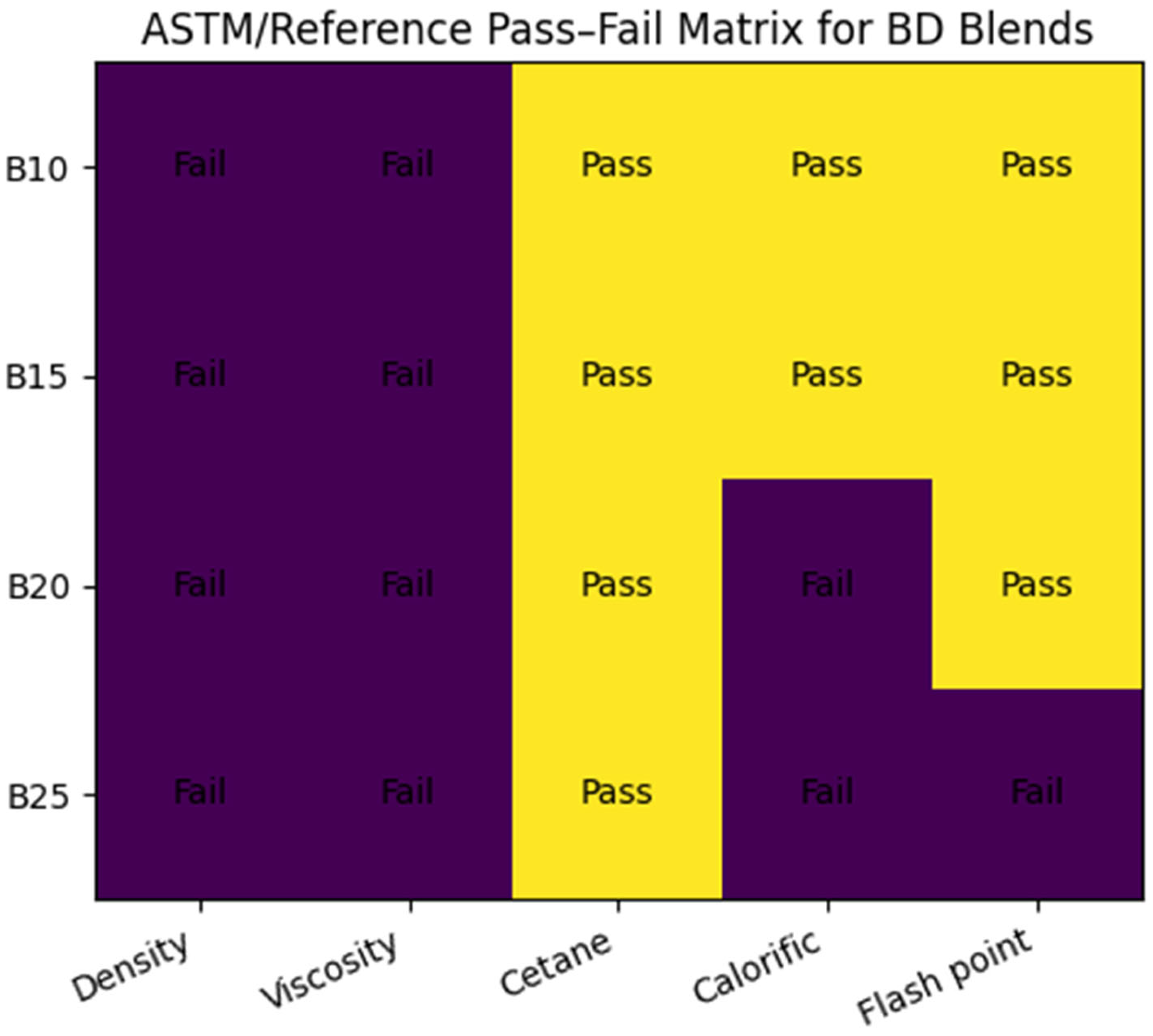
The pass–fail matrix presented in
Figure 20 provides a rapid visual assessment of the compliance of the biodiesel blends with ASTM and reference fuel-property limits. The results indicate that all blends satisfied the cetane number requirement, demonstrating favorable ignition quality. However, the density and viscosity values failed to meet the ASTM limits for several blends, indicating the need for further optimization. The B10 and B15 blends demonstrated the highest overall compliance, whereas B25 showed reduced suitability because of low calorific value and elevated flash point. The matrix simplifies the interpretation of fuel suitability and highlights the properties requiring improvement before practical engine utilization.
The pass–fail matrix of
Figure 20 provides a concise visual comparison of the compliance of biodiesel blends (B10, B15, B20, and B25) with the selected ASTM D6751 fuel quality requirements. A conventional green–red color scheme is recommended for publication-quality figures, where green represents parameters that satisfy the ASTM specification (“Pass”) and red indicates parameters that do not meet the required limits (“Fail”). This color combination is widely recognized in scientific literature, improves readability, and is more intuitive than unconventional palettes such as purple–yellow, which may appear less professional and can be mistaken for AI-generated graphics. The white background, black text, and thin black grid lines further enhance clarity and ensure compatibility with both color and grayscale printing. Overall, the matrix clearly demonstrates that all biodiesel blends satisfy the cetane number requirement, while compliance with density, viscosity, calorific value, and flash point varies with biodiesel concentration, enabling rapid identification of the strengths and limitations of each blend.
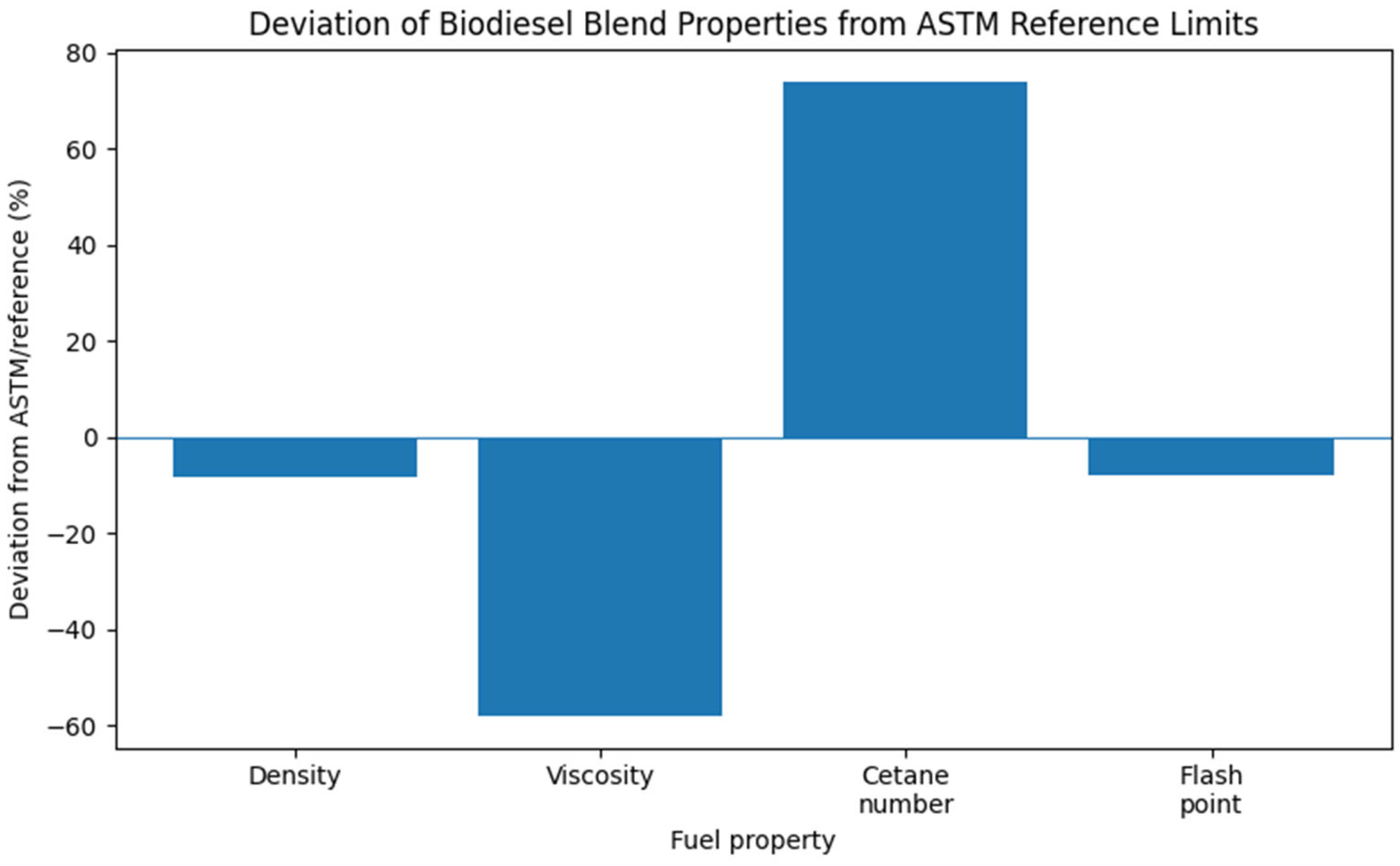
Figure 21 presents the percentage deviation of the investigated biodiesel blend properties from the ASTM and reference fuel-property limits. The cetane number exhibited a strong positive deviation above the minimum ASTM requirement, indicating favorable ignition quality and combustion characteristics. In contrast, the viscosity showed the largest negative deviation, confirming that the tested blends possessed significantly lower viscosity than the recommended ASTM range. The density and flash point exhibited smaller deviations relative to the standard values, indicating comparatively better compliance. The deviation analysis highlights the viscosity as the primary fuel property requiring optimization before large-scale engine application of
Acacia sieberiana biodiesel blends.
The comparison with previously reported biodiesel feedstocks from
Table 11 indicates that
Acacia sieberiana biodiesel exhibits physicochemical properties comparable to several established non-edible biodiesel sources.
Although the calorific value and viscosity were slightly lower than those of some conventional biodiesel feedstocks, the fuel demonstrated acceptable ignition quality and favorable flash point characteristics. The relatively high proportion of unsaturated methyl esters contributes to improved cold-flow properties compared to more saturated biodiesel fuels. These findings suggest that Acacia sieberiana has strong potential as an alternative biodiesel feedstock for sustainable fuel production.
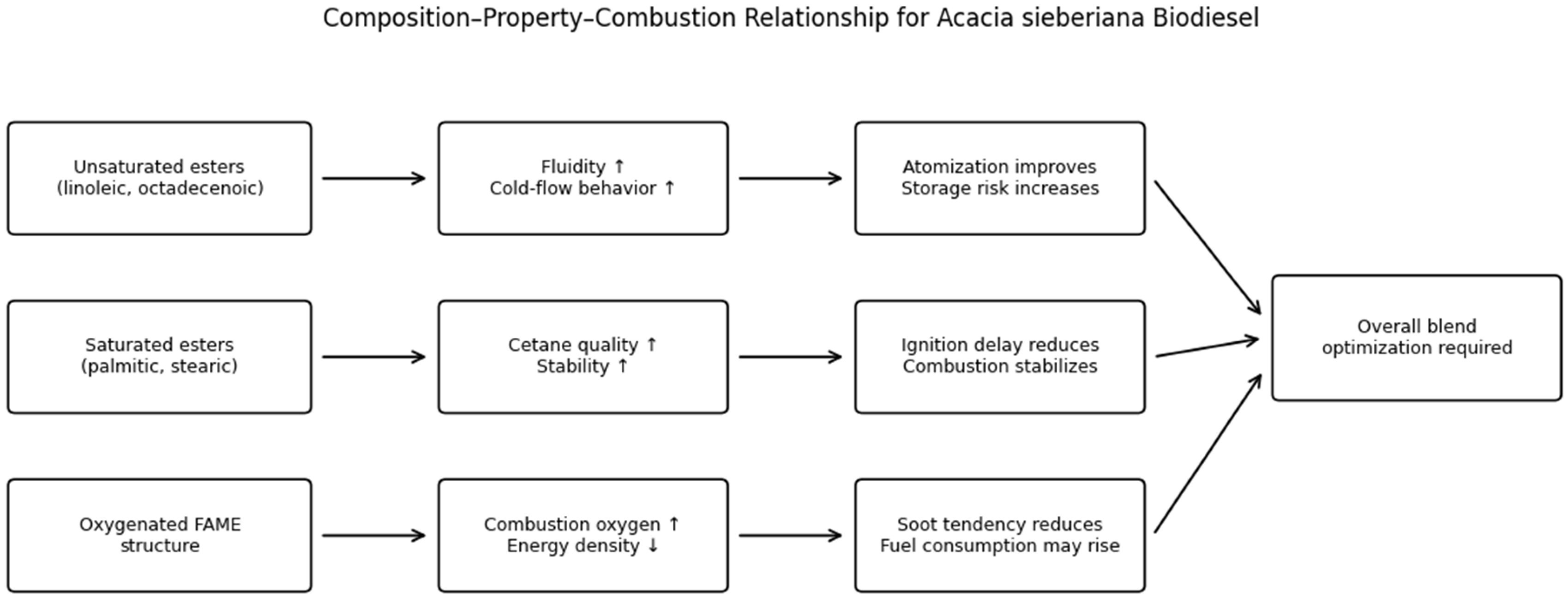
Figure 22 summarizes the influence of the fatty acid composition on the fuel behavior and combustion characteristics. Unsaturated esters such as linoleic and octadecenoic acid methyl esters contributed to improved fluidity and cold-flow behavior, which enhanced fuel atomization during combustion. However, excessive unsaturation may increase oxidation susceptibility during storage. Saturated esters improved cetane quality and combustion stability by reducing ignition delay. Additionally, the oxygenated ester structure of biodiesel promoted cleaner combustion and lower soot tendency, although the reduced energy density may increase the fuel consumption. The figure demonstrates that the overall fuel performance depends on the balance between the saturated and unsaturated ester compounds.
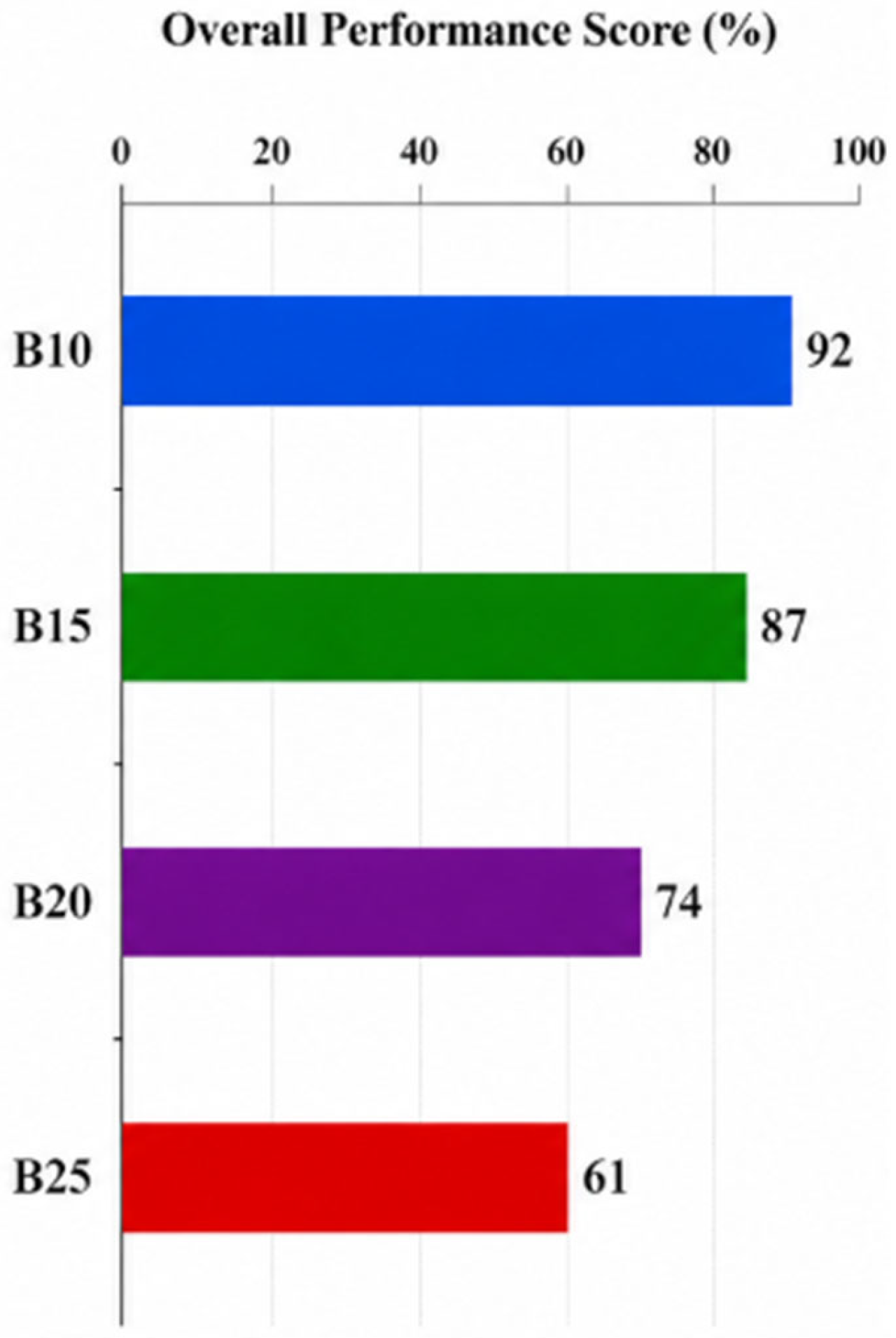
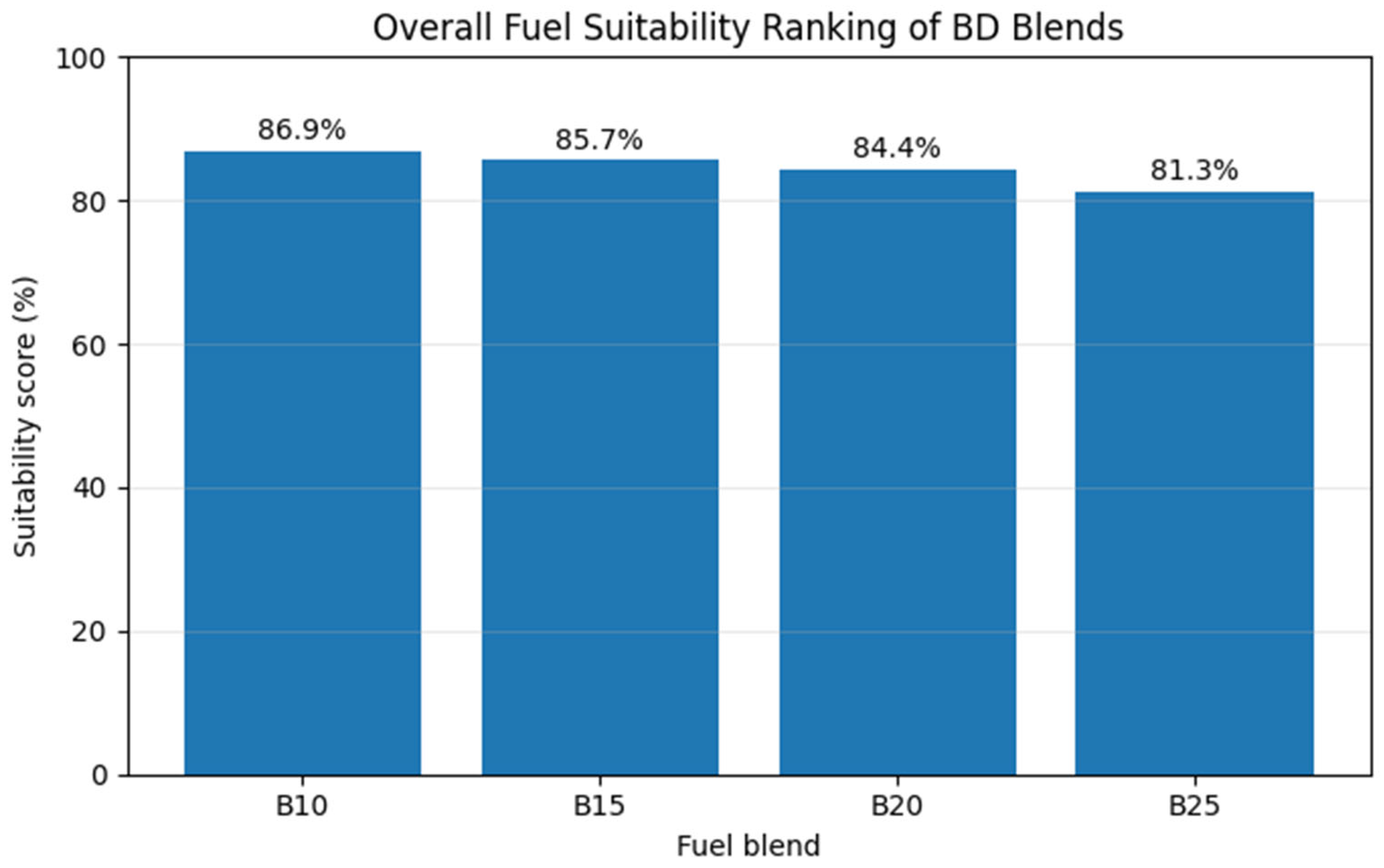
The overall suitability ranking shown in
Figure 23 compares the biodiesel blends using combined physicochemical performance criteria, including density, viscosity, cetane number, calorific value, and flash point. The B10 blend exhibited the highest overall suitability score, followed closely by B15 and B20, indicating that lower biodiesel blending ratios provided the best balance between ignition quality, safety characteristics, and energy content. The B25 blend showed the lowest ranking because of the reduced calorific value and deviations from the reference fuel-property limits. The ranking analysis suggests that moderate biodiesel blending ratios are more appropriate for practical compression ignition engine applications.
Figure 24 presents the overall suitability ranking of the investigated biodiesel blends using combined physicochemical performance criteria. The ranking incorporated density, viscosity, cetane number, calorific value, and flash-point characteristics relative to ASTM reference limits. Among the evaluated blends, B10 achieved the highest overall performance score because of its comparatively balanced fuel properties and closer compliance with standard fuel requirements. B15 also demonstrated favorable performance with acceptable ignition quality and relatively high calorific value. In contrast, B20 and B25 exhibited lower ranking scores primarily because of reductions in calorific value and deviations in density and viscosity properties. Although higher biodiesel concentrations improved certain safety-related properties such as flash point, excessive biodiesel addition negatively affected the overall fuel-property balance. The ranking therefore indicates that moderate biodiesel blending ratios provide the best compromise between combustion behavior, fuel stability, and practical engine applicability.
6. Conclusions
The GC–MS analysis revealed that the major compound accounted for 54.8% of the detected compounds, indicating its dominant contribution to the chemical composition of the biodiesel. The second most abundant constituent represented 22.9% of the biodiesel composition, while the remaining compounds were present in smaller proportions. These results confirm that the biodiesel is primarily composed of a limited number of major fatty acid methyl esters, which are expected to significantly influence its physicochemical and fuel properties.
Unsaturated methyl esters made up the majority of the biodiesel, according to the GC–MS data, indicating good fuel fluidity and cold-flow characteristics. A balanced fatty acid profile that can support acceptable ignition quality and combustion performance in compression ignition engines is suggested by the coexistence of saturated and unsaturated esters.
The physicochemical analysis showed that blending biodiesel has a significant impact on the fuel characteristics. As the amount of biodiesel grew, the density, viscosity, cetane number, and calorific value generally declined while the flash point increased. The mixes that performed the best overall and that most closely adhered to the ASTM reference standards were B10 and B15.
The relative appropriateness of the lower biodiesel blends, especially B10 and B15, under changes in fuel-property data was further validated using Monte Carlo uncertainty analysis. Viscosity was the most difficult characteristic to analyze because the measured values were still below the ASTM biodiesel specification range, suggesting that more optimization is required.
All things considered, Acacia sieberiana seed oil shows great promise as a renewable and non-edible biodiesel feedstock, especially in areas where the species is naturally plentiful. To determine the fuel’s practical application under actual operating settings, further research should concentrate on enhancing the viscosity characteristics, assessing the oxidation stability and surface tension, and carrying out thorough engine performance and emission investigations.
7. The Advantages and Limitations
The advantages and limitations summarized in
Table 12 demonstrate that
Acacia sieberiana biodiesel possesses several favorable renewable fuel characteristics, including biodegradability, renewable availability, and acceptable flash-point properties.
Nevertheless, certain limitations such as low viscosity and reduced calorific value may affect engine performance and fuel economy at higher blend ratios. Therefore, optimization through blending strategies or fuel additives may be necessary to enhance overall fuel performance and long-term storage stability.
The current study did not assess surface tension. Future research should use surface tension measurements to provide a more thorough evaluation of fuel behavior because surface tension has a significant impact on atomization, spray penetration, and fuel–air mixing in compression ignition engines.
The summarized findings of
Table 13 indicate that FTIR and GC–MS analyses successfully confirmed the formation of biodiesel rich in fatty acid methyl esters.
The fuel-property evaluation further demonstrated that the developed biodiesel blends possess several favorable characteristics, particularly in terms of cetane number and flash point. However, the viscosity and calorific value reductions at higher biodiesel concentrations indicate the necessity for blend optimization before commercial engine application. Overall, the study confirmed the feasibility of utilizing Acacia sieberiana seed oil as a renewable biodiesel feedstock.
Biodiesel was successfully produced from Acacia sieberiana seed oil using alkali-catalyzed transesterification. FTIR analysis confirmed the presence of ester, carbonyl, alkane, and alkene functional groups that are typical of fatty acid methyl esters. GC–MS analysis showed that linoleic acid methyl ester was the dominant component, followed by 11-octadecenoic acid methyl ester and palmitic acid methyl ester. These compounds indicate that the produced biodiesel contains a high proportion of unsaturated methyl esters, which may improve fluidity but may also reduce oxidative stability.
The physicochemical results showed that increasing biodiesel content generally reduced the density, viscosity, cetane number, and calorific value, while the flash point increased for some blends. Although the cetane numbers were above the minimum reference value, several viscosity values were below the acceptable ASTM range. Therefore, Acacia sieberiana biodiesel shows promise as a renewable fuel feedstock, but the tested blends require further optimization, stability assessment, and engine-performance validation before practical use in compression ignition engines.




 ,
,