
Article

Long-Term Storage Stability: Density of Jet A and Camelina Biodiesel Blends for UAV Micro-Turbojet Applications

1
Faculty of Aerospace Engineering, Polytechnic University of Bucharest, 1-7 Polizu Street, 011061 Bucharest, Romania
2
Faculty of Applied Science and Engineering, Ovidius University of Constanta, 124 Mamaia Blvd., 900527 Constanta, Romania
3
National Research and Development Institute for Gas Turbines COMOTI, 220D Iuliu Maniu, 061126 Bucharest, Romania
4
Faculty of Environmental Engineering and Energy, Institute of Thermal Energy, Poznan University of Technology, 1 J. Rychlewskiego, 61-131 Poznan, Poland
*
Author to whom correspondence should be addressed.
Fuels 2026, 7(2), 38; https://doi.org/10.3390/fuels7020038 (registering DOI)
Submission received: 13 March 2026 / Revised: 17 April 2026 / Accepted: 9 June 2026 / Published: 12 June 2026
(This article belongs to the Special Issue Sustainable Jet Fuels from Bio-Based Resources)

Abstract

This study evaluates the impact of long-term storage on aviation fuel blends composed of Jet A and camelina-derived biodiesel. The physicochemical properties of the pure biodiesel were assessed according to EN 14214 and ASTM D6751 standards, while the resulting Jet A–biodiesel blends were evaluated against ASTM D1655 aviation fuel specifications. Particular attention was given to the evolution of density during storage as an indicator of fuel stability. The results show that camelina methyl esters exhibit generally satisfactory physicochemical characteristics; however, the iodine value remains a critical limitation. The measured value of approximately 155 significantly exceeds the maximum limit of 120 established by European standards, reflecting the high degree of unsaturation of the feedstock. Long-term monitoring of the blends revealed a clear relationship between biodiesel concentration and the rate of fuel degradation. Increasing the biodiesel fraction led to more pronounced variations in density during storage, indicating reduced stability of the fuel system. Consequently, instability risks increase proportionally with the biodiesel-to-Jet A ratio, highlighting the need for appropriate storage strategies and technological optimization when considering higher concentrations of camelina-derived biodiesel in aviation fuel blends.

1. Introduction

The increasing global demand for reducing greenhouse gas emissions and decreasing dependence on fossil fuels has significantly accelerated research into alternative fuels for aviation. Sustainable aviation fuels (SAFs) derived from renewable feedstocks [1] are considered one of the most promising solutions for mitigating the environmental impact of air transport while maintaining compatibility with existing turbine engines and fuel infrastructures. Recent investigations have explored the feasibility of blending conventional aviation kerosene with various renewable components, including alcohol-based fuels [2] and biofuels [3,4]. Parallel to these developments, increasing attention has been directed toward biofuels derived from non-food oilseed crops such as Camelina sativa, which presents advantages including low agricultural input requirements, adaptability to marginal soils, and promising oil yields for energy applications. Recent experimental studies confirmed the feasibility of using camelina-derived biodiesel in blends with Jet A fuel for micro-gas turbine applications, demonstrating stable engine operation and acceptable emission characteristics [5].
The search for sustainable and cost-effective biofuel feedstocks has led to a renewed interest in Camelina sativa (L.) Crantz. Due to its “low-input” nature, Camelina offers significantly lower production costs compared to traditional oilseed crops like rapeseed, particularly in specific climatic conditions. Early research [6,7] identified its dual potential for both nutritional and industrial applications, prompting large-scale agronomic trials. Results from trials at Oak Park demonstrated that Camelina’s oil yield is comparable to that of spring oilseed rape; however, as noted by [8,9], it achieves these yields with substantially reduced requirements for fertilizers and pesticides. While these economic advantages make it an attractive candidate for the biodiesel industry, its ultimate viability depends on whether the resulting methyl esters can meet rigorous international quality standards, such as the European prEN 14214.
The transition from crop to viable product faces significant chemical hurdles. Despite its economic benefits, the technical implementation of Camelina oil is hindered by its low oxidative stability, primarily due to a high concentration of polyunsaturated fatty acids. Studies conducted in [10,11] established that oil obtained from seeds grown in Slovenia contains approximately 35.2% α-linolenic acid (ω-3), exhibiting high sensitivity to photooxidation. For instance, exposure to daylight for one month was shown to increase the peroxide value from 2.38 to 21.0 meq O2/kg. To combat this degradation, the use of ascorbyl palmitate as an antioxidant has been investigated in [12,13], revealing a dual behavior. At low concentrations (0.1–0.2 mM), it exhibited a pro-oxidant effect, reducing the induction period, while a concentration of 2.0 mM ensured superior protection. Furthermore, rosmarinic acid was found to be effective when used individually; however, its activity significantly decreases when combined with ascorbyl palmitate. Regarding quality assessment methodology, Ref. [14] demonstrated that the PDSC (Pressure Differential Scanning Calorimetry) technique is an objective and rapid method for determining kinetic oxidation parameters, with a very strong correlation (R2 > 0.98) between PDSC results and the traditional Rancimat test. These findings emphasize the necessity of rigorous storage control and the precise use of additives to maintain fuel quality. Building on these observations, Ref. [15] evaluated the specific viability of Camelina sativa as a biodiesel feedstock. Although economically attractive, the research identified technical drawbacks due to the oil’s chemical composition, noting that high levels of polyunsaturated fatty acids negatively impact fuel stability and cetane numbers. In a pilot-scale study [16] processed large batches of unrefined camelina oil into biodiesel. The results indicated that while the methyl esters generally met fuel standards, the iodine value reached 155, notably surpassing the European limit of 120. Despite this deviation, vehicle trials showed that camelina biodiesel performs similarly to other biofuels in terms of fuel economy and does not negatively impact the longevity of the engine’s lubricating oil.
The operational shelf-life of biofuels remains a critical hurdle for industrial implementation. In [17,18] established that while anaerobic environments preserve Camelina fuel integrity for up to 18 months, atmospheric exposure at elevated temperatures (65 °C) precipitates rapid oxidative instability. To mitigate this, ref. [19] identified TBHQ as the most potent antioxidant for reaching the 8-h stability threshold (EN 14214:2014). However, as noted in [20], that while antioxidant treatment can restore the stability of aged biodiesel, its potency is markedly lower compared to applications in fresh fuel. Beyond chemical additives, Ref. [21] demonstrated that integrating Camelina methyl esters (CME) with animal fats can enhance ecological performance. As synthesized by [11], the inherent vulnerability of fatty acid methyl esters (FAMEs) to thermal stress, light, and oxygen requires such strategic antioxidant use and rigorous storage protocols to provide a foundation for large-scale industrial use.
Parallel to biofuel research, the storage of conventional aviation fuel (Jet A) is equally vital. Studies emphasize that its stability can be compromised by dissolved oxygen, high ambient temperatures, and microbial contamination, leading to deposit formation and filter clogging [22,23]. The integrity of Jet A over time depends heavily on its aromatic composition and antioxidant levels [24,25].
The choice of density as the primary monitoring parameter is dictated by its fundamental role in aviation operations. Density directly influences the fuel’s energy content per unit volume, which is a critical factor for determining aircraft range and payload capabilities. Furthermore, accurate density data is essential for fuel metering systems and for ensuring the correct mass-to-volume calculations during refueling, which are vital for flight safety. Since density is sensitive to both temperature variations and chemical changes resulting from oxidative degradation during storage, it serves as a reliable indicator of the physical stability and compatibility of biofuel blends within existing aviation infrastructures.
Given the complexities of long-term storage for both components and their inherent vulnerabilities, the objective of this study is to determine the density of Jet A, Camelina biodiesel, and their respective blends over a 14-month period. By evaluating these fuels and their mixtures at various temperatures, this research aims to observe the long-term physical behavior and compatibility of Jet A, Camelina biodiesel, and their blends, providing essential data for their integrated industrial use. To the best of the authors’ knowledge, no prior studies have conducted a long-term systematic monitoring of these blends’ density variations in relation to temperature over such an extended period.

2. Materials and Methods

2.1. Materials

The Jet A fuel utilized in this study was sourced from a local supplier. To evaluate specific performance characteristics, the fuel was blended with 5% (vol.) Shell oil.
In small-scale turbine systems, the absence of dedicated lubrication circuits requires the addition of oil directly into the fuel to ensure proper lubrication of bearings and rotating components. This practice is commonly reported in micro-turbine operation, where fuel–oil mixtures are used to maintain mechanical reliability under high rotational speeds [26].
The inclusion of lubricating oil is known to slightly modify the physicochemical properties of the base fuel, leading to increased density and viscosity, as well as influencing oxidation behavior due to the presence of heavier hydrocarbon fractions.
It should be noted that all fuel samples, including the reference Jet A, were prepared using the same base formulation (Jet A + 5% oil), ensuring consistency in the comparative analysis of storage stability.
Additionally, biodiesel derived from Camelina sativa was employed as a test fuel. Notably, the biodiesel used in these experiments did not contain any antioxidant additives, allowing for a direct assessment of its intrinsic oxidative stability over time.

2.2. Preparation of Mixtures

This study focused on mixtures containing 10%, 20%, and 30% (vol.) C. sativa biodiesel in Jet A. These concentrations were chosen based on previous results [5] which indicated that a 30% camelina biodiesel integration optimizes the ecological footprint and fuel efficiency of Jet A.
The following notation was adopted for the experimental fuel mixtures, representing the volumetric concentration of Camelina sativa biodiesel in Jet A:
  • B10—mixture containing 10% C. sativa Biodiesel with 90% Jet A;
  • B20—mixture containing 20% C. sativa Biodiesel with 80% Jet A;
  • B30—mixture containing 30% C. sativa Biodiesel with 70% Jet A.
  • B100—containing 100% C. sativa Biodiesel
A pure Jet A fuel sample, containing no camelina biodiesel, was utilized as a reference baseline for the study.
For the storage stability tests, 150 mL fuel mixtures were prepared under controlled laboratory conditions. To ensure high volumetric precision, a calibrated burette with an accuracy of ±0.05 mL was utilized for the blending process. The resulting mixtures were stored in tightly sealed 500 mL high-density polyethylene (HDPE) vessels. HDPE was specifically selected for its superior chemical resistance to hydrocarbons and fatty acid methyl esters (FAMEs), ensuring that the fuel samples remained free from contamination by plasticizers, even during the extended 14-month storage of B100. Furthermore, the low oxygen permeability of HDPE ensured that the oxidative degradation observed was strictly a result of the designed headspace-to-fuel ratio, rather than atmospheric ingress through the container walls. It should be noted that while the vessels were hermetically sealed, the total mass of the containers was not recorded monthly. Therefore, the potential contribution of evaporation of lighter hydrocarbon fractions to the observed density changes could not be quantitatively distinguished from oxidative effects. This is recognized as an experimental limitation; however, the use of HDPE vessels with high barrier properties and the consistency of the density trends suggest that oxidative degradation remained the primary driver of the observed changes.
To ensure a consistent and controlled oxidation environment, all samples were stored in a dark laboratory cabinet, thereby preventing uncontrolled photo-oxidation. Given the 150 mL sample volume in 500 mL containers, a constant air headspace of approximately 350 mL was maintained in each vessel to provide a uniform source of oxygen for the long-term oxidation process. This experimental configuration was intentionally designed to create an ‘oxygen-rich’ environment, effectively representing an ‘accelerated’ storage scenario for a more rigorous evaluation of oxidative stability. The containers remained hermetically sealed, except during brief monthly sampling periods, while a controlled ambient humidity was maintained using calcium chloride (CaCl2). This 14-month duration was specifically selected to expose the samples to natural seasonal temperature fluctuations, effectively simulating prolonged storage stress that exceeds typical operational turnover in the aviation industry.
Measurements were conducted systematically at the beginning of each month on the same calendar date. During each monthly assessment, density was determined at four specific temperatures (288.15 K, 293.15 K, 303.15 K, and 313.15 K) across the five studied samples. This systematic approach yielded a robust dataset of 280 density values at the conclusion of the monitoring period.

2.3. Physical Properties

ASTM methods and instrumentation for all measured properties are displayed in Table 1.
Density measurements were performed using an Anton Paar SVM 3000 digital viscometer (Anton Paar GmbH, Graz, Austria, Stabinger type), following the ASTM D7042 standard. The instrument allows for the simultaneous determination of dynamic viscosity and density, with the values being automatically converted to kinematic viscosity. A Peltier element, coupled with a chiller, was used to maintain the temperature of the U-tube oscillator and the viscosity cell. Approximately 5 mL of each sample was introduced into the system following a thorough cleaning cycle with toluene and drying via compressed air. To ensure statistical consistency and instrument repeatability, each monthly data point represents the average of duplicate measurements performed on two separate 5 mL samples from the same storage vessel. The apparatus was calibrated using water and toluene as reference standards across the entire thermal range. Measurements were initiated only after the temperature had stabilized within ±0.005 °C for a duration of 90 s. To ensure data reliability and account for potential sample volatilization, steady-state density was recorded once the readings remained constant within 0.0001 g/cm3 for at least 60 s.
This method ensures high precision in characterizing the density of the samples, which is essential for monitoring the stability and quality of the biofuel components.

3. Results an Discussion

Table 2 outlines the ASTM D1655 [39] compliance specifications for Jet A. Similarly, the properties of the biodiesel were evaluated against ASTM D6751 [40] and EN 14214 [41] standards (Table 3), showing alignment with previously reported literature values.
Certain specifications within these standards are inherently dictated by the biodiesel’s chemical composition (such as viscosity, cloud point, and iodine value), while others reflect its purity and the integrity of the production, transport, and storage processes (including flash point, acid number, and cold soak filterability). These parameters underscore the critical interplay between fuel properties and highlight the significance of the average degree of unsaturation, which serves as a key indicator highly correlated with multiple performance characteristics [15]. Two defining compositional traits of FAMEs—fatty acid chain length and degree of unsaturation—exert the most significant influence on their overall physicochemical performance [45,46].
The physicochemical characterization of the Camelina sativa-derived biodiesel shows a strong correlation with data reported in the literature. Regarding compliance, it was found that while most parameters fall within the limits set by EN 14214 and ASTM D6751 standards, certain critical indicators—such as oxidation stability and iodine value—do not meet these regulatory requirements [16,43,44].
The degree of unsaturation, quantified by the iodine value (IV), represents a critical criterion for selecting methyl esters. The biodiesel sample exhibits a high IV of 150 g I2/g. While the ASTM D6751 standard does not specify an IV limit, the EN 14214 standard imposes a maximum threshold of 120 g I2/g. As a result, biodiesel fails to meet the requirements set by EN 14214. According to engine manufacturers, high iodine value biodiesel tends to polymerize, resulting in deposit accumulation on heated surfaces such as injector nozzles and piston ring grooves [47].
Although several studies [16,43,44] indicate that biodiesel derived from camelina does not strictly comply with EN 14214 and ASTM D6751 requirements, it is nevertheless regarded by these authors as an exceptional prospect for future energy applications [16].
The chemical structure of camelina biodiesel renders it significantly more prone to oxidative degradation than conventional Jet A. As shown in Table 2, its oxidation stability of 2.3 h is non-compliant with international specifications, which mandate a minimum of 3 h (ASTM D6751) or 6 h (EN 14214) to ensure fuel quality during storage.
The poor oxidative stability of certain fuels is primarily driven by a high concentration of polyunsaturated esters, where methylene groups neighboring double bonds act as focal points for radical initiation [48]. Even trace amounts of esters with three or more double bonds significantly impair stability, as their bis-allylic sites are highly reactive [49]. For instance, the two bis-allylic positions in linolenic acid methyl ester (C-11 and C-14) result in a far more rapid degradation compared to saturated or less unsaturated counterparts. Initial oxidation produces hydroperoxides that may damage fuel system elastomers [50] or undergo polymerization into insoluble gums, leading to injector deposits and filter blockages [51]. Eventually, these primary products evolve into aldehydes and organic acids, which are responsible for metallic corrosion in the equipment [48].
Acid value serves as a critical measure of a jet fuel’s corrosive potential and its tendency to develop deposits like gum or sediment. This metric is determined by calculating the milligrams of potassium hydroxide (KOH) required to neutralize the free acidic components in a single gram of fuel. To maintain engine integrity, the ASTM D 1655 standard mandates that this value must not exceed 0.1 mg KOH/g. According to [52], a 50% concentration of biodiesel in Jet-A does not undermine the fuel’s anti-corrosive properties. The study establishes that as long as the neat biodiesel adheres to the 0.50 mg KOH/g threshold (ASTM D6751), the mixing process ensures the resulting aviation blend remains compliant with the rigorous ASTM D1655 specifications.
The primary objective of this study was not to analyze the intrinsic properties of Jet A and biodiesel as separate entities, but rather to monitor the evolution of the blends’ density over time. However, understanding the initial characteristics of these components is crucial, as they determine the behavior of the samples throughout the storage period.

3.1. Density Variations: Temperature Effects and 14-Month Monitoring

Flight distance is determined by the fuel’s energy density, a metric derived from multiplying density by the net heat of combustion. This property is also a key variable in fuel spray and combustion performance. In terms of energy distribution, high-density fuels maximize energy by volume, while low-density fuels are more efficient in terms of energy by weight.
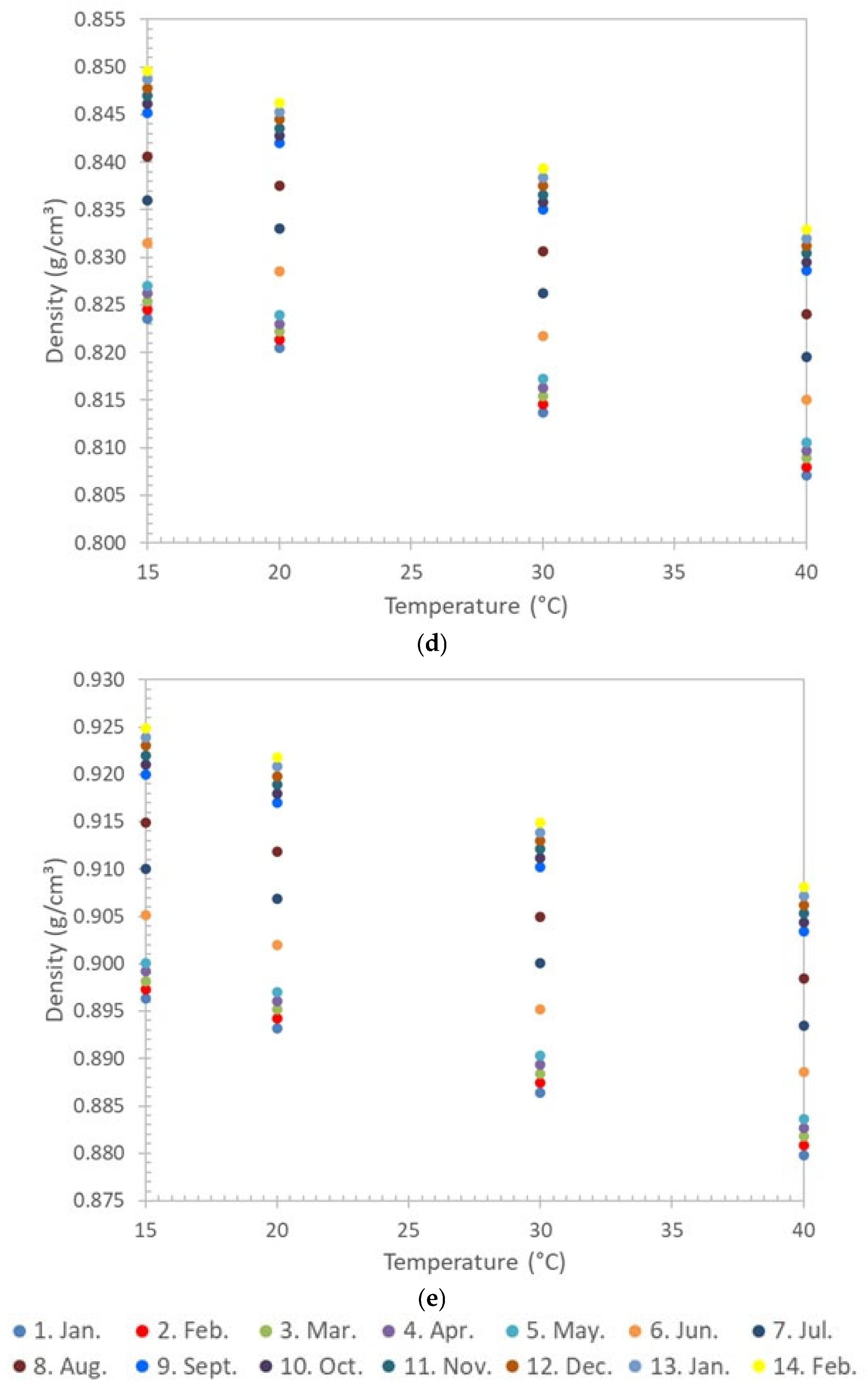
This section presents a total of 280 density data points collected over a 14-month monitoring period for each sample (Jet A, B10, B20, B30, and B100). The results illustrate both the time-based variation for each fuel and the temperature dependence of these samples. In the figures and legends, the monitoring months are numbered from 1 to 14, with each number corresponding to the specific calendar month in which the measurement was performed.
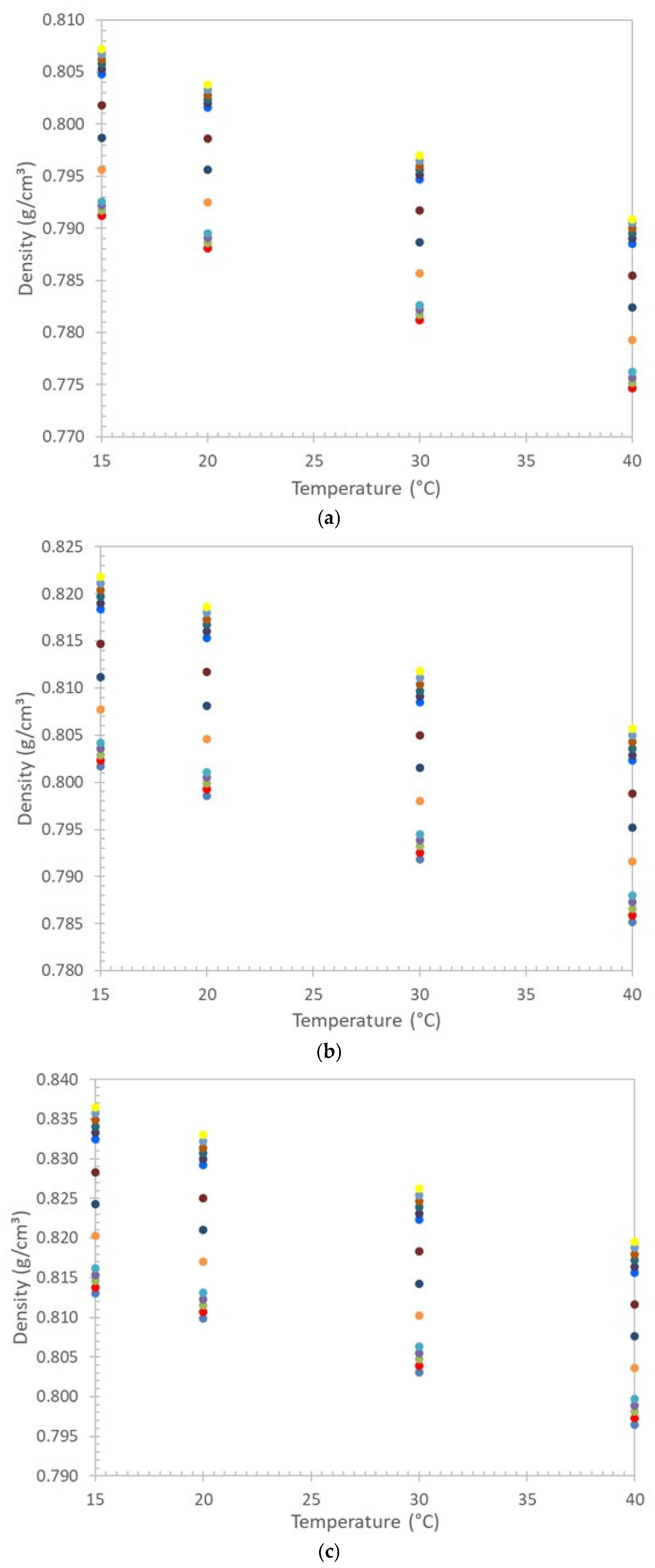
Figure 1 illustrates the temperature dependence of density for Jet A, biodiesel, and their blends.
At each temperature, there are 14 distinct data points, each corresponding to one of the months in the monitoring period.
The observed decrease in density with rising temperature for all samples was expected and aligns with findings reported in previous studies [53,54,55,56].
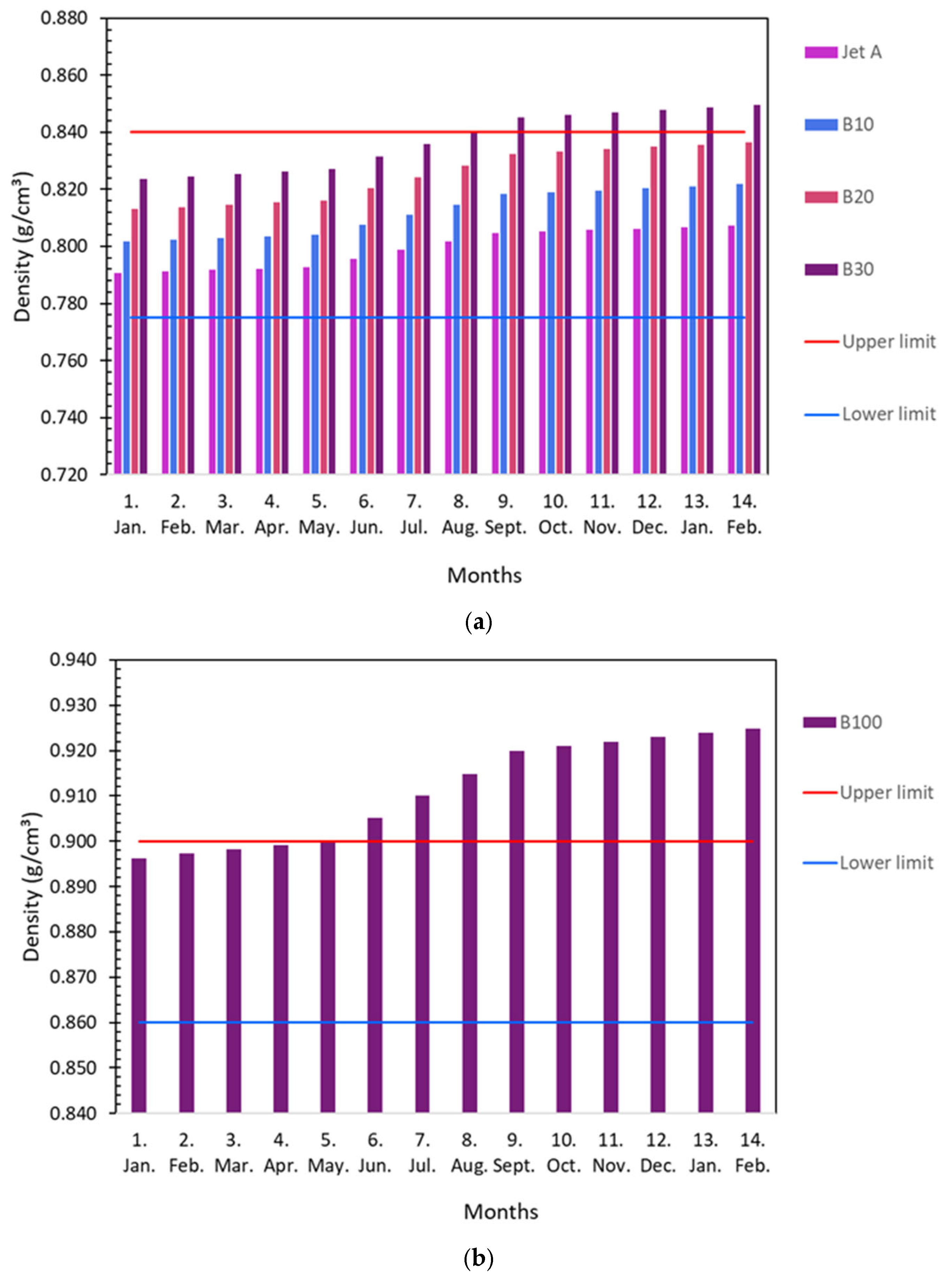
Data subsets at 15 °C were selected for analysis to align with standard density reference conditions; these were organized into Figure 2a, comparing Jet A and its blends (B10, B20, B30) against the ASTM D1655 standard, and Figure 2b, which evaluates the pure biodiesel sample relative to the EN 14214 specifications.
The density values measured immediately after mixing (without storage) confirm the findings of [52], falling within the standard limits of 0.775–0.840 g/cm3 established by ASTM D 1655 for biodiesel concentrations up to 30%.
The density of the Jet A/biodiesel blends increased in direct proportion to the biodiesel concentration, following the order B10 < B20 < B30. This trend remained consistent across all measurement temperatures and throughout every month of the storage period. As illustrated in Figure 2a, all tested fuel samples exhibited a steady and continuous increase in density over the course of the 14-month storage period. While the base fuel, Jet A, remained consistently well within the ASTM D1655 specifications, the incorporation of biodiesel significantly shifted the density profiles upward, baseline values increasing in direct proportion to the blending ratio. Notably, this upward trend was substantially more pronounced during the summer months (June–August) compared to the rest of the monitoring interval. This seasonal acceleration is likely attributable to the thermal intensification of oxidative processes and the potential evaporation of lighter hydrocarbon fractions, both of which contribute to a higher molecular weight of the remaining bulk fuel. Although the absence of monthly mass-loss data precludes a definitive quantitative separation between evaporation and oxidation, the latter is considered the dominant mechanism under these hermetically sealed conditions. This is further supported by the fact that the observed density trends align closely with the established kinetics of FAME oxidation reported in previous studies. Consequently, the B30 blend exceeded the maximum permissible density limit starting from the 8th month of storage, a critical observation suggesting that high-concentration blends are inherently more susceptible to aging-induced physical changes. Such deviations from standard parameters may ultimately compromise fuel readiness and operational safety in aviation turbines.
In contrast, Figure 2b highlights the markedly lower storage stability of pure biodiesel (B100) when evaluated against the EN 14214 standard. The density of the B100 sample surpassed the maximum threshold of 0.900 g/cm3 as early as the 6th month of storage, coinciding with the onset of peak summer temperatures. The degradation rate for the pure biofuel accelerated sharply during the summer season, culminating in a final density of approximately 0.925 g/cm3.
The increase in density observed in this study over the 14-month storage period can be attributed to oxidative degradation processes. As highlighted by Abramovic H. [57], biofuel quality deteriorates during oxidation, a phenomenon that directly leads to an increase in acidity, peroxide value, viscosity, and density, driven by the formation of polymeric substances. Although chemical markers such as peroxide or acid values were not monitored monthly, the continuous increase in density is a recognized macro-indicator of oxidative progress. As oxidation leads to the formation of polar compounds and high-molecular-weight polymers, these chemical changes are directly reflected in the fuel’s physical density. The observed results are consistent with the chemical degradation mechanisms established in previous studies for biodiesel storage [21,57]. This correlation supports our observations regarding the evolution of the density profile, particularly during periods of elevated temperatures. The observed oxidation rates are influenced by the high headspace-to-fuel ratio used in this study. While this accelerated environment may differ from large-scale industrial storage, it offers valuable insights into the long-term chemical resilience of the blends under high oxidative stress. Furthermore, from a practical and industrial perspective, this 14-month stability period is considered highly sufficient and robust, as it significantly exceeds the standard operational turnover of the aviation industry. While fuel at major airport hubs typically has a high turnover rate measured in days or weeks, long-term chemical integrity is essential for maintaining strategic reserves that mitigate supply chain disruptions. For instance, at large international airports or regional distribution hubs, fuel batches must remain viable throughout an entire annual cycle of seasonal temperature fluctuations without the risk of oxidation or microbial growth. This shelf life also provides airlines with the necessary operational flexibility for fuel hedging, allowing them to store purchased biofuel for extended periods and deploy it when most economically advantageous, thereby providing a substantial safety margin for global logistics infrastructures.
Consistent with the findings of this study, the research conducted by [21] demonstrates that long-term storage leads to a progressive degradation of oxidation stability, ultimately resulting in the blends’ non-compliance with quality standard requirements in the absence of specific additives. Lebedevas particularly emphasizes that biofuels containing C. sativa (camelina) methyl esters undergo intensive primary oxidation, characterized by a steady increase in peroxide value and the formation of free fatty acids. In his study, these fuels failed to meet oxidation stability requirements after only 8 months, rendering them unsuitable for diesel engines, while both acidity and viscosity exceeded established limits after 13 months of storage.
According to the analysis by [19], the fuel’s composition is dominated by unsaturated methyl esters, specifically methyl oleate (C18:1), methyl linoleate (C18:2), and methyl linolenate (C18:3), which account for 14.4 wt.%, 19.1 wt.%, and 33.5 wt.%, respectively. The presence of multiple double bonds significantly increases the fuel’s reactivity; for instance, polyunsaturated esters have been shown to be substantially more prone to degradation than monounsaturated ones, with relative rates of 98:41:1 for C18:3, C18:2, and C18:1. Consequently, camelina-based fuels often exhibit poor oxidation stability, with Induction Period (OSI) values reported at 110 °C ranging between 0.6 h and 2.5 h according to various studies [7,15,44,58]. These experimental results consistently fall below the minimum stability thresholds established by international standards, such as 3 h in ASTM D6751 and 8 h in EN 14214. This inherent chemical instability provides a theoretical basis for the density and viscosity increases observed during long-term storage, as the oxidation process facilitates the formation of heavier molecular weight compounds.
These comparative results underscore a significant stabilizing effect provided by theJet A when used as a base for blending; however, they also demonstrate that pure biodiesel or high-ratio mixtures require either more stringent, temperature-controlled storage conditions or the integration of high-performance antioxidant additives to maintain long-term compliance with international quality standards. Ultimately, a comprehensive analysis of all five samples reveals a clear correlation: the rate of density increase—both throughout the 14-month duration and specifically during the high-thermal-stress summer interval—becomes progressively more acute as the biodiesel percentage rises, reflecting the lower chemical stability of fatty acid methyl esters compared to fossil-derived hydrocarbons.
Furthermore, this study intentionally focuses on unadditivated blends to provide a fundamental understanding of the intrinsic oxidative susceptibility of camelina-based jet fuel. This establishes a critical scientific baseline, free from the masking effects of antioxidants, which is essential for determining the minimum additive requirements for future commercial formulations. While industrial standards (such as ASTM D1655) require the use of antioxidants like BHT to ensure long-term stability, evaluating the fuel in its pure state allows for a ‘worst-case scenario’ assessment of its chemical resilience.

3.2. Empirical Model for Density

A linear empirical model was employed to correlate the experimental findings based on the biodiesel content. These regression-derived expressions, developed from the raw data, enabled the estimation of density values. Table 4 presents the regression parameters, including the coefficient of determination (R2) and the average absolute deviation (AAD), for the observed and predicted densities of all fuel samples. The fundamental relationship expressing density as a function of the blend ratio is defined in Equation (1) at fixed temperature [59].
ρ = α · v + β
where ρ is density (g/cm3), α and β are parameters and v is volume percentage (vol.%) of the biodiesel.
The density of biodiesel blends can be estimated using Equation (2) [60,61] at fixed concentrations. This approach was also tested to evaluate its predictive accuracy for the current samples (Table 5).
ρ = γ · T + δ
where T is the temperature in °C, γ and δ are the adjustable parameters.
The average absolute deviation (AAD) for the density data was determined according to the equation:
A A D = 100 N i = 1 N | J e x p . J c a l . J e x p . |
where Jexp. and Jcal represent the experimental data and the calculated values, respectively. N is the number of experimental data points.
To quantify the agreement between experimental and calculated data, the equations were validated using the coefficient of determination (R2), defined as follows:
R 2 = 1 i = 1 N ( J e x p J c a l ) 2 i = 1 N ( J e x p J c a l ) 2
where Jexp. and Jcal represent the experimental data and the calculated values, respectively. N is the number of experimental data points.
The results presented in Table 4 highlight a remarkable correlation between the experimental and estimated data. The model’s performance is supported by high values of the coefficient of determination (R2), ranging from 0.9954 to 0.9998, and a minimal average absolute deviation (AAD) within the 0.1382–0.3787% interval.
The application of empirical equations as a function of temperature and composition is essential during the monitoring period to ensure the predictive model’s robustness. As shown in Table 4, the model maintains excellent precision, with R2 values reaching up to 0.9954 and a maximum AAD of 0.3787%, proving its reliability even across varying storage conditions.
As observed in Table 5, the comparison between experimental and calculated density data using Equation (2) demonstrates a high level of accuracy. The Average Absolute Deviation (AAD) remains within a narrow range, from 0.0656% to 0.3787%, indicating an excellent agreement between experimental and predicted values. Furthermore, the relationship between sample density and temperature is characterized by superior linearity, with R2 values exceeding 0.9954 for all tested samples.
The analyzed data reveal that under constant volume, a linear decrease in density occurs as the temperature rises. Conversely, at a fixed temperature, the density exhibits a direct linear correlation with the concentration of the biodiesel component. These trends are numerically supported by the parameters presented in Table 4 and Table 5, where the high R2 values (up to 1.0000) and low AAD values confirm the precision of the observed linear dependencies.
Although several studies in the literature have analyzed [55,56,57] the applicability of Equations (1) and (2) to fossil diesel and biodiesel blends, these models have not been previously tested under sample storage conditions. It is important to emphasize that, even though more pronounced density changes occur during the summer period compared to other seasons, the variation of density with respect to composition and temperature maintains its linear trend. This behavior is further confirmed by the high R2 values and low AAD errors recorded throughout the study.

4. Conclusions

The study demonstrates that camelina-derived biodiesel represents a sustainable and economically advantageous feedstock due to lower production costs and minimal fertilization requirements compared to other oilseed crops. However, its technical viability is limited by its high degree of unsaturation and molecular weight, which require modifications to meet international aviation standards. The experimental tests focused on Jet A and biodiesel blends containing up to 30% bio-product. Given that fuels are rarely consumed immediately after production and considering that biodiesel degrades more rapidly than Jet A, the research prioritized evaluating the quality indicators of the fuel throughout its storage period. A central finding is the direct correlation between biodiesel concentration and the rate of fuel degradation: as the proportion of biofuel in the Jet A blend increases, changes in physicochemical parameters become more pronounced, with instability risks being directly proportional to this ratio. From a technical standpoint, pure C. sativa biodiesel is non-compliant with both EN 14214 and ASTM D6751 standards due to critical deficiencies in iodine value and oxidation stability. Although ASTM D6751 is generally less restrictive than its European counterpart, the biodiesel’s oxidative stability remains below the acceptable threshold (3–6 h) for both regulations. These characteristics can lead to deposit formation and corrosion of engine components. Regarding quality monitoring, the study validates the efficiency of linear empirical models for estimating density as a function of concentration and temperature. Although seasonal factors, particularly high summer temperatures, accelerate oxidative processes, the linear dependence of physical properties remained constant throughout the 14-month monitoring period. High correlation coefficient values (R2) and low mean absolute deviation (AAD) errors confirm the precision of these mathematical models, marking the first time they have been tested and validated under real long-term storage conditions for this type of blend. In conclusion, while blends with a concentration of up to 30% biodiesel show real potential, their industrial-scale use requires rigorous storage protocols and strict control of chemical composition to prevent premature degradation.

Author Contributions

Conceptualization, G.C. and A.-I.D.; methodology, B.C.; software, S.O.; validation, G.C., Ł.B., S.O. and B.C.; formal analysis, A.-I.D.; investigation, S.O.; writing—original draft preparation, G.C., A.-I.D., S.O. and Ł.B.; writing—review and editing, G.C., A.-I.D., S.O. and B.C. All authors have read and agreed to the published version of the manuscript.

Funding

This research received no external funding.

Institutional Review Board Statement

Not applicable.

Informed Consent Statement

Not applicable.

Data Availability Statement

The original contributions presented in this study are included in the article; further inquiries can be directed to the corresponding authors.

Conflicts of Interest

The authors declare no conflict of interest.

References

  1. Chen, L.; Zafar, A.; Xu, Z.; Zhong, S.; Wang, M.; Fan, Y.; Zhang, Y.; Shi, W.; Hu, X. Comparative analysis of emission reduction and combustion performance in aviation engines: The role of sustainable aviation fuel. Prog. Aerosp. Sci. 2026, 160, 101172. [Google Scholar] [CrossRef]
  2. Cican, G.; Silivestru, V.; Mirea, R.; Osman, S.; Popescu, F.; Sapunaru, O.V.; Ene, R. Performance and Emissions Assessment of a Micro-Turbojet Engine Fueled with Jet A and Blends of Propanol, Butanol, Pentanol, Hexanol, Heptanol, and Octanol. Fire 2025, 8, 150. [Google Scholar] [CrossRef]
  3. Voß, S.; Bube, S.; Kaltschmitt, M. Aviation fuel production pathways from lignocellulosic biomass via alcohol intermediates–A technical analysis. Fuel Commun. 2023, 17, 100093. [Google Scholar] [CrossRef]
  4. Mirea, R.; Cican, G. Theoretical Assessment of Different Aviation Fuel Blends based on their Physical-Chemical Properties. Eng. Technol. Appl. Sci. Res. 2024, 14, 14134–14140. [Google Scholar] [CrossRef]
  5. Dinu, C.; Cican, G.; Osman, S.; Secareanu, R. Performance and Emissions of Camelina Biodiesel–Jet A Blends in a Micro-Gas Turbine as a Sustainable Pathway for Aviation. Fire 2025, 8, 442. [Google Scholar] [CrossRef]
  6. Budin, J.T.; Breene, W.M.; Putnam, D.H. Some compositional properties of camelina (Camelina sativa L. Crantz) seeds and oils. J. Am. Oil Chem. Soc. 1995, 72, 309–315. [Google Scholar] [CrossRef]
  7. Neupane, D.; Lohaus, R.H.; Solomon, J.K.Q.; Cushman, J.C. Realizing the Potential of Camelina sativa as a Bioenergy Crop for a Changing Global Climate. Plants 2022, 11, 772. [Google Scholar] [CrossRef]
  8. Crowley, J.K. Agronomy of Camelina sativa; EU Research Contract No. AIR3-CT94-2178; European Commission: Brussels, Belgium, 1995; Volume 94, p. 2178. [Google Scholar]
  9. Berti, M.; Gesch, R.; Eynck, C.; Anderson, J.; Cermak, S. Camelina uses, genetics, genomics, production, and management. Ind. Crops Prod. 2016, 94, 690–710. [Google Scholar] [CrossRef]
  10. Abramovi, H.; Abram, V. Physico-Chemical Properties, Composition and Oxidative Stability of Camelina sativa Oil. Food Technol. Biotechnol. 2005, 43, 63–70. [Google Scholar]
  11. Ai, W.; Cho, H.M.; Mahmud, M.I. The Impact of Various Factors on Long-Term Storage of Biodiesel and Its Prevention: A Review. Energies 2024, 17, 3449. [Google Scholar] [CrossRef]
  12. Slavova-Kazakova, A.; Marcheva, M.; Taneva, S.; Momchilova, S. Oxidative Stability of the Oil from Camelina (Camelina sativa L.) Seeds: Effects of Ascorbyl Palmitate Concentrations. Seeds 2025, 4, 38. [Google Scholar] [CrossRef]
  13. Aslam, M.M.; Khan, A.A.; Cheema, H.M.N.; Hanif, M.A.; Azeem, M.W.; Azmat, M.A. Novel mutant camelina and jatropha as valuable feedstocks for biodiesel production. Sci. Rep. 2020, 10, 21868. [Google Scholar] [CrossRef]
  14. Ratusz, K.; Popis, E.; Ciemniewska-Żytkiewicz, H.; Wroniak, M. Oxidative stability of camelina (Camelina sativa L.) oil using pressure differential scanning calorimetry and Rancimat method. J. Therm. Anal. Calorim. 2016, 126, 343–351. [Google Scholar] [CrossRef]
  15. Ciubota-Rosie, C.; Ramón Ruiz, J.; Jesús Ramos, M.; Pérez, Á. Biodiesel from Camelina sativa: A comprehensive characterisation. Fuel 2013, 105, 572–577. [Google Scholar] [CrossRef]
  16. Fröhlich, A.; Rice, B. Evaluation of Camelina sativa oil as a feedstock for biodiesel production. Ind. Crops Prod. 2005, 21, 25–31. [Google Scholar] [CrossRef]
  17. Fröhlich, A. Storage Stabilities of Fuel Grade Camelina, Sunflower and Rapeseed Methyl Esters; Teagasc: Carlow, Ireland, 1999. [Google Scholar]
  18. Engeländer, K.; Duchowny, A.; Blümich, B.; Adams, A. Analysis of Aging Products from Biofuels in Long-Term Storage. ACS Omega 2022, 7, 26256–26264. [Google Scholar] [CrossRef] [PubMed] [PubMed Central]
  19. Yang, J.; He, Q.S.; Corscadden, K.; Caldwell, C. Improvement on oxidation and storage stability of biodiesel derived from an emerging feedstock camelina. Fuel Process. Technol. 2017, 157, 90–98. [Google Scholar] [CrossRef]
  20. Christensen, E.; McCormick, L.R. Long-term storage stability of biodiesel and biodiesel blends. Fuel Process. Technol. 2014, 128, 339–348. [Google Scholar] [CrossRef]
  21. Lebedevas, S.; Makareviciene, V.; Sendzikiene, E.; Zaglinskis, J. Oxidation stability of biofuel containing Camelina sativa oil methyl esters and its impact on energy and environmental indicators of diesel engine. Energy Convers. Manag. 2013, 65, 33–40. [Google Scholar] [CrossRef]
  22. Beker, S.A.; Chaúque, B.J.M.; Marmitt, M.; Benitez, G.B.; Passman, F.J.; Bento, F.M. Global Status of Jet Fuel Biodeterioration Risk in the Era of Sustainable Aviation Fuels—A Systematic Literature Review and Meta-Analysis. Fuels 2026, 7, 8. [Google Scholar] [CrossRef]
  23. Passman, F.J. Microbial contamination and its control in fuels and fuel systems since 1980—A review. Int. Biodeterior. Biodegrad. 2013, 81, 88–104. [Google Scholar] [CrossRef]
  24. Ervin, J.S.; Williams, T.S.; Heneghan, S.P.; Zabarnick, S. The Effects of Dissolved Oxygen Concentration, Fractional Oxygen Consumption, and Additives on JP-8 Thermal Stability. J. Eng. Gas Turbines Power 1997, 119, 822–829. [Google Scholar] [CrossRef]
  25. Jia, T.; Zhang, X.; Liu, Y.; Gong, S.; Deng, C.; Pan, L.; Zou, J.-J. A Comprehensive review of the thermal oxidation stability of jet fuels. Chem. Eng. Sci. 2021, 229, 116157. [Google Scholar] [CrossRef]
  26. Catana, R.M.; Cican, G.; Badea, G.-P. Thermodynamic Analysis and Performance Evaluation of Microjet Engines in Gas Turbine Education. Appl. Sci. 2024, 14, 6754. [Google Scholar] [CrossRef]
  27. ASTM D7042; Standard Test Method for Dynamic Viscosity and Density of Liquids by Stabinger Viscometer (and the Calculation of Kinematic Viscosity). ASTM—American Society for Testing and Materials: West Conshohocken, PA, USA, 2021.
  28. ASTM D6371-17a; Standard Test Method for Cold Filter Plugging Point of Diesel and Heating Fuels. ASTM—American Society for Testing and Materials: West Conshohocken, PA, USA, 2017.
  29. ASTM D2500-17a; Standard Test Method for Cloud Point of Petroleum Products and Liquid Fuels. ASTM—American Society for Testing and Materials: West Conshohocken, PA, USA, 2017.
  30. ASTM D93-2020; Standard Test Methods for Flash Point by Pensky-Martens Closed Cup Tester. ASTM—American Society for Testing and Materials: West Conshohocken, PA, USA, 2020.
  31. ASTM D56-22; Standard Test Method for Flash Point by Tag Closed Cup Tester. ASTM—American Society for Testing and Materials: West Conshohocken, PA, USA, 2022.
  32. ASTM D5453-2019a; Standard Test Method for Determination of Total Sulfur in Light Hydrocarbons, Spark Ignition Engine Fuel, Diesel Engine Fuel, and Engine Oil by Ultraviolet Fluorescence. ASTM—American Society for Testing and Materials: West Conshohocken, PA, USA, 2019.
  33. ASTM D2622-21; Standard Test Method for Sulfur in Petroleum Products by Wavelength Dispersive X-Ray Fluorescence Spectrometry. ASTM–American Society for Testing and Materials: West Conshohocken, PA, USA, 2021.
  34. ASTM D4530-15(2020); Standard Test Method for Determination of Carbon Residue (Micro Method). ASTM–American Society for Testing and Materials: West Conshohocken, PA, USA, 2020.
  35. ASTM D1744; Standard Test Method for Determination of Water in Liquid Petroleum Products by Karl Fischer Reagent. ASTM–American Society for Testing and Materials: West Conshohocken, PA, USA.
  36. ASTM D2274-14(2019); Standard Test Method for Oxidation Stability of Distillate Fuel Oil (Accelerated Method). ASTM–American Society for Testing and Materials: West Conshohocken, PA, USA, 2019.
  37. ASTM D974-22; Standard Test Method for Acid and Base Number by Color-Indicator Titration. ASTM—American Society for Testing and Materials: West Conshohocken, PA, USA, 2022.
  38. ASTM D5554-15(2021); Standard Test Method for Determination of the Iodine Value of Fats and Oils. ASTM–American Society for Testing and Materials: West Conshohocken, PA, USA, 2021.
  39. ASTM D1655-15; Standard Specification for Aviation Turbine Fuels. ASTM–American Society for Testing and Materials: West Conshohocken, PA, USA, 2015.
  40. ASTM D6751-12; Standard Specification for Biodiesel Fuel Blend Stock (B100) for Middle Distillate Fuels. ASTM–American Society for Testing and Materials: West Conshohocken, PA, USA, 2012.
  41. EN 14214:2010; Liquid Petroleum Products—Fatty Acid Methyl Esters (FAME) for Use in Diesel Engines and Heating Ap-plications—Requirements and Test Methods. European Committee for Standardization: Brussels, Belgium, 2010.
  42. Vrtiška, D.; Vozka, P.; Váchová, V.; Šimáček, P.; Kilaz, G. Prediction of HEFA content in jet fuel using FTIR and chemometric methods. Fuel 2019, 236, 1458–1464. [Google Scholar] [CrossRef]
  43. Wu, X.; Leung, D. Optimization of biodiesel production from Camelina oil using orthogonal experiment. Appl. Energy 2011, 88, 3615–3624. [Google Scholar] [CrossRef]
  44. Moser, B.; Vaughn, S. Evaluation of alkyl esters from Camelina sativa oil as biodiesel and as blend components in ultra low-sulfur diesel fuel. Bioresour. Technol. 2010, 101, 646–653. [Google Scholar] [CrossRef]
  45. Boichenko, S.; Yakovlieva, A.; Zubenko, S.; Shkilniuk, I. Physical, Chemical, and Performance Properties of Biodiesel Fuels: A Comparative Study of Lipid-Based Feedstocks. Energies 2025, 18, 4274. [Google Scholar] [CrossRef]
  46. Hoekman, S.; Broch, A.; Robbins, C.; Ceniceros, E.; Natarajan, M. Review of biodiesel composition, properties, and specifications. Renew. Sustain. Energy Rev. 2012, 16, 143–169. [Google Scholar] [CrossRef]
  47. David, E.; Kopac, J. Survey on Antioxidants Used as Additives to Improve Biodiesel’s Stability to Degradation through Oxidation. Molecules 2023, 28, 7765. [Google Scholar] [CrossRef]
  48. Knothe, G.; Razon, L.F. Biodiesel fuels. Prog. Energy Combust. Sci. 2017, 58, 36–59. [Google Scholar] [CrossRef]
  49. Knothe, G.; Dunn, R. Dependence of oil stability index of fatty compounds on their structure and concentration and presence of metals. J. Am. Oil Chem. Soc. 2003, 80, 1021–1026. [Google Scholar] [CrossRef]
  50. Braga, E.; Damasceno, L.; Barros de Sousa Silva, C.; Silva, L.; Cavalcante, M.; Barreto, C.; Silva, S.; Murilo Tavares de Luna, F.; Bertini, L.; Nascimento, T.; et al. 1H NMR and UV-Vis as Analytical Techniques to Evaluate Biodiesel Conversion and Oxidative Stability. Fuels 2024, 5, 107–122. [Google Scholar] [CrossRef]
  51. Heikkilä, S.; Sirviö, K.; Nuortila, C.; Niemi, S. Storage stability of rapeseed methyl ester stored in a sealed barrel for several years. Energy Technol. 2021, 19, 1763–1771. [Google Scholar]
  52. Kilaz, G.; Bist, S.; Lopp, D.W.; Stanley, D.L.; Tao, B.Y. Investigation of fatty acid methyl esters in jet fuel. Int. J. Sustain. Aviat. 2014, 1, 103–118. [Google Scholar] [CrossRef]
  53. Kumbár, V.; Skřivánek, A. Temperature dependence viscosity and density of different biodiesel blends. Acta Univ. Agric. Silvic. Mendel. Brun. 2015, 63, 1147–1151. [Google Scholar] [CrossRef]
  54. Ramírez Verduzco, L.F. Density and viscosity of biodiesel as a function of temperature: Empirical models. Renew. Sustain. Energy Rev. 2013, 19, 652–665. [Google Scholar] [CrossRef]
  55. Pham, M.T.; Hoang, A.T.; Le, A.T.; Said Al-Tawaha, A.R.M.; Dong, V.H.; Le, V.V. Measurement and prediction of the density and viscosity of biodiesel blends. Int. J. Technol. 2018, 9, 1015–1026. [Google Scholar] [CrossRef]
  56. Outcalt, S.L.; Fortin, T.J. Density and Speed of Sound Measurements of Two Synthetic Aviation Turbine Fuels. J. Chem. Eng. Data 2011, 56, 3201–3207. [Google Scholar] [CrossRef]
  57. Abramovič, H.; Butinar, B.; Nikolič, V. Changes occurring in phenolic content, tocopherol composition and oxidative stability of Camelina sativa oil during storage. Food Chem. 2007, 104, 903–909. [Google Scholar] [CrossRef]
  58. Yang, J.; Caldwell, C.; Corscadden, K.; He, Q.S.; Li, J. An evaluation of biodiesel production from Camelina sativa grown in Nova Scotia. Ind. Crop. Prod. 2016, 81, 162–168. [Google Scholar] [CrossRef]
  59. Vasileiadis, V.; Papageorgiou, I.T.; Kyriklidis, C.; Vasiliadou, I.A.; Tsanaktsidis, C.G. Mathematical Correlations for Volumetric (Density and Specific Gravity) Properties of Diesel/Biodiesel Blends. Appl. Sci. 2025, 15, 4404. [Google Scholar] [CrossRef]
  60. Hoang, A.T. Prediction of the density and viscosity of biodiesel and the influence of biodiesel properties on a diesel engine fuel supply system. J. Mar. Eng. Technol. 2021, 20, 299–311. [Google Scholar] [CrossRef]
  61. Liew, K.Y.; Seng, C.E.; Oh, L.L. Viscosities and densities of the methyl esters of some n-alkanoic acids. J. Am. Oil Chem. Soc. 1992, 69, 155–158. [Google Scholar] [CrossRef]
Figure 1. Density as a function of temperature for: (a) Jet A, (b) B10, (c) B20, (d) B30, and (e) B100.
Fuels 07 00038 g001aFuels 07 00038 g001b
Figure 2. Evolution of fuel density at 15 °C over a 14-month storage period: (a) Jet A and its biodiesel blends (B10, B20, B30) compared to ASTM D1655 limits; (b) Pure biodiesel (B100) compared to EN 14214 limits.
Fuels 07 00038 g002
Table 1. ASTM methods and instrumentation.
PropertyASTMInstrument
DensityASTM D7042 [27]Anton Paar SVM 3000
Kinematic viscosityASTM D7042 [27]Anton Paar SVM 3000
Cold filter plugging pointASTM D6371-17a [28]ISL PAC, OptiFPP
Cloud pointASTM D2500-17a [29]OptiCPP Cloud and Pour Point Analyzer
Flash pointASTM D93-2020 [30]Flash Point Tester Pensky Martens, Herzog MP 329
ASTM D56-22 [31]Flash point analyzer, Herzog HFP 362-Tag
Sulfur contentASTM D5453-2019a [32]XPlorerSulfur Analyzer, Trace Elemental Instruments
ASTM D2622-2021 [33]Sindie Sulfur Analyzer M-Series
Carbon residueASTM D 4530-15-2020 [34]Micro method, MCRT-140, Petroleum
Water contentASTM D1744 [35]Coulometer KF Metrohm 831
Oxidation stabilityASTM D2274 [36]Oxidation stability determination STANHOPE-SETA
Acid valueASTM D974 [37]Analytical balance KERN ABJ 220
Iodine valueASTM D5554 [38]Analytical balance KERN ABJ 220, Magnetic stirrer
Table 2. Physicochemical characterization of Jet A.
PropertyUnitsASTM D1655Jet A
Min.Max.Exp.Lit.
Density at 15 °Cg/cm30.7750.8400.79070.8057 [42]
Flash point°C38-4043 [42]
Table 3. Physicochemical characterization of Camelina sativa-derived biodiesel.
PropertyUnitsASTM D6751EN 14214Camelina Biodiesel
Min.Max.Min.Max.Exp.Lit.
Density at 15 °Cg/cm3--0.8600.9000.89630.888 [15]
0.884 [43]
0.882 [16]
Kinematic viscosity at 40 °Cmm2/s1.906.003.505.005.894.30 [15]
4.15 [44]
3.67 [43]
6.43 [16]
Cold filter plugging point°C--According to
climate zone
−2−4 [15]
−4 [44]
−3 [16]
Cloud point°CAccording to
climate zone
--30 [15]
3 [22]
3 [16]
Flash point°C93-101-150152 [15]
151 [44]
Sulphur contentmg/kg-15-102.80.57 [15]
3.00 [44]
Carbon residuewt.%00.05-0.30.190.019 [15]
Water contentmg/kg---500172120 [15]
Oxidation stability, 110 °Ch3-6-2.31.3 [15]
2.5 [44]
Acid valuemg KOH/g-0.5-0.50.360.15 [15]
0.31 [44]
0.35 [43]
0.33 [16]
Iodine valueg I2/100 g---120150152 [15]
153 [16]
Table 4. Values of α and β parameters for Equation (1) and statistical error analysis (R2 and AAD) as a function of month and temperature.
Temperature (°C)MonthsParametersR2AAD (%)
αβ
15 °C1 January0.00110.79140.99980.1782
2 February0.00110.79200.99970.1595
3 March0.00110.79270.99960.1551
4 April0.00110.79330.99950.1413
5 May0.00110.79390.99940.1444
6 June0.00110.79730.99890.1595
7 July0.00110.80080.99840.1740
8 August0.00110.80430.99760.2170
9 September0.00110.80790.99670.3219
10 October0.00110.80850.99650.3402
11 November0.00110.80920.99620.3606
12 December0.00110.80980.99600.3787
13 January0.00110.81040.99560.3547
14 February0.00120.81110.99540.1782
20 °C1 January0.00110.78830.99980.1789
2 February0.00110.78900.99970.1697
3 March0.00110.78960.99970.1534
4 April0.00110.79020.99960.1442
5 May0.00110.79080.99940.1449
6 June0.00110.79420.99890.1576
7 July0.00110.79770.99840.1722
8 August0.00110.80120.99770.2130
9 September0.00110.80470.99690.2998
10 October0.00110.80530.99660.3203
11 November0.00110.80580.99640.3383
12 December0.00110.80640.99610.3590
13 January0.00120.80700.99590.3345
14 February0.00120.80770.99560.3422
30 °C1 January0.00110.78150.99980.1803
2 February0.00110.78210.99970.1614
3 March0.00110.78270.99960.1424
4 April0.00110.78340.99950.1382
5 May0.00110.78400.99940.1438
6 June0.00110.78750.99900.1562
7 July0.00110.79090.99830.1712
8 August0.00110.79440.99760.2149
9 September0.00110.79780.99700.2996
10 October0.00110.79830.99680.3248
11 November0.00110.79890.99650.3432
12 December0.00110.79960.99620.3621
13 January0.00120.80020.99590.3395
14 February0.00120.80090.99560.3448
40 °C1 January0.00110.77490.99980.1817
2 February0.00110.77560.99970.1724
3 March0.00110.77620.99960.1508
4 April0.00110.77690.99960.1463
5 May0.00110.77750.99950.1395
6 June0.00110.78100.99910.1472
7 July0.00110.78450.99860.1597
8 August0.00110.78800.99800.1898
9 September0.00110.79150.99720.2736
10 October0.00110.79210.99690.2969
11 November0.00110.79280.99660.3133
12 December0.00110.79340.99640.3294
13 January0.00110.79400.99620.3477
14 February0.00110.79460.99590.3712
Table 5. Values of γ and δ parameters for Equation (2) and statistical error analysis (R2 and AAD) as a function of month and system.
SystemMonthsParametersR2AAD (%)
γδ
Jet A1 January−0.00070.80070.99980.1280
2 February−0.00070.80120.99980.1248
3 March−0.00070.80170.99980.1247
4 April−0.00070.80220.99980.1246
5 May−0.00070.80260.99970.1277
6 June−0.00070.80550.99980.1463
7 July−0.00070.80860.99960.1426
8 August−0.00070.81160.99950.1483
9 September−0.00070.81460.99950.1478
10 October−0.00070.81510.99920.1414
11 November−0.00070.81550.99930.1508
12 December−0.00070.81580.99900.1664
13 January−0.00070.81630.99900.1663
14 February−0.00070.81690.99930.1505
B101 January−0.00070.81170.99980.1263
2 February−0.00070.81230.99970.1356
3 March−0.00070.81290.99970.1418
4 April−0.00070.81350.99990.1511
5 May−0.00070.81400.99990.1667
6 June−0.00060.81740.99990.1472
7 July−0.00060.82090.99990.1434
8 August−0.00060.82440.99970.1366
9 September−0.00060.82810.99960.1515
10 October−0.00070.82880.99940.1637
11 November−0.00070.82950.99910.1605
12 December−0.00060.83010.99930.1542
13 January−0.00060.83080.99930.1541
14 February−0.00060.83150.99950.1570
B201 January−0.00070.82300.99980.1245
2 February−0.00070.82380.99980.1244
3 March−0.00070.82460.99980.1242
4 April−0.00070.82540.99980.1241
5 May−0.00070.82620.99980.1240
6 June−0.00070.83031.00000.1049
7 July−0.00070.83431.00000.1044
8 August−0.00070.83831.00000.1069
9 September−0.00070.84271.00000.0699
10 October−0.00070.84351.00000.0698
11 November−0.00070.84421.00000.0789
12 December−0.00070.84500.99990.0758
13 January−0.00070.84580.99990.0727
14 February−0.00070.84660.99990.0696
B301 January−0.00070.83360.99980.1229
2 February−0.00070.83450.99980.1227
3 March−0.00070.83540.99990.1165
4 April−0.00070.83621.00000.1194
5 May−0.00070.83700.99980.1254
6 June−0.00070.84160.99970.1156
7 July−0.00070.84610.99970.1150
8 August−0.00070.85070.99980.1023
9 September−0.00070.85520.99960.1047
10 October−0.00070.85610.99950.0987
11 November−0.00070.85690.99920.1045
12 December−0.00070.85780.99950.0985
13 January−0.00070.85870.99970.0924
14 February−0.00070.85960.99970.0923
B1001 January−0.00070.90630.99980.1128
2 February−0.00070.90730.99980.1127
3 March−0.00070.90820.99970.1210
4 April−0.00070.90920.99980.1152
5 May−0.00070.91010.99980.1151
6 June−0.00070.91510.99980.1117
7 July−0.00070.92000.99980.1111
8 August−0.00070.92490.99980.1105
9 September−0.00070.93020.99960.0906
10 October−0.00070.93120.99960.0905
11 November−0.00070.93220.99980.0822
12 December−0.00070.93320.99990.0739
13 January−0.00070.93410.99980.0793
14 February−0.00070.93520.99980.0656
Disclaimer/Publisher’s Note: The statements, opinions and data contained in all publications are solely those of the individual author(s) and contributor(s) and not of MDPI and/or the editor(s). MDPI and/or the editor(s) disclaim responsibility for any injury to people or property resulting from any ideas, methods, instructions or products referred to in the content.