

Islet Amyloid Polypeptide Analogues with Reduced Aggregation: Implications for Type 2 Diabetes
 , ,
, ,  , , and
Abstract
1. Introduction
2. Materials and Methods
2.1. Analogue Design
2.2. Preparation of Peptide Stock Solutions
2.3. SDS-PAGE
2.4. Solubility Measurements
2.5. Optimised Thioflavin T (ThT) Assay
2.6. Transmission Electron Microscopy (TEM)
2.7. Circular Dichroism
2.8. MTT Cell Viability Assay
3. Results
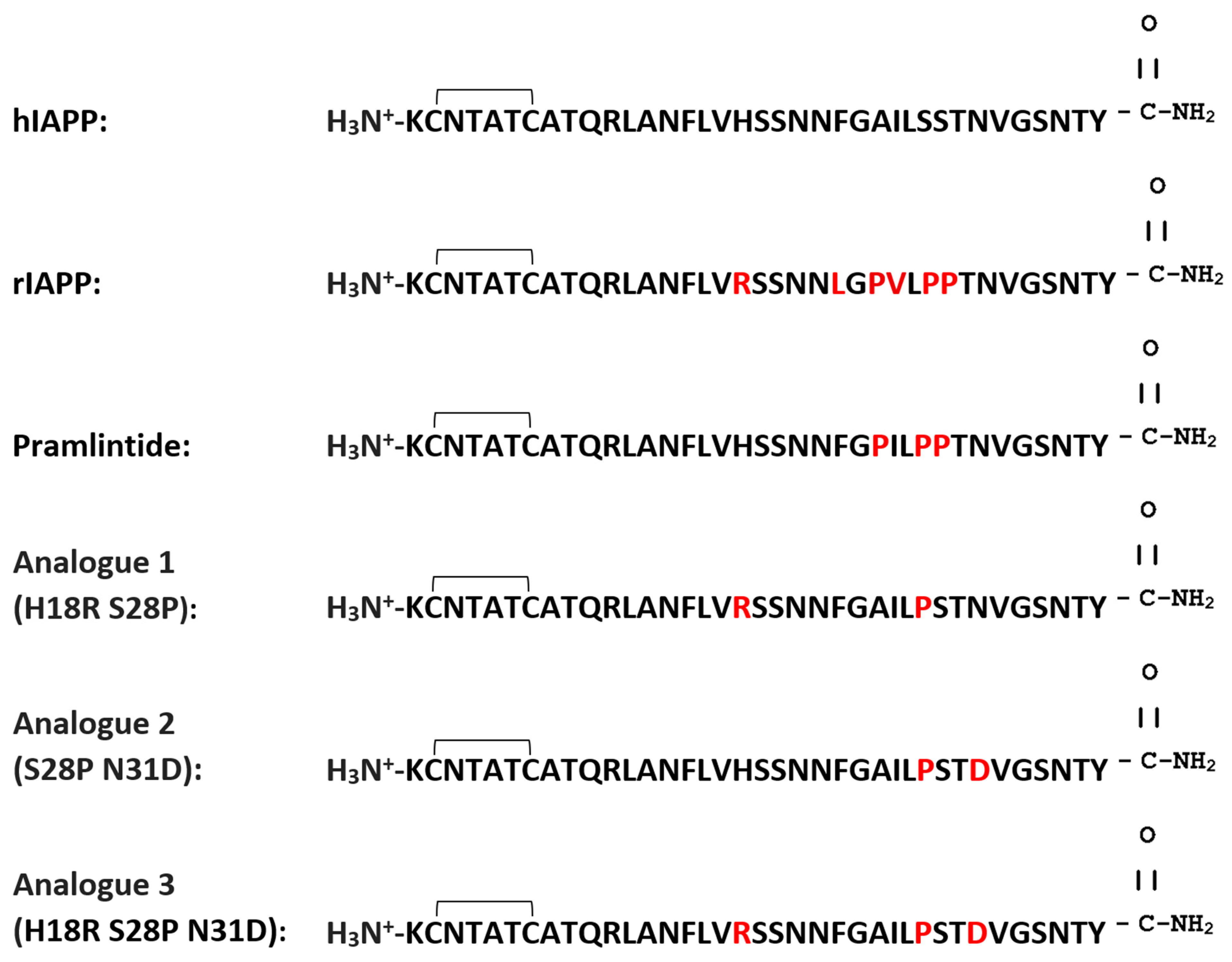
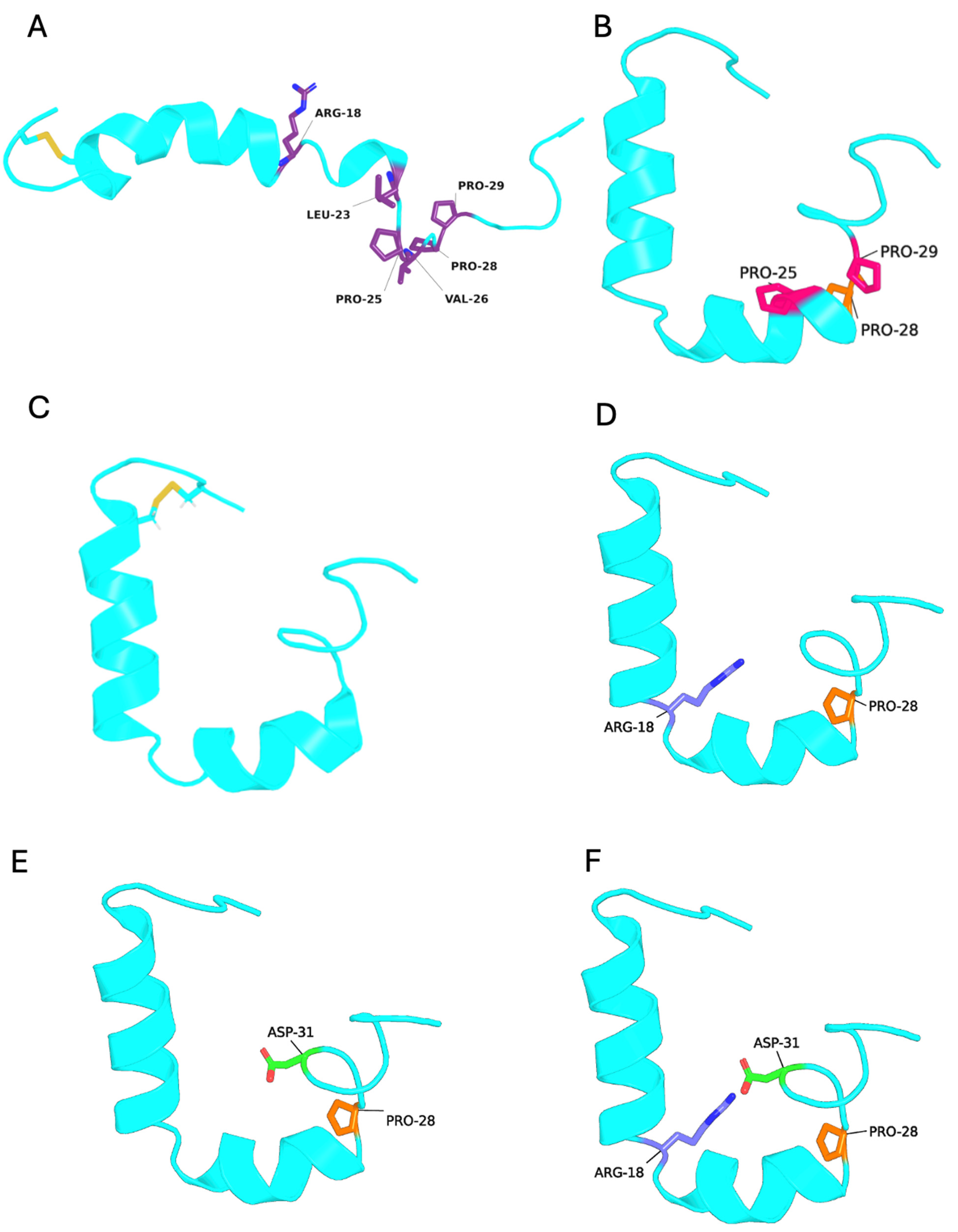
3.1. Rationally Designed Analogues
3.2. Prediction of Solubility and Aggregation Propensity
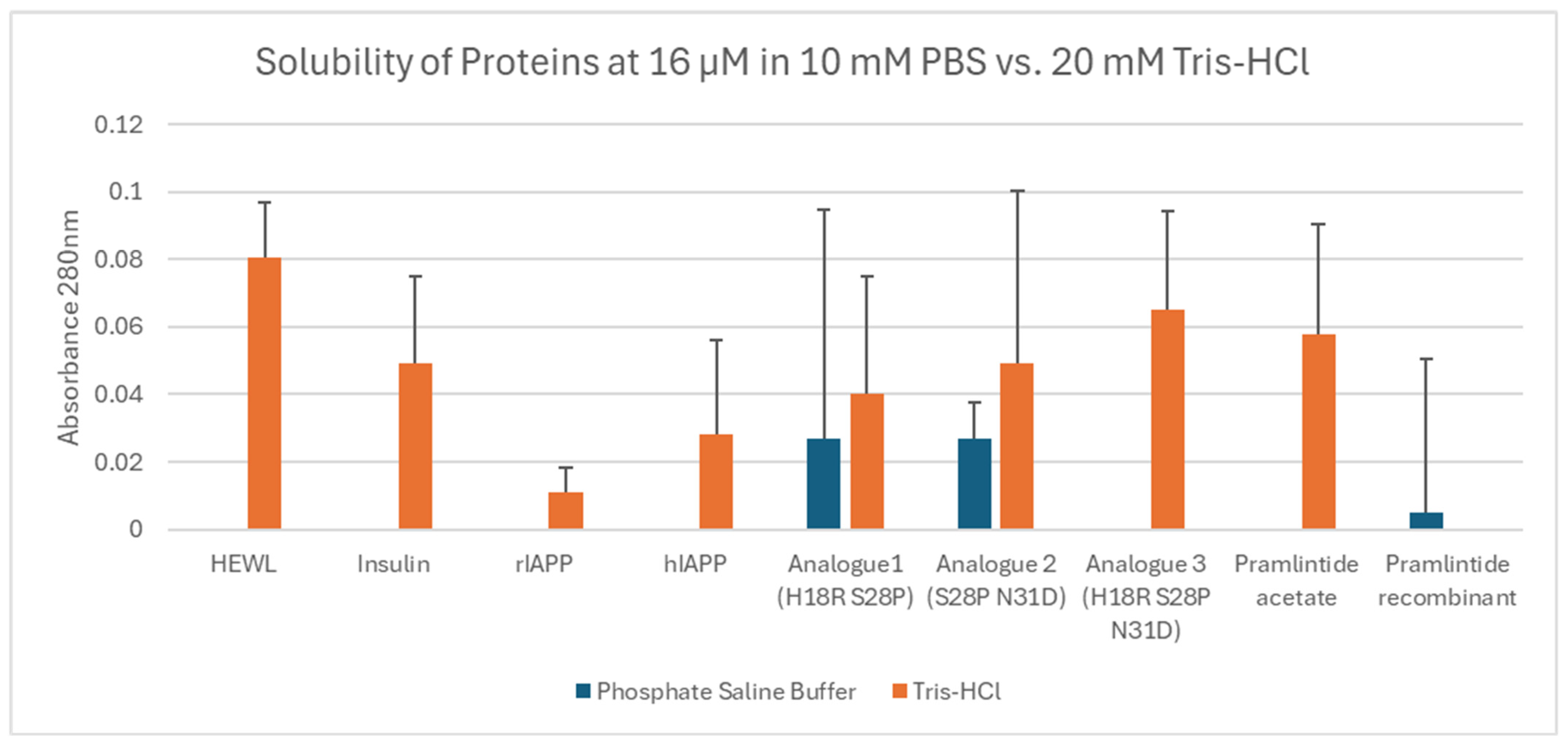
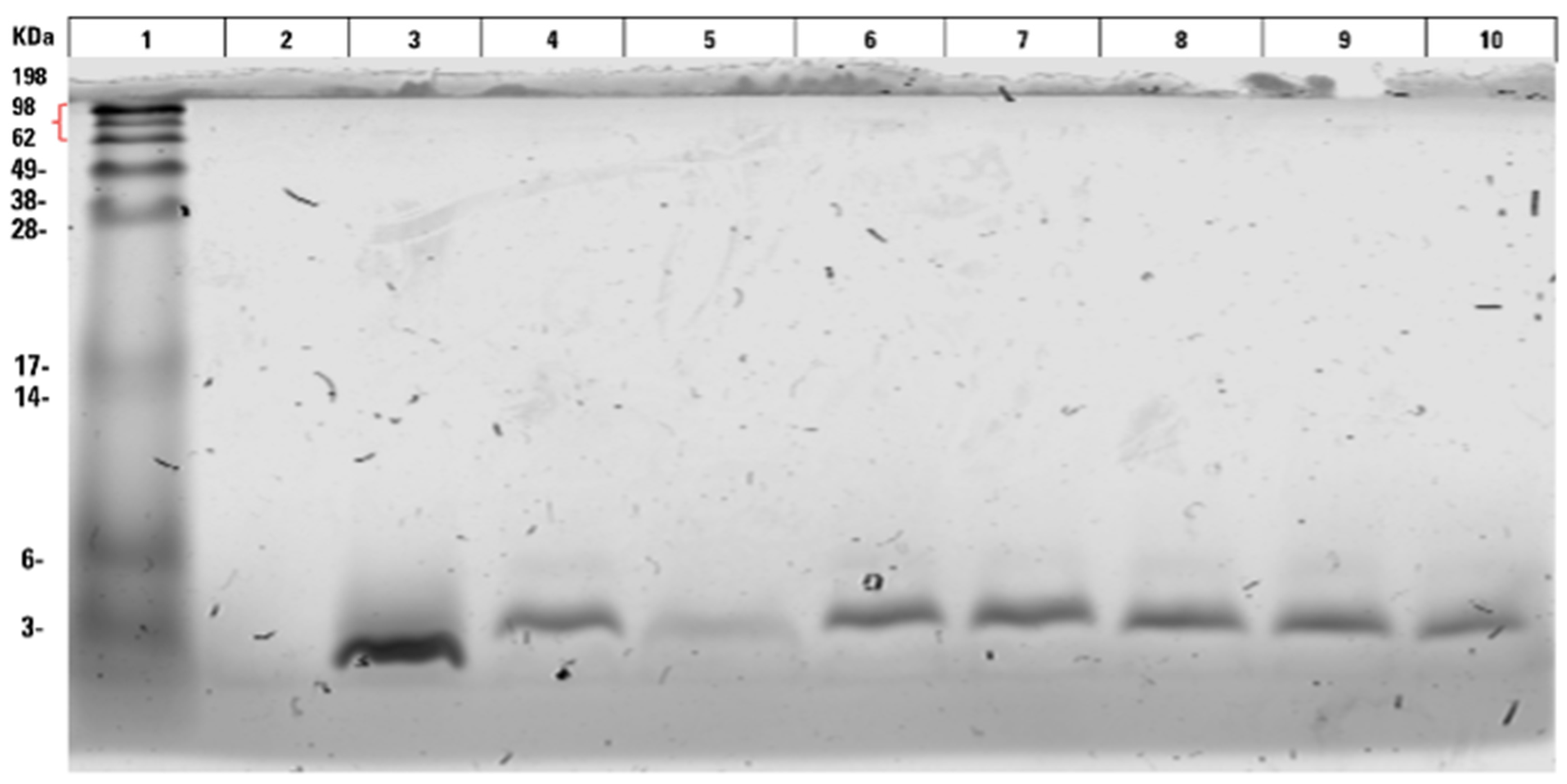
3.3. Analogue Characterisation and Solubility
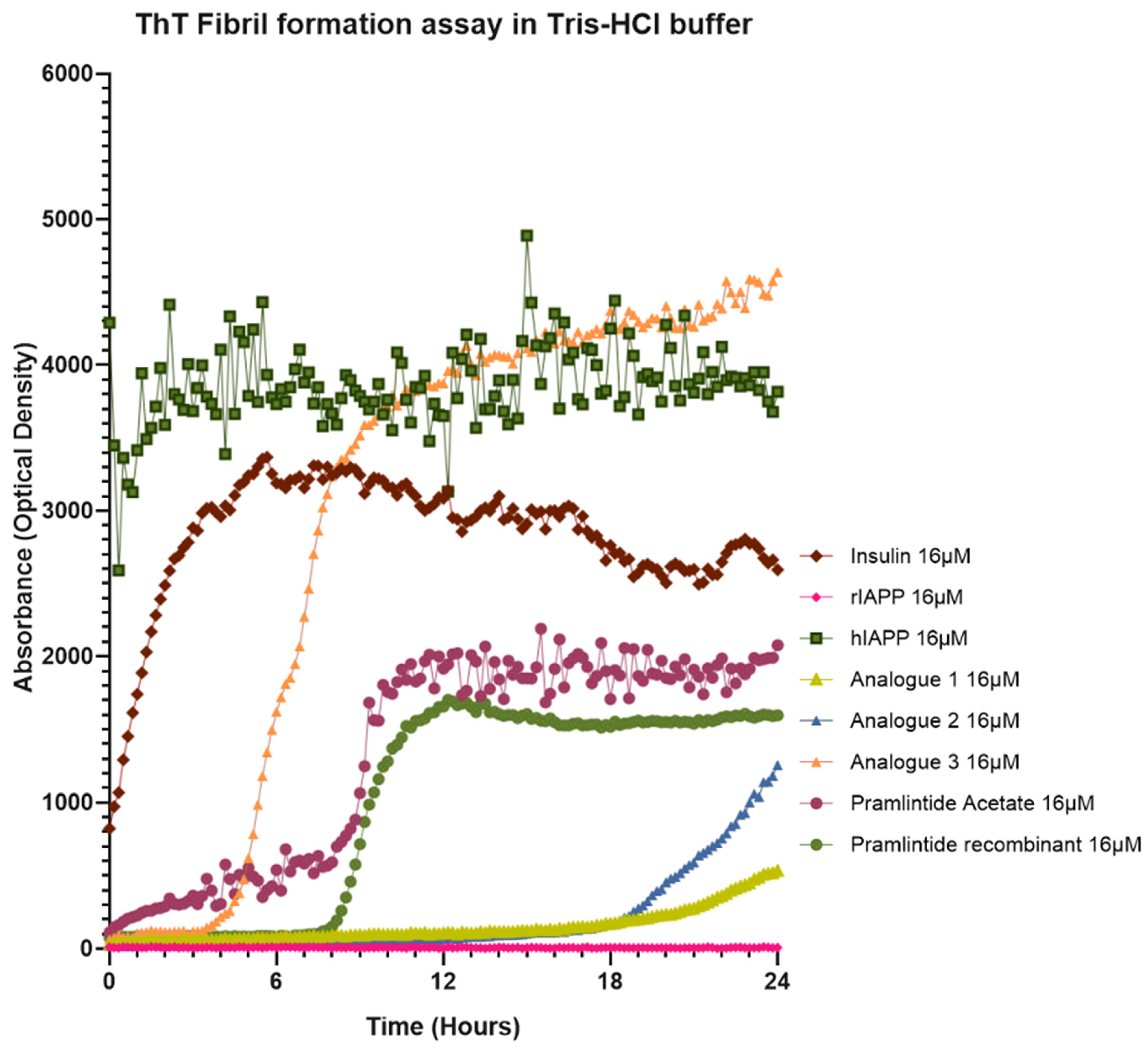
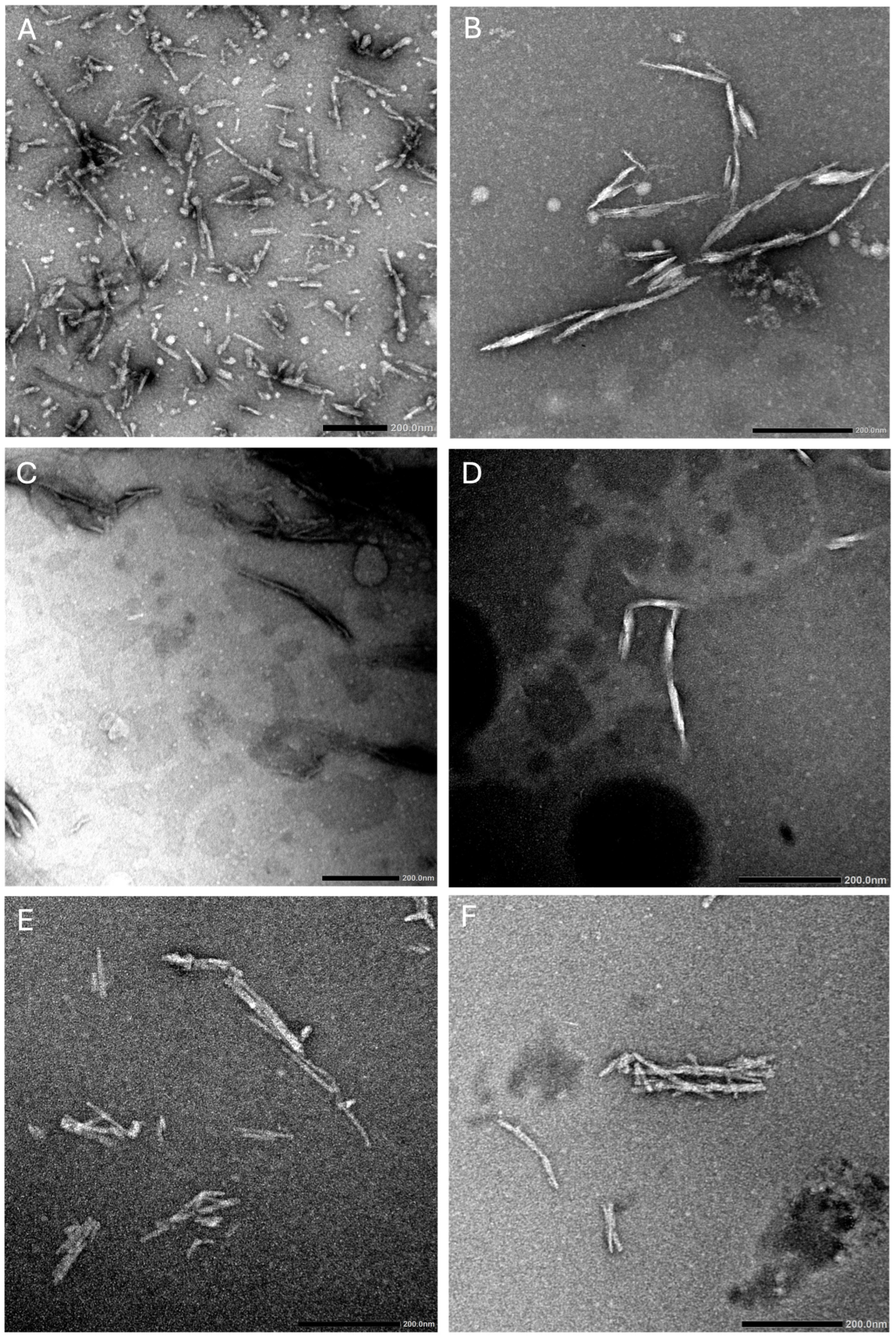
3.4. Measuring Amyloid Formation
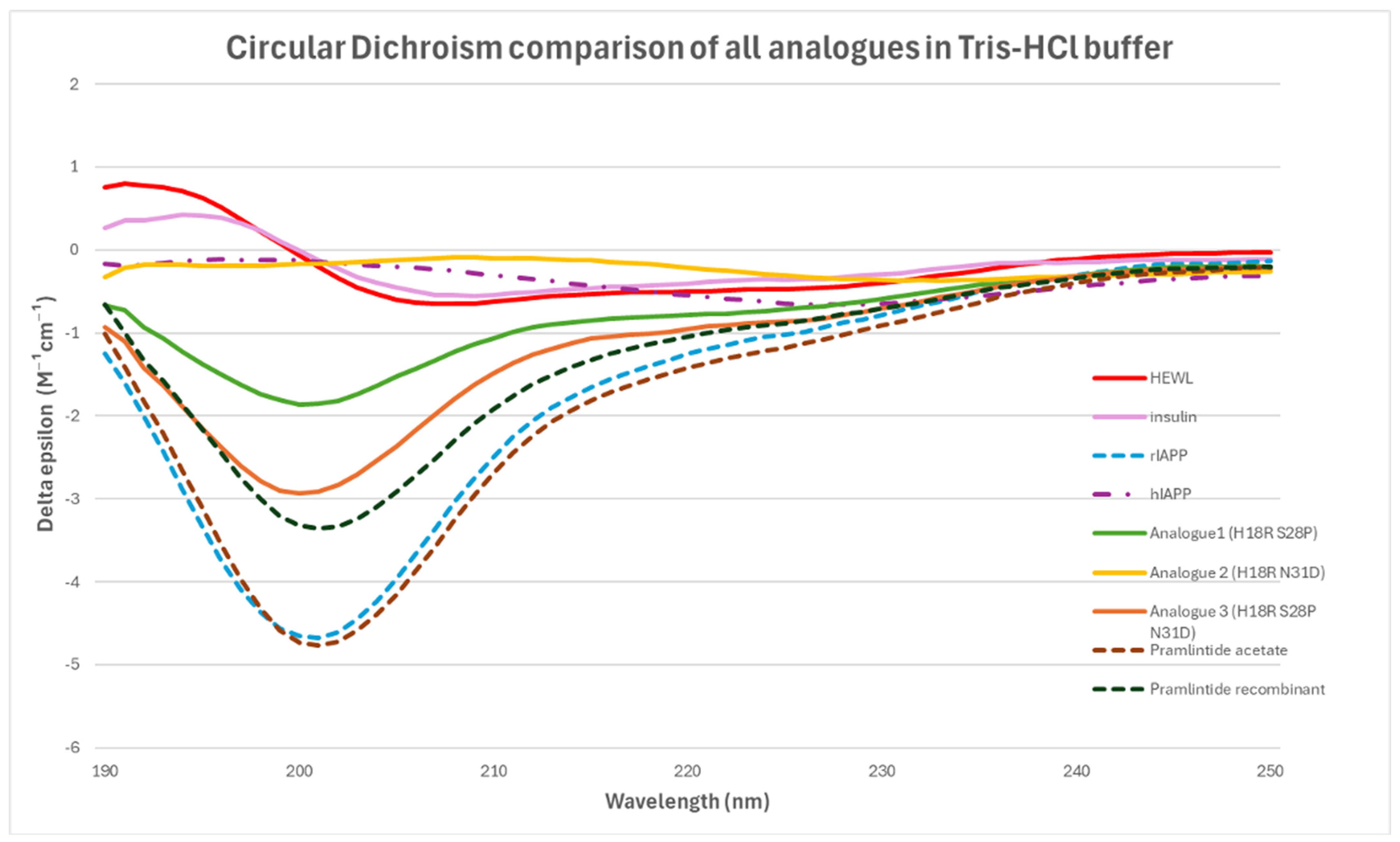
3.5. Analysis of Secondary Structure Using Circular Dichroism
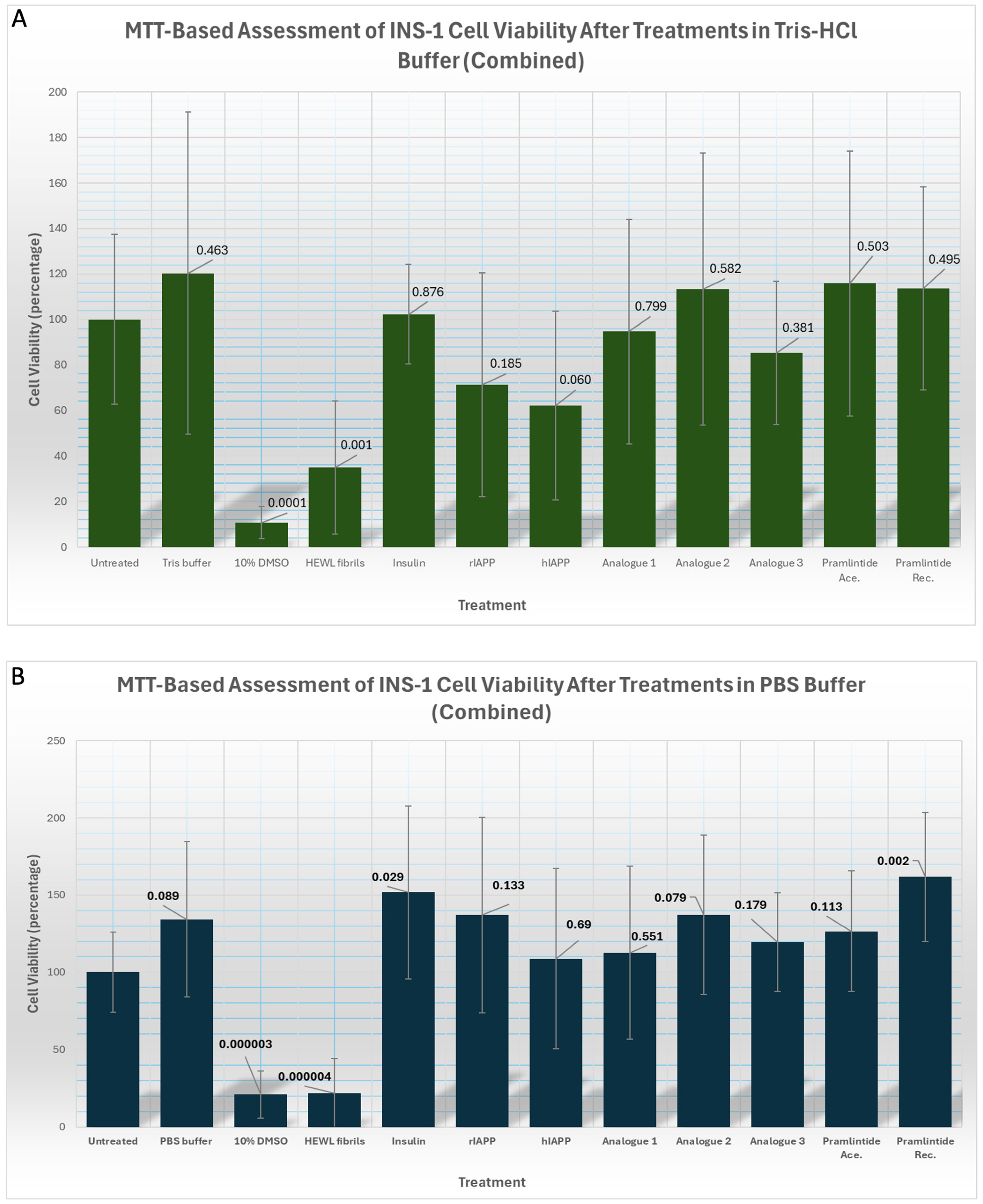
3.6. Assessing Cell Toxicity
4. Discussion
4.1. Biophysical and Biochemical Findings
4.2. Study Design and Future Challenges
4.3. Implications for Type 2 Diabetes
4.4. Future Considerations
Supplementary Materials
Author Contributions
Funding
Institutional Review Board Statement
Informed Consent Statement
Data Availability Statement
Acknowledgments
Conflicts of Interest
Abbreviations
| IAPP | Islet Amyloid Polypeptide |
| TEM | Transmission Electron Microscopy |
| CD | Circular Dichroism |
| Cys | Cysteine |
| HEWL | Hen Egg White Lysozyme |
| MTT | 3-[4,5-dimethylthiazol-2-yl]-2,5 diphenyl tetrazolium bromide |
References
- Sevcuka, A.; White, K.; Terry, C. Factors That Contribute to hIAPP Amyloidosis in Type 2 Diabetes Mellitus. Life 2022, 12, 583. [Google Scholar] [CrossRef] [Scilit] [PubMed] [PubMed Central]
- Westermark, P.; Engström, U.; Johnson, K.H.; Westermark, G.T.; Betsholtz, C. Islet amyloid polypeptide: Pinpointing amino acid residues linked to amyloid fibril formation. Proc. Natl. Acad. Sci. USA 1990, 87, 5036–5040. [Google Scholar] [PubMed] [PubMed Central]
- Adeghate, E.; Kalász, H. Amylin Analogues in the Treatment of Diabetes Mellitus: Medicinal Chemistry and Structural Basis of its Function. Open Med. Chem. J. 2011, 5, 78–81. [Google Scholar] [CrossRef] [Scilit] [PubMed] [PubMed Central]
- Ryan, G.; Briscoe, T.A.; Jobe, L. Review of pramlintide as adjunctive therapy in treatment of type 1 and type 2 diabetes. Drug Des. Dev. Ther. 2009, 2, 203–214. [Google Scholar] [CrossRef] [Scilit] [PubMed] [PubMed Central]
- Liu, W.; Han, J.; Gong, W.; Zhang, F.; Cao, Q. Structure of pancreatic hIAPP fibrils derived from patients with type 2 diabetes. Cell 2026, 189, 1201–1210.e10. [Google Scholar] [CrossRef] [Scilit] [PubMed]
- Ooi, S.A.; Valli, D.; Kuska, M.I.; Marí, H.; Chaudhary, H.; Wahlgren, W.Y.; Westenhoff, S.; Tietze, A.A.; Novials, A.; Servitja, J.-M.; et al. Cryo-EM exposes diverse polymorphism in IAPP mutants to guide the rational design of peptide-based therapeutics. J. Mol. Biol. 2025, 437, 169405. [Google Scholar] [CrossRef] [Scilit] [PubMed]
- Dobson, C.M.; Knowles, T.P.J.; Vendruscolo, M. The Amyloid Phenomenon and Its Significance in Biology and Medicine. Cold Spring Harb. Perspect. Biol. 2020, 12, a033878. [Google Scholar] [CrossRef] [Scilit] [PubMed] [PubMed Central]
- Shome, G.; Mondal, R.; Deb, S.; Roy, J.; Mandal, A.K.; Benito-León, J. Bridging Pancreatic Amyloidosis and Neurodegeneration: The Emerging Role of Amylin in Diabetic Dementia. Int. J. Mol. Sci. 2025, 26, 5021. [Google Scholar] [CrossRef] [Scilit]
- Cooper, G.J.; Willis, A.C.; Clark, A.; Turner, R.C.; Sim, R.B.; Reid, K.B. Purification and characterization of a peptide from amyloid-rich pancreases of type 2 diabetic patients. Proc. Natl. Acad. Sci. USA 1987, 84, 8628–8632. [Google Scholar] [CrossRef] [Scilit] [PubMed] [PubMed Central]
- Szablewski, L. Associations Between Diabetes Mellitus and Neurodegenerative Diseases. Int. J. Mol. Sci. 2025, 26, 542. [Google Scholar] [CrossRef] [Scilit]
- Kuzu, O.F.; Granerud, L.J.T.; Saatcioglu, F. Navigating the landscape of protein folding and proteostasis: From molecular chaperones to therapeutic innovations. Signal Transduct. Target. Ther. 2025, 10, 358. [Google Scholar] [CrossRef] [Scilit]
- Naiki, H.; Higuchi, K.; Hosokawa, M.; Takeda, T. Fluorometric determination of amyloid fibrils in vitro using the fluorescent dye, thioflavin T1. Anal. Biochem. 1989, 177, 244–249. [Google Scholar] [CrossRef] [Scilit] [PubMed]
- Lee, N.J.; Norris, S.L.; Thakurta, S. Efficacy and Harms of the Hypoglycemic Agent Pramlintide in Diabetes Mellitus. Ann. Fam. Med. 2010, 8, 542–549. [Google Scholar] [CrossRef] [Scilit] [PubMed] [PubMed Central]
- Hassan, S.; White, K.; Terry, C. Linking hIAPP misfolding and aggregation with type 2 diabetes mellitus: A structural perspective. Biosci. Rep. 2022, 42, BSR20211297. [Google Scholar] [CrossRef] [Scilit] [PubMed]
- Fischer Munch, H.; Just, R.; Mosolff Mathiesen, J.; Eriksson, P.O.; Skodborg Villadsen, J.; Vestergaard, B.; Deryabina, M.; Demmer, O.; Skarbaliene, J.; Hamprecht, D.W.; et al. Development of Petrelintide: A Potent, Stable, Long-Acting Human Amylin Analogue. J. Med. Chem. 2025, 68, 23925–23940. [Google Scholar] [CrossRef] [Scilit] [PubMed]
- Khemtemourian, L.; Guillemain, G.; Foufelle, F.; Killian, J.A. Residue specific effects of human islet polypeptide amyloid on self-assembly and on cell toxicity. Biochimie 2017, 142, 22–30. [Google Scholar] [CrossRef] [Scilit]
- Ridgway, Z.; Eldrid, C.; Zhyvoloup, A.; Ben-Younis, A.; Noh, D.; Thalassinos, K.; Raleigh, D.P. Analysis of Proline Substitutions Reveals the Plasticity and Sequence Sensitivity of Human IAPP Amyloidogenicity and Toxicity. Biochemistry 2020, 59, 742–754. [Google Scholar] [CrossRef] [Scilit] [PubMed] [PubMed Central]
- Nguyen, P.T.; Zottig, X.; Sebastiao, M.; Bourgault, S. Role of Site-Specific Asparagine Deamidation in Islet Amyloid Polypeptide Amyloidogenesis: Key Contributions of Residues 14 and 21. Biochemistry 2017, 56, 3808–3817. [Google Scholar] [CrossRef] [Scilit]
- Gasteiger, E.; Hoogland, C.; Gattiker, A.; Duvaud, S.; Wilkins, M.R.; Appel, R.D.; Bairoch, A. Protein Identification and Analysis Tools on the ExPASy Server. In The Proteomics Protocols Handbook [Internet]; Walker, J.M., Ed.; Humana Press: Totowa, NJ, USA, 2005; pp. 571–607. [Google Scholar] [CrossRef] [Scilit]
- Wang, H.; Abedini, A.; Ruzsicska, B.; Raleigh, D.P. Rationally Designed, Nontoxic, Nonamyloidogenic Analogues of Human Islet Amyloid Polypeptide with Improved Solubility. Biochemistry 2014, 53, 5876–5884. [Google Scholar] [CrossRef] [Scilit] [PubMed] [PubMed Central]
- Jiménez, J.L.; Nettleton, E.J.; Bouchard, M.; Robinson, C.V.; Dobson, C.M.; Saibil, H.R. The protofilament structure of insulin amyloid fibrils. Proc. Natl. Acad. Sci. USA 2002, 99, 9196–9201. [Google Scholar] [CrossRef] [Scilit] [PubMed] [PubMed Central]
- Miller, M.E.T.; Li, M.H.; Baghai, A.; Peetz, V.H.; Zhyvoloup, A.; Raleigh, D.P. Analysis of Sheep and Goat IAPP Provides Insight into IAPP Amyloidogenicity and Cytotoxicity. Biochemistry 2022, 61, 2531–2545. [Google Scholar] [CrossRef] [Scilit]
- Akter, R.; Bower, R.L.; Abedini, A.; Schmidt, A.M.; Hay, D.L.; Raleigh, D.P. Amyloidogenicity, Cytotoxicity, and Receptor Activity of Bovine Amylin: Implications for Xenobiotic Transplantation and the Design of Nontoxic Amylin Variants. ACS Chem. Biol. 2018, 13, 2747–2757. [Google Scholar] [CrossRef] [Scilit] [PubMed]
- Brudar, S.; Hribar-Lee, B. The Role of Buffers in Wild-Type HEWL Amyloid Fibril Formation Mechanism. Biomolecules 2019, 9, 65. [Google Scholar] [CrossRef] [Scilit] [PubMed] [PubMed Central]
- Hudson, S.A.; Ecroyd, H.; Kee, T.W.; Carver, J.A. The thioflavin T fluorescence assay for amyloid fibril detection can be biased by the presence of exogenous compounds. FEBS J. 2009, 276, 5960–5972. [Google Scholar] [CrossRef] [Scilit] [PubMed]
- Noormägi, A.; Primar, K.; Tõugu, V.; Palumaa, P. Interference of low-molecular substances with the thioflavin-T fluorescence assay of amyloid fibrils. J. Pept. Sci. Off. Publ. Eur. Pept. Soc. 2012, 18, 59–64. [Google Scholar] [CrossRef] [Scilit] [PubMed]
- Abedini, A.; Raleigh, D.P. Destabilization of human IAPP amyloid fibrils by proline mutations outside of the putative amyloidogenic domain: Is there a critical amyloidogenic domain in human IAPP? J. Mol. Biol. 2006, 355, 274–281. [Google Scholar] [CrossRef] [Scilit] [PubMed]
- Chiu, C.-C.; Singh, S.; de Pablo, J.J. Effect of Proline Mutations on the Monomer Conformations of Amylin. Biophys. J. 2013, 105, 1227–1235. [Google Scholar] [CrossRef] [Scilit] [PubMed] [PubMed Central]
- Brender, J.R.; Hartman, K.; Reid, K.R.; Kennedy, R.T.; Ramamoorthy, A. A Single Mutation in the Non-Amyloidogenic Region of IAPP (Amylin) Greatly Reduces Toxicity. Biochemistry 2008, 47, 12680–12688. [Google Scholar] [CrossRef] [Scilit] [PubMed] [PubMed Central]
- Kiriyama, Y.; Nochi, H. Role and Cytotoxicity of Amylin and Protection of Pancreatic Islet β-Cells from Amylin Cytotoxicity. Cells 2018, 7, 95. [Google Scholar] [CrossRef] [Scilit]
- Ziaunys, M.; Mikalauskaite, K.; Sakalauskas, A.; Smirnovas, V. Study of Insulin Aggregation and Fibril Structure under Different Environmental Conditions. Int. J. Mol. Sci. 2024, 25, 9406. [Google Scholar] [CrossRef] [Scilit]
- Shimizu, T.; Nogami, E.; Ito, Y.; Morikawa, K.; Nagane, M.; Yamashita, T.; Ogawa, T.; Kametani, F.; Yagi, H.; Hachiya, N. Volatile Anesthetic Sevoflurane Precursor 1,1,1,3,3,3-Hexafluoro-2-Propanol (HFIP) Exerts an Anti-Prion Activity in Prion-Infected Culture Cells. Neurochem. Res. 2021, 46, 2056–2065. [Google Scholar] [CrossRef] [Scilit] [PubMed] [PubMed Central]
- Wang, H.; Raleigh, D.P. The Ability of Insulin To Inhibit the Formation of Amyloid by Pro-Islet Amyloid Polypeptide Processing Intermediates Is Significantly Reduced in the Presence of Sulfated Glycosaminoglycans. Biochemistry 2014, 53, 2605–2614. [Google Scholar] [CrossRef] [Scilit] [PubMed]
- Shivani, S.T.; LeMasters, B.E.; Ravula, T.; Esterly, H.J.; Maroli, N.; Rich, K.L.; Fields, C.R.; Dicke, S.S.; Warmuth, O.A.; Stapleton, D.S.; et al. A structural model of toxic amyloid oligomers involved in type 2 diabetes. Proc. Natl. Acad. Sci. USA 2026, 123, e2528103123. [Google Scholar] [CrossRef] [Scilit] [PubMed] [PubMed Central]
- Höppener, J.W.M.; Jacobs, H.M.; Wierup, N.; Sotthewes, G.; Sprong, M.; de Vos, P.; Berger, R.; Sundler, F.; Ahrén, B. Human Islet Amyloid Polypeptide Transgenic Mice: In Vivo and Ex Vivo Models for the Role of hIAPP in Type 2 Diabetes Mellitus. J. Diabetes Res. 2008, 2008, 697035. [Google Scholar] [CrossRef] [Scilit]
- Terry, C.; Wenborn, A.; Gros, N.; Sells, J.; Joiner, S.; Hosszu, L.L.P.; Tattum, M.H.; Panico, S.; Clare, D.K.; Collinge, J.; et al. Ex vivo mammalian prions are formed of paired double helical prion protein fibrils. Open Biol. 2016, 6, 160035. [Google Scholar] [CrossRef] [Scilit] [PubMed]
- Bansal, A.; Schmidt, M.; Rennegarbe, M.; Haupt, C.; Liberta, F.; Stecher, S.; Puscalau-Girtu, I.; Biedermann, A.; Fändrich, M. AA amyloid fibrils from diseased tissue are structurally different from in vitro formed SAA fibrils. Nat. Commun. 2021, 12, 1013. [Google Scholar] [CrossRef] [Scilit]
- Becerril, S.; Frühbeck, G. Cagrilintide plus semaglutide for obesity management. Lancet 2021, 397, 1687–1689. [Google Scholar] [CrossRef] [Scilit]
- Billings, L.K.; Hsia, S.; Bays, H.; Tidemann-Miller, B.; O’Hagan, J.; Tham, L.S.; Butler, A.; Kazda, C.; Mather, K.J.; Coskun, T. Eloralintide, a selective amylin receptor agonist for the treatment of obesity: A 48-week phase 2, multicentre, double-blind, randomised, placebo-controlled trial. Lancet 2025, 406, 2631–2643. [Google Scholar] [CrossRef] [Scilit] [PubMed]
- Altamirano-Bustamante, M.M.; Altamirano-Bustamante, N.F.; Larralde-Laborde, M.; Lara-Martínez, R.; Leyva-García, E.; Garrido-Magaña, E.; Rojas, G.; Jiménez-García, L.F.; Revilla-Monsalve, C.; Altamirano, P.; et al. Unpacking the aggregation-oligomerization-fibrillization process of naturally-occurring hIAPP amyloid oligomers isolated directly from sera of children with obesity or diabetes mellitus. Sci. Rep. 2019, 9, 18465. [Google Scholar] [CrossRef] [Scilit] [PubMed]




| Sample | Lag Time Tlag (Hours) | Half Time T½ (Hours) | Maximum Fluorescence FMax (AU) |
|---|---|---|---|
| Insulin | 0.0 | 1.33 | 3250 |
| rIAPP | N/A | N/A | 0 |
| hIAPP | 0.0 | * | 4000 |
| Analogue 1 (H18R S28P) | 18.0 | 24.00 | 600 $ |
| Analogue 2 (S28P N31D) | 17.00 | 25.00 | 1500 $ |
| Analogue 3 (H18R S28P N31D) | 4.00 | 7.00 | 4500 |
| Pramlintide acetate | 6.00 | 9.33 | 1900 |
| Recombinant pramlintide | 8.00 | 9.17 | 1600 |
| Sample | More Soluble? | Aggregation Kinetics | TEM Observations | Less Toxic? |
|---|---|---|---|---|
| Analogue 1 (H18R S28P) | No (Tris) Yes (PBS) | Tlag = 18 h T1/2 = 24 h Fmax 600 AU | No fibrils (Tris or PBS) | No (Tris) No (PBS) |
| Analogue 2 (S28P N31D) | Comparable (Tris) Yes (PBS) | Tlag = 17 h T1/2 = 25 h Fmax 1500 AU | No fibrils (Tris or PBS) | Comparable (Tris) Comparable (PBS) |
| Analogue 3 (H18R S28P N31D) | Comparable (Tris) No (PBS) | Tlag = −4 h T1/2 = 7 h Fmax = 4500 AU | Fibrils (Tris) No fibrils (PBS) | No (Tris) No (PBS) |
Disclaimer/Publisher’s Note: The statements, opinions and data contained in all publications are solely those of the individual author(s) and contributor(s) and not of MDPI and/or the editor(s). MDPI and/or the editor(s) disclaim responsibility for any injury to people or property resulting from any ideas, methods, instructions or products referred to in the content. |
© 2026 by the authors. Licensee MDPI, Basel, Switzerland. This article is an open access article distributed under the terms and conditions of the Creative Commons Attribution (CC BY) license.
Share and Cite
Hassan, S.; Evans, S.L.; Torpey, J.H.; Bui, T.; Isaacson, R.L.; White, K.; Terry, C. Islet Amyloid Polypeptide Analogues with Reduced Aggregation: Implications for Type 2 Diabetes. Endocrines 2026, 7, 28. https://doi.org/10.3390/endocrines7020028
Hassan S, Evans SL, Torpey JH, Bui T, Isaacson RL, White K, Terry C. Islet Amyloid Polypeptide Analogues with Reduced Aggregation: Implications for Type 2 Diabetes. Endocrines. 2026; 7(2):28. https://doi.org/10.3390/endocrines7020028
Chicago/Turabian StyleHassan, Shahab, Sasha L. Evans, James H. Torpey, Tam Bui, Rivka L. Isaacson, Kenneth White, and Cassandra Terry. 2026. "Islet Amyloid Polypeptide Analogues with Reduced Aggregation: Implications for Type 2 Diabetes" Endocrines 7, no. 2: 28. https://doi.org/10.3390/endocrines7020028
APA StyleHassan, S., Evans, S. L., Torpey, J. H., Bui, T., Isaacson, R. L., White, K., & Terry, C. (2026). Islet Amyloid Polypeptide Analogues with Reduced Aggregation: Implications for Type 2 Diabetes. Endocrines, 7(2), 28. https://doi.org/10.3390/endocrines7020028