
Review

Persufflation—Current State of Play
by
Aaron John Buhagiar
1,
Leo Freitas
2 and
William E. Scott III
1,*
1
Translational and Clinical Research Institute, Newcastle University, Newcastle Upon Tyne NE2 4HH, UK
2
School of Computing, Newcastle University, Newcastle Upon Tyne NE2 4HH, UK
*
Author to whom correspondence should be addressed.
Transplantology 2021, 2(3), 362-378; https://doi.org/10.3390/transplantology2030035

Submission received: 15 August 2021 / Accepted: 6 September 2021 / Published: 17 September 2021
(This article belongs to the Special Issue Machine Perfusion in Organ Transplantation)

Abstract

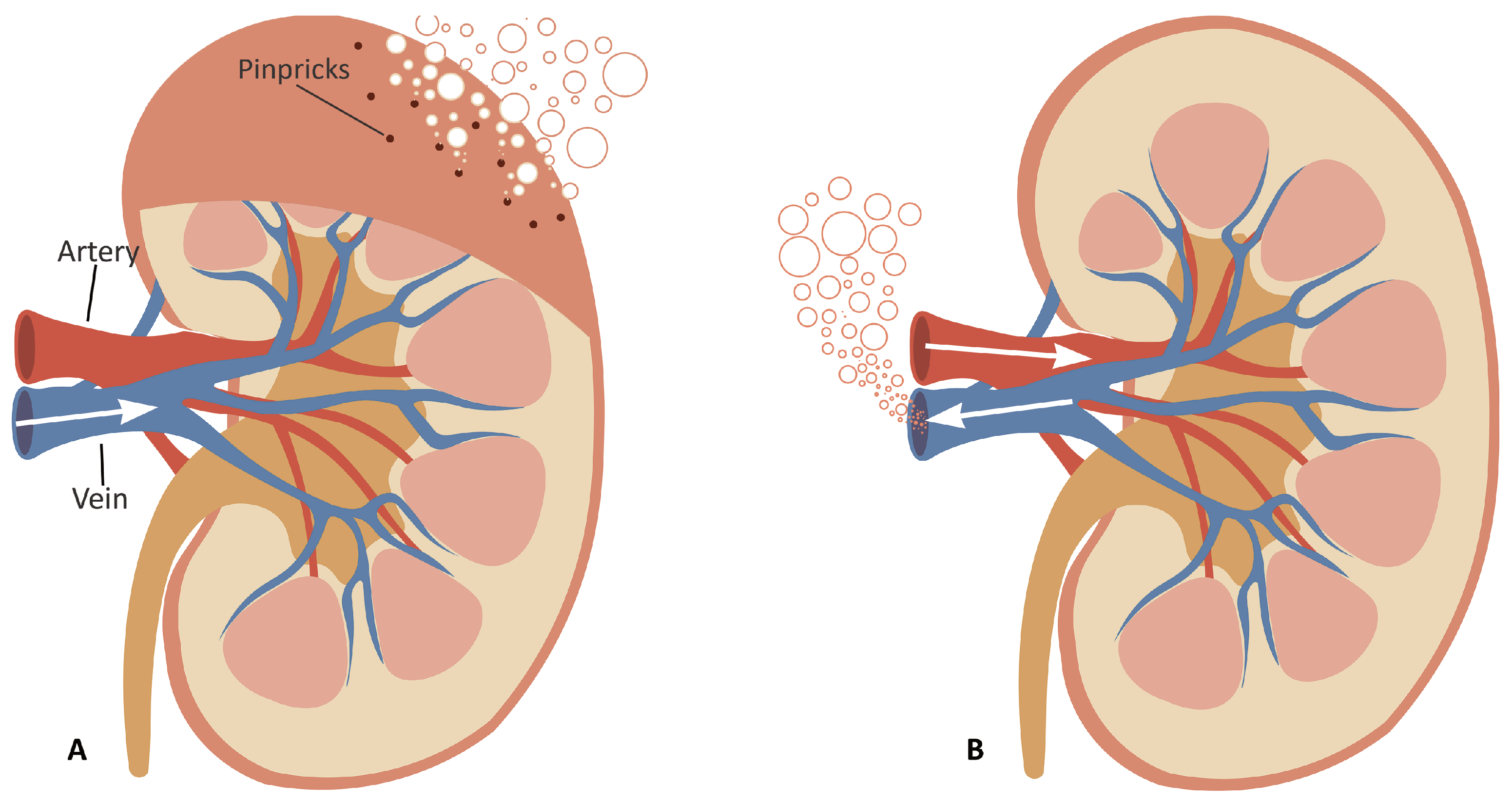
With the ever-increasing disparity between the number of patients waiting for organ transplants and the number organs available, some patients are unable to receive life-saving transplantation in time. The present, widely-used form of preservation is proving to be incapable of maintaining organ quality during long periods of preservation and meeting the needs of an ever-changing legislative and transplantation landscape. This has led to the need for improved preservation techniques. One such technique that has been extensively researched is gaseous oxygen perfusion or Persufflation (PSF). This method discovered in the early 20th century has shown promise in providing both longer term preservation and organ reconditioning capabilities for multiple organs including the liver, kidneys, and pancreas. PSF utilises the organs own vascular network to provide oxygen to the organ tissue and maintain metabolism during preservation to avoid hypoxic damage. This review delves into the history of this technique, its multiple different approaches and uses, as well as in-depth discussion of work published in the past 15 years. Finally, we discuss exciting commercial developments which may help unlock the potential for this technique to be applied at scale.
Keywords: gaseous oxygen perfusion; hypothermic reconditioning; organ preservation; organ perfusion; persufflation; VSOP gaseous oxygen perfusion; hypothermic reconditioning; organ preservation; organ perfusion; persufflation; VSOP