
Beyond Incremental: Embracing Transformative Innovation in Women’s Health

 , , and
Abstract
1. Introduction: The Innovation Imperative
2. Defining True Innovation vs. Incremental Improvement
3. Current Landscape: Technologies Poised for Transformation
3.1. Artificial Intelligence in Diagnostics
3.2. Precision Medicine and Predictive Analytics
3.3. Non-Invasive Diagnostics and Monitoring
3.4. Wearable Technology and Continuous Monitoring
3.5. Precision Oncology Applications
4. The Innovation Paradox in Medicine
5. Creating an Innovation-Ready Environment
5.1. From Battlefield to Birth Bed: How Military and Space Innovation Have Shaped Women’s Health
5.2. Research Culture, Styles, and Infrastructure
6. Incorporation and Resistance to New Ideas
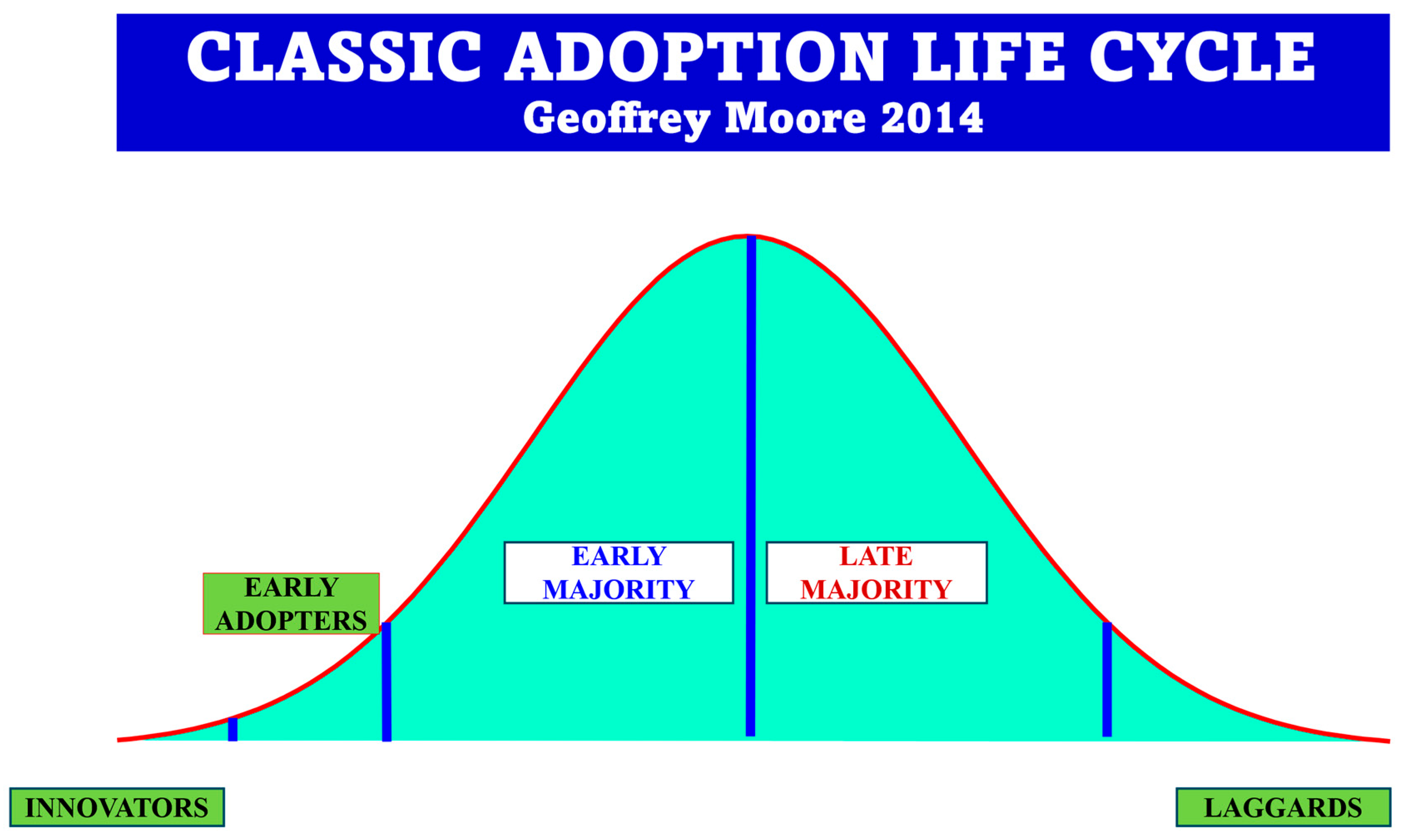
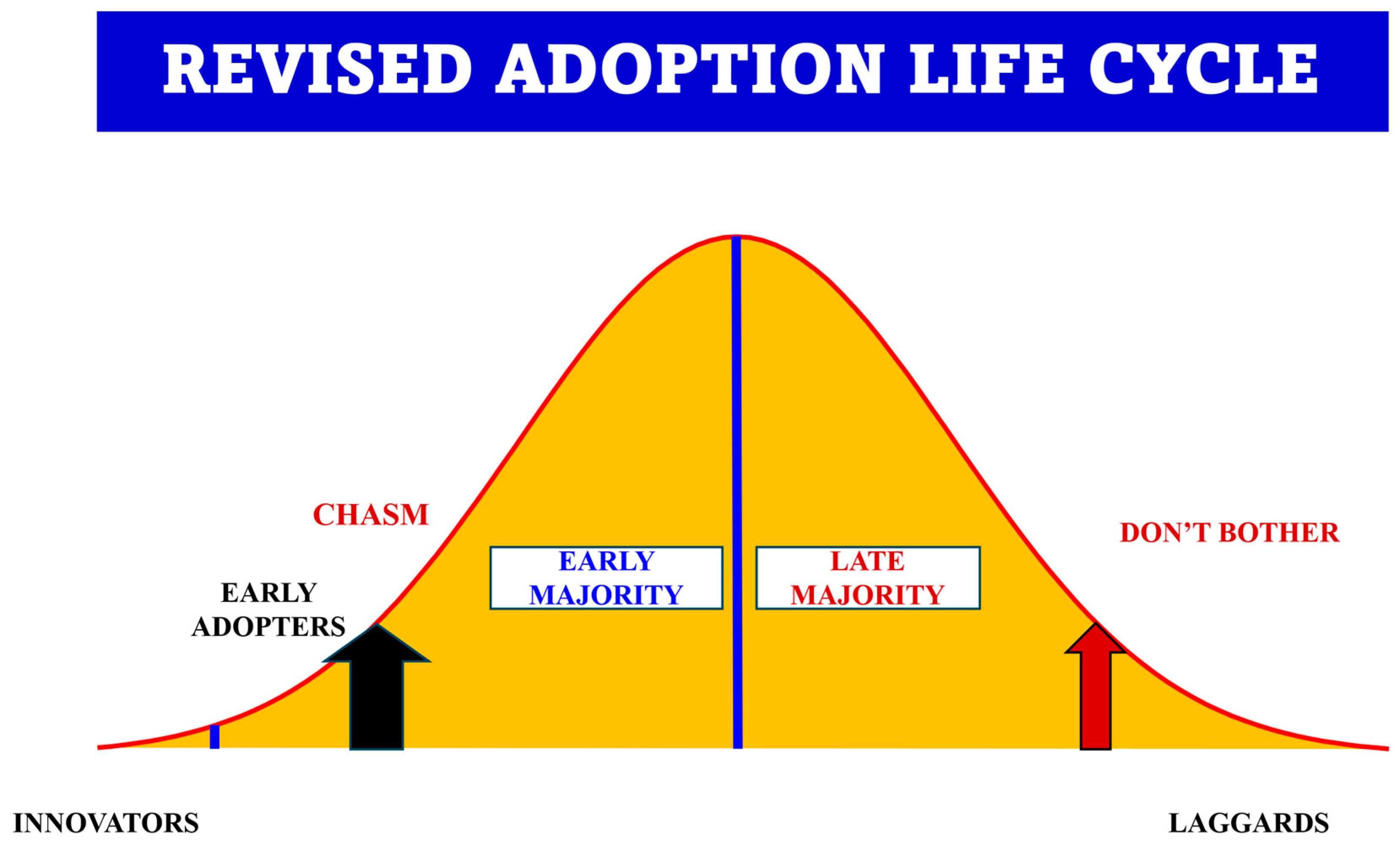
- Innovators pursue new technology aggressively, even before formal introduction. Traditionally in medicine, this occurred mostly in academic settings under Institutional Review Board supervision. Recently, new genetic technologies such as non-invasive prenatal testing (NIPT) have been developed primarily in industry by engineers and researchers, then rapidly introduced—often as laboratory developed tests (LDTs). This approach often circumvents many US FDA regulations.
- Early adopters embrace new approaches early in their life cycle but are not technology hobbyists. They imagine, understand, and appreciate new technology before most people know it exists. Robotic surgery exemplifies this category. Newer methods for minimally invasive surgical procedures with different energy sources are yet another example of engineering solutions to medical problems [64,65].
- Early majority groups have some early adopter appreciation for new technologies but are driven by practicality. They often adopt after a “wait and see” period. Nuchal translucency (NT) screening in the US largely divided between early and late majority groups.
- Late majority groups are similar to the early majority groups but adopt only when a technology becomes a clear standard, and they often need “hand holding” and support. Administration of corticosteroids for lung support of fetuses at risk for preterm birth is a classic example.
- Laggards resist new technology until absolutely forced to accept it. For example, approximately 20% of obstetricians continued using single MSAFP screening years after multiple marker screening became standard. While marketing perspectives suggest convincing laggards is not worth the effort [66], medical practice cannot simply ignore them.
6.1. Forms of Resistance to Change
6.1.1. Non-Intentional Resistance
6.1.2. Intentional Resistance
6.2. Resistance Mechanisms
- Practitioners and institutions become acculturated to outdated methods, resisting cultural change.
- Hierarchical pecking order strongly influences adoption.
- Reputational concerns intensify when linked to income or perks.
- Vested interests manipulate review processes to suppress new approaches.
- Politicization undermines innovation by distorting scientific rigor, blocking funds, and discrediting marketing efforts.
6.3. Rapid and Slow Acceptance
6.4. Practical Solutions
Electronic Fetal Monitoring
- Developed in the 1970s (notably by Edward Hon) to reduce stillbirths in labor.
- Early and rapid acceptance of EFM occurred derived from a perceived compelling need and the instilled belief that traditional auscultation and palpation methods for assessment of fetal heart rate and uterine activity were ineffective means of preventing intrauterine fetal demise.
- Mission creep then expanded the goals of EFM to preventing neurologic impairment, which EFM has not been able to achieve over the past 50 years despite multiple claims to the contrary.
6.5. Discussion
6.6. Modern Challenges
6.7. Some Consensus
7. A Vision for the Future
7.1. Regulatory Considerations and Implementation
7.2. Multi-Omics Integration and Personalized Medicine
7.3. Global Health Applications
8. The Reproductive Medicine Special Issue
9. Roles in Transformation
Author Contributions
Funding
Institutional Review Board Statement
Informed Consent Statement
Data Availability Statement
Conflicts of Interest
References
- Eastman, N.J.; Hellman, L.M. Williams Obstetrics, 13th ed.; Appleton-Century-Crofts: New York, NY, USA, 1966. [Google Scholar]
- Temmerman, M.; Khosla, R.; Say, L. Sexual and reproductive health and rights: A global development, health, and human rights priority. Lancet 2020, 396, 456–458. [Google Scholar] [CrossRef]
- Ranjbar, A.; Montazeri, F.; Ghamsari, S.R.; Mehrnoush, V.; Roozbeh, N.; Darsareh, F. Machine learning models for predicting preeclampsia: A systematic review. BMC Pregnancy Childbirth 2024, 24, 6. [Google Scholar] [CrossRef]
- Macedonia, C.R.; Johnson, C.T.; Rajapakse, I. Advanced research and data methods in Women’s health: Big data analytics, adaptive studies, and the road ahead. Obstet. Gynecol. 2017, 129, 249–264. [Google Scholar] [CrossRef] [PubMed]
- Giudice, L.C.; Oskotsky, T.T.; Falako, S.; Opoku-Anane, J.; Sirota, M. Endometriosis in the era of precision medicine and impact on sexual and reproductive health across the lifespan and in diverse populations. FASEB J. 2023, 37, e23130. [Google Scholar] [CrossRef] [PubMed]
- Darwin, C. On the Origin of Species by Means of Natural Selection; John Murray: London, UK, 1859. [Google Scholar]
- Evans, M.I.; Britt, D.W. Resistance to Change. Reprod. Sci. 2023, 30, 835–853. [Google Scholar] [CrossRef] [PubMed]
- Bohnsack, R.; Kurtz, H.; Hanelt, A. Re-examining path dependence in the digital age: The evolution of connected car business models. Res. Policy 2021, 50, 104328. [Google Scholar] [CrossRef]
- Garud, R.; Kumaraswamy, A.; Karnoe, P. Path dependence or path creation? J. Manag. Stud. 2010, 47, 760–774. [Google Scholar] [CrossRef]
- Arthur, W.B. The structure of invention. Res. Policy 2007, 36, 274–287. [Google Scholar] [CrossRef]
- Bijker, W. Of Bicycles, Bakelite and Bulbs; MIT Press: Cambridge, MA, USA, 1995. [Google Scholar]
- Blackwell, S.C.; Gyamfi-Bannerman, C.; Biggio, J.R., Jr.; Chauhan, S.P.; Hughes, B.L.; Louis, J.M.; Manuck, T.A.; Miller, H.S.; Das, A.F.; Saade, G.R.; et al. 17-OHPC to Prevent Recurrent Preterm Birth in Singleton Gestations (PROLONG Study): A Multicenter, International, Randomized Double-Blind Trial. Am. J. Perinatol. 2020, 37, 127–136. [Google Scholar] [CrossRef] [PubMed]
- Hinton, G. Deep learning—A technology with the potential to transform health care. JAMA 2018, 320, 1101–1102. [Google Scholar] [CrossRef]
- Evans, M.I.; Brabbing-Goldstein, D.; Evans, S.M.; Yaron, Y. Prenatal Diagnosis in the Molecular Age–indications, procedures, and laboratory techniques. In Avery & MacDonald’s Neonatology: Pathophysiology and Management of the Newborn, 8th ed.; Boardman, J.P., Groves, A., Ramasethu, J., Eds.; Wolters Kluwery/Lippincott Williams and Wilkins Publishing Co.: Philadelphia, PA, USA, 2021; pp. 109–136. [Google Scholar]
- Mendell, J.R.; Al-Zaidy, S.; Shell, R.; Arnold, W.D.; Rodino-Klapac, L.R.; Prior, T.W.; Lowes, L.; Alfano, L.; Berry, K.; Church, K.; et al. Single-dose gene-replacement therapy for spinal muscular atrophy. N. Engl. J. Med. 2017, 377, 1713–1722. [Google Scholar] [CrossRef] [PubMed]
- Devoe, L.D.; Muhanna, M.; Maher, J.; Evans, M.I.; Klein-Seetharaman, J. Current state of artificial intelligence model development in obstetrics. Obstet. Gynecol. 2025, 146, 233–243. [Google Scholar] [CrossRef] [PubMed]
- Liu, L.; Pu, Y.; Fan, J.; Yan, Y.; Liu, W.; Luo, K.; Wang, Y.; Zhao, G.; Chen, T.; Puiu, P.D.; et al. Wearable Sensors, Data Processing, and Artificial Intelligence in Pregnancy Monitoring: A Review. Sensors 2024, 24, 6426. [Google Scholar] [CrossRef]
- Rajkomar, A.; Dean, J.; Kohane, I. Machine learning in medicine. N. Engl. J. Med. 2019, 380, 1347–1358. [Google Scholar] [CrossRef]
- Hernandez-Cruz, N.; Patey, O.; Adu-Bredu, T.; D’Alberti, E.; Noble, J.A.; Papageorghiou, A. OP02.04: Automated segmentation of fetal heart three-vessel view ultrasound video clips to facilitate prenatal assessment of congenital heart defects. Ultrasound Obstet. Gynecol. 2024, 64, 62–63. [Google Scholar] [CrossRef]
- Papageorghiou, A.T.; Walton, S.; Benson, M.; Meagher, S.; Sinkovskaya, E.; Smith, E.; Sleep, N. EP02.46: An AI system (SonoLyst) achieves expert level performance when categorising images for adherence to ISUOG mid-trimester screening guidelines. Ultrasound Obstet. Gynecol. 2023, 62, 117. [Google Scholar] [CrossRef]
- Drukker, L.; Noble, J.A.; Papageorghiou, A.T. Introduction to artificial intelligence in ultrasound imaging in obstetrics and gynecology. Ultrasound Obstet Gynecol. 2020, 56, 498–505. [Google Scholar] [CrossRef]
- Xi, J.; Chen, J.; Wang, Z.; Ta, D.; Lu, B.; Deng, X.; Huang, Q. Simultaneous segmentation of fetal hearts and lungs for medical ultrasound images via an efficient multi-scale model integrated with attention mechanism. Ultrason. Imaging 2021, 43, 308–319. [Google Scholar] [CrossRef]
- Macedonia, C. AI-Driven Advances in Women’s Health Diagnostics: Current Applications and Future Directions. Diagnostics 2025, 15, 3076. [Google Scholar] [CrossRef]
- Khan, A.; Han, S.; Ilyas, N.; Lee, Y.M.; Lee, B. CervixFormer: A Multi-scale swin transformer-Based cervical pap-Smear WSI classification framework. Comput. Methods Programs Biomed. 2023, 240, 107718. [Google Scholar] [CrossRef]
- Xue, Z.; Novetsky, A.P.; Einstein, M.H.; Marcus, J.Z.; Befano, B.; Guo, P.; Antani, S. A demonstration of automated visual evaluation of cervical images taken with a smartphone camera. Int. J. Cancer 2020, 147, 2416–2423. [Google Scholar] [CrossRef]
- Hou, X.; Shen, G.; Zhou, L.; Li, Y.; Wang, T.; Ma, X. Artificial Intelligence in Cervical Cancer Screening and Diagnosis. Front. Oncol. 2022, 12, 851367. [Google Scholar] [CrossRef] [PubMed]
- Cai, G.; Huang, F.; Gao, Y.; Li, X.; Chi, J.; Xie, J.; Liu, J. Artificial intelligence-based models enabling accurate diagnosis of ovarian cancer using laboratory tests in China: A multicentre, retrospective cohort study. Lancet Digit. Health 2024, 6, e176–e186. [Google Scholar] [CrossRef] [PubMed]
- Kovacheva, V.P.; Eberhard, B.W.; Cohen, R.Y.; Maher, M.; Saxena, R.; Gray, K.J. Preeclampsia Prediction Using Machine Learning and Polygenic Risk Scores From Clinical and Genetic Risk Factors in Early and Late Pregnancies. Hypertension 2024, 81, 264–272. [Google Scholar] [CrossRef]
- McElrath, T.F.; Cantonwine, D.E.; Gray, K.J.; Mirzakhani, H.; Doss, R.C.; Khaja, N.; Khalid, M.; Page, G.; Brohman, B.; Zhang, Z.; et al. Late first trimester circulating microparticle proteins predict the risk of preeclampsia <35 weeks and suggest phenotypic differences among affected cases. Sci. Rep. 2020, 10, 17353. [Google Scholar] [CrossRef] [PubMed]
- Rasmussen, M.; Reddy, M.; Nolan, R.; Camunas-Soler, J.; Khodursky, A.; Scheller, N.M.; Cantonwine, D.E.; Engelbrechtsen, L.; Mi, J.D.; Dutta, A.; et al. RNA profiles reveal signatures of future health and disease in pregnancy. Nature 2022, 601, 422–427. [Google Scholar] [CrossRef]
- Castillo-Marco, N.; Cordero, T.; Igual, M.; Muñoz-Blat, I.; Gómez-Álvarez, C.; Bernat-González, N.; Gaspar-Doménech, Á.; Ortiz-Domingo, É.; Vives, A.; Ortega-Sanchís, S.; et al. Maternal plasma cell-free RNA as a predictor of early and late-onset preeclampsia throughout pregnancy. Nat. Commun. 2025, 16, 9208. [Google Scholar] [CrossRef]
- Rolnik, D.L.; Wright, D.; Poon, L.C.Y.; Syngelaki, A.; O’Gorman, N.; de Paco Matallana, C.; Akolekar, R.; Cicero, S.; Janga, D.; Singh, M.; et al. ASPRE trial: Performance of screening for preterm pre-eclampsia. Ultrasound Obstet. Gynecol. 2017, 50, 492–495. [Google Scholar] [CrossRef]
- Weiner, C.P.; Carlson, S.E.; Mieri, H. Plasma RNA-Based Dual Screening for Early Preterm Birth and Early Onset Preeclampsia to Enable Prevention. Diagnostics 2025, 16, 660. [Google Scholar] [CrossRef]
- Evans, M.I.; Hanft, R.S. The introduction of new technologies. ACOG Clin. Semin. 1997, 2, 1–3. [Google Scholar] [CrossRef]
- Moustafa, S.; Burn, M.; Mamillapalli, R.; Nematian, S.; Flores, V.; Taylor, H.S. Accurate diagnosis of endometriosis using serum microRNAs. Am. J. Obstet. Gynecol. 2020, 223, e1–e557-557.e11. [Google Scholar] [CrossRef]
- Santos, C.M.A.M.; Souza, A.T.B.; Neta, A.P.R.; Freire, L.V.P.; Sarmento, A.C.A.; Medeiros, K.S.; Luchessi, A.D.; Cobucci, R.N.; Gonçalves, A.K.; Crispim, J.C.O. Exosomal MicroRNAs as Epigenetic Biomarkers for Endometriosis: A Systematic Review and Bioinformatics Analysis. Int. J. Mol. Sci. 2025, 26, 4564. [Google Scholar] [CrossRef]
- Bakkum-Gamez, J.N.; Wentzensen, N.; Maurer, M.J.; Hawthorne, K.M.; Voss, J.S.; Kroneman, T.N.; Famuyide, A.O.; Clayton, A.C.; Halling, K.C.; Kerr, S.E.; et al. Detection of endometrial cancer via molecular analysis of DNA collected with vaginal tampons. Gynecol. Oncol. 2015, 137, 14–22. [Google Scholar] [CrossRef]
- Azeze, G.G.; Wu, L.; Alemu, B.K.; Lee, W.F.; Fung, L.W.Y.; Cheung, E.C.W.; Zhang, T.; Wang, C.C. Proteomics approach to discovering non-invasive diagnostic biomarkers and understanding the pathogenesis of endometriosis: A systematic review and meta-analysis. J. Transl. Med. 2024, 22, 685. [Google Scholar] [CrossRef] [PubMed]
- Nezhat, C.R.; Oskotsky, T.T.; Robinson, J.F.; Fisher, S.J.; Tsuei, A.; Liu, B.; Irwin, J.C.; Gaudilliere, B.; Sirota, M.; Stevenson, D.K.; et al. Real world perspectives on endometriosis disease phenotyping through surgery, omics, health data, and artificial intelligence. NPJ Womens Health 2025, 3, 8. [Google Scholar] [CrossRef]
- McLaughlin, B. Real-world benefits of the INVU remote fetal nonstress testing platform. Am. J. Obstet. Gynecol. 2024, 230, e22. [Google Scholar] [CrossRef]
- Pinaaz, K.H.; Gulick, D.; Devoe, L.D.; Evans, M.I.; Christen, J.B. Baby Sock to Monitor Newborns to Detect Risk for Neonatal Compromise. In Proceedings of the 2024 IEEE 67th International Midwest Symposium on Circuits and Systems (MWSCAS), Springfield, MA, USA, 11–14 August 2024; pp. 902–906. [Google Scholar]
- Altini, M.; Rossetti, E.; Rooijakkers, M.J.; Penders, J. Towards non-invasive labour detection: A free-living evaluation. In Proceedings of the 2018 40th Annual International Conference of the IEEE Engineering in Medicine and Biology Society (EMBC), Honolulu, HI, USA, 18–21 July 2018; pp. 2841–2844. [Google Scholar]
- Goodale, B.M.; Shilaih, M.; Falco, L.; Dammeier, F.; Hamvas, G.; Leeners, B. Wearable Sensors Reveal Menses-Driven Changes in Physiology and Enable Prediction of the Fertile Window: Observational Study. J. Med. Internet Res. 2019, 21, e13404. [Google Scholar] [CrossRef] [PubMed]
- Lyzwinski, L.; Caffery, L.; Bambling, M.; Edirippulige, S. Innovative Approaches to Menstruation and Fertility Tracking Using Wearable Reproductive Health Technology: Systematic Review. J. Med. Internet Res. 2024, 26, e45139. [Google Scholar] [CrossRef]
- Pierson, E.; Althoff, T.; Thomas, D.; Hillard, P.; Leskovec, J. Daily, weekly, seasonal and menstrual cycles in women’s mood, behaviour and vital signs. Nat. Hum. Behav. 2021, 5, 716–725. [Google Scholar] [CrossRef]
- Lotter, W.; Hassett, M.J.; Schultz, N.; Kehl, K.L.; Van Allen, E.M.; Cerami, E. Artificial Intelligence in Oncology: Current Landscape, Challenges, and Future Directions. Cancer Discov. 2024, 14, 711–726. [Google Scholar] [CrossRef] [PubMed]
- Saito, Y.; Horie, S.; Kogure, Y.; Mizuno, K.; Ito, Y.; Mizukami, Y.; Kim, H.; Tamura, Z.; Koya, J.; Funakoshi, T.; et al. Real-world clinical utility of comprehensive genomic profiling in advanced solid tumors. Nat. Med. 2026, 32, 690–701. [Google Scholar] [CrossRef]
- Ehimiaghe, E.; Dimmick, H.; Spinosa, D.; Ireigbe, F.; Post, M.D.; Wolsky, R.J.; Clauset, A.; Orsulic, S.; Taylor, S.; Hsieh, E.W.Y.; et al. Ovarian cancer think tank: The use of integrated artificial intelligence and computational biology in ovarian cancer diagnosis and treatment. Eur. J. Gynaecol. Oncol. 2026, 47, 15–20. [Google Scholar] [CrossRef]
- Shortliffe, E.H.; Sepúlveda, M.J. Clinical decision support in the era of artificial intelligence. JAMA 2018, 320, 2199–2200. [Google Scholar] [CrossRef] [PubMed]
- Cohen, I.G.; Mello, M.M. Big Data, Big Tech, and Protecting Patient Privacy. JAMA 2019, 322, 1141–1142. [Google Scholar] [CrossRef]
- Char, D.S.; Shah, N.H.; Magnus, D. Implementing machine learning in health care—Addressing ethical challenges. N. Engl. J. Med. 2022, 386, 779–781. [Google Scholar] [CrossRef] [PubMed]
- Rogers, E.M. Diffusion of Innovations, 5th ed.; Free Press: New York, NY, USA, 2003. [Google Scholar]
- Macedonia, C.R.; Littlefield, R.J.; Coleman, J.; Satava, R.M.; Cramer, T.; Mogel, G.; Eglinton, G. Three-dimensional ultrasonographic telepresence. J. Telemed. Telecare 1998, 4, 224–230. [Google Scholar] [CrossRef]
- Cuschieri, A. Technology for minimal access surgery. BMJ 1999, 319, 1166–1169. [Google Scholar] [CrossRef]
- Intuitive da Vinci Surgical System: Technology Overview. Available online: https://www.intuitive.com/en-us/patients/da-vinci-robotic-surgery/about-the-systems?utm_source=chatgpt.com (accessed on 10 August 2025).
- Obermeyer, Z.; Powers, B.; Vogeli, C.; Mullainathan, S. Dissecting racial bias in an algorithm used to manage the health of populations. Science 2019, 366, 447–453. [Google Scholar] [CrossRef] [PubMed]
- Rhodes, R. The Making of the Atomic Bomb; Simon & Schuster: New York, NY, USA, 1986. [Google Scholar]
- Lo, Y.M.D.; Corbetta, N.; Chamberlain, P.F.; Rai, V.; Sargent, I.L.; Redman, C.W.; Wainscoat, J.S. Presence of fetal DNA in maternal plasma and serum. Lancet 1997, 350, 485–487. [Google Scholar] [CrossRef]
- Kuhn, T.S. The Structure of Scientific Revolutions, 3rd ed.; University of Chicago Press: Chicago, IL, USA, 1996. [Google Scholar]
- AAAS. R&D Budget and Policy Program: Federal R&D Budget Dashboard. Available online: https://www.aaas.org/programs/r-d-budget-and-policy/federal-rd-budget-dashboard (accessed on 10 August 2025).
- Venkataraman, S. The innovation economy’s dark side: When established companies lose their edge. The Washington Post, 12 May 2025. [Google Scholar]
- Thierer, A. Governing Emerging Technology in an Age of Policy Fragmentation and Disequilibrium; American Enterprise Institute: Washington, DC, USA, 2022. [Google Scholar]
- Moore, G.A. Crossing the Chasm: Marketing and Selling Disruptive Products to Mainstream Customers, 3rd ed.; Harper Business: New York, NY, USA, 2014. [Google Scholar]
- Buzzaccarini, G.; Stabile, G.; Torok, P.; Petousis, S.; Mikus, M.; Della Corte, L.; Barra, F.; Laganà, A.S. Surgical approach for enlarged uteri: Further tailoring of vNOTES hysterectomy. J. Investig. Surg. 2022, 35, 924–925. [Google Scholar] [CrossRef]
- Abi Antoun, M.; Etrusco, A.; Chiantera, V.; Lagana, A.S.; Feghali, E.; Khazzaka, A.; Stabile, G.; Della Corte, L.; Dellino, M.; Sleiman, Z. Outcomes of conventional and advanced energy devices in laparoscopic surgery: A systematic review. Minim. Invasive Ther. Allied Technol. 2024, 33, 1–12. [Google Scholar] [CrossRef] [PubMed]
- Evans, M.I. Overcoming militant mediocrity. Am. J. Obstet. Gynecol. 2008, 198, 656–661. [Google Scholar] [CrossRef]
- Friedman, T.L. The World Is Flat; Farrar, Straus & Giroux: New York, NY, USA, 2005. [Google Scholar]
- Drazen, J.M. Fifteen years. N. Engl. J. Med. 2015, 373, 1774–1775. [Google Scholar] [CrossRef]
- Chusid, M.J.; Casper, J.T.; Camitta, B.M. Editors have ethical responsibilities, too. N. Engl. J. Med. 1984, 311, 990–991. [Google Scholar]
- Evans, M.I.; Prensky, L.; Cuckle, H.S. Balancing How Much We Want to Know with What We Are Willing to Pay: A Comparative Cost Analysis of Prenatal Cytogenetic Testing and Screening Strategies. Fetal Diagn. Ther. 2025, in press. [Google Scholar] [CrossRef] [PubMed]
- Hon, E.H. The fetal heart rate patterns preceding death in utero. Am. J. Obstet. Gynecol. 1959, 78, 47–56. [Google Scholar] [CrossRef] [PubMed]
- Paul, R.H.; Hon, E.H. Clinical fetal monitoring: V. Effect on perinatal outcome. Am. J. Obstet. Gynecol. 1974, 118, 529–533. [Google Scholar] [CrossRef] [PubMed]
- Evans, M.I.; Britt, D.W.; Evans, S.M.; Devoe, L.D. Improving the interpretation of electronic fetal monitoring: The fetal reserve index. Am. J. Obstet. Gynecol. 2023, 228, S1129–S1143. [Google Scholar] [CrossRef]
- Evans, M.I.; Devoe, L.D.; Steer, P.J. Fetal compromise in labor. In High Risk Pregnancy: The Elements; James, D., Steer, P.J., Gonik, B., Weiner, C., Eds.; Cambridge University Press: Cambridge, UK, 2025. [Google Scholar]
- Dar, P.; Jacobson, B.; Clifton, R.; Egbert, M.; Malone, F.; Wapner, R.J.; Roman, A.S.; Khalil, A.; Faro, R.; Madankumar, R.; et al. Cell-free DNA screening for prenatal detection of 22q11.2 deletion syndrome. Am. J. Obstet. Gynecol. 2022, 227, 79-e1. [Google Scholar] [CrossRef]
- Evans, M.I.; Andriole, S.; Curtis, J.; Evans, S.M.; Kessler, A.A.; Rubenstein, A.F. The epidemic of abnormal copy number variants missed because of reliance upon noninvasive prenatal screening. Prenat. Diagn. 2018, 38, 730–734. [Google Scholar] [CrossRef]
- Evans, M.I.; Wapner, R.J.; Berkowitz, R.L. Non-invasive prenatal screening or advanced diagnostic testing: Caveat emptor. Am. J. Obstet. Gynecol. 2016, 215, 298–305. [Google Scholar] [CrossRef]
- Evans, M.I.; Evans, S.M.; Bennett, T.A.; Wapner, R.J. The price of abandoning diagnostic testing for cell free fetal DNA screening. Prenat. Diagn. 2018, 38, 243–245. [Google Scholar] [CrossRef]
- Fisher, P.G. Disproving junk science. J. Pediatr. 2019, 209, 1. [Google Scholar] [CrossRef] [PubMed]
- Science News Staff. Trump proposes massive cuts to research spending. Science 2025, 388, 566–567. [Google Scholar] [CrossRef]
- Waldman, A.; Fields, A.; Clarke, A. Science shattered. ProPublica, 12 June 2025. [Google Scholar]
- Oreskes, N.; Conway, E.M. Merchants of Doubt; Bloomsbury Press: New York, NY, USA, 2010. [Google Scholar]
- Klein, N. This Changes Everything: Capitalism Versus the Climate; Simon & Schuster: New York, NY, USA, 2014. [Google Scholar]
- France, D. How to Survive the Plague: The Inside Story of How Citizens and Science Tamed AIDS; Alfred A. Knopf: New York, NY, USA, 2016. [Google Scholar]
- Gans, J. The Pandemic Information Gap: The Brutal Economics of COVID-19; MIT Press: Cambridge, MA, USA, 2020. [Google Scholar]
- Berry, M.; Edgman-Levitan, S. Shared decision making—The pinnacle of patient-centered care. N. Engl. J. Med. 2012, 366, 780–781. [Google Scholar] [CrossRef] [PubMed]
- Britt, D.W. The impact of area conservatism on deviation from best practice: Women choosing to undergo selective reduction. Int. J. Health Wellness Soc. 2017, 7, 115. [Google Scholar] [CrossRef]
- Ragin, C. The Comparative Method: Moving Beyond Qualitative and Quantitative Strategies; University of California Press: Berkeley, CA, USA, 1987. [Google Scholar]
- Committee on Health Care for Underserved Women. ACOG Committee Opinion No. 729: Importance of social determinants of health and cultural awareness in the delivery of reproductive health care. Obstet. Gynecol. 2018, 131, e43–e48. [Google Scholar] [CrossRef]
- Davies, F.D. Perceived usefulness, perceived ease of use and user acceptance of information technology. MIS Q. 1989, 13, 319–340. [Google Scholar] [CrossRef]
- Venkatesh, V.; Davis, F.D. A theoretical extension of the technology acceptance model: Four longitudinal field studies. Manag. Sci. 2000, 46, 186–204. [Google Scholar] [CrossRef]
- Venkatesh, V.; Bala, H. Technology acceptance model 3 and a research agenda for interventions. Decis. Sci. 2008, 39, 273–315. [Google Scholar] [CrossRef]
- Ross, M.G. Misinformation and junk science in obstetrics medical malpractice. O G Open 2025, 2, e073. [Google Scholar] [CrossRef]
- Topol, E.J. High-performance medicine: The convergence of human and artificial intelligence. Nat. Med. 2019, 25, 44–-56. [Google Scholar] [CrossRef] [PubMed]
- U.S. Food and Drug Administration. Artificial Intelligence/Machine Learning (AI/ML)-Based Software as a Medical Device (SaMD) Action Plan; FDA: Silver Spring, MD, USA, 2021. Available online: https://www.fda.gov/media/145022/download (accessed on 10 August 2025).
- U.S. Food and Drug Administration. Guidance for industry: Predetermined Change Control Plan (PCCP) for AI/ML Devices. Available online: https://www.fda.gov/regulatory-information/search-fda-guidance-documents/marketing-submission-recommendations-predetermined-change-control-plan-artificial-intelligence (accessed on 10 August 2025).
- Rodriguez, J.A.; Shachar, C.; Bates, D.W. Digital Inclusion as Health Care—Supporting Health Care Equity with Digital-Infrastructure Initiatives. N. Engl. J. Med. 2022, 386, 1101–1103. [Google Scholar] [CrossRef]
- Kaushal, A.; Altman, R.; Langlotz, C. Geographic Distribution of US Cohorts Used to Train Deep Learning Algorithms. JAMA 2020, 324, 1212–1213. [Google Scholar] [CrossRef]
- Cerrato, P.; Halamka, J. Reinventing Clinical Decision Support: Data Analytics, Artificial Intelligence, and Diagnostic Reasoning, 1st ed.; Taylor & Francis: Abingdon, UK, 2020. [Google Scholar] [CrossRef]
- Chen, C.; Wang, J.; Pan, D.; Wang, X.; Xu, Y.; Yan, J.; Wang, L.; Yang, X.; Yang, M.; Liu, G.P. Applications of multi-omics analysis in human diseases. MedComm (2020) 2023, 4, e315. [Google Scholar] [CrossRef] [PubMed]
- Shilaih, M.; Goodale, B.M.; Falco, L.; Kübler, F.; De Clerck, V.; Leeners, B. Modern fertility awareness methods: Wrist wearables capture the changes in temperature associated with the menstrual cycle. Biosci. Rep. 2018, 38, BSR20171279. [Google Scholar] [CrossRef]
- Munro, M.G.; Balen, A.H.; Cho, S.; Critchley, H.O.; Díaz, I.; Ferriani, R.; van der Spuy, Z.M. The FIGO ovulatory disorders classification system. Hum. Reprod. 2022, 37, 2446–2464. [Google Scholar] [CrossRef]
- Liu, Y.; Kohlberger, T.; Norouzi, M.; Dahl, G.E.; Smith, J.L.; Mohtashamian, A.; Stumpe, M.C. Artificial intelligence-based breast cancer nodal metastasis detection: Insights into the black box for pathologists. Arch. Pathol. Lab. Med. 2019, 143, 859–868. [Google Scholar] [CrossRef] [PubMed]
- Chiweza, C.; Iwuh, I.; Hasan, A.; Malata, A.; Belfort, M.; Wilkinson, J. Can artificial intelligence-augmented fetal monitoring prevent intrapartum stillbirth and neonatal death in a low-income setting: An observational study? BJOG 2024, 131, 109–111. [Google Scholar] [CrossRef]
- Available online: https://www.mdpi.com/journal/reprodmed/special_issues/8K1S1J7K70 (accessed on 10 March 2025).
- Kern-Goldberger, A.R.; Hirshberg, A.; James, A.; Levine, L.D.; Howell, E.; Harbuck, E.; Srinivas, S.K. Trends in severe maternal morbidity following an institutional team goal strategy for disparity reduction. Am. J. Obstet. Gynecol. MFM 2024, 6, 101529. [Google Scholar] [CrossRef]
- Amodei, D.; Hernandez, D. AI alignment: Why it’s hard, and where to start. arXiv 2022, arXiv:2205.12345. [Google Scholar]



| Phase | Characteristics | Key Metrics | Duration |
|---|---|---|---|
| Development Phase | Basic research, proof of concept, initial prototyping | Scientific validity, technical feasibility | 2–10 years |
| Early Diffusion | Limited clinical trials, regulatory approval | Safety, efficacy, cost-effectiveness | 1–5 years |
| Adoption Phase | Market introduction, early adopters | Uptake rates, user satisfaction | 2–5 years |
| Diffusion Phase | Mainstream adoption, standardization | Market penetration, outcomes data | 5–15 years |
Disclaimer/Publisher’s Note: The statements, opinions and data contained in all publications are solely those of the individual author(s) and contributor(s) and not of MDPI and/or the editor(s). MDPI and/or the editor(s) disclaim responsibility for any injury to people or property resulting from any ideas, methods, instructions or products referred to in the content. |
© 2026 by the authors. Licensee MDPI, Basel, Switzerland. This article is an open access article distributed under the terms and conditions of the Creative Commons Attribution (CC BY) license.
Share and Cite
Evans, M.I.; Devoe, L.D.; Ryan, G.F.; Britt, D.W.; Macedonia, C.R. Beyond Incremental: Embracing Transformative Innovation in Women’s Health. Reprod. Med. 2026, 7, 16. https://doi.org/10.3390/reprodmed7010016
Evans MI, Devoe LD, Ryan GF, Britt DW, Macedonia CR. Beyond Incremental: Embracing Transformative Innovation in Women’s Health. Reproductive Medicine. 2026; 7(1):16. https://doi.org/10.3390/reprodmed7010016
Chicago/Turabian StyleEvans, Mark I., Lawrence D. Devoe, Gregory F. Ryan, David W. Britt, and Christian R. Macedonia. 2026. "Beyond Incremental: Embracing Transformative Innovation in Women’s Health" Reproductive Medicine 7, no. 1: 16. https://doi.org/10.3390/reprodmed7010016
APA StyleEvans, M. I., Devoe, L. D., Ryan, G. F., Britt, D. W., & Macedonia, C. R. (2026). Beyond Incremental: Embracing Transformative Innovation in Women’s Health. Reproductive Medicine, 7(1), 16. https://doi.org/10.3390/reprodmed7010016