


Abstract
Background/Objectives: Women’s health has historically lagged behind other medical specialties in transformative innovation, despite significant technological advances in adjacent fields. In this collection of papers, we examine the current state of innovation in women’s health and maternal–fetal medicine, identify barriers to transformation, and propose strategies for accelerating breakthrough developments. This paper presents an overview of multiple forces and their often-competing relationships that influence the environment in which advances in multiple areas of healthcare have had to navigate to enter mainstream practice. An understanding of these forces is essential to explain why some new technologies are readily deployed into clinical practice while others take many years to be adopted. Understanding the entire “echo-system” around any specific technology provides a much fuller understanding of how any individual advance can make its way into actual utilization. Methods: We synthesized current literature on innovation in women’s health, analyzing technological advances in artificial intelligence, precision medicine, non-invasive diagnostics, and surgical robotics. We examined patterns of innovation adoption and barriers to implementation across multiple domains. Results: Several key areas presented in this paper and the following show promise for transformative change: artificial intelligence (AI)-driven diagnostics achieving expert-level performance in prenatal screening, precision medicine approaches transforming genetic disease management, and non-invasive monitoring technologies revolutionizing maternal–fetal care. However, systemic barriers including regulatory complexity, liability concerns, and institutional inertia continue to limit widespread adoption of numerous breakthrough technologies. Conclusions: The convergence of multiple technological advances, particularly artificial intelligence and precision medicine, positions women’s health for unprecedented transformation. Success requires fostering innovation-ready environments, embracing systems-awareness approaches, and maintaining focus on human-centered care while leveraging technological capabilities with continual feedback and course corrections.
1. Introduction: The Innovation Imperative
Throughout human history, there has always been an imperative to promote safe childbirth and protect the health of women [1]. In many ways, the formation of human societies was the first innovation in women’s health, offering women protection through group cooperation and established societal roles. Even before recorded history, societies likely appointed designated women, the predecessors of today’s midwives, to care for others during childbirth. This review focuses on modern innovations, beginning when humans started to innovate with machines and technologies which are now expanding at geometric rates. There will always be a gap between the theoretical potential of any idea and the time it takes to achieve it in practice, if it happens at all. Medicine has almost always been a slow adopter of opportunity. There is no one simple answer to that problem, as the causes may be technical, the hegemony of mediocrity, or fear of nonconformity.
The challenge facing women’s health is not whether to embrace technological transformation, but how to do so while maintaining the clinical judgment and physiological understanding that technology should augment, not replace.
Innovation can emerge for many reasons and can have numerous pathways to acceptance and incorporation in healthcare. Sometimes it stems from the emergence of new tools with widespread influences on society. Artificial intelligence (AI) is a current example while surgical asepsis is an historical one [2]. Other innovations arise when individuals look directly at problems unique to women’s health and assemble specific tools to address them. The many efforts to identify women at risk for pre-eclampsia, a condition exclusive to pregnancy, provide a current example of such an approach [3].
Innovation within any field, including women’s health, does not happen in a vacuum. It is often spurred by progress in adjacent fields [4]. When disciplines like cardiology and oncology advance rapidly, their stunning progress creates opportunities to adapt new approaches but simultaneously places pressure on other fields to keep pace. We cannot rest on past laurels, such as the development of oxytocin for labor induction or karyotyping to identify chromosomal abnormalities. Though these were monumental advances in their time, innovation demands and begets more innovation.
We stand at a moment pregnant with opportunity. A wealth of very new tools is available to address real problems that demand new solutions. One could argue that innovations in women’s health and maternal–fetal medicine lag behind those in other disciplines. Currently, there is the impression that many innovative ideas are bubbling to the surface but have not yet produced significant change [5]. Rather than following a straight- forward and predictable time schedule, the pattern of healthcare innovations often experiences giant leaps followed by incremental tweaks and modifications over time until the next innovations appear. When examining birth outcomes in the United States, particularly maternal mortality, we find that progress has stalled or, particularly for some segments of the population, seriously regressed.
Such a situation presents a clear call to action. Usually, incremental improvements, once might have seemed sufficient, but this is no longer the case as traditional grant funding has regressed and many new approaches require investor funding that demands a return on investment over a very short time frame. The rapidly growing availability of information allows the public to discern which areas are innovating and which are not. Women’s health is in desperate need of change, and it is from this context that this special edition of the Journal Reproductive Medicine draws its purpose.
2. Defining True Innovation vs. Incremental Improvement
Research progress is never linear. As an example, in the 19th century, naturalist Charles Darwin published the concept of “sweepstakes migration” in On the Origin of Species [6]. This widely influential work states that if a species succeeds in a high-risk, low-probability migration, the outcome for that species can be extraordinarily successful in the new environment that was not prepared to fight its entry.
Sometimes, to understand things fully, one must change perspectives entirely. Consider the COVID-19 pandemic from the viewpoint of the virus. The novel coronavirus appeared in a world with no natural immunity, leading to devastating outcomes for the human population and rapid expansion for the virus. As humanity began to mount a defense, the virus adapted, mutating to become more infectious but less pathogenic, a shift that ensured its survival and continued spread. Our reluctance to adapt entrenched ways of thinking gave the virus an initial advantage. Scientific progress, too, follows this pattern: established paradigms resist change, but disruptive innovations can and eventually will force adaptation [7]. The process is rarely smooth, often resembling trench warfare between old and new schools of thought.
While we have long believed that medical technological progress would follow something akin to Moore’s Law, with exponential improvements driving down costs, the reality has often been more complex. The interplay between advancement and cost has created both extraordinary opportunities and significant challenges. Ironically, the more invested a venture becomes in pursuing a particular direction, the more it may, itself, become locked into a path that reduces the chances of further innovation, a phenomenon known as path dependence [8]. On the other hand, if one takes a more proactive stance by questioning and challenging existing paths, this “path dependence” can be transformed into “path creation” [9]. As Arthur [10] opined, we should frame truly novel technologies not as a “process of variation of old technologies and selection of the fittest” but as a “radical intervention by deliberate human design through recursive problem solving.”
As seasoned veterans of the medical research enterprise, we have witnessed numerous generations of proposed technologies. The majority of these “new” approaches are really just incremental improvements built upon a foundation of previous landmark discoveries. However, when the next foundation-changing advances emerge, the status quo often resets, sparking intense debate and resistance before the field can undergo fundamental change and then build upon the new foundation, occasionally with collaborative problem-solving [11].
Research can be conceptualized across a continuum of three fundamental, though not entirely distinct, categories. First there is the foundation of basic science, where bench studies often use new methods to discern fundamental principles like the underlying genetics and physiology of a subject, a category for which Nobel Prizes are awarded. Next, translational research precedes the introduction of new technologies into clinical applications. This is often a slow, deliberate process of confirmation but may also be an occasional rapid response to exigent circumstances. This has been exemplified by wartime surgery or pandemic vaccines. Finally, implementation and evaluation studies assess whether a new concept is effective and cost-beneficial in widespread practice. The Salk vaccine is a clear success in this domain, while other innovations, like 17-OHP caproate for preterm labor prevention, failed this final hurdle [12]. Some practices, such as electronic fetal monitoring (also known as cardiotocography), have persisted for 50 years despite abundant evidence of substandard performance in preventing serious fetal injuries. Occasionally, success also emerges from accidental findings, as with Minoxidil for hair growth or the vasodilatory effects of nitric oxide.
To discuss true innovation, we must establish clear criteria for what is transformative versus incremental. The first category changes an entire system rather than only one element of a system. Such innovations create dramatic, step-function changes rather than gradual improvements. Consider antibiotics. They did not simply improve surgical infection outcomes; they dropped infection rates by orders of magnitude. Something transformative is often so obviously beneficial that the thought of its removal would be unacceptable. If an incremental improvement were removed, it would not lead to dramatic changes in ultimate outcomes of interest. In addition to antibiotics, relevant examples include surgical asepsis, cancer chemotherapy or coronary angiography. These innovations did not just allow one to operate more efficiently; they fundamentally changed everything in their respective fields [13].
3. Current Landscape: Technologies Poised for Transformation
The field of healthcare for women is poised at the nexus of several major technological breakthroughs, making it ripe for transformation. The current landscape reveals several key areas that are awaiting such monumental shifts. While each of the areas discussed in this paper may be thought of as “stand alone” issues, it is the interrelationship of seemingly independent situations that allows the “whole to be bigger than the sum of the parts.” Multidisciplinary collaborations become more necessary than ever to create game changing improvements. In the following sections, we will highlight some of these advances for which we do not have room in the special issue to explore in adequate detail or which go beyond the limiting requirements of the journal. What we will attempt to demonstrate is the foundation upon which each of the following areas and many others have to navigate to reach actual practice utilization.
Advances in fetal therapy and intervention have moved from what once seemed like science fiction to highly sophisticated programs [14]. Simultaneously, precision medicine approaches are transforming once-fatal diseases like spinal muscular atrophy into potentially manageable conditions [15]. Progress is also evident in non-invasive monitoring and diagnostics, a field pioneered by fetal medicine that is now ready for its next evolution [16]. In surgery, robotics and innovative techniques offer an unprecedented opportunity to transform pelvic procedures, while in obstetrics, new sensor technologies could redefine labor and delivery management [17]. Even fields like pain management are seeing new opportunities in the wake of the opioid crisis.
Overarching all these developments is the most significant medical transformation of our lifetimes: artificial intelligence and machine learning. AI is advancing at a pace that makes any description sound hyperbolic, and its integration into daily life and medical practice is happening faster than any technology in recent memory [18].
3.1. Artificial Intelligence in Diagnostics
Perhaps the biggest “game changer” in society are recent developments in AI applications. For women’s health, these are just beginning to be appreciated to demonstrate remarkable potential for transformative change. In prenatal care, automated ultrasound analysis systems have achieved expert-level performance in identifying congenital anomalies [19,20]. These systems can automatically segment fetal heart structures and categorize ultrasound images according to international screening guidelines with accuracy comparable to experienced sonographers [21,22]. These are more fully explored in Dr. Macedonia’s article, which presents multiple areas in which AI will be the principal driver of progress over the coming years [23].
Cervical cancer screening has seen particular advancement with AI-powered analysis of Pap smears and cervical imaging. Multi-scale transformer-based frameworks can now classify cervical cytology images with high accuracy [24], while smartphone-based cervical cancer screening systems enable automated visual evaluation in resource-limited settings [25,26]. These technologies have the potential to dramatically improve screening coverage and accuracy in underserved populations.
For ovarian cancer, AI models using routine laboratory tests have demonstrated the ability to enable accurate diagnosis across multiple centers [27]. This represents a significant advance in early detection capabilities for a traditionally difficult-to-diagnose malignancy.
3.2. Precision Medicine and Predictive Analytics
Pre-eclampsia prediction demonstrates the potential that precision medicine approaches offer for obstetrical care. Machine learning models incorporating clinical and genetic risk factors, polygenic risk scores, and circulating biomarkers have shown promising results for early identification of at-risk pregnancies [3,28]. Circulating microparticle proteins and cell-free RNA profiles in maternal plasma have emerged as particularly promising approaches for non-invasive risk assessment for developing pre-eclampsia [29,30,31].
The ASPRE trial demonstrated that combined screening for preterm pre-eclampsia using maternal factors, biomarkers, and ultrasound findings can achieve clinically meaningful prediction rates [32]. These advances in predictive modeling represent a shift from population-based to individualized risk assessment. New molecular approaches, as illustrated in Dr. Weiner’s article, are being introduced that will further accelerate diagnosis and, therefore, treatment [33]. Pre-eclampsia is just one of multiple examples of the pattern of development and diffusion of virtually all technologies. In the hands of its developers, there are solid studies and performance metrics. However, as the technology then diffuses out to the community, numbers increase but complications skyrocket as less experienced providers learn by trial and experience. Eventually, with further experience, the overall performance improves [7,34].
3.3. Non-Invasive Diagnostics and Monitoring
Endometriosis diagnosis has traditionally required invasive surgical procedures, but new approaches using serum microRNAs and proteomic biomarkers show promise for its non-invasive detection [35,36]. Similarly, molecular analysis of DNA collected via vaginal tampons has demonstrated potential for endometrial cancer detection [37].
Multi-omics approaches combine proteomics, genomics, and artificial intelligence to provide new insights into endometriosis pathogenesis while offering potential diagnostic applications [38,39]. These developments could transform the diagnostic paradigm for a condition that affects millions of women worldwide. This multimodal approach, similar in concept to how combined screening with nuchal translucency with free β-hCG and PAPP-A in the late 1990s over either alone was a major driver of increased performance. It is the same now as then; physicians do not care how a test is done, all they care about is whether the lab got the result right or not [7,32].
3.4. Wearable Technology and Continuous Monitoring
Wearable devices for maternal–fetal monitoring represent another frontier for transformation. Remote fetal monitoring platforms have demonstrated real-world benefits for pregnancy management [40], while wearable sensors capable of detecting labor onset offer potential for early intervention [41,42].
Fertility tracking has evolved beyond simple calendar methods to incorporate physiological, behavioral, and even vocal biomarkers using transformer-based models [43,44,45]. These advances enable more precise fertility prediction and contraceptive efficacy.
3.5. Precision Oncology Applications
In gynecologic oncology, AI-driven treatment platforms matching patients to targeted therapies based on genomic profiling have shown considerable promise in clinical trials [46,47,48]. These approaches represent a fundamental shift from empirical treatment selection to biologically-informed precision therapy.
4. The Innovation Paradox in Medicine
Why is healthcare traditionally so slow to adopt transformative technologies? While medical care has always been at the forefront of transformation, this typically occurs only at its most cutting edge. A protective layer often walls off the world of innovation from the world of widespread implementation. This barrier has been established over centuries to protect the public and the profession from hasty adoption of technologies that could undermine faith in medicine itself [49]. One need only look at the devastating effects of thalidomide in Europe, where it was adopted quickly, in contrast with the slower, more cautious approach taken in the United States. This is an example where innovative inertia had a protective effect from unintended health consequences.
The modern culture of liability exposure plays a significant role in the United States and elsewhere. Liability exposure influences every clinical decision made, consciously or subconsciously, by physicians and hospitals [50]. Such exposure extends to research scientists and innovative drug and device companies. Consequently, a significant portion of the cost of new instruments, pharmaceuticals, and robotic systems is tied to putting sufficient funds in escrow for insurance and litigation considerations.
Cultural barriers represent another challenge to innovation. Established healthcare systems build bureaucracies that, while serving a vital and essential purpose, can eventually become primarily self-serving [51]. This phenomenon is not unique to medicine. However, beneficial bureaucracies have mechanisms to weigh innovation carefully and accelerate its introduction once a net benefit is recognized. We would argue that such mechanisms are largely lacking at present, and many institutions that act as innovation-governing bodies have themselves become increasingly politicized in the current political environment.
5. Creating an Innovation-Ready Environment
Those willing to read about innovation are likely seeking practical ways to advance their field while hopefully maintaining acute awareness of its potential risks. The scientific method has longed required the generation of an hypothesis that is rigorously tested. While it has long been believed that “necessity is the mother of invention,” it is now often the other way around. No one “needed” a cell phone, iPad, or smartphone until they were invented [52], but we are much better at introducing things into practice than we are at getting rid of them. Outdated concepts often persist for decades and are often justified as a defense against medical liability. This defensive posture is molded by a costly medico-legal liability system and divert the goals of medicine away from direct cause and effect.
5.1. From Battlefield to Birth Bed: How Military and Space Innovation Have Shaped Women’s Health
Women’s healthcare has been profoundly shaped by breakthroughs born far from labor wards. Some of the most transformative advances emerged not from health policy but from military necessity and space exploration [53]. This pattern of non-medical innovation fueling women’s health is extensive, dating back to ancient Rome. More recently, the mass production of penicillin during World War II also revolutionized the treatment of puerperal fever. Cold War investments in fiber optics for reconnaissance made minimally invasive surgery clinically viable for gynecologists [54]. Similarly, digital imaging from the CORONA spy satellite program was adapted for high-resolution colposcopes and mammography. Military innovations from the Defense Advanced Research Project Administration (DARPA) directly led to high-fidelity birth simulators and the da Vinci Surgical System [55]. The lineage of technology can also be seen in diagnostic ultrasound, adapted from industrial tools used to inspect aircraft, and in long-acting contraception, which evolved from naval research. These examples illustrate how technologies, once forged for combat, surveillance, and deep-space travel, have been repurposed to protect life, fulfilling the prophecy: “They shall beat their swords into plowshares…”
The first step for any innovator is to establish a moral purpose. They should never forget what they are working to achieve. Innovation purely for monetary gain has longed plagued medicine [56]. Second, innovators must adopt a systems-awareness approach. They do not operate in isolation but work to foster innovation in others seeking to advance their fields. This is how real breakthroughs happen. The artificial barriers created in the past, separating gynecology from general surgery or maternal–fetal medicine from cardiology, are now counterproductive in an innovative environment.
5.2. Research Culture, Styles, and Infrastructure
Research environments have varied enormously over time. Some environments are monoliths where everyone is a cog in a focused wheel, like the Manhattan Project, the archetype of mission-fixated need [57]. At the other extreme are individual researchers who are free to explore any direction, a luxury generally possible only for those who can independently fund their goals. Cell-free fetal DNA and polymerase chain reaction are good examples of efforts by visionaries who did not follow established pathways [58].
More commonly, “groupthink” is the norm. Incremental improvements are applauded, while dramatic leaps are looked upon with skepticism or outright fierce opposition [59]. As Max Planck said: “A new idea does not take hold by convincing its opponents, but rather because they eventually die off, and a new generation emerges that is familiar with the new concept.” Overall, funding is controlled by “the establishment,” without which most research cannot be done. Reviewers can succumb to a “hegemony of mediocrity” that protects their own interests. Research success thus often models Darwin’s previously mentioned “sweepstakes migration.”
Recent cutbacks in U.S. government spending on all three types of research (basic, translational, and implementational) will have varying impacts [60]. The loss of funding for implementation projects is felt immediately. The loss of translational work will be felt over the next decade as new therapies stop coming. The loss of basic science work will be felt for a generation, as a future cohort of superstar scientists will not be trained.
This principle extends beyond academia. As noted by Dr. Ufuk Akcigit, companies already dominating a market are unlikely to create the next breakthrough, as they are winners in the “status quo” [61]. It is young “startup” firms that will spend their own money on radical research to take down current market leaders. However, once those firms succeed and age, they themselves often adopt a “stay within the lines” mentality.
6. Incorporation and Resistance to New Ideas
What good is a new idea if no one gets to use it? There is an arduous progression from novel concept to preliminary development to formal study, to eventual dispersion or which there are numerous published examples [7].
Analytic descriptions of the processes involved have taken several forms and have different advantages. There is a formal discipline of technology assessment which uses metrics of a phase of development and a phase of diffusion (Table 1).
Table 1.
Technology assessment framework: Development and diffusion phases.
There is the traditional “academic” model that involves studies, grants, publications, and clinical trials before the resulting systems, devices, or drugs were introduced and accepted. At present, research conducted within the industry has replaced much of what was formerly performed in the academic environment. This research has proceeded at high speed, enabling its products to rapidly reach the marketplace and generate revenue [62]. The higher speed introduction of these products is countered by a higher likelihood of mistakes and withdrawals. As a result, it can no longer be assumed that the ethical basis for such studies has been taken into consideration.
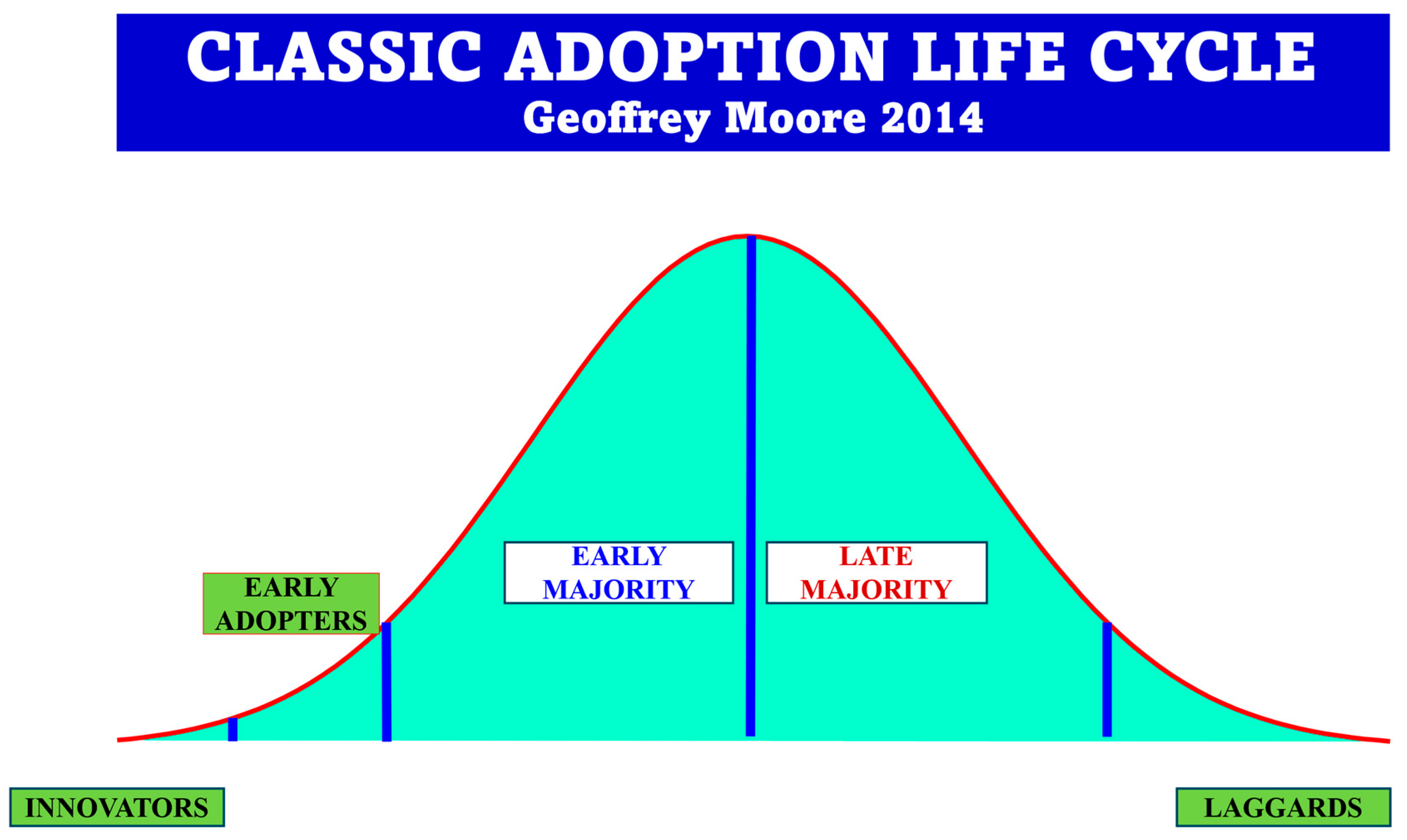
After a new technique emerges, marketing strategies are required. These are best built on decades of legitimate academic research routinely describing populations as “early, middle, and late adopters” of new technologies, typically represented as a bell curve distribution. The same principles apply whether for a new toaster or directly to medical advances and explain why adoption can be rapid in some circles, locations, and specialties and very slow in others [63]. An understanding of the “playing field” is essential to getting new, especially ground-breaking technologies into actual use. The failure to understand such has forced many technologies that could have saved thousands of lives to go unused for even decades, because the marketplaces of physicians and patients seeing new concepts have dramatically different philosophies, experience, and willingness to abandon the old for something new.
The “marketing guru” Geoffrey Moore has described five distinct groups in the adoption process [63]:
- Innovators pursue new technology aggressively, even before formal introduction. Traditionally in medicine, this occurred mostly in academic settings under Institutional Review Board supervision. Recently, new genetic technologies such as non-invasive prenatal testing (NIPT) have been developed primarily in industry by engineers and researchers, then rapidly introduced—often as laboratory developed tests (LDTs). This approach often circumvents many US FDA regulations.
- Early adopters embrace new approaches early in their life cycle but are not technology hobbyists. They imagine, understand, and appreciate new technology before most people know it exists. Robotic surgery exemplifies this category. Newer methods for minimally invasive surgical procedures with different energy sources are yet another example of engineering solutions to medical problems [64,65].
- Early majority groups have some early adopter appreciation for new technologies but are driven by practicality. They often adopt after a “wait and see” period. Nuchal translucency (NT) screening in the US largely divided between early and late majority groups.
- Late majority groups are similar to the early majority groups but adopt only when a technology becomes a clear standard, and they often need “hand holding” and support. Administration of corticosteroids for lung support of fetuses at risk for preterm birth is a classic example.
- Laggards resist new technology until absolutely forced to accept it. For example, approximately 20% of obstetricians continued using single MSAFP screening years after multiple marker screening became standard. While marketing perspectives suggest convincing laggards is not worth the effort [66], medical practice cannot simply ignore them.
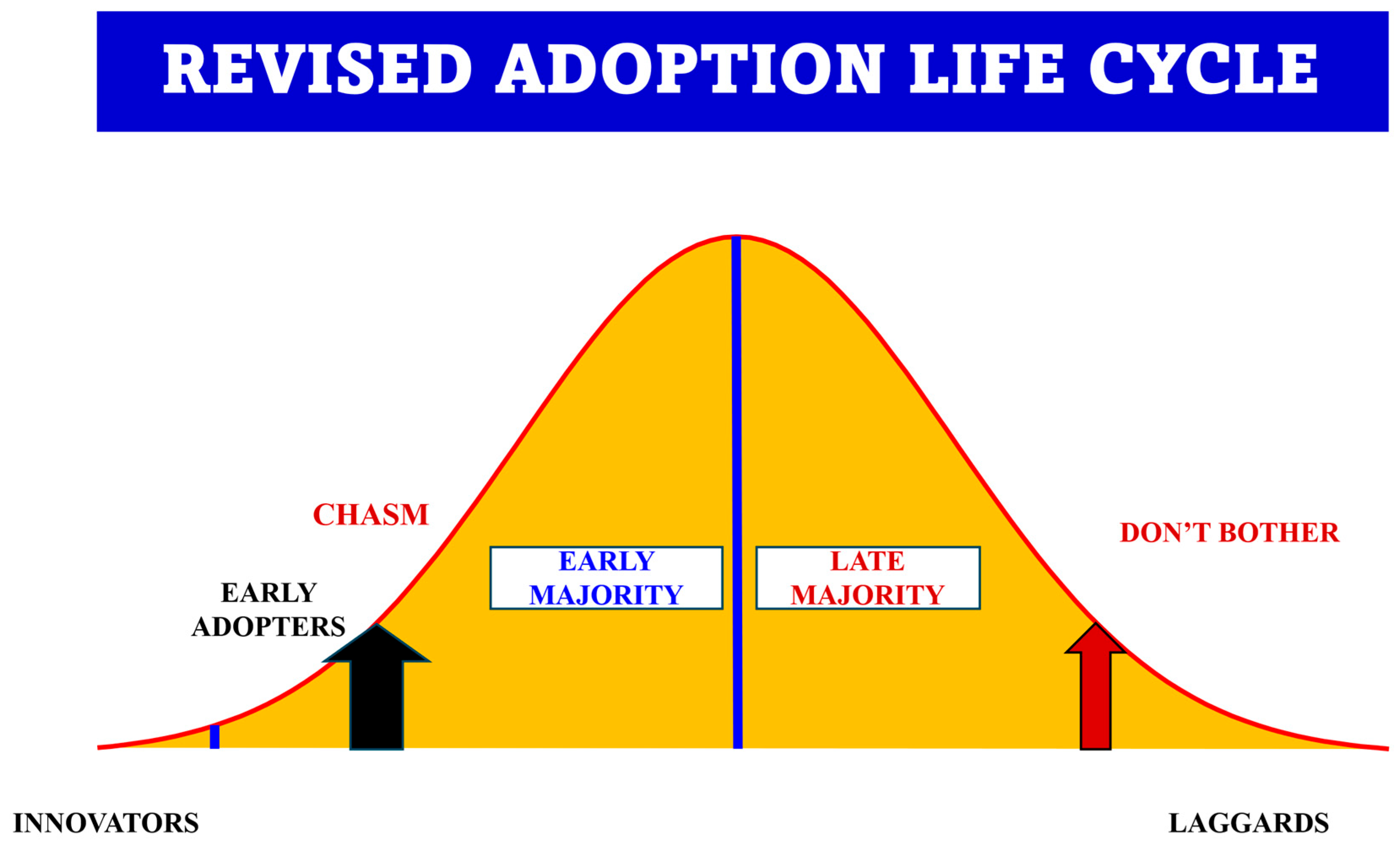
These designations can apply to almost any new idea. Progression between groups theoretically is a smooth bell curve (Figure 1). In reality, however, the curve is not smooth (Figure 2). A wide chasm exists between the combination of innovators and early adopters and the remaining categories [63]. Breaching this chasm to engage the early majority group requires (1) reframing from a product/technology focus to a market-centric focus, (2) practical hooks that resonate with the early majority group, and (3) avoiding extreme market pressures that distort the early adoption process [67].
Figure 1.
Traditional technology adoption curve. Theoretical smooth bell curve distribution showing progression from innovators through early adopters, early majority, late majority, to laggards [63].
Figure 2.
Reality of technology adoption. The actual adoption curve showing the significant chasm between early adopters and early majority, with distinct phases and barriers between groups rather than smooth transitions.
6.1. Forms of Resistance to Change
We identified two primary categories of resistance:
6.1.1. Non-Intentional Resistance
Many forms arise from inability to overcome physical, scientific, economic, or political barriers. These could theoretically be overcome over time and must be distinguished from vested interest-driven resistance.
6.1.2. Intentional Resistance
This includes hierarchical/reputational resistance (when senior academics or clinicians resist losing primacy to new methods) and financial resistance (often from corporate stakeholders where ethical norms differ from academic environments).
6.2. Resistance Mechanisms
There are five key patterns of resistance [7]:
- Practitioners and institutions become acculturated to outdated methods, resisting cultural change.
- Hierarchical pecking order strongly influences adoption.
- Reputational concerns intensify when linked to income or perks.
- Vested interests manipulate review processes to suppress new approaches.
- Politicization undermines innovation by distorting scientific rigor, blocking funds, and discrediting marketing efforts.
Academic resistance often manifests itself as passive-aggressive behavior including delaying reviews, misrepresenting content in critiques, and rejecting papers without allowing rebuttal [68,69].
6.3. Rapid and Slow Acceptance
Despite decades of frustration, there was both an overwhelming market “need” for the ability to know fetal sex early in pregnancy and avoid having diagnostic procedures. The discovery, patenting, and publishing by Lo et al., along with the development of rapid DNA sequencing, made the first attempts possible [7,34]. Even after a massive data fraud scandal, it took only one respected publication to get NIPT onto the American market as a “home brew” test, thereby bypassing most governmental regulations. NIPT, despite widely ranging performance metrics by disorder, laboratory, and methods, gained rapid acceptance in the marketplace. NIPT now has over 50% of the market, with significant drops in overall detection possibilities. There are many debates about the size, statistical performance metrics, and costs among various approaches [70].
6.4. Practical Solutions
There is no “one size fits everyone” for overcoming resistance. The differing types of “resistance” require different strategies to overcome them. The scientific barriers are often the most straightforward and vary from relatively simplistic, incremental advances in technology, to the equivalent of the Manhattan Project. As we have described, the desire for the new technology (such as learning fetal sex with NIPT) is a powerful force to grease the wheel to market entry and share. The approach with vested interest resistance is far more sinister and often hidden from obvious view. Having to navigate around biased grant evaluations and journal reviews can be extremely difficult. However, as the world has “shrunk” with digital media and nearly universal internet access, there are opportunities–often requiring ingenuity and resources to get around traditional barriers. The institutions are not yet relegated to “Maginot line” status. We anticipate that as the number of opportunities to get around the establishment become clear, the power of institutional barriers will decrease. However, high standards should never be abandoned for expediency.
Electronic Fetal Monitoring
Electronic fetal monitoring (EFM) illustrates these dynamics [71,72]:
- Developed in the 1970s (notably by Edward Hon) to reduce stillbirths in labor.
- Early and rapid acceptance of EFM occurred derived from a perceived compelling need and the instilled belief that traditional auscultation and palpation methods for assessment of fetal heart rate and uterine activity were ineffective means of preventing intrauterine fetal demise.
- Mission creep then expanded the goals of EFM to preventing neurologic impairment, which EFM has not been able to achieve over the past 50 years despite multiple claims to the contrary.
- Passive resistance to new ideas played out through biased peer review and commentary [73,74].
6.5. Discussion
Adopting new medical technologies requires peer-reviewed publication to establish scientific credibility, enable insurance coverage, and facilitate regulatory alignment. NIPT (2010s) [75,76,77,78] and EFM (1970s) [71,72] represent exceptions—widely adopted before rigorous studies of these tools were performed. Once any technology is entrenched in practice, it becomes extremely difficult to challenge its validity and benefits, even when considerable data to the contrary have been published.
Journals serve as both accelerators and gatekeepers, promoting vetted innovations while potentially blocking disruptive methods through biased or malicious reviews, desk rejections without review, and suppression of rebuttals to inaccurate and ill-informed critiques [68,69,79].
6.6. Modern Challenges
Rapid innovation creates a “pacing problem” for regulators [62]. Political polarization and funding instability [80,81] threaten traditional “hard-law” oversight. Soft-law mechanisms (guidelines, consensus, professional collaboration) are increasingly relied upon for timely governance.
Historical parallels from tobacco, climate change, and AIDS activism [82,83,84] demonstrate that multi-pronged citizen, legal, and media action can counter systemic threats [85]. We need a complete reconceptualization of how we evaluate technologies in a manner that is not fossilized in long-abandoned approaches but that maintains the core of ethics and integrity needed to create trust in the wider community.
The Picker Institute identified eight characteristics of patient-centered care: respect for preferences, coordinated care, comfort, emotional support, family involvement, continuity, and access [86]. Balancing innovation versus patient-centeredness resembles a seesaw-policy and adoption must not compromise safety for speed [87].
6.7. Some Consensus
The acceptance or resistance to new technologies is inseparable from the larger context in which they are developed, critically studied, and eventually embedded. Breakthrough technologies do not develop in a vacuum; they require scientific method foundations [88]. Oversight must be actively interrogated, as current environments feature funding threats, politicization, and fragmented governance [62,80,81].
Collaborative, decentralized governance models are essential for sustainable innovation. Clinical teams must foster patient-centered, data-driven decision-making, reinforced by case debriefings and grand rounds on both successes and failures [89], dynamic negotiated processes that evolve as new norms are established [90,91,92], and integration of soft-law governance to supplement slow formal regulation [62].
Ultimately, resistance to some innovative products can be legitimate when based on trade-offs of safety and efficacy, but suppression through vested interests or politics ultimately undermines medical progress [7]. When the normal course of scientific investigation is undermined by false claims, political distortion, or manipulation of oversight [93], adoption of new technologies suffers.
7. A Vision for the Future
Rather than focusing on prescriptive steps, it is worth examining a potential future to see if we are drawn to that vision. This attainable future envisions a healthcare ecosystem where technology enhances, rather than obstructs, human-centered care [94]. In this vision, clinicians would engage in an augmented clinical practice, working with advanced machine learning not as a replacement, but as a tool to achieve higher standards. This would foster a technology-enhanced human connection, where the exam room is free of intrusive devices, allowing the physician and patient to interact directly. Treatment would prioritize minimally invasive approaches, from childbirth to gynecologic surgery, while precision medicine would deliver targeted, systematic therapies. Underpinning all of this would be real-time precision diagnostics that provide immediate information at the point of care, eliminating delays and empowering decisive action [45].
7.1. Regulatory Considerations and Implementation
The integration of AI and machine learning into clinical practice requires careful consideration of regulatory frameworks. The FDA has developed specific guidance for AI/ML-based Software as a Medical Device (SaMD), including predetermined change control plans that allow for continuous learning and improvement [95,96]. These frameworks provide a pathway for innovation while maintaining safety standards.
Successful implementation will require addressing issues of algorithmic bias, ensuring equitable access to advanced technologies, and maintaining transparency in AI decision-making processes [97,98]. Healthcare systems must also develop infrastructure capable of supporting real-time data processing and integration with existing electronic health records [99]. It is easy to espouse platitudes as to how to approach such issues, but an adequate discussion of this topic would be longer than the entire paper as is.
7.2. Multi-Omics Integration and Personalized Medicine
The future of women’s health will likely involve integration of multiple data types including genomics, proteomics, metabolomics, and continuous physiological monitoring [100]. Wearable technology combined with AI analytics will enable continuous health monitoring and early detection of pathological changes [101].
Advances in molecular diagnostics will enable more precise classification of conditions like ovulatory disorders and provide targeted therapeutic approaches [102]. The integration of AI with electronic health records will enhance clinical decision support and enable population-level insights while maintaining individual patient privacy [103].
7.3. Global Health Applications
Many of the technological advances discussed have particular relevance for global health applications. AI-powered diagnostic tools that operate on smartphones or tablet devices can bring expert-level analysis to resource-limited settings [104]. Remote monitoring technologies can extend specialized care to underserved populations, while precision medicine approaches can be adapted to address population-specific genetic variations and disease patterns.
8. The Reproductive Medicine Special Issue
Articles in the special issue address diverse perspectives on innovation in women’s health, covering the expanse from basic science discoveries to clinical implementation, addressing different aspects of the transformation process [105].
9. Roles in Transformation
The reader has taken the first step as a transformational healer by engaging with this article. There are many decision points and variable paths ahead. It is obvious that many authors in this special issue have taken different paths to become innovators; no single path is “the right one.” Whatever the path, it should be led by the guiding star that physicians are called to be healers [106]. Only a small fraction of the population will introduce innovations, but without many more accepting those innovations in a generous way, nothing worthwhile happens.
The future of maternal–fetal care and women’s health lies not in incremental adjustments but in embracing the transformative potential of emerging technologies. By fostering innovation-ready environments and maintaining our commitment to healing, we can realize a future where technology serves humanity’s highest aspirations in women’s health [107]. In an era with conflicting societal priorities, decreased governmental funding, increasing political polarization, and increasing competition for limited resources, it will take great technological leaps to extend the very best of society to the bulk of those who cannot afford to buy it even in high income countries. The situation is even more desperate in middle- and low-income countries, where the vast majority of the population lacks such resources. Increasing resources and efforts will need to be focused on implementation and evaluation efforts to maximize the return for hard to obtain resources.
Author Contributions
M.I.E.: Conceptualization, writing—original draft preparation, writing—review and editing; L.D.D.: Writing—review and editing, methodology; D.W.B.: Writing—review and editing, formal analysis; G.F.R.: Writing—review and editing; C.R.M.: Writing—review and editing, supervision. All authors have read and agreed to the published version of the manuscript.
Funding
This research received no external funding.
Institutional Review Board Statement
Not applicable.
Informed Consent Statement
Not applicable.
Data Availability Statement
No new data were created or analyzed in this study. Data sharing is not applicable to this article.
Conflicts of Interest
Evans has patents on the Fetal Reserve Index. The other authors declare no conflicts of interest.
References
- Eastman, N.J.; Hellman, L.M. Williams Obstetrics, 13th ed.; Appleton-Century-Crofts: New York, NY, USA, 1966. [Google Scholar]
- Temmerman, M.; Khosla, R.; Say, L. Sexual and reproductive health and rights: A global development, health, and human rights priority. Lancet 2020, 396, 456–458. [Google Scholar] [CrossRef] [Scilit]
- Ranjbar, A.; Montazeri, F.; Ghamsari, S.R.; Mehrnoush, V.; Roozbeh, N.; Darsareh, F. Machine learning models for predicting preeclampsia: A systematic review. BMC Pregnancy Childbirth 2024, 24, 6. [Google Scholar] [CrossRef] [Scilit]
- Macedonia, C.R.; Johnson, C.T.; Rajapakse, I. Advanced research and data methods in Women’s health: Big data analytics, adaptive studies, and the road ahead. Obstet. Gynecol. 2017, 129, 249–264. [Google Scholar] [CrossRef] [Scilit] [PubMed]
- Giudice, L.C.; Oskotsky, T.T.; Falako, S.; Opoku-Anane, J.; Sirota, M. Endometriosis in the era of precision medicine and impact on sexual and reproductive health across the lifespan and in diverse populations. FASEB J. 2023, 37, e23130. [Google Scholar] [CrossRef] [Scilit] [PubMed]
- Darwin, C. On the Origin of Species by Means of Natural Selection; John Murray: London, UK, 1859. [Google Scholar]
- Evans, M.I.; Britt, D.W. Resistance to Change. Reprod. Sci. 2023, 30, 835–853. [Google Scholar] [CrossRef] [Scilit] [PubMed]
- Bohnsack, R.; Kurtz, H.; Hanelt, A. Re-examining path dependence in the digital age: The evolution of connected car business models. Res. Policy 2021, 50, 104328. [Google Scholar] [CrossRef] [Scilit]
- Garud, R.; Kumaraswamy, A.; Karnoe, P. Path dependence or path creation? J. Manag. Stud. 2010, 47, 760–774. [Google Scholar] [CrossRef] [Scilit]
- Arthur, W.B. The structure of invention. Res. Policy 2007, 36, 274–287. [Google Scholar] [CrossRef] [Scilit]
- Bijker, W. Of Bicycles, Bakelite and Bulbs; MIT Press: Cambridge, MA, USA, 1995. [Google Scholar]
- Blackwell, S.C.; Gyamfi-Bannerman, C.; Biggio, J.R., Jr.; Chauhan, S.P.; Hughes, B.L.; Louis, J.M.; Manuck, T.A.; Miller, H.S.; Das, A.F.; Saade, G.R.; et al. 17-OHPC to Prevent Recurrent Preterm Birth in Singleton Gestations (PROLONG Study): A Multicenter, International, Randomized Double-Blind Trial. Am. J. Perinatol. 2020, 37, 127–136. [Google Scholar] [CrossRef] [Scilit] [PubMed]
- Hinton, G. Deep learning—A technology with the potential to transform health care. JAMA 2018, 320, 1101–1102. [Google Scholar] [CrossRef] [Scilit]
- Evans, M.I.; Brabbing-Goldstein, D.; Evans, S.M.; Yaron, Y. Prenatal Diagnosis in the Molecular Age–indications, procedures, and laboratory techniques. In Avery & MacDonald’s Neonatology: Pathophysiology and Management of the Newborn, 8th ed.; Boardman, J.P., Groves, A., Ramasethu, J., Eds.; Wolters Kluwery/Lippincott Williams and Wilkins Publishing Co.: Philadelphia, PA, USA, 2021; pp. 109–136. [Google Scholar]
- Mendell, J.R.; Al-Zaidy, S.; Shell, R.; Arnold, W.D.; Rodino-Klapac, L.R.; Prior, T.W.; Lowes, L.; Alfano, L.; Berry, K.; Church, K.; et al. Single-dose gene-replacement therapy for spinal muscular atrophy. N. Engl. J. Med. 2017, 377, 1713–1722. [Google Scholar] [CrossRef] [Scilit] [PubMed]
- Devoe, L.D.; Muhanna, M.; Maher, J.; Evans, M.I.; Klein-Seetharaman, J. Current state of artificial intelligence model development in obstetrics. Obstet. Gynecol. 2025, 146, 233–243. [Google Scholar] [CrossRef] [Scilit] [PubMed]
- Liu, L.; Pu, Y.; Fan, J.; Yan, Y.; Liu, W.; Luo, K.; Wang, Y.; Zhao, G.; Chen, T.; Puiu, P.D.; et al. Wearable Sensors, Data Processing, and Artificial Intelligence in Pregnancy Monitoring: A Review. Sensors 2024, 24, 6426. [Google Scholar] [CrossRef] [Scilit]
- Rajkomar, A.; Dean, J.; Kohane, I. Machine learning in medicine. N. Engl. J. Med. 2019, 380, 1347–1358. [Google Scholar] [CrossRef] [Scilit]
- Hernandez-Cruz, N.; Patey, O.; Adu-Bredu, T.; D’Alberti, E.; Noble, J.A.; Papageorghiou, A. OP02.04: Automated segmentation of fetal heart three-vessel view ultrasound video clips to facilitate prenatal assessment of congenital heart defects. Ultrasound Obstet. Gynecol. 2024, 64, 62–63. [Google Scholar] [CrossRef] [Scilit]
- Papageorghiou, A.T.; Walton, S.; Benson, M.; Meagher, S.; Sinkovskaya, E.; Smith, E.; Sleep, N. EP02.46: An AI system (SonoLyst) achieves expert level performance when categorising images for adherence to ISUOG mid-trimester screening guidelines. Ultrasound Obstet. Gynecol. 2023, 62, 117. [Google Scholar] [CrossRef] [Scilit]
- Drukker, L.; Noble, J.A.; Papageorghiou, A.T. Introduction to artificial intelligence in ultrasound imaging in obstetrics and gynecology. Ultrasound Obstet Gynecol. 2020, 56, 498–505. [Google Scholar] [CrossRef] [Scilit]
- Xi, J.; Chen, J.; Wang, Z.; Ta, D.; Lu, B.; Deng, X.; Huang, Q. Simultaneous segmentation of fetal hearts and lungs for medical ultrasound images via an efficient multi-scale model integrated with attention mechanism. Ultrason. Imaging 2021, 43, 308–319. [Google Scholar] [CrossRef] [Scilit]
- Macedonia, C. AI-Driven Advances in Women’s Health Diagnostics: Current Applications and Future Directions. Diagnostics 2025, 15, 3076. [Google Scholar] [CrossRef] [Scilit]
- Khan, A.; Han, S.; Ilyas, N.; Lee, Y.M.; Lee, B. CervixFormer: A Multi-scale swin transformer-Based cervical pap-Smear WSI classification framework. Comput. Methods Programs Biomed. 2023, 240, 107718. [Google Scholar] [CrossRef] [Scilit]
- Xue, Z.; Novetsky, A.P.; Einstein, M.H.; Marcus, J.Z.; Befano, B.; Guo, P.; Antani, S. A demonstration of automated visual evaluation of cervical images taken with a smartphone camera. Int. J. Cancer 2020, 147, 2416–2423. [Google Scholar] [CrossRef] [Scilit]
- Hou, X.; Shen, G.; Zhou, L.; Li, Y.; Wang, T.; Ma, X. Artificial Intelligence in Cervical Cancer Screening and Diagnosis. Front. Oncol. 2022, 12, 851367. [Google Scholar] [CrossRef] [Scilit] [PubMed]
- Cai, G.; Huang, F.; Gao, Y.; Li, X.; Chi, J.; Xie, J.; Liu, J. Artificial intelligence-based models enabling accurate diagnosis of ovarian cancer using laboratory tests in China: A multicentre, retrospective cohort study. Lancet Digit. Health 2024, 6, e176–e186. [Google Scholar] [CrossRef] [Scilit] [PubMed]
- Kovacheva, V.P.; Eberhard, B.W.; Cohen, R.Y.; Maher, M.; Saxena, R.; Gray, K.J. Preeclampsia Prediction Using Machine Learning and Polygenic Risk Scores From Clinical and Genetic Risk Factors in Early and Late Pregnancies. Hypertension 2024, 81, 264–272. [Google Scholar] [CrossRef] [Scilit]
- McElrath, T.F.; Cantonwine, D.E.; Gray, K.J.; Mirzakhani, H.; Doss, R.C.; Khaja, N.; Khalid, M.; Page, G.; Brohman, B.; Zhang, Z.; et al. Late first trimester circulating microparticle proteins predict the risk of preeclampsia <35 weeks and suggest phenotypic differences among affected cases. Sci. Rep. 2020, 10, 17353. [Google Scholar] [CrossRef] [Scilit] [PubMed]
- Rasmussen, M.; Reddy, M.; Nolan, R.; Camunas-Soler, J.; Khodursky, A.; Scheller, N.M.; Cantonwine, D.E.; Engelbrechtsen, L.; Mi, J.D.; Dutta, A.; et al. RNA profiles reveal signatures of future health and disease in pregnancy. Nature 2022, 601, 422–427. [Google Scholar] [CrossRef] [Scilit]
- Castillo-Marco, N.; Cordero, T.; Igual, M.; Muñoz-Blat, I.; Gómez-Álvarez, C.; Bernat-González, N.; Gaspar-Doménech, Á.; Ortiz-Domingo, É.; Vives, A.; Ortega-Sanchís, S.; et al. Maternal plasma cell-free RNA as a predictor of early and late-onset preeclampsia throughout pregnancy. Nat. Commun. 2025, 16, 9208. [Google Scholar] [CrossRef] [Scilit]
- Rolnik, D.L.; Wright, D.; Poon, L.C.Y.; Syngelaki, A.; O’Gorman, N.; de Paco Matallana, C.; Akolekar, R.; Cicero, S.; Janga, D.; Singh, M.; et al. ASPRE trial: Performance of screening for preterm pre-eclampsia. Ultrasound Obstet. Gynecol. 2017, 50, 492–495. [Google Scholar] [CrossRef] [Scilit]
- Weiner, C.P.; Carlson, S.E.; Mieri, H. Plasma RNA-Based Dual Screening for Early Preterm Birth and Early Onset Preeclampsia to Enable Prevention. Diagnostics 2025, 16, 660. [Google Scholar] [CrossRef] [Scilit]
- Evans, M.I.; Hanft, R.S. The introduction of new technologies. ACOG Clin. Semin. 1997, 2, 1–3. [Google Scholar] [CrossRef] [Scilit]
- Moustafa, S.; Burn, M.; Mamillapalli, R.; Nematian, S.; Flores, V.; Taylor, H.S. Accurate diagnosis of endometriosis using serum microRNAs. Am. J. Obstet. Gynecol. 2020, 223, e1–e557-557.e11. [Google Scholar] [CrossRef] [Scilit]
- Santos, C.M.A.M.; Souza, A.T.B.; Neta, A.P.R.; Freire, L.V.P.; Sarmento, A.C.A.; Medeiros, K.S.; Luchessi, A.D.; Cobucci, R.N.; Gonçalves, A.K.; Crispim, J.C.O. Exosomal MicroRNAs as Epigenetic Biomarkers for Endometriosis: A Systematic Review and Bioinformatics Analysis. Int. J. Mol. Sci. 2025, 26, 4564. [Google Scholar] [CrossRef] [Scilit]
- Bakkum-Gamez, J.N.; Wentzensen, N.; Maurer, M.J.; Hawthorne, K.M.; Voss, J.S.; Kroneman, T.N.; Famuyide, A.O.; Clayton, A.C.; Halling, K.C.; Kerr, S.E.; et al. Detection of endometrial cancer via molecular analysis of DNA collected with vaginal tampons. Gynecol. Oncol. 2015, 137, 14–22. [Google Scholar] [CrossRef] [Scilit]
- Azeze, G.G.; Wu, L.; Alemu, B.K.; Lee, W.F.; Fung, L.W.Y.; Cheung, E.C.W.; Zhang, T.; Wang, C.C. Proteomics approach to discovering non-invasive diagnostic biomarkers and understanding the pathogenesis of endometriosis: A systematic review and meta-analysis. J. Transl. Med. 2024, 22, 685. [Google Scholar] [CrossRef] [Scilit] [PubMed]
- Nezhat, C.R.; Oskotsky, T.T.; Robinson, J.F.; Fisher, S.J.; Tsuei, A.; Liu, B.; Irwin, J.C.; Gaudilliere, B.; Sirota, M.; Stevenson, D.K.; et al. Real world perspectives on endometriosis disease phenotyping through surgery, omics, health data, and artificial intelligence. NPJ Womens Health 2025, 3, 8. [Google Scholar] [CrossRef] [Scilit]
- McLaughlin, B. Real-world benefits of the INVU remote fetal nonstress testing platform. Am. J. Obstet. Gynecol. 2024, 230, e22. [Google Scholar] [CrossRef] [Scilit]
- Pinaaz, K.H.; Gulick, D.; Devoe, L.D.; Evans, M.I.; Christen, J.B. Baby Sock to Monitor Newborns to Detect Risk for Neonatal Compromise. In Proceedings of the 2024 IEEE 67th International Midwest Symposium on Circuits and Systems (MWSCAS), Springfield, MA, USA, 11–14 August 2024; pp. 902–906. [Google Scholar]
- Altini, M.; Rossetti, E.; Rooijakkers, M.J.; Penders, J. Towards non-invasive labour detection: A free-living evaluation. In Proceedings of the 2018 40th Annual International Conference of the IEEE Engineering in Medicine and Biology Society (EMBC), Honolulu, HI, USA, 18–21 July 2018; pp. 2841–2844. [Google Scholar]
- Goodale, B.M.; Shilaih, M.; Falco, L.; Dammeier, F.; Hamvas, G.; Leeners, B. Wearable Sensors Reveal Menses-Driven Changes in Physiology and Enable Prediction of the Fertile Window: Observational Study. J. Med. Internet Res. 2019, 21, e13404. [Google Scholar] [CrossRef] [Scilit] [PubMed]
- Lyzwinski, L.; Caffery, L.; Bambling, M.; Edirippulige, S. Innovative Approaches to Menstruation and Fertility Tracking Using Wearable Reproductive Health Technology: Systematic Review. J. Med. Internet Res. 2024, 26, e45139. [Google Scholar] [CrossRef] [Scilit]
- Pierson, E.; Althoff, T.; Thomas, D.; Hillard, P.; Leskovec, J. Daily, weekly, seasonal and menstrual cycles in women’s mood, behaviour and vital signs. Nat. Hum. Behav. 2021, 5, 716–725. [Google Scholar] [CrossRef] [Scilit]
- Lotter, W.; Hassett, M.J.; Schultz, N.; Kehl, K.L.; Van Allen, E.M.; Cerami, E. Artificial Intelligence in Oncology: Current Landscape, Challenges, and Future Directions. Cancer Discov. 2024, 14, 711–726. [Google Scholar] [CrossRef] [Scilit] [PubMed]
- Saito, Y.; Horie, S.; Kogure, Y.; Mizuno, K.; Ito, Y.; Mizukami, Y.; Kim, H.; Tamura, Z.; Koya, J.; Funakoshi, T.; et al. Real-world clinical utility of comprehensive genomic profiling in advanced solid tumors. Nat. Med. 2026, 32, 690–701. [Google Scholar] [CrossRef] [Scilit]
- Ehimiaghe, E.; Dimmick, H.; Spinosa, D.; Ireigbe, F.; Post, M.D.; Wolsky, R.J.; Clauset, A.; Orsulic, S.; Taylor, S.; Hsieh, E.W.Y.; et al. Ovarian cancer think tank: The use of integrated artificial intelligence and computational biology in ovarian cancer diagnosis and treatment. Eur. J. Gynaecol. Oncol. 2026, 47, 15–20. [Google Scholar] [CrossRef] [Scilit]
- Shortliffe, E.H.; Sepúlveda, M.J. Clinical decision support in the era of artificial intelligence. JAMA 2018, 320, 2199–2200. [Google Scholar] [CrossRef] [Scilit] [PubMed]
- Cohen, I.G.; Mello, M.M. Big Data, Big Tech, and Protecting Patient Privacy. JAMA 2019, 322, 1141–1142. [Google Scholar] [CrossRef] [Scilit]
- Char, D.S.; Shah, N.H.; Magnus, D. Implementing machine learning in health care—Addressing ethical challenges. N. Engl. J. Med. 2022, 386, 779–781. [Google Scholar] [CrossRef] [Scilit] [PubMed]
- Rogers, E.M. Diffusion of Innovations, 5th ed.; Free Press: New York, NY, USA, 2003. [Google Scholar]
- Macedonia, C.R.; Littlefield, R.J.; Coleman, J.; Satava, R.M.; Cramer, T.; Mogel, G.; Eglinton, G. Three-dimensional ultrasonographic telepresence. J. Telemed. Telecare 1998, 4, 224–230. [Google Scholar] [CrossRef] [Scilit]
- Cuschieri, A. Technology for minimal access surgery. BMJ 1999, 319, 1166–1169. [Google Scholar] [CrossRef] [Scilit]
- Intuitive da Vinci Surgical System: Technology Overview. Available online: https://www.intuitive.com/en-us/patients/da-vinci-robotic-surgery/about-the-systems?utm_source=chatgpt.com (accessed on 10 August 2025).
- Obermeyer, Z.; Powers, B.; Vogeli, C.; Mullainathan, S. Dissecting racial bias in an algorithm used to manage the health of populations. Science 2019, 366, 447–453. [Google Scholar] [CrossRef] [Scilit] [PubMed]
- Rhodes, R. The Making of the Atomic Bomb; Simon & Schuster: New York, NY, USA, 1986. [Google Scholar]
- Lo, Y.M.D.; Corbetta, N.; Chamberlain, P.F.; Rai, V.; Sargent, I.L.; Redman, C.W.; Wainscoat, J.S. Presence of fetal DNA in maternal plasma and serum. Lancet 1997, 350, 485–487. [Google Scholar] [CrossRef] [Scilit]
- Kuhn, T.S. The Structure of Scientific Revolutions, 3rd ed.; University of Chicago Press: Chicago, IL, USA, 1996. [Google Scholar]
- AAAS. R&D Budget and Policy Program: Federal R&D Budget Dashboard. Available online: https://www.aaas.org/programs/r-d-budget-and-policy/federal-rd-budget-dashboard (accessed on 10 August 2025).
- Venkataraman, S. The innovation economy’s dark side: When established companies lose their edge. The Washington Post, 12 May 2025.
- Thierer, A. Governing Emerging Technology in an Age of Policy Fragmentation and Disequilibrium; American Enterprise Institute: Washington, DC, USA, 2022. [Google Scholar]
- Moore, G.A. Crossing the Chasm: Marketing and Selling Disruptive Products to Mainstream Customers, 3rd ed.; Harper Business: New York, NY, USA, 2014. [Google Scholar]
- Buzzaccarini, G.; Stabile, G.; Torok, P.; Petousis, S.; Mikus, M.; Della Corte, L.; Barra, F.; Laganà, A.S. Surgical approach for enlarged uteri: Further tailoring of vNOTES hysterectomy. J. Investig. Surg. 2022, 35, 924–925. [Google Scholar] [CrossRef] [Scilit]
- Abi Antoun, M.; Etrusco, A.; Chiantera, V.; Lagana, A.S.; Feghali, E.; Khazzaka, A.; Stabile, G.; Della Corte, L.; Dellino, M.; Sleiman, Z. Outcomes of conventional and advanced energy devices in laparoscopic surgery: A systematic review. Minim. Invasive Ther. Allied Technol. 2024, 33, 1–12. [Google Scholar] [CrossRef] [Scilit] [PubMed]
- Evans, M.I. Overcoming militant mediocrity. Am. J. Obstet. Gynecol. 2008, 198, 656–661. [Google Scholar] [CrossRef] [Scilit]
- Friedman, T.L. The World Is Flat; Farrar, Straus & Giroux: New York, NY, USA, 2005. [Google Scholar]
- Drazen, J.M. Fifteen years. N. Engl. J. Med. 2015, 373, 1774–1775. [Google Scholar] [CrossRef] [Scilit]
- Chusid, M.J.; Casper, J.T.; Camitta, B.M. Editors have ethical responsibilities, too. N. Engl. J. Med. 1984, 311, 990–991. [Google Scholar]
- Evans, M.I.; Prensky, L.; Cuckle, H.S. Balancing How Much We Want to Know with What We Are Willing to Pay: A Comparative Cost Analysis of Prenatal Cytogenetic Testing and Screening Strategies. Fetal Diagn. Ther. 2025, in press. [Google Scholar] [CrossRef] [Scilit] [PubMed]
- Hon, E.H. The fetal heart rate patterns preceding death in utero. Am. J. Obstet. Gynecol. 1959, 78, 47–56. [Google Scholar] [CrossRef] [Scilit] [PubMed]
- Paul, R.H.; Hon, E.H. Clinical fetal monitoring: V. Effect on perinatal outcome. Am. J. Obstet. Gynecol. 1974, 118, 529–533. [Google Scholar] [CrossRef] [Scilit] [PubMed]
- Evans, M.I.; Britt, D.W.; Evans, S.M.; Devoe, L.D. Improving the interpretation of electronic fetal monitoring: The fetal reserve index. Am. J. Obstet. Gynecol. 2023, 228, S1129–S1143. [Google Scholar] [CrossRef] [Scilit]
- Evans, M.I.; Devoe, L.D.; Steer, P.J. Fetal compromise in labor. In High Risk Pregnancy: The Elements; James, D., Steer, P.J., Gonik, B., Weiner, C., Eds.; Cambridge University Press: Cambridge, UK, 2025. [Google Scholar]
- Dar, P.; Jacobson, B.; Clifton, R.; Egbert, M.; Malone, F.; Wapner, R.J.; Roman, A.S.; Khalil, A.; Faro, R.; Madankumar, R.; et al. Cell-free DNA screening for prenatal detection of 22q11.2 deletion syndrome. Am. J. Obstet. Gynecol. 2022, 227, 79-e1. [Google Scholar] [CrossRef] [Scilit]
- Evans, M.I.; Andriole, S.; Curtis, J.; Evans, S.M.; Kessler, A.A.; Rubenstein, A.F. The epidemic of abnormal copy number variants missed because of reliance upon noninvasive prenatal screening. Prenat. Diagn. 2018, 38, 730–734. [Google Scholar] [CrossRef] [Scilit]
- Evans, M.I.; Wapner, R.J.; Berkowitz, R.L. Non-invasive prenatal screening or advanced diagnostic testing: Caveat emptor. Am. J. Obstet. Gynecol. 2016, 215, 298–305. [Google Scholar] [CrossRef] [Scilit]
- Evans, M.I.; Evans, S.M.; Bennett, T.A.; Wapner, R.J. The price of abandoning diagnostic testing for cell free fetal DNA screening. Prenat. Diagn. 2018, 38, 243–245. [Google Scholar] [CrossRef] [Scilit]
- Fisher, P.G. Disproving junk science. J. Pediatr. 2019, 209, 1. [Google Scholar] [CrossRef] [Scilit] [PubMed]
- Science News Staff. Trump proposes massive cuts to research spending. Science 2025, 388, 566–567. [Google Scholar] [CrossRef] [Scilit]
- Waldman, A.; Fields, A.; Clarke, A. Science shattered. ProPublica, 12 June 2025.
- Oreskes, N.; Conway, E.M. Merchants of Doubt; Bloomsbury Press: New York, NY, USA, 2010. [Google Scholar]
- Klein, N. This Changes Everything: Capitalism Versus the Climate; Simon & Schuster: New York, NY, USA, 2014. [Google Scholar]
- France, D. How to Survive the Plague: The Inside Story of How Citizens and Science Tamed AIDS; Alfred A. Knopf: New York, NY, USA, 2016. [Google Scholar]
- Gans, J. The Pandemic Information Gap: The Brutal Economics of COVID-19; MIT Press: Cambridge, MA, USA, 2020. [Google Scholar]
- Berry, M.; Edgman-Levitan, S. Shared decision making—The pinnacle of patient-centered care. N. Engl. J. Med. 2012, 366, 780–781. [Google Scholar] [CrossRef] [Scilit] [PubMed]
- Britt, D.W. The impact of area conservatism on deviation from best practice: Women choosing to undergo selective reduction. Int. J. Health Wellness Soc. 2017, 7, 115. [Google Scholar] [CrossRef] [Scilit]
- Ragin, C. The Comparative Method: Moving Beyond Qualitative and Quantitative Strategies; University of California Press: Berkeley, CA, USA, 1987. [Google Scholar]
- Committee on Health Care for Underserved Women. ACOG Committee Opinion No. 729: Importance of social determinants of health and cultural awareness in the delivery of reproductive health care. Obstet. Gynecol. 2018, 131, e43–e48. [Google Scholar] [CrossRef] [Scilit]
- Davies, F.D. Perceived usefulness, perceived ease of use and user acceptance of information technology. MIS Q. 1989, 13, 319–340. [Google Scholar] [CrossRef] [Scilit]
- Venkatesh, V.; Davis, F.D. A theoretical extension of the technology acceptance model: Four longitudinal field studies. Manag. Sci. 2000, 46, 186–204. [Google Scholar] [CrossRef] [Scilit]
- Venkatesh, V.; Bala, H. Technology acceptance model 3 and a research agenda for interventions. Decis. Sci. 2008, 39, 273–315. [Google Scholar] [CrossRef] [Scilit]
- Ross, M.G. Misinformation and junk science in obstetrics medical malpractice. O G Open 2025, 2, e073. [Google Scholar] [CrossRef] [Scilit]
- Topol, E.J. High-performance medicine: The convergence of human and artificial intelligence. Nat. Med. 2019, 25, 44–-56. [Google Scholar] [CrossRef] [Scilit] [PubMed]
- U.S. Food and Drug Administration. Artificial Intelligence/Machine Learning (AI/ML)-Based Software as a Medical Device (SaMD) Action Plan; FDA: Silver Spring, MD, USA, 2021. Available online: https://www.fda.gov/media/145022/download (accessed on 10 August 2025).
- U.S. Food and Drug Administration. Guidance for industry: Predetermined Change Control Plan (PCCP) for AI/ML Devices. Available online: https://www.fda.gov/regulatory-information/search-fda-guidance-documents/marketing-submission-recommendations-predetermined-change-control-plan-artificial-intelligence (accessed on 10 August 2025).
- Rodriguez, J.A.; Shachar, C.; Bates, D.W. Digital Inclusion as Health Care—Supporting Health Care Equity with Digital-Infrastructure Initiatives. N. Engl. J. Med. 2022, 386, 1101–1103. [Google Scholar] [CrossRef] [Scilit]
- Kaushal, A.; Altman, R.; Langlotz, C. Geographic Distribution of US Cohorts Used to Train Deep Learning Algorithms. JAMA 2020, 324, 1212–1213. [Google Scholar] [CrossRef] [Scilit]
- Cerrato, P.; Halamka, J. Reinventing Clinical Decision Support: Data Analytics, Artificial Intelligence, and Diagnostic Reasoning, 1st ed.; Taylor & Francis: Abingdon, UK, 2020. [Google Scholar] [CrossRef] [Scilit]
- Chen, C.; Wang, J.; Pan, D.; Wang, X.; Xu, Y.; Yan, J.; Wang, L.; Yang, X.; Yang, M.; Liu, G.P. Applications of multi-omics analysis in human diseases. MedComm (2020) 2023, 4, e315. [Google Scholar] [CrossRef] [Scilit] [PubMed]
- Shilaih, M.; Goodale, B.M.; Falco, L.; Kübler, F.; De Clerck, V.; Leeners, B. Modern fertility awareness methods: Wrist wearables capture the changes in temperature associated with the menstrual cycle. Biosci. Rep. 2018, 38, BSR20171279. [Google Scholar] [CrossRef] [Scilit]
- Munro, M.G.; Balen, A.H.; Cho, S.; Critchley, H.O.; Díaz, I.; Ferriani, R.; van der Spuy, Z.M. The FIGO ovulatory disorders classification system. Hum. Reprod. 2022, 37, 2446–2464. [Google Scholar] [CrossRef] [Scilit]
- Liu, Y.; Kohlberger, T.; Norouzi, M.; Dahl, G.E.; Smith, J.L.; Mohtashamian, A.; Stumpe, M.C. Artificial intelligence-based breast cancer nodal metastasis detection: Insights into the black box for pathologists. Arch. Pathol. Lab. Med. 2019, 143, 859–868. [Google Scholar] [CrossRef] [Scilit] [PubMed]
- Chiweza, C.; Iwuh, I.; Hasan, A.; Malata, A.; Belfort, M.; Wilkinson, J. Can artificial intelligence-augmented fetal monitoring prevent intrapartum stillbirth and neonatal death in a low-income setting: An observational study? BJOG 2024, 131, 109–111. [Google Scholar] [CrossRef] [Scilit]
- Available online: https://www.mdpi.com/journal/reprodmed/special_issues/8K1S1J7K70 (accessed on 10 March 2025).
- Kern-Goldberger, A.R.; Hirshberg, A.; James, A.; Levine, L.D.; Howell, E.; Harbuck, E.; Srinivas, S.K. Trends in severe maternal morbidity following an institutional team goal strategy for disparity reduction. Am. J. Obstet. Gynecol. MFM 2024, 6, 101529. [Google Scholar] [CrossRef] [Scilit]
- Amodei, D.; Hernandez, D. AI alignment: Why it’s hard, and where to start. arXiv 2022, arXiv:2205.12345. [Google Scholar]

Disclaimer/Publisher’s Note: The statements, opinions and data contained in all publications are solely those of the individual author(s) and contributor(s) and not of MDPI and/or the editor(s). MDPI and/or the editor(s) disclaim responsibility for any injury to people or property resulting from any ideas, methods, instructions or products referred to in the content. |
© 2026 by the authors. Licensee MDPI, Basel, Switzerland. This article is an open access article distributed under the terms and conditions of the Creative Commons Attribution (CC BY) license.