An Artificial Neural Network-Based Strategy for Predicting Multiaxial Fatigue Damage to Welded Steel Structures

 , and
, and 
Abstract
1. Introduction
2. Materials and Methods
2.1. Joints
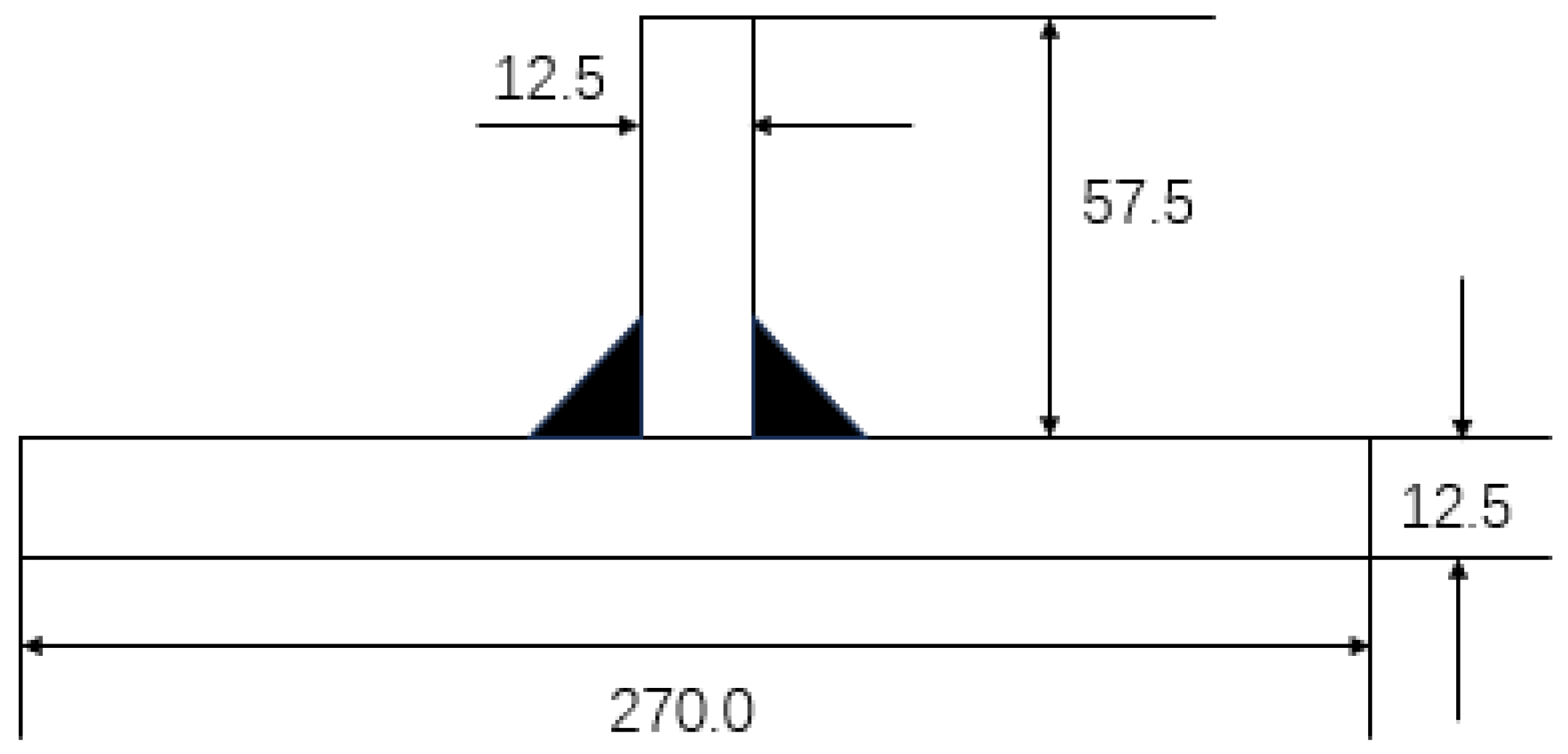
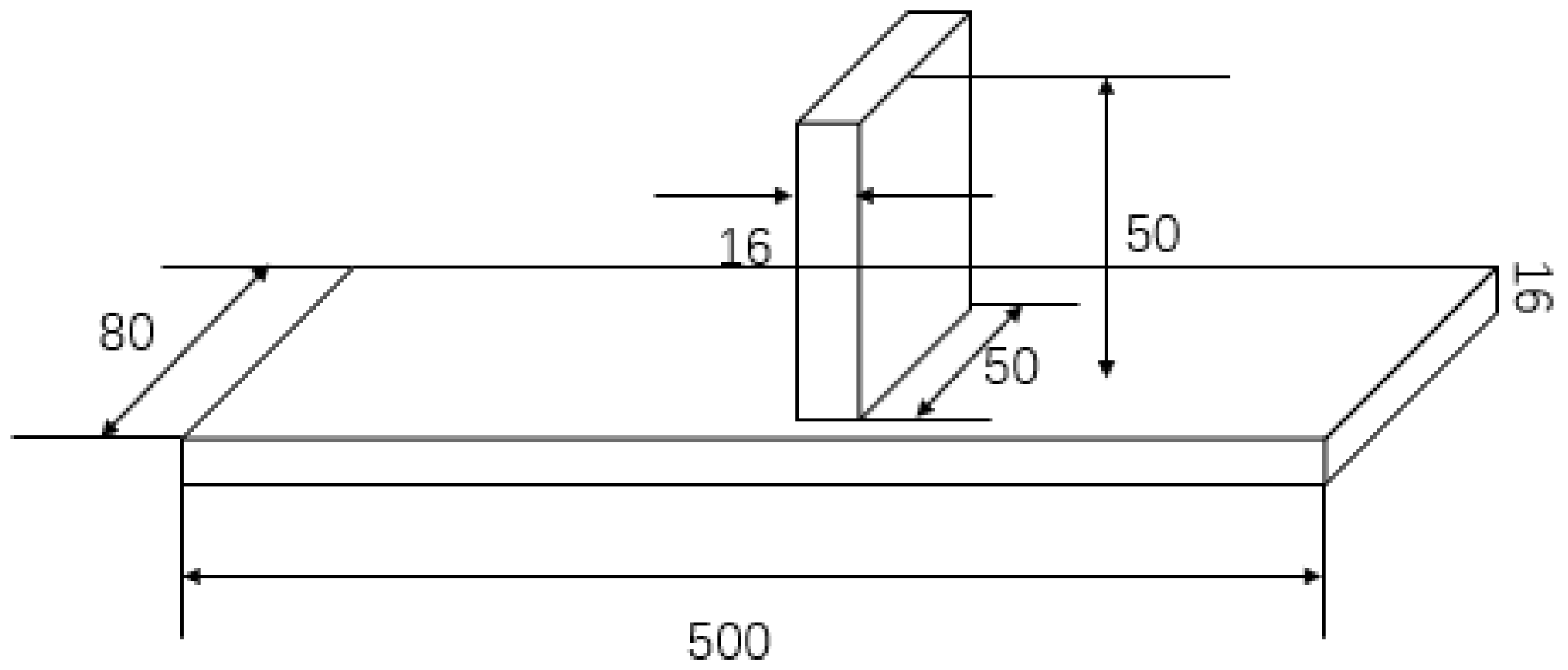
2.1.1. Cruciform Joints with HY Seam
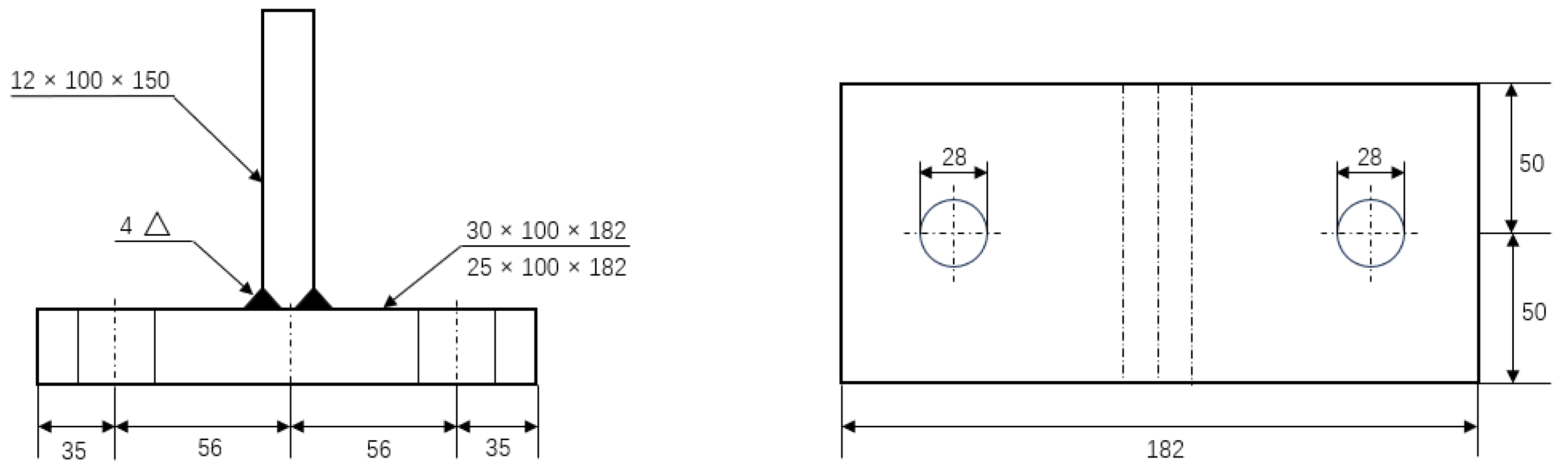
2.1.2. T Joints with Double Fillet
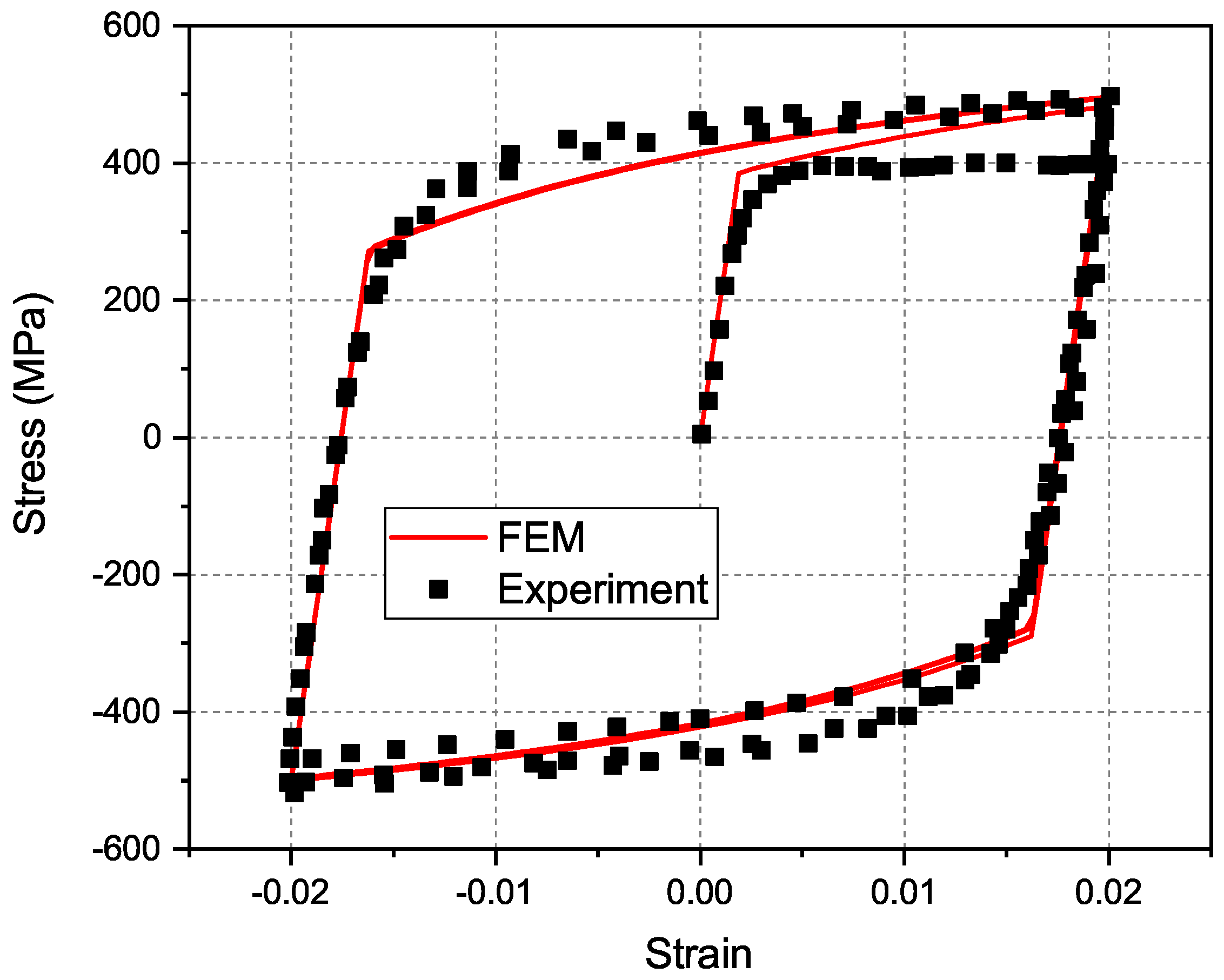
2.2. Constitutive Model and Material Properties
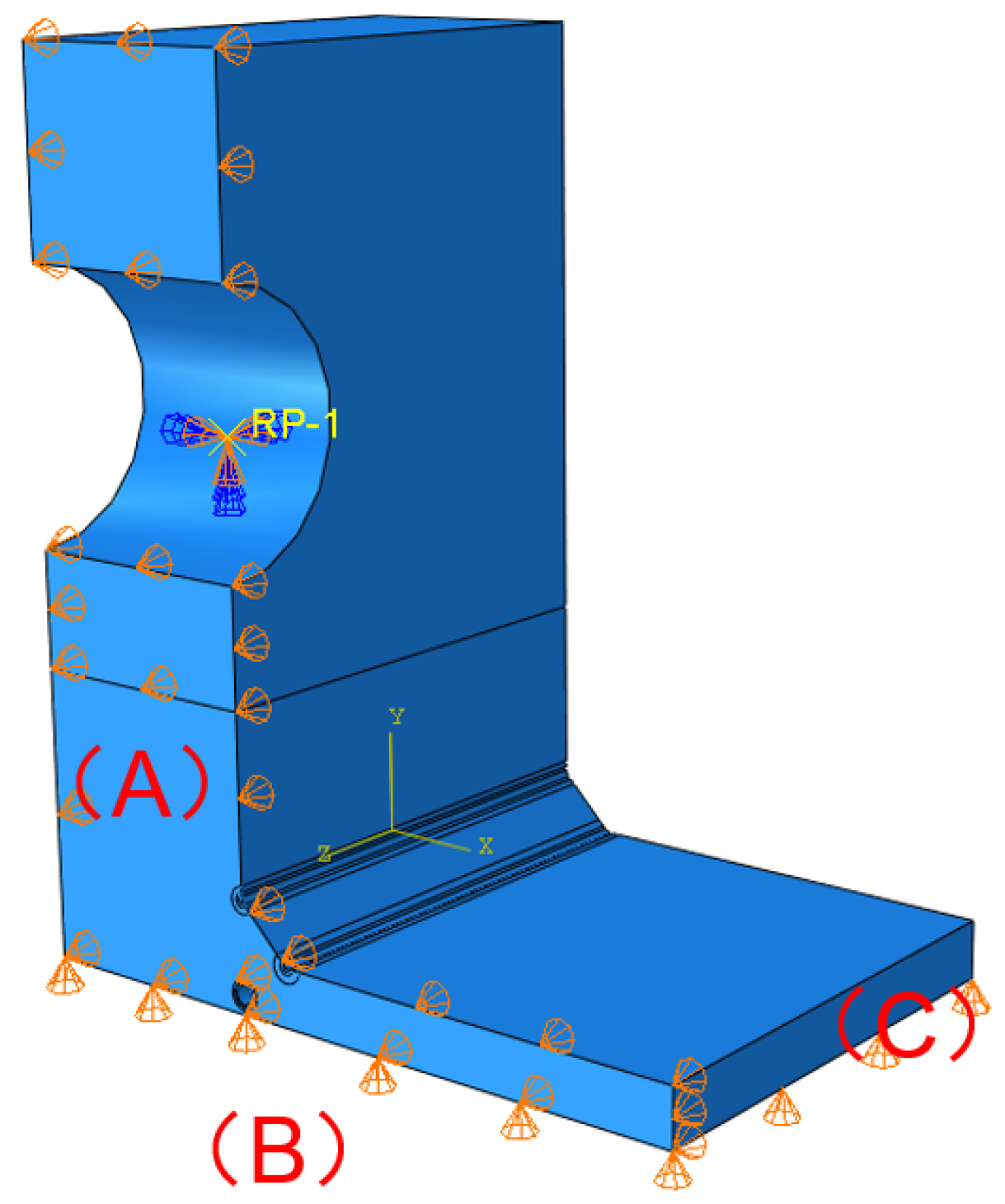
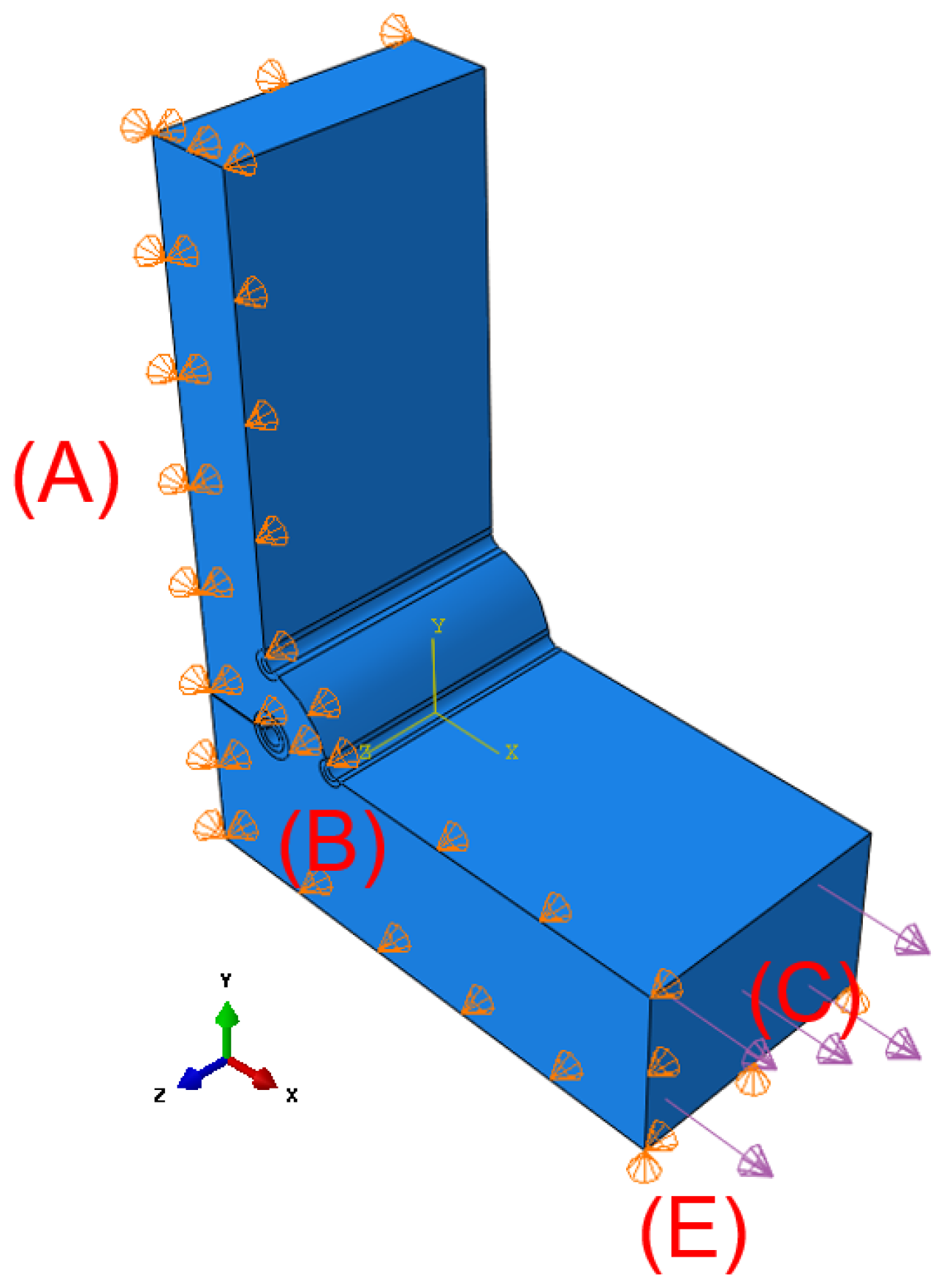
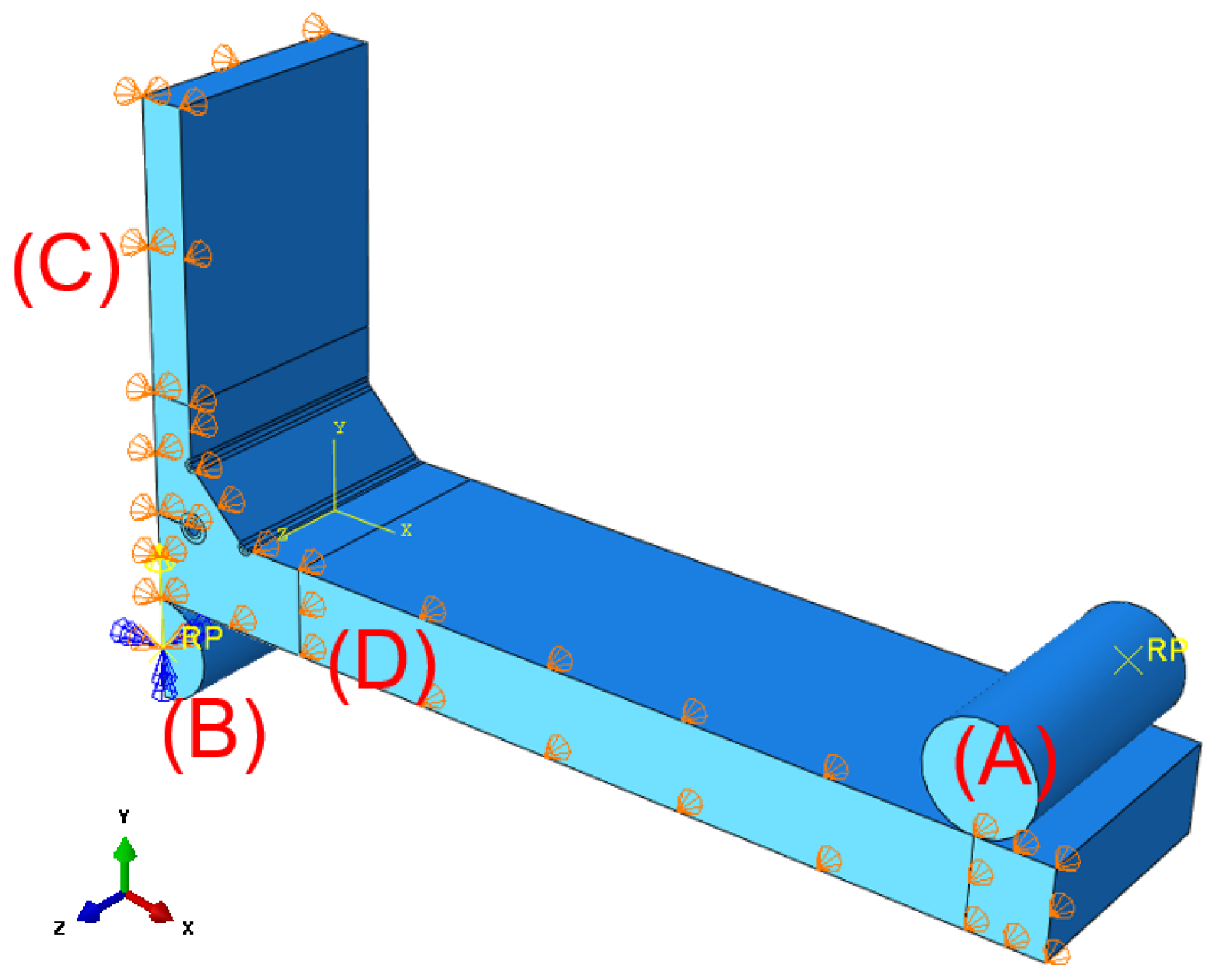
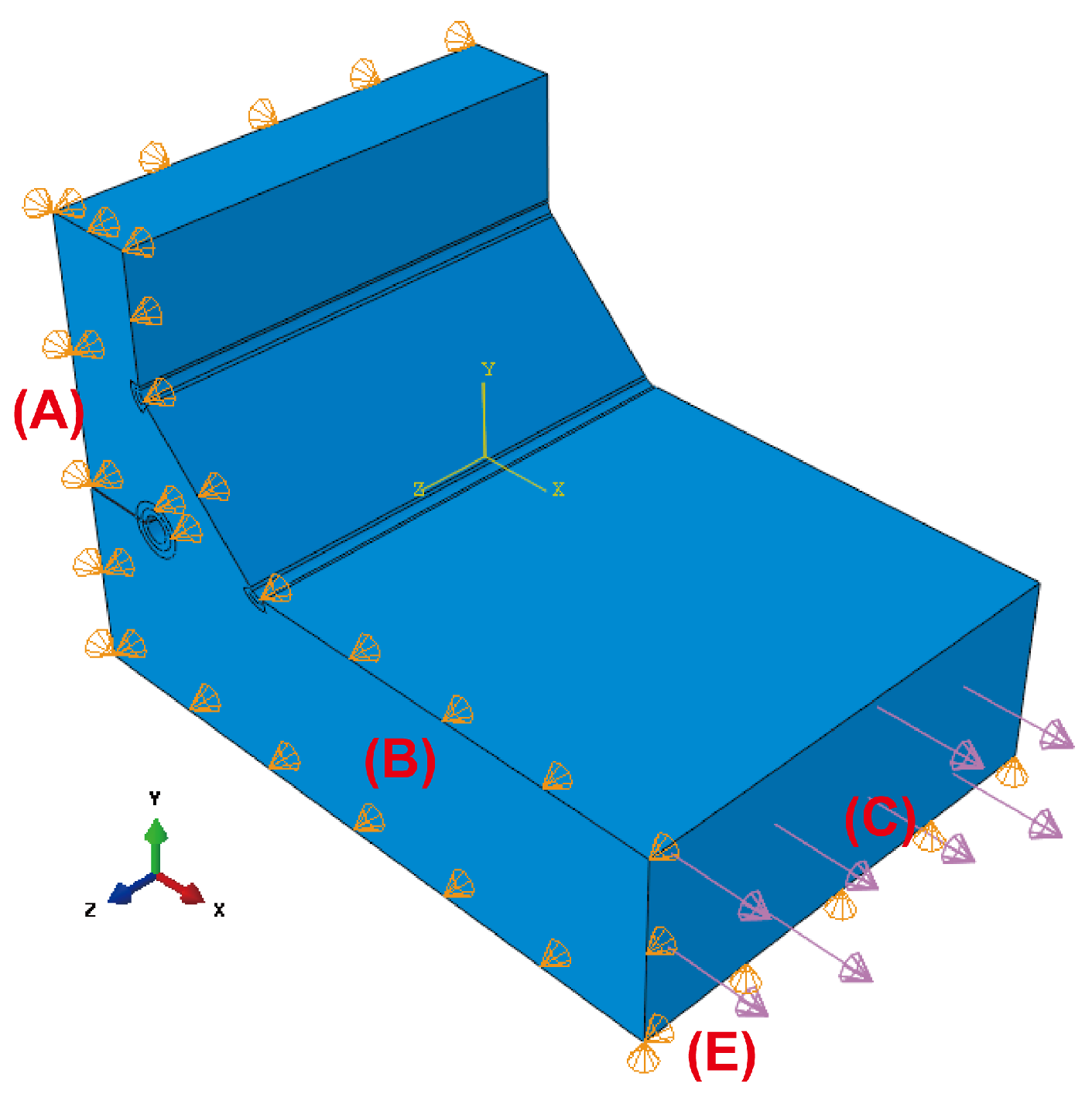
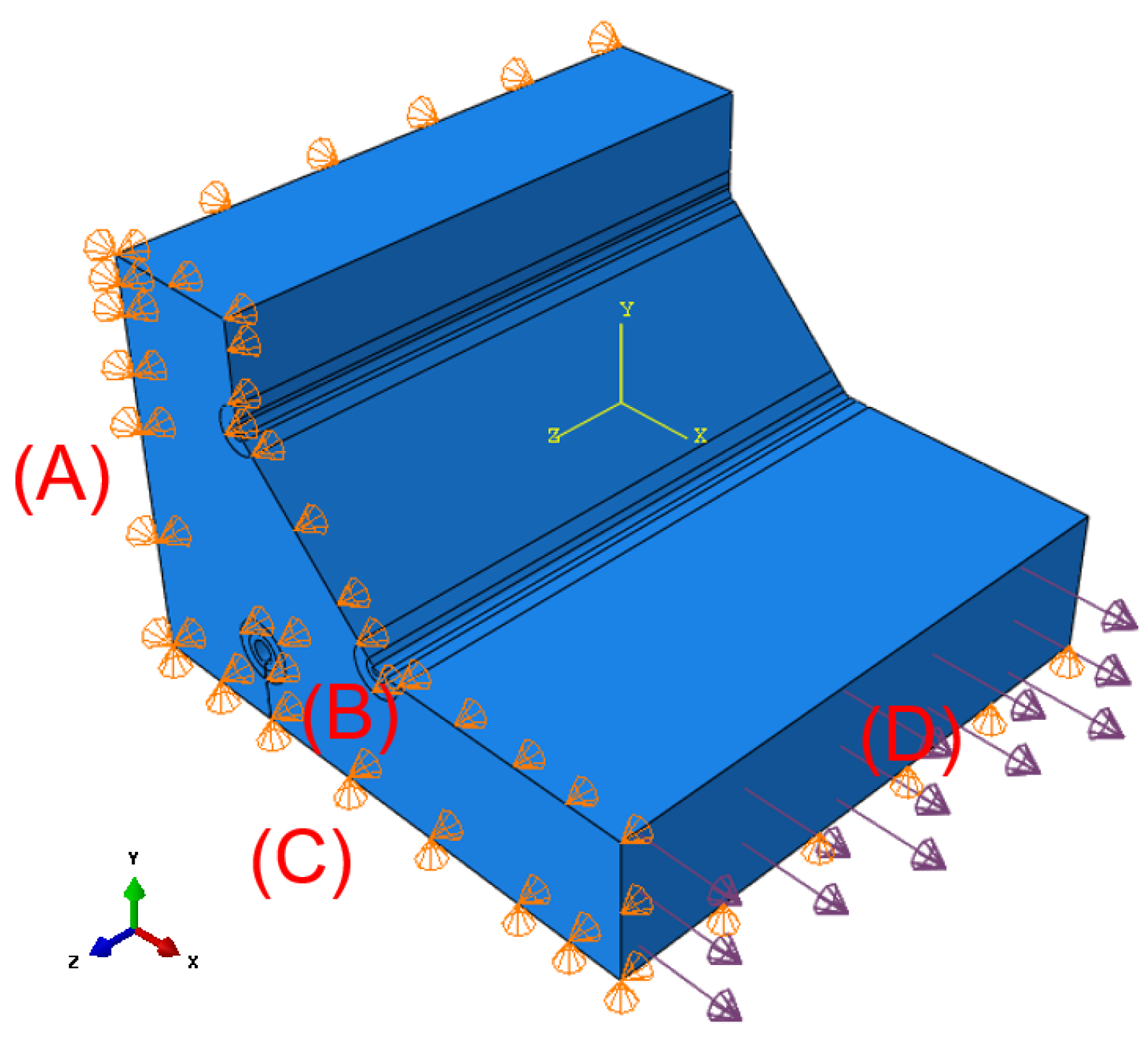
2.3. FEM Model Setup for Data Generation
2.4. Dataset
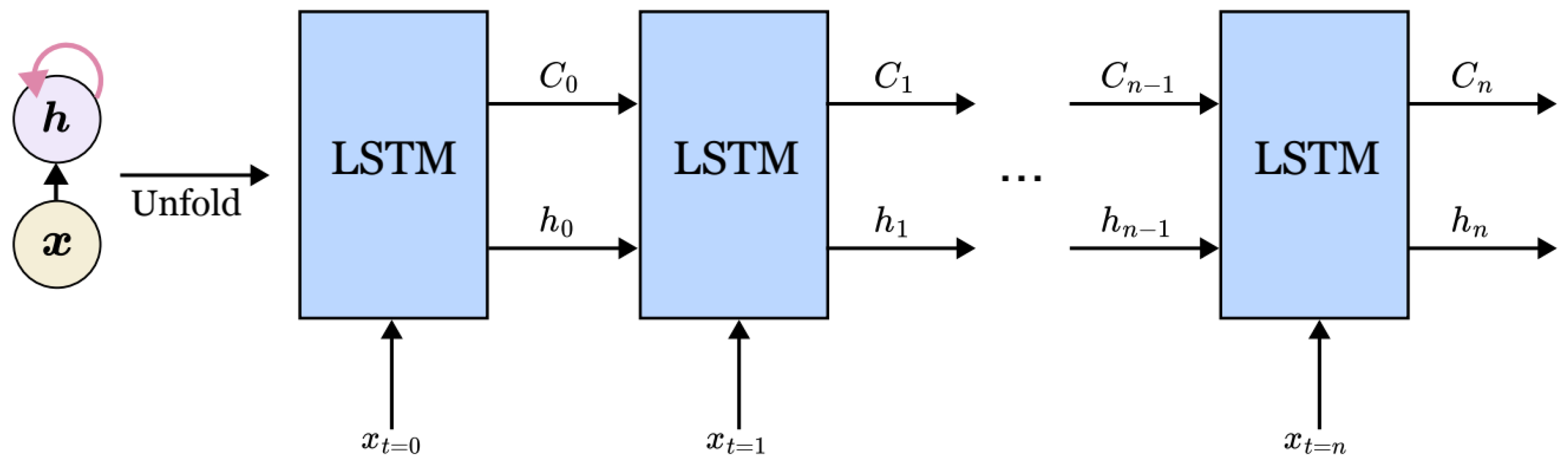
2.5. Recurrent Neural Network Model
AI Model
3. Results and Discussion
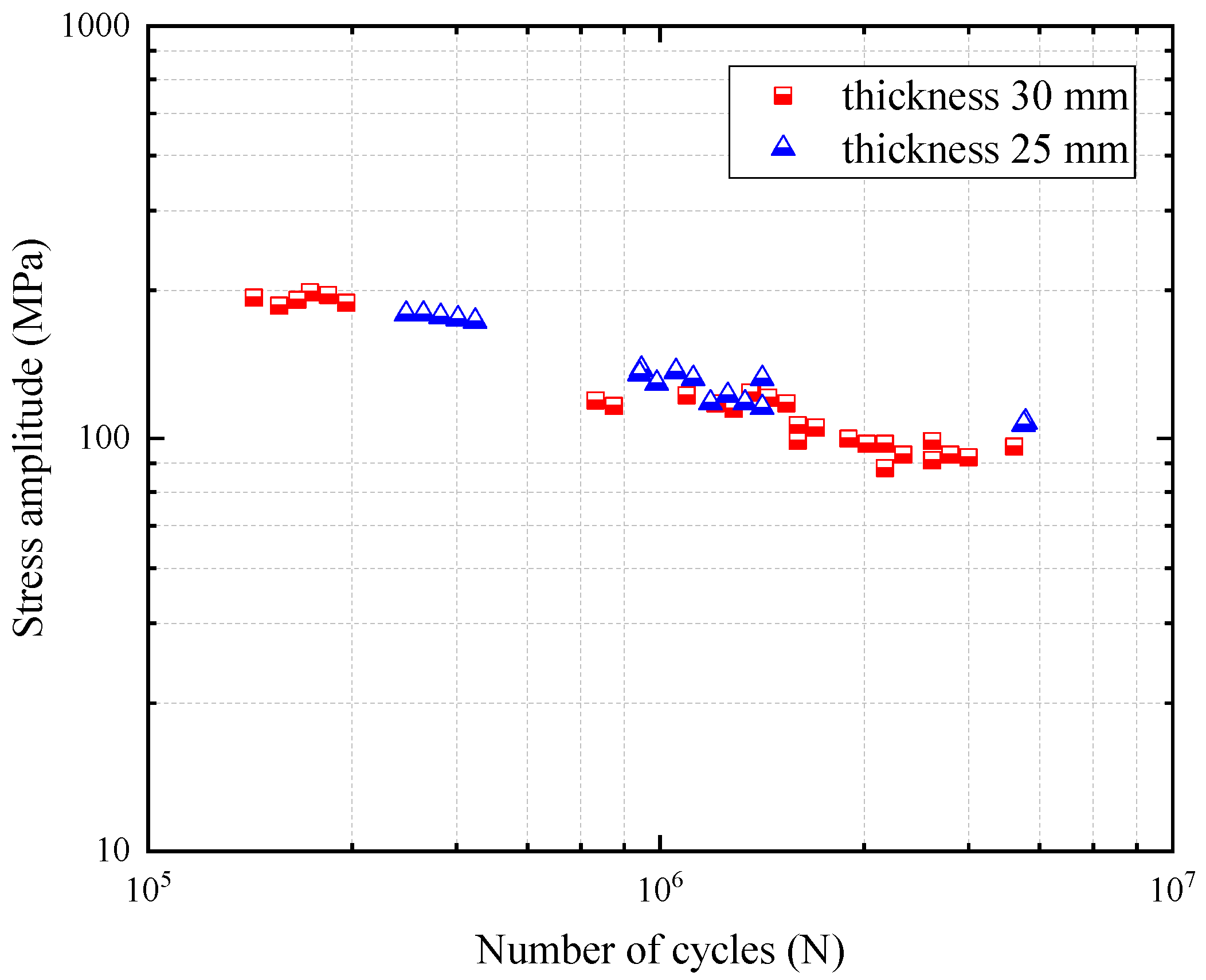
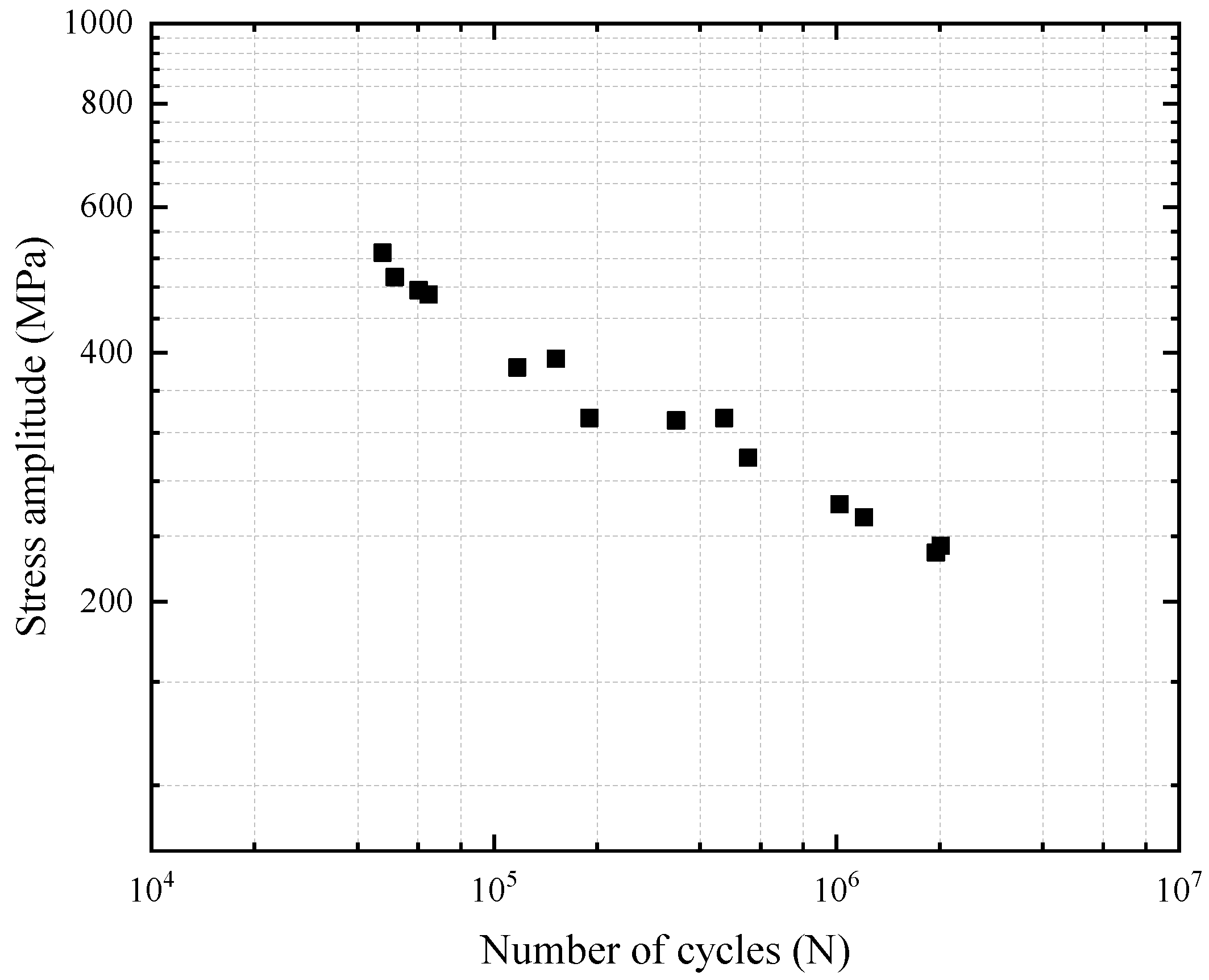
3.1. Fatigue Lifetime of the Joints
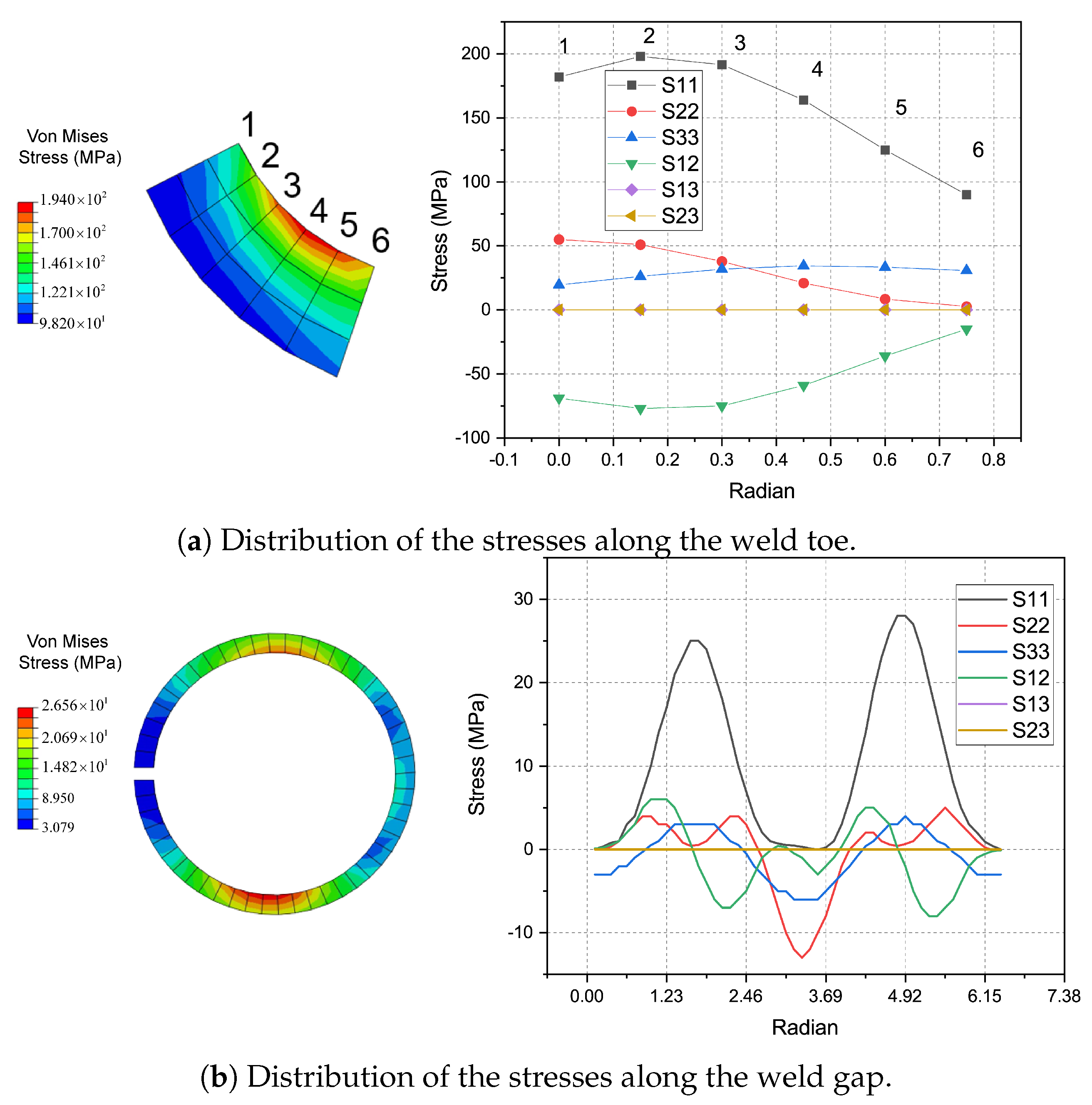
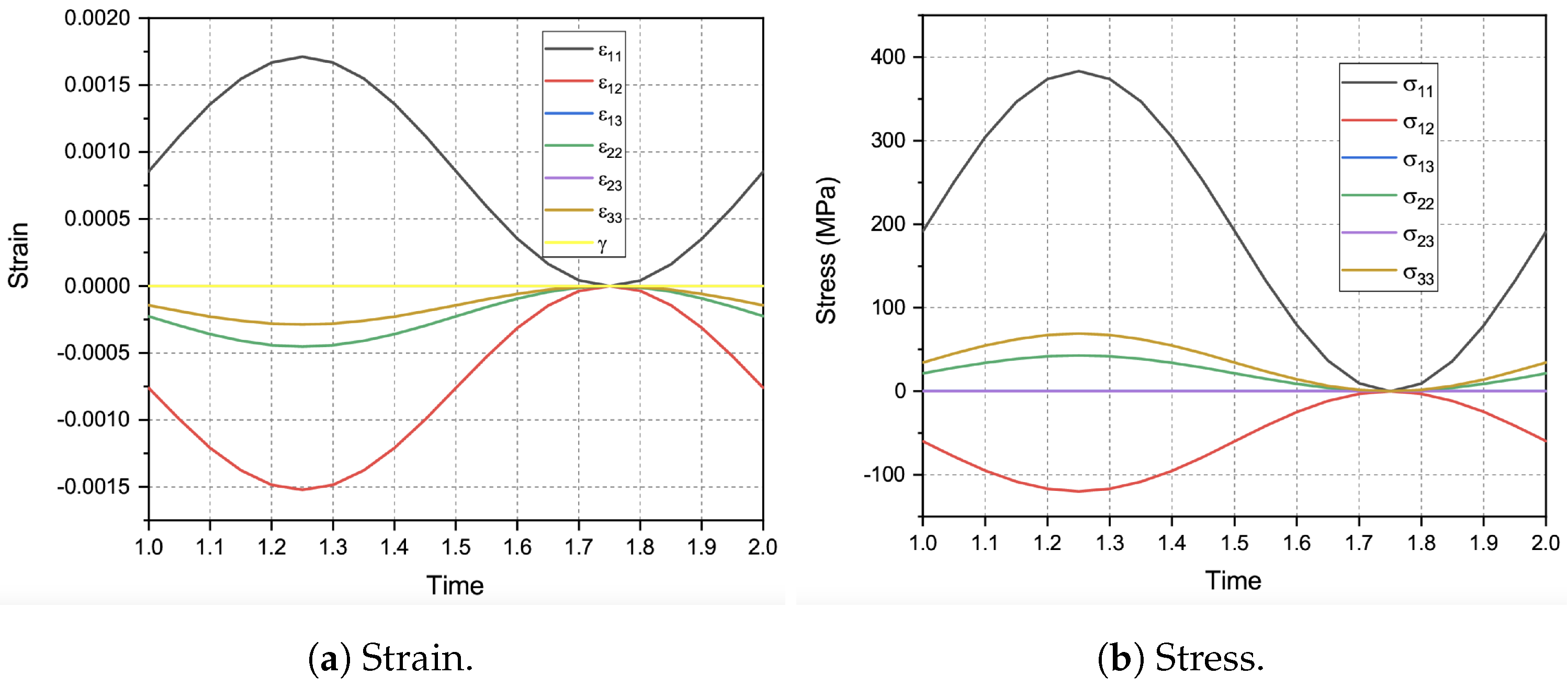
3.2. FEM Model of the Welded Joints and Post-Processing of Simulation Results
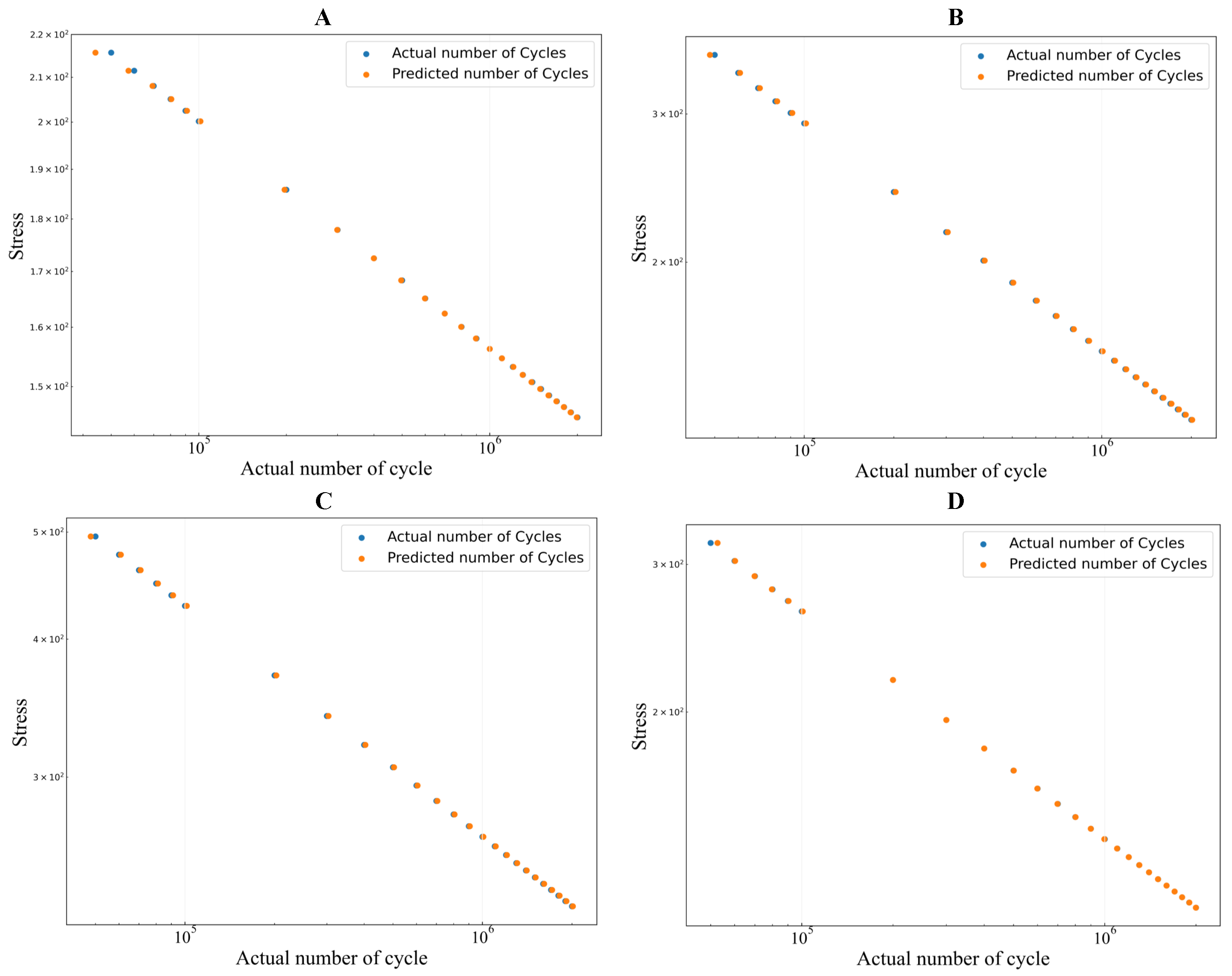
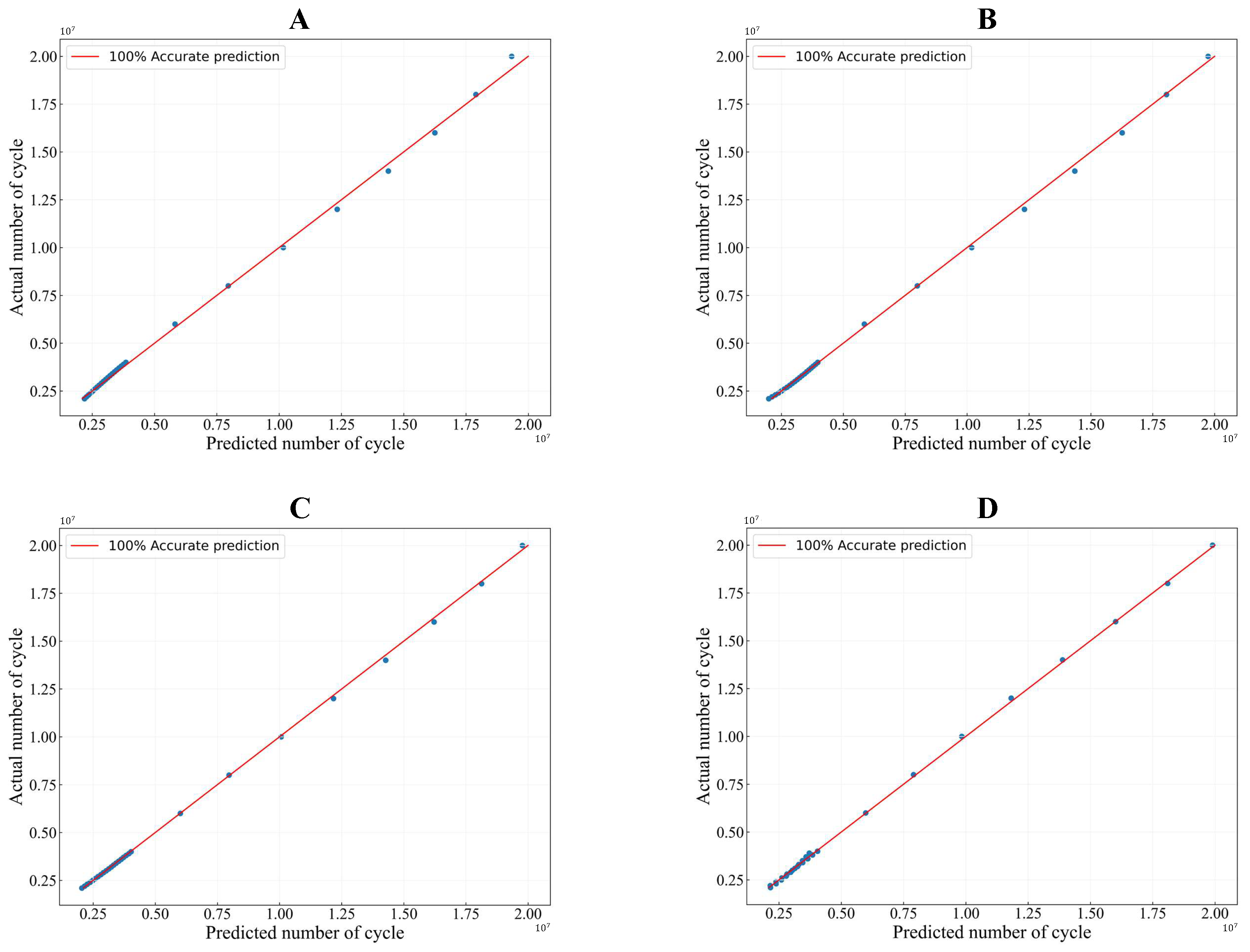
3.3. AI Model Results
3.3.1. Cruciform Joints
3.3.2. T-Joints
4. Conclusions
Author Contributions
Funding
Data Availability Statement
Conflicts of Interest
References
- Patel, C.D.; Chen, C.H. Digital Manufacturing: The Industrialization of “Art to Part” 3D Additive Printing; Elsevier: Amsterdam, The Netherlands, 2022. [Google Scholar]
- Radaj, D.; Sonsino, C.; Fricke, W. Recent developments in local concepts of fatigue assessment of welded joints. Int. J. Fatigue 2009, 31, 2–11. [Google Scholar] [CrossRef]
- Leitner, M.; Mössler, W.; Putz, A.; Stoschka, M. Effect of post-weld heat treatment on the fatigue strength of HFMI-treated mild steel joints. Weld. World 2015, 59, 861–873. [Google Scholar]
- Ramalho, A.L.; Ferreira, J.A.; Branco, C.A. Fatigue behaviour of T welded joints rehabilitated by tungsten inert gas and plasma dressing. Mater. Des. 2011, 32, 4705–4713. [Google Scholar] [CrossRef]
- Olivier, R.; Ritter, W. Catalogue of SN-Curves of Welded Joints in Structural Steels; Number pt. 2 in Bericht: Fraunhofer-Institut für Betriebsfestigkeit; Deutscher Verlag für Schweisstechnik: Dusseldorf, Germany, 1982. [Google Scholar]
- Taylor, J. EN1993 Eurocode 3: Design of steel structures. In Proceedings of the Institution of Civil Engineers-Civil Engineering; Thomas Telford Ltd.: London, UK, 2001; Volume 144, pp. 29–32. [Google Scholar]
- Hobbacher, A.; Baumgartner, J. Recommendations for Fatigue Design of Welded Joints and Components; Springer: Cham, Switzerland, 2016; Volume 47. [Google Scholar]
- Morgenstern, C.; Sonsino, C.; Hobbacher, A.; Sorbo, F. Fatigue design of aluminium welded joints by the local stress concept with the fictitious notch radius of rf = 1 mm. Int. J. Fatigue 2006, 28, 881–890. [Google Scholar]
- Wöhler, A. Über die Festigkeitsversuche Mit Eisen und Stahl; Ernst & Korn: Berlin Germany, 1870. [Google Scholar]
- Morrow, J. Fatigue properties of metals. In Fatigue Design Handbook; Soc. of Automotive Engineers: Warrendale, NY, USA, 1968; Volume 4, pp. 21–30. [Google Scholar]
- Smith, K. A stress-strain function for the fatigue of metals. J. Mater. 1970, 5, 767–778. [Google Scholar]
- Lemaitre, J. A continuous damage mechanics model for ductile fracture. J. Eng. Mater. Technol. 1985, 107, 83–89. [Google Scholar] [CrossRef]
- Dhar, S.; Dixit, P.; Sethuraman, R. A continuum damage mechanics model for ductile fracture. Int. J. Press. Vessel. Pip. 2000, 77, 335–344. [Google Scholar] [CrossRef]
- Portela, A.; Aliabadi, M.; Rooke, D.P. The dual boundary element method: Effective implementation for crack problems. Int. J. Numer. Methods Eng. 1992, 33, 1269–1287. [Google Scholar] [CrossRef]
- Prasad, N.; Aliabadi, M.; Rooke, D. The dual boundary element method for thermoelastic crack problems. Int. J. Fract. 1994, 66, 255–272. [Google Scholar] [CrossRef]
- Belytschko, T.; Lu, Y.; Gu, L. Crack propagation by element-free Galerkin methods. Eng. Fract. Mech. 1995, 51, 295–315. [Google Scholar] [CrossRef]
- Duflot, M.; Nguyen-Dang, H. Fatigue crack growth analysis by an enriched meshless method. J. Comput. Appl. Math. 2004, 168, 155–164. [Google Scholar] [CrossRef]
- Bachhav, B.; Wu, Z.; Markert, B.; Stamm, B.; Shields, M.D.; Falk, M.L.; Bamer, F. Predicting fracture in disordered network materials using the local intelligent stress threshold indicator. Commun. Phys. 2025, 8, 369. [Google Scholar] [CrossRef]
- Stoffel, M.; Bamer, F.; Markert, B. Artificial neural networks and intelligent finite elements in non-linear structural mechanics. Thin-Walled Struct. 2018, 131, 102–106. [Google Scholar] [CrossRef]
- Gulakala, R.; Bhaskaran, V.; Stoffel, M. A generative learning and graph-based framework for computing field variables in Finite Element simulations. Comput. Methods Appl. Mech. Eng. 2024, 428, 117111. [Google Scholar] [CrossRef]
- Feng, S.; Han, X.; Ma, Z.; Królczyk, G.; Li, Z. Data-driven algorithm for real-time fatigue life prediction of structures with stochastic parameters. Comput. Methods Appl. Mech. Eng. 2020, 372, 113373. [Google Scholar]
- Yang, X.; Zou, L.; Deng, W. Fatigue life prediction for welding components based on hybrid intelligent technique. Mater. Sci. Eng. A 2015, 642, 253–261. [Google Scholar] [CrossRef]
- Zhou, R.; Xing, Z.; Wang, H.; Piao, Z.; Huang, Y.; Guo, W.; Ma, R. Prediction of contact fatigue life of AT40 ceramic coating based on neural network. Anti-Corros. Methods Mater. 2020, 67, 83–100. [Google Scholar]
- Chen, J.; Liu, Y. Fatigue modeling using neural networks: A comprehensive review. Fatigue Fract. Eng. Mater. Struct. 2022, 45, 945–979. [Google Scholar] [CrossRef]
- Zhang, X.C.; Gong, J.G.; Xuan, F.Z. A deep learning based life prediction method for components under creep, fatigue and creep-fatigue conditions. Int. J. Fatigue 2021, 148, 106236. [Google Scholar] [CrossRef]
- Yang, J.; Kang, G.; Liu, Y.; Kan, Q. A novel method of multiaxial fatigue life prediction based on deep learning. Int. J. Fatigue 2021, 151, 106356. [Google Scholar] [CrossRef]
- Zou, L.; Yang, Y.; Yang, X.; Sun, Y. Fatigue life prediction of welded joints based on improved support vector regression model under two-level loading. Fatigue Fract. Eng. Mater. Struct. 2023, 46, 1864–1880. [Google Scholar]
- Amiri, N.; Farrahi, G.; Kashyzadeh, K.R.; Chizari, M. Applications of ultrasonic testing and machine learning methods to predict the static & fatigue behavior of spot-welded joints. J. Manuf. Process. 2020, 52, 26–34. [Google Scholar] [CrossRef]
- He, L.; Wang, Z.; Akebono, H.; Sugeta, A. Machine learning-based predictions of fatigue life and fatigue limit for steels. J. Mater. Sci. Technol. 2021, 90, 9–19. [Google Scholar] [CrossRef]
- Wang, H.; Li, B.; Gong, J.; Xuan, F.Z. Machine learning-based fatigue life prediction of metal materials: Perspectives of physics-informed and data-driven hybrid methods. Eng. Fract. Mech. 2023, 284, 109242. [Google Scholar] [CrossRef]
- Gbagba, S.; Maccioni, L.; Concli, F. Advances in machine learning techniques used in fatigue life prediction of welded structures. Appl. Sci. 2023, 14, 398. [Google Scholar] [CrossRef]
- Jiang, W.; Xie, X.; Wang, T.; Zhang, X.; Tu, S.T.; Wang, J.; Zhao, X. Fatigue life prediction of 316L stainless steel weld joint including the role of residual stress and its evolution: Experimental and modelling. Int. J. Fatigue 2021, 143, 105997. [Google Scholar] [CrossRef]
- Kassner, M. Fatigue strength analysis of a welded railway vehicle structure by different methods. Int. J. Fatigue 2012, 34, 103–111. [Google Scholar] [CrossRef]
- Olivier, R.; Ritter, W. Catalogue of SN-Curves of Welded Joints in Structural Steels; Number pt. 3 in Bericht: Fraunhofer-Institut für Betriebsfestigkeit; Deutscher Verlag für Schweisstechnik: Dusseldorf, Germany, 1982. [Google Scholar]
- Schaumann, P.; Schwarzer, K. Beanspruchung und Schwingfestigkeit der Doppel-HY-Naht mit Doppelkehlnaht von Stirnplattenverbindungen. In Kurzberichte aus der Bauforschung; Fraunhofer IRB Verlag: Stuttgart, Germeny, 1999; Volume 40. [Google Scholar]
- Al-Karawi, H.; von Bock und Polach, R.U.F.; Al-Emrani, M. Fatigue life extension of existing welded structures via high frequency mechanical impact (HFMI) treatment. Eng. Struct. 2021, 239, 112234. [Google Scholar] [CrossRef]
- Chaboche, J.L. Time-independent constitutive theories for cyclic plasticity. Int. J. Plast. 1986, 2, 149–188. [Google Scholar] [CrossRef]
- Krolo, P.; Grandić, D.; Smolčić, Ž. Experimental and numerical study of mild steel behaviour under cyclic loading with variable strain ranges. Adv. Mater. Sci. Eng. 2016, 2016, 1–13. [Google Scholar] [CrossRef]
- Qiang, B.; Liu, X.; Liu, Y.; Yao, C.; Li, Y. Experimental study and parameter determination of cyclic constitutive model for bridge steels. J. Constr. Steel Res. 2021, 183, 106738. [Google Scholar] [CrossRef]
- Okereke, M.; Keates, S.; Okereke, M.; Keates, S. Finite element mesh generation. In Finite Element Applications: A Practical Guide to the FEM Process; Springer: Berlin/Heidelberg, Germany, 2018; pp. 165–186. [Google Scholar]
- Heaton, J. Deep learning. Genet. Program. Evolvable Mach. 2018, 19, 305–307. [Google Scholar] [CrossRef]
- Goodfellow, I.; Bengio, Y.; Courville, A. Deep Learning; MIT Press: Cambridge, MA, USA, 2016. [Google Scholar]










| Joints | Stress Ratio | Stress Amplitude (N/mm2) | Fatigue Lifetime (Cycles) |
|---|---|---|---|
| Cruciform joint 1 | 0 | 78 | 31.2 × 10³ |
| 70 | 49.3 × 10³ | ||
| 60 | 170.5 × 10³ | ||
| 53 | 210.4 × 10³ | ||
| 45 | 378 × 103 | ||
| 35 | 538.1 × 10³ | ||
| Cruciform joint 2 | 0 | 78 | 103.7 × 10³ |
| 70 | 308.1 × 10³ | ||
| 60 | 3118.4 × 103 | ||
| 55 | 280.9 × 10³ | ||
| 50 | 680.9 × 10³ | ||
| 40 | 2267.7 × 103 |
| Joints | Stress Ratio | Stress Amplitude (N/mm2) | Fatigue Lifetime (Cycles) |
|---|---|---|---|
| T Joint 2 | −0.29 | 145 | 8.84 × 10⁵ |
| 139 | 3.1 × 10⁶ | ||
| 145 | 1 × 10⁶ | ||
| 175 | 7.57 × 10⁵ | ||
| 170 | 6.85 × 10⁵ | ||
| 165 | 8.59 × 10⁶ | ||
| 160 | 9.87 × 10⁶ | ||
| 150 | 1.13 × 10⁶ | ||
| 150 | 1.6 × 10⁶ | ||
| 150 | 2.42 × 10⁶ | ||
| 150 | 3.25 × 10⁶ |
| Joints | Stress Ratio | Stress Amplitude (N/mm2) | Fatigue Lifetime (Cycles) |
|---|---|---|---|
| T Joint 3 | −1 | 177 | 420 × 103 |
| 177 | 1500 × 103 | ||
| 167 | 550 × 103 | ||
| 167 | 670 × 103 | ||
| 157 | 1050 × 103 | ||
| 147 | 4660 × 103 | ||
| T Joint 4 | −0.5 | 140 | 750 × 103 |
| 140 | 1600 × 103 | ||
| 133 | 1070 × 103 | ||
| 129 | 1420 × 103 | ||
| 125 | 1200 × 103 | ||
| 125 | 3300 × 103 |
| Elastic properties | |
| Elastic modulus | 204,437 MPa |
| Poisson ratio | 0.3 |
| plastic properties | |
| 386 MPa | |
| 5327 MPa | |
| 75 | |
| 1725 MPa | |
| 16 | |
| 1120 MPa | |
| 10 |
| Model: "sequential" | ||
| Layer (type) | Output Shape | Parameters |
| lstm (LSTM) | (None, 64) | 615,680 |
| dense (Dense) | (None, 1) | 65 |
| Total Params: 615,745 | ||
| Trainable Params: 615,745 | ||
| Non-trainable params: 0 | ||
| Joints | Parameter | Value |
|---|---|---|
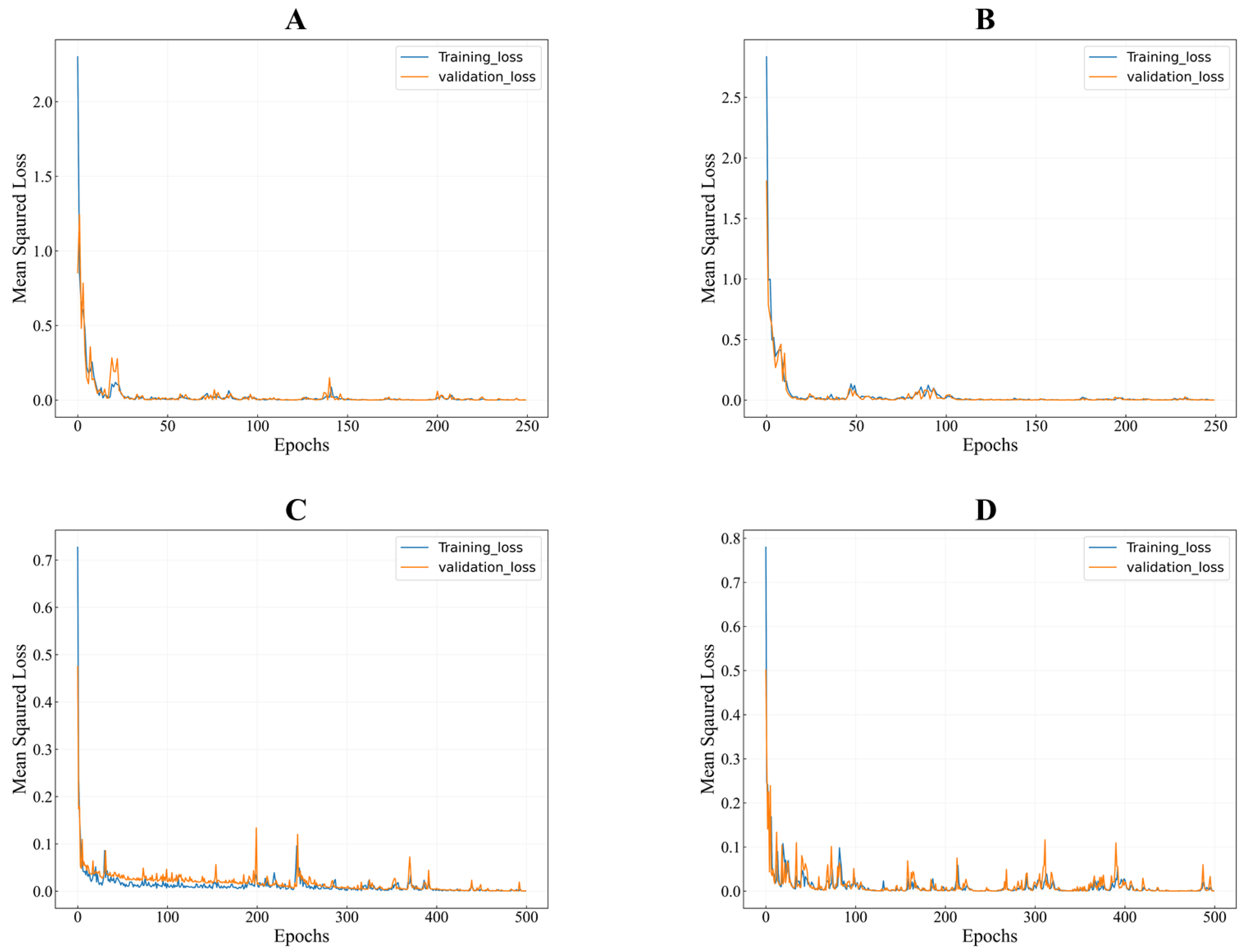
| Cruciform | Training loss | 9.9162 × 10⁻⁴ |
| Joint 1 | Validation loss | 8.2632 × 10⁻⁴ |
| Cruciform | Training loss | 8.8828 × 10⁻⁴ |
| Joint 2 | Validation loss | 6.5718 × 10⁻⁴ |
| Cruciform | Training loss | 0.0029 |
| Joint 3 | Validation loss | 0.0044 |
| Cruciform | Training loss | 4.4592 × 10⁻⁴ |
| Joint 4 | Validation loss | 0.0011 |
Disclaimer/Publisher’s Note: The statements, opinions and data contained in all publications are solely those of the individual author(s) and contributor(s) and not of MDPI and/or the editor(s). MDPI and/or the editor(s) disclaim responsibility for any injury to people or property resulting from any ideas, methods, instructions or products referred to in the content. |
© 2026 by the authors. Licensee MDPI, Basel, Switzerland. This article is an open access article distributed under the terms and conditions of the Creative Commons Attribution (CC BY) license.
Share and Cite
Bachhav, B.; Zhang, D.; Gao, H.; Schmidt, H.; Gang, C.; Ma, S.; Bamer, F.; Markert, B. An Artificial Neural Network-Based Strategy for Predicting Multiaxial Fatigue Damage to Welded Steel Structures. Appl. Mech. 2026, 7, 22. https://doi.org/10.3390/applmech7010022
Bachhav B, Zhang D, Gao H, Schmidt H, Gang C, Ma S, Bamer F, Markert B. An Artificial Neural Network-Based Strategy for Predicting Multiaxial Fatigue Damage to Welded Steel Structures. Applied Mechanics. 2026; 7(1):22. https://doi.org/10.3390/applmech7010022
Chicago/Turabian StyleBachhav, Bhagyashri, Dawei Zhang, Hanghang Gao, Hauke Schmidt, Chen Gang, Songyun Ma, Franz Bamer, and Bernd Markert. 2026. "An Artificial Neural Network-Based Strategy for Predicting Multiaxial Fatigue Damage to Welded Steel Structures" Applied Mechanics 7, no. 1: 22. https://doi.org/10.3390/applmech7010022
APA StyleBachhav, B., Zhang, D., Gao, H., Schmidt, H., Gang, C., Ma, S., Bamer, F., & Markert, B. (2026). An Artificial Neural Network-Based Strategy for Predicting Multiaxial Fatigue Damage to Welded Steel Structures. Applied Mechanics, 7(1), 22. https://doi.org/10.3390/applmech7010022