Article

Mitigating Damage in Laterally Supported URM Walls Under Severe Catastrophic Blast Using UHPC and UHPFRC Coatings with and Without Embedded Steel-Welded Wire Mesh


by
S. M. Anas
1,*,
Rayeh Nasr Al-Dala’ien
2,*,
Mohammed Benzerara
3,* and
Mohammed Jalal Al-Ezzi
4,5
1
Department of Civil Engineering, Jamia Millia Islamia, New Delhi 110025, India
2
Civil Engineering Department, College of Engineering, Al-Balqa Applied University (BAU), Salt 19117, Jordan
3
Materials, Geomaterials and Environment Laboratory (LMGE), Faculty of Technology, Department of Civil Engineering, Badji Mokhtar-Annaba University, P.O. Box 12, Annaba 23000, Algeria
4
Civil Engineering Department, College of Engineering, Universiti Tenaga Nasional, Kajang 43000, Malaysia
5
Civil Engineering Department, University of Bilad AL-Rafidain, Baqubah 32001, Iraq
*
Authors to whom correspondence should be addressed.
Appl. Mech. 2026, 7(1), 23; https://doi.org/10.3390/applmech7010023
Submission received: 23 December 2025 / Revised: 27 February 2026 / Accepted: 9 March 2026 / Published: 11 March 2026

Abstract

In many densely populated towns and semi-urban areas, masonry buildings often stand close to busy roads, exposing them to blasts from improvised explosives or other localized sources. Such structures are rarely designed to resist sudden explosive forces, making severe damage or even progressive collapse likely. Even moderate-intensity blasts can weaken walls, endanger occupants, and cause significant property loss. Unlike reinforced concrete, masonry is highly susceptible to explosive impact. Therefore, understanding how these buildings behave under blast loads and developing affordable protection methods is crucial. Low-rise unreinforced masonry (URM) structures, usually up to about 13 m in height (roughly 2–4 stories), common in villages, semi-urban regions, and conflict-prone zones, are particularly at risk. In many areas, these poorly constructed buildings lack proper engineering design and are therefore highly vulnerable to blast damage. Non-load-bearing internal dividers and perimeter enclosures are especially prone to lateral displacement, which can initiate instability and, in severe cases, lead to overall structural failure. This research focuses on reducing catastrophic damage in URM walls when exposed to close-proximity blast forces using concrete-based protective coatings, both with and without embedded steel-welded wire mesh. The study references a previously tested laterally supported clay brick wall built with cement–sand mortar as the baseline model, with its behavior validated against experimental findings from existing literature. Two blast cases were considered corresponding to scaled stand-off distances of 2.19 m/kg1/3 and 1.83 m/kg1/3, representing moderate flexural-shear cracking and full structural failure, respectively. To replicate the observed behavior, a comprehensive 3D numerical simulation was developed using the ABAQUS/Explicit 2020 solver. The model’s predictions were benchmarked and verified through comparison with reported test data. While both blast intensities were used to confirm computational accuracy, the effectiveness of UHPC and UHPFRC protective coatings with and without embedded wire mesh was specifically evaluated under the more severe collapse scenario (Z = 1.83 m/kg1/3). Results indicated that at a scaled distance of 1.83 m/kg1/3, the uncoated URM wall could not withstand the blast because of poor tensile and bending capacity. In contrast, the UHPC- and UHPFRC-coatings provided improved confinement and better stress distribution. When welded wire mesh was embedded, crack control improved further, the interface bond strengthened, and a larger portion of blast energy was absorbed and dissipated.

1. Introduction

Until recently, blast-resistant design was not seen as a common requirement [1,2]. It was mostly restricted to embassies, defense buildings, and sites handling hazardous materials [2]. Industrial areas and public spaces rarely receive such attention. After several serious accidents and explosions across the world, this thinking has changed. Gas leaks, pipeline failures, factory blasts, and sudden urban explosions have caused heavy damage and loss of life [3,4]. Many structures collapsed without warning. In several cases, damage was seen far beyond the blast location. These events raised serious concerns within the engineering community. It is now clear that explosive hazards are not limited to secured zones. Civilian areas such as markets, transport routes, and city infrastructure have also been affected [1]. Vehicle-based and improvised explosive devices have caused widespread destruction in crowded public spaces [1]. Along with structural damage, flying debris and fragments have injured or killed many nearby people. The level of damage in such events varies widely. Some buildings suffer minor cracks, while others fail completely. Human injuries in these cases are often severe and irreversible. Nevertheless, most building codes do not adequately address blast or impact loads [1,2,4]. Moreover, design and operational guidance remain very limited. Unlike wind or earthquake forces, blast loads act suddenly at extremely high pressure. Their very short duration makes them especially hazardous. With cities becoming more crowded and security risks increasing, engineers now emphasize the need to include blast effects in structural design, especially in high-risk and densely populated areas [1].
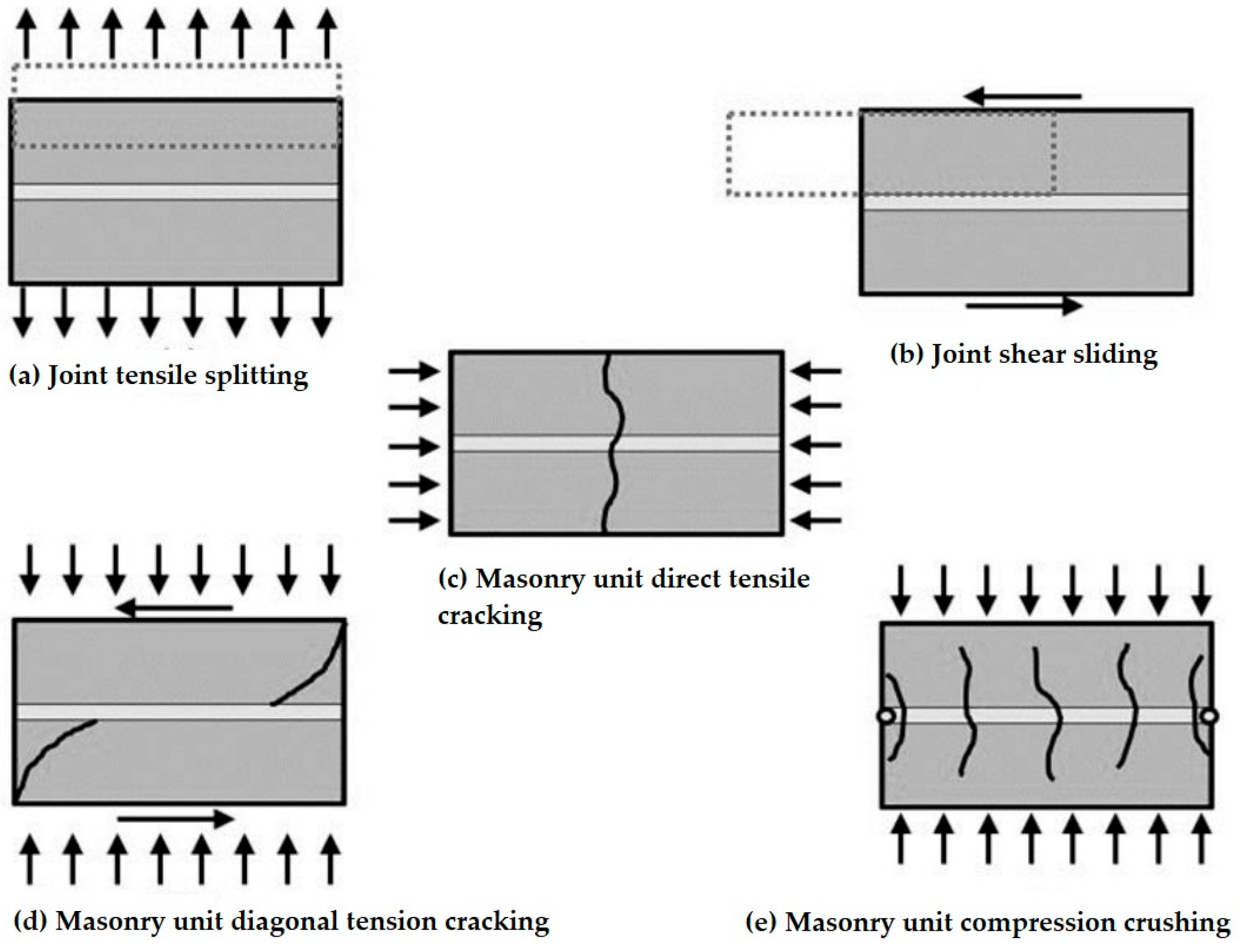
Masonry has been used for construction since ancient times [5]. It is one of the oldest and most trusted ways to build structures. Even today, it is widely used because of its simplicity and ease of execution. It has been adopted in load-bearing systems as well as framed structures. Historically, masonry was used in culverts, palaces, public halls, and monumental buildings. Initially, construction consisted of arranging bricks, stones, or blocks in orderly horizontal layers. With improved materials, mortar came into use, binding these units together and forming a single, stronger mass. Many long-standing structures around the world, such as historic monuments, government buildings, royal complexes, and old courts, continue to stand mainly due to masonry construction. In contemporary framed constructions, brick and blockwork continue to be the predominant solution for both load-bearing and partition walls. Over the years, these units have proved their strength, reliability, and durability, making them one of the most trusted traditional construction materials [6,7]. Masonry is preferred for several practical reasons: good appearance, long service life, strength, and stability. It also provides thermal comfort, sound insulation, fire resistance, and cost-effectiveness in construction. These features keep masonry relevant in modern engineering practice [6]. Common forms in use include rubble and ashlar stone masonry, burnt clay units, cavity walls, reinforced hollow blocks, solid concrete and clay blocks, concrete roofing tiles, and grout-filled systems [6]. When structural loads act on masonry, different types of failures may develop, as illustrated in Figure 1. These include cracking or separation along mortar joints due to tension, sliding along joints due to shear, cracking within units from direct or diagonal tension, and crushing under heavy compressive loads. Often, more than one failure mode, such as bending combined with shear, occurs simultaneously.
In many low-income and emerging regions, most buildings were constructed using simple load-bearing systems [1,6,8,9,10,11]. These buildings were largely erected without proper engineering supervision. Brick or block masonry walls directly carried the structural loads [6,7]. Such buildings remain highly vulnerable under extreme actions like earthquakes, strong winds, vehicle impacts, or explosions. In sudden events, occupants usually have no time to react or escape. Failure of the primary masonry walls often leads to total or progressive collapse [9,10], which can produce secondary impacts on nearby buildings. Even internal partition walls, although not intended to carry structural load, tend to disintegrate violently during blasts. Flying masonry fragments pose a serious threat to human life [10,11].
To improve wall safety against TNT detonations, it is necessary first to study their behavior under such intense loading [9,10,11]. Several passive protection methods exist, such as buffer walls, energy-absorbing barriers, external shields, and protective posts [6,7,8,9,10,11]; these methods reduce direct blast pressure but are often limited by space constraints, visual intrusion, and reduced efficiency over large areas. Strengthening masonry walls by adding protective layers to their exposed faces appears to be a more practical solution [3,4]. Only limited research has addressed the blast response of strengthened masonry walls. In this study, detailed numerical simulations were carried out on unreinforced masonry walls strengthened with 15 mm-thick external coatings on both faces. Two high-performance materials were considered: ultra-high-performance concrete (UHPC) and ultra-high-performance fiber-reinforced concrete (UHPFRC). The effect of providing steel-welded wire mesh within these coatings was also studied by comparing cases with and without the mesh. Although two explosion cases were initially considered for numerical validation, the performance of strengthening coatings was evaluated under the severe, catastrophic case only. This choice was made because if a protective layer can prevent collapse under extreme loading, it will also perform under less severe damage scenarios. Hence, the wall systems were primarily assessed for their ability to reduce damage and prevent collapse in the worst-case explosion. Coatings were applied to both surfaces of the wall, as blast effects may arise under both confined and open conditions.

2. Novelty of This Study

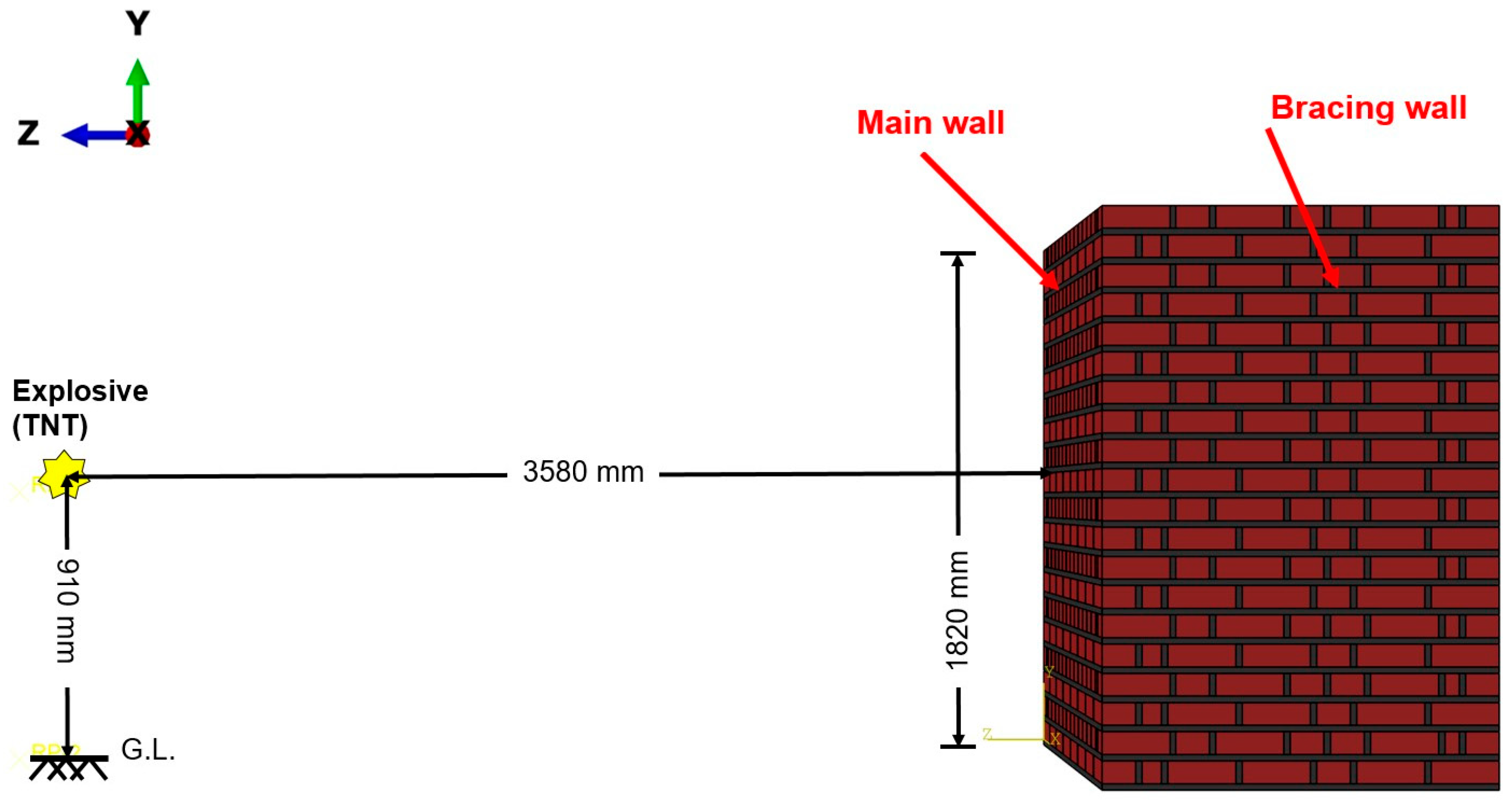
Knowledge on load-carrying, load transfer, and load distribution mechanisms of brick masonry walls during blast events is still very limited [1,6,7,8,9,10,11,12,13,14,15,16,17,18,19]. In addition, numerical simulation techniques for evaluating the global response of such walls have not received sufficient attention [9,10,11]. This study targets controlling severe damage in unreinforced masonry (URM) walls exposed to close-range blasts by using concrete-based protective coatings. A previously tested clay brick masonry wall [6], laterally supported with bracing and constructed using cement–sand mortar, is adopted as the benchmark system. This wall was experimentally investigated in an open-field setup by Badshah and co-researchers in 2021 in a research article [6]. The tests involved bare TNT charges of 4.34 kg and 7.39 kg, corresponding to scaled stand-off values of 2.19 m/kg1/3 and 1.83 m/kg1/3, respectively, with a detonation height of 0.91 m [6].
The experimental findings of [6] were used to calibrate and validate the numerical reference model developed in this study. The two blast cases represent different damage levels. At the larger scaled distance (Z) of 2.19 m/kg1/3 (Case-I), the unprotected wall develops extensive bending and shear cracking but does not collapse [6]. While exposure at 1.83 m/kg1/3 (Case-II) leads to complete structural breakdown accompanied by excessive permanent deformation [6]. We used the two blast cases mainly to validate the numerical model against published experiments [6]. Once the model matched the tests, it was then used to study the protective coatings under the most severe loading.
Three-dimensional numerical analyses are carried out using advanced finite element techniques within the ABAQUS v2020 [20] platform. Earlier review studies [1,2,3,4,9,10,11] have demonstrated that finite element analysis provides more reliable predictions of blast response when compared to simplified analytical methods, which commonly rely on single-degree-of-freedom idealizations and face challenges in handling highly nonlinear dynamic behavior.
The key contribution of this study lies in mitigating extreme damage (total collapse) and failure of URM walls under explosive loads by employing suitable retrofit configurations in the form of protection coats. This goal is achieved through the following objectives:
  • Development and verification of a detailed three-dimensional numerical model of a laterally supported, unplastered URM wall by matching simulation outcomes with the experimental findings reported in the research article [6].
  • Reduction in blast-induced damage to the laterally supported URM wall using UHPC and UHPFRC applied as coatings on both the front and back surfaces of the wall, with and without embedded steel-welded wire mesh.
This study focuses on developing a detailed finite-element representation of a laterally supported URM wall, incorporating multiple modeling considerations such as detailed masonry behavior, material nonlinearity, strain-rate sensitivity, and the removal of damaged elements. An explicit analysis [20] framework is employed to reliably evaluate the wall’s response to blast loading and to propose suitable retrofitting strategies against TNT explosions. However, this work does not include simulation of the explosive detonation process, ambient air interaction, fully realistic boundary conditions, or cost assessments for the retrofitted walls. Moreover, the blast scenarios examined are above-ground, unconfined TNT detonations, without accounting for ground-induced shock waves or reflections. This assumption aligns with practical situations like vehicle-borne bomb attacks, where ground coupling is reduced. The material properties of bricks and mortar, wall dimensions, explosive quantities, and scaled distances used in this analysis follow the experimental parameters presented in [6]. Consequently, the conclusions are valid for the specified charge sizes and scaled distances; further investigation is suggested for larger explosives at smaller scaled distances. Furthermore, this study assumes walls without axial compression and treats brick-and-mortar units as uniform in size and thickness. Blast loads are represented using the ConWep method along with established empirical formulas from the literature [21]. Damage assessment is limited to the positive phase of the blast [1,9,10].
The effectiveness of protective coatings with and without embedded steel-welded wire mesh was evaluated here only for the severe catastrophic blast case (i.e., Case-II, Z = 1.83 m/kg1/3). This choice was made because if the proposed coatings can mitigate total collapse under extreme loading conditions, their effectiveness in controlling damage under moderate flexure-shear cracking conditions (Z = 2.19 m/kg1/3) becomes evident and does not require separate investigation. Accordingly, damage reduction for the moderate blast case (Case-I, Z = 2.19 m/kg1/3) was not analyzed, as the structural response in such conditions is already non-catastrophic and the benefits of retrofitting are self-explanatory.

3. Literature Review

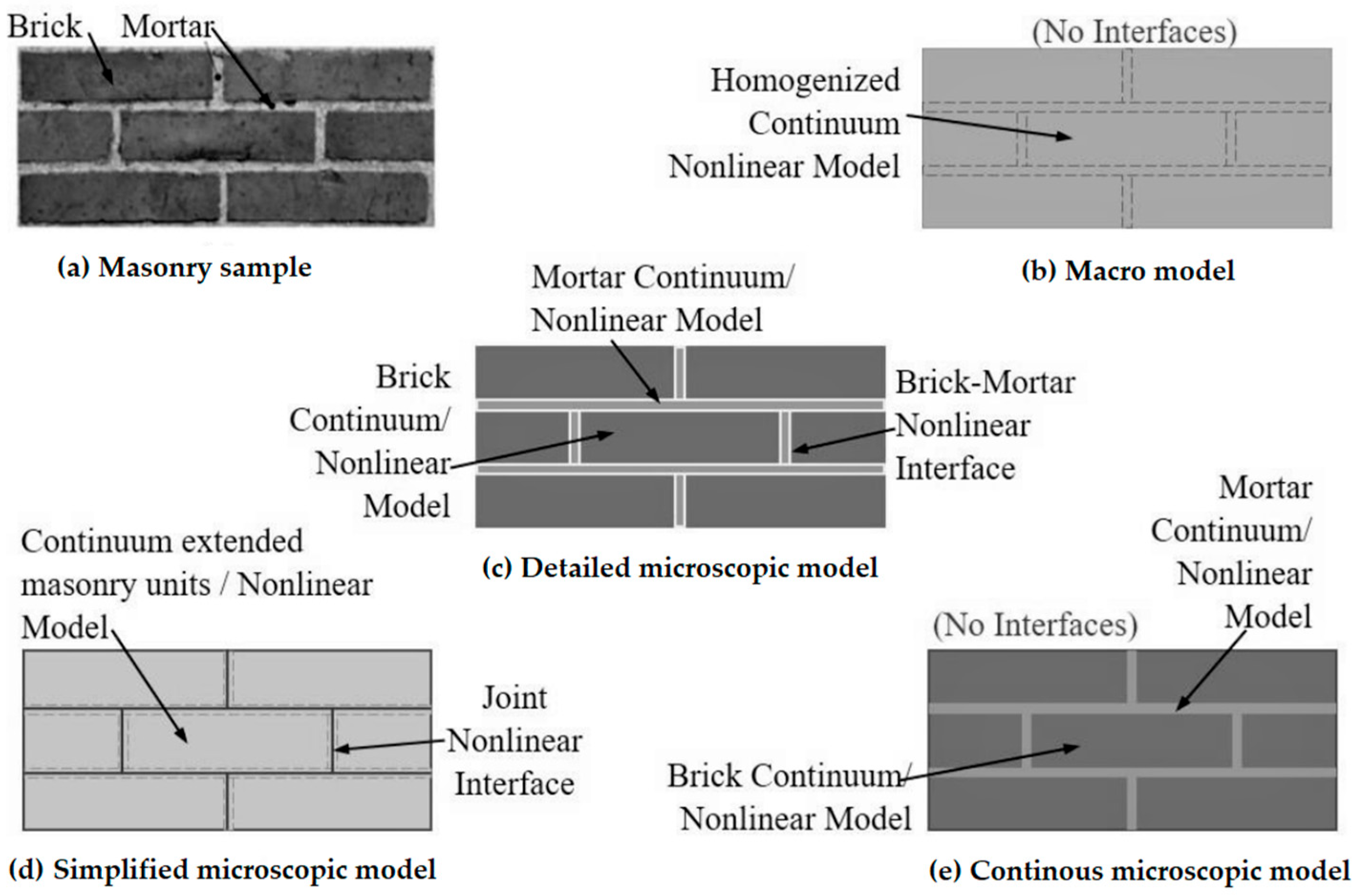
Masonry structures consist of discrete units such as bricks or blocks bonded together by layers of mortar [5,6,7,8,9,10,11]. In ABAQUS v2020 [20], the modeling of brick masonry elements, including walls, can generally be classified into four main approaches, listed from most detailed to most simplified [9,10,11]:
  • Highly detailed (tri-phase) modeling: explicitly represents individual units, mortar joints, and interfaces, allowing precise simulation of interactions (see Figure 2c).
  • Continuous micro-level (dual-phase) modeling: units and mortar layers are modeled with finite-thickness elements, but interfaces are not separately defined (Figure 2e).
  • Simplified (dual-phase) modeling: units are represented by continuum elements with finite thickness, while joints/interfaces are modeled as zero-thickness cohesive elements (Figure 2d).
  • Macro-level (single-phase) modeling: the wall is treated as a homogeneous continuum with no distinction between bricks, mortar, or interfaces (Figure 2b).
Although fine-scale modeling yields more accurate results, it demands significant computational resources and limits the model size that can be practically simulated [9,10,11]. For larger structures, simplified or macro-level approaches are often preferred to reduce processing time, memory use, and element count [9,10,11]. In the current study, a fine-scale modeling strategy is adopted to better capture stress distributions and damage evolution at brick–mortar interfaces in URM walls under blast loading. Different constitutive models are applied: bricks and mortar are simulated using the Concrete Damage Plasticity (CDP) model, while brick–mortar interfaces employ traction–separation laws in ABAQUS v2020 [20], accounting for both damage initiation and softening behavior [9,10,11].
The rise in modern computing and specialized software has significantly advanced the study of masonry response under extreme loads [1,2,9,10,11]. Numerical simulations offer clear advantages over traditional experiments, which are often costly, time-consuming, and constrained by space, material availability, and specialized instrumentation [1]. Once validated against experiments, numerical models can be extended to examine many analogous structures [1,9,10,11], enabling investigation of how blast-generated stress waves travel and affect distinct masonry elements [1].
Research on masonry wall response to explosive forces remains limited, leaving a wide scope for further study. Earlier investigations mainly examined a narrow set of factors, such as the separation between the blast source and the wall, properties of the mortar and masonry units, and the type of restraint provided at the supports [6,7,9,10,11,22,23,24,25,26]. Because the range of variables considered was limited, the outcomes largely confirmed already familiar patterns. However, a clear understanding of actual damage mechanisms and failure response is still missing, and this gap remains largely unaddressed. Shi et al. [22] examined blast-induced damage in masonry walls placed close to an explosion. URM panels fixed within RC frames were tested using 1 kg and 6 kg TNT at a stand-off distance of 0.40 m. The higher charge produced clear punching failure, whereas the lower charge caused almost no visible distress. The response was dominated by localized perforation rather than flexure-shear action. Heavier fragments fell near the wall, while finer debris traveled farther away [22]. As the stand-off distance reduces, the failure mechanism shifts from localized to overall structural response. Keys and Clubley [23] further investigated debris projection and early-stage masonry failure under blast loads with positive phase durations exceeding 100 ms. Their findings highlighted that wall size, geometry, peak overpressure, and blast impulse strongly govern damage severity and fragment spread. Member size plays a key role in how structures behave under blast loads (Pereira et al., [9,10]). With all other parameters unchanged, thicker elements show better blast capacity. Earlier studies reported improved blast response of brick URM walls with increased thickness [9,24]. Numerical results confirmed that thicker brick walls suffer less damage [25]. Higher wall slenderness, expressed as height-to-thickness ratio, leads to lower blast resistance [25]. For stone masonry, reducing the transverse aspect ratio from 10 to 5 enhanced blast resistance by about 116% [26]. Blast response varies with material type. Wei and Stewart [25] found that stronger brick-and-mortar joints reduce wall displacement and support rotation under moderate blasts. Pandey and Bisht [24] observed that higher friction at brick-joint interfaces lowers maximum wall deformation. Parisi et al. [26] reported that material strength plays a key role in the blast resistance of tile masonry walls. Support conditions for building elements strongly influenced their behavior under blast loads, including the type and severity of damage. Using LS-DYNA, Wei and Stewart [25] studied brick masonry walls with different support setups. Increased restraint reduced deflections and damage, but could not prevent total collapse at scaled distances below 4 m/kg1/3. Badshah [7] reported repairable damage for unconfined clay brick walls and no damage for confined walls at 4.50 m/kg1/3. At 1.89 m/kg1/3, the unconfined walls collapsed while confined walls developed vertical cracks [7].
Protecting masonry walls from blast damage is still a tough challenge [6,7]. Strengthening techniques include fiber sheets or cloths [27], high-strength polymer coatings [28,29], metal cladding [30,31], or combined approaches [32,33,34] applied to wall surfaces. Repair strategies have also been explored [35]. Polyurea, an eco-friendly polymer with excellent energy absorption, has been studied as a coating or interlayer for structural and hybrid components under extreme loads [36,37].
Recent studies have advanced knowledge of masonry wall performance under blast effects, combining computational analyses with retrofitting strategies. Thango et al. [12] used nonlinear finite element models with friction at block interfaces and damage-plasticity to study collapse patterns. They observed that blast intensity, distance, and static loads largely governed failure, with diagonal cracks appearing most often. In a follow-up, Thango et al. [13] applied an artificial neural network trained on parametric simulations to predict out-of-plane wall response, achieving similar accuracy while cutting computation time drastically. Zhang et al. [14] examined clay tile and grouted CMU infill walls under distant blasts and found that blast pressure could be considered uniform at long range. Wall dimensions and constraints had more effect on resistance than boundary types. In another study, Zhang and his colleagues [15] reported that SPUA retrofitting improved blast resilience, especially with thicker polyurea layers, while boundary conditions and anchoring had minor roles. Studies by [16,17] confirmed that polyurea coatings reduce fragmentation and local failures, with double-sided layers (6 mm front, 2–8 mm rear) offering the best protection depending on wall thickness. Mollaei et al. [18] highlighted poor blast resistance in AAC block walls, particularly when thin or near the explosion, pointing to the need for reinforcement. Earlier, Gu et al. [19] combined full-scale gas explosion tests with LS-DYNA modeling and showed that polyurea coatings could prevent collapse and limit debris. Coating thickness and application patterns were key to energy absorption and wall stability.
Very recent experimental and numerical studies have further enriched the understanding of masonry and masonry-infilled systems subjected to blast loading under different explosion scenarios [38,39,40,41,42,43,44,45,46,47,48,49,50,51,52,53,54,55]. Guo et al. [38,45] conducted half-scale internal explosion tests on masonry-infilled reinforced concrete frames and proposed a validated dimensionless damage parameter and empirical deflection model to characterize structural response under confined blast conditions. Shi et al. [39] performed extensive TNT blast experiments on clay brick masonry walls, establishing detailed damage classifications and revealing the roles of scaled distance, axial compression, wall geometry, and interface interaction on failure evolution. Polyurea-based retrofitting has received increasing attention, with studies demonstrating significant reductions in displacement, fragmentation, and collapse for AAC and clay brick masonry walls under both near- and far-field blasts as well as other loadings [40,41,42,46,56,57,58]. Numerical frameworks ranging from simplified micro-models to hybrid FE-ALE approaches have been successfully validated against shock tube and field explosion tests, highlighting the influence of material strength, slenderness, boundary conditions, and reinforcement details on blast resistance [43,44,45]. Beyond masonry systems, recent studies have expanded blast damage assessment to concrete walls, protective blast walls, and three-dimensional masonry structures by incorporating rate-dependent viscous damage formulations, residual capacity-based damage indices, and continuum–discontinuum modeling approaches validated against close-in and large-scale explosion tests [47,48,49,51]. In parallel, advances in structural strengthening and blast mitigation strategies, including engineered geopolymer composite retrofitting and optimized blast wall configurations under conventional and hydrogen explosions, have highlighted the critical roles of material enhancement, wall orientation, and spatial configuration in reducing overpressure transmission and post-blast structural degradation [50,55]. The studies presented in [59,60,61,62,63,64] further indicate that reliable prediction of masonry wall response under blast and seismic loading depends on refined numerical modeling, experimentally validated damage criteria, and the effective integration of material enhancement and strengthening systems for AAC and clay masonry walls.
Research remains sparse on the combined use of concrete-based protective coatings with embedded steel-welded wire mesh for near-field, above-ground TNT detonations. The present work, therefore, introduces a detailed, integrated finite-element framework to evaluate this coating-reinforcement system for laterally supported URM walls, aimed at reducing blast-induced damage and preventing catastrophic failure.

4. Numerical Modeling and Validation

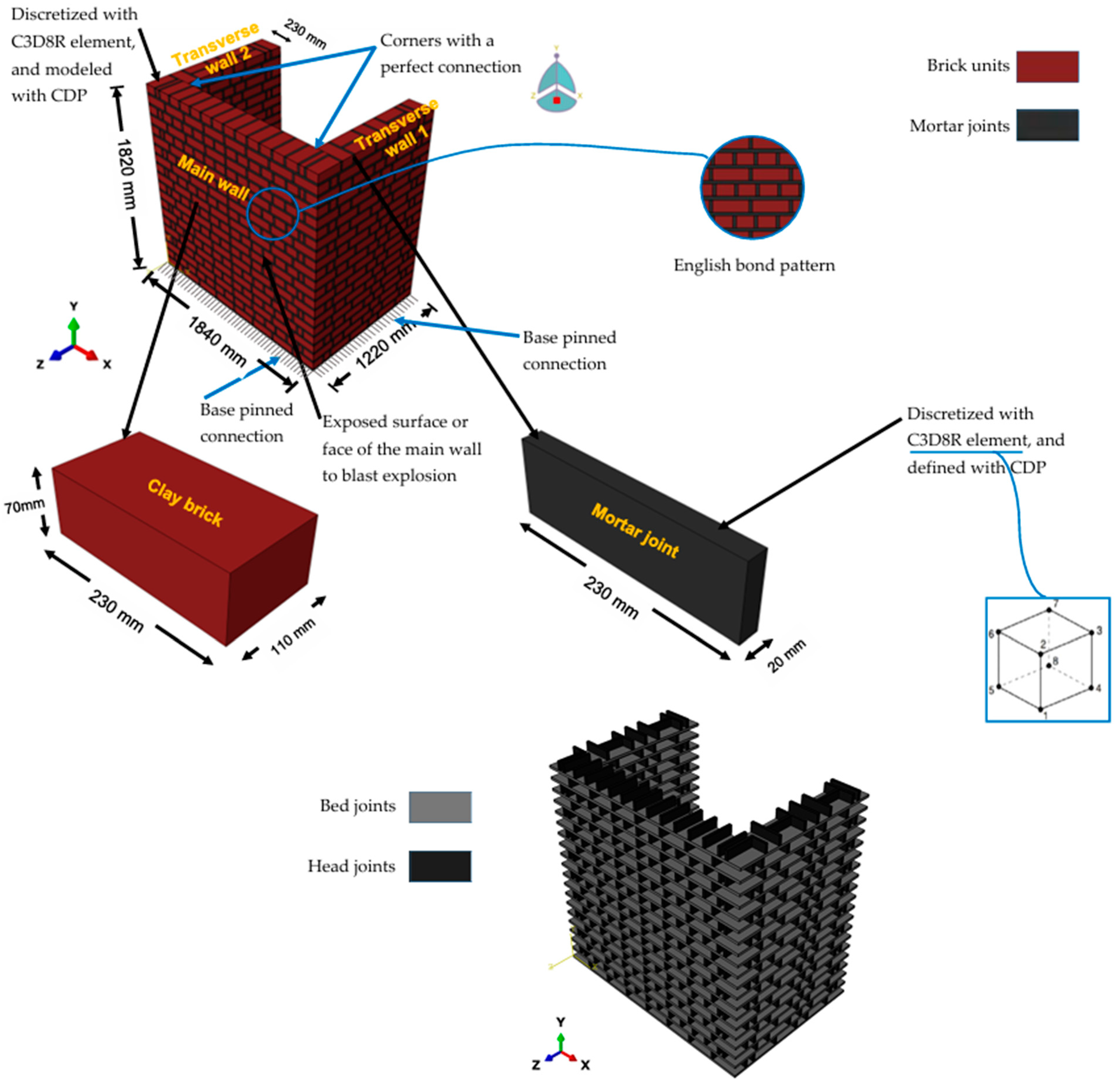
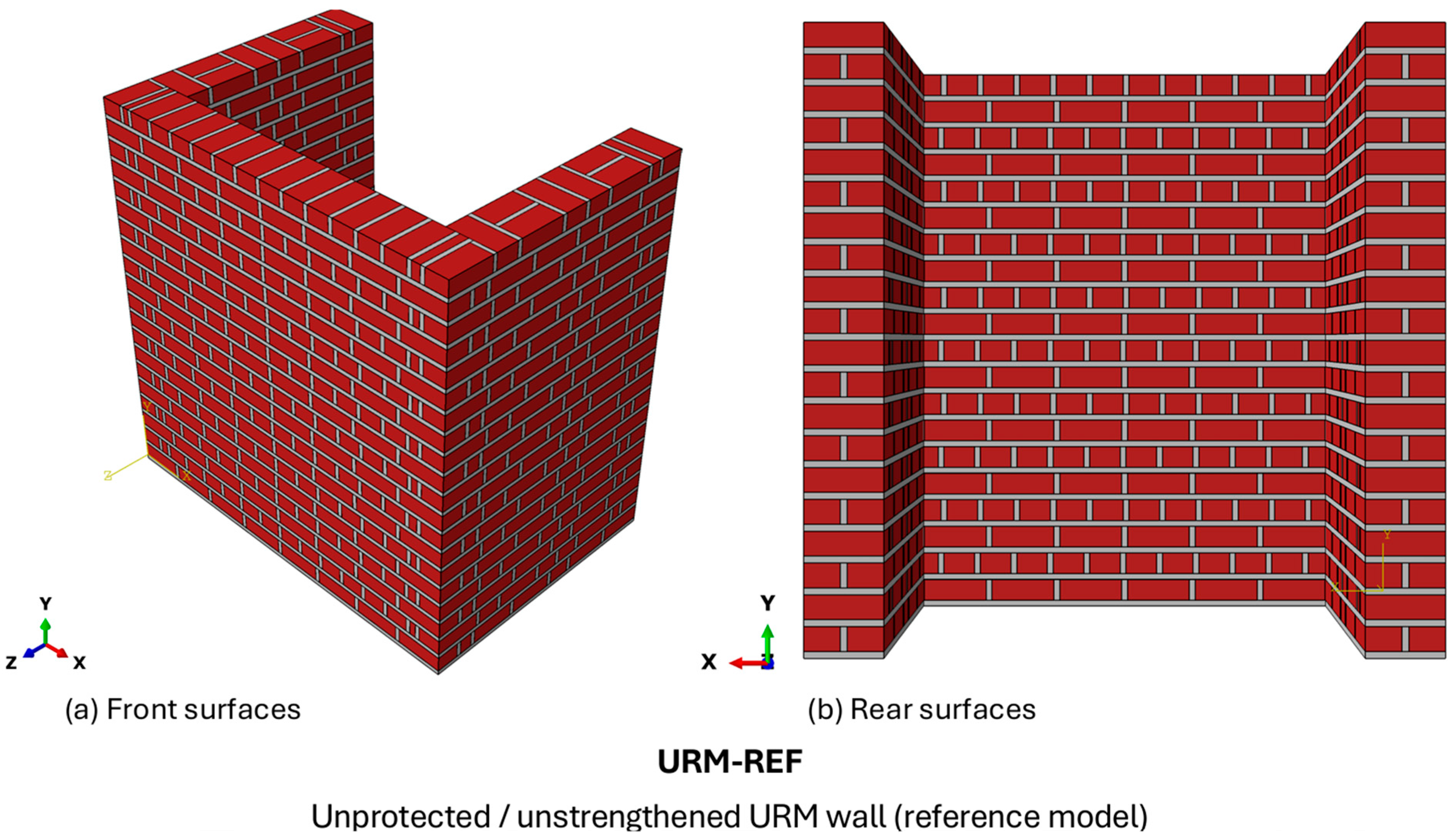
This section describes the creation of a three-dimensional finite element model of a 230 mm thick (one-brick) URM wall, which does not carry structural loads [6]. The wall is connected at both ends to solid transverse walls made of clay bricks of size 230 mm × 110 mm × 70 mm (nominal). The model is built in ABAQUS v2020 [20], following the same configuration tested experimentally by [6], as illustrated in Figure 3. This FE model serves as the reference baseline for all comparisons in this study. The setup consists of a main wall flanked by two transverse walls, forming a U-shaped layout when viewed from above. The main wall is 1840 mm long and 1820 mm high [6]. The side walls are each 1220 mm long and 1820 mm high [6]. Bricks are arranged in an English-bond pattern, identical to the experimental walls, with mortar joints ranging between 10 and 20 mm [6]. The model includes bed and head joints explicitly, where both brick-and-mortar units are discretized with C3D8R elements and defined through the CDP model [20]. The wall corners are modeled with perfect connectivity, and the base is assigned to a pinned boundary condition to replicate experimental support conditions [6]. The main wall surface exposed to the blast represents the external face subjected to blast pressures. The original experimental walls [6] were unplastered and free of axial compression, and these conditions are replicated here for model validation. Material properties are assigned as follows: bricks have a density of 2195 kg/m3 and Poisson’s ratio of 0.26. Mortar joints have a density of 2170 kg/m3 and Poisson’s ratio of 0.20 [6].
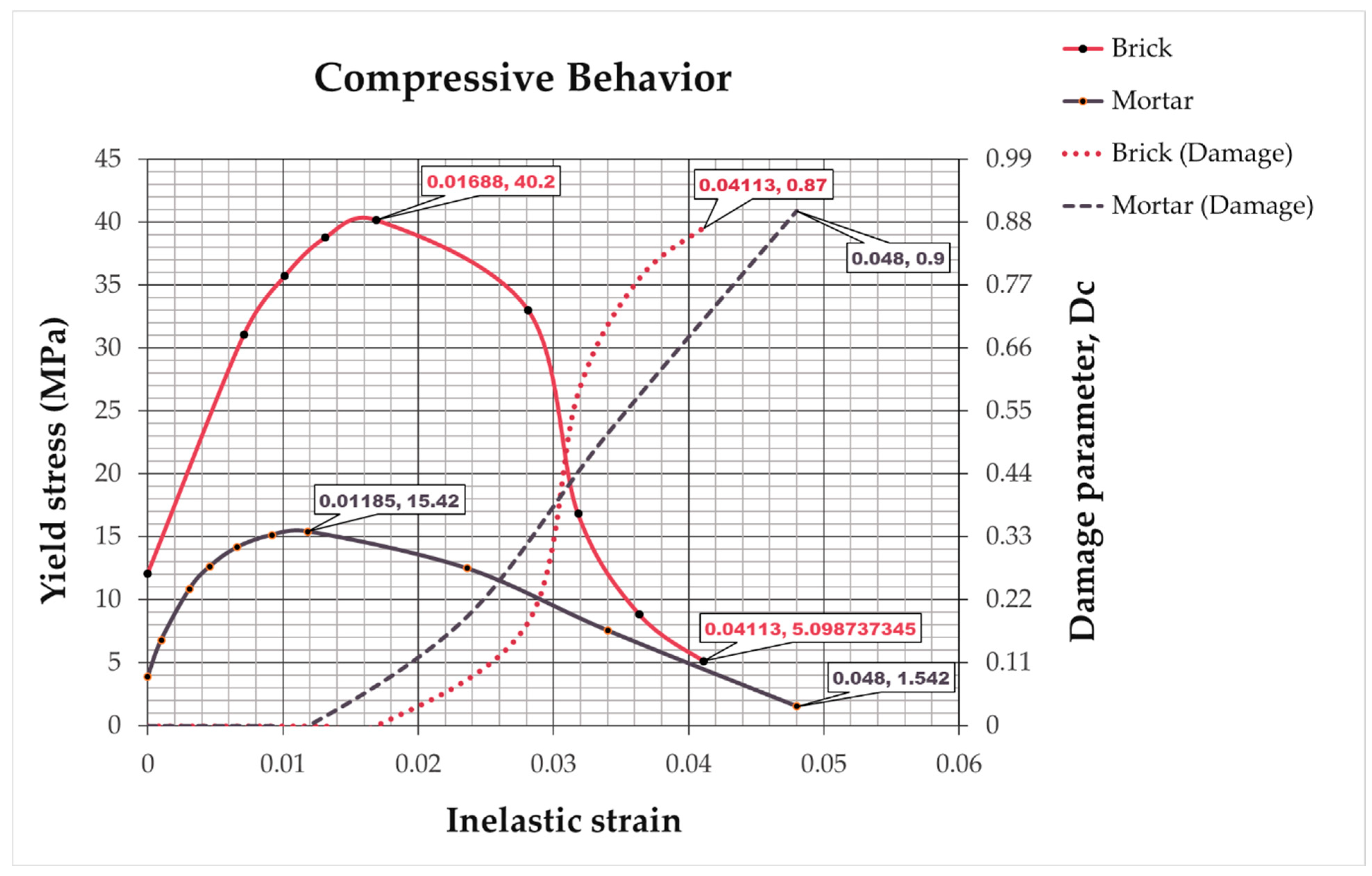
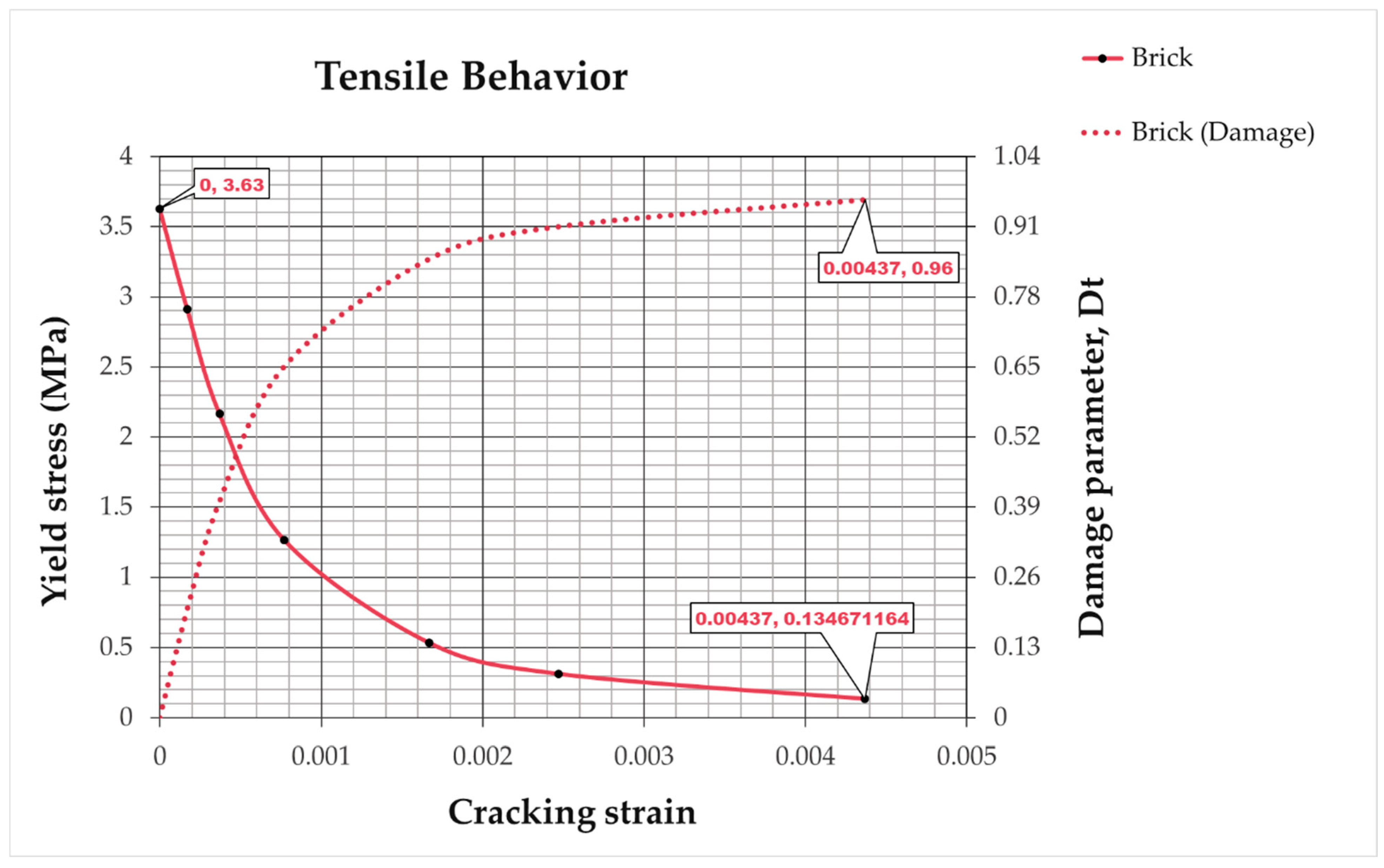
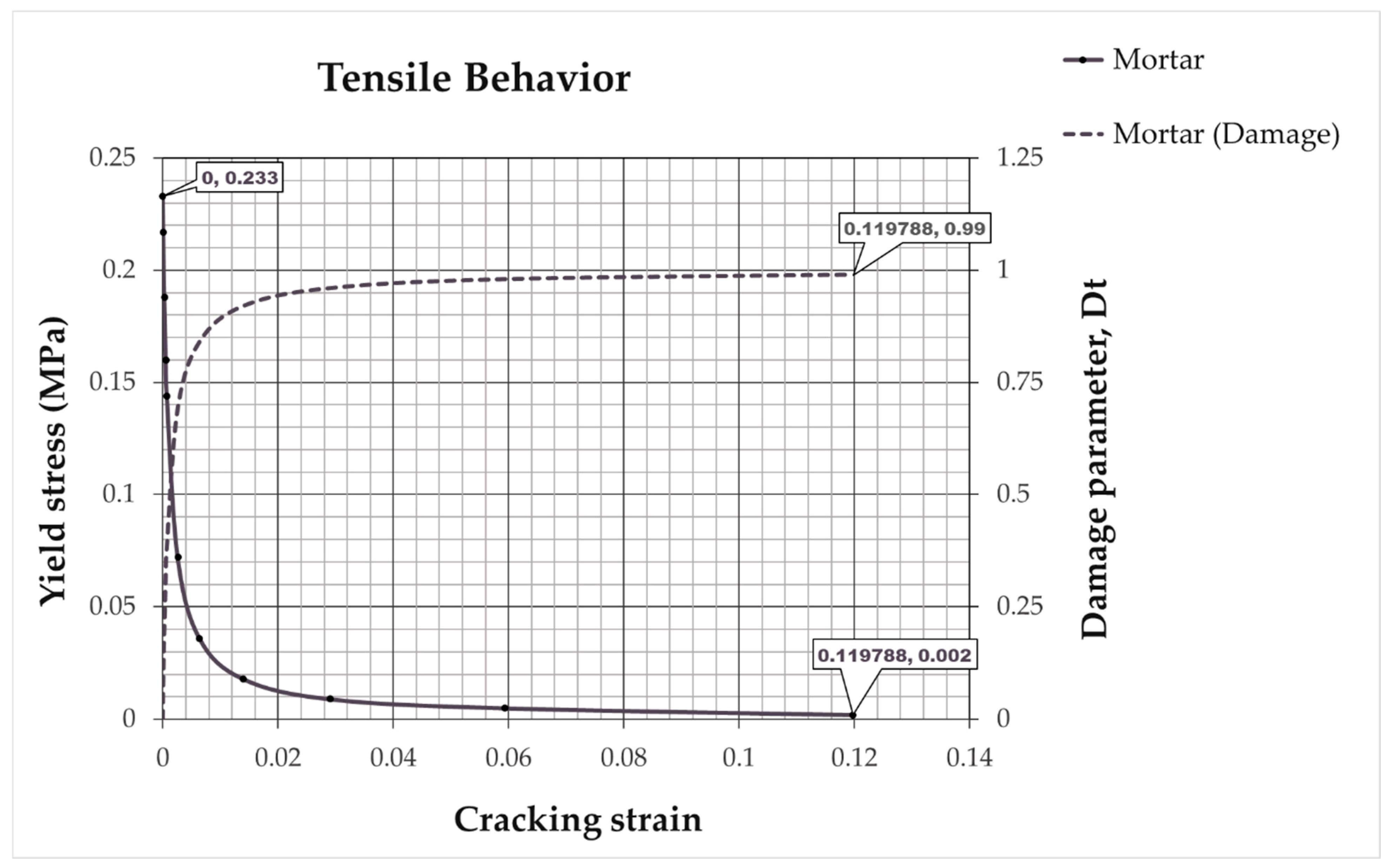
In ABAQUS v2020 [20], the material behavior was simulated using the CDP approach, which is an extension of the Drucker–Prager formulation originally developed in earlier studies [65,66]. This approach captures both inelastic and fracture responses of materials through isotropic damage evolution coupled with isotropic plasticity in tension and compression [20,67,68,69]. The CDP framework assumes that tensile cracking and compressive crushing failures are governed by damage-plasticity mechanisms, which enable the modeling of strain softening in tension and strain hardening in compression [20]. Previous investigations have demonstrated the effectiveness of the CDP framework for simulating the response of masonry systems exposed to explosive loads, concrete components experiencing rapid loading conditions, and rammed earth structures under earthquake actions [9,10,11,70,71,72]. Key plastic constants, including the angle governing volumetric expansion, the eccentricity associated with the plastic potential surface, the proportion between biaxial and uniaxial compressive strength at yield, and the parameter controlling numerical damping, were selected in accordance with values reported in the established literature [9,10,11,67,68,69,73]. The stress–strain response in ABAQUS v2020 [20] was defined through specific curves, with a parabolic law for compression and an exponential law for tension. Additionally, a damage criterion was applied for all materials under tensile loading, with a maximum tensile strain damage parameter set to 0.98 [20,67,68,69].
When structures experience extreme events such as blasts or impacts, the rate of loading significantly influences material properties like strength and stiffness [1,2,9,10,11]. This effect is expressed through dynamic increase factors (DIFs), which quantify the enhancement of mechanical properties under high strain rates [9,10,11]. Research has integrated these factors, often referred to as strain-rate influence factors, into CDP models for both brick-and-mortar assemblies and UHPC/UHPFRC systems [1,4,9,10,11]. During rapid loading, stress waves rapidly transmit energy through structural materials, causing the material properties such as strength, stiffness, elastic modulus, and energy dissipation capacity to change dynamically [1]. At high strain rates, ranging from roughly 10 to 1000 s−1, materials may exhibit a sharp increase in apparent strength, which is highly dependent on the specific material type [1]. Earlier investigations have demonstrated remarkable enhancements in mechanical performance when loading rates increase [1,2,4,9,10,11,74]. Reported improvements include strength increments exceeding half of the original value in steel, a doubling or more of compressive capacity in ordinary concrete, and extraordinarily large rises, several times the static value, in the tensile resistance of concrete [2,9,10,11,74]. In this study, the influence of loading rate is accounted for through DIFs, consistent with prior studies [9,10,11]. However, constitutive models that account for strain rate dependency have not been fully developed for masonry [9,10,11]. Hence, for simplicity, the influence of strain rate on masonry was treated as constant, following the methodology of Pereira et al. [9,10,11]. Calibration began from static properties. Initial simulations produced greater deformation than experimental results by Badshah et al. [6]. Material parameters were then incrementally adjusted until numerical and experimental results aligned. Calibration was limited to tuning the DIFs (2–3 for compression, 6 for tension) and elastic-modulus scaling (≈2) to match the experimentally observed damage patterns and crack depth of the reference wall within ±5% and ±2%, respectively. Once calibrated, the same parameters were used for all retrofitted cases without further adjustment. Although a full sensitivity analysis was beyond the present scope, future work will incorporate probabilistic strain-rate and interface parameter studies to assess uncertainty. The final calibrated CDP curves for brick-and-mortar layers are shown in Figure 4, Figure 5 and Figure 6. Although this method of approximating DIFs for masonry lacks full objectivity, the results are consistent with prior research on masonry specimens [5,9,10,11,25], where compressive and tensile strength factors range between 2 and 3, and the elastic modulus factor is around 2 [9,10,11].
The static and dynamic mechanical properties of brick and mortar are reported in Badshah et al. [6], as follows: For bricks, the static tensile strength is 1.21 MPa, compressive strength is 13.40 MPa, and elastic modulus is 32.47 GPa, while the corresponding dynamic values are 3.63 MPa, 40.20 MPa, and 64.94 GPa, with calibrated dynamic increase factors (DIF) of 3.0, 3.0, and 2.0, respectively. For mortar joints, the static compressive strength is 5.14 MPa and the elastic modulus is 19.85 GPa, while the dynamic compressive strength and modulus are 15.42 MPa and 39.70 GPa, with DIF values of 3.0 and 2.0, respectively.
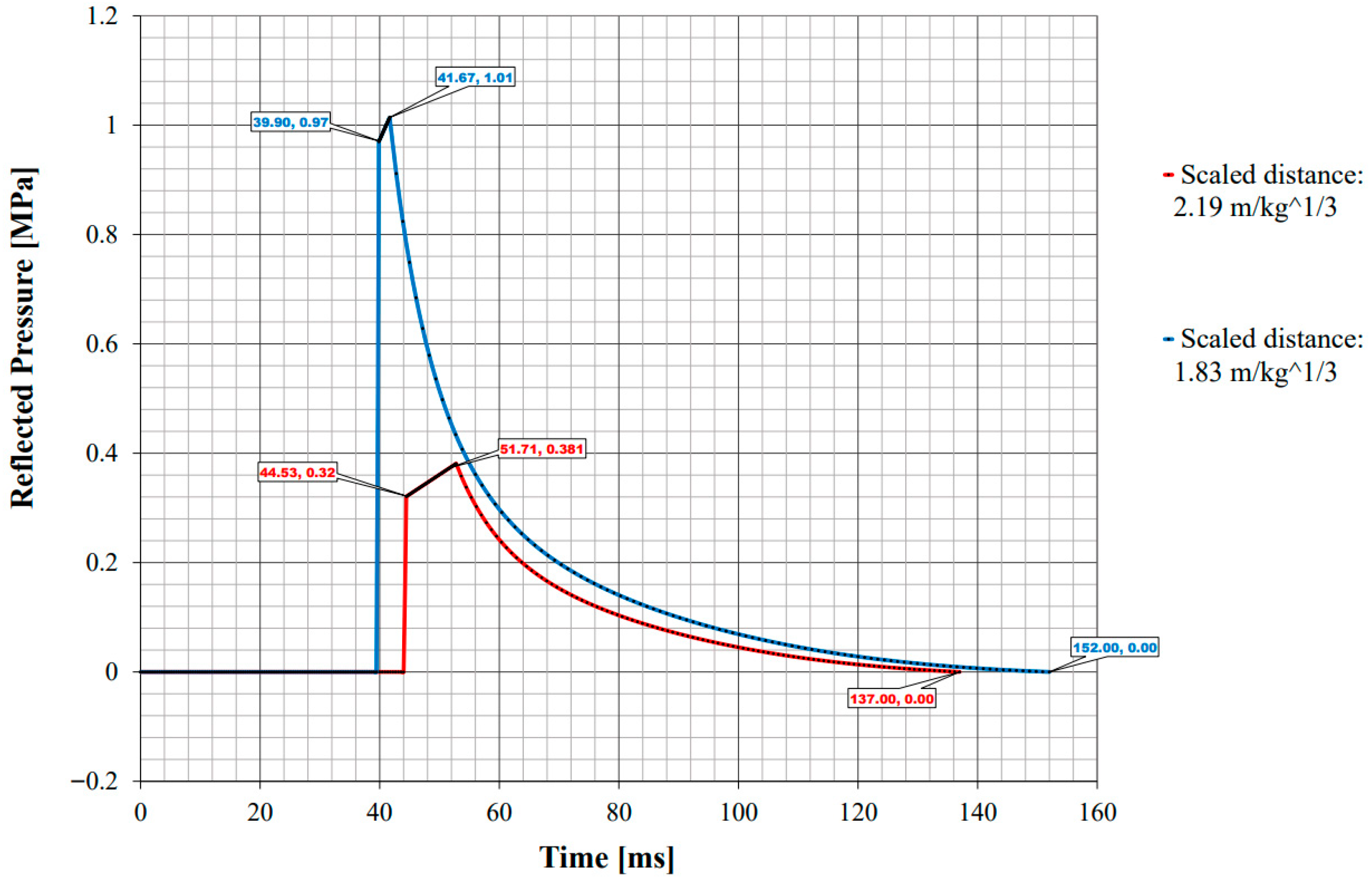
The main or primary wall of a URM wall system is subjected to TNT charges of 4.34 kg and 7.39 kg [6]. The charges are positioned at scaled distances of 2.19 m/kg1/3 and 1.83 m/kg1/3, respectively, with the explosives 910 mm above ground, consistent with the reference experimental setup [6]. Peak reflected pressures recorded experimentally were 0.38 MPa and 1.01 MPa [6]. These values are applied to the exposed main wall surface using the ConWep module in [20]. ABAQUS v2020 [20], widely used for dynamic simulations, models blast effects efficiently with ConWep. This tool simulates explosives without explicitly modeling the explosive or air, assuming weak interaction between the structure and air. Compared to CFD-based Lagrangian–Eulerian methods, ConWep needs fewer inputs, reduces simulation time, and produces accurate blast loads, as noted by [2,9,10,11]. The explosive point is set using the Reference Point feature in ABAQUS v2020 [20] (Figure 7).
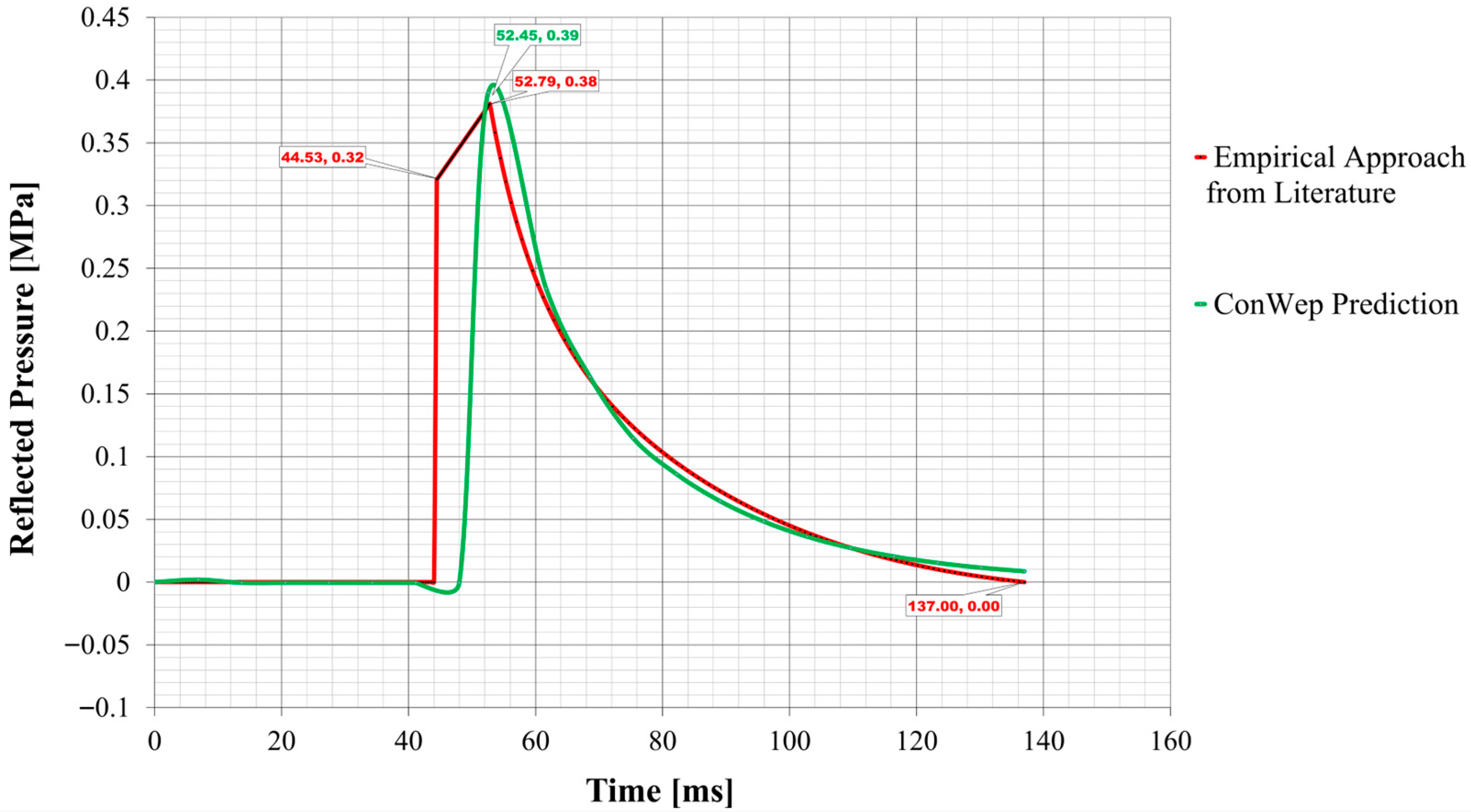
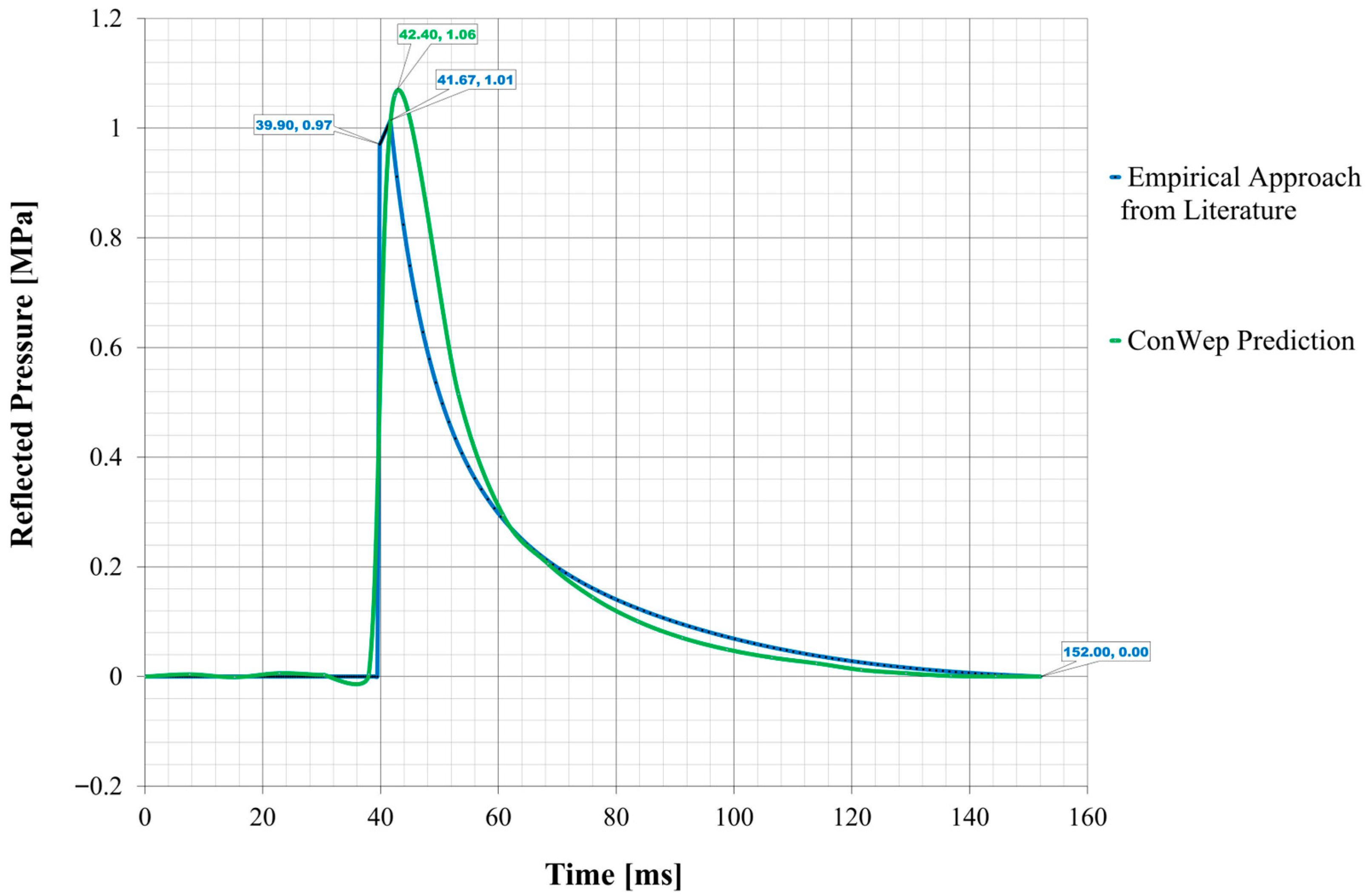
For comparison, blast load histories are calculated using Wu and Hao’s [21] empirical approach and shown in Figure 8. Ignoring the negative phase, blast durations are 137 ms and 152 ms for the respective scaled distances. Figure 9 and Figure 10 show the pressure variations from ConWep simulations. Maximum reflected pressures from Wu and Hao’s method occur at 52.79 ms and 41.67 ms, with 0.38 MPa and 1.01 MPa. ConWep predicts 0.39 MPa and 1.06 MPa at 52.45 ms and 42.40 ms. The minor differences in arrival time and peak pressure (within 2–3%) further validate the empirical formulation. The close match between ConWep results, empirical predictions, and experimental measurements confirms the method’s reliability for simulating blast pressures on masonry wall surfaces.

4.1. Description of Walls

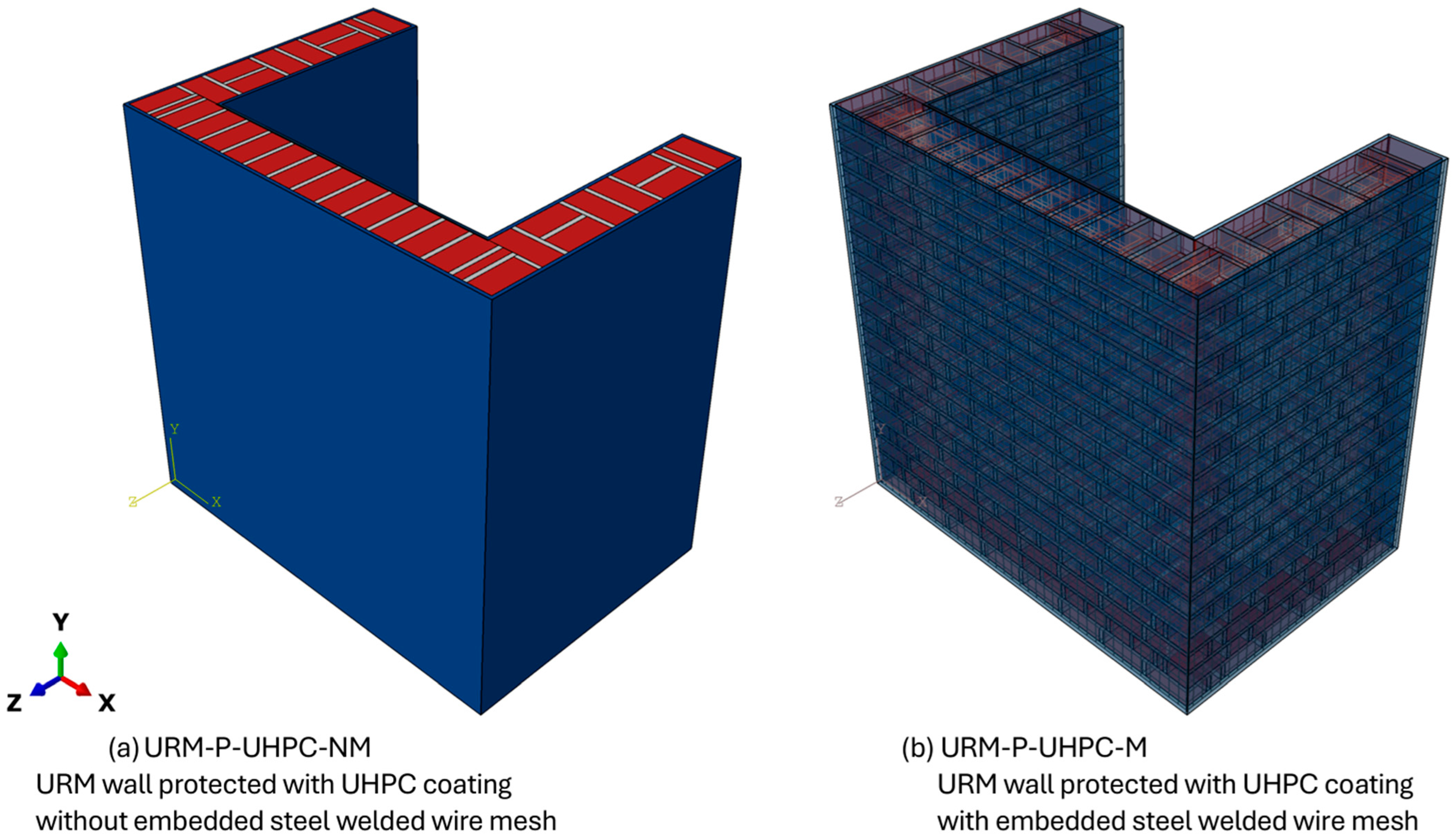
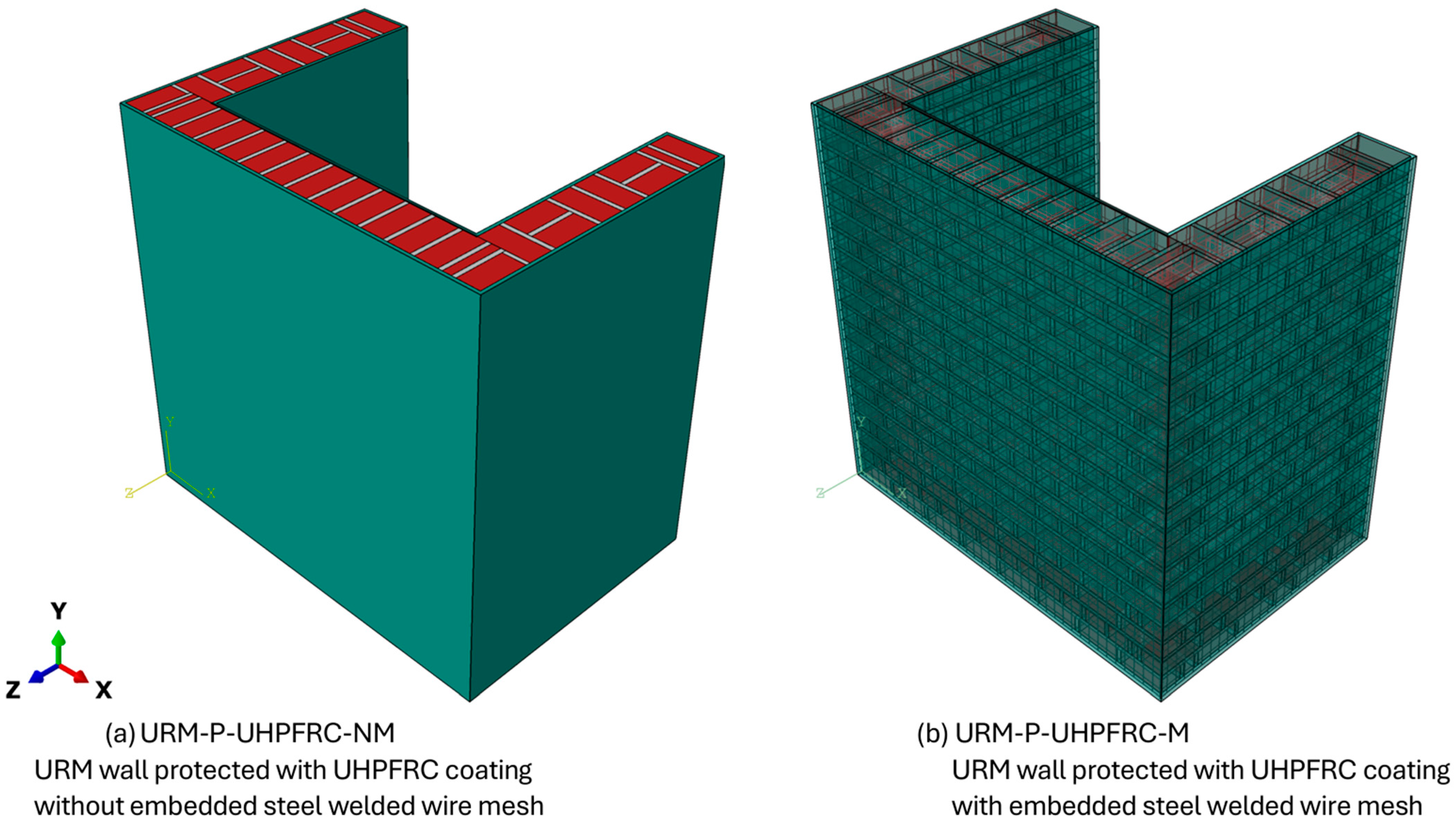
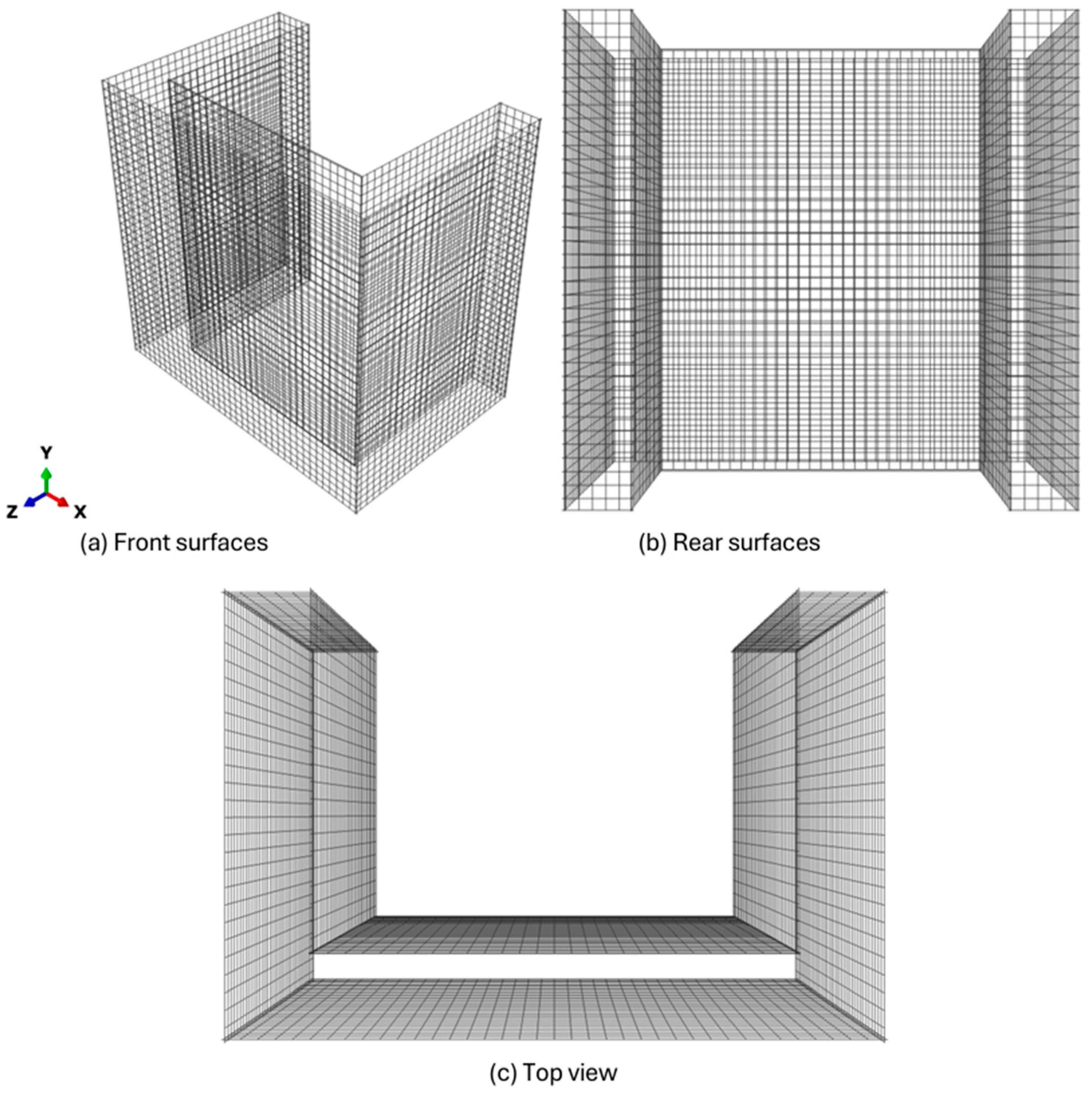
The unreinforced masonry (URM) assembly consisted of a central wall panel (referred to as the main wall in this study) with overall dimensions of 1840 mm in length and 1820 mm in height [6]. Lateral stability was provided by two perpendicular intersecting walls acting as returns, each extending 1220 mm in length and rising to a height of 1820 mm [6], as illustrated in Figure 11. All walls were considered unplastered masonry to represent the actual brick–mortar contact without any surface finish [6]. A uniform protective layer of 15 mm thickness using UHPC/UHPFRC was provided on both faces of the main wall as well as the return walls, Figure 12a and Figure 13a. To control cracking and enhance the tensile performance of the thin protective layer, a steel-welded wire mesh was placed within the UHPC/UHPFRC coating, Figure 12b and Figure 13b. The mesh was made of steel wires of 1 mm diameter arranged in a square pattern with 50 mm spacing in both directions, Figure 14. This configuration was adopted to ensure proper crack bridging and uniform stress distribution in the thin layer, while also keeping the placement practical and free from congestion. The 50 mm grid ensured adequate reinforcement density for a thin overlay, and the small wire diameter allowed full embedment within the 15 mm coating with a minimum clear cover of about 5 mm from the exposed surfaces. In the numerical model developed in ABAQUS v2020 [20], the welded wire mesh was idealized as a discrete reinforcement layer using three-dimensional truss elements (T3D2) [20]. The UHPC/UHPFRC coating was modeled using solid elements. The steel mesh was linked to the surrounding concrete through the embedded region constraint to ensure full strain compatibility between the two materials [20]. This assumption represents perfect bonding and allows transfer of forces, crack control, and stiffness contribution without the need for separate interface modeling. We made this simplification to keep the simulations stable and to make fair comparisons between retrofit options. In practice, UHPC and UHPFRC overlays, when properly keyed and reinforced with welded wire mesh, have been shown to exhibit strong adhesion and negligible delamination prior to major cracking; hence, the perfect-bond assumption reasonably approximates realistic behavior within the elastic-plastic range [1,74,75,76]. The mesh was extended continuously over the coated surfaces of both the main wall and the return walls and aligned with the wall surfaces to reflect actual construction practice. The welded wire mesh placed inside the coating is of mild steel. For numerical analysis, the low-carbon steel wire is modeled as an elastic-plastic material. A Young’s modulus of 200 GPa and a Poisson’s ratio of 0.30 are adopted, along with a mass density of 7850 kg/m3. The onset of yielding is taken at 450 MPa. Beyond this stage, the material is allowed to undergo plastic deformation until an ultimate tensile strength of 600 MPa is reached.
All geometric parameters used in the numerical model are summarized in Table 1.
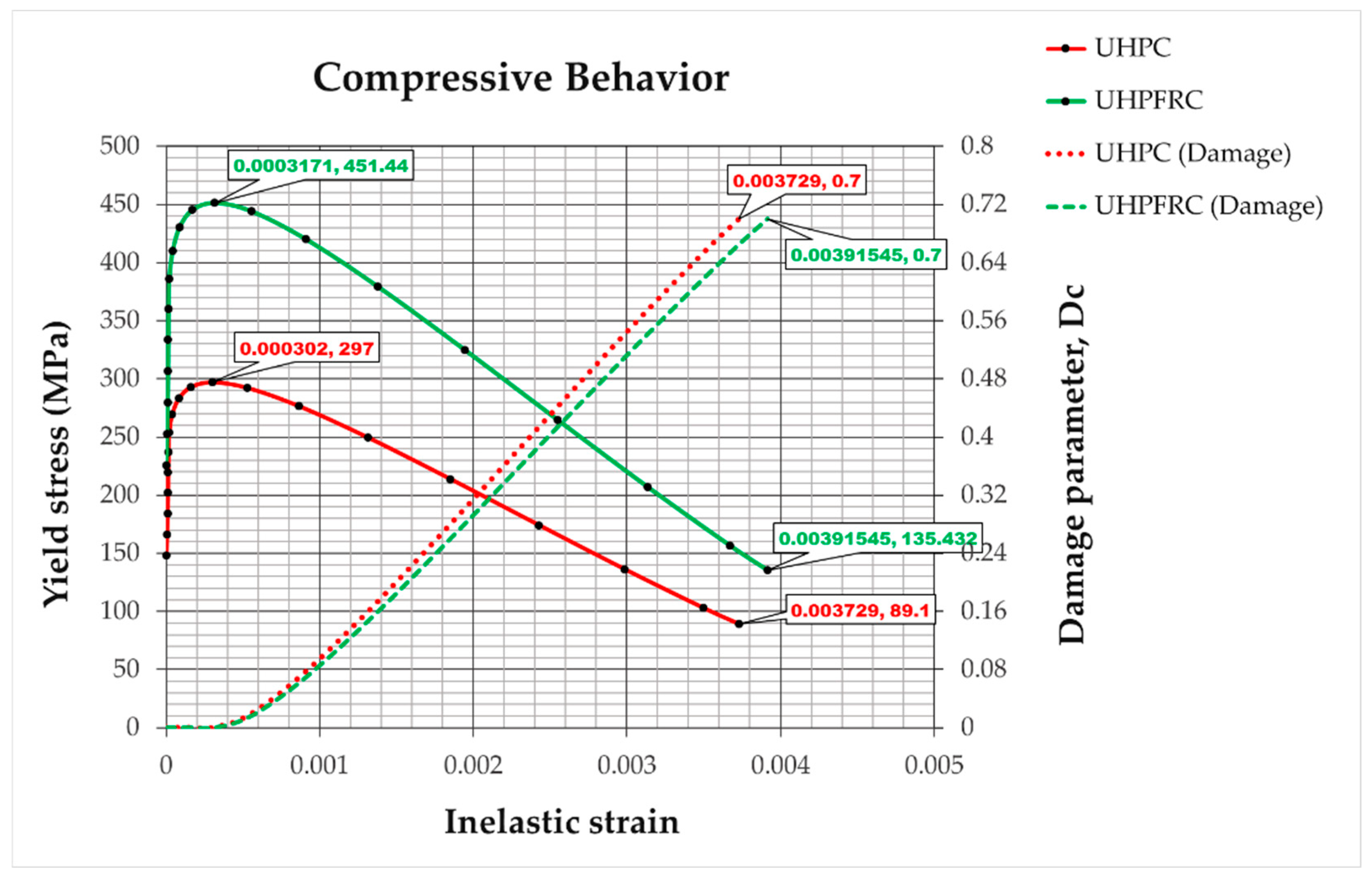
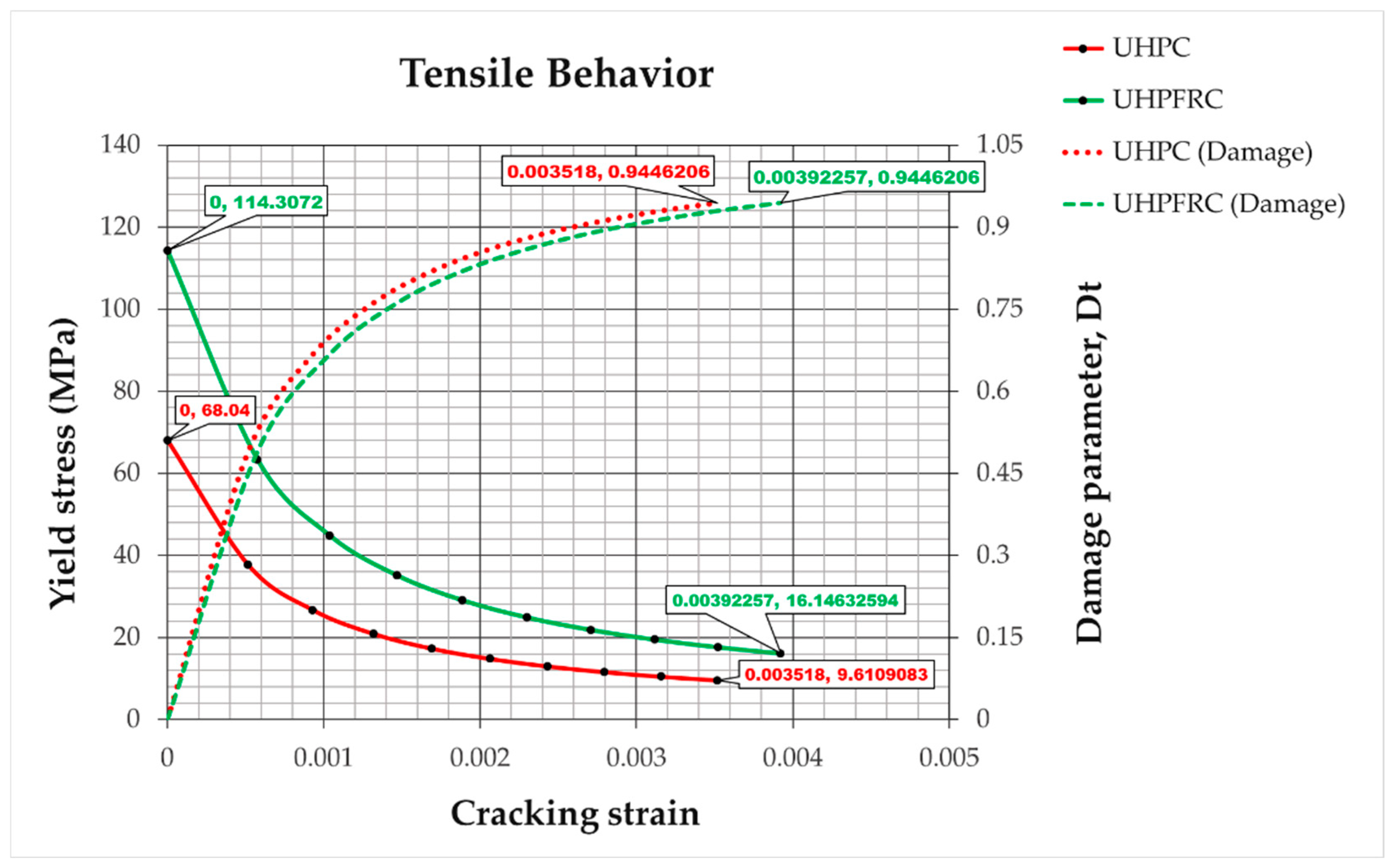
Dynamic mechanical properties of UHPC and UHPFRC were obtained from earlier studies [75,76]. For UHPC, the static tensile strength stood at 11.34 MPa, which increased to 68.04 MPa under dynamic loading, giving a dynamic increase factor (DIF) of 6.0. Compressive strength increased from 99.0 MPa to 297.0 MPa, and the elastic modulus from 51.0 GPa to 153.0 GPa, both showing a DIF of 3.0. UHPFRC, reinforced with 2% steel fibers by volume, showed a static tensile strength of 19.05 MPa, increasing to 114.30 MPa dynamically, also with a DIF of 6.0. Compressive strength varied from 150.48 MPa (static) to 451.44 MPa (dynamic), and elastic modulus rose from 63.0 GPa to 189.0 GPa under dynamic loading, each with a DIF of 3.0. All DIFs were computed according to MC2010 [77].
In general, UHPC and UHPFRC exhibit pronounced strain-rate sensitivity, particularly in tension due to fiber bridging, crack arrest, and strain-hardening mechanisms. Under high strain-rate loading, tensile strength enhancements of the order of 5–7 times the static value have been consistently reported, while compressive strength and elastic modulus typically increase by a factor of about 2–3. Accordingly, the DIF values of 6.0 for tensile strength, 3.0 for compressive strength, and elastic modulus adopted in this study fall well within experimentally observed and code-supported ranges specified in fib Model Code 2010. In this study, the DIFs were treated as uniform. Although this simplification may overlook some fine details, it is consistent with earlier studies [9,10,11], where static properties were increased using dynamic multipliers from the Model Code [77]. The reason for this approach is that at high strain rates, the material typically shows a predictable increase in response. Using a constant DIF provides a simple and widely accepted way to estimate dynamic behavior without relying on complex, time-dependent material models. The final calibrated CDP models representing both compressive and tensile behavior for UHPC and UHPFRC are illustrated in Figure 15 and Figure 16.
For the CDP model, commonly recognized and literature-supported parameter values were employed. In the case of masonry, the model utilized a dilation angle of 20°, an eccentricity of 0.10, a biaxial compressive to uniaxial compressive strength ratio of 1.16, a shape factor of 0.67, and a minor viscosity parameter of 0.001. For concrete, the corresponding parameters included a dilation angle of 56°, eccentricity of 0.10, a strength ratio of 1.10, a shape factor of 0.66, and the same small viscosity value of 0.001, all referenced from previous studies [8,9,10,11,67].

4.2. Interaction Between Masonry Units and Mortar

The transfer of forces across the contact surface between bricks and mortar layers is typically represented through friction-based contact laws derived from classical failure theories [8,9,10,11,20]. In such representations, resistance to tangential motion at the joint arises from a combination of adhesive bonding and friction mobilized by compressive forces acting perpendicular to the interface. This approach is suitable for masonry assemblies, where load transfer is strongly influenced by surface roughness, mortar heterogeneity, and confinement effects rather than by tensile bonding alone. This relationship may be written as follows [20]:
τ = c + σ n · t a n θ
where “ τ ” represents the interfacial shear stress, “ c ” corresponds to the bonding capacity at the joint, “ σ n ” is the compressive stress normal to the contact surface, and “ θ ” denotes the angle governing frictional response. The friction angle implicitly accounts for the interlocking mechanism between brick-and-mortar irregularities, which becomes increasingly relevant under compressive loading conditions [8,9,10,11,20].
In the numerical model, the contact zone between the masonry units (bricks) and the surrounding mortar was described using a general contact algorithm that accounts for both normal interaction and tangential sliding. This formulation allows for opening, separation, and relative movement between neighboring units during loading. Such capabilities are essential for capturing progressive joint degradation, localized sliding, and block rearrangement under dynamic actions. For the present analysis, adhesive bonding at the unit-mortar boundary was ignored, and resistance to sliding was assumed to arise solely from friction. This modeling choice reflects the observation that mortar cohesion can rapidly deteriorate under high strain rates, repeated loading, or cracking, leading to a friction-dominated response even at relatively low displacement levels. Such a simplification has been widely employed in computational investigations of masonry structures subjected to impulsive or extreme loads. For instance, numerical simulations reported in [13] utilized a purely frictional contact representation and demonstrated good correlation with experimental observations from blast tests. These findings indicate that, under high-rate loading, frictional effects dominate joint behavior. Consequently, the current study adopts a friction-controlled interface model.
The tangential resistance at the contact surface is therefore governed by a Coulomb-type friction relation expressed as follows [20]:
τ = τ 0 + μ f · σ n
where μ f is the coefficient of friction and τ 0 represents cohesive strength. Experimental investigations reported in the literature suggest that values of μ f generally fall within the range of approximately 0.67 to 0.75 [78]. Based on laboratory testing of masonry prism specimens conducted in the research paper [79], a friction coefficient of μ f = 0.70 was selected for this study. By omitting the cohesive term τ 0 , the model assumes that shear transfer across the interface is controlled primarily by friction under compressive contact conditions. This assumption is consistent with scenarios where tensile separation occurs early, rendering cohesion ineffective while friction continues to contribute to load redistribution and energy dissipation. While this approach is adequate for parametric comparison and structural response assessment, a more comprehensive treatment, especially at the micro-scale, would require the inclusion of experimentally derived bonding parameters. Such refinement, however, lies outside the objectives of the present investigation.
The cohesive interaction between brick and mortar thus follows a friction-controlled Coulomb law with μ f = 0.70, while tensile separation and softening are inherently captured through the contact algorithm in ABAQUS/Explicit 2020 [20], consistent with previous validated blast studies [8,9,10,11].

4.3. Validation of Computational Results

Choosing a suitable finite element type and its discretization level is a critical aspect of numerical modeling [1,2,9,10,11]. The intended use of the model, element compatibility, target precision, and available computational resources all play an important role in this decision. Mesh density directly governs the reliability of the predicted response, with finer discretization generally leading to improved solution accuracy [9,10,11].
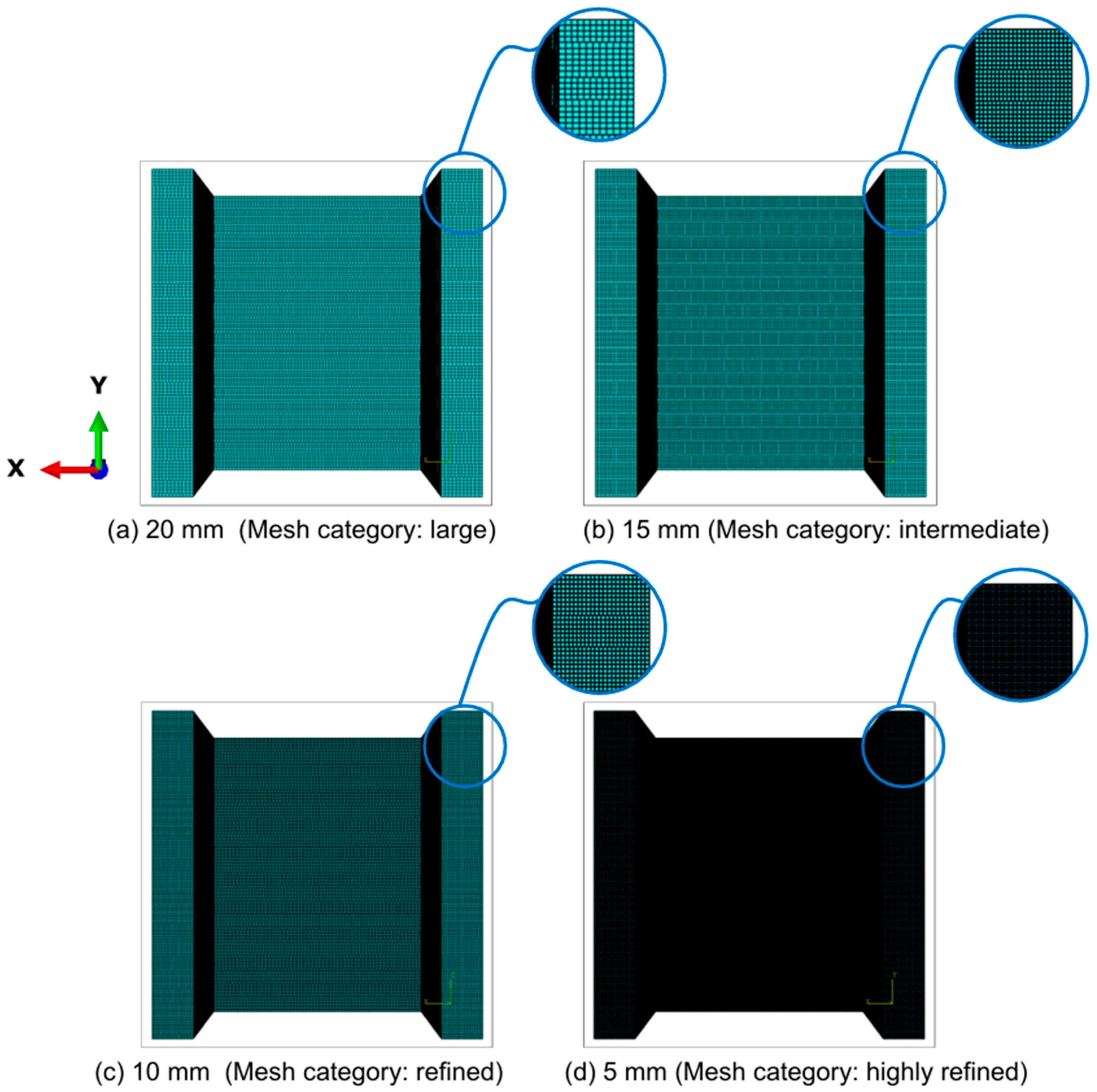
Accordingly, this section presents a mesh refinement study performed on the numerical model of a benchmark masonry wall shown in Figure 17. The objective is to evaluate the sensitivity of the predicted response to mesh resolution and to identify a discretization level that provides accurate results without unnecessary computational cost [11]. To achieve this, several meshes with varying levels of refinement are examined, and the resulting damage patterns are compared against experimental observations reported in earlier laboratory investigations.
Within the ABAQUS v2020 [20] environment, individual masonry components, such as different brick units and mortar layers, are first generated as separate parts. These components are then combined in the assembly module to reproduce the English bond masonry configuration [20]. Subsequent steps include assigning material properties, defining element discretization, selecting the analysis procedure, specifying supports, defining interactions and constraints, and applying external loads [20]. All these operations are carried out during the pre-processing stage [20]. The numerical analysis is then executed through the solver, and the computed responses are interpreted using the post-processing and visualization tools provided by the software [20]. For modeling brick-and-mortar blocks, an eight-node three-dimensional solid element with reduced integration is adopted in an explicit analysis framework. This element formulation is known to mitigate numerical issues such as artificial stiffness while incorporating hourglass control to ensure stable solutions [9,10,11,20]. Previous research has demonstrated that this element type is well-suited for representing masonry assemblies, particularly in terms of achieving stable convergence and minimizing shear-locking effects [9,10,11,20]. All masonry units are treated as deformable bodies in the modeling framework [20]. The interaction between brick-and-mortar joints is represented using cohesive formulations within the explicit analysis scheme. Contact between bricks, mortar layers, and their interfaces is handled using a general contact definition that incorporates frictional behavior, normal contact enforcement, cohesive resistance, and a penalty-based constraint approach [9,10,11,20]. Standard traction–separation laws available in the software are employed to capture the bonding and separation behavior at brick–mortar interfaces. Detailed discussions of these interaction models have been presented in earlier studies from the available literature [9,10,11,20].
Support conditions are known to strongly influence both the global response and the failure characteristics of unreinforced masonry walls subjected to extreme loading [4,6,7,8,9,10,11]. In this work, the numerical constraints are defined to replicate the setup used in the reference experimental program presented in the research article [6]. The base of the primary wall and the adjoining side walls are modeled with simple supports that restrict translational movement in all spatial directions while permitting rotational freedom. This assumption is consistent with configurations adopted in several previous numerical and experimental studies [9,10,11]. The connection between intersecting walls is assumed to be fully continuous, ensuring uninterrupted transfer of bending and torsional actions across the junctions. Further details on boundary condition modeling for masonry wall systems can be found in earlier published investigations [25].
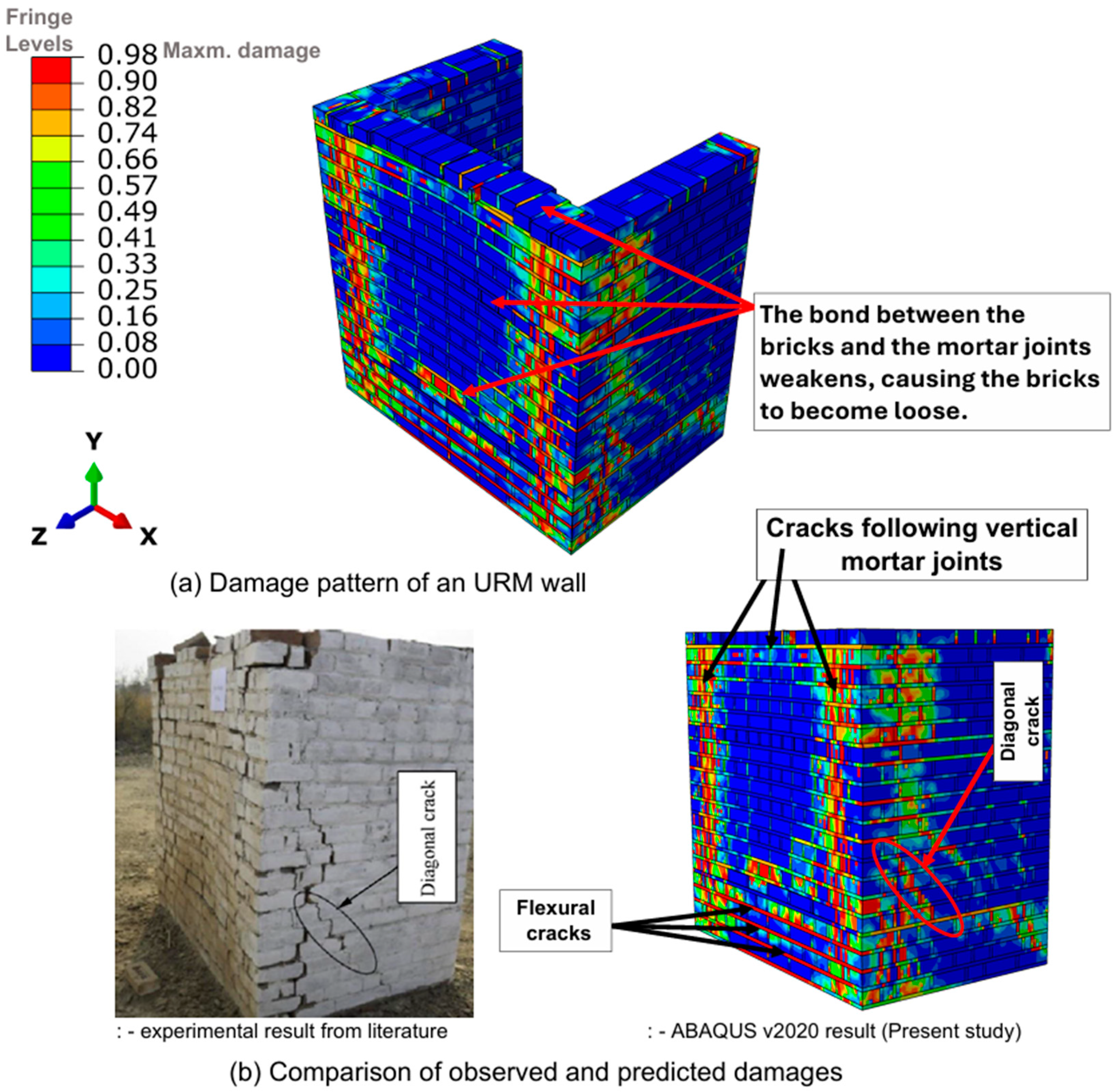
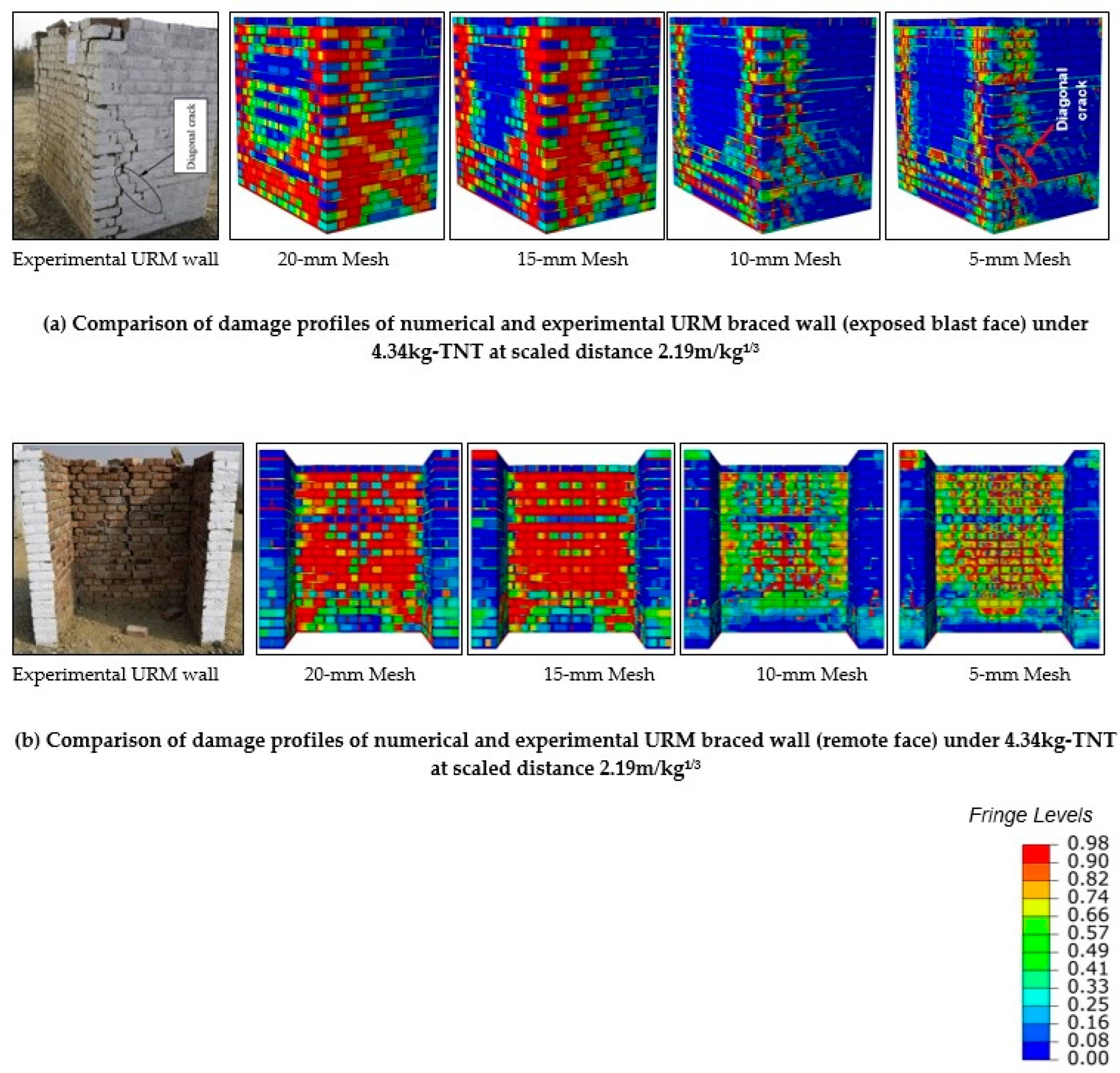
A mesh refinement study was carried out for a braced unreinforced masonry wall subjected to blast loading at a stand-off parameter of 2.19 m/kg1/3, as illustrated in Figure 17, and the grid details provided in Table 2. The goal was to evaluate mesh sensitivity and determine the optimal discretization level balancing accuracy and computational cost. Table 2 lists four mesh categories: large, intermediate, refined, and highly refined, with their element sizes ranging from 20 mm to 5 mm, finite elements, and nodal points. This assessment relied on previously published test data reported in article [6]. The numerical outcomes for the vertical mid-height fracture penetration obtained using different discretizations are summarized in Table 3 alongside computational cost indicators such as analysis duration, number of elements and nodes, and memory demand. Table 3 shows that as the mesh becomes finer, the prediction of cracks improves. However, this comes at the cost of higher computational effort. The spatial distribution of damage predicted for each mesh density is also illustrated in Figure 18. In these contours, the damage index ranges from zero to nearly unity, where the lowest value denotes an intact condition and the highest value reflects severe degradation with substantial reduction in load-carrying capacity [20]. Intermediate values indicate the onset of material softening, as described in the ABAQUS v2020 documentation [20]. A clear trend is observed when comparing fracture penetration across mesh categories. Normalizing the crack depth corresponding to the finest mesh, the ratios for element sizes of 5, 10, 15, and 20 mm are 1.00, 0.96, 0.92, and 0.86, respectively. This demonstrates that coarser discretization leads to progressively smaller predicted crack penetration. The finest mesh yielded a crack depth of 192 mm, closely matching the experimental value of 195 mm. In contrast, the coarsest mesh predicted only 166 mm, showing a noticeable deviation from test observations. Intermediate meshes produced depths that lay between these two extremes. Table 3 confirms these results, showing computation duration and RAM usage increase sharply with mesh refinement, indicating a trade-off between accuracy and computational cost. The comparison confirms that the smallest element size provides the closest agreement with experimental evidence, with an error of roughly 1.5%. This level of discrepancy is considered acceptable for blast response simulations and is mainly attributed to unavoidable simplifications in numerical representation, including assumptions related to constitutive parameters, strain-rate effects, support conditions, and blast pressure idealization. The influence of mesh resolution also contributes marginally to this difference. Visual inspection of the damage patterns further supports this conclusion, as the results obtained using the 5 mm discretization closely resemble the experimentally reported failure mode [6], Figure 18. Larger elements tend to exaggerate cracking and damage relative to physical observations. A reduced-integration 8-node solid element with a 5 mm characteristic length was chosen after the mesh-convergence study showed it gave the best match to experiments presented in [6] while keeping computational cost reasonable.
In all simulation runs, we regularly checked the energy balance and monitored solution accuracy to ensure numerical stability. The hourglass energy remained below 3% of the total energy in every case, confirming that the results were numerically consistent and physically reliable. No mass scaling was applied; simulations used the real material densities and time steps calculated automatically to ensure physically accurate responses [20]. Element deletion was avoided entirely [20]. Material failure was instead captured using the CDP framework, which models progressive reduction in stiffness as damage accumulates, with the damage parameter approaching a value of 0.98 (D ≈ 0.98) [20]. In the resulting damage patterns, regions displayed in red indicate fully damaged material zones, representing total loss of stiffness or strength rather than the removal of elements from the model.

5. Results and Discussions

5.1. Response of an Unprotected URM Wall Under Blast Case—I (Moderate Flexure-Shear) at a Normalized Stand-Off of 2.19 m·kg−1/3

Figure 18, Figure 19 and Figure 20 illustrate the damage observed in the experiments reported by [6]. These observations served as a reference for evaluating and comparing the numerical results obtained in this study.
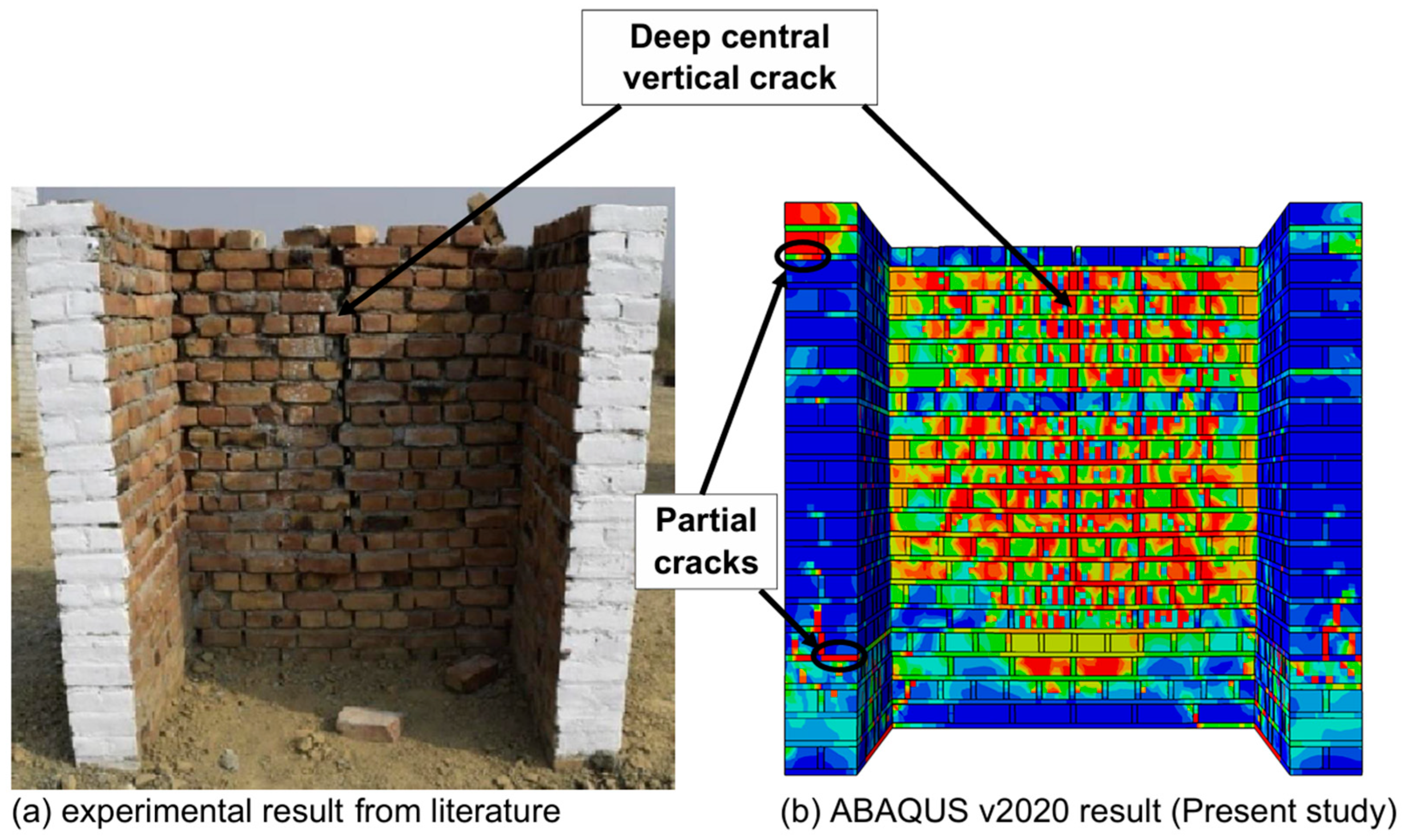
On the blast-facing side, the impacted surface exhibits distinct damage features (Figure 19). These include prominent longitudinal cracks formed around the central span and extending through the full depth of the wall, particularly near the connections with the integral transverse walls, which were mainly caused by rotational effects. A deep vertical crack developed at the mid-width of the wall, clearly visible in both the experimental specimen [6] and the numerical contours, which indicates a dominant flexural response of the restrained wall (Figure 19). In addition, cracking parallel to the base is observed close to the ground level. The primary wall behaves as a wall restrained along both vertical boundaries and the bottom edge. As a result, splitting cracks appear at mid-width, while the adjoining cross walls (i.e., laterally supported walls) develop cracking near the wall intersections. Flexural cracks aligned along the horizontal mortar joints are also evident in the lower and middle regions of the main wall (primary wall), indicating a bending-dominated failure. Separation along bed joints near the base is also clearly visible.
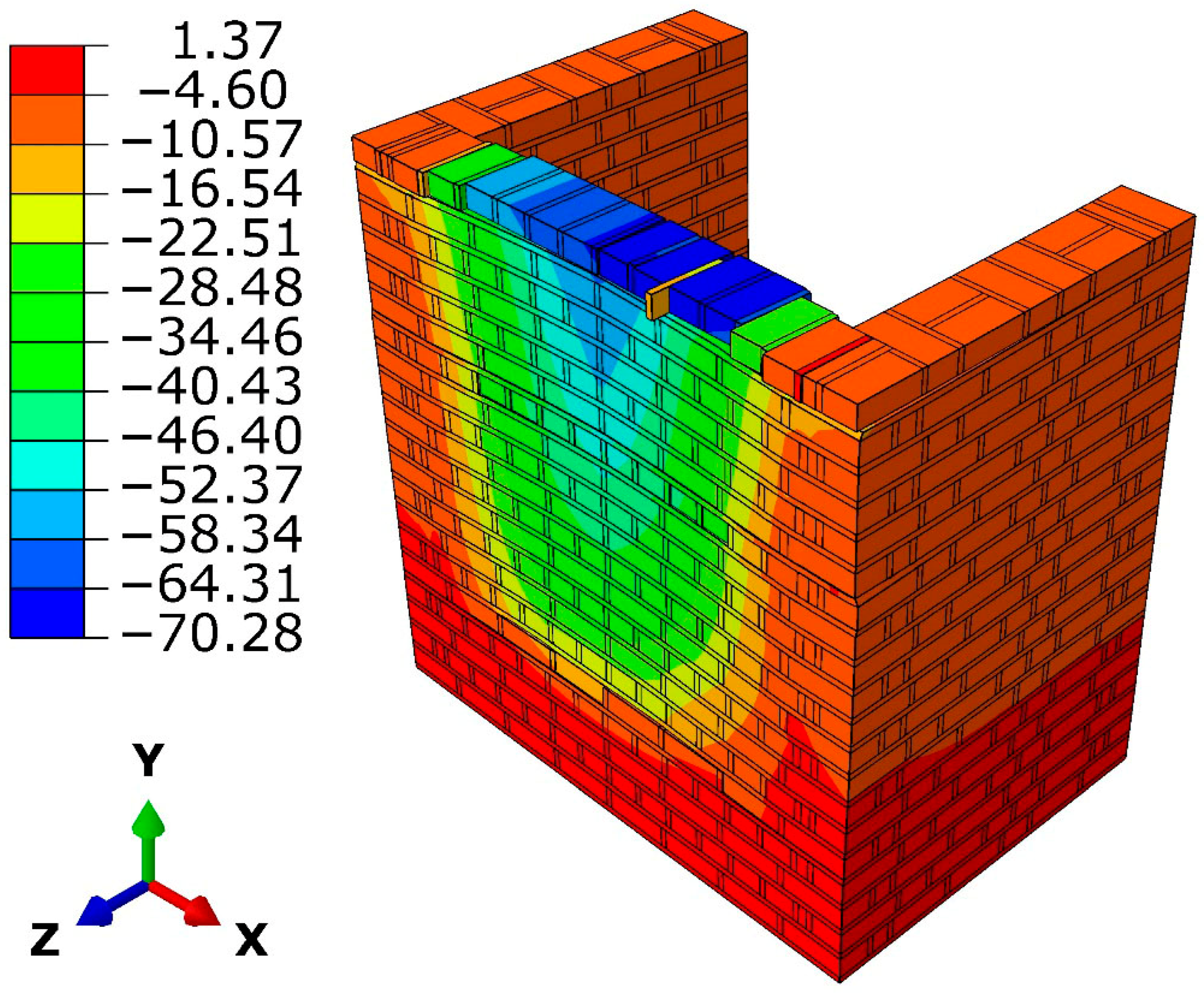
Failure at the bond between masonry units and the joint material causes brick detachment, producing the highest out-of-plane movement in the negative Z direction. This interface rupture between bricks and mortar is clearly reflected by localized brick loosening and discontinuous damage bands in the numerical model, consistent with experimental observations from the previous literature [6]. A complete rupture occurs at the interface between the mortar and the bricks in the topmost layer, resulting in a peak lateral deflection of approximately 70.28 mm. In the neighboring transverse walls, vertical cracking initiates near the wall connections with greater opening widths at the top and gradually reduces as it propagates downward, terminating around the sixth masonry layer (Figure 19). Furthermore, inclined cracks emerge near the lower portions of the transverse walls, confirming combined shear–flexural action induced by blast loading and wall restraint effects.
At the back surface, the primary wall shows multiple vertical fractures, widest near the top and extending downward to nearly half its height (Figure 20). These rear-face cracks align with the central vertical damage zone observed on the blast-facing side, demonstrating through-thickness crack propagation and stress reflection effects. The structural assembly experiences a total of 336.78 J of plastic damage energy (PDE) and records an out-of-plane displacement of 58.34 mm at the upper central region of the blast-exposed wall, as reported in Table 4. The plastic damage energy (PDE) represents the strain energy loss associated with material degradation [20]. Comparison of numerical damage contours with experimental observations shows close correlation, confirming the suitability of the adopted computational model for simulating the dynamic behavior of masonry walls under blast loading (Figure 19 and Figure 20).
The integral transverse walls act as load-resisting shear elements that provide lateral support to the main masonry wall. Both in-plane deformation and out-of-plane deflection occur in these walls due to the blast event. The mean peak values of in-plane and transverse displacements are measured as 10.57 mm and 12.33 mm, respectively (Figure 21 and Figure 22). Localized partial cracking is observed near the top and bottom junctions of the transverse walls, matching the experimentally reported damage concentration zones. Additionally, the central portion of the main wall experiences upward deflection, which gradually reduces toward the junctions with the transverse walls due to their rigid monolithic connection.
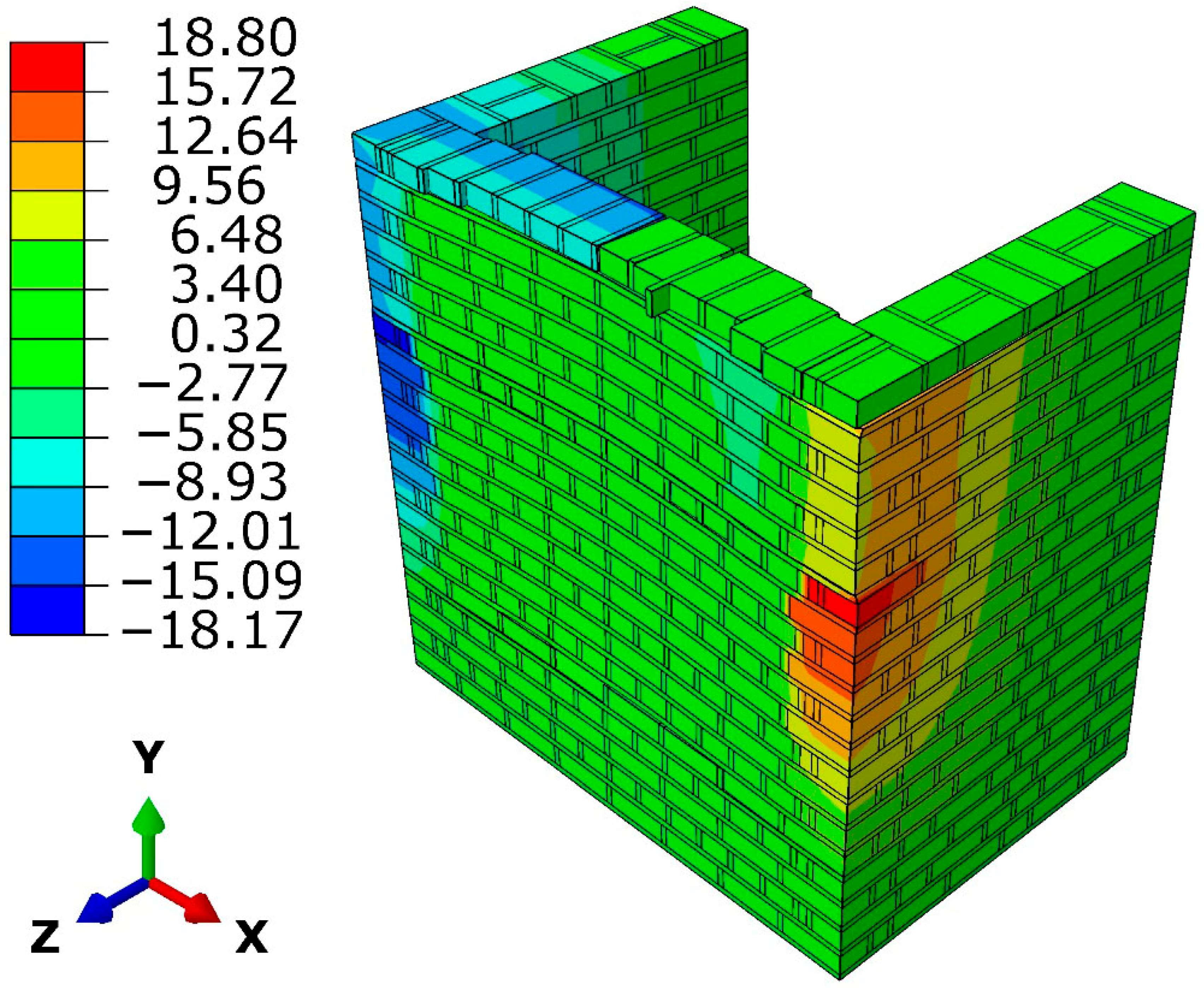
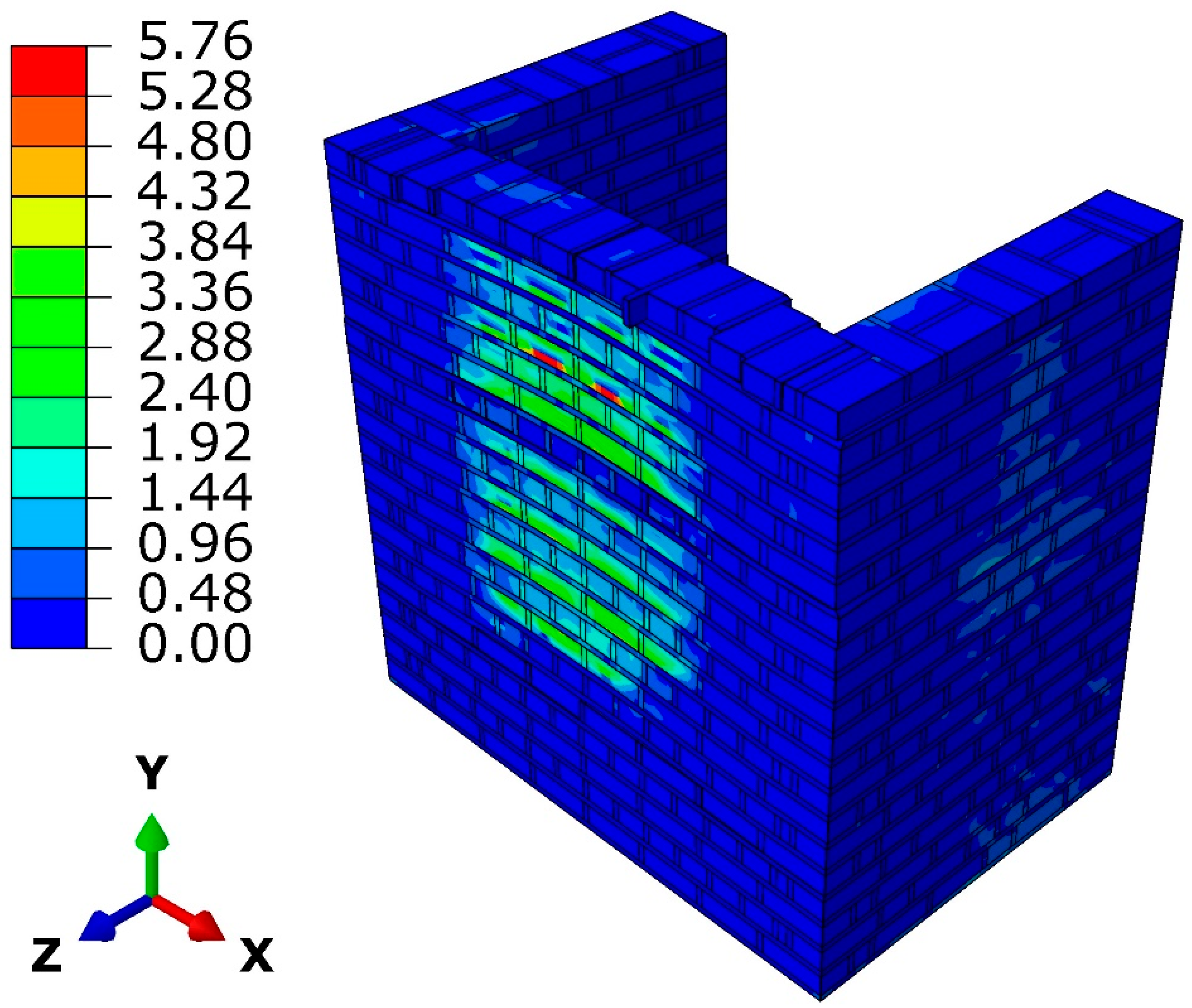
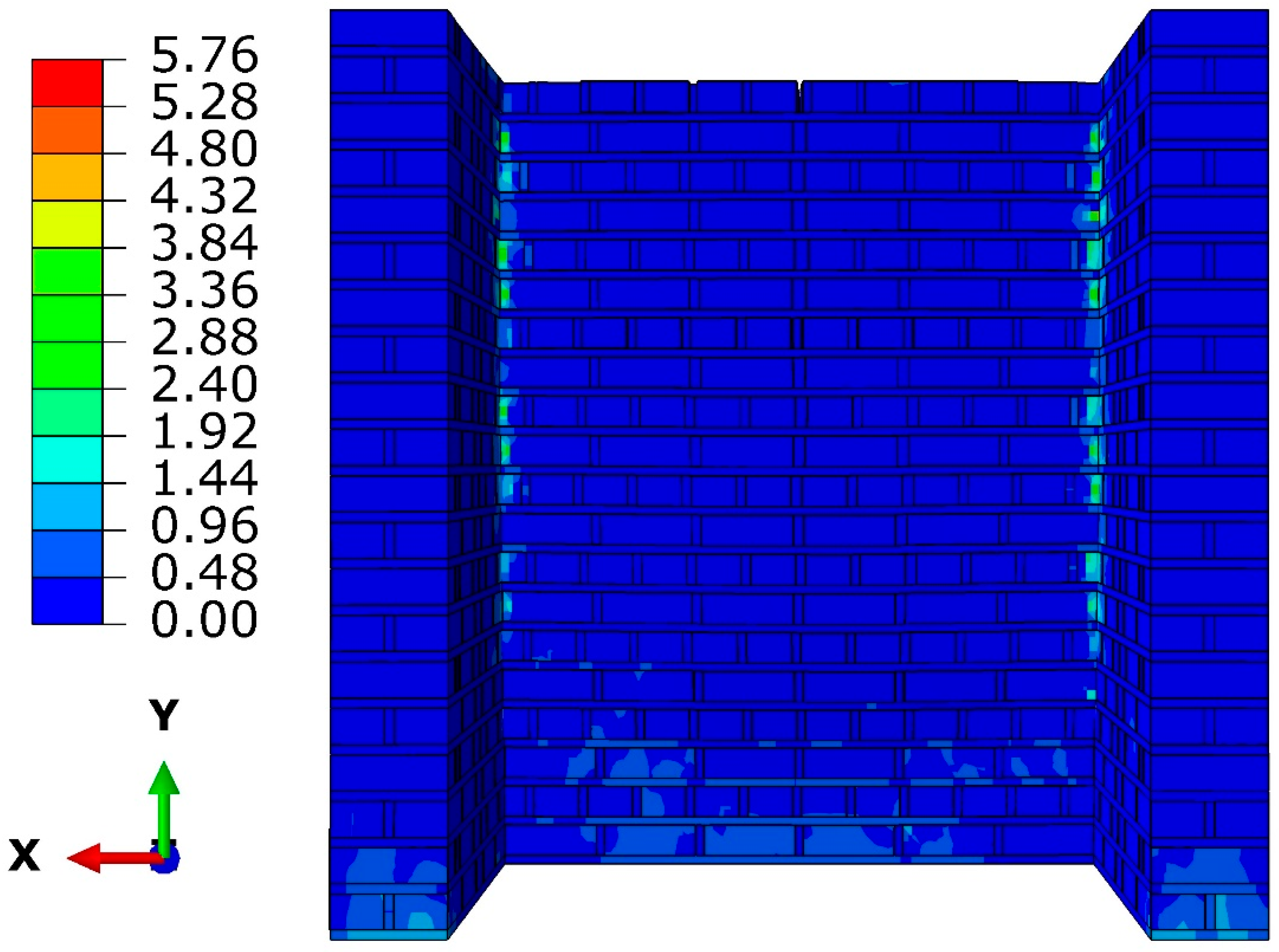
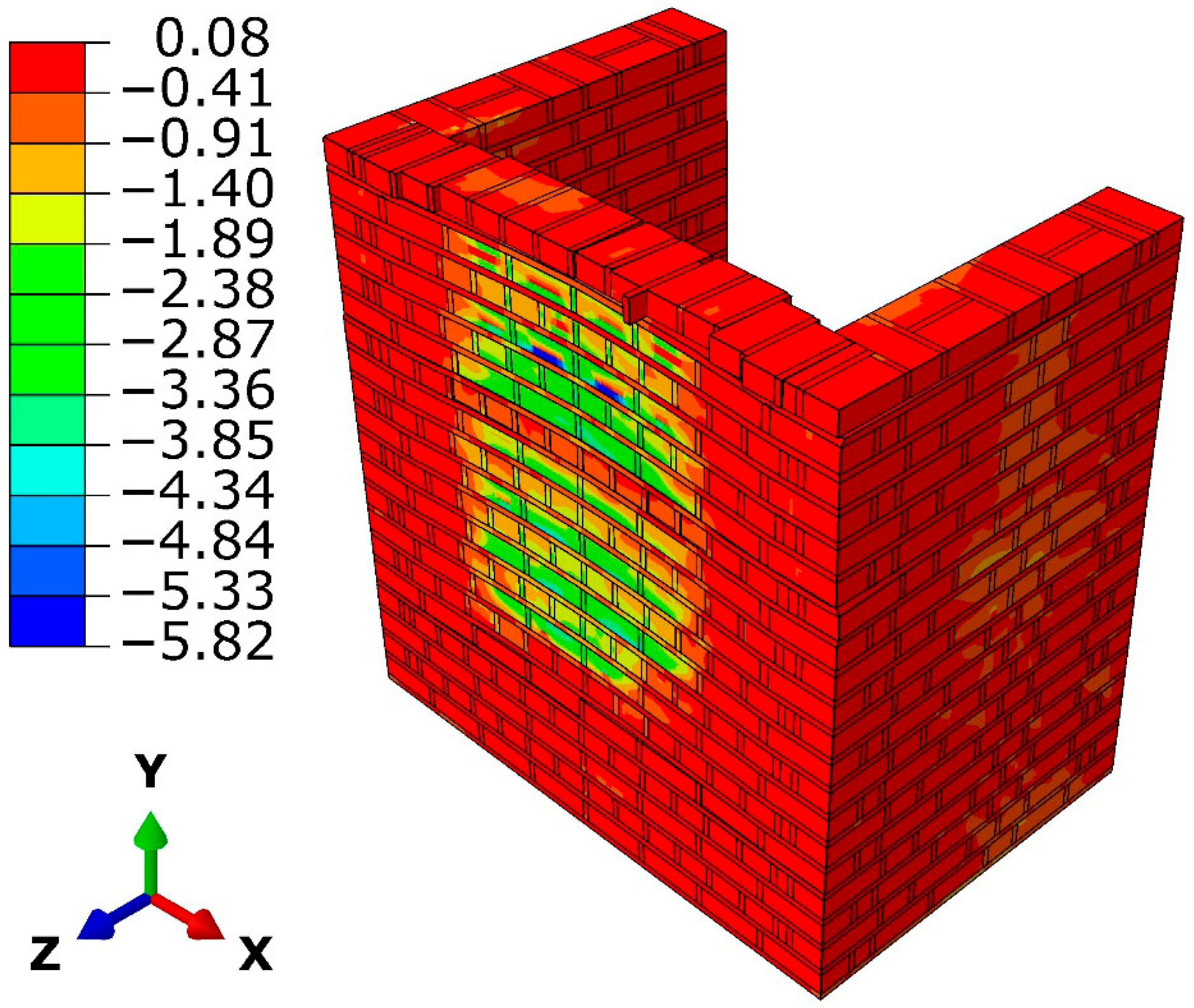
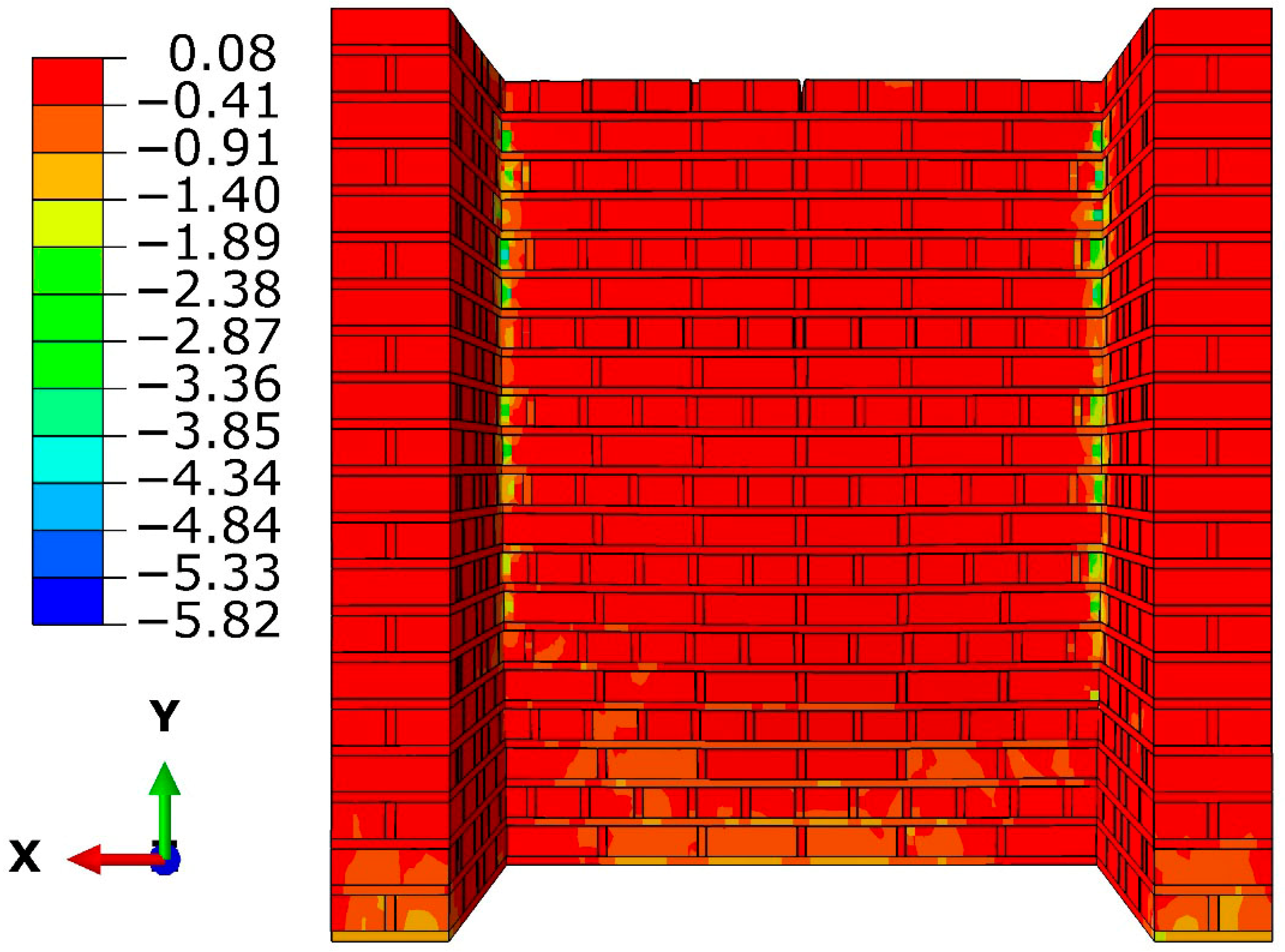
Shear stress concentrations reach a maximum value of 2.88 MPa at the mortar-brick interface in the stretcher course located within the upper two-thirds of the main wall, indicating localized shear failure. This stress localization corresponds well with the observed diagonal and interface cracking patterns in both numerical and experimental results. In contrast, the adjoining transverse walls develop peak shear stress of approximately 1.44 MPa at their mid-height regions (Figure 23). On the rear face, the highest shear stress of 2.88 MPa occurs at the interfaces between the primary wall and the bracing walls (Figure 24). The spatial variation in principal stresses on both the blast-facing and rear surfaces of the main wall is illustrated in Figure 25 and Figure 26. These contours indicate high tensile stress concentrations along the central vertical region and near the wall-corner junctions on the blast-facing side, whereas the rear surface exhibits stress reflection and tensile zones extending vertically from mid-height upward. These distributions agree well with the experimentally observed crack propagation [6] and confirm the flexure-dominated failure mechanism under blast loading.

5.2. Response of an Unprotected URM Wall Under Blast Case—II (Severe Catastrophic) at a Normalized Stand-Off of 1.83 m·kg−1/3

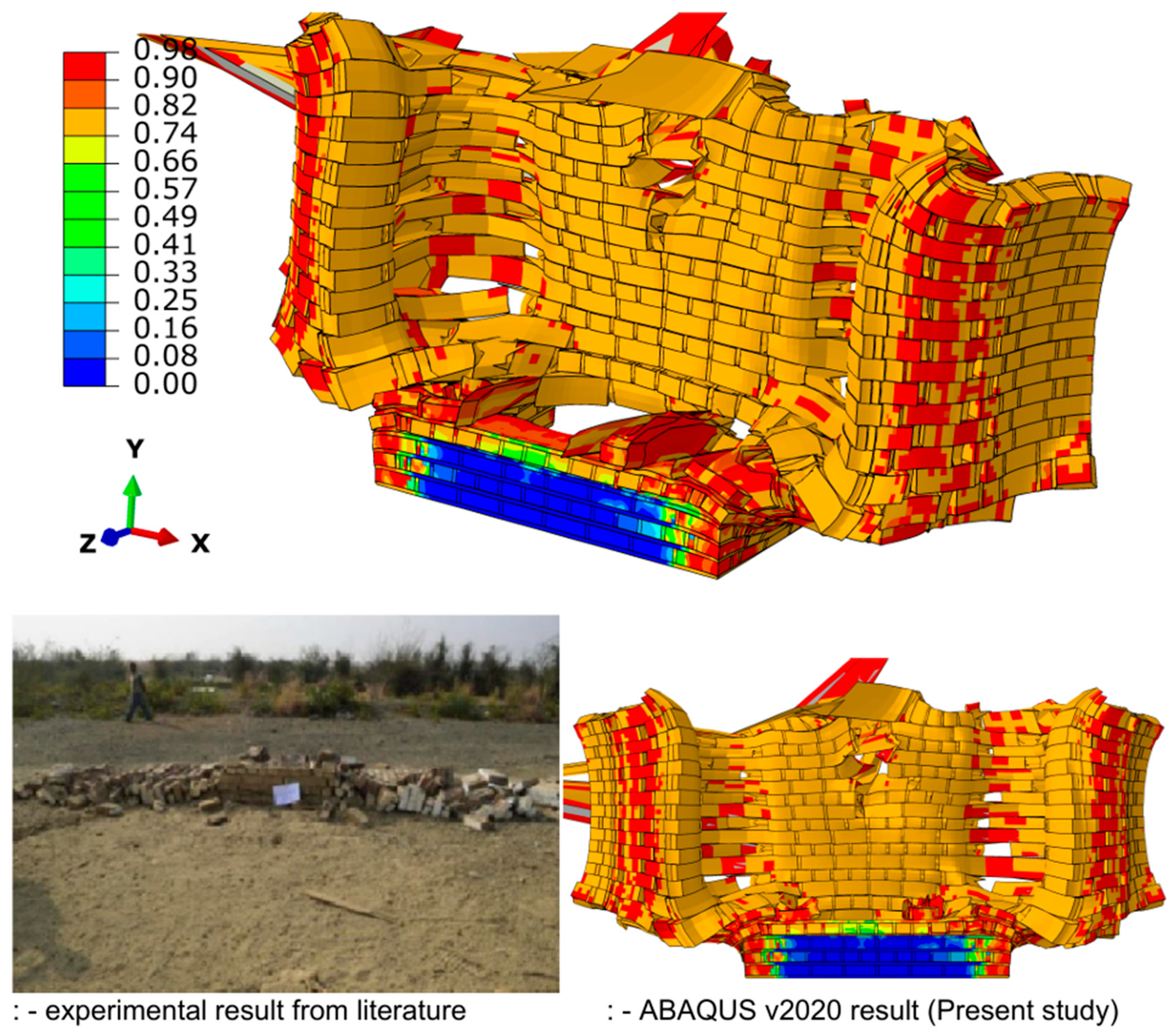
Figure 27 presents the recorded on-ground failure patterns from the experiments conducted by the authors in [6]. These experimental results served as a benchmark for assessing and validating the numerical outcomes derived in the present analysis.
Severe structural damage leading to total collapse of a URM wall is evident from the deformed configurations (Figure 27, Figure 28 and Figure 29), where the wall exhibits extensive fragmentation, diagonal cracking, and complete out-of-plane failure under blast loading. The central region of the wall undergoes the largest deformation and brick dislocation, while the top portions rotate outward due to flexural-shear interaction, which indicates a dominant transverse bending mechanism coupled with in-plane thrust release.
The numerical analysis using ABAQUS/Explicit v2020 [20] closely reproduced the catastrophic collapse observed in the experiments reported in [6]. Significant lateral displacements and brick detachment were observed, matching the field evidence [6]. These results confirm that the model effectively captures both instability and progressive failure under intense blast loading. The collapse behavior was largely controlled by the low tensile and flexural strength of the masonry, leading to out-of-plane bending and mid-span instability under the high reflected pressure. Additionally, the transverse bracing walls generated reaction forces that produced extra shear and twisting stress near the junctions, accelerating crack propagation and eventual failure.
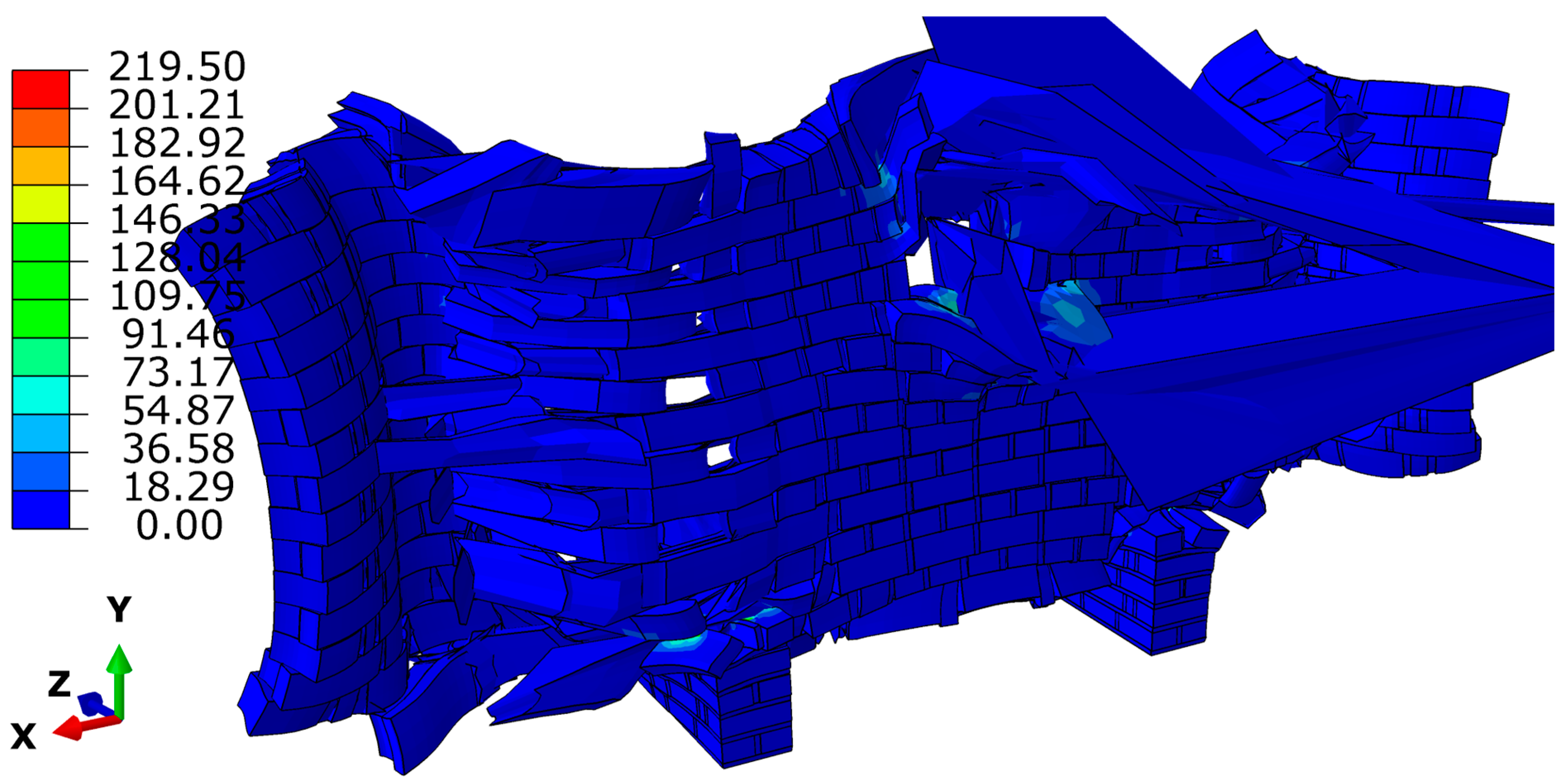
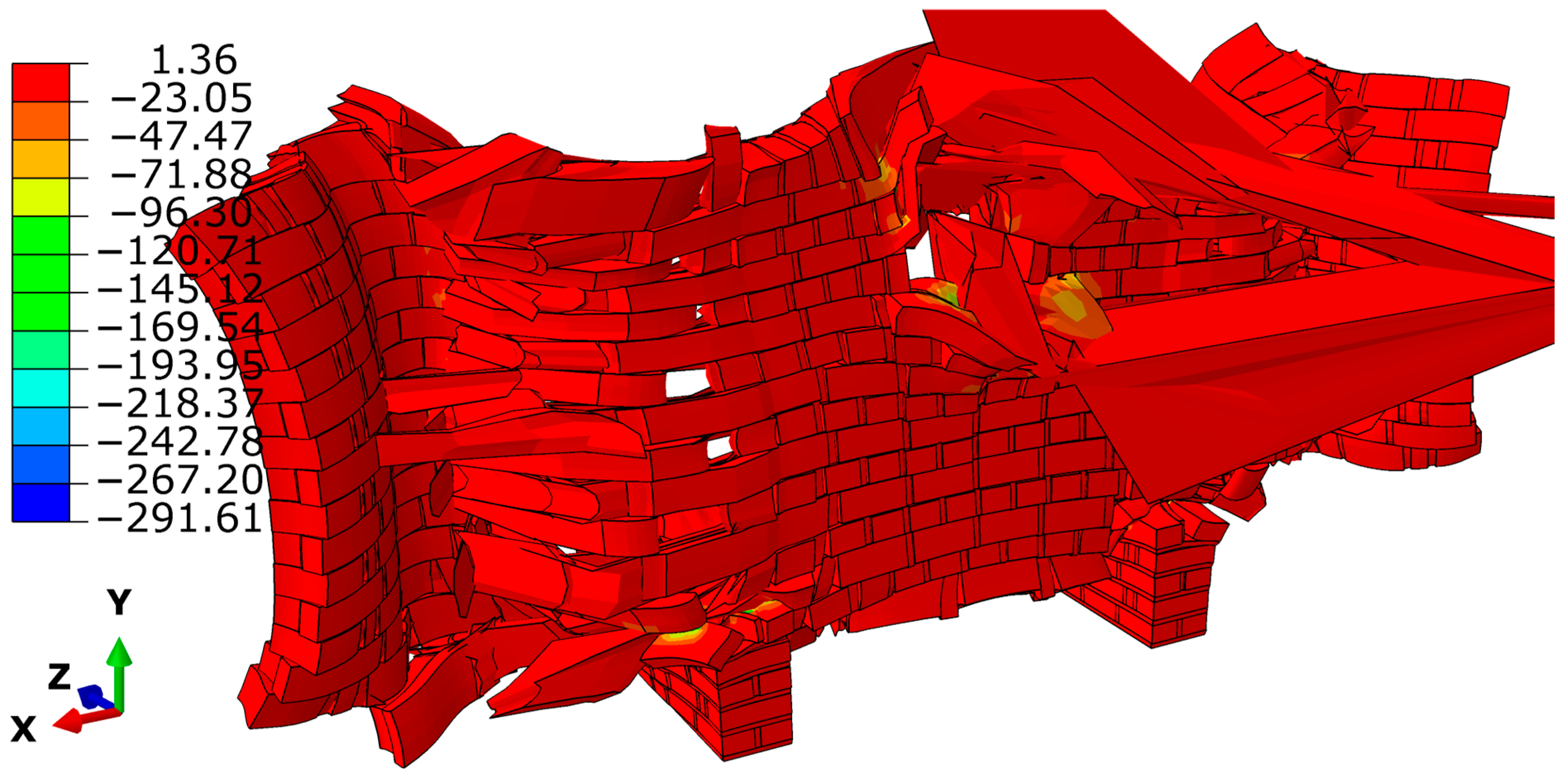
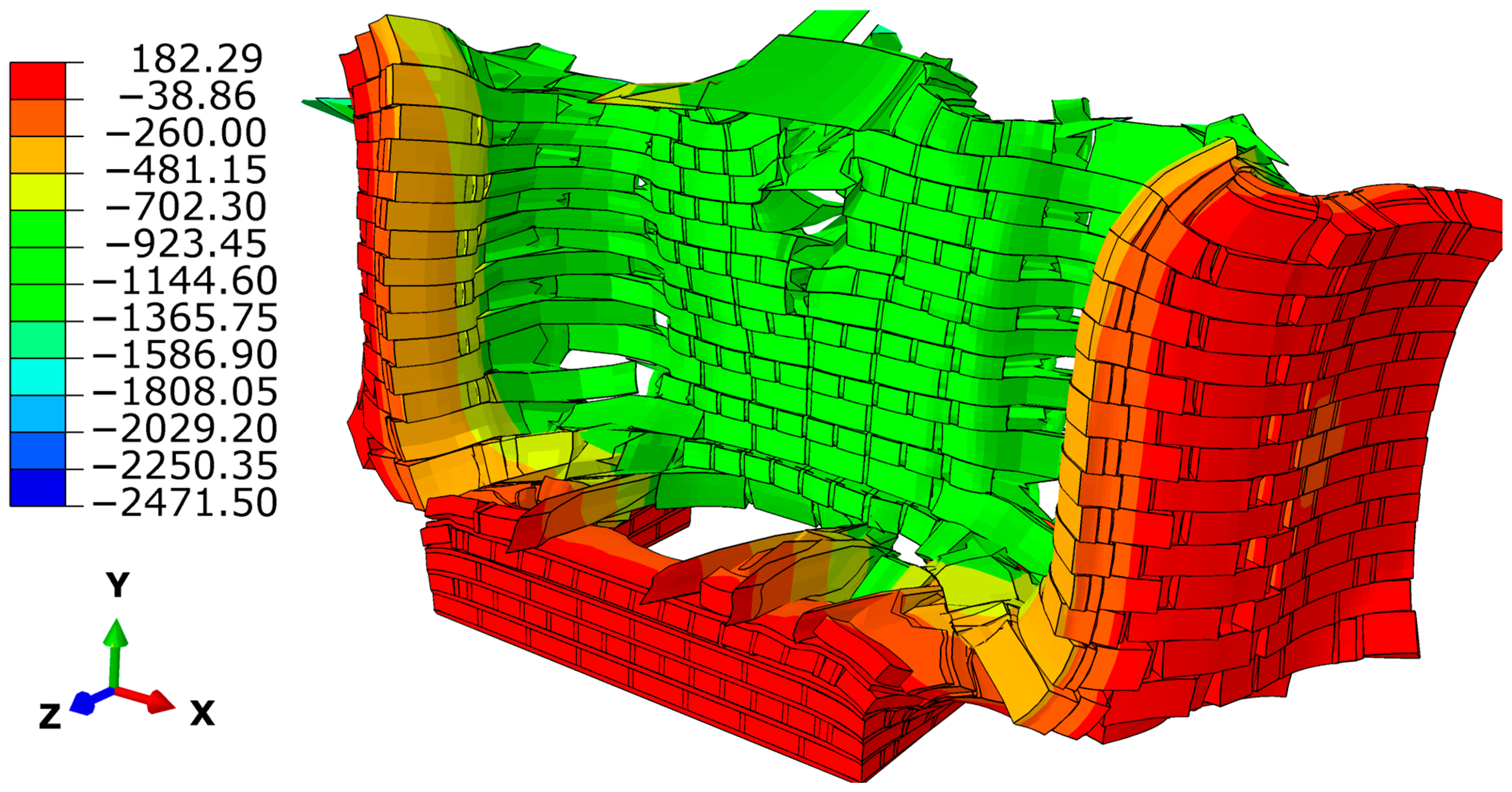
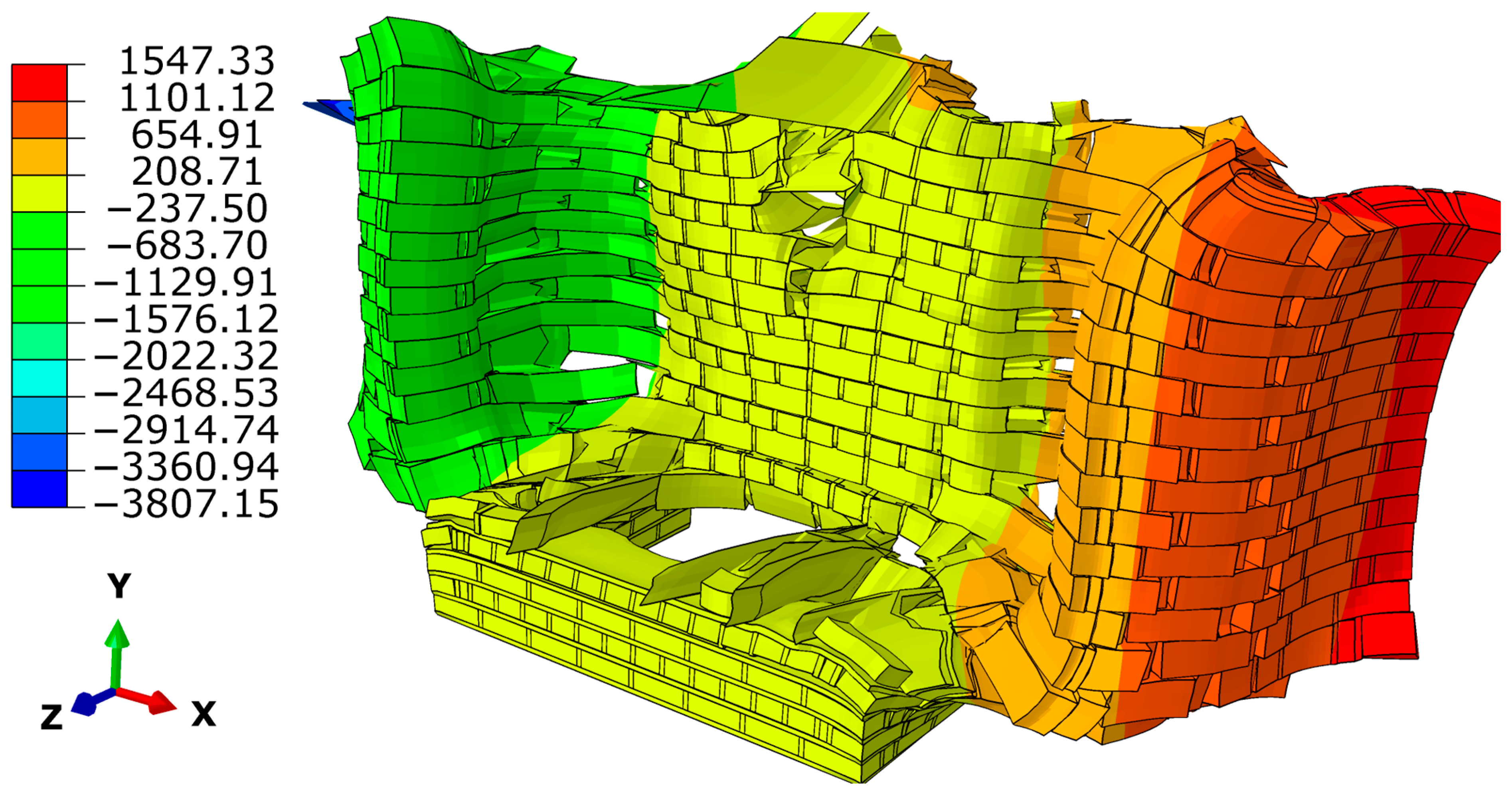
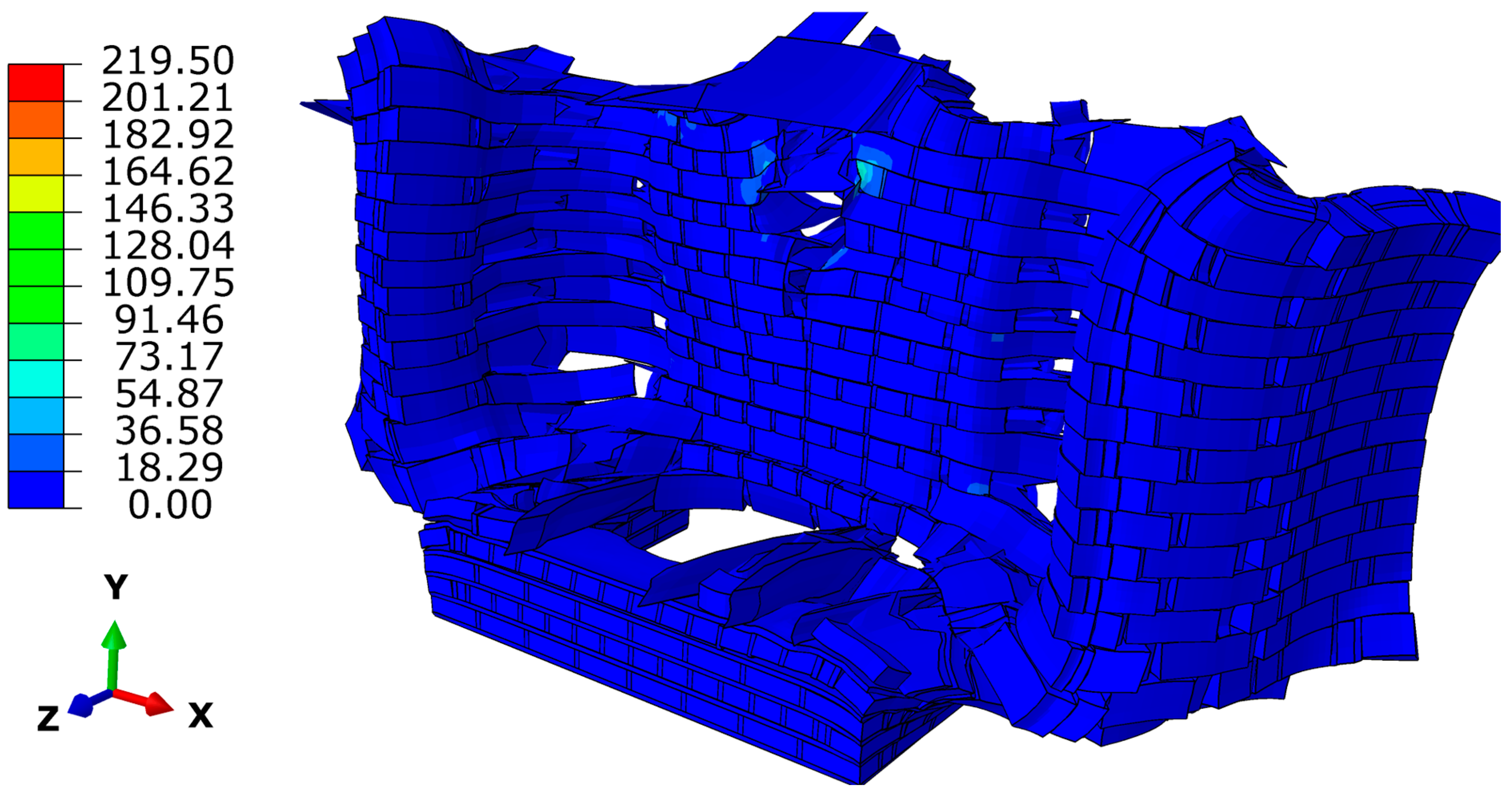
The three walls experienced severe failure, undergoing transverse displacements far exceeding their thickness (over 230 mm) when subjected to a reflected pressure of 1.01 MPa at a scaled distance of 1.83 m/kg1/3 (Figure 27, Figure 28 and Figure 29). Only a few courses at the base remained intact due to gravity and friction effects (Figure 27). The walls were pushed outward as the bracing walls at the ends generated reaction forces resisting the uneven blast load, ultimately leading to collapse. The concentration of high Von Mises stresses (Figure 30 and Figure 31) at mid-span and corner interfaces suggests progressive shear failure and brick crushing, which intensified the overall collapse. The plastic damage energy increased significantly from 336.78 J to 933.70 J (approximately 2.77 times), as summarized in Table 4, while the peak shear stress reached 18.29 MPa.
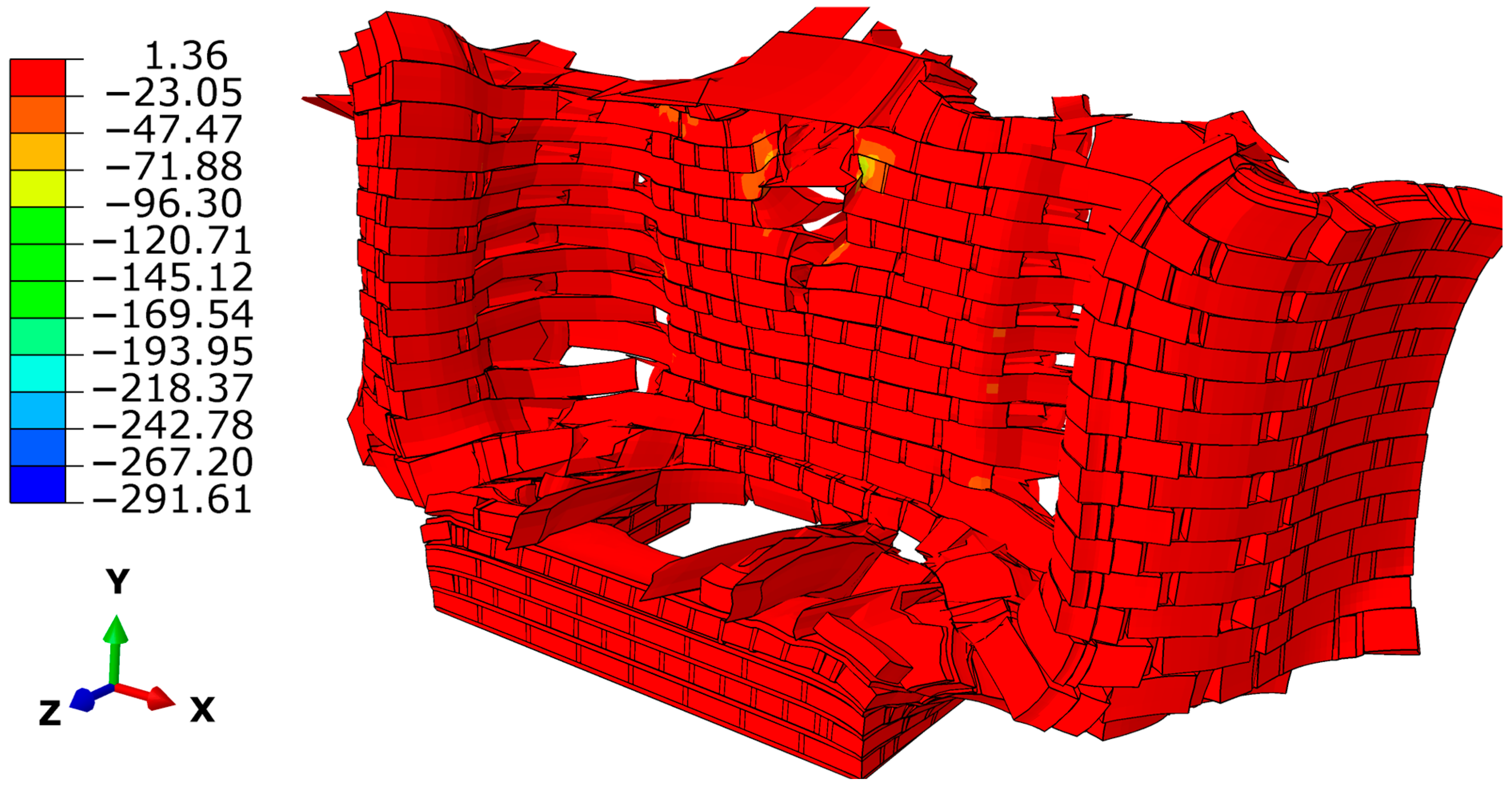
The maximum principal stress contours on the front and rear faces (Figure 32 and Figure 33) reveal pronounced tensile cracking and brick separation concentrated at mid-height and along wall junctions, aligning with the experimentally observed collapse mechanism. Tensile stresses near the mid-span exceed the masonry’s tensile strength, leading to complete detachment of upper portions, while compressive stress zones at the base explain the residual stability of the lower brick courses due to confinement and gravity effects.
It is also important to note that the overall behavior of the experimentally tested masonry walls in [6] was strongly affected by field construction conditions. Variations in workmanship, mortar strength, and construction consistency played a major role. These factors directly control bonding between units, continuity of stiffness, directly affecting bonding between units, stiffness continuity, and energy absorption capacity. As a result, the blast performance and stability of the masonry system varied significantly.

Load Transfer Mechanism and Failure Process Under Severe Catastrophic Blast

Under severe blast loading at a normalized stand-off distance of 1.83 m/kg1/3, the load transfer mechanism in the unprotected URM wall system is dominated by rapid propagation of stress waves, boundary restraint effects, and the limited tensile and bond strength of masonry. The incident blast pressure acting on the exposed face generates a high-amplitude compressive stress wave, which travels through the wall thickness and reflects as a tensile wave at the rear face. This mechanism is evident from the pronounced tensile cracking and brick separation observed on the back surface of the wall in Figure 27, as well as from the maximum principal stress contours shown in Figure 32 and Figure 33.
Due to the monolithic connection between the primary wall and the transverse bracing walls, a portion of the blast-induced load is transferred laterally through the wall junctions. This lateral restraint modifies the structural response from simple out-of-plane flexure to a combined flexure-shear and torsional action, resulting in stress concentration near the wall intersections and mid-span regions, as reflected by the Von Mises stress distributions in Figure 30 and Figure 31.
The failure process under this extreme blast condition progresses through a distinct sequence. Initially, flexural cracking initiates at the mid-height of the primary wall where bending demand is highest, accompanied by early interface cracking along mortar joints. With increasing reflected pressure, diagonal shear cracks and severe interface debonding develop near the junctions with the transverse walls, as observed in Figure 27. These junctions, while providing initial lateral support, generate reaction forces that induce additional shear and twisting stress, thereby accelerating the damage process. This behavior is further confirmed by the very large transverse and in-plane displacements recorded in Figure 28 and Figure 29, where out-of-plane movement far exceeds the wall thickness. Ultimately, the wall loses all load-carrying capacity, characterized by extensive brick dislocation, rotation of upper courses, and global out-of-plane collapse. The exceptionally high plastic damage energy of 933.70 J (Table 4) confirms that energy dissipation mainly occurs through irreversible cracking, interface failure, and brick fragmentation rather than stable deformation.

5.3. Blast Case II (Extreme Catastrophic Condition) Response of UHPC/UHPFRC-Coated URM Wall

Section 5.1 and Section 5.2 discussed the behavior of an unprotected URM wall under two blast cases. Blast Case I represented moderate flexure-shear action, while Blast Case II corresponded to an extreme catastrophic scenario. These sections validated the numerical model. The simulated damage showed good agreement with reported experimental studies [6] and helped in understanding damage mechanisms of the reference masonry wall. Under Blast Case I (Z = 2.19 m/kg1/3), the wall developed severe cracking but remained standing. No overall collapse was observed. In contrast, Blast Case II (Z = 1.83 m/kg1/3) caused complete wall failure, leading to total collapse.
The extreme failure of the reference masonry wall (URM-REF) is further confirmed by the exceptionally high PDE of 933.70 J, indicating extensive inelastic deformation and severe energy dissipation associated with total collapse. For this reason, the anti-blast performance of protective surface coatings was examined only under the most severe blast condition. If a coating can prevent collapse under such loading, its adequacy under moderate blasts can be reasonably assumed. Hence, a separate study for moderate loading was not considered necessary. Future work will include a sensitivity analysis over intermediate scaled distances to explore transitions in failure mode and interface stress behavior.
This section, therefore, focuses only on UHPC- and UHPFRC-strengthened URM walls subjected to Blast Case II, with emphasis on collapse mitigation, damage reduction, and changes in deformation and stress distribution compared to the unprotected reference wall.
Previous studies [80,81] revealed that conventional plasters were largely ineffective in mitigating severe damage in brick masonry walls. UHPC and UHPFRC have shown significant potential in strengthening structural elements subjected to extreme forces [1,4,75,76]. Motivated by these findings from the literature, the authors of this study explored the use of these advanced concretes as protective coatings, replacing traditional cement–sand plaster on masonry walls.
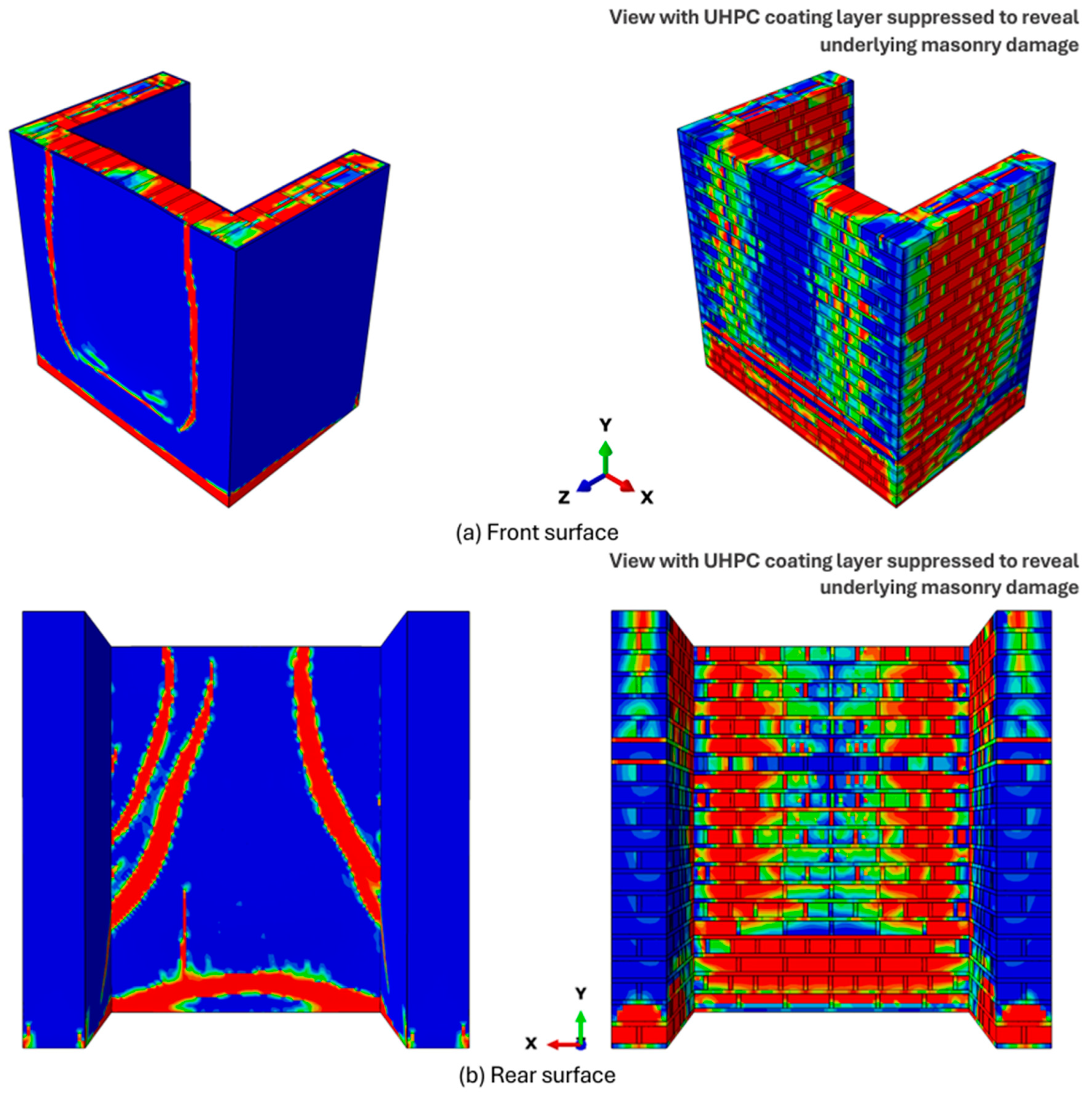
The use of surface protection coatings greatly limits severe wall failure, as illustrated in Figure 34 and Figure 35. In the URM-P-UHPC-NM wall, the primary wall exhibits noticeable vertical cracks near the intersections, while an additional bending-shear type crack appears near the base (Figure 34a). The numerical study indicates that these vertical cracks originate from tensile stress build-up near the junctions due to the sudden change in stiffness between the coated and uncoated masonry. Under out-of-plane action, this mismatch causes uneven strain, leading to cracking. The flexure-shear crack near the base appears where bending moments and shear reach their peak, indicating the formation of a plastic hinge as the wall rebounds dynamically after the maximum reflected pressure.
Separation is also observed on the back side of the wall, where adhesion between masonry units and mortar weakens near the vertical connections. In addition, cracking developed along the lower portion of the wall in a horizontal direction, as illustrated in Figure 34b. This behavior is attributed to interfacial stress transfer between the UHPC coating and the masonry substrate. The stiff coating restricts surface movement. Because of this, tensile forces shift towards mortar joints. This causes local separation at the interface instead of cracks passing through the full thickness. Cracks near the bottom edge occur due to stress wave reflection at the fixed support. At this location, compressive waves turn into tensile ones, which increases the local stress level and leads to cracking.
Despite this damage, the UHPC coating alone reduced the PDE to 158.89 J, representing a sharp drop of nearly 83% compared to the unprotected wall. This result clearly highlights the high effectiveness of the UHPC coating in controlling inelastic damage even under very severe blasts.
The numerical results for the URM-P-UHPFRC-NM model (Figure 35a,b) show only minor surface cracks confined to the coating layer, without penetration into the brick masonry. The high tensile capacity and strain-hardening nature of UHPFRC enable better stress distribution, avoiding local concentrations. The embedded steel fibers further enhance crack control through fiber bridging, restricting crack openings, and slowing damage propagation. This superior control is reflected in a further reduction in PDE to 115.76 J, lower than that of the UHPC system, indicating better energy absorption and much less permanent damage. The results confirm that UHPFRC coating dissipates blast energy more efficiently and provides improved interface protection.
Use of UHPC and UHPFRC coatings with embedded steel-welded wire mesh greatly improves the blast resistance of URM walls (Figure 36 and Figure 37). In the UHPC-coated wall with mesh (URM-P-UHPC-M), damage levels are lower when compared to the UHPC coating without mesh (URM-P-UHPC-NM). On the front face, cracking is limited mainly to the wall-coating interface near the joints (Figure 36). Most of the brick masonry remains unaffected. On the rear face, only minor vertical and diagonal cracks appear in stress-prone zones such as bottom corners and junctions. The mesh helps redistribute tensile stress evenly, bridging developing cracks and allowing the wall to sustain deformation without sudden failure. This slows crack opening and prevents full-thickness propagation. Consequently, PDE drops further to 65.81 J, showing an additional 59% reduction relative to UHPC without mesh and over 93% reduction compared to the unprotected wall. Out-of-plane deformation and plastic hinge formation at the base are thus significantly reduced.
For the UHPFRC-coated wall with mesh (URM-P-UHPFRC-M), protection levels are even higher (Figure 37). The front face shows almost no visible cracking, while the rear face exhibits only minor surface cracks near the bottom. The combined action of UHPFRC’s high tensile capacity, strain-hardening nature, and the steel mesh provides excellent stress distribution. Stress concentration at corners and interfaces is effectively prevented. As a result, interface separation is minimal, and the underlying brickwork remains largely intact. This configuration performs best among all cases, with the lowest PDE of 40.19 J, reflecting a massive 96% reduction compared to the unprotected wall.
Table 5 presents a summary of the numerically predicted damage features, failure patterns, and the general behavior of all wall configurations under Blast Case II (Z = 1.83 m/kg1/3).
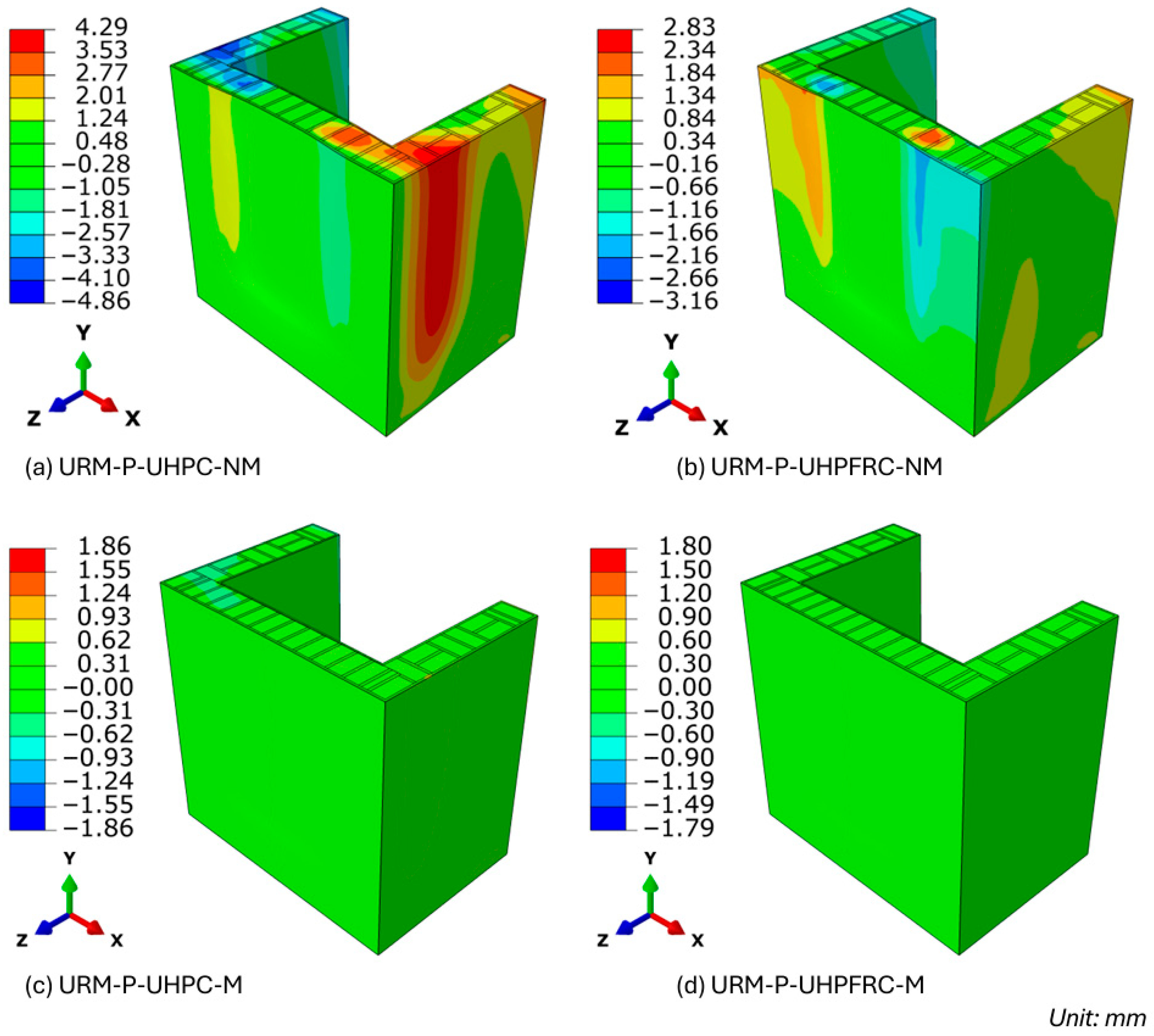
In addition to damage mitigation and reduced energy demand, the UHPFRC protection coat significantly improves the overall wall response even without mesh (URM-P-UHPFRC-NM). The shear demand on the main wall drops substantially after applying this coat. The peak shear stress decreases from 2.84 MPa in the UHPC system (URM-P-UHPC-NM) to 1.75 MPa in the UHPFRC system (Table 6). Simultaneously, the out-of-plane displacement reduces from 43.45 mm to 34.49 mm (Figure 38). This improvement is attributed to the superior tensile capacity and strain-hardening of UHPFRC. Steel fibers enable efficient crack control and load sharing, distributing stresses more evenly within the coating and along the coating–masonry interface. UHPFRC’s higher energy absorption and damping capacity allow stress waves to dissipate efficiently, transferring less shear force to the masonry and restraining excessive movement.
Embedding steel-welded wire mesh within the protective coatings results in a pronounced reduction in transverse displacement. The mesh adds in-plane restraint and maintains tensile continuity, strengthening the bond between the coating and masonry. Peak displacements drop sharply from 43.45 mm and 34.49 mm in the non-meshed systems to just 7.52 mm and 4.05 mm in the meshed UHPC and UHPFRC walls (Table 6, Figure 38). The mesh controls crack openings and enhances both in-plane and out-of-plane shear transfer, reducing local bending and deformation. The combination of UHPFRC and mesh yields the greatest displacement reduction and lowest stress levels.
In laterally supported walls, the mesh also leads to a clear decrease in X-direction displacements (Figure 39), indicating improved lateral stiffness and better restraint of wall sway under extreme blast loading.
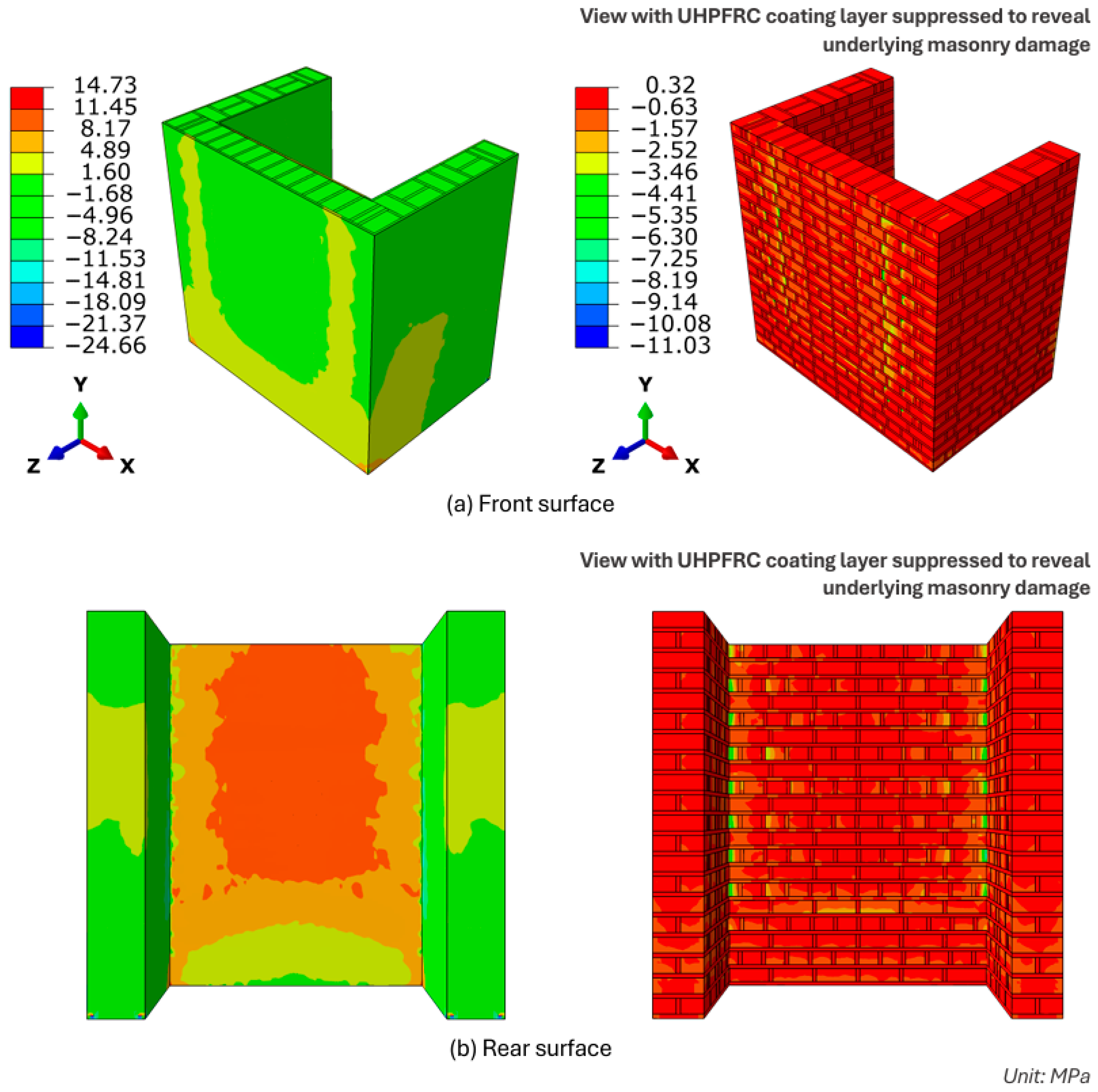
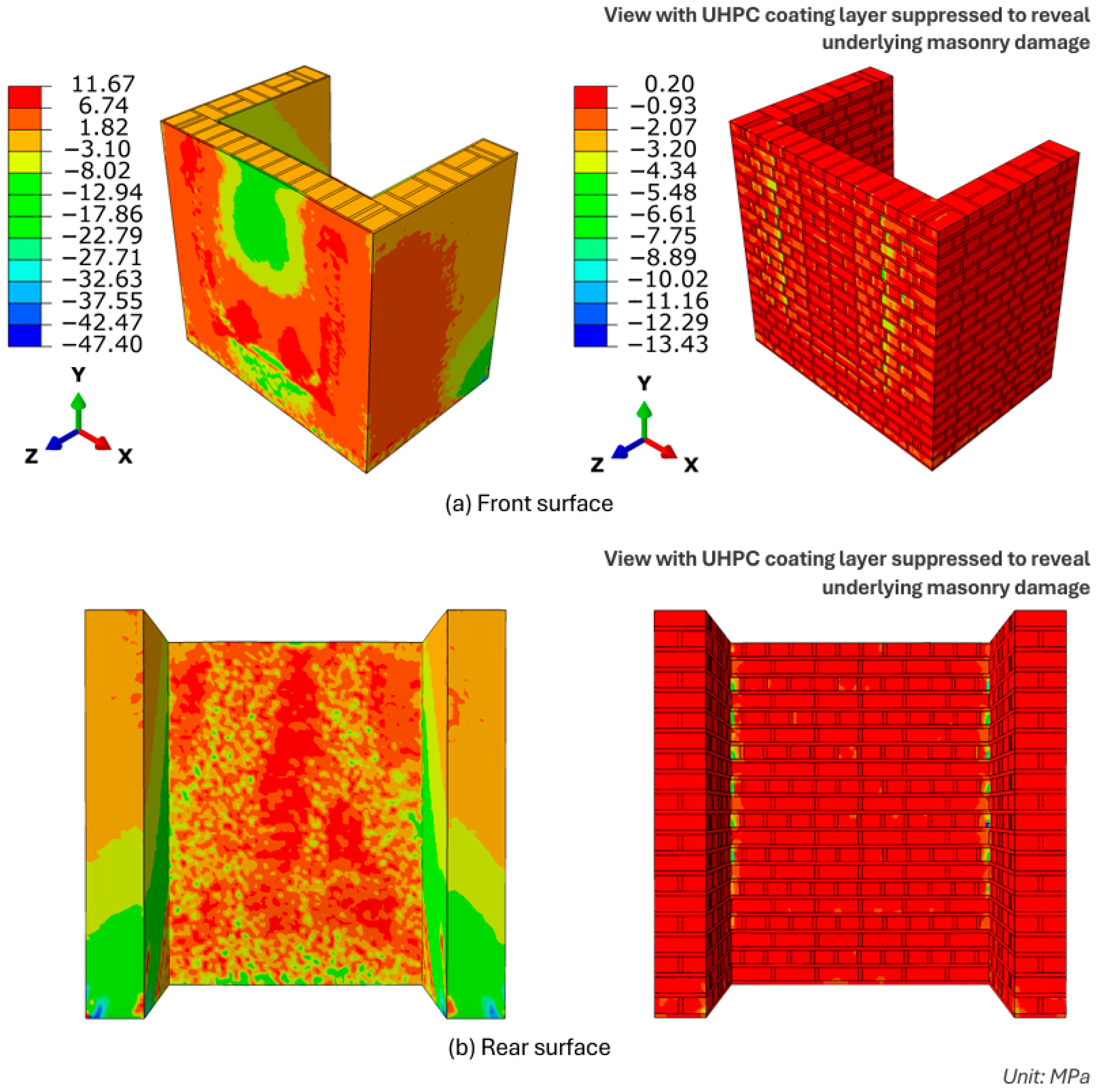
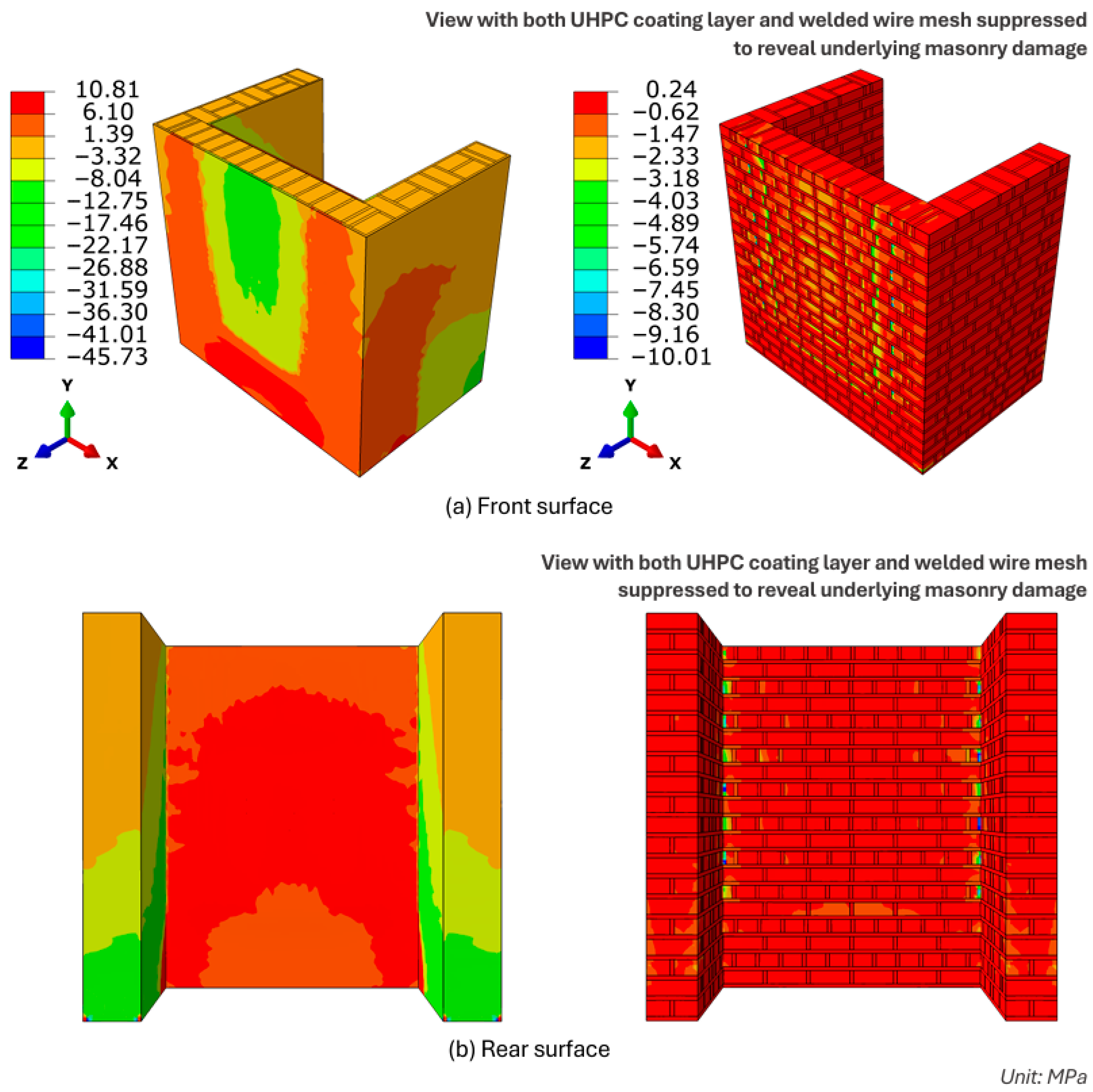
The distribution of maximum principal stresses in Figure 40 and Figure 41 clearly shows how much improvement the mesh brings to UHPC-coated walls. In UHPC without mesh (URM-P-UHPC-NM), compressive stress peaks at 3.20 MPa near the exposed face and lower edges due to wave reflection and stiffness mismatch. These high-stress zones indicate that the coating alone cannot hold the tensile forces, allowing stress to penetrate the wall. With mesh (URM-P-UHPC-M), the peak compressive stress falls to 1.47 MPa, and the stress distribution becomes more uniform (Figure 41). The over-50% reduction results from the mesh acting as reinforcement that confines the coating, spreads stresses, and prevents crack growth. Consequently, stress contours are smoother, critical zones shrink, and the wall gains higher energy absorption and structural integrity under the extreme blast at Z = 1.83 m/kg1/3.
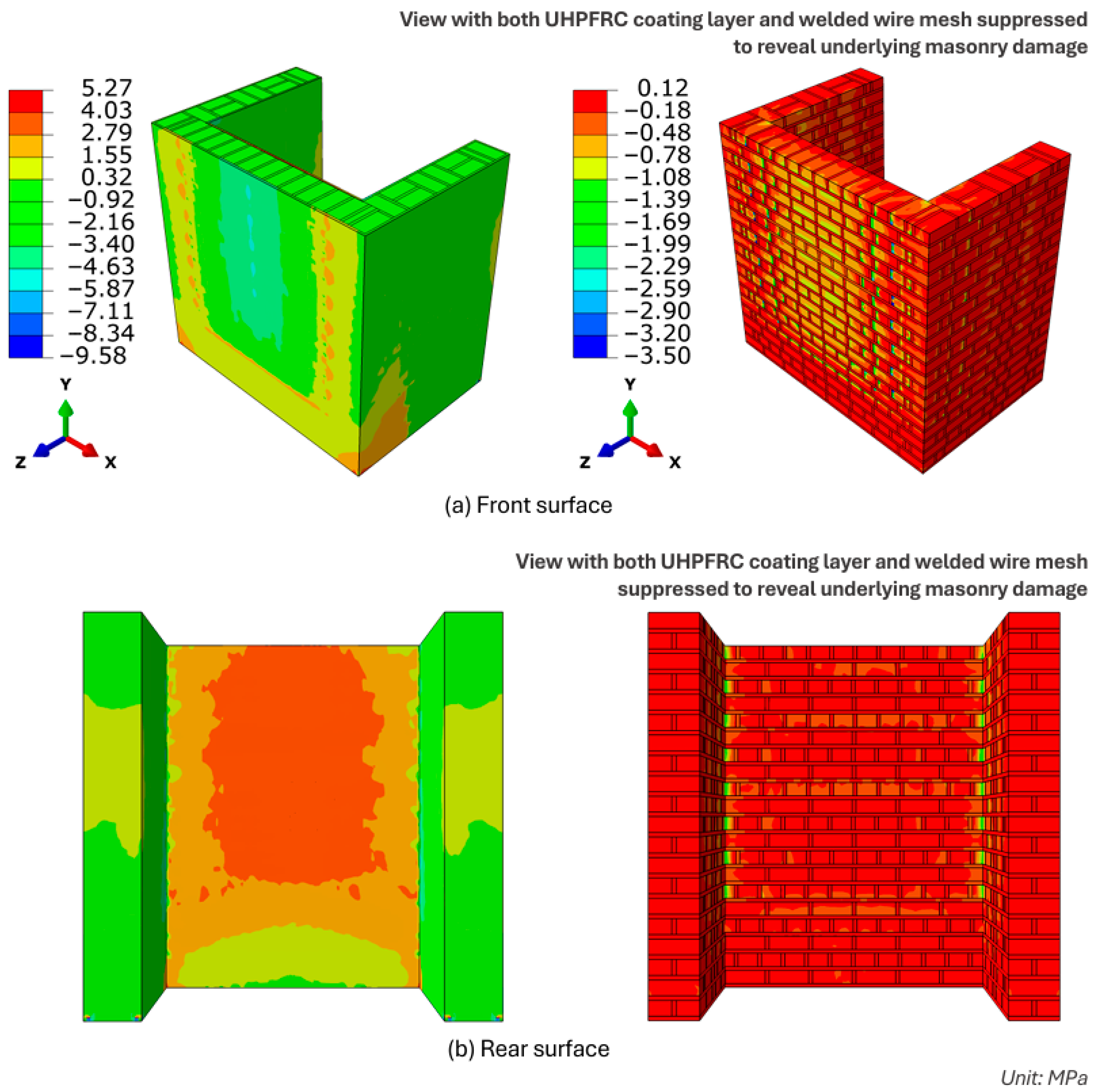
For UHPFRC-coated walls (Figure 42 and Figure 43), the improvement in stress management is even clearer. Without mesh (URM-P-UHPFRC-NM), compressive stress remains low (around 1.57 MPa) and widely distributed, reflecting good energy absorption and reduced stress concentration due to fiber-bridging. Both front and rear surfaces show continuous compressive zones with few sharp peaks, proving the coating’s ability to distribute impact stresses uniformly and delay interface cracking. When the mesh is included (URM-P-UHPFRC-M), the peak compressive stress drops further to about 0.48 MPa, owing to the strong synergy between steel mesh and UHPFRC matrix. This enhances confinement, prevents micro-cracks, and promotes uniform load transfer. The smooth, continuous stress contours demonstrate that the meshed UHPFRC system achieves higher composite stiffness, avoids delamination, and provides outstanding blast resistance.

6. Conclusions and Limitations

The following are the major findings from this study:
  • The unprotected URM wall failed suddenly and severely. Large out-of-plane bending was observed at a scaled explosion distance of 1.83 m/kg1/3. Diagonal cracks developed across the wall surface, and the masonry experienced complete separation due to its very low tensile and flexural capacity. The wall could not resist the high reflected blast pressure of 1.01 MPa. Heavy shear demand at the wall junctions further accelerated the collapse.
  • Use of UHPC or UHPFRC coating alone significantly reduced blast damage in URM walls. Surface displacements remained controlled, and tensile forces were distributed more evenly. However, cracks still appeared near joints and at the bottom due to localized stress and combined bending-shear action. The coating improved strength, but some exposure of brickwork persisted under heavy impact.
  • Among them, the UHPFRC-coated wall (URM-P-UHPFRC-NM) showed clearly superior performance, with reduced shear stress (from 2.84 MPa to 1.75 MPa) and lower maximum displacement (34.49 mm) than the UHPC-coated wall. This improvement is attributed to UHPFRC’s strain-hardening, high tensile capacity, and fiber-bridging ability, which helped control cracking, redistribute stress efficiently, and dampen blast shocks.
  • When steel-welded wire mesh was embedded in the UHPC or UHPFRC coating, crack propagation was further suppressed. Damage remained confined within the coating. The mesh held cracks together, enhanced coating-masonry bonding, and improved tensile stress sharing. Interface separation was delayed, preventing full-depth cracking and excessive wall movement. Consequently, energy absorption increased, and overall performance strengthened.
  • The addition of welded wire mesh drastically limited transverse movement, reducing it to about 4.05 mm in UHPFRC-meshed walls. Compressive stresses dropped to 0.48 MPa, confirming effective stress control, higher in-plane stiffness, and stronger confinement at the coating–masonry junction during intense blast loading. Walls with UHPFRC + embedded mesh exhibited the best protection and stability among all tested configurations.
It should be noted that the present study primarily focuses on the damage states, deformation behavior, and collapse mechanisms of URM walls under severe blast loading. Detailed time-history responses of local stress and strain were not included, as the structural response under extreme blast conditions is dominated by rapid cracking, interface debonding, and loss of material continuity, making local stress–strain histories highly discontinuous and difficult to interpret meaningfully. Moreover, the experimental study [6] used for validation reported only observed damage patterns and overall failure modes, without providing measured stress, strain, or displacement time histories. Accordingly, validation in this work was carried out through comparison of front and rear face damage patterns, crack propagation, deformation modes, and collapse behavior, supported by a mesh-sensitivity study to ensure numerical robustness. Future experimental programs providing time-resolved response measurements would enable further refinement and extended validation of numerical models.
In addition, the blast loading conditions, including TNT charge weight and detonation location, were selected based on a reference experimental study [6] and were kept constant throughout the analysis. These parameters were not treated as variables, as the primary objective of this research was to compare the damage mitigation performance of different protective systems under identical blast severity. Future parametric investigations considering variations in charge magnitude and detonation position may further extend the applicability of the proposed numerical framework.
Furthermore, the findings of this study are based on specific URM wall configuration, material properties, and coating layout used in the numerical model. While the observed results clearly demonstrate the effectiveness of UHPC and UHPFRC-based protective systems with embedded welded wire mesh, the absolute response magnitudes may vary for different masonry typologies, boundary conditions, and construction practices. These aspects should be explored in future comprehensive studies.

Author Contributions

The study was designed and conceptualized by S.M.A., R.N.A.-D. and M.B. The methodological approach was developed by S.M.A. and M.B., while data analysis was performed collectively by S.M.A., R.N.A.-D. and M.B. Experimental work and investigations were carried out by S.M.A., R.N.A.-D. and M.J.A.-E. Provision of materials and resources was managed by S.M.A. and R.N.A.-D. The initial manuscript draft was prepared by S.M.A., R.N.A.-D., M.B. and M.J.A.-E., with subsequent review and editing handled by S.M.A., R.N.A.-D. and M.B. Visual representations were created by S.M.A., R.N.A.-D., M.B. and M.J.A.-E. Oversight of the research and guidance was provided by S.M.A., project coordination was conducted by M.B. All authors have read and agreed to the published version of the manuscript.

Funding

This research received no external funding.

Data Availability Statement

The original contributions presented in this study are included in the article. Further inquiries can be directed to the corresponding authors.

Conflicts of Interest

The authors declare no conflicts of interest.

References

  1. Hao, H.; Hao, Y.; Li, J.; Chen, W. Review of the current practices in blast resistant analysis and design of concrete structures. Adv. Struct. Eng. 2016, 19, 1193–1223. [Google Scholar] [CrossRef]
  2. Kyei, C.; Braimah, A. Effects of transverse reinforcement spacing on the response of reinforced concrete columns subjected to blast loading. Eng. Struct. 2017, 142, 148–164. [Google Scholar] [CrossRef]
  3. Hu, Y.; Chen, L.; Fang, Q.; Kong, X.; Shi, Y.; Cui, J. Study of CFRP retrofitted RC column under close-in explosion. Eng. Struct. 2021, 227, 111379. [Google Scholar] [CrossRef]
  4. Anas, S.M.; Alam, M.; Umair, M. Air-blast and ground shockwave parameters, shallow underground blasting, on the ground and buried shallow underground blast-resistant shelters: A review. Int. J. Prot. Struct. 2021, 13, 99–139. [Google Scholar] [CrossRef]
  5. Hao, H.; Tarasov, B.G. Experimental study of dynamic material properties of clay brick and mortar at different strain rates. Aust. J. Struct. Eng. 2008, 8, 117–132. [Google Scholar] [CrossRef]
  6. Badshah, E.; Naseer, A.; Ashraf, M.; Ahmad, T. Response of masonry systems against blast loading. Def. Technol. 2021, 17, 1326–1337. [Google Scholar] [CrossRef]
  7. Badshah, E. Performance Evaluation of Clay Brick Masonry Against Blast Loading. Ph.D. Thesis, University of Engineering Technology (UET), Peshawar, Pakistan, 2017. [Google Scholar]
  8. Pereira, J.M.; Dias, A.; Lourenço, P.B. Dynamic properties of clay brick at different strain rates. In Proceedings of the 12th Canadian Masonry Symposium, Vancouver, BC, Canada, 2–5 June 2013. [Google Scholar]
  9. Pereira, J.M.; Campos, J.; Lourenco, P.B. Experimental study on masonry infill walls under blast loading. In Proceedings of the 9th International Masonry Conference; University of Minho: Guimarães, Portugal, 2014; pp. 1–9. [Google Scholar]
  10. Pereira, J.M.; Campos, J.; Lourenco, P.B. Masonry infill walls under blast loading using confined underwater blast wave generators (WBWG). Eng. Struct. 2015, 92, 69–83. [Google Scholar] [CrossRef]
  11. Tse, D.; Pereira, J.M.; Lourenço, P.B. Numerical Analysis of an Earthen Masonry Structure Subjected to Blast Loading. CivilEng 2021, 2, 969–985. [Google Scholar] [CrossRef]
  12. Thango, S.G.; Stavroulakis, G.E.; Drosopoulos, G.A. Investigation of the failure response of masonry walls subjected to blast loading using nonlinear finite element analysis. Computation 2023, 11, 165. [Google Scholar] [CrossRef]
  13. Thango, S.G.; Drosopoulos, G.A.; Motsa, S.M.; Stavroulakis, G.E. Prediction of the Response of Masonry Walls under Blast Loading Using Artificial Neural Networks. Infrastructures 2023, 9, 5. [Google Scholar] [CrossRef]
  14. Zhang, Y.; Hu, J.; Zhao, W.; Hu, F.; Yu, X. Numerical Study on the Dynamic Behaviors of Masonry Wall under Far-Range Explosions. Buildings 2023, 13, 443. [Google Scholar] [CrossRef]
  15. Zhang, Y.; Hu, J.; Zhao, W.; Hu, F.; Yu, X. Numerical Simulation of the Blast Resistance of SPUA Retrofitted CMU Masonry Walls. Buildings 2023, 13, 446. [Google Scholar] [CrossRef]
  16. Zu, X.; Chen, T.; Cai, Y.; Huang, Z.; Xiao, Q. Blast Resistance of a Masonry Wall Coated with a Polyurea Elastomer. Coatings 2022, 12, 1744. [Google Scholar] [CrossRef]
  17. Ji, L.; Wang, P.; Cai, Y.; Shang, W.; Zu, X. Blast resistance of 240 mm building wall coated with polyurea elastomer. Materials 2022, 15, 850. [Google Scholar] [CrossRef]
  18. Mollaei, S.; Ghazijahani, R.B.; Noroozinejad Farsangi, E.; Jahani, D. Investigation of behavior of masonry walls constructed with autoclaved aerated concrete blocks under blast loading. Appl. Sci. 2022, 12, 8725. [Google Scholar] [CrossRef]
  19. Gu, M.; Ling, X.; Wang, H.; Yu, A.; Chen, G. Experimental and Numerical Study of Polymer-Retrofitted Masonry Walls under Gas Explosions. Processes 2019, 7, 863. [Google Scholar] [CrossRef]
  20. Abaqus Explicit; Damage Plasticity, Explicit Platform, Material Library, Interactions, Constraints, Boundary Conditions, Loads, Post-Processing; Help & Learning Manual; ABAQUS DS SIMULIA: Johnston, RI, USA, 2020.
  21. Wu, C.; Hao, H. Modeling of simultaneous ground shock and airblast pressure on nearby structures from surface explosions. Int. J. Impact Eng. 2005, 31, 699–717. [Google Scholar] [CrossRef]
  22. Shi, Y.; Xiong, W.; Li, Z.-X.; Xu, Q. Experimental studies on the local damage and fragments of unreinforced masonry walls under close-in explosions. Int. J. Impact Eng. 2016, 90, 122–131. [Google Scholar] [CrossRef]
  23. Keys, R.A.; Clubley, S.K. Experimental analysis of debris distribution of masonry panels subjected to long duration blast loading. Eng. Struct. 2017, 130, 229–241. [Google Scholar] [CrossRef]
  24. Pandey, A.; Bisht, R. Numerical modelling of infilled clay brick masonry under blast loading. Adv. Struct. Eng. 2014, 17, 591–606. [Google Scholar] [CrossRef]
  25. Wei, X.; Stewart, M.G. Model validation and parametric study on the blast response of unreinforced brick masonry walls. Int. J. Impact Eng. 2010, 37, 1150–1159. [Google Scholar] [CrossRef]
  26. Parisi, F.; Balestrieri, C.; Asprone, D. Blast resistance of tuff stone masonry walls. Eng. Struct. 2016, 113, 233–244. [Google Scholar] [CrossRef]
  27. D’Ambra, C.; Gian, P.L.; Prota, A.; Sacco, E.; Fabbrocino, F. Experimental performance of FRCM retrofit on out-of-plane behaviour of clay brick walls. Compos. Part B Eng. 2018, 148, 198–206. [Google Scholar] [CrossRef]
  28. Johnson, C.F.; Slawson, T.R.; Cummins, T.K.; Davis, J.L. Concrete masonry unit walls retrofitted with elastomeric systems for blast loads. In Proceedings of the 24th Army Science Conference, Orlando, FL, USA, 29 November 2004. [Google Scholar]
  29. Irshidat, M.; Al-Ostaz, A.; Cheng, A.H.D.; Mullen, C. Nanoparticle reinforced polymer for blast protection of unreinforced masonry wall: Laboratory blast load simulation and design models. J. Struct. Eng. 2011, 137, 1193–1204. [Google Scholar] [CrossRef]
  30. Fan, J. Experimental, Numerical and Theoretical Investigations into the Anti-Blast Properties of Concrete Frame Structures. Doctoral Dissertation, PLA University of Science and Technology, Nanjing, China, 2011. (In Chinese) [Google Scholar]
  31. Castedo, R.; Segarra, P.; Alanon, A.; Lopez, L.M.; Santos, A.P.; Sanchidrian, J.A. Air blast resistance of full-scale slabs with different compositions: Numerical modeling and field validation. Int. J. Impact Eng. 2015, 86, 145–156. [Google Scholar] [CrossRef]
  32. Greene, C.E.; Myers, J.J. Flexural and shear behavior of reinforced concrete members strengthened with a discrete fiber-reinforced polyurea system. J. Compos. Constr. 2013, 17, 108–116. [Google Scholar] [CrossRef]
  33. Nantasetphong, W.; Jia, Z.; Amirkhizi, A.V.; Nemat-Nasser, S. Dynamic properties of polyurea-milled glass composites Part I: Experimental characterization. Mech. Mater. 2016, 98, 142–153. [Google Scholar] [CrossRef]
  34. Shi, S.; Liao, Y.; Peng, X.; Liang, C.; Sun, J. Behavior of polyurea-woven glass fiber mesh composite reinforced RC slabs under contact explosion. Int. J. Impact Eng. 2019, 132, 103335. [Google Scholar] [CrossRef]
  35. Kwiecien, A.; Felice, G.D.; Oliveira, D.V.; Zając, B.; Bellini, A.; De Santis, S.; Ghiassi, B.; Lignola, G.P.; Lourenço, P.B.; Mazzotti, C.; et al. Repair of composite-to-masonry bond using flexible matrix. Mater. Struct. 2015, 49, 2563–2580. [Google Scholar] [CrossRef]
  36. Arman, B.; Reddy, A.S.; Arya, G. Viscoelastic properties and shock response of coarse-grained models of multiblock versus diblock copolymers: Insights into dissipative properties of polyurea. Macromolecules 2012, 45, 3247–3255. [Google Scholar] [CrossRef]
  37. Haris, A.; Lee, H.P.; Chye, T.V.B. An experimental study on shock wave mitigation capability of polyurea and shear thickening fluid based suspension pads. Def. Technol. 2018, 14, 12–18. [Google Scholar] [CrossRef]
  38. Guo, B.; Liang, W.; Xu, X.; Fu, Q.; Wang, Y.; Liang, Z. Study on the damage characteristics and dynamic response of masonry-infilled reinforced concrete frame structure under internal blast load. J. Build. Eng. 2025, 112, 113948. [Google Scholar] [CrossRef]
  39. Shi, Y.; Pan, Y.; Gao, J.; Zhong, W.; Cui, J. Experimental study of the dynamic performance of clay brick masonry walls under blast loading. Eng. Struct. 2025, 343, 121114. [Google Scholar] [CrossRef]
  40. Tian, S.; Yan, Q.; Du, X. Dynamic response and damage assessment of AAC masonry walls reinforced by spraying polyurea under blast load. Eng. Struct. 2025, 326, 119547. [Google Scholar] [CrossRef]
  41. Wang, W.; Li, Y.; Xu, Z.; Zhang, Q. Dynamic behaviors of polyurea-coated masonry infill walls with built-in tie reinforcement under near-field blast loading: Numerical simulation and analysis. Structures 2025, 71, 108092. [Google Scholar] [CrossRef]
  42. Chen, D.; Wu, H.; Cheng, Y. Dynamic behaviors of unreinforced and spray polyurea retrofitted brick masonry infill walls under blast loads: Shock tube test and analyses. Int. J. Impact Eng. 2024, 190, 104975. [Google Scholar] [CrossRef]
  43. Chen, D.; Wu, H.; Fang, Q. Simplified micro-model for brick masonry walls under out-of-plane quasi-static and blast loadings. Int. J. Impact Eng. 2023, 174, 104529. [Google Scholar] [CrossRef]
  44. Lu, J.X.; Wu, H.; Chen, D. Evaluation of collapse resistance of masonry-infilled RC frame building under blast loadings. Structures 2023, 50, 1126–1146. [Google Scholar] [CrossRef]
  45. Guo, B.; Liang, W.; Xu, X.; Song, S.; Fu, Q.; Liu, S. Study on the characteristics of internal explosion loads in masonry-infilled reinforced concrete frame structures. J. Build. Eng. 2025, 111, 113243. [Google Scholar] [CrossRef]
  46. Zhu, H.; Luo, X.; Ji, C.; Wang, X.; Wang, Y.; Zhao, C.; Zhang, L. Strengthening of clay brick masonry wall with spraying polyurea for repeated blast resistance. Structures 2023, 53, 1069–1091. [Google Scholar] [CrossRef]
  47. Wei, X.; Ren, X. Failure assessment of concrete shear walls under close-in blast based on viscous damage model. Eng. Fail. Anal. 2024, 156, 107858. [Google Scholar] [CrossRef]
  48. Nian, X.-Z.; Xie, Q.-M.; Kong, X.-L.; Yao, Y.-K.; Huang, K. Experimental and numerical study on protective effect of RC blast wall against air shock wave. Def. Technol. 2024, 31, 567–579. [Google Scholar] [CrossRef]
  49. Shi, Y.; Pan, Y.; Wang, S.; Zhong, W.; Cui, J. Damage assessment method of clay brick masonry load-bearing walls under intense explosions with long duration. Eng. Fail. Anal. 2024, 166, 108830. [Google Scholar] [CrossRef]
  50. Liu, S.; Liu, C.; Hao, Y.; Zhang, Y.; Chen, L.; Li, Z. Experimental investigation of engineered geopolymer composite for structural strengthening against blast loads. Def. Technol. 2024, 32, 496–509. [Google Scholar] [CrossRef]
  51. Zhao, Y.; Yan, X.; Zhang, Y. Damage analysis of 3D masonry structures under explosion shock waves based on the CDEM. KSCE J. Civ. Eng. 2024, 28, 5781–5792. [Google Scholar] [CrossRef]
  52. Myilsamy, D.; Oh, C.B.; Kim, K.S. Numerical study on blast wall configurations on pressure behavior in high-pressure hydrogen tank explosions. Int. J. Hydrogen Energy 2024, 93, 1071–1087. [Google Scholar] [CrossRef]
  53. Zhang, Y.-N.; Zhang, S.; Huang, L.-X.; Yang, D.; Ling, S.-Y.; Liu, X.-M. Simulation study of crack extension in concrete blast walls under blast impacts. J. Phys. Conf. Ser. 2024, 2755, 012015. [Google Scholar] [CrossRef]
  54. Zega, B.C.; Prayuda, H.; Rusdin, D.F. Height and width effect on brick masonry wall to deflection through finite element analysis. IOP Conf. Ser. Mater. Sci. Eng. 2021, 1098, 022015. [Google Scholar] [CrossRef]
  55. Hu, X.B.; He, L.; Cui, H.L.; Jia, Z.J.; Wen, X.M.; Li, C.H.; Liu, Z.Y. Research on material model of brick block based on ballistic penetration. J. Phys. Conf. Ser. 2024, 2891, 072001. [Google Scholar] [CrossRef]
  56. Tra, S.N.; Cuong, N.H.; Lee, D.H.; Park, H.-J.; Lee, K. Numerical investigation of seismic response of masonry structure strengthened with polyurea coating considering soil–structure interaction by distinct element method. Eng. Struct. 2026, 346, 121598. [Google Scholar] [CrossRef]
  57. Gu, M.; Wang, H.; Chen, G.; Yu, A.; Dang, W.; Ling, X. Experimental and numerical study on explosion resistance of polyurea-coated shelter in petrochemical industry. Sci. Rep. 2024, 14, 20643. [Google Scholar] [CrossRef]
  58. Zhu, H.; Wang, X.; Wang, Y.; Ji, C.; Wu, G.; Zhang, L.; Han, Z. Damage behavior and assessment of polyurea sprayed reinforced clay brick masonry walls subjected to close-in blast loads. Int. J. Impact Eng. 2022, 167, 104283. [Google Scholar] [CrossRef]
  59. Yu, Q.; Zeng, D.; Xu, X.; Li, S.; Dong, W.; Dai, L. Experimental and numerical investigation of polymer-reinforced and normal autoclaved aerated concrete masonry walls under large TNT explosive loads. Int. J. Impact Eng. 2022, 164, 104188. [Google Scholar] [CrossRef]
  60. Liu, S.; Xu, X.; Zhang, Y.; Zhou, B.; Yang, K.; Khelaifia, A.; Abdesselam, I. Numerical simulation of autoclaved aerated concrete masonry wall subjected to close-in explosion and the structural damage assessment. Sci. Rep. 2024, 14, 3928. [Google Scholar] [CrossRef]
  61. Guettala, S.; Guettala, S.; Djafar-Henni, N.; Khelaifia, A.; Abdesselam, I. Assessment of eco-friendly high-performance concrete and infill walls in boosting seismic safety of reinforced concrete structures. Asian J. Civ. Eng. 2026, 27, 829–839. [Google Scholar] [CrossRef]
  62. Cao, X.-Y.; Feng, D.-C.; Gu, D.; Qian, X.; Wu, G. Seismic strengthening of rural masonry buildings via external precast RC subframes: Concept, experiment and application. Eng. Struct. 2026, 349, 121900. [Google Scholar] [CrossRef]
  63. Cong, P.; Zhang, G. Development of novel scaling methodology for experimental test of blast-loaded masonry structures. Structures 2026, 85, 111174. [Google Scholar] [CrossRef]
  64. Dong, Z.; Lai, W.; Dai, J.; Guo, L. Efficiency of ultra-high-performance engineered cementitious composites (UHPECC) and textile-reinforced UHPECC on out-of-plane strengthening of unreinforced masonry. Constr. Build. Mater. 2026, 510, 145284. [Google Scholar] [CrossRef]
  65. Lubliner, J.; Oliver, J.; Oller, S.; Onate, E. A plastic-damage model for concrete. Int. J. Solids Struct. 1989, 25, 299–326. [Google Scholar] [CrossRef]
  66. Lee, J.; Fenves, L.G. Plastic-damage model for cyclic loading of concrete structures. J. Eng. Mech. 1998, 124, 892–900. [Google Scholar] [CrossRef]
  67. Hafezolghorani, M.; Hejazi, F.; Vaghei, R.; Jaafar, B.S.M.; Karimzade, K. Simplified damage plasticity model for concrete. Struct. Eng. Int. 2017, 27, 68–78. [Google Scholar] [CrossRef]
  68. Valente, M.; Milani, G. Non-linear dynamic and static analyses on eight historical masonry towers in the north-east of Italy. Eng. Struct. 2016, 114, 241–270. [Google Scholar] [CrossRef]
  69. Valente, M.; Milani, G. Seismic assessment of historical masonry towers by means of simplified approaches and standard FEM. Constr. Build. Mater. 2016, 108, 74–104. [Google Scholar] [CrossRef]
  70. Pereira, J.; Lourenco, P. Risk Assessment Due to Terrorist Actions on Public Transportation Networks: A Case Study in Portugal. Int. J. Prot. Struct. 2014, 5, 391–415. [Google Scholar] [CrossRef]
  71. Altaee, M.; Kadhim, M.; Altayee, S.; Adheem, A. Employment of damage plasticity constitutive model for concrete members subjected to high strain-rate. In Proceedings of the 1st International Multi-Disciplinary Conference Theme: Sustainable Development and Smart Planning, IMDC-SDSP 2020, Online, 28–30 June 2020. [Google Scholar]
  72. Bui, Q.-B.; Bui, T.-T.; Tran, M.-P.; Bui, T.-L.; Le, H.-A. Assessing the Seismic Behavior of Rammed Earth Walls with an L-Form Cross-Section. Sustainability 2019, 11, 1296. [Google Scholar] [CrossRef]
  73. Mohamad, A.-B.A.E.; Chen, Z. Experimental and Numerical Analysis of the Compressive and Shear Behavior for a New Type of Self-Insulating Concrete Masonry System. Appl. Sci. 2016, 6, 245. [Google Scholar] [CrossRef]
  74. Anas, S.M.; Alam, M.; Umair, M. Experimental and numerical investigations on performance of reinforced concrete slabs under explosive-induced air-blast loading: A state-of-the-art review. Structures 2021, 31, 428–461. [Google Scholar] [CrossRef]
  75. Wu, C.; Oehlers, D.J.; Rebentrost, M.; Leach, J.; Whittaker, A.S. Blast testing of ultra-high performance fibre and FRP-retrofitted concrete slabs. Eng. Struct. 2009, 31, 2060–2069. [Google Scholar] [CrossRef]
  76. Hasan, A.M.T.; Jones, S.W.; Mahmud, G.H. Experimental test methods to determine the uniaxial tensile and compressive behaviour of ultra high performance fibre reinforced concrete (UHPFRC). Constr. Build. Mater. 2012, 37, 874–882. [Google Scholar] [CrossRef]
  77. CEB-FIB MODEL CODE 2010 (MC2010); Fib Model Code for Concrete Structures 2010; International Federation for Structural Concrete: Lausanne, Switzerland; Ernst & Sohn: Berlin, Germany, 2013.
  78. Li, Y.Q.; Gao, X.L.; Fournier, A.J.; Sherman, S.A. Two new penetration models for ballistic clay incorporating strain-hardening, strain-rate and temperature effects. Int. J. Mech. Sci. 2019, 151, 582–594. [Google Scholar] [CrossRef]
  79. Secondin, S. Masonry Reinforced with FRP Systems; Center for Infrastructure Engineering Studies: Rolla, MI, USA, 2003. [Google Scholar]
  80. Chiquito, M.; Castedo, R.; Santos, A.P.; López, L.M.; Pérez-Caldentey, A. Numerical modelling and experimental validation of the behaviour of brick masonry walls subjected to blast loading. Int. J. Impact Eng. 2021, 148, 103760. [Google Scholar] [CrossRef]
  81. Wu, G.; Ji, C.; Wang, X.; Gao, F.Y.; Zhao, C.X.; Liu, Y.J.; Yang, G.L. Blast response of clay brick masonry unit walls unreinforced and reinforced with polyurea elastomer. Def. Technol. 2022, 18, 643–662. [Google Scholar] [CrossRef]
Figure 1. Typical ways in which masonry elements can fail when subjected to applied loads (schematic representation based on literature).
Applmech 07 00023 g001
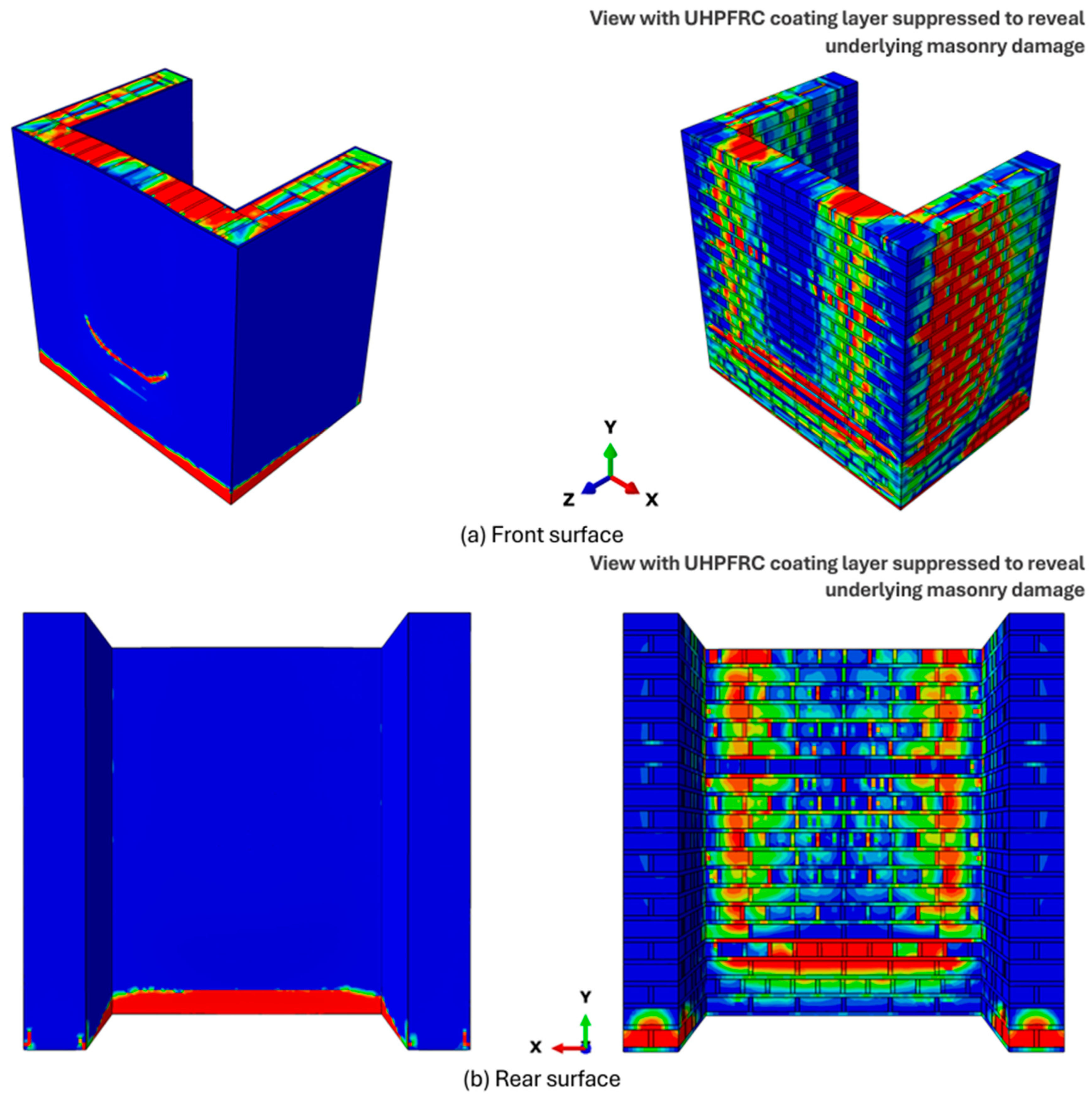
Figure 2. Different methods provided by ABAQUS for simulating masonry elements.
Applmech 07 00023 g002
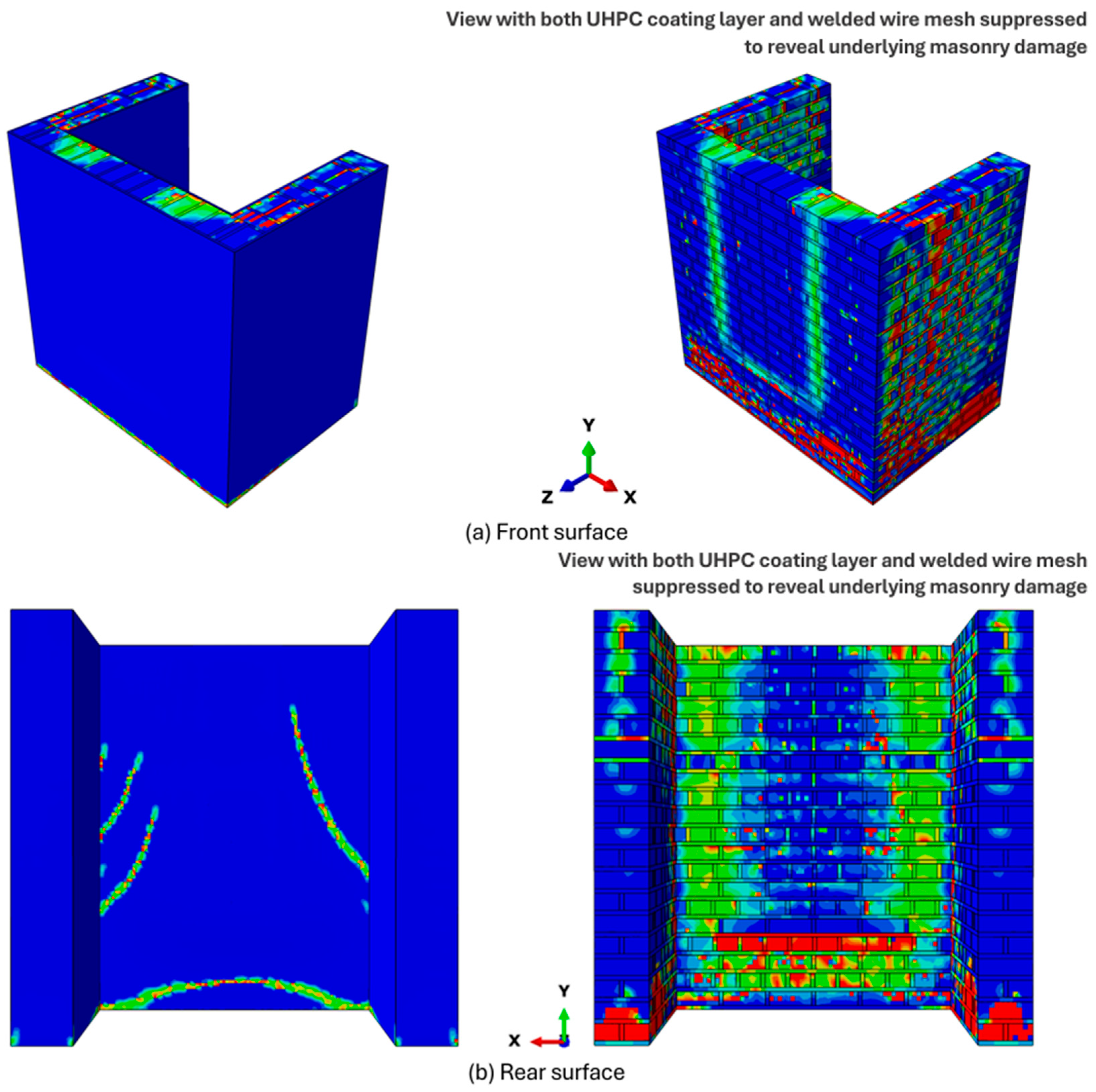
Figure 3. Computational representation of a URM wall integrally supported by perpendicular stabilizing walls.
Applmech 07 00023 g003
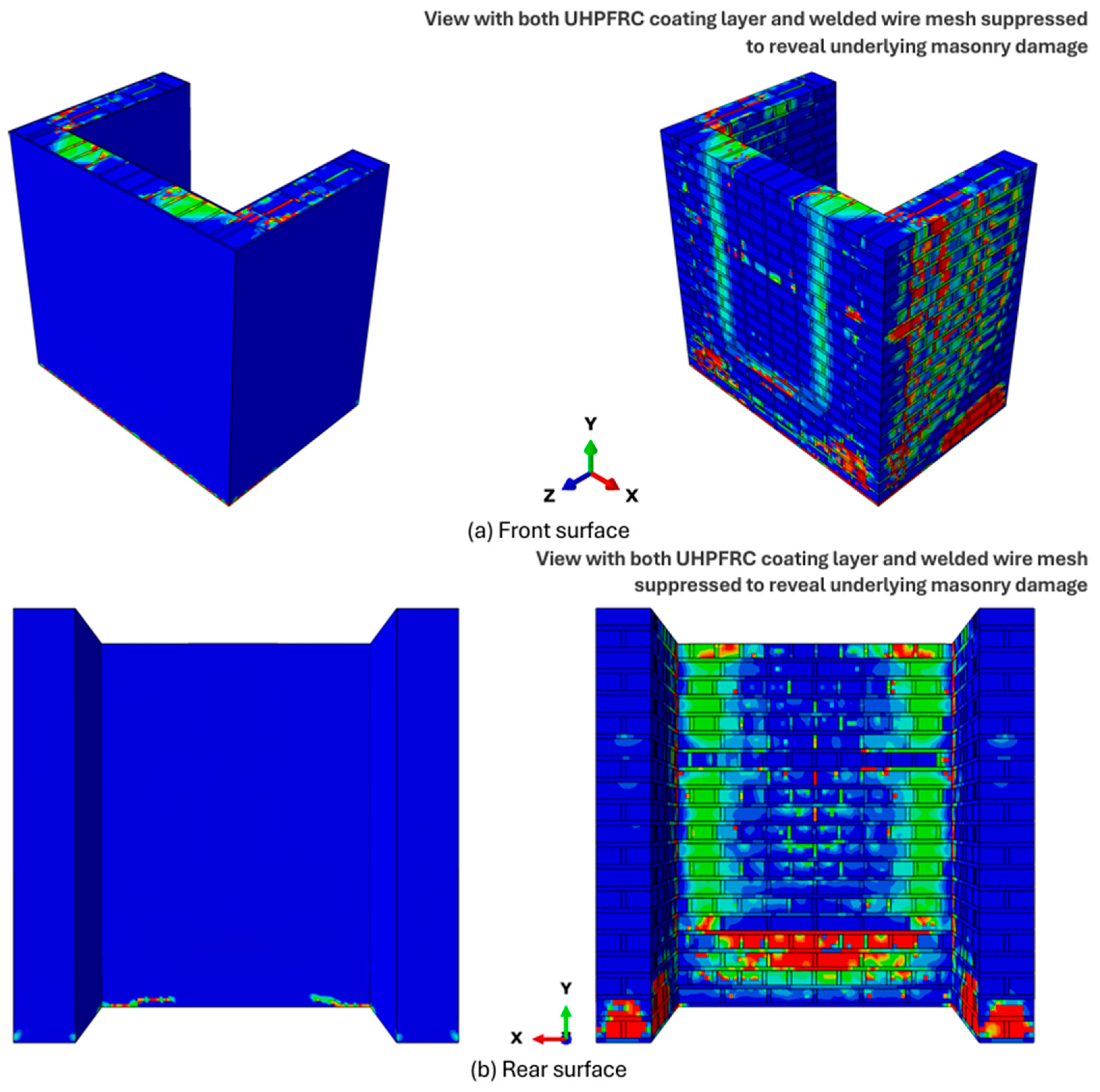
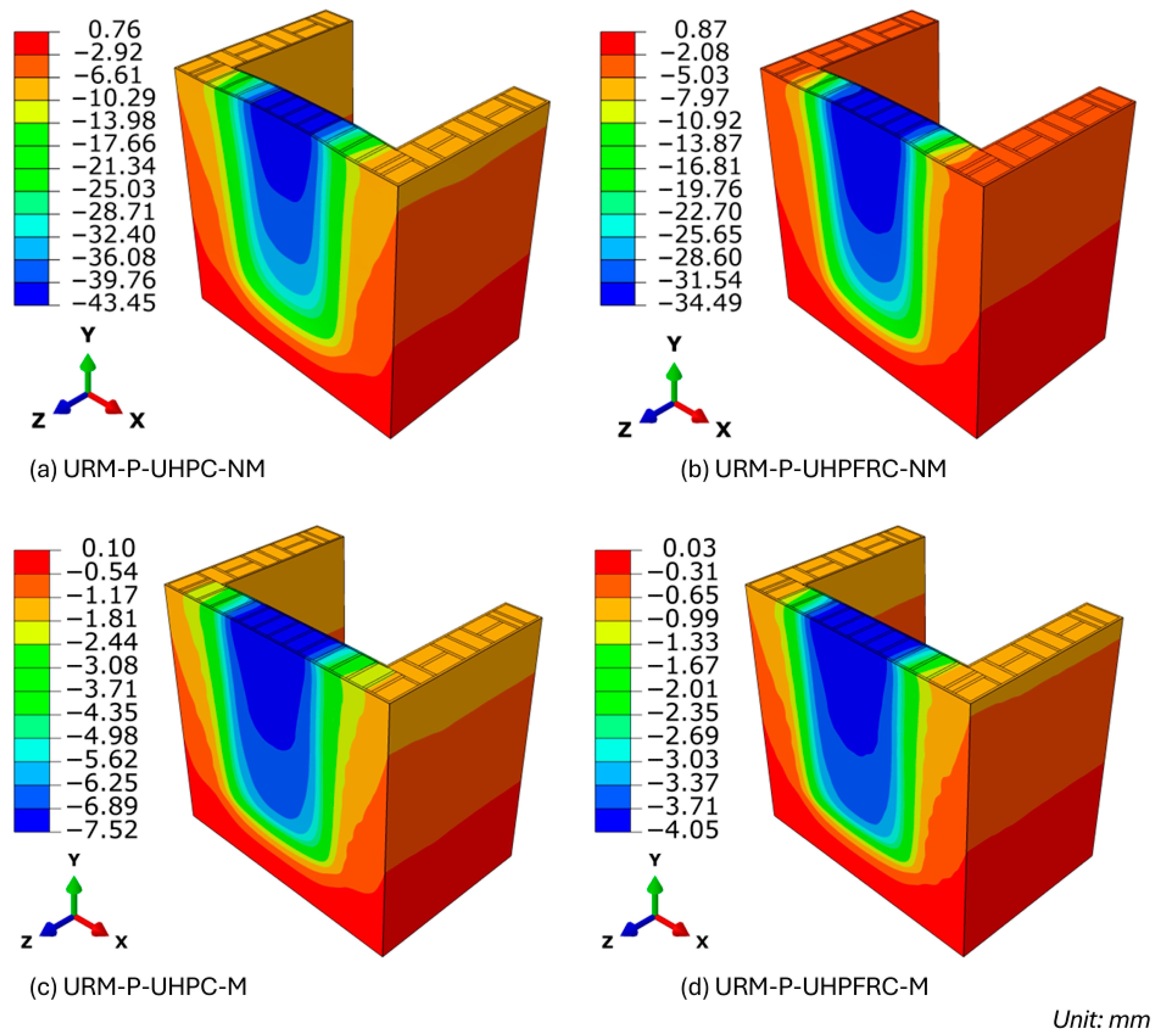
Figure 4. Calibrated CDP curves for masonry units under compression.
Applmech 07 00023 g004
Figure 5. Calibrated CDP curves for bricks under tension.
Applmech 07 00023 g005
Figure 6. Calibrated CDP curves for mortar under tension.
Applmech 07 00023 g006
Figure 7. The elevation at which the TNT detonation occurs, along with the separation distance from the target surface used in the numerical analysis. Here, G.L. denotes the ground surface.
Applmech 07 00023 g007
Figure 8. Pressure profiles estimated through the empirical approach from the literature.
Applmech 07 00023 g008
Figure 9. ConWep-generated blast pressure varies across the front surface of the primary wall when the scaled distance is 2.19.
Applmech 07 00023 g009
Figure 10. ConWep-generated blast pressure varies across the front surface of the primary wall when the scaled distance is 1.83.
Applmech 07 00023 g010
Figure 11. Reference URM wall without any strengthening.
Applmech 07 00023 g011
Figure 12. Strengthened URM walls using UHPC overlay without and with embedded welded wire mesh on both sides.
Applmech 07 00023 g012
Figure 13. Strengthened URM walls using UHPFRC overlay without and with embedded welded wire mesh on both sides.
Applmech 07 00023 g013
Figure 14. Layout of the welded wire mesh: frontal, backside, and plan perspectives.
Applmech 07 00023 g014
Figure 15. Calibrated CDP compression curves for UHPC and UHPFRC.
Applmech 07 00023 g015
Figure 16. Calibrated CDP tension curves for UHPC and UHPFRC.
Applmech 07 00023 g016
Figure 17. Finite element representation of a URM wall with variations in discretization levels across multiple mesh densities.
Applmech 07 00023 g017
Figure 18. Comparison of mesh refinement effects showing the evolution of damage distribution on the impacted surface and the opposite face of the wall at a time instant of 137 ms.
Applmech 07 00023 g018
Figure 19. Observed versus predicted damages on the frontal surfaces of the primary and lateral supporting walls, compared with experimental results reported in the literature, at Z = 2.19 m/kg1/3 (time = 137 ms).
Applmech 07 00023 g019
Figure 20. Observed (a) versus predicted (b) damages on the rear surfaces of the primary and lateral supporting walls, compared with experimental results reported in the literature, at Z = 2.19 m/kg1/3 (time = 137 ms).
Applmech 07 00023 g020
Figure 21. Variation in Z-axis displacements (measured in “mm”) for an unprotected URM wall at Z = 2.19 m/kg1/3, corresponding to time t = 137 ms.
Applmech 07 00023 g021
Figure 22. Variation in X-axis displacements (measured in “mm”) for an unprotected URM wall at Z = 2.19 m/kg1/3, corresponding to time t = 137 ms.
Applmech 07 00023 g022
Figure 23. Distribution of Von Mises stress (measured in MPa) for an unprotected URM wall on the frontal surfaces at Z = 2.19 m/kg1/3, captured at time t = 137 ms.
Applmech 07 00023 g023
Figure 24. Distribution of Von Mises stress (measured in MPa) for an unprotected URM wall on its rear surfaces at Z = 2.19 m/kg1/3, captured at time t = 137 ms.
Applmech 07 00023 g024
Figure 25. Distribution of maximum principal stress (measured in MPa) for an unprotected URM wall on the frontal surfaces at Z = 2.19 m/kg1/3, captured at time t = 137 ms. Positive readings correspond to regions under tension.
Applmech 07 00023 g025
Figure 26. Distribution of maximum principal stress (measured in MPa) for an unprotected URM wall on its rear surfaces at Z = 2.19 m/kg1/3, captured at time t = 137 ms. Positive readings correspond to regions under tension.
Applmech 07 00023 g026
Figure 27. Observed versus predicted damages on the frontal surfaces of the primary and lateral supporting walls, compared with experimental results reported in the literature, at Z = 1.83 m/kg1/3 (time = 152 ms).
Applmech 07 00023 g027
Figure 28. Variation in Z-axis displacements (measured in “mm”) for an unprotected URM wall at Z = 1.83 m/kg1/3, corresponding to time t = 152 ms.
Applmech 07 00023 g028
Figure 29. Variation in X-axis displacements (measured in “mm”) for an unprotected URM wall at Z = 1.83 m/kg1/3, corresponding to time t = 152 ms.
Applmech 07 00023 g029
Figure 30. Distribution of Von Mises stress (measured in MPa) for an unprotected URM wall on the frontal surfaces at Z = 1.83 m/kg1/3, captured at time t = 152 ms.
Applmech 07 00023 g030
Figure 31. Distribution of Von Mises stress (measured in MPa) for an unprotected URM wall on its rear surfaces at Z = 1.83 m/kg1/3, captured at time t = 152 ms.
Applmech 07 00023 g031
Figure 32. Distribution of maximum principal stress (measured in MPa) for an unprotected URM wall on the frontal surfaces at Z = 1.83 m/kg1/3, captured at time t = 152 ms. Positive readings correspond to regions under tension.
Applmech 07 00023 g032
Figure 33. Distribution of maximum principal stress (measured in MPa) for an unprotected URM wall on its rear surfaces at Z = 1.83 m/kg1/3, captured at time t = 152 ms.
Applmech 07 00023 g033
Figure 34. Numerically predicted damage patterns on the front and rear surfaces of the URM-P-UHPC-NM wall.
Applmech 07 00023 g034
Figure 35. Numerically predicted damage patterns on the front and rear surfaces of the URM-P-UHPFRC-NM wall.
Applmech 07 00023 g035
Figure 36. Numerically predicted damage patterns on the front and rear surfaces of the URM-P-UHPC-M wall.
Applmech 07 00023 g036
Figure 37. Numerically predicted damage patterns on the front and rear surfaces of the URM-P-UHPFRC-M wall.
Applmech 07 00023 g037
Figure 38. Variation in Z-axis displacements for protected walls.
Applmech 07 00023 g038
Figure 39. Variation in X-axis displacements for protected walls.
Applmech 07 00023 g039
Figure 40. Distribution of maximum principal stress for UHPC-coated wall without welded wire mesh (URM-P-UHPC-NM). Positive readings correspond to regions under tension.
Applmech 07 00023 g040
Figure 41. Distribution of maximum principal stress for UHPC-coated wall with welded wire mesh (URM-P-UHPC-M).
Applmech 07 00023 g041
Figure 42. Distribution of maximum principal stress for UHPFRC-coated wall without welded wire mesh (URM-P-UHPFRC-NM). Positive readings correspond to regions under tension.
Applmech 07 00023 g042
Figure 43. Distribution of maximum principal stress for UHPFRC-coated wall with welded wire mesh (URM-P-UHPFRC-M).
Applmech 07 00023 g043
Table 1. Geometric parameters of the URM wall assembly.
ComponentParameterValue
Main URM WallLength1840 mm
Height1820 mm
Thickness230 mm
Return (Transverse) Walls/Laterally Supporting WallsLength (each)1220 mm
Height1820 mm
Thickness230 mm
Wall AssemblyConfigurationOne main wall with two perpendicular return walls
Surface ConditionFinishUn-plastered masonry
Protective CoatingMaterialUHPC/UHPFRC
Thickness15 mm
ApplicationBoth faces of the main and return walls
Welded Wire MeshLocationEmbedded within the UHPC/UHPFRC coat
Wire diameter1.0 mm
Mesh spacing50 mm × 50 mm
Table 2. Discretization details adopted for the C3D8R element.
Mesh CategoryLargeIntermediateRefinedHighly Refined
Characteristic dimension (mm)2015105
Total finite elements16,90551,80598,840178,420
Total nodal points59,120142,280266,190364,920
Table 3. Numerical mesh sensitivity study for blast loading at a scaled charge distance of 2.19 m/kg1/3.
Mesh CategoryComputation Duration (×103 ms)RAM Consumption (GB)Mean Crack Depth * (mm)Deviation from Test Data (%)
Large (20 mm)33650.6516616.06
Intermediate (15 mm)77590.731779.67
Refined (10 mm)22,2001.111855.26
Highly refined (5 mm)38,7712.941921.55
Laboratory observation (Badshah et al., [6])195
Note: * Average depth of a thorough vertical crack at the center of the main wall.
Table 4. Computed structural response of the reference validated wall (unprotected/un-strengthened) under two explosion cases.
Sl. No.Evaluated Structural QuantityCase-I (2.19 m/kg1/3)Case-II (1.83 m/kg1/3)
1Peak out-of-plane movement of the primary wall along the negative Z-axis (mm).58.34#*
2Plastic damage energy of the wall system (J).336.78933.70
3Highest equivalent shear stress developed in the primary wall section (MPa).2.8818.29
4Extreme compressive normal stress recorded in the principal direction of the main wall (MPa).3.3623.05
Notes: Explosion parameters: Case-I: normalized standoff = 2.19 m/kg1/3, response recorded at 137 ms; Case-II: normalized standoff = 1.83 m/kg1/3, response recorded at 152 ms; #* Indicates complete structural collapse of the URM wall (refer to corresponding deformation figures).
Table 5. Summary of numerical damage characteristics of URM walls under severe blast loading (Z = 1.83 m/kg1/3).
Wall ConfigurationProtective SystemMode of DamageDominant Crack PatternInterface BehaviorDamage Pattern (Views with Both Coating and Welded Wire Mesh Suppressed to Reveal Underlying Masonry Damage)
URM-REF (reference URM wall)NoneCatastrophic out-of-plane collapse due to low tensile strength and excessive flexural deformationExtensive diagonal and vertical cracks; brick dislocation and fragmentation across the wallNo confinement; complete separation between brick units and mortar jointsApplmech 07 00023 i001
URM-P-UHPC-NMUHPC coating onlyModerate structural damage; coating limits surface spalling but not fully crack propagationVertical cracks near junctions; flexure-shear crack at basePartial debonding near the base and edges due to strain incompatibilityApplmech 07 00023 i002
URM-P-UHPFRC-NMUHPFRC coating onlyLocalized surface cracking with limited propagationMinor flexure-shear cracks confined near the baseStrong adhesion and minimal debondingApplmech 07 00023 i003
URM-P-UHPC-MUHPC coating with embedded steel-welded wire meshControlled cracking and stable deformationVery fine vertical and diagonal cracks are limited to the coating layerExcellent interfacial integrity: mesh bridges crack and redistribute tensile stressApplmech 07 00023 i004
URM-P-UHPFRC-MUHPFRC coating with embedded steel-welded wire meshHighly resilient behavior with negligible masonry damageOnly shallow surface cracks in coating; no visible substrate crackingStrong mechanical interlock and uniform stress transfer across the interfaceApplmech 07 00023 i005
Table 6. Computed structural response parameters for all wall configurations at Z = 1.83 m/kg1/3.
Wall ConfigurationPlastic Damage (Joules)At the Exposed Face of the Primary Wall of a URM Wall System
Peak Displacement in Z Direction (mm)Peak Principal Compressive Stress (MPa)Maximum Equivalent Von Mises Stress (MPa)
URM-REF (reference-validated URM wall)933.70Very large displacement, far beyond wall thickness (230 mm)23.0518.29
URM-P-UHPC-NM158.8943.453.202.84
URM-P-UHPFRC-NM115.7634.491.571.75
URM-P-UHPC-M65.817.521.471.12
URM-P-UHPFRC-M40.194.050.480.61
Disclaimer/Publisher’s Note: The statements, opinions and data contained in all publications are solely those of the individual author(s) and contributor(s) and not of MDPI and/or the editor(s). MDPI and/or the editor(s) disclaim responsibility for any injury to people or property resulting from any ideas, methods, instructions or products referred to in the content.