A Creep Model with a Real Structural Parameter for Deformable Solids †

Abstract
1. Introduction
2. Kinetic Physics and Phenomenological Model of Dislocation Creep Controlled by Thermally Activated Dislocation Slip
3. Classical Problem Formulation with the Proposed Creep Model Applied
4. Solutions
5. Summary
- i.
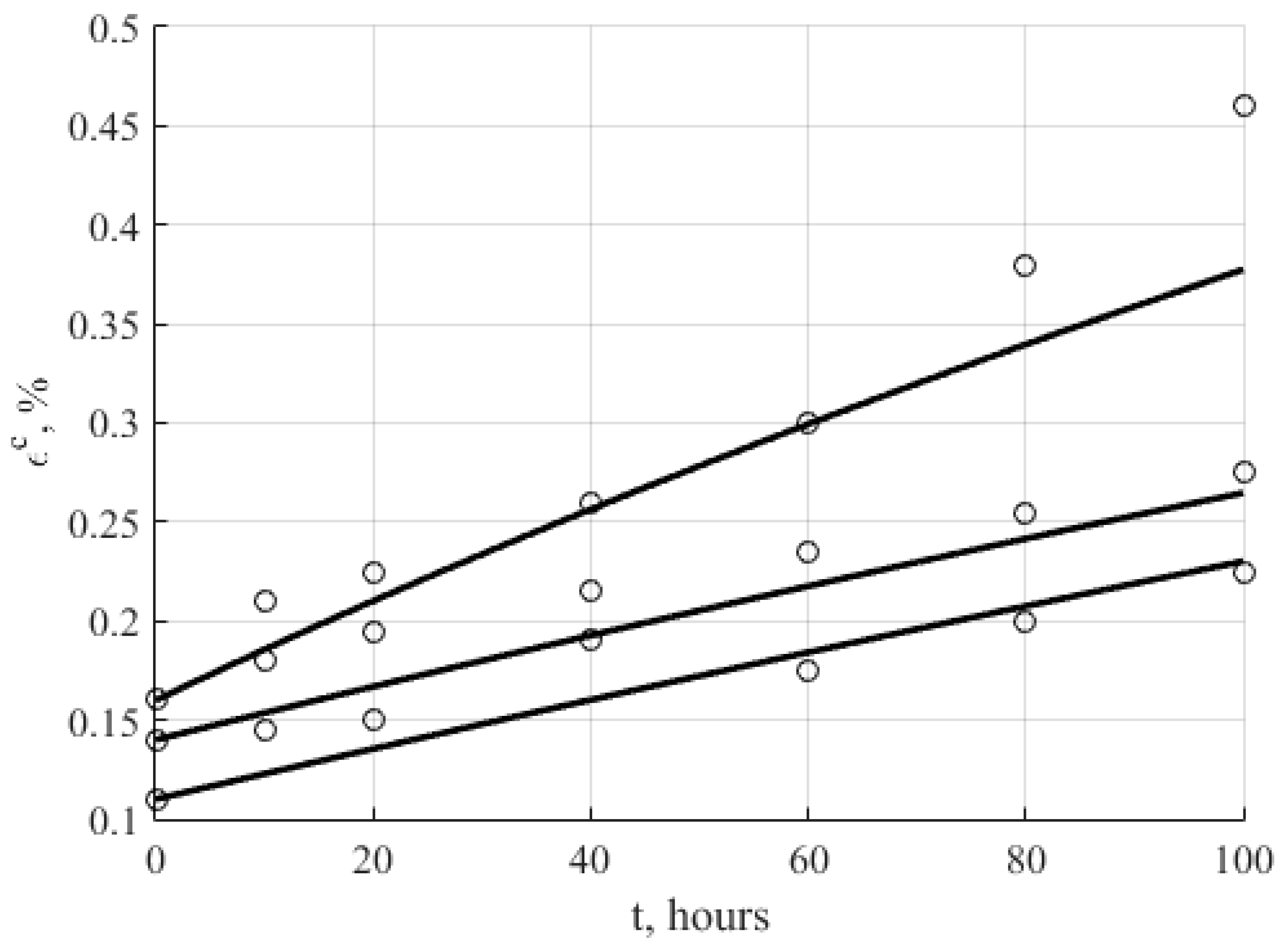
- The implementation of one uncommon creep model with the evolution of a real structural parameter [10] in classical boundary value problems is considered. The model comprises two coupled differential equations that need to be solved to describe creep curves. One of the equations governs the evolution of the real structure parameter in time, namely, immobile density changes. The initial immobile density value can be determined from a standard tensile stress–strain curve.
- ii.
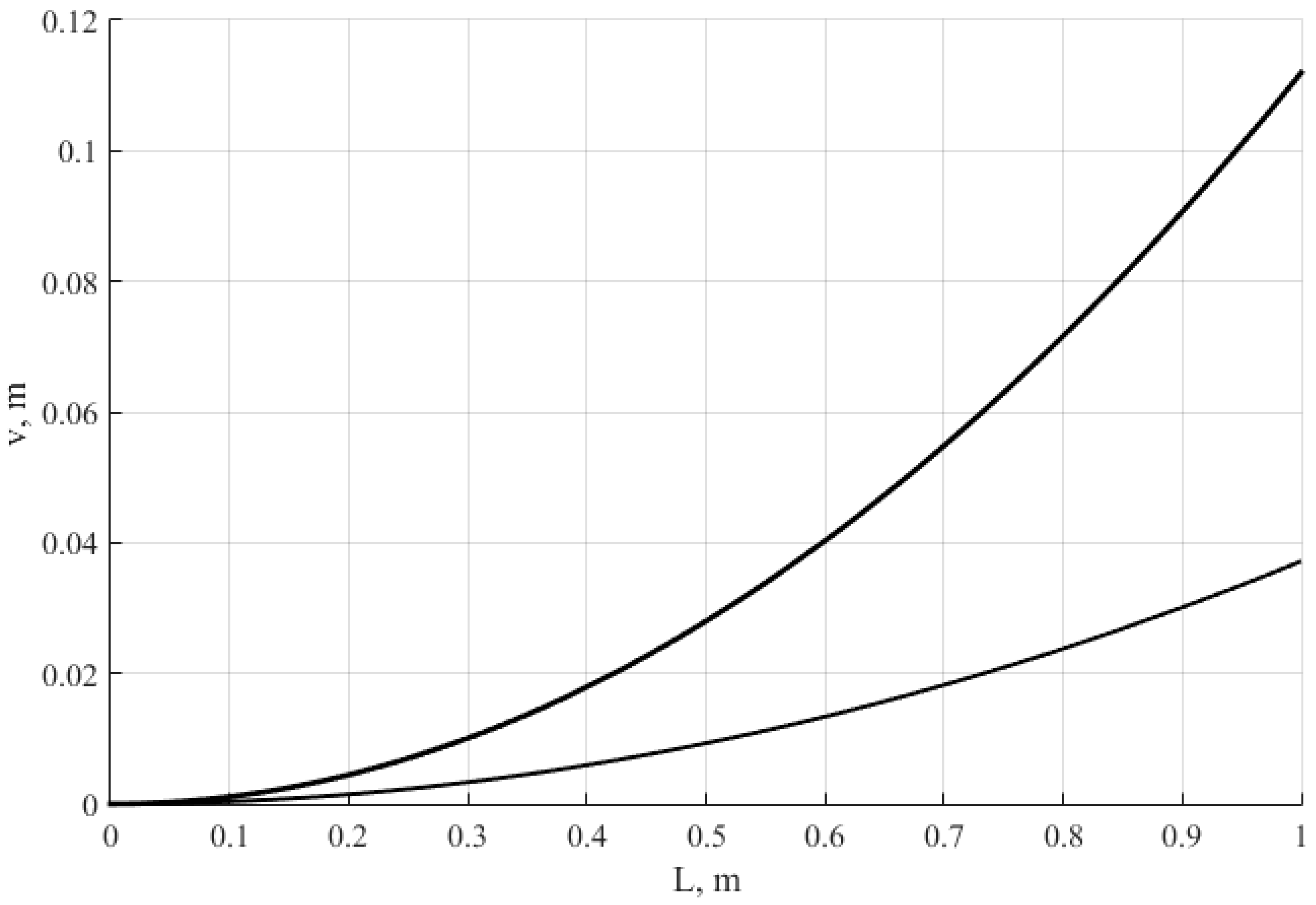
- Despite the fact that the creep model is written in terms of derivatives, it is shown how to include them into well-known problems such as bending, torsion, and relaxation in both steady and transient formulations. The steps that need to be taken to solve them are presented. During derivation, we can notice that, in comparison with well-known creep solutions for such problems (for instance, in [15]), such things like generalized axial and polar moments of inertia will not exist anymore and curvature in the case of bending and a relative twist angle becomes a function that depends on the real structure parameter.
- iii.
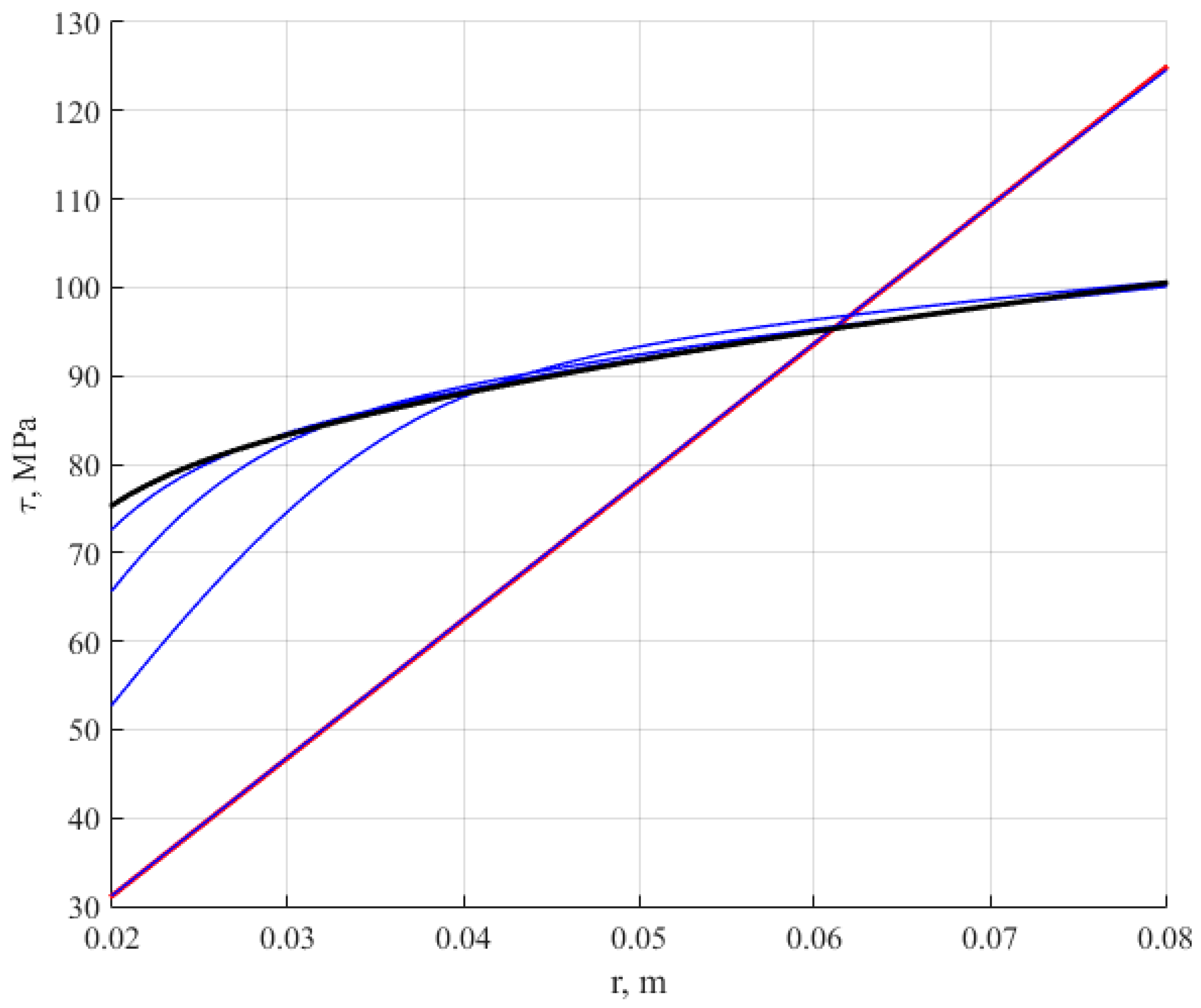
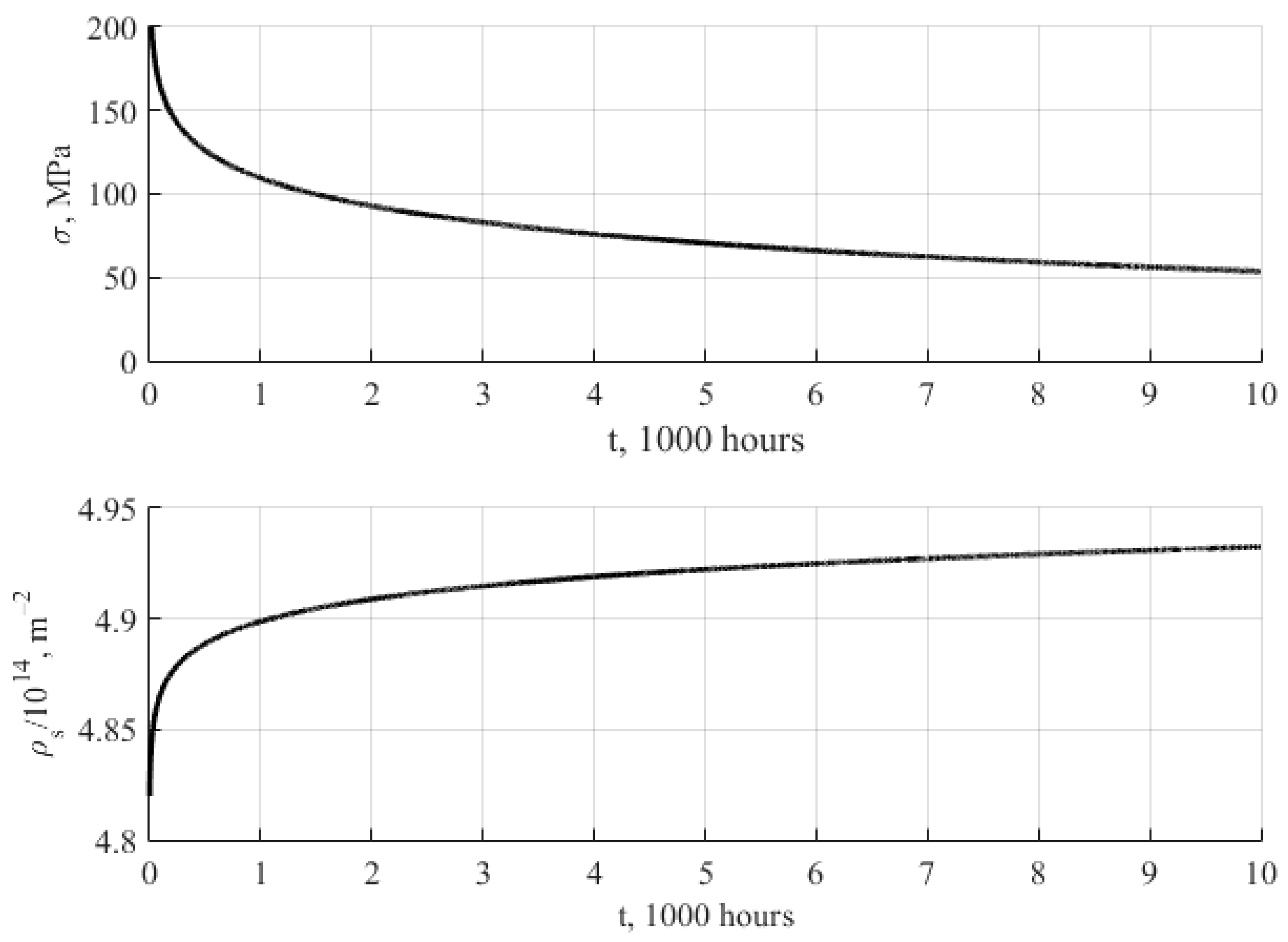
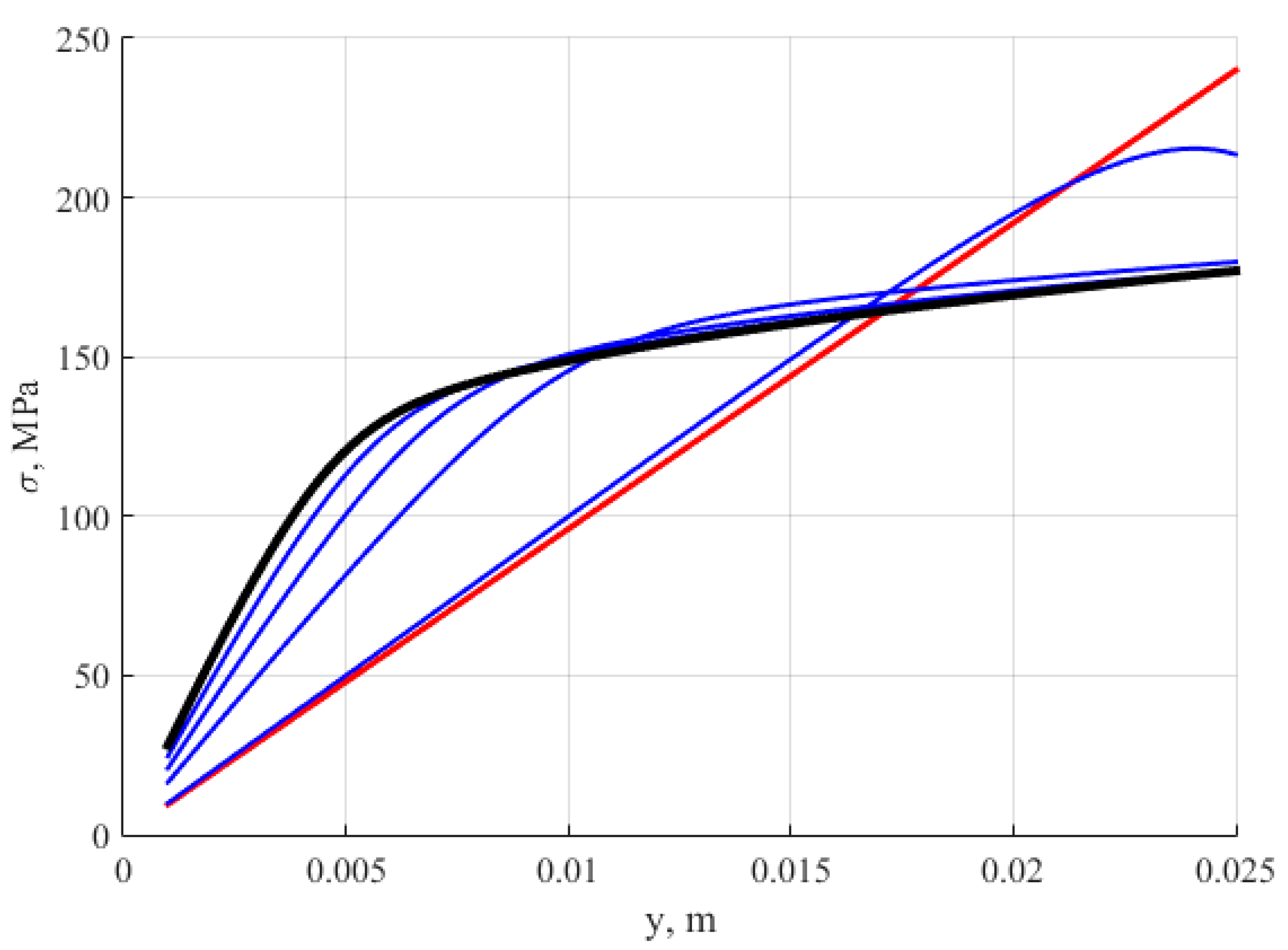
- It was obtained that solutions describing the stress state and values related to mechanics are similar to those in the phenomenological formulation of creep problems. In the relaxation problem, we obtained decreasing stresses. It might be seen that the stress distribution along the height in bending as well as under shear stress distribution along the radius in torsion are both approaching some steady stress distribution starting from a linear elastic distribution. This leaves no questions about the correctness of the mechanical part of the derived equations.
- iv.
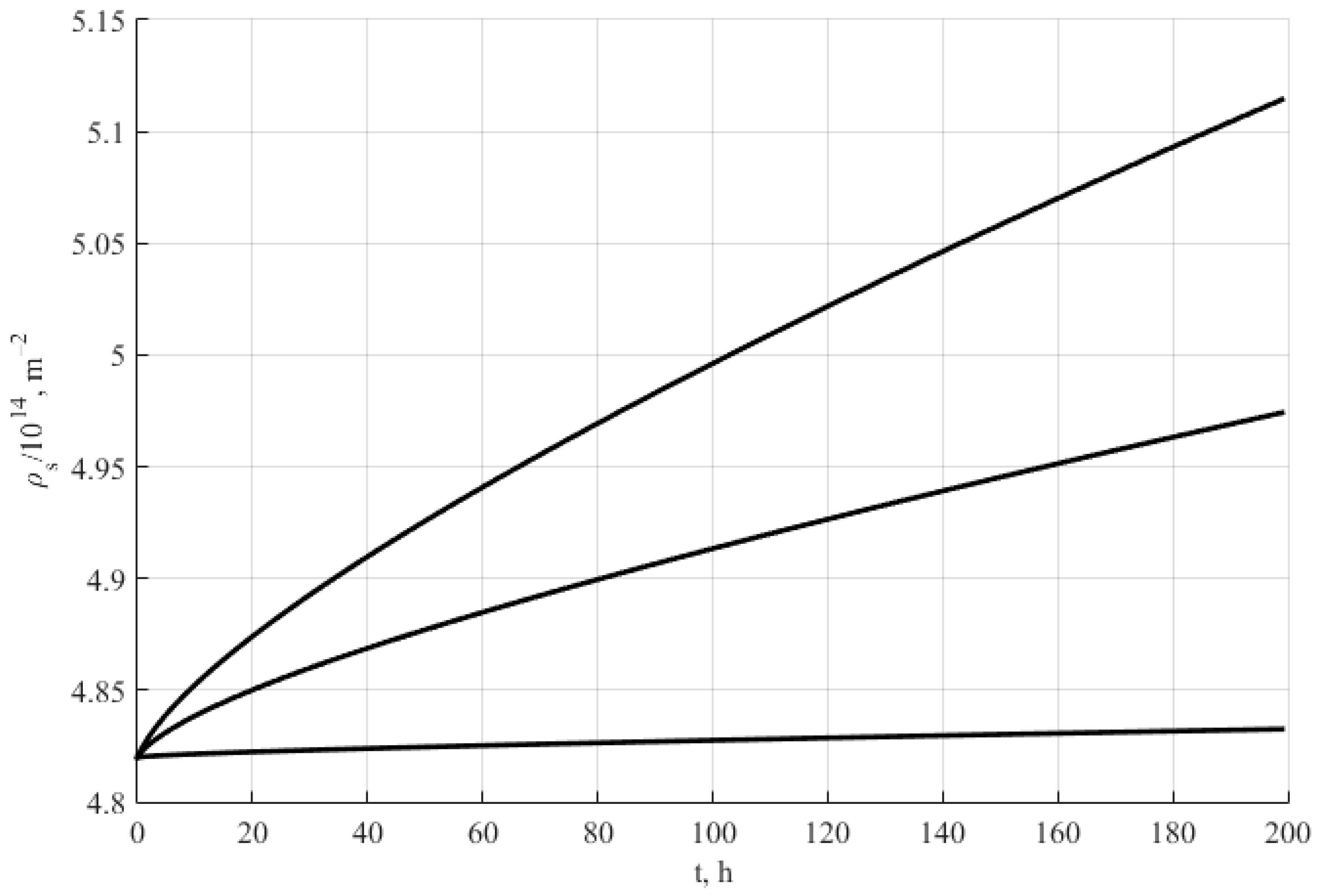
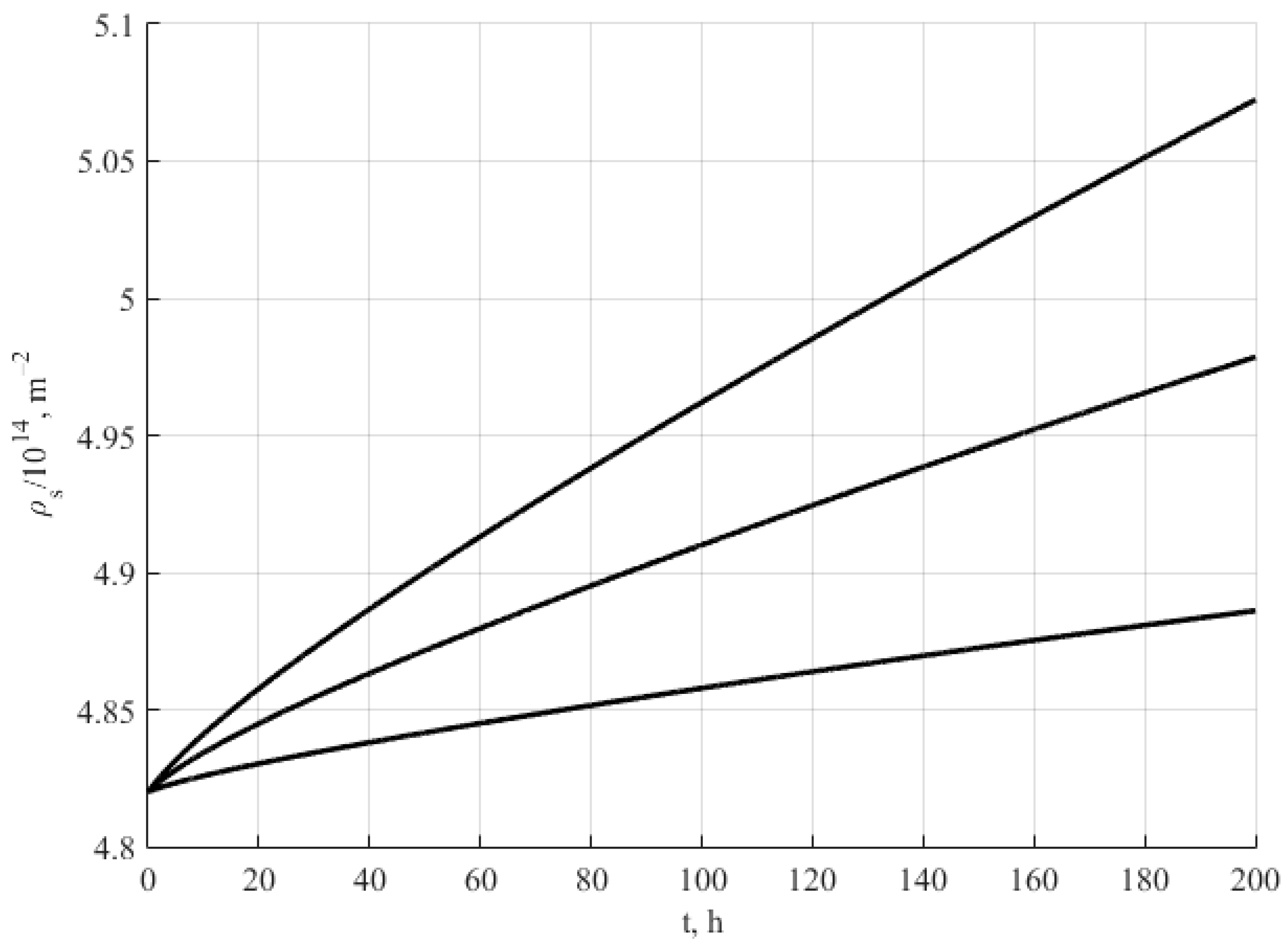
- In addition to finding (iii), we provide a solution for the evolution of the real structure parameter. If the theoretical assumptions [10] hold true, this function allows predictions of microstructure changes during creep, akin to what has already been achieved for plasticity studies [11]. The author [10] expects that an additional equation will prove valuable for estimating both the linear size of the microstructure and its overall strength.
Funding
Institutional Review Board Statement
Informed Consent Statement
Data Availability Statement
Acknowledgments
Conflicts of Interest
References
- Lokoshchenko, A.M.; Fomin, L.V.; Teraud, W.V.; Basalov, Y.G.; Agababyan, V.S. Creep and long-term strength of metals under unsteady complex stress states. J. Samara State Tech. Univ. Ser. Phys. Math. Sci. 2020, 24, 275–318. [Google Scholar]
- Altenbach, H. Creep Mechanics—A Long History and Current Developments. In Lectures Notes on Advanced Structured Materials 3; Springer Nature: Cham, Switzerland, 2025; pp. 3–22. [Google Scholar]
- Rabotnov, Y.N.; Leckie, F.A. Creep Problems in Structural Members; North-Holland Pub. Co.: Amsterdam, The Netherlands, 1969. [Google Scholar]
- Betten, J. Creep Mechanics; Springer: Berlin/Heidelberg, Germany, 2005. [Google Scholar]
- Kachanov, L. Introduction to Continuum Damage Mechanics; Springer Science & Business Media: Heidelberg, Germany, 2013; Volume 10. [Google Scholar]
- Cadek, J. Creep in metallic materials. Mater. Sci. Monogr. 1988, 48, 372. [Google Scholar]
- Frost, H.J.; Ashby, M.F. Deformation-Mechanism Maps: The Plasticity and Creep of Metals and Ceramics; Pergamon Press: Oxford, UK, 1982. [Google Scholar]
- Kassner, M.E. Fundamentals of Creep in Metals and Alloys; Butterworth-Heinemann: Oxford, UK, 2015. [Google Scholar]
- Estrin, Y. Dislocation-density-related constitutive modeling. In Unified Constitutive Laws of Plastic Deformation; Elsevier: Amsterdam, The Netherlands, 1996; Volume 1, pp. 69–106. [Google Scholar]
- Greshnov, V.M. Physico-Mathematical Theory of High Irreversible Strains in Metals; CRC Press: Boca Raton, FL, USA, 2019. [Google Scholar]
- Greshnov, V.M.; Safin, F.F.; Shaikhutdinov, R.I.; Yanova, I.R. Al-Mg-Sc (1570) alloy structure formation process. In International Conference on Aerospace System Science and Engineering; Springer Nature: Singapore, 2021. [Google Scholar]
- Greshnov, V.M.; Shaikhutdinov, R.I. On the kinetic physical and mathematical metal creep theory controlled by thermally activated dislocation sliding. Mech. Solids 2024, 59, 769–780. [Google Scholar] [CrossRef] [Scilit]
- Greshnov, V.M.; Shaikhutdinov, R.I.; Puchkova, I.V. Kinetic physical phenomenological model of creep-rupture strength of metals. J. Appl. Mech. Tech. Phys. 2017, 58, 165–172. [Google Scholar] [CrossRef] [Scilit]
- Shtremel, M.A. Strength of Alloys. Part I. Deformation; MISiS Publ.: Moscow, Russia, 1997. [Google Scholar]
- Bulygin, I.P.; Vlasova, P.T.; Gorbodey, A.T.; Seliverstova, P.M.; Chupakhin, S.E. Atlas of High-Temperature Stress-Strain Curves, Creep Curves, and Long-Term Strength of Steels and Alloys for Engines; Oborongiz: Moscow, Russia, 1953. [Google Scholar]
- Boyle, J.T.; Spence, J. Stress Analysis for Creep; Elsevier: Amsterdam, The Netherlands, 2013. [Google Scholar]




| Fe | C | Si | Mn | Ni | S | P | Cr | Mo | W | V | Ti | Al | B |
|---|---|---|---|---|---|---|---|---|---|---|---|---|---|
| 8 | 0.11–0.16 | 0.6 | 0.6 | 56.8–71.1 | 0.009 | 0.015 | 14–18 | 3–4.5 | 4.5–6.5 | 0.3 | 1.6–2.3 | 1.6–2.2 | 0.005–0.01 |
| [s−1] | [m] | [\] | [MPa] | [J/K] | [K] | [m−2] | [m] |
|---|---|---|---|---|---|---|---|
| 1012 | 3×10⁻⁸ | 3.1 | 40,159 | 1.38×10⁻²³ | 1023 | 4.83×10¹⁴ | 3.97×10⁻⁷ |
Disclaimer/Publisher’s Note: The statements, opinions and data contained in all publications are solely those of the individual author(s) and contributor(s) and not of MDPI and/or the editor(s). MDPI and/or the editor(s) disclaim responsibility for any injury to people or property resulting from any ideas, methods, instructions or products referred to in the content. |
© 2025 by the author. Licensee MDPI, Basel, Switzerland. This article is an open access article distributed under the terms and conditions of the Creative Commons Attribution (CC BY) license (https://creativecommons.org/licenses/by/4.0/).
Share and Cite
Shaikhutdinov, R. A Creep Model with a Real Structural Parameter for Deformable Solids. Appl. Mech. 2025, 6, 91. https://doi.org/10.3390/applmech6040091
Shaikhutdinov R. A Creep Model with a Real Structural Parameter for Deformable Solids. Applied Mechanics. 2025; 6(4):91. https://doi.org/10.3390/applmech6040091
Chicago/Turabian StyleShaikhutdinov, Rafael. 2025. "A Creep Model with a Real Structural Parameter for Deformable Solids" Applied Mechanics 6, no. 4: 91. https://doi.org/10.3390/applmech6040091
APA StyleShaikhutdinov, R. (2025). A Creep Model with a Real Structural Parameter for Deformable Solids. Applied Mechanics, 6(4), 91. https://doi.org/10.3390/applmech6040091