Article

The Use of Composite 3D Printing in the Design of Optomechanical Components


1
HiLASE Centre, Institute of Physics CAS, Za Radnicí 828, 252 41 Dolní Břežany, Czech Republic
2
Faculty of Mechanical Engineering, Czech Technical University in Prague, Technická 4, 160 00 Prague, Czech Republic
3
Compo Tech PLUS, spol. s r.o., Nová 1316, 342 01 Sušice, Czech Republic
*
Author to whom correspondence should be addressed.
Appl. Mech. 2025, 6(4), 81; https://doi.org/10.3390/applmech6040081
Submission received: 7 September 2025 / Revised: 13 October 2025 / Accepted: 1 November 2025 / Published: 3 November 2025

Abstract

This article demonstrates that 3D-printed parts can replace metal parts in optomechanics in the correct circumstances. Three examples are shown: a clamping fork for pedestal holders where stability is important, an adjustable mirror holder where the rigidity is the main criterion, and a stray light shield where the transmissivity is critical. By combining carbon-fiber-reinforced polymers (CFRPs) with 3D printing, it is possible to produce components that fill the gap between standard 3D-printed plastics and metal parts in terms of strength and stability. These parts are designed to be lighter, more compact, and easier to modify, while keeping good mechanical properties such as resistance to vibration, shape accuracy, and controlled thermal expansion. The article focuses on the application of composite 3D printing on optomechanical components. It compares different methods of composite 3D printing, including fused filament fabrication (FFF) with either chopped fibers or with continuous fiber reinforcement. Three examples from the HiLASE Centre demonstrate how these parts are used in practice, confirming that it is indeed possible to 3D print components that are lighter and cheaper yet still highly functional compared to their off-the-shelf counterparts—for example, lightweight and stiff mounts, shielding against stray laser light, or flexible elements allowing fine mechanical adjustments. Simulations of the deformations are included to compare the printed and metal versions. The article ends with a summary of the benefits and limitations of using 3D-printed composites in optomechanics.

1. Introduction

Since their introduction in the 1970s and 1980s [1,2], the technologies for producing modern carbon composites (CFRPs) and 3D printing have been used with progressively increasing frequency. The integration of additive manufacturing with fiber-reinforced polymers has opened new possibilities for producing lightweight, high-performance parts of complex geometries with a potential to replace traditionally machined metal components in structurally demanding applications.
Three-dimensional printing has transitioned from a prototyping tool to a viable method for manufacturing functional parts using composite materials, particularly CFRPs [3]. These materials combine the ease of thermoplastic processing with improved mechanical performance, making them suitable for aerospace, automotive, and, increasingly, precision engineering tasks. The effects of the process parameters, such as nozzle temperature, fiber content, and printing speed, on the mechanical properties of the printed part, were studied for polymer matrix composites (PMCs) [4].
We can see generally three printing strategies of composite parts [5,6,7].
  • FFF or resin print using blends—fiberless materials.
  • FFF using crushed fiber-filled filaments (discontinuous fiber reinforcement).
  • FFF with continuous fiber reinforcement systems.
All these techniques result in anisotropic printed parts, minimally due to the layer-by-layer printing. Strategy 1 exhibits mainly (or even exclusively) this type of anisotropy. Strategy 2 adds to the anisotropy by the orientation of the chopped fibers. Strategy 3, apart from a more pronounced anisotropy due to fiber orientation, introduces non-homogeneity as the continuous fiber reinforcement is typically in the form of a closed loop near the perimeter of the printed part. Therefore, during the design process, the orientation of the printed part must be carefully considered. The selection of fiber length, type (e.g., carbon, glass, aramid), and matrix material strongly influences the resulting mechanical and thermal properties. Also, layer adhesion, fiber orientation, and thermal gradients during printing have a significant influence on the final part performance [8].
Strategy 1 can be used to achieve overall stiffer homogeneous material (PLA + PP, PLA + ABS blends) or good machinability and suitability for surface treatments (PLA + steel powder), special effects for jewelry (PLA + bronze, wood, cork, stone), magnetic properties [9,10,11,12,13], and flame resistivity [14]. Also considered in this group can be particle-reinforced composites (polystyrene, nylon, etc. extruded into printable filaments [3]) and resin composites, for example, ceramic-reinforced resin [15,16] with chemical resistance, high strength, and stiffness.
The reason for composite printing according to strategy 2 is the improvement of the mechanical properties, such as mechanical strength (polyethylene terephthalate glycol PET-G + carbon fibers), cracking during load (acrylonitrile styrene acryl ASA + para-aramid Kevlar), high impact resistance (PCTG + glass fiber), and rigidity (PLA + carbon fiber). Also, other properties can be affected: resistance to high temperatures, minimal shrinkage during printing (PET-G + carbon fibers), chemical resistance (nylon 12 + carbon fibers), and resistance to UV radiation and humidity (ASA Kevlar) [17,18,19,20,21,22,23,24]. Generally, carbon fiber is preferred in optomechanical and precision mechanical applications due to its superior stiffness, low density, and low coefficient of thermal expansion (CTE). Prints from such reinforced materials are also characterized by better dimensional stability, better printability (in certain cases), and a visually more attractive appearance of the finished prints compared to prints from unreinforced material. On the other hand, their printing requires a hardened (hardened steel or ruby) or coated extruder nozzle due to the material’s abrasive nature. It is also not advisable to use nozzles with small diameters (<0.4 mm)—the solid particles of crushed fiber tend to clog and degrade the nozzle [25].
Strategy 3 is used to increase the mechanical properties only. Carbon, glass, or Kevlar fibers are used here. At the HiLASE Centre, this technique was applied in the design and production of optomechanical components, which are typically produced by conventional methods, with the goal of getting lighter, more compact, conceptually more variable, and more accessible solutions compared to purchased metal components. At the same time, we aimed to maintain, but preferably improve, the mechanical properties such as vibration resistance, shape stability, or thermal expansion. In general, 3D printing of composite parts is significantly more expensive compared to 3D printing using common materials—both due to the higher cost of base materials and the 3D printer itself.
The aim of this article is to present, through three examples, how the use of composite 3D printing can simplify, improve, and reduce the cost of developing custom optomechanical components, especially in scientific environments. The essence of this work lies in explaining the principles and methods by which these two seemingly disparate disciplines (meaning 3D printing and optomechanics) can be successfully connected, enabling the creation of functional solutions. The article also highlights both the advantages and limitations of using this 3D printing technology in the field of optomechanical design.

2. Methodology

2.1. Three-Dimensional Printing Materials and Parameters

For 3D printing, the hardware used was mainly the CFR 3D printer Markforged Mark Two (Markforged, Waltham, MA, USA). The software used was the online cloud-based Eiger system (https://markforged.com/software, accessed on 31 October 2025) for slicing and file management. The base material was Markforged Onyx (micro-carbon-fiber-filled nylon) reinforced with fiberglass or Kevlar. The only exception is the first iteration of the carrier for the mirror holder (Section 3.3.4)—here, the BCN3D SigmaX R19 3D printer (BCN3D Technologies, Barcelona, Spain) was used with the Cura slicer and ColorFabb XT-CF20 material (copolyester with a 20% additive of crushed carbon fiber).
The initial printing parameters for the Markforged Mark Two printer were based on the recommended settings of the Eiger system. The standard layer height used was 0.1 mm, with four roof and floor layers. For the walls, two perimeters were used with an overall thickness of 0.8 mm. The fill pattern was the standard triangular type with 37% density. These parameters were varied for tensile testing purposes (Section 2.3).
As an adhesive layer between the printer bed and the print itself, Elmer’s Washable School Glue was used which also significantly reduced the need for a print brim in case of prints with a small contact area. The default setting for continuous reinforcement is two levels of four isotropic layers near the roof and floor layers of the print. This setting needs to be revised for each print. The standard nozzle temperatures are 270–280 °C for the base material and 240–250 °C for continuous fiber.

2.2. Computational Methodology

Simulations of the part’s response to mechanical load were made for the periscope mount described in Section 3.3.1. All finite element simulations were performed in COMSOL Multiphysics [26] to evaluate the mechanical stability and deformation behavior of the optical holder assembly under gravitational loading. The main objective was to quantify the displacements affecting the alignment of the optical element and to compare the performance of different construction materials and different printing process parameters.
The geometry of the holder and optical element was imported from CAD files. To facilitate meshing and ensure numerical robustness, fine and mechanically insignificant details of the imported geometry were suppressed, and small edges were smoothed. In some cases, individual parts of the assembly were imported separately and subsequently aligned within the geometry sequence based on mesh optimization.
The holder was modeled firstly as aluminum 6063-T83 and secondly as a nylon-based composite material with imprinted carbon fiber. For the composite material, the Young’s modulus was determined experimentally from tensile testing, while the density was taken as the bulk value of nylon itself. Because printing process settings can strongly affect the final mechanical behavior via variations in Young’s modulus, a parametric study was conducted for different holder properties. Material parameters for the selected aluminum and nylon-based composites with various printing processes are shown in Table 1. Young’s moduli were obtained from tensile testing of samples produced with different printing process settings, namely infill density, infill pattern, and the presence of reinforcement material.
Contacts between components were replaced by rigid connectors to mathematically represent idealized screw joints. The assembly was subjected to its own weight, with the gravitational force applied along the X- or Z-axis depending on the simulation scenario. The rear surface of the holder was fixed using a fixed constraint condition (displacement = 0). The mesh was manually refined to remove problematic edges and improve element quality in stressed parts of geometry. Mesh convergence was monitored by evaluating stress components (e.g., σxx) along control lines as well as displacements at selected points on the optical mirrors. The final mesh was verified to be sufficiently fine to capture the relevant deformations. The mesh consisted of 1.22 × 10⁶ elements. The resulting model contained 5.5 × 10⁶ degrees of freedom.
The simulations provided estimates of the mass and center of gravity of the optical component. The primary quantity of interest was the maximum displacement, together with its impact on the alignment of the optical axis. Furthermore, the first principal stress and von Mises stress in the printed parts were evaluated. All quantities were monitored with respect to different printing parameters. The numerical results were cross-checked against analytical beam theory (von Mises stress and displacement estimates). This comparison confirmed that the elastic modulus of the polymer component is the most critical parameter controlling the overall deformation of the holder.

2.3. Tensile Testing Methodology

For tensile testing, the specimens were prepared in accordance with the EN ISO 527-2 standard [27], specifically following the type 1B geometry. The parameters of the measurement machine are listed in Table 2. An overview of the sample as arranged in the experimental setup is shown in Figure 1.
The obtained Young’s modulus ranged from 0.46 GPa to 2.60 GPa, with variations influenced by the specific infill parameters used during the 3D printing process. Factors such as infill density, pattern type, and orientation significantly affect the internal structure of the printed specimens, thereby impacting their mechanical properties. Higher infill densities generally lead to increased stiffness and a higher modulus, while lower densities or complex infill geometries result in more flexible behavior.

3. Results

3.1. Optomechanical Components—Classical vs. Printed

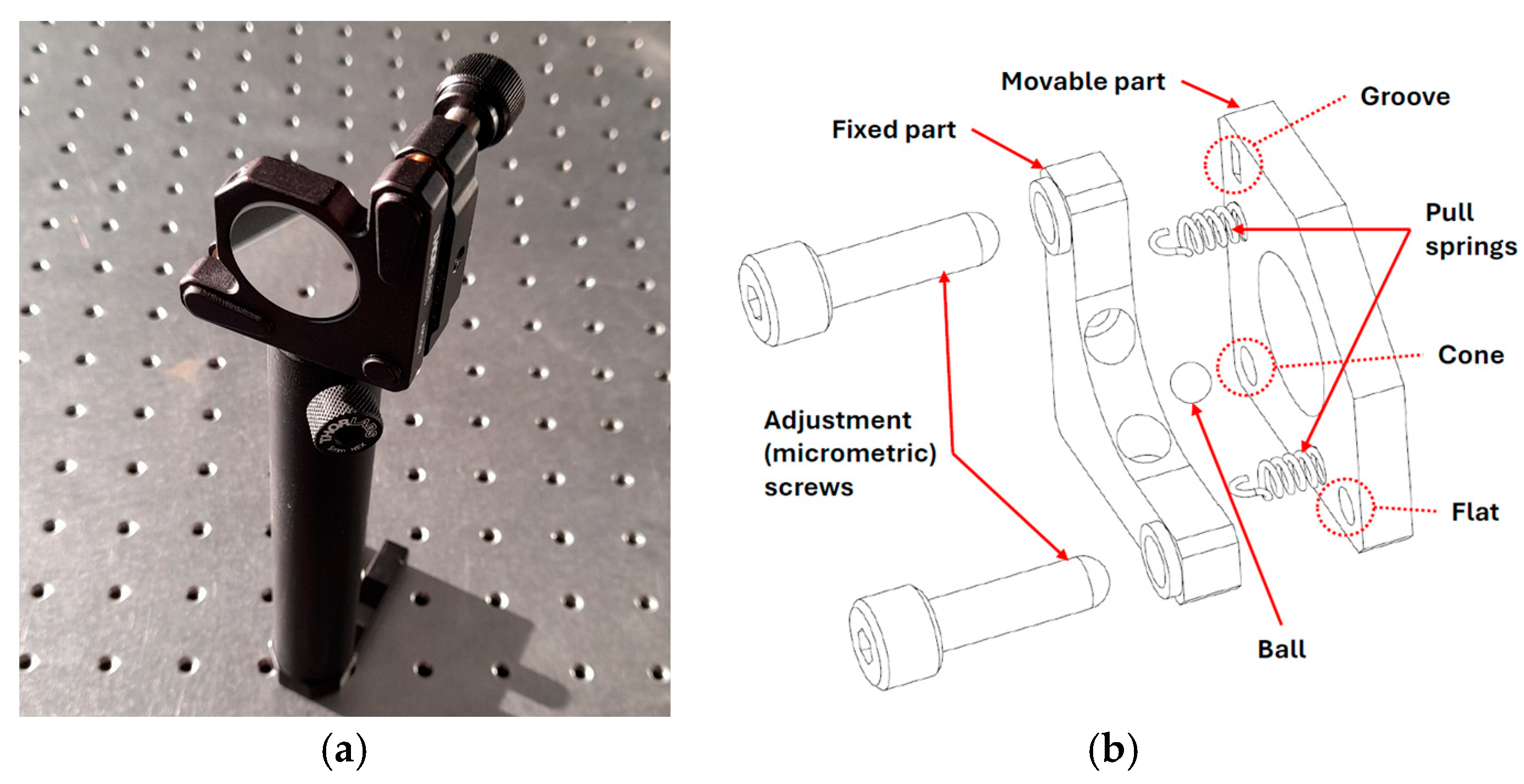
Optomechanical components, or simply “optomechanics”, represent a range of fixtures, holders, adapters, and platforms for precise positioning and adjustment of optical elements. They are generally fixed (like the fork–pedestal assembly) or movable assemblies, which allow for the precise adjustment of the optical element (Figure 2a). There must be elements for adjusting the mutual position (e.g., micrometric screws) of two parts and preloading elements that act against them elastically, see Figure 2b.
Standard off-the-shelf metal components bring certain standards, especially in terms of flexibility and strength, positioning accuracy, heat transfer, or use in a vacuum. Metal provides rigidity and long-term stability, and the thermal expansion can be addressed by special materials. Machining ensures high precision, and it is a mature technology.
The use of 3D-printed parts in optomechanical systems can be seen as problematic as the above-mentioned desirable properties cannot be achieved with components printed from plastics. The use of common “unreinforced” 3D printing is often limited to printing dimensional prototypes or parts that only serve a supportive role. However, there are often cases where commercially available optomechanics are not suitable for solving a given problem or where the use of metal parts may be inefficient. Typically, these are problems requiring shape-specific components, lightweight components, or components with a high time priority. In such cases, a composite 3D print can be the ideal candidate, provided that the resulting quality is not compromised by the different mechanical properties of the printed part.

3.2. Printing with Continuous Reinforcement

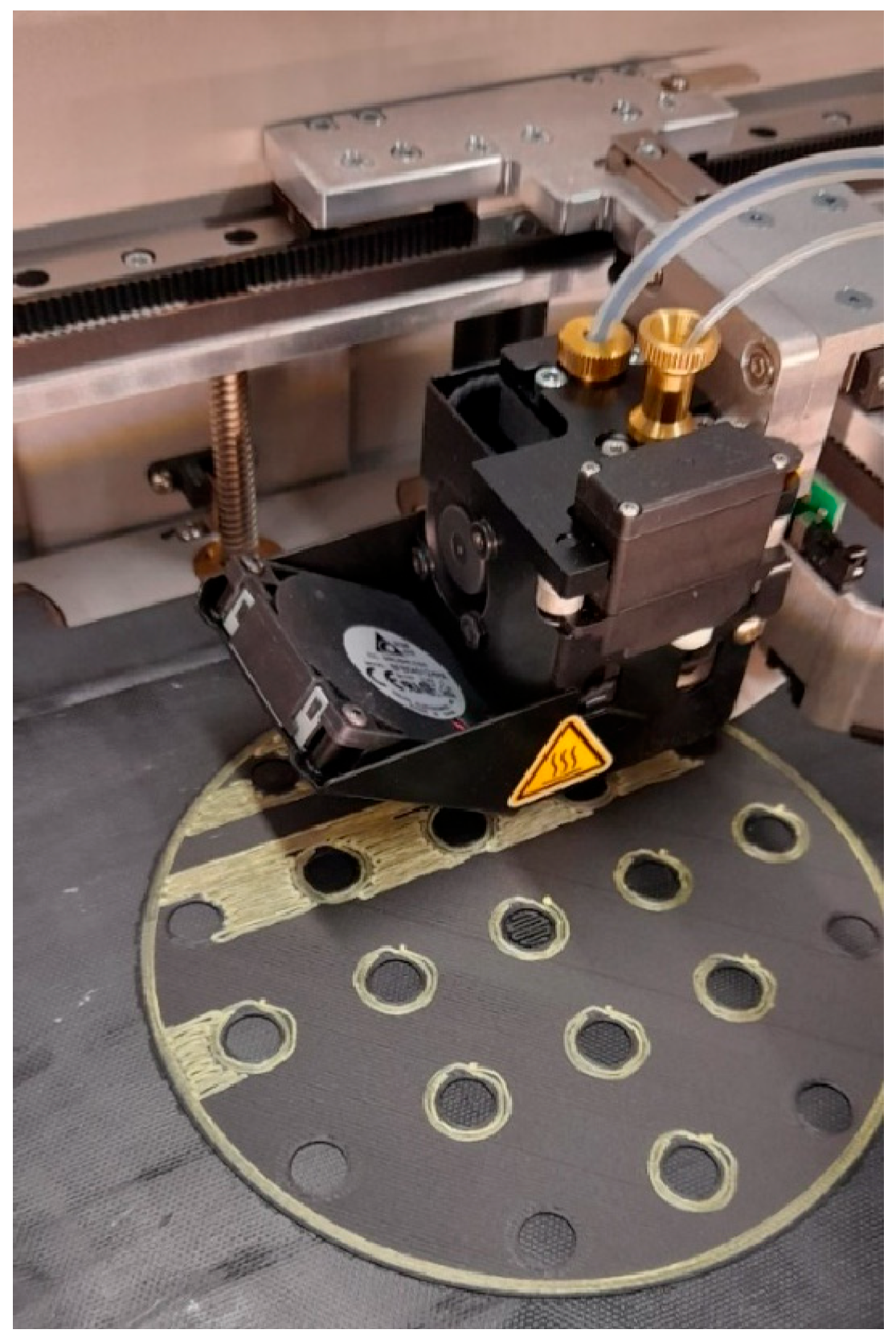
A higher level of composite 3D printing is the printing of parts reinforced with continuous fiber, known as continuous filament reinforcement/continuous filament fabrication/composite fiber coextrusion (CFR/CFF/CFC) technology. This involves embedding continuous loops of fiber (typically glass, carbon, basalt, or Kevlar) into the internal structure of the part—commonly into the perimeters or the entire surface of the layer (Figure 3). To enable this type of reinforcement, the 3D printer must be equipped with a pair of extruders—one for the base material and the other for embedding and cutting the continuous fiber. As the base material, materials with crushed fiber additives are usually used—e.g., nylon reinforced with carbon fibers [23] or polyetherketoneketone (PEKK) reinforced with carbon fibers [28].
Parts printed using CFR/CFF/CFC technology are characterized by low weight, shape variability, and mechanical properties that can be very close to metal parts. However, it is necessary to consider the differences in technology caused by the requirements for embedding continuous fiber—for example, the minimum wall thickness, which is approximately 2.9 mm for embedding fiber in one direction and 3.8 mm for embedding fiber in two directions [29]. It is also necessary to consider the discontinuity of the continuous fiber between individual layers, where one continuous loop of fiber can only belong to one layer of the base material. The reason is the manufacturing process, where it is necessary to press the continuous fiber into the layer of the base material, cut it, and print a new layer of the base material, into which another loop of fiber can then be pressed.

3.3. Practical Use of 3D Printing for Laser System’s Optomechanics

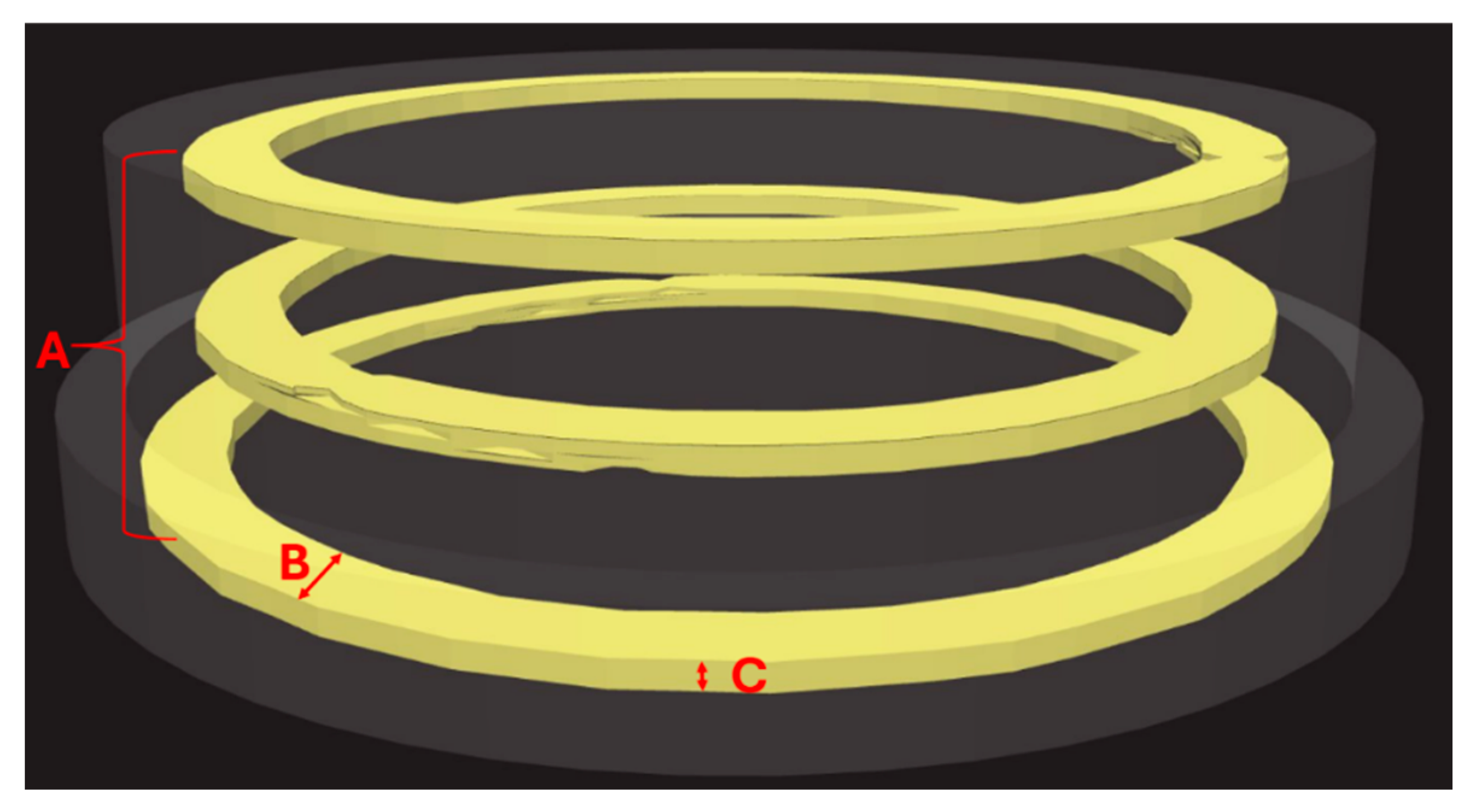
In our examples, the terms “number of reinforcement levels”, “number of layers”, and “number of loops” are used (Figure 4). The number of levels means how many times adjacent layers with reinforcement are present in the given print. The number of layers indicates how many of these adjacent layers are in one level. The number of loops refers to how many times the reinforcement fiber is concentrically embedded side by side during perimeter reinforcement (in the perimeter walls of the layer). In isotropic reinforcement (the entire surface of the layer), the number of loops is not considered.

3.3.1. Design of Lightweight and Rigid Parts

In many cases, it is desirable to replace relatively heavy metal elements of optomechanics with lighter variants. Two cases are described below.
Clamping blocks and adapters
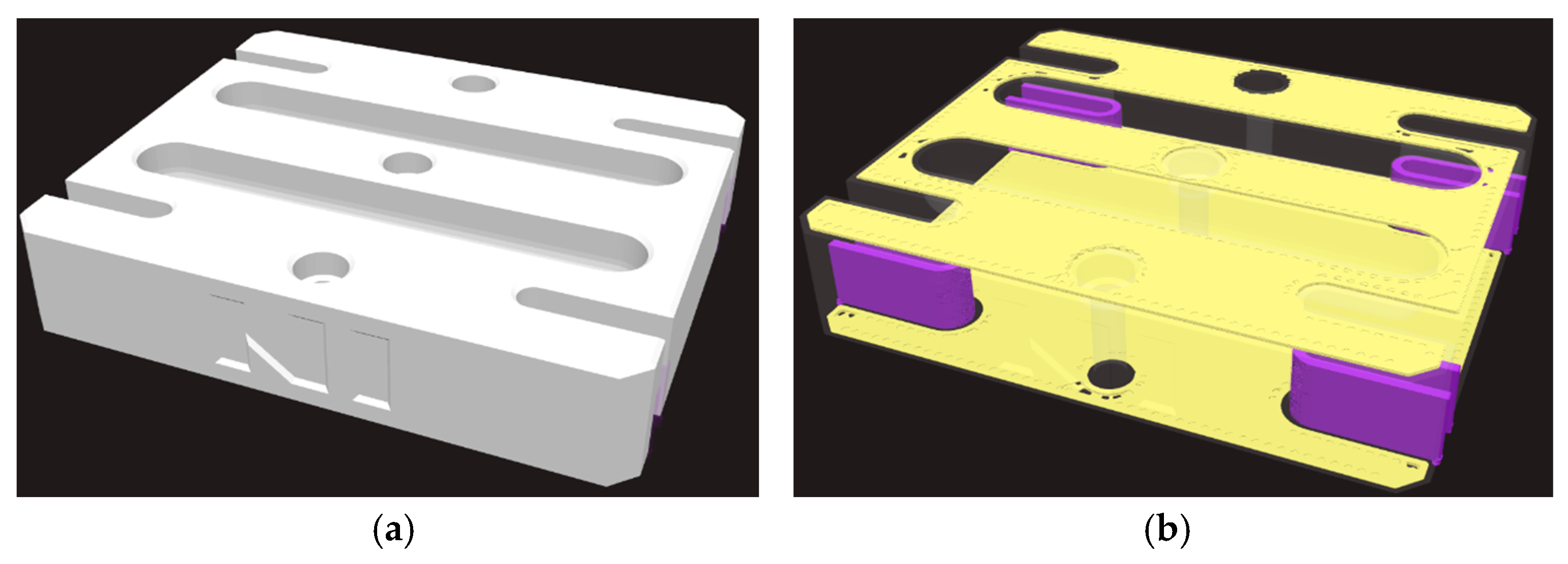
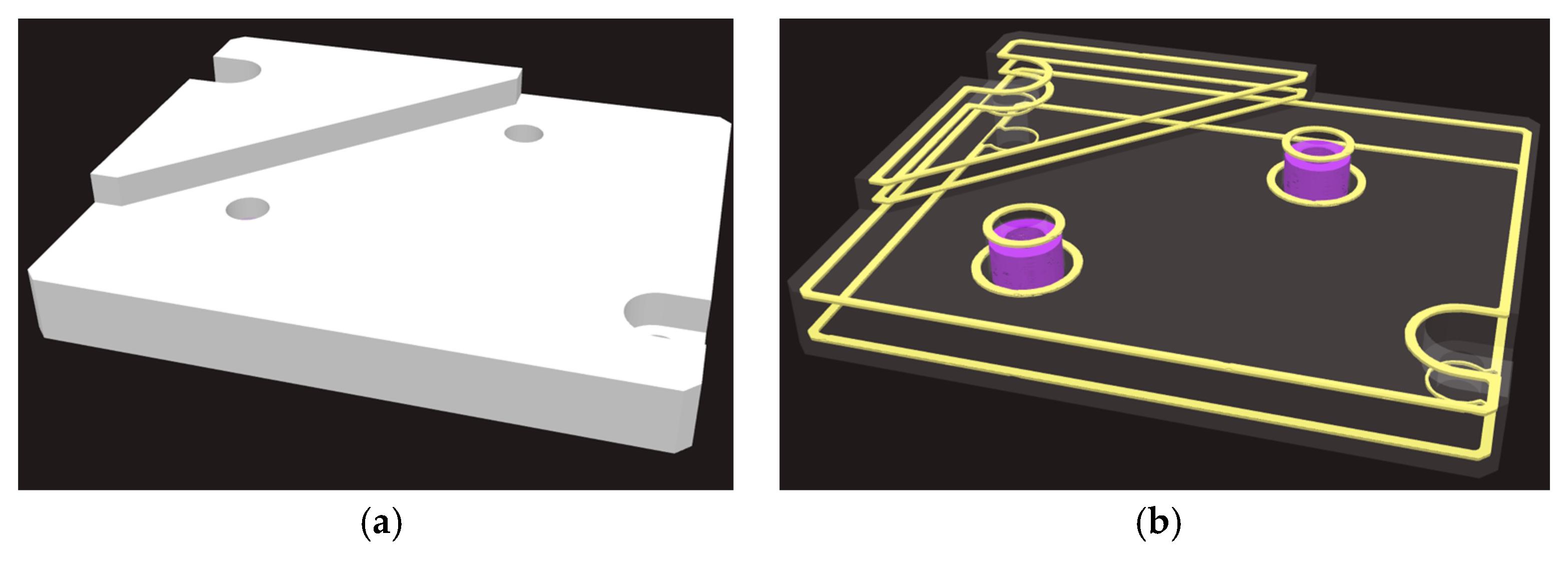
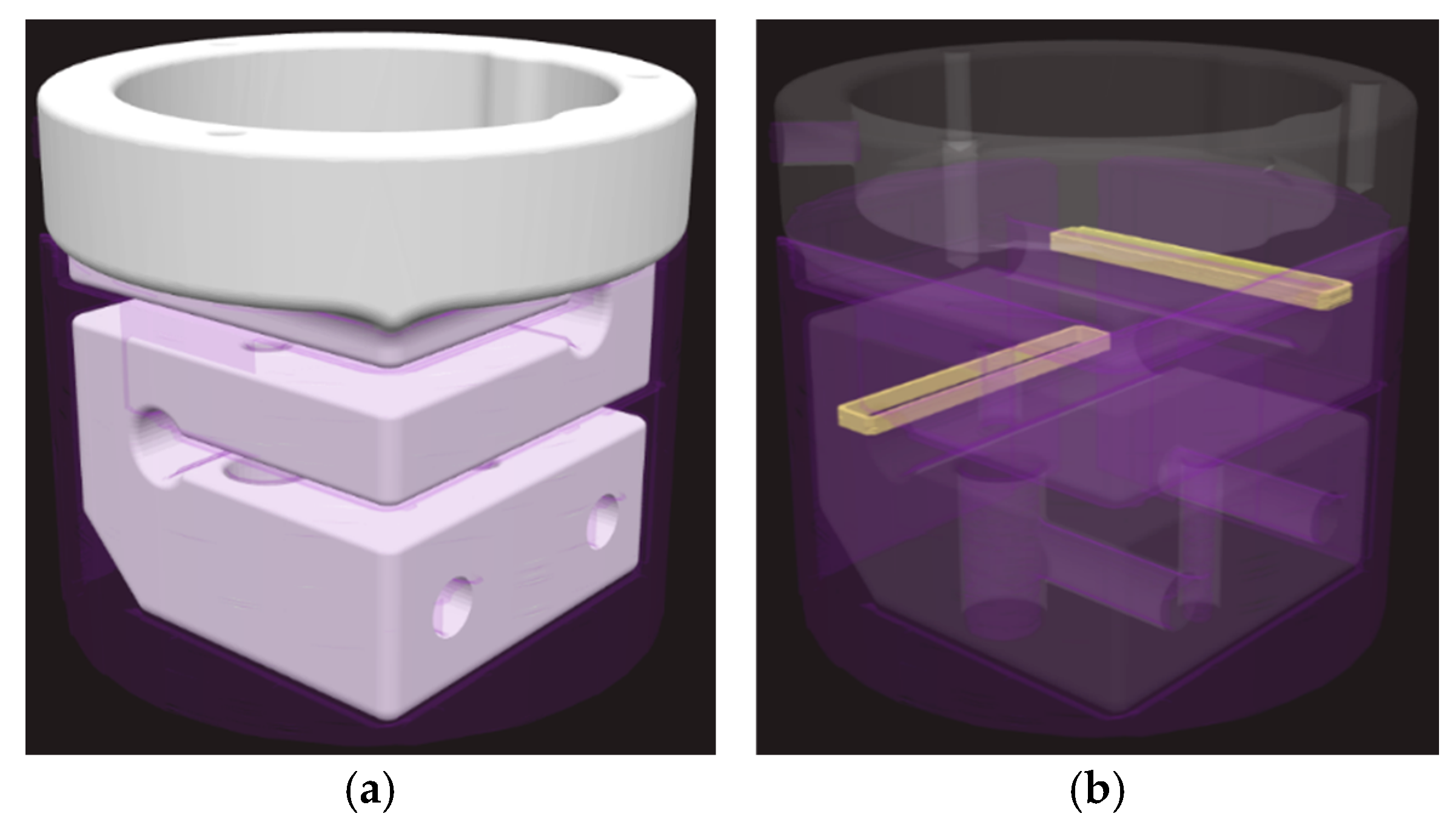
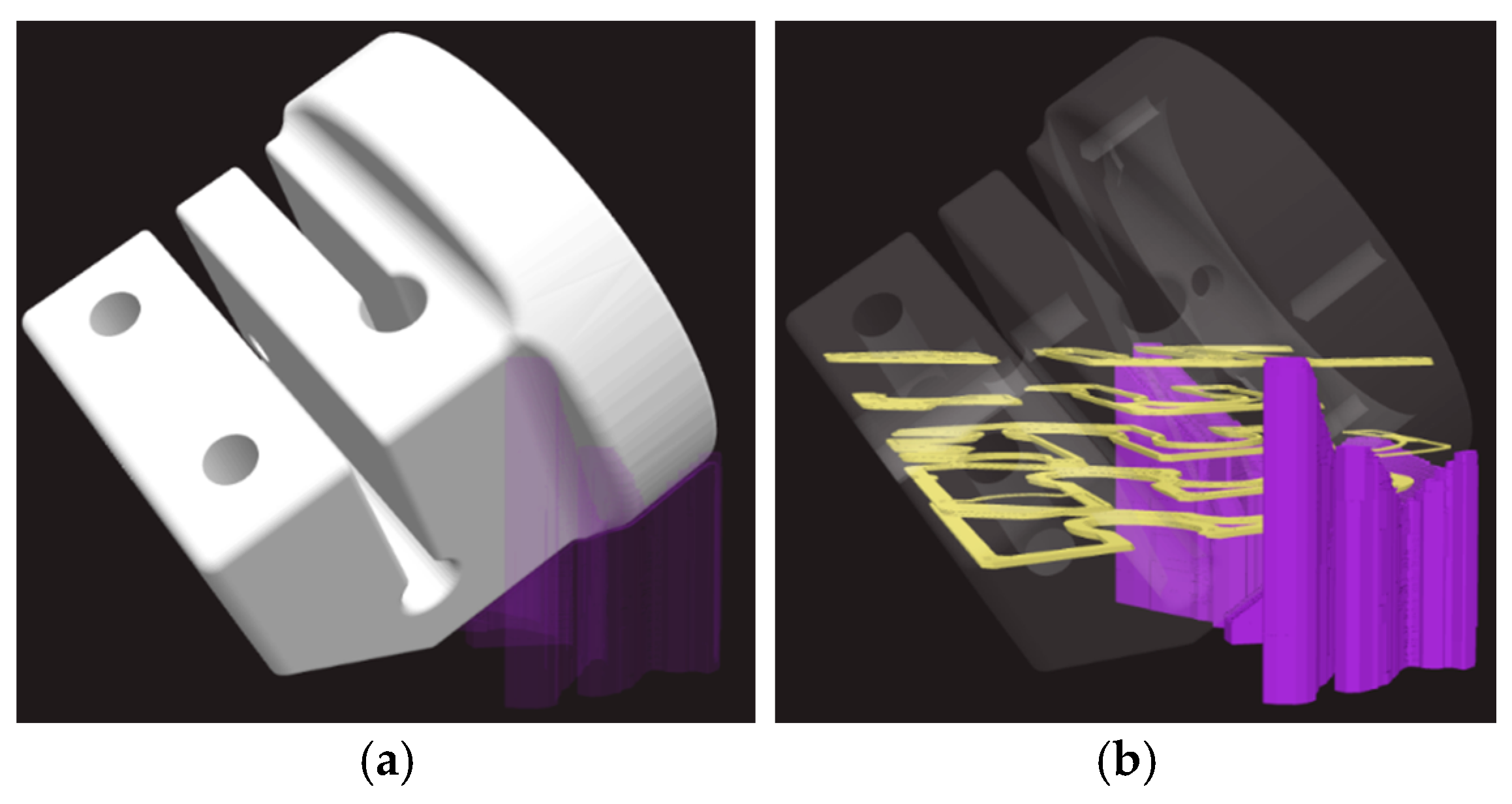
Typically, when optomechanics are carried by a motorized stage with limited load capacity, our goal is to minimize its load. We designed a linear stage attachment to the optical table using two clamping blocks and an adapter for attaching the mirror holder to this stage. Our goal was to create a part that securely holds the optical elements, thus preventing any unwanted change of the laser beam path, is time-efficient in terms of production, and is easily iterable if necessary. Therefore, we chose 3D printing with nylon reinforced with carbon fibers + continuous glass fiber. The clamping blocks were reinforced in two levels with four layers isotropically, where we expected the highest static load (Figure 5). The adapter was reinforced in four levels with four layers and two concentric loops perimetrically (Figure 6). This arrangement had a verification character, aiming to determine whether only perimeter reinforcement would be sufficient or isotropic reinforcement was needed.
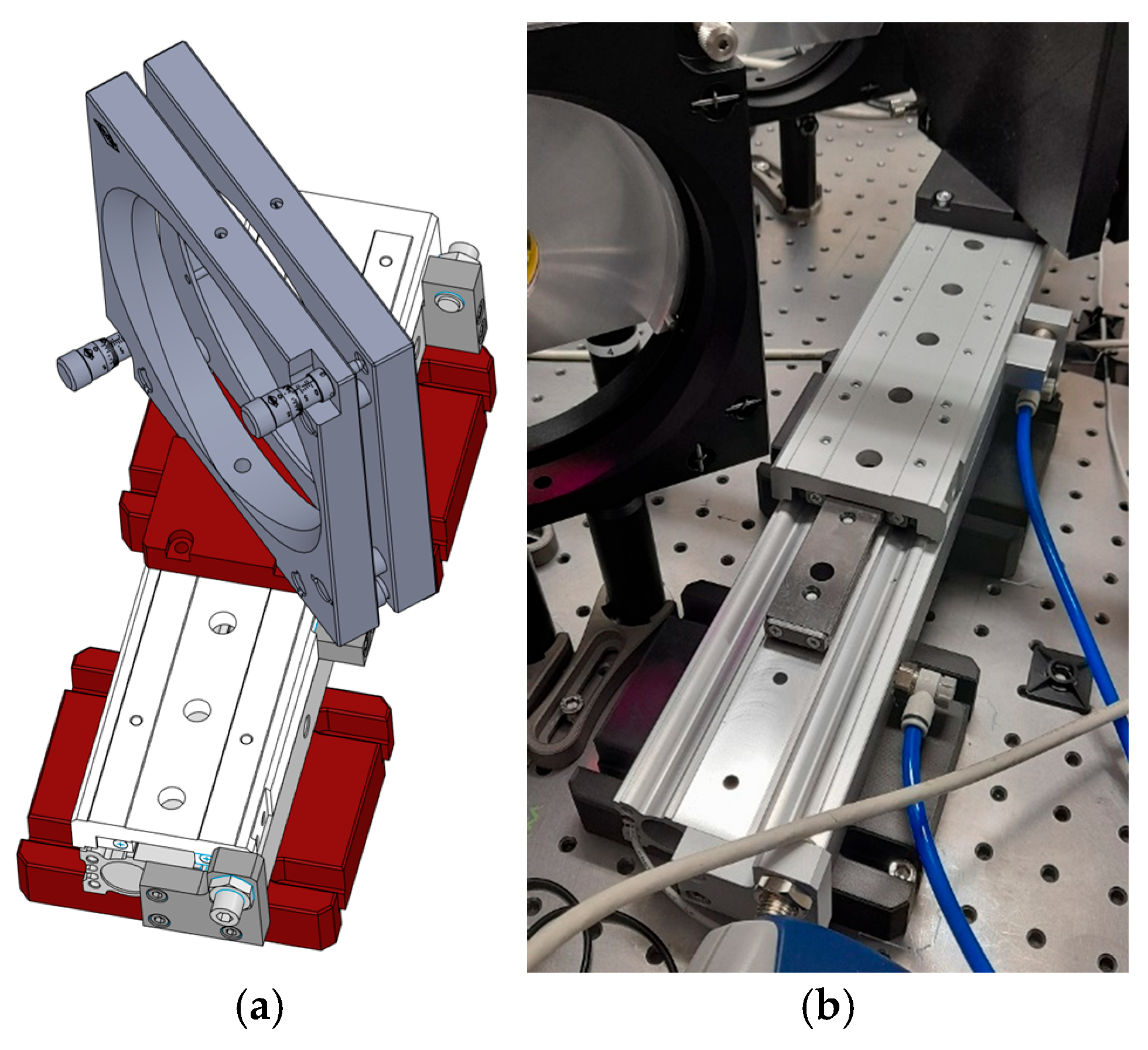
Tests in real operation proved that both parts are sufficient for the required application (Figure 7) and do not exhibit any undesirable deformation or instability. When compared to parts machined from Al alloy (Table 3), these 3D-printed parts present a significantly lighter alternative.
Periscope mount
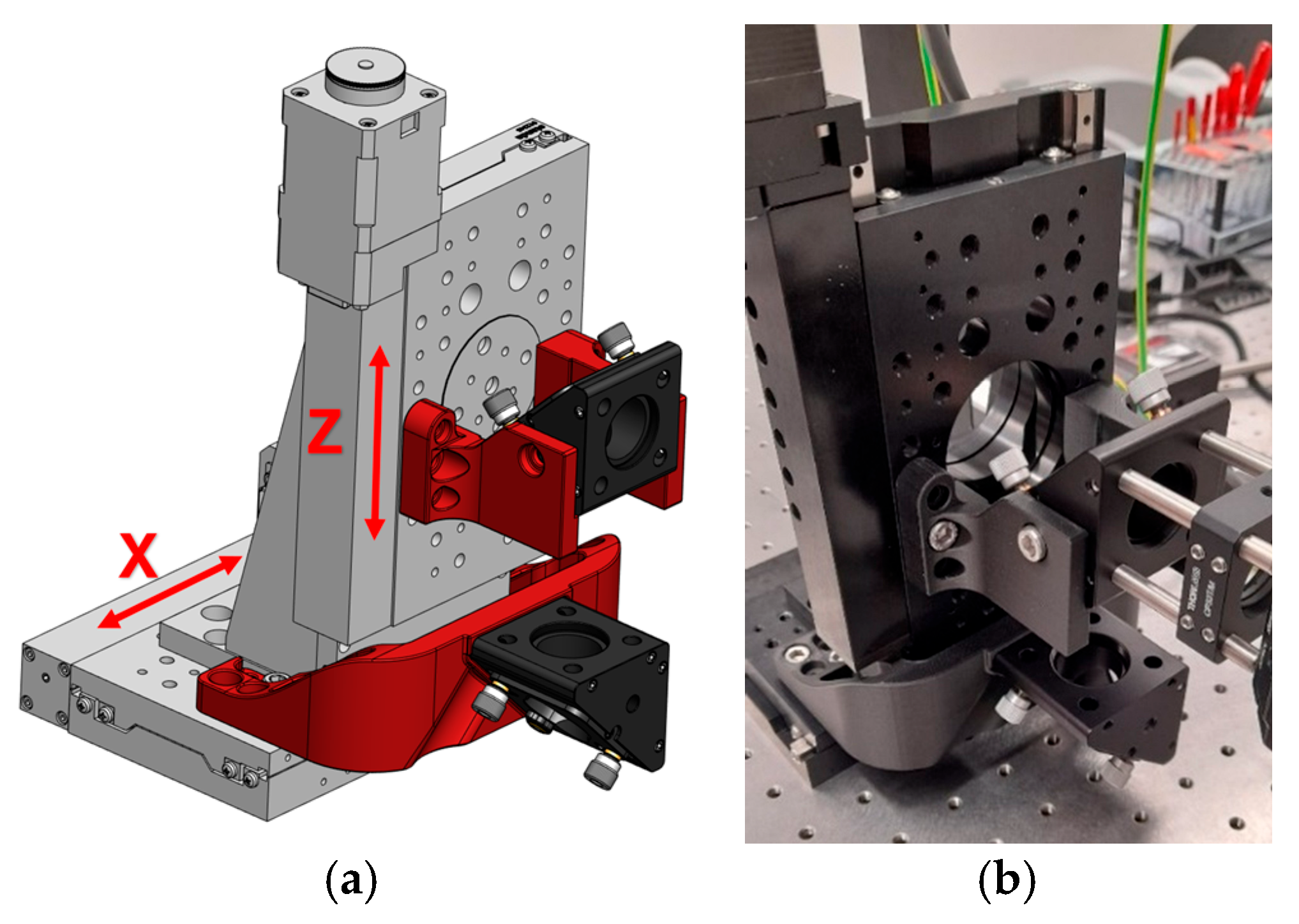
We designed a solution for a periscope with variable mirror distances mounted on commercially available holders. The entire periscope assembly is based on a pair of motorized stages in an X–Z configuration, where the X-axis moves both 1” mirrors of the periscope horizontally and the Z-axis changes their mutual distance (Figure 8). The task was to attach commercial optomechanical elements to motorized stages using adapters that are lightweight, rigid, and quickly available.
The components were again produced using continuous reinforcement but with a minimalist approach compared to the previous solution. The holder between the X stage and the bottom mirror was reinforced in two levels, each with two layers and two concentric loops in the perimeter. The holders of the top mirror on the Z stage were reinforced in two levels with a similar reinforcement composition.
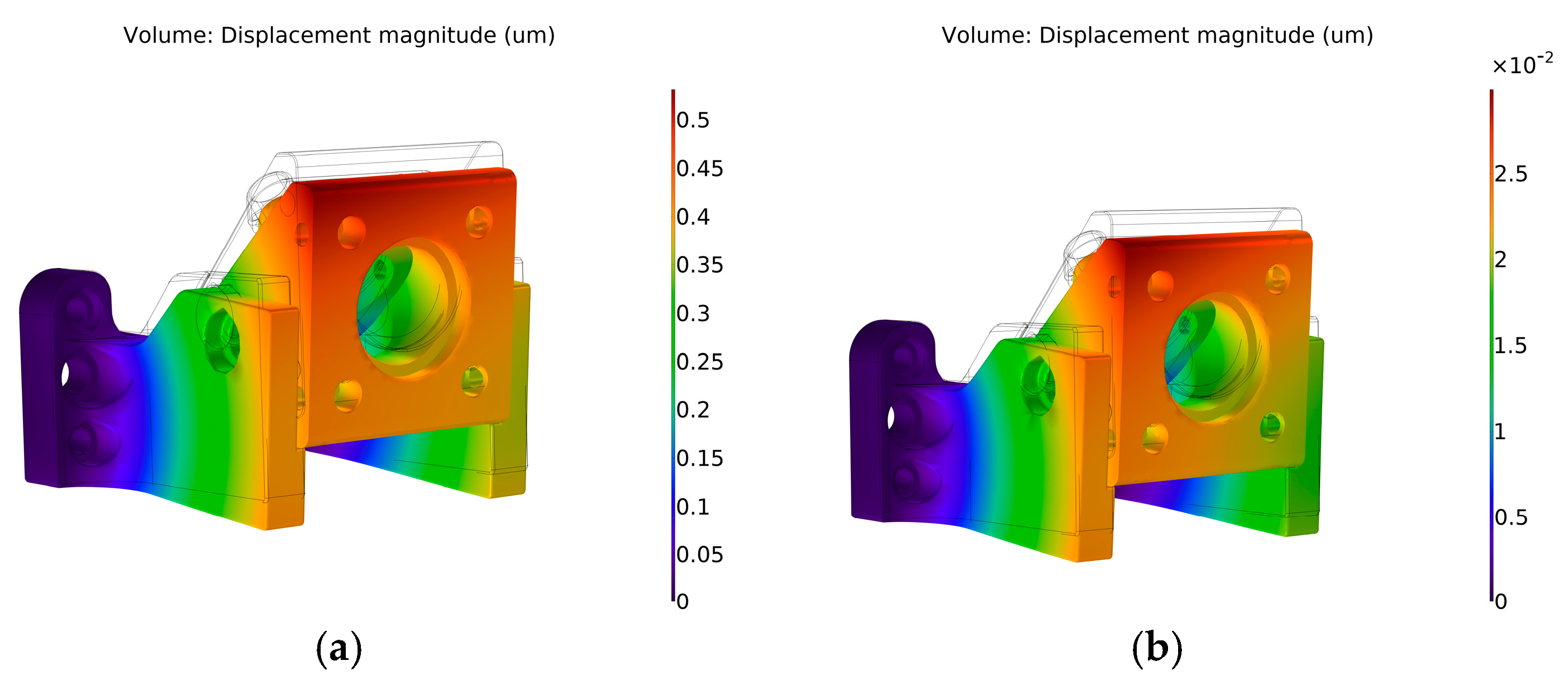
For comparison of the behavior of 3D-printed parts made with different printing process settings and parts made from aluminum alloy, we performed a simplified static load analysis of the brackets (only for the periscope itself without additional optomechanical mounts, which can vary extensively). The maximum deformation of the periscope resulting from its weight was evaluated for different Young’s moduli corresponding to various printing process settings. Depending on the settings, the maximum periscope displacement ranged from 0.532 µm to 2.931 µm. The observed trend is consistent with our expectations. Thanks to the simulation of the real geometry, we were able to estimate the displacement for a given design and compare the best of these (minimum displacement) with a holder simulated using aluminum alloy, which showed 0.030 µm maximum displacement. The simulations indicated that, while the aluminum variant exhibited lower deformation, it also showed stronger asymmetry effects (Figure 9).
Asymmetry was assessed by comparing the vector components of displacement at the corner points of the optomechanical element mounted on the holder. The difference in deformation between the right and the left side was then expressed as a percentage relative to the right-side point, which exhibited the smaller deformation. For the aluminum holder, this resulted in approximately 16% in the worst case (deformation along the Y-axis), whereas the simulation with the 3D-printed holder showed about 11% (deformation along the Y-axis).
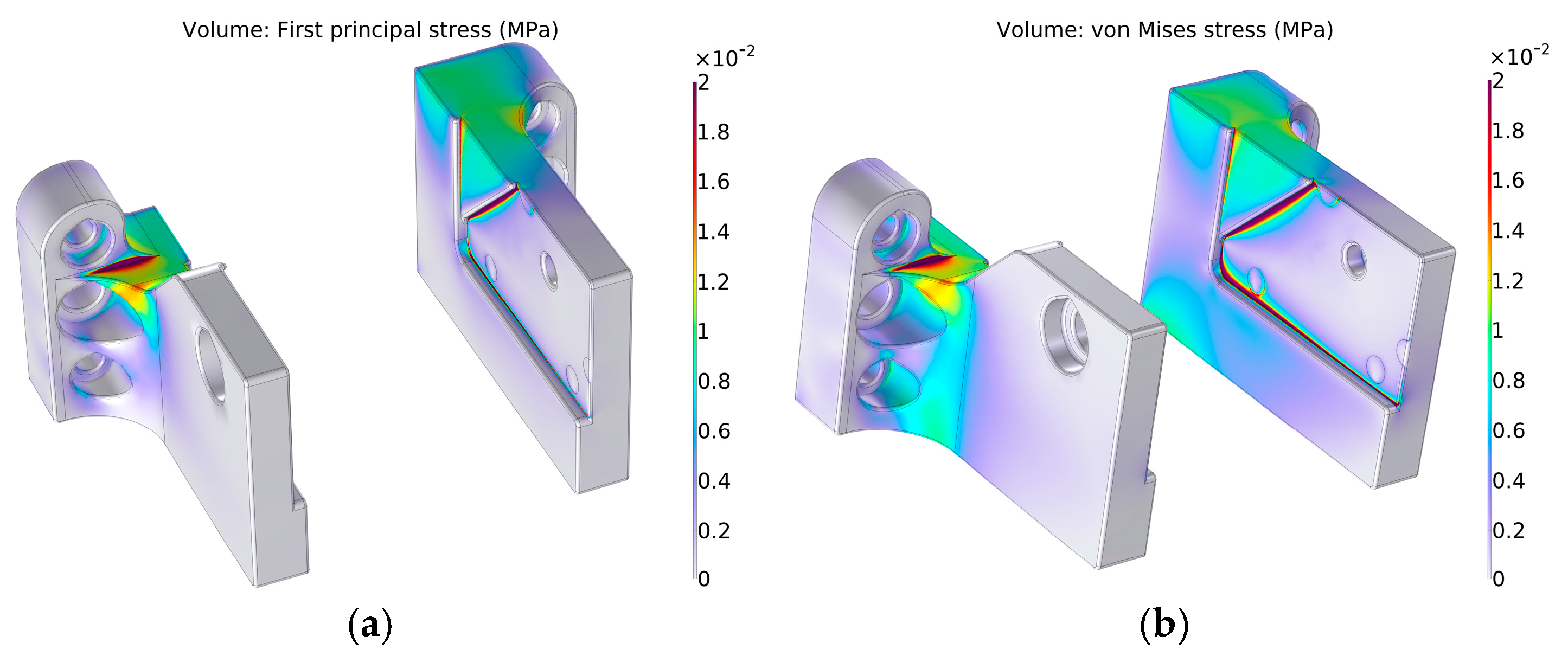
Based on the analysis, the optimal printer setting is given by a triangular infill pattern with 37% infill density and eight wall layers. For this setting, stresses were evaluated across the entire volume of the mounts. Two evaluation approaches were employed—von Mises and first principal stress analyses. (These two methods were chosen because the material behavior is not fully characterized and the chosen methods allow for the evaluation of multiaxial stress.) The von Mises stress reached approximately 0.265 MPa, while the first principal stress reached 0.124 MPa. The ratio of these stresses with the value of 2.13 indicates a stronger multiaxial stress state, which in turn corresponds to the minor asymmetry observed in the printed part. The distributions of von Mises and first principal stresses in printed components are shown in Figure 10. For clearer visualization, the scale in both cases was adjusted to the range of 0–0.2 MPa. An analogous stress analysis was performed for the aluminum component, where ratio of von Mises stress against first principal stress is about 0.8, indicating a predominantly uniaxial stress state. The visualization of stress distribution is presented for 3D-printed parts only, since the distribution of both stresses is similar, with a corresponding scale for aluminum parts.

3.3.2. Design of Elements for Shielding Stray Light

One of the common tasks where 3D prints are generally used is to design various housings and boxes for electronics and electronic devices. This can be problematic when used in laser systems. One reason is the destructive direct impact of the laser beam on the print, which should not occur under any circumstances with proper laser operation. The second reason may be the interference caused by stray light surrounding the homogeneous laser beam, which affects nearby electronic components.
We were dealing with the interference with optical position sensors in a beam switch. This switch was originally placed in a housing 3D printed from standard PLA. After being included in the laser setup, its electronics consistently exhibited an error state. The reason was the stray light that had penetrated the switch not only through gaps in the housing but also through the material itself. For the wavelength of our laser, which is 1030 nm, the PLA material is almost perfectly transparent [30].
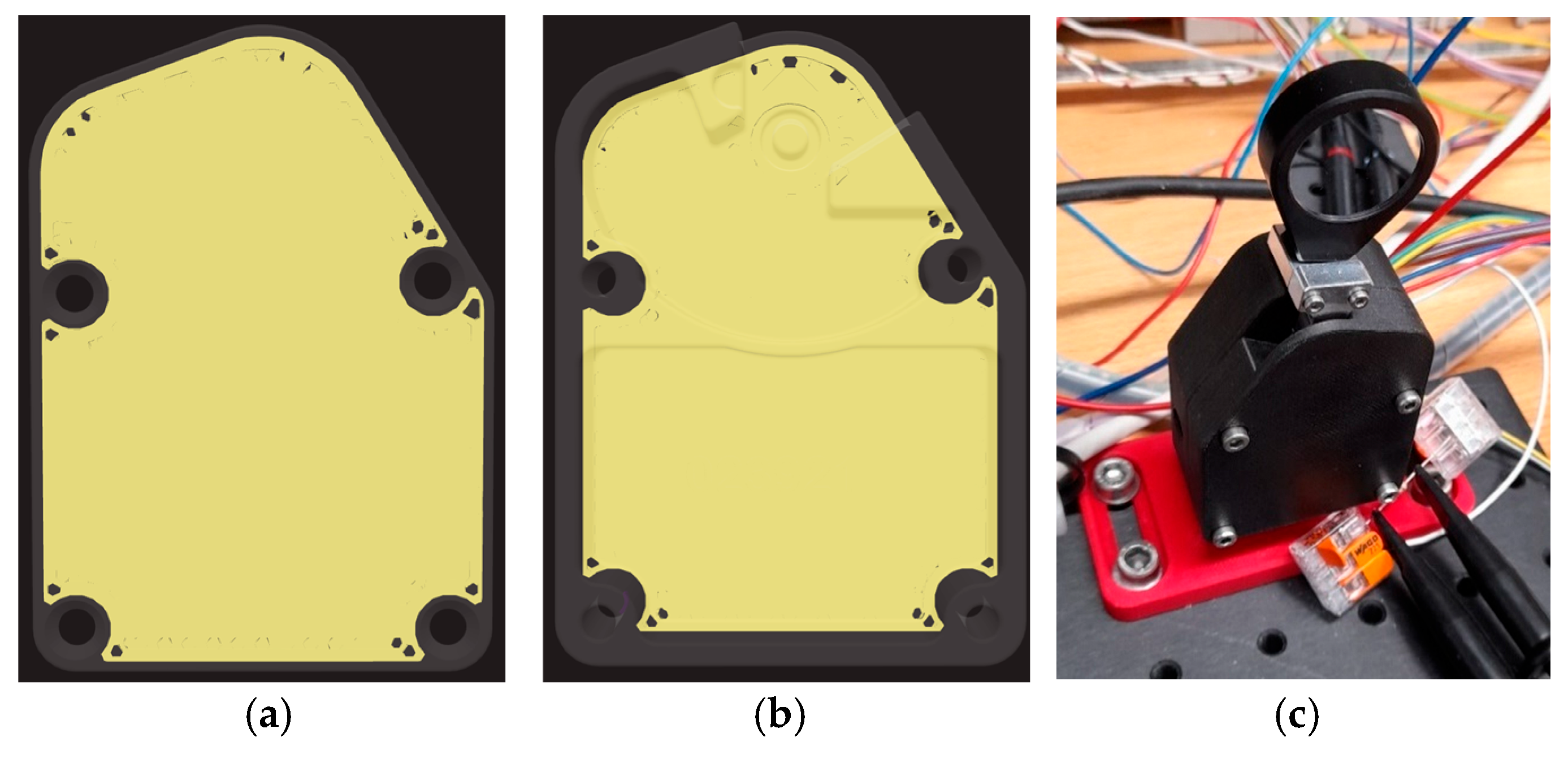
One of the design modifications, in addition to minimizing the gaps between individual elements, was to replace the PLA parts with parts made of carbon-fiber-reinforced nylon in combination with continuous glass fiber. In this case, the purpose of continuous reinforcement was not to achieve better mechanical properties of the parts but to improve their resistance to stray light. By using glass fiber in several isotropic layers, an effective barrier was created, successfully preventing stray light from reaching the switch electronics (Figure 11).

3.3.3. Design of Flexible Elements

As described in Section 3.1, optomechanical components require the presence of flexible elements between their static and movable parts. This creates mutual preloading, and it is then possible to change their mutual position using (usually micrometric) screws. These flexible elements can be either separate mechanical parts or integral parts of the entire component.
Integral flexible elements were used in the design of a holder for tilting half-inch optics. The holder was made from a combination of carbon-fiber-reinforced nylon and continuous glass or Kevlar fiber. The actuation of the optics is carried out using a pair of screws (Figure 12). The range of actuation is ±1° from an optical axis with a nominal position of −1° for both directions.
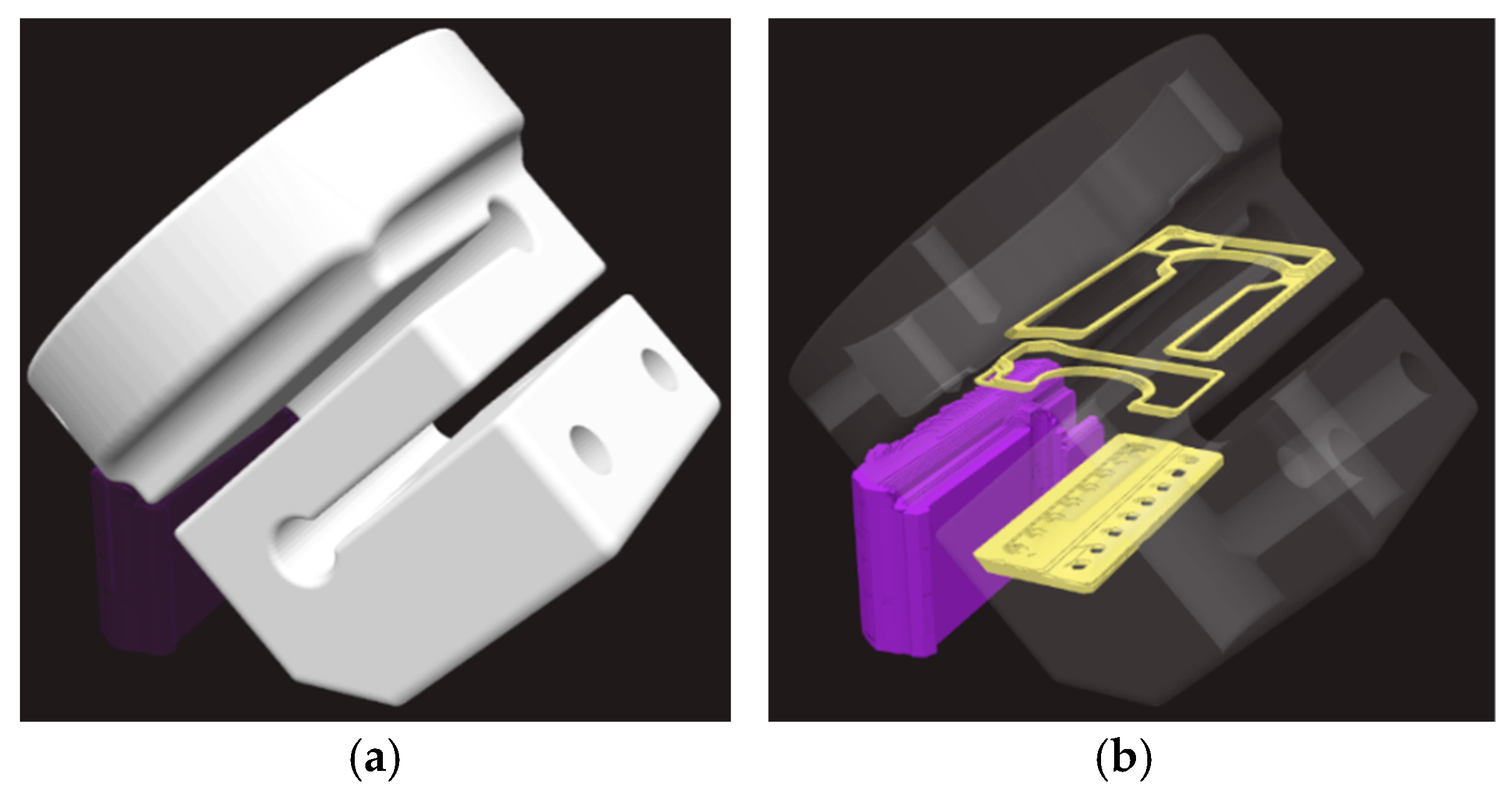
As the holder includes narrow gaps that allow for its movement, the production of the part was problematic from a printing perspective: to ensure both flexible elements are oriented the same way relative to the print layers, it is necessary to create print supports in the gaps, which are relatively difficult to remove in the case of composite materials and such narrow places. At the same time, it would be advisable to reinforce stressed areas parallel to the moving forces—in this orientation, however, reinforcement can only be performed in planes perpendicular to the moving forces—i.e., these would then tend to delaminate the layers (Figure 13).
In the second iteration, the part was printed rotated by 45° so that it was not necessary to use supports in the narrow gaps. At the same time, it was possible to better reinforce individual areas. Still, due to the different orientations of the flexible parts, it was not possible to reinforce them evenly (Figure 14). The part produced in this way already met the requirements for mobility despite the different preloading of the two flexible elements.
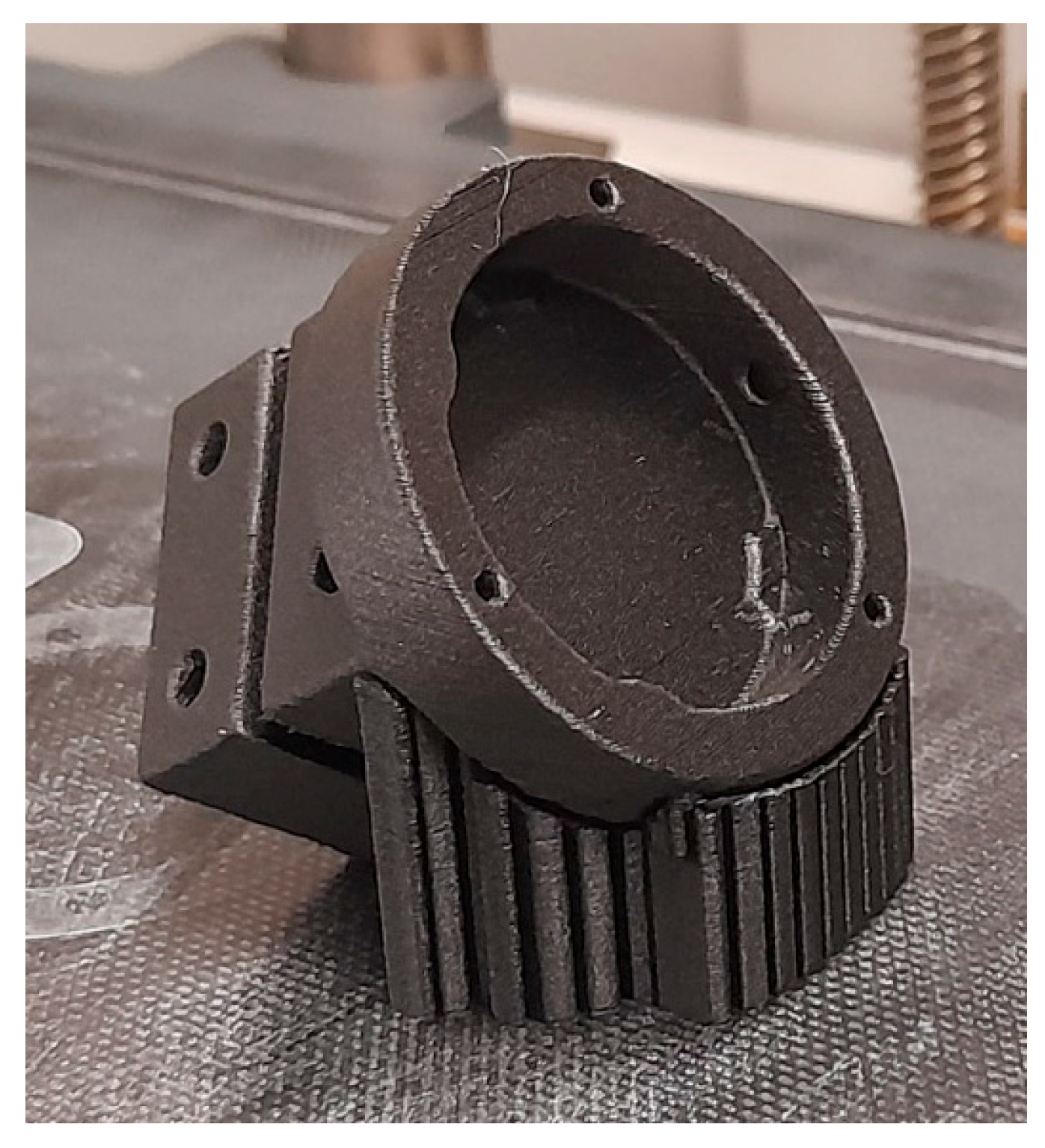
In the third iteration, the part was placed on a beveled edge, achieving the same orientation of the flexible elements from a printing perspective, and it was therefore possible to equalize their reinforcement performed in five levels with a layer configuration of 4–3–4–3–4 and two perimeter loops. The result is essentially the same preloading of both flexible elements (Figure 15 and Figure 16).
The final iteration presents a solution where the main unwanted effects are at least partially eliminated. For example, when compared to the first iteration, the possible small difference in preloading of both flexible elements is a sensible trade-off for improved printability and orientation of reinforced layers (Table 4).

3.3.4. Design of Parts for Compact Replacement of Common Optomechanics

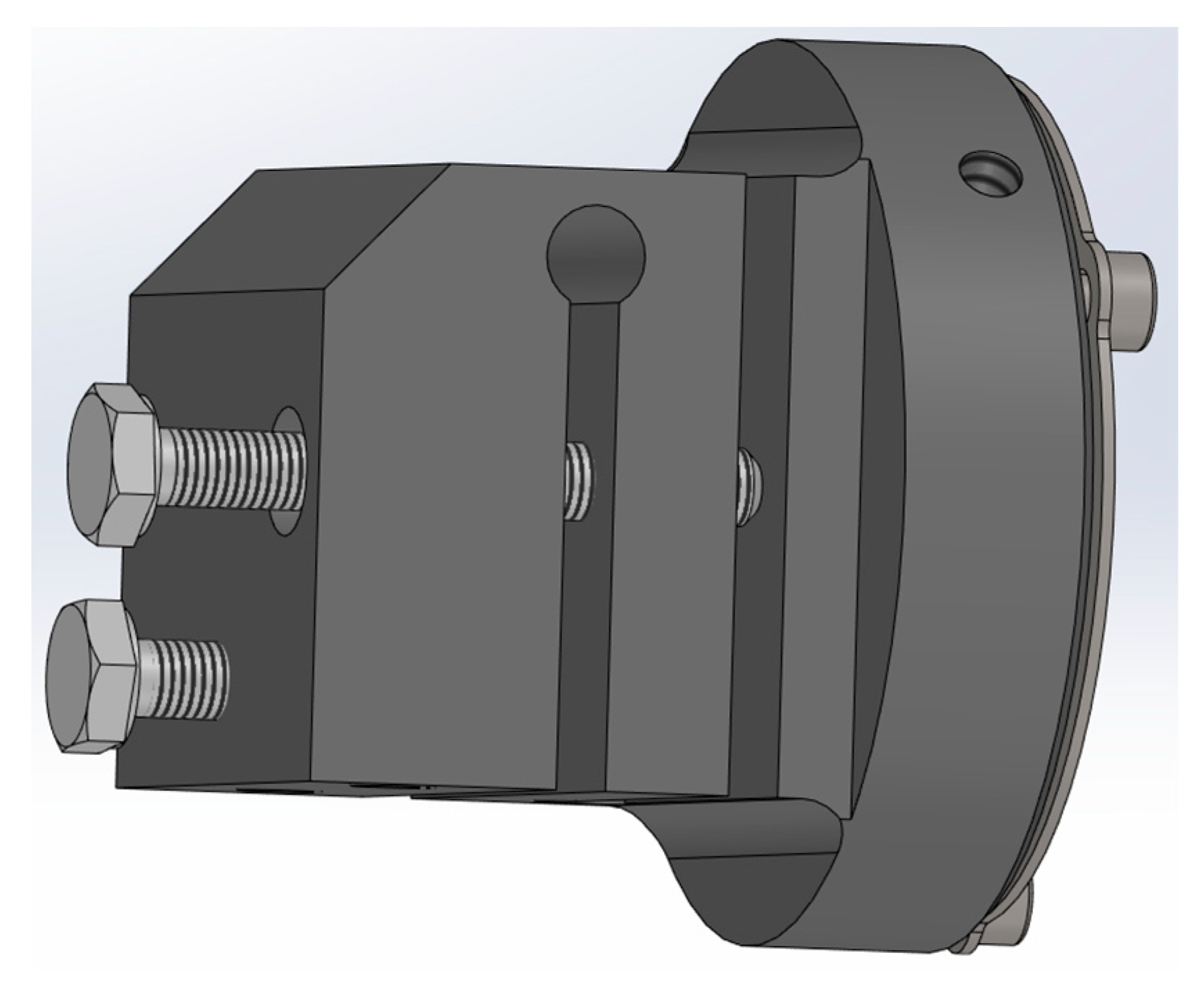
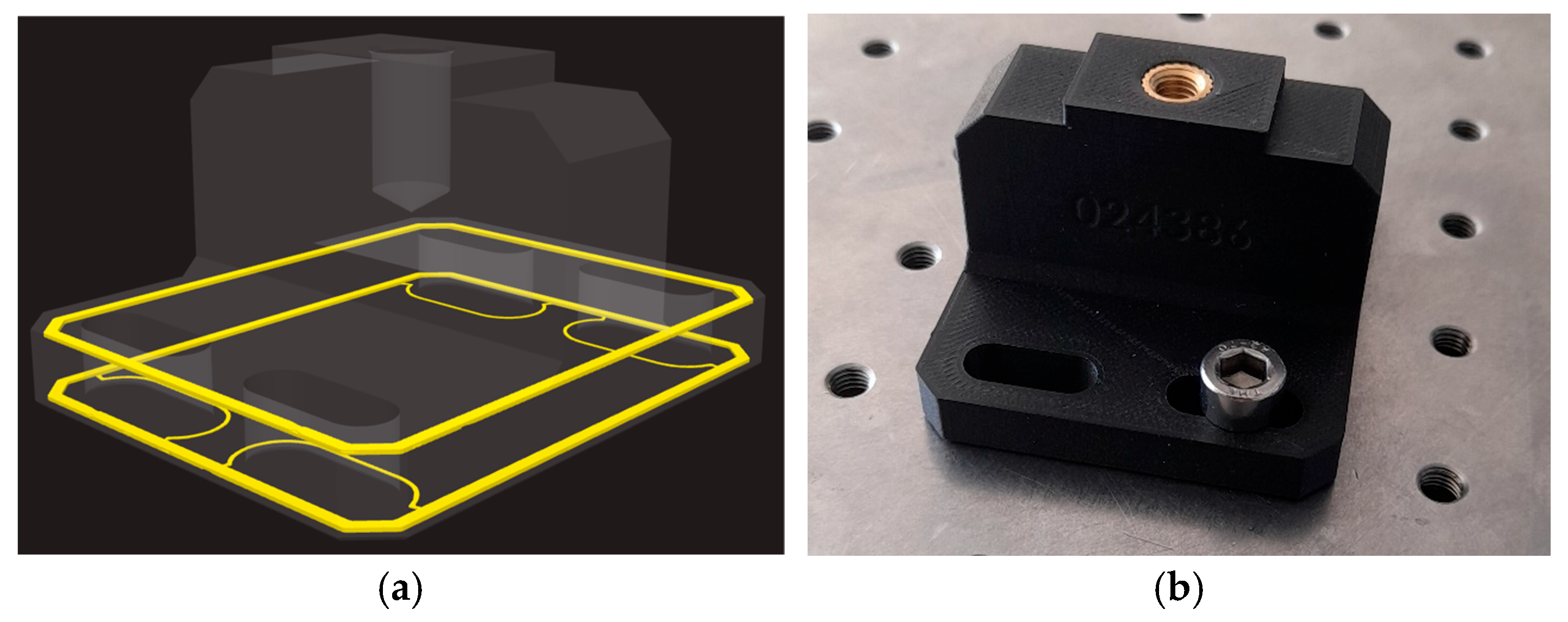
As already mentioned, one of the most common optomechanical subassemblies is the fork–pedestal assembly used for mounting optomechanics on the plane of an optical table or breadboard. Its disadvantage, however, is the low repeatability of assembly (which, on the other hand, ensures the high variability of its use). When a precisely defined placement of the optical element within the entire setup is required, a custom-made element that replaces this entire subassembly can be the solution. In our case, it was a carrier for mirror holders. With an interface that ensured the precise angular alignment of the carrier with the grid of threaded holes on the optical table and with a defined placement of the holder on the carrier, we can ensure a relatively precisely defined and easily repeatable placement of the mirror within the entire optical setup. This carrier is also more compact than the fork–pedestal assembly and is much more user-friendly in terms of rough adjustment. The material used is copolyester with crushed carbon fiber additives in the first iteration and carbon-fiber-reinforced nylon with perimeter reinforcement of the carrier base with continuous Kevlar fiber (two levels with four layers and two loops) in the second iteration. The carrier is equipped with a press-fit threaded insert for attaching the mirror holder (Figure 17).
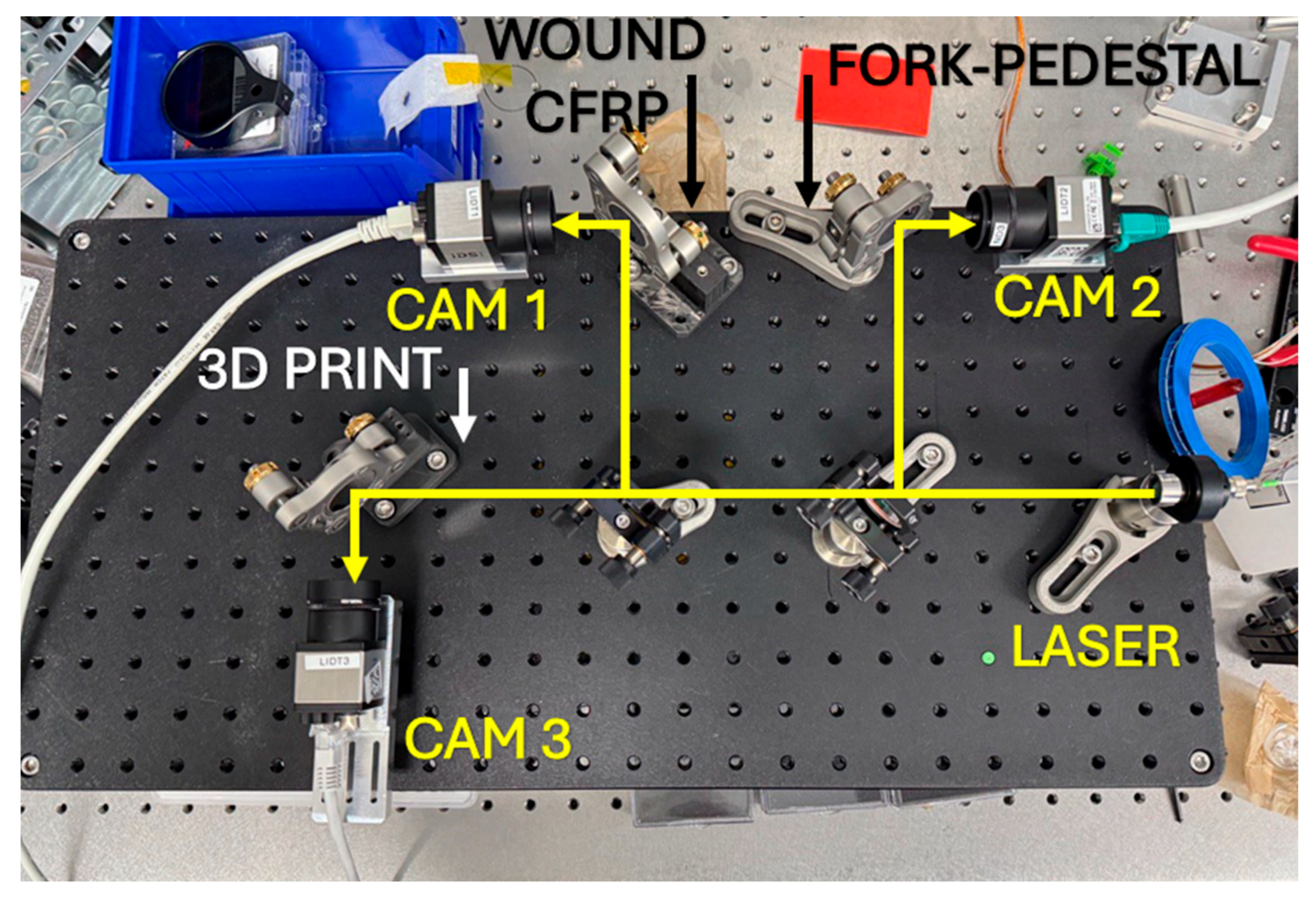
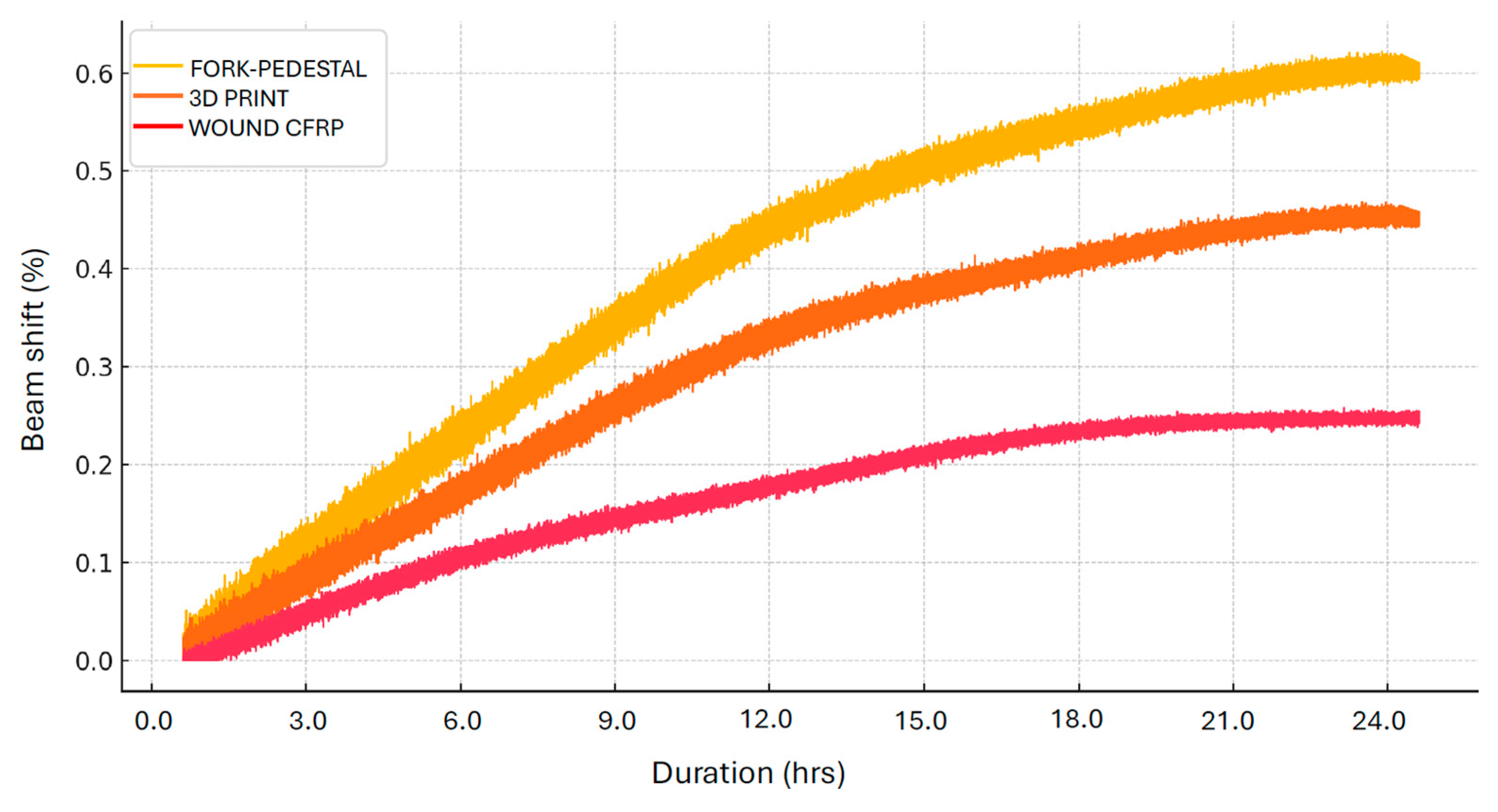
We tested the first iteration of the carrier in laboratory conditions, where it was integrated into the optical setup along with a structurally similar variant made by bonding wound CFRP semi-finished products (made from cut square profile) and a standard fork–pedestal assembly. The principle of the experiment consisted of gradually splitting the laser beam (2.9 mm diameter) using semi-transparent mirrors into three beams, each of which was directed at a kinematic holder with a mirror attached to the optical table using the carrier. The beam was reflected from the mirrors into cameras, where its percentage shift (100% equals the beam diameter) over time due to the influence of the surrounding environment was recorded. To eliminate inaccuracies caused by unequal beam path lengths, the experiment was conducted three times with different positions of the individual carriers (Figure 18).
By combining the results of the individual experiments, it was proven that the most stable is the carrier made of wound composite (which, however, is expensive and technologically demanding to produce), and the least stable is the commercially available solution. The solution made of printed composite is in terms of stability in the middle of the range, which confirms the basic assumption that 3D printing can achieve comparable or even better parameters compared to components made from metals by conventional methods (Figure 19).
For comparison: the cost of manufacturing one 3D-printed carrier is USD 7.33; the cost of manufacturing one wound CFRP carrier is approximately USD 120–190. The cost of one commercially available solution of equivalent dimensions is approximately USD 40–70, depending on the supplier (Table 5) [31,32,33,34,35,36].

4. Discussion

As previously noted, composite 3D printing can bridge the gap between standard 3D-printed plastic and conventionally manufactured metal components. However, utilizing such technology not only brings benefits but also has certain limitations.

4.1. Benefits of Composite 3D Printing

As we verified by extensive use, composite 3D-printed parts are significantly more rigid and robust compared to standard FFF 3D-printed parts (mainly PLA, ABS, or nylon), while the technology itself is as similarly straightforward and intuitive as FFF 3D printing. The overall flexural strength and heat resistance of the plain base composite material is superior to those of standard FFF materials—in accordance with [37]. These can be further enhanced by the addition of continuous fiber. In the laser environment a crucial difference lies in the resistance to the penetration of stray light: while the PLA is essentially transparent, the composite presents an efficient shielding. When compared to metal parts (primarily those machined from Al alloys), composite 3D prints are generally cheaper, faster to produce, more flexible and—when properly designed and the technology correctly applied—reach very similar mechanical properties in terms of strength and stiffness.
During regular use, no significant differences in mechanical properties were observed between glass-fiber-reinforced and Kevlar-reinforced prints, as the mechanical load was low. However, when higher mechanical strength is required, the performance ranking of continuous fibers (from lowest to highest) is: fiberglass, Kevlar, carbon [37].

4.2. Limitations of Composite 3D Printing

The most significant limitation of composite 3D printing compared to standard plastic printing is its cost—not only the acquisition cost of the technology itself but also the price of the printing materials (for comparison: Prusament PETG Carbon Fiber Black 1 kg—EUR 59.99; Prusament PETG Jet Black 1 kg—EUR 32.99). Refs. [22,38] Compared to metal materials, the major drawback of composite 3D printing lies in its low surface hardness, wear resistance, and lower resistance to high temperatures (the heat deflection temperature of Onyx material is 145 °C). In cases where these properties are crucial [23], 3D printing of plastics is not generally very suitable due to technological and material limitations.

5. Conclusions

Composite materials and 3D printing technologies are increasingly used in a wide range of technical and scientific fields today. The development of components for optical (and laser) systems is no exception, and it should not surprise us that these technologies and materials have an increasingly valid place in the design of optomechanical elements and subsystems.
Although 3D-printed composite optomechanical components are structurally, manufacturably, and parametrically (e.g., in terms of mechanical properties) different from their off-the-shelf counterparts manufactured by conventional methods from conventional materials, it is very short-sighted to reject them due to their different properties. Indeed, as we have demonstrated in our designs, with the proper construction, optimization, and application of manufacturing technology, these components represent a very welcome and desirable addition to purchased optomechanics. Thanks to the combination of 3D printing and composite materials, we are able to design and manufacture elements and assemblies in a relatively short time that are significantly lighter than their commonly available equivalents, without significantly reducing their rigidity. At the same time, we can affect rigidity (or flexibility) locally within one part by suitable reinforcement composition with continuous fiber. The use of composite parts has also proven invaluable in the production of 3D-printed parts resistant to the penetration of stray laser light compared to common 3D printing materials.
Three-dimensional printing of composite materials brings new demands—not only in terms of construction and its manufacturability (compared to conventional methods) but also, for example, production costs and their limitations (compared to 3D printing from common materials). However, it represents an effective method for creating and producing components for which neither conventional manufacturing nor common 3D printing is suitable, which is often encountered in the design of optomechanics.
For further research, it is appropriate to focus on the optimization of the combination of base material and its continuous reinforcement. Investigation should be devoted to the influence of different combinations of individual components of composite 3D printing (material and technological parameters) on the mechanical and thermal properties of the components. Another topic for further work is long-term testing. If 3D-printed optomechanics are to be an adequate substitute for commercially available equivalents, it is necessary to conduct long-term tests to verify their durability and reliability under real-use conditions.

Author Contributions

Conceptualization, J.H., P.C., K.M., Š.N., V.N., R.P., T.T., O.U., M.S. and T.M.; methodology, J.H., P.C., K.M., Š.N., V.N., R.P., T.T. and O.U.; formal analysis, T.T.; investigation, J.H., P.C., K.M., Š.N., V.N., R.P. and T.T.; writing— original draft, J.H.; writing—review and editing, J.H., P.C., K.M., Š.N. and T.T.; supervision, M.S. and T.M.; project administration, M.S. and T.M.; funding acquisition, M.S. and T.M. All authors have read and agreed to the published version of the manuscript.

Funding

This work was cofunded by European Union and the state budget of the Czech Republic under the project LasApp CZ.02.01.01/00/22_008/0004573.

Institutional Review Board Statement

Not applicable.

Informed Consent Statement

Not applicable.

Data Availability Statement

The data presented in this study are available on request from the corresponding author. The data are not publicly available due to a need for further explanation from the authors.

Conflicts of Interest

The authors declare no conflicts of interest. Ondřej Uher is an employee of Compo Tech PLUS. The paper reflects the views of the scientists and not the company.

Abbreviations

The following abbreviations are used in this manuscript:
CASCzech Academy of Sciences
CFRPcontinuous fiber-reinforced polymer
FFFfused filament fabrication
CFRcontinuous filament reinforcement
CFFcontinuous filament fabrication
CFCcomposite fiber coextrusion
PMCpolymer matrix composite
PLApolylactic acid
PPpolypropylene
ABSacrylonitrile butadiene styrene
PET-Gpolyethylene terephthalate glycol
ASAacrylonitrile styrene acrylate
PCTGpolycyclohexylenedimethylene terephthalate glycol
UVultraviolet
CTEcoefficient of thermal expansion
PEKKpolytherketoneketone
CAMcamera

References

  1. DragonPlate. A Brief History of Carbon Fiber. Dragonplate.com. 2019. Available online: https://dragonplate.com/a-brief-history-of-carbon-fiber (accessed on 10 April 2025).
  2. Chapman, A. The Complete History of 3D Printing. UltiMaker. 29 July 2022. Available online: https://ultimaker.com/learn/the-complete-history-of-3d-printing/ (accessed on 10 April 2025).
  3. Blanco, I. The Use of Composite Materials in 3D Printing. J. Compos. Sci. 2020, 4, 42. [Google Scholar] [CrossRef]
  4. Wang, X.; Jiang, M.; Zhou, Z.; Gou, J.; Hui, D. 3D printing of polymer matrix composites: A review and prospective. Compos. Part B Eng. 2017, 110, 442–458. [Google Scholar] [CrossRef]
  5. Sai Saran, O.; Prudhvidhar Reddy, A.; Chaturya, L.; Pavan Kumar, M. 3D printing of composite materials: A short review. Mater. Today Proc. 2022, 64 Pt 1, 615–619. [Google Scholar] [CrossRef]
  6. Ma, T.; Zhang, Y.; Ruan, K.; Guo, H.; He, M.; Shi, X.; Guo, Y.; Kong, J.; Gu, J. Advances in 3D printing for polymer composites: A review. InfoMat 2024, 6, e12568. [Google Scholar] [CrossRef]
  7. Wu, Y.; Wang, K.; Neto, V.; Peng, Y.; Valente, R.; Ahzi, S. Interfacial behaviors of continuous carbon fiber reinforced polymers manufactured by fused filament fabrication: A review and prospect. Int. J. Mater. Form. 2022, 15, 18. [Google Scholar] [CrossRef]
  8. Blok, L.G.; Longana, M.L.; Yu, H.; Woods, B.K.S. An investigation into 3D printing of fibre reinforced thermoplastic composites. Addit. Manuf. 2018, 22, 176–186. [Google Scholar] [CrossRef]
  9. Stainless Steel PLA|Metal-Filled PLA Filament. Protoplant, Makers of Protopasta. 2024. Available online: https://proto-pasta.com/products/stainless-steel-pla (accessed on 13 July 2025).
  10. Prusament PETG Magnetite 40% Grey 1 kg. Prusa3D by Josef Prusa. 2025. Available online: https://www.prusa3d.com/product/prusament-petg-magnetite-40-grey-1kg/ (accessed on 13 July 2025).
  11. Terrafilum. 3D Printing Composite Materials. Terrafilum. 7 June 2023. Available online: https://www.terrafilum.com/products/composite/ (accessed on 13 July 2025).
  12. PLA Special Fill Filaments—Metal & Wood Enhanced PLA|colorFabb. Colorfabb.com. 2025. Available online: https://colorfabb.com/filaments/materials/pla-filaments/pla-special-fill (accessed on 13 July 2025).
  13. Quality BIOFIL Filaments from the Czech Manufacturer Print with Smile. 2024. Available online: https://printwithsmile.cz/gb/biofil/348-biofil-175-mm-wood-500-g-8594196455192.html (accessed on 13 July 2025).
  14. Print with Smile 3D Filament PETG Made of Premium Materials. 2024. Print with Smile. Available online: https://printwithsmile.cz/gb/pet-g/397-pet-g-v0-175-mm-white-1-kg-8594196452306.html (accessed on 13 July 2025).
  15. Daher, R.; Ardu, S.; di Bella, E.; Krejci, I.; Duc, O. Efficiency of 3D printed composite resin restorations compared with subtractive materials: Evaluation of fatigue behavior, cost, and time of production. J. Prosthet. Dent. 2024, 131, 943–950. [Google Scholar] [CrossRef] [PubMed]
  16. Liqcreate Composite-X | Strong Engineering Resin for 3D-Printing. Liqcreate.com. 2025. Available online: https://www.liqcreate.com/product/composite-x/ (accessed on 10 April 2025).
  17. Print With Smile 3D Filament PETG CARBON FIBRE Made of Premium Materials. 2022. Available online: https://printwithsmile.cz/gb/composite-filaments/211-pet-g-carbon-fiber-black-500-g-175-m-8594196452511.html (accessed on 10 April 2025).
  18. PA12—CF15 is an Innovative 3D Printing Filament from Print with Smile. 2022. Available online: https://printwithsmile.cz/gb/3d-filamenty/392-pa12-cf15-500g-8594196459039.html (accessed on 13 July 2025).
  19. ASA Kevlar. Spectrum Filaments—Spectrum Filaments—Polski Producent Filamentu 3D. 3 November 2022. Available online: https://spectrumfilaments.com/en/filament/asa-kevlar/ (accessed on 13 July 2025).
  20. PCTG+GF. Fiberlogy. 20 January 2025. Available online: https://fiberlogy.com/en/fiberlogy-filaments/pctg-gf-filament/ (accessed on 13 July 2025).
  21. PLA UVHT-C15—500 g. Print with Smile. 2024. Available online: https://printwithsmile.cz/gb/3d-filamenty/393-pla-uvht-c15-500-g-8594196459107.html (accessed on 13 July 2025).
  22. Prusament PETG Carbon Fiber Black 1 kg. Prusa3D by Josef Prusa. 2025. Available online: https://www.prusa3d.com/product/prusament-petg-carbon-fiber-black-1kg/ (accessed on 10 April 2025).
  23. Markforged. (n.d.). Onyx—Composite 3D Printing Material. Markforged. Available online: https://markforged.com/materials/plastics/onyx (accessed on 10 April 2025).
  24. Print with Smile 3D filament ASA KEVLAR Made of High Quality Materials. 2024. Available online: https://printwithsmile.cz/gb/3d-filamenty/398-asa-kevlar-175-mm-850-g-black-8594196454300.html (accessed on 10 April 2025).
  25. Different Nozzle Types|Prusa Knowledge Base. Prusa3d.com. 2024. Available online: https://help.prusa3d.com/article/different-nozzle-types_2193 (accessed on 10 April 2025).
  26. Structural Mechanics Module User’s Guide; COMSOL Multiphysics® v. 6.3; COMSOL AB: Stockholm, Sweden, 2024; pp. 65, 248, 274–288.
  27. ČSN EN ISO 527-2 (640604); Plasty–Stanovení Tahových Vlastností–Část 2: Zkušební Podmínky Pro Tvářené Plasty. TECHNOR print, s.r.o.: Hradec Králové, Czech Republic, 2012.
  28. Vega—Ultra High-Performance Carbon Fiber Filled PEKK for 3D Printing Aerospace Parts. 2024. Markforged. Available online: https://markforged.com/materials/plastics/vega (accessed on 10 April 2025).
  29. Threading the Needle with Ease: Minimum Fiber Feature Sizes. 2024. Markforged. Available online: https://markforged.com/resources/blog/threading-the-needle-with-ease (accessed on 10 April 2025).
  30. Gonçalves, C.M.B.; Coutinho, J.A.P.; Marrucho, I.M. Optical properties. In Poly(Lactic Acid): Synthesis, Structures, Properties, Processing and Applications, 1st ed.; Grossman, R.F., Nwabunma, D., Eds.; Wiley: Hoboken, NJ, USA, 2010; pp. 97–112. [Google Scholar]
  31. Thorlabs—CF175 Clamping Fork for Ø1.25. Thorlabs.com. 2023. Available online: https://www.thorlabs.com/thorproduct.cfm?partnumber=CF175#ad-image-0 (accessed on 1 October 2025).
  32. Thorlabs—RS1.5P/M Ø25.0 mm Pedestal Pillar Post, M6 Taps, L = 38 mm. Thorlabs.com. 2023. Available online: https://www.thorlabs.com/thorproduct.cfm?partnumber=RS1.5P/M (accessed on 1 October 2025).
  33. Clamping Fork. Edmundoptics.com. 2015. Available online: https://www.edmundoptics.com/p/clamping-fork/44149/ (accessed on 1 October 2025).
  34. Pedestal Post, Metric, 38.1 mm. Edmundoptics.com. 2015. Available online: https://www.edmundoptics.com/p/pedestal-post-metric-381mm/44131/ (accessed on 1 October 2025).
  35. 1.5 in. Pedestal Base Clamping Fork. Newport.com. 2025. Available online: https://www.newport.com/f/1.5-in-clamping-fork (accessed on 1 October 2025).
  36. 9953-M Optical Pedestal. Newport.com. 2025. Available online: https://www.newport.com/p/9953-M (accessed on 1 October 2025).
  37. Datasheets. (n.d.). Markforged.com. Available online: https://markforged.com/datasheets (accessed on 1 October 2025).
  38. Prusament PETG Jet Black 1 kg. Prusa3D by Josef Prusa. 2015. Available online: https://www.prusa3d.com/product/prusament-petg-jet-black-1kg/ (accessed on 2 October 2025).
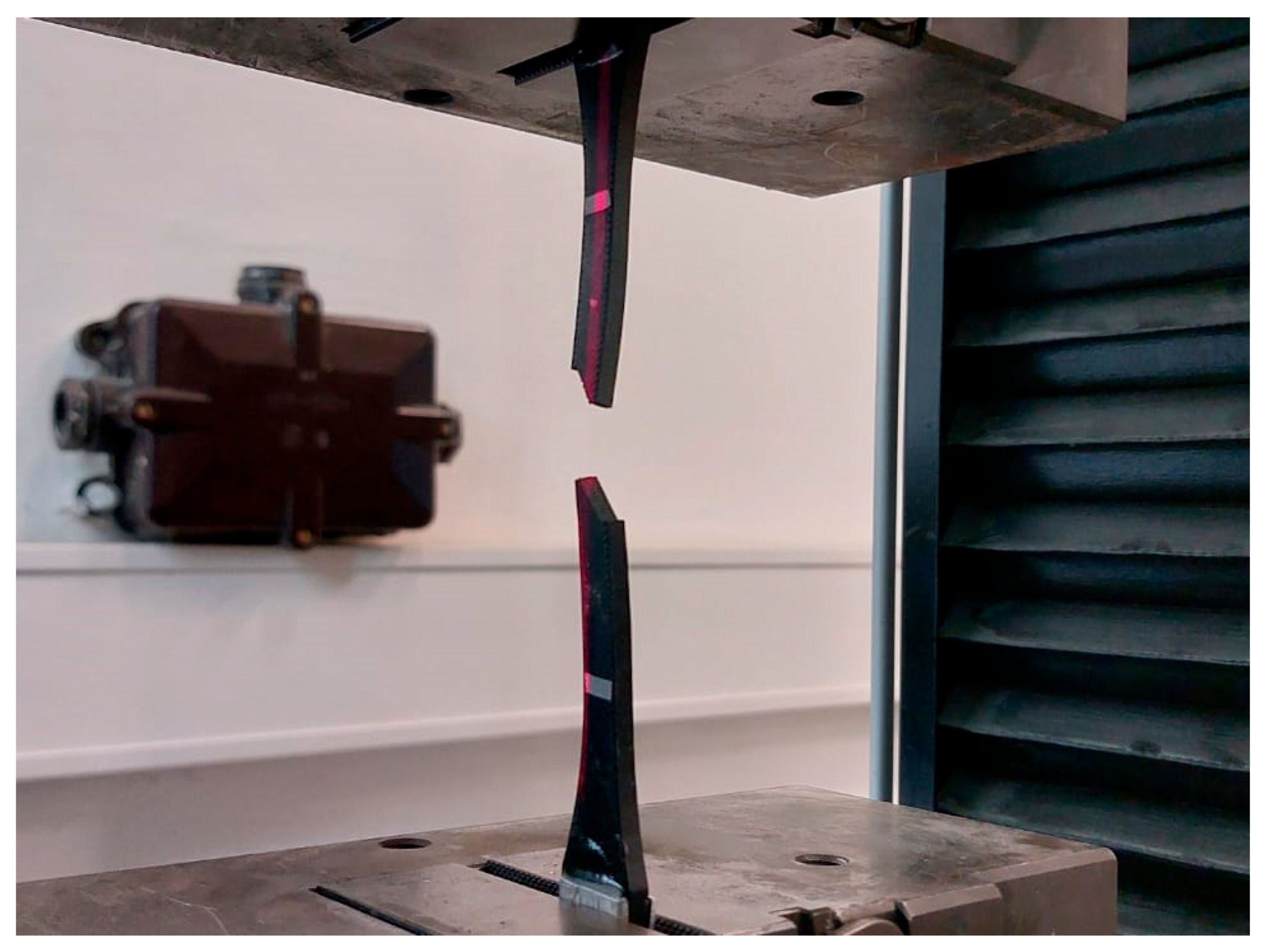
Figure 1. Tensile testing.
Applmech 06 00081 g001
Figure 2. (a) Movable kinematic mirror holder on a static pedestal post with post holder, (b) Expanded schematic view.
Applmech 06 00081 g002
Figure 3. Continuous fiber reinforcing process (carbon-fiber-reinforced nylon—black, continuous glass fiber—yellow).
Applmech 06 00081 g003
Figure 4. Continuous fiber placement in the structure of CFR/CFF/CFC 3D print (A = number of levels, B = number of loops, C = number of layers).
Applmech 06 00081 g004
Figure 5. (a) Attachment block—3D view, (b) Continuous fiber placement in the block structure (fiber—yellow, printing supports—purple).
Applmech 06 00081 g005
Figure 6. (a) Reduction—3D view, (b) Continuous fiber placement in the reduction structure (fiber—yellow, printing supports—purple).
Applmech 06 00081 g006
Figure 7. (a) Assembly—3D view (3D-printed parts—red), (b) Assembly—real state.
Applmech 06 00081 g007
Figure 8. (a) Assembly—3D view (3D-printed parts—red), (b) Assembly—real state.
Applmech 06 00081 g008
Figure 9. (a) Displacement evaluation—3D print, (b) Displacement evaluation—Al alloy.
Applmech 06 00081 g009
Figure 10. (a) Stress evaluation in 3D print—First principial stress, (b) Stress evaluation in 3D print—von Mises stress.
Applmech 06 00081 g010
Figure 11. (a) Fiberglass barrier in front cover, (b) Fiberglass barrier in beam switch body, (c) Assembly—real state.
Applmech 06 00081 g011
Figure 12. First iteration of holder with actuating screws.
Applmech 06 00081 g012
Figure 13. (a) First iteration of holder with integral flexible elements (parallel to printing bed)—3D view, (b) Continuous fiber placement in the holder structure (fiber—yellow, printing supports—purple).
Applmech 06 00081 g013
Figure 14. (a) Second iteration of holder with integral flexible elements (45° tilt to printing bed)—3D view, (b) Continuous fiber placement in the holder structure (fiber—yellow, printing supports—purple).
Applmech 06 00081 g014
Figure 15. (a) Third iteration of holder with integral flexible elements (beveled edge on the printing bed)—3D view, (b) Continuous fiber placement in the holder structure (fiber—yellow, printing supports—purple).
Applmech 06 00081 g015
Figure 16. Third and final iteration of holder with integral flexible elements as printed.
Applmech 06 00081 g016
Figure 17. (a) Continuous fiber placement in the carrier structure (fiber—yellow), (b) Finalized carrier mounted on the optical table.
Applmech 06 00081 g017
Figure 18. Experimental layout.
Applmech 06 00081 g018
Figure 19. Percentage shift of laser beam over time.
Applmech 06 00081 g019
Table 1. Material parameters.
Aluminium 6063-T83Printed Nylon with Kevlar Fiber
Density [kg·m−3]27001150
Young’s modulus [GPa]690.46–2.60
Poisson’s ratio [-]0.330.4
Table 2. Technical data for the measurement machine LabTest Model 5.100SP1.
Nominal Load [kN]100
Max. Test Speed [mm/min]600
Speed Control Accuracy [%]±0.5
Crosshead Resolution [μm]1
Frame Stiffness [mm/N]1.6 × 10−6
Force Range [kN]500–600
Force Measurement Accuracy [%]±0.3 of value within range
Nominal Load [kN]100
Max. Test Speed [mm/min]600
Table 3. Weight comparison between Al alloy and composite 3D print.
WeightMachined Al AlloyComposite 3D Print
Attachment block841 g204 g
Reduction187 g51 g
Table 4. Main properties of carrier iterations.
IterationSupports in Gaps RequiredSame Preloading of Flexible ElementsAngle Between Moving Forces and Reinforcement
#1YESYES90°
#2NONO45°
#3NOfundamentally YES45°
Table 5. Prices of mirror holder carrier solutions.
SolutionClamping ForkPedestal PostAssembly
3D print--USD 7.33
Wound CFRP--USD 120–190
ThorLabsUSD 12.58 (CF175)USD 30.90 (RS1.5P/M)USD 43.48
NewportUSD 25.86 (SR-F)USD 42.31 (9953-M)USD 68.17
Edmund OpticsUSD 10.76 (#15-859)USD 27.56 (#15-841)USD 38.32
Disclaimer/Publisher’s Note: The statements, opinions and data contained in all publications are solely those of the individual author(s) and contributor(s) and not of MDPI and/or the editor(s). MDPI and/or the editor(s) disclaim responsibility for any injury to people or property resulting from any ideas, methods, instructions or products referred to in the content.