Article

Influence of Lubricant Properties on Elastohydrodynamic Oil Film Thickness in Angular Contact Ball Bearings: A Numerical Investigation


Department of Aerospace Engineering, Faculty of Engineering, OSTIM Technical University, Ankara 06374, Türkiye
Appl. Mech. 2025, 6(3), 64; https://doi.org/10.3390/applmech6030064

Submission received: 8 July 2025 / Revised: 30 July 2025 / Accepted: 20 August 2025 / Published: 26 August 2025
(This article belongs to the Collection Fracture, Fatigue, and Wear)

Abstract

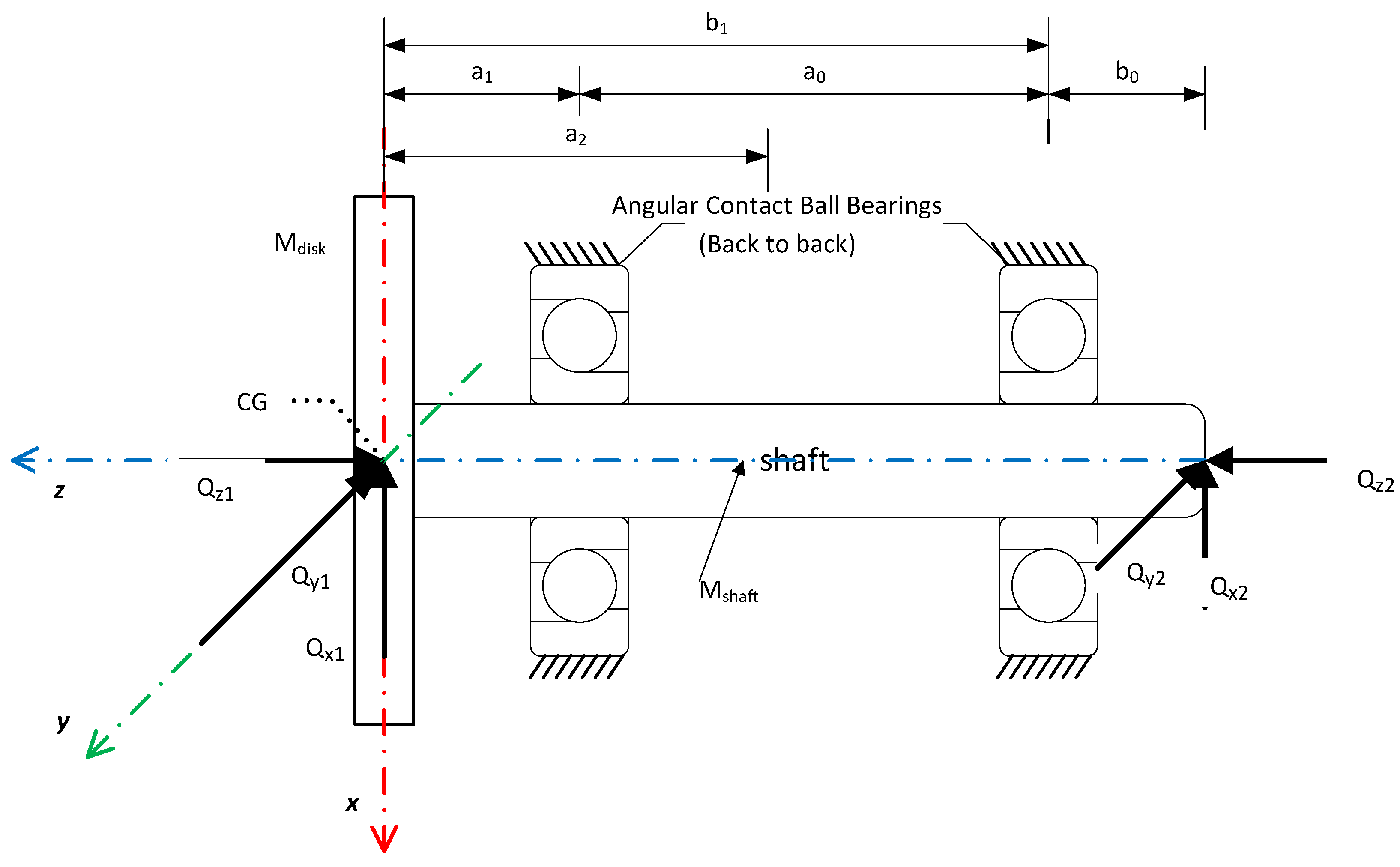
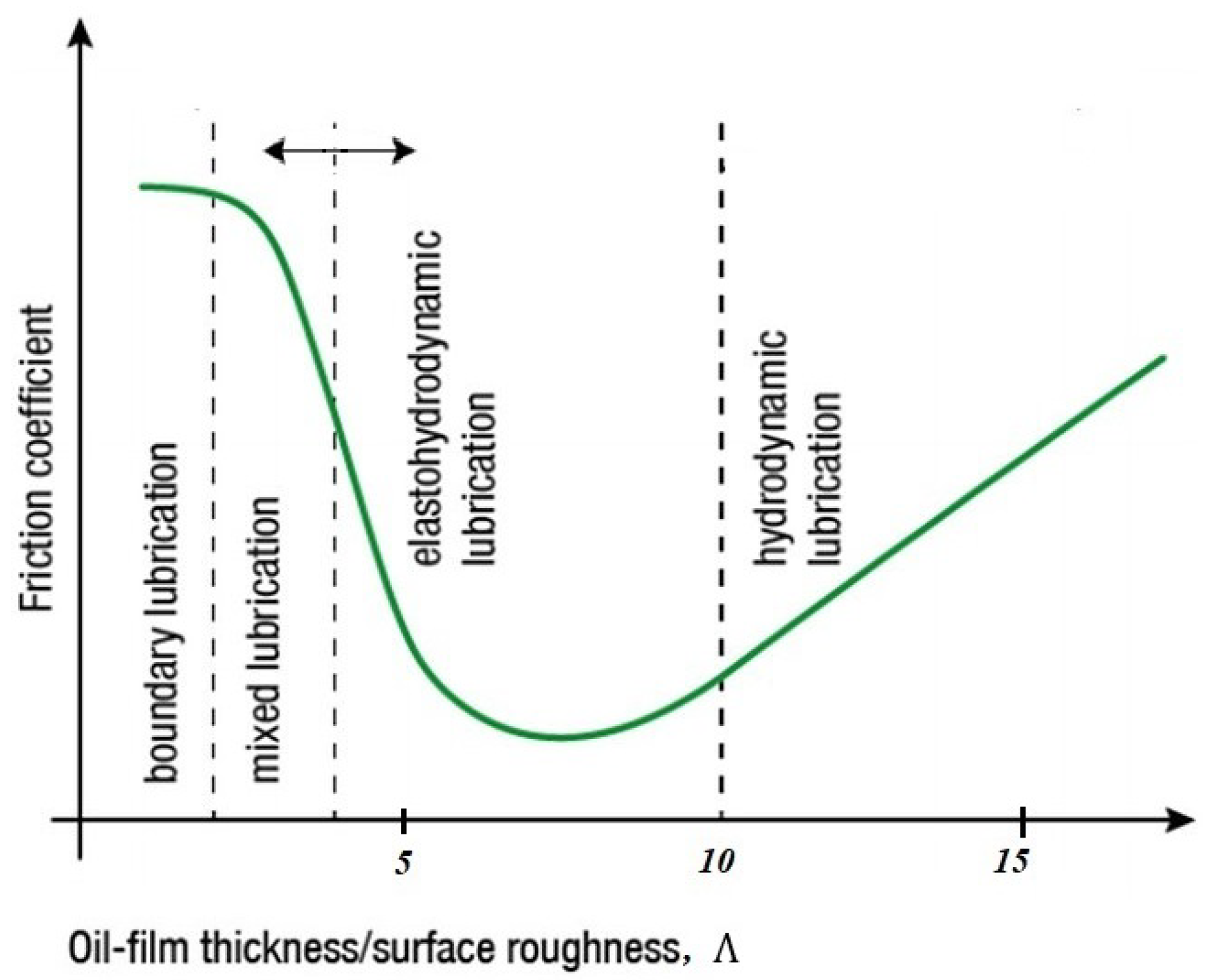
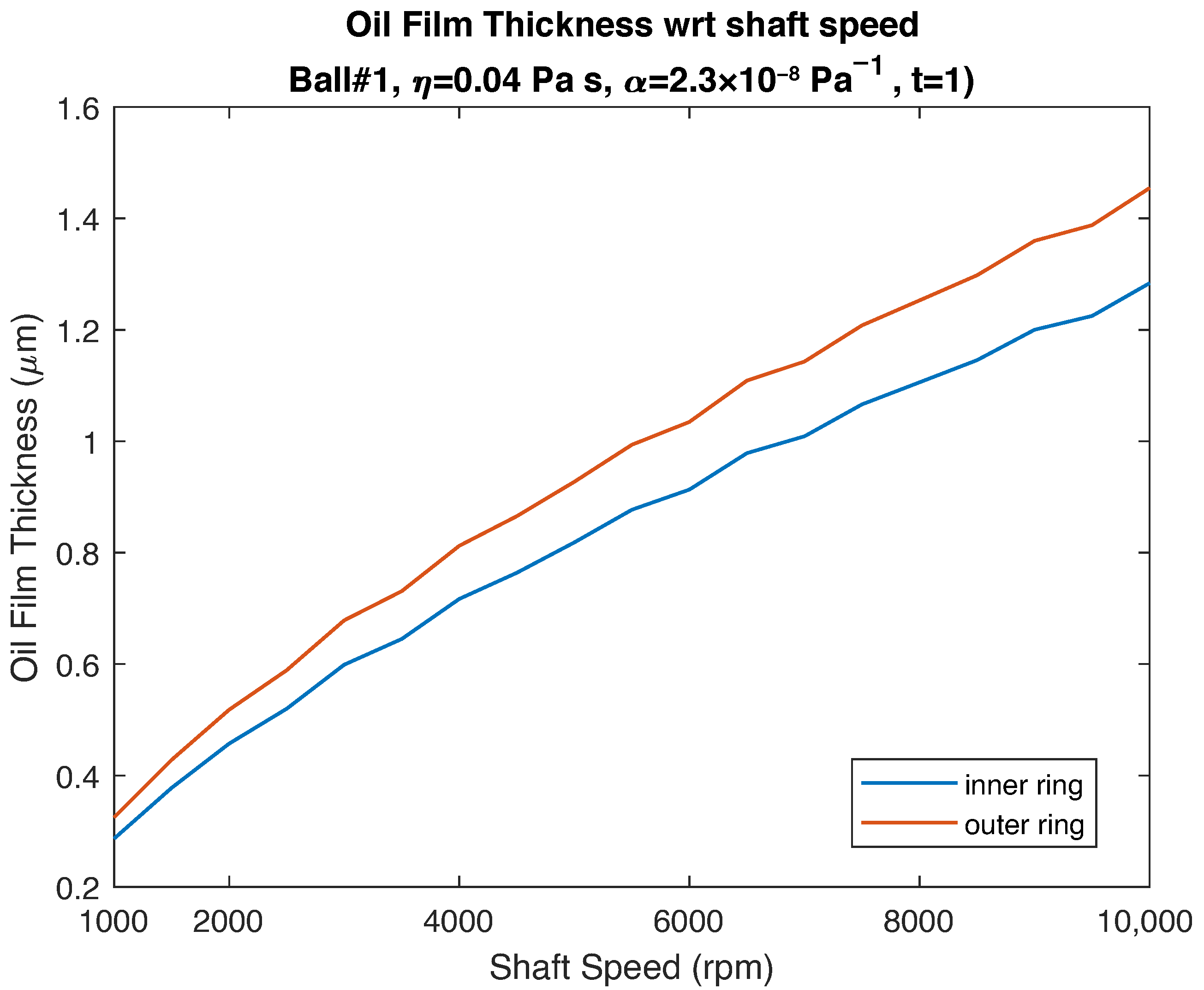
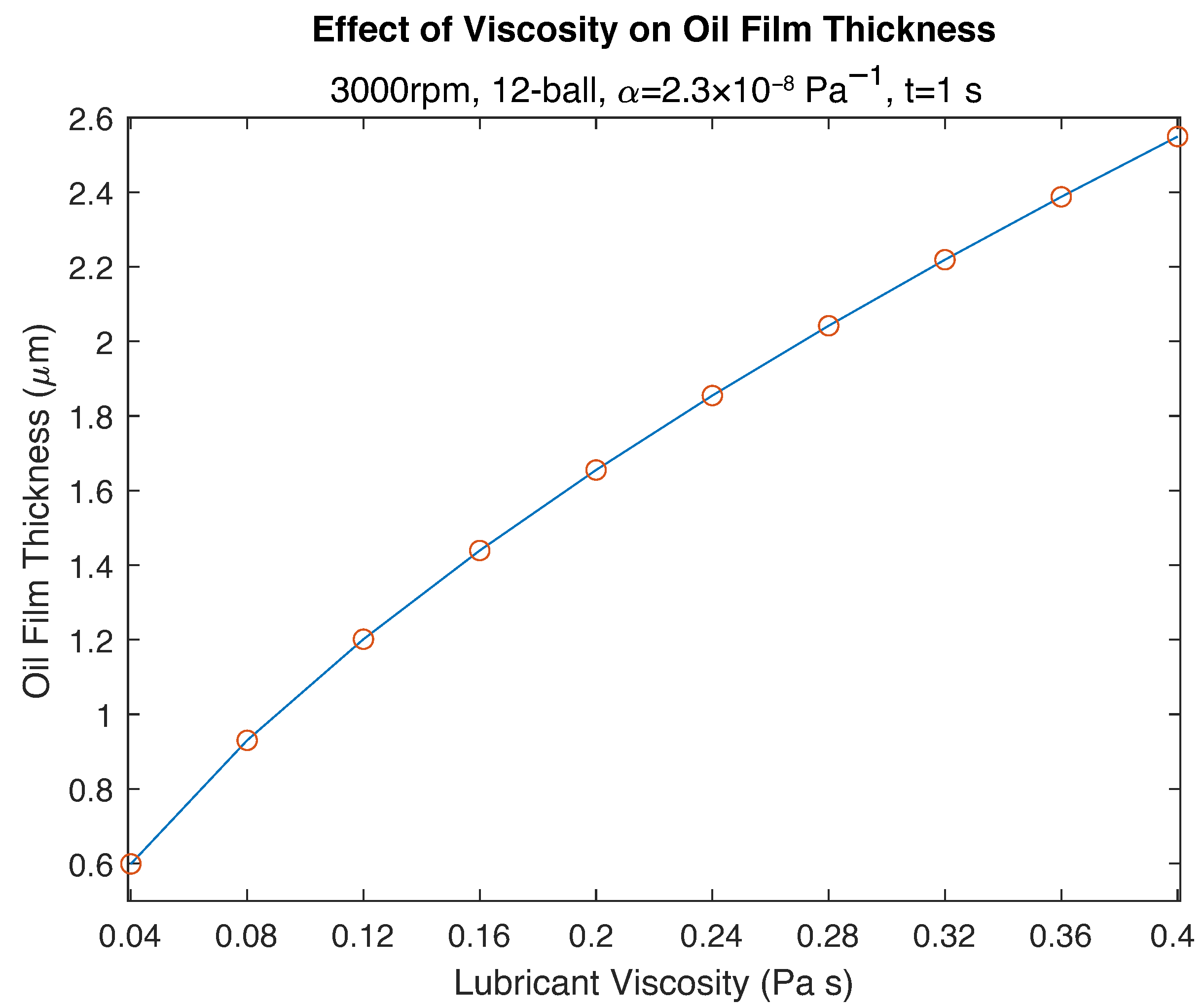
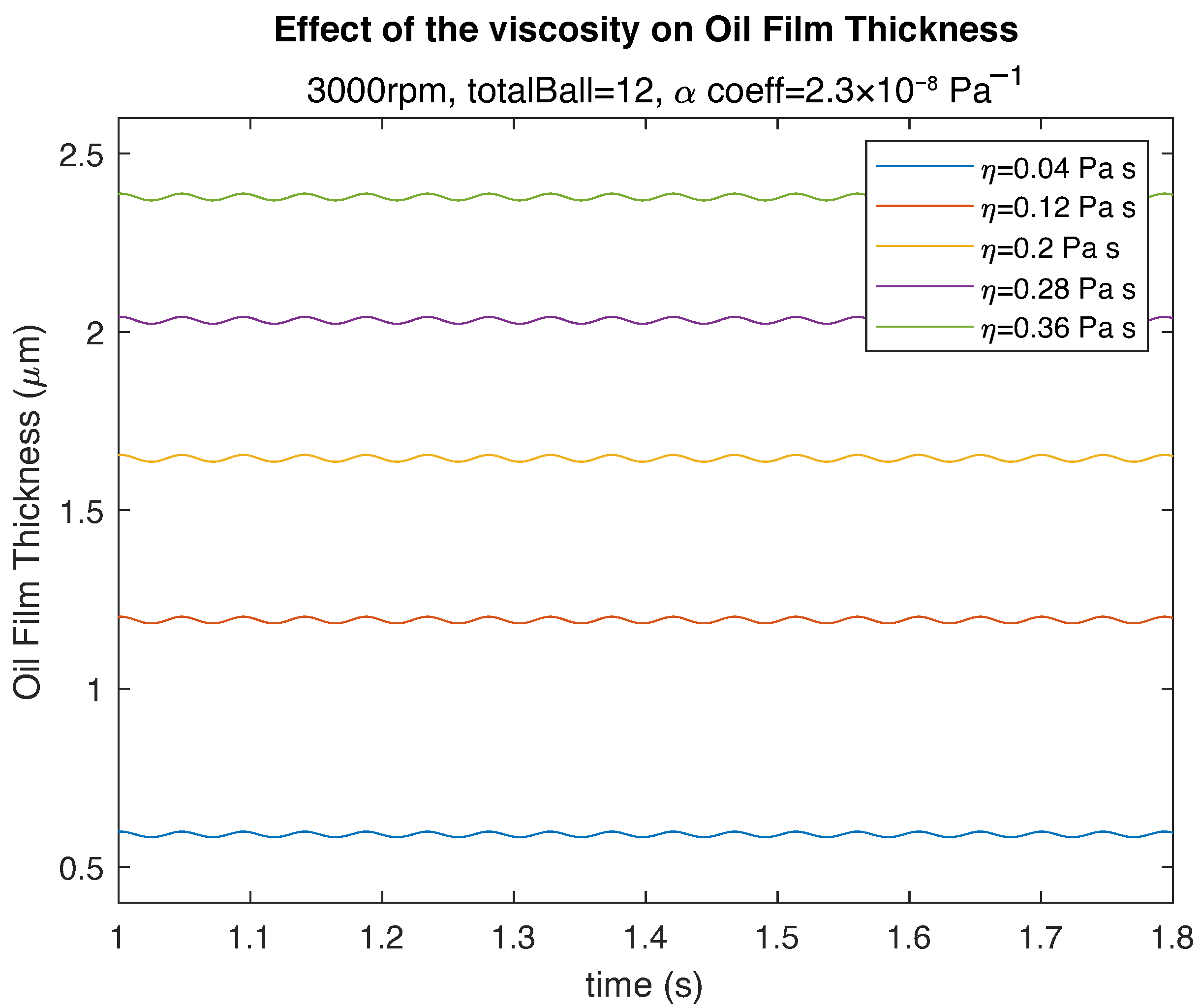
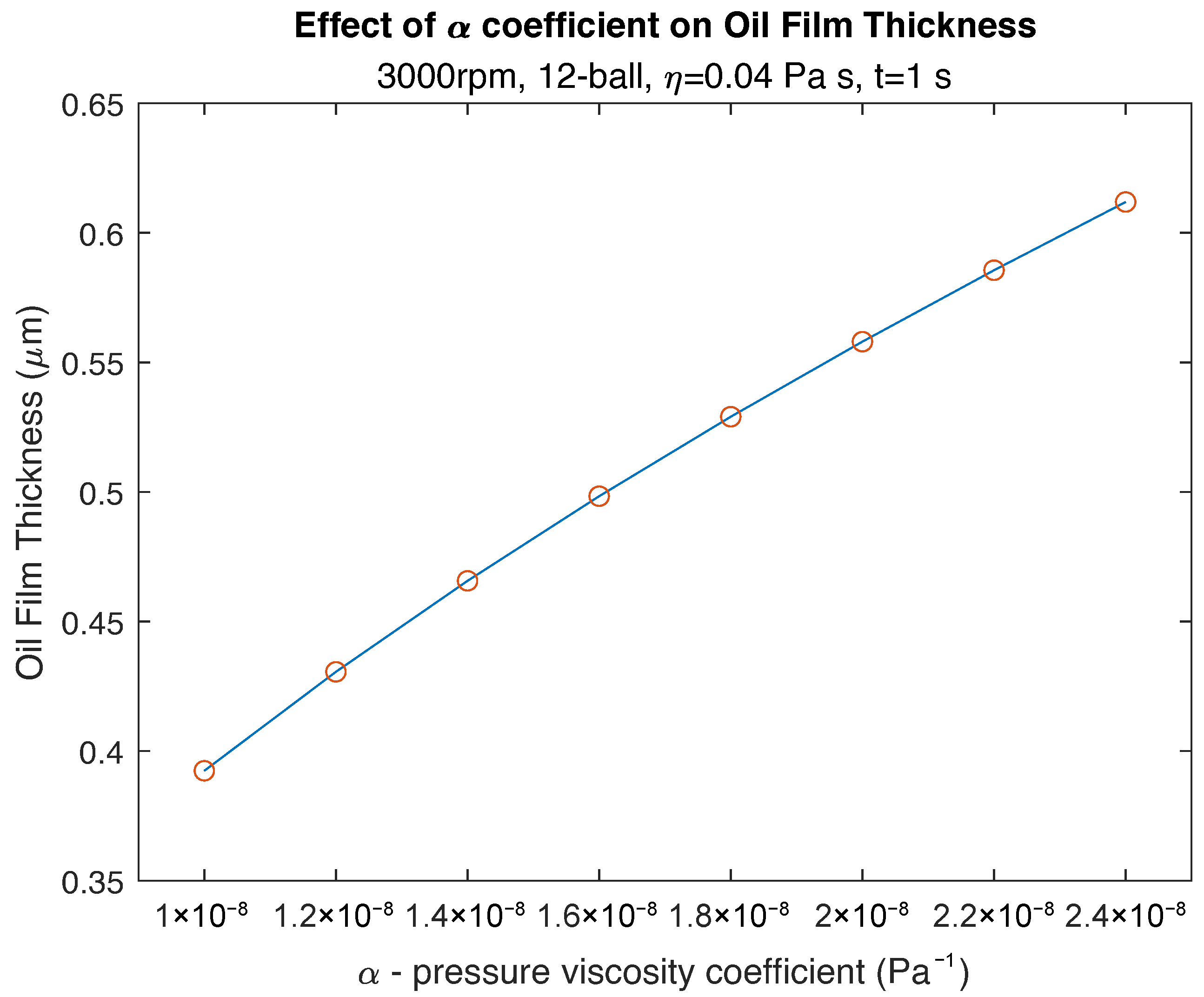
Predicting oil film thickness at ball–raceway contacts under elastohydrodynamic lubrication (EHL) conditions remains a complex tribological challenge. This complexity arises from dynamic variations in contact load, rotational speed, hydrodynamic effects, and the nonlinear load–deformation characteristics of the contacting surfaces. This study presents a numerical investigation of oil film thickness variations corresponding lubricant properties in rolling bearings using a 5-degree-of-freedom (5-DoF) shaft–bearing model. The model incorporates isothermal EHL and a rigid shaft supported by a pair of angular contact ball bearings. The governing nonlinear equations of motion are solved iteratively via a quasi-static approach, coupling oil film thickness and contact force calculations. Results indicate that oil film thickness increases proportionally with both lubricant viscosity and shaft speed. A twofold increase in shaft speed results in approximately 57% enhancement in film thickness. Similarly, increasing viscosity elevates film thickness proportionally, while the pressure–viscosity coefficient significantly enhances film formation. Notably, the outer raceway exhibits a 13% thicker film than the inner raceway, owing to its higher surface conformity. Furthermore, low-speed operation under heavy loads induces mixed lubrication regimes, compromising film integrity. Results provides insight for lubricant selection and bearing design to mitigate starvation in industrial applications.
Keywords: tribology; elastohydrodynamics; lubrication; rolling bearings; oil film thickness tribology; elastohydrodynamics; lubrication; rolling bearings; oil film thickness