Article

Performance of Microconcretes with Different Percentages of Recycled Tire Rubber Granulate


by
Purificación Bautiste Villanueva
1,*,
María Isabel Prieto Barrio
2 and
Alfonso Cobo Escamilla
2
1
Escuela Técnica Superior de Ingenieros Industriales (ETSII), Universidad Politécnica de Madrid, 280006 Madrid, Spain
2
Escuela Técnica Superior de Edificación (ETSEM), Universidad Politécnica de Madrid, 28040 Madrid, Spain
*
Author to whom correspondence should be addressed.
Appl. Mech. 2025, 6(1), 3; https://doi.org/10.3390/applmech6010003

Submission received: 9 December 2024 / Revised: 29 December 2024 / Accepted: 3 January 2025 / Published: 7 January 2025

Abstract

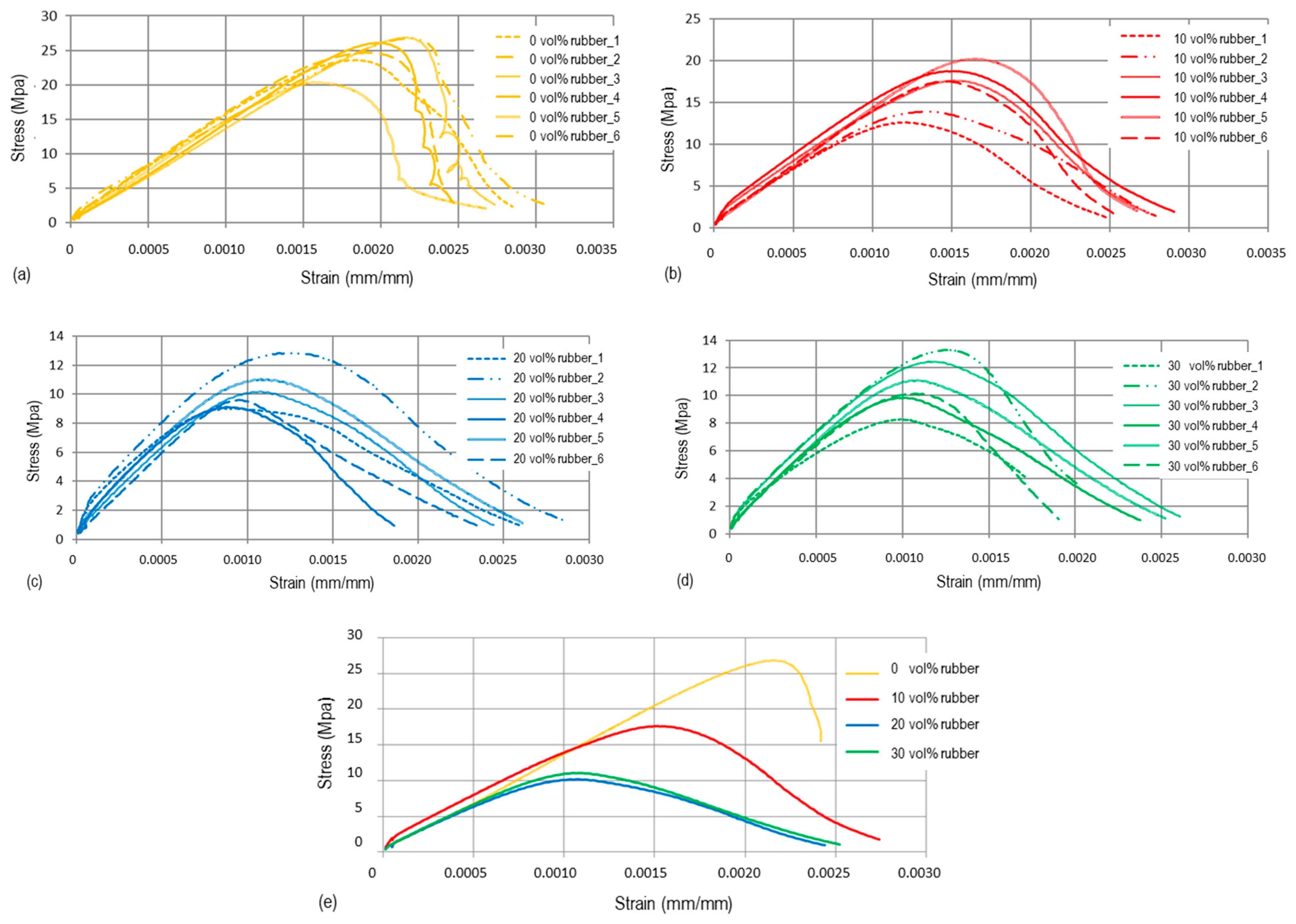
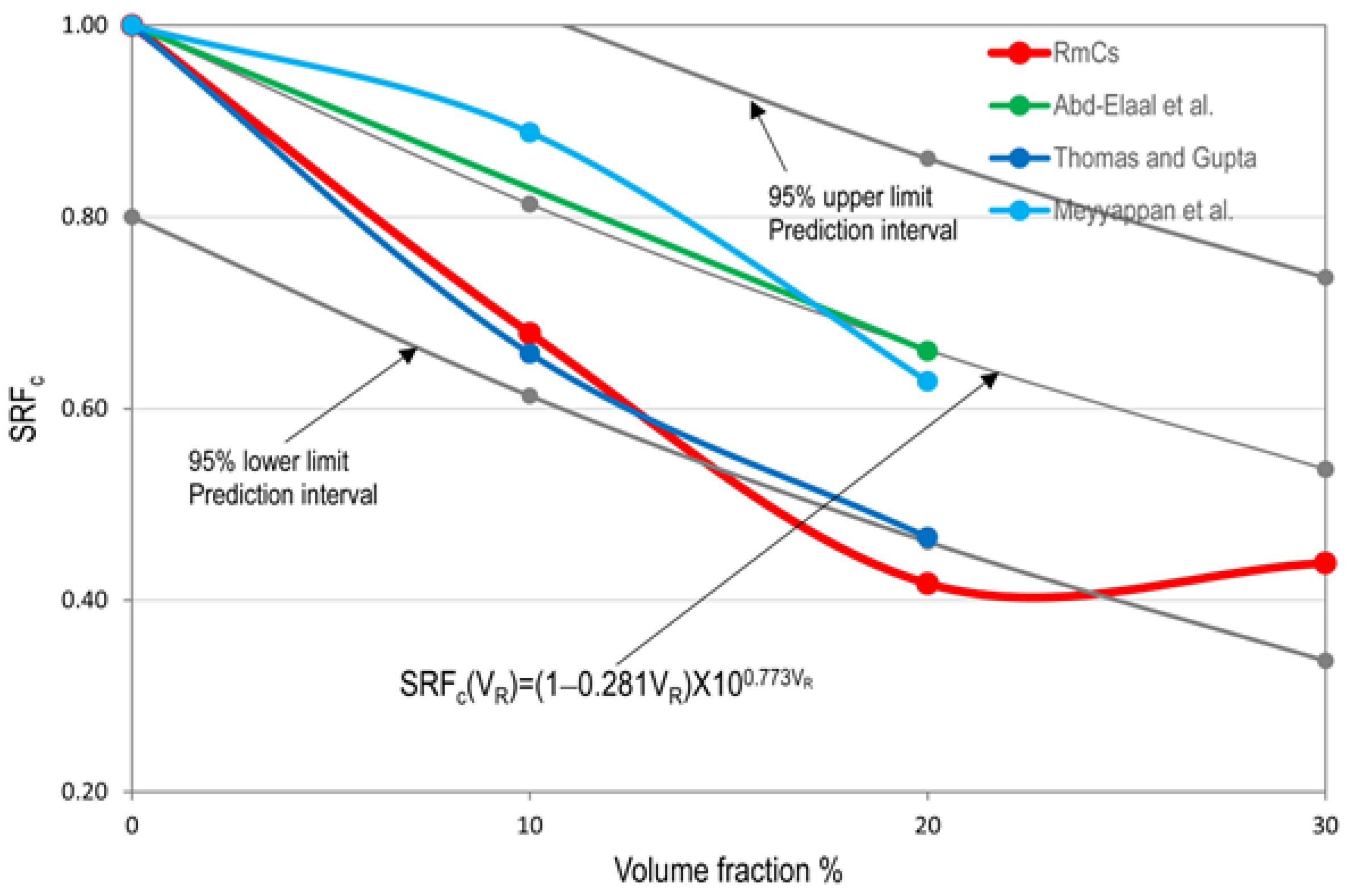
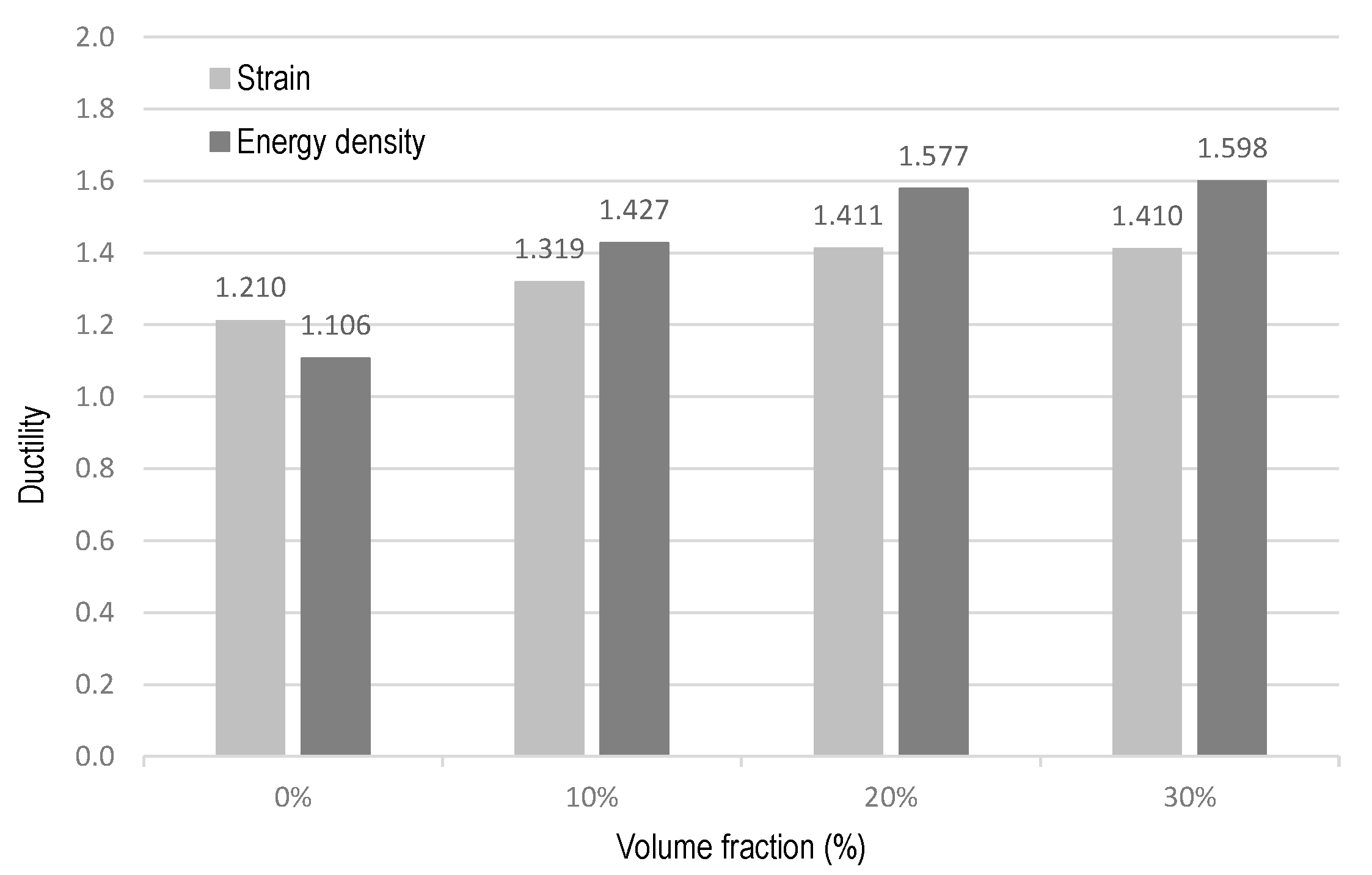
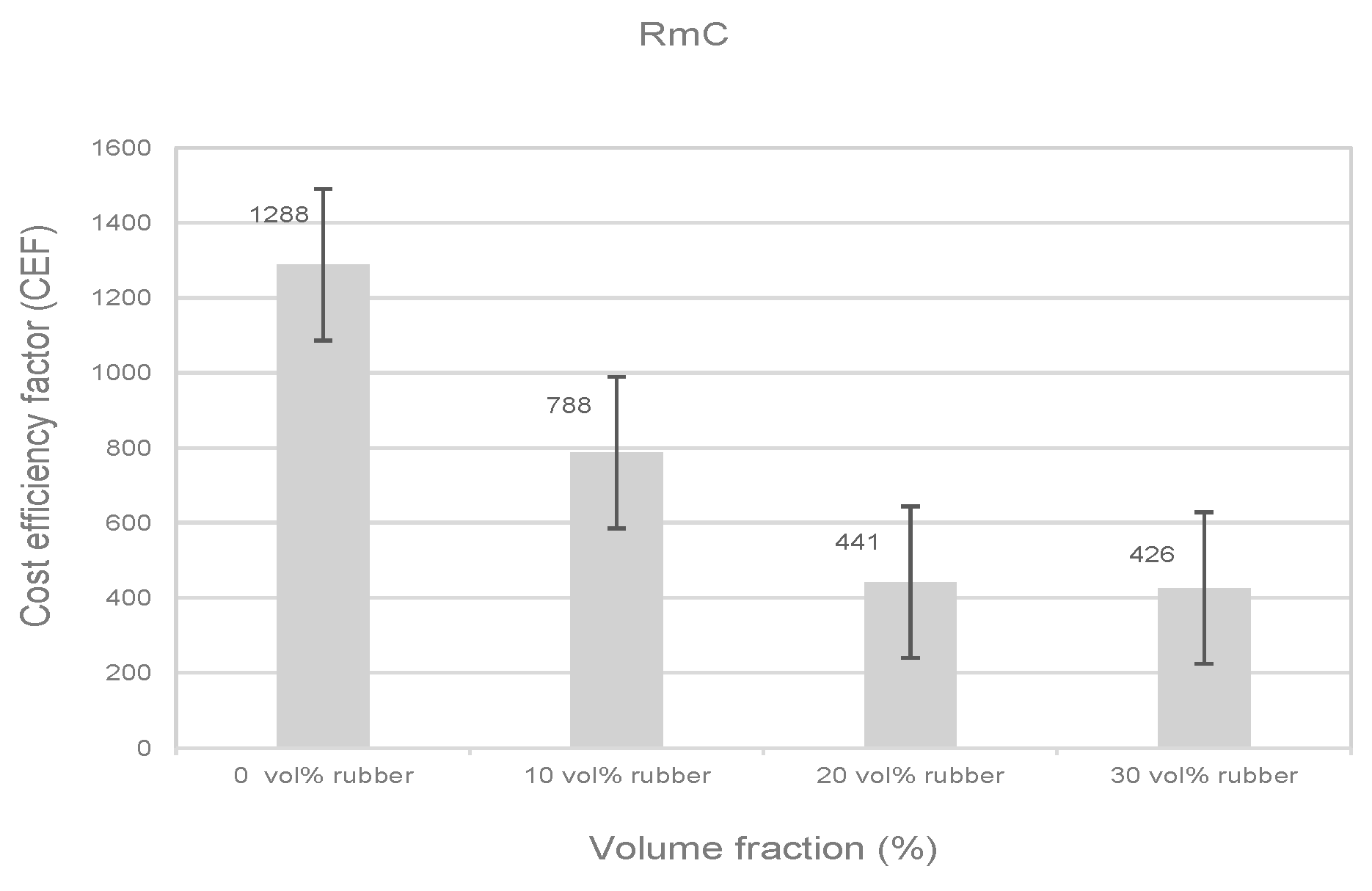
This paper investigates the short-term behavior of microconcretes with recycled rubber (RmCs) for extensive use as structural and non-structural materials. The physical and mechanical properties of a typical microconcrete composition have been experimentally evaluated by replacing the fine aggregate with rubber granules in volumetric percentages of 10%, 20%, and 30%. The results obtained are compared with the data provided by other authors for crumb rubber concretes (CRCs). Material investment costs have also been estimated to determine the economic impact of using rubber as a fine aggregate in these products. It is observed that the use of small percentages of recycled rubber (up to 20%) produces significant increases in slump as well as important drops in compressive strength, although it substantially improves its post-critical behavior. These trends tend to stabilize with higher percentages of rubber (30%). It is also noted that the experimental results and predictive models developed for concretes are not applicable to microconcretes, so more specific research is desirable for this type of product. Regarding the economic profitability of the investment in RmCs, it is found that it is necessary to make recycled rubber cheaper and to ensure its technological performance in order to guarantee the quality of the final product.
Keywords: circular economy; end-of-life tires; recycled rubber; microconcrete; grain size and percentage; compressive strength; ductility; cost-efficiency analysis circular economy; end-of-life tires; recycled rubber; microconcrete; grain size and percentage; compressive strength; ductility; cost-efficiency analysis