A Burning Issue: Interactions of the Bearded Fireworm Hermodice carunculata with Artisanal Fisheries—A Case Study from Malta (Central Mediterranean)


Abstract
1. Introduction
2. Materials and Methods
2.1. LEK Survey
2.2. Field Experiments
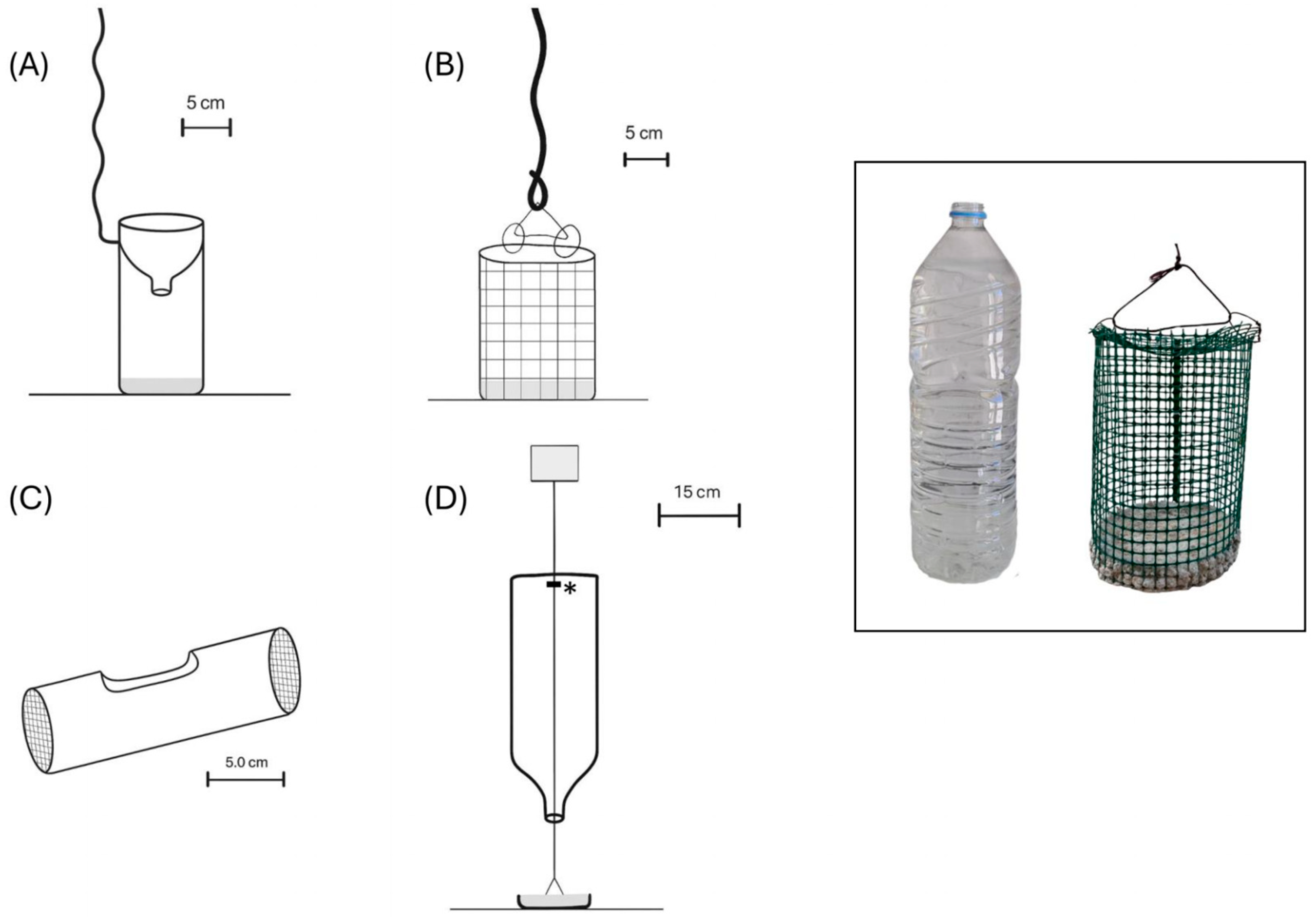
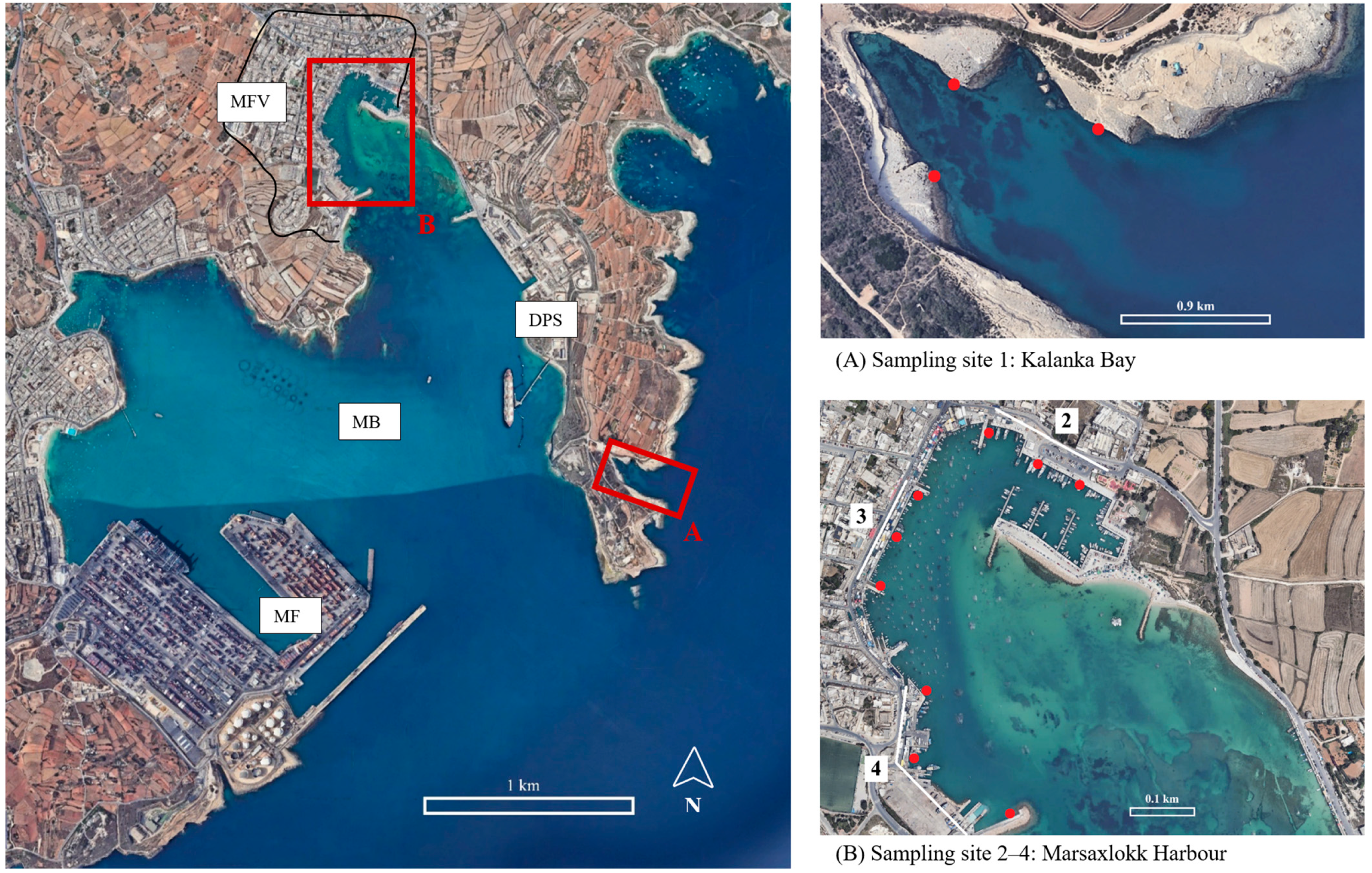
2.2.1. Field Sampling
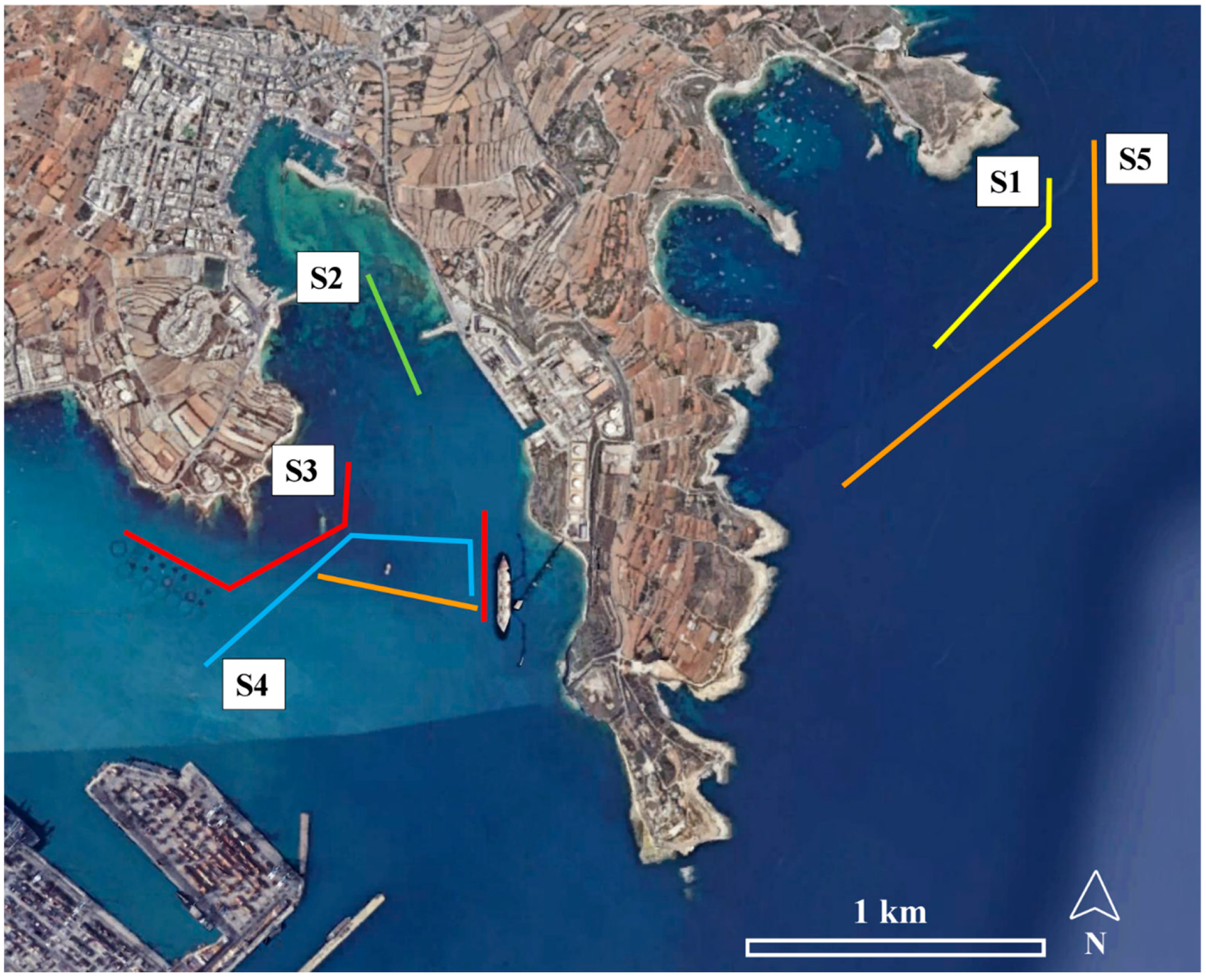
2.2.2. Onboard Field Observation of Trammel Net Fishing
2.3. Behavioral Experiments
2.3.1. Experiment 1: Drop Test
2.3.2. Experiment 2: Effect of Trammel Net Mesh Size
2.3.3. Experiment 3: ‘Body Lifting’
2.3.4. Experiment 4: ‘Climbing of a Vertical Nylon Rope’
2.4. Statistical Analysis
3. Results
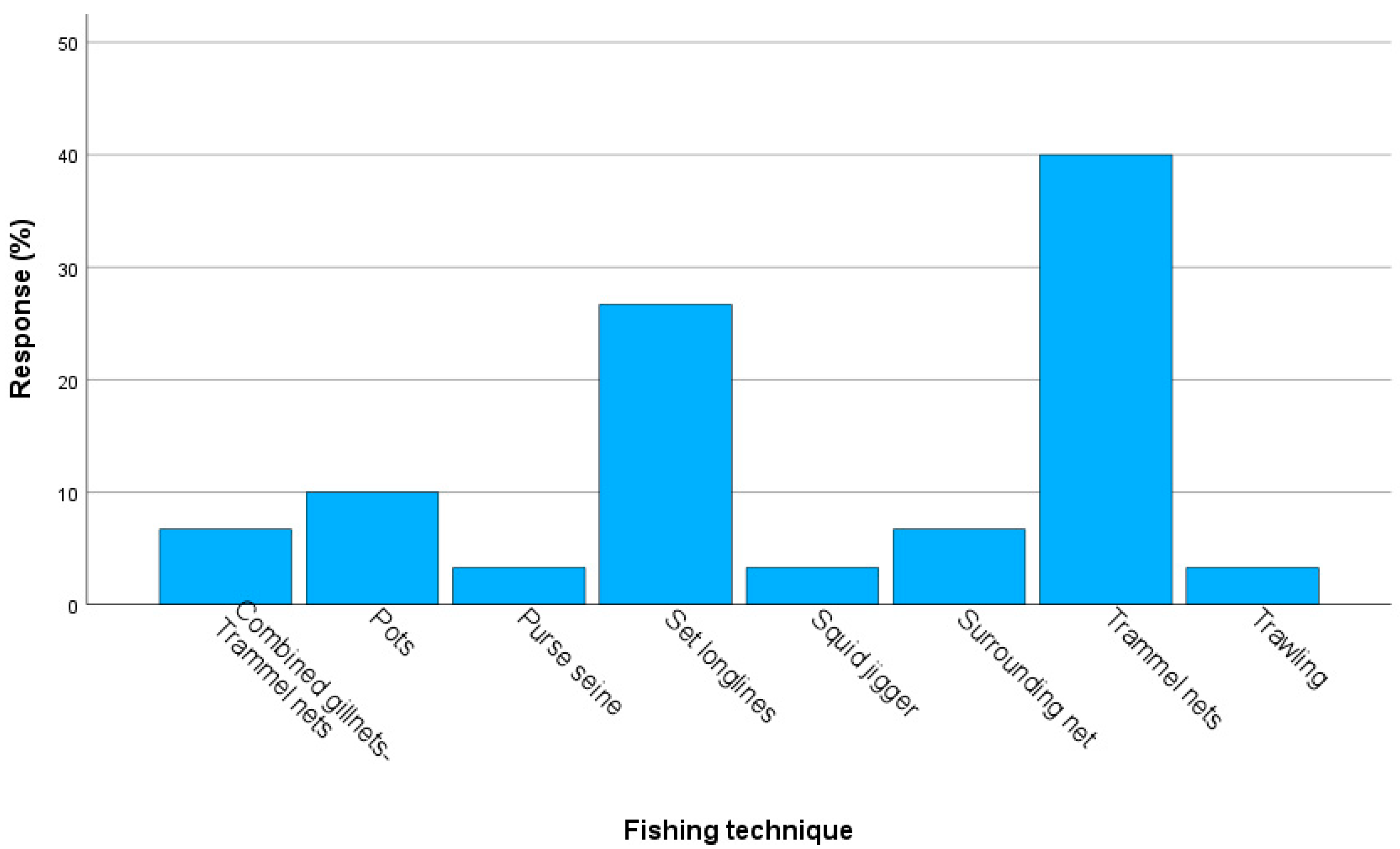
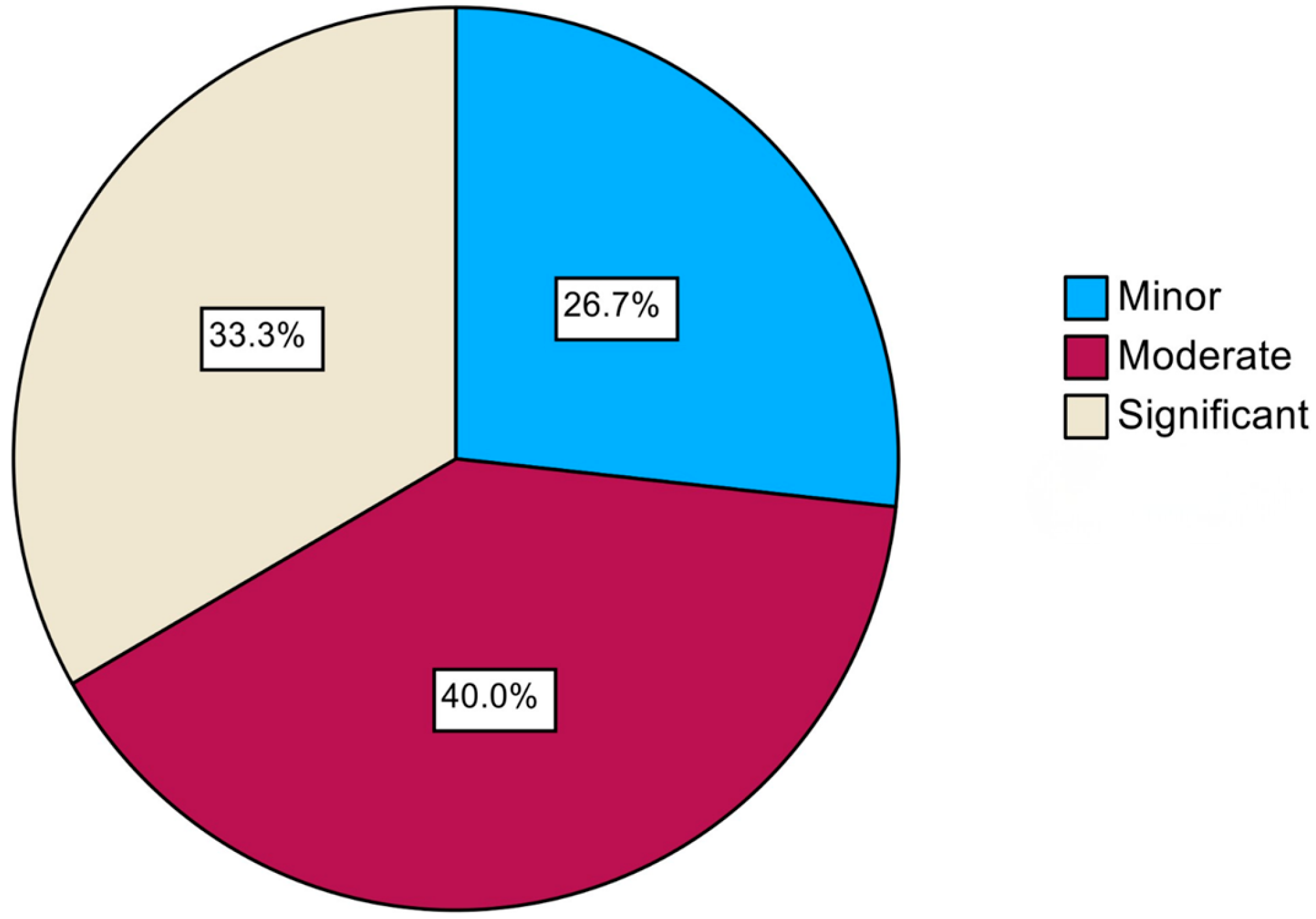
3.1. LEK Survey
3.2. Field Experiments
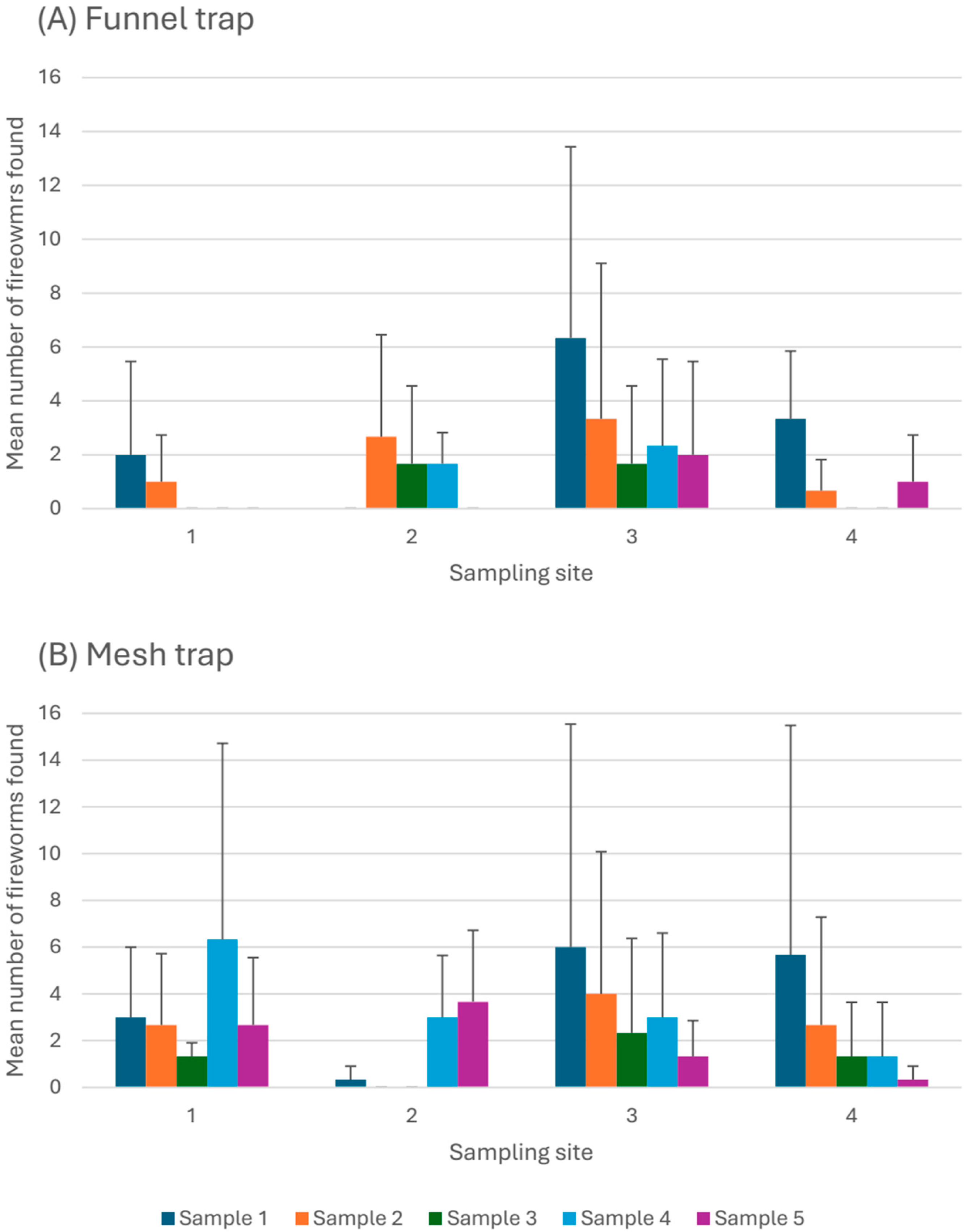
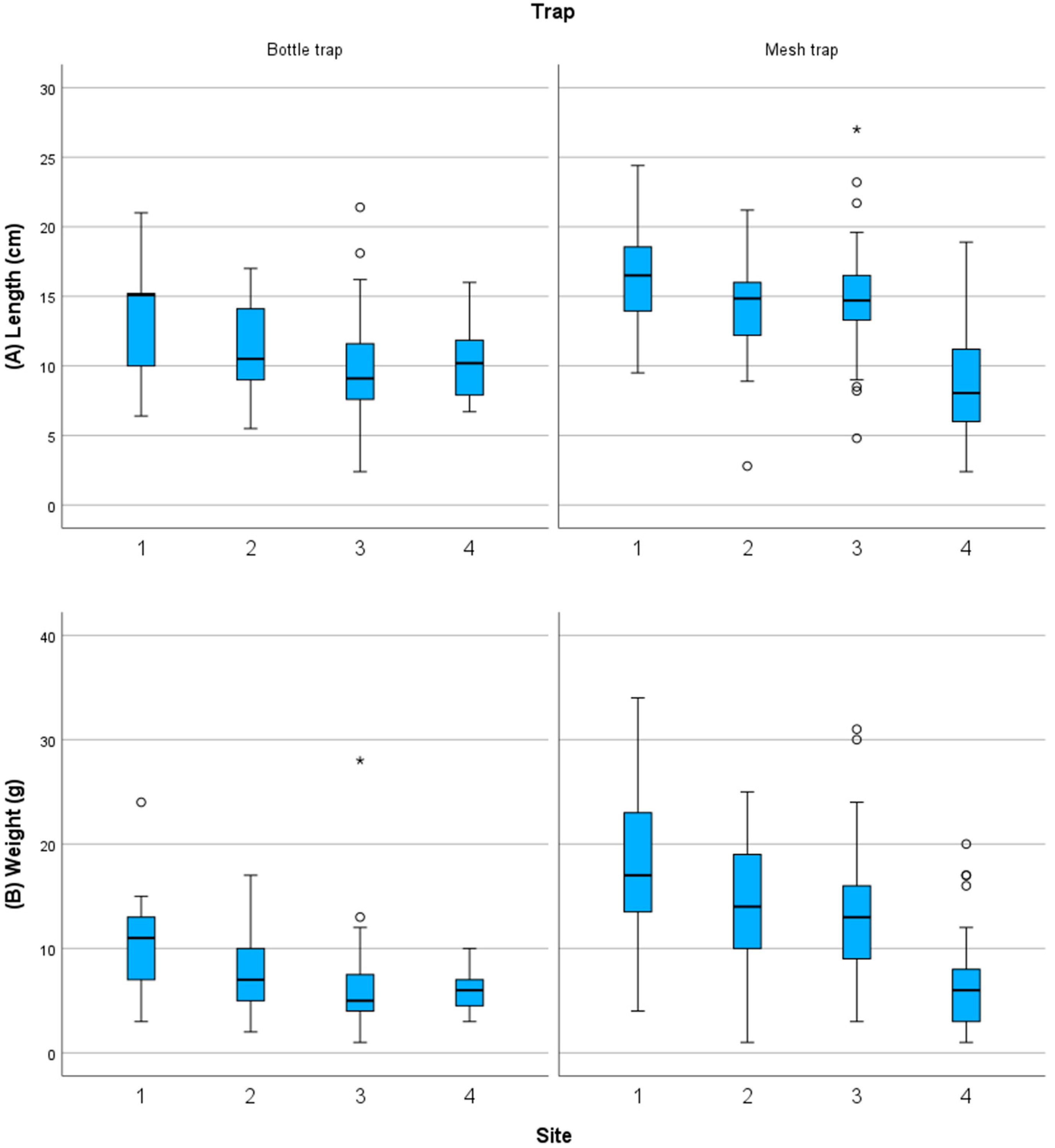
3.2.1. Field Sampling
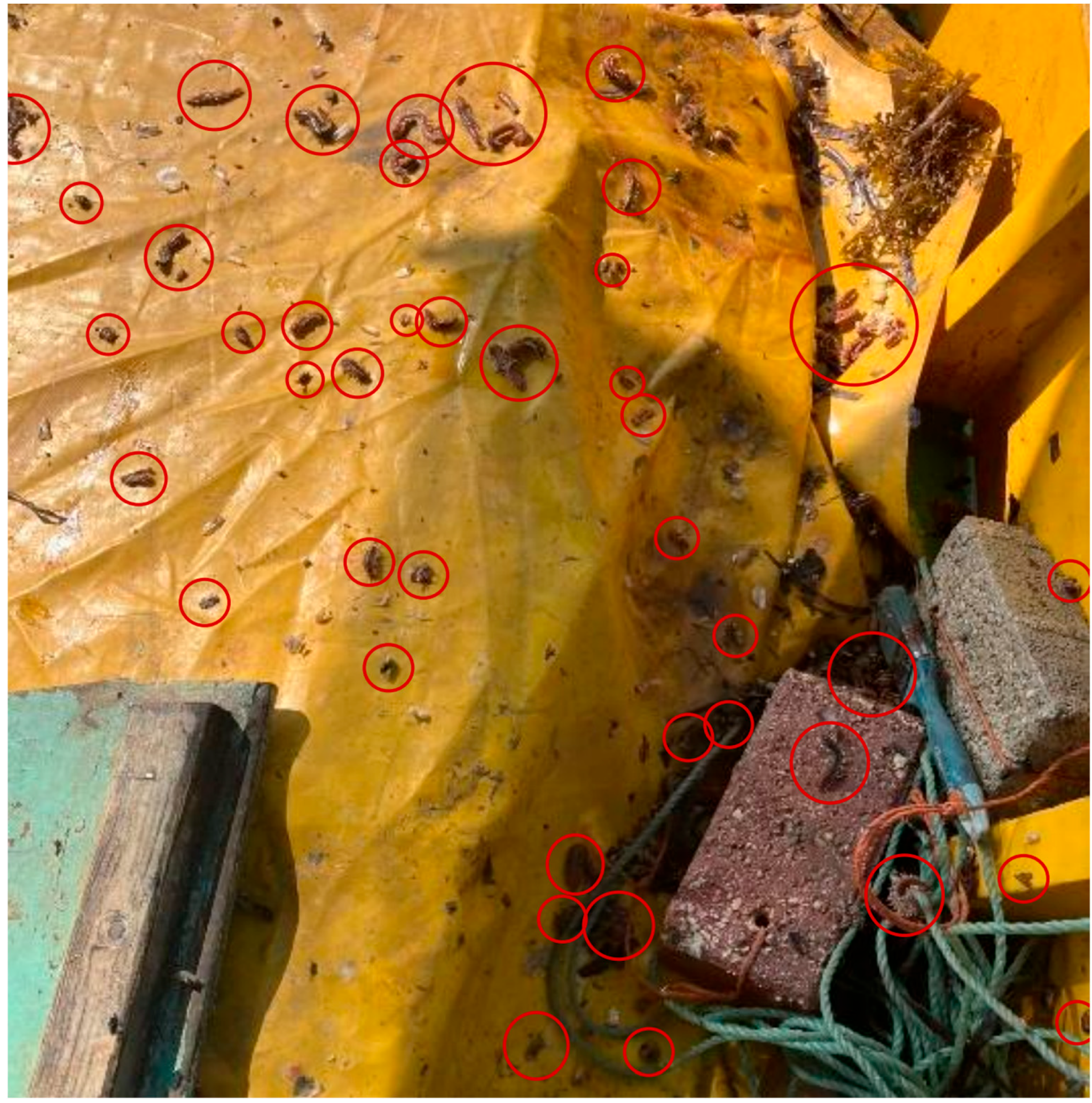
3.2.2. Onboard Field Observations of Trammel Net Fishing
3.3. Behavioral Experiments
3.3.1. Experiment 1—Drop Test
3.3.2. Experiment 2—Effect of Mesh Size
3.3.3. Experiment 3—‘Body Lifting’
3.3.4. Experiment 4—‘Climbing of a Vertical Nylon Rope’
4. Discussion
Author Contributions
Funding
Institutional Review Board Statement
Informed Consent Statement
Data Availability Statement
Acknowledgments
Conflicts of Interest
References
- Simonini, R.; Ferri, A. Prime stime della longevità del verme di fuoco Hermodice carunculata (Annelida) dedotte grazie al contributo dei fotografi subacquei alla scienza partecipata. Atti Soc. Nat. Mat. Modena 2022, 153, 207–223. Available online: https://www.socnatmatmo.unimore.it/download/Atti2022.pdf#page=207 (accessed on 31 July 2025).
- Tiralongo, F.; Marino, S.; Ignoto, S.; Martellucci, R.; Lombardo, B.M.; Mancini, E.; Scacco, U. Impact of Hermodice carunculata (Pallas, 1766) (Polychaeta: Amphinomidae) on artisanal fishery: A case study from the Mediterranean sea. Mar. Environ. Res. 2023, 192, 106227. [Google Scholar] [CrossRef]
- Ahrens, J.B.; Borda, E.; Barroso, R.; Paiva, P.C.; Campbell, A.M.; Wolf, A.; Nugues, M.M.; Rouse, G.W.; Schulze, A. The curious case of Hermodice carunculata (Annelida: Amphinomidae): Evidence for genetic homogeneity throughout the Atlantic Ocean and adjacent basins. Mol. Ecol. 2013, 22, 2280–2291. [Google Scholar] [CrossRef] [PubMed]
- Cruz Ramos, M.A.; Schizas, N.V. Population structure of the fireworm Hermodice carunculata in the wider Caribbean, Atlantic and Mediterranean Sea. J. Mar. Biol. Assoc. UK 2023, 103, e14. [Google Scholar] [CrossRef]
- Righi, S.; Prevedelli, D.; Simonini, R. Ecology, distribution and expansion of a Mediterranean native invader, the fireworm Hermodice carunculata (Annelida). Mediterr. Mar. Sci. 2020, 21, 558–574. [Google Scholar] [CrossRef]
- Schulze, A.; Grimes, C.J.; Rudek, T.E. Tough, armed and omnivorous: Hermodice carunculata (Annelida: Amphinomidae) is prepared for ecological challenges. J. Mar. Biol. Assoc. UK 2017, 97, 1075–1080. [Google Scholar] [CrossRef]
- Simonini, R.; Maletti, I.; Righi, S.; Fai, S.; Prevedelli, D. Laboratory observations on predator–prey interactions between the bearded fireworm (Hermodice carunculata) and Mediterranean benthic invertebrates. Mar. Freshw. Behav. Physiol. 2018, 51, 145–158. [Google Scholar] [CrossRef]
- Vreeland, H.V.; Lasker, H.R. Selective feeding of the polychaete Hermodice carunculata (Pallas) on Caribbean gorgonians. J. Exp. Mar. Biol. Ecol. 1989, 129, 265–277. [Google Scholar] [CrossRef]
- Marsden, J.R. A coral-eating polychæte. Nature 1962, 193, 598. [Google Scholar] [CrossRef]
- Ott, B.; Lewis, J.B. The importance of the gastropod Coralliophila abbreviata (Lamarck) and the polychaete Hermodice carunculata (Pallas) as coral reef predators. Can. J. Zool. 1972, 50, 1651–1656. [Google Scholar] [CrossRef]
- Celona, A.; Comparetto, G. Prime osservazioni sulla predazinoe opportunistica del “vermocane” Hermodice carunculata (Pallas, 1766), ai danni della piccolo pesca artigianale nelle acque di Lampedusa (Is. Pelagie). Ann. Hist. Nat. 2010, 20, 15–20. Available online: https://zdjp.si/wp-content/uploads/2015/12/celona.pdf (accessed on 31 July 2025).
- Rescio, F.; Scianna, C.; Di Franco, A.; Milisenda, G.; Bava, S.; Bommarito, C.; Grasso, G.; Giudetti, P.; La Manna, G.; Moro Merella, M.; et al. Increasing occurrence of the bearded fireworm (Hermodice carunculata) poses a threat for small-scale fisheries in the central Mediterranean Sea. J. Environ. Manage. 2025, 395, 127773. [Google Scholar] [CrossRef] [PubMed]
- Krželj, M.; Cerrano, C.; Di Camillo, C.G. Enhancing diversity knowledge through marine citizen science and social platforms: The case of Hermodice carunculata (Annelida, Polychaeta). Diversity 2020, 12, 311. [Google Scholar] [CrossRef]
- Righi, S.; Forti, L.; Simonini, R.; Ferrari, V.; Prevedelli, D.; Mucci, A. Novel natural compounds and their anatomical distribution in the stinging fireworm Hermodice carunculata (Annelida). Mar. Drugs 2022, 20, 585. [Google Scholar] [CrossRef]
- Smith, M. Cutaneous problems related to coastal and marine worms. Dermatol. Ther. 2002, 15, 34–36. [Google Scholar] [CrossRef]
- Gustafson, G. Anatomische studien über die polychäten-familien Amphinomidae und Euphrosynidae. Zool. Bidr. Uppsala 1930, 12, 305–471. [Google Scholar]
- Tilic, E.; Pauli, B.; Bartolomaeus, T. Getting to the root of fireworms’ stinging chaetae—Chaetal arrangement and ultrastructure of Eurythoe complanata (Pallas, 1766) (Amphinomida). J. Morphol. 2017, 278, 865–876. [Google Scholar] [CrossRef]
- Simonini, R.; Maggioni, F.; Zanetti, F.; Fai, S.; Forti, L.; Prevedelli, D.; Righi, S. Synergy between mechanical injury and toxins triggers the urticating system of marine fireworms. J. Exp. Mar. Biol. Ecol. 2021, 534, 151487. [Google Scholar] [CrossRef]
- Riera, R.; Pérez, O.; Rodríguez, M.; Ramos, E.; Monterroso, Ó. Are assemblages of the fireworm Hermodice carunculata enhanced in sediments beneath offshore fish cages? Acta Ocean. Sin. 2014, 33, 108–111. [Google Scholar] [CrossRef]
- Shiber, J.G. Metal concentrations in certain coastal organisms from Beirut. Hydrobiologia 1981, 83, 181–195. [Google Scholar] [CrossRef]
- De La Ballina, N.R.; Maresac, F.; Real, E.; Baena-Vega, I.; Díez, S.; Martín-Arjona, A.; Mallol, S.; Díaz, D. Signs of northward expansion of the fireworm Hermodice carunculata in the Spanish Western Mediterranean Sea. Mediterr. Mar. Sci. 2025, 26, 515–532. [Google Scholar] [CrossRef]
- Encarnação, J.; Morais, P.; Baptista, V.; Cruz, J.; Teodósio, M.A. New Evidence of Marine Fauna Tropicalization off the southwestern Iberian Peninsula (Southwest Europe). Diversity 2019, 11, 48. [Google Scholar] [CrossRef]
- Toso, A.; Furfaro, G.; Fai, S.; Giangrande, A.; Piraino, S. A sea of fireworms? New insights on ecology and seasonal density of Hermodice carunculata (Pallas, 1766) (Annelida) in the Ionian Sea (SE Italy). Eur. Zool. J. 2022, 89, 1104–1114. [Google Scholar] [CrossRef]
- Toso, A.; Boulamail, S.; Lago, N.; Pierii, C.; Piraino, S.; Giangrande, A. First description of early developmental stages of the native invasive fireworm Hermodice carunculata (Annelida, Amphinomidae): A cue to the warming of the Mediterranean Sea. Mediterr. Mar. Sci. 2020, 21, 442–447. [Google Scholar] [CrossRef]
- Simonini, R.; Righi, S.; Zanetti, F.; Fai, S.; Prevedelli, D. Development and catch efficiency of an attracting device to collect and monitor the invasive fireworm Hermodice carunculata in the Mediterranean Sea. Mediterr. Mar. Sci. 2021, 22, 706–714. [Google Scholar] [CrossRef]
- Darmaraki, S.; Somot, S.; Sevault, F.; Nabat, P.; Cabos Narvaez, W.D.; Cavicchia, L.; Djurdjevic, V.; Li, L.; Sannino, G.; Sein, D.V. Future evolution of marine heatwaves in the Mediterranean Sea. Clim. Dyn. 2019, 53, 1371–1392. [Google Scholar] [CrossRef]
- Pastor, F.; Valiente, J.A.; Palau, J.L. Sea Surface Temperature in the Mediterranean: Trends and Spatial Patterns (1982–2016). Pure Appl. Geophys. 2018, 175, 4017–4029. [Google Scholar] [CrossRef]
- Gómez, S.; Lloret, J.; Demestre, M.; Riera, V. The Decline of the Artisanal Fisheries in Mediterranean Coastal Areas: The Case of Cap de Creus (Cape Creus). Coast. Manage. 2006, 34, 217–232. [Google Scholar] [CrossRef]
- Maynou, F. Evolution of fishing capacity in a Mediterranean fishery in the first two decades of the 21st c. Ocean Coast. Manag. 2020, 192, 105190. [Google Scholar] [CrossRef]
- Di Cintio, A.; Sulanke, R.; Di Genio, S.; Niccolini, F.; Sbragaglia, V.; Visintin, F.; Bulleri, F. A socio-economic characterization of Tuscan Archipelago’s artisanal fisheries: Status quo, challenges and new business opportunities. Reg. Stud. Mar. Sci. 2023, 68, 103275. [Google Scholar] [CrossRef]
- Toso, A.; Mammone, M.; Rossi, S.; Piraino, S.; Giangrande, A. Effect of temperature and body size on anterior and posterior regeneration in Hermodice carunculate (Polychaeta, Amphinomidae). Mar. Biol. 2024, 171, 152. [Google Scholar] [CrossRef]
- García-Monteiro, S.; Sobrino, J.A.; Julien, Y.; Sòria, G.; Skokovic, D. Surface Temperature trends in the Mediterranean Sea from MODIS data during years 2003–2019. Reg. Stud. Mar. Sci. 2022, 49, 102086. [Google Scholar] [CrossRef]
- Cenni, E.; Righi, S.; Prevedelli, D.; Simonini, R. Winning in the era of global change: New findings on the invasive fireworm Hermodice carunculata (Annelida) along the Italian coasts obtained using Citizen Science. Mediterr. Mar. Sci. 2025, 26, 860–876. [Google Scholar] [CrossRef]
- Ahrens, J.B.; Kudenov, J.D.; Marshall, C.D.; Schulze, A. Regeneration of posterior segments and terminal structures in the bearded fireworm, Hermodice carunculata (Annelida: Amphinomidae). J. Morphol. 2014, 275, 1103–1112. [Google Scholar] [CrossRef]
- Petit, M.; Glaizal, M.; Cifoni, P.; Hourdez, S.; Simon, N. Hermodice carunculata envenomation on the French Riviera: An emerging mediterranean risk. Clin. Toxicol. 2026, 64, 71–72. [Google Scholar] [CrossRef]
- Marsden, J.R. Segmental musculature and locomotion in Hermodice carunculata (polychaeta: Amphinomidae). J. Morphol. 1966, 119, 259–276. [Google Scholar] [CrossRef]
- Martellucci, R.; Tiralongo, F.; Darmaraki, S.F.; D’Alessandro, M.; Mancinelli, G.; Mancini, E.; Simonini, R.; Menna, M.; Pirro, A.; Borme, D.; et al. Mediterranean marine heatwave 2023: Ecosystem and fisheries impacts in Italian waters. In 9th Edition of the Copernicus Ocean State Report (OSR9); Copernicus Publications: Göttingen, Germany, 2025; Volume 6‑osr9. [Google Scholar] [CrossRef]





| Survey Questions for Artisanal Fishers at Marsaxlokk |
|---|
|
| Locality | Site Number | Geographical Coordinates of the Three Replicates | Depth (m) | Bottom Type | Intensity of Fishing- Related Activities * |
|---|---|---|---|---|---|
| Kalanka Bay | 1 | 35°49′26.0″ N 14°33′40.2″ E 35°49′27.1″ N 14°33′36.4″ E 35°49′25.4″ N 14°33′36.0″ E | 4.2 m to 5.7 m | Rocky coastline and sandy bottom | None |
| Marsaxlokk Harbour | 2 | 35°50′25.1″ N 14°32′51.3″ E 35°50′26.1″ N 14°32′48.8″ E 35°50′27.3″ N 14°32′45.3″ E | 1.5 m to 3.5 m | Artificial shore with sandy bottom with substantial quantities of benthic litter | Low-Intensity (LI) |
| 3 | 35°50′24.8″ N 14°32′41.5″ E 35°50′22.5″ N 14°32′39.7″ E 35°50′20.1″ N 14°32′38.5″ E | High-Intensity (HI) | |||
| 4 | 35°50′15.2″ N 14°32′41.4″ E 35°50′12.3″ N 14°32′40.8″ E 35°50′09.1″ N 14°32′46.6″ E | Moderate-intensity (MI) |
| S1 | S2 | S3 | S4 | S5 | |
|---|---|---|---|---|---|
| Sept 2023 | Oct 2023 | Dec 2023 | Dec 2023 | Mar 2024 | |
| Fishing data | |||||
| Time at which TN started to be deployed | 21:00 | 21:45 | 18:00 | 20:55 | 22:00 |
| Length of time TN was left at sea (hours) | 11 | 9 | 13 | 10 | 8.5 |
| Number of TN | 4 | 4 | 10 | 10 | 16 |
| Mesh size (mm) | 33–45 | 33–45 | 28–45 | 28–45 | 24–45 |
| Environmental data | |||||
| Location | Refer to Figure 3 | ||||
| Depth (m) | 13–15 | 2–4 | 2–4 | 3–15 | 3–15 |
| Bottom type | Sandy | Sandy | Rocky/Sandy | Rocky/Sandy | Rocky/Sandy |
| Weather conditions | Sunny | Sunny | Cloudy with sparse showers | Sunny with sparse clouds | Cloudy |
| Current * | Moderate | Moderate | Slow | Very slow | Slow |
| Category | Description of Damage | Supporting Photograph |
|---|---|---|
| Minor | Less than 10% of total body mass damaged, with one or two skin perforations, intact internal organs and tissue, and no visible bones. |  |
| Moderate | Up to 50% of total body mass damaged, with internal organs and tissue eaten by the worm up to this percentage, and bones moderately visible. |  |
| Significant | Up to 80% of total body mass damaged, with internal organs and tissue eaten by the worm up to this percentage, and bones significantly visible. |  |
| Severe | More than 80% of total body mass damaged, with only bones visible, and very little to no skin, internal organs and tissue remaining. |  |
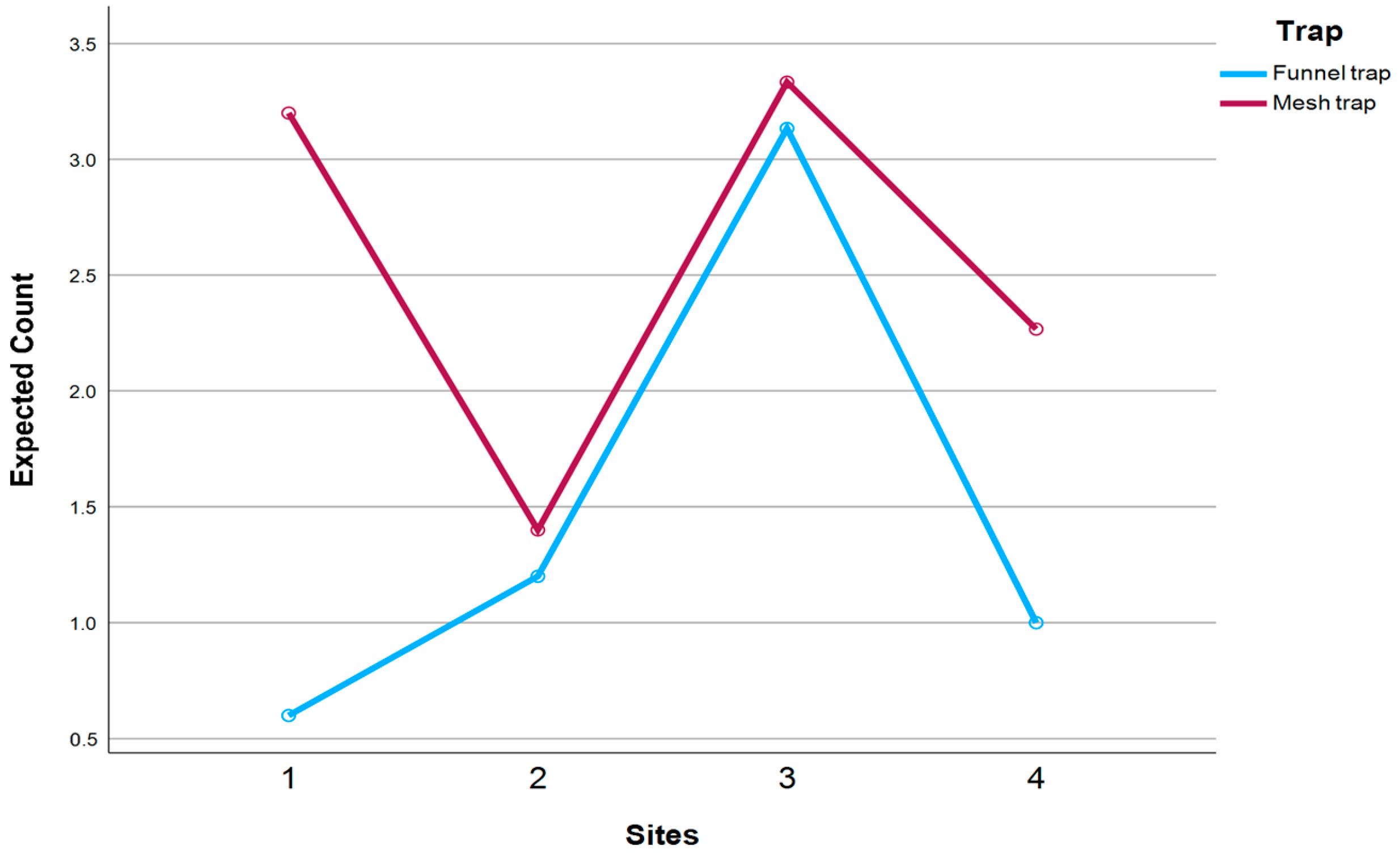
| Trap Type | Comparison | Regression Coefficient (β) | Standard Error (SE) | p-Value |
|---|---|---|---|---|
| Funnel Trap | Site 3 vs. Site 1 | 1.653 | 0.364 | <0.001 |
| Mesh Trap | Site 2 vs. Site 1 | −0.827 | 0.262 | 0.002 |
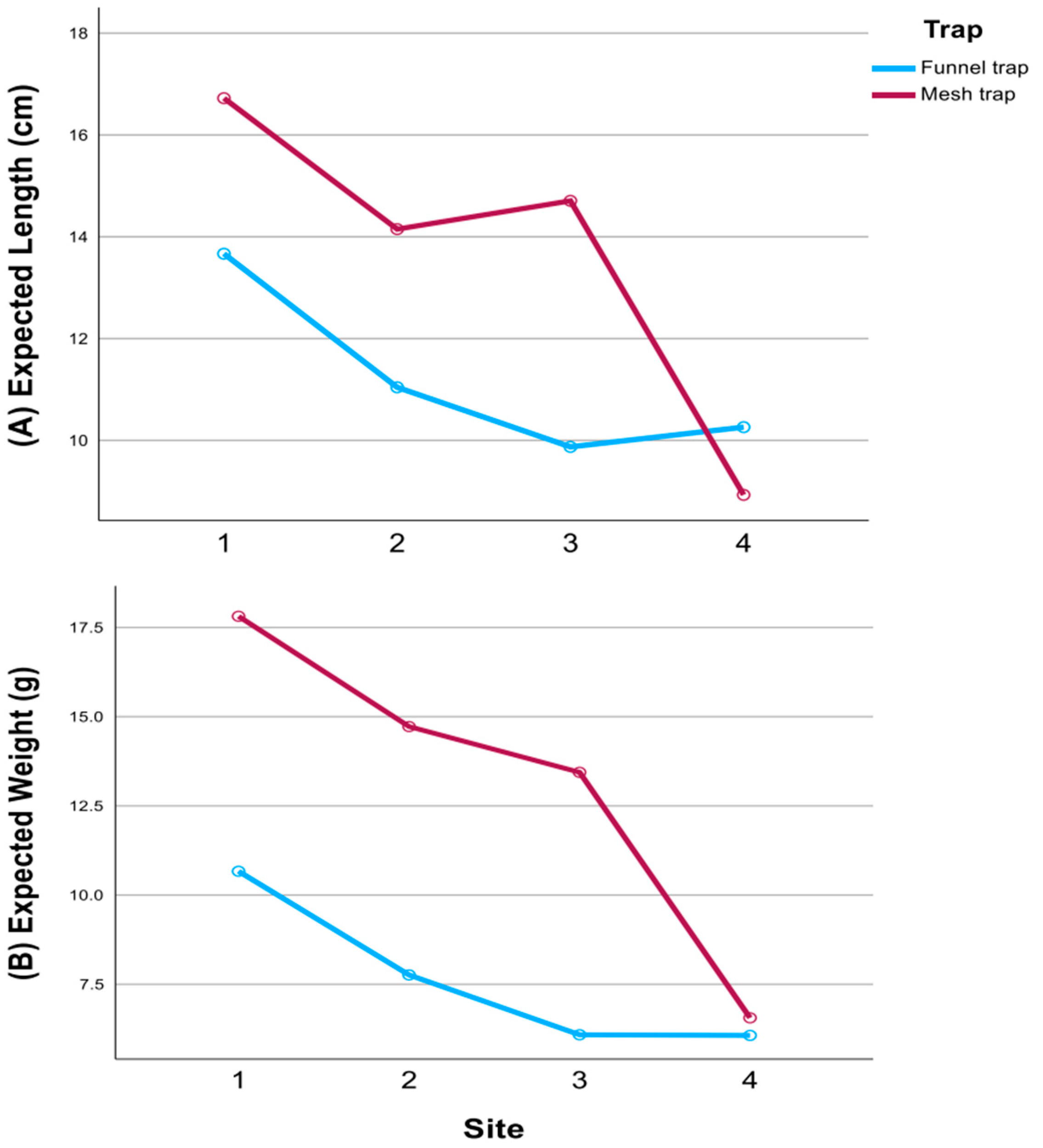
| Variable | Trap Type | Site | Regression Coefficient (β) | Standard Error (SE) | p-Value | Direction of Effect |
|---|---|---|---|---|---|---|
| Length | Funnel | Site 3 | 0.028 | 0.0094 | 0.003 | Smaller than Site 1 |
| Funnel | Site 4 | 0.024 | 0.0115 | 0.035 | ||
| Mesh | Site 4 | 0.052 | 0.0068 | <0.001 | ||
| Weight | Funnel | Site 3 | 0.071 | 0.0209 | <0.001 | Lighter than Site 1 |
| Funnel | Site 4 | 0.071 | 0.0280 | 0.011 | ||
| Mesh | Site 3 | 0.018 | 0.0069 | 0.008 | ||
| Mesh | Site 4 | 0.096 | 0.0142 | <0.001 |
| Onboard Session | ||||||
|---|---|---|---|---|---|---|
| 1 | 2 | 3 | 4 | 5 | ||
| Sept 2023 | Oct 2023 | Dec 2023 | Dec 2023 | Mar 2024 | ||
| Class | Species caught | |||||
| Teleostei | Chelon sp. | - | 0 | 0 | - | - |
| Dentex sp. | - | - | - | 0 | 0 | |
| Diplodus sargus | - | - | - | - | 0 | |
| Diplodus vulgaris | 0 | - | 0 | - | 0 | |
| Echiichthys vipera | - | - | 0 | - | - | |
| Lichia amia | - | - | 0 | - | - | |
| Mullus surmuletus | 6 | - | 7 | 5 | 3 | |
| Total no. of individuals caught | 17 | - | 13 | 8 | 6 | |
| Muraena helena | 0 | - | 0 | 0 | - | |
| Sarpa salpa | - | - | - | 0 | - | |
| Scorpaena sp. | 0 | - | 0 | 0 | 1 | |
| Total no. of individuals caught | 9 | - | 5 | 11 | 7 | |
| Serranus scriba | 0 | - | - | - | - | |
| Sparisoma cretense | 48 | - | - | 0 | - | |
| Total no. of individuals caught | 223 | - | - | 4 | - | |
| Sparus aurata | - | - | 0 | 0 | - | |
| Symphodus sp. | - | - | - | 0 | 0 | |
| Synodus saurus | 0 | - | - | - | - | |
| Elasmobranchii | Raja sp. | - | - | - | - | 0 |
| Cephalopoda | Octopus vulgaris | - | - | - | - | 0 |
| Sepia officinalis | - | 0 | 0 | 0 | 0 | |
| Gastropoda | Aplysia sp. | - | - | - | - | 0 |
| Charonia tritonis | 0 | - | - | - | - | |
| Bivalvia | Pinna rudis | - | - | - | 0 | - |
| Malacostraca | Erugosquilla massavensis | - | - | - | - | 0 |
| Portunus segnis | - | 0 | 0 | - | - | |
| Maja squinado | 0 | - | - | - | - | |
| Asteroidea | Echinaster sepositus | 0 | - | - | - | - |
| Total no. of fireworms caught | 315 | 0 | 8 | 90 | 26 | |
Disclaimer/Publisher’s Note: The statements, opinions and data contained in all publications are solely those of the individual author(s) and contributor(s) and not of MDPI and/or the editor(s). MDPI and/or the editor(s) disclaim responsibility for any injury to people or property resulting from any ideas, methods, instructions or products referred to in the content. |
© 2026 by the authors. Licensee MDPI, Basel, Switzerland. This article is an open access article distributed under the terms and conditions of the Creative Commons Attribution (CC BY) license.
Share and Cite
Scicluna, A.; Schembri, P.J. A Burning Issue: Interactions of the Bearded Fireworm Hermodice carunculata with Artisanal Fisheries—A Case Study from Malta (Central Mediterranean). Oceans 2026, 7, 18. https://doi.org/10.3390/oceans7010018
Scicluna A, Schembri PJ. A Burning Issue: Interactions of the Bearded Fireworm Hermodice carunculata with Artisanal Fisheries—A Case Study from Malta (Central Mediterranean). Oceans. 2026; 7(1):18. https://doi.org/10.3390/oceans7010018
Chicago/Turabian StyleScicluna, Antonia, and Patrick J. Schembri. 2026. "A Burning Issue: Interactions of the Bearded Fireworm Hermodice carunculata with Artisanal Fisheries—A Case Study from Malta (Central Mediterranean)" Oceans 7, no. 1: 18. https://doi.org/10.3390/oceans7010018
APA StyleScicluna, A., & Schembri, P. J. (2026). A Burning Issue: Interactions of the Bearded Fireworm Hermodice carunculata with Artisanal Fisheries—A Case Study from Malta (Central Mediterranean). Oceans, 7(1), 18. https://doi.org/10.3390/oceans7010018