Article

Natural Solutions to Environmental Degradation: Antioxidant and Anticorrosive Activities of Mentha pulegium L. Essential Oil


1
Laboratory of Advanced Materials and Process Engineering, Faculty of Science, Ibn Tofail University, Kenitra P.O. Box 133-14000, Morocco
2
Laboratory of Organic Chemistry, Catalysis and Environment, Faculty of Science, Ibn Tofail University, Kenitra P.O. Box 133-14000, Morocco
3
Department of Biology and Biochemistry, Faculty of Medicine, Arab American University, Ramallah P600, Palestine
4
LIMAS Laboratory, Faculty of Sciences Dhar El Mahraz, Sidi Mohamed Ben Abdellah University, Fez P.O. Box 30050, Morocco
5
Chemistry Department, Faculty of Science and Technology, Al-Quds University, Jerusalem P.O. Box 20002, Palestine
*
Author to whom correspondence should be addressed.
Chemistry 2026, 8(4), 53; https://doi.org/10.3390/chemistry8040053
Submission received: 30 January 2026 / Revised: 9 March 2026 / Accepted: 19 March 2026 / Published: 21 April 2026
(This article belongs to the Section Chemistry of Natural Products and Biomolecules)

Abstract

This study investigates the antioxidant and anticorrosive properties of Mentha pulegium L. essential oil (MP EO) as a sustainable and eco-friendly alternative to synthetic oxidation inhibitors. The antioxidant activity of MP EO was evaluated using the ferric reducing antioxidant power (FRAP) assay, which demonstrated a strong electron-donating capacity and effective reduction of ferric ions, indicating promising antioxidant potential. The anticorrosive performance was assessed on mild steel in 0.5 M H2SO4 using potentiodynamic polarization and electrochemical impedance spectroscopy (EIS). The results showed inhibition efficiencies of up to 75.8% at a concentration of 2 g/L. Molecular docking simulations revealed favorable binding interactions between the key oil components (pulegone and menthone) and the ROS-generating enzyme model (PDB ID: 2CDU), providing complementary mechanistic insight into their potential role in oxidative stress modulation. Additionally, quantum chemical calculations highlighted electronic properties favoring adsorption on metallic surfaces. Surface morphology analysis using SEM/EDX confirmed the formation of a protective film on steel in the presence of MP EO. These combined findings position Mentha pulegium essential oil as a potent, biodegradable candidate for both antioxidant applications and corrosion prevention in acidic environments.

1. Introduction

Oxidation is an unavoidable chemical process that occurs when substances interact with oxygen. While essential to many natural and industrial functions, it often leads to undesirable consequences. In the human body, oxidative reactions contribute to the deterioration of cells and tissues, playing a key role in the development of serious health conditions. For instance, the oxidation of low-density lipoproteins (LDL) accelerates the formation of arterial plaques, increasing the risk of cardiovascular diseases. Likewise, the accumulation of free radicals can damage DNA, promoting the onset of cancer. Oxidative stress is also implicated in neurodegenerative diseases such as Alzheimer’s and Parkinson’s, and contributes to insulin dysfunction and the progression of diabetes [1,2,3].
In the industrial world, oxidation, particularly the rusting of steel, poses a significant threat to the durability and safety of infrastructure. Corrosion weakens metal structures, reduces mechanical performance, and leads to costly maintenance and repairs. From bridges and pipelines to machinery and ships, the impact of oxidation is both widespread and economically burdensome [4,5,6,7,8].
Because of its dual impact on health and materials, finding effective ways to control oxidation is a pressing challenge. Traditional anti-corrosion and antioxidant solutions often rely on synthetic chemicals, which can be harmful to the environment and human health. As a result, research is increasingly focused on natural, sustainable alternatives. One promising avenue involves the use of essential oils and plant extracts with proven biological activity [9,10,11,12]. In this study, we investigate the potential of MP EO, an aromatic plant native to Morocco and widely recognized for its therapeutic and protective properties, as a natural antioxidant and a green, eco-friendly corrosion inhibitor. The acute toxicity of MP EO was evaluated in our previously published study. The results showed that no mortality or severe clinical signs occurred at doses of 300 and 2000 mg/kg during a 14-day observation period, suggesting an LD50 greater than 2000 mg/kg. A transient decrease in body weight was observed during the first days of exposure, likely due to the high pulegone content, but without lethal effects [10].

2. Materials and Methods

2.1. Extraction and Characterization

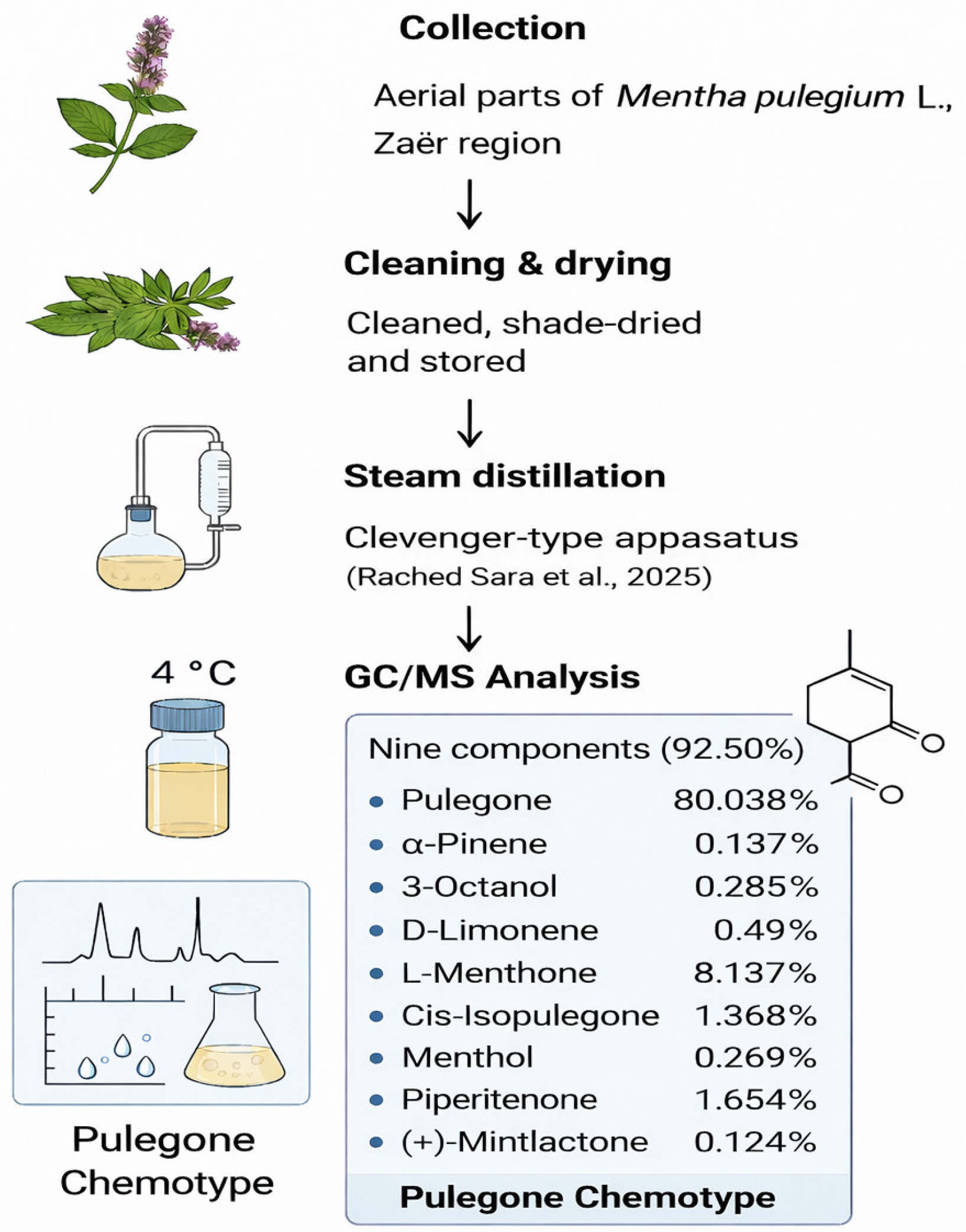
The aerial parts of Mentha pulegium L. were collected in the Zaër region of Morocco. The species was taxonomically identified, and a voucher specimen (BPRN49) has been deposited in the herbarium of the Laboratory of Plant, Animal, and Agro-Industrial Production at Ibn Tofail University. The essential oil was extracted by steam distillation using a Clevenger-type apparatus, following the procedure described by Rached et al. [10,11]. Briefly, 100 g of plant material was distilled with 600 mL of distilled water for 3 h. The obtained essential oil had a yield of 2.31% and was stored in sealed amber vials at 4 °C, protected from light and air. Its chemical composition was previously characterized by gas chromatography–mass spectrometry (GC–MS), revealing pulegone (80.038%) as the major constituent, followed by L-menthone (8.137%), piperitenone (1.654%), cis-isopulegone (1.368%), D-limonene (0.49%), 3-octanol (0.285%), menthol (0.269%), α-pinene (0.137%), and (+)-mintlactone (0.124%) [10]. These results confirm that the MP EO from the Zaër region of Morocco has a pulegone chemotype (Figure 1).

2.2. Antioxidant Power Assay

The reducing power of Mentha pulegium L. essential oil was evaluated according to a previously reported method using ferric ion (Fe3+) reduction as a reference assay [11,13]. Briefly, 1 mL of the essential oil solution at varying concentrations (ranging from 0 to 1 mg/mL) was mixed with 2.5 mL of phosphate buffer (0.2 M, pH 6.6) and 2.5 mL of potassium ferricyanide solution (1% w/v). The resulting mixture was incubated at 50 °C for 20 min, then centrifuged at 8653× g for 10 min. Subsequently, 2.5 mL of the supernatant was mixed with 2.5 mL of distilled water and 0.5 mL of 0.1% ferric chloride (FeCl3) solution. A blank was prepared in parallel using the same conditions but without the sample. Absorbance was measured at 700 nm using a spectrophotometer (UV-2005, Selecta, Barcelona, Spain). Ascorbic acid was used as the standard antioxidant for comparison. The IC50 value, defined as the concentration corresponding to 50% of maximal absorbance, was calculated from the linear regression of the absorbance values as a function of sample concentration.

2.3. Molecular Docking Methodology

Molecular docking was carried out to investigate the potential interactions between the major identified compounds and their target receptor, aiming to better understand the binding affinity and interaction mechanisms. The chemical structures of the selected ligands were drawn using ChemDraw 3D (version 16.0) and geometrically optimized using the MM2 force field to obtain the most stable conformers. Protein and ligand preparation, including the removal of water molecules, correction of missing side chains, and merging of non-polar hydrogens, was performed using Discovery Studio 2021. The docking simulations were then conducted using AutoDock Tools-1.5.6, employing the Lamarckian Genetic Algorithm to identify the most favorable binding poses with minimal binding free energy.
The docking protocol utilized a grid box of 60 × 60 × 60 points along the x, y, and z axes, with a population size of 300 and 50 docking runs per ligand. Based on the results of the biological assays, the antioxidant-related receptor was selected for analysis. The three-dimensional structure of PDB ID: 2CDU, a NADPH-dependent oxidoreductase-related protein, was retrieved from the Protein Data Bank (Resolution: 1.80 Å). The grid box was centered at coordinates X = 17.671, Y = 9.357, and Z = 51.526 Å to encompass the active site of the protein [10,14,15].
Discovery Studio Visualizer was used to display and analyze docked complexes. Hydrophobic interactions, π–π stacking interactions, and hydrogen bonds were found and recorded. Without claiming definitive evidence of enzymatic inhibition, docking results were interpreted as possible interactions with ROS-generating enzymes, supplementing experimental antioxidant data.

2.4. Electrochemical Measurements

A mild steel specimen with the following chemical composition (in %) was used for this study: 0.110 C, 0.240 Si, 0.470 Mn, 0.010 Cr, 0.020 Mo, 0.100 Ni, 0.030 Al, 0.140 Cu, <0.0012 Co, <0.003 V, 0.060 W, with Fe as the remaining balance. Prior to testing, the mild steel samples were polished using abrasive papers of varying grit sizes (from 180 to 2000 grit), then thoroughly cleaned with distilled water, degreased with ethanol, and air-dried at room temperature. Test solution concentrations ranged from 0.5 to 2.0 g/L, and a control solution was also prepared for comparison purposes.
Electrochemical tests were conducted using a PGZ100 Potentiostat/Galvanostat (Radiometer Analytical, Villeurbanne, France) controlled by the VoltaMaster 4 software. A conventional three-electrode electrochemical cell with a volume of 50 mL was employed, in which the working electrode was a mild steel plate with an exposed surface area of 1 cm2. The counter electrode was a platinum wire, and a saturated calomel electrode (SCE) served as the reference. Electrochemical impedance spectroscopy (EIS) measurements were performed at open circuit potential (OCP), using 10 points per decade across a frequency range from 100 kHz to 10 MHz, with an applied AC perturbation amplitude of 10 mV. Prior to the measurements, the copper electrode was immersed for 30 min in 0.5 M H2SO4 solution, both in the absence and presence of various concentrations of the investigated extract. Potentiodynamic polarization was carried out by sweeping the electrode potential from −900 mV to −100 mV at a scan rate of 1 mV/s [5,6,9,16].

2.5. Computational Methods and Definitions

Gaussian Calculations

To delve into the electronic properties of the isolated compounds, density functional theory (DFT) calculations were performed using the Gaussian 09 software. The B3LYP functional paired with the 6-311+G(d,p) basis set served as the computational framework for this investigation. Input parameters and molecular structures were meticulously prepared using the GaussView 6.0 program, ensuring precision in the setup. Given that electrochemical corrosion predominantly unfolds in liquid environments, accounting for solvent effects is crucial [17]. A widely adopted approach involves modeling hydrogen-bonded clusters of solvent molecules surrounding the solute. To accurately simulate the aqueous environment, the self-consistent reaction field (SCRF) theory was employed, leveraging the polarized continuum model (PCM) introduced by Tomas. This method treats the solvent as a homogeneous, dielectric continuum, crafting a molecular-shaped cavity to encapsulate the solute. The reliability of the PCM approach in corrosion inhibitor studies has been extensively validated by numerous researchers, solidifying its role as a trusted tool in the field [18].

2.6. Quantum Global Chemical Reactivity

We conducted detailed calculations of various structural indices, including charge distribution, molecular orbital energies, and the dipole moment (μ). These descriptors were used to evaluate key electronic properties, such as the energy gap, which reflects the compound’s chemical reactivity and stability, along with total hardness (η) and softness (σ), providing insights into the molecule’s electron transfer flexibility. Electronegativity (χ) was also determined to estimate the number of electrons transferred Δ N 110 ) from the inhibitor to the metal atom. In addition, we computed the electrophilicity (ω) and nucleophilicity (ϵ) indices to assess the molecule’s electron-accepting and donating capacities. Furthermore, the electronic back-donation energy was calculated to understand the stabilization of the molecule–metal interaction, along with the electronic charge-accepting capacity and initial interaction energy (Δψ) between the inhibitor and the metal surface. These properties were derived using global hardness (η) and electronegativity (χ), offering a comprehensive view of the inhibitor’s performance and interaction with metal surfaces [19].
I P = E H U M O
E A = E L U M O
Δ E g a p = E L U M O E H O M O
η = E L U M O E H O M O 2
σ = 1 / η
χ = E L U M O + E H O M O 2
ω = χ 2 2 η
ϵ = 1 ω
Δ N 110 = ϕ χ I n h 2 ( η F e + η I n h )
Here, ϕ represents the work function, which is used to measure the electronegativity of iron. For the Fe (110) surface, the work function value is ϕ = 4.82 eV, a value reported to confer higher stabilization energy [19].
In our study, we adopted a theoretical electronegativity value of and total hardness, based on the assumption that for metallic bulk, the ionization potential (I) equals the electron affinity (A), since metallic bulk is softer than neutral metallic atoms [20].

2.7. Fukui Induce and Dual Fukui Descriptors

The nucleophilic and electrophilic sites of the pulegone and menthone molecular structures were determined using Fukui functions. The equations used to identify the electrophilic attack sites, nucleophilic attack sites, local softness, and local electrophilicity are provided in Equations (10)–(13). These descriptors help to pinpoint the reactive regions of the molecule, facilitating the understanding of how it interacts with its environment during chemical processes [21].
f k + = q k N + 1 q k N
f k = q k N q k N 1
σ k α = σ f k α
ω k α = ω f k α
In these equations, the variables represent the electron population of atom k in the neutral, anionic, and cationic states of the molecule, respectively. The values correspond to the local softness describing electrophilic, radical, and nucleophilic attacks, respectively.
The double Fukui descriptor, or second-order Fukui functions, along with the associated dual local softness and dual local philicity, are employed to offer a clearer and more intuitive understanding of the molecule’s reactive behavior. These descriptors provide valuable insights into the molecule’s potential reactivity and interactions, particularly in the context of electrophilic and nucleophilic attacks [22]. By analyzing these second-order descriptors, one can better predict the sites on a molecule that are most likely to undergo such chemical interactions.
f k 2 = f k + f k
σ k = σ k + σ k
ω k = ω k + ω k

2.8. Simulations of Molecular Dynamics (MD)

The interaction of pulegone and menthone with an iron surface was investigated under acidic conditions using a computational framework designed to model realistic chemical environments [23]. The Fe110 cleave plane, known for its high reactivity due to its open atomic arrangement, was selected as the substrate, with a thickness of six atomic layers ensuring accurate representation of bulk properties while maintaining computational feasibility. A 13 × 13 supercell was employed to minimize artificial interactions between periodic images, complemented by a vacuum layer of 25 Å in the z-direction to prevent spurious interactions across boundaries [24]. The system was solvated with 500 water molecules with a density of 1 g/cm3, incorporating 10 hydroniums and 5 chloride ions to simulate a 0.5 M sulfuric acid environment, mimicking experimental conditions relevant to corrosion or catalytic processes [25]. This configuration offers a robust framework for analyzing the adsorption behavior, stability, and potential inhibitory effects of pulegone and menthone on the iron surface under acidic conditions.

2.9. Reagents

All chemicals used in this study were sourced from Oxford, Sciencemed, VWR Prolabo Chemicals, Sigma-Aldrich, and Honeywell.

3. Results and Discussion

3.1. Antioxidant Activity

The antioxidant capacity of Mentha pulegium L. essential oil (MP EO) was evaluated using the Ferric Reducing Antioxidant Power (FRAP) assay, which measures the ability of antioxidants to reduce ferric ions (Fe3+) to ferrous ions (Fe2+) through a redox reaction in the presence of a ferricyanide complex. This redox reaction leads to the formation of a blue colored ferrous tripyridyltriazine complex, the intensity of which is directly proportional to the sample’s reducing power. MP EO at a concentration of 0.45 mg/mL demonstrated a significant reducing capacity, with a value of 38.77 mg ascorbic acid equivalents (AAE) per gram of dry extract. This corresponds to a reduction percentage of 38.77%, indicating a moderate but meaningful antioxidant potential. The observed activity can be attributed to the presence of bioactive constituents in the essential oil, such as phenolic monoterpenes, which are known for their electron-donating and free-radical neutralizing abilities. Furthermore, MP EO demonstrated significant DPPH free radical scavenging activity, with an IC50 value of 1.550 mg/mL. It also exhibited inhibitory activity against ABTS●+ radicals, with an IC50 value of 29.320 mg/mL [10].
These findings suggest that Mentha pulegium essential oil represents a promising natural source of antioxidants, with potential applications in food preservation, pharmaceutical formulations, and as a complementary green inhibitor in corrosion protection systems where oxidative processes are involved.

3.2. Molecular Docking

Molecular docking studies were performed to investigate the potential interactions of the major identified compounds, menthone and pulegone, using the NADPH-dependent oxidoreductase model (PDB ID: 2CDU). Menthone exhibited a favorable docking score of −5.94 kcal/mol, while pulegone showed a comparable binding affinity, suggesting stable accommodation within the modeled active site.
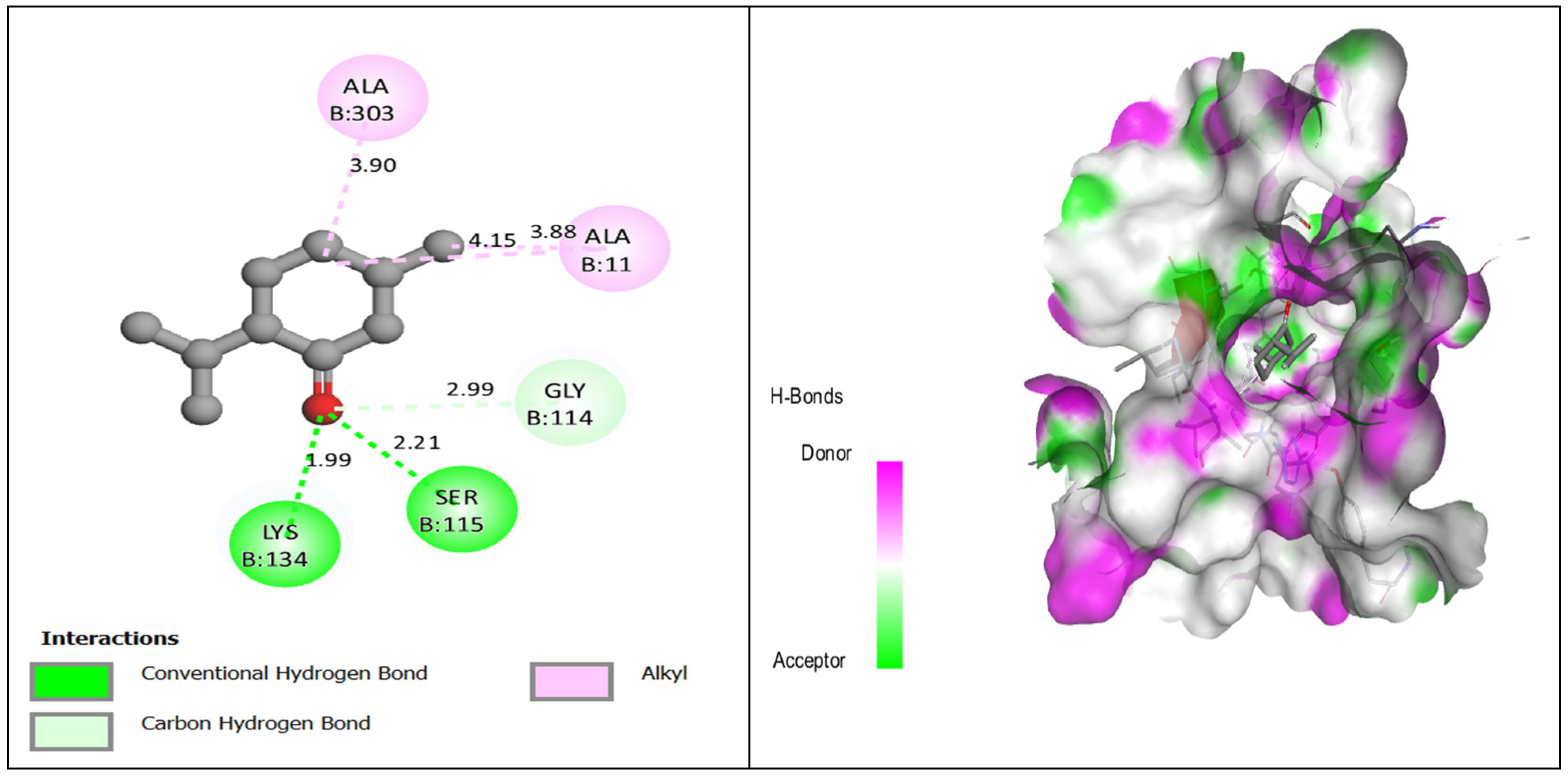
Detailed analysis of the menthone–2CDU complex (Figure 2) revealed the formation of two hydrogen bonds involving residues Ser134 and Lys134, with bond distances of 2.21 Å and 1.99 Å, respectively. In addition, two hydrophobic alkyl interactions were observed with residues Ala303 and Ala11 at distances of 3.90 Å and 3.88 Å, respectively. These interactions collectively contribute to the stabilization of the ligand within the binding pocket.
For the second most abundant compound, pulegone, a docking score of −6.42 kcal/mol was obtained with PDB ID: 2CDU, indicating favorable binding interactions within the modeled active site.
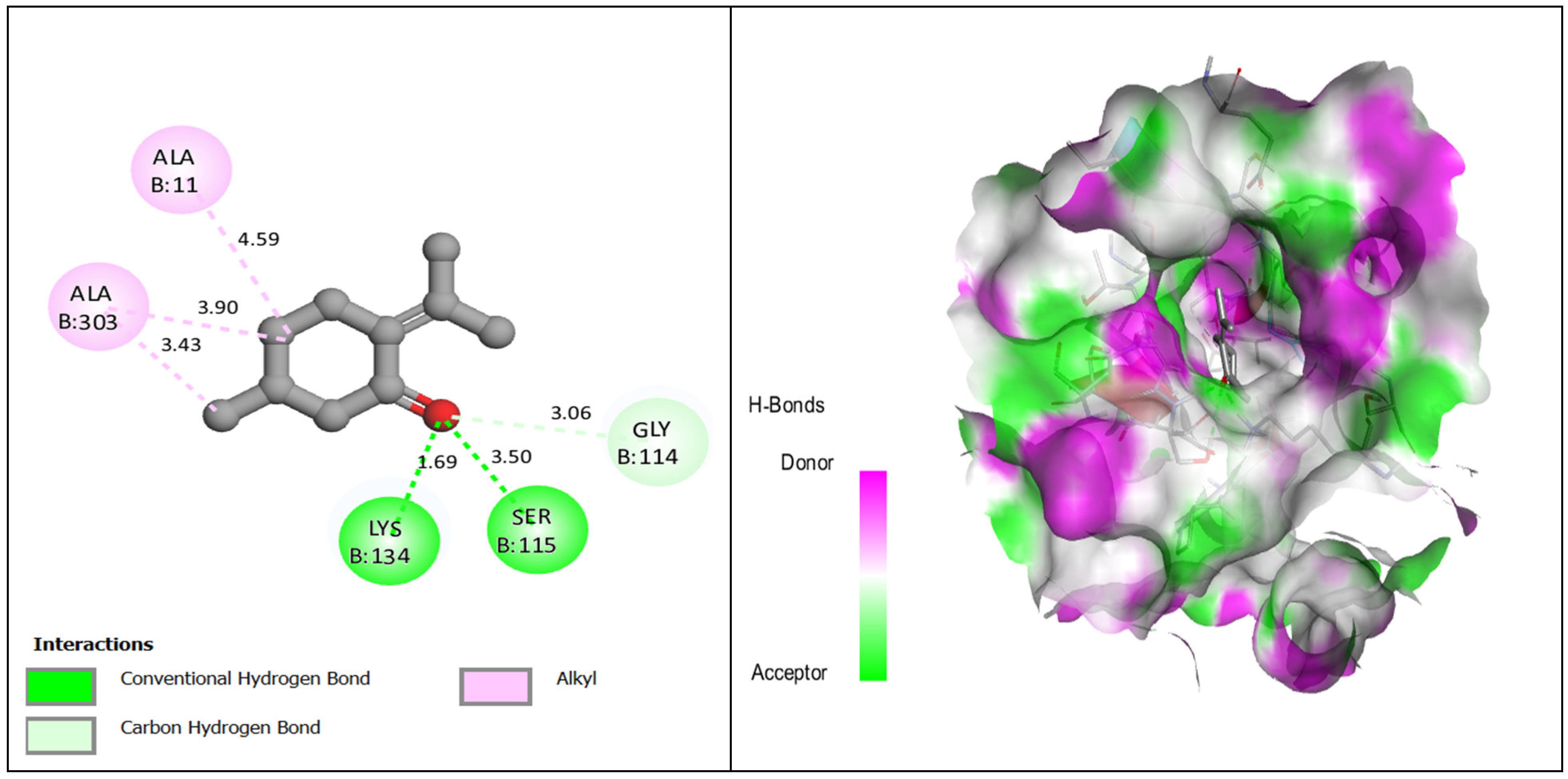
The docking analysis of the pulegone–2CDU complex (Figure 3) revealed interaction patterns similar to those observed for the menthone–2CDU complex, including hydrogen bonds and hydrophobic contacts, suggesting a comparable hypothetical binding mode. These results indicate that pulegone may potentially interact with reactive oxygen species (ROS) generating enzymes, providing complementary mechanistic insight into its antioxidant properties. While molecular docking does not directly confirm antioxidant activity, these findings complement the experimentally observed ferric-reducing activities of pulegone-containing extracts.
In conclusion, the docking results suggest that the major compounds of Mentha pulegium essential oil may potentially interact with ROS-generating enzymes, offering additional mechanistic insight into oxidative stress modulation. Importantly, the computational findings do not constitute direct evidence of antioxidant activity but rather indicate a possible enzymatic contribution. This hypothetical mechanism complements the direct chemical antioxidant activity demonstrated by the FRAP assay, in which menthone- and pulegone-rich extracts exhibited significant ferric-reducing capacities. Collectively, these data demonstrate that Mentha pulegium essential oil possesses experimentally validated chemical antioxidant properties, alongside a potential capacity to interact with ROS-related enzyme systems.

3.3. Anticorrosion Effect

The results of antioxidant activity indicate that the essential oil has a significant electron-donating capacity. Both biological oxidative stress and metal corrosion involve redox reactions, and compounds with reducing properties can inhibit anodic metal oxidation and form a protective adsorbed layer. Based on this principle, we evaluated its corrosion-inhibiting efficiency.

3.3.1. Stationary Study

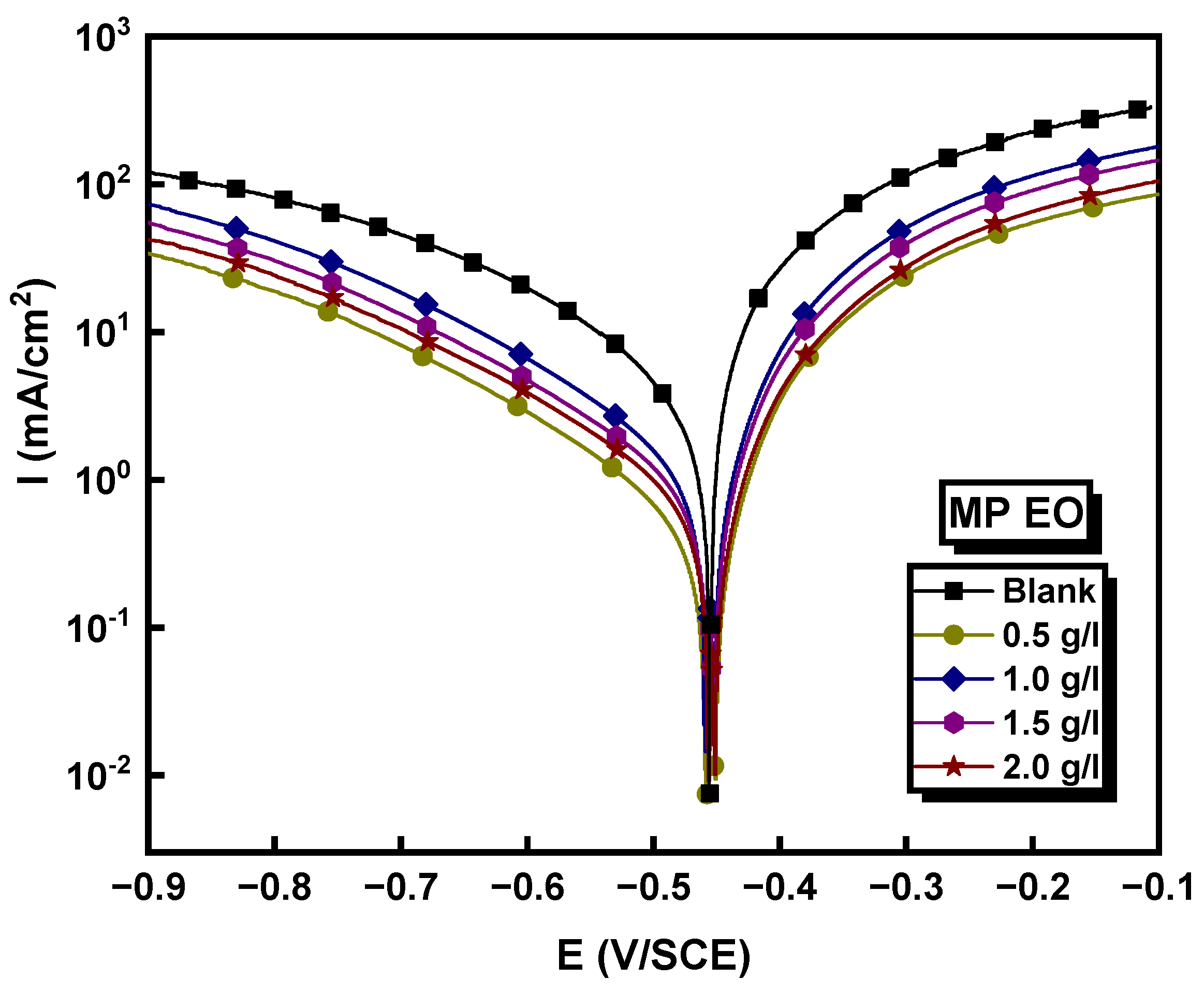
To investigate the kinetics of the anodic and cathodic reactions, potentiodynamic polarization measurements were performed in 0.5 M H2SO4, both in the absence and presence of various concentrations of the inhibitor. The resulting polarization curves are presented in Figure 4. Electrochemical parameters derived from the Tafel extrapolation method, including the corrosion potential (Ecorr), anodic Tafel slope (βa), cathodic Tafel slope (βc), and corrosion current density (icorr), are summarized in Table 1 [7,26].
The addition of the inhibitor significantly decreases the corrosion current density, indicating a reduction in the corrosion rate of steel in an acidic medium (Figure 4). This behavior suggests that the inhibitor impedes both the cathodic hydrogen evolution reaction and the anodic dissolution of steel. This inhibition is likely due to the adsorption of the essential oil molecules onto the steel surface, forming a protective barrier that blocks active corrosion sites.
Moreover, the inhibition efficiency (ηpp%) of the essential oil increases with concentration, reaching a maximum at 2 g/L for Mentha pulegium essential oil (MP EO). As shown in Table 1, the progressive decline in icorr values with increasing inhibitor concentration correlates with improved inhibition efficiency, which reaches up to 75.8% for MP EO.
The shifts in corrosion potential (Ecorr) between the uninhibited and inhibited systems are generally less than 85 mV, indicating that the inhibitor affects both anodic and cathodic reactions. This behavior suggests that the compound under investigation acts as a mixed-type inhibitor for steel corrosion in 0.5 M H2SO4. Additionally, the changes observed in the anodic Tafel slope values (βa) upon the addition of the inhibitor indicate the predominant influence on the kinetics of the anodic dissolution process.
These results confirm that Mentha pulegium essential oil (MP EO) exhibits both anodic and cathodic inhibition effects. At higher concentrations, the adsorption of MP EO onto the steel surface is likely more extensive and effective, potentially leading to increased surface coverage. This strong adsorption behavior results in enhanced inhibition efficiency. Furthermore, the possibility of multilayer adsorption at elevated concentrations may contribute to the effective blocking of active sites, thereby providing robust protection against corrosion.

3.3.2. Transitional Study

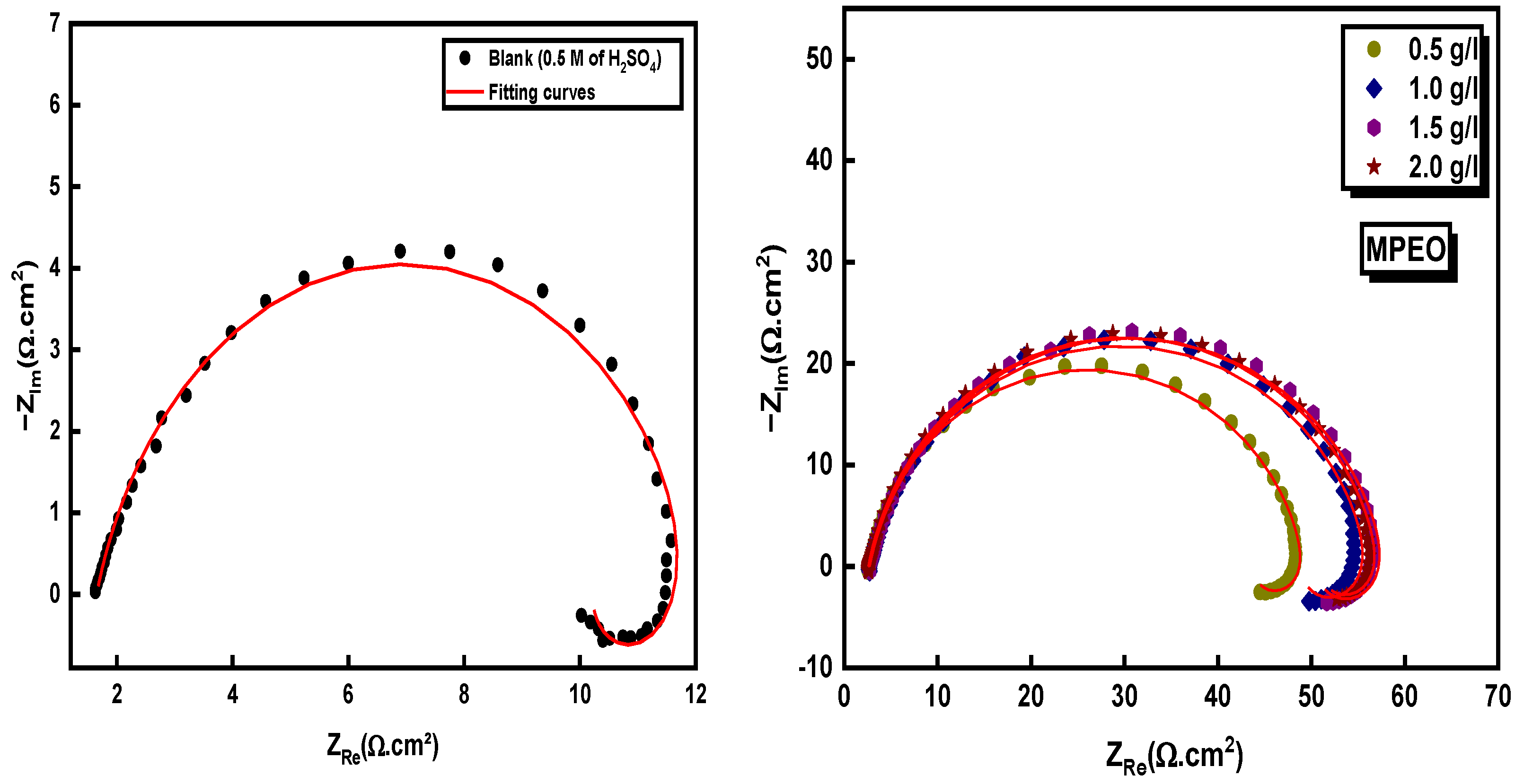
Figure 5 presents the Nyquist impedance plots for mild steel in 0.5 M H2SO4, both in the absence and presence of Mentha pulegium essential oil (MP EO) at various concentrations. The curves exhibit two distinct time constants under all conditions: a high-frequency semicircle corresponding to charge transfer resistance, and a low-frequency inductive loop. The latter is typically associated with relaxation processes related to the adsorption of species such as adsorbed sulfate ions (SO42−ads) and protons (H+ads) on the steel surface [27].
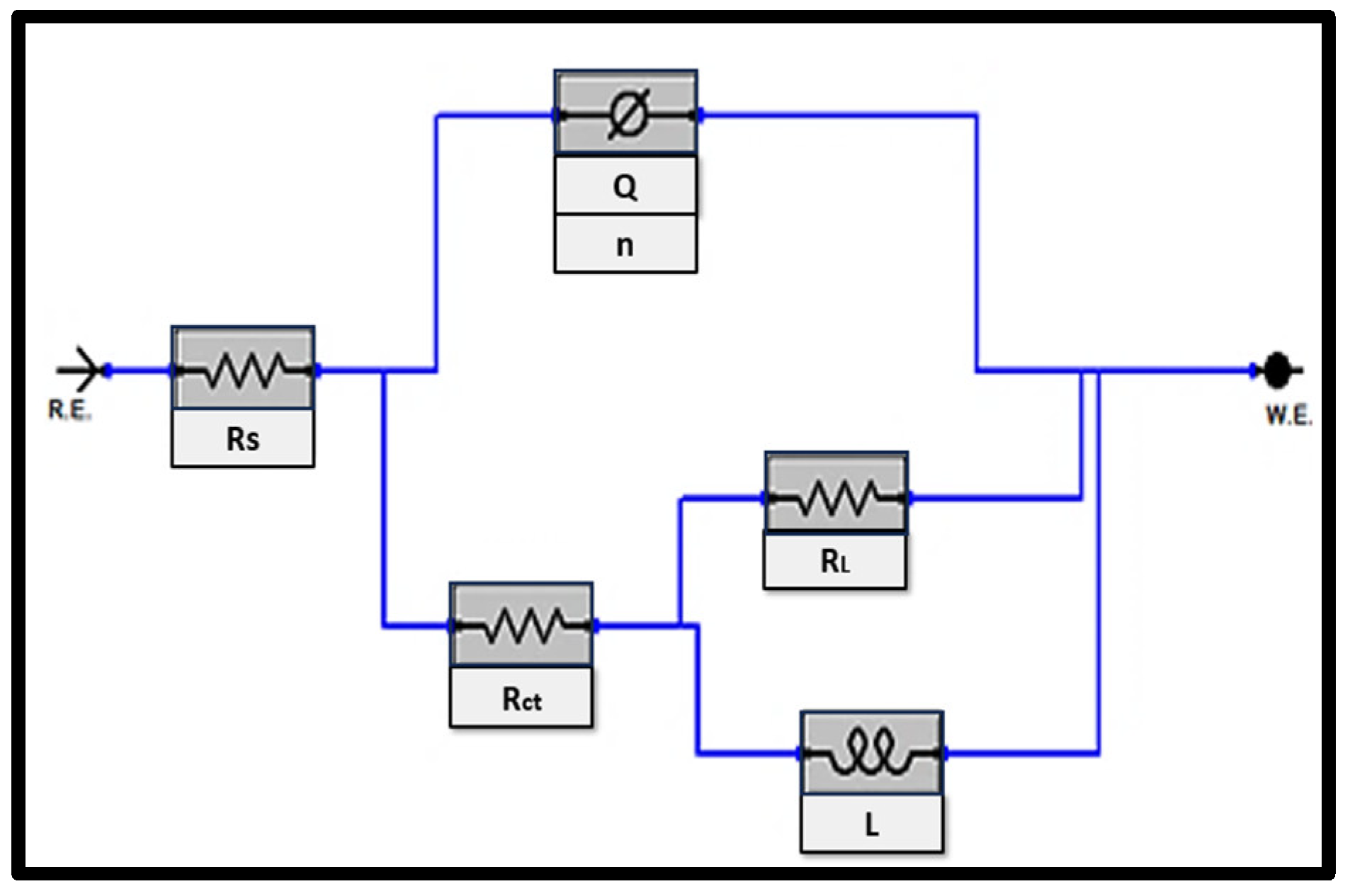
To analyze the electrochemical behavior, the experimental data were fitted using the equivalent circuit model shown in Figure 6, where Rs denotes the solution resistance, Rct the charge transfer resistance, Q the constant phase element, and Cdl the double-layer capacitance.
Table 2 demonstrates that increasing the concentration of the inhibitor leads to a rise in charge transfer resistance (Rct), indicating an enhancement in inhibition efficiency [28,29]. This is accompanied by a decrease in the double-layer capacitance (Cdl) compared to the uninhibited solution, suggesting that the inhibition effect of the studied Mentha pulegium essential oil (MP EO) results from its adsorption onto the steel surface [30].
Furthermore, the presence of inductive elements at various MP EO concentrations supports the occurrence of an induction phenomenon, reflecting the formation of a protective inhibitory film at the metal–solution interface. In the absence of the inhibitor, the dissolution mechanism of steel in 0.5 M H2SO4 proceeds according to the following reaction pathway [31]:
Chemistry 08 00053 i001
In the presence of the inhibitor, the corrosion mechanism proceeds as follows:
Chemistry 08 00053 i002

3.4. Temperature Effect

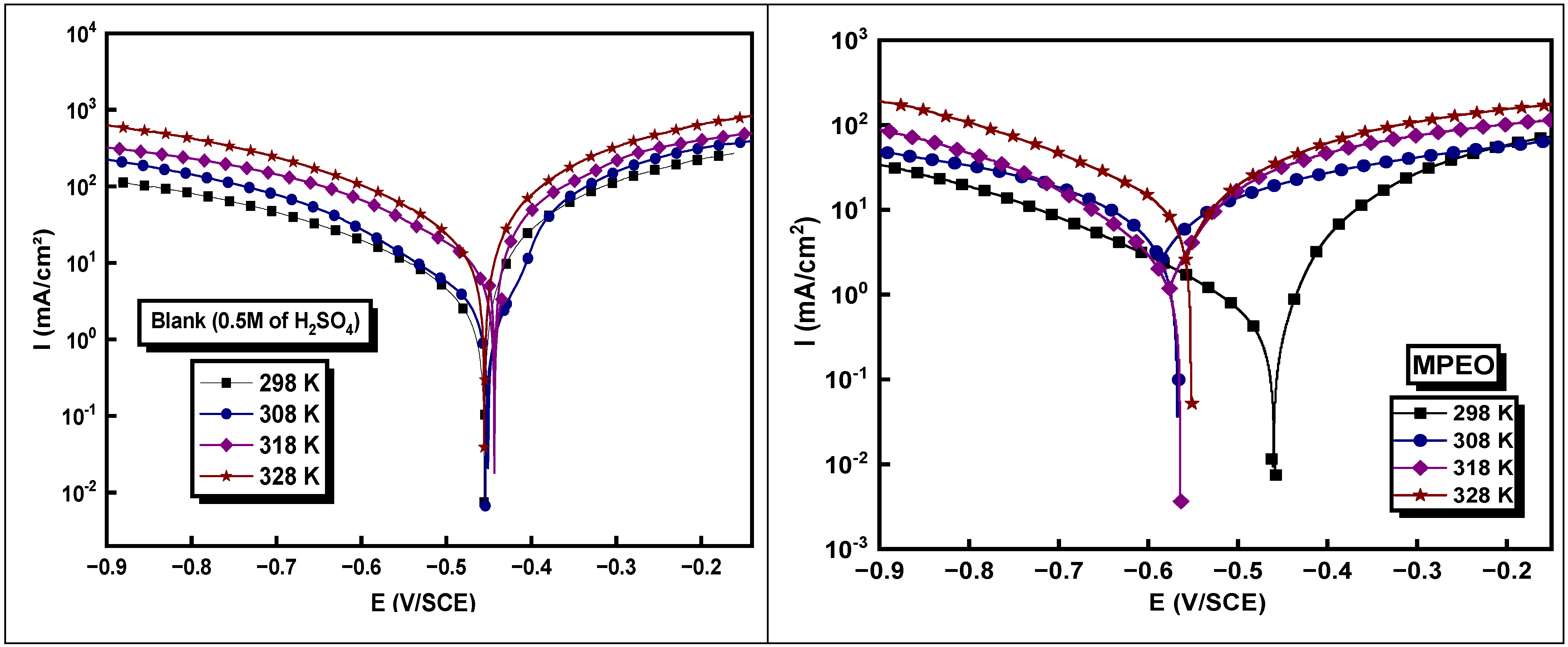
To evaluate the effect of temperature on the performance of the MP EO inhibitor, potentiodynamic polarization measurements were carried out on mild steel in 0.5 M H2SO4, both in the absence and presence of 2 g/L MP EO, over a temperature range of 298 to 328 K. The corresponding polarization curves are shown in Figure 7, and the extracted electrochemical parameters are summarized in Table 3.
As illustrated in Figure 7, both the anodic and cathodic branches shift with increasing temperature. Table 3 highlights a clear rise in current densities as the temperature increases, which leads to a reduction in the inhibition efficiency of the inhibitor in the sulfuric acid solution. Nonetheless, despite this moderate decrease, the inhibitor continues to exhibit protective performance against the corrosion of mild steel in the H2SO4 medium [32].
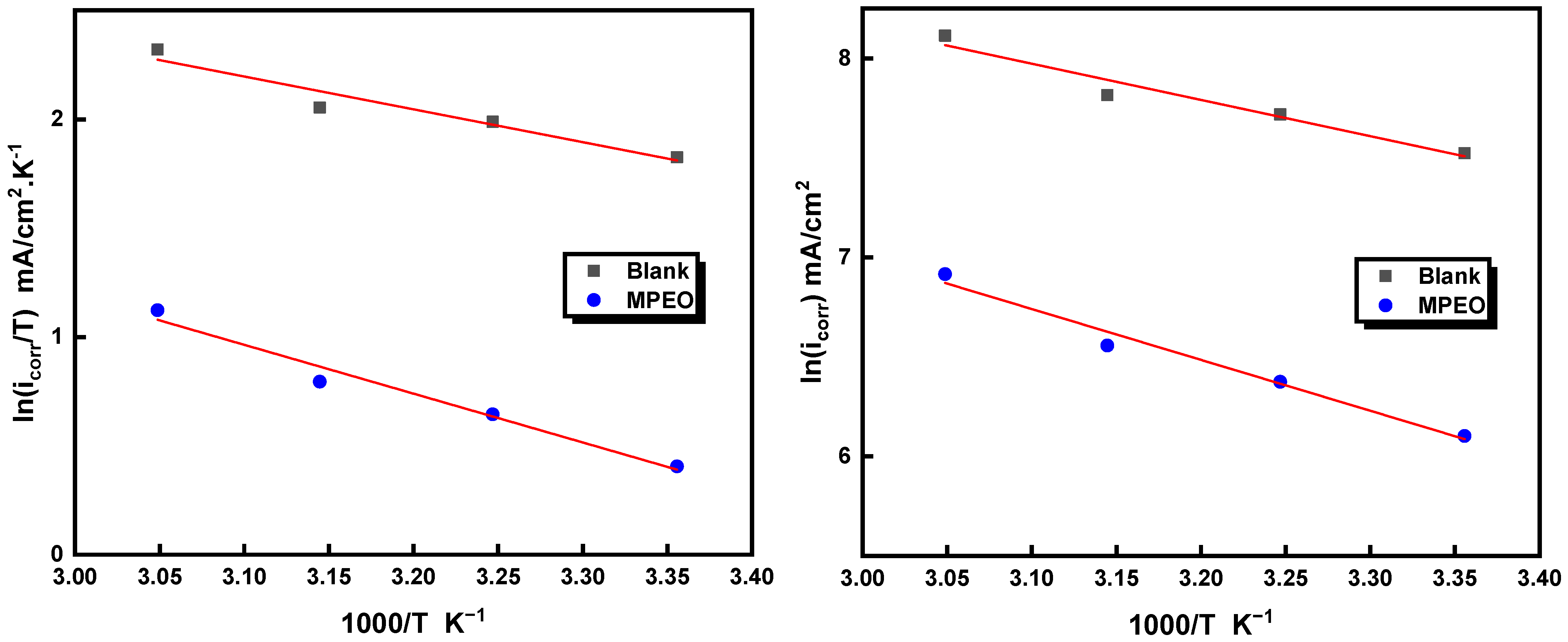
Arrhenius plots for Ln(icorr) versus 1000/T and Ln(icorr/T) versus 1000/T are presented in Figure 8 [33,34], and the corresponding thermodynamic activation parameters are summarized in Table 4. The activation energy (Ea) value in the solution containing the MP EO inhibitor is higher than that in the uninhibited solution, due to the formation of a compact barrier layer on the steel surface [5]. The increased energy barrier for the corrosion process in the presence of the inhibitor suggests that its adsorption on the metal surface is likely of an electrostatic nature [35]. The positive enthalpy (ΔHa) values indicate that the dissolution process of steel is endothermic. Furthermore, the activation entropy (ΔSa) values, also reported in Table 4, are negative, and the observed increase in ΔSa in the presence of the inhibitor suggests a decrease in disorder during the transition from reactants to the activated complex [7,36].

3.5. Surface Characterization (SEM/EDX)

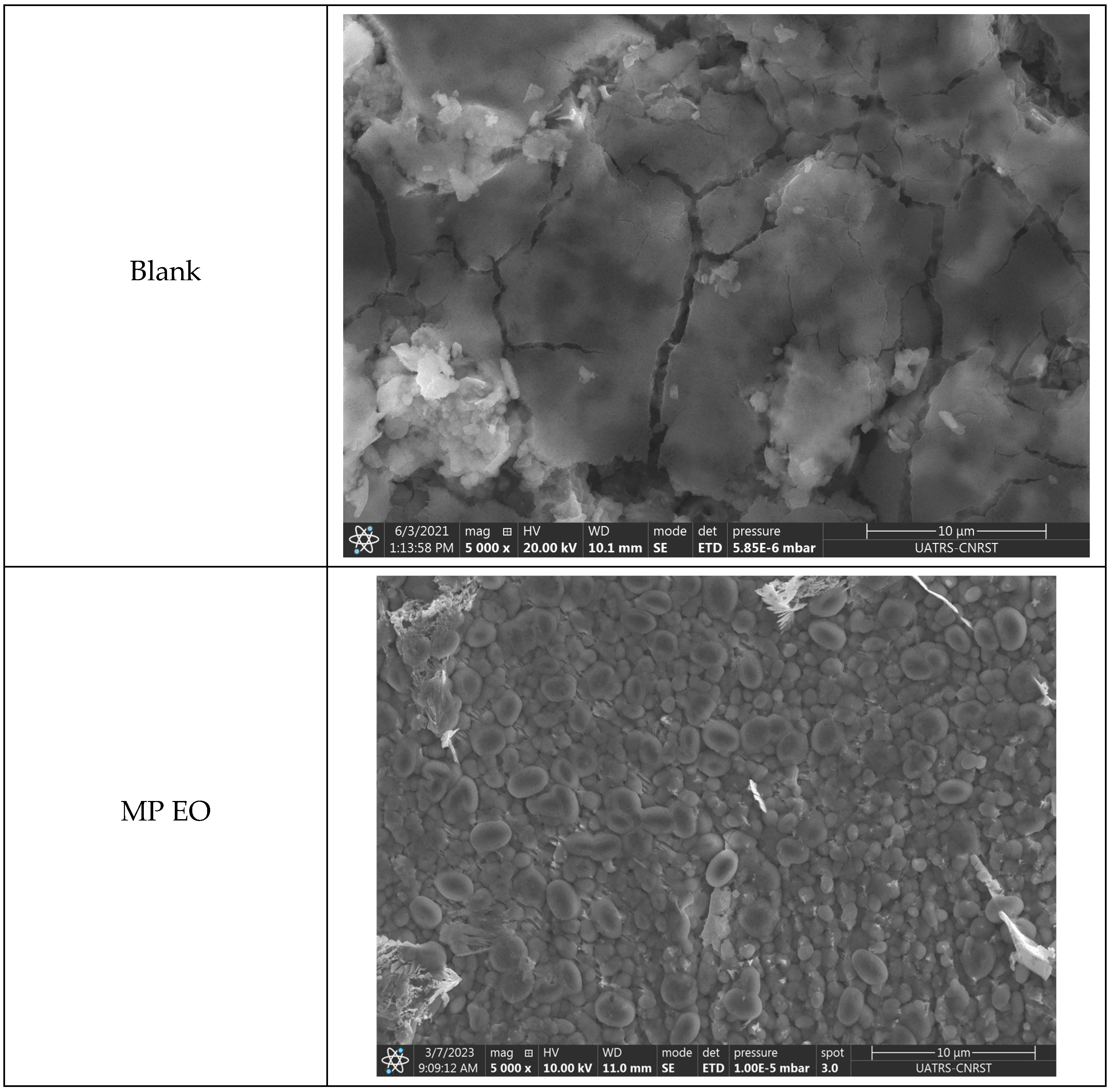
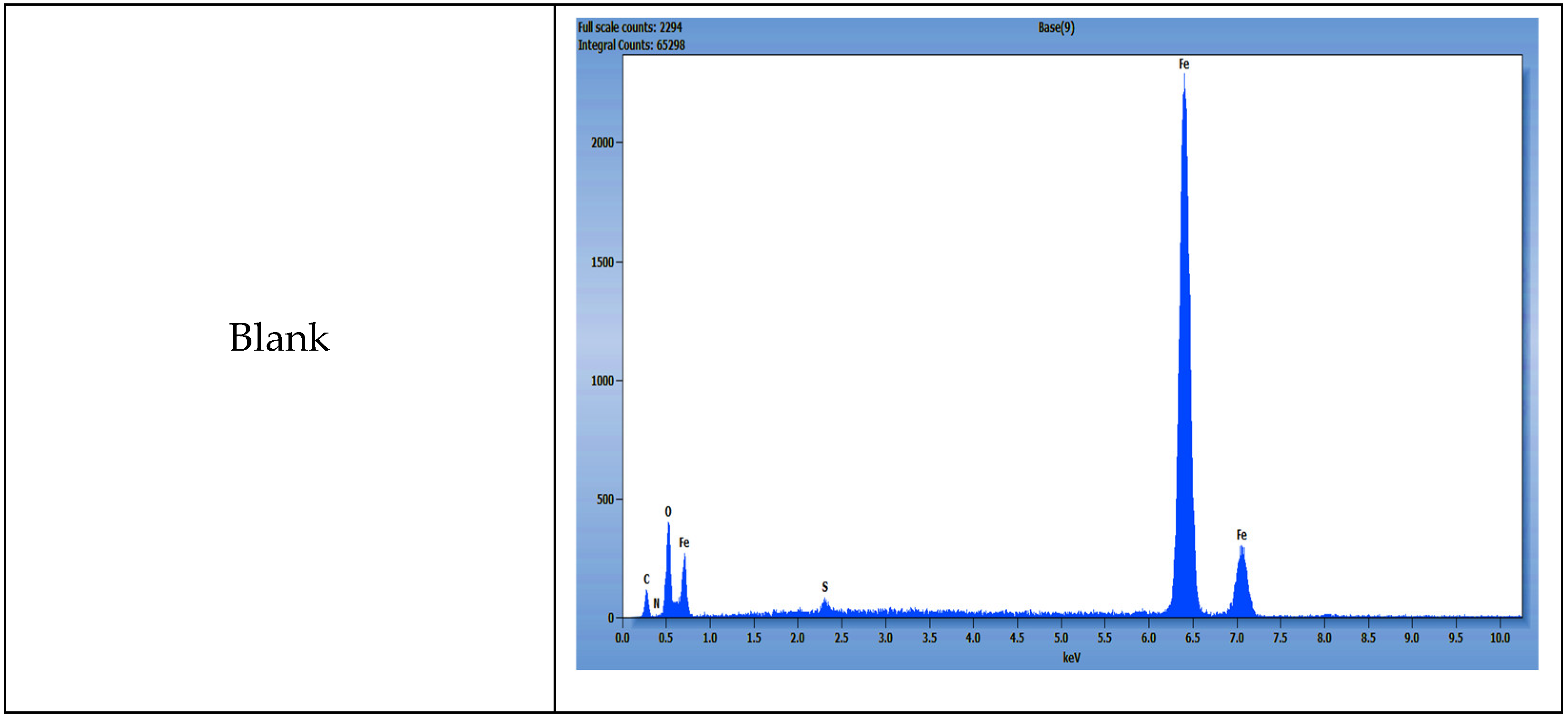
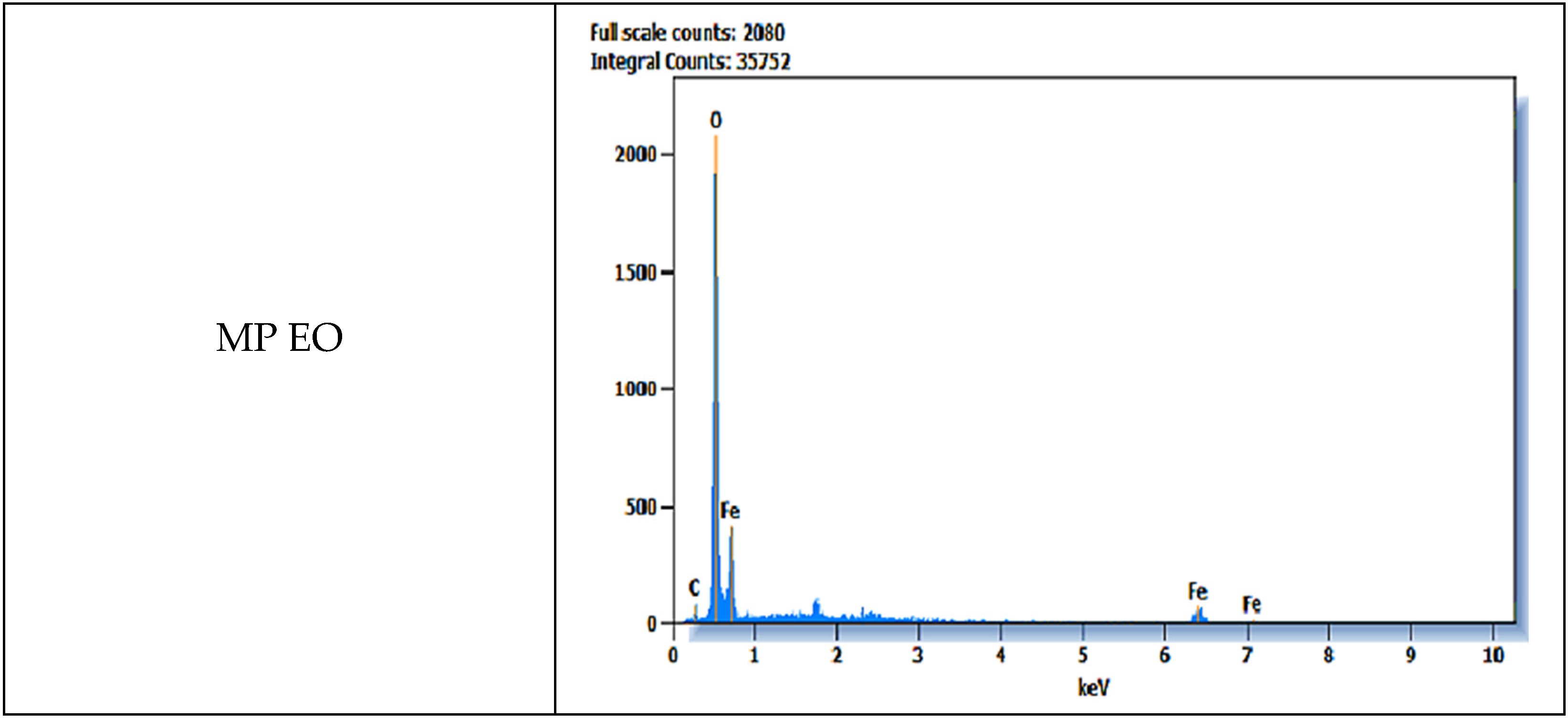
In order to verify the effect of the inhibitor on the surface morphology of steel, we conducted tests after six hours of immersion, both with and without essential oil derived from MP, using SEM-EDX. The images and spectra obtained are compiled in Figure 9 and Figure 10.
The SEM photograph reveals that in the absence of the inhibitor (Figure 9), the metal surface is heavily damaged. However, after the addition of MP, small particles were unevenly distributed in the case of MP EO, indicating the presence of organic compounds. These observations suggest that corrosion protection in this case is due to the formation of an adsorbed protective layer on the steel surface [37].
The EDX results, which further confirm the SEM observations, show the disappearance of sulfur (S), a corrosive element for the metal, after the addition of the MP EO inhibitor, along with an increase in the content of elements, especially C and O. This suggests the adsorption of the oil extract on the metal surface, serving as a protective barrier. This may explain why the oil extract covers most of the surface and comes into contact with the mild steel, potentially enabling adsorption (Figure 10). The presence of O atoms in the inhibitor, mainly from oxygenated monoterpenes in the essential oil, likely enhances its interaction with the Fe surface, resulting in higher adsorption energy [27,38].

3.6. Quantum Chemical Calculations

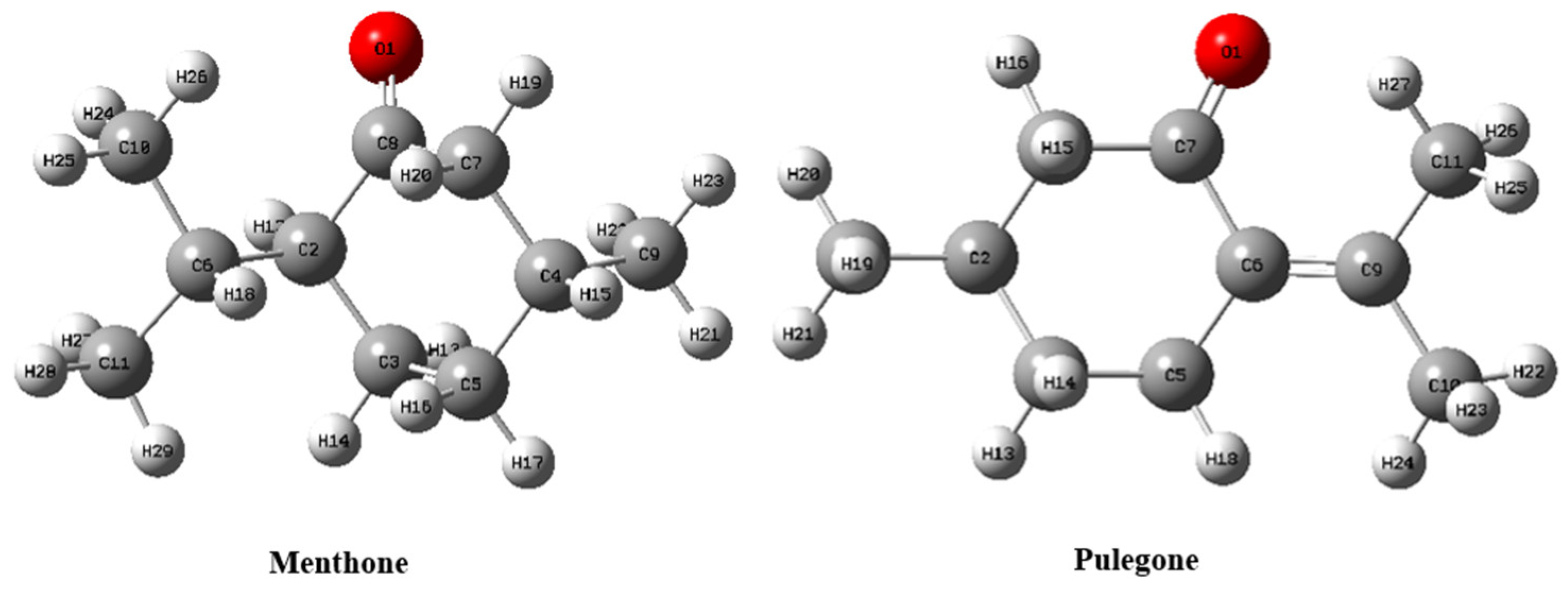
To better understand the interactions between the essential oil studied (MP) and the mild steel surface, the study focused on two main components: menthone (8.137%) and pulegone (80.038%). These molecules were evaluated in their neutral form due to the absence of sites favorable to protons in the acidic environment. Figure 11 shows the most stable geometries in the aqueous phase, highlighting their potential interactions with the mild steel surface. The optimized electronic structures correspond to energy minima, characterized by the absence of imaginary frequencies, indicating that the configurations are stable [39].

Global Reactivity Descriptors

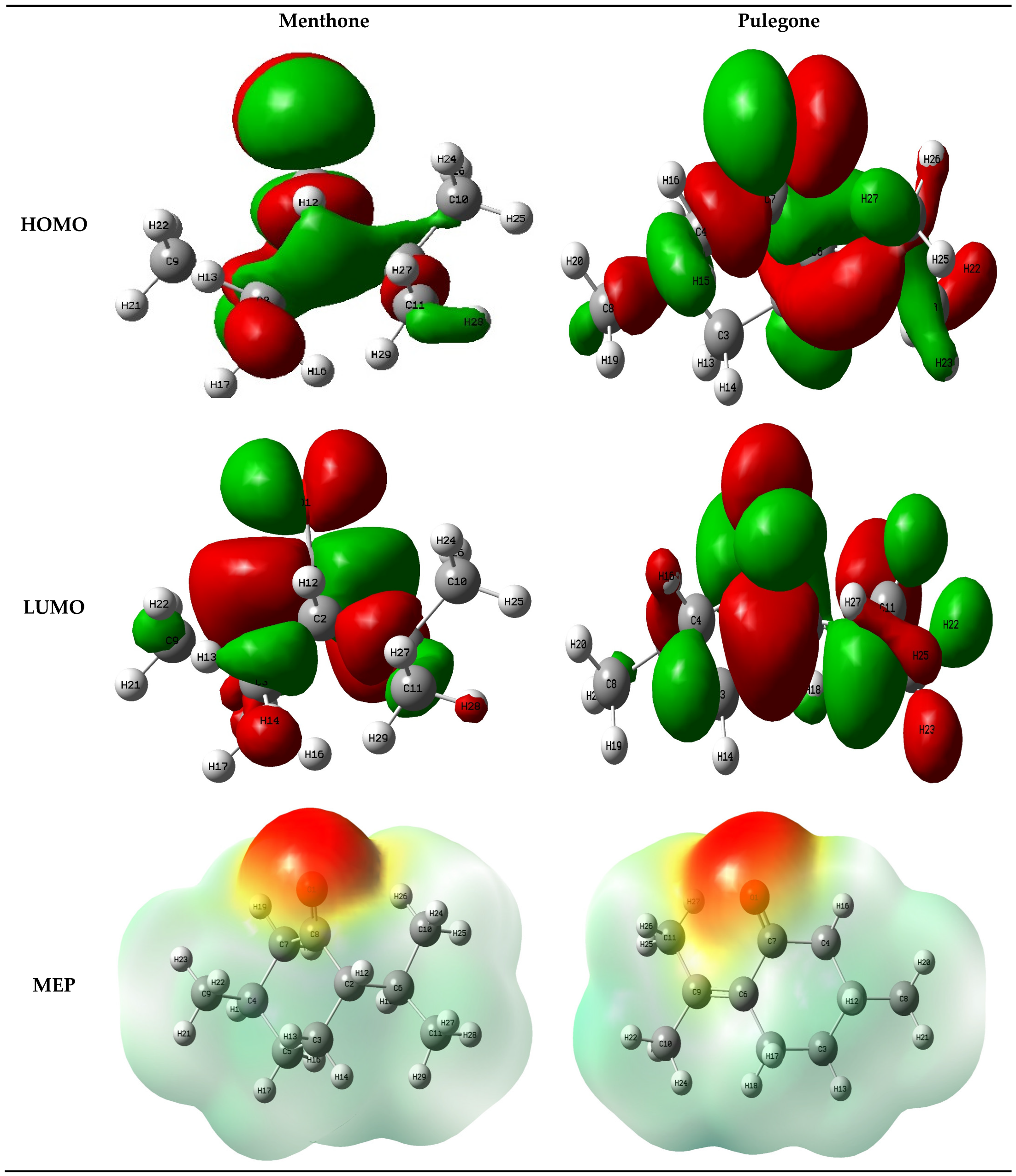
To effectively explore and predict the corrosion inhibition mechanism, it is essential to study the frontier molecular orbitals. Analysis of these orbitals is of vital importance in elucidating the chemical reactivity of molecules. The HOMO and LUMO of a given molecule indicate its capacity to donate and accept electrons respectively [30]. The density distributions of the FMOs and the overall density of the molecular electrostatic potential (MEP) for all the selected molecules are shown in Figure 12, displaying an almost uniform pattern.
As shown in Figure 12, the electron densities of the frontier orbitals (FMOs) are distributed over the entire molecular surface for both molecules. On the other hand, for menthone, the HOMO is distributed throughout the molecule, while the LUMO is mainly located on the -CH3 and -C=O groups. For pulegone, the FMOs are distributed throughout the molecule, with the exception of certain functional groups. The LUMO orbital excludes the -CH3 group, while the HOMO is distributed over the -C=C- and -C=O groups [40]. This distribution implies strong adsorption onto the steel surface via these sites, highlighting their function as electron donor and acceptor sites and suggesting the potential existence of electrophilic and nucleophilic adsorption sites on the Fe surface [41]. These sites validate the robust inhibitory efficacy of the MP essential oil studied. These components can provide a first layer of protection that adheres firmly to the mild steel surface, while other secondary elements can reinforce this action through additional reactions. The distribution of charges, visualized by the molecular electrostatic potential (MEP), reveals areas of high electron density (negative, in red) and low electron density (positive, in blue). This representation can be used to identify the reactive sites of a molecule, making it easier to understand its interactions with electrophilic or nucleophilic species [42]. The molecular electrostatic potential (MEP) representation confirms that both molecules have red regions, corresponding to areas of high electron density, in agreement with the results obtained from the analysis of frontier orbitals (FMOs) [43]. These red regions, often located around the -C=O and -C=C- groups, indicate the presence of negative partial charges, highlighting the molecules’ potentially reactive sites. This correlation between MEP and FMOs enhances our understanding of the electronic properties and reactivity of molecules by clearly identifying the areas likely to interact with electrophilic or nucleophilic species [44]. Table 5 shows the quantum chemical descriptors of menthone and pulegone, two key components of MP essential oil, assessed in the gas and aqueous phases.
From Table 5, pulegone exhibits a lower energy gap and higher electrophilicity than menthone, indicating greater reactivity. These results suggest that pulegone is more likely to participate in chemical interactions, particularly in polar environments such as water [45]. In terms of electrophilicity (ω), pulegone values are higher than menthone, indicating a stronger tendency to accept electrons. In contrast, menthone showed a higher nucleophilicity (ε) than pulegone, reflecting a greater ability to donate electrons. Also, from the Δ N 110 values, menthone and pulegone show values well below 3.6, with 0.2625 (gas) and 0.2264 (aqueous) for menthone, and 0.168 (gas) and 0.1367 (aqueous) for pulegone, respectively. In accordance with the study by Lukovits [46], these low values indicate that the inhibition efficiency of the two molecules increases with their ability to donate electrons. Menthone, with slightly higher Δ N 110 values than pulegone, could therefore exhibit a more pronounced inhibitory potential, particularly in aqueous media. Finally, analysis of hardness (η) and softness (σ) reveals that pulegone, with lower hardness and higher softness, is more reactive than menthone [47]. This increased reactivity, linked to a narrower energy gap and facilitated electronic redistribution, makes pulegone a softer and more reactive molecule [48].

3.7. Fukui Functions

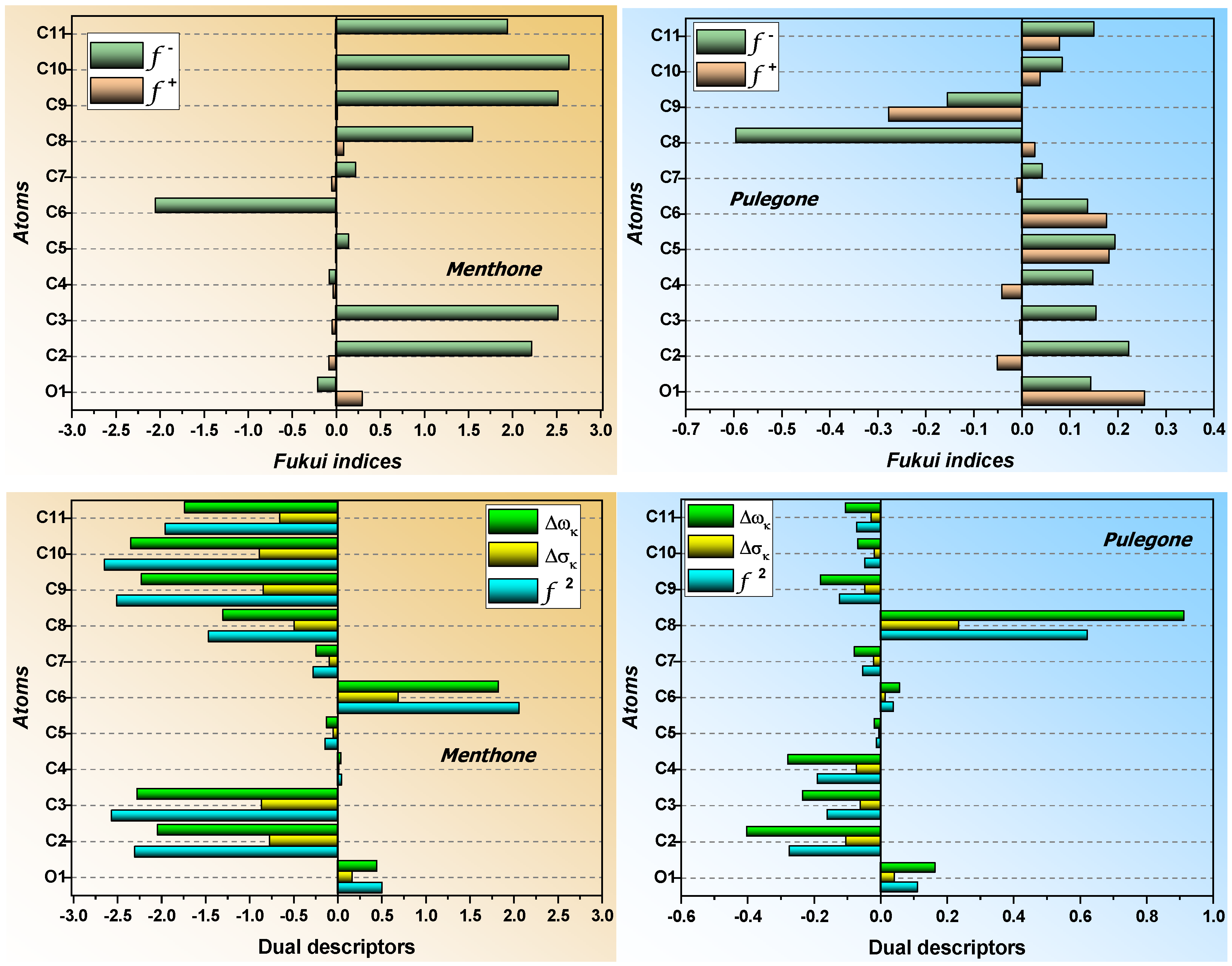
The values of the Fukui functions identify the most reactive sites in a molecule, in perfect harmony with the analyses of the molecular frontier orbitals (FMO) and the molecular electrostatic potential (MEP) [49]. These functions can be used to locate the regions where the molecule is likely to undergo electrophilic or nucleophilic attacks, offering a complementary view to that provided by FMOs and MEP.
Figure 13 shows the values of the functions for the atoms in the menthone and pulegone molecules, identifying the most reactive sites. For menthone, the O1 atom shows high values of (0.5074) and (0.4504), indicating a highly reactive site, probably due to the presence of the carbonyl group (-C=O). In contrast, atoms C9 and C10 show high negative values, suggesting a strong tendency to act as nucleophilic sites. For pulegone, the O1 atom also shows notable reactivity, with positive values of (0.1125) and (0.1649), while the C8 atom exhibits a high value of (0.6236), indicating a potentially electrophilic site. These results are in agreement with the frontier orbital (FMO) and molecular electrostatic potential (MEP) analyses, confirming that the identified sites are the most likely to participate in chemical interactions.

MD Simulations

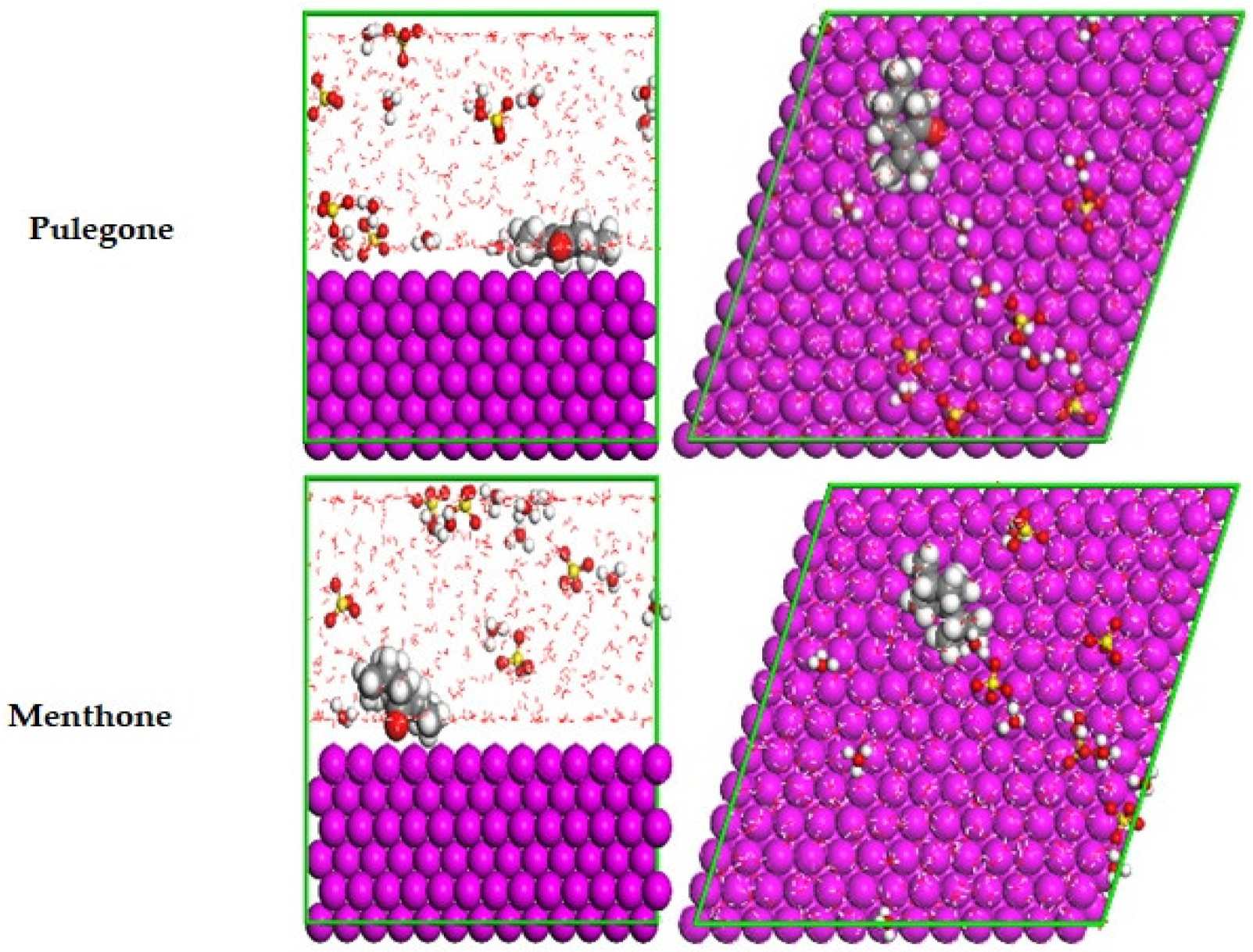
Molecular dynamics simulations offer valuable theoretical insights into how inhibitor molecules interact with metal surfaces, such as iron in the Fe110 configuration [50]. As shown in Figure 14, the most stable adsorption configurations of the two plant-derived inhibitor molecules adopt a parallel orientation relative to the Fe110 surface. This positioning allows for optimal interaction between the molecule and the metal [51]. Stabilization of these configurations arises primarily from strong interactions between the vacant 3D orbitals of iron atoms and specific features of the inhibitor molecules, particularly heteroatoms like oxygen, polar functional groups, and π-bonded systems, all of which are known to exhibit high affinity for metallic surfaces [52].
Such favorable adsorption not only enables effective surface coverage but also influences the local arrangement of nearby iron atoms, indicating a degree of surface reorganization in response to molecular binding [53]. Understanding the behavior of the inhibitor molecules in the presence of a solvent further clarifies the mechanisms behind their corrosion-inhibiting properties. Importantly, the flat, parallel alignment of the molecules promotes uniform surface penetration, facilitating the formation of a continuous protective layer [54]. This layer acts as a physical barrier, limiting the access of corrosive species, especially sulfur ions, to the underlying metal and thereby reducing the overall rate of corrosion. When examining how the menthone and pulegone molecules interact with the iron surface, we can directly evaluate the system’s adsorption energy. Adsorption energy serves as a key indicator of how effectively these organic molecules bind to the metal surface. The more negative the value, the stronger the binding interaction [55]. The calculated adsorption energies for all studied cases are summarized in Table 6.
The protonation of inhibitory molecules significantly enhances their interaction with the metallic surface, mainly by increasing positive charges that reinforce electrostatic attractions. In contrast, in their neutral state, these interactions are mainly driven by Van der Waals forces and coordination bonds formed through electron-donating atoms, such as oxygen atoms and π-systems [56]. These results demonstrate that the anticorrosive efficiency of the inhibitor is strongly dependent on its molecular orientation and the specific nature of interactions between its functional groups and the metal surface. A well-aligned orientation facilitates uniform surface coverage, thereby minimizing the number of active sites accessible for corrosion processes [57]. The calculated adsorption energies of the main inhibitor molecules in their neutral form indicate that the strength of their interaction with the surface is highly dependent on their individual chemical structures. In general, the more negative the adsorption energy, the stronger the binding to iron atoms, a trend often associated with better anticorrosive performance. This relationship is largely determined by the nature of the functional groups present in each molecule and their capacity to engage with the metal surface through electrostatic forces, coordination bonding, or Van der Waals interactions [45]. This increased affinity is mainly due to the enhanced molecular polarity introduced by protonation, which strengthens electrostatic interactions with the charged surface. Additionally, in acidic environments, protonated inhibitors can form favorable interactions with ions present in the electrolyte, further stabilizing their adsorption.
Taken together, these findings strongly suggest that the protonated forms of the studied molecules are more efficient corrosion inhibitors. Their improved performance in acidic conditions stems from their ability to form a dense, uniform protective layer on the mild steel (MS) surface, effectively blocking active sites and reducing the likelihood of corrosion reactions.

4. Conclusions

The present study highlights the dual functionality of Mentha pulegium L. essential oil (MP EO) as an effective antioxidant and green corrosion inhibitor. The antioxidant activity of MP EO, demonstrated by FRAP assays, reflects the capacity of its major components, particularly pulegone and menthone, to donate electrons and scavenge free radicals. Molecular docking simulations provide complementary insight, suggesting potential interactions with ROS-generating enzymes, which may contribute to oxidative stress modulation. Electrochemical investigations revealed that MP EO provides substantial protection against the corrosion of mild steel in 0.5 M H2SO4, with inhibition efficiencies reaching up to 75.8%. The inhibitor exhibits mixed-type behavior, suppressing both anodic and cathodic reactions. Complementary EIS analysis confirmed the formation of a protective film on the metal surface, corroborated by SEM/EDX observations showing smoother morphology and favorable surface chemistry in the presence of MP EO. Thermodynamic and kinetic parameters further indicated that the inhibition mechanism is primarily governed by physical adsorption, which remains effective even at elevated temperatures. Quantum chemical calculations suggest a high adsorption potential for major EO constituents due to favorable electronic properties.
Overall, Mentha pulegium essential oil emerges as a sustainable, biodegradable, and multifunctional agent for corrosion protection and oxidative stress management, highlighting its potential for environmentally friendly industrial applications and the broader promise of plant-based solutions in green chemistry.

Author Contributions

Conceptualization, S.R. and H.I.; methodology, S.R., K.M. and M.R.; software, O.K. and M.E.-r.; formal analysis, M.K. and A.H.; investigation, S.R., K.M., M.R. and M.K.; data curation, O.K., M.E.-r. and A.H.; writing—original draft preparation, S.R., K.M. and M.R.; writing—review and editing, H.I., M.E.T. and F.A.-R.; supervision, M.E.T. and F.A.-R.; project administration, F.A.-R. All authors have read and agreed to the published version of the manuscript.

Funding

This research received no external funding.

Data Availability Statement

The data presented in this study are available upon request from the corresponding author.

Conflicts of Interest

The authors declare no conflicts of interest.

References

  1. Myszko, M.; Bychowski, J.; Skrzydlewska, E.; Łuczaj, W. The Dual Role of Oxidative Stress in Atherosclerosis and Coronary Artery Disease: Pathological Mechanisms and Diagnostic Potential. Antioxidants 2025, 14, 275. [Google Scholar] [CrossRef] [PubMed]
  2. Olufunmilayo, E.O.; Gerke-Duncan, M.B.; Holsinger, R.M.D. Oxidative Stress and Antioxidants in Neurodegenerative Disorders. Antioxidants 2023, 12, 517. [Google Scholar] [CrossRef] [PubMed]
  3. Zhao, Y.; Ye, X.; Xiong, Z.; Ihsan, A.; Ares, I.; Martínez, M.; Lopez-Torres, B.; Martínez-Larrañaga, M.-R.; Anadón, A.; Wang, X.; et al. Cancer Metabolism: The Role of ROS in DNA Damage and Induction of Apoptosis in Cancer Cells. Metabolites 2023, 13, 796. [Google Scholar] [CrossRef] [PubMed]
  4. Mzioud, K.; Habsaoui, A.; Rached, S.; Lachhab, R.; Dkhireche, N.; Ouakki, M.; Galai, M.; El Fartah, S.; Touhami, M.E. Synergistic Effect from Allium Sativum Essential Oil and Diethylthiourea for Corrosion Inhibition of Carbon Steel in 0.5 M H2SO4 Medium. In Proceedings of the Sixth International Symposium on Dielectric Materials and Applications (ISyDMA’6); Vaseashta, A., Achour, M.E., Mabrouki, M., Fasquelle, D., Tachafine, A., Eds.; Springer International Publishing: Cham, Switzerland, 2022; pp. 251–266. ISBN 978-3-031-11396-3. [Google Scholar]
  5. Rached, S.; Mzioud, K.; Habsaoui, A.; Galai, M.; Dahmani, K.; Ouakki, M.; Fartah, S.E.L.; Dkhireche, N.; Touhami, M.E. Inhibition of Copper Corrosion in Sulfuric Acid by Mentha pulegium L. Port. Electrochim. Acta 2024, 42, 137–153. [Google Scholar] [CrossRef]
  6. Rached, S.; Habsaoui, A.; Mzioud, K.; Lachhab, R.; Haida, S.; Errahmany, N.; Galai, M.; Touhami, M.E. Valorization of the Green Corrosion Inhibitor Marrubium vulgare L.: Electrochemical, Thermodynamic, Theoretical & Surface Studies. Chem. Data Collect. 2023, 48, 101099. [Google Scholar] [CrossRef]
  7. Rached, S.; Mzioud, K.; Er-rajy, M.; Habsaoui, A.; Lachhab, R.; Hammouti, B.; Ebn Touhami, M. Combined Experimental and Computational Evaluation of Mentha pulegium L., for Sustainable Corrosion Protection. Hybrid Adv. 2025, 11, 100551. [Google Scholar] [CrossRef]
  8. Rached, S.; Ferraa, N.; Mzioud, K.; Rehioui, M.; Habsaoui, A.; Touhami, M.E. Effects of Corrosion on the Durability of Battery. In Advancements and Innovations in Electrochemical Conversion and Energy Storage; IGI Global Scientific Publishing: Hershey, PA, USA, 2026; pp. 119–162. [Google Scholar]
  9. Mzioud, K.; Habsaoui, A.; Rached, S.; Ech-chihbi, E.; Ouakki, M.; Salghi, R.; Touhami, M.E. Experimental Investigation and Theoretical Modeling of Copper Corrosion Inhibition by Urginea maritima Essential Oil. Mater. Today Sustain. 2024, 27, 100906. [Google Scholar] [CrossRef]
  10. Rached, S.; Habsaoui, A.; Mzioud, K.; Er-rajy, M.; Abujaber, F.; Imtara, H.; Oubihi, A.; Haida, S.; El-guourrami, O.; Noman, O.M.; et al. Chemical Profiling, Safety Assessment, Bioactive Properties, and Molecular Interactions of the Essential Oil Derived from Mentha pulegium L. Front. Sustain. Food Syst. 2025, 9, 1511848. [Google Scholar] [CrossRef]
  11. Rached, S.; Imatara, H.; Habsaoui, A.; Mzioud, K.; Haida, S.; Saleh, A.; Al Kamaly, O.; Alahdab, A.; Parvez, M.K.; Ourras, S. Characterization, Chemical Compounds and Biological Activities of Marrubium vulgare L. Essential Oil. Processes 2022, 10, 2110. [Google Scholar] [CrossRef]
  12. Khaoula, M.; Sara, R.; Amar, H.; Otmane, K.; Elhachmia, E.; Moussa, O.; Mouhsine, G.; Mohamed, E.T. Sustainable Corrosion Protection of Copper in H2SO4 Medium Using Garlic Extract: Experimental and Theoretical Approaches. Hybrid Adv. 2025, 11, 100565. [Google Scholar] [CrossRef]
  13. Mzioud, K.; Habsaoui, A.; Imtara, H.; Haida, S.; Rached, S.; Msairi, S.; Douira, A.; Alqahtani, A.S.; Noman, O.M.; Tarayrah, M.; et al. Physicochemical Characterization, Antioxidant and Antifungal Activities of Essential Oils of Urginea maritima and Allium sativum. Open Chem. 2023, 21, 20230149. [Google Scholar] [CrossRef]
  14. Er-rajy, M.; Mujwar, S.; Imtara, H.; Alshawwa, S.Z.; Nasr, F.A.; Zarougui, S.; Elhallaoui, M. Design of Novel Anti-Cancer Agents Targeting COX-2 Inhibitors Based on Computational Studies. Arab. J. Chem. 2023, 16, 105193. [Google Scholar] [CrossRef]
  15. Er-rajy, M.; El Fadili, M.; Hadni, H.; Mrabti, N.N.; Zarougui, S.; Elhallaoui, M. 2D-QSAR Modeling, Drug-Likeness Studies, ADMET Prediction, and Molecular Docking for Anti-Lung Cancer Activity of 3-Substituted-5-(Phenylamino) Indolone Derivatives. Struct. Chem. 2022, 33, 973–986. [Google Scholar] [CrossRef]
  16. Mzioud, K.; Habsaoui, A.; Ouakki, M.; Galai, M.; El Fartah, S.; Ebn Touhami, M. Inhibition of Copper Corrosion by the Essential Oil of Allium sativum in 0.5 M H2SO4 Solutions. SN Appl. Sci. 2020, 2, 1611. [Google Scholar] [CrossRef]
  17. Sajai, N.; Er-rahmany, N.; Saber, I.; Ouabane, H.; Yaqouti, S.; Nounah, M.; Nounah, A.; Ramli, Y.; Larhzil, H.; Fakhreddine, R. Performance of Two New Imidazoline Derivatives as Potential Corrosion Inhibitors for Mild Steel in 1.0 M HCl Medium: Combining Experimental and Computational Approaches. J. Mol. Struct. 2025, 1331, 141292. [Google Scholar] [CrossRef]
  18. Odewunmi, N.A.; Umoren, S.A.; Gasem, Z.M. Watermelon Waste Products as Green Corrosion Inhibitors for Mild Steel in HCl Solution. J. Environ. Chem. Eng. 2015, 3, 286–296. [Google Scholar] [CrossRef]
  19. Singh, P.; Pandey, A.K. Prospective of Essential Oils of the Genus Mentha as Biopesticides: A Review. Front. Plant Sci. 2018, 9, 1295. [Google Scholar] [CrossRef]
  20. Mamand, D.M.; Anwer, T.M.K.; Qadr, H.M. Electronic Structure and Quantum Chemical Analysis of the Corrosion Inhibition Efficiency of Quinoxalines. J. Indian Chem. Soc. 2023, 100, 101018. [Google Scholar] [CrossRef]
  21. AlObaid, A.A.; Allah, A.E.M.A.; Dahmani, K.; Aribou, Z.; Kharbouch, O.; Khattabi, M.; Galai, M.; Touhami, M.E.; El-Serehy, H.A.; Chaouiki, A. Comprehensive Investigation of Novel Synthesized Thiophenytoin Derivative (Antiepileptic Drug) as an Environmentally Friendly Corrosion Inhibitor for Mild Steel in 1 M HCl: Theoretical, Electrochemical, and Surface Analysis Perspectives. Mater. Today Commun. 2024, 41, 110698. [Google Scholar] [CrossRef]
  22. Lazrak, J.; El Assiri, E.H.; Arrousse, N.; El-Hajjaji, F.; Taleb, M.; Rais, Z.; Farah, A.; Ramzi, A.; Hammouti, B. Origanum Compactum Essential Oil as a Green Inhibitor for Mild Steel in 1 M Hydrochloric Acid Solution: Experimental and Monte Carlo Simulation Studies. Mater. Today Proc. 2021, 45, 7486–7493. [Google Scholar] [CrossRef]
  23. Ekeocha, C.I.; Uzochukwu, I.N.; Etim, I.-I.N.; Onyeachu, B.I.; Oguzie, E.E. Machine Learning Models and Computational Simulation Techniques for Prediction of Anti-Corrosion Properties of Novel Benzimidazole Derivatives. Mater. Today Commun. 2024, 41, 110156. [Google Scholar] [CrossRef]
  24. Errahmany, N.; Rbaa, M.; Tazouti, A.; EL Kafssaoui, E.L.; Lakhrissi, B.; Touhami, M.E. Electrochemical and Theoretical Studies of Novel Quinoxaline Derivatives as Corrosion Inhibitor for Mild Steel in HCl Solution. Anal. Bioanal. Electrochem. 2019, 11, 1032–1056. [Google Scholar]
  25. Guo, L.; Tan, B.; Zuo, X.; Li, W.; Leng, S.; Zheng, X. Eco-Friendly Food Spice 2-Furfurylthio-3-Methylpyrazine as an Excellent Inhibitor for Copper Corrosion in Sulfuric Acid Medium. J. Mol. Liq. 2020, 317, 113915. [Google Scholar] [CrossRef]
  26. Ferraa, N.; Rached, S.; Aribou, Z.; Ouakki, M.; Cherkaoui, M.; Ziatni, M.B. Exploring the Electrochemical Potential of Calcium Phosphates: From Corrosion Inhibition to Energy Storage. In Advancements and Innovations in Electrochemical Conversion and Energy Storage; IGI Global Scientific Publishing: Hershey, PA, USA, 2026; pp. 367–416. [Google Scholar]
  27. Ouakki, M.; Galai, M.; Rbaa, M.; Abousalem, A.S.; Lakhrissi, B.; Rifi, E.H.; Cherkaoui, M. Investigation of Imidazole Derivatives as Corrosion Inhibitors for Mild Steel in Sulfuric Acidic Environment: Experimental and Theoretical Studies. Ionics 2020, 26, 5251–5272. [Google Scholar] [CrossRef]
  28. Prabakaran, M.; Kim, S.-H.; Mugila, N.; Hemapriya, V.; Parameswari, K.; Chitra, S.; Chung, I.-M. Aster Koraiensis as Nontoxic Corrosion Inhibitor for Mild Steel in Sulfuric Acid. J. Ind. Eng. Chem. 2017, 52, 235–242. [Google Scholar] [CrossRef]
  29. Umoren, S.A.; Solomon, M.M.; Obot, I.B.; Suleiman, R.K. A Critical Review on the Recent Studies on Plant Biomaterials as Corrosion Inhibitors for Industrial Metals. J. Ind. Eng. Chem. 2019, 76, 91–115. [Google Scholar] [CrossRef]
  30. Chen, Z.; Fadhil, A.A.; Chen, T.; Khadom, A.A.; Fu, C.; Fadhil, N.A. Green Synthesis of Corrosion Inhibitor with Biomass Platform Molecule: Gravimetrical, Electrochemical, Morphological, and Theoretical Investigations. J. Mol. Liq. 2021, 332, 115852. [Google Scholar] [CrossRef]
  31. Solmaz, R.; Mert, M.E.; Kardaş, G.; Yazici, B.; Erbil, M. Adsorption and Corrosion Inhibition Effect of 1, 1′-Thiocarbonyldiimidazole on Mild Steel in H2SO4 Solution and Synergistic Effect of Iodide Ion. Acta Phys. Chim. Sin. 2008, 24, 1185–1191. [Google Scholar] [CrossRef]
  32. Mzioud, K.; Aribou, Z.; Rached, S.; Habsaoui, A.; Touhami, M.E. Advances in Plant-Based Materials for Sustainable Electrochemical Energy Devices. In Advancements and Innovations in Electrochemical Conversion and Energy Storage; IGI Global Scientific Publishing: Hershey, PA, USA, 2026; pp. 277–366. [Google Scholar]
  33. Rehioui, M.; Benzidia, B.; Barbouchi, M.; Abbout, S.; Rached, S.; Hammouch, H.; Erramli, H.; Hajjaji, N. Electrochemical, Adsorption, SEM/EDS, and Computational Investigations of a Bio-Based Corrosion Inhibitor from Opuntia Dillenii Seed Oil for B66 Bronze in a 3.5% NaCl. J. Indian Chem. Soc. 2025, 102, 102310. [Google Scholar] [CrossRef]
  34. Rehioui, M.; Lazrak, F.; Lahmidi, S.; Benmekki, S.; El-Yazeed, W.S.A.; Anouar, E.H.; Erramli, H.; Hajjaji, N. 1,2,4-Triazole-5-Thione Derivative for Inhibiting Carbon Steel Corrosion in 1 M HCl: Synthesis, Electrochemical, SEM/EDX, DFT, and MD Investigations. J. Mol. Struct. 2024, 1303, 137577. [Google Scholar] [CrossRef]
  35. Koulou, A.; Rbaa, M.; Errahmany, N.; Benhiba, F.; Lakhrissi, Y.; Touir, R.; Lakhrissi, B.; Zarrouk, A.; Elyoubi, M.S. Synthesis of New Epoxy Glucose Derivatives as Inhibitor for Mild Steel Corrosion in 1.0 M HCl, Experimental Study: Part-1. Moroc. J. Chem. 2020, 8, 775–787. [Google Scholar]
  36. Mehta, R.K.; Gupta, S.K.; Yadav, M. Studies on Pyrimidine Derivative as Green Corrosion Inhibitor in Acidic Environment: Electrochemical and Computational Approach. J. Environ. Chem. Eng. 2022, 10, 108499. [Google Scholar] [CrossRef]
  37. Yadav, M.; Kumar, S.; Sinha, R.R.; Bahadur, I.; Ebenso, E.E. New Pyrimidine Derivatives as Efficient Organic Inhibitors on Mild Steel Corrosion in Acidic Medium: Electrochemical, SEM, EDX, AFM and DFT Studies. J. Mol. Liq. 2015, 211, 135–145. [Google Scholar] [CrossRef]
  38. Yadav, M.; Kumar, S.; Tiwari, N.; Bahadur, I.; Ebenso, E.E. Experimental and Quantum Chemical Studies of Synthesized Triazine Derivatives as an Efficient Corrosion Inhibitor for N80 Steel in Acidic Medium. J. Mol. Liq. 2015, 212, 151–167. [Google Scholar] [CrossRef]
  39. Galai, M.; Dahmani, K.; Kharbouch, O.; Rbaa, M.; Alzeqri, N.; Guo, L.; AlObaid, A.A.; Hmada, A.; Dkhireche, N.; Ech-Chihbi, E. Surface Analysis and Interface Properties of a Newly Synthesized Quinoline-Derivative Corrosion Inhibitor for Mild Steel in Acid Pickling Bath: Mechanistic Exploration through Electrochemical, XPS, AFM, Contact Angle, SEM/EDS, and Computational Studies. J. Phys. Chem. Solids 2024, 184, 111681. [Google Scholar] [CrossRef]
  40. Akounach, Z.; Al Maofari, A.; Damej, M.; El Hajjaji, S.; Berisha, A.; Mehmeti, V.; Labjar, N.; Bamaarouf, M.; Benmessaoud, M. Contribution to the Corrosion Inhibition of Aluminum in 1 M HCl by Pimpinella Anisum Extract. Experimental and Theoretical Studies (DFT, MC, and MD). Int. J. Corros. Scale Inhib. 2022, 11, 402–424. [Google Scholar]
  41. Domingo, L.R.; Pérez, P.; Sáez, J.A. Understanding the Local Reactivity in Polar Organic Reactions through Electrophilic and Nucleophilic Parr Functions. RSC Adv. 2013, 3, 1486–1494. [Google Scholar] [CrossRef]
  42. Ech-chebab, A.; Dahmani, K.; Hsissou, R.; El Khouja, O.; Verma, D.K.; Berdimurodov, E.; Erdoğan, Ş.; Tüzün, B.; Lachhab, R.; Ejbouh, A. Anticorrosion Properties of the Epoxy Polymer TGETBAU for Mild Steel in a Solution of HCl (1.0 M): Experimental and Computational Approaches. J. Mol. Struct. 2023, 1284, 135441. [Google Scholar] [CrossRef]
  43. Lakbaibi, Z.; Damej, M.; Molhi, A.; Benmessaoud, M.; Tighadouini, S.; Jaafar, A.; Benabbouha, T.; Ansari, A.; Driouich, A.; Tabyaoui, M. Evaluation of Inhibitive Corrosion Potential of Symmetrical Hydrazine Derivatives Containing Nitrophenyl Moiety in 1 M HCl for C38 Steel: Experimental and Theoretical Studies. Heliyon 2022, 8, e09087. [Google Scholar] [CrossRef]
  44. Saranya, J.; Benhiba, F.; Anusuya, N.; Subbiah, R.; Zarrouk, A.; Chitra, S. Experimental and Computational Approaches on the Pyran Derivatives for Acid Corrosion. Colloids Surf. A Physicochem. Eng. Asp. 2020, 603, 125231. [Google Scholar] [CrossRef]
  45. Zgueni, H.; El Mesky, M.; Malekshah, R.E.; Ennafaa, F.; Znini, M.; Mabrouk, E.H.; Chebabe, D. Synthesis, Structural Characterization and Inhibition Effects of New Bicatenar Surfactants Based of Phenolphtalein on the Corrosion of Carbon Steel in 1 M HCl: Experimental and Computational Insights. J. Mol. Liq. 2025, 424, 127116. [Google Scholar] [CrossRef]
  46. Lukovts, I.; Kalman, E.; Zucchi, F. Corrosion Inhibitors—Correlation between Electronic Structure and Efficiency. Corrosion 2001, 57, 3–8. [Google Scholar] [CrossRef]
  47. Salhi, A.; Amhamdi, H.; El Massaoudi, M.; Azghay, I.; El Barkany, S.; Elyoussfi, A.; Ahari, M.; Bouyanzer, A.; Radi, S.; Zarrouk, A. Preventive Behavior of Phenol Schiff Bases on Mild Steel Corrosion in Acidic Medium Part A: Experimental and Molecular Modeling Approach. Chem. Data Collect. 2022, 39, 100864. [Google Scholar] [CrossRef]
  48. Sarkar, T.K.; Yadav, M.; Obot, I.B. Mechanistic Evaluation of Adsorption and Corrosion Inhibition Capabilities of Novel Indoline Compounds for Oil Well/Tubing Steel in 15% HCl. Chem. Eng. J. 2022, 431, 133481. [Google Scholar] [CrossRef]
  49. Cherrak, K.; Khamaysa, O.M.A.; Bidi, H.; El Massaoudi, M.; Ali, I.A.; Radi, S.; El Ouadi, Y.; El-Hajjaji, F.; Zarrouk, A.; Dafali, A. Performance Evaluation of Newly Synthetized Bi-Pyrazole Derivatives as Corrosion Inhibitors for Mild Steel in Acid Environment. J. Mol. Struct. 2022, 1261, 132925. [Google Scholar] [CrossRef]
  50. Fernine, Y.; Salim, R.; Arrousse, N.; Haldhar, R.; El Hajjaji, F.; Kim, S.-C.; Touhami, M.E.; Taleb, M. Anti-Corrosion Performance of Ocimum Basilicum Seed Extract as Environmental Friendly Inhibitors for Mild Steel in HCl Solution: Evaluations of Electrochemical, EDX, DFT and Monte Carlo. J. Mol. Liq. 2022, 355, 118867. [Google Scholar] [CrossRef]
  51. Dahmani, K.; Khattabi, M.; Saber, I.; Kharbouch, O.; Galai, M.; Alharbi, S.M.; Benhiba, F.; Shaim, A.; Safi, Z.S.; Ebn Touhami, M.; et al. Study on the Corrosion Inhibition Properties of Quinoxaline Derivatives as Acidizing Corrosion Inhibitors for Mild Steel: Synthesis, Experimental Analysis, and Theoretical Insights. Chem. Afr. 2024, 7, 5461–5483. [Google Scholar] [CrossRef]
  52. Oubaaqa, M.; Ouakki, M.; Rbaa, M.; Abousalem, A.S.; Maatallah, M.; Benhiba, F.; Jarid, A.; Touhami, M.E.; Zarrouk, A. Insight into the Corrosion Inhibition of New Amino-Acids as Efficient Inhibitors for Mild Steel in HCl Solution: Experimental Studies and Theoretical Calculations. J. Mol. Liq. 2021, 334, 116520. [Google Scholar] [CrossRef]
  53. Chemek, M.; Alimi, K. DFT/TDDFT Approach: An Incredible Success Story in Prediction of Organic Materials Properties for Photovoltaic Application. Moroc. J. Chem. 2020, 8, 683–699. [Google Scholar]
  54. Tao, Z.; Zhang, S.; Li, W.; Hou, B. Corrosion Inhibition of Mild Steel in Acidic Solution by Some Oxo-Triazole Derivatives. Corros. Sci. 2009, 51, 2588–2595. [Google Scholar] [CrossRef]
  55. Wang, X.; Li, W.; Tan, B.; Wang, F.; Du, H.; Liu, R.; Han, X.; Zhang, S. Corrosion Inhibition Effect of Benzimidazole and Two Derivatives on Copper in Alkaline Environments: Experimental and Theoretical Analyses. J. Mol. Liq. 2023, 390, 122985. [Google Scholar] [CrossRef]
  56. El Faydy, M.; Benhiba, F.; Timoudan, N.; Lakhrissi, B.; Warad, I.; Saoiabi, S.; Guenbour, A.; Bentiss, F.; Zarrouk, A. Experimental and Theoretical Examinations of Two Quinolin-8-Ol-Piperazine Derivatives as Organic Corrosion Inhibitors for C35E Steel in Hydrochloric Acid. J. Mol. Liq. 2022, 354, 118900. [Google Scholar] [CrossRef]
  57. Ji, Y.; Xu, B.; Gong, W.; Zhang, X.; Jin, X.; Ning, W.; Meng, Y.; Yang, W.; Chen, Y. Corrosion Inhibition of a New Schiff Base Derivative with Two Pyridine Rings on Q235 Mild Steel in 1.0 M HCl. J. Taiwan Inst. Chem. Eng. 2016, 66, 301–312. [Google Scholar] [CrossRef]
Figure 1. Extraction and chemical profiling of MP EO from the Zaër Region [10].
Chemistry 08 00053 g001
Figure 2. Interactions between the menthone (red = oxygen, grey = carbon) and the 2CDU receptor.
Chemistry 08 00053 g002
Figure 3. Interactions between the pulegone (red = oxygen, grey = carbon) and the 2CDU receptor.
Chemistry 08 00053 g003
Figure 4. Potentiodynamic polarization curves of steel in 0.5 M H2SO4, in the absence and presence of various concentrations of MP EO inhibitor.
Chemistry 08 00053 g004
Figure 5. Nyquist impedance plots of mild steel in 0.5 M H2SO4 at 298 K, recorded in the absence and presence of the MP EO inhibitor.
Chemistry 08 00053 g005
Figure 6. Equivalent electrical circuit model used to fit the EIS data. Rs is the solution resistance, Rct the charge-transfer resistance, Q the constant phase element, n its exponent, RL the inductive re-sistance, and L the inductance.
Chemistry 08 00053 g006
Figure 7. Potentiodynamic polarization curves of mild steel in 0.5 M H2SO4 solution, in the absence and presence of MP EO inhibitor, over a temperature range of 298 to 328 K.
Chemistry 08 00053 g007
Figure 8. Arrhenius plots for steel in 0.5 M H2SO4, without and with MP EO.
Chemistry 08 00053 g008
Figure 9. SEM images of the steel surface in 0.5 M H2SO4 solutions for 6 h, in the absence and the presence of MP EO inhibitor.
Chemistry 08 00053 g009
Figure 10. EDX spectra for the steel surface immersed for 6 h in 0.5 M H2SO4, without and with MP EO inhibitor.
Chemistry 08 00053 g010aChemistry 08 00053 g010b
Figure 11. Optimized geometries of the two major components constituting MP essential oil (red = oxygen, grey = carbon and white = hydrogen) in the aqueous phase.
Chemistry 08 00053 g011
Figure 12. FMOs (HOMO and LUMO) (red and green surfaces represent the opposite phases of the molecular orbitals) and MEP (the color scale ranges from red (most negative, electron-rich) to blue (most positive, electron-deficient) through yellow/orange (moderately negative) and green (neutral) of major components of MP EO in aqueous phase.
Chemistry 08 00053 g012
Figure 13. Graphical representation of the Fukui indices and dual descriptor values corresponding to the two selected molecules.
Chemistry 08 00053 g013
Figure 14. Results from MD simulations reveal the adsorption configurations of the major constituents of MP EO on the mild steel surface (Atom colors: Iron = pink, Oxygen = red, Sulfur = yellow, Carbon = grey, Hydrogen = white) in the simulated corrosion medium.
Chemistry 08 00053 g014
Table 1. Electrochemical parameters obtained from potentiodynamic polarization curves for steel in 0.5 M H2SO4 at 298 K, in the absence and presence of various concentrations of MP EO inhibitor.
InhibitorC (g/L)−Ecorr
(mV/ECS)
icorr
(µA cm−2)
−βc
(mV dec−1)
βa
(mV dec−1)
ηPP
%
Blank-451185099121-
MP EO 0.54585251066471.6
1.0458469754574.6
1.54564531026975.5
2.0456447714275.8
- indicates the absence of inhibitor (blank solution).
Table 2. Electrochemical impedance parameters and corresponding inhibition efficiency for mild steel obtained at 298 K in 0.5 M H2SO4 with and without the addition of various MP EO concentrations.
InhibitorC
(g/L)
Rs
(Ω.cm2)
Q
(µF. Sn−1)
nCdl
(µF cm−2)
Rct
(Ω.cm2)
RL (Ω.cm2)L (H)ηimp
%
Blank-1.64300.83180.011.72.170.48-
MP EO0.52.502080.88108.741.35.813.9271.6
1.02.71890.8899.046.27.764.2874.6
1.52.71850.8791.247.87.874.7375.5
2.02.61780.8682.148.46.745.5175.8
- indicates the absence of inhibitor (blank solution).
Table 3. Electrochemical parameters of mild steel in 0.5 M H2SO4 with and without the MP EO inhibitor at different temperatures.
T
(K)
−Ecorr
(mVSCE)
icorr
(µA/cm2)
Tafel Slopes
(mV/dec)
ηpp
(%)
−βcβa
Blank298451185099121
308453225092114
318449248096102
328442334010297
MP EO298456447714275.8
308567587999173.9
3185637041089671.6
32855110081109669.8
Table 4. Activation parameters related to the dissolution of steel in a 0.5 M H2SO4 solution, in the absence and presence of MP EO.
Ea (kJ mol−1)ΔHa (kJ mol−1)ΔSa (J mol−1 K−1)
Blank15.1312.52−140.5
MP EO21.2318.63−131.8
Table 5. Quantum chemical descriptors of the two examined components constituting MP essential oil were evaluated in both gas and aqueous phases.
InhibitorMenthonePulegone
GazAqueousGazAqueous
E H U M O −6.2366−6.4636−6.5722−6.7549
E L U M O −0.2715−0.4562−1.2949−1.4292
IP6.23666.46366.57226.7549
EA0.27150.45621.29491.4292
Δ E g a p 5.96516.00735.27735.3257
η 2.98253.00372.63872.6628
σ 0.33530.33290.3790.3755
χ 3.25413.45993.93354.0921
ω 0.88760.99641.4661.5721
ε 1.12671.00360.68210.6361
Δ N 110 0.26250.22640.1680.1367
Table 6. Adsorption energies of the two main components of MP essential oil on the Fe110 surface obtained from MD simulations.
Adsorption Energies (kcal/mol)
F e 110 F e 110 + ( 10 H 3 O + / 5 S O 4 2 / 500 H 2 O )
M e n t h o n e −84.19 8.82 × 10 3
P u l e g o n e −109.08 9.51 × 10 3
Disclaimer/Publisher’s Note: The statements, opinions and data contained in all publications are solely those of the individual author(s) and contributor(s) and not of MDPI and/or the editor(s). MDPI and/or the editor(s) disclaim responsibility for any injury to people or property resulting from any ideas, methods, instructions or products referred to in the content.