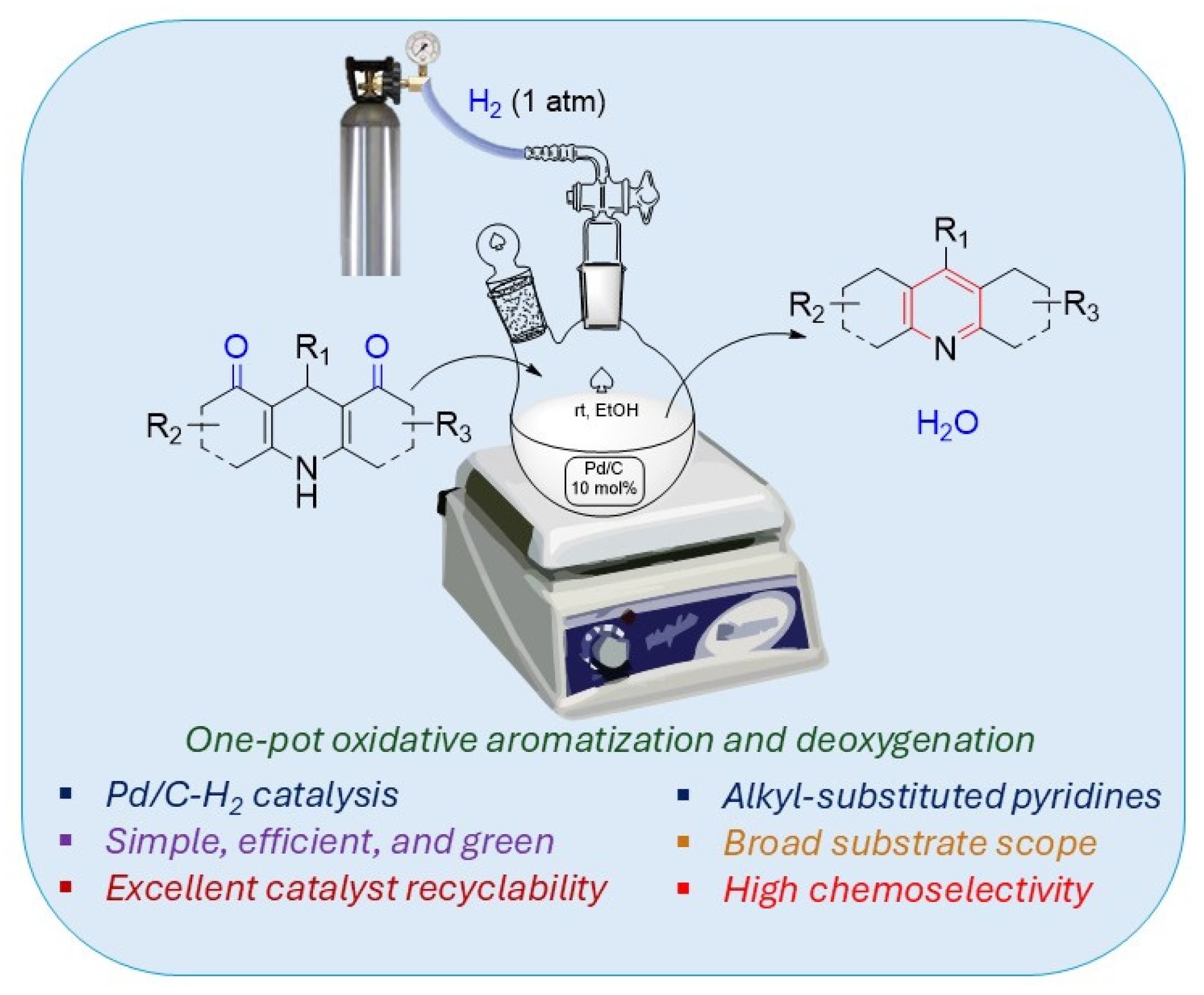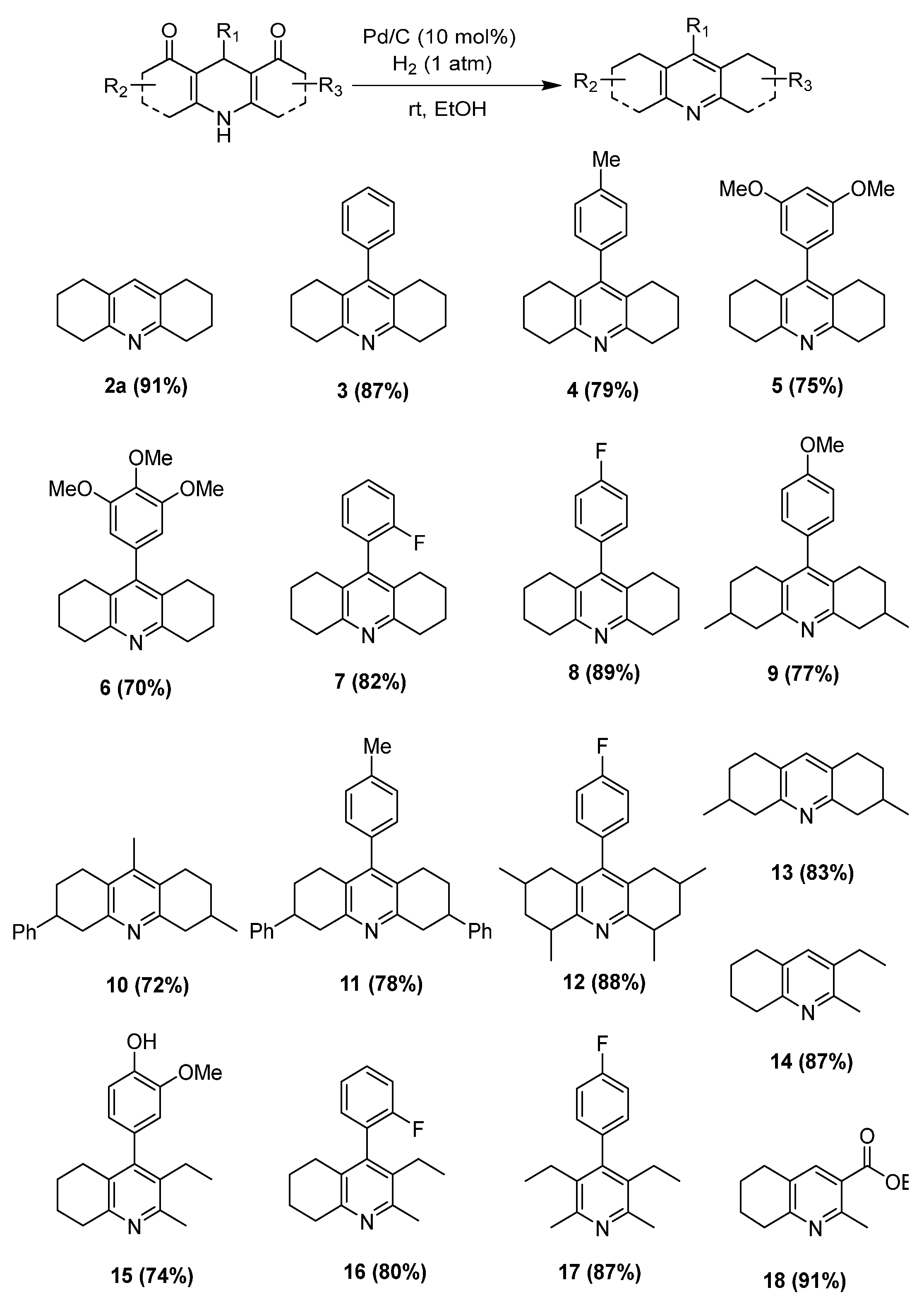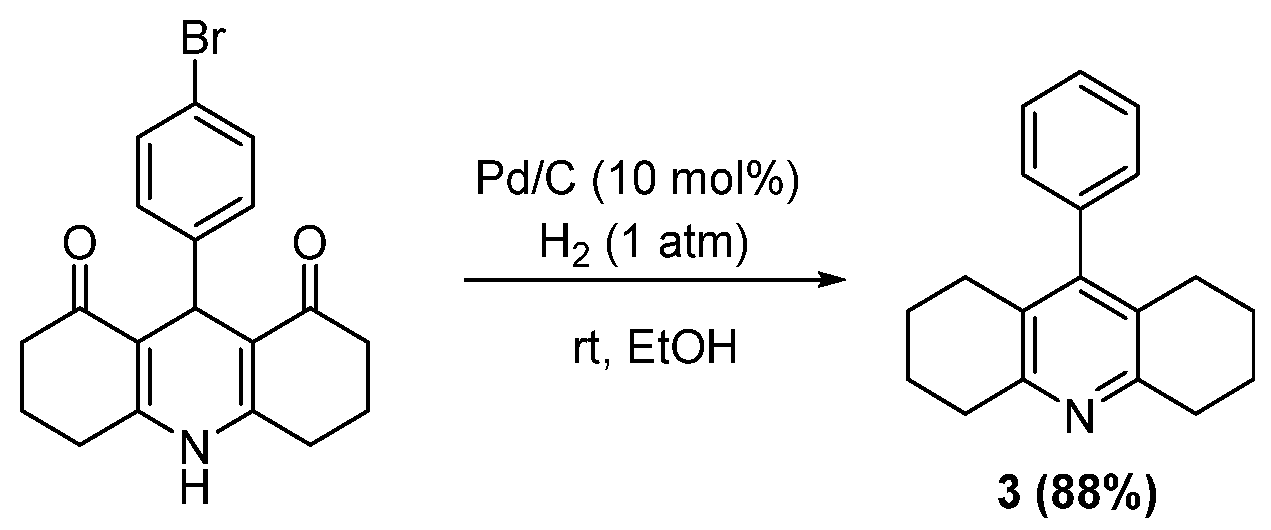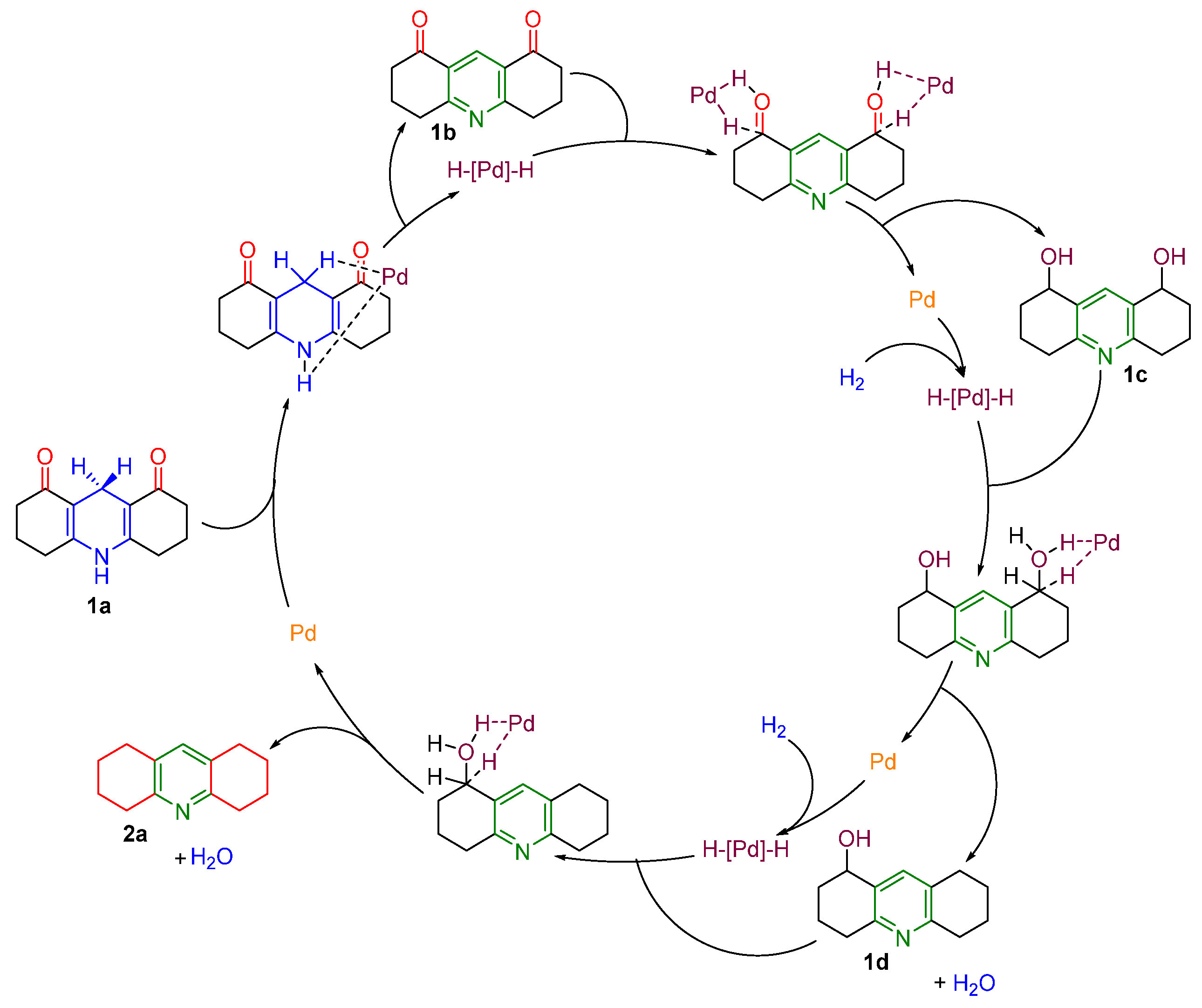

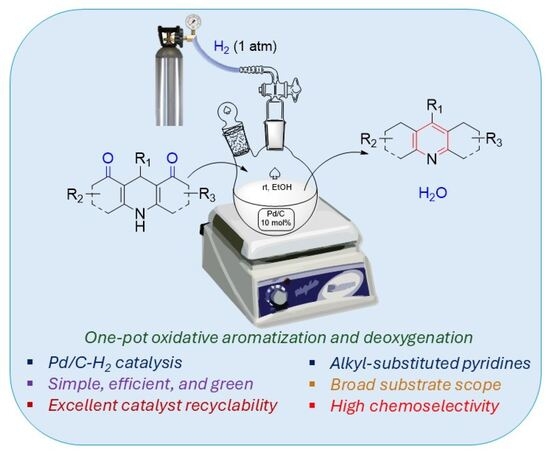
Pd/C–H2-Catalyzed One-Pot Aromatization–Deoxygenation of Dihydropyridinediones: A Green, Scalable Route to Alkyl Pyridines

 ,
, Abstract
Share and Cite
Mandal, S.; Banstola, T.S.; Chettri, D.M.; Phukan, K.P.; Roy, B.G. Pd/C–H2-Catalyzed One-Pot Aromatization–Deoxygenation of Dihydropyridinediones: A Green, Scalable Route to Alkyl Pyridines. Chemistry 2026, 8, 12. https://doi.org/10.3390/chemistry8020012
Mandal S, Banstola TS, Chettri DM, Phukan KP, Roy BG. Pd/C–H2-Catalyzed One-Pot Aromatization–Deoxygenation of Dihydropyridinediones: A Green, Scalable Route to Alkyl Pyridines. Chemistry. 2026; 8(2):12. https://doi.org/10.3390/chemistry8020012
Chicago/Turabian StyleMandal, Susanta, Tushar Sharma Banstola, Dhan Maya Chettri, Kimron Protim Phukan, and Biswajit Gopal Roy. 2026. "Pd/C–H2-Catalyzed One-Pot Aromatization–Deoxygenation of Dihydropyridinediones: A Green, Scalable Route to Alkyl Pyridines" Chemistry 8, no. 2: 12. https://doi.org/10.3390/chemistry8020012
APA StyleMandal, S., Banstola, T. S., Chettri, D. M., Phukan, K. P., & Roy, B. G. (2026). Pd/C–H2-Catalyzed One-Pot Aromatization–Deoxygenation of Dihydropyridinediones: A Green, Scalable Route to Alkyl Pyridines. Chemistry, 8(2), 12. https://doi.org/10.3390/chemistry8020012