Article

Nitrogen-Doped Carbon Dots as Fluorescent and Colorimetric Probes for Nitrite Detection

1
College of Pharmacy, Qilu Medical University, Zibo 255300, China
2
School of Chemistry and Pharmaceutical Engineering, Shandong First Medical University & Shandong Academy of Medical Sciences, Tai’an 271016, China
*
Author to whom correspondence should be addressed.
Chemistry 2026, 8(1), 11; https://doi.org/10.3390/chemistry8010011
Submission received: 15 December 2025 / Revised: 11 January 2026 / Accepted: 12 January 2026 / Published: 20 January 2026
(This article belongs to the Special Issue Fluorescent Chemosensors and Probes for Detection and Imaging)

Abstract

Nitrite, as a widely present nitrogen oxide compound in nature, and is extensively distributed in production and daily life; precise and rapid detection of it is of great significance for ensuring human health. This study developed nitrogen-doped carbon dots (N-CDs) using malic acid and 3-diethylaminophenol as precursors by one-step hydrothermal treatment. The obtained N-CDs exhibited strong green fluorescence with a high quantum yield of 20.86%. More importantly, they served as a highly effective fluorescent probe for NO2 sensing, demonstrating a low detection limit of 28.33 μM and a wide linear response range of 400 to 1000 μM. The sensing mechanism was attributed to an electrostatic interaction-enhanced dynamic quenching process. Notably, the probe enabled dual-mode detection: a distinct color change from light pink to dark brown under daylight for visual semi-quantification, and quantitative fluorescence quenching. The N-CDs showed excellent selectivity over common interfering ions. Furthermore, their low cytotoxicity and good biocompatibility allowed for successful bioimaging of exogenous and endogenous NO2 fluctuations in live HeLa cells. This work presents a facile green strategy to synthesize multifunctional N-CDs that realized the sensitive, selective, and visual detection of NO2 in environmental and biological systems.

Graphical Abstract

1. Introduction

Nitrite (NO2), as a key hub in the natural nitrogen cycle, is widely distributed in food processing, drinking water, and soil environments. Although its application in the food industry, such as meat preservation and color optimization, is indispensable, excessive residue can cause serious health and ecological risks [1,2,3]. Excessive intake of nitrite will not only combine with amines in the human body to form highly carcinogenic compounds such as N-nitrosamines, but also induce methemoglobinemia leading to poisoning and exert adverse effects on cardiovascular and metabolic functions [4,5]. In addition, NO2 environmental pollution caused by agricultural fertilizer abuse and industrial wastewater discharge has become ecological issues of global concern [6]. Therefore, the development of NO2 detection technology that combines high sensitivity, specificity, and practical applicability is of great strategic significance for food safety control, environmental monitoring, and public health protection [7].
The current detection methods for NO2 include spectrophotometry, electrochemical sensor method, high-performance liquid chromatography, and capillary electrophoresis [8,9,10,11]. However, these traditional methods still have many technical bottlenecks: spectrophotometry is susceptible to interference from the color of the sample matrix, and the detection sensitivity is difficult to meet the requirements of trace analysis. Chromatography and electrochemical methods require complex sample pretreatment processes, rely on precise and expensive instruments and equipment, and have long detection cycles (usually several hours), making it impossible to achieve rapid on-site screening [12]. On the other hand, fluorescence sensing technology, with its advantages of fast response, easy operation, high sensitivity, and signal visualization, has become a cutting-edge direction in the field of NO2 detection. The material properties and design concepts of fluorescent probes directly determine the comprehensive efficiency of the detection system [13,14].
Carbon dots (CDs), a new generation of fluorescent nanomaterials, have exhibited outstanding characteristics such as excellent optical stability, adjustable quantum yield, good biocompatibility, and green and economical preparation processes. They have gradually replaced traditional organic fluorescent dyes and semiconductor quantum dots, and have shown great potential for applications in fields of biosensing and biological imaging [15,16,17]. To optimize the performance of carbon dots, nitrogen doping modification as a core strategy, can regulate the electronic structure and surface chemical activity of carbon dots by introducing nitrogen-containing functional groups such as graphite N and pyrrole N, significantly improving their fluorescence intensity and target recognition specificity. Hence, nitrogen-doped carbon dots (N-CDs) have become the preferred material for NO2 fluorescent probes [18,19,20]. Although N-CDs based NO2 detection technology has made some progress in recent years, there are still shortcomings in existing research: the linear detection range of most probes is narrow (usually below 500 μM), barely able to cover the concentration fluctuation range of NO2 in actual samples [21,22,23,24,25,26]. For example, Li et al. developed a dual-mode fluorescence and colorimetric sensor for nitrite detection, with a fluorescence linear detection range of 2.5–75 μM and a detection limit of 0.68 μM [21]. More importantly, existing probes are limited to in vitro solution system detection, lacking systematic biocompatibility evaluation and intracellular detection application, and there are few reports on probes that have both fluorescence quantification and visualization qualitative functions, which limits their application in biomedical field and rapid detection scenarios [27,28,29].
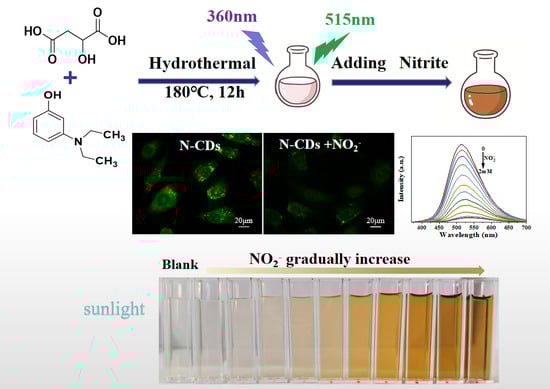
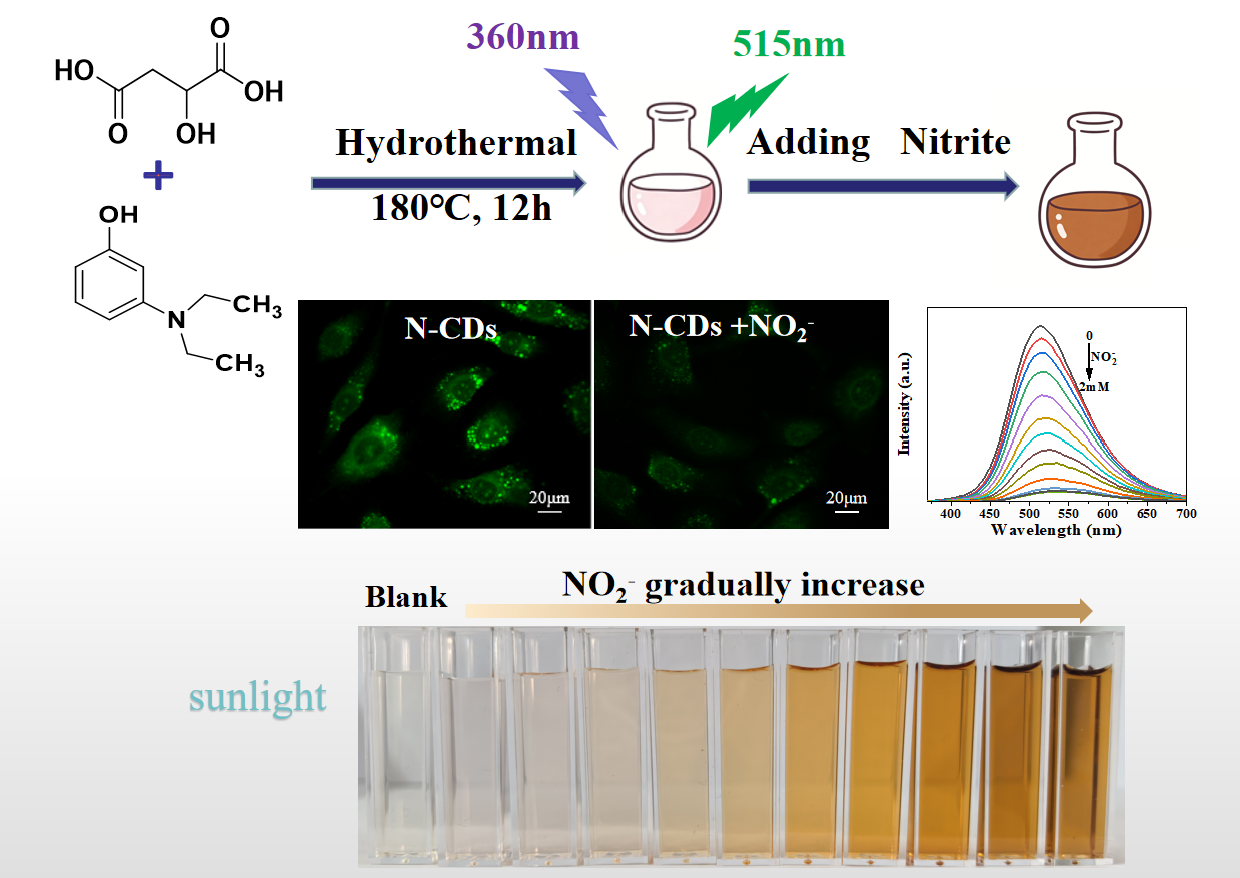
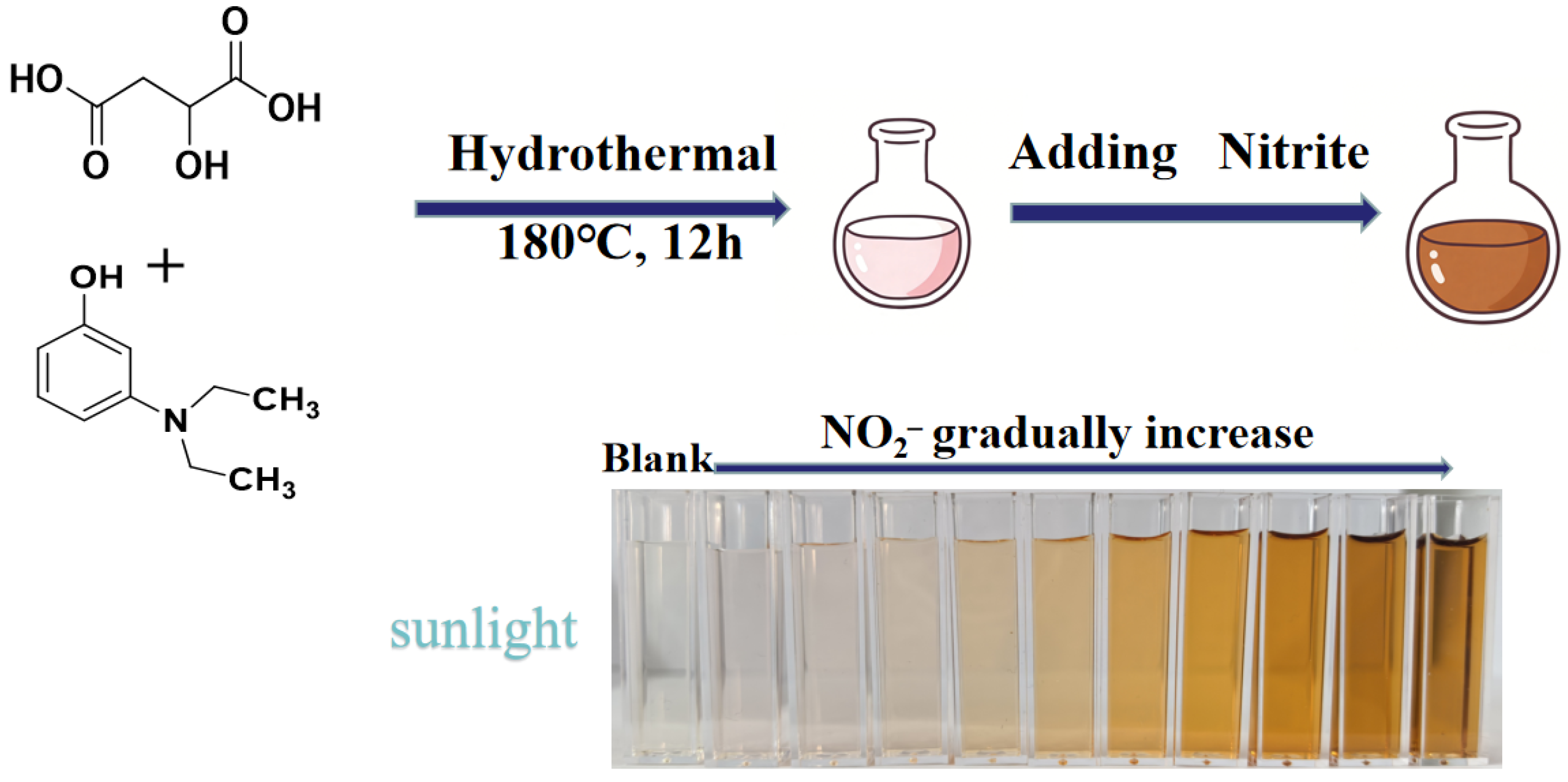
This study efficiently synthesized high-performance nitrogen-doped carbon dots (N-CDs) using malic acid as the carbon source and 3-diethylaminophenol as the nitrogen source through a one-step hydrothermal method. The surface is rich in oxygen-containing functional groups such as –OH and –COOH, as well as nitrogen-containing structures such as graphite N and pyrrole N, with an absolute quantum yield of 20.86%. It has excellent environmental stability and has constructed a novel NO2 fluorescence colorimetric dual-mode sensing system. NO2 can induce static fluorescence quenching of N-CDs, and the solution color shows a concentration dependent change from near colorless to pink, brown, and then to dark brown with different NO2 concentrations (Scheme 1). The linear detection range is wide, up to 400–1000 μM. In addition, the prepared N-CDs were applied to cell imaging and the monitoring of intracellular NO2.

2. Materials and Methods

2.1. Materials

DL-Malic acid (99%), 3-diethylaminophenol (97%), Cu(NO3)2·3H2O (99%), KH2PO4 (99.5%), Na2HPO4 (99%), NaHS·xH2O (68%), NaCl (99.5%), NH4F (98%), Na2S2O3 (99%), Na2SO3 (98%), Na2SO4 (97%), AlCl3 (99.5%), CaCl2 (97%), KCl (99%), MgCl2 (99.99%), PbCl2 (99%), ZnCl2 (90%), FeCl3 (99%) were purchased from Shanghai Aladdin Reagent Co., Ltd. (Shanghai, China). NaNO2 (99%) were provided by McLean Reagent Co., Ltd. (Shanghai, China). All reagents are analytical-grade and can be used without further purification. All solutions were prepared using deionized water.

2.2. Characterization

The photoluminescence (PL) properties, including steady-state spectra and absolute quantum yield (Φ), of the N-CDs were characterized using an Edinburgh Instruments FS5C spectrofluorometer (Livingston, UK) equipped with an integrating sphere accessory. The PL emission spectra were recorded from 370 to 700 nm with a fixed excitation wavelength of 360 nm, utilizing an excitation slit width of 1.5 nm, an emission slit width of 1.5 nm, a data interval (step size) of 5 nm, and an integration time of 0.2 s per point. The absolute Φ was determined directly via the integrating sphere method at the same excitation wavelength (360 nm). UV–Vis absorption spectra were acquired on a Shimadzu UV-2600i spectrophotometer (Shimadzu Instruments (Suzhou) Co., Ltd., Suzhou, China) over the range of 200–700 nm with a scanning speed of medium, a spectral bandwidth of 2 nm, and a data pitch of 0.5 nm. Morphological analysis was performed by transmission electron microscopy (TEM) on a JEOL-JEM-F200 instrument (JEOL Ltd., Tokyo, Japan) operated at an acceleration voltage of 200 kV. The sample for TEM was prepared by depositing a drop of diluted N-CDs aqueous solution onto a carbon-coated copper grid and allowing it to dry under ambient conditions. Chemical composition and surface states were analyzed by X-ray photoelectron spectroscopy (XPS) using a Thermo Fisher K-Alpha spectrometer (Waltham, MA, USA) with a monochromatic Al Kα X-ray source (1486.6 eV); all spectra were calibrated by setting the adventitious carbon C 1s peak to 284.8 eV. Fourier transform infrared (FTIR) spectra were obtained in transmittance mode on a Shimadzu IRTracer-100 spectrometer (Kyoto, Japan). Spectra were collected from 4000 to 500 cm−1 with a resolution of 4 cm−1, averaging 32 scans per sample. Time-resolved fluorescence decay curves were acquired using a time-correlated single-photon counting (TCSPC) module on an Edinburgh Instruments FLS1000 spectrophotometer (Livingston, UK). The samples were excited by a pulsed diode laser (EPL-375) with a central wavelength of 375 nm, a pulse repetition rate of 1.0 MHz, and a pulse width of <100 ps. The emission at 522 nm was selected using a monochromator and detected by a high-speed photomultiplier tube (PMT-900). For biological assessments, the cytotoxicity of N-CDs towards HeLa cells was evaluated using the Cell Counting Kit-8 (CCK-8) assay according to the manufacturer’s protocol. After treatment, the absorbance at 450 nm was measured using a Thermo Scientific Varioskan LUX (Thermo Fisher Scientific, Waltham, MA, USA) microplate reader. Cellular fluorescence imaging was conducted on an ApexBio Revolve Gen2 inverted fluorescence microscope (Aperbio Biotech (Suzhou) Co., Ltd., Suzhou, China). Images were captured using a standard GFP filter cube (excitation: 490 nm, emission: 520 nm) with a 40× objective, maintaining a constant exposure time of 500 ms for comparative analysis.

2.3. Preparation of N-CDs

As shown in Scheme 1, 0.47 g of malic acid, 0.46 g of 3-diethylaminophenol, and 30 mL of ultrapure water were placed in a polytetrafluoroethylene lining and heated at 180 °C for 12 h in an autoclave. After completion of the reaction, the mixture was allowed to cool to room temperature naturally and then filtered through a 0.22 μm membrane filter to remove large particulate impurities. The aqueous dispersion was freeze-dried to obtain the N-CDs in powder form. Prior to use, the powder was redispersed in ultrapure water at a concentration of 5 mg/mL. For testing, an aliquot (10 μL) of this dispersion was diluted with 5 mL of deionized water, thus yielding the sample for spectral analysis.

2.4. Detection of NO2

We diluted the N-CDs stock solution with deionized water to obtain a working solution with a final concentration of 10 μg/mL. Subsequently, NO2 solutions of different concentrations (0–2 mM) were added and incubated for 1 h. UV–Vis absorption spectra were collected in the wavelength range of 200–700 nm, and fluorescence emission spectra were recorded in the wavelength range of 400–700 nm with excitation wavelength of 360 nm (λex = 360 nm).

2.5. Cellular Toxicity Test and Cell Imaging

To assess the biocompatibility of N-CDs for cellular imaging applications, their cytotoxicity against HeLa cells was evaluated using the Cell Counting Kit-8 (CCK-8) assay. HeLa cells were seeded into a 96-well plate at a density ranging from 1000 to 10,000 cells per well in 100 μL of Dulbecco’s Modified Eagle Medium (DMEM) supplemented with 10% fetal bovine serum (FBS). The cells were cultured for 24 h at 37 °C in a humidified atmosphere containing 5% CO2 to allow attachment. Subsequently, the culture medium was replaced with 100 μL of fresh DMEM containing various concentrations of N-CDs (0–200 μg/mL), and the incubation continued for another 24 h. After this treatment period, the medium containing N-CDs was removed, and 100 μL of fresh medium along with the CCK-8 reagent were added according to the manufacturer’s protocol. Following a 4 h incubation, the plate was gently shaken at room temperature for 10 min. The absorbance at 450 nm was then measured using a multifunctional microplate reader (often referred to as an ELISA reader). Control experiments were established using cells cultured without N-CDs. Each concentration was tested in triplicate, and the results are presented as the mean of these replicates.
N-CDs were imaged using HeLa cell line as a model. Incubate HeLa cells were placed in suspension in a cell culture dish for 24 h, the culture medium was removed, and cells were wash with PBS three times. We added 1 mL DMEM medium containing 100 μg/mL N-CDs (without FBS) to the cell culture dish and incubated in the cell culture box for 30 min. After washing with PBS three times, imaging was performed using an inverted fluorescence microscope (excitation and emission wavelengths: 490 nm and 520 nm).

3. Results and Discussion

3.1. N-CDs’ Characteristics

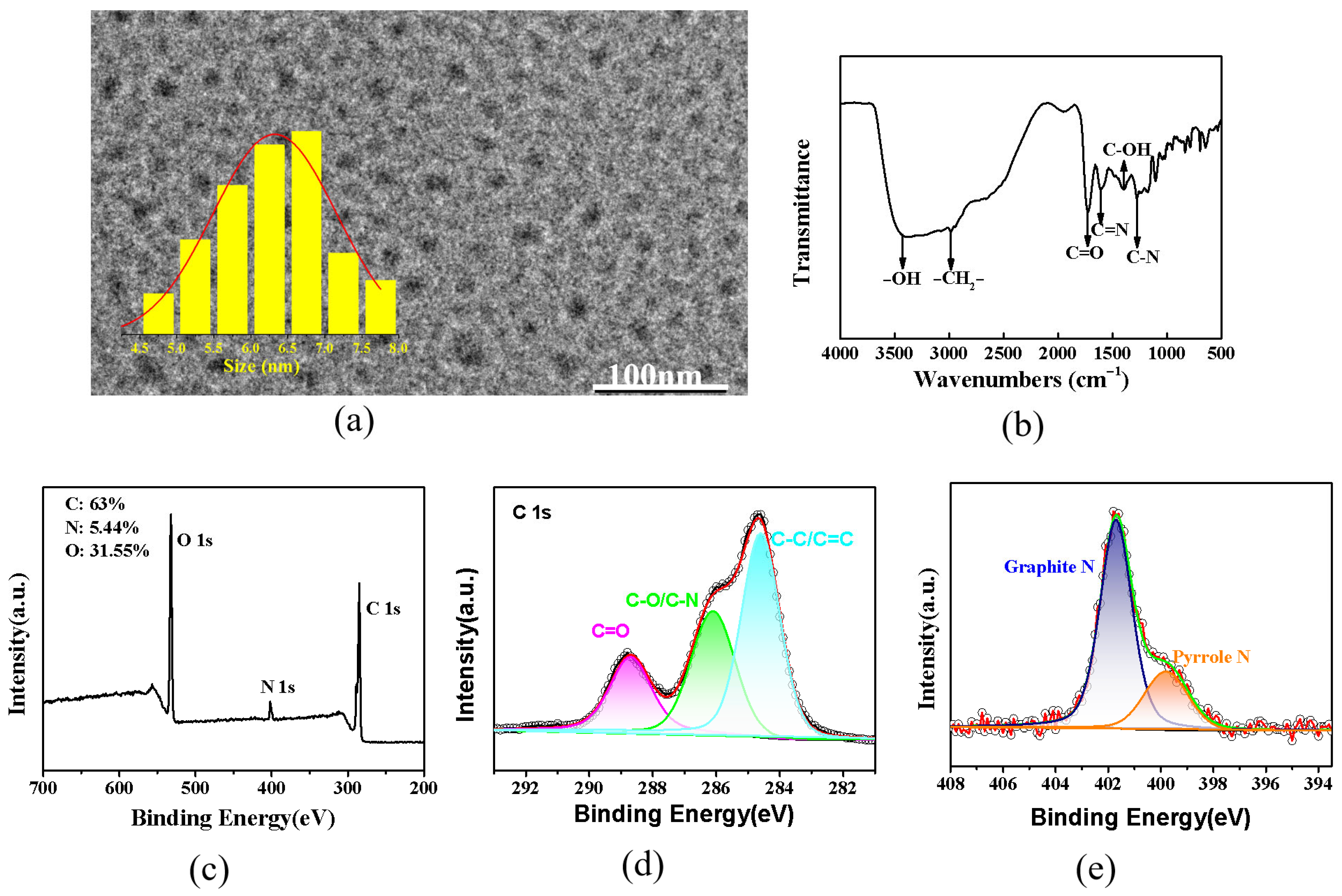
TEM images were used to characterize the morphology and size of N-CDs. To ensure the statistical reliability of the size data, the morphology and diameter of 60 individual N-CDs were randomly selected and analyzed from the TEM images. The particle size distribution was calculated by measuring the diameter of selected N-CDs using Nano Measurer software (Nano Measurer 1.2), and the distribution histogram was plotted based on the measured data. As shown in Figure 1a, N-CDs are uniformly dispersed in a spherical shape with a narrow size distribution. The average diameter of N-CDs was determined to be 6.28 ± 0.77 nm (mean ± standard deviation, n = 60). Figure S1 provides TEM images taken at different magnifications. These images clearly demonstrate the uniform dispersion of nanodots and the details of individual particles, further supporting their excellent monodispersity. The surface functional groups and elemental composition of N-CDs were analyzed using FT-IR and XPS techniques. Figure 1b shows the FTIR spectrum of the prepared carbon dots. Several characteristic absorption bands can be observed in the spectrum: the broad and gentle absorption near 3400 cm−1 is attributed to the stretching vibration of hydroxyl groups (–OH) on the surface or inside the material. The signal at 2990 cm−1 originates from the asymmetric stretching vibration of the –CH2– group. The peaks appearing at 1730 cm−1 and 1400 cm−1 correspond to the stretching vibration of C=O and the bending vibration of C–OH, respectively [30,31,32,33]. In addition, the absorptions at 1610 cm−1 and 1270 cm−1 can, respectively refer to the vibration modes of C=N and C-N bonds [34]. According to the comprehensive spectrum analysis, the surface of the carbon dot is mainly modified with oxygen-containing functional groups such as –OH and –COOH groups, and there are nitrogen-containing structural units present. Next, the XPS full scan spectrum shows that the three peaks centered at 284.8 eV, 401.7 eV, and 532.27 eV corresponding to C, N, and O elements, with contents of 63%, 5.44%, and 31.55%, respectively (Figure 1c). Figure 1d shows the high-resolution C 1s spectrum, where the three fitted peaks located at 288.7 eV, 286.1 eV, and 284.6 eV correspond to the presence of C=O, C–N/C–O, and C–C/C=C bonds, respectively. The N 1s spectrum (Figure 1e) shows two fitted peaks centered at 401.7 eV and 399.8 eV, attributed to graphite N and pyrrole N. The O 1s spectrum (Figure S2) shows the presence of C=O (531.62 eV) and C–O (532.5 eV) [35]. Therefore, the XPS results further confirmed the conclusion of the FTIR data. The crystalline structure of the synthesized N-CDs was examined by X-ray diffraction (XRD). As shown in Figure S3, the XRD pattern displays a broad but distinct diffraction peak centered at 2θ = 27.25°, which is characteristic of the (002) lattice plane of graphitic carbon. The interlayer spacing (d-spacing) calculated from Bragg’s law is approximately 0.327 nm. This value is slightly smaller than that of pristine graphite (0.335 nm), which could be attributed to the incorporation of nitrogen atoms and the formation of a more compact graphitic structure during the hydrothermal process. The presence of this peak confirms the existence of sp2-hybridized carbon domains with a layered architecture within the N-CDs. The relatively broad nature of the peak suggests that these graphitic domains are of small size and/or possess a certain degree of disorder, which is typical for carbon dots.
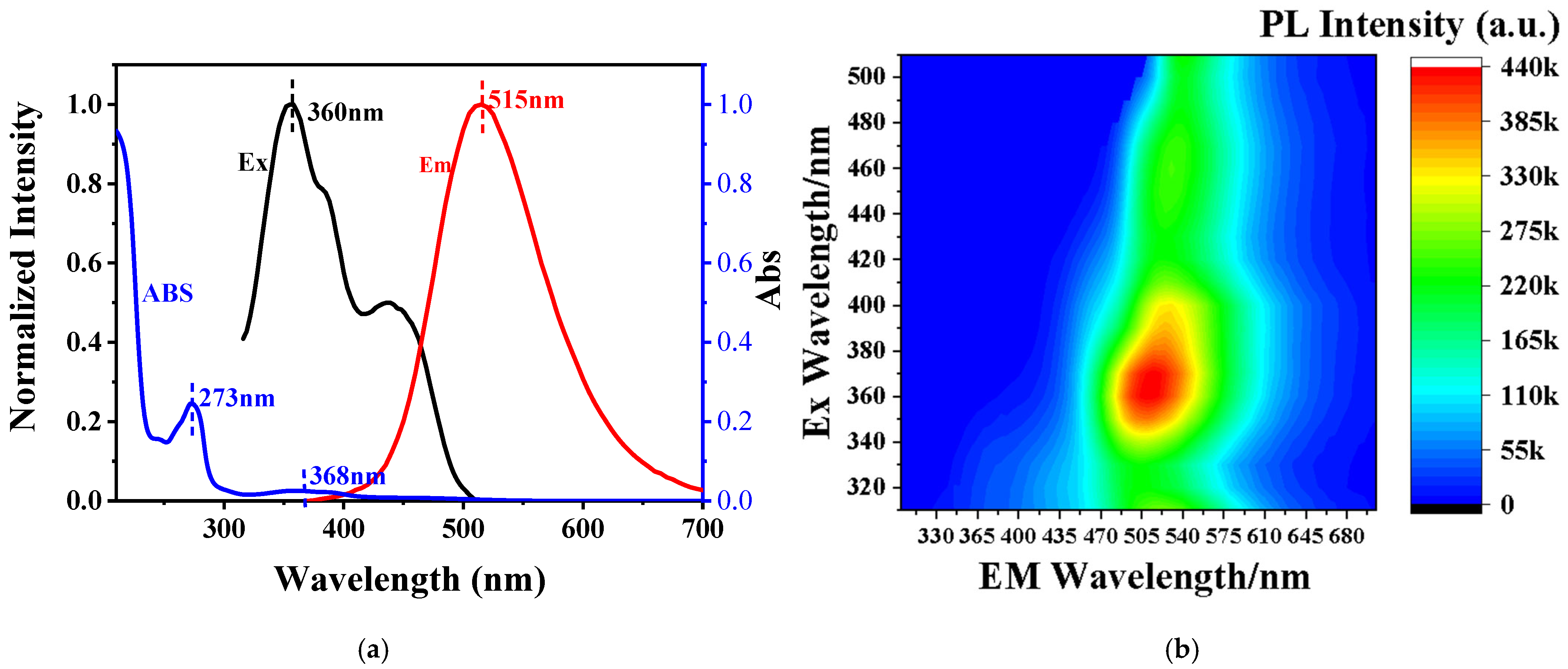
As shown in Figure 2a, the optical properties of N-CDs were systematically characterized by UV–Vis absorption spectroscopy, fluorescence excitation spectroscopy, and fluorescence emission spectroscopy. Among them, the UV–Vis absorption spectrum (blue line) shows two characteristic absorption bands located at 235.2 nm and 280 nm, respectively. The former corresponds to the π–π transition of the C=C bond in the aromatic sp2 conjugated structure, while the latter is attributed to the n–π transition of the C=O/C–N bond [36,37]. This result confirms that N-CDs have a highly conjugated molecular structure. Fluorescence spectroscopy testing shows that the optimal excitation wavelength for N-CDs is 360 nm (black line), and the optimal fluorescence emission wavelength under this excitation condition is 515 nm (red line). The three-dimensional (3D) fluorescence excitation emission matrix in Figure 2b further shows that the emission peak of N-CDs is a bandgap characteristic emission, with no obvious excitation dependence, and only a single emission center exists. Its maximum emission wavelength is consistent with the above fluorescence emission spectrum results (515 nm). The absolute photoluminescence quantum yield (Φ) was measured using an integrating sphere coupled to an Edinburgh FS5C spectrophotometer, with an excitation wavelength set at 360 nm. The recorded spectra were corrected for the instrument response function and background scattering. Under these conditions, the absolute quantum yield of the N-CDs was determined to be 20.86% (Figure S4).

3.2. N-CDs’ Stability

The stability of fluorescent probes is a key prerequisite for their practical application. Therefore, this study systematically evaluated the environmental stability of N-CDs from three aspects: resistance to photobleaching, pH adaptability, and salt solution stability. The results of the anti-photobleaching test (Figure S5a) showed that after continuous irradiation with a 365 nm UV lamp for 1 h, the fluorescence intensity of N-CDs remained above 95% of the initial value, indicating their excellent anti-photobleaching ability. The pH tolerance experiment showed (Figure S5b) that N-CDs maintained stable fluorescence intensity within a wide pH range (2–10) and could exhibit normal fluorescence performance. The significant quenching of fluorescence only occurs in strongly alkaline environments, confirming its suitability for acidic, neutral, and weakly alkaline systems. In the ion stability test (Figure S5c), when the concentration of NaCl solution varied within the range of 0–1 mol/L, the fluorescence intensity of N-CDs did not show significant fluctuations, demonstrating good resistance to salt interference. In addition, the time-dependent experimental results (Figure S5d) showed that after adding 1 mM NO2 to the N-CDs solution, the fluorescence intensity reached a stable state within 60 min and remained constant without decay for the following 20 min. The above series of experimental results fully demonstrate that N-CDs have excellent stability under different environmental conditions, providing reliable guarantees for their practical detection applications.

3.3. N-CDs’ Selectivity

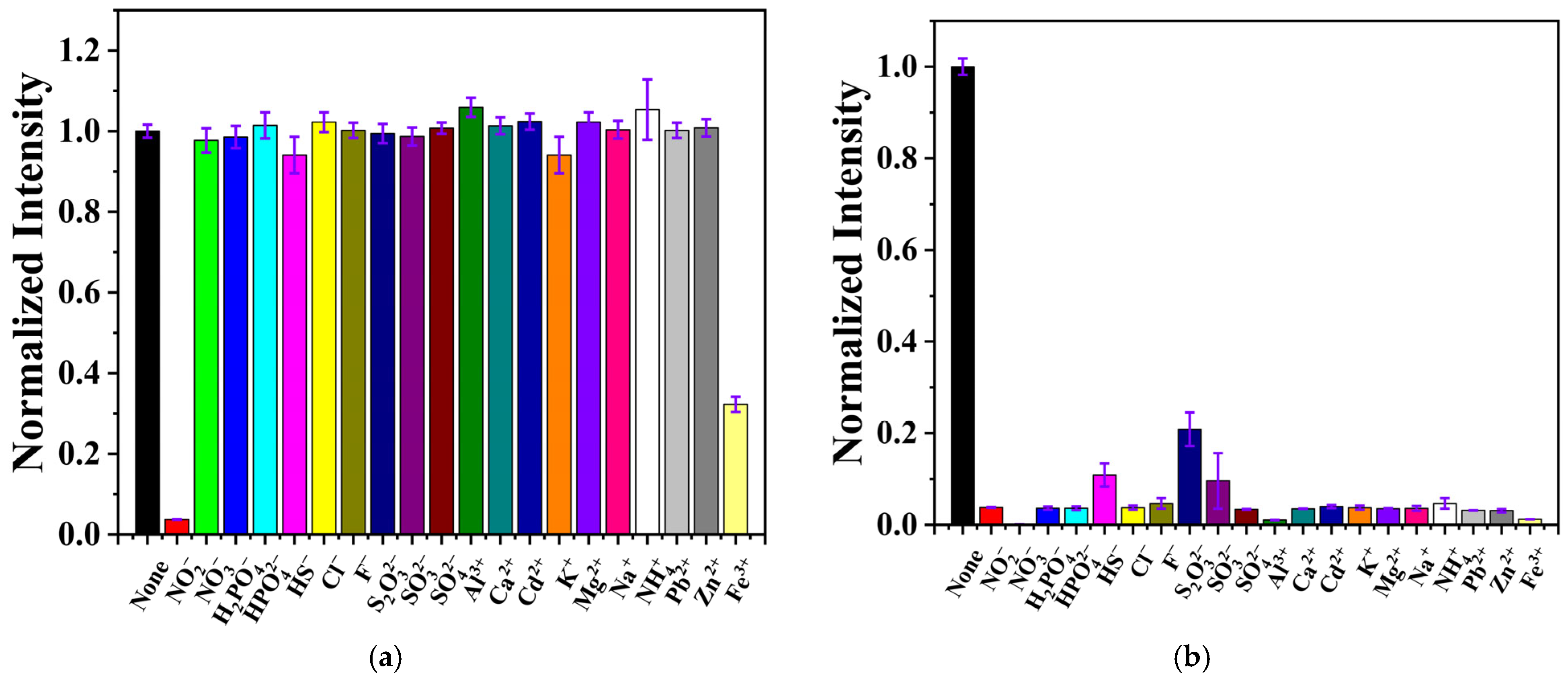
To evaluate the selectivity and anti-interference ability of N-CDs for NO2 detection, this study investigated the fluorescence response of N-CDs toward various common inorganic anions (NO2, NO3, H2PO4, HPO42−, HS, Cl, F, S2O32−, SO32−, SO42−) and metal ions (Al3+, Ca2+, K+, Mg2+, Na+, NH4+, Pb2+, Zn2+, Fe3+) under identical experimental conditions. As shown in Figure 3a, the fluorescence intensity remained stable upon addition of these ions, demonstrating excellent selectivity. However, a notable exception was observed for Fe3+, which induced a significant fluorescence quenching of approximately 65%. This is consistent with the widely reported phenomenon of Fe3+ as a strong quencher for many fluorescent materials in the literature [38,39]. This result indicates that although the sensor exhibits excellent selectivity towards a range of common ions, it requires pretreatment or masking strategies when applied in complex matrices containing high concentrations of Fe3+, such as certain industrial wastewater or iron rich biological samples. As shown in Figure 3b, the fluorescence quenching of N-CDs by NO2 remained nearly identical even when other ions were present, demonstrating robust anti-interference performance. Collectively, these results confirm that the N-CDs-based method possesses excellent selectivity and anti-interference ability, ensuring reliable NO2 detection in complex samples.

3.4. Fluorescence Detection of NO2

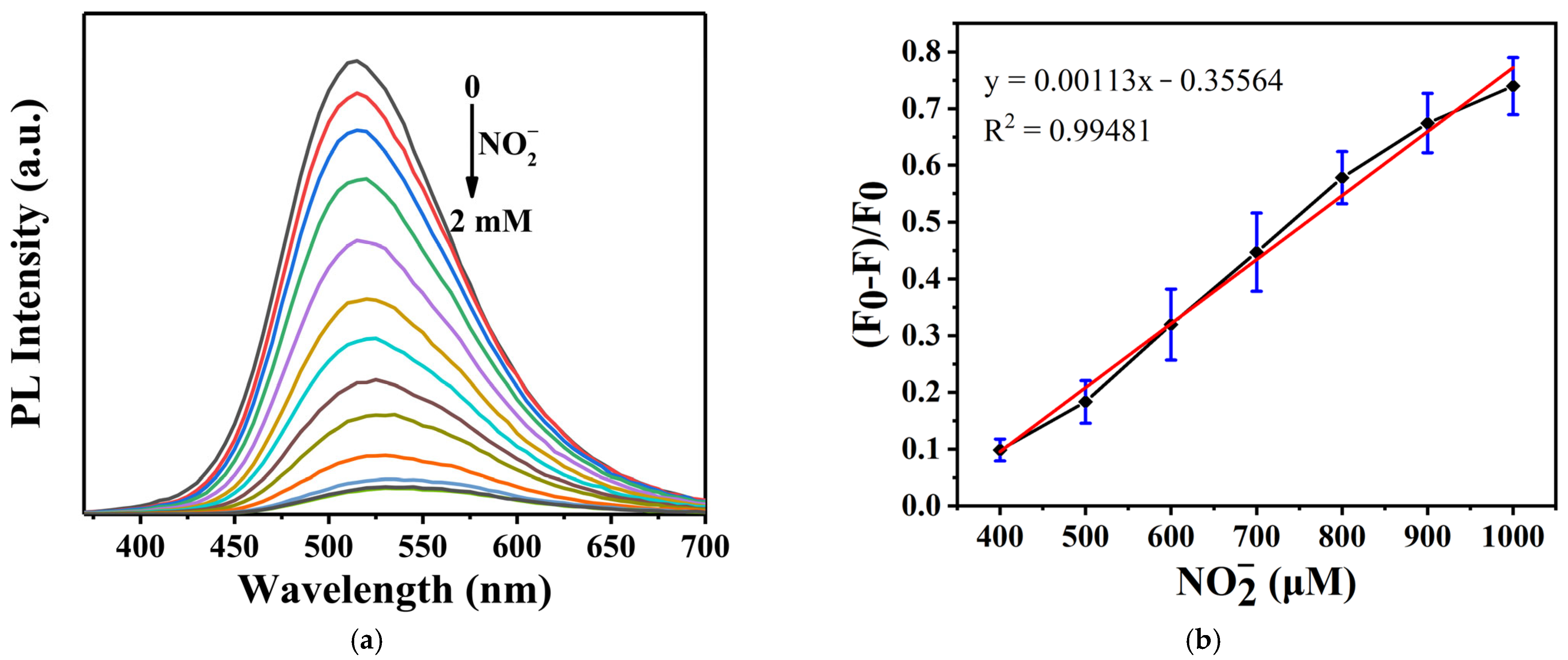
To clarify the quantitative relationship between the fluorescence intensity of N-CDs and the concentration of NO2, this study systematically investigated the effect of different concentrations of NO2 on the fluorescence performance of N-CDs. As shown in Figure 4a, with the gradual increase of NO2 concentration, the fluorescence intensity of N-CDs decreases regularly. When the NO2 concentration reaches 2 mM, the fluorescence intensity no longer changes and tends to stabilize, indicating that the interaction between N-CDs and NO2 has reached saturation at this time. Linear fitting analysis was performed on the normalized fluorescence quenching efficiency, (F0 − F)/F0, and the NO2 concentration (Figure 4b). Here, F0 and F represent the fluorescence intensity at the emission maximum (λ = 515 nm) in the absence and presence of NO2, respectively. The results showed a good linear correlation between the two within the concentration range of 400–1000 μM, with a correlation coefficient of R2 = 0.99481. The detection limit (LOD) is calculated using the following formula: LOD = 3 σ/K, where σ is the standard deviation of the blank signal (n = 15) and K is the slope of the calibration curve [40]. The LOD value of this detection method is calculated to be 28.33 μM. Compared with the reported carbon dot based NO2 detection probes, the N-CDs prepared in this study have a wider detection range (Table S1) [21,22,23,24,25,26,41], demonstrating their potential for practical sample detection.
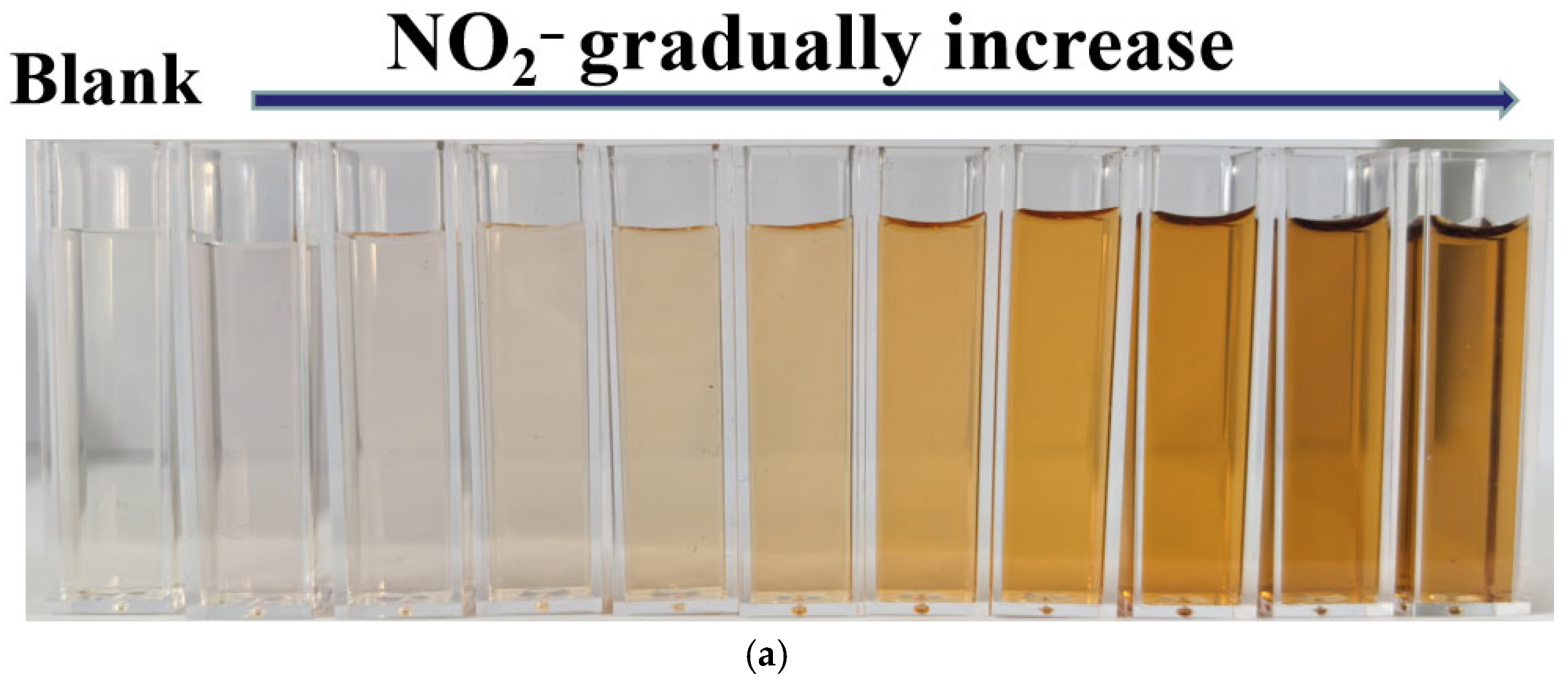
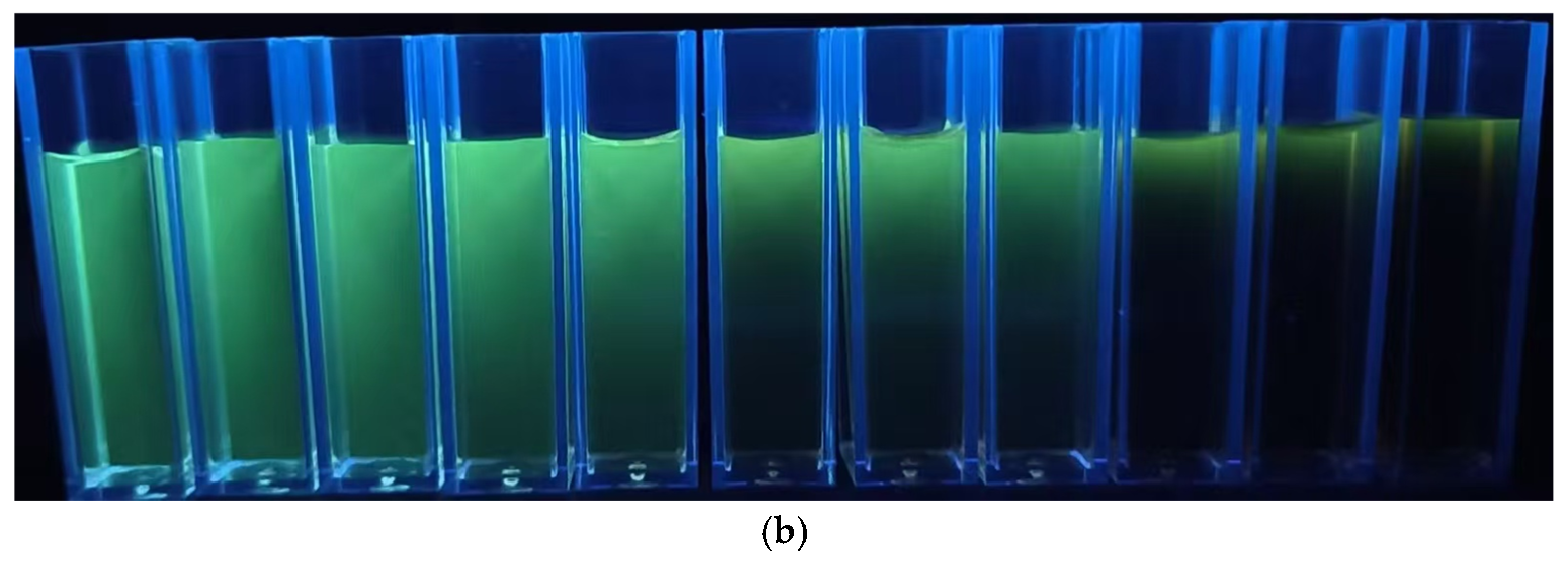
In addition to the quantitative spectral analysis, the sensing process was accompanied by distinct naked-eye-observable changes under both ambient and UV light, enabling rapid visual screening. Under ambient light (Figure 5a), the color of the N-CDs solution exhibited a significant concentration-dependent change with increasing NO2 concentration: it gradually transitioned from initially nearly colorless to pink and finally to brown. Specifically, the solution appeared light pink at 10–300 μM NO2, light brown at 300–600 μM, brown at 600–1000 μM, and dark brown above 1000 μM. More strikingly, under 365 nm UV irradiation, a pronounced and progressive quenching of the characteristic green fluorescence of the N-CDs was observed. The bright initial fluorescence visibly diminished as the NO2 concentration increased, ultimately being almost completely quenched at high concentrations. This fluorescence “turn-off” response provides another layer of intuitive, instrument-free readout for NO2 detection. These complementary visible and fluorescent colorimetric changes offer important experimental evidence for the rapid and preliminary visual estimation of NO2 concentration ranges.

3.5. Mechanism of N-CDs’ Fluorescence Response to NO2

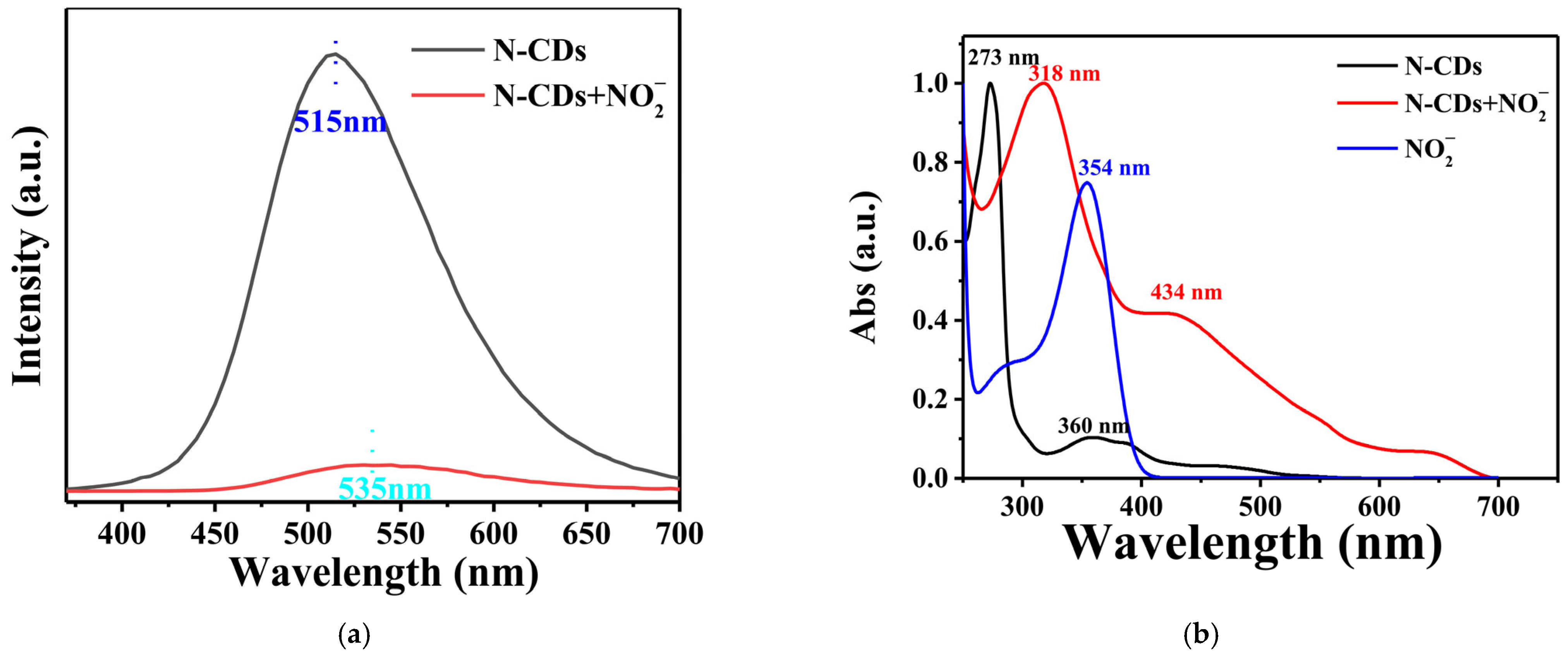
To further elucidate the fluorescence quenching mechanism in the detection of NO2 by N-CDs, this study systematically characterized the fluorescence spectra, UV–Vis absorption spectra, fluorescence lifetime, and FT-IR spectra of N-CDs before and after the presence of NO2, and combined them with Zeta potential analysis to explore their interaction essence. The fluorescence spectrum results showed (Figure 6a) that after the addition of NO2, the fluorescence emission peak of N-CDs only slightly shifted from 515 nm to 535 nm (with a displacement of only 20 nm), and the peak remained basically stable. This phenomenon indicates that the core carbon skeleton of N-CDs has not been damaged, ruling out the significant influence of carbon core structure reconstruction on fluorescence performance. UV–Vis absorption spectroscopy analysis (Figure 6b) showed that the original absorption peaks of N-CDs were located at 273 nm and 360 nm. After the addition of NO2, the absorption peaks shifted significantly to 318 nm and 434 nm, while the characteristic absorption peak of NO2 at 354 nm disappeared. This spectral change indicates the formation of ground state complexes or the occurrence of chemical reactions (such as diazotization) [28,42]. The Zeta potential measurement (Figure S6) further supports this interaction. The potential of N-CDs decreased from +11.3 mV to +3.97 mV upon forming the complex with NO2. This significant drop confirms the electrostatic adsorption of negatively charged NO2 ions onto the positively charged surface of N-CDs, resulting in partial charge neutralization.
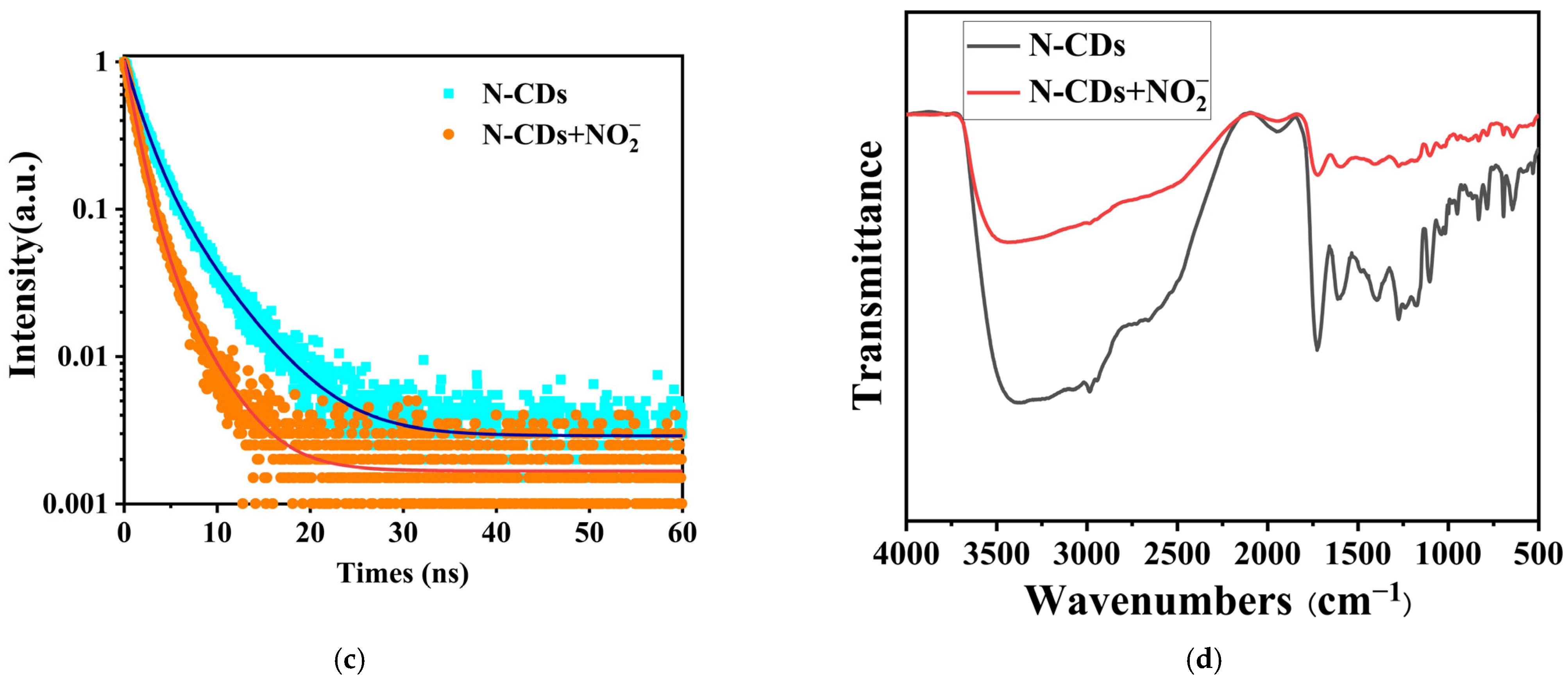
The nature of the N-CDs–NO2 interaction was further elucidated by time-resolved fluorescence spectroscopy. The fluorescence decay curves, recorded under 375 nm excitation and monitored at 522 nm, were best fitted with a biexponential function (χ2 = 1.05–1.15). The average fluorescence lifetime (τavg) was calculated using the standard equation for such decays: τavg = (A1τ12 + A2τ22)/(A1τ1 + A2τ2). Strikingly, upon addition of NO2, τavg decreased sharply from 3.26 ns to 1.83 ns (Figure 6c). This pronounced shortening of the lifetime provides definitive evidence for a dynamic quenching mechanism, wherein efficient energy or electron transfer occurs between the excited N-CDs and the nearby NO2 ions. The significant reduction in lifespan provides conclusive evidence for the dynamic quenching mechanism, indicating efficient energy/electron transfer between excited N-CDs and adjacent NO2. In addition, FT-IR spectroscopy characterization (Figure 6d) showed no significant changes in the characteristic absorption peaks of N-CDs and N-CDs–NO2 system, indicating that NO2 binds to the surface of N-CDs through electrostatic interactions/weak hydrogen bonds, only regulating the surface electronic state of carbon dots (causing absorption peak redshift and fluorescence quenching), without disrupting or altering the chemical structure and vibrational mode of the characteristic functional groups on the surface of carbon dots. In summary, the fluorescence quenching of N-CDs by NO2 is mainly driven by the electron transfer process driven by electrostatic interactions: electrostatic attraction promotes the formation of N-CDs-NO2 ground state complexes, and subsequently excited N-CDs transfers electrons to NO2, promoting non radiative relaxation and achieving fluorescence quenching.

3.6. Cellular Imaging

To evaluate the biocompatibility of N-CDs and their potential for detecting NO2 in cells, this study first examined their effect on HeLa cell activity through cytotoxicity experiments. After co-incubating HeLa cells with N-CDs solutions of different concentrations for 24 h, the cell viability test results (Figure S7) showed that even with an N-CDs concentration of up to 200 μg/mL, the cell survival rate remained at around 80%, indicating that N-CDs have low cytotoxicity and thus laying the foundation for their in vivo application.
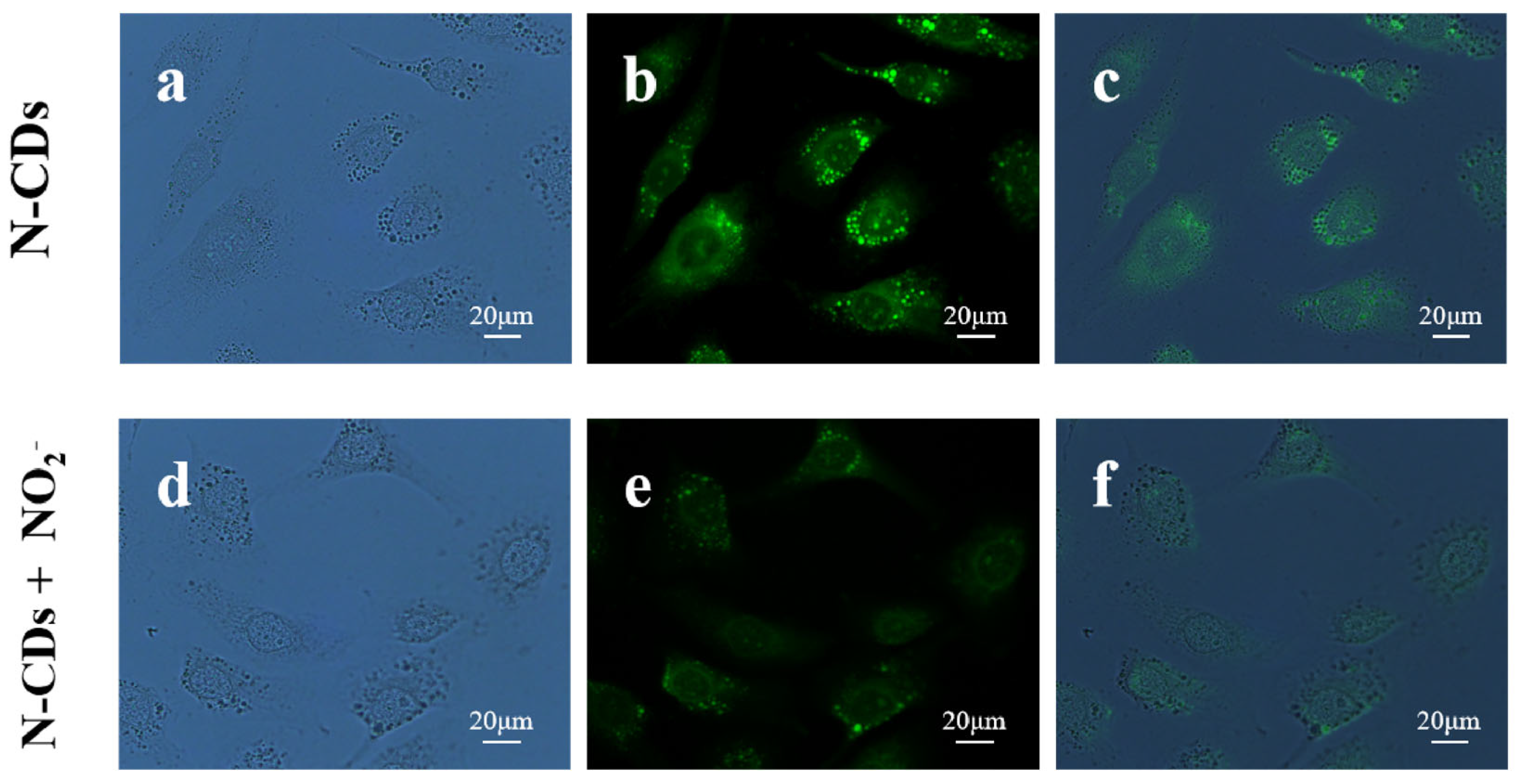
Considering the excellent optical performance, good environmental stability, and low cytotoxicity of N-CDs, further cell imaging and intracellular NO2 recognition experiments were conducted using HeLa cells as a model. Firstly, N-CDs at a concentration of 100 μg/mL were co incubated with HeLa cells for 10 min. Laser confocal imaging results showed (Figure 7a–c) that N-CDs could effectively enter the cell interior. To verify the recognition ability of N-CDs for NO2 in cells, 2 mM exogenous NO2 solution was added to HeLa cells incubated with N-CDs. Subsequent imaging results (Figure 7d–f) showed a significant decrease in intracellular fluorescence intensity compared to the group without NO2. This phenomenon is consistent with the fluorescence response of N-CDs to NO2 in the in vitro system, indicating that N-CDs can still specifically recognize NO2 in cells and produce detectable fluorescence signal changes, providing experimental support for their in situ detection of NO2 in vivo.

4. Conclusions

This study successfully establishes a green and efficient one-step hydrothermal strategy for synthesizing nitrogen-doped carbon dots (N-CDs). Beyond their excellent optical properties and stability, these N-CDs function as a novel dual-mode (colorimetric/fluorometric) sensor for nitrite (NO2) with distinct advantages: the synthesis is simple and scalable; the mechanism involves a unique electrostatic interaction-enhanced dynamic quenching, ensuring high selectivity even against challenging interferents, and the system offers both rapid visual screening and precise quantitation within a wide linear range (400–1000 μM, LOD: 28.33 μM). The successful cellular imaging application further underscores its biocompatibility and potential as a bioanalytical tool. While this sensitivity is suitable for many environmental and biological contexts, we acknowledge that achieving trace-level detection in certain matrices, like drinking water, remains a future challenge—one that could be addressed by further surface engineering of the N-CDs. The true significance of this work lies in its integrated approach, providing a cost-effective and versatile platform. Future efforts will therefore focus on translating this proof-of-concept into practical devices, such as solid-state test strips for field environmental monitoring, and leveraging its bio-imaging capability to probe NO2-related physiological processes in complex living organisms.

Supplementary Materials

The following supporting information can be downloaded at: https://www.mdpi.com/article/10.3390/chemistry8010011/s1, Figure S1: TEM images of N-CDs at different magnifications Figure S2: The high-resolution XPS spectrum of O 1s. Figure S3: XRD pattern of N-CDs. Figure S4: Absolute quantum yield of N-CDs water solution. Figure S5: Normalized fluorescence intensity of N-CDs (a) fluorescence intensity at different irradiation times; (b) Fluorescence intensity under different pH conditions; (c) under different concentrations of NaCl solution; (d) time-dependent fluorescence quenching in the presence of NO2. Figure S6: The Zeta potential of N-CDs and N-CDs–NO2. Figure S7: Relationship between HeLa cell viability and N-CDs concentration. Table S1: Compared with other CDs of detection limits and Linear range.

Author Contributions

Conceptualization, A.L. and X.L.; methodology, A.L., X.L. and Z.H.; software, X.L.; formal analysis, X.L.; investigations, A.L.; resources, A.L. and X.L.; data curation, A.L. and X.L.; writing—original draft preparation, A.L. and X.L.; writing—review and editing, A.L.; Supervision, Y.G.; Project management Y.G.; funding acquisition, A.L. All authors have read and agreed to the published version of the manuscript.

Funding

This work was funded by the Natural Science Foundation of Shandong Province, grant number ZR2024QC260; the Shandong Health Commission, grant number 202413050287 and the Qilu Medical University, grant number X2024QCTD02.

Data Availability Statement

The original contributions proposed in this study are included in the article. Further inquiries can be sent directly to the corresponding author.

Conflicts of Interest

The authors declare no conflicts of interest.

References

  1. Tang, T.; Zhang, M.; Law, C.L.; Mujumdar, A.S. Novel strategies for controlling nitrite content in prepared dishes: Current status, potential benefits, limitations and future challenges. Food Res. Int. 2023, 170, 112984. [Google Scholar] [CrossRef]
  2. Li, H.; Song, Y.; Zhou, B.; Xu, H. Nitrite: From Application to Detection and Development. Appl. Sci. 2024, 14, 9027. [Google Scholar] [CrossRef]
  3. Honikel, K.O. The use and control of nitrate and nitrite for the processing of meat products. Meat Sci. 2008, 78, 68–76. [Google Scholar] [CrossRef]
  4. Sokal-Dembowska, A.; Jarmakiewicz-Czaja, S.; Tabarkiewicz, J.; Filip, R. Nitrate and Nitrite in the Diet: Protective and Harmful Effects in Health and Disease. Curr. Nutr. Rep. 2025, 14, 89. [Google Scholar] [CrossRef] [PubMed]
  5. Zhang, M.; Truver, M.T.; Hoyer, J.L.; Chronister, C.W.; Goldberger, B.A. Presumptive identification of nitrite by Griess reagent test strips—Case reports of fatal poisoning with sodium nitrite. J. Anal. Toxicol. 2023, 47, 746–749. [Google Scholar] [CrossRef]
  6. Liu, J.; Cai, H.; Chen, S.; Pi, J.; Zhao, L. A review on soil nitrogen sensing technologies: Challenges, progress and perspectives. Agriculture 2023, 13, 743. [Google Scholar] [CrossRef]
  7. Kumar, S.; Kaushal, J.B.; Lee, H.P. Sustainable sensing with paper microfluidics: Applications in health, environment, and food safety. Biosensors 2024, 14, 300. [Google Scholar] [CrossRef]
  8. Thipwimonmas, Y.; Jaidam, J.; Samoson, K.; Khunseeraksa, V.; Phonchai, A.; Thiangchanya, A.; Chang, K.H.; Abdullah, A.F.L.; Limbut, W. A simple and rapid spectrophotometric method for nitrite detection in small sample volumes. Chemosensors 2021, 9, 161. [Google Scholar] [CrossRef]
  9. Gajdar, J.; Gaspar, S.R.; Almeida, M.G. Trends in nitrite detection: Recent advances in electrochemical sensor technologies. Trends Anal. Chem. 2025, 183, 118105. [Google Scholar] [CrossRef]
  10. Li, H.; Meininger, C.J.; Wu, G. Rapid determination of nitrite by reversed-phase high-performance liquid chromatography with fluorescence detection. J. Chromatogr. B 2000, 746, 199–207. [Google Scholar] [CrossRef]
  11. Martínková, E.; Křžek, T.; Coufal, P. Determination of nitrites and nitrates in drinking water using capillary electrophoresis. Chem. Pap. 2014, 68, 1008–1014. [Google Scholar] [CrossRef]
  12. Liu, G.; Guo, H.; Zhao, W.; Yan, H.; Zhang, E.; Gao, L. Advancements in preprocessing and analysis of nitrite and nitrate since 2010 in biological samples: A review. Molecules 2023, 28, 7122. [Google Scholar] [CrossRef]
  13. Lou, X.T.; Zhan, L.; Chen, B.B. Recent Progress of Carbon Dots in Fluorescence Sensing. Inorganics 2025, 13, 256. [Google Scholar] [CrossRef]
  14. Demchenko, A.P. Introduction to Fluorescence Sensing: Volume 2: Target Recognition and Imaging; Springer Nature: Cham, Switzerland, 2023. [Google Scholar]
  15. Jorns, M.; Pappas, D. A review of fluorescent carbon dots, their synthesis, physical and chemical characteristics, and applications. Nanomaterials 2021, 11, 1448. [Google Scholar] [CrossRef] [PubMed]
  16. Xu, D.; Lin, Q.; Chang, H.T. Recent advances and sensing applications of carbon dots. Small Methods 2020, 4, 1900387. [Google Scholar] [CrossRef]
  17. Qureshi, Z.A.; Dabash, H.; Ponnamma, D.; Abbas, M.K.G. Carbon dots as versatile nanomaterials in sensing and imaging: Efficiency and beyond. Heliyon 2024, 10, e31634. [Google Scholar] [CrossRef]
  18. Park, Y.; Kim, Y.; Chang, H.; Won, S.; Kim, H.; Kwon, W. Biocompatible nitrogen-doped carbon dots: Synthesis, characterization, and application. J. Mater. Chem. B 2020, 8, 8935–8951. [Google Scholar] [CrossRef]
  19. Yang, Z.; Xu, M.; Liu, Y.; He, F.; Gao, F.; Su, Y.; Wei, H.; Zhang, Y. Nitrogen-doped, carbon-rich, highly photoluminescent carbon dots from ammonium citrate. Nanoscale 2014, 6, 1890–1895. [Google Scholar] [CrossRef]
  20. Lee, A.; Yun, S.; Kang, E.S.; Kim, J.W.; Park, J.H.; Choi, J. Effect of heteroatoms on the optical properties and enzymatic activity of N-doped carbon dots. RSC Adv. 2021, 11, 18776–18782. [Google Scholar] [CrossRef] [PubMed]
  21. Li, T.; Guo, M.; Luo, W.; Diao, Q.; Lv, L.; Ma, P. Fluorescent/ratiometric colorimetric dual-node sensor based on Fe/N co-doped carbon dots for nitrite detection. Anal. Methods 2025, 17, 8610–8620. [Google Scholar] [CrossRef] [PubMed]
  22. Rong, M.; Wang, D.; Li, Y.; Zhang, Y.; Huang, H.; Liu, R.; Deng, X. Green-emitting carbon dots as fluorescent probe for nitrite detection. J. Anal. Test. 2021, 5, 51–59. [Google Scholar] [CrossRef]
  23. Tao, H.; Zhang, Z.; Cao, Q.; Li, L.; Xu, S.; Jiang, C.; Li, Y.; Liu, Y. Ratiometric fluorescent sensors for nitrite detection in the environment based on carbon dot/Rhodamine B systems. RSC Adv. 2022, 12, 12655–12662. [Google Scholar] [CrossRef]
  24. Meng, D.; Chen, Z.; Chen, Z.; Cen, J.; Li, J.; Yang, Y. Dual-signal colorimetric sensor based on Fe, Ce-CDs for ultra-sensitive detection of nitrite in tobacco. Microchim. Acta 2025, 192, 655. [Google Scholar] [CrossRef]
  25. Xiao, Y.; Long, X.; Zhang, X.; Mu, J.; Chen, Q.; Mai, Y.; Li, Y.; Xue, H.; Song, P.; Yang, X.; et al. Enhanced chemiluminescence by carbon dots for rapid detection of bisphenol A and nitrite. Food Chem. 2025, 463, 141374. [Google Scholar] [CrossRef] [PubMed]
  26. Guo, L.; Zhang, Y.; Du, L.; Xu, S.; Gao, J.; Cui, F. Development of an accurate hand-held sensing platform for nitrite detection based on nitrogen-doped carbon dots. Talanta 2024, 278, 126527. [Google Scholar] [CrossRef] [PubMed]
  27. Zhou, J.; Zhou, X.; Lin, X.; Xia, Y.; Zhao, L.; Huang, K.; Xiong, X.; Yu, H. A dual-mode fluorometric and colorimetric sensor based on N-doped carbon dots for selective and sensitive detection of nitrite in food samples. Sens. Actuators B Chem. 2024, 416, 136045. [Google Scholar] [CrossRef]
  28. Yin, X.; Wang, C.; Wei, S.; Liu, M.; Hu, K.; Song, X.; Sun, G.; Lu, L. Carbon dots-based dual-mode sensor for highly selective detection of nitrite in food substrates through diazo coupling reaction. Food Chem. 2025, 463, 141213. [Google Scholar] [CrossRef]
  29. Guo, Y.; Wang, R.; Wei, C.; Li, Y.; Fang, T.; Tao, T. Carbon quantum dots for fluorescent detection of nitrite: A review. Food Chem. 2023, 415, 135749. [Google Scholar] [CrossRef]
  30. Li, H.; Guo, J.; Liu, A.; Chen, Y.; He, Y.; Qu, J.; Yan, W.; Song, J. Multi-functional carbon dots for visualizing and modulating ROS-induced mitophagy in living cells. Adv. Funct. Mater. 2023, 33, 2212141. [Google Scholar] [CrossRef]
  31. Li, H.; Ye, S.; Guo, J.; Kong, J.; Song, J.; Kang, Z.; Qu, J. The design of room-temperature-phosphorescent carbon dots and their application as a security ink. J. Mater. Chem. C 2019, 7, 10605–10612. [Google Scholar] [CrossRef]
  32. Liu, A.; Cai, H.; Zeng, Y.; Chen, Y.; Yu, X.; Song, J.; Zeng, P.; Qu, J.; Guo, J.; Li, H. Nitrogen-doped carbon dots with high selectivity for hydrosulfide sensing and their living cells imaging. Anal. Chim. Acta 2022, 1225, 340202. [Google Scholar] [CrossRef] [PubMed]
  33. Li, H.; He, X.; Kang, Z.; Huang, H.; Liu, Y.; Liu, J.; Lian, S.; Tsang, C.H.A.; Yang, X.; Lee, S.T. Water-soluble fluorescent carbon quantum dots and photocatalyst design. Angew. Chem. Int. Ed. 2010, 49, 4430–4434. [Google Scholar] [CrossRef] [PubMed]
  34. Xu, R.; Li, J.; Xiong, Z.; Qiu, H.; Xue, Y.; Yang, J. Antibacterial waterborne epoxy coatings containing poly m-aminophenol-deposited graphene oxid. Prog. Org. Coat. 2020, 147, 105802. [Google Scholar] [CrossRef]
  35. Park, S.; Tan, J.K.S.; Mo, X.; Song, Y.; Lim, J.; Liew, X.R.; Chung, H.; Kim, S. Carbon Quantum Dots with Tunable Size and Fluorescence Intensity for Development of a Nano-biosensor. Small 2025, 21, 2404524. [Google Scholar] [CrossRef]
  36. Wang, H.; Zhou, L.; Yu, H.; Tang, X.; Xing, C.; Nie, G.; Akafzade, H.; Wang, S.; Chen, W. Exploration of room-temperature phosphorescence and new mechanism on carbon dots in a polyacrylamide platform and their applications for anti-counterfeiting and information encryption. Adv. Opt. Mater. 2022, 10, 2200678. [Google Scholar] [CrossRef]
  37. Long, X.; Hu, J.; Liu, H.; Wu, S. Ultraviolet fluorescent carbon nanodots as sensors for Hg2+ ions and temperature. ACS Appl. Nano Mater. 2024, 7, 23434–23442. [Google Scholar] [CrossRef]
  38. Karali, K.K.; Sygellou, L.; Stalikas, C.D. Highly fluorescent N-doped carbon nanodots as an effective multi-probe quenching system for the determination of nitrite, nitrate and ferric ions in food matrices. Talanta 2018, 189, 480–488. [Google Scholar] [CrossRef]
  39. Li, W.; Wen, X.; Zhao, H.; Yan, W.; Trant, J.F.; Li, Y. Acid-triggered self-assembled egg white protein-coated gold nanoclusters for selective fluorescent detection of Fe3+, NO2, and cysteine. ACS Appl. Nano Mater. 2020, 3, 11838–11849. [Google Scholar] [CrossRef]
  40. Yan, F.; Zhang, H.; Yu, N.; Sun, Z.; Chen, L. Conjugate area-controlled synthesis of multiple-color carbon dots and application in sensors and optoelectronic devices. Sens. Actuators B Chem. 2021, 329, 129263. [Google Scholar] [CrossRef]
  41. Liu, Y.; Luo, S.; Wu, P.; Ma, C.; Wu, X.; Xu, M.; Li, W.; Liu, S. Hydrothermal synthesis of green fluorescent nitrogen doped carbon dots for the detection of nitrite and multicolor cellular imaging. Anal. Chim. Acta 2019, 1090, 133–142. [Google Scholar] [CrossRef]
  42. Hao, Y.; Yang, Z.; Dong, W.; Liu, Y.; Song, S.; Hu, Q.; Shuang, S.; Dong, C.; Gong, X. Intelligently design primary aromatic amines derived carbon dots for optical dual-mode and smartphone imaging detection of nitrite based on specific diazo coupling. J. Hazard. Mater. 2022, 430, 128393. [Google Scholar] [CrossRef] [PubMed]
Scheme 1. Schematic illustration of the one-step synthesis of N-CDs and their application for the colorimetric detection of nitrite (NO2).
Chemistry 08 00011 sch001
Figure 1. Characterization of N-CDs. (a) TEM image and size distribution of N-CDs; (b) FTIR spectrum; (c) Full XPS spectrum; (d) C 1s XPS spectrum; (e) N 1s XPS spectrum.
Chemistry 08 00011 g001
Figure 2. (a) The UV–Vis absorption (blue line), photoluminescence excitation (black line, λex = 360 nm), and photoluminescence emission (red line, λem = 515 nm) of N-CDs solution; (b) Excitation emission 3D color map of N-CDs solution.
Chemistry 08 00011 g002
Figure 3. Normalized fluorescence intensity of N-CDs for NO2 selectivity and anti-interference. (a) Selective addition of only ionic solution (2 mM); (b) Interference when NO2 (2 mM) coexists with other ions (2 mM). Error bars indicate the standard deviation from n = 3 independent trials.
Chemistry 08 00011 g003
Figure 4. (a) Fluorescence spectra of N-CDs mixed with different concentrations of NO2; (b) Linear relationship between the normalized fluorescence response and the concentration of NO2. The y-axis, (F0 − F)/F0, represents the quenching efficiency, where F0 and F are the fluorescence peak intensities at λ = 515 nm in the absence and presence of NO2, respectively. Error bars indicate the standard deviation (n = 3 independent trials).
Chemistry 08 00011 g004
Figure 5. Visual and fluorescent colorimetric response of N-CDs to NO2: (a) Photographs taken under ambient light; (b) Photographs taken under 365 nm UV irradiation. The concentration of NO2 increases from left to right.
Chemistry 08 00011 g005aChemistry 08 00011 g005b
Figure 6. (a) Emission spectra of N-CDs solution and N-CDs–NO2 mixture; (b) The UV–Vis absorption spectra of N-CDs solution, NO2, and N-CDs–NO2 mixture; (c) The fluorescence lifetime of N-CDs solution and N-CDs–NO2 mixture decreases; (d) FTIR spectra of N-CDs and N-CDs–NO2 mixtures.
Chemistry 08 00011 g006aChemistry 08 00011 g006b
Figure 7. (ac) Images of HeLa cells incubated with 100 μg/mL N-CDs for 20 min. Inside, (a) the bright field, (b) the fluorescence field, and (c) overlay image of (a,b); (df) Image of HeLa cells labeled with N-CDs after incubation with 2 mM NO2. Inside, (d) the bright field, (e) the fluorescence field, and (f) overlay image of (d,e).
Chemistry 08 00011 g007
Disclaimer/Publisher’s Note: The statements, opinions and data contained in all publications are solely those of the individual author(s) and contributor(s) and not of MDPI and/or the editor(s). MDPI and/or the editor(s) disclaim responsibility for any injury to people or property resulting from any ideas, methods, instructions or products referred to in the content.