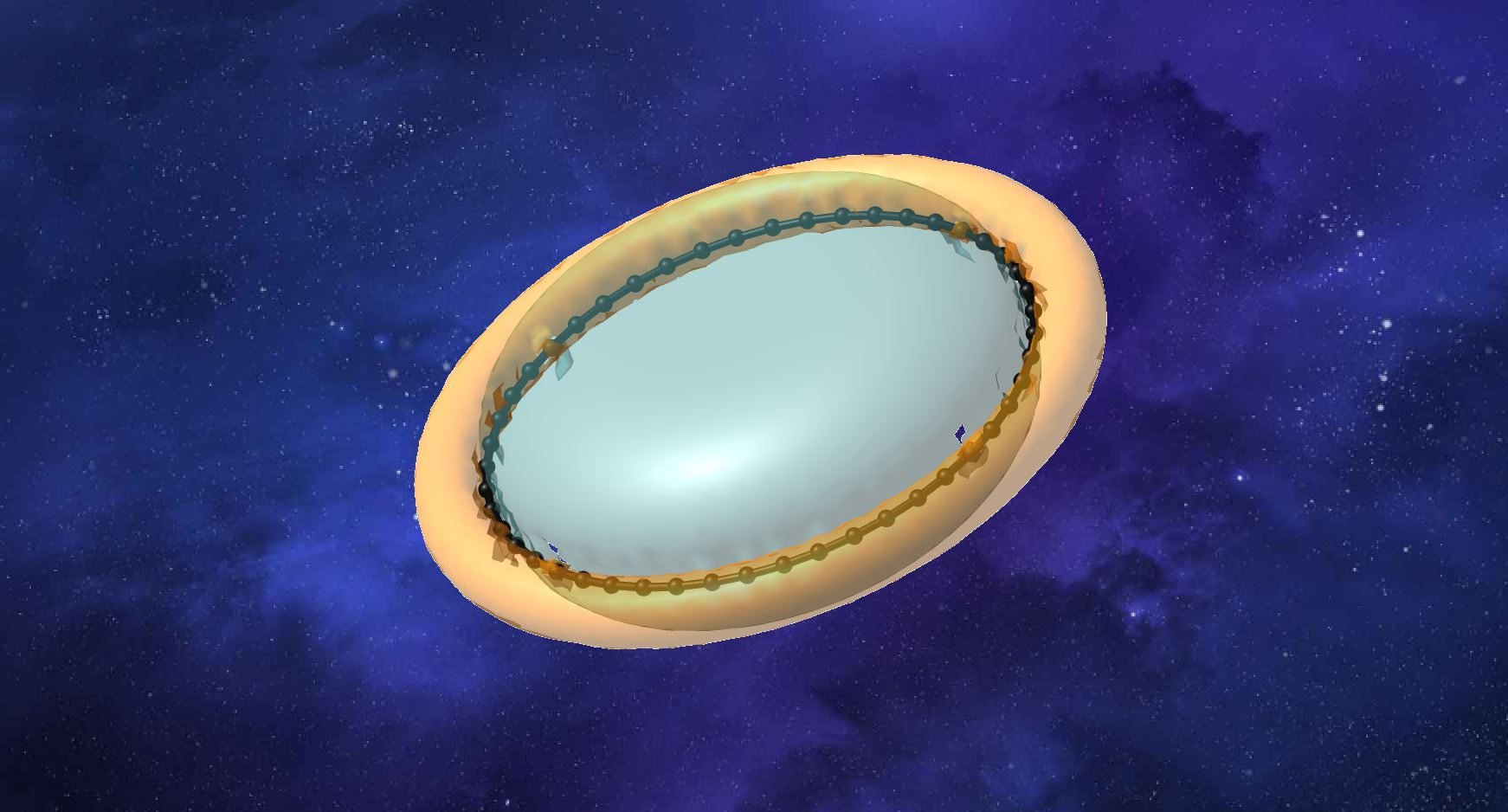

Cyclo[48]carbon—Evaluation of Its Inherent Magnetic Behavior and Anisotropy from DFT Calculations
Abstract
1. Introduction
2. Materials and Methods
3. Results and Discussion
4. Conclusions
Supplementary Materials
Author Contributions
Funding
Data Availability Statement
Acknowledgments
Conflicts of Interest
References
- Kadish, K.M.; Ruoff, R.S. Fullerenes: Chemistry, Physics, and Technology; John Wiley & Sons Ltd.: New York, NY, USA, 2000. [Google Scholar]
- Collavini, S.; Delgado, J.L. Fullerenes: The Stars of Photovoltaics. Sustain. Energy Fuels 2018, 2, 2480–2493. [Google Scholar] [CrossRef] [Scilit]
- Haino, T.; Hirao, T. Supramolecular Chemistry of Fullerenes. In Handbook of Fullerene Science and Technology; Springer Nature: Singapore, 2022; pp. 817–847. [Google Scholar]
- Brinkmann, G.; Goedgebeur, J.; McKay, B.D. The Generation of Fullerenes. J. Chem. Inf. Model. 2012, 52, 2910–2918. [Google Scholar] [CrossRef] [Scilit]
- Hirsch, A. (Ed.) The Chemistry of the Fullerenes; Wiley: Weinheim, Germany, 1994; ISBN 9783527308903. [Google Scholar]
- Van Orden, A.; Saykally, R.J. Small Carbon Clusters: Spectroscopy, Structure, and Energetics. Chem. Rev. 1998, 98, 2313–2358. [Google Scholar] [CrossRef] [Scilit]
- Chen, X.; Liu, Y.; Guo, Q.-H. Catenated Cyclocarbon: Stabilizing Cyclo[48]Carbon in Solution with Mechanical Bonds. Chem 2025, 11, 102782. [Google Scholar] [CrossRef] [Scilit]
- Gao, Y.; Gupta, P.; Rončević, I.; Mycroft, C.; Gates, P.J.; Parker, A.W.; Anderson, H.L. Solution-Phase Stabilization of a Cyclocarbon by Catenane Formation. Science 2025, 389, 708–710. [Google Scholar] [CrossRef] [Scilit] [PubMed]
- Anderson, H.L.; Patrick, C.W.; Scriven, L.M.; Woltering, S.L. A Short History of Cyclocarbons. Bull. Chem. Soc. Jpn. 2021, 94, 798–811. [Google Scholar] [CrossRef] [Scilit]
- Kaiser, K.; Scriven, L.M.; Schulz, F.; Gawel, P.; Gross, L.; Anderson, H.L. An Sp-Hybridized Molecular Carbon Allotrope, Cyclo[18]Carbon. Science 2019, 365, 1299–1301. [Google Scholar] [CrossRef] [Scilit] [PubMed]
- Scriven, L.M.; Kaiser, K.; Schulz, F.; Sterling, A.J.; Woltering, S.L.; Gawel, P.; Christensen, K.E.; Anderson, H.L.; Gross, L. Synthesis of Cyclo[18]Carbon via Debromination of C18Br6. J. Am. Chem. Soc. 2020, 142, 12921–12924. [Google Scholar] [CrossRef] [Scilit] [PubMed]
- Albrecht, F.; Rončević, I.; Gao, Y.; Paschke, F.; Baiardi, A.; Tavernelli, I.; Mishra, S.; Anderson, H.L.; Gross, L. The Odd-Number Cyclo[13]Carbon and Its Dimer, Cyclo[26]Carbon. Science 2024, 384, 677–682. [Google Scholar] [CrossRef] [Scilit]
- Sun, L.; Zheng, W.; Gao, W.; Kang, F.; Zhao, M.; Xu, W. On-Surface Synthesis of Aromatic Cyclo[10]Carbon and Cyclo[14]Carbon. Nature 2023, 623, 972–976. [Google Scholar] [CrossRef] [Scilit]
- Gao, Y.; Albrecht, F.; Rončević, I.; Ettedgui, I.; Kumar, P.; Scriven, L.M.; Christensen, K.E.; Mishra, S.; Righetti, L.; Rossmannek, M.; et al. On-Surface Synthesis of a Doubly Anti-Aromatic Carbon Allotrope. Nature 2023, 623, 977–981. [Google Scholar] [CrossRef] [Scilit]
- Sun, L.; Zheng, W.; Kang, F.; Gao, W.; Wang, T.; Gao, G.; Xu, W. On-Surface Synthesis and Characterization of Anti-Aromatic Cyclo[12]Carbon and Cyclo[20]Carbon. Nat. Commun. 2024, 15, 7649. [Google Scholar] [CrossRef] [Scilit]
- Li, Z.; Smeu, M.; Rives, A.; Maraval, V.; Chauvin, R.; Ratner, M.A.; Borguet, E. Towards Graphyne Molecular Electronics. Nat. Commun. 2015, 6, 6321. [Google Scholar] [CrossRef] [Scilit] [PubMed]
- Barba-Barba, R.M.; Chammam, M.; Ramos-Ortiz, G.; Listunov, D.; Velusamy, J.; Rodriguez, M.; Carriles, R.; Silva, C.; Duhayon, C.; Kauffmann, B.; et al. Linear and Nonlinear Optical Properties of a Quadrupolar Carbo-Benzene and Its Benzenic Parent: The Carbo-Merization Effect. Dye Pigment. 2021, 188, 109133. [Google Scholar] [CrossRef] [Scilit]
- Cocq, K.; Maraval, V.; Saffon-Merceron, N.; Saquet, A.; Poidevin, C.; Lepetit, C.; Chauvin, R. Carbo-Quinoids: Stability and Reversible Redox-Proaromatic Character towards Carbo-Benzenes. Angew. Chem. Int. Ed. 2015, 54, 2703–2706. [Google Scholar] [CrossRef] [Scilit]
- Basset, J.-M. Yves Chauvin (1930–2015). Nature 2015, 519, 159. [Google Scholar] [CrossRef] [Scilit] [PubMed]
- Rives, A.; Maraval, V.; Saffon-Merceron, N.; Chauvin, R. First Perphenylated Carbo-Oligoacetylenes: An Extension of the Polytriacetylene Family. Chem.–Eur. J. 2012, 18, 14702–14707. [Google Scholar] [CrossRef] [Scilit] [PubMed]
- Sundholm, D. C72: Gaudiene, a Hollow and Aromatic All-Carbon Molecule. Phys. Chem. Chem. Phys. 2013, 15, 9025–9028. [Google Scholar] [CrossRef] [Scilit]
- Cocq, K.; Lepetit, C.; Maraval, V.; Chauvin, R. “Carbo-Aromaticity” and Novel Carbo-Aromatic Compounds. Chem. Soc. Rev. 2015, 44, 6535–6559. [Google Scholar] [CrossRef] [Scilit]
- Monaco, G.; Zanasi, R. Analysis of the Nucleus-Independent Chemical Shifts of [10]Cyclophenacene: Is It an Aromatic or Antiaromatic Molecule? J. Phys. Chem. Lett. 2017, 8, 4673–4678. [Google Scholar] [CrossRef] [Scilit]
- Taubert, S.; Sundholm, D.; Pichierri, F. Magnetically Induced Currents in [n]Cycloparaphenylenes, n = 6−11. J. Org. Chem. 2010, 75, 5867–5874. [Google Scholar] [CrossRef] [Scilit]
- Tahara, K.; Tobe, Y. Molecular Loops and Belts. Chem. Rev. 2006, 106, 5274–5290. [Google Scholar] [CrossRef] [Scilit]
- Esser, B.; Raskatov, J.A.; Gleiter, R. DFT Calculations on [6.8]Cyclacenes and CpCo-Capped [4.8]Cyclacenes. Org. Lett. 2007, 9, 4037–4040. [Google Scholar] [CrossRef] [Scilit]
- Hirst, E.S.; Wang, F.; Jasti, R. Theoretical Analysis of [5.7]n Cyclacenes: Closed-Shell Cyclacene Isomers. Org. Lett. 2011, 13, 6220–6223. [Google Scholar] [CrossRef] [Scilit]
- Kayahara, E.; Patel, V.K.; Yamago, S. Synthesis and Characterization of [5]Cycloparaphenylene. J. Am. Chem. Soc. 2014, 136, 2284–2287. [Google Scholar] [CrossRef] [Scilit] [PubMed]
- Lewis, S.E. Cycloparaphenylenes and Related Nanohoops. Chem. Soc. Rev. 2015, 44, 2221–2304. [Google Scholar] [CrossRef] [Scilit] [PubMed]
- Charistos, N.D.; Muñoz-Castro, A. Induced Magnetic Field in Sp-Hybridized Carbon Rings: Analysis of Double Aromaticity and Antiaromaticity in Cyclo[2N]Carbon Allotropes. Phys. Chem. Chem. Phys. 2020, 22, 9240–9249. [Google Scholar] [CrossRef] [Scilit]
- Baranac-Stojanović, M. Orbital Contributions to the Magnetic Shielding of Cyclo[2n]Carbons (n = 3–12). Phys. Chem. Chem. Phys. 2025, 27, 4756–4765. [Google Scholar] [CrossRef] [Scilit] [PubMed]
- Barbosa, L.S.; Moreira, E.; Villegas-Lelovsky, L.; Paupitz, R.; Azevedo, D.L. A DFT Comparative Study of Cyclo[18] Nanorings: Carbon, BN and BCN. J. Clust. Sci. 2023, 34, 1465–1473. [Google Scholar] [CrossRef] [Scilit]
- Brzyska, A.; Panczyk, T.; Wolinski, K. From Cyclo[18]Carbon to the Novel Nanostructures—Theoretical Predictions. Int. J. Mol. Sci. 2022, 23, 12960. [Google Scholar] [CrossRef] [Scilit]
- Fang, S.; Hu, Y.H. Cyclo[18]Carbon as an Ultra-Elastic Molecular O-Ring with Unique Mechanical Properties. Carbon N. Y. 2021, 171, 96–103. [Google Scholar] [CrossRef] [Scilit]
- Xu, J.; Wang, J.; Chen, X.; Zhao, W.; Yan, X.; Liu, Z.; Lu, T.; Yuan, A. Design of Donor–π–Acceptor Type Cyclo[18]Carbon Derivatives for Infrared Nonlinear Optical Materials: A Theoretical Perspective. Phys. Chem. Chem. Phys. 2025, 27, 11993–12003. [Google Scholar] [CrossRef] [Scilit]
- Wu, Y.; Xu, J.; Yan, X.; Zhao, M.; Liu, Z.; Lu, T. Interesting Aromaticity of Franck–Condon Excited States of Cyclo[16]Carbon. Chem.–Eur. J. 2025, 31, e202404138. [Google Scholar] [CrossRef] [Scilit]
- Xiao, Y.; Wang, X.; Yan, X.; Liu, Z.; Zhao, M.; Lu, T. Structure and Optical Properties of Alkali-Metal Ion (Li+, Na+, K+, Rb+, and Cs+) Endohedral Cyclo[18]Carbon. ChemPhysChem 2025, 26, e202500009. [Google Scholar] [CrossRef] [Scilit]
- Zhao, W.; Wang, J.; Yan, X.; Lu, T.; Liu, Z. Obtaining Excellent Optical Molecules by Screening Superalkali-Doped Cyclo[2n]Carbons, M3O@C2n (M = Li, Na, and K, n = 5–10). J. Mater. Chem. C 2025, 13, 17862–17871. [Google Scholar] [CrossRef] [Scilit]
- Liu, Z.; Lu, T. Theoretical Insight into Complexation Between Cyclocarbons and C60 Fullerene. Chem.–Eur. J. 2024, 30, e202402227. [Google Scholar] [CrossRef] [Scilit] [PubMed]
- Lu, T. Theoretical Prediction and Comprehensive Characterization of an All-Nitrogenatomic Ring, Cyclo[18]Nitrogen (N18). ChemPhysChem 2024, 25, e202400377. [Google Scholar] [CrossRef] [Scilit]
- Wu, Y.; Liu, Z.; Lu, T.; Orozco-Ic, M.; Xu, J.; Yan, X.; Wang, J.; Wang, X. Exploring the Aromaticity Differences of Isoelectronic Species of Cyclo[18]Carbon (C18), B6C6N6, and B9N9: The Role of Carbon Atoms as Connecting Bridges. Inorg. Chem. 2023, 62, 19986–19996. [Google Scholar] [CrossRef] [Scilit] [PubMed]
- Baryshnikov, G.V.; Valiev, R.R.; Valiulina, L.I.; Kurtsevich, A.E.; Kurtén, T.; Sundholm, D.; Pittelkow, M.; Zhang, J.; Ågren, H. Odd-Number Cyclo[n]Carbons Sustaining Alternating Aromaticity. J. Phys. Chem. A 2022, 126, 2445–2452. [Google Scholar] [CrossRef] [Scilit] [PubMed]
- Liu, Z.; Wang, X.; Lu, T.; Wang, J.; Yan, X.; Wu, Y.; Xu, J. Molecular Assembly with a Figure-of-Eight Nanohoop as a Strategy for the Collection and Stabilization of Cyclo[18]Carbon. Phys. Chem. Chem. Phys. 2023, 25, 16707–16711. [Google Scholar] [CrossRef] [Scilit]
- Ngui, C.Y.; Ousmanou, M.B.; Souop Tala Foadin, C.; Tchangnwa Nya, F. Theoretical Study of the Boron-Nitrogen (B-N) Effects on Electronic, Optoelectronic, Linear, and Nonlinear Optical Properties of Cyclo[2N]Carbon Series. Polym. Bull. 2024, 81, 11813–11839. [Google Scholar] [CrossRef] [Scilit]
- Baryshnikov, G.V.; Valiev, R.R.; Nasibullin, R.T.; Sundholm, D.; Kurten, T.; Ågren, H. Aromaticity of Even-Number Cyclo[n]Carbons (n = 6–100). J. Phys. Chem. A 2020, 124, 10849–10855. [Google Scholar] [CrossRef] [Scilit]
- Baranac-Stojanović, M. (Anti)Aromaticity of Cyclo[2n]Carbons (n = 3–12). Chem.–An Asian J. 2025, 20, e202500295. [Google Scholar] [CrossRef] [Scilit]
- Gai, X.; Zhang, L.; Wang, J. Theoretical Study of Double Antiaromatic Structure—Cyclo[16]Carbon. J. Mol. Struct. 2024, 1313, 138738. [Google Scholar] [CrossRef] [Scilit]
- Lyu, Y.; Cao, Z.; Zhang, F.; Cui, Y.; Zhang, C.; Meng, Q. Unraveling Electronic Structure and Aromaticity Differences in Cyclo[12]Carbon (C12), B4C4N4, and B6N6 Isoelectronic Ring Molecules. J. Chem. Phys. 2025, 162, 244301. [Google Scholar] [CrossRef] [Scilit]
- Lu, T.; Liu, Z.; Chen, Q. Accurate Theoretical Evaluation of Strain Energy of All-Carboatomic Ring (Cyclo[2n]Carbon), Boron Nitride Ring, and Cyclic Polyacetylene. Chinese Phys. B 2022, 31, 126101. [Google Scholar] [CrossRef] [Scilit]
- Liu, Z.; Lu, T.; Chen, Q. Vibrational Spectra and Molecular Vibrational Behaviors of All-Carboatomic Rings, Cyclo[18]Carbon and Its Analogues. Chem.–An Asian J. 2021, 16, 56–63. [Google Scholar] [CrossRef] [Scilit]
- Gao, W.; Zheng, W.; Sun, L.; Kang, F.; Zhou, Z.; Xu, W. An Sp-Sp2-Hybridized Molecular Carbon Allotrope C16 Flake. Nat. Commun. 2025, 16, 8502. [Google Scholar] [CrossRef] [Scilit]
- Sundholm, D.; Fliegl, H.; Berger, R.J.F. Calculations of Magnetically Induced Current Densities: Theory and Applications. Wiley Interdiscip. Rev. Comput. Mol. Sci. 2016, 6, 639–678. [Google Scholar] [CrossRef] [Scilit]
- Gershoni-Poranne, R.; Stanger, A. The NICS-XY-Scan: Identification of Local and Global Ring Currents in Multi-Ring Systems. Chem.–Eur. J. 2014, 20, 5673–5688. [Google Scholar] [CrossRef] [Scilit] [PubMed]
- Ghosh, A.; Larsen, S.; Conradie, J.; Foroutan-Nejad, C. Local versus Global Aromaticity in Azuliporphyrin and Benziporphyrin Derivatives. Org. Biomol. Chem. 2018, 16, 7964–7970. [Google Scholar] [CrossRef] [Scilit] [PubMed]
- Monaco, G.; Zanasi, R.; Summa, F.F. Magnetic Characterization of the Infinitene Molecule. J. Phys. Chem. A 2022, 126, 3717–3723. [Google Scholar] [CrossRef] [Scilit]
- Berger, R.J.F.; Dimitrova, M.; Nasibullin, R.T.; Valiev, R.R.; Sundholm, D. Integration of Global Ring Currents Using the Ampère–Maxwell Law. Phys. Chem. Chem. Phys. 2022, 24, 624–628. [Google Scholar] [CrossRef] [Scilit]
- El Bakouri, O.; Szczepanik, D.W.; Jorner, K.; Ayub, R.; Bultinck, P.; Solà, M.; Ottosson, H. Three-Dimensional Fully π-Conjugated Macrocycles: When 3D-Aromatic and When 2D-Aromatic-in-3D? J. Am. Chem. Soc. 2022, 144, 8560–8575. [Google Scholar] [CrossRef] [Scilit] [PubMed]
- Lazzeretti, P. Assessment of Aromaticity via Molecular Response Properties. Phys. Chem. Chem. Phys. 2004, 6, 217–223. [Google Scholar] [CrossRef] [Scilit]
- Havenith, R.W.; Fowler, P.W. The Origin of the Ring Current in the All-Metal Aromatic, Al42−? Phys. Chem. Chem. Phys. 2006, 8, 3383. [Google Scholar] [CrossRef] [Scilit] [PubMed]
- Poater, J.; Duran, M.; Solà, M.; Silvi, B. Theoretical Evaluation of Electron Delocalization in Aromatic Molecules by Means of Atoms in Molecules (AIM) and Electron Localization Function (ELF) Topological Approaches. Chem. Rev. 2005, 105, 3911–3947. [Google Scholar] [CrossRef] [Scilit]
- Solà, M. Aromaticity Rules. Nat. Chem. 2022, 14, 585–590. [Google Scholar] [CrossRef] [Scilit]
- Solà, M. Why Aromaticity Is a Suspicious Concept? Why? Front. Chem. 2017, 5, 22. [Google Scholar] [CrossRef] [Scilit]
- Solà, M. Forty Years of Clar’s Aromatic π-Sextet Rule. Front. Chem. 2013, 1, 22. [Google Scholar] [CrossRef] [Scilit]
- Hoffmann, R. The Many Guises of Aromaticity. Am. Sci. 2015, 103, 18. [Google Scholar] [CrossRef] [Scilit]
- Fernandez, I. Aromaticity; Elsevier: Amsterdam, The Netherlands, 2021; ISBN 9780128227237. [Google Scholar]
- Mitchell, R.H. Measuring Aromaticity by NMR. Chem. Rev. 2001, 101, 1301–1316. [Google Scholar] [CrossRef] [Scilit]
- Islas, R.; Heine, T.; Merino, G. The Induced Magnetic Field. Acc. Chem. Res. 2012, 45, 215–228. [Google Scholar] [CrossRef] [Scilit]
- Kaupp, M.; Bühl, M.; Malkin, V.G. Calculation of NMR and EPR Parameters: Theory and Applications; John Wiley & Sons, Inc.: Hoboken, NJ, USA, 2006. [Google Scholar]
- Klod, S.; Kleinpeter, E. Ab Initio Calculation of the Anisotropy Effect of Multiple Bonds and the Ring Current Effect of Arenes Application in Conformational and Configurational Analysis. J. Chem. Soc. Perkin Trans. 2 2001, 1893–1898. [Google Scholar] [CrossRef] [Scilit]
- Gomes, J.A.N.F.; Mallion, R.B. Aromaticity and Ring Currents. Chem. Rev. 2001, 101, 1349–1384. [Google Scholar] [CrossRef] [Scilit] [PubMed]
- Sitkoff, D.; Case, D.A. Theories of Chemical Shift Anisotropies in Proteins and Nucleic Acids. Prog. Nucl. Magn. Reson. Spectrosc. 1998, 32, 165–190. [Google Scholar] [CrossRef] [Scilit]
- Case, D.A. The Use of Chemical Shifts and Their Anisotropies in Biomolecular Structure Determination. Curr. Opin. Struct. Biol. 1998, 8, 624–630. [Google Scholar] [CrossRef] [Scilit]
- Heine, T.; Corminboeuf, C.; Seifert, G. The Magnetic Shielding Function of Molecules and Pi-Electron Delocalization. Chem. Rev. 2005, 105, 3889–3910. [Google Scholar] [CrossRef] [Scilit]
- Heine, T.; Corminboeuf, C.; Grossmann, G.; Haeberlen, U. Proton Magnetic Shielding Tensors in Benzene—From the Individual Molecule to the Crystal. Angew. Chem. Int. Ed. 2006, 45, 7292–7295. [Google Scholar] [CrossRef] [Scilit] [PubMed]
- Reimer, J.A. Development of NMR: Solid-State NMR and Materials Science, Post 1995. In Encyclopedia of Magnetic Resonance; John Wiley & Sons, Ltd.: Chichester, UK, 2012. [Google Scholar]
- Fitzgerald, J.J. Solid-State NMR Spectroscopy of Inorganic Materials; Fitzgerald, J.J., Ed.; ACS Symposium Series; American Chemical Society: Washington, DC, USA, 1999; Volume 717, ISBN 0-8412-3602-X. [Google Scholar]
- Rickhaus, M.; Jirasek, M.; Tejerina, L.; Gotfredsen, H.; Peeks, M.D.; Haver, R.; Jiang, H.-W.; Claridge, T.D.W.; Anderson, H.L. Global Aromaticity at the Nanoscale. Nat. Chem. 2020, 12, 236–241. [Google Scholar] [CrossRef] [Scilit] [PubMed]
- Casademont-Reig, I.; Guerrero-Avilés, R.; Ramos-Cordoba, E.; Torrent-Sucarrat, M.; Matito, E. How Aromatic Are Molecular Nanorings? The Case of a Six-Porphyrin Nanoring. Angew. Chem. Int. Ed. 2021, 60, 24080–24088. [Google Scholar] [CrossRef] [Scilit] [PubMed]
- Holmes, J.M.; Gotfredsen, H.; Gödde, L.; Hergenhahn, J.; Rani, K.; Yamada, K.E.; Deng, J.-R.; Warwick, L.; Clarke, M.; Edmondson, M.; et al. An 18-Porphyrin Nanoring at the Size Limit for Global Aromaticity. J. Am. Chem. Soc. 2025, 147, 32840–32850. [Google Scholar] [CrossRef] [Scilit]
- Amsterdam Density Functional (ADF 2024) Code; Vrije Universiteit: Amsterdam, The Netherlands; Available online: http://www.scm.com (accessed on 20 November 2025).
- Adamo, C.; Barone, V. Toward Reliable Density Functional Methods without Adjustable Parameters: The PBE0 Model. J. Chem. Phys. 1999, 110, 6158–6170. [Google Scholar] [CrossRef] [Scilit]
- Grimme, S. Accurate Description of van Der Waals Complexes by Density Functional Theory Including Empirical Corrections. J. Comput. Chem. 2004, 25, 1463–1473. [Google Scholar] [CrossRef] [Scilit]
- Grimme, S. Semiempirical GGA-Type Density Functional Constructed with a Long-Range Dispersion Correction. J. Comput. Chem. 2006, 27, 1787–1799. [Google Scholar] [CrossRef] [Scilit]
- Grimme, S.; Antony, J.; Ehrlich, S.; Krieg, H. A Consistent and Accurate Ab Initio Parametrization of Density Functional Dispersion Correction (DFT-D) for the 94 Elements H-Pu. J. Chem. Phys. 2010, 132, 154104. [Google Scholar] [CrossRef] [Scilit]
- Grimme, S. Density Functional Theory with London Dispersion Corrections. Wiley Interdiscip. Rev. Comput. Mol. Sci. 2011, 1, 211–228. [Google Scholar] [CrossRef] [Scilit]
- Johnson, E.R.; Becke, A.D. A Post-Hartree–Fock Model of Intermolecular Interactions. J. Chem. Phys. 2005, 123, 024101. [Google Scholar] [CrossRef] [Scilit] [PubMed]
- Grimme, S.; Ehrlich, S.; Goerigk, L. Effect of the Damping Function in Dispersion Corrected Density Functional Theory. J. Comput. Chem. 2011, 32, 1456–1465. [Google Scholar] [CrossRef] [Scilit]
- Merino, G.; Heine, T.; Seifert, G. The Induced Magnetic Field in Cyclic Molecules. Chem.–Eur. J. 2004, 10, 4367–4371. [Google Scholar] [CrossRef] [Scilit]
- Stückrath, J.B.; Gasevic, T.; Bursch, M.; Grimme, S. Benchmark Study on the Calculation of 119Sn NMR Chemical Shifts. Inorg. Chem. 2022, 61, 3903–3917. [Google Scholar] [CrossRef] [Scilit] [PubMed]
- Gasevic, T.; Kleine Büning, J.B.; Grimme, S.; Bursch, M. Benchmark Study on the Calculation of 207Pb NMR Chemical Shifts. Inorg. Chem. 2024, 63, 5052–5064. [Google Scholar] [CrossRef] [Scilit] [PubMed]
- Baranac-Stojanović, M. New Insight into the Anisotropic Effects in Solution-State NMR Spectroscopy. RSC Adv. 2014, 4, 308–321. [Google Scholar] [CrossRef] [Scilit]
- Charistos, N.D.; Papadopoulos, A.G.; Sigalas, M.P. Interpretation of Electron Delocalization in Benzene, Cyclobutadiene, and Borazine Based on Visualization of Individual Molecular Orbital Contributions to the Induced Magnetic Field. J. Phys. Chem. A 2014, 118, 1113–1122. [Google Scholar] [CrossRef] [Scilit]
- Bannwarth, C.; Ehlert, S.; Grimme, S. GFN2-XTB—An Accurate and Broadly Parametrized Self-Consistent Tight-Binding Quantum Chemical Method with Multipole Electrostatics and Density-Dependent Dispersion Contributions. J. Chem. Theory Comput. 2019, 15, 1652–1671. [Google Scholar] [CrossRef] [Scilit]
- Bannwarth, C.; Caldeweyher, E.; Ehlert, S.; Hansen, A.; Pracht, P.; Seibert, J.; Spicher, S.; Grimme, S. Extended Tight-Binding Quantum Chemistry Methods. WIREs Comput. Mol. Sci. 2021, 11, e1493. [Google Scholar] [CrossRef] [Scilit]
- Grimme, S.; Bannwarth, C.; Shushkov, P. A Robust and Accurate Tight-Binding Quantum Chemical Method for Structures, Vibrational Frequencies, and Noncovalent Interactions of Large Molecular Systems Parametrized for All Spd-Block Elements (Z = 1–86). J. Chem. Theory Comput. 2017, 13, 1989–2009. [Google Scholar] [CrossRef] [Scilit]
- Schleyer, P.V.R.; Maerker, C.; Dransfeld, A.; Jiao, H.; van Eikema Hommes, N.J. Nucleus-Independent Chemical Shifts: A Simple and Efficient Aromaticity Probe. J. Am. Chem. Soc. 1996, 118, 6317–6318. [Google Scholar] [CrossRef] [Scilit]
- Schleyer, P.V.R.; Jiao, H. What Is Aromaticity? Pure Appl. Chem. 1996, 68, 209–218. [Google Scholar] [CrossRef] [Scilit]
- Mason, J. Conventions for the Reporting of Nuclear Magnetic Shielding (or Shift) Tensors Suggested by Participants in the NATO ARW on NMR Shielding Constants at the University of Maryland, College Park, July 1992. Solid State Nucl. Magn. Reson. 1993, 2, 285–288. [Google Scholar] [CrossRef] [Scilit]
- Baranac-Stojanović, M.; Stojanović, M. Magnetic Anisotropy of the CC Single Bond. Chem.–Eur. J. 2013, 19, 4249–4254. [Google Scholar] [CrossRef] [Scilit]
- Meng, Y.-S.; Jiang, S.-D.; Wang, B.-W.; Gao, S. Understanding the Magnetic Anisotropy toward Single-Ion Magnets. Acc. Chem. Res. 2016, 49, 2381–2389. [Google Scholar] [CrossRef] [Scilit]
- Raza, A.; Perfetti, M. Electronic Structure and Magnetic Anisotropy Design of Functional Metal Complexes. Coord. Chem. Rev. 2023, 490, 215213. [Google Scholar] [CrossRef] [Scilit]
- Horrocks, W.D.W.; Hall, D.D.W. Paramagnetic Anisotropy. Coord. Chem. Rev. 1971, 6, 147–186. [Google Scholar] [CrossRef] [Scilit]
- Ramsey, N.F. Magnetic Shielding of Nuclei in Molecules. Physica 1951, 17, 303–307. [Google Scholar] [CrossRef] [Scilit]
- Ramsey, N.F. Magnetic Shielding of Nuclei in Molecules. Phys. Rev. 1950, 78, 699–703. [Google Scholar] [CrossRef] [Scilit]
- Widdifield, C.M.; Schurko, R.W. Understanding Chemical Shielding Tensors Using Group Theory, MO Analysis, and Modern Density-Functional Theory. Concepts Magn. Reson. Part A Bridg. Educ. Res. 2009, 34, 91–123. [Google Scholar] [CrossRef] [Scilit]
- Orozco-Ic, M.; Charistos, N.D.; Muñoz-Castro, A.; Islas, R.; Sundholm, D.; Merino, G. Core-Electron Contributions to the Molecular Magnetic Response. Phys. Chem. Chem. Phys. 2022, 24, 12158–12166. [Google Scholar] [CrossRef] [Scilit] [PubMed]
- Orozco-Ic, M.; Soriano-Agueda, L.; Sundholm, D.; Matito, E.; Merino, G. Core-Electron Contributions to the Magnetic Response of Molecules with Heavy Elements and Their Significance in Aromaticity Assessments. Chem. Sci. 2024, 15, 12906–12921. [Google Scholar] [CrossRef] [Scilit] [PubMed]
- Orozco-Ic, M.; Barroso, J.; Charistos, N.D.; Muñoz-Castro, A.; Merino, G. Consequences of Curvature on Induced Magnetic Field: The Case of Helicenes. Chem.–Eur. J. 2020, 26, 326–330. [Google Scholar] [CrossRef] [Scilit]
- Jinger, R.K.; Fliegl, H.; Bast, R.; Dimitrova, M.; Lehtola, S.; Sundholm, D. Spatial Contributions to Nuclear Magnetic Shieldings. J. Phys. Chem. A 2021, 125, 1778–1786. [Google Scholar] [CrossRef] [Scilit] [PubMed]
Disclaimer/Publisher’s Note: The statements, opinions and data contained in all publications are solely those of the individual author(s) and contributor(s) and not of MDPI and/or the editor(s). MDPI and/or the editor(s) disclaim responsibility for any injury to people or property resulting from any ideas, methods, instructions or products referred to in the content. |
© 2025 by the authors. Licensee MDPI, Basel, Switzerland. This article is an open access article distributed under the terms and conditions of the Creative Commons Attribution (CC BY) license (https://creativecommons.org/licenses/by/4.0/).
Share and Cite
Rodríguez-Kessler, P.L.; Muñoz-Castro, A. Cyclo[48]carbon—Evaluation of Its Inherent Magnetic Behavior and Anisotropy from DFT Calculations. Chemistry 2025, 7, 192. https://doi.org/10.3390/chemistry7060192
Rodríguez-Kessler PL, Muñoz-Castro A. Cyclo[48]carbon—Evaluation of Its Inherent Magnetic Behavior and Anisotropy from DFT Calculations. Chemistry. 2025; 7(6):192. https://doi.org/10.3390/chemistry7060192
Chicago/Turabian StyleRodríguez-Kessler, Peter L., and Alvaro Muñoz-Castro. 2025. "Cyclo[48]carbon—Evaluation of Its Inherent Magnetic Behavior and Anisotropy from DFT Calculations" Chemistry 7, no. 6: 192. https://doi.org/10.3390/chemistry7060192
APA StyleRodríguez-Kessler, P. L., & Muñoz-Castro, A. (2025). Cyclo[48]carbon—Evaluation of Its Inherent Magnetic Behavior and Anisotropy from DFT Calculations. Chemistry, 7(6), 192. https://doi.org/10.3390/chemistry7060192