

A Blockchain-Based System for Automating Secure Exchange of Birth Certificates

Abstract
1. Introduction
- Data Integrity: Once recorded on the blockchain, a birth certificate becomes immutable, and any attempt to alter it is immediately flagged [13].
- Verifiable Authenticity: Public institutions can quickly and reliably verify a document’s origin and validity without complex verification procedures.
- Enhanced Traceability: Every action performed on the document is securely tracked and transparent [14].
- Fraud Prevention: Digitally sealed certificates are highly resistant to forgery or tampering.
- Secure and Convenient Access: Citizens can access their birth certificates through emails or online accounts, eliminating the need for in-person visits because blockchain enables each participant in the network to maintain a copy of the ledger [15].
- The citizen’s registered email address.
- Their personal account on “watiqa.ma” or a secure government platform.
2. Background and Related Works
2.1. Related Works
- Regulatory Compliance: A hybrid model where sensitive personal identity data remains encrypted, storing only immutable cryptographic hashes on-chain to strictly satisfy Law 09-08 data minimization and privacy constraints.
- Security: A verification strategy was implemented in the front-end and back-end to protect data injection and unauthorized access to credentials in public administration systems.
2.2. Blockchain
2.3. Smart Contract
2.4. IPFS
3. Proposed System
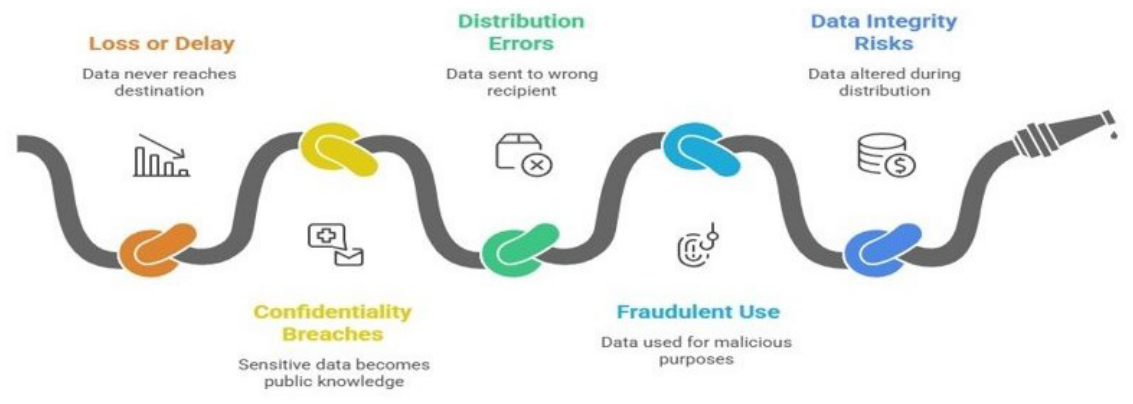
3.1. Problem Statement
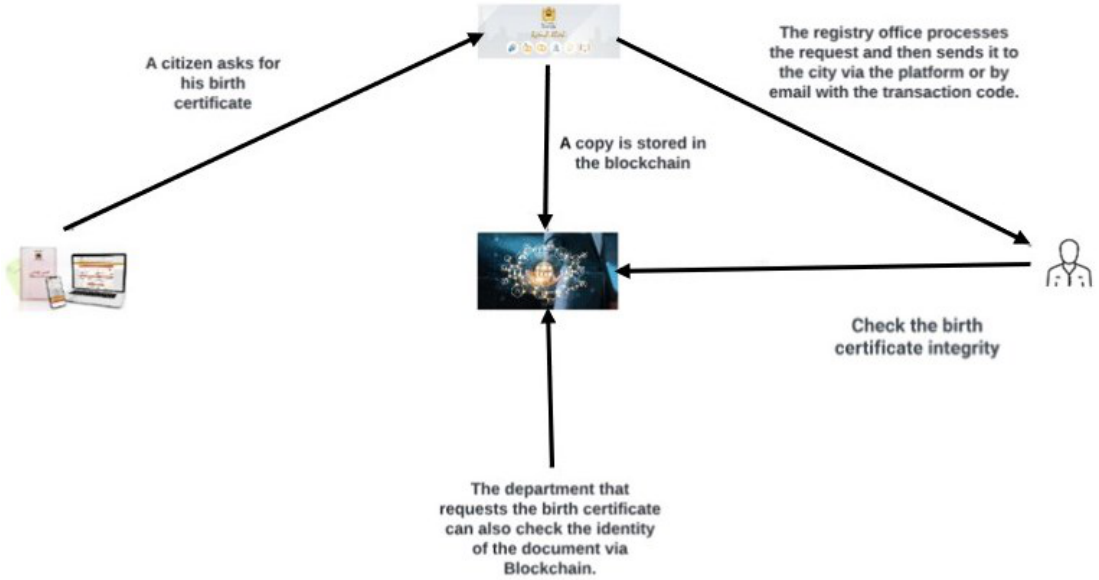
- Presenting to the local civil registry office.
- Submission of an online request through the “watiqa.ma” website.
3.2. Problem Solution
4. System Design and Implementation
4.1. System Design
4.1.1. Conceptual
4.1.2. Functional
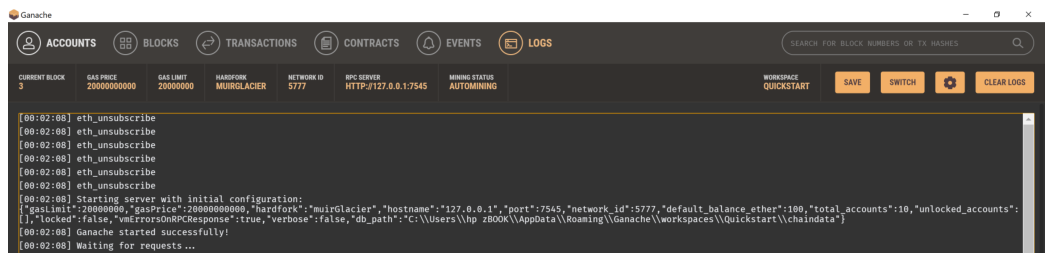
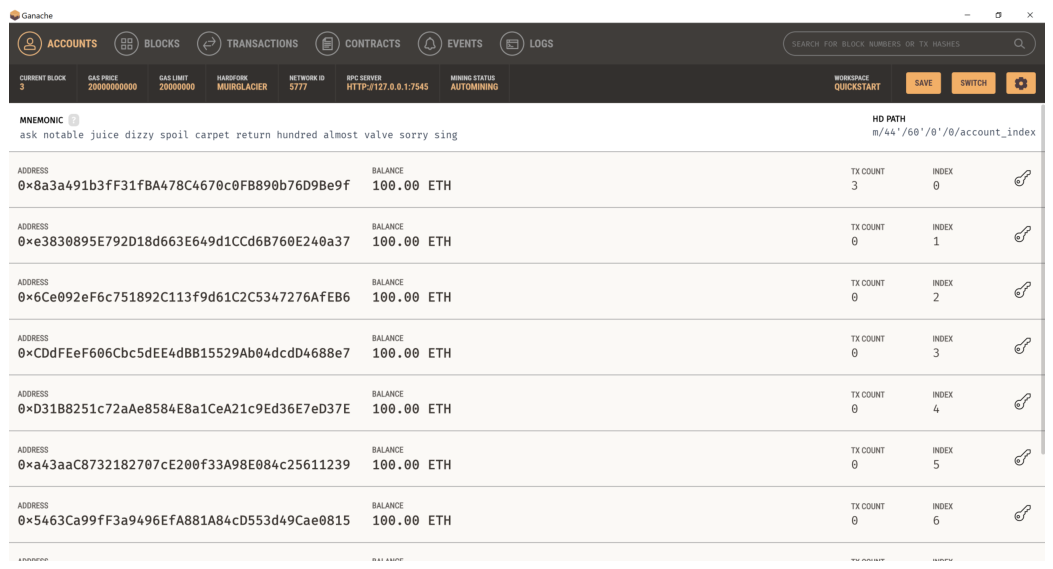
- Ganache (Ethereum blockchain) Ganache serves as a local development utility that enables you to replicate an entire Ethereum blockchain right on your machine. It facilitates the deployment, development, and testing of your smart contracts without incurring the expenses or delays associated with a public network. It features a predefined blockchain with 10 accounts, each with 100 ETH to conduct transactions.
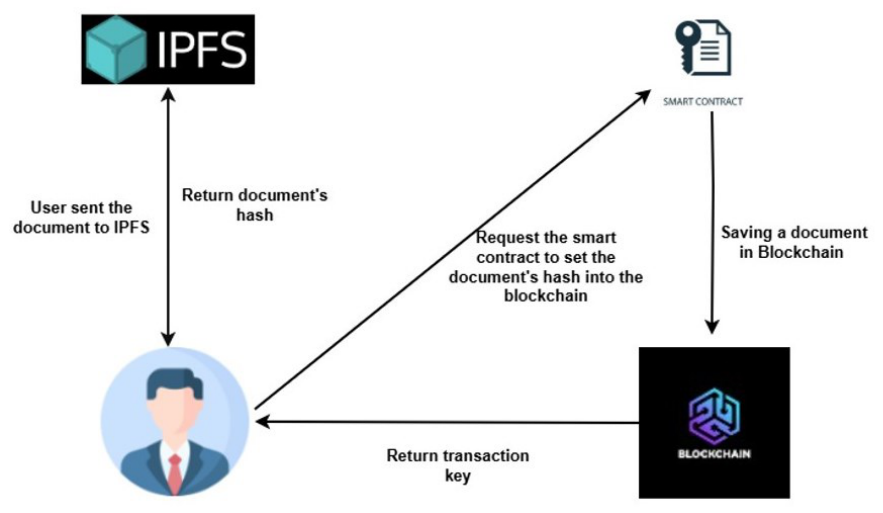
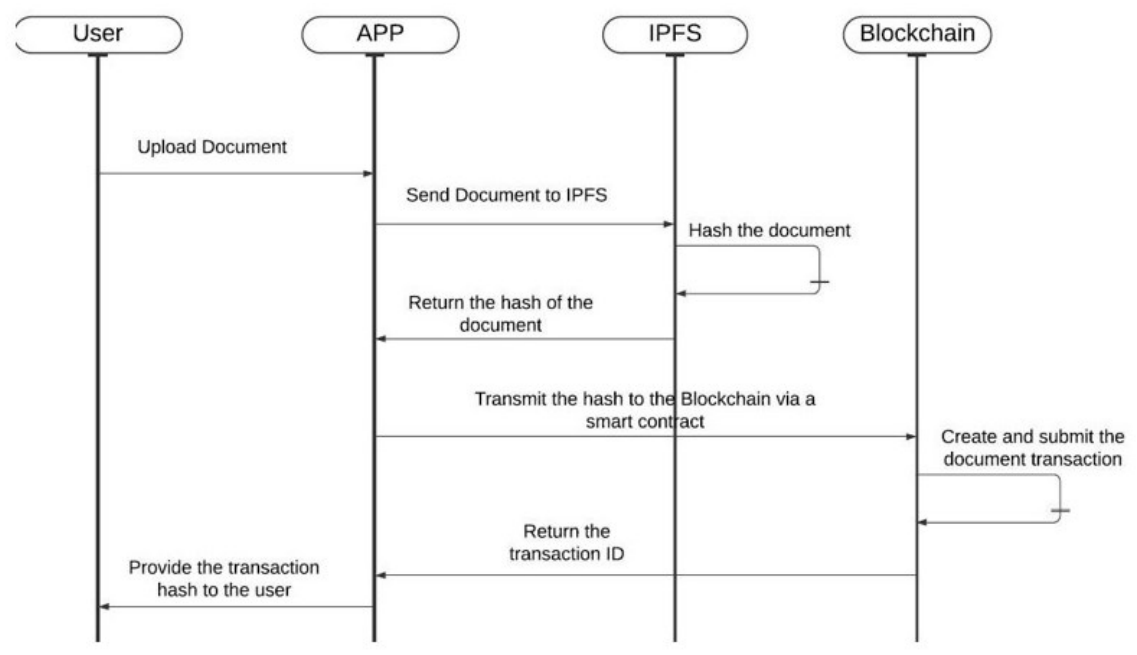
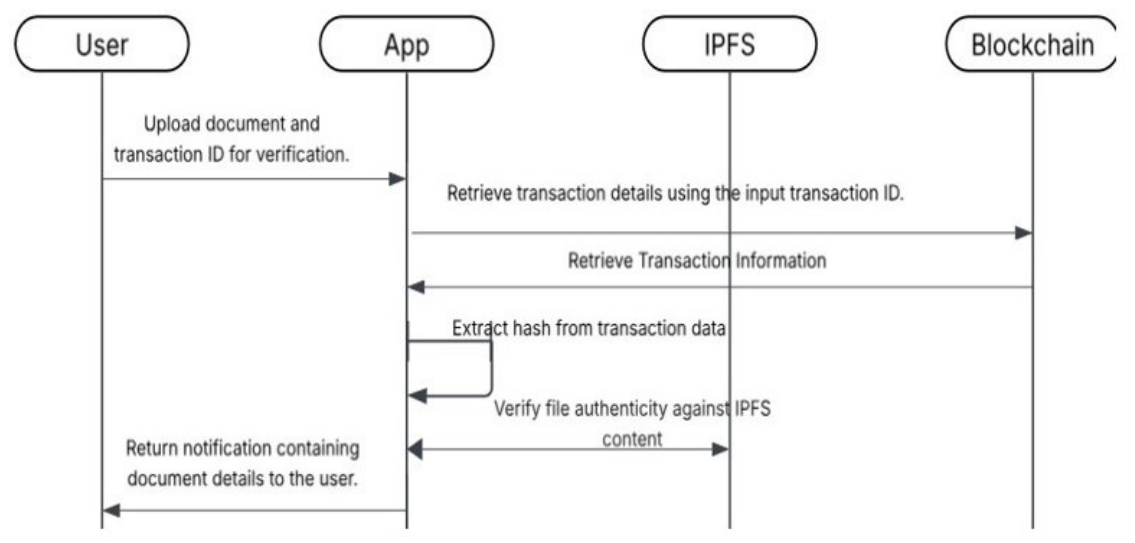
- IPFS (InterPlanetary File System) The IPFS operates as a decentralized network and peer-to-peer (P2P) protocol designed for the storage and sharing of data in a distributed network. Rather than relying on a centralized server for file storage, it distributes data across the network. We use it to preserve the entire document (the actual file) and subsequently log the unique hash of that document onto the blockchain.
- Java: A popular and strong programming language used for building the backend of your app.
- IntelliJ IDEA: An integrated development environment (IDE), the platform employed for writing, compiling, running, and debugging your Java code.
- Spring Boot: A framework that significantly eases the development of production-ready standalone Java applications, particularly for RESTful web services. It oversees the configuration and initialization of your app.
- Web3j (Java and blockchain interaction) Web3j is a reactive Java library that empowers your Spring Boot application (crafted in Java) to connect with the nodes of an Ethereum network. It offers Java abstractions for smart contracts, allowing you to execute transactions, launch contracts, and retrieve information from the blockchain (such as the status of your hash) directly from your Java backend.
4.1.3. Implementation
5. Results
5.1. System Implementation
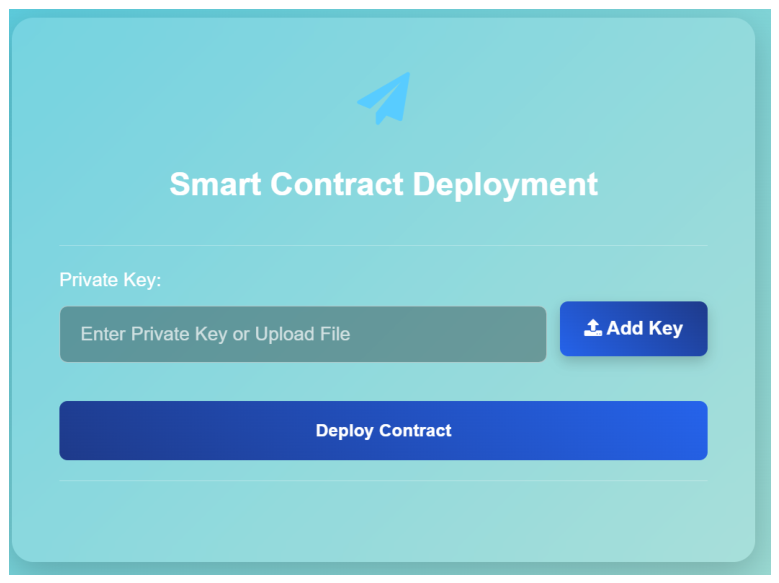
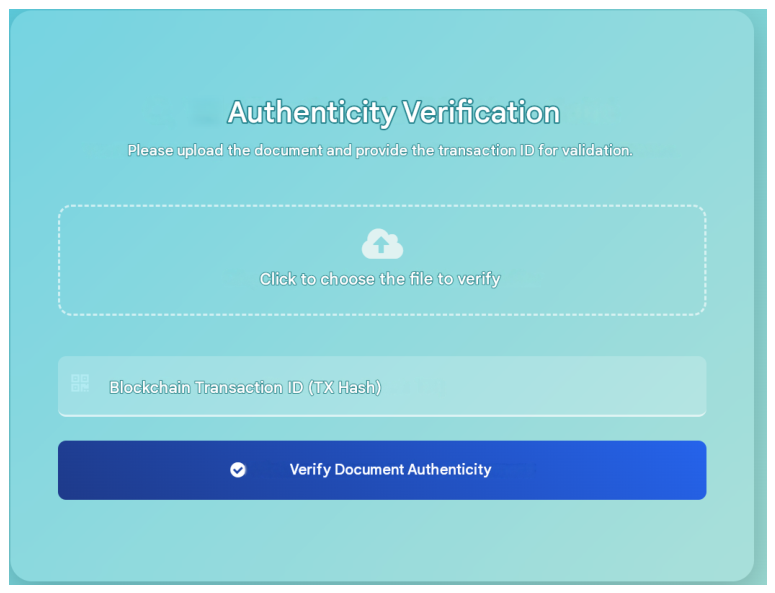
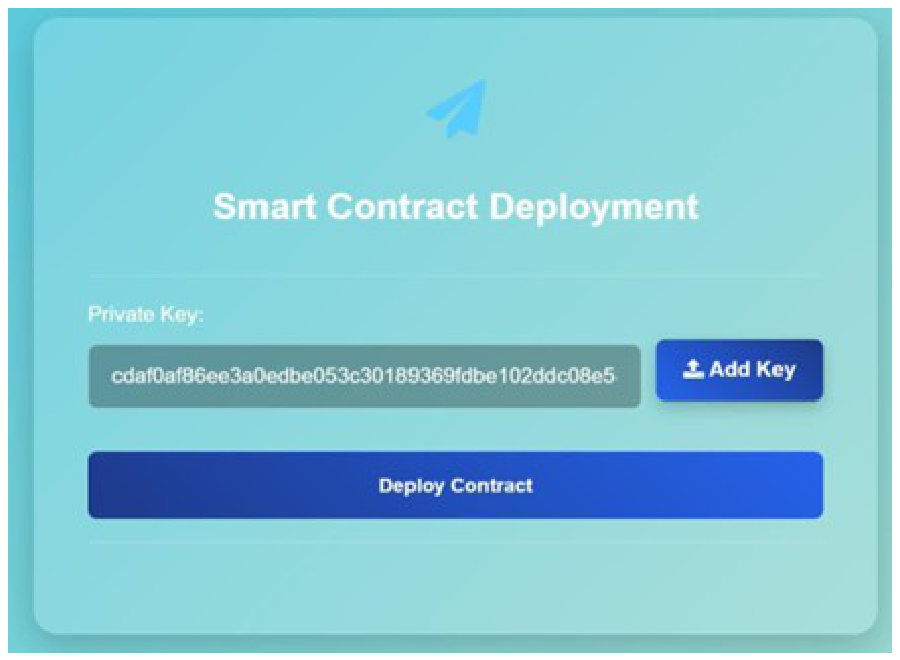
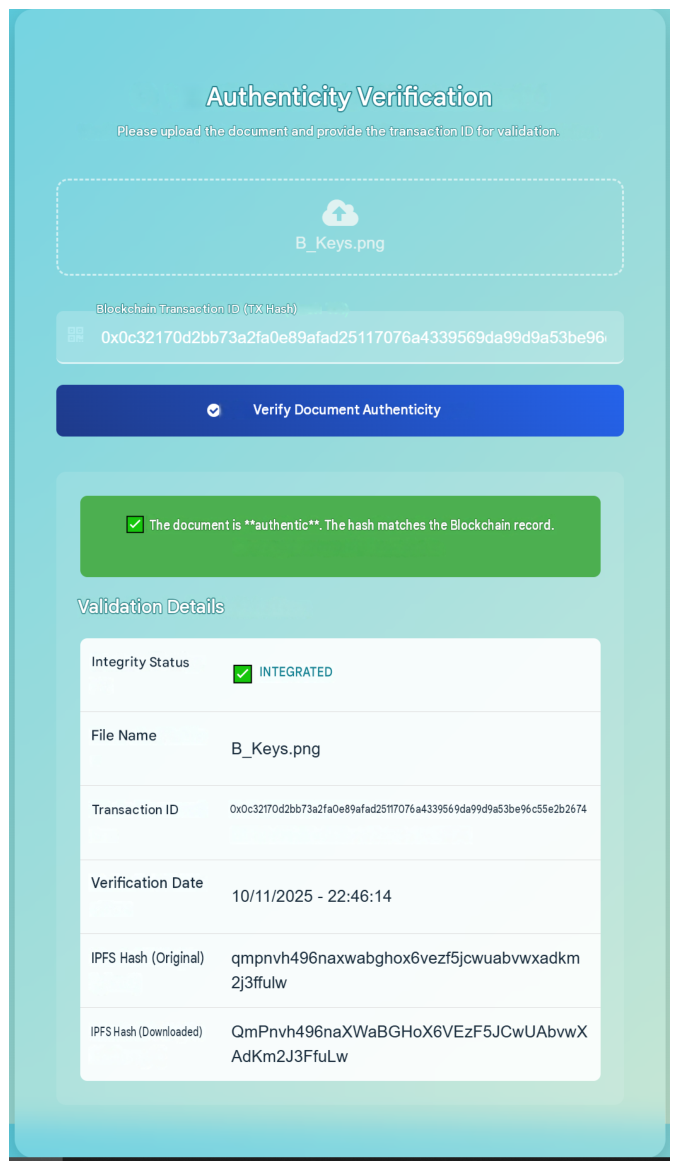
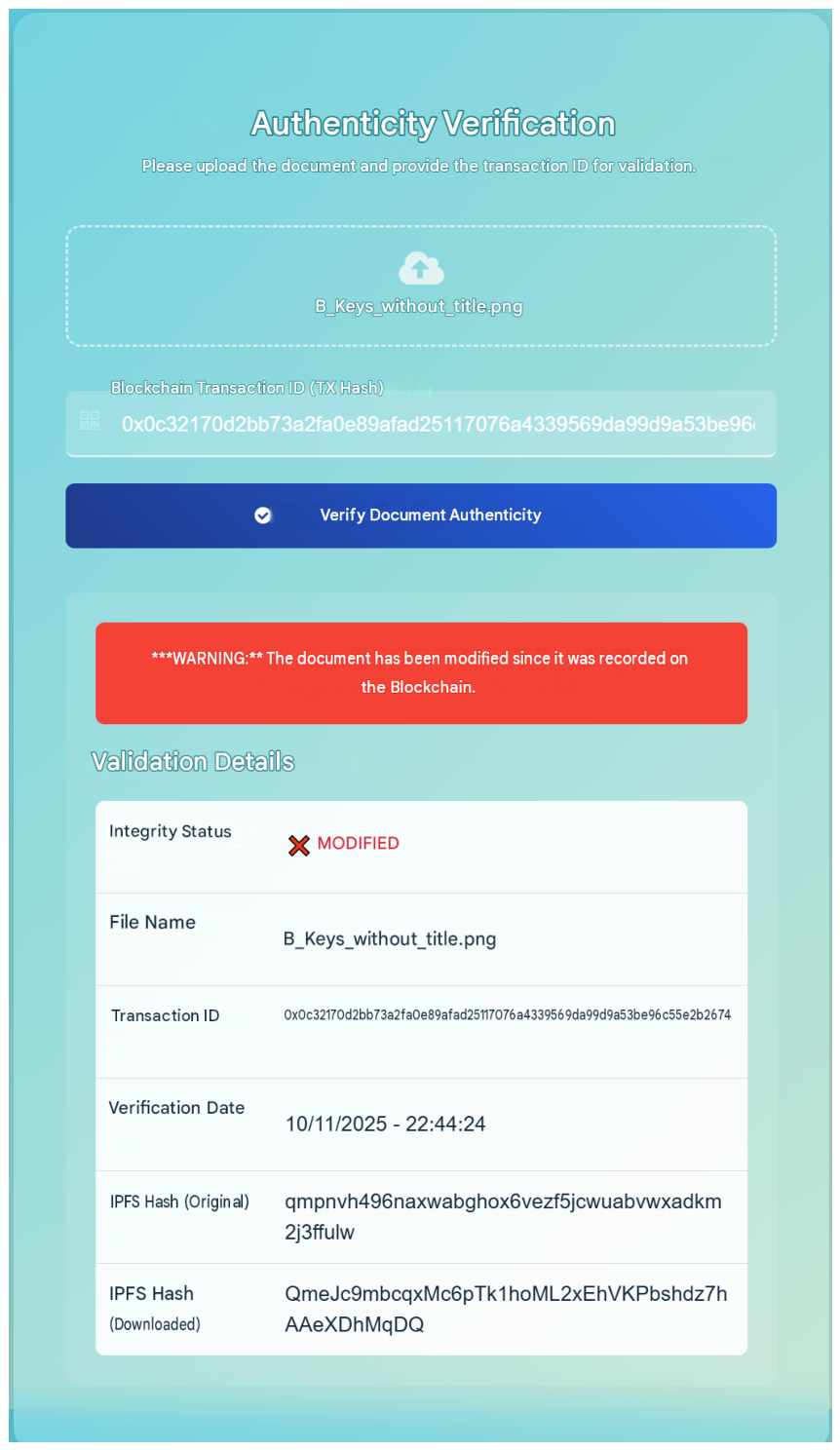
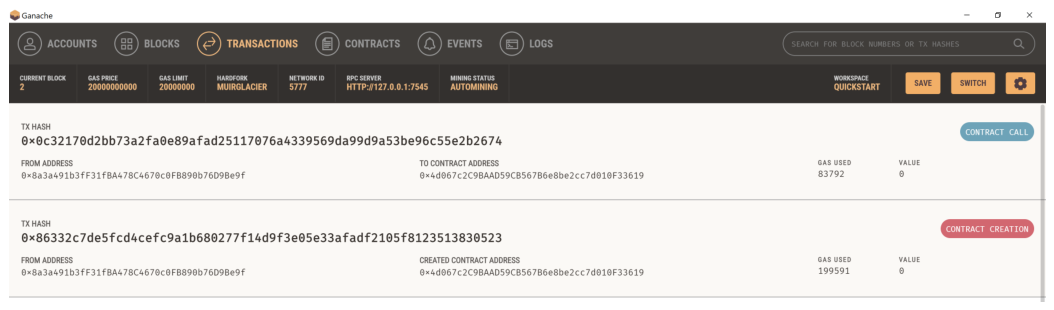
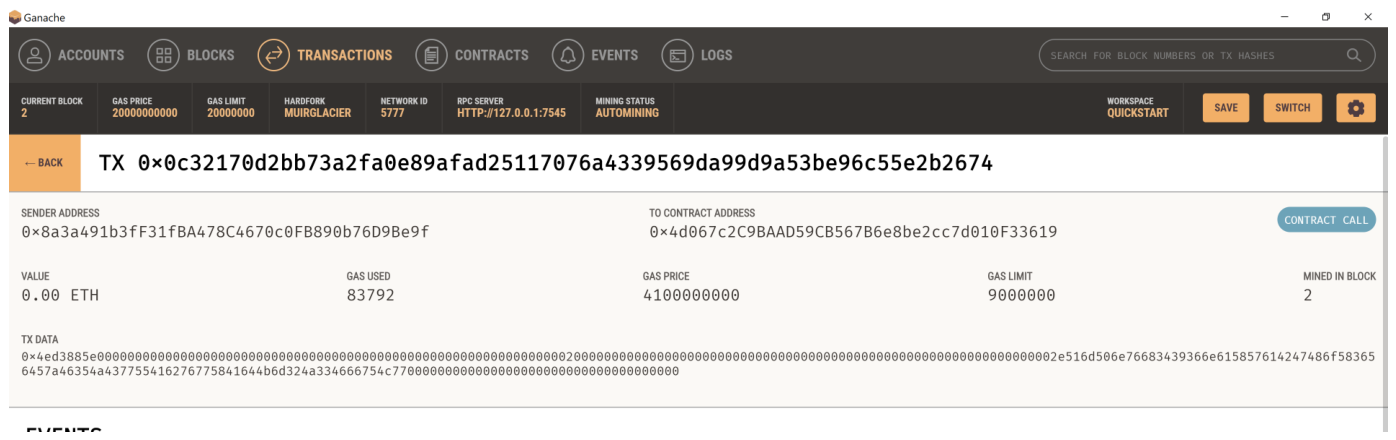
- Transaction hash: the deployment transaction’s unique identifier.
- Deployed address: the public address of the person/organization that started the deployment.
- Timestamp: the precise moment the deployment event took place.
- Contract address: the deployed contract’s permanent address.
- Tx data: the data stored within the transaction.

5.2. Experimental Results
- Reduction in time: Processing time is reduced to just 1 business day with our new system, which speeds up the process and avoids delays for citizens.
- Predictable cost: The model shifts from variable postal and printing fees to a fixed execution cost of 26,192 gas.
- Integrity and storage: Visual inspection and physical archiving of paper are replaced by immutable cryptographic anchoring on the blockchain, occupying a constant 64 bytes.
- Availability and automation: The service transitions from availability limited to business hours to a distributed network that is accessible 24/7, including automatic verification without administrative intermediaries.
6. Discussion
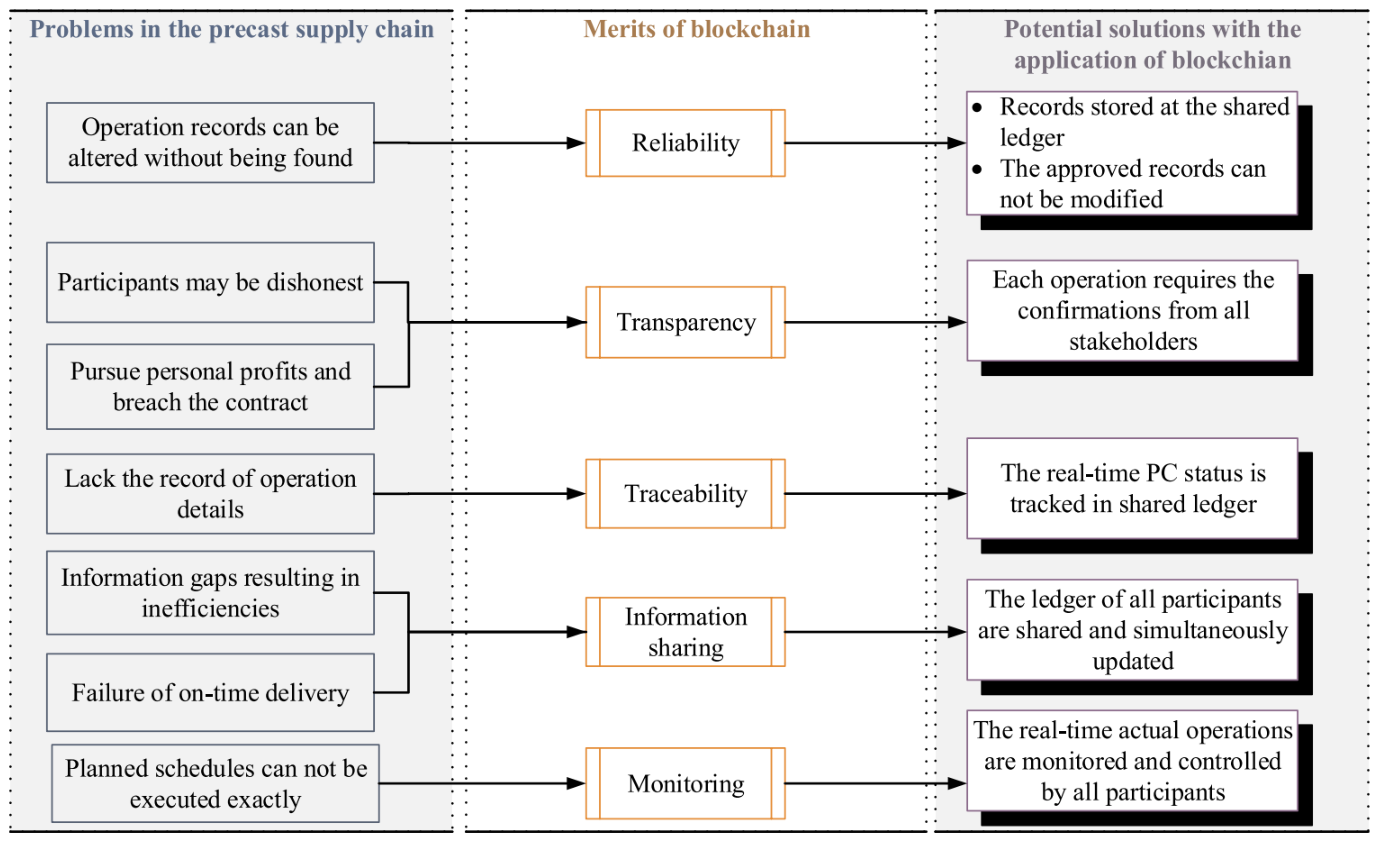
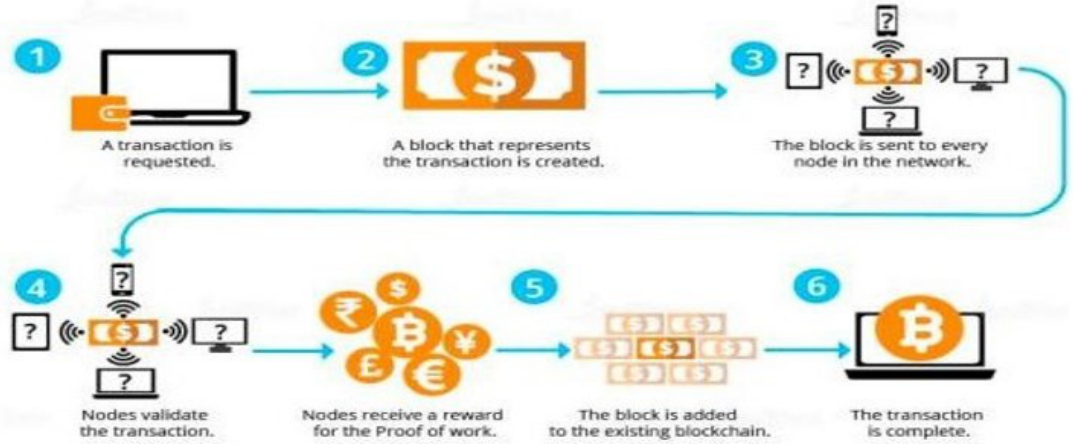
- Can enable the tracking of end-to-end processes with less interaction between parties or decreased integration and data processing costs.
- Creates a native, verifiable, and executable audit trail and track-and-trace record.
- Can empower citizens and create trust as the critical source of truth is openly accessible, distributed, and synchronized concurrently.
- Creating an easier proof of “who has done what and when”;
- Decreasing the time and cost-consuming process to solve recording controversies;
- Implementing smart and effective standardization of cross-agency processes without a centralized controlling database administrator.
7. Conclusions
Author Contributions
Funding
Institutional Review Board Statement
Informed Consent Statement
Data Availability Statement
Conflicts of Interest
References
- Rahajaritsimba, F.M. L’informatisation Du Secteur Judiciaire Au Maroc. J. Integr. Stud. Econ. Law Tech. Sci. Commun. 2023, 1, 22. [Google Scholar]
- Kwizera, D.; Al Habous, M.; Soumaya, A. From the Dematerialization of Judicial Proceedings to a Digitalized Justice: A Great Opportunity for the Judicial Chain Actors. J. Rev. Int. Cherch. 2022, 3, 242. [Google Scholar] [CrossRef]
- Poberezhna, Z.; Slimani, K. Blockchain Technology Using for Automation of Business Processes of the Enterprise. January 2025. Available online: https://www.researchgate.net/publication/389191684 (accessed on 14 August 2026).
- Youssouf, A. Loi N° 37-99 Relative À L’état Civil Promulguée Par Le Dahir N° 1-02-239 Du 25 Rejeb 1423 (3 Octobre 2002); Guide Juridique Des Collectivités Locales, Novembre 2002. Available online: https://citizenshiprightsafrica.org/fr/maroc-loi-n-37-99-relative-a-letat-civil/ (accessed on 14 August 2026).
- Poberezhna, Z.; Slimani, K. L’inscription À L’état Civil Des Enfants Étrangers Au Maroc; Caritas Au Maroc–Guide Informatif, 1 Juin 2018. Available online: https://citizenshiprightsafrica.org/fr/linscription-a-letat-civil-des-enfants-etrangers-au-maroc-guide-informatif/ (accessed on 14 August 2026).
- Lukita, C.; Sutisna, N.; Arribathi, A.H.; Oganda, F.P.; Anjani, S.A.; Faturahman, A. Blockchain for Transparent Academic Records: Implications for Higher Education Institutions. In 2023 Eighth International Conference on Informatics and Computing (ICIC); IEEE: Piscataway, NJ, USA, 2024. [Google Scholar] [CrossRef] [Scilit]
- Rahardja, U.; Aini, Q.; Lutfiani, N.; Oganda, F.P.; Ramadan, A. Blockchain Application In Education Data Security Storage Verification System. In 2022 1st International Conference on Technology Innovation and Its Applications (ICTIIA); IEEE: Piscataway, NJ, USA, 2022. [Google Scholar] [CrossRef] [Scilit]
- Dave, M.; Banoth, R. Blockchain-Based, Decentralized Evidence Archive System Using Ipfs. In 2022 International Conference on Sustainable Computing and Data Communication Systems (ICSCDS); IEEE: Piscataway, NJ, USA, 2022. [Google Scholar] [CrossRef] [Scilit]
- Ran, L.; Shi, Z.; Geng, H. Blockchain Technology For Enhanced Efficiency In Logistics Operations. IEEE Access 2024, 12, 52873–152885. [Google Scholar] [CrossRef] [Scilit]
- Lukita, C.; Asfi, M.; Pranata, S.; Huneman, T.; Nas, C. Integrated Academic Service Digitalization At Universities Utilizing Blockchain Technology. In 2023 Eighth International Conference on Informatics and Computing (ICIC); IEEE: Piscataway, NJ, USA, 2024. [Google Scholar] [CrossRef] [Scilit]
- Bekkar, I.; Bennani, Z. The Blockchain Technology And The Public Governance. Int. J. Account. Financ. Audit. Manag. Econ. 2024, 5, 520–538. [Google Scholar] [CrossRef]
- Gia, K.H.; Huong, L.H.; Vo, H.K.; Trong, P.N.; Dang, K.T.; Van, H.L.; Phu, L.V.C.; Quoc, D.N.T.; Tran, N.H.; The, A.N.; et al. Delivery Management System Based On Blockchain, Smart Contracts And Nft: A Case Study In Vietnam. Int. J. Adv. Comput. Sci. Appl. 2023, 14, 930. [Google Scholar] [CrossRef] [Scilit]
- Wang, Y. The Integration of Blockchain Technology And Artificial Intelligence: Innovation, Challenges, and Future Prospects. Appl. Comput. Eng. 2024, 55, 145–156. [Google Scholar] [CrossRef] [Scilit]
- Sunmola, F.; Lawrence, G.L. Key Success Factors For Integration Of Blockchain And Erp Systems: A Systematic Literature Review. Procedia Comput. Sci. 2024, 232, 775–782. [Google Scholar] [CrossRef] [Scilit]
- Budisteanu, T.G. Blockchain and the Banking Sector: Benefits, Challenges and Perspectives. Open J. Soc. Sci. 2025, 13, 288–300. [Google Scholar] [CrossRef]
- Cerchione, R.; Centobelli, P.; Riccio, E.; Abbate, S.; Oropallo, E. Blockchain’s Coming To Hospital To Digitalize Healthcare Services: Designing A Distributed Electronic Health Record Ecosystem. Technovation 2023, 120, 102480. [Google Scholar] [CrossRef] [Scilit]
- Wang, X.; Wu, Y.C.; Ma, Z. Blockchain in the Courtroom: Exploring its Evidentiary Significance and Procedural Implications in U.S. Judicial Processes. Front. Blockchain 2024, 7, 1306058. [Google Scholar] [CrossRef] [Scilit]
- Borija, R.; Idrissi, K.B.A.; Jega, M.I.; El-Ayachi, M. Exploring Blockchain Technology for Land Administration Perspectives and Implementation Opportunities. Afr. J. Land Policy Geospat. Sci. 2023, 6, 738–758. [Google Scholar] [CrossRef]
- Patil, N.P.; Mane, Y.D.; Vasoya, A.; Agrawal, A.; Raut, S. Secure File Sharing Using Blockchain And Ipfs with Smart Contract-Based Access Control. J. Inf. Syst. Eng. Manag. 2025, 10, 184–194. [Google Scholar] [CrossRef] [Scilit]
- Jlil, M.; Jouti, K.; Loqman, C. Blockchain And Smart Contracts Based System for Criminal Record Management. Indones. J. Electr. Eng. Comput. Sci. 2025, 37, 365–3795. [Google Scholar] [CrossRef] [Scilit]
- Jlil, M.; Jouti, K.; Boumhidi, J.; Loqman, C. Improving Traceability In E-Governance File-Sharing Systems: The Moroccan Justice System As A Use Case. Int. J. Inf. Secur. 2024, 24, 9. [Google Scholar] [CrossRef] [Scilit]
- Abdulrazzaq, S.T.; Omar, F.S.; Mustafa, M.A. Decentralized Security and Data Integrity of Blockchain Using Deep Learning Techniques. Period. Eng. Nat. Sci. 2020, 8, 1911–1923. [Google Scholar] [CrossRef] [Scilit]
- Rahut, S.K.; Tanvir, R.A.; Rahman, S.; Akhter, S. Scientific Paper Peer-Reviewing System with Blockchain, Ipfs, and Smart Contract. In Architectures And Frameworks for Developing and Applying Blockchain Technology; IGI Global Scientific Publishing: Hershey, PA, USA, 2019. [Google Scholar] [CrossRef] [Scilit]
- Praveen, M.D.; Totad, S.G.; Rashinkar, M.; Ostwal, R.; Patil, S.; Hadapad, P.M. Scalable Blockchain Architecture Using Off-Chain Ipfs for Marks Card Validation. Procedia Comput. Sci. 2022, 215, 370–379. [Google Scholar] [CrossRef] [Scilit]
- Sultana, S.A.; Rupa, C.; Malleswari, R.P.; Gadekallu, T.R. Ipfs-Blockchain Smart Contracts Based Conceptual Framework to Reduce Certificate Frauds in the Academic Field. Information 2023, 14, 446. [Google Scholar] [CrossRef] [Scilit]
- Jouti, K.; Jlil, M.; Loqman, C. Blockchain Technology to Improve Traceability Of Data Exchanges in the Judicial System: A Road Traffic Accident Victims As Use Case. Peer-to-Peer Netw. Appl. 2025, 18, 100. [Google Scholar] [CrossRef] [Scilit]








| Document Description | Format | Size (MB) | IPFS (ms) | Ganache (ms) | Total (ms) | Gas Used |
|---|---|---|---|---|---|---|
| Image asset (baseline check) | Image | <1.0 | 33 | 432 | 465 | 26,192 |
| Digital strategy | .ppt | 2.16 | 38 | 454 | 492 | 26,192 |
| Textile industry | 4.46 | 137 | 812 | 949 | 26,192 | |
| Publishing guide | .ppt | 5.37 | 157 | 862 | 1019 | 26,192 |
| Metric/Feature | Old System (Watiqa + Post) | IPFS + Blockchain |
|---|---|---|
| Response latency | 2 to 7 business days | 1 business day |
| Execution cost | Variable paper & postal fees | Fixed 26,192 gas |
| Data integrity | Manual paper inspection | 64-byte blockchain hash anchoring |
| Storage footprint | Physical paper archives | 64-byte state storage on-chain |
| Service availability | Working hours only | 24/7 distributed network |
| Processing overhead | Manual postal/admin staff | Automated cryptographic check |
Disclaimer/Publisher’s Note: The statements, opinions and data contained in all publications are solely those of the individual author(s) and contributor(s) and not of MDPI and/or the editor(s). MDPI and/or the editor(s) disclaim responsibility for any injury to people or property resulting from any ideas, methods, instructions or products referred to in the content. |
© 2026 by the authors. Licensee MDPI, Basel, Switzerland. This article is an open access article distributed under the terms and conditions of the Creative Commons Attribution (CC BY) license.
Share and Cite
Jouti, K.; Jlil, M.; Loqman, C. A Blockchain-Based System for Automating Secure Exchange of Birth Certificates. J. Cybersecur. Priv. 2026, 6, 142. https://doi.org/10.3390/jcp6050142
Jouti K, Jlil M, Loqman C. A Blockchain-Based System for Automating Secure Exchange of Birth Certificates. Journal of Cybersecurity and Privacy. 2026; 6(5):142. https://doi.org/10.3390/jcp6050142
Chicago/Turabian StyleJouti, Kaoutar, Manal Jlil, and Chakir Loqman. 2026. "A Blockchain-Based System for Automating Secure Exchange of Birth Certificates" Journal of Cybersecurity and Privacy 6, no. 5: 142. https://doi.org/10.3390/jcp6050142
APA StyleJouti, K., Jlil, M., & Loqman, C. (2026). A Blockchain-Based System for Automating Secure Exchange of Birth Certificates. Journal of Cybersecurity and Privacy, 6(5), 142. https://doi.org/10.3390/jcp6050142