
Article

A Blockchain-Based System for Automating Secure Exchange of Birth Certificates

LISAC Laboratory, Department of Computer Science, Faculty of Sciences Dhar El Mahraz, University Sidi Mohamed Ben Abdellah, Fez 30000, Morocco
*
Author to whom correspondence should be addressed.
J. Cybersecur. Priv. 2026, 6(5), 142; https://doi.org/10.3390/jcp6050142
Submission received: 14 May 2026 / Revised: 8 August 2026 / Accepted: 15 August 2026 / Published: 24 August 2026
(This article belongs to the Special Issue Blockchain for Cybersecurity and Cyber-Risk Management)

Abstract

The Moroccan Ministry of Justice aims to enhance the process of the judicial system. Through digitalization, given the sensitive information and the complexity of managing this volume of data, along with the multiple electronic materials exchanged, several challenges regarding the security, integrity, and confidentiality of personal data are presented that indicate difficulties in confirming authenticity. Using blockchain technology, the Ministry of Justice can exchange data and knowledge in a secure and transparent way. The goal of the proposed method is to automate the procedure for generating birth certificates to strengthen trust, security, and operational efficiency within the Moroccan judicial system.

1. Introduction

The Kingdom of Morocco has launched the Digital Morocco 2022 Plan. A key goal of this action is to improve public judiciary services to bring citizens closer to the administration and facilitate communication with them [1]. The COVID-19 pandemic has accelerated this transformation, demonstrating how digital technologies are changing operations in this area. This transformation not only replaces paper with digital formats but also modernizes the administration of justice process [2], making it more effective, accessible, and aligned with the demands of today’s digital world [3].
The civil status registry is designed to log and authenticate significant civil occurrences concerning individuals, such as childbirth, mortality, nuptials, and dissolution of marriage. It also encompasses the documentation in civil status files of all pertinent data, considering their character, along with the times and locations of these occurrences [4]. A birth certificate signifies the first legal acknowledgment of a newborn, acting as the foundational right of that child. Without this document, a child may encounter severe dangers, such as early union or insufficient legal safeguarding as a minor in judicial matters. Birth registration, governed by Law 37-99, is both a child’s entitlement and a statutory requirement for parents regardless of whether they are Moroccan or foreign [5]. Given the importance and high demand for birth certificates, the process of obtaining them from application to delivery must be automated. In Morocco, citizens can apply in person at the registry office in their place of birth or online through the official platform “watiqa.ma” if available in their commune. The application requires the applicant’s national identity card, the full name and date of birth of the interested party, and the names of both parents. If the applicant is not the interested party, proof of relationship may be required. Once processed, the birth certificate can be collected in person or delivered by mail.
The digitization of birth certificate requests via “watiqa.ma” represents an important step in the digital transformation of Morocco. This system optimizes the integration of aspects of regulation and provides more accessibility and efficiency, specifically for citizens residing far from their place of birth or abroad, especially since birth certificates are only valid for three months.
Currently, postal delivery is used to send the birth certificate, but there is a chance that it will be lost, intercepted, or accessed by unauthorized parties to the personal information for the transmission. This means that there are several issues related to document verification, data integrity, and service transparency [6].
In the context of digital progress, the full automation of the birth certificate process via online request to secure digital delivery represents an important step in Morocco’s administrative modernization [7]. It improves service speed and accessibility, addressing key issues of data security [8].
Integration of blockchain technology is an excellent solution to address problems with digital reform [9]. This technology’s decentralization, high security, and transparency provide real protection and security to the birth certificate [10] during the entire lifecycle. Blockchain is considered to be a “trust protocol” in trustless environments. It is an immutable and adaptable technology that can prevent issues. Its robust security comes from its capability to authenticate data integrity through cryptographic chains, guaranteeing that all the data entries within the network are interlinked and verifiable [11]. Each interaction with a birth certificate, whether creation, transmission, or consultation, is securely timestamped and logged, ensuring total and verifiable traceability [12]. The key benefits of blockchain integration are:
  • Data Integrity: Once recorded on the blockchain, a birth certificate becomes immutable, and any attempt to alter it is immediately flagged [13].
  • Verifiable Authenticity: Public institutions can quickly and reliably verify a document’s origin and validity without complex verification procedures.
  • Enhanced Traceability: Every action performed on the document is securely tracked and transparent [14].
  • Fraud Prevention: Digitally sealed certificates are highly resistant to forgery or tampering.
  • Secure and Convenient Access: Citizens can access their birth certificates through emails or online accounts, eliminating the need for in-person visits because blockchain enables each participant in the network to maintain a copy of the ledger [15].
Instead of using postal delivery, which carries risks for data security, a verified, timestamped, and secure digital copy of the birth certificate can be sent via:
  • The citizen’s registered email address.
  • Their personal account on “watiqa.ma” or a secure government platform.
In this study, we propose a reliable, decentralized, and secure system of trust and transparency based on blockchain to offer a secure birth certificate automation process from request on “watiqa.ma” to delivery to the person concerned without needing an intermediary or being physically present. This approach enables individuals to obtain their birth certificate safely without needing an intermediary regardless of whether they live in Morocco or another country.

2. Background and Related Works

2.1. Related Works

The recent literature highlights the growing adoption of blockchain technology across diverse sectors thanks to its ability to address such key challenges as centralization, reliance on third parties, and vulnerabilities in data confidentiality, integrity, and security. Many studies focus on integrating blockchain with smart contracts and decentralized storage systems like the IPFS to enhance data transparency and resilience.
In the legal domain, the paper [8] presents a blockchain-based solution for the Indian judiciary, aiming to digitize evidence management by creating a decentralized archive system using the IPFS, thereby ensuring immutability and data traceability. Similarly, Cerchione et al. in [16] propose a permissioned blockchain system for electronic health records (EHRs) to streamline data sharing among healthcare providers while improving clinical, organizational, and managerial outcomes. Despite these advantages, the study also identifies challenges, such as interoperability and user acceptance.
In the context of the U.S. legal system, the study presented in [17] explores the evidentiary value of blockchain records and their classification under the Federal Rules of Evidence, emphasizing the importance of expert witnesses in authenticating technical data and noting difficulties related to legal variability and courtroom integration.
Furthermore, Borija et al. in [18] examine the use of blockchain in land administration to address issues such as procedural inefficiencies and insecure tenure systems. Their research introduces three models, smart registries, smart workflows, and smart exchanges, which leverage blockchain’s cryptographic and consensus features to improve transparency and trust in land transactions. These studies, taken together, emphasize blockchain’s potential to transform traditional systems by enhancing security, transparency, and efficiency across legal, healthcare, and land governance domains.
Poberezhna and Slimani in [3] explore the potential of blockchain in the field of finance, particularly in supply chains, online shopping, and identity management. They propose a well-detailed automation plan and a model to increase profit that considers factors such as the size of IT staff, the volume of e-commerce, and costs. Using tools like segmented regression and the Heaviside function, they show how smart application of blockchain can reduce fraud and waste while increasing the company’s earnings. In the end, they suggest that future work could compare blockchain with other high-growth technologies and test its adoption in different countries.
Patil et al. [19] put forward a secure and decentralized way to share files using blockchain, the IPFS, and smart contracts for access control. It uses heavy-duty AES-256 encryption and SHA-256 hashing to keep data safe and intact, with files stored on the IPFS. Smart contracts set who gets access, removing centralized intermediaries while establishing trust. In addition, the paper in [20] proposed a decentralized architecture for the automatic issuance of criminal record summaries. These documents are crucial for various administrative procedures. In this study, the authors proposed a blockchain- and IPFS-based platform to ensure the secure exchange of these summaries. This scheme optimizes the interaction between law enforcement and citizens by storing the exchange protocol on the blockchain, ensuring the traceability, confidentiality, and integrity of the data.
Similarly, the study in [21] explored the challenges faced by the Moroccan Ministry of Justice in facilitating the digital exchange of data among various stakeholders. This study proposed a blockchain-based architecture to demonstrate how the technology can eliminate the need for a central third-party agency. The authors presented a prototype decentralized application (DApp) based on the Ethereum blockchain, demonstrating how data can be securely stored and verified across different judicial departments.
This literature review demonstrates that the integration of blockchain and the IPFS offers a powerful solution to the limitations of traditional centralized systems. This synergy not only automates administrative processes but, more importantly, ensures the data immutability and transparency that are required for document management and are crucial for all industries. This is particularly important in the judicial system, where data sensitivity and evidence security are paramount. Introducing a decentralized architecture is the key to eliminating reliance on centralized intermediaries while ensuring seamless traceability.
Although blockchain-based document verification has been studied, our work proposes a tailored prototype architecture that is specifically aligned with the Moroccan civil registry context and its regulatory requirements. Currently, birth certificate issuance relies entirely on physical procedures or postal delivery to maintain compliance with Law 09-08 on personal data protection, creating a bottleneck for full administrative digitalization. To bridge this gap, our proposed prototype introduces a dual-application framework that automates inter-agency verification without relying on centralized intermediaries. Beyond applying off-the-shelf blockchain techniques, our contribution provides:
  • Regulatory Compliance: A hybrid model where sensitive personal identity data remains encrypted, storing only immutable cryptographic hashes on-chain to strictly satisfy Law 09-08 data minimization and privacy constraints.
  • Security: A verification strategy was implemented in the front-end and back-end to protect data injection and unauthorized access to credentials in public administration systems.
This suggested approach illustrates how Morocco’s administrative procedures can be automated while still adhering to national privacy regulations.

2.2. Blockchain

Blockchain is a decentralized digital ledger for the distribution and storage of data. It is based on a decentralized network with a persistently interchangeable block order [22]. It is used to record transactions across multiple computers to ensure the security, transparency, and immutability of the data. It is the underlying technology behind cryptocurrencies such as Bitcoin but has many applications beyond digital currencies.
Any single authority cannot control blockchain, and, for a transaction, a block is appended to the existing chain of blocks using secure and strong cryptography, and the updated ledger is shared among the distributed network [23,24]. Figure 1 below demonstrates the cycle of transactions in blockchain.

2.3. Smart Contract

One of the key features of blockchain technology is its support for smart contracts, the self-executing programs that automatically perform predefined actions when specific conditions are met. These contracts consist of functions that can be invoked either externally or by other smart contracts. By leveraging blockchain and smart contract technology, the need for a centralized intermediary between transacting parties is eliminated. Since smart contracts are stored on the blockchain, all network participants have access to a shared tamper-proof copy [21].
Once implemented and deployed on the blockchain, the smart contract’s code becomes unchangeable and provides more security and transparency. This feature makes it possible to automate the process, ensuring instantaneous and reliable results without the need for a tier’s interaction.
In our proposed system, the smart contract is used to support the interaction of saving and retrieving the information of transactions between the user and the blockchain.

2.4. IPFS

The InterPlanetary File System (IPFS) is an open-source peer-to-peer protocol designed for decentralized data storage and distribution. This allows users to verify file integrity by comparing it to the original IPFS hash [25] because, as a document is downloaded into the IPFS, its content is assigned a unique hash, which can be used to locate and authenticate the file at any time.
The IPFS was selected for the proposed solution because it serves as a complementary layer by enabling storage of the blockchain and facilitating the verification of the document.
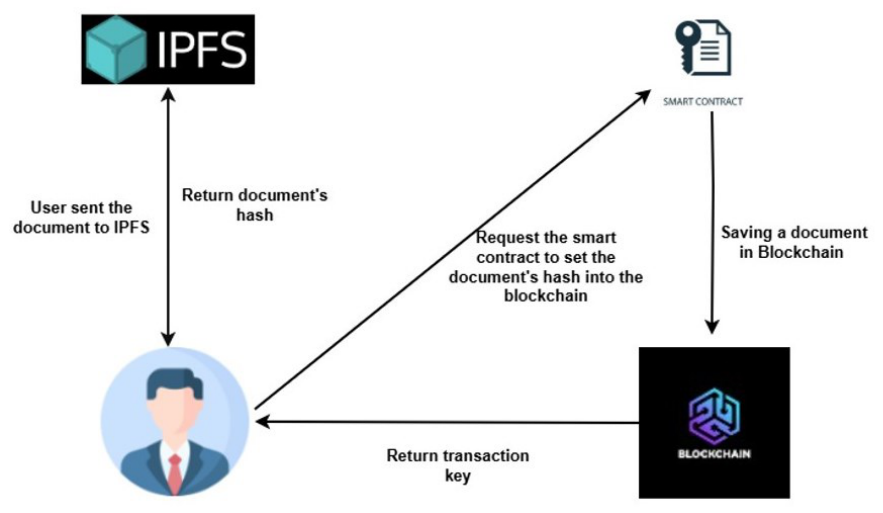
This image in Figure 2 details the flow of a document between the three essential components of our previously defined solution. First, the file is sent to the IPFS to generate its hash, which is then stored in the blockchain using a smart contract where we implemented the set function, which stores the document [26].

3. Proposed System

3.1. Problem Statement

In Morocco, there are two methods for obtaining a birth certificate:
  • Presenting to the local civil registry office.
  • Submission of an online request through the “watiqa.ma” website.
This request needs precise information on the concerned party. If it is made by a third party, the parent–child relationship must be verified between the parties concerned. The digitization of this service through the “watiqa.ma” platform is a major step forward in the digitalization of public service in the Kingdom of Morocco. The use of postal delivery for the distribution of this document poses significant risks to the security of personal data, as well as the confidentiality and integrity of the document.
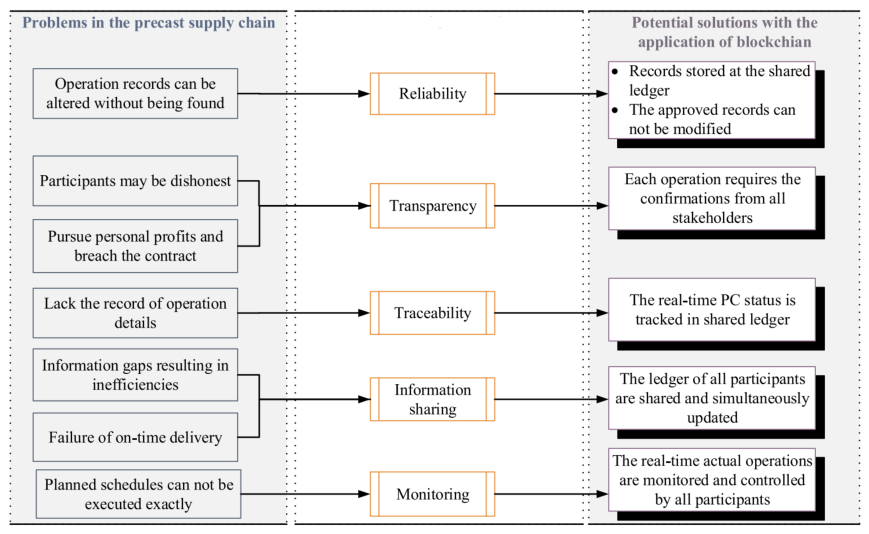
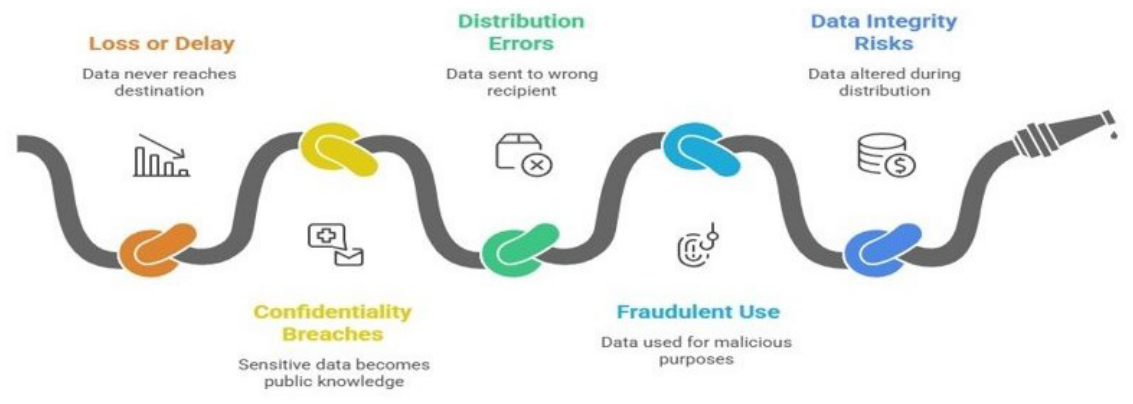
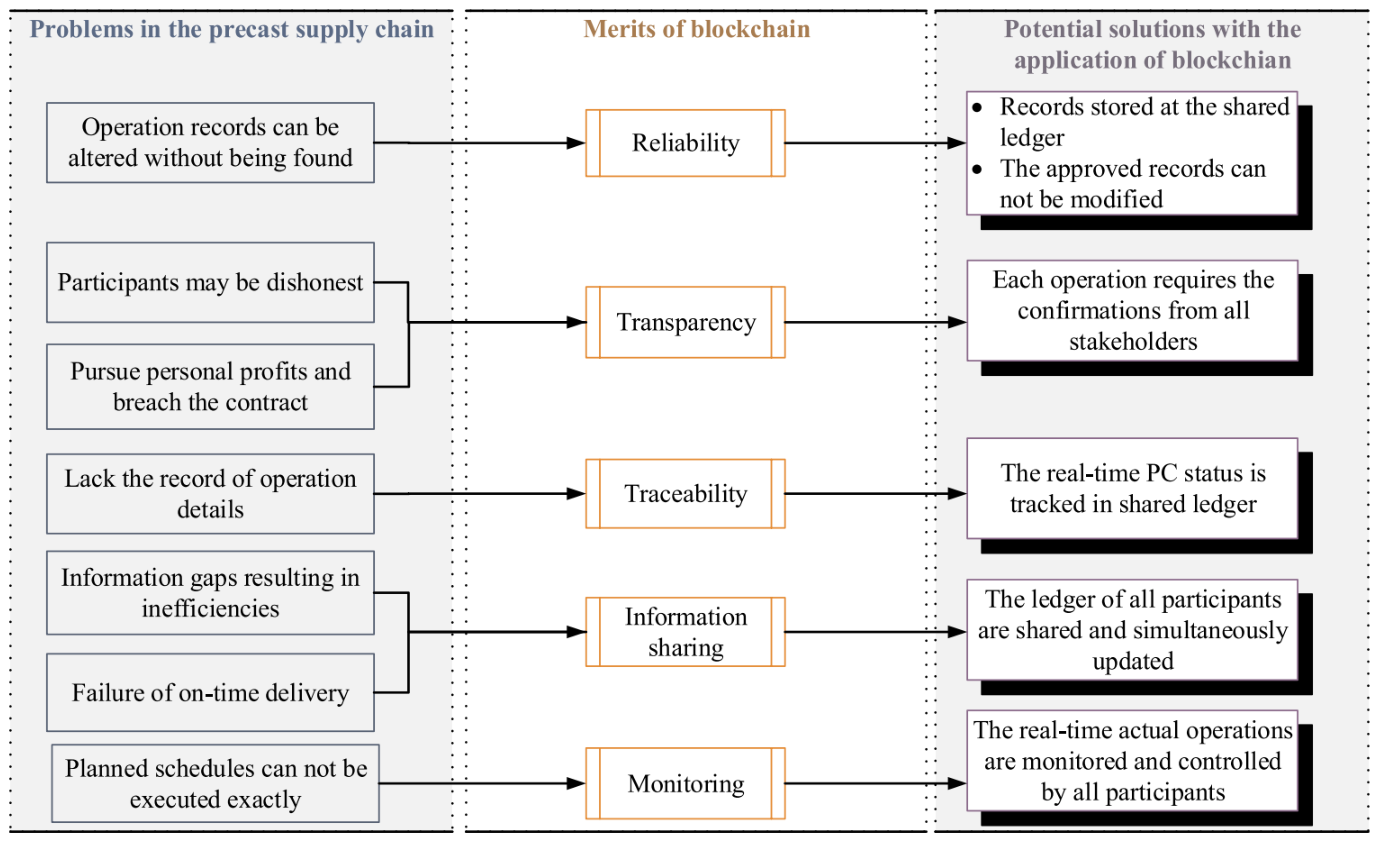
Based on the problems mentioned in Figure 3 in terms of personal data security, it is imperative to automate this system, especially the document exchange party, in order to ensure the integrity of the documents exchanged and improve the accessibility and reliability of administrative services.

3.2. Problem Solution

The complete digitalization of the process of obtaining a birth certificate from the initial request until its receipt by the person concerned is a very important step in the modernization of public services. Such a transformation must assume the citizen’s needs and ensure that public administration aligns with the current digital expectations. Given these vulnerabilities in data security, low traceability, and the possibility of document fraud and alteration, blockchain technology is becoming a reliable solution.
With this approach, we can improve the accessibility of Moroccan services and user satisfaction, consolidate the transparency, integrity, and security of personal data in digitalized environments, and reinforce the reliability of civil registry systems.
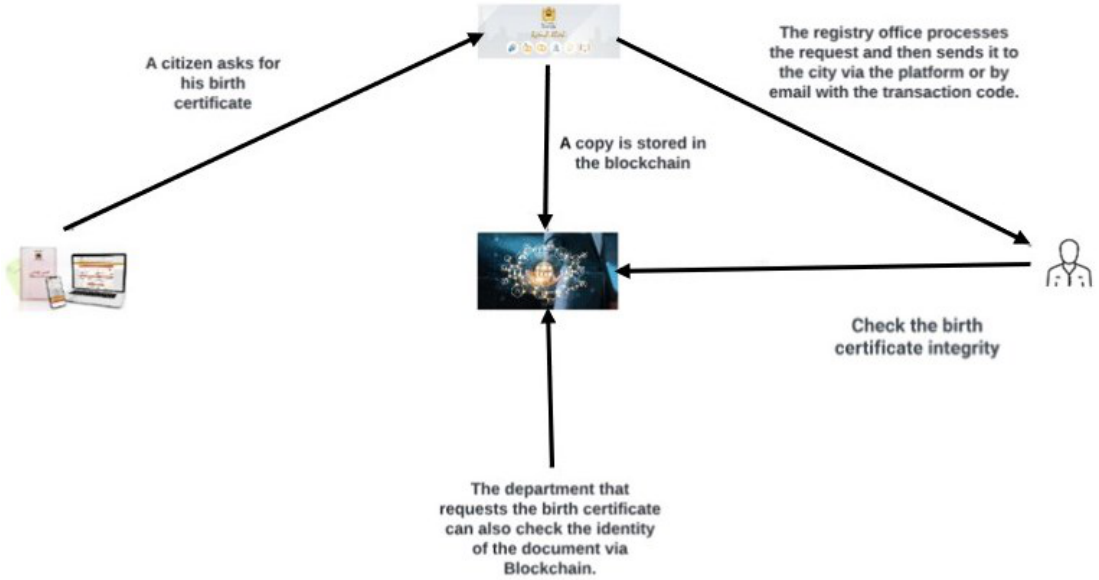
By exploiting the features of the blockchain and using the IPFS, we can safely exchange birth certificates. As soon as it is issued, the birth certificate hash generated by the IPFS is stored in the blockchain. This creates a transaction on the blockchain that contains all the necessary information, including the sender’s contact information, the date and the content of the transaction. In addition, the blocks on the blockchain are linked together by block encryption, which makes it resistant to unauthorized modifications. The authenticity and integrity of each document can be verified at any time without the intervention of a central authority. Figure 4 describes the new process of obtaining a birth certificate.

4. System Design and Implementation

4.1. System Design

4.1.1. Conceptual

To obtain a birth certificate in Morocco, citizens can submit their request online via the official platform “watiqa.ma”. We can make a request form with the required information and upload the necessary supporting documents. When it is submitted, the application will be processed within 48 h.
As soon as the birth certificate is ready, it can be delivered digitally via a secure platform using blockchain technology, and it is sent to the citizen’s email address. As a result, there is no longer a need to use postal services as an intermediary, saving time, improving the security and reliability of the process, and consolidating the authenticity and integrity of the transmitted document.
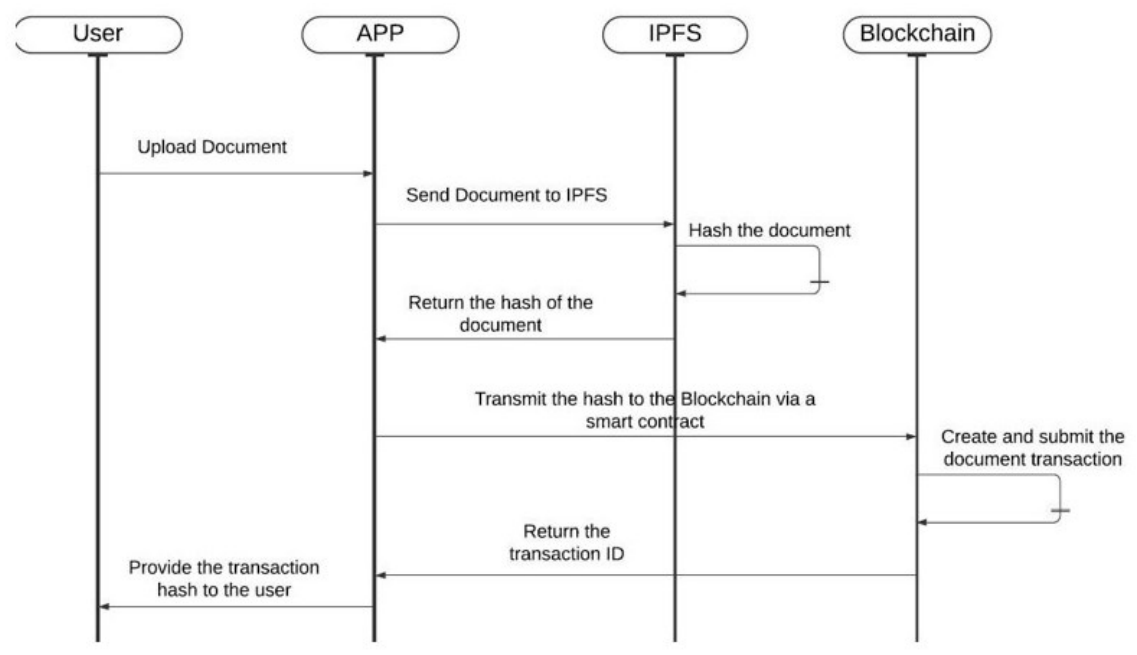
The UML diagram illustrated in Figure 5 presents the interaction between the user, the application’s service, the blockchain, and the IPFS. It describes in detail the secure process of the delivery of a birth certificate. First, the document is uploaded to the application, which will send it to the IPFS to generate its 64-bit hash. This hash is then saved in the blockchain, resulting in the creation of a block containing the transaction information.Upon successful transaction commit, the transaction hash is returned to the user for document content verification.
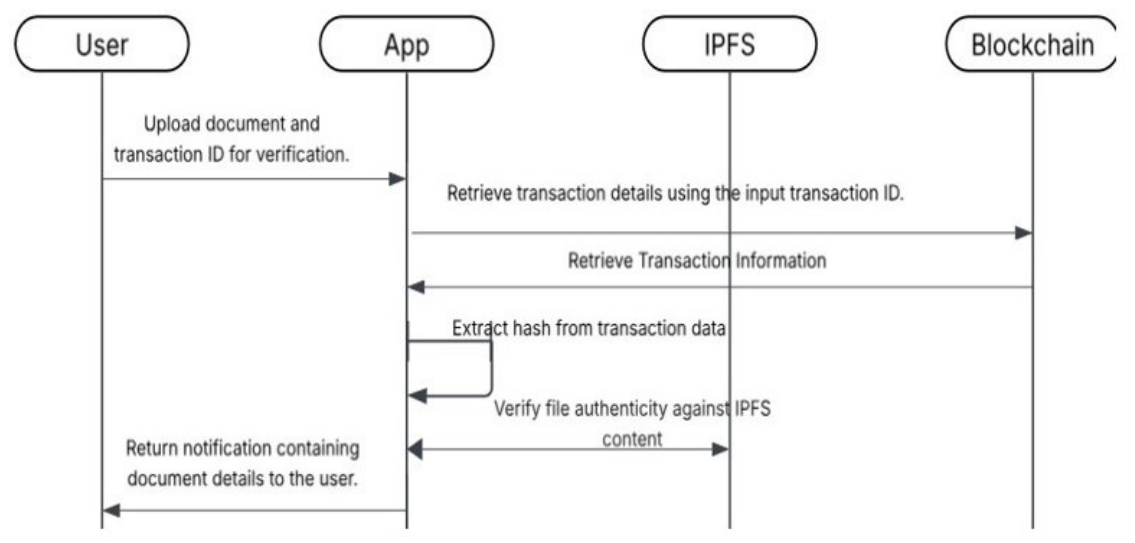
Any person can verify their birth certificate. Figure 6 presents a diagram of the verification of the document. Once the document is saved in the blockchain, the assigned individual can use the hash of the transaction to confirm that the document sent by mail is the same as the one in the blockchain. To achieve this, the document is retrieved from the blockchain using the previously returned transaction ID. The recorded hash is then extracted and compared with the hash of the input file.

4.1.2. Functional

This section describes the implementation tools. In the system, the Ethereum blockchain was used to establish a secure network platform. Besides currency, Ethereum is an open-source computing platform that provides the overall structure for decentralized data storage and the necessary infrastructure to run applications on a blockchain network. The Ethereum platform considers smart contracts as the main components for computing and execution.
  • Ganache (Ethereum blockchain) Ganache serves as a local development utility that enables you to replicate an entire Ethereum blockchain right on your machine. It facilitates the deployment, development, and testing of your smart contracts without incurring the expenses or delays associated with a public network. It features a predefined blockchain with 10 accounts, each with 100 ETH to conduct transactions.
  • IPFS (InterPlanetary File System) The IPFS operates as a decentralized network and peer-to-peer (P2P) protocol designed for the storage and sharing of data in a distributed network. Rather than relying on a centralized server for file storage, it distributes data across the network. We use it to preserve the entire document (the actual file) and subsequently log the unique hash of that document onto the blockchain.
  • Java: A popular and strong programming language used for building the backend of your app.
  • IntelliJ IDEA: An integrated development environment (IDE), the platform employed for writing, compiling, running, and debugging your Java code.
  • Spring Boot: A framework that significantly eases the development of production-ready standalone Java applications, particularly for RESTful web services. It oversees the configuration and initialization of your app.
  • Web3j (Java and blockchain interaction) Web3j is a reactive Java library that empowers your Spring Boot application (crafted in Java) to connect with the nodes of an Ethereum network. It offers Java abstractions for smart contracts, allowing you to execute transactions, launch contracts, and retrieve information from the blockchain (such as the status of your hash) directly from your Java backend.

4.1.3. Implementation

This section details the execution phase, building upon the established structural basis, which includes Java, Spring Boot, Ethereum, and the IPFS. The application’s fundamental logic revolves around a Java Spring Boot service created to oversee the complete process of document submission and validation. This service manages the main steps as follows: First, it hashes the document. Then, it connects to the decentralized storage IPFS platform. Finally, it creates transactions on the Ethereum network (using Ganache as a development environment). The Web3j library also finds its place here to ensure that there is a proper link between the Java code and the smart contracts that have been deployed. In this way, the execution of functions related to the recording and fetching of document cryptographic hashes on the blockchain can be carried out.
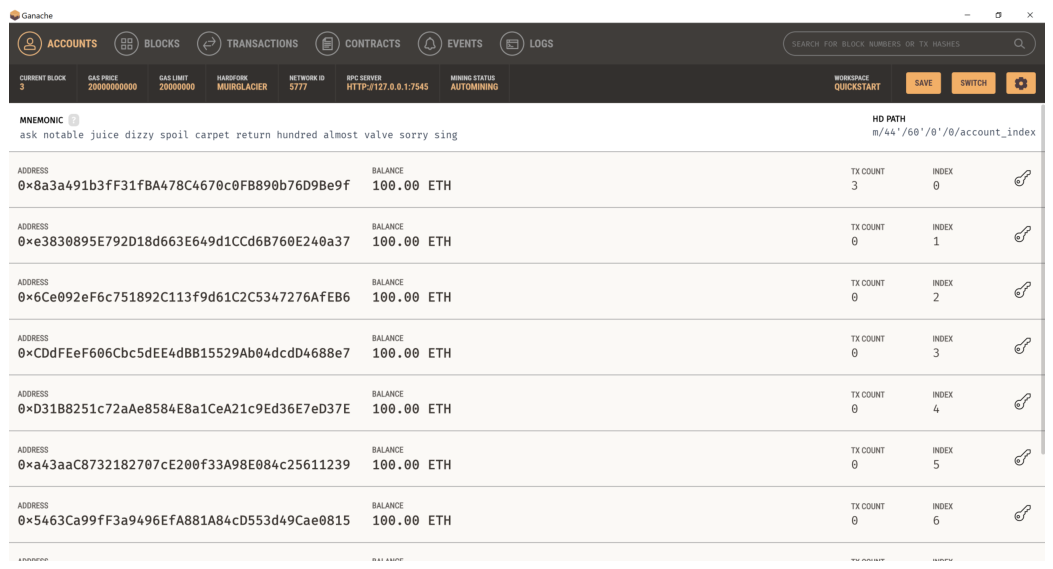
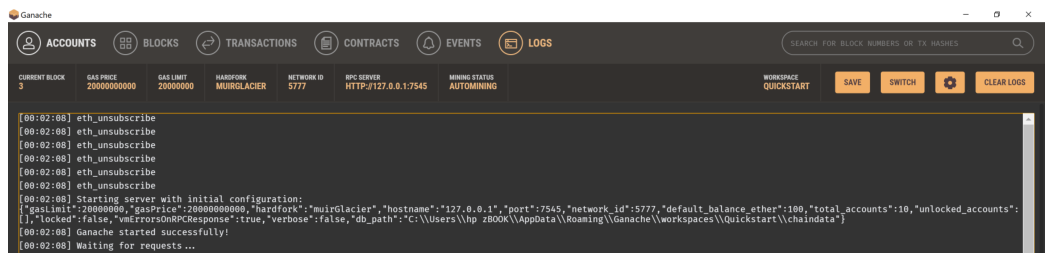
Ganache offers a vital small-scale Ethereum blockchain network mainly for development and testing. Essentially, it mimics a real network scenario along with a deployed smart contract, a detailed transaction record, and a console to examine and fetch the detailed data for each transaction. When a new workspace is created, Ganache by default sets up 10 testing accounts, each with 100 ETH pre-loaded, which is critical for handling smart contracts’ running costs. Figure 7 and Figure 8 below present the details of this platform.
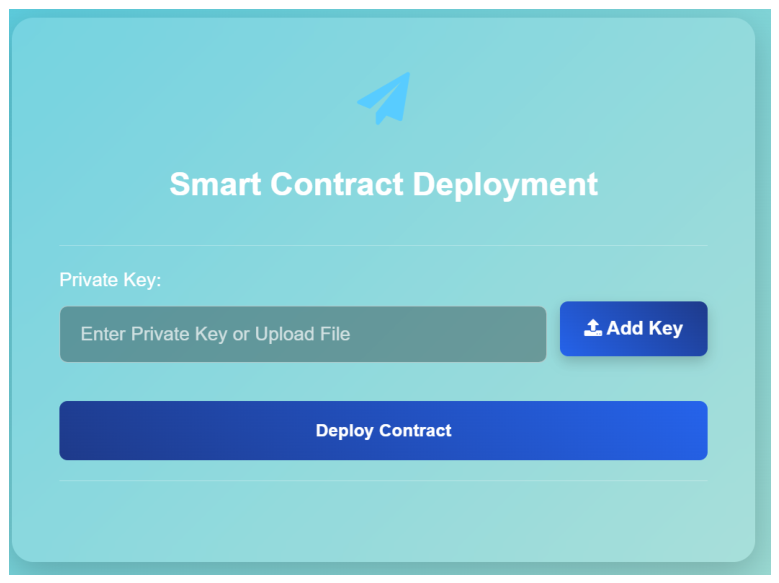
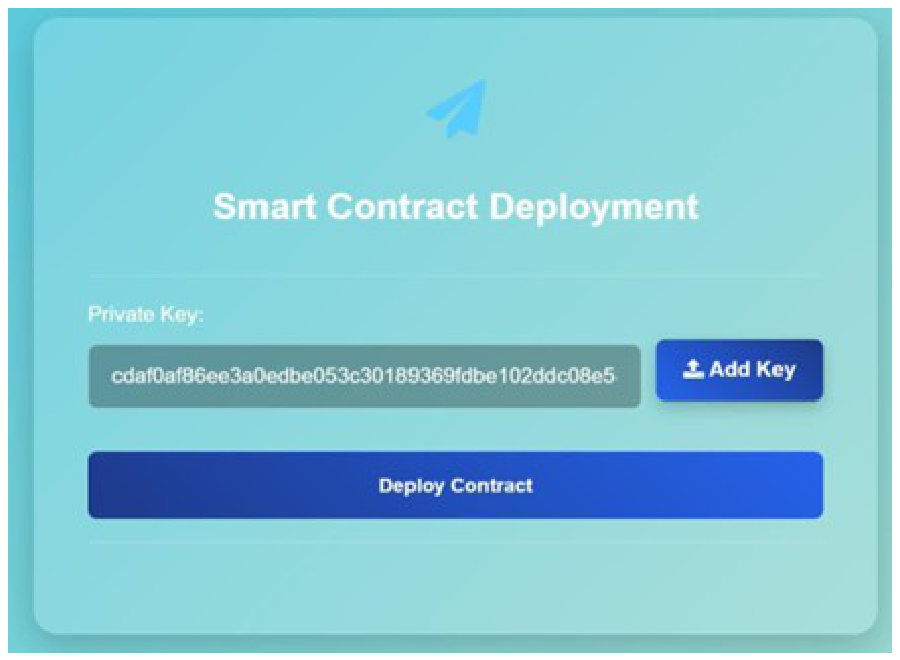
Concerning the new system proposed, the next figures describe the different interfaces of the new platform. This step enables programmers to release a Solidity Smart Contract on their local Ethereum platform. Following the deployment, the smart contract will be saved in the blockchain with a unique contract address safely. This becomes the basis for all further interactions and will serve as a trustworthy record-keeping tool for the document hashes. Figure 9 presents the details of the deployment of the smart contract.
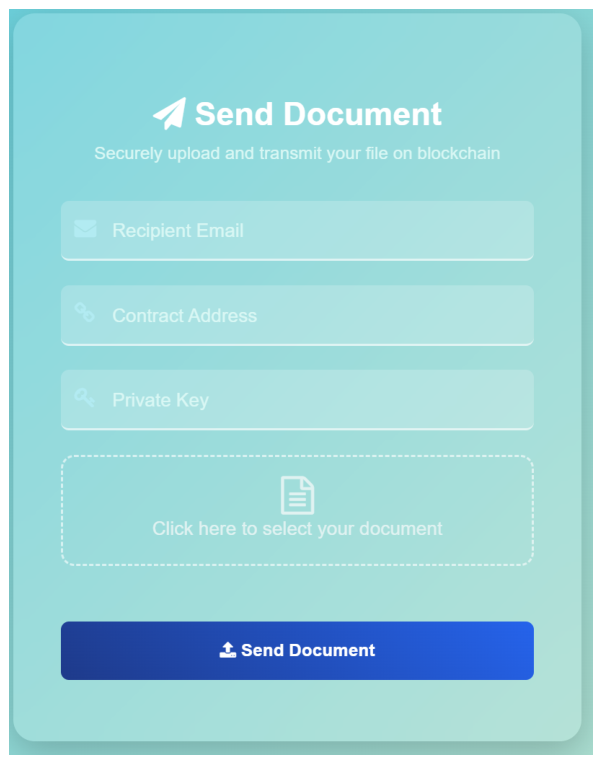
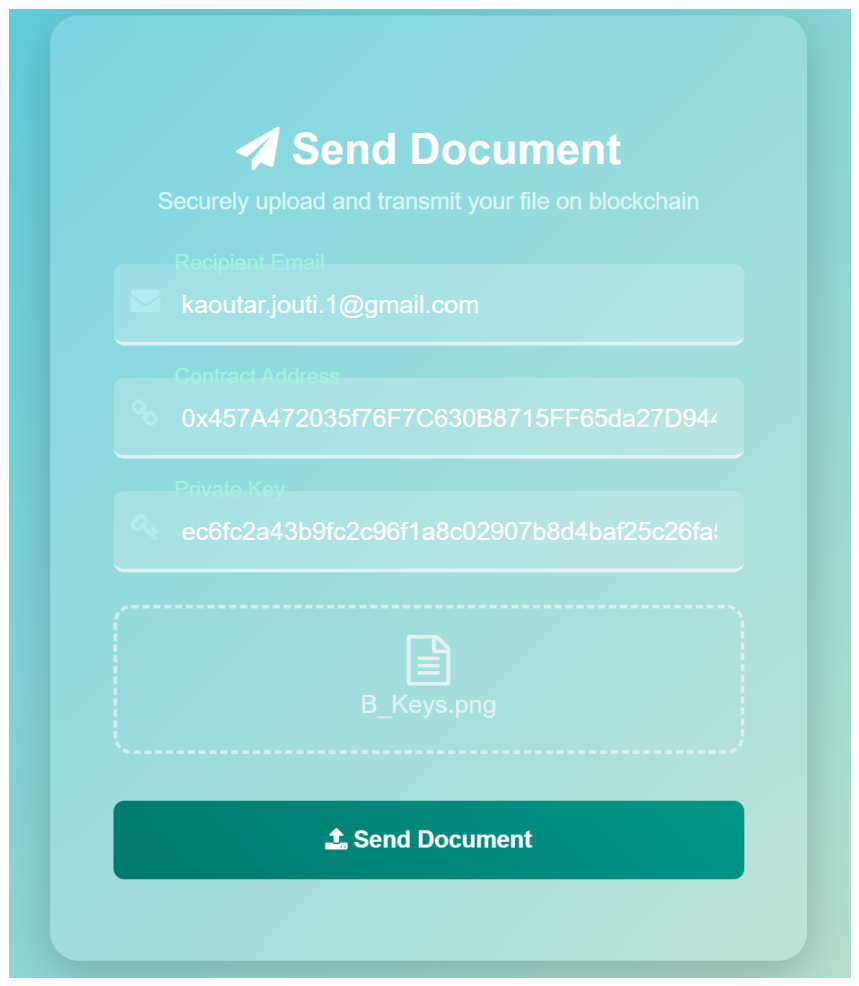
The files could be submitted via the user’s interface, and then the system automatically creates a cryptographic hash of the document, saves it in the IPFS, and makes a transaction through web3j to operate the smart contract. In this way, the hash is guaranteed to be irrevocably written on the blockchain, as demonstrated in Figure 10.
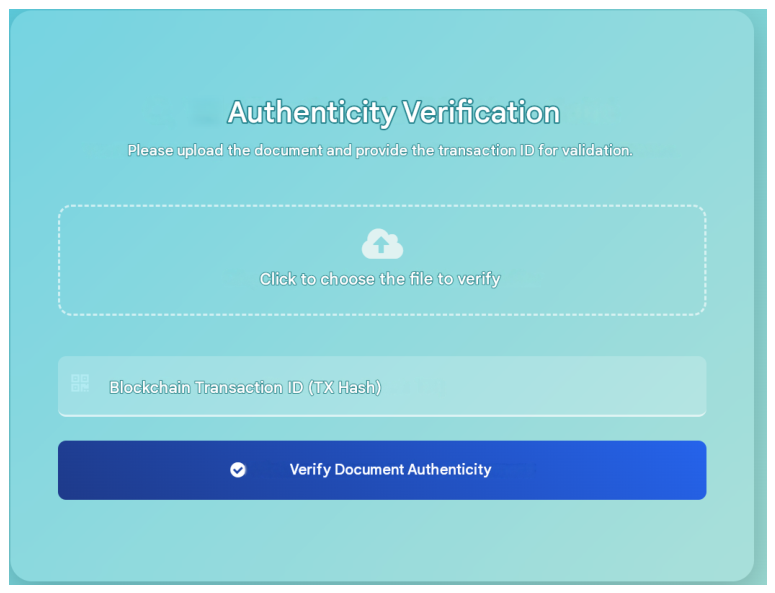
Figure 11 presents the verification interface that allows users to submit a document and its transaction ID to verify the document. The original hash is fetched from the blockchain and the file from the IPFS, and the system compares the document’s hash at present with the one stored. This guarantees the integrity of the document and also authenticates it.

5. Results

This section focuses on system evaluation by outlining the key findings and outcomes that were achieved according to the method discussed in the previous sections.

5.1. System Implementation

Initially, the main emphasis is on contract deployment procedures since these procedures form the core of the document management system as presented in Figure 12.
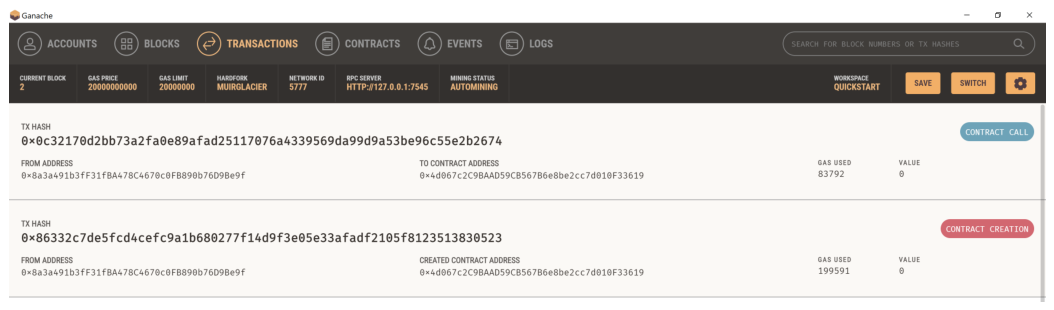
The smart contract was executed successfully, making the contract the main authority on the network for maintaining integrity and managing the lifecycle of documents. A key contract address is generated and must be referenced for all subsequent operations (document sending and verification). The deployment resulted in the creation of a new ledger block that permanently stored the crucial metadata for the transaction (see Figure 13).
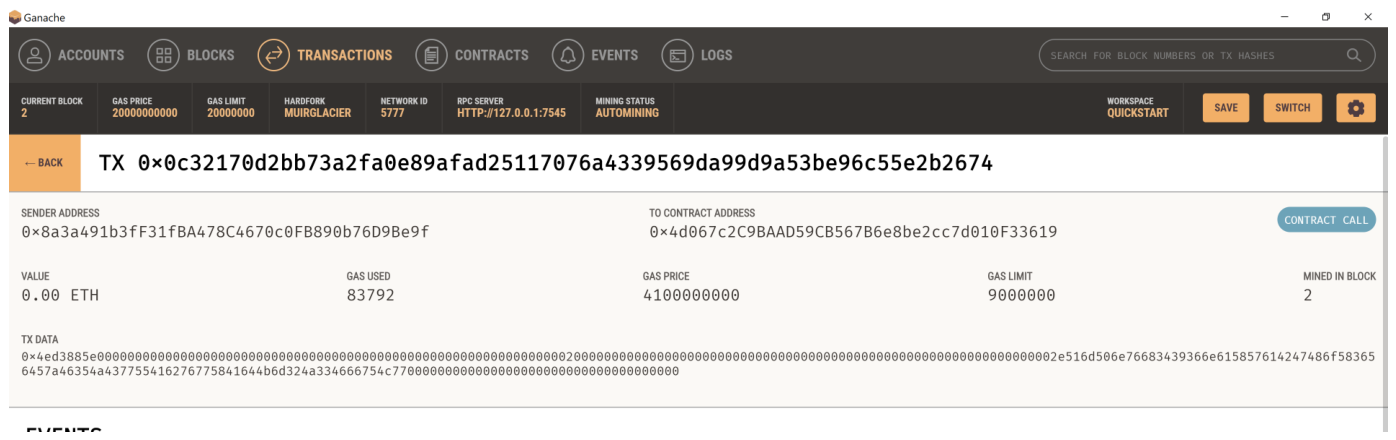
The following key deployment event parameters and metadata are permanently recorded in this block, as presented in Figure 14:
  • Transaction hash: the deployment transaction’s unique identifier.
  • Deployed address: the public address of the person/organization that started the deployment.
  • Timestamp: the precise moment the deployment event took place.
  • Contract address: the deployed contract’s permanent address.
  • Tx data: the data stored within the transaction.
Figure 14. Image for testing.
Jcp 06 00142 g014
With the contract successfully deployed in the blockchain, the next step is the document sending process, which facilitates the storage of the document’s essential data to the distributed ledger. Figure 15 presents testing that is simple and allows integrity detection.
After that, we use the interface presented in Figure 15 to deliver documents into the blockchain using the deployed contract address.
The document has been securely processed and registered through the interface. A cryptographically unique document hash was created, signed, and permanently recorded on the smart contract ledger in this transaction. Figure 16 below describes the transaction’s information for the operation of sending a document.
Following the submission of the document, we can now use the dedicated verification interface to ensure its integrity. This procedure includes comparing the hash of the document with the immutable hash stored on the blockchain ledger, resulting in an immediate integrity decision to evaluate the main functionality of the integrity verification interface. We ran a two-phase experiment on images. This experiment involved the following:
  • Using an image matching exactly the one registered in the previous step (Figure 15).
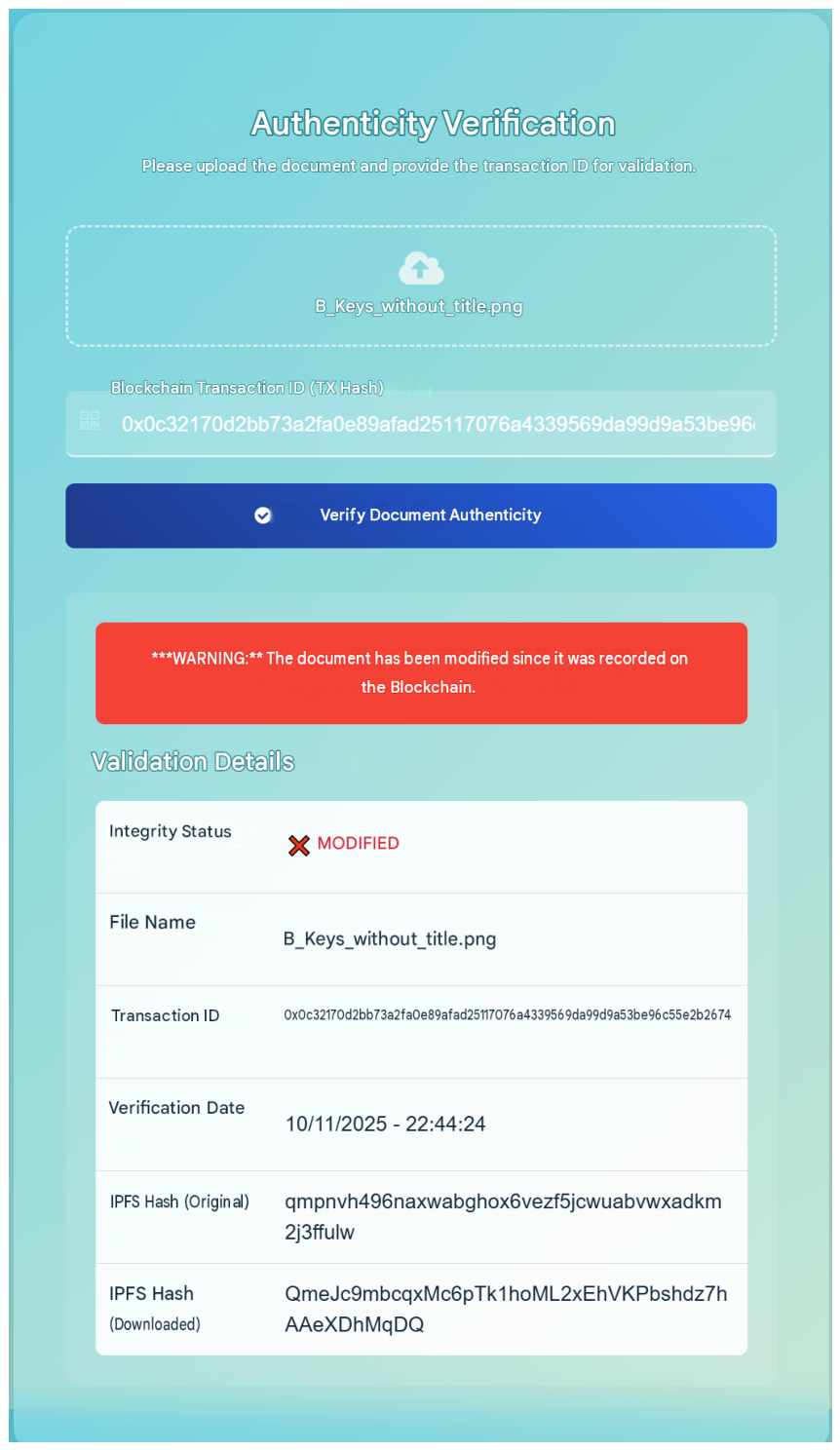
  • Using a manipulated version of the same image without the original title, as shown in Figure 17 below.
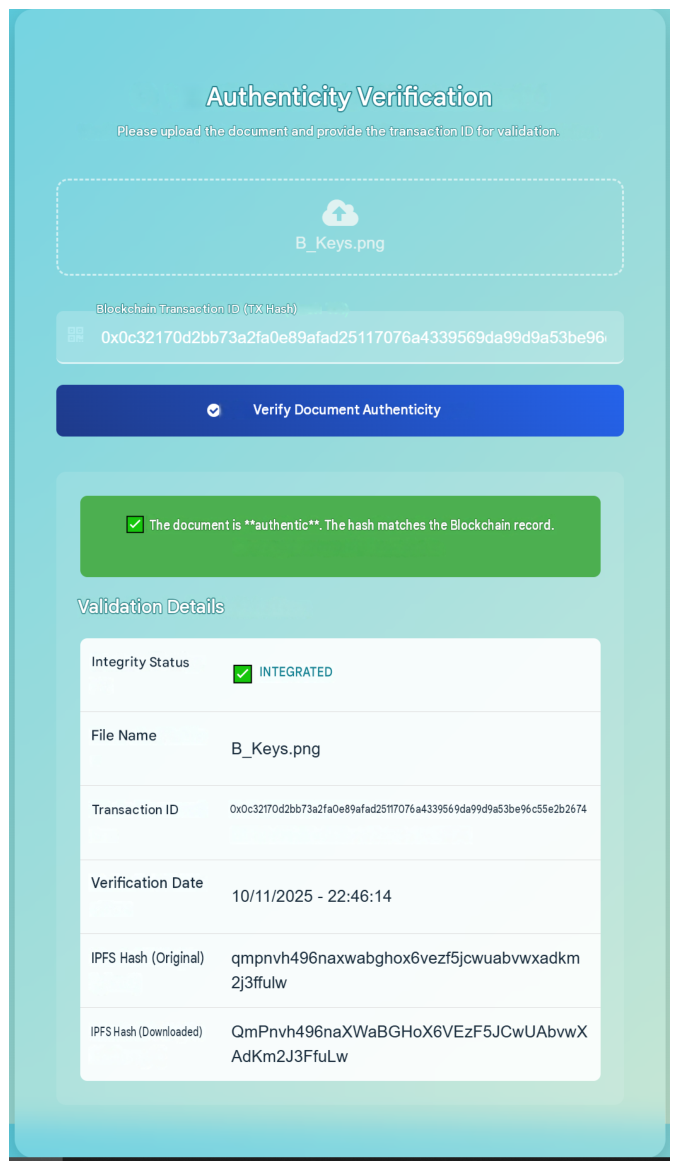
This selection technique made it possible to instantly track the system’s reaction to both the data integrity tests that were validated and those that were compromised. By means of the first image, the interface was able to confirm the integrity of the document. The system gave a “verification successful” message presented in Figure 18, which means that the document remains unaltered since the time it was initially recorded. For the comparison between the submitted data and the registered hash, see Figure 13.
Updating the picture only slightly and then submitting it was met with an immediate “verification failed” message, which, on the other hand, showed that the hash comparison method is quite resistant. Figure 19 presents the results of the fake image test.

5.2. Experimental Results

This subsection details the performance of our system, which combines the IPFS with a blockchain, in comparison to the traditional postal delivery-based system (Table 1).
The previous table presents the execution times of our solution, from connecting to the IPFS to storing on the blockchain, for various document types (images, PDFs, and PPTs) and in different languages, with varying sizes. The results demonstrate low latency, confirming the speed, scalability, and performance of the system under load. Furthermore, the IPFS, which reduces the hash of any document to 64 bytes, allows our system to avoid overhead and guarantees a constant transaction cost.
Based on this data, we have compared our proposal to the existing system; the Table 2 below summarizes the results obtained.
Our proposed system achieves the following performance enhancements:
  • Reduction in time: Processing time is reduced to just 1 business day with our new system, which speeds up the process and avoids delays for citizens.
  • Predictable cost: The model shifts from variable postal and printing fees to a fixed execution cost of 26,192 gas.
  • Integrity and storage: Visual inspection and physical archiving of paper are replaced by immutable cryptographic anchoring on the blockchain, occupying a constant 64 bytes.
  • Availability and automation: The service transitions from availability limited to business hours to a distributed network that is accessible 24/7, including automatic verification without administrative intermediaries.

6. Discussion

This work addresses one specific need that the Moroccan Ministry of Justice has raised: how to ensure the authenticity, integrity, and traceability of complex justice data flows while, at the same time, achieving better performance of public services. By demonstrating a fully automated birth certificate issuance workflow based on blockchain technology and the IPFS, this work shows that decentralization:
  • Can enable the tracking of end-to-end processes with less interaction between parties or decreased integration and data processing costs.
  • Creates a native, verifiable, and executable audit trail and track-and-trace record.
  • Can empower citizens and create trust as the critical source of truth is openly accessible, distributed, and synchronized concurrently.
Traditional justice IT systems rely on centralized bilateral integrations between different courts, the ministry and administration nodes. Those systems keep logs, but these are by definition blind to third parties and difficult to reconcile across multiple agencies. In contrast, a permissioned blockchain is implemented as a smart contract data structure. The blockchain is a distributed ledger, but, unlike the current Ministry of Justice record system, it is a shared append-only state machine. All the participant nodes run the entire set of code, so they all maintain a copy of the state stored in the blockchain, with the result that no one can ‘cheat’. This property of this technology is formally proven. In the sequence that will be described above, everyone can verify the legitimacy of a certificate request, the processing actor, the way the contract has been executed, and the issuing of the certificate itself. The contract is a state machine, its authorized actors sign the transaction logs, and every state transition (e.g., certificate request, validation, issuance, and revocation) is public and secured, timestamped, and signed. Any authorized participant can independently verify process correctness. This reduces disputes about:
  • Creating an easier proof of “who has done what and when”;
  • Decreasing the time and cost-consuming process to solve recording controversies;
  • Implementing smart and effective standardization of cross-agency processes without a centralized controlling database administrator.
Although blockchain and the IPFS are solutions that are perfectly suited to security and privacy challenges while ensuring compliance with personal data regulations, their deployment in Morocco faces numerous operational, financial, and human obstacles, particularly in the judicial sector. Morocco has more than 200 independent public jurisdictions spread across the territory, which results in high material costs for implementing these systems. Added to this is a lack of technical skills requiring in-depth support, as well as the risks associated with the financial instability of cryptocurrencies within the kingdom.
Moving forward, these constraints will serve as a roadmap for optimizing the proposed architecture in live administrative settings.

7. Conclusions

The suggested solution aims to optimize legal processes regarding digital data sharing while ensuring their integrity, particularly for birth certificates, which are currently exposed to various risks related to the protection of personal data since we use the postal service to send a document to someone who does not reside in the city where he was born. By leveraging the benefits of blockchain in terms of decentralization, security, and privacy, we have suggested a system that allows for the secure exchange of birth certificates in digital form while keeping a copy on the blockchain to ensure verification of the document’s integrity. This system facilitates the secure digital exchange of birth certificates. It automates the entire process of requesting these certificates via “watiqa.ma”, from the initial request to obtaining the document, thus making the process simpler for everyone who does not reside in their place of birth or residence abroad and promoting the improvement of public administrative procedures.

Author Contributions

Conceptualization: K.J., M.J. and C.L.; methodology, software, writing—original draft preparation: K.J.; validation, writing—review and editing: K.J., M.J. and C.L.; visualization, supervision: K.J., M.J. and C.L.; All authors have read and agreed to the published version of the manuscript.

Funding

This research received no external funding.

Institutional Review Board Statement

Not applicable.

Informed Consent Statement

Not applicable.

Data Availability Statement

Data is contained within the article.

Conflicts of Interest

The authors declare no conflicts of interest.

References

  1. Rahajaritsimba, F.M. L’informatisation Du Secteur Judiciaire Au Maroc. J. Integr. Stud. Econ. Law Tech. Sci. Commun. 2023, 1, 22. [Google Scholar]
  2. Kwizera, D.; Al Habous, M.; Soumaya, A. From the Dematerialization of Judicial Proceedings to a Digitalized Justice: A Great Opportunity for the Judicial Chain Actors. J. Rev. Int. Cherch. 2022, 3, 242. [Google Scholar] [CrossRef]
  3. Poberezhna, Z.; Slimani, K. Blockchain Technology Using for Automation of Business Processes of the Enterprise. January 2025. Available online: https://www.researchgate.net/publication/389191684 (accessed on 14 August 2026).
  4. Youssouf, A. Loi N° 37-99 Relative À L’état Civil Promulguée Par Le Dahir N° 1-02-239 Du 25 Rejeb 1423 (3 Octobre 2002); Guide Juridique Des Collectivités Locales, Novembre 2002. Available online: https://citizenshiprightsafrica.org/fr/maroc-loi-n-37-99-relative-a-letat-civil/ (accessed on 14 August 2026).
  5. Poberezhna, Z.; Slimani, K. L’inscription À L’état Civil Des Enfants Étrangers Au Maroc; Caritas Au Maroc–Guide Informatif, 1 Juin 2018. Available online: https://citizenshiprightsafrica.org/fr/linscription-a-letat-civil-des-enfants-etrangers-au-maroc-guide-informatif/ (accessed on 14 August 2026).
  6. Lukita, C.; Sutisna, N.; Arribathi, A.H.; Oganda, F.P.; Anjani, S.A.; Faturahman, A. Blockchain for Transparent Academic Records: Implications for Higher Education Institutions. In 2023 Eighth International Conference on Informatics and Computing (ICIC); IEEE: Piscataway, NJ, USA, 2024. [Google Scholar] [CrossRef] [Scilit]
  7. Rahardja, U.; Aini, Q.; Lutfiani, N.; Oganda, F.P.; Ramadan, A. Blockchain Application In Education Data Security Storage Verification System. In 2022 1st International Conference on Technology Innovation and Its Applications (ICTIIA); IEEE: Piscataway, NJ, USA, 2022. [Google Scholar] [CrossRef] [Scilit]
  8. Dave, M.; Banoth, R. Blockchain-Based, Decentralized Evidence Archive System Using Ipfs. In 2022 International Conference on Sustainable Computing and Data Communication Systems (ICSCDS); IEEE: Piscataway, NJ, USA, 2022. [Google Scholar] [CrossRef] [Scilit]
  9. Ran, L.; Shi, Z.; Geng, H. Blockchain Technology For Enhanced Efficiency In Logistics Operations. IEEE Access 2024, 12, 52873–152885. [Google Scholar] [CrossRef] [Scilit]
  10. Lukita, C.; Asfi, M.; Pranata, S.; Huneman, T.; Nas, C. Integrated Academic Service Digitalization At Universities Utilizing Blockchain Technology. In 2023 Eighth International Conference on Informatics and Computing (ICIC); IEEE: Piscataway, NJ, USA, 2024. [Google Scholar] [CrossRef] [Scilit]
  11. Bekkar, I.; Bennani, Z. The Blockchain Technology And The Public Governance. Int. J. Account. Financ. Audit. Manag. Econ. 2024, 5, 520–538. [Google Scholar] [CrossRef]
  12. Gia, K.H.; Huong, L.H.; Vo, H.K.; Trong, P.N.; Dang, K.T.; Van, H.L.; Phu, L.V.C.; Quoc, D.N.T.; Tran, N.H.; The, A.N.; et al. Delivery Management System Based On Blockchain, Smart Contracts And Nft: A Case Study In Vietnam. Int. J. Adv. Comput. Sci. Appl. 2023, 14, 930. [Google Scholar] [CrossRef] [Scilit]
  13. Wang, Y. The Integration of Blockchain Technology And Artificial Intelligence: Innovation, Challenges, and Future Prospects. Appl. Comput. Eng. 2024, 55, 145–156. [Google Scholar] [CrossRef] [Scilit]
  14. Sunmola, F.; Lawrence, G.L. Key Success Factors For Integration Of Blockchain And Erp Systems: A Systematic Literature Review. Procedia Comput. Sci. 2024, 232, 775–782. [Google Scholar] [CrossRef] [Scilit]
  15. Budisteanu, T.G. Blockchain and the Banking Sector: Benefits, Challenges and Perspectives. Open J. Soc. Sci. 2025, 13, 288–300. [Google Scholar] [CrossRef]
  16. Cerchione, R.; Centobelli, P.; Riccio, E.; Abbate, S.; Oropallo, E. Blockchain’s Coming To Hospital To Digitalize Healthcare Services: Designing A Distributed Electronic Health Record Ecosystem. Technovation 2023, 120, 102480. [Google Scholar] [CrossRef] [Scilit]
  17. Wang, X.; Wu, Y.C.; Ma, Z. Blockchain in the Courtroom: Exploring its Evidentiary Significance and Procedural Implications in U.S. Judicial Processes. Front. Blockchain 2024, 7, 1306058. [Google Scholar] [CrossRef] [Scilit]
  18. Borija, R.; Idrissi, K.B.A.; Jega, M.I.; El-Ayachi, M. Exploring Blockchain Technology for Land Administration Perspectives and Implementation Opportunities. Afr. J. Land Policy Geospat. Sci. 2023, 6, 738–758. [Google Scholar] [CrossRef]
  19. Patil, N.P.; Mane, Y.D.; Vasoya, A.; Agrawal, A.; Raut, S. Secure File Sharing Using Blockchain And Ipfs with Smart Contract-Based Access Control. J. Inf. Syst. Eng. Manag. 2025, 10, 184–194. [Google Scholar] [CrossRef] [Scilit]
  20. Jlil, M.; Jouti, K.; Loqman, C. Blockchain And Smart Contracts Based System for Criminal Record Management. Indones. J. Electr. Eng. Comput. Sci. 2025, 37, 365–3795. [Google Scholar] [CrossRef] [Scilit]
  21. Jlil, M.; Jouti, K.; Boumhidi, J.; Loqman, C. Improving Traceability In E-Governance File-Sharing Systems: The Moroccan Justice System As A Use Case. Int. J. Inf. Secur. 2024, 24, 9. [Google Scholar] [CrossRef] [Scilit]
  22. Abdulrazzaq, S.T.; Omar, F.S.; Mustafa, M.A. Decentralized Security and Data Integrity of Blockchain Using Deep Learning Techniques. Period. Eng. Nat. Sci. 2020, 8, 1911–1923. [Google Scholar] [CrossRef] [Scilit]
  23. Rahut, S.K.; Tanvir, R.A.; Rahman, S.; Akhter, S. Scientific Paper Peer-Reviewing System with Blockchain, Ipfs, and Smart Contract. In Architectures And Frameworks for Developing and Applying Blockchain Technology; IGI Global Scientific Publishing: Hershey, PA, USA, 2019. [Google Scholar] [CrossRef] [Scilit]
  24. Praveen, M.D.; Totad, S.G.; Rashinkar, M.; Ostwal, R.; Patil, S.; Hadapad, P.M. Scalable Blockchain Architecture Using Off-Chain Ipfs for Marks Card Validation. Procedia Comput. Sci. 2022, 215, 370–379. [Google Scholar] [CrossRef] [Scilit]
  25. Sultana, S.A.; Rupa, C.; Malleswari, R.P.; Gadekallu, T.R. Ipfs-Blockchain Smart Contracts Based Conceptual Framework to Reduce Certificate Frauds in the Academic Field. Information 2023, 14, 446. [Google Scholar] [CrossRef] [Scilit]
  26. Jouti, K.; Jlil, M.; Loqman, C. Blockchain Technology to Improve Traceability Of Data Exchanges in the Judicial System: A Road Traffic Accident Victims As Use Case. Peer-to-Peer Netw. Appl. 2025, 18, 100. [Google Scholar] [CrossRef] [Scilit]
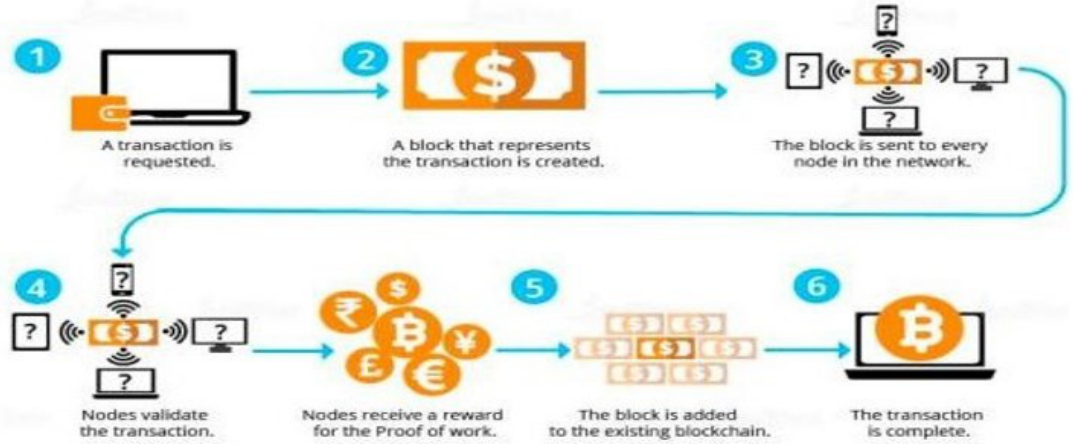
Figure 1. Life cycle of a transaction from request to validation. Arrows indicate the flow of execution and data transmission between network entities, while numbered steps (1–6) represent the chronological sequence from the initial transaction request, block creation, block sharing, node verification, proof-of-work block generation, to transaction completion and final commit to the blockchain.
Jcp 06 00142 g001
Figure 2. Exchange process system.
Jcp 06 00142 g002
Figure 3. Risks of data transfer via postal services.
Jcp 06 00142 g003
Figure 4. Proposed solution process.
Jcp 06 00142 g004
Figure 5. The UML diagram of the sent document.
Jcp 06 00142 g005
Figure 6. The UML diagram of the document verification.
Jcp 06 00142 g006
Figure 7. The Ganache interface.
Jcp 06 00142 g007
Figure 8. Ganache logs.
Jcp 06 00142 g008
Figure 9. The interface for deploying smart contracts.
Jcp 06 00142 g009
Figure 10. The interface for sending documents.
Jcp 06 00142 g010
Figure 11. The interface for verifying a document.
Jcp 06 00142 g011
Figure 12. The interface for deploying a smart contract.
Jcp 06 00142 g012
Figure 13. The blocks of transactions.
Jcp 06 00142 g013
Figure 15. Send document.
Jcp 06 00142 g015
Figure 16. Transaction of sending a document.
Jcp 06 00142 g016
Figure 17. The manipulated image used for testing.
Jcp 06 00142 g017
Figure 18. The successful test.
Jcp 06 00142 g018
Figure 19. The test is failed.
Jcp 06 00142 g019
Table 1. Experimental evaluation metrics across payload sizes on the proposed system.
Document DescriptionFormatSize (MB)IPFS (ms)Ganache (ms)Total (ms)Gas Used
Image asset (baseline check)Image<1.03343246526,192
Digital strategy.ppt2.163845449226,192
Textile industry.pdf4.4613781294926,192
Publishing guide.ppt5.37157862101926,192
Table 2. Comparison between the old system and the new system.
Metric/FeatureOld System (Watiqa + Post)IPFS + Blockchain
Response latency2 to 7 business days1 business day
Execution costVariable paper & postal feesFixed 26,192 gas
Data integrityManual paper inspection64-byte blockchain hash anchoring
Storage footprintPhysical paper archives64-byte state storage on-chain
Service availabilityWorking hours only24/7 distributed network
Processing overheadManual postal/admin staffAutomated cryptographic check
Disclaimer/Publisher’s Note: The statements, opinions and data contained in all publications are solely those of the individual author(s) and contributor(s) and not of MDPI and/or the editor(s). MDPI and/or the editor(s) disclaim responsibility for any injury to people or property resulting from any ideas, methods, instructions or products referred to in the content.