

Next Article in Journal
Multi-Objective Adaptive Harmony Search for Optimization of Seismic Base Isolator Systems
Previous Article in Journal
Prediction of Coseismic Landslides by Explainable Machine Learning Methods
error_outline You can access the new MDPI.com website here. Explore and share your feedback with us.
 
 
Article

Numerical Simulation of Liquefaction Behaviour in Coastal Reclaimed Sediments

by
Pouyan Abbasimaedeh
Engineering Institute of Technology, 6 Thelma St, West Perth, WA 6005, Australia
GeoHazards 2026, 7(1), 8; https://doi.org/10.3390/geohazards7010008
Submission received: 21 November 2025 / Revised: 17 December 2025 / Accepted: 31 December 2025 / Published: 3 January 2026

Abstract

This study presents a validated numerical investigation into the seismic liquefaction potential of fine-grained reclaimed sediments commonly encountered in coastal, containment, and reclamation projects. Fine-grained reclaimed sediments pose a particular challenge for seismic liquefaction assessment due to their low permeability, high fines content, and complex cyclic response under earthquake loading. A fully coupled, nonlinear finite element model was developed using the Pressure-Dependent Multi-Yield (PDMY) constitutive framework, calibrated against laboratory Cyclic Direct Simple Shear (CDSS) tests and verified using in situ Cone Penetration Tests with pore pressure measurement (CPTu). The model effectively captured the dynamic response of saturated sediments, including excess pore pressure generation, cyclic mobility, and post-liquefaction behavior, under three earthquake ground motions: Livermore, Chi-Chi, and Loma Prieta. Results showed that near-surface layers (0–2.3 m) experienced full liquefaction within two to three cycles, with excess pore pressure ratios (Ru) approaching 1.0 and peak pressures closely matching laboratory data with less than 10% deviation. The numerical approach revealed that traditional CPT-based cyclic resistance methods underestimated liquefaction susceptibility in intermediate layers due to limitations in accounting for pore pressure redistribution, evolving permeability, and seismic amplification effects. In contrast, the finite element model captured progressive strength degradation, revealing strength gain in deeper layers due to consolidation, while upper zones remained vulnerable due to low confinement and resonance effects. A critical threshold of Ru ≈ 0.8 was identified as the onset of rapid shear strength loss. The findings confirm the advantage of advanced numerical modeling over empirical methods in capturing the complex cyclic behavior of reclaimed sediments and support the adoption of performance-based seismic design for such geotechnically sensitive environments.

1. Introduction

Earthquakes cause significant infrastructure damage and loss of life, with their impact influenced by magnitude, ground acceleration, duration, frequency content, and local soil and water table conditions. Liquefaction is a phenomenon caused by earthquake shaking, in which saturated soil temporarily behaves like a fluid under cyclic loading, leads to ground instability, settlements, and lateral spreading, posing serious risks to structures built on such ground [1,2,3]. Extensive research has been conducted on liquefaction using both experimental and numerical approaches [4,5,6,7].
Laboratory tests such as cyclic triaxial, cyclic direct simple shear, and shaking table experiments have provided valuable insights into the dynamic behavior of soils under seismic loading [8]. These experimental approaches are often complemented by numerical modeling, which allows for the simulation of complex stress paths and soil structure interactions, thereby advancing the understanding of liquefaction mechanisms [9]. Significant progress in numerical methods, including the work presented in [10], has enhanced the ability to predict liquefaction-induced deformations by incorporating nonlinear soil behavior under dynamic loading. Constitutive models such as PDMY [1] and PM4Sand [11] have been widely adopted to simulate cyclic mobility and liquefaction in loose granular materials with reasonable accuracy. In parallel with advancements in laboratory testing and numerical modeling, interdisciplinary developments in instrumentation and measurement technologies have enabled more precise monitoring of pore pressure and water table fluctuations in soil systems, improving the ability to forecast excess pore pressure generation during seismic events [12].
Reclaimed sediments often generated from dredging operations and stored in reclamation sites, reservoirs, and containment facilities present unique geotechnical challenges due to their high fines content, low shear strength, and susceptibility to liquefaction [13]. Dredging is widely applied as a remediation strategy for metal-contaminated sediments, but its effectiveness varies significantly depending on site-specific conditions and may lead to short-term contaminant resuspension and ecological disturbance [14]. These materials, resembling mine waste in behavior, are increasingly used in coastal and urban developments, yet their seismic response remains poorly characterized. Despite progress in research, limited attention has been given to understanding the dynamic behavior of sediment material, particularly under cyclic loading. This gap restricts the development of reliable design and risk mitigation strategies for such environments.
Fine-grained reclaimed sediments present substantially different liquefaction mechanisms compared to clean sands and natural clays due to their high fines content, low permeability, and contractive tendency arising from their disturbed depositional process. Hydraulic placement and dredging operations break down natural soil structure, producing loose, metastable fabrics that promote rapid excess pore pressure generation under cyclic loading. These characteristics have been observed in several documented engineering cases involving reclaimed materials. For example, the reclaimed ground at CentrePort Wellington exhibited widespread cyclic softening and deformation during the 2016 Kaikōura earthquake [15].
The heterogeneous composition, low permeability, and cyclic instability of sediments necessitate the use of specialized numerical models to capture their seismic response with adequate accuracy [13]. Site-specific investigations, such as those conducted at Centre Port, Wellington [15], and studies on dynamic compaction effects [16] have highlighted the limitations of conventional approaches in predicting liquefaction in reclaimed materials. Laboratory evidence also indicates that small amounts of fines can significantly reduce liquefaction resistance by limiting drainage and accelerating pore pressure development [17]. This is corroborated by Jamali and Tolooiyan [18], who demonstrated that fine-grained sands experience rapid stiffness degradation and strength loss under cyclic loading.
Further research has shown that liquefaction susceptibility in silts and clays is highly influenced by initial fabric and drainage conditions [19,20]. To simulate these behaviors, advanced numerical approaches have been widely applied to model excess pore pressure generation and cyclic deformation [21]. In parallel, emerging technologies like machine learning have recently been integrated into liquefaction prediction frameworks to improve reliability under various soil and seismic conditions [22,23,24], although physics-based modeling remains central for capturing stress–strain response and material behavior.
Open source simulation platforms such as OpenSees have enabled the implementation of advanced constitutive models for simulating liquefaction phenomena in soil media. Studies by Dashti et al. [25], Shahir et al. [26], Najma et al. [27,28], and Wang et al. [29] have demonstrated that models such as PDMY, Dafalias–Manzari [30], and PM4S can reliably reproduce the observed behavior when appropriately calibrated. Validation with laboratory and centrifuge experiments has improved their accuracy in predicting excess pore pressure generation, deformation, and reconsolidation. Additional work by Pitman [17] and Adampira and Derakhshandi [31] has explored the influence of fines content and stratigraphy on liquefaction potential and seismic wave amplification.
Unlike most previous studies that focused on loose sandy soils or uniformly graded silts, this study investigates the seismic response of fine-grained reclaimed sediments, an often-overlooked material type in empirical liquefaction frameworks. It addresses a critical gap in the literature by integrating in situ testing, cyclic laboratory characterization, and advanced numerical simulation to evaluate liquefaction behavior in these complex deposits. A two-dimensional, nonlinear, fully coupled, effective stress-based finite element model is employed, incorporating the PDMY constitutive model within a Biot [32] framework. The model is calibrated and validated using results from CDSS tests and CPTu from both laboratory and field investigations. Dynamic time-history analyses are conducted to capture excess pore pressure generation, deformation patterns, and liquefaction triggering under real earthquake loading. The findings highlight the limitations of relying solely on empirical CPT-based methods and demonstrate the suitability of the PDMY model for simulating the cyclic response of materials.

2. Materials and Methods

2.1. Soil and Testing Procedure

2.1.1. Reclaimed Material Description

The material analyzed in this study reflects their origin from underwater deposits such as seabed, riverbeds, and reservoirs. Commonly used in land reclamation, construction, and waste containment, these sediments serve in low permeability zones of embankments and liners for ponds and decant areas. Site investigation in a near shore reclaimed dredge pond in Australia included sampling at depths of 0.5 m and 1.3 m, alongside a CPT with Piezocone (CPTu) to characterize in situ conditions. A laboratory photo of the 1.3 m sample is shown in Figure 1.
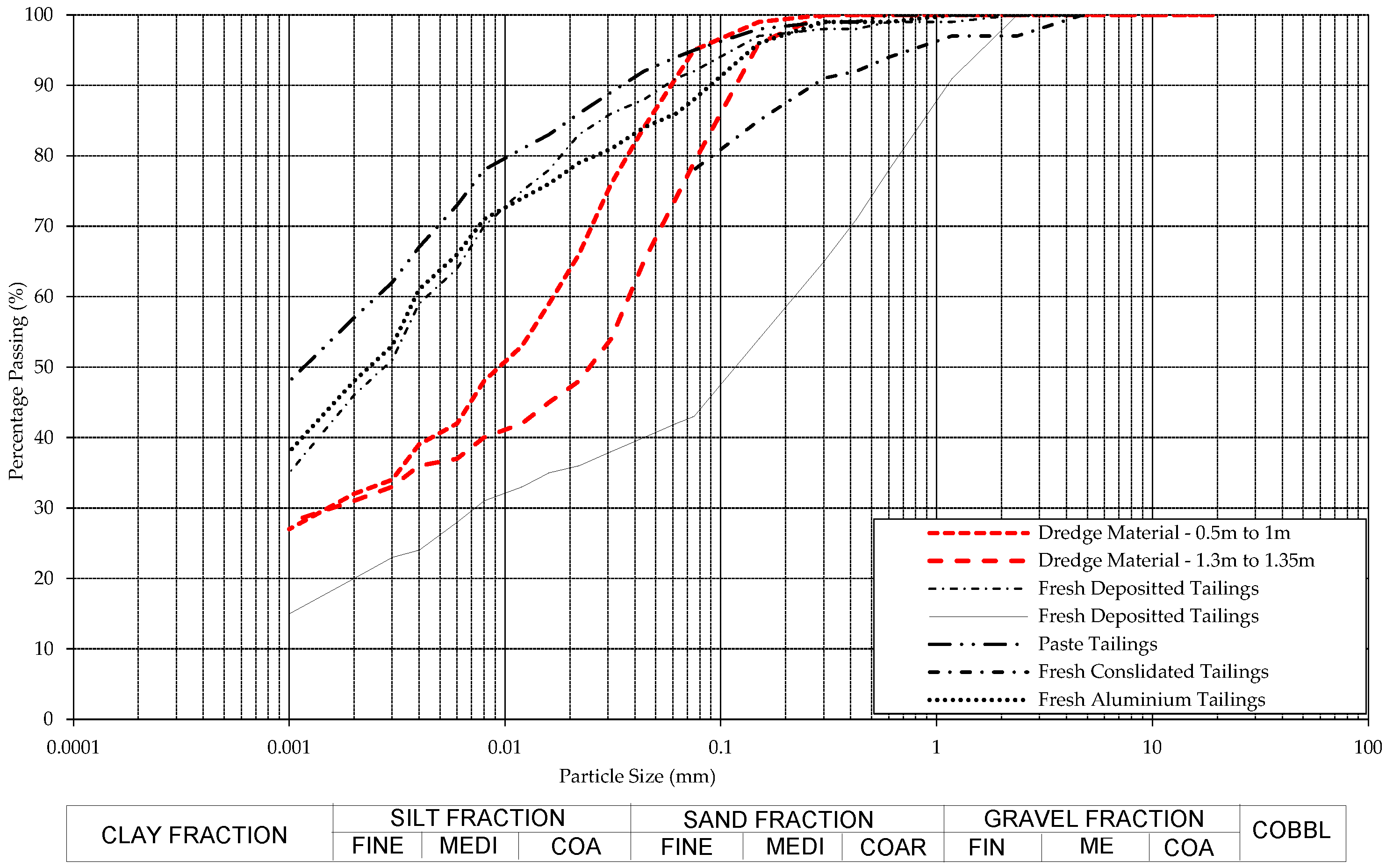
The Particle Size Distribution (PSD) test using AS 1289 series standard revealed that about 79% of the sample consists of particles smaller than 75 μm, with a median particle size (D50) of about 0.028 mm. Additionally, 30% of the sample consisted of clay-sized particles (<2 microns). A comparative analysis of the particle size distribution curve of the reclaimed sediment with various tailings materials is presented in Figure 2. The PSD indicates that the sediment material contains a high proportion of fine particles, comparable to those found in freshly deposited tailings, paste tailings, and fresh aluminum tailings. While particle size alone does not determine mechanical behavior, such similarities in grading suggest that material may exhibit comparable challenges in terms of drainage, consolidation, and potential cyclic instability under seismic loading.
The result of the Atterberg limits [33] conducted in the laboratory demonstrated an average liquid limit of 55%, a plastic limit of 27%, and a plasticity index of ranged 0 to 31% depending on the depth. The soil particle density (Gs) was measured at 2.80.

2.1.2. CPTu Interpretation and Permeability Estimation

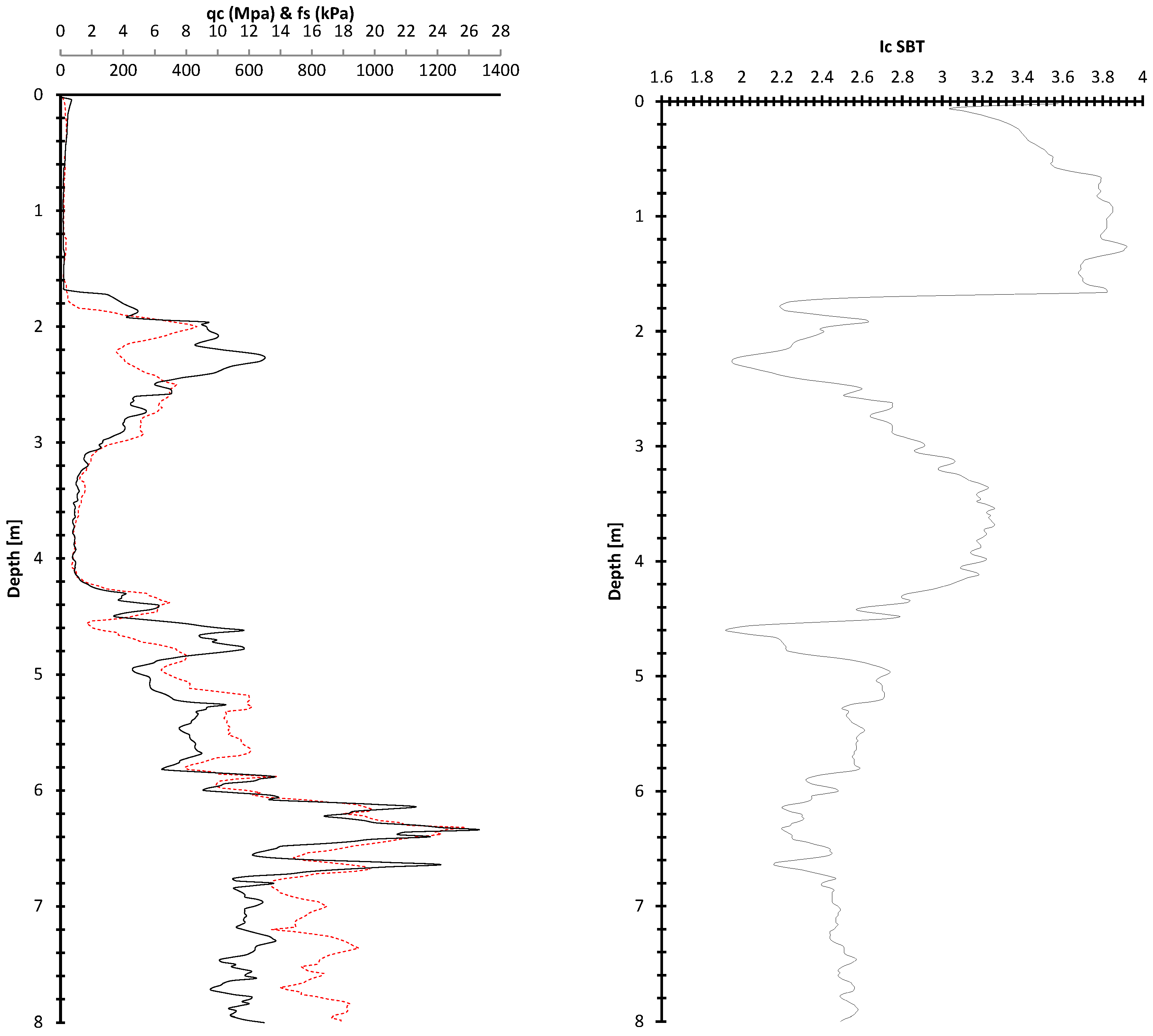
The CPT results offer detailed insight into the stratigraphy and strength characteristics of the soil profile. The analyzed samples were classified as clayey silts with fines content (95% total: 79.3% silt, 16% clay) and notable plasticity. The absence of gravel and minimal sand content confirms the cohesive and contractive nature of the material. CPT derived parameters, including corrected cone tip resistance (qt) and sleeve friction (fs), support these findings.
The qt profile, shown as a solid black line in Figure 3, indicates low resistance in the upper 2 m, consistent with soft, plastic sediments exhibiting high compressibility and volumetric instability. From 2 to 5 m, qt values increase, indicating a transition to denser silty or slightly sandy layers with improved strength and reduced compressibility. The Soil Behavior Index (Ic), also presented in Figure 3, fluctuates between 2.5 and 3.0 in this range, suggesting a mix of cohesive and transitional soil types. Below 5 m, fluctuations in qt, fs, and Ic reflect alternating fine and granular layers, pointing to a heterogeneous depositional history and variable consolidation.
The permeability characteristics of the material were assessed using both Rowe Cell consolidation tests and CPT based interpretations, providing a comprehensive understanding of its drainage behavior, compressibility, and potential for excess pore pressure accumulation underloading. Hydraulic conductivity was estimated from CPTu data using updated empirical correlations based on Ic and dissipation test results, as proposed by Robertson [34] to provide approximate in situ permeability and pore pressure dissipation characteristics, for vertical profiling in fine sediments.
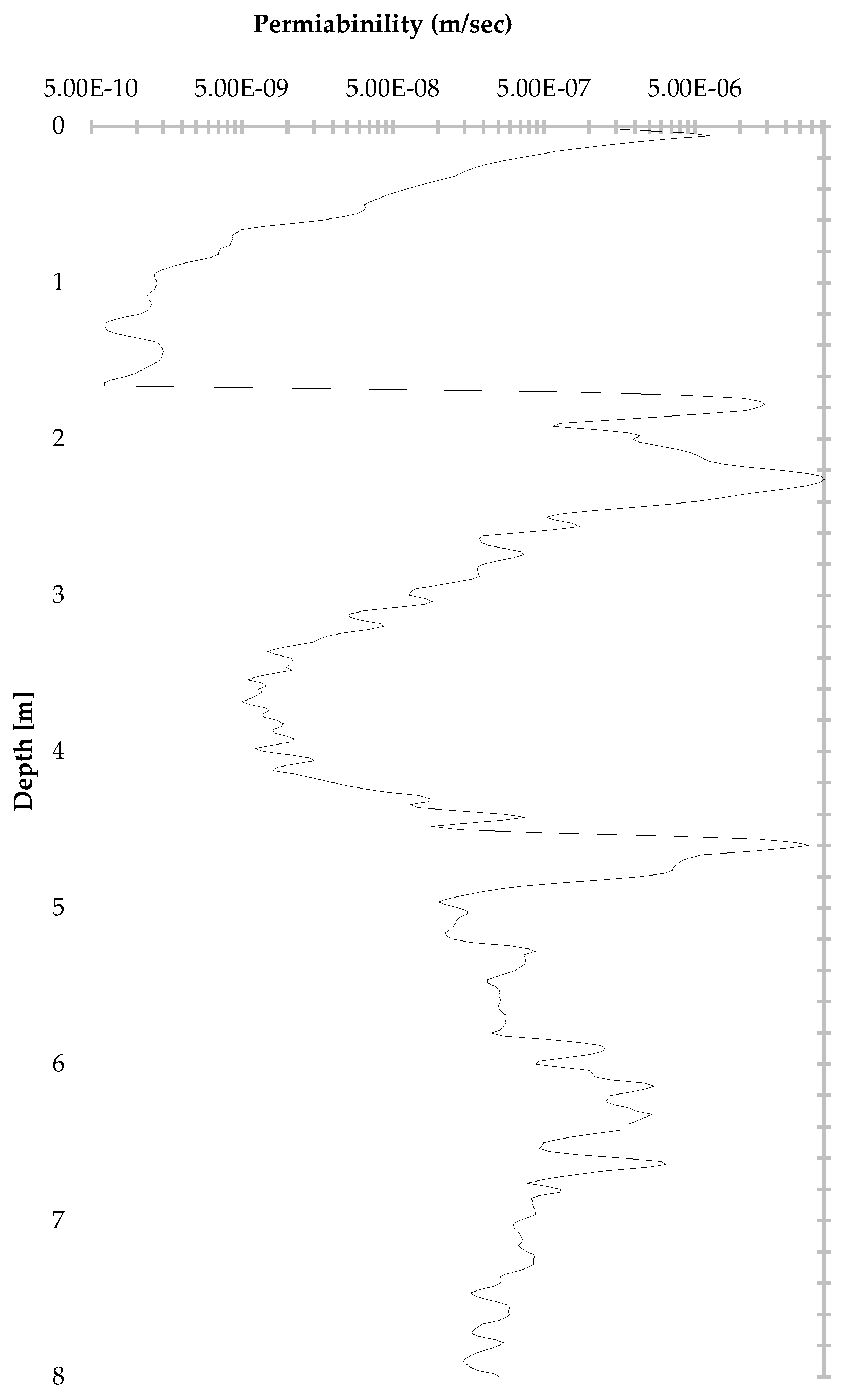
The Rowe Cell test results indicated an initial void ratio (e_0) of 3.718, which reduced to 1.17 after consolidation, demonstrating high compressibility and significant volumetric change under loading. The water content decreased from 132.8% to 44.9%, reflecting substantial moisture loss and drainage during the consolidation process. The coefficient of consolidation (Cv) was determined to be 3.5 m2/year. Additionally, the coefficient of volume compressibility (Mv) was calculated at 2.15 × 10⁻⁴ m2/kN. The hydraulic conductivity, measured at 2.3 × 10⁻¹⁰ m/s, highlighting poor drainage capacity. To compare and validate the result of the Rowe cell test, the CPT-derived permeability profile is presented in Figure 4. The upper 2 m exhibit relatively higher values, reaching 5 × 10⁻⁶ m/s, likely due to a looser structure and possible desiccation effects near the surface. However, below 1 m, permeability sharply declines, reaching values as low as 5 × 10⁻¹⁰ m/s, which closely aligns with the Rowe Cell results.
The summarized material properties in Table 1 present key geotechnical characteristics, including unit weight, cohesion, friction angle, undrained shear strength, permeability, relative density and depth-dependent variation across sediment layers. Relative density values in Table 1 were estimated using CPT-based empirical correlations, following Jamiolkowski et al. [35] and Kulhawy and Mayne [36], with adjustments for compressibility and material aging where applicable. While these correlations are well established for clean, uncemented sands, the material in this study includes silty and fine fractions. As such, the derived DR% values are considered indicative, used primarily for material classification and to guide numerical calibration, rather than as direct input for constitutive modeling. Other parameters, including Su/σ′v, permeability, friction angle, and cohesion, were obtained from CU triaxial tests, CPTu correlations, and Rowe cell measurements to ensure consistency and reliability of the dataset.
The uppermost layer (Mat 1), reclaimed mud from 0 to 1.8 m, shows low shear strength and high compressibility. Below this, the interface layer (Mat 2) from 1.8 to 2.6 m presents transitional properties. The third layer (Mat 3), consolidated reclaimed mud between 2.6 and 4.5 m, shows improved strength and reduced compressibility due to natural consolidation. The foundation layer (Mat 4), extending from 4.5 to 30 m, is composed of denser, more stable soil that provides structural support. The top 2 m of the foundation consists of aged (5–10 years) reclaimed sediment, while the upper 5 m represents more recently placed material (≤3 years old). The material characterization of each layer is listed in Table 1. For numerical model calibration, parameter ranges recommended by the OpenSees Berkeley platform were adapted to suit the site-specific FEM analysis.

2.1.3. Undrained Shear Strength from CPT and Vane Shear Test

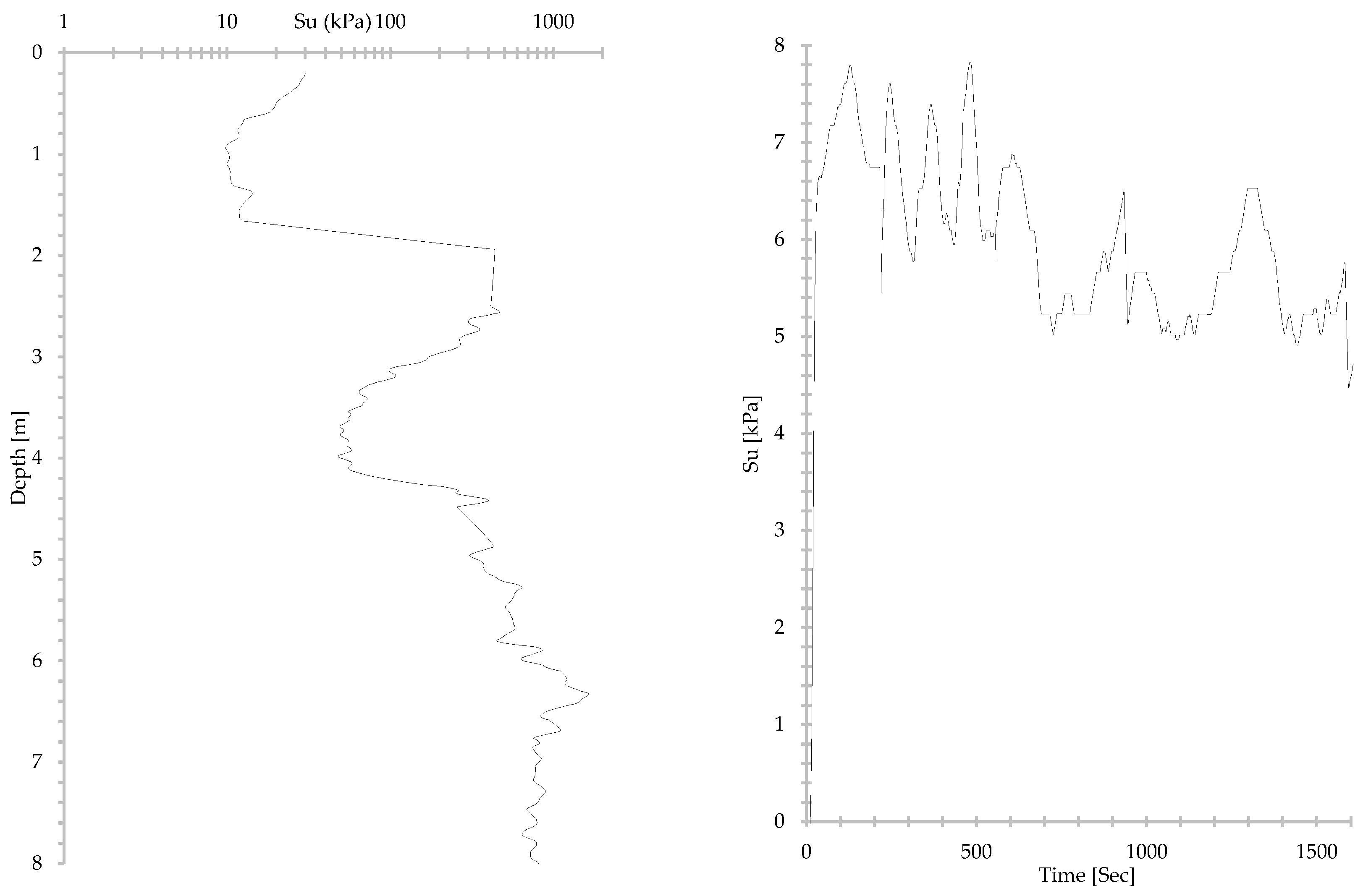
The undrained shear strength (Su) at a depth of 1.0 m was assessed using both the CPT and the Vane Shear Test (VST) to ensure accurate geotechnical characterization of the reclaimed sediment. VST measurements at 1.0 m initially recorded a peak Su of approximately 8 kPa, followed by fluctuations and stabilization between 7 and 6 kPa [Figure 5]. The vane’s rotation speed is typically a slow, controlled rate, often 0.1 degrees per second. This slower speed is crucial for accurately measuring the undrained shear strength of cohesive soils.
For the CPT-based Su estimation, a default Nkt factor of 14 was applied and verified by the result of VST in the same level. While this factor is commonly used, it slightly overestimates Su for fine and cohesive soils and tailings material. At 1.0 m depth, the CPT derived Su was approximately 10 kPa, which was higher than the VST measurements. This discrepancy is primarily due to strain-rate effects, as the VST involves a slower shearing process that typically mobilizes lower undrained strength, whereas CPT penetration occurs rapidly, capturing a more immediate resistance response.

2.1.4. Shear Wave Velocity and G0 Calibration

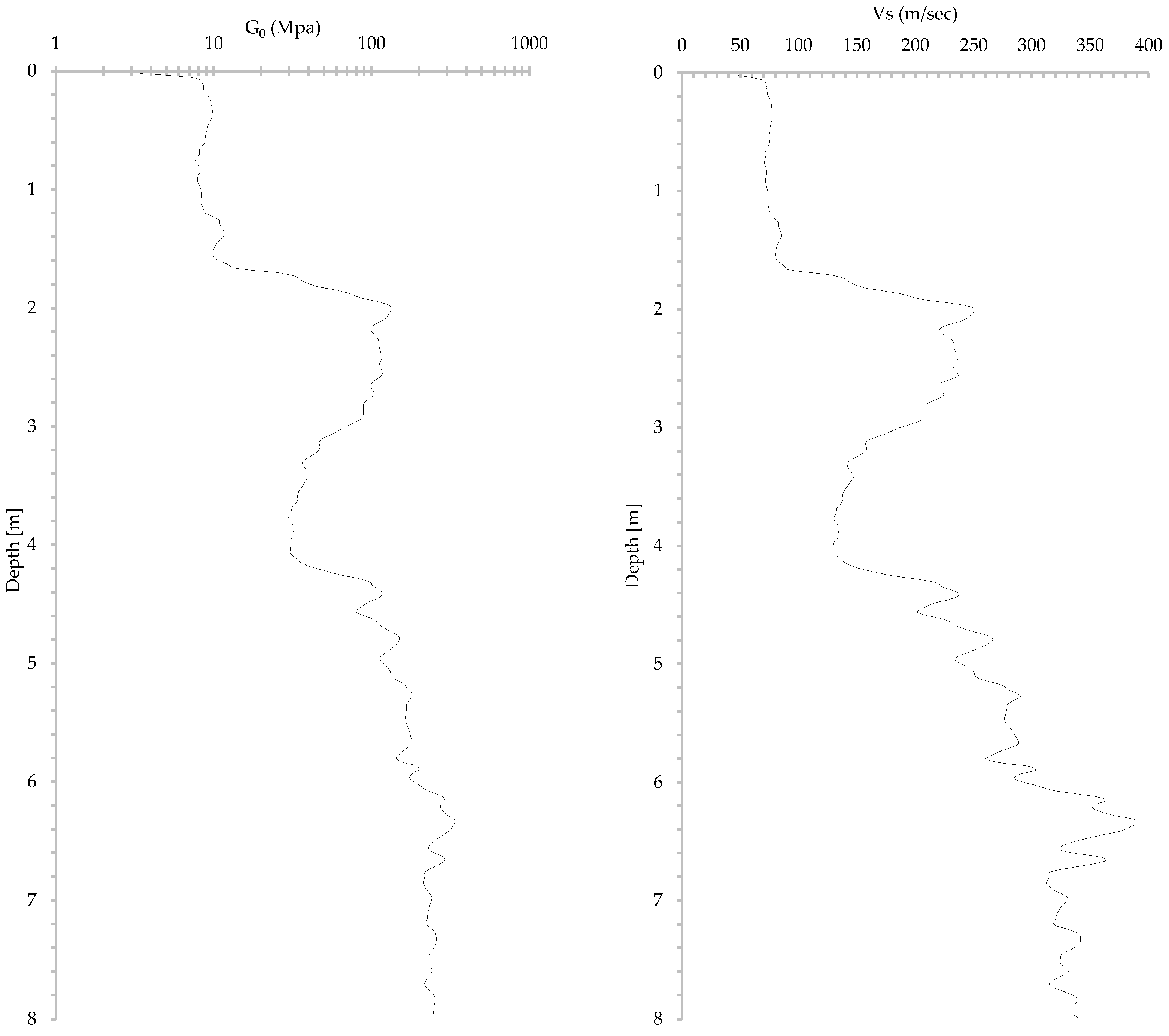
Shear wave velocity (VS) profiles were initially obtained from Seismic Piezocone Penetration Tests (SPCTu), providing continuous in situ stiffness measurements across the sediment profile. These VS values were cross validated and calibrated using CPTu-interpreted small-strain stiffness, applying empirical correlations between the small-strain shear modulus (G0) and cone resistance, as outlined by the Gregg Drilling CPT Guide [37]. Final adjustments to the VS profile were made to ensure consistency with G0 values derived from CPTu data, accounting for site-specific material behavior and fines content.
The VS profiles indicate low values below 100 m/s in the upper 2 m, suggesting soft, unconsolidated material with high compressibility and weak interparticle bonding. Between 2 and 5 m, VS gradually increases to approximately 150–200 m/s, reflecting natural densification and improved shear resistance due to overburden pressure and sediment self-weight consolidation. At depths greater than 5 m, VS exceeds 250 m/s, reaching up to 350–400 m/s, marking the transition to well-compacted or naturally deposited foundation material with significantly improved stiffness and load-bearing capacity. Since G0 is related to VS, it can be expressed as Equation (1).
G 0 = ρ V s 2
where G0 is the small-strain shear modulus (MPa), ρ is the bulk density (kg/m3), and VS is the shear wave velocity (m/s). A log profile of G0 and VS are presented in Figure 6. The G0 profile follows a similar trend, with values below 10 MPa in the upper 2 m, increasing to 50 MPa between 2 and 5 m, and exceeding 100 MPa at depths greater than 5 m.

2.1.5. Strength Reduction and Cyclic Degradation Modeling

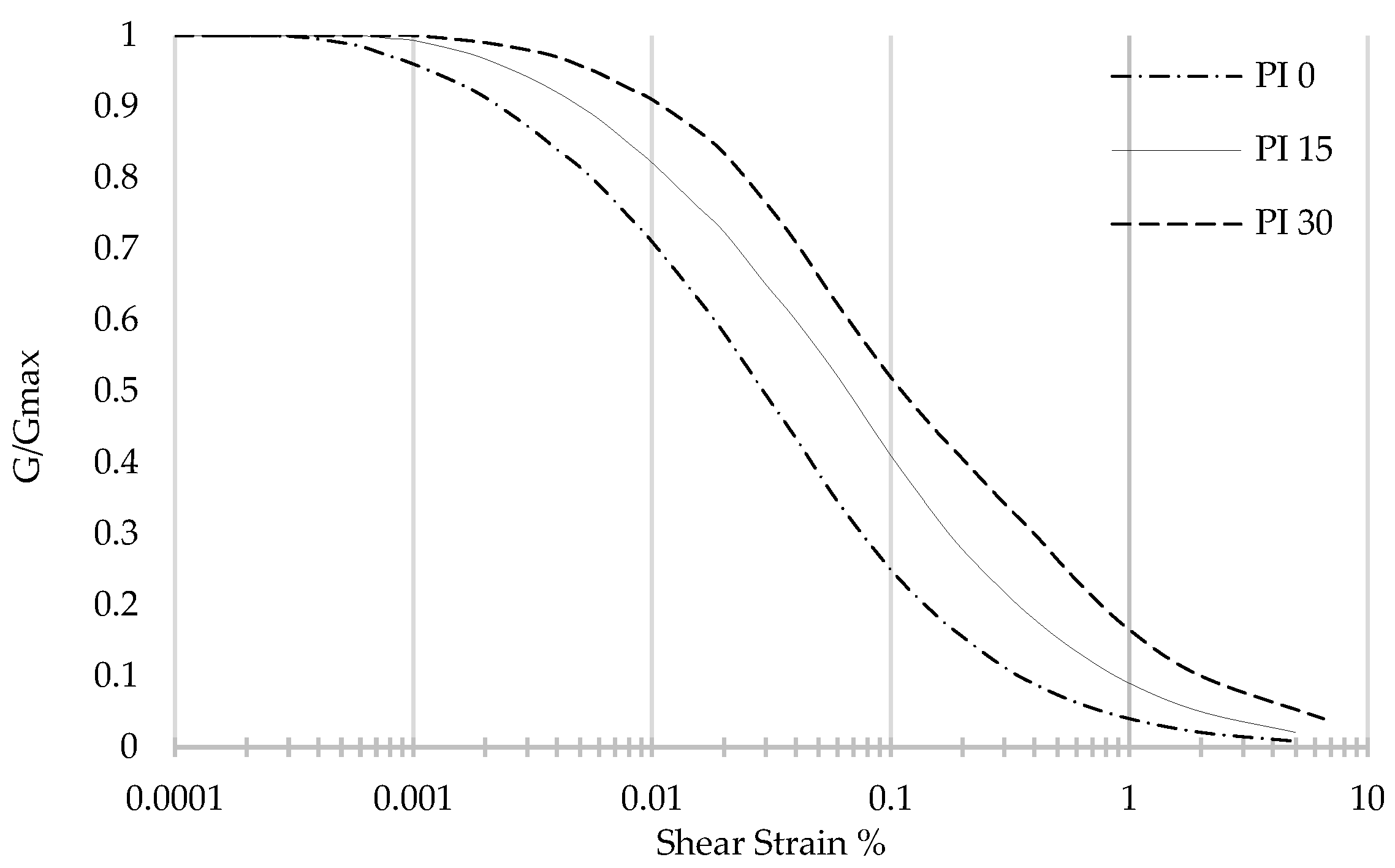
The strength reduction curves adopted in this study represent the degradation of the normalized shear modulus ( G / G m a x ) as a function of shear strain for soils with varying plasticity index (PI). These curves, derived from the empirical study by Vucetic and Dobry in 1991 [38], were selected to reflect the behavior of the site-specific materials investigated (Figure 7). The model assumes fully saturated soil conditions, which is consistent with field observations indicating that the groundwater table was located at the ground surface and the entire fill profile was saturated. Accordingly, the numerical model was configured with undrained boundary conditions to simulate cyclic loading, in line with the assumptions underlying the Vucetic and Dobry framework [38]. This assumption, though supported by field conditions, does not account for potential partial saturation or drainage heterogeneity that could influence localized pore pressure response.
The material analyzed in this study is characterized by a high plasticity index (PI = 39), a liquid limit of 66%. Given these properties, its shear modulus degradation response is expected to align closely with or slightly exceed the PI = 30 curve. This assumption is based on the well-established relationship between plasticity and cyclic softening resistance, where soils with higher PI values tend to exhibit greater resilience to stiffness degradation and strength loss under repeated shear loading. The selected reference curves for PI = 0, 15, and 30 provide a benchmark for understanding how plasticity influences soil behavior under cyclic stress conditions.
The PI = 0 curve, representing non-plastic silts or sands, exhibits a rapid loss of shear modulus, indicating low resistance to cyclic loading and high liquefaction susceptibility. In contrast, the PI = 15 curve, which corresponds to moderately plastic silty clays, shows a more gradual reduction in stiffness, providing better resistance to cyclic softening than non-plastic materials. The PI = 30 curve demonstrates an even slower degradation of the shear modulus, reflecting the ability of high-plasticity soils to maintain stiffness over a broader strain range. Since the material in this study has a PI of 39, exceeding the PI = 30 reference curve, it is expected to exhibit even greater resistance to stiffness degradation. Additionally, the PI = 0 curve was applied to the material interface, while the PI = 15 curve was used for the foundation material.

2.2. Numerical Model Setup

A two-dimensional (2D), fully coupled solid-fluid finite element analysis was conducted using an open-source seismic modeling platform. The model incorporates a nonlinear effective stress framework to simulate the behavior of saturated soils under cyclic loading. The soil domain is discretized using a mesh of quadrilateral elements formulated based on Biot’s [32] theory of porous media, allowing for simultaneous simulation of soil skeleton deformation and pore water pressure generation. This approach adopts a fully coupled u–p formulation, where solid displacements and pore fluid pressures are treated as primary unknowns. The model mesh consists of 88 nodal points and 43 quadrilateral elements with varying thicknesses, designed to balance computational efficiency with solution accuracy. Element sizing was determined using the minimum wavelength criterion, which considers the soil’s shear wave velocity and the maximum frequency content of the input motion. The minimum element size ( x m i n ) was calculated using the relationship proposed by Liu et al. in 2022 [39] in Equation (2).
x m i n = V s f
where Vs is the shear wave velocity of the soil, and f is the fundamental frequency of seismic motion. The groundwater table in the FEM model is positioned at the ground surface, and the media is assumed to be fully saturated. Lateral boundaries are coupled using equal degree-of-freedom constraints to simulate free-field conditions, while the base of the model is assumed to be a rigid rock, fixed against vertical displacements but allowing horizontal motion to represent a semi-infinite elastic base.
The numerical model employed a four-node quadrilateral plane-strain element, the Four Node Quad UP, which uses a bilinear isoperimetric formulation designed for fully coupled solid-fluid analysis. This element is based on Biot’s theory of porous media and is specifically implemented to simulate the dynamic response of solid-fluid systems. Each node of the element has three degrees of freedom (DOF): two for solid displacements (u) and one for fluid pressure (p).

2.2.1. Constitutive Model

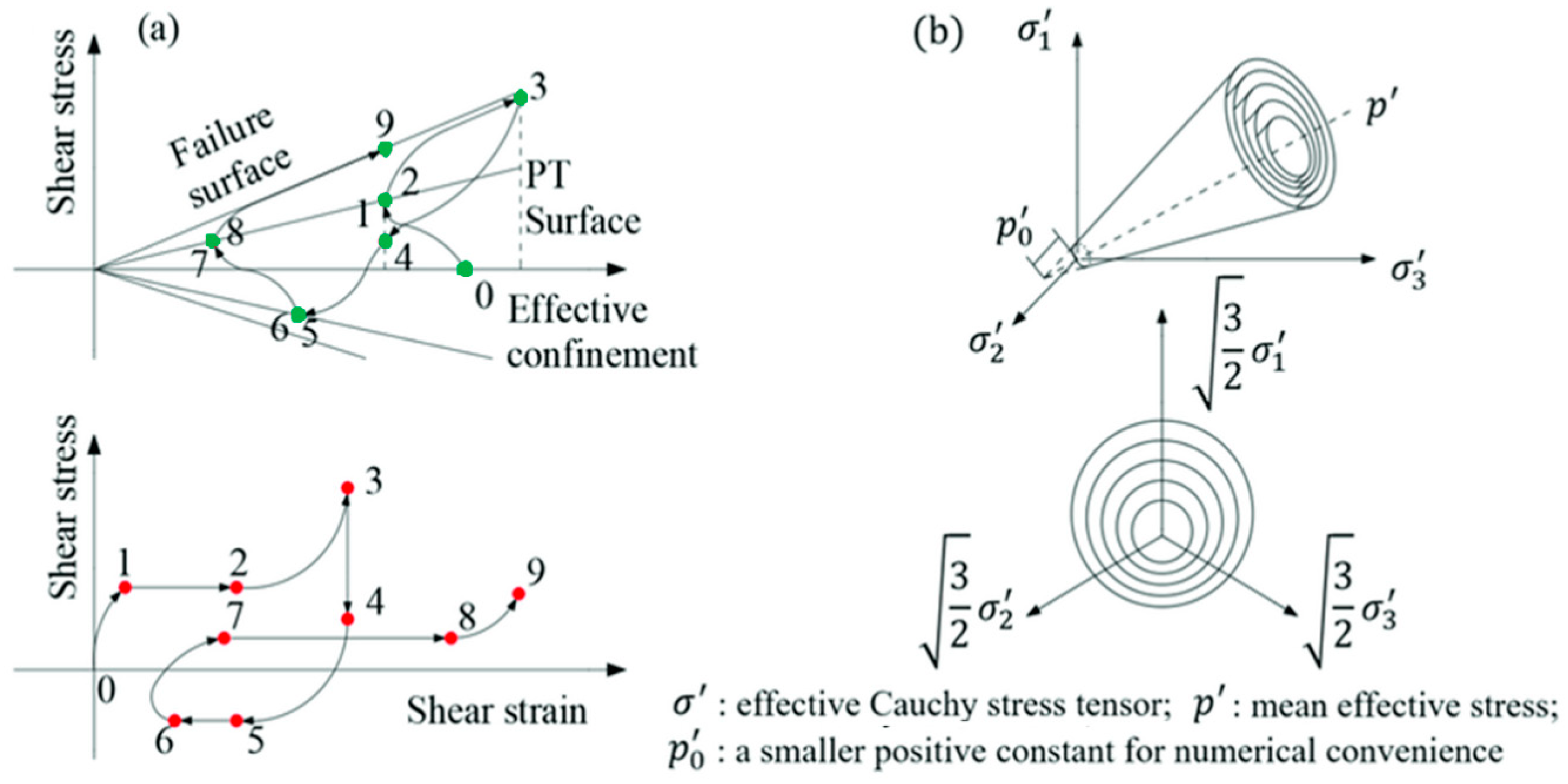
The PDMY constitutive model was selected to simulate the cyclic response of sediments in this study. Originally developed by Yang et al. in 2003 [40] and later refined and developed in other studies [1]. PDMY is a multi-surface plasticity model designed for liquefaction analysis in granular soils. This model is particularly suited for capturing strain-softening, dilatancy, and cyclic mobility behavior, which are crucial for modeling soil behavior under cyclical loading. The pressure-dependent stiffness and nonlinear stress–strain behavior are key features of PDMY, allowing for a realistic simulation of cyclic shear deformation, excess pore pressure accumulation, and post-liquefaction behavior [11].
PDMY employs a hyperbolic shear-strain backbone curve that adjusts with effective confining pressure, which allows for refined predictions of dynamic response. The nested yield surface formulation in PDMY enables efficient simulation of nonlinear soil behavior during cyclic loading. It also incorporated distinct flow rules for dilative and contractive phases, enhancing the model’s ability to simulate pore pressure evolution and shear deformation [41,42]. A schematic of the constitutive model is presented in Figure 8.

2.2.2. Numerical Analysis

The numerical simulation conducted in this study models the seismic time history response material using a two-dimensional, fully coupled solid-fluid finite element approach. Simplified stratigraphy for numerical modeling was derived from dominant transitions in CPTu-based soil behavior. The primary objective is to capture pore pressure build up under cyclic loading by applying a nonlinear effective stress analysis framework. The model simulates horizontal seismic motion with the soil domain resting on a semi-infinite elastic foundation. To achieve this, the simulation employs the Four Node Quad UP element, specifically designed for coupled u–p formulations. This element effectively captures undrained behavior and the development and dissipation of excess pore pressures two essential mechanisms in evaluating soil response to seismic excitation.
The simulation is executed in two stages: a static phase followed by a dynamic phase. In the static phase, gravity loading is applied to establish the initial stress state and replicate realistic in situ conditions without triggering plastic deformation. Once equilibrium is reached, the dynamic phase commences, introducing a time-history ground motion at the model’s base. Gravity loading is initialized through transient analysis within the OpenSees TCL scripting environment. Initially, the model is run in an elastic state (update Material Stage—stage 0), allowing the soil to achieve stress equilibrium under its own weight. Following this, material behavior is transitioned to a plastic state (update Material Stage—stage 1) to enable a nonlinear response during dynamic shaking. This sequence ensures a stable and realistic stress distribution prior to applying earthquake excitation.
Boundary conditions were carefully defined to simulate realistic seismic wave propagation while minimizing numerical artifacts. The model base was fixed in the vertical direction (Fix Y) to represent a rigid half-space, while allowing horizontal displacements to propagate upward ground motions. Shear Beam boundary conditions were applied along the lateral edges, enforcing equal degrees of freedom between corresponding nodes to allow shear waves to exit the model laterally without reflection. This approach effectively replicates free-field behavior and avoids artificial wave trapping. A domain size sensitivity analysis was also performed, which confirmed that the chosen model width was sufficient to prevent boundary-induced amplification or reflection, as no significant differences in pore pressure or acceleration response were observed when the domain width was increased.
Hydraulic boundary conditions reflect realistic drainage conditions. The ground surface is modeled as a drainage boundary to allow pore pressure dissipation, while deeper layers are treated as undrained, mimicking the low permeability nature of proposed sediments. Permeability parameters are defined separately for horizontal (hPerm) and vertical (vPerm) directions and vary by layer. Seismic excitation is introduced using the Uniform Excitation pattern, scaled by gravitational acceleration (factor [ e x p r   1.0   ×   g ]), ensuring realistic ground motion input for dynamic analysis.

2.2.3. Analysis Options and Numerical Configuration

The numerical implementation was designed to ensure computational stability and efficiency in simulating nonlinear soil behavior under seismic loading [43]. The governing equation for dynamic response is expressed as Equation (3).
M u ¨ + C u ˙ + K u = f t
where M, C, and K are the mass, damping, and stiffness matrices, respectively, and U , U ˙ , and U ¨ represent displacement, velocity, and acceleration. A multifrontal parallel direct solver was used to optimize matrix factorization and memory usage, while an energy norm-based convergence criterion (Equation (4)).
E n = R i U i ε
where an energy norm-based convergence criterion is used, the solution is evaluated based on the residual energy in the system to determine if equilibrium has been reached. The term Ri represents the residual force at each degree of freedom, which is the imbalance between internal and external forces, while Ui denotes the corresponding displacement correction. Their product quantifies the energy contribution of each DOF, and the sum of these values provides a measure of overall system convergence. If the total energy norm falls below a predefined tolerance ε the solution is considered sufficiently accurate.
The dynamic response of the soil was characterized using fundamental periods and frequencies, which influence seismic amplification and resonance effects. Based on the shear wave velocity (Vs) and layer thickness (H), the first-mode natural period was computed as T1 = 0.46 s, corresponding to F1 = 2.17 Hz, while the second-mode period was T2 = 0.153 s, with F2 = 6.54 Hz. These values, derived from idealized assumptions, provide practical estimations for site response analysis [6].
Rayleigh damping was applied, with coefficients calibrated using the first two natural frequencies of the system to ensure a realistic energy dissipation response. To accurately model damping effects, Rayleigh damping was introduced, expressed as Equation (5).
C = α M + β K
where α and β were calibrated using the system’s dominant frequencies and a 5% damping ratio (ξ = 0.05). To account for strain-dependent damping, empirical PI dependent damping curves [38] were applied, ensuring that damping remained low at small strains and increased at higher strains, reflecting energy dissipation under cyclic loading.
Time integration was performed using the Newmark-beta method [44], where displacement and velocity updates are presented in Equations (6) and (7).
U t + t = U t + t V t + 1 γ t 2 A t 2 + γ t 2 A ( t + t ) 2
V t + t = V t + 1 δ t A t + δ t A ( t + t )
where U ,   V , and A represent displacement, velocity, and acceleration, respectively, at time t and t + Δ t . The parameters γ and δ control numerical stability and accuracy, with commonly used values ensuring an unconditionally stable scheme for structural dynamic problems. Parameters γ   =   0.5 and δ   =   0.25 were chosen to ensure numerical stability while preventing artificial damping of cyclic shear strains. The computation time step used for Newmark-beta integration was set to 0.005 s, selected based on the shortest significant period of the input ground motions and the highest anticipated frequency content of the soil response.

2.2.4. Ground Motion Selection and Spectral Matching

The selection and processing of seismic input motions are critical for accurately representing ground motion characteristics in structural and geotechnical analyses. In this study, three distinct earthquake events Livermore-01 (1980), Chi-Chi (1999), and Loma Prieta (1989) were selected based on their varied magnitudes, fault mechanisms, and site conditions where the original samples were taken in the study area. These events were identified through a commercial probabilistic seismic hazard assessment study, which recommended specific time histories to ensure a comprehensive representation of potential seismic loading scenarios.
The selected ground motion records were obtained, representing diverse geological conditions ranging from stiff soils to soft rock formations. All input motions were sourced from the Pacific Earthquake Engineering Research (PEER) Center database [45], a widely recognized repository of high-quality seismic records for earthquake engineering applications.
Although these records originate from international earthquakes, their intensity measures and frequency content were selected to reflect seismic scenarios consistent with offshore Australian reclaimed soil conditions, ensuring geographic and geological relevance to the study area.
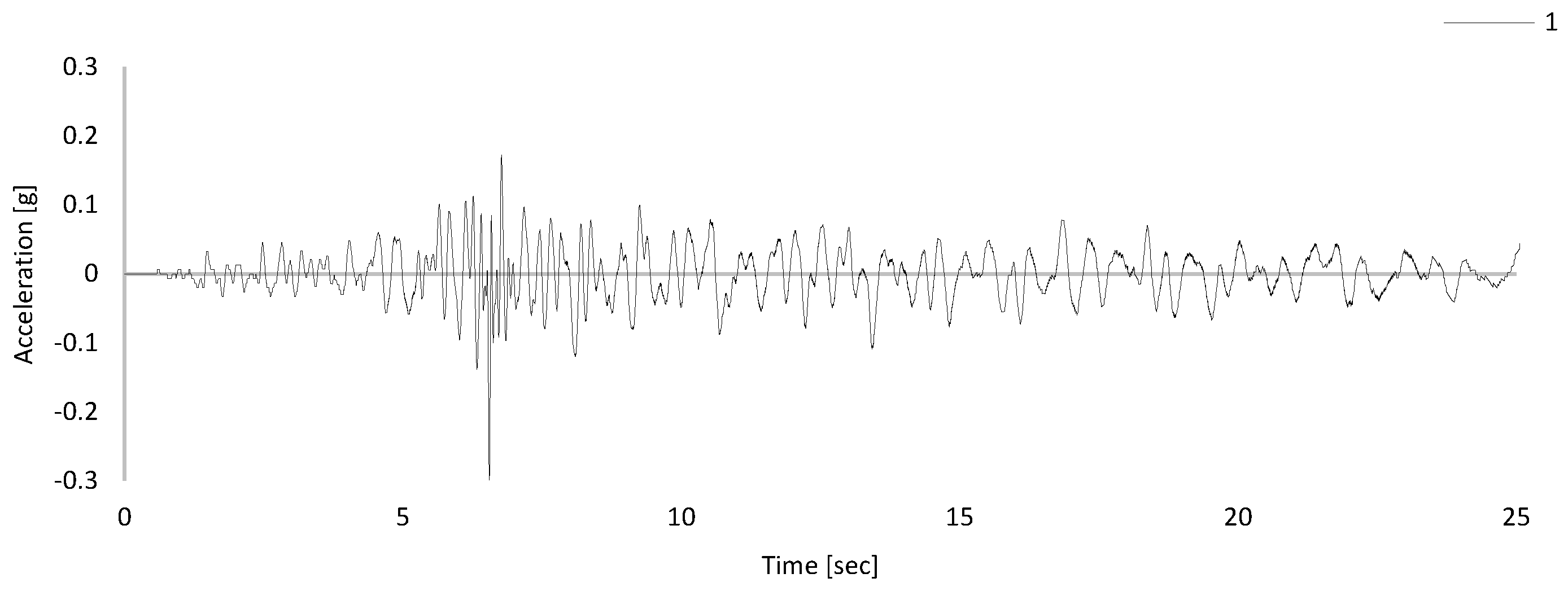
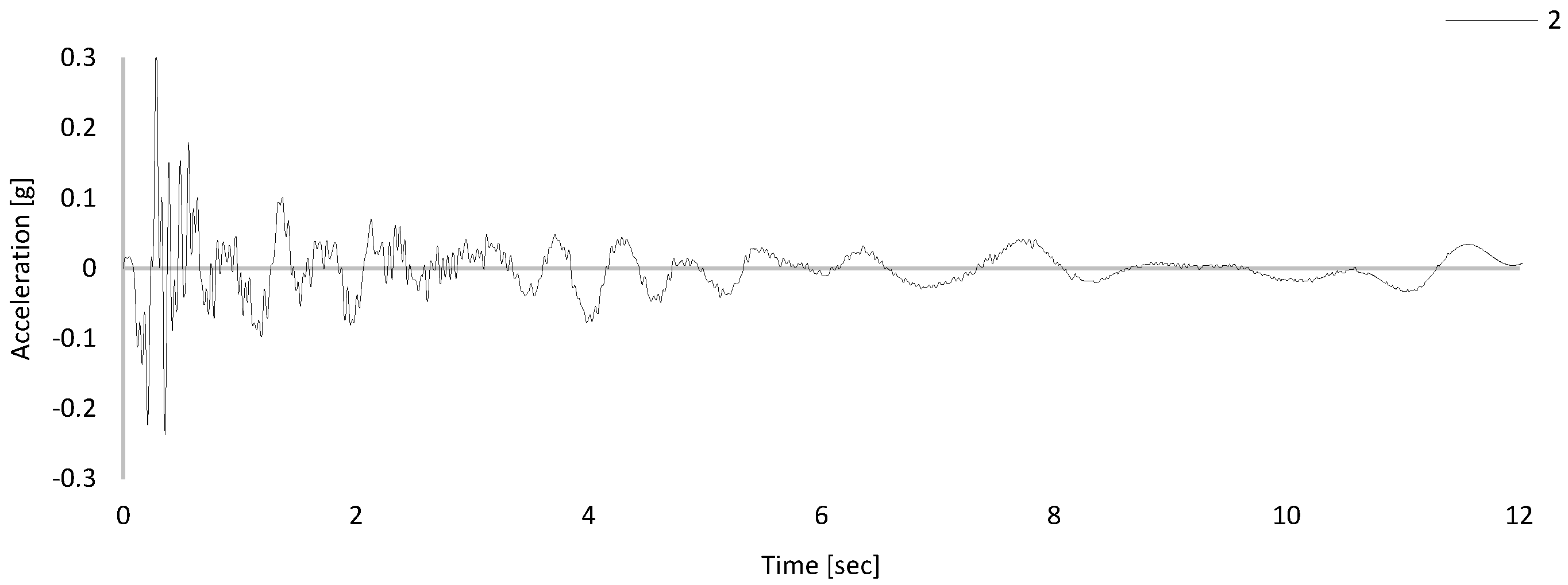
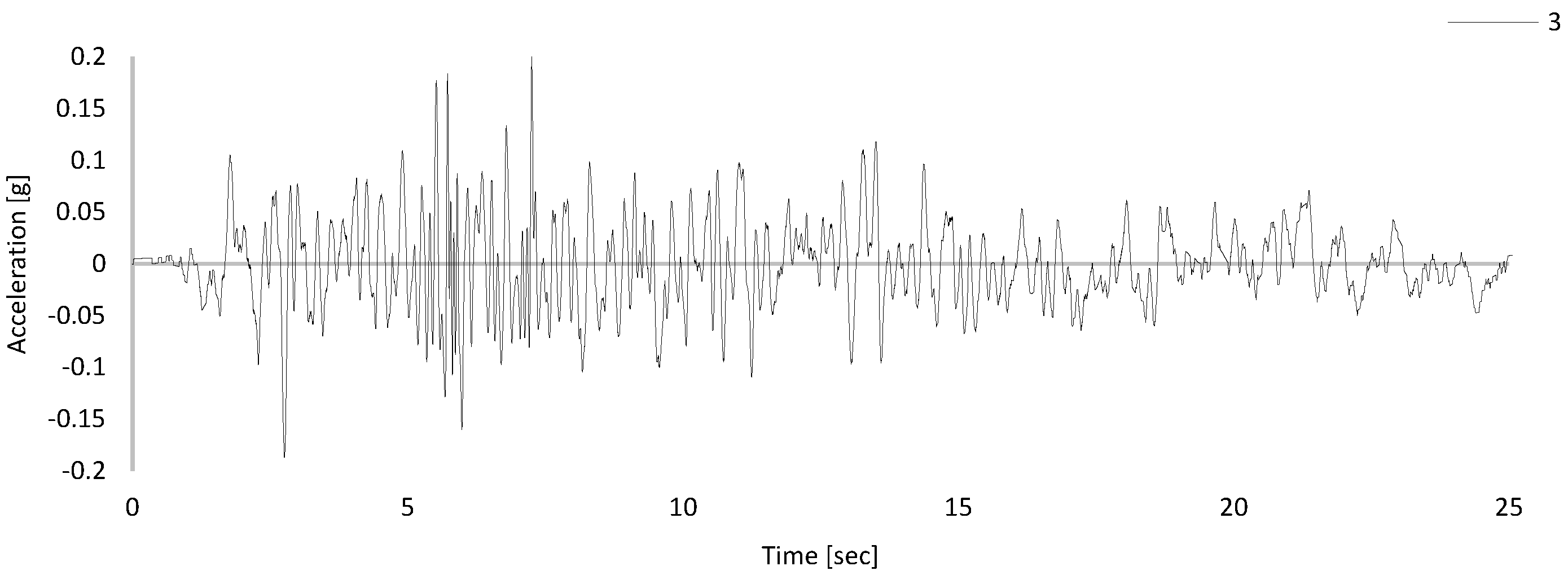
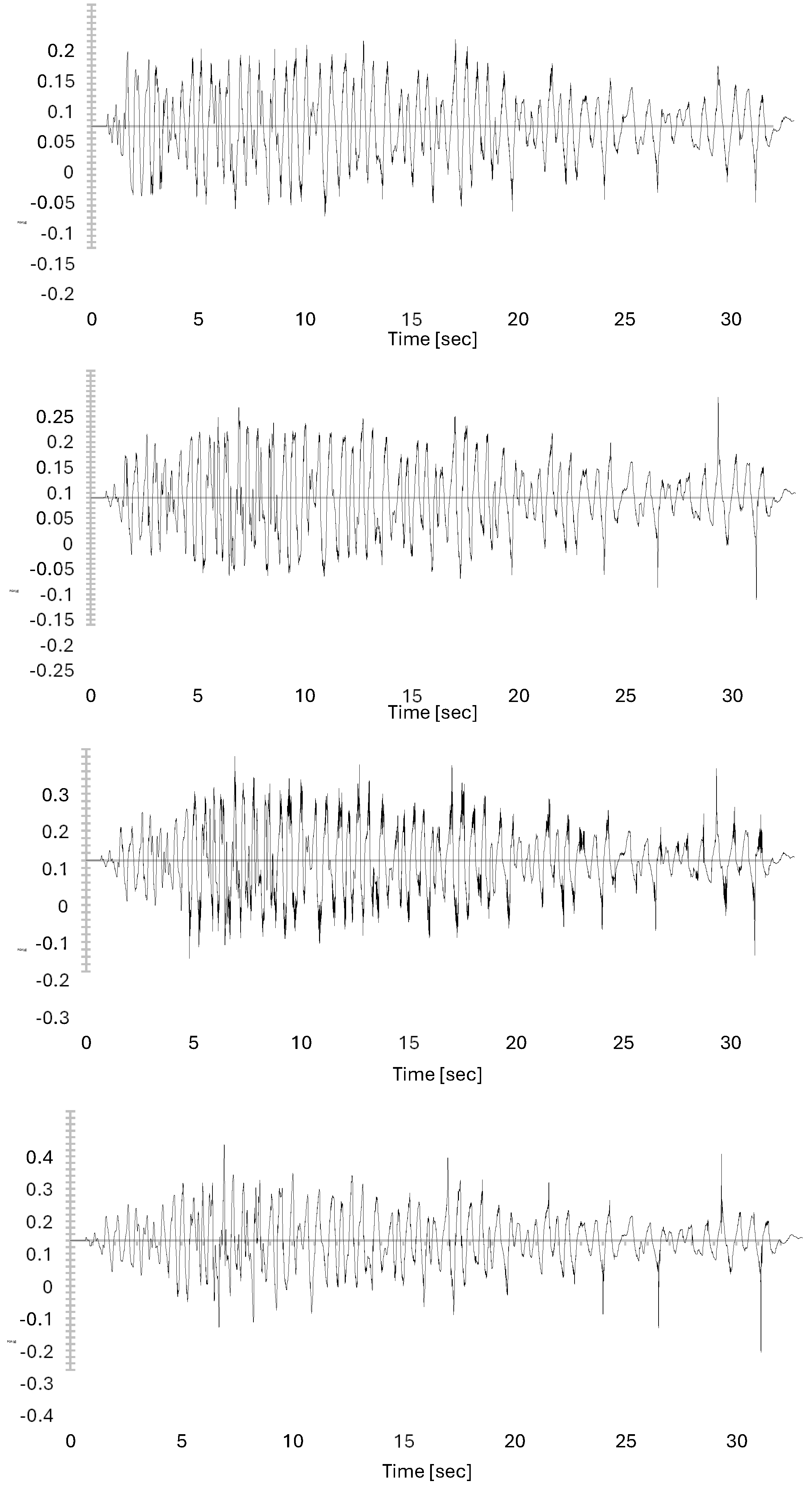
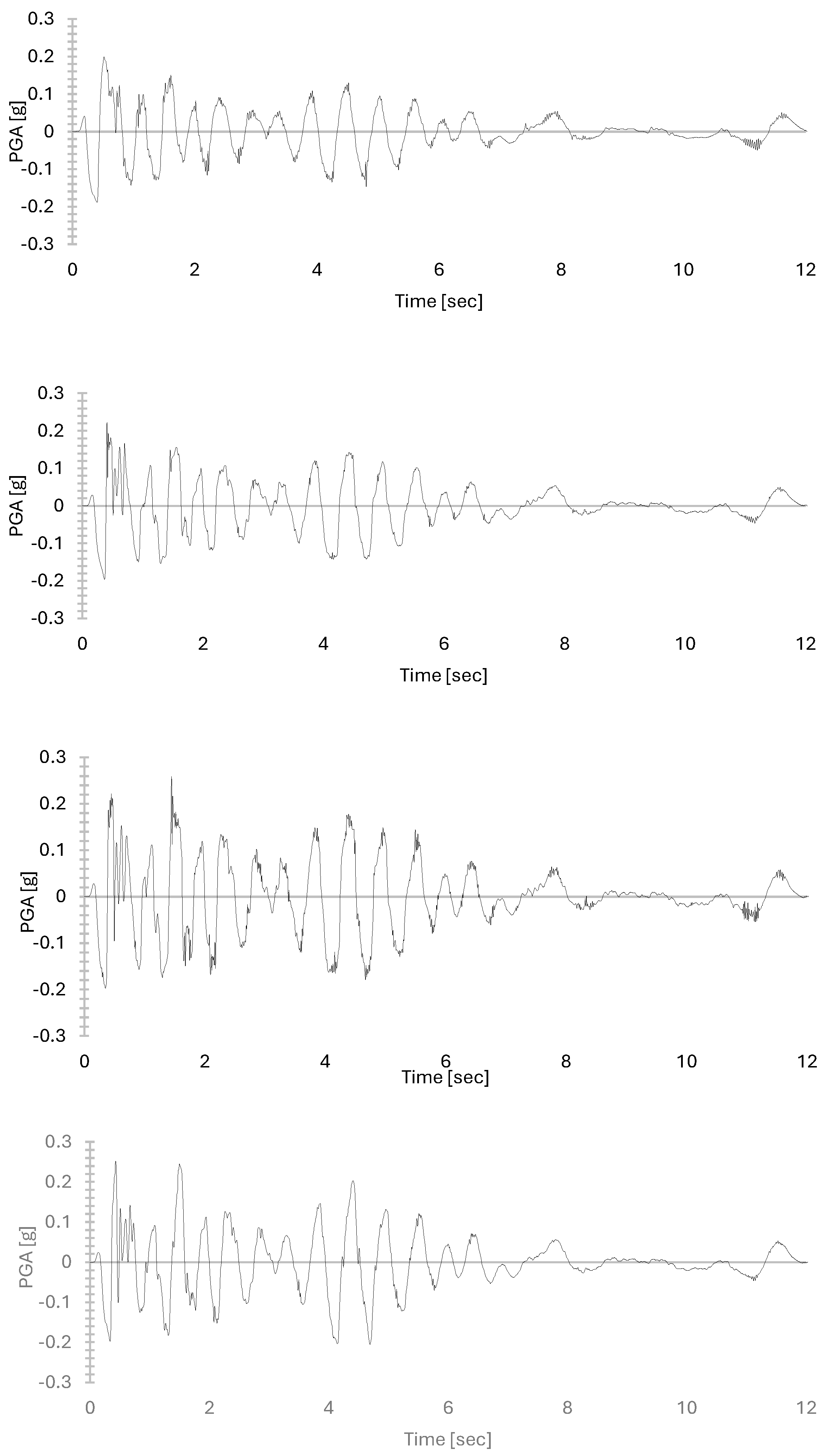
To ensure accuracy and reliability in numerical simulations, the raw accelerograms underwent a rigorous preprocessing and calibration procedure before being used as input motions. High-frequency noise and non-physical components, which can introduce artificial distortions into numerical models, were removed using bandpass filtering techniques [6]. This filtering process was carefully calibrated to preserve both long- and short-period components of the seismic motion, ensuring that the processed records accurately capture the true seismic energy distribution affecting the site conditions. The pre-filtered accelerograms used in this study are presented in Figure 9, Figure 10 and Figure 11.
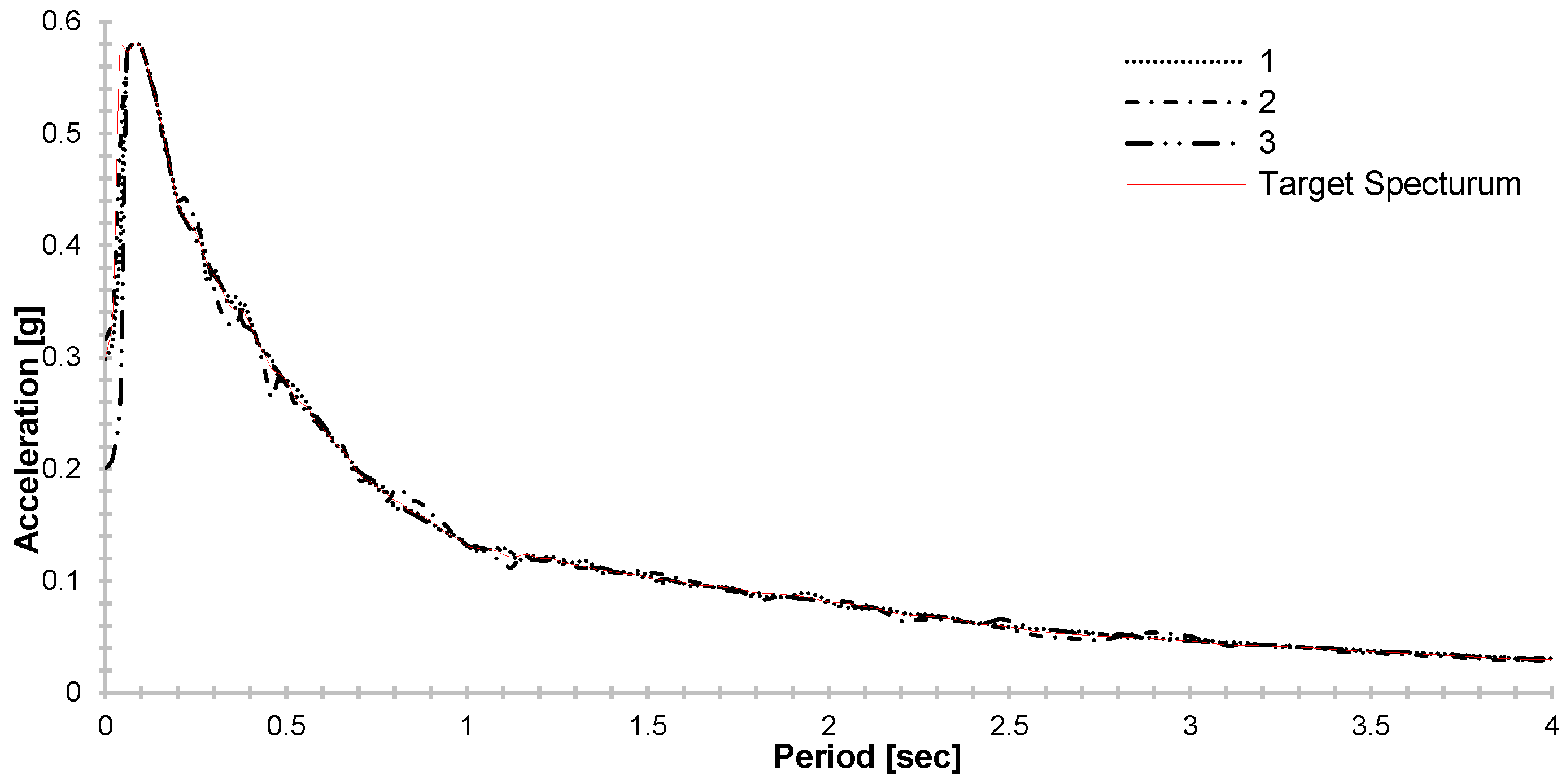
Following preprocessing, the selected ground motion time histories were refined using spectral matching techniques to achieve compatibility with the target design spectra. This approach, extensively applied in seismic engineering, modifies recorded ground motions to ensure their frequency content aligns with a hazard-consistent response spectrum, thereby accurately capturing spectral accelerations at critical structural periods [46]. The spectral matching process involved iterative adjustments to PGA, velocity, and displacement to maintain consistency with the site-specific seismic hazard conditions. In this study, PGA values ranged from 0.20 g to 0.30 g, contingent on the characteristics of the recorded earthquake events.
The selected time histories were tailored to match the probabilistic seismic hazard analysis [6] derived target spectrum for the study area located in a specific near shore area of Australia. To preserve the physical realism of the seismic records, key intensity measures, including Arias Intensity, Housner Intensity, and Specific Energy Density, were retained throughout the modification process, ensuring a representative energy input into the soil-structure system [6]. A comparative analysis of the response spectra of the selected and modified records against the target spectrum confirmed the adequacy of the spectral matching process, demonstrating alignment between the seismic inputs and the anticipated design conditions (Figure 12).

2.3. Laboratory Tests Setup

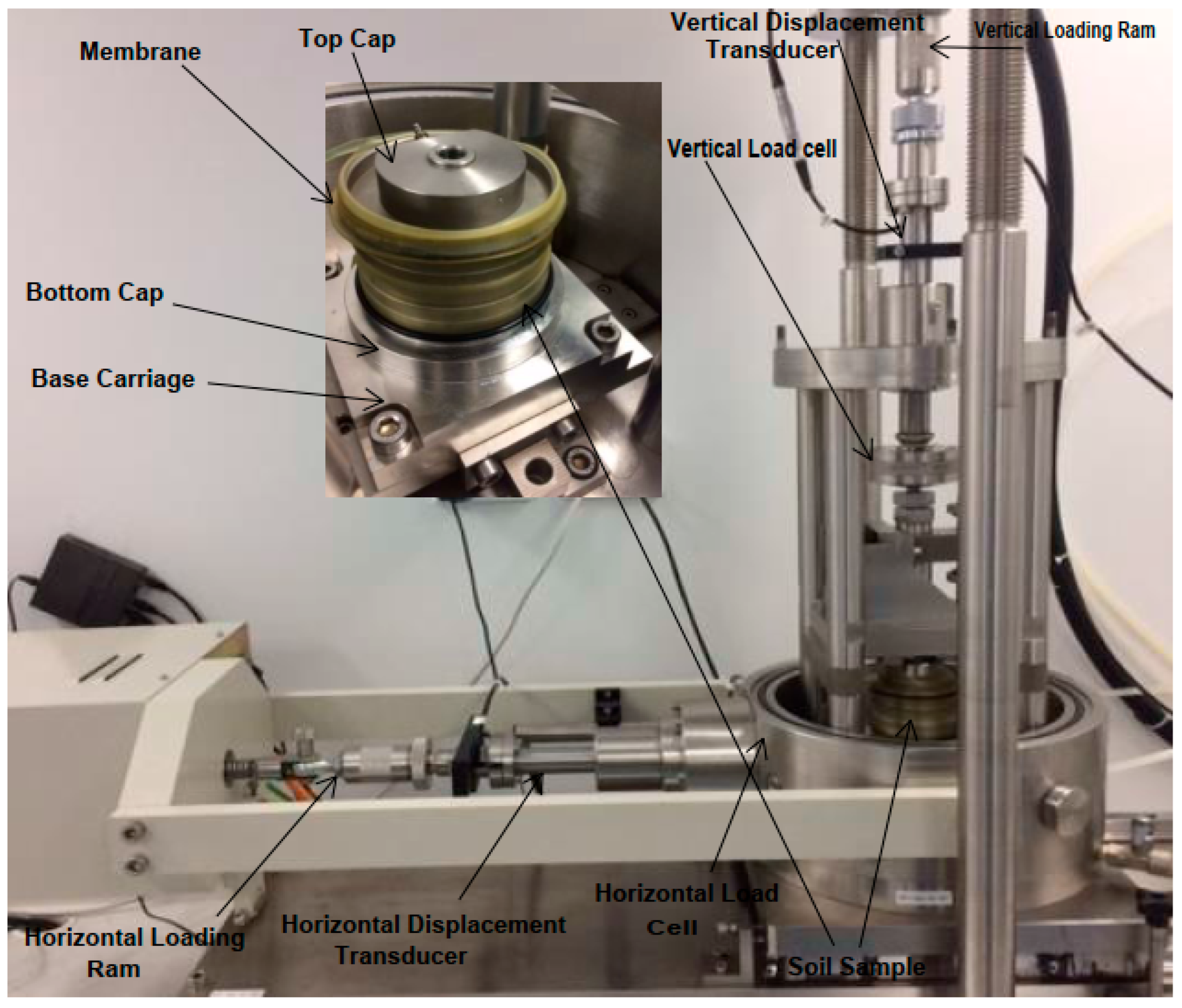
A series of CDSS tests were conducted on the same depth material sampled from 1 to 1.5 m under three different CSR to evaluate the dynamic behavior and liquefaction potential of proposed material. The laboratory tests were performed on samples with an initial moisture content of 51.7% and a dry density of 1.11 g/cm3, replicating field conditions typical of reclaimed materials. A schematic setup of the cyclic direct simple shear machine is presented in Figure 13.
The specimens were isotopically consolidated to an effective vertical stress (σ’v) of 70 kPa, with an initial horizontal stress (σ’h) of 70 kPa, simulating in situ confining conditions. Three cyclic loading conditions were applied with peak shear stresses (TX) of ±20 kPa, ±30 kPa, and ±35 kPa, corresponding to CSR values of 0.29, 0.43, and 0.50, respectively. These values were selected to represent a range of cyclic loading conditions relevant to seismic excitation scenarios for reclaimed materials with an emphasis on the project site’s seismic potential.
Shear strain amplitudes reached up to 15%, with a maximum recorded strain of 25% at CSR = 0.50. Excess pore pressure generation varied across the tests, with peak values of 23.8 kPa for the respective CSR condition, confirming a progressive reduction in effective stress.

2.4. Numerical Model Verification

The validation of the PDMY constitutive model was conducted to assess its accuracy in simulating the liquefaction, excess pore pressure accumulation, and post-liquefaction behavior under seismic loading. Previous studies [1,40,47] have demonstrated the model’s effectiveness in replicating cyclic loading effects in sandy soils. To ensure numerical reliability and the capability of the constitutive model, experimental data from [48,49] were used as benchmarks.
The verification process involved comparing numerical results with cyclic simple shear (CSS) test data from silty sands collected from the Ekşisu region, where a magnitude 6.8 earthquake in 1992 led to severe liquefaction-induced ground failure [48]. Laboratory tests revealed that silty sands containing 21% fines liquefied within 2.4 s of cyclic loading. These results highlighted their increased susceptibility compared to clean sands due to higher compressibility and lower permeability, which accelerated pore pressure buildup. Similarly, Reference [49] conducted cyclic shear tests on Nevada Sand under a CSR of 0.3, demonstrating the influence of fines content on strain accumulation and pore pressure evolution in liquefiable soils.
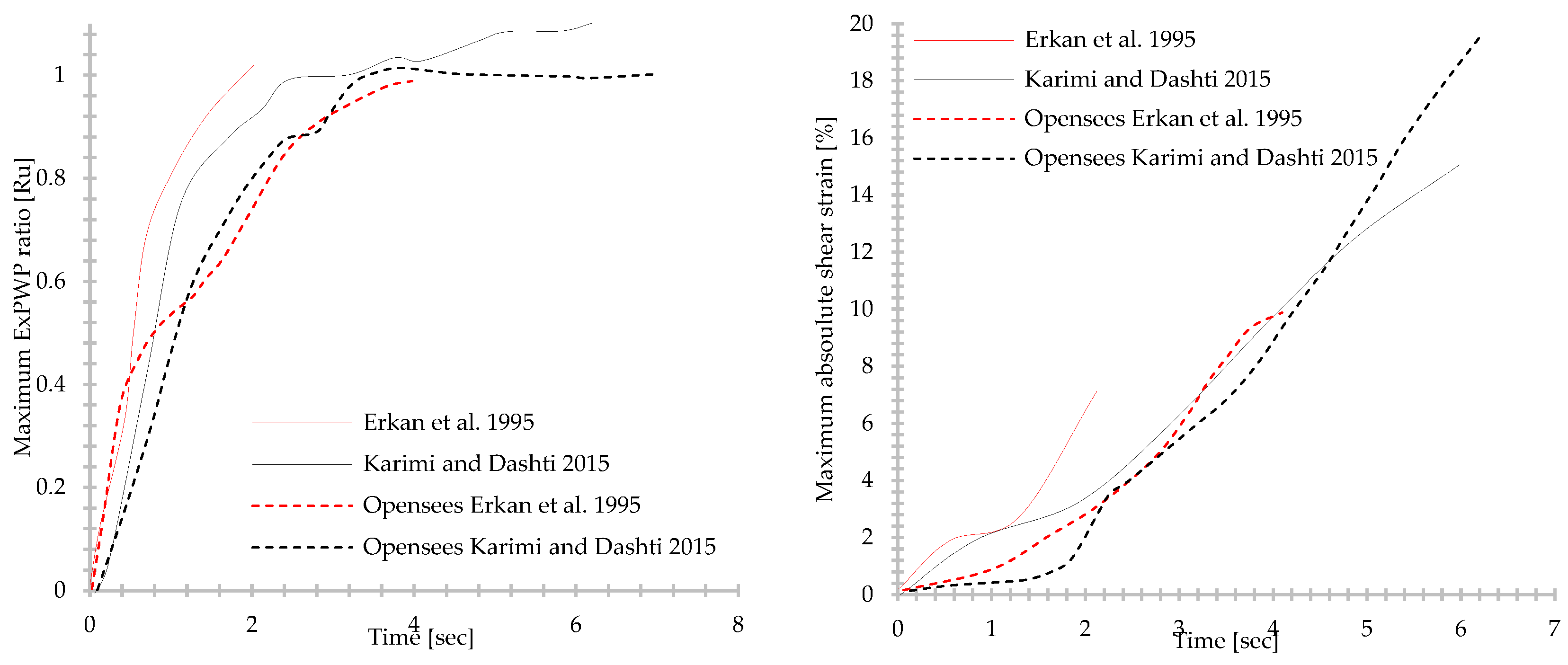
Figure 14 presents the numerical verification results, showing the maximum excess pore water pressure ratio (Ru) and maximum absolute shear strain over time. The ru evolution follows a characteristic trend, where it increases steadily during cyclic loading before reaching a plateau, indicating full liquefaction. Experimental data from Erken and Ansal (1995) show that liquefaction occurred rapidly, with ru reaching 1.0 within approximately 2.4 s. In contrast, Reference [49] observed a more gradual pore pressure buildup, stabilizing at a slightly later stage. The numerical model successfully replicates these trends, demonstrating its capability to capture the key mechanisms of pore pressure generation and dissipation. However, minor discrepancies are observed in the timing of peak ru values, particularly in the [48] case, where the model slightly delays liquefaction. These variations likely stem from differences in fines content, drainage properties, and model parameterization.
The shear strain response further validates the model’s performance. Experimental results from [48] show rapid shear strain accumulation, exceeding 7% before liquefaction. Meanwhile, Reference [49] observed a more progressive strain increase with a lower rate of accumulation. The numerical simulations closely follow these trends, accurately capturing the shear strain trajectories. However, a slight delay in predicting peak strain values is noted, particularly for the [48] case, aligning with the timing differences observed in Ru.
The present verification results align with these findings of previous researcher addressed in the introduction [18], demonstrating that silty sands liquefy more quickly due to their tendency to retain water and accumulate pore pressure at a faster rate. The overall agreement between numerical and experimental results confirms that the PDMY model effectively simulates dynamic behavior in fine-grained soils. The model successfully replicates Ru buildup, cyclic mobility, and shear strain accumulation, proving its suitability for seismic response and behavior assessments, foundation stability evaluations, and site response analyses in liquefiable soils and reclaimed sediments. However, the discrepancies in timing and strain accumulation rates suggest that further refinement of permeability evolution functions and cyclic strength parameters could enhance predictive accuracy.

3. Results and Discussion

3.1. CPT-Based Cyclic Resistance and Liquefaction Assessment

The liquefaction susceptibility of the material was analyzed using CPT data, applying the CRR and CSR methodology [34,37,50]. This approach integrates in situ soil strength parameters with empirical correlations to estimate liquefaction resistance under seismic loading conditions. The assessment was performed using the recommended site-specific seismic parameters recommended in the original PSHA specifically for the site, including a moment magnitude (Mw) of 5.5 and a PGA of 0.3, corresponding to the maximum credible earthquake (MCE) level of loading.
CSR values were computed using the Seed and Idriss equation [4], which considers peak ground acceleration, stress reduction factors, and depth-dependent overburden stresses. The CRR values were derived from CPT penetration resistance (qt1N) to quantify soil resistance to cyclic loading [34,36,38]. The factor of safety (FS) against liquefaction was determined as FS = CRR/CSR, with FS < 1.0 indicating a high risk, 1.0 < FS < 1.2 suggesting marginal stability, and FS > 1.2 representing stable conditions [51].
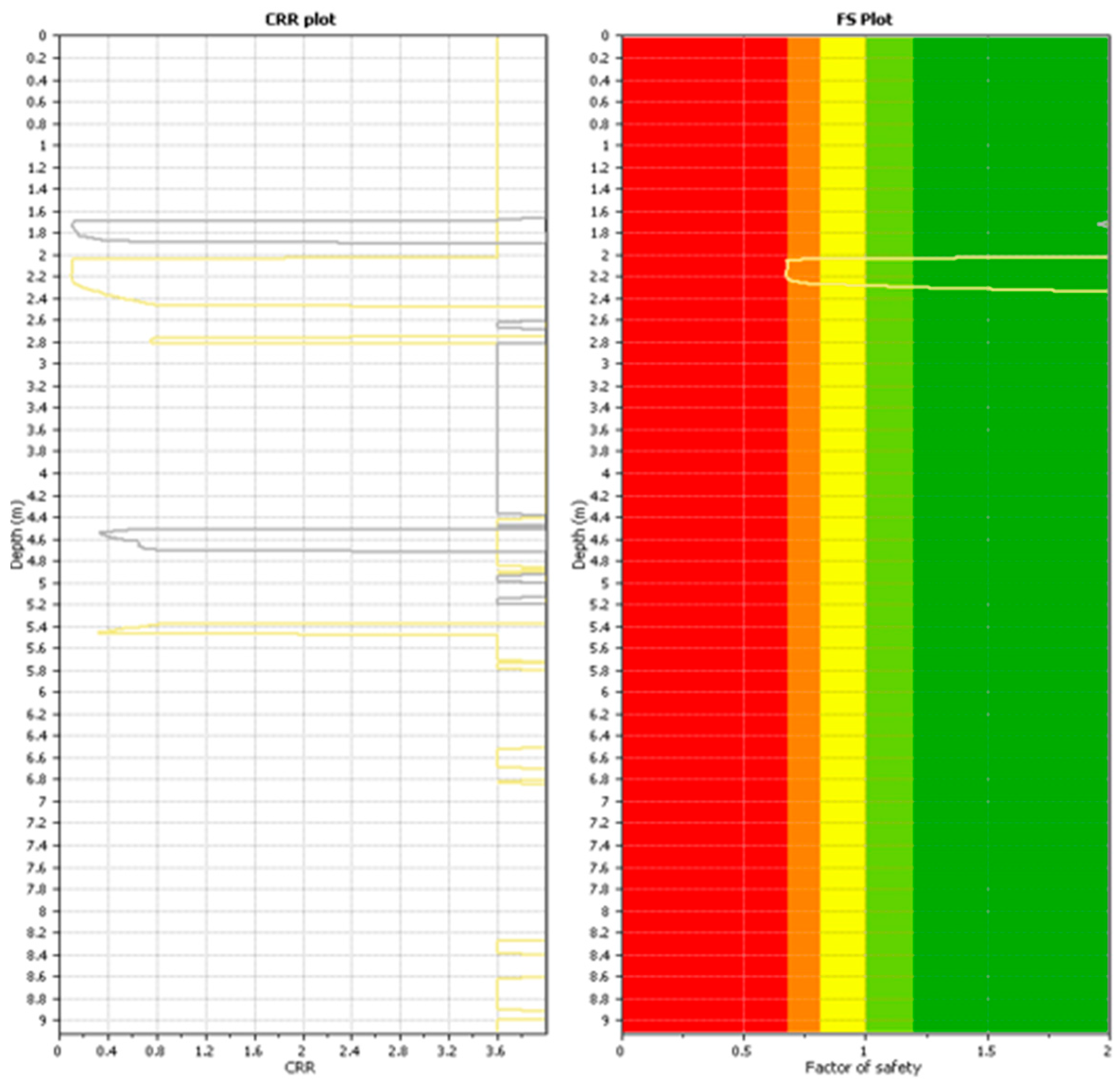
The results, illustrated in the CRR plot (left) and FS plot (right), show the depth-dependent variation in resistance. A significant red zone in the upper 2.0–2.5 m confirms that this section of the soil profile is particularly susceptible to liquefaction failure under seismic loading at the MCE level. Beyond 5 m depth, CRR values increase, and FS transitions into the stable green zone (FS > 1.2), indicating improved resistance. This enhancement is attributed to higher confining pressures, increased density, and greater soil stiffness in depth. Although these observations align with findings from previous studies [7,52], the outcome did not consider the impact of earthquake amplification and frequency content of the earthquake or soil profile fundamental period.
Notably, the FS results did not indicate any significant liquefaction potential at depths of 1.8 m, 2.8 m, 4.6 m, and 5.4 m, despite a notable reduction in CRR values at these depths using the CRR/CSR method. A full profile log of FS and CRR for two CPTs on site is shown in Figure 15.

3.2. Numerical Model Verification with CDSS Laboratory Tests

To validate the numerical model, a single-element finite element analysis was conducted using OpenSees [53], replicating the CDSS test conditions. Although the open source system was used in this research author understood there are several FEM and FDM software and tolls that may be useful to use in liquefaction validation and modeling [54]. The simulation employed the PDMY constitutive model and incorporated material parameters calibrated from laboratory characterization. Loading was applied at a frequency of 0.1 Hz, consistent with experimental conditions, and three CSRs were modeled: 0.29, 0.43, and 0.50 corresponding to peak shear stresses of ±20 kPa, ±30 kPa, and ±35 kPa, respectively. These values reflect the anticipated seismic loading intensity for the study site and were selected to capture both pre- and post-liquefaction responses.
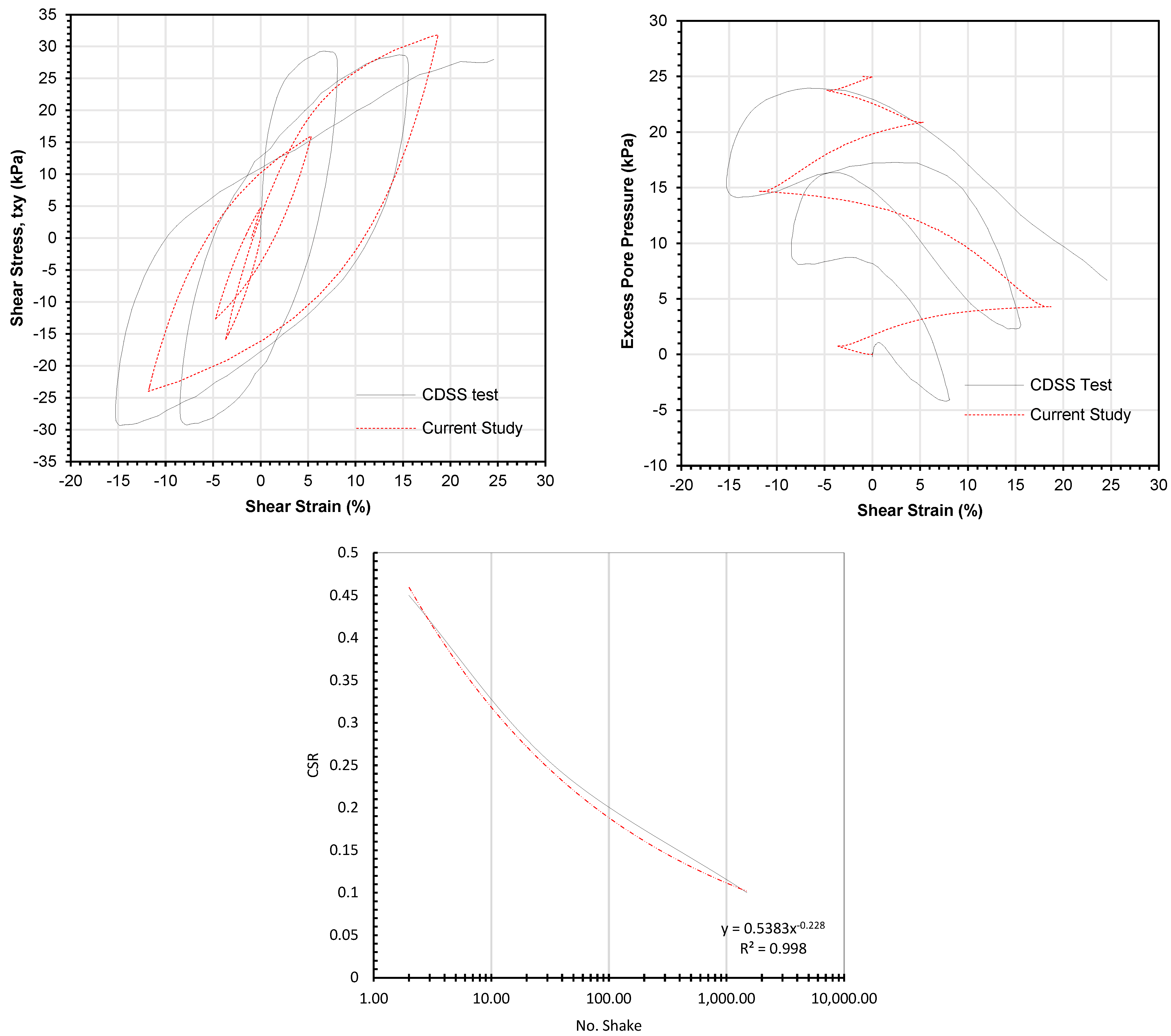
Figure 16(left up) compares the shear stress–strain loops generated by the numerical model with those measured in the laboratory. The model successfully reproduced the overall hysteresis behavior, including cyclic softening and progressive stiffness degradation. At CSR = 0.43, the numerical and experimental stress loops showed excellent agreement in shape and peak amplitude. Minor deviations were observed in later cycles, where the numerical model slightly underpredicted accumulated shear strain, reaching approximately 22%, compared to a maximum of 25% recorded in the laboratory. This 12% discrepancy may be attributed to conservative stiffness degradation parameters or simplifications in representing soil fabric collapse during cyclic loading.
The evolution of excess pore pressure (ExPP) as a function of shear strain is presented in Figure 16(right up). The simulation closely matched the experimental ExPP trend across all loading levels. For CSR = 0.50, the numerical model predicted a peak ExPP of 25.8 kPa, compared to 23.8 kPa measured in the laboratory, yielding an overprediction of 8.4%. The shape and inflection points of the ExPP–strain curve were also consistent, though the model exhibited a slightly smoother rate of accumulation. This variance may result from microstructural rearrangements and local densification effects in the physical specimens, which are not fully captured by the constitutive formulation.
Figure 16(bottom mid) illustrates the relationship between CSR and the number of cycles to liquefaction, defined here as the point at which Ru approached unity. Both numerical and experimental data followed a power-law decay, indicating decreasing CSR tolerance with increasing cycle count. The laboratory tests yielded a regression fit of CSR = 0.5383·N−0.228, with a high coefficient of determination (R2 = 0.998) and the root mean square error (RMSE) for shear stress–strain loops across the applied CSR levels were approximately 6%.
The numerical predictions closely followed this trend, capturing the cyclic degradation behavior with only minor divergence during the initial few cycles. For instance, the number of cycles required to reach Ru = 1.0 at CSR = 0.43 was three in the simulation, compared to three to four in the laboratory tests. Taken together, these comparisons confirm the capability of the PDMY model, when properly calibrated, to replicate both the stiffness degradation and pore pressure response of proposed sediments under cyclic loading.

3.3. Time Histories Analysis

The numerical simulations were conducted to evaluate the seismic response of material profiled by the CPTu test subject ed to three distinct ground motions: Shake 1 (Livermore-01, 1980), Shake 2 (Chi-Chi, 1999), and Shake 3 (Loma Prieta, 1989). The results were analyzed in terms of response acceleration on the specific depth, CSR, excess pore pressure ratio, and shear stress–strain response across four depths 0.72 m, 2.3 m, 3.0 m, and 4.95 m.
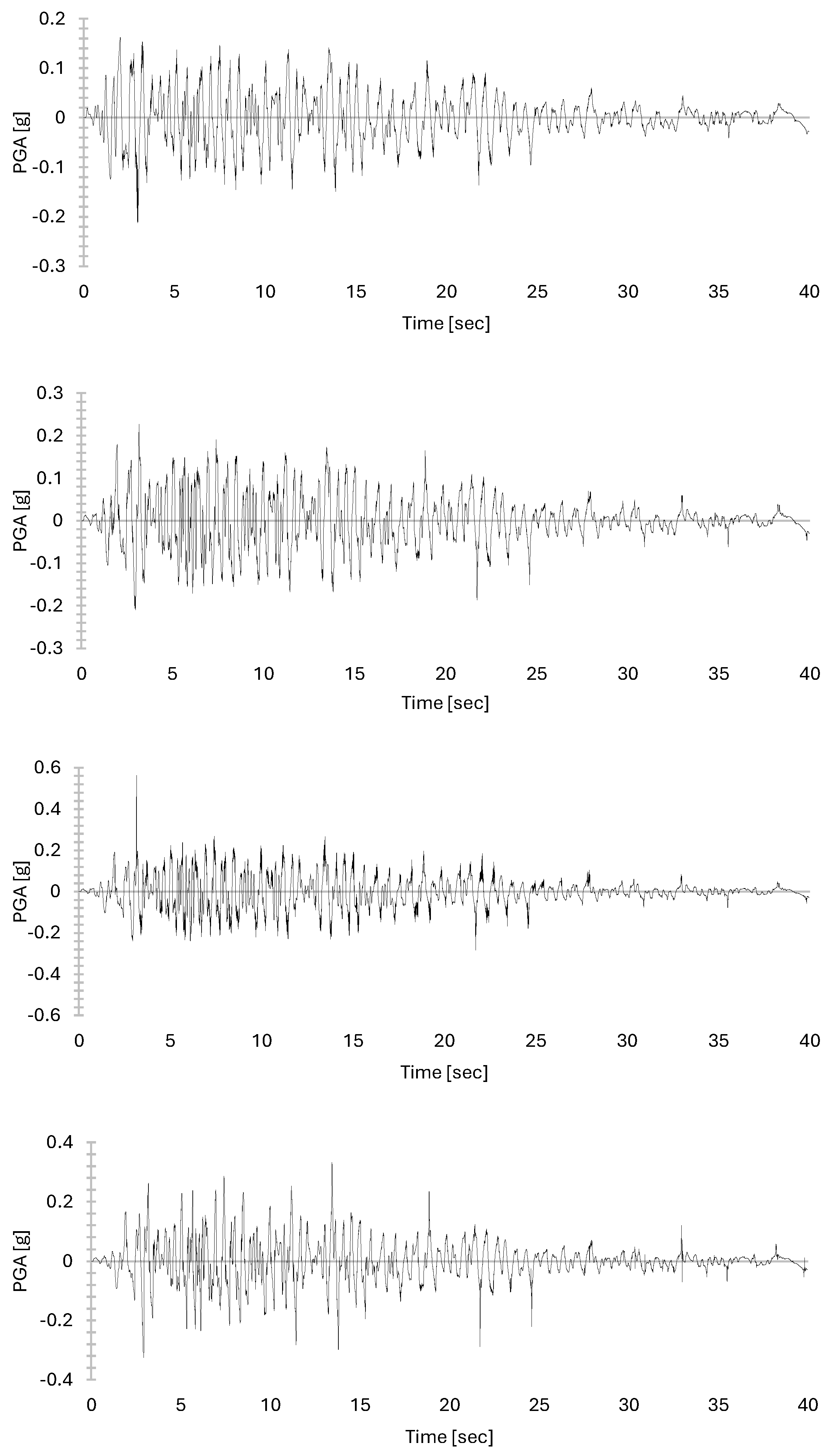
The response of the PGA time history of Shake 1 exhibits a strong initial acceleration phase followed by a gradual attenuation, with the dominant pulse occurring between 5 and 6 s. The near-surface layers at 0.72 m and 2.3 m experience limited amplification, where response acceleration values could not exceed the input ground motion, suggesting non-resonance effects. The results of PGA responses in the proposed depths are provided in Figure 17.
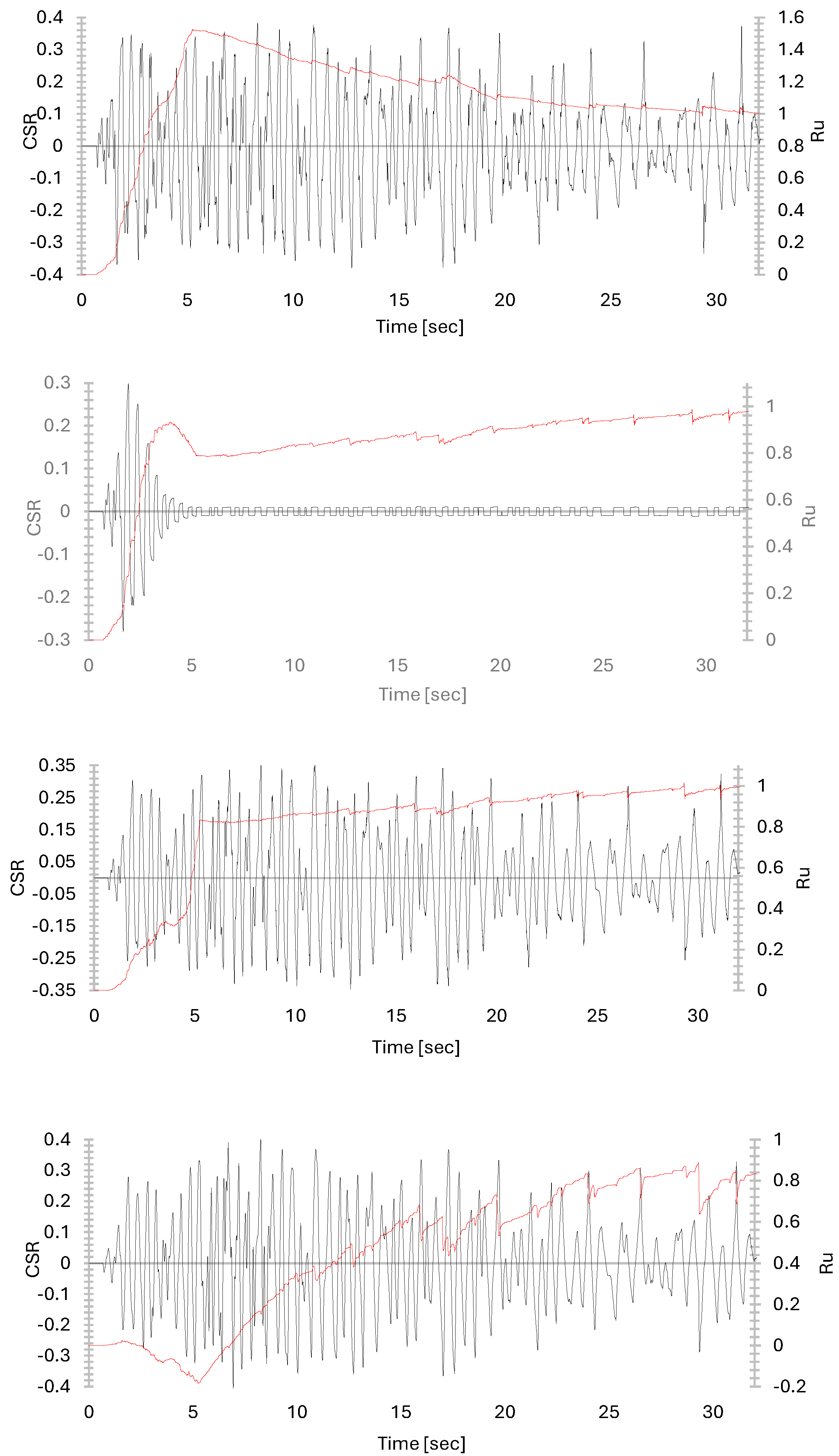
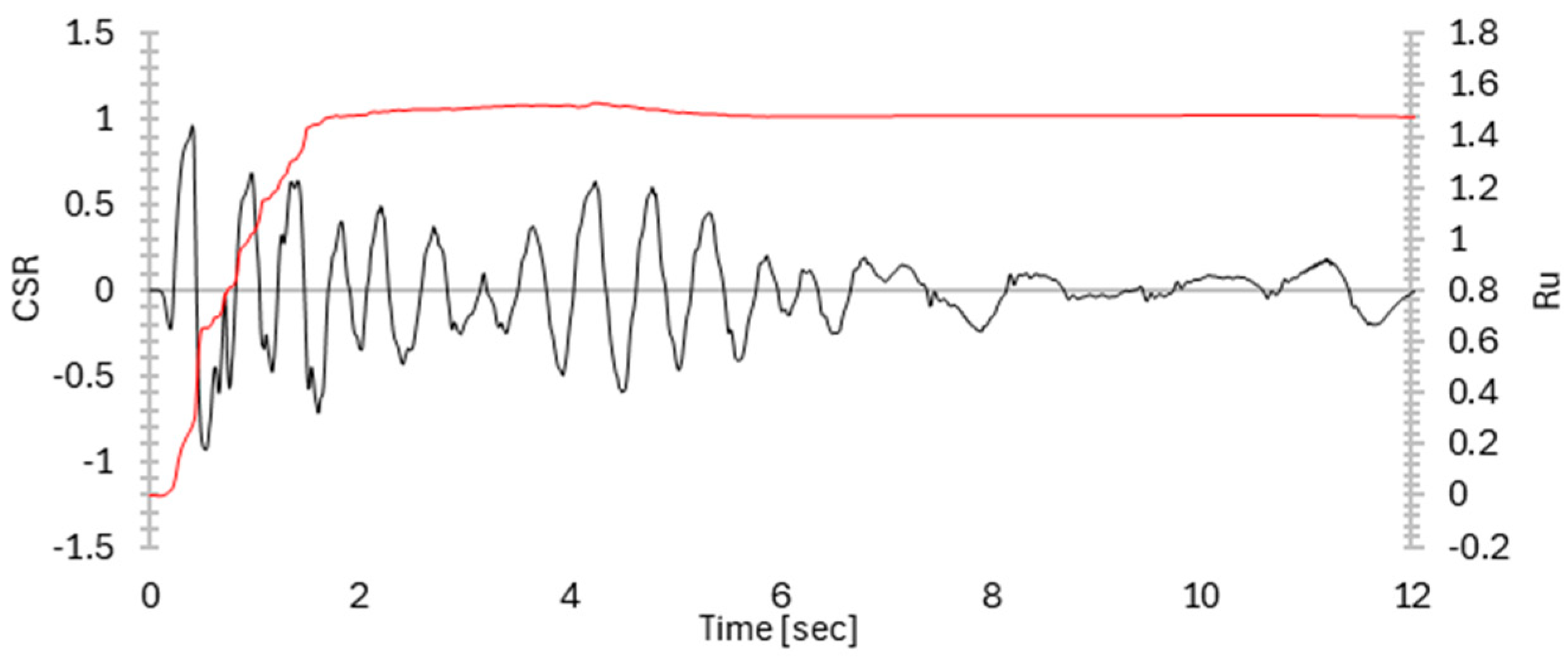
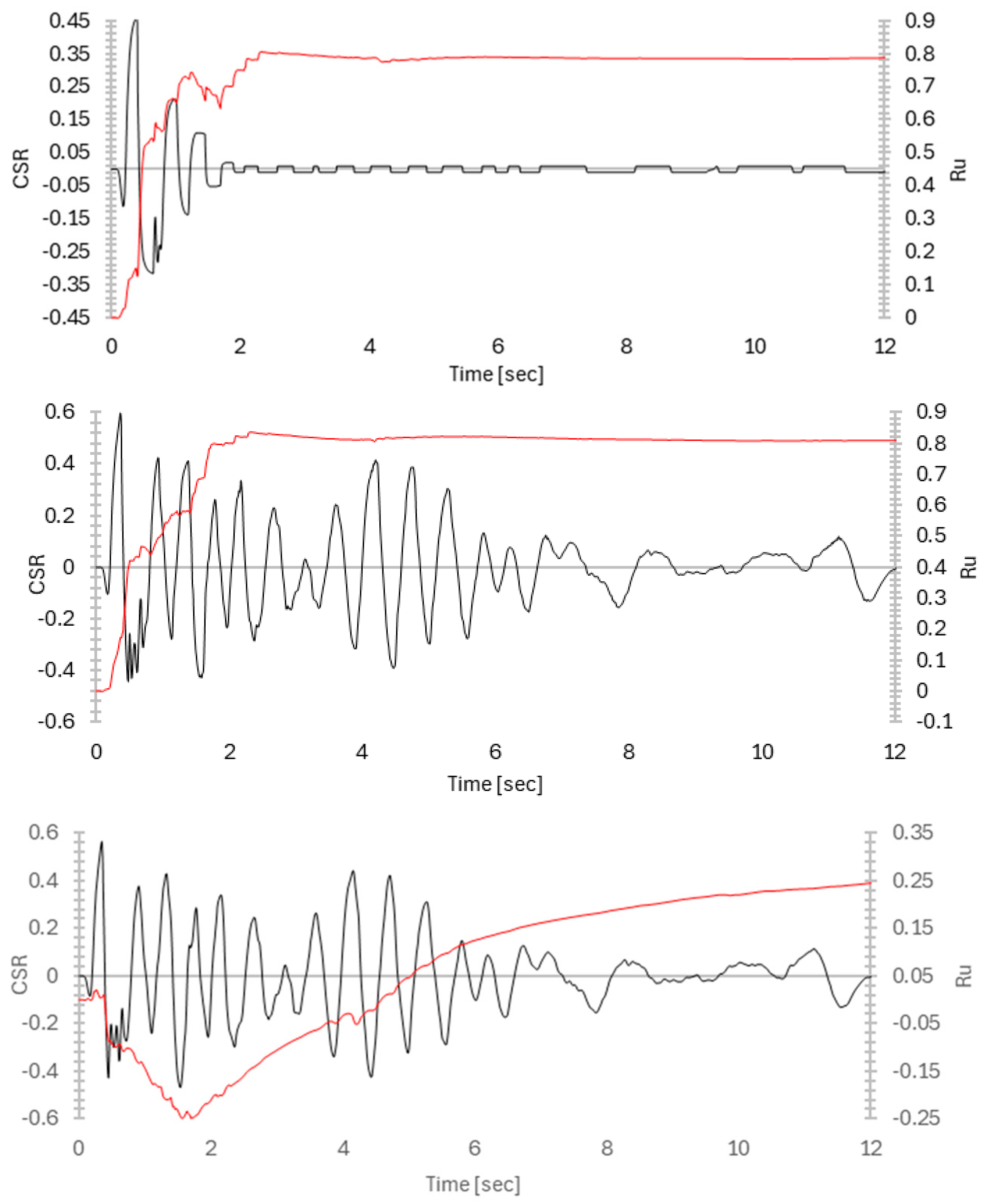
CSR values (black line) peak early in the shaking sequence, leading to a rapid rise in excess pore pressure. At 0.72 m, Ru (red line) reaches 1.0 within the first few cycles, indicating full liquefaction and rapid stiffness degradation. The result of CSR response and Ru vs. time in-depth profile of the material is presented in Figure 18.
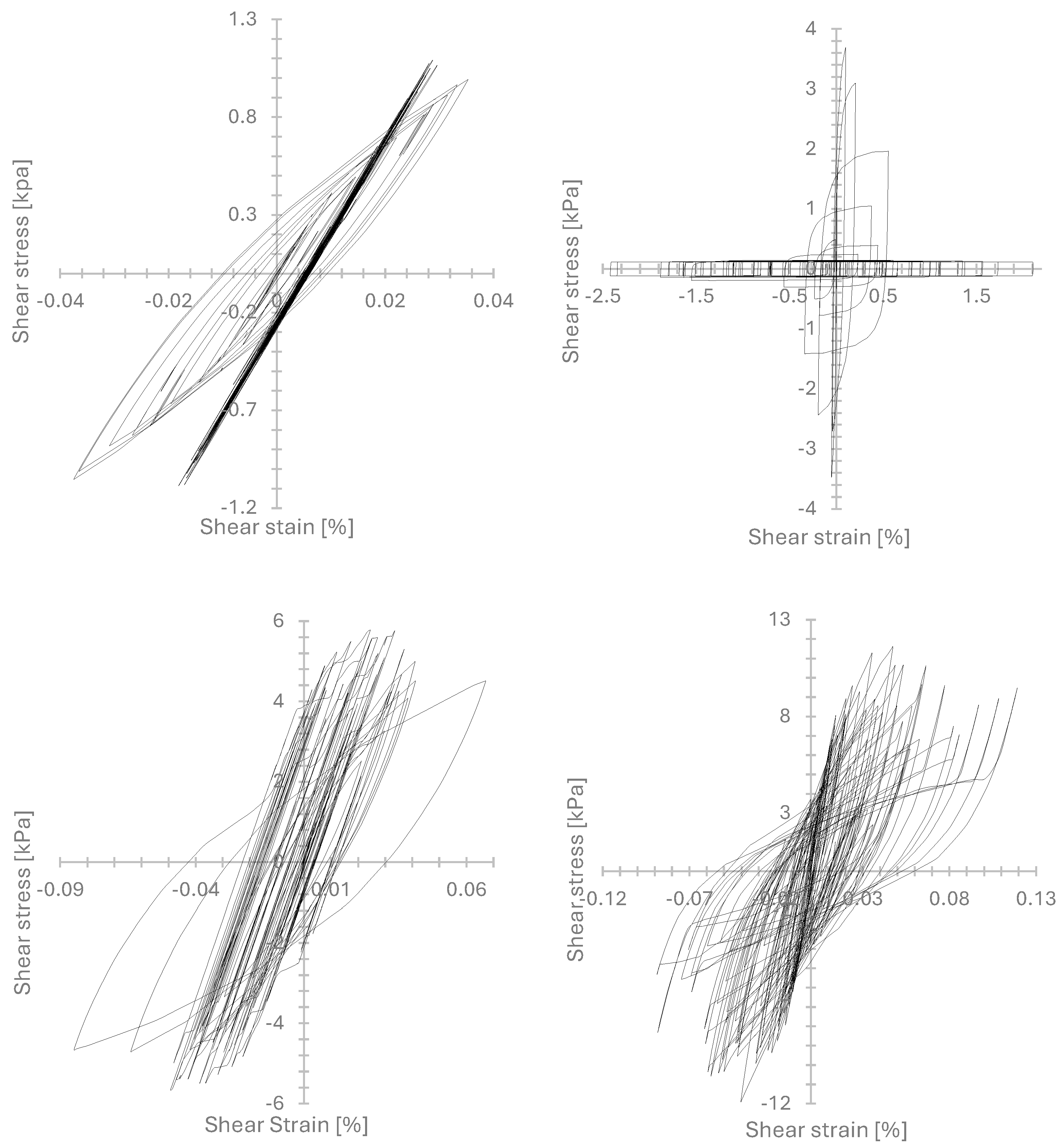
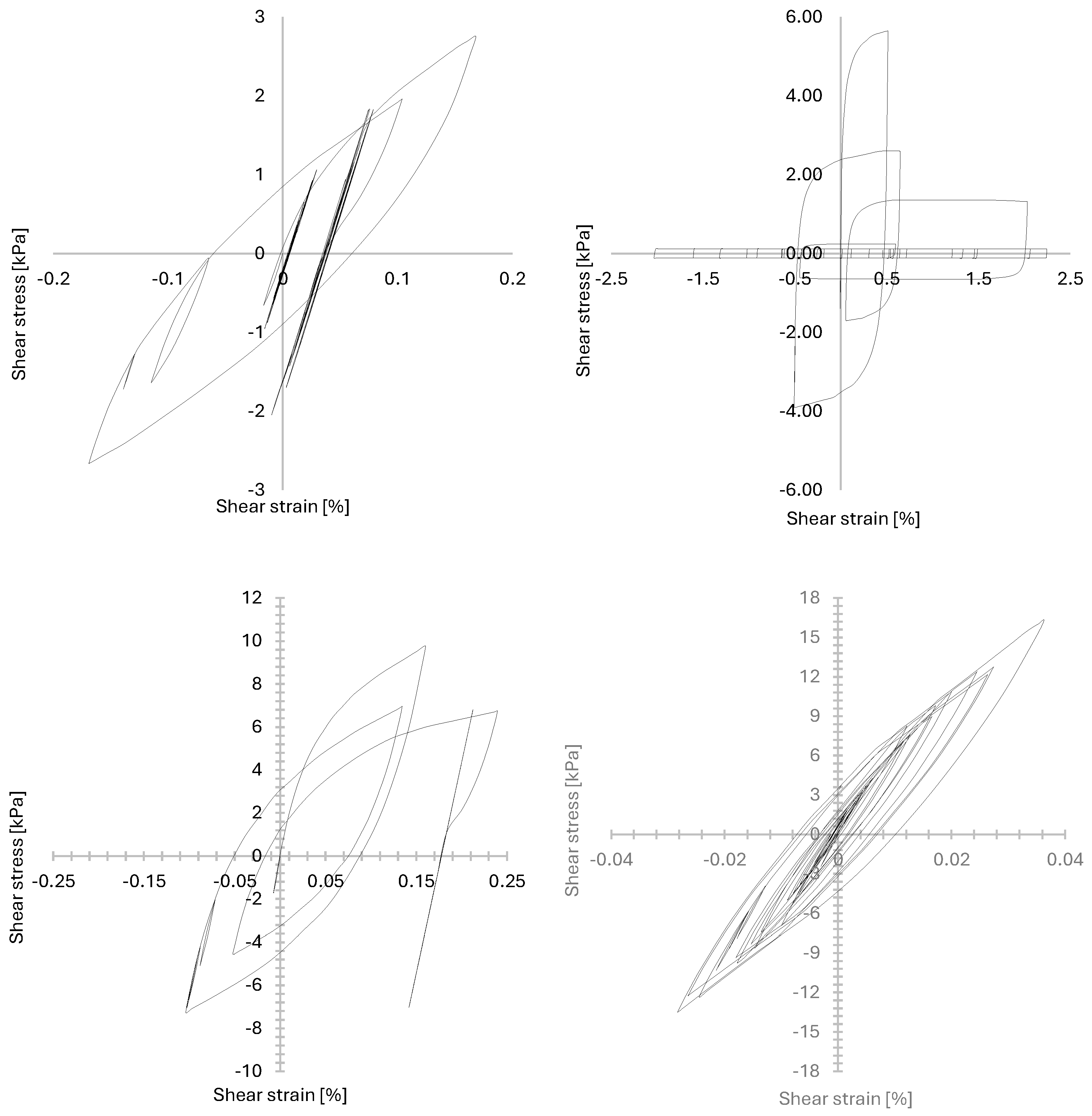
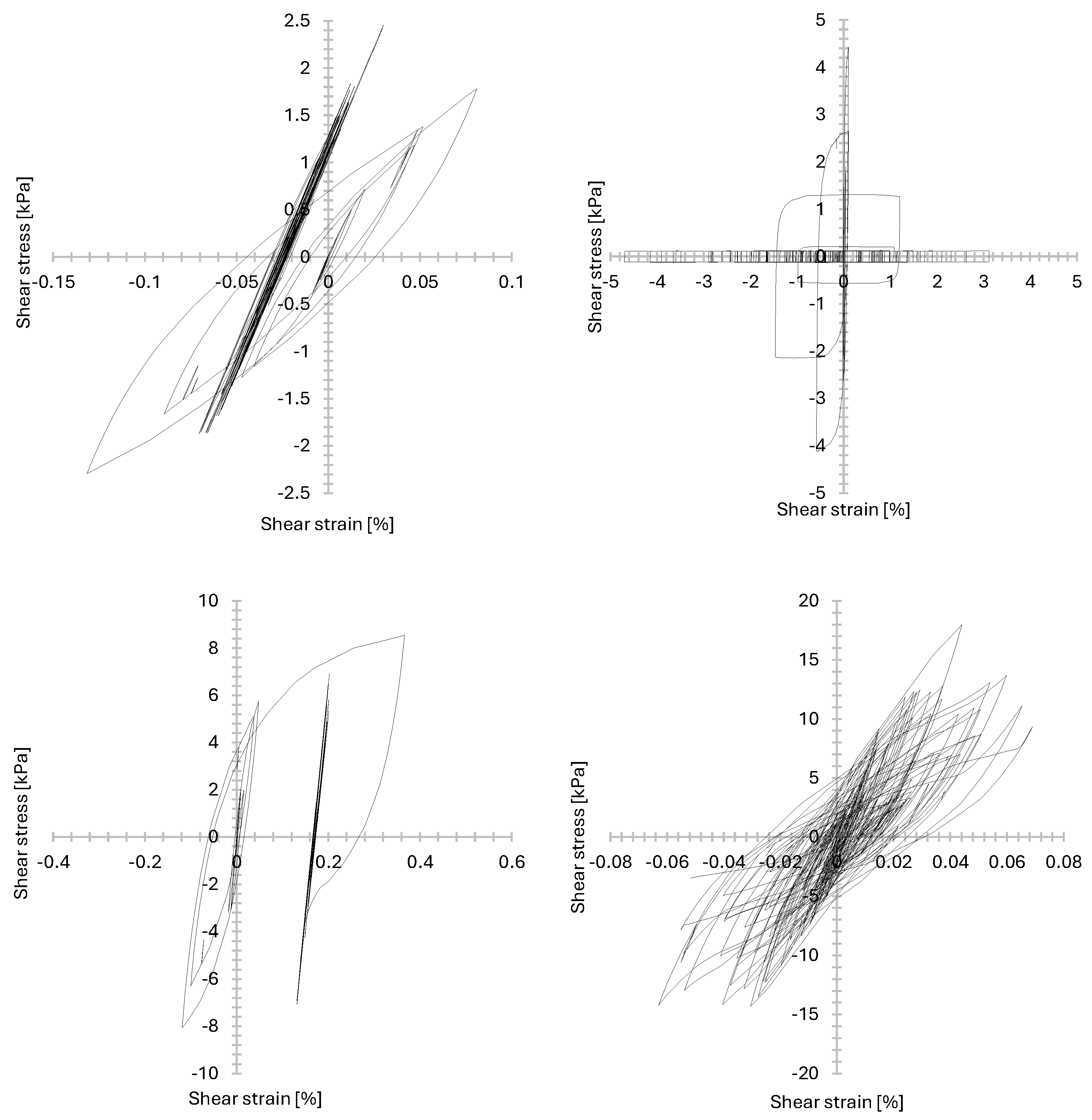
The stress–strain response of material at the proposed depth depicted wide hysteresis loops, signifying high energy dissipation and permanent strain accumulation. At 2.3 m, liquefaction is delayed but eventually occurs, though with slightly lower excess pore pressure ratios than at shallower depths. At 3.0 m and 4.95 m, the acceleration response is increasingly amplified, and Ru values remain below the threshold, suggesting that deeper layers retain structural integrity under seismic excitation. Although the Ru could not reach the threshold, considerable strain softening was clearly presented in the hysteresis loop. The results of the shear stress vs. shear strains hysteresis behavior are shown in Figure 19.
The result of acceleration response values for Shake 2 is shown in Figure 20 and presents a distinct pattern compared to Shake 1, with the dominant frequency content shifting toward lower frequencies. Near-surface layers experience stronger acceleration amplification than in Shake 1, indicating site resonance effects due to longer-period motions. The excess pore pressure response exhibits a more abrupt transition to liquefaction at shallow depths. At 0.72 m, Ru reaches 1.0 within the first 2 s, signifying a more immediate collapse compared to Shake 1.
The CSR trends at 2.3 m confirm a rapid buildup of CSR, leading to sustained liquefaction, while at 3.0 m, intermittent negative Ru values suggest dilation-induced strengthening before liquefaction fully develops. At 4.95 m, excess pore pressure remains stable, and the stress–strain response exhibits elastic behavior, indicating minimal seismic degradation at this depth (Figure 21).
The shear stress–strain hysteresis loops at different depths exhibit distinct cyclic behavior, reflecting variations in stiffness degradation and strain accumulation. At 0.72 m, the loops show rapid expansion with increasing strain amplitude, indicating significant softening and loss of shear resistance, characteristics of a liquefied response. At 2.3 m, the loops appear irregular and highly distorted, suggesting a rapid accumulation of inelastic strain, reduced stiffness, and a transition to cyclic mobility under sustained loading. At 3.0 m, the loops demonstrate intermittent contraction and expansion, indicative of dilation-induced stiffening before further strain accumulation occurs. Finally, at 4.95 m, the loops maintain a more stable, narrow, and elliptical shape, signifying largely elastic behavior with minimal energy dissipation (Figure 22).
For Shake 3, the response spectrum highlights a higher spectral energy concentration at mid-to-long periods, resulting in a more uniform stress distribution across depths. Compared to Shake 1 and Shake 2, this ground motion has the longest shaking duration, leading to a prolonged response (Figure 23).
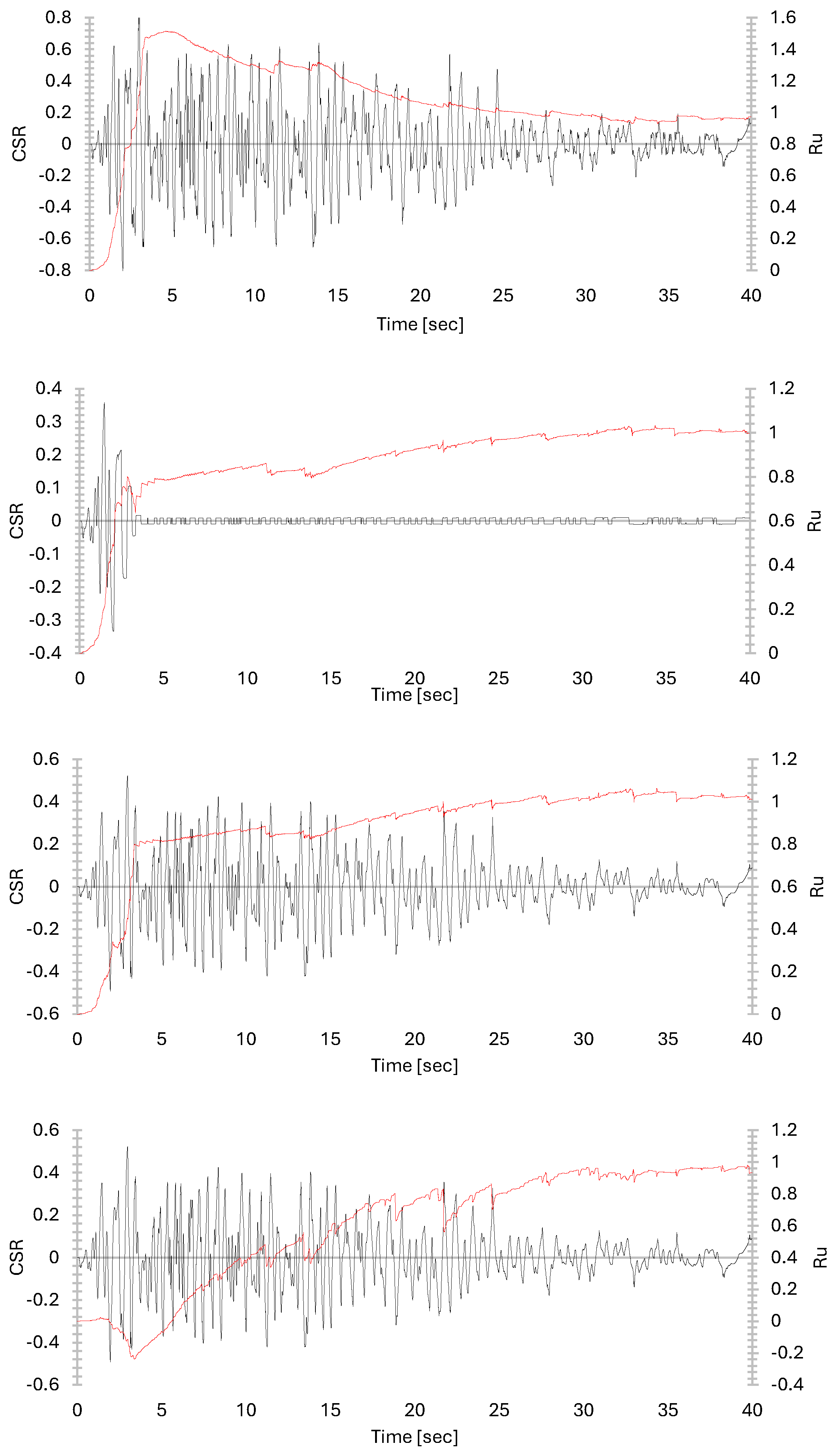
The CSR and Ru responses across different depths reveal distinct behaviors. At 0.72 m, the CSR curve shows high-frequency oscillations, indicating intense cyclic loading. The Ru curve rapidly rises to 1.0 within the first few seconds, signifying an immediate transition to full liquefaction. At 2.3 m, CSR fluctuations are less pronounced, indicating reduced stress transmission. However, Ru steadily increases, reaching 1.0 more gradually, implying a slower process. This progressive buildup of excess pore pressure suggests cyclic mobility rather than an immediate structural collapse.
At 3.0 m, CSR oscillations vary in amplitude, reflecting irregular stress–strain interactions influenced by dilation effects. The presence of negative Ru values suggest transient strengthening, delaying full liquefaction. The Ru curve rises more gradually, with temporary plateaus where excess pore pressure stabilizes before further accumulation. In contrast, at 4.95 m, CSR oscillations are minimal, showing reduced cyclic stress response. The Ru curve increases slowly and never reaches 1.0, confirming the absence of liquefaction at this depth. Instead, the soil supports structural stability, showing predominantly elastic behavior with minimal cyclic degradation (Figure 24).
The shear stress–strain hysteresis loops across different depths reveals distinct behavior under cyclic loading. At 0.72 m, the loops show rapid softening and a significant increase in strain amplitude, indicating early liquefaction and a sharp loss of shear resistance. At 2.3 m, the loops become irregular and nearly flat, signifying almost complete liquefaction, where the material no longer effectively resists shear stress. At 3.0 m, the loops exhibit some dilation-induced stiffening, with transient recovery in stiffness before continued strain accumulation, suggesting liquefaction without full mobilization. Finally, at 4.95 m, the loops remain compact and elliptical, demonstrating predominantly elastic behavior with minimal strain accumulation, indicating that this deeper layer maintains its shear resistance under cyclic loading (Figure 25).
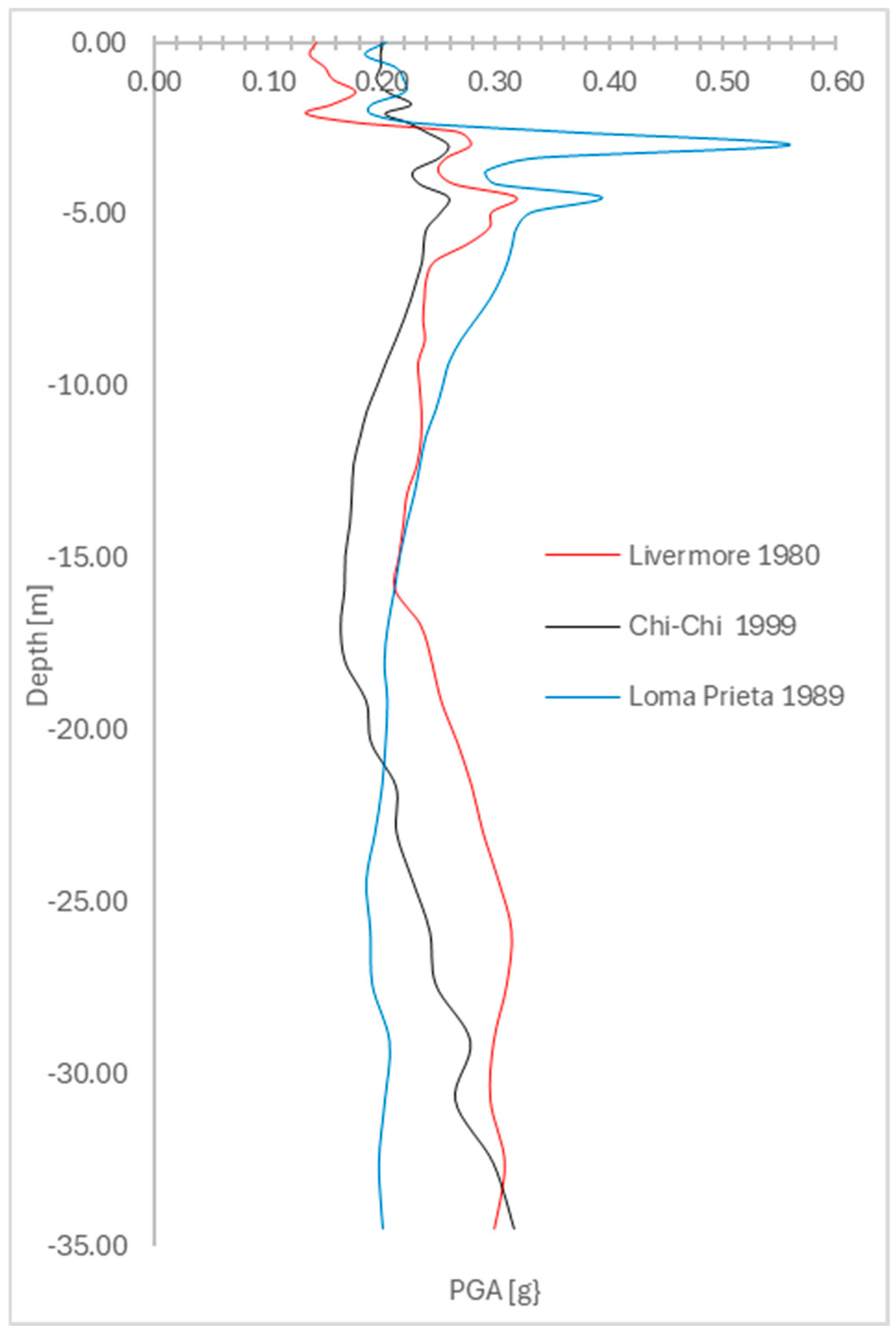
The variation in response peak ground acceleration with depth reflects the influence of local soil properties, frequency content of seismic waves, and site-specific amplification effects. The pronounced amplification within the upper 5 m is primarily due to the presence of loose, unconsolidated sediments, which resonate with the dominant frequencies of seismic waves. The Chi-Chi earthquake (1999) shows the highest surface PGA, exceeding 0.8 g, suggesting a strong contribution of high-frequency ground motions that are more effectively amplified in soft surface layers. In contrast, the Loma Prieta (1989) and Livermore (1980) earthquakes display lower surface response acceleration values, indicating either lower frequency content or reduced impedance contrasts in the upper soil layers. The steeper acceleration gradient observed in the Livermore earthquake suggests stronger attenuation, due to the presence of more compact near-surface sediments that quickly reduce motion intensity.
Beyond depths of 20–25 m, the response PGA values for all three earthquakes converge, indicating a transition from highly amplifying surface layers to deeper, more rigid materials with greater damping capacity. The diminishing amplification at these depths suggests that seismic waves predominantly consist of lower-frequency components, which experience reduced interaction with softer soils and propagate more efficiently through stiffer substrates. The frequency-dependent behavior of seismic waves is crucial in understanding ground response, as high-frequency waves are more susceptible to attenuation and amplification effects in soft soils, while low-frequency waves travel farther with less energy loss. The deeper layers likely consist of dense materials, which exhibit lower compressibility and higher shear-wave velocities, effectively acting as a seismic energy sink. The detailed response acceleration profile for seismic inputs vs. depth is presented in Figure 26.
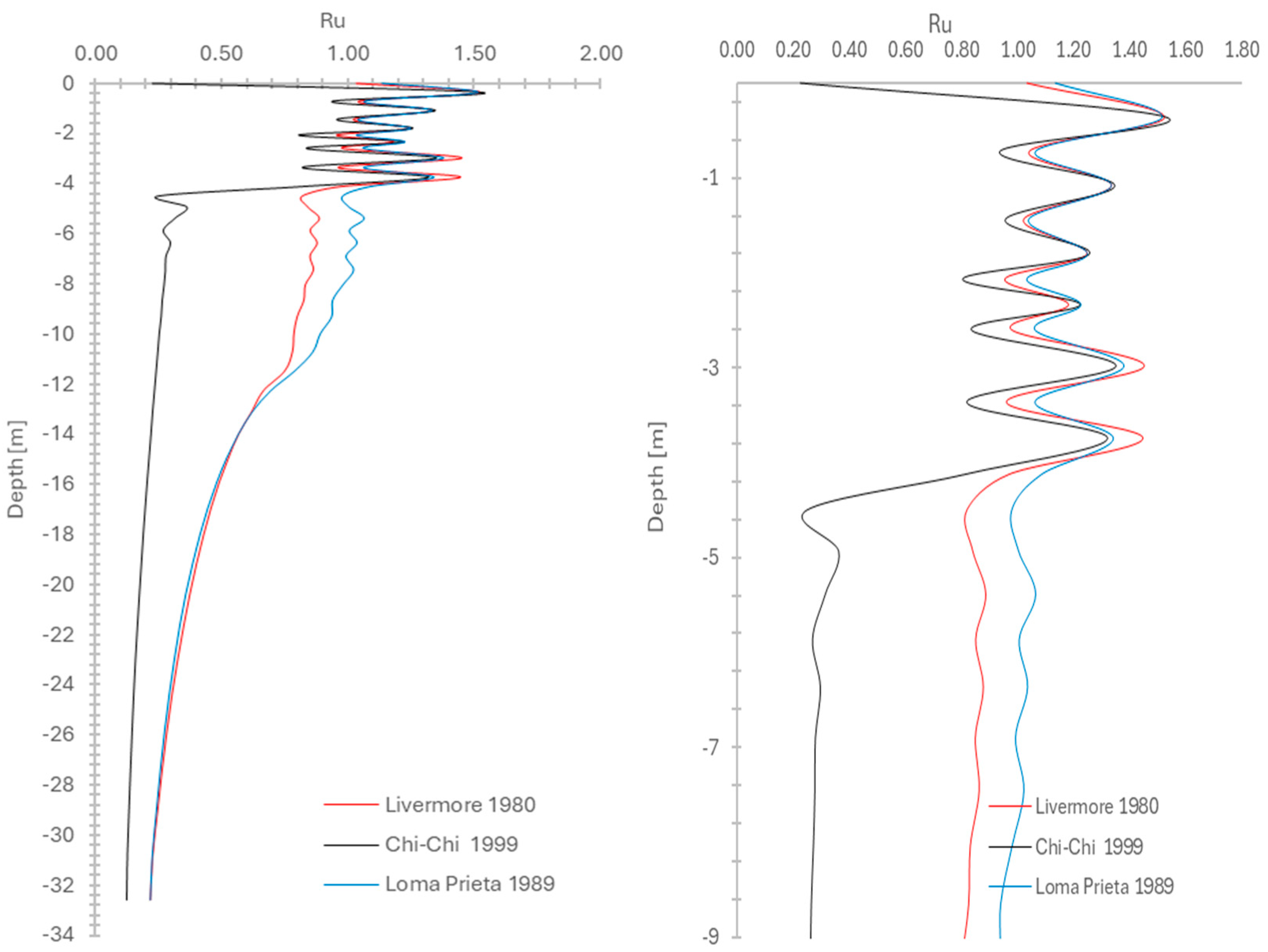
The Ru profiles illustrate the variation in excess pore water pressure ratio at different depths, providing insight into the liquefaction potential induced by different earthquake events. The Chi-Chi (1999) earthquake exhibits the most severe response, with Ru values approaching 1.0 within the upper 5 m, indicating a complete loss of effective stress and full liquefaction in these layers. This response suggests that the strong ground motion from the Chi-Chi earthquake significantly mobilized excess pore pressure in near-surface soils, making them highly susceptible to liquefaction. As depth increases, Ru decreases due to the influence of higher confining pressures (Figure 27).
In contrast, the Loma Prieta (1989) and Livermore (1980) earthquakes demonstrate a more moderate response. Their peak Ru values occur between 5 m and 10 m rather than at the surface, indicating that liquefaction is more distributed within these intermediate layers rather than concentrated near the ground surface. This behavior suggests that while the shaking intensity of these earthquakes was sufficient to generate excess pore pressure, it was not as intense in the uppermost layers as seen in the Chi-Chi event.
A more detailed examination of the response reveals an interesting effect of earthquake frequency content on liquefaction susceptibility. Despite the Loma Prieta earthquake having a lower peak ground acceleration compared to the other two events, its frequency characteristics led to significant excess pore pressure development at a depth of 8 m within the consolidated upper layers of the foundation soil.

3.4. Discussion

The results of the current study showed a strong capability of the PDMY model in capturing the dynamic behavior of reclaimed sediments under seismic loading. The verification of the numerical framework against CDSS test results demonstrate that the numerical model effectively replicates excess pore pressure buildup, cyclic stress degradation, and strain softening effects, which are critical indicators of liquefaction susceptibility. The agreement between the numerical and experimental results confirms the reliability of the adopted numerical framework, though minor deviations in excess pore pressure evolution at deeper layers suggest further refinements in permeability parameterization could enhance accuracy.
Although formal stochastic simulations (e.g., Monte Carlo analysis) were beyond the scope of this study, the natural variability of key input parameters such as permeability, PI, and CSR were qualitatively evaluated. Layer-specific permeability values were varied based on both field and laboratory data, and PI-dependent modulus reduction curves were applied to reflect stiffness degradation for a range of soil plasticity conditions. CDSS testing across multiple CSR levels provided insight into triggering thresholds. While deterministic modeling was used, the numerical model incorporated these representative bounds to capture a realistic envelope of soil behavior. The Ru ≈ 0.8 threshold identified in this study should be interpreted as a site- and material-specific indicator of rapid strength degradation under the examined seismic loading conditions and is not intended to represent a universal stability criterion.
The differences in liquefaction response with depth are governed by variations in soil physical properties. Shallow reclaimed layers are characterized by low effective stress, high void ratio, and weak consolidation, leading to rapid excess pore pressure generation and early liquefaction. With increasing depth, higher consolidation, increased confining stress, and reduced compressibility limit pore pressure accumulation and delay liquefaction triggering. In addition, permeability decreases with depth, but its influence is offset by improved soil structure and stiffness, resulting in reduced liquefaction severity despite sustained seismic loading.
The PDMY model achieved close numerical replication of laboratory-observed cyclic response. For CDSS tests at CSR = 0.50, the model predicted liquefaction within 3 cycles, consistent with test observations. The difference in excess pore pressure at peak strain was 2.0 kPa (25.8 kPa observed vs. 23.8 kPa measured), yielding an 8.4% error. Additionally, the simulated CSR degradation curve followed a power-law decay trend nearly identical to the experimental data, with a coefficient of determination (R2) of 0.998 and root mean square error (RMSE) below 6% across all loading levels.
One of the key challenges in assessing the liquefaction potential in proposed material is the limitation of CSR and CRR methods. While these approaches provide a useful initial evaluation, they do not capture permeability variations, excess pore pressure redistribution, and transient dilation effects, which significantly impact liquefaction progression in deeper layers. The CPT-based assessment indicated limited liquefaction susceptibility in the surficial layers (0–2 m) and deeper layers (2.5–9 m), suggesting FS values above 1.0, primarily due to the simplified assumptions of uniform stress distribution and seismic parameters.
Conversely, dynamic numerical simulations under three distinct ground motions revealed substantial discrepancies at these depths. The numerical simulations indicate that while shallow layers (0.72 m and 2.3 m) experience rapid excess pore pressure accumulation leading to full liquefaction (Ru = 1.0), deeper layers exhibit a more complex response. For example, shake 1 induced rapid liquefaction at shallow depths (0.72 m) and notable delayed threshold at intermediate layers (2.3 m), whereas Shake 2 displayed abrupt pore pressure increases (Ru ≈ 0.8–1.0) due to its high-frequency content and resonance effects at shallow depths. Shake 3, characterized by longer durations and mid-to-low-frequency content, resulted in gradual but significant excess pore pressure development, notably at intermediate layers (2.3–3.0 m), clearly conflicting with CPT-based assessments.
As material undergoes self-weight consolidation, their susceptibility gradually decreases, particularly in deeper layers which is quite time dependent phenomenon. The PSD evolves, with fine-grained sediments compacting and reducing void ratios, which influences permeability and excess pore pressure dissipation characteristics. The results indicate that the upper layers remain vulnerable due to their loose structure, whereas the deeper layers exhibit improved resistance due to increased density, higher confining stress, and improved drainage conditions. The numerical results suggest that engineering mitigation and monitoring efforts should focus on the upper 2–3 m of reclaimed ground, where liquefaction potential is highest, while deeper layers exhibit sufficient resistance due to consolidation and increased confinement.
The amplification of seismic waves and their influence on liquefaction potential is another critical aspect of this study. The response spectrum analysis highlights that high-frequency ground motions are significantly amplified in near-surface layers, leading to increased cyclic loading and excess pore pressure accumulation. The Chi-Chi earthquake (1999) shows the highest PGA, exceeding 0.8 g, confirming that high-frequency content leads to stronger liquefaction potential in upper layers. In contrast, the Loma Prieta (1989) and Livermore (1980) earthquakes exhibit lower amplification effects, suggesting that lower-frequency seismic waves penetrate deeper without inducing rapid pore pressure buildup. The result of the time history analysis in the study confirms that low permeability sediments impede excess pore pressure dissipation, prolonging liquefaction-induced deformations.
This study adopts constant layer-wise permeability and fully saturated conditions, which represent a simplification of field behavior. Permeability may evolve with cyclic strain and consolidation, while partial saturation can significantly alter pore pressure response and liquefaction resistance. Future research should investigate coupled hydro-mechanical models that account for strain-dependent permeability, degree of saturation, and suction effects to improve prediction of liquefaction behavior in reclaimed and fine-grained sediments. The findings of this research are relevant to geotechnical earthquake engineers and liquefaction researchers seeking improved numerical interpretation of cyclic response, as well as to practitioners, consultants, and asset owners involved in reclaimed land, tailings, and coastal infrastructure projects who require performance-based seismic risk assessment.

4. Conclusions

This research provides critical advancement and a better understanding of dynamic modeling for reclaimed materials, offering a more reliable approach for assessing seismic risks in reclaimed land, ponds, and containment structures. Given the increasing reliance on reclaimed sediments for land reclamation and infrastructure development, ensuring their stability under seismic conditions is essential to prevent environmental disasters and catastrophic failures. The study has developed and validated a fully coupled finite element model in open-source earthquake programming to assess the liquefaction potential under seismic loading.
  • The FEM approach provides a physics-based alternative to empirical CPT-based assessments, offering improved accuracy in evaluating cyclic stress degradation, excess pore pressure evolution, and strain softening effects.
  • The verification against CDSS laboratory data confirms the reliability of the numerical model in predicting liquefaction and post-failure behavior, highlighting its ability to assess sediments often overlooked in traditional assessments.
  • The numerical model demonstrated an average error of less than 10% compared to laboratory excess pore pressure and CSR response, validating its suitability for performance-based liquefaction assessment.
  • The study identifies high susceptibility in near-surface sediments, particularly under low confining pressure, where significant amplification effects influence seismic ground stability.
  • CPT-based CSR and CRR methods fail to account for drainage effects and soil permeability variations, making them less effective in predicting liquefaction potential compared to FEM simulations.
  • The findings emphasize the limitations of empirical assessment methods for and highlight the importance of incorporating advanced numerical simulations for improved seismic hazard evaluations. Using both liquefaction approaches would provide more safe and reliable design in complex projects.
  • Performance-based design approaches should include near-surface instrumentation for pore pressure and shear strain monitoring, particularly in the upper 2–3 m of newly placed fill where triggering is most likely.
  • Empirical methods may underpredict liquefaction, especially in deeper layers where excess pore pressure redistribution and dynamic interaction effects are significant. Site-specific numerical modeling is recommended where possible.
  • Permeability and consolidation characteristics must be explicitly assessed in both horizontal and vertical directions to predict drainage behavior under seismic loading.
  • Dynamic analysis using calibrated constitutive models should be integrated into seismic risk assessments to complement or refine empirical predictions.
  • This study is subject to limitations associated with the use of deterministic modeling, constant layer-wise permeability, and fully saturated conditions, which simplify field behavior. In addition, the identified Ru threshold and depth-dependent response are specific to the investigated reclaimed sediments and seismic inputs. Future work should extend the framework to include strain-dependent permeability, partial saturation effects, and broader parametric assessment under a wider range of ground motions and material conditions.

Funding

This research received no external funding or financial support.

Data Availability Statement

The original contributions presented in this study are included in the article. Further inquiries can be directed to the corresponding author.

Acknowledgments

The author acknowledges the constructive insights from professional colleagues and anonymous reviewers whose feedback contributed to improving the quality and clarity of this paper.

Conflicts of Interest

The author declares no conflicts of interest.

References

  1. Elgamal, A.; Yang, Z.; Parra, E. Computational modeling of cyclic mobility and post-liquefaction site response. Soil Dyn. Earthq. Eng. 2002, 22, 259–271. [Google Scholar] [CrossRef]
  2. Cetin, K.O.; Soylemez, B.; Guzel, H.; Cakir, E. Soil Liquefaction Sites Following the February 6, 2023, Kahramanmaraş–Türkiye Earthquake Sequence. Bull. Earthq. Eng. 2025, 23, 921–944. [Google Scholar] [CrossRef]
  3. Ziotopoulou, K.; Boulanger, R.W. Calibration and implementation of a sand plasticity plane-strain model for earthquake engineering applications. Soil Dyn. Earthq. Eng. 2013, 53, 268–280. [Google Scholar] [CrossRef]
  4. Seed, H.B.; Idriss, I.M. Simplified procedures for evaluating soil liquefaction potential. J. Geotech. Eng. 1971, 97, 1249–1273. [Google Scholar] [CrossRef]
  5. Ishihara, K. Liquefaction and flow failure during earthquakes. Géotechnique 1993, 43, 351–415. [Google Scholar] [CrossRef]
  6. Kramer, S.L. Geotechnical Earthquake Engineering; Prentice Hall: Upper Saddle River, NJ, USA, 1996. [Google Scholar]
  7. Boulanger, R.W.; Idriss, I.M. CPT and SPT Based Liquefaction Triggering Procedures; Center for Geotechnical Modeling, University of California: Davis, CA, USA, 2014. [Google Scholar]
  8. Cai, Y.; Zhang, Y.; Qi, Q.; Cheng, Y.; Shi, Y.; Sun, Z. Experimental study on strength and liquefaction characteristics of sand under dynamic loading. Sustainability 2023, 15, 10306. [Google Scholar] [CrossRef]
  9. Cong, S.Y.; Tang, L.; Ling, X.Z.; Gen, L.; Lu, J.C. Numerical analysis of liquefaction-induced differential settlement of shallow foundations on an island slope. Soil Dyn. Earthq. Eng. 2021, 140, 106453. [Google Scholar] [CrossRef]
  10. Elgamal, A.; Parra, E.; Yang, Z.; Dobry, R.; Zeghal, M. Liquefaction constitutive model. In Proceedings of the International Workshop on the Physics and Mechanics of Soil Liquefaction, Baltimore, MD, USA, 10–11 September 1998; Lade, P.V., Ed.; A.A. Balkema: Rotterdam, The Netherlands, 1998; pp. 65–81. [Google Scholar]
  11. Boulanger, R.W.; Ziotopoulou, K. PM4Sand (Version 3.1): A Sand Plasticity Model for Earthquake Engineering Applications; University of California: Davis, CA, USA, 2015. [Google Scholar]
  12. Abbar, B.; Isch, A.; Michel, K.; Abbas, M.; Vincent, H.; Abbasimaedeh, P.; Azaroual, M. Fiber optic technology for environmental monitoring: State of the art and application in the observatory of transfers in the vadose zone (O-ZNS). In Instrumentation and Measurement Technologies for Water Cycle Management; Springer Water; Springer: Cham, Switzerland, 2022; pp. 189–222. [Google Scholar] [CrossRef]
  13. Rana, M.S.; Hossain, A.S.; Hasan, M.F.; Rahman, M.A.; Biswas, P.; Zaman, M.N. Unravelling the risk of dredging on river bars for mineral sand mining: An engineering geological approach. Discov. Geosci. 2025, 3, 9. [Google Scholar] [CrossRef]
  14. Soetan, O.; Nie, J.; Viteritto, M.; Feng, H. Evaluation of sediment dredging in remediating toxic metal contamination—A systematic review. Environ. Sci. Pollut. Res. 2023, 30, 69837–69856. [Google Scholar] [CrossRef]
  15. Dhakal, S.; Stringer, M.; Cubrinovski, M. Liquefaction vulnerability of reclamations at CentrePort, Wellington. In Proceedings of the 17th World Conference on Earthquake Engineering, Sendai, Japan, 13–18 September 2020. [Google Scholar]
  16. Shen, M.; Martin, J.R.; Ku, C.-S.; Lu, Y.-C. A case study of the effect of dynamic compaction on liquefaction of reclaimed ground. Eng. Geol. 2018, 240, 48–61. [Google Scholar] [CrossRef]
  17. Pitman, T.D.; Robertson, P.K.; Sego, D.C. Influence of fines on the collapse of loose sands. Can. Geotech. J. 1994, 31, 728–739. [Google Scholar] [CrossRef]
  18. Jamali, N.; Tolooiyan, A. Effect of Sand Content on the Liquefaction Potential and Post-Earthquake Behaviour of Coode Island Silt. Geotech. Geol. Eng. 2021, 39, 549–563. [Google Scholar] [CrossRef]
  19. Bray, J.D.; Sancio, R.B. Assessment of the liquefaction susceptibility of fine-grained soils. J. Geotech. Geoenviron. Eng. 2006, 132, 1165–1177. [Google Scholar] [CrossRef]
  20. Cetin, K.O.; Seed, R.B.; Der Kiureghian, A.; Tokimatsu, K.; Harder, L.F.; Kayen, R.E.; Moss, R.E.S. Standard penetration test-based probabilistic and deterministic assessment of seismic soil liquefaction potential. J. Geotech. Geoenviron. Eng. 2004, 130, 1314–1340. [Google Scholar] [CrossRef]
  21. Bielak, J.; Ghattas, O.; Kim, E.J. Parallel octree-based finite element method for large-scale earthquake ground motion simulation. Comput. Model. Eng. Sci. 2005, 10, 99–112. [Google Scholar] [CrossRef]
  22. Zhang, W.; Ghahari, F.; Arduino, P.; Taciroglu, E. A deep learning approach for rapid detection of soil liquefaction using time–frequency images. Soil Dyn. Earthq. Eng. 2023, 166, 107788. [Google Scholar] [CrossRef]
  23. Karimai, K.; Liu, W.; Maruyama, Y. Prediction and factor analysis of liquefaction ground subsidence based on machine-learning techniques. Appl. Sci. 2024, 14, 2713. [Google Scholar] [CrossRef]
  24. Abbasimaedeh, P. Soil liquefaction in seismic events: Pioneering predictive models using machine learning and advanced regression techniques. Environ. Earth Sci. 2024, 83, 189. [Google Scholar] [CrossRef]
  25. Dashti, S.; Bray, J.D.; Pestana, J.M.; Riemer, M.; Wilson, D. Centrifuge Testing to Evaluate and Mitigate Liquefaction-Induced Building Settlement Mechanisms. J. Geotech. Geoenviron. Eng. 2010, 136, 918–929. [Google Scholar] [CrossRef]
  26. Shahir, H.; Pak, A.; Taiebat, M.; Jeremić, B. Evaluation of variation of permeability in liquefiable soil under earthquake loading. Comput. Geotech. 2012, 40, 74–88. [Google Scholar] [CrossRef]
  27. Najma, A.; Latifi, M. Collapse surface approach as a criterion of flow liquefaction occurrence in 3D FEM models. Soil Dyn. Earthq. Eng. 2018, 107, 164–178. [Google Scholar] [CrossRef]
  28. Najma, A.; Latifi, M. Predicting flow liquefaction: A constitutive model approach. Acta Geotech. 2017, 12, 793–808. [Google Scholar] [CrossRef]
  29. Wang, Y.; Vo, T.L.; Russell, A. Modelling unsaturated silty tailings and the conditions required for static liquefaction. Géotechnique 2023, 74, 1377–1389. [Google Scholar] [CrossRef]
  30. Dafalias, Y.F.; Manzari, M.T. Simple plasticity sand model accounting for fabric change effects. J. Eng. Mech. 2004, 130, 622–634. [Google Scholar] [CrossRef]
  31. Adampira, M.; Derakhshandi, M. Influence of a layered liquefiable soil on seismic site response using physical modelling and numerical simulation. Eng. Geol. 2020, 266, 105462. [Google Scholar] [CrossRef]
  32. Biot, M.A. Mechanics of deformation and acoustic propagation in porous media. J. Appl. Phys. 1962, 33, 1482–1492. [Google Scholar] [CrossRef]
  33. AS 1289.3.6.1-2009; Methods of Testing Soils for Engineering Purposes—Soil Classification Tests—Determination of the Particle Size Distribution of a Soil—Standard Method of Analysis by Sieving. Standards Australia: Sydney, Australia, 2009.
  34. Robertson, P.K. Evaluation of flow liquefaction and liquefied strength using the cone penetration test. J. Geotech. Geoenviron. Eng. 2010, 136, 842–853. [Google Scholar] [CrossRef]
  35. Jamiolkowski, M.; Lo Presti, D.C.F.; Pallara, O. Role of in-situ testing in geotechnical earthquake engineering. In Proceedings of the 3rd International Conference on Recent Advances in Geotechnical Earthquake Engineering and Soil Dynamics, St. Louis, MO, USA, 2–7 April 1995; p. 12. [Google Scholar]
  36. Kulhawy, F.H.; Mayne, P.W. Manual on Estimating Soil Properties for Foundation Design; Electric Power Research Institute (EPRI): Palo Alto, CA, USA, 1990. [Google Scholar]
  37. Robertson, P.K.; Cabal, K. Guide to Cone Penetration Testing, 7th ed.; Gregg Drilling LLC: Signal Hill, CA, USA, 2022. [Google Scholar]
  38. Vucetic, M.; Dobry, R. Effect of Soil Plasticity on Cyclic Response. J. Geotech. Eng. 1991, 117, 89–107. [Google Scholar] [CrossRef]
  39. Liu, J.; Wu, L.; Yin, K.; Song, C.; Bian, X.; Li, S. Methods for Solving Finite Element Mesh-Dependency Problems in Geotechnical Engineering—A Review. Sustainability 2022, 14, 2982. [Google Scholar] [CrossRef]
  40. Yang, Z.; Elgamal, A.; Parra, E. Computational model for cyclic mobility and associated shear deformation. J. Geotech. Geoenviron. Eng. 2003, 129, 1119–1127. [Google Scholar] [CrossRef]
  41. Shin, H.; Arduino, P.; Kramer, S.L. Performance-based evaluation of bridges on liquefiable soils. In Proceedings of the Structures Congress 2007: Structural Engineering Research Frontiers, Long Beach, CA, USA, 16–19 May 2007; pp. 1–10. [Google Scholar] [CrossRef]
  42. Elbadawy, M.A.; Zhou, Y.-G.; Liu, K. A Modified Pressure-Dependent Multi-Yield Surface Model for Simulation of LEAP-Asia-2019 Centrifuge Experiments. Soil Dyn. Earthq. Eng. 2022, 152, 107135. [Google Scholar] [CrossRef]
  43. Chopra, A.K. Dynamics of Structures: Theory and Applications to Earthquake Engineering, 4th ed.; Pearson: Upper Saddle River, NJ, USA, 2012. [Google Scholar]
  44. Newmark, N.M. A method of computation for structural dynamics. J. Eng. Mech. 1959, 85, 67–94. [Google Scholar] [CrossRef]
  45. Pacific Earthquake Engineering Research Center (PEER). PEER Ground Motion Database (NGA-West2); University of California: Berkeley, CA, USA, 2024. Available online: https://ngawest2.berkeley.edu (accessed on 2 November 2025).
  46. Boore, D.M.; Atkinson, G.M. Spectral Scaling of the 1985 to 1988 Nahanni, Northwest Territories, Earthquakes. Bull. Seismol. Soc. Am. 1989, 79, 1736–1761. [Google Scholar] [CrossRef]
  47. Meng, J.Y.; Shan, B.H.; Lu, D.G. Selection of Optimal Seismic Intensity Measures for Evaluating Liquefaction Triggering: Accounting for the Influence of Liquefiable Sites. Nat. Hazards 2025, 121, 22121–22149. [Google Scholar] [CrossRef]
  48. Erken, A.; Ansal, A.M. Liquefaction of Silt and Sand Layers in Ekşisu–Erzincan Earthquake. In Geotechnical Engineering; Ishihara, K., Ed.; Balkema: Rotterdam, The Netherlands, 1995; ISBN 905410578X. [Google Scholar]
  49. Karimi, Z.; Dashti, S. Numerical and centrifuge modelling of seismic soil–foundation–structure interaction on liquefiable ground. J. Geotech. Geoenviron. Eng. 2015, 141, 04015016. [Google Scholar] [CrossRef]
  50. Robertson, P.K. Interpretation of cone penetration tests: A unified approach. Can. Geotech. J. 2009, 46, 1337–1355. [Google Scholar] [CrossRef]
  51. Idriss, I.M.; Boulanger, R.W. Soil Liquefaction during Earthquakes; Monograph MNO-12; Earthquake Engineering Research Institute (EERI): Oakland, CA, USA, 2008. [Google Scholar]
  52. Robertson, P.K. Evaluating Cyclic Liquefaction Potential Using the Cone Penetration Test. Can. Geotech. J. 1998, 35, 442–459. [Google Scholar] [CrossRef]
  53. OpenSees Berkeley, The Open System for Earthquake Engineering Simulation; University of California: Berkeley, CA, USA, 2024; Available online: https://opensees.berkeley.edu (accessed on 30 December 2025).
  54. Zhai, W.; Wang, F.; Faramarzi, A.; Metje, N. Model-free data-driven computational analysis for soil consolidation problems. Int. J. Numer. Anal. Methods Geomech. 2025, 1–10. [Google Scholar] [CrossRef]
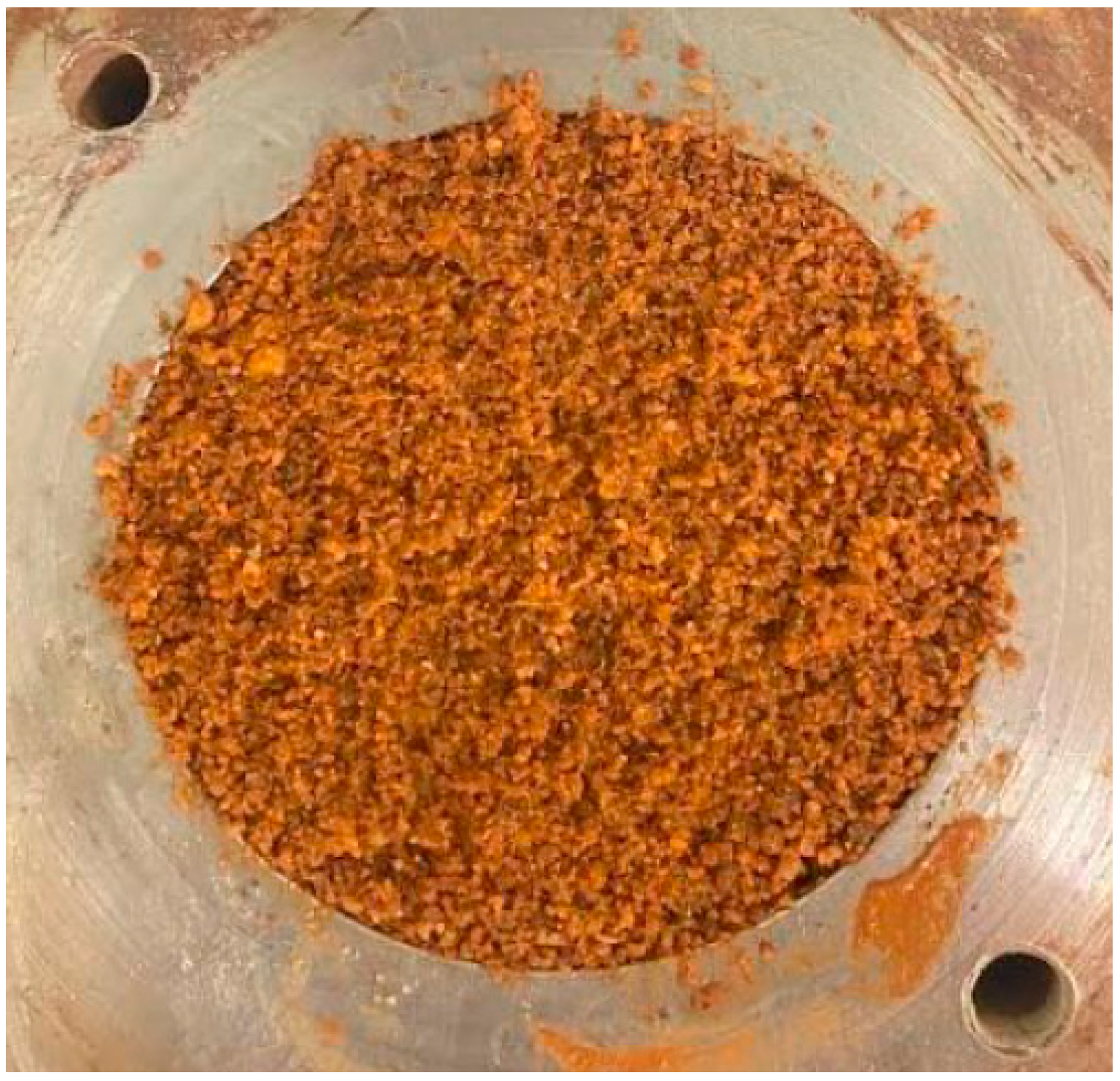
Figure 1. Photo of prepared reclaimed material prepared in the laboratory for some tests.
Geohazards 07 00008 g001
Figure 2. PSD curve based on AS 1289 for reclaimed samples and regular tailings material.
Geohazards 07 00008 g002
Figure 3. Left: Result of CPTu corrected cone tip resistance (black line) and sleeve friction (red dotted line); and Ic (Right).
Geohazards 07 00008 g003
Figure 4. The result of permeability achieved by the CPTu test.
Geohazards 07 00008 g004
Figure 5. Result of Undrained shear strength interpreted by CPTu data (left), and Result of Vane Shear Tests for Reclaimed material (right).
Geohazards 07 00008 g005
Figure 6. Result of small strain shear modulus (left); Result of Shear wave velocity (right).
Geohazards 07 00008 g006
Figure 7. Strength reduction and material softening curves for reclaimed materials.
Geohazards 07 00008 g007
Figure 8. Constitutive Model for Pressure-Dependent Multi-Yield Material: (a) Schematic representation of the constitutive model; (b) Conical yield surfaces illustrated in principal stress space and the deviatoric plane.
Geohazards 07 00008 g008
Figure 9. Time history of Livermore-01 (1980).
Geohazards 07 00008 g009
Figure 10. Time history of Chi-Chi (1999).
Geohazards 07 00008 g010
Figure 11. Time history of Loma Prieta (1989).
Geohazards 07 00008 g011
Figure 12. The spectral matched time histories and target spectrum.
Geohazards 07 00008 g012
Figure 13. Schematic of cyclic direct simple shear machine.
Geohazards 07 00008 g013
Figure 14. Verification of PDMY by [48,49].
Geohazards 07 00008 g014
Figure 15. Result of CPT evaluation through the reclaimed material and foundation profile (Left); Result of CRR; (Right) Result of Factor of Safety.
Geohazards 07 00008 g015
Figure 16. Result of CDSS and PDMY numerical modeling: Result of shear stress and shear strain (left up). Result of shear strain and ExPP (Right up). Result of CSR vs. number of shakes (bottom mid), CDSS result is presented in black and current study result is shown in red dotted line.
Geohazards 07 00008 g016
Figure 17. Result of PGA response in the proposed recorded levels (0.72 m, 2.3 m, 3.0 m, and 4.95 m from top to bottom).
Geohazards 07 00008 g017
Figure 18. Results of CSR and Ru recorded in 0.72 m, 2.3 m, 3.0 m, and 4.95 m from top to bottom under Shake 1.
Geohazards 07 00008 g018
Figure 19. Result of hysteresis loops recorded from 0.72 m, 2.3 m, 3.0 m, and 4.95 m from top to bottom under Shake 1.
Geohazards 07 00008 g019
Figure 20. Result of PGA response in the proposed recorded levels (0.72 m, 2.3 m, 3.0 m, and 4.95 m from top to bottom).
Geohazards 07 00008 g020
Figure 21. Results of CSR and Ru recorded in 0.72 m, 2.3 m, 3.0 m, and 4.95 m from top to bottom under Shake 2.
Geohazards 07 00008 g021aGeohazards 07 00008 g021b
Figure 22. Result of hysteresis loops recorded from 0.72 m, 2.3 m, 3.0 m, and 4.95 m from top to bottom under Shake 2.
Geohazards 07 00008 g022
Figure 23. Result of PGA response in the proposed recorded levels (0.72 m, 2.3 m, 3.0 m, and 4.95 m from top to bottom).
Geohazards 07 00008 g023
Figure 24. Results of CSR and Ru recorded in 0.72 m, 2.3 m, 3.0 m, and 4.95 m from top to bottom under Shake 3.
Geohazards 07 00008 g024
Figure 25. Result of hysteresis loops recorded from 0.72 m, 2.3 m, 3.0 m, and 4.95 m from top to bottom under Shake 3.
Geohazards 07 00008 g025
Figure 26. Response acceleration profile.
Geohazards 07 00008 g026
Figure 27. Result of Ru profile (left: total profile depth; right: shallow profile depth).
Geohazards 07 00008 g027
Table 1. Reclaimed material characterization in different layers.
LayerMaterial Type γ [kN/m3] C [kPa] Ø [o] S u / S i g v Minimum   S u [kPa]Permeability [m/s]Depth [m] D R [%]
1Reclaimed Sediment Mud165260.22101.00 × 10−90–1.830%
2Interface Material181320.3501.00 × 10−61.8–2.650%
3Consolidated Reclaimed Sediment Mud177280.25501.00 × 10−82.6–4.540%
4Foundation (Bottom Layer)195300.33501.00 × 10−74.5–3060%
Disclaimer/Publisher’s Note: The statements, opinions and data contained in all publications are solely those of the individual author(s) and contributor(s) and not of MDPI and/or the editor(s). MDPI and/or the editor(s) disclaim responsibility for any injury to people or property resulting from any ideas, methods, instructions or products referred to in the content.