Article

Metal-Modified Hierarchical Zeolite Catalysts for Catalytic Pyrolysis of Walnut Shells to Produce Light Aromatics

1
College of Optical, Mechanical and Electrical Engineering, Zhejiang A&F University, Hangzhou 311300, China
2
Key Laboratory of Agricultural Equipment for Hilly and Mountainous Areas in Southeastern China (Co-Construction by Ministry and Province), Ministry of Agriculture and Rural Affairs, Hangzhou 311300, China
*
Author to whom correspondence should be addressed.
Reactions 2026, 7(2), 25; https://doi.org/10.3390/reactions7020025
Submission received: 19 January 2026 / Revised: 20 March 2026 / Accepted: 30 March 2026 / Published: 2 April 2026

Abstract

A series of bifunctional hierarchical HZSM-5 catalysts modified with Zn, Ga, Ni, Cr, or Ag were synthesized via impregnation, and their performance in the catalytic fast pyrolysis of walnut shells was systematically evaluated. The influence of the metal species and concentration of NaOH used for desilication (0.20–0.40 mol·L−1) on the yield of light aromatics was assessed. Ga/HZSM-5 and Zn/HZSM-5 exhibited the most pronounced enhancement at 0.35 mol·L−1, significantly outperforming the unmodified HZSM-5. Building on this finding, Zn-Ga bimetallic hierarchical catalysts were developed, and the effect of the Zn:Ga loading ratio (1%:2%, 1.5%:1.5%, 2%:1%) was investigated. The 1%Zn/2%Ga catalyst delivered the highest performance, achieving a total aromatic yield of 3.876 × 10⁴ a.u.·mg−1, with 82% BTX (benzene, toluene, and xylenes) selectivity. The term “a.u.” stands for “arbitrary units,” typically derived from peak area counts obtained through GC-MS analysis. These values represent the relative signal intensity detected by the instrument, rather than absolute quantities of the substance. To more accurately characterize the aromatic hydrocarbon yield, these data are normalized to the yield of aromatic hydrocarbons per unit mass. These findings demonstrate that the combination of Zn-Ga modification and tailored mesoporosity can markedly enhance the production of high-value benzene, toluene, and xylene (BTX) aromatics from lignocellulosic biomass.

1. Introduction

China is one of the world’s largest walnut-producing countries, with a cultivation area exceeding 7.1642 million ha (approximately 120 million mu), accounting for 28% of the global total. Yunnan Province, as a major production region, achieved an annual output exceeding 1.9 million t by the end of 2024. However, the comprehensive utilization rate of walnut shells remains extremely low; most shells are discarded or incinerated, resulting in substantial waste of renewable resources and exacerbating environmental pollution through the release of harmful gases during combustion. Therefore, realizing the high-value conversion of walnut shells has important practical significance and environmental benefits [1].
As a widely available and low-cost agricultural residue, walnut shells exhibit excellent application potential in multiple fields, owing to their structural stability, high mechanical strength, and large carbon content. For example, Owens and Lee [2] employed walnut shells as filter media to effectively remove crude oil pollutants from water; Demirbas [3] systematically examined the product distribution and temperature dependence in the slow pyrolysis of four nut-based biomasses, including walnut shells. Aygun [4] investigated the production of activated carbon from walnut shells. Zhang [5] used a custom-built pyrolysis reactor to produce hydrogen via catalytic pyrolysis of walnut shells, focusing on the effects of the temperature, catalyst loading, and other parameters on the hydrogen yield.
Notably, walnut shells have considerable potential for the production of aromatics via catalytic fast pyrolysis (CFP). Their lignin content is relatively high (approximately 25–35%); lignin is the only naturally occurring aromatic biopolymer, composed of phenylpropane units linked by ether and C–C bonds [6]. During pyrolysis, these aromatic structures can be directly cleaved to yield phenolic intermediates (e.g., phenol, guaiacol) and aromatic precursors, providing a robust structural foundation for the synthesis of target aromatics (BTX: benzene, toluene, and xylenes). Compared with cellulose-rich biomass feedstocks (e.g., rice husks, straw), walnut shells contain lower amounts of cellulose and hemicellulose, resulting in fewer oxygenated byproducts (e.g., aldehydes, acids) during pyrolysis, which favors the high-selectivity production of aromatics [7,8]. Thus, walnut shells represent a valuable feedstock for aromatic production and an optimal choice for achieving high-value utilization of agricultural residues.
Pretreatment is one of the key factors influencing the product distribution during the catalytic pyrolysis of walnut shells. Typically, walnut shells contain trace amounts of alkali and alkaline earth metals (AAEMs) such as K, Ca, Na, and Mg, which play important roles in the pyrolysis process. Previous studies have shown that removing AAEMs prior to pyrolysis can significantly reduce char formation and optimize the product distribution [9]. At lower pyrolysis temperatures, AAEMs catalyze the decomposition of cellulose and hemicellulose, accelerating mass loss and increasing weight loss rates in the low-temperature stage [10]. Therefore, removing these inorganic impurities is essential for realizing a more efficient pyrolysis. Acid washing, a common and effective pretreatment method, can substantially reduce the AAEM content in walnut shells and, to some extent, alter their physical structure, thereby influencing the pyrolysis behavior and product characteristics. Specifically, acid washing can increase the heating value of bio-oil, reduce its nitrogen-containing components, and enhance its thermal volatility [11]. Additionally, acid-washed walnut shells exhibit higher specific surface areas, facilitating the generation and release of volatiles. Open cell structures and unobstructed channels improve the permeability, enabling volatile products to rapidly leave the reaction zone during pyrolysis, thereby reducing secondary condensation reactions and coke formation [12].
Acid washing also significantly affects the composition of gaseous products. The removal of alkaline earth metals inhibits the formation of CO2, delaying the appearance of its chromatographic peak [13]; similarly, the suppression of catalytic cracking reactions leads to a reduced CO production [14]. As the content of crosslinking structures induced by AAEMs is reduced, the water release also decreases [15]. The reduction in CH4 yield is primarily attributed to the AAEM removal; previous studies have further shown that strong acid (e.g., HCl, H2SO4) treatments of biomass materials such as rice husks lead to a marked decrease in CH4 release during pyrolysis [16].
The catalyst type is another crucial factor influencing the product distribution in the catalytic pyrolysis of walnut shells. HZSM-5 is a typical fluid catalytic cracking (FCC) catalyst, widely used to improve the quality of low-octane gasoline and isomerize linear low-octane olefins to their branched high-octane forms. This catalyst has also been extensively applied in biomass pyrolysis, enabling significant modulation of the bio-oil composition [17,18,19]. Among catalysts used for producing light aromatics from biomass via pyrolysis, HZSM-5 exhibits the highest BTX yields, owing to its excellent shape-selective properties [20,21,22]. However, its relatively small micropores (~0.55 nm size) can be easily blocked by bulky oxygenated intermediates, leading to rapid coke-induced deactivation [23]. In contrast, some zeolites with larger pore sizes can mitigate mass transfer limitations caused by lignin-derived macromolecules entering the channels, thereby reducing the coking tendency and extending the lifetime of the catalyst [24,25]. Nevertheless, excessively large pores may allow polycyclic aromatic hydrocarbons to polymerize within the channels, accelerating coke formation and ultimately reducing the catalytic activity and liquid product yield [26,27,28].
This issue has been addressed through an alkali treatment (desilication), in which a NaOH solution is used to pretreat HZSM-5, effectively expanding its pore structure and creating mesopores in addition to its intrinsic micropores, thus forming hierarchical micro–mesoporous HZSM-5. This structure significantly shortens the diffusion path and residence time of pyrolysis intermediates within the catalyst, enhancing aromatic yields while mitigating coking risks [29,30,31]. Previous studies have shown that HZSM-5 treated with 0.2–0.3 mol·L−1 NaOH can achieve a total pore volume up to twice that of the pristine material, with a 10–15% increase in surface area. Li et al. [32] and Ding et al. [33] compared the catalytic pyrolysis performances of unmodified and NaOH-modified hierarchical HZSM-5, finding that treatment with 0.3 mol·L−1 NaOH increased the aromatic carbon yield from beech wood and waste cardboard by 27.1% and 44.0%, respectively.
However, simply adjusting the pore size of HZSM-5 only achieves limited improvement in the conversion efficiency of olefinic intermediates during walnut shell pyrolysis; the BTX selectivity remains low, with significant coke formation [34]. To further enhance the BTX yield and improve the stability of the catalyst, recent studies have incorporated transition or rare-earth metals into HZSM-5 to fabricate metal-modified bifunctional catalysts (M/HZSM-5). These catalysts combine two functional attributes: (i) the metal species effectively promote deoxygenation of phenolics and aromatization of olefinic intermediates, significantly enhancing the BTX production; (ii) the modified HZSM-5 retains its inherent microporous structure and strong acid sites, preserving its excellent shape-selective catalytic properties [34,35].
Numerous studies have confirmed the effectiveness of metal modification in improving the catalytic performance. For example, Cheng et al. [36] prepared Ga/HZSM-5 bifunctional catalysts and found that Ga markedly accelerated the decarbonylation of furan-type oxygenated model compounds while promoting further olefin aromatization, thereby significantly increasing the BTX selectivity. Kim et al. [37] and Vichaphund et al. [38] applied Ga/HZSM-5 to the catalytic pyrolysis of orange peels and Jatropha curcas, achieving BTX yield increases of 9.19% and 22.12%, respectively. Zhang et al. [39] employed Mg/HZSM-5 for the pyrolysis of Eucalyptus grandis wood, increasing the BTX yield from 23.49% to 44.80%. Zheng et al. [40] prepared a series of metal-modified HZSM-5 catalysts (Zn, Ga, Ni, Co, Mg, Cu) via impregnation, finding that Zn/HZSM-5 delivered the best BTX performance. Furthermore, Zn-modified HZSM-5 has been reported to exhibit excellent deoxygenation, hydrogen transfer, and aromatization activity [41,42].
In further studies, Zheng et al. [43] and Che et al. [44] prepared HZSM-5 catalysts modified with Zn, Ga, Fe, Ni, Ce, La, Mg, and Cu, identifying Zn, Ga, and Fe as the most effective metals for increasing the BTX yields. Additionally, Dai et al. [45] and Chen et al. [46] incorporated Ga into hierarchical HZSM-5 and applied the resulting catalysts to the pyrolysis of cellulose and rice straw, enhancing the light aromatic selectivity by 5.5% and 8.5%, respectively.
Although HZSM-5 is widely used in the catalytic pyrolysis of biomass owing to its strong acidity and shape selectivity, systematic studies examining the differences in the performances of bifunctional catalysts derived from HZSM-5 modified with various active metals (Zn, Ga, Ni, Cr, Ag) and concentrations of NaOH used for desilication (0.2, 0.25, 0.3, 0.35, 0.4 mol·L−1), particularly in terms of light aromatic yields from walnut shell pyrolysis, remain scarce.
In this study, walnut shells were first pretreated to remove inherent inorganic impurities and improve their physical structure. Various active metals (Zn, Ga, Ni, Cr, Ag) and NaOH solutions of different concentrations were then employed to modify HZSM-5, producing a bifunctional catalyst system with tailored pore structures and metal loadings. Catalytic pyrolysis experiments were carried out to systematically evaluate the effects of the metal type and loading ratio on the aromatic yields. Further tests were conducted on bimetallic co-modified catalysts, with particular emphasis on elucidating the effect of different Zn/Ga ratios on the BTX product distribution.
To elucidate the relationship between catalyst structure and performance, the modified catalysts were characterized using X-ray diffraction (XRD), Fourier-transform infrared (FT-IR) spectroscopy, and low-temperature N2 adsorption–desorption (BET) analysis. Key analyses included changes in crystallinity before and after modification, shifts in characteristic diffraction peaks, variations in acid sites and surface functional groups, and the evolution of textural properties such as specific surface area, pore volume, and pore size distribution.

2. Materials and Methods

2.1. Materials

The biomass feedstock (walnut shells) was collected from Lin’an District, Hangzhou City, Zhejiang Province, China (geographical coordinates: 29°56′–30°23′ N, 118°51′–119°52′ E), representing a typical and renewable source. After conducting an analysis of the three major components and elements in walnut shells, the proportions of the three major components are as follows: cellulose (36.2%), hemicellulose (27.7%), and lignin (25.8%). The proportions of the main elements are as follows: carbon (42.8%), hydrogen (5.1%), nitrogen (3.8%), oxygen (38.5%), and sulfur (0.9%).
The catalyst support was a commercial HZSM-5 zeolite (SiO2/Al2O3 molar ratio = 200) purchased from Nankai University Catalyst Co., Ltd. (Tianjin, China), which was used as the base material for preparing multimetal-doped micro–mesoporous catalyst systems. The primary chemical reagents used in this work included ethanol (analytical grade, AR, purity 99.7%), methanol (analytical grade, AR, purity 99.8%), and various metal precursor salts: zinc nitrate hexahydrate (Zn(NO3)2·6H2O, AR, purity 99%), gallium nitrate hydrate (Ga(NO3)3·xH2O, AR, purity 99.9%), nickel nitrate hexahydrate (Ni(NO3)2·6H2O, AR, purity 99.8%), chromium nitrate hexahydrate (Cr(NO3)3·9H2O, AR, purity 99.7%), and silver nitrate hydrate (AgNO3·H2O, AR, purity 99.8%). All chemicals were purchased from Sigma-Aldrich (St. Louis, MO, USA) and used directly, without further purification.

2.2. Pretreatment of Walnut Shells

The raw walnut shells were first crushed using a mechanical grinder and sieved through a 120-mesh screen to obtain powders with a uniform particle size. Precisely 5 g of walnut shell powder was added to 100 mL of hydrochloric acid (HCl) solution with a mass fraction of 5 wt.%, followed by continuous magnetic stirring at 25 °C for 2 h to remove inorganic impurities and some mineral components. After treatment, the suspension was separated by vacuum filtration, and the solid residue was repeatedly washed with deionized water until the pH of the filtrate was neutral. The residue was then dried in a hot air oven at 80 °C for 8 h, cooled to room temperature, and stored in a desiccator for subsequent catalytic pyrolysis experiments and characterization.

2.3. Catalyst Preparation

Commercial HZSM-5 was used as the base catalyst for the catalytic pyrolysis of walnut shells. Before use, the zeolite was calcined in a muffle furnace at 550 °C for 5 h (heating rate: 10 °C·min−1) to remove residual impurities and moisture from the pores.
To modify their pore structure, the HZSM-5 samples were treated with NaOH solutions of different concentrations (0.2, 0.25, 0.3, 0.35, and 0.4 mol·L−1). Specifically, an appropriate amount of HZSM-5 was added to the NaOH solution, followed by magnetic stirring at 65 °C for 30 min and centrifugation at 12,000 rpm for 3 min to separate the solid. The solid fraction was washed repeatedly with deionized water until neutral pH, followed by drying at 80 °C to constant weight. The treated samples were labeled HZSM-5-0.2, HZSM-5-0.25, HZSM-5-0.3, HZSM-5-0.35, and HZSM-5-0.4, according to the NaOH concentration used in each case.
Metal-modified catalysts were prepared using HZSM-5-0.2 as an example. Ten grams of dried HZSM-5-0.2 were impregnated with aqueous solutions of Zn(NO3)2, Ga(NO3)3, Ni(NO3)2, Cr(NO3)2, or AgNO3 to achieve a nominal metal loading of 3 wt.% (metal mass relative to catalyst mass). The mixtures were stirred at 80 °C for 6 h until the solvent was fully evaporated, to obtain the precursor materials. The latter were dried at 80 °C for 12 h, followed by calcination at 550 °C for 6 h in a muffle furnace to yield the final metal-modified bifunctional catalysts, labeled Zn/HZSM-5-0.2, Ga/HZSM-5-0.2, Ni/HZSM-5-0.2, Cr/HZSM-5-0.2, and Ag/HZSM-5-0.2.
The prepared catalysts were finely ground, sieved to a particle size of 200–300 mesh (48–75 μm), and dried at 100 °C for 24 h before use in pyrolysis experiments.

2.4. Characterization of Catalysts

The crystalline phases of the catalysts were analyzed using XRD on a Shimadzu XRD-6000 diffractometer (Kyoto, Japan) over a 2θ range of 5–80°, with a step size of 0.04° and a scan rate of 10°·min−1. Specific surface areas and pore size distributions were determined using a Micromeritics ASAP 2460 (Norcross, GA, USA) automated surface area and porosity analyzer. Surface areas were calculated by the Brunauer–Emmett–Teller (BET) method, and pore size distributions were determined using density functional theory (DFT).
The surface morphology and particle dispersion of the catalysts were examined using field-emission scanning electron microscopy (FE-SEM, ZEISS Sigma 360, Oberkochen, Germany) and transmission electron microscopy (TEM, JEM-2100, JEOL Ltd., Tokyo, Japan).

2.5. Catalytic Pyrolysis of Walnut Shells

Catalytic pyrolysis experiments were performed in a high-temperature reactor (model MSI50-P5-T3-SS1-R-SV, Anhui Kemi Instrument Co., Ltd., Hefei, China) coupled witha gas chromatograph–mass spectrometer (7890A-5975C, Agilent Technologies, Santa Clara, CA, USA) for product analysis.
In each run, 1 g of pretreated walnut shell powder and 3 g of catalyst (mass ratio 1:3) were placed in the sealed reactor. The system was purged repeatedly with 0.5 MPa nitrogen to remove air. The reactor was then heated to 400 °C at a rate of 5 °C·min−1 and maintained at this temperature for 60 min, followed by rapid cooling using an external water pump.
Volatile products generated during catalytic pyrolysis were analyzed online using pyrolysis–gas chromatography–mass spectrometry (Py-GC/MS). Separation was achieved on a HP-5MS capillary column (30.0 m × 250 μm × 0.25 μm) under the following temperature program: initial temperature 50 °C (held for 2 min), 5 °C·min−1 ramp to 120 °C, and then 10 °C·min−1 ramp to 280 °C (held for 5 min). The injector temperature was set to 280 °C and the transfer line to 300 °C, and the carrier gas was high-purity helium at 1.0 mL·min−1, with a split ratio of 5:1 and an injection volume of 1 μL.
Mass spectrometric detection was performed in electron impact (EI) mode at 70 eV, with an ion source temperature of 230 °C, a quadrupole temperature of 150 °C, and an m/z scan range of 35–500 in full-scan mode.
Product identification was carried out by matching the spectra with the National Institute of Standards and Technology (NIST) standard mass spectral library and relevant literature data [12,13,14]. Semiquantitative analysis of aromatic hydrocarbons was based on peak area normalization. The selectivity of BTX products (SAH) was calculated using Equation (1), where PS represents the relative peak area of the target aromatic and ∑PAH is the sum of the peak areas of all aromatic hydrocarbons.
S A H = P S P A H

3. Results and Discussion

3.1. Catalyst Characterization

3.1.1. FT-IR Analysis of Catalysts

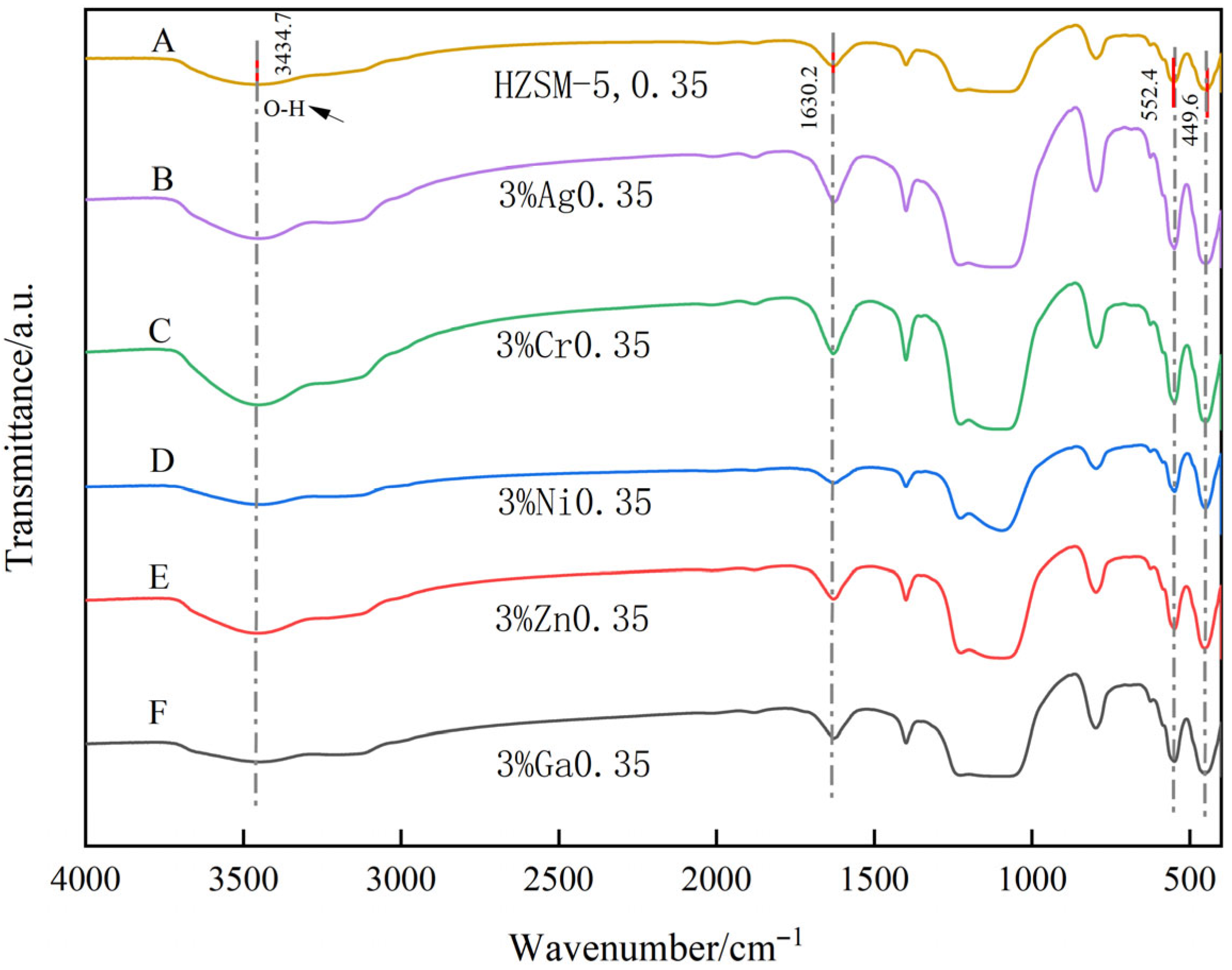
To elucidate the effects of the metal type, metal loading ratio, and concentration of NaOH used for desilication on the structural properties of the HZSM-5 zeolite materials, FT-IR spectroscopy was employed to systematically characterize a series of single-metal, bimetallic, and alkali-treated modified catalysts. The results are presented in Figure 1, Figure 2 and Figure 3. In this study, Fourier-transform infrared (FT-IR) spectroscopy was performed using a Thermo Scientific Nicolet iS50 FT-IR spectrometer (Thermo Fisher Scientific, Waltham, MA, USA). The samples were prepared using the KBr pellet method, and the FT-IR spectra were collected in the wavenumber range of 4000 cm−1 to 400 cm−1. Each sample’s FT-IR data were obtained through 32 scans, with a resolution set to 4 cm−1, and measurements were conducted in transmission mode. The analysis was carried out at room temperature, and the data were processed using Thermo Scientific Omnic software (version 9.2, Thermo Fisher Scientific, Waltham, MA, USA), which included baseline correction and peak fitting. To ensure the accuracy of the data, each sample was measured at least three times.
  • Effect of metal type on catalyst surface structure
As shown in Figure 1, the FT-IR spectra display the characteristic absorption bands of five different metal (Ag, Cr, Ni, Zn, and Ga)-modified HZSM-5 zeolite catalysts with a metal oxide loading of 3% and a NaOH concentration of 0.35 mol·L−1. The unmodified HZSM-5 sample (A) shows a broad band around 3434 cm−1, which is mainly attributed to the O–H stretching vibration of adsorbed water and surface hydroxyl-containing species. In all samples, the band near 1630 cm−1 is assigned to the H–O–H bending vibration of adsorbed water, rather than to C=O stretching vibration [47]. The variation in the intensity of the bands around 3434 and 1630 cm−1 may be related to differences in the amount of adsorbed water on the catalyst surface. However, because the spectra were recorded from KBr pellets without dehydration pretreatment, these bands cannot be used as reliable evidence for changes in acidic hydroxyl groups or Brønsted acid sites [48]. Additionally, the Si–O–Si framework vibration peak at 449 cm−1 and 552 cm−1 are preserved in the spectra of all catalysts, indicating that the metal modifications did not significantly affect the zeolite’s framework structure [49]. The retention of the framework vibration peak suggests that the introduction of metals has a minimal impact on the zeolite framework, maintaining its structural stability.
Figure 1. FT-IR spectra of HZSM-5 zeolite catalysts modified with different single metals (3% Ag, Cr, Ni, Zn, Ga) at a NaOH concentration of 0.35 mol·L−1.
Reactions 07 00025 g001
2.
Effect of metal ratio on catalyst structure
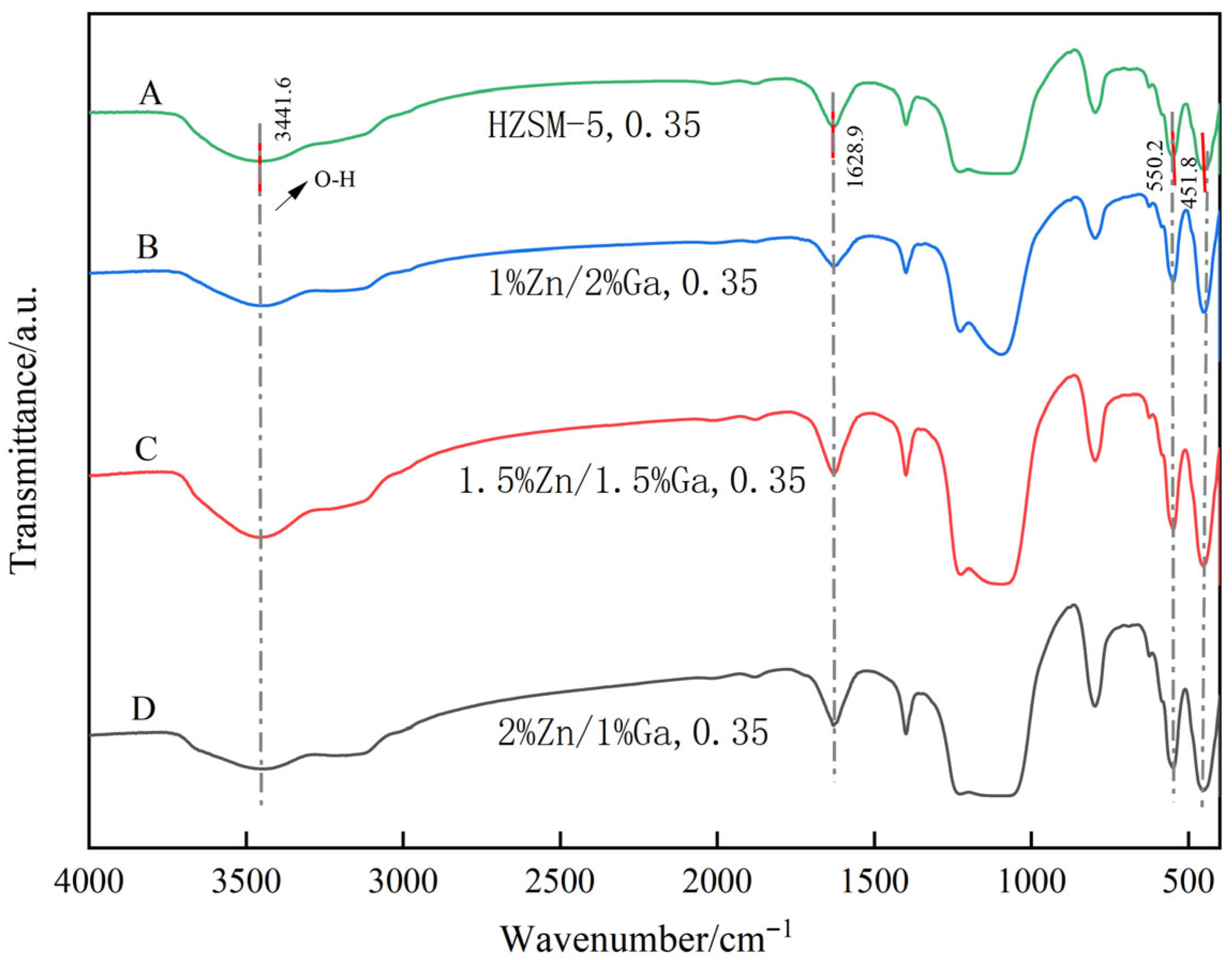
Figure 2 presents the FT-IR spectra of Zn/Ga-modified HZSM-5 catalysts with different Zn:Ga ratios (total metal loading 3%, NaOH 0.35 mol·L−1). All samples show similar spectral profiles to Figure 1, indicating that varying the Zn:Ga ratio does not introduce new structural features. The hydroxyl-related region shows some intensity variation, likely due to differences in adsorbed water under the measurement conditions [50]. The framework bands remain clearly preserved in all cases, suggesting that bimetallic modification has minimal impact on the zeolite structure. Among the samples, the 1.5% Zn/1.5% Ga catalyst exhibits relatively stronger hydroxyl-region absorption while maintaining structural integrity, consistent with its superior aromatic yield and selectivity [51].
Figure 2. FT-IR spectra of HZSM-5 catalysts co-modified with different Zn/Ga ratios (1% Zn–2% Ga, 1.5% Zn–1.5% Ga, 2% Zn–1% Ga) at a NaOH concentration of 0.35 mol·L−1.
Reactions 07 00025 g002
3.
Effect of alkali concentration on catalyst structure
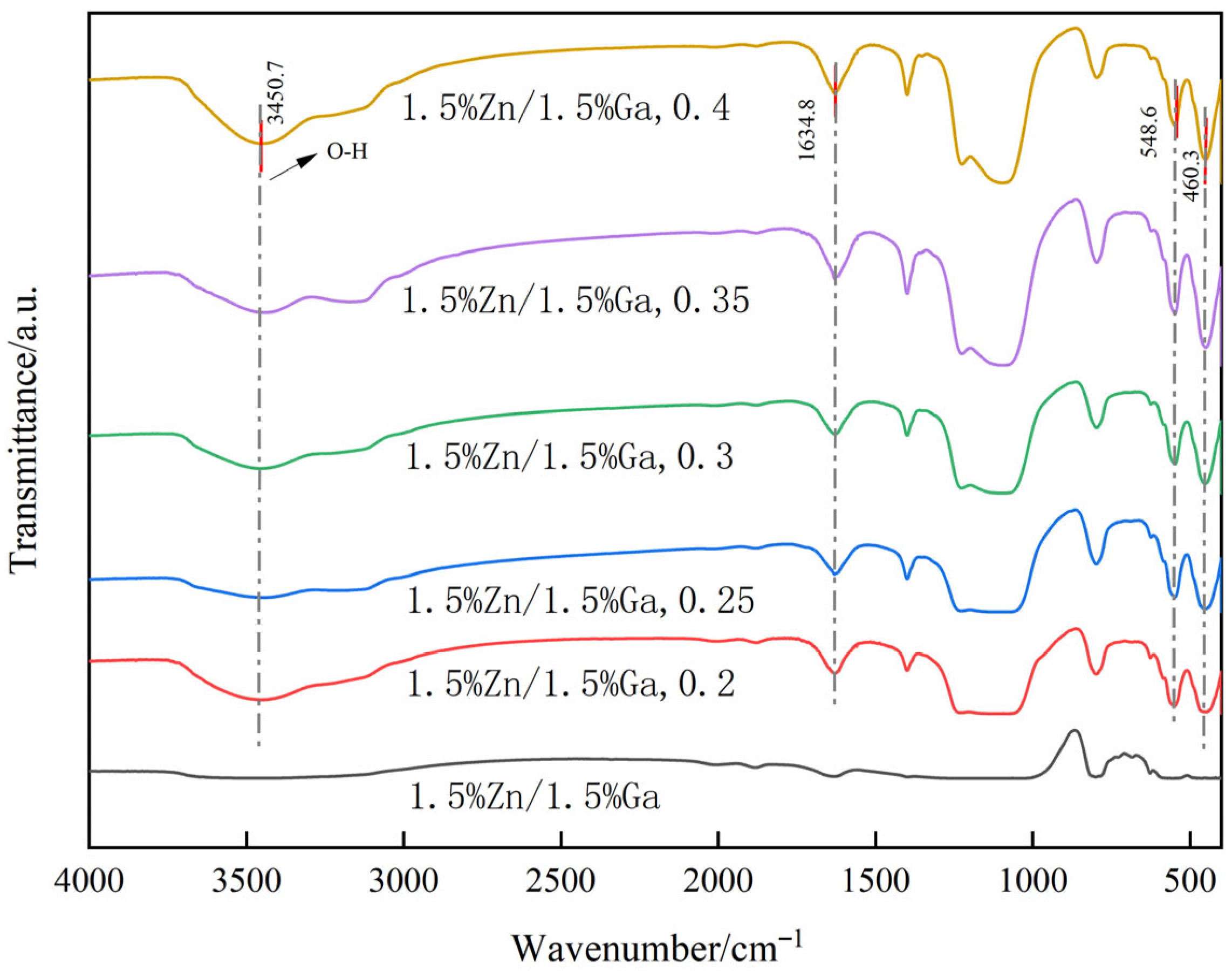
Figure 3 compares the FT-IR spectra of 1.5% Zn/1.5% Ga-modified HZSM-5 catalysts prepared with different NaOH concentrations (0.2–0.4 mol·L−1). All samples exhibit similar spectral profiles to those in Figure 1 and Figure 2, indicating that varying NaOH concentration does not introduce new functional groups. The variations in the hydroxyl-related region are likely associated with differences in adsorbed water under the current measurement conditions. In contrast, the framework bands show clear dependence on alkaline treatment [52]. The characteristic bands remain well-defined at 0.3–0.35 mol·L−1, suggesting preserved framework integrity, whereas they become broadened and weakened at 0.4 mol·L−1, indicating partial structural degradation due to excessive desilication. Therefore, 0.3–0.35 mol·L−1 is identified as the optimal NaOH concentration range, balancing structural stability and catalytic performance toward light aromatics [53].
Figure 3. FT-IR spectra of HZSM-5 catalysts co-modified with 1.5% Zn/1.5% Ga, prepared with different NaOH concentrations (0.2–0.4 mol·L−1).
Reactions 07 00025 g003

3.1.2. XRD Analysis of Catalysts

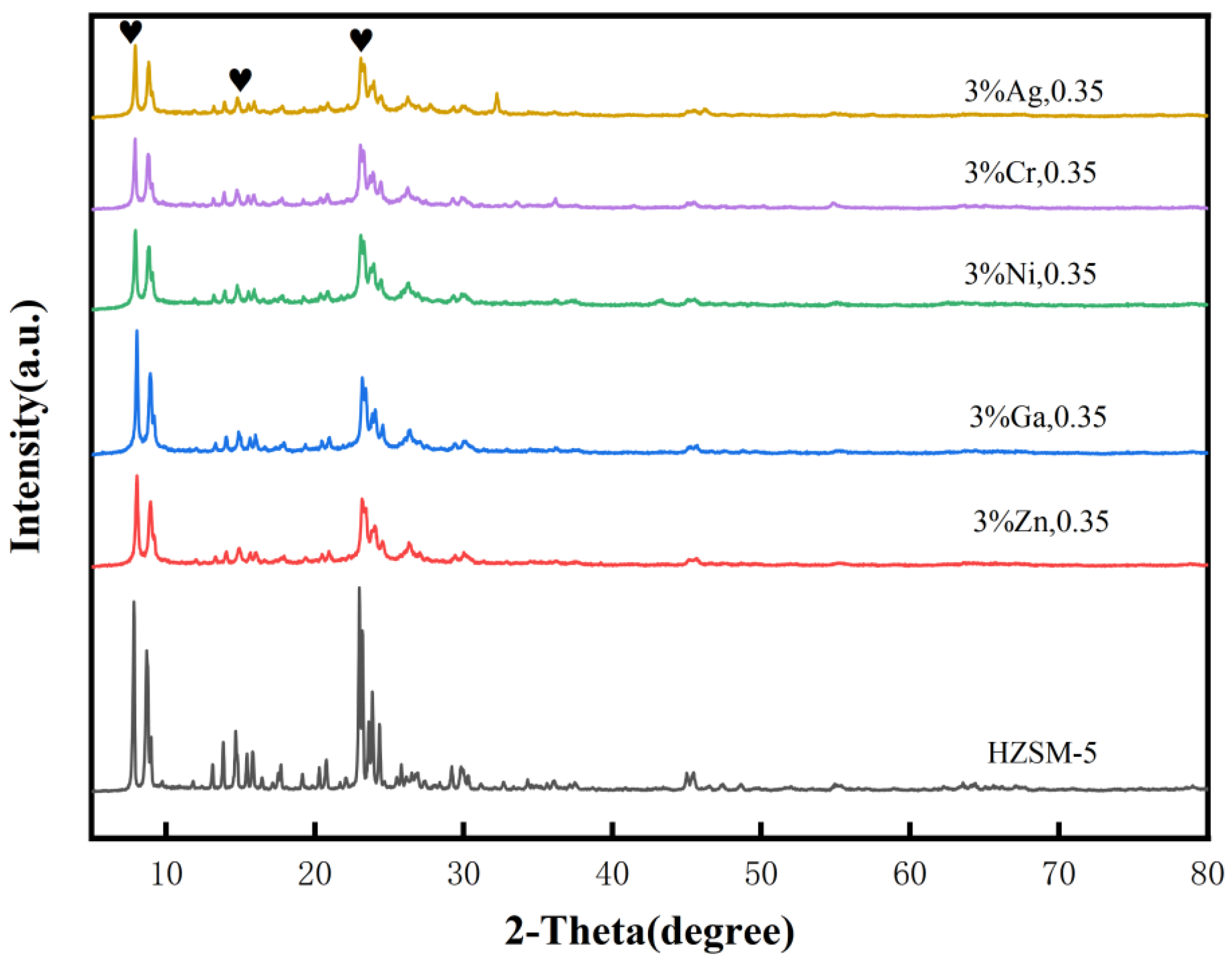
To further investigate the influence of metal type, bimetallic loading ratio, and alkali treatment conditions on the crystalline structure of HZSM-5 zeolites, XRD analysis was performed on a series of modified catalysts, and the diffraction patterns are shown in Figure 4, Figure 5 and Figure 6. The crystal phase and crystallinity of the samples were analyzed using X-ray diffraction (XRD) with a Rigaku Ultima IV X-ray diffractometer (Rigaku Corporation, Tokyo, Japan). A nickel-filtered CuKα (λ = 0.1541 nm) radiation source was used, with a scanning range of 10° to 80° and a scan rate of 2°/min.
  • Effect of metal type on catalyst crystallinity
Figure 4 presents the XRD patterns of HZSM-5 catalysts loaded with 3 wt.% Zn, Ga, Ni, Cr, or Ag following desilication using 0.35 mol·L−1 NaOH. All samples exhibit the characteristic diffraction peaks of the MFI framework at 2θ ≈ 7.9°, 8.9°, 23.1°, 23.9°, and 24.4°, indicating that both alkaline treatment and metal incorporation did not significantly damage the zeolite structure [54]. The Zn-, Ga-, Ni-, and Cr-modified samples show diffraction profiles comparable to that of the parent HZSM-5, suggesting that the crystallinity was largely preserved [55]. No distinct diffraction peaks corresponding to these metal species were observed, which may be attributed to their high dispersion or amorphous nature below the XRD detection limit. In contrast, additional reflections appearing in the range of 2θ ≈ 38–45° were detected for the Ag-modified catalyst and can be tentatively assigned to metallic Ag or Ag oxide phases (JCPDS No. 04-0783), implying partial crystallization or aggregation of Ag species [56]. However, due to the limited signal intensity and resolution of the diffraction patterns, detailed structural variations should be interpreted with caution.
Figure 4. XRD patterns of HZSM-5 catalysts modified with different single metals (3% Ag, Cr, Ni, Zn, Ga) at a NaOH concentration of 0.35 mol·L−1. The characteristic peak is marked as ♥.
Reactions 07 00025 g004
2.
Effect of Zn/Ga ratio on catalyst structure
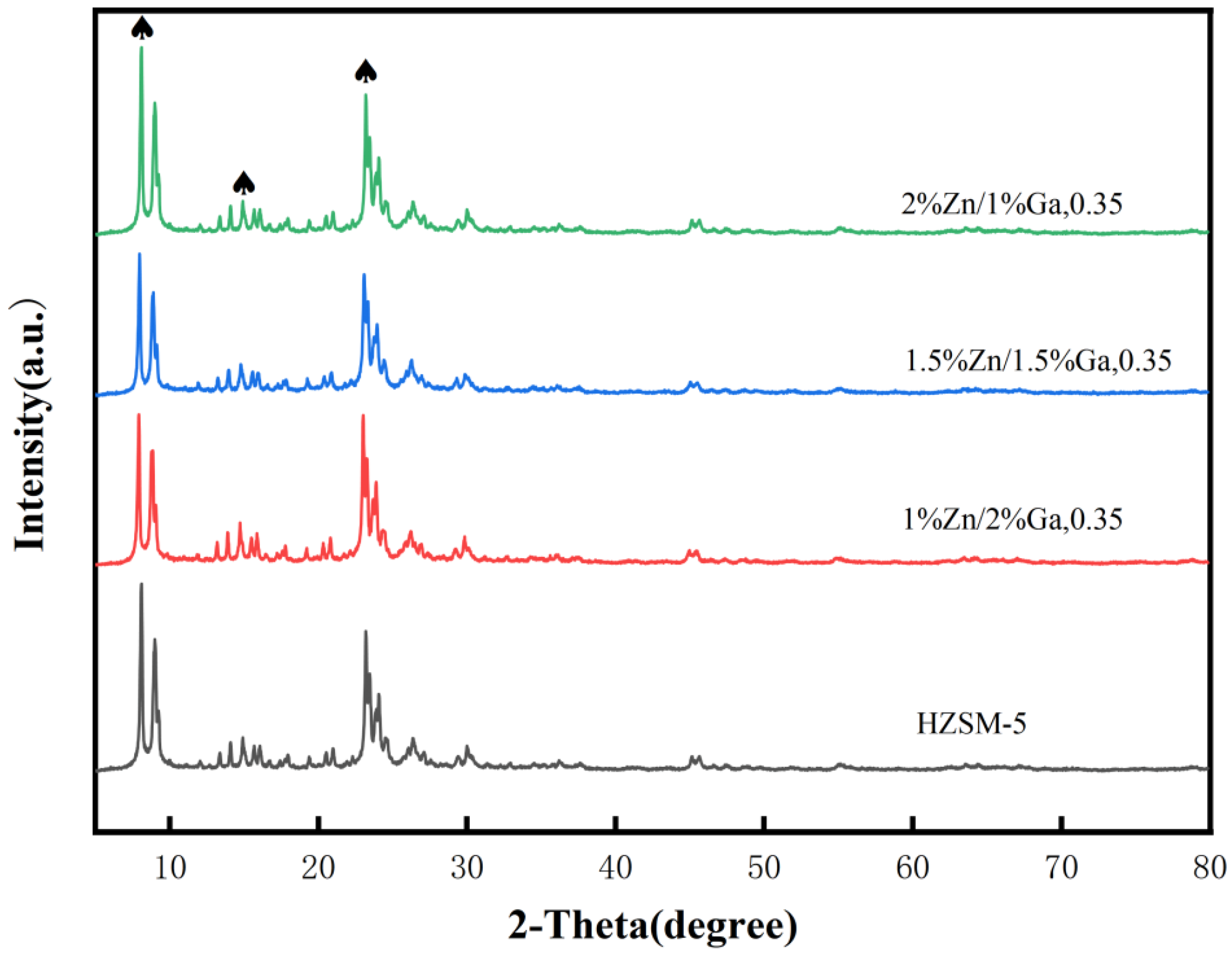
As shown in Figure 5, all bimetallic Zn/Ga catalysts (1% Zn–2% Ga, 1.5% Zn–1.5% Ga, and 2% Zn–1% Ga) maintained the MFI topology of the HZSM-5 framework, with no significant framework collapse or peak shift observed. The 1.5% Zn–1.5% Ga sample exhibited the sharpest and most intense diffraction peaks, similar to that of the unmodified HZSM-5, suggesting optimal metal dispersion and the highest crystallinity at this metal loading ratio [57]. However, due to the limited resolution and signal intensity of the XRD data, further confirmation using complementary techniques may be necessary to support these observations. When the Zn loading increased to 2% (2% Zn–1% Ga), the diffraction peaks slightly weakened, and additional peaks (marked as ♠) appeared in the 2θ range of approximately 38–45°. These additional peaks are tentatively attributed to the ZnO crystalline phase (JCPDS No. 04-0783), which suggests partial precipitation of Zn species at higher loadings. It is important to note that the presence of these peaks should be interpreted with caution due to the potential limitations in XRD resolution, and complementary techniques such as TEM or XPS might provide more reliable information about the Zn species and their dispersion state.
Figure 5. XRD patterns of HZSM-5 catalysts co-modified with different Zn/Ga ratios (1:2, 1.5:1.5, 2:1) at a NaOH concentration of 0.35 mol·L−1. The characteristic peak is marked as ♠.
Reactions 07 00025 g005
3.
Effect of NaOH concentration on catalyst crystallinity
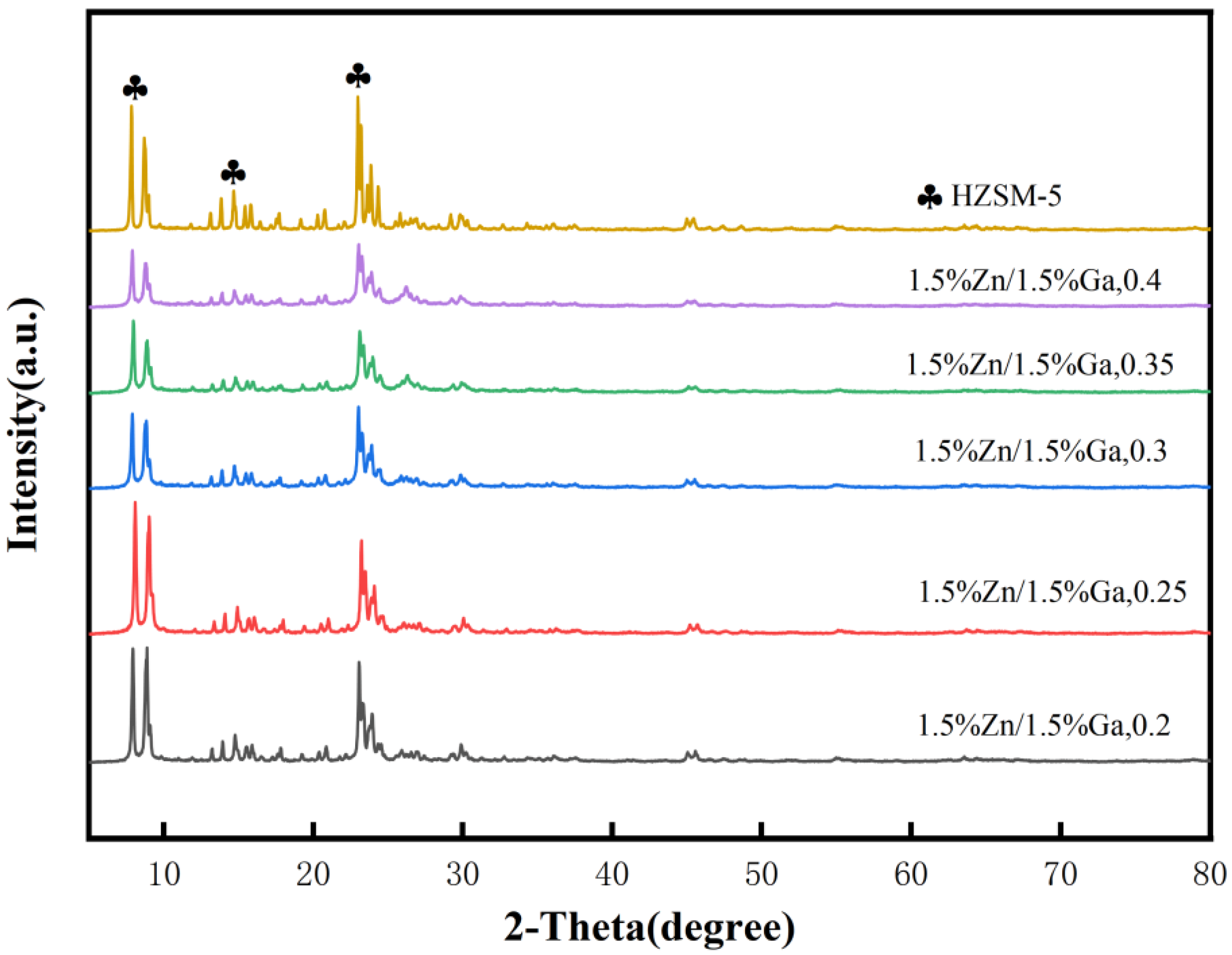
Figure 6 compares the X-ray diffraction (XRD) patterns of catalysts with a fixed metal composition of 1.5% Zn/1.5% Ga, treated with NaOH solutions of concentrations 0.2, 0.25, 0.3, 0.35, and 0.4 mol·L−1. All samples retained the characteristic MFI diffraction peaks, confirming that the desilication process did not fundamentally disrupt the original crystal structure of the zeolite [54,58]. However, as the NaOH concentration increased, the overall peak intensities gradually decreased. Notably, the sample treated with 0.4 mol·L−1 NaOH exhibited broader and weaker peaks, which may indicate partial degradation of the Si–Al framework or a reduction in crystallite size, leading to a decrease in crystallinity. However, given the limitations of XRD resolution and signal intensity, these changes should be interpreted cautiously. In contrast, catalysts treated with NaOH concentrations of 0.3–0.35 mol·L−1 achieved a good balance between maintaining high crystallinity and developing an enhanced pore structure and surface area. These structural features facilitate the diffusion of reactants within the pores and the aromatization of intermediate products, thereby improving aromatic hydrocarbon yields [57,58].
Figure 6. XRD patterns of HZSM-5 catalysts co-modified with 1.5% Zn/1.5% Ga, prepared with different NaOH concentrations (0.2–0.4 mol·L−1). The characteristic peak is marked as ♣.
Reactions 07 00025 g006

3.1.3. Micromorphological Analysis of Catalysts

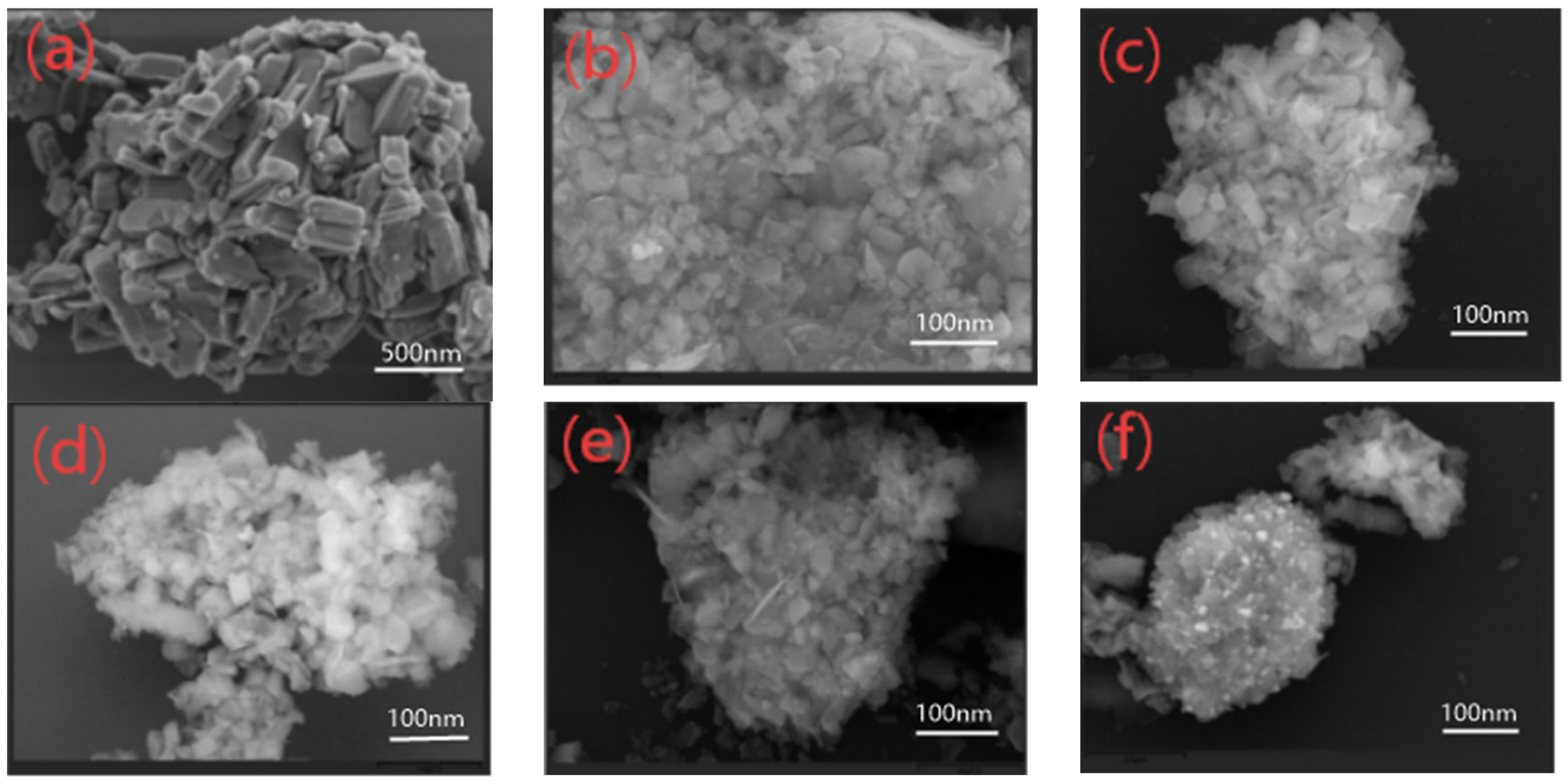
The instrument used was a SU8010 (Hitachi High-Technologies Corporation, Tokyo, Japan) scanning electron microscope with an acceleration voltage of 15 kV. The catalyst powder to be tested was first ultrasonically dispersed in an ethanol solution for 10 min. The suspension was then dropped onto aluminum foil, dried, and subsequently observed. As shown in Figure 7, scanning electron microscopy (SEM) was employed to further investigate the influence of different metal modifications (Zn, Ga, Ni, Cr, Ag) on the microstructure of HZSM-5 zeolites. The pristine HZSM-5 exhibited a typical hexagonal prismatic crystal morphology with smooth crystal facets, sharp edges, and excellent crystallinity. After modification with Zn, Ga, and Ni, the catalyst surfaces remained intact, with no apparent aggregation or structural damage observed. The SEM images of these samples showed a uniform contrast distribution without noticeable particle accumulation; this indicates that the metal species were highly dispersed on the zeolite surface, which is beneficial to achieve full exposure of active sites and effective contact with reactants. In contrast, the Cr-modified catalyst displayed localized darker regions, likely originating from partial aggregation of metal species, thereby reducing their dispersion. The Ag-modified sample exhibited a localized brightness enhancement, suggesting that Ag species accumulated in certain regions, potentially forming small metal clusters. Notably, no significant collapse or fragmentation of the HZSM-5 morphology occurred during metal impregnation and subsequent calcination. The overall crystal morphology was well preserved, consistent with the crystallinity retention revealed by the XRD analysis, further confirming that the metal loading process did not disrupt the zeolite framework.
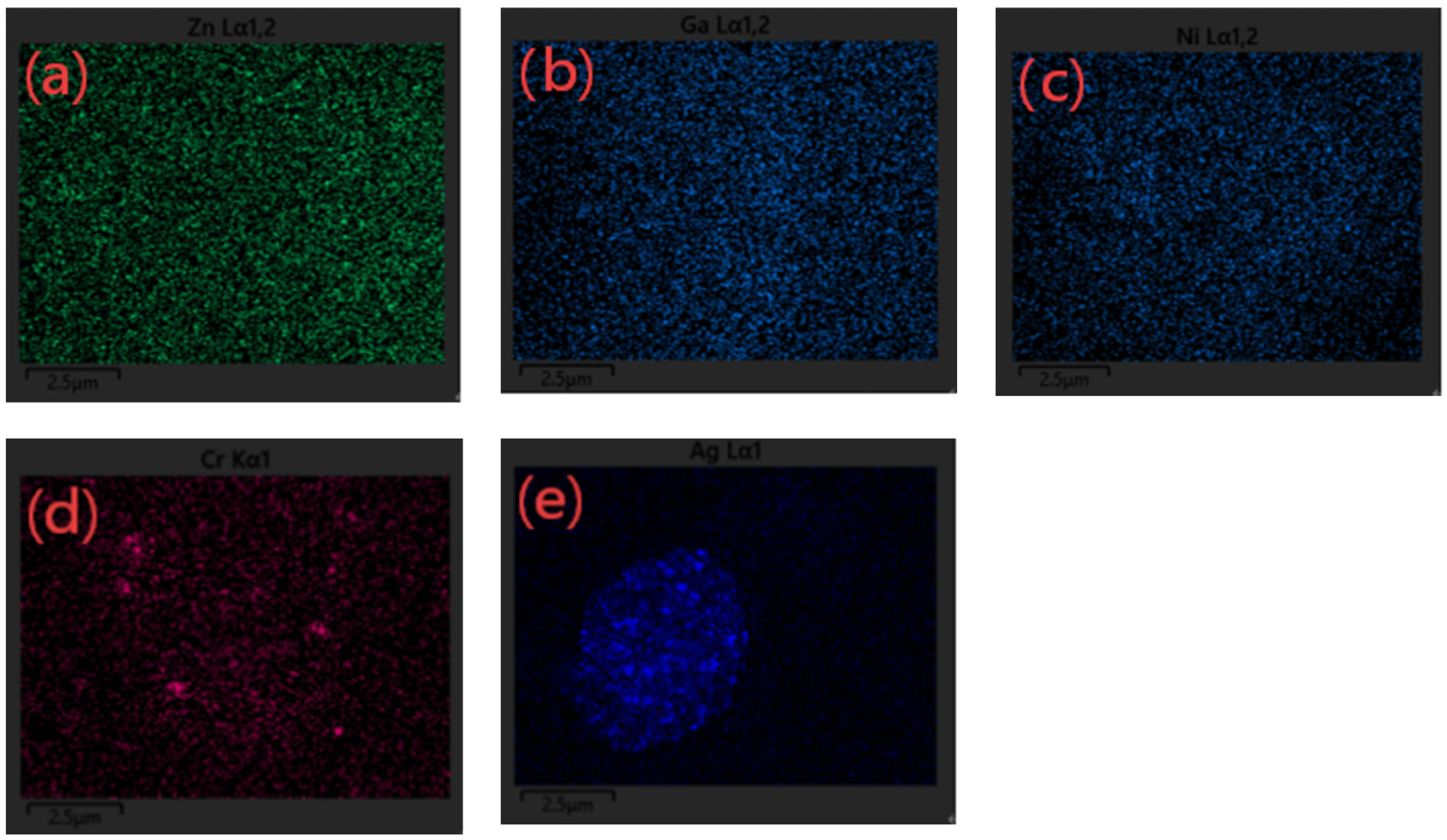
Next, energy-dispersive X-ray spectroscopy (EDS) was employed to examine the distribution of metal elements on the HZSM-5 surface (Figure 8). Zn, Ga, and Ni were found to be uniformly dispersed across the catalyst surface, with no evident aggregation, indicating high dispersion of these metals on the support. In contrast, Cr exhibited slight aggregation and a discontinuous spatial distribution, which may be attributed to the formation of larger crystals or particles during the impregnation or calcination processes. Ag displayed the most inhomogeneous spatial distribution, with pronounced local accumulation in certain regions, suggesting the formation of highly concentrated metal clusters on the catalyst surface. Overall, the EDS analysis results were in strong agreement with the SEM observations, further confirming, at a microscopic level, the distinct loading behaviors of different metals on HZSM-5.

3.1.4. Analysis of Pore Structure of Catalysts

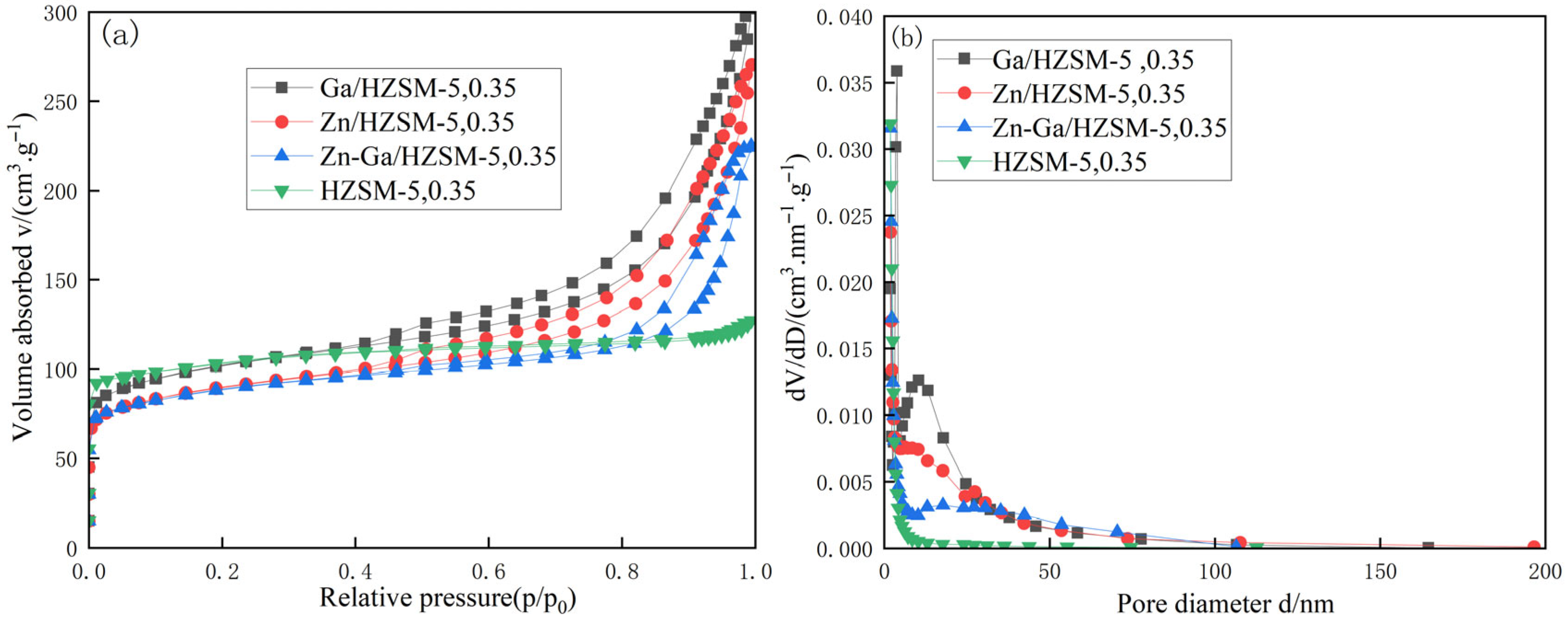
The nitrogen adsorption–desorption isotherms were performed using a Micromeritics ASAP 2460 instrument (Micromeritics Instrument Corporation, Norcross, GA, USA). Before testing, the samples were dehydrated at 150 °C to remove surface moisture, followed by adsorption–desorption isotherms at 77 K. The specific surface area of the samples was calculated using the BET model, the micropore size distribution was determined using the T-Plot method, and the total pore volume was calculated using the Barrett–Joyner–Halenda (BJH) model. Figure 9a presents the nitrogen adsorption–desorption isotherms of HZSM-5 and its metal-modified counterparts (Zn/HZSM-5, Ga/HZSM-5, and Zn-Ga/HZSM-5) measured at 77 K. All samples were treated with a 0.35 mol/L sodium hydroxide (NaOH) solution. All samples exhibited typical type IV isotherms with pronounced hysteresis loops at high relative pressures (P/P0 > 0.8), indicative of mesoporous structural features [59]. Compared with the unmodified HZSM-5, the metal-modified samples showed a significant increase in nitrogen uptake, particularly Ga/HZSM-5 and Zn-Ga/HZSM-5, whose adsorption volumes exceeded 260 cm3·g−1 in the high P/P0 region. This suggests that the synergistic effect of metal doping and alkaline treatment effectively introduced more mesopores, thereby enhancing the molecular diffusion [60]. Among the examined catalysts, Zn-Ga/HZSM-5 exhibited the highest overall adsorption curve, reflecting its larger pore volume and specific surface area, which facilitate the entry of reactants and exit of products [61].
Figure 9b shows the pore size distributions calculated via the BJH method. All samples exhibited a pronounced pore size distribution peak within the range of 3–5 nm, indicating a relatively uniform mesoporous structure. Among them, Zn-Ga/HZSM-5 displayed the highest peak intensity and a slightly broader distribution range, suggesting the presence of additional larger pores. Such structural features may facilitate molecular diffusion and reduce diffusion limitations during catalytic reactions. The Ga/HZSM-5 sample also showed a well-developed mesoporosity, suggesting that Ga induced a stronger corrosion of the HZSM-5 lattice compared to Zn, thereby generating a higher proportion of medium-sized pore channels.
In summary, metal doping combined with NaOH desilication has a significant synergistic effect on tailoring the pore structure of HZSM-5. In particular, the Zn-Ga bimetallic modification enhances the micro–mesoporous composite architecture while preserving the intrinsic zeolite framework, thus providing a superior diffusion environment and abundant active sites for aromatization reactions.
Figure 9. (a) N2 adsorption–desorption isotherms of HZSM-5, Ga/HZSM-5, Zn/HZSM-5, and Zn-Ga/HZSM-5 catalysts. (b) BJH pore size distribution curves of HZSM-5, Ga/HZSM-5, Zn/HZSM-5, and Zn-Ga/HZSM-5 catalysts.
Reactions 07 00025 g009
Table 1 summarizes the pore structure parameters of HZSM-5 before and after metal modification (Zn, Ga, Zn-Ga) and sodium hydroxide (NaOH) treatment. After treatment, the specific surface area of the zeolite decreased from 397 m2·g−1 to 326–374 m2·g−1, and the total pore volume decreased from 0.418 cm3·g−1 to 0.309–0.399 cm3·g−1. This reduction is likely due to the deposited metal species partially blocking the pores or covering the external surface. Similarly, previous studies have also reported that incorporating metals into zeolites leads to a slight decrease in both specific surface area and total pore volume.

3.1.5. NH3-TPD Analysis of Catalyst

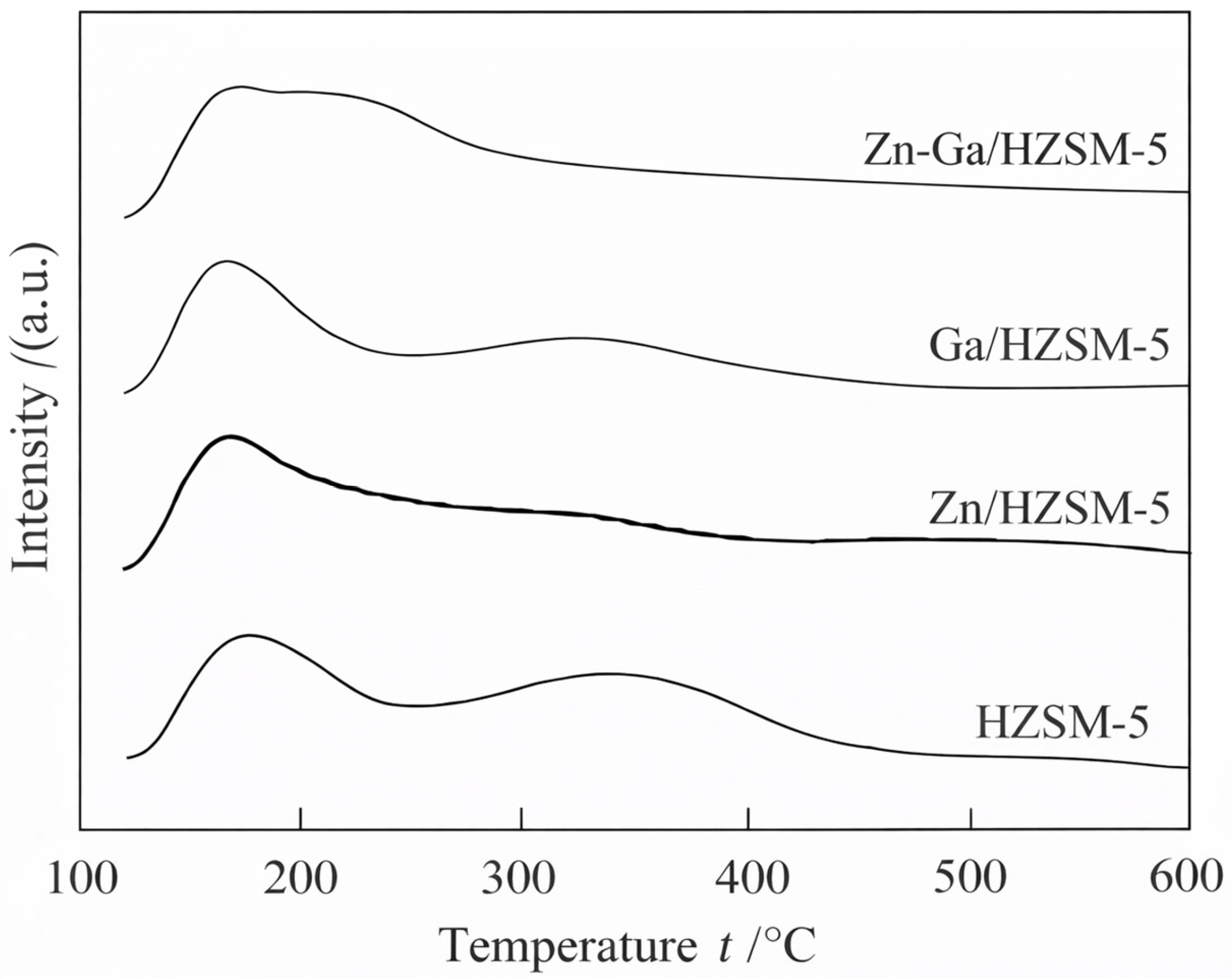
The ammonia temperature-programmed desorption (NH3-TPD) experiment was conducted using a Micromeritics AutoChem II 2920 gas adsorption instrument (Micromeritics Instrument Corporation, Norcross, GA, USA). Approximately 0.1 g of the sample was placed in a sample tube and pretreated with helium (He) to remove moisture and impurities from the sample. Subsequently, the sample was exposed to an ammonia (NH3) atmosphere to allow ammonia molecules to adsorb onto the surface. After adsorption, the unadsorbed ammonia was purged with helium gas, and the adsorbed ammonia molecules were released by a temperature-programmed desorption process (10 °C/min). The desorbed ammonia was detected by a thermal conductivity detector (TCD), and the desorption peaks recorded corresponded to the amount of ammonia released at different temperatures. By analyzing the TPD curve, the strength and number of acidic sites on the catalyst surface can be determined. The acidic sites and their acid strength are another important factor affecting the catalytic activity of HZSM-5. Figure 10 shows the NH3-TPD spectra of HZSM-5 before and after metal (Zn, Ga, and Zn-Ga) modification. As can be seen from Figure 10, the NH3-TPD spectra exhibit two distinct ammonia desorption peaks, corresponding to the weak acid centers at 175 °C and the strong acid centers at 375 °C, respectively. The incorporation of metals into zeolites significantly affects the strength of strong acidic sites, while having a lesser impact on weak acidic sites. Compared to HZSM-5, the strength of the strong acid centers in metal-modified HZSM-5 decreases sharply, indicating that metals Zn, Ga, and their compounds easily replace the strong acid centers of the molecular sieve.
Table 2 presents the acid amounts of weak and strong acid sites before and after metal modification (Zn, Ga, and Zn-Ga) of HZSM-5. Compared to the unmodified HZSM-5, the acid content of both weak and strong acid sites decreased after the addition of Zn and Ga metals. The reduction in acid amount is primarily attributed to the coverage of acid sites by the metals and their interactions with protonic acids or other groups in the zeolite framework. Upon introducing zinc into the zeolite, metal species interact with protonic acid sites in the framework, forming hydrolyzed metal–OH+ groups, which affect the quantity and distribution of acid sites. When gallium (Ga) is loaded onto HZSM-5, metal species cover the acid sites and react with strong acid sites, leading to a decrease in acidity. As shown in Table 2, the acid amount of strong acid sites in Zn/HZSM-5 (0.633 mmol/g) is lower than that in Ga/HZSM-5 (0.658 mmol/g), which may be related to the dispersion of the metal species. By impregnating both Zn and Ga into HZSM-5, the micropores of the zeolite are partially blocked and react with strong acid sites (Bronsted acids), leading to a significant reduction in the acid amount of strong acid sites (0.602 mmol/g). These changes suggest that the different characteristics of the metals may affect the distribution of acid sites and the dispersion of the metals, thereby altering the acidity and catalytic performance of the catalyst.

3.2. Analysis of Catalytic Pyrolysis Products from Walnut Shells

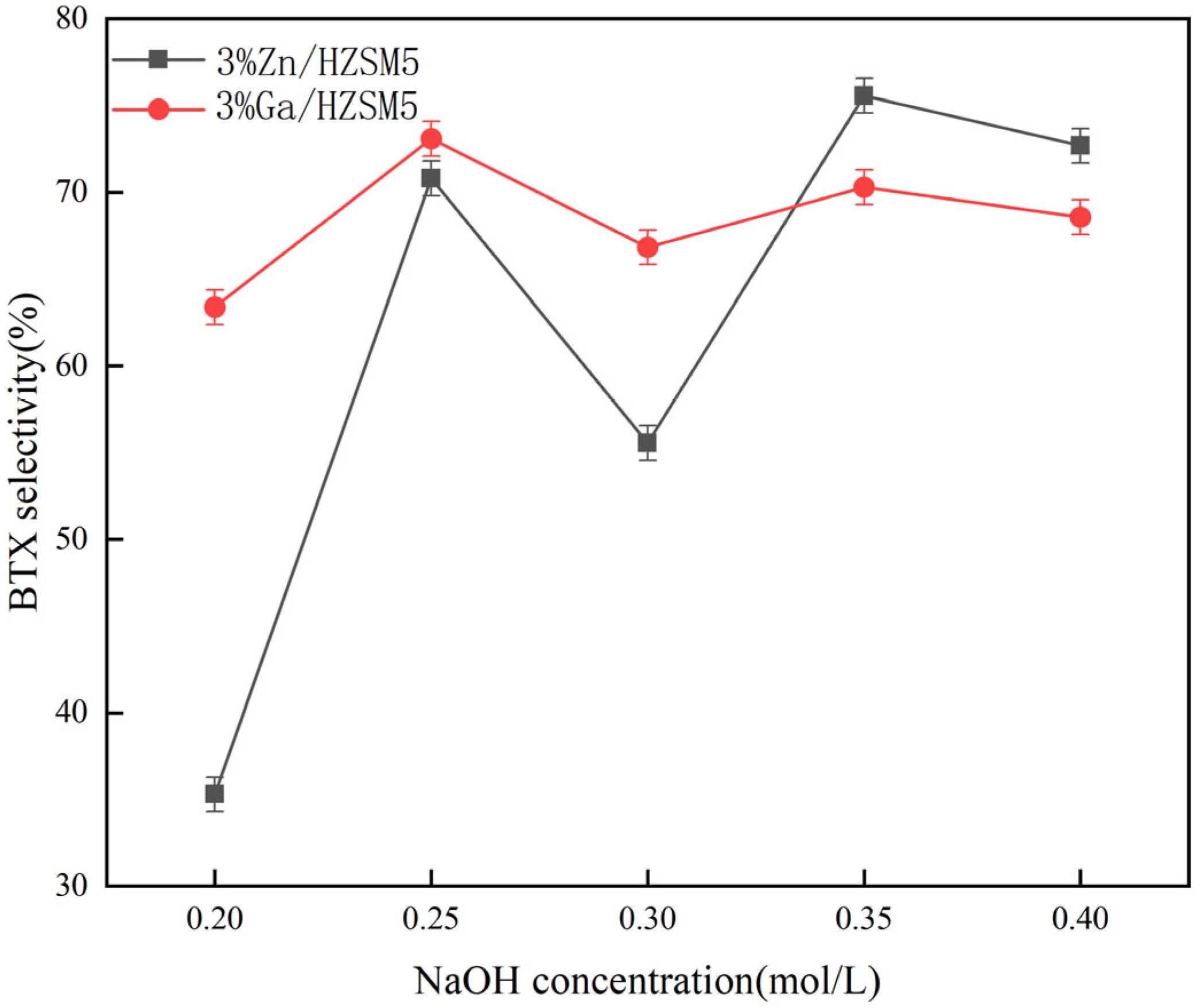
As shown in Figure 11, the BTX selectivity of different metal-loaded catalysts exhibited non-linear fluctuations with changes in the NaOH solution concentration, alternating between increases and decreases as the alkali concentration used in the treatment increased. This trend may be attributed to excessive desilication, which can damage the zeolite framework or results in excessive opening of the pore structure, thereby influencing the effective reactant diffusion and preferred aromatization pathways. Further comparison of bimetallic (Zn-Ga) catalysts under varying pore expansion conditions revealed that the highest total BTX selectivity was achieved at an NaOH concentration of 0.35 mol·L−1. This indicates that an optimal balance between pore structure tuning and active site distribution was achieved at this concentration. Consequently, all subsequent experiments performed in this study employed 0.35 mol·L−1 as the alkali concentration used in the treatment to ensure a close relationship between structural stability and catalytic performance, thus providing representative data on the correlation between catalytic behavior and structural properties.
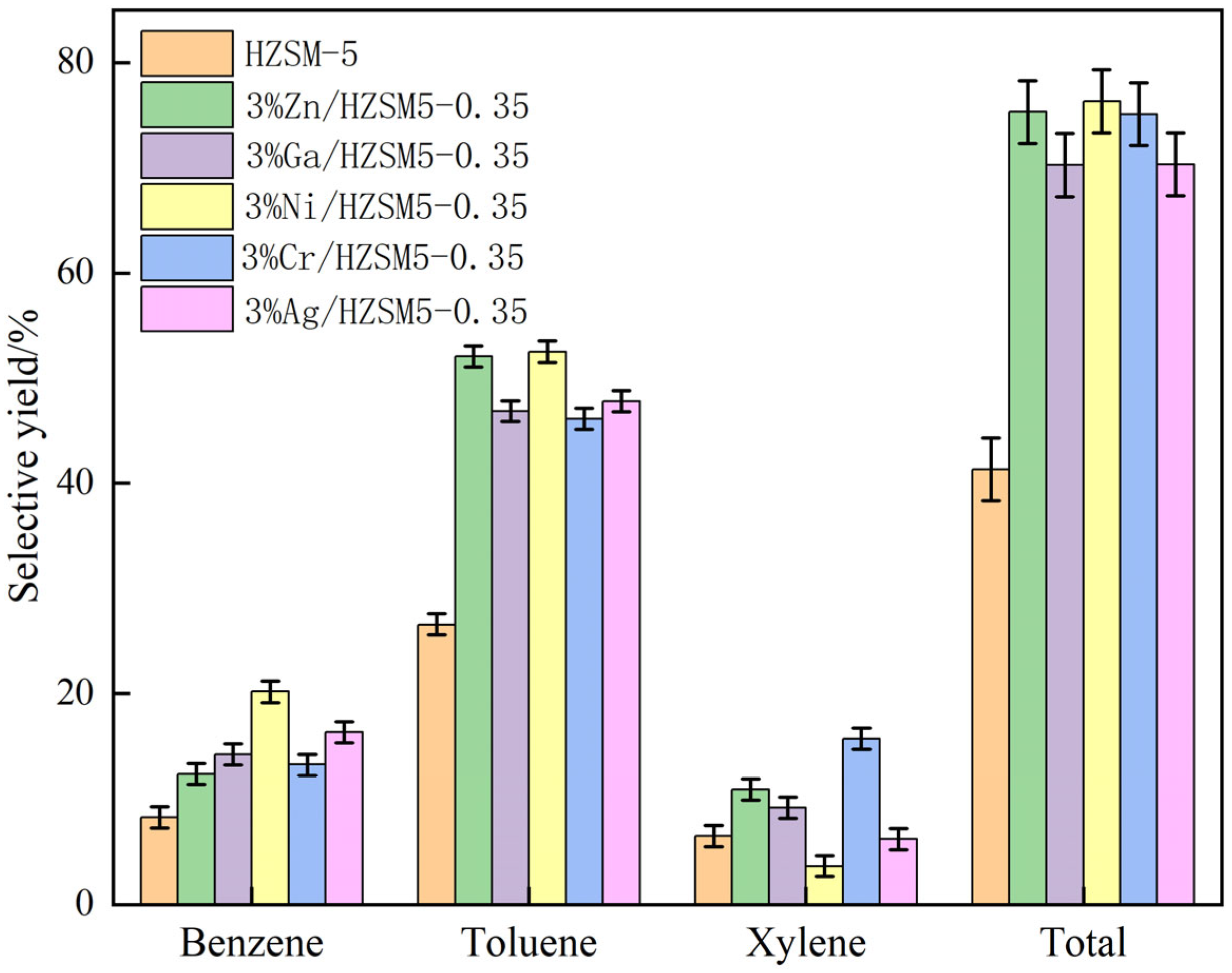
To assess the influence of different metal loadings on the BTX selectivity, five metals (Zn, Ga, Ni, Cr, and Ag) were compared. As shown in Figure 12, the incorporation of the metal markedly enhanced the aromatic selectivity. In the analysis of pyrolysis products, this study employed the calculation of BTX (benzene, toluene, and xylene) selectivity based on the molar ratios of individual products. Specifically, the BTX selectivity was determined by calculating the ratio of the molar flow rate of each product to the total product flow rate. In addition to BTX products, other major products generated during pyrolysis, such as alkanes, alkenes, alcohols, and other aromatic compounds, were also analyzed. A comprehensive analysis of the distribution of these products provides a deeper understanding of the catalyst’s selectivity towards different products and the underlying reaction mechanisms. Compared to unmodified HZSM-5 (BTX selectivity: 41%), all metal-modified catalysts exhibited substantial improvements. The Ni-modified catalyst showed the best performance, achieving a BTX selectivity of 76%. The Zn- and Cr-modified samples followed closely, both reaching selectivities of around 75%, while the Ag- and Ga-loaded catalysts achieved slightly lower values (~70%), but still significantly outperformed pristine HZSM-5.
Further analysis of the distribution of the individual aromatic components revealed that all metal-loaded catalysts favored toluene as the primary product. However, differences emerged in the benzene and xylene yields. For the Zn-, Ga-, Ni-, and Ag-modified catalysts, the benzene selectivity exceeded that of xylene, with Zn and Ga showing smaller differences (<5%), while Ni and Ag displayed a much higher benzene selectivity (>10% difference). This may be related to the influence of the metal species on the stability of the aromatization intermediates. In contrast, the Cr-modified catalyst exhibited a higher xylene than benzene selectivity, suggesting that Cr promotes the methylation of long-chain hydrocarbon cracking products, resulting in an increased xylene formation.
Figure 12. Effect of different single-metal-modified catalysts on BTX selectivity (NaOH concentration: 0.35 mol·L−1).
Reactions 07 00025 g012
A relatively balanced BTX selectivity distribution is preferred over higher total selectivity because it effectively controls the formation of by-products, enhances the catalyst’s stability and durability, and allows the catalyst to maintain high activity during long-term reactions, while also ensuring good reaction efficiency and adaptability to diverse product distributions. In contrast, a catalyst with high selectivity for a single product (such as Ni) may lead to the overproduction of a specific product, catalyst deactivation, and reaction instability, thereby impacting the overall process efficiency and the catalyst’s service life. Given that the single-metal Zn- and Ga-loaded catalysts showed relatively balanced BTX selectivity distributions across components, their catalytic behavior is more stable and less prone to yield extreme product distributions, thus providing more representative and universal experimental data. Based on this observation, a Zn-Ga bimetallic catalyst was designed to systematically investigate its ability to regulate the aromatic production during catalytic pyrolysis of biomass.
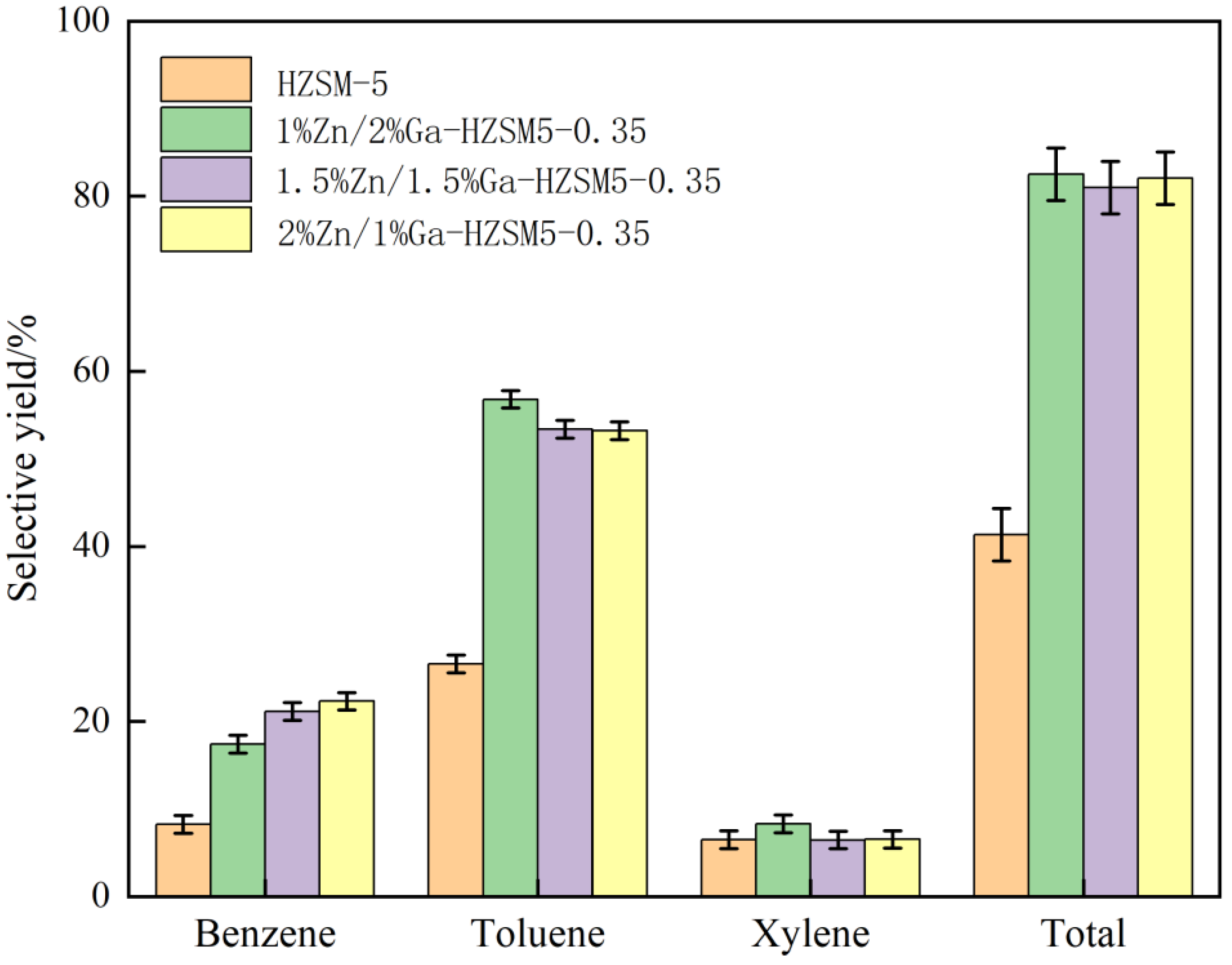
As shown in Figure 13, the effect of different Zn/Ga ratios (1%Zn/2%Ga, 1.5%Zn/1.5%Ga, 2%Zn/1%Ga) on the BTX selectivity from walnut shell pyrolysis was examined while maintaining the total metal loading fixed at 3 wt.%. All bimetallic catalysts exhibited excellent BTX selectivity, with an average value exceeding 80%, outperforming their respective monometallic catalysts. Among them, the 1%Zn/2%Ga catalyst exhibited the best performance, reaching a total BTX selectivity of 82%, confirming the favorable synergistic effect of Zn and Ga on the aromatization performance. Furthermore, all three bimetallic catalysts exhibited a consistent product distribution trend: the benzene selectivity was highest, followed by toluene and xylene. This trend indicates that Zn and Ga have a similar cooperative influence on the reaction pathways, likely related to their combined regulation of intermediate stability and acid site distribution.

4. Conclusions

To develop an efficient bifunctional catalyst with hierarchical pore structure, HZSM-5 zeolites were modified using five transition metals (Zn, Ga, Ni, Cr, and Ag) and NaOH solutions of varying concentrations (0.2, 0.25, 0.3, 0.35, and 0.4 mol·L−1). The performance of these modified catalysts in the catalytic pyrolysis of walnut shells was systematically evaluated, with particular emphasis on the effects of metal type and loading ratio on the selectivity and yield of light aromatics (BTX). The results showed that, upon treatment at an alkali concentration of 0.35 mol·L−1, all metal-modified catalysts exhibited good aromatization performance. Among them, the Ni/HZSM-5 catalyst delivered the highest BTX selectivity (76%) during walnut shell catalytic pyrolysis, an improvement of approximately 35% compared with unmodified HZSM-5 (41%), demonstrating the significant role of Ni in promoting aromatization reactions. Considering that Zn/HZSM-5 and Ga/HZSM-5 exhibited relatively balanced distributions of BTX components, Zn and Ga were selected as dual metal sources. A series of bimetallic catalysts with a fixed total metal loading of 3% were synthesized by varying the Zn/Ga ratio to investigate their synergistic effects on aromatic production. The catalyst with a Zn/Ga ratio of 1:2 (1%Zn/2%Ga) showed the best performance, achieving a maximum BTX selectivity of 82%, representing a 41% increase compared with HZSM-5 and significantly outperforming the single-metal catalysts. The yield of aromatic hydrocarbons increased from HZSM5 (1.974 × 10⁴) to 1%Zn/2%Ga-HZSM5 (3.876 × 10⁴), representing an increase of 1.902 × 10⁴. These findings indicate that the Zn-Ga bimetallic modification not only optimizes the acidity and pore structure of the catalyst, but also enhances the aromatization pathway through synergistic effects, providing strong support for the efficient conversion of biomass to high-value aromatics.

Author Contributions

X.Z.: Investigation and Writing—Original Draft preparation. W.X.: Visualization and Software, H.P.: Funding, Writing—Reviewing and Editing. All authors have read and agreed to the published version of the manuscript.

Funding

This research was financially supported by the Scientific Research and Developed Fund of Zhejiang A&F University (2022LFR073, 2023LFR151).

Data Availability Statement

The datasets used and/or analyzed during the current study are available from the corresponding author on reasonable request.

Conflicts of Interest

The authors declare no conflicts of interest.

References

  1. Qu, W.W.; Xia, H.Y.; Peng, J.H.; Zhang, L.; Zhang, Z.; Yang, K. Pyrolysis characteristics and kinetic analysis of walnut shell. Trans. Chin. Soc. Agric. Eng. 2009, 25, 202–206. [Google Scholar]
  2. Owens, N.; Lee, D.W. The use of micro-bubble flotation technology in secondary & tertiary produced water treatment: A technical comparison with other separation technologies. In Proceedings of the 5th Produced Water Workshop, Aberdeen, UK, 30–31 May 2007. [Google Scholar]
  3. Demirbas, A. Pyrolysis of ground nutshells and fruit stones: Production and characterization of bio-oil. J. Anal. Appl. Pyrolysis 2006, 76, 285–289. [Google Scholar] [CrossRef]
  4. Aygun, A.; Yenisoy-Karakas, S.; Duman, I. Production of granular activated carbon from fruit stones and nutshells and evaluation of their physical, chemical and adsorption properties. Microporous Mesoporous Mater. 2003, 66, 189–195. [Google Scholar] [CrossRef]
  5. Zhang, L.; Zhang, L.; Shu, X.Q.; Li, G.; Ding, Z.J. Producing hydrogen by catalytic pyrolysis of walnut shell. J. Jilin Univ. 2008, 38, 287–291. [Google Scholar]
  6. Ma, Z.Q.; Wang, J.H.; Huang, M.; Cai, W.; Xu, J.L.; Yang, Y.Y. Effects of lignin types and catalyst dosage on pyrolysis products. Trans. Chin. Soc. Agric. Eng. 2020, 36, 274–282. [Google Scholar]
  7. Wang, S.R.; Dai, G.X.; Yang, H.P.; Luo, Z.Y. Lignocellulosic biomass pyrolysis mechanism: A state-of-the-art review. Prog. Energy Combust. Sci. 2017, 62, 33–86. [Google Scholar] [CrossRef]
  8. Ren, X.; Ghazani, M.S.; Zhu, H.; Ao, W.; Zhang, H.; Moreside, E.; Zhu, J.; Yang, P.; Zhong, N.; Bi, X. Challenges and opportunities in microwave-assisted catalytic pyrolysis of biomass: A review. Appl. Energy 2022, 315, 118970. [Google Scholar] [CrossRef]
  9. Sebestyén, Z.; Jakab, E.; May, Z.; Sipos, B.; Réczey, K. Thermal behavior of native, washed and steam exploded lignocellulosic biomass samples. J. Anal. Appl. Pyrolysis 2013, 101, 61–71. [Google Scholar] [CrossRef][Green Version]
  10. Eom, I.Y.; Kim, K.; Kim, J.; Lee, S.M.; Yeo, H.M.; Choi, I.G.; Choi, J.W. Characterization of primary thermal degradation features of lignocellulosic biomass after removal of inorganic metals by diverse solvents. Bioresour. Technol. 2011, 102, 3437–3444. [Google Scholar] [CrossRef]
  11. Jiang, L.; Hu, S.; Sun, L.S.; Su, S.; Xu, K.; He, L.M.; Xiang, J. Influence of different demineralization treatments on physicochemical structure and thermal degradation of biomass. Bioresour. Technol. 2013, 146, 254–260. [Google Scholar] [CrossRef]
  12. Wigley, T.; Yip, A.C.K.; Pang, S. Pretreating biomass via demineralisation and torrefaction to improve the quality of crude pyrolysis oil. Energy 2016, 109, 481–494. [Google Scholar] [CrossRef]
  13. Nowakowski, D.J.; Jones, J.M.; Brydson, R.; Ross, A.B. Potassium catalysis in the pyrolysis behaviour of short rotation willow coppice. Fuel 2007, 86, 2389–2402. [Google Scholar] [CrossRef]
  14. Guo, D.L.; Wu, S.B.; Liu, B.; Yin, X.L.; Yang, Q. Catalytic effects of NaOH and Na2CO3 additives on alkali lignin pyrolysis and gasification. Appl. Energy 2012, 95, 22–30. [Google Scholar] [CrossRef]
  15. Mourant, D.; Wang, Z.; He, M.; Wang, X.S.; Garcia-Perez, M.; Ling, K.; Li, C.Z. Mallee wood fast pyrolysis: Effects of alkali and alkaline earth metallic species on the yield and composition of bio-oil. Fuel 2011, 90, 2915–2922. [Google Scholar] [CrossRef]
  16. Song, H.; Long, J.; Yi, W.; Su, S.; Sun, L.; Xu, B.; He, L.; Xiang, J. Effects of inherent alkali and alkaline earth metallic species on biomass pyrolysis at different temperatures. Bioresour. Technol. 2015, 192, 23–30. [Google Scholar] [CrossRef]
  17. Liu, D.; Cao, L.; Zhang, G.; Zhao, L.; Gao, J.; Xu, C. Catalytic conversion of light alkanes to aromatics by metal-containing HZSM-5 zeolite catalysts—A review. Fuel Process. Technol. 2021, 216, 106770. [Google Scholar] [CrossRef]
  18. Lappas, A.A.; Samolada, M.C.; Iatridis, D.K.; Voutetakis, S.S.; Vasalos, I.A. Biomass pyrolysis in a circulating fluid bed reactor for the production of fuels and chemicals. Fuel 2002, 81, 2087–2095. [Google Scholar] [CrossRef]
  19. Nawaz, M.A.; Blay-Roger, R.; Saif, M.; Meng, F.; Bobadilla, L.F.; Reina, T.R.; Odriozola, J.A. Redefining the symphony of light aromatic synthesis beyond fossil fuels: A journey navigating through a Fe-Based/HZSM-5 tandem route for syngas conversion. ACS Catal. 2024, 14, 15150–15196. [Google Scholar] [CrossRef]
  20. Shen, D.K.; Zhao, J.; Xiao, R. Catalytic transformation of lignin to aromatic hydrocarbons over solid-acid catalyst: Effect of lignin sources and catalyst species. Energy Convers. Manag. 2016, 124, 61–72. [Google Scholar] [CrossRef]
  21. Kim, K.B.; Sohn, M.S.; Hwang, I.S.; Yoo, D.J.; Jeong, S.Y.; Kang, Y.C.; Moon, Y.K. Mitigating alcohol inhibition of oxide chemiresistors: Bilayer sensors with HZSM-5 zeolite overlayers. Nat. Commun. 2025, 16, 5121. [Google Scholar] [CrossRef]
  22. Zhang, M.; Resende, F.L.P.; Moutsoglou, A. Catalytic fast pyrolysis of aspen lignin via Py-GC/MS. Fuel 2014, 116, 358–369. [Google Scholar] [CrossRef]
  23. Atutxa, A.; Aguado, R.; Gayubo, A.G.; Olazar, M.; Bilbao, J. Kinetic description of the catalytic pyrolysis of biomass in a conical spouted bed reactor. Energy Fuels 2005, 19, 765–774. [Google Scholar] [CrossRef]
  24. Hu, J.; Zhou, W.; Wang, Y.; Jiang, H.; Wu, J.; Luo, T.; Wang, M.; Wang, L.; Wang, Q.; Hu, Y.; et al. Synthesis of HZSM-5@ activated carbon for improving aromatic production from catalytic pyrolysis of biomass. Chem. Eng. J. 2024, 494, 153031. [Google Scholar] [CrossRef]
  25. Sun, T.; Wang, R.; Xing, Y.; Su, S.; Liu, P.; Li, Z.; Shou, Y.; Lei, T. Preparation of aromatic hydrocarbon-rich bio-oils by catalytic co-pyrolysis of biomass components and plastics based on HZSM-5, MCM-41, and HZSM-5/MCM-41. Energy 2025, 319, 134920. [Google Scholar] [CrossRef]
  26. Ma, Z.; Troussard, E.; van Bokhoven, J.A. Controlling the selectivity to chemicals from lignin via catalytic fast pyrolysis. Appl. Catal. A Gen. 2012, 423–424, 130–136. [Google Scholar] [CrossRef]
  27. Jae, J.; Tompsett, G.A.; Foster, A.J.; Hammond, K.D.; Auerbach, S.M.; Lobo, R.F.; Huber, G.W. Investigation into the shape selectivity of zeolite catalysts for biomass conversion. J. Catal. 2011, 279, 257–268. [Google Scholar] [CrossRef]
  28. Ou, W.; Wang, H.; Ye, Y.; Zhao, H.; Zhang, Y.; Hou, Z. Hydrogenation of the benzene rings in PET degraded chemicals over meso-HZSM-5 supported Ru catalyst. J. Hazard. Mater. 2024, 476, 134964. [Google Scholar] [CrossRef]
  29. Ma, H.X.; Zhou, F.; Wu, G.; Fu, J.; Qiao, K. Hierarchical HZSM-5 zeolite for catalytic fast pyrolysis of biomass to aromatics. CIESC J. 2020, 71, 5200–5207. [Google Scholar]
  30. Zhang, X.L.; Li, X.H.; Zhang, J.; Shao, S.S.; Hu, C.; Cai, Y.X. Catalytic upgrading of biomass pyrolysis tar over Na2CO3-treated HZSM-5 zeolite. Acta Energiae Solaris Sin. 2020, 41, 264–271. [Google Scholar]
  31. Huang, M.; Zhu, L.; Ding, Z.X.; Mao, Y.T.; Ma, Z.Q. Synergistic mechanism of lignocellulose and LDPE co-catalytic pyrolysis to produce light aromatics. CIESC J. 2022, 73, 699–711, 475. [Google Scholar]
  32. Li, J.; Li, X.Y.; Zhou, G.Q.; Wang, W.; Wang, C.W.; Komarneni, S.; Wang, Y.J. Catalytic fast pyrolysis of biomass with mesoporous ZSM-5 zeolites prepared by desilication with NaOH solutions. Appl. Catal. A Gen. 2014, 470, 115–122. [Google Scholar] [CrossRef]
  33. Ding, K.; Zhong, Z.P.; Wang, J.; Zhang, B.; Addy, M.; Ruan, R. Effects of alkali-treated hierarchical HZSM-5 zeolites on the production of aromatic hydrocarbons from catalytic fast pyrolysis of waste cardboard. J. Anal. Appl. Pyrolysis 2017, 125, 153–161. [Google Scholar] [CrossRef]
  34. Huang, M.; Ma, Z.Q.; Zhou, B.L.; Yang, Y.Y.; Chen, D.Y. Enhancement of the production of bio-aromatics from renewable lignin by combined approach of torrefaction deoxygenation pretreatment and shape selective catalytic fast pyrolysis using metal modified zeolites. Bioresour. Technol. 2020, 301, 122754. [Google Scholar] [CrossRef] [PubMed]
  35. Lok, C.M.; van Doorn, J.; Almansa, G.A. Promoted ZSM-5 catalysts for the production of bio-aromatics: A review. Renew. Sustain. Energy Rev. 2019, 113, 109248. [Google Scholar] [CrossRef]
  36. Cheng, Y.T.; Jae, J.H.; Shi, J.; Fan, W.; Huber, G.W. Production of renewable aromatic compounds by catalytic fast pyrolysis of lignocellulosic biomass with bifunctional Ga/ZSM-5 catalysts. Angew. Chem. Int. Ed. 2012, 51, 1387–1390. [Google Scholar] [CrossRef]
  37. Kim, J.W.; Park, S.H.; Jung, J.; Jeon, J.K.; Ko, C.H.; Jeong, K.E.; Park, Y.K. Catalytic pyrolysis of mandarin residue from the mandarin juice processing industry. Bioresour. Technol. 2013, 136, 431–436. [Google Scholar] [CrossRef]
  38. Vichaphund, S.; Aht-Ong, D.; Sricharoenchaikul, V.; Atong, D. Production of aromatic compounds from catalytic fast pyrolysis of Jatropha residues using metal/HZSM-5 prepared by ion-exchange and impregnation methods. Renew. Energy 2015, 79, 28–37. [Google Scholar] [CrossRef]
  39. Zhang, H.Y.; Zheng, J.; Xiao, R. Catalytic pyrolysis of willow wood with Me/ZSM-5 (Me = Mg, K, Fe, Ga, Ni) to produce aromatics and olefins. BioResources 2013, 8, 5612–5621. [Google Scholar] [CrossRef]
  40. Zheng, A.Q.; Jiang, L.Q.; Zhao, Z.L.; Huang, Z.; Zhao, K.; Wei, G.Q.; Wang, X.B.; He, F.; Li, H.B. Impact of torrefaction on the chemical structure and catalytic fast pyrolysis behavior of hemicellulose, lignin, and cellulose. Energy Fuels 2015, 29, 8027–8034. [Google Scholar] [CrossRef]
  41. Ma, Z.Q.; Sun, Q.F.; Ye, J.W.; Yao, Q.F.; Zhao, C. Study on the thermal degradation behaviors and kinetics of alkali lignin for production of phenolic-rich bio-oil using TGA-FTIR and Py-GC/MS. J. Anal. Appl. Pyrolysis 2016, 117, 116–124. [Google Scholar] [CrossRef]
  42. Zhang, Y.; Wang, J.H.; Ma, Z.Q.; Zhou, H.Z.; Yang, Y.Y.; Zhang, W.B. Effect of temperature on the composition and characteristics of gas, solid, and liquid products during bamboo torrefaction. Trans. Chin. Soc. Agric. Eng. 2018, 34, 242–251. [Google Scholar]
  43. Zheng, Y.W.; Wang, F.; Yang, X.Q.; Huang, Y.B.; Liu, C.; Zheng, Z.F.; Gu, J.Y. Study on aromatics production via the catalytic pyrolysis vapor upgrading of biomass using metal-loaded modified HZSM-5. J. Anal. Appl. Pyrolysis 2017, 126, 169–179. [Google Scholar] [CrossRef]
  44. Che, Q.F.; Yang, M.J.; Wang, X.H.; Yang, Q.; Williams, L.R.; Yang, H.P.; Zou, J.; Zeng, K.; Zhu, Y.J.; Chen, Y.Q.; et al. Influence of physicochemical properties of metal modified ZSM-5 catalyst on benzene, toluene and xylene production from biomass catalytic pyrolysis. Bioresour. Technol. 2019, 278, 248–254. [Google Scholar] [CrossRef]
  45. Dai, G.X.; Wang, S.R.; Zou, Q.; Huang, S.Q. Improvement of aromatics production from catalytic pyrolysis of cellulose over metal-modified hierarchical HZSM-5. Fuel Process. Technol. 2018, 179, 319–323. [Google Scholar] [CrossRef]
  46. Chen, H.; Cheng, H.; Zhou, F.; Chen, K.Q.; Qiao, K.; Lu, X.Y.; Ouyang, P.K.; Fu, J. Catalytic fast pyrolysis of rice straw to aromatic compounds over hierarchical HZSM-5 produced by alkali treatment and metal-modification. J. Anal. Appl. Pyrolysis 2018, 131, 76–84. [Google Scholar] [CrossRef]
  47. Ibitoye, S.E.; Mahamood, R.M.; Jen, T.C.; Akinlabi, E.T.; Oladijo, O.P.; Jamiru, T.; Sadiku, E.R. An overview of biomass solid fuels: Biomass sources, processing methods, and morphological and microstructural properties. J. Bioresour. Bioprod. 2023, 8, 333–360. [Google Scholar] [CrossRef]
  48. Adeleke, A.A.; Ikubanni, P.P.; Emmanuel, S.S.; Fajobi, M.O.; Nwachukwu, P.; Adesibikan, A.A.; Odusote, J.K.; Adeyemi, E.O.; Abioye, O.M. A comprehensive review on the similarity and disparity of torrefied biomass and coal properties. Renew. Sustain. Energy Rev. 2024, 199, 114502. [Google Scholar] [CrossRef]
  49. Eling, J.; Okot, D.K.; Menya, E.; Atim, M.R. Densification of raw and torrefied biomass: A review. Biomass Bioenergy 2024, 184, 107210. [Google Scholar] [CrossRef]
  50. Kushwah, A.; Reina, T.R.; Short, M. Modelling approaches for biomass gasifiers: A comprehensive overview. Sci. Total Environ. 2022, 834, 155243. [Google Scholar] [CrossRef]
  51. Tshikovhi, A.; Motaung, T.E. Technologies and innovations for biomass energy production. Sustainability 2023, 15, 12121. [Google Scholar] [CrossRef]
  52. Lou, Z.; Zhang, Y.; Li, Y.; Xu, L. Study on microscopic physical and chemical properties of biomass materials by AFM. J. Mater. Res. Technol. 2023, 24, 10005–10026. [Google Scholar] [CrossRef]
  53. Zhang, W.; Liu, Y.; Tao, F.; An, Y.; Zhong, Y.; Liu, Z.; Hu, Z.; Zhang, X.; Wang, X. An overview of biomass-based oil/water separation materials. Sep. Purif. Technol. 2023, 316, 123767. [Google Scholar] [CrossRef]
  54. Rubinsin, N.J.; Karim, N.A.; Timmiati, S.N.; Lim, K.L.; Wan Isahak, W.N.R.; Pudukudy, M. An overview of the enhanced biomass gasification for hydrogen production. Int. J. Hydrogen Energy 2024, 49, 1139–1164. [Google Scholar] [CrossRef]
  55. Wei, S.; Li, Z.; Sun, Y.; Zhang, J.; Ge, Y.; Li, Z. A comprehensive review on biomass humification: Recent advances in pathways, challenges, new applications, and perspectives. Renew. Sustain. Energy Rev. 2022, 170, 112984. [Google Scholar] [CrossRef]
  56. Zhang, H.; Yang, K.; Tao, Y.; Yang, Q.; Xu, L.; Liu, C.; Ma, L.; Xiao, R. Biomass directional pyrolysis based on element economy to produce high-quality fuels, chemicals, carbon materials—A review. Biotechnol. Adv. 2023, 69, 108262. [Google Scholar] [CrossRef]
  57. Jiang, K.; Xing, R.; Luo, Z.; Huang, W.; Yi, F.; Men, Y.; Zhao, N.; Chang, Z.; Zhao, J.; Pan, B.; et al. Pollutant emissions from biomass burning: A review on emission characteristics, environmental impacts, and research perspectives. Particuology 2024, 85, 296–309. [Google Scholar] [CrossRef]
  58. Ullah, S.; Shah, S.S.A.; Altaf, M.; Hossain, I.; El Sayed, M.E.; Kallel, M.; El-Bahy, Z.M.; Rehman, A.U.; Najam, T.; Nazir, M.A. Activated carbon derived from biomass for wastewater treatment: Synthesis, application and future challenges. J. Anal. Appl. Pyrolysis 2024, 179, 106480. [Google Scholar] [CrossRef]
  59. Corma, A. From microporous to mesoporous molecular sieve materials and their use in catalysis. Chem. Rev. 1997, 97, 2373–2419. [Google Scholar] [CrossRef] [PubMed]
  60. Yang, W.; Li, C.; Zhang, X. Hierarchical ZSM-5 zeolite catalysts synthesized by desilication and metal modification for enhanced biomass pyrolysis. Microporous Mesoporous Mater. 2020, 305, 110331. [Google Scholar]
  61. Zhang, Y.; Liu, Y.; Zhao, C. Enhanced aromatics production from lignocellulosic biomass over Zn-Ga modified mesoporous zeolites. Appl. Catal. B Environ. 2021, 286, 119929. [Google Scholar]
Figure 7. SEM images of HZSM-5 catalysts modified with different metals: (a) HZSM-5, (b) Zn/HZSM-5, (c) Ga/HZSM-5, (d) Ni/HZSM-5, (e) Cr/HZSM-5, and (f) Ag/HZSM-5.
Reactions 07 00025 g007
Figure 8. EDS mapping images of HZSM-5 catalysts modified with different metals: (a) Zn/HZSM-5, (b) Ga/HZSM-5, (c) Ni/HZSM-5, (d) Cr/HZSM-5, and (e) Ag/HZSM-5.
Reactions 07 00025 g008
Figure 10. NH3-TPD profiles of the parent and metal-modified HZSM-5 catalysts.
Reactions 07 00025 g010
Figure 11. Effect of NaOH concentration on BTX selectivity over 3% Zn/HZSM-5 and 3% Ga/HZSM-5 catalysts.
Reactions 07 00025 g011
Figure 13. Effect of different Zn/Ga ratios in bimetallic catalysts on BTX selectivity (total loading: 3%, NaOH concentration: 0.35 mol·L−1).
Reactions 07 00025 g013
Table 1. Textural properties of pristine and metal-modified HZSM-5 catalysts.
CatalystSBET/vtotal/Vmicro/dpore/
(m2.g−1)(cm3.g−1)(cm3.g−1)nm
HZSM-5, 0.353970.4180.1123.91
Zn/HZSM-5, 0.353290.3540.07610.7
Ga/HZSM-5, 0.353740.3990.08510.4
Zn-Ga/HZSM-5, 0.353260.3090.07710.7
Table 2. Acidic amount of HZSM-5 catalyst before and after metal modification.
CatalystAcid Amount/(mmol·g−1)
Weak AcidStrong AcidTotal Acid
HZSM-50.4650.6711.14
Zn/HZSM-50.4380.6331.07
Ga/HZSM-50.4230.6581.08
Zn-Ga/HZSM-50.4190.6021.02
Disclaimer/Publisher’s Note: The statements, opinions and data contained in all publications are solely those of the individual author(s) and contributor(s) and not of MDPI and/or the editor(s). MDPI and/or the editor(s) disclaim responsibility for any injury to people or property resulting from any ideas, methods, instructions or products referred to in the content.