1. Introduction
Orchards are unique farming environments distinguished from huge cereal monoculture fields not only by the crop itself but also by the agricultural practices utilized in these environments. According to the Food and Agriculture Organization (FAO) of the United Nations, there are roughly 70 million hectares (1.5% of total global agricultural land) dedicated to growing perennial crops (fruits, berries, nuts) worldwide. With 4 million hectares being in the European Union, only 30 thousand hectares are located in Lithuania [
1]. According to FAO [
1], bananas, apples, and grapes are the top three fruits produced worldwide by volume, with annual productions exceeding 120 million, 87 million, and 79 million tons, respectively. However, for the purpose of this study, we will refer to all fruit, nut, and berry plants as perennials and all farms growing such plants as orchards.
The cultivation of perennial crops faces increasing challenges posed by biotic and abiotic factors; therefore, timely and precise management measures are essential to maintain productivity [
2,
3,
4]. Currently, global agriculture consumes approximately 3 million tons of pesticides annually, such intensive use poses a significant risk to the environment [
5]. When growing high-value crops, such as apple trees or grapevines, which may need to be sprayed up to 30 and 20 times per season, respectively, the transition to integrated pest management is essential [
4,
6,
7]. Although chemical plant protection remains indispensable for ensuring stable yields, the overall ecological and economic effectiveness of these practices is largely determined by the chosen spraying technology. Spraying equipment determines the effectiveness of the application of chemicals and how much product is wasted through drift or off-target deposition. Smaller orchards have traditionally depended on manual knapsack sprayers [
8]. Commercial orchards typically utilize air-blast sprayers, whose strong air-assisted streams help deliver droplets deep into tall, dense canopies [
9]. In recent years, however, the range of available spraying machinery has expanded substantially. Crossflow sprayers [
10], multi-row systems [
11], electrostatic nozzles [
12], precision spray platforms [
13], unmanned ground vehicles (UGV), spraying robots [
14], and unmanned aerial vehicles (UAV) [
15] provide farmers with more options to choose from.
Recent works have shown that UAVs and UGVs can achieve spray deposition similar to conventional sprayers. This is particularly evident in low-to-medium height trees or when operation path trajectories are optimized for single tree targeting [
16,
17]. UAVs produce downward airflows that provide good deposition in the upper canopy but struggle to penetrate very dense or tall canopies unless flight height, rotor speed, and nozzle configuration are adjusted [
18]. A hybrid approach combining UAVs and UGVs often yields the most consistent whole-canopy coverage by allocating upper-canopy targets to UAVs and inner/mid/lower canopy to UGVs or tractor mounted air-blast sprayers (TMABS) [
17,
19]. Multiple studies report significant reductions in water and pesticide use compared to ground-based equipment [
16,
20,
21,
22,
23,
24,
25]; others [
26] state that farmers still opt for conventional dosages despite these findings. The main disadvantages of UAVs include limited payload, strict regulations (airspace, operator licensing, buffer zones), droplet drift risk, and mixed performance efficiency in tall/dense orchards where canopy penetration is required. Despite the abovementioned disadvantages, drone use in orchards is steadily growing where legal frameworks allow [
27]. In comparison, UGVs are vehicles with integrated tanks, pumps, and multiple fans. Designs vary from compact units for narrow rows to high-clearance models for tall trees and under-canopy clearance. Spraying robots can be controlled with centimeter level precision, have high efficiency, and often have electronics for section control and variable rate application. However, they have some disadvantages: high initial price, high maintenance costs, and (currently) lack of trained operators. Nonetheless, they are gaining popularity in large orchards, especially in high labor cost areas [
28]. In contrast, TMABS can achieve deep penetration in tall, dense canopies by using high-volume, air-directed flow. TMABS have an axial fan which produces a high-velocity, radial airflow that carries droplets into and around perennial plant canopies. The main disadvantages of the air-blast sprayer are its high potential for spray drift if not well calibrated or in strong wind conditions and the relatively high air and liquid volumes [
29]. As stated by various groups of scientists, UGVs and UAVs have proven to be in close competition with TMABS in terms of spray droplet deposition quality, environmental impact, energy efficiency, and economic viability [
16,
17,
30]. However, there is still a lack of scientific studies which would help determine which of these machines can produce the best results in terms of environmental impact, energy efficiency, and economic viability.
To obtain a complete understanding of the most significant drivers of environmental impacts, it is necessary to consider all stages and materials used through a product’s life cycle. Off-target drift, non-target exposure, intensive water use, greenhouse gas emissions (operational and embedded), and impacts on worker health [
22,
23,
31] are the most studied and discussed impacts in recent scientific literature. Multiple comparative studies and life cycle assessments (LCAs) show that even though they face limitations in payload and canopy penetration UAVs and UGVs can reduce pesticide use due to ultra-low-volume, targeted applications. This lowers both runoff risk and worker exposure [
16,
22,
31,
32]. LCAs and field drift studies also highlight tradeoffs when using UAVs in place of TMABS—rotor downwash can redistribute droplets in complex ways, sometimes increasing local short-range drift but reducing long-range drift compared to other sprayers [
33,
34]. Environmental outcomes for UAVs can be further mediated by buffer-zone regulations, canopy density, and operational parameters. LCAs highlight that battery-powered UAVs reduce operational CO
2 emissions but may shift some emissions upstream to electricity and battery production when compared to TMABS. Depending on electricity consumption intensity and battery lifespan, this can lead to higher greenhouse gas emissions overall [
31,
32]. On the other hand, air-blast sprayers may generate more significant airborne drift under adverse weather conditions [
23,
35]. Overall, when well-configured and operated, UGVs and UAVs can offer advantages in terms of environmental impact. These benefits, however, are conditional on technology limitations, operator training, and lifecycle assumptions—making site-specific environmental assessments essential. Energy efficiency comparisons must consider total energy per hectare (MJ ha
−1) including machine propulsion, pump power, rotor/fan power, and manufacture and maintenance allocations [
31]. Furthermore, LCA-style and field studies [
31,
36] indicate that small multirotor UAVs often consume less direct operational energy per hectare than large TMABS. This is largely because they transport much smaller volumes and replace heavy powered fans with rotor downwash that is inherently part of flight energy expenditure [
22]. On the other hand, UGVs and air-blast sprayers amortize engine and fan energy consumption across large liquid volumes and are more energy efficient on a per-liter-delivered basis in large, continuous orchards with tall canopies. Economic viability is determined by performing capital cost, hourly operating cost (fuel/electricity, labor, maintenance), output (ha h
−1), and additional costs (downtime, regulatory compliance, insurance, etc.) analyses. Studies were performed in different regions of the world to determine the economic viability of new orchard spraying techniques and equipment [
37,
38,
39,
40]. Cost models show that small orchards may currently find UAV or UGV services cheaper for targeted treatments. This is due to UAVs avoiding the most expensive part of the final cost—low initial service provider capital investment and reduced chemical and water use. On the other hand, large commercial orchards with dense, tall canopies see the most benefit from using a single (or multiple) TMABS or multi-row tower sprayer. This setup provides higher output and lower labor per hectare, lowering the higher initial capital costs across many hectares and seasons [
40]. The biggest part of the cost for UGVs and UAVs includes battery replacement, regulatory training/certification costs, and the frequent refills which require constant manual labor. For TMABS, the biggest components of the cost are fuel, tractor and fan maintenance, nozzle wear, and regulatory compliance. Hybrid deployment (UGV + UAV) can sometimes optimize return on investment by combining the strengths—e.g., using drones for spot treatment and early-season low-volume tasks while reserving full canopy sprays for both machines [
20,
31,
41].
The research objective was to perform a comprehensive comparative assessment of different orchard spraying equipment and to evaluate overall viability in terms of environmental impact, energy consumption, and economic viability.
2. Materials and Methods
All calculations were performed in March of 2026 using data available from HARDI, XAG, DJI manufacturer, official local distributor webpages, and additional survey data from local distributors and service providers. Trial flights (for data that was not publicly available) were performed with UAVs in a sea-buckthorn orchard in July of 2025. Noting the date of calculations, it is important to emphasize that due to the current geopolitical landscape, the economical calculations might not be representative of the current prices, since the cost of fuel (as well as the alternative for charging batteries–electricity) and machine imports have increased significantly when comparing to the statistical data used. Furthermore, economic viability calculations were performed in the context of Lithuania and might not be directly transferable to other regions.
2.1. Compared Machinery
Five different sprayers were compared in this study in terms of energy efficiency, environmental impact, and economic performance. The assessment compared five spraying systems: a tractor mounted air-blast sprayer Hardi Zenit 600 AB820 (Hardi International A/S, Nørre Alslev, Denmark), an unmanned ground vehicle XAGR150 (XAG Co., Ltd., Guangzhou, China), and three unmanned aerial vehicles (XAG XP2020 (XAG Co., Ltd., Guangzhou, China), XAG P100 (XAG Co., Ltd., Guangzhou, China) and DJI T50 (SZ DJI Technology Co., Ltd., Shenzhen, China).
Table 1 depicts the machines compared and their main operating parameters.
Environmental impact, costs, and energy consumption could be reduced for the UGV and UAVs even further by utilizing green energy sources, such as wind or solar for battery charging.
2.2. Environmental Impact—LCA
The analysis followed a full life cycle approach, specifically focusing on the machinery and its operation. It is important to note that the production and chemical footprint of the plant protection products themselves were excluded from the scope, as the study aimed to isolate and compare the environmental performance of the delivery technologies. Furthermore, under the assumption that all pesticides are to be used in the same quantities while performing spraying operations with different machines, this exclusion would not influence the difference between the values obtained for the environmental impact of the different delivery methods but would rather increase the overall impact on the environment.
The LCA was conducted in accordance with ISO 14040 [
42] and ISO 14044 [
43]. The LCA was performed using SimaPro 9.5 software [
44] with the Ecoinvent v3 database. The CML-IA method (version 3.06/EU25) was selected because it is one of the most widely applied midpoint impact assessment methods in agricultural LCA studies and provides scientifically established characterization factors suitable for European conditions. The functional unit (FU) was defined as the spraying of 1 hectare of flat terrain orchard with clearly defined tree rows and separated canopies providing equivalent plant protection effectiveness. Orchard characteristics, spray target, and treatment objective were assumed to be identical for all compared technologies, ensuring that differences in environmental impacts originated from the spraying equipment and the associated resource consumption rather than agronomic factors. This FU served as the reference basis for calculating all inputs and outputs and enabled a consistent comparison of the environmental performance of the assessed systems. As a quantitative measure of system function, the FU represents the reference point for all LCA results [
45].
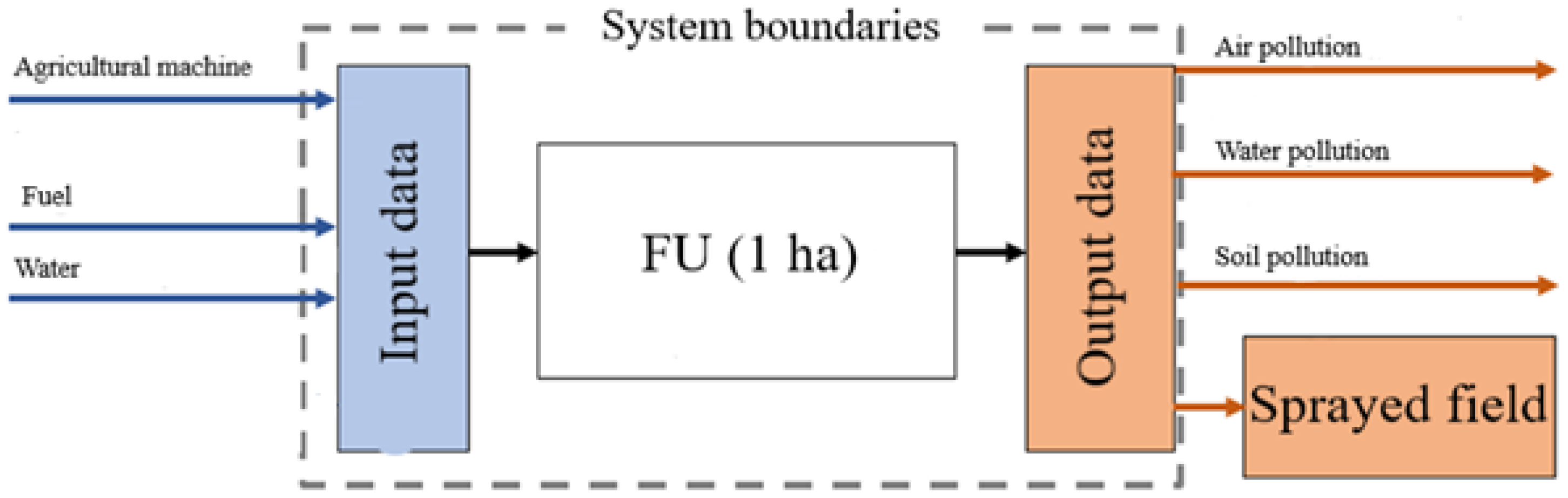
System boundaries (
Figure 1) include diesel fuel used by different spraying machines (TMABS, UGV, and UAV) and water as inputs. It is worth noting that both the UGV and UAV operate on batteries, but diesel was chosen as the fuel source because the batteries are typically charged in-field by diesel or petrol generators. The deterioration of the machines during operation and its effect on the environment was considered.
While performing the LCA, 11 impact categories were considered: abiotic depletion, abiotic depletion of fossil fuels, global warming potential, ozone layer depletion potential, human toxicity, freshwater aquatic ecotoxicity, marine aquatic ecotoxicity, terrestrial ecotoxicity, photochemical oxidation, acidification potential, and eutrophication. These categories are standard while performing an LCA and are adequate for determining the impact of agricultural practices on the environment while also being compatible with the CML-IA method.
Using this methodology, the quantities of used fuel and water together with machine wear and tear were assessed. The parameters that matched in all operating scenarios, such as pesticide quantity, were not considered for the future comparability of results. Also, due to variance in application quantities of different chemicals for different cultures, the calculations would have to take into consideration the full pest management strategy to provide precise region-specific results.
To perform an LCA a life-cycle inventory (
Table 2) needs to be collected. Materials of UGV and UAV components were split into 7 main categories: electronics and wiring, steel, aluminum, plastic, rubber, glass, and lithium battery. The tractor pulling the TMABS was equipped with a lead battery; therefore, it was used as a comparable substitute. Weights across all these categories were obtained from the manufacturer and distributor information and expressed as a percentage of the machine weight. Manufacturer data was collected and distributor interviews were conducted with the purpose of establishing the practical lifespan of the machines to be compared. Additionally, since all machines use different quantities of water to deliver the same pesticide payload, pesticides were omitted from the inventory; however, tap water was included. This information was used to compare the machine impacts on the FU. Through dividing by machine lifespan, material weight impacts on the FU were obtained [
46] and can be seen in
Table 2.
Fuel and water consumption data, as well as work rate and weight data were gathered from official machinery manufacturer and distributor websites and through a survey of distributors and spraying service providers for all machines except some data for UAV No. 1. The spraying service provider and local machine distributor survey had 3 service providers and 2 local distributors as respondents and consisted of three main questions: expected machine operating lifetime, average fuel consumption per hectare (assuming all batteries are charged with diesel generators), work rate in orchard conditions. Where the service providers and machinery distributors provided values differed, an average was calculated, but due to that being the case only for UAV No. 2 and UGV, with both receiving 2 values, no statistically significant uncertainty or deviation analysis could be performed. Due to the UAV being discontinued from production and with limited data availability, UAV No. 1 was used for in-field fuel consumption tests in a sea-buckthorn orchard for 3 h, using a manufacturer recommended diesel generator. Furthermore, it was disassembled and all parts weighed individually to determine the percentage of material weights. By dividing the material weights and lifespan by productiveness, the machine material depreciation values were obtained.
2.3. Energy Efficiency
Energy input (
EIF) for the growth of agricultural produce consists of two main groups—direct and indirect energy inputs. Manpower, fuel, and electricity are direct inputs while the machinery related energy consumption, energy required to produce fertilizers, pesticides, and other chemicals are considered indirect energy inputs [
47,
48]. Fertilizers and pesticides were considered as equal inputs for all machines and therefore were not included in the calculation. Typically, energy consumption related to growing and processing technologies is considered for an area of 1 hectare.
Total energy consumption
EIF is calculated by using the equation below [
47,
49]:
where
ED—direct energy inputs, MJ ha
−1;
EIN—indirect energy inputs, MJ ha−1;
Ez—human labor energy consumption, MJ ha−1;
Et—fuel energy consumption, MJ ha−1;
TW—machinery energy consumption, MJ ha−1.
To calculate the energy input, energy equivalents are used to represent energy consumption (
Table 3).
No studies calculating a standard inherent UAV energy equivalent were found, so different studies were compiled to obtain this value through the energy equivalents (
Table 4) necessary to produce materials to manufacture UAV No. 1. The data for the weight of the corresponding materials was obtained by weighing all separate components of the UAV.
The sum of the materials’ weights multiplied by their respective equivalents represents the total energy embodied in UAV No. 1 materials. The equivalent is significantly higher compared to other machines, as can be seen in
Table 3. This is due to the considerably small total weight of UAVs with a high percentage of that weight being electronics and carbon composites. It is worth noting that the human or machine labor used for manufacture of the UAV was not considered. Only data available in scientific works [
32,
53,
54,
55,
56,
57] was used to determine the total energy equivalents for all materials composing the UAV. Furthermore, the total mass of the compared UAVs and the mass of the batteries they utilize for operation are different, so the values used to obtain the equivalent are the most accurate for UAV No. 1 calculations. Final energy efficiency values for UAVs No. 2 and No. 3 might not be accurate for this reason. To address this uncertainty a sensitivity analysis was performed to examine the embodied energy value assigned to UAVs. Since detailed information on their material composition was not available, the embodied energy was adjusted by ±15% around the reference value of 132.69 MJ kg
−1. This variation was chosen to reflect potential differences in structural weight, battery size, and electronic component weights across different UAV models. The results showed that the relative performance rankings of the spraying systems in terms of total energy inputs did not change, suggesting that the overall conclusions remain robust despite uncertainties in the material composition of the UAVs. Rankings between the individual UAV system total energy inputs also remained unchanged.
2.3.1. Direct Energy Inputs
Human labor energy consumption (
Ez) in typical agricultural practices is calculated by multiplying the amount of man hours needed to spray one hectare by the energy equivalent provided in
Table 3 (MJ ha
−1) [
47,
49]:
where
Wk—human labor, h ha
−1;
αz—energy equivalent, MJ h−1.
To calculate human labor energy consumption the equivalent 1.96 MJ h−1 was used. Human labor was considered with a full operating cycle in mind (filling the machine with spray mixture, spray mixture preparation, and machine operation). To obtain this data, service provider queries were performed. The key questions asked were the following—what size batch of spraying mixture do they mix at a time, how long does that process take, what is the application rate per hectare and the duration to spray one hectare of orchards. This data was dependent on the strength of the pumps used for pumping water and the machine used for application.
Fuel energy consumption (
Et) is calculated by multiplying the amount of fuel needed to spray one hectare and the appropriate fuel type energy equivalent, which in this case was diesel [
47,
49]:
where
Gk—fuel consumption, L ha
−1;
αd—fuel energy equivalent, MJ kg−1.
It is also worth noting that the calculations considered not only the energy consumed during operation but also the energy consumption experienced from UAV takeoff to start of operation and from end of operation to landing. Data for UAV No. 1 was obtained through the fuel consumption trial runs in a sea-buckthorn orchard.
2.3.2. Indirect Energy Inputs
Total energy embodied in machinery was calculated by taking into consideration all of the material required to manufacture the machine. This includes the mining, refining, and manufacturing processes. Maintenance and transportation to the end user are also embodied in these values [
48]. To perform precise calculations for agricultural machinery it is important to keep in mind not only the weight of the machine but also the duration of the operation to spray one hectare and the total potential equipment operating hours [
47,
48]:
where
γt—machine energy equivalent, MJ kg
−1;
G—weight of the machine, kg;
Wh—time required for spraying, h ha−1;
T—the life of machinery as used in practice or economical lifetime, h.
The data to calculate the total energy embodied in machinery such as the duration of operation to spray one hectare and the total potential equipment operating hours were gathered through practical observations and the technical data from manufacturer websites.
2.3.3. Economic Viability
The proposed economic analysis followed standard methods used in agricultural machinery costing. The total cost was broken down into two main parts: ownership costs (capital costs (depreciation) considering interest) and operating costs (fuel, labor, consumables, and maintenance). The total cost per hectare was calculated by summing these components and dividing by the area to be treated. This approach is consistent with common practices in agricultural engineering and farm management [
58,
59]. Depreciation was calculated using the straight-line method—defined as the difference between purchase and salvage value divided by machine lifetime, following FAO-based machinery costing procedures [
60]. Interest calculation was also factored into the total annualized capital cost calculations. To obtain total cost per hectare values for the machines compared, the equations provided below were utilized.
The total cost per hectare (
Ctotal.ha) consists of 5 main drivers—capital cost (
Ccap.ha), labor cost (
Clabor), energy (fuel) cost (
Cenergy), operational consumable costs (water, pesticides, fertilizers, etc.) (
Cconsumables), maintenance costs (
Cmaint.ha) [
58]:
Ccap.ha—capital cost per hectare [
58]:
where
Ccap.annual—annualized capital cost, € year
−1 [
60];
where
P—machine and all supplementing equipment (generator, trailer for hauling UAVs) purchase price, €;
S—salvage value of selling the used machine on the secondary market or for scrap, €;
L—machine lifetime, years;
i—interest rate if machine is financed, %.
Aannual—area to be sprayed annually, ha year−1.
Clabor—labor cost:
where
H—human labor hours per hectare, h ha
−1;
W—worker wage rate, € h−1.
Cenergy—energy cost:
where
E = energy source use per hectare, L ha
−1;
p = energy source price, € L−1.
Cconsumables—consumables cost:
To calculate consumable costs only water used for spraying was considered; pesticide consumption was assumed to be equal for the purpose of this study.
where
Q = quantity of consumable per hectare (l ha
−1);
p—unit price (€ L−1).
Cmaint.annual—maintenance cost:
where
m—number of times maintenance event occurs per year;
P—maintenance operation price, €.
3. Results
3.1. Assessment of Environmental Impact—LCA
While performing an environmental impact assessment for different spraying machines using the LCA methodology, 11 numerical values for different impact categories were obtained. From the results (
Table 5), it is evident that ground-based spraying equipment had a more significant impact on the environment while UAVs significantly reduced the impact across all 11 categories.
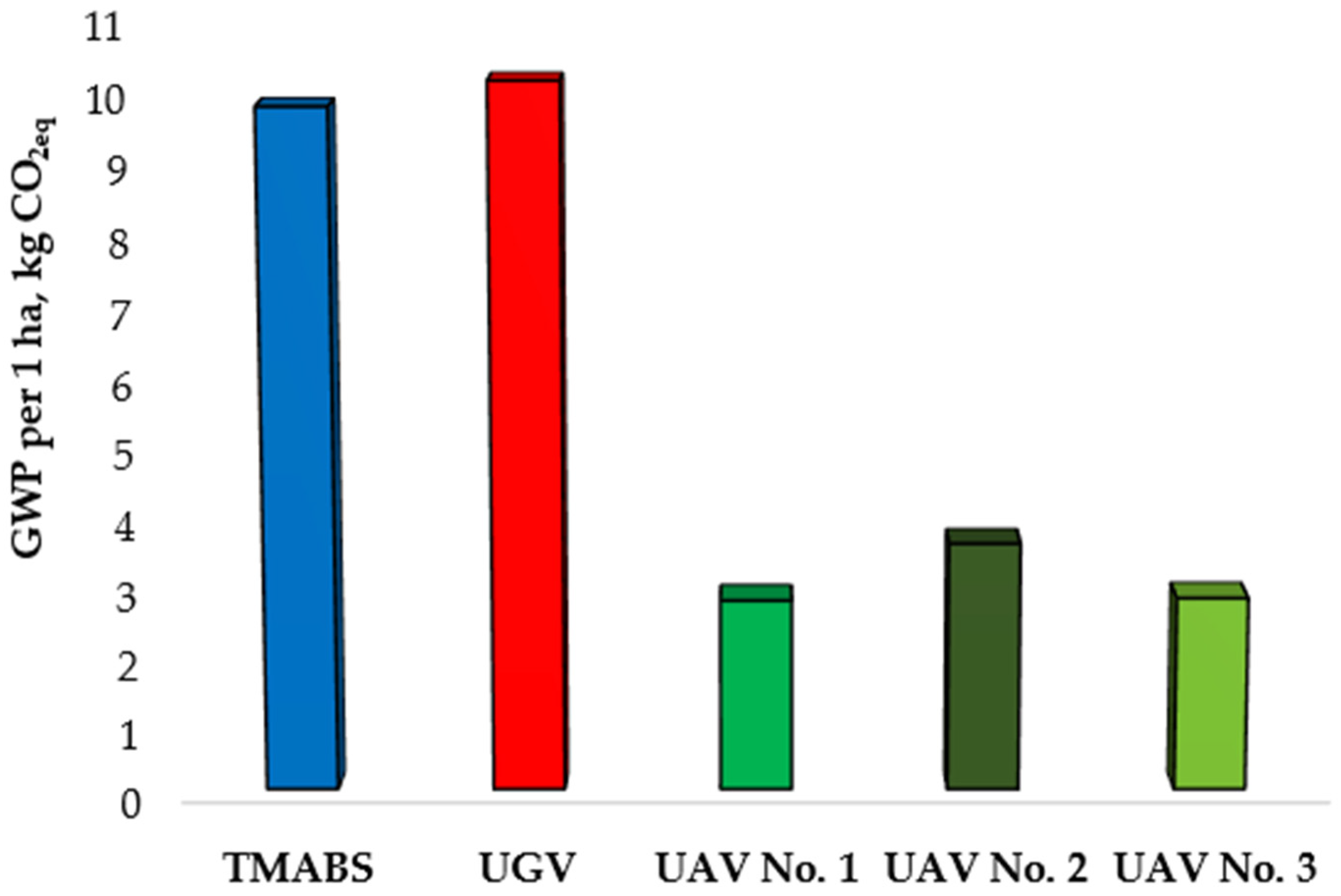
Considering the global warming potential (GWP) impact category as an example (
Figure 2), UAVs produced 2.7–3.6 kg CO
2eq (not accounting for the pesticides to be applied), which is roughly three times lower than that of both UGV and TMABS (approx. 10 kg CO
2eq). This is for two reasons. The UAVs use significantly less fuel for operation, and the same energy is recycled as the mode of delivery for the spray medium. The difference in GWP for different UAV models stems from the difference in mass of components, battery capacity, and work rate. The UGV, however, uses the same quantity of fuel for changing but due to slow operating speed the overall benefit is offset.
To properly assess the differences between the environmental impact categories evaluated in an LCA, their values can be normalized. The use of normalized values in practical LCA calculations helps identify the most significant environmental impact categories [
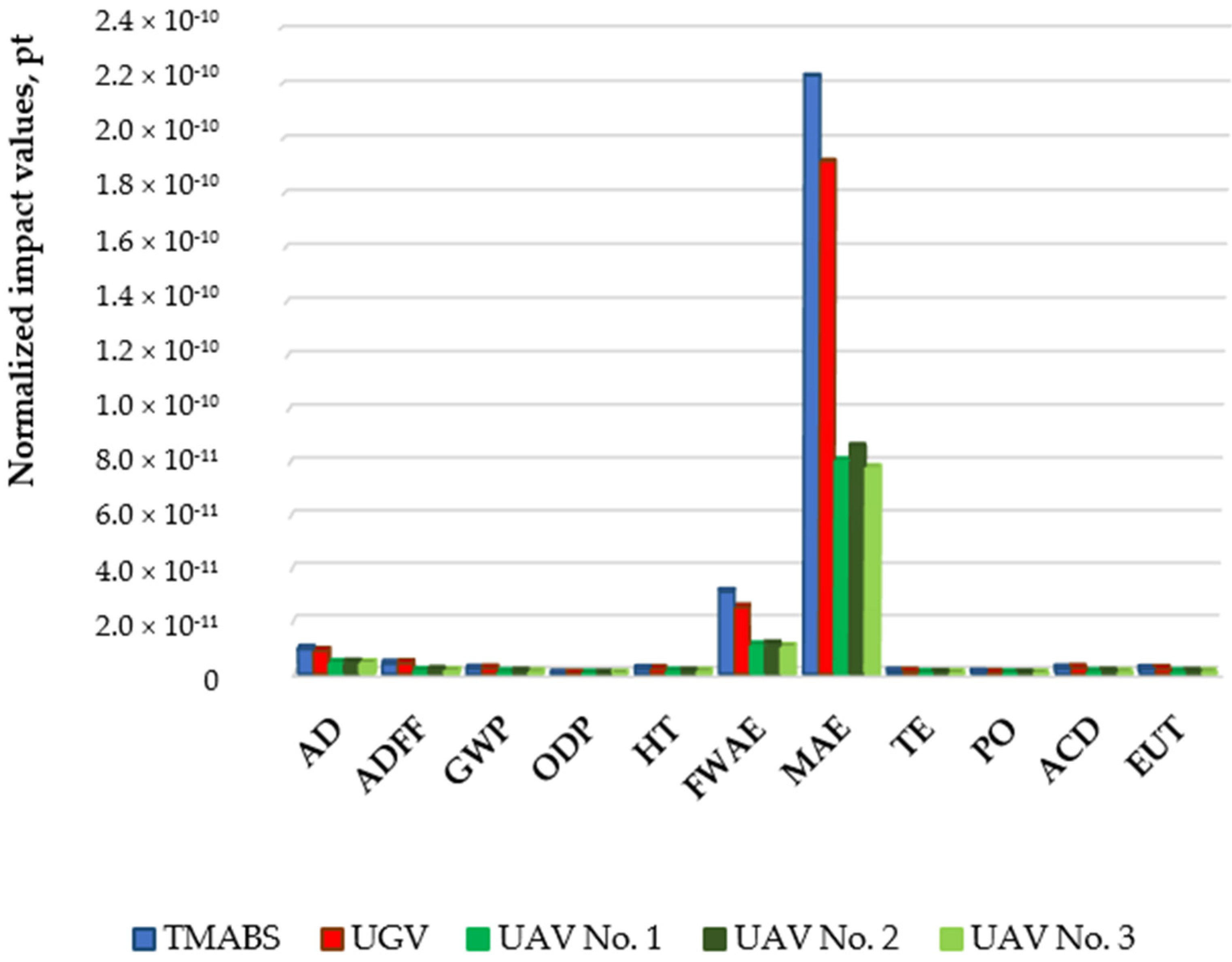
61]. This also allows comparison of the results obtained and establishes reference points when analyzing the results. As shown in
Figure 3, all the sprayers analyzed had a great impact on marine aquatic ecotoxicity (MAE). In this category, the environmental impact was significantly greater than in the others. A few other categories that stood out were abiotic depletion (AD) and freshwater aquatic ecotoxicity (FWAE).
A comparison of the three most prominent categories revealed that the marine aquatic ecotoxicity following TMABS application (2.23 × 10⁻¹⁰) was approximately 23.4 times higher than the abiotic depletion (0.95 × 10⁻¹¹). Looking at the results obtained from one of the drones (UAV No. 1), a slightly smaller difference was observed: the marine aquatic ecotoxicity (8.09 × 10⁻¹¹) was about 19.7 times higher than the abiotic depletion (0.41 × 10⁻¹¹). When comparing the results for marine aquatic ecotoxicity with those for freshwater aquatic ecotoxicity (3.13 × 10⁻¹¹), the numerical values differed by approximately 7.1 times in the case of TMABS. The results for the drone (UAV No. 1) showed that the marine aquatic ecotoxicity using this technology is approximately 7.9 times higher than that of freshwater aquatic ecotoxicity (1.03 × 10⁻¹¹). When comparing the numerical values obtained across other categories, it can be observed that the differences are very small. It can be noted that in five categories (AD, HT, FWAE, MAE, PO), TMABS has the highest numerical values, while in the remaining six (ADFF, GWP, ODP, TE, ACD, EUT), UGV showed the highest values. Additionally, all three UAVs used had a significantly lower impact across all 11 environmental impact categories.
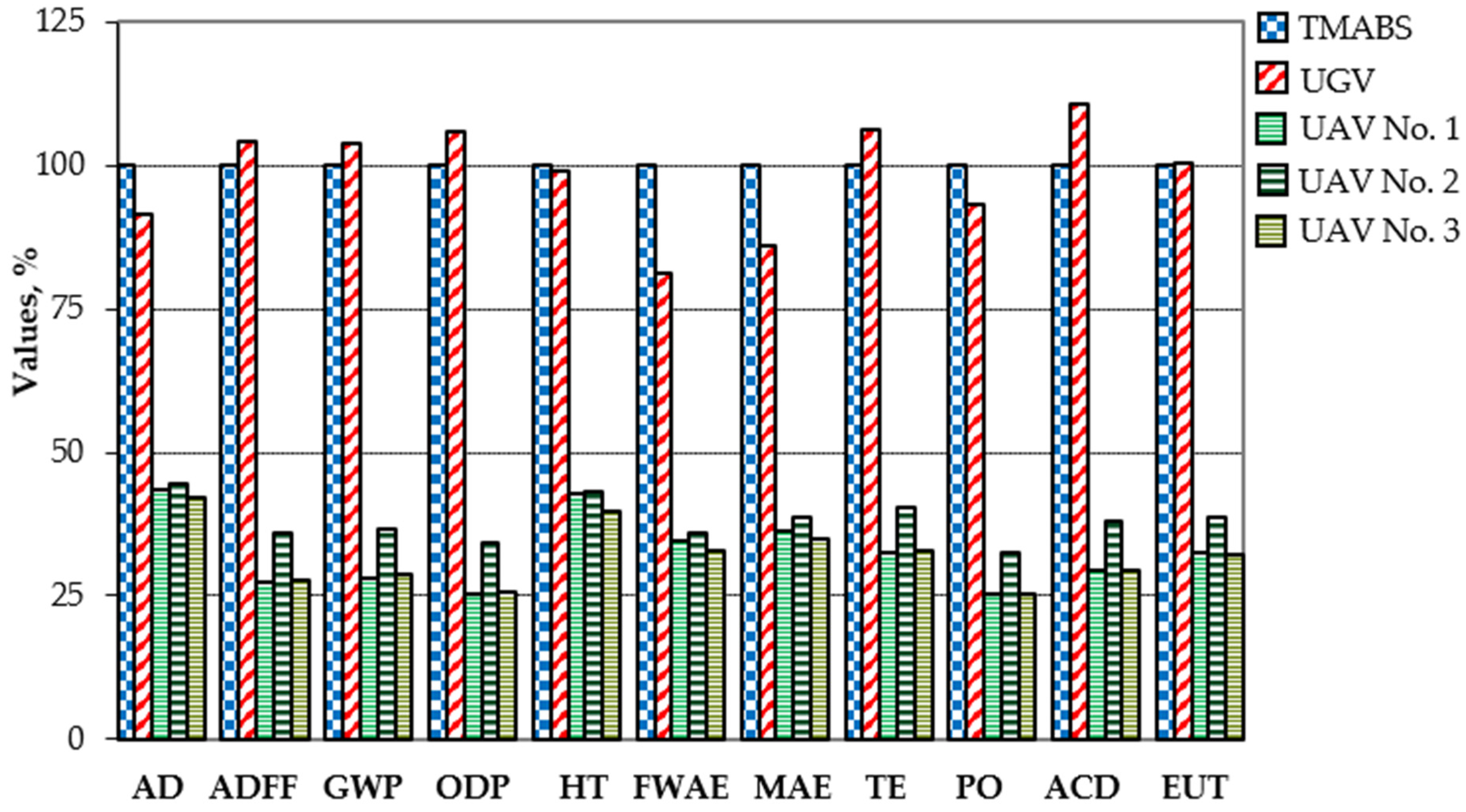
Based on the results obtained, it was decided to compare the percentage differences between the numerical values obtained in different environmental impact assessment categories, as shown in
Figure 4. A similar comparison method was used by another group of researchers [
62]. This group equated the values of different environmental impact categories to percentage values. Following this approach, a similar data presentation format was employed in this study. An analysis of the results obtained for the spraying equipment used in the study shows that UAVs have the least environmental impact, as their values were the lowest across all categories.
Looking at
Figure 4, the distribution among the individual categories can be seen. When evaluating the abiotic depletion category, the TMABS has the greatest impact among all the sprayers analyzed. When evaluating autonomous machines, UGVs had an impact approximately 8.4% lower than TMABS in this category. As shown in the graph, there is no significant difference among UAVs, but compared to TMABS, UAVs had an impact on abiotic depletion that was approximately 56.7% lower. When evaluating the next category, abiotic depletion (fossil fuels), it can be observed that the impact of UGVs in this category is 4.2% higher than that of TMABS. However, unlike UGVs, all UAVs had significantly lower values than TMABS, and they had an impact on this category that was approximately 69.6% lower. Global warming potential has been discussed, but it should be emphasized that the impact of UGVs on this category is approximately 3.7% higher than that of TMABS. UAVs again had a noticeably smaller impact, and it was found that using this type of spraying equipment can reduce the impact in the GWP category by about 68.8% compared to traditional spraying equipment. Looking at the ozone layer depletion category, it can again be observed that UGVs have a 5.8% greater impact compared to TMABS. UAVs help reduce the impact on the ODP category by approximately 71.5% compared to TMABS. In the human toxicity category, it can be observed that the use of UGVs for orchard spraying has a slightly lower impact of approximately 0.8% compared to TMABS. In this category, the use of UAVs has an impact that is approximately 58.1% lower than that of a tractor-mounted sprayer. When evaluating the impact of sprayers on water, the trends are very similar. The use of UGVs helps reduce the impact on the freshwater aquatic ecotoxicity category by about 18.8% and in the marine aquatic ecotoxicity category by about 14% compared to TMABS. Meanwhile, UAVs again demonstrated better results. In the freshwater aquatic ecotoxicity category, the impact was reduced by approximately 65.5%, and in the marine aquatic ecotoxicity category by approximately 63.3% compared to TMABS. When assessing the impact on the terrestrial ecotoxicity category, it is observed that UGVs have an impact approximately 6.1% greater than TMABS. The results show that the use of UAVs helps reduce the impact on terrestrial ecotoxicity by approximately 64.7% compared to TMABS. Looking at
Figure 4, it can also be observed that when using UGVs for orchard spraying, the impact on photochemical oxidation decreases by approximately 7%, while using UAVs reduces it by about 72.2% compared to TMABS. In the acidification potential category, it can be seen that the numerical value for UGVs is approximately 10.5% higher than that of TMABS. However, the use of UAVs in this technological operation can help reduce the impact in the acidification potential category by approximately 67.6% compared to TMABS. Finally, when evaluating the last LCA calculation category, eutrophication, it was observed that UGVs have a slightly higher impact of about 0.3% on this category compared to TMABS. As in all the categories analyzed previously, the use of UAVs has a significant impact on this category as well. When comparing the results obtained from these machines with TMABS, a reduction of approximately 65.5% in impact was observed.
An important methodological assumption in this study was the use of diesel generators to charge UGV and UAV batteries to reflect realistic field conditions in remote orchards where access to electricity may be limited. However, other charging options, such as grid electricity or renewable energy sources could significantly influence the environmental results. To account for this, an additional scenario analysis was conducted using alternative charging methods. The findings showed that the environmental impact of the UGV is highly sensitive to the charging method, especially in terms of global warming potential and fossil resource depletion. Therefore, while diesel-based charging represents a conservative and practical baseline scenario, the environmental performance of the UGV would improve considerably under grid-connected or renewable energy charging systems and surpass TMABS performance. This change would also have a minor effect on the overall energy efficiency and economic viability of the UGV and UAVs but the overall ranking would not be impacted.
3.2. Assessment of Energy Efficiency
The calculated energy input (
EIF) for all the machines compared is provided in
Table 6. It is worth noting that the obtained UGV and UAV fuel energy values are subject to change depending on the fuel source used for charging.
The results of the energy efficiency analysis conducted showed significant differences between the machines compared. TMABS showed the highest total energy input per hectare—116.99 MJ, mainly due to the significantly larger fuel consumption in comparison to UAVs and the significantly higher embodied energy (which stems from the significantly larger overall weight of the tractor and air-blast sprayer). The UGV showed a slightly lower total energy input—87.35 MJ as compared to the TMABS, but the fuel consumption and human labor were higher than that of the TMABS. The only advantage of the UGV in these calculations is the inherently smaller machine weight which reduced the values of the energy embodied in machinery used per hectare of operation of total machine lifespan. However, fuel energy could be reduced for the UGV if the batteries it operates on were to be charged using solar or other alternative renewable energy sources instead of a diesel generator. As can be seen in
Table 6, it is evident that UAV spraying operations are significantly less energy intensive compared to TMABS or UGV spraying operations with only 18.97 to 25.95 MJ of total energy consumed per hectare. Considering that UAV operations required two operators (as per Lithuanian UAV regulations) to be present for the job, while other machinery required only one operator, the human labor energy requirements for UAVs are still 2–3 times lower. The total energy input is reduced by 4–6 times when using UAVs instead of ground-based sprayers. UAV No. 3 demonstrated the lowest total energy requirements per hectare (18.97 MJ), followed closely by UAV No. 1 (19.45 MJ), while UAV No. 2 showed slightly higher energy consumption (25.95 MJ) due to increased fuel energy demand (two batteries are needed for the UAV to operate). Overall, the results demonstrate that UAV spraying systems require considerably less total energy input compared to ground-based technologies.
3.3. Assessment of Economic Viability
The Total Cost per hectare and the five main drivers that go into the calculation for all compared machines are provided in
Table 7. Similar to the energy calculations, chemical usage was considered equal for all machines, therefore only water consumption differences were calculated in the consumable’s column. To obtain hourly wage rates, local job listing websites [
63,
64] were analyzed, and it was determined that the minimum hourly wage for tractor and robot operators started at 12.5 € h
−1, while for UAV operators the starting rate was 17.5 € h
−1. Farmers in Lithuania get fuel subsidies, but considering that the price varies depending on the fuel station and location, an average price of 1.03 € L
−1 was considered. This was the official average agricultural diesel price in the beginning of 2025 as per the data provided by the Agricultural Data Center of Lithuania [
65]. Water prices also vary in different regions of the country, but statistical data from 2025 April was obtained from VERT (national energy regulations service) and the average price (across 67 water supply companies) was 1.3 € m
−3 [
66]. This price is only for the water supply without wastewater treatment fees and VAT applied. Some farmers in the country have their personal aquifers, ponds, or other means of collecting free water for orchard spraying; however, the government is looking into ways of taxing those as well so, for the sake of calculations, it was assumed that all farmers purchase water for crop irrigation.
For the purposes of these calculations all other consumable inputs (pesticides, fertilizers) were considered equal. For the capital cost calculations, the prices of new machinery were considered; furthermore, the salvage value (resale price to secondary market or for scrap) was chosen to fit the current sales price of pre-owned machines in the local market. Resale prices are unavailable due to the limited market size and the novelty of spraying UAVs which are rarely sold on the second-hand market in the region. Battery costs were included in the economic model, where the initial purchase was assigned to capital costs, and periodic battery replacements considering average replacement rate during the system lifetime were accounted for within the maintenance cost values for both UAV and UGV systems. Due to subsidies, the interest rate for the purchase of agricultural machines was considered to be around 2% depending on the company that was financing the purchase. It is worth noting that agricultural drones are still not considered agricultural machinery in Lithuania, so the interest rate on average is closer to 3%. It is also worth noting that UAV No. 1 is no longer being produced; so, the purchase price is based on the historical procurement records from Vytautas Magnus University (2023), which reflect the market value at the time of the technology’s introduction. It is also worth noting that capital values were considered only for orchard spraying operations; however, if the same machine is used for spraying cereal crops or performing other operations, the productivity increases significantly and the capital cost per hectare can be reduced further.
As can be seen from
Table 7, the total cost per hectare (not including consumables) is the lowest when utilizing any of the UAVs, but specifically when using UAV No. 3. TMABS exhibited the highest cost per hectare due to the high initial capital costs. It is also worth noting that while the UGV is operating, a human is not required to be present on the field (purely from a technological standpoint); thus, only the time to prepare chemicals and fill and program the machine would remain to be considered, removing half of the labor expenditures. This would be an improvement compared to TMABS but still is not enough to be on the same level as the UAV spraying costs. Purely from a technological perspective, this is possible; however, EU legislature bans the use of autonomous robots without direct human supervision [
67], and UAV operation out of the operator’s line of sight [
68] and human labor cannot be avoided during the machine’s operating time. The economic model accounts for EU regulatory constraints by assuming a two-operator UAV workflow, where one operator performs flight operations in a location further away from the landing area, while the second supports continuous mission execution tasks such as battery handling and spray tank refills. Communication is executed either through two-way radios or phone calls to ensure the operators’ safety. For UGV operations, operator labor costs were included for the entire duration of the machine operation, reflecting the supervised operation requirements under the current regulatory conditions.
In conclusion, spraying orchards with UAVs can save farmers up to 63% of total costs though reduced capital investment size, reduced fuel and water consumption, as well as lower total overall man hours spent for spraying one hectare.
4. Discussion
According to findings by one research group [
24], UAV spraying demonstrated the same fungicide efficacy while using 87% less total spray volume, and another group [
25] established that equivalent weed control levels can be achieved while using 20–35% less herbicide compared to self-propelled and tractor-mounted sprayers, such as TMABS. A comparison of the obtained results with findings from the recent literature showed strong overall agreement in trends, although there was some variation in magnitude due to methodological and system boundary differences. The observed reduction in GWP, when using UAVs, ranging from approximately 63% to 72%, in comparison to TMABS is largely attributable to the elimination of direct diesel fuel use and the lower spray volumes associated with ultra-low-volume application strategies, as was reported in other recent LCA-based analyses [
22,
31]. Substantial GWP reductions for UAV spraying are mainly driven by lower fuel consumption and reduced spray volumes. Similarly, the increase in GWP for UGVs (+3.7%) is consistent with findings by another group [
34], where ground-based mechanized systems exhibited comparable or slightly higher emissions. However, the GWP between the UGV and TMABS systems is relatively small in absolute terms (0.36 kg CO
2eq) and should be interpreted as marginal given the methodological assumptions of the study. Furthermore, this result is sensitive to the assumed energy source for battery charging. The use of grid electricity or alternative energy sources would likely reduce the GWP of the UGV system and potentially reverse the observed difference. Recent controlled comparisons and LCAs emphasize that efficiency depends heavily on operational scale, payload-to-field ratio (how many hectares per refill), the duty cycle (turnaround times), and the specific metric chosen (MJ ha
−1 vs. MJ kg
−1 (active ingredient delivered)) [
31,
36]. It is worth noting that GWP results in this study rest on the methodological assumption that the pesticide application rate is the same across all spraying systems and all systems utilize diesel as their main source of propulsion energy. Therefore, emissions linked to pesticide production, formulation, and logistics were excluded and the study instead focused on the energy consumed during actual field operations and the impacts associated with the machinery itself. This approach is in line with several other comparative LCA studies on agricultural sprayers, which also assume equal application rates in order to isolate the effects of the application technology [
31,
34,
46].
The calculated energy efficiency improvements (77.8–83.8% for UAVs and 25.3% for UGVs) are also supported by recent studies such as [
22] that established a 24 kWh ha
−1 (when converted to MJ—86.4 MJ ha
−1) reduction in energy use while spraying with UAVs. This value compares closely to the 95.5 MJ ha
−1 difference obtained in this study. However, a total 54.3% reduction in energy consumption when evaluating all energy inputs was obtained by the same research group [
22]. The differences in obtained results inherently stem from different evaluated operating scenarios (orchards and field crops), different calculation methodologies, and by not taking chemical production energy inputs into account in this study. Scientists [
22] also highlighted the significantly lower operational energy requirements of UAVs per hectare, particularly under low-volume application regimes. However, these advantages are noted to be sensitive to payload limitations and operational logistics. It is also worth considering that due to limited payload, or when terrain irregularities, canopy density, or environmental factors force lower altitudes and slower operating speeds, the UAV batteries lifespan decreases significantly faster. This forces the production of new batteries and causes the energy efficiency, economic, and environmental advantages to diminish [
32]. The UGV system also exhibited improved energy efficiency (approximately 25%), although to a lesser extent. Robotic spraying systems that reduce spray volume by up to 83% [
38] are expected to reduce total energy consumption by approximately 30–50% per hectare [
31], depending on the relative contribution of the chemical inputs and propulsion energy within the system. This estimate aligns with the results obtained in the scope of this study.
From an economic perspective, the observed reduction in UAV operating costs (51.7–62.8%) corresponded well with results obtained by another research group [
40], who determined that UAV sprayers offer 50.2% lower overall costs compared to TMABS for orchard operations, mainly through labor, fuel, and maintenance costs, whereas the price of maintenance for UAVs in the Lithuanian market is higher in comparison to TMABS and does not constitute any savings. Conversely, slightly higher UGV costs (+4.2%) are consistent with the higher capital and maintenance requirements reported by other scientists [
38]. Across all studies, diesel fuel consumption was identified as the dominant contributor to environmental impacts, while labor and capital-related costs were the primary contributors to total operating expenses, a trend consistently observed in agricultural LCA and cost analyses [
31,
34]. However, it is important to note that these results are region-specific. While they may apply broadly to other Baltic and Eastern European countries, the conclusions may not hold up in Western, Northern, or Central Europe, where wages, electricity, fuel, and water prices are higher. But the overall ranking between machine types is expected to remain consistent. In contrast, in regions where labor costs are low and diesel fuel is relatively inexpensive, TMABS may remain more cost-competitive. This advantage is especially evident in large-scale orchards, where higher work rates help spread capital costs over more treated hectares, further improving their economic efficiency.
Despite the favorable results reported in this study, the use of UAVs to spray in orchards comes with a number of real-world constraints. One of the challenges is the limited payload capacity of current UAV platforms, which forces operators to interrupt field operations frequently for battery swaps and tank refills. This disrupts the workflow and lowers the potential efficiency, particularly in larger orchards where maintaining a high and consistent work rate is economically important [
15,
28,
40]. Battery performance deteriorates over time and tends to drop noticeably in cooler temperatures, which are common during early-season operations, adding additional concerns [
20,
32]. Furthermore, adequate canopy penetration and uniform droplet coverage in dense tree canopies remains one of the more persistent technical challenges for UAVs. The rotor downwash, while useful for pushing droplets downward, often struggles to deliver sufficient coverage to the lower and inner canopy zones that TMABS reach more effectively thanks to their high-volume airstreams [
18,
19,
27,
35]. This problem is made worse by wind related drift and temperature related evaporation which significantly reduce the available spraying windows for safe and effective operation [
16,
23,
33]. Regulatory requirements add another layer of complexity. Operating UAVs in agricultural settings within the EU requires compliance with EU Regulation 2019/947 [
68], which involves specific operational authorizations, structured risk assessments, and buffer zone restrictions near residential areas. Taken together, these limitations suggest that UAVs are best suited to specific orchard conditions, particularly smaller, irregular or sloped plots and cannot be considered a universal replacement for ground-based machinery. Hybrid approaches combining UAVs with autonomous ground sprayers are increasingly being explored as a more practical and comprehensive solution for orchard plant protection [
17,
41]. However, further strengthening the case for UAV use, an important practical advantage of UAV spraying systems, which may not be fully captured through life cycle assessment (LCA) or cost-per-hectare evaluations, is their operational flexibility under challenging field conditions. Unlike TMABS, UAVs allow timely pesticide applications after heavy rainfall or during periods of high soil moisture when ground based equipment cannot enter the orchard [
17,
27]. This is particularly valuable in sloped orchards, small farms, or in areas where heavy machinery risks causing soil compaction or damaging trees and crops—problems that have been associated with TMABS [
9,
60]. Moreover, timely treatment is often critical for effective pest and disease control, and delays reduce pesticide efficacy and increase production risks [
2,
16]. Therefore, despite limitations in payload capacity, battery life, and weather sensitivity, UAV spraying technologies still offer important practical benefits. UAVs improve application timeliness and provide access precisely when and where conventional machinery cannot be used [
15,
20,
27].
5. Conclusions
A comparison of five different sprayers was conducted. Tractor-mounted air-blast spraying systems (TMABS), unmanned aerial vehicles (UAVs), and unmanned ground vehicles (UGVs) were compared.
The results indicate a substantial reduction in GWP when using UAVs, with emissions decreasing by 63.5–71.9% compared to the TMABS. In contrast, the UGV exhibited a 3.7% increase in GWP, suggesting that its environmental performance remains comparable to conventional systems under the analyzed conditions.
From an energy perspective, both UAVs and UGVs demonstrate notable improvements in comparison to TMABS. The UGV achieved 25.3% higher energy efficiency per hectare, while UAV systems showed a 77.8–83.8% improvement. These differences highlight the strong influence of reduced spray input volumes and system design on the overall energy demand.
The results of the economic viability calculations closely mirror the environmental analysis results. The UGV system incurred slightly higher operational costs (4.2% higher) compared to the TMABS, while UAVs showed a clear improvement, reducing the operating costs by roughly 51.7–62.9% per hectare.
Across all scenarios, diesel fuel consumption emerged as the dominant contributor to environmental impacts and energy use. At the same time, labor and capital-related expenses were identified as the principal factors shaping total operating costs, underscoring the importance of both energy sources and economic structure in determining the overall system performance.





 ,
,