Article

Research on an Online Detection Method of Seed Filling Performance for a Pneumatic Suction Seed Metering Device Based on YOLOv8-MA


1
College of Engineering, China Agricultural University, Beijing 100083, China
2
State Key Laboratory of Agricultural Equipment Technology, Chinese Academy of Agricultural Mechanization Sciences Group Co., Ltd., Beijing 100083, China
*
Author to whom correspondence should be addressed.
AgriEngineering 2026, 8(6), 240; https://doi.org/10.3390/agriengineering8060240 (registering DOI)
Submission received: 17 April 2026 / Revised: 27 May 2026 / Accepted: 4 June 2026 / Published: 12 June 2026

Abstract

To address the difficulty of real-time detection of seed-filling performance in pneumatic suction seed metering devices under high-speed operation—where seed targets are tiny, prone to adhesion, and affected by motion blur—this paper proposes a lightweight online detection algorithm, YOLOv8n-MA. First, according to the seed adsorption characteristics of the suction holes, the detection targets are divided into three categories: none, one, and two. Second, based on YOLOv8n, the backbone network is replaced with MobileNetV1 to reduce computational cost, and an ACmix attention module is integrated into the Neck to enhance feature representation for the three suction-hole states. Finally, to meet the demand for low-latency inference on resource-constrained devices, the model is deployed on an edge computing controller to achieve real-time detection. Experimental results show that, compared with the original YOLOv8n, the parameters and FLOPs of YOLOv8n-MA are reduced by 34.4% and 59.8%, respectively, while the mean average precision (mAP) is improved by 2.0% to 96.8%, achieving a superior trade-off between accuracy and efficiency over other detection models of the same category, such as YOLOv5n, YOLOv9n, and YOLOv10n. In field tests, the detection accuracy reaches 95.02% at 12 km/h and 92.65% at 15 km/h. The proposed method provides effective technical support for the intelligent monitoring and control of precision seeding under high-speed operation.

1. Introduction

With the rapid development of agricultural mechanization technology, air suction seed metering devices, characterized by their excellent seed metering versatility, low seed damage rate, and high seed metering frequency, are widely used in precision seeding operations for crops such as corn and soybeans. Their working performance directly determines the seeding uniformity, pass rate, and field seedling emergence quality [1,2]. The working process of an air suction seed metering device generally consists of four stages: seed filling, seed cleaning, seed carrying, and seed dropping. The seed filling process is a crucial stage of the seed metering device’s operation, referring to the process where seeds are adsorbed to the suction holes of the seed metering disc under negative pressure, completing the filling of the seed population [3,4]. With the increasing demand for high-speed seeding operations, the airflow force acting time at the type holes during seed filling is shortened, and the centrifugal force increases. Coupled with factors such as vacuum degree, rotational speed, seed shape, and attitude, defects such as incomplete filling (empty holes), double filling (multiple seeds), and oblique filling (abnormal attitude) are prone to occur, leading to a decline in seed filling performance and seriously affecting the operation quality of the seeder [5]. In recent years, numerous scholars both domestically and internationally have conducted research on improving the seed filling performance of air suction seed metering devices through improving mechanical structure, increasing auxiliary airflow, and vibrating seed supply. Yang Li et al. [6] designed an air suction corn precision seed metering device that utilizes a mechanical seed support disc to assist in seed attachment. This device utilizes the support and clamping effect of the seed support disc’s nest holes to assist in the seed attachment of the air suction seed metering disc. Yan Bingxin et al. [7] designed an air suction seed metering device based on the principles of mechanical seed disturbance and gravity-assisted seed filling, which achieves effective high-speed seed metering through the synchronous rotation of the seed metering disc and negative pressure chamber. Zhao et al. [8] utilized electromagnetic vibration to vibrate seeds to a boiling state, achieving the goal of reducing inter-seed resistance and assisting in seed filling. With the increase in operation speed, the stability of the seed metering device’s seed filling performance (measured by the qualified index, missed seeding index, and reseeding index) faces severe challenges. Real-time and precise performance detection under high-speed conditions has become a technical bottleneck restricting the improvement of seeding quality.
The quality of feed index, miss index, multiple index and seed spacing uniformity are key indicators for evaluating the performance of seeding devices. Accurate and efficient detection methods are of great significance for the structural optimization, performance improvement, and quality inspection of seeding devices [9]. Traditional seeding device performance testing mainly relies on bench manual counting, photoelectric sensors, and piezoelectric sensors [10,11,12]. Manual methods are inefficient, subjective, and unable to perform online real-time detection. Photoelectric sensor methods can only identify the presence or absence of seeds, making it difficult to distinguish complex states such as reseeding and oblique seeding, and are susceptible to interference from dust and vibration, unable to fully acquire spatial distribution information of seeds. In piezoelectric sensor testing for seeding, the need for contact between the seeds and the piezoelectric sensor alters the trajectory of the seeds and is prone to issues such as increased coefficient of variation in seed spacing [13]. In recent years, with the development of machine vision technology, scholars have begun to explore the application of machine vision technology in seed detection, known as the machine vision method [14]. The machine vision method achieves pixel-level detection through non-contact means and can detect more parameters, such as seed color, shape, size, and even falling posture. The main functional component used in seed detection by machine vision is the camera. Currently, the main cameras used for seed detection are general-purpose cameras for rapid detection and high-speed cameras for capturing high-speed moving targets [15]. General-purpose cameras have advantages such as small size and easy installation, but due to frame rate limitations, they can only detect seeds at lower speeds and cannot be applied to seed detection in high-speed operations. High-speed cameras can detect seeds moving at high speeds, but they are bulky, inconvenient to install, and difficult to adapt to harsh field operating environments. Currently, they are mostly used for theoretical research in laboratory settings. Yazgi et al. [16] used computer vision technology to study the motion trajectory and uniformity of seeds during the seeding process, providing a reliable basis for optimizing the working parameters of seeding devices. Navidt et al. [17] used cameras to record the falling process of seeds and analyzed the images with Matlab 2022b software to obtain parameters such as seeding quantity, seeding uniformity, miss index, and multiple index. Based on machine vision methods, Mangus et al. [18] developed a seeding quality monitoring system that utilizes high-speed cameras to detect seed signals. This system aims to assess the real-time seeding accuracy of variable-rate seeders and investigate the impact of factors such as seeder speed, acceleration, or deceleration on seeding accuracy. The existing research on the seeding performance of air suction seeders using machine vision technology mostly focuses on the recognition and analysis of images of seeds falling off the seeder or coming into contact with the seedbed [19,20]. Due to factors such as field operation vibration, light changes, and dust interference, and the fact that the soil covering process is immediately completed after the seeds come into contact with the seedbed in actual seeding operations, it is impossible to achieve the collection of continuous seed flow images after continuous implantation in bench experiments. Due to its high cost and complex post-processing process, it is limited to offline analysis and cannot provide real-time feedback for the operation process. Therefore, developing an intelligent detection method that can evaluate seed filling performance online and in real time is of great practical significance for ensuring the quality of high-speed and precision sowing and promoting the development of intelligent agricultural equipment [21,22].
In response to the above issues, this article constructs an online detection system for the filling performance of air suction seeders based on an improved YOLOv8 object detection model. The core innovation lies in integrating the Multi head Attention (MA) mechanism into the YOLOv8 architecture to enhance the model’s accurate recognition ability for single and overlapping seeds in high-speed, dynamic fuzzy, and complex backgrounds. This method aims to achieve real-time visual monitoring of the seed filling process. By directly analyzing the images of the seeding disk, key performance indicators such as quality of feed index, miss index and multiple index are calculated and output online, providing real-time data support for the performance evaluation and operation parameter optimization of the seeding device.

2. Materials and Methods

2.1. Structure and Working Process of the Air Suction Seed Metering Device

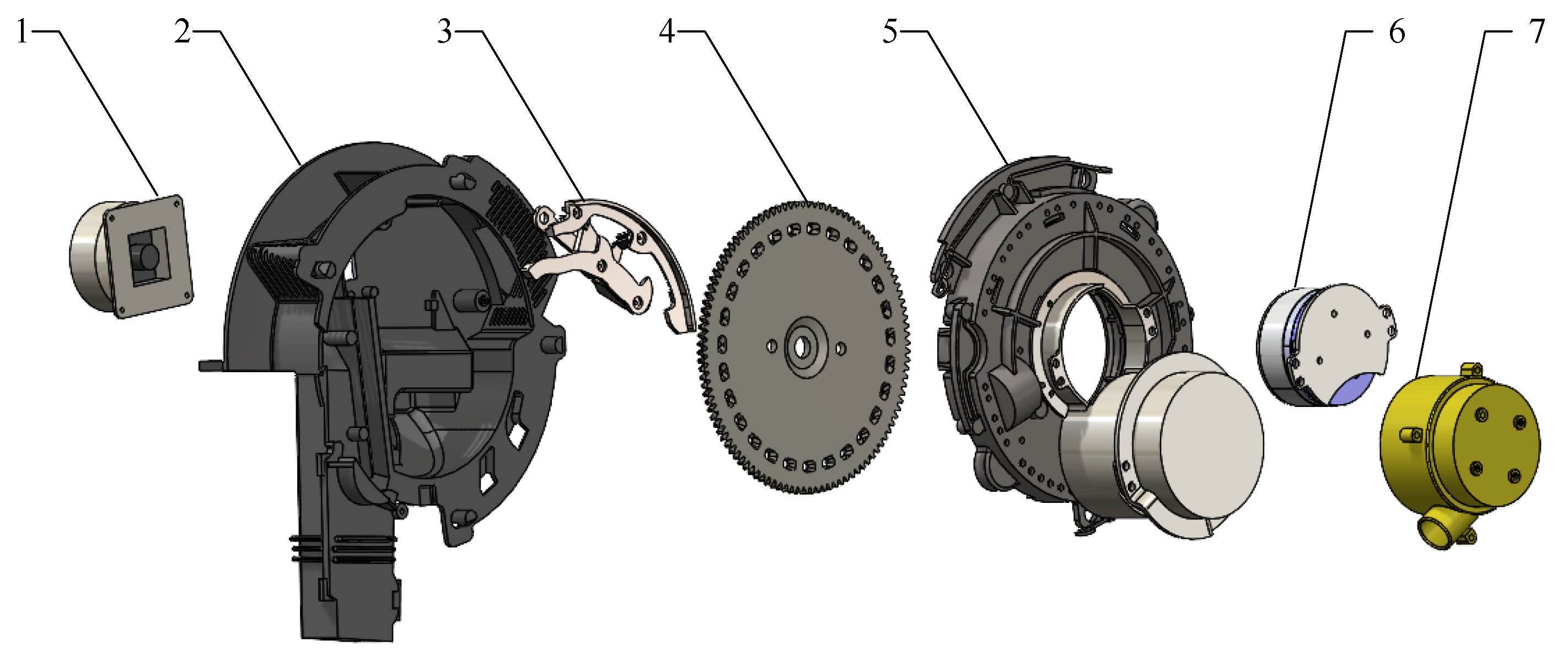
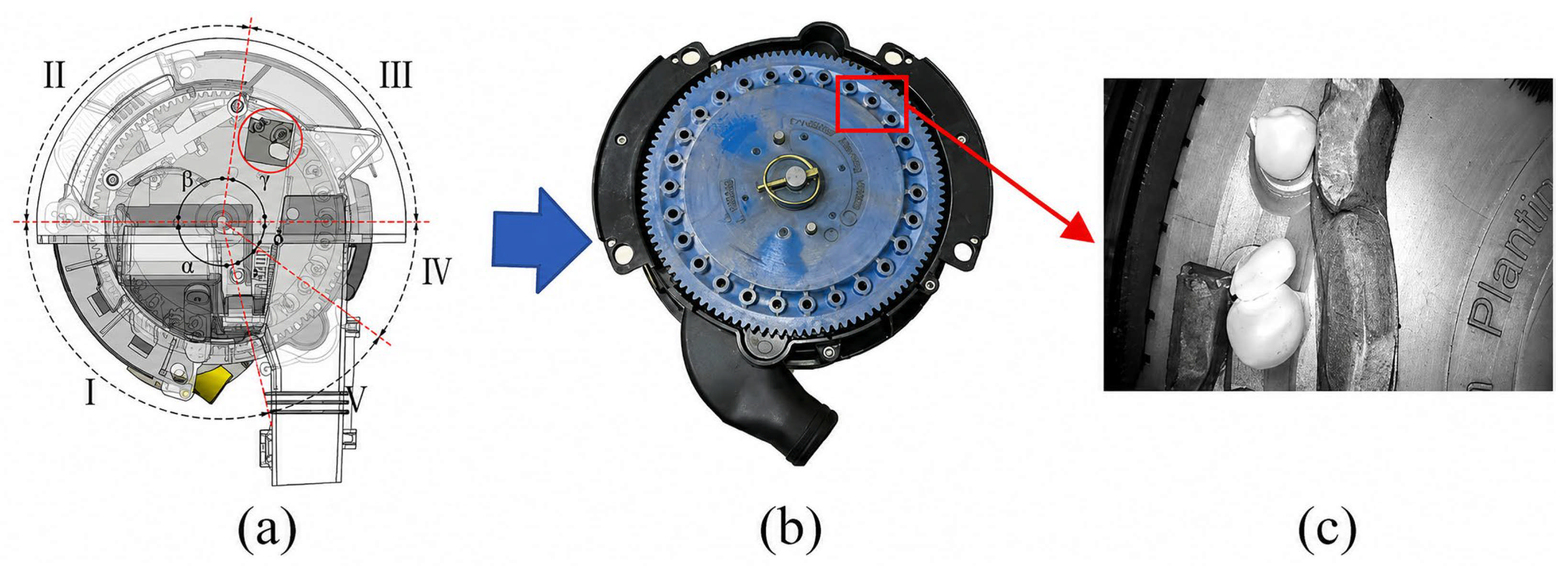
The structure of the air-suction seed metering device mainly consists of a seed housing, a near-infrared camera, a seed cleaning mechanism, a seed metering disc, a suction housing, a driving motor for the seed metering disc, and a negative pressure fan, as shown in Figure 1. The seed housing and the suction housing together form the working chamber of the metering device. According to different functions and operating sequences, the working chamber is divided into five zones: seed-filling zone I, seed-cleaning zone II, seed-carrying zone III, seed-discharging zone IV, and transition zone V, as illustrated in Figure 2a.
The working process of the air-suction seed metering device can be divided into four stages: seed filling, seed cleaning, seed carrying, and seed discharging. During operation, seeds in the seed box pass through an upward convex current-limiting plate and enter the seed chamber via the seed inlet. Restricted by the seed baffle, seeds are not directly discharged from the seed-filling zone; instead, an appropriate seed population is formed within the seed-filling zone. When the negative pressure fan is activated, a negative pressure environment is created inside the suction chamber, while the seed chamber on the other side of the seed metering disc remains at atmospheric pressure. This forms a pressure difference across the holes of the seed metering disc. Once the negative pressure stabilizes, the seeder begins to move forward, and the seed metering disc drive motor starts simultaneously, rotating the disc with precise speed control synchronized with the forward speed of the seeder. As the seed metering disc rotates, it contacts the seed population. The seed-disturbing structure on the disc agitates the upper layer of seeds, keeping the stacked seed population in a “flowing” state, reducing contact resistance between seeds, improving seed-filling efficiency, and making seeds around the holes more easily adsorbed by the negative pressure airflow, thus completing the seed-filling process. Driven by the negative pressure adsorption and the supporting and clamping effect of the seed-disturbing plate, seeds adsorbed on the holes break away from the population and rotate counterclockwise with the disc from the seed-filling zone to the seed-cleaning zone. A double-arc seed-cleaning brush removes excess seeds from the holes, ensuring only one seed is adsorbed per hole. The brushed-off seeds return to the seed-filling zone, finishing the seed-cleaning process. A near-infrared camera is mounted directly above the seed-carrying zone on the seed housing to monitor the seed-filling status of the rotating disc. The seed velocity in the carrying zone is much lower than their free-fall velocity after leaving the metering device, which facilitates the acquisition of clear images. The camera lens is installed inside the seed metering device with a built-in light supplement device, avoiding interference from external dust and light, making it well-suited for field seeding environments. Seeds adsorbed by the holes pass through the carrying zone and enter the discharging zone. A seed-unloading wheel pushes the seeds out of the holes. Having lost the adsorption of negative pressure airflow, the seeds fall under their own gravity into the seed passage at the discharge outlet, completing the seed-discharging process.

2.2. Design of Recognition Area

Based on the operating characteristics of each functional zone of the seed metering device and the real-time monitoring requirements of this paper, the image acquisition device was determined to be installed in the seed-carrying zone (as shown in Figure 2a). Due to the compact internal structure of the metering device, the object distance from the camera mounting position to the surface of the seed metering disc is only 40 mm, and the working environment is completely dark and enclosed. If a conventional RGB camera supplemented with visible light is used, it is very likely to induce strong specular reflection on the smooth surface of the seed metering disc, which will seriously interfere with subsequent image feature extraction. Therefore, an ANAV6364 near-infrared camera was selected in this paper. This camera is equipped with a short-focus lens with a focal length of 3.5 mm, which features low-distortion imaging and can effectively avoid interference from changes in ambient light, ensuring stable imaging quality. he width of the shooting area can be calculated using the following formula. The effective field of view of the system is determined to be 55 mm × 55 mm. This shooting area can cover three consecutive suction holes simultaneously, meeting the requirement for multi-target real-time detection of the seed-filling state.
  f = W D × S W F O V  
where f is the focal length of the optical camera lens (millimeter, mm); W D denotes the working distance from the lens to the seed metering plate (millimeters, mm); S W represents the transverse width of the camera image sensor (millimeters, mm); F O V is the effective field of view of the vision system (millimeters, mm).

2.3. Dataset Construction

The image acquisition experiment was carried out on the platform of the Chinese Academy of Agricultural Mechanization Sciences Group Co., Ltd., Beijing, China An integrated near-infrared imaging system was adopted as the data acquisition device, which integrates an image sensor and a near-infrared light supplement unit. According to the physical structure of the seed metering device and the geometric characteristics of the camera module, a special optical bracket was designed to accurately fix the working distance at 40 mm, and the image acquisition resolution was set to 1280 × 720 pixels. Based on the preliminary test analysis, the negative pressure ranges corresponding to distinct seed-filling states were determined: within the range of −4 kPa to −4.5 kPa, the suction holes mainly show the characteristics of no seed (missing seeding); within −4.5 kPa to −6.5 kPa, the suction holes are mainly in the normal state (one seed per hole); within −6.5 kPa to −7.5 kPa, the multiple seeding (multiple seeds per hole) phenomenon occurs significantly. In this paper, key sampling was conducted in the above critical negative pressure ranges, and a total of 3000 original seed-filling state images were obtained.
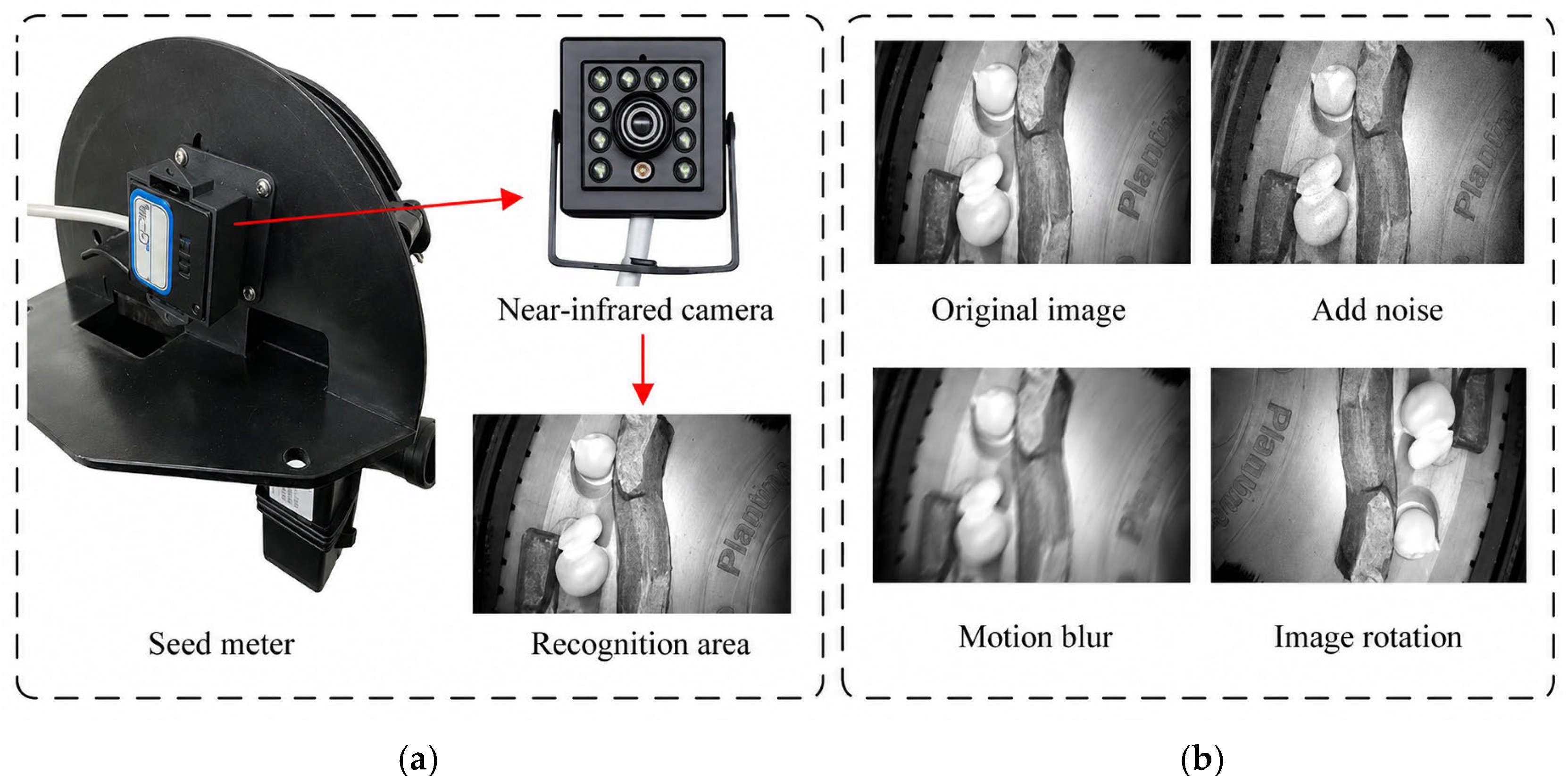
The original images were acquired using the industrial camera’s native software with an automatic interval-sampling mechanism set to one frame every 2 s. Specifically, the original dataset comprised 1000 baseline images for each of the three seed-filling states, and the effective field of view (FOV) of each captured image consistently covered three consecutive suction holes to facilitate multi-target labeling. The original dataset was divided into training, validation, and test sets at a ratio of 8:1:1. Considering the complexity of field operating environments, targeted data augmentation was implemented on the training set using computer vision libraries such as OpenCV to further improve the robustness and generalization ability of the model. As shown in Figure 3b, Gaussian noise was first injected into the original images to simulate random electronic noise generated during image acquisition and transmission, aiming to reduce the sensitivity of the neural network to high-frequency interference and mitigate overfitting. Subsequently, motion blur processing was applied to simulate the dynamic blur caused by the vibration of the seeder and the high-speed rotation of the seed metering disc, enhancing the model’s ability to extract seed edge features under unsteady conditions. Multi-angle geometric rotation was performed on the motion-blurred images to simulate the diverse postures of seeds within the suction holes. After the above preprocessing and augmentation operations, the final constructed dataset contains 3900 training images, 300 validation images, and 300 test images. The detailed distribution is presented in Table 1.
To achieve accurate detection of the seed-filling status in the suction holes of the seed metering disc, the detection targets were classified into the following three categories according to the actual seed adsorption characteristics of the holes:
(1) None (empty hole/missing seeding): The suction hole adsorbs no seeds. This state corresponds to the “missing seeding” phenomenon in agronomy, which needs to be corrected by increasing the negative pressure.
(2) One (single seed/qualified): The suction hole stably adsorbs one seed. This is the ideal operating state of the seed metering device and meets the agronomic requirements of precision seeding.
(3) Two (double seeds/multiple seeding): The suction hole adsorbs two seeds simultaneously. Although a double-arc seed-cleaning brush is designed inside the metering device to remove excess seeds, double-seed adsorption may still occur under excessive negative pressure, corresponding to “multiple seeding” in agronomy.
Furthermore, owing to the geometric aperture constraints of the adsorption holes and the mechanical elimination effect of the double-arc seed-cleaning brush, the physical probability of a single adsorption hole adsorbing three or more seeds simultaneously is extremely low. Therefore, this study only defines and detects the above three typical states.
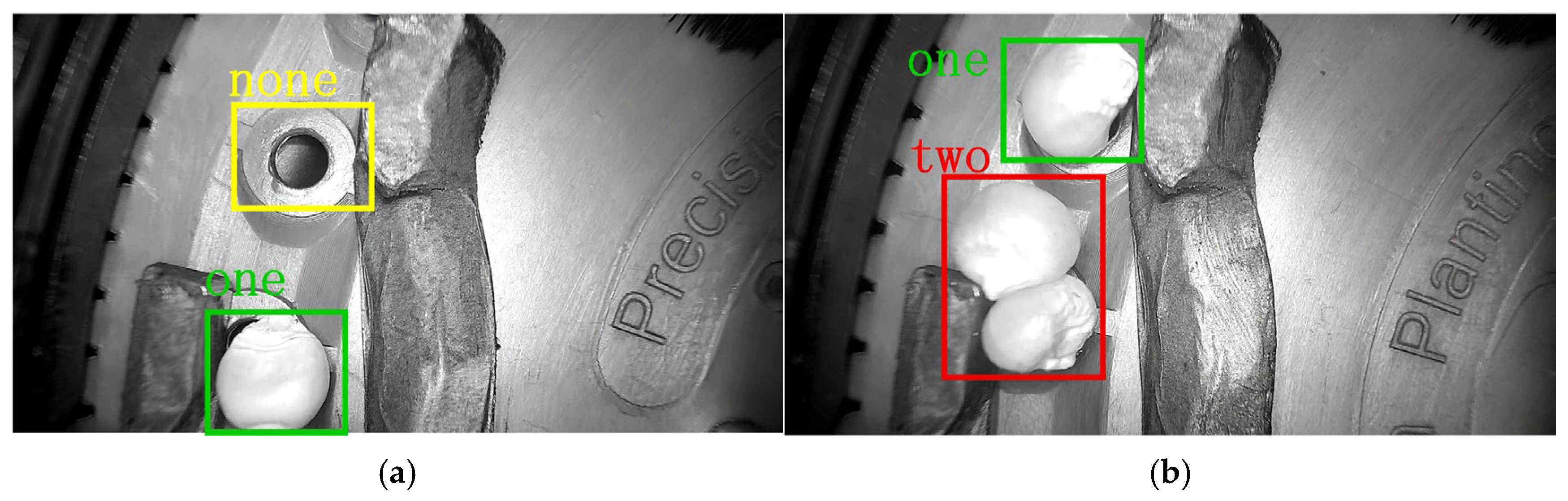
The seed-filling states of seeds on suction holes were annotated with Labelme. As illustrated in Figure 4, yellow bounding boxes denote the empty state, green boxes indicate the single-seed state, and red boxes stand for the double-seed state.

2.4. Seed Filling State Detection Model Based on Improved YOLOv8n

2.4.1. YOLOv8n Model Architecture

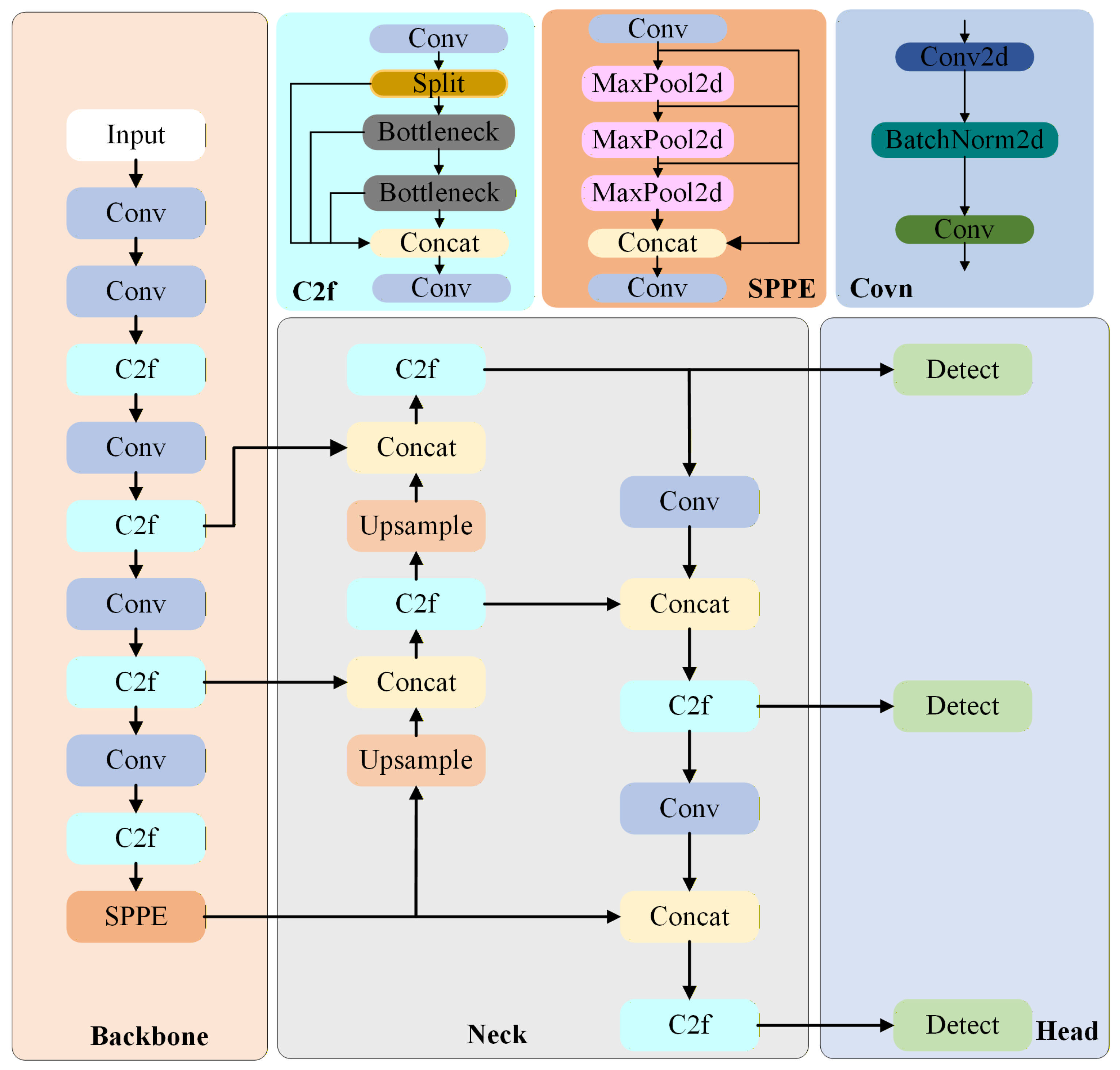
YOLOv8 has deeply reconstructed its network architecture and optimized performance while inheriting the high-efficiency advantages of previous generations. Its overall structure is logically divided into four core modules: Input, Backbone, Neck, and Head, as shown in Figure 5. At the feature extraction level, the backbone network adopts the novel C2f module to replace the traditional C3 module. By introducing more residual connections and gradient flow branches, this module effectively alleviates the gradient vanishing problem of deep networks and significantly enhances the model’s ability to capture seed edge and texture features. Meanwhile, combined with the SPPF module, it achieves efficient fusion of multi-scale spatial features. At the feature fusion level, the neck network adopts the design philosophy of PANet. Through bidirectional path aggregation from top to bottom and bottom to top, it further strengthens the model’s perception accuracy for objects of different scales. Significantly different from previous versions, the detection head of YOLOv8 adopts a decoupled and anchor-free design, which processes the classification task and regression task independently, thereby improving the detection convergence speed under complex working conditions. In this paper, YOLOv8n was initially selected as the baseline model for training and testing. However, some unrecognized seed-filling states of the seed metering device were observed after training. Meanwhile, considering that the air-suction seed metering device operates under high-speed rotation in practical scenarios, the visual monitoring system must achieve low-latency real-time inference on resource-constrained edge computing controllers, which imposes stringent requirements on the computational efficiency and parameter quantity of the algorithm. Therefore, its network structure is improved to enhance recognition efficiency and accuracy.

2.4.2. Improved YOLOv8n Model Architecture

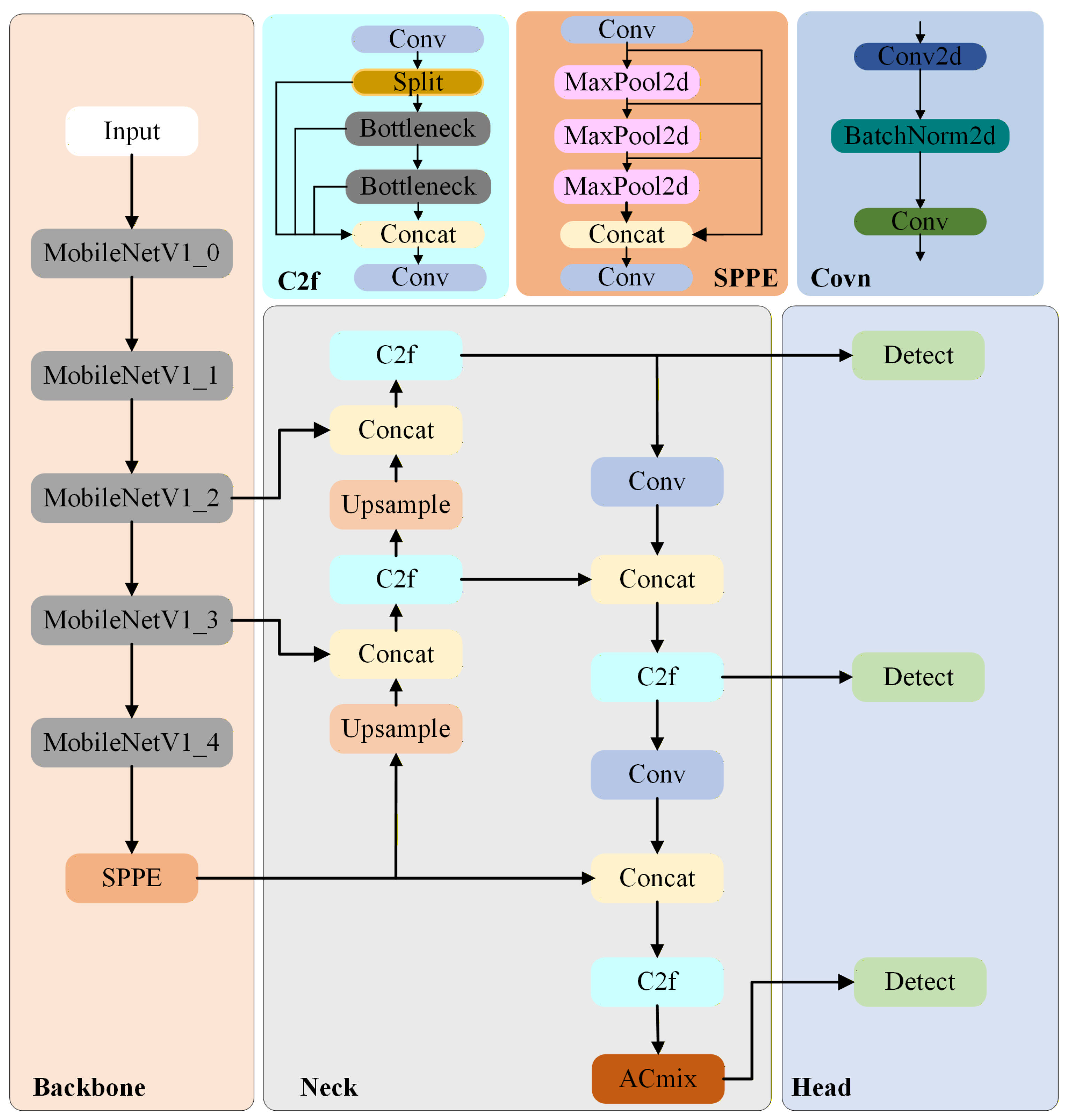
To meet the real-time monitoring requirements of seed-filling status for air-suction seed metering devices under high-speed rotation, and to solve the problem of high detection latency caused by limited computing resources in existing edge deployment schemes, this paper proposes a lightweight YOLOv8n-MA model for real-time monitoring of seed-filling states of the metering device, as shown in Figure 6. Firstly, the model replaces the original CSPDarknet backbone of YOLOv8n with the lightweight MobileNetV1 backbone network, and reconstructs the feature extraction path using its depthwise separable convolution structure. This not only significantly reduces the number of model parameters and floating-point operations (FLOPs), but also improves the inference speed of the algorithm on embedded controllers. To address the insufficient representation ability of lightweight backbones for tiny targets, the ACmix attention module is introduced into the high-level semantic branch of the Neck feature fusion network. By adaptively integrating the local feature extraction advantages of convolutional neural networks, this module enhances feature expression while maintaining controllable computational cost, strengthening the model’s global perception and detail capture for the suction hole regions on the seed metering disc. Thus, the classification precision and robustness of the model for the three fine-grained seed-filling states “none”, “one” and “two” under complex dynamic backgrounds are improved.
(1)
MobileNetV1 network
For the seed metering monitoring scenario, near-infrared images are characterized by simple background texture and prominent target features. The native CSPDarknet in YOLOv8 is designed to extract deep semantic information in complex natural scenes. Its heavy reliance on numerous standard convolution operations results in high floating-point computation, leading to excessive inference latency on edge devices with limited computing resources. Therefore, this paper proposes reconstructing the backbone architecture of YOLOv8 using the MobileNetV1 network. Through structural pruning and reorganization at the architecture level, the optimal trade-off between detection accuracy and inference speed is achieved.
The core of MobileNetV1 lies in the introduction of the depthwise separable convolution mechanism, which decouples the joint mapping of spatial correlation and channel correlation in standard convolution into two independent operation stages: depthwise convolution and pointwise convolution. For the subtle seed-filling features inside the suction holes of the seed metering plate, the model first applies an independent convolution kernel to each input channel separately for planar spatial filtering via depthwise convolution, so as to accurately capture the spatial geometric information of seed edges and suction hole contours. Assuming the input feature map size is D F × D F , the number of input channels is M , The number of output channels is N , The convolution kernel size is D K × D K . Standard convolution operates simultaneously in both spatial and channel dimensions, the single-layer computational cost C s t d is:
  C s t d = D K · D K · M · N · D F · D F  
where C s t d is the theoretical computational cost of a standard convolutional layer (Floating Point Operations, FLOPs); D K is the spatial size of the convolutional kernel (pixels); M and N denote the number of input and output feature channels, respectively (dimensionless); D F represents the spatial width and height of the input/output feature maps (pixels).
Subsequently, linear combination is performed on the channel dimension through 1 × 1 pointwise convolution, completing cross-channel fusion and dimensionality increase in feature information, and generating a new feature space. The formula for the total computational cost C d w s p after this decomposition is as follows. This decomposition strategy effectively eliminates the multiplicative effect of the number of output channels and the size of the convolution kernel.
C d w s p = D K · D K · M · D F · D F + M · N · D F · D F  
C d w s p C s t d = D K · D K · M · D F · D F + M · N · D F · D F D K · D K · M · N · D F = 1 N + 1 D K 2  
where C d w s p is the theoretical computational cost of the depthwise separable convolution (FLOPs);
In the model constructed in this paper, the mainstream 3 × 3 convolution kernel is adopted, i.e., D K = 3 . Meanwhile, the number of channels N in the middle layers of the network is usually relatively large, so the term 1 N tends to zero, as shown in Figure 7. Calculated by Formula (5) below, the theoretical computational cost (FLOPs) is reduced to approximately 1/9 of that of standard convolution. This lightweight reconstruction strategy not only ensures the effective representation ability of the model for three types of seed-filling states, namely “none”, “one” and “two”, under near-infrared spectra, but also significantly compresses the model volume, thereby accurately meeting the real-time monitoring requirements under high-speed seed metering conditions.
R e d u c t i o n   R a t i o 1 3 2 = 1 9  
(2)
ACmix module
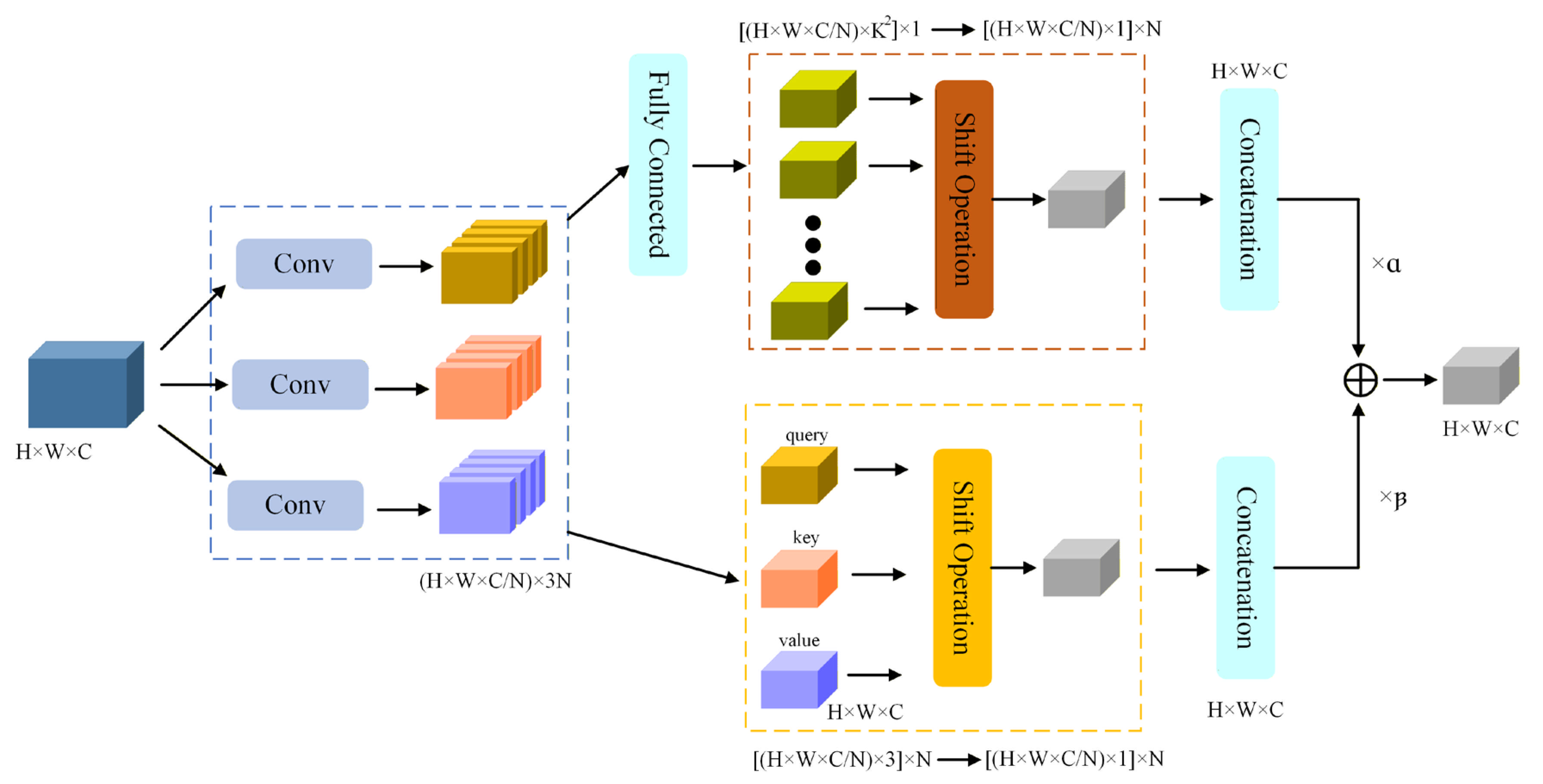
In near-infrared seed metering images, the difference between the “normal (one)” and “multiple seeding (two)” conditions is only reflected in the subtle overlapping features of seed edges. Accurate classification is difficult to achieve relying solely on shallow contour extraction. In addition, although the MobileNetV1 backbone significantly reduces computational redundancy via depthwise separable convolutions, its lightweight architecture limits the ability to abstract deep semantic features. To enhance the model’s perception of global context and local details while maintaining computational efficiency, this paper introduces the ACmix mixed attention module into the feature fusion layer (Neck). In Stage I, the input feature map is projected through three 1 × 1 convolutions. In Stage II, the intermediate features are processed separately according to two paradigms. The features from the two paths are summed element-wise as the final output. The network structure is shown in Figure 8.
The ACmix module is based on the mathematical homogeneity of convolution and self-attention in the 1 × 1 projection operation. It utilizes 1 × 1 convolution to perform unified projection on the input feature map F R C × H W . The generated shared feature set, rich in intermediate features, is then distributed in parallel to both the convolution and self-attention paths for processing, significantly reducing computational redundancy in the feature extraction process. In the convolution aggregation path, the intermediate features undergo a tensor shift operation to simulate the spatial sliding of the convolution kernel, thereby efficiently extracting local gradient information within the adsorption pores. Its output F c o n v can be expressed as:
F c o n v i , j = p , q S h i f t g ~ i j p , q , p k 2 , q k 2  
where ( p , q ) represents the spatial position index within the convolution kernel, and S h i f t ( · ) denotes the tensor shift operation. This processing method can effectively correct the discrimination bias towards minor edge features in the “replay” state.
Meanwhile, the self-attention aggregation path focuses on capturing long-distance pixel dependencies in the adsorption pore region to enhance the robustness of perception for the “normal (one)” state. The intermediate features are reorganized into query (Q), key (K), and value (V), and global context information is calculated using a multi-head self-attention mechanism. This mechanism enables the model to understand the overall morphology of the adsorption pore, and even in cases of seed position deviation or uneven illumination, it can accurately determine the seed filling state through global context. The output F a t t is calculated as follows:
  F a t t i , j = i = 1 N ( a , b N k ( i , j ) A Q i j l , K a b l , V a b l )  
where N is number of attention heads; N k is Local window area; A ( · ) is Attention weight calculation function.
To achieve a dynamic balance between local details and global perception, ACmix adaptively weights and fuses the two feature streams through two learnable scalar parameters α and β, outputting the final feature map F o u t :
F o u t = α F a t t + β F c o n v
This “local detail-global perception” collaborative architecture not only retains the inference speed advantage of lightweight models, but also significantly enhances the detection accuracy of the system in near-infrared single texture backgrounds through the refined fusion of multi-scale features, achieving an optimal trade-off between edge computing resources and detection performance.

3. Test Method and Evaluation Index

3.1. Model Training Experiment

At the hardware level, it is equipped with an Intel Core i9-14900KF central processing unit (CPU) and an NVIDIA GeForce RTX 4080 graphics acceleration card (GPU). The software environment runs on the Ubuntu 22.04 operating system, using Anaconda3 to construct an independent virtual development space. The model training environment is built based on the Python 3.9 programming language and the PyTorch 2.3 deep learning framework. In the training parameter setting stage, the resolution of input images is uniformly normalized to 640 × 640 pixels, the initial learning rate is set to 0.01, the batch size is 8, and a complete iterative training of 200 Epochs is performed.

3.1.1. Comparative Experiments of Different Models

To compare the performance of the improved YOLOv8n model with the original YOLOv8n model under different seeding conditions, this paper conducted tests on both models. Three different random seeds (0, 1, and 3) were selected for three independent trainings, and the average of the three experimental results was taken as the final performance evaluation metric. Furthermore, to further verify the superiority of the YOLOv8n-MA model in seeding condition recognition tasks for seeders, this paper compared it with models such as YOLOv5n, YOLOv9n, YOLOv10n, YOLOv11n, and YOLOv12n. All the aforementioned experiments were conducted under identical datasets, hardware equipment, and experimental environments.

3.1.2. Ablation Experiment

To verify the enhancement effect of each module on YOLOv8n, each module was individually incorporated into the model to form models with different types of modules. The aforementioned improved models were used for different seeding state recognition experiments to verify the impact of each improvement on model performance.

3.1.3. Model Evaluation Metrics

The evaluation metrics for classification experiment results include precision (P), recall (R), average precision (AP), and mean average precision (mAP), with the calculation formulas as follows:
P = TP TP + FP × 100 %
R = TP TP + FN × 100 %
AP = 0 1 p r dr
mAP = 1 n i = 1 n A P i
In the formula, P represents the proportion of samples that are actually positive among those predicted as positive; R represents the proportion of samples that are correctly predicted as positive among the actual positive samples; AP represents the average precision at different recall rates; TP is the number of actual positive samples predicted as positive, that is, correctly identified positive samples; FP is the number of samples predicted as positive but actually negative, that is, false positives; FN is the number of actual positive samples among those predicted as negative, that is, false negatives; mAP represents the average value of all category values, and n is the number of categories.

3.2. Field Experiment on System Detection Accuracy

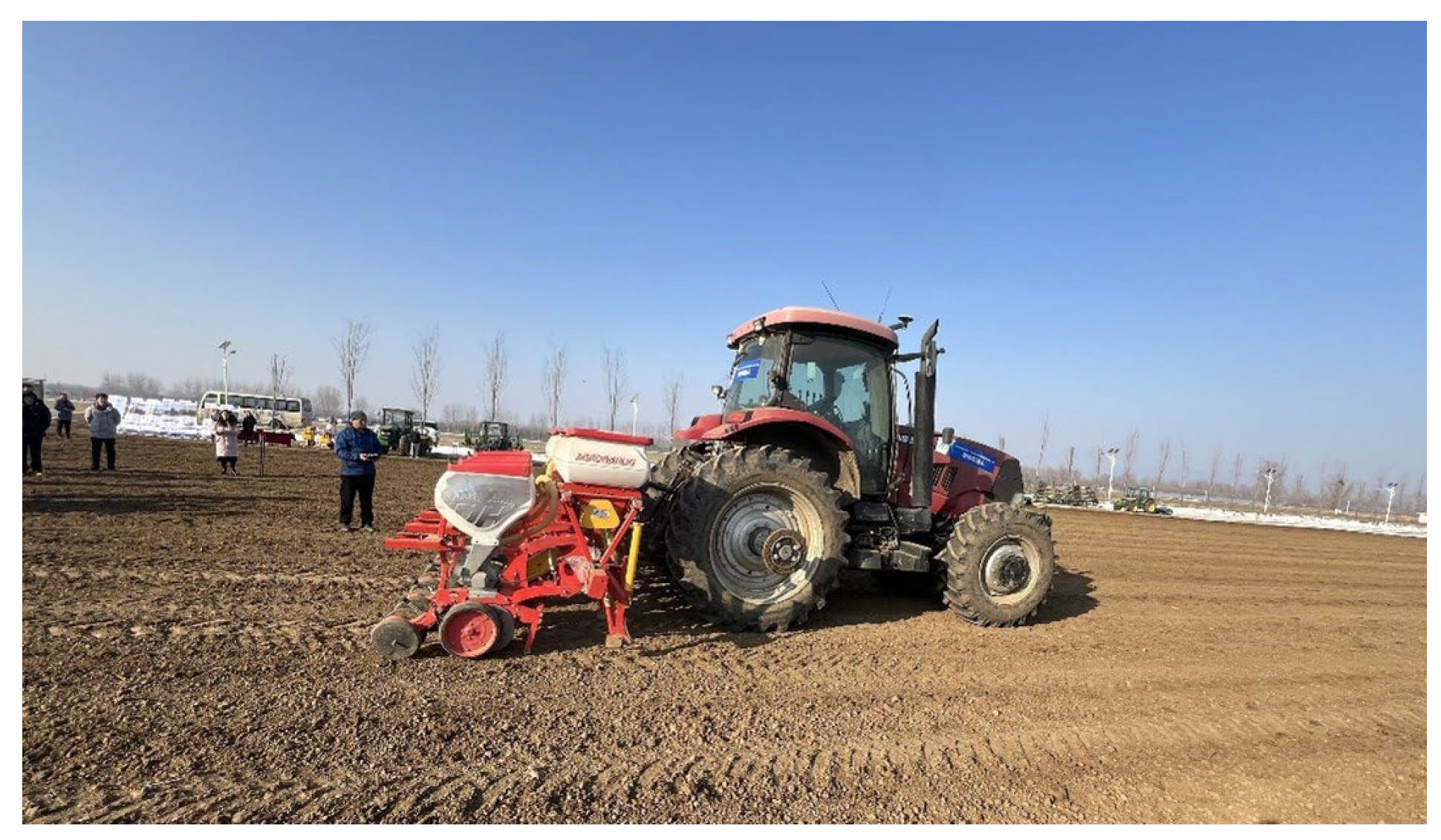
To verify the accuracy of the designed system in detecting the filling performance of the air suction seeder in actual operating environments, field experiments were conducted on the 2BQX-6J air suction seeder equipped with the filling performance online detection system designed in this paper, as shown in Figure 9. This article conducts a single factor experiment on YOLOv8n and the improved YOLOv8n model using homework speed as the experimental factor and the standard deviation of quality of feed index, miss index and multiple index as the experimental indicators, and compares the results with manual detection. The operating speed of the seeder is divided into five gradients: 6 km/h, 8 km/h, 10 km/h, 12 km/h, and 15 km/h. The distance between corn plants is set to 20 cm, the negative pressure value of the fan is set to −6kPa, and other conditions remain the same. Each group is repeated 10 times, and the average is taken as the final result to determine the system’s detection accuracy. According to the provisions of GB/T 6973-2005 “Testing methods of single seed drills (precision drills)” [23], the filling performance testing indicators of the air suction seeder are mainly determined by the quality of feed index, miss index and multiple index. The calculation formulas for each indicator are shown in Equation (13).
A = n 1 N × 100 % D = n 2 N × 100 % M = n 3 N × 100 %  
where A = qualified rate; D = multi-seeding rate; M = miss-seeding rate; n 1 = number of holes with single seed; n 2 = number of holes with multiple seeds; n 3 = number of empty holes; N = theoretical number of seeds discharged.
To evaluate the detection accuracy of the seed-filling performance of the system equipped with different models, the difference between the system detection results and the manual detection results was calculated. The formula for detection accuracy is as follows:
ε A = ( 1 A i A 0 ) × 100 % ε D = ( 1 D i D 0 ) × 100 % ε M = ( 1 M i M 0 ) × 100 % ε c = ( ε A + ε D + ε M ) / 3  
where ε A = detection accuracy of qualified index; ε D = detection accuracy of multi-seeding index; ε M = detection accuracy of miss-seeding index; ε c = comprehensive detection accuracy; A i ,   D i and M i = system detection results; A 0 , D 0 and M 0 = manual detection results.

4. Results and Discussion

4.1. Results and Analysis of Model Training Experiments

4.1.1. Results and Analysis of Performance Comparison with the Original Model

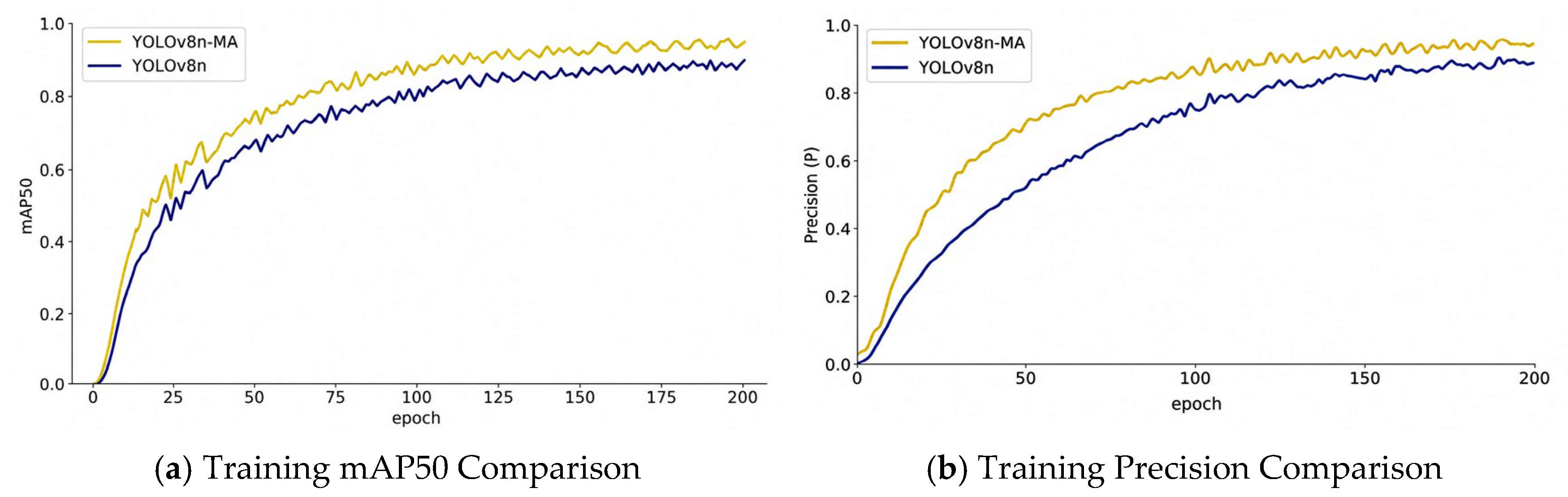
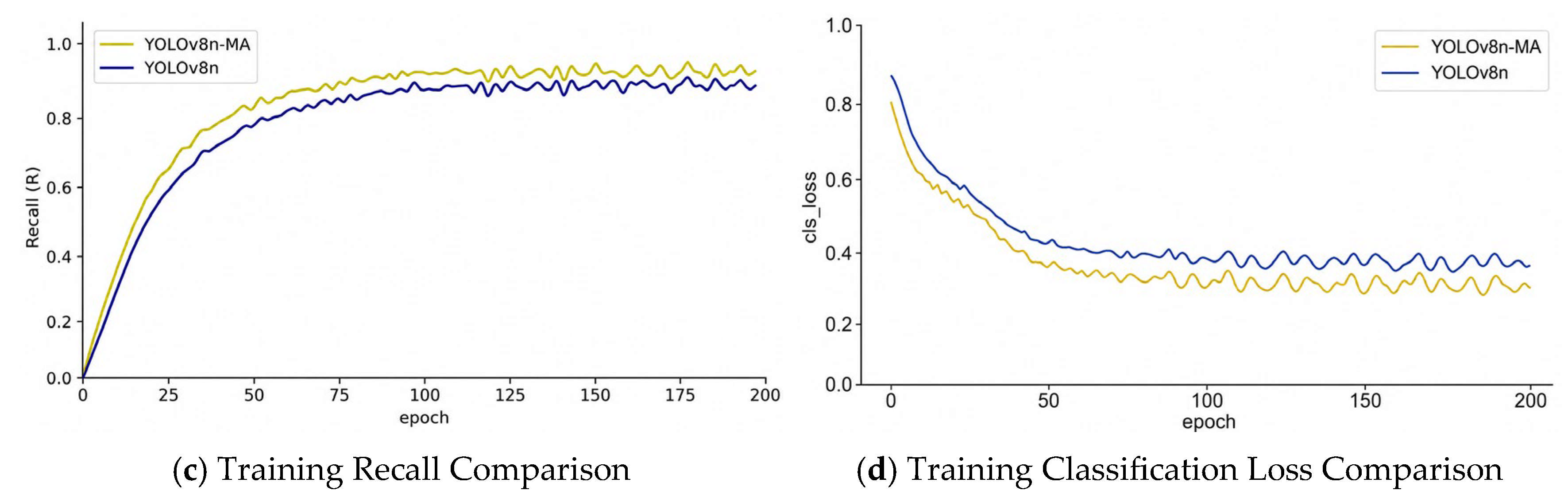
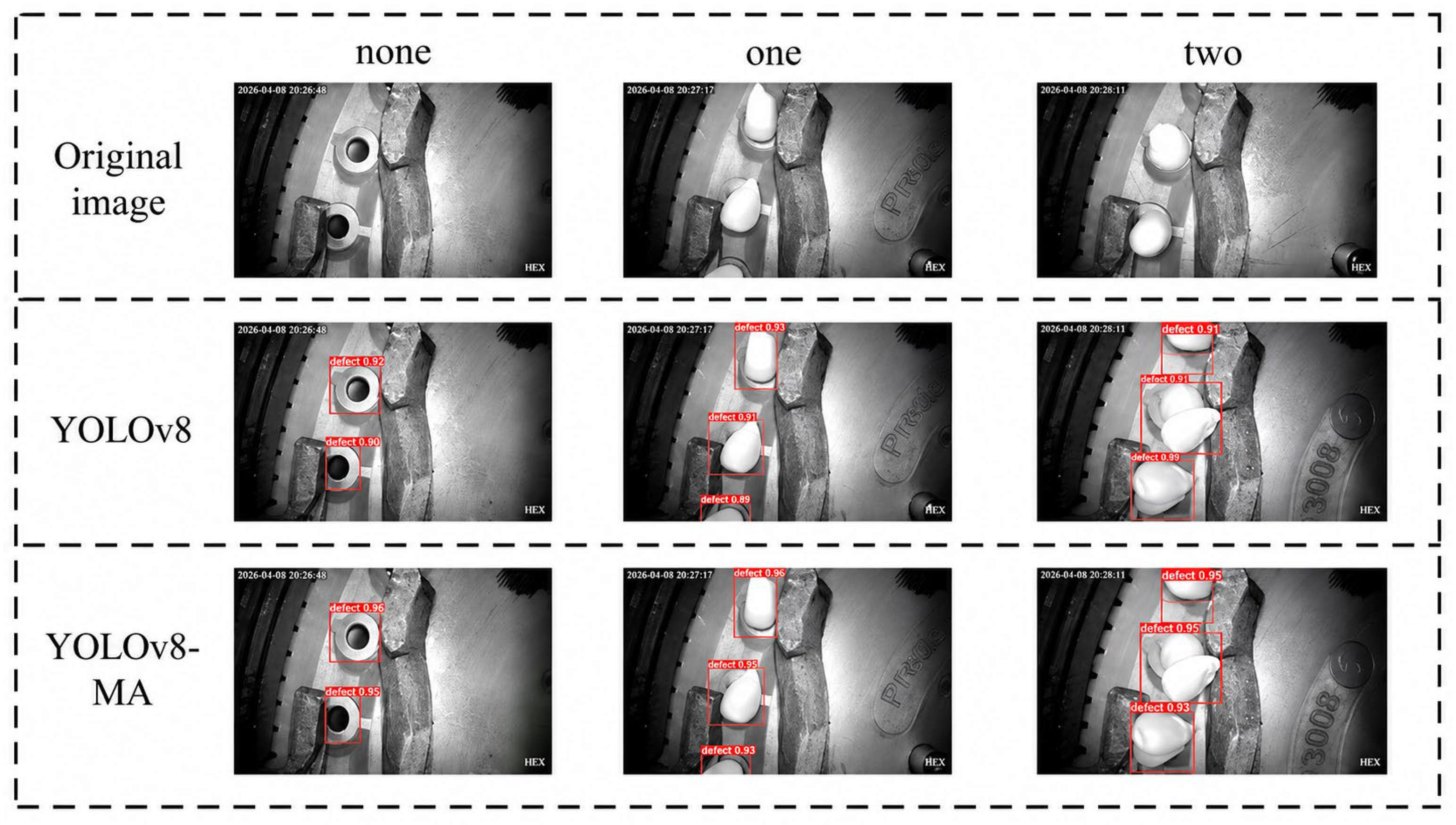
The recognition performance index results of the YOLOv8n model and the improved YOLOv8n model for the seed-filling states of different seed metering devices are shown in Table 2. The variation curves of each training index are shown in Figure 10, and the detection results of YOLOv8n and the improved YOLOv8n are also shown in Figure 11.
As shown in Table 2, the number of parameters and floating-point operations (GFLOPs) of the YOLOv8n-MA model are reduced to 2.1 M and 3.5 G, respectively, which are approximately 34.4% and 59.8% lower than those of the original YOLOv8n model. This indicates that the improved model effectively removes redundant feature channels, significantly reduces video memory occupation and computing power consumption during algorithm operation, and can better adapt to embedded controllers with limited computing resources. The performance of the YOLOv8n-MA model in the seed-metering plate seed-filling state detection task is improved compared with the original YOLOv8n model. The precision of the YOLOv8n-MA model for the one, sparse, and dense categories reaches 96.8%, 95.5%, and 92.1%, which are 1.6%, 1.7%, and 3.6% higher than those of the original YOLOv8n, respectively. This shows that the improved model can more accurately distinguish the seed-filling states of the seed-metering plate and effectively reduce the false detection rate. The YOLOv8n-MA model improved the recall rates for the “none,” “one,” and “two” categories by 1.5%, 2.3%, and 4.2%, respectively, indicating that the improved model more comprehensively distinguishes among different seed-filling states of the seed metering plate and can effectively reduce missed detections. The YOLOv8n-MA model also improved the mAP for the “none,” “one,” and “two” categories by 1.4%, 2.3%, and 2.4%, respectively, demonstrating higher overall detection performance of the improved model.
To intuitively evaluate the learning ability and convergence of the improved model YOLOv8n-MA and the baseline model YOLOv8n in the seed-filling state detection task of the seed-metering plate, the core evaluation index curves of the two models during training were extracted and compared. Figure 10 shows the variation trends of mean average precision (mAP50), precision, recall, and classification loss of the models during training. Figure 10a shows the mean average precision. The curve of YOLOv8n-MA rises steeply in the early stage of training, showing superior early learning efficiency compared with the original model. With the increase in iteration times, the improved model not only converges faster but also finally stabilizes at a higher precision level, highlighting its significant advantages in overall detection performance. Figure 10b compares the precision of the two models. The precision curve of YOLOv8n-MA rises significantly faster than that of the original model, reaches a stable state first after 100 epochs, and finally converges. This indicates that the improved overall model architecture can more effectively eliminate dynamic background interference and significantly reduce the false detection rate of seed-filling states. Figure 10c shows the recall of the models. YOLOv8n-MA exhibits faster feature fitting ability and a higher performance upper bound. A higher recall means that the model has a stronger ability to capture tiny and difficult samples, thereby effectively reducing the risk of missed detection of miss-seeding and multi-seeding under actual high-speed operating conditions. Classification loss directly reflects the model’s ability to distinguish different seed-filling states on the suction holes of the seed-metering plate. A smaller value indicates a smaller deviation between the predicted category distribution and the real labels. As shown in Figure 10d, YOLOv8n-MA maintains a lower loss level than the baseline model YOLOv8n throughout the entire training cycle. This result shows that the improved network model can effectively suppress inter-class confusion and achieve a lower and more stable convergence boundary of classification loss.
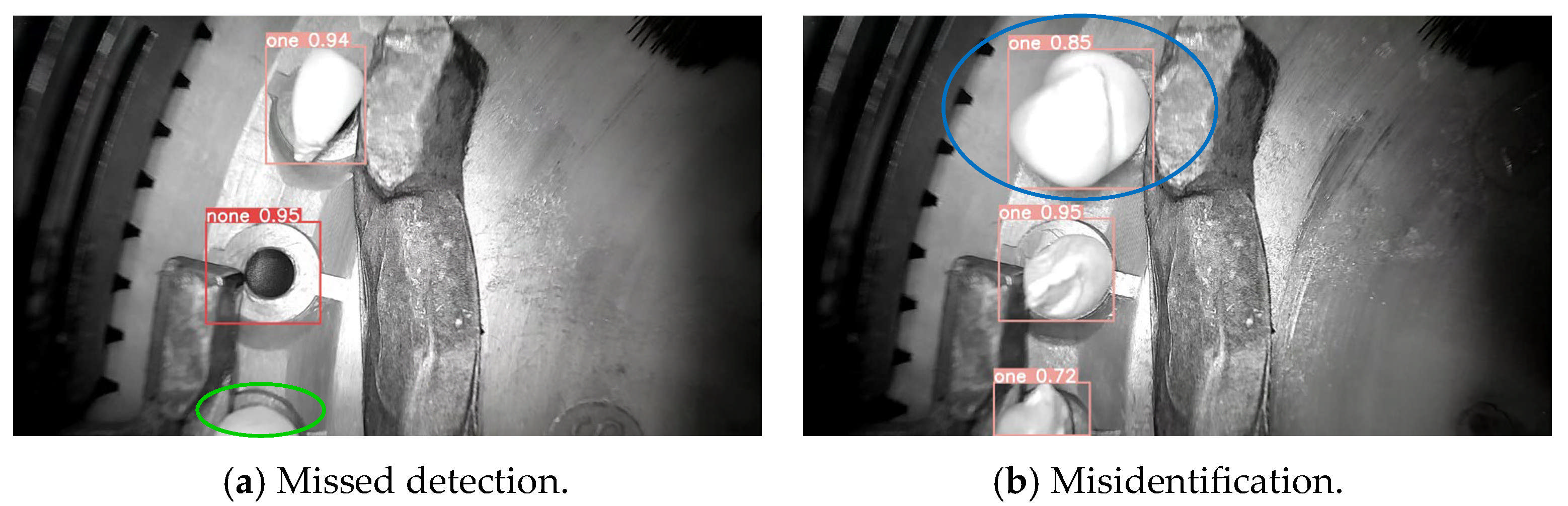
In the YOLOv8-MA recognition and detection experiments, the detection results of the seed-filling status for several seed-metering devices are presented in the figure below. Further analysis reveals that the following two factors affect the accuracy of corn seed recognition.
(1) Missed detection of corn seeds in the peripheral regions of the image. During image acquisition by the camera, the field of view and imaging perspective are inherently limited; consequently, corn seeds located near the edge of the field of view are only partially captured within the image, resulting in incomplete contour information and insufficient representation of morphological features. When critical features of a seed are substantially missing, the feature vectors extracted by the model fail to reach the required confidence threshold, thereby preventing effective recognition of the target. As illustrated in Figure 12a, a seed situated at the image boundary is only partially exposed within the field of view and, owing to the incompleteness of its feature information, is not detected by the algorithm. The missed target is annotated with a green circle in the figure.
(2) Recognition errors induced by a high degree of seed overlap. When corn seeds possess relatively small kernel dimensions and the seed-suction negative pressure is relatively high, adjacent seeds tend to adhere to one another, forming a vertically stacked spatial configuration. The majority of the lower seed is occluded by the upper one, causing their contours to merge in the two-dimensional image and rendering the boundary features increasingly indistinct. As a result, the two vertically stacked seeds are erroneously identified as a single target, thereby introducing classification errors. As shown in Figure 12b, the region marked with a blue circle represents a typical case in the double-seed category in which the seeds were not correctly recognized due to severe overlap.

4.1.2. Comparison Results and Analysis of Different Model Performances

To further verify the detection performance of the YOLOv8n-MA model for different seed filling states of seeding devices, comparative experiments were conducted using models such as YOLOv5n, YOLOv9n, YOLOv10n, YOLOv11n, and YOLOv12n. The experimental results are presented in Table 3.
As shown in Table 3, the floating-point operations (GFLOPs) of the YOLOv8n-MA model are reduced to 3.5 G, representing a decrease of approximately 59.8% compared with the baseline YOLOv8n model, and are significantly lower than those of models from YOLOv9n to YOLOv12n. Although YOLOv5n holds a slight advantage in terms of parameters, YOLOv8n-MA achieves a deeper optimization in GFLOPs. This indicates that the model maintains a lightweight architecture while greatly improving the efficiency of hardware computing resource utilization. The mAP of YOLOv8n-MA reaches 96.8%, outperforming YOLOv5n, YOLOv8n, YOLOv9n, and YOLOv10n, with the performance gap from YOLOv12n controlled within a narrow range of 0.1%, verifying the robustness of the improved algorithm in feature extraction and representation. The model performs well on the recall index, reaching 94.6%, which demonstrates its strong feature capture capability when dealing with complex samples involving overlapping seeds, helping to reduce the risk of missed detection.

4.1.3. Ablation Test Results and Analysis

By integrating different modules to enhance the YOLOv8n model, four distinct models were generated and tested. The test results are presented in Table 4.
When only the backbone network is replaced with MobileNetV1 (Model 2), the number of parameters and GFLOPs of the model are significantly reduced from 3.2 M and 8.7 G to 2.0 M and 3.3 G, respectively. This demonstrates the outstanding effectiveness of the depthwise separable convolution structure in decoupling channel correlations, eliminating redundant feature parameters, and reducing model complexity. However, the extreme compression of feature channels by the lightweight network architecture objectively weakens its ability to abstract and represent deep semantic information. Compared with the original CSPDarknet backbone, the mean average precision (mAP) of Model 2 decreases by approximately 1.3%. This indicates that although a single lightweight strategy can significantly improve inference efficiency, it also reduces part of the detection accuracy.
When only the ACmix module is introduced on the basis of the original YOLOv8n (Model 3), the mAP increases from 94.8% to 95.6%. This shows that by integrating the local perception of convolution and the global modeling capability of self-attention, ACmix effectively enhances the model’s feature capture ability for the adsorption state of seed metering holes (especially multi-seeding and miss-seeding), suppresses background noise, and improves the discrimination ability for overlapping and occluded targets, thereby significantly increasing the capture rate of subtle seed-filling abnormal states.
The YOLOv8n-MA model, which integrates both MobileNetV1 and ACmix, exhibits the best comprehensive performance. Although it adopts a lightweight backbone with relatively weak feature extraction capability, the feature aggregation and enhancement mechanism of ACmix compensates for the loss of semantic information extraction by the backbone network. It maintains an extremely low computational load while achieving the highest mAP of 96.8%. This demonstrates that the ACmix module not only successfully compensates for the accuracy loss caused by backbone lightweighting, but also further strengthens the detection robustness of the model under complex working conditions by enhancing the weights of key features.

4.2. System Detection Accuracy Test Results and Analysis

The test results of seed-filling performance detection accuracy using the YOLOv8n and improved YOLOv8n models under different operating speeds are shown in Table 5. When the seeder operating speed is ≤10 km/h, the seed-filling performance detection indexes of the system equipped with both YOLOv8n and improved YOLOv8n models are above 91%, and the improved YOLOv8n model achieves higher detection accuracy and better stability. When the operating speed reaches 12 km/h, the detection accuracy of the original YOLOv8n model decreases significantly, while that of the improved YOLOv8n model remains at 95.02%, indicating stronger robustness and generalization ability. When the speed increases to 15 km/h, the kinetic energy of seeds leaving the metering device rises, and the randomness of inelastic collisions between seeds and soil increases, resulting in a larger variation coefficient of plant spacing and a shorter image sampling interval. Consequently, the detection accuracy of YOLOv8n drops to 84%, whereas the improved YOLOv8n model maintains 92.65%. The experiment demonstrates that even under high-speed seeding conditions, the system equipped with the improved YOLOv8n model effectively solves problems such as motion blur, seed adhesion and occlusion by introducing the MA module, ensuring the real-time performance and reliability of online detection.

4.3. Prospects and Challenges in Research

The YOLOv8n-MA online detection model constructed in this study is deployed on an onboard edge computing controller installed on the pneumatic suction seed meter. The near-infrared camera executes continuous image acquisition within the enclosed seed-carrying zone, based on which the localized lightweight model solves and outputs the seed-filling performance indices in real time. These detection results are synchronously transmitted to the terminal human–machine interface (HMI) for visualization, providing operators with a direct and intuitive basis for monitoring and regulating the seed-metering status. In subsequent research, to construct a closed-loop feedback control system, this vision-based detection output will directly serve as the control signal for optimizing seeding operational parameters. Specifically, when the miss-seeding rate exceeds a preset agronomic threshold, the controller will issue a regulation command to the negative pressure fan via a proportional valve, actively increasing the vacuum degree to enhance seed adsorption efficiency. Conversely, if the multi-seeding rate exhibits an upward trend, the system will dispatch a control signal to attenuate the vacuum degree. Furthermore, future investigative priorities will focus on optimizing dynamic response characteristics, developing advanced adaptive control algorithms to improve time-delay compensation and rapid regulation capabilities within the pneumatic negative pressure field, thereby achieving highly efficient, real-time dynamic self-optimization of seed-filling performance.

5. Conclusions

Focusing on the challenging issue of real-time detection of seed-filling performance for the pneumatic suction metering device under high-speed operation, this paper systematically accomplishes the whole process from theoretical analysis and model construction to system verification. The main findings are as follows:
(1)
The developed online detection and control system for seed-filling performance realizes the online detection of the seed-filling performance of pneumatic seed metering devices. The system successfully achieves real-time online detection of the seed-filling performance of pneumatic seed metering devices, effectively solving the pain points of traditional detection methods such as low efficiency, insufficient accuracy, and inability to provide real-time feedback. By integrating high-precision sensors, intelligent data processing modules, and real-time control units, the system can dynamically monitor the entire seed-filling process of pneumatic seed metering devices. It provides a scientific basis for operators to adjust the working parameters of seed metering devices in a timely manner and optimize seed-filling effects, significantly improving the working stability of pneumatic seed metering devices and the quality of sowing operations, and offering reliable technical support for the application of precision seeding technology.
(2)
A vision detection method based on the improved YOLOv8-MA model is proposed. By introducing a multi-scale attention module, the detection accuracy and robustness of the model for tiny seed targets under complex backgrounds are effectively improved. The mAP of YOLOv8n-MA reaches 96.8%, which is superior to YOLOv5n, YOLOv8n, YOLOv9n and YOLOv10n, with the performance gap from YOLOv12n controlled within a narrow range of 0.1%, verifying the robustness of the improved algorithm in feature extraction and representation. The model performs well in the recall index, reaching 94.6%, which indicates that it has strong feature capture ability when dealing with complex samples with overlapping seeds, greatly enhances the feature discrimination ability for small targets and overlapping targets, and helps reduce the risk of missed detection.
(3)
Field experiments verified the real-time performance and reliability of the seed-filling performance detection system. When the seeder operating speed is in the range of 6–12 km/h, the detection accuracy of the improved YOLOv8n model is ≥95%. When the speed reaches 15 km/h, it still maintains 92.65%. The results show that even under high-speed seeding conditions, the system equipped with the improved YOLOv8n model effectively solves problems such as motion blur, seed adhesion and occlusion by introducing the MA module. This indicates that its detection accuracy fully meets the industry standards for precision seeding and has the potential for direct application in production practice.
Although this paper has achieved preliminary results, challenges and limitations still exist before large-scale field application can be realized. First, the dataset used for model training is mainly established under laboratory conditions with a specific crop (maize) and fixed illumination environment. The generalization ability and robustness of the model need to be further verified when applied to different regions, various seed varieties (such as vegetable seeds and rapeseed seeds), as well as complex field environments including natural light variations and dust interference. Second, the experiments mainly focus on performance detection of the metering device under stable rotational speed. The detection stability of the model under extreme working conditions, such as vibration and jitter caused by tractor movement in the field, has not been fully simulated and verified.

Author Contributions

Conceptualization, L.L. and Y.Z.; methodology, K.N. and J.W.; software, H.J. and Y.D.; validation, Y.Z., H.G. and W.Z.; formal analysis, L.Z. and Y.D.; investigation, S.B.; resources, Y.Z.; data curation, W.Z.; writing—original draft preparation, Y.Z.; writing—review and editing, S.B. and J.W.; visualization, Y.Z.; supervision, L.Z.; project administration, K.N. All authors have read and agreed to the published version of the manuscript.

Funding

This research was funded by the National Key R & D Program Project of China (2023YFD1500401-2) and the Opening Fund of State Key Laboratory of Agricultural Equipment Technology (SKL2025006).

Data Availability Statement

The datasets presented in this study are available from the corresponding author on reasonable request.

Acknowledgments

The authors gratefully acknowledge the editors and anonymous reviewers for their constructive comments on our manuscript.

Conflicts of Interest

Yulong Ding, Jizhong Wang, Hanlu Jiang, Weipeng Zhang, Hongze Guo, Shenghe Bai, Liming Zhou, Kang Niu and Lijing Liu were employed by Chinese Academy of Agricultural Mechanization Sciences Group Co., Ltd. The remaining authors declare that the research was conducted in the absence of any commercial or financial relationships that could be construed as a potential conflict of interest.

Abbreviations

The following abbreviations are used in this manuscript:
mAPmean Average Precision
ACmixAttention Convolution Mix
MAMobileNetV1 and ACmix
GFLOPsGiga Floating-point Operations Per Second

References

  1. Wang, Y.; Zhang, W.; Luo, X.; Zang, Y.; Ma, L.; Zhang, W.; Liu, J.; Zeng, S. Effect of Vibration Conditions on the Seed Suction Performance of an Air-Suction Precision Seeder for Small Seeds. Agriculture 2024, 14, 559. [Google Scholar] [CrossRef]
  2. Song, Q.; Bi, Y.; Zhao, P.; Dong, J.; Huang, Y.; Zheng, Y. Design and test of the blocking type air-suction seed metering device for maize plot seeder. Trans. Chin. Soc. Agric. Eng. 2025, 41, 1–9. [Google Scholar] [CrossRef]
  3. Zhao, P.; Song, Q.; Bi, Y.; Dong, J.; Fu, Z.; Huang, Y.; Zheng, Y. Interaction mechanisms of seed suction and cleaning negative pressure of an air-suction seed metering device for maize breeding plots. Biosyst. Eng. 2026, 262, 104368. [Google Scholar] [CrossRef]
  4. Ren, Z.-T.; Zhang, H.-D.; Zhang, X.-W.; Zheng, J.-X.; Yang, W.-C. Experimental study on the influencing factors of seeding based on pneumatic reciprocating Panax notoginseng seed metering device. J. Chin. Inst. Eng. 2025, 48, 332–341. [Google Scholar] [CrossRef]
  5. Ding, L.; Yuan, Y.; Dou, Y.; Li, C.; He, Z.; Guo, G.; Zhang, Y.; Chen, B.; Li, H. Design and Experiment of Air-Suction Maize Seed-Metering Device with Auxiliary Guide. Agriculture 2024, 14, 169. [Google Scholar] [CrossRef]
  6. Yang, L.; Shi, S.; Cui, T.; Zhang, D.X.; Gao, N.N. Air-suction corn precision metering device with mechanical supporting plate to assist carrying seed. Trans. Chin. Soc. Agric. Mach. 2012, 43, 48–53. [Google Scholar]
  7. Yan, B.; Zhang, D.; Cui, T.; He, X.; Ding, Y.; Yang, L. Design of pneumatic maize precision seed-metering device with synchronous rotating seed plate and vacuum chamber. Trans. Chin. Soc. Agric. Eng. 2017, 33, 15–23. [Google Scholar]
  8. Zhao, L.; Zheng, L.; Wang, Y.; Duan, N. Seed suction performance of vibrational air-suction tray seeder. Nongye Gongcheng Xuebao Trans. Chin. Soc. Agric. Eng. 2003, 19, 122–125. [Google Scholar]
  9. Shah, K.; Alam, M.S.; Nasir, F.E.; Qadir, M.U.; Haq, I.U.; Khan, M.T. Design and performance evaluation of a novel variable rate multi-crop seed metering unit for precision agriculture. IEEE Access 2022, 10, 133152–133163. [Google Scholar] [CrossRef]
  10. Wu, N.; Lin, J.; Li, B.; Zhou, Y. Design and test on performance monitoring system of no-tillage planter seed metering device. Nongye Jixie Xuebao Trans. Chin. Soc. Agric. Mach. 2016, 47, 69–75. [Google Scholar]
  11. Reddy, B.S.; Satyanarayana, A.R.V.; Anantachar, M. Performance of seed planter metering mechanisms under simulated conditions. Indian J. Dryland Agric. Res. Dev. 2012, 27, 36–42. [Google Scholar]
  12. Strasser, R.; Badua, S.; Sharda, A.; Mangus, D.; Haag, L. Performance of planter electric-drive seed meter during simulated planting scenarios. Appl. Eng. Agric. 2019, 35, 925–935. [Google Scholar] [CrossRef]
  13. Yin, Y.X.; Chen, L.P.; Meng, Z.J.; Li, B.; Luo, C.H.; Fu, W. Design and test of precision seeding monitoring system for maize planter. Int. J. Agric. Biol. Eng. 2018, 1, 4. [Google Scholar]
  14. Ding, Y.; Wang, X.; Liao, Q.; Li, M. Design and experiment of performance testing system of multi-channel seed-metering device based on time intervals. Trans. Chin. Soc. Agric. Eng. 2016, 32, 11–18. [Google Scholar]
  15. Solomon, A. Performance evaluation of walking tractor drawn wheat planter. Ethiop. Acad. Res. J. Agri. Sci. Res. 2017, 5, 529–538. [Google Scholar]
  16. Yazgi, A.; Degirmencioglu, A. Measurement of seed spacing uniformity performance of a precision metering unit as function of the number of holes on vacuum plate. Measurement 2014, 56, 128–135. [Google Scholar] [CrossRef]
  17. Navid, H.; Ebrahimian, S.; Gassemzadeh, H.R.; Mousavi Nia, M.J. Laboratory evaluation of seed metering device using image processing method. Aust. J. Agric. Eng. 2011, 2, 1–4. [Google Scholar]
  18. Mangus, D.L.; Sharda, A.; Flippo, D.; Strasser, R.; Griffin, T. Development of high-speed camera hardware and software package to evaluate real-time electric seed meter accuracy of a variable rate planter. Comput. Electron. Agric. 2017, 142, 314–325. [Google Scholar] [CrossRef]
  19. Chen, C.; Chen, W.; Zhang, X.; Qiu, M.; Jin, B.; He, J.; Xu, C.; Chen, L.; Wan, Y. A scene-adaptive reseeding system with missed seeding detection for double-disc air-suction seed meter based on an improved YOLOv8n algorithm. Comput. Electron. Agric. 2025, 237, 110682. [Google Scholar] [CrossRef]
  20. Zhou, R.; Sun, W.; Liu, K.; Simionescu, P.A. Study on Detection of Missing Sowing and Replanting of Potato Sowing Device Based on Improved YOLOv8n. Smart Agric. Technol. 2025, 12, 101671. [Google Scholar] [CrossRef]
  21. Li, Y.; Zhao, Q.; Zhang, Z.; Liu, J.; Fang, J. Detection of Seed Potato Sprouts Based on Improved YOLOv8 Algorithm. Agriculture 2025, 15, 1015. [Google Scholar] [CrossRef]
  22. Jiao, Y. Computational Intelligence for Precision Agriculture: A Technical Review of Smart Sensing, Machine Vision, and Decision Support. In Proceedings of the 2025 International Conference on Artificial Intelligence, Virtual Reality and Interaction Design, Dongguan, China, 17–19 October 2025; pp. 336–341. [Google Scholar]
  23. GB/T 6973-2005; Testing Methods of Single Seed Drills (Precision Drills). China Standards Press: Beijing, China, 2005.
Figure 1. Structure of the air-suction seed metering device. Note: 1. Near-infrared camera; 2. Seed chamber housing; 3. Seed cleaning mechanism; 4. Seed metering disc; 5. Air suction chamber housing; 6. Seed metering disc drive motor; 7. negative pressure fan.
Agriengineering 08 00240 g001
Figure 2. Schematic diagram of identification area. (a): 3D Model of the seed meter, I: Seed filling zone, II: Seed clearing zone, III: Seed carrying zone, IV: Seed releasing zone, and V: Transition zone; (b): Image acquisition zone; (c): Acquired image sample.
Agriengineering 08 00240 g002
Figure 3. Diagram of dataset construction process. (a) Seed-meter imaging system and recognition area, (b) Data augmentation methods for seed images.
Agriengineering 08 00240 g003
Figure 4. Classification of seed filling states of seed metering discs. (a) Recognition results for missed seeding and single-seed delivery. (b) Recognition results for single- and multiple-seed delivery.
Agriengineering 08 00240 g004
Figure 5. Network structure of the YOLOv8 model.
Agriengineering 08 00240 g005
Figure 6. Network structure of the improved YOLOv8n-MA model.
Agriengineering 08 00240 g006
Figure 7. Schematic diagram of convolutional filter structure. Note: the standard convolutional filter in (a) is replaced by two layers: depthwise convolution in (b) and pointwise convolution in (c) to construct a depthwise separable convolutional filter.
Agriengineering 08 00240 g007
Figure 8. ACmix mixed attention module.
Agriengineering 08 00240 g008
Figure 9. Field scene of field experiment on system detection accuracy.
Agriengineering 08 00240 g009
Figure 10. Training results of YOLOv8n-MA and YOLOv8n.
Agriengineering 08 00240 g010aAgriengineering 08 00240 g010b
Figure 11. Detection images of YOLOv8n-MA and YOLOv8n. Note: Comparison of detection results for various seed-filling statuses using YOLOv8n and YOLOv8n-MA under identical experimental conditions.
Agriengineering 08 00240 g011
Figure 12. Anomaly detection results. Note: The blue circle denotes typical unrecognized overlapping double seeds, and the green circle marks an incompletely captured single seed.
Agriengineering 08 00240 g012
Table 1. Distribution table of original data and enhanced dataset.
Training SetValidation SetTest SetTotal
Raw Dataset24003003003000
Enhanced Dataset39003003004500
Table 2. Performance metrics results of YOLOv8n and the improved YOLOv8n model.
ModelsNumber of Parameters (M)GFLOPsClassifyP/%R/%mAP/%
YOLOv83.28.9none95.294.196.5
one93.892.594.2
two88.586.290.8
YOLOv8-MA2.13.5none96.895.697.9
one95.594.896.5
two92.190.493.2
Table 3. Results of recognition and comparison experiments with different models.
ModelsNumber of Parameters (M)GFLOPsP/%R/%mAP/%
YOLOv5n1.94.591.588.292.1
YOLOv8n3.28.793.591.294.8
YOLOv8n-MA2.13.595.894.696.8
YOLOv9n3.17.894.592.195.6
YOLOv10n2.36.294.892.595.9
YOLOv11n2.66.595.293.096.2
YOLOv12n2.86.996.093.896.9
Table 4. Ablation test results.
ModelsMobileNetV1ACmixNumber of Parameters (M)GFLOPsmAP/%
1 3.28.794.8
2 2.03.393.5
3 3.38.995.6
42.25.596.8
Table 5. System detection accuracy test results.
Working Velocity/km·h−1YOLOv8nYOLOv8n-MA
ε A /% ε D /% ε M /% ε c /% ε A /% ε D /% ε M /% ε c
695.2394.8492.2794.1198.2597.2595.5397.01
895.1295.1892.3694.2297.5496.7495.4996.59
1094.8793.2891.8393.3396.2596.3395.2195.93
1290.5289.2785.9888.5995.8695.2495.1795.42
1588.7882.4780.758492.2893.3292.3492.65
Disclaimer/Publisher’s Note: The statements, opinions and data contained in all publications are solely those of the individual author(s) and contributor(s) and not of MDPI and/or the editor(s). MDPI and/or the editor(s) disclaim responsibility for any injury to people or property resulting from any ideas, methods, instructions or products referred to in the content.