Article

Impact of Production System Intensification on Soil Physical–Hydric Properties and Soybean Performance


by
Eduardo da Silva Nunes Stédile
1,
Leandro Galon
2,
Jackson Korchagin
3,
Rafael Gabbi Magnanti
1 and
Mateus Possebon Bortoluzzi
4,*
1
Agronomy Program, University of Passo Fundo, BR 285, km 293, Passo Fundo 99052-900, Rio Grande do Sul, Brazil
2
Department of Agronomy, Federal University of Fronteira Sul, Erechim Campus, ERS 135, km 72, 200, P.O. Box 764, Erechim 99700-970, Rio Grande do Sul, Brazil
3
School of Agricultural Sciences, Innovation and Business, University of Passo Fundo, BR 285, km 293, Passo Fundo 99052-900, Rio Grande do Sul, Brazil
4
Department of Soil, Federal University of Santa Maria, Roraima Av., 1000, Santa Maria 97105-900, Rio Grande do Sul, Brazil
*
Author to whom correspondence should be addressed.
AgriEngineering 2026, 8(6), 208; https://doi.org/10.3390/agriengineering8060208
Submission received: 10 April 2026 / Revised: 22 May 2026 / Accepted: 25 May 2026 / Published: 27 May 2026

Abstract

In southern Brazil, a large proportion of farmers maintain their fields under fallow conditions during the transition period between summer and winter crops. During this interval, mechanical practices such as chiseling or the introduction of cover crop species may contribute to improving soil management and conservation in no-tillage systems. Therefore, this study aimed to investigate the effects of mechanical soil chiseling and production system intensification on soil physical–hydric properties and soybean performance. The experiment was conducted in São José do Ouro, Rio Grande do Sul, Brazil, from September 2023 to April 2025. The experimental design consisted of three factors: soil management (spring 2023 chiseling, autumn 2024 chiseling, and a no-till control), post-maize cover (millet and fallow conditions), and winter cover crops (black oat, white oat, vetch, and radish) grown either as monocultures or in mixtures. A randomized block design with split plots and three replicates was used. The evaluated variables included dry biomass of winter cover crops, soil bulk density, total porosity, microporosity, macroporosity, soil water content at field capacity, soil penetration resistance, plant gas exchange, leaf area index, thousand-grain weight, and soybean grain yield. The results indicated that soil chiseling altered soil physical properties by reducing soil bulk density, penetration resistance, microporosity, and field capacity, while increasing total porosity and macroporosity. Soil chiseling promoted short-term increases in thousand-grain weight and soybean grain yield, with no persistent effects after 20 months. Production system intensification, through the use of cover crops and millet, did not affect grain yield but increased stomatal conductance and soybean leaf area index. Therefore, occasional tillage in high-clay subtropical Oxisols should be strategically applied and associated with long-term conservation agriculture practices to sustain improvements in soil physical quality.

1. Introduction

Conservation agriculture has been increasingly adopted worldwide because of its recognized role in mitigating soil degradation and promoting sustainable crop production [1,2]. In Brazil, despite decades of no-tillage system adoption, many farmers still fail to adequately implement essential conservation practices, such as crop rotation and maintenance of soil cover [3,4,5], compromising the maintenance and improvement of soil physical quality and agricultural productivity [6]. Crop diversification within production systems promotes energy gains and reduces climatic risk and yield variability [7]. In this context, the current inefficient adoption of no-tillage practices has contributed to soil compaction, one of the main soil physical problems often observed in these areas, typically at depths between 7 and 20 cm [8].
Soil compaction reduces water infiltration, leading to increased runoff and erosion [9,10]. Soils with physical constraints limit root growth, causing roots to concentrate mainly in the surface layer [11], which consequently reduces water [12] and nutrient uptake [13]. Additionally, total soil porosity decreases, impairing gas exchange and affecting soil air dynamics [9,14,15]. Insufficient oxygen availability, resulting from reduced energy production through anaerobic respiration, limits the energy available for essential root functions, particularly nutrient absorption [16,17].
In areas with severe soil compaction, occasional mechanical chiseling may be required, as it can reduce soil bulk density [18], decrease soil penetration resistance [19], and increase macroporosity, thereby improving permeability and water infiltration while reducing surface runoff [19]. However, the effects of this practice are usually short-lived [20,21], and it is often applied without proper technical criteria.
An alternative strategy to mitigate compaction is the intensification of no-tillage systems through the use of cover crops or green manures. In southern Brazil, a large proportion of farmers keep fields uncultivated between summer and winter crops, resulting in an autumn fallow period that may be utilized with fast-growing summer grasses, such as millet (Pennisetum glaucum L.) [22]. Winter cover crops are commonly used either in monoculture or in mixtures and play a conservation role by protecting the soil from erosion, producing high biomass and improving soil physical properties through diverse root systems [20,23,24,25]. These species also promote biological decompaction [20], enhance C storage in the system [26], and increase N accumulation [27,28].
The influence of cover crops on soil properties vary depending on the species used in crop rotation [29], although these effects are less evident in the short term [30]. In general, improvements in soil chemical, physical, and biological conditions require the long-term adoption of these practices [6,31]. Leguminous species, including vetch, can increase N availability through biological N2 fixation [32], whereas grasses, including black oat and white oat, contribute greater C inputs, reducing soil water evaporation and increasing soil water storage [33].
In this context, proper plant growth and development are intrinsically related to soil physical, chemical, and biological properties [34], as well as their interaction with crop ecophysiology. This relationship directly influences essential physiological processes, such as photosynthesis [35], and growth parameters, such as leaf area index, which indicate the capacity for solar radiation interception and its conversion into grain yield [36]. Although the effects of occasional mechanical decompaction and cover crops on soil quality have been widely investigated separately [23,37,38], limited information is available regarding their integrated effects on soybean ecophysiological responses under no-tillage systems. Furthermore, investigating the combined effects of mechanical soil chiseling and production system intensification using autumn and winter cover crops may contribute to a better understanding of soil–plant–atmosphere interactions.
The adoption of integrated decompaction strategies promotes synergistic effects that result in increased crop productivity [39]. Accordingly, we hypothesized that the combined use of occasional mechanical soil chiseling and production system intensification achieved by the inclusion of an autumn-grown summer grass after the summer crop harvest is followed by winter cover crops would improve soil quality, enhance ecophysiological responses, and increase soybean yield components. Therefore, this study aimed to investigate the effects of mechanical soil chiseling and production system intensification, through the use of autumn and winter cover crops, on soil physical–hydric properties and soybean performance.

2. Materials and Methods

The study was conducted in São José do Ouro, Rio Grande do Sul, Brazil (27°45′36″ S, 51°34′42″ W; 769 m altitude). The soil is classified as typical aluminoferric Red Oxisol with clayey texture (70% clay) and gently undulating relief [40]. According to the Köppen-Geiger classification, the climate is Cfb (humid subtropical), with no defined dry season and mild summers [41].
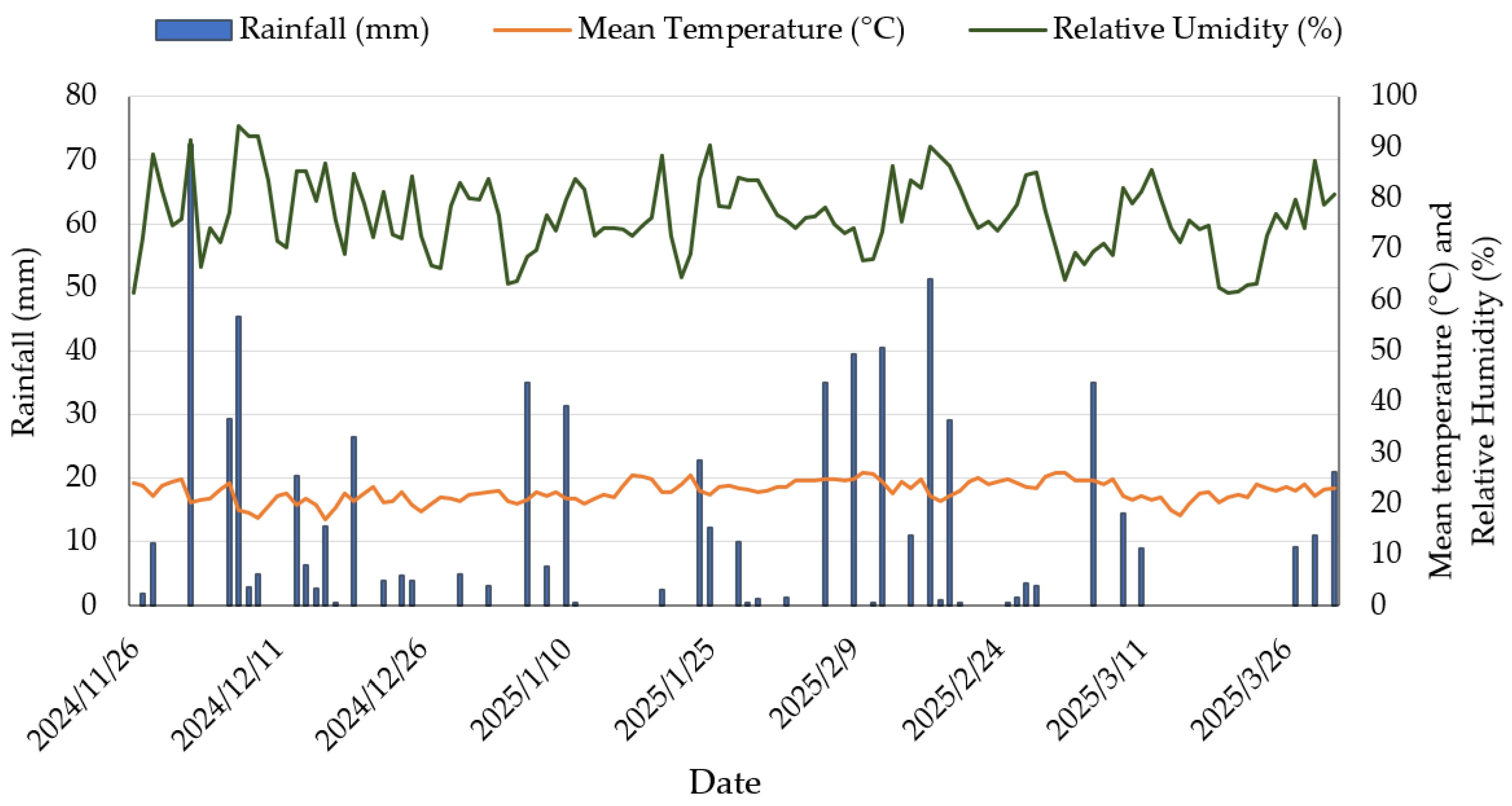
Meteorological data were obtained from an automatic weather station composed of two units located approximately 1 km from the experimental area (Figure 1). The chemical characterization of the experimental area (0–20 cm depth) indicated a soil pH (H2O) of 5.3, organic matter content of 4.8%, available P of 17.7 mg dm−3, and K of 155 mg dm−3 (Table S1). The soil exhibited slight compaction, with physical properties (soil bulk density, penetration resistance, and macroporosity) near critical thresholds.
The experiment was arranged in a randomized complete block design with split plots and three replications (blocks), which were established according to the slight topographic variation of the experimental area, with treatments randomly assigned within each block. The first evaluated factor comprised two chiseling times: the first was September 2023 (spring 2023 chiseling) and the second was June 2024 (autumn 2024 chiseling); there was also a no-till control. The second factor consisted of millet as cover crop or fallow after the summer crop (maize). Finally, the third factor included four winter cover crops: black oat, white oat, radish, and vetch. A total of 72 plots were established, each measuring 2.5 m in width × 3.25 m in length (8.1 m2).
Spring 2023 chiseling was performed over a vetch crop five days after a 10 mm rainfall event. Autumn 2024 chiseling was conducted over millet five days after a 30 mm rainfall event, prior to winter cover crop sowing. In both cases, operations were carried out under friable soil conditions. Chiseling was performed using a Status (Genius) implement equipped with cutting discs and seven shanks spaced 0.50 m apart, operating at a depth of 0.35 m, followed by a roller compactor.
Millet was sown on 14 March 2024, following maize harvest. The hybrid used was ADRf Valente millet, characterized by high biomass production and regrowth capacity, which enables post-harvest grazing and improves soil cover. Sowing was performed by broadcasting, followed by light seed covering and incorporation using a leveling harrow.
Winter cover crops were sown on 2 July 2024, using a Seminea plot seeder (Agricultural Machinery SB, Caxias do Sul, Brazil) with nine rows spaced 0.20 m apart (1.80 m width × 7 m length). The treatments consisted of 80 kg ha−1 of GMX Bagual black oat monoculture, 30 kg ha−1 of GMX Bagual black oat + 50 kg ha−1 of URS Taura white oat + 5 kg ha−1 IPR 116 radish, 30 kg ha−1 of GMX Bagual black oat + 50 kg ha−1 of URS Taura white oat + 30 kg ha−1 of common vetch, and 30 kg ha−1 of GMX Bagual black oat + 50 kg ha−1 URS Taura white oat + 30 kg ha−1 of common vetch + 5 kg ha−1 of IPR 116 radish.
Soybean was sown on 26 November 2024, using a Kuhn mechanical seeder (Kuhn of Brazil S/A, Passo Fundo, Brazil) with five rows spaced 0.50 m apart. The cultivar used was Brasmax Vênus (relative maturity group 5.7), at a density of 240,000 plants ha−1. Fertilization consisted of 325 kg ha−1 of N–P2O5–K2O (03–21–21) at sowing and 100 kg ha−1 of potassium chloride (0–0–58), broadcast before winter cover crop sowing. Fertilization was based on soil analysis and expected yield. Weed, insect, and disease management followed standard monitoring criteria, with chemical control applied as needed.
Soil physical–hydric properties were analyzed by collecting soil samples using stainless steel cylinders (~5 cm diameter × 5 cm height), with one sample per plot. Samples were collected on 29 April 2025, after soybean harvest, approximately 20 months after spring 2023 chiseling and 10 months after autumn 2024 chiseling. Samples were stratified every 5 cm at a 0–20 cm depth and 10 cm at a 20–30 cm depth, totaling five subsamples per plot.
The following variables were determined: soil bulk density (g cm−3), total porosity (cm3 cm−3), microporosity (cm3 cm−3), macroporosity (cm3 cm−3), and water content at field capacity (cm3 cm−3). Analyses were conducted at the Soil Water Physics Laboratory at the University of Passo Fundo (UPF). Soil bulk density was determined as the ratio of oven-dried sample mass at 105 °C for 48 h and cylinder volume [42]. Total porosity was calculated from saturated volumetric water content. Microporosity and field capacity corresponded to water content after applying tensions of 10 kPa and 6 kPa, respectively, using porous plate funnels. Macroporosity was calculated as the difference between total porosity and microporosity [42].
Soil penetration resistance (PR) was measured using an automatic hydraulic penetrometer Falker PLG1020 (Falker, Porto Alegre, Brazil) coupled to an all-terrain vehicle with a 0.40 m measuring depth. Measurements were performed at a constant penetration speed on 17 April 2025, at one point per plot, after a mean rainfall of 53 mm (12–15 April 2025).
Dry biomass (DB) of winter cover crops was collected at 111 days after sowing (DAS), corresponding to peak biomass accumulation. Samples were randomly collected from a 0.25 m2 area (0.5 × 0.5 m) per plot. Biomass was dried at 72 °C until constant weight.
The physiological variables of soybean were measured at 49 DAS, corresponding to the R1 growth stage [43]. Measurements were taken using an Infrared Gas Analyzer (IRGA, LCA PRO; Analytical Development Co. Ltd., Hoddesdon, UK) between 8 a.m. and 11 a.m., under air temperatures ranging from 22 to 29 °C in one plant per plot. Before each evaluation period, the IRGA was calibrated according to the manufacturer’s recommendations, including zero calibration of the CO2 and H2O analyzers and verification of airflow stability. During measurements, photosynthetically active radiation (PAR) was maintained between 1200 and 1500 µmol photons m−2 s−1, while ambient CO2 concentration ranged from 390 to 410 µmol mol−1. The instrument operated at a flow rate of approximately 300 mL min−1, and measurement stability was confirmed before each reading was recorded. The evaluated variables were photosynthetic rate (A; µmol m−2 s−1), leaf transpiration (E; mol H2O m−2 s−1), internal CO2 concentration (Ci; µmol mol−1), stomatal conductance (gs; mol m−2 s−1), CO2 assimilation rate (µmol m−2 s−1), and carboxylation efficiency (CE; mol CO2 m−2 s−1), calculated as the A/Ci ratio. Measurements were taken from the penultimate fully expanded leaf, specifically the central leaflet of the trifoliate leaf, following [44].
Plant height and leaf area index (LAI) were measured at 49 DAS in one plant per plot. The measurements taken were length (L) and width (W) of all central leaflets of trifoliate leaves of each plant. LAI is defined as the ratio between leaf area (LA) and the ground area occupied by plants. The LA was calculated using the equation LA = 2.0185 × (L × W) [45]. Plant height was measured from the hypocotyl base (soil level) to the apex of the last trifoliate leaf.
Soybean was harvested on 31 March 2025, using a Zürn 150 plot harvester (Zürn Harvesting GmbH & Co. KG, Waldenburg, Germany). The harvested area comprised three central rows (1.5 m in width × 3.25 m in length = 4.87 m2 of harvested area). Grain weight and moisture were recorded automatically. Thousand-grain weight (TGW) was determined using a representative sample from each treatment and measured with a digital scale. Grain moisture was standardized to 13% for both variables.
Data were analyzed using R Studio software with R version 4.6.0 (2026-04-24 ucrt) [46]. The analysis considered the three experimental factors (chiseling, millet, and winter cover crops), including all main effects and interaction terms among factors. Data were subjected to analysis of variance (ANOVA). When assumptions were violated, Box–Cox transformation was applied. Tukey’s test was conducted at a 5% probability level.

3. Results and Discussion

No interaction was observed among soil chiseling, millet, and winter cover crops, and no significant differences were detected when the factors were analyzed individually for the variables of photosynthetic rate (A), leaf transpiration (E), internal CO2 concentration (Ci), CO2 assimilation rate, and carboxylation efficiency (CE). However, a triple interaction was observed for stomatal conductance (gs) (Table S2).
Mean CE values across all treatments were 0.07 mol CO2 m−2 s−1, while leaf transpiration averaged 2.72 mol H2O m−2 s−1 (Table 1). These results are consistent with previous reports of CE values ranging from 0.056 to 0.07 mol CO2 m−2 s−1 across soybean growth stages V4, V6, R1, and R3 over two growing seasons [44] and leaf transpiration values ranging from 1.25 to 2.5 mol H2O m−2 s−1 at the V6 stage under a soil water tension of −0.004 MPa [47].
Ci averaged 358.55 µmol mol−1 across treatments, which was higher than those reported by [44], who found values ranging from 194 to 205 µmol mol−1. This difference may be associated to the phenological stage and soil water availability during evaluation. Measurements in the present study were taken at R1, whereas [44] evaluated plants at the R4 stage, which modifies source–sink relationships and may influence leaf gas exchange responses. In addition, ref. [48] reported Ci values ranging from approximately 220 to over 300 µmol mol−1 depending on the intensity of water deficit.
Although the 2024/25 growing season was influenced by La Niña conditions, few drought periods occurred. Measurements were taken on 14 January 2025, following approximately 70 mm of rainfall in the preceding week (Figure 1). The reduced water restriction during the evaluation may have limited differences in physiological variables (Table 1), as gas exchange responses are typically accentuated under water deficit conditions [49,50].
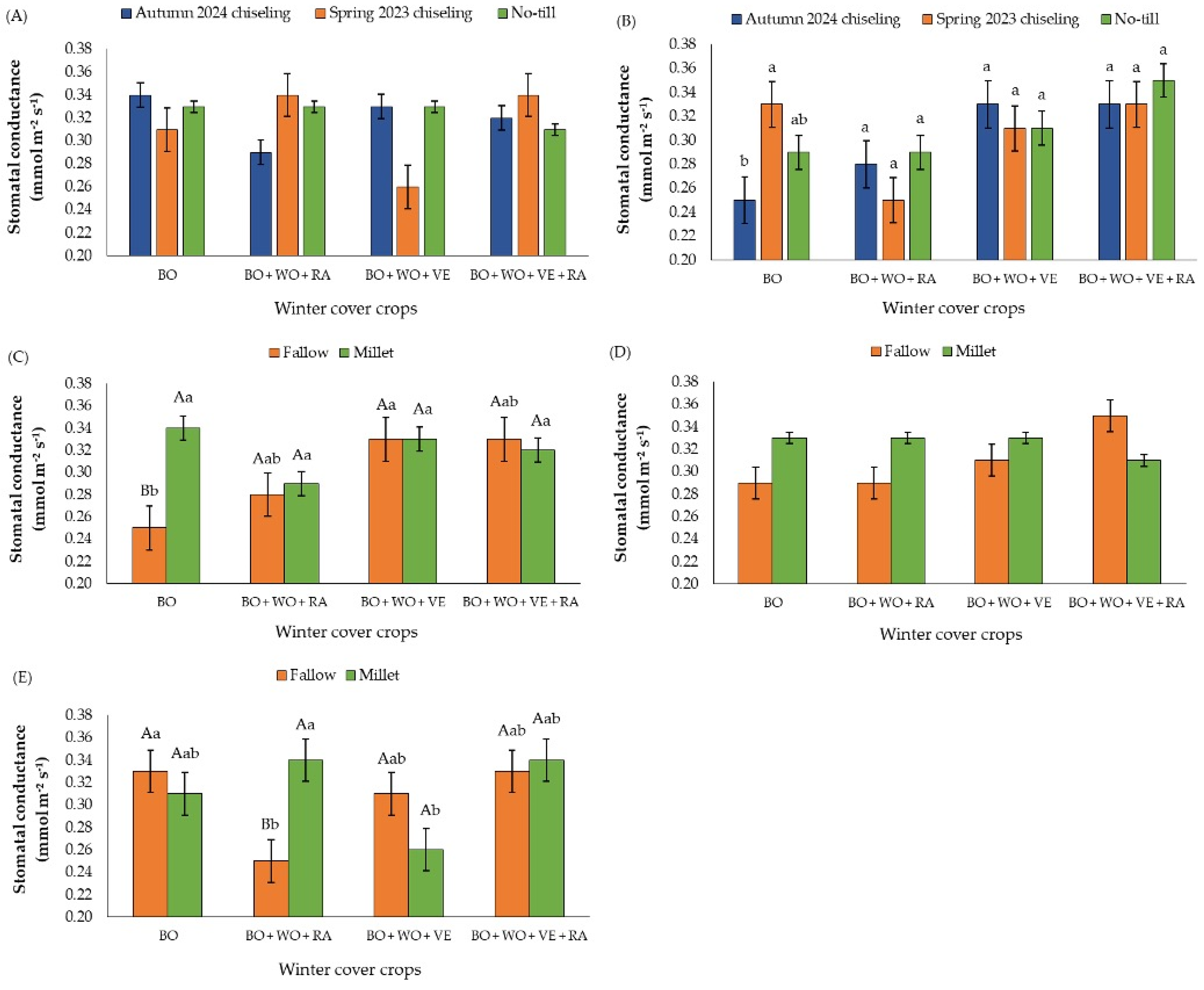
Mean gs values exceeded 0.24 mol H2O m−2 s−1, indicating the absence of water stress [51]. In controlled environments, [52] reported even higher values, ranging from 0.40 to 0.65 mol m−2 s−1. No significant differences in gs were observed under millet treatments (Figure 2A). However, under fallow conditions, higher gs values were observed for chiseling performed in spring 2023 compared to autumn 2024 when black oat was used as a winter cover crop (Figure 2B). When additional cover crop species were included, this difference disappeared, highlighting the importance of plant species diversification for improving system performance.
Under post-maize fallow and autumn 2024 chiseling, the mixture of black oat + white oat + vetch (BO + WO + VE) showed higher gs compared to black oat monoculture (Figure 2C), indicating that species mixtures can mitigate reductions in stomatal conductance. In periods of drought, gs decreases, and high vapor pressure deficit conditions negatively affect photosynthesis [52]. In this context, the greater residue diversity provided by species mixtures may have favored soil moisture conservation, reducing water stress. Lower gs values indicate higher plant stress, reinforcing the importance of millet cultivation after maize, particularly when soil disturbance occurs before establishing black oat as cover crop.
In no-till treatments, no differences were observed among management systems after maize and winter cover crops (Figure 2D). For spring 2023 chiseling, the absence of millet resulted in a 25% reduction in gs under the BO + WO + RA system (Figure 2E). A 33% reduction in gs may reduce photosynthesis by 14% under irrigated and high vapor pressure deficit conditions, with potentially greater impacts under rainfed conditions [52].
Considering spring 2023 chiseling, black oat grown after post-maize fallow showed higher plant stress than under BO + WO + RA conditions. Conversely, the post-maize millet crop showed greater stomatal closure for the BO + WO + VE mixture [53] than BO + WO + RA, with mean values of 0.26 mol m−1 s−1 and 0.34 mol m−1 s−1, respectively (Figure 2E). The presence of radish improves water infiltration and soil structure [54], which may explain these results.
An interaction was observed between chiseling and winter cover crops for dry biomass (DB) production (Table S3). Overall, chiseling did not affect DB production, except for autumn 2024 chiseling under the BO + WO + RA treatment, which resulted in lower biomass compared to the control (Table 2). This suggests that soil disturbance close to cover crop sowing may impair crop establishment and requires careful management.
Similarly, ref. [55], reported higher millet biomass under no tillage compared to chiseling at 30 cm depth. Regarding sunn hemp and millet DB under different decompaction, chiseling, and subsoiling systems at 30–50 cm, no differences were observed for millet among soil management systems; however, subsoiling at 30–50 cm increased the DB of sunn hemp.
The winter cover crops under BO + WO + VE + RA mixture in autumn 2024 chiseling produced 12,694 kg ha−1 of DB, significantly higher than BO (9736 kg ha−1) (Table 2). This indicates that species mixtures enhance biomass production when chiseling is performed near sowing.
For the no-till and spring 2023 chiseling treatments, DB values increased, especially when radish was included in the mixtures. Ref. [56] performed an assessment at 105 days after sowing (DAS) and found higher DB accumulation in systems including rye and radish, as well as black oat, rye, and radish. In addition to high DB production, radish accumulates large amounts of nutrients and improves soil physical properties [54], reducing soil compaction through its deep root system [57], which reinforces its potential as an effective cover crop species.
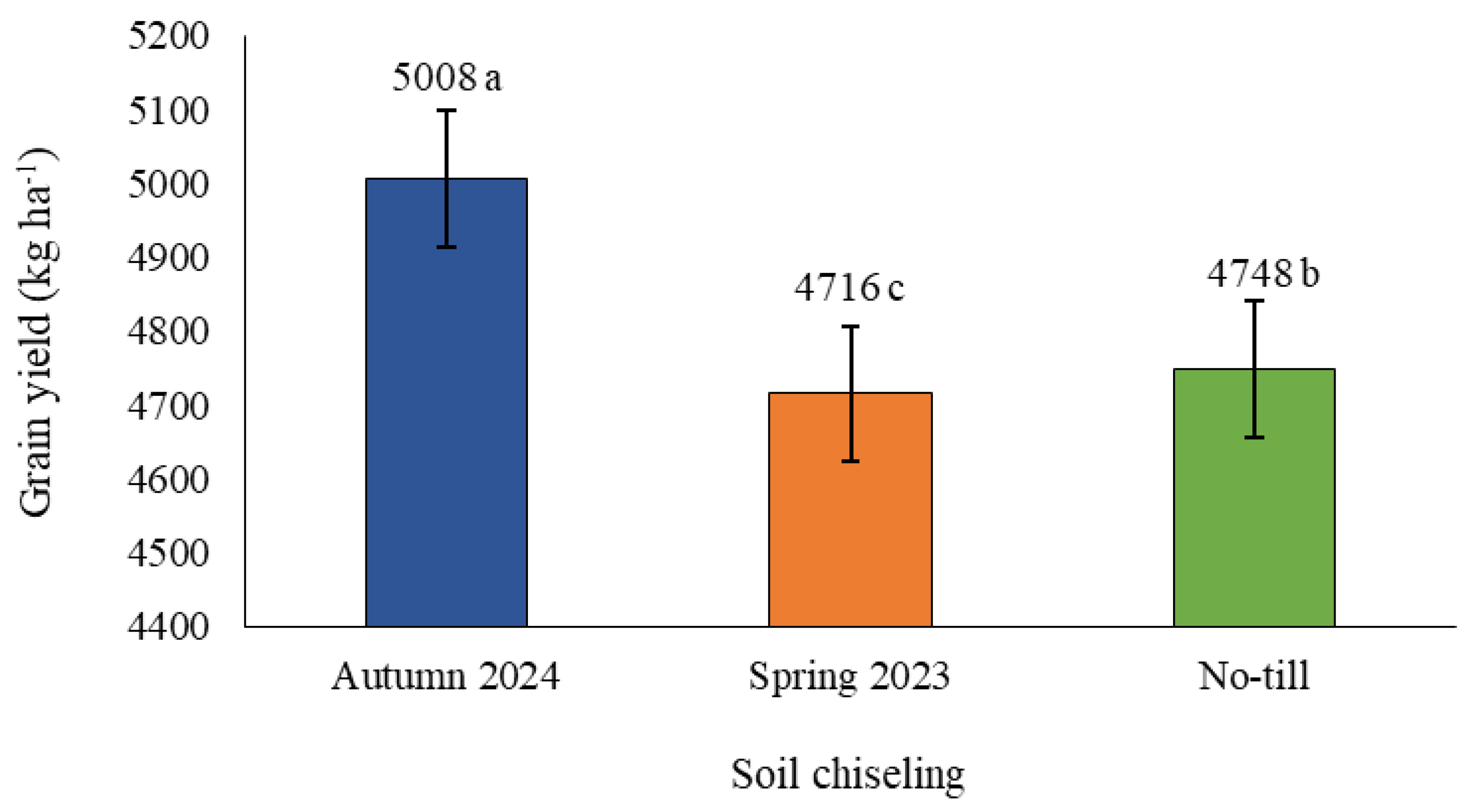
Soybean grain yield (GY) was higher in autumn 2024 chiseling, reaching 5009 kg ha−1 (Figure 3), indicating immediate improvements in soil structure and soybean yield [58]. According [39], in fields with low and medium yield potential, soil management involving chiseling, gypsum application, and cover crop cultivation increases GY.
When considering the effect of spring 2023 chiseling, only a 32 kg ha−1 difference was observed compared to the no-till control, with yields of 4716 and 4748 kg ha−1, respectively (Figure 3). This indicates that the benefits of chiseling are not persistent over the long term [58]. Similarly, refs. [35,59,60] did not observe increases in soybean GY under soil chiseling.
Moreover, a marked reduction in soybean yield is associated with severe soil compaction levels that restrict root growth, combined with water deficit and irregular rainfall distribution throughout the crop cycle [61]. However, during the present study, rainfall was well distributed, and the mean daily air temperature remained predominantly below 20 °C (Figure 1). These conditions are characteristic of the experimental region, which is located at a relatively high altitude and presents lower atmospheric evaporative demand, thereby reducing the risk of water deficit. Therefore, occasional tillage as a strategy to mitigate soil compaction should be adopted based on technical criteria and according to local edaphoclimatic characteristics.
A simple effect of post-maize management was observed for the variable of leaf area index (LAI) (Table S3). Soybean LAI was higher with post-maize millet, being approximately 11% higher than in fallow conditions (Table 3). In a study with two sowing dates [45], reported LAI values ranged from 2 to 5 at 50 DAS for 11 cultivars. Millet cultivation after the summer crop provided higher LAI, indicating greater capacity for solar radiation interception and, consequently, higher photosynthetic potential of soybean [62]. However, increased LAI does not necessarily result in higher GY values [63]. Regarding plant height, no interaction or differences were observed among the evaluated factors (Table 3). Ref. [63] described average plant heights of 65.5 cm at the R1 stage in experiments conducted in Rio Grande do Sul with sowing on November 15, which is considerably higher than the mean plant height observed in this study (30.2 cm). One possible explanation is the agronomic characteristic of the cultivar Brasmax Vênus, which presents relatively short plant architecture. In addition, the later sowing date exposed the soybean plants to a shorter photoperiod, accelerating flowering and reducing the vegetative growth period, thereby limiting plant height.
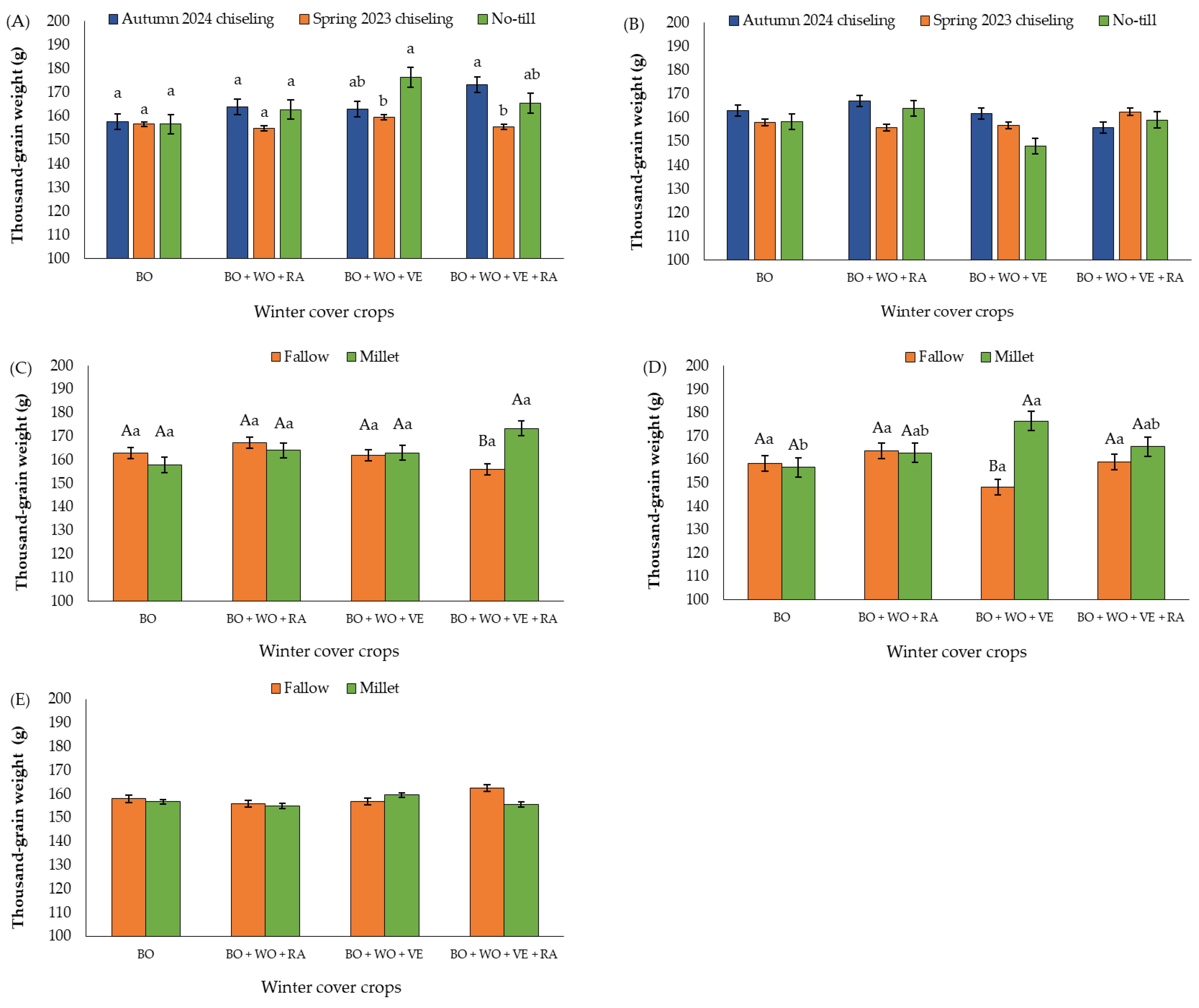
For thousand-grain weight (TGW), a triple interaction among the factors was observed (Table S3). Chiseling times under the influence of post-maize millet showed differences among cover crops BO + WO + VE and BO + WO + VE + RA (Figure 4A). For the mixture BO + WO + VE, the no-till system increased TGW compared to spring 2023 chiseling. For BO + WO + VE + RA, autumn 2024 chiseling differed from spring 2023, demonstrating a relationship between chiseling timing and cover crop use. No differences were observed among chiseling times and cover crops under fallow conditions (Figure 4B).
For autumn 2024 chiseling, the cultivation of BO + WO + VE + RA following millet increased TGW compared to fallow after the summer crop (Figure 4C). Similarly, in the no-till system, post-maize fallow reduced TGW in the BO + WO + VE system compared to millet (Figure 4D). Among winter cover crops in the no-till system, the BO + WO + VE mixture increased TGW compared to black oat monoculture.
Conversely, ref. [20], evaluating three cover crop systems (black oat monoculture, black oat + radish mixture, and black oat + white oat + radish + rye + lupine + common vetch mixture), found no differences in soybean TGW. However, for bean, mixtures with more than two species increased TGW. These results indicate the importance of cover crops after the summer crop for increasing TGW, depending on the species used in succession and the interaction among winter cover crops under soybean TGW (Figure 4).
Soil bulk density was reduced by both autumn 2024 and spring 2023 chiseling for the 0–5, 5–10, and 10–15 cm layers (Table 4), corroborating the results reported in [39]. Overall, the mean values were below the critical threshold for plant growth established (1.36 g cm−3) [64] and (1.33 g cm−3) [31]. Ref. [35] analyzed lower soil bulk density in the 0–10 cm layer under soil chiseling compared to the no-tillage system.
For the 15–20 cm layer, an effect was observed only for autumn 2024 chiseling, reducing soil bulk density to 1.15 g cm−3, while no differences were found for the 20–30 cm layer (Table 4). These results indicate that the effect of spring 2023 chiseling persisted for the 0–5, 5–10, and 10–15 cm layers for up to 20 months. Ref. [65] reported that chiseling effects did not persist after 18 and 24 months in a Rhodic Nitisol. However, ref. [66] observed the persistence of soil bulk density, total porosity, and penetration resistance for at least 18 months in a Planosol.
Microporosity showed a similar trend, decreasing with autumn 2024 chiseling for the 0–5, 5–10, and 15–20 cm layers compared to the no-till system (Table 4). Also, ref. [64] reported lower microporosity in the 0–20 cm layer under chiseling compared to no tillage. Spring chiseling differed from the control only in the 10–15 cm layer. Published ref. [66] did not find an effect for chiseling in the 10–20 cm layer after 18 months.
An isolated effect of soil chiseling was observed for macroporosity (Table S4), with higher values under autumn 2024 chiseling for the 0–5, 5–10, 10–15, and 15–20 cm layers (Table 4). Such mechanical intervention alters pore distribution, increasing macroporosity in the 0–20 cm layer [35]. The high spatial variability observed, with a coefficient of variation reaching a maximum of 61.38% of the in the 20–30 cm layer, can be attributed to the fragmented soil fracturing patterns promoted by the chiseling shanks, although a greater number of experimental replications might have further mitigated this variability. Ref. [20] reported an increased macroporosity in the 0–30 cm layer. Similarly, spring 2023 chiseling increased macroporosity in the 0–5, 5–10, and 10–15 cm layers for up to 20 months. The no-till system in the 5–10, 10–15, 15–20, and 20–30 cm layers and spring 2023 chiseling in 15–20 and 20–30 cm layers showed critical values for plant growth (<0.10 cm3 cm−3) [48].
Total porosity showed a simple effect for chiseling (Table S4), with spring 2023 chiseling resulting in higher values than the no-till system, with effects persisting for 20 months in the 0–5, 5–10, and 10–15 cm layers (Table 4). Ref. [66] observed the persistence of total porosity for 18 months in the 10–20 cm layer, depending on the cover crop species. Autumn 2024 chiseling resulted in higher total porosity in the 5–10 and 10–15 cm layers compared to no tillage (Table 4). Ref. [64] reported higher total porosity only in the 5–10 cm layer when comparing no tillage of six years and chiseling.
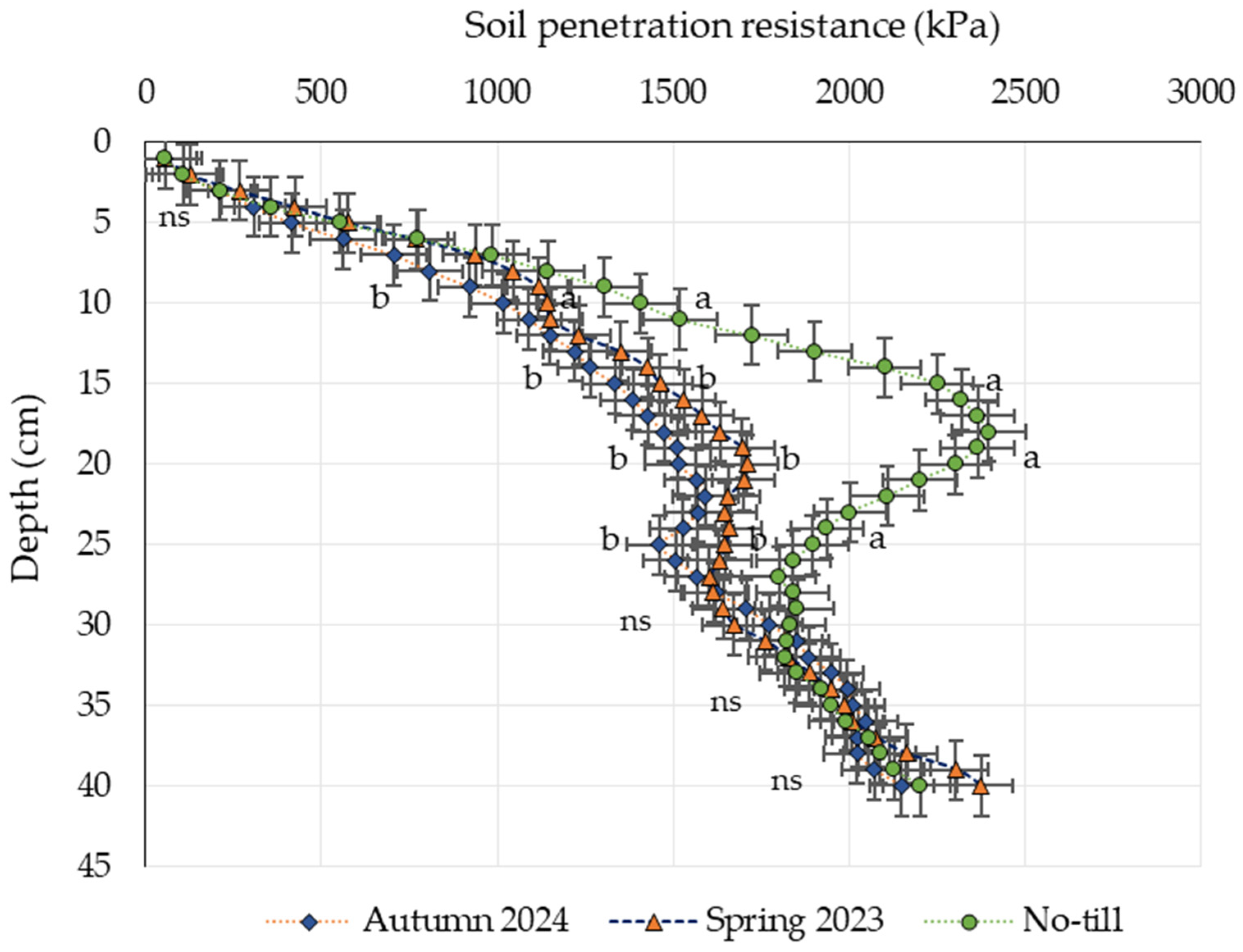
Soil penetration resistance (PR) was evaluated in the 0–40 cm layers, showing differences at 5–10, 10–15, 15–20, and 20–25 cm depths (Figure 5), similarly to ref. [35], where the authors observed reductions in PR down to approximately 23 cm one year after chiseling. Ref. [18] analyzes the differences only in the 25–30 cm layer under subsoiling conditions. Autumn 2024 chiseling showed differences in the 5 to 25 cm layers compared to the no-till control, while spring 2023 chiseling maintained lower PR values for 20 months in the 10–15, 15–20, and 20–25 cm layers, indicating residual effects of mechanical decompaction. Despite these effects, PR values in the no-till system were below 2500 kPa, within the critical range of 2000–3500 kPa reported for aluminoferric Red Oxisol [64], indicating low restriction to plant growth. These results suggest that the benefits of chiseling tend to become more pronounced under conditions of greater soil compaction.
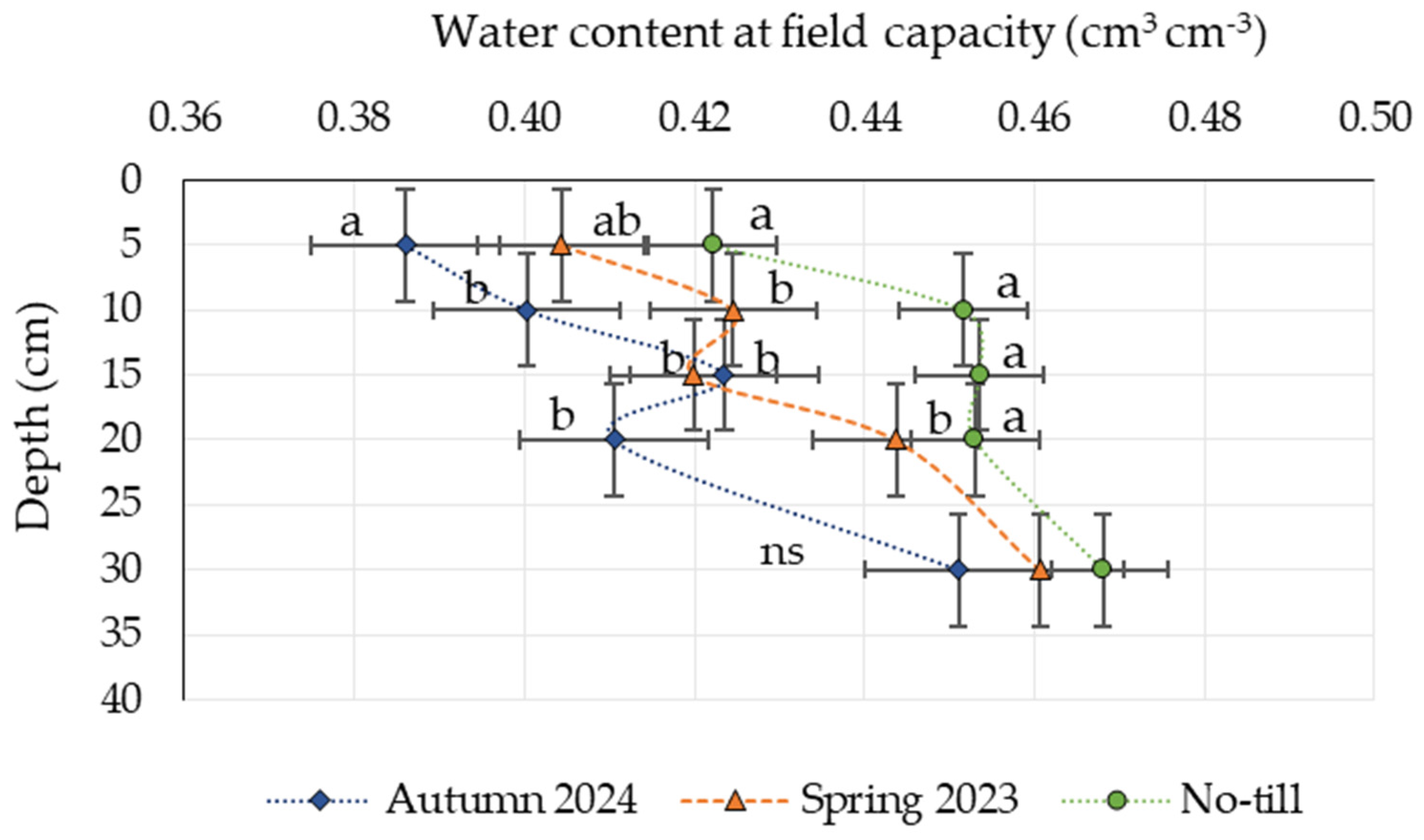
Post-maize millet significantly increased soil water content at field capacity (0.41 cm3 cm−3) in the surface layer (0–5 cm) compared to fallow (0.39 cm3 cm−3), probably due to its fibrous root system improving soil structure. Similar results were described in [60], where the authors reported higher microporosity associated with millet cultivation, with effects extending to 40 cm depth.
In the 5–10, 10–15, 15–20, and 20–30 cm layers, only a simple chiseling effect was observed (Figure 6). Overall, chiseling reduced soil water content compared to no tillage, consistent with the results reported by [67]. Water content at field capacity is one of the soil’s physical properties that most correlates to grain yield [68]. For the 0–20 cm layer, autumn 2024 chiseling resulted in lower field capacity compared to the no-till system. At 15–20 cm depth, autumn 2024 chiseling reduced field capacity compared to spring 2023 chiseling. For the 5–10 and 10–15 cm layers, spring 2023 chiseling showed a similar value of 0.42 cm3 cm−3, which is lower than the 0.45 cm3 cm−3 of the no-till system, indicating the long-term effects of this practice (18 months) (Figure 6). Reductions in field capacity could potentially limit crop yield, as observed under spring 2023 chiseling (Figure 4). However, the immediate effects of autumn 2024 chiseling likely improved soil aeration through increased macroporosity (Table 4) and reduced PR (Figure 5), facilitating deeper soybean root development and contributing to higher GY (Figure 4), particularly in a growing season without prolonged water deficit periods (Figure 1).
Although the effects of soil chiseling on reducing soil bulk density and penetration resistance, while increasing total porosity and macroporosity, persisted in several layers for up to 20 months, these physical improvements did not translate into sustained grain yield increases compared to the no-tillage system. This suggests a gradual soil consolidation toward its prior state, corroborating previous findings that the impacts of this mechanical practice are typically short-lived [20,21]. Furthermore, the intensification of the production system through autumn and winter cover crops was insufficient to maintain the full range of beneficial chiseling effects, indicating that such stability may depend on a longer period of full adoption of conservation agriculture principles. Consequently, mechanical intervention must be implemented based on rigorous technical criteria, accounting for the specific edaphoclimatic conditions of each cropping region.

4. Conclusions

Soil chiseling reduced soil bulk density and penetration resistance and increased total porosity and macroporosity in high-clay Red Oxisols across different soil layers. These physical improvements resulted in short-term increases in thousand-grain weight and soybean grain yield, reaching 5009 kg ha−1. However, these effects were not persistent beyond 20 months, as soil consolidation returned yields to levels similar to the no-tillage system (4748 kg ha−1). In contrast, reductions in microporosity and field capacity in the 0–20 cm layer may negatively affect water availability for plants, especially during severe water deficits.
Production system intensification using millet and cover crops did not increase soybean grain yield, but it improved stomatal conductance and increased the leaf area index by 11%. Thus, in high-altitude subtropical cropping regions, occasional tillage should be strategically targeted to severely compacted areas and integrated with long-term conservation agriculture practices to sustain improvements in soil physical quality.

Supplementary Materials

The following supporting information can be downloaded at: https://www.mdpi.com/article/10.3390/agriengineering8060208/s1, Table S1. Soil chemical analysis for the 0–20 cm depth layer in São José do Ouro, RS, Brazil. Table S2. Summary of the analysis of variance (ANOVA) for the variables photosynthetic activity (μmol m−2 s−1), leaf transpiration (mol H2O m−2 s−1), internal CO2 concentration (μmol mol−1), stomatal conductance (mmol m−2 s−1), CO2 assimilation rate (μmol m−2 s−1), carboxylation efficiency (mol CO2 m−2 s−1). Table S3. Summary of the analysis of variance (ANOVA) for the variables dry biomass of cover crops (DB, kg ha−1), leaf area index (LAI), plant height (cm), thousand grain weight (TGW, g) and soybean grain yield (GY, kg ha−1) in the 2024/25 crop season. Table S4. Summary of the analysis of variance (ANOVA) for the variables soil bulk density (g cm−3), macroporosity (cm3 cm−3), microporosity (cm3 cm−3), total porosity (cm3 cm−3) for the layers of 0–5, 5–10, 10–15, 15–20 and 20–30 cm.

Author Contributions

Conceptualization, E.d.S.N.S. and M.P.B.; methodology, E.d.S.N.S., L.G., R.G.M., and M.P.B.; software, E.d.S.N.S. and M.P.B.; validation, E.d.S.N.S., L.G., R.G.M., J.K., and M.P.B.; formal analysis, E.d.S.N.S., L.G., R.G.M., J.K., and M.P.B.; investigation, E.d.S.N.S. and M.P.B.; resources, L.G. and M.P.B.; data curation, E.d.S.N.S. and M.P.B.; writing—original draft preparation, E.d.S.N.S. and M.P.B.; writing—review and editing, E.d.S.N.S., L.G., R.G.M., J.K., and M.P.B.; visualization, E.d.S.N.S., L.G., R.G.M., J.K., and M.P.B.; supervision, M.P.B.; project administration, M.P.B.; funding acquisition, M.P.B. All authors have read and agreed to the published version of the manuscript.

Funding

This study was partly funded by the Coordination for the Improvement of Higher Education Personnel (CAPES), under Finance Code 001.

Institutional Review Board Statement

Not applicable.

Informed Consent Statement

Not applicable.

Data Availability Statement

The raw data supporting the conclusions of this article will be made available by the authors upon request.

Acknowledgments

The authors would like to acknowledge the University of Passo Fundo and CAPES for the scholarship grant.

Conflicts of Interest

The authors declare no conflicts of interest.

References

  1. Rodríguez, B.C.; Durán-Zuazo, V.H.; Rodríguez, M.S.; García-Tejero, I.F.; Ruiz, B.G.; Cuadros, S.C. Conservation agriculture as a sustainable system for soil health: A review. Soil Syst. 2022, 6, 87. [Google Scholar] [CrossRef]
  2. Kassam, A.; Friedrich, T.; Derpsch, R. Global spread of conservation agriculture. Int. J. Environ. Stud. 2019, 76, 29–51. [Google Scholar] [CrossRef]
  3. Mantovani, G.G.; Pellini, T.; Bordin, I.; Telles, T.T. No-tillage and conservation agriculture adoption by farmers in southern Brazil. Braz. Arch. Biol. Technol. 2024, 67, e24230806. [Google Scholar] [CrossRef]
  4. Possamai, E.J.; Conceição, P.C.; Amadori, C.; Bartz, M.L.C.; Ralisch, R.; Vicensi, M.; Marx, E.F. Adoption of the no-tillage system in Paraná State: A (re)view. Rev. Bras. De Ciênc. Do Solo 2022, 46, e0210104. [Google Scholar] [CrossRef]
  5. Telles, T.S.; Melo, T.R.; Righetto, A.J.; Didoné, E.J.; Barbosa, G.M.C. Soil management practices adopted by farmers and how they perceive conservation agriculture. Rev. Bras. De Ciênc. Do Solo 2022, 46, e0210151. [Google Scholar] [CrossRef]
  6. Ashworth, A.J.; Owens, P.R.; Allen, F.L. Cropping systems and soil strength. Geoderma 2020, 361, 114062. [Google Scholar] [CrossRef]
  7. Tagliapietra, E.L.; Streck, N.A.; Tura, E.F.; Alves, A.F.; Silva, M.R.; Soares, M.F.; Winck, J.E.M.; Porta, F.S.D.; Arce, M.S.Z.; Uliana, G.F.; et al. Assessing yield and risks in cropping systems of southern Brazil. J. Agron. Crop Sci. 2025, 211, e70125. [Google Scholar] [CrossRef]
  8. Nunes, M.R.; Denardin, J.E.; Faganello, A.; Pauletto, E.A.; Pinto, L.F.S. Efeito de semeadora com haste sulcadora para ação profunda em solo manejado com plantio direto. Rev. Bras. De Ciênc. Do Solo 2014, 38, 627–638. [Google Scholar] [CrossRef]
  9. Keller, T.; Colombi, T.; Ruiz, S.; Manalili, M.P.; Rek, J.; Stadelmann, V.; Wunderli, H.; Breitenstein, D.; Reister, R.; Oberholzer, H.; et al. Long-term soil structure observatory for monitoring post-compaction evolution of soil structure. Vadose Zone J. 2017, 16, 1–16. [Google Scholar] [CrossRef]
  10. Bortoluzzi, E.C.; Bortoluzzi, M.P.; Chiomento, J.L.T.; Cassel, J.L.; Werner, H.A.; Petry, C. Improving water infiltration in croplands mitigates the effects of extreme rainfall events. Environ. Earth Sci. 2025, 84, 124. [Google Scholar] [CrossRef]
  11. Mulazzani, R.P.; Boeno, D.; Ribeiro, B.S.M.R.; Alves, A.F.; Zanon, A.J.; Gubiani, P.I. Chemical constraints are the major limiting factor of root deepening southern Brazil soils. Geoderma Reg. 2024, 38, e00825. [Google Scholar] [CrossRef]
  12. Nosalewicz, A.; Lipiec, J. The effect of compacted soil layers on vertical root distribution and water uptake by wheat. Plant Soil 2014, 375, 229–240. [Google Scholar] [CrossRef]
  13. Schnepf, A.; Leitner, D.; Klepsch, S. Modeling phosphorus uptake by a growing and exuding root system. Vadose Zone J. 2012, 11, 318–327. [Google Scholar] [CrossRef]
  14. Chen, G.; Weil, R.R.; Hill, R.L. Effects of compaction and cover crops on soil least limiting water range and air permeability. Soil Tillage Res. 2014, 136, 61–69. [Google Scholar] [CrossRef]
  15. Kuncoro, P.H.; Koga, K.; Satta, N.; Muto, Y. Effect of compaction on soil gas and water transport properties. Soil Tillage Res. 2014, 143, 172–179. [Google Scholar] [CrossRef]
  16. Bailey-Serres, J.; Lee, S.C.; Brinton, E. Waterproofing crops: Flooding survival strategies. Plant Physiol. 2012, 160, 1698–1709. [Google Scholar] [CrossRef] [PubMed]
  17. Kozlowski, T.T. Soil compaction and growth of woody plants. Scand. J. For. Res. 1999, 14, 596–619. [Google Scholar] [CrossRef]
  18. Becker, R.K.; Barbosa, E.A.A.; Giarola, N.F.B.; Kochinski, E.G.; Povh, F.P.; Paula, A.L.; Cherubin, M.R. Mechanical intervention in compacted no-till soil. Agronomy 2022, 12, 2281. [Google Scholar] [CrossRef]
  19. Santos, E.L.; Debiasi, H.; Franchini, J.C.; Vieira, M.J.V.; Balbinot Junior, A.A. Chiseling and gypsum application affecting soil physical attributes, root growth and soybean yield. Rev. Ciênc. Agron. 2019, 50, 536–542. [Google Scholar] [CrossRef]
  20. Bertollo, A.M.; Moraes, M.T.; Franchini, J.C.; Soltangheisi, A.; Balbinot, J.A.A.; Levien, R.; Debiasi, H. Precrops alleviate soil physical limitations. Soil Tillage Res. 2021, 206, 104820. [Google Scholar] [CrossRef]
  21. Drescher, M.S.; Reinert, D.J.; Denardin, J.E.; Gubiani, P.I.; Faganello, A.; Drescher, G.L. Duration of chiseling effects. Pesqui. Agropecu. Bras. 2016, 51, 159–168. [Google Scholar] [CrossRef]
  22. de Assis, R.L.; de Freitas, R.S.; Mason, S.C. Pearl millet production practices in Brazil: A review. Exp. Agric. 2018, 54, 699–718. [Google Scholar] [CrossRef]
  23. Alvarez, R.; Steinbach, H.S.; De Paepe, J.L. Cover crop effects. Soil Tillage Res. 2017, 170, 53–65. [Google Scholar] [CrossRef]
  24. Franczilkowski, M.A.; Seidel, E.P.; Fey, E.; Anschau, K.A.; Mottin, M.C. PROPRIEDADES FÍSICAS DO SOLO NO SISTEMA DE PLANTIO DIRETO E PREPARO REDUZIDO, CULTIVADO COM PLANTAS DE COBERTURA. Rev. Eng. Agric. 2019, 27, 556–564. [Google Scholar] [CrossRef]
  25. Rampim, L.; Pott, C.A.; Volanin, A.J.D.; Spliethoff, J.; Camilo, E.L.; Camilo, M.L.; Conrado, A.M.C.; Kolling, C.E.; Conrado, P.M.; Neto, E.G. Influence of green manure. Res. Soc. Dev. 2020, 9, e173953258. [Google Scholar] [CrossRef]
  26. Besen, M.R.; Ribeiro, H.R.; Bratti, F.; Locatelli, J.L.; Schmitt, D.E.; Piva, J.T. Cover cropping associated with no-tillage system promotes soil carbon sequestration and increases crop yield in southern Brazil. Soil Tillage Res. 2024, 242, 106162. [Google Scholar] [CrossRef]
  27. Faccin, F.C.; Marchetti, M.E.; Serra, A.P.; Ensinas, S.C. Frações granulométricas da matéria orgânica do solo em consórcio de milho safrinha com capim-marandu sob fontes de nitrogênio. Pesqui. Agropecu. Bras. 2016, 51, 2000–2009. [Google Scholar] [CrossRef]
  28. Locatelli, J.L.; Santos, R.S.; Tenelli, S.; Soares, M.B.; Del Grosso, S.; Stewart, C.E.; Popin, G.V.; Bertol, F.D.Z.; Carvalho, J.L.N.; Cherubin, M.R.; et al. Soil carbon allocation, composition, and sequestration changes induced by cropping diversification in tropical systems. Soil Tillage Res. 2025, 248, 106464. [Google Scholar] [CrossRef]
  29. Pott, C.A.; Conrado, P.M.; Rampim, L.; Umburanas, R.C.; Conrado, M.A.C.; Outeiro, V.H.; Muller, M.M.L. Mixture of winter cover crops improves soil properties. Soil Tillage Res. 2023, 234, 105854. [Google Scholar] [CrossRef]
  30. Krupek, F.S.; Redferan, D.; Eskridge, K.M.; Basche, A. Ecological intensification with soil health practices demonstrates positive impacts on multiple soil properties: A large-scale farmer-led experiment. Geoderma 2022, 409, 115594. [Google Scholar] [CrossRef]
  31. Moraes, M.T.; Debiasi, H.; Carlesso, R.; Franchini, J.C.; Silva, V.R.; Luz, F.B. Soil physical quality after decades. Soil Tillage Res. 2016, 155, 351–362. [Google Scholar] [CrossRef]
  32. Peoples, M.B.; Bowman, A.M.; Gault, R.R.; Herridge, D.F.; McCallum, M.H.; McCormick, K.M. Factors regulating the contributions of fixed nitrogen by pasture and crop legumes to different farming systems of eastern Australia. Plant Soil 2001, 228, 29–41. [Google Scholar] [CrossRef]
  33. Duval, M.E.; Galantini, J.A.; Capurro, J.E.; Martinez, J.M. Winter cover crops in soybean monoculture: Effects on soil organic carbon and its fractions. Soil Tillage Res. 2016, 161, 95–105. [Google Scholar] [CrossRef]
  34. Blanco-Canqui, H.; Ruis, S.J. No-tillage and soil environment. Geoderma 2018, 326, 164–200. [Google Scholar] [CrossRef]
  35. Moraes, M.T.; Debiasi, H.; Franchini, J.C.; Mastroberti, A.A.; Levien, R.; Leitner, D.; Schnepf, A. Soil compaction impacts soybean root growth. Soil Tillage Res. 2020, 200, 104611. [Google Scholar] [CrossRef]
  36. Long, S.P.; Bernacchi, C.J. Gas exchange measurements. J. Exp. Bot. 2003, 54, 2393–2401. [Google Scholar] [CrossRef] [PubMed]
  37. Peixoto, D.S.; Silva, L.C.M.; Melo, L.B.B.; Azevedo, R.P.; Araújo, B.C.L.; Carvalho, T.S.; Silva, B.M. Occasional tillage in no-tillage systems: A global meta-analysis. Sci. Total Environ. 2020, 745, 140887. [Google Scholar] [CrossRef]
  38. Carvalho, M.L.; Galera, L.A.; Scholten, R.S.; Canisares, L.P.; Cherubin, M.R. Dry matter production and nutrient uptake by cover crops in Brazilian agriculture. Nutr. Cycl. Agroecosystems 2026, 132, 28. [Google Scholar] [CrossRef]
  39. Pott, L.P.; Amado, T.C.; Leal, O.A.; Ciampitti, I.A. Mitigation of soil compaction for boosting crop productivity at varying yield environments in southern Brazil. Eur. J. Soil Sci. 2019, 71, 1157–1172. [Google Scholar] [CrossRef]
  40. Streck, E.V.; Kämpf, N.; Dalmolin, R.S.D.; Klamt, E.; Nascimento, P.C.; Giasson, E.; Pinto, L.F.S. Solos do Rio Grande do Sul, 3rd ed.; Emater: Porto Alegre, Brazil, 2018. [Google Scholar]
  41. Alvares, C.A.; Stape, J.L.; Sentelhas, P.C.; Gonçalves, J.D.M.; Sparovek, G. Köppen climate classification. Meteorol. Z. 2013, 22, 711–728. [Google Scholar] [CrossRef]
  42. Teixeira, P.C.; Donagemma, G.K.; Fontana, A.; Teixeira, W.G. Manual de Métodos de Análise de Solo; Embrapa: Brasília, Brazil, 2017. [Google Scholar]
  43. Fehr, W.R.; Caviness, C.E. Stages of Soybean Development; Iowa Agriculture and Home Economics Experiment Station, Iowa State University of Science and Technology: Ames, IA, USA, 1977. [Google Scholar]
  44. Rodrigues, V.A.; Moretti, L.G.; Alves Filho, I.; Pacola, M.; Viveiros, J.; Jacomassi, L.M.; Oliveira, S.L.; Jamal, A.; Galeriani, T.M.; Campos, M.d.; et al. Enhancing soybean physiology. Agronomy 2025, 15, 818. [Google Scholar] [CrossRef]
  45. Richter, G.L.; Zanon, A., Jr.; Streck, N.A.; Guedes, J.V.C.; Kräulich, B.; da Rocha, T.S.M.; Winck, J.E.M.; Cera, J.C. Leaf area estimation. Bragantia 2014, 73, 416–425. [Google Scholar] [CrossRef]
  46. R Core Team. R: A Language and Environment for Statistical Computing; R Foundation for Statistical Computing: Vienna, Austria, 2018. [Google Scholar]
  47. Chavarria, G.; Durigon, M.R.; Klein, V.A.; Kleber, H. Photosynthetic restriction of soybean plants under variation of water availability. Ciênc. Rural 2015, 45, 1387–1393. [Google Scholar] [CrossRef]
  48. Falcioni, R.; Oliveira, C.A.; Vedana, N.G.; Mendonça, W.A.; Gonçalves, J.V.F.; Haubert, D.F.S.; Reis, A.s.; Antunes, W.C.; Crusiol, L.G.T.; Sibaldelli, R.N.R.; et al. Progressive Water Deficit Impairs Soybean Growth, Alters Metabolic Profiles, and Decreases Photosynthetic Efficiency. Plants 2025, 14, 2615. [Google Scholar] [CrossRef] [PubMed]
  49. Vital, R.G.; Müller, C.; Freire, F.B.S.; Silva, F.B.; Batista, P.F.; Fuentes, D.; Rodrigues, A.A.; Moura, L.M.F.; Daloso, D.M.; Silva, A.A.; et al. Metabolic, physiological and anatomical responses of soybean plants under water deficit and high temperature condition. Sci. Rep. 2022, 12, 16467. [Google Scholar] [CrossRef]
  50. Silva, J.A.D.; Carvalho, L.G.; Andrade, F.R. Gas exchange and water stress index in soybean cultivated under water deficit and soil compaction. Rev. Ceres 2022, 69, 218–226. [Google Scholar] [CrossRef]
  51. Flexas, J.; Bota, J.; Loreto, F.; Cornic, G.; Sharkey, T.D. Diffusive and metabolic limitations to photosynthesis. Plant Biol. 2004, 6, 269–279. [Google Scholar] [CrossRef] [PubMed]
  52. Gilbert, M.E.; Zwieniecki, M.A.; Holbrook, M. Water use efficiency. J. Exp. Bot. 2011, 62, 2875–2887. [Google Scholar] [CrossRef]
  53. Franks, P.J.; Farquhar, G.D. The Effect of Exogenous Abscisic Acid on Stomatal Development, Stomatal Mechanics, and Leaf Gas Exchange in Tradescantia virginiana. Plant Physiol. 2001, 125, 935–942. [Google Scholar] [CrossRef]
  54. Hansen, P.H.; Silva, D.M.; Lanzanova, L.S.; Guerra, D.; Lanzanova, M.E.; Souza, E.L.; Bohrer, R.E.G. Forage turnip: Potential of the species as a soil decompactor, nutrient recycler and biomass producer. Res. Soc. Dev. Res. Soc. Dev. 2023, 12, e11612239863. [Google Scholar] [CrossRef]
  55. Torres, J.L.R.; Júnior, A.L.B.L.; Barreto, A.C.; Carvalho, F.J.; Assis, R.L.; Loss, A.; Lemes, E.M.; Vieira, D.M.S. Mechanical and Biological Soil Decompaction for No-Tillage Maize Production. Agronomy 2022, 12, 2310. [Google Scholar] [CrossRef]
  56. Gimenez, G.S.; Almeida, J.H.V.J.; Sambatti, V.C.; Nascimento, V.; Dalazen, G. Evolution of soil cover and dry shoot phytomass accumulation of autumn/winter cover crops and its effect on the agronomic performance of soybean grown in succession. Res. Soc. Dev. 2021, 10, e3310413797. [Google Scholar] [CrossRef]
  57. Pescatore, A.; Delgado, A.; Orlandini, S.; Napoli, M. Unveiling the impact of tillage radish on soil chemical, biological, and physical soil properties under reduced and conventional tillage. Soil Tillage Res. 2025, 253, 106676. [Google Scholar] [CrossRef]
  58. Calonego, J.; Raphael, J.P.A.; Rigon, J.P.G.; Oliveira, L.N.; Rosolem, C.A. Soil compaction management and soybean yields with cover crops under no-till and occasional chiseling. Eur. J. Agron. 2017, 85, 31–37. [Google Scholar] [CrossRef]
  59. Inagaki, T.M.; Sá, J.C.M.; Tormena, C.A.; Dranski, A.; Muchalak, A.; Briedis, C.; Ferreira, A.O.; Giarola, N.F.B.; Silva, A.P. Mechanical and biological chiseling impacts on soil organic C stocks, root, growth, and crop yield in a long-term no-till system. Soil Tillage Res. 2021, 211, 104993. [Google Scholar] [CrossRef]
  60. Silva, G.F.D.; Luperini, B.C.O.; Barcelos, J.P.D.Q.; Putti, F.F.; Mooney, S.J.; Calonego, J.C. Mechanical Chiseling Versus Root Bio-Tillage on Soil Physical Quality and Soybean Yield in a Long-Term No-Till System. Agronomy 2025, 15, 1249. [Google Scholar] [CrossRef]
  61. Mulazzani, R.P.; Gubiani, P.I.; Zanon, A.J.; Drescher, M.S.; Schenato, R.B.; Girardello, V.C. Impact of soil compaction on 30-year yield simulated with CROPGRO-DSSAT. Agric. Syst. 2022, 203, 103523. [Google Scholar] [CrossRef]
  62. Zanon, A.J.; Streck, N.A.; Richter, G.L.; Becker, C.C.; Rocha, T.S.M.; Cera, J.C.; Winck, J.E.M.; Cardoso, A.P.; Tagliapietra, E.L.; Weber, P.S. Branches contribution and leaf area index evolution in modern cultivars of soybean. Bragantia 2015, 74, 279–290. [Google Scholar] [CrossRef]
  63. Peter, M.; Dallmann, M.M.; Pedó, T.; Aumonde, T.Z.; Barbosa, B.S.; Medeiros, L.B.; Pimentel, J.R. Ecophysiology of soybean in response to different sowing times and crop densities. Res. Soc. Dev. 2023, 12, e24212541765. [Google Scholar] [CrossRef]
  64. Suzuki, L.E.A.S.; Reinert, D.J.; Alves, M.C.; Reichert, J.M. Critical Limits for Soybean and Black Bean Root Growth, Based on Macroporosity and Penetrability, for Soils with Distinct Texture and Management Systems. Sustainability 2022, 14, 2958. [Google Scholar] [CrossRef]
  65. Nunes, M.R.; Pauletto, E.A.; Denardin, J.E.; Faganello, A.; Pinto, L.F.S.; Scheunemann, T. Persistência dos efeitos da escarificação sobre a compactação de Nitossolo sob plantio direto em região subtropical úmida. Pesqui. Agropecu. Bras. 2014, 49, 531–539. [Google Scholar] [CrossRef]
  66. Fin, S.S.; Marchesan, E.; Gubiani, P.I.; Farenzena, J.A.P.; Murari, M.S.; Coelho, L.L.; Cargnelutti, A.F.; Aramburu, B.B. Duração dos efeitos de escarificação e camalhão associados à cobertura vegetal na produção de soja em Planossolo. Pesqui. Agropecu. Bras. 2018, 53, 1230–1238. [Google Scholar] [CrossRef]
  67. Suzuki, L.E.A.S.; Reinert, D.J.; Alves, M.C.; Reichert, J.M. Medium-Term No-Tillage, Additional Compaction, and Chiseling as Affecting Clayey Subtropical Soil Physical Properties and Yield of Corn, Soybean and Wheat Crops. Sustainability 2022, 14, 9717. [Google Scholar] [CrossRef]
  68. Peixoto, D.S.; Silva, B.M.; Silva, S.H.G.; Karlen, D.L.; Moreira, S.G.; Silva, A.A.P.; Resende, A.V.; Norton, L.D.; Curi, N. Diagnosing, Ameliorating, and Monitoring Soil Compaction in No Till Brazilian Soils. Agrosystems Geosci. Environ. 2019, 2, 1–14. [Google Scholar] [CrossRef]
Figure 1. Rainfall (mm), mean air temperature (°C), and relative humidity (%) between soybean sowing and harvesting.
Agriengineering 08 00208 g001
Figure 2. Soybean stomatal conductance (gs, mol H2O m−2 s−1) as affected by the interaction among soil chiseling, post-maize management, and winter cover crops during the 2024/25 growing season in São José do Ouro, RS, Brazil. Panels (A,B) show the interaction between soil chiseling [autumn 2024 chiseling, spring 2023 chiseling, and no-till control] and winter cover crops under post-maize millet and fallow conditions, respectively. Panels (CE) show the interaction between post-maize management [millet or fallow] and winter cover crops within autumn 2024 chiseling, no-till control, and spring 2023 chiseling, respectively. Winter cover crops included black oat (BO), white oat (WO), radish (RA), and vetch (VE) as monocultures or in mixtures. Different uppercase letters indicate differences between post-maize management treatments, lowercase letters indicate differences among winter cover crops, and different letters within each winter cover crop indicate differences among soil chiseling according to Tukey’s test (p ≤ 0.05). Bars represent the standard error of the mean (n = 3).
Agriengineering 08 00208 g002
Figure 3. Soybean grain yield (GY, kg ha−1) in the 2024/25 growing season according to different soil chiseling times. Different letters indicate differences among soil chiseling methods according to Tukey’s test (p ≤ 0.05).
Agriengineering 08 00208 g003
Figure 4. Thousand-grain weight (TGW, g) as affected by the interaction among soil chiseling, post-maize management, and winter cover crops during the 2024/25 growing season in São José do Ouro, RS, Brazil. Panels (A,B) show the interaction between soil chiseling [autumn 2024 chiseling, spring 2023 chiseling, and no-till control] and winter cover crops under post-maize millet and fallow, respectively. Panels (CE) show the interaction between post-maize management [millet or fallow] and winter cover crops within autumn 2024 chiseling, no-till control, and spring 2023 chiseling, respectively. Winter cover crops included black oat (BO), white oat (WO), radish (RA), and vetch (VE) as monocultures or in mixtures. Different uppercase letters indicate differences between post-maize management treatments, lowercase letters indicate differences among winter cover crops, and different letters within each winter cover crop indicate differences among soil chiseling according to Tukey’s test (p ≤ 0.05). Bars represent the standard error of the mean (n = 3).
Agriengineering 08 00208 g004
Figure 5. Soil penetration resistance (PR, kPa) in the 0–5, 5–10, 10–15, 15–20, 20–25, 25–30, 30–35, and 35–40 cm layers, according to spring 2023 chiseling, autumn 2024 chiseling, and no-till control. Different letters in the layers statistically differ according to Tukey’s test (p ≤ 0.05). ns: not significant. Bars represent standard error of the mean (n = 3).
Agriengineering 08 00208 g005
Figure 6. Water content at field capacity (cm3 cm−3) in the 0–5, 5–10, 10–15, 15–20, and 20–30 cm layers according to spring 2023 chiseling, autumn 2024 chiseling, and no-till control. Different letters in the layers statistically differ according to Tukey’s test (p ≤ 0.05). ns: not significant. Bars represent standard error of the mean (n = 3).
Agriengineering 08 00208 g006
Table 1. Mean values of photosynthetic rate (A, µmol m−2 s−1), leaf transpiration (E, mol H2O m−2 s−1), internal CO2 concentration (Ci, µmol m−1), CO2 assimilation rate (µmol m−2 s−1), and carboxylation efficiency (CE, mol CO2 m−2 s−1) according to soil chiseling, millet, and winter cover crops.
Source of VariationPhotosynthetic RateLeaf TranspirationInternal CO2 ConcentrationCO2 Assimilation RateCarboxylation Efficiency
Soil chiseling
Autumn 202427.67 ns2.66 ns354.16 ns85.75 ns0.08 ns
Spring 202327.482.78357.3385.160.07
No-till26.892.73364.1683.330.07
Post-maize management
Millet27.95 ns2.74 ns358.00 ns86.61 ns0.08 ns
Fallow26.742.70359.1182.880.07
Winter cover crops
BO28.06 ns2.82 ns350.33 ns87.11 ns0.08 ns
BO + WO + VE26.462.71367.3382.000.07
BO + WO + VE + RA27.212.69367.2784.270.07
BO + WO + RA27.662.68349.2785.610.08
Mean27.342.72358.5584.740.07
CV10.1411.6111.079.2528.9
BO: black oat; WO: white oat; VE: vetch; RA: radish. ns: not significant. CV: coefficient of variation.
Table 2. Mean values of dry biomass (DB, kg ha−1) of winter cover crops, black oat (BO), black oat + white oat + radish (BO + WO + RA), black oat + white oat + vetch (BO + WO + VE), and black oat + white oat + vetch + radish (BO + WO + VE + RA), according to different chiseling times.
Soil ChiselingDry Biomass (kg ha−1)
BOBO + WO + RABO + WO + VEBO + WO + VE + RA
Autumn 20249736 Ab10,808 Bab11,565 Aab12,694 Aa
Spring 20239890 Ab12,276 ABa11,127 Aab12,456 Aa
No-till8840 Ac14,280 Aa11,321 Ab14,225 Aa
Mean948812,45411,33713,125
CV (%)12.61
Different uppercase letters for the chiseling factor and lowercase letters for the cover crop factor statistically differ according to Tukey’s test (p ≤ 0.05).
Table 3. Mean values of soybean leaf area index (LAI) and plant height (cm) in the 2024/25 growing season according to different chiseling times, post-maize management, and winter cover crops.
Interference FactorLAIPlant Height (cm)
Soil chiseling
Autumn 20244.49 ns30.66 ns
Spring 20234.8429.28
No-till4.4430.66
Post-maize management
Millet4.83 a29.69 ns
Fallow4.35 b30.71
Winter cover crop
BO4.50 ns30.77 ns
BO + WO + VE4.2730.12
BO + WO + VE + RA4.6529.53
BO + WO + RA4.9030.37
Mean4.5830.19
CV16.169.09
BO: black oat; WO: white oat; VE: vetch; RA: radish. Means followed by the same letter do not statistically differ according to Tukey’s test (p ≤ 0.05) ns: not significant. CV: coefficient of variation.
Table 4. Mean values of soil bulk density (g cm−3), microporosity (cm3 cm−3), macroporosity (cm3 cm−3), and total soil porosity (cm3 cm−3) in the 0–5, 5–10, 10–15, 15–20, and 20–30 cm layers.
Soil Chiseling0–5 cm5–10 cm10–15 cm15–20 cm20–30 cm
Soil Bulk Density
Autumn 20241.06 b1.15 b1.19 b1.15 b1.17 ns
Spring 20231.07 b1.16 b1.18 b1.23 a1.19
No-till1.15 a1.25 a1.31 a1.29 a1.22
Mean1.091.171.221.221.19
CV (%)9.858.629.028.36.77
Microporosity
Autumn 20240.40 b0.41 b0.43 ab0.41 b0.46 ns
Spring 20230.41 ab0.43 ab0.42 b0.45 a0.46
No-till0.44 a0.46 a0.46 a0.45 a0.47
Mean0.410.430.430.430.46
CV (%)9.78.249.067.267.77
Macroporosity
Autumn 20240.17 a0.15 a0.11 a0.12 a0.07 ns
Spring 20230.17 a0.13 a0.11 a0.08 b0.08
No-till0.12 b0.07 b0.05 b0.06 b0.06
Mean0.150.110.090.090.07
CV (%)36.5444.4456.3256.2161.38
Total porosity
Autumn 20240.57 ab0.56 a0.54 a0.54 ns0.53 ns
Spring 20230.59 a0.56 a0.54 a0.530.54
No-till0.56 b0.53 b0.51 b0.520.53
Mean0.570.550.530.530.53
CV (%)5.465.896.457.385.25
Means followed by the same letter do not statistically differ according to Tukey’s test (p ≤ 0.05). ns: not significant. CV: coefficient of variation.
Disclaimer/Publisher’s Note: The statements, opinions and data contained in all publications are solely those of the individual author(s) and contributor(s) and not of MDPI and/or the editor(s). MDPI and/or the editor(s) disclaim responsibility for any injury to people or property resulting from any ideas, methods, instructions or products referred to in the content.