Article

Effect of Nitrogen Topdressing Associated with Growth-Promoting Rhizobacteria on Yield, Nutrition, and Chlorophyll Index of Rice


by
Bruna Miguel Cardoso
1,*,
João Pedro da Silva Francisco
1,
Nelson Câmara de Souza Júnior
2,
César Henrique Alves Seleguin
1,
Barbara Nairim Ceriani de Luna
1,
Maiara Luzia Grigoli Olivio
3,
Liliane Santos de Camargos
3 and
Orivaldo Arf
1
1
Department of Crop Science, Food Technology, and Socioeconomics, School of Engineering, São Paulo State University (UNESP), Ilha Solteira 15385-000, Brazil
2
Department of Plant Health, Rural Engineering and Soils, School of Engineering, São Paulo State University (UNESP), Ilha Solteira 15385-000, Brazil
3
Department of Biology and Animal Science, School of Engineering, São Paulo State University (UNESP), Ilha Solteira 15385-000, Brazil
*
Author to whom correspondence should be addressed.
AgriEngineering 2026, 8(5), 179; https://doi.org/10.3390/agriengineering8050179
Submission received: 25 February 2026 / Revised: 22 April 2026 / Accepted: 23 April 2026 / Published: 3 May 2026
(This article belongs to the Section Sustainable Bioresource and Bioprocess Engineering)

Abstract

Nitrogen (N) is a key nutrient for upland rice (Oryza sativa L.), and plant growth-promoting rhizobacteria (PGPR) have been investigated as a sustainable strategy to improve plant nutrition and crop performance. This study evaluated the effects of N topdressing and PGPR inoculation on leaf chlorophyll index (LCI), leaf nutrient concentrations, and yield components in upland rice. A field experiment was conducted in a randomized block design (4 × 6 factorial) with four N rates (0, 40, 80, and 120 kg ha−1) and five PGPR strains (Azospirillum brasilense, Nitrospirillum amazonense, Bacillus subtilis, Priestia aryabhattai, and Methylobacterium symbioticum), plus a non-inoculated control. No significant interaction between N rates and PGPR inoculation was observed. Nitrogen increased leaf phosphorus (P), potassium (K), and magnesium (Mg) concentrations and panicle number; however, it also increased unfilled grains, reduced grain weight, and did not affect grain yield. Azospirillum brasilense increased LCI by 25.7%. Bacillus subtilis and A. brasilense increased leaf N, K, Mg, copper (Cu) and manganese (Mn) concentrations. Azospirillum brasilense, B. subtilis, N. amazonense, and P. aryabhattai reduced unfilled grains, increased grain weight and grain yield by up to 10.7%, whereas M. symbioticum did not differ from the control in grain yield. Under the conditions of this study, nitrogen was not limiting for grain yield, and all strains, except M. symbioticum, were associated with increases in grain yield and changes in plant nutritional status.

1. Introduction

Rice (Oryza sativa L.) is one of the three most widely cultivated cereals worldwide, ensuring food security for nearly half of the world’s population [1]. Nitrogen (N) is the nutrient most removed by rice grains and is essential for maintaining photosynthetic rates and vegetative growth, as it is directly involved in the synthesis of amino acids, proteins, and chlorophyll [2]. It is commonly supplied through synthetic fertilizers, which may contribute to soil acidification and contamination of water resources [3]. In this context, plant growth-promoting rhizobacteria (PGPR) have been investigated as a sustainable management approach, as they can influence nutrient uptake and plant development [4].
Azospirillum spp. comprise a group of bacteria with a high affinity for grasses, including rice, and their inoculation has been widely investigated due to positive effects on growth, N metabolism, and physiological performance [5,6]. Nitrospirillum amazonense, formerly classified as A. amazonense, maintains functional characteristics similar to those of the Azospirillum genus [7]. Both belong to the group of associative diazotrophic PGPR, capable of performing biological nitrogen fixation (BNF) and producing phytohormones such as indole-3-acetic acid (IAA), cytokinins (CK), and gibberellins (GA), which stimulate root growth and favor water and nutrient absorption [8,9]. Studies have shown that A. brasilense inoculation increases plant biomass and photosynthetic activity [10,11], resulting in higher yields in rice and maize [12,13]. Similarly, N. amazonense contributes to N accumulation and rice yield through BNF, as evidenced by increased nitrogenase activity [14], in addition to promoting yield increments and improvements in photosynthetic parameters in sugarcane [15].
Bacillus subtilis and Priestia aryabhattai (formerly B. aryabhattai) are PGPR associated with the synthesis of phytohormones, including IAA, CK, GA, abscisic acid (ABA), and salicylic acid (SA). Inoculation with these species has been reported to improve growth and plant nutrition in crops such as wheat and rice, reflecting enhanced physiological performance [16,17,18]. These bacteria also exhibit mechanisms that enhance nutrient availability in the soil [18,19]. Although not diazotrophic, these bacteria may enhance N uptake, which may contribute to higher chlorophyll content. The improved nutritional balance promoted by these bacteria is often associated with the stimulation of phytohormone production, which promotes root development and enhances water and nutrient uptake [18,20,21].
Methylobacterium spp. are methylotrophic bacteria that utilize single-carbon compounds (C1), such as methanol released during plant growth, as an energy source. This characteristic favors their adaptation to the phyllosphere and colonization of plant tissues, establishing an intimate interaction that contributes to plant development [22]. Methylobacterium symbioticum is diazotrophic, colonizing various plant tissues, including leaves, stems, and roots, with penetration potentially occurring through stomata [23,24]. Several studies highlight its capacity to synthesize IAA and CK, reduce ethylene levels, and stimulate root and shoot development [25,26]. Research in maize has shown increased yield and N accumulation with M. symbioticum inoculation as well as higher leaf chlorophyll index (LCI) values [27,28]. However, its effects under different N rates, particularly in upland rice systems, remain poorly understood.
Upland rice is highly relevant to the Brazilian agricultural sector and stands out as a strategic alternative for crop rotation in the Cerrado and other rainfed regions worldwide [29,30]. The use of microorganisms in this crop has been considered a promising approach, as studies have reported positive effects on plant growth and yield [31]. Given the increasing global demand for food, further research is needed to improve upland rice production while promoting more sustainable cultivation practices. In this context, the combined effects of N fertilization and PGPR inoculation on upland rice remain insufficiently explored. This study evaluated the effects of N topdressing rates and the inoculation of A. brasilense, N. amazonense, B. subtilis, P. aryabhattai, and M. symbioticum on LCI, leaf nutrient concentrations, yield components, and grain yield in upland rice.

2. Materials and Methods

2.1. Experimental Design and Research Area Location

The experiment was conducted at the Teaching, Research, and Extension Farm of the School of Engineering of Ilha Solteira (UNESP), located in Selvíria, Mato Grosso do Sul State, Brazil, at 20°20′49″ S and 51°23′50″ W. The area was managed under a no-tillage system (NTS) for five years prior to the experiment, with pearl millet (Pennisetum glaucum (L.) R. Br.) as the preceding crop. The regional climate is classified as Aw (tropical with a dry winter season), with an average annual precipitation of 1322 mm, a mean temperature of 23 °C, and an altitude of 334 m [32]. The soil is classified as Oxisol [33]. The initial soil chemical characteristics before the experiment are described in Table 1.
Soil mineral N was not determined prior to the experiment. Under tropical conditions, soil N is highly dynamic due to rapid transformations such as mineralization, nitrification, and losses via volatilization and leaching, limiting the representativeness of a single measurement. Nitrogen fertilization rates were therefore defined based on local agronomic recommendations, considering expected yield, soil organic matter content, and previous crop. Accordingly, results should be interpreted in terms of relative responses to N rates rather than absolute soil N availability.

2.2. Experimental Procedure

A randomized complete block design was adopted, in a 4 × 6 factorial scheme, with four replications, with four topdressed N doses (0, 40, 80, and 120 kg ha−1), five PGPR inoculations: A. brasilense, P. aryabhattai, B. subtilis, N. amazonense, M. symbioticum, and a control (without PGPR application). The plots consisted of five 5 m long rows, with the two central rows considered the useful area of each plot. The management system implemented was conventional, with two disk harrowings (medium and leveling harrows). The experiment was sprinkler-irrigated using a central pivot.
The BRS A502 cultivar was used, which has a medium cycle and lodging tolerance. Mechanical sowing occurred on 9 January 2025, using a five-row disk seeder at a density of 80 kg ha−1 of seeds and a 0.35 m row spacing. Seeds were treated with Standak Top® (BASF S.A., São Paulo, SP, Brazil) at a rate of 2 mL kg−1 of seed, along with cobalt (Co) and molybdenum (Mo) at the same dose. Furrow fertilization was applied at sowing using 250 kg ha−1 of the 08-28-16 formulation (N-P2O5-K2O). After sowing, the herbicide pendimethalin (455 g L−1) was applied at a dose of 3 L ha−1.
Nitrogen topdressing was split: half at tillering (15 days after emergence—DAE) and the other half at floral differentiation (35 DAE), using urea (46% N) as the source, corresponding to key phenological stages of the crop. Immediately after each N application, the experimental area was irrigated to minimize ammonia volatilization. Inoculants containing A. brasilense (Ab-V5), P. aryabhattai (CMAA 1363), N. amazonense (BR 11142), and B. subtilis—at concentrations of 1 × 10⁷ CFU (colony-forming units) mL−1—were applied as a full-area spray at 16 and 36 DAE, at a dose of 150 mL ha−1 per application, defined based on other studies conducted in this area. M. symbioticum (SB23) was provided via a commercial product containing 3 × 10⁷ UFC g−1, at the manufacturer’s recommended dose of 167 g ha−1 per application.
Inoculant application was performed using a constant-pressure electric sprayer with a flow rate of 180 L ha−1 and a full cone nozzle, ensuring adequate canopy coverage. Pest and disease control followed regional recommendations. Manual harvest of the useful area was conducted on 14 April 2025 (90 DAE). Rice irrigation management was based on three crop coefficients (Kc) divided into four growth periods from emergence to harvest. A Kc value of 0.4 was used for the vegetative stage. The reproductive stage utilized an initial Kc of 0.70 and a final Kc of 1.00, while these values were inverted for the ripening stage, starting at 1.00 and ending at 0.70 [34].

2.3. Evaluation

  • Leaf chlorophyll index (LCI): Determined at 52 DAE on healthy, fully expanded leaves using a portable chlorophyll meter (ClorofiLOG®, Falker, Brazil), which provides relative index of total chlorophyll based on leaf optical properties.
  • Leaf nutrient concentration: Twenty flag leaves per plot were collected at 62 DAE [35], oven-dried at 65 °C for 72 h, and ground in a Wiley mill for laboratory analysis according to Malavolta’s methodology [36].
  • Plant height (H): Measured at 90 DAE from the soil surface to the upper extremity of the panicles.
  • Number of panicles per square meter (P): Counted at 90 DAE in one linear meter of the useful area and converted to m2.
  • Total grains (TG): Total number of grains obtained from a sample of 20 panicles per plot, counted using an electronic grain counter (ESC2020, Sanick®, Chapecó, SC, Brazil). Values were subsequently expressed on a per panicle basis by dividing by 20.
  • Filled (FG) and unfilled grains (UG): Grains from the same 20-panicle sample were separated by air flow into filled and unfilled fractions and subsequently counted. Values were expressed on a per panicle basis by dividing by 20. Thus, TG corresponds to the sum of FG and UG.
  • 100-Grain weight (100-GW): Determined by weighing 100 grains, with moisture corrected to 13% (wet basis).
  • Test weight (TW): Determined using a test weight scale for cereals.
  • Grain yield (GY): Mechanically threshed, weighed, and corrected to 13% moisture, with results converted to kg ha−1.

2.4. Statistical Analysis

Data were subjected to analysis of variance (F-test). Significant effects (p < 0.05) for PGPR inoculation were compared using the Scott–Knott test (p < 0.05), while N rates were analyzed using polynomial regression (p < 0.05). To support data interpretation, correlation analysis among the studied variables was performed using Pear-son’s correlation coefficient. The Pearson correlation coefficient was calculated using the R software (4.4.2 version), based on data obtained for each treatment, considering the different evaluated doses. This coefficient measures the strength and direction of the linear relationship between two quantitative variables.
r = Σ ( X i X - ) ( Y i Y - ) Σ X i X - 2 Σ ( Y i Y - ) 2
In the equation,  X i  and  Y i  represent the individual values of the analyzed variables, while  X -  and  Y -  correspond to the means of these variables. The values of the correlation coefficient (r) range from −1 to 1 and are interpreted as follows: r = 1: perfect positive linear correlation; r = −1: perfect negative linear correlation; r = 0: absence of linear correlation. All statistical analyses, as well as graph and heatmap construction, were carried out using R software [37] with the packages “ExpDes.pt”, “ggplot2”, “patchwork”, “dplyr”, and “ggpattern”.

3. Results

3.1. Leaf Chlorophyll Index (LCI) and Leaf Nutritional Diagnosis

The means for LCI and leaf nutrient concentrations in rice are presented in Table 2. No significant interaction between N rates and PGPR inoculation was observed; however, both factors had significant independent effects (Table 2). Leaf phosphorus (P) concentration increased linearly with N rates, ranging from 2.23 g kg−1 in the control treatment to 2.39 g kg−1 at 120 kg ha−1 N. Leaf potassium (K) showed a quadratic response to N rates, while magnesium (Mg) concentration increased gradually, rising from 7.41 g kg−1 in the control to 7.61 g kg−1 at 120 kg ha−1 N (Table 2).
Among PGPR treatments, the highest LCI values were observed with A. brasilense. Inoculation with B. subtilis and A. brasilense increased leaf N and K concentrations, while Ca was not affected by either inoculation or N rates. For Mg, higher values were observed with B. subtilis and P. aryabhattai. Regarding sulfur (S), the control did not differ from P. aryabhattai and N. amazonense. For micronutrients, copper (Cu) concentration was higher with A. brasilense, whereas manganese (Mn) increased with B. subtilis, P. aryabhattai, N. amazonense, and A. brasilense. Iron (Fe) concentration was higher in treatments inoculated with N. amazonense and P. aryabhattai. In contrast, M. symbioticum did not affect any of the evaluated nutrients (Table 2).

3.2. Yield Components and Grain Yield

The means for rice yield components and grain yield are presented in Table 3. No interaction between factors was observed; however, both factors had significant independent effects. The control treatment showed the highest mean number of total grains per panicle but also exhibited the highest number of unfilled grains per panicle and the lowest values for 100-grain weight, test weight, and grain yield. All variables, except plant height and panicle number, were significantly affected by PGPR inoculation.
Regarding the number of filled grains per panicle, treatments inoculated with N. amazonense, M. symbioticum, and A. brasilense were similar to the control. However, all PGPR, except M. symbioticum, effectively reduced the number of unfilled grains per panicle. Inoculation with B. subtilis, N. amazonense, and A. brasilense resulted in higher 100-grain weight and, together with P. aryabhattai, the best performance for test weight and grain yield. Overall, inoculation with B. subtilis, P. aryabhattai, N. amazonense, and A. brasilense increased yield by up to 10.7%. In contrast, M. symbioticum showed similar values to the control for 100-grain weight, test weight, and grain yield.
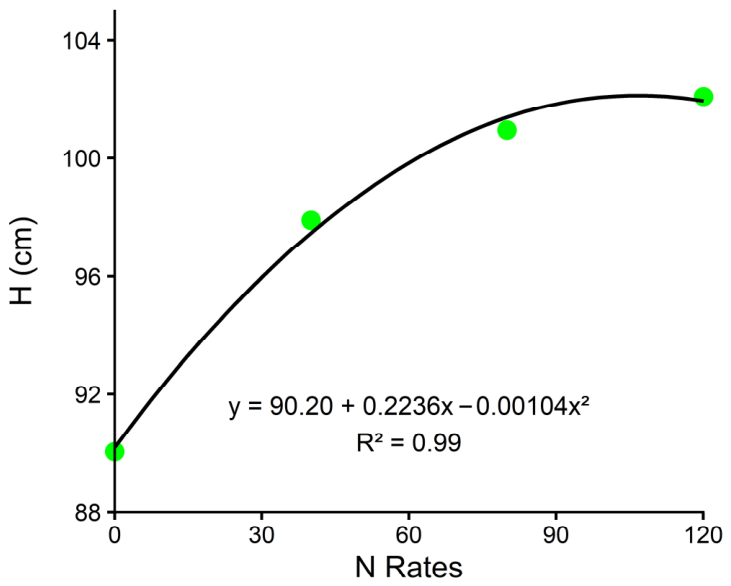
Grain yield was not significantly affected by N rates. However, N rates significantly influenced plant height, panicle number, number of unfilled grains, 100-grain weight, and test weight (Table 3). Plant height showed a quadratic response to N rates, increasing with N supply up to intermediate levels, followed by a tendency to stabilize at higher rates. Within the evaluated range, plant height ranged from 90.2 cm (0 kg ha−1 N) to 101.9 cm (120 kg ha−1 N) (Figure 1).
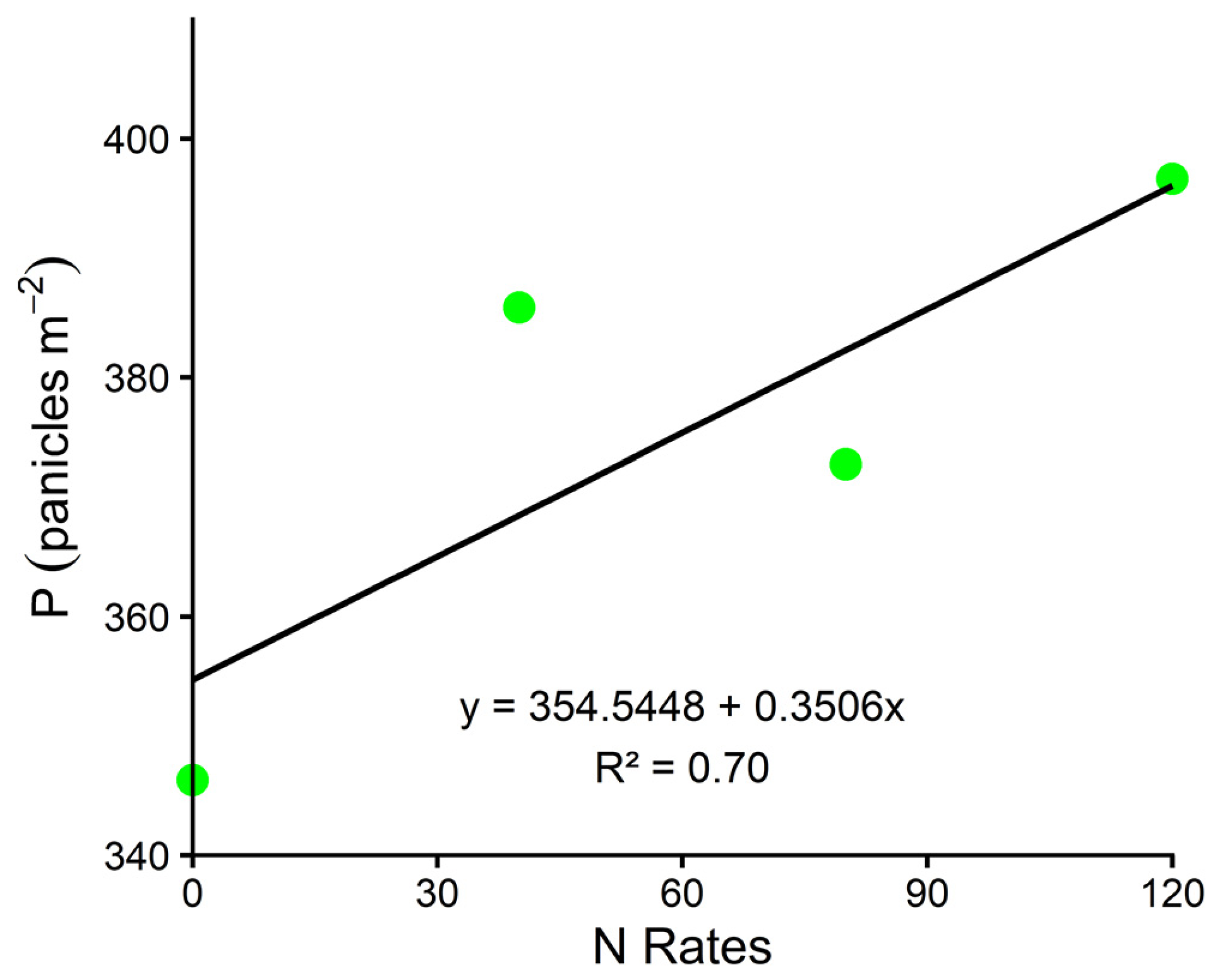
Panicle number showed a positive linear response to N rates. Within the evaluated range, it rose from 354.5 panicles (0 kg ha−1 N) to 396.6 panicles (120 kg ha−1 N), corresponding to an average increase of 3.5 panicles for each 10 kg ha−1 of N applied (Figure 2).
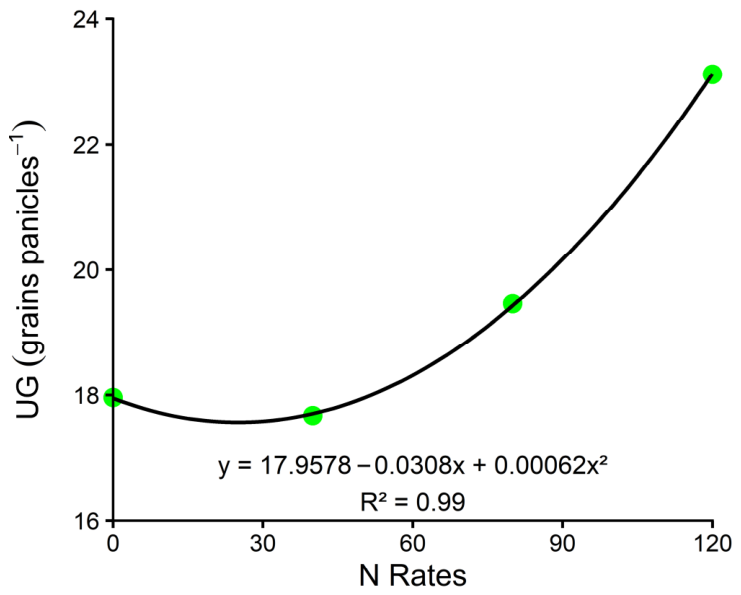
The number of unfilled grains was also affected by N rates, showing a quadratic response. Within the evaluated range, the number of unfilled grains increased from 17 to 23 grains per panicle, from 40 to 120 kg ha−1 N, indicating a greater occurrence at higher N levels (Figure 3).
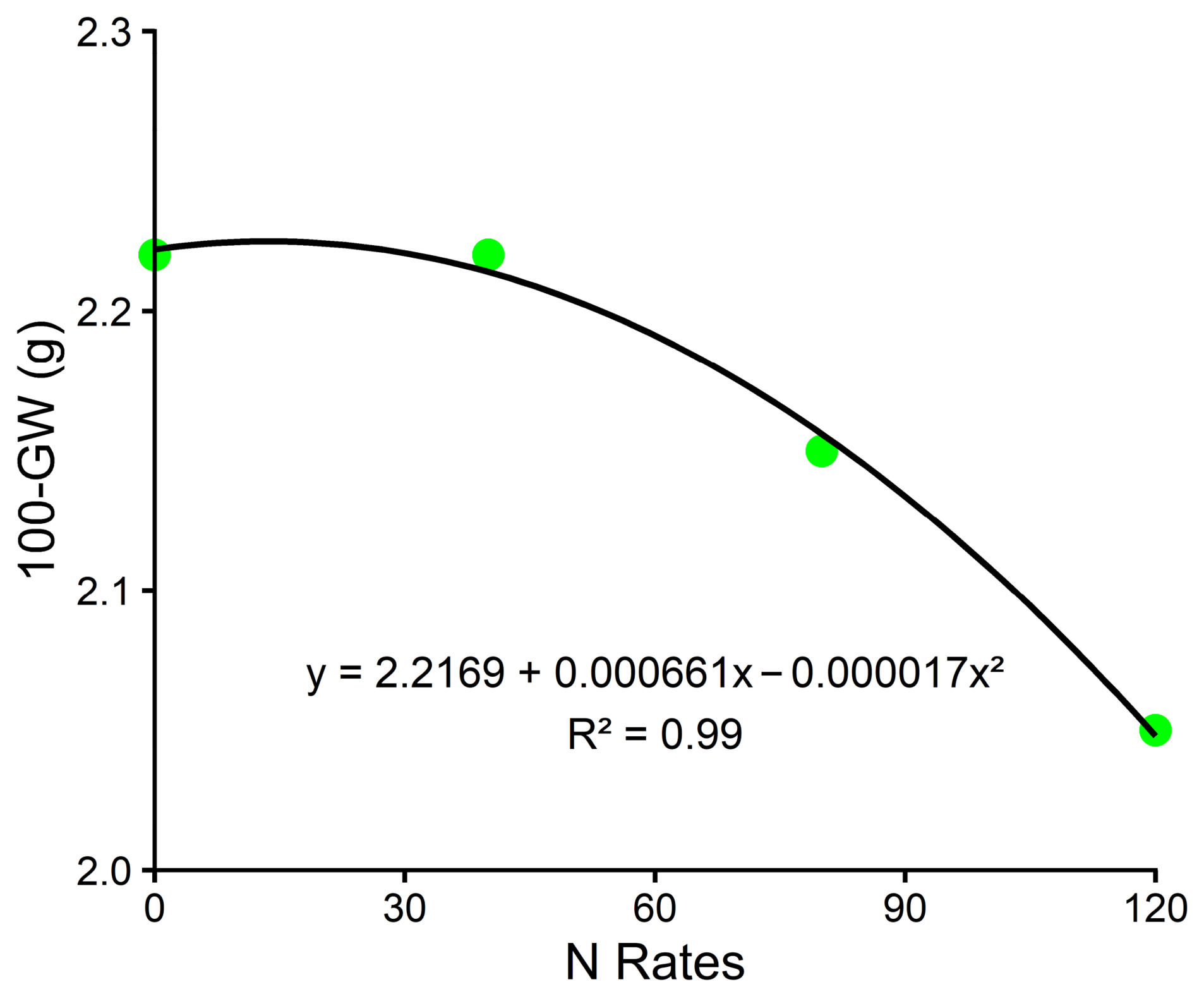
The 100-grain weight exhibited a quadratic response to N rates, with the highest tested rate (120 kg ha−1) resulting in a 7.7% reduction (Figure 4).
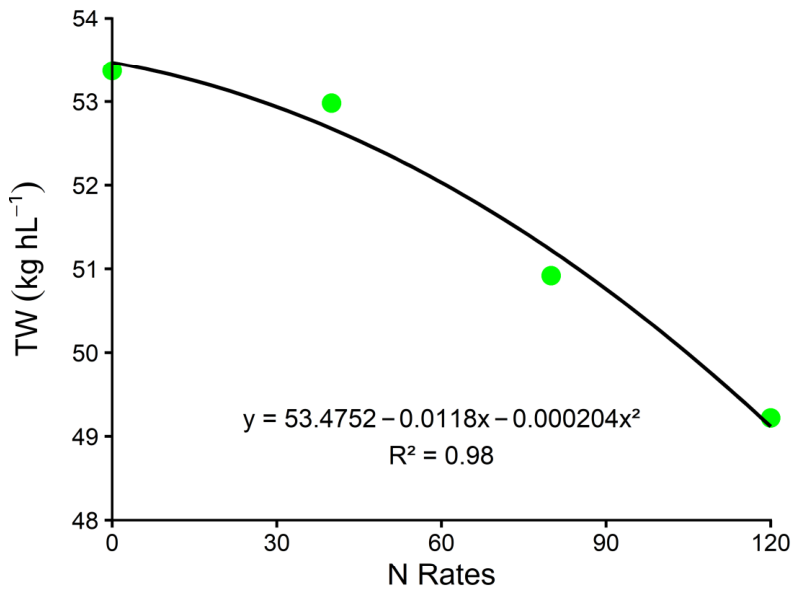
Test weight was also affected by N rates and showed a downward trend across the evaluated range. Values declined from 54 kg hL−1 (0 kg ha−1 N) to 49 kg hL−1 (120 kg ha−1 N), corresponding to a reduction of 9.3% (Figure 5).

3.3. Correlation Analysis

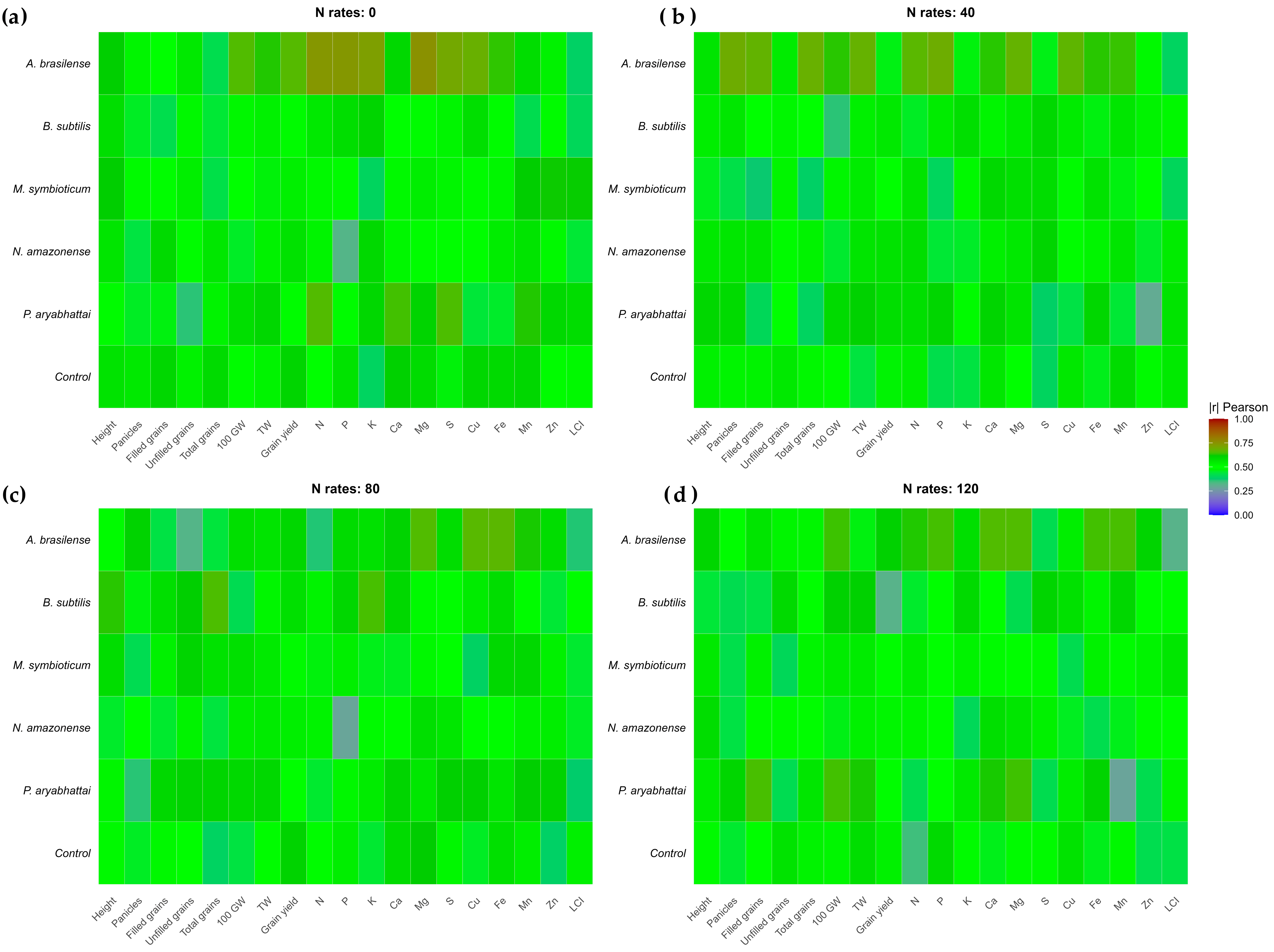
Heatmaps of Pearson’s correlation coefficients (|r|) revealed variations in the magnitude of associations among the evaluated attributes as a function of bacterial treatments and nitrogen rates (Figure 6).
At 0 kg ha−1 N (Figure 6a), A. brasilense showed, overall, the highest correlation magnitudes, particularly for N, P, K, and Mg, as well as moderate to high values for S, Cu, Fe, and productivity-related variables such as 100-grain weight (100 GW), test weight (TW), and grain yield. For P. aryabhattai, moderate to high correlations were mainly observed for N, Ca, Mg, S, Mn, Zn, and LCI, whereas productivity-related variables mostly showed intermediate magnitudes (Figure 6a).
The treatments with B. subtilis, N. amazonense, and M. symbioticum exhibited more homogeneous correlation patterns, predominantly within the intermediate range (Figure 6a). Notably, N. amazonense showed low correlation with P, while M. symbioticum presented relatively higher correlations for plant height, Mn, Zn, and LCI (Figure 6a). The control treatment showed predominantly intermediate correlations, with higher values for filled grains, total grains, grain yield, Ca, Cu, Fe, and Mn (Figure 6a).
At 40 kg ha−1 N (Figure 6b), a reduction in correlation magnitudes was observed in most treatments compared to 0 kg ha−1 N. Nevertheless, A. brasilense maintained predominantly moderate to high correlations for most variables (Figure 6b). Priestia aryabhattai showed a general reduction in correlations, with a more pronounced decrease for filled grains, total grains, S, and Zn (Figure 6b).
For B. subtilis, most correlations were intermediate, with a clear reduction for 100-grain weight (Figure 6b). In contrast, M. symbioticum showed a more pronounced decrease, particularly for filled grains, total grains, and P (Figure 6b). For N. amazonense, correlations became more uniform and predominantly intermediate (Figure 6b). The control also showed reduced correlation magnitudes, ranging from intermediate to low, especially for test weight and nutrients such as P and S (Figure 6b).
At 80 kg ha−1 N (Figure 6c), changes in correlation patterns were observed. Compared to lower N rates, A. brasilense showed reduced correlations, particularly for yield components and grain yield. The highest correlations were observed for Mg, Cu, and Fe, remaining within the intermediate range (0.50–0.75) (Figure 6c). Priestia aryabhattai generally maintained moderate correlations, with some higher values (0.50–0.75) for unfilled grains, total grains, 100-grain weight, test weight, and nutrients such as Ca, S, Cu, Mn, and Zn, although lower correlations were observed for variables such as panicles and LCI (Figure 6c).
In contrast, B. subtilis showed slightly stronger and more consistent correlations compared to 0 kg ha−1 N, particularly for plant height, total grains, and K, while the remaining variables were predominantly intermediate (Figure 6c). For M. symbioticum and N. amazonense, correlation patterns were similar to those observed at 40 kg ha−1 N, remaining predominantly intermediate to low, with N. amazonense showing particularly low correlation with P (Figure 6c). In the control treatment, higher correlations were observed for grain yield and Mg, while the remaining variables ranged from intermediate to low, with lower values for total grains and Zn (Figure 6c).
At 120 kg ha−1 N (Figure 6d), the overall pattern was similar to that observed at 80 kg ha−1 N, with a predominance of intermediate correlations and fewer high values. Although A. brasilense and P. aryabhattai still showed some correlations approaching higher values, an overall weakening of associations among variables was observed (Figure 6d).

4. Discussion

4.1. Leaf Chlorophyll Index (LCI) and Leaf Nutritional Diagnosis

No significant interaction between N rates and PGPR inoculation was observed for leaf chlorophyll index and foliar nutrient concentrations. Therefore, the effects of nitrogen fertilization and bacterial inoculation are discussed separately.
Inoculation with A. brasilense increased LCI. Several studies have reported increases in chlorophyll index and chlorophyll content following inoculation with this bacterium in rice and wheat [38,39,40,41]. This effect is often associated with enhanced N uptake in inoculated plants. In the present study, A. brasilense also showed higher leaf N concentration. However, statistically similar N levels were observed for B. subtilis, without a corresponding increase in LCI, suggesting that leaf N concentration alone does not fully explain the observed differences in LCI.
The increase in leaf N concentration with A. brasilense inoculation in rice is widely reported in the literature [42,43] and is often associated with its potential for biological nitrogen fixation [44]. Studies evaluating the effects of B. subtilis on nutrient concentration in rice are limited; however, results from other crops, such as sugarcane and wheat, indicate increased N uptake following inoculation [45,46].
Higher leaf K concentrations were also observed with A. brasilense and B. subtilis inoculation, corroborating previous findings in crops such as maize and rice [47,48,49]. This response may be related to the close relationship between N and K in plant nutrition, as both nutrients are required in large amounts and play complementary roles in plant growth and physiological processes. Evidence of positive interactions between N and K has been reported in rice [50,51].
Higher leaf Mg concentration occurred in treatments with B. subtilis and P. aryabhattai. Similar results were reported for sugarcane inoculated with B. subtilis [45] and soybean inoculated with P. aryabhattai [52]. This result suggests that inoculation may have contributed to improved plant nutritional status, which is reflected in the accumulation of essential nutrients such as Mg.
Leaf S concentration in the control did not differ from treatments with P. aryabhattai and N. amazonense. Lower mean values were observed with B. subtilis, A. brasilense, and M. symbioticum; however, all values remained within the adequate range for rice according to Cantarella et al. [35]. Considering the medium to high S availability in the soil (10 mg dm−3 in the 0–0.20 m layer and 23 mg dm−3 in the 0.20–0.40 m layer), indicating that S was not a limiting factor under the conditions of this study.
Regarding micronutrients, A. brasilense showed the highest mean leaf Cu concentration. Previous studies have reported increased Cu uptake in crops such as wheat and maize following inoculation with this bacterium [53,54]. Increased leaf Fe concentration was observed with N. amazonense and P. aryabhattai. These results are consistent with reports indicating the potential of these microorganisms to enhance Fe availability and uptake [55,56]. Bacillus subtilis, P. aryabhattai, N. amazonense, and A. brasilense increased leaf Mn concentration. Similar responses have been reported in the literature, suggesting that plant growth-promoting bacteria may contribute to improved micronutrient acquisition in plants [54,57,58].
Conversely, inoculation with M. symbioticum did not positively affect the analyzed nutrients under the conditions of this study. Limited or inconsistent nutritional responses to M. symbioticum inoculation have also been reported in maize, where no significant differences in nutrient uptake or chlorophyll content were observed [59,60]. Despite these variable responses, few studies have addressed the influence of M. symbioticum on foliar macro and micronutrient concentrations in cereals, especially in rice.
Nitrogen fertilization increased leaf concentrations of P, K, and Mg. The positive effect on the uptake of these nutrients is consistent with previous studies in rice [61,62,63]. These results likely reflect the combined effects of greater vegetative growth and increased nutrient demand.

4.2. Yield Components and Grain Yield

No significant interaction between N rates and PGPR inoculation was observed for yield components and grain yield. Thus, the effects of nitrogen fertilization and bacterial inoculation are presented independently. Nitrogen fertilization increased plant height and panicle number, in agreement with previous studies in rice [64,65]. These effects are possibly related to the role of N in plant metabolism, including growth, cell elongation, and tillering, contributing to plant development and the formation of reproductive structures [66,67]. The number of unfilled grains increased with increasing N rates, which may be associated with changes in the source–sink relationship, in which increased vegetative growth can affect the allocation of photoassimilates to reproductive structures [68]. Similarly, 100-grain weight and test weight decreased with increasing N rates, possibly due to the higher number of unfilled grains.
PGPR inoculation influenced most yield components, and responses varied among strains. The control treatment showed the highest mean number of total grains per panicle; however, it also presented the highest proportion of unfilled grains. The number of filled grains per panicle in treatments with A. brasilense and B. subtilis did not differ from the control; however, all bacteria, except M. symbioticum, resulted in lower proportions of unfilled grains. Studies have shown that inoculation with these bacteria can improve grain filling in rice [13,69,70,71], a response that contrasts with the effects of nitrogen fertilization, which may impair grain filling depending on the rate and growing conditions.
Bacillus subtilis, N. amazonense, and A. brasilense increased 100-grain weight and, together with P. aryabhattai, improved test weight. Positive effects of A. brasilense and B. subtilis on grain weight have been reported in rice and other cereals [72,73], as well as for N. amazonense [14]. Although studies with P. aryabhattai are more common in soybean, increases in yield components have also been reported, suggesting its potential in other crops such as rice [74,75]. Grain yield increased by up to 10.7% with inoculation of A. brasilense, B. subtilis, P. aryabhattai, and N. amazonense.

4.3. Correlation Analysis

The patterns observed in the heatmaps are partially consistent with the responses described for plant nutritional status and yield components. In the control treatment at 0 kg ha−1 N, higher correlations (0.50–0.75) were observed for total and filled grains, grain yield, and some nutrients such as Ca, Cu, Fe, and Mn. However, as N rates increased, a reduction in correlation magnitudes was observed. This pattern is partially consistent with previous results, in which this treatment showed higher values for total and filled grains per panicle, but lower performance for most other attributes.
At 0 and 40 kg ha−1 of N, the highest correlation magnitudes were observed in the A. brasilense treatment, indicating stronger associations between nutritional and productive variables. This pattern is consistent with the increases observed in leaf N concentration, LCI, and grain yield in this treatment. At higher N rates (80 and 120 kg ha−1), a reduction in correlation magnitudes was observed, particularly for yield components and grain yield. This behavior is consistent with a lower relative contribution of biological processes associated with inoculation under conditions of higher mineral N availability, particularly in systems involving diazotrophic microorganisms [43].
For P. aryabhattai, higher correlations were mainly observed among nutrients at 0 kg ha−1 N, with moderate to high associations also observed for grain weight and yield. At 40 kg ha−1 N, a general reduction in correlations was observed, while at 80 and 120 kg ha−1 N, patterns were similar, with relatively higher associations for grain weight, Ca, and Mg. These results are consistent with previous findings, in which the effects of this bacterium were more clearly expressed in yield components and grain yield.
Bacillus subtilis showed more homogeneous correlations at 0 and 40 kg ha−1 N. At 80 kg ha−1 N, slightly stronger associations were observed for plant height, total grains, and K, while at higher N rates a reduction in correlation with grain yield was observed. Similarly, N. amazonense showed overall homogeneous correlations, with lower values associated with P at 0 and 80 kg ha−1 N, and a slight reduction in correlation magnitudes as N rates increased. Despite this, both treatments showed positive agronomic responses, including increased grain yield, indicating that intermediate correlation patterns may still be associated with consistent agronomic performance.
Methylobacterium symbioticum showed higher correlations for micronutrients and LCI at 0 kg ha−1 N; however, as N rates increased, a reduction in correlation magnitudes was observed. Despite these associations, the effects on productive and nutritional attributes were limited, indicating that the strength of correlations among variables does not necessarily translate into consistent agronomic responses.
Overall, increasing N rates resulted in reduced correlation magnitudes among variables, both in inoculated treatments and in the control. This pattern suggests lower interdependence between nutritional and productive attributes under higher N availability, which is consistent with the limited response of grain yield to nitrogen fertilization observed in this study.

5. Conclusions

No significant interaction was observed between plant growth-promoting bacteria (PGPB) inoculation and N rates, and grain yield did not respond to increasing N rates, indicating a limited effect of nitrogen fertilization under the conditions of this study. Inoculation with Azospirillum brasilense increased the leaf chlorophyll index, while Azospirillum brasilense and Bacillus subtilis were associated with higher leaf concentrations of N, K, Mg, and Mn, indicating improved plant nutritional status. Inoculation with Azospirillum brasilense, Nitrospirillum amazonense, Bacillus subtilis, and Priestia aryabhattai increased grain yield, with no significant differences among these bacteria. In contrast, Methylobacterium symbioticum did not influence nutritional parameters, yield components, or grain yield. Increasing N rates reduced the magnitude of correlations among the evaluated attributes in both inoculated treatments and the control. The highest correlation magnitudes were observed in the treatment inoculated with Azospirillum brasilense, indicating stronger associations between nutritional and productive variables.

Author Contributions

Conceptualization, B.M.C. and O.A.; methodology, O.A. and L.S.d.C.; formal analysis, N.C.d.S.J.; resources, O.A. and L.S.d.C.; data curation, B.M.C., J.P.d.S.F., C.H.A.S., B.N.C.d.L. and M.L.G.O.; writing—original draft preparation, B.M.C.; writing—review and editing, B.M.C., N.C.d.S.J., J.P.d.S.F., C.H.A.S., B.N.C.d.L. and M.L.G.O.; supervision, O.A.; funding acquisition, O.A. All authors have read and agreed to the published version of the manuscript.

Funding

This study was financed in part by the Coordenação de Aperfeiçoamento de Pessoal de Nível Superior—Brasil (CAPES)—Finance Code 001.

Institutional Review Board Statement

Not applicable.

Informed Consent Statement

Not applicable.

Data Availability Statement

The original contributions presented in the study are included in the article, and further inquiries can be directed to the corresponding authors.

Acknowledgments

We acknowledge Coordenação de Aperfeiçoamento de Pessoal de Nível Superior (CAPES) for granting a doctoral scholarship to B.M.C. (88887.907744/2023-00). We also thank all staff at the School of Enginerring, São Paulo State University (UNESP), Ilha Solteira, SP, Brazil, who contributed to this project.

Conflicts of Interest

The authors declare no conflicts of interest.

References

  1. Gomes, E.G.; Wander, A.E.; Gazzola, R. Mercado Mundial de Arroz: Concentração, Taxas de Crescimento, Projeções e Índice de Presença [Global Rice Market: Concentration, Growth Rates, Projections, and Presence Index]. Rev. Econ. Sociol. Rural 2024, 62, e260806. [Google Scholar] [CrossRef]
  2. Malavolta, E. Manual de Nutrição Mineral de Plantas [Manual of Plant Mineral Nutrition], 1st ed.; Ceres: São Paulo, Brazil, 2006; pp. 1–631. [Google Scholar]
  3. Viero, F.; Bayer, C.; Vieira, R.C.B.; Carniel, E. Manejo da Irrigação e Fertilizantes Nitrogenados para Reduzir a Volatilização de Amônia [Irrigation Management and Nitrogen Fertilizers to Reduce Ammonia Volatilization]. Rev. Bras. Ciênc. Solo 2015, 39, 1737–1743. [Google Scholar] [CrossRef]
  4. Yang, P.; Condrich, A.; Scranton, S.; Hebner, C.; Lu, L.; Ali, M.A. Utilizing Plant Growth-Promoting Rhizobacteria (PGPR) to Advance Sustainable Agriculture. Bacteria 2024, 3, 434–451. [Google Scholar] [CrossRef]
  5. Roy, M.L.; Srivastava, R.C. Influence of Azospirillum brasilense on Biochemical Characters of Rice Seedlings. Indian J. Agric. Res. 2010, 44, 183–188. [Google Scholar]
  6. Degon, Z.; Dixon, S.; Rahmatallah, Y.; Galloway, M.; Gulutzo, S.; Price, H.; Cook, J.; Glazko, G.; Mukherjee, A. Azospirillum brasilense Improves Rice Growth under Salt Stress by Regulating Key Genes Involved in Stress Response and Nutrient Transport. Front. Agron. 2023, 5, 1216503. [Google Scholar] [CrossRef]
  7. Lin, S.Y.; Hameed, A.; Shen, F.T.; Liu, Y.C.; Hsu, Y.H.; Shahina, M.; Lai, W.A.; Young, C.C. Description of Niveispirillum fermenti gen. nov., sp. nov., Isolated from a Fermentor in Taiwan, Transfer of Azospirillum irakense (1989) as Niveispirillum irakense comb. nov., and Reclassification of Azospirillum amazonense (1983) as Nitrospirillum amazonense gen. nov. Antonie Leeuwenhoek 2014, 105, 1149–1162. [Google Scholar]
  8. Tien, T.M.; Gaskins, M.H.; Hubbell, D.H. Plant Growth Substances Produced by Azospirillum brasilense and Their Effect on the Growth of Pearl Millet (Pennisetum americanum L.). Appl. Environ. Microbiol. 1979, 37, 1016–1024. [Google Scholar] [CrossRef]
  9. Dobbelaere, S.; Vanderleyden, J.; Okon, Y. Plant Growth-Promoting Effects of Diazotrophs in the Rhizosphere. Crit. Rev. Plant Sci. 2003, 22, 107–149. [Google Scholar] [CrossRef]
  10. Bano, Q.; Ilyas, N.; Bano, A.; Zafar, N.; Akram, A.; Hassan, F.U. Effect of Azospirillum Inoculation on Maize (Zea mays L.) under Drought Stress. Pak. J. Bot. 2013, 45, 13–20. [Google Scholar]
  11. Cohen, A.C.; Bottinia, R.; Pontina, M.; Berlia, F.J.; Morenoa, D.; Boccanlandroa, H.; Travagliac, C.N.; Piccolia, P.C. Azospirillum brasilense Ameliorates the Response of Arabidopsis thaliana to Drought Mainly via Enhancement of ABA Levels. Physiol. Plant. 2014, 153, 79–90. [Google Scholar] [CrossRef]
  12. Marks, B.B.; Megías, M.; Ollero, F.J.; Nogueira, M.A.; Araujo, R.S.; Hungria, M. Maize Growth Promotion by Inoculation with Azospirillum brasilense and Metabolites of Rhizobium tropici Enriched on Lipo-Chitooligosaccharides (LCOs). AMB Express 2015, 5, 71. [Google Scholar] [CrossRef]
  13. Guimarães, V.F.; Klein, J.; Ferreira, M.B.; Klein, D.K. Promotion of Rice Growth and Productivity as a Result of Seed Inoculation with Azospirillum brasilense. Afr. J. Agric. Res. 2020, 16, 765–776. [Google Scholar]
  14. Rodrigues, E.P.; Rodrigues, L.S.; de Oliveira, A.L.M.; Baldani, V.L.D.; Teixeira, K.R.d.S.; Urquiaga, S.; Reis, V.M. Azospirillum amazonense Inoculation: Effects on Growth, Yield and N2 Fixation of Rice (Oryza sativa L.). Plant Soil 2008, 302, 249–261. [Google Scholar] [CrossRef]
  15. Reis, V.M.; Rios, F.A.; Braz, G.B.P.; Constantin, J.; Hirata, E.S.; Biffe, D.F. Performance Agronômica da Cana-De-Açúcar Submetida à Inoculação de Nitrospirillum amazonense (BR11145) [Agronomic Performance of Sugarcane Subjected to Inoculation with Nitrospirillum amazonense (BR11145)]. Rev. Caatinga 2020, 33, 918–926. [Google Scholar] [CrossRef]
  16. Petkova, M.; Marcheva, M.; Petrova, A.L.; Slavova, V.; Shilev, S. Plant Growth-Promoting and Biocontrol Characteristics of Four Bacillus Strains and Evaluation of Their Effects on Wheat (Tr. aestivum L.). Int. J. Plant Biol. 2025, 16, 1. [Google Scholar] [CrossRef]
  17. Shahid, M.; Zeyad, M.T.; Syed, A.; Singh, U.B.; Mohamed, A.; Bahkali, A.H.; Elgorban, A.M.; Pichtel, J. Stress-Tolerant Endophytic Isolate Priestia aryabhattai BPR-9 Modulates Physio-Biochemical Mechanisms in Wheat (Triticum aestivum L.) for Enhanced Salt Tolerance. Int. J. Environ. Res. Public Health 2022, 19, 10883. [Google Scholar] [CrossRef]
  18. Kanjanasopa, D.; Aiedhaet, W.; Kongplong, S.; Puapun, N.; Thitithanakul, S. Alginate Encapsulated Plant Growth-Promoting Priestia aryabhattai KNB6 Enhances Rice Growth and Nutrient Uptake. Chiang Mai J. Sci. 2025, 52, e2025036. [Google Scholar] [CrossRef]
  19. Prathap, S.; Thiyageshwari, S.; Krishnamoorthy, R.; Prabhaharan, J.; Vimalan, B.; Gopal, N.O.; Anandham, R. Role of Zinc-Solubilizing Bacteria in Enhancing Growth and Nutrient Accumulation in Rice Plants (Oryza sativa) Grown on Zinc-Deficient Submerged Soil. J. Soil Sci. Plant Nutr. 2022, 22, 971–984. [Google Scholar] [CrossRef]
  20. Chen, Y.; Ye, J.; Kong, Q. Potassium-solubilizing Activity of Bacillus aryabhattai SK1-7 and its Growth-Promoting Effect on Populus alba L. Forests 2020, 11, 1348. [Google Scholar] [CrossRef]
  21. Tavanti, R.; Pereira, C.S.; Tavanti, T.R. Development of Soybean Cultivars after Inoculation with Bacillus subtilis Strains. Nativa 2019, 7, 126–132. [Google Scholar]
  22. Omer, Z.S.; Tombolini, R.; Gerhardson, B. Plant Colonization by Pink-Pigmented Facultative Methylotrophic Bacteria (PPFMs). FEMS Microbiol. Ecol. 2004, 47, 319–326. [Google Scholar] [CrossRef]
  23. Dourado, M.N.; Neves, A.A.C.; Santos, D.S.; Araújo, W.L. Biotechnological and Agronomic Potential of Endophytic Pink-Pigmented Methylotrophic Methylobacterium spp. BioMed Res. Int. 2015, 2015, 909016. [Google Scholar] [CrossRef]
  24. Pascual, J.A.; Ros, M.; Martínez, J.; Carmona, F.; Bernabé, A.; Torres, R.; Lucena, T.; Aznar, R.; Arahal, D.R.; Fernández, F. Methylobacterium symbioticum sp. nov., a New Species Isolated from Spores of Glomus iranicum var. tenuihypharum. Curr. Microbiol. 2020, 77, 2031–2041. [Google Scholar] [CrossRef] [PubMed]
  25. Lee, H.S.; Madhaiyan, M.; Kim, C.W.; Choi, S.J.; Chung, K.Y.; Sa, T.M. Physiological Enhancement of Early Growth of Rice Seedlings (Oryza sativa L.) by Production of Phytormone of N2-fixing Methylotrophic Isolates. Biol. Fertil. Soils 2006, 42, 402–408. [Google Scholar] [CrossRef]
  26. Madhaiyan, M.; Poonguzhali, S.; Sa, T. Characterization of 1-Aminocyclopropane-1-Carboxylate (ACC) Deaminase Containing Methylobacterium oryzae and Interactions with Auxins and ACC Regulation of Ethylene in Canola (Brassica campestris). Planta 2007, 226, 867–876. [Google Scholar] [CrossRef]
  27. Vera, R.T.; García, A.J.B.; Álvarez, F.J.C.; Ruiz, J.M.; Martín, F.F. Application and Effectiveness of Methylobacterium symbioticum as a Biological Inoculant in Maize and Strawberry Crops. Folia Microbiol. 2024, 69, 121–131. [Google Scholar] [CrossRef] [PubMed]
  28. Santos, A.F.d.J.; Bundt, A.D.C. Foliar Inoculation with Methylobacterium symbioticum SB23 Enhances Biological Nitrogen Fixation and Maize Yield under Contrasting Edaphoclimatic Conditions. Rev. Bras. Ciênc. Agrár. 2025, 20. [Google Scholar]
  29. Gairola, A.; Kumar, V.; Kumar, S.; Kumar, S.; Patel, A.; Singh, S. Upland Rice: A Water-Efficient Rice Production System in India. Biot. Res. Today 2024, 6, 46–50. [Google Scholar] [CrossRef]
  30. Heinemann, A.B.; Ramirez-Villegas, J.; Rebolledo, M.C.; Costa Neto, G.M.F.; Castro, A.P. Upland Rice Breeding Led to Increased Drought Sensitivity in Brazil. Field Crops Res. 2019, 231, 57–67. [Google Scholar] [CrossRef]
  31. Cavite, H.J.M.; Mactal, A.G.; Evangelista, E.V.; Cruz, J.A. Growth and Yield Response of Upland Rice to Application of Plant Growth-Promoting Rhizobacteria. J. Plant Growth Regul. 2020, 40, 494–508. [Google Scholar] [CrossRef]
  32. Alvares, C.A.; Stapes, J.L.; Sentelhas, P.C.; Gonçalves, J.L.M.; Sparovek, G. Köppen’s Climate Classification Map for Brazil. Meteorol. Z. 2013, 22, 711–728. [Google Scholar] [CrossRef]
  33. United States Department of Agriculture (USDA). Keys to Soil Taxonomy, 13th ed.; USDA Natural Resources Conservation Service: Washington, DC, USA, 2014.
  34. Allen, R.G.; Pereira, L.S.; Raes, D.; Smith, M. Crop Evapotranspiration—Guidelines for Computing Crop Water Requirements; FAO: Rome, Italy, 1998. [Google Scholar]
  35. Cantarella, H. Boletim 100: Recomendações de Adubação e Calagem para o Estado de São Paulo [Fertilization and Liming Recommendations for the State of São Paulo]; Instituto Agronômico: Campinas, Brazil, 2022.
  36. Malavolta, E.; Vitti, G.C.; de Oliveira, S.A. Avaliação do Estado Nutricional das Plantas: Princípios e Aplicações [Fertilization and Liming Recommendations for the State of São Paulo], 2nd ed.; POTAFOS: Piracicaba, Brazil, 1997. [Google Scholar]
  37. R Core Team. R: A Language and Environment for Statistical Computing; R Foundation for Statistical Computing: Vienna, Austria, 2024. [Google Scholar]
  38. da Silveira, A.P.D.; Sala, V.M.R.; Cardoso, E.J.B.N.; Labanca, E.G.; Cipriano, M.A.P. Nitrogen Metabolism and Growth of Wheat Plant Under Diazotrophic Endophytic Bacteria Inoculation. Appl. Soil Ecol. 2016, 107, 313–319. [Google Scholar] [CrossRef]
  39. Bashan, Y.; Bustillos, J.J.; Leyva, L.A.; Hernandez, J.P.; Bacilio, M. Aumento de Pigmentos Fotossintéticos Fotoprotetores Auxiliares em Mudas de Trigo Induzidos por Azospirillum brasilense [Increase in Auxiliary Photoprotective Photosynthetic Pigments in Wheat Seedlings Induced by Azospirillum brasilense]. Biol. Fertil. Soils 2006, 42, 279–285. [Google Scholar] [CrossRef]
  40. Fukami, J.; Nogueira, M.A.; Araujo, R.S.; Hungria, M. Accessing Inoculation Methods of Maize and Wheat with Azospirillum brasilense. AMB Express 2016, 6, 3. [Google Scholar] [CrossRef]
  41. Roy, M.L.; Dey, B.; Srivastava, R.C. Influence of Soil Application of Growth-Promoting Diazotrophs and Chemical Fertilizers on Biochemical Parameters and Biomass of a Rice Cultivar of Tripura. Proc. Natl. Acad. Sci. India Sect. B Biol. Sci. 2009, 79, 283–288. [Google Scholar]
  42. Mattos, M.L.T.; Valgas, R.A.; Martins, J.F.d.S. Evaluation of the Agronomic Efficiency of Azospirillum brasilense Strains Ab-V5 and Ab-V6 in Flood-Irrigated Rice. Agronomy 2022, 12, 3047. [Google Scholar] [CrossRef]
  43. Santos, M.S.; Nogueira, M.A.; Hungria, M. Outstanding Impact of Azospirillum brasilense Strains Ab-V5 and Ab-V6 on the Brazilian Agriculture: Lessons that Farmers are Receptive to Adopt New Microbial Inoculants. Rev. Bras. Ciênc. Solo 2021, 45, e0200128. [Google Scholar] [CrossRef]
  44. Steenhoudt, O.; Vanderleyden, J. Azospirillum, a Free-Living Nitrogen-Fixing Bacterium Closely Associated with Grasses: Genetic, Biochemical and Ecological Aspects. FEMS Microbiol. Rev. 2000, 24, 487–506. [Google Scholar] [CrossRef]
  45. Fonseca, M.C.D.; Bossolani, J.W.; de Oliveira, S.L.; Moretti, L.G.; Portugal, J.R.; Scudeletti, D.; de Oliveira, E.F.; Crusciol, C.A.C. Bacillus subtilis Inoculation Improves Nutrient Uptake and Physiological Activity in Sugarcane under Drought Stress. Microorganisms 2022, 10, 809. [Google Scholar] [CrossRef]
  46. Moreno-Lora, A.; Sousa-Ortega, C.; Recena, R.; Perea-Torres, F.; Delgado, A. Microbial Inoculants Improve Nutriens Uptake and Yield of Durum Wheat in Calcareous Soils under Drought Stress in the Mediterranean Region. Arch. Agr. Soil Sci. 2023, 69, 2233–2247. [Google Scholar] [CrossRef]
  47. Biari, A.; Gholami, A.; Rahmani, H.A. Growth Promotion and Enhanced Nutrient Uptake of Maize (Zea mays L.) by Application of Plant Growth Promoting Rhizobacteria in Arid Region of Iran. J. Biol. Sci. 2008, 8, 1015–1020. [Google Scholar] [CrossRef]
  48. Nascente, A.S.; Carvalho, M.d.C.S. Yield of Upland Rice as Affected by Nitrogen Application and Seed Inoculation with Diazotrophic Bacteria. Aust. J. Crop Sci. 2018, 12, 1519–1527. [Google Scholar] [CrossRef]
  49. Peng, S.; Zhao, B.; Sun, X.; Li, L.; Wang, C.M.; Zhang, J. Effects of Bacillus subtilis HS5B5 on Maize Seed Germination and Seedling Growth under NaCl Stress Conditions. Agronomy 2023, 13, 1874. [Google Scholar]
  50. Xu, W.; Li, J.; Feng, J.; Shao, Z.; Huang, Y.; Hou, W.; Gao, Q. Nitrogen and Potassium Interactions Optimized Asynchronous Spikelet Filling and Increased Grain Yield of Japonica Rice. PeerJ 2023, 11, e14710. [Google Scholar] [CrossRef]
  51. Ye, T.; Zhang, J.; Li, J.; Lu, J.; Ren, T.; Cong, R.; Lu, Z.; Li, X. Nitrogen/Potassium Interactions Increase Rice Yield by Improving Canopy Performance. Food Energy Secur. 2021, 10, e295. [Google Scholar] [CrossRef]
  52. Mun, B.G.; Hussain, A.; Park, Y.G.; Kang, S.M.; Lee, I.J.; Yun, B.W. The PGPR Bacillus aryabhattai Promotes Soybean Growth via Nutrient and Chlorophyll Maintenance and the Production of Butanoic Acid. Front. Plant Sci. 2024, 15, 1341993. [Google Scholar] [CrossRef]
  53. Galindo, F.S.; Teixeira Filho, M.C.M.; Buzetti, S.; Santini, J.M.K.; Montanari, R.; Freitas, L.A.; Rodrigues, W.L. Micronutrient Accumulation with Azospirillum brasilense Associated with Nitrogen Fertilization Management in Wheat. Commun. Soil Sci. Plant Anal. 2019, 50, 2429–2441. [Google Scholar] [CrossRef]
  54. Galindo, F.S.; Pagliari, P.H.; Buzetti, S.; Rodrigues, W.L.; Fernandes, G.C.; Biagini, A.L.C.; Teixeira Filho, M.C.M. Corn Shoot and Grain Nutrient Uptake Affected by Silicon Application Combined with Azospirillum brasilense Inoculation and Nitrogen Rates. J. Plant Nutr. 2021, 45, 168–184. [Google Scholar] [CrossRef]
  55. Almirón, C.; Petitti, T.D.; Ponso, M.A.; Romero, A.M.; Areco, V.A.; Bianco, M.I.; Espariz, M.; Yaryura, P.M. Functional and Genomic Analyses of Plant Growth Promoting Traits in Priestia aryabhattai and Paenibacillus sp. Isolates from Tomato Rhizosphere. Sci. Rep. 2025, 15, 3498. [Google Scholar] [CrossRef]
  56. Sant’Anna, F.H.; Almeida, L.G.; Cecagno, R.; Reolon, L.A.; Siqueira, F.M.; Machado, M.R.S.; Vasconcelos, A.T.R.; Schrank, I.S. Genomic Insights into the Versatility of the Plant Growth-Promoting Bacterium Azospirillum amazonense. BMC Genom. 2011, 12, 409. [Google Scholar] [CrossRef] [PubMed]
  57. Khoshru, B.; Mitra, D.; Nosratabad, A.F.; Reyhanitabar, A.; Mandal, L.; Farda, B.; Djebaii, R.; Pellegrini, M.; Guerra-Sierra, B.E.; Senapati, A.; et al. Enhancing Manganese Availability for Plants through Microbial Potential: A Sustainable Approach for Improving Soil Health and Food Security. Bacteria 2023, 2, 129–141. [Google Scholar] [CrossRef]
  58. Housh, A.B.; Waller, S.; Sopko, S.; Powell, A.; Benoit, M.; Wilder, S.L.; Guthrie, J.; Schueller, M.J.; Ferrieri, R.A. Azospirillum brasilense Bacteria Promotes Mn2+ Uptake in Maize with Benefits to Leaf Photosynthesis. Microorganisms 2022, 10, 1290. [Google Scholar] [CrossRef]
  59. Quemada, M.; Alonso-Ayuso, M.; Esteban, R.; González, E. Maize (Zea mays L.) response to the biostimulant Methylobacterium symbioticum under various nitrogen fertilizer rates. Eur. J. Agr. 2026, 172, 127887. [Google Scholar] [CrossRef]
  60. Rodrigues, M.A.; Correia, C.M.; Arrobas, M. The Application of a Foliar Spray Containing Methylobacterium symbioticum Had a Limited Effect on Crop Yield and Nitrogen Recovery in Field and Pot-Grown Maize. Plants 2024, 13, 2909. [Google Scholar] [CrossRef] [PubMed]
  61. Abinaya, M.; Manivannan, R.; Sriramachandrasekharan, M.V.; Senthilvalavan, P.; Kalaisudarson, S.; Ravikumar, C. Response of Rice (Oryza sativa L.) Productivity and Nutrient Uptake to Nitrogen and Boron Fertilization in Typic Ustifluvents Soil. J. Appl. Nat. Sci. 2021, 13, 1372–1377. [Google Scholar]
  62. Hou, W.; Tränkner, M.; Lu, J.; Yan, J.; Huang, S.; Ren, T.; Cong, R.; Li, X. Diagnosis of Nitrogen Nutrition in Rice Leaves Influenced by Potassium Levels. Front. Plant Sci. 2020, 11, 165. [Google Scholar] [CrossRef] [PubMed]
  63. Djalovic, I.; Prasad, P.V.V.; Akhtar, K.; Paunović, A.; Riaz, M.; Dugalic, M.; Katanski, S.; Zaheer, S. Nitrogen Fertilization and Cultivar Interactions Determine Maize Yield and Grain Mineral Composition in Calcareous Soil under Semiarid Conditions. Plants 2024, 13, 844. [Google Scholar] [CrossRef]
  64. Arf, O.; Rodrigues, R.A.F.; Nascente, A.S.; Lacerda, M.C. Espaçamento e Adubação Nitrogenada Afetando o Desenvolvimento do Arroz de Terras Altas sob Plantio Direto [Spacing and Nitrogen Fertilization Affecting the Development of Upland Rice under No-Tillage]. Rev. Ceres 2015, 62, 475–482. [Google Scholar] [CrossRef]
  65. Hernandes, A.; Buzetti, S.; Andreotti, M.; Arf, O.; de Sá, M.E. Doses, Fontes e Épocas de Aplicação de Nitrogênio em Cultivares de Arroz [Doses, Sources, and Timing of Nitrogen Application in Rice Cultivars]. Ciência Agrotecnologia 2010, 34, 307–312. [Google Scholar] [CrossRef]
  66. Taiz, L.; Zeiger, E.; Møller, I.M.; Murphy, A. Plant Physiology and Development, 6th ed.; Artmed: Porto Alegre, Brazil, 2017. [Google Scholar]
  67. Yuan, R.; Mao, Y.; Zhang, D.; Wang, S.; Zhang, H.; Wu, M.; Ye, M.; Zhang, Z. The Formation of Rice Tillers and Factors Influencing It. Agronomy 2024, 14, 2904. [Google Scholar] [CrossRef]
  68. Sekiya, N.; Asano, A.; Peter, M.A.; Gichuhi, E.W.; Menge, D.M.; Kikuta, M.; Kondo, M.; Makihara, D. Effects of Nitrogen Application in Upland Rice Cultivars: Balancing Sink-Source Relationships for Sustainable Yield in Water-Limited Environments. Field Crops Res. 2025, 332, 110012. [Google Scholar] [CrossRef]
  69. Patil, S.; Diwan, J.R.; Mahantashivayogayya, K.; Swamy, M.; Devanna, P. Evaluation of Rice Genotypes for Their Interaction with Bacillus subtilis for Yield and Yield-Related Traits. Pharma Innov. J. 2022, 11, 626–631. [Google Scholar]
  70. Pandey, N.; Vaishnav, R.; Rajavat, A.S.; Singh, A.N.; Kumar, S.; Tripathi, R.M.; Kumar, M.; Shrivastava, N. Exploring the Potential of Bacillus for Crop Productivity and Sustainable Solution for Combating Rice False Smut Disease. Front. Microb. 2024, 15, 1405090. [Google Scholar] [CrossRef] [PubMed]
  71. Sonowal, T.; Gupta, N.; Kumar, S.; Rustagi, S.; Singh, S.; Rai, A.K.; Shreaz, S.; Negi, R.; Yadav, A.N. Plant Growth-Promoting Rhizobacteria: Influence to Abiotic Stress Tolerance in Rice (Oryza sativa L.). J. Appl. Biol. Biotechnol. 2024, 12, 41–47. [Google Scholar] [CrossRef]
  72. Oulkhir, F.E.; Allaoui, A.; Idbella, A.; Danouche, M.; Bargaz, A.; Biskri, L.; Idbella, M. Bacillus subtilis ED24 Controls Fusarium culmorum in Wheat Through Bioactive Metabolite Secretion and Modulation of Rhizosphere Microbiome. Microb. Ecol. 2025, 88, 89. [Google Scholar] [CrossRef]
  73. Schüller, M. Utilização de Azospirillum brasilense e Composto Orgânico na Produção de Arroz Irrigado [Use of Azospirillum brasilense and Organic Compost in Irrigated Rice Production]. Ph.D. Thesis, Universidade Estadual do Rio Grande do Sul, Santana do Livramento, Brazil, 2021. [Google Scholar]
  74. Park, Y.-G.; Mun, B.-G.; Kang, S.-M.; Hussain, A.; Shahzad, R.; Seo, C.-W.; Kim, A.-Y.; Lee, S.-U.; Oh, K.-Y.; Lee, D.Y.; et al. Bacillus aryabhattai SRB02 Tolerates Oxidative and Nitrosative Stress and Promotes the Growth of Soybean by Modulating the Production of Phytohormones. PLoS ONE 2017, 12, e0173203. [Google Scholar] [CrossRef]
  75. Marchão, R.L.; da Silva, G.C.; de Andrade, S.R.M.; dos Reis Junior, F.B.; de Barros Júnior, M.P.; Haphonsso, R.H.; de Carvalho, A.M. Improving Soybean Development and Grain Yield by Complementary Inoculation with Growth-Promoting Bacteria Azospirillum, Pseudomonas, Priestia, and Bacillus. Plants 2025, 14, 402. [Google Scholar] [CrossRef]
Figure 1. Nitrogen (N) rates in relation to plant height (H) of upland rice in Selvíria, Mato Grosso do Sul State, Brazil.
Agriengineering 08 00179 g001
Figure 2. Nitrogen (N) rates in relation to the panicle m−2 (P) of upland rice in Selvíria, Mato Grosso do Sul State, Brazil.
Agriengineering 08 00179 g002
Figure 3. Nitrogen (N) rates in relation to the number of unfilled grains panicle−1 (UG) of upland rice in Selvíria, Mato Grosso do Sul State, Brazil.
Agriengineering 08 00179 g003
Figure 4. Nitrogen (N) rates in relation to the 100-grain weight (100-GW) of upland rice in Selvíria, Mato Grosso do Sul State, Brazil.
Agriengineering 08 00179 g004
Figure 5. Nitrogen (N) rates in relation to the test weight (TW) of rice grains in Selvíria, Mato Grosso do Sul State, Brazil.
Agriengineering 08 00179 g005
Figure 6. Heatmaps of Pearson correlation coefficients (|r|) among yield components, grain yield, foliar nutrient concentrations and leaf chlorophyll index (LCI) in upland rice as affected by plant growth-promoting rhizobacteria (PGPR) under different nitrogen (N) rates: (a) 0, (b) 40, (c) 80, and (d) 120 kg ha−1. Color intensity represents the magnitude of the correlation coefficients, with higher values indicating stronger associations between variables.
Agriengineering 08 00179 g006
Table 1. Soil fertility at 0–0.20 m and 0.20–0.40 m depths before rice sowing in Selvíria, Mato Grosso do Sul State, Brazil.
DepthpHOMPS-SO4KCaMgAlH + AlSBCECVmBZn
CaCl2g dm−3mg dm−3mmolc dm−3 %mg dm−3
0–0.20 m5.91737101.6342201557727900.171
0.20–0.40 m5.51421231.2191301833516500.120.5
OM: organic matter. P: phosphorus. S-SO4: extractable sulfur. K: potassium. Ca: calcium. Mg: magnesium. Al: aluminum. H + Al: hydrogen + aluminum (potential acidity). SB: sum of bases. CEC: cation exchange capacity. V: base saturation. m: aluminum saturation. B: boron. Zn: zinc. Extraction methods: P: resin; B: hot water; Zn: DTPA.
Table 2. Mean leaf nutrient concentrations in rice as affected by plant growth-promoting rhizobacteria and N rates in Selvíria, Mato Grosso do Sul State, Brazil.
LCINPKCaMgSCuFeMnZn
Indexg kg−1mg kg−1
PGPR
Control40.08 d25.01 b2.2526.83 c3.177.38 b4.54 a10.00 b298.87 b310.87 b39.18
B. subtilis47.36 b28.36 a2.3528.00 a3.387.57 a3.93 b12.33 b310.00 b375.87 a39.88
P. aryabhattai47.31 b25.66 b2.3227.10 b3.437.52 a4.57 a10.57 b323.50 a406.87 a39.83
N. amazonense42.19 c25.33 b2.2527.09 c3.187.38 b4.45 a10.87 b329.00 a370.37 a39.38
M. symbioticum42.64 c25.13 b2.2627.05 c3.297.44 b4.18 b10.00 b315.12 b325.62 b39.86
A. brasilense50.38 a27.31 a2.3728.11 a3.327.55 a4.00 b13.37 a308.75 b364.37 a39.78
N rates (R)
046.2525.272.23 126.69 23.297.41 34.2811.46327.42381.3339.77
4046.9525.922.2727.583.347.464.4110.65306.16338.1639.03
8043.3226.512.3127.823.217.474.1710.77306.58351.7539.93
12043.2526.842.3927.363.367.614.2611.88318.33364.7539.87
Pr > Fc values
PGPR0.001 *0.005 *0.16 ns0.001 *0.27 ns0.003 *0.002 *0.002 *0.004 *0.008 *0.622 ns
N rates0.30 ns0.25 ns0.001 *0.001 *0.32 ns0.002 *0.51 ns0.15 ns0.55 ns0.24 ns0.356 ns
PGPR × R0.35 ns0.93 ns0.08 ns0.10 ns0.09 ns0.15 ns0.35 ns0.33 ns0.72 ns0.15 ns0.933 ns
Overall Mean44.9926.132.327.363.297.494.2811.19314.1235939.65
CV (%)9.1810.987.442.6210.942.7312.6815.566.0521.162.53
Means within a column sharing the same letter are not significantly different according to the Scott-Knott test (p ≤ 0.05). ns: not significant and *: significant (p ≤ 0.05). N: nitrogen. P: phosphorus. K: potassium. Ca: calcium. Mg: magnesium. S: sulfur. Cu: copper. Fe: iron. Mn: manganese. Zn: zinc. PGPR: plant growth-promoting rhizobacteria. R: rates. CV: coefficient of variation. 1 y = 2.222670 + 0.001335x (R2 = 0.96). 2 y = 26.689667 + 0.030960x − 0.000211x2 (R2 = 0.99). 3 y = 7.395417 + 0.001563x (R2 = 0.84).
Table 3. Means of plant height (H), panicle number (P), total grains (TG), filled grains (FG), unfilled grains (UG), 100-grain weight (100-GW), test weight (TW), and grain yield (GY) of rice as affected by plant growth-promoting rhizobacteria and N rates in Selvíria, Mato Grosso do Sul State, Brazil.
HPTGFGUG100-GWTWGY
cmPanicles
m−2
Grains
Panicle−1
Grains
Panicle−1
Grains
Panicle−1
gkg hL−1kg ha−1
PGPR
Control96.48356113 a89 a24 a2.09 b49.93 b6370 b
B. subtilis96.1838397 c80 b17 c2.24 a51.88 a7031 a
P. aryabhattai98.5637198 c78 b19 c2.14 b52.18 a6722 a
N. amazonense97.81382106 b89 a16 c2.19 a53.12 a6632 a
M. symbioticum98.54381105 b84 a20 b2.08 b49.63 b6111 b
A. brasilense98.89377103 b85 a18 c2.22 a52.98 a7054 a
N rates (R)
090.235410487172.2253.86580
4097.4736810485172.2252.356824
80101.3838210383192.1650.96776
120101.9339610381232.0549.446446
Pr > Fc values
PGPR0.45 ns0.57 ns0.0006 *0.02 *0.002 *0.0001 *0.0009 *0.001 *
N rates0.001 *0.0025 *0.94 ns0.11 ns0.004 *0.0001 *0.0001 *0.25 ns
PGPR x R0.93 ns0.31 ns0.63 ns0.9 ns0.79 ns0.30 ns0.55 ns0.99 ns
Overall mean97.75375.58104.0784.5119.572.1651.636653.74
CV (%)4.8312.510.1612.7123.784.585.3512.36
Means within a column sharing the same letter are not significantly different according to the Scott-Knott test (p ≤ 0.05). ns: not significant and *: significant (p ≤ 0.05). PGPR: plant growth-promoting rhizobacteria. R: rates. CV: coefficient of variation.
Disclaimer/Publisher’s Note: The statements, opinions and data contained in all publications are solely those of the individual author(s) and contributor(s) and not of MDPI and/or the editor(s). MDPI and/or the editor(s) disclaim responsibility for any injury to people or property resulting from any ideas, methods, instructions or products referred to in the content.