1. Introduction
Random phenomena are treated in physics and applied engineering through methods distinct from those used in deterministic systems. Unlike models that assume an exact causal relationship between input and output, random behaviours are modelled using the concepts of probability theory and mathematical statistics, which allow the characterisation of the possible responses of a system through distribution functions, spectral densities, and statistical moments. In this context, random vibration is defined as a non-deterministic motion in which future behaviour cannot be predicted with precision, and this uncertainty arises from the stochastic nature of the external excitation rather than from the intrinsic properties of the analysed system [
1].
In mechanical engineering, random vibrations are frequently encountered in practical applications such as vehicle motion over uneven surfaces, vibrations experienced by equipment mounted on mobile platforms, or structural loads induced by wind or aerodynamic turbulence. In vibration analysis, the power spectral density (Power Spectral Density—PSD) represents an essential tool for the characterisation and understanding of random vibrational phenomena. PSD is defined as a function of frequency that describes how the power of a signal is distributed over the entire frequency spectrum, providing essential information on the contribution of each frequency component to the overall behaviour of the analysed system. This approach allows the identification of vibration-critical regions, where intense mechanical loads or resonance frequencies occur.
PSD is particularly useful in studies concerning the dynamics of complex structures, such as virtual biomechanical models, as it provides a detailed representation of how vibrational energy propagates and concentrates in specific regions or joints of the system. In the applied context of this article, PSD is used to evaluate the levels of mechanical stress induced by random vibrations on the joints of the virtual dummy, as well as to estimate the fatigue life of components exposed to cyclic loads during the operation of agricultural tractors. PSD expresses the signal power per unit frequency; therefore, the unit of measurement of PSD is [(m/s2)2/Hz].
This reflects how vibrational power (based on acceleration squared) is distributed per unit frequency, thus providing a measure of vibration intensity at various frequencies within the analysed spectrum [
2].
The calculation formula is presented in Equation (1), as defined in [
2]:
where
a(
t) is the acceleration signal as a function of time, expressed in [m/s
2];
T is the total duration of the signal recording, measured in seconds [s];
f is the frequency, measured in hertz [Hz];
e−j2πft represents the complex component of the Fourier Transform.
In the operation of self-propelled agricultural vehicles, the analysis of vibrations transmitted to the operator is typically conducted based on a rigorous experimental protocol, which includes: the description of data acquisition and processing systems related to vibrations transmitted to the human body; the characteristics of the vehicles used in the tests; the definition of the subject sample; and the specification of terrain conditions (soil types, surface condition, etc.) under which the tests were performed.
Experimental data are collected using triaxial accelerometers mounted at strategic contact points between the operator and the vehicle, in order to record vibrational signals for each test-subject combination. Subsequently, the data are statistically processed according to the principles of random vibration theory, as vibrations generated by agricultural tractors under real operating conditions exhibit a stochastic character, being influenced by terrain irregularities and the nonlinear behaviour of mechanical systems.
Classical vibration theory, based on linear deterministic models, provides a useful framework for the analysis of mechanical systems subjected to well-defined excitations.
However, in the case of complex systems, such as self-propelled agricultural vehicles operating under real working conditions, this approach becomes limiting. Difficulties in accurately estimating the dynamic parameters of the system, the nonlinear behaviour of mechanical components, as well as the influence of functional clearances—which cannot be modelled using deterministic relationships—necessitate an extension of the analytical perspective.
Moreover, the excitations acting on the system are inherently random, originating from the unpredictable interaction with uneven rolling surfaces. In this context, the use of probabilistic approaches becomes necessary, and random dynamic response analysis becomes complementary and highly relevant for understanding the real behaviour of tractor–operator systems. This method allows the integration of the stochastic nature of the excitations and provides a robust framework for evaluating vibrations transmitted to the operator, particularly in agricultural applications carried out on unprepared terrain or under working conditions with a high degree of variability.
Whole-body vibration (WBV) exposure remains a significant occupational hazard in agricultural activities. According to previous studies, a substantial proportion of tractor operators are exposed to vibration levels exceeding the action limits defined by ISO 2631-1 [
3], with long-term exposure being associated with an increased risk of musculoskeletal disorders, particularly in the lumbar region. It has been reported that over 60% of agricultural vehicle operators experience lower back pain associated with prolonged vibration exposure.
Despite the considerable number of experimental studies addressing vibration measurements in agricultural tractors, there is still a lack of integrated approaches that combine real-field measurements with advanced numerical simulations in order to evaluate the biomechanical response of the human body under random vibration conditions.
Therefore, the present study aims to address this gap by proposing an integrated experimental–numerical framework, combining in-field WBV measurements with random vibration response analysis, to assess the mechanical stress distribution in key anatomical regions of the operator.
The current scientific literature confirms this trend, with numerous studies demonstrating that the response of agricultural mechanical systems—such as the tractor-seat-operator assembly—cannot be accurately described without considering the random nature of the excitations and the nonlinear characteristics of vibration transmission. PSD analysis, frequency-domain response integration, RMS acceleration evaluation, and vibrational energy estimation are among the methods employed in recent studies to characterise this complex behaviour [
4,
5,
6,
7,
8,
9,
10,
11,
12,
13].
At present, agricultural vehicles increasingly rely on experimental methods due to the complexity of interactions between the technical system and the working environment. This research direction has been supported by numerous recent studies that have focused on characterising vibrations transmitted to the whole body or to specific anatomical segments during the operation of agricultural tractors on various types of terrain [
14,
15,
16,
17,
18,
19,
20,
21,
22,
23,
24,
25,
26,
27].
The originality of the present study lies in the application of a research method based on random vibration theory, integrated within an advanced numerical simulation framework through the use of Altair SimSolid version 2024 software. This platform enables the performance of a random response dynamic analysis, with the aim of determining the distribution of mechanical stress in relevant anatomical regions of a virtual human dummy in a seated posture.
Through this approach, the dynamic behaviour of the dummy subjected to stochastic vibration excitation generated in realistic scenarios of agricultural tractor operation on unprepared terrain is evaluated. The model allows the identification of critical biomechanical loading points and provides essential information regarding the impact on operator comfort and potential safety implications.
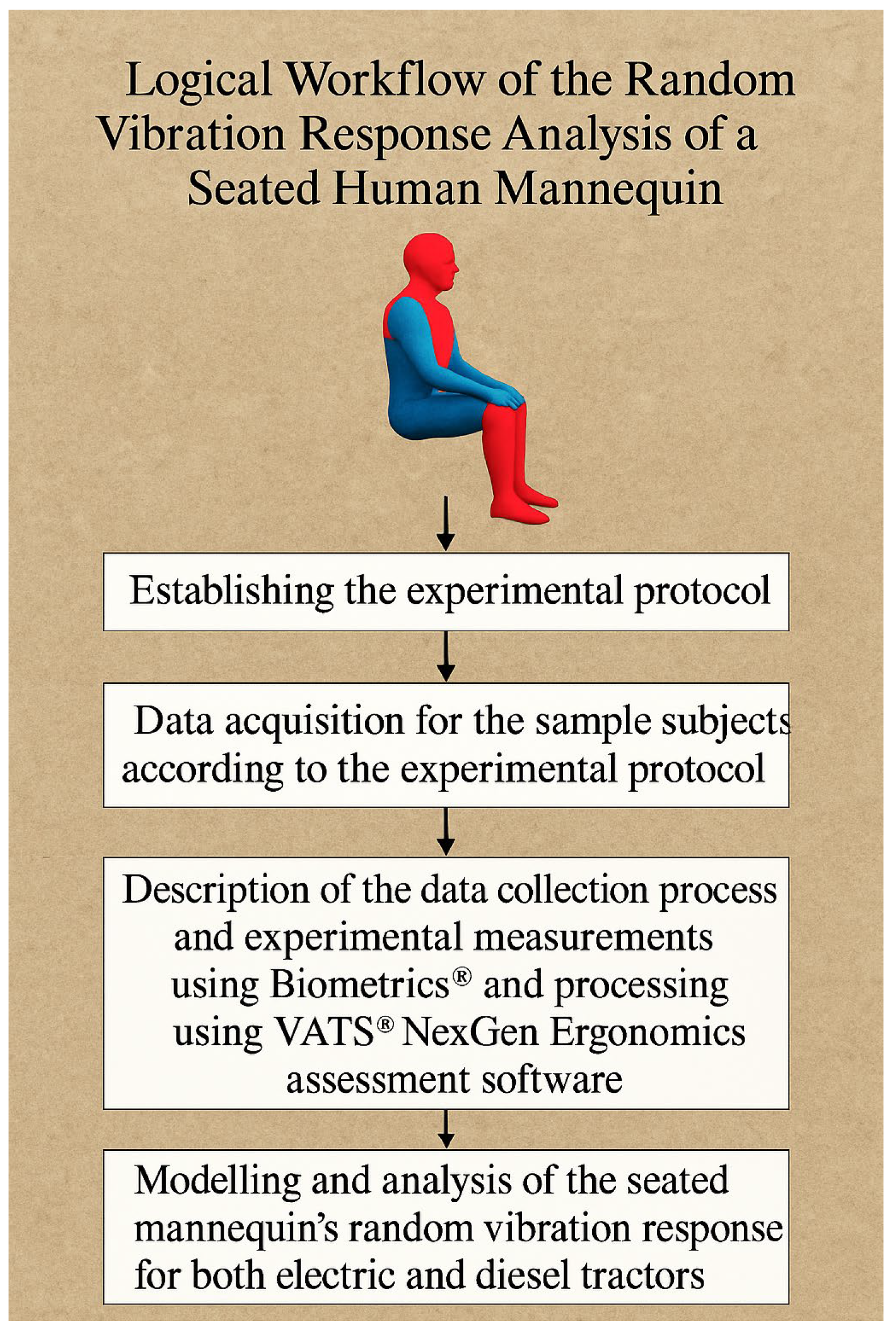
The methodological framework presented in
Figure 1 follows a structured approach comprising four main stages:
(i) Experimental measurements, involving the acquisition of triaxial vibration data at the operator–vehicle interface using dedicated sensors and data acquisition systems;
(ii) Signal processing, including filtering, frequency weighting according to ISO 2631-1, and calculation of the root-mean-square (RMS) acceleration values;
(iii) Numerical simulation, consisting of random vibration response analysis performed using Altair SimSolid, based on the processed experimental input data;
(iv) Comparative analysis, where the results obtained from experimental measurements and numerical simulations are correlated in order to evaluate the biomechanical response of the virtual human model and to identify differences between the two tractor configurations.
This structured workflow ensures a coherent integration of experimental and numerical approaches for the evaluation of vibration effects on the operator.
By applying an integrated methodology that combines advanced numerical analysis with data obtained from real physical measurements, this research provides a detailed and accurate evaluation of the mechanical stress experienced at the level of the joints of the virtual human dummy in a seated posture. The comparison of the biomechanical response of the human body to vibrations generated by the two tested tractor types—diesel TD80D and electric TE-0—allows a differentiated analysis of the loads acting on critical joints, namely: the foot soles, the lumbar spine, and the head.
The graphical results obtained from the random vibration simulation in Altair SimSolid software are closely correlated with the experimentally measured RMS acceleration values within a rigorous experimental protocol, thus ensuring a high level of accuracy and relevance. This comprehensive approach contributes to the identification of significant differences between vibration effects as a function of the propulsion system type of the analysed vehicle and provides an integrated perspective on how these vibrations affect operator comfort, safety, and health. The obtained results may be used as scientific support for improving the ergonomic design of seats and cabins of agricultural vehicles, as well as for the development of effective strategies to reduce vibration exposure in the agricultural environment.
2. Materials and Methods
The comprehensive study presented in this article follows the structure proposed in the methodological logical framework, addressing in an integrated manner the process of analysing mechanical vibrations transmitted to the operator during the operation of self-propelled agricultural vehicles. For the purpose of the comparative evaluation, two types of tractors with different operating regimes were selected: a diesel tractor—the TD80D model, and an electric tractor—the TE-0 model. The technical characteristics of the two vehicles are presented in
Table 1, highlighting differences in wheelbase, overall dimensions, suspension system, wheel size, tyre pressure, and engine power, parameters that are relevant for the subsequent interpretation of the dynamic response.
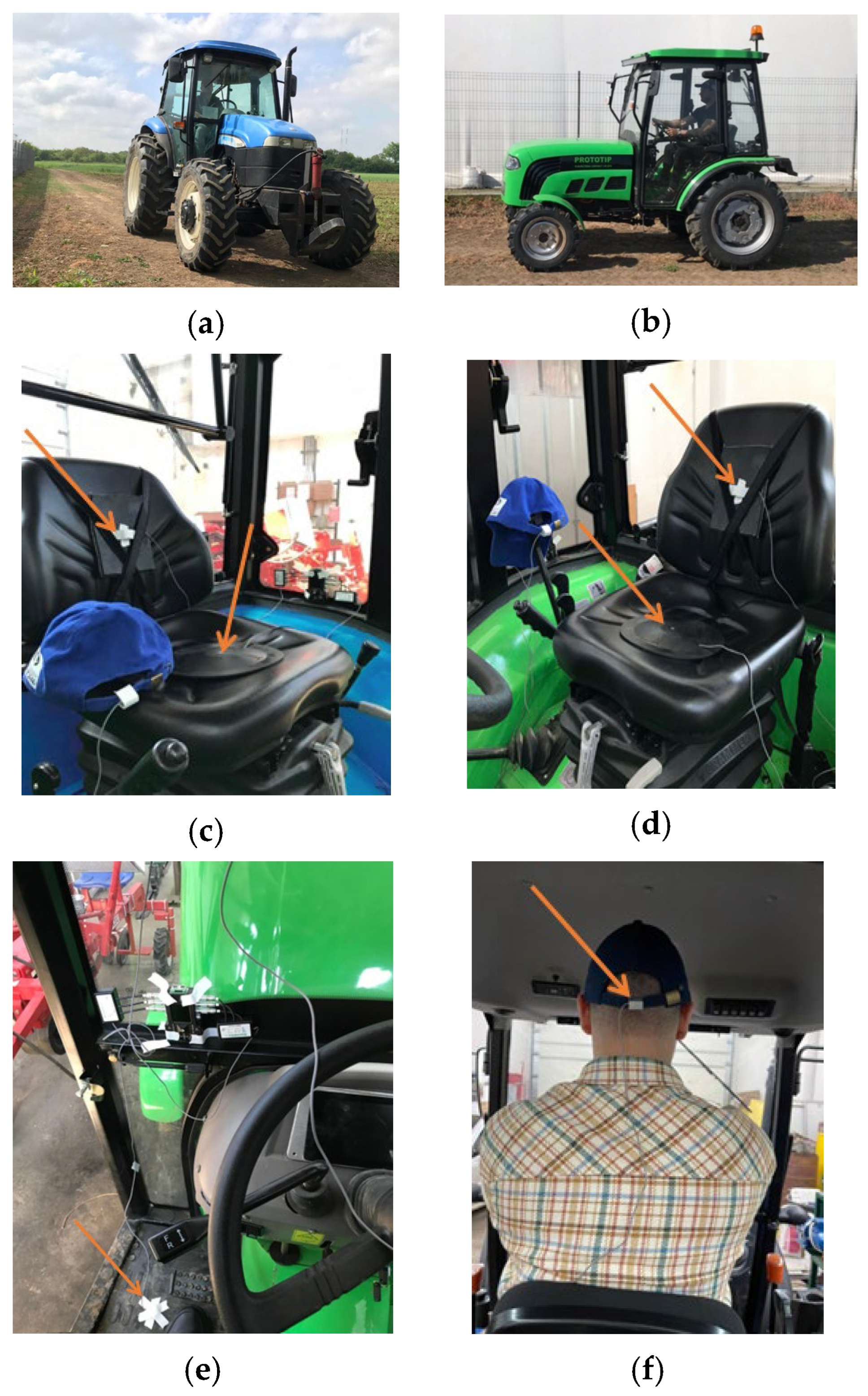
The experimental tests were carried out on unprepared terrain, specific to a real agricultural environment, under controlled conditions, at a constant travelling speed. The terrain configuration is illustrated in
Figure 2a,b.
Representative images captured during the experimental tests are presented in
Figure 2c–e, illustrating the positioning of the triaxial accelerometer sensors strategically mounted in accordance with ISO 2631-1 [
3].
The experimental tests were conducted in April, under controlled environmental conditions, in order to ensure the repeatability and accuracy of the measurements. The ambient parameters recorded during testing were as follows: ambient temperature of 23.1 °C, relative humidity of 45%, wind speed of 0.4 m/s, and atmospheric pressure of 754.1 mmHg. Each experimental test was repeated three times for each tractor–subject combination, in order to reduce systematic errors and increase the statistical confidence level of the obtained data. For increased accuracy and reliability of the obtained results, each experimental test was repeated three times for each tractor–operator configuration. The recorded data were subsequently processed using statistical methods, including the calculation of mean values and standard deviation, in order to obtain representative results and to validate the experimental measurements in relation to the random vibration analysis. In total, over 500 raw data files were processed, ensuring a robust and credible experimental database. The measurement of vibrational accelerations was carried out simultaneously using four triaxial accelerometer sensors mounted on the same detachable seat, which was used alternately on the two tested tractor models.
The sensor configuration was as follows: one accelerometer was mounted at the base of the seat, integrated into a flexible rubber support, in direct contact with the operator’s pelvic region.
A second sensor was fixed to the seat backrest at the level of the spinal column, in order to monitor vibration transmission through the thoracolumbar region. The third sensor was placed on the cabin floor, near the operator’s supporting foot, to record vibrations transmitted through the lower support system.
The fourth accelerometer was positioned at head level, being mounted on a cap equipped with a special sensor-fixing band, so as to accurately capture the accelerations transmitted at the cranial level.
The travelling speed of the tractors during the tests was 5 km/h, a selection made in accordance with the specifications of ISO 2631-1, which establishes the optimal testing range for the evaluation of whole-body vibration exposure under real operating conditions, on uneven terrain, without load. The choice of this speed reflects a typical operating regime for agricultural vehicles under light-duty conditions, thus ensuring the contextual validity of the results.
The experimental study was conducted under a single operating condition, defined by a travelling speed of 5 km/h and an unprepared dirt road surface. While this approach ensured a high level of control and repeatability, it limits the general applicability of the results.
In real agricultural operations, vibration exposure is strongly influenced by factors such as travelling speed, terrain roughness, soil properties, and operational load. Variations in these parameters may lead to significant changes in both the amplitude and frequency content of the vibration signals, with a direct impact on the biomechanical response of the operator.
Therefore, the results should be interpreted as a comparative analysis under controlled conditions. Future work will extend the experimental framework to multiple operating scenarios in order to provide a more comprehensive evaluation of vibration effects in agricultural vehicles.
For all experimental tests conducted within this study, the same human operator was used in order to maintain data consistency and eliminate inter-individual variability. The operator was a 27-year-old male, with a height of 1.80 m and a body mass of 75 kg, average anthropometric characteristics corresponding to the references used in the modelling of the virtual dummy.
Both tractors analysed in the study, namely the electric model (TE-0) and the diesel model (TD80D), were equipped with manual steering systems, and their operation was carried out by the same operator, who was consistently familiar with the architecture and manoeuvrability of the respective vehicles. The selection of a single operator with practical experience in the use of these tractors allowed the reduction in behavioural variability and increased the reliability of the obtained measurements.
The operator’s position during each test was adjusted in accordance with the requirements specified by the relevant technical reference standards, in order to maintain a standardised posture and reduce external influences on the recordings. The seat backrest was fixed at an inclination angle of 90°, to ensure optimal vertical alignment of the spinal column, while the seat suspension—of mechanical type—was adjusted to a height of 10 cm, in accordance with recommendations regarding the ergonomic positioning of operators in agricultural vehicle cabins.
Data acquisition and biomechanical data analysis in this study were performed using an integrated system of high-precision equipment and software, configured to ensure synchronised and detailed recording of mechanical vibrations transmitted to the human operator’s body.
The primary tool used for vibration analysis was the Vibration Analysis Toolkit (VATS
®) platform, version 3.4.4 developed by NexGen Ergonomics Inc. (Pointe-Claire, QC, Canada) [
28].
VATS® is a professional software package dedicated to advanced vibrational signal analysis, specifically designed for applications in ergonomics, occupational biomechanics, and the assessment of whole-body and hand-arm vibration exposure.
The platform enables automatic processing of accelerometric data, the application of international standards (including ISO 2631-1), and the generation of customised reports containing vibrational parameters (RMS, peak, crest factor, PSD, etc.).
The vibration data were processed using the VATS® software, which applies standardised algorithms compliant with ISO 2631-1 for whole-body vibration assessment. The analysis included the calculation of frequency-weighted root-mean-square (RMS) acceleration values, as well as power spectral density (PSD) evaluation, enabling both time-domain and frequency-domain characterisation of the measured signals.
For the acquisition of raw signals, a Biometrics
® MWX8 DataLOG (Biometrics Ltd., Newport, United Kingdom), version 9.01 (DataLOG) data acquisition system was used, consisting of one main unit and three auxiliary units, connected within a fully synchronised network [
29].
This system enables real-time acquisition of up to 15 analogue channels (corresponding to the three axes—X, Y, Z—for four triaxial accelerometer sensors), providing high accuracy and transmission stability.
The sampling frequency for each analogue channel can be adjusted between 1 Hz and 20,000 Hz, depending on the application requirements and the desired level of detail.
The Biometrics
® system is widely used in applied research, including in the fields of clinical biomechanics, neuromuscular rehabilitation, industrial ergonomics, robotics, and functional analysis [
30]. Due to its high modularity and reliability, it is well suited for experimental field applications, as is the case in the present study.
Within each experimental test performed on the analysed tractors, four Series 3 S3-1000G-HA triaxial accelerometers (NexGen Ergonomics, Pointe-Claire, QC, Canada) were used, mounted at strategic locations in accordance with the representations shown in
Figure 2c–e, in order to allow a comprehensive characterisation of the vibrational response at the operator–vehicle contact points. The collected data were transmitted wirelessly to a computer, where they were processed in real time using the VATS
® software, ensuring instantaneous monitoring of dynamic parameters and complete recording of the experimental tests.
The accelerations recorded along the three perpendicular reference axes (ax, ay, az) were determined using the four triaxial accelerometers mounted at the key points of the operator’s posture. In order to reflect the influence of frequencies as perceived by the human body under real conditions, the raw acceleration values were frequency-weighted using the standardised correction functions defined in ISO 2631-1: the Wk weighting curve for the vertical direction and the Wd weighting curve for the horizontal directions.
By applying these correction filters, the weighted acceleration values awx, awy and awz were obtained, providing a realistic and comparable representation of human body exposure to mechanical vibrations, depending on their direction of propagation.
The effective acceleration (root mean square), denoted as a
wRMS is determined using Equation (2) [
3]:
where
awRMS is the root mean square (RMS),
a2w (t) is frequency-weighted acceleration as a function of time t, and T is the measurement duration.
The overall magnitude of the oscillatory motion was determined using Equation (3) [
3]:
where k
x, k
y, and k
z are the multiplication factors for the X-, Y-, and
Z-axis measurements.
To perform the dynamic analysis of the random vibration response of a virtual human dummy in a seated posture, simulating a realistic driving scenario involving two agricultural tractors—one diesel-powered (TD80D) and one electric (TE-0)—operating on unprepared terrain, Altair
® SimSolid
® software was used [
31]. This advanced simulation platform is designed to perform high-accuracy structural analyses, being capable of addressing static, dynamic, and thermal behaviours applicable to mechanical systems with complex geometries and multiple interactions.
The virtual human dummy was modelled using detailed solid geometry and analysed using Altair SimSolid, which enables structural and dynamic simulations without the need for mesh generation. The material assigned to the dummy was reinforced rubber, selected from the software database, to approximate the overall mechanical behaviour of the human body. The model focuses on global dynamic response rather than local tissue deformation.
The boundary conditions were defined to simulate the interaction between the operator and the tractor. The seat was modelled using an elastic support with a vertical stiffness of 15 N/mm, while the longitudinal and lateral directions were constrained. The contact between the feet and the tractor floor was defined using a slider-type constraint, and the contact between the hands and the steering wheel was modelled as a fixed support.
A modal analysis was performed in the frequency range of 0–80 Hz, in accordance with ISO 2631-1, allowing the identification of the dominant vibration modes influencing the system response. All contact interactions within the dummy assembly were explicitly defined, ensuring accurate representation of the dynamic behaviour under vibration loading conditions.
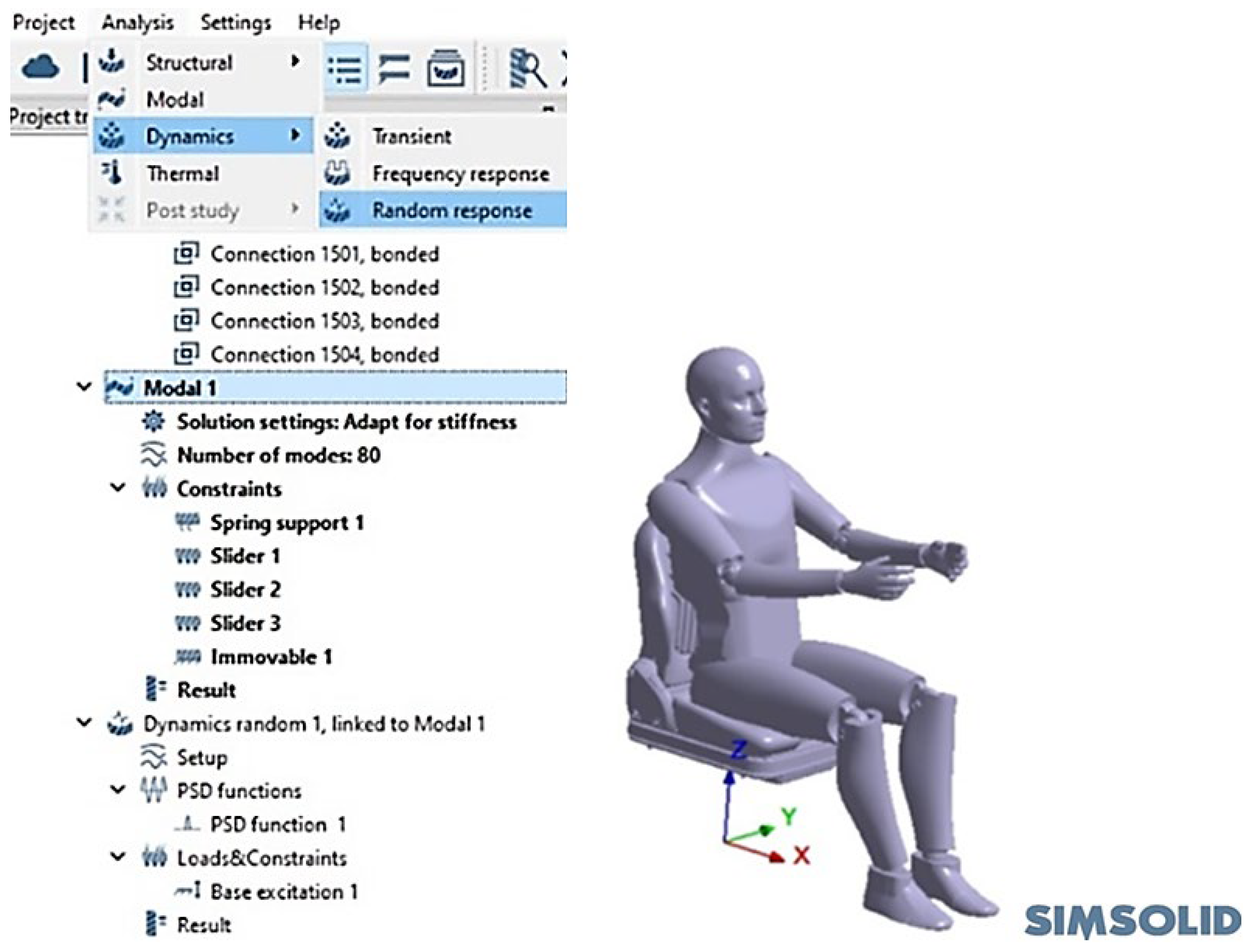
Within the present simulation, a “Random Vibration Response” analysis was selected, which is suitable for modelling random excitations typical of the agricultural environment. The simulation required prior modal analysis results, which were computed within the same model to define the dynamic characteristics of the dummy–seat–vehicle system.
Unlike classical methods, Altair SimSolid offers the advantage of including all natural modes in the computation, without the need for truncation or manual selection, thereby ensuring increased accuracy in the interpretation of vibrational behaviour.
For frequency-domain response analysis and random analysis, SimSolid explicitly defines the lower and upper limits of the frequency range of interest, while for transient response analysis, the relevant time interval must be specified.
The time integration of the equations of motion is performed rapidly and efficiently due to the optimised numerical algorithms integrated into the platform, which makes Altair SimSolid a robust tool for simulating biomechanical response in complex operating scenarios. The choice of the “random response” dynamic simulation within the Altair
® SimSolid
® software, illustrated in
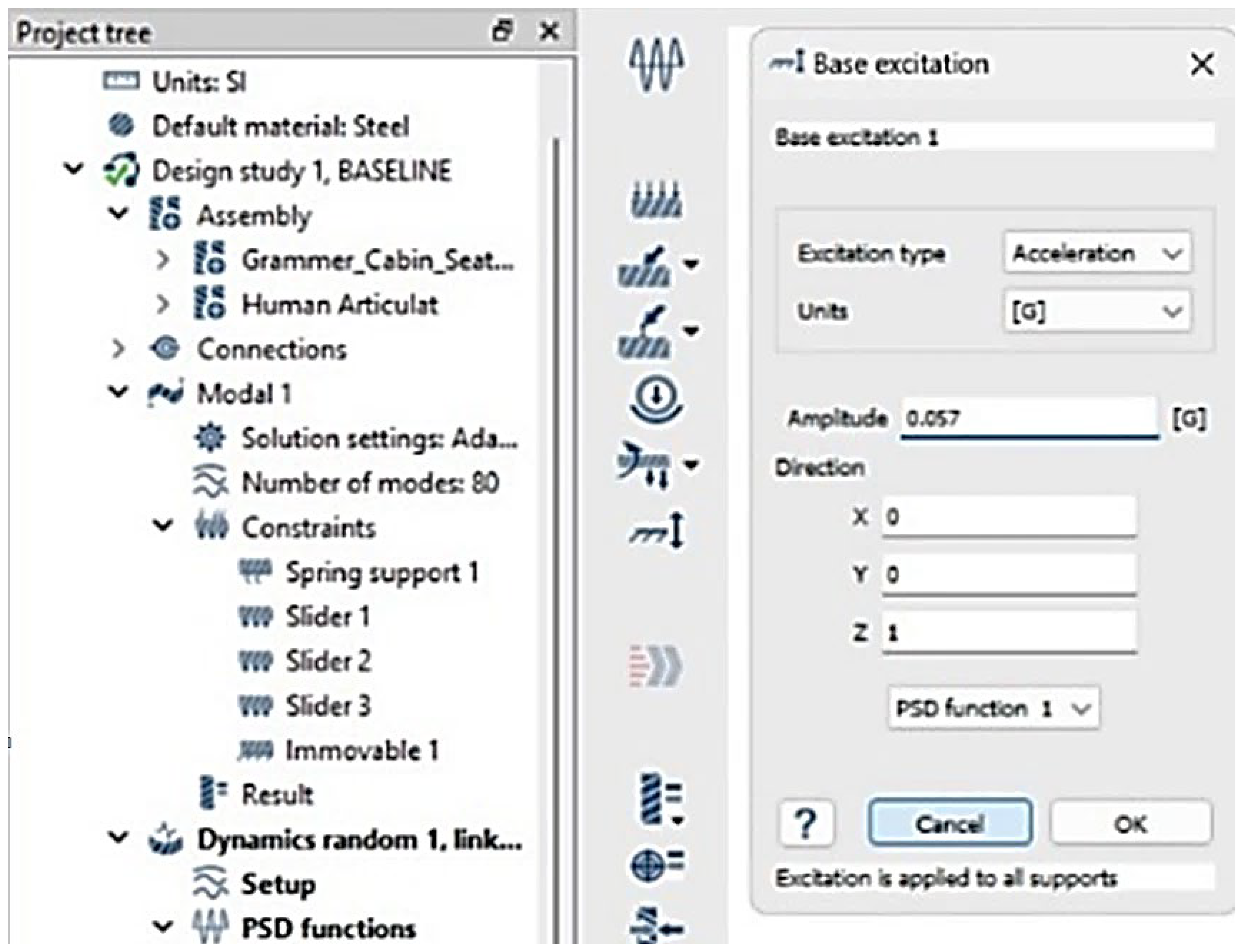
Figure 3, was motivated by the need to reproduce as faithfully as possible the biomechanical behaviour of the virtual dummy seated on the tractor seat and subjected to real vibrational excitations.
In the random vibration analysis performed using the Altair® SimSolid® platform, the excitation was defined through a frequency-dependent Power Spectral Density (PSD) function over the frequency range 0–80 Hz.
The PSD function was derived from experimentally measured acceleration signals using FFT-based spectral analysis, ensuring that the numerical input accurately reflects the distribution of vibration energy across the frequency domain under real operating conditions.
The PSD input was introduced in the simulation as a discretized spectrum consisting of frequency–amplitude pairs, where each point represents the power spectral density associated with a specific frequency component, obtained from the squared magnitude of the Fourier transform of the measured acceleration signal.
In order to ensure consistency with the experimentally measured vibration levels, the PSD curve was scaled to correspond to a global RMS acceleration value of 0.057 g (≈0.56 m/s
2), as shown in
Figure 4, derived from the experimental dataset recorded by the accelerometer mounted on the cabin floor under controlled operating conditions (unprepared terrain, 5 km/h).
Thus, the PSD function defines the spectral distribution of the excitation, while the RMS value defines its overall energy level, ensuring that the applied input remains physically representative of the measured vibration intensity.
By applying this PSD-based excitation, the numerical model reproduces the stochastic nature of vibration transmission from the agricultural vehicle to the operator, enabling a realistic evaluation of the dynamic response of the virtual human dummy and the identification of critical biomechanical loading regions.
The virtual human dummy was developed in SolidWorks version 2023 and imported into Altair SimSolid as a multibody system with articulated joints, comprising 29 degrees of freedom. The joint configuration includes spherical joints (3 DOF) at the shoulders, hips, hands, and ankles, and rotational joints (1 DOF) at the neck, elbows, and knees. The model was treated as a rigid multibody system, with mass and inertia properties assigned to each segment in order to capture the global dynamic behaviour.
The seat was explicitly modelled as a structural assembly including metallic, elastic, and plastic components, with material properties assigned accordingly.
The dynamic behaviour of the seat suspension was characterised experimentally, resulting in stiffness values between 8.9 N/mm and 15 N/mm, corresponding to natural frequencies of approximately 2.3 Hz and 3.3 Hz.
The regions of the virtual human dummy in the seated position are considered. This approach allows realistic transmission and attenuation of vibrations between the vehicle structure and the operator.
The interaction between the dummy and the seat was defined through contact conditions at the seat pan and backrest, ensuring load transfer in the pelvic and lumbar regions. Additional boundary conditions include constrained longitudinal and lateral motion at the seat base, sliding contact between the feet and the tractor floor, and fixed contact between the hands and the steering wheel.
All identified modes within the frequency range 0–80 Hz were included in the random vibration analysis without truncation, ensuring a complete representation of the dynamic behaviour.
The model focuses on global biomechanical response rather than local tissue deformation, which justifies the rigid-body modelling approach.
3. Results
3.1. Physical Measurements. Data Analysis and Processing Using VATS Software
In accordance with the provisions of ISO 2631-1, which defines the criteria for evaluating human body exposure to whole-body vibrations (WBV), a detailed analysis of the operator’s biomechanical response was performed during the operation of the two agricultural vehicles subjected to testing.
For a comprehensive characterisation of the vibrational behaviour of the human body under real driving conditions, physical measurements were carried out in the main areas of interaction between the operator and the vehicle: at the level of the feet, by placing the sensor on the cabin floor, at the location of the supporting foot; at the level of the seat and back, by mounting accelerometers directly on the seat surface and in the lumbar region, in contact with the spinal column; and at the level of the head, by positioning a triaxial sensor on a fixing band integrated into a cap worn by the operator.
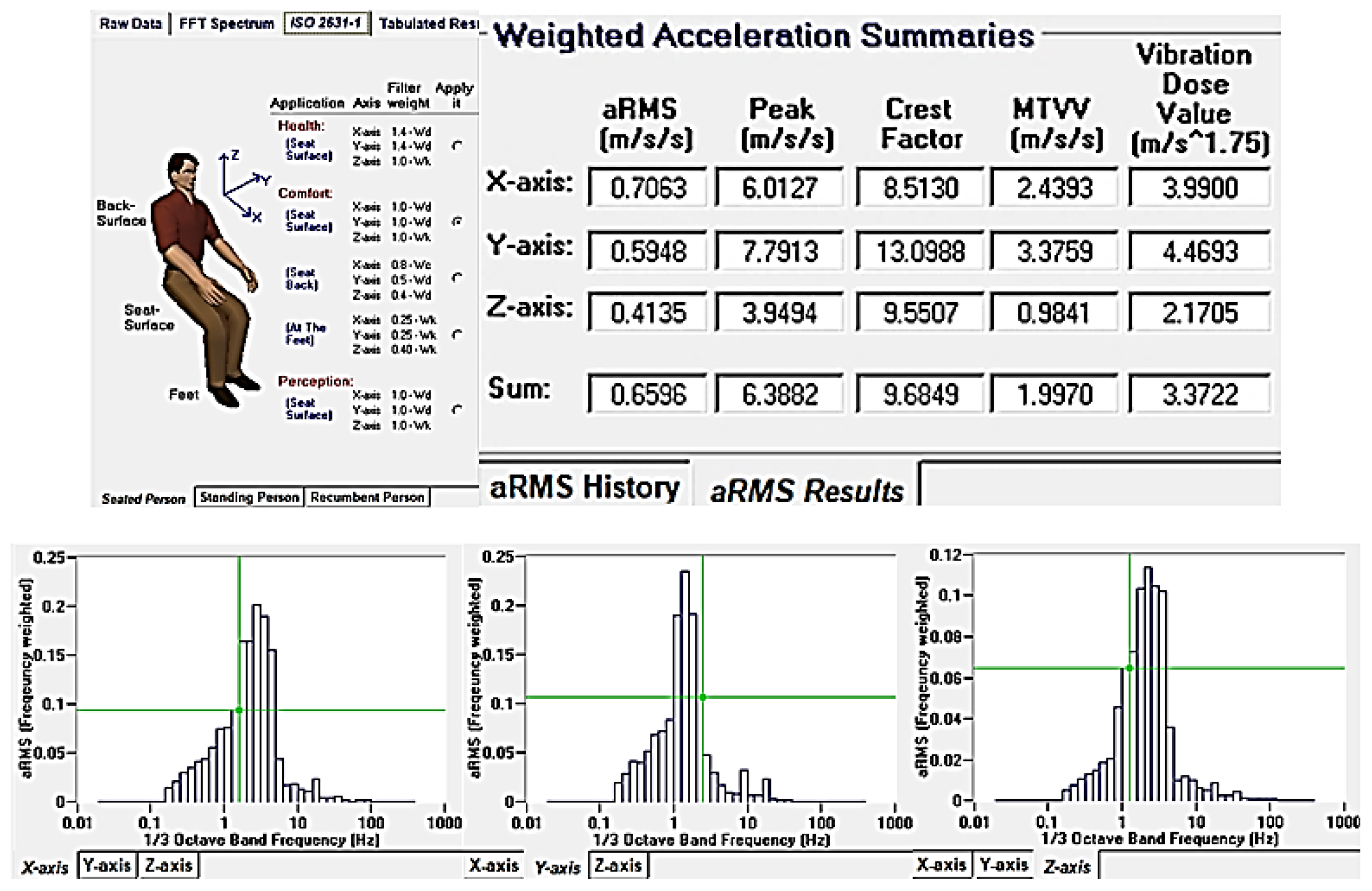
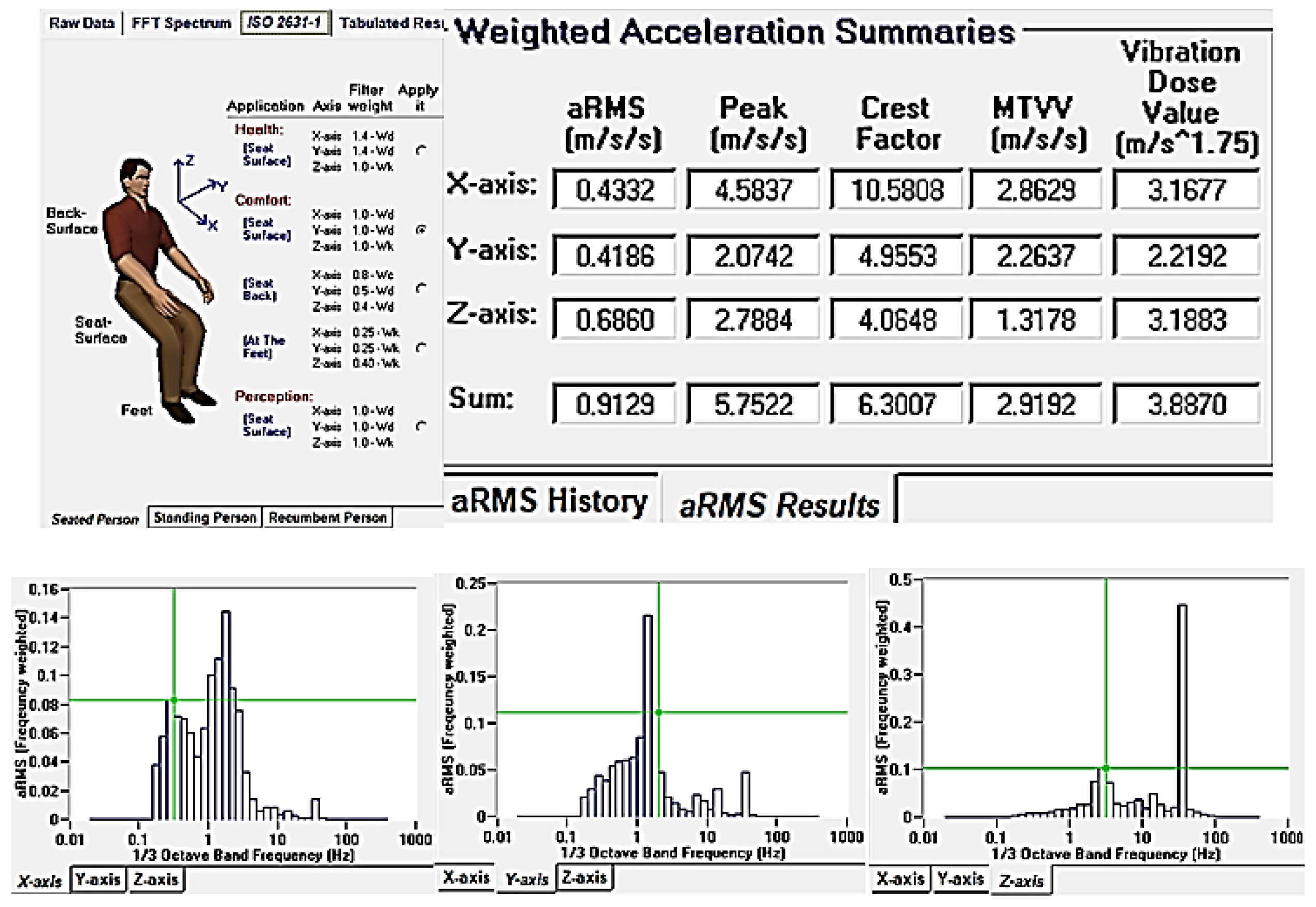
The data collected during the experiments were processed using the VATS software and are presented in
Figure 5 and
Figure 6.
A detailed analysis of the vibration measurements presented in
Figure 5 and
Figure 6 reveals notable differences between the two tractor configurations. The diesel tractor (TD80D) exhibits higher weighted acceleration values along the X and Y axes (0.7063 m/s
2 and 0.5948 m/s
2, respectively), indicating more pronounced horizontal and lateral vibration components transmitted to the operator. In contrast, the electric tractor (TE-0) shows reduced values along these axes (0.4332 m/s
2 and 0.4186 m/s
2), suggesting improved attenuation of horizontal vibrations.
Although the electric tractor presents a higher value along the Z-axis (0.6860 m/s2 compared to 0.4135 m/s2 for the diesel tractor), this component is less amplified due to the weighting factors defined by ISO 2631-1. Consequently, the overall vibration behaviour reflects a redistribution of vibration energy rather than a uniform increase.
Additionally, the frequency-domain analysis indicates that the diesel tractor generates more pronounced peaks in the low-frequency range (approximately 2–8 Hz), which is particularly relevant for human exposure and biomechanical response.
These characteristics are consistent with the higher mechanical stress values obtained in the numerical simulation for the diesel configuration.
Therefore, the experimental results provide a clear explanation for the differences observed in the simulated biomechanical response, confirming the strong correlation between measured vibration inputs and the resulting stress distribution in the virtual human model.
Table 2 presents the RMS acceleration (aRMS) values obtained from each sensor, in accordance with the experimental protocol.
The vibration signals measured during the experimental tests were processed in accordance with ISO 2631-1, resulting in frequency-weighted RMS acceleration values for each measurement location. Based on the experimentally measured vibration signals, a representative global RMS acceleration value of 0.057 g was identified from the averaged RMS values across all measurement locations. This value was used to scale the Power Spectral Density (PSD) function applied in the numerical simulation.
The excitation input was defined as a frequency-dependent PSD function derived from the measured acceleration signals using FFT-based spectral analysis, while the RMS value was used exclusively to ensure consistency in the overall energy level of the excitation. This approach preserves the spectral characteristics of the measured vibrations and enables a consistent and physically representative comparison between the two tractor configurations.
In
Table 2, the “Sum” value represents the overall weighted root-mean-square acceleration obtained by combining the three orthogonal weighted components measured along the X, Y, and Z axes, in accordance with ISO 2631-1 for whole-body vibration evaluation. Standard deviations were calculated for the individual weighted acceleration components (X, Y, Z), whereas the resultant acceleration values (Sum), derived according to ISO 2631-1, are presented as mean values.
All vibration parameters were processed using the VATS® software, which applies standardised algorithms fully compliant with ISO 2631-1 for whole-body vibration assessment. Therefore, the calculated values, including the resultant weighted acceleration (“Sum”), ensure methodological consistency and accuracy in accordance with international standards.
This resultant value was calculated using Equation (4) [
3]:
where a
wx, a
wy and a
wz are the frequency-weighted RMS accelerations along the three axes, and k
x, k
y, and k
z are the corresponding multiplying factors defined by ISO 2631-1.
3.2. Random Vibration Analysis of the Dummy Seated on the Tractor Seat
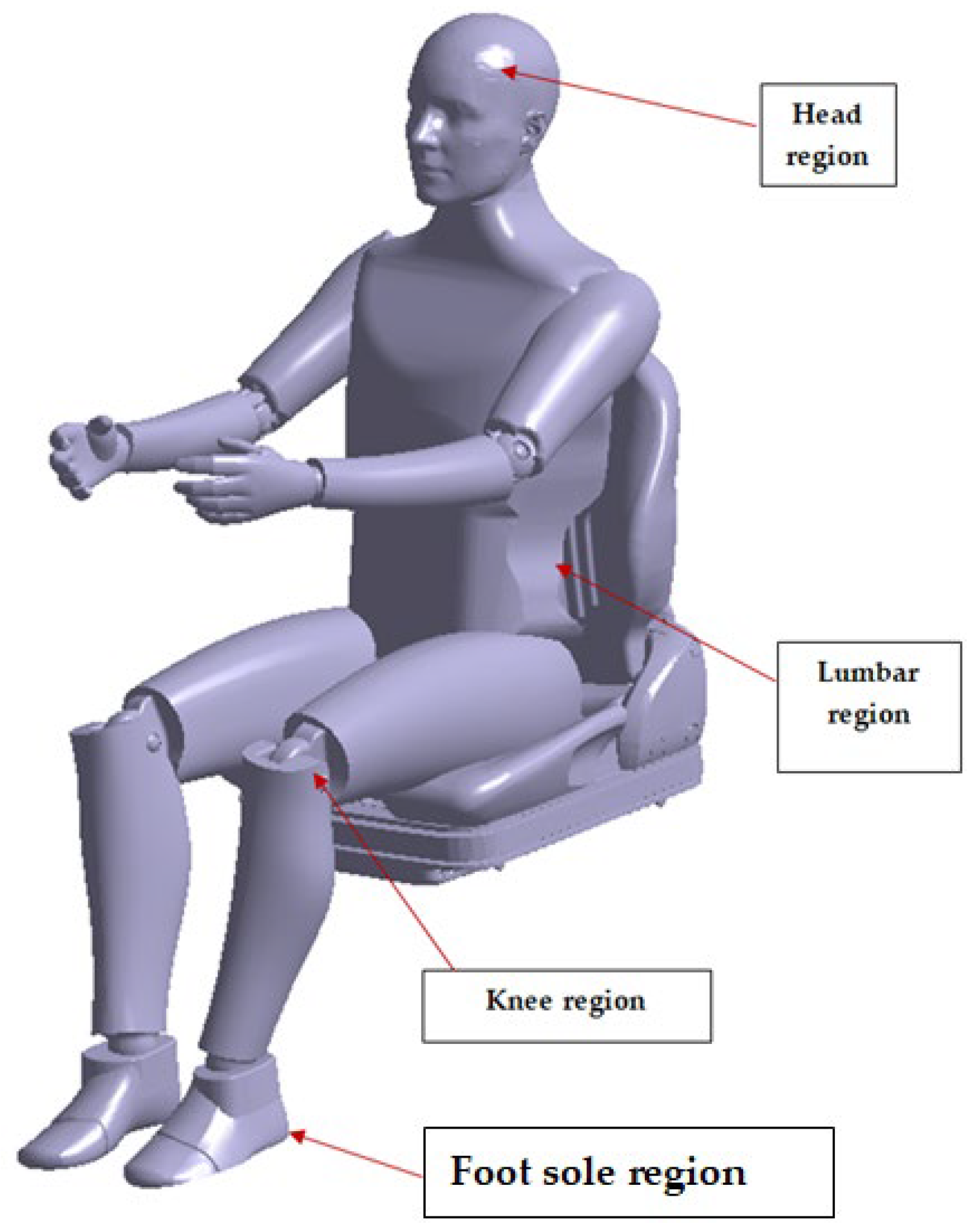
The selection of the analysed anatomical regions (foot sole, knee, lumbar region, and head) was based on their biomechanical relevance in the transmission of whole-body vibration (WBV) and their association with the most affected areas in operators exposed to prolonged vibration.
The foot sole represents the primary interface for vibration transmission from the vehicle to the human body, while the knee joint plays a key role in the propagation of vibrations along the lower limb kinematic chain. The lumbar region is widely recognised as the most vulnerable area to WBV exposure, being strongly associated with musculoskeletal disorders, particularly lower back pain. The head region reflects the transmission of vibration to the upper body and is relevant for evaluating potential neurophysiological effects.
The selection of these regions is consistent with established ergonomic and biomechanical assessment approaches used in WBV studies, including those defined by ISO 2631-1 and related literature on vibration exposure and operator health.
This subsection provides a detailed comparative analysis of the mechanical stress experienced in the joints of the virtual human dummy subjected to vibrations generated by two types of agricultural vehicles: the TD80D diesel tractor and the TE-0 electric tractor. The graphical representations obtained from the random dynamic response simulations highlight the spatial distribution and intensity of mechanical stress in critical body regions —namely the foot soles, knees, back (lumbar region), and head—which directly reflect the transmission of vibrations from the vehicle to the operator and are schematically illustrated in
Figure 7.
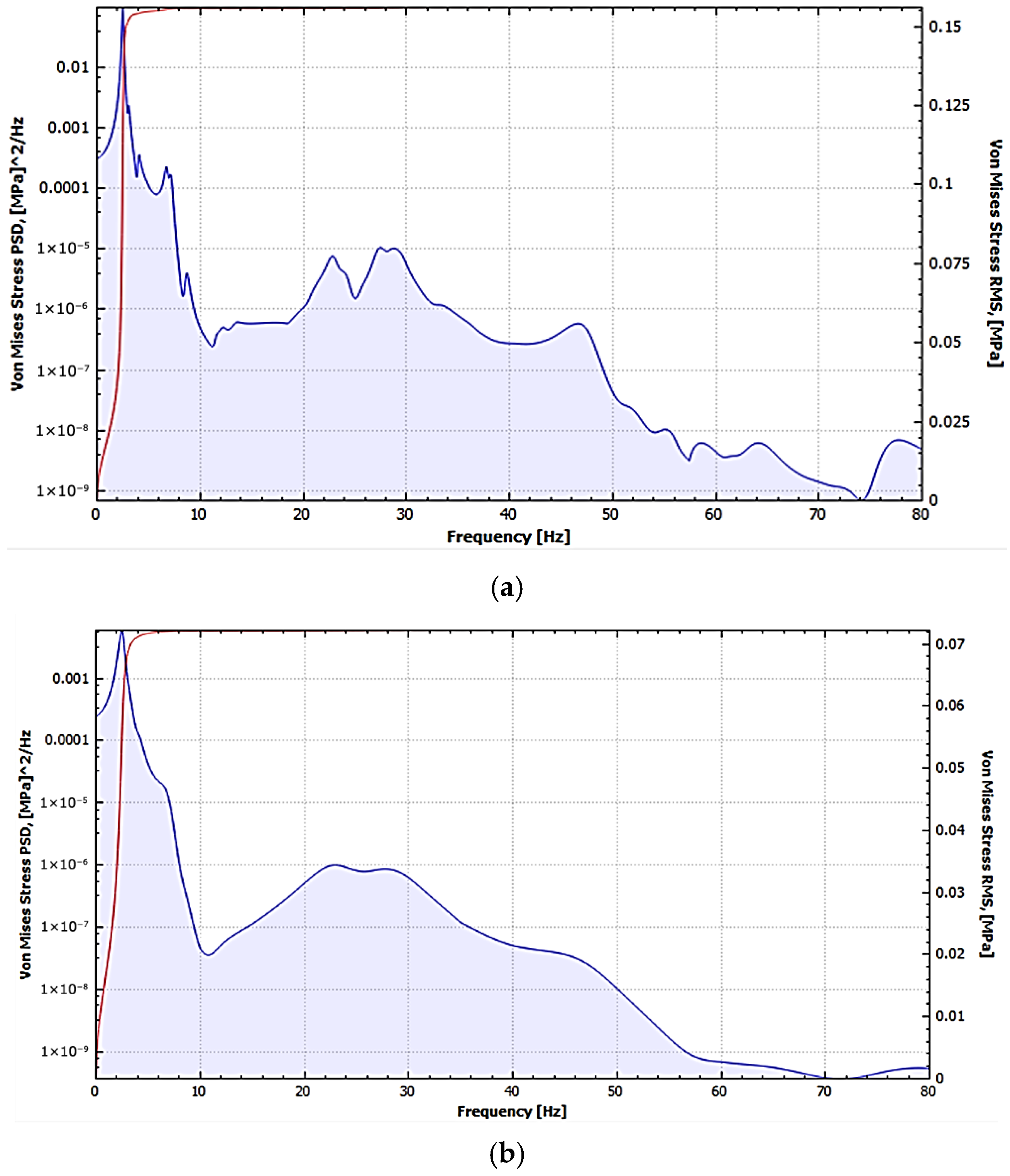
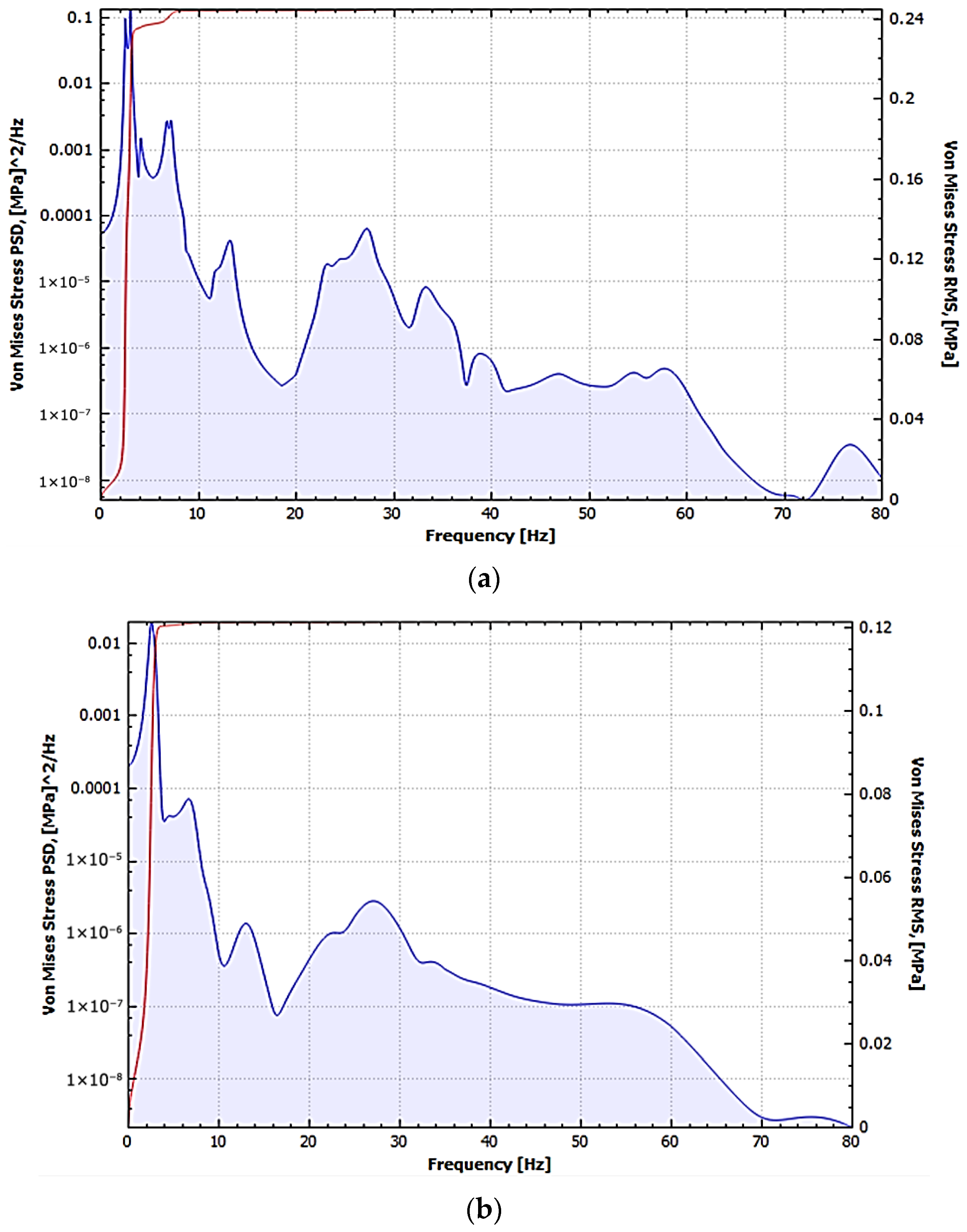
The foot sole region represents a direct and constant contact point between the operator and the vehicle, being one of the most exposed areas to the transmission of vertical vibrations originating from the ground through the cabin floor.
The graphs presented in
Figure 8 illustrate how the configuration of each tractor type—diesel TD80D and electric TE-0—influences the level of mechanical stress localised in the foot sole region.
The values obtained from the random dynamic response analysis indicate a significant accumulation of mechanical stress in this region, particularly in the case of the diesel tractor, where vibration amplitudes are higher.
This level of loading may contribute to the onset of biomechanical discomfort, a sensation of localised muscular fatigue, and a reduction in the ability to control the pedal or foot position during long-duration operation. Over time, repeated exposure to intense vibrations in this region may contribute to musculoskeletal discomfort in the lower limbs under prolonged exposure conditions.
By comparison, the electric tractor generates lower mechanical stress values, suggesting a more attenuated vibration transmission and, consequently, a reduced impact on the operator’s foot soles, which may contribute to increased long-term comfort and a reduction in risks associated with occupational vibration exposure.
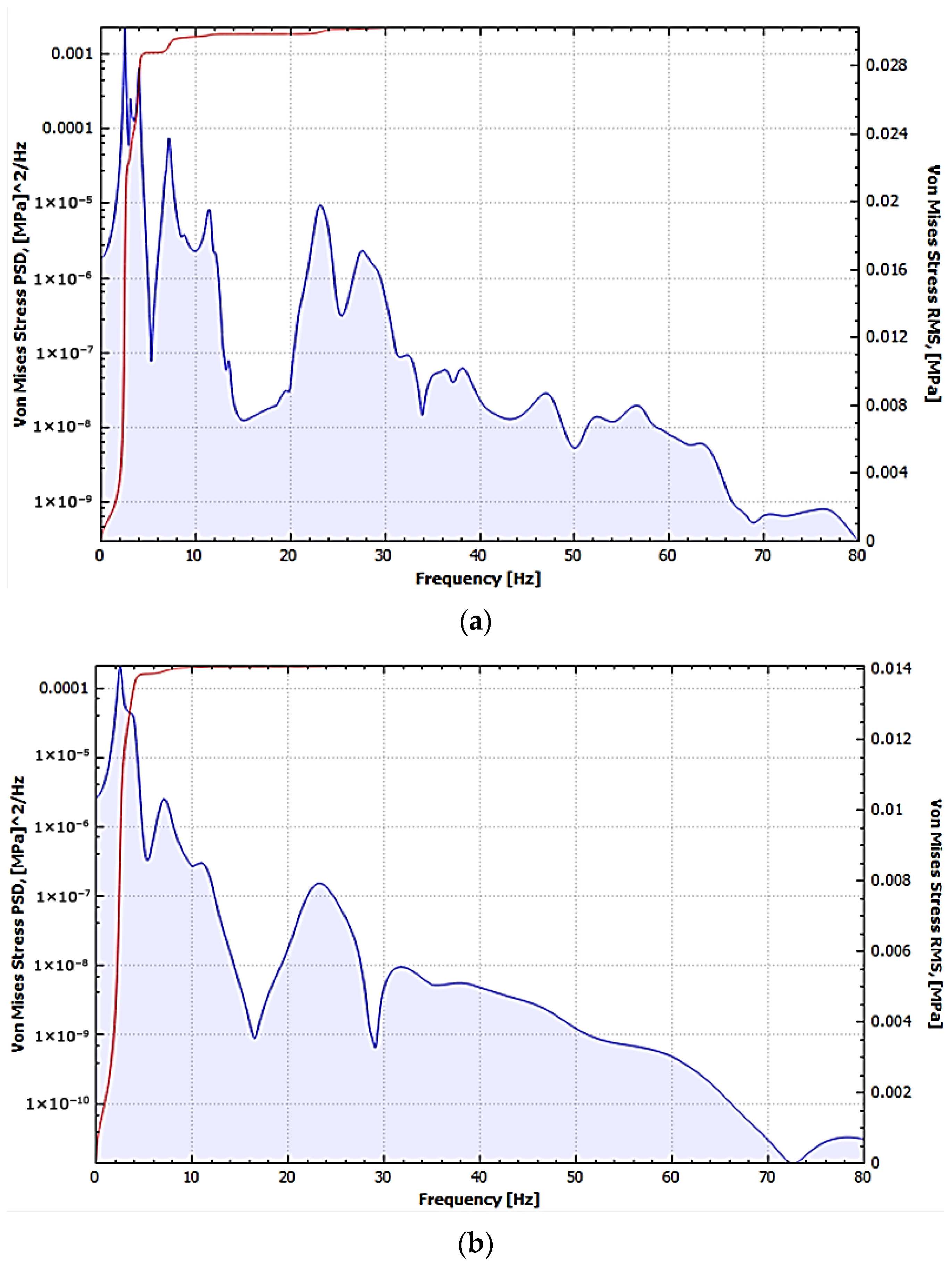
The knee region plays an essential role in supporting the seated posture and in absorbing vibrations transmitted from the floor through the lower limbs.
Although it is not in direct contact with the vehicle’s supporting surfaces, this major joint absorbs a significant portion of indirect biomechanical loads resulting from the propagation of vibrational waves through the kinematic chain of the lower limbs. The graphical representation of the random dynamic response is presented in
Figure 9.
The reduction in mechanical stress observed at the knee level is particularly relevant from a biomechanical perspective, as this joint plays a key role in the transmission and attenuation of vibrations along the lower limb. Prolonged exposure to whole-body vibration has been associated with an increased risk of musculoskeletal disorders affecting the lower extremities, including joint discomfort, cartilage degradation, and altered joint loading patterns.
Previous studies have reported that agricultural vehicle operators exposed to continuous vibration may experience cumulative stress at the knee joint, contributing to fatigue and long-term functional impairment. Therefore, the reduction in vibration-induced mechanical stress observed in the case of the electric tractor configuration may contribute to improved operator comfort and reduced risk of musculoskeletal strain in this region [
32,
33,
34].
Analysis of the mechanical stress graphs indicates that, under random vibration conditions, the knee joint is exposed to variable levels of loading, more pronounced in the case of the TD80D diesel tractor, where vibration amplitudes and dominant frequencies are higher.
This repetitive stress may lead to the onset of joint stiffness, localised muscular fatigue, and, in the long term, mechanical wear of periarticular structures (ligaments, menisci, cartilage). The TE-0 electric tractor, characterised by a lower overall vibration level, exerts more moderate stress on the knees, which may contribute to the maintenance of superior functional mobility and a higher degree of comfort for the operator, particularly during prolonged activities.
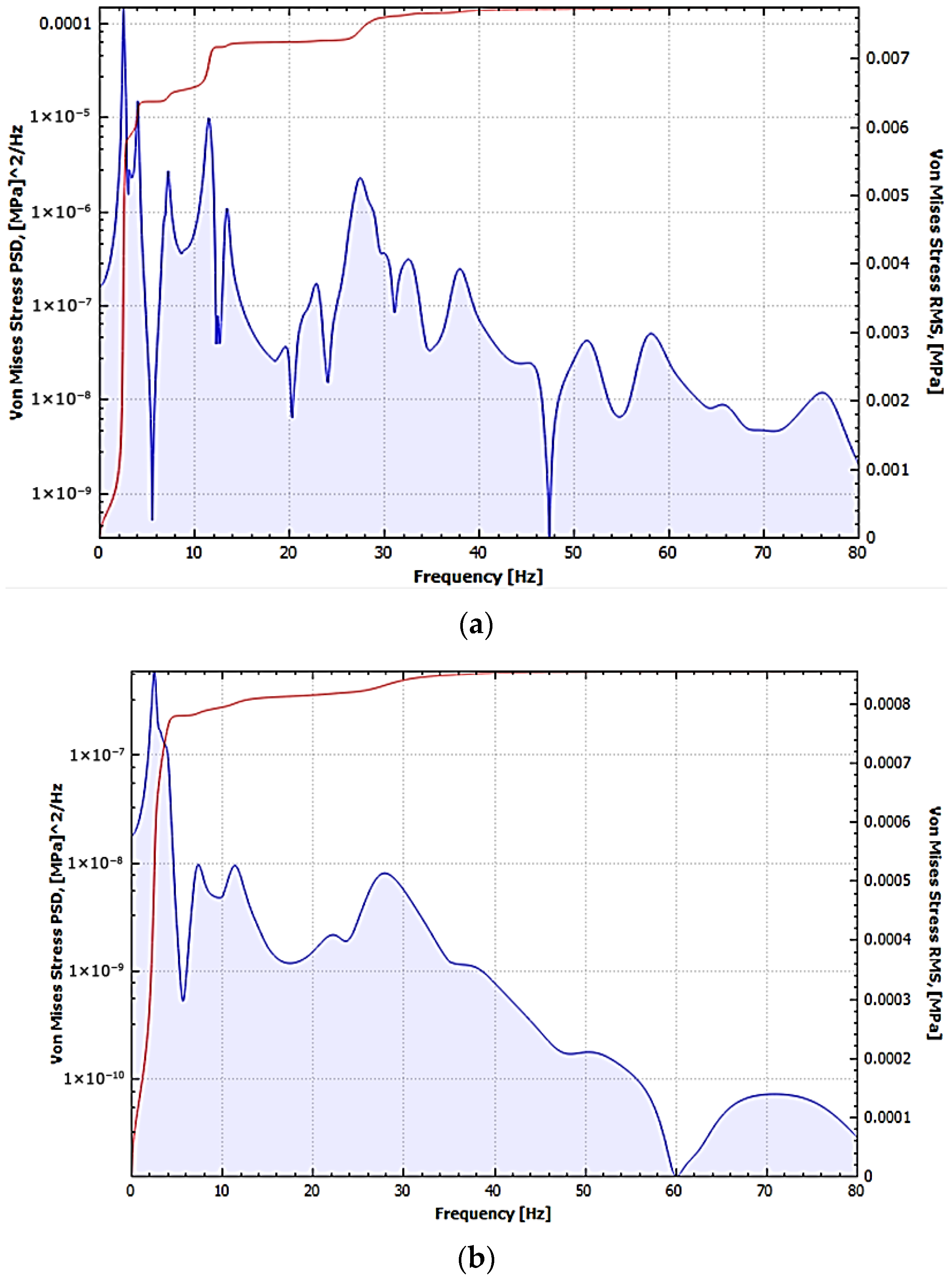
The lumbar region, corresponding to the lower part of the spinal column, represents one of the most vulnerable areas of the human body in the context of exposure to mechanical vibrations in a seated posture. Within the simulated tests and the random dynamic response analysis, this region was monitored using a sensor mounted directly on the seat backrest, in contact with the lumbar region of the dummy. The graphical representation of the random dynamic response is presented in
Figure 10.
The mechanical stress graphs indicate increased loading in the lumbar region, particularly in the case of the TD80D diesel tractor, where the level of vertical vibrations is significantly higher.
This vibration intensity may be associated with increased biomechanical loading, which could contribute to discomfort, muscular tension, and stiffness, and may indicate a potential risk of long-term spinal issues under prolonged exposure conditions.
By comparison, for the TE-0 electric tractor, the level of mechanical stress transmitted to the lumbar region is considerably lower, suggesting a more attenuated vibration transmission and a reduced degree of discomfort for the operator.
The head region represents an essential indicator in the evaluation of vibration transmission along the biomechanical chain of the human body. Although the head is not in direct contact with the vehicle structure, vibrations transmitted through the seat, spinal column, and neck may reach this region, generating a significant physiological and cognitive impact on the operator. During the experimental tests, the accelerometer was mounted at the frontal level of the dummy’s head using a fixing system integrated into a special cap, in order to faithfully reproduce the operator’s natural position. The graphical representation of the random dynamic response is presented in
Figure 11.
The mechanical stress graphs indicate increased loading in the head region, particularly in the case of the TD80D diesel tractor, where the level of transmitted vibrations is higher. This vibration intensity may be associated with increased biomechanical loading, which could contribute to discomfort, muscular tension, and reduced cognitive or neuromuscular stability under prolonged exposure conditions.
By contrast, the TE-0 electric tractor, characterised by a lower overall vibration level, generates significantly reduced mechanical stress in this region, which may suggest improved conditions for operator comfort and reduced biomechanical loading at head level.
Table 3 summarises the values obtained from the random dynamic response analysis, highlighting the levels of mechanical stress experienced at the joints of the virtual human dummy during the simulated operation of the two types of agricultural tractors: diesel TD80D and electric TE-0. This comparative presentation provides a clear overview of the distribution of biomechanical loads in key body regions—foot soles, knees, lumbar region, and head—reflecting how the vibrational characteristics of each vehicle directly influence operator comfort.
The mechanical stress values presented in
Table 3 correspond to the maximum von Mises stress obtained in each analysed region of the virtual human model, as a result of the random vibration response simulation performed in Altair SimSolid. These values are computed by the solver based on the dynamic structural response under the applied excitation input, using internal numerical algorithms specific to random vibration analysis.
The analysis of the results allows not only the identification of differences in mechanical stress intensity, but also the correlation of these values with potential health risks, particularly in the case of prolonged exposure to whole-body vibrations.
4. Discussion
The comparative analysis presented in this study is based on the need to evaluate the level of vibrations experienced by the operator during the operation of two types of agricultural tractors—one diesel (TD80D) and one electric (TE-0). The study was based on a rigorous experimental protocol, which included physical measurements carried out using advanced systems for the acquisition and processing of biomechanical data, followed by the correlation of these measurements with numerical simulations performed through random dynamic response analysis using Altair SimSolid software.
The main objective was to identify and compare the mechanical stress at the level of the joints of the virtual human dummy under identical operating conditions (constant speed on unprepared terrain). The obtained results highlight significant differences between the two tractor types, indicating improved performance of the electric configuration under the analysed conditions in terms of reducing vibration transmission to the operator.
Foot sole region: The TE-0 electric tractor led to a 56.3% reduction in mechanical stress compared to the diesel tractor. This difference highlights an improved capability to attenuate vertical vibrations transmitted through the cabin floor, improving foot stability and reducing fatigue.
Knee region: A reduction of 50.0% in mechanical stress was observed in the case of the electric tractor. This joint plays a crucial role in the kinematic chain of the lower limbs, and such a significant decrease reflects superior biomechanical comfort and a reduction in the risk of joint wear during long-term operation.
Lumbar region: The recorded difference of 53.3% in favour of the electric tractor is particularly relevant, given the high incidence of back pain among agricultural vehicle operators. This reduction highlights increased protection at the level of the lower spinal column, which may contribute to reducing the risk of musculoskeletal discomfort associated with prolonged vibration exposure.
Head region: The most significant difference was observed in this region, with a 91.1% reduction in mechanical stress in favour of the electric tractor.
This finding highlights the effectiveness of attenuated vibration transmission and may be associated with a reduced likelihood of neurophysiological effects related to vibration exposure, such as reduced concentration, headaches, or balance disturbances.
These results indicate that the TE-0 electric vehicle exhibits improved biomechanical response and reduced vibration transmission to the operator across all analysed critical regions.
These findings validate the importance of using an integrated analysis model—combining experimental measurements and numerical simulations—for a rigorous evaluation of operational comfort and health risks, thereby contributing to the development of ergonomic and sustainable solutions in the field of agricultural mechanisation.
The results obtained in this study indicate that, under the specific experimental conditions considered (constant travelling speed of 5 km/h on unprepared terrain), the electric tractor (TE-0 configuration) exhibited lower levels of vibration transmission and reduced mechanical stress in all analysed regions of the virtual dummy compared to the diesel tractor (TD80D).
However, it is important to emphasise that the two analysed vehicles are not strictly equivalent in terms of power, overall dimensions, structural configuration, mass distribution, and design origin (commercial product versus experimental prototype). Therefore, the observed differences in biomechanical response should be interpreted as the result of a combined influence of propulsion system and overall vehicle design, rather than being attributed exclusively to the diesel or electric nature of the powertrain.
From a technical interpretation of the results, the following observations can be made:
The vibration transmission behaviour of agricultural tractors is strongly influenced by the global structural configuration of the vehicle, including chassis dynamics, seat suspension characteristics, and operator–vehicle interaction conditions.
The electric tractor configuration analysed in this study demonstrates a reduced vibration transmission level, which may be associated with differences in powertrain architecture, reduced mechanical excitation sources, and modified mass distribution.
The integration of experimental whole-body vibration measurements with numerical random vibration simulations represents a robust and effective methodological framework for evaluating operator exposure and identifying critical biomechanical loading regions.
The obtained results should be interpreted as case-specific findings, reflecting the behaviour of the two tested tractor configurations, and should not be generalised to all diesel or electric agricultural vehicles.
The comparison highlights the importance of adopting a system-level approach in vibration analysis, where propulsion type is only one of several interacting factors influencing operator comfort and biomechanical stress.
Future research should focus on comparative analyses involving tractors with similar structural and functional characteristics, in order to isolate more clearly the influence of the propulsion system on vibration transmission and operator exposure.
Despite the relevant findings obtained in this study, several limitations should be acknowledged. The experimental investigations were conducted under restricted operating conditions, defined by a single travelling speed (5 km/h) and a single terrain type (unprepared dirt road). Since vibration levels in agricultural vehicles are strongly influenced by speed, terrain characteristics, and operating conditions, the results may vary under different scenarios.
In addition, the numerical simulation was based on simplified modelling assumptions, including the use of a PSD-based excitation scaled to a representative RMS value and a simplified virtual human model, which may not fully capture the complexity of human biomechanical response under real vibration exposure.
Therefore, the results should be interpreted within the framework of a controlled comparative analysis of the two tractor configurations. Future research will focus on extending the experimental conditions and improving the numerical modelling approach in order to enhance the general applicability and accuracy of the findings.
A correlation was observed between the dominant frequencies identified in the numerical random vibration analysis and those measured experimentally at different levels of the system (tractor floor, seat, and operator head). In particular, low-frequency components in the range of approximately 2–3 Hz were consistently identified both in the experimental measurements and in the numerical response of the coupled seat–dummy system.
This consistency confirms that the vibration transmission path from the vehicle structure through the seat to the human body is realistically represented by the numerical model.
Additionally, the numerical results highlight frequency regions characterised by vibration attenuation as well as localised amplification peaks, which are consistent with known resonance and isolation phenomena in biomechanical and structural systems.
5. Conclusions
The present study highlighted, through an integrated experimental–numerical simulation approach, the significant impact of vibrations on the mechanical stress experienced in the joints of a virtual human dummy in a seated posture, in the context of operating two types of agricultural tractors—one diesel-powered (TD80D) and one electric (TE-0).
The results obtained from the random dynamic response analysis, correlated with physical measurements carried out according to a rigorous experimental protocol, demonstrated improved biomechanical performance under the analysed conditions.
The most significant stress reduction was observed at the head level (91.1%) and the lumbar region (53.3%), indicating high efficiency of vibration isolation in the case of the electric tractor.
These reductions suggest potential ergonomic advantages of the electric tractor configuration under the analysed operating conditions and highlight the importance of integrating advanced design solutions aimed at improving vibration attenuation in agricultural vehicles. Another original aspect of the research lies in the use of Altair SimSolid software for simulating the random dynamic response of the dummy, based on a PSD-based excitation derived from experimentally measured acceleration signals and scaled to a representative RMS value (0.057 g), which enabled a realistic and consistent biomechanical evaluation under actual operating conditions.
Furthermore, the analysis highlighted the importance of integrating new technologies into agricultural vehicles, particularly electric propulsion systems and structures optimised for vibrational comfort. In addition, the conclusions emphasise the need for a customised approach in vibration analysis, depending on terrain type, seat configuration, suspension system, and the specific characteristics of the agricultural application. This direction is essential for reducing the harmful effects of vibrations on human health and for increasing operator productivity. In the long term, these findings provide a solid basis for further research focused on analysing the interaction between variables such as surface type, travelling speed, vehicle mass distribution, and operational profile, with the aim of creating safer, more ergonomic working environments adapted to the requirements of modern agriculture.
The results highlight that, under the analysed operating conditions, the electric tractor configuration (TE-0) exhibits improved vibration attenuation characteristics compared to the diesel tractor (TD80D), leading to reduced mechanical stress in the analysed anatomical regions.
The findings also demonstrate the importance of considering both experimental data and numerical modelling in order to better understand vibration transmission mechanisms in agricultural vehicles.
However, the results should be interpreted within the context of the defined experimental conditions and modelling assumptions. Future research will focus on extending the analysis to multiple operating scenarios, including different travelling speeds and terrain types, as well as improving the biomechanical modelling of the human body and incorporating frequency-dependent excitation inputs.
These developments will contribute to a more comprehensive evaluation of vibration effects and support the design of more ergonomic and sustainable agricultural vehicles.




 ,
,