1. Introduction
The United States is a major global producer and exporter of soybean (
Glycine max (L.) Merr.). In 2023, 34 million hectares (ha) (83.5 million acres [ac]) of soybean were planted in the United States [
1]. In South Carolina, during the same year, 160 thousand ha (395 thousand ac) of soybean were planted, with 156 thousand ha (385 thousand ac) harvested. With an average yield of 2.5 metric tons (mt)/ha (39 bushels [bu]/ac) at a price of
$546/mt (
$13.90/bu), the value of soybean production in South Carolina was over
$209 million (USD) in 2023. Soybean production is crucial to the United States’ economy, global trade, food security, and agricultural sustainability.
Insect pests are a major limiting factor in the profitable production of soybean in South Carolina because feeding injury can negatively impact yield. Financially, these impacts translate into significant revenue losses, as reduced yield and quality decrease crop value, while growers incur additional expenses for pest scouting, chemical control, and labor [
2,
3,
4]. Insect pests in soybean can be broadly categorized into stem feeders, defoliators, and pod feeders. Among these, defoliators represent the most diverse feeding guild affecting soybean [
2]. Key defoliating insect species commonly observed in South Carolina soybean fields include soybean looper,
Chrysodeixis includens (Walker); green cloverworm,
Hypena scabra (Fabricius); velvetbean caterpillar,
Anticarsia gemmatalis (Hübner); grasshoppers, such as
Schistocerca americana (Drury); and various species of beetles [
3]. These pests can cause substantial loss of leaf tissue, which, depending on growth stage and severity, can significantly impact yield [
5].
To manage defoliation and minimize economic losses, growers often implement integrated pest management (IPM) strategies. The practice of IPM combines various control tactics, including biological, chemical, cultural, and other methods to sustainably manage insect pest populations [
6]. IPM for soybean insect pests is implemented through a combination of scouting, threshold-based decisions, conservation of natural enemies, and targeted insecticide applications [
7]. Adopting an IPM approach not only helps reduce reliance on chemical insecticides but also contributes to long-term pest suppression and environmental sustainability.
Defoliation is the most observed form of insect injury in soybean fields [
8]. The soybean plant exhibits several physiological responses to defoliation, including reductions in canopy photosynthesis, dry matter accumulation, and altered partitioning of assimilates to different plant parts. Among these factors, a decline in canopy photosynthesis, primarily due to decreased light interception, has been identified as a significant contributor to yield loss following defoliation [
9,
10,
11]. This loss of photosynthetic capacity is particularly critical during reproductive growth stages, when the plant’s energy demands are highest.
Reports on the magnitude of defoliator pressure highlight impacts of defoliation extending beyond direct yield reduction, which can include increased insecticide inputs, application costs, and risk of unnecessary treatments. Accurate understandings of defoliation-yield relationships are essential for developing reliable insect management thresholds that minimize yield loss while avoiding unnecessary management practices.
While insect management thresholds are often based on sampling to determine insect population densities, defoliation thresholds provide an effective alternative when multiple defoliating species are present, and damage is visually evident [
8]. Using plant-based damage assessments that relate to yield, rather than relying solely on insect counts, provides more flexible and responsive decision making by allowing thresholds to apply across several pest species.
Evaluations of major insect pests in soybean have been conducted periodically over the past five decades [
2,
8,
12,
13,
14]. Insect pests remain one of the primary limiting factors for profitable production of soybean in South Carolina. Currently, South Carolina’s defoliation thresholds specify that control is necessary when defoliation reaches 30% during the vegetative stages and 15% during the reproductive stages [
3]. These thresholds serve as general guidelines for when pest intervention is economically justified. Current defoliation thresholds were developed under older production systems and may not reflect current crop genetics, management practices, or pest complexes [
14,
15]. Because South Carolina soybean defoliation thresholds originate from studies conducted decades ago, re-evaluation under modern cultivars and production systems is needed to confirm their continued validity. Advances in soybean varieties and changing input costs can alter plant tolerance and the economics of control, making it necessary to re-evaluate and update defoliation thresholds to ensure accurate and sustainable pest management decisions [
14,
16]. However, refining these thresholds requires precise determination of economic injury levels (EILs), the point at which the cost of pest damage exceeds the cost of control. EILs are determined by quantifying the relationship between injury and the resulting yield loss, and by incorporating economic factors, including crop value, cost of control, and management efficacy. The EIL formula is EIL = C/V × I(D) × K, where C is the cost of control per unit area, V is the market value of the crop per unit yield, I(D) is the yield loss per insect injury unit, and K is the proportionate reduction in injury expected from the control measure. After an EIL is established, an economic threshold (ET) is often set at 85% of that level to ensure timely management before losses exceed the cost of control [
16]. EILs are fundamental to IPM because they define pest populations or injury levels at which control becomes economically justified. Biological and economic principles are incorporated into EILs to guide control decisions, allowing growers to minimize pesticide use and maintain profitability within a sustainable pest management framework [
6,
16].
Historically, methods to determine this relationship have included associating natural pest infestations, artificial infestations, or simulated insect damage with soybean yield. Of these, simulated defoliation offers the most controlled and repeatable way to evaluate injury–yield relationships [
17]. Studies using natural populations are often limited by unpredictable infestations, uneven injury, and overlapping pest species, which make results difficult to interpret [
2,
16].
Due to these limitations, researchers have employed various techniques to simulate defoliation, such as hand-plucking or cutting leaflets [
2,
12,
13]. While these methods allow precise control over the level of defoliation administered, they are not truly representative of insect feeding injury. Conventional simulated defoliation methods often fail to accurately replicate the spatial distribution, severity, and physiological consequences of natural herbivory. Because the yield loss per insect injury unit depends on how accurately simulated injury reflects the physiological impact of natural herbivory, methods that better reproduce natural injury patterns may improve estimation of yield loss per unit injury. Natural insect feeding typically results in small, discrete holes across leaves throughout the canopy, preserving leaf venation and partial photosynthetic function. In contrast, research using simulated defoliation has primarily involved loss of entire leaflets and excessive tissue damage, which may exaggerate reductions in photosynthetic capacity. These plant responses may affect compensatory growth effects, canopy responses, and ultimately yield [
15].
A particularly effective method, developed by Poston and Pedigo [
18] and later refined by Hammond and Pedigo [
15], used a cork borer to punch holes in leaflets, replicating the phenology, appearance, and vertical distribution of green cloverworm feeding damage. Although effective, several limitations can be attributed to this technique, such as variability in hole size, shape, and distribution, which can potentially affect the consistency and repeatability of simulated defoliation damage. In recent years, technological advancements have enabled improvements in this simulation process. However, most reported approaches for simulating defoliation in soybean and other field crops consistently implement manual removal methods. To our knowledge, we were unable to identify published descriptions of automated or pneumatically actuated devices specifically designed to administer controlled and repeatable defoliation levels in field crop research. This gap highlights the need for improved methods that enhance precision, repeatability, and efficiency in simulated defoliation studies.
Manufacturing industries have used three-dimensional (3D) printing, or additive manufacturing, to build objects layer by layer from a digital model. Charles W. (Chuck) Hull is generally credited with developing the first working robotic 3D printer in 1984, but it was not until 2009 that “desktop” 3D printers were readily available to the public [
19]. In general, the 3D printing process begins with the creation of a digital model using computer-aided design (CAD) software. The model is then typically exported as a Standard Tessellation Language (STL) file, which can be interpreted by slicing software. The model is “sliced” into hundreds or thousands of horizontal layers, each serving as an instruction for the printer to follow [
20]. During printing, the 3D printer extrudes thermoplastic filament, commonly acrylonitrile butadiene styrene (ABS) or polylactic acid (PLA), to construct the object layer by layer. These filaments are favored for their strength, stiffness, availability, ease of use, and cost-effectiveness [
21]. After printing, post-processing steps such as support removal, surface finishing, or additional detailing may be required to complete the object [
22].
Additive manufacturing is an umbrella term encompassing several processes that build objects layer by layer and can be categorized based on the type of material used or the mechanism by which the material is deposited. According to the American Society for Testing and Materials [
23], 3D printing technologies are classified into seven standard categories: binder jetting, directed energy deposition, material extrusion, material jetting, powder bed fusion, sheet lamination, and vat photopolymerization. Material extrusion, the technique used in this project, feeds thermoplastic filament through a heated nozzle, which melts and extrudes the material onto a build surface in successive layers to form a 3D object [
24].
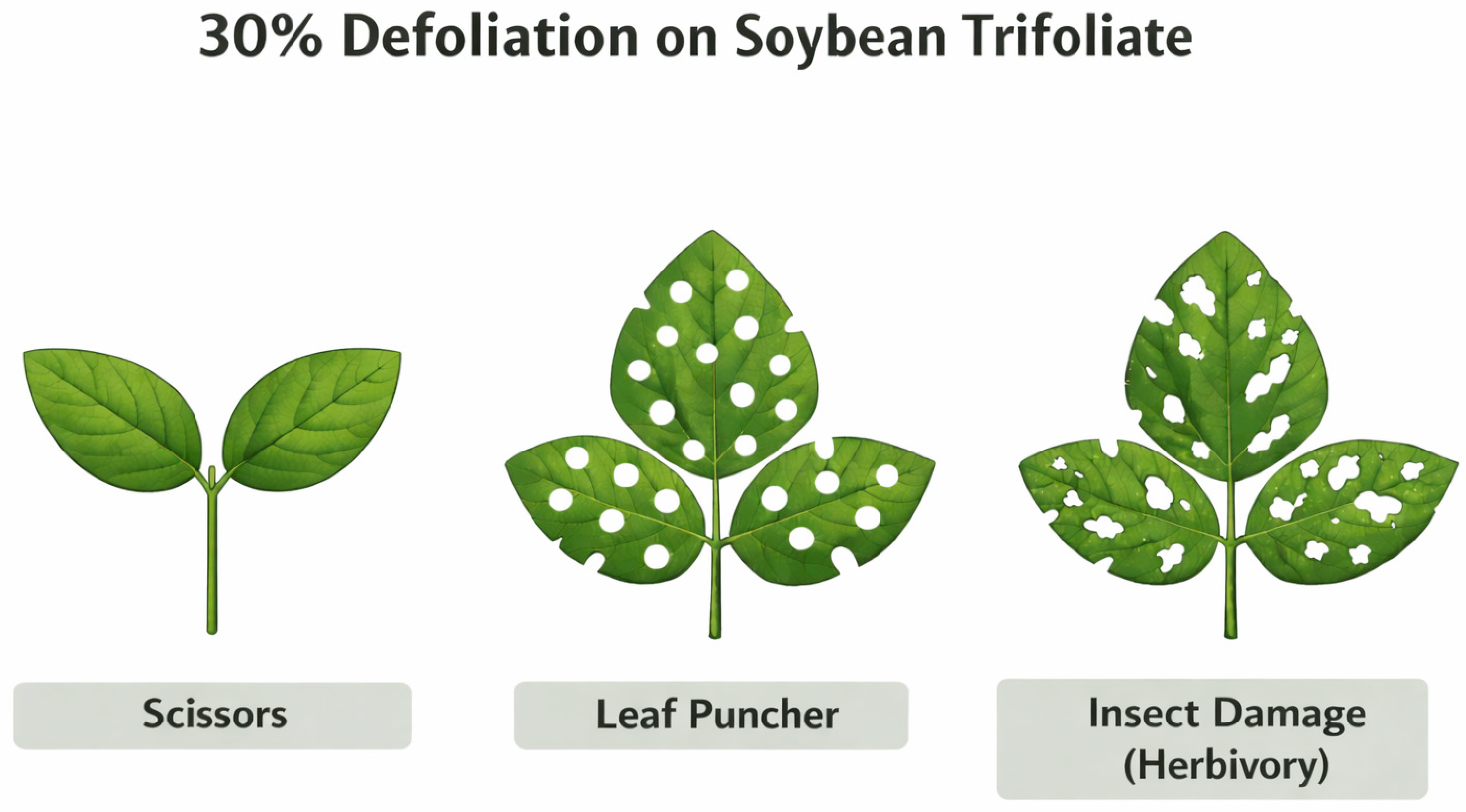
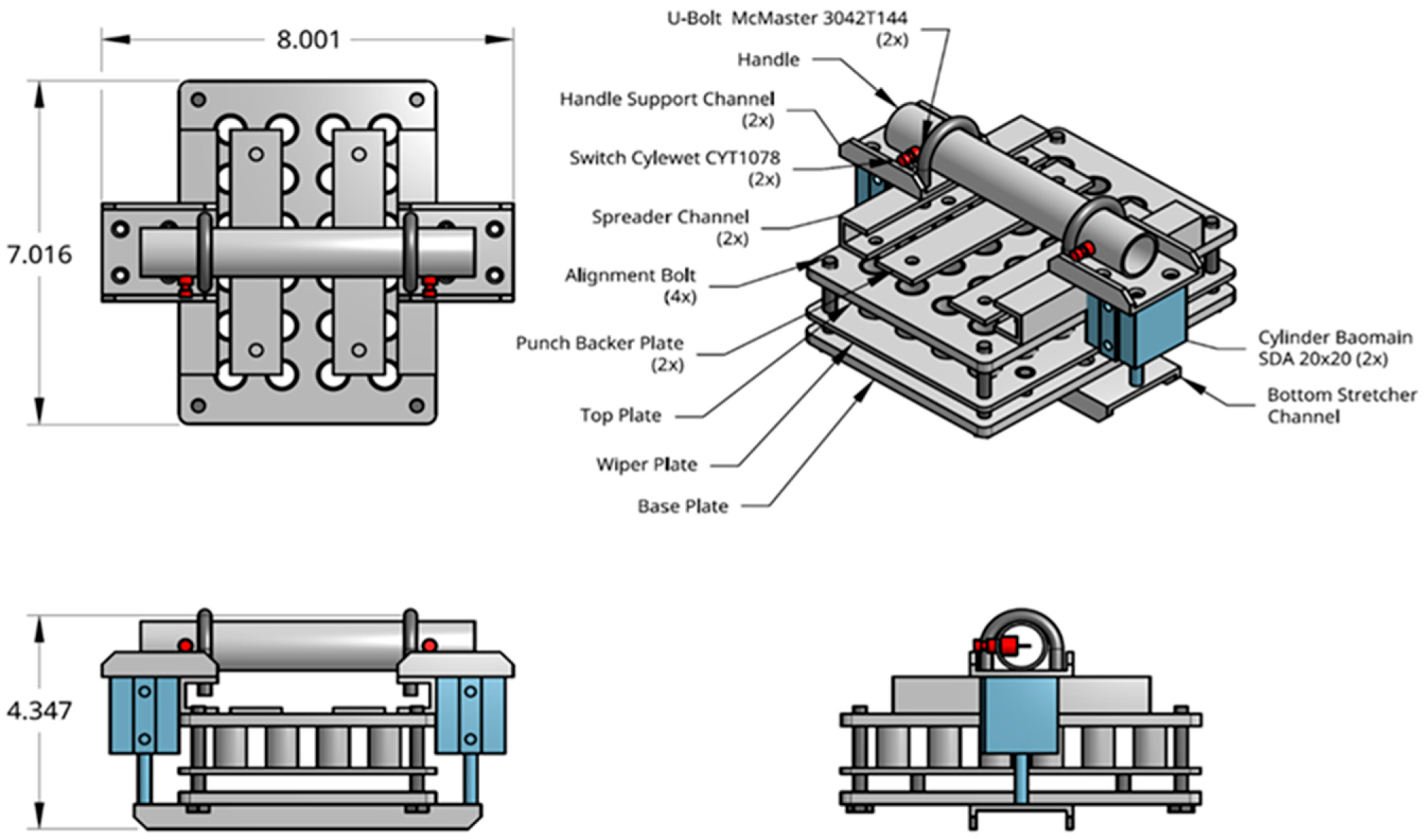
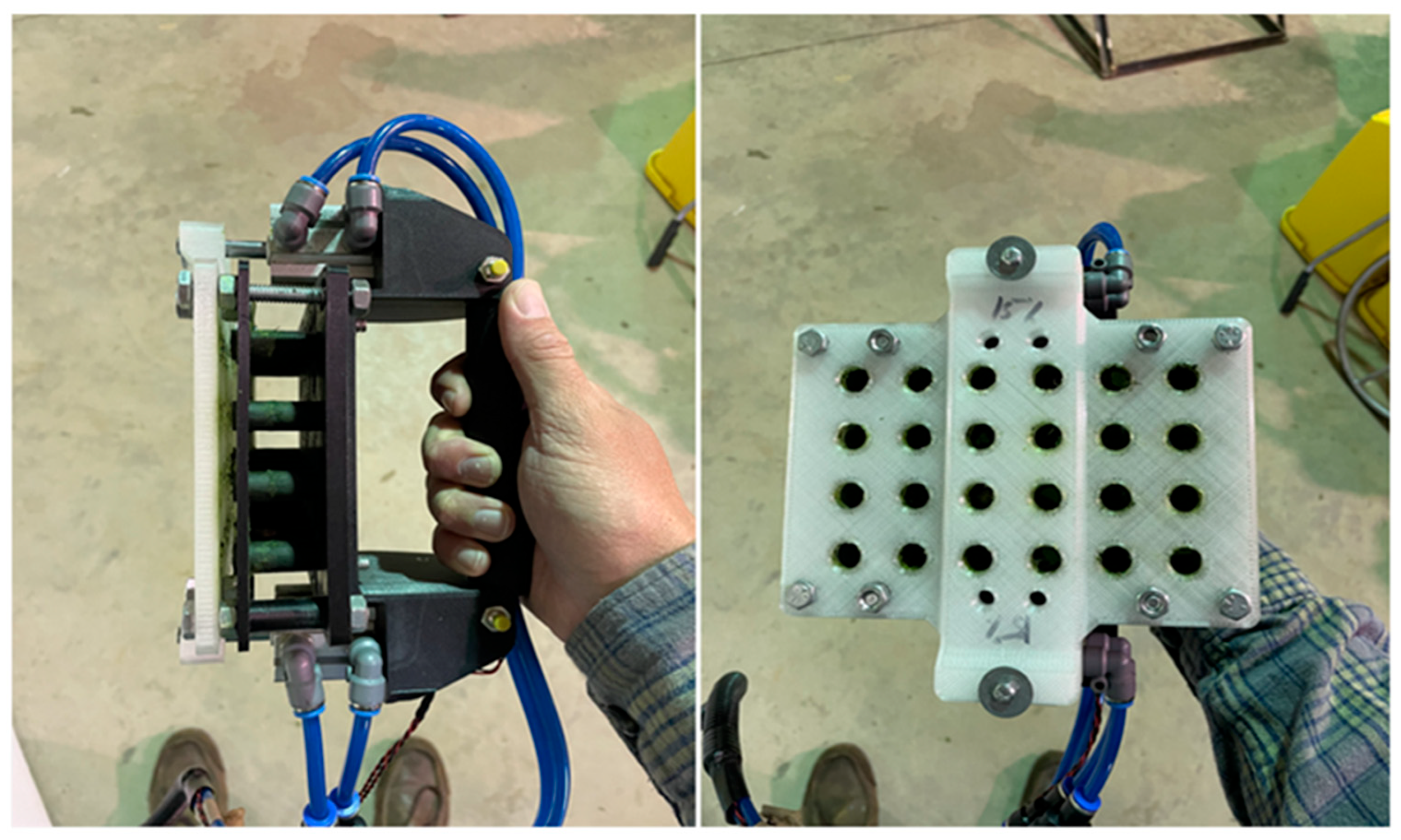
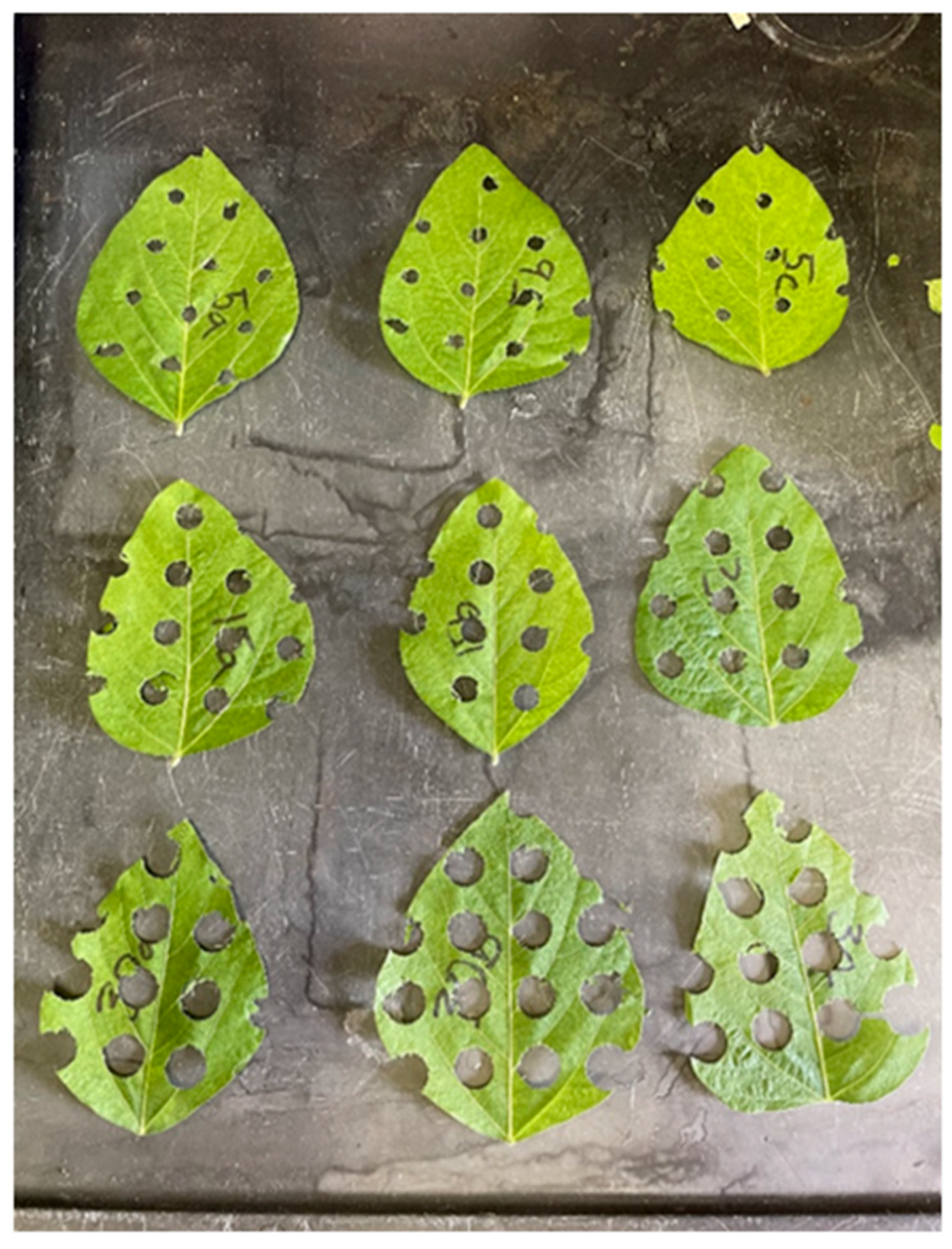
Additive manufacturing allows researchers to build custom tools for distinct applications. Current research indicates that a standardized tool for precise and accurate leaf tissue removal, simulating insect injury, is needed to better understand the yield loss relationship associated with insect injury in soybean. Our team at Clemson University has developed a novel 3D-printed pneumatic leaf punching device to standardize simulated defoliation injury to be more visually representative (
Figure 1) of actual insect defoliation.
This study addresses two main questions: Can a 3D-printed pneumatic leaf puncher simulate insect defoliation injury in soybean? Does the target defoliation level match the actual defoliation administered? The objectives of this study were to develop a novel 3D-printed pneumatic leaf puncher to simulate insect defoliation in soybean, evaluate the accuracy of the device in delivering precise and repeatable levels of defoliation, and validate its performance as a standardized tool for future simulated defoliation studies aimed at refining economic thresholds for defoliating insect pests in soybean.
Standardizing the simulation of insect defoliation with precise and repeatable methods is essential for quantifying injury–yield loss relationships and improving economic injury level and threshold recommendations. Current simulated defoliation methods can introduce variability among operators, locations, and studies. By providing a precise and repeatable approach to administered controlled defoliation, the device described here can help standardize experimental methods, improve reproducibility of injury–yield loss studies, and support more accurate refinement of pest management thresholds in soybean.
4. Discussion
Simulating soybean defoliation using a 3D-printed hole puncher provides a controlled and replicable method for studying plant response to foliar damage resulting from insect feeding. Conventional methods of simulating defoliation injury, including removal of entire leaflets or large sections of leaf tissue, have long been used to determine injury–yield relationships; however, these methods often fail to replicate the spatial distribution, feeding patterns, and physiological consequences of natural insect herbivory.
In contrast, the 3D-printed leaf puncher administers precise and accurate small hole removals of leaf tissue, potentially preserving the overall leaf structure. The leaf puncher method more closely resembles the spatial distribution of natural feeding injury than manual clipping methods (
Figure 1). By maintaining the leaf margins and vascular tissues, this preservation may allow soybean plants to express compensatory effects more similar to insect-induced injury.
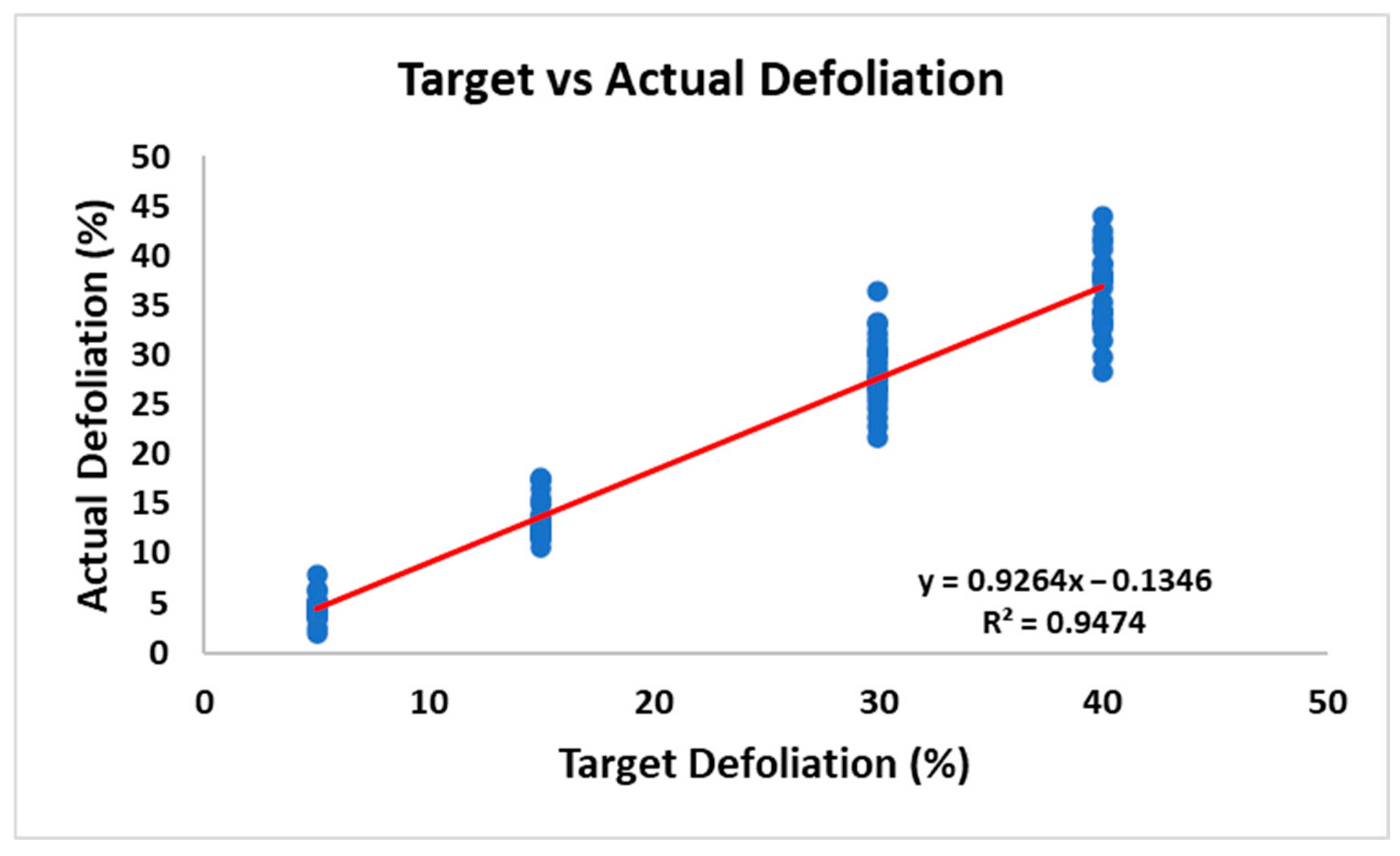
Our results confirmed a strong linear relationship between observed and target defoliation levels (R2 = 0.95), demonstrating that the leaf puncher can consistently deliver intended levels of defoliation across treatments. Although observed defoliation was slightly lower than target defoliation, when simulated with a leaf puncher, potential factors contributing to this deviation included variability in leaf-area estimations or uneven applications of artificial defoliation.
Natural insect feeding can induce plant responses such as changes in morphology and defense signaling that simulated defoliation cannot fully replicate [
15]. All methods of artificial defoliation, including leaf punching, cannot replicate biochemical interactions from insect saliva, such as enzymes, effectors, and other bioactive compounds, which can trigger or suppress plant defense signaling pathways. These biochemical interactions can influence how the soybean plant responds to injury and may result in different physiological or yield outcomes compared with mechanical defoliation alone [
12]. Additionally, simulated defoliation typically occurs over a short time frame, while natural defoliation is progressive and may interact with plant developmental stages and environmental conditions over an extended period of time. These limitations highlight the importance of interpreting results from simulated defoliation within the context of their methodological restraints.
While leaf punching cannot fully capture all variables of natural herbivory, this tool has the potential to be very useful for studying the physiological and developmental impacts of leaf area loss on soybean plants. Automation ensures precise, uniform holes with customizable diameters, facilitating scalable experiments across diverse environments and cropping systems. Broader standardization would depend on the adoption or adaptation of comparable tools and protocols, and the leaf puncher is presented to facilitate such consistency rather than to prescribe a universal standard.
Future field trials conducted at Clemson University will incorporate yield data to better understand the relationship between yield loss and associated insect pest injury in soybean. In those trials, leaf punching treatments ranging from 0, 5, 15, 30, 40, and 100% will be administered to small plots in the field. Soybean plots will be harvested at full maturity, and yields will be recorded. Comparison of yields across several defoliation treatments will allow researchers to better understand the yield loss relationship associated with defoliation injury in soybean. These studies will focus on fine-tuning treatment thresholds using this tool under a wide range of environmental conditions and management practices, thereby improving the accuracy of economic injury levels developed from simulated injury trials. Soybean tolerance to defoliation is strongly dependent on growth stage. The leaf puncher enables precise injury at specific growth stages, so defoliation treatments will be administered at critical growth stages (V4, R2, and R5) for soybean to better understand the compensatory responses throughout the growing season. While simulated defoliation remains labor-intensive and may not fully replicate the timing or physiological effects of natural feeding [
17,
18], it provides a highly useful alternative to conventional leaf removal or studies relying on natural populations.
Variation in soybean cultivar architecture, maturity group, and growth habit may influence tolerance to defoliation, yet many injury yield relationships have been derived from a limited number of cultivars. Differences in leaf thickness or canopy structure could affect the compensatory growth following foliar injury and ultimately influence yield [
9,
11,
14]. Cultivar-dependent, yield-loss responses to defoliation highlight the potential limitations of applying uniform economic injury levels across genetically diverse soybean systems [
14]. The standardized and repeatable damage produced by the leaf puncher provides an opportunity to evaluate responses to specific cultivars. Evaluating the leaf puncher across several different cultivars could improve the understanding of injury–yield relationships and support refinement of economic injury thresholds that better reflect the genetic variability within modern soybean production systems.
Natural insect defoliation is rarely uniform throughout the canopy because insect feeding typically varies among upper, middle, and lower leaf layers depending on pest species, population density, and environmental factors [
2,
12]. Differences in light interception and photosynthetic contribution throughout the canopy suggest that the vertical placement of injury may influence the compensatory capacity and yield response of plants [
10,
11]. Traditional defoliation methods often disrupt canopy structure, targeting upper canopy leaves, limiting the ability to assess spatial injury effects [
9,
17]. The leaf puncher allows defoliation to be administered in targeted areas of the canopy while preserving the overall leaf and canopy structure.
Although simulated defoliation provides controlled and repeatable injury, direct comparisons with natural insect feeding are necessary to confirm the ecological relevance of leaf puncher injury. Previous studies comparing simulated and natural defoliation have shown that differences in feeding behavior and injury progression can influence photosynthetic processes and yield responses [
15,
18]. Future field trials comparing leaf puncher defoliation with natural defoliation using naturally occurring or caged infestations under field conditions would allow researchers to evaluate the similarities and differences in plant physiological responses, compensatory growth, and yield outcomes. Demonstrating consistency between leaf puncher-simulated and natural defoliation responses would strengthen confidence in the tool’s application for injury studies and economic injury refinement within integrated pest management frameworks.
This standardization will facilitate more accurate assessments of plant compensatory capacity, yield stability, and threshold responses, strengthening researchers’ ability to refine economic injury levels. Adoption of the leaf puncher into future field research has the potential to contribute to precise, sustainable pest management strategies for soybean production. Because the device provides a controlled and repeatable simulation of leaf injury, it may also be adaptable for use in other crops and production systems where standardized defoliation is required.
Integration of novel tools such as the 3D-printed leaf puncher into precision agriculture technology has important implications for the development of future management strategies within the soybean production industry. The ability to apply standardized, repeatable defoliation across plots provides a foundation for calibrating decision-making aids that translate into management recommendations, such as defoliation-based treatment calculators. Although current defoliation thresholds provide useful guidelines for management decision making, they do not fully account for the diversity of modern soybean production systems. Modern advances in soybean genetics, fluctuating input costs, and highly variable environmental conditions mean that conventional thresholds may not apply uniformly across all fields or management strategies. The leaf puncher could assist in developing mobile applications and web-based advisory platforms that assist producers in assessing defoliation severity and determining when intervention is economically justified within their own production systems.
5. Conclusions
Overall, the 3D-printed pneumatic leaf puncher, developed by our team, provides a reliable alternative to conventional leaf removal or natural population methods for defoliation studies, essentially bridging the gap between controllable simulated defoliation and variable natural insect infestations. While it cannot fully replicate the biochemical and temporal complexities of insect feeding, it offers precise, repeatable, and ecologically relevant damage that closely mimics natural chewing patterns. This improved realism reduces the limitations associated with traditional leaflet removal techniques that can potentially exaggerate tissue loss and plant stress.
The consistency of damage application across treatments and environments enables more accurate assessments of plant compensatory responses and yield impacts. By standardizing both the intensity and pattern of injury, the pneumatic leaf puncher enhances the comparability of results across studies and locations, leading to clearer interpretations of injury–yield relationships. Ultimately, adoption of this device has the potential to improve the accuracy of economic injury levels and strengthen integrated pest management strategies for soybean production, making it valuable to future studies. Finally, the ease of fabrication and customization through 3D-printing technology suggests that this tool could be modified for use in other cropping systems and herbivory studies, broadening its utility beyond soybean.
The 3D-printed pneumatic leaf puncher presents the potential for immediate application in controlled defoliation studies, but it also provides a foundation for reproducibility in soybean entomology research. Developing a tool that standardizes injury application allows researchers to evaluate the effects of defoliation intensity, timing, and spatial distribution across variable environments and biological situations that are often limited in studies using conventional defoliation methods. This tool will be valuable in multi-location trials, long-term research, and comparative studies across management systems. By generating high-quality, comparable injury response datasets, the leaf puncher supports the development of more precise economic injury levels and enhances confidence in decision making. As economic and environmental pressures continue to emphasize the need for precision and sustainability in pest management, tools such as the leaf puncher improve the reliability of research for producers and integrated pest management goals.



 ,
,