1. Introduction
With the high-quality development of agricultural mechanization in China, a new agrarian structure has gradually emerged, characterized by the integration of planting and breeding, as well as the combination of grain and forage production. In this context, food security and feed security have become core issues for ensuring the stability of the agricultural industry chain [
1]. As the core equipment for grain crop harvesting, the combine harvester’s reliability directly affects mechanical operational efficiency. Similarly, silage is characterized by adequate protein contribution, lower fiber content, higher digestibility, and greater energy density [
2]. The silage machine is responsible for harvesting silage crops such as corn and alfalfa, and the quality of the silage produced is related to the safety of animal husbandry.
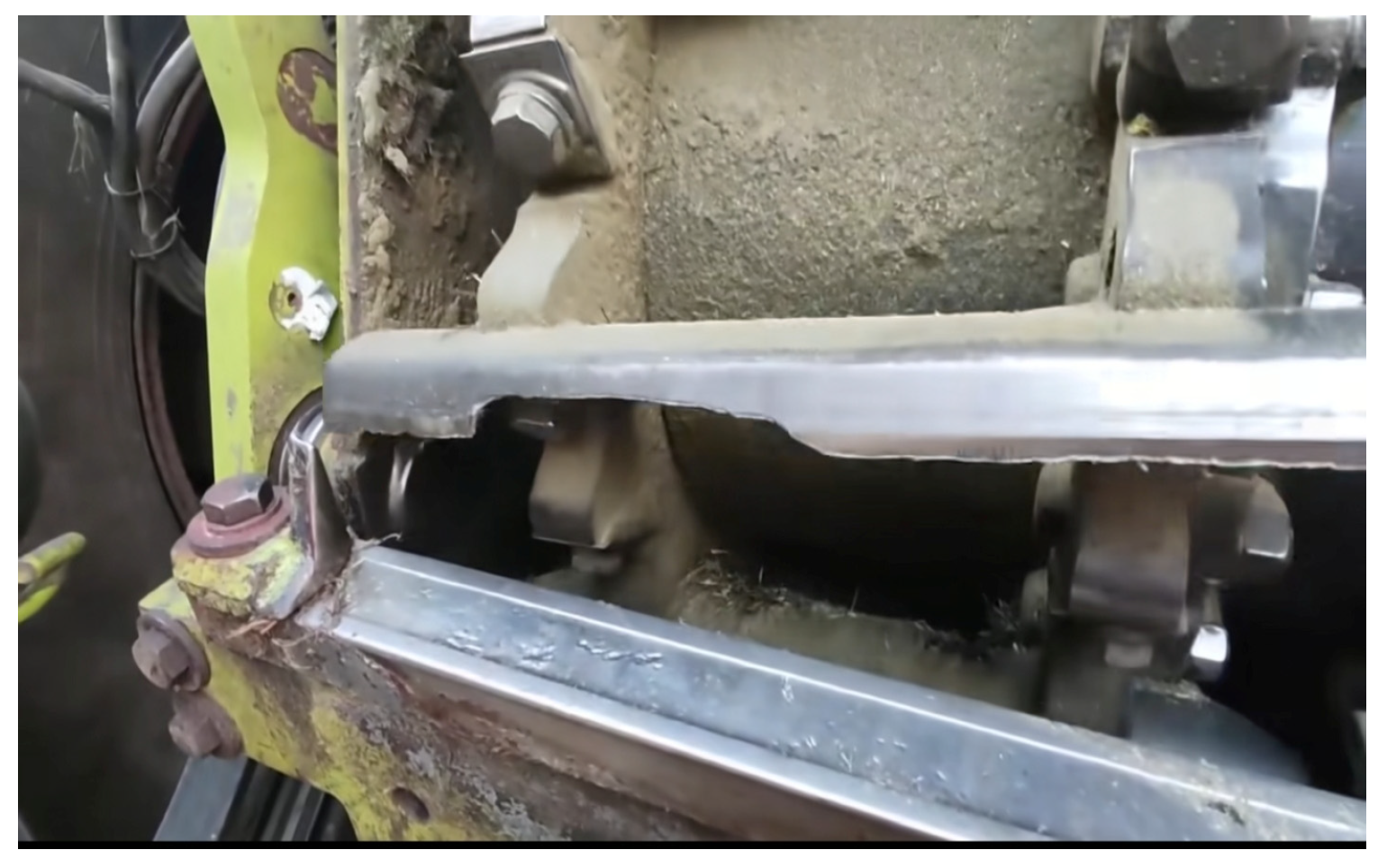
However, long-term residual metal foreign objects in the field, such as iron wires, daily necessities, and mechanical parts, have become common hidden dangers for both types of agricultural machinery. In combine harvesters, nails and bolt fragments entering the threshing system accelerate wear on roller teeth, damage cleaning screens, and can obstruct transmission mechanisms, leading to abrupt equipment failure. High-speed operation of damaged rollers may eject broken blades with substantial kinetic energy, posing a fatal threat to the operator. Undetected metal objects may also proceed to downstream milling, potentially introducing contaminants that compromise silage quality during silage harvesting, including metallic inclusions such as wires, which damage key shredding and crushing components (
Figure 1), impairing equipment reliability and efficiency. Such failures delay fermentation, degrading feed quality [
3,
4] and escalating maintenance costs. Critically, livestock ingesting these indigestible contaminants can suffer gastrointestinal lacerations, leading to morbidity, mortality, and substantial economic losses [
5,
6]. Therefore, integrating metal detection technology is crucial to enhance harvester reliability, minimize losses, and ensure the production of high-quality crops.
While metallic foreign objects pose a universal threat to agricultural machinery, detection requirements and associated technical challenges differ substantially between machine types, notably combine harvesters and silage choppers. Combine harvesters primarily handle low-bulk-density, relatively dry materials (e.g., grains, stalks), with core demands focusing on high-speed and high-sensitivity detection. In contrast, silage choppers process large volumes of fresh forage characterized by extremely high moisture content (typically 60–70%) and high bulk density. This distinction is critical: the high moisture content of silage significantly alters its dielectric properties and electrical conductivity. For electromagnetic induction-based detectors, such high-moisture material generates intense electromagnetic background interference. This complicates signal processing, reduces the signal-to-noise ratio (SNR), and necessitates more robust interference suppression and calibration techniques than those used for dry materials [
7]. Consequently, research targeting high-moisture environments (e.g., silage chopping operations) represents a more challenging yet focused objective for advancing reliable metallic foreign object detection technology.
We conducted this review through a systematic literature retrieval spanning 1980–2024, enabling a comprehensive analysis that ranges from foundational electromagnetic induction patents to the latest intelligent sensing applications. We retrieved primary data from international databases, such as Web of Science, IEEE Xplore, Scopus, and China’s CNKI database, which ensured the inclusion of unique advancements in Chinese agricultural engineering. Our search strategy combined keywords such as “metal detection”, “silage harvester”, “foreign body sensing”, and “agricultural machinery vibration”. To maintain technical relevance, inclusion criteria focused on peer-reviewed articles and key patents specifically addressing metal detection within the high-vibration and high-moisture environments of agricultural equipment, while excluding general industrial or security-oriented detection technologies. We also analyze the challenges hindering the widespread use of this technology in agricultural machinery and explore its application prospects, aiming to provide insights for its further deployment in the field.
2. Overview of Metal Detection Technology
2.1. Development of Metal Detection Technology
Metal detectors first debuted in the United States during the 1930s, primarily serving the mining and industrial sectors. By the 1940s, British developers engineered the first vacuum-tube metal detector, introducing the technology to the food industry. Although applications later expanded into security and pharmaceuticals, early devices relied on basic electromagnetic induction, which resulted in bulky hardware and low sensitivity [
8]. The 1990s marked a technological turning point with the arrival of Digital Signal Processing (DSP). These modern detectors utilize software-based filtering algorithms to optimize performance and introduce networking capabilities, enabling seamless integration into bread production lines to detect foreign contaminants. Concurrently, the global rise in electronics manufacturing catalyzed the adoption of handheld units and walk-through metal towers. Large-scale electronics firms implemented these tools to regulate employee conduct, ultimately driving the large-scale commercialization and standardization of metal detection technology [
9].
In the 21st century, metal detection technology has shifted toward multi-domain integration, intelligence, and portability. Breakthroughs in vehicle detection, agriculture, and food safety stem from the integration of high-sensitivity sensors, advanced AI algorithms, and multi-modal detection systems. These innovations enable faster, more accurate, and broader real-time detection [
10,
11].
International security awareness was raised to a new height. At this time, simple channel-type metal security doors could no longer fully meet security inspection requirements. Security inspection products that could accurately determine the hidden locations of metal items became highly needed by security personnel. Consequently, multi-location metal detection technology emerged. The original single magnetic field distribution was replaced by multiple overlapping and relatively independent magnetic fields, enabling metal detection doors to have alarm and positioning functions, greatly improving metal detector performance.
Research in the automotive sector focuses on optimizing coil designs and enhancing sensitivity to distinguish between diverse foreign objects [
12,
13]. For instance, scholars have proposed integrated planar coil arrays with non-uniform line widths. These dual-modal sensors combine electromagnetic and capacitive properties to detect both metallic and biological objects simultaneously [
14]. Other designs utilize symmetrical sub-coil configurations with variable zigzag structures to eliminate the detection blind spots common in traditional auxiliary coils [
15]. On the algorithmic side, researchers have introduced dual-modal systems using Time Division Multiplexing (TDM) and frequency scanning resonance to differentiate between metallic and non-metallic threats [
16]. Furthermore, improvements to the YOLOv5 deep learning architecture—specifically, backbone replacement and the addition of ECA attention mechanisms—now enable rapid foreign object detection in Wireless Power Transfer (WPT) systems using infrared imagery [
17].
In the field of food safety, metal detection technology has developed rapidly [
18]. The application of machine learning (ML) and deep learning (DL) algorithms has significantly improved the efficiency and accuracy of food safety and authenticity detection. By learning from and analyzing large volumes of data, these algorithms help identify various risks, including pesticide and veterinary drug residues, the abuse of food additives, heavy metal contamination, microorganisms, and natural toxins [
11,
19].
Nowadays, with the maturity of metal detection technology, its application in industrial and agricultural production and daily life has gradually become common, penetrating various fields such as mining, agriculture, textile industry, food processing, and archaeology [
20,
21]. Although domestic enterprises have also launched many self-developed metal detectors, there remains a significant gap compared to foreign advanced equipment, and several major foreign manufacturers still occupy a large market share. In summary, metal detectors have undergone several generations of technological changes, achieving qualitative leaps in sensitivity, resolution, detection accuracy, and overall performance.
2.2. Metal Detection Principle
Currently, commonly used metal detection technologies are mainly classified into X-ray type, microwave detection type, and electromagnetic induction types based on their working principles. Among these, electromagnetic induction is the most widely used technology in metal detection systems [
22].
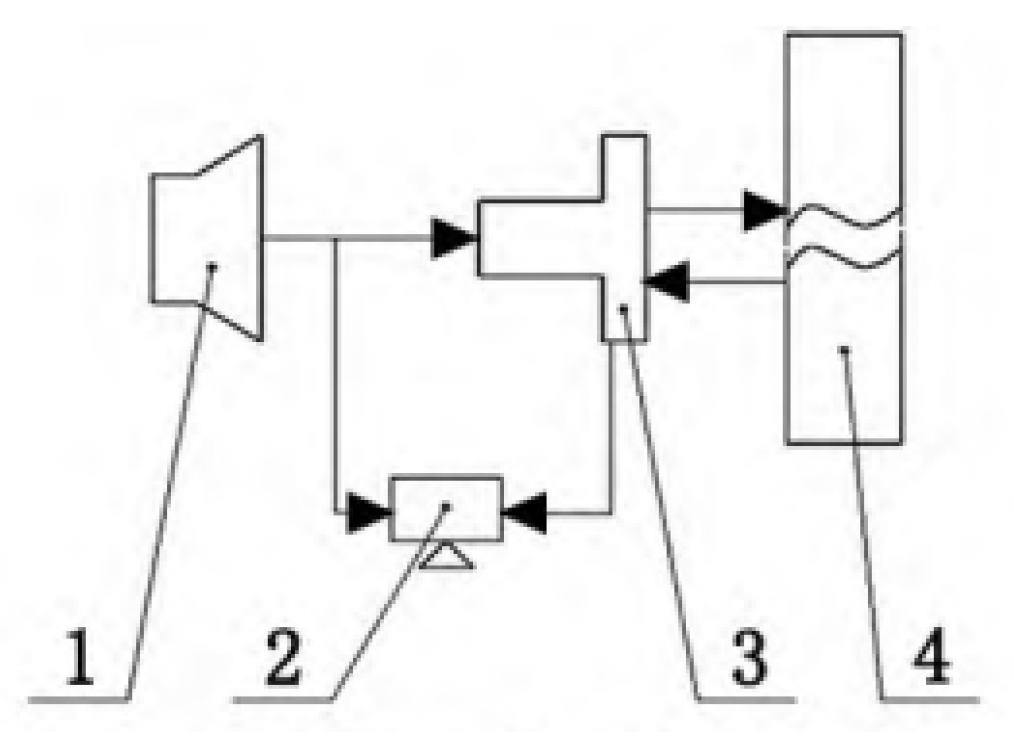
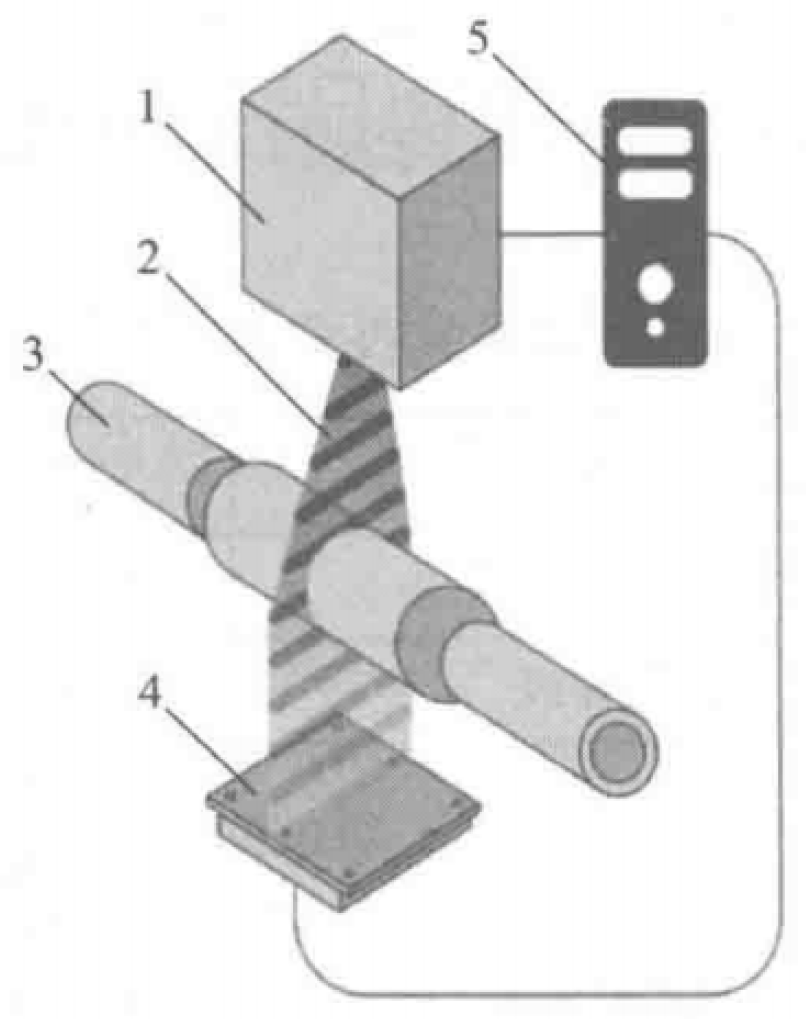
The detection principle of X-ray metal detection devices is based on the attenuation characteristics of X-rays after passing through the measured object. Due to the main components of the measured object differing in density from foreign objects, the attenuation of X-rays varies, enabling the reliable detection of objects contaminated by foreign matter [
23]. As shown in
Figure 2, when the X-rays emitted by the X-ray emitter pass through the measurement pipeline, and the detector detects materials, the detector sends the output signal to a computer, allowing the system to scan images of the entire cross-sectional material [
24]. This detection technology shows great potential in agriculture and food processing [
25]. However, the heterogeneity of the material introduces density noise, which can mask small metallic fragments. Additionally, the hardware must be engineered for radiation hardening and vibration isolation to maintain the alignment between the X-ray source and the detector array amidst the severe mechanical oscillations of field operation. Addressing these complexities is essential for moving X-ray technology beyond controlled environments into robust agricultural field applications.
The detection principle of microwave metal detection devices is based on the interaction of electromagnetic parameters between high-frequency electromagnetic waves and metal foreign objects. As shown in
Figure 3, when metal foreign objects enter the range of electromagnetic waves, the signal exhibits characteristics of metal reflection or attenuation. The microwave detector accepts these signals and reflects the surface and near-surface conditions of metal foreign objects through the characteristic parameters of microwaves [
26]. This technology offers a wide detection range and high precision, primarily used in biomedical applications, positioning and tracking, and crack detection [
27,
28,
29]. However, applying this technology to harvesting machinery presents significant engineering intricacies. In agricultural operational environments, microwave signals are not only influenced by metal objects, but also by other factors. Yet applying this technology to harvesting machinery involves significant engineering challenges. In agricultural operating environments, microwave signals face interference from not only metal objects but also other critical factors. Specifically, fluctuations in the dielectric constant of biomass (e.g., variations in silage moisture content) cause severe baseline drift. Additionally, multi-path interference induced by the metallic housing of feed rollers must be addressed to eliminate false positive signals.
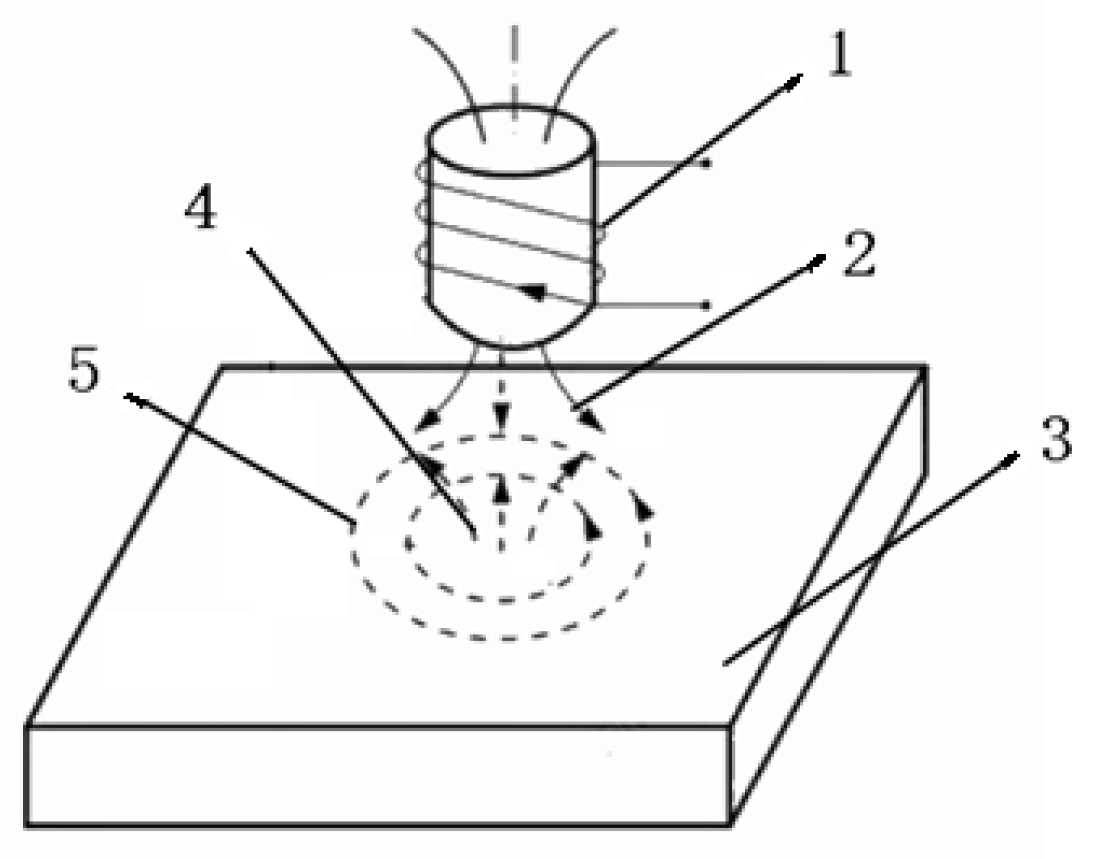
As shown in
Figure 4, the electromagnetic induction metal detection device is designed based on Faraday’s Law of Electromagnetic Induction and the eddy current effect, providing real-time feedback on metal foreign objects entering the machinery. In the initial state, an alternating current is applied to the coil, causing the transmitting coil to generate an alternating magnetic field with the same frequency in the detection area [
30]. When metal foreign objects enter an alternating magnetic field, a reverse-induced current is generated inside the foreign object, subsequently generating a new magnetic field. This affects the original alternating magnetic field, changing the equivalent resistance and equivalent inductance of the detection coil. After the detection module monitors these changes, the signal is transmitted to the control module. Finally, the signal is sent to the display terminal through filtering processing to complete foreign object detection. While the physical principle is well-established, its deployment in agricultural harvesters involves significant engineering intricacies to maintain reliability under harsh conditions. A major engineering challenge is the suppression of electromagnetic interference and baseline drift caused by the machine’s large moving metal parts.
The use of metal detection technology in agricultural machinery and equipment must effectively address complex challenges involving both magnetic and non-magnetic metals. Additionally, it must be able to operate in harsh environmental conditions, including dust, slurry, and continuous vibrations caused by mechanical operations. To meet the continuous operational demands of agricultural machinery, these detection systems need to provide real-time monitoring and rapid alerts to prevent damage to components or contamination from impurities due to delays in response. By comparing the operating environments of different detection principles (
Table 1), electromagnetic induction metal detection devices offer several advantages, including comprehensive metal coverage, strong adaptability to environmental conditions, low operational costs, and fast response times. They effectively meet the essential requirements of agricultural machinery across various scenarios and align with the cost considerations essential for large-scale agricultural applications. As a result, these devices have become the most widely adopted metal detection technology in agricultural equipment.
2.3. Principle Analysis of Electromagnetic Induction-Based Metal Detection
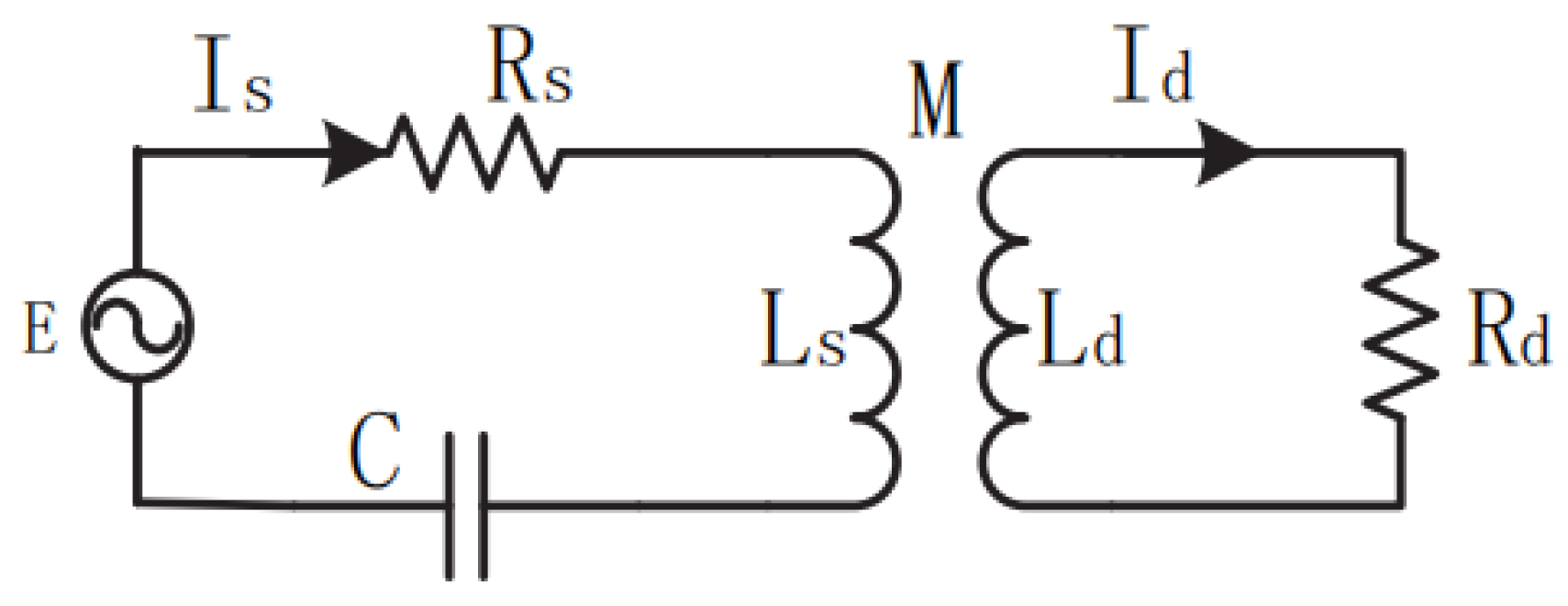
The electromagnetic induction metal detectors typically comprise an excitation coil and a receiving coil. When an alternating current passes through the excitation coil, it generates an alternating magnetic field that penetrates the area to be inspected. If a conductive metal object is present in this area, the alternating magnetic field induces eddy currents within the metal, according to Faraday’s Law of Electromagnetic Induction. The eddy current generation process produces an induced electromagnetic field opposite in direction to the coil’s alternating magnetic field. These two fields mutually couple during superposition, thereby altering the coil parameters. The mechanism of the eddy current effect can be approximated by a transformer structure, as shown in
Figure 5. The detection coil can be regarded as a primary coil with series-connected inductance and resistance. When an alternating voltage of a specific frequency is applied, the object under test acts as a secondary coil with series-connected inductance and resistance. Due to mutual inductance between the coils, the relevant parameters of the secondary coil can be detected on the primary coil side [
31].
is the primary coil inductance, is the primary coil parasitic resistance, is the mutual inductance value that is the coupling inductance of the eddy current, is the mutual inductance of the parasitic resistance, and is the equivalent circuit mutual inductance value. The coupling between the primary and secondary coils is a function of the distance characteristics, and and indicate that they are functions of the distance .
When there is no eddy current effect, the equivalent impedance value of the detection coil can be expressed as Equation (1):
When the eddy current effect occurs, applying Kirchhoff’s Laws establishes the voltage relationship between the primary and secondary coils, as shown in Equation (2):
as shown in Equation (3), where the equivalent inductance of the detection coil is:
Equations (1) and (2) yield the equivalent impedance value of the detection coil, as shown in Equation (4):
In the ideal state, the quality factor of the metal foreign body is known from the transformer principle by Equation (5), and the coupling coefficient with the detection coil is expressed by Equation (6).
Derived from Equations (3)–(6), the equivalent impedance change value of the detection coil is shown in Equation (7) when a metal foreign body occurs.
Analysis indicates that a higher coupling coefficient () between a detection coil and a metal object means that they are more magnetically connected. When the metal object gets closer to the coil, the coupling coefficient increases, causing more noticeable changes in the coil’s impedance.
2.4. Characteristics of Electromagnetic Induction Metal Detection Device
The change in magnetic field is the core of electromagnetic induction metal detection devices. Based on different realization principles and detection circuits, the detection schemes of electromagnetic induction metal detection devices can be divided into four categories: beat type, self-excited oscillation type, energy consumption type, and balance type [
32,
33].
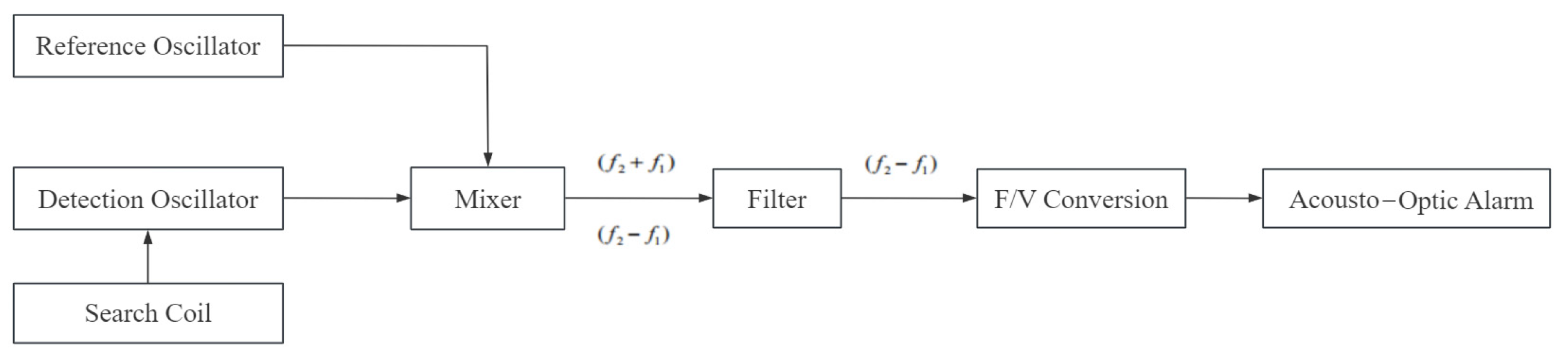
The beat-type metal detection device operates based on the principle of LC oscillation circuits, generating a differential frequency signal (the beat frequency,
) in the absence of metallic objects [
34]. As illustrated in
Figure 6, the core architecture involves a Reference Oscillator with a stable frequency (
) and a Detection Oscillator with a frequency (
) that is dynamically related to the inductance of the Search Coil. The oscillation frequency changes are determined by a fixed capacitance value and the inductance, which varies according to the shape, size, and material characteristics of the measured metal object. The Mixer module combines
and
to produce
(
), which encodes the metal-induced frequency shift as the detection signal.
Subsequently, the mixed signal undergoes a sequential signal processing chain. The Filter first isolates the low-frequency signal from background interference. The filtered signal is then enhanced by an Amplifier (Implicit in the flow, although not explicitly named in the blocks, signal enhancement is a prerequisite for F/V conversion). Following this, the F/V Conversion module transforms the signal into a proportional DC voltage (). This output voltage is continuously monitored by the Acousto-Optic Alarm module, which triggers both visual and audible alerts once exceeds a preset threshold, confirming the presence of metallic foreign objects.
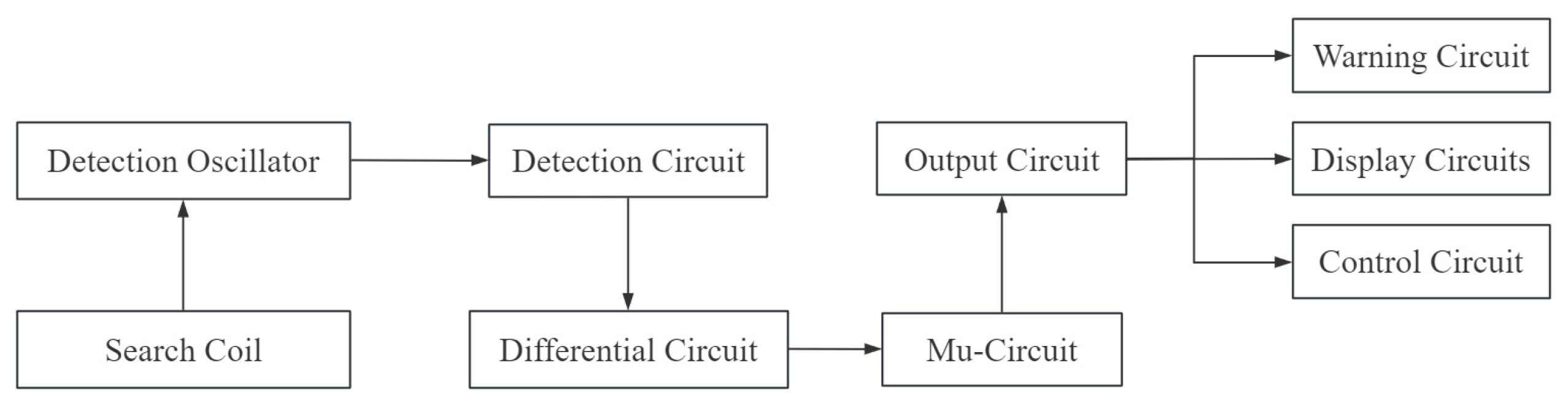
The self-excited oscillation metal detection device uses a single LC oscillating coil as the detection head, utilizing the influence of metal objects on the LC oscillating circuit to output a voltage signal [
33]. As illustrated in
Figure 7, the system initiates signal acquisition when the Search Coil detects metal-induced inductance changes, modulating the Detection Oscillator’s output frequency or amplitude. The Detection Circuit amplifies and demodulates this modulated signal to extract the core information linked to the inductance or frequency variations. This extracted signal is then sent to the Differential Circuit for rate-of-change calculation, a critical step for SNR enhancement, which separates metal signals from slow background drifts and precisely locates the metal’s entry/exit positions.
The subsequent signal flow focuses on quantification and action. Post differential processing, the signal enters the Mu-Circuit (magnitude quantification circuit), which measures signal intensity correlated with the metal’s size and distance. The Output Circuit acts as a switching and distribution hub, comparing the quantified amplitude against a critical threshold. This circuit transmits commands to the terminal sub-modules. The Warning Circuit triggers audio-visual alarms, the Display Circuits provide visual feedback on detection status and signal strength, and the Control Circuit executes mechanical operations. The full signal flow follows the sequence: detection–conditioning–enhancement–quantification–distribution and response.
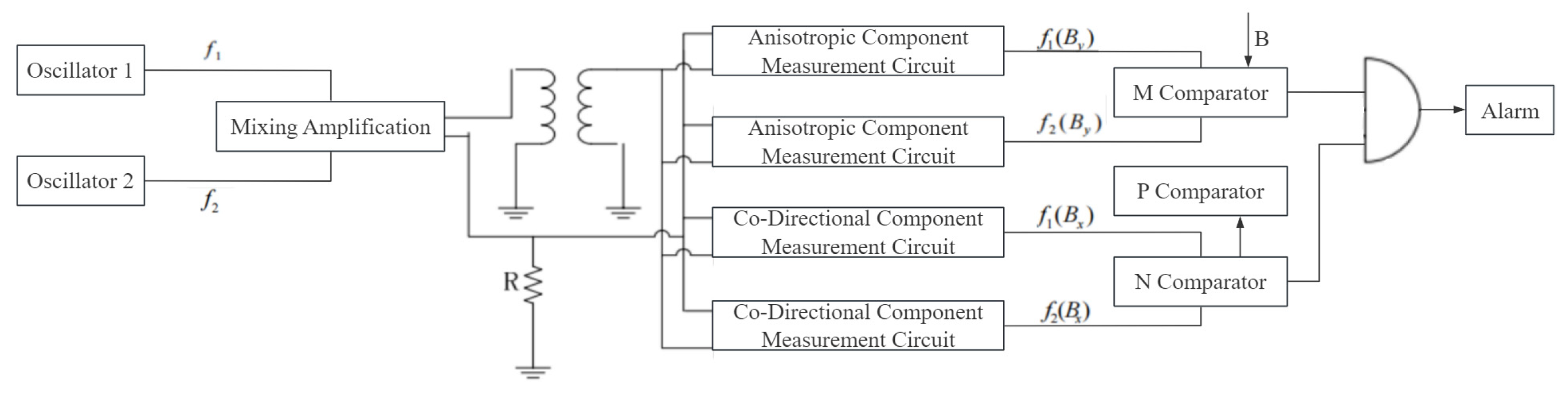
The energy-consuming metal detection device utilizes a dedicated excitation-detection coil assembly as its core sensing unit, employing the energy loss effect of eddy currents induced in metallic objects to output a distinguishable detection signal [
35]. As illustrated in
Figure 8, this sophisticated multi-channel processing architecture employs a differential sensing coil driven by multiple oscillators to enhance accuracy and suppress noise. The multi-frequency design, where the Mixing Amplification module combines signals to drive the excitation coil, enables discrimination between different types of metal. The differential sensing coil system detects signals and distributes them to multiple channels for analysis.
Subsequently, the signals are first processed to get specific parts related to certain frequencies. These signals are then sent to three separate comparators to check if they meet set thresholds for reliable detection, regardless of field size or metal type. If all comparators agree, the final alarm goes off. This setup ensures fewer false alarms by needing confirmation from multiple sources about the presence of a metal object.
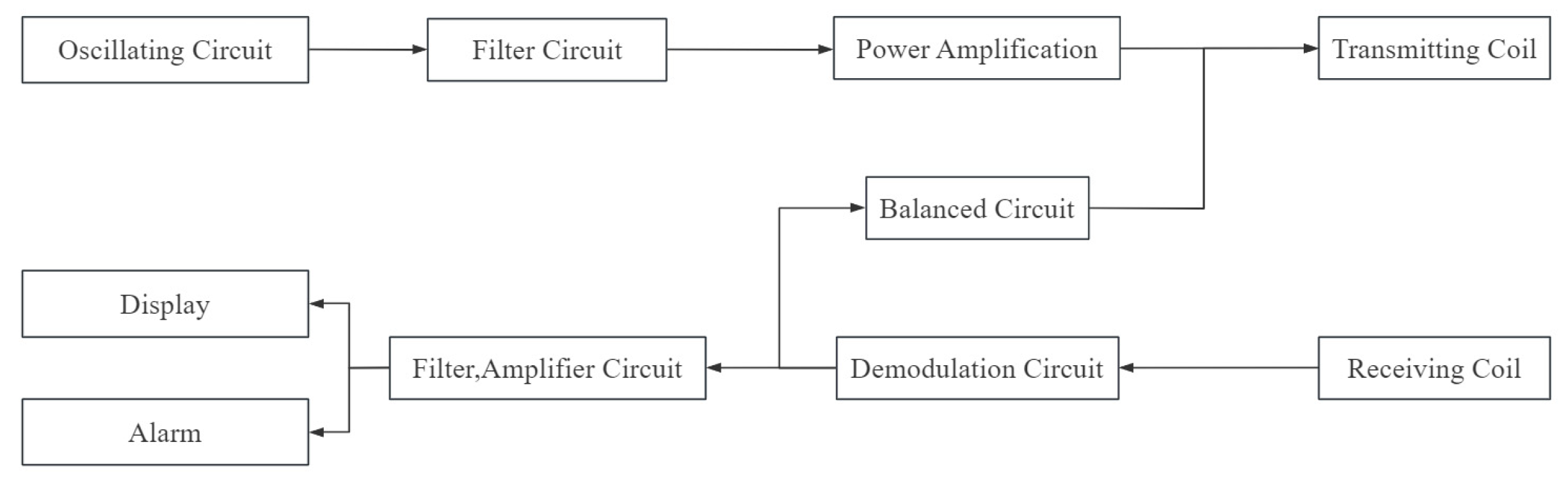
The balanced metal detection device typically utilizes three parallel, equidistant coils: one Transmitting Coil that emits excitation and two Receiving Coils connected differentially [
36]. Under normal (metal-free) conditions, the Balanced Circuit ensures the Receiving Coil system remains balanced, resulting in a zero signal output. When a metal object passes through a magnetic field, the balance is disrupted, generating an induced potential difference that triggers an alarm [
26]. However, this differential electromagnetic induction system exhibits poor detection effects for irregular metals, suffers from slow detection speed, and imposes strict requirements on equipment installation and implementation conditions.
Figure 9 illustrates the working principle of this system via two parallel signal paths. The Transmitting Path generates the primary field. The Oscillating Circuit produces a stable, high-frequency signal, which is filtered and amplified by the Power Amplification module before being sent to the Transmitting Coil. In the Receiving Path, the weak, induced signal from the Receiving Coil is processed sequentially. The Demodulation Circuit isolates the necessary low-frequency detection information, and the signal is then amplified and conditioned by the Filter and Amplifier Circuit. The final output is simultaneously routed to the Display circuit for visual feedback and the Alarm circuit, which triggers a warning when the signal magnitude exceeds the critical threshold, confirming the presence of a foreign metal object. A detailed comparison of different schemes is shown in
Table 2.
3. Application Status of Metal Detection Technology in the Field of Agricultural Machinery and Equipment
Currently, in the field of agricultural machinery and equipment, metal detection technology is primarily applied in combine harvesters and silage machines, with the electromagnetic induction type being the most commonly utilized technology. The main working parts of the combine harvester include the cutting table, threshing drum, cleaning room, and grain conveying pipeline, enabling integrated harvesting of grains such as wheat and corn [
37]. Therefore, metal detection devices for combine harvesters are mostly installed at the header entrance and the front end of the threshing drum, enabling the detection of metal foreign objects before they contact core components and facilitating trigger alarms for stopping and removing impurities. The main working parts of the silage machine include the feeding device, chopping device, and throwing device, enabling the harvesting of different feed crops [
38,
39]. During operation, metal foreign objects entering the chopping system through the feeding system can cause damage to key parts such as the blades of the chopping system. Therefore, metal detection devices for feed harvesters are typically installed inside the feeding roller, allowing for metal detection and removal as the material passes through the feeding system.
Developed countries, such as those in Europe and North America, initiated research on metal detection devices for agricultural machinery earlier. Their technological development is relatively mature, with a comprehensive system of equipment. Metal detection systems exhibit high reliability, advanced intelligence, and a wide detection range. They can promptly alarm for foreign objects and have been widely used in combine harvesters and silage machines [
40,
41,
42]. Representative brands include CLAAS, Krone, John Deere, New Holland, etc. [
43].
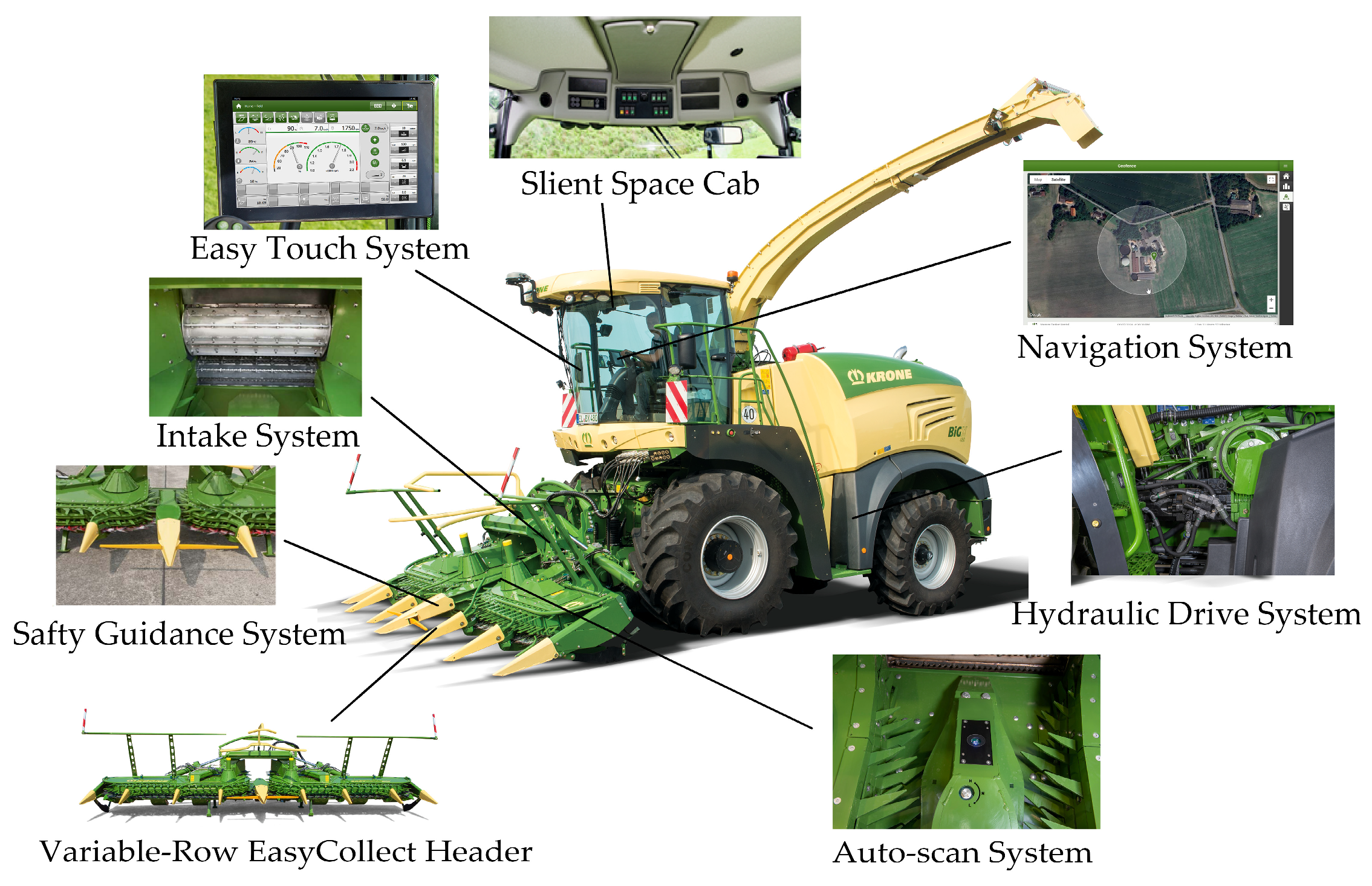
The BIG X 1180 harvester (
Figure 10) from Germany’s Krone company features stone and metal detection, along with automatic knife sharpening, showcasing a modern trend in silage harvesters [
44]. As shown in
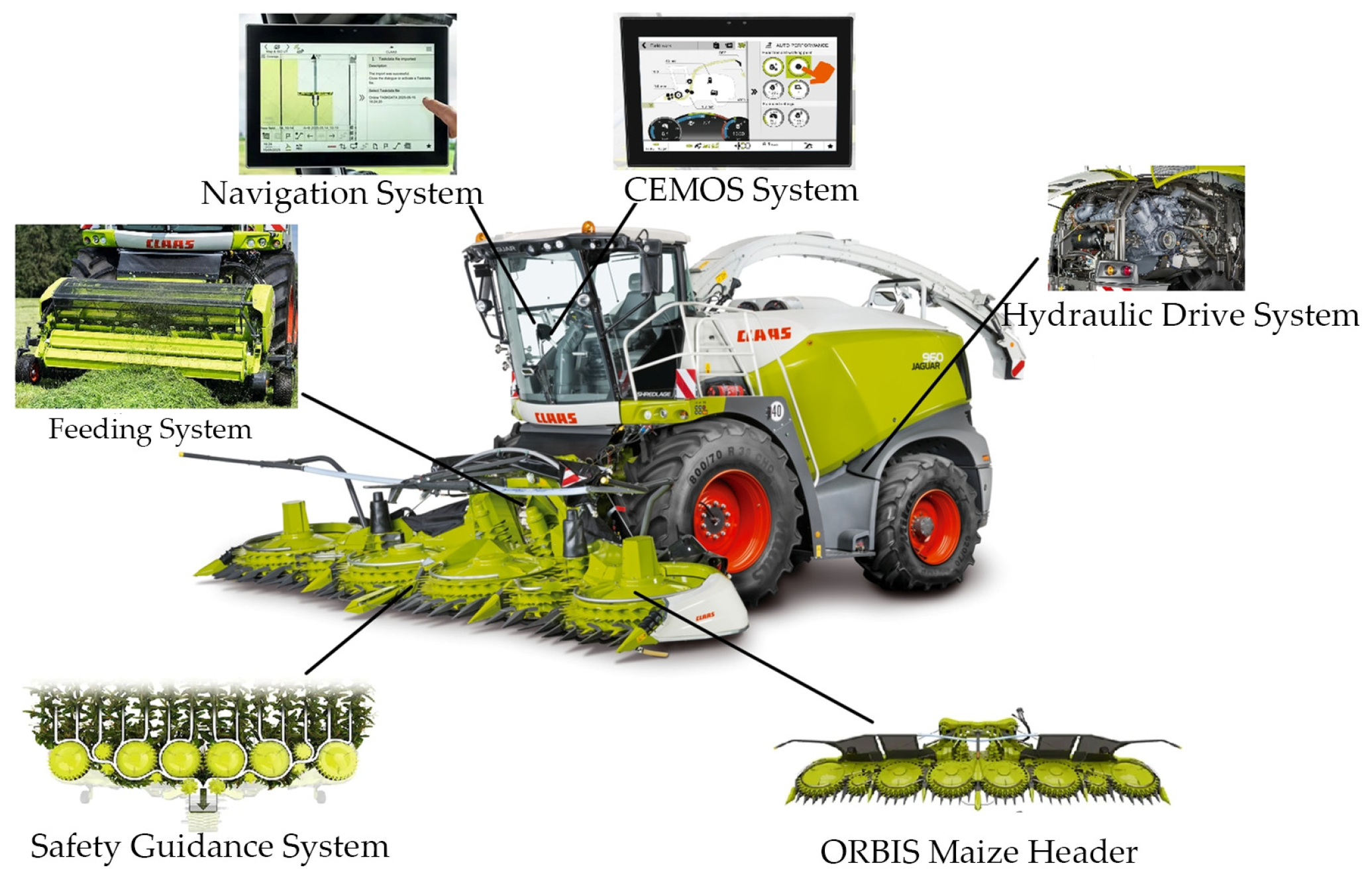
Figure 11, the cylinder of the feeding system of the CLAAS JAGUAR 960 self-propelled silage harvester, independently developed by CLAAS, stops its feeding and cutting mechanisms if metal is detected, preventing damage to the blades. This harvester also includes a reverse protection switch that must be activated before starting [
45]. CLAAS also integrates a metal detector in its LEXION series combine harvesters. This system is part of the CEMOS automatic optimization system and is located at the feed channel and the inlet of the threshing drum, quickly triggering an alarm if it detects metal objects. New Holland’s FR series silage harvesters use the METALOCTM metal detection system, which has six detection areas. If it finds metal, it stops the feeding roller within 300 ms and accurately locates where the foreign body is on the detector. The system then opens the pickup windshield and reverses the screw conveyor to eject the material [
46]. Additionally, the CR series combine harvesters come with a metal detector integrated into their intelligent harvesting system, which helps extend the lifespan of the equipment.
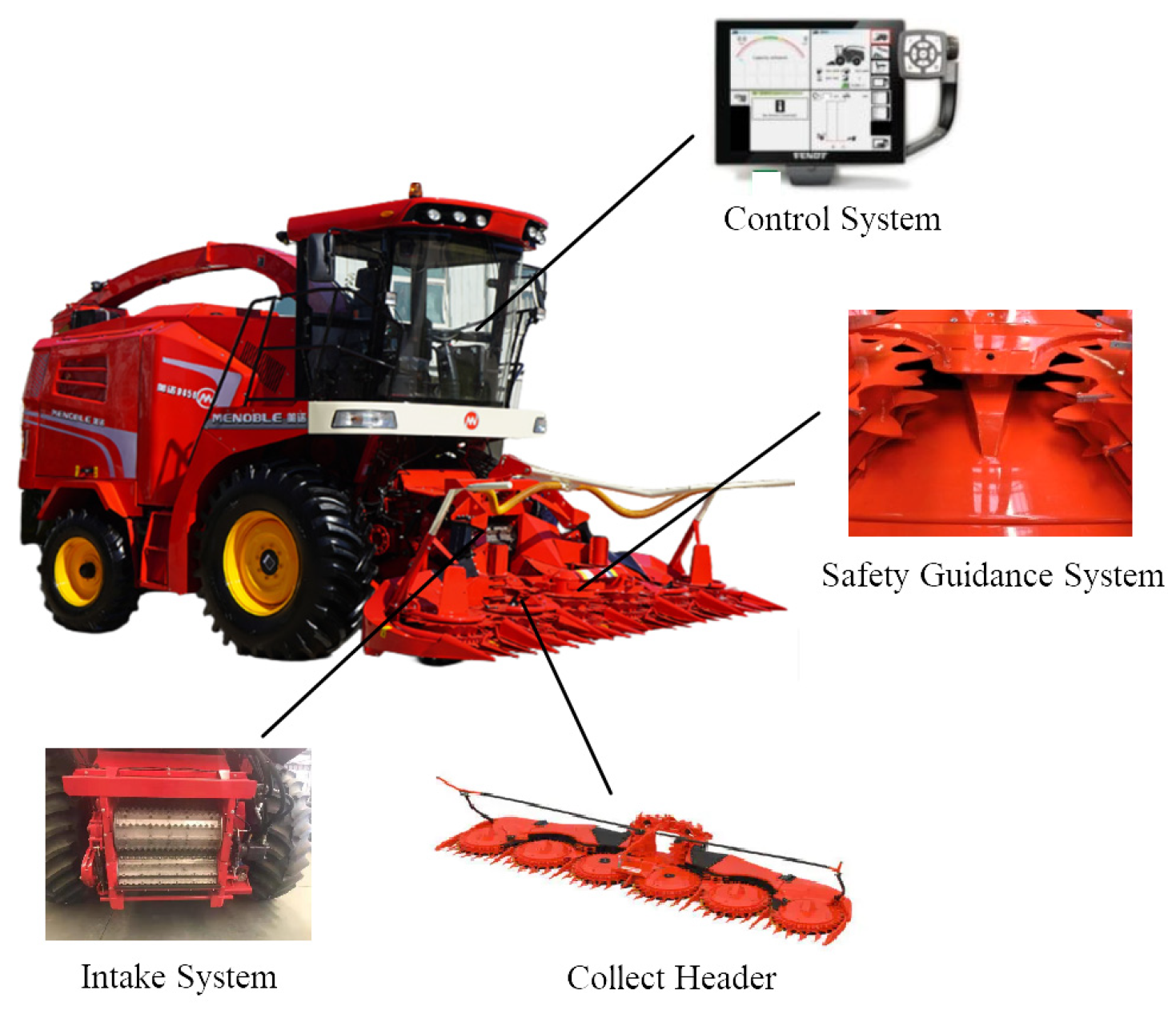
In contrast, the development of domestic agricultural machinery started late, with research mainly focusing on structural design optimization. Research on metal detection technology is not yet mature. Most domestic combine harvesters and silage models are not equipped with metal detection systems, still showing a significant gap compared to similar foreign machinery. However, due to the impact of imported agricultural machinery in recent years, domestic manufacturers have begun installing metal detection devices on some models. However, due to insufficient independent research and development capabilities, they can only purchase complete imported detection systems, which are expensive. Moreover, the wide headers of harvesters from developed countries are unsuitable for China’s small plot planting conditions [
47,
48]. Against the backdrop of the country deploying numerous agricultural equipment technological innovation projects and the Ministry of Agriculture and Rural Affairs accelerating the transformation, upgrading of agricultural mechanization, and the agricultural machinery equipment industry, domestic research institutes, universities, and some enterprises have closely followed the development trends of foreign agricultural machinery equipment and developed harvesting machinery equipped with metal detection devices. As shown in
Figure 12, the metal detection system equipped on the Meno 9458 green forage harvester of China Menoble Machinery Co., Ltd. abruptly stops the feeding roller and marks the metal position on the display screen when detecting foreign objects [
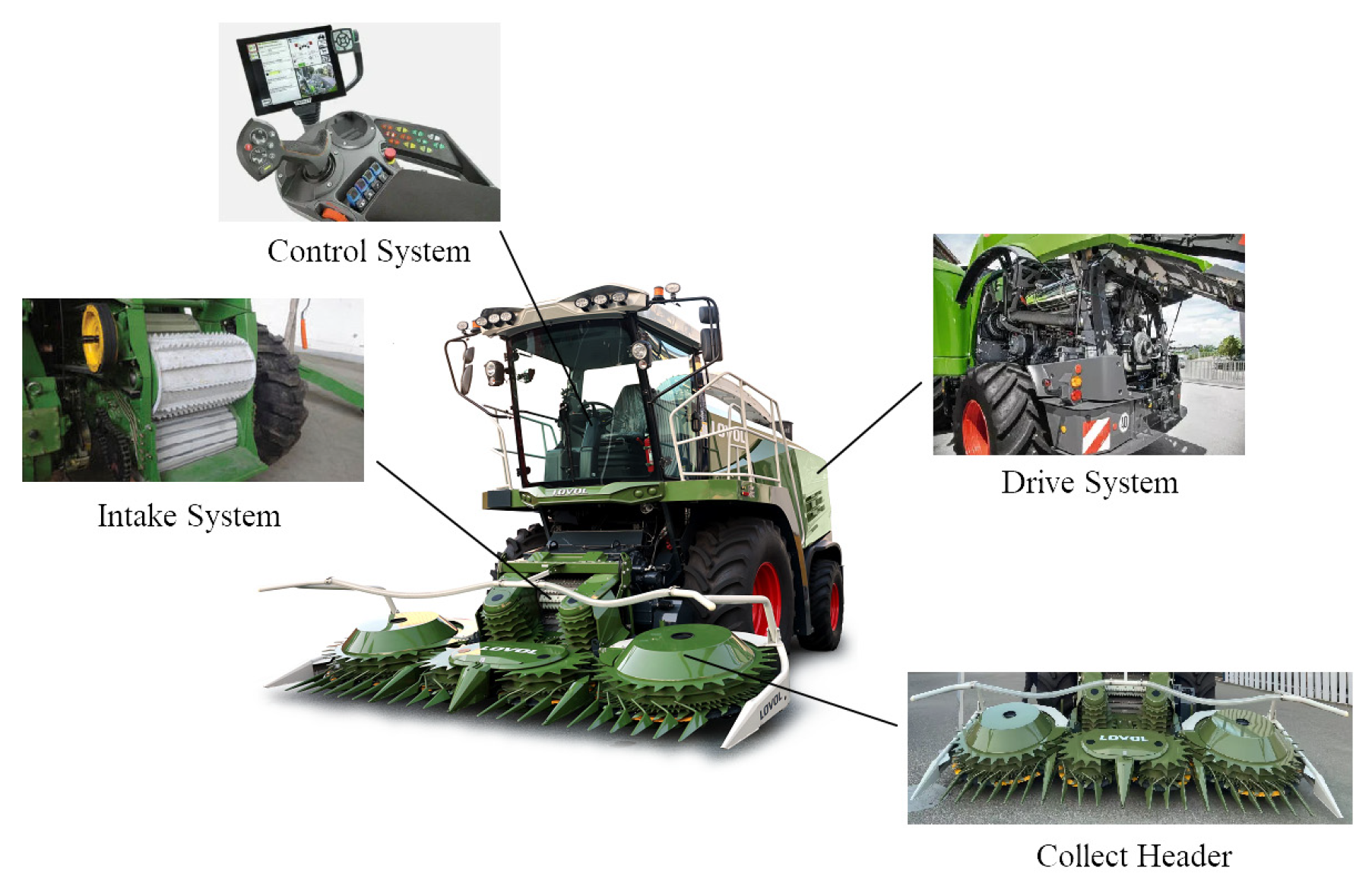
49]. The FA30 A silage machine (
Figure 13), developed by China’s Lovol Heavy Industry, is equipped with metal detection components, enabling the automatic detection and stopping of metal devices during operation. It also features automatic grinding and lubrication functions, providing a high degree of automation.
In summary, with the rapid development of China’s silage harvesters, the gap between domestic products and advanced foreign products has gradually narrowed. It is believed that more silage harvesters equipped with metal detection devices will be launched into the market in the future [
50].
4. Research Status of Metal Detection Technology in the Field of Agricultural Machinery and Equipment
Most metal detection technologies used in agricultural machinery and equipment operate on the principle of electromagnetic induction. They identify metal foreign bodies by detecting changes in the inductance of the detection magnetic field. Researchers, both domestically and internationally, have been working to improve the reliability of these metal detection systems by designing and enhancing their key technologies.
4.1. Coil Structure Design
As the core structural component of metal detectors, the coil system is highly sensitive to external interference: any factor that may disrupt the coil will impair the normal operation of the entire metal detection system [
24]. Thus, the stability of the coil system is critical to the overall reliability of the metal detection system. To mitigate the impact of external interference on the coil’s performance, researchers have implemented numerous structural innovations tailored to this key component.
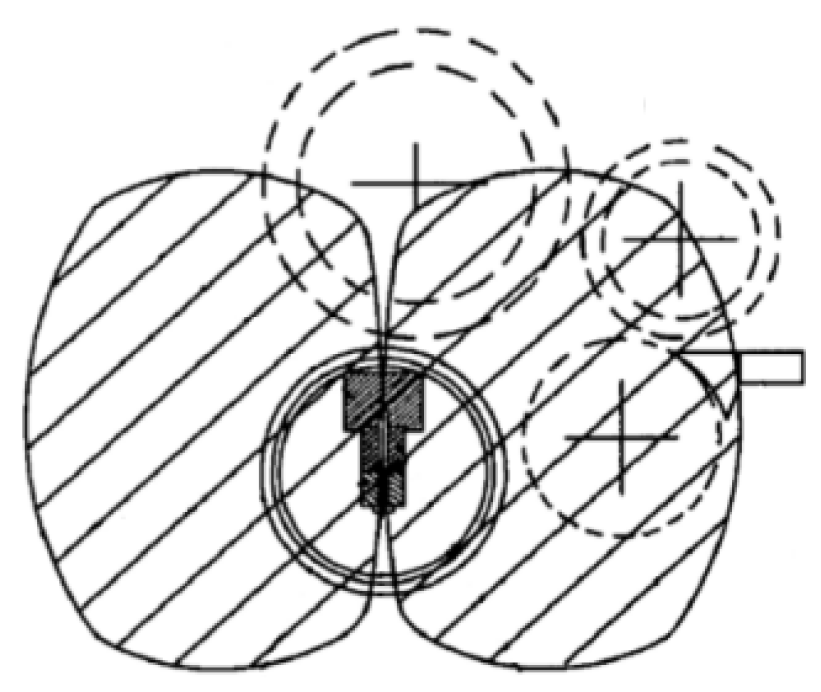
The direction of different types of metal foreign objects when passing through the opening of the metal detector greatly influences sensitivity. When foreign metal objects pass through the detector in a less sensitive direction, side leakage occurs, resulting in reduced system reliability. To solve this problem, Strosser et al. [
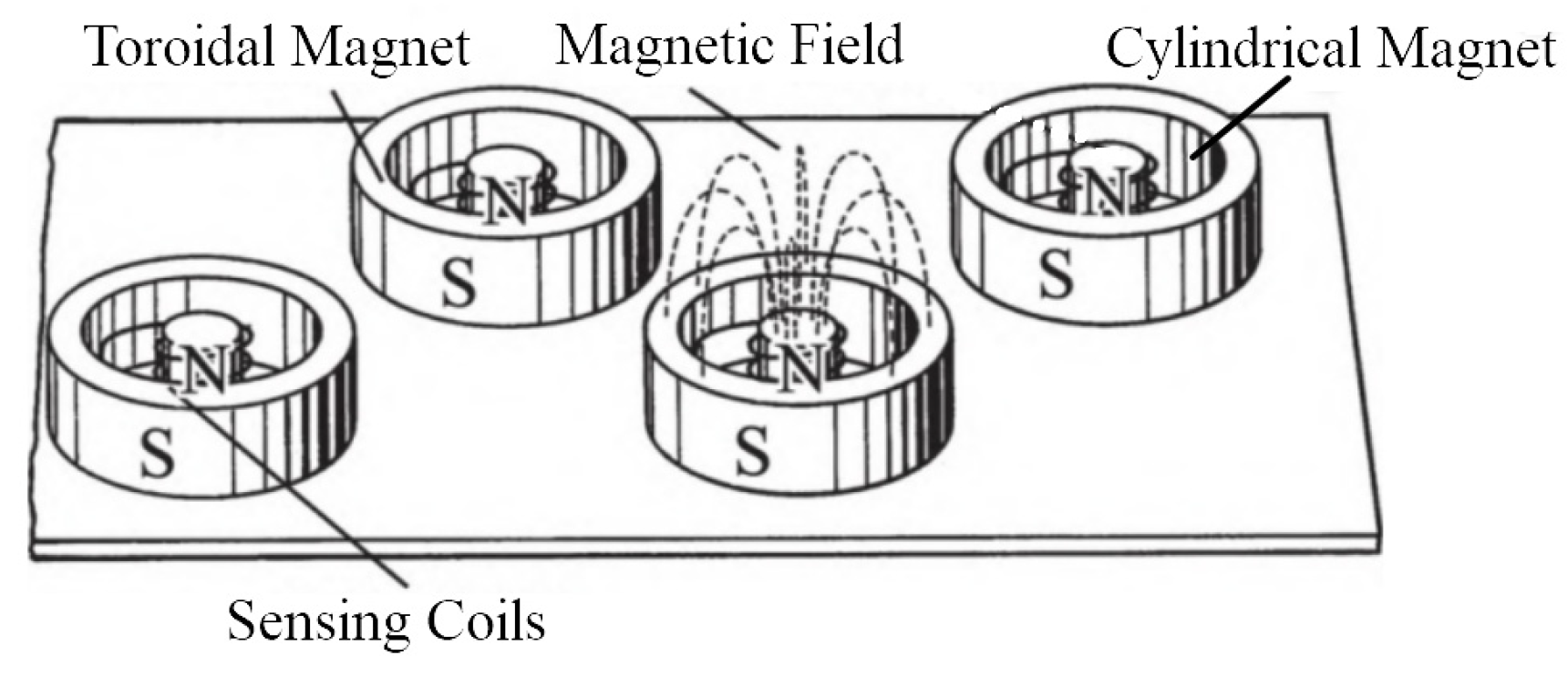
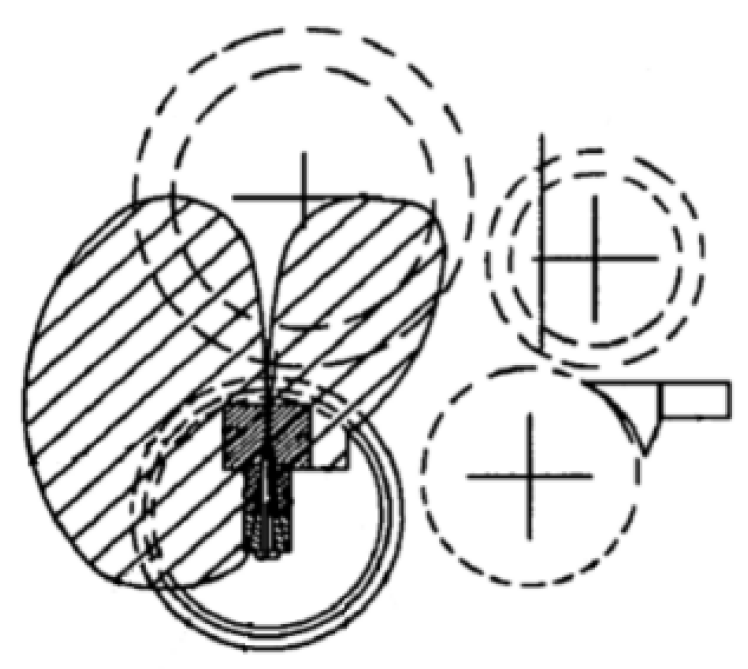
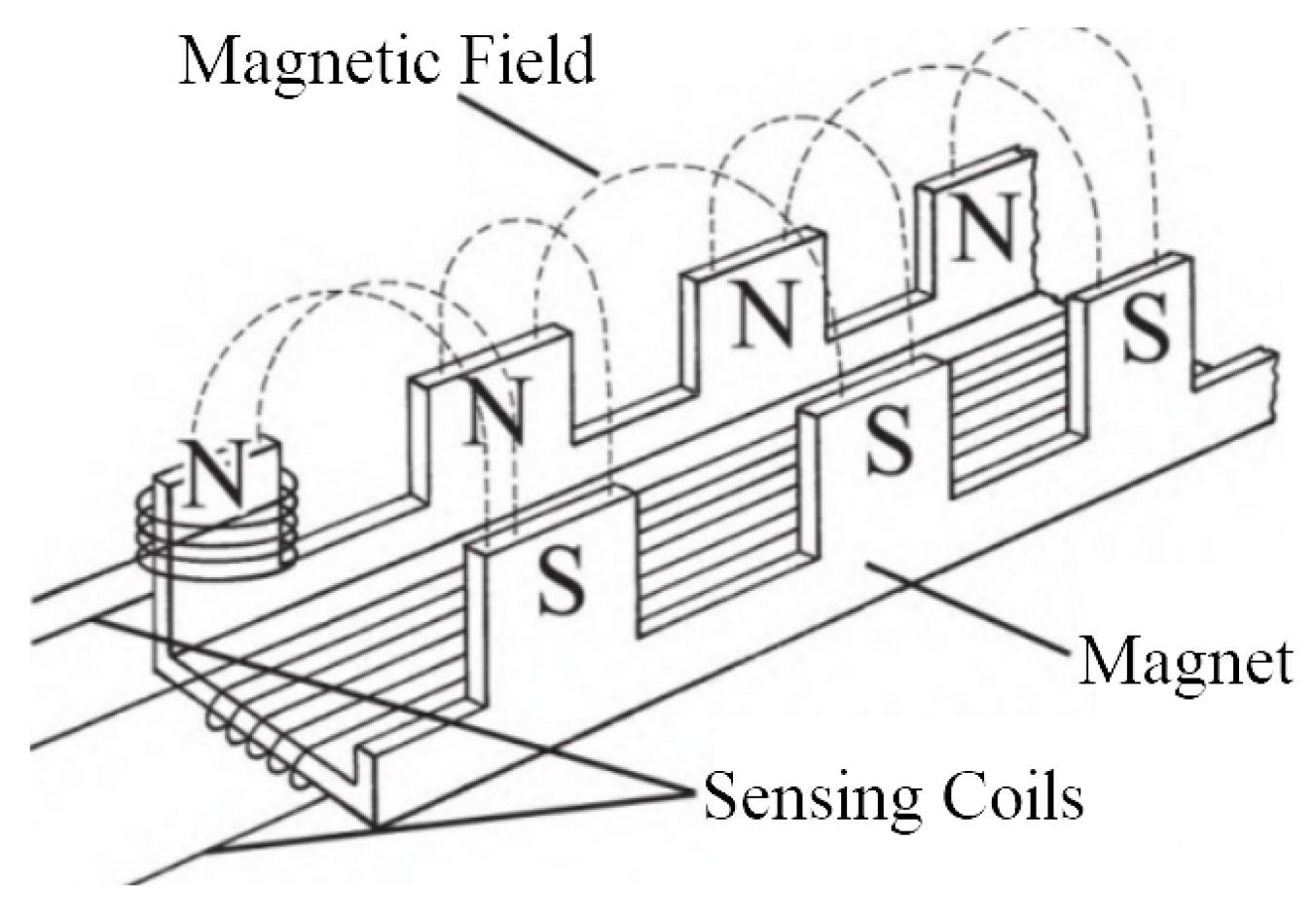
51] proposed two improved methods of magnet arrangement for metal detectors to generate multi-directional magnetic fields, making the detector insensitive to the direction of the detected metal. The first improvement is illustrated in
Figure 14, which features a ring-shaped magnet metal detection device. The magnet element can be composed of either a permanent magnet or an electromagnet, and the induction coil is wound around the central cylindrical magnet. The magnetic field of the metal detector radiates from the cylindrical magnet to the ring magnet, forming non-parallel magnetic field lines that prevent missed detection.
Figure 15 shows the second magnet arrangement, an offset double-tooth magnet metal detection device. The magnet part features an offset double-tooth structure, with the same magnetic pole located on the same side. The generated magnetic lines have staggered characteristics and form a certain angle with the direction of material flow. The formed magnetic field presents a zigzag shape, and the magnetic lines are not parallel, reducing the possibility of side leakage in the metal detection system. However, although the overlapping multi-directional fields eliminate sensing dead zones, they also lead to dispersion of magnetic field energy. This dispersion reduces the unidirectional magnetic flux density within a specific unit of space, which may result in an insufficient SNR when detecting minute fragments deeply buried in thick crop layers.
Aiming at the problem of detection accuracy of metal detection systems, Bohman et al. [
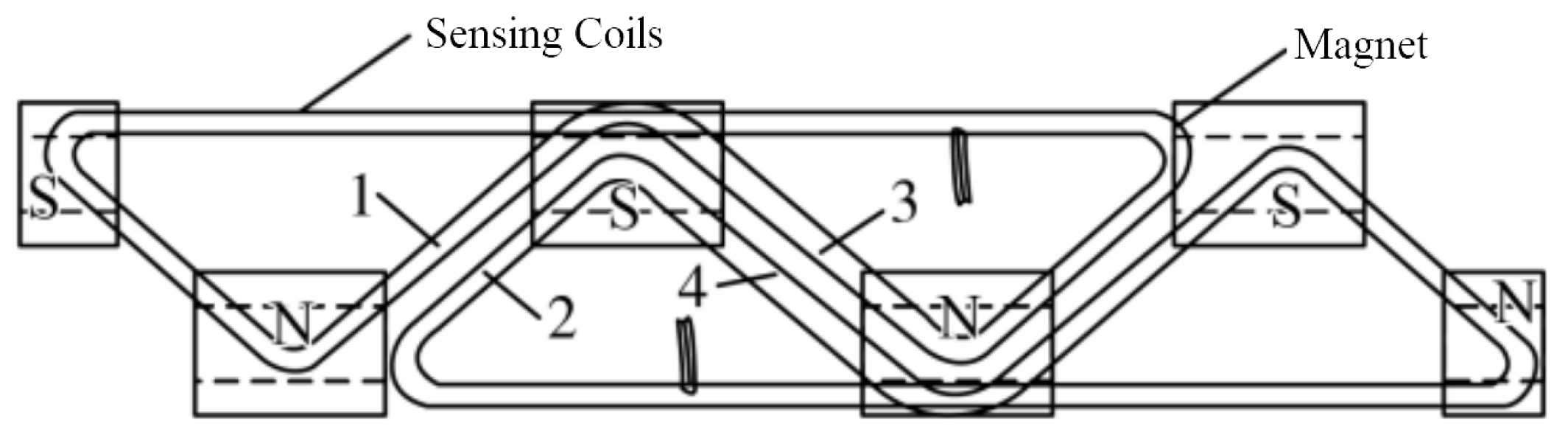
52] proposed a coil layout scheme based on the maximization of impulse magnetic flux, as shown in
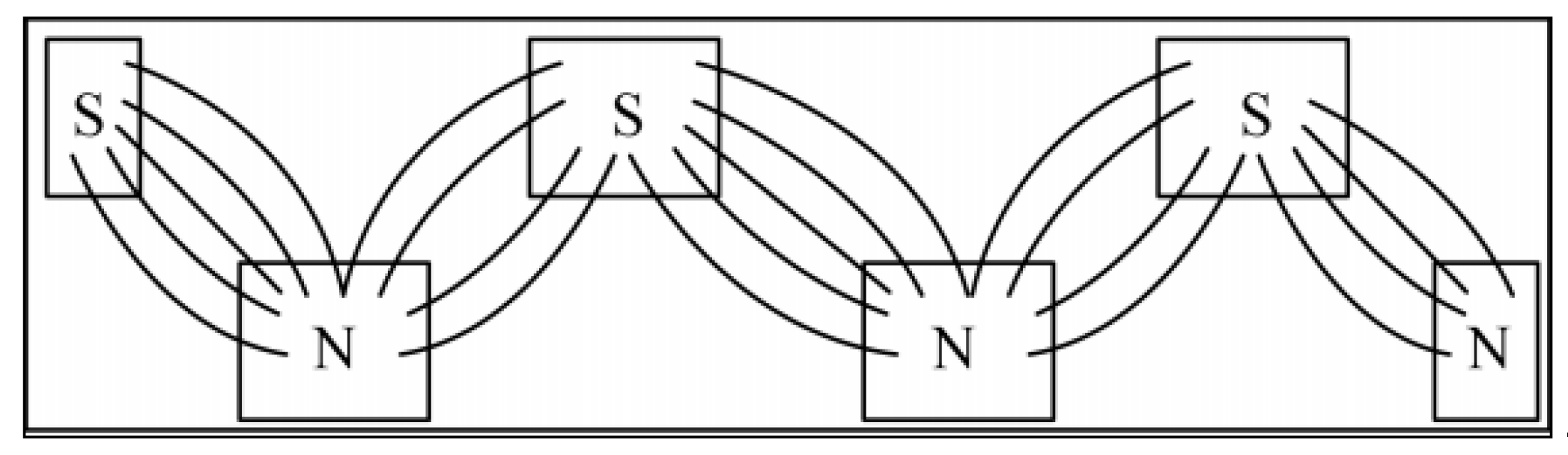
Figure 16. The scheme uses two sets of permanent magnets with opposite polarity, staggered horizontally along the direction of material transportation to construct a symmetrical and uniform magnetic field area on both sides of the material channel. The formed magnetic field is shown in
Figure 17. The detection coils consist of nearly 1000-turn high-conductivity windings, arranged in a parallel triangle geometry, which is equivalent to the traditional “8”-shaped coil in terms of magnetic flux capture. The coils are laid along a zigzag path, as shown in
Figure 16, 1–4, to ensure each winding can respond to magnetic field disturbance to the greatest extent, with the highest sensitivity at the triangle vertices and lower sensitivity at the intersections. To balance the detection response, two sets of offset induction coils are used, which displace the magnetic field direction of adjacent units. This allows for the capture of magnetic anomalies from multiple angles and depths as metal objects pass through. However, despite the theoretical advantages of this coil layout, the system may face several practical challenges in the agricultural machinery environment. One notable issue is the potential displacement of coils due to vibration. Agricultural machinery typically operates under high-vibration conditions, which can cause the coils to shift from their original positions, potentially altering the magnetic field distribution and affecting the accuracy of detection. This can result in reduced sensitivity, particularly in areas where coil displacement leads to an imperfect capture of magnetic field anomalies.
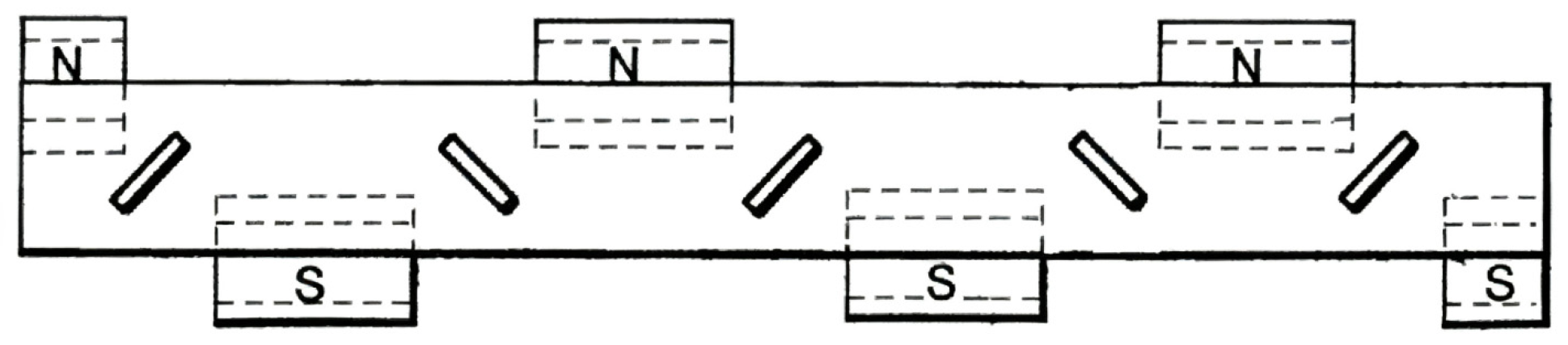
In China, to mitigate the impact of environmental factors on magnetic field detection, Guan et al. [
53] proposed an anti-interference framework. The patented sensor optimizes magnetic field concentration and directivity through a physical offset and polar opposition design for wide-swath detection. Specifically, the device features three sensing units spaced equally within a U-shaped shielding groove. Each unit consists of a permanent magnet with a high-turn count copper coil (3000–5000 turns) wound perpendicular to the magnetic poles. By alternating the polarities—placing the S-pole of the center magnet upward while the two side magnets face N-pole upward—the design forces magnetic field lines to form a closed loop above the shielding opening. This configuration significantly increases magnetic flux density in the detection zone, physically enhancing sensitivity to ferromagnetic objects entering the feed roller area. However, this polar array introduces inevitable detection “blind spots” at the interfaces between the three independent units. Under high-speed material flow, the system may miss minute metal fragments passing through these gaps. Furthermore, while the high-turn count amplifies the induced voltage gain, it increases susceptibility to mechanical offsets under the intense vibrations typical of harvesters. Even slight mechanical displacements can cause the coils to cut the magnetic field lines of the permanent magnets, generating “pseudo-signals” that may trigger false alarms.
Vernezi et al. [
54] proposed another method to improve anti-interference ability, abandoning the traditional induction coil metal detection device, and using a compact Hall sensor instead. As shown in
Figure 18, the magnet is arranged in a “double-row staggered” configuration, perpendicular to the direction of crop feeding. The sensitive plane of each sensor is perpendicular to the magnetic field line generated by adjacent magnets and is installed at a different angle. The detection coverage is more than 30% larger than that of the traditional system. A differential amplifier is used to eliminate synchronous noise, and a Chebyshev low-pass filter is employed to filter out high-frequency interference efficiently. Simultaneously, excessive attenuation of useful signals is avoided, and the false alarm rate is reduced.
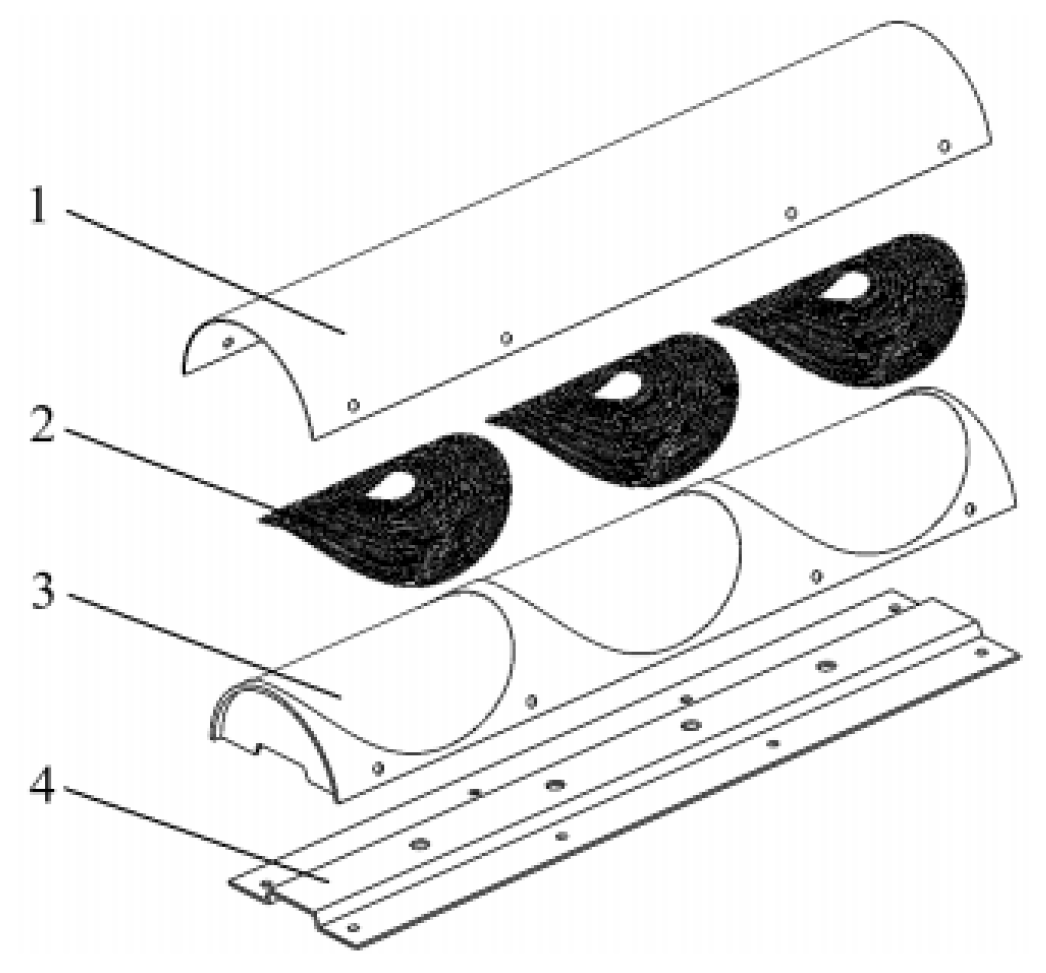
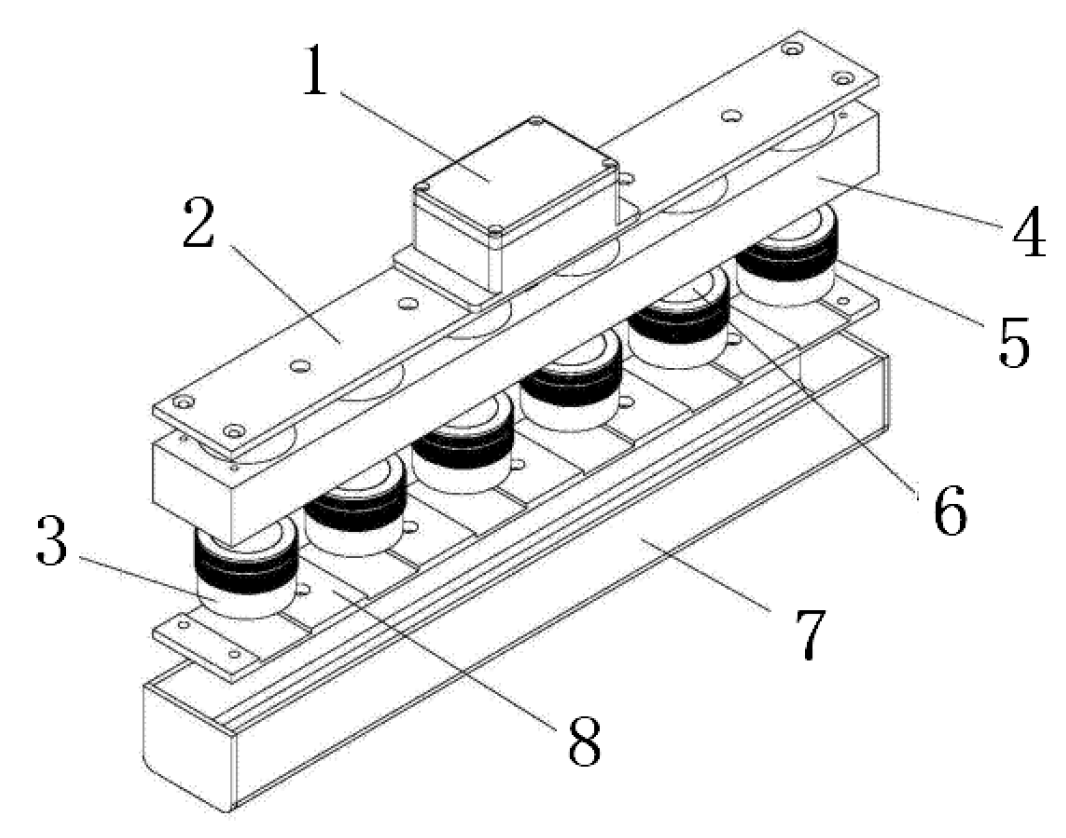
The metal detection system developed by Zhang et al. [
55], the structure consists primarily of the top plate, sensing coils, basal body, and bottom lid (
Figure 19). The top plate serves as the upper casing, providing protection and support for internal components. The sensing coils are responsible for detecting magnetic field changes caused by metal objects, forming the core of the detection system. The basal body provides structural support, ensuring the stable installation of the system’s components. The bottom lid seals the bottom of the device, protecting its internal components from external environmental factors and ensuring long-term reliability. This study addresses the detection requirements of wide-swath feed channels in forage harvesters, focusing on structural optimization through geometric parameter modeling and sensitivity simulation of induction coils. The system employs three sets of optimized, curved planar spiral coils arranged side by side and fitted to the inner wall of the feed roller, leveraging electromagnetic induction to cover the material flow path. The design aims to generate a transient electromagnetic field with high lateral uniformity and deep longitudinal penetration. This array-based layout ensures a consistent magnetic flux density response across different transverse positions, achieving a 100% alarm rate for specific metal fragments within a 70 mm detection range and a rapid response time of 0.105 s, which effectively minimizes the braking distance before foreign bodies reach the chopping unit. However, as the coil dimensions increase, disparities in magnetic field uniformity between the center and edge positions often arise, potentially leading to higher detection sensitivity in the central region of the channel compared to the margins. Furthermore, the paper lacks sufficient quantitative experimental evidence regarding the consistency of detection sensitivity across multiple feeding positions. Additionally, since the study relied primarily on a simulated test bench, it did not fully account for the impact of the harvester’s metallic feed roller housing on the optimized coil’s magnetic circuit. In a complete machine assembly, the magnetic field lines generated by the coil structure are highly susceptible to distortion caused by the surrounding ferromagnetic materials, such as rollers. A detailed comparison of different schemes is shown in
Table 3.
4.2. Sensor Structural Design
The operational environment of agricultural machinery, such as forage harvesters, poses significant challenges to the reliability of metal detection systems. During field operations, the detection system is exposed to intense mechanical vibrations, diverse material properties, and severe electromagnetic interference (EMI). Additionally, the feeding mechanism comprises numerous rotating metallic rollers that continuously distort the ambient magnetic field—exacerbating signal disruption and stability issues. To address these intertwined operational challenges, scholars have focused on optimizing the structure and layout of metal detection sensors. These targeted efforts aim to mitigate the adverse effects of mechanical vibrations and magnetic field distortion, thereby enhancing both the stability and signal-to-noise ratio of metal detection systems in harsh agricultural scenarios.
In traditional metal detection devices, magnetic materials on the side walls of rotating rollers distort the magnetic field, resulting in reduced edge sensitivity and increased false alarms. To address this issue, Hofmann et al. [
56] designed a conveyor-based metal detection system for harvesters, in which the sensor is integrated inside the feeding roller. Non-magnetic materials, such as austenitic steel, brass, or aluminum, were used near the sensor region on the side walls, and the axial distance between the sensor and the side walls was increased to minimize magnetic interference and improve field uniformity. In addition, a guide plate was installed at the roller end to prevent material accumulation in the gap between the roller and the side wall. These measures effectively reduce magnetic interference from mechanical components, thereby enhancing the performance of metal detection. However, the array-based configuration remains susceptible to inter-channel coupling and thermal drift among discrete sensors, which can cause spatial non-uniformity in detection sensitivity across wide feeding channels. In addition, the reliance on passive physical shielding without adaptive signal processing limits the system’s ability to address non-linear interference, such as dielectric effects from high-moisture crops. This hardware-centric limitation highlights a significant gap in decoupling multi-source stochastic noise, which remains a focal point for modern intelligent detection research.
To enhance anti-interference performance while avoiding excessive system complexity, Byttebier et al. [
57] proposed an improved metal detection system. A ferromagnetic plate was installed behind the magnet to shield noise from mechanical components, as shown in
Figure 20 and
Figure 21. However, there are still significant limitations in the robustness of this solution in complex operating environments. Installing a ferromagnetic baffle cannot completely shield the interference from the external working environment. Additionally, the software is not optimized for small metal foreign objects and is not sensitive to them.
In China, to limit the impact of environmental factors on the detection magnetic field, Guan et al. [
53] proposed an anti-interference framework that integrates physical shielding with optimized magnetic circuit design. The system utilizes a U-shaped shield made of high-permeability iron mounted on the main shaft inside the feed roller to block stray magnetic interferences from the lower and lateral sections. By arranging three induction coils with alternating magnetic polarities, the design concentrates the magnetic flux lines within the monitoring zone above the shield’s opening. This structural optimization not only enhances the induction intensity for target foreign bodies but also decouples the sensors from external electromagnetic noise through physical isolation. However, the use of metallic shielding materials may induce secondary eddy current effects during high-speed operations, potentially introducing new noise that masks weak metallic signals. Second, the strategy relies primarily on hardware-level attenuation and lacks adaptive signal processing to compensate for dynamic baseline drifts caused by fluctuating crop layer thickness or non-uniform material flow. Consequently, physical shielding alone may not eliminate the risk of false alarms under extreme vibration or rapidly changing material properties, highlighting a gap in the system’s overall reliability for complex field environments. A detailed comparison of different schemes is shown in
Table 4.
4.3. Signal Processing Methods
The operational conditions of agricultural machinery present severe challenges to the signal integrity of metal detection systems. First, high-power rotating components and irregular mechanical vibrations within the harvester generate high-intensity magnetic interference. Second, the strong heterogeneity of field materials (e.g., drastic fluctuations in the moisture content of silage) leads to significant baseline drift in the sensor output signals. These interference signals often overlap heavily with the induction signals of minute metallic foreign objects in both amplitude and frequency. Consequently, the choice of signal processing methods is crucial to the functional performance of metal detectors.
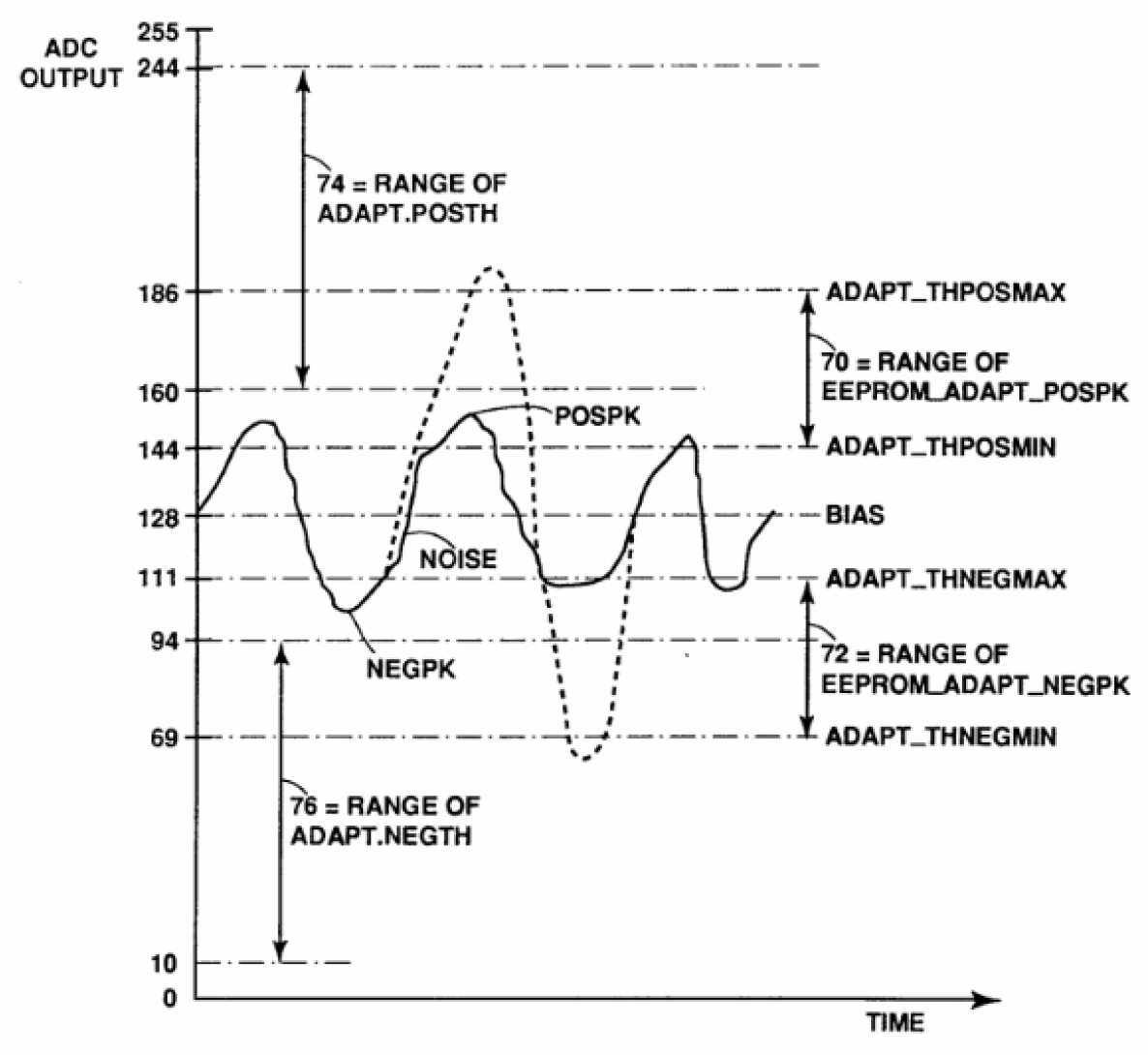
When the metal detector is in operation, not only do magnetic materials disturb the magnetic field, but also vibrations from the working environment and surrounding parts interfere with the detection magnetic field. A noise electromotive force component is generated in the detection coil, leading to fluctuations in the output signal of the metal detector and causing false alarms, thereby reducing system reliability. Addressing such problems, Strosser et al. [
58] developed a dual-channel metal detection system utilizing an adaptive thresholding mechanism to enhance anti-interference robustness. As shown in
Figure 22, the system’s microcomputer independently samples the noise component of each channel to calculate the long-term average of positive and negative peaks. By dynamically scaling these thresholds to twice the average noise intensity, the detector automatically maintains the highest possible sensitivity relative to the current vibration and electromagnetic environment. This adaptive tracking significantly improves the detection of minute metallic fragments while suppressing stochastic background interference. However, the analog filters employ a broad passband that, while capturing diverse noise profiles, leads to substantial attenuation of the target metal signals. Furthermore, the reliance on long-term statistical averaging introduces a response latency; the system may fail to adapt rapidly enough to impulsive interferences or sudden mechanical shocks. The focus on time-domain magnitude also overlooks frequency-domain signatures, limiting the system’s ability to decouple high-intensity noise from subtle metallic signals in heterogeneous harvest conditions.
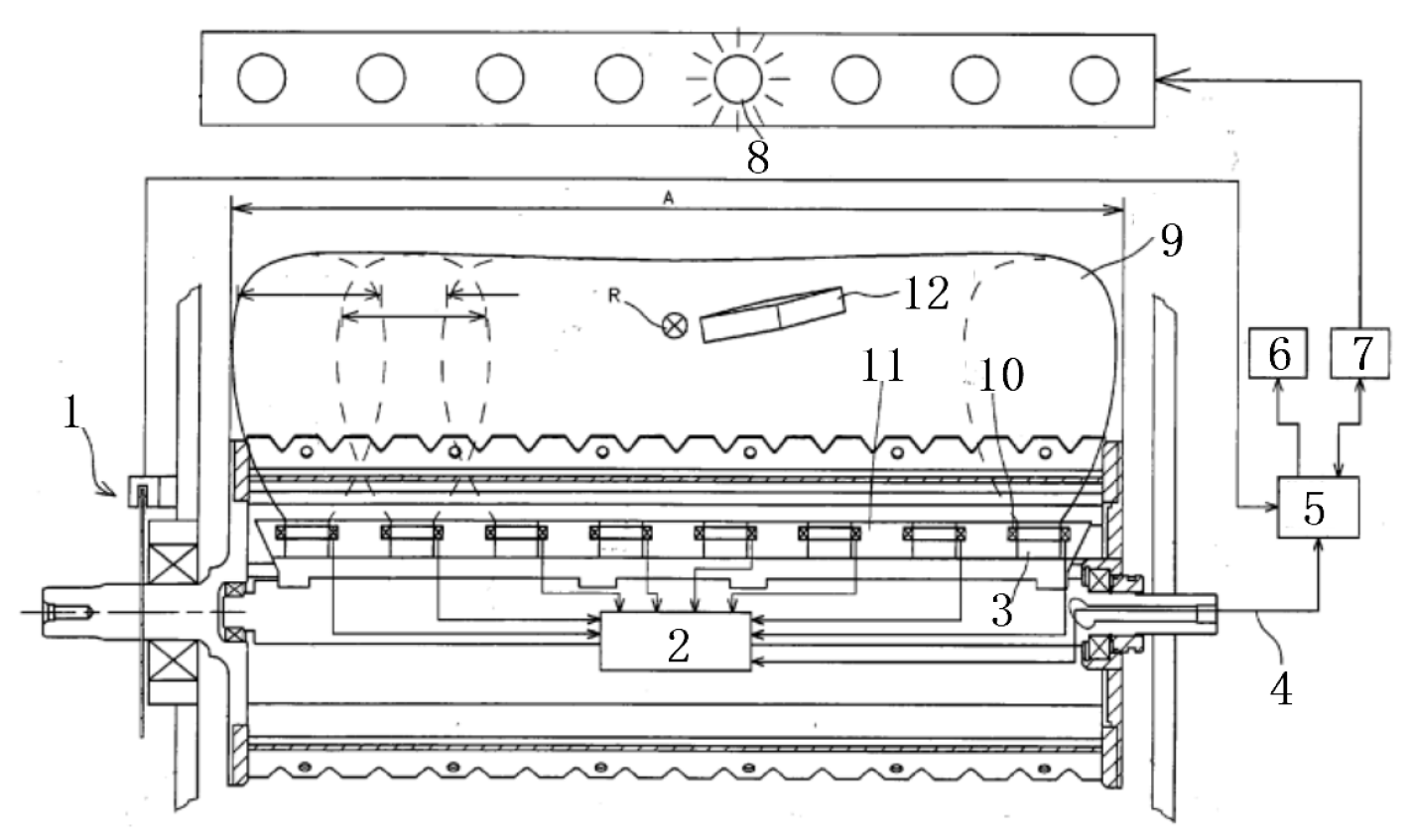
To more intuitively display the position of metal foreign objects in the feeding device, Breitenstein [
59] designed a spatial localization system for metal foreign bodies based on time-window synchronization. As shown in
Figure 23, the apparatus employs eight magnets and sensing coils arranged transversally across the feed roller to monitor magnetic perturbations. When a detected signal exceeds the threshold, the microcomputer records the interval from detection to system braking, mapping the signal onto a horizontal-vertical display grid that represents the channel width and the recorded time range. This positioning logic not only identifies the transverse zone of the foreign body on the feed roller but also logs the detection results within the operational trajectory. Such a mechanism significantly reduces the time required for manual clearance post-shutdown, thereby substantially enhancing the recovery efficiency of harvesting tasks, particularly in large-scale and high-capacity continuous operations. However, the system provides only a regional estimation constrained by the physical spacing of the windings, lacking the precision to resolve coordinates for objects straddling sensor boundaries. Furthermore, its reliance on a fixed time-window logic makes the localization accuracy sensitive to fluctuations in crop feeding speed. Without an adaptive synchronization mechanism between the signal processing cycle and the real-time material velocity, the system may produce spatial offsets, compromising the reliability of the trajectory display under non-uniform feeding conditions.
Byttebier et al. [
57] proposed an improved metal detection system. They introduced a dynamic thresholding strategy that directly links detection sensitivity to the real-time crop feeding speed, thereby suppressing stochastic vibrations and electromagnetic noise during high-throughput operations. However, the linear mapping logic fails to account for the non-linear dielectric interferences caused by varying crop moisture and density, which often decouple from feeding speed. Furthermore, the system’s heavy reliance on the precision of external speed sensors introduces a single-point failure risk; any sensing error in the secondary input could compromise the primary detection integrity.
The China Academy of Agricultural Mechanical Sciences [
60] has achieved breakthroughs in key core technologies, such as intelligent metal detection, automatic tool grinding, and efficient grain crushing. The system utilizes digital filters to preprocess raw impedance. The early warning signal is transmitted to the total control display terminal through the CAN bus, and inductance signals from the sensor array are processed, executing a decision-making logic based on a critical warning value. By performing frequency statistics on filtered results, the system effectively smooths out isolated impulse interferences caused by mechanical vibrations or electromagnetic transients. This multi-criterion approach improves the confidence level of foreign body identification by filtering out false positives in low SNR environments. However, the core filtering logic relies heavily on a relatively simple statistical feature and lacks in-depth analysis of waveform characteristics, such as rise-time slopes or harmonic distortion rates. Consequently, the system may struggle to distinguish between a small metal fragment passing at high speed and high-energy stochastic mechanical noise.
Since harvesters in operation contain numerous rotating metal parts at different speeds, these mechanical elements lead to the appearance of pseudo-periodic, high-intensity techno-induced noise. However, metal detection systems with noise filtering, such as analog filtering, struggle to achieve dynamic adaptation. Moreover, to minimize system false positives, parameters of analog filters are chosen with a fairly wide filtering range, which in turn leads to significant attenuation of useful signals. Based on the above situation, Vernezi et al. [
61] introduced a modern signal processing framework based on Convolutional Neural Networks (CNN) and spectrogram analysis, shifting the metal detection paradigm from time-domain magnitude assessment to time-frequency feature extraction. By utilizing Short-Time Fourier Transform (STFT) to convert induction signals into 2D spectrograms, this approach leverages DL to identify subtle differences between foreign body signatures and environmental noise. The primary superiority of this method lies in its non-linear feature extraction capability, which enables the system to isolate weak metallic signals buried under intense background noise during high-throughput operations, significantly reducing false alarm rates compared to conventional algorithms.
Zhao Bo et al. [
31] The China Academy of Agricultural Mechanization developed a metal detection system based on the eddy current effect and electromagnetic oscillation principle. The metal detection system, as shown in
Figure 24, consists of the controller, which manages the system’s operation and processing tasks, the top plate, which provides structural support and protects internal components, and the winding rollers, which facilitate the movement of materials. The permanent seat holds the key components in place, ensuring stability, while the bobbin supports the winding process. The strong magnetic core is crucial for generating the magnetic field used in detection, and the shell houses and protects the internal components. The bottom lid seals the system, providing protection and preventing contamination of the internal elements. The harvester’s feed intake is instrumented with a six-coil eddy-current sensor array to achieve localization. Six identical coils are mounted at equal angular intervals around the feed drum, thereby partitioning the sensing region into six adjacent detection zones. Each coil’s resonant impedance is monitored by an integrated digital inductance sensor (LDC1000), allowing all six coil signals to be acquired in parallel by the embedded processor. In software, a hierarchical support-vector-machine (SVM) classifier processes these multi-coil readings: a first binary stage flags metal versus no metal, and a second six-way stage assigns the detection to one of the six coil zones. By identifying which coils show a significant impedance change, the system infers the object’s location within the drum; the equal-interval coil layout minimizes blind spots between zones and thus improves the accuracy of this zone-based localization.
In summary, as shown in
Table 5, traditional processing methods mainly use digital filters and frequency statistics to reduce impulse noise. While these methods work for basic noise reduction, they have limitations in recognizing complex features like the waveform’s rising edge or harmonic distortion. On the other hand, deep learning architectures can automatically extract these features. Using CNNs, the system can learn the signals from different metals while filtering out interference from wet materials, resulting in better accuracy and resistance to interference. However, applying deep learning in agricultural machinery faces significant challenges. First, the unpredictable nature of field environments requires large, labeled datasets that cover various crop conditions and machine vibrations, which are currently lacking in agriculture. Second, the need for real-time processing means that complex neural network computations must be done quickly to avoid interrupting machine operations, requiring powerful hardware.
Therefore, while traditional statistical processing methods still hold advantages in simple scenarios with limited computational resources, deep learning is the inevitable choice for achieving high-precision detection in the complex and dynamic environments of agricultural machine.
4.4. Foreign Body Removal Mechanism Design
During the working process of the metal detector, a removal device is required. The cleaning signal is transmitted from the metal detector controller to the cleaning device after a foreign object is detected.
Commonly used types include air jet type, push rod type, swing arm type, flip plate type, reversible conveyor, stop belt conveyor, and alarm system. Since metal detectors are primarily used in harvesting machinery, a field of agricultural machinery and equipment, and are installed inside feeding devices, their compact structure, short material stroke, and loose material limit their use. Consequently, reversible conveyors and stop belt conveyors are usually employed for foreign body removal. After the foreign body signal is detected, the machine stops operation, the feeding roller reverses to withdraw material, and then the foreign body is manually removed.
Manfred et al. [
62] developed a foreign object detection device for agricultural harvesters, including metal detectors and stone detectors, to deal with the detection of different kinds of foreign objects. The metal sensor is integrated inside the pressure roller and interacts with another feeding roller. The magnetic measurement field forms the detection area of the metal detector. It is preferably oriented along the direction of crop flow, almost vertically downward, or often along the diagonal to the front, that is, toward the front-end harvesting device. The measured detection signal is continuously measured and compared with a preset threshold. If the threshold is exceeded, a stop signal is sent to the conveying device. After the stop signal is triggered, the braking system engages, and the machine’s ground speed is reduced, thereby ensuring the driver is notified to detect foreign objects in the crop material flow. Then, the header is lifted from the working position to prevent crop accumulation, and the feeding roller is reversed to discharge the part of the crop that contains the foreign matter, effectively removing the foreign matter fed into the harvester. This “braking-deceleration-reversal” synergistic logic facilitates physical exclusion while reducing mechanical impact loads through preemptive speed regulation, significantly advancing the automation level of the removal process. However, the automatic reversal does not account for the physical stacking characteristics of the material flow, where frequent forced reversals can lead to intake clogging, thereby prolonging downtime before resumption of operation.
In China, the metal detection device designed by Wang [
63] for the green feed harvester has the function of stopping the feeding mechanism. The system consists of an installation chamber, a magnetic metal detector, an electromagnetic controller, and a clutch control block. The installation chamber is arranged in the lower feeding roller, axially parallel to the roller, and the metal detector is fixed inside. The electromagnetic controller is connected with the magnetic metal detector and one end of the clutch control block; the other end of the clutch control block is connected with the clutch fork, and the clutch control block controls the on-off of the clutch fork. The magnetic metal detector monitors foreign metal bodies and sends an electrical signal to the electromagnetic controller. After receiving the signal, the electromagnetic controller connects the clutch control block, pushes the clutch fork, and cuts off power transmission between the gearbox and the power source, stopping the entire feeding mechanism and facilitating subsequent manual removal. After the device detects metal, it directly triggers clutch separation, capable of cutting off power to the feeding mechanism within 0.5 s. The response is rapid and can effectively protect the chopping system. However, the removal logic is restricted to power interruption and lacks an automated reversing function. Consequently, foreign bodies remain wedged between the rollers and the crop layer, necessitating high manual intervention intensity to clear the blockage.
Li Tianwei et al. [
64] designed a metal detection and protection system for harvesters, including an induction coil device for detecting metal objects and forming electrical signals based on detected metal objects. The induction coil device is connected to a signal processing module that processes electrical signals. The signal output end is connected to an MCU control chip, and the drive end of the MCU control chip is connected to the protection circuit in the rotation direction of the clutch motor. After the induction coil device induces a metal object, forming an electrical signal, the signal is processed through signal shaping, filtering, and amplification. The MCU control chip cooperates with the protection circuit to control the reversal of the clutch motor in the feeding mechanism, allowing for the reversal of material containing a metal foreign body, facilitating subsequent removal. It not only helps protect the machine but also ensures the quality of silage feed and the safety of livestock consumption. However, the system lacks a multi-stage feedback mechanism during execution; the MCU merely issues drive signals without real-time monitoring of whether the clutch motor has fully disengaged or if the actuators are properly locked. Under conditions of severe load fluctuations or mechanical wear, this could lead to removal failure. Furthermore, the logic remains focused on ‘static braking’. It lacks subsequent proactive expulsion actions, such as automatic reversal or ejection mechanisms, meaning that foreign objects remain embedded within the material flow, necessitating entirely manual clearance.
Therefore, as shown in
Table 6, exploring the application of metal detector foreign body removal technology in the field of agricultural machinery is also very important. By optimizing detection algorithms and improving response speed, it can not only improve operational efficiency but also significantly reduce mechanical failure rates and ensure operational safety.
In summary, foreign harvesters are basically equipped with mature real-time metal detection systems. When a foreign object is detected, the sensor outputs an alarm signal, and the machine performs an emergency stop operation to prevent the foreign object from entering the chopping device and causing damage. However, research on this technology in China began late, and its development is not yet mature. The application of this technology in domestic silage harvesters is not common enough. Therefore, there is an urgent need to develop highly sensitive, flexible, and reliable real-time metal detection systems that match the technical level and performance of well-known foreign manufacturers. This can break through foreign technical blockades, automatically and instantly stop, alarm, and reverse when encountering foreign bodies such as metal during operation, preventing metal foreign bodies from entering key systems, thereby ensuring safe machine operation and improving its reliability [
39].
5. Conclusions
This paper systematically examines the development context, core principles, and current status of metal detection technology in the field of agricultural machinery, with a focus on electromagnetic induction as the mainstream technical approach. It conducts an in-depth analysis of the performance differences and application scenarios of four detection schemes. By comparing typical domestic and foreign agricultural machinery metal detection systems, this paper identifies the key bottlenecks restricting the large-scale application of this technology in China’s agricultural machinery: insufficient anti-interference ability and adaptability to complex working conditions, a lack of customized designs for small plots, multiple crops, and high-humidity environments, and low integration of foreign object positioning and automatic removal.
This study comparatively analyzes scholars’ optimized designs for coil structures, sensor configurations, signal processing methods, and foreign object removal mechanisms in metal detection systems. It establishes a three-dimensional evaluation framework of “principle classification-working condition adaptation-performance comparison” to systematically assess the advantages and disadvantages of each scheme. Key factors influencing the application of metal detection technology in agricultural machinery are identified: the complexity of operating environments, the im-pact of high-intensity mechanical vibrations, and interference from high-humidity materials.
Research findings indicate that current innovations in agricultural machinery metal detection primarily focus on enhancing mechanical structures. While most existing studies integrate signal conditioning circuits and digital auxiliary devices, they heavily rely on fixed thresholds and static parameters—typically tailored for high-frequency noise. Consequently, these systems fail to address the need for adaptive filtering mechanisms that can dynamically adjust parameters based on varying crop moisture levels or feed rates. Based on this analysis, modern metal detection technology must evolve to integrate advanced DSP architectures. To mitigate non-stationary noise induced by fluctuations in crop moisture during harvesting, the introduction of adaptive filtering algorithms is crucial for adjusting filter coefficients in real-time, thereby achieving dynamic cancellation of background interference. At the architectural level, real-time processing units based on high-performance DSPs are required to support high-frequency parallel sampling across multiple channels, providing the computational foundation for complex feature extraction. Furthermore, the implementation of classification algorithms, such as SVM or lightweight neural networks, will enable the system to precisely distinguish between ferrous and non-ferrous metals while effectively isolating high-speed metallic fragments from stochastic mechanical noise. This transition toward intelligent identification will not only suppress false alarm rates caused by wet material clumps but also establish a robust algorithmic foundation for implementing graded foreign-object removal strategies.
In summary, for the widespread application of metal detection technology in China, it is essential to align with the characteristics of Chinese agriculture. Reliability can be enhanced through the optimization of coil and sensor structures, universality improved via algorithmic advancements, and automation levels elevated through the design of foreign object removal devices.
6. Prospect
Considering the typical characteristics of China’s agriculture, “decentralized operation of small plots, multiple cropping rotation, and high-humidity working “environment, as well as the development trends of agricultural machinery towards intelligence and lightweight, the future metal detection technology for agricultural machinery needs targeted breakthroughs in the following three directions to form a more locally adaptable technical path.
- 1.
Anti-Interference Performance Enhancement for High-Humidity Environments
Most farmland in southern China is paddy fields, and equipment inevitably operates during the rainy season. In such high-humidity environments, equipment is prone to moisture absorption and signal interference. To solve these problems, solutions should be formulated from both hardware protection and algorithm optimization. At the hardware level, IP68 waterproof packaging technology is employed; coils and interfaces are treated with a nano-coating to prevent the passage of water vapor. A polytetrafluoroethylene protective film is applied to the coil surface to prevent short circuits caused by the adhesion of mud and straw juice. At the algorithm level, an environmental humidity sensor is introduced to collect data in real time, and a humidity-signal interference correlation model is established. An improved Kalman filter algorithm is used to reduce the impact of humidity. A real-time monitoring function for coil insulation performance has been developed. When humidity causes the insulation resistance to drop, an early warning is triggered promptly to ensure the system’s long-term stable operation in high-humidity environments.
- 2.
Technical Optimization for Small-Plot Operations
Given the frequent steering of agricultural machinery, limited body space, and farmers’ sensitivity to equipment costs in China’s small-plot operations, the focus should be on developing “lightweight + integrated” detection systems. At the hardware level, flexible printed coils replace traditional windings to reduce coil thickness. Combined with microsignal processing chips, the detection module can be integrated with walking straw returning machines and small silage harvesters. A modular layout is adopted in structural design to support rapid adaptation, disassembly, and maintenance of different models, thereby reducing maintenance costs for small-scale farmers. At the software level, a small-plot operation path database is established, and GPS positioning technology is integrated to mark detection areas accurately, thereby avoiding repeated detection and missed detection, and improving operation efficiency. To address the higher vibration frequency of small agricultural machinery, shock-absorbing pads and buckle-type fixing designs are used to reduce coil displacement caused by vibration.
- 3.
Adaptive Parameter Adjustment Technology for Multiple Cropping Rotation
China has a vast territory and a great variety of crops. Differences in straw density and moisture content among crops lead to a lack of universality in metal detection equipment. To solve this problem, an intelligent “crop identification-parameter self-adaptation” system should be developed. It collects crop data in real-time to identify crop types and moisture content, and constructs a mapping model of “crop type-detection frequency-sensitivity threshold”. Meanwhile, based on field test data from various crop-producing areas in China, a multi-crop metal foreign object feature database has been established. Machine learning algorithms, such as random forest and support vector machine, are used to optimize the signal recognition model, reducing the false alarm rate under various crop backgrounds and enabling stable detection of metal foreign objects larger than 0.4 mm.
With increasing research efforts by research institutes and enterprises on metal detection systems, the technology is expected to move towards a mature application stage. Future research can further promote the in-depth integration of metal detection technology with the agricultural Internet of Things and precision agriculture. Meanwhile, exploring multi-technology integration paths can help balance detection accuracy and environmental adaptability, providing more comprehensive technical support for China’s agricultural production safety and the intelligent upgrading of agricultural machinery.