Article

Electrochemical Corrosion Behaviour of WC-Co Cemented Carbide in Acidic and Alkaline Solutions for PVD Coating Removal

by
Magda Anna Stefanescu
1,
Barbara Traenkenschuh
1,
Olivier Messé
2 and
Bernhard Christian Seyfang
3,*
1
Oerlikon Balzers Coating Germany GmbH, 55411 Bingen am Rhein, Germany
2
Oerlikon AM Europe GmbH, 85748 Garching, Germany
3
Life Sciences and Engineering, TH Bingen, Bingen University of Applied Sciences, Berlinstraße 109, 55441 Bingen am Rhein, Germany
*
Author to whom correspondence should be addressed.
Corros. Mater. Degrad. 2026, 7(2), 33; https://doi.org/10.3390/cmd7020033
Submission received: 11 March 2026 / Revised: 11 May 2026 / Accepted: 12 May 2026 / Published: 21 May 2026

Abstract

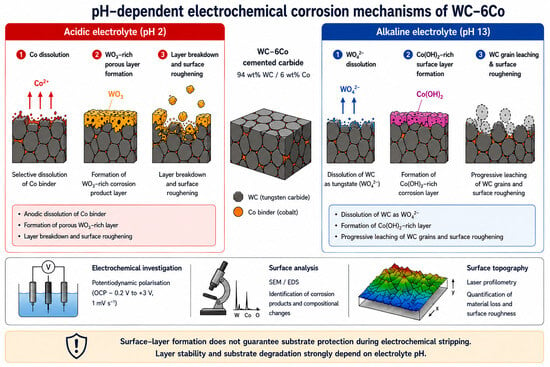
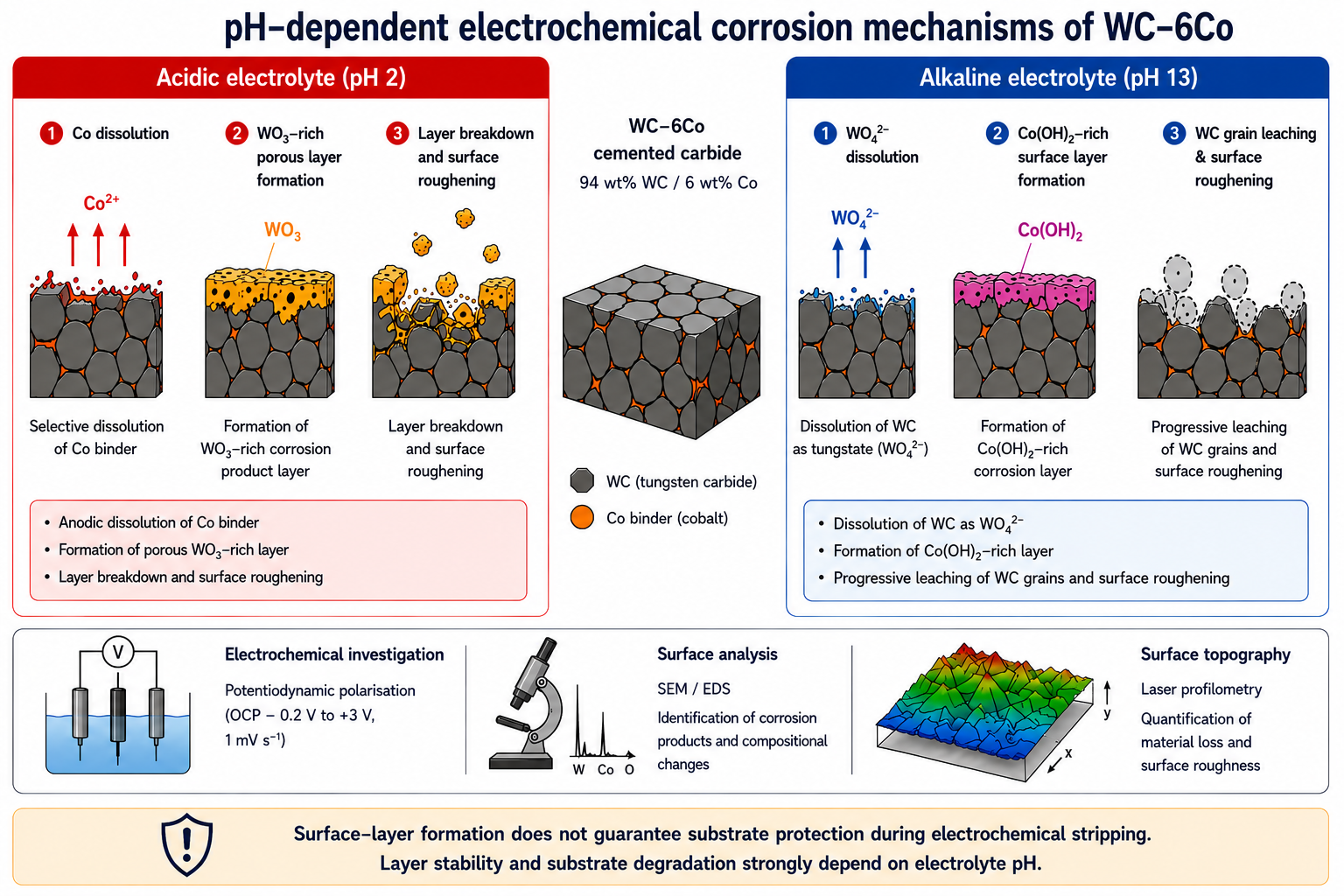
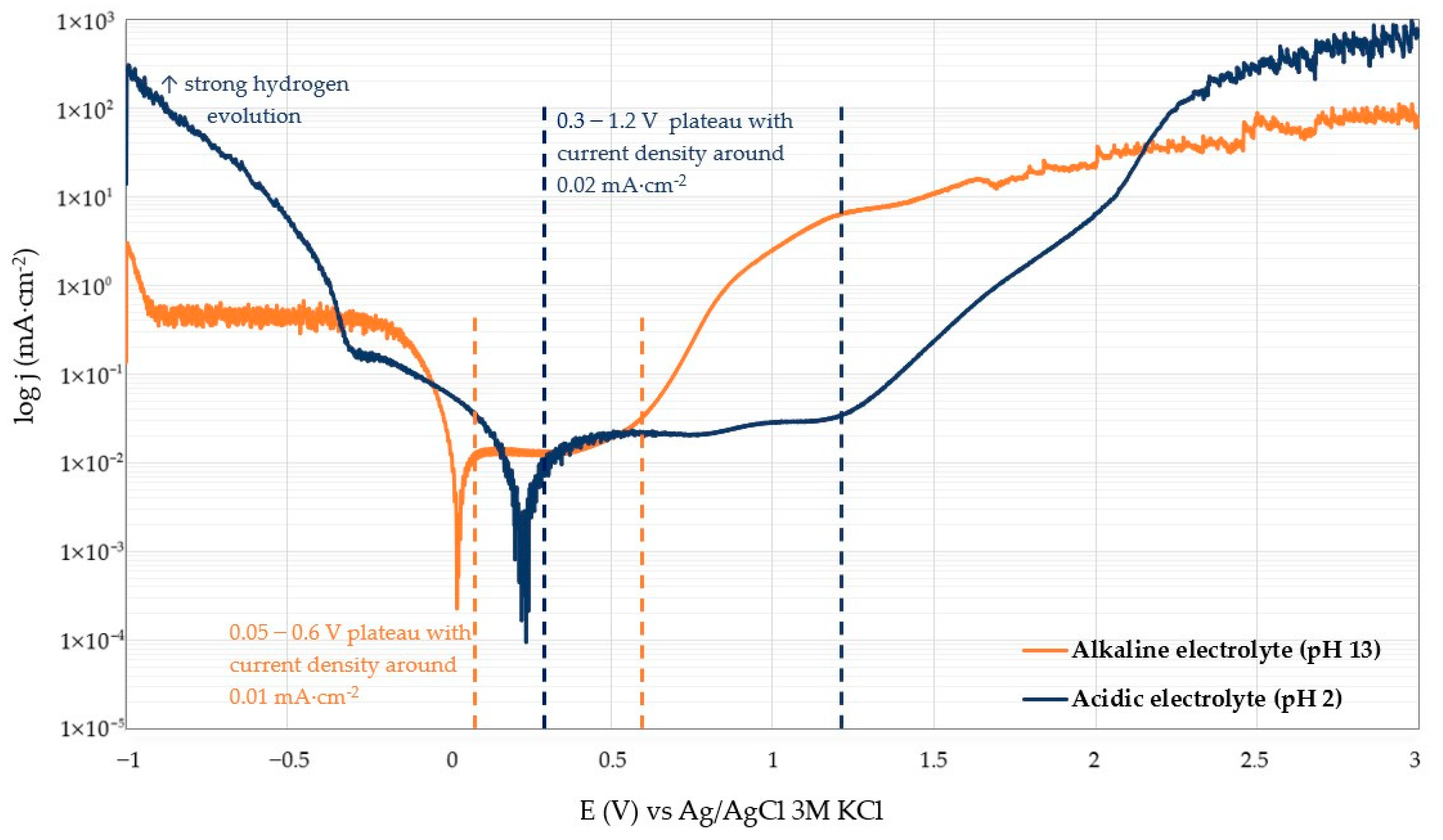
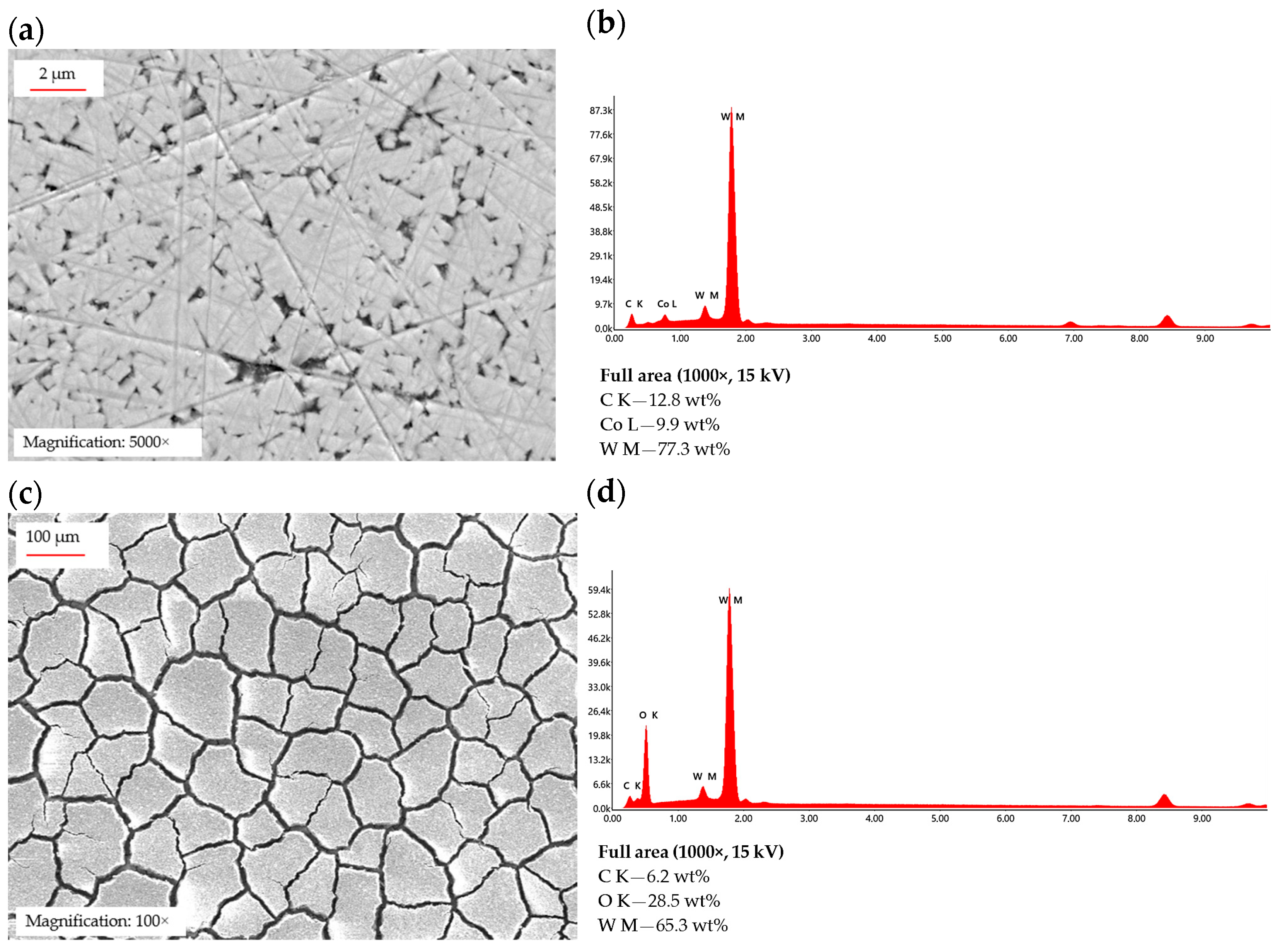
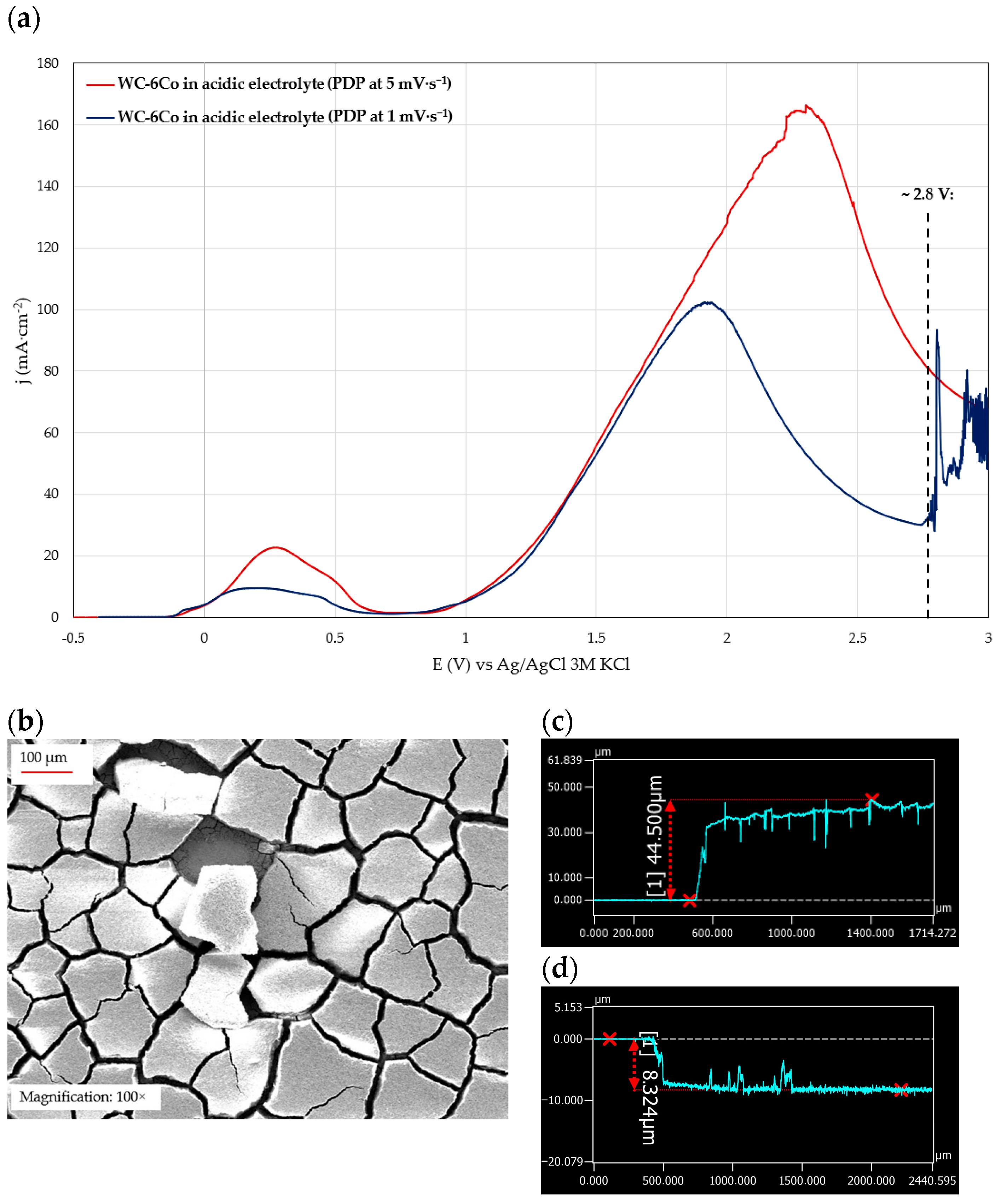
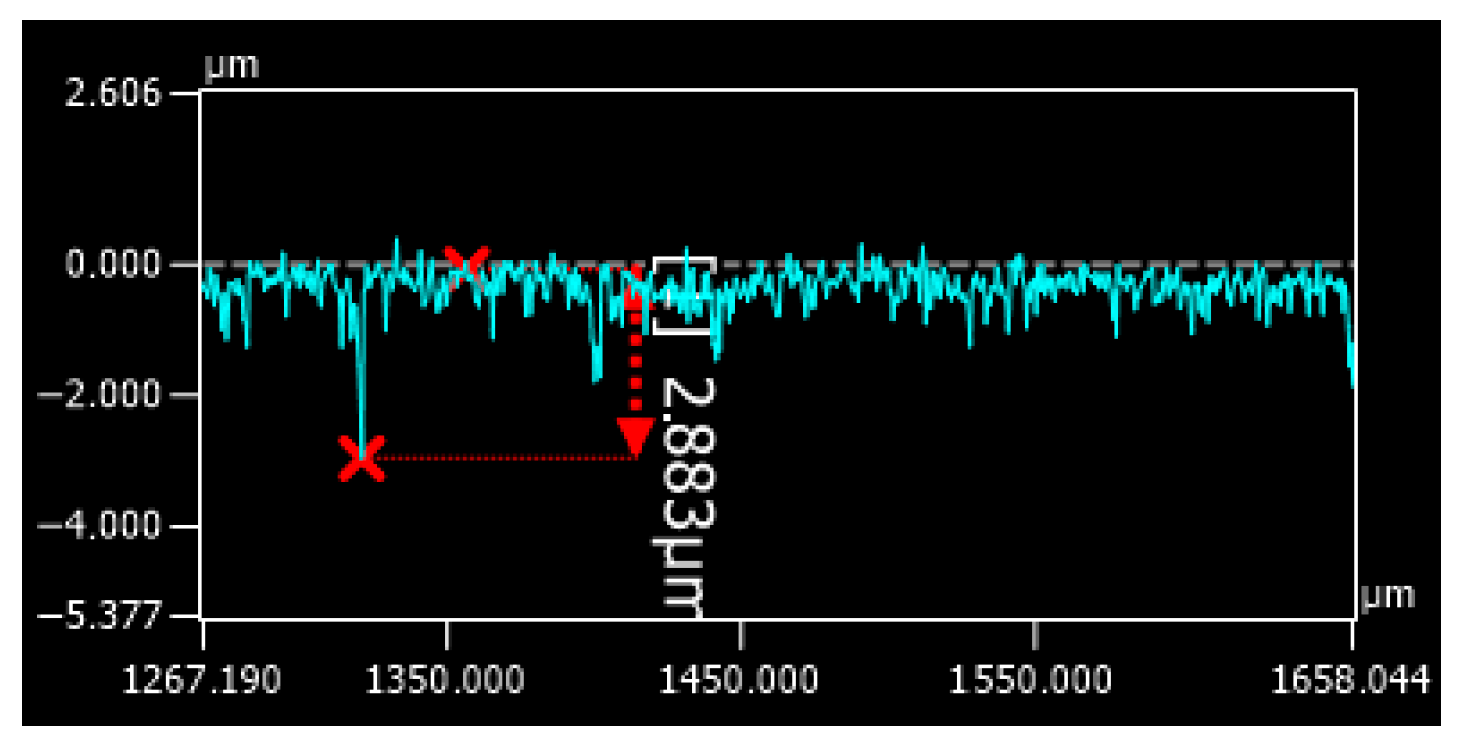
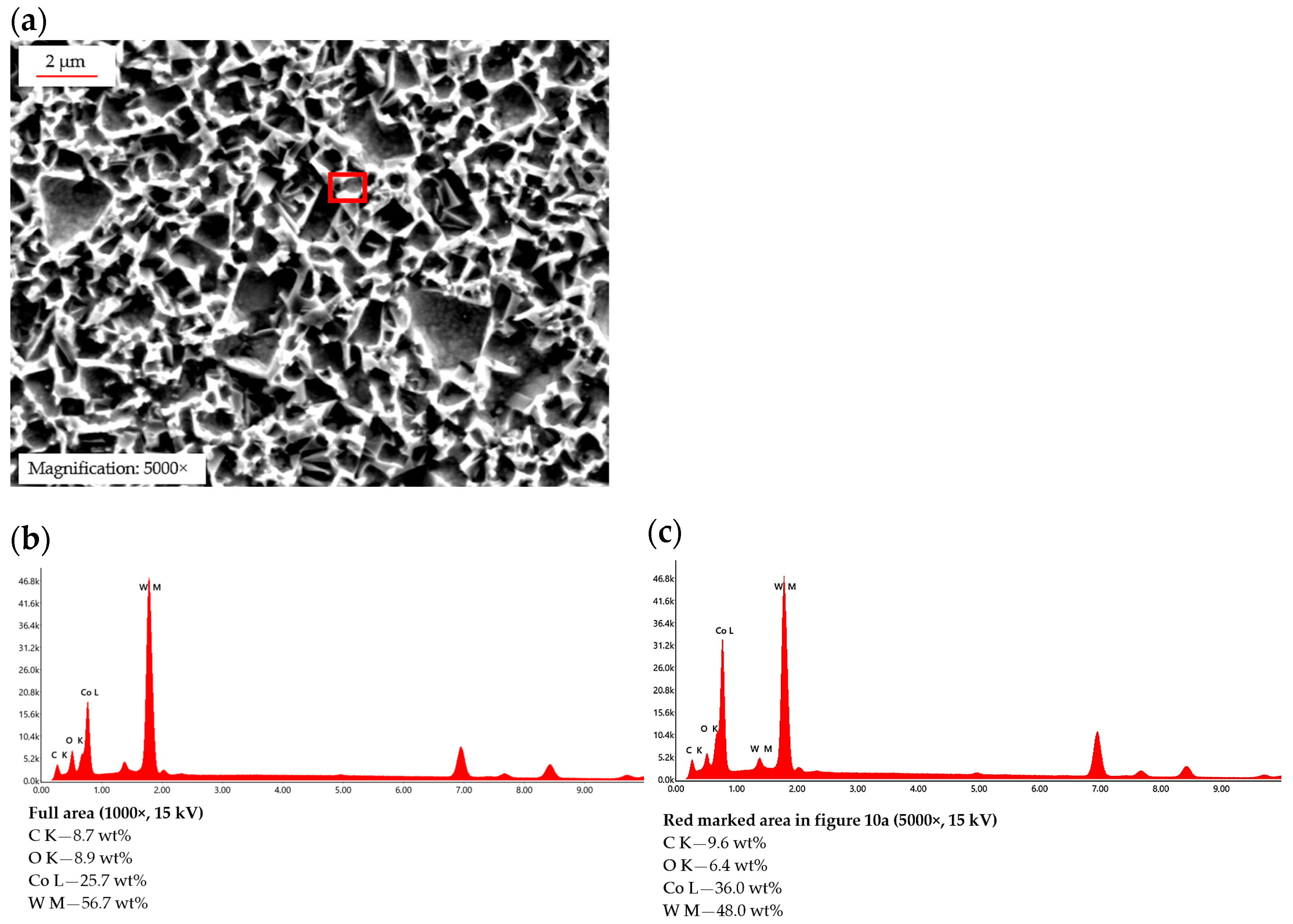
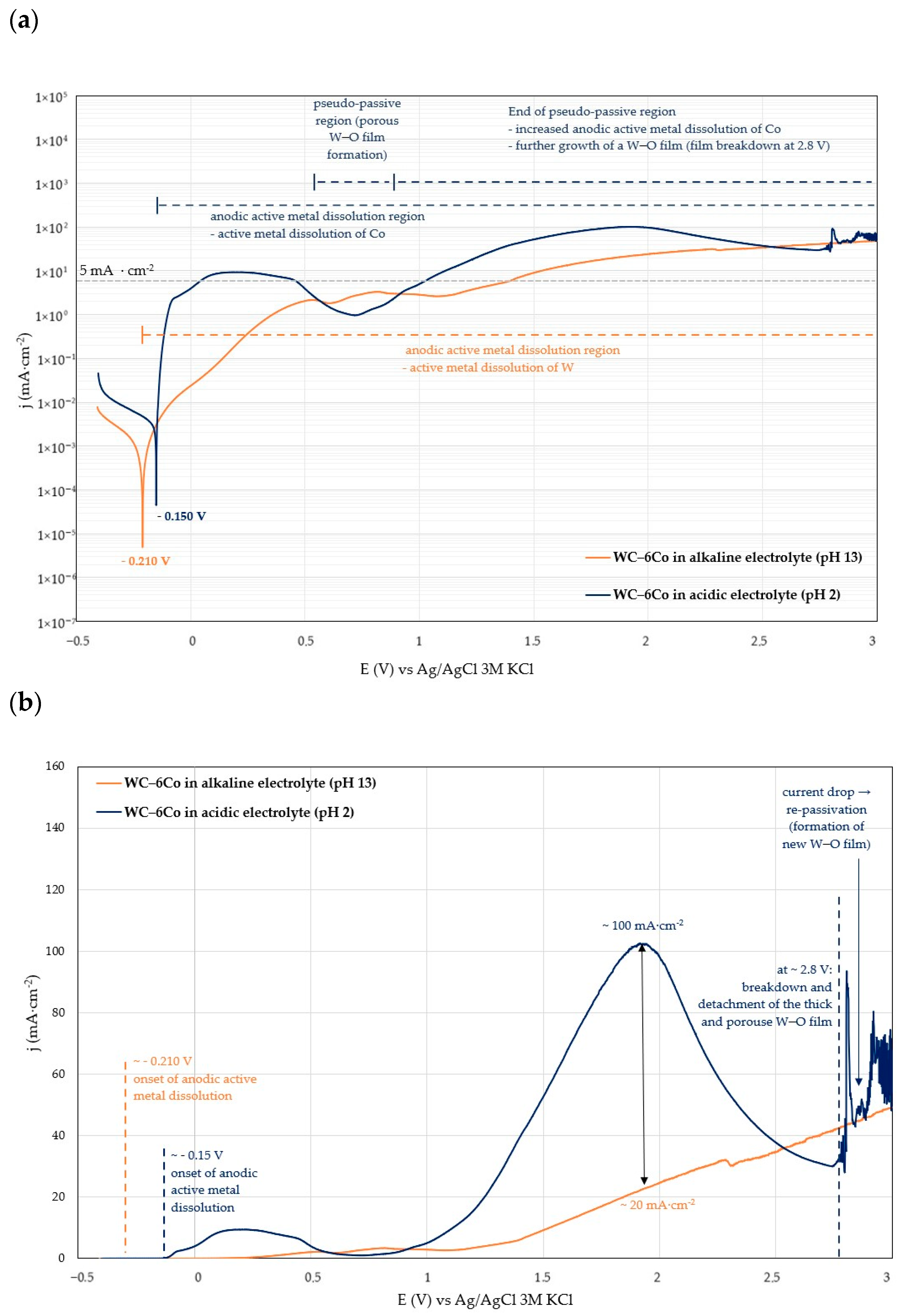
This study investigates the corrosion behaviour of a WC–6Co cemented carbide (94 wt% WC, 6 wt% Co) in acidic (pH 2) and alkaline (pH 13) electrolytes used for industrial PVD coating removal. The removal of the coating was not investigated, since no coatings were applied or analysed in this study. The objective was exclusively to simulate the corrosion response of the exposed substrate after the coating had been removed during electrochemical stripping. Potentiodynamic polarisation measurements were performed from OCP −0.2 V to +3 V at a scan rate of 1 mV·s−1, followed by surface characterisation using SEM/EDS and laser profilometry to identify corrosion mechanisms and quantify material degradation. In an acidic solution, corrosion was dominated by cobalt dissolution, followed by the formation of a W–O-rich corrosion-product layer, as indicated by increased tungsten and oxygen contents in SEM/EDS analyses. The layer became increasingly porous and mechanically unstable at higher potentials. Progressive thickening of the corrosion-product layer and subsequent breakdown resulted in significant material loss, including surface abrasion up to ~8 µm. In alkaline electrolytes, SEM/EDS analyses revealed a Co–O-rich surface layer, suggesting cobalt-containing hydroxide/oxide corrosion products. These results suggest that surface-layer formation on WC–Co does not necessarily provide reliable corrosion protection, as stability and morphology strongly depend on pH. These findings provide valuable guidance for the use of cemented carbides in electrochemical stripping processes for PVD coating removal.
Keywords: tungsten-carbide; electrochemical corrosion behaviour; potentiodynamic polarisation; electrochemical stripping; reconditioning tungsten-carbide; electrochemical corrosion behaviour; potentiodynamic polarisation; electrochemical stripping; reconditioning
Graphical Abstract