
Effect of Laser Scan Speed on the Tribocorrosion Behavior of Laser Engineered Net Shaping (LENS)-Manufactured Stainless Steel 316L in a Simulated Physiological Solution
 , , ,
, , , 
Abstract
1. Introduction
2. Materials and Methods
2.1. Material Synthesis and Initial Characterization
2.2. Electrochemical Tests
- (a)
- Open circuit potential (OCP) measurements for 30 min until stable.
- (b)
- Electrochemical impedance spectroscopy (EIS) from 100,000 Hz to 0.01 Hz at 10 mV AC amplitude and 10 points/decade at OCP using the procedure described in ASTM G106-89 [22].
- (c)
- Cyclic potentiodynamic polarization (CPP) from −150 mV to +1.5 V (vs. OCP) at a scanning rate of 1 mV/s, with the reverse scan performed back to −150 mV (vs. OCP) using the procedure described in ASTM G61-86 [23].
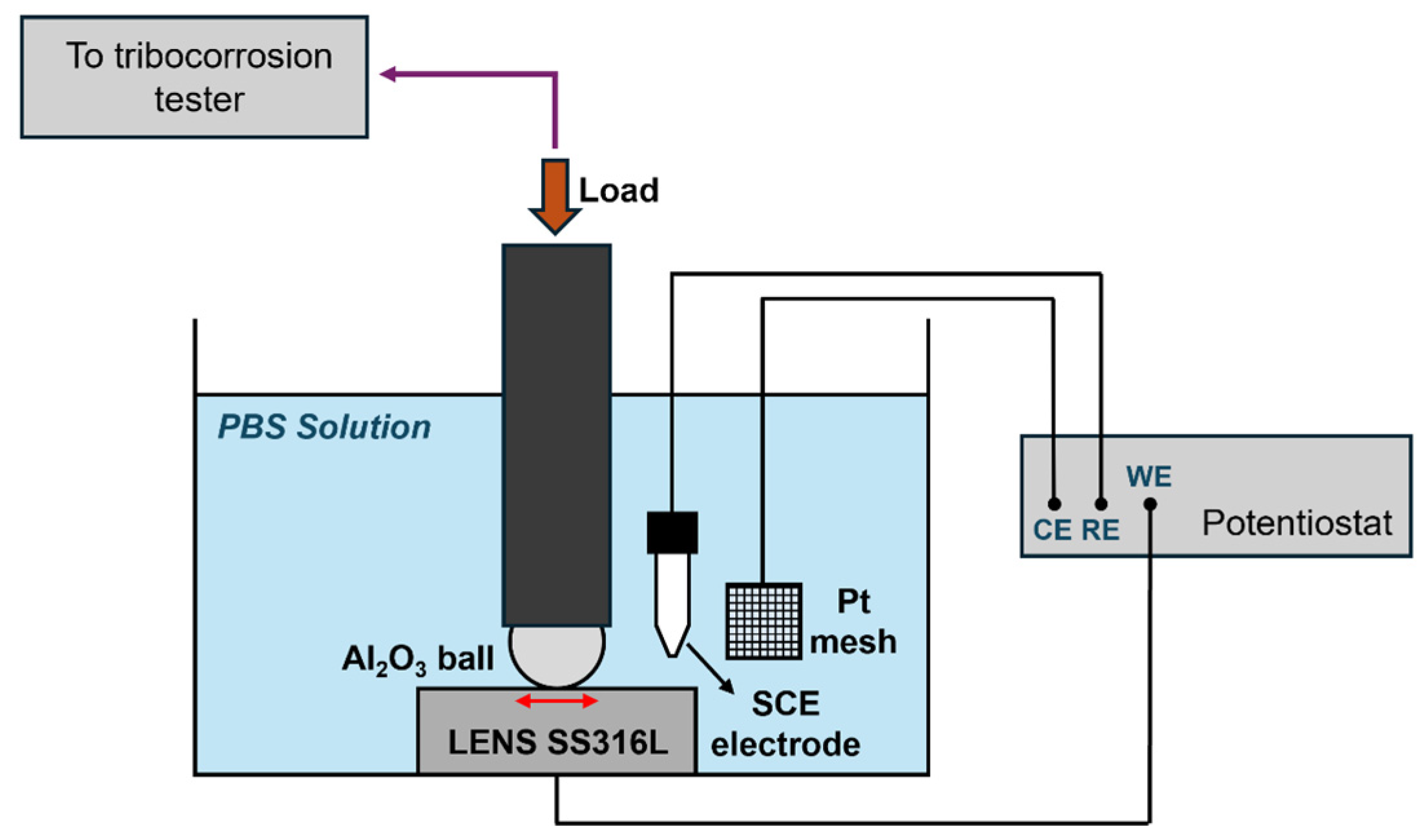
2.3. Potentiostatic Tribocorrosion Tests
- (a)
- Potential was maintained at OCP for 5 min.
- (b)
- Potentials for tests were specified according to previously identified regions based on CPP testing:
- →
- The cathodic region, where the dissolution of the metal is inhibited and the induced wear is mainly attributed to mechanical loading.
- →
- The passive region, where the current is used to dissolve the metal, leading to formation of a passive oxide film. The induced wear is attributed to the synergy between chemical and mechanical competition, providing details on the influence of the generation of the passive film on friction behavior.
2.4. Characterization After Testing
3. Results and Discussion
3.1. Microstructure and Mechanical Properties
3.2. Electrochemical Impedance Spectroscopy (EIS) Results
3.3. Cyclic Potentiodynamic Polarization (CPP) Results
3.4. Potentiostatic Tribocorrosion Tests
3.5. Characterization After Corrosion and Wear Tests
4. Conclusions
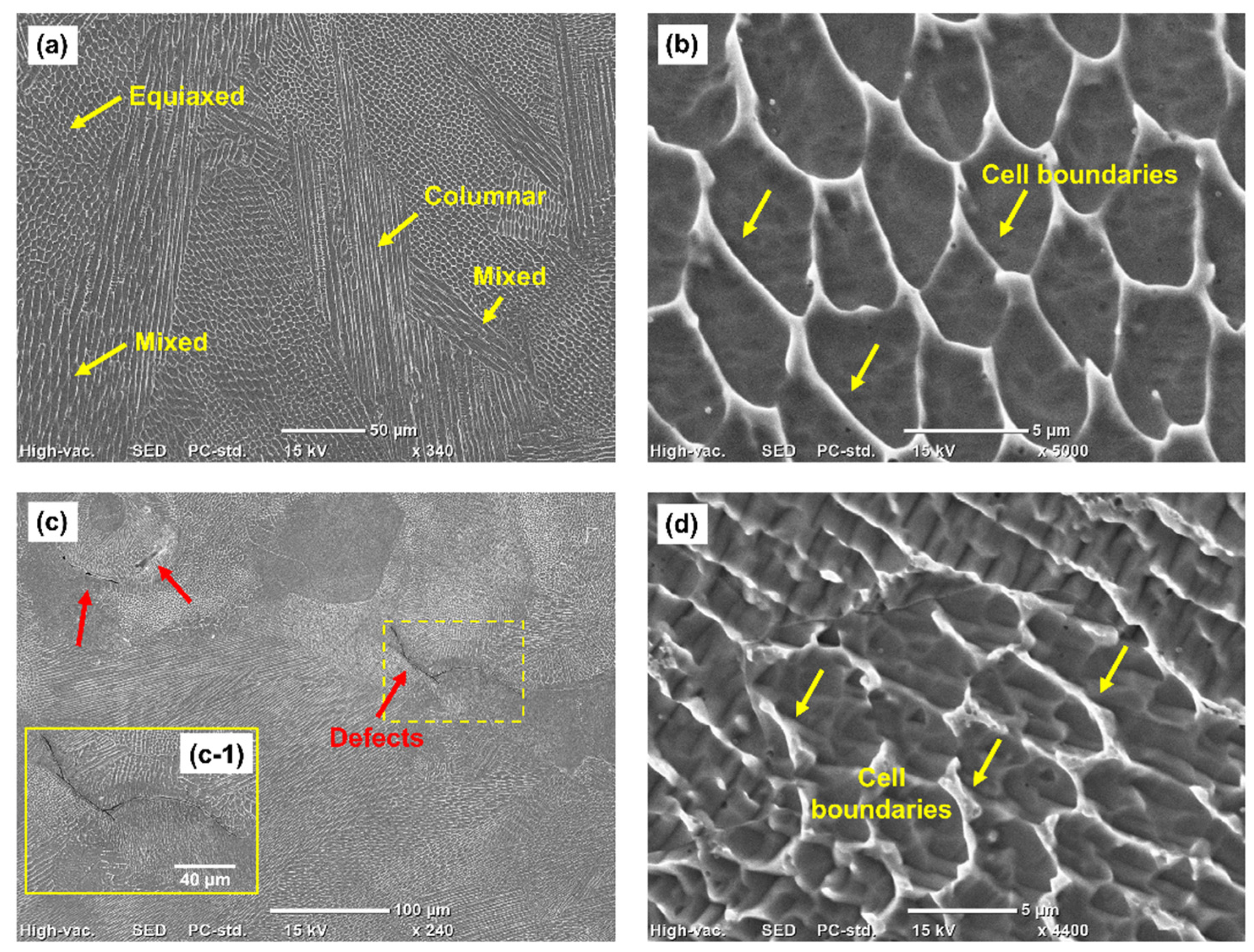
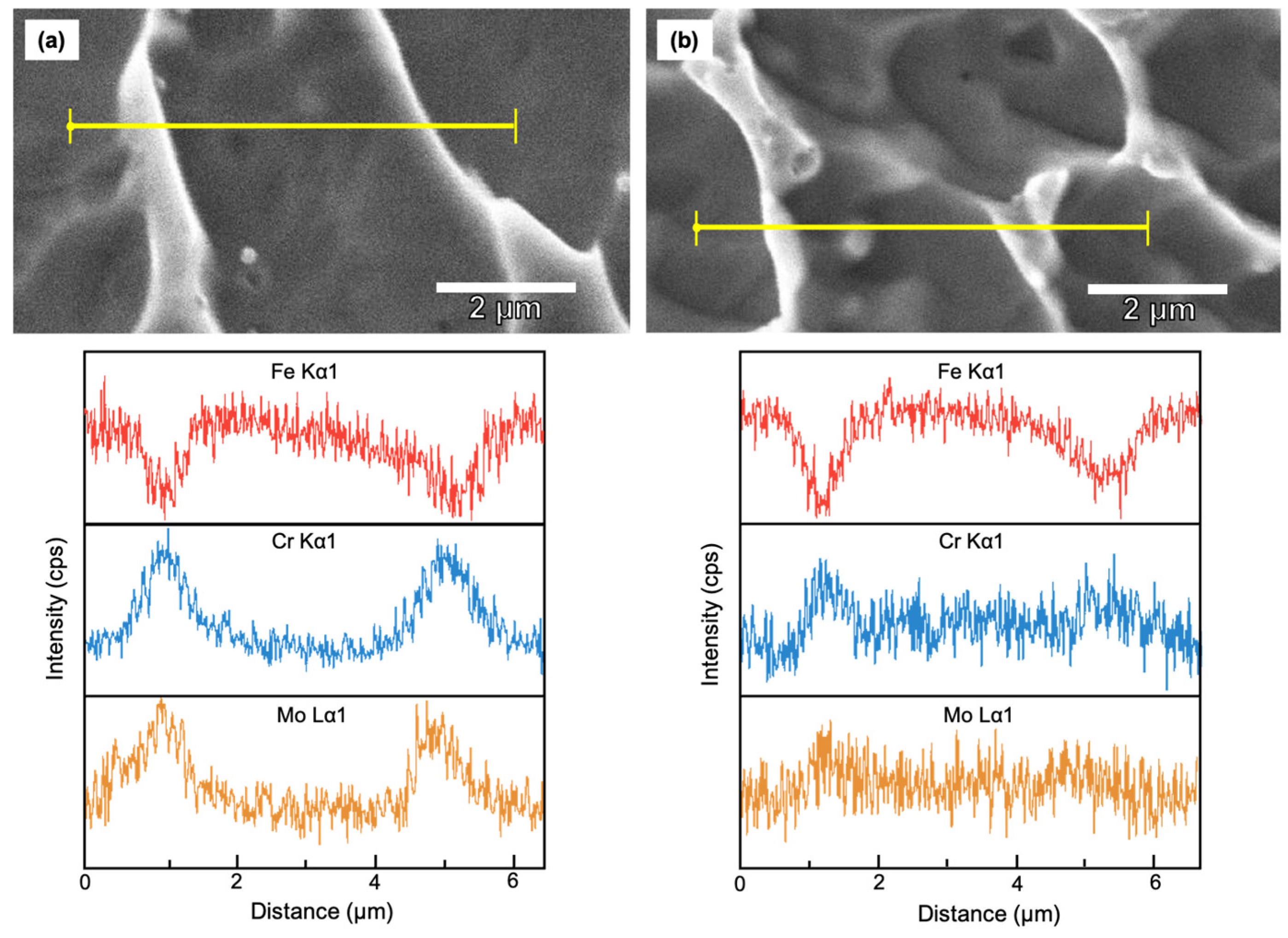
- The LENS samples showed the formation of fine, heterogeneous cellular features enclosed within cell boundaries. S10 (lower scan speed) showed more continuous cell boundaries whereas S15 (higher scan speed) showed the presence of discontinuous boundaries. S15 showed the presence of manufacturing defects such as porosities and lack of fusion. Both samples showed the micro-segregation of Cr and Mo to the cell boundaries compared to the cell interiors.
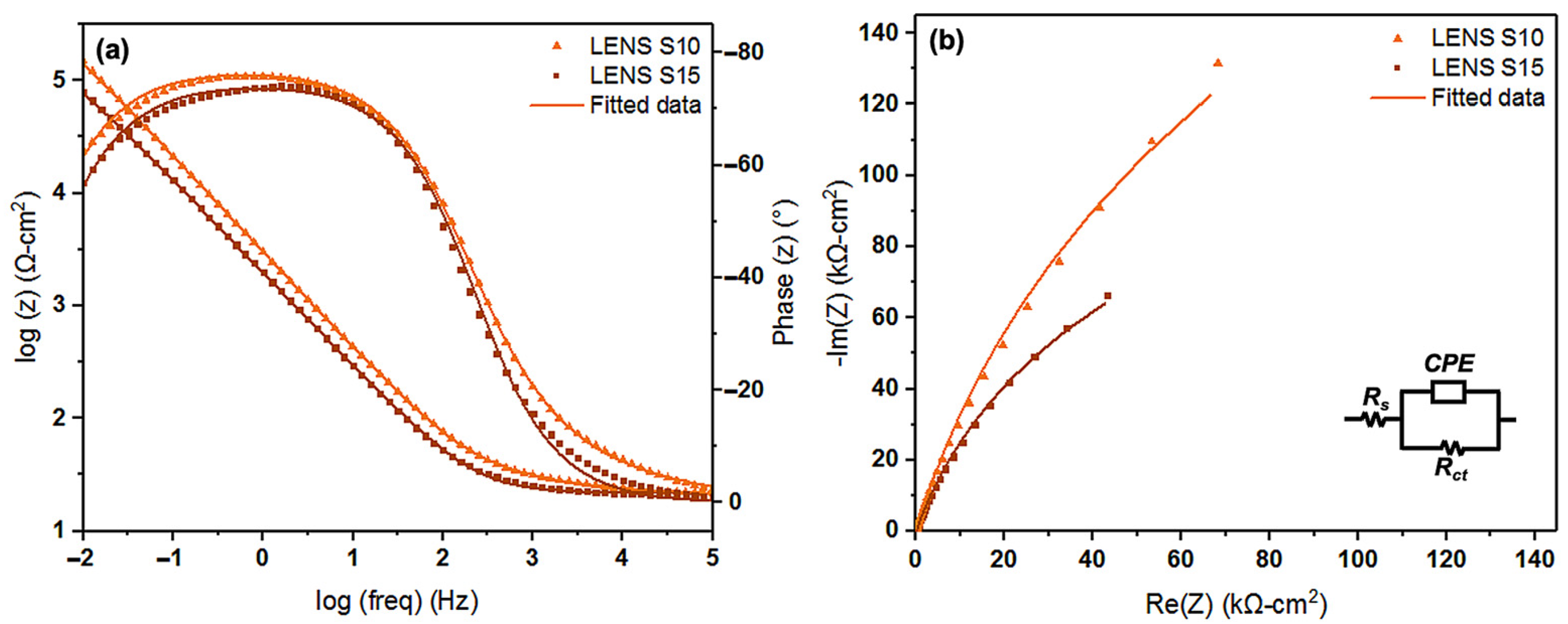
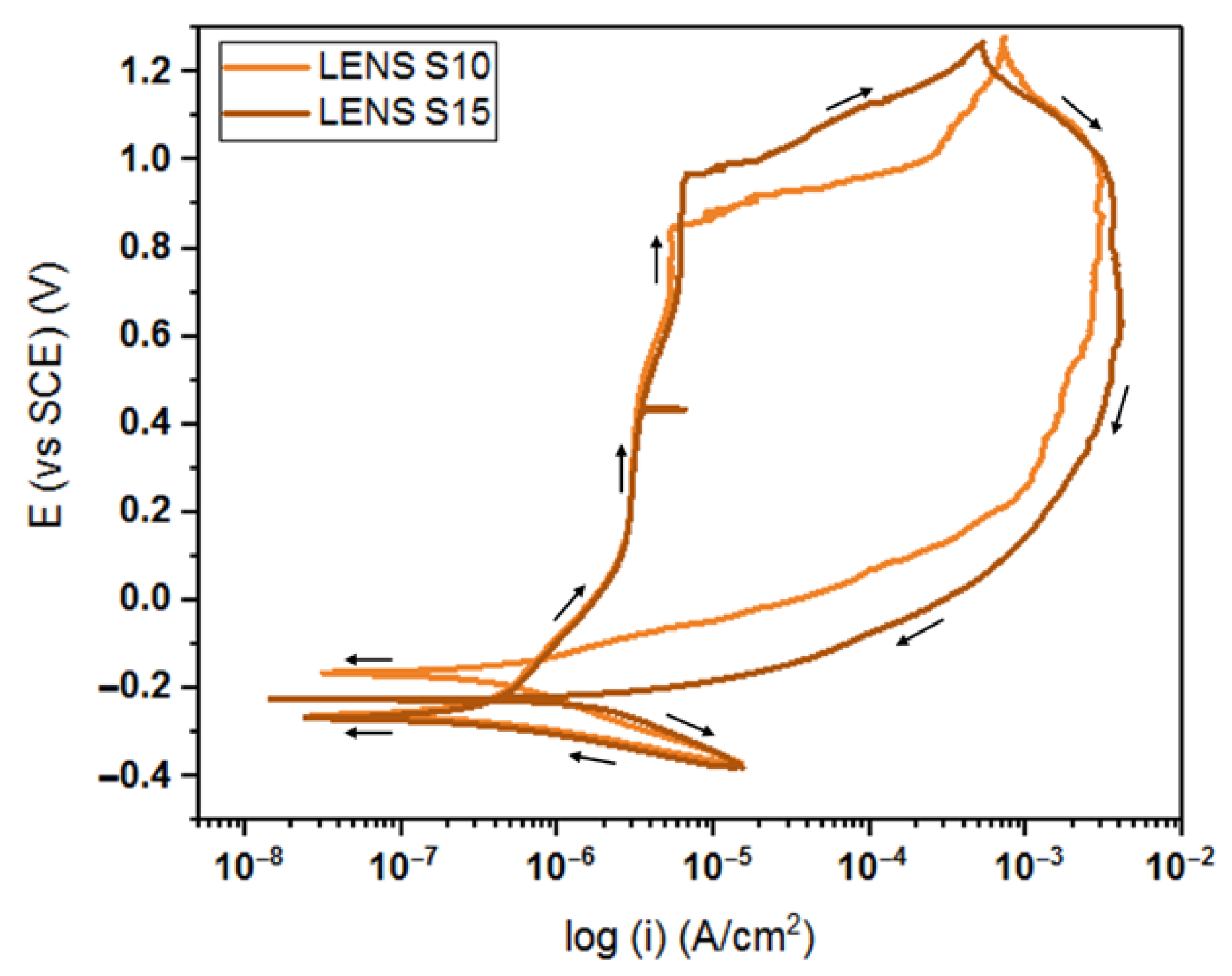
- EIS results showed that the passive film formed on S10 was more compact and less defective than that on S15 with the latter showing a 66% reduction in Rct. Both samples showed susceptibility to pitting corrosion in PBS with similar breakdown potentials with the Erep of S15 being lower than S10 by 35%.
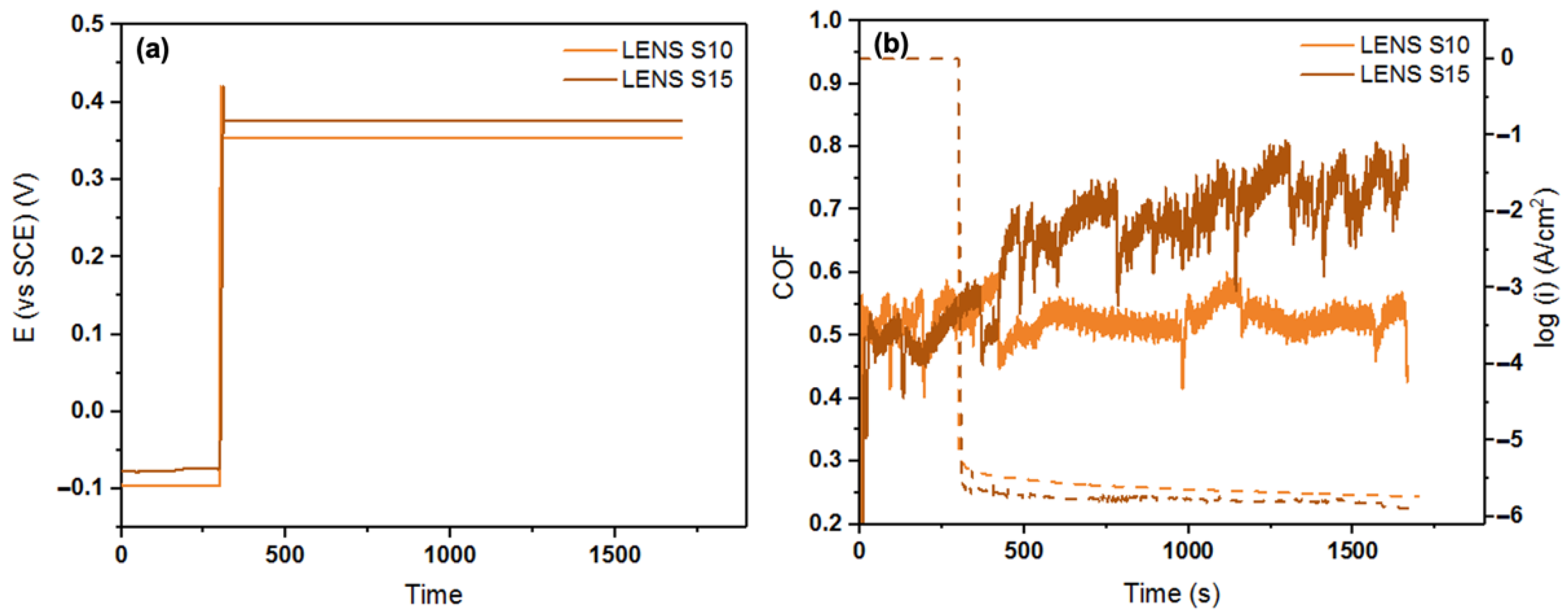
- The mean COF during potential application was 0.52 and 0.68 for the S10 and S15 samples respectively with the S15 sample showing more fluctuations in the sliding current density which could be due to frequent rupture and repassivation of passive film.
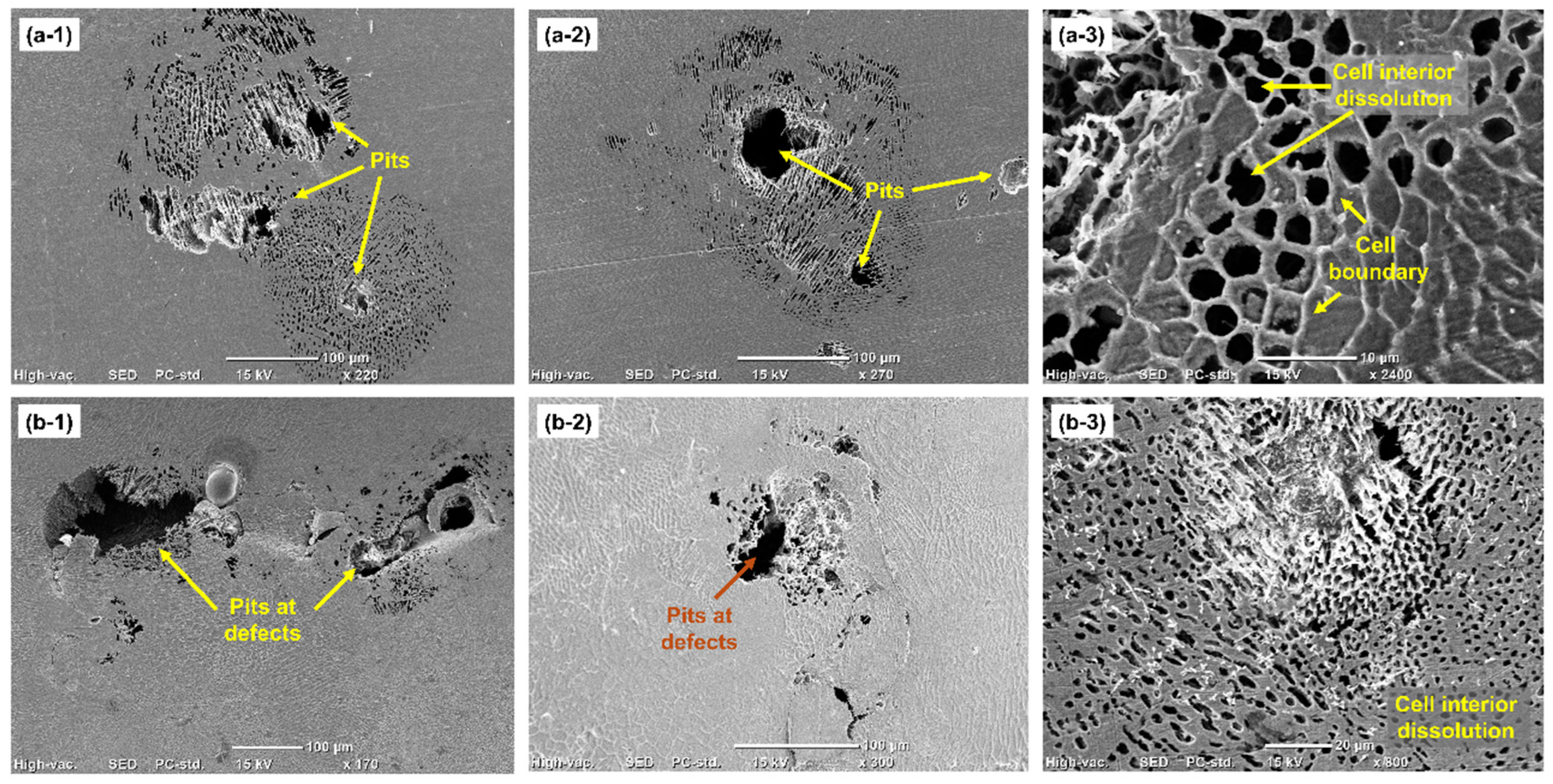
- Pits on the samples after CPP testing showed evidence of cell interior dissolution in both samples with most of the pits present at or near defects in S15.
- Volume loss was dominated by wear in both samples with the corrosion rate accelerated by wear being much higher than wear rate accelerated by corrosion. The synergistic contribution, ΔVs and corrosion rate affected by wear (Vc-w) was significantly higher for S15 than for S10 with increases of 61% and 88% respectively.
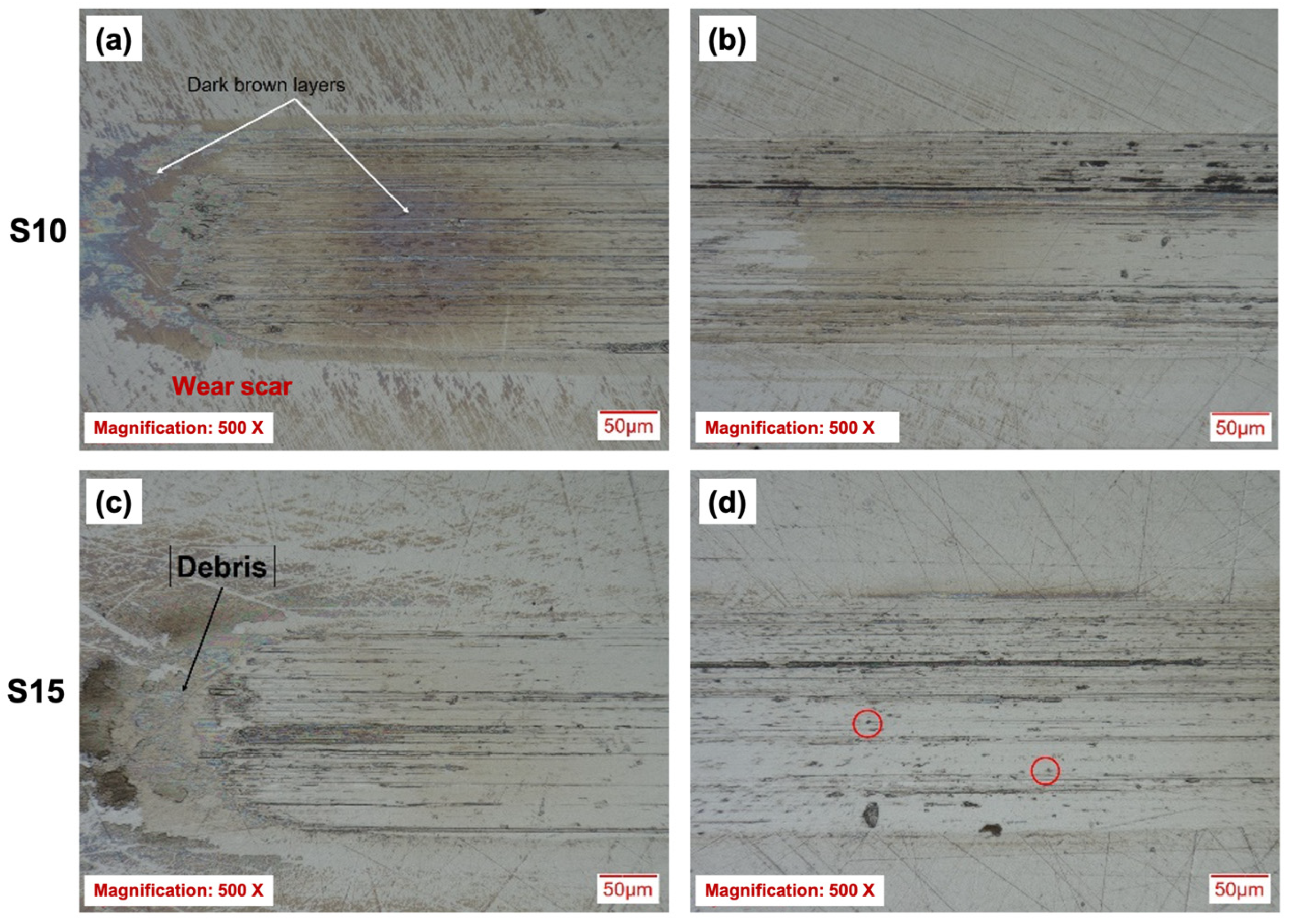
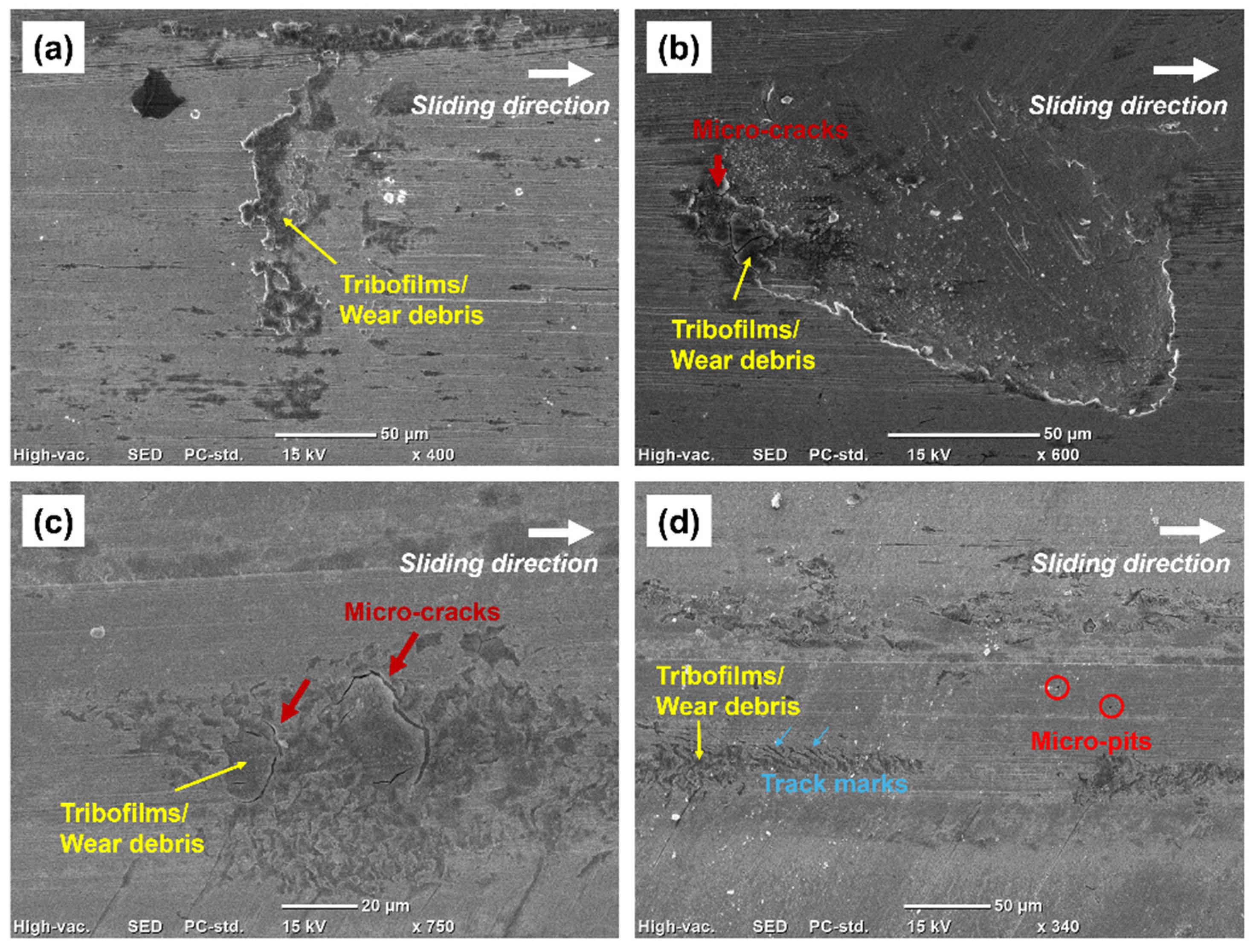
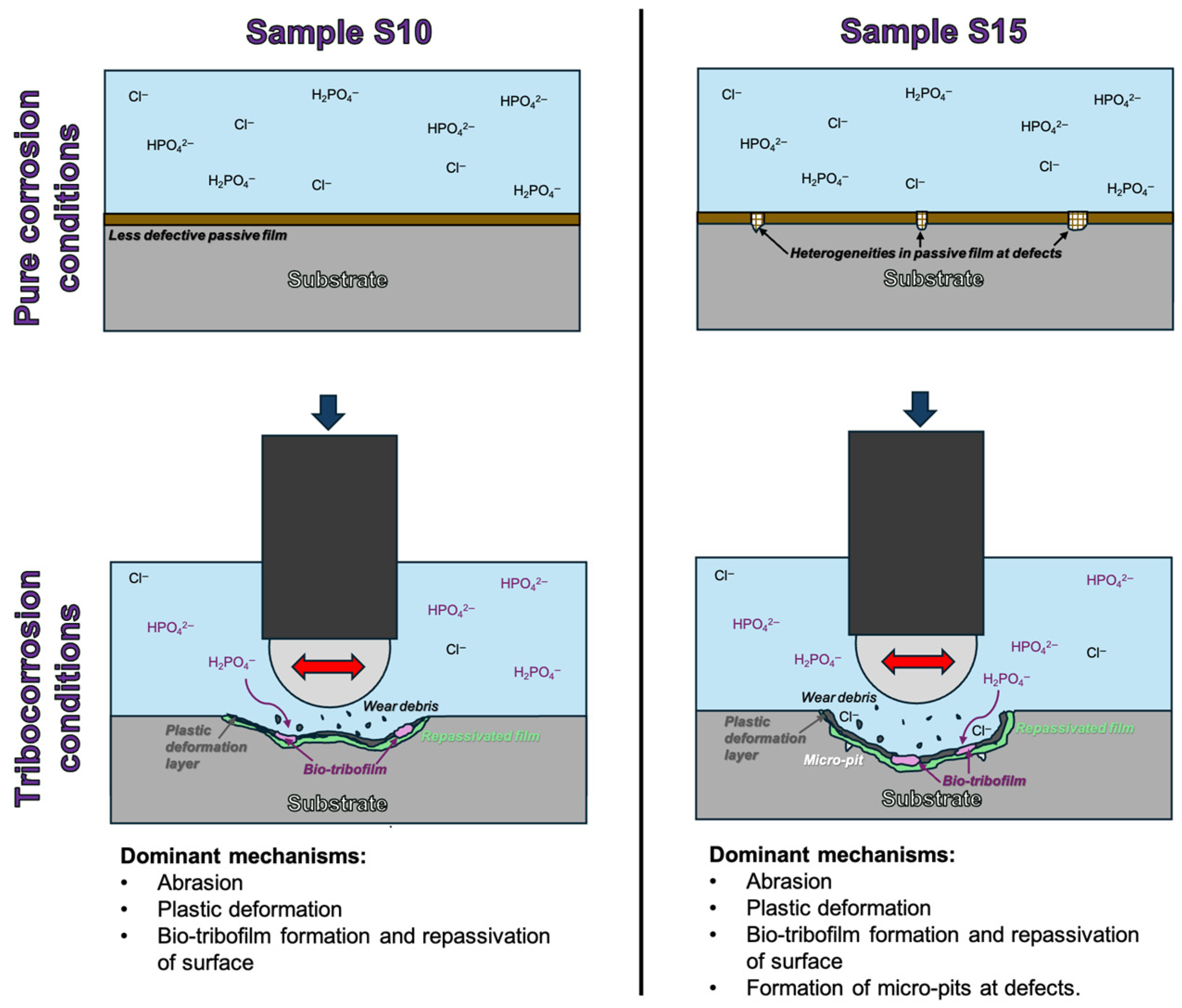
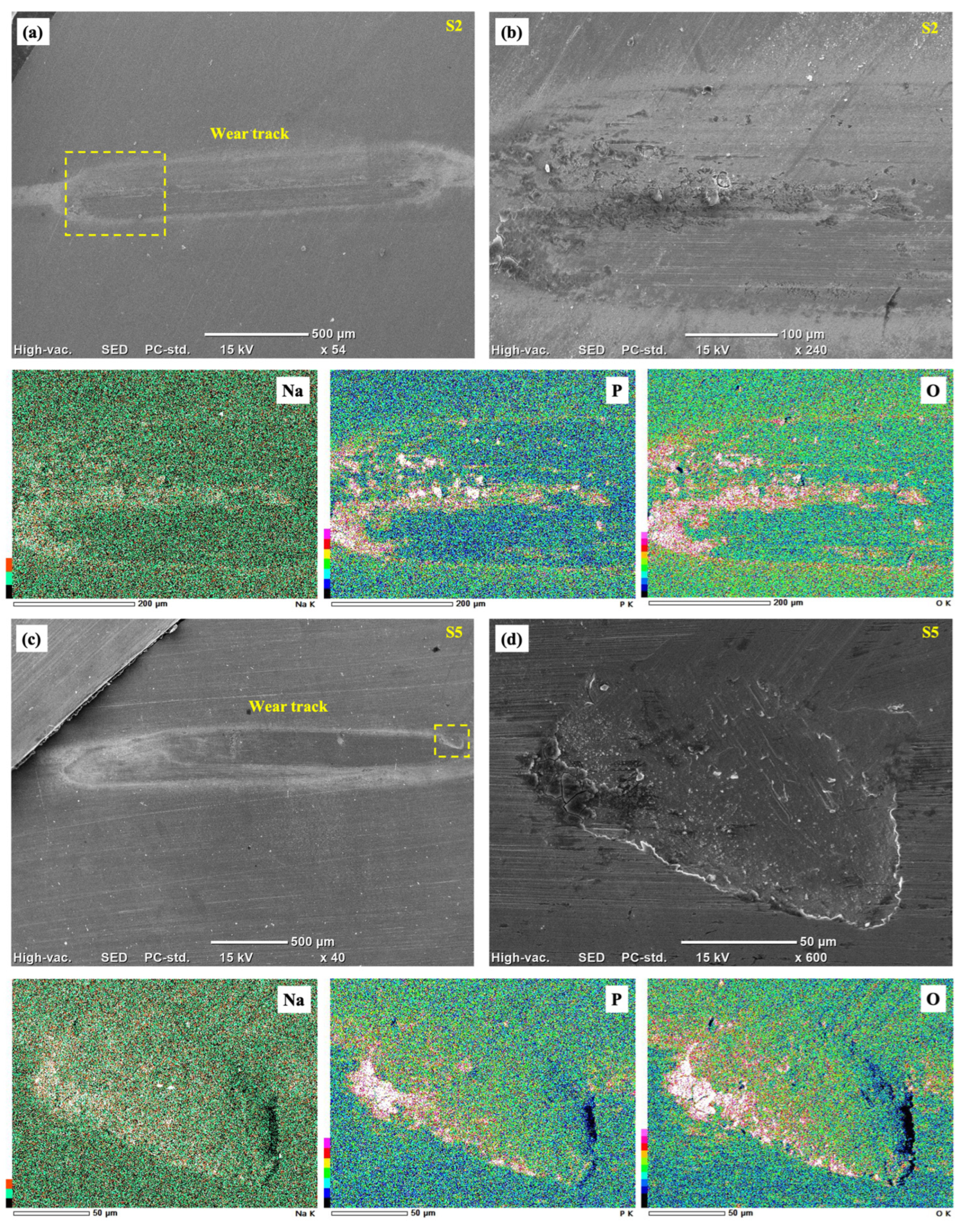
- The wear tracks showed grooves from abrasion, evidence of plastic deformation and the formation of bio-tribofilms comprising phosphates at certain regions. S15 also showed the presence of micro-pits possibly formed at defects.
5. Study Limitations
Author Contributions
Funding
Data Availability Statement
Conflicts of Interest
Appendix A. Additional SEM-EDS Maps of Wear Tracks

References
- Svetlizky, D.; Zheng, B.; Vyatskikh, A.; Das, M.; Bose, S.; Bandyopadhyay, A.; Schoenung, J.M.; Lavernia, E.J.; Eliaz, N. Laser-based directed energy deposition (DED-LB) of advanced materials. Mater. Sci. Eng. A 2022, 840, 142967. [Google Scholar] [CrossRef] [Scilit]
- Svetlizky, D.; Das, M.; Zheng, B.; Vyatskikh, A.L.; Bose, S.; Bandyopadhyay, A.; Schoenung, J.M.; Lavernia, E.J.; Eliaz, N. Directed energy deposition (DED) additive manufacturing: Physical characteristics, defects, challenges and applications. Mater. Today 2021, 49, 271–295. [Google Scholar] [CrossRef] [Scilit]
- Pandey, A.K.; Kumar, A.; Kumar, R.; Gautam, R.K.; Behera, C.K. Tribological performance of SS 316L, commercially pure Titanium, and Ti6Al4V in different solutions for biomedical applications. Mater. Today Proc. 2023, 78, A1–A8. [Google Scholar] [CrossRef] [Scilit]
- Holmes, D.; Sharifi, S.; Stack, M.M. Tribo-corrosion of steel in artificial saliva. Tribol. Int. 2014, 75, 80–86. [Google Scholar] [CrossRef] [Scilit]
- Alonso, C.; Castellote, M.; Andrade, C. Chloride threshold dependence of pitting potential of reinforcements. Electrochim. Acta 2002, 47, 3469–3481. [Google Scholar] [CrossRef] [Scilit]
- Hodge, C.; Stack, M.M. Tribo-corrosion mechanisms of stainless steel in soft drinks. Wear 2010, 270, 104–114. [Google Scholar] [CrossRef] [Scilit]
- Yazdi, M.; Khan, F.; Abbassi, R.; Quddus, N.; Castaneda-Lopez, H. A review of risk-based decision-making models for microbiologically influenced corrosion (MIC) in offshore pipelines. Reliab. Eng. Syst. Saf. 2022, 223, 108474. [Google Scholar] [CrossRef] [Scilit]
- Pejaković, V.; Berger, L.M.; Thiele, S.; Rojacz, H.; Rodríguez Ripoll, M. Fine grained titanium carbonitride reinforcements for laser deposition processes of 316L boost tribocorrosion resistance in marine environments. Mater. Des. 2021, 207, 109847. [Google Scholar] [CrossRef] [Scilit]
- Narayanan, D.; Liu, M.; Kuttolamadom, M.; Castaneda, H. Identification and development of a new local corrosion mechanism in a Laser Engineered Net Shaped (LENS) biomedical Co-Cr-Mo alloy in Hank’s solution. Corros. Sci. 2022, 207, 110599. [Google Scholar] [CrossRef] [Scilit]
- Zhang, X.-M.; Chen, Z.-Y.; Luo, H.-F.; Zhou, T.; Zhao, Y.-L.; Ling, Z.-C. Corrosion resistances of metallic materials in environments containing chloride ions: A review. Trans. Nonferrous Met. Soc. China 2022, 32, 377–410. [Google Scholar] [CrossRef] [Scilit]
- Yue, X.; Yang, Z.; Huang, L.; Zhang, L.; Li, J.; Xue, Z.; Pan, J. Passivation characteristics of ultra-thin 316L foil in NaCl solutions. J. Mater. Sci. Technol. 2022, 127, 192–205. [Google Scholar] [CrossRef] [Scilit]
- Racot, A.; Aubert, I.; Touzet, M.; Thiebaut, S.; Demesy, M. Statistical analysis of the pitting corrosion induced by potentiostatic pulse tests of wrought and SLM 316L stainless steels. Corros. Sci. 2022, 197, 110036. [Google Scholar] [CrossRef] [Scilit]
- Narayanan, D.; Martinez, A.; Martin, U.; Mansoor, B.; Case, R.; Castaneda, H. Localized corrosion in selective laser melted SS316L in CO2 and H2S brines at elevated temperatures. npj Mater. Degrad. 2024, 8, 50. [Google Scholar] [CrossRef] [Scilit]
- Narayanan, D.; Martinez, A.; Mansoor, B.; Karaman, I.; Castaneda, H. A comprehensive study of the influence of type of additive manufacturing technique and build orientation on the passivation and corrosion behavior of stainless steel 316L. Electrochim. Acta 2025, 522, 145942. [Google Scholar] [CrossRef] [Scilit]
- Goldsberry, R.; Narayanan, D.; Case, R.; Mansoor, B.; Castaneda, H. Effect of Temperature on Passive Film Characteristics of LPBF (Laser Powder-Bed Fusion) Processing on UNS-S31603. Materials 2024, 17, 3420. [Google Scholar] [CrossRef] [Scilit] [PubMed]
- Revilla, R.I.; Van Calster, M.; Raes, M.; Arroud, G.; Andreatta, F.; Pyl, L.; Guillaume, P.; De Graeve, I. Microstructure and corrosion behavior of 316L stainless steel prepared using different additive manufacturing methods: A comparative study bringing insights into the impact of microstructure on their passivity. Corros. Sci. 2020, 176, 108914. [Google Scholar] [CrossRef] [Scilit]
- Wang, Z.; Wu, Y.; Qiao, L.; Yan, Y. Decline in pitting corrosion resistance of 316 L stainless steel induced by Cr-depleted layer during tribocorrosion. npj Mater. Degrad. 2025, 9, 23. [Google Scholar] [CrossRef] [Scilit]
- Stendal, J.; Fergani, O.; Yamaguchi, H.; Espallargas, N. A Comparative Tribocorrosion Study of Additive Manufactured and Wrought 316L Stainless Steel in Simulated Body Fluids. J. Bio-Tribo-Corros. 2018, 4, 9. [Google Scholar] [CrossRef] [Scilit]
- Bao, Y.; Wu, J.; Ji, X. Tribocorrosion Performance of Additively Manufactured 316L Stainless Steel in 3.5% NaCl Solution. J. Tribol. 2026, 148, 034202. [Google Scholar] [CrossRef] [Scilit]
- Rzeszotarska, M.; Zasada, D.; Płociński, T.; Stępniowski, W.J.; Polański, M. On the Influence of Manufacturing Parameters on the Microstructure, Mechanical Properties and Corrosion Resistance of AISI 316L Steel Deposited by Laser Engineered Net Shaping (LENS®). Materials 2023, 16, 1965. [Google Scholar] [CrossRef] [Scilit]
- Balhara, H.; Botcha, B.; Wolff, S.J.; Bukkapatnam, S.T.S. Ripple formations determine the heterogeneous microstructure of directed energy deposition (DED)-printed 316L components. Mater. Des. 2023, 227, 111756. [Google Scholar] [CrossRef] [Scilit]
- ASTM G106-89; Standard Practice for Verification of Algorithm and Equipment for Electrochemical Impedance Measurements. ASTM International: West Conshohocken, PA, USA, 2015. [CrossRef] [Scilit]
- ASTM G61-86; Standard Test Method for Conducting Cyclic Potentiodynamic Polarization Measurements for Localized Corrosion Susceptibility of Iron-, Nickel-, or Cobalt-Based Alloys. ASTM International: West Conshohocken, PA, USA, 2018. [CrossRef] [Scilit]
- Zheng, B.; Haley, J.; Yang, N.; Yee, J.; Terrassa, K.; Zhou, Y.; Lavernia, E.; Schoenung, J. On the evolution of microstructure and defect control in 316L SS components fabricated via directed energy deposition. Mater. Sci. Eng. A 2019, 764, 138243. [Google Scholar] [CrossRef] [Scilit]
- Yazar, K.U.; Pawar, S.; Park, K.S.; Choi, S.H. Effect of process parameters on the clad morphology, microstructure, microtexture, and hardness of single layer 316 L stainless steel during direct energy deposition. Mater. Charact. 2022, 191, 112148. [Google Scholar] [CrossRef] [Scilit]
- Vallejo, N.D.; Lucas, C.; Ayers, N.; Graydon, K.; Hyer, H.; Sohn, Y. Process Optimization and Microstructure Analysis to Understand Laser Powder Bed Fusion of 316L Stainless Steel. Metals 2021, 11, 832. [Google Scholar] [CrossRef] [Scilit]
- Narayanan, D.; Chen, L.; Mansoor, B.; Castaneda, H. A new insight into pitting initiation in selective laser melted 316L stainless steel. Mater. Lett. 2023, 333, 133562. [Google Scholar] [CrossRef] [Scilit]
- Lodhi, M.J.K.; Deen, K.M.; Greenlee-Wacker, M.C.; Haider, W. Additively manufactured 316L stainless steel with improved corrosion resistance and biological response for biomedical applications. Addit. Manuf. 2019, 27, 8–19. [Google Scholar] [CrossRef] [Scilit]
- Yue, X.; Zhang, L.; Hua, Y.; Wang, J.; Dong, N.; Li, X.; Xu, S.; Neville, A. Revealing the superior corrosion protection of the passive film on selective laser melted 316L SS in a phosphate-buffered saline solution. Appl. Surf. Sci. 2020, 529, 147170. [Google Scholar] [CrossRef] [Scilit]
- Karimi, S.; Nickchi, T.; Alfantazi, A. Effects of bovine serum albumin on the corrosion behaviour of AISI 316L, Co–28Cr–6Mo, and Ti–6Al–4V alloys in phosphate buffered saline solutions. Corros. Sci. 2011, 53, 3262–3272. [Google Scholar] [CrossRef] [Scilit]
- Narayanan, D.; Truong, T.D.; Martin, U.; Andani, M.T.; Castaneda, H. Evaluation of the corrosion behavior of laser powder bed fusion (L-PBF) stainless steel 316 L in a simulated synovial fluid under inflammatory conditions. Materialia 2025, 42, 102499. [Google Scholar] [CrossRef] [Scilit]
- Zhao, X.; Jia, D.; Wei, S.; Gao, Y.; Liu, H. Investigation of tribo-corrosion behaviors of SLM-printed CX stainless steel under different loads. J. Mater. Res. Technol. 2024, 30, 5266–5277. [Google Scholar] [CrossRef] [Scilit]
- Tan, L.; Wang, Z.; Ma, Y.; Yan, Y.; Qiao, L. Tribocorrosion investigation of 316L stainless steel: The synergistic effect between chloride ion and sulfate ion. Mater. Res. Express 2021, 8, 086501. [Google Scholar] [CrossRef] [Scilit]
- Li, Z.; Geng, M.; Wang, J.; Wen, L.; Ai, Y.; Sun, D. Synergy analysis of tribocorrosion behaviour of aluminum alloy under different hydrostatic pressures. J. Mater. Res. Technol. 2024, 33, 6949–6957. [Google Scholar] [CrossRef] [Scilit]
- Carquigny, S.; Takadoum, J.; Ivanescu, S. Corrosion and tribocorrosion study of 316L steel, Ti–6Al–4V and Ti–10Zr–10Nb–5Ta. Tribol.-Mater. Surf. Interfaces 2019, 13, 112–119. [Google Scholar] [CrossRef] [Scilit]
- Ruggiero, A.; De Stefano, M. Experimental investigation on the bio-tribocorrosive behavior of Ti6Al4V alloy and 316 L stainless steel in two biological solutions. Tribol. Int. 2023, 190, 109033. [Google Scholar] [CrossRef] [Scilit]
- Yazdi, R.; Ghasemi, H.M.; Abedini, M.; Wang, C.; Neville, A. Tribocorrosion behaviour of Ti6Al4V under various normal loads in phosphate buffered saline solution. Trans. Nonferrous Met. Soc. China 2020, 30, 1300–1314. [Google Scholar] [CrossRef] [Scilit]
- Taufiqurrakhman, M.; Bryant, M.G.; Neville, A. Tribofilms on CoCrMo alloys: Understanding the role of the lubricant. Biotribology 2019, 19, 100104. [Google Scholar] [CrossRef] [Scilit]



| Sample | Rs (Ω cm2) | Rct (kΩ cm2) | Qct (×10−6) (S−1 cm−2 sn) | nct | χ2 (×10−3) |
|---|---|---|---|---|---|
| S10 | 24.1 ± 0.83 | 675.4 ± 56.4 | 70.13 ± 3.4 | 0.83 ± 0.01 | 1.45 |
| S15 | 21.7 ± 0.81 | 227.2 ± 24.6 | 98.13 ± 4.5 | 0.82 ± 0.01 | 0.37 |
| Samples | Electrochemical Results (V vs. SCE) | ||||
|---|---|---|---|---|---|
| Ecorr (mV vs. SCE) | Eb (mV vs. SCE) | Erep (mV vs. SCE) | icorr (nA/cm2) | ipass (μA/cm2) | |
| S10 | −260.6 ± 19 | 852.5 ± 18 | −165.5 ± 35 | 347 ± 45 | 3.05 ± 0.98 |
| S15 | −267.3 ± 25 | 968.6 ± 16 | −224.3 ± 27 | 339 ± 21 | 3.03 ± 0.75 |
| Samples | Potential Tested | Width (µm) | Depth (µm) |
|---|---|---|---|
| S10 | Ecath | 170 ± 7 | 3 ± 0.9 |
| Epass | 190 ± 11 | 3.3 ± 0.7 | |
| S15 | Ecath | 150 ± 10 | 3.6 ± 0.2 |
| Epass | 180 ± 8 | 3.9 ± 0.5 |
| Samples | Vw (10−3 mm3) | Vt (10−3 mm3) | Vc (10−3 mm3) | ΔVs (Vt − Vw − Vc) (10−3 mm3) | Vw-c (10−3 mm3) | Vc-w (ΔVs − Vw-c) (10−3 mm3) |
|---|---|---|---|---|---|---|
| S10 | 3.4 ± 0.14 | 4.1 ± 0.12 | 0.041 ± 0.001 | 0.659 ± 0.2 | 0.151 ± 0.05 | 0.508 ± 0.21 |
| S15 | 3.6 ± 0.28 | 4.7 ± 0.3 | 0.040 ± 0.001 | 1.06 ± 0.4 | 0.105 ± 0.03 | 0.955 ± 0.4 |
| Elements (wt%) | Sample S10 | Sample S15 | ||
|---|---|---|---|---|
| Figure 9a | Figure 9b | Figure 9c | Figure 9d | |
| Fe | 59.52 | 59.5 | 60.39 | 61.06 |
| Cr | 17.47 | 17.13 | 17.49 | 17.78 |
| Ni | 11.09 | 11.14 | 11.16 | 11.36 |
| Mo | 2.02 | 1.97 | 1.99 | 1.99 |
| Mn | 0.97 | 0.92 | 0.94 | 0.94 |
| O | 7.28 | 7.52 | 6.21 | 5.34 |
| P | 1.11 | 1.16 | 1.26 | 1.09 |
| Cl | 0.12 | 0.1 | 0.11 | 0.11 |
| Na | 0.42 | 0.56 | 0.45 | 0.33 |
Disclaimer/Publisher’s Note: The statements, opinions and data contained in all publications are solely those of the individual author(s) and contributor(s) and not of MDPI and/or the editor(s). MDPI and/or the editor(s) disclaim responsibility for any injury to people or property resulting from any ideas, methods, instructions or products referred to in the content. |
© 2026 by the authors. Licensee MDPI, Basel, Switzerland. This article is an open access article distributed under the terms and conditions of the Creative Commons Attribution (CC BY) license.
Share and Cite
Narayanan, D.; Messaadi Ben Said, M.; Abouhadid, F.; Dumont, M.; Karaman, I.; Castaneda, H. Effect of Laser Scan Speed on the Tribocorrosion Behavior of Laser Engineered Net Shaping (LENS)-Manufactured Stainless Steel 316L in a Simulated Physiological Solution. Corros. Mater. Degrad. 2026, 7, 30. https://doi.org/10.3390/cmd7020030
Narayanan D, Messaadi Ben Said M, Abouhadid F, Dumont M, Karaman I, Castaneda H. Effect of Laser Scan Speed on the Tribocorrosion Behavior of Laser Engineered Net Shaping (LENS)-Manufactured Stainless Steel 316L in a Simulated Physiological Solution. Corrosion and Materials Degradation. 2026; 7(2):30. https://doi.org/10.3390/cmd7020030
Chicago/Turabian StyleNarayanan, Deeparekha, Maha Messaadi Ben Said, Fadlallah Abouhadid, Myriam Dumont, Ibrahim Karaman, and Homero Castaneda. 2026. "Effect of Laser Scan Speed on the Tribocorrosion Behavior of Laser Engineered Net Shaping (LENS)-Manufactured Stainless Steel 316L in a Simulated Physiological Solution" Corrosion and Materials Degradation 7, no. 2: 30. https://doi.org/10.3390/cmd7020030
APA StyleNarayanan, D., Messaadi Ben Said, M., Abouhadid, F., Dumont, M., Karaman, I., & Castaneda, H. (2026). Effect of Laser Scan Speed on the Tribocorrosion Behavior of Laser Engineered Net Shaping (LENS)-Manufactured Stainless Steel 316L in a Simulated Physiological Solution. Corrosion and Materials Degradation, 7(2), 30. https://doi.org/10.3390/cmd7020030