Article

Field Exposure of Duplex Stainless Steel in the Marine Environment: The Impact of the Exposure Zone


1
Krefeld R&D Center, Outokumpu GmbH, 47807 Krefeld, Germany
2
Avesta R&D Center, Outokumpu Stainless AB, 77422 Avesta, Sweden
3
Marine and Energy, Advanced Materials, Outokumpu Europe Oy, 00180 Helsinki, Finland
*
Author to whom correspondence should be addressed.
Corros. Mater. Degrad. 2025, 6(4), 63; https://doi.org/10.3390/cmd6040063 (registering DOI)
Submission received: 15 September 2025 / Revised: 17 November 2025 / Accepted: 26 November 2025 / Published: 28 November 2025

Abstract

Owing to its corrosion resistance, stainless steel is a sustainable alternative to carbon steel as a structural material in challenging seawater environments. Studies on carbon steel indicate that among all marine corrosion zones (i.e., atmospheric zone, splash zone, tidal zone, and immersed zone), the rate of corrosion is particularly high in the splash zone, above the seawater level, due to the recurrent splashing of seawater with high levels of oxygen and chloride content. Nevertheless, the information on the extent of localized corrosion (i.e., pitting and crevice corrosion) on stainless steel in the splash and tidal zones is scarce and, in most cases, limited to standard austenitic grades. In this work, we present the pitting and crevice corrosion results on lean duplex, duplex, and super duplex stainless steels after two years of field exposure in the North Sea (site at Heligoland South Harbour). The standard austenitic grade 1.4404 (316L) was also exposed as a reference material in atmosphere and splash zone conditions. Parallel exposure of coupons in splash, tidal, and immersed zones allows comparison of the extent of corrosion in each zone and enables proper material selection for structural applications in marine environments.

1. Introduction

Stainless steel is a sustainable choice for offshore marine applications, offering exceptional corrosion resistance and strength to create lightweight yet durable structures and components that withstand harsh marine environments. Compared to the traditional approach of using carbon steel with a protective coating, which demands frequent inspection and repair, stainless steel can be utilized for the construction of maintenance-free structures. Therefore, despite the higher initial investment that is required when stainless steel is used instead of carbon steel as the construction material, the total life cycle cost comparison favors the usage of stainless steel in various marine applications. This becomes particularly important since access to offshore marine structures is often cumbersome and limited. Furthermore, stainless steel can be completely produced from recycled scrap and is fully recyclable after service, making it an environmentally friendly choice as a construction material in various marine applications. Such application areas include, but are not limited to, the oil and gas sector, carbon capture and storage, and the renewable energy sector. The onshore/offshore infrastructure business is projected to grow significantly by 2050, driven by increased demand for renewable energy production, such as offshore/onshore wind and solar photovoltaic energy production [1,2].
In order to select the most appropriate stainless steel grade for the application in the marine environment, several factors such as the extent of mechanical load, fabrication requirements (e.g., weldability, formability, and machinability), corrosivity of the environment, and cost should be considered. The corrosivity of a marine environment depends on meteorological factors (e.g., annual precipitation and min/max temperature), oceanographic parameters (e.g., water temperature, salinity, dissolved oxygen, significant waves, and tide heights), and the presence and activity of microorganisms [3]. The latter can cause severe corrosion damage identified as microbiologically induced corrosion (MIC) [4,5]. Besides the aforementioned parameters, depending on the vertical location relative to sea level, the marine structure may experience dramatically different impacts from the environment [6,7].
The marine corrosion zones are hence divided into the atmospheric zone, splash zone, tidal zone, submerged zone, and subsoil zone, as depicted in Figure 1. Studies on carbon steel indicate that the dry–wet cycling at the splash and tidal zones imposes a severe challenge for material selection, and the most severe corrosion in marine structures is often found in these zones [8,9,10]. In the splash zone, the structure is splashed with oxygen-rich seawater that can evaporate during the wet cycle, leaving highly concentrated salt deposits on the surface. Furthermore, the surface in the splash zone is exposed to UV radiation and mechanical damage caused by floating objects, all of which can increase the corrosion rate. The tidal zone shares features similar to those of the splash zone [11]. Moreover, the MIC is often reported to be highly active in these regions. The major difference between the two zones is the regular wet–dry cycle in the tidal zone as opposed to the unpredictable cycling in the splash zone.
The wet–dry cycle that the materials experience in splash and tidal zones can lead to more severe corrosion. Bailey and Li studied the corrosion of austenitic, duplex, and super duplex stainless steel in a laboratory apparatus designed to simulate the wetting by a splash, followed by a drying cycle in air [12]. Their results indicate that substantial pitting is observed on austenitic grades after wet–dry cycling, whereas the control samples under full immersion displayed little to no corrosion. Since the material in the tidal and splash zones experiences intermittent and random wet–dry cycles, respectively, cathodic protection can not be successfully utilized to protect the material against corrosion in seawater in these regions, further supporting the use of corrosion-resistant alloys, including stainless steel.
Despite the importance of determining the corrosion behavior of materials in various marine corrosion zones, the information on the extent of localized corrosion (i.e., pitting and crevice corrosion) on stainless steel in the splash and tidal zones is scarce and, in most cases, limited to standard austenitic grades. The limited available studies on more corrosion-resistant stainless steel (e.g., duplex grades) are typically performed in the laboratory with artificial seawater. Many of these studies, however, fail to reproduce the results from field exposure [13]. Fischer et al. utilized fresh natural seawater of the South East Pacific (coast of central Chile) in the laboratory to mimic the tidal effect on austenitic stainless steels. Their results indicated a shift in the open circuit potential that could partially be explained by the seasonal changes in the microorganism’s activities [14]. Nevertheless, the authors also expect some differences between the laboratory-obtained results and those obtained from the exposure to natural tides. One of the most comprehensive studies in this regard was performed by Larche et al. on five different duplex stainless steels and some selected austenitic grades [15]. The authors investigated the impact of temperature, flowing conditions, residual chlorine, and dissolved oxygen content, as well as surface roughness, on the initiation and propagation of crevice corrosion in natural and chlorinated seawater. Accordingly, they ranked the investigated stainless steels with respect to their resistance to crevice corrosion as follows: UNS S32101∼S30403 < S31603∼S32304 < S32205 < S31254∼S32520∼S32750 < S31266. The same research group made a comparison between the crevice corrosion of high-grade stainless steels in seawater at tempered and tropical locations, denoting the important role of biofilm on the electrochemical behavior and corrosion resistance of the passive films in different seawaters [3].
In this work, we evaluated the pitting and crevice corrosion results on lean duplex, duplex, and super duplex stainless steels after two years of field exposure in the North Sea (site at Heligoland South Harbour). Parallel exposure of coupons in splash, tidal, and immersed zones enables a comparison of the extent of corrosion in each zone, allowing for proper material selection for structural applications in marine environments. An austenitic EN 1.4404 sample was also exposed in the atmospheric zone at the same location as a reference.

2. Materials and Methods

Four duplex grades, (1) EN 1.4362, (2) EN 1.4662, (3) EN 1.4462, and (4) EN 1.4410, were selected for the exposure in the immersed zone, tidal zone, and splash zone. For comparison, coupons of standard austenitic grade EN 1.4404 were also exposed in the atmospheric zone (for 24 months) and in the splash zone (for 12 months). Table 1 presents the selected grades together with their Pitting Resistance Equivalent Number (PREN) and nominal composition. EN 1.4362 is an enhanced version of duplex 2304 with a higher PREN and is referred to as EDX 2304.
The test coupons were used as received, after a cleaning procedure with ethanol and isopropanol to remove the grease and other surface contaminations. The surface finish of the duplex grades was 2E Pro (corresponding to cold rolled, annealed, and pickled material), whereas the austenitic 1.4404 had a surface finish of 2B (corresponding to cold rolled, annealed, pickled, and skin passed material). Test coupons dimensions are 400 mm × 90 mm × 3 mm. The edges of the test coupons were ground using 320-grit grinding paper to avoid sharp edges and minimize the edge attack.
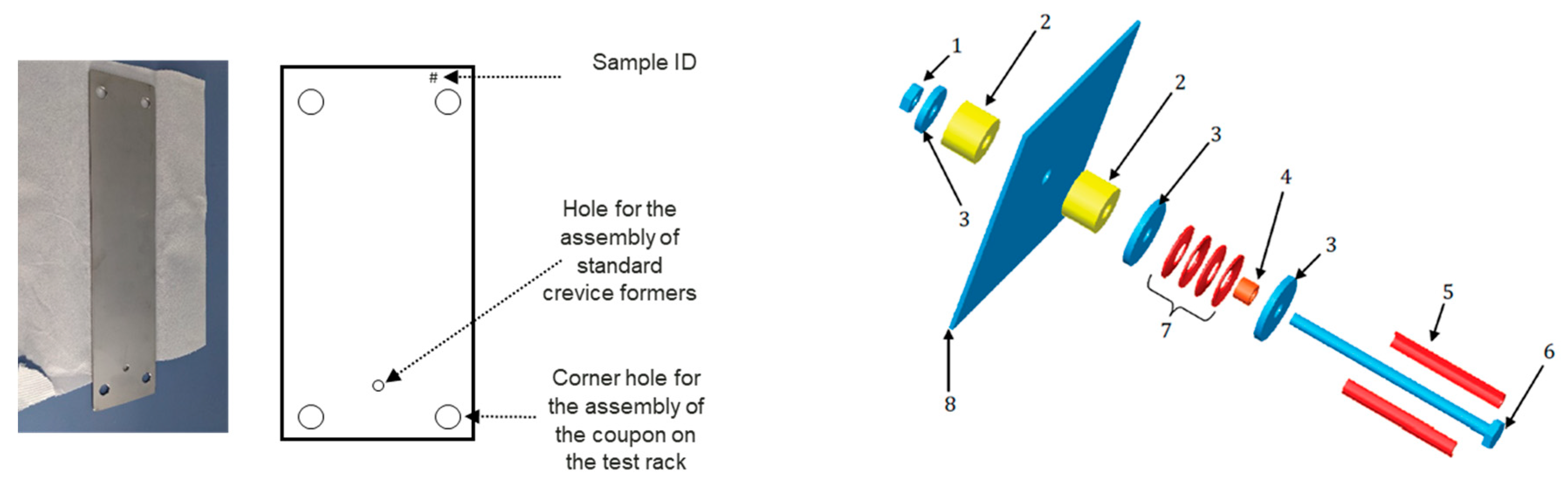
Four holes were drilled in the corners to fix the samples on the exposure rack. An additional hole was drilled to assemble the standard crevice formers on each sample (See Figure 2). The Crevcorr crevice formers were assembled following the ISO 18070:2016 standard procedure with the applied torque of 3 Nm [16].
After the assembly of the Crevcorr crevice formers, the test coupons were placed on test rigs using stainless steel nuts and bolts with Teflon spacers in between to avoid metal-to-metal contact. Only the EN 1.4404 coupon that was exposed for 12 months in the splash zone was mounted differently, using plastic bands, as can be seen in the supporting information (Figure S1). The samples were assembled on test rigs with the Crevcorr crevice formers on the bottom side of the samples. This was done to avoid the run-off of the corrosion products from the crevice area to the rest of the sample surface. The sample exposure began at the end of September 2022, and the exposed samples were retrieved in September 2024.

2.1. The Location of the Field Test

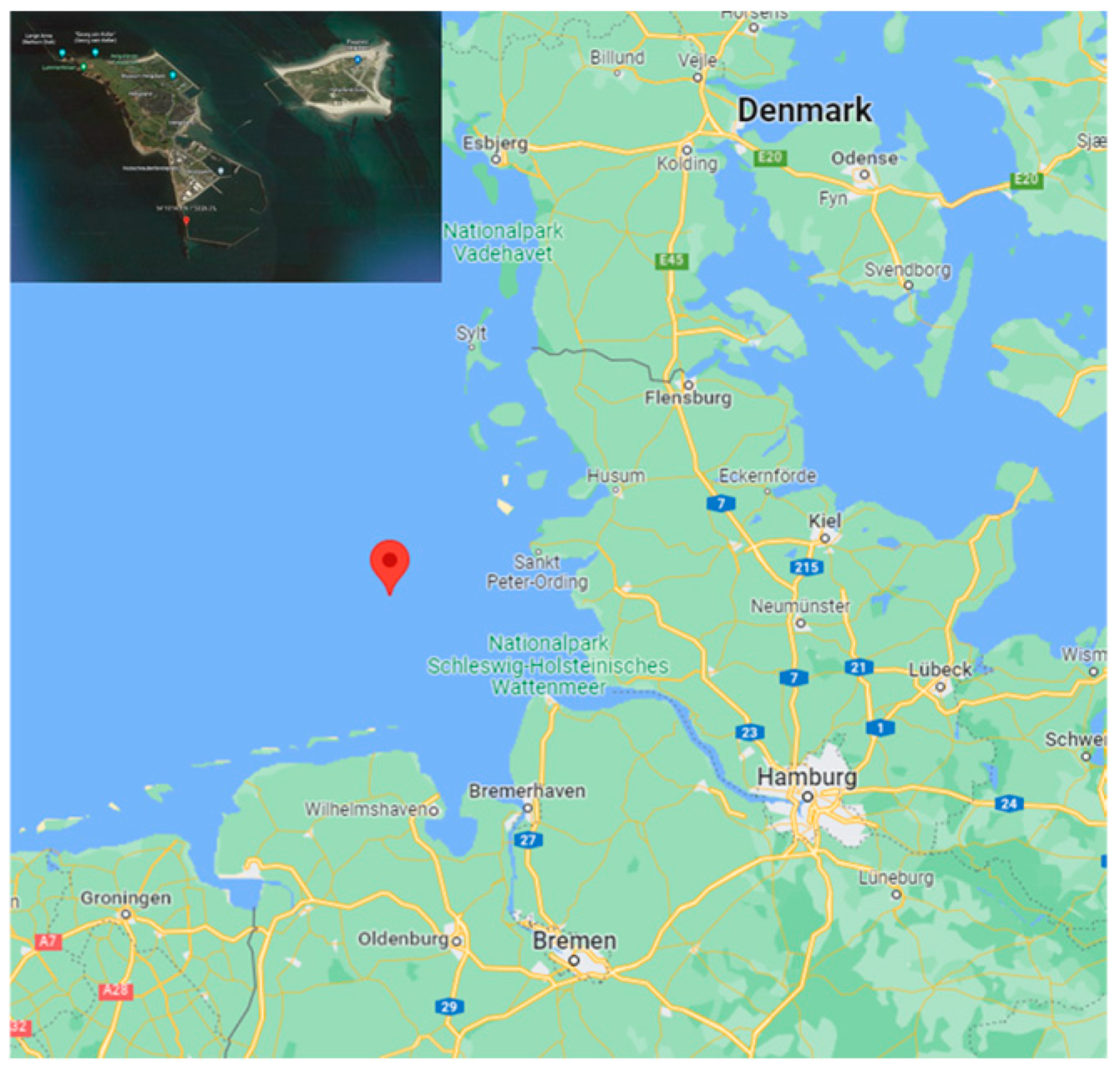
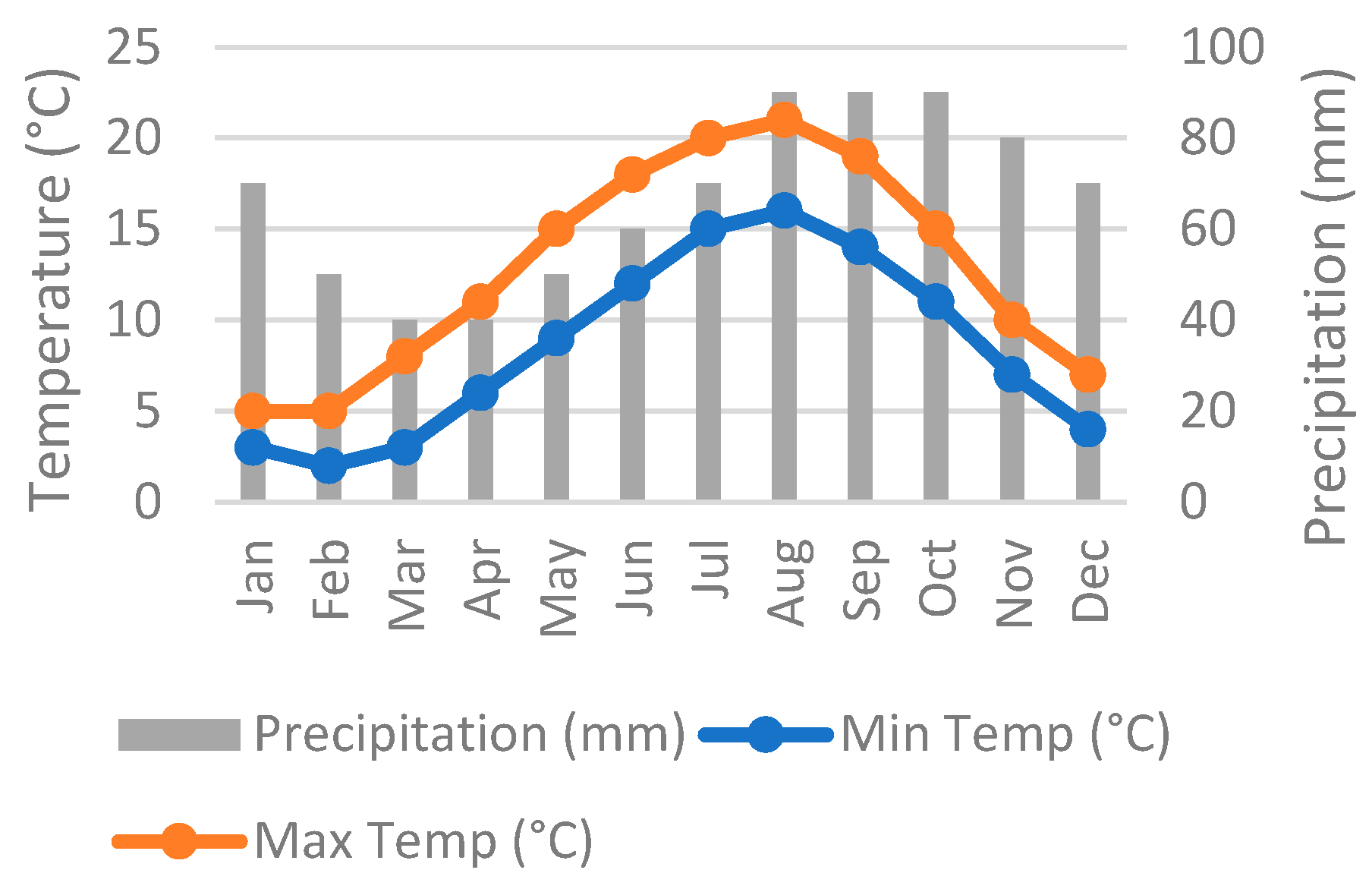
The test rig was then fixed at the west mole in the South Harbour of the Heligoland site (Am Wassersturzbecken, 27498 Heligoland, Germany), in the splash, tidal, and immersed zones [17]. Heligoland is an oceanic, humid, windy, and rainy location, characterized by cold, cloudy winters and cool to mild summers [18]. The location of the exposure site and the annual climate of the site are depicted in Figure 3 and Figure 4, respectively. The classification based on corrosivity at the test site was performed in accordance with the ISO 9223 standard [19]. This takes into account the corrosion rates measured after 1 year of exposure on reference materials, where C1 is the least corrosive and CX is the most corrosive. The test site represents a very severe environment, since mass loss per year was higher than the corrosivity category of CX for carbon steel, zinc, and copper (2376, 60, and 62.5 [g/m2 year], respectively).

2.2. Inspection and Evaluation

Visual inspections and photographic documentation of the samples were scheduled for 6 months, 12 months, and 24 months after exposure. Following this period, the samples were collected from the exposure site and shipped to the laboratory for further examination. In this period, seawater samples were collected and analyzed. The average chloride and sulfate content of the tested seawater was 18.5 and 2.5 g/L, respectively.
Scanning electron microscope (SEM) stubs were used to collect samples of deposits, after 6 h of exposure, to be further evaluated with SEM-energy-dispersive X-ray spectroscopy (EDX, OXFORD instruments, Oxfordshire, UK). The sampling was performed so that the surface deposits were minimally affected, i.e., the stubs were gently pushed against the sample.
The exposed samples, in particular those exposed in the tidal and immersion zones, exhibited a substantial mass of biofilm formation on the surface, with full coverage observed after 6–12 months of exposure. After retrieving the samples from the exposure site, the formed biofilm could not be easily removed by rinsing or even by brushing the surface. Hence, in order to assess the extent of corrosion attacks on the surface of these samples, a chemical cleaning procedure was applied to remove the biofilm from the surface following a slightly modified method described in the ASTM A380/A380M standard (Cleaning, Descaling, and Passivation of Stainless Steel Parts, Equipment, and Systems) [20]. In brief, the samples were immersed in 15 wt% nitric acid solution for 30 min at room temperature, followed by rinsing with a copious amount of water to remove the acid residuals.
In order to evaluate the extent of corrosion attacks on exposed samples, the number and depth of corrosion pits were determined using an optical microscope. The depth of crevice corrosion attack under the Crevcorr crevice former was evaluated on both sides of the samples. Shallow crevice impacts (<25 µm) were identified as etching [21].
Although the exact amount of torque for the assembly of the coupons on the test rig is unknown, the formation of a crevice results in localized corrosion attacks in this area, denoted as the sample holder. We characterized the depth of the crevice corrosion attacks on both the front and back sides of the samples in these areas and reported the results alongside those obtained at the Crevcorr crevice former.
Generative artificial intelligence (GenAI) was used to generate Figure 1 (graphic on the left). No GenAI was used to generate text, data, or to assist in study design, data collection, analysis, or interpretation, or to assist in study design, data collection, analysis, or interpretation.

3. Results and Discussion

3.1. Inspection and Visual Examination After 6, 12, 24 Months

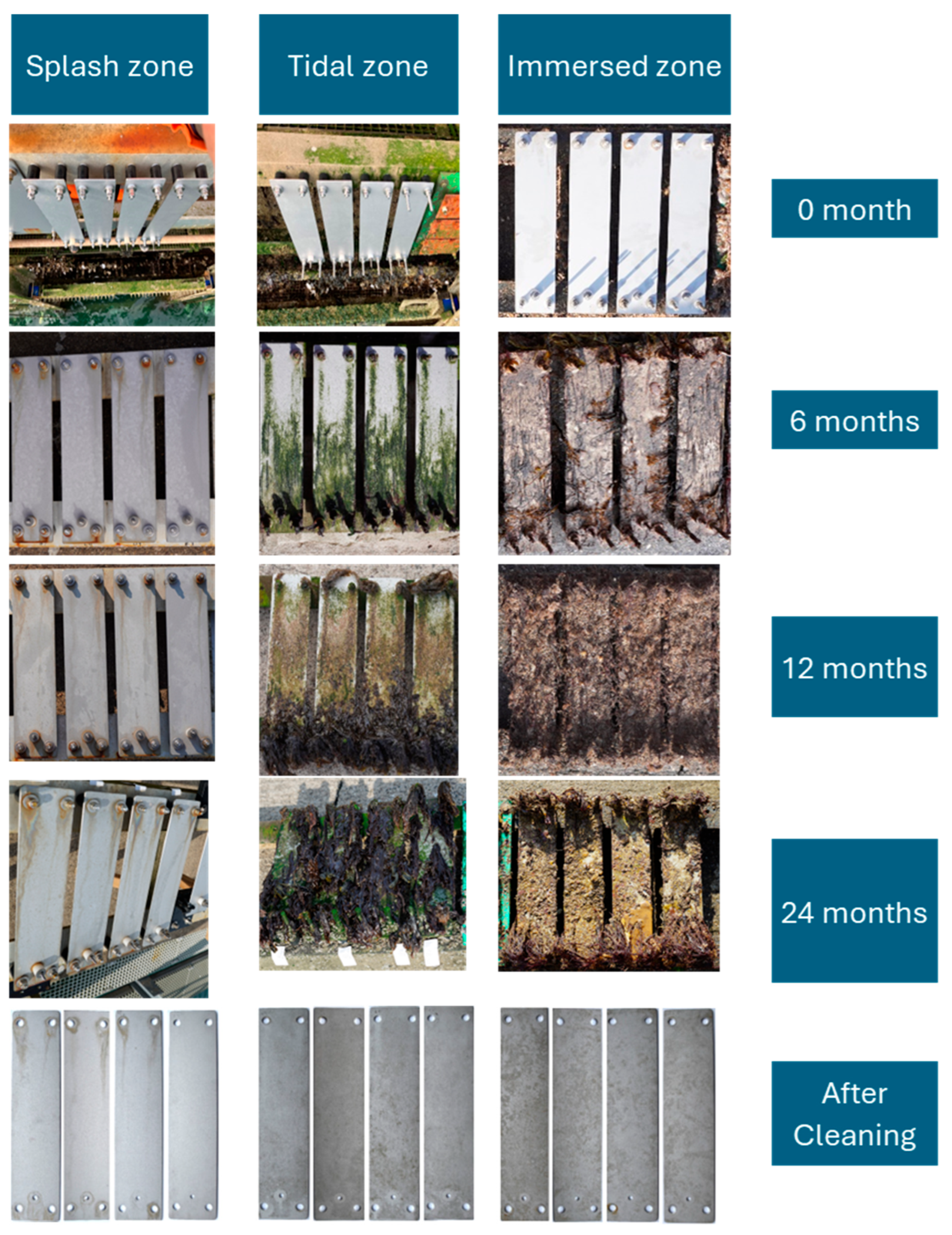
Figure 5 provides an overview of the appearance of samples assembled on test rigs across three zones: the tidal zone, the splash zone, and the immersed zone. It also captures the changes in the samples’ appearance following 6, 12, and 24 months of field exposure, as well as those after the acid cleaning of the surface. A more detailed overview of the appearance of coupons after 6 and 12 months of exposure in different exposure zones is provided in Figures S2–S8.
After 6, 12, and 24 months of exposure, two distinct types of surface appearance were observed on the tested samples prior to cleaning: staining/red rust and biofouling growth. Staining and red rust were particularly prominent in the crevice areas of the splash zone, while biofouling was prevalent on the surfaces in the tidal and immersed zones across all grades. The proliferation of biofouling, influenced by microbiologically influenced corrosion (MIC), increased steadily throughout the testing period in both the tidal and immersed zones. By the end of the 24-month evaluation, the stainless steel surfaces were extensively covered with biofouling, with a more significant accumulation noted in the immersed zone. Following the cleaning and removal of marine organisms, only staining and red rust remained on the tested surfaces.
The influence of biofouling on pitting and crevice corrosion has been extensively studied. Nevertheless, the exact mechanism by which biofilm contributes to material degradation is not completely understood. However, the current consensus is that the biofilm influences the cathodic oxygen reduction reaction due to the catalysis by enzymes [21]. Zhang et al. performed a comparison study on crevice corrosion on austenitic, duplex, and superduplex stainless steels under biofouling and artificial configurations through long-term field exposure near Xiamen Island, the southeast of Fujian Province, China [22]. They identified the most severe biofouling-induced corrosion under an artificial crevice former on the austenitic stainless steel (316 L), followed by a less severe attack on duplex grade (2205), whereas on the superduplex stainless steel (2507) in the absence of large microorganisms, no crevice corrosion attack was identified.
Indeed, as reported in Ref. [7], the open circuit potential (OCP) increases by more than 300 mV after an initial incubation period in both intermediary and deep water. Although a relatively similar potential ennoblement (also known as cathodic depolarization) is observed independent of the studied grades (super austenitic and nickel-based), the incubation period was longer (c.a. 6 months) in deep water as compared to that in intermediary water (c.a. 3 months), denoting the importance of exposure depth. The same group determined different critical temperatures for maximum biofilm electroactivity for the North Atlantic Ocean, the South Atlantic Ocean, and the Meridional China Sea based on the temperature impact on measured OCP in natural seawater in each site, denoting the importance of the meteorological parameters and oceanic factors on the activity of the biofilm and their impact on the localized corrosion performance of stainless steel [3]. The biofilm-induced potential ennoblement after exposure of a material in seawater is a very critical point in determining the risk of localized corrosion of a grade. Essentially, if the increased OCP due to ennoblement falls above the critical pitting or crevice potential of the respective alloy, stable pit or crevice corrosion attacks will form, rendering the alloy unfit for the purpose in the corresponding marine environment. This point will be discussed further below.
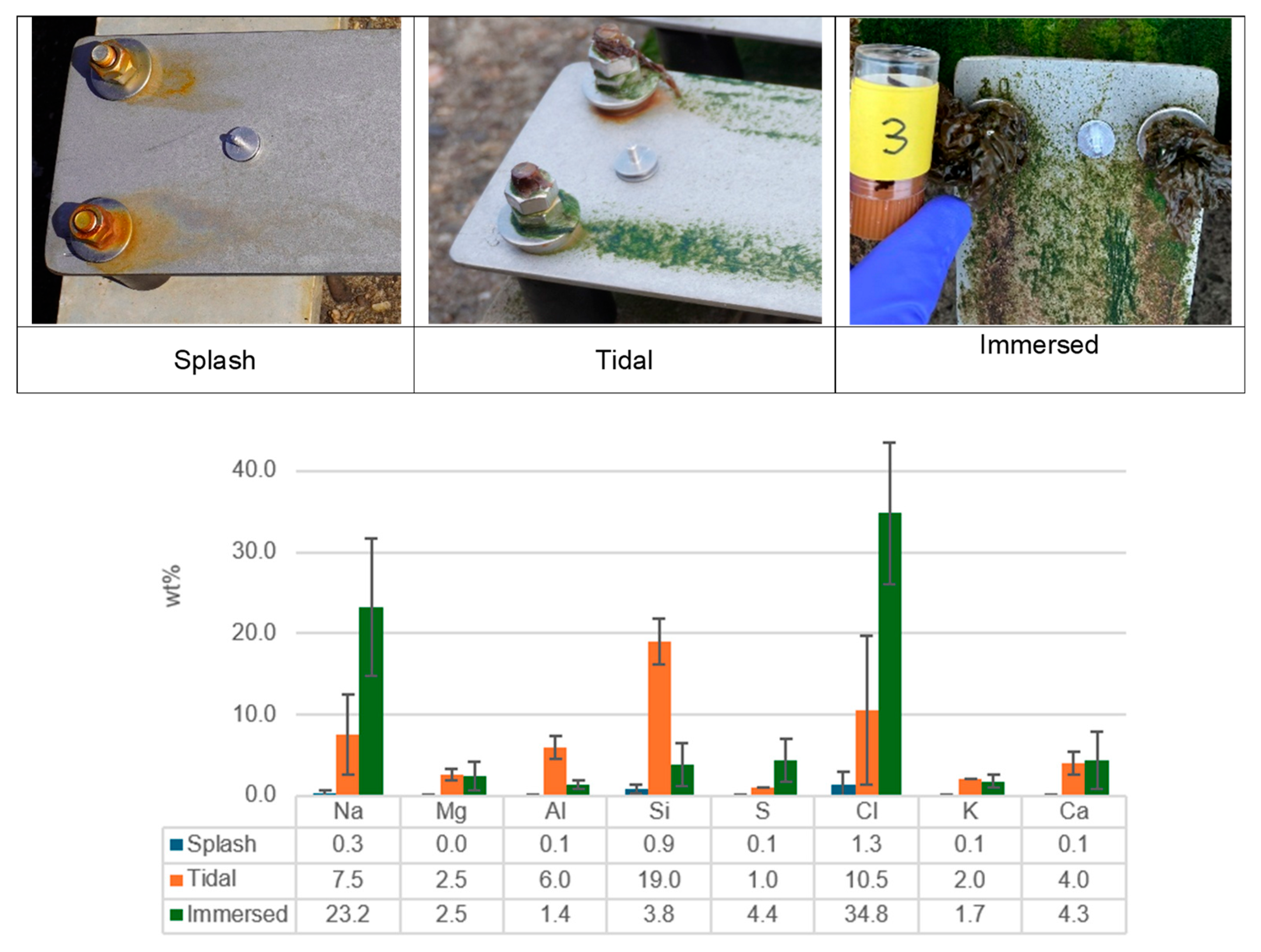
Figure 6 shows the sampling of the deposits on the exposed coupons (after six months of exposure) alongside the EDX analysis of the collected deposits. The distribution of the elements in the deposits reveals a significant variation in their chemistry, attributed to their highly heterogeneous nature. Amongst the analyzed elements, the total Cl deposition has the largest impact on the localized corrosion. However, no correlation could be made between the elemental content of the deposits and the extent of corrosion of coupons. The short-term (i.e., 6 months) Cl deposition was in the form of salt crystals scattered on the surface of the test coupons. Nevertheless, after prolonged exposure, the whole sample was covered with Cl-containing deposits.

3.2. Corrosion Resistance of Duplex Stainless Steel in Various Marine-Tested Zones After a Two-Year Field Trial

Table 2 summarizes the results after the assessment of the localized (pitting and crevice) corrosion attacks on the acid-cleaned samples after 24 months of field exposure at different corrosion zones. As can be seen in this table, the reference EN 1.4404 sample exhibits multiple pitting and crevice corrosion attacks after 24 months of exposure in the atmospheric region, consistent with our earlier assessments [23,24,25]. The maximum pit depth was around 110 µm on this sample. Both the front and back sides of the crevice former suffered 90 µm deep crevice corrosion. The depth of the crevice corrosion on the sample holder area varied significantly, which is consistent with the uncontrolled magnitude of the torque (and consequently the size of the crevice gap). Earlier studies have shown that the larger torque (i.e., smaller crevice gap) leads to a more severe crevice corrosion attack [26]. This is due to the more limited mass transfer from/to the tighter crevice gaps. Despite their uncontrolled torque, the crevice corrosion at the sample holder area is an important piece of information, as it closely reflects the real assembly of parts in marine constructions.
The duplex coupons exposed to the splash zone, tidal zone, and immersion zone did not exhibit any sign of pitting corrosion attack after 24 months of field exposure. In contrast to duplex grades, the austenitic EN 1.4404 sample already exhibited a few pits on the surface with the maximum pit depth of 30 µm, only after 12 months of exposure in the splash zone. This denotes the superior pitting corrosion resistance of the duplex grades (including lean duplex EN 1.4662) compared to austenitic grades for marine applications. It should be noted that for the assembly of the EN 1.4404 sample, rubber bands were used (see supporting information, Figure S1), which eliminated the possibility of crevice formation at the sample holder area.
Among the exposed coupons in the tidal and immersion zones, only a slight etching mark (shallower than 25 µm) was observed underneath the Crevcorr crevice former on the front side of the EN 1.4362 sample. More severe crevice corrosion attacks were detected on the back side of the Crevcorr crevice formers on this sample (>30 µm) in the immersed zone, and a slight etching was observed on the back side of the EN 1.4662 in this zone. On the contrary, all coupons, except the super duplex sample (EN 1.4410), exhibited etching (on the front side) or crevice corrosion (on the back side) underneath the Crevcorr crevice formers after 24 months of exposure in the splash zone area. This observation denotes the higher corrosivity of the splash zone compared to the tidal and immersion zones, which triggers crevice corrosion on lean duplex and duplex grades, consistent with the observations made by Ul-Hamid et al. [27] and Larche et al. [7]. The maximum crevice corrosion depth was identified on EN 1.4362, followed by that on EN 1.4462 and EN 1.4662, respectively. The difference in the extent of crevice corrosion attack on the front and back sides of the samples in the splash zone (underneath the Crevcorr crevice former) can be attributed to the impact of waves, water flow, rainwater rinsing, or direction of wind.
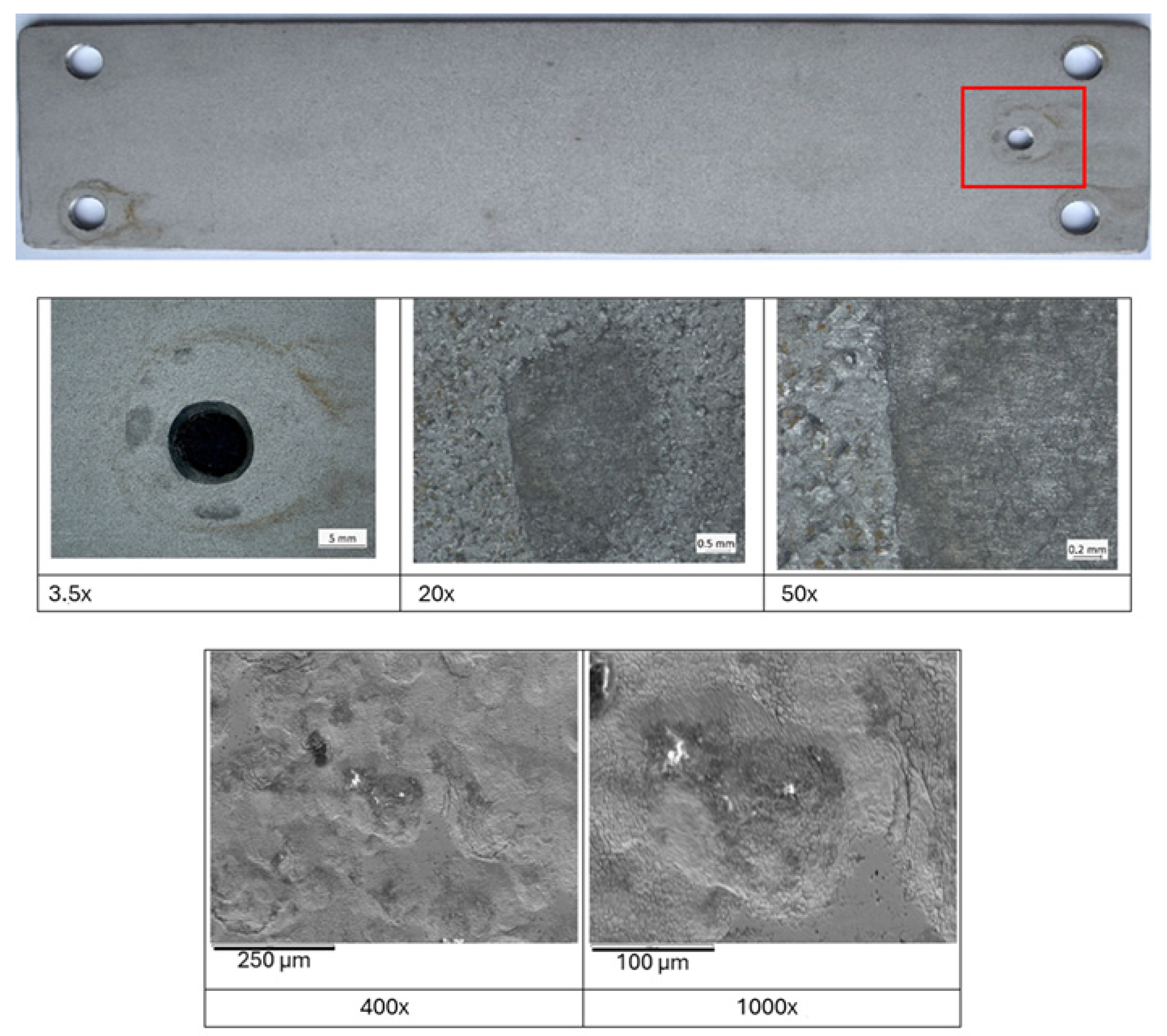
The optical and SEM micrographs of the crevice corrosion attack on EN 1.4362 after 2 years of exposure in the splash zone are presented in Figure 7 with different magnifications. Similar crevice corrosion attacks with slightly different maximum depth were found under the CrevCorr on EN 1.4662 and EN 1.4462 in the splash zone after 2 years of exposure.
According to the literature [28,29,30], after field exposure of the exposed coupons, the potential ennoblement can lead to localized corrosion attacks on austenitic stainless steels, whereas higher alloyed duplex grades are less prone to such corrosion attacks. Similarly, in this study, the higher resistance of EN 1.4410 to crevice corrosion attack in all exposure zones compared to other exposed grades can be related to its higher level of alloying elements. Essentially, the PREN = %Cr + 3.3%Mo + 16%N provides the first indication for ranking materials based on their resistance to localized pitting. The results from this field exposure are consistent with the literature. Neville & Hodgkiess studied the corrosion performance of stainless steel and high-grade cobalt and nickel base alloys after up to 18 months immersion in natural seawater off the west coast of Scotland [31]. Their results indicate that the initiation of corrosion attack is grade-dependent and that crevice corrosion attack can be initiated in very short periods of immersion, even on the high-grade alloys. Nevertheless, the time to initiate crevice corrosion attack on 316L type material is 2–4 times shorter than that on 25Cr duplex material. According to their studies, Molybdenum in alloy composition can have significant beneficial effects in imparting localized corrosion resistance to passive materials. Wallen summarized the immersion test results for superduplex and superaustenitic stainless steels after immersion test in natural seawater for periods from one month to 24 months [32]. Among the listed materials, S32750 (equivalent to 1.4410 in this study) exhibited no pitting corrosion, whereas crevice corrosion was observed after 3 months of exposure at ambient temperature [33].
Interestingly, all samples, including the EN 1.4410, suffered etching or crevice corrosion at the crevice area on the sample holder. As discussed earlier, the magnitude of the torque for assembling the coupons on the test rig, and hence the formed crevice gap in this area, is unknown. Nevertheless, the higher corrosivity of the splash zone compared to the tidal and immersion zones is still recognizable, due to the deeper crevice corrosion attacks on most samples in the splash zone. It is important to highlight that EN 1.4362 shows several deep crevice corrosion attacks in the immersion zone within the sample holder area. As the only duplex grade affected by crevice corrosion (greater than 30 µm) beneath the crevice former—albeit only on the back side—one can deduce that this grade is not suitable for applications in immersed environments, a conclusion supported by previous experience and studies [34].
Accordingly, the highest risk for the application of duplex grades in marine environments is crevice corrosion attacks, particularly at smaller crevice gaps (compared to those formed under a crevice former with 3 Nm torque), whereas pitting corrosion is generally not an issue in these conditions. Moreover, the splash zone imposes the highest risk of crevice corrosion, followed by tidal and immersed zones. The obtained results also highlight the importance of the design, in particular with respect to the potential formation of crevices, for materials that are exposed to a harsh marine environment.
As indicated earlier, no pitting is observed on any of the exposed samples in the splash, tidal, or immersed zone after 2 years of exposure in the North Sea. The observed crevice corrosion attacks are also only located in the areas under crevice formers. The typical crevice corrosion attacks under dead or alive barnacles, green muscles, and oysters, such as those observed by Zhang et al. [22], were not detected on any of the exposed samples after retrieval from seawater. This can be explained by the colder water temperature at the North Sea compared to that of the South China Sea, with its typical subtropical marine climate. Hence, we refrained from further characterization of the deposited biomass and its species composition in this study. Nevertheless, an eventual formation of a biofilm consisting of different microorganisms on the metal surface can raise the corrosion potential of the stainless steel to the point at which crevice corrosion initiates. This is consistent with the observation by Gallagher et al., who identified a more severe crevice corrosion attack on 316L and 904 grades immersed in natural seawater than those immersed in artificial seawater [35].

4. Conclusions

In this field exposure study, the influence of various exposure conditions—specifically splash, tidal, and immersion zones—on the corrosion performance of different grades of duplex stainless steel has been investigated over a span of two years in marine environments of the North Sea. The simultaneous exposure of grades to different exposure zones (i.e., atmospheric zone, splash zone, tidal zone, and immersed zone) at the same site allows a fair comparison between the performance of these grades in the corresponding zone, enabling better material selection. The results indicated the following:
  • All duplex stainless steels exhibit resistance to pitting corrosion under all tested conditions. Despite the formation of thick biofilm deposits on the exposed coupons in both the tidal and immersed zones, no microbiologically induced pitting corrosion was identified.
  • Crevice corrosion was shown to be the main challenge for the use of duplex stainless steel in marine environments. The crevice corrosion resistance of exposed coupons was assessed via standard Crevcorr crevice formers (with the torque of 3 Nm) as well as the installation of test coupons on the rig (with the torque presumably >3 Nm) in various corrosion zones. The results suggest that the highly alloyed duplex grade 1.4410 is the preferred choice based on specific exposure conditions. The alloying elements, particularly chromium (Cr), molybdenum (Mo), and nickel (Ni), play a crucial role in enhancing the crevice corrosion resistance of this grade.
  • The austenitic EN 1.4404 as a reference exhibited both pitting and crevice corrosion after 12 months of exposure in the splash zone and atmospheric zone.
  • Based on the corrosion performance of materials observed over a two-year exposure period, the ranking of corrosiveness at various exposure sites in the North Sea, arranged from highest to lowest, is as follows: Splash Zone > Tidal Zone > Immersed Zone. This ranking indicates that the Splash Zone exhibits the most aggressive corrosion conditions, while the Immersed Zone demonstrates the least severe corrosion effects. This information is crucial for selecting appropriate materials for marine applications and understanding the environmental factors contributing to corrosion in these areas.
  • According to the current observations, the corrosivity of the exposure site in this study can be categorized in the border between low and medium. However, for proper material selection in the marine environment, with its diverse meteorological and oceanographic parameters, further field exposures at various exposure sites (e.g., warmer bodies of water) are required, which will be addressed in our future projects.

Supplementary Materials

The following supporting information can be downloaded at: https://www.mdpi.com/article/10.3390/cmd6040063/s1, Figure S1: Assembly of the EC 1.4404 coupon that was exposed in the splash zone for 12 months.; Figure S2: Appearance of sample 316L after 6 months and after 12 months of atmospheric exposure; Figure S3: Appearance of samples after 6 months of exposure in the splash zone; Figure S4: Appearance of samples after 12 months of exposure in the splash zone; Figure S5: Appearance of samples after 6 months of exposure in the tidal zone; Figure S6: Appearance of samples after 12 months of exposure in the tidal zone; Figure S7: Appearance of samples after 6 months of exposure in the immersion zone; Figure S8: Appearance of samples after 12 months of exposure in the immersion zone.

Author Contributions

Conceptualization, S.H., S.H.M., and M.L.; methodology, S.H. and S.H.M.; analysis, M.A.; writing—original draft preparation, S.H.; writing—review and editing, S.H., S.H.M., and M.L. All authors have read and agreed to the published version of the manuscript.

Funding

This research received no external funding.

Data Availability Statement

Data supporting reported results can be shared upon request.

Acknowledgments

During the preparation of this manuscript/study, the author(s) used ChatGPT to generate the graphic presented in Figure 1 (left). The authors have reviewed and edited the output and take full responsibility for the content of this publication. Saman Hosseinpour and Sukanya Hägg Mameng gratefully dedicate this work to their former PhD advisor and collaborator, Christofer Leygraf, acknowledging his enduring impact on their career and professional development.

Conflicts of Interest

All authors are employed by Outokumpu. The authors declare that the research was conducted in the absence of any commercial or financial relationships that could be construed as a potential conflict of interest.

References

  1. Global Market Outlook for Solar Power 2025–2029—SolarPower Europe. Available online: https://www.solarpowereurope.org/insights/outlooks/global-market-outlook-for-solar-power-2025-2029/detail (accessed on 17 November 2025).
  2. Khan Afridi, S.; Ali Koondhar, M.; Ismail Jamali, M.; Muhammed Alaas, Z.; Alsharif, M.H.; Kim, M.-K.; Mahariq, I.; Touti, E.; Aoudia, M.; Ahmed, M.M.R. Winds of Progress: An In-Depth Exploration of Offshore, Floating, and Onshore Wind Turbines as Cornerstones for Sustainable Energy Generation and Environmental Stewardship. IEEE Access 2024, 12, 66147–66166. [Google Scholar] [CrossRef]
  3. Larché, N.; Leballeur, C.; Diler, E.; Thierry, D. Crevice Corrosion of High-Grade Stainless Steels in Seawater: A Comparison Between Temperate and Tropical Locations. Corrosion 2023, 79, 1106–1117. [Google Scholar] [CrossRef] [PubMed]
  4. Xia, J.; Yang, C.; Xu, D.; Sun, D.; Nan, L.; Sun, Z.; Li, Q.; Gu, T.; Yang, K. Laboratory Investigation of the Microbiologically Influenced Corrosion (MIC) Resistance of a Novel Cu-Bearing 2205 Duplex Stainless Steel in the Presence of an Aerobic Marine Pseudomonas Aeruginosa Biofilm. Biofouling 2015, 31, 481–492. [Google Scholar] [CrossRef] [PubMed]
  5. Sequeira, C.A.C.; Tiller, A.K. Microbially Corrosion: 3rd International Workshop: Papers, 2nd ed.; CRC Press: London, UK, 2022; ISBN 978-0-367-81410-6. [Google Scholar]
  6. Al-Fozan, S.A.; Malik, A.U. Effect of Seawater Level on Corrosion Behavior of Different Alloys. Desalination 2008, 228, 61–67. [Google Scholar] [CrossRef]
  7. Larché, N.; Diler, E.; Thierry, D. Crevice and Pitting Corrosion of Stainless-Steel and Nickel Based Alloys in Deep Sea Water. In Proceedings of the Corrosion, Nashville, TN, USA, 24–28 March 2019; pp. 1–15. [Google Scholar]
  8. Huang, Y.; YU, X.; Zhang, Q.; Marco, R.D. Corrosion Performance of High Strength Low Alloy Steel AISI 4135 in the Marine Splash Zone. Electrochemistry 2017, 85, 7–12. [Google Scholar] [CrossRef]
  9. Khodabux, W.; Causon, P.; Brennan, F. Profiling Corrosion Rates for Offshore Wind Turbines with Depth in the North Sea. Energies 2020, 13, 2518. [Google Scholar] [CrossRef]
  10. Ebell, G.; Tannert, S.; Lehmann, J.; Müller, H. Offshore Weathering Campaign on a North Sea Wind Farm Part One: Corrosivity Categories. Mater. Corros. 2025, 76, 812–821. [Google Scholar] [CrossRef]
  11. Diler, E.; Larché, N.; Thierry, D. Carbon Steel Corrosion and Cathodic Protection Data in Deep North Atlantic Ocean. Corrosion 2020, 76. [Google Scholar] [CrossRef] [PubMed]
  12. Bailey, S.I.; Li, X. Corrosion of Stainless Steels in the Marine Splash Zone. AMR 2012, 610–613, 272–275. [Google Scholar] [CrossRef]
  13. Iribarren Laco, J.I.; Liesa Mestres, F.; Cadena Villota, F.; Bilurbina Alter, L. Urban and Marine Corrosion: Comparative Behaviour Between Field and Laboratory Conditions. Mater. Corros. 2004, 55, 689–694. [Google Scholar] [CrossRef]
  14. Fischer, D.A.; Daille, L.; Aguirre, J.; Galarce, C.; Armijo, F.; De La Iglesia, R.; Pizarro, G.; Vargas, I.; Walczak, M. Corrosion of Stainless Steel in Simulated Tide of Fresh Natural Seawater of South East Pacific. Int. J. Electrochem. Sci. 2016, 11, 6873–6885. [Google Scholar] [CrossRef]
  15. Larché, N.; Thierry, D.; Debout, V.; Blanc, J.; Cassagne, T.; Peultier, J.; Johansson, E.; Taravel-Condat, C. Crevice Corrosion of Duplex Stainless Steels in Natural and Chlorinated Seawater. Rev. Metall. 2011, 108, 451–463. [Google Scholar] [CrossRef]
  16. ISO 18070:2015; Corrosion of Metals and Alloys—Crevice Corrosion Formers with Disc Springs for Flat Specimens or Tubes Made from Stainless Steel. ISO: Geneva, Switzerland, 2015. Available online: https://www.iso.org/standard/61290.html (accessed on 17 November 2025).
  17. Exposure Site Catalogue. Available online: https://corrosion-sites.com/ (accessed on 17 November 2025).
  18. Heligoland Climate: Weather by Month, Temperature, Rain—Climates to Travel. Available online: https://www.climatestotravel.com/climate/germany/heligoland (accessed on 17 November 2025).
  19. ISO 9223:2012; Corrosion of Metals and Alloys—Corrosivity of Atmospheres—Classification, Determination and Estimation. International Organization for Standardization: Geneva, Switzerland, 2012. Available online: https://www.iso.org/standard/53499.html (accessed on 17 November 2025).
  20. A380/A380M; Standard Practice for Cleaning, Descaling, and Passivation of Stainless Steel Parts, Equipment, and Systems. ASTM: West Conshohocken, PA, USA, 2025. Available online: https://store.astm.org/a0380_a0380m-17.html (accessed on 17 November 2025).
  21. Lahodny-Šarc, O.; Kulušić, B.; Krstulović, L.; Sambrailo, D.; Ivić, J. Stainless Steel Crevice Corrosion Testing in Natural and Synthetic Seawater. Mater. Corros. 2005, 56, 561–565. [Google Scholar] [CrossRef]
  22. Zhang, Z.; Li, Z.; Wu, F.; Xia, J.; Huang, K.; Zhang, B.; Wu, J. A Comparison Study of Crevice Corrosion on Typical Stainless Steels Under Biofouling and Artificial Configurations. npj Mater. Degrad. 2022, 6, 85. [Google Scholar] [CrossRef]
  23. Mameng, S.H.; Wegrelius, L.; Tigerstrand, C.; Frigo, M. Atmospheric Corrosion Resistance of Stainless Steel: Results of a Field Exposure in Italy. In Proceedings of the AMPP Conference 2024, New Orleans, LA, USA, 3 March 2024; pp. 1–13. [Google Scholar]
  24. Mameng, S.H.; Backhouse, A. Atmospheric Corrosion Resistance of Stainless Steel in Marine Environments: Results of a Field Exposure Pro-Gram in Sweden. In Proceedings of the Eurocorr 2019, Sevelle, Spain, 9–13 September 2019. [Google Scholar]
  25. Mameng, S.H.; Pongsaksawad, W.; Tigerstrand, C.; Wangjina, P. Atmospheric Corrosion Resistance of Stainless Steel: Field Exposures of Stainless Steel in Chloride-Rich Atmospheric Conditions. In Proceedings of the CONFERENCE 2025, Nashville, TN, USA, 6–10 April 2025. [Google Scholar]
  26. Larché, N.; Thierry, D. Crevice Corrosion Evaluation of Stainless Steels for Marine Applications; IC Report 2009-1; French Corrosion Institute: Brest, France, 2009. [Google Scholar]
  27. Ul-Hamid, A.; Saricimen, H.; Quddus, A.; Mohammed, A.I.; Al-Hems, L.M. Corrosion Study of SS304 and SS316 Alloys in Atmospheric, Underground and Seawater Splash Zone in the Arabian Gulf. Corros. Eng. Sci. Technol. 2017, 52, 134–140. [Google Scholar] [CrossRef]
  28. Mameng, S.H.; Wegrelius, L.; Hosseinpour, S. Stainless Steel Selection Tool for Water Application: Pitting Engineering Diagrams. Front. Mater. 2024, 11, 1353907. [Google Scholar] [CrossRef]
  29. Corrosion Handbook, 12th ed.; Outokumpu Oyj: Helsinki, Finland, 2023.
  30. Johnsen, R.; Bardal, E. The Effect of a Microbiological Slime Layer on Stainless Steel in Natural Sea Water. In Proceedings of the CORROSION 1986, Houston, TX, USA, 17–21 March 1986; pp. 1–10. [Google Scholar] [CrossRef]
  31. Neville, A.; Hodgkiess, T. Comparative Study of Stainless Steel and Related Alloy Corrosion in Natural Sea Water. Br. Corros. J. 1998, 33, 111–120. [Google Scholar] [CrossRef]
  32. Wallén, B. Corrosion of Duplex Stainless Steels in Seawater; Avesta Sheffield Corrosion Management and Application Engineering; 1-1998. Available online: https://www.semanticscholar.org/paper/Corrosion-of-Duplex-Stainless-Steels-in-Seawater-Wall%C3%A9n-Ab/6bcc0540b37ff541f0990657c5ad2047c0320717 (accessed on 17 November 2025).
  33. Shone, E.B.; Idrus, A.Z. The Performance of Selected Stainless Steels in Tropical and Temperate Seawater. In Progress in the Understanding and Prevention of Corrosion 2; International Atomic Energy Agency (IAEA): London, UK, 1993; pp. 989–996. [Google Scholar]
  34. Féron, D. Marine Corrosion of Stainless Steels: Testing, Selection, Experience, Protection and Monitoring; CRC Press: Boca Raton, FL, USA, 2021; ISBN 978-0-429-60580-2. [Google Scholar]
  35. Gallagher, P.; Malpas, R.E.; Shone, E.B. Corrosion of Stainless Steels in Natural, Transported, and Artificial Seawaters. Br. Corros. J. 1988, 23, 229–233. [Google Scholar] [CrossRef]
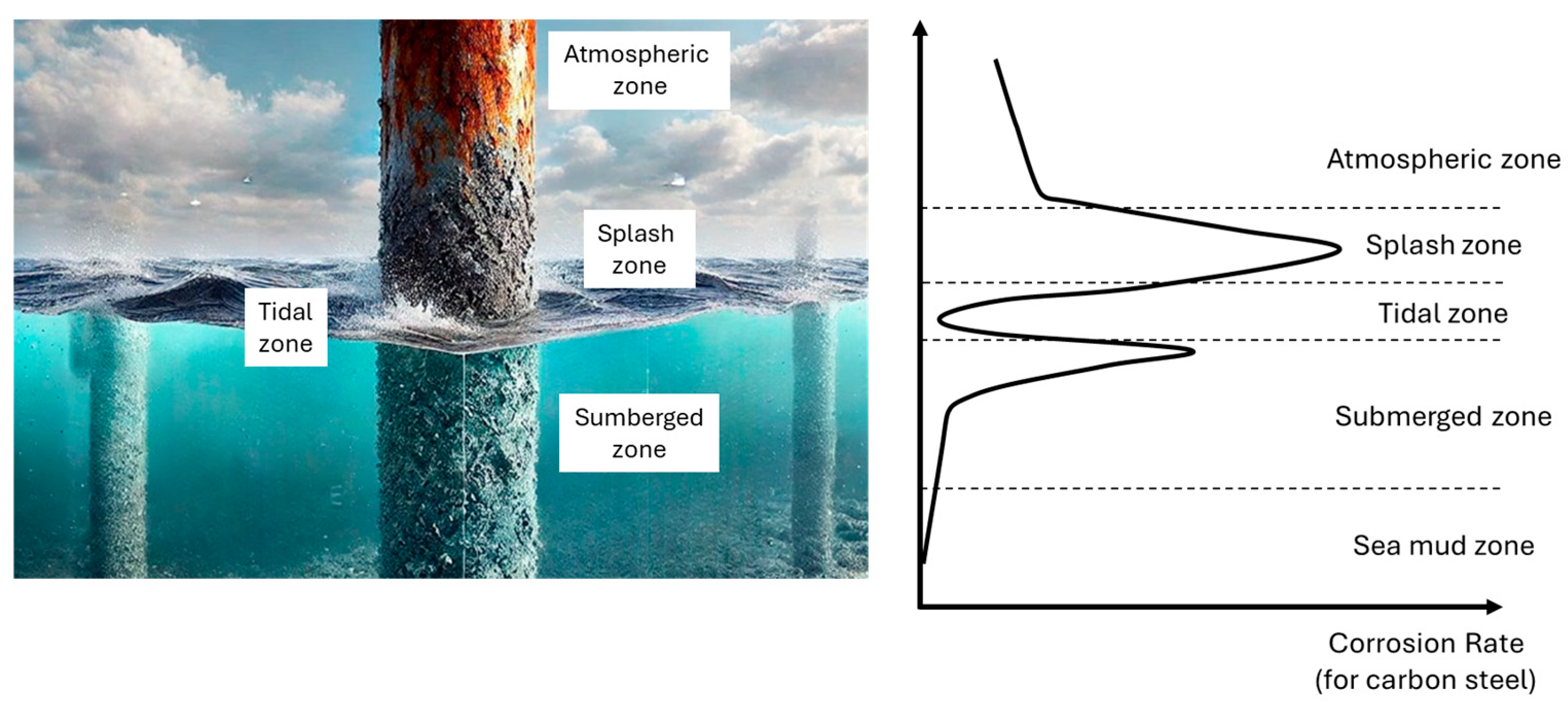
Figure 1. Different corrosion regions in the marine environment. The schematic corrosion rate for carbon steel in these zones is depicted on the right, indicating the highest corrosion rate for carbon steel close to the splash zone.
Cmd 06 00063 g001
Figure 2. The test coupon before the assembly of the crevice former (left and middle) and the standard crevice former (Crevcorr) used in this study (right). The key components of the Crevcorr are as follows: 1: nut, 2: crevice former, 3: washer, 4: centralizing ring, 5: insulation hose, 6: bolt, 7: disc springs, and 8: test specimen.
Cmd 06 00063 g002
Figure 3. The location of the exposure site at the North Sea.
Cmd 06 00063 g003
Figure 4. Annual climate of the exposure site.
Cmd 06 00063 g004
Figure 5. An overview of the assembly of the samples on test rigs for (left) splash zone, (middle) tidal zone, and (right) immersed zone alongside the change of samples’ appearance after 6, 12, and 24 months of field exposure and cleaning. Samples in each column from left to right are: EN 1.4362, EN 1.4662, EN 1.4462, and EN 1.4410.
Cmd 06 00063 g005
Figure 6. (Top) Sampling of the deposits using SEM stubs, and (bottom) EDX analysis of the deposits collected after 6 months of exposure.
Cmd 06 00063 g006
Figure 7. Optical and SEM image of the crevice corrosion attack under the CrevCorr on EN 1.4362 after 2 years of exposure in the splash zone. The red box area in the top figure is enlarged with different magnifications.
Cmd 06 00063 g007
Table 1. The characteristics, PREN, and chemical composition of selected stainless steel.
GradeDesignation *Surface FinishPREN **Typical Chemical Composition, % by Mass
CCrNiMoNOther
1.4404Austenitic 316L2B240.0217.210.12.1--
1.4362EDX 23042E Pro280.0223.84.30.50.18Cu: 0.3
1.4662LDX 22042E Pro340.0224.03.61.60.27Mn: 3.0, Cu: 0.40
1.4462DX 22052E Pro350.0222.45.73.10.17-
1.4410SDX 25072E Pro430.0225.07.04.00.27-
* EDX (Enhanced Duplex), LDX (Lean Duplex), DX (Duplex), SDX (Super Duplex), ** PREN = %Cr + 3.3%Mo + 16%N.
Table 2. Assessment of localized corrosion of the exposed samples. The values outside parentheses indicate the depth of the pits or crevice attacks in µm. The values denoted as (xp) or (xC) indicate x number of pitting and crevice corrosion attacks, respectively.
ZoneGradeCorrosion Performance,
Max. Depth of Corrosion Attack (Number of Attacks)
Pitting
Corrosion
Crevice Corrosion
CrevCorrSample Holder (4 Holders)
Front SideBack SideFront SideBack Side
AtmosphericEN 1.4404110 (>20p)90 µm90 µm80 µm (2C)230 µm (2C)
SplashEN 1.4404
(1 year)
30 µm (5p)90 µm50 µmN/AN/A
EN 1.4362 <25 µm40 µm100 µm (4C)70 µm (4C)
EN 1.4662-<25 µm25 µm60 µm (2C)30 µm (2C)
EN 1.4462-<25 µm30 µm50 µm (1C)40 µm (1C)
EN 1.4410----25 µm (1C)
TidalEN 1.4362-<25 µm-50 µm (3C)25 µm (2C)
EN 1.4662---<25 µm<25 µm
EN 1.4462---<25 µm30 µm (1C)
EN 1.4410-----
ImmersedEN 1.4362--30 µm1200 µm (3C)1200 µm (3C)
EN 1.4662--<25 µm<25 µm<25 µm
EN 1.4462---<25 µm<25 µm
EN 1.4410---<25 µm<25 µm
Disclaimer/Publisher’s Note: The statements, opinions and data contained in all publications are solely those of the individual author(s) and contributor(s) and not of MDPI and/or the editor(s). MDPI and/or the editor(s) disclaim responsibility for any injury to people or property resulting from any ideas, methods, instructions or products referred to in the content.