Article

Performance of Phenolic-Epoxy Coatings after Exposure to High Temperatures †

1
Curtin Corrosion Centre, Western Australia School of Mines, Mineral, Energy and Chemical Engineering, Curtin University, Technology Park, Bentley, WA 6102, Australia
2
John de Laeter Centre, Curtin University, Bentley, WA 6102, Australia
*
Author to whom correspondence should be addressed.
This paper is a part of the PhD Thesis of Investigating the Corrosion Characteristics of Carbon Steel and the Efficacy of Phenolic-Epoxy Coatings in Enclosed Environments, presented at the Curtin University of Perth, Perth, WA 6102, Australia
Corros. Mater. Degrad. 2024, 5(1), 73-91; https://doi.org/10.3390/cmd5010004
Submission received: 26 July 2023 / Revised: 19 February 2024 / Accepted: 26 February 2024 / Published: 29 February 2024
(This article belongs to the Special Issue Advances in Corrosion Protection by Coatings)

Abstract

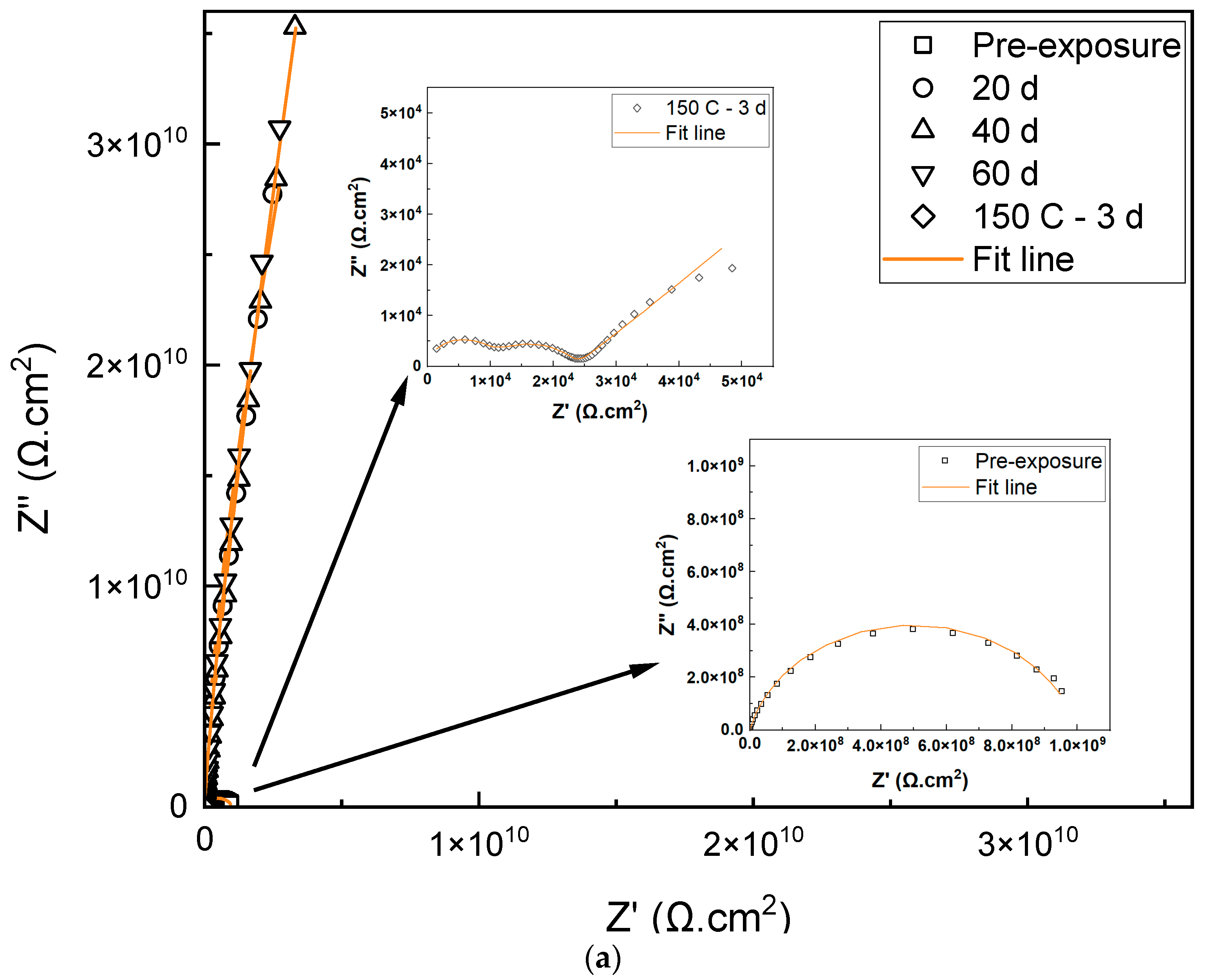
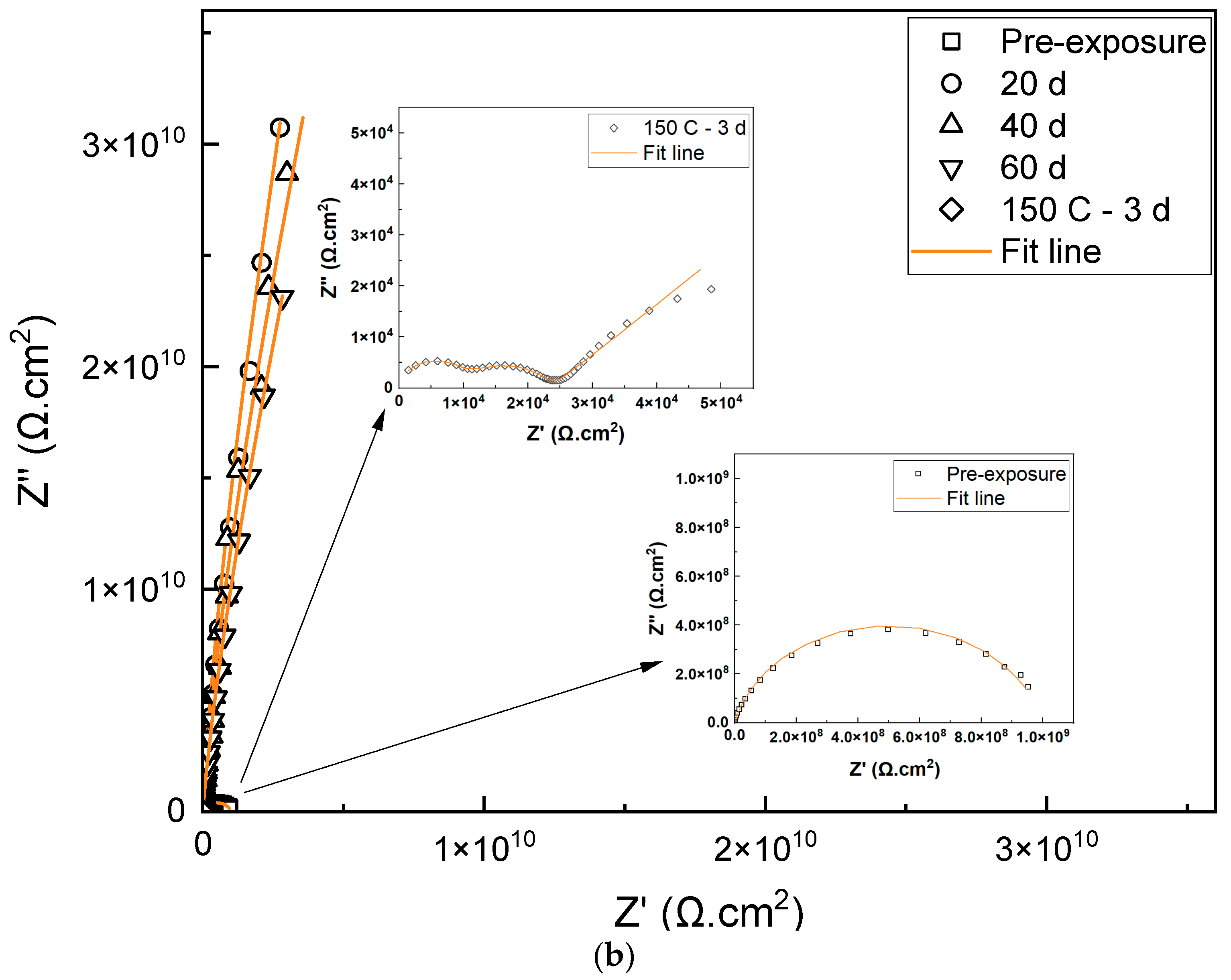
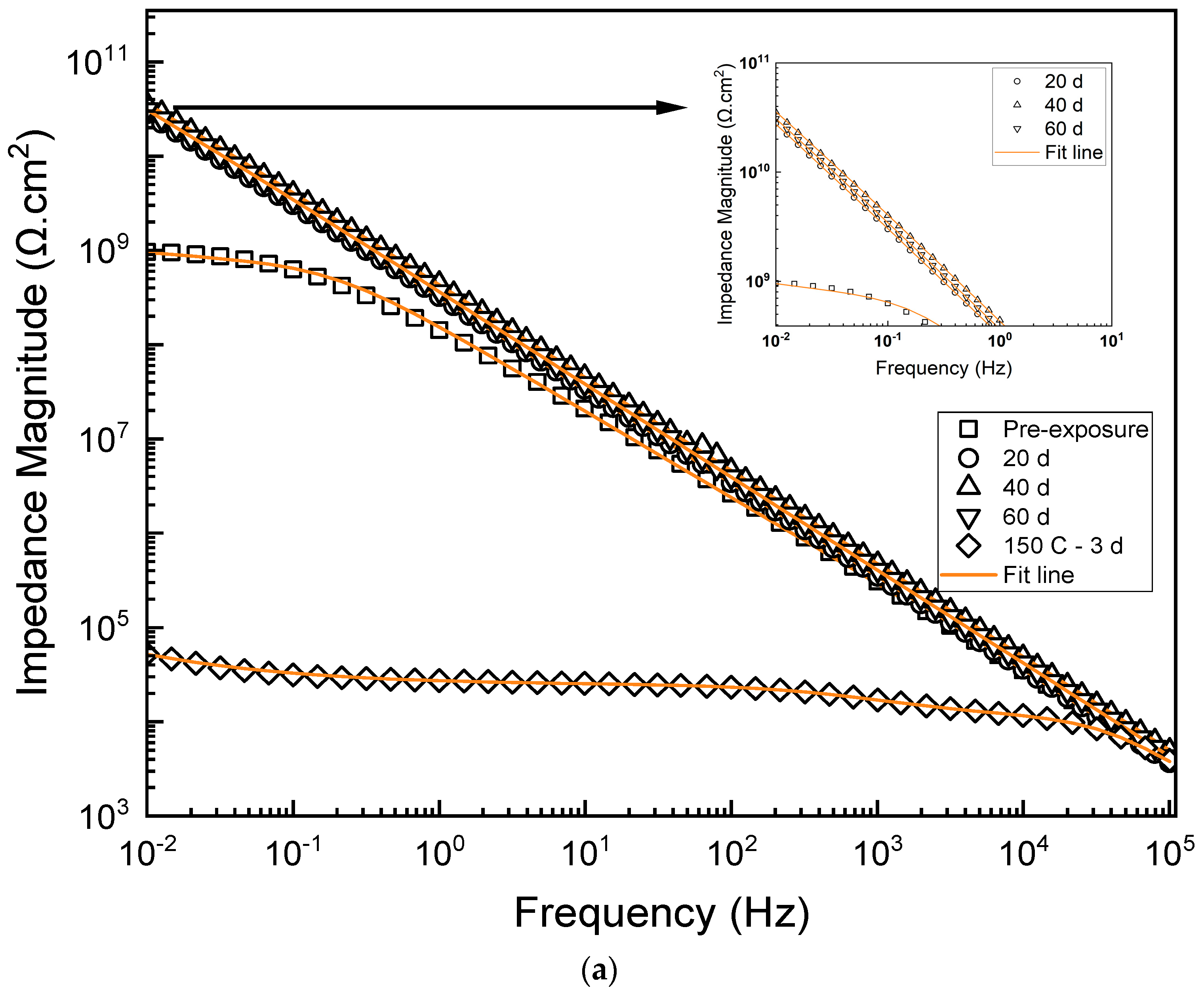
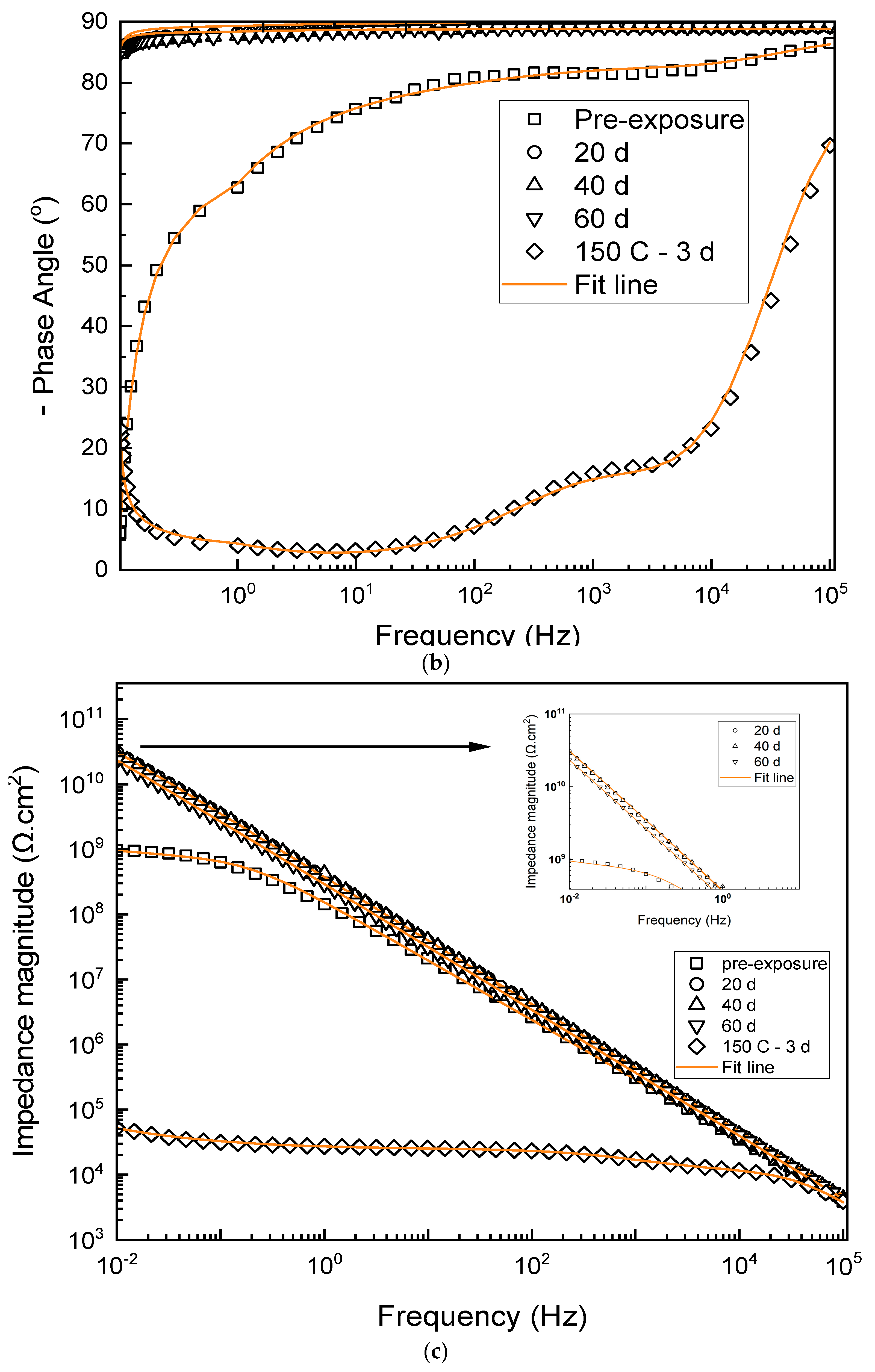
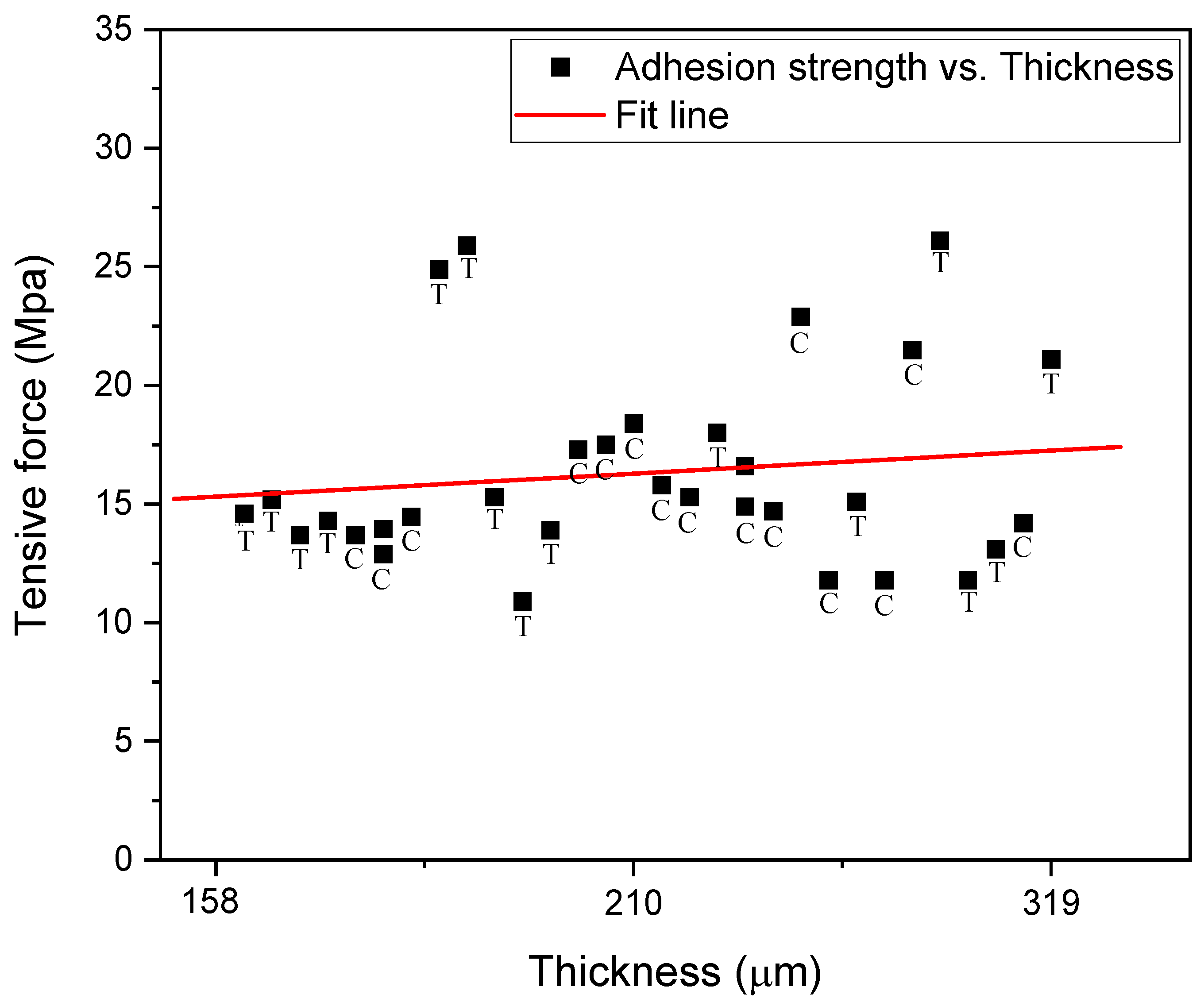
Phenolic-epoxy coatings, which are designed to protect substrates from thermal damage, are widely applied in many fields. There remains an inadequate understanding of how such coatings change during their service life after exposure to various temperature conditions. To further elucidate this issue, this case study investigated the effects of high temperatures on carbon steel panels coated with phenolic epoxy and exposed to different heating conditions. A general trend of decreasing barrier performance was observed after exposure to 150 °C for 3 d, as evidenced by the appearance of cracks on the panel surfaces. In contrast, the coating performance improved after exposure to isothermal conditions (120 °C) or thermal cycling from room temperature to 120 °C, as indicated by the increased low-frequency impedance modulus values of the coating. This unexpected improvement was further examined by characterising the coatings using transform infrared spectroscopy (FTIR), thermogravimetric analysis (TGA), differential scanning calorimetry (DSC), pull-off adhesion tests, and time-of-flight secondary ion mass spectrometry (ToF-SIMS). The maximum pull-off adhesion force (24.9 ± 3.6 MPa) was measured after thermal cycling for 40 d.
Keywords: carbon steel; EIS; ToF-SIMS; phenolic epoxy; pull-off adhesion carbon steel; EIS; ToF-SIMS; phenolic epoxy; pull-off adhesion