Article

Effect of Bias Voltage on Multi-Element Nitride CAE-PVD Coatings on Ti6Al4V

1
Department of Mechanical and Materials Engineering, Tatung University, Taipei City 104, Taiwan
2
Department of Electrical Engineering, Hsiuping University of Science and Technology, Taichung City 412, Taiwan
*
Author to whom correspondence should be addressed.
Surfaces 2026, 9(3), 68; https://doi.org/10.3390/surfaces9030068
Submission received: 22 May 2026 / Revised: 20 July 2026 / Accepted: 21 July 2026 / Published: 23 July 2026

Abstract

Ti6Al4V alloy is widely used in biomedical and engineering applications; however, its limited wear resistance and lack of intrinsic antibacterial activity restrict its long-term performance. Although multi-element nitride coatings prepared by cathodic arc evaporation (CAE) have shown considerable potential, the influence of substrate bias voltage on their microstructural evolution and multifunctional performance remains insufficiently understood. In this study, (TiCrCuZrAlAg)N multi-element nitride coatings were deposited on Ti6Al4V substrates by CAE under substrate bias voltages of 50, 100, and 150 V. The effects of bias voltage on coating composition, crystal structure, hardness, wear behavior, and antibacterial performance were systematically investigated. Increasing the bias voltage enhanced ion bombardment, leading to reduced coating thickness, lower Cu/Ag incorporation, and degraded crystallinity, which consequently affected coating performance. Among the investigated conditions, the coating deposited at 50 V exhibited the highest hardness (1628.4 HV), the lowest wear rate (0.08 × 10⁻⁷ g/m), and the highest antibacterial efficiency (99.2%). This study establishes a correlation between substrate bias voltage, microstructural evolution, and multifunctional performance in CAE-deposited (TiCrCuZrAlAg)N coatings, providing practical guidance for the design of multifunctional protective coatings.

1. Introduction

Ti6Al4V is a titanium alloy renowned for its high specific strength, excellent corrosion resistance, and good biocompatibility. Consequently, it is the most widely used titanium alloy in both aerospace and biomedical applications, including medical implants and prosthetic devices [1,2,3,4]. Although Ti6Al4V exhibits favorable mechanical strength and corrosion resistance, it suffers from relatively low surface hardness, which results in poor wear resistance. This limitation restricts its use in applications involving high contact loads or severe tribological conditions [5]. On the other hand, Ti6Al4V has been widely used in the field of biomedical materials; however, studies on its antibacterial properties and related improvement strategies remain relatively limited [6,7]. Given the importance of this issue for both clinical applications and material performance, it is of significant value for investigations in both academic research and practical applications.
It is well known that surface modification can improve the surface properties of metallic materials, such as physical vapor deposition (PVD) methods. Cathodic arc evaporation (CAE) is a PVD technique that utilizes highly ionized metal vapor generated by cathodic arc discharges [8]. Owing to its high ionization efficiency, energetic metal ions can be accelerated toward the substrate under an applied bias voltage, significantly influencing thin-film growth processes. The ion bombardment associated with CAE affects atomic mobility, nucleation behavior, defect formation, residual stress development, and coating densification, all of which play critical roles in determining the microstructure and functional properties of deposited films. Since the ceramic films produced generally exhibit excellent hardness, wear resistance, and corrosion resistance, metallic nitride coatings prepared by PVD have been extensively studied. Representative examples include TiN, CrN, CrAlN, TiBN, and TiCrN-based coatings, which have been successfully applied to improve the surface performance of steels and engineering alloys [9,10,11,12,13]. Paiva et al. reported that TiN, CrN, and CrAlN coatings deposited on AISI H13 steel significantly improved wear resistance [9]. Hidalgo-Badillo et al. demonstrated that CrN/TiBN bilayer coatings enhanced both wear and corrosion resistance of cobalt-based alloys [10]. Similarly, Li et al. deposited CrN-, CrTiN-, and CrTiBN-based coatings on 316 stainless steel and observed substantial improvements in tribological and electrochemical performance [11]. Tobola et al. reported that TiN/TiCrN/TiN multilayer coatings deposited on M2 tool steel achieved hardness values exceeding 30 GPa while maintaining excellent wear resistance [12]. In our previous work, CrAlSiN multilayer coatings deposited on austempered ductile iron (ADI) significantly improved surface hardness and wear resistance through microstructural refinement and coating densification [13]. In recent years, increasing attention has been devoted to multi-element nitride coatings containing four or more metallic elements. Such coatings offer greater compositional flexibility and may exhibit synergistic effects arising from complex chemical interactions, enabling simultaneous enhancement of mechanical, electrochemical, and biological properties [14,15,16,17,18,19,20,21,22,23]. For example, our previous study demonstrated that varying the N2/Ar gas flow ratio during the deposition of (TiCrCuAlSi)N coatings significantly affected coating structure and wear performance [14]. Although several studies have investigated multi-element nitride and high-entropy alloy nitride coatings prepared by PVD [15,16,17,18,19,20,21,22,23], relatively few reports have focused on coatings synthesized by CAE, despite the distinct ion-assisted growth characteristics associated with this deposition technique.
Although Ti6Al4V alloy is extensively employed in biomedical implants because of its excellent biocompatibility and favorable mechanical properties, its relatively low hardness and poor wear resistance remain major limitations under long-term service conditions. Surface modification using hard nitride coatings has therefore become an effective strategy for improving the durability and functionality of Ti6Al4V components. Previous studies have primarily focused on conventional TiN- and CrN-based coatings deposited on Ti6Al4V substrates [24]. More recently, multi-element nitride coatings have attracted increasing attention because their compositional complexity provides additional opportunities for tailoring mechanical, tribological, and biological properties. Nevertheless, although substrate bias voltage is recognized as one of the most important deposition parameters in CAE processes, its influence on the microstructure and property relationship of multi-element nitride coatings remains insufficiently understood. In particular, the effects of ion bombardment and re-sputtering on coating composition, crystallinity, and multifunctional surface performance have rarely been systematically investigated. In CAE, substrate bias voltage directly controls the energy of incident ions during film growth, thereby affecting atomic mobility, defect formation, elemental incorporation, and coating densification. Although the influence of bias voltage on the microstructure and mechanical properties of conventional hard nitride coatings has been widely investigated, its effects on Cu/Ag-containing multifunctional multi-element nitride coatings remain poorly understood. Specifically, the coupled effects of bias-induced ion bombardment on Cu and Ag retention, microstructural evolution, mechanical properties, wear behavior, and antibacterial performance have not been systematically elucidated in coatings deposited on Ti6Al4V alloy.
Therefore, the objective of this study is to systematically investigate the effects of substrate bias voltage on the composition, microstructure, hardness, adhesion, wear resistance, and antibacterial performance of (TiCrCuZrAlAg)N multi-element nitride coatings deposited on Ti6Al4V using a PVD process employing CAE. The novelty of this work lies in elucidating the correlations among substrate bias voltage, ion bombardment, Cu/Ag incorporation, microstructural evolution, and the resulting multifunctional properties, particularly the balance between mechanical performance and antibacterial activity. The findings are expected to provide new insights into the structure–property relationships of multifunctional multi-element nitride coatings and to offer guidance for the design and optimization of advanced antibacterial surface-engineered materials for biomedical and engineering applications.

2. Materials and Methods

2.1. Substrate Preparation

This study used a commercial Ti6Al4V (grade 5) titanium alloy as the substrate; specifically, rods were cut and machined into circular discs (Φ25 mm × 6 mm) to serve as coating specimens, which were then ground and polished until the surface was smooth (Ra = 0.217 µm). The chemical composition of the Ti-alloy is listed in Table 1.

2.2. PVD Coating Treatment

This study employed a PVD system utilizing CAE as the vapor-generation source for coating deposition; a schematic illustration of the system is shown in Figure 1. Before deposition, the Ti6Al4V substrates were ultrasonically cleaned in acetone, ethanol, and deionized water for 10 min each and subsequently dried with warm air. The deposition chamber was evacuated to a base pressure below 5.0 × 10⁻³ Pa before introducing the working gases. Prior to coating deposition, Ar plasma ion etching was performed for 15 min under a substrate bias voltage of −700 V to remove surface contaminants and the native oxide layer, thereby improving coating adhesion. During deposition, two alloy targets with disc type (Φ100 mm × 30 mm), TiCrCu and ZrAlAg, were used simultaneously for co-deposition. The TiCrCu target supplied Ti and Cr as the primary nitride-forming elements, while Cu was incorporated to provide antibacterial functionality. The ZrAlAg target supplied Zr and Al to improve coating hardness, oxidation resistance, and microstructural stability, whereas Ag was introduced as an additional antibacterial element to further enhance antibacterial performance. Ar and N2 gases were introduced at flow rates of 40 and 80 sccm (N2/Ar = 2), respectively, while the chamber pressure was maintained at approximately 0.6 Pa. Nitrogen was the reaction gas to form a (TiCrCuZrAlAg)N ceramic film. The target current for the deposition process was set to 60 A, while the substrate bias voltage was varied across three values: 50 V, 100 V, and 150 V. The distance between the cathodic arc targets and the substrate holder was fixed at 15 cm. The total deposition time was 70 min. The main process parameters are detailed in Table 2.

2.3. Coating Characteristic Measurement and Morphological Observation

In this study, the characterization of the deposited coatings was conducted as follows.
(1)
The chemical composition of the films was analyzed using a field-emission electron probe microanalyzer (EPMA, JXA-8530F Plus, JEOL Ltd., Tokyo, Japan). The measurements were performed at an accelerating voltage of 15 kV with a probe current of 20 nA. The elemental compositions were determined over an analysis area of approximately 100 × 100 μm2, and the reported values represent the average of three randomly selected locations on each specimen to obtain statistical reliability.
(2)
The crystalline structure of the coatings was examined using a multifunctional X-ray diffractometer (XRD, D8 Discover, Bruker AXS GmbH, Karlsruhe, Germany) using Cu Kα radiation (λ = 1.5406 Å). The diffraction patterns were collected over a 2θ range of 20–80° with a scan step size of 0.02° and a counting time of 1 s per step. The X-ray tube was operated at 40 kV and 40 mA.
(3)
A field-emission scanning electron microscope (FESEM; SU-8000, Hitachi High-Technologies Corporation, Tokyo, Japan) was employed to observe the surface and cross-sectional morphologies of the films, as well as to measure the coating thickness. FESEM was operated at an accelerating voltage of 15 kV and a working distance of approximately 10 mm.
(4)
The surface roughness (Ra) of the coated specimens was measured using a surface roughness tester (Surftest SV-400, Mitutoyo Corporation, Kawasaki, Japan). For each specimen, surface roughness measurements were performed using a cut-off length of 0.8 mm and an evaluation length of 4 mm. The reported Ra value represents the average of five independent measurements.
(5)
The adhesion strength quality (ASQ) of the coatings was evaluated using Rockwell-C indentation testing with a load of 150 kgf. The resulting damage patterns were compared with standard ASQ classifications, where HF1-HF4 indicate acceptable adhesion and HF5-HF6 represent insufficient adhesion (HF is the German abbreviation for adhesion strength) [25].
(6)
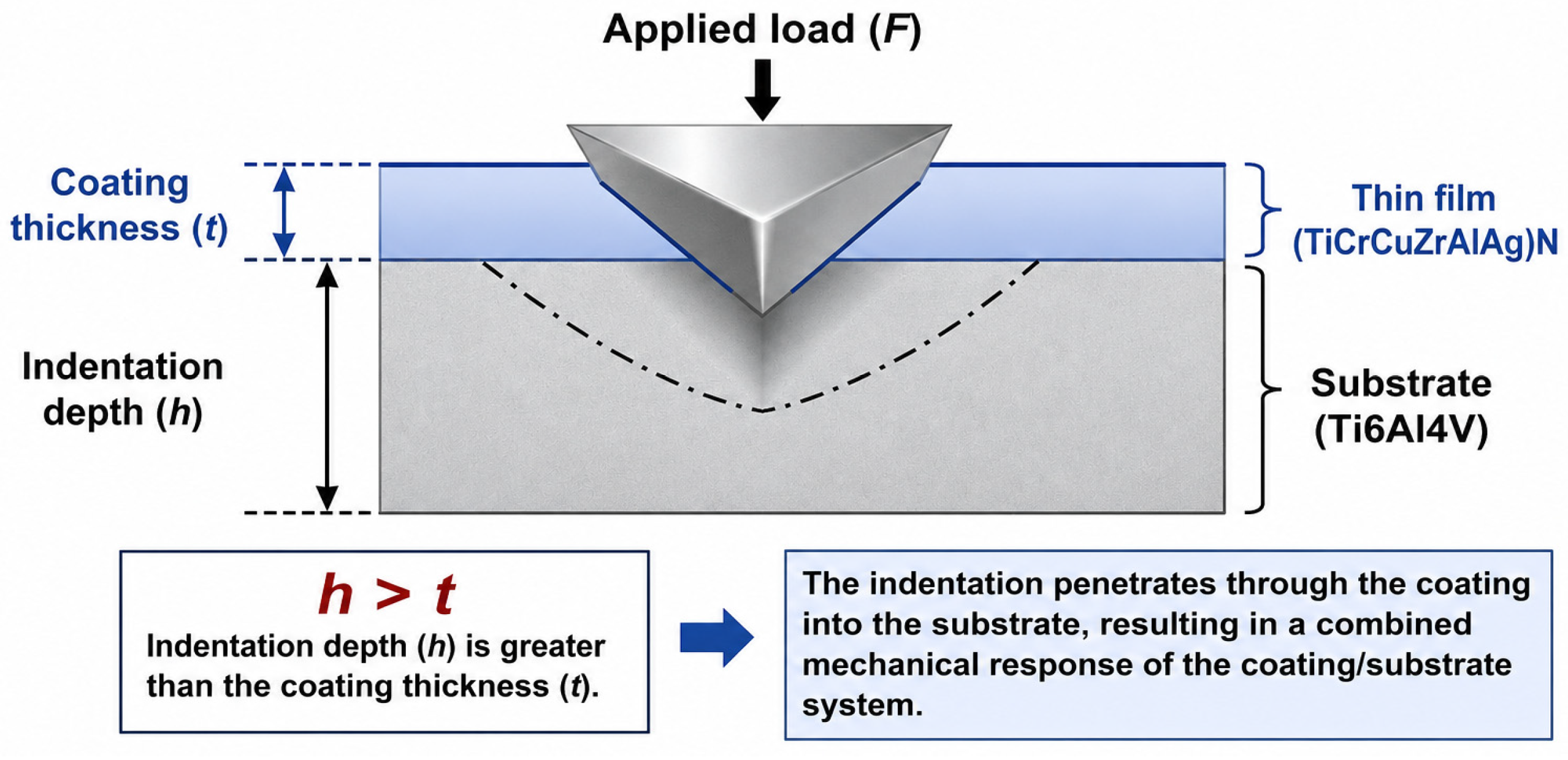
In addition, the surface hardness of the coated specimens was measured using a Vickers hardness tester (MVK-H100, Akashi Corporation, Osaka, Japan) under a load of 300 g. The selected load allowed the indentation to penetrate through the coating into the substrate, producing a combined mechanical response of the coating/substrate system (substrate effect), as illustrated in Figure 2. Therefore, the measured values represent the surface hardness of the coated substrate system rather than the intrinsic hardness of the coating. For each specimen, five measurements were performed at randomly selected locations, and the average value was reported as the representative surface hardness.

2.4. Wear Testing

Based on previous wear test experience [13,14,24] and the related literature [26], wear experiments in the study were conducted using a ball-on-disc tribometer (CSM Instruments SA, Peseux, Switzerland). The testing conditions were as follows: (1) unlubricated conditions, (2) for evaluating the coating performance under more severe wear conditions, a circular wear track with a diameter of 5 mm using a 6 mm diameter WC–6%Co ball as the counter body, (3) a sliding speed of 10 cm/s, (4) an applied load of 2 N, (5) an ambient temperature of 25 °C, and (6) a relative humidity of 65%. During the tests, the friction coefficient was continuously recorded as a function of sliding distance up to a total travel distance of 1200 m. The wear rate was determined from the weight loss of the specimens, measured using a microbalance with an accuracy of 1 × 10⁻⁴ g. Each wear test was independently repeated three times under identical testing conditions, and the reported wear rates represented the mean values with the corresponding standard deviations. In addition, the worn surfaces of the specimens were examined using field-emission scanning electron microscopy (FESEM).

2.5. Antibacterial Testing

The antibacterial activity of the coated specimens was evaluated according to the JIS Z 2801 standard, which has been adopted internationally as ISO 22196 [27]. This standardized method quantitatively evaluates the antibacterial performance of hard, non-porous surfaces by determining their ability to inhibit bacterial growth after a 24 h contact period. Owing to its high sensitivity and reproducibility, it has been widely used for assessing antibacterial coatings and surface-engineered materials intended for biomedical, healthcare, and consumer applications.
For antibacterial evaluation in the study, the uncoated Ti6Al4V substrate and all coated specimens deposited at substrate bias voltages of 50, 100, and 150 V were tested. Escherichia coli (ATCC 8739) was selected as the model Gram-negative bacterium. The bacterial cultures were incubated at 37 °C for 24 h. After incubation, the specimens were rinsed with phosphate-buffered saline (PBS), followed by serial dilution. The bacterial colonies were photographed using a GelDoc Go Imaging System, and the colony-forming units (CFU) were quantified using ImageJ software (version 1.53t, National Institutes of Health, Bethesda, MD, USA). The antibacterial rate was subsequently calculated based on the CFU counts of the coated specimens relative to those of the uncoated Ti6Al4V substrate.

3. Results and Discussion

3.1. Analysis of Coating Composition and Structure

In this study, scanning electron microscopy coupled with energy-dispersive spectroscopy (SEM-EDS) was employed to analyze the compositional characteristics of the films. Elemental compositions were determined using point analysis, with five randomly selected points measured for each film, and the results were subsequently averaged to ensure reliability. The primary elements analyzed included Ti, Cr, Cu, Zr, Al, Ag, and N. The compositional data of films deposited under three different bias voltage conditions are listed in Table 3. As the bias voltage increased from 50 to 150 V, the Ti, Cr, and Al contents increased, whereas the Zr, Cu, and Ag contents decreased. These compositional changes are primarily attributed to enhanced ion bombardment and re-sputtering at higher substrate bias voltages. Elements with relatively high sputtering yields or low surface binding energies, particularly Cu and Ag, are preferentially re-sputtered from the growing film, whereas refractory nitride-forming elements such as Ti, Cr, and Al are retained. As a result, increasing the bias voltage promotes the formation of Ti-, Cr-, and Al-rich nitride coatings while suppressing Cu and Ag incorporation. This compositional evolution is expected to improve coating densification and structural stability but may reduce antibacterial activity because of the lower Cu and Ag contents. The observed trends are further supported by the microstructural, hardness, wear, and antibacterial results discussed in the following sections.
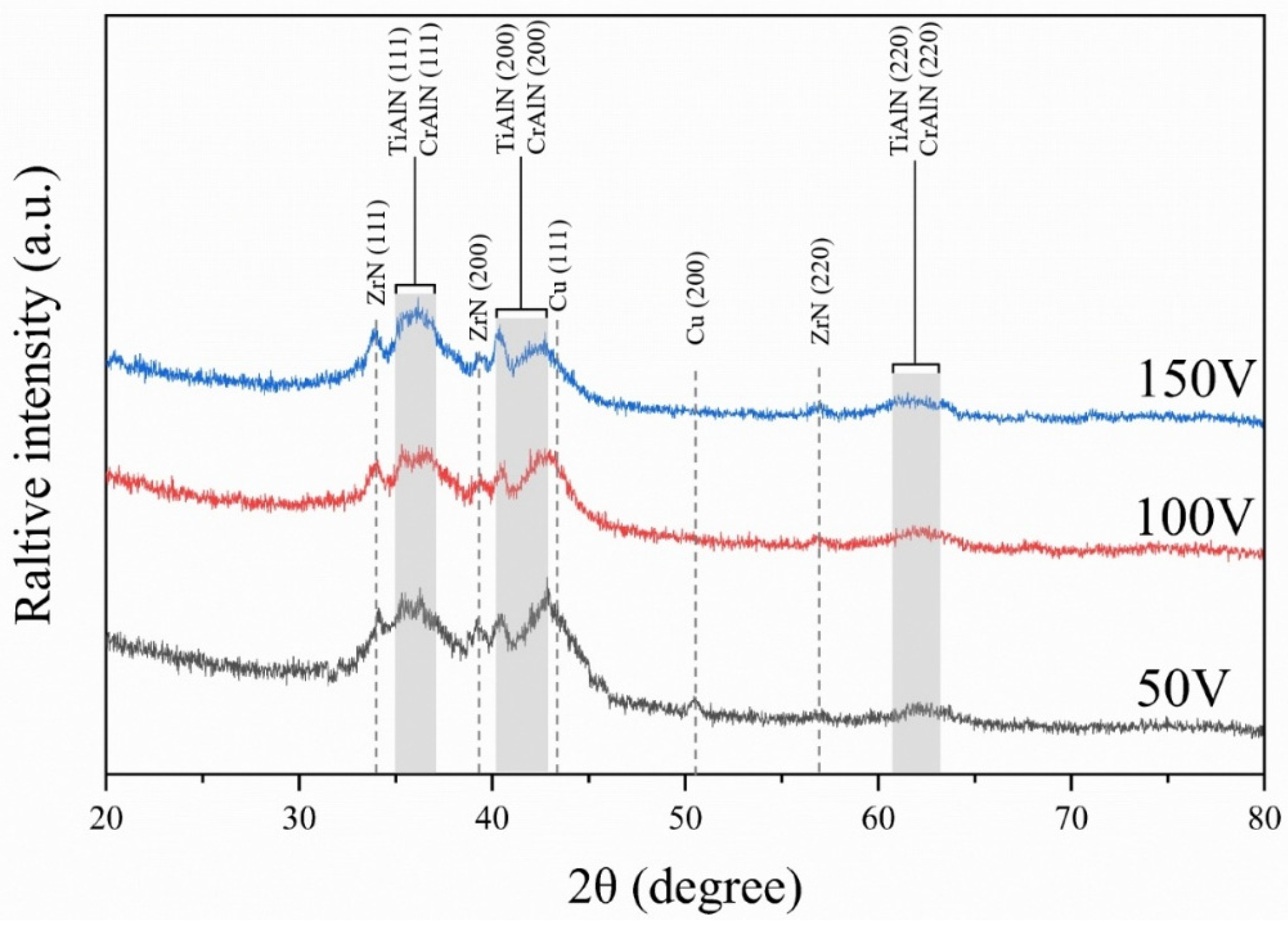
Figure 3 shows the XRD patterns of the (TiCrCuZrAlAg)N coatings deposited at substrate bias voltages of 50, 100, and 150 V. All coatings exhibit broad diffraction peaks at approximately 36–38°, 41–43°, and 61–63°, which can be primarily attributed to face-centered cubic (FCC) nitride phases, including TiN-, ZrN-, TiAlN-, and CrAlN-related solid solutions. The broad and partially overlapping diffraction peaks suggest the formation of a multi-element nitride matrix rather than discrete individual nitride phases. Weak Cu-related reflections are also observed, indicating that a small fraction of Cu exists as a separate metallic phase. In contrast, no distinct Ag diffraction peak is detected, which may be attributed to its relatively low concentration and highly dispersed state within the coating matrix. As the substrate bias voltage increases, the diffraction peaks become broader and less intense. Although no quantitative analysis of peak broadening was performed, this trend suggests reduced crystallinity and increased lattice distortion. Such changes are consistent with enhanced ion bombardment at higher substrate bias voltages. The higher kinetic energy of incident ions may promote atomic displacement, defect formation, and residual stress accumulation during film growth [28,29]. Although moderate ion bombardment can enhance atomic mobility and coating densification, excessive bombardment may introduce additional lattice defects and hinder long-range crystal growth, leading to the observed peak broadening. The compositional results presented in Table 3 are consistent with this interpretation. As the bias voltage increases, the Cu and Ag contents decrease, suggesting that enhanced re-sputtering preferentially removes these relatively weakly bonded metallic elements from the growing film. Consequently, substrate bias voltage affects both the crystallographic characteristics and elemental incorporation behavior of the coatings. Collectively, these results suggest that enhanced ion bombardment and re-sputtering play important roles in the evolution of the coating microstructure, which is expected to influence the various properties as explored in the study.

3.2. Observation of Coating Surface and Cross-Section

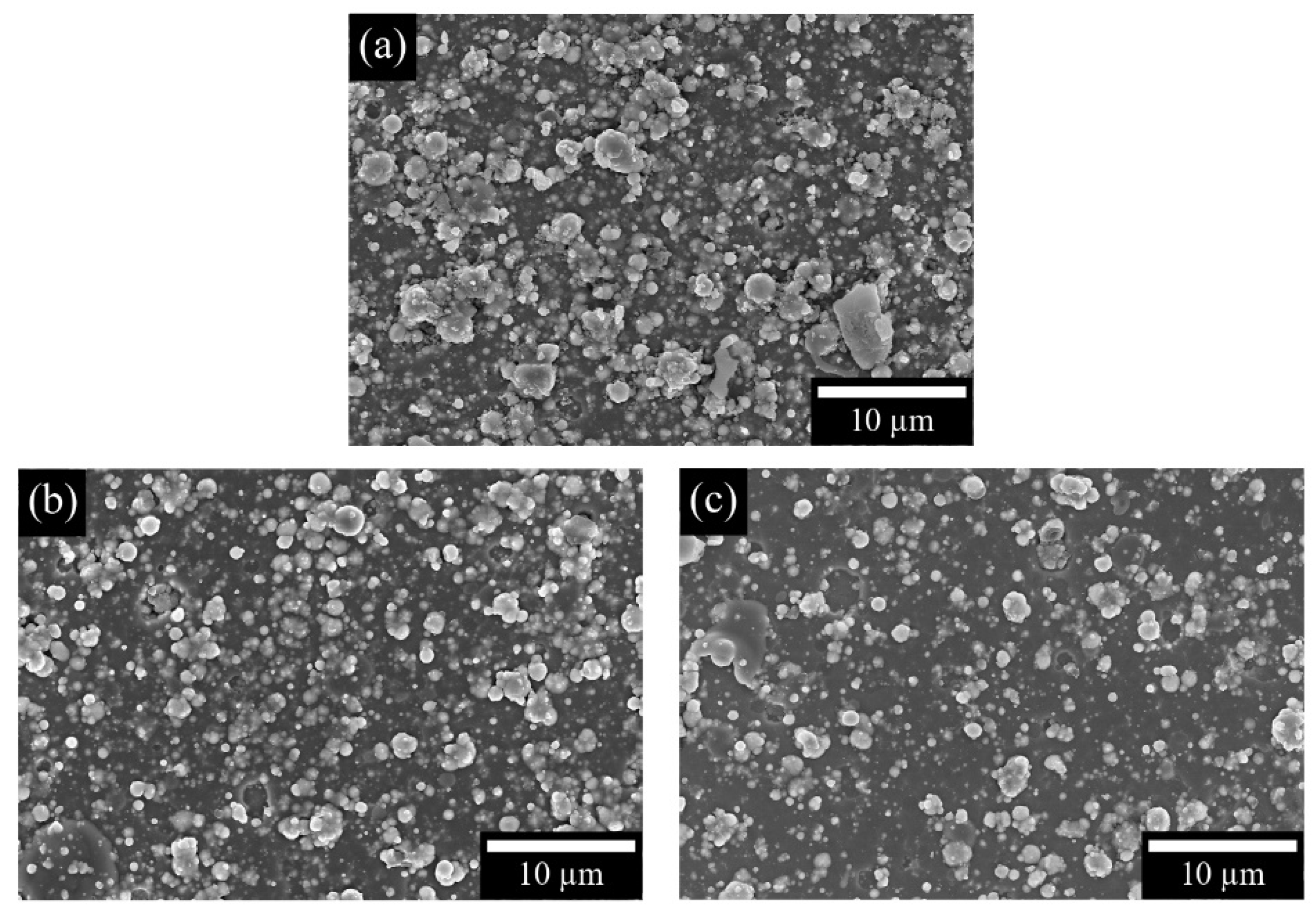
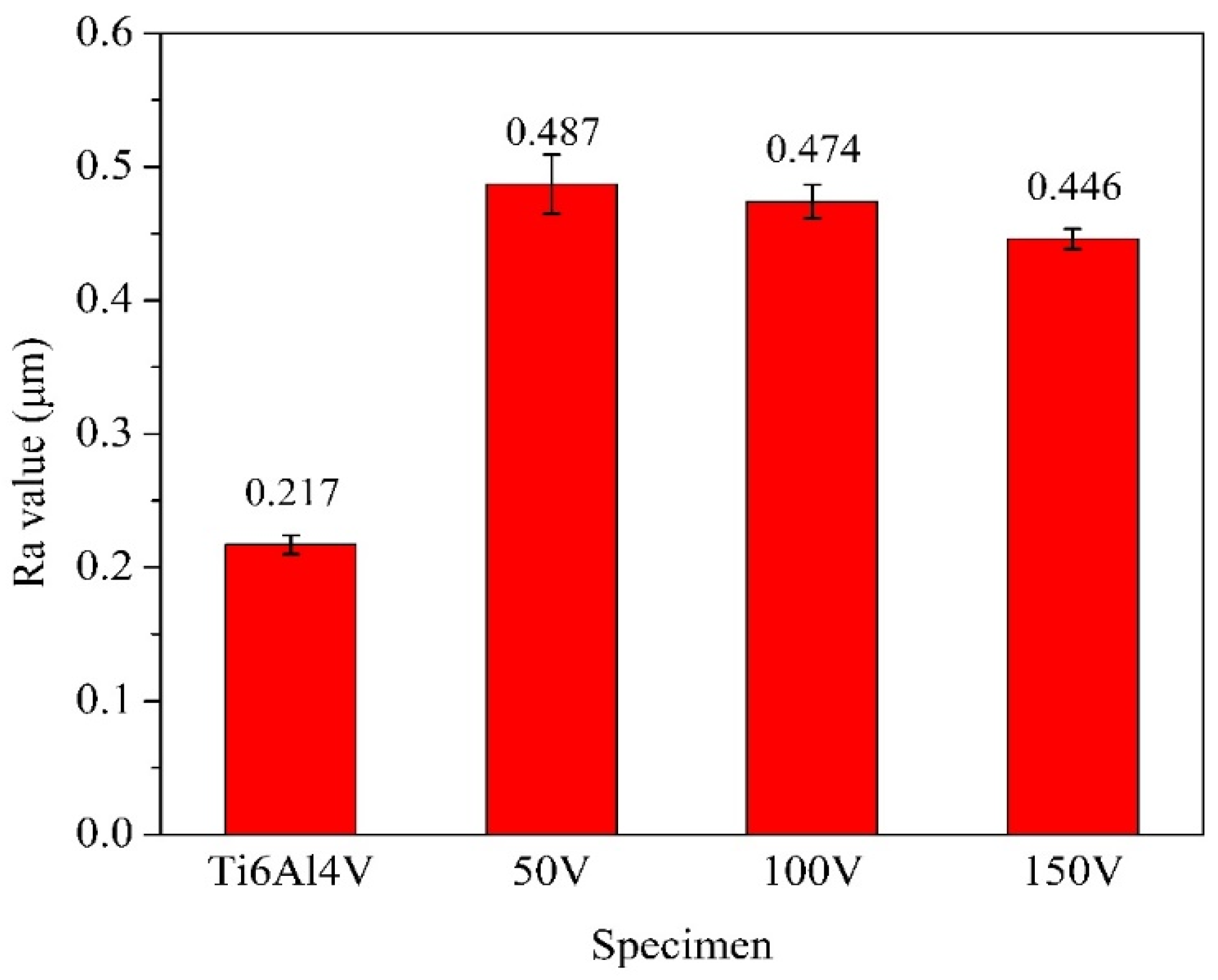
Figure 4 shows the surface morphologies of the (TiCrCuZrAlAg)N coatings deposited under different substrate bias voltages. All coatings exhibit similar surface morphologies characterized by numerous spherical microdroplets, which are typical features of the CAE process. These microdroplets originate from the ejection of molten cathode material during arc discharge and become incorporated into the growing film [30,31,32]. Consequently, all coated specimens exhibit higher surface roughness than the polished Ti6Al4V substrate. The effect of substrate bias voltage on surface roughness is summarized in Figure 5. Although the coated specimens exhibit higher roughness values than the substrate, the Ra value decreases slightly with increasing bias voltage. This trend is consistent with enhanced ion bombardment during film growth. Higher-energy ions increase surface atom mobility, promote atomic rearrangement, and facilitate the re-sputtering of loosely bonded surface asperities and protruding microdroplets, resulting in a smoother coating surface.
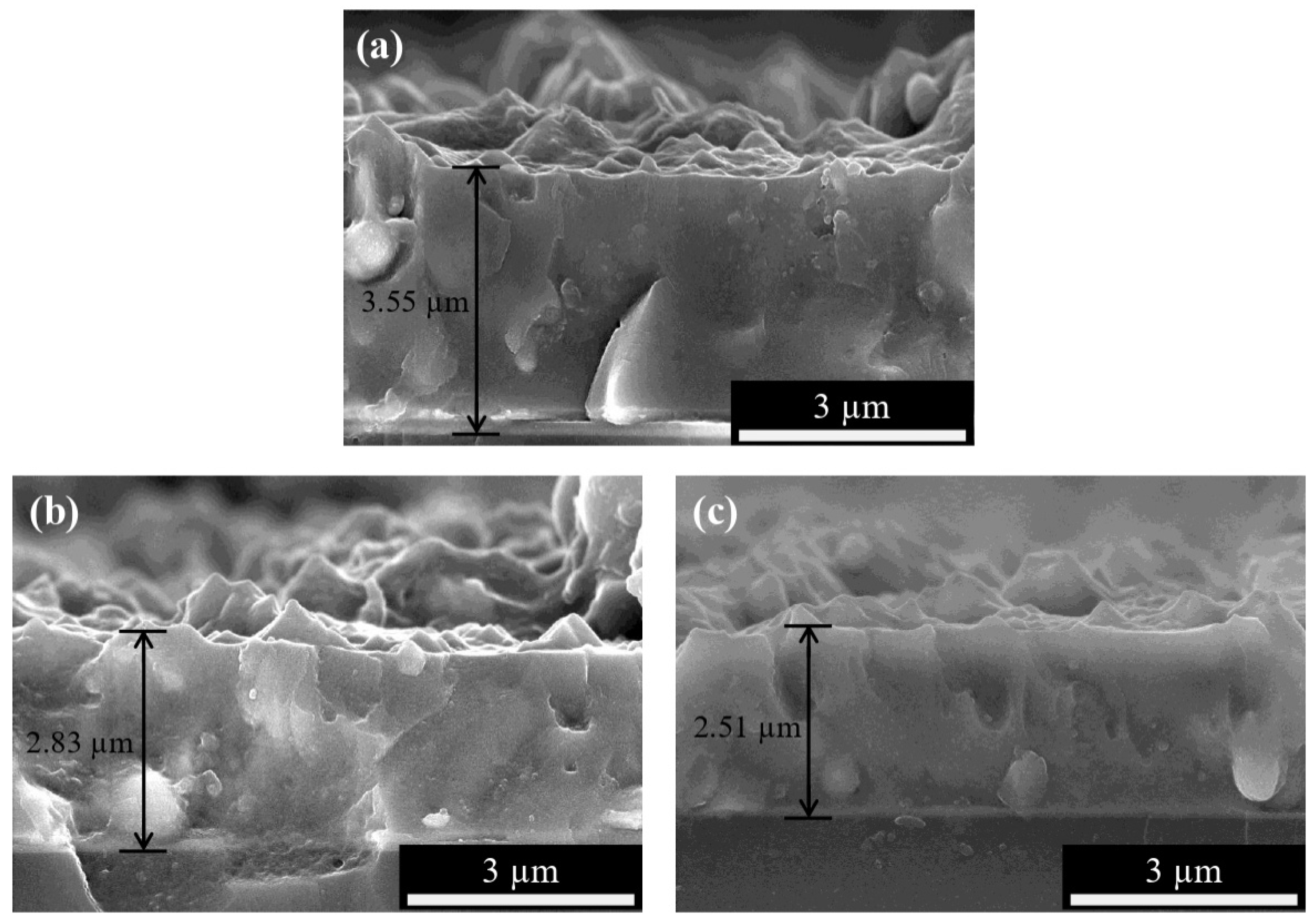
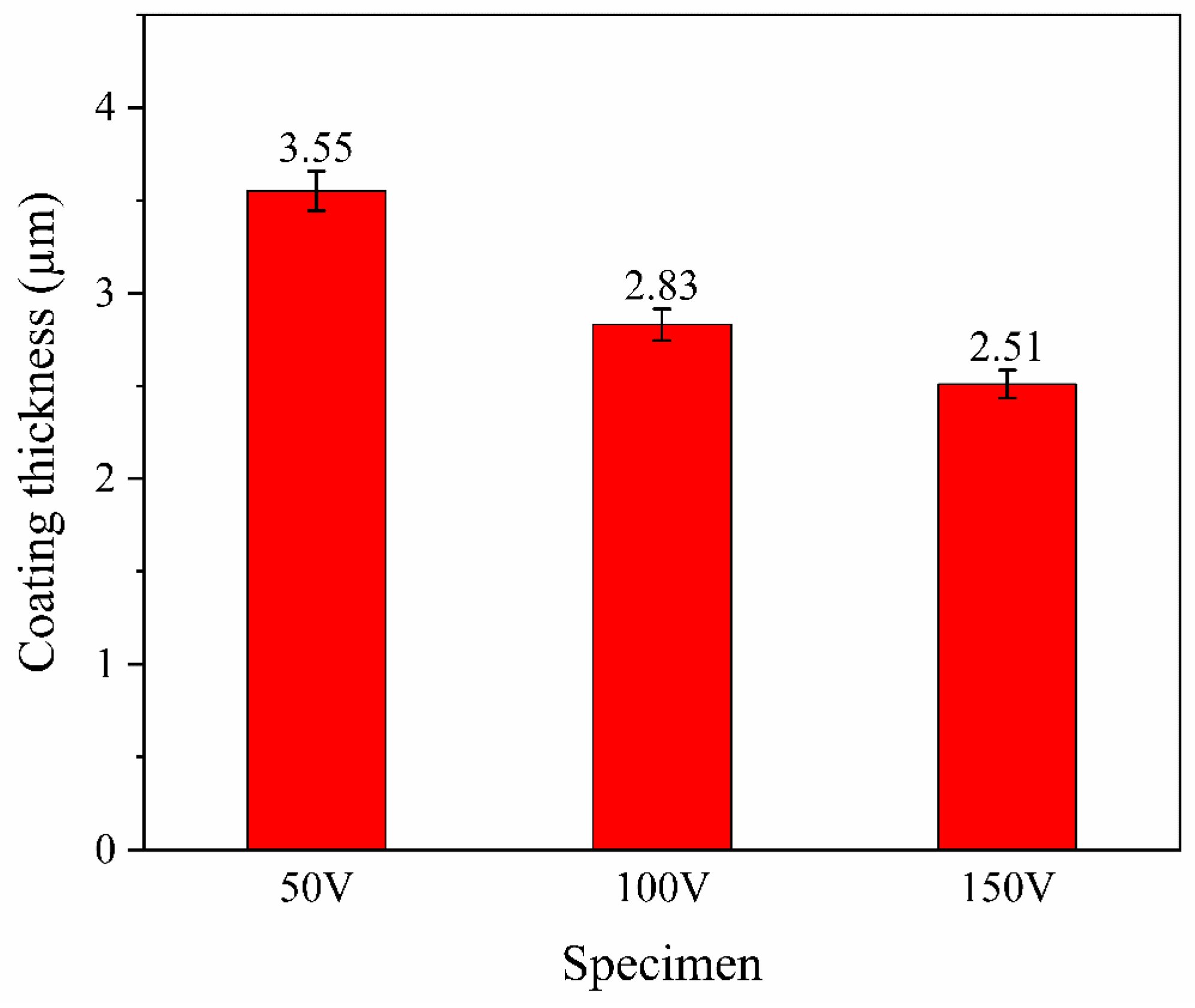
The cross-sectional morphologies shown in Figure 6 and the coating thicknesses summarized in Figure 7 further demonstrate the influence of substrate bias voltage on coating growth. The coating thickness decreases from 3.55 μm at 50 V to 2.83 μm at 100 V and 2.51 μm at 150 V. This reduction is attributed to enhanced ion bombardment, which increases the re-sputtering probability of deposited atoms and thereby lowers the effective deposition rate. Although ion bombardment promotes coating densification, the increased removal of deposited species results in a progressive decrease in coating thickness with increasing bias voltage. These observations are consistent with the compositional changes discussed in Section 3.1, where enhanced re-sputtering preferentially reduces the incorporation of Cu and Ag. Collectively, the results indicate that substrate bias voltage governs coating growth through the combined effects of ion-assisted densification and re-sputtering, which are expected to influence the subsequent mechanical and antibacterial properties.

3.3. Analysis of Coating Adhesion and Hardness

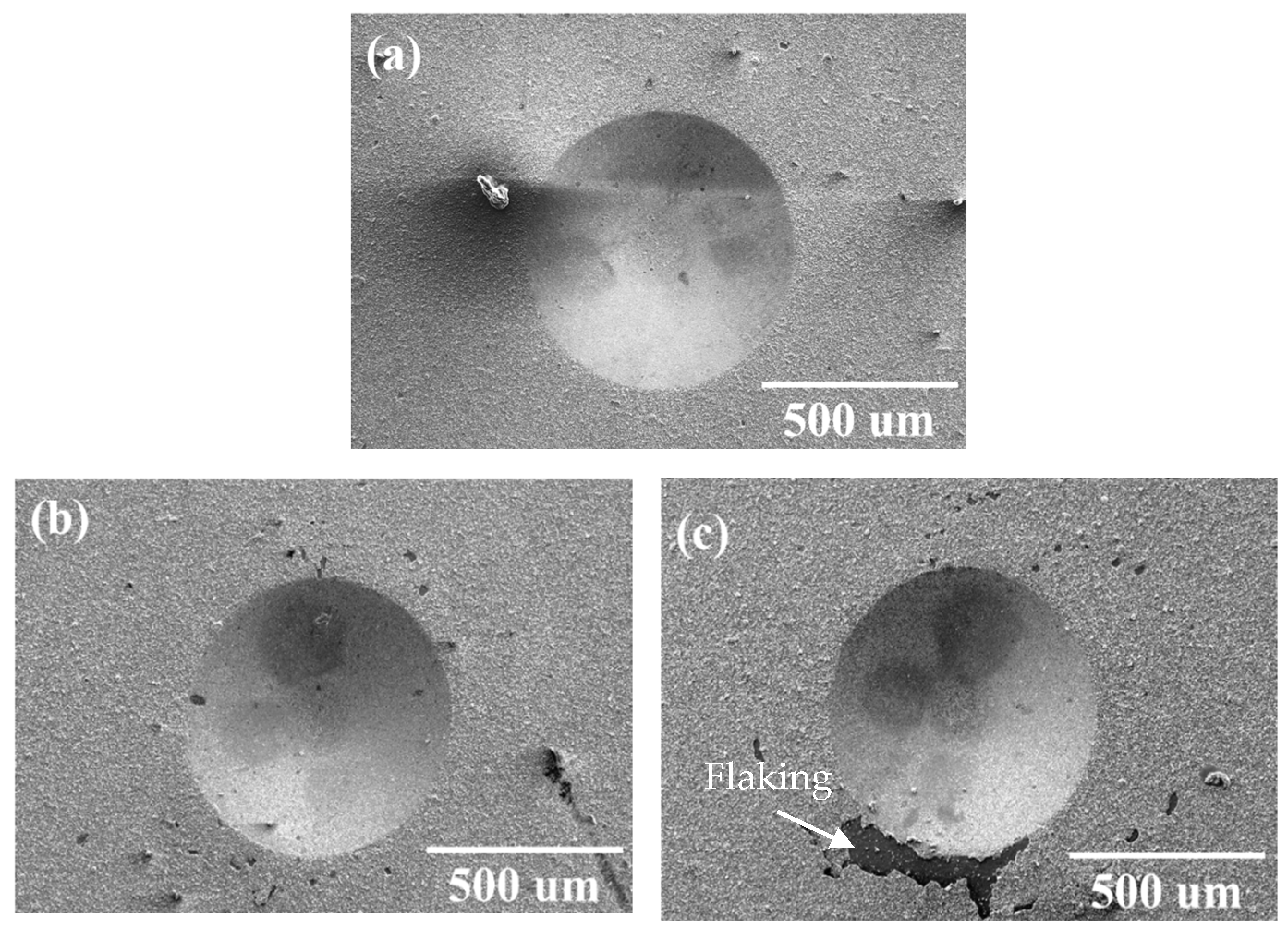
Figure 8 presents the Rockwell-C indentation morphologies of the (TiCrCuZrAlAg)N coatings deposited under different substrate bias voltages. As shown in Figure 8a,b, the coatings deposited at 50 V and 100 V exhibit intact indentation profiles without noticeable cracking or delamination around the indentation, and are therefore classified as HF1 according to the VDI 3198 standard [25]. In contrast, localized flaking is observed around the indentation edge of the coating deposited at 150 V, corresponding to an HF3 classification (Figure 8c). Although all coatings satisfy the acceptable adhesion criterion (HF1–HF4), the adhesion performance shows a gradual decline with increasing substrate bias voltage. This trend is consistent with the microstructural evolution discussed in Section 3.1 and Section 3.2. Increasing the substrate bias voltage enhances ion bombardment and coating densification but also intensifies re-sputtering during film growth. In PVD nitride coatings, excessive ion bombardment has been reported to promote lattice distortion and compressive residual stress, which may increase the susceptibility of coatings to indentation-induced damage. Although residual stress was not measured in the present study, the progressively increased localized flaking observed at higher bias voltages is consistent with this interpretation. These results suggest that an appropriate substrate bias voltage is necessary to balance coating densification and adhesion performance.
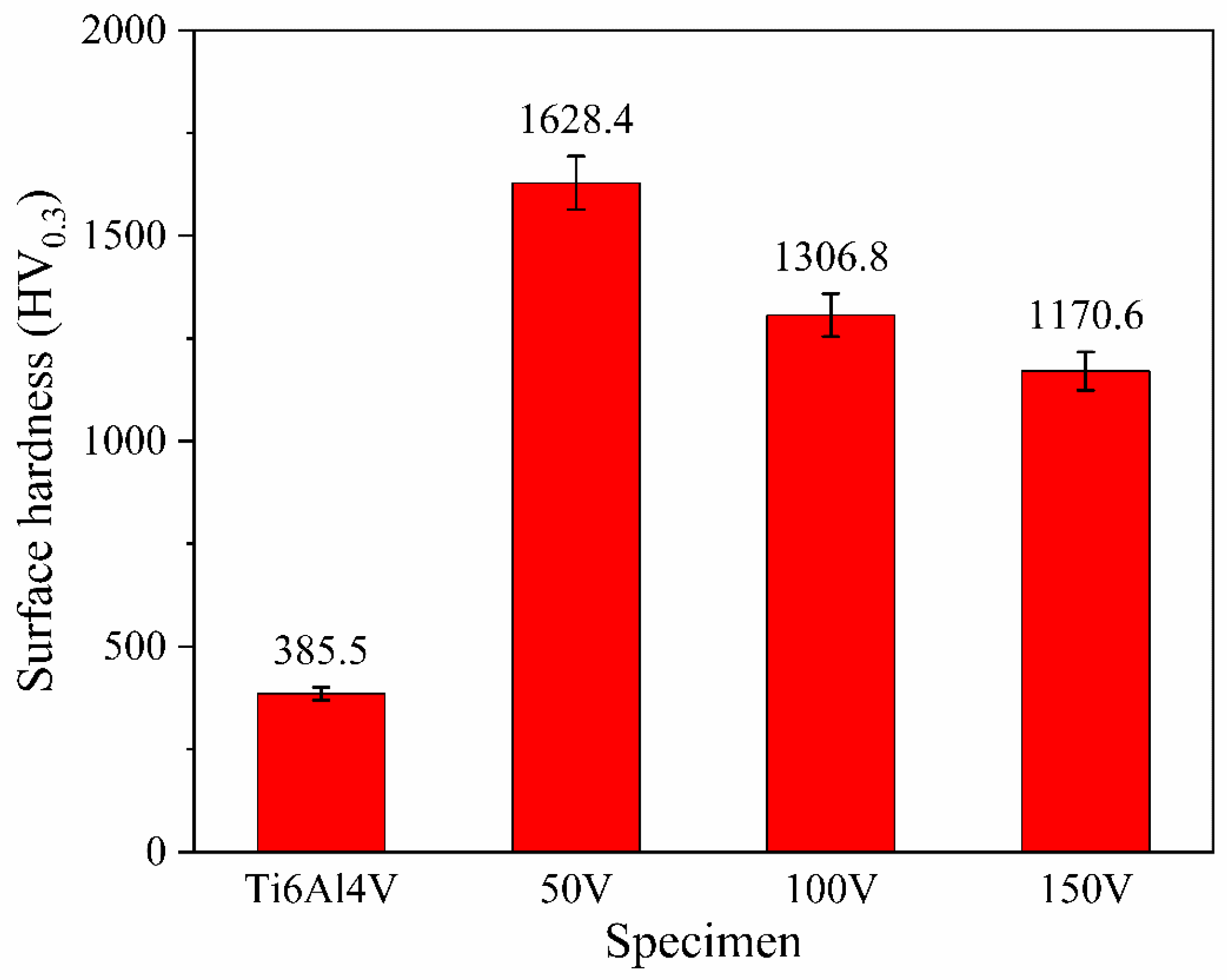
Figure 9 compares the surface hardness of the uncoated Ti6Al4V substrate and the coated specimens. Deposition of the (TiCrCuZrAlAg)N coatings markedly increased the surface hardness from 385.5 HV for the substrate to 1170.6–1628.4 HV for the coated systems, demonstrating the strengthening effect of the multi-element nitride coatings. Among the investigated conditions, the coating deposited at 50 V exhibited the highest surface hardness, whereas the hardness decreased gradually with increasing substrate bias voltage. This trend is consistent with the microstructural evolution discussed in the previous sections. At 50 V, moderate ion bombardment promoted effective coating growth while limiting excessive re-sputtering, resulting in the greatest coating thickness. As the substrate bias voltage increased, enhanced ion bombardment intensified re-sputtering, leading to a progressive reduction in coating thickness. Because the Vickers indentation depth under the applied load (approximately 4–6 μm) exceeded the coating thickness (2.51–3.55 μm), the measured hardness was strongly influenced by the substrate effect. Consequently, the thinner coatings deposited at higher bias voltages provided less load support during indentation, allowing greater plastic deformation of the Ti6Al4V substrate and resulting in lower measured surface hardness.
It should be emphasized that the measured values represent the surface hardness of the coating/substrate system rather than the intrinsic hardness of the coatings. Although nanoindentation or lower-load microhardness testing would be more appropriate for evaluating the intrinsic coating hardness, the present measurements were intentionally designed to assess the overall surface hardness of the coated substrate, which is more representative of practical engineering and biomedical applications where the coating and substrate function as an integrated system. The influence of phase constitution on hardness should also be considered. However, the XRD results show that all coatings exhibit similar TiN-, CrN-, ZrN-, and TiAlN-related phases, with no evidence of new crystalline phase formation as the substrate bias voltage increased. Therefore, the observed variation in surface hardness is more reasonably attributed to differences in coating thickness and the associated substrate effect than to changes in phase constitution.

3.4. Wear Behavior of Coatings

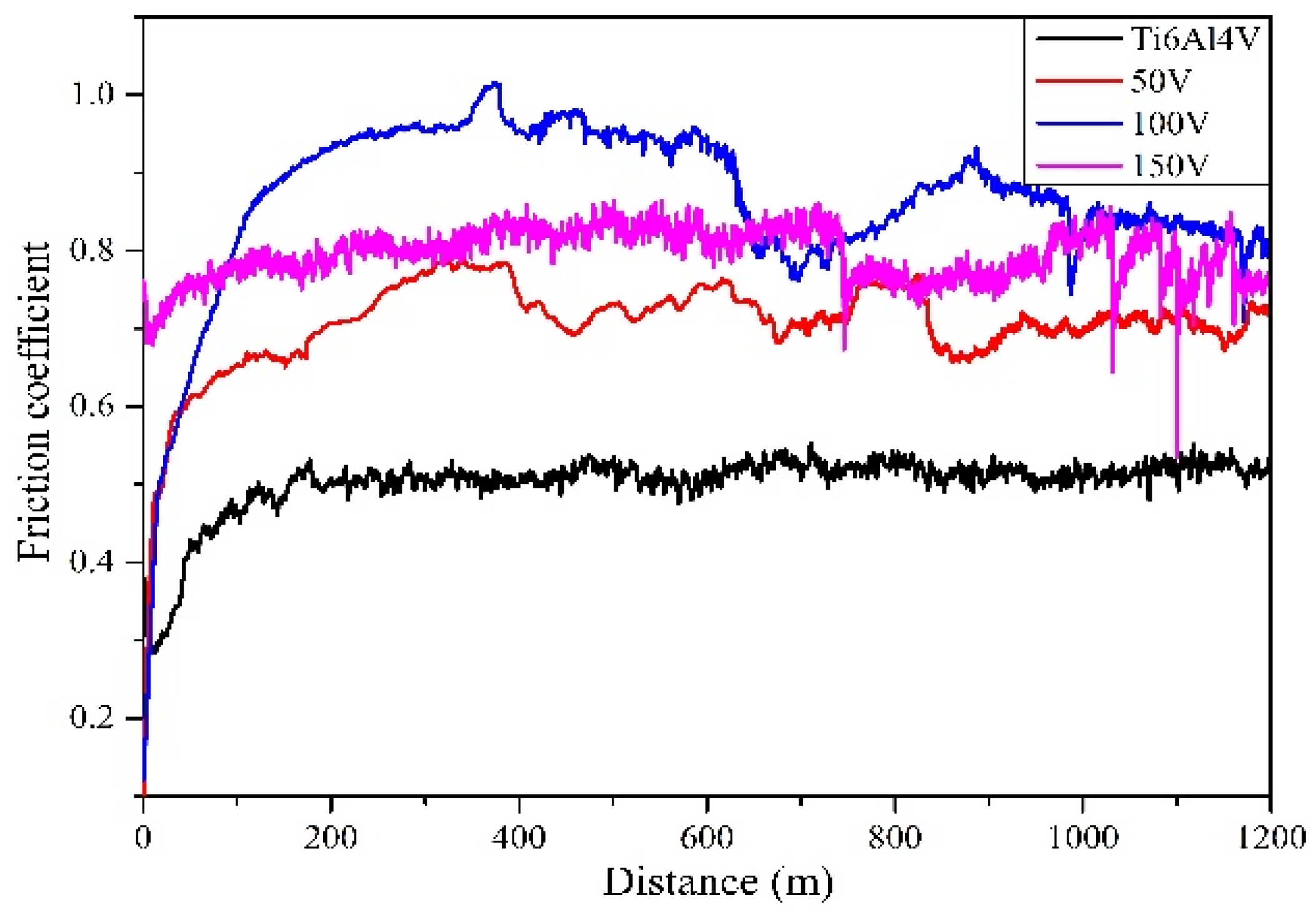
Figure 10 compares the friction coefficients of the uncoated Ti6Al4V substrate and the coated specimens. All coated specimens exhibited higher friction coefficients than the substrate, with the average value increasing from approximately 0.50 for the polished Ti6Al4V substrate to 0.75–0.90 for the coated specimens. This increase is primarily attributed to the rougher surface morphology produced by the CAE process. The presence of microdroplets and surface asperities increases mechanical interlocking between the contacting surfaces and promotes plowing during sliding, resulting in higher friction coefficients than those of the polished substrate. However, although the coated specimens exhibit similar surface roughness values (Ra = 0.446–0.487 μm), noticeable differences in friction coefficient are still observed, indicating that surface roughness alone cannot fully account for the tribological behavior. Variations in coating thickness, microstructure, elemental composition, and sliding interface characteristics are also expected to contribute to the friction response.
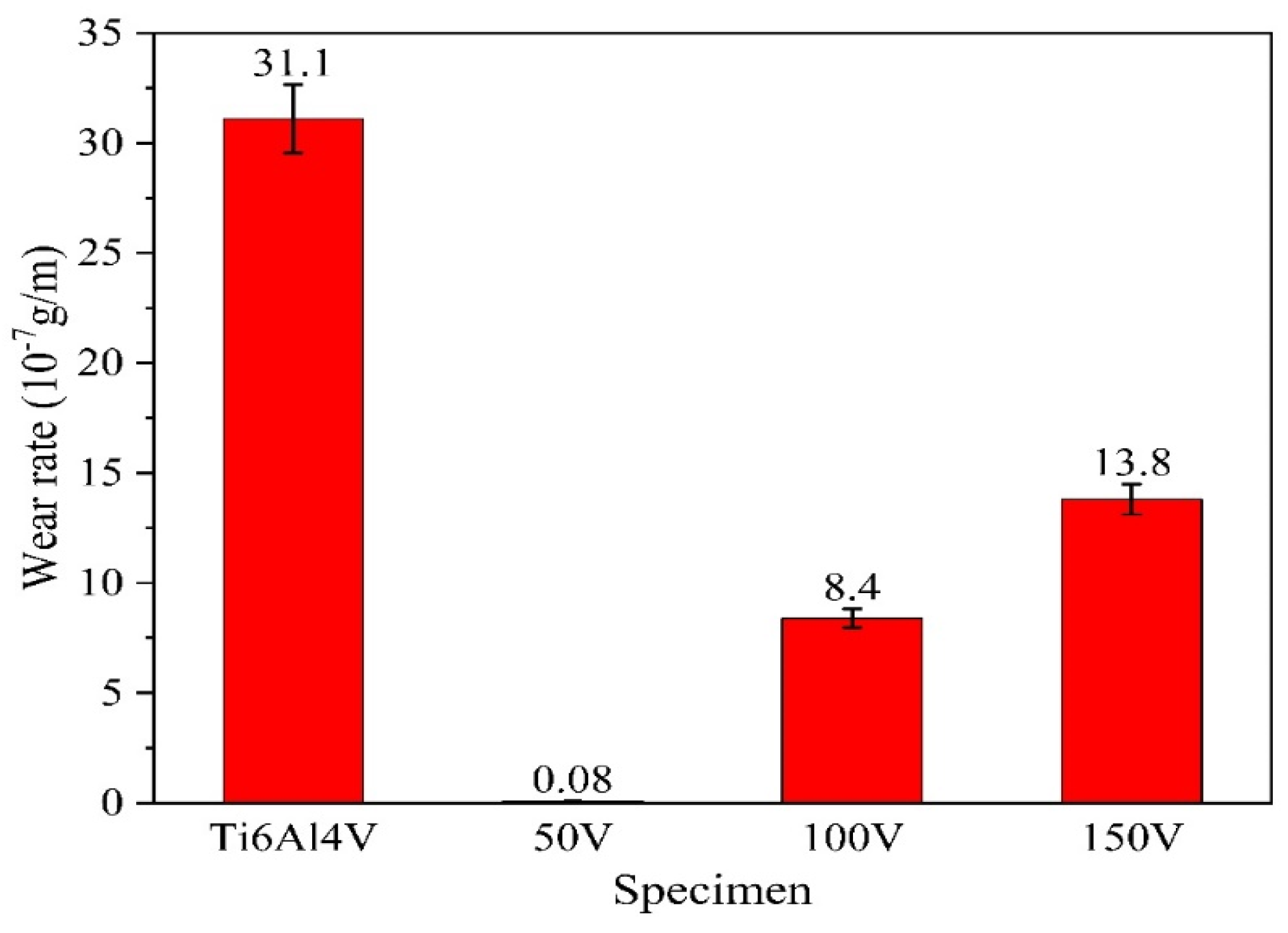
In contrast, the wear-rate results presented in Figure 11 show an opposite trend. Despite their higher friction coefficients, all coated specimens exhibit substantially lower wear rates than the uncoated substrate, demonstrating that wear resistance is not directly correlated with the friction coefficient. Instead, the superior wear performance is primarily attributed to the load-bearing capability provided by the multi-element nitride coatings, which effectively suppress plastic deformation and material removal of the relatively soft Ti6Al4V substrate during sliding. Among the investigated conditions, the coating deposited at 50 V exhibits the lowest wear rate, indicating the best wear resistance. This behavior is consistent with its greater coating thickness, higher measured surface hardness, and improved load support. As the substrate bias voltage increases, enhanced re-sputtering reduces the coating thickness, thereby decreasing the load-bearing capability of the coating/substrate system and leading to a gradual increase in wear rate.
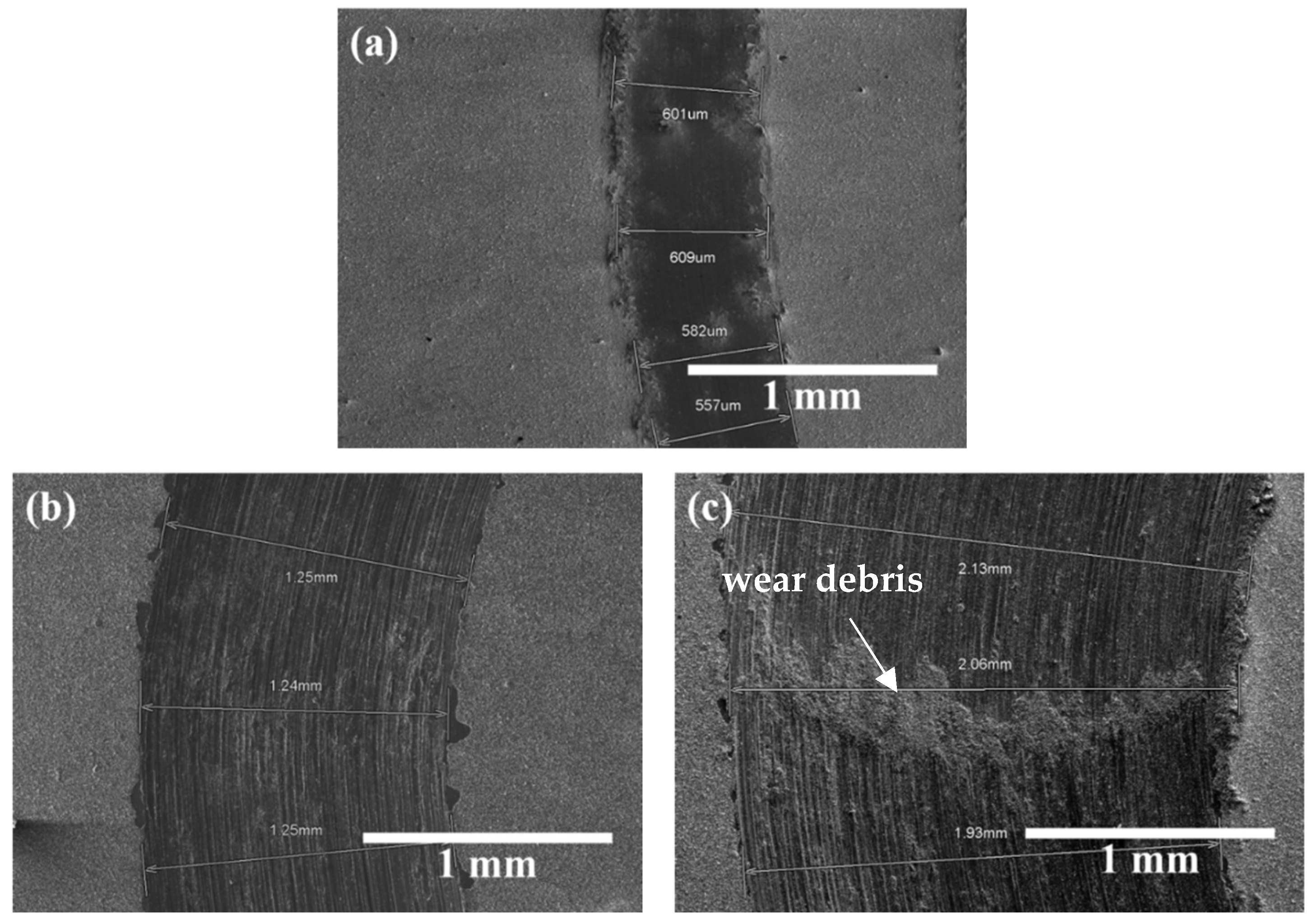
The wear-track morphologies shown in Figure 12 further support these observations. The coating deposited at 50 V exhibits the narrowest wear track and the least material removal (Figure 12a), whereas the wear-track width gradually increases for the coatings deposited at 100 V and 150 V (Figure 12b,c). Parallel grooves are observed along the sliding direction for all coated specimens, indicating that abrasive wear is the dominant wear mechanism. In addition, localized accumulations of wear debris, particularly on the 150 V coating, suggest the coexistence of mild adhesive wear and third-body abrasion. These observations are consistent with the progressive reduction in coating thickness and load-bearing capability as the substrate bias voltage increases.
Overall, the tribological results indicate that substrate bias voltage significantly influences wear performance by modifying the coating structure and thickness during deposition. While the friction coefficient is affected by multiple factors, including surface morphology and sliding interface characteristics, the wear resistance is primarily governed by the load-bearing capability of the coating/substrate system.

3.5. Antibacterial Behavior of Coatings

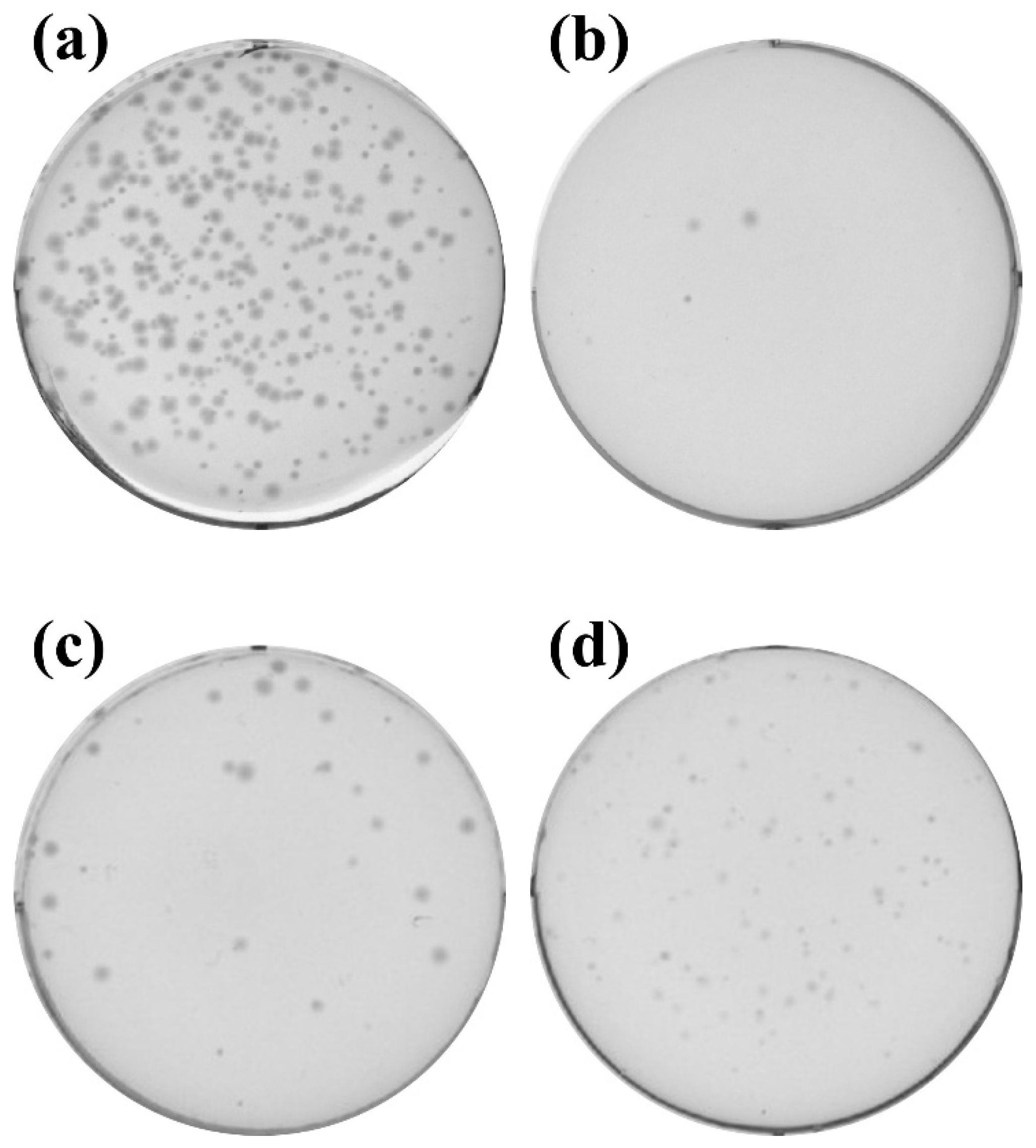
Figure 13 presents representative bacterial colony images after incubation with the uncoated Ti6Al4V substrate and the (TiCrCuZrAlAg)N-coated specimens, while the corresponding colony-forming unit (CFU) counts and antibacterial rates are summarized in Table 4. All coated specimens exhibit substantially improved antibacterial performance compared with the uncoated substrate, demonstrating the effectiveness of the multi-element nitride coatings in inhibiting the growth of Escherichia coli. Among the investigated conditions, the coating deposited at 50 V exhibits the lowest CFU count and the highest antibacterial rate (99.2%). Although all coatings maintain excellent antibacterial activity, the antibacterial rate decreases gradually as the substrate bias voltage increases from 50 V to 150 V, indicating that substrate bias voltage influences the antibacterial performance of the coatings. This trend is consistent with the compositional changes discussed in Section 3.1. Increasing the substrate bias voltage reduces the Cu and Ag contents, suggesting that enhanced re-sputtering decreases the incorporation of these antibacterial elements during film growth. Because Cu and Ag are the primary antibacterial constituents in the present coating system, the lower Cu and Ag contents are expected to reduce the availability of antibacterial species at the coating surface, thereby decreasing antibacterial performance. The antibacterial activity of Cu- and Ag-containing coatings is generally attributed to the release of Cu+/Cu2+ and Ag+ ions, which can disrupt bacterial cell membranes, interfere with intracellular proteins and nucleic acids, and ultimately inhibit bacterial metabolism and proliferation [33,34,35]. However, the release of metal ions was not quantified in the present study. Therefore, this mechanism is discussed based on previous reports and should be regarded as a reasonable interpretation rather than direct experimental evidence. In addition to the incorporation of Cu and Ag, the nitriding process may also influence antibacterial performance through changes in surface chemistry, surface energy, and microstructural characteristics. Since these factors were not independently evaluated, their individual contributions cannot be quantitatively distinguished.
Overall, the antibacterial results suggest that the observed variation in antibacterial performance is primarily associated with differences in Cu and Ag incorporation resulting from the substrate bias voltage, while the potential contributions of other surface characteristics cannot be excluded.

4. Conclusions

  • (TiCrCuZrAlAg)N multi-element nitride coatings were successfully deposited on Ti6Al4V substrates by cathodic arc evaporation. All coatings exhibited FCC nitride structures, and increasing the substrate bias voltage resulted in broader diffraction peaks, suggesting reduced crystallinity and increased lattice distortion.
  • Increasing the substrate bias voltage enhanced ion bombardment and re-sputtering, resulting in reduced coating thickness and lower Cu and Ag incorporation.
  • The mechanical and tribological properties were significantly influenced by the substrate bias voltage. The coating deposited at 50 V exhibited the highest surface hardness, the best wear resistance, and HF1 adhesion behavior.
  • All coatings exhibited excellent antibacterial activity against Escherichia coli. The coating deposited at 50 V achieved the highest antibacterial performance, whereas increasing the substrate bias voltage reduced the antibacterial efficiency because of the lower Cu and Ag incorporation.
  • In summary, the study results suggest that substrate bias voltage plays a critical role in tailoring the composition, microstructure, and multifunctional performance of (TiCrCuZrAlAg)N coatings through its influence on ion bombardment and re-sputtering during film growth. These findings provide useful guidance for designing multifunctional nitride coatings for biomedical and engineering applications.

Author Contributions

Conceptualization, C.-H.H.; methodology, C.-H.H.; validation, H.-W.C. and T.-A.S.; formal analysis, T.-A.S.; investigation, C.-H.H., H.-W.C., T.-A.S. and W.-C.H.; data curation, H.-W.C. and T.-A.S.; writing—original draft preparation, C.-H.H.; writing—review and editing, C.-H.H. All authors have read and agreed to the published version of the manuscript.

Funding

This research was funded by the National Science and Technology Council (NSTC), Taiwan, Grant No. NSTC 114-2813-C-036-011-E, and Tatung University, Taipei, Taiwan, Grant No. B115-M02-016.

Institutional Review Board Statement

Not applicable.

Informed Consent Statement

Not applicable.

Data Availability Statement

The original contributions are presented in this study’s article; further inquiries can be directed to the corresponding author.

Acknowledgments

The authors have used ChatGPT to assist with figures during the preparation of the manuscript.

Conflicts of Interest

The authors declare no conflicts of interest.

References

  1. Leyens, C.; Peters, M. Titanium and Titanium Alloys: Fundamentals and Applications; Wiley: Hoboken, NJ, USA, 2003. [Google Scholar]
  2. Donachie, M.J. Titanium: A Technical Guide, 2nd ed.; ASM International: Materials Park, OH, USA, 2000. [Google Scholar]
  3. Liu, S.; Shin, Y.C. Additive manufacturing of Ti6Al4V alloy: A review. Mater. Des. 2019, 164, 107552. [Google Scholar] [CrossRef] [Scilit]
  4. Boyer, R.; Welsch, G.; Collings, E.W. Materials Properties Handbook: Titanium Alloys; ASM International: Materials Park, OH, USA, 1994. [Google Scholar]
  5. Kamkar, S.; Mohammadi, M.; Karimi, M.; Majid Salehi, M. Electrochemical and biological properties of mono- and bilayer nitride coatings deposited on Ti–6%Al–4%V alloy. Mater. Chem. Phys. 2022, 286, 126185. [Google Scholar] [CrossRef] [Scilit]
  6. Patil, D.; Wasson, M.K.; Aravindan, S.; Vivekanandan, P.; Rao, P.V. Antibacterial and cytocompatibility study of modified Ti6Al4V surfaces through thermal annealing. Mater. Sci. Eng. C 2019, 99, 1007–1020. [Google Scholar] [CrossRef] [Scilit]
  7. Yang, G.; Liu, H.; Li, A.; Liu, T.; Lu, Q.; He, F. Antibacterial Structure Design of Porous Ti6Al4V by 3D Printing and Anodic Oxidation. Materials 2023, 16, 5206. [Google Scholar] [CrossRef] [Scilit] [PubMed]
  8. Budinski, K.G. Surface Engineering for Wear Resistance; Prentice-Hall Inc.: Hoboken, NJ, USA, 1988; p. 152. [Google Scholar]
  9. Paiva, J.M.; Rabinovich, G.F.; Junior, E.L.; Stolf, P.; Ahmed, Y.S.; Martins, M.M.; Bork, C.; Veldhuis, S. Tribological and Wear Performance of Nanocomposite PVD Hard Coatings Deposited on Aluminum Die Casting Tool. Materials 2018, 11, 358. [Google Scholar] [CrossRef] [Scilit] [PubMed]
  10. Hidalgo-Badillo, J.A.; Hernández-Casco, I.; Hernández, H.H.; Soriano-Vargas, O.; Contla-Pacheco, A.D.; Morán, C.O.G.; Hernández, J.M.; Cuautle, J.J.A.F. A tribological study of CrN and TiBN hard coatings deposited on cobalt alloys employed in the food industry. Coatings 2024, 14, 1278. [Google Scholar] [CrossRef] [Scilit]
  11. Li, M.; Yu, Y.; Zou, C.; Tian, C.; Xiang, Y. Study on Friction and Corrosion Performance of CrTiBN Coating in Artificial Seawater Environment. Coatings 2023, 13, 1837. [Google Scholar] [CrossRef] [Scilit]
  12. Toboła, D.; Beake, B.D.; Maj, Ł.; Chandran, P.; Atreya Danturthi, A.; Khan, T.; Liskiewicz, T.; Liu, Y.; Czechowski, K.; Drenda, C. TiN, CrN and TiCrN coating architectures on M2 steel: Consequences for wear and micro-impact resistance. Surf. Coat. Technol. 2026, 522, 133143. [Google Scholar] [CrossRef] [Scilit]
  13. Hsu, C.H.; Chen, H.W.; Lin, C.Y.; Hu, S.H. Effect of N2/Ar ratio on wear behavior of multi-element nitride coatings on AISI H13 tool steel. Materials 2024, 17, 4748. [Google Scholar] [CrossRef] [Scilit] [PubMed]
  14. Hsu, C.H.; Chen, H.W.; Lin, C.Y.; Chang, Z.H. Improvement in surface hardness and wear resistance of ADI via arc-deposited CrAlSiN multilayer films. Materials 2025, 18, 2017. [Google Scholar] [CrossRef] [Scilit]
  15. Huang, Z.; Lang, W.; Chen, Y.; Yang, B.; Wan, Q. A novel (AlCrNbTaTi)N multilayer hard high-entropy alloy nitride coating with variable aluminum content deposited by cathodic arc ion plating. Coatings 2025, 15, 76. [Google Scholar] [CrossRef] [Scilit]
  16. Li, Y.; Ma, D.; Liang, J.; Huang, D.; Wang, L.; Ren, D.; Jiang, X.; Leng, Y. Plasma bombardment-induced amorphization of (TiNbZrCr)Nx high-entropy alloy nitride films. Coatings 2024, 14, 505. [Google Scholar] [CrossRef] [Scilit]
  17. Wang, X.; Liu, J.; Liu, Y.; Li, W.; Chen, Y.; Yang, B. Structure, mechanical properties and water vapor corrosion resistance of AlCrNbSiTiN high-entropy nitride coatings deposited by RF magnetron sputtering. Coatings 2024, 14, 1006. [Google Scholar] [CrossRef] [Scilit]
  18. Lou, B.S.; Lin, Y.C.; Lee, J.W. Mechanical properties and corrosion resistance of AlCrNbSiTiN high entropy alloy nitride coatings. Coatings 2023, 13, 1724. [Google Scholar] [CrossRef] [Scilit]
  19. Zoita, N.C.; Dinu, M.; Parau, A.C.; López-Ortega, A.; Pana, I.; Grigorescu, C.N.A.; Mondragon, M.; Sobetkii, A.; Almandoz, X.; Izurrategi, J.M. The characteristics of light (TiCrAl0.5NbCu)CxNy high-entropy coatings deposited using a HiPIMS/DCMS technique. Crystals 2023, 13, 1565. [Google Scholar] [CrossRef] [Scilit]
  20. Novikov, V.; Stepanov, N.; Zherebtsov, S.; Salishchev, G. Structure and Properties of High-Entropy Nitride Coatings. Metals 2022, 12, 847. [Google Scholar] [CrossRef] [Scilit]
  21. Li, J.; Chen, Y.; Yiman, Z.; Shi, X.; Wang, S.; Zhang, S. Super-hard (MoSiTiVZr)Nx High-Entropy Nitride Coatings. J. Alloys Compd. 2022, 926, 116807. [Google Scholar] [CrossRef] [Scilit]
  22. Stasiak, T.; Souček, P.; Buršíková, V.; Koutná, N.; Czigány, Z.; Balazsi, K.; Vašina, P. Synthesis and Characterization of the Ceramic Refractory Metal High Entropy Nitride Thin Films from Cr–Hf–Mo–Ta–W System. Surf. Coat. Technol. 2022, 449, 128987. [Google Scholar] [CrossRef] [Scilit]
  23. Khan, N.A.; Akhavan, B.; Zhou, C.; Zhou, H.; Chang, L.; Wang, Y.; Liu, Y.; Bilek, M.M.; Liu, Z. High Entropy Nitride (AlCoCrCu0.5FeNi) Thin Films Deposited by Reactive Magnetron Sputtering. Surf. Coat. Technol. 2020, 402, 126327. [Google Scholar] [CrossRef] [Scilit]
  24. Hsu, C.H.; Lin, C.Y.; Chen, J.X. Wear and corrosion performance of Ti-6Al-4V alloy arc-coated TiN/CrN nano-multilayer film. Metals 2023, 13, 907. [Google Scholar] [CrossRef] [Scilit]
  25. Heinke, W.; Leyland, A.; Matthews, A.; Berg, G.; Friedrich, C.; Broszeit, E. Evaluation of PVD nitride coatings, using impact, scratch and Rockwell-C adhesion tests. Thin Solid Films 1995, 270, 431–438. [Google Scholar] [CrossRef] [Scilit]
  26. Pinto, G.; Baptista, A.; Silva, F.; Porteiro, J.; Míguez, J.; Alexandre, R. Study on the influence of the ball material on abrasive particles’ dynamics in ball-cratering thin coatings wear tests. Materials 2021, 14, 668. [Google Scholar] [CrossRef] [Scilit] [PubMed]
  27. ISO 22196:2011; Measurement of Antibacterial Activity on Plastics and Other Non-Porous Surfaces. International Organization for Standardization (ISO): Geneva, Switzerland, 2011.
  28. Schintlmeister, M.; Keckes, J.; Kathrein, M.; Mitterer, C. Influence of Bias Variation on Residual Stress and Texture in TiAlN PVD Coatings. Surf. Coat. Technol. 2003, 163–164, 248–254. [Google Scholar]
  29. Li, M.; Wang, F. Effects of nitrogen partial pressure and pulse bias voltage on (Ti,Al)N coatings by arc ion plating. Surf. Coat. Technol. 2003, 167, 197–202. [Google Scholar] [CrossRef] [Scilit]
  30. Randhawa, H. Cathodic arc plasma deposition technology. Thin Solid Films 1988, 167, 175–186. [Google Scholar] [CrossRef] [Scilit]
  31. Muhammed, M.; Javidani, M.; Sadrabadi, T.E.; Heidari, M.; Levasseur, T.; Jahazi, M. A comprehensive review of cathodic arc evaporation physical vapour deposition (CAE-PVD) coatings for enhanced tribological performance. Coatings 2024, 14, 246. [Google Scholar] [CrossRef] [Scilit]
  32. Hsu, C.H.; Chen, M.L.; Lai, K.L. Corrosion resistance of TiN/TiAlN-coated ADI by cathodic arc deposition. Mater. Sci. Eng. A 2006, 421, 182–190. [Google Scholar] [CrossRef] [Scilit]
  33. Rai, M.; Yadav, A.; Gade, A. Silver nanoparticles as a new generation of antimicrobials. Biotechnol. Adv. 2009, 27, 76–83. [Google Scholar] [CrossRef] [Scilit] [PubMed]
  34. Lemire, J.A.; Harrison, J.J.; Turner, R.J. Antimicrobial activity of metals: Mechanisms, molecular targets and applications. Nat. Rev. Microbiol. 2013, 11, 371–384. [Google Scholar] [CrossRef] [Scilit] [PubMed]
  35. Grass, G.; Rensing, C.; Solioz, M. Metallic copper as an antimicrobial surface. Appl. Environ. Microbiol. 2011, 77, 1541–1547. [Google Scholar] [CrossRef] [Scilit] [PubMed]
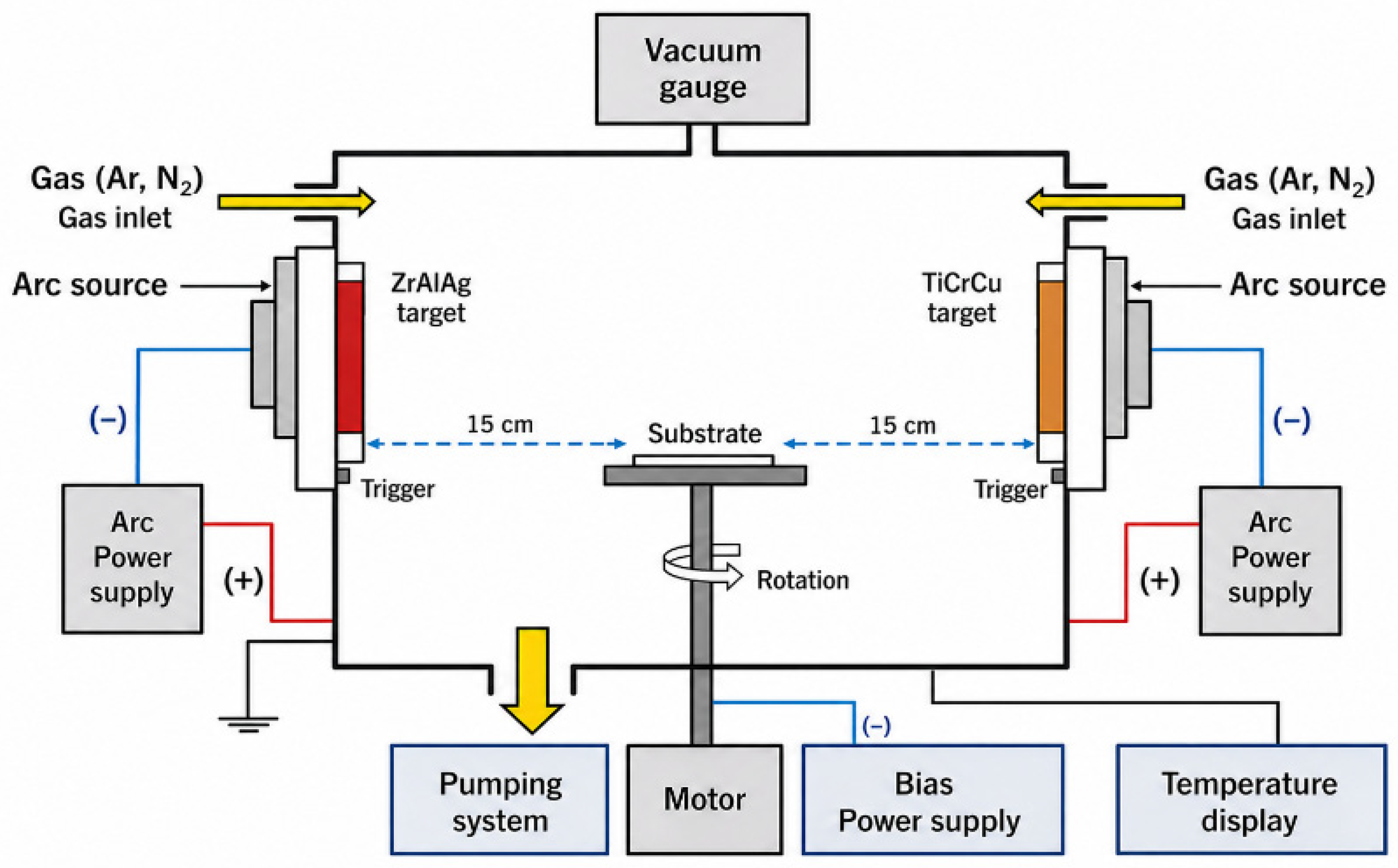
Figure 1. Schematic illustration of the PVD system employing CAE for coating deposition.
Surfaces 09 00068 g001
Figure 2. Schematic illustration of the substrate effect during Vickers hardness measurement.
Surfaces 09 00068 g002
Figure 3. XRD patterns of the coated specimens.
Surfaces 09 00068 g003
Figure 4. SEM surface morphologies of the coated specimens: (a) 50 V; (b) 100 V; (c) 150 V.
Surfaces 09 00068 g004
Figure 5. Comparison of surface roughness (Ra values) among the uncoated and coated specimens.
Surfaces 09 00068 g005
Figure 6. SEM cross-sectional view of the coatings: (a) 50 V; (b) 100 V; (c) 150 V.
Surfaces 09 00068 g006
Figure 7. Comparison of the coating thickness for the three coated specimens.
Surfaces 09 00068 g007
Figure 8. Fractured morphology of the coated specimens from the Rockwell-C adhesion test: (a) 50 V; (b) 100 V; (c) 150 V. The arrow indicates flaking area in (c).
Surfaces 09 00068 g008
Figure 9. Comparison of surface hardness of the uncoated and coated specimens.
Surfaces 09 00068 g009
Figure 10. Friction coefficient curves of the substrate and the coated specimens.
Surfaces 09 00068 g010
Figure 11. Comparison of the wear rate of the various specimens after wear tests.
Surfaces 09 00068 g011
Figure 12. Surface wear-track of the coated specimens after ball-on-disc wear testing: (a) 50 V; (b) 100 V; (c) 150 V.
Surfaces 09 00068 g012
Figure 13. Photographs of E. coli colonies formed on Petri dishes, showing specimens of (a) Ti6Al4V; (b) 50 V; (c) 100 V; (d) 150 V, respectively.
Surfaces 09 00068 g013
Table 1. Chemical composition of the Ti6Al4V alloy used in the study (wt.%).
AlVFeCNOTi
5.5–6.753.5–4.5≤0.40≤0.08≤0.05≤0.20Bal.
Table 2. PVD processing parameters of (TiCrCuZrAlAg)N coatings in this study.
ParameterValue
Two targets Ti34%-Cr34%-Cu32% and
Zr42%-Al42%-Ag16%
Working pressure (Pa)0.6
Cathode current (A)60
Substrate bias (V)50, 100, 150
Ar+ ion bombardment (V)−700
Substrate temperature (°C)290
Rotation rate (rpm)4
Distance between target and substrate (cm)15
Total deposition time (min)70
Table 3. Chemical composition of the coatings analyzed by SEM-EDS (at.%).
SpecimenNTiCrCuZrAlAg
50 V54.927.427.336.2311.8411.270.99
100 V50.699.579.494.1210.5714.660.90
150 V48.8511.5411.352.259.8615.490.66
Table 4. Comparison of CFU and antibacterial rate of the coated specimens.
SpecimenTi6Al4V50 V100 V150 V
CFU484427148
Antibacterial rate (%)---99.282.269.4
Disclaimer/Publisher’s Note: The statements, opinions and data contained in all publications are solely those of the individual author(s) and contributor(s) and not of MDPI and/or the editor(s). MDPI and/or the editor(s) disclaim responsibility for any injury to people or property resulting from any ideas, methods, instructions or products referred to in the content.