


Abstract
At the archeological site of Pompeii, the deterioration of exposed structures is frequently associated with the combined action of microbial colonization and soluble salts, both recognized as major agents of decay affecting ancient surfaces. Although biocides are commonly applied during cleaning procedures to reduce microbial biomass, their incorporation into restoration-oriented formulations for the protection of porous stone substrates requires careful assessment of efficacy, microbiological risks, and sustainability. This study evaluated the performance of 2,4,5,6-tetrachloroisophthalonitrile (chlorothalonil) and iodopropynyl butylcarbamate (IPBC) as candidate active ingredients for conservation applications in activated new mortars. Yellow tuff, gray tuff, and brick samples collected from different sectors of Pompeii were investigated through culture-based analyses, ATP quantification, and metabolic profiling. Biocidal treatments were subsequently tested under laboratory conditions. The investigated substrates exhibited variable microbial counts and metabolic activity, generally reflecting different degrees of deterioration. Chlorothalonil showed negligible inhibitory effects, whereas IPBC reduced fungal growth in a dose-dependent manner. However, the highest IPBC concentration induced a red chromatic alteration associated with the selection of a bacterial strain preliminarily identified as Micrococcus roseus. Phenotype microarray analyses revealed broad chemical tolerance. Overall, biocidal treatments may alter microbial communities, favor tolerant microorganisms, and produce undesirable aesthetic effects. Finally, the study also assessed the environmental impact associated with laboratory and field activities, highlighting potential mitigation strategies to support more sustainable conservation research practices.
1. Introduction
The archeological site of Pompeii, recognized by UNESCO as a World Heritage Site, covers approximately 66 hectares, of which about 50 are currently excavated. It represents a remarkably well-preserved set of public and private buildings, monuments, sculptures, paintings, and mosaics. The ashes and lapilli that buried the city following the eruption of Vesuvius in AD 79 played a key role in its extraordinary preservation, offering a highly detailed picture of Roman urban organization and daily life [1,2,3,4]. The origins of the settlement are generally attributed to an Etruscan foundation, with early fortifications in local gray tuff, later replaced in the 5th century BC by a Sarno limestone wall [5,6].
The conservation of Pompeii, however, presents significant challenges due to the site’s vast extent, the variety of construction materials, exposure to atmospheric agents, and constant anthropogenic and tourist pressure. Since the mid-20th century, systematic conservation interventions and excavation campaigns have been carried out, with the aim of stabilizing and protecting exposed structures [7,8,9]. In this context, preventive conservation has assumed an increasingly central role, as it allows early identification of risk factors and reduces the need for invasive interventions, in accordance with current international guidelines [10,11,12].
Biodeterioration represents one of the main threats to cultural heritage, as microorganisms colonize surfaces and interact with substrates through chemical and physical processes that may compromise their stability. Their development is influenced by environmental factors such as humidity, temperature, light exposure, and climatic variations [13,14]. The intrinsic properties of materials, such as porosity, surface roughness, and mineralogical composition, also play a crucial role in either promoting or limiting microbial colonization [15].
A well-documented case of biodeterioration in Pompeii is the necropolis of Porta Nocera, where decorative surfaces that appeared intact at the time of excavation deteriorated drastically within a few decades [16]. Damage to plaster and wall paintings often results from the interaction between microbial activity and soluble salts, which are considered among the most destructive agents affecting ancient surfaces [17,18,19,20].
In recent years, advances in conservation science have introduced integrated three-dimensional survey techniques, such as orthophotos, digital elevation models, and multispectral imaging, to support preventive conservation in large archeological sites [21]. At the same time, more traditional conservation management approaches have also proven effective: in the case of the House of Ariadne in Pompeii, for example, the replacement of transparent coverings with opaque materials contributed to reducing thermal fluctuations and improving the microclimatic stability of wall paintings [22,23].
Biocides such as benzalkonium chloride (BAC) and isothiazolinone-based formulations are primarily used during cleaning procedures to reduce microbial biomass, whereas long-term prevention of recolonization relies on antimicrobial or protective coatings [24,25]. When applied as stand-alone treatments, biocides may leave exposed surfaces susceptible to rapid recolonization, particularly in outdoor environments, unless integrated within a broader conservation strategy. Therefore, conventional biocides may pose risks to human health and the environment, cause aesthetic or chromatic alterations to stone substrates, and promote the selection of resistant microorganisms or shifts in microbial community structure [26,27]. These concerns have stimulated the development of safer and more environmentally sustainable formulations [28,29]. Consequently, increasing attention has been directed toward multifunctional restoration materials capable of combining structural stabilization with long-term protection against biological recolonization. Among these, salt-free hydraulic lime mortars can act as carriers for hydrophobic agents and biocides, while microencapsulation strategies enhance the safe and controlled delivery of active compounds [30].
Chlorothalonil and Iodopropynyl butylcarbamate (IPBC) were selected as candidate biocidal agents because of their broad-spectrum antimicrobial activity and their documented use in protective formulations for highly porous and bioreceptive stone materials, such as tuff [30,31,32]. Both compounds show good stability and limited reactivity with mineral substrates, supporting their potential incorporation into restoration mortars [31]. Their use in protective systems may help prevent the establishment of pioneer microorganisms responsible for the onset of biodeterioration. Furthermore, encapsulation-based systems may reduce operator exposure and dermal absorption risks while ensuring a more gradual release of biocidal agents, as previously demonstrated for compounds such as diuron and terbutryn [30].
Nevertheless, stone materials may act as selective niches for microorganisms adapted to chemical treatments. From this perspective, the issue has a dual significance: on one hand, the vulnerability of the artifact, which is unique and irreplaceable; on the other, the possible selection of more tolerant microbial communities, which are more difficult to control and potentially capable of causing damage in treated surfaces [33,34].
In parallel with the evaluation of treatment effectiveness and microbiological risks, increasing attention is being devoted to the environmental sustainability of research activities themselves. Scientific studies traditionally focus on objectives, materials and methods, results, and their interpretation, considering existing literature, whereas the direct and indirect environmental impacts associated with conducting the research are rarely quantified or reported. In this context, the present study also aims to assess the greenhouse gas (GHG) emissions generated by both laboratory and field activities, with the objective of identifying potential mitigation strategies and promoting more sustainable research practices [35].
On this basis, the present study aims to: (i) evaluate the performance of two biocidal active ingredients embedded in restoration-oriented formulations, combining mechanical stabilization with protective action against biodeteriogenic microorganisms; (ii) analyze the microbiological risks associated with their use, and (iii) assess the sustainability of the proposed approach by quantifying greenhouse gas emissions associated with laboratory and field activities and identifying mitigation measures.
2. Materials and Methods
2.1. Experimental Design
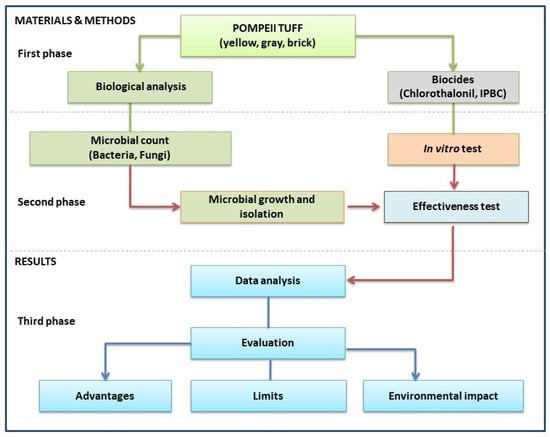
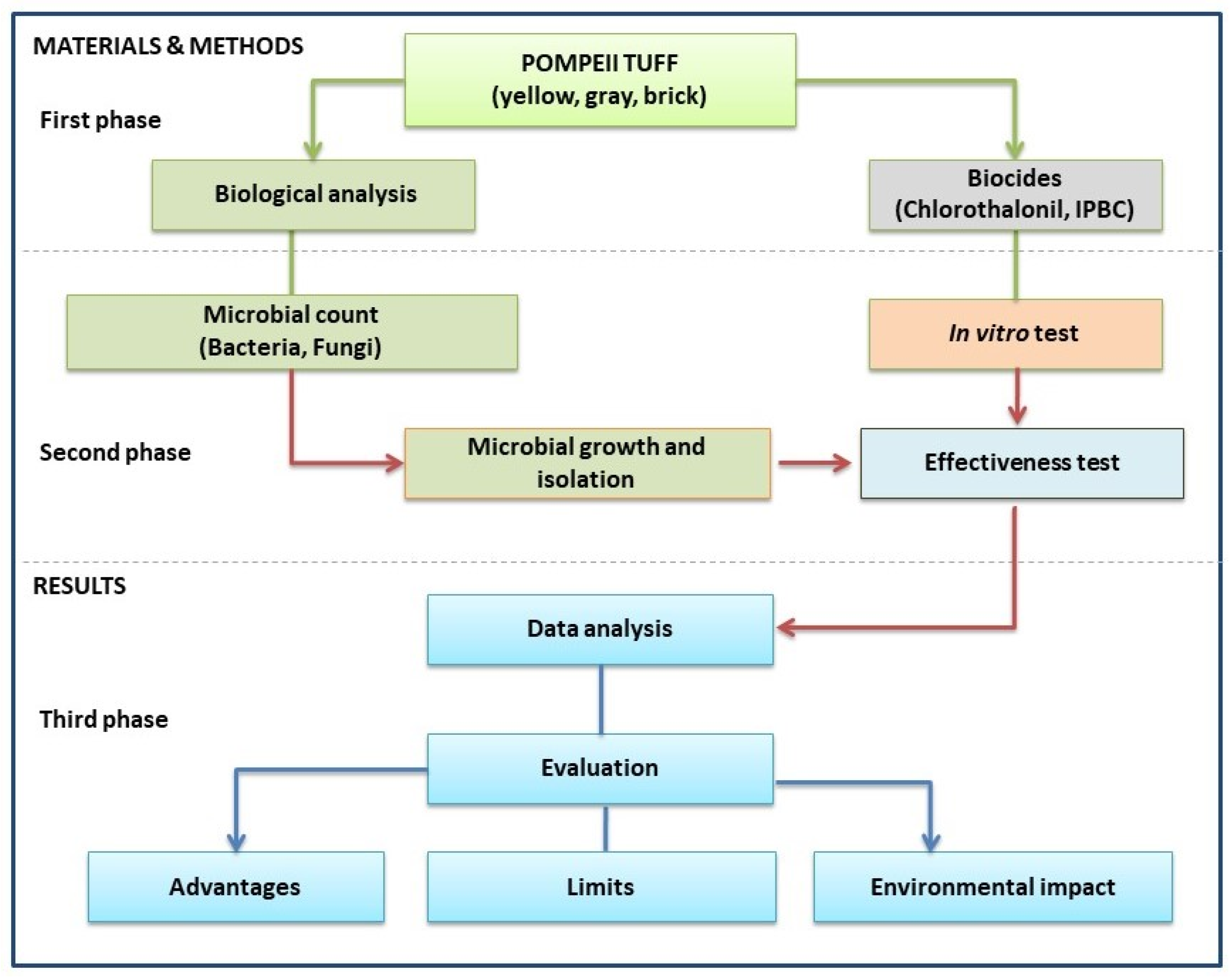
The experimental design illustrated in Figure 1 was developed in collaboration with the Archaeological Superintendency of Pompeii.
Figure 1.
Scheme of the experimental design.
The research activities were mainly structured into the following phases: (i) selection and collection of stone materials from different areas of the archeological site of Pompeii; (ii) execution of microbiological analyses aimed at the quantification and characterization of bacterial, fungal and algae communities present in the samples; (iii) evaluation of the inhibitory effectiveness of the biocides chlorothalonil (2,4,5,6-tetrachloroisophthalonitrile) and IPBC (iodopropynyl butylcarbamate); (iv) data processing and interpretation and preliminary assessment of the environmental impact of the entire study in terms of CO2 equivalent emissions.
2.2. Sampling and Material Collection
Representative tough samples were collected from 20 areas of the archeological site of Pompeii by extracting stone fragments. The samples were sampled using sterile materials as described in previous work [36]. Quantities from 1.0 g to 50.0 g were sampled from each sampling site by scalpel. Before microbiological analysis, all samples were aseptically powdered in a sterile mortar. The samples exhibited different types of alterations attributable to physico-chemical causes (e.g., lacunae, alveolization, and cracking) and biological causes (e.g., patinas and chromatic alterations).
For the subsequent microbiological analyses, samples were collected in sterile containers and stored at 4 °C to limit secondary contamination and changes in the original microbiota.
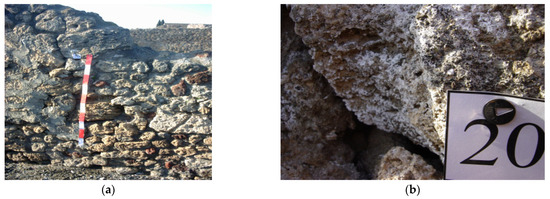
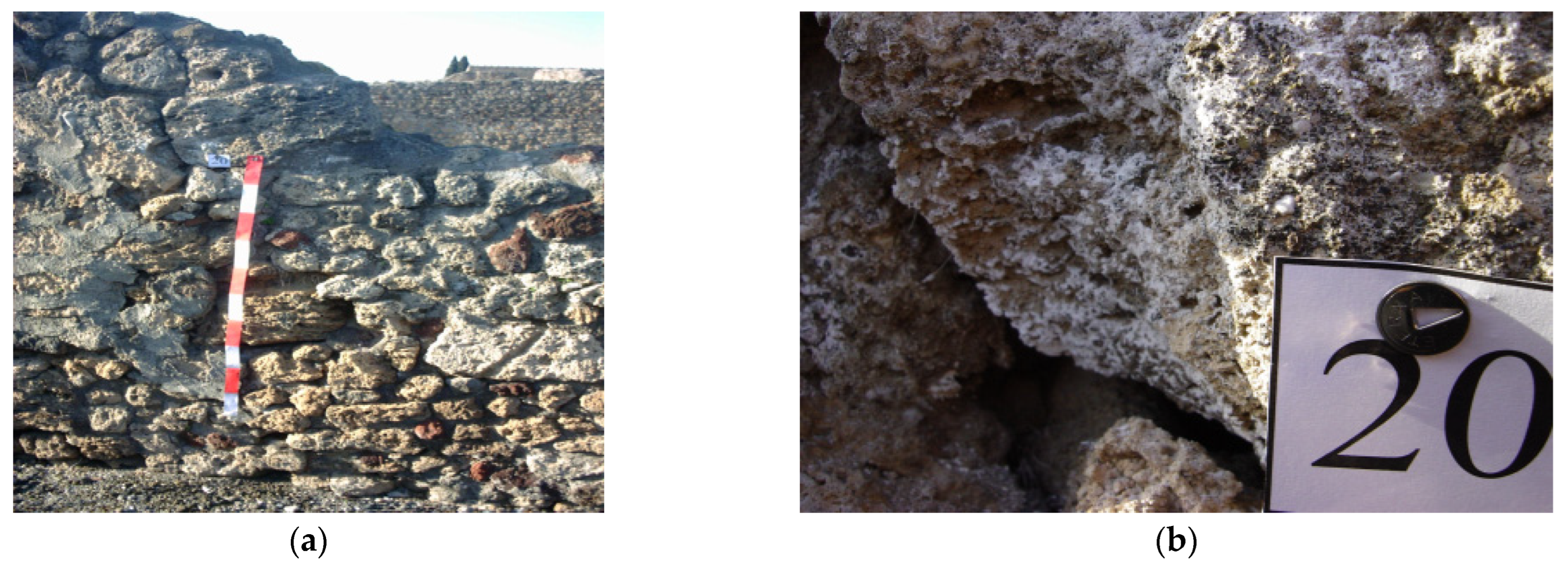
For each sampling point, descriptive records and photographic documentation of the conservation state of the surfaces were also performed, as shown in Figure 2.
Figure 2.
Example of a stone material sampling site (a) and surface alterations caused by biotic and abiotic agents (b).
2.3. Microbial Counts and Culture Media
Samples of powdered samples from Pompeii sites were diluted in physiological solution (9.0 g L−1) NaCl by the standard dilution technique, inoculated in the cultural media under appropriate conditions according to Zanardini et al., 1997 [37]. All determinations were performed in triplicate.
The total aerobic viable microbial load was determined by inoculating Petri dishes containing Plate Count Agar (PCA) (Oxoid, UK) and incubating them at 37 °C for 72 h.
For the quantification of the fungal component and subsequent isolation procedures, PDA (Potato Dextrose Agar—BD Difco™, Milan, Italy) and WL (BD Difco™, Milan, Italy) agar media were used. Plates were incubated at 28 °C for 48 h. Bacterial and fungal counts were expressed as colony-forming units per gram of sample (CFU × g−1).
The presence or absence of algae was evaluated by light microscopy (Leica DMI 3000BI, Milan, Italy) on fresh samples.
2.4. Isolation and Characterization of Microbial Community
The diagnosis of alterations observed in the samples was carried out using traditional microbiological methods, including culture-based, morphological, and biochemical approaches to investigate the presence of microorganisms potentially associated with the observed alterations.
2.4.1. Phenotypic Characterization
Fungal and bacterial isolates were grown on PDA (BD Difco™, Milan, Italy) and PCA (BD Difco™, Milan, Italy), respectively. Developed colonies were purified by streaking on the same growth medium and subsequently characterized based on macroscopic and microscopic colony morphology (size, margin, color, elevation, and consistency). Microscopic observations were performed using an optical microscope (Leica DMI 3000BI, Milan, Italy). The red-pigmented bacterial isolate recovered from IPBC-treated stone specimens was further characterized by colony morphology, microscopic examination, Gram staining, KOH test, catalase activity, and physiological and biochemical assays according to previously described methodologies [38,39].
2.4.2. Analysis of Metabolic Activity and Microbial Viability
Microbial isolates were cultured in LB liquid medium (Luria–Bertani). Aliquots of 100 µL of cultures at the exponential phase, with OD600 values between 0.7 and 0.8, were subjected to biochemical-enzymatic assays (ATP assay) and bioelectrical analyses (impedance variation measurements, expressed as Detection Time, DT, in hours), following the protocols described by Ranalli et al. [40] and Liberatore et al. [41], respectively.
Multiple enzymatic activities of microbial cultures were also determined using the API ZYM system (BioMérieux Italia, Bagno a Ripoli, Italy). The semi-quantitative evaluation of 19 hydrolytic enzymatic activities was carried out according to Viti et al. [42] and Ranalli et al. [43]. In brief, using a sterile Pasteur pipette, each gallery was inoculated with two drops of 10−1 or 10−2 suspensions of 20.0 g of soil in 180 mL of sterile saline solution (0.9% NaCl, w/v). After incubation at 28 °C for 4 h, the galleries were activated by adding one drop of Reagent ZYM A and Reagent ZYM B (bio-Merieux Italia, Bagno a Ripoli, Italy) and after 5 min at room temperature, the results were recorded referring to a colorimetric standard table. All determinations were performed in triplicate. Experimental reproducibility exceeded 95%.
2.5. Phenotype Microarray (PM) Technology
The metabolic capacity and chemical tolerance of the isolated bacterial strain were investigated using Biolog Phenotype Microarray (PM) system (Biolog, Hayward, CA, USA). According to a previous study [44], this technology was applied to further explore the metabolic capabilities of the isolated strain. The strain was tested on three PM panels (PM12, PM16, and PM17), specifically designed for chemical sensitivity assays. In these panels, each toxic compound (heavy metal, antibiotic, biocide, antimetabolitie, etc.) is present in four adjacent wells at four different doses (from the lowest to the highest).
The strain was grown on BUG agar (Biolog) and incubated at 30 °C for 24–48 h. Colonies were then collected with a sterile swab and suspended in 15 mL of 0.8% NaCl solution. Cell density was adjusted to 79% transmittance using a Biolog turbidimeter.
Subsequently, the inoculum for PM12, PM16, and PM17 was prepared by diluting the suspension 15-fold in IF-10b. Dye Mix A (1×) was added, and the mixture was dispensed into PM plates (100 µL per well). Incubation was carried out at 30 °C using an Omnilog reader (Biolog), with automatic readings every 15 min to detect color changes associated with tetrazolium reduction.
Measurements were recorded for 96 h and analyzed using Omnilog-PM software (version 2.3.01), which generated kinetic color development curves. Two independent experiments were conducted for each panel. For the analysis of kinetic curves, the IC50 parameter was used. In this context, IC50 is expressed in well units and is defined as the well or fraction of a well at which the area of the kinetic curve is half of its maximal value over a concentration series. IC50 ranges from 0.6 (metabolic activity is totally inhibited at all four concentrations tested) to 4.4 (metabolic activity is not affected at all four concentrations tested) [44].
2.6. Microbial Inocula on Stone Materials
Different fungi from the previously isolated ones were used as inocula. Additionally, a reference microbial inoculum previously used in other studies [32], consisting of Alternaria infectoria strain NIS4, was included. Experiments were conducted in controlled microenvironments at 28 °C using the substrates described above. Control microorganisms included fungal spore suspensions of Penicillium citrinum, Penicillium funiculosum, Aspergillus flavus, Aspergillus niger, and Cladosporium herbarum.
2.7. Use of Biocides on Stone Materials
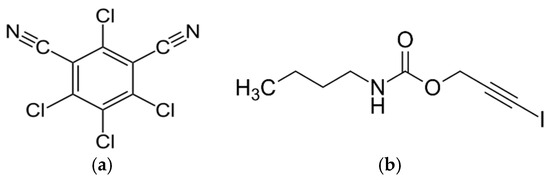
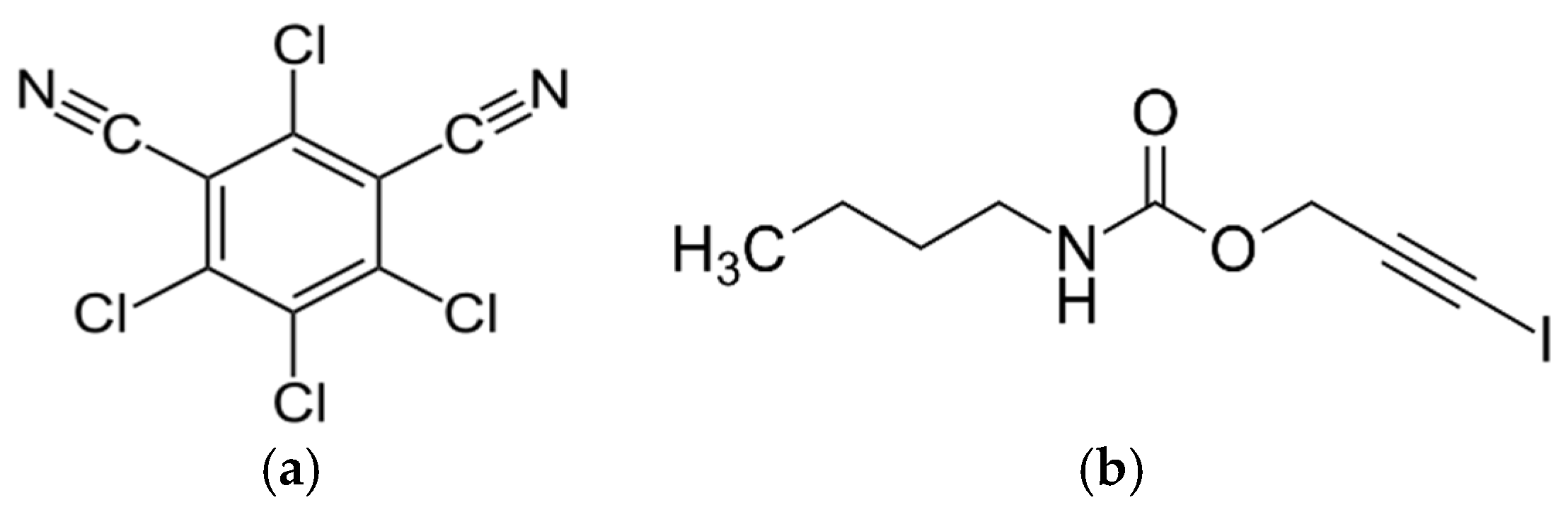
Two biocides were applied to multiple specimens (in triplicate; dimensions 30 mm × 30 mm × 25 mm) of yellow tuff, gray tuff, and brick. Specimens were pretreated in an oven at 50 °C for 12 h. The biocides used in this study in their pure form were: (i) chlorothalonil (Sipcam, Lodi, Italy), an organochlorine fungicide (Figure 3a) [45]; and (ii) IPBC (Sipcam, Lodi, Italy), a common anti-mold agent (Figure 3b) [46].
Figure 3.
Structural formulas of the biocides used in the experiments: (a) chlorothalonil; (b) IPBC.
Experiments were conducted on the three stone substrates using increasing concentrations of both biocides, with untreated materials serving as controls. A final volume of 1.0 mL was applied per specimen, resulting in the following surface doses:
- chlorothalonil: 7.5 g × m−2, 20.0 g × m−2 and 40.0 g × m−2;
- IPBC: 1.0 g × m−2, 2.5 g × m−2 and 5.0 g × m−2.
Inhibitory effectiveness was evaluated on inoculated specimens using a grid with 3 mm × 3 mm calibrated units applied to the surface.
2.8. Environmental Impact
For a preliminary sustainability assessment, the main inputs associated with laboratory activities were considered, including energy consumption, reagents, and consumables.
We proposed a survey sheet (Table 1) useful for the inventory of each identified methodology, the different parameters and translated into CO2 eq. emissions, useful for estimating the social costs and the mitigation of impacts in terms of tree planting, as adopted in previous studies [35,47].
Table 1.
Main indicators suggested calculating an environmental footprint originated by a research activity, impacts and green mitigation acts.
3. Results and Discussion
3.1. Preliminary Microbiological Characterization of Stone Materials
Samples of stone materials (yellow tuff, gray tuff, and brick) were collected under sterile conditions and subjected to microbiological analysis as described in the Materials and Methods section. The materials investigated were sampled from different sectors of the archeological site of Pompeii, as reported in Table 2. The selected masonry structures exhibited variable lithological compositions but shared common signs of advanced deterioration and weathering.
Table 2.
Assessment of decay phenomena and conservation condition of Pompeian masonry structures.
Visual assessment of the sampled structures revealed widespread degradation phenomena affecting both stone materials and mortar joints (Table 2). In particular, the investigated masonry surfaces showed: (i) diffuse surface powdering and disintegration of stone substrates and mortars, resulting in loss of cohesion and pronounced surface irregularity; (ii) severe erosion of mortar joints accompanied by partial washout of the binding matrix; (iii) lacunae and interstitial voids between masonry elements; (iv) chromatic alterations associated with weathering processes; (v) cracking and fissuring related to structural settlement; and (vi) irregular and degraded upper margins, indicating a progressive loss of the original wall-top configuration. Although the masonry texture remains generally recognizable, the observed decay patterns highlight an advanced deterioration of binding materials and significant erosive processes, suggesting the need for continuous conservation monitoring and targeted consolidation interventions.
To obtain a preliminary evaluation of the biological colonization affecting these substrates, bacterial and fungal loads, algal presence, adenosine triphosphate (ATP) content, and impedometric measurements were determined (Table 3). These parameters provide complementary information on both the abundance and metabolic activity of microbial communities potentially involved in biodeterioration processes.
Table 3.
Microbiological data: samples collected from the archeological site of Pompeii.
The microbiological characterization of stones highlights a marked variability among the collected samples, both in terms of total microbial count and metabolic activity (Table 3).
Bacterial counts ranged from 1.5 to 6.3 log CFU g−1, whereas fungal abundance varied between 2.0 and 4.9 log MFU g−1. The highest bacterial concentrations were detected in samples 16-16bis and 20 (6.3 and 6.2 log CFU g−1, respectively), while samples 10, 12, and 13 exhibited the lowest bacterial loads. Fungal colonization was particularly pronounced in samples 9 and 16-16bis, both reaching 4.9 log MFU g−1, suggesting favorable conditions for fungal establishment on these substrates.
Algal cells were detected in seven out of the eleven samples analyzed, including both moderately and severely deteriorated substrates. Their occurrence suggests the presence of microenvironmental conditions favorable to phototrophic colonization, including enhanced moisture retention, increased surface porosity, and prolonged exposure to light. As primary colonizers, algae may contribute to the establishment of more complex biofilms, thereby facilitating the subsequent development of heterotrophic microbial communities [48].
When microbiological data were compared with the conservation assessment of the sampled masonry structures (Table 2 and Table 3), a general relationship emerged between the severity of material decay and the level of biological colonization. Samples collected from structures classified as having poor or very poor conservation conditions, such as 9, 16-16bis, and 20, exhibited the highest ATP levels and the lowest impedometric detection times (DT = 2 h), indicating intense microbial metabolic activity. These samples were also characterized by severe surface disintegration, extensive mortar joint erosion, and widespread lacunae. Conversely, samples obtained from structures in fair conservation conditions (e.g., 7, 10, 12, and 13) generally showed lower microbial loads, low ATP content, and higher DT values, consistent with reduced biodeteriogenic activity.
Notably, ATP content and impedometric measurements appeared to provide a more reliable indication of the metabolic state of the colonizing communities and their biodeteriorative potential than microbial counts alone [49]. For instance, sample 9 showed relatively low bacterial abundance (2.0 log CFU g−1) but very high ATP levels and the shortest DT value, suggesting the presence of a highly active microbial community. This apparent discrepancy may be explained by the substantial fungal colonization detected in the same sample (4.9 log MFU g−1), indicating that fungal biomass likely contributed significantly to the overall metabolic activity. Similar observations have been reported in biodeteriorated stone substrates, where fungal communities often play a major role in colonization processes and deterioration mechanisms [50]. Therefore, ATP and impedometric analyses represent valuable complementary tools for assessing the actual biological impact on stone materials and for identifying substrates at greater risk of biodeteriorative damage.
Although the limited number of samples precludes robust statistical analyses, the observed trend suggests that advanced physical deterioration may promote microbial colonization by increasing surface roughness, porosity, and water retention capacity. The presence of cracks, eroded mortar joints, and interstitial voids likely creates favorable microenvironments for the establishment and persistence of biodeteriogenic communities, thereby contributing to the progression of stone decay [48,50].
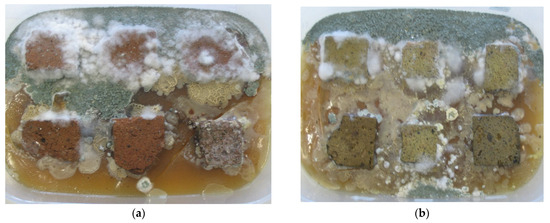
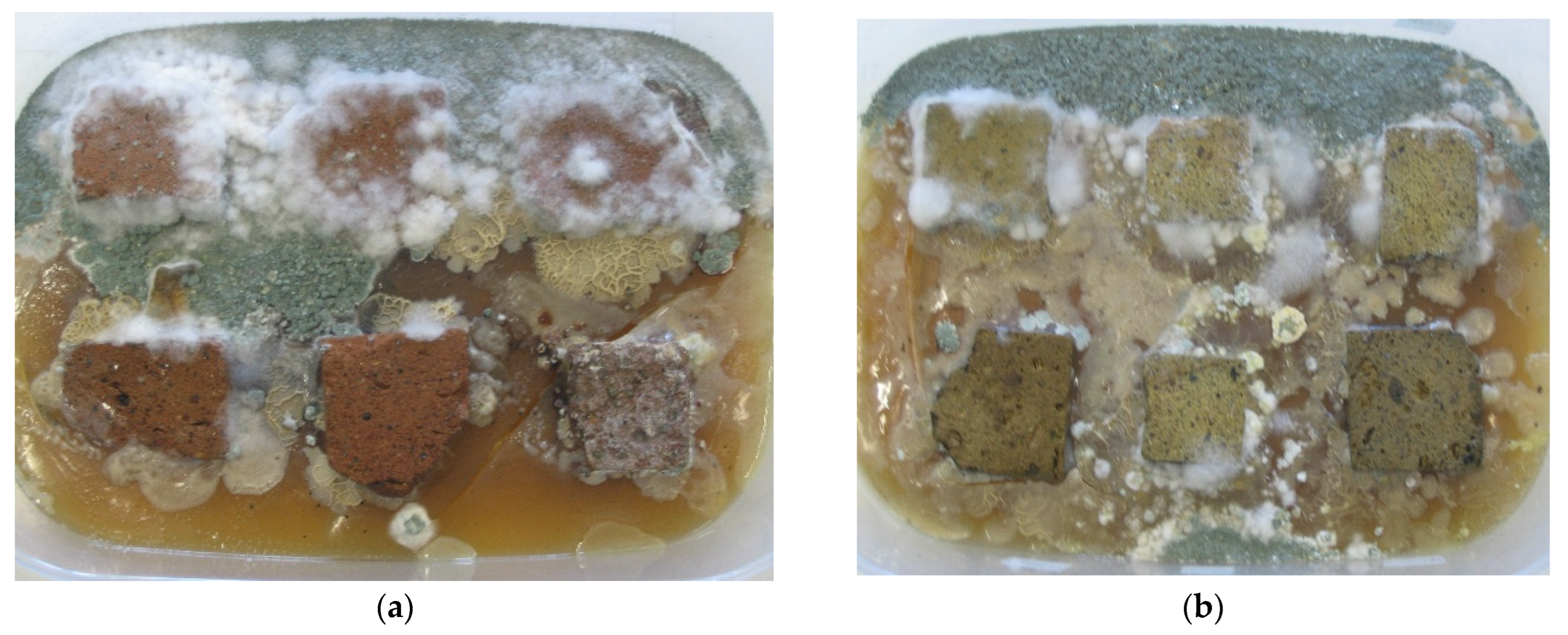
The results of qualitative assessments of environmental contamination, obtained through microbial growth tests in PVC containers performed in triplicate, are shown in Figure 4.
Figure 4.
Representative examples of microbial diversity developed on brick (a) and yellow tuff (b) samples after 96 h of incubation at 28 °C.
Observation of the stone materials revealed abundant and heterogeneous microbial growth, characterized by a highly diverse microbial community. In the brick sample (Figure 4a), fungal growth with cotton-like morphology, white or greenish-gray in color, attributable to fast-growing filamentous molds, was observed, along with rough or cerebriform structures referring to different microbial populations. In the yellow tuff sample (Figure 4b), widespread growth was observed, including filamentous white fungal development, mucous bacterial growth, and pigmented green and yellowish formations, likely of fungal origin.
The morphological diversity of the observed growth represents a qualitative indicator of the complexity of the microbial communities involved in biodeterioration processes affecting the examined archeological materials [51,52,53].
3.2. Biocide Tests
In general, microbial growth on stone materials in open environments is controlled through the application of biocidal substances [54].
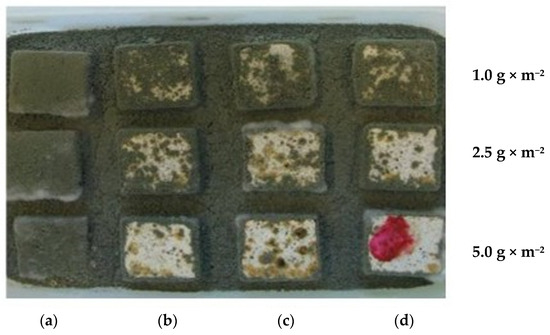
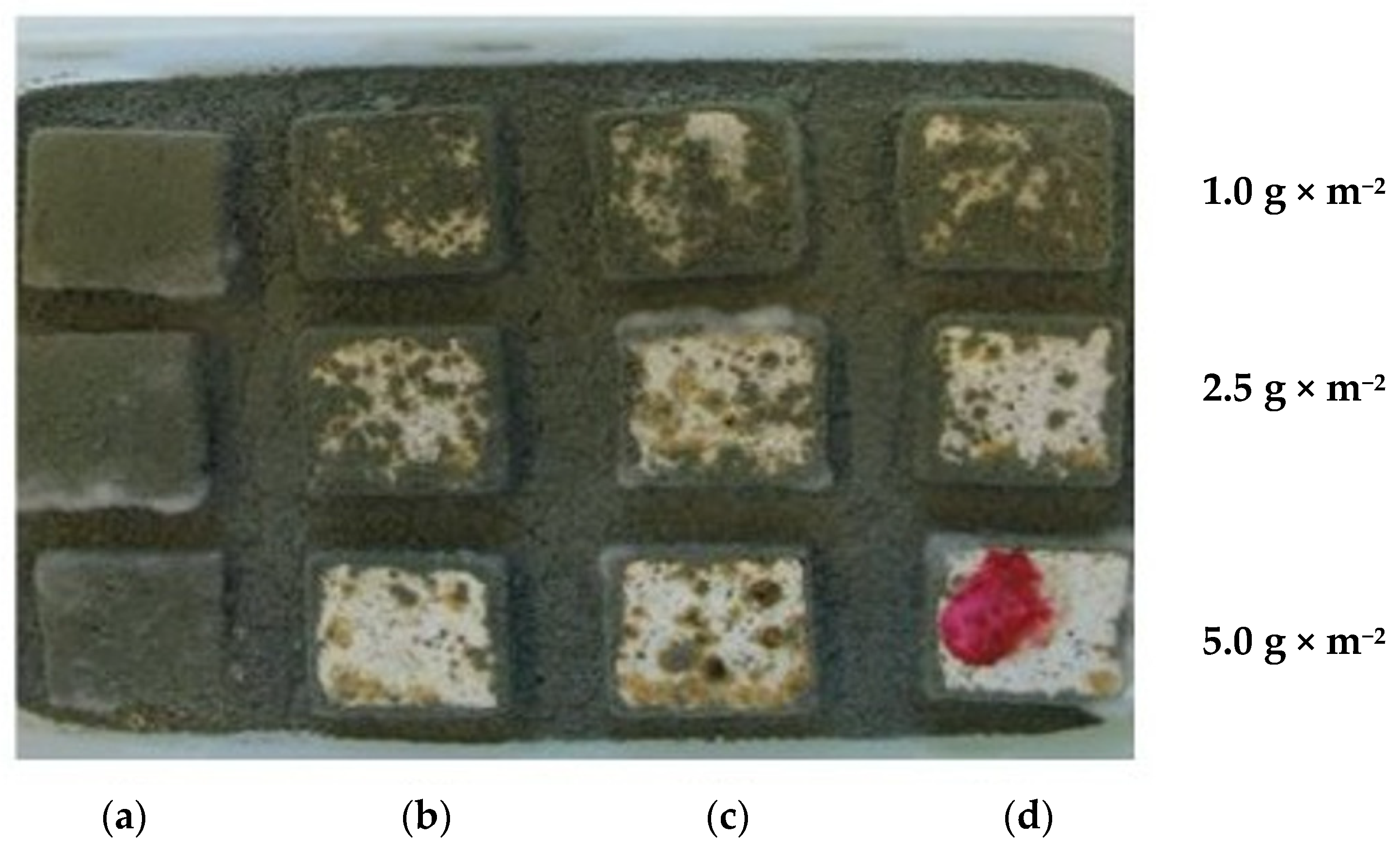
The results obtained using IPBC at concentrations of 1.0, 2.5, and 5.0 g × m−2, using A. infectoria NIS4 [38] as the control microorganism, are shown in Figure 5. After 96 h of incubation at 28 °C, the three untreated control replicates (a) showed complete fungal growth (100% surface coverage). In tests with increasing doses of IPBC (b, c, d), a dose-dependent inhibition of fungal growth was observed on the yellow tuff surface, with inhibition levels ranging approximately from 10 to 30%, 30–50%, and 50–100%, respectively. Simultaneously, the appearance of additional microbial populations on the treated surfaces was observed.
Figure 5.
IPBC effects on fungal growth inoculated in triplicate tests. (a) A. infectoria as control microorganism without IPBC; (b–d) IPBC replicate tests at different concentrations. The concentrations of biocide applied to the stone specimens are indicated on the side.
Under the adopted experimental conditions, the fungal inoculum of A. infectoria showed an evident growth inhibition starting from the third day. However, increasing doses of IPBC induced the formation of a clear red chromatic alteration (Figure 5).
Chlorothalonil resistance experiments showed negligible (<10%) inhibitory effectiveness against the control microorganism.
Similar results were obtained with the other control microorganisms (P. citrinum, P. funiculosum, A. flavus, A. niger, and C. herbarum), without any evidence of red chromatic alterations.
The results obtained on yellow tuff samples indicate that IPBC, while exerting inhibitory effects on fungal growth, may be associated with significant side effects, including microbial selection and the appearance of secondary chromatic alterations, as reported in the literature [26,55,56,57,58].
Although reduced dosages and controlled application techniques may help to limit such effects, the treatment efficacy may be temporary, and the possible migration of compounds into the environment highlights the need for prudent use and periodic monitoring of treated surfaces [55].
Our data are consistent in showing limited effectiveness or the generation of undesirable outcomes [59]. Studies conducted on archeological stone materials from Pompeii suggested a difference in effectiveness between IPBC and chlorothalonil, likely related to factors such as solubility, adsorption onto porous matrices, and diffusion within pores. In this context, chlorothalonil, despite its intrinsic chemical activity, may exhibit a low bioavailability due to its limited water solubility and a strong adsorption to substrate minerals, whereas IPBC, characterized by higher solubility and mobility, appears more effective in exerting direct inhibitory action [26,60,61].
3.3. Preliminary Studies on Red Chromatic Alteration
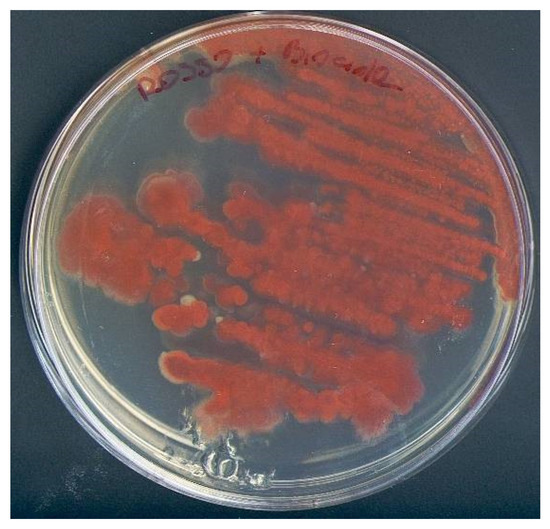
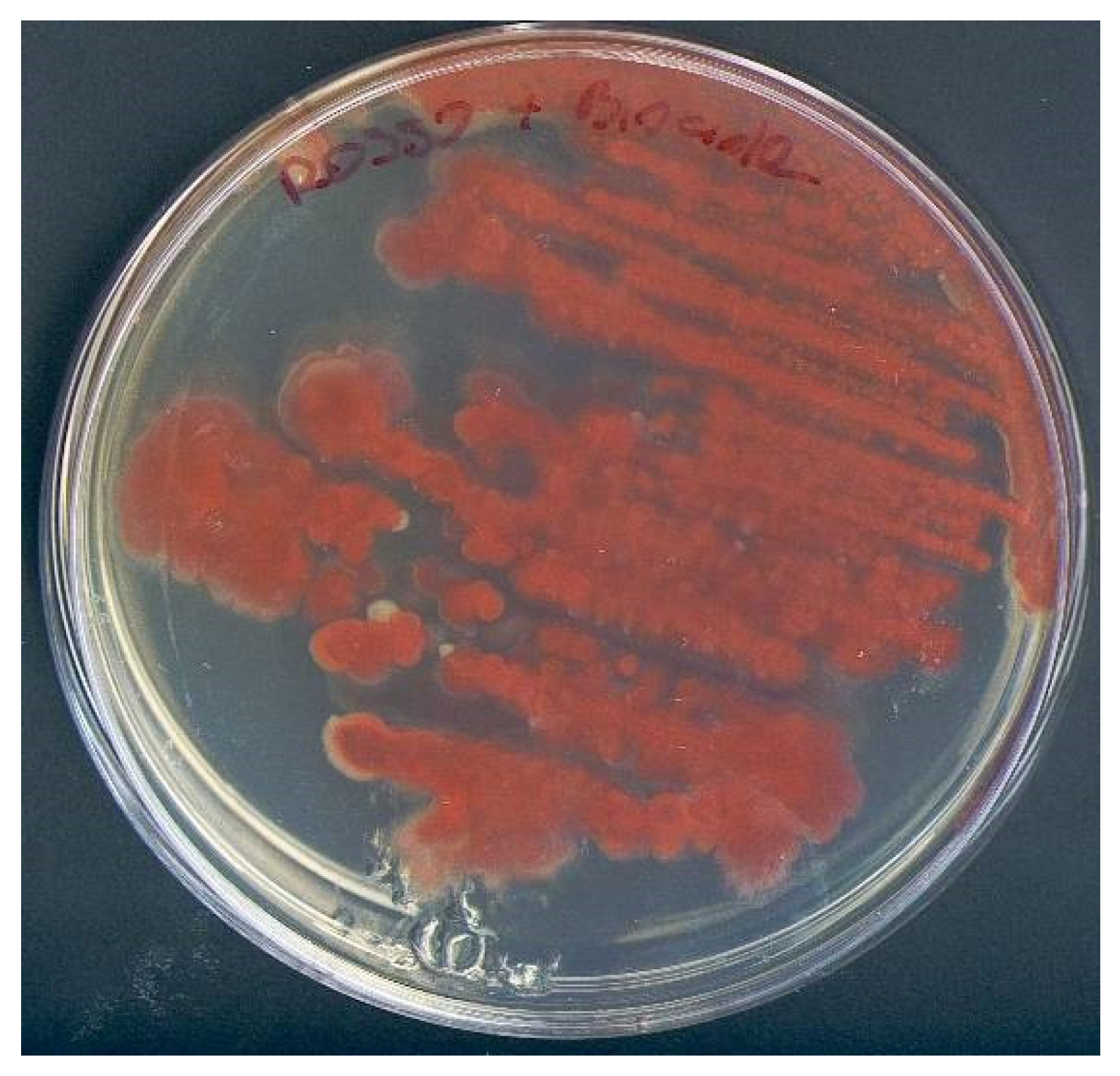
The red chromatic alteration observed in Figure 5 at the highest IPBC concentration (5.0 g × m−2) was further investigated. To determine whether this alteration was biological in nature, samples were collected using sterile loops and inoculated onto general media (PDA for fungi and PCA for bacteria). After incubation at 37 °C for 72 h, the PCA plates showed red-pigmented bacterial colonies (Figure 6). The strain was subsequently characterized through morphological, biochemical, and physiological tests as shown in Table 4 and Table 5.
Figure 6.
Red-pigmented bacterial strain isolated from stone specimens treated with IPBC.
Table 4.
Morphological and biochemical characteristics of the pigmented bacterial strain.
Table 5.
Physiological and biochemical characteristics of the pigmented bacterial strain.
Based on the results obtained, the microbial origin of the chromatic alteration observed on the yellow tuff sample was strongly supported. A red-pigmented bacterial isolate noted on the tuff sample tested in the laboratory was assigned to the genus Micrococcus and preliminarily identified as Micrococcus roseus, designated as strain 2356 [39]. The occurrence of this pigmented isolate in correspondence with the red spot suggests its possible involvement in the observed chromatic alteration. This interpretation is consistent with literature reports describing M. roseus pigments as intracellular carotenoids linked to growth phase and metabolism [62,63].
However, since neither molecular identification nor chemical characterization of the pigment was performed, the causal role of M. roseus in the discoloration process cannot be conclusively demonstrated and should be regarded as a preliminary hypothesis requiring further investigation. A possible explanation for the inhibition of fungal growth and the subsequent appearance of red pigmented bacterial growth includes: (i) the composition and dynamics of the native microbial community; (ii) the chemical nature and mechanism of action of the biocide; (iii) the metabolic activity of microorganisms selected under high biocide concentrations.
Biocidal treatments are known to alter microbial community structure, promoting the selection of more tolerant taxa. Exposure to biocides may also induce adaptive responses, including pigment production and increased chemical tolerance [57,58,64].
Pigmentation became clearly visible after 72–96 h of incubation at 28 °C. Although the pigment produced by M. roseus 2356 has not yet been chemically characterized, macroscopic observations suggest it is an intracellular pigment associated with bacterial growth and biomass accumulation. Future studies based on molecular identification of the isolate and chemical characterization of the pigment will be necessary to confirm the direct involvement of M. roseus 2356 in the formation of the red chromatic alteration.
3.4. M. roseus Phenotype Microarray
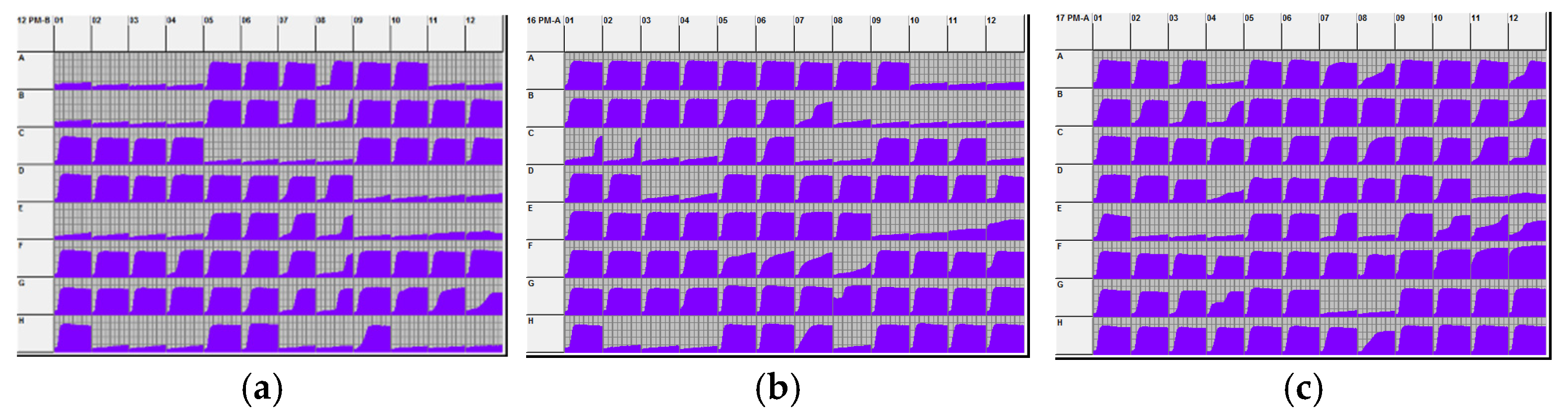
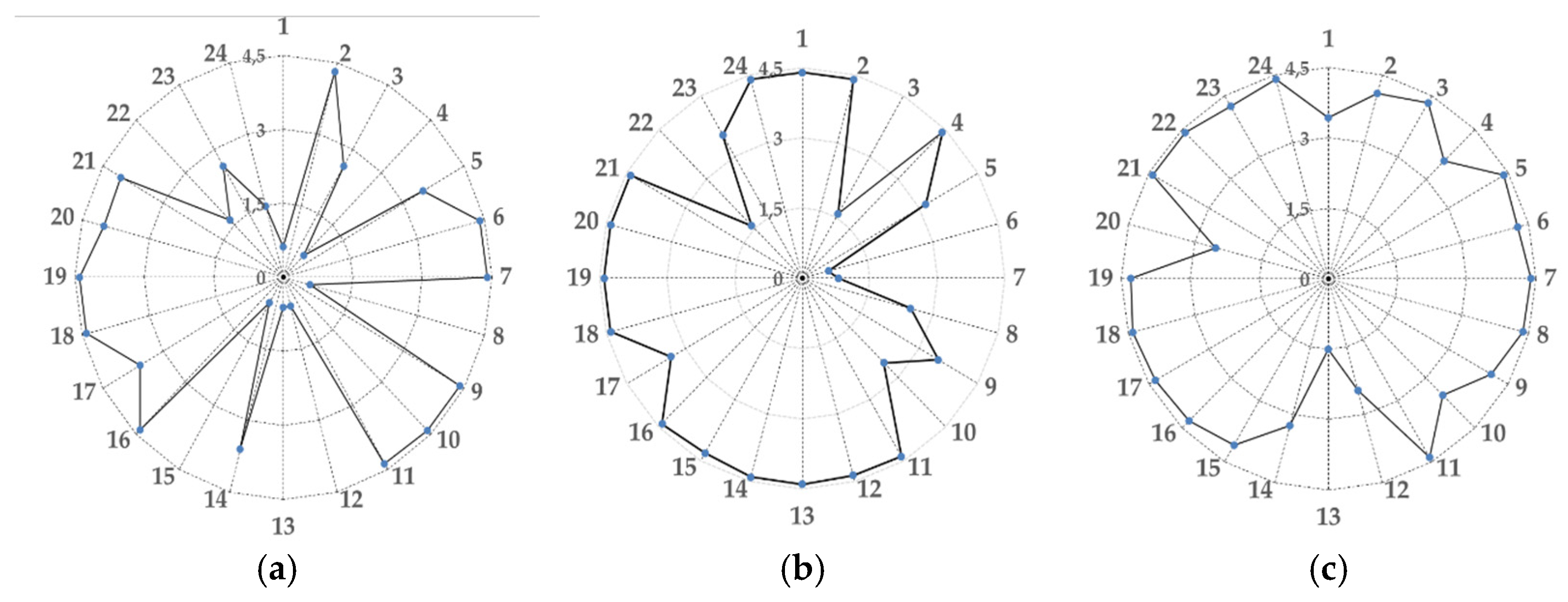
To further investigate the metabolic capabilities of M. roseus. Phenotype Microarray (PM) technology was employed. The isolate was tested on PM12, PM16, and PM17 panels, designed for sensitivity assays toward antibiotics, bacteriostatic agents, and enzymatic inhibitors. The strain was incubated in the Omnilog system, and colorimetric data were collected to generate kinetic curves (Figure 7) and calculate the IC50 parameter (Figure 8).
Figure 7.
Phenotype profiles on PM12 (a), PM16 (b), and PM17 (c) by M. roseus strain.
Figure 8.
IC50 parameter obtained by kinetic curves analysis (Figure 7) from following chemical sensitivity panels: (a) = PM 12; (b) = PM 16 and (c) = PM 17. Each number identifies a different compound. (a): 1 = Penicillin G, 2 = Tetracycline, 3 = Carbenicillin, 4 = Oxacillin, 5 = Penimepicycline, 6 = Polymyxin B, 7 = Paromomycin, 8 = Vancomycin, 9 = D,L-Serine hydroxamate, 10 = Sisomicin, 11 = Sulfamethazine, 12 = Novobiocin, 13 = 2,4-Diamino-6,7-diisopropylpteridine, 14 = Sulfadiazine, 15 = Benzethonium chloride, 16 = Tobramycin, 17 = Sulfathiazole, 18 = 5-Fluoroorotic acid, 19 = Spectinomycin, 20 = Sulfamethoxazole, 21 = L-Aspartic acid β-hydroxamate, 22 = Spiramycin, 23 = Rifampicin, 24 = Dodecyltrimethyl ammonium bromide. (b): 1 = Cefotaxime, 2 = Phosphomycin, 3 = 5-Chloro-7-iodo-8-hydroxyquinoline, 4 = Norfloxacin, 5 = Sulfanilamide, 6 = Trimethoprim, 7 = Dichlofluanid, 8 = Protamine sulfate, 9 = Cetylpyridinium chloride, 10 = 1-Chloro -2,4-dinitrobenzene, 11 = Diamide, 12 = Cinoxacin, 13 = Streptomycin, 14 = 5-Azacytidine, 15 = Rifamycin SV, 16 = Potassium tellurite, 17 = Sodium Selenite, 18 = Aluminum sulfate, 19 = Chromium chloride, 20 = Ferric chloride, 21 = L-Glutamic acid γ-hydroxamate, 22 = Glycine hydroxamate, 23 = Chloroxylenol, 24 = Sorbic acid. (c): 1 = D-Serine, 2 = β-Chloro-L-alanine, 3 = Thiosalicylate, 4 = Sodium salicylate, 5 = Hygromycin B, 6 = Ethionamide, 7 = 4-Aminopyridine, 8 = Sulfachloropyridazine, 9 = Sulfamonomethoxine, 10 = Oxycarboxin, 11 = Aminotriazole, 12 = Chlorpromazine, 13 = Niaproof, 14 = Compound 48/80, 15 = Sodium Tungstate, 16 = Lithium chloride, 17 = D,L-Methionine hydroxamate, 18 = Tannic acid, 19 = Chlorambucil, 20 = Cefamandole, 21 = Cefoperazone, 22 = Cefsulodin, 23 = Caffeine, 24 = Phenylarsine oxide.
Based on IC50 values, chemical sensitivity data were summarized in Table 6.
Table 6.
Sensitivity of M. roseus to compounds in PM12, PM16, and PM17.
The analyses revealed a strong prevalence of high tolerance: 73.61% of compounds showed high resistance (IC50: 3.0–4.4); 8.33% intermediate resistance; 6.94% low resistance; 11.11% no resistance.
These results indicate a remarkable ability of M. roseus to tolerate a broad spectrum of chemical compounds. Under the experimental conditions, IPBC has inhibited fungal growth but promoted the appearance of a chemically tolerant bacterial population. This suggests that its application on large archeological surfaces should be carefully evaluated due to potential selective effects on resident microbial communities. Our findings highlight that the use of biocides use can cause a strong selective pressure, favoring microorganisms with multi-compound tolerance, with implications for conservation practices [65,66,67].
The evidence obtained suggests that biocide applications are not microbiologically neutral but can reshape microbial communities. Repeated exposure may lead to co-selection and cross-resistance phenomena [68,69,70].
Broad-spectrum biocides such as IPBC may reduce microbial biodiversity and favor opportunistic microorganisms, potentially affecting material durability and microbial balance [71]. Furthermore, the presence of tolerant strains in accessible environments may contribute to antimicrobial resistance spread [72]. Thus, critical evaluation and sustainable strategies are required in conservation protocols [71].
The data from the phenotype microarray analyses confirm a marked prevalence of high-tolerance phenotypes, indicating that M. roseus 2356 strain can survive in the presence of a broad spectrum of chemical compounds. This pattern is consistent with the hypothesis of a selective pressure exerted by the biocide, which may favor microorganisms endowed with nonspecific tolerance mechanisms [73,74]. The wide tolerance spectrum observed also suggests possible cross-resistance or co-selection phenomena, previously reported following exposure to biocides and other antimicrobial agents [70]. Such phenomena may include the activation of efflux pumps, changes in membrane permeability, and phenotypic adaptations capable of conferring multiple tolerances to chemically diverse compounds [62,65]. From an applied perspective, these features represent a critical issue, as they may reduce the long-term effectiveness of treatments and promote the persistence of strains that are difficult to eradicate and capable of producing chromatic alterations [70,74]. At the same time, the metabolic capabilities of M. roseus 2356 strain could be explored for bioremediation applications, although further genetic and metabolic studies are required.
3.5. Environmental Impact of the Study
In applied research, sustainable restoration and conservation practices are gaining increasing attention, driven by sustainable research practices, enhancing operator safety through reduced use of hazardous substances, and ensuring greater respect for cultural heritage. In addition to microbiological effects, use of biocides, water, reagents, electricity and fuel consumption results in environmental impacts measurable as CO2 equivalent emissions. In this study, a preliminary assessment estimated total emissions of approximately 1200 kg CO2 eq., corresponding to a social cost of € 148.00 [35,47].
As a mitigation strategy, it was assumed that 100 kg CO2 eq. could be offset over 10 years through tree planting [35]. Based on this, the planting of Quercus robur and Quercus cerris, mycorrhized with Tuber aestivum, was proposed. These species were selected for their adaptability and ecological compatibility. Planting was carried out at the Green Park—Unimol Campus.
4. Conclusions
At the archeological site of Pompeii, material decay and biodeteriogenic processes were investigated. The altered substrates hosted heterogeneous microbial communities, which were characterized through culture-dependent analyses, ATP quantification, and metabolic profiling.
The experimental results led to the following main findings:
- (i)
- IPBC exhibited a clear dose-dependent antifungal activity, whereas chlorothalonil showed negligible inhibitory effects under the tested conditions, likely due to reduced bioavailability within porous stone matrices;
- (ii)
- IPBC treatment promoted the emergence of a red-pigmented bacterial population, preliminarily assigned to the species M. roseus, which was associated with chromatic alteration of the substrate. Phenotype Microarray analyses revealed a broad tolerance of this isolate to numerous chemical compounds, suggesting potential co-selection and cross-resistance mechanisms. Although IPBC effectively reduced fungal growth, it also favored the emergence of a highly tolerant bacterial population and induced undesirable chromatic changes;
- (iii)
- The estimated environmental impact of the experimental activities (approximately 1200 kg CO2 eq.) underscores the importance of integrating sustainability criteria into conservation research and practice.
Overall, these findings reveal important limitations of biocide-based treatments for porous archeological stone materials. While IPBC demonstrated antifungal efficacy, it also promoted secondary effects that may compromise long-term conservation outcomes. In contrast, chlorothalonil exhibited negligible inhibitory activity under the experimental conditions adopted in this study.
Future conservation strategies should move beyond a predominantly biocidal approach and instead emphasize integrated preventive conservation. Priority should be given to reducing substrate bioreceptivity through moisture control, improved surface stability, and the use of compatible natural restoration materials, such as plant essential oils. In this context, multifunctional mortars, controlled-release systems, and protective coatings may represent promising alternatives for limiting microbial recolonization while minimizing environmental impacts and reducing the risk of selecting resistant microbial communities.
Author Contributions
Conceptualization, C.V., E.Z. and G.R.; methodology, F.D. and P.B.-R.; software, F.D. and C.V.; validation, L.R., G.S., C.V. and C.C.; formal analysis, C.C.; investigation, P.B.-R. and F.D.; resources, G.R.; data curation, C.C.; writing—original draft preparation, G.R. and C.C.; writing—review and editing, L.R., C.V., F.D. and E.Z.; visualization, G.S.; supervision, G.R.; funding acquisition, G.R. All authors have read and agreed to the published version of the manuscript.
Funding
This study was funded by IRIS-DIBT2023, grant number PROGET_20242025_IRISDIBT_2023—A digital forest—new Green Park—as compensation and traceability for the environmental impact of annual scientific research.
Data Availability Statement
The original contributions presented in this study are included in the article. Further inquiries can be directed to the corresponding author.
Acknowledgments
The authors would like to acknowledge Archaeological Superintendency of Pompeii. We sincerely thank Immacolata Doganieri and Sandra Ciccone for their support with the administration of the funding and procurement management.
Conflicts of Interest
The authors declare no conflicts of interest.
References
- Scorrano, G.; Viva, S.; Pinotti, T.; Fabbri, P.F.; Rickards, O.; Macciardi, F. Bioarchaeological and Palaeogenomic Portrait of Two Pompeians That Died during the Eruption of Vesuvius in 79 AD. Sci. Rep. 2022, 12, 6468. [Google Scholar] [CrossRef] [Scilit] [PubMed]
- Ministero della Cultura Parco Archeologico Di Pompei—Area Archeologica di Pompei. Available online: https://cultura.gov.it/luogo/parco-archeologico-di-pompei-area-archeologica-di-pompei (accessed on 13 March 2025).
- Luongo, G.; Perrotta, A.; Scarpati, C.; De Carolis, E.; Patricelli, G.; Ciarallo, A. Impact of the AD 79 Explosive Eruption on Pompeii, II. Causes of Death of the Inhabitants Inferred by Stratigraphic Analysis and Areal Distribution of the Human Casualties. J. Volcanol. Geotherm. Res. 2003, 126, 169–200. [Google Scholar] [CrossRef] [Scilit]
- Beard, M. The Fires of Vesuvius—Pompeii Lost and Found; Belknap, P., Ed.; Harvard University Press: Cambridge, MA, USA, 2008. [Google Scholar]
- Kastenmeier, P.; Di Maio, G.; Balassone, G.; Boni, M.; Joachimski, M.; Mondillo, N. The Source of Stone Building Materials from the Pompeii Archaeological Area and Its Surroundings. Period. Di Mineral. 2010, 79, 39–58. [Google Scholar] [CrossRef] [Scilit]
- Piovesan, R.; Maritan, L.; Meneghin, G.; Previato, C.; Baklouti, S.; Sassi, R.; Mazzoli, C. Stones of the Façade of the Sarno Baths, Pompeii: A Mindful Construction Choice. J. Cult. Herit. 2019, 40, 255–264. [Google Scholar] [CrossRef] [Scilit]
- Fidanza, M.R.; Caneva, G. Natural Biocides for the Conservation of Stone Cultural Heritage: A Review. J. Cult. Herit. 2019, 38, 271–286. [Google Scholar] [CrossRef] [Scilit]
- Satta, M.L.; Ruggieri, N.; Tempesta, G.; Galassi, S. Remains of the Ancient Colonnade in the Archaeological Site of Pompeii, Italy: Vulnerability Analysis and Strengthening Proposal. J. Cult. Herit. 2021, 52, 93–106. [Google Scholar] [CrossRef] [Scilit]
- Mazzaglia, A. The Information System of Pompeii Sustainable Preservation Project. A Tool for the Collection, Management and Sharing of Knowledge Useful for Conservation and Renovation of Archaeological Monuments. In Proceedings of the ArcheoFOSS XIII Workshop & Open Software, Hardware, Processes, Data and Formats in Archaeological Research, online, 23–26 November 2021; p. 14. [Google Scholar]
- Vadrucci, M. Sustainable Cultural Heritage Conservation: A Challenge and an Opportunity for the Future. Sustainability 2025, 17, 584. [Google Scholar] [CrossRef] [Scilit]
- Seila, F.; Selim, G.; Newisar, M. A Systematic Review of Factors Contributing to Ineffective Cultural Heritage Management. Sustainability 2025, 17, 366. [Google Scholar] [CrossRef] [Scilit]
- Della Torre, S. Italian Perspective on the Planned Preventive Conservation of Architectural Heritage. Front. Archit. Res. 2021, 10, 108–116. [Google Scholar] [CrossRef] [Scilit]
- Murena, F.; Mocerino, L.; Quaranta, F.; Toscano, D. Impact on Air Quality of Cruise Ship Emissions in Naples, Italy. Atmos. Environ. 2018, 187, 70–83. [Google Scholar] [CrossRef] [Scilit]
- Cozzolino, A.; Bonanomi, G.; Motti, R. The Role of Stone Materials, Environmental Factors, and Management Practices in Vascular Plant-Induced Deterioration: Case Studies from Pompeii, Herculaneum, Paestum, and Velia Archaeological Parks (Italy). Plants 2025, 14, 514. [Google Scholar] [CrossRef] [Scilit] [PubMed]
- Cirone, M.; Figoli, A.; Galiano, F.; La Russa, M.F.; Macchia, A.; Mancuso, R.; Ricca, M.; Rovella, N.; Taverniti, M.; Ruffolo, S.A. Innovative Methodologies for the Conservation of Cultural Heritage against Biodeterioration: A Review. Coatings 2023, 13, 1986. [Google Scholar] [CrossRef] [Scilit]
- Kilian, R.; Borgatta, L.; Wendler, E. Investigation of the Deterioration Mechanisms Induced by Moisture and Soluble Salts in the Necropolis of Porta Nocera, Pompeii (Italy). Herit. Sci. 2023, 11, 72. [Google Scholar] [CrossRef] [Scilit]
- Tonon, C.; Favero-Longo, S.E.; Matteucci, E.; Piervittori, R.; Croveri, P.; Appolonia, L.; Meirano, V.; Serino, M.; Elia, D. Microenvironmental Features Drive the Distribution of Lichens in the House of the Ancient Hunt, Pompeii, Italy. Int. Biodeterior. Biodegrad. 2019, 136, 71–81. [Google Scholar] [CrossRef] [Scilit]
- Prieto-Taboada, N.; Fdez-Ortiz de Vallejuelo, S.; Veneranda, M.; Marcaida, I.; Morillas, H.; Maguregui, M.; Castro, K.; De Carolis, E.; Osanna, M.; Madariaga, J.M. Study of the Soluble Salts Formation in a Recently Restored House of Pompeii by In-Situ Raman Spectroscopy. Sci. Rep. 2018, 8, 1613. [Google Scholar] [CrossRef] [Scilit] [PubMed]
- Michette, M.; Bichlmair, S.; Kilian, R. Diagnosing Decay Mechanisms at the Porta Nocera Necropolis, Pompeii: The First Step Towards Effective Preventive Conservation. Stud. Conserv. 2018, 63, 195–202. [Google Scholar] [CrossRef] [Scilit]
- Pérez, M.C.; García-Diego, F.J.; Merello, P.; D’Antoni, P.; Fernández-Navajas, A.; Ribera i Lacomba, A.; Ferrazza, L.; Pérez-Miralles, J.; Baró, J.-L.; Merce, P.; et al. Ariadne’s House (Pompeii, Italy) Wall Paintings: A Multidisciplinary Study of Its Present State Focused on a Future Restoration and Preventive Conservation. Mater. Constr. 2013, 63, 449–467. [Google Scholar] [CrossRef] [Scilit]
- De Feo, E.; Nastri, E. Drones for Survey in the Field of Restoration: A Multidisciplinary Approach to the Preservation of Cultural Heritage. Disegnarecon 2022, 15, 1–14. [Google Scholar] [CrossRef]
- Merello, P.; García-Diego, F.-J.; Zarzo, M. Evaluation of Corrective Measures Implemented for the Preventive Conservation of Fresco Paintings in Ariadne’s House (Pompeii, Italy). Chem. Cent. J. 2013, 7, 87. [Google Scholar] [CrossRef] [Scilit] [PubMed]
- Merello, P.; García-Diego, F.-J.; Zarzo, M. Diagnosis of Abnormal Patterns in Multivariate Microclimate Monitoring: A Case Study of an Open-Air Archaeological Site in Pompeii (Italy). Sci. Total Environ. 2014, 488, 14–25. [Google Scholar] [CrossRef] [Scilit] [PubMed]
- Pinna, D. Microbial Recolonization of Artificial and Natural Stone Artworks after Cleaning and Coating Treatments. J. Cult. Herit. 2023, 61, 217–228. [Google Scholar] [CrossRef] [Scilit]
- Gîfu, I.C.; Ianchiș, R.; Nistor, C.L.; Petcu, C.; Fierascu, I.; Fierascu, R.C. Polyelectrolyte Coatings—A Viable Approach for Cultural Heritage Protection. Materials 2023, 16, 2873. [Google Scholar] [CrossRef] [Scilit] [PubMed]
- Casanova Municchia, A.; Fidanza, M.R.; Caneva, G. Advances in Testing the Interference of Biocides on Stone Materials: A Comparative Analysis and Guidelines for a Standardised Approach. J. Cult. Herit. 2023, 64, 23–41. [Google Scholar] [CrossRef] [Scilit]
- Paolino, B.; Sorrentino, M.C.; Pacifico, S. Greener Solutions for Biodeterioration of Organic-Media Cultural Heritage: Where Are We? Herit. Sci. 2024, 12, 334. [Google Scholar] [CrossRef] [Scilit]
- Mateus, D.; Costa, F.; de Jesus, V.; Malaquias, L. Biocides Based on Essential Oils for Sustainable Conservation and Restoration of Mural Paintings in Built Cultural Heritage. Sustainability 2024, 16, 11223. [Google Scholar] [CrossRef] [Scilit]
- Russo, R.; Palla, F. Plant Essential Oils as Biocides in Sustainable Strategies for the Conservation of Cultural Heritage. Sustainability 2023, 15, 8522. [Google Scholar] [CrossRef] [Scilit]
- Morezzi, E.; Vagnarelli, T.; Borgioli, L. Ruderi e Vegetazione. Sperimentazioni Di Restauro Archeologico Alla Necropoli Della Banditaccia Di Cerveteri; Edizioni Quasar di Severino Tognon s.r.l.: Rome, Italy, 2025. [Google Scholar]
- Kohzadi, S.; Müller, A.; Österlund, H.; Viklander, M. Building Surface Materials as Potential Sources of Biocides: Insights from Laboratory Leaching Investigations of Different Material Types. Chemosphere 2024, 368, 143741. [Google Scholar] [CrossRef] [Scilit] [PubMed]
- Tichy, J.; Waldherr, M.; Ortbauer, M.; Graf, A.; Sipek, B.; Jembrih-Simbuerger, D.; Sterflinger, K.; Piñar, G. Pretty in Pink? Complementary Strategies for Analysing Pink Biofilms on Historical Buildings. Sci. Total Environ. 2023, 904, 166737. [Google Scholar] [CrossRef] [Scilit] [PubMed]
- Tezel, U.; Pavlostathis, S.G. Quaternary Ammonium Disinfectants: Microbial Adaptation, Degradation and Ecology. Curr. Opin. Biotechnol. 2015, 33, 296–304. [Google Scholar] [CrossRef] [Scilit] [PubMed]
- Cappitelli, F.; Sorlini, C. Microorganisms Attack Synthetic Polymers in Items Representing Our Cultural Heritage. Appl. Environ. Microbiol. 2008, 74, 564–569. [Google Scholar] [CrossRef] [Scilit] [PubMed]
- Palmieri, M.; Lasserre, B.; Marino, D.; Quaranta, L.; Raffi, M.; Ranalli, G. The Environmental Footprint of Scientific Research: Proposals and Actions to Increase Sustainability and Traceability. Sustainability 2023, 15, 5616. [Google Scholar] [CrossRef] [Scilit]
- Sorlini, C.; Cesarotti, E.; Cariati, F.; Cotali, M.; Bianchi, G.; Ranalli, G. Research on Chromatic Alterations of Marble Samples from Certosa of Pavia: Note I. Ann. Microbiol. Enzimol. 1991, 41, 267–274. [Google Scholar]
- Zanardini, E.; Andreoni, V.; Borin, S.; Cappitelli, F.; Daffonchio, D.; Talotta, P.; Sorlini, C.; Ranalli, G.; Bruni, S.; Cariati, F. Lead-Resistant Microorganisms from Red Stains of Marble of the Certosa of Pavia, Italy and Use of Nucleic Acid-Based Techniques for Their Detection. Int. Biodeterior. Biodegrad. 1997, 40, 171–182. [Google Scholar] [CrossRef] [Scilit]
- Ranalli, G.; Andreotti, A.; Colombini, M.P.; Corti, C.; Lima, G.; Rampazzi, L.; Saviano, G.; Vitullo, D.; Palmieri, D.; Zanardini, E. Biodeterioration of Carbographic Ribbon: Isolation, Identification of Causal Agents and Forensic Implications. J. Appl. Microbiol. 2022, 133, 1843–1856. [Google Scholar] [CrossRef] [Scilit] [PubMed]
- Bergey, D.H.; Holt, J.G.; Bergey, D.H.; Holt, J.G. Bergey’s Manual of Determinative Bacteriology; Lippincott Williams & Wilkins: Philadelphia, PA, USA, 2000; ISBN 9780683006032. [Google Scholar]
- Ranalli, G.; Belli, C.; Lustrato, G.; Pizzella, L.; Liberatore, L.; Bressan, M. Effects of Combined Chemical and Biological Treatments on the Degradability of Vulcanization Accelerators. Water Air Soil Pollut. 2008, 192, 199–209. [Google Scholar] [CrossRef] [Scilit]
- Liberatore, L.; Bressan, M.; Belli, C.; Lustrato, G.; Ranalli, G. Chemical and Biological Combined Treatments for the Removal of Pesticides from Wastewaters. Water Air Soil Pollut. 2012, 223, 4751–4759. [Google Scholar] [CrossRef] [Scilit]
- Viti, C.; Mini, A.; Ranalli, G.; Lustrato, G.; Giovannetti, L. Response of Microbial Communities to Different Doses of Chromate in Soil Microcosms. Appl. Soil Ecol. 2006, 34, 125–139. [Google Scholar] [CrossRef] [Scilit]
- Ranalli, G.; Bottura, G.; Taddei, P.; Garavani, M.; Marchetti, R.; Sorlini, C. Composting of Solid and Sludge Residues from Agricultural and Food Industries. Bioindicators of Monitoring and Compost Maturity. J. Environ. Sci. Health Part A 2001, 36, 415–436. [Google Scholar] [CrossRef] [Scilit] [PubMed]
- Bosch-Roig, P.; Decorosi, F.; Giovannetti, L.; Ranalli, G.; Viti, C. Connecting Phenome to Genome in Pseudomonas Stutzeri 5190: An Artwork Biocleaning Bacterium. Res. Microbiol. 2016, 167, 757–765. [Google Scholar] [CrossRef] [Scilit] [PubMed]
- Tao, H.; Fang, C.; Xiao, Y.; Jin, Y. The Toxicity and Health Risk of Chlorothalonil to Non-Target Animals and Humans: A Systematic Review. Chemosphere 2024, 358, 142241. [Google Scholar] [CrossRef] [Scilit] [PubMed]
- Raimond, L.; Halbus, A.F.; Athab, Z.H.; Paunov, V.N. Antimould Action of Ziram and IPBC Loaded in Functionalised Nanogels against Aspergillus niger and Penicillium chrysogenum. Mater. Adv. 2022, 3, 8178–8192. [Google Scholar] [CrossRef] [Scilit]
- Caprari, C.; Bucci, A.; Divino, F.; Giovacchini, S.; Mirone, E.; Monaco, P.; Perrella, G.; Quaranta, L.; Scalabrino, S.; Ranalli, G. Collection Methods of Wild Barn Owl Pellets at Low Environmental Contamination and Proposals of Microbiological and Ecological Investigations. Ann. Microbiol. 2024, 74, 14. [Google Scholar] [CrossRef] [Scilit]
- Gaylarde, C.C.; Baptista-Neto, J.A. Microbiologically Induced Aesthetic and Structural Changes to Dimension Stone. npj Mater. Degrad. 2021, 5, 33. [Google Scholar] [CrossRef] [Scilit]
- Liu, X.; Qian, Y.; Wang, Y.; Wu, F.; Wang, W.; Gu, J.-D. Innovative Approaches for the Processes Involved in Microbial Biodeterioration of Cultural Heritage Materials. Curr. Opin. Biotechnol. 2022, 75, 102716. [Google Scholar] [CrossRef] [Scilit] [PubMed]
- Gadd, G.M.; Fomina, M.; Pinzari, F. Fungal Biodeterioration and Preservation of Cultural Heritage, Artwork, and Historical Artifacts: Extremophily and Adaptation. Microbiol. Mol. Biol. Rev. 2024, 88, e00200-22. [Google Scholar] [CrossRef] [Scilit] [PubMed]
- Mazzoli, R.; Giuffrida, M.G.; Pessione, E. Back to the Past: Find the Guilty Bug—Microorganisms Involved in the Biodeterioration of Archeological and Historical Artifacts. Appl. Microbiol. Biotechnol. 2018, 102, 6393–6407. [Google Scholar] [CrossRef] [Scilit] [PubMed]
- Branysova, T.; Demnerova, K.; Durovic, M.; Stiborova, H. Microbial Biodeterioration of Cultural Heritage and Identification of the Active Agents over the Last Two Decades. J. Cult. Herit. 2022, 55, 245–260. [Google Scholar] [CrossRef] [Scilit]
- Negi, A.; Sarethy, I.P. Microbial Biodeterioration of Cultural Heritage: Events, Colonization, and Analyses. Microb. Ecol. 2019, 78, 1014–1029. [Google Scholar] [CrossRef] [Scilit] [PubMed]
- Lo Schiavo, S.; De Leo, F.; Urzì, C. Present and Future Perspectives for Biocides and Antifouling Products for Stone-Built Cultural Heritage: Ionic Liquids as a Challenging Alternative. Appl. Sci. 2020, 10, 6568. [Google Scholar] [CrossRef] [Scilit]
- Bartoli, F.; Zuena, M.; Sodo, A.; Caneva, G. The Efficiency of Biocidal Silica Nanosystems for the Conservation of Stone Monuments: Comparative In Vitro Tests against Epilithic Green Algae. Appl. Sci. 2021, 11, 6804. [Google Scholar] [CrossRef] [Scilit]
- Han, L.; Jiang, M.; Zhang, J.; Shao, C.; Zhang, Q. Thermal Degradation and Product Analysis of 3-Iodo-2-Propyl-Butylcarbamate as a Wood Preservative. Polymers 2022, 14, 4531. [Google Scholar] [CrossRef] [Scilit] [PubMed]
- Villar-dePablo, M.; Ascaso, C.; Rodríguez-Pérez, E.; Urizal, M.; Wierzchos, J.; Pérez-Ortega, S.; de los Ríos, A. Innovative Approaches to Accurately Assess the Effectiveness of Biocide-Based Treatments to Fight Biodeterioration of Cultural Heritage Monuments. Sci. Total Environ. 2023, 897, 165318. [Google Scholar] [CrossRef] [Scilit] [PubMed]
- Ciok, M.; Diener, J.; Otte, F.; Feimer, J.; Nichterlein, M.; Kalkhof, S.; Noll, M. Biocide-Containing Facades Alter Culture-Based Bacterial and Fungal Community Composition and Resistance Patterns to Octylisothiazolinone. Microorganisms 2025, 13, 2284. [Google Scholar] [CrossRef] [Scilit] [PubMed]
- Pinna, D. Coping with Biological Growth on Stone Heritage Objects; Apple Academic Press: Toronto, ON, Canada; Waretown, NJ, USA, 2017; ISBN 9781315365510. [Google Scholar]
- National Library of Medicine (US). N.C. for B.I. PubChem Compound Summary for CID 62097, 3-Iodo-2-Propynyl Butylcarbamate; National Library of Medicine (US): Bethesda, MA, USA, 2004. [Google Scholar]
- Tan, C.; Zhu, G.; Pan, Z.; Tian, M.; Li, X.; Du, S.; Gao, T.; Xue, F. Determination and Correlation of Solubility of Chlorothalonil in 10 Pure Solvents and One Binary Solvent at 288.15–323.15 K. J. Chem. Eng. Data 2025, 70, 1520–1526. [Google Scholar] [CrossRef] [Scilit]
- Cooney, J.J.; Marks, H.W.; Smith, A.M. Isolation and Identification of Canthaxanthin from Micrococcus roseus. J. Bacteriol. 1966, 92, 342–345. [Google Scholar] [CrossRef] [Scilit] [PubMed]
- Schwartzel, E.H.; Cooney, J.J. Isolation and Identification of Echinenone from Micrococcus roseus. J. Bacteriol. 1970, 104, 272–274. [Google Scholar] [CrossRef] [Scilit] [PubMed]
- Cámara, B.; De los Ríos, A.; Urizal, M.; Álvarez de Buergo, M.; Varas, M.J.; Fort, R.; Ascaso, C. Characterizing the Microbial Colonization of a Dolostone Quarry: Implications for Stone Biodeterioration and Response to Biocide Treatments. Microb. Ecol. 2011, 62, 299–313. [Google Scholar] [CrossRef] [Scilit] [PubMed]
- Russell, A. Biocide Use and Antibiotic Resistance: The Relevance of Laboratory Findings to Clinical and Environmental Situations. Lancet Infect. Dis. 2003, 3, 794–803. [Google Scholar] [CrossRef] [Scilit] [PubMed]
- Maillard, J.-Y. Resistance of Bacteria to Biocides. Microbiol. Spectr. 2018, 6, 10.1128. [Google Scholar] [CrossRef] [Scilit] [PubMed]
- Wesgate, R.; Grasha, P.; Maillard, J.-Y. Use of a Predictive Protocol to Measure the Antimicrobial Resistance Risks Associated with Biocidal Product Usage. Am. J. Infect. Control 2016, 44, 458–464. [Google Scholar] [CrossRef] [Scilit] [PubMed]
- SCENIHR. Effects of Biocides on Antibiotic Resistance; European Commission: Brussels, Belgium, 2009. [Google Scholar]
- FAO. Biocides in the Context of Antimicrobial Resistance. Available online: https://openknowledge.fao.org/server/api/core/bitstreams/b5d3fd50-b43a-42e1-89b9-f658ef4fda41/content (accessed on 4 April 2026).
- O’Reilly, P.; Loiselle, G.; Darragh, R.; Slipski, C.; Bay, D.C. Reviewing the Complexities of Bacterial Biocide Susceptibility and in Vitro Biocide Adaptation Methodologies. npj Antimicrob. Resist. 2025, 3, 39. [Google Scholar] [CrossRef] [Scilit] [PubMed]
- Willmott, T.; Jadaan, L.; Humphreys, G.J.; Lu, J.R.; McBain, A.J.; Chapman, J. Sustainable Application of Biocides to Promote Hygiene and Minimize Antimicrobial Resistance. Sustain. Microbiol. 2024, 1, qvae015. [Google Scholar] [CrossRef] [Scilit]
- Sassi, A.; Basher, N.S.; Kirat, H.; Meradji, S.; Ibrahim, N.A.; Idres, T.; Touati, A. The Role of the Environment (Water, Air, Soil) in the Emergence and Dissemination of Antimicrobial Resistance: A One Health Perspective. Antibiotics 2025, 14, 764. [Google Scholar] [CrossRef] [Scilit] [PubMed]
- Sousa, M.; Machado, I.; Simões, L.C.; Simões, M. Biocides as Drivers of Antibiotic Resistance: A Critical Review of Environmental Implications and Public Health Risks. Environ. Sci. Ecotechnol. 2025, 25, 100557. [Google Scholar] [CrossRef] [Scilit] [PubMed]
- Walczak, Ł.J.; Kwiatkowska, M.; Twarowski, B.; Kubacka, M.; Paluch, J.; Herbet, M. Disinfectant-Induced Bacterial Resistance and Antibiotic Cross-Resistance—Mechanisms and Clinical Relevance. Clin. Exp. Med. 2025, 26, 26. [Google Scholar] [CrossRef] [Scilit] [PubMed]

Disclaimer/Publisher’s Note: The statements, opinions and data contained in all publications are solely those of the individual author(s) and contributor(s) and not of MDPI and/or the editor(s). MDPI and/or the editor(s) disclaim responsibility for any injury to people or property resulting from any ideas, methods, instructions or products referred to in the content. |
© 2026 by the authors. Licensee MDPI, Basel, Switzerland. This article is an open access article distributed under the terms and conditions of the Creative Commons Attribution (CC BY) license.