
Article

From FAIR Principles to Practice: A Case Study of FAIRification in a Heritage Science Data Service


by
Ioana Maria Cortea
Department of Optoelectronic Methods and Techniques for Artwork Restoration and Conservation, National Institute of Research and Development for Optoelectronics INOE 2000, 077125 Măgurele, Romania
Heritage 2026, 9(6), 228; https://doi.org/10.3390/heritage9060228 (registering DOI)
Submission received: 17 April 2026 / Revised: 27 May 2026 / Accepted: 3 June 2026 / Published: 4 June 2026
(This article belongs to the Special Issue Advances in Digital Heritage Preservation and Open Science)

Abstract

The FAIR principles have become a central framework for research data management and digital infrastructures, yet their implementation remains challenging within the long-tail of research. This paper examines how FAIR principles can be operationalized in practice through a case study on the FAIRification of the INFRA-ART Spectral Library, a specialized heritage science data service hosting multi-analytical spectral datasets related to art and archaeological materials. The FAIRification process was approached as an iterative and incremental workflow structured around three interconnected dimensions: technical interoperability, semantic alignment, and governance-oriented stewardship practices. Implementation activities included machine-actionable metadata exposure, semantic enrichment through ontology mappings and controlled vocabularies, interoperability-oriented infrastructure development, and the adoption of TRUST-aligned governance mechanisms. The results demonstrate substantial improvements in metadata quality, discoverability, interoperability, and repository transparency. At the same time, the FAIRification process highlighted persistent challenges related to fragmented semantic resources, evolving interoperability requirements, limited stewardship capacity, and dependence on project-based funding and institutional support. The study argues that effective FAIRification in long-tail data services depends on context-sensitive and incremental implementation approaches rather than rigid compliance models.

1. Introduction

The emergence of scientific journals in the 17th century played a decisive role in enabling the Scientific Revolution by establishing structured mechanisms for the communication, validation, and accumulation of knowledge. In the contemporary research landscape, a comparable transformation is underway, driven by the open science paradigm, which leverages digital technologies to promote the broad availability and reuse of scholarly publications, research data, and the methodologies used to generate them [1,2,3]. The FAIR data principles (Findable, Accessible, Interoperable, Reusable) have become a cornerstone of modern research data management, shaping policies across disciplines and guiding the development of e-infrastructures and sustainable collaborative ecosystems such as the European Open Science Cloud (EOSC) [4,5,6]. Since their publication in 2016 [7], these principles have moved beyond aspirational guidelines to become measurable, implementable criteria [8] for responsible data stewardship. Complementing FAIR, the TRUST principles (Transparency, Responsibility, User focus, Sustainability, Technology) [9] further emphasize governance, transparency, and long-term stewardship as essential dimensions of trustworthy digital repositories and data services.
At European level, despite substantial progress in FAIR-aware infrastructure development, practical implementation remains uneven, with significant disparities across research fields in the availability and maturity of data services and repositories. The so-called “long-tail” of research is still poorly supported, and large volumes of research data are neither FAIR nor subject to long-term stewardship, limiting their scientific reuse and leading to a considerable loss of prior investment [10,11,12]. Many researcher-led repositories and specialized domain services continue to operate with limited technical capacity, fragmented metadata practices, insufficient semantic interoperability, and uncertain long-term sustainability.
In heritage science, a multidisciplinary field combining the natural sciences, humanities, and digital technologies for the study and preservation of cultural heritage, the FAIR agenda presents both significant opportunities and distinct challenges [13,14]. Data generated in the heritage science field is often highly heterogeneous, encompassing analytical measurements, imaging datasets, 3D models, and conservation records [15]. Such data are typically rich in contextual dependencies, often linked to specific artefacts, sites, or conservation events, and must be preserved for the long term to maintain scholarly and cultural value. Ensuring that such datasets remain findable, interpretable, and reusable over time requires more than simple storage or publication; it demands standardized metadata practices [13,16,17], community-driven semantic frameworks [18], and carefully designed access mechanisms and governance structures that can operate across institutions and disciplines.
Within this context, FAIRification—the process of aligning datasets, metadata, and services with the FAIR principles [19]—should be understood not as a one-time technical intervention, but as an iterative process involving continuous refinement of metadata practices, semantic alignment, interoperability mechanisms, and governance structures. In long-tail research environments, FAIRification often develops incrementally under significant technical, organizational, and resource constraints. While FAIR principles are now widely recognized at policy level, detailed implementation studies documenting how FAIRification is operationalized within small and researcher-led heritage science infrastructures remain insufficiently documented in the literature, particularly regarding semantic interoperability and governance alignment. Consequently, implementation-oriented case studies can provide valuable insight into how FAIR principles are interpreted, prioritized, and operationalized in practice within specific disciplinary and infrastructural settings.
This paper presents an exploratory implementation case study examining the FAIRification of the INFRA-ART Spectral Library—https://infra-art.eu (accessed on 27 May 2026), an open-access heritage science data service hosting multi-analytical spectral datasets related to art and archaeological materials [20]. The service has recently undergone a structured FAIRification process aligned with the EOSC Interoperability Framework (EOSC IF) recommendations and complemented by TRUST-oriented governance measures. The study examines how FAIRification was operationalized through a combination of machine-actionable metadata exposure, semantic enrichment, interoperability enhancement, and governance development, analyzed through the interconnected dimensions of technical interoperability, semantic alignment, and organizational sustainability. The contribution of the paper is therefore primarily implementation-oriented and analytical rather than methodological. By connecting semantic interoperability practices, machine-actionable metadata implementation, repository governance, and infrastructure-level FAIRification decisions, the study provides a grounded perspective on the practical realities of FAIR implementation within a resource-constrained heritage science infrastructure.

2. FAIRification Approach

The INFRA-ART Spectral Library is a researcher-led heritage science data service operating within the long-tail of research infrastructures characterized by heterogeneous datasets, evolving metadata practices, and limited technical and organizational support. Although the service was developed as an open-access digital resource for the heritage science community, its initial alignment with the FAIR principles remained only aspirational, particularly with respect to machine-actionable metadata, semantic interoperability, and external service integration. These characteristics make the platform a relevant case for examining practical FAIRification challenges related to interoperability, semantic alignment, and repository governance.
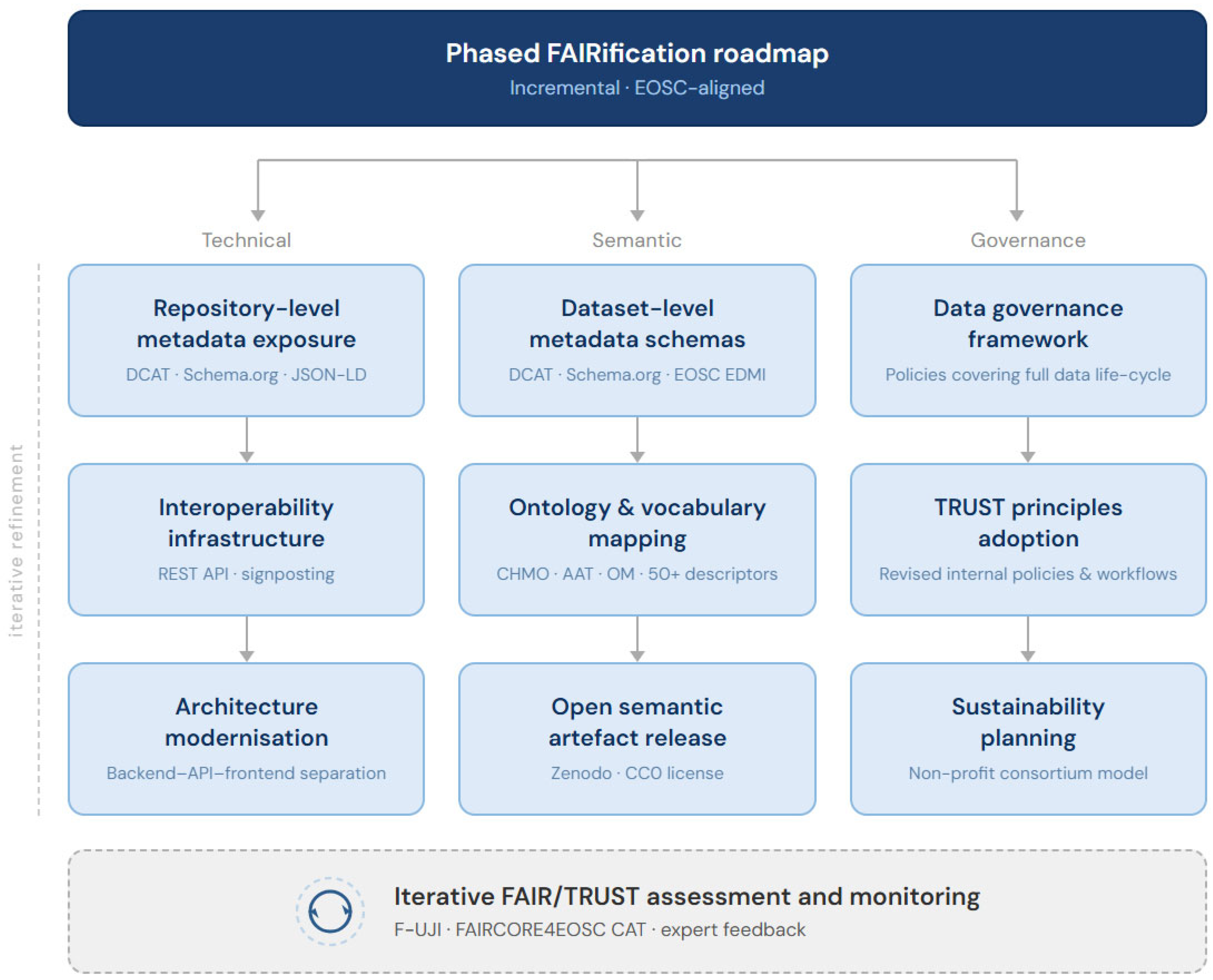
The FAIRification process examined in this study is structured around three interconnected dimensions frequently discussed in FAIR and digital infrastructure literature: technical interoperability, semantic alignment, and governance-oriented stewardship practices (see Figure 1).
The FAIRification activities described in this paper are based on implementation documentation, FAIR assessment reports, metadata schemas, semantic mappings, repository governance documents, and technical outputs produced during the FAIRification process [21,22,23,24,25]. Automated FAIR assessment tools, including the F-UJI Automated FAIR Data Assessment Tool [26] and the FAIRCORE4EOSC Compliance Assessment Toolkit (CAT), were used primarily as diagnostic and monitoring instruments supporting the iterative refinement of metadata and interoperability practices rather than as definitive indicators of FAIR compliance. The implementation process was additionally informed through peer feedback, support activities, and ongoing alignment with evolving EOSC interoperability recommendations and community practices.
The paper is structured as follows. Section 3 provides a short contextual overview of key FAIR implementation challenges relevant to long-tail heritage science infrastructures. Section 4 then examines the FAIRification of the INFRA-ART Spectral Library across technical interoperability, semantic alignment, governance, and sustainability dimensions.
As the study focuses on a single long-tail heritage science infrastructure, the observations presented here should be interpreted as implementation-oriented and context-sensitive rather than universally generalizable. Nevertheless, the FAIRification approaches discussed throughout the paper—including structured metadata exposure, semantic alignment with community vocabularies, and governance-oriented stewardship practices—may provide transferable insights for related research infrastructures operating under similar constraints.

3. FAIR Implementation Challenges in Long-Tail Heritage Science Infrastructures

Many barriers to FAIR implementation within the heritage science field reflect broader structural limitations within the research ecosystem, including fragmented infrastructures, insufficient metadata standardization, limited institutional support for data stewardship, disciplinary differences in data practices, insufficient professional recognition of non-traditional research outputs, and persistent gaps in expertise regarding research data management and data reuse [27,28,29,30,31]. These challenges are particularly pronounced in long-tail research environments, where repositories and data services often operate with limited technical and financial capacity, fragmented governance, and underdeveloped sustainability models. At the same time, long-term funding models for data infrastructures are still underdeveloped, leading to a proliferation of project-based repositories that struggle to ensure continuity and maintenance beyond the lifespan of individual grants. As a result, many researchers lack the capacity, skills, resources, and institutional support required to implement robust data management and FAIR-aligned practices.
Some of these general challenges, particularly those related to technical implementation, are amplified in heritage science by the inherent heterogeneity and complexity of its data landscape (see Table 1). Many existing repositories and laboratory databases were not originally designed to support machine-actionable metadata or automated integration. As a result, metadata descriptions are often embedded in free-text fields, PDF documents, or proprietary systems that are difficult to process automatically. Persistent identifiers for datasets are applied inconsistently, limiting reliable citation, provenance tracking, and cross-platform linking. Similarly, standardized access mechanisms such as application programming interfaces (APIs) and metadata harvesting endpoints remain rare or poorly documented in domain-specific heritage science services, constraining their integration into broader research infrastructures and discovery platforms [32].
Furthermore, semantic interoperability represents a particularly demanding challenge in heritage science, as it extends beyond technical implementation to encompass disciplinary culture, professional practices, and interpretative frameworks [16,17]. Interoperability in this domain cannot be reduced to shared formats, application programming interfaces, or syntactic standards alone. Archives, libraries, museums, and archaeological research communities document and interpret cultural heritage according to distinct traditions, temporal perspectives, and epistemic assumptions, all of which are reflected in their data structures, terminologies, and documentation practices [13,33,34].
Although formal conceptual models such as CIDOC-CRM provide a robust foundation for representing cultural heritage information [35], their adoption within scientific data repositories remains partial and uneven. Moreover, the availability of domain-specific, machine-actionable vocabularies and ontologies for heritage science remains limited (see Table 2). As noted in previous studies [13,36], many key concepts related to materials, analytical methods, degradation processes, and conservation practices are either insufficiently formalized or inconsistently represented across existing semantic resources, constraining meaningful semantic alignment and reuse. Emerging initiatives within the European heritage research infrastructure landscape, including those developed under the umbrella of E-RIHS and its H-SeTIS Hub [37], illustrate ongoing efforts to better align semantic models, research workflows, and community practices. However, achieving interoperable yet diversity-aware data ecosystems at scale remains an open and ongoing challenge.
Finally, these technical and methodological challenges are compounded by broader structural and policy factors specific to the cultural heritage domain. Rapid technological change, evolving intellectual property regimes, and shifting responsibilities for digital and digitized cultural heritage (including the emergence of born-digital heritage) complicate long-term data stewardship and access strategies [38,39,40]. On a practical level, the sustainability of existing services, databases, and digital infrastructures remains a critical concern, with many initiatives relying on short-term funding and lacking robust frameworks for long-term maintenance.
Recent FAIR-oriented initiatives across heritage science and related cultural heritage domains demonstrate growing efforts toward semantic interoperability, machine-actionable metadata, and community-driven governance models [41,42,43,44,45,46,47]. Successful approaches consistently combine technical solutions—such as structured metadata schemas, persistent identifiers, and interoperable access mechanisms—with community-driven semantic frameworks and sustainable stewardship practices. At the same time, effective implementation depends on alignment with domain-specific practices and user communities, highlighting the need for context-sensitive adaptation of general FAIR principles. Cross-domain and cross-regional initiatives further emphasize the importance of interoperability frameworks, such as those promoted within EOSC, in enabling integration across heterogeneous infrastructures [48]. Overall, these developments and initiatives underscore that FAIRification is not a one-time technical intervention, but an iterative and evolving process requiring continuous refinement of metadata, semantic alignment, and service-level integration.
Nevertheless, FAIR implementation within long-tail heritage science services remains uneven and strongly dependent on local infrastructural capacity, domain-specific workflows, and available stewardship resources. As highlighted in this section, FAIR implementation in heritage science remains constrained by a set of recurring and interrelated challenges that can be broadly grouped under three dimensions: (1) technical interoperability, including the availability of machine-actionable metadata, APIs, persistent identifiers, and standardized access mechanisms; (2) semantic alignment, referring to the use of shared ontologies, controlled vocabularies, and domain-specific conceptual models to support meaningful data integration and reuse; and (3) organizational and sustainability factors, encompassing governance frameworks, data stewardship capacity, long-term funding models, and institutional support. These dimensions are not independent but interact in complex ways, shaping both the feasibility and the outcomes of FAIRification efforts. In the following section, these three dimensions are used as an analytical lens to examine the FAIRification process of the INFRA-ART Spectral Library data service, allowing a more systematic interpretation of the implementation steps, outcomes, and limitations observed in practice.

4. FAIRification in Practice: An Implementation Case Study

4.1. Initial FAIR Assessment and Interoperability Roadmap

The INFRA-ART Spectral Library is an open-access data service developed as a digital support tool for heritage science researchers and other professionals working with spectroscopic techniques [20,49,50]. Designed and iteratively optimized over several years, the service currently hosts a curated multi-analytical collection of more than 2000 ATR-FTIR, XRF, Raman, and SWIR reflectance spectra derived from over 1000 reference materials commonly encountered in artworks and archaeological objects. From its outset, the INFRA-ART database was designed as an open resource for the research community.
However, prior to FAIRification, its alignment with the FAIR principles remained largely aspirational. While datasets were openly accessible and accompanied by rich structured descriptive information, FAIR implementation was limited in practice. As a result, interoperability emerged early on as a key concern, particularly in relation to EOCS integration and external service interoperability.
To move from aspirational FAIR alignment toward more operational FAIR implementation practices, a structured baseline assessment of the INFRA-ART service was conducted in early 2025 using questionnaires and checklists derived from the FAIRCORE4EOSC Compliance Assessment Toolkit (CAT). The assessment focused on alignment with the EOSC IF technical and semantic recommendations [51]. The resulting gap analysis identified several key limitations affecting FAIRness and interoperability of the INFRA-ART data service (see Table 3), including: the lack of persistent identifiers (PIDs) at the dataset level; absence of machine-readable metadata; lack of semantic artefacts, including the use of controlled vocabularies; absence of APIs for automated data access; and the lack of mechanisms for metadata harvesting by external services such as OpenAIRE [22].
Based on the identified interoperability gaps, a phased, EOSC-aligned interoperability roadmap was developed [21]. Created as a living strategic document, the roadmap aimed to guide the progressive FAIRification of the INFRA-ART Spectral Library by prioritizing actions that enhanced metadata quality, semantic interoperability, and service-level integration, while remaining realistic with respect to the constraints of a long-tail heritage science data service. Development and maintenance of the platform were primarily researcher-led, with limited institutional capacity for dedicated data stewardship and interoperability-oriented infrastructure development. Consequently, the roadmap emphasized incremental and technically feasible implementation steps capable of progressively improving interoperability and FAIR alignment in parallel with the gradual development of internal stewardship capacity and technical expertise, without requiring large-scale infrastructural redesign.
The first implementation measures focused on improving machine-actionable metadata exposure and repository-level interoperability. Machine-actionable metadata at the organizational and repository levels were implemented based on the RDA Common Descriptive Attributes of Research Data Repositories [52], using a FAIR-IMPACT–developed prototype [53,54] (see Table 4). DCAT-structured metadata were embedded in the repository homepage as JSON-LD and complemented by signposting to facilitate metadata harvesting by external services. Additional documentation was introduced to address previously lacking or insufficiently developed information on data deposit policies, access conditions, and data curation/preservation [23]. As a direct result of these metadata enrichments, the repository achieved basic machine discoverability and transparency, corresponding to an initial FAIR maturity estimate of approximately 30% according to the F-UJI tool [26].

4.2. Semantic and Machine-Actionable Metadata Enrichment

A second major phase of the FAIRification process focused on semantic enrichment and the enhancement of machine-actionable metadata at the dataset level. From a semantic alignment perspective, this phase focused on improving the consistency, interpretability, and cross-domain integration through the use of shared ontologies and controlled vocabularies. Implementation activities directly addressed the semantic interoperability and machine-actionability gaps mapped in the interoperability roadmap. To this end, machine-readable metadata schemas based on DCAT and https://schema.org were developed and implemented in JSON-LD for all dataset types hosted by the INFRA-ART Spectral Library, as well as for the overall catalogue structure (see Tables S1 and S2).
Semantic enrichment represented a central component of the implementation approach. Particular attention was paid to defining a sustainable level of dataset granularity, ensuring that metadata descriptions remained sufficiently rich to support data reuse while remaining feasible for long-term maintenance. These schemas were informed by the EOSC EDMI Pilot metadata set (comprising more than 30 metadata properties) [51,55,56] and by several RDA recommendations and outputs addressing dataset discoverability [57], structured metadata publication on the web [58], and data granularity [59]. Internal metadata elements were systematically aligned with established ontologies and controlled vocabularies to improve semantic clarity and cross-domain interoperability. To date, more than fifty dataset descriptors have been mapped to external semantic resources, including the Chemical Methods Ontology (CHMO) for analytical techniques, the Ontology of Units of Measure (OM) for measured variables, and the Getty Art & Architecture Thesaurus (AAT) for materials and cultural heritage terminology. Where required, supplementary vocabularies such as FIX, BAO, or MeSH were used to represent technical concepts not adequately covered by the core resources (see Table 5). The semantic alignment presented here should be understood as an initial, implementation-oriented step rather than a fully validated solution. Although grounded in established ontologies and informed by expert feedback, the mappings remain subject to ongoing refinement through broader community engagement and future validation efforts.
The harmonized metadata schemas are embedded directly within the landing page of the INFRA-ART website (these are labeled as “FAIRMap4ART https://schema.org & DCAT schemas” in the source page). This approach provides a single, machine-actionable metadata entry point for each dataset collection, while preserving a coherent hierarchical structure across the repository. The implementation followed established best practices for structured metadata publication on the Web, including the use of persistent identifiers for people (ORCID), organizations (ROR), and semantic resources (ontology URIs), as well as the explicit linking of datasets to contextual and provenance information [60]. Automated validation tools were used throughout the implementation process to assess metadata quality, structured data compliance, and FAIR alignment, enabling iterative refinement. These included the Schema Markup Validator and Google Rich Results Test for structured data compliance (e.g., JSON-LD syntax, required properties), as well as F-UJI and the FAIRCORE4EOSC CAT for FAIRness and interoperability evaluation. All metadata crosswalks, ontology mappings, and supporting semantic artefact documentation were released openly under a permissive license on Zenodo [24], ensuring transparency and facilitating reuse by other heritage science data services.
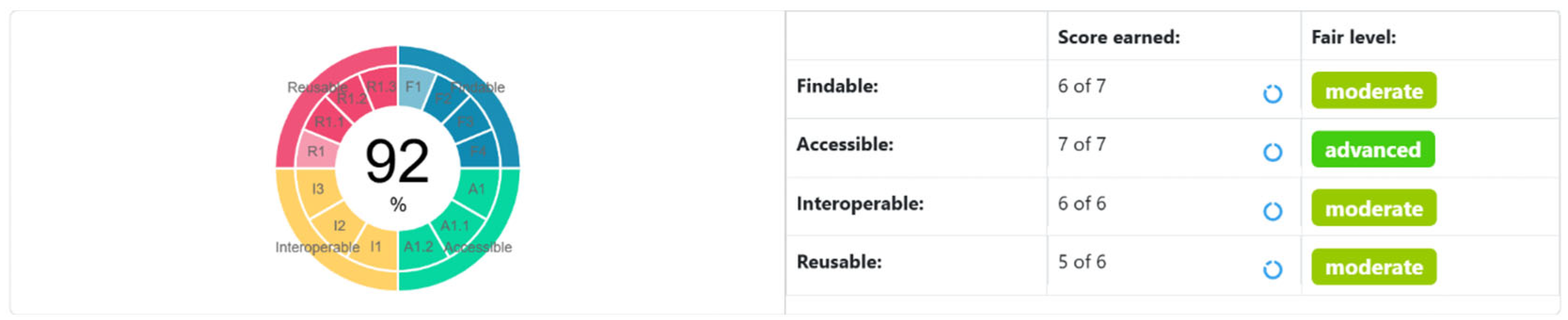
Following these semantic and metadata improvements, FAIR assessment conducted using the F-UJI tool indicated substantial gains across all metadata quality dimensions. The overall FAIR score exceeded 90%, while interoperability-related indicators were formally satisfied at the assessment level (6 of 6, see Figure 2), reflecting improvements in structured metadata implementation. Nevertheless, it is important to highlight that automated FAIR assessment tools primarily evaluate the presence and machine-actionability of metadata elements rather than the full semantic and organizational complexity of interoperability in practice. Some interoperability-related components remain only partially implemented at this stage and will require further refinement and community validation. In this context, automated FAIR assessment tools were used primarily as diagnostic instruments supporting iterative implementation and monitoring processes rather than as definitive indicators of FAIR compliance or FAIR maturity.

4.3. Technical Interoperability, Governance, and Repository Trustworthiness

Subsequent FAIRification activities also addressed broader infrastructural and organizational dimensions of the INFRA-ART service. While the FAIRification roadmap primarily emphasized incremental and technically feasible implementation steps, the later acquisition of dedicated infrastructure funding enabled more substantial architectural modernization aligned with long-term EOSC interoperability objectives. These efforts addressed both service-level interoperability and organizational dimensions related to governance, sustainability, and repository maturity (see Table 6).
At the technical level, the overall system architecture was redesigned as part of a broader evolution toward an EOSC-aligned research infrastructure. The upgraded platform introduces a modern backend–API–frontend separation, enabling improved interoperability and enhanced user experience. The platform currently exposes a REST-based API; detailed technical documentation (e.g., authentication/authorization schemes, versioning, and programmatic access policies) is still under development and not yet publicly available. As a result, the technical interoperability of the platform remains only partially realized at this stage. Once the documentation is finalized and the API is fully exposed, this architectural transition will significantly improve technical interoperability by supporting programmatic access, facilitating metadata exchange with external services, and aligning the platform with key recommendations of the EOSC Interoperability Framework.
In parallel, FAIRification efforts expanded to include governance, sustainability, and trust considerations, emphasizing transparency, accountability, and long-term service viability [9]. To support these objectives, an open access data governance framework was established, formalizing policies covering the full data lifecycle [61,62], including data access conditions, curation, preservation, and long-term sustainability strategies. Building on this framework, the INFRA-ART data service formally endorsed the TRUST principles for digital repositories in June 2025. This alignment was operationalized through revisions to internal policies and workflows, strengthening transparency, responsibility, user focus, sustainability, and stewardship practices across governance, curation, and service planning. Following this alignment, INFRA-ART became a provisional member of the FIDELIS Network of TDRs (Trustworthy Digital Repositories), signaling convergence with emerging European approaches to repository quality, stewardship, and certification readiness.
To further support transparency and user focus in line with the TRUST principles, all technical documentation, policy frameworks, interoperability roadmaps, and implementation reports produced during the project lifecycle were deposited in Zenodo under open licenses. This ensures long-term preservation, and public accessibility of the service’s governance and technical artefacts beyond the project’s funding period. Planned and ongoing actions include the systematic assignment of persistent identifiers (PIDs) at the dataset level (including support for dynamic dataset versioning), refinement of metadata schemas, and integration with OpenAIRE. These measures are expected to improve discoverability, provenance tracking, and interoperability across the European research ecosystem. While further refinement is ongoing, long-term sustainability remains a key challenge, as for many project-based infrastructures. In response, sustainability models are currently under development, including the exploration of a transition towards a non-profit consortium-based governance model to support long-term maintenance and service continuity.

4.4. Impact, Challenges in Implementation, and Lessons Learned

From an implementation perspective, the FAIRification process substantially improved the discoverability, machine-actionability, and interoperability of the INFRA-ART datasets. The adoption of structured, standard-aligned metadata and semantic mappings enabled metadata harvesting and interoperability readiness, and improved visibility within EOSC-aligned infrastructures. The FAIRification process also prompted reflection on the relationship between FAIRness and data quality in practice. While FAIR data are not inherently “better” scientific data in terms of their intrinsic quality or validity [63], FAIRification can enhance transparency, traceability, and reproducibility, thereby strengthening trust in data and their potential for reuse [64,65].
From a community perspective, platform analytics indicated sustained growth in user engagement following the implementation of the FAIR-aligned metadata exposure mechanism in Sept 2025. Over the subsequent six-month monitoring period, the service recorded sustained growth in new users, with an average increase of approximately 70% compared to previous reporting intervals. While increased user access does not directly demonstrate data reuse, it indicates enhanced visibility and reuse potential [66]. Nevertheless, interpreting such trends remains challenging, as the influence of dissemination activities, seasonal variation, and other external factors cannot be fully ruled out. Moreover, translating improved discoverability and interoperability into measurable indicators of data reuse and scientific impact remains significantly more complex. As widely debated in the literature [66,67,68,69,70], assessing data reuse remains methodologically challenging due to inconsistent citation practices, “silent reuse” of datasets, and substantial time lags between data access and formal scholarly attribution. In response to these challenges, efforts have been made to improve transparency and monitor data reuse more systematically. In this context, a curated overview of documented reuse cases, including citation tracking, has been developed and is made publicly available through the INFRA-ART Spectral Library website [71]. While this approach provides valuable qualitative insight into data reuse, it does not fully overcome the broader methodological limitations outlined above.
At the same time, the FAIRification journey highlighted several persistent challenges, many of which reflect the broader issues discussed in Section 3. A key challenge was the limited availability of dedicated data stewardship expertise within a researcher-led service, requiring FAIR implementation efforts to be balanced against core scientific responsibilities while stewardship skills and workflows were developed progressively throughout the process. Semantic alignment proved particularly demanding, as domain-specific concepts related to materials, analytical techniques, and measurement contexts often lacked mature, machine-actionable vocabularies. Addressing these gaps required careful mediation between existing community standards and pragmatic implementation choices. In addition, translating aspirational FAIR and TRUST principles into operational practice required sustained engagement with evolving EOSC interoperability recommendations, repository frameworks, and community standards. This highlighted the importance of practical guidance, implementation workflows, institutional support, and capacity-building mechanisms, particularly for smaller or resource-constrained services.
Several transferable lessons emerge from this experience. FAIRification proved most effective when guided by a clear, interoperability-focused roadmap rather than by isolated technical fixes, with baseline assessments playing a critical role in identifying actions with the highest impact relative to available resources. While repository-level metadata provided an essential foundation for initial FAIR transparency and discoverability, achieving more advanced levels of FAIR maturity required semantic enrichment at the level of individual objects and datasets. Technical interoperability—through mechanisms such as APIs and machine-actionable formats—also needed to evolve in parallel with governance, policy, and sustainability frameworks to support long-term operation. Guidance on data granularity was particularly valuable in defining sustainable levels of metadata description, while iterative FAIR assessments using automated tools offered concrete, measurable evidence of progress. Finally, targeted support actions to facilitate the adoption of FAIR solutions and best data management practices were essential for capacity building and informed decision-making, underscoring the importance of coordinated European initiatives in enabling FAIR adoption across the long-tail of research data.
Overall, the INFRA-ART case study illustrates how FAIRification can act as a catalyst for broader infrastructural development, extending beyond data and metadata to encompass governance, sustainability, and research ecosystem integration. While challenges remain—particularly with respect to semantic resources and long-term funding models—the experience demonstrates that incremental, standards-based FAIRification pathways are both feasible and impactful, even for small specialized heritage science data services operating within the evolving European open science landscape.

5. Conclusions and Future Work

Heritage science increasingly depends on the effective management and long-term preservation of highly heterogeneous research data to advance knowledge and safeguard cultural heritage. As research practices become more computational, integrative, and collaborative, the long-term value of data depends not only on its creation, but on its sustained accessibility and reuse across institutional, disciplinary, and temporal boundaries. Despite increasing policy support for open science and the growing availability of technical frameworks, the adoption of FAIR principles remains uneven, particularly for long-tail, researcher-led data services operating under resource constraints. This paper presents an implementation-oriented case study examining the FAIRification of the INFRA-ART Spectral Library within its specific infrastructural and institutional context. The study addressed the question of how FAIR principles can be operationalized within long-tail, researcher-led heritage science data services, and what constraints and enabling factors shape this process in practice. The results demonstrate that FAIRification can be approached as an iterative process in which technical interoperability, semantic alignment, and governance-oriented stewardship practices evolve together over time.
A key insight emerging from this work is that the effective adoption of open science and FAIR practices depends not on rigid adherence to universal models, but on context-sensitive implementation approaches that balance FAIR objectives with practical and institutional constraints. While the FAIRification process substantially improved the discoverability, machine-actionability, interoperability, and overall transparency of the INFRA-ART data service, FAIR implementation remains an evolving process, with several interoperability and governance components still under active development.
Future work will focus on further strengthening the interoperability and long-term sustainability of the INFRA-ART Spectral Library through the implementation of persistent identifiers at dataset level, refinement of semantic mappings and metadata schemas, completion of public API documentation, integration with OpenAIRE and related EOSC services, and continued development of governance and sustainability models supporting long-term service continuity.
Similar to many other long-tail data infrastructures, the FAIRification of the INFRA-ART Spectral Library was shaped by practical challenges, including limited data stewardship capacity, evolving interoperability requirements, fragmented semantic resources for heritage science data, and dependence on project-based funding and institutional support. Nevertheless, the experience shows that significant progress can be achieved through roadmap-driven and standards-based implementation strategies adapted to available resources and infrastructure maturity. More broadly, the paper provides a grounded perspective on FAIRification in heritage science by connecting FAIR and TRUST principles with the practical realities of infrastructure implementation, interoperability development, and long-term stewardship. In addition, all metadata schemas, semantic mappings, and implementation documentation developed throughout the FAIRification process were released under open licenses, providing reusable resources that may support FAIR adoption in related heritage science infrastructures.

Supplementary Materials

The following supporting information can be downloaded at: https://www.mdpi.com/article/10.3390/heritage9060228/s1. Table S1: Crosswalk between EOSC Pilot-EDMI-metadata properties [55] and equivalent DCAT and https://schema.org properties, adapted from FAIRsharing record 3641 [56]. The mapping highlights correspondences, gaps, and extension points relevant for expressing domain-specific research data metadata in interoperable, machine-readable formats. Mappings of EDMI properties to INFRA-ART dataset descriptors are provided in the associated semantic artefact documentation published on Zenodo [24]; Table S2: Overview of the machine-actionable semantic artefacts implemented for the INFRA-ART Spectral Library data service.

Funding

This research was funded by the Ministry of Research, Innovation and Digitization, CNCS-UEFISCDI, grant number PN-IV-P2-2.1-TE-2023-2019, and by the European Research Executive Agency (REA) via the RDA TIGER project, grant agreement 101094406, cascade grant ref. no. 2025-RDA-CG-06.

Data Availability Statement

The original contributions presented in the study are included in the article; further inquiries can be directed to the corresponding author.

Conflicts of Interest

The author declares no conflicts of interest.

Abbreviations

The following abbreviations are used in this manuscript:
AATGetty Art & Architecture Thesaurus
ATR-FTIRAttenuated Total Reflectance-Fourier Transform Infrared
BAOBioAssay Ontology
CATCompliance Assessment Toolkit
CHMOChemical Methods Ontology
CIDOC–CRMInternational Committee for Documentation—Conceptual Reference Model
DARIAHDigital Research Infrastructure for the Arts and Humanities
DOIDigital Object Identifier
DRAWGData Repository Attributes Working Group
EDAMOntology of Data Analysis and Management
EDMIEOSC Datasets Minimum Information
EOSCEuropean Open Science Cloud
EOSC IFEuropean Open Science Cloud Interoperability Framework
E-RIHSEuropean Research Infrastructure for Heritage Science
FAIRFindable, Accessible, Interoperable, Reusable
FIXFunctional Imaging Ontology
H-SeTISHeritage–Semantic Tools and Interoperability Survey
IANAInternet Assigned Numbers Authority
IUPACInternational Union of Pure and Applied Chemistry
JSON-LDJavaScript Object Notation for Linked Data
MeSHMedical Subject Headings
OMOntology of Units of Measure
OpenAIREOpen Access Infrastructure for Research in Europe
ORCIDOpen Researcher and Contributor ID
PROVOProvenance Ontology
PIDPersistent Identifier
RDAResearch Data Alliance
RORResearch Organization Registry
SWIRShort-Wave Infrared
TDRsTrustworthy Digital Repositories
TRUSTTransparency, Responsibility, User focus, Sustainability, Technology
URIUniform Resource Identifier
XRFX-Ray fluorescence

References

  1. Academies of Sciences, Engineering, and Medicine; Policy and Global Affairs; Board on Research National Data and Information; Committee on Toward an Open Science Enterprise. Open Science by Design: Realizing a Vision for 21st Century Research; National Academies Press: Washington, DC, USA, 2018. [Google Scholar]
  2. Umbach, G. Open Science and the impact of Open Access, Open Data, and FAIR publishing principles on data-driven academic research: Towards ever more transparent, accessible, and reproducible academic output? Stat. J. IAOS 2024, 40, 59–70. [Google Scholar] [CrossRef]
  3. Castro, J.P.; Medeiros França Romero, L.; Chaves Carniel, A.; Dutra Aguiar, C. The BigFAIR Architecture: Enabling Big Data Analytics in FAIR-compliant Repositories. ACM J. Data Inf. Qual. 2025, 17, 24. [Google Scholar] [CrossRef]
  4. Mons, B.; Neylon, C.; Velterop, J.; Dumontier, M.; da Silva Santos, L.O.B.; Wilkinson, M.D. Cloudy, increasingly FAIR: Revisiting the FAIR Data guiding principles for the European Open Science Cloud. Inf. Serv. Use 2017, 37, 49–56. [Google Scholar] [CrossRef]
  5. Budroni, P.; Claude-Burgelman, J.; Schouppe, M. Architectures of Knowledge: The European Open Science Cloud. ABI Tech. 2019, 39, 130–141. [Google Scholar] [CrossRef]
  6. Koers, H.; Bangert, D.; Hermans, E.; van Horik, R.; de Jong, M.; Mokrane, M. Recommendations for Services in a FAIR Data Ecosystem. Patterns 2020, 1, 100058. [Google Scholar] [CrossRef]
  7. Wilkinson, M.D.; Dumontier, M.; Aalbersberg, I.J.; Appleton, G.; Axton, M.; Baak, A.; Blomberg, N.; Boiten, J.W.; da Silva Santos, L.B.; Bourne, P.E.; et al. The FAIR Guiding Principles for scientific data management and stewardship. Sci. Data 2016, 3, 160018. [Google Scholar] [CrossRef]
  8. Jacobsen, A.; Azevedo, R.M.; Juty, N.; Batista, D.; Coles, S.; Cornet, R.; Courtot, M.; Crosas, M.; Dumontier, M.; Evelo, C.T.; et al. FAIR principles: Interpretations and implementation considerations. Data Intell. 2020, 2, 10–29. [Google Scholar] [CrossRef]
  9. Lin, D.; Crabtree, J.; Dillo, I.; Downs, R.R.; Edmunds, R.; Giaretta, D.; De Giusti, M.; L’Hours, H.; Hugo, W.; Jenkyns, R.; et al. The TRUST Principles for digital repositories. Sci. Data 2020, 7, 144. [Google Scholar] [CrossRef]
  10. European Commission: Directorate-General for Research and Innovation. Turning FAIR into Reality—Final Report and Action Plan from the European Commission Expert Group on FAIR Data; Publications Office of the European Union: Luxembourg, 2018; Available online: https://data.europa.eu/doi/10.2777/1524 (accessed on 9 February 2026).
  11. European Commission: Directorate-General for Research and Innovation. Cost-Benefit Analysis for FAIR Research Data: Cost of Not Having FAIR Research Data; Publications Office of the European Union: Luxembourg, 2018; Available online: https://data.europa.eu/doi/10.2777/02999 (accessed on 9 February 2026).
  12. Parsons, M.A.; Godøy, Ø.; LeDrew, E.; de Bruin, T.F.; Danis, B.; Tomlinson, S.; Carlson, D. A conceptual framework for managing very diverse data for complex, interdisciplinary science. J. Inf. Sci. 2011, 37, 555–569. [Google Scholar] [CrossRef]
  13. Larsson, Å.M.; Bornsäter, B.; Hacke, M. Developing practices for FAIR and linked data in Heritage Science. npj Herit. Sci. 2025, 13, 53. [Google Scholar] [CrossRef]
  14. European Commission: Directorate-General for Research and Innovation. Report on a European Collaborative Cloud for Cultural Heritage; Publications Office of the European Union: Luxembourg, 2022; Available online: https://data.europa.eu/doi/10.2777/64014 (accessed on 9 February 2026).
  15. Kennedy, C.J.; Penman, M.; Watkinson, D.; Emmerson, N.; Thickett, D.; Bosché, F.; Forster, A.M.; Grau-Bové, J.; Cassar, M. Beyond Heritage Science: A Review. Heritage 2024, 7, 1510–1538. [Google Scholar] [CrossRef]
  16. Castelli, L.; Felicetti, A.; Proietti, F. Heritage Science and Cultural Heritage: Standards and tools for establishing cross-domain data interoperability. Int. J. Digit. Libr. 2021, 22, 279–287. [Google Scholar] [CrossRef]
  17. Vassallo, V.; Felicetti, A. Towards an ontological cross-disciplinary solution for multidisciplinary data: VI-SEEM data management and the FAIR principles. Int. J. Digit. Libr. 2021, 22, 297–307. [Google Scholar] [CrossRef]
  18. Bucciero, A.; Chirivì, A.; Anglada, G.; Demetrescu, E.; Fanini, B.; Paraciani, N. DataSpace-ISPC: A Semantic Platform for Heritage Science. In Proceedings of the 21st Eurographics Workshop on Graphics and Cultural Heritage, Salento, Lecce, Italy, 4–6 September 2023; Bucciero, A., Fanini, B., Graf, H., Pescarin, S., Rizvic, S., Eds.; Eurographics Association: Goslar, Germany, 2023; pp. 109–117. [Google Scholar] [CrossRef]
  19. Bernabé, C.; Valle, I.; Prince Sales, T.; Schultes, E.; van Ulzen, N.; Silva Souza, V.E.; Jacobsen, A.; Bonino da Silva Santos, L.O.; Mons, B.; Roos, M. GO-Plan: A goal-oriented method for FAIRification planning. Inf. Serv. Use 2025, 45, 100–124. [Google Scholar] [CrossRef]
  20. Cortea, I.M.; Chiroșca, A.; Angheluță, L.; Serițan, G. INFRA-ART: An Open Access Spectral Library of Art-related Materials as a Digital Support Tool for Cultural Heritage Science. ACM J. Comput. Cult. Herit. 2023, 16, 40. [Google Scholar] [CrossRef]
  21. Cortea, I.M. Interoperability Policy Roadmap for the INFRA-ART Spectral Library; Zenodo: Geneva, Switzerland, 2025. [Google Scholar] [CrossRef]
  22. Cortea, I.M. Developing an Interoperability Policy Roadmap for the INFRA-ART Spectral Library at the National Institute for Research and Development in Optoelectronics; Zenodo: Geneva, Switzerland, 2025. [Google Scholar] [CrossRef]
  23. Cortea, I.M. Improving the Findability, Interoperability, and Trustworthiness of the INFRA-ART Spectral Library—A Dedicated Data Service for the Heritage Science Domain; Zenodo: Geneva, Switzerland, 2025. [Google Scholar] [CrossRef]
  24. Cortea, I.M. Semantic Artefact Documentation for the INFRA-ART Spectral Library Datasets and Data Catalog (Version 1.0); Zenodo: Geneva, Switzerland, 2025. [Google Scholar] [CrossRef]
  25. Cortea, I.M. TRUST Principles Use Case; Zenodo: Geneva, Switzerland, 2025. [Google Scholar] [CrossRef]
  26. Devaraju, A.; Huber, R. F-UJI—An Automated FAIR Data Assessment Tool (Version 3.5.0); Zenodo: Geneva, Switzerland, 2025. [Google Scholar] [CrossRef]
  27. Morris, J.; Saenen, B. Survey Report: Strategic Approaches to and Research Assessment of Open Science; Science Europe: Brussels, Belgium, 2024. [Google Scholar] [CrossRef]
  28. Tedersoo, L.; Küngas, R.; Oras, E.; Köster, K.; Eenmaa, H.; Leijen, A.; Pedaste, M.; Raju, C.V.; Astapova, A.; Lukner, H.; et al. Data sharing practices and data availability upon request differ across scientific disciplines. Sci. Data 2021, 8, 192. [Google Scholar] [CrossRef] [PubMed]
  29. Borgman, C.L. The conundrum of sharing research data. J. Am. Soc. Inf. Sci. Technol. 2012, 63, 1059–1078. [Google Scholar] [CrossRef]
  30. Puebla, I.; Ascoli, G.A.; Blume, J.; Chodacki, J.; Finnell, J.; Kennedy, D.N.; Mair, B.; Martone, M.E.; Wittenberg, J.; Poline, J.-B. Ten simple rules for recognizing data and software contributions in hiring, promotion, and tenure. PLoS Comput. Biol. 2024, 20, e1012296. [Google Scholar] [CrossRef]
  31. Mauthner, N.S.; Parry, O. Open Access Digital Data Sharing: Principles, Policies and Practices. Soc. Epistemol. 2013, 27, 47–67. [Google Scholar] [CrossRef]
  32. Downs, R.R.; Urquidi Díaz, A.; Xu, Q.; Wang, J.; Chambodut, A.; Liu, C.; Flower, S.; Payne, K. Harvestable Metadata Services Development: Analysis of Use Cases from the World Data System. Data Sci. J. 2023, 22, 20. [Google Scholar] [CrossRef]
  33. Bearman, D. Representing Museum Knowledge. In Museum Informatics: People, Information, and Technology in Museums, 1st ed.; Marty, P.F., Jones, K., Eds.; Routledge: New York, NY, USA, 2008; pp. 35–57. [Google Scholar]
  34. Moyano, J.; Pili, A.; Nieto-Julián, J.E.; Della Torre, S.; Bruno, S. Semantic interoperability for cultural heritage conservation: Workflow from ontologies to a tool for managing and sharing data. J. Build. Eng. 2023, 80, 107965. [Google Scholar] [CrossRef]
  35. Doerr, M.; Ore, C.-E.; Stead, S. The CIDOC Conceptual Reference Model—A new standard for knowledge sharing. In Proceedings of the 26th International Conference on Conceptual Modeling (ER 2007), Auckland, New Zealand, 5–9 November 2007; Grundy, J., Hartmann, S., Laender, S., Maciaszek, L., Roddick, J.F., Eds.; Conferences in Research and Practice in Information Technology; Australian Computer Society: Sydney, Australia, 2007; Volume 83. [Google Scholar]
  36. Doerr, M. Ontologies for Cultural Heritage. In Handbook on Ontologies, 2nd ed.; Staab, S., Studer, R., Eds.; Springer: Berlin/Heidelberg, Germany, 2009; pp. 463–486. [Google Scholar] [CrossRef]
  37. Scarpa, E.; Valente, R. Heritage—Semantic Tools and Interoperability Survey Bibliography (Version 1.0.0); Zenodo: Geneva, Switzerland, 2025. [Google Scholar] [CrossRef]
  38. Wagner, A.; de Clippele, M.S. Safeguarding Cultural Heritage in the Digital Era—A Critical Challenge. J. Semiot. Law 2023, 36, 1915–1923. [Google Scholar] [CrossRef]
  39. Barbuti, N. Thinking digital libraries for preservation as digital cultural heritage: By R to R4 facet of FAIR principles. Int. J. Digit. Libr. 2021, 22, 309–318. [Google Scholar] [CrossRef]
  40. Seifert, C.; Bailer, W.; Orgel, T.; Gantner, L.; Kern, R.; Ziak, H.; Petit, A.; Schlötterer, J.; Zwicklbauer, S.; Granitzer, M. Ubiquitous Access to Digital Cultural Heritage. ACM J. Comput. Cult. Herit. 2017, 10, 4. [Google Scholar] [CrossRef]
  41. Silva, A.L.; Terra, A.L. Cultural heritage on the Semantic Web: The Europeana Data Model. IFLA J. 2024, 50, 93–107. [Google Scholar] [CrossRef]
  42. Kotzinos, D.; Chambers, S.; Barbot, L.; Durco, M.; Dalla Torre, G. ECHOES Integration Strategy for Datasets, Tools and Workflows with Potential for Reuse in ECHOES (D3.1); Zenodo: Geneva, Switzerland, 2025. [Google Scholar] [CrossRef]
  43. Bardi, A.; Benassi, L. Boosting open science in the IPERION HS research infrastructure with OpenAIRE. ERCIM News 2023, 133, 9–10. [Google Scholar]
  44. Veršić, I.I.; Ausserhofer, J. The social sciences, humanities and their interoperability with the European Open Science Cloud: What is SSHOC? Mitt. VÖB 2019, 72, 383–391. [Google Scholar] [CrossRef]
  45. Myers, D.; Dalgity, A.; Avramides, I.; Wuthrich, D. Arches: An Open Source GIS for the Inventory and Management of Immovable Cultural Heritage. In Progress in Cultural Heritage Preservation, Proceedings of the 4th International Conference on Cultural Heritage and New Technologies, Lemessos, Cyprus, 29 October–3 November 2012; Ioannides, M., Fritsch, D., Leissner, J., Davies, R., Remondino, F., Caffo, R., Eds.; Springer: Berlin/Heidelberg, Germany, 2012; pp. 817–824. [Google Scholar] [CrossRef]
  46. Geser, G. Achievements of the ARIADNE initiative for archaeological data sharing and research. Internet Archaeol. 2023, 64. [Google Scholar] [CrossRef]
  47. Koureas, D.; Livermore, L.; Alonso, E.; Addink, W.; Alves, M.J.; Casino, A.; Curral, L.; Enghoff, H.; Guiraud, M.; Hardy, H.; et al. DiSSCo Prepare Project: Increasing the Implementation Readiness Levels of the European Research Infrastructure. Res. Ideas Outcomes 2023, 9, e113906. [Google Scholar] [CrossRef]
  48. García, N.B.; Padilla, M.H.; Pérez, J.V.; Gómez, A.F.S. EOSC and data spaces for cross-domain data sharing in Europe: Insights from the TITAN-EOSC project. In Global Internet of Things and Edge Computing Summit, Proceedings of the 2nd International Summit, GIECS 2025, Madrid, Spain, 22 September 2025; Presser, M., Skarmeta, A., Krco, S., Eds.; Communications in Computer and Information Science; Springer: Cham, Switzerland, 2026; Volume 2719, pp. 125–140. [Google Scholar] [CrossRef]
  49. Cortea, I.M.; Angheluță, L.M.; Chiroșca, A.; Serițan, G. INFRA-ART spectral library: A new open access infrastructure for heritage science. In Lasers in the Conservation of Artworks XIII, Proceedings of the International Conference on Lasers in the Conservation of Artworks XIII (LACONA XIII), Florence, Italy, 12–16 September 2022; Siano, S., Ciofini, D., Eds.; CRC Press: Boca Raton, FL, USA, 2023; pp. 37–47. [Google Scholar] [CrossRef]
  50. Cortea, I.M. Towards FAIR data management in heritage science research: Updates and progress on the INFRA-ART spectral library. Heritage 2024, 7, 2569–2585. [Google Scholar] [CrossRef]
  51. European Commission: Directorate-General for Research and Innovation. EOSC Interoperability Framework—Report from the EOSC Executive Board Working Groups FAIR and Architecture; Publications Office of the European Union: Luxembourg, 2021. [Google Scholar] [CrossRef]
  52. Witt, M.; Cannon, M.; Lister, A.; Segundo, W.; Shearer, K.; Yamaji, K.; Research Data Alliance Data Repository Attributes Working Group. RDA Common Descriptive Attributes of Research Data Repositories (Version 1.0); Zenodo: Geneva, Switzerland, 2024. [Google Scholar] [CrossRef]
  53. Verburg, M.; Ulrich, R.; L’Hours, H.; Huber, R.; Priddy, M.; Davidson, J.; Gonzalez-Beltran, A.; Meijas, G.; Neidiger, C. M5.2—Guidelines for Repositories and Registries on Exposing Repository Trustworthiness Status and FAIR Data Assessment Outcomes; Zenodo: Geneva, Switzerland, 2023. [Google Scholar] [CrossRef]
  54. FAIRsFAIR Project. FAIRsFAIR. 5_4_Prototype GitHub Repository. Available online: https://github.com/FAIRsFAIR/5_4_prototype (accessed on 9 February 2026).
  55. EOSC-EDMI. EDMI Metadata Properties. Available online: https://eosc-edmi.github.io/properties (accessed on 9 February 2026).
  56. FAIRsharing.org. Research Metadata Schema Crosswalk Mappings to Schema.org. Available online: https://fairsharing.org/3641 (accessed on 9 February 2026).
  57. Wu, M.; Gregory, K.; Löffler, F.; Mathiak, B.; Psomopoulos, F.; Schindler, U.; Aryani, A.; Bodera, J.; Jael Castro, L.; Culina, A.; et al. Ten Principles to Improve Dataset Discoverability (Version 1.0); Research Data Alliance, 2024. [Google Scholar] [CrossRef]
  58. Wu, M.; Juty, N.; RDA Research Metadata Schemas WG.; Collins, J.; Duerr, R.; Ridsdale, C.; Shepherd, A.; Verhey, C.; Castro, L.J. Guidelines for Publishing Structured Metadata on the Web (Version 3.1); Zenodo: Geneva, Switzerland, 2021. [Google Scholar] [CrossRef]
  59. Jenkyns, R.; Mathiak, B.; McNeill, K.; Smith, G.; Sun, G.; Little, C.; Jones, B.; Elbert, D.; Hellström, M.; Schabinger, R.; et al. Guidance on Data Granularity: Report of the RDA Data Granularity Working Group (Version 1.0); Zenodo: Geneva, Switzerland, 2025. [Google Scholar] [CrossRef]
  60. European Commission: Directorate-General for Research and Innovation. A Persistent Identifier (PID) Policy for the European Open Science Cloud (EOSC); Publications Office of the European Union: Luxembourg, 2020. [Google Scholar] [CrossRef]
  61. Higgins, S. Draft DCC Curation Lifecycle Model. Int. J. Digit. Curation 2007, 2, 82–87. [Google Scholar] [CrossRef]
  62. Treloar, A.; Klump, J. Updating the Data Curation Continuum: Not just Data, still focused on Curation, more about Domains. Int. J. Digit. Curation 2019, 14, 87–101. [Google Scholar] [CrossRef]
  63. Boeckhout, M.; Zielhuis, G.A.; Bredenoord, A.L. The FAIR guiding principles for data stewardship: Fair enough? Eur. J. Hum. Genet. 2018, 26, 931–936. [Google Scholar] [CrossRef] [PubMed]
  64. Nicholson, N.; Negrao Carvalho, R.; Štotl, I. A FAIR Perspective on Data Quality Frameworks. Data 2025, 10, 136. [Google Scholar] [CrossRef]
  65. Yoon, A. Data reusers’ trust development. J. Assoc. Inf. Sci. Technol. 2017, 68, 946–956. [Google Scholar] [CrossRef]
  66. Kratz, J.; Strasser, C. Making data count. Sci. Data 2015, 2, 150039. [Google Scholar] [CrossRef] [PubMed]
  67. Robinson-García, N.; Jiménez-Contreras, E.; Torres-Salinas, D. Analyzing data citation practices using the data citation index. J. Assoc. Inf. Sci. Technol. 2016, 67, 2964–2975. [Google Scholar] [CrossRef]
  68. Gregory, K.; Ninkov, A.; Ripp, C.; Roblin, E.; Peters, I.; Haustein, S. Tracing data: A survey investigating disciplinary differences in data citation. Quant. Sci. Stud. 2023, 4, 622–649. [Google Scholar] [CrossRef]
  69. Park, H.; You, S.; Wolfram, D. Is informal data citation for data sharing and re-use more common than formal data citation? Proc. Assoc. Inf. Sci. Technol. 2017, 54, 768–769. [Google Scholar] [CrossRef]
  70. Borgman, C.L.; Groth, P. From Data Creator to Data Reuser: Distance Matters. Harv. Data Sci. Rev. 2025, 7, 1–73. [Google Scholar] [CrossRef]
  71. INFRA-ART. Spectral Library Website, Data Reuse Cases. Available online: https://infra-art.eu/community-feedback/data-reuse-cases (accessed on 27 May 2026).
Figure 1. Schematic representation of the phased FAIRification roadmap implemented. The workflow is organized along three parallel dimensions (technical interoperability, semantic alignment, and organizational governance) with iterative FAIR/TRUST assessment as a continuous feedback mechanism.
Heritage 09 00228 g001
Figure 2. Automated FAIR assessment of the INFRA-ART Spectral Library data service following FAIRification activities, performed using the F-UJI tool. The figure summarizes scores across the four FAIR dimensions (Findable, Accessible, Interoperable, and Reusable), resulting in an overall FAIR alignment score of 92%. Accessibility shows the strongest performance, with all assessed metrics (7 out of 7) fully met. The complete F-UJI FAIR assessment report is available online at https://www.f-uji.net/view/5711 (accessed on 27 May 2026).
Heritage 09 00228 g002
Table 1. Big data versus long-tail data characteristics. Adapted from [1].
Big DataLong-Tail Data (Heritage Data)
HomogeneousHighly heterogeneous
Large, high-volume datasetsSmall, fragmented datasets
Common, mature standardsUnique standards or no standards
Regulated data managementLargely unregulated practices
Centralized curationIndividual or project-based curation
Domain-specific repositoriesInstitutional, generic, or no repository
Automated workflowsManual or semi-manual workflows
Table 2. Semantic ontologies and controlled vocabularies relevant to heritage science and related fields [13,36].
Resource NameResource TypeDomainScope/Coverage
CIDOC Conceptual Reference Model (CIDOC CRM)Ontology (ISO standard)Cultural heritageCultural heritage entities, events, actors, and provenance
Scientific Observation Model (CRMsci)Ontology extensionHeritage scienceScientific observation, experimentation, and measurement
CRM Digital (CRMdig)Ontology extensionDigital heritageDigitization processes and digital provenance
Getty Art & Architecture Thesaurus (AAT)ThesaurusCultural heritage/heritage scienceArt, conservation, materials, and techniques terminology
PeriodOGazetteer/controlled vocabularyChronologyHistorical and archaeological temporal periods
DARIAH Backbone ThesaurusThesaurus frameworkSocial sciences and humanitiesCross-disciplinary concepts in the humanities
Heritage Data Thesaurus
(Historic England)
Controlled vocabularyCultural heritageArchaeological and heritage terminology
PROVO Ontology (PROV-O)Ontology (W3C standard)Cross-domainProvenance, workflows, and data derivation
GeoNamesGazetteer/authority serviceGeographyContemporary geographic entities and place identifiers
Chemical Methods Ontology (CHMO)OntologyHeritage science/analytical chemistryAnalytical and measurement methods used in scientific research
IUPAC Gold BookControlled vocabulary/terminologyChemistryChemical terms, definitions, and symbols
WikidataKnowledge graphCross-domainBroad, heterogeneous, community-curated knowledge
Table 3. Key FAIRification gaps identified in the INFRA-ART Spectral Library data service.
Identified GapFAIR/TRUST
Principle(s)
Planned ActionsExpected Outcome
Lack of PIDs at dataset levelF, AAssignment of PIDs to INFRA-ART dataset collections (e.g., FTIR, XRF) via Zenodo, with annual updates supporting versioningImproved dataset discoverability and reuse tracking
Lack of machine-readable metadataF, IExposure of dataset and catalog metadata using DCAT and https://schema.org (JSON-LD)Improved machine-actionability and increased FAIR assessment score
Weak semantic alignmentIMapping of domain concepts to shared ontologies and controlled vocabulariesEnhanced semantic interoperability and cross-system data integration
Limited evidence of reuseRImplementation of usage monitoring and access metrics (e.g., user feedback surveys, data download statistics, citation tracking)Improved tracking of data reuse, enhanced user engagement, and improved assessment of scientific impact
Limited metadata
harvestability and API access
ADeployment of OAI-PMH endpoints and lightweight RESTful metadata APIsImproved metadata harvesting, and integration with external services
Absence of formal governance frameworkTDefinition and adoption of TRUST-aligned governance and policy documentsIncreased repository trustworthiness and readiness for certification (CoreTrustSeal)
Table 4. Mapping of repository attributes (based on RDA DRAWG) to DCAT and https://schema.org properties, illustrating how repository-level information can be exposed as machine-actionable metadata. The mappings are based on a FAIR-IMPACT prototype [54] and support interoperability with EOSC-aligned services and aggregators.
DRAWG AttributeDCAT Mappinghttps://schema.org Mapping
Repository Namedct:title (foaf:name)schema:name
URLdct:identifier (foaf:homepage)schema:url
Descriptiondct:descriptionschema:description
Languagedct:languageschema:inLanguage
Research Areadcat:theme or dct:subjectschema:keywords
Organizationdct:publisher (a foaf:Organization, vcard:Organization)schema:publisher
Countrydct:publisher (a vcard:Organization) => vcard:country-nameschema:publisher >= schema:address => schema:addressCountry
Dataset Use Licensedct:licenseschema:license
Terms of Accessdct:accessRightsschema:conditionsOfAccess
Contactdcat:contactPointschema:contactPoint
Machine Interoperabilitydcat:serviceSchema:offers => schema:Offer => itemOffered => schema:WebAPI
Persistent Identifiersdct:conformsTo => dct:StandardSchema:offers => schema:Offer => itemOffered => schema:Service
Metadatadct:conformsTo => dct:StandardSchema:offers => schema:Offer => itemOffered => schema:Service
Curationdct:conformsTo => dct:Policy or
premis:PreservationPolicy
schema:publishingPrinciples
Terms of Depositdct:conformsTo => dct:Policyschema:publishingPrinciples
Preservationdct:conformsTo => premis:PreservationPolicyschema:publishingPrinciples
Certificationdqv:hasQualityAnnotation => dqv:QualityCertificateschema:hasCertification
Table 5. Controlled vocabularies and ontologies integrated into the INFRA-ART dataset schemas. A detailed crosswalk of all vocabulary mappings is documented in the associated semantic artefact documentation deposited on Zenodo [24].
Vocabulary/Ontology *Namespace PrefixUse Case in INFRA-ART
Chemical Methods Ontology (CHMO)chmoSpectroscopy and analytical method terminology (e.g., FTIR spectrum, Raman spectrum, reflectance spectrum, spectroscopy)
Ontology of Units of Measure (OM)omStandardized representation of measurement units (e.g., wavenumber, nanometre, micrometre, millisecond, milliwatt)
Getty Art & Architecture Thesaurus (AAT)aatMaterials, techniques, and heritage science domain terminology (e.g., pigments, artists’ materials)
BioAssay Ontology (BAO)baoDefinition of measurement variables (e.g., transmittance)
nmrCVnmrData processing annotations (e.g., baseline correction)
National Cancer Institute Thesaurus (NCIT)ncitProcessing status (e.g., raw, converted to reflectance), acquisition parameters, and selected variable units
Functional Imaging Ontology (FIX)fixMeasurement techniques (e.g., X-ray fluorescence spectroscopy)
Medical Subject Headings (MeSH)meshImaging and analytical technique terminology (e.g., hyperspectral imaging)
EDAM OntologyedamFile format classification (e.g., CSV)
IANA Media TypesMIME type specification for digital files (e.g., text/csv)
W3C Time OntologytimeDataset temporal coverage (e.g., start and end years)
Persistent IdentifiersORCID, RORUnambiguous references to dataset creators and organizations
* Some ontologies used (e.g., BAO, NCIT) originate from the life sciences domain. They were selected due to the absence of equivalent domain-specific vocabularies and provide stable, persistent URIs for key concepts until more specialized heritage science ontologies are identified or become available.
Table 6. Governance and trust mechanisms implemented.
DimensionImplemented MechanismPrinciple(s)
Addressed
Outcome
Technical interoperabilityRESTful APIFAIR/A, IProgrammatic access enabling metadata exchange with external services (pending public release of API documentation)
Data governancePublic data policiesTRUSTTransparent repository governance structure, data policies, and curation workflows
ResponsibilityDefined stewardship rolesTRUSTClear allocation of responsibilities and accountability
TrustworthinessFAIR assessment (F-UJI)FAIR/RMeasurable and reproducible FAIR alignment
User focusPublic documentation on ZenodoTRUSTEnhanced transparency, and long-term access to resources
Disclaimer/Publisher’s Note: The statements, opinions and data contained in all publications are solely those of the individual author(s) and contributor(s) and not of MDPI and/or the editor(s). MDPI and/or the editor(s) disclaim responsibility for any injury to people or property resulting from any ideas, methods, instructions or products referred to in the content.