


Abstract
Oil paintings, sketches, and printed works on paper frequently exhibit characteristic forms of deterioration caused by the absorption of linseed oil binders into the paper substrate. This study investigates for the first time the factors influencing the resulting volatile organic compound (VOC) emissions from oil-impregnated papers upon ageing and explores VOC quantifiable metrics suitable for condition assessment. Headspace Solid-Phase Microextraction coupled with Gas Chromatography-Mass Spectrometry (HS-SPME–GC-MS) was employed to sample and analyse VOCs from mock-ups made of three types of paper (a pure cellulosic, lignin-free and lignin-containing lignocellulosic papers with alkaline buffer), three pure linseed oil formulations (cold-pressed and alkaline-refined linseed oil, and stand oil), and oil-impregnated paper mock-ups, all subjected to controlled artificial ageing. The results showed a clear difference in VOC profile emissions between pure papers and linseed oil formulations, while oil-impregnated mock-ups emitted compounds matching those of the linseed oil formulations; however, the emissions followed a different trend. Statistical analysis (PCA) demonstrated that both paper pulp content and oil formulation significantly influence VOC emission patterns, highlighting the compounds that produce higher and most characteristic emissions. Ratios of specific compounds—such as formic to acetic acid—showed consistent trends across materials, indicating their potential as markers for distinguishing stages of deterioration.
1. Introduction
Oil paintings and oil sketches on paper, along with prints on paper, exhibit specific types of damage caused by the absorption of the oil binder found in oil paints and traditional inks by the paper supports, especially when a ground or priming layer has been omitted. When a significant amount of oil binder is absorbed, the optical, mechanical, and chemical properties of the paper are altered [1]. In particular, conservators have documented discolouration, changes in opacity, weakening of the support—sometimes to the point of tearing and fragmenting—and a decrease in pH on the oil-impregnated areas of the paper support. These are usually observed on the verso side of the artworks and may extend beyond the borders of the painted or printed areas [1,2]. However, the intensity and the extent of these alterations vary among case studies, indicating that numerous factors could influence them, such as the type of oil binder, paper support and pigment, and the storage and environmental conditions.
Although the effect of oil binders on paper support relates to several categories of cultural heritage objects, such as works of art on paper, books and archival material, it remains insufficiently studied, while the mechanisms involved are unknown. This has resulted in a lack of sufficient data to formulate an informed condition assessment protocol, which is significant for condition decision-making and preservation of oil media artworks on paper. Such a protocol should incorporate measurable indicators or markers that enable consistent and reliable condition assessment.
In a recent study, the effect of linseed oil formulations on the optical, mechanical and chemical properties of paper upon ageing was investigated, with the aim of collecting sufficient data to develop a standardised assessment protocol for conservators [3]. Research methodology included colourimetry, opacity measurements, imaging techniques, tensile strength measurements, transmittance FTIR, ATR-FTIR and HS-SPME-GC/MS analysis, which was carried out on pure paper, pure linseed oil formulations and oil-impregnated paper mock-ups subjected to artificial ageing. Since multiple parameters influence the behaviour of paper and linseed oil formulations as independent materials—creating a complex paper–linseed oil system upon ageing—light and pigments were excluded from the experimental design at this stage. Results demonstrated that although linseed oil is the dominant factor in the system, both paper composition and linseed oil formulation contribute to the rate and extent of the resulting alterations [4,5]. In addition, FTIR analysis indicated a possible interaction between the alkaline buffer and the linseed oil, influencing the pathway of chemical changes [6].
Research outcomes also demonstrated that storage and environmental conditions influence the colour alterations, as well as the fluorescence exhibited on the oil-impregnated areas when exposed to UV radiation [1]. Depending on the light or oxygen exposure during storage, the mock-ups appeared lighter or more discoloured, and fluorescence responded accordingly. The changes occurred in direct relation to the variations in storage conditions. These observations indicated that colour and fluorescence under UV radiation cannot be considered reliable indicators of the stage of deterioration in every case [1]. Condition assessment of original artworks requires the use of non-destructive methodologies. ATRFTIR can provide substantial data for condition assessment, provided that the condition of the work, its mounting system, or its structural characteristics allow its application. The study of VOC emissions offers a promising alternative, as sampling with an SPME needle combined with GC-MS analysis offers a versatile application. This methodology has been effectively used for sampling and identifying VOCs from naturally and artificially aged paper, printed books and archival material, and oil-impregnated areas of oil paintings on paper and oil paintings on canvas [7,8,9,10,11,12,13,14].
Although the emissions of furan compounds from oil-impregnated mock-ups and original artwork have been discussed in a previous article [15], the systematic investigation of the whole range of VOCs emitted from oil-impregnated paper supports was considered necessary. The research involved headspace solid-phase micro extraction (HS-SPME) combined with gas chromatography-mass spectrometry (GC-MS) to analyse volatile organic compound (VOC) emissions sampled from artificially aged mock-ups. The sum-up emissions of the chemical classes of the VOCs provided initial information about the levels and trends of emissions upon ageing, published in previous paper [4,5]. This paper presents, for the first time, the levels and trends of the VOCs emitted independently by plain papers and by pure linseed oil formulations and compares them to those generated by oil-impregnated mock-ups. It also highlights the compounds that present higher levels of emission and most characteristic trends upon ageing. PCA was also employed to clarify the role of materials in shaping emission behaviour and identify the VOCs most representative of ageing-related changes.
In addition, ratios of emissions within specific chemical groups were calculated to explore potential markers capable of distinguishing ageing stages across the oil-impregnated mock-up series.
2. Materials and Methods
2.1. Materials
Linseed oil was chosen as the most representative oil medium historically used in oil painting, printing, and typography [16]. Three types of linseed oil were chosen for the preparation of mock-ups, each differing in manufacturing process and resulting physicochemical properties: cold-pressed linseed oil (Winsor & Newton, London, UK), representing the purest form because it undergoes no thermal or chemical processing; alkaline-refined linseed oil (Winsor & Newton), the most commonly used formulation in oil painting; and stand oil (Winsor & Newton), a pre-polymerised oil characterised by altered visco rheological behaviour, colour, and drying properties.
Mock-ups were made of one pure cellulosic paper and two lignocellulosic papers. The pure cellulosic paper (cotton pHotonTM high purity paper by the Munktell paper Mill, Conservation by Design Ltd., Bedforshire, UK), labelled “Cotton”, was made of 100% pure cotton linters, and it was unbuffered, with no fillers or sizing, white, 80 gsm, representing the purest form of paper. The lignocellulosic papers consisted of: (a) a typical watercolour paper (Canson® Montval®), labelled “Montval”, made of softwood and hardwood fibres with limited lignin content (as indicated by FTIR analysis), without optical brighteners or additives, acid free with alkaline buffer, white colour, cold-pressed, 185 gsm (complying with ISO Standard 9706 [17] requirements for preservation (Art & Hobby, Athens, Greece); and (b) a wrapping Kraft paper (Dionisopoulos, paper distributor, Athens, Greece), labbeled “Kraft”, made of soft and hardwood fibres, containing lignin and alkaline buffer, with fillers, additives and metallic contamination, brown colour, 100 gsm. Optical microscopy, SEM/EDX analysis (Tables S1–S3), and FTIR analysis (Figures S1–S3) provided detailed information on the fibre and pulp composition of the papers [4,5].
2.2. Preparation of Mock-Ups and Artificial Ageing
Paper strips, 2.5 × 10 cm, were cut to prepare twelve sets of mock-ups: three sets of plain paper mock-ups and nine sets of mock-ups that were fully impregnated with 0.3 mL of the three types of linseed oil, using a syringe. The volume of oil was adequate to impregnate the paper strips uniformly, without leaving any excess. All samples were allowed to air-dry for 40 days in dark conditions before being subjected to artificial ageing.
Ageing took place in airtight vessels at 80 °C and 77,8% relative humidity, the latter achieved using a saturated sodium chloride solution (15% w/v). The mock-ups of each set were suspended inside a single airtight vessel using pure cotton threads. A fixed volume (75 mL) of saturated solution was placed in a beaker at the bottom of each vessel to maintain the required humidity conditions. No change in the volume of the chloride solution was absorbed upon ageing process. Mock-ups were subjected to ageing for 2, 4, 7, 14, 21, and 28 days. Immediately after each ageing period was completed, the pure paper and oil-impregnated mock-ups were removed from the vessels, transferred in their entirety into headspace vials, sealed, and stored at −20 °C until sampling.
For the pure linseed oil formulations, 0.3 mL of oil was deposited directly into the vials and aged under identical airtight conditions; the vials were then removed from the vessel and sealed immediately at the end of the ageing period and maintained under the same controlled environment. The headspace vials also remained closed during sampling.
2.3. Methods
2.3.1. Analysis of Volatile Organic Compounds with SPME-GC-MS
VOCs were sampled by inserting the SPME needle in the septum of the headspace tight sealed vials that contained the whole mock-up. The coated tip of the fibre was exposed at a very close distance from the mock-ups. For the extraction of VOCs, the SPME needle cartridge, with a 50/30 m divinylbenzenecarboxen/poly(dimethylsiloxane) fibre (Supelco, Sigma-Aldrich Ltd., Dorset, UK) was preconditioned by heating to 230 °C in the injection port of a GC-MS and retracted. The preconditioned SPME needle was then inserted into a headspace vial (Screw neck vials N24, 40 mL with lid PP, white, centre hole, silicon white/PTFE beige septum, hardness 45°, shore A, thickness 3.2 mm, LLG-Labware), containing the mock-up, for 30 min at 25 °C (room temperature). The SPME needle was then retracted and inserted into the injection port of the GC-MS and heated to 230 °C for 10 min to release the volatile components to the column. The compounds were then separated and identified by GC-MS analyses carried out in the Agilent Technologies 7890A GC coupled to an Agilent Technologies 5975 C MSD mass selective detector, and an Agilent 1909/S capillary column (30 m × 0.25 mm internal diameter; coating thickness 0.25 mm) (Agilent Technologies, Waldbronn, Germany). The carrier gas used was He, with a flow rate of 1 mL/min at splitless mode. The temperature of the column started at 43 °C, raised without hold time from 43 °C to 60 °C at a rate of 2.5 °C/min and then to 230 °C at a rate of 15 °C/min. The temperature was then maintained constant for 12 min. Subsequently, the oven temperature raised to 240 °C for a post-run period of 5 min for column clean-up. The m/z detection ranged between 32 and 450. The identification of compounds was performed according to the comparison of the MS spectrum of each peak with the internal database. The peak areas were quantified according to selected ions: either the most abundant ions or the non-common ones of partially overlapping peaks. For each identified compound, three additional ions were used as qualifiers for the detection of each component. Sampling was applied to three mock-ups from each ageing stage. The mean of the measurements was used to represent the development of emissions over ageing. This approach was selected because the amount and weight of the mock-ups were comparable for each set. The weight measurements of all mock-ups are available in the Supporting File for reference (Tables S4–S8). The HS-SPME–GC-MS analysis was considered semi-quantitative, and peak areas were used as relative indicators of VOC emission intensity rather than absolute concentrations. All samples were of comparable dimensions and weight (Tables S4–S8), and identical experimental conditions were applied throughout to ensure comparability.
2.3.2. Statistical Analyses
Statistical analyses were performed using Statistica™ 7 (TIBCO® Data Science), incorporating Principal Component Analysis (PCA) to identify similarities and differences in VOC emissions among the mock-up sets, as well as the specific compound emissions that characterise the respective stages of deterioration.
2.3.3. Emission Ratios
The emission ratios were calculated to investigate a quantifiable metric of the stages of deterioration. This was achieved by dividing the mean emission values of selected specific compounds across all series of oil-impregnated mock-ups and ageing stages. This methodology has been applied to evaluate olive oil oxidation [18]. The associated error of each ratio was calculated employing the following formula:
where σR is the absolute uncertainty (margin error) of the final result, Ȧ and are the mean values of the VOC emissions of A and B compounds at a specific ageing stage, while σA and σΒ is the standard deviation (absolute uncertainty) of variables A and B [19].
3. Results and Discussion
3.1. GC-MS Analysis
3.1.1. Plain Papers
Sampling from all three plain paper types detected fourteen (14) volatile organic compounds belonging to the chemical groups of hydrocarbons, aldehydes, alcohols, and furans (Table 1). Several of these VOCs have been detected in authentic artworks, books, and laboratory mock-ups made of pure cellulosic (linen and cotton rags fibres) and lignocellulosic papers [8,9,10,11,12,20]. Hydrocarbons and aldehydes were the most abundant groups.
Table 1.
The volatile organic compounds identified from the plain paper mock-ups upon ageing using HS-SPME combined with GC-MS analysis.
Hydrocarbons are known to form through autoxidation and chemical degradation of cellulose, resulting in smaller hydrocarbon fragments [8,21]. Notably, compounds such as dodecane, tridecane, tetradecane, pentadecane, nonadecane, and eicosane have also been associated with lipid oxidation from oil binders in inks and paints used in works on paper, prints, etc. [8,10,11,12,22].
Aldehydes are formed during oxidation and hydrolysis reactions of naturally aged papers [9,22,23]. Furan compounds are likewise associated with paper degradation processes, with furans being considered indicators of paper degradation [20]. Alcohol emissions have been recorded in relevant studies with various types of paper [8,10,11], and in paper production environments [24], and have been attributed to cellulose degradation [9].
No acids, ketones, and lactones were detected at any stage of ageing, as reported by other authors’ studies [8,9,10,11]. The absence of ketones is in agreement with studies on naturally aged books [10,11]. Only Ramalho et al. [18] have reported the detection of volatile ketones from paper (acetone). The lack of volatile acid emission could suggest that the oxidation and hydrolysis reactions in cellulose had not developed. This is consistent with the FTIR results that showed limited changes upon ageing [4,5,6]. The results are also consistent with the detection of higher-molecular-weight hydrocarbons (none with fewer than 12 carbons) and aldehydes (none with fewer than eight carbons). It is known that low-weight aldehydes and acids are formed upon the natural ageing of paper [22,23].
Most hydrocarbons exhibit relatively stable behaviour upon ageing, except for pentadecane, which began at a higher level. Among aldehydes, nonanal consistently appeared at higher initial concentrations across all papers. All aldehydes in (C) and Kraft (K) papers presented a common trend, respectively, while Kraft (K) papers exhibited comparatively higher emission among all paper which is expected due to the presence of lignin in the pulp content [8]. In Montval’s paper, aldehydes formed two groups: nonanal, octanal, and dodecanal emissions increased until the 7th day of ageing and then stabilised, whereas decanal’s decreased until the 7th day and then stabilised. All aldehydes increased after the 21st day of ageing for Montval mock-ups.
Finally, the level and trend in emissions for furan compounds and alcohol differed for each type of paper.
3.1.2. Linseed Oil Formulations
For the linseed oil formulations, GC-MS analysis detected 30 volatile organic compounds (VOCs) (Table 2 and Table S9). The VOCs include saturated and unsaturated aldehydes, ketones, alcohols, carboxylic acids, lactones, and furans, which, according to relevant studies, are mainly produced as a result of the oxidative degradation of linoleic and linolenic acids included in the chemical composition of linseed oil triglycerides [25,26,27,28]. These compounds represent secondary products of the chemical degradation of linseed oil and are recognised as stable end-products of the reactions of peroxides occurring during the early stages of oxidative polymerisation [25,26]. They have been identified in studies involving linseed oils of different origins, extraction and processing methods during production, and are intended for different uses when fresh or after undergoing artificial ageing or oxidation conditions [27,29,30,31].
Table 2.
VOCs emitted by the pure linseed oil formulations upon ageing using HS-SPME combined with GC-MS analysis, categorised by chemical group.
Aldehydes, eleven in total, were the most abundant VOCs observed at the initial stage of ageing, confirming their central role in the oxidative polymerisation pathway of linseed oil [25]. The remaining VOC categories contained fewer compounds: eight (8) acids, five (5) ketones, three (3) furans, two (2) lactones, and one alcohol.
The acids detected correspond closely to those commonly reported in linseed-oil degradation studies [27,29,30,31]. According to Juita et al. [28], carboxylic acids are formed as products of further oxidation of aldehydes. In the aldehydes detected, the number of carbon atoms ranges from six to eleven and in ketones from seven to ten, showing a relative correlation, while compounds with a smaller number of carbon atoms that have been recorded in other studies were not included [27,29,30,31]. The same applies to furan compounds. While various alcohols have been recorded in various studies, only one, 1-octen-3-ol, was detected in this study [27,29,30,31].
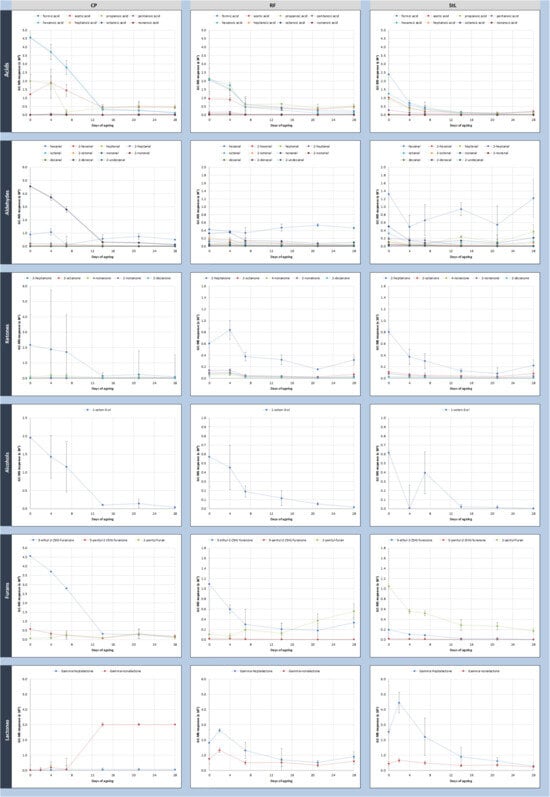
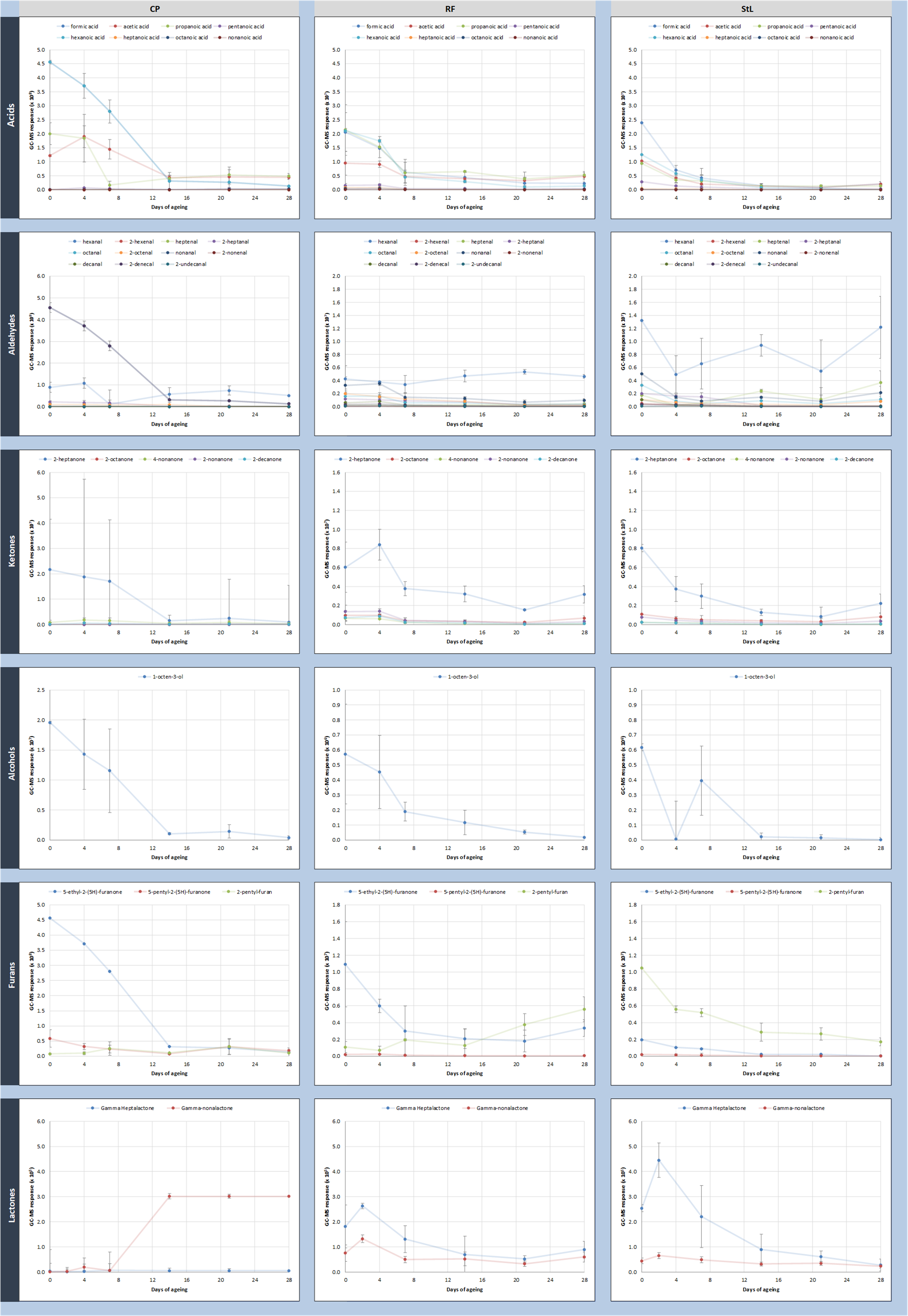
The initial emissions of individual compounds belonging to all groups, as well as their evolution upon ageing, are presented in Figure 1. VOC initial emission profiles differed noticeably among the three linseed oil formulations, demonstrating that manufacturing processes influence both the quantity and character of emissions. Cold-pressed (CP) linseed oil exhibited the highest initial emission levels across all chemical groups. Refined linseed oil and stand oil showed similar initial levels for certain groups, such as furans and alcohols.
Figure 1.
Graphic presentation of the VOC emissions from the pure linseed oil formulations upon ageing. GC-MS on the y-axis response refers to the detector signal intensity (peak height) generated as analytes elute from the gas chromatograph.
Overall, emissions decreased during ageing, reflecting the known drying behaviour of linseed oils [28]. Within each chemical group, and in particular acids, aldehydes, ketones, and furans, compounds could be categorised into three behavioural patterns: (1) those starting at high emission levels, (2) those beginning lower but converging with higher-emission compounds over time, and (3) those remaining consistently low throughout ageing.
For acids, emissions showed a more pronounced decline after the 7th day of ageing for refined linseed oil (RF) and after the 14th day of ageing for cold-pressed linseed oil and stand oil (CP & StL), followed by a more gradual decline and stabilisation (Figure 1). Hexanoic, propanoic, formic, and acetic acids produced the highest overall emissions upon ageing. In cold-pressed (CP) and refined linseed (RF) oils, hexanoic, propanoic, and formic acids exhibited the highest levels during early stages of ageing (0–7 days of ageing), after which their emissions declined to values comparable to those of the other acids. In contrast, in the stand oil (StL), formic acid showed the highest initial emissions (0–7 days), followed by a similar decline to the levels of the remaining acids (Figure 1).
The trend in emissions of aldehydes, ketones, alcohols, and furan compounds differed across linseed oil formulations (Figure 1). Aldehyde emissions remained generally low. In cold-pressed linseed oil, decanal showed the highest level of emissions, followed by hexanal; in refined linseed oil, hexanal and nonanal; and in stand oil, hexanal, followed by octanal, nonanal, and 2-heptenal. For ketones, 2-heptanone had higher relative emissions for all types of linseed oil, while the other compounds remained at low levels.
Among furan compounds, 5-ethyl-2-(5H)-furanone exhibited the highest emissions in cold-pressed linseed oil (CP) and refined linseed oil (RF) upon ageing, whereas 2-pentylfuran was most abundant in stand oil (StL). Lactones displayed comparable behaviour across all linseed oil formulations, with gamma-heptalactone consistently presenting the highest emission levels (Figure 1).
The analysis of volatile compounds emitted from the cold-pressed linseed oil (CP), alkaline refined linseed oil (RF) and stand oil (StL) upon the ageing process did not detect the presence of hydrocarbons, which have been detected in virgin (fresh) cold-pressed linseed oils [30]. Although aliphatic (saturated, monounsaturated, polyunsaturated) and cyclic hydrocarbons are known oxidation products of linseed oil [28], their absence here may indicate that the auto-oxidation process had already progressed during the 40-day pre-ageing storage period at room conditions in the dark. This interpretation aligns with established mechanistic studies on the formation of VOCs during linseed oil oxidation [27]. This was also supported by the ATR-FTIR results [6].
3.1.3. Oil-Impregnated Paper Mock-Ups
GC-MS analysis detected 30 volatile organic compounds, the same compounds identified in pure linseed oil formulations (see Table 2), indicating that linseed oil plays a critical role in the VOC emissions of the oil-impregnated mock-ups upon the ageing process. This can be attributed to the morphology and structure of the system paper-oil. SEM images revealed that after 40 days of air-drying, linseed oil filled the fibre net of the paper, forming a gel-like phase, and created a film on the surface of the mock-ups. Upon ageing and the progression of oxidative polymerisation, the linseed oil began to recede gradually into the fibre network. The oil remained on the fibre surfaces, with the fibres not becoming exposed even at the final stages of ageing. The degree of recess depended on both the paper pulp content and linseed oil formulation [4,5].
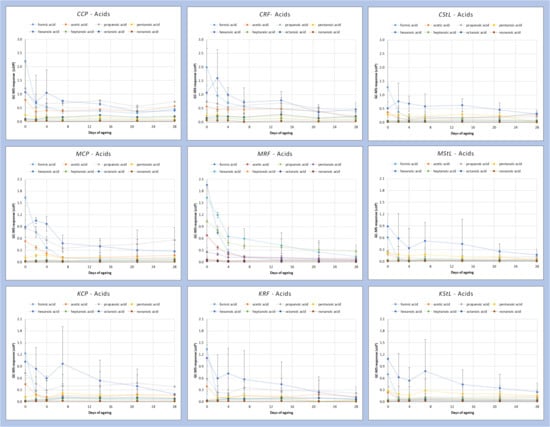
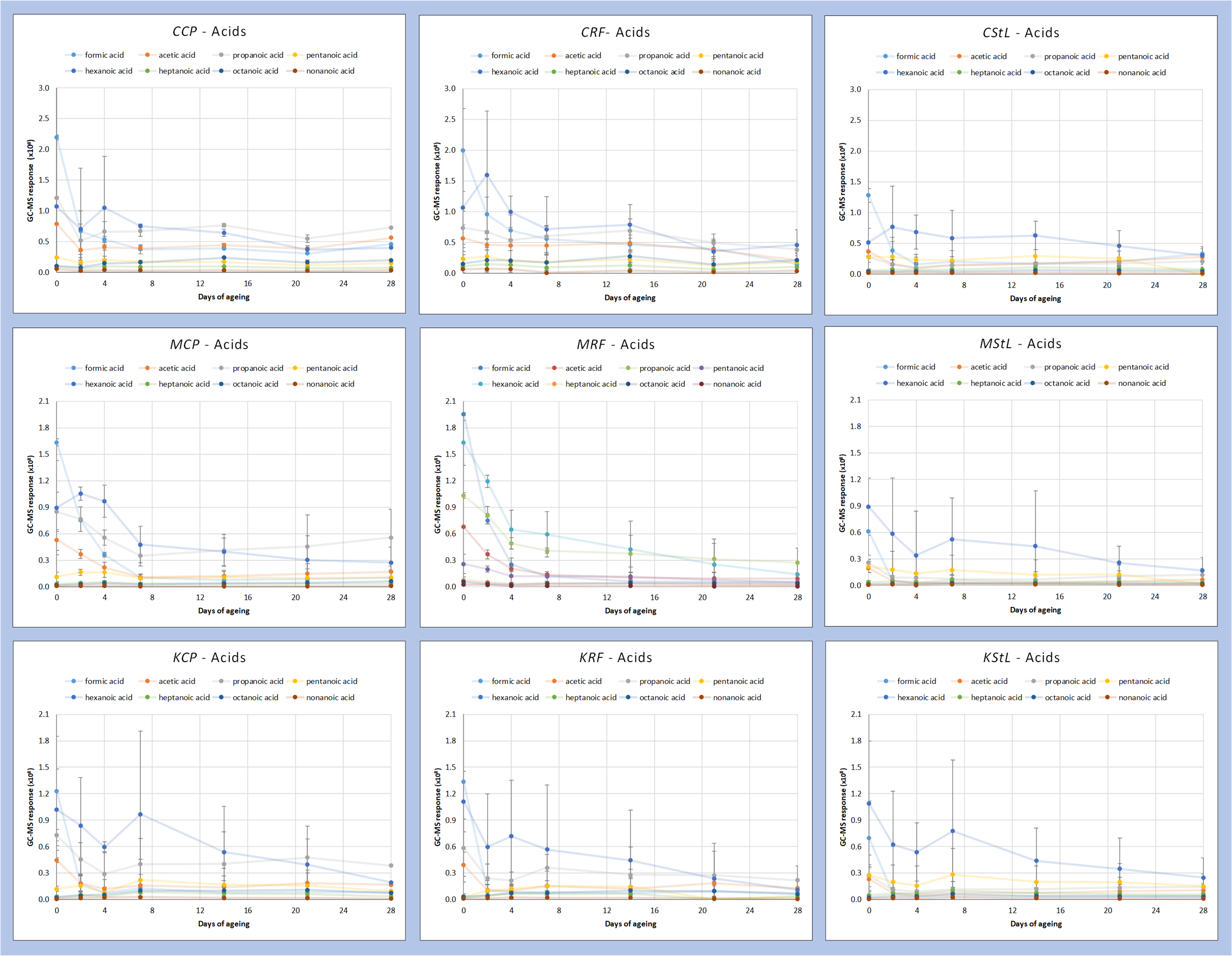
Eight acids were detected: formic, acetic, propanoic, pentanoic, hexanoic, heptanoic, octanoic, and nonanoic acids. At the initial stage of ageing (0, after 40 days of air drying), formic and hexanoic acids exhibited the highest emission levels across all sets of impregnated mock-ups (Figure 2). For mock-ups prepared from the same paper type, those impregnated with cold-pressed and refined linseed oils showed comparable acid emissions, whereas those treated with stand oil exhibited generally lower levels. Overall, cotton-paper mock-ups produced the highest acid emissions.
Figure 2.
Graphic representation of the acids’ emissions of the oil-impregnated mock-up series upon ageing. CCP, CRF, CStL: Cotton paper (C) impregnated with cold pressed linseed oil (CP), refined linseed oil (RF), and stand oil (StL) respectively. MCP, MRF, MStL: Montval paper (M) impregnated with cold pressed linseed oil (CP), refined linseed oil (RF), and stand oil (StL) respectively. KCP, KRF, KStL: Kraft paper (K) impregnated with cold pressed linseed oil (CP), refined linseed oil (RF), and stand oil (StL), respectively.
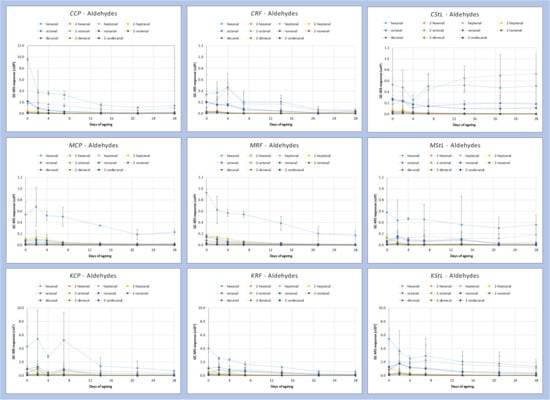
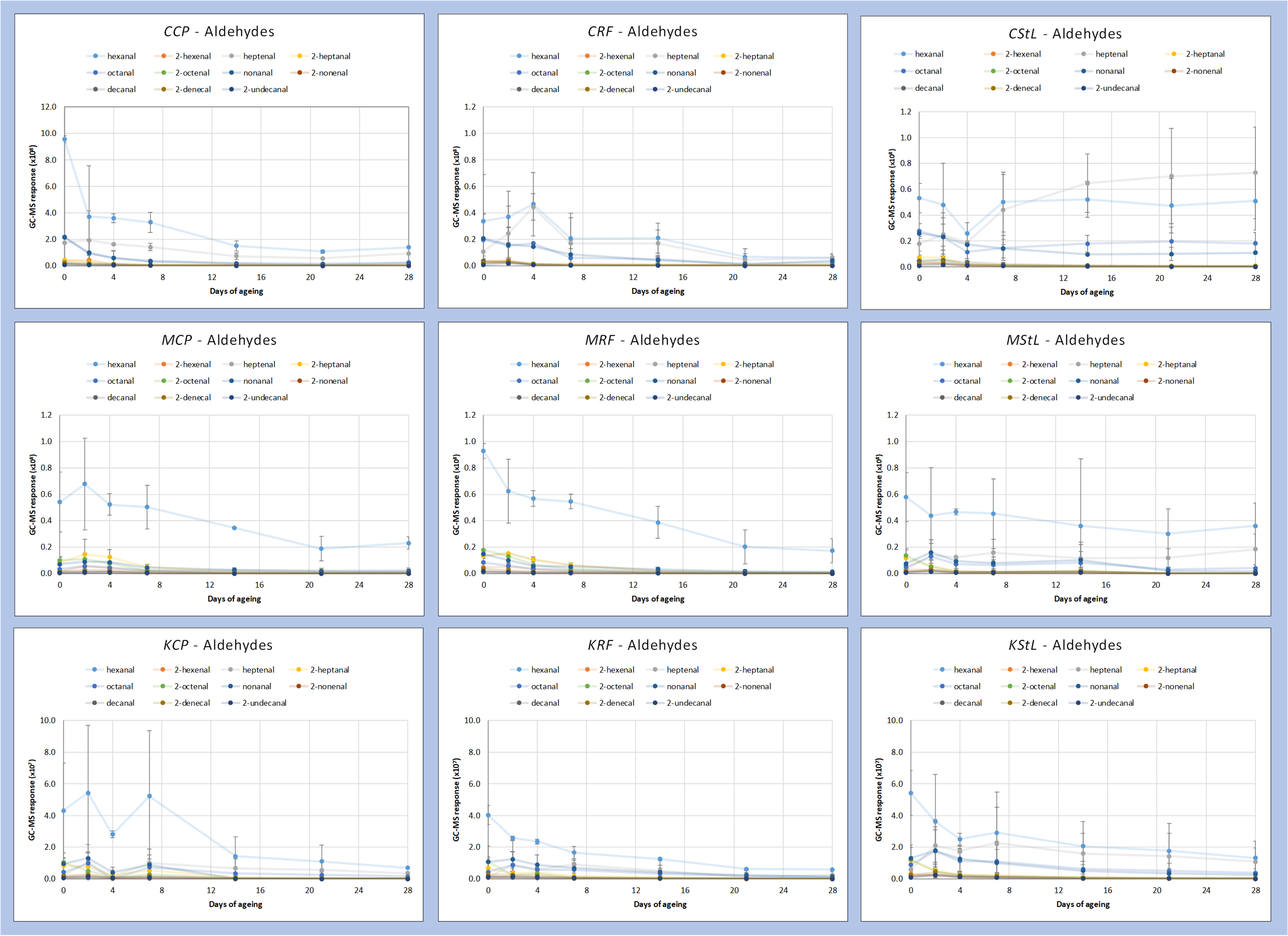
Regarding aldehydes, eleven (11) compounds were identified: hexanal, 2-exanal, 3heptanal, 2-heptenal, octanal, 2-octenal, nonanal, 2-nonenal, decanal, 2-decenal, and 2-undecanale. At the initial ageing stage, hexanal consistently presented the highest emissions across all mock-up sets (Figure 3). The level of hexanal emissions did not differ substantially between paper types or linseed oil formulations. Regarding ketones, five (5) ketones were identified: 2-heptanone, 2-octanone, 2-nonanone, 4-nonanone, and 2-decanone.
Figure 3.
Graphic representation of the aldehydes’ emissions of the oil-impregnated mock-up series upon ageing.
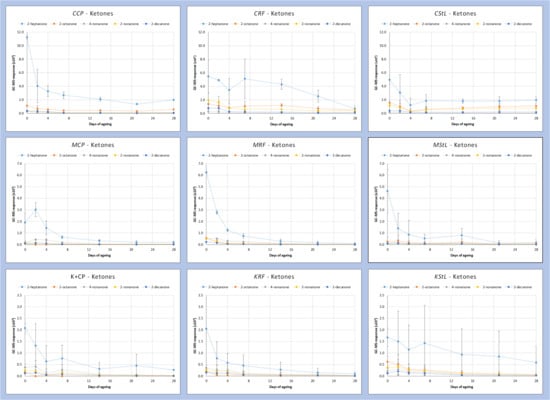
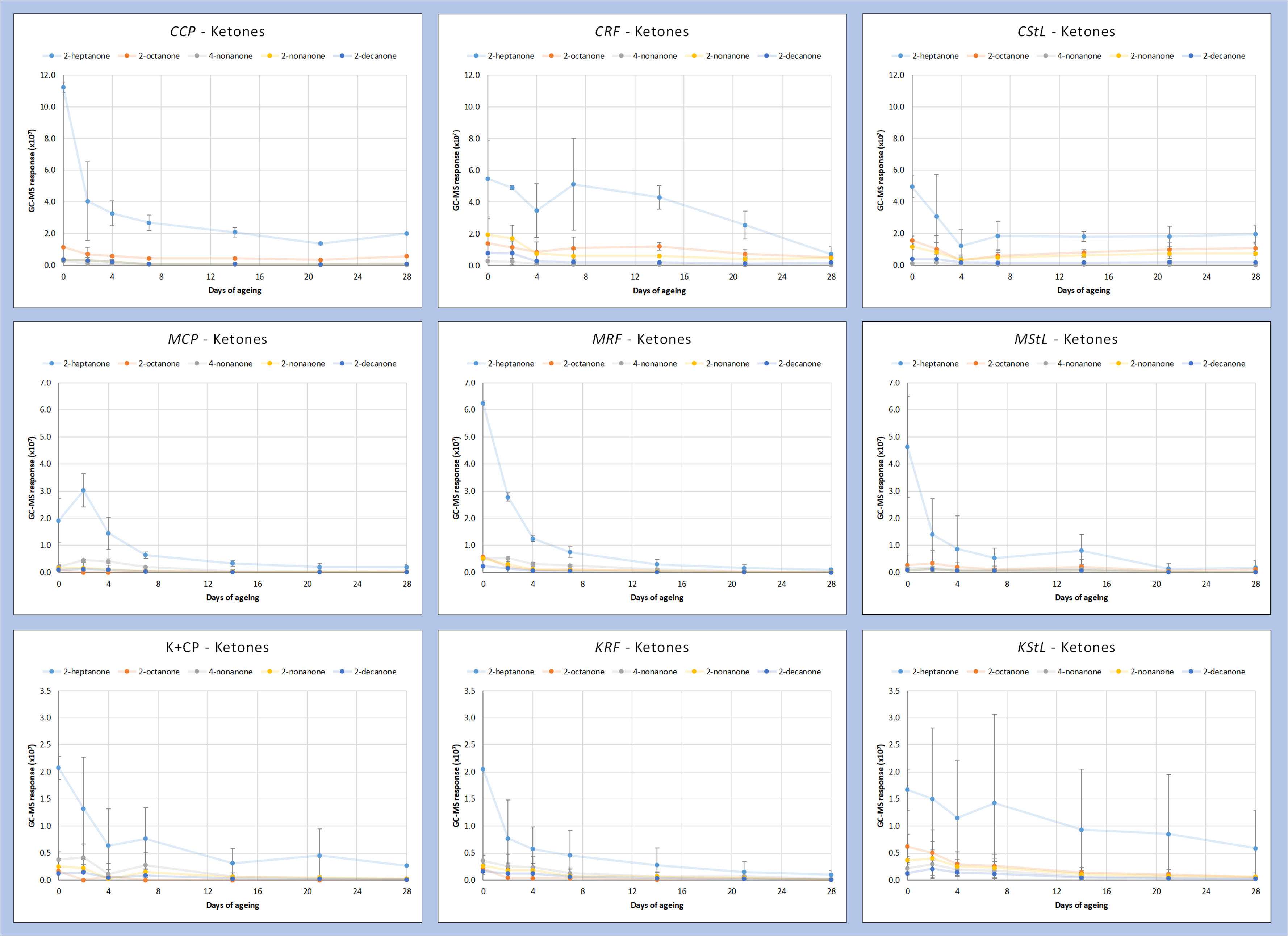
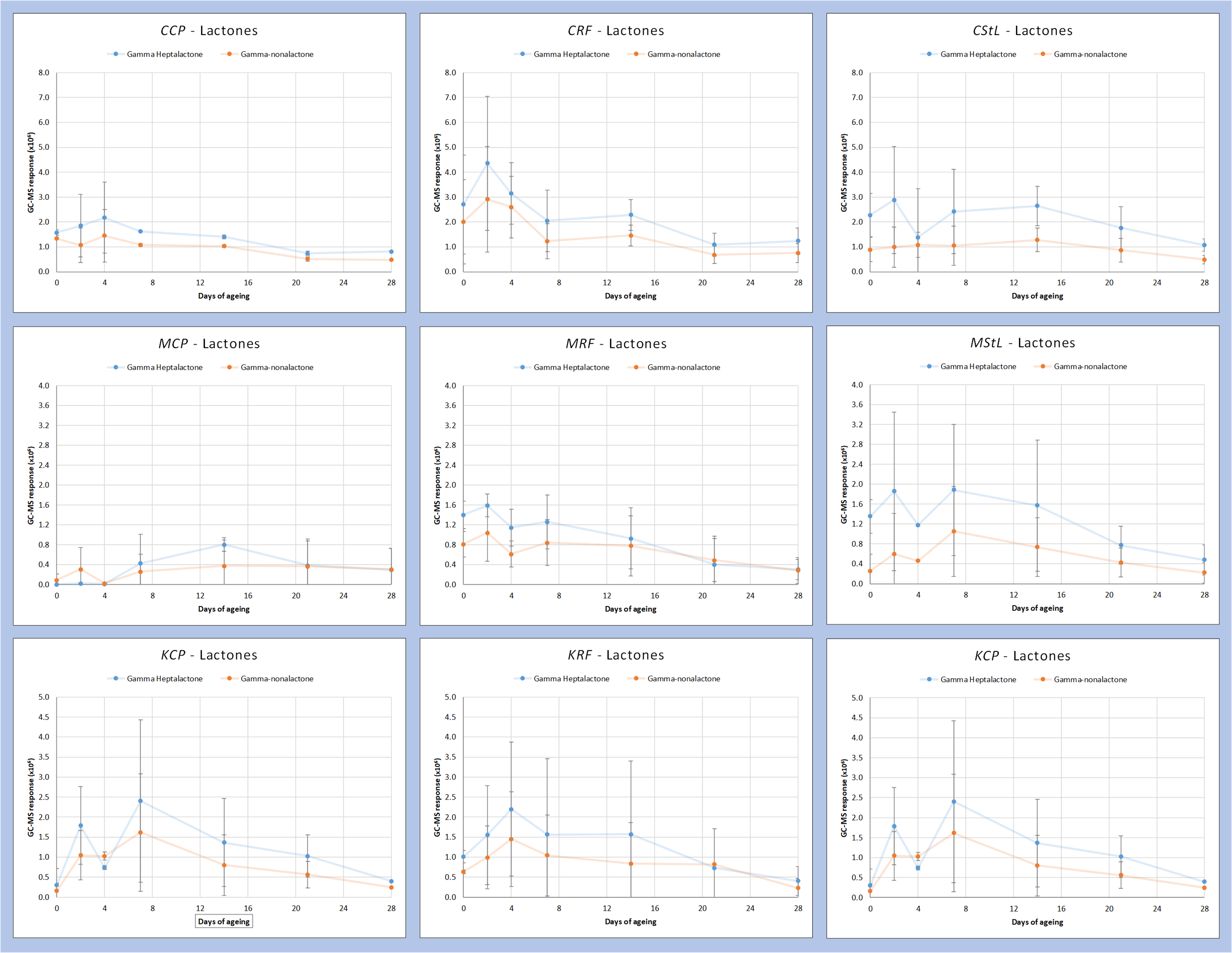
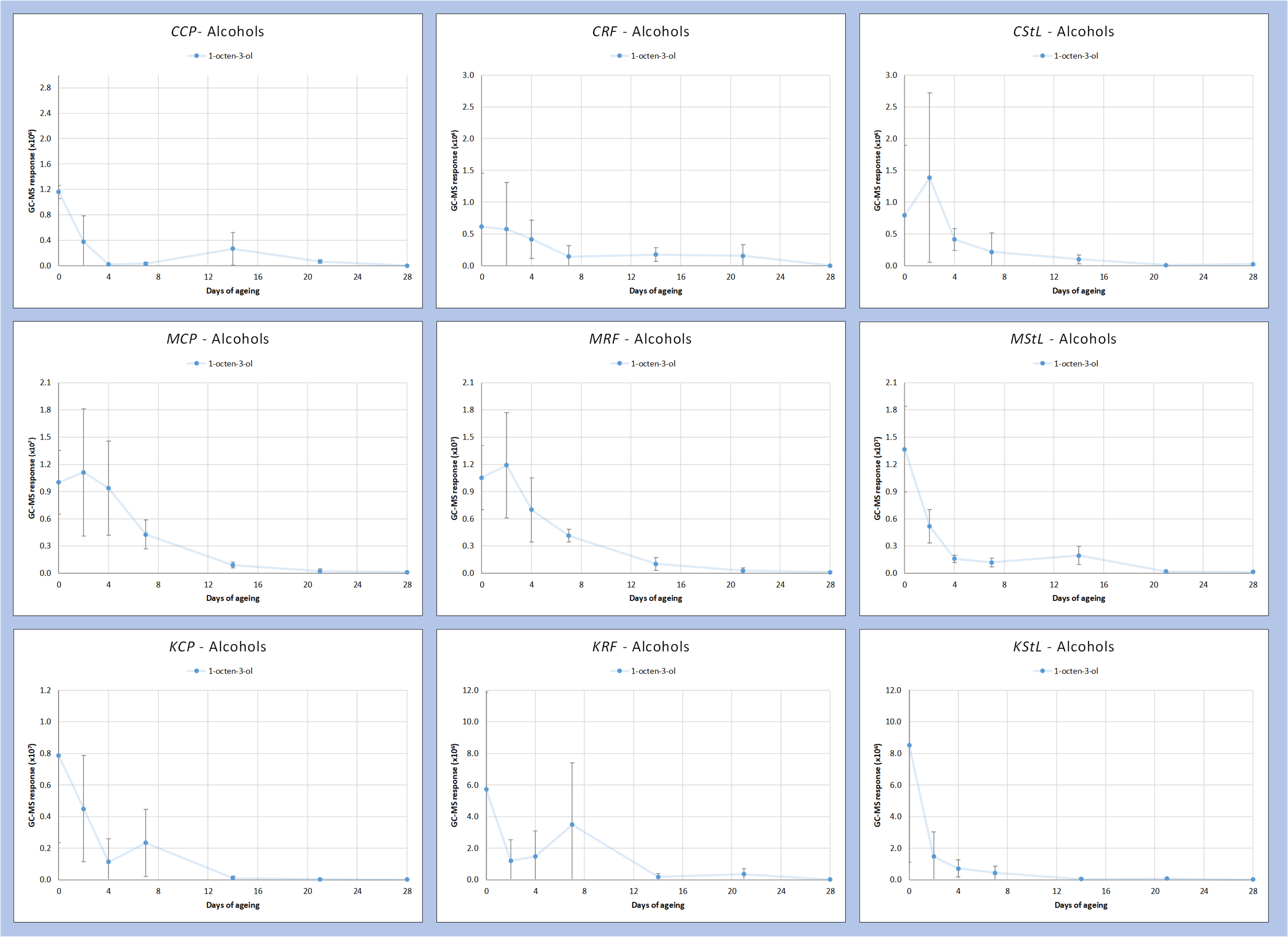
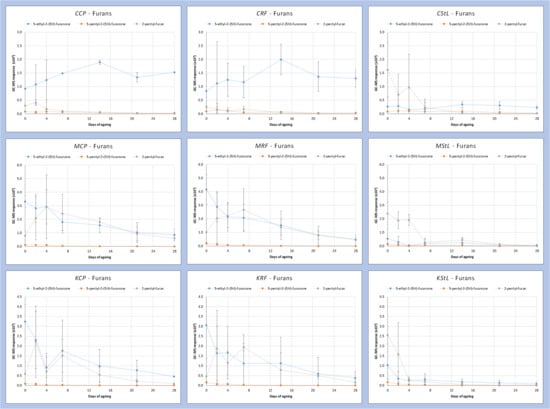
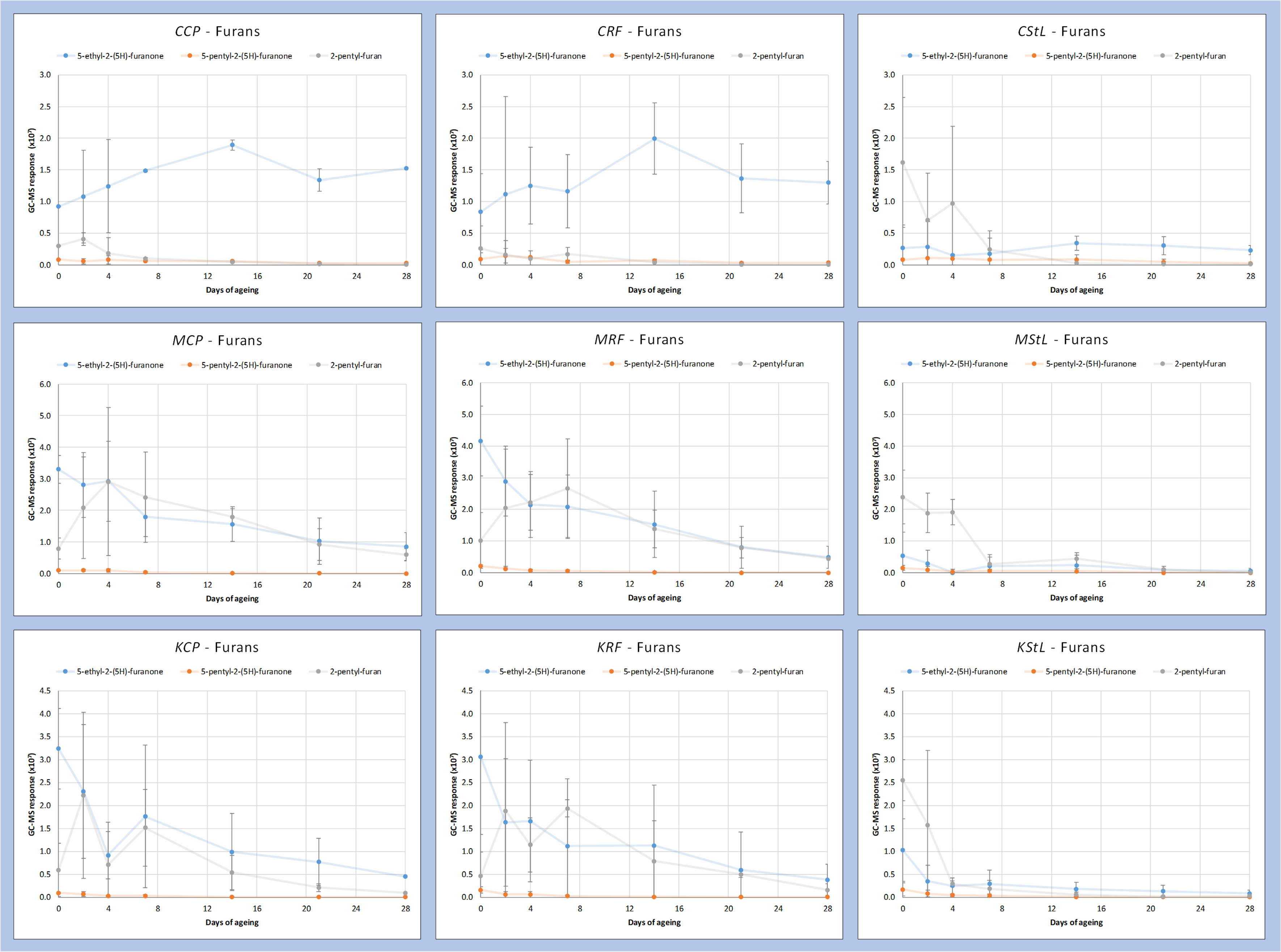
Regarding ketones, five compounds were identified: 2-heptanone, 2-octanone, 2-nonanone, 4-nonanone, and 2-decanone. At the initial stage of ageing, 2-heptanone consistently exhibited the highest emission levels across all sets of oil-impregnated mock-ups, though with distinct differences in level (Figure 4). Two lactones (gamma-heptalactone and gamma-nonalactone) were also detected (Figure 5), along with one alcohol (1-octen-3-ol) (Figure 6) and three furans (2-pentylfuran, 2-pentyl-2-(5H)-furanone, and 5-ethyl-2-(5H)-furanone) (Figure 7). The two lactones’ emissions were at a similar level for each set of mock-ups, at the initial ageing stage, although their absolute levels differed. Among the furan compounds, 5-ethyl-2-(5H)-furanone presented the highest initial emissions for all mock-up series, with variations in magnitude between sets.
Figure 4.
Graphic representation of the ketones’ emissions of the oil-impregnated mock-up series upon ageing.
Figure 5.
Graphic representation of the lactones’ emissions of the oil-impregnated mock-up series upon ageing.
Figure 6.
Graphic representation of the alcohols’ emissions of the oil-impregnated mock-up series upon ageing.
Figure 7.
Graphic representation of the furans’ emissions of the oil-impregnated mock-up series upon ageing.
When comparing the VOCs emitted from plain papers, pure linseed oil formulations, and oil-impregnated mock-ups, only three aldehydes (octanal, nonanal, and decanal) and one furan (2-pentyl-2-(5H)-furanone) were common to all series of mock-ups. These aldehydes have previously been detected in historical books made from linen and cotton rag paper, and their presence has been attributed to oily substances, such as printing inks, rather than the composition of the paper itself [8]. However, the current findings, along with those from other studies [9], challenge these earlier interpretations. Additionally, hydrocarbons, which were present in the plain paper mock-ups, were not detected in any of the oil-impregnated samples.
Several VOCs detected in the oil-impregnated mock-ups have also been identified in relevant studies on linseed oil and paper as independent materials and have been associated both with the oxidation of linseed oil and paper [8,9,10,11,23,27,28,30]. Many of these compounds have been likewise detected in oil-impregnated areas on the paper support—resulting from oil binder absorption—of oil paintings and prints (woodcuts) in the collections of National Gallery of Athens (Greece) [15]. All acids and aldehydes, 5-pentyl-2(5H)-furanone, and hexalactone, identified from the oil-impregnated mock-ups were included in the analysis.
Processing of the VOC emissions yielded interesting observations. The emissions of acids are at a higher level than those of all other compounds belonging to other chemical groups, at all stages of ageing. This confirms the findings of previous studies on the sum-up emissions of the chemical groups [4,5]. Most of the acids showed a common trend of a gradual decline and stabilisation after the 7th or 14th day of ageing (Figure 3). Formic and hexanoic acids exhibited the most intense variations in emissions during ageing, while formic, propanoic, hexanoic, and acetic acids presented comparatively higher relative emissions in all mock-up series (Figure 2). This observation also applies for VOC emissions of the same compounds in pure linseed oil formulations.
The level of emissions of aldehydes was significantly lower than those for acids across all series of mock-ups, at all stages of ageing, as it has been indicated by the sum-up emissions [4,5]. Aldehydes emission patterns varied between paper types and oil formulations upon ageing, with hexanal consistently showing the highest emission levels and strongest ageing-related changes—mirroring the behaviour observed in the pure linseed oil samples (Figure 3).
Ketones’ emissions were at lower levels than those of aldehydes. Ketones’ emissions showed a similar trend upon ageing, with small variations, for most sets of mock-ups (Figure 4). Comparatively, 2-heptanone emissions were at a higher level, with distinct variations across all series of mock-ups, upon ageing. Lactones, furans and the alcohol exhibited a distinct trend of emissions for each set of mock-ups upon ageing, at a significantly lower level than the compounds of the other chemical groups (Figure 5, Figure 6 and Figure 7).
For all VOC emissions, the trend was not comparable with those of the pure linseed oil formulations used for the impregnation (Figure 1). The compounds’ emissions vary between the sets of mock-ups, a fact that could be attributed both to the linseed oil formulations and the paper pulp content.
It is crucial to mention that FTIR analysis, published previously [6], has revealed distinct variations in the progression of chemical changes among the oil-impregnated mock-ups made of different paper types, indicating that the composition of the paper pulp influences the underlying reaction pathways. In particular, the results indicated a potential interaction between the alkaline buffer and the linseed oil formulations. FTIR data further showed that the linseed oil formulations affected both the rate and the extent of chemical changes throughout ageing, reflecting differences introduced during the oil-manufacturing processes. Stand oil induced comparatively limited chemical changes in the impregnated mock-ups, and these developed at a slower rate. In contrast, cold-pressed linseed oil produced the most intense changes, progressing gradually throughout the ageing process. The behaviour of the mock-ups impregnated with alkaline-refined linseed oil was broadly similar to that of those treated with cold-pressed linseed oil; however, the progression of changes was less consistent and more intense at the final stages of ageing [6]. Consequently, the evolution of these chemical changes was not uniform across all mock-up series (Figures S1–S3).
These findings were also reflected in the colourimetry, opacity, and tensile strength results, as well as in the SEM images, which clearly demonstrated that recess of the oil film into the fibre network occurred inconsistently among the various mock-up sets [4,5]. Therefore, the irregular fluctuations in the VOC emissions values of the oil-impregnated mock-ups could also be attributed to these underlying changes.
3.2. PCA Analysis
Analysis showed that the first five principal components had eigenvalues greater than 1 (see Table S10). The first two principal components, Factors 1 and 2, exhibited the highest eigenvalues −12.77 and 7.04, respectively, and together accounted for 66.03% of the total variance (Figure S4 and Table S10). Although this value falls below the commonly accepted threshold of 70%, it was considered sufficiently representative given the large number of variables included.
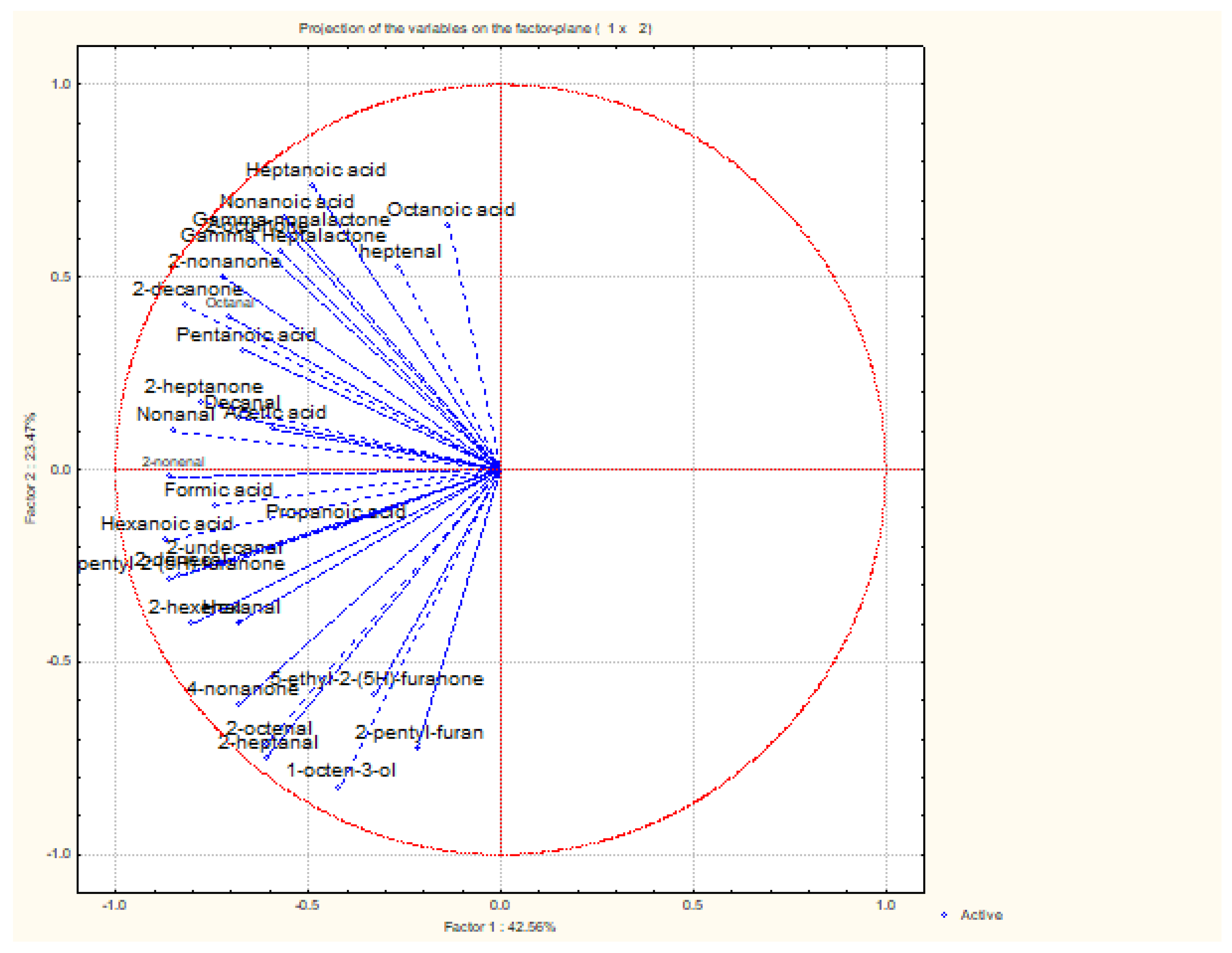
Factor 1 exhibited strong negative associations (between 0.7 and 0.85) with compounds such as 5-pentyl-2-(5H)-furanone, 2-heptanone, 2-nonanone, 2-decanone, 2-hexenal, octanal, nonanal, 2-nonenal, 2-decenal, 2-undecanal, formic acid, and hexanoic acid (Table S11). It also showed medium negative associations (between 0.6 and 0.7) with 2-octanone, 4-nonanone, hexanal, 2-heptenal, 2-octenal, decanal, acetic acid, and pentanoic acid (Table S11). Overall, Factor 1 represents the general abundance of the emitted compounds.
Factor 2 exhibited strong and medium positive associations with 2-octanone, heptanoic acid, octanoic acid, nonanoic acid, and gamma nonalactone, indicating that it is predominantly acid-dominated (Table S2). Conversely, it showed strong and medium negative associations with 2-pentyl-furan, 2-heptenal, 2-octenal, 4-nonanone, and 1-octen-3-ol, highlighting a distinct contrast in the emitted chemical compounds (Table S11).
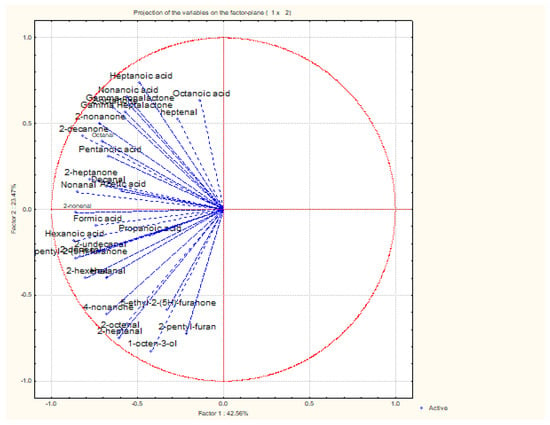
The projection of variables on the factor plane demonstrated that all volatile organic compounds (VOCs) were positioned in the left half plane of the factor plot (Figure 8). For the left, upper quadrant (quadrant II), the volatile compounds present higher overall concentrations, with octanal, nonanal, 2-heptanone, 2-nonanone, 2-decanone, pentanoic, heptanoic, and nonanoic acids having more significant contributions. For the left, lower quadrant (quadrant III), formic acid, hexanoic acid, 2-hexanal, 4-nonanone, 5-pentyl-2-(5H)-furanone, 2-nonenal, 2-undecanal, and 2-decenal have the most significant contributions. The variables in the quadrant II, as well as those in the quadrant III, exhibited a strong correlation (Table S11).
Figure 8.
The projection of variables on the factor plane for the first and second principal components.
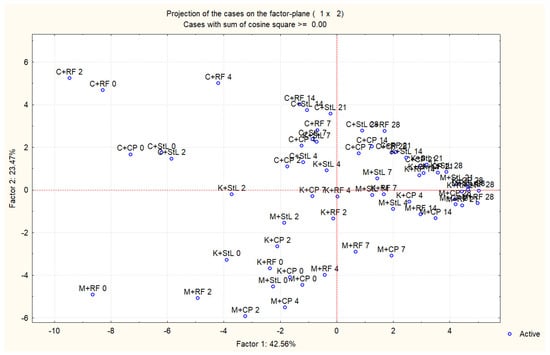
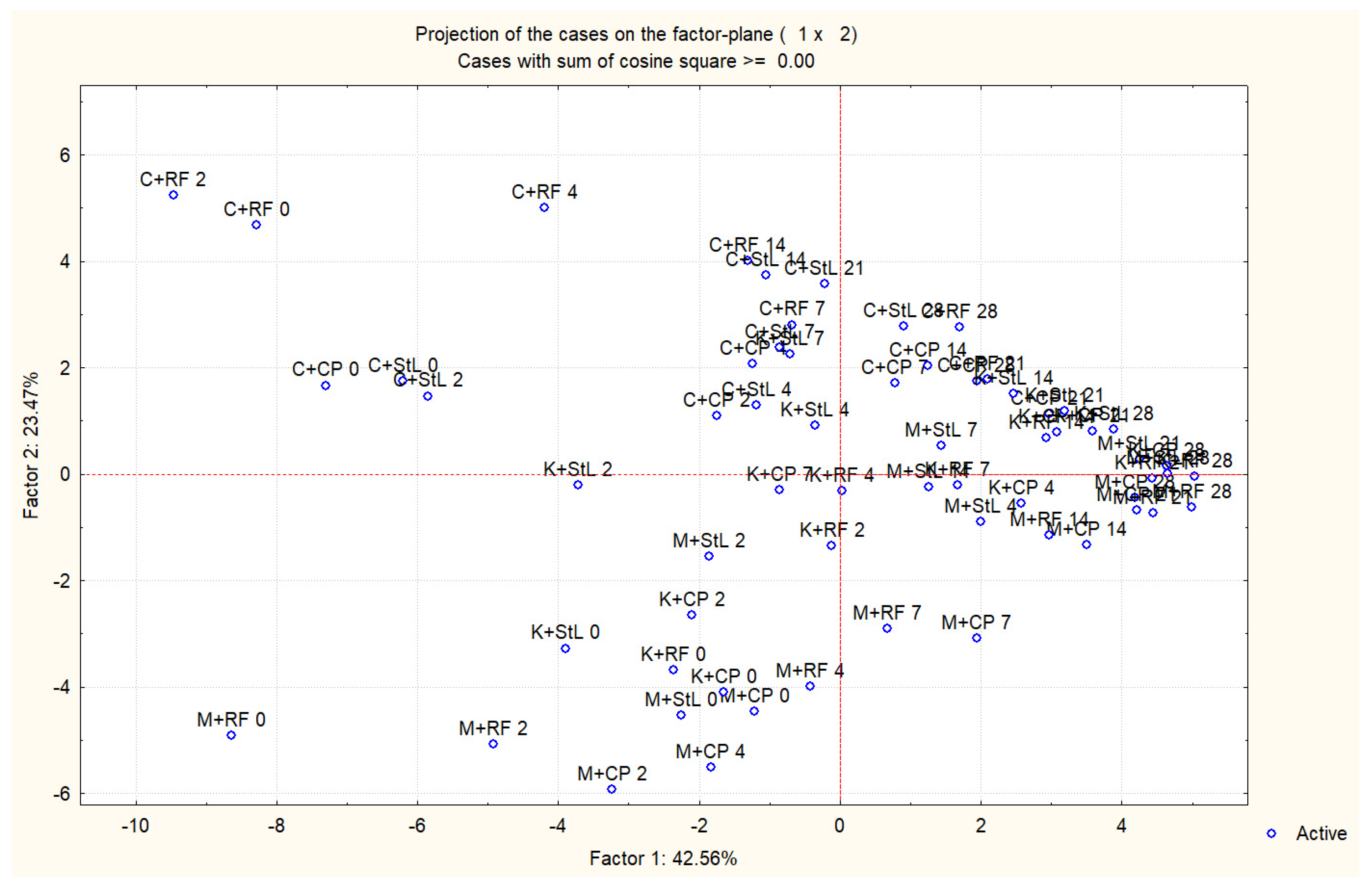
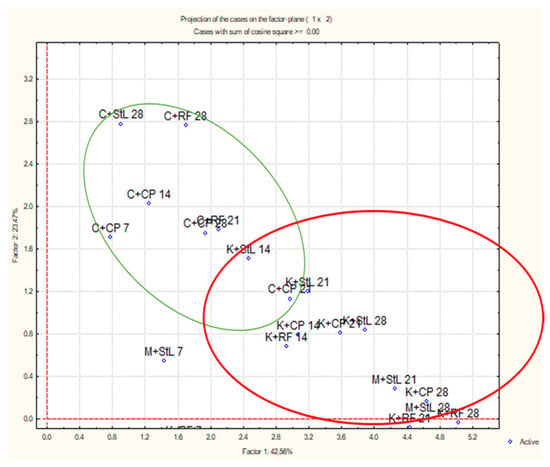
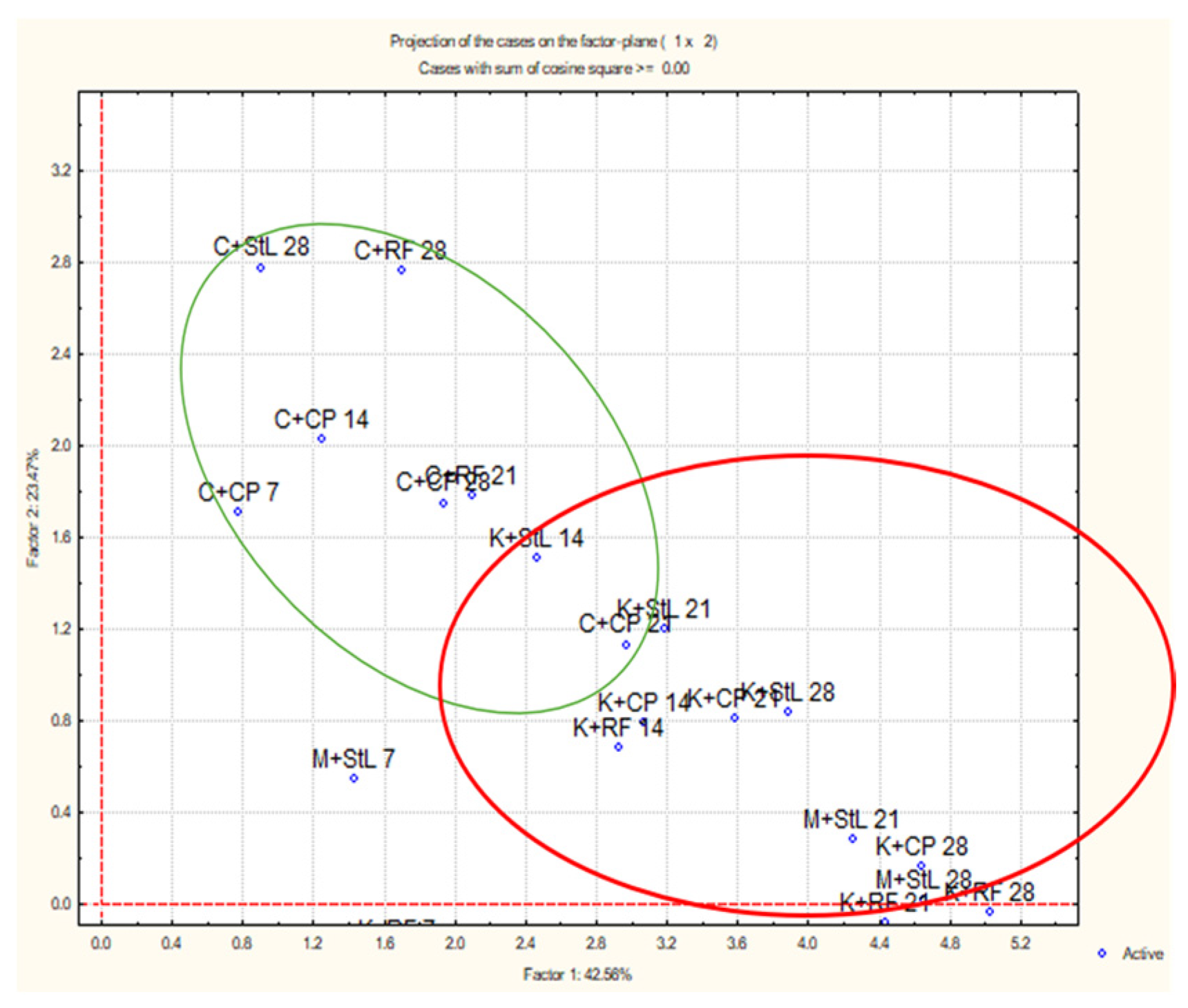
In the cases score plot, each labelled point represents a specific set of oil-impregnated mock-ups at a given ageing stage (Table 3 and Figure 9). Cases located in quadrant II correspond primarily to Cotton mock-ups during the early stages of ageing (0–14 days). In quadrant IV, the dispersed cases represent the Montval and Kraft mock-ups at the initial ageing stages (0–4 days). The cases associated with Montval and Kraft mock-ups aged between 4 and 7 days were located within quadrant IV. Only impregnated Kraft mock-ups with stand oil at the 4th and 7th day of ageing are located in the quadrant II. In quadrant I, the dispersed cases correspond to the final ageing stages across all mock-up series.
Table 3.
Numbering of mock-ups in regard to materials and time of ageing.
Figure 9.
Projection of the cases on the factor plane.
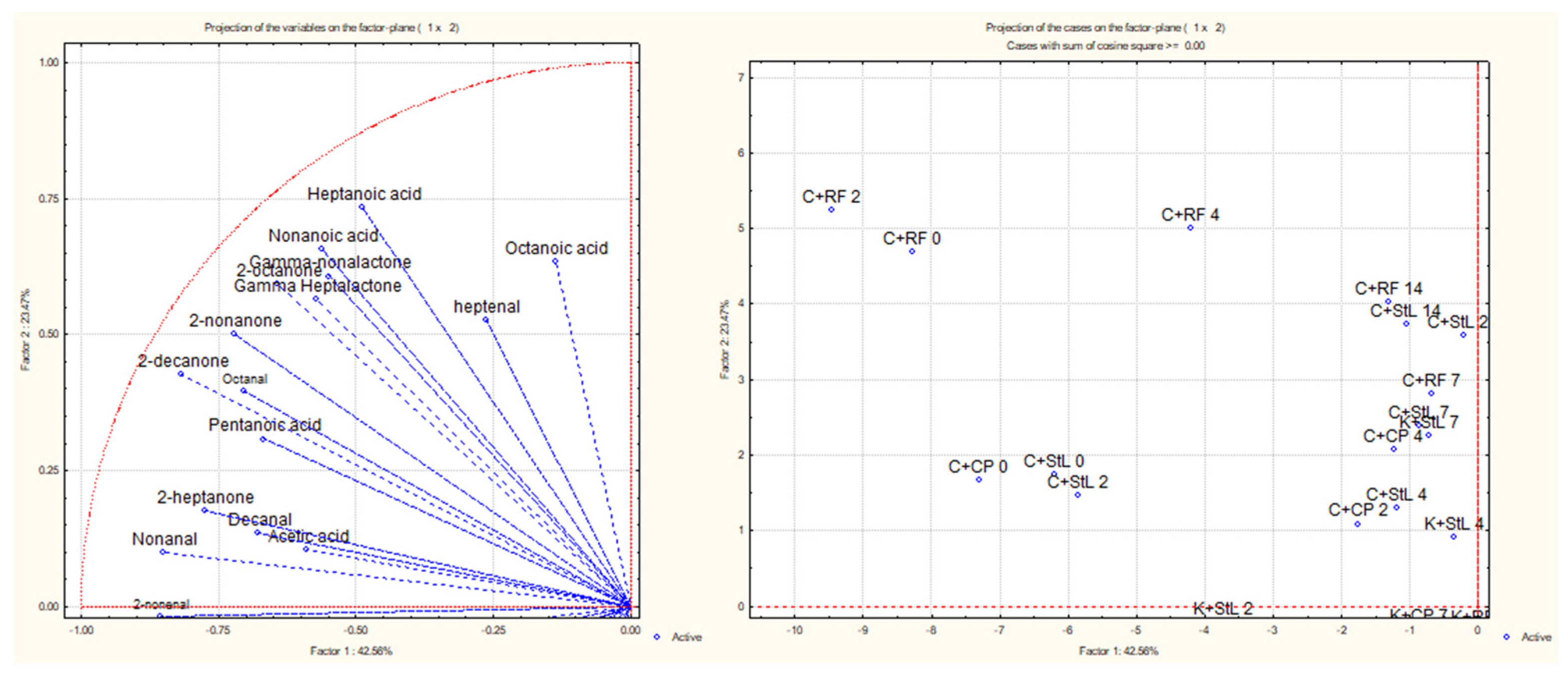
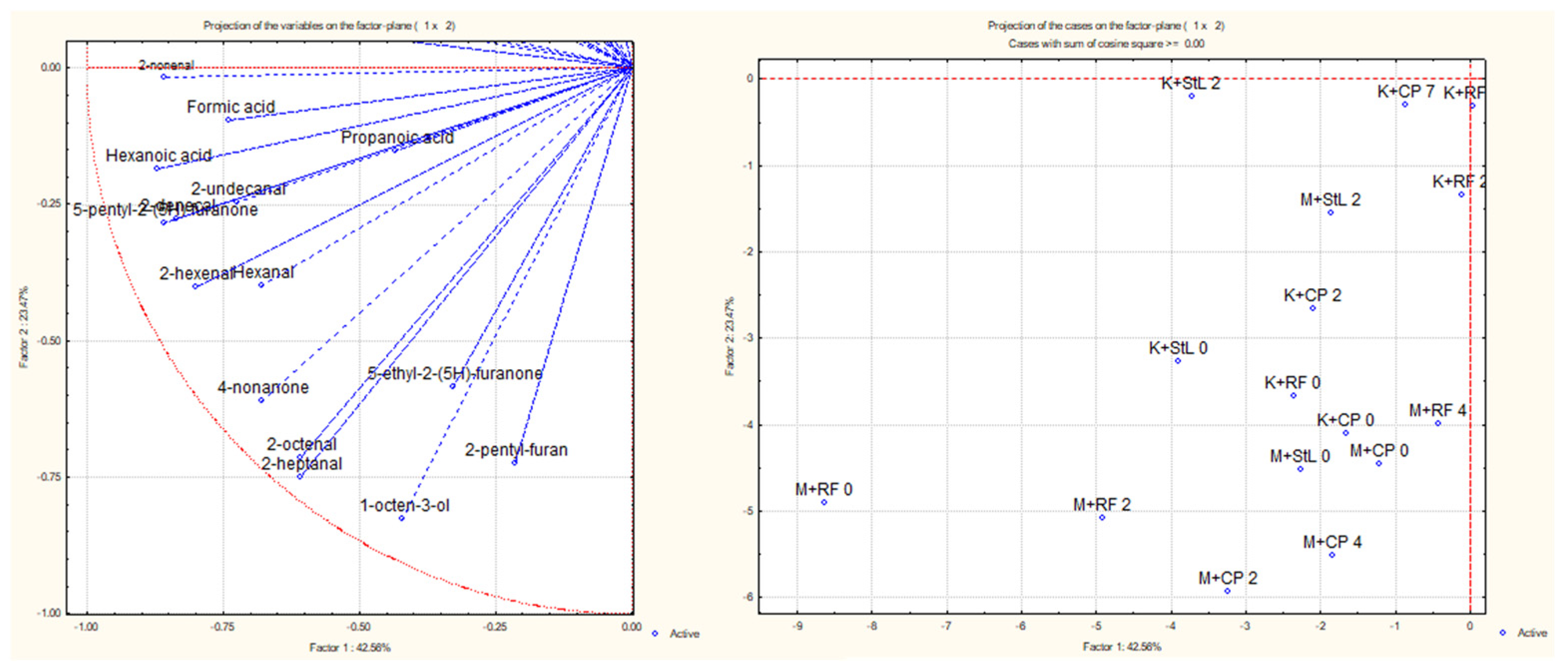
Comparing the projection of the variables with the location of the cases across the quadrants provides useful insights into the development of emissions during ageing (see biblot in Figure S5). It highlighted significant differences in the VOC emissions between the Cotton mock-ups and those of Montval and Kraft ones in the early stages of ageing (0–4 days of ageing) as their cases were located in different quadrants of the factor plane, II & III, respectively (Figure 10 and Figure 11). However, interrelations were observed between the Cotton mock-up emissions at the stages 0–14 days of ageing and those of Montval and Kraft mock-ups at 4–14 days of ageing were located at the quadrants II and IV, respectively. This indicates that the pulp composition plays a significant role in shaping the development of VOC emissions, in agreement with the findings of the FTIR analysis [6].
Figure 10.
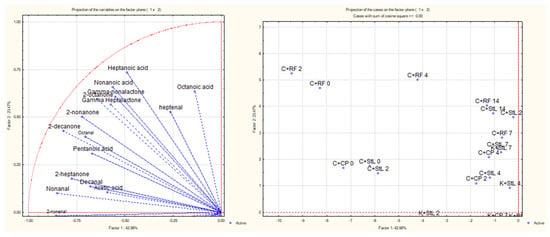
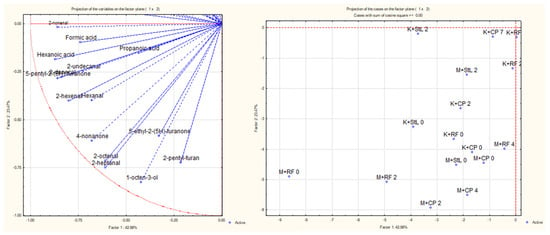
The projection of the variables (left) and the cases (right) of the factor plane, detail of quadrant II.
Figure 11.
The projection of the variables (left) and the cases (right) of the factor plane, detail of quadrant III.
In addition, variations in the emission between the sets of mock-ups impregnated with different linseed oil formulations were evident. The comparatively limited chemical changes in the mock-ups impregnated with stand oil over time were reflected in their positions within the quadrants, which can be attributed to the pre-polymerisation process. Most cases corresponding to the final stages of ageing, across all mock-up sets, were located in quadrant I, reflecting converging VOC emission profiles. This is consistent with the evolution of oxidative polymerisation and degradation processes, where VOCs are produced at the early stages and then gradually reduced [24,25].
In the early stages of ageing (0–2 days), Cotton mock-ups impregnated with cold-pressed and stand oil were primarily characterised by higher relative emissions of nonanal, decanal, and 2-heptanone, while those impregnated with refined linseed oil showed higher relative emissions of octanal, 2-decanone, and 2-nonanone (Figure 10). Mock-ups aged for 4 to 14 days were mostly characterised by acid emissions, such as pentanoic, heptanoic, octanoic, and nonanoic acids (Figure 10). Overall, acid emissions decreased as ageing progressed.
The Montval and Kraft mock-ups impregnated with all linseed oil formulations, at the early stages of ageing (0–4), were characterised by higher relative emissions of 2-nonenal, 2-octenal, 2-heptenal, 1-octen-3-ol, 5-penty-furan and 5 ethyl-2-(5H)-furanone. The progression of ageing is indicated by the reduction in the VOC emissions (Figure 11).
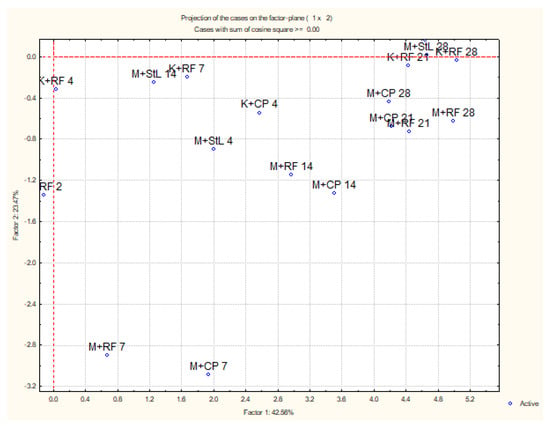
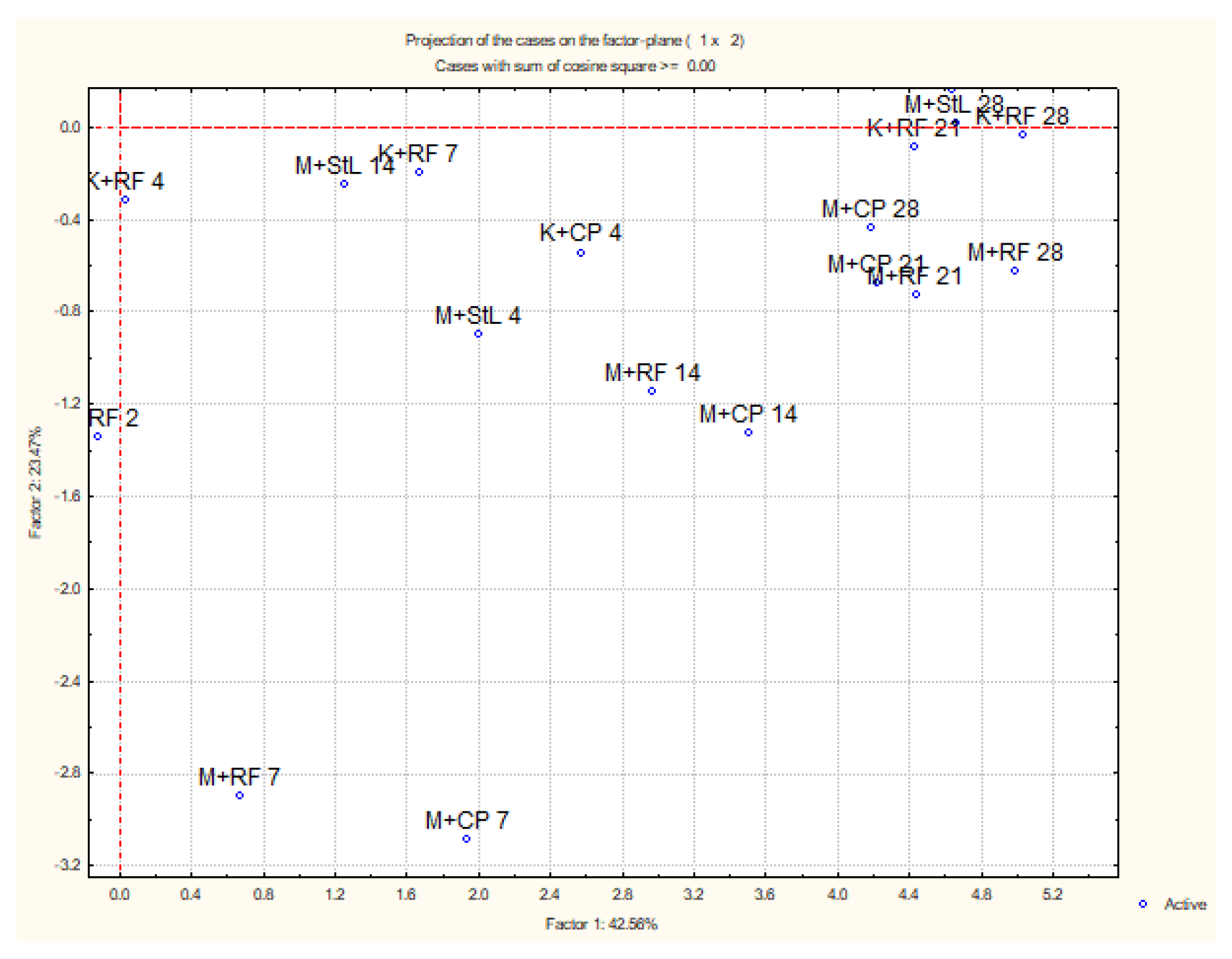
Upon the progress of ageing, the impregnated Montval and Kraft mock-ups with all linseed oil formulations were characterised by low concentration of the VOCs emitted from the Cotton impregnated mock-ups at the early stages of ageing (0–14 days of ageing). Initially, by low heptanoic and nonanoic emissions, and as the ageing progresses by nonanal, decanal, and 2-heptanone emissions (Figure 12).
Figure 12.
The projection of the cases of the factor plane, detail of quadrant IV.
The majority of the cases that responded to the final stages of ageing, across all series of mock-ups, were located in quadrant I and characterised by low overall volatile concentrations (Figure 13). The mock-ups were arranged in two distinct clusters, slightly overlapping, as they were dispersed in different areas of the quadrant.
Figure 13.
The projection of the cases of the factor plane, detail of quadrant I. The cluster of the oil-impregnated Cotton mock-ups is noted with green line, while the cluster of the oil-impregnated Montval and Kraft mock-ups with red line.
The Cotton ones formulated one of the clusters, and they were characterised by low emissions of the VOC variables projected for the Montval and Kraft impregnated mock-ups at the early stages of ageing (0–4 days of ageing), such as 2-nonenal, 2-octenal, 2-heptenal, 1-octen-3-ol, 5-penty-furan and 5 ethyl-2-(5H)-furanone. Montval and Kraft mock-ups formulated a second cluster, and they were characterised by low emissions of formic, propanoic and hexanoic acids (Figure 13).
Overall, although the evolution of the VOC emission varies between those Cotton, and Montval and Kraft mock-ups upon ageing, there was an interrelation indicated by the dispersion of the cases in the quadrants of the plane. The results confirmed that the presence of alkaline buffer influences the development of the oxidative polymerisation process, a fact which has been confirmed by the ATR-FTIR analysis [6], and the VOC emissions, respectively. There were differences in the evolution of the VOC emissions when mock-ups were impregnated with the different linseed oil formulations, also corroborating the FTIR findings [6].
3.3. Ratio of Emissions—Indicators of Deterioration
The processing of the results was also aimed at identifying quantifiable indicators that could be used to distinguish between stages of ageing. The study of similarities and differences in the emission trends of the various compounds during the ageing process led to the calculation of the ratios of emissions between the compounds belonging to the same chemical group, to investigate specific trends.
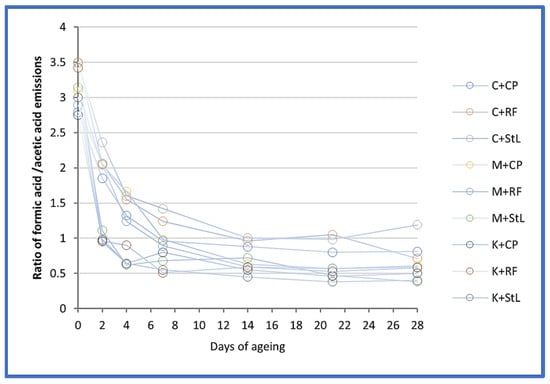
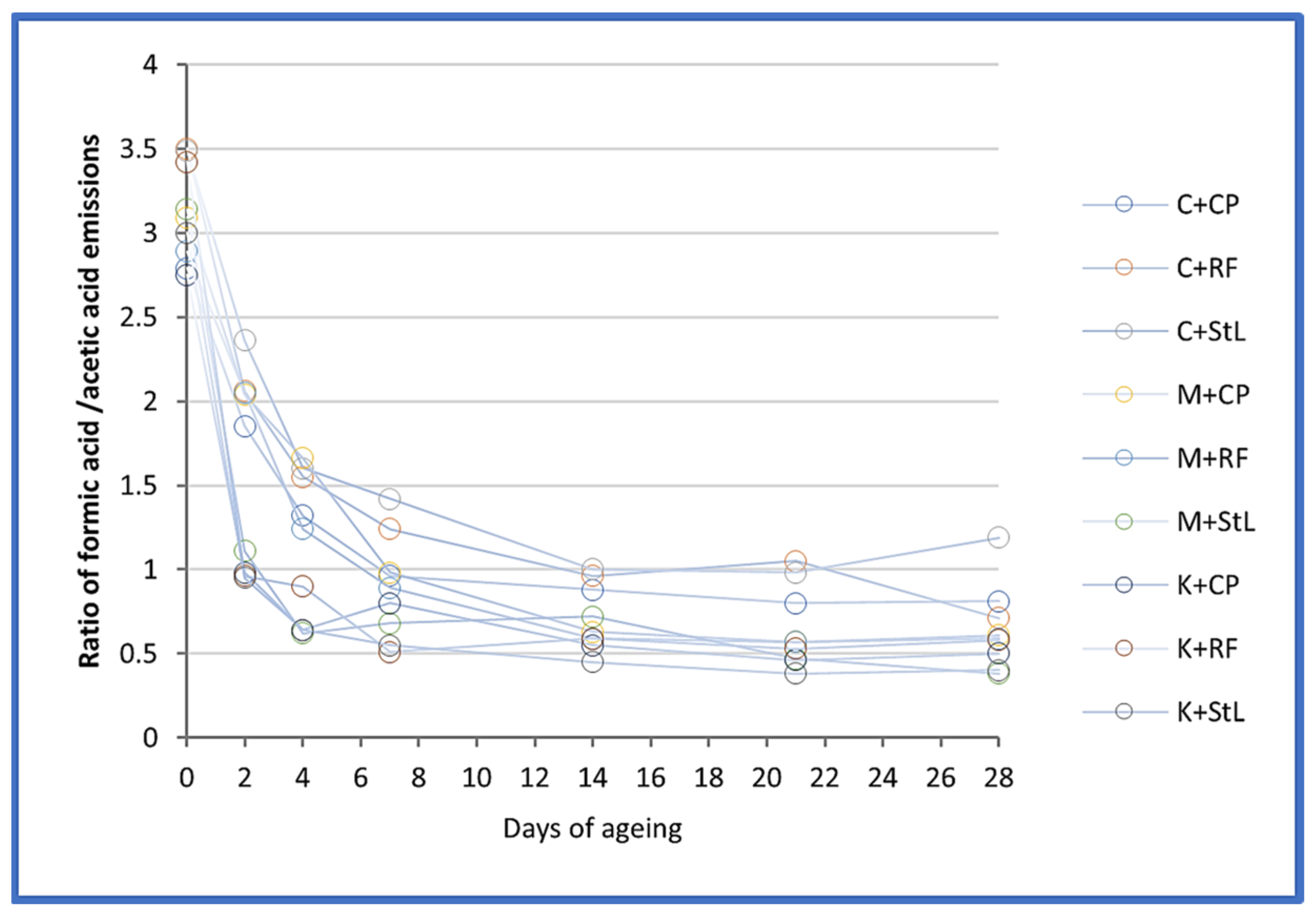
Emphasis was placed on acids, aldehydes, and ketones due to their higher relative emissions. Regarding acids, the ratio of formic acid to acetic acid emissions upon the ageing process exhibited a consistent trend across all series of impregnated samples (Figure 14). Specifically, there was a gradual decrease in values until the final stages of ageing.
Figure 14.
Graphic representation of the ratio of the formic emissions to those of acetic acid at the several stages of ageing.
On average, the ratio values started at 3.50 and decreased to 0.96 for impregnated Cotton (C) paper samples, while it dropped to 0.51 for the lignocellulosic papers with alkaline reserve, Montval and Kraft (M and K), after 7 days of ageing. In the final stages of ageing, the value falls below 1 for the impregnated Cotton (C) paper mock-ups, and to 0.38 for Montval and Kraft ones (Table 4). Considering the associated error margins, the general trends observed for all ratio measurements were not substantially altered.
Table 4.
Ratio of the emissions of the formic to those of acetic acid at the several stages of ageing.
Regarding aldehydes, the emission ratios of certain compounds exhibited specific trends and values that could indicate the stages of ageing. The ratios of 2-heptenal/hexanal, nonanal/hexanal, and decanal/hexanal exhibited this specific behaviour. Nevertheless, the values were very low (<0.2) and probably cannot be considered reliable within the margin of experimental error. Indicatively, the values for the ratio of 2-heptenal emissions to hexanal emissions are given in Table 5.
Table 5.
Ratio of the emissions of the 2-heptenal to those of hexanal at the several stages of ageing.
Calculating ratios between the sum-up emissions of the chemical groups did not exhibit a specific trend and relevant markers.
4. Conclusions
This study provides the first integrated comparison of VOCs emitted from plain papers, pure linseed oil formulations, and oil-impregnated paper mock-ups subjected to controlled artificial ageing. Although oil-impregnated mock-ups emitted the same compounds found in pure linseed oil formulations, their evolution differed substantially, reflecting interactions between oil and paper substrates.
Statistical analysis (PCA) confirmed that VOC emissions vary systematically with both material composition and ageing stage. These patterns enabled the identification of compounds most indicative of early and advanced ageing. Overall, the results demonstrate that both paper composition and linseed oil formulation critically shape the development, abundance, and chemical character of VOC emissions throughout ageing.
Processing of the results demonstrated that the ratio of formic to acetic acid could serve as a potential indicator, pending further validation, or a quantifiable metric for assessing the stage of deterioration across all mock-up series. This ratio constantly showed a declining trend with ageing in all series of oil-impregnated mock-ups.
The findings establish a foundation for non-destructive, VOC-based condition assessment of oil-media artworks on paper.
Supplementary Materials
The data derived from PCA are included in the Supportive file, which can be downloaded at https://www.mdpi.com/article/10.3390/heritage9050201/s1. Figure S1: FTIR transmittance spectra of Cotton (C) paper samples: (a) pure, (b) impregnated with cold-pressed linseed oil, (c) impregnated with refined linseed oil (RF), and (d) impregnated with stand oil, presented in an overlaid arrangement across all ageing stages; Figure S2: FTIR transmittance spectra of Montval (M) paper samples: (a) pure, (b) impregnated with cold-pressed linseed oil, (c) impregnated with refined linseed oil (RF), and (d) impregnated with stand oil, presented in an overlaid arrangement across all ageing stages; Figure S3: FTIR transmittance spectra of Kraft (K) paper samples: (a) pure, (b) impregnated with cold-pressed linseed oil, (c) impregnated with refined linseed oil (RF), and (d) impregnated with stand oil, presented in an overlaid arrangement across all ageing stages; Figure S4: The scree plot; Figure S5: The biplot; Table S1: SEM/EDX: Elemental analysis and EDX mapping of Cotton (C) paper, before ageing; Table S2: SEM/EDX: Elemental analysis and EDX mapping of the Montval (M) paper, before ageing; Table S3: SEM/EDX: Elemental analysis and EDX mapping of Kraft (K) paper, before ageing; Table S4: Weight measurements of pure linseed oil mock-ups before ageing; Table S5: Weight measurements of pure paper mock-ups before ageing; Table S6: Weight measurements of the Cotton paper, oil-impregnated mock-ups, before ageing; Table S7: Weight measurements of the Montval paper, oil-impregnated mock-ups, before ageing; Table S8: Weight measurements of the Kraft paper, oil-impregnated mock-ups, before ageing; Table S9: Compounds emitted by all sets of mock-ups; Table S10: Eigenvalues of correlation matrix, and related statistics; Table S11: Factor coordinates of the variables, based on correlations (only the first 10 factors are presented); Table S12: Correlations. Marked correlations are significant at p < 0.05000, N = 63.
Author Contributions
Conceptualisation, P.B.; methodology, P.B. and D.T.; software, P.B.; formal analysis, P.B.; investigation, P.B.; data curation, D.T., P.B.; writing—original draft preparation, P.B.; writing—review and editing, P.B.; visualisation, P.B.; supervision, A.G.A. All authors have read and agreed to the published version of the manuscript.
Funding
This research received no external funding.
Data Availability Statement
The research data derived from a PhD project, available at http://dx.doi.org/10.12681/eadd/57538.
Conflicts of Interest
The authors declare no conflicts of interest.
References
- Banou, P.; Alexopoulou, A. Oil media on paper: Reflections on condition assessment in a new context. In Contemporary Issues in Book and Paper Conservation; Murray, P., Humenuck, L., Bennett, W., Moon-Schott, L., Eds.; ICON and Archetype Publications: London, UK, 2022; pp. 8–14. [Google Scholar]
- Banou, P.; Alexopoulou, A.; Singer, B.W. The Treatment of Oil Paintings on Paper Supports Considerations on the Treatment Applications Used from the Past until the Present. J. Pap. Conserv. 2015, 16, 29–36. [Google Scholar] [CrossRef] [Scilit]
- Banou, P. The Effect of Linseed Oil as a Media Binder on the Paper Supports of Archival Material, Books, and Works of Art on Paper: Distinction of the Stages of Deterioration. Ph.D. Dissertation, University of West Attica, Aigaleo, Greece, 2024. (In Greek) [Google Scholar] [CrossRef] [Scilit]
- Banou, P.; Boyatzis, S.; Choulis, K.; Karabotsos, T.; Tsimogiannis, D.; Tsakanika, L.A.; Tzia, C.; Alexopoulou, A. Oil Media on Paper: Investigating the Effect of Linseed Oils on Lignocellulosic Paper Supports. Analytica 2022, 3, 266–286. [Google Scholar] [CrossRef] [Scilit]
- Banou, P.; Choulis, K.; Karabotsos, T.; Tsimogiannis, D.; Tsakanika, L.A.; Tzia, C.; Alexopoulou, A. Oil Media on Paper: Investigating the Effect of Linseed Oils on Pure Cellulosic Paper Supports. A Research Matter of Damage Assessment. Analytica 2022, 3, 120–134. [Google Scholar] [CrossRef] [Scilit]
- Banou, P.; Boyatzis, S.; Choulis, K.; Theodorakopoulos, C.; Alexopoulou, A. Oil Media on Paper: Investigating the Interaction of Cold-Pressed Linseed Oil with Paper Supports with FTIR Analysis. Polymers 2023, 15, 2567. [Google Scholar] [CrossRef] [Scilit]
- Chiodini, C.; Rovellini, P.; Chiodini, M.; Giacomelli, L.; Baglio, D.; The 5B IISS Torno Working Group. Modern Analytical Chemistry Meets Heritage Books: Analysis of Volatile Organic Compounds (VOCs) from Two Books Preserved at the Biblioteca Capitolare of Busto Arsizio. Molecules 2025, 30, 2447. [Google Scholar] [CrossRef] [Scilit]
- Clark, A.J.; Calvillo, J.L.; Roosa, M.S.; Green, D.B.; Ganske, J.A. Degradation product emission from historic and modern books by headspace SPME/GC-MS: Evaluation of lipid oxidation and cellulose hydrolysis. Anal. Bioanal. Chem. 2011, 399, 3589–3600. [Google Scholar] [CrossRef] [Scilit]
- Gaspar, E.M.; Santana, J.C.; Lopes, J.F.; Diniz, M.B. Volatile organic compounds in paper-an approach for identification of markers in aged books. Anal. Bioanal. Chem. 2010, 397, 369–380. [Google Scholar] [CrossRef] [Scilit]
- Lattuati-Derieux, A.; Bonnassies-Termes, S.; Lavédrine, B. Identification of volatile organic compounds emitted by a naturally aged book using solid-phase microextraction/gas chromatography/mass spectrometry. J. Chromatogr. A 2004, 1026, 9–18. [Google Scholar] [CrossRef] [Scilit] [PubMed]
- Lattuati-Derieux, A.; Bonnassies-Termes, S.; Lavédrine, B. Characterisation of compounds emitted during natural and artificial ageing of a book. Use of headspace-solid-phase microextraction/gas chromatography/mass spectrometry. J. Cult. Herit. 2006, 7, 123–133. [Google Scholar] [CrossRef] [Scilit]
- Strlič, M.; Thomas, J.; Trafela, T.; Cséfalvayová, L.; Kraji Cigić, I.; Kolar, J.; Cassar, M. Material degradomics: On the smell of old books. Anal. Chem. 2009, 81, 8617–8622. [Google Scholar] [CrossRef] [Scilit] [PubMed]
- Ding, L.; Yang, Q.; Liu, J.; Lee, Z. Evaluating volatile organic compounds from Chinese traditional handmade paper by SPME-GC/MS. Herit. Sci. 2021, 9, 153. [Google Scholar] [CrossRef] [Scilit]
- Grøntoft, T.; Schmidbauer, N.; Wisthaler, A.; Thickett, D. VOC emissions from canvas and acetic acid deposition to canvas and glass. e-Preserv. Sci. 2014, 11, 22–28. Available online: http://www.morana-rtd.com/e-preservationscience/2014/ePS_2014_a4_Grontoft.pdf (accessed on 1 March 2026).
- Banou, P.; Alexopoulou, A.; Chranioti, C.; Tsimogiannis, D.; Terlixi, A.V.; Zervos, S.; Singer, B.W. The effect of oil binders on paper supports via VOC analysis. J. Cult. Herit. 2016, 20, 589–598. [Google Scholar] [CrossRef] [Scilit]
- Mills, J.S.; White, R. The Organic Chemistry of Museum Objects, 2nd ed.; Butterworth-Heinemann: Oxford, UK, 1999. [Google Scholar]
- ISO 9706:1994; Information and Documentation—Paper for Documents—Requirements for Permanence. International Organization for Standardization: Geneva, Switzerlang, 1994.
- Cecchi, L.; Migliorini, M.; Giambanelli, E.; Rossetti, A.; Cane, A.; Mulinacci, N. New Volatile Molecular Markers of Rancidity in Virgin Olive Oils under Nonaccelerated Oxidative Storage Conditions. J. Agric. Food Chem. 2019, 67, 13150–13163. [Google Scholar] [CrossRef] [Scilit]
- Holmes, D.T.; Buhr, K.A. Error propagation in calculated ratios. Clin. Biochem. 2007, 40, 728–734. [Google Scholar] [CrossRef] [Scilit] [PubMed]
- Ramalho, O.; Dupont, A.L.; Egasse, C.; Lattuati-Derieux, A. Emission rates of VOC from paper versus cellulose degradation: An integrated approach to paper characterization. e-Preserv. Sci. J. 2009, 6, 53–59. [Google Scholar]
- Kolar, J. Mechanism of autoxidative degradation of cellulose. Restaurator 1997, 18, 163–176. [Google Scholar] [CrossRef] [Scilit]
- Strlič, M.; Kraji Cigić, I.; Kolar, J.; De Bruin, G.; Pihlar, B. Nondestructive evaluation of historical paper based on pH estimation from VOC emissions. Sensors 2007, 7, 3136–3145. [Google Scholar] [CrossRef] [Scilit]
- Łojewska, J.; Miśkowiec, P.; Łojewski, T.; Proniewicz, L.M. Cellulose oxidative and hydrolytic degradation: In situ FTIR approach. Polym. Degrad. Stab. 2005, 88, 512–520. [Google Scholar] [CrossRef] [Scilit]
- Tong, X.; Zhang, Z.; Chen, X.; Shen, W. Analysis of Volatile Organic Compounds in the Ambient Air of a Paper Mill—A Case Study. BioResources 2015, 10, 8487–8497. [Google Scholar] [CrossRef] [Scilit]
- Juita; Dlugogorski, B.Z.; Kennedy, E.M.; Mackie, J.C. Low temperature oxidation of linseed oil: A review. Fire Sci. Rev. 2012, 1, 3. [Google Scholar] [CrossRef] [Scilit]
- Frankel, E.N. Volatile lipid oxidation products. Prog. Lipid Res. 1983, 22, 1–33. [Google Scholar] [CrossRef] [Scilit]
- Juita; Dlugogorski, B.Z.; Kennedy, E.M.; MacKie, J.C. Identification and quantitation of volatile organic compounds from oxidation of linseed oil. Ind. Eng. Chem. Res. 2012, 51, 5645–5652. [Google Scholar] [CrossRef] [Scilit]
- Juita; Dlugogorski, B.Z.; Kennedy, E.M.; MacKie, J.C. Mechanism of formation of volatile organic compounds from oxidation of linseed oil. Ind. Eng. Chem. Res. 2012, 51, 5653–5661. [Google Scholar] [CrossRef] [Scilit]
- Krist, S.; Stuebiger, G.; Bail, S.; Unterweger, H. Analysis of volatile compounds and triacylglycerol composition of fatty seed oil gained from flax and false flax. Eur. J. Lipid Sci. Technol. 2006, 108, 48–60. [Google Scholar] [CrossRef] [Scilit]
- Uriarte, P.S.; Goicoechea, E.; Guillen, M.D. Volatile components of several virgin and refined oils differing in their botanical origin. J. Sci. Food Agric. 2011, 91, 1871–1884. [Google Scholar] [CrossRef] [Scilit]
- Gaca, A.; Kludská, E.; Hradecký, J.; Hajšlová, J.; Jeleń, H. Changes in volatile compound profiles in cold-pressed oils obtained from various seeds during accelerated storage. Molecules 2021, 26, 285. [Google Scholar] [CrossRef] [Scilit]

Disclaimer/Publisher’s Note: The statements, opinions and data contained in all publications are solely those of the individual author(s) and contributor(s) and not of MDPI and/or the editor(s). MDPI and/or the editor(s) disclaim responsibility for any injury to people or property resulting from any ideas, methods, instructions or products referred to in the content. |
© 2026 by the authors. Licensee MDPI, Basel, Switzerland. This article is an open access article distributed under the terms and conditions of the Creative Commons Attribution (CC BY) license.