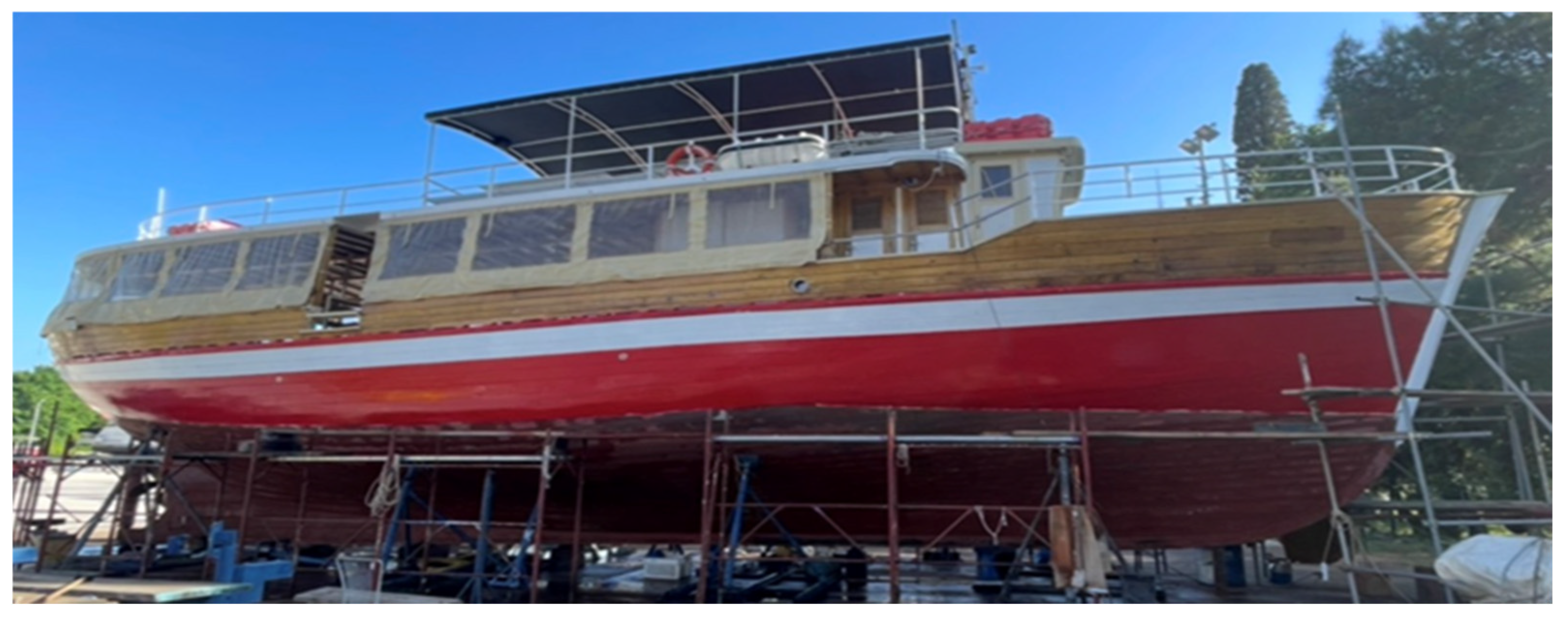
Article

Physical and Mechanical Properties of Oak Wood from the Wooden Ship Carmen: Implications for Conservation–Restoration Practice


by
Margarita Bego
1,*,
Seid Hajdarević
2,
Zoran Vlaović
3,
Andreja Pirc Barčić
3 and
Sandra Martinović
2
1
Department of Art and Restoration, University of Dubrovnik, 20000 Dubrovnik, Croatia
2
Department of Wood Technology, Mechanical Engineering Faculty, University of Sarajevo, 71000 Sarajevo, Bosnia and Herzegovina
3
Faculty of Forestry and Wood Technology, University of Zagreb, 10000 Zagreb, Croatia
*
Author to whom correspondence should be addressed.
Heritage 2026, 9(5), 171; https://doi.org/10.3390/heritage9050171
Submission received: 14 March 2026 / Revised: 24 April 2026 / Accepted: 26 April 2026 / Published: 30 April 2026
(This article belongs to the Section Cultural Heritage)

Abstract

This study examines the physical and mechanical properties of pedunculate oak (Quercus robur L.) wood samples taken from historical trabaccolo ship Carmen during restoration. The research is based on a methodological approach typical of conservation–restoration practice, in which only a limited number of samples can be taken to preserve the authenticity and integrity of the original material. Two groups of samples were analyzed visually: preserved (bright) wood and wood showing cross-sectional discoloration (dark). Physical properties (color, moisture content, density, porosity and swelling) and mechanical properties (compressive strength, bending strength and modulus of elasticity) were determined according to relevant ISO standards and chemical changes in the wood structure (FT-IR). FT-IR analysis revealed progressive degradation of hemicelluloses and oxidative modification of lignin, which was particularly significant in dark wood samples. The results of tests of physical properties indicate that dark samples exhibit higher moisture content (13%), lower density (about 7%) and greater porosity compared to preserved samples (bright wood). The compressive strength of the bright specimens was 38.3% higher than that of the dark specimens, suggesting reduced mechanical performance of the altered wood. The bending strength and modulus of elasticity of the preserved samples (bright wood) corresponded to literature data for recent oak wood.

1. Introduction

Wood is one of the oldest construction materials used for sea navigation, with its application in shipbuilding documented from prehistoric times to the present day. Due to its natural availability, ease of processing, and favorable weight-to-mechanical strength ratio, wood became the foundation for the development of early maritime civilizations, especially in the Mediterranean region.
According to McGrail [1], the first sophisticated wooden ship constructions appeared in Egypt around 3000 BC. During the Roman and Byzantine periods, ships of complex forms with advanced joining techniques (e.g., the mortise and tenon technique) were developed. The significance of wood is particularly notable in the development of Mediterranean civilizations, where species such as oak, pine and larch were the main material for building ships requiring high mechanical performance [2]. Until the early 19th century, wood was the only material that could be easily sourced and processed using simple tools. Although many wood species exist, not all are equally suitable for shipbuilding. Even within the same species, significant differences may occur depending on the climatic conditions in which the tree grew [3].
On the eastern Adriatic coast, wooden shipbuilding has a centuries-long tradition. Traditional wooden ships such as the leut and bracera confirm the importance of wood as a material linking maritime technology and cultural heritage, today protected as intangible cultural heritage [4].
In contemporary shipbuilding, although less common due to the development of steel, aluminum and composite materials, wood is still used in specific applications—for construction and restoration of historic ships, replicas of traditional boats and high-quality luxury shipbuilding, where the aesthetic and ecological properties of wood remain irreplaceable. Restoration efforts require in-depth knowledge of the physical and mechanical properties of aged wood, contributing to the development of methodologies for preserving maritime heritage [5]. Recent studies on waterlogged archaeological wood emphasize that the state of preservation is best assessed using a multi-analytical approach, combining physical, mechanical, chemical and microscopic analyses [6], since no single method is sufficient to fully describe complex degradation processes [7]. Multidisciplinary approaches have been widely applied to shipwreck wood, enabling a more reliable interpretation of degradation mechanisms and the preservation state [8]. The selection of analytical methods should be adapted to the specific research aim, the availability of material and the level of intervention allowed in conservation studies [9].
Oak wood (Quercus spp.) is one of the most valued species in shipbuilding, particularly due to its strength, resistance to moisture and decay, and good durability in seawater [10]. Over the centuries, starting with dugout canoes (monoxylons) and rafts, through various shapes and types of vessels, to the final perfection of clippers, oak, with its dense and hard structure, has been used for the construction of the main parts of hulls, keels and ships [11]. Old, dense oak with fewer defects was especially prized. The saying, “Oak is the heart of the ship; without it, the ship does not ‘breathe’” symbolically expresses the value and importance of oak in ship construction, as it provides strength, stability and longevity to the vessel. In shipbuilding, especially in the restoration of historical ships, it is crucial to understand how changes in wood properties caused by aging, moisture and other factors influence its resistance and functionality.
The aim of this study is to evaluate visible cross-sectional discoloration and its connection to changes in physical and mechanical properties of oak wood taken from historical trabaccolo ship Carmen. A trabaccolo is a traditional wooden boat that hails from the Dalmatian coast, known for its sturdy construction and historical significance in the region’s maritime culture. These vessels were once the lifeblood of Adriatic fishing and transport, reflecting the artistry and craftsmanship of local shipwrights. The wooden ship (trabaccolo) Carmen (current name) was built in 1956 in Piran, Slovenia. The trabaccolo has a length of 22 m and a cruising speed of 12 knots. Furthermore, this study seeks to demonstrate that reliable and representative results can be achieved even with only a limited number of samples, provided that the sampling strategy is carefully designed to capture variability in material condition and visual appearance.
The obtained data contribute to a better understanding of how visible changes in wood, particularly discoloration, may indicate underlying structural and mechanical alterations and support decision-making regarding the preservation or replacement of materials in conservation interventions.

2. The Importance of Wood in Shipbuilding: Types of Wood and Their Advantages and Disadvantages

2.1. Types of Wood in Shipbuilding

Well-dried pine wood (Pinus nigra, Pinus maritima, Pinus hallepensis, and Pinus silvestris) was sawn, planed and shaped for the construction of wooden ships along the eastern Adriatic coast in the historic region of Dalmatia (today, part of Croatia). Characterized by a deeply indented coastline, hundreds of islands, sheltered channels and natural harbors, Dalmatia has been oriented towards the sea for centuries. Its rugged karst hinterland contrasts with a maritime landscape, shaped by pine forests, limestone and constant interaction with wind and salt. In such an environment, seafaring and wooden shipbuilding developed not as marginal activities but as essential skills for trade, fishing and everyday survival. Island communities, such as those on Vrgada Island and in historic shipbuilding centers like those on island Korčula, preserved specialized knowledge of materials and techniques, forming a regional shipbuilding tradition that connected local natural resources with the wider Mediterranean maritime world. Traditional Dalmatian shipbuilding “rested on the scent of pine”. Light, strong and moisture-resistant wood enabled the construction of demanding structures. By combining black pine (harder) with maritime pine (Pinus maritima) and Aleppo pine (Pinus halepensis), an entire vessel could be built, although pine was most commonly used for masts. Islanders of Vrgada claim that pine is best for parts of the ship above the waterline, while shipwrights from Korčula believe pine is ideal for planking and frames because it tolerates flaming (bending wood over fire) in pursuit of the ideal shape and anatomical fit to the hull. These practices are deeply rooted in centuries-old Dalmatian craftsmanship, as confirmed by historical sources and materials from the 18th and 19th centuries [12]. Besides its structural use, pine was valued for its resin, which was boiled with tar over an open flame to produce “paklina” (local term for resin), which was used for waterproofing of hulls to prevent seawater penetration [13]. Pine is lighter and softer than oak but shows good moisture resistance thanks to resins that act as natural protection. It was often used for decks, masts and less load-bearing parts of ships. Its workability and availability made it popular, especially in the construction of large ships where reducing overall weight was crucial [14].
Larch (Larix spp.) is also used in shipbuilding due to its good moisture resistance and relatively high strength. Its resin contributes to protection against decay and fungi. It is often used for decks, planks and internal structural components [15].
Alongside the wood species mentioned above, oak is extensively used in the construction of all major structural elements along the Adriatic coast, including frames, keels, gunwales and stems, with particular emphasis on downy oak (Quercus pubescens) for the manufacturing of curved ship components. For instance, holm oak (Quercus ilex) was used for the construction of keels, stem, frames, rudder tillers and bitts because it is very durable, heavy, hard, strong and elastic. It is difficult to work with and prone to cracking if not gradually dried after extended immersion in seawater [13].

2.2. Advantages and Disadvantages of Wood in Shipbuilding

With aging and exposure to environmental factors such as sunlight, moisture, microorganisms and biochemical processes, wood gradually loses its original properties. It may change color, structure and mechanical strength. For example, UV radiation initiates lignin degradation, leading to yellowing, micro-cracking and reductions in mechanical properties such as the modulus of elasticity (MOE) and bending strength (MOR) [16]. Furthermore, water and anoxic conditions promote oxidation and depolymerization of hemicellulose and cellulose, increasing porosity and decreasing the density and compressive strength of wood immersed in aquatic environments [17].
Color changes often serve as visible indicators of wood degradation. In oak, darkening and gray–black tones occur due to chemical reactions between iron from the environment and wood tannins. However, visual discoloration does not always correspond to strength loss, as structural details can vary greatly. Thermal treatment and ultraviolet (UV) exposure modify the chemical structure of the wood surface. Thermally modified samples exposed to UV light show changes similar to those in unmodified samples subjected to UV radiation [18], which is relevant for ships constantly exposed to sunlight.
The most common advantages and disadvantages of wood in shipbuilding are outlined as follows:
Advantages:
  • Workability and availability: Wood can be processed manually without sophisticated equipment, and species such as oak (Quercus spp.) demonstrate exceptional resistance to moisture and wear [10].
  • Mechanical properties: Oak has high compressive strength and good bending resistance, as confirmed by standardized test methods (ISO 13061-3 [19] and ISO 13061-4 [20]), which is crucial for the structural stability of ships.
  • Environmental sustainability: Wood is a renewable, biodegradable and ecological material with a low carbon footprint, unlike synthetic materials that are harder to recycle and produce environmental waste [21].
Disadvantages:
  • Hygroscopicity: Changes in moisture content cause swelling and shrinkage, which affect dimensional stability and lead to deformation of the structure [14].
  • Biological degradation: Unprotected wood is susceptible to decay and attacks by bacteria, fungi and insects. Long-term exposure to moisture can reduce durability, especially under the conditions of high humidity and seawater exposure [22].
  • Natural defects and heterogeneity: Knots, cracks and the anisotropic nature of wood complicate the predictability of mechanical properties and require careful selection and testing of material [23].

3. Materials and Methods

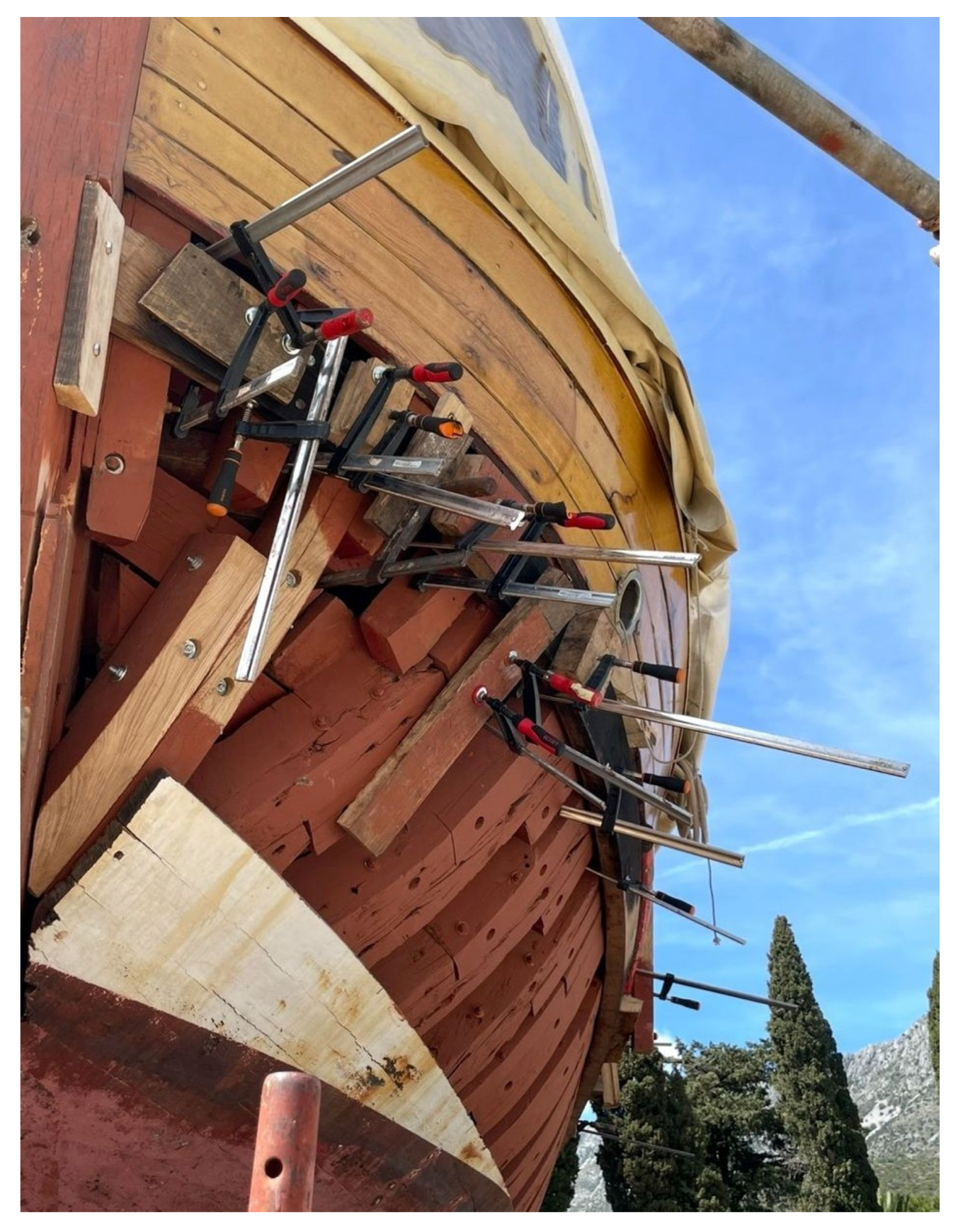
The restoration of a boat is a highly demanding process that involves key elements of stability, durability and esthetics (Figure 1). It is not merely the restoration of a single vessel but, rather, an act of preserving a part of Croatia’s maritime heritage.
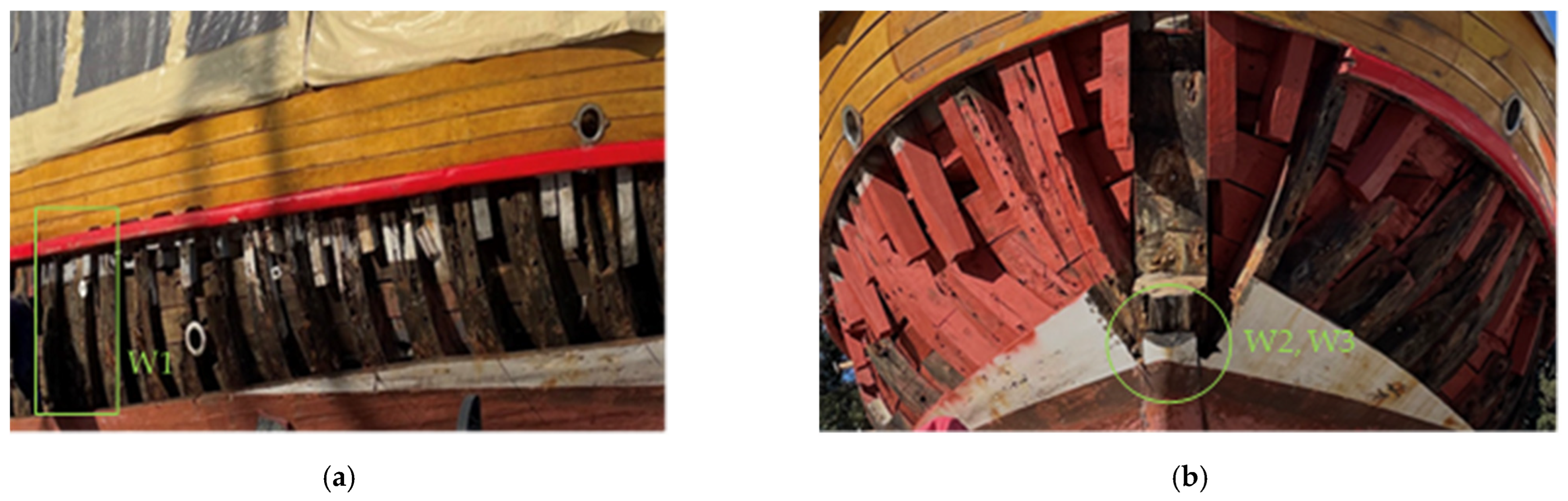
The restoration process involved dismantling the stern section and removing and replacing damaged parts of the boat, as shown in Figure 2. Two structural parts of the ship were identified as important for the integrity of the ship: the futtock, a curved forming part of the ship’s frame that is used in the construction of the hull, and the stern post, a longitudinal timber at the rear of the ship that forms the backbone of the stern and is critical for structural strength. Three samples from these structural parts of the ship were selected to test the properties of the wood: sample W1 (futtock) and samples W2 and W3 (stern post). In the case of oak wood used from trabaccolo ship Carmen, which shows discoloration and structural defects, properties that may indicate reduced mechanical strength and durability were analyzed. Therefore, it was justified to conduct research on the parts of the ship Carmen that were replaced with the same species of pedunculate oak (Quercus robur).
By applying a reduced but representative number of sample sets, this study, compared to standardized test methods, contributes to methodological approaches used in conservation–restoration practice. Sampling must remain minimally destructive while providing reliable data for assessing the condition and usability of historic wood.
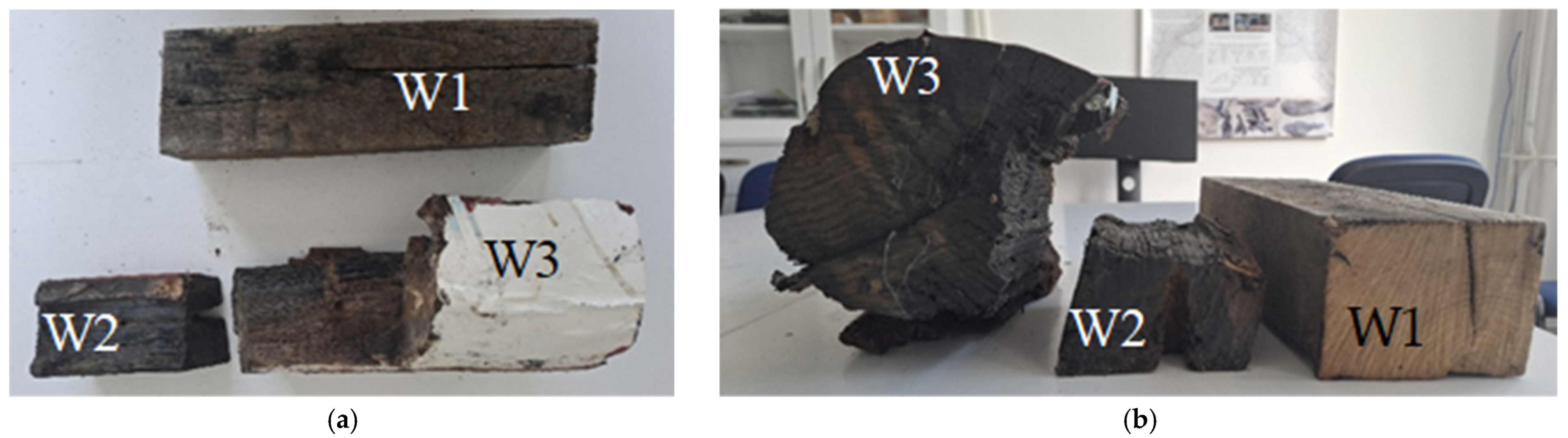
Wood samples for testing were extracted from the ship Carmen during the restoration process. Due to conservation and restoration constraints, the number of available samples was limited in order to minimize intervention on the original material. At the University of Dubrovnik, Department of Art and Restoration, collected samples were sorted, and three wood samples, marked with as W1, W2 and W3, were selected for testing of properties (Figure 3.)
The longitudinal dimensions (along the grain) of the samples are approximately 350 mm for W1, 150 mm for W2, and 300 mm for W3 (at its longest part). Color change and wood defects were visually noted in all three samples. On W1, the color change was observed only on the surface, while on the other two samples (W2 and W3), the color change was observed throughout the entire cross section (Figure 3b).
The specimens were obtained by sawing samples W1, W2, and W3 in the longitudinal direction. The cross-sectional dimensions of all test specimens are 20 × 20 mm. The shape of the samples, grain and ring directions, and wood defects prevented the geometric directions of the samples from aligning with the main directions of the wood. The test specimens were divided in two groups: bright specimens extracted from sample W1 (Figure 3) and dark specimens extracted from samples W2 and W3 with color change throughout the entire cross section. The number of standard wood specimens for testing of physical and mechanical properties and the type of tests of mechanical properties performed depended on the shape, dimensions, and wood defects of the obtained specimens. The dimensions and number of standard test specimens used in the tests of physical and mechanical property are given in Table 1.
The specimens for tests of physical and mechanical properties were prepared and the testing was conducted at the University of Sarajevo, Mechanical Engineering Faculty, Department of Wood Technology, Bosnia and Herzegovina.

3.1. Determining Color

The color values of both bright and dark specimen groups were determined with a spectrophotometer (ColorLite sph900, ColorLite GmbH, Katlenburg-Lindau, Germany). The device was calibrated prior to each measurement following the manufacturer’s recommended procedure. For the calculation of color values, standard illuminant D65 and a 10° observer angle were selected. Measurements were taken on the tangential surface in the latewood zone at three locations on each specimen. In total, 18 measurements were obtained for both the bright and dark specimen groups. The color data were expressed in the CIELAB color space, with L* representing lightness, a* corresponding to the red–green axis, and b* representing the yellow–blue axis.

3.2. Fourier Transform Infrared Spectroscopy (FT-IR)

Chemical changes in wood structure over the course of years were determined by means of an FT-IR analysis performed on a Shimadzu FTIR 8400 S (Kyoto, Japan) infrared spectrometer. The FT-IR spectra were obtained by direct transmission (KBr pellet method) at a resolution of 4 cm−1 in the range of 4000 to 400 cm−1. Standard 13 mm diameter pellets were made using the PIKE press and a dye kit by mixing and pressing 10 mg of sample with 300 mg of dry spectroscopic-grade potassium bromide (KBr) for 5 min under 200 bar pressure. For each sample, two measurements with 10 scans were performed, and final spectra are expressed as the average of 20 scans.

3.3. Determining Moisture Content and Density

The moisture content and density of the wood samples were determined in accordance with ISO 13061-1 [24] and ISO 13061-2 [25] on prismatic specimens (20 × 20 × 25 mm). The specimens were stored for four days in a climate air chamber (Binder, model KMF 240, Tuttlingen, Germany) at 20 °C and 65% relative humidity (RH). After conditioning, wood moisture content (MC) was determined by the gravimetric method and calculated using the following expression:
W = m 1 m 2 m 2 100 % ,
where W presents moisture content (MC) and m 1 and m 2 represent the initial mass and the oven-dry mass of wood samples, in g, respectively. For this purpose, the specimens were stored in a drying chamber (Memmert UF110m, Buchenbach, Germany) for 48 h at 103 ± 2 °C to obtain oven-dry wood. The density is calculated as
ρ = m V   g / cm 3 ,
where ρ represents density; m represents mass, in g; and V is the volume, in cm3, of the wood samples at the given MC. The porosity of specimens was calculated based on the following expression:
P = 1 0.667 ρ 0 100 % ,
where P represents porosity and ρ 0 represents the density of absolutely dry (oven-dry) wood [10].

3.4. Determining Radial and Tangential Swelling

Determination of radial and tangential swelling was carried out in accordance with ISO 13061-15 [26]. Prismatic specimens (cross sections of 20 × 20 × 25 mm) were used to determine radial and tangential swelling. Swelling was calculated based on the change in specimen dimensions measured in the radial and tangential directions. The measurements were taken on oven-dry wood specimens, which were then submerged in water for four days until the moisture content exceeded the saturation point of the cell walls. The swelling of specimens was calculated based on the following expression:
α = l 2 l 1 l 1 100 % ,
where α represents swelling and l 2 and l 1 represent the dimensions, in mm, of the fully saturated and absolutely dry (oven-dry) state, measured in the radial and tangential directions, respectively. The small number of selected samples for this test was influenced by the large angle of inclination of annual rings (much more than 10°) relative to the face of the test pieces.

3.5. Determining Compressive Strength Parallel to the Grain

The compressive strength (ultimate stress in compression) parallel to the grain was determined in accordance with ISO 13061-17 [27]. Standard test specimens measuring 20 × 20 × 40 mm were obtained from the selected parts of samples, free of wood defects (Figure 3). The compressive strength parallel to the grain was calculated using the following expression:
σ c = F m a x a · b   MPa ,
where σ c is the compressive strength parallel to the grain; F m a x is the maximum load, in N; and a and b are the cross-sectional dimensions of the specimen, in mm.

3.6. Determining Bending Strength and Modulus of Elasticity in Static Bending

The bending strength (ultimate strength in static bending) was determined in accordance with ISO 13061-3 [19], and the modulus of elasticity in static bending was determined in accordance with ISO 13061-4 [20]. The specimens for bending strength were prepared only on five bright wood specimens, which, at a length of 320 mm, had the fewest wood defects (Figure 3, marked as W1). The cross-sectional dimensions of the specimens were 20 × 20 mm, and the distance between supports (span) was 280 mm. An inconsistent cross-section along the length, insufficient length, knots, cracks, and other visible wood defects made it impossible to test the bending strength of the dark wood specimens (Figure 3, marked as W2 and W3). The bending strength was calculated using the following expression:
σ b = 3 P m a x l 2 b h 2   MPa ,
where σ b is the bending strength, P m a x is the maximum load, in N; l is the span; and b and h are the breadth and height of the specimen, in mm.
The modulus of elasticity in static bending was determined by measuring the deflections in the mid-span of the bright wood specimens during bending within the zone of proportionality of the force and displacement and was calculated using the following expression:
E = P l 3 4 b h 3 f   MPa ,
where E is the modulus of elasticity in static bending; P is the load equal to the difference between the limits of loading in the elastic zone, in N; l is the span; b and h are the breadth and height of the specimen, in mm; and f is the deflection equal to the difference between measured deflection at the limits of loading in the elastic zone.
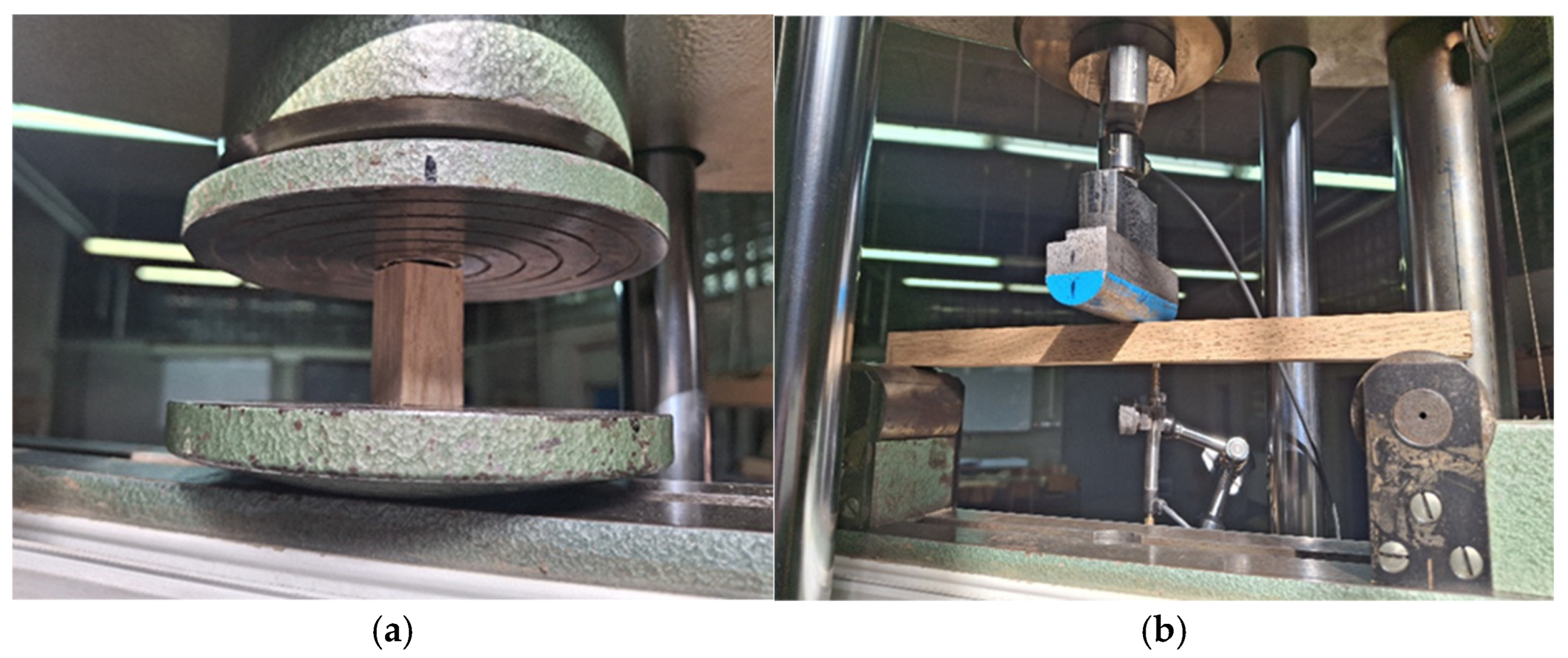
Testing of mechanical properties of the specimens was carried out on a Zwick 1282 universal testing machine (Zwick, Ulm, Germany) with a 10 kN load cell (HBM U9C) and displacement sensor (HBM WI/10 mm T) (Figure 4). During tests, the displacement velocity was maintained at 10.0 mm/min in all cases.
Descriptive statistical methods and significance testing (t-test) were employed using Microsoft Excel to identify and evaluate the principal features of the test results.

4. Results and Discussion

4.1. Color Determination

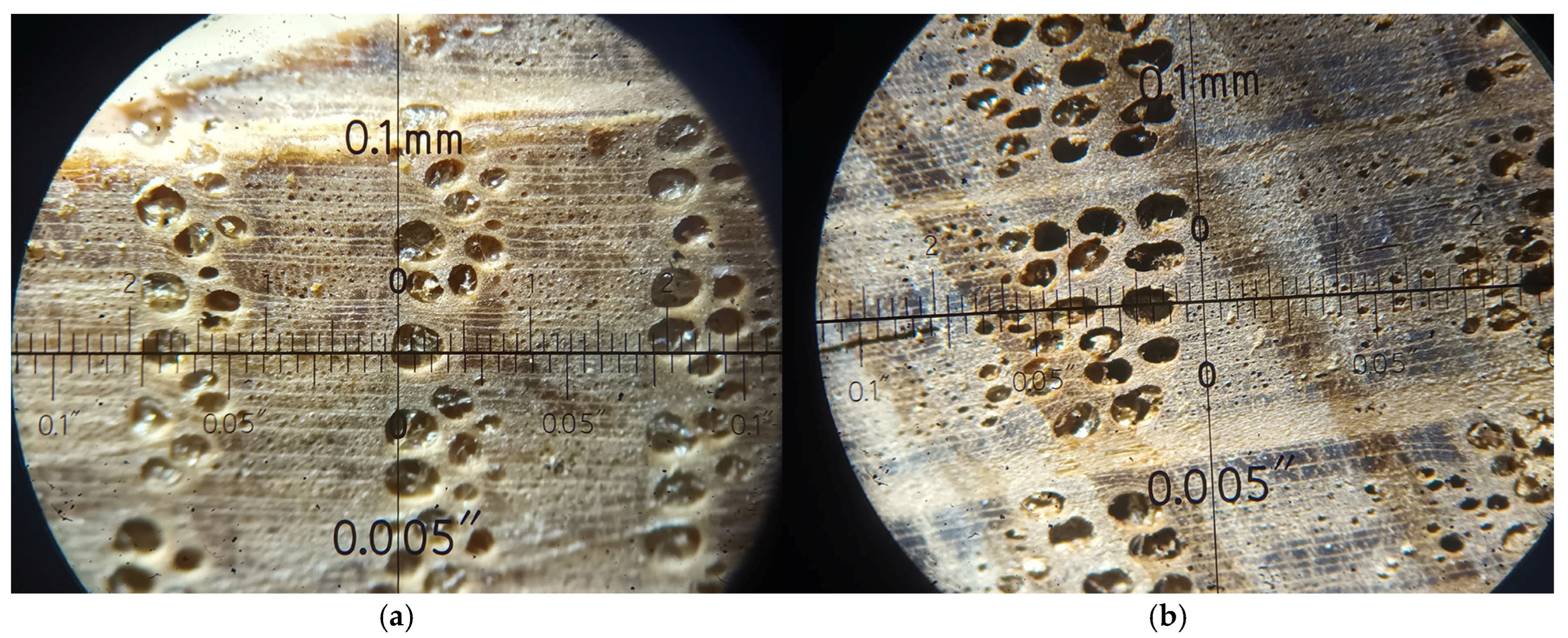
Based on the macrostructural features of the wood cross section (Figure 5), color change and signs of degradation were observed in the oak wood that was taken from samples W2 and W3, particularly in the earlywood zone in ring-porus oak species. The bright wood sample (W1) exhibits a high content of tyloses, whereas these structures show noticeable degradation in the dark wood samples (W2 and W3), which can be caused by long-term sea immersion. Generally, tyloses slow down the destruction of wood in the marine environment and large-scale water exchange by blocking the lumen of the vessels. During submergence in seawater, among other things, repeated wetting and drying cycles can weaken the structural integrity of tyloses.
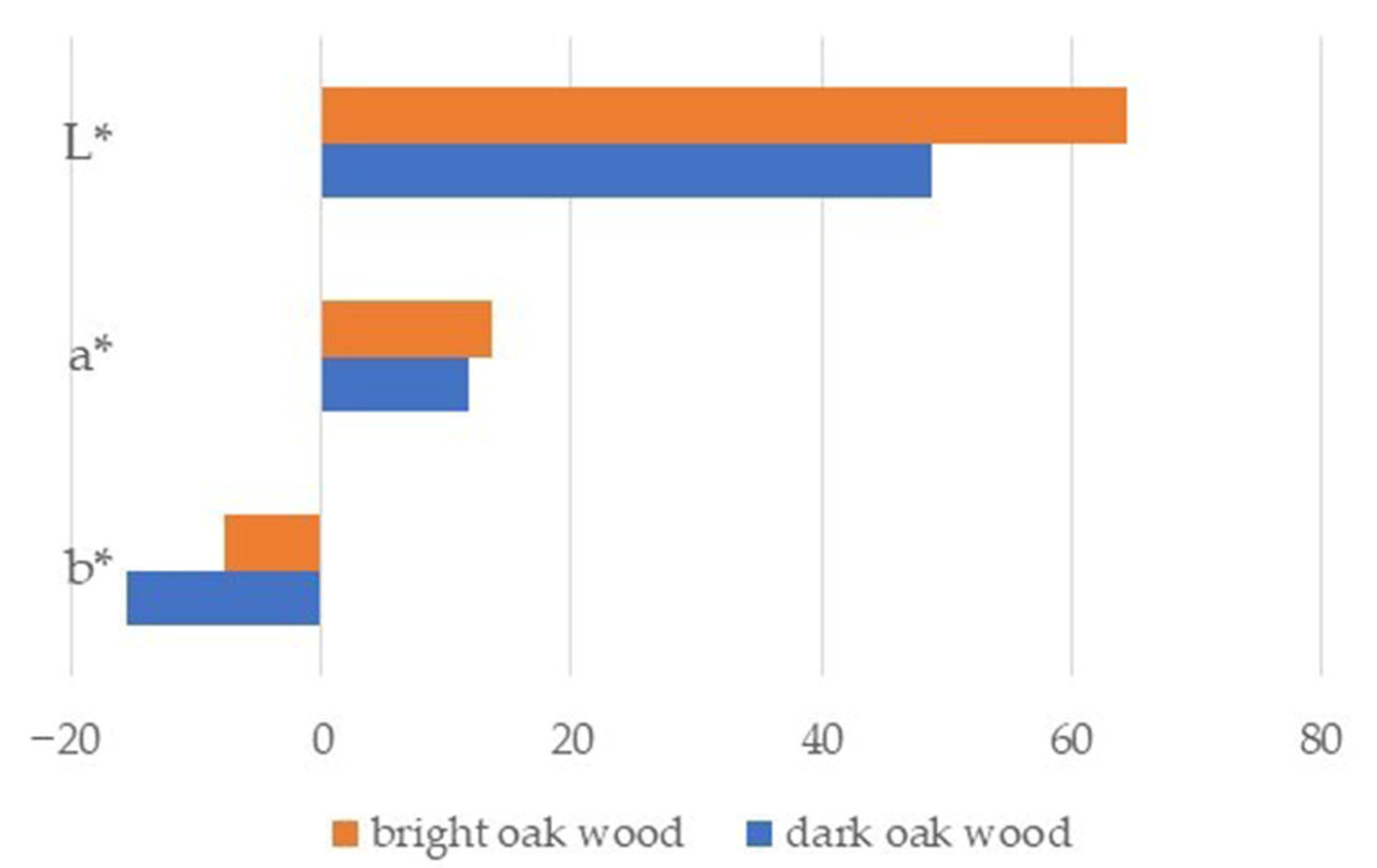
The color values, determined in the CIELab space, are shown in Figure 6. The results show that the main differences in color data between the two oak groups were a change in lightness and a change along the yellow–blue axis (b*). The L* value of bright wood is 64.5, while the luminance of dark wood is lower, at 48.9, and approaches black. The luminance of the tested dark wood specimens was about 1/4 lower than that of the bright wood specimens. The a* value of dark wood was about 14% lower than that of bright wood, and for both groups of specimens, a*, i.e., the shade of red, was positive (13.7 for bright wood and 11.8 for dark wood). The b* value of dark wood was about 1/2 lower than that of bright wood, and for both groups of specimens, b*, i.e., the shade of blue, was negative (−7.8 for bright wood and −15.6 for dark wood).
Macroscopic views of the oak wood surface and color determination show color change from light brown/tan to dark brown and degradation of wood that was in contact with seawater. This indicates that significant changes in the physical and mechanical properties of wood occur in marine environments (seawater). According to Fojutowski et al. [28], this phenomenon is also accompanied by the darkening of oak wood. This discoloration may be attributed to chemical reactions between tannin compounds present in oak and iron ions in seawater, as well as to the degradation of wood polymers, particularly cellulose and hemicellulose; alternatively, it could be the result of microbial wood degradation [29,30].

4.2. FT-IR Analysis

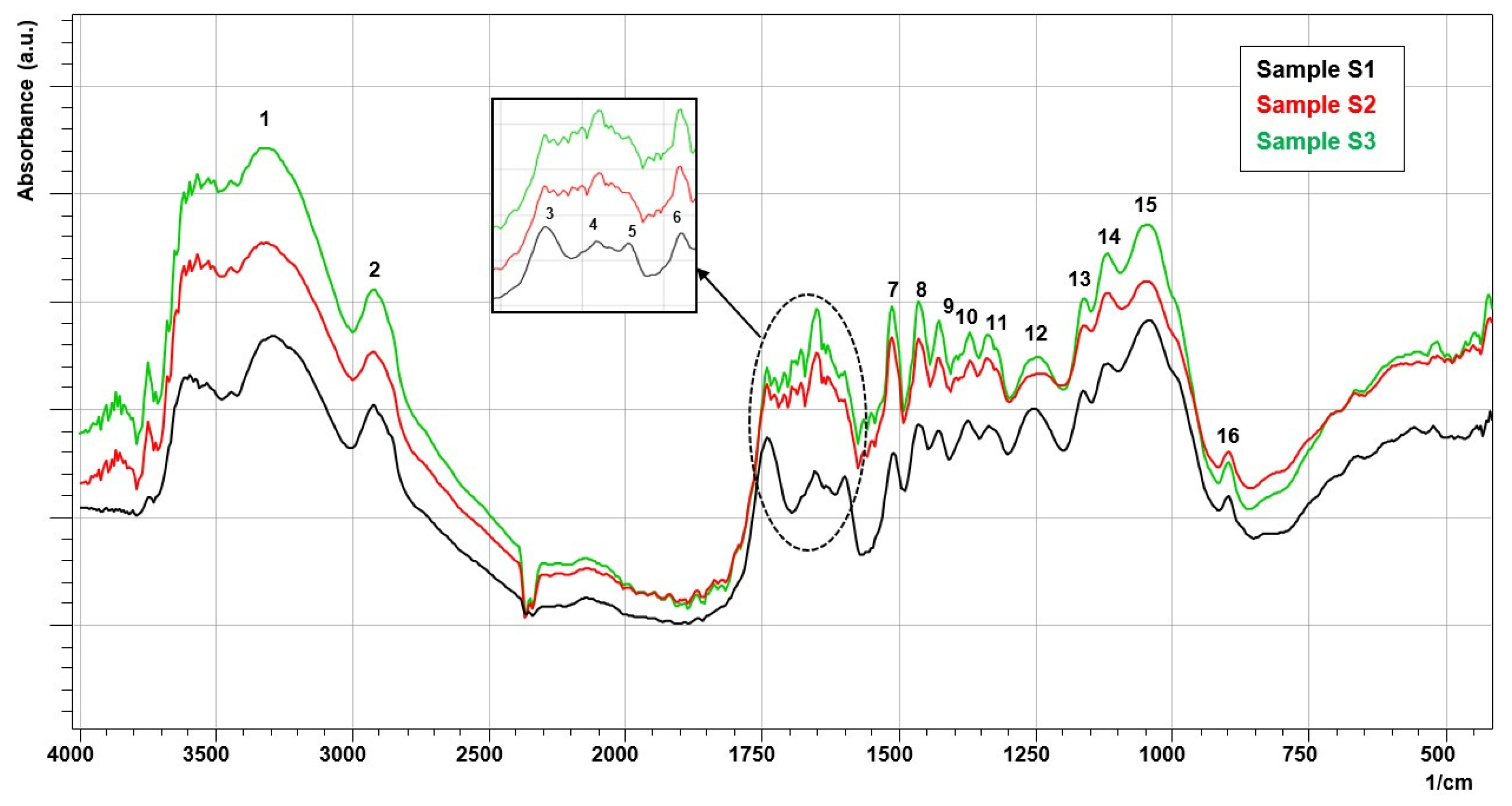
The results of the FT-IR analysis of samples S1 (recent oak wood used in the ship’s restoration), S2 (bright oak wood), and S3 (dark oak wood) are shown in Figure 7, where strong bands appear at around 3280–3320 cm−1 (1), related to O-H stretching (cellulose), and 2900 to 2903 cm−1 (2), related to C-H stretching in methyl and methylene groups. In the region between 1800 and 800 cm−1 (“fingerprint region”), additional bands are observed and assigned to [31,32,33,34,35,36,37] 1738 cm−1 (3) for C=O stretching of unconjugated ketone, carbonyl and ester groups (xylan), 1648 to 1652 cm−1 (4) for absorbed O-H and conjugated C-O, 1627 to 1630 cm−1 (5) for the formation of carbonyl groups (C=O conjugated bonds) due to lignin decay, 1598 cm−1 (6) for aromatic skeletal vibrations (lignin), 1510 cm−1 (7) for aromatic skeletal vibrations (C=C) of syringyl units (lignin), 1455 cm−1 (8) for in-plane bending of OH groups in cellulose or aromatic CH deformation and asymmetric bending of CH3 in lignin, around 1426 cm−1 (9) for C-H in-plane deformation combined with vibration of aromatic structures in lignin, 1368 to 1371 cm−1 (10) for symmetric C-H bending in cellulose and non-cellulosic polysaccharides (hemicellulose), 1321 to 1323 cm−1 (11) for vibration in C-H (cellulose) and stretching in C-O related to syringyl rings (lignin), around 1250 cm−1 (12) for syringyl rings and C-O stretching in lignin and xylan, 1158–1160 cm−1 (13) for C-O-C asymmetric valence vibrations (cellulose and hemicellulose), 1117 to 1118 cm−1 (14) for aromatic skeletal and asymmetric stretching of glycosidic rings, 1040 to 1048 cm−1 (15) for C-O valence vibrations in cellulose, 1035 cm−1 (15) for C-O stretching in cellulose and hemicellulose, and around 897 cm−1 (16) for C-H deformation in cellulose.
The part of the FT-IR spectra that is of most interest, marked with a dotted circle, was examined in more detail (enhanced parts of the spectra are given in Figure 7), revealing the formation of additional peaks, all indicating degradation and decreases in the contents of carbohydrates and lignin. The bands at 1676 cm−1 could be assigned to the formation of carbonyl groups (C=O) as a result of lignin oxidation, while the one at 1695 cm−1 is an indication of the formation of carboxylic acid or conjugated carbonyls (originating from degraded lignin). The band at around 1706 cm−1 can be assigned to the degradation of hemicelluloses and the formation of carboxylic acids/esters [38,39,40,41]. All of this is a strong indication that amorphous parts of carbohydrates are mostly degraded (hemicelluloses were most probably deacetylated and their content decreased) and that the lignin was modified during the course of years. As hemicellulose is one of the contributors to wood strength, its degradation can affect material mechanical properties. Generally, hemicelluloses and lignin influence the viscoelastic properties of wood and determine its compressive strength and hardness. In addition, hemicellulose degradation increases porosity and hygroscopicity, while lignin oxidation reduces hydrophobicity, allowing for greater water absorption [39,42]. Accordingly, further investigation into the area of physical and mechanical properties of the material is necessary.

4.3. Moisture Content, Density and Porosity

The results with respect to the moisture content, density and porosity of oak wood are given in Table 2. The mean value of the equilibrium moisture content of the bright oak wood specimens for laboratory conditions (after conditioning in a climate chamber) was 12.67%. The moisture content of the dark wood specimens was slightly larger and amounted to 14.37%. The equilibrium moisture content of the dark wood specimens differs from that of the bright wood specimens to a level of 13%. The t-test showed a significant difference (p < 0.001), with a 95% confidence level (α = 0.05) between the equilibrium moisture content of the bright and dark wood groups of specimens. This indicates increased hygroscopic properties of dark wood specimens, which suggests that samples W2 and W3 were exposed to seawater immersion [28,43]. The oven-dry oak wood density of 0.69 g/cm3 and the mean porosity value of 54.05% for the bright oak wood specimens show that the results correspond to literature data for recent oak wood [44]. The density of the dark oak wood specimens was lower (about 7%), while the porosity was higher (about 6%) compared to bright oak wood specimens’ values for the oven-dry wood conditions. The results show a change in density, but a significant difference (p = 0.12) was not found between the tested bright and dark groups of specimens. Similar density trends were found in [28,43], where the properties of oak wood were analyzed after submersion in seawater.

4.4. Wood Swelling

The results with respect to the radial and tangential swelling of oak wood samples are given in Table 3. The high standard deviation and the range (bright specimens: 3.17% radial and 7.32% tangential; dark specimens: 3.06% radial and 2.65% tangential) of swelling indicate high levels of dispersion in the test results. The results of radial and tangential swelling of both groups of oak wood specimens roughly correspond to the literature data for recent oak wood [45]. According to Thybring et al. [46], the swelling becomes more intense once wood has been immersed in seawater and dried, then placed in freshwater, partly due to salt residues dissolving.

4.5. Compressive Strength

The compressive strength results of oak wood samples are given in Table 4. The experimental results of compressive strength parallel to the grain of bright wood specimens agree with the literature data for recent oak wood (44–64 MPa), i.e., 53.1 MPa [45], 62 MPa [28], or 54 MPa [43]. This shows that the compressive strength along the grain of the bright wood specimens remained stable during wood aging. The compressive strength of the dark oak specimens is lower compared to literature data for recent wood, but the values agree well with the compressive strength (40 MPa) of oak wood after two years of submergence in the sea and the compressive strength (33 MPa) of oak wood after five years of submergence in the sea [28,43].
Based on the results, compressive strength parallel to the grain of bright oak wood specimens is 38.3% higher than the same strength of dark oak wood. The values of the standard deviation and range (bright specimens, 12.27 MPa; dark specimens, 13.57 MPa) for both groups of specimens indicate uniform statistical dispersion. Additionally, the t-test showed a significant difference (p < 0.001) between the compressive strength parallel to the grain of the bright and dark groups of specimens. The failure patterns after compressive strength testing were typical for this type of test (brooming or endrolling), or the failure was affected by the deviation of the direction of wood grain.

4.6. Bending Strength and Modulus of Elasticity in Static Bending

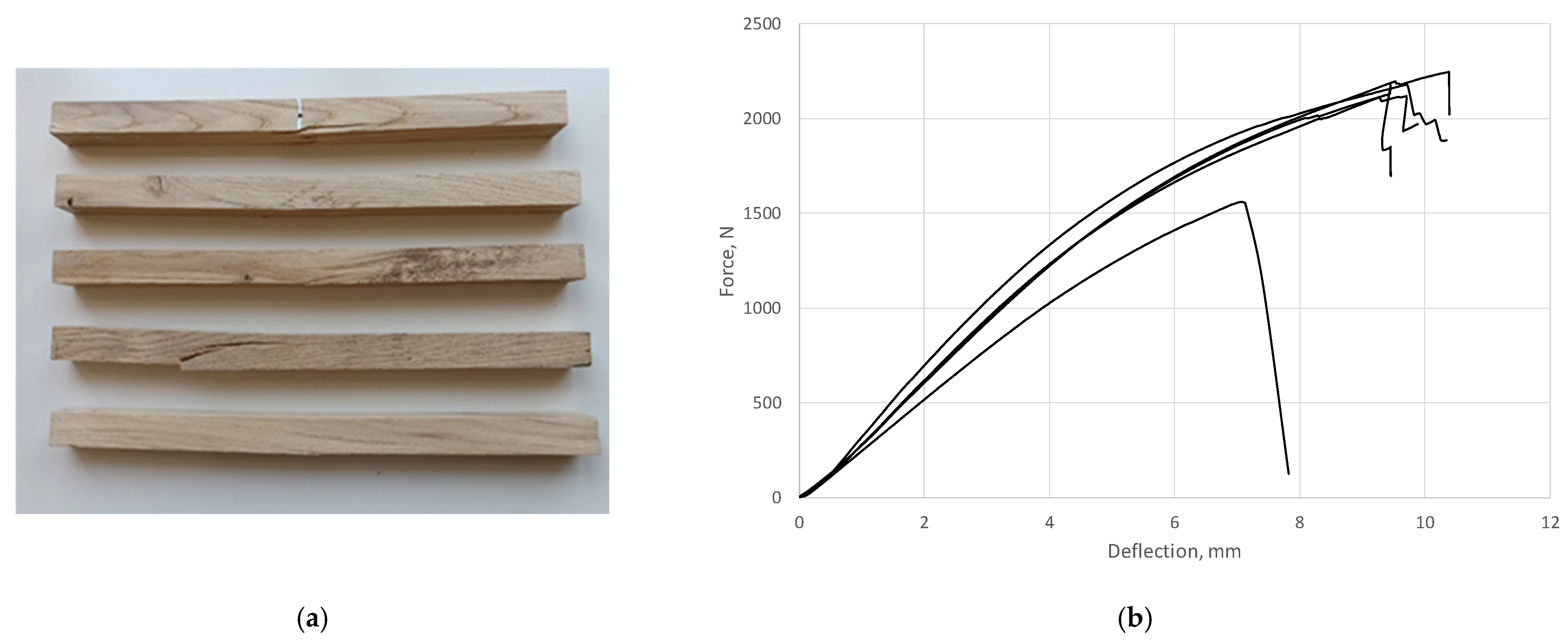
The results for the bending strength and the modulus of elasticity in static bending of the five bright oak wood specimens (sample W1) are given in Table 5. The obtained mean bending strength was 97.02 MPa, which is slightly higher than the values reported in the literature for recent oak wood (ranging between 91.4 and 94 MPa) [45,47] but lower than the 114 MPa and 103 MPa reported in [28,43]. The failure patterns of the bending-strength test specimens were affected by the deviation of wood grain direction, mostly with a typical cross-grain type of fracture (Figure 8a).
Figure 8b presents the force–displacement curves of the bending strength of bright oak wood specimens, from which the modulus of elasticity was determined. The mean modulus of elasticity of the bright oak samples was 9.9 GPa, a value that is consistent with the literature range for recent oak wood, i.e., 11.7 GPa [47], 9.3 GPa [28], and 8.9 MPa [43].
The results indicate that both the bending strength and modulus of elasticity in static bending of bright oak wood remained stable during aging. These properties for dark oak wood were not determined in this study, as mentioned earlier in the Materials and Methods. However, according to paper that analyzed changes that may be useful for the protection and monitoring of underwater archaeological objects [28,43], the bending strength and modulus of elasticity of oak wood submerged in seawater for two years decreased by 42% and 51%, respectively, while those same properties decreased by more than 50% after five years of submergence in seawater, compared to the values measured in natural oak wood.
In this study, the increased standard deviation and the range of the tested physical and mechanical properties for bright and dark oak wood specimens indicate a dispersion of the test results, which is primarily a consequence of the small number of analyzed samples and the effect of wood defects that were found in a limited amount of the tested wood samples. The orientation of the test specimens could not strictly comply with the ideal ISO geometric requirements due to the irregular shape of the samples; their specific grain directions; and a large angle of annual ring inclination, which prevented perfect alignment. This is evident in the absence of data on bending strength and modulus of elasticity in static bending for dark wood specimens, which limits direct comparison with bright specimens and may influence the interpretation of mechanical properties.
In conservation–restoration research, the number of samples is often limited because the primary objective is the preservation of the original material rather than extensive laboratory testing [48]. For this reason, sampling strategies must be carefully designed to ensure that the selected specimens are both representative and minimally invasive. The selection of samples representing different visual conditions (bright and dark wood) allowed the variability of the material to be captured despite the limited number of specimens. The results demonstrate that even a small number of carefully selected samples can provide reliable and representative analytical data when the sampling strategy is appropriately defined. This methodological approach reflects the ethical principles of conservation–restoration practice, where analytical investigation must be balanced with the preservation of original material [48]. Therefore, the sampling strategy must focus on selecting representative zones that capture material variability while minimizing intervention. In this study, the selection of samples representing different visual conditions (bright and dark wood) allowed for meaningful comparisons despite the limited number of specimens. This approach is applicable in conservation–restoration practice beyond the examined case study and supports informed decision-making regarding the retention, consolidation, or replacement of wooden elements. Microbiological, chemical, and non-destructive testing methods should also be introduced to achieve a more complete understanding of material degradation [29,30,49]. As demonstrated by FT-IR analysis, the samples exhibiting color change indicated degradation of hemicelluloses and modification of lignin.
In this specific case study, the multi-analytical approach was selected as an appropriate means of assessing the relationship between color change and the physical and mechanical properties of construction wood exposed to seawater. However, future work should include a comparison with modern restoration materials and the development of computational models for predicting wood behavior under real conditions, taking into account specific climatic influences and conservation requirements. Likewise, it should be emphasized that the knowledge, skills and craftsmanship of ship caulkers are of immeasurable importance for the preservation and maintenance of wooden ships (Figure 9).
Their expertise in traditional methods of preparing and maintaining wooden elements, as well as their understanding of the properties of the wood species from which these ships are built, is essential.

5. Conclusions

This study investigated the physical and mechanical properties of pedunculate oak (Quercus robur L.) from historical trabaccolo ship Carmen. Macroscopic examination of the oak wood surface, combined with colorimetric and FT-IR analysis, indicated structural difference between samples, color change from light brown/tan to dark brown, and chemical degradation of wood exposed to seawater. Comparisons between discolored (dark) and non-discolored (bright) samples revealed clear differences in density, porosity, and compressive strength. Dark wood exhibited significantly reduced mechanical properties, higher porosity, and greater equilibrium moisture content, which compromised durability under marine conditions. In contrast, bright wood samples retained bending-strength values consistent with recent oak, indicating no degradation during aging. These findings highlight the importance of mechanical testing as an objective criterion for restoration decisions. While visible discoloration may indicate decreases in physical–mechanical properties of wood, only standardized mechanical testing provides a reliable assessment of usability. This study shows that the combination of visual inspection with standardized testing offers a repeatable methodology for evaluating historical wood. Although focused on shipbuilding oak, the approach could be applicable to other wooden cultural heritage objects. However, validation on broader material sets and in combination with complementary methods is required.

Author Contributions

Conceptualization, M.B. and S.M.; methodology, M.B., S.M. and S.H.; software, S.H.; validation, S.M., S.H. and Z.V.; formal analysis, Z.V. and A.P.B.; investigation, M.B.; resources, M.B.; data curation, S.H. and S.M.; writing—original draft preparation, M.B., S.M., S.H., Z.V. and A.P.B.; writing—review and editing, S.M., S.H. and M.B.; visualization, S.H. and M.B.; supervision, S.M. and S.H.; project administration, S.M.; funding acquisition, M.B. All authors have read and agreed to the published version of the manuscript.

Funding

This research received no external funding.

Data Availability Statement

The original contributions presented in this study are included in the article. Further inquiries can be directed to the corresponding author.

Conflicts of Interest

The authors declare no conflict of interest.

Abbreviations

The following abbreviations are used in this manuscript:
MCMoisture content
MOEModulus of elasticity
MORBending strength
RHRelative humidity
SDStandard deviation
UVUltraviolet

References

  1. McGrail, S. Boats of the World: From the Stone Age to Medieval Times; Oxford University Press: New York, NY, USA, 2001. [Google Scholar]
  2. Žaja, I. Traditional Shipbuilding on the Adriatic; Croatian Maritime Museum: Split, Croatia, 2012. (In Croatian) [Google Scholar]
  3. Leibenfrost, A. SHIP, Construction of a Wooden Ship. Technical Encyclopedia, 2nd ed.; Lexicographic Institute Miroslav Krleža: Zagreb, Croatia, 1966; pp. 279–282. (In Croatian) [Google Scholar]
  4. Ministry of Culture of the Republic of Croatia. Traditional Wooden Shipbuilding in the Republic of Croatia—Intangible Cultural Heritage; Ministry of Culture of the Republic of Croatia: Zagreb, Croatia, 2016. (In Croatian) [Google Scholar]
  5. Cindrić, I.; Strižić Jakovljević, I.; Sinković, T. Restoration of traditional wooden boats on the Adriatic coast: Methodology and conservation challenges. Int. J. Naut. Archaeol. 2021, 50, 213–229. [Google Scholar]
  6. High, H.E.; Penkman, K.E.H. A review of analytical methods for assessing preservation in waterlogged archaeological wood and their application in practice. Herit. Sci. 2020, 8, 83. [Google Scholar] [CrossRef]
  7. Li, R.; Guo, J.; Macchioni, N.; Pizzo, B.; Xi, G.; Tian, X.; Chen, J.; Sun, J.; Jiang, X.; Cao, J.; et al. Characterisation of waterlogged archaeological wood from Nanhai No. 1 shipwreck by multidisciplinary diagnostic methods. J. Cult. Herit. 2022, 56, 25–35. [Google Scholar] [CrossRef]
  8. Mitsi, E.; Stefanis, N.A.; Pournou, A. Physico-Mechanical Properties of Waterlogged Archaeological Wood: The Case of a Charred Medieval Shipwreck. Forests 2023, 14, 560. [Google Scholar] [CrossRef]
  9. Broda, M.; Hill, C.A.S. Conservation of Waterlogged Wood—Past, Present and Future Perspectives. Forests 2021, 12, 1193. [Google Scholar] [CrossRef]
  10. Kollmann, F.F.P.; Côté, W.A. Principles of Wood Science and Technology I: Solid Wood; Springer: Berlin/Heidelberg, Germany, 1968. [Google Scholar]
  11. Govorčin, S. Application of Wood from the Croatian Mediterranean in Shipbuilding//Forests of the Croatian Mediterranean; Academy of Forestry Sciences: Zagreb, Croatia, 2011; pp. 684–691. (In Croatian) [Google Scholar]
  12. Bratanić, M. Dalmatian Seafaring in the 19th Century: The Island of Hvar in Transition; University of Zadar: Zadar, Croatia, 2020. (In Croatian) [Google Scholar]
  13. Bego, M. Trabakul Sveti Ivan—One of the oldest wooden sailing ships on the Adriatic Sea. Our Sea 2020, 67, 1–9. (In Croatian) [Google Scholar] [CrossRef]
  14. Siau, J.F. Transport PROCESSES in Wood; Springer: Berlin/Heidelberg, Germany, 1984. [Google Scholar]
  15. Puljar D’Alessio, S. We Build the Ship, and the Ship Builds Us; Institute of Ethnology and Folkloristics: Rijeka, Croatia, 2018. (In Croatian) [Google Scholar]
  16. Kránitz, K.; Sonderegger, W.; Bues, C.-T.; Niemz, P. Effects of aging on wood: A literature review. Wood Sci. Technol. 2016, 50, 7–22. [Google Scholar] [CrossRef]
  17. Hoffmann, P.; Jones, M.A. Structure and degradation process for waterlogged archaeological wood. In Archaeological Wood; Properties, Chemistry and Preservation; Rowell, R.M., Barbour, R.J., Eds.; American Chemical Society: Washington, DC, USA, 1990; pp. 35–65. [Google Scholar]
  18. Miklečić, J.; Jirouš-Rajković, V.; Antonović, A.; Španić, N. Discolouration of thermally modified wood during simulated indoor sunlight exposure. BioResources 2011, 6, 434–446. [Google Scholar] [CrossRef]
  19. ISO 13061-3:2014; Determination of Ultimate Strength in Static Bending. International Organization for Standardization (ISO): Geneva, Switzerland, 2014.
  20. ISO 13061-4:2014; Determination of Modulus of Elasticity in Static Bending. International Organization for Standardization (ISO): Geneva, Switzerland, 2014.
  21. Hill, C.A.S. Wood Modification: Chemical, Thermal and Other Processes; John Wiley & Sons: Hoboken, NJ, USA, 2006. [Google Scholar]
  22. Brischke, C.; Rapp, A.O.; Bayerbach, R. The comparative measurement of moisture in wood above ground. Wood Sci. Technol. 2008, 42, 507–518. [Google Scholar] [CrossRef]
  23. Dinwoodie, J.M. Timber: Its Nature and Behavior; E & FN Spon: London, UK, 2000. [Google Scholar]
  24. ISO 13061-1:2014; Determination of Moisture Content for Physical and Mechanical Tests. International Organization for Standardization (ISO): Geneva, Switzerland, 2014.
  25. ISO 13061-2:2014; Determination of Density for Physical and Mechanical Tests. International Organization for Standardization (ISO): Geneva, Switzerland, 2014.
  26. ISO 13061-15:2017; Determination of Radial and Tangential Swelling. International Organization for Standardization (ISO): Geneva, Switzerland, 2017.
  27. ISO 13061-17:2017; Determination of Ultimate Stress in Compression Parallel to Grain. International Organization for Standardization (ISO): Geneva, Switzerland, 2017.
  28. Fojutowski, A.; Wróblewska, H.; Komorowicz, M.; Kropacz, A.; Noskowiak, A.; Pomian, I. Changes in the properties of English oak wood (Quercus robur L.) as a result of remaining submerged in Baltic Sea waters for two years. Int. Biodeterior. Biodegrad. 2024, 86, 122–128. [Google Scholar] [CrossRef]
  29. Björdal, C.G.; Dayton, P.K. First evidence of microbial wood degradation in the coastal waters of the Antarctic. Sci. Rep. 2020, 10, 12774. [Google Scholar] [CrossRef]
  30. Singh, A.P.; Kim, J.S.; Möller, R.; Chavan, R.R.; Kim, Y.S. The Pivotal Role of Microscopy in Unravelling the Nature of Microbial Deterioration of Waterlogged Wood: A Review. Forests 2024, 15, 889. [Google Scholar] [CrossRef]
  31. Colom, X.; Carillo, F.; Nogués, F.; Garriga, P. Structural analysis of photodegraded wood by means of FTIR spectroscopy. Polym. Degrad. Stab. 2003, 80, 543–549. [Google Scholar] [CrossRef]
  32. Pandey, K.K. A Study of Chemical Structure of Soft and Hardwood and Wood Polymers by FTIR Spectroscopy. J. Appl. Polym. Sci. 1999, 71, 1969–1975. [Google Scholar] [CrossRef]
  33. Pandey, K.K.; Pitman, A.J. FTIR studies of the changes in wood chemistry following decay by brown-rot and white-rot fungi. Int. Biodeterior. Biodegrad. 2003, 52, 151–160. [Google Scholar] [CrossRef]
  34. Tjeerdsma, B.F.; Militz, H. Chemical changes in hydrothermal treated wood: FTIR analysis of combined hydrothermal and dry heat-treated wood. Eur. J. Wood Wood Prod. 2005, 63, 102–111. [Google Scholar] [CrossRef]
  35. Gierlinger, N.; Goswami, L.; Schmidt, M.; Burgert, I.; Coutand, C.; Rogge, T.; Schwanninger, M. In situ FT-IR microscopic study on enzymatic treatment of poplar wood cross-sections. Biomacromolecules 2008, 9, 2194–2201. [Google Scholar] [CrossRef]
  36. Esteves, B.; Marques, A.V.; Domingos, I.; Pereira, H. Chemical changes of heat treated pine and eucalypt wood monitored by FTIR. Maderas Cienc. Tecnol. 2013, 15, 245–258. [Google Scholar] [CrossRef]
  37. Hao, Y.; Pan, Y.; Du, R.; Wang, Y.; Chen, Z.; Zhang, X.; Wang, X. The Influence of Thermal Treatment on the Decay Resistance of Wood via FTIR Analysis. Adv. Mater. Sci. Eng. 2018, 2018, 8461407. [Google Scholar] [CrossRef]
  38. Hofmann, T.; Tolvaj, L.; Visi-Rajczi, E.; Varga, D. Chemical changes of steamed timber during short-term photodegradation monitored by FTIR spectroscopy. Eur. J. Wood Wood Prod. 2022, 80, 841–849. [Google Scholar] [CrossRef]
  39. Jurecki, A.; Szentner, K.; Jarzębski, M.; Wieruszewski, M. Timber from Historical Foundation Piles Made of Oak Wood (Quercus robur L.). Appl. Sci. 2025, 15, 9322. [Google Scholar] [CrossRef]
  40. Yang, W.; Ma, W.; Liu, X. Evaluation of Deterioration Degree of Archaeological Wood from Luoyang Canal No. 1 Ancient Ship. Forests 2024, 15, 963. [Google Scholar] [CrossRef]
  41. Liu, X.; Xu, X.; Tu, X.; Ma, W.; Huang, H.; Varodi, A.M. Characteristics of Ancient Ship Wood from Taicang of the Yuan Dynasty. Materials 2023, 16, 104. [Google Scholar] [CrossRef]
  42. Wang, X.; Chen, W.; Liang, Y.; Li, N. Physical and chemical degradation characteristics of waterlogged archaeological wood from the Wenzhou No. 1 shipwreck. npj Herit. Sci. 2025, 13, 520. [Google Scholar] [CrossRef]
  43. Komorowicz, M.; Wróblewska, H.; Fojutowski, A.; Kropacz, A.; Noskowiak, A.; Pomian, I. The impact of 5 years’ underwater exposure in the Baltic Sea (Puck Bay) on selected properties of English oak wood samples. Int. Biodeterior. Biodegrad. 2018, 131, 40–50. [Google Scholar] [CrossRef]
  44. Nedelcu, R.; Timar, M.C.; Porojan, M.; Beldean, E.C. Selected Physical and Mechanical Properties of Subfossil Oak (Quercus spp.) Compared to Aged Oak and Recent Oak. Appl. Sci. 2024, 14, 3294. [Google Scholar] [CrossRef]
  45. Sinković, T.; Govorčin, S.; Dubravac, T.; Roth, V.; Sedlar, T. Comparison of the technical properties of ebony and recent oak wood (Quercus robur L.). Šumarski List 2009, 11, 605–611. (In Croatian) [Google Scholar]
  46. Thybring, E.E.; Fredriksson, M.; Zelinka, S.L.; Glass, S.V. Water in Wood: A Review of Current Understanding and Knowledge Gaps. Forests 2022, 13, 2051. [Google Scholar] [CrossRef]
  47. Volkmer, T.; Lorenz, T.; Hass, P.; Niemz, P. Influence of heat pressure steaming (HPS) on the mechanical and physical properties of common oak wood. Eur. J. Wood Wood Prod. 2014, 72, 249–259. [Google Scholar] [CrossRef]
  48. Mooney, D.E. Does the ‘Marine Signature’ of Driftwood Persist in the Archaeological Record? An Experimental Case Study from Iceland. Environ. Archaeol. 2017, 22, 217–227. [Google Scholar] [CrossRef]
  49. Wu, M.; Han, X.; Qin, Z.; Zhang, Z.; Xi, G.; Han, L. A Quasi-Nondestructive Evaluation Method for Physical-Mechanical Properties of Fragile Archaeological Wood with TMA: A Case Study of an 800-Year-Old Shipwreck. Forests 2022, 13, 38. [Google Scholar] [CrossRef]
Figure 1. Restoration of the boat Carmen.
Heritage 09 00171 g001
Figure 2. (a) Removal of damaged parts (W1—futtock). (b) Replacement of floorboards (W2, W3—stern post).
Heritage 09 00171 g002
Figure 3. Samples and test specimens for testing of properties: (a) three selected wood samples (W1–W3)—longitudinal section; (b) three selected wood samples (W1–W3)—cross section.
Heritage 09 00171 g003
Figure 4. Testing of mechanical properties of wood specimens: (a) compressive strength parallel to the grain; (b) bending strength.
Heritage 09 00171 g004
Figure 5. Cross sections of oak wood specimens: (a) bright wood (sample W1); (b) dark wood (samples W2 and W3).
Heritage 09 00171 g005
Figure 6. The color values in the CIELab space: L*, lightness; a*, the red–green axis; b*, yellow–blue axis.
Heritage 09 00171 g006
Figure 7. FT-IR spectra of samples: S1, recent oak wood; S2, bright oak wood; S3, dark oak wood.
Heritage 09 00171 g007
Figure 8. Bending strength: (a) wood specimen failures; (b) force–displacement curves of the five bright oak wood specimens.
Heritage 09 00171 g008
Figure 9. Trabaccolo Carmen after partial restoration.
Heritage 09 00171 g009
Table 1. Dimensions and quantity of standard test specimens used in the tests.
PropertiesWood Specimens
Dimensions, mmQuantity
Bright Wood
(W1) *
Dark Wood
(W2 and W3) *
Moisture content, density, and porosity20 × 20 × 2569
Swelling20 × 20 × 2545
Compressive strength20 × 20 × 401012
Bending strength and E modulus20 × 20 × 3205-
* Marked in Figure 3.
Table 2. Moisture content, density and porosity of oak wood samples for lab conditions (laboratory air conditions: 20 °C, 65% RH) and oven-dry wood.
Physical PropertiesMoisture Content, %Density, g/cm3Porosity, %
Bright SpecimensDark SpecimensBright
Specimens
Dark
Specimens
Bright SpecimensDark
Specimens
12.7% MC *Oven Dry14.4% MC *Oven DryOven DryOven Dry
Mean12.67 a14.37 b0.760.69 a0.700.64 a54.0557.11
SD *0.140.370.060.050.060.053.373.59
Min.12.4513.850.680.620.630.5649.9552.06
Max.12.8514.880.820.750.770.7258.5762.34
* MC = moisture content; SD = standard deviation. Means of moisture content followed by the same letter are not significantly different (p < 0.05).
Table 3. Swelling of oak wood samples.
Swelling, %Bright SpecimensDark Specimens
RadialTangentialRadialTangential
Mean4.358.155.779.63
SD *1.343.221.341.06
Min.2.673.464.707.86
Max.5.8410.787.7610.52
* SD = standard deviation.
Table 4. Compressive strength of oak wood samples (laboratory air conditions: 20 °C, 65% RH).
Compressive Strength, MPaBright Specimens (12.7% MC *)Dark Specimens (14.4% MC *)
Mean50.13 b36.25 a
SD *4.114.62
Min.44.56 28.31
Max.56.8341.88
* MC = moisture content; SD = standard deviation. Means of compressive strength followed by the same letter are not significantly different (p < 0.05).
Table 5. Bending strength and modulus of elasticity in static bending of clear oak wood samples (laboratory conditions: 20 °C, 65% RH).
Bright Specimens
(12.67% MC *)
Bending Strength, MPaE Modulus, GPa
Mean97.029.91
SD *26.491.02
Min50.698.16
Max116.0210.78
* MC = moisture content; SD = standard deviation.
Disclaimer/Publisher’s Note: The statements, opinions and data contained in all publications are solely those of the individual author(s) and contributor(s) and not of MDPI and/or the editor(s). MDPI and/or the editor(s) disclaim responsibility for any injury to people or property resulting from any ideas, methods, instructions or products referred to in the content.