


Abstract
Moving beyond the limits of purely geometric or descriptive documentation, the study conceives the digital models as a structured information system capable of coherently and queryably organising both the formal-typological and the interpretative-historical dimensions of heritage. The methodology is developed within the framework of the European Horizon MSCA project Hephaestus, which investigates cross-border Cultural Heritage Routes (CHRs) and historic fortification systems in the Adriatic and Baltic basins. The paper focuses on Adriatic CHR, through the selection, organisation, and interrelation of a distributed corpus of fortified architectures, articulated according to historical phases, territorial clusters, typological classes, and multilevel relationships. The study adopts an approach centered on HBIM models and ontological frameworks, implemented through complementary top-down and bottom-up processes. The results show the possibility of structuring HBIM-derived data within an ontology-based framework capable of linking, within a single information system, architectural elements, fortified systems, and territorial entities across heterogeneous case studies. The application to differentiated contexts highlights the ability of the models to adapt to different scales and levels of complexity, supporting querying, comparison, and multi-level interpretation of heritage. The variety of sources and contexts enables the methodology to be tested across heterogeneous historical and typological scenarios, strengthening its applicability and robustness within a multiscalar information structure.
1. Introduction
1.1. Towards an Integrated Representation of Relationships Between Architecture and Landscape
Architectural heritage constitutes one of the primary vectors of cultural identity, as it preserves material evidence of the past and essential resources for understanding the historical and artistic development of the societies that produced it [1]. It encompasses artefacts whose value is determined by stylistic characteristics (language), recognisable through forms and compositional principles (spatial configuration), as well as through their interaction with the context in which they are embedded (relationship) [2,3,4]. From this perspective, architecture may be interpreted as a complex system of relationships in which form, function, and territorial context collectively contribute to the construction of meaning [5,6,7]. The sense of place [8] forms part of the broader systems of meaning through which individuals and communities interpret the world. Place, thus, constitutes both a material reality and a framework through which social interaction unfolds, as well as a structure of feeling and a centre for the production of meaning. Places take shape through images, narratives, and representations that individuals and groups use to construct their identities, often based on differing and sometimes conflicting interpretations.
Understanding such relationships largely depends on the ways in which they are communicated and made explicit. Representation, therefore, assumes a crucial role: beyond serving as a tool for formal and geometric description, it contributes to structuring knowledge of the spatial and territorial systems to which architectural artefacts belong.
Over the centuries, tools and technologies have defined different ways of modelling reality, generating representations that oscillate between mimetic fidelity and conceptual abstraction. From Renaissance perspective to analogue models and contemporary information models, each form of representation has functioned both as a graphical medium and as a cognitive device through which hypotheses can be evaluated, spatial relationships analysed, and contents and intentions communicated to different audiences [9].
Within the digital domain, technological evolution and the increasing ability to acquire and manage large volumes of three-dimensional data have significantly expanded representational capabilities [10,11,12,13,14,15]. However, these developments have also revealed several structural limitations, including gaps among the metric accuracy of representations, their resemblance to the surveyed reality, and their ability to convey the cognitive and semantic complexity of architecture [16,17].
In an effort to reduce the gap between measured form and interpreted form, the use of information models for the study of historic built heritage has progressively assumed a central role in its representation [18,19]. The model may be conceived as a formally identifiable entity within an ontological structure, while the entities that compose it are configured as typed individuals endowed with identity, properties, and explicit relationships. Within the resulting knowledge system, models and their components operate as nodes at different levels of representation, whose meaning derives from the network of relationships that connect them to other entities in the system.
This network concerns not only the parts that compose a single architectural complex but also progressively broader spatial systems. From this perspective, multiscalarity emerges as a crucial issue. Architectural heritage, particularly when composed of systems developed across multiple levels of spatial and interpretative complexity, cannot be fully understood from the perspective of a single building or element. The unit of meaning that resides in the discrete object, emerges from its connections with the landscape, infrastructures, settlements, and territorial networks that have shaped its function, form, and persistence over time [20,21].
The territorial dimension is one of the key aspects of multiscalarity and influences how digital data are acquired, modelled, and managed.
1.2. Information Models in a Multiscale Context
In the field of digital documentation of architectural heritage, the need to operate across different scales is directly reflected in survey practices and in the construction of information models. Architectural artefacts exhibit an intrinsically multiscalar geometric complexity that requires acquisition strategies calibrated according to the scale of observation, the level of detail required, and the objectives of the representation [22,23].
During data acquisition, this articulation between scales entails the use of heterogeneous instruments, resolutions, and operational procedures, ranging from territorial and landscape documentation to the recording of architectural and decorative details at the building scale [24].
The integration of morphometric data acquired with different instruments, each characterised by specific geometric resolutions (multi-resolution), enables the artefact to be described at complementary, progressively more refined levels of detail [25,26]. Each scale, therefore, entails specific operational conditions regarding acquisition time, data density, and the complexity of processing procedures, resulting in datasets characterised by highly heterogeneous levels of geometric resolution and detail [27]. The construction of digital models from survey data thus becomes a process of abstraction and synthesis, in which the degree of geometric definition is calibrated according to the analytical, interpretative, and communicative objectives of the research.
Multiscalarity, however, concerns not only the geometric resolution of the collected data but also the different interpretative levels through which heritage can be analysed and represented. Although geometric data acquired through digital survey techniques describe the physical configuration of architectural artefacts with increasing accuracy, they cannot make explicit the formal and typological relationships, nor the historical and symbolic dimensions that define architecture as the outcome of complex practices, design choices, and cultural transformations [28,29]. In other words, geometric documentation reconstructs the informational envelope of architecture, but not its full cognitive depth.
This limitation becomes even more evident when addressing extensive and stratified heritage, such as fortified architecture and defensive systems distributed across the territory, where the relationships among parts, functions, and spatial configurations often take precedence over the geometry of individual elements. Different scales of analysis reveal distinct levels of relationships, meanings, and information that cannot be captured solely through geometric description.
For this reason, recent research has emphasised the need to integrate geometric data with additional layers of information, including provenance metadata, typological descriptions, conservation conditions, and historical interpretations [30,31]. The informational dimension, therefore, requires structured databases and systems of spatial, functional, and compositional relationships that ensure interoperability throughout the entire cycle of knowledge and conservation processes [32,33,34].
However, the mere organisation of data in structured repositories is insufficient to capture the complexity of the relationships that characterise the built heritage. The need to describe objects, properties, and relationships within coherent knowledge systems has progressively directed research towards information models and explicit conceptual structures. Within this context, HBIM analytical process enables the organisation of survey-derived data within parametric models enriched with informational attributes [35,36,37,38], while digital ontologies allow concepts, relationships, and semantic constraints to be formally defined, ensuring terminological consistency and shared classification systems [39,40,41]. HBIM and digital ontologies therefore emerge as complementary domains that support processes of integration and interpretation through richer, more semantically articulated models.
HBIM provides a modelling and information management environment, enabling the interpretation of survey data and the structuring of these data into parametric objects validated through Scan-to-BIM processes [42,43]. At the same time, consolidated ontologies (e.g., CIDOC CRM and its extension CRMba for built heritage) provide a fundamental reference framework for semantic formalisation and interoperability. This framework is often complemented by domain-oriented ontologies (e.g., Building Topology Ontology—BOT), as well as by standards such as IFC and controlled vocabularies such as the Getty Art & Architecture Thesaurus (AAT) [44,45,46].
Despite the progress achieved in recent years, the combined application of HBIM and ontological models still reveals several methodological and operational tensions. From a technical perspective, HBIM workflows present limitations related to the complexity of modelling stratified architectures and to the difficulty of translating heritage-specific elements into IFC schemas originally conceived for contemporary construction. A further limitation concerns the semantic domain. Available ontological models often operate at a relatively general level of abstraction with respect to the morphological, constructive, and typological specificities of historic architecture. Consequently, the semantic description of architectural elements frequently requires introducing domain-specific extensions that integrate the descriptive vocabulary of architectural analysis with the conceptual models used in knowledge representation. In addition, interoperability between BIM environments and ontology editors still requires ad hoc mapping procedures and persistent identification strategies [47].
Beyond these technical constraints, a methodological gap also emerges, once again related to multiscalarity. Although HBIM environments operate at different levels of detail, a formally articulated framework that connects architectural models, sites, and territorial networks within a unified semantic structure is still lacking [48,49,50]. The formalisation of such inter-site connections within integrated semantic models therefore remains largely unexplored. The challenge thus lies in establishing explicit mechanisms that articulate intra- and inter-model relationships within digital platforms designed to support multiscalar navigation and analysis [51,52,53].
1.3. Research Context and Scope: The Hephaestus Project
Within this theoretical framework lies the European project Hephaestus—HEritage Protocols for ArcHitecturAl European croSs-bordering siTes evalUationS, which constitutes the empirical reference for the present research. Focusing on the development and definition of Cultural Heritage Routes (CHRs), the project contributes to the broader debate on the documentation, interpretation, and enhancement of widespread architectural heritage, with particular attention to fortified systems in contexts characterised by a strong transnational dimension [20,54].
The project identifies two main geographical areas of investigation, both characterised by a long history of shifting borders and profound cultural stratification. The first concerns the Adriatic basin, which represents the focus of the present contribution, with specific reference to fortified systems developed between Italy and Croatia. The second concerns the Baltic region, along the cross-border axis between Poland and Germany. In both cases, fortified architectures constitute material testimonies of the power relations, economic and cultural exchanges, and technological transformations that have shaped these territories over the centuries.
The transnational nature of CHRs, the diversity of documentary sources, the variety of typological and constructive solutions, and the coexistence of different military traditions and architectural languages make it necessary to adopt shared semantic structures to ensure the readability, comparability, and traceability of data.
The project, therefore, aims to develop a replicable methodology for the organisation, management, and dissemination of heterogeneous data derived from surveys, documentary sources, and typological studies, by constructing a structured framework and defining standardised, replicable operational protocols. More specifically, this is articulated along three main directions:
- Developing an integrated methodology for the management of multisource data, capable of connecting three-dimensional surveys, archival documentation, historical analyses, and material investigations within a unified semantic framework. This methodology is based on the possibility of moving from the morphometric level to the interpretative one through processes of segmentation, classification, abstraction, and formalisation;
- Defining a protocol for the structuring of 3D models, in which HBIM, integrated with ontological structures, operates as a semantic node within a broader information network. This approach moves beyond the notion of the model as a mere container of geometries, proposing instead a multi-level information structure that makes explicit relationships, hierarchies, categories, and rules. This entails the adoption of controlled glossaries, taxonomies, shared vocabularies, and digital ontologies capable of guiding the modelling process while ensuring terminological consistency, interoperability, and data traceability;
- Testing the ontological framework and HBIM modelling processes on a real case study, represented by the fortified systems along the Adriatic Cultural Heritage Route. The selection of a transnational context characterised by related yet distinct construction traditions, heterogeneous documentary sources, and variable states of conservation enables assessment of the models’ capacity to adapt to different typologies, describe complex systems, and support meaningful comparisons across geographical and chronological contexts.
The present contribution illustrates the first results of the project, with reference to the semantic structuring of digital models and to the representation of information through knowledge graphs (Figure 1).
Figure 1.
Proposed workflow integrating documentary sources and multi-sensor survey data within a knowledge graph–based digital ontology, supporting HBIM model definition through standardised protocols and enabling multi-scale validation and application to the Adriatic Fortresses CHR.
2. Materials and Methods
2.1. Structuring the Adriatic Cultural Heritage Route
The structuring of the Adriatic Cultural Heritage Route (A-CHR) required the definition of a methodological framework capable of integrating historical, territorial, and typological criteria within a logic consistent with the objectives of the project.
Although the project includes the experimentation of digital survey methodologies, the definition of documentation protocols, and the development of 3D modelling workflows, these aspects do not constitute an autonomous goal. Rather, they function as tools supporting the theoretical and operational construction of the A-CHR and the enhancement of fortified heritage through digital technologies.
The selected sites were therefore not conceived as a simple aggregation of case studies, but as the outcome of a selective process aimed at identifying a corpus capable of representing the historical and morphological complexity of the Adriatic fortified system and supporting a relational and multiscalar interpretation of the sites.
This section, therefore, presents the selection workflow and the organisational logic adopted for structuring the sites within the A-CHR. It describes the criteria applied and the coding system implemented for their subsequent integration and management within the digital environment, in coherence with the subsequent modelling phases.
2.1.1. Site’s Selection and Criteria
The Adriatic represents a privileged field of observation, as it has historically been characterised by an intense circulation of people, knowledge, and architectural models, as well as by conflicts, geopolitical competition, and overlapping spheres of control [55].
The fortifications overlooking this basin constitute a heritage in which different construction traditions and heterogeneous defensive strategies intersect. Within the scope of this study and at the current stage of the project, attention is focused on the fortifications of the eastern Adriatic located in Croatian territory. The selection of sites was carried out through an iterative process combining documentary analysis (historical cartography, archival sources, scientific inventories, and existing heritage registers) with local expert validation and knowledge [56,57,58]. The shortlist of sites was defined and validated in consultation with the project partners, particularly on the Adriatic side with the Institut za povijest umjetnosti (Institute of Art History, Zagreb) and Tvrđava kulture Šibenik (Fortress of Culture Šibenik), whose expertise contributed to assessing the historical relevance, typological representativeness, and degree of stratification of the sites (Figure 2). The selection criteria adopted can be summarised as follows:
Figure 2.
Historical and territorial framework of the main sites identified during the preliminary phase of the CHR investigation. (Upper right)—Main coastal and insular settlements, associated with a preliminary periodisation that highlights the phase of greatest relevance of the fortresses within the reference context, without excluding the presence of other historical phases or subsequent powers. (Left)—initial selection of castles and fortifications derived from a filtering process based on the main settlements, highlighting their spatial distribution and organisation into historical and territorial clusters associated with key centres.
- Cultural and historical relevance, i.e., evidence of recognised significance within the Adriatic defensive systems and within broader geopolitical dynamics;
- Representativeness of defensive typologies, ensuring coverage of key morphological families (e.g., urban walls, bastioned fortresses, isolated forts, coastal towers, artillery batteries) and their variants;
- Degree of stratification, privileging sites where multi-phase transformations are legible and documentable;
- Territorial role and system logic, favouring sites whose meaning emerges through relationships (line-of-defence logic, port/city control, inland frontier control, island–mainland complementarity);
- Feasibility for digital documentation and modelling, i.e., accessibility, availability of documentation sources, and suitability for multi-source acquisition and subsequent modelling/semantic mapping (recognising that different sites may enter the workflow at different levels of detail).
The sites were primarily classified through a periodisation grounded in a preliminary territorial framework, identifying the phase of greatest relevance within their geopolitical context while acknowledging subsequent transformations. This approach enables the evolution of fortifications to be interpreted in relation to changes in construction techniques, military strategies and political control. The classification includes sites of Late Antique origin, Early Modern coastal fortifications linked to the progressive affirmation of bastioned systems and the introduction of firearms, as well as 19th and 20th-century fortifications. A further category, parallel to the chronological selection and particularly relevant to the Croatian context, is the Borderland fortifications. In this case, the concept of the border does not refer to inland fortifications that historically functioned as frontier strongholds, marking and controlling strategic border areas.
2.1.2. Operational Structuring: Territorial Clusters, Historical Paths and Coding System
Following the historical–geographical classification, an operational categorisation was developed in relation to the production of the project’s digital outputs and the subsequent structuring of the A-CHR. The fortifications were grouped into territorial clusters associated with the main urban and settlement centres that historically played a strategic role within the defensive systems of the eastern Adriatic. These include the contexts of Rijeka, Pula, Split, Dubrovnik and Šibenik. The organisation into urban clusters allows fortifications to be interpreted as components of articulated local defensive systems, in which the relationships between cities, territory and architecture play a decisive role (Figure 2). Within each cluster, fortifications can be analysed in relation to one another, highlighting shared defensive strategies, morphological adaptations and typological differences.
The A-CHR was further articulated into a series of sub-levels, defined in relation to the major political and imperial powers that, over the centuries, exercised control over Croatian territory and contributed significantly to the construction, expansion or transformation of pre-existing fortifications (Figure 3). The following paths were identified: Venetian, Habsburg and Austro-Hungarian, French-period, British, and fortifications attributable to Local Powers, such as feudal lordships and minor territorial authorities. Alongside these categories, the definition of Multi-layered fortifications plays a central role, referring to sites characterised by a stratification of significant transformation phases associated with different domains and periods. These architectures, often among the most significant from a historical and morphological perspective, cannot be assigned to a single level but instead belong simultaneously to multiple reference systems. A single fortress may, for example, incorporate structures of Venetian origin later affected by significant interventions during the Habsburg period or integrated with major nineteenth-century transformations.
Figure 3.
Schematic representation of the Adriatic Fortresses CHR, showing the spatial distribution and relations of the selected fortified sites, organised into territorial clusters and cultural sub-paths according to historical–political affiliations.
This articulation into chronological categories, urban clusters, cultural sub-routes, and multilevel typologies enabled the construction of a network of connections among the case studies. For effective organisation within the digital environment, a classification based on the following formula was adopted: SITE + PHASE + CLASS + ID, in which each component of the code performs a specific semantic function:
- SITE segment identifies the geographical–administrative context (e.g., PUL for Pula, SIB for Šibenik, PAG for Pag), allowing the artefact to be positioned within the territorial system and its associated defensive cluster;
- PHASE segment indicates the prevailing chrono-historical phase of the site (e.g., 02 for the Venetian period, 03 for the nineteenth-century Modern and Austro-Hungarian period), introducing a first level of temporal stratification;
- CLASS segment identifies the morphological and structural typology of the fortified site as a whole—e.g., CS for castles or hilltop strongholds, FR for isolated forts, CW for urban defensive walls, BT for bastioned fortresses, TR for coastal towers, BA for artillery batteries—making explicit the artefact’s belonging to a territorial and settlement-based typological category (e.g., an isolated nineteenth-century artillery fort located within the Šibenik cluster would be encoded as SIB-03-FR-XX, while a segment of urban bastioned walls in Pula would be classified as PUL-02-CW-XX).
- ID segment identifies the individual instance within the class, distinguishing between local variants or elements that share the same formal archetype, and enabling multiple fortifications of the same typological family within a single territorial cluster to be uniquely identified.
From an operational perspective, this coding system establishes a first level of relationships among sites, making typological and functional dependencies explicit and highlighting continuities in formal language or variations resulting from local requirements.
2.2. From Architectural Language to Geometric–Spatial Configuration in the Digital Domain
The organisation of the Adriatic Route corpus is based on the relationships between sites and their territorial groupings. This approach makes it possible to interpret fortified heritage as a distributed system in which architectural structures operate as interconnected nodes rather than isolated entities. However, this first relational dimension, operating primarily at the level of site cataloguing at the territorial scale, is not sufficient to represent the full complexity of the system. It is therefore complemented by a second dimension internal to the individual architecture, in which the building itself is configured as a multi-level system of elements and relationships.
2.2.1. Digital Development Levels of the Case Studies: From Documentation to HBIM
The project foresees several levels of digital development for the case studies, corresponding to different degrees of geometric definition, informational density, and semantic granularity (Figure 4). An internal scale of representational maturity (L0–L4) was therefore defined, allowing the different modes of site description (L1–L4) to be organised coherently within a multi-level ontological infrastructure (L0).
Figure 4.
Multilevel representation framework of the Adriatic Cultural Heritage Route. The diagram illustrates the progressive levels of digital representation adopted in the project as exemplified through selected case studies already documented along the route. All levels are connected through a common ontological layer (L0).
- L0—constitutes the ontological level shared by all sites, within which the general conceptual structure of the CHR system is defined. At this level, the main ontological classes and the fundamental relationships that organise the system’s knowledge structure are established. The ontological model defines the conceptual categories used to describe sites, individual architectural components, and corresponding entities derived from HBIM models together with their respective classifications;
- L1—describes the sites through documentary records and two-dimensional representations, including descriptive sheets, photographic documentation, and 2D graphic outputs (plans, sections, elevations, or interpretative diagrams), without the support of three-dimensional models;
- L2—represents the sites through three-dimensional surface geometric models derived from survey data. At this level, the models allow classification at the territorial scale and at the level of building units, but do not include a structured decomposition of the individual architectural components;
- L3—represents the sites through HBIM, in which the structures are decomposed into recognisable architectural components and modelled as parametric objects. At this level, representation moves beyond a purely geometric description and introduces a structured modelling of building elements (e.g., broadly comparable to intermediate Levels of Development—LOD 300, as defined in international BIM protocols such as AIA and BIMForum, and to corresponding levels of detail in the Italian UNI 11337 framework, such as LOD C–D) [59,60];
- L4—corresponds to the most advanced level of development, in which the case studies are represented through fully structured HBIM models characterised by a high degree of geometric definition and a broader articulation of architectural components (e.g., generally comparable to advanced Levels of Development—LOD 400–500, as defined in international BIM protocols, AIA and BIMForum, and to corresponding levels of detail in the Italian UNI 11337 framework, such as LOD E–F–G) [59,60].
L4 dimension includes, for example, multilayered fortifications whose models do not merely represent a single state of the structure but develop through different temporal configurations corresponding to distinct historical phases, whenever the available sources and data allow their reconstruction. The temporal dimension thus becomes an additional level of articulation of the model, integrated within the same semantic structure.
It is important to emphasise that all sites, regardless of the level of geometric and representational development achieved, are nevertheless encoded within the same ontological framework. What varies is not the underlying conceptual structure, but rather the mode of representation and the density of the associated instances.
In HBIM models (L3–L4), information is no longer conveyed through external descriptive records, but is instead integrated directly within the parametric geometry and the relationships between elements, significantly increasing the semantic granularity of the system [61,62].
2.2.2. Top-Down and Bottom-Up Processes in HBIM Model Construction
Within the framework of the project, the HBIM model represents the primary vehicle for translating and transposing the architectural domain into the digital one through its formalisation within an information structure that can be processed in a computational environment [63,64].
The interpretative phase constitutes the most delicate and, more precisely, the most discursive stage of this translation process. For this reason, it was necessary to structure a methodological workflow capable of addressing several complementary aspects: (i) form and function; (ii) detail and structure; (iii) invariants and variants; (iv) rule and exception; and (v) architectural component versus simple morphological irregularity.
Given the complexity and number of the case studies examined, hybrid approaches were adopted. These combine a bottom-up reading, in which meaning emerges from the geometric information derived from survey data, with a top-down reading based on typological knowledge, architectural repertories, and documentary sources related to fortified architecture (Figure 5). On the one hand, the process proceeds from the multisource acquisition of data to the construction of HBIM models (bottom-up), employing semantic segmentation techniques and morphological analysis which, starting from point cloud, allow significant elements to be isolated and assigned a role within the architectural system [65,66]. On the other hand, the process moves from codified rules to the definition of parametric models (top-down), using typological knowledge and repertories of fortified architecture to guide the interpretation of geometries from the earliest stages of survey acquisition [67,68]. In this latter case, by linking dimensional parameters to terms and concepts derived from the architectural vocabulary, it becomes possible to avoid incoherent or formally implausible three-dimensional reconstructions. Prior knowledge thus acts as a filter, enabling the recognition of typical profiles, proportional modules, or recurring geometric constraints, such as those described in architectural treatises or historical codifications of fortifications.
Figure 5.
Integrated workflow for HBIM generation from the real object, combining top-down and bottom-up workflows. The process integrates Scan-to-BIM and CAD-to-BIM procedures, leading to the definition of the HBIM model through element parametrisation, profile definition and the organisation of component libraries within a structured information model.
The adoption of this dual and simultaneous approach proved necessary because the fortified architecture examined in this study incorporates a set of implicit rules derived from stratified construction traditions, technical knowledge transmitted through practice, typological codifications, and shared symbolic systems.
Although these rules are not always explicitly formalised in treatises or documentary sources, they emerge through recurring proportions, compositional schemes, decorative modules, and technical solutions. Such patterns become recognisable through the analysis of data derived from digital survey.
From Codified Rules to HBIM: Towards a 3D Digital Glossary
The first step in translating architectural knowledge into geometric and parametric components is based on a top-down approach grounded in the interpretation of codified rules derived from treatises on military architecture, manuals of fortification engineering, and the systematic comparison of the analysed case studies [69,70,71]. These sources provide a consolidated vocabulary for describing the elements that compose defensive systems and the geometric and functional relationships governing their configuration. Through the comparison of case studies, this knowledge was progressively abstracted and formalised into categories, attributes, and relationships that form the basis for defining a structured repertoire of recurring architectural elements. Based on this knowledge framework, an initial digital glossary was defined: a repertoire of three-dimensional architectural elements that translates historical and typological terminology into operational categories for HBIM modelling (Figure 6). Each element is associated with a set of geometric parameters and morphological constraints capable of describing its typical proportions, principal formal variants, and relationships with adjacent elements [72,73,74].
Figure 6.
Bottom-up process from real object to the HBIM model, illustrating the gradual transformation of surveyed architectural reality into structured digital knowledge. The workflow highlights the progressive abstraction of architectural elements through iconographic and historical analysis, profile vectorisation and critical comparison with survey data. This iterative process supports the interpretation, validation and parametrisation of forms, ultimately leading to the definition of semantically coherent, parametrically structured and fully interrogable HBIM components.
Within the modelling process, these components are implemented as parametric elements within the HBIM environment, characterised by dimensional and relational parameters controlling proportions, inclinations, thicknesses, and modes of insertion within masonry structures [75].
These elements constitute recurring operational units used in the construction of the models and are subsequently adapted, through the manipulation of parameters, to the specific geometric conditions identified during the survey, through direct comparison with the metric data derived from the point cloud [76,77].
It is important to emphasise that parametrisation primarily concerns architectural elements of limited scale that recur across different fortified contexts (e.g., arrow slits, battlements, machicolations, or embrasures), whereas large defensive systems (e.g., bastions, ravelins, or sections of curtain walls) are treated as complex architectural configurations and modelled case by case on the basis of survey data.
From Multisource Data Acquisition to HBIM: Interpretation of Survey Data
Alongside the definition of the conceptual framework, the construction of HBIM models requires a bottom-up approach based on the direct analysis of the existing condition, starting from survey data. This process begins with the structuring of point clouds derived from raw data acquired through multisource surveys integrating terrestrial and mobile laser scanning, UAS-based photogrammetric techniques for long-range and territorial-scale acquisition, and DSLR imagery for close-range documentation (Figure 7). The organisation of raw survey data into a structure suitable for the definition of parametric models required a series of preliminary operations aimed at aligning the acquisitions, filtering noise, normalising reference systems, and establishing internal geometric coherence, thereby allowing the form to be interpreted without distortion [78,79]. On this basis, point cloud segmentation can be initiated, representing the first interpretative step towards understanding the building through digital data derived from 3D survey. Within the proposed methodology, segmentation operates on two complementary levels: macro- and micro-segmentation.
Figure 7.
Multi-source 3D point cloud representations of Adriatic CHR fortified architectures, including Hvar Fortress, St. Mary’s Fortified Church in Vrboska (Hvar), and St. Nicholas Fortress in Šibenik, illustrating the intrinsic spatial and morphological complexity of these structures.
- -
- In macro-segmentation, the subdivision into spaces, building bodies, or structural portions makes it possible to isolate the principal functional units of the complex. This process also responds to computational requirements, reducing the complexity of point cloud datasets and facilitating their processing.
- -
- In micro-segmentation, individual construction elements, formal features, and technological components are isolated. This subdivision highlights detailed elements, facilitating their visualisation, interpretation, and subsequent modelling.
In both cases, segmentation was conceived and carried out through manual or semi-assisted processes, avoiding fully automatic workflows which, particularly in the case of complex and stratified historic architectures, often struggle to produce a morphologically and semantically coherent subdivision. From an operational perspective, the point clouds were initially aligned and registered within the Leica Cyclone Core environment, where the main registration and verification procedures were performed. The data were subsequently processed in CloudCompare for cleaning operations, noise filtering, and optimisation of point density. The resulting datasets were then imported into Autodesk ReCap, where inspection and segmentation procedures were conducted. This stage facilitates the subsequent integration with the Autodesk Revit modelling environment, to which the segmented point clouds are linked while maintaining the geometric reference as the basis for the construction of the HBIM model [80]. This step represents the central stage of the Scan-to-BIM process, in which survey data are progressively transformed from raw geometry into a structured system of recognisable units [81,82]. The parts identified during the segmentation phase thus become operational references for parametric modelling and for the identification of architectural elements within the BIM environment. Through this process, the point cloud functions as the metric support for modelling.
The pre-knowledge phase, integrating both top-down and bottom-up processes, thus becomes the stage in which the entire logical structure underlying the HBIM model is established (Figure 8). The segmentation of the point cloud and the integration of historical sources transform raw geometry into a structured system of recognisable units, creating the conditions for developing a coherent information model.
Figure 8.
Multiscale workflow for the semantic HBIM modelling of fortified architecture. Transition from atomic elements (profiles and formal primitives) to architectural elements and composite/systemic components, integrating bottom-up Scan-to-BIM procedures with top-down typological rules and digital glossaries, as applied to the case study of St. Mary’s Fortified Church in Vrboska.
The segmented units therefore become categories and geometric components within the BIM environment, acting as the conceptual containers through which the model organises and distinguishes the different parts of the architecture [83,84]. The systematic identification of elements and their relationships also enable the definition of a formal lexicon, which constitutes the operational basis for the subsequent definition of the digital ontology. Each encoded and modelled element thus becomes a node within the semantic network, characterised by spatial, functional, typological, and temporal relationships.
The interpretative nature of top-down and bottom-up processes, specifically Scan-to-BIM procedures, requires explicit consideration of the Level of Accuracy (LOA), understood as the degree of correspondence between the surveyed data and the resulting parametric model [60]. While point clouds provide the metric reference for modelling, the transformation of raw data into discrete geometric entities inevitably involves processes of abstraction, simplification, and typological interpretation. For this reason, the reliability of the HBIM model is assessed through the deviation between the modelled elements and the original point cloud. Within the proposed workflow, this correspondence is verified iteratively, maintaining deviations within a tolerance of approximately 20–30 mm for the architectural components modelled and implemented in the case studies [59].
2.3. From Architectural Language to Relational Structures in the Digital Domain
HBIM modelling and the interpretation of survey data generate parametric geometries, attributes, and relationships within the model; however, they do not in themselves guarantee an explicit, shared, and queryable formalisation of knowledge at the cross-site level. To support comparability between case studies, traceability of sources, and multiscalar analysis along the Cultural Heritage Route, it was therefore necessary to introduce an ontological structure capable of:
- (i)
- establishing a controlled vocabulary and a set of admissible relationships;
- (ii)
- distinguishing between general concepts and specific occurrences;
- (iii)
- enabling connections between territorial entities (sites, clusters, sub-routes) and architectural entities (elements, components, configurations).
Within this perspective, the ontology operates as a semantic mediation infrastructure linking the disciplinary language (terms, typologies, categories) to the computational language (classes, properties, individuals), thereby ensuring coherence between modelling, data export, and data querying (Figure 9).
2.3.1. Domain Ontology: Conceptual Model and Terminological Framework (T-BOX)
The domain ontology was designed as the conceptual reference layer (T-Box) for describing fortified heritage along the Cultural Heritage Route (CHR), formally organising the concepts required for the architectural and territorial interpretation of the sites. In this context, the T-Box defines the set of classes, properties, and semantic constraints that structure the knowledge domain, distinguishing itself from the specific instances of individual case studies, which constitute the A-Box level [85,86].
The construction of the T-Box is guided by two complementary requirements. On the one hand, it aims to define a conceptual layer sufficiently general to represent theoretical categories of architectural analysis (e.g., types of elements, part–whole relationships, compositional levels, and morphological structures) independently of individual case studies. On the other hand, it maintains a level of granularity adequate to describe domain-specific characteristics of fortified architecture, such as defensive morphologies, architectural devices, historical stratifications, and constructive relationships between elements.
To address these requirements, the ontological structure is organised around three main conceptual domains that are mutually interconnected.
- The first concerns the territorial domain, represented by the class Cultural Heritage Route (CHR) and related classes describing the fortified systems and sites belonging to the network, including Fortified Site and Fortification Period. This level enables the representation of case studies within their historical and territorial context, defining relationships between sites, defensive systems, and historical periodisations.
- The second domain concerns the architectural and constructive dimension, represented by the class Architectural Knowledge, which defines the conceptual categories of architectural elements currently formalised in the description and modelling of fortified architecture. Within this domain, disciplinary concepts describing architectural components are defined independently of the specific characteristics of individual sites or their instances within digital models. Objects derived from the HBIM models of individual case studies are instead represented as HBIM Element, that is, as instances of these conceptual classes within the A-Box layer. Within this framework, additional classes have been defined to represent different levels of articulation of architectural knowledge: formal atoms, understood as minimal units of morphological meaning [87]; architectural components, derived from the combination of these units according to disciplinary rules; composite elements, resulting from the aggregation of multiple architectural components; and systemic elements, which configure more complex levels of spatial and territorial organisation. Each entity inherits semantic constraints, property domains, and ranges from its parent class, ensuring logical coherence and formal control of the ontological structure.
- The third domain concerns typological and morphological classification, represented by the class Morphological Typology, which enables the description and comparison of fortified architectures according to general morphological categories (for example castle, fort, city wall, or bastion) independently of specific territorial instances.
Through the relationships between these classes, the T-Box defines a semantic framework capable of linking the territorial scale, the architectural scale, and typological classification, enabling sites, fortified systems, and constructive elements to be related within the same knowledge structure. Since the research involves multiple fortified sites and heterogeneous case studies, the ontological framework was conceived to clearly distinguish between general conceptual structures (T-Box) and the specific instances of individual sites (A-Box), while simultaneously enabling comparative analysis across case studies and multi-site interpretation along the Cultural Heritage Route.
2.3.2. Instance-Level Integration: HBIM Mapping Population (A-BOX)
The A-Box component consists of the instances derived from individual case studies and represents the operational layer of the system. At this stage, the elements modelled in HBIM are extracted from the authoring environment (Autodesk Revit) and transformed into semantic data that can be exported and queried, while maintaining the link with the corresponding site, the reference HBIM model, and the conceptual class defined in the T-Box. HBIM elements are therefore represented as ontological instances, each associated with a specific site and characterised by a concrete geometry linked to a set of informational and documentary attributes.
These instances constitute the operational dimension of the system, representing the material realisation of the architectural objects analysed across the different contexts. The ontological reference for these instances is provided by the general class HBIM Element, which represents the digital instance of architectural objects derived from HBIM models and acts as a mediation layer between the geometric representation managed within the BIM environment and the conceptual classes of the domain ontology. This class therefore operates as an intermediary between the geometric representation handled in BIM and the architectural knowledge formalised within the domain ontology.
Figure 9.
Multi-scale semantic structure of the HBIM framework, illustrating the hierarchical decomposition of fortified architecture from territorial and site-related relationships to systemic, composite, architectural and atomic elements. The diagram highlights the integration between CHR, Venetian fortified sites and parametric HBIM components within a unified ontological and relational model.
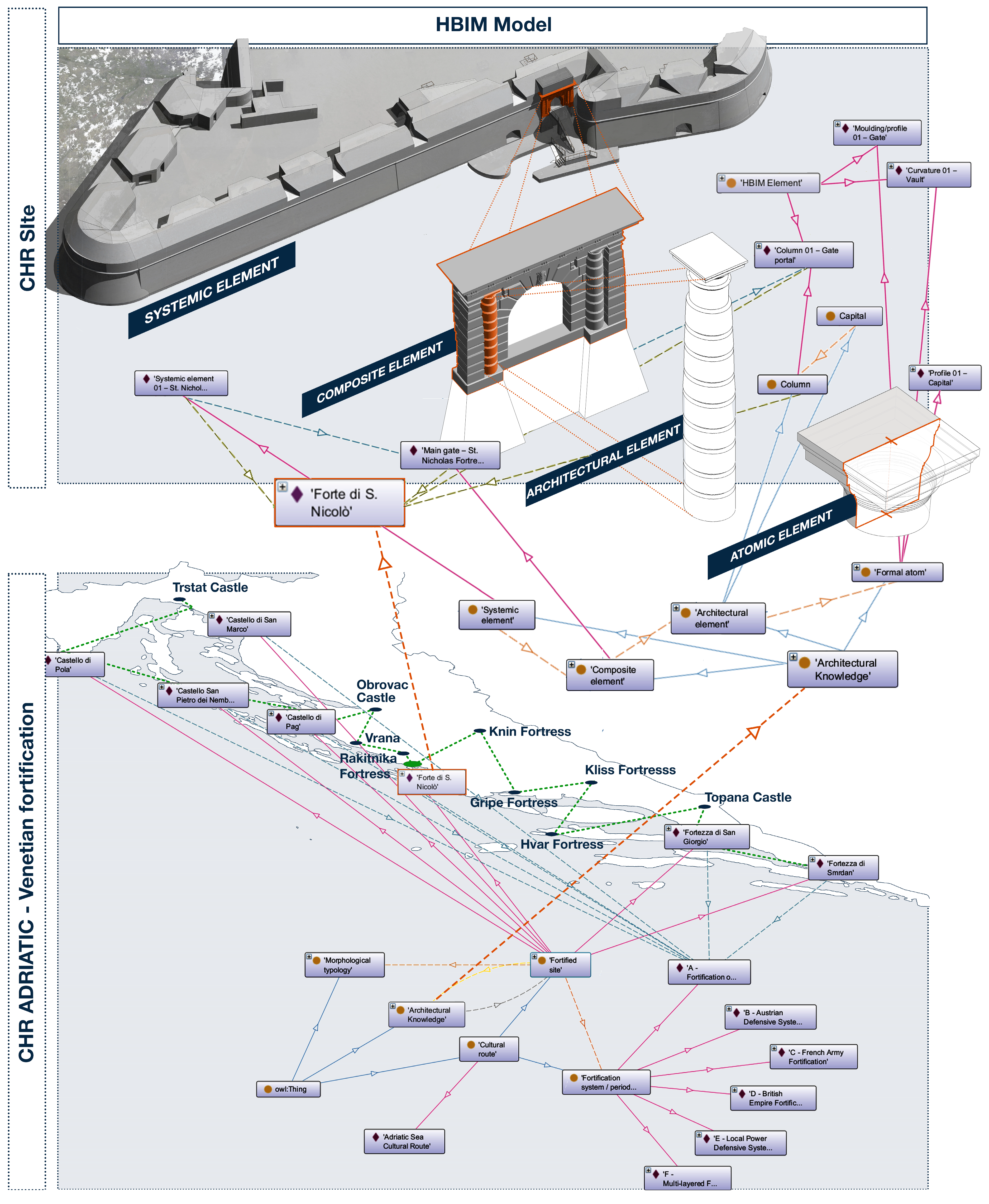
It allows the semantic articulations derived from the adopted theoretical framework—namely formal atoms, architectural elements, composite elements, and systemic elements—to be integrated with disciplinary architectural categories, preserving the distinction between geometric instances and abstract concepts. To ensure a robust and unambiguous alignment between the individuals derived from HBIM and the domain ontology, a persistent identification strategy was implemented [88]. Although Autodesk Revit assigns an internal UniqueId to each element, this identifier is not directly exposed as a durable and queryable attribute throughout standard export workflows. For this reason, the workflow explicitly rewrites the Revit UniqueId within the HBIM model through a dedicated shared instance parameter (e.g., KG_RevitUID), populated through a Dynamo routine applied in batch mode to the relevant categories. This procedure enables round-trip operations and incremental updates, preserving the reconciliation between HBIM instances and individuals within the knowledge graph. The population of the A-Box takes place through three main operational steps:
- Automated extraction of data from the HBIM model through a dedicated Dynamo script, designed to collect instances, attributes, identification codes, and the main semantic relationships.
- Conversion into a semantic format (RDF/TTL or equivalent), defining stable URIs and establishing links to the classes of the T-Box.
- Semantic mapping of the model’s-controlled code, e.g., those relating to the site (SMV, SNF), the element class (WAL, ARC), morphology, construction technique, material, and period, towards the corresponding classes and properties of the ontology.
Through this mapping process, BIM instances are semantically anchored to the architectural concepts and historical entities defined within the ontology, while maintaining a clear separation between the instance layer (A-Box) and the conceptual layer (T-Box). The resulting graph thus reflects the same hierarchical and relational logic adopted within the HBIM model, but translates it into a platform-independent semantic representation.
The correspondences were defined through relationships of equivalence or conceptual correspondence between classes and properties of the ontology. This is complemented by references to external vocabularies (e.g., Getty AAT), and a partial alignment with CRMba for general entities such as sites, architectural objects, and temporal events. The ontology therefore operates as a semantic mediation infrastructure supporting HBIM models: an abstract layer governing admissible relationships, hierarchical dependencies, and semantic constraints, while preserving the specificity of individual case studies and enabling interoperability, extensibility, and long-term control of the information system.
3. Results
The application of the framework to the Adriatic CHR case studies led to the definition of a multi-level structure for data organisation, capable of linking territorial classification, HBIM model, and semantic formalisation. The resulting system integrates three complementary layers: the classification of sites at the territorial scale, the structuring of architectural elements within HBIM models, and the subsequent formalisation of relationships within a knowledge graph. The first result concerns the definition of a coherent structure for the organisation of sites, based on territorial clusters, historical routes, and a system of unique identifiers. This arrangement made it possible to move beyond a purely inventory-based view of fortifications, treating the case studies as nodes within a relational network rather than as isolated episodes. A second result concerns the implementation of differentiated levels of representational maturity (L0–L4) defined in the methodology. This articulation made it possible to integrate case studies characterised by varying degrees of documentary and modelling depth into a single conceptual infrastructure. In this way, the CHR is not limited only to case studies for which complete HBIM models exist, but can also include sites described through textual, photographic, or less advanced geometric documentation, while still maintaining the coherence of the overall system.
3.1. Implementation of the HBIM Framework for the Adriatic CHR Case Studies
From the perspective of HBIM modelling, the framework enabled a clear distinction between recurring architectural components and complex defensive systems. This distinction was translated into implementing parametric families for recurring architectural and constructional devices, which can be used across different case studies, alongside case-by-case modelling of larger architectural configurations. This approach made it possible to balance geometric controllability, typological consistency, and adaptability to local variations, avoiding both excessive standardisation and completely episodic modelling.
The structuring of HBIM models also reflects the specific interpretation of architectural grammar established at the ontological level, in which elements are organised according to progressively increasing levels of complexity. From an operational perspective, these levels are defined within the BIM environment as follows:
- (i)
- formal atoms, consisting of basic curves, profiles, or elementary geometric modules representing the minimal units of morphological meaning and corresponding, within the HBIM environment, to geometric parameters or base profiles used in the construction of families;
- (ii)
- architectural elements, derived from the combination of these units according to recognisable compositional rules and corresponding, in the HBIM model, to architectural components implemented as parametric families;
- (iii)
- composite elements, resulting from the aggregation and nesting of multiple architectural components, analogous to the structure of nested families used to organise more complex objects within the model;
- (iv)
- systemic elements, namely articulated spatial configurations derived from the organisation of multiple composite elements and defining the relationship between architecture, defensive system, and territory.
This cognitive operation of categorisation finds its operational translation in the hierarchical structure of HBIM models, implemented through categories and nested families within the Autodesk Revit authoring environment. Each element modelled within the HBIM environment is associated with a unique alphanumeric identifier integrating information relating to the site, architectural class, morphology, construction technique, material, historical period, and instance identifier.
The integration between the territorial coding of CHR sites and the coding of HBIM objects produces a dual effect. On the one hand, each site identified within the Cultural Heritage Route system becomes the conceptual container within which the segmented architectural objects are organised. On the other hand, each coded element contributes to the description of the site as an architectural system. The site code provides the historical-territorial context, while the element code defines the internal structure of the architectural object. This results in a bidirectional relationship between macro- and micro-scale, in which the territorial classification of sites and the architectural classification of elements converge within a single information framework.
3.2. Ontological Population and Knowledge Graph Construction
A second set of results concerns the semantic formalisation of the system. The definition of the domain ontology enabled the construction of a conceptual framework that represents elements, devices, composite components, systems, chronological entities, and spatial relationships in a formally controlled manner. The distinction between T-Box and A-Box enabled the separation of the level of general concepts from that of specific occurrences, while preserving the connection between the two layers [89].
The progressive terminological population of the ontology, currently ongoing, facilitates the translation into explicit form of the architectural lexicon derived from typological analysis, model segmentation, and the definition of the three-dimensional digital glossary. In this sense, the ontological structuring functioned as the mechanism through which the different levels of articulation of architecture, from constructive detail to systemic configuration, can be compared and queried.
The A-Box component, populated through extraction from HBIM models and subsequent conversion into semantic format, made it possible to associate ontological individuals not only with geometric data and informational attributes, but also with stable links to the corresponding site, the reference model, and the related conceptual class. The adoption of a persistent identification strategy, based on rewriting the Revit UniqueId into a dedicated shared parameter, represents a relevant methodological outcome, as it enables the identity of objects to be preserved throughout the entire cycle of data extraction, conversion, updating, and reconciliation.
The resulting graph translates the hierarchical and relational logic of HBIM models into a platform-independent semantic structure. This enables not only the querying of individual objects, but also the exploration of part–whole relationships, functional dependencies, typological affiliations, chronological references, and cross-site connections. This step represents one of the central outcomes of the research, as it shifts the focus from the mere production of digital models to the construction of a formalised and scalable knowledge system.
3.3. Current Stage of Integration Towards the Multiscalar Visualisation Platform
The results obtained do not yet correspond to a fully integrated visual environment between BIM models and ontologies within the final platform; however, they establish the necessary conditions for its future development.
The semantic infrastructure already makes it possible to establish relationships between site, historical phase, typology, architectural elements, and their corresponding modelled instances, preparing the system for future operations of integrated visualisation and querying. In other words, the theoretical and methodological framework linking the territorial scale of the CHR, the architectural scale of HBIM models, and the semantic scale of the knowledge graph is operational in its structural principles.
In continuity with this methodological framework, the first experiments integrating the models within a multiscalar web-based visualisation platform have been initiated. The platform is based on WebGL technologies and developed through three-dimensional navigation frameworks operating within a browser environment. In this context, the models produced through the HBIM workflows are converted into formats optimised for web-based 3D visualisation (glTF and 3D Tiles), and their integration within interactive geospatial environments (Figure 10).
The converted models are subsequently integrated into a three-dimensional cartographic environment that enables continuous navigation between territorial and architectural scales, while the semantic structure defined by the ontology constitutes the information layer through which attributes, relationships, and queryable metadata can be associated with the visualised models.
However, the workflow for exporting and linking HBIM models, the ontological structure, and the web-based visualisation platform is still under development. Current investigations focus on identifying data exchange strategies that preserve not only geometric information but also the semantic attributes of model objects.
Figure 10.
Preliminary prototype of the web platform for the multiscalar visualisation of the Adriatic Cultural Heritage Route (A−CHR). Top: Territorial distribution of sites and organisation of layers for defensive systems and historical periods. Bottom: Integration of 3D models within a geospatial navigation environment and multiscalar exploration of St. Mary’s Fortress−Church in Vrboska. The platform represents a first experimental implementation developed using WebGL technologies based on the CesiumJS framework, with a customised HTML interface for the management of layers, navigation, and information panels. At this stage, the system demonstrates the potential for integrating HBIM models, territorial data, and information structures, providing the basis for future developments towards full integration with the knowledge graph.
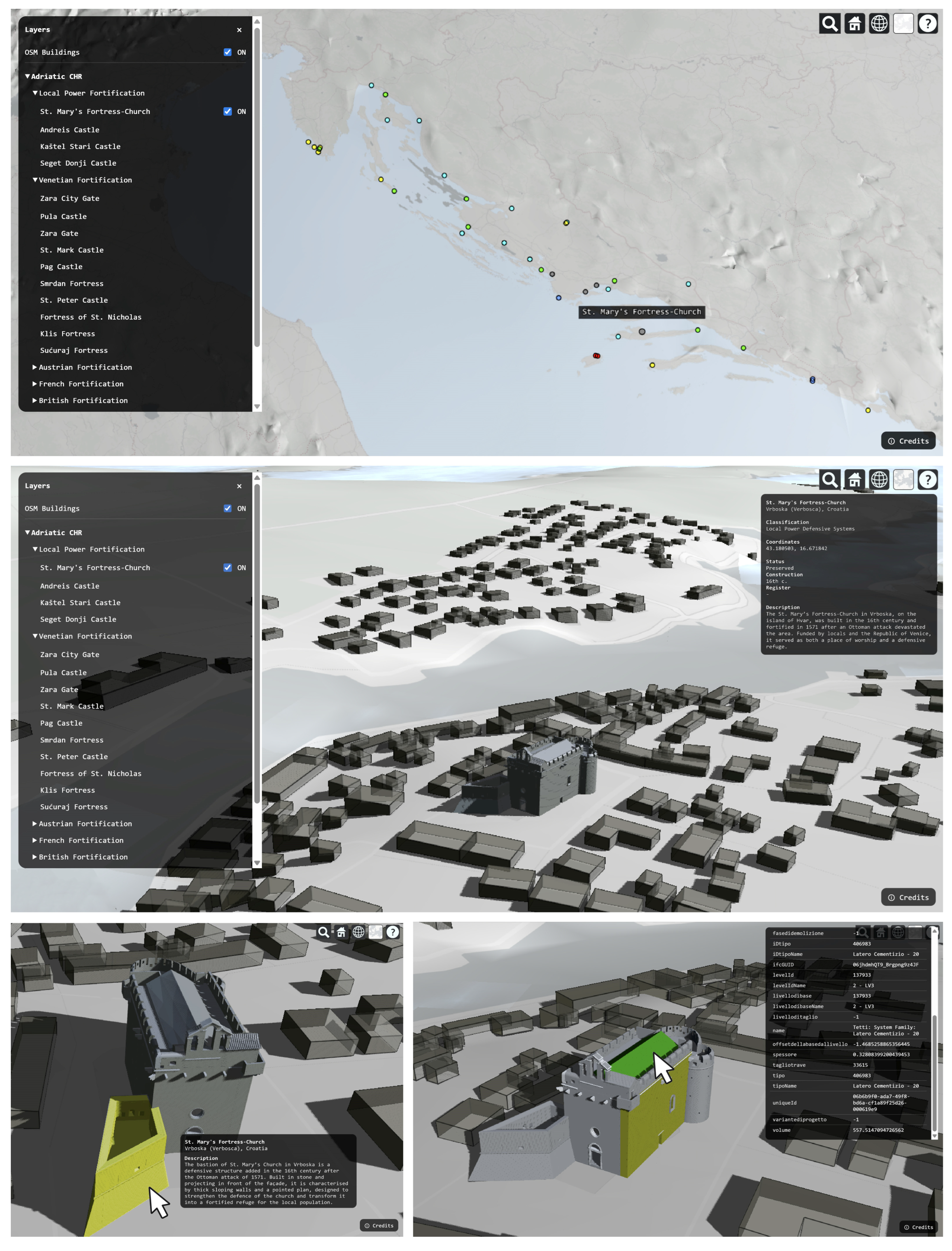
While the conversion to lightweight formats such as glTF and 3D Tiles enables efficient web-based visualisation, these formats do not fully preserve the set of attributes and relationships embedded within the BIM environment. For this reason, several data integration strategies are currently being evaluated, including the use of structured exchange formats such as IFC, which are capable of retaining a greater amount of semantic information, as well as procedures for remapping attributes extracted from the original BIM model in order to re-establish the correspondence between geometric instances and ontological individuals within the knowledge graph. The development of a multiscalar platform cannot be approached merely as a visualisation problem, but requires, first and foremost, a robust conceptual, modelling, and semantic infrastructure capable of linking HBIM, ontologies, and 3D visualisation systems within a unified information architecture.
4. Discussion
HBIM represents a privileged environment for structuring multisource data derived from digital surveys, historical documentation, geometric and material analyses, and typological studies. The integration of these sources within a single model makes it possible to represent the complexity of historic architecture, at least partially overcoming the disciplinary and technical fragmentation that has traditionally characterised heritage documentation. Within Cultural Heritage Routes (CHR), this approach assumes particular relevance. CHRs require the integration of data relating to buildings distributed across territories that are often transnational, as well as the representation of their historical, functional, and typological connections. When structured according to robust and interoperable semantic criteria, HBIM can become an effective tool for constructing multi-level models that include architectural elements, fortified systems, historical infrastructures, cultural landscapes, and territorial networks. Within this framework, multiscalarity acquires not only a technical but also an epistemological dimension, enabling heritage to be interpreted as a complex system articulated through spatial, historical, and symbolic layers that can be explored through integrated information modelling.
The contribution of ontology is decisive in this transition. While HBIM enables structuring geometry and information at the model level, ontology makes it possible to render the relationships connecting objects, sites, and systems explicit, shareable, and queryable. The integration of these two domains opens new research perspectives in which HBIM is conceived as a critical process capable of operationalising a relational understanding of architecture, moving beyond its reductive use as a post hoc modelling tool [90,91,92].
At the same time, the work highlights several issues that remain unresolved. First, not all case studies exhibit the same level of digital maturity: the coexistence of sites documented only at a descriptive level with others developed as advanced HBIM models requires integration strategies capable of managing different informational densities without compromising the overall coherence of the system. Second, the mapping between BIM environments and ontological structures still requires dedicated workflows, particularly regarding identifier persistence, round-trip management, and the maintenance of stable correspondences between geometric instances and ontological individuals [93].
A further limitation concerns the intrinsic nature of fortified heritage, which is characterised by strong morphological heterogeneity, chronological stratification, and local specificities that make uniform parametrisation difficult. For this reason, the work had to balance standardisation and adaptability, distinguishing between recurring components suitable for parametric modelling and systemic configurations that must be addressed case by case. While this balance represents a methodological strength, it also highlights how the formalisation of historic heritage cannot be reduced to a simple automated translation of survey data.
At the current stage of the research, the ontology is being progressively populated with terms and elements derived from the CHR case studies under analysis. The information models of the fortifications along the Adriatic route are being implemented in accordance with these structures, translating the formal and semantic grammar defined through typological analysis and multi-level coding into digital components and formalised relationships. The next step concerns the integration of the geometric model and the ontological structure through simultaneous visualisation platforms, interoperable environments, and, in the longer term, immersive environments.
The interaction between model and ontology may become an advanced cognitive device capable of supporting comparative analyses, simulations, attributive evaluations, and interpretative reconstructions. Such a perspective opens the possibility of developing genuine information ecosystems for heritage, in which geometric, documentary, historical, and lexical datasets converge within a navigable multiscalar platform.
5. Conclusions
This study contributes to a growing body of research that considers digital models not only as tools of representation, but also as interpretative devices for understanding historic architecture [17,29,36,94,95]. Rather than providing definitive solutions, the work aims to stimulate reflection on how information modelling, when supported by explicit semantic structures and a solid theoretical framework, can help move beyond a purely descriptive reading of digital survey data. The methodological approach outlined here, based on the translation of architectural language into digital language, the construction of shared glossaries, and the integration of multisource data, proposes an operational framework for addressing complex systems such as Adriatic fortifications. From this perspective, the multiscalar dimension is conceived as an operational condition requiring the interrelation of geometries, historical sources, typological interpretations, and territorial structures within a coherent yet open system.
From an operational perspective, the large-scale application and validation of the method are situated within a multi-year project framework, which foresees the progressive development of models and of the terminological component according to the proposed framework. Within the context of the Adriatic CHR, approximately one and a half years after the start of the project, the phases of data acquisition, geometric modelling, ontological structuring, and information integration have already been applied to an initial set of 18 case studies out of a total of 45 currently mapped, enabling a first assessment of the replicability of the process in relation to complexity and scale.
The results highlight how the development of a digital platform for the visualisation and querying of distributed heritage cannot be separated from a preliminary theoretical and methodological structuring of data.
In this sense, the main contribution of the work lies in the definition of a framework capable of linking territorial classification, HBIM modelling, and ontological formalisation, thereby establishing the conditions for future and more advanced integration between three-dimensional geometry and semantic knowledge. However, the direct and fully visualisable association between geometric models and the ontological graph within a single digital environment is still under development.
Future directions of the research concern, on the one hand, the continuation of ontological formalisation and, on the other hand, the extension of the models to the different case studies along the cultural route, as well as their integration into interoperable visualisation environments and, in the longer term, into immersive environments capable of linking three-dimensional geometries with hierarchical knowledge structures [96,97,98,99,100,101].
Author Contributions
Conceptualization, S.P.; Methodology, S.P. and A.P.; Investigation, S.P. and A.P.; Data curation, S.P. and A.P.; Writing—original draft, A.P.; Writing—review and editing, S.P. and A.P.; Supervision, S.P.; Project administration, S.P. All authors have read and agreed to the published version of the manuscript.
Funding
This research was funded by the EU (grant number 101182877).
Data Availability Statement
The original contributions presented in this study are included in the article. Further inquiries can be directed to the corresponding author.
Acknowledgments
HEPHAESTUS project—HEritage Protocols for ArcHitecturAl European croSs-bordering siTes evalUationS—is funded by the European Marie Skłodowska-Curie programme under Horizon Europe 2023, Research and Innovation Staff Exchange (RISE), Proposal No. 101182877. The project has a duration of 48 months (2024–2028) and involves the participation of academic partners: the Department of Architecture of the University of Florence (Italy, coordinating institution, Sandro Parrinello), the Department of Civil Engineering and Architecture of the University of Pavia (Italy), Gdańsk University of Technology (Poland), and Bochum University of Applied Sciences (Germany); as well as non-academic partners: Metaheritage (Italy), Fundacja To Get There (Poland), Urban Culture Institute (Poland), Tvrdava kulture Šibenik (Croatia), and the Institute of Art History (Croatia). The project addresses the theme of military architecture—traditionally associated with conflict and border defence—by reinterpreting it as transboundary cultural infrastructure capable of representing historical, territorial and identity-based continuities. Two fortified routes constitute the research laboratories: the Baltic route (Poland–Germany) and the Adriatic route (Italy–Croatia), both characterised by historical stratifications ranging from the Roman period to twentieth-century fortifications. The comparison between these systems enables the identification of analogies and differences in defensive solutions, contributing to the definition of robust knowledge bases for the development of ontologies of fortified architectural heritage. The project integrates multisource surveying, advanced digitisation techniques, HBIM modelling, Information Model Libraries and collaborative platforms, with the aim of constructing Digital Twins of cultural routes and defining interoperable standards for data management, visualisation and reuse.
Conflicts of Interest
The authors declare no conflicts of interest. The funders had no role in the design of the study; in the collection, analyses, or interpretation of data; in the writing of the manuscript; or in the decision to publish the results.
References
- Croci, G. The Conservation and Structural Restoration of Architectural Heritage; WIT Press: Cambridge, MA, USA, 1998; Volume 1. [Google Scholar]
- Silverman, H. International Council on Monuments and Sites (ICOMOS): Scientific Committees and Relationship to UNESCO. In Encyclopedia of Global Archaeology; Springer International Publishing: Cham, Switzerland, 2020; pp. 5876–5877. [Google Scholar]
- Jones, B.G. (Ed.) Protecting Historic Architecture and Museum Collections from Natural Disasters; Elsevier: Amsterdam, The Netherlands, 2014. [Google Scholar]
- International Council on Monuments and Sites (ICOMOS). Charter for the Conservation of Monuments and Sites; ICOMOS: Charenton-le-Pont, France, 1978. [Google Scholar]
- Norberg-Schultz, C. Genius Loci Towards A Phenomenology of Architecture; Rizzoli: New York, NY, USA, 1980. [Google Scholar]
- Hillier, W.R.G. Is Architectural Form Meaningless: A Configurational Theory of Generic Meaning in Architecture, and Its Limits. J. Space Syntax 2011, 2, 125–153. [Google Scholar]
- Gelernter, M. Sources of Architectural Form: A Critical History of Western Design Theory; Manchester University Press: Manchester, UK, 1995. [Google Scholar]
- Massey, D.B.; Jess, P. (Eds.) Luoghi, Culture e Globalizzazione; UTET Libreria: Torino, Italy, 2001. [Google Scholar]
- Losciale, L.V.; Lombardo, J.; De Luca, L. New semantic media and 3D architectural models representation. In Proceedings of the 2012 18th International Conference on Virtual Systems and Multimedia, Milan, Italy, 2–5 September 2012; IEEE: Manhattan, NY, USA, 2012; pp. 533–536. [Google Scholar]
- Maldonado, T. Reale e Virtuale; Feltrinelli: Milano, Italy, 2005; ISBN 9788807886560. [Google Scholar]
- Brusaporci, S. Digital Innovations in Architectural Heritage Conservation: Emerging Research and Opportunities: Emerging Research and Opportunities; IGI Global: Hershey, PA, USA, 2017. [Google Scholar]
- Simeone, D.; Cursi, S.; Acierno, M. BIM semantic-enrichment for built heritage representation. Autom. Constr. 2019, 97, 122–137. [Google Scholar] [CrossRef] [Scilit]
- Remondino, F. Heritage Recording and 3D Modeling with Photogrammetry and 3D Scanning. Remote Sens. 2011, 3, 1104–1138. [Google Scholar] [CrossRef] [Scilit]
- Georgopoulos, A. Data Acquisition for the Geometric Documentation of Cultural Heritage. In Mixed Reality and Gamification for Cultural Heritage; Ioannides, M., Magnenat-Thalmann, N., Papagiannakis, G., Eds.; Springer: Cham, Switzerland, 2017; pp. 1–15. [Google Scholar]
- Yang, B.; Haala, N.; Dong, Z. Progress and Perspectives of Point Cloud Intelligence. Geo-Spat. Inf. Sci. 2023, 26, 189–205. [Google Scholar] [CrossRef] [Scilit]
- Pietroni, E.; Ferdani, D. Virtual Restoration and Virtual Reconstruction in Cultural Heritage: Terminology, Methodologies, Visual Representation Techniques and Cognitive Models. Information 2021, 12, 167. [Google Scholar] [CrossRef] [Scilit]
- Apollonio, F.I.; Gaiani, M.; Corsi, C. A Semantic and Parametric Method for 3D Models Used in 3D Cognitive Information System. In Future Cities, Proceedings of the 28th eCAADe Conference, Zurich, Switzerland, 15–18 September 2010; vdf Hochschulverlag AG: Zurich, Switzerland, 2010; pp. 863–872. [Google Scholar]
- Chiabrando, F.; Donato, V.; Lo Turco, M.; Santagati, C. Cultural Heritage Documentation, Analysis and Management Using Building Information Modelling: State of the Art and Perspectives. In Mechatronics for Cultural Heritage and Civil Engineering; Ottaviano, E., Pelliccio, A., Gattulli, V., Eds.; Intelligent Systems, Control and Automation: Science and Engineering; Springer: Cham, Switzerland, 2018; Volume 92, pp. 171–190. [Google Scholar]
- Pettineo, A.; Chiavacci, L.; Parrinello, S. From Integrated Survey to Semantically-Enriched Models: An H-BIM Pipeline for Developing Descriptive Systems to Understand Architectural Heritage. Int. Arch. Photogramm. Remote Sens. Spat. Inf. Sci. 2025, 48, 1189–1196. [Google Scholar] [CrossRef] [Scilit]
- Parrinello, S.; Picchio, F.; De Marco, R.; Dell’Amico, A. Documenting The Cultural Heritage Routes. The Creation of Informative Models of Historical Russian Churches on Upper Kama Region. Int. Arch. Photogramm. Remote Sens. Spat. Inf. Sci. 2019, XLII-2/W15, 887–894. [Google Scholar] [CrossRef] [Scilit]
- Parrinello, S.; Picchio, F. Digital Strategies to Enhance Cultural Heritage Routes: From Integrated Survey to Digital Twins of Different European Architectural Scenarios. Drones 2023, 7, 576. [Google Scholar] [CrossRef] [Scilit]
- Chapel, N. A Multi-Scalar and Multi-Modal Approach. In The Future of Heritage Science and Technologies II: Design, Simulation and Monitoring; Springer: Cham, Switzerland, 2025; p. 472. [Google Scholar]
- Spallone, R.; Piano, A.; Piano, S. BIM and Cultural Heritage: Multi-Scalar and Multi-Dimensional Analysis and Representation of an Historical Settlement. Disegnarecon 2016, 9, 13.1–13.8. [Google Scholar]
- Noardo, F. Architectural Heritage Semantic 3D Documentation in Multi-Scale Standard Maps. J. Cult. Herit. 2018, 32, 156–165. [Google Scholar] [CrossRef] [Scilit]
- Guidi, G.; Russo, M.; Ercoli, S.; Remondino, F.; Rizzi, A.; Menna, F. A Multi-Resolution Methodology for the 3D Modeling of Large and Complex Archaeological Areas. Int. J. Archit. Comput. 2009, 7, 39–55. [Google Scholar] [CrossRef] [Scilit]
- Oprea, R.L.; Badea, A.C.; Badea, G. Multi-Source 3D Documentation for Preserving Cultural Heritage. Appl. Sci. 2026, 16, 1834. [Google Scholar] [CrossRef] [Scilit]
- Dell’Amico, A. The Walled City of Verona: Integrated Survey Systems for the Enhancement and Promotion of Verona’s City Walls. Int. Arch. Photogramm. Remote Sens. Spat. Inf. Sci. 2023, 48, 481–489. [Google Scholar]
- Vital, R.; Sylaiou, S. Digital survey: How it can change the way we perceive and understand heritage sites. Digit. Appl. Archaeol. Cult. Herit. 2022, 24, e00212. [Google Scholar] [CrossRef] [Scilit]
- Brusaporci, S. The Representation of Architectural Heritage in the Digital Age. In Encyclopedia of Information Science and Technology, 3rd ed.; Mehdi, K.P., Ed.; IGI Global: Hershey, PA, USA, 2015; pp. 4195–4205. [Google Scholar]
- De Luca, L.; Buglio, D.L. Geometry vs. Semantics: Open issues on 3D reconstruction of architectural elements. In 3D Research Challenges in Cultural Heritage; Springer: Berlin/Heidelberg, Germany, 2014; pp. 36–49. [Google Scholar]
- Apollonio, F.I.; Fallavollita, F.; Foschi, R. The Critical Digital Model for the Study of Unbuilt Architecture. In Research and Education in Urban History in the Age of Digital Libraries, Proceedings of the Second International Workshop, UHDL 2019, Dresden, Germany, 10–11 October 2019; Revised Selected Papers; Niebling, F., Münster, S., Messemer, H., Eds.; Springer CCIS: Cham, Switzerland, 2021; pp. 3–24. [Google Scholar]
- Sampaio, A.Z.; Tomé, J.; Gomes, A.M. Heritage Building Information Modelling Implementation First Steps Applied in a Castle Building: Historic Evolution Identity, Data Collection and Stratigraphic Modelling. Heritage 2023, 6, 6472–6493. [Google Scholar] [CrossRef] [Scilit]
- De Luca, L.; Bussayarat, C.; Stefani, C.; Véron, P.; Florenzano, M. A semantic-based platform for the digital analysis of architectural heritage. J. Comput. Graph. 2011, 35, 227–241. [Google Scholar] [CrossRef] [Scilit]
- Malinverni, E.S.; Mariano, F.; Di Stefano, F.; Petetta, L.; Onori, F. Modelling in HBIM to Document Materials Decay by a Thematic Mapping to Manage the Cultural Heritage: The Case of “Chiesa Della Pietà” in Fermo. In Proceedings of the ISPRS Annals of the Photogrammetry, Remote Sensing and Spatial Information Sciences, Milan, Italy, 8–10 May 2019; Volume 42. [Google Scholar] [CrossRef] [Scilit]
- Apollonio, F.I.; Gaiani, M.; Sun, Z. BIM-based Modeling and Data Enrichment of Classical Architectural Buildings. SCIRES-IT 2012, 2, 41–62. [Google Scholar]
- Parrinello, S.; Pettineo, A. Databases and Information Models for Semantic and Evolutionary Analysis in Fortified Cultural Heritage. Heritage 2025, 8, 29. [Google Scholar] [CrossRef] [Scilit]
- Koutros, E.; Anagnostopoulos, C.N. A Review of Heritage Building Information Modelling: Classification of HBIM through the Utilization of Different Dimensions (3D to 7D). In Transdisciplinary Multispectral Modeling and Cooperation for the Preservation of Cultural Heritage; Springer: Cham, Switzerland, 2023; pp. 287–297. [Google Scholar]
- Costamagna, E.; Spanò, A. Semantic Models for Architectural Heritage Documentation. In Proceedings of the Progress in Cultural Heritage Preservation; Ioannides, M., Fritsch, D., Leissner, J., Davies, R., Remondino, F., Caffo, R., Eds.; Springer: Berlin/Heidelberg, Germany, 2012; pp. 241–250. [Google Scholar]
- Ávila, F.; Blanca-Hoyos, Á.; Puertas, E.; Gallego, R. HBIM: Background, Current Trends, and Future Prospects. Appl. Sci. 2024, 14, 11191. [Google Scholar] [CrossRef] [Scilit]
- Niknam, M.; Karshenas, S. A Shared Ontology Approach to Semantic Representation of BIM Data. Autom. Constr. 2017, 80, 22–36. [Google Scholar] [CrossRef] [Scilit]
- Moyano, J.; Pili, A.; Nieto-Julián, J.E.; Della Torre, S.; Bruno, S. Semantic interoperability for cultural heritage conservation: Workflow from ontologies to a tool for managing and sharing data. J. Build. Eng. 2023, 80, 107965. [Google Scholar] [CrossRef] [Scilit]
- Parrinello, S.; Dell’Amico, A. From Survey to Parametric Models: HBIM Systems for Enrichment of Cultural Heritage Management. In From Building Information Modelling to Mixed Reality; Bolognesi, C., Villa, D., Eds.; Springer International Publishing: Cham, Germany, 2021; pp. 89–107. [Google Scholar]
- Sanseverino, A.; Messina, B.; Limongiello, M.; Guida, C.G. An HBIM Methodology for the Accurate and Georeferenced Reconstruction of Urban Contexts Surveyed by UAV: The Case of the Castle of Charles V. Remote Sens. 2022, 14, 3688. [Google Scholar] [CrossRef] [Scilit]
- Ferreira-Lopes, P.; González-Gracia, E. Performing a Systematic Literature Review on the Implementation of the CIDOC CRM in Cultural Heritage. ACM J. Comput. Cult. Herit. 2025, 18, 68. [Google Scholar] [CrossRef] [Scilit]
- Rasmussen, M.H.; Lefrançois, M.; Schneider, G.F.; Pauwels, P. BOT: The Building Topology Ontology of the W3C Linked Building Data Group. Semant. Web 2020, 12, 143–161. [Google Scholar] [CrossRef] [Scilit]
- Argasiński, K.; Tomczak, A. Enhancing Semantic Interoperability of Heritage BIM-Based Asset Preservation. Heritage 2025, 8, 410. [Google Scholar] [CrossRef] [Scilit]
- Lovell, L.J.; Davies, R.J.; Hunt, D.V. The Application of Historic Building Information Modelling (HBIM) to Cultural Heritage: A Review. Heritage 2023, 6, 6691–6717. [Google Scholar] [CrossRef] [Scilit]
- López-González, C.; García-Valldecabres, J. The Integration of HBIM-SIG in the Development of a Virtual Itinerary in a Historical Centre. Sustainability 2023, 15, 13931. [Google Scholar] [CrossRef] [Scilit]
- Galeazzo, L.; Grillo, R.; Spinaci, G. A Geospatial and Time-Based Reconstruction of the Venetian Lagoon in a 3D Web Semantic Infrastructure. CEUR Workshop Proc. 2024, 3643, 212–225. [Google Scholar]
- Galeazzo, L. Risemantizzare Paesaggi Perduti: Un Database per l’Arcipelago Veneziano. Tribelon J. Draw. Represent. Archit. Landsc. Environ. 2024, 1, 64–75. [Google Scholar] [CrossRef] [Scilit]
- Pettineo, A.; Dell’Amico, A.; Picchio, F.; Parrinello, S. H-BIM e GIS per l’analisi e la ricostruzione filologica del castello di Almencir in Spagna. DN—Build. Inf. Model. Data Semant. 2024, 14, 6–16. [Google Scholar]
- Palomar, I.J.; García Valldecabres, J.L.; Tzortzopoulos, P.; Pellicer, E. An online platform to unify and synchronise heritage architecture information. Autom. Constr. 2020, 110, 103008. [Google Scholar] [CrossRef] [Scilit]
- Maietti, F.; Di Giulio, R.; Balzani, M.; Piaia, E.; Medici, M.; Ferrari, F. Digital Memory and Integrated Data Capturing: Innovations for an Inclusive Cultural Heritage in Europe through 3D Semantic Modelling. In Mixed Reality and Gamification for Cultural Heritage; Ioannides, M., Magnenat-Thalmann, N., Papagiannakis, G., Eds.; Springer: Berlin, Germany, 2017; pp. 225–244. [Google Scholar]
- Lin, X.; Shen, Z.; Teng, X.; Mao, Q. Cultural Routes as Cultural Tourism Products for Heritage Conservation and Regional Development: A Systematic Review. Heritage 2024, 7, 2399–2425. [Google Scholar] [CrossRef] [Scilit]
- Gudelj, J. Norme e Modelli: Il Rinascimento e l’Adriatico Orientale; Aracne: Roma, Italy, 2023. [Google Scholar]
- Bilić, D. I protagonisti dell’edilizia militare in Dalmazia nei secoli XVII e XVIII. In Architettura Militare di Venezia in Terraferma e in Adriatico fra XVI e XVII Secolo: Atti del Convegno Internazionale di Studi, Palmanova, Teatro Gustavo Modena, 8–10 Novembre 2013; Biblioteca dell’”Archivum Romanicum”; Serie I: Storia, Letteratura, Paleografia; Olschki Editore: Firenze, Italy, 2014; Volume 436, pp. 359–379. [Google Scholar]
- Papeš, K. Military Architecture Between Theory and Practice in the Early Modern Eastern Adriatic. Ph.D. Thesis, Faculty of Humanities and Social Sciences, University of Zagreb, Zagreb, Croatia, 2024. [Google Scholar]
- Žmegač, A. Fortezze venete in Dalmazia. In Architettura Militare di Venezia in Terraferma e in Adriatico fra XVI e XVII Secolo: Atti del Convegno Internazionale di Studi, Palmanova, Teatro Gustavo Modena, 8–10 Novembre 2013; Biblioteca dell’”Archivum Romanicum”; Serie I: Storia, Letteratura, Paleografia; Olschki Editore: Firenze, Italy, 2014; Volume 436, pp. 283–303. [Google Scholar]
- Brusaporci, S.; Maiezza, P.; Marra, A.; Tata, A.; Vespasiano, L. Scan-to-HBIM Reliability. Drones 2023, 7, 426. [Google Scholar] [CrossRef] [Scilit]
- Brumana, R.; Della Torre, S.; Previtali, M.; Barazzetti, L.; Cantini, L.; Oreni, D.; Banfi, F. Generative HBIM Modelling to Embody Complexity (LOD, LOG, LOA, LOI): Surveying, Preservation, Site Intervention—The Basilica di Collemaggio (L’Aquila). Appl. Geomat. 2018, 10, 545–567. [Google Scholar] [CrossRef] [Scilit]
- Nieto-Julián, E.; Robador, M.D.; Moyano, J.; Bruno, S. Semantic HBIM for Heritage Conservation: A Methodology for Mapping Deterioration and Structural Deformation in Historic Envelopes. Buildings 2025, 15, 1990. [Google Scholar] [CrossRef] [Scilit]
- Martinelli, L.; Calcerano, F.; Gigliarelli, E. Methodology for an HBIM Workflow Focused on the Representation of Construction Systems of Built Heritage. J. Cult. Herit. 2022, 55, 277–289. [Google Scholar] [CrossRef] [Scilit]
- Dore, C.; Murphy, M. Semi-automatic modelling of building facades with shape grammars using historic building information modelling. ISPRS Int. Arch. Photogramm. Remote Sens. Spat. Inf. Sci. 2013, 40, 57–64. [Google Scholar] [CrossRef] [Scilit]
- Refalian, G.; Coloma, E.; Moya, J.N. A morphological study of fivefold Islamic geometric patterns using formal grammar for computer-aided design applications. Int. J. Archit. Comput. 2023, 22, 295–322. [Google Scholar] [CrossRef] [Scilit]
- Oreni, D.; Brumana, R.; Banfi, F.; Bertola, L.; Barazzetti, L.; Cuca, B.; Roncoroni, F. Beyond Crude 3D Models: From Point Clouds to Historical Building Information Modeling Via NURBS. In EuroMed, Limassol, Cyprus, 3–8 November 2014; Springer: Cham, Swizterland, 2014; pp. 166–175. [Google Scholar]
- Rocha, G.; Mateus, L.; Fernández, J.; Ferreira, V. A Scan-to-BIM Methodology Applied to Heritage Buildings. Heritage 2020, 3, 47–67. [Google Scholar] [CrossRef] [Scilit]
- De Luca, L.; Véron, P.; Florenzano, M. A generic formalism for the semantic modeling and representation of architectural elements. Vis. Comput. 2007, 23, 181–205. [Google Scholar] [CrossRef] [Scilit]
- Giovannini, E.C. Making Palladio Digitally Explicit: Geometrical Parameters in Door’s Ornaments. Nexus Netw. J. 2023, 25, 773–794. [Google Scholar] [CrossRef] [Scilit]
- Spallone, R.; Vitali, M.; Natta, F.; Pupi, E. Parametric Variations of the “Delineationi Seconde delle Fortezze, e dell’Ortografia Loro”, from the Trattato di Fortificatione by Guarini. In Defensive Architecture of the Mediterranean; Fortmed; edUPV (Editorial Universitat Politècnica de València): Valencia, Spain, 2025; Volume 20. [Google Scholar]
- Porcheddu, G. Dalla Difesa al Culto: Lo Spazio Sacro del Limen nei Cimiteri Fortificati. In Defensive Architecture of the Mediterranean; Proceedings of FORTMED 2025; edUPV (Universitat Politècnica de València): Valencia, Spain, 2025; Volume XXI. [Google Scholar]
- Saccucci, M.; Pelliccio, A.; Giordano, A. Ontological Definition of Information Classes for Early Modern Fortified Heritage. In Defensive Architecture of the Mediterranean; Proceedings of FORTMED 2025; edUPV (Universitat Politècnica de València): Valencia, Spain, 2025; Volume XX. [Google Scholar]
- Mao, Y.; Lu, H.; Xiao, Y.; Lai, Z.; Huang, L. A Parametric HBIM Approach for Preservation of Bai Ethnic Traditional Timber Dwellings in Yunnan, China. Buildings 2024, 14, 1960. [Google Scholar] [CrossRef] [Scilit]
- Machete, R.; Falcão, A.P.; Gonçalves, A.B.; Godinho, M.; Bento, R. Development of a Manueline Style Object Library for Heritage BIM. Int. J. Archit. Herit. 2021, 15, 1930–1941. [Google Scholar] [CrossRef] [Scilit]
- Lo Turco, M.; Bono, J.; Tomalini, A. Parameters, modeling and taxonomy for an HBIM Baroque façade. Nexus Netw. J. 2024, 26, 609–630. [Google Scholar] [CrossRef] [Scilit]
- Moyano, J.; Gil-Arizón, I.; Nieto-Julián, J.E.; Marín-García, D. Analysis and management of structural deformations through parametric models and HBIM workflow in architectural heritage. J. Build. Eng. 2022, 45, 103274. [Google Scholar] [CrossRef] [Scilit]
- Quattrini, R.; Sacco, G.L.S.; De Angelis, G.; Battini, C. Knowledge-Based Modelling for Automatizing HBIM Objects. the Vaulted Ceilings of Palazzo Ducale in Urbino. Int. Arch. Photogramm. Remote Sens. Spat. Inf. Sci. 2023, 48, 1271–1278. [Google Scholar] [CrossRef] [Scilit]
- Bigongiari, M. Beyond the Module: Measuring Adaptation in the Laurentian Palimpsest. Tribelon J. Draw. Represent. Archit. Landsc. Environ. 2025, 2, 66–75. [Google Scholar] [CrossRef] [Scilit]
- De Marco, R.; Pettineo, A. The recognition of Heritage qualities from feature-based digital procedures in the analysis of historical urban contexts. Int. Arch. Photogramm. Remote Sens. Spat. Inf. Sci. 2022, 46, 175–182. [Google Scholar] [CrossRef] [Scilit]
- Moyano, J.; León, J.; Nieto-Julián, J.E.; Bruno, S. Semantic interpretation of architectural and archaeological geometries: Point cloud segmentation for HBIM parameterisation. Autom. Constr. 2021, 130, 103856. [Google Scholar] [CrossRef] [Scilit]
- Dell’Amico, A.; Sanseverino, A.; Albertario, S. Point Cloud Data Semantization for Parametric Scan-to-HBIM Modeling Procedures. In Beyond Digital Representation: Advanced Experiences in AR and AI for Cultural Heritage and Innovative Design; Springer Nature: Cham, Switzerland, 2023; pp. 515–533. [Google Scholar]
- Abreu, N.; Pinto, A.; Matos, A.; Pires, M. Procedural Point Cloud Modelling in Scan-to-BIM and Scan-vs-BIM Applications: A Review. ISPRS Int. J. Geo-Inf. 2023, 12, 260. [Google Scholar] [CrossRef] [Scilit]
- Allegra, V.; Di Paola, F.; Lo Brutto, M.; Vinci, C. Scan-to-BIM for the Management of Heritage Buildings: The Case Study of the Castle of Maredolce (Palermo, Italy). Int. Arch. Photogramm. Remote Sens. Spat. Inf. Sci. 2020, 43, 1355–1362. [Google Scholar] [CrossRef] [Scilit]
- Colucci, E.; Kokkla, M.; Mostafavi, M.A.; Noardo, F.; Spano, A. Semantically describing urban historical buildings across different levels of granularity. Int. Arch. Photogramm. Remote Sens. Spat. Inf. Sci. 2020, 43, 33–40. [Google Scholar] [CrossRef] [Scilit]
- Parrinello, S.; Pettineo, A. Traditional Architectures Along the Cultural Route of James I of Aragon in the Province of Valencia: Leveraging Laser Scanning and BIM for Heritage Management. Mater. Res. Proc. 2024, 40, 350–357. [Google Scholar] [CrossRef] [Scilit]
- Bakkas, J.; Bahaj, M.; Marzouk, A. Direct Migration Method of RDB to Ontology while Keeping Semantics. Int. J. Comput. Appl. 2013, 65. Available online: https://www.researchgate.net/publication/283425381_Direct_Migration_Method_of_RDB_to_Ontology_while_Keeping_Semantics (accessed on 20 March 2026).
- Clarizia, F.; De Santo, M.; Gaeta, R.; Mosca, R. Method for Ontology Learning from an RDB: Application to the Domain of Cultural Heritage. In International Conference on Image Analysis and Processing; Springer Nature: Cham, Switzerland, 2023; pp. 409–421. [Google Scholar]
- Morolli, G.; Cantini, C. La Lingua delle Colonne: Morfologia, Proporzioni e Semantica degli Ordini Architettonici; Edifir, Edizioni: Firenze, Italy, 2013. [Google Scholar]
- Cursi, S.; Martinelli, L.; Paraciani, N.; Calcerano, F.; Gigliarelli, E. Linking external knowledge to heritage BIM. Autom. Constr. 2022, 141, 104444. [Google Scholar] [CrossRef] [Scilit]
- Andrea, B.; Carlo, B. Semantic Integration of BIM Model with Existing Asset Databases and IoT Data for Public Administrations. In Representation Across Boundaries: New Links with AI, AI-GEN, and XR Tools for Cultural Heritage and Innovative Design; Springer Nature: Cham, Switzerland, 2026; pp. 887–904. [Google Scholar] [CrossRef] [Scilit]
- Parrinello, S.; Bigongiari, M.; Dell’Amico, A.; Dellabartola, G.; Pettineo, A. Il Disegno delle Isole “Minori” dell’Arcipelago Veneziano. Disegno 2024, 541–560. [Google Scholar] [CrossRef] [Scilit]
- Liu, Y.; Xu, C.; Pan, Z.; Pan, Y. Semantic modeling for ancient architecture of digital heritage. Comput. Graph. 2006, 30, 800–814. [Google Scholar] [CrossRef] [Scilit]
- Colucci, E.; Xing, X.; Kokla, M.; Mostafavi, M.A.; Noardo, F.; Spanò, A. Ontology-based semantic conceptualisation of historical built heritage to generate parametric structured models from point clouds. Appl. Sci. 2021, 11, 2813. [Google Scholar] [CrossRef] [Scilit]
- Dammag, B.Q.D.; Jian, D.; Dammag, A.Q.; Almutery, S.; Habibullah, A.; Baik, A. A Geospatially Enabled HBIM–GIS Framework for Sustainable Documentation and Conservation of Heritage Buildings. Buildings 2026, 16, 585. [Google Scholar] [CrossRef] [Scilit]
- Mansuri, L.E.; Patel, D.A.; Udeaja, C.; Makore, B.C.N.; Trillo, C.; Awuah, K.G.B.; Jha, K.N. A Systematic Mapping of BIM and Digital Technologies for Architectural Heritage. Smart Sustain. Built Environ. 2022, 11, 1060–1080. [Google Scholar] [CrossRef] [Scilit]
- Stefani, C.; De Luca, L.; Véron, P.; Florenzano, M. Time Indeterminacy and Spatio-Temporal Building Transformations: An Approach for Architectural Heritage Understanding. Int. J. Interact. Des. Manuf. 2010, 4, 61–74. [Google Scholar] [CrossRef] [Scilit]
- Pettineo, A. Videogrammetry for the virtual philological reconstruction of the Scaliger fortifications in the territory of Verona: The case study of Montorio Castle. In D-SITE Drones-Systems of Information on Cultural Heritage for a Spatial and Social Investigation; Pavia University Press: Pavia, Italia, 2022; Volume 2, pp. 104–111. [Google Scholar]
- Zhou, Z.; Liu, Z.; Wang, G. Driving Sustainable Cultural Heritage Tourism in China through Heritage Building Information Modeling. Buildings 2024, 14, 3120. [Google Scholar] [CrossRef] [Scilit]
- Parrinello, S.; Porcheddu, G. Sistemi informativi dinamici a supporto della documentazione archeologica per interventi in emergenza. Restauro Archeol. 2022, 30, 48–65. [Google Scholar] [CrossRef] [Scilit]
- Liu, Z.; Zhang, M.; Osmani, M. Building Information Modelling (BIM) Driven Sustainable Cultural Heritage Tourism. Buildings 2023, 13, 1925. [Google Scholar] [CrossRef] [Scilit]
- Parrinello, S. Digital & Documentation. Databases and Models for the Enhancement of Heritage; Pavia University Press: Pavia, Italy, 2019; pp. 1–144. [Google Scholar]
- Dell’Amico, A.; Dellabartola, G. H-GIS and Digital Strategies for the Documentation and Preservation of the Serenissima’s Cultural Heritage: Spatio-Temporal Mapping of Itineraries along the Adriatic Coast. Int. Arch. Photogramm. Remote Sens. Spat. Inf. Sci. 2025, 48, 383–390. [Google Scholar] [CrossRef] [Scilit]
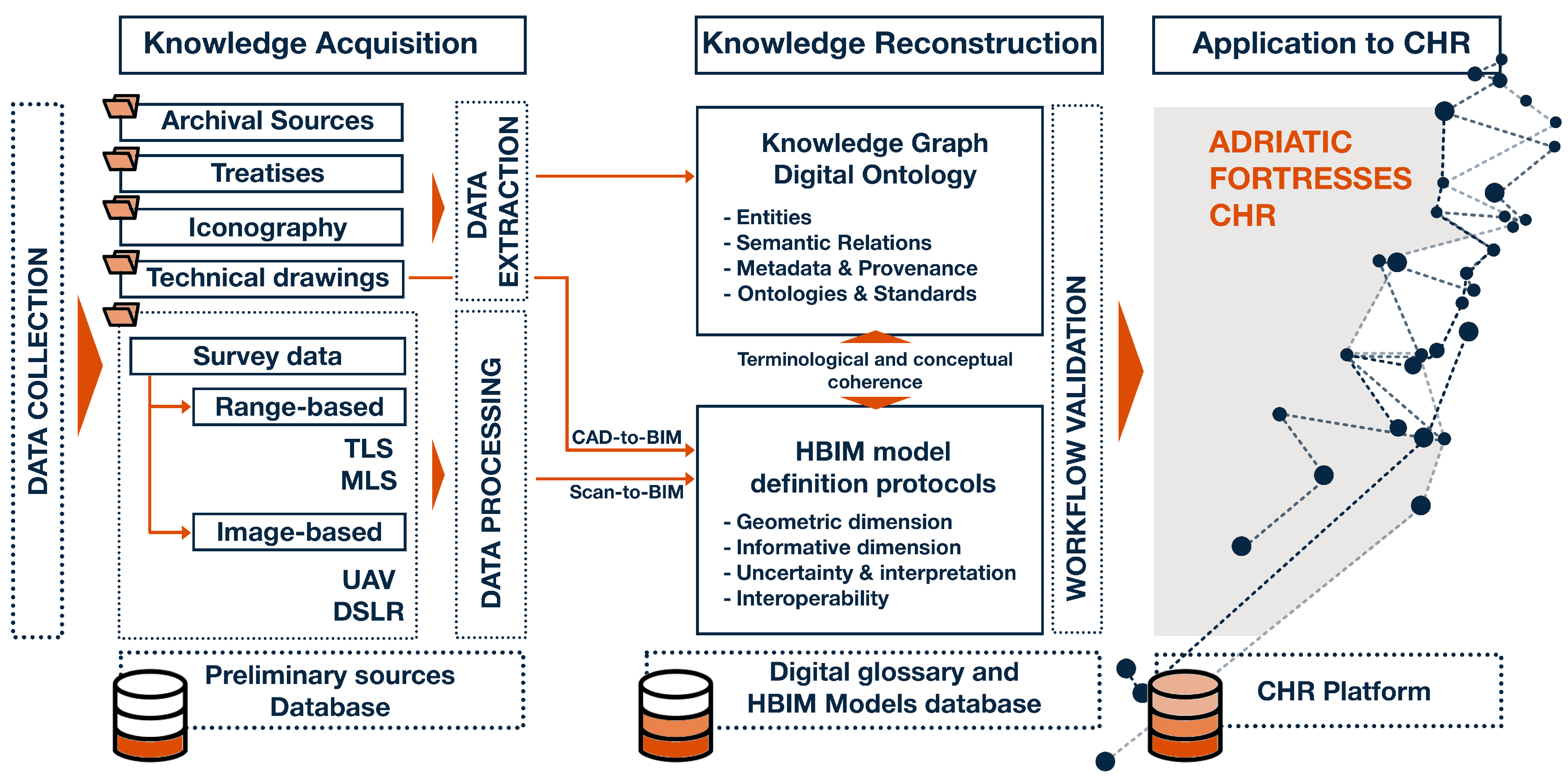
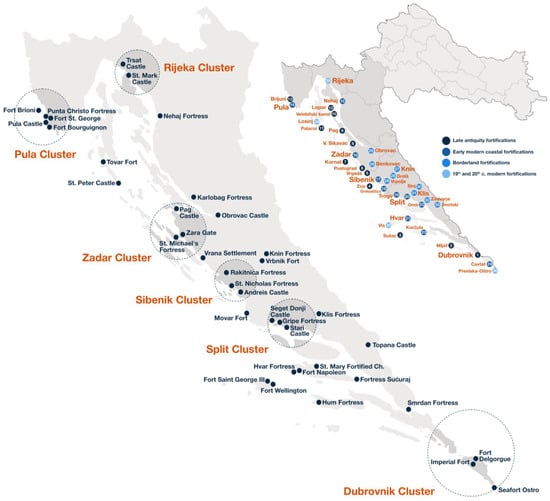
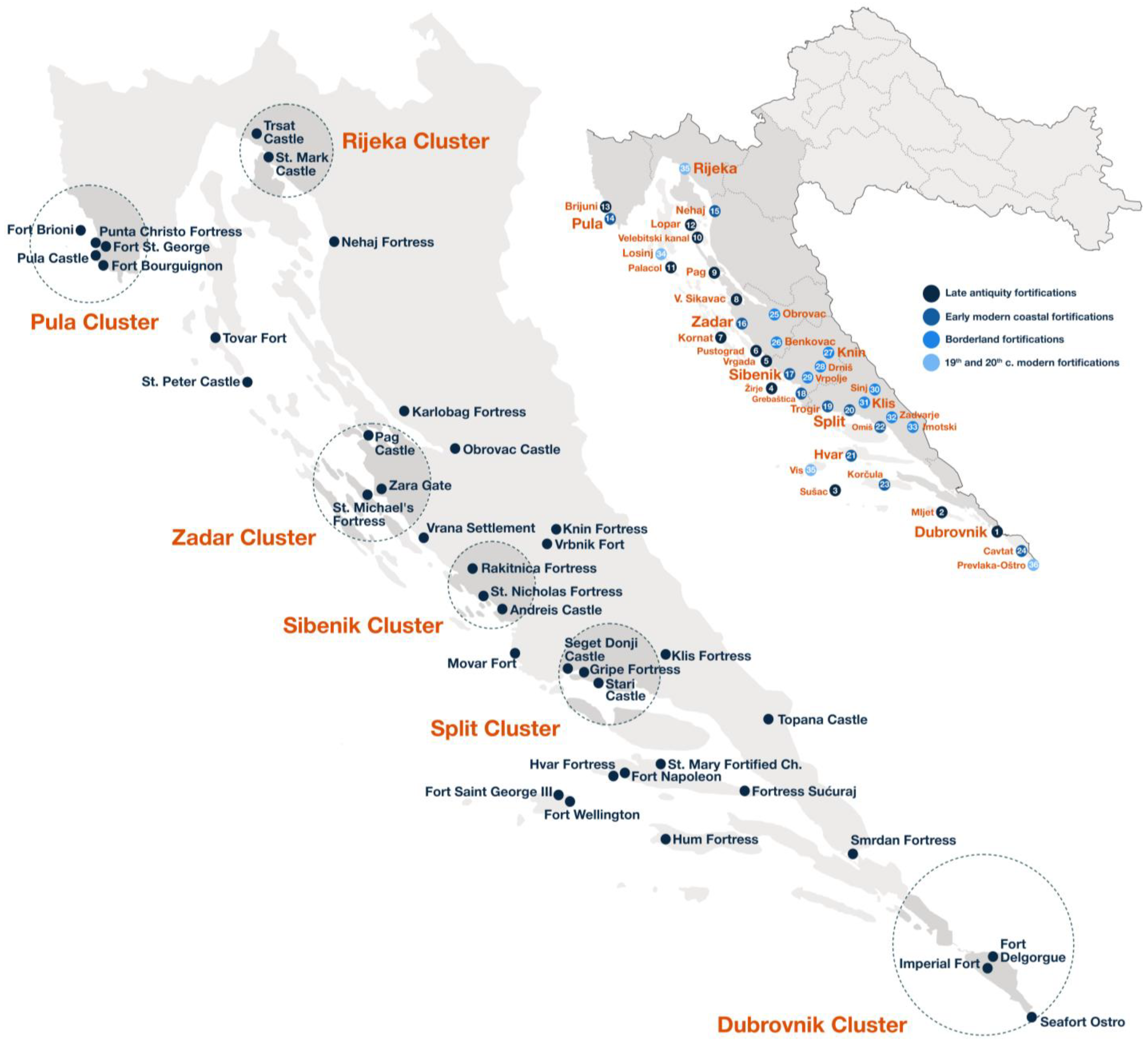
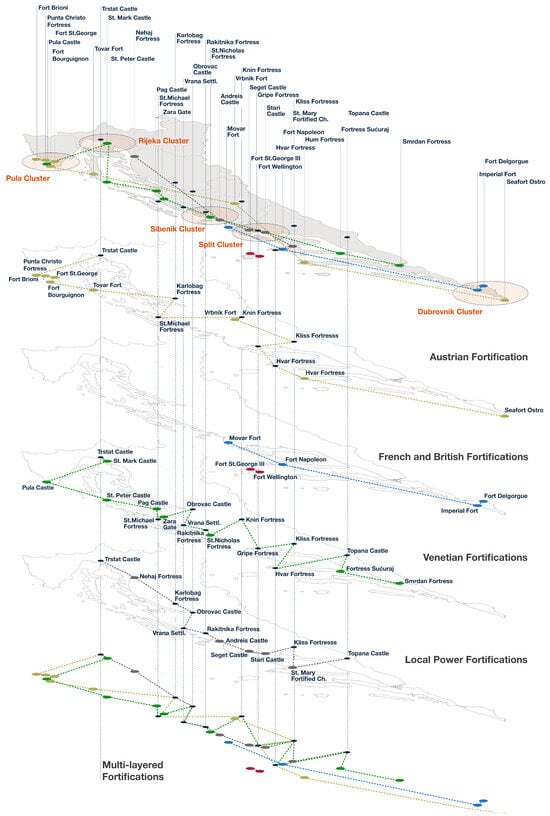
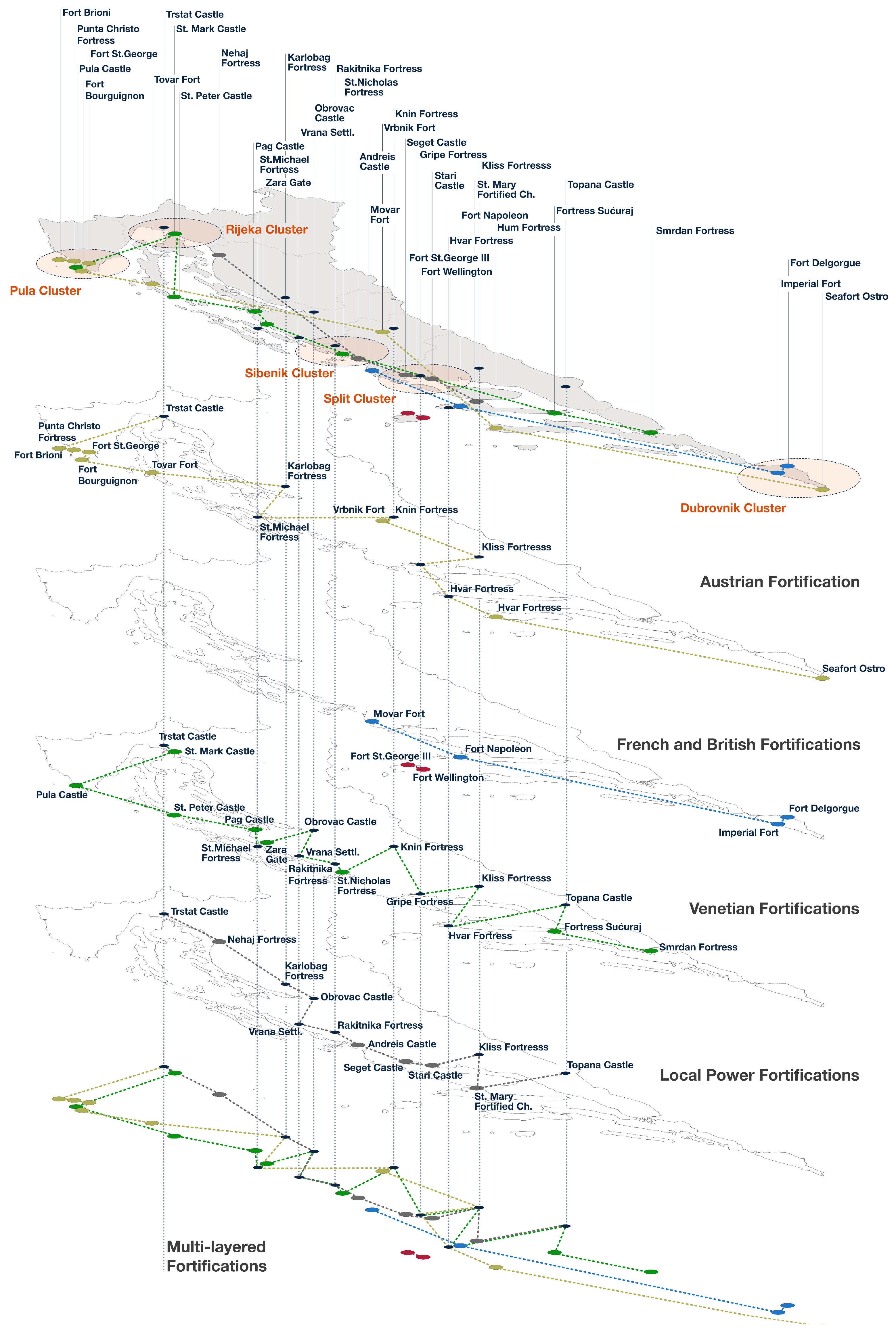
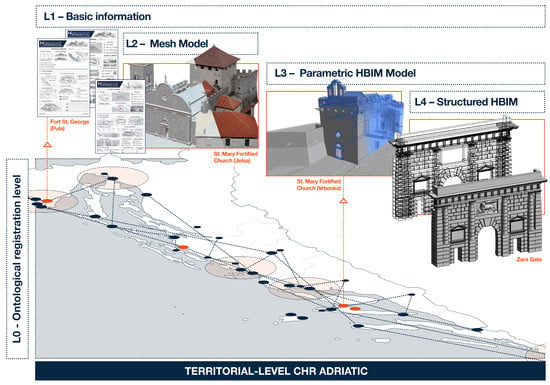
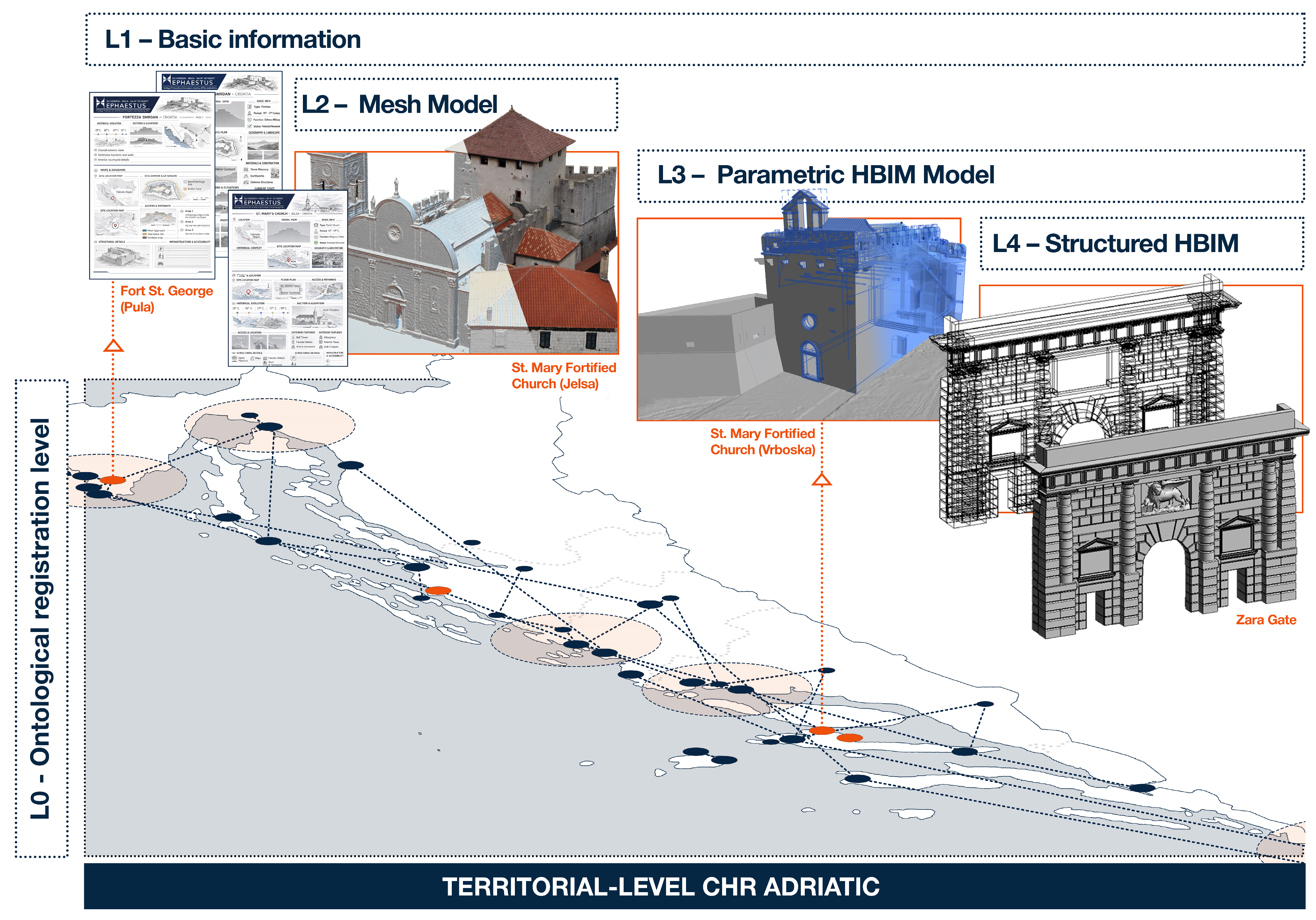
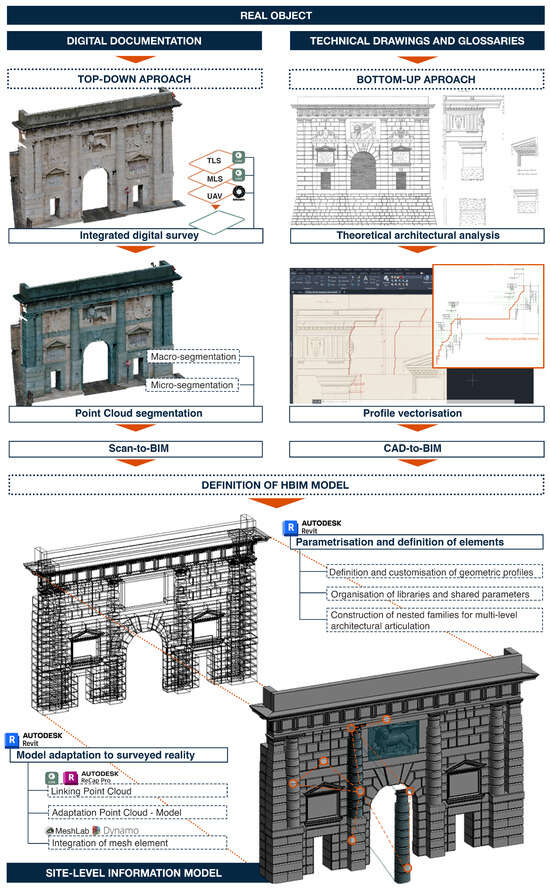
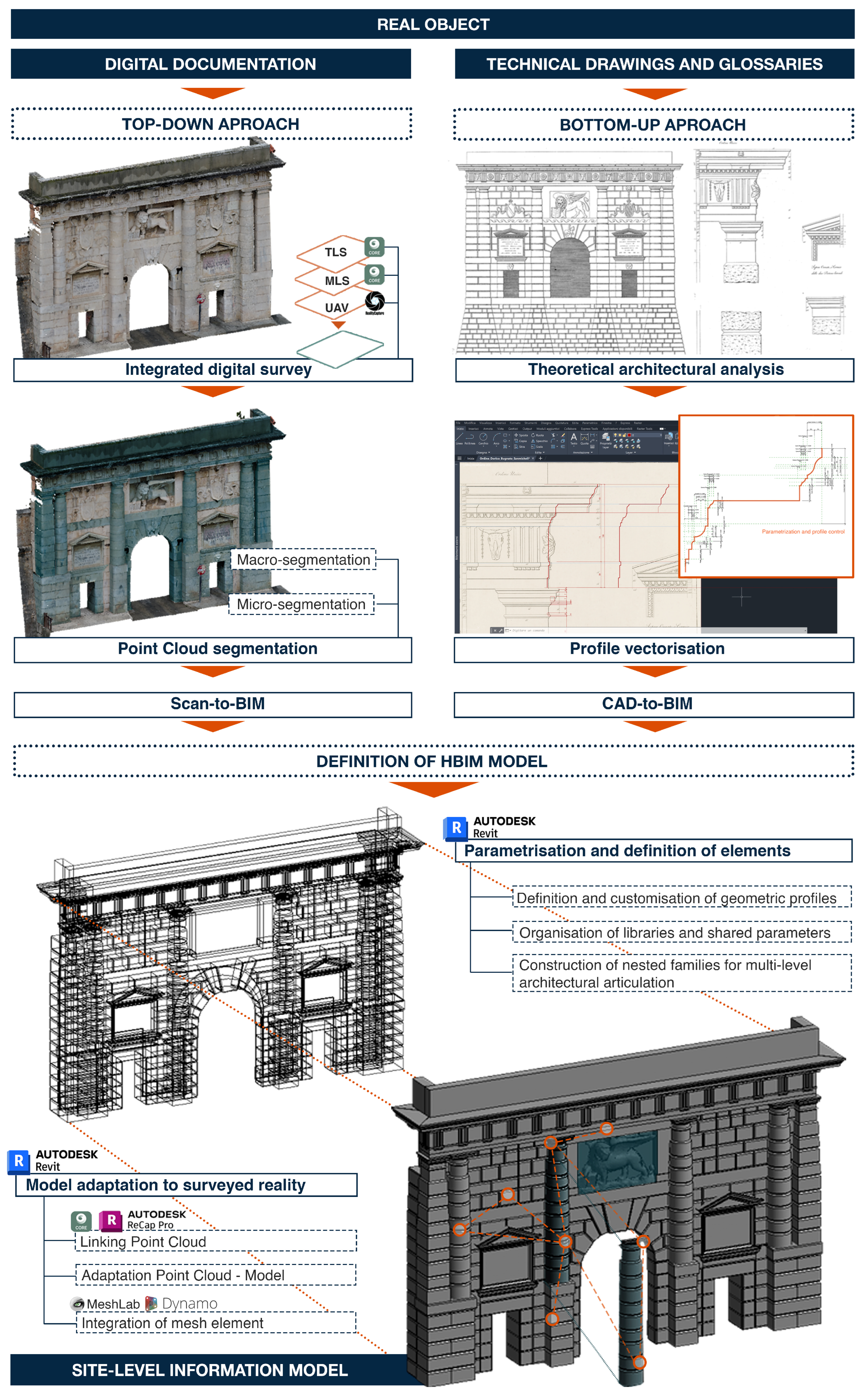
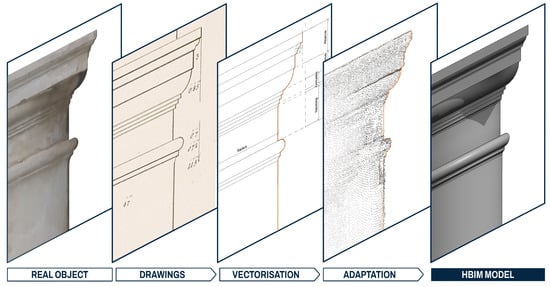
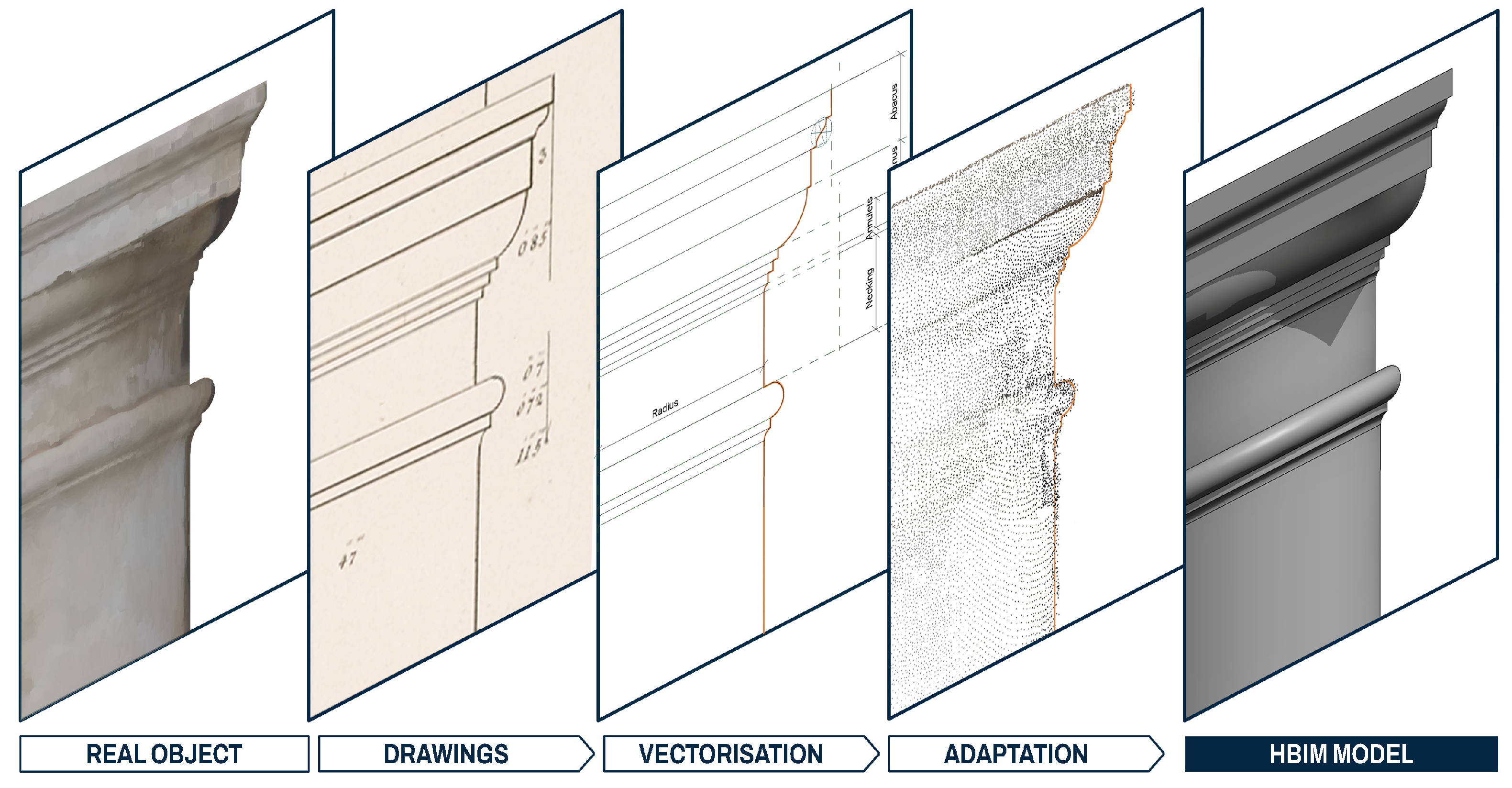
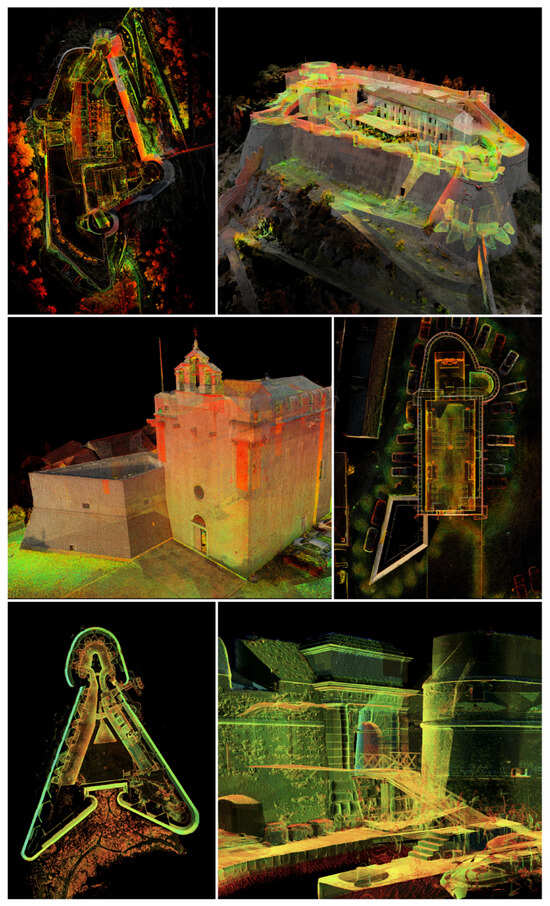
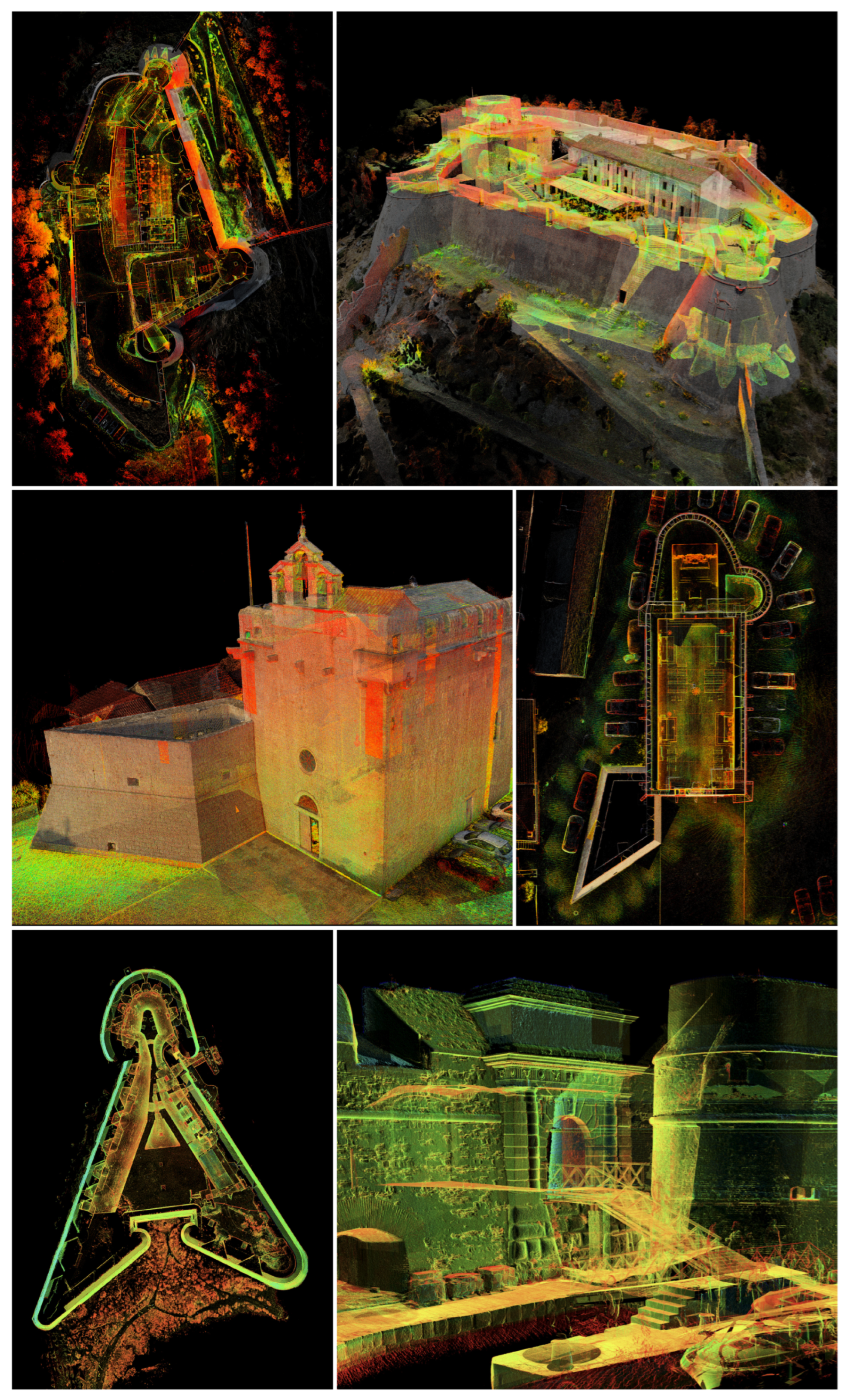
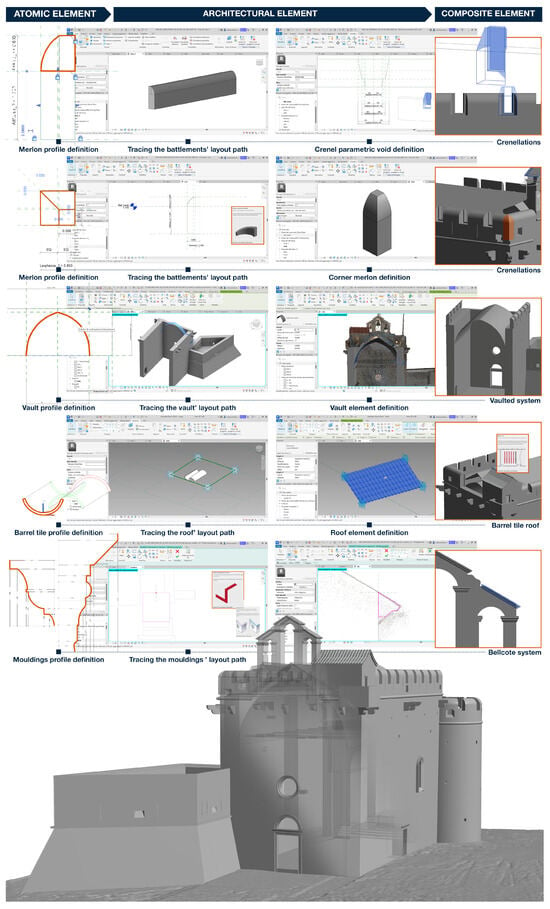
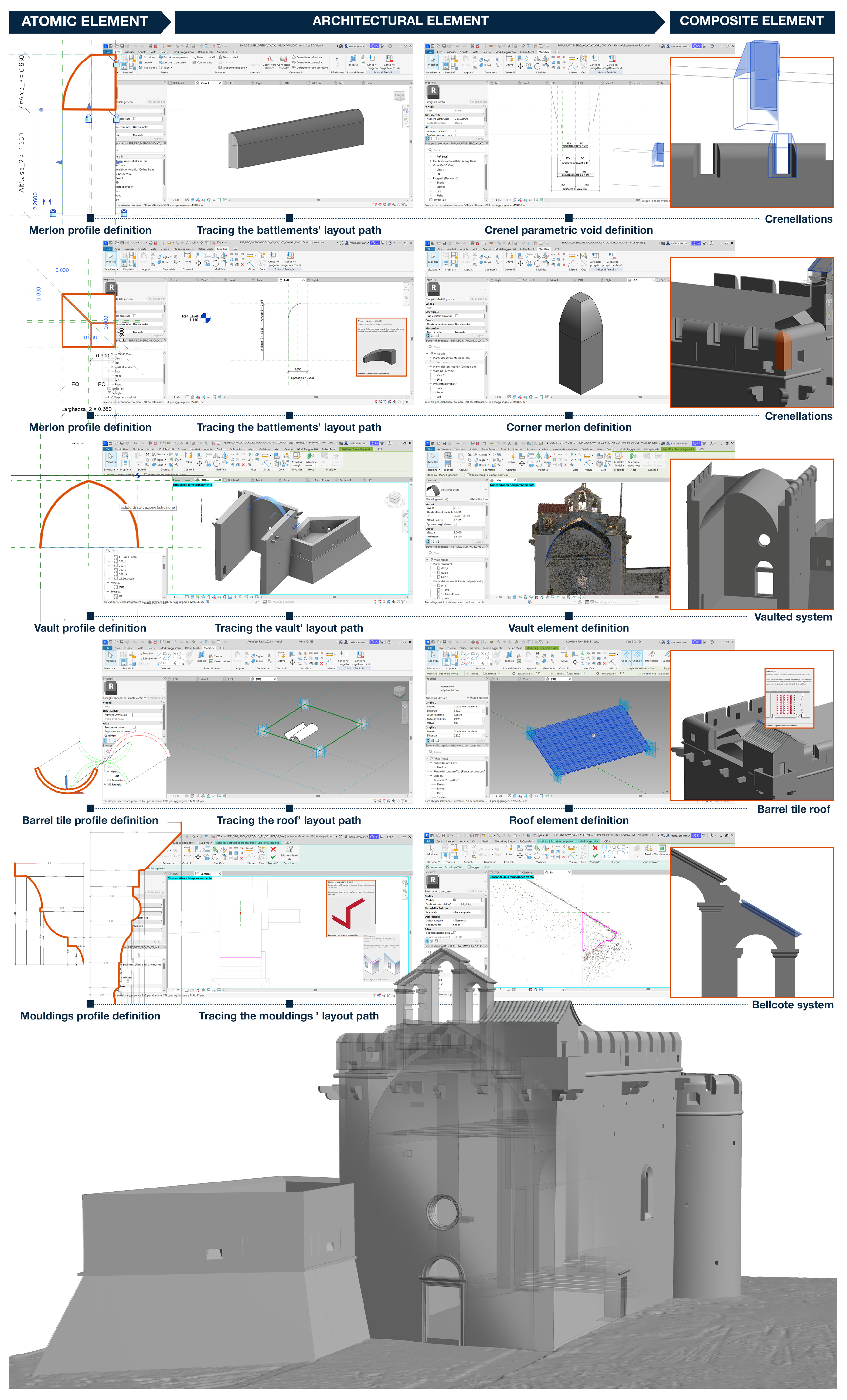
Disclaimer/Publisher’s Note: The statements, opinions and data contained in all publications are solely those of the individual author(s) and contributor(s) and not of MDPI and/or the editor(s). MDPI and/or the editor(s) disclaim responsibility for any injury to people or property resulting from any ideas, methods, instructions or products referred to in the content. |
© 2026 by the authors. Licensee MDPI, Basel, Switzerland. This article is an open access article distributed under the terms and conditions of the Creative Commons Attribution (CC BY) license.