1. Introduction
As a historical testament to human civilization, cultural heritage (CH) records the subtle balance between culture and natural environment in the region, embodies the creativity and reflections of ancestors across eras, and reflects the values and cultural perspectives of nations [
1,
2]. In recent years, the focus of research on CH conservation and utilization has gradually shifted from individual CH sites to heritage clusters, as well as the integrated systems and regional networks formed by CH and their surrounding environments [
3]. Scholars from various fields have explored different types of CH, such as Archeological Sites [
4], Cultural Relics Protection Units [
5], Historical and Cultural Cities and Towns and Villages [
6], Traditional Villages [
7], Architectural Heritage [
8], and Intangible CH [
9]. Their studies have focused on diverse regions, including major river basins [
10,
11], significant mountain ranges [
12], typical geographical areas [
13,
14], provinces [
15], and cities [
16]. These efforts aim to analyze the spatial–temporal distribution characteristics of CH and examine their influencing factors from natural, cultural, and social perspectives, thereby systematically uncovering the spatial–temporal evolution mechanisms of CH. On this basis, the MCR model [
17,
18] and circuit theory [
19,
20] were further introduced to construct spatial–temporal corridors for CH, forming a “source–corridor–network” regional heritage corridor modeling framework. This provides a theoretical foundation for establishing large-scale, cross-administrative boundary systems for the conservation and utilization of regional CH, and also offers references for spatial planning. In this process, there is a growing trend towards emphasizing the synergy between natural and cultural conservation in regional CH studies. Scholars have conducted separate analyses on the relationship between the spatial–temporal distribution of CH and the natural environment [
21,
22], seeking to highlight the significance of the natural environment by integrating CH structures into the broader framework of urban and rural human settlement development and tourism planning. This approach aims to achieve the integrated conservation, management, and utilization of regional CH. However, a systematic synthesis of the spatial–temporal distribution of CH and its relationship with the natural environment in typical cross-regional geomorphic units at the river basin scale still requires further exploration.
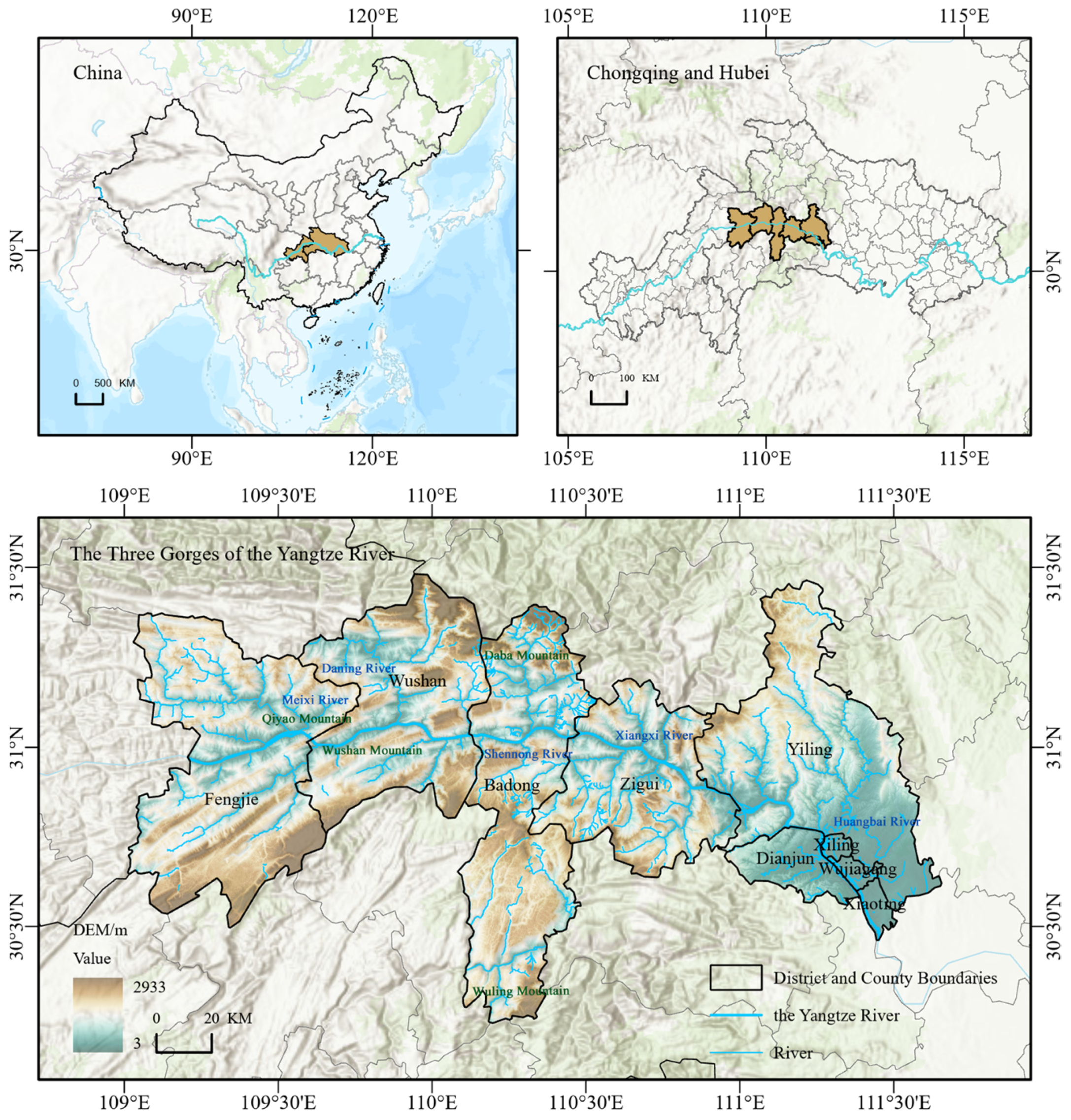
The Three Gorges of the Yangtze River (the Three Gorges region) represent a region where nature and culture are deeply integrated within the Yangtze River basin. In 2001, it was inscribed on the China World Heritage Tentative List and has since been designated as one of the three core exhibition parks of the Yangtze River National Cultural Park. As a spatial unit defined by distinctive geographical features, the area possesses an exceptional natural foundation, hosting multiple protected natural areas such as World Natural Heritage sites, National Parks of China, and National Geoparks. At the same time, it boasts a long and profound history as a convergence zone of Ba and Chu cultures, encompassing both Tangible and Intangible CH, including National Cultural Relics Protection Units, Intangible CH of Humanity, and National Intangible CH. Following significant changes in human–environment relationships, positive progress has been made in the documentation, relocation, and conservation of CH in the region. Research has gradually expanded to focus on the Three Gorges Reservoir Area. For instance, Li synthesized archeological findings in the reservoir area, theoretically explored pathways for tourism transformation, and proposed initial ideas for constructing spatial–temporal heritage corridors [
23]. Li et al. employed GIS spatial analysis to examine the geographical distribution of Intangible CH in the reservoir area and, using geographic detectors, investigated the independent and interactive effects of national geography, socio-economic conditions, and historical–cultural factors on its spatial patterns [
24]. However, studies specifically aimed at achieving the coordinated conservation of nature and culture by investigating the spatial–temporal patterns of CH and their relationship with the natural environment remain scarce. Existing research largely focuses on single heritage types within specific historical periods at the provincial level within the Three Gorges Reservoir Area. For example, Zheng et al. utilized GIS spatial analysis methods to examine the relationship between the spatial–temporal distribution of archeological sites from the Paleolithic Age to the Tang and Song Dynasties and the natural environment in the Chongqing section of the Three Gorges Reservoir Area [
25]. Such studies provide only a fragmented understanding of the trans-temporal and cross-regional natural and cultural attributes of the Three Gorges region as a whole. Currently, the development of the Yangtze River National Cultural Park is underway. As an innovative exploration in the conservation and utilization of linear CH in China, it shares similarities with cultural routes and heritage corridors. The representation of cultural temporality within the region, together with the integrated conservation and coordinated utilization of its unique natural and cultural resources, constitutes a critical foundation for this project [
26]. This also presents a new opportunity for the protection of CH within the complete geographical space of the Three Gorges region of the Yangtze River.
This study aims to employ GIS spatial analysis technology to investigate the spatial–temporal distribution of CH in the Three Gorges region and its relationship with the natural environment. It explores the influence of the natural environment on CH across different periods and types, and integrates time-depth theory to reveal the coupling relationship between nature and culture in the region. By generating resistance surfaces based on natural environmental factors and applying the Minimum Cumulative Resistance (MCR) model, the study constructs cultural corridors and proposes spatial planning strategies for CH conservation and utilization. This research provides support for the integrated conservation and utilization of CH under the framework of coordinated conservation of nature and culture, and offers insights for the development of the Yangtze River National Cultural Park as well as river basin CH and linear CH.
Compared with existing studies, the contributions and innovations of this paper are as follows: (1) Spatially, it selects the Three Gorges region in its physical geographical sense as the study area; temporally, it traces the distribution of CH from the Before Qin Period to the After Qing Period, achieving a more focused scope while encompassing a fuller range of CH types and chronological sequences. (2) From the perspective of coordinated conservation of nature and culture, it introduces time-depth theory to interpret the spatial distribution characteristics of CH and their association with the natural environment, thereby identifying the mechanisms and logic of evolutionary change based on a clarified understanding of the nature and culture coupling. (3) Grounded in the natural environmental baseline, it constructs a spatial planning framework centered on CH agglomeration areas, integrating spatial–temporal patterns with CH type characteristics. This framework supports the delineation of cultural landscape zones and cultural corridors, clarifies the overall structure of regional CH and its relationship with the surrounding natural environment, and thus provides a reference for its integrated conservation and utilization.
3. Results
3.1. Overall Distribution Characteristics and Trends of CH
By analyzing the quantities of CH across different periods and types, and combining Standard Deviation Ellipse, mean center, and kernel density analyses, we have examined the spatial–temporal distribution characteristics of CH. Based on the overall quantitative distribution (
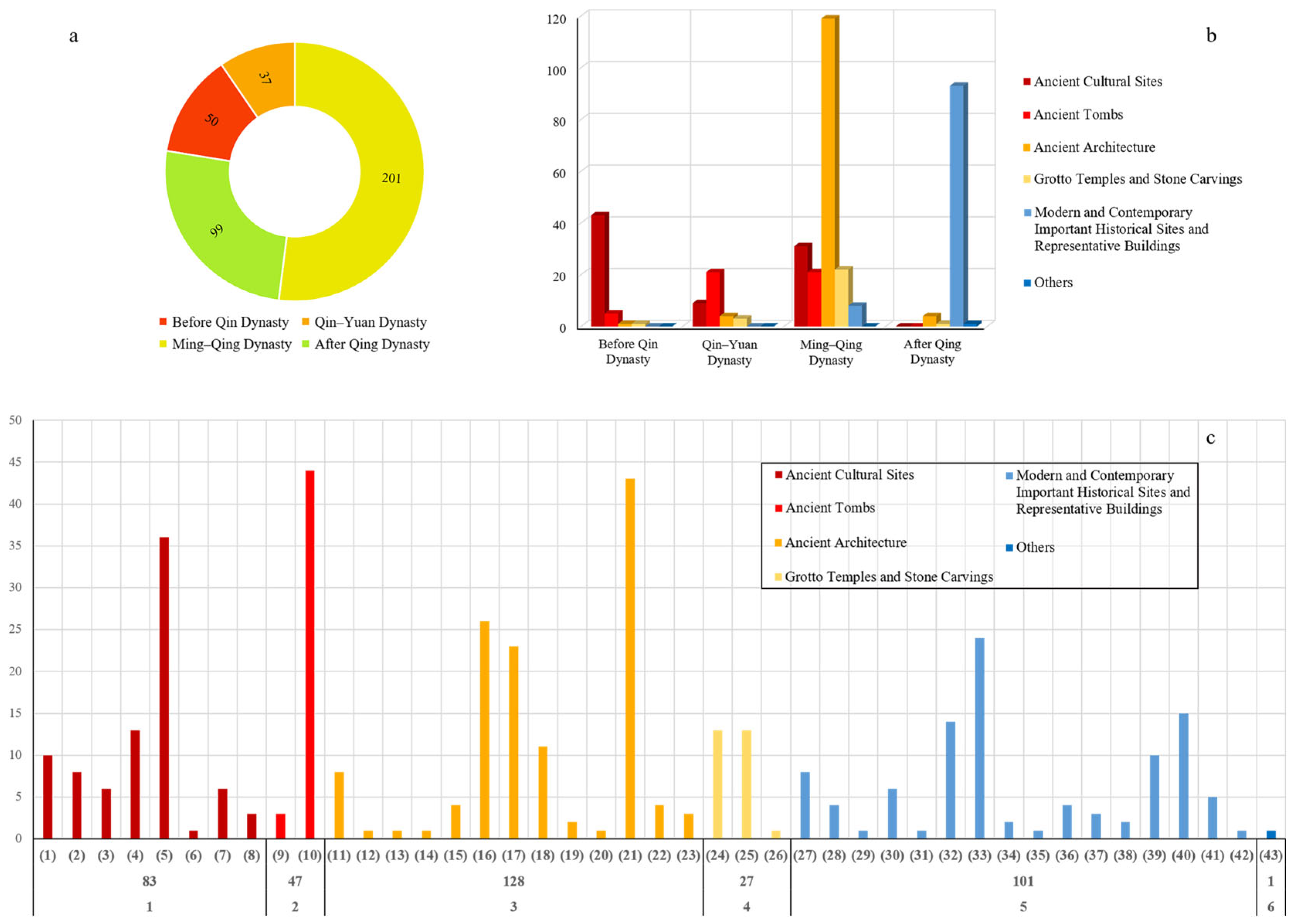
Figure 3), it can be observed that CH during the Before Qin Dynasty Period is predominantly composed of Ancient Cultural Sites. The Qin–Yuan Dynasty Period represents a transitional phase, with a significant increase in the number of Ancient Tombs. The Ming–Qing Dynasty Period marks the peak of heritage quantity, accounting for 52.1% of the total, with Ancient Architecture as the main type. Grotto Temples and Stone Carvings also reach their peak during this period. After the Qing Period, there was a historical discontinuity and emergence in CH types, with Modern and Contemporary Important Historical Sites and Representative Buildings overwhelmingly dominating this period (94%). In terms of specific types, Settlement Sites among Ancient Cultural Sites, Ordinary Tombs among Ancient Tombs, Traditional Dwellings among Ancient Architecture, Cliff Carvings and Stone Stele Carvings among Grotto Temples and Stone Carvings, and Martyr’s Graves and Memorial Facilities among Modern and Contemporary Important Historical Sites and Representative Buildings are the dominant types in the study area.
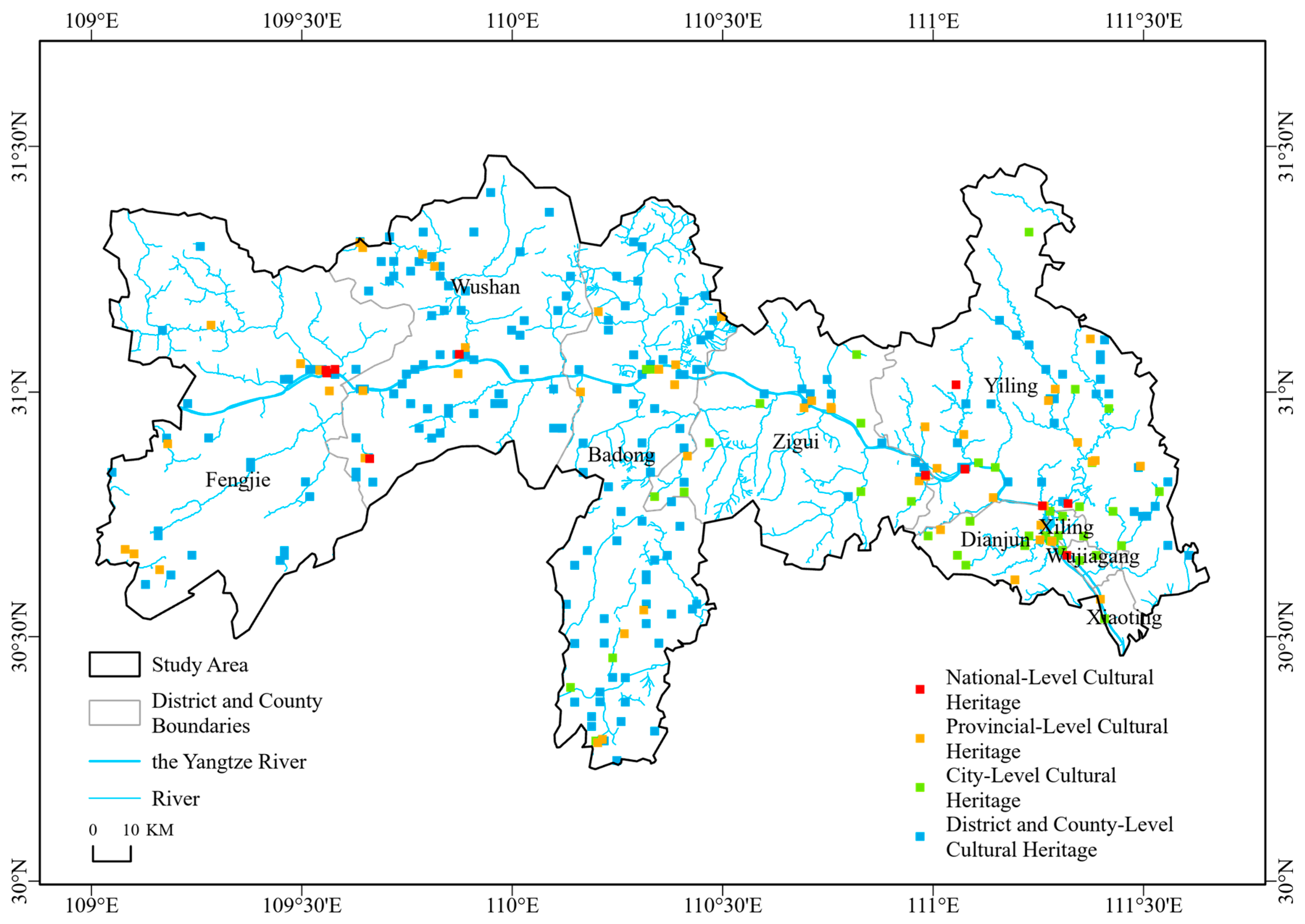
An analysis combining the distribution across different counties and districts with Location Quotient reveals that Badong (112 sites) and Wushan (92 sites) account for 52.7% of the total CH across the nine counties and districts, forming the core concentration areas of CH. Wujiagang and Xiaoting have the smallest quantities, respectively accounting for only 1% and less than 1%. During the Before Qin Dynasty Period, CH was mainly distributed in Badong, Zigui, and Wushan. In the Qin–Yuan Dynasty Period, Wushan had the highest quantities of CH. During the Ming–Qing Dynasty Period, CH was primarily concentrated in Badong, Wushan, and Yiling, although other regions also had distributions. After the Qing Dynasty Period, Badong, Yiling, and Fengjie had the highest quantities (
Table 2). Concerning the chronological dominance of CH across different regions, Fengjie exhibits prominence during the Qin–Yuan and After Qing Dynasty Periods; Wushan demonstrates dominance across the Before Qin, Qin–Yuan, and Ming–Qing Dynasty Periods; Badong holds its advantage primarily in the After Qing Dynasty Period; and Zigui County shows strength during the Before Qin and Qin–Yuan Dynasty Periods. Dianjun shares a similar pattern, excelling in the Before Qin and Qin–Yuan Dynasty Periods. Yiling is notable for its heritage significance in the Ming–Qing and After Qing Dynasty Periods. Xiling displays dominance during the Qin–Yuan and After Qing Dynasty Periods. Wujiagang maintains its advantage in the After Qing Dynasty Period. Xiaoting is distinguished by its CH during the Ming–Qing Dynasty Period (
Table 3).
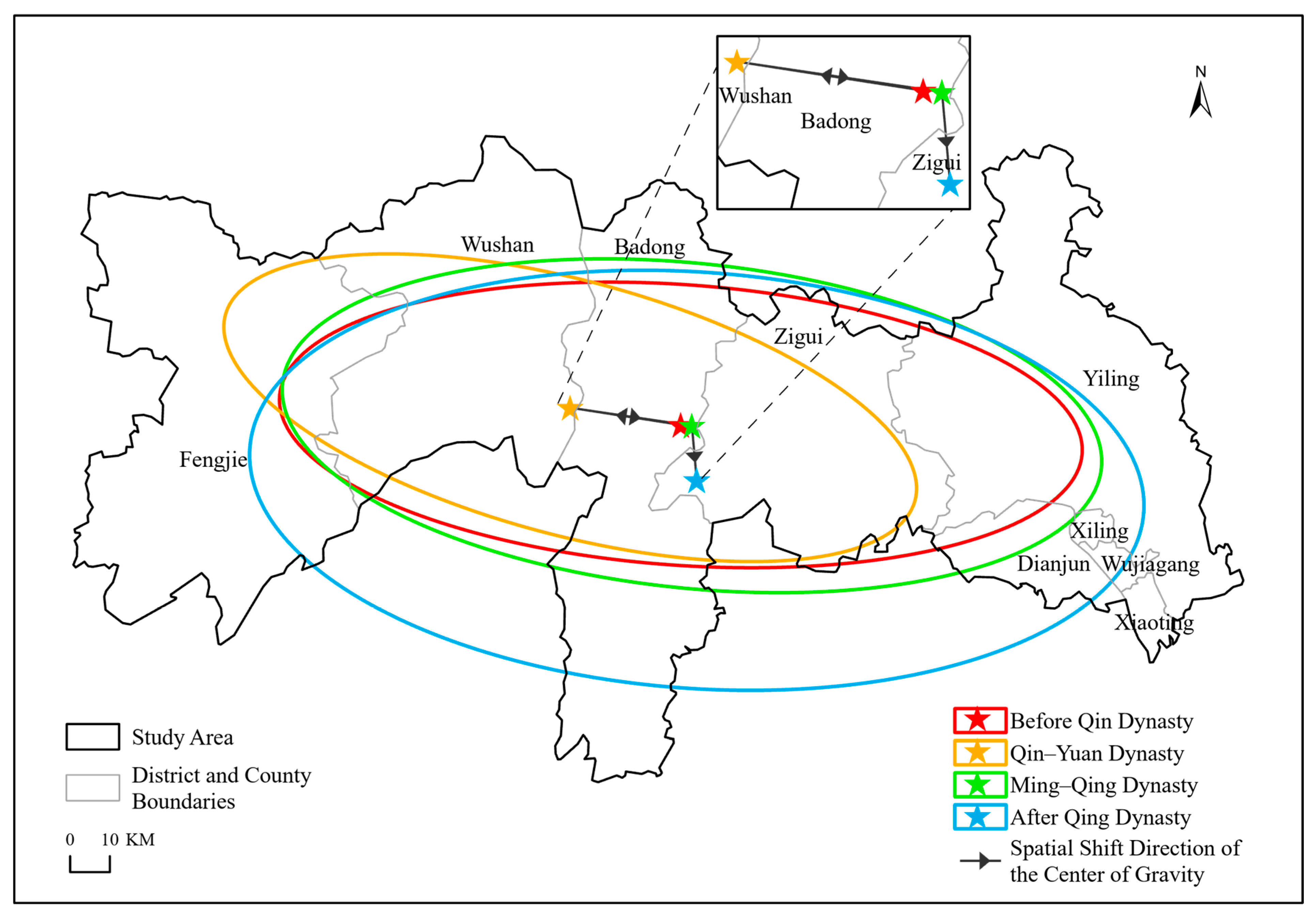
Based on the above analysis, standard deviational ellipse, mean center (
Figure 4), and overall kernel density analysis (
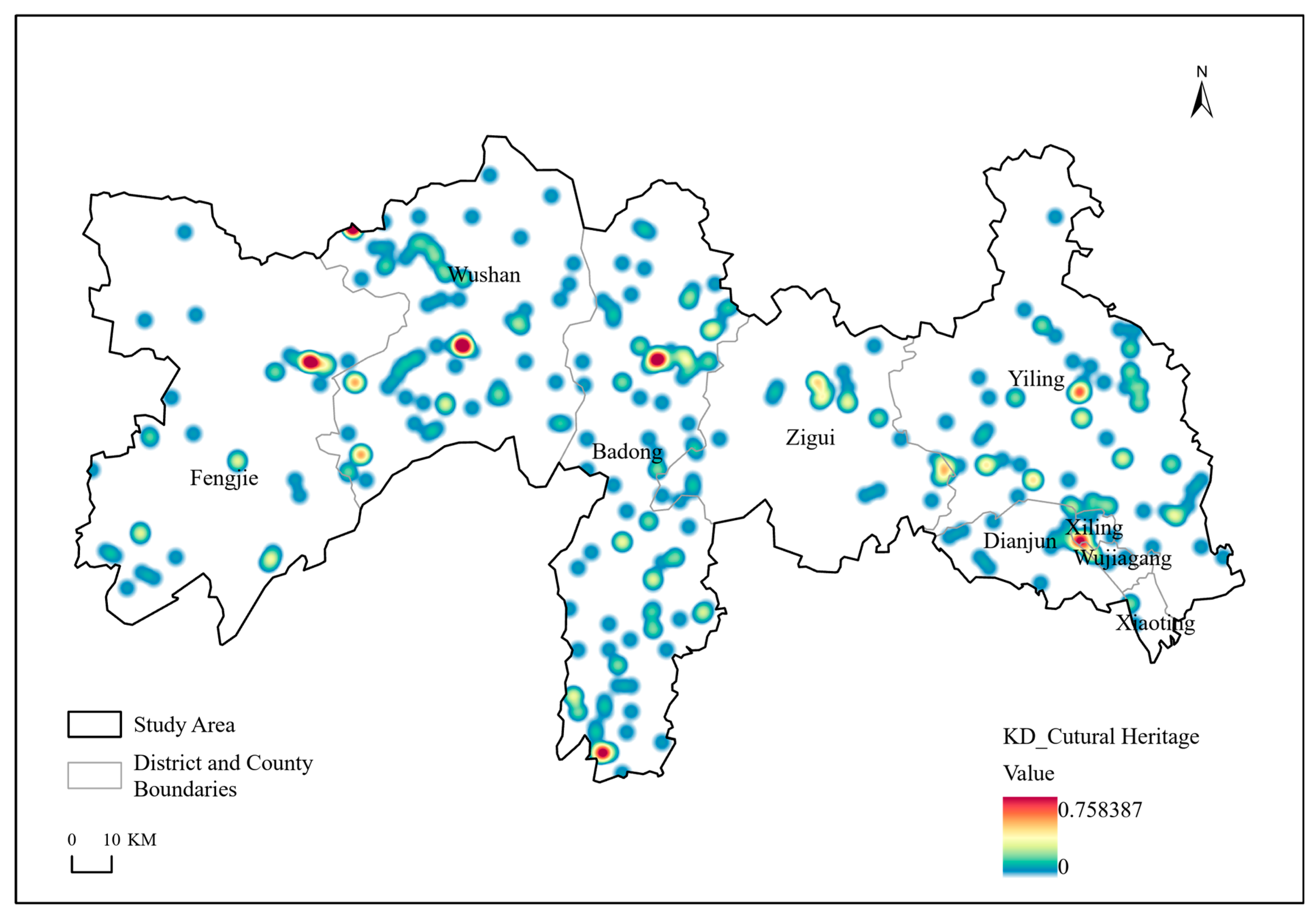
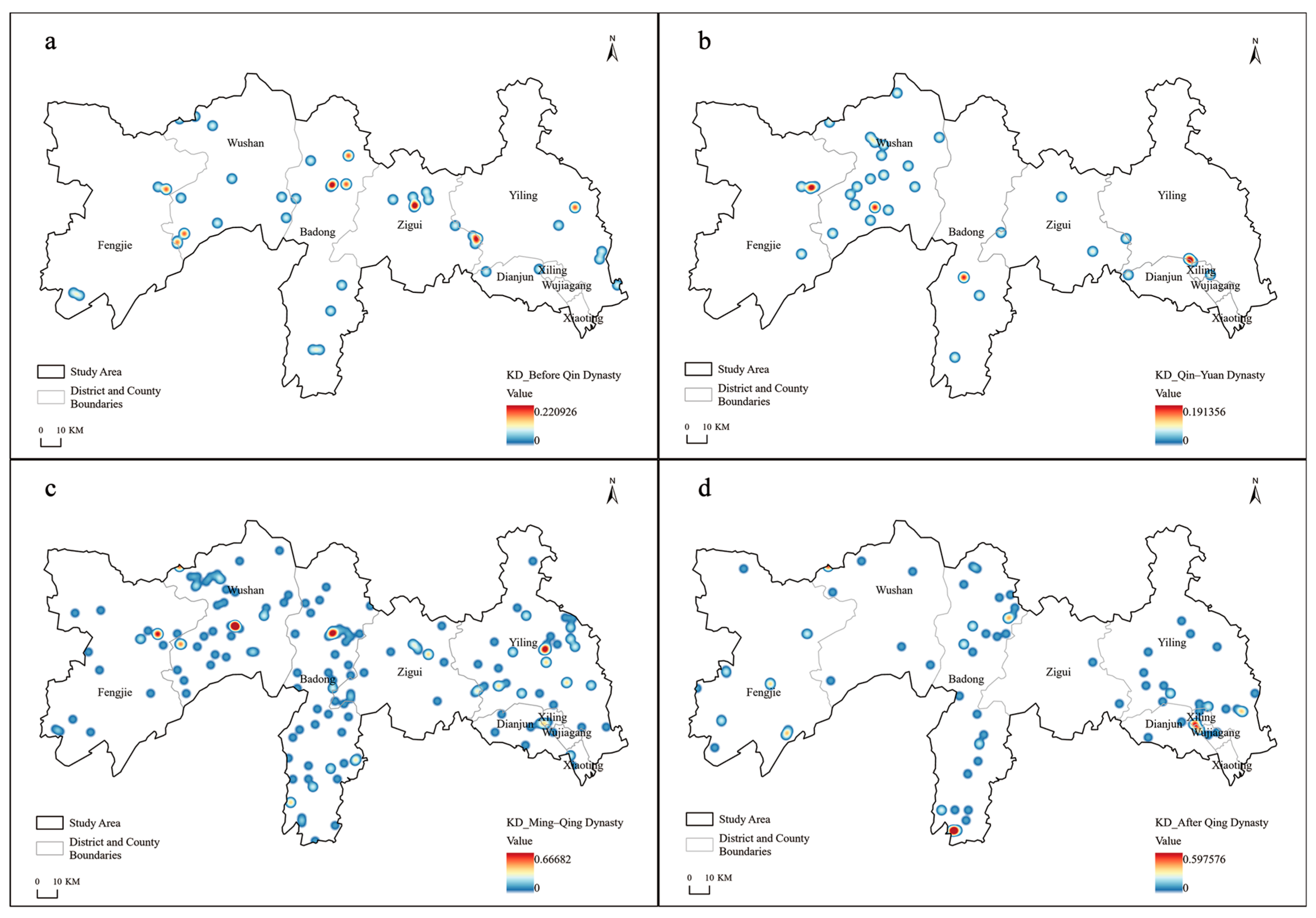
Figure 5) were conducted using ArcGIS Pro. The results of the standard deviational ellipse and mean center indicate that the overall distribution of CH from the Before Qin Dynasty Period to the After Qing Dynasty Period exhibits a trend of shifting from the central area to the west, then returning to the central area, and finally moving toward the southeast. The distribution center of gravity was located in central–eastern Badong during the Before Qin Dynasty Period, moved to southeastern Wushan during the Qin–Yuan Dynasty Period, returned to central–eastern Badong during the Ming–Qing Dynasty Period, and shifted to southwestern Zigui during the After Qing Period. Comparatively, the distribution was relatively concentrated during the Before Qin Dynasty Period, even more so during the Qin–Yuan Dynasty Period, and became increasingly widespread during the Ming–Qing Dynasty and After Qing Dynasty Periods. The overall kernel density analysis reveals seven first-level core clusters of CH. Four of these are located in the county seat areas of Wushan, Fengjie, and Badong, as well as the junction of Xiling and Dianjun districts, all of them situated along the main stream of the Yangtze River. The other three core clusters are located in northwestern Wushan, western Badong, and central Yiling, corresponding, respectively, to the area along the Daning River (a tributary of the Yangtze River), the alpine region of the Wuling Mountain, and the transitional zone between mountains and plains.
In summary, the dominant types of CH in the Three Gorges region are Ancient Architecture and Modern and Contemporary Important Historical Sites and Representative Buildings. Each period has its own dominant types of CH, and the temporal advantages vary across regions. Nonetheless, the core clusters exhibit a remarkably high degree of alignment with the natural environment.
3.2. Relationship Between Spatial–Temporal Distribution of CH and Natural Environment
The natural environment is a significant factor influencing human construction activities [
31]. By conducting comparative analyses from the perspectives of elevation, slope, and rivers, this study explores the relationship between the natural environment and the spatial–temporal patterns of CH in the Three Gorges region.
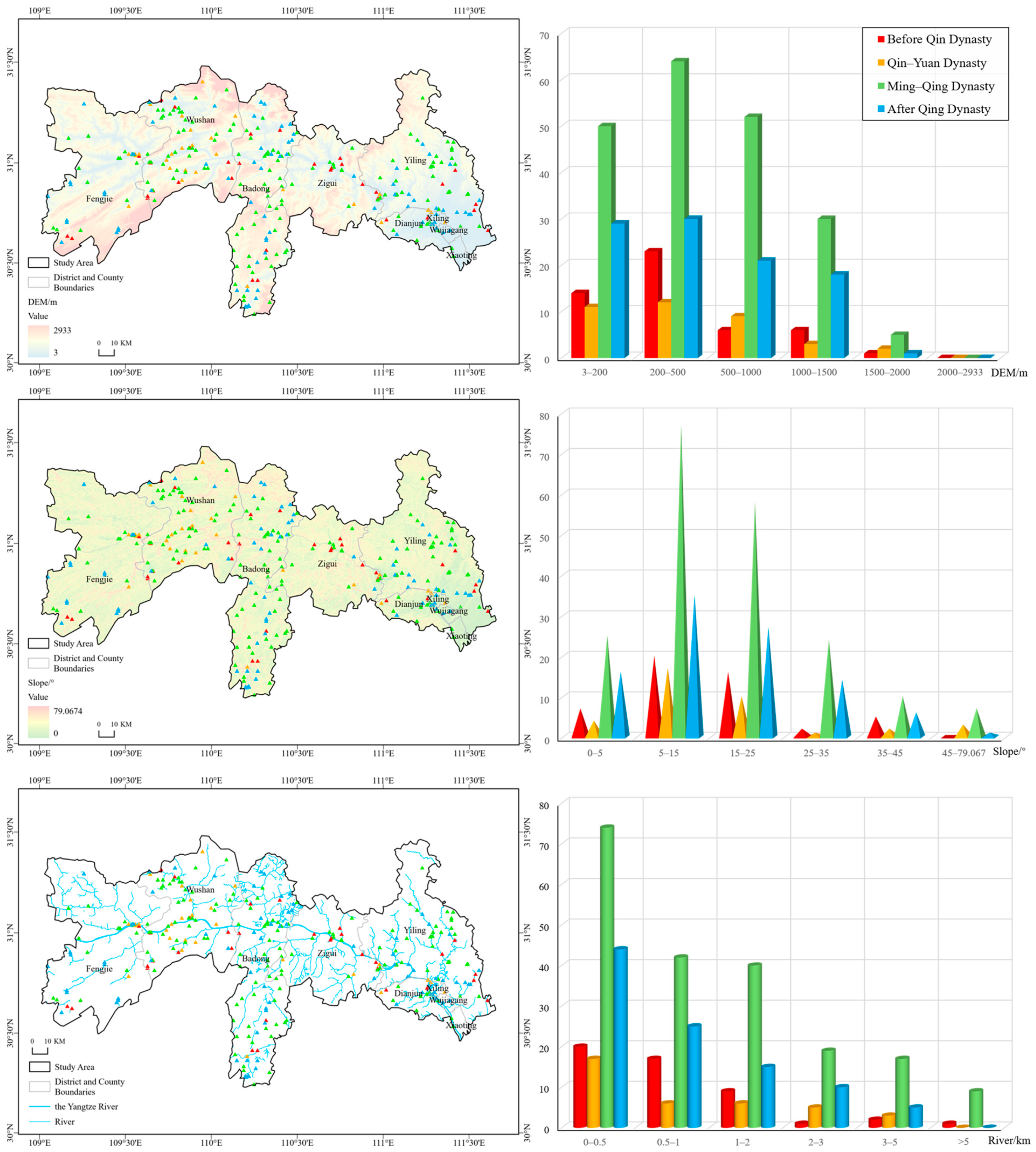
The distribution of CH has consistently shown a strong dependence on topographical conditions characterized by low elevation, gentle slopes, and proximity to water systems. Throughout historical periods, the adaptive scope of human activities to terrain has exhibited a trend from early heavy reliance on optimal environments to a gradual expansion into more complex terrains in later periods. From the Before Qin to the After Qing Dynasty Periods, CH remained concentrated within the 200–500 m elevation range, accounting for 31–46% of the heritage in each period, followed by the lowland areas adjacent to rivers at 3–200 m. Gentle slopes of 5–15° were the primary areas for CH distribution, representing 32–44% of the heritage in each period, followed by flatlands of 0–5° and slopes of 15–25°. Areas within 0.5 km of water bodies served as the absolute distribution core of CH, accounting for 62–78% across all periods. During the Before Qin Dynasty Period, CH was widely distributed in areas with elevations below 500 m, slopes under 15°, and within 1 km of rivers. In the Qin–Yuan Dynasty Period, CH was widely distributed in areas with elevations below 1000 m, slopes under 25°, and within 500 m of rivers. During the Ming–Qing Dynasty Period, CH was widely distributed in areas with elevations below 1000 m, slopes under 25°, and within 2 km of rivers. In the After Qing Dynasty Period, CH was widely distributed in areas with elevations below 1500 m, slopes under 25°, and within 3 km of rivers (
Figure 6).
In summary, from the Before Qin to the Qin–Yuan Dynasty Periods, CH distribution reflects the strict selection of optimal conditions for survival safety and resource acquisition by early humans, as evidenced by the concentration of CH cores along the main stream of the Yangtze River in Fengjie, Wushan, Badong, Zigui, Yiling, Dianjun, and Xiling. During the Ming–Qing Dynasty Period, technological development and population growth drove the expansion of CH into medium-elevation areas, steeper slopes, and environments farther from water, demonstrating a leap in human ability to modify and utilize nature. For example, the CH core in Yiling emerged at the junction of mountains and plains. The distribution pattern in the After Qing Dynasty Period closely resembles that of the Ming–Qing Dynasty Period, indicating that the current observed terrain distribution pattern of CH was largely established during the Ming–Qing Dynasty Period. Modern activities have not fundamentally altered the basic framework of the relationship between CH and terrain but have instead involved accumulation and locational adjustments within this framework. Notably, a new CH core has formed in the high-altitude area of the Wuling Mountains in Badong (
Figure 7).
3.3. Spatial Distribution of CH Types and Their Relationship with the Natural Environment
Since each period exhibits distinct advantages in terms of CH types, similar to the spatial distribution of CH across different periods, the spatial distribution of various CH types is also closely related to the cultural and natural environment. The same analytical methods are used to examine the relationship between the spatial distribution of CH across different periods and the natural environment.
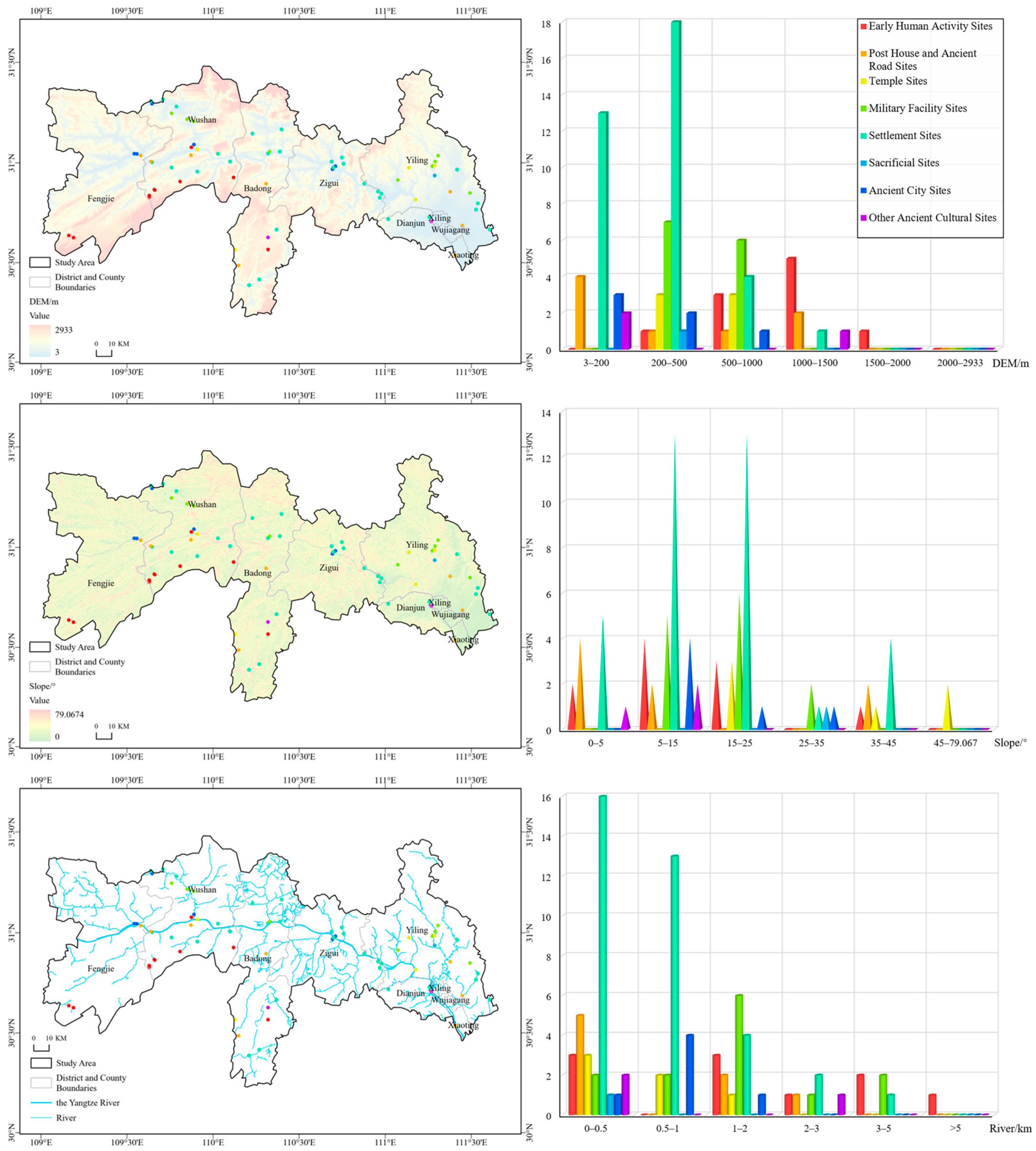
The Ancient Cultural Sites in the Three Gorges region are classified into eight types; they are primarily distributed in areas below 1500 m in elevation, with slopes under 25°, and within 2 km of rivers. Specifically, Settlement Sites, Post House and Ancient Road Sites are concentrated in the habitable zone below 500 m, while Military Facilities extend into mountainous areas at 200–1000 m to leverage defensive advantages. Early Human Activity Sites and Temple Sites show significant distribution in medium-to-high elevations of 500–1500 m, reflecting the unique needs of mountain activities and religious site selection. Most sites are located on gentle slopes below 25° to ensure safe passage, with Temple Sites being particularly exceptional. Half of Temple Sites are situated on slopes above 15°, including two on steep slopes exceeding 45°, highlighting their philosophical pursuit of secluded and elevated locations. Military Facility Sites are also frequently found on slopes of 15–25°, utilizing terrain to enhance defense. In terms of proximity to water, all types of sites exhibit a tendency to be located near water sources, though to varying degrees. Settlement Sites, Post House and Ancient Road Sites are highly dependent on water systems, with over 80% located within 1 km of water, especially Settlement Sites, which are often extremely close to water sources (16 sites within 0.5 km) (
Figure 8).
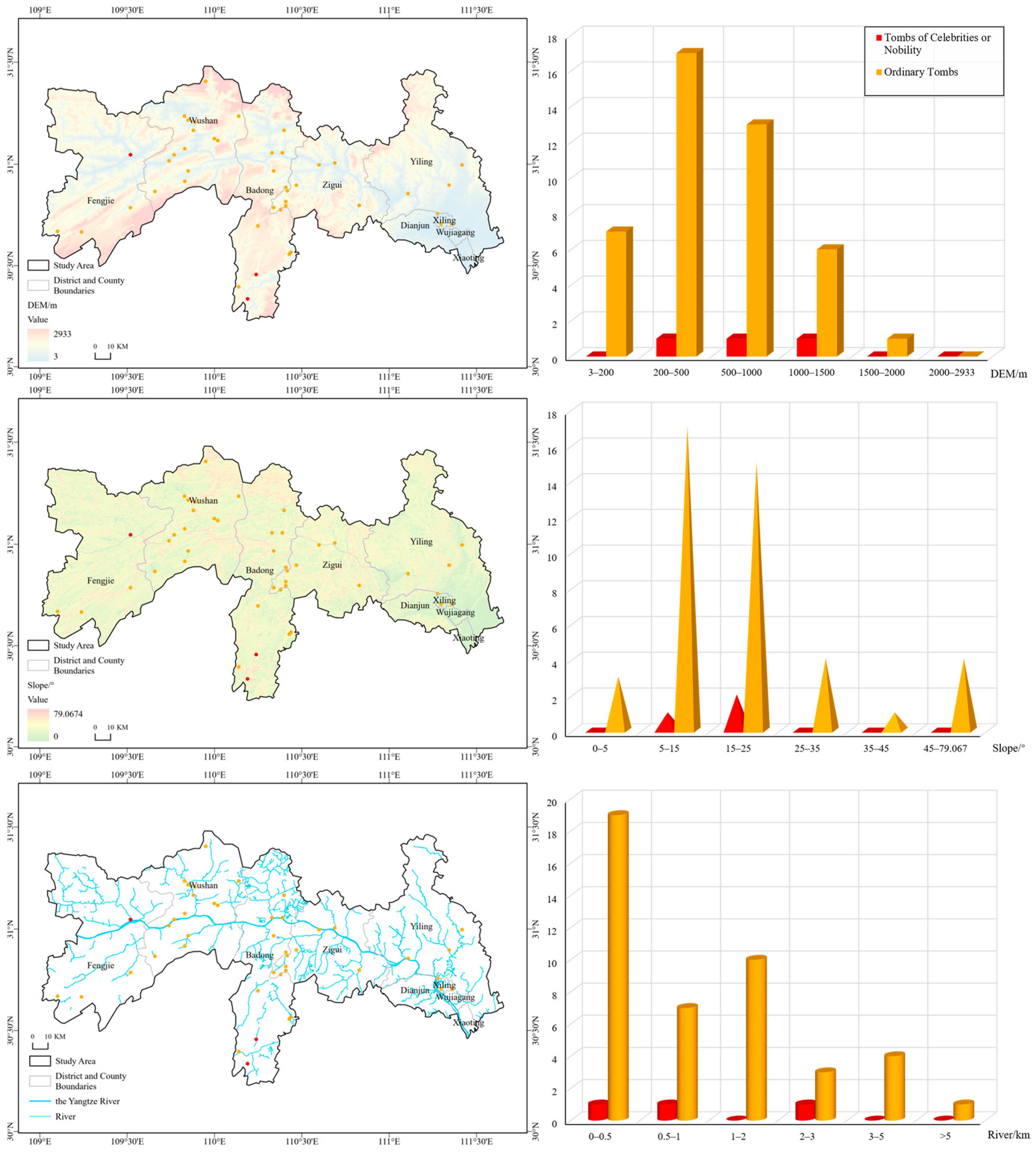
There are two types of Ancient Tombs in the Three Gorges region; they reflect certain social hierarchy differences. Overall, Ancient Tombs are highly concentrated in areas below 500 m in elevation (71.4%) and with slopes of 5–25° (74.5%). This meets the requirements of burial activities for engineering stability and convenience. Among these, the mid–low elevation range of 200–500 m and gentle slopes of 5–15° are the most concentrated intervals. In terms of their relationship with water systems, Ancient Tombs exhibit a strong affinity for water, with 66% located within 1 km of a water source. Ordinary Tombs, in particular, are densely distributed in water-adjacent areas within 0.5 km (19 sites), suggesting a close symbiosis with production and living settlements. Tombs of Celebrities or Nobility, though fewer in number, are also situated near water. A notable difference is that four Ordinary Tombs are located on extremely steep slopes above 45 degrees, which are associated with the cliff burial customs along the Yangtze River. In addition, the distribution of Ancient Tombs shows preferences similar to those of Settlement Sites, reflecting the concept of “treating the dead as one treats the living” and the practice of locating burials near human habitations (
Figure 9).
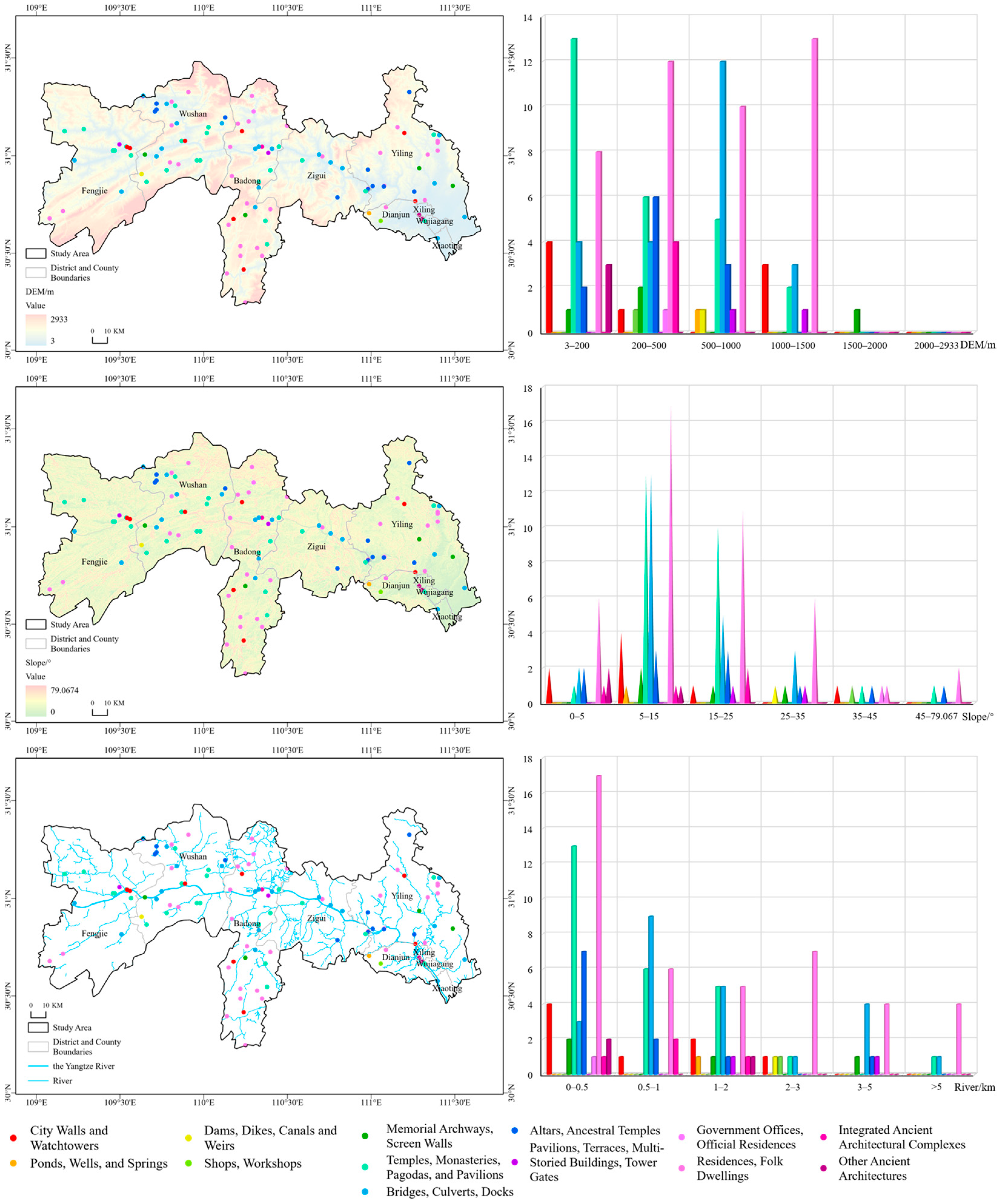
There are many types of Ancient Architecture in the Three Gorges region, totaling 13 subtypes; their distribution vividly reflects the close integration of natural adaptation and functional needs. Overall, Ancient Architecture is highly concentrated in lowland areas below 500 m in elevation. Among them, Residences and Folk Dwellings, Altars and Ancestral Temples, and Bridges and Culverts and Docks are widely distributed across low-to-mid-elevations. Temples, Monasteries, Pagodas, and Pavilions show a minor peak in mid-elevations of 500–1000 m, aligning with their pursuit of tranquility and seclusion. Defensive Architecture such as City Walls and Watchtowers span lowlands and mid-mountain areas, strategically positioned at key locations. In terms of slope selection, the preference is clear: Over 85% of Ancient Architecture is located on gentle or moderate slopes below 25°, with slopes of 5–15° serving as the absolute core for construction (55 sites), ensuring structural stability and convenience. Only a few exceptional cases, such as Altars and Ancestral Temples, and Bridges and Culverts and Docks, are built on steep slopes above 45°. Proximity to water exhibits significant functional differentiation. Bridges and Culverts and Docks and Residences and Folk Dwellings are highly dependent on near-water environments, with 19 and 23 sites located within 1 km of rivers, respectively. In contrast, Temples and Monasteries and Pagodas and Pavilions and City Walls and Watchtowers are relatively distant from water systems, emphasizing environmental ambiance or strategic positioning (
Figure 10).
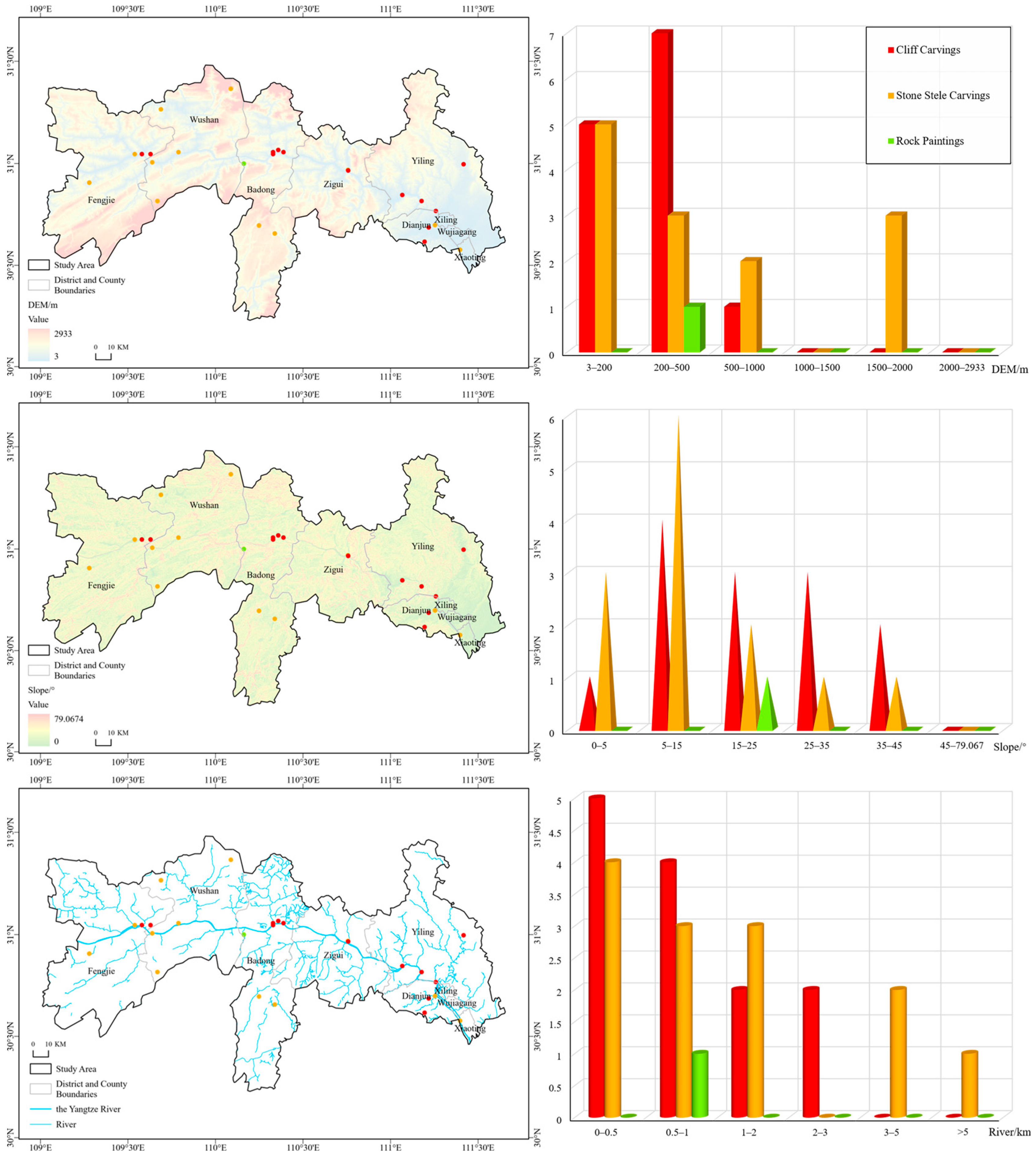
There are three types of Grotto Temples and Stone Carvings in the Three Gorges region; their distribution is strongly constrained by and actively adapts to the national environment, serving their religious and artistic functions. Grotto Temples and Stone Carvings are highly concentrated in valley areas below 500 m in elevation (accounting for 78.3%), particularly in river-facing cliffs and valleys below 200 m (11 sites), where rock surfaces are easily accessible and conducive to viewing. These sites exhibit a strong affinity for water, with 87% located within 2 km of a water system, and Cliff Carvings are especially concentrated within 1 km. Rivers not only provide exposed rock faces for carving but also serve as channels for spiritual dissemination. In terms of slope selection, although Grotto Temples and Stone Carvings are often found on gentle slopes of 5–15°, Cliff Carvings notably favor steep slopes of 25–45° (4 sites) to utilize vertical rock surfaces for dramatic visual impact, while steles are distributed more flexibly (
Figure 11).
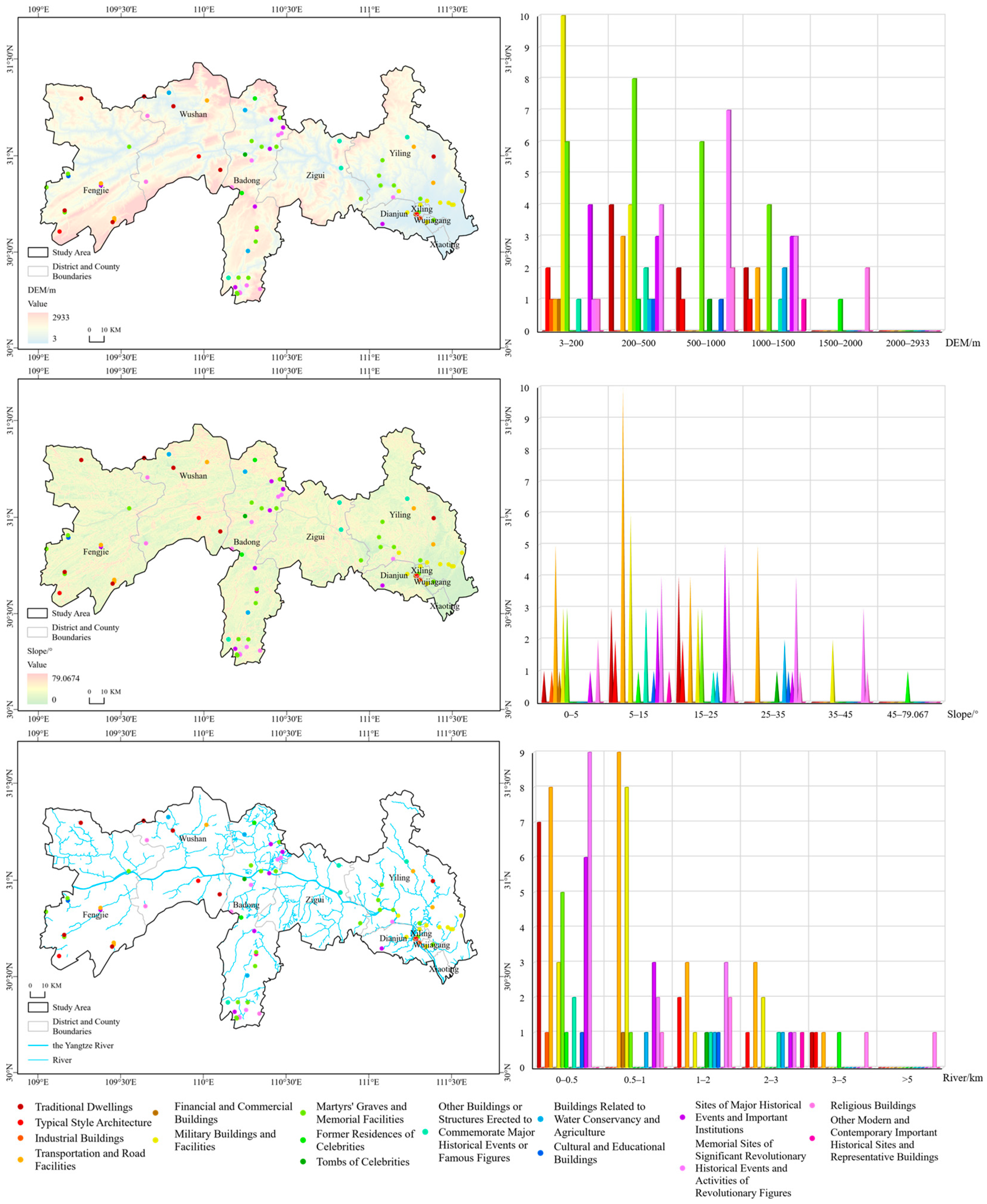
The Three Gorges region has the highest number of types of Modern and Contemporary Important Historical Sites and Representative Buildings, totaling 16 subtypes. Most subtypes are concentrated in areas below 1500 m in elevation, with slopes of 5–25°, and within 1 km of rivers. Among them, Military Buildings and Facilities and Sites of Major Historical Events and Important Institutions are highly concentrated in flat areas below 200 m, while Memorial Sites of Significant Revolutionary Historical Events and Activities of Revolutionary Figures and Martyrs’ Graves and Memorial Facilities are widely distributed in mountainous regions between 200 and 1500 m, demonstrating greater adaptability to varying slopes. For instance, Memorial Sites of Significant Revolutionary Historical Events and Activities of Revolutionary Figures even appear on extremely steep slopes of 35–45° (3 sites), reflecting their connection to specific combat terrains. Transportation and Road Facilities, Traditional Dwellings, and Memorial Sites of Significant Revolutionary Historical Events and Activities of Revolutionary Figures show a strong affinity for water, with many located within 1 km of water systems, particularly in the core water-adjacent areas within 0.5 km. In contrast, Religious Buildings and Typical Style Architecture are relatively distant from water systems, prioritizing site independence and symbolic significance in their selection (
Figure 12).
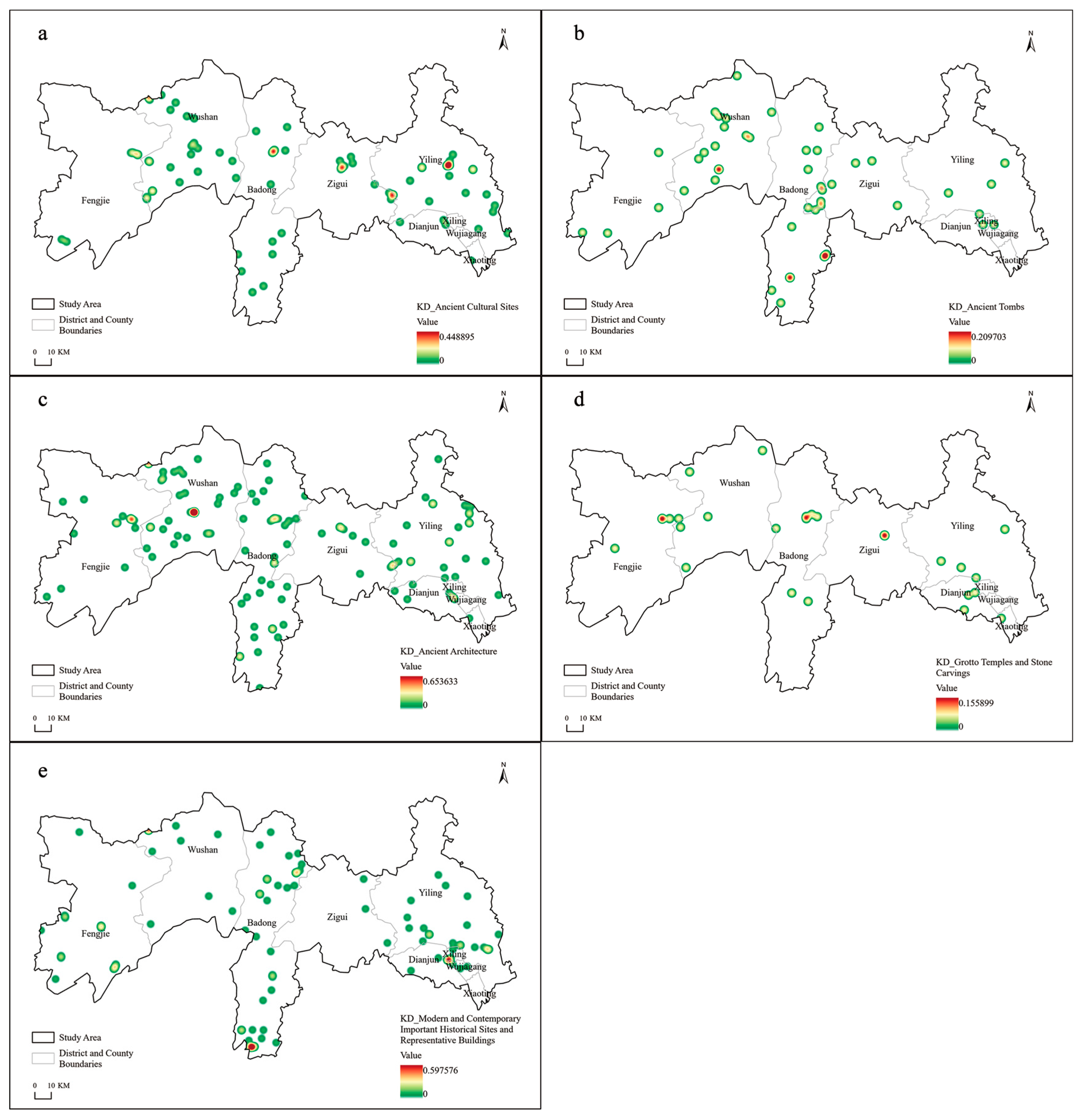
In terms of spatial distribution, the Ancient Cultural Sites are clustered primarily in four key areas: the Yangtze River corridor of Badong, Zigui, and Yiling, as well as the transitional zone between plains and mountains in Yiling. Among these, the first three areas are dominated by Settlement Sites, while the latter is characterized mainly by Military Facility Sites and Temple Sites. Ancient Tombs are concentrated along the Yangtze River corridor in Wushan, the southwestern part of Wushan, the southeastern and southern regions of Badong, and the southwestern area of Zigui. Ancient buildings are widely distributed but primarily clustered along the riverine areas of Wushan and Fengjie, featuring types such as Residences and Folk Dwellings, Bridges and Culverts and Docks, as well as Temples and Monasteries and Pagodas and Pavilions and City Walls and Watchtowers. Grotto Temples and Stone Carvings are clustered along the Yangtze River corridor in Fengjie, Badong, and Zigui, with Cliff Carvings being the predominant type. Modern and Contemporary Important Historical Sites and Representative Buildings are concentrated in the southern part of Badong and at the border between Xiling and Dianjun. These sites primarily consist of Memorial Sites of Significant Revolutionary Historical Events and Activities of Revolutionary Figures, Sites of Major Historical Events and Important Institutions, and Martyrs’ Graves and Memorial Facilities (
Figure 13).
3.4. The Mechanism of Temporal–Spatial Evolution of CH and Its Association with the Natural Environment from the Perspective of Time-Depth Theory
Time-depth theory emerges from longstanding reflections on the temporality of human activity across history, archeology, linguistics, and heritage studies. Its intellectual origins lie in Braudel’s historical time framework [
32], while its application in heritage and landscape research conceptualizes cultural landscapes as the superposition and coexistence of traces left by successive eras [
33]. The spatial–temporal configuration of CH in the Three Gorges region is not a planar distribution, but rather the spatial superimposition and stratified sedimentation of cultural logics from distinct historical periods. Long-term survival rationality constitutes the most stable foundational layer, onto which medium-term institutional interventions superimpose new strata of meaning, while short-term historical events, through rupturable modes, appropriate specific terrains. The identification and measurement of time-depth thus enable a paradigmatic shift from distribution description to processual explanation in understanding such stratified structures.
From the Before Qin to the After Qing Dynasty Period, CH in the Three Gorges region formed a stratigraphic sequence of “foundation–superimposition–reconstruction–insertion.” During the Before Qin Dynasty Period, Ancient Cultural Sites predominated, with Settlement Sites strongly coupled to low-altitude, gentle-slope, and water-proximal areas, establishing a survival-oriented spatial framework. CH emerged as the outcome of choosing to dwell (Zeju in Chinese). During the Qin–Yuan Dynasty Period, a marked increase in Ancient Tombs, with siting preferences similar to those of settlements, signaled a transition toward a sedentary society. CH also became an important spatial corollary to the formation of regional administrative centers. During the Ming–Qing Dynasty Period, a boom in Ancient Architecture, driven by functional differentiation, led to divergent relationships with the natural environment: Residences and Folk Dwellings concentrated within 0.5 km of watercourses, Temples and Monasteries and Pagodas and Pavilions shifted to mid-altitudes (500–1000 m), and City Walls and Watchtowers occupied mountain–plain ecotones. This technological leap marked humanity’s shift from “adapting to nature” to “reconstructing nature,” with heritage as the product of “environmental construction” (Yingjing in Chinese). During the After Qing Dynasty Period, Modern and Contemporary Important Historical Sites and Representative Buildings account for 94.0%, with revolutionary memorial sites such as Memorial Sites of Significant Revolutionary Historical Events and Activities of Revolutionary Figures conspicuously clustered on steep slopes exceeding 35°. This is not natural adaptation, but the forceful inscription of historical events. CH thus becomes a “carrier of memory”.
A cross-typological comparison of 42 subcategories across five major CH types reveals the stratified coexistence of four cultural logics. (1) Survival rationality: Settlement Sites, Ordinary Tombs, Residences and Folk Dwellings, and Bridges and Culverts and Docks adhered for millennia to lowland, water-proximal locations prioritizing livelihood convenience, which form the most stable foundational layer. (2) Spiritual transcendence: Temples, Monasteries, Pagodas, and Pavilions deliberately deviated from optimal environments, using perilous remoteness to signify detachment; Cliff Carvings appropriated river-facing precipices, making verticality the medium for a landscape of faith. (3) Defensive power: City Walls and Watchtowers controlled strategic nodes, employing rugged terrain for containment—spatial crystallization of defensive will. (4) Revolutionary memory: Revolutionary memorial sites returned to high mountain passes and defiles, to anchor historical legitimacy in space by inscribing sacrifice onto combat terrain.
The time-depth of CH in the Three Gorges region exhibits significant spatial differentiation, yet remains strongly coupled with major rivers and mountain ranges. The river terraces along the Yangtze mainstem constitute a zone of continuous deposition, where Settlement Sites in the Before Qin Dynasty Period, Ancient Tombs in the Qin–Yuan Dynasty Period, Ancient Architecture in the Ming–Qing Dynasty Period, and Transportation and Road Facilities in the After Qing Dynasty Period are densely superimposed. Here, time-depth is greatest, and it is also where CH is most concentrated. The mid-altitude belts and areas distant from watercourses are zones of recent development, where large-scale construction began only in the Ming–Qing Dynasty Period. Here, time-depth is relatively shallow, and no significant clustering has formed. The extreme steep slopes are zones of distinctive stratification, where cliff Tombs, mountain fortresses, and revolutionary martyrs’ graves are driven by disparate cultural logics across different eras—repeatedly appropriating the same leitmotif of “precipitous terrain,” forming period-specific agglomeration cores through singular CH types.
3.5. Spatial Planning Layout for CH Conservation and Utilization Based on MCR Model
Given the high dependence of the distribution of CH in the Three Gorges region of the Yangtze River on the natural environment, and building upon existing research [
34,
35,
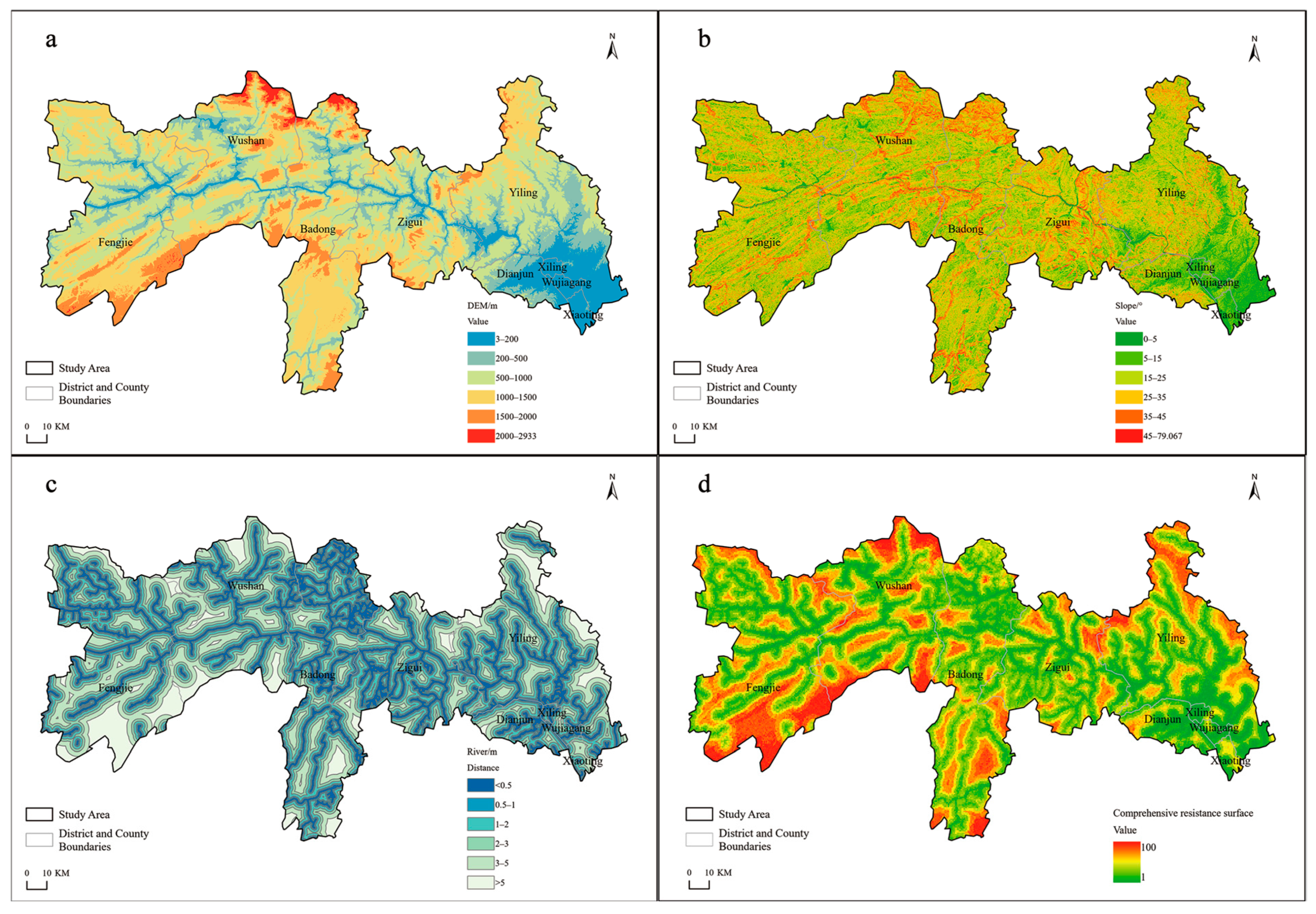
36], this study employs the high-density clusters identified through overall kernel density analysis as source areas. Using elevation, slope, and distance to rivers to construct a resistance surface (
Table 4,
Figure 14), and applying the Linkage Mapper tool, corridors were established to formulate a spatial planning layout for the conservation and utilization of CH in the Three Gorges region.
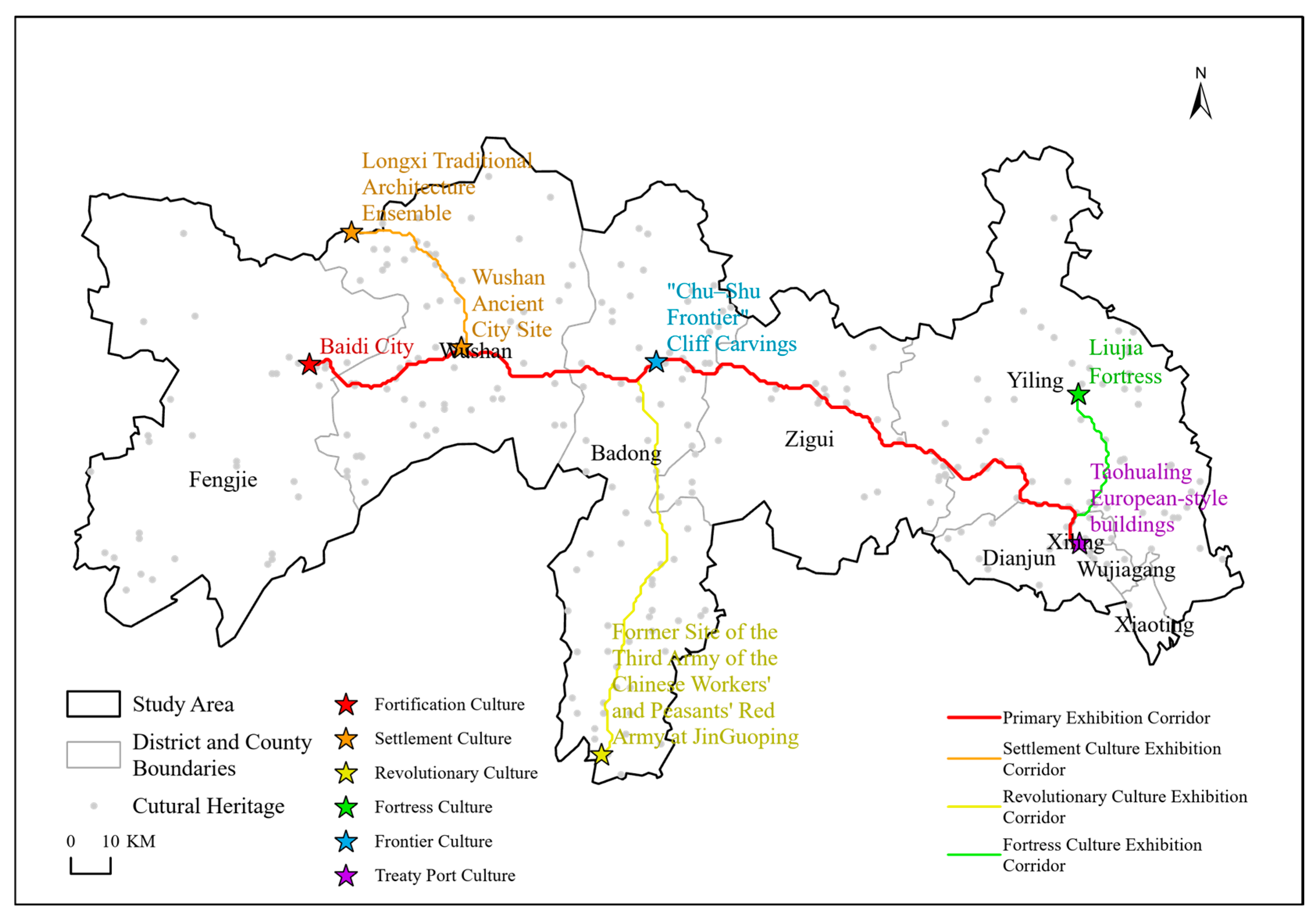
Guided by the principles of connectivity and optimal distance, seven source areas and six corridors were identified, forming a spatial planning layout characterized by “One Corridor, Three Wings” (
Figure 15). The main axis of the Yangtze River serves as a spatial–temporal evolution corridor, linking four key nodes: Fengjie, Wushan, Badong, and Xiling. The Fengjie section, centered on Baidi City, forms a core that represents a multi-layered city defense system spanning from the Before Qin to the Ming–Qing Dynasty periods. The Wushan section, centered on the ancient Wushan Ancient City Sites, showcases a layered urban form integrating ancient and modern elements, preserving a complete mountainous ancient town settlement. The Badong section, centered on the “Chu–Shu Honggou” (Chu–Shu Border) Grotto Carvings, interprets the dialectical relationship between cultural boundaries and transportation corridors. The Xiling section, centered on the Taohualing European-style buildings, marks the historical transition from a military fortress to a commercial port.
Three secondary cultural clusters extend deeply. In southern Badong, Modern and Contemporary Important Historical Sites and Representative Architecture represented by the Jinguoping Red Third Army Site form a functionally complete example of Red Culture. In the Daning River Basin of Wushan, Ancient Architecture represented by the Longxi Ancient Architecture Group present the complete fabric of traditional market towns along tributaries of the gorges. The Xiling–Yiling Fortress Sites reflect the multidimensional adaptations of local communities to turbulent times. This structure integrates CH with the natural environment, forming a rich, multi-layered, and organically interconnected regional CH landscape system. It provides a relatively complete spatial model for the synergistic conservation of nature and culture.
4. Discussion
Current detailed research on the relationship between the spatial–temporal distribution of CH and the natural environment remains relatively scarce. Such analyses are often integrated into studies of influencing factors, where natural, cultural, and social factors are collectively examined to assess their impact indices [
37,
38,
39]. For Cultural Relics Protection Units, studies typically classify them into only five categories for analysis [
40], with limited finer subdivision into their rich subcategories. This study systematically analyzes the spatial–temporal distribution of CH and its relationship with natural environmental factors, aiming to summarize the spatial–temporal structural characteristics of CH in the Three Gorges region.
After clarifying the relationship between the spatial–temporal distribution of CH and the natural environment, this study draws on time-depth theory to explore the underlying mechanisms and cultural logics, thereby elevating previous research on the spatial–temporal patterns of CH from a static level of distribution description [
41] to a dynamic interpretation of processual accumulation. At present, the findings in this section are synthesized solely on the basis of the specific inventory of CH and the historical events it reflects. Future research may incorporate relevant archeological reports and historical documents to conduct more in-depth analysis, thereby clarifying the driving relationships between historical culture and socio-economy.
Then, with the goal of promoting the coordinated conservation of nature and culture, this study uses areas of high CH aggregation as source sites. By applying the Minimum Cumulative Resistance (MCR) model and constructing a resistance surface based on natural factors, cultural corridors are generated to propose spatial planning strategies. This approach enhances the scientific rigor of previous studies that relied solely on high-aggregation areas of CH to establish corridors [
22]. However, it is important to note that, in this process, only the macro-level clustering of CH was considered. Some high-priority protected heritage sites located outside these clusters are not included within the corridors. In specific conservation practices, these heritage sites can still be showcased through thematic display points.
Additionally, this study still has limitations and areas for improvement. The CH in this research consists of all Cultural Relics Protection Units, but due to historical factors, the dataset remains insufficient in quantity. Future studies could incorporate other regionally distinctive cultural resources aligned with CH types to enrich the analytical scope. Regarding the geographic positioning of CH, coordinates were determined through Baidu Maps, with nine of the CH sites (located along the riverbanks and now submerged) only locatable at the township level, resulting in certain deviations from precise locations. Although their number is small and their inclusion at the county and district level does not affect the presentation of macro-level results, this limitation still warrants attention. CH that has been submerged, disappeared, or damaged due to changes in human–environment relationships mentioned in the Data Sources and Processing Section were treated identically to all other heritage sites at every stage of the research process, in order to reflect the overall characteristics of CH in the Three Gorges region. But in conservation and utilization practices, these sites require special attention. They can be presented through toponymic preservation and innovative information technologies. Furthermore, the findings of this study may be integrated with new achievements in CH surveys, as well as resources from museums and exhibition halls, to visually represent the spatiotemporal evolution of CH, thereby contributing to the manifestation of regional cultural integrity.
5. Conclusions
This study collected data on all Cultural Relics Protection Units in the Three Gorges region as CH data. Using ArcGIS (ArcGIS Pro 3.0) methods, time-depth theory and the MCR model, it investigated the spatial–temporal distribution of these CH sites and their relationship with the natural environment, and ultimately proposed spatial planning strategies. The conclusions are as follows.
The absolute core area for the distribution of CH across all periods remains the gentle slope zone near the river, characterized by elevations below 500 m, slopes within 25°, and distances from water systems within 1 km. However, the adaptability of CH to the natural environment gradually exhibited an evolutionary pattern over time, characterized by continuous accumulation at the core and progressive expansion toward the periphery.
CH types exhibit differentiated strategies of natural adaptation and have formed vertical accumulations over time. Settlement Sites in the Before Qin Dynasty Period anchored on river terraces, laying the foundational layer of survival. Ancient Tombs in the Qin–Yuan Dynasty Period reflect the intensification of sedentary life. Ancient Architecture in the Ming–Qing Dynasty Period reconfigured nature, completing the transformation toward environmental construction. Modern and Contemporary Important Historical Sites and Representative Buildings in the After Qing Dynasty Period, through rupturable insertion on extreme steep slopes, inscribed revolutionary memory onto space. The mainstem of the Yangtze River serves as the core area of continuous deposition, while certain mid-altitude mountains and extreme steep slopes constitute distinctive stratifications centered on the recurring motif of precipitous terrain.
A spatial planning framework for CH, termed “One Corridor, Three Wings,” was proposed, comprising seven source areas and six cultural corridors. This framework uses the main stream of the Yangtze River as the spatial–temporal axis, connecting four core nodes based on Fengjie, Wushan, Badong, and Xiling, and forms a multi-layered, organically interconnected landscape network through three secondary cultural clusters.
Focusing on the goal of coordinated conservation of nature and culture, this study explores the spatiotemporal distribution of CH and its relationship with the natural environment. The interpretation of the mechanisms and logic underlying time-depth, together with the application of the MCR model to generate cultural corridors and inform spatial planning strategies, offers new perspectives for the study of heritage in global river basin civilizations. As a quintessential river basin spatial unit and a locus of evolving human–environment interactions, the Three Gorges region presents a distinctive stratigraphic pathway that reveals the mechanisms of superimposition among multiple civilizations within a single geographical arena. This provides empirical spatial evidence for understanding the trajectory of human civilization, such as from adaptation to nature, and through the reconstruction of nature, then to the inscription of history. The spatially differentiated framework of “continuous deposition–recent development–distinctive stratification” developed in this study is transferable to the holistic interpretation of CH site clusters in other riverine civilizations. Moreover, the “One Corridor, Three Branches” heritage network construction method offers an operable spatial planning tool for the value identification, buffer zone delineation, and cross-boundary coordinated management of linear CH.