


Abstract
This paper highlights the findings of the emergency excavation carried out at Avenida Miguel de Cervantes No. 35 in Écija, conducted in two phases between 1999 and 2000 and in 2003. The investigation revealed a domus featuring valuable decorative elements, including pictorial wall paintings and two high-quality mosaics. Stylistic analysis of the wall decorations identified a scheme composed of wide and narrow panels, with a predominance of bright green in the central zone, along with traces of figurative representations. The evidence suggests a second construction phase in the latter half of the 2nd century AD, followed by renovations in the 3rd and 4th centuries. The use of green prevailing monochromy appears to be associated with high-status representational spaces. A total of six samples from the wall paintings and mortars were analysed. X-ray diffraction (XRPD) and X-ray fluorescence (XRF) were employed for a minimally destructive preliminary study of the mortars, while confocal microscopy was used to observe the sequence in which the pigments were applied, and Raman spectroscopy enabled the identification of the pigments, notably highlighting glauconite as the green pigment.
1. Introduction
Roman wall painting represents an essential component of ancient decorative art, not only for its aesthetic value but also for the information it provides regarding painting techniques, the materials employed, and the networks of production and circulation of pigments within the Roman world. In the context of Hispania, the study of wall painting has gained increasing attention over the past few decades [1,2,3], although it remains a less developed field compared to other Roman provinces, such as Italy or those located in the Eastern Mediterranean. Archaeological research has revealed significant examples in both urban and rural sites, enabling advances in archaeological documentation as well as the scientific and technical characterisation of materials and methods [4,5].
Focusing on Hispania, pioneering studies on Roman wall painting date back to historiographical works such as those by Abad Casal [6,7], which provide the first general compendia on the subject in this Roman province, covering decorative typologies, styles, and archaeological contexts. More recently, our Research Group has been conducting extensive and in-depth investigations using various instrumental techniques to chemically characterise pigments and binders employed in different regions of Hispania (Baetica [1,2], Mérida [8], Cartagena [9], Bilbilis (Calatayud) [10]. In an interdisciplinary approach with specialists in archaeology, these studies have allowed us to establish relationships between chemical composition and various archaeological aspects, such as the presence of different artisan workshops or the use of fresco versus secco techniques, among others [3,11,12].
Despite these advances, fundamental questions remain. Among them is the need to distinguish between local technological traditions and imported or widely shared Mediterranean models, as well as to understand how pigments were produced and selected according to their geographical availability and cost. Additionally, the identification of application techniques (fresco, mezzo fresco, secco) and their impact on the conservation and degradation of the paintings constitute important methodological and conceptual challenges. The use of organic pigments, the coexistence of multiple painting layers, and the possible influence of regional workshops are further issues that demand interdisciplinary approaches combining archaeometric analyses with archaeological and classical art studies.
The domus located at Avenida Miguel de Cervantes No. 35 in Écija represents a privileged context due to the richness of the materials recovered, including both mosaics and painted decorations. Among the latter, those with a green background are particularly noteworthy, not only from archaeological, artistic, scientific, and chemical perspectives, but also for what they reveal about the economic and social power of the owning family. Of the excavations carried out in Écija prior to 2016, this context is the most complete in terms of the stages of material recovery, restoration, study, and analysis of the decorative elements, as well as their graphic reconstruction. These data are complemented by the results obtained through the search for iconographic parallels. Moreover, this case constitutes a methodological model for evaluating and adjusting research phases according to the challenges encountered: it is a context in which a multidisciplinary approach has been successfully applied and remains, to date, the only painted decoration from Écija to have undergone chemical analyses of both mortars and pigments.
The study of the fragments uncovered during the second phase of excavation began in 2018, with an initial hypothesis for the puzzle and graphic restitution of the decorative scheme [13]. From the following year onward [14], thanks to the reorganisation of the storerooms of the Municipal Historical Museum, it became possible to identify additional painted and decorative pieces belonging not only to Room 1 but also to other spaces documented in 2003 [15].
In that study, archaeological, stylistic, and decorative information is complemented by the first chemical analyses carried out in Écija on the pigments used and on the compositional elements of the rendering mortars, as well as by the pictorial stratigraphy, which can provide insights into the phases of brushstroke application and the working methods of the pictores who executed the decoration. Both non-destructive and destructive analyses were performed on several fragments recovered during the 2003 phase, and included confocal microscopy, X-ray diffraction and fluorescence, and Raman spectroscopy.
1.1. Archaeological Context
The excavation carried out at No. 35 Avenida Miguel de Cervantes was conducted in two separate phases: the first between 1999 and 2000 [16,17,18], and the second in 2003 [19,20]. The plot is in the central area of Écija (Figure 1A,B), not far from the forum coloniae and approximately 50 m east of the kardo maximus [21].
Figure 1.
(A) The location of the city of Écija, Seville, Spain; (B) location of the situated at No. 35 Avenida Miguel de Cervantes within the current urban layout (source: Google Earth).
Moreover, this area of Écija was occupied by large private buildings and luxurious residences. The two excavation phases brought to light a domus with exceptional decorative elements: wall paintings and two high-quality mosaics. In March 2003, the Écija City Council approved a second archaeological intervention [13,14,15,22] on the plot at Avenida Miguel de Cervantes 35 [14,15]. The only available documentation is contained in an article published in Spal and in AIEMA proceedings [19], which discuss the discovery of the important Mosaic of the Seasons of the Year, and in which references are nonetheless included to the finding of certain painted decorations. Regarding the excavation method used during this phase, the manual excavation of the context was initially limited to Room 1 [20] (Figure 2). To the west of the aforementioned mosaic, another one with a marine motif was uncovered, belonging to a space that was possibly semi-open.
Figure 2.
The plan of the excavation phases carried out on the plot at Avenida Miguel de Cervantes No. 35 and of the structures uncovered [13].
Access to Room 1 was from the west, through a large threshold consisting of a column shaft cut vertically and a marble slab. The walls enclosing the room were approximately 50 cm wide, built of bricks and featured wall paintings with polychrome decorations [15]. The north wall preserved a collapsed painted decoration, the result of the construction of an adjoining house at No. 33, which destroyed its wall support. The transition between the painted wall coverings and the Mosaic of the Seasons of the Year was resolved by means of a moulding made of lime mortar, sand, and fragments of construction materials, perhaps in the form of a bocel. A room decorated in this manner would certainly have had a public (tablinum) or semi-public (triclinium) function [20].
The wall structures dateable to around the founding period of the colony were razed in the mid-2nd century AD to make way for newly built private spaces decorated with elegance [23]. Thanks to the exceptional quality of the Mosaic of the Seasons of the Year, attributable to the “first school” of mosaic workshops active in Astigi [24,25], this second construction phase, and consequently the wall paintings, can be dated to around the mid or second half of the 2nd century AD.
In Room 2, located to the west of Room 1 and characterised by the mosaic with a marine motif, dated, based on the archaeological record [20], to between the 3rd and 4th centuries AD, the wall paintings which are currently under study were found. This area of the excavation corresponds to the third and fourth occupational phases of the domus; after its abandonment, dated to the late 4th or early 5th century, the spoliation of construction materials took place during the 5th and 6th centuries.
1.2. Description of Pictorial Fragments from Room 1
The pictorial decorations from Room 1 are in a good state of preservation, legibility and consistency, despite their fragmentation that prevents completing the puzzle as the fragments found most likely belong to several walls of the same space [15].
The fragments are part of a decoration with a system of wide and narrow panels. The lower part of the wall is composed of a black plinth characterised by diagonal lines forming a possible lattice (graticcio), which are interrupted in correspondence with the vertical lines that delimit the narrow panels of the lower area. A portion of the cladding that was part of the south’s wall plinth was extracted and transferred to the Municipal Historical Museum of Écija for restoration (Figure 3); any traces of paint on the black background have been completely lost, nor are there traces of the pigment that characterised the lattice (graticcio).
Figure 3.
Photogrammetry of the south wall plinth after restoration. The red frame indicates the position of the traces of the painted lattice on the black surface. Scale 1:10.
A band (predella) acts as a transition to the middle area: yellowish ochre, framed by three red horizontal bands probably decorated with small circular elements (Figure 4A,B). In some fragments, just above the red band that delimits the transition above, traces of another band, in yellowish ochre, can be seen painted on the green background of the middle area (Figure 4C). The state of conservation of this element, which has a higher relief than the other colours, suggests that it has been painted on the already dry surface, which, in the absence of the carbonation process, leads to the formation of pigment flakes that are detached.
Figure 4.
(A,B) Fragments of the predella in yellowish ochre, with visible traces of the narrow white panel and of the three red bands, probably decorated with ovoli or circular motifs; (C) a fragment of the predella with traces of the vertical red band and of the narrow white panel; just above the predella, in the green background area of the wide panel, traces of a yellow band can be observed. (red frame).
The wide panels of the middle area have a very bright green background; they are framed by a white fillet and a red band that separates them from the narrow ones. The latter, on the other hand, are characterised by an area with a white background (approx. 10 cm wide), framed by a white fillet (Figure 5). The wide panels were probably framed inside by a very thin red fillet of which no diagonal stitches or decorations of the straight sections have been preserved. Another very thin and white fillet, paired with a slightly thicker reddish–violet one, serves as a frame for the scenes painted on the panels of the middle zone.
Figure 5.
A panel composed of fragments that reconstruct parts of two wide green-background panels and one narrow white panel bordered by vertical and horizontal red bands; the white and green surfaces are framed by very thin white fillets.
The wide panels probably contained figurative representations (Figure 6). In fact, a set of seven fragments is preserved representing a female figure painted in half profile, with her left hand raised, carrying an object whose morphology is difficult to identify (Figure 7A). The woman is dressed in a long tunic of yellowish ochre and dark red/brown colours with a mantle of the same shades; Long, wavy reddish-brown hair, probably partially pulled back. A fragment, which was part of another figurative scene, represents a theatrical mask with very curved eyebrows, yellowish ochre and reddish and purple outlines; it is likely that he identifies a black character, typical of comedy (Figure 7B).
Figure 6.
A hypothetical graphic reconstruction of the decorative system found at Avda. Miguel de Cervantes No. 35, showing the location of the fragments presented.
Figure 7.
(A) A photogrammetric image of the female figure that decorated one of the wide panels; (B) a photogrammetric image of a male figure with a theatrical mask that decorated one of the wide panels.
1.3. Stylistic and Functional Analysis of Room 1
The theatrical mask from Avenida Miguel de Cervantes No. 35 exhibits the same physiognomy as that associated with Thalia in triclinium A of the porticus triplex at Moregine near Naples [26,27]: very large eyes and nose, arched eyebrows, and a wide-open mouth [28].
For the female figure, a comparison can be made with a painting in the Villa San Marco in Stabiae: a woman painted in half profile; with her left arm, she rises to hold a tray on which a series of objects are placed [29].
The complete absence of the right side of the female figure’s body, as well as of whatever she may have held in her raised left hand, does not allow for a precise attribution, because there are no references to the attribute necessary to correctly identify the character. Even so, the discovery of this decoration is of great interest despite its state of preservation, as it provides a new example of a female representation in Hispaniae.
The presence of muses or offerents has been related to libraries, baths, gardens, or private museums, and could confirm their presence in the public or semi-public rooms of domestic settings. If the female character is associated with the seasons of the year represented in the mosaic, the interpretation of Room 1 as a tablinum becomes perhaps more plausible [20]. The emphasis on the Bacchic theme, due to the association of offerers–muses–stations, is very frequent in the triclinia, in the tablina or in semi-public spaces in general (e.g., in the nymphaeum of the Domus Transitoria in Rome [30]), and also in Astigi itself such as in the triclinium E and in the tablinum A of the Domus I in the archaeological site of Plaza de Armas of the Alcázar Real [31].
The decorative layout of the Mosaic of the Seasons of the Year (which does not have the repetitive elements used to mark the presence of the lecti), the position of Room 1 opened a corridor [23] which connected with the peristylium (Room 2) [20], and its small surface area (almost 22 m2) would confirm the function as a tablinum for that room.
According to Tybout, the rooms around the peristyle had black plinths [32], as in the case of Room 1 presented here, thus differentiating between public and private spaces within the same domus.
Another distinctive feature of the painting discussed here is the monochromy of its walls. Barbet and Ling [33,34] speak of total monochromy when it extends to both the plinth and the upper area of the wall, or of prevailing monochromy when it characterises only one of the two areas.
According to Santoro, most of the monochromatic rooms in Pompeii are black, white, yellow and red [35]; in only three contexts was green used. The prevalent green rooms thus become unusual phenomena, both in Italy and in the provinces [35,36]. It is worth remembering, then, the exceptional nature of the context presented here and of the Astigi colony itself, which already has six rooms with wide green panels, and only one with narrow panels with a green background.
A study by Groetembril on the use of green in the mural paintings of Gallia, counts thirteen closes to the chronology of the Astigitan example (second half of the second century AD). According to the data, the choice of green would be an exceptional use, limited to contexts close to trade routes, perhaps due to the easy supply of pigments, or rather to the economic status of the client, most of the cases belonging to domus or villae [37].
The use of green as a background colour implied considerable financial means on the part of the owner family, being able to use different shades and pigments [10,38,39,40]. Whatever the composition used, green pigments were difficult to apply due to their poor adhesion to the surface, which caused the formation of sheets, and rapid chemical degradation that turned them into brown or black [35,38]. The limited use of green earths over large surfaces can therefore be explained by their chemical properties; yet the studies cited above demonstrate that their use is always associated with elite contexts [35,37], in public or semi-public representational spaces [41], over a wide chronological range (1st century BCE–3rd century CE), and always located near major trade routes [41]. Considering the types of rooms from which the previously cited samples derive, and the location of the Astigi colonia itself, the context of Avenida Miguel de Cervantes could be added to this “rule”.
The results of the analyses carried out will provide information on the compositions of the pigments, with particular emphasis on that of green, being able to explain which of the possible recipes has been used, in this case, to avoid the appearance of adhesion and lamination problems. The study of the organic materials used is necessary to understand the archaeological, economic, social and functional data that have led to the execution of the green background paintings found in Avda. Miguel de Cervantes, 35.
2. Materials and Methods
The chemical characterisation of the mortars used in Roman wall painting provides highly valuable information on the construction techniques employed by Roman builders. Roman mortars were generally lime-based but rarely consisted of a simple binary mixture of lime and sand [42]. Instead, they often contained heterogeneous aggregates, such as lithic fragments, crushed calcite, or ceramic materials, depending on local resources and functional requirements.
Mortars traditionally classified as air lime mortars may therefore include naturally occurring impurities or reactive components, while mortars with hydraulic behaviour result from the presence of reactive siliceous and/or aluminous materials capable of developing hydraulic phases [43,44,45]. In Roman construction, this hydraulic behaviour was achieved through the addition of pozzolanic materials, rather than pre-formed hydraulic compounds. Pozzolans could be natural, such as siliceous or alumino-siliceous materials of volcanic origin, or artificial, such as crushed bricks or ceramic fragments (cocciopesto), and were selectively used according to the environmental and functional context.
The objectives of this study were the chemical identification of the components of the mortars and the pigments used in the wall decoration of Room 1 of the domus discovered at Avenida Miguel de Cervantes No. 35 in Écija.
2.1. Materials
A large number of wall painting fragments were found in the domus at Avenida Miguel de Cervantes No. 35. This high quantity makes it difficult, if not impossible, to conduct chemical analyses on all the pieces. Therefore, a selection was made of some of the most representative fragments, chosen to provide the maximum possible information, specifically, fragments that contained all the colours observed macroscopically and retained a sufficient layer of mortar to allow study using various instrumental techniques. The large quantity of pictorial fragments (approximately 670) recovered in Room 1 during the emergency archaeological excavation, the use of excavating machine, as well as the partial destruction of various decorative elements (Mosaic of the Seasons of the Year and north wall covering) during an excavation carried out in the adjacent number 33 in 1987, and the nature of the depositional layers of the collapsed dwelling stripped of its building materials in medieval times, it is not possible to provide the exact location of the samples studied at the time of their discovery and to discern whether they belonged to one wall rather than another. This has not prevented us from making a truthful reconstructive hypothesis of the decorative system in its entirety (see Figure 6). Figure 8 shows the selected fragments along with their nomenclature.
Figure 8.
Nomenclature of wall painting fragments found at Avenida Miguel de Cervantes No. 35 in Écija.
These fragments are representative of the decorative system and contain the pigments that characterise the decoration. While different painting techniques (fresco or secco) may be present, confocal microscopy in this study was used solely to analyse the relative depth and superposition of pigments in order to determine their order of application and not to definitively identify the painting technique. The location of the decorated zones (plinth, middle, or upper area) is clear, and none of the fragments contain any consolidants or restoration products, unlike, for example, the fragment with the theatrical mask, which could not be analysed due to the presence of Paraloid on its surface.
Sample MC35-1 comes from the middle zone of the walls: the wide green-background panel is separated from the narrow white panel by a vertical red band, bordered by two white fillets.
Fragment MC35-2 consists of part of a narrow white panel with traces of the green background from the wide panel and marks the transition toward the plinth with an orange-yellow band bordered by two red fillets that act as a predella.
Samples MC35-3, 4, and 6 correspond to the female figure that decorated one of the central panels. These include part of the face and right side of the torso of a woman (MC35-4), the raised left arm (MC35-6), and part of the mantle or tunic covering the body (MC35-3).
Piece MC35-5 is located where the predella ends and gives way to the black-background plinth. In this case, it is not possible to verify the presence of a pigment painted over the black background that could be attributed to the latticework (graticcio) decorating the plinth, whose traces were identified only in the fragment extracted from the south wall during excavation.
At first sight, some details appear to have a greater thickness compared to the background colours. Specifically, the elements framing the bands and the wide and narrow panels of the middle zone (white fillets in MC35-1) and the red bands decorating the predella (MC35-2) were painted with brushes more heavily loaded with pigment, indicative of a secco or semi-secco technique that distinguishes them from the green, yellow, and black colours of the large painted surfaces. Similarly, the female figure may also have been partially painted when the intonachino was nearly dry, as evidenced by some light-coloured degradations that appear in relief.
2.2. Instrumental Techniques
The fragments were initially examined by confocal optical microscopy in order to distinguish the pictorial layers, analyse their microscopic properties, and select appropriate areas for analysis. The composition of the mortars was determined by X-ray diffraction (XRD) and X-ray fluorescence spectroscopy (XRF); these techniques were used to obtain a general overview of bulk mortar composition in terms of binder and aggregate types. The chemical nature of the pigments was identified by micro-Raman spectroscopy (μ-Raman). Table 1 summarises the analysed fragments, the techniques applied to each material, and the identified composition of the pigments and mortars.
Table 1.
Fragments analysed and composition of pigments and mortars.
2.2.1. Confocal Microscopy
The fragments were visually examined at 100× magnification using a LEICA DCM8 Confocal-Interferometric Microscope, whose 3D surface metrology system allows for the study of rough surfaces via confocal microscopy. Recently, our Research Group has highlighted that confocal microscopy has valuable applications in the study of Roman mural paintings due to its ability to provide detailed, three-dimensional images without physical contact, thereby preserving the integrity of the materials [42,43]. The aim of this study was to determine the sequence in which the pigments were applied in the paint layer.
2.2.2. X-Ray Diffraction
X-ray diffraction patterns were acquired using a Bruker D8 Advance diffractometer equipped with a goniometer and an automated DACO-MP recording system. The samples were irradiated using a copper Kα line (λ = 1.54 Å). This instrument was equipped with a nickel filter and a graphite monochromator, operating at a goniometer speed of 2°/min. X-ray diffraction (XRD) patterns were collected over a 2θ range of 5–60°, with a step size of 0.05° and a counting time of 1 s per step. Mortar samples were obtained by scraping small amounts of material. These samples were ground in an agate mortar to obtain a fine-grained powder, which was then placed on a plastic sample holder and compressed to achieve a smooth and uniform surface. X-ray diffraction (XRD) patterns were acquired on these powdered samples.
2.2.3. X-Ray Fluorescence
X-ray fluorescence spectroscopy was employed to determine and quantify the chemical elements in the mortars. A Rigaku ZSX Primus IV X-ray spectrometer was used, featuring a 3 kW Rh-target X-ray tube, ten analysing crystals, a sealed proportional counter for light element detection, and a scintillation counter for heavy elements. Mortar samples were scraped, ground to a suitable particle size, and compressed into pellets prepared from multiple points on each surface, with reported data representing the average mortar composition.
2.2.4. Raman Spectroscopy
Raman spectra were acquired using a Renishaw InVia Raman microscope, which includes a Leica microscope configuration with various lenses, monochromators, a CCD camera, and dual lasers (532 and 785 nm). Excitation was performed using the 532 nm green laser, and spectra were recorded in the 140–1700 cm−1 range. The maximum laser power of the instrument is 45 W. To avoid heat-induced chemical alterations while optimising the signal-to-noise ratio, the laser power was adjusted according to pigment colour: a power of 10% was used for white, black, and green pigments; 5% for red hematite; 0.5% for red cinnabar and yellow pigments; and 50% for blue pigments. For each sample, the number of accumulations and exposure time were individually optimised. Spectral data processing, including baseline correction and smoothing, was performed using Peakfit software (version 4.11).
3. Results and Discussion
3.1. Mortars
To characterise the mortars, we employed X-ray diffraction (XRD) and X-ray fluorescence spectroscopy (XRF), which allow us to determine their chemical composition. The X-ray diffractograms of the six fragments are similar to each other, as evidenced in Figure 9. In all cases, the most intense reflection band (2θ = 29.45°) can be associated with calcite, CaCO3 (JCPDS 05-0586). This calcite forms as a result of the carbonation of lime during the setting of the mortar. In addition to the calcite peaks, silica, in its quartz phase, α-SiO2, also shows strong signals (JCPDS 46-1045). These results confirm the use of a lime-and-sand mortar.
Figure 9.
X-ray diffractograms of the analysed mortar fragments.
Besides these two major components, dolomite, CaMg(CO3)2 (JCPDS 36-0426), is also detected, likely originating from the natural source used to produce the lime. This lime was obtained by heating limestone, which typically contains dolomite impurities in varying concentrations. Finally, other minor components are also detected in the diffractogram, such as muscovite, a mica-group mineral with the formula KAl2(Si3Al)O10(OH)2 (JCPDS 07-0042), and the possible presence of kaolinite, a phyllosilicate with the formula Al2Si2O5(OH)4 (JCPDS 14-0164).
Table 2 shows the chemical composition of the mortars from the six studied fragments (MC35-1, 2, 3, 4, 5, 6), expressed as oxides. According to the XRD results, which showed the most intense reflections for silica and calcium carbonate, the predominant component in all cases is calcium oxide, CaO. The second most abundant component is silica, SiO2, which corroborates the XRD findings regarding the crystalline compounds. These values indicate the use of lime and sand to produce the mortars. The presence of magnesium oxide, MgO, can be attributed to the dolomite. Aluminium oxide, Al2O3, appears at concentrations around 3%, while iron oxide, Fe2O3, is present at slightly lower values. The combination of high calcium oxide content with low aluminium and iron oxide values suggests the use of an air-setting (non-hydraulic) mortar.
Table 2.
Chemical composition of mortars expressed as weight percent of oxides, determined by X-ray fluorescence.
The chemical composition of the plaster layers obtained is quite similar to those found in several sites in Hispania, such as the materials from the Blanes Dump in Mérida [8], although in our case gypsum, documented in other decorations on the peninsula, is absent [41].
3.2. Pigments
3.2.1. Confocal Microscopy
Confocal microscopy has valuable applications in the study of Roman mural paintings due to its ability to provide detailed, three-dimensional images without physical contact, thereby preserving the integrity of the materials [8,46]. In this study, confocal microscopy was employed to analyse the relative depth of pigments in areas where two colours meet, allowing the identification of pigment superposition and the determination of their order of application.
Although the optical resolution of confocal microscopy may provide indirect information related to painting practices, this technique does not allow for a conclusive distinction between fresco and secco techniques. Instead, the observed pigment superposition can only offer a preliminary and non-determinant indication of the sequence in which pigments were applied. Therefore, the results obtained from confocal microscopy should be interpreted exclusively in terms of pigment application order rather than as definitive evidence of the painting technique. Table 3 presents the results obtained for the analysed fragments. For analysis using confocal microscopy, four of the six fragments presented in this study were chosen (MC35-1, 2, 3, 5), one for each area of the decorative system (plinth, predella, narrow panel, wide panel and figurative element), identifying those that macroscopically presented the most overlapping layers of paint, so as to be able to study the succession of brushstrokes.
Table 3.
Results obtained from confocal microscopy study.
Sample MC35-1 exhibits interfaces between green and white, red and yellow, and red and white. Examining the colour profiles, it is apparent that the white and green pigments lie at greater depths, while the yellow and red pigments are closer to the surface. This indicates that the base of the fragment was prepared with green and white, whereas the decorative motifs were applied in yellow and red. The stratigraphy of this piece demonstrates that the wide and narrow panels were painted starting with white (which may correspond to the natural colour of the pictorial plaster, the intonachino) and green as a base, onto which the white fillets framing the wide panels and the yellow of the predella were added. In this case, the white is clearly a pigment, as evidenced by the relief of the painted elements and the near disappearance of the fillets in some areas (see the upper part of sample MC35-1).
Sample MC35-2 presents interfaces between red and yellow, white and black, green and yellow, and white and yellow. Focusing on the colour profiles, black and green appear at greater depth, while red, yellow, and white are nearer the surface, indicating that the base of this fragment was painted in black and green, while the decorative motifs were applied in yellow, white, and red. This fragment also includes a narrow panel with a white background, on whose right edge traces of green from the wide panels can be seen. The yellow and red of the predella, as well as the white fillets framing the panels, were applied in an upper layer.
Sample MC35-3 exhibits five interfaces: yellow–green, red–green, burgundy–yellow, green–red, and a fifth with three colours, green–red–yellow. The colour profiles show that white, green, and black (or perhaps brown, corresponding to the female figure’s tunic) are at greater depth, while yellow and red are nearer the surface, indicating that the background was painted in white, green, and black, and the decorative motifs in yellow and red. This fragment illustrates the pictorial technique used for colour shades: starting from the white intonachino (over a green background in the wide panels), the outline of the female figure is sketched in a darker colour (brown). Folds of the tunic and mantle are gradually added, working with light and shadow, applying colours from darkest to lightest (red and yellow). Chemical analyses could not confirm whether these shades were painted in secco with added organic binders allowing pigment application on a nearly dry surface. Although the analyses did not detect such components, perhaps due to the storage conditions or time spent out of their ideal conservation context, their use is highly probable. It can be observed visually or with a magnifying glass that some details have thicker, raised brushstrokes relative to the background colours; another indication is the formation of bubbles along the brushstroke, revealing the pigment of the underlying layer (e.g., the white fillets framing the wide and narrow panels in the middle zone, or the female figure’s right shoulder; see Figure 5 and Figure 7).
Finally, sample MC35-5 presents two pigment interfaces: yellow–black and red–black. The colour profiles show that black and white lie at greater depth, while red and yellow are closer to the surface, indicating that decorative details were painted in these colours. At the transition between the predella and the plinth, on the white intonachino, black and yellow were applied as a base, but the latter was added afterward, overlapping the darker area with freehand brushstrokes, likely without using a wooden rule. Regarding the red, microscopy indicates that it was applied over the black background, perhaps to depict a decorative element no longer visible with the unaided eye.
3.2.2. Raman Spectroscopy
All fragments presented in this study (MC35-1, 2, 3, 4, 5, 6) were analysed using Raman Spectroscopy to identify the composition of pigments and mixtures used to obtain the different shades (see Table 1).
White Colour
The white colour is present in MC35-1, MC35-2, and MC35-3. It also appears in the other fragments, although it does not appear to have been used as a pigment; it is better considered as the wall’s own preparatory layer, the final preparation layer composed of calcite, known as intonachino, which was painted in fresco, taking advantage of the carbonation process for fixing the background colours. In many documented examples in Italy and France [39] and Spain, calcite serves as the background white for decorations. The closest examples come from Córdoba, Baelo Claudia, and Cádiz [47,48,49]. Raman spectroscopy shows that in the first three fragments, the spectra are dominated by a sharp, intense signal centred at 1086 cm−1 (symmetric stretching of the carbonate anion, typical of calcite [50]) (Figure 10a). The presence of other weaker bands at 711, 280, and 157 cm−1 confirms the presence of calcite. Therefore, the pigment used to obtain this white colour in both cases was lime, Ca(OH)2. This pigment was applied as an aqueous suspension. Upon application, it dried, during which Ca(OH)2, calcium hydroxide, underwent a carbonation reaction due to atmospheric carbon dioxide, transforming it into calcium carbonate, CaCO3.
Figure 10.
Raman spectra of white-pigmented areas in fragments (a) MC35-1 and (b) MC35-5.
In fragments MC35-4 and MC35-6, the Raman spectra (not shown) are similar to those of calcite. However, in fragment MC35-5, the Raman spectrum varies depending on the zone analysed. In some cases, the spectra are similar to that shown in Figure 10a. In other cases, the Raman spectrum shows a strong signal at 1097 cm−1, with the 1086 cm−1 signal being weaker (Figure 10b). Additionally, two other signals at 298 and 174 cm−1 are observed, compatible with the presence of dolomite, a calcium–magnesium carbonate [50]. This result indicates that this white area is not a pigment but belongs to the preparatory layer, which, as previously mentioned in the XRD study, was mainly composed of calcite, although dolomite was also detected. The presence of calcium carbonate could also be characteristic of lime mixed with pigment to improve adhesion to the support, as documented in some contexts in Italica (Santiponce, Seville) and Cádiz [51].
In fragments MC35-1 and MC35-2, the lime white was applied in the surface layers to paint the fillets framing the panels, in addition to forming part, as in the other samples, of the wall’s own preparatory layer.
The lime associated with the dolomite found in fragment MC35-5 may indicate the presence of marble dust characterising the outermost layer of the wall [9,39] in the most prestigious contexts [52], which are therefore more difficult to document. In contexts closer to Écija, dolomite has only been found in the Casa del Mitreo in Mérida [53] and in Carthago Nova [9].
As we will see later, in our case, calcite could also have been used to obtain lighter tones [49].
Black Colour
Historically, the most commonly used pigment to decorate mural paintings in black originated from charcoal. Carbon-based pigments used to obtain black tones could have different origins [54]. In the Roman period, it is certain that three types of carbon-based black pigments were employed: bone black, carbon black, and vine black [55], clearly referring to their origin. In all cases, this carbon is graphitic in nature, and its Raman spectrum is characterised by the presence of two bands centred at 1585 cm−1 (G band) and 1355 cm−1 (D band).
In our fragments, black is present in MC35-5. Raman analysis yields the spectrum shown in Figure 11, with the G and D bands centred at 1593 and 1368 cm−1, values similar to those obtained in other black pigments studied by our research group [10,56]. The difference in intensity between the two bands and their position does not allow an unambiguous discrimination among the different carbon-based black pigments of carbon black and vine black. However, in bone black, obtained by burning bone remains, a phosphate residue persists, which should produce a Raman signal around 960 cm−1, corresponding to the stretching of the P–O bonds of these residual phosphate groups. This band is not always observable and depends on the laser used. With a red laser (785 nm), the phosphate band is generally very weak, making its presence difficult to confirm; however, with a green laser (532 nm), which is the one used in this study, it can be observed. In the spectrum in Figure 11, this band does not appear, so we can rule out a bone origin for this carbon, reducing the options to carbon black or vine black, both of plant origin. Vine black had very limited use and possessed a beautiful bluish-black colour. It was traditionally obtained by burning vine cuttings and dried grapes [55,57]. Despite the small amount of this black coloration in our fragment, we can rule out the presence of this bluish tone, so it seems reasonable to conclude that the carbon employed in this painting was carbon black.
Figure 11.
Raman spectrum of black-coloured area of fragment MC35-5.
The use of carbon black [39] is very common in Roman painting: it is documented as a background colour for large surfaces, for small details, and for darkening pigments to obtain the desired tone [10]. In Hispaniae, its use has been detected in many pictorial contexts, such as in decorations from Córdoba [10], Baelo Claudia [48], the Casa del Mitreo [53], the Blanes Dump in Mérida [46], the porticus of the theatre of Carthago Nova [49], the villa of Portmán [49] and the Casa del Larario of Bilbilis [10].
When used to decorate large surfaces, as in the case of sample MC35-5, the presence of calcite confirms the use of fresco technique for black backgrounds. In this case, a close parallel comes from the Casa del Mitreo in Mérida [53] and from Mons Saturnus in Carthago Nova [9].
Yellow Colour
Yellow is present in MC35-2, MC35-3, MC35-5, and MC35-6. Figure 12 shows the Raman spectra obtained in the areas pigmented with this colour. The spectrum for fragment MC35-6 is similar to that of MC35-3 and is not shown. In all three spectra, the signals corresponding to goethite, an iron oxyhydroxide (α-FeOOH), can be clearly distinguished. This compound is characterised by seven bands at approximately 245, 299, 390, 417, 492, 550, 680, and 975 cm−1. Other authors have also reported two additional bands at 1120 and 1255 cm−1, although these likely arise from impurities [58,59]. In our spectra, the presence of an intense band around 390 cm−1, along with a set of less intense bands at wavenumbers close to those listed above, unequivocally indicates the use of goethite. Slight variations in these wavenumbers and in their intensity can be observed.
Figure 12.
Raman spectra of yellow-pigmented areas in fragments (a) MC35-2, (b) MC35-3, and (c) MC35-5.
In Roman painting, the use of goethite is widespread in both time and space, being one of the most frequently used pigments [10,39], together with ochre [52]. It could be used as background colour for large surfaces or for small details as well [39]; in the latter case it could be mixed with white or black pigment [10,48] to obtain tonal variations and shades.
Among nearby examples, goethite has been used as a pigment in the baths of Plaza Julián Basteiro in Carmona [46], in the House of the Satyr in Córdoba [1] and in the Almodóvar necropolis [2], in the Blanes Dump [8], in Baelo Claudia [48], and in Carthago Nova [9]. Evidence of the use of goethite mixed with lime is also found in the House of the Satyr [1] and in the Almodóvar necropolis in Córdoba [2], and in El Olivillo (Cádiz) [49]. Similar instances of pigment mixtures and their multi-analytical characterisation have been documented in other Roman contexts [60,61,62], providing useful comparative data for understanding pigment application and production techniques.
Meanwhile, the spectra for MC35-2 and MC35-5 show very intense bands at 1085 cm−1, while in MC35-3 the band appears at 1008 cm−1, with the 1085 cm−1 band also present but with significantly lower intensity (Figure 12a–c). These results are consistent with the use of pigment mixtures. Lime, Ca(OH)2, after carbonation due to atmospheric CO2, transforms into calcium carbonate, CaCO3, whose Raman bands are visible in the spectra of MC35-2 and MC35-3. The purpose of using lime was likely to lighten the final yellow colour applied, or it may reflect the outer coating layer painted in fresco with the yellow pigment; in fact, these two fragments (MC35-2 and 5) are the only ones corresponding to the predella in which yellow was applied directly over the intonachino.
On the other hand, in the spectrum of fragment MC35-3, as mentioned earlier, in addition to the signal at 1085 cm−1, a very intense and sharp band at 1008 cm−1 can be observed, which may be assigned to gypsum, a hydrated calcium sulphate, CaSO4·2H2O [63]. Since the preparatory layer is absent from these fragments, the origin of this compound cannot be the use of gypsum in that layer. It could have formed by reaction of the calcite used for the pigment with atmospheric sulphur dioxide; however, the absence of diffraction bands in the XRD pattern of the mortar in this fragment and in the Raman spectra of the other samples makes this process unlikely, as it requires prolonged exposure to a polluted SO2 atmosphere. Therefore, this compound was likely added intentionally to form a mixture with goethite. The use of gypsum in pigment mixtures is not uncommon, as it is known to have been used to give paints a smoother and shinier finish [39]. Finally, the Raman spectrum of fragment MC35-5 (Figure 12c) exhibits signals from both goethite and carbon, indicating that in this case the intention was to darken the yellow colour, which can indeed be observed visually by comparing the yellow hues of the three fragments.
The association of goethite with gypsum is not rare, though not very common in the Peninsula, and has so far been documented in small decorative elements in the porticus of the theatre of Carthago Nova [49], in the villa of Portmán [49], and in the domus presented here.
Red Colour
Red is present in all the fragments, with varying degrees of intensity and in different shades. The spectra of fragments MC35-2, MC35-3, and MC35-5 recorded in the red areas are similar to that shown in Figure 13a, corresponding to fragment MC35-2. It displays an intense and broad band at 1318 cm−1, together with a set of bands of varying intensity in the 200–700 cm−1 region. This spectrum can be assigned to hematite, α-Fe2O3 [58]. In addition to the hematite signals, those of calcite (signal at 1086 cm−1) are also clearly distinguished.
Figure 13.
Raman spectra of red-pigmented areas in fragments (a) MC35-2, (b) MC35-4, and (c) MC35-6.
Hematite was often used to imitate or reduce the cost of cinnabar [39]. Frequently used and documented throughout various periods, it was an inexpensive pigment and easy to obtain. In Roman painting, it was applied on large wall surfaces and often combined with calcite, demonstrating the use of the fresco technique, as is the case with sample MC35-2. A recently published case documents with certainty the same procedure and features in nearby Carmona [46]. In general, it is relevant to mention nearby examples of the use of pure hematite, such as in the House of the Satyr in Córdoba [1], Baelo Claudia [48], Mons Saturnus [9], the porticus of the theatre of Carthago Nova [49], and the villa of Portmán [49].
For fragments MC35-4 and MC35-6, the hue of the red colours observed differs from the previous ones. For example, the red used to depict the woman’s skin tone is very light, whereas that of the hair is very dark, almost brown. The Raman spectra recorded in these areas fully explain these tonalities. The spectrum of the red hair in fragment MC35-4 shows signals from both hematite and carbon (Figure 13b), indicating that both pigments were mixed to achieve a darker shade. Conversely, the pinkish tone used to represent the woman’s skin shows a Raman spectrum in which both hematite and calcite signals can be distinguished (Figure 13c); in this case, hematite was diluted with lime to achieve this pink hue.
Darker reddish tones, almost toasted or brownish [10,39], created by mixing hematite and carbon to differentiate the colour of the female figure’s hair, although relatively common, have only been documented in the tablinum of the House of the Lararium in Bilbilis [10,41] and in Baelo Claudia [48]. To obtain a lighter, almost pinkish tone, hematite is combined with lime; closer parallels exist in Julián Basteiro Square in Carmona [46] and in the necropolis of Camino Viejo de Almodóvar [2]. Studies in other Roman sites have documented similar pigment mixtures and examined them using multi-analytical approaches [60,61,62], offering valuable comparative data on pigment composition and application techniques.
Finally, the spectrum of fragment MC35-1 (Figure 14) in its red area is dominated by an intense signal centred at 254 cm−1, together with two lower-intensity signals at 286 and 348 cm−1. These signals can be assigned to mercury(II) sulphide (HgS), and cinnabar [64].
Figure 14.
Raman spectrum of red-coloured area of fragment MC35-1.
Cinnabar exhibits a more orange hue than hematite and corresponds to the pigment known in modern terminology as vermilion red [39,65]. It was a pigment whose extraction and trade were under the supervision and administration of the Empire, making it one of the most expensive and thus rarely used to paint large surfaces. It appears more frequently in small decorative details; in the former case, it would be applied over a sublayer of another pigment, likely to achieve a brighter tone or to reduce production costs [66,67]. The use of cinnabar provides a chronological marker for the western provinces of the Empire, where its presence extends until the beginning of the 2nd century CE [65]. Recent studies focusing on the Iberian Peninsula confirm the appearance of cinnabar in pictorial productions from the 2nd century BCE, declining around the late 2nd or early 3rd century CE, coinciding with the closure of the Sisapo mines [53]. Among the closest contexts, besides the House of the Mitreo in Mérida, are examples from Córdoba [1] and Mons Saturnus in Carthago Nova [9].
Green Colour
As shown by the confocal microscopy results, the green colour is always part of the deepest pigment layer and is visible in areas where it was not covered by other pigments. In fragments MC35-1, MC35-4, and MC35-6, this colour appears over a large area, whereas in fragment MC35-2, it is present to a lesser extent, in a small corner of one of the wide panels in the middle zone of the wall. Finally, fragment MC35-3 displays this colour as the result of flaking of the pictorial layer that originally covered it.
Typically, in the Roman period, this colour was obtained from what is known as green earth, a natural material that includes various clays, the most common being glauconite and celadonite [38]; both are aluminium silicates with impurities of Fe2+, Fe3+, K+, and other cations. Due to the similarities in their chemical composition and crystalline structure, glauconite and celadonite are very difficult to distinguish. In fact, X-ray diffraction is practically useless for this differentiation. Raman spectroscopy, however, is a suitable tool for achieving it. In the low-wavenumber region, celadonite usually shows a doublet between 170 and 200 cm−1, although the 200 cm−1 band may sometimes shift to slightly higher values. In glauconite, the 170 cm−1 band is absent, and the corresponding band appears at higher wavenumbers. The Raman spectral region around 270 cm−1 is characterised by a group of closely spaced bands in both celadonite and glauconite, which tend to partially overlap. Due to this band clustering, a reliable discrimination between the two green earth minerals based solely on this region is difficult, and small shifts in band position cannot be considered conclusive [68]. The most suitable region for differentiation is between 550 and 600 cm−1, corresponding to the vibrational mode of SiO4 tetrahedral units. In all Raman spectra of our fragments (Figure 15a), this band appears around 585 cm−1, which is typical of glauconite, whereas in celadonite it appears at lower wavenumber values [69,70].
Figure 15.
Raman spectra of green-coloured (a) and blue-coloured (b) particles from fragment MC35-1.
Furthermore, when observed under the Raman microscope, in addition to the very predominant green particles, some blue particles can also be seen. This observation is common in this type of green wall painting and has been described in other areas of Baetica and Hispaniae, since both celadonite and glauconite have low tinting power, and the addition of a blue pigment, specifically cuprorivaite (historically referred to as Egyptian blue), enhances the chromatic richness of the green hue. When Raman analysis was performed on these blue particles, in all cases the spectra obtained were similar to that shown in Figure 15b, which can be assigned to cuprorivaite.
In particular, the green pigments most often used were green earths (glauconite, celadonite, and chlorite), easily obtained [36,39,70], though expensive due to import costs (celadonite). They were generally used for smaller decorative elements or framing lines and rarely for backgrounds [37,71]. In the Gallic examples described by Groetembril, the green earth used for backgrounds and large monochrome fields is celadonite (also documented in other French sites [36]), always applied with cuprorivaite, which turns it into a more bluish green and results in a smoother surface than examples painted with glauconite [37]. In the fragments presented here, the surface finish varies considerably despite being painted with glauconite: the background of the panel where the woman was depicted (samples MC35-3, 4, and 6) is smoother than in other cases.
A study by Béarat [40] confirms the use of celadonite and glauconite, where due to the latter’s poor adhesion to the wet substrate and its greyish tone, it is mixed with cuprorivaite and glass fragments, thus creating a pigment more adhesive and more brilliant than in its original form, though more difficult to obtain [41].
In the Iberian Peninsula, cuprorivaite has been documented in various contexts, either pure or used as an underlayer, until the 2nd century AD [67], and it is often found mixed with other pigments to obtain different shades; this suggests that, despite being a synthetic pigment, it may not have been as expensive as cinnabar [49]. Nevertheless, in the northeastern quadrant of the Peninsula, crystals of cuprorivaite mixed with green earths disappear in the second half of the 1st century AD, whereas in Gaul and southern Hispania its use is confirmed until the late 2nd century AD [10,72] or even later, until its production ceased in the 4th century AD [36].
In the Hispaniae as well, the use of green over large surfaces is uncommon. The chemical characteristics of celadonite make it the most commonly used pigment for smaller details [41] or for large panels. In most cases, it appears in small decorative motifs, as in examples from Córdoba [2] and Carthago Nova [9,49].
The use of glauconite is similarly documented in small elements [10,41], mixed with cuprorivaite (Egyptian blue) as in the Blanes Dump in Mérida [8], in Baelo Claudia [48], or mixed with gibbsite in the porticus of the theatre of Carthago Nova and in the villa of Portmán [49].
4. Conclusions
The chemical composition of the wall plasters presented here is quite similar to those found at several sites in Hispaniae, excluding, in our case, the presence of gypsum documented in other decorations.
Thanks to confocal microscopy, it was possible to study the stratigraphy of the brushstrokes, obtaining important information about the painting technique employed. The wall surface was painted beginning with the lime of the render itself as the base layer, onto which the green of the wide panels and the black of the plinth were applied; the separating elements, the red bands of the narrow panels, and the transitional ones, the yellow predella, were painted later, although still a fresco. Finally, the white fillets framing the wide and narrow panels, and the horizontal red ones decorating the predella, were most likely painted a secco, as demonstrated by the more heavily loaded brushstrokes, the raised relief, and the flaking that reveals the pigment of the underlying layer.
It was possible to visualise the method used to create shading on the figurative elements. Starting from the natural colour of the plaster, the white, which on the wide panels is painted over a green background, the outlines of the female figure were sketched using the darkest colour (brown); the shading of the folds of the tunic and mantle was gradually added, working with light–shadow effects and applying the colours from the darker to the lighter tones (red and yellow).
The most interesting results come from the study of the pigments using Raman spectroscopy. In the case of the white background, we cannot truly speak of a pigment; rather, it is better understood as the render itself: the final preparation layer made of lime or calcite, painted a fresco so that the carbonation process would fix the background colours. In the present context, as in many other decorations in Hispaniae, calcite serves as the background white. In fragments MC35-1 and 2, lime white was applied in the superficial layers to paint the fillets framing the wide and narrow panels.
In one case (MC35-5), the association of lime with dolomite could suggest the possible presence of marble dust; however, the available data do not allow a definitive identification, as the material could also correspond to dolomite powder or sparitic calcite. In other pieces (MC35-3, 4, 6), calcite, mixed with goethite or hematite, was used, likely to obtain lighter tones.
The use of carbon black is documented here both as a background colour for large surfaces and as a pigment to darken details until the desired tone was achieved. In the case of the plinth from Avenida Miguel de Cervantes (MC35-5), the presence of calcite confirms that the black backgrounds were executed a fresco.
For the yellow tones, the presence of goethite was confirmed; it was used as the background colour of the predella (samples MC35-2 and 5) and also for small details. In the latter case, it may be mixed with lime (samples MC35-3 and 6). The association of goethite with gibbsite to achieve a more lustrous yellow surface is not very common in the Peninsula, thus far documented only for small decorative details and not for medium-sized transitional surfaces.
The red pigments identified are hematite and cinnabar, although the latter was detected only in sample MC35-1. Their differentiation lies in the position of the decorative element they characterise: cinnabar was used for the vertical and horizontal bands separating the wide from the narrow panels, while hematite was applied a fresco, as indicated by the presence of calcite (samples MC35-2 and 3), or a secco when mixed with carbon black or lime to produce the toasted, brown, or pinkish tones seen in the female figure. The use of cinnabar provides a chronological framework for the western provinces of the Empire. Recent studies focusing on cinnabar use in the Iberian Peninsula confirm its decline around the late 2nd century AD or early 3rd century, coinciding with the chronology of the context presented here.
In the peninsula, cuprorivaite (Egyptian blue) has been documented in several contexts, whether pure, mixed with other pigments to obtain various hues, or used to produce more resistant and brilliant colours, until the 2nd century AD. However, in Gaul and southern Hispania, the use of cuprorivaite crystals mixed with green earths is confirmed until the late 2nd century AD or even later. In the present case, it is possible to confirm the presence of glauconite associated with Egyptian blue in the wide panels of the mid-zone of Room 1 of the domus uncovered at Avenida Miguel de Cervantes No. 35, the first time in Hispaniae that this pigment combination has been documented on large surfaces. Despite the presence of glauconite in Astigi, chemical data from other contexts continue to confirm that celadonite was the preferred green earth for painting large monochrome fields [41,48]. This predominance of green monochromy may lead to new hypotheses differing from those proposed to date.
The studies cited above have shown that the use of green on large surfaces is always linked to elite contexts [35,37,71], to public or semi-public representational spaces (e.g., in the Casa del Larario at Bilbilis, celadonite mixed with crystals of cuprorivaite was used to paint the large green backgrounds of the tablinum [41]), with a very broad chronology (1st c. BC–3rd c. AD), and always located near major trade routes [41].
Considering the types of rooms from which the samples mentioned above originate and the location of the colony of Astigi, a centre of the olive-oil trade via river transport and crossed by the Via Augusta, the context from Avenida Miguel de Cervantes may support the hypotheses of Groetembril and Santoro.
In the case of the decoration presented here, if we add to the presence of a mosaic of unquestionable technical and iconographic quality the depiction of an offering woman or Muse and the prevailing green monochromy associated with a black plinth with latticework (graticcio), we might suppose that these decorations belonged, much like Die grüne Wand (dated to the first half of the 2nd century AD, very close to that of Astigi), to a room functioning as a living or semi-public space, a tablinum.
In short, it is clear that this domus belonged to a family of the Astigitan elite, as demonstrated by the use of glauconite mixed with cuprorivaite (Egyptian blue) in the mid-zone panels, associated with the black plinth, colours rarely used as dominant palettes on large surfaces. The intrinsic difficulties in producing these background colours, their rapid deterioration, and their association with decorative elements of high technical execution, whether painted or mosaic, all confirm the significant economic means of the owners of the domus at Avenida Miguel de Cervantes No. 35 [20].
The autoptic, microscopic, and chemical analyses presented here allow us to identify technical–practical elements concerning the stages of execution of the wall paintings found at Avenida Miguel de Cervantes No. 35: data that refine our knowledge of Astigitan Roman wall paintings and their execution, serving as a comparative basis for upcoming analyses to be carried out in Écija itself.
Author Contributions
Conceptualization, I.L., D.C.H. and J.R.R.A.; methodology, I.L., D.C.H. and J.R.R.A.; software, I.L., D.C.H. and J.R.R.A.; validation, I.L., D.C.H. and J.R.R.A.; formal analysis, I.L., D.C.H. and J.R.R.A.; investigation, I.L., D.C.H. and J.R.R.A.; resources, I.L., D.C.H. and J.R.R.A.; data curation, I.L., D.C.H. and J.R.R.A.; writing—original draft preparation, I.L., D.C.H. and J.R.R.A.; writing—review and editing, I.L., D.C.H. and J.R.R.A.; visualization, I.L., D.C.H. and J.R.R.A.; supervision, I.L., D.C.H. and J.R.R.A.; project administration, I.L., D.C.H. and J.R.R.A.; funding acquisition, D.C.H. and J.R.R.A. All authors have read and agreed to the published version of the manuscript.
Funding
The study of the data related to the paintings presented was carried out by Irene Loschi within the framework of the “Aid for the Requalification of the Spanish University System for 2021–2023—‘Margarita Salas’ Modality,” funded by the European Union—Next Generation EU and managed by the Ministry of Universities through the Recovery, Transformation, and Resilience Plan. D.C.H. acknowledges the FEDER funds for Programa Operativo Fondo Social Europeo (FSE) de Andalucía (PP2F_L1_07).
Data Availability Statement
The raw data supporting the conclusions of this article will be made available by the authors on request.
Acknowledgments
The authors thank IQUEMA and the Central Services for Research Support (SCAI) of the University of Córdoba for their assistance in carrying out the experimental work. Finally, we would like to thank Antonio Fernández Ugalde, director of the Municipal Historical Museum of Écija, for granting permission for sample collection and for his ongoing technical and scientific support; alongside him, we also acknowledge the constant presence of Beatriz Taboada Villanueva, restorer at the same museum, in the restoration of the pieces, sample collection, and packaging for the transport of the fragments. D.C.H. acknowledges the FEDER funds for Programa Operativo Fondo Social Europeo (FSE) de Andalucía (PP2F_L1_07).
Conflicts of Interest
The authors declare no conflicts of interest.
References
- Cerrato, E.J.; Cosano, D.; Esquivel, D.; Otero, R.; Jimémez-Sanchidrián, C.; Ruiz, J.R. A Multi-Analytical Study of a Wall Painting in the Satyr Domus in Córdoba, Spain. Spectrochim. Acta Part A Mol. Biomol. Spectrosc. 2020, 232, 118148. [Google Scholar] [CrossRef] [Scilit] [PubMed]
- Cerrato, E.J.; Cosano, D.; Esquivel, D.; Jiménez-Sanchidrián, C.; Ruiz, J.R. A Multi-Analytical Study of Funerary Wall Paintings in the Roman Necropolis of Camino Viejo de Almodóvar (Córdoba, Spain). Eur. Phys. J. Plus 2020, 135, 889. [Google Scholar] [CrossRef] [Scilit]
- Fernández Díaz, A.; Castillo Alcántara, G. La Pintura Romana en Hispania: Del Estudio de Campo a Su Puesta en Valor; Universidad de Murcia: Murcia, Spain, 2020; ISBN 8417865721. [Google Scholar]
- Íñiguez Berrizpe, L. La Pintura Mural Romana de Ámbito Doméstico en El Conventus Caesaraugustanus Durante El Siglo I d.C. Talleres y Comitentes; University of Zaragoza: Zaragoza, Spain, 2014. [Google Scholar]
- Mangone, A.; Colombi, C.; Eramo, G.; Muntoni, I.M.; Forleo, T.; Giannossa, L.C. Pigments and Techniques of Hellenistic Apulian Tomb Painting. Molecules 2023, 28, 1055. [Google Scholar] [CrossRef] [Scilit]
- Abad Casal, L. La Pintura Romana en España; Universidad de Alicante: Alicante, Spain, 1982; ISBN 8474052610. [Google Scholar]
- Abad Casal, L. Aspectos Técnicos de La Pintura Mural Romana. Lucentum 1982, 135–171. [Google Scholar] [CrossRef] [Scilit]
- Castillo Alcántara, G.; Cosano Hidalgo, D.; Fernández Díaz, A.; Ruiz Arrebola, J.R. Archaeological and Archaeometric Insights into a Roman Wall Painting Assemblage from the Blanes Dump (Mérida). Heritage 2024, 7, 2709–2729. [Google Scholar] [CrossRef] [Scilit]
- Castillo-Alcántara, G.; Fernández-Díaz, A.; Cosano, D.; Ruiz Arrebola, J.R. A Compositional and Archaeometric Study of the Third Pompeian Style Located at the Mons Saturnus of Carthago Nova (Cartagena, España). J. Archaeol. Sci. Rep. 2022, 46, 103670. [Google Scholar] [CrossRef] [Scilit]
- Cerrato, E.J.; Íñiguez, L.; Cosano, D.; Guiral, C.; Ruiz, J.R. Multi-Analytical Identification of a Painting Workshop at the Roman Archaeological Site of Bilbilis (Saragossa, Spain). J. Archaeol. Sci. Rep. 2021, 38, 103108. [Google Scholar] [CrossRef] [Scilit]
- Cosano Hidalgo, D.; Castillo Alcántara, G.; Fernández Díaz, A.; Noguera Celdrán, J.M.; Ruiz Arrebola, J.R. Archaeometric characterisation of materials and techniques in Roman wall painting: The Domus of Salvius in Cartagena, Spain. npj Herit. Sci. 2026, 14, 58. [Google Scholar] [CrossRef] [Scilit]
- Güiral Pelegrín, C. La Decoración Pintada en La Hispania Romana: Artesanos y Talleres. In Artífices Idóneos: Artesanos, Talleres y Manufacturas en Hispania; Bustamante, M., Bernal, D., Eds.; Instituto de Arqueología de Mérida: Madrid, Spain, 2014; pp. 105–126. ISBN 8400098439. [Google Scholar]
- Mecozzi, A.; Loschi, I. Le pitture dimenticate del Museo Histórico Municipal di Écija (Siviglia, Spagna). Il caso di Avenida Miguel de Cervantes, 35. In Proceedings of the 31st Colloque de l’AFPMA (Association Française Pour la Peinture Murale Antique), Bordeaux, France, 23–24 November 2018; Boislève, J., Carrive, M., Monier, F., Eds.; Peintures et stucs d’époque romaine. Études toichographologiques; Ausonius: Pessac, France, 2021; pp. 201–216. [Google Scholar]
- Loschi, I. Las Decoraciones Pintadas de “Colonia Augusta Firma Astigi” (Écija, Sevilla). In La Pintura Romana en Hispania: Del Estudio de Campo a Su Puesta en Valor; Servicio de Publicaciones: Madrid, Spain, 2020; pp. 237–253. [Google Scholar]
- Ugalde, A.F.; Loschi, I. Le Pitture Dimenticate Di Astigi: Archeologia, Restauro e Ipotesi Di Valorizzazione. In Proceedings of the Pareti Dipinte. Dallo Scavo Alla Valorizzazione: Atti del XIV Congresso Internazionale Dell’association Internationale Pour la Peinture Murale Antique (AIPMA), Napoli-Ercolano, Italy, 9–13 September 2019; Quasar: Rome, Italy, 2024; pp. 223–230. [Google Scholar]
- Martín Muñoz, A. Memoria Científica de La Intervención Arqueológica de Urgencia en C/Miguel de Cervantes, 35 de Écija (Sevilla); Informe Inédito; Urbanismo del Ayuntamiento de Écija: Écija, Spain, 2001. [Google Scholar]
- Martín Muñoz, A. Panel de Pintura Mural Romana Descubierto en La c/ Miguel de Cervantes, 35 de Écija. Astigi Vetus 2001, 1, 145–147. [Google Scholar]
- Muñoz, A.M. Intervención Arqueológica de Urgencia en C/Miguel de Cervantes N° 35 de Écija (Sevilla). In Anuario Arqueológico de Andalucía 2000; Consejería de Cultura: Sevilla, Spain, 2003; pp. 1302–1308. [Google Scholar]
- De Rueda Roigé, F.J.; López Ruiz, U. Hallazgo de Nuevos Mosaicos Romanos en Écija (Sevilla). In Mosaico Romano Nos Centros e Nas Periferias; Originalidades, Influências e Identidades; Comissāo Executiva do X Co. AIEMA: Conimbriga, Portugal, 2005; pp. 787–801. [Google Scholar]
- Ruiz, U.L. Hallazgo de Un Mosaico de Temática Estacional en Astigi (Ecija, Sevilla). SPAL Rev. Prehist. Arqueol. 2005, 14, 301–313. [Google Scholar]
- Sáez, P.; Ordóñez, S.; García Vargas, E.; García-Dils, S. Carta Arqueológica Municipal de Écija. 1. La Ciudad; Junta de Andalucía: Sevilla, Spain, 2004. [Google Scholar]
- Loschi, I. Las Pinturas Murales de Colonia Augusta Firma Astigi (Écija, Sevilla): Estudio, Catalogación y Reconstrucción Gráfica; Universidad de Sevilla: Sevilla, Spain, 2021. [Google Scholar]
- García-Dils de la Vega, S. Colonia Augusta Firma Astigi. In La Evolución Urbana de Écija Desde La Protohistoria Hasta La Antigüedad Tardía; Universidad de Sevilla: Sevilla, Spain, 2015. [Google Scholar]
- López Monteagudo, G. El Impacto del Comercio Marítimo en Tres Ciudades del Interior de La Bética, a Través de Los Mosaicos. In Proceedings of the L’Africa Romana XIV Sassari, Sardinia, Italy, 7–10 December 2000; Volume 2002, pp. 595–626. [Google Scholar]
- Vázquez, S.V.; Monteagudo, G.L.; de La Vega, S.G.-D. Mosaicos Romanos de Écija (Sevilla); Consejo Superior de Investigaciones Científicas: Madrid, Spain, 2017; Volume 14, ISBN 8400101987. [Google Scholar]
- Pappalardo, U. The Splendor of Roman Wall Painting; Getty Publications: Angeles, CA, USA, 2009; ISBN 0892369582. [Google Scholar]
- Pappalardo, U. Affreschi Romani; Arsenale: San Giovanni Lupatoto, Italy, 2009. [Google Scholar]
- Webster, T.B.L. Monuments Illustrating Old and Middle Comedy; Bulletin Supplement; University of London, Institute of Classical Studies: London, UK, 1969; Volume iii–viii. [Google Scholar]
- Barbet, A.; Miniero, P. La Villa San Marco a Stabia; Persée-Portail des Revues Scientifiques en SHS: Lyon, France, 1999; Volume 258. [Google Scholar]
- Raimondi Cominesi, A. Muses, Seasons, and Aion Ploutonios. In The Dionysiac Frieze from the Nymphaeum of the Domus Transitoria; Radboud Repository: Nijmegen, The Netherlands, 2018. [Google Scholar]
- de la Vega, G.-D.; de la Vega, S.G.D.; Ordoñez, S. El Mosaico de Los Amores de Zeus de La Plaza de Armas de Écija. In Un Nuevo Pavimento Musivo de Colonia Augusta Firma, Écija; Cuadernos de Prehistoria y Arqueología de la Universidad Autónoma de Madrid: Madrid, Spain, 2019. [Google Scholar]
- Tybout, R.A. Roman Wall-Painting and Social Significance. J. Rom. Archaeol. 2001, 14, 33–56. [Google Scholar] [CrossRef] [Scilit]
- Barbet, A. La Peinture Murale Romaine. In Le Styles Decoratifs Pompeiens; PICARD: Paris, France, 1985. [Google Scholar]
- Ling, R. Roman Painting; Cambridge University Press: Cambridge, UK, 1991; ISBN 0521315956. [Google Scholar]
- Santoro, S. Intorno a Una Parete Verde al Museo Di Trier: Alcune Riflessioni Sulla Monocromía Nella Pittura Romana. In Circulación de Temas y Sistemas Decorativos en la Pintura Mural Antigua, Proceedings of the IX Congreso Internacional de la Association Internationale pour la peinture murale antique (AIPMA), Zaragoza-Calatayud 2004; Guiral Pelegrín, C., Ed.; UNED: Madrid, Spain, 2004; pp. 153–163. [Google Scholar]
- Delamare, F. Les Terres Vertes et Leur Utilisation en Peinture Murale Romaine; PACT: Washington, DC, USA, 1987; Volume 17, pp. 345–373. [Google Scholar]
- Groetembril, S.; Sanyova, J. Les Décors à Champ Vert en Gaule: État de La Recherche et Apport Des Analyses. In Proceedings of the La Peinture Murale Antique: Méthodes et Apports D’une Approche Technique, Louvain-la-Neuve, Belgium, 21 April 2017; Cavalieri, M., Tomassini, P.Y., Eds.; Quasar: Rome, Italy, 2021; pp. 161–171. [Google Scholar]
- Delamare, F.; Delamare, L.; Guineau, B.; Odin, G.-S. Couleur, Nature et Origine Des Pigments Verts Employés en Peinture Murale Gallo-Romaine. In Proceedings of the Pigments et Colorants de l’Antiquité et du Moyen Age: Teinture, Peinture, Enluminure, Études Historiques et Physico-Chimiques: Colloque International du CNRS, Paris, France, 11–13 June 1990; Département Des Sciences de L’homme et de la Société, Département de la Chimie: Lyon, France, 1990; pp. 103–116. [Google Scholar]
- Béarat, H. Quelle Est La Gamme Exacte Des Pigments Romains? Confrontation Des Resultats d’analyse et Des Textes de Vitruve et de Pline. In Proceedings of the Roman Wall Painting: Materials, Techniques, Analysis and Conservation, International Workshop, Fribourg, Switzerland, 7–9 March 1996; University of Fribourg: Fribourg, Switzerland, 1997; pp. 11–34. [Google Scholar]
- Béarat, H. Chemical and Mineralogical Analyses of Gallo-Roman Wall Painting from Dietikon, Switzerland. Archaeometry 1996, 38, 81–95. [Google Scholar] [CrossRef] [Scilit]
- Íñiguez Berrozpe, L.; Cosano Hidalgo, D.; Coutelas, A.; Guiral Pelegrín, C.; Ruíz Arrebola, J.R. Methodology for the Identification of Roman Pictorial Workshops: Application to the Second Style Sets of the Municipium Augusta Bilbilis (Calatayud, Saragossa, Spain). Mediterr. Archaeol. Archaeom. 2024, 24, 154–179. [Google Scholar]
- Vitruvio, M. Los X Libros de Arquitectura de Marco Vitruvio Polión; Cicon Edic.: Cáceres, Spain, 1999. [Google Scholar]
- Lancaster, L.C. Pozzolans in Mortar in the Roman Empire: An Overview and Thoughts on Future Work. Mortiers Hydraul. En Méditerranée Antiq. 2019, 31–39. [Google Scholar]
- Dilaria, S.; Secco, M.; Bonetto, J.; Ricci, G.; Artioli, G. Making Ancient Mortars Hydraulic. How to Parametrize Type and Crystallinity of Reaction Products in Different Recipes. In Proceedings of the Historic Mortars International Conference, Padua, Italy, 21–23 September 2022; Springer: Berlin/Heidelberg, Germany, 2022; pp. 36–52. [Google Scholar]
- Arizzi, A.; Cultrone, G. Mortars and Plasters—How to Characterise Hydraulic Mortars. Archaeol. Anthropol. Sci. 2021, 13, 144. [Google Scholar] [CrossRef] [Scilit]
- Castillo Alcantara, G.; Cosano Hidalgo, D.; Fernández Díaz, A.; Román Rodríguez, J.M.; Lafont, F.; Ruiz Arrebola, J.R. Archaeological and Archaeochemical Analysis of the Painting in the Baths in Julián Besteiro Square, Carmona (Seville, Spain). Heritage 2025, 8, 67. [Google Scholar] [CrossRef] [Scilit]
- Cerrato, E. Estudio Arqueométrico de La Pintura Mural Romana en Córdoba; Universidad de Córdoba: Córdoba, Spain, 2022. [Google Scholar]
- Fernández Díaz, A.; Castillo Alcántara, G.; Bernal Casasola, D.; Lara Medina, M.M.; Díaz Rodríguez, J.J.; Expósito Álvarez, J.Á. Un Nuevo Conjunto Pictórico Procedente de Rudera del Barrio Meridional de Baelo Claudiaun Ejemplo de Koiné Mediterránea; Universidad de Cádiz: Cadiz, Spain, 2024. [Google Scholar]
- Fernández Díaz, A.; Castillo Alcántara, G.; Bernal Casasola, D.; Lara Medina, M.; Díaz Rodríguez, J.J.; Expósito Álvarez, J.A. Un nuevo conjunto pictórico procedente de rudera del barrio meridional de Baelo Claudia: Un ejemplo de koiné mediterránea. Zephyrvs 2024, 94, 67–95. [Google Scholar] [CrossRef] [Scilit]
- Gunasekaran, S.; Anbalagan, G.; Pandi, S. Raman and Infrared Spectra of Carbonates of Calcite Structure. J. Raman Spectrosc. 2006, 37, 892–899. [Google Scholar] [CrossRef] [Scilit]
- Fernandez Díaz, A. Pintura. In Arte Romano de la Bética; Pilar León Castro Alonso, M., Ed.; Vol. III., Mosaico. Pintura. Manufacturas; Fundacion Focus-Abengoa: Seville, Spain, 2010; pp. 191–274. [Google Scholar]
- Fuchs, M.; Béarat, H. Analyses Physico-Chimiques et Peintures Murales Romaines à Avenches, Bösingen, Dietikon et Vallon. In Proceedings of the Roman Wall Painting, Materials, Techniques, Analysis and Conservation, International Workshop, Fribourg, Switzerland, 7–9 March 1996; University of Fribourg: Fribourg, Switzerland, 1997; pp. 35–61. [Google Scholar]
- Sánchez, M.C.E.; Ortega, M.J.F.; Calleja, J.M. Caracterización Químico-Física de Las Pinturas Murales de La Casa del Mitreo de La Ciudad de Mérida (Badajoz). Caesaraugusta 1997, 73, 263–271. [Google Scholar]
- Berrie, B.H. Artists’ Pigments: A Handbook of Their History and Characteristics; National Gallery of Art: Washington, DC, USA, 2007; Volume 4. [Google Scholar]
- Colombo, L. I Colori Degli Antichi (Arte e Restauro); Editore, N., Ed.; University of Michigan: Ann Arbor, MI, USA, 1995. [Google Scholar]
- Mateos, L.D.; Esquivel, D.; Cosano, D.; Jiménez-Sanchidrián, C.; Ruiz, J.R. Micro-Raman Analysis of Mortars and Wallpaintings in the Roman Villa of Fuente Alamo (Puente Genil, Spain) and Identification of the Application Technique. Sens. Actuators A Phys. 2018, 281, 15–23. [Google Scholar] [CrossRef] [Scilit]
- Lluveras-Tenorio, A.; Spepi, A.; Pieraccioni, M.; Legnaioli, S.; Lorenzetti, G.; Palleschi, V.; Vendrell, M.; Colombini, M.P.; Tinè, M.R.; Duce, C. A Multi-Analytical Characterization of Artists’ Carbon-Based Black Pigments. J. Therm. Anal. Calorim. 2019, 138, 3287–3299. [Google Scholar] [CrossRef] [Scilit]
- De Faria, D.L.A.; Venâncio Silva, S.; De Oliveira, M.T. Raman Microspectroscopy of Some Iron Oxides and Oxyhydroxides. J. Raman Spectrosc. 1997, 28, 873–878. [Google Scholar] [CrossRef]
- Hanesch, M. Raman Spectroscopy of Iron Oxides and (Oxy)Hydroxides at Low Laser Power and Possible Applications in Environmental Magnetic Studies. Geophys. J. Int. 2009, 177, 941–948. [Google Scholar] [CrossRef] [Scilit]
- Dilaria, S.; Sbrolli, C.; Mosimann, F.S.; Favero, A.; Secco, M.; Santello, L.; Salvadori, M. Production Technique and Multi-Analytical Characterization of a Paint-Plastered Ceiling from the Late Antique Villa of Negrar (Verona, Italy). Archaeol. Anthropol. Sci. 2024, 16, 74. [Google Scholar] [CrossRef] [Scilit]
- Angelini, I.; Asscher, Y.; Secco, M.; Parisatto, M.; Artioli, G. The Pigments of the Frigidarium in the Sarno Baths, Pompeii: Identification, Stratigraphy and Weathering. J. Cult. Herit. 2019, 40, 309–316. [Google Scholar] [CrossRef] [Scilit]
- Aliatis, I.; Bersani, D.; Campani, E.; Casoli, A.; Lottici, P.P.; Mantovan, S.; Marino, I. Pigments Used in Roman Wall Paintings in the Vesuvian Area. J. Raman Spectrosc. 2010, 41, 1537–1542. [Google Scholar] [CrossRef] [Scilit]
- Prieto-Taboada, N.; Gómez-Laserna, O.; Martínez-Arkarazo, I.; Olazabal, M.Á.; Madariaga, J.M. Raman Spectra of the Different Phases in the CaSO4–H2O System. Anal. Chem. 2014, 86, 10131–10137. [Google Scholar] [CrossRef] [Scilit] [PubMed]
- Scheuermann, W.; Ritter, G.J. Raman Spectra of Cinnabar (HgS), Realgar (As4S4) and Orpiment (As2S3). Z. Fur Naturforschung Sect. A J. Phys. Sci. 1969, 24, 408–411. [Google Scholar] [CrossRef] [Scilit]
- Barbet, A. L’emploi Des Couleurs Dans La Peinture Murale Romaine Antique. In Pigments et Colorants de L’Antiquité et du Moyen Âge: Teinture, Peinture, Enluminure, Études Historiques et Physi-Co-Chimiques [En Ligne]; CNRS: Paris, France, 2002; pp. 255–269. [Google Scholar]
- Íñiguez Berrozpe, L.M. Novedades en El Estudio de La Pintura Mural Romana del Cuadrante Nororiental de La Península Ibérica. In La Pintura Romana en Hispania: Del Estudio de Campo a Su Puesta en Valor; Servicio de Publicaciones: Madrid, Spain, 2020; pp. 35–49. [Google Scholar]
- Guiral Pelegrín, C.; Íñiguez Berrozpe, L.M.; Blanco Domínguez, M. Rojo Cinabrio y Azul Egipcio en Las Pinturas del Noreste de Hispania. In Proceedings of the Pareti Dipinte. Dallo Scavo Alla Valorizzazione: Atti del XIV Congresso Internazionale Dell’association Internationale Pour la Peinture Murale Antique (AIPMA), Napoli-Ercolano, Italy, 9–13 September 2019; Edizioni Quasar: Rome, Italy, 2024; pp. 643–664. [Google Scholar]
- Ospitali, F.; Bersani, D.; Di Lonardo, G.; Lottici, P.P. ‘Green Earths’: Vibrational and Elemental Characterization of Glauconites, Celadonites and Historical Pigments. J. Raman Spectrosc. 2007, 39, 1066–1073. [Google Scholar] [CrossRef] [Scilit]
- Perez-Rodriguez, J.L.; Haro, M.d.C.J.d.; Siguenza, B.; Martinez-Blanes, J.M. Green Pigments of Roman Mural Paintings from Seville Alcazar. Appl. Clay Sci. 2015, 116–117, 211–219. [Google Scholar] [CrossRef] [Scilit]
- Aliatis, I.; Bersani, D.; Campani, E.; Casoli, A.; Lottici, P.P.; Mantovan, S.; Marino, I.G.; Ospitali, F. Green Pigments of the Pompeian Artists’ Palette. Spectrochim. Acta A Mol. Biomol. Spectrosc. 2009, 73, 532–538. [Google Scholar] [CrossRef] [Scilit] [PubMed]
- Allag, C.; Grotembril, S. Le Rôle Des Sous-Couches. In Proceedings of the La Peinture Murale Antique: Méthodes et Apports D’une Approche Technique, Louvain-la-Neuve, Belgium, 21 April 2017; Cavalieri, M., Tomassini, P., Eds.; Quasar: Rome, Italy, 2021; Volume 21, pp. 205–212. [Google Scholar]
- Guiral Pelegrín, C.; Íñiguez Berrozpe, L.M.; Donate Carretero, I.; Lapuente Mercadal, M.P. Las Pinturas del Tablinum de La Casa del Larario del Municipium Augusta Bilbilis (Calatayud, España): Morteros y Pigmentos. In Proceedings of the La Peinture Murale Antique: Méthodes et Apports D’une Approche Technique, Louvain-la-Neuve, Belgium, 21 April 2017; Quasar: Rome, Italy, 2021; pp. 173–188. [Google Scholar]
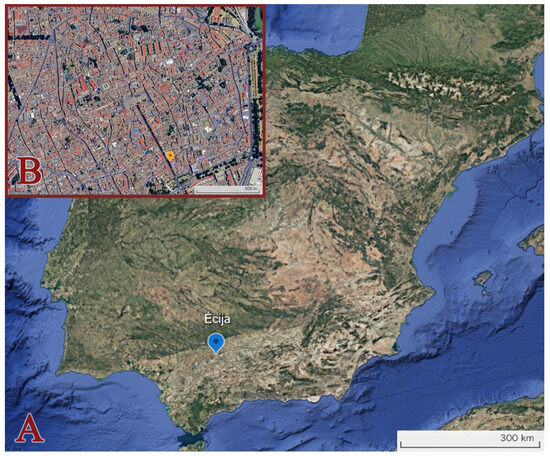
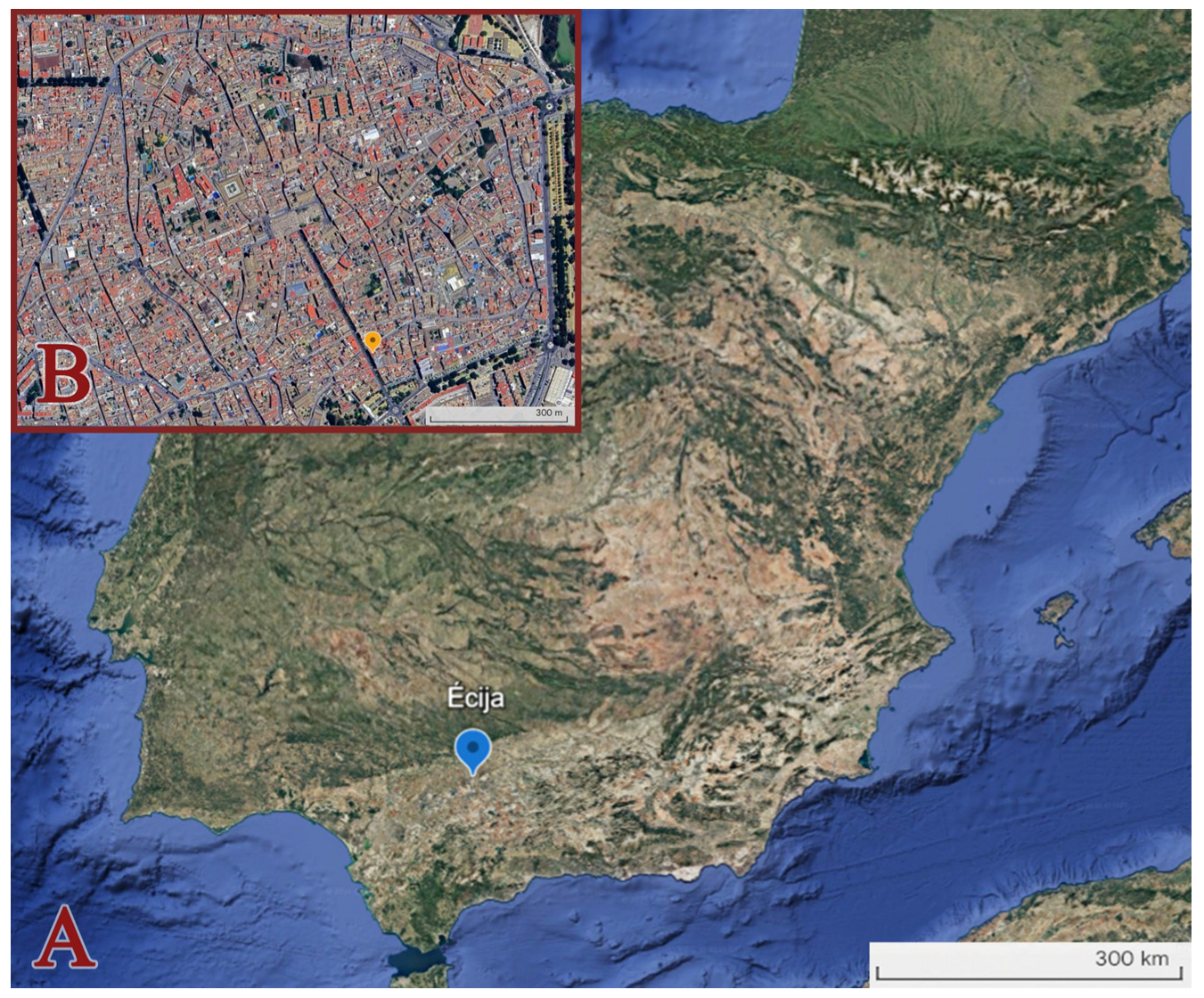
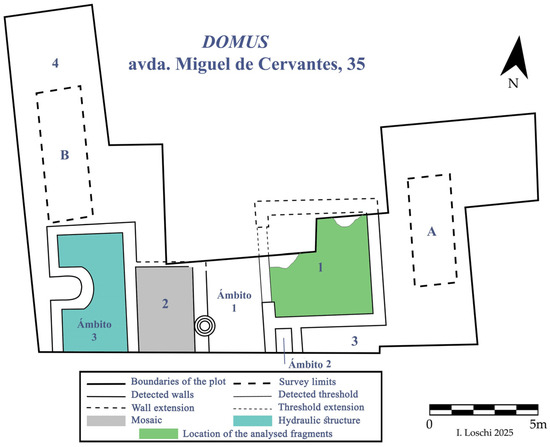
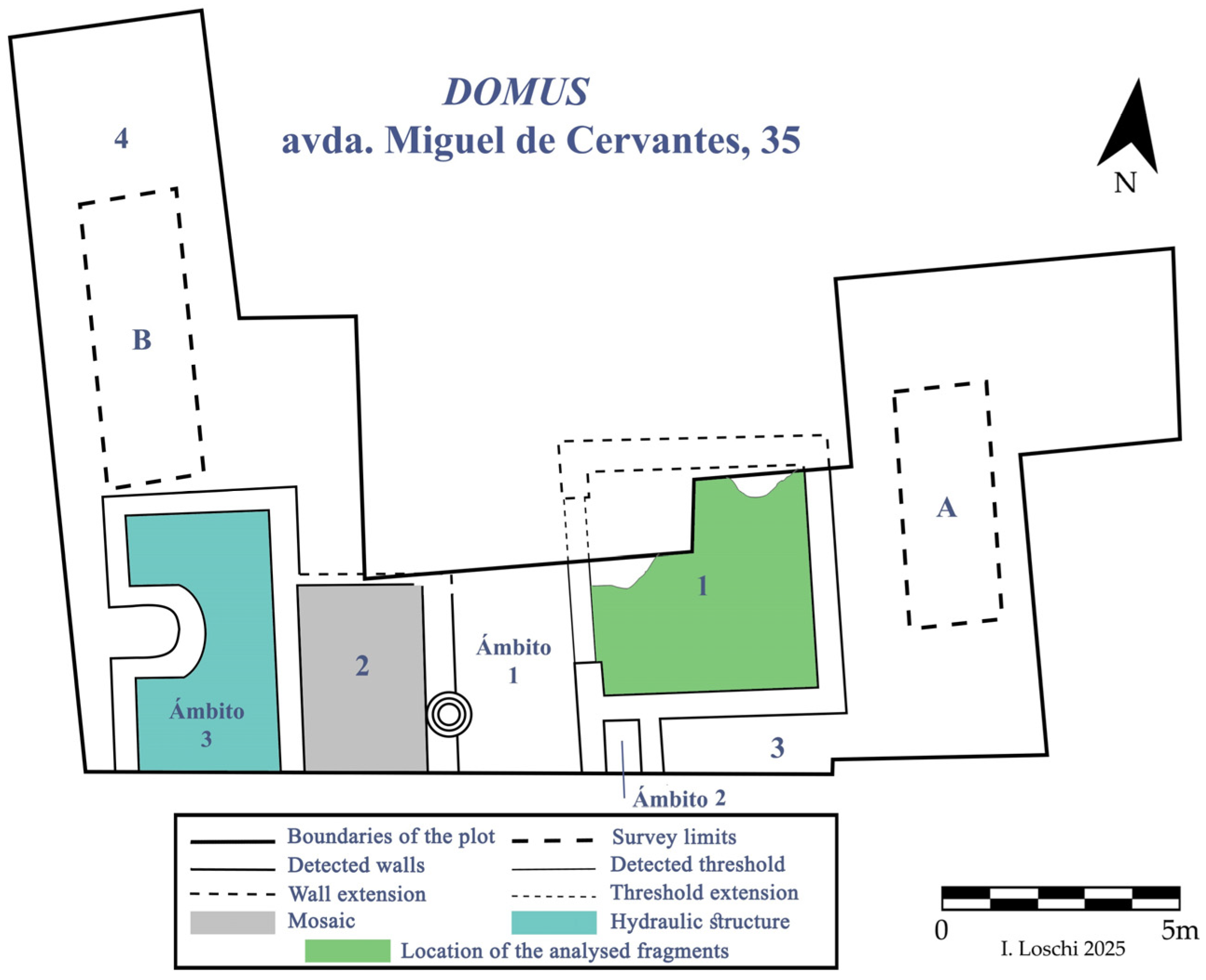
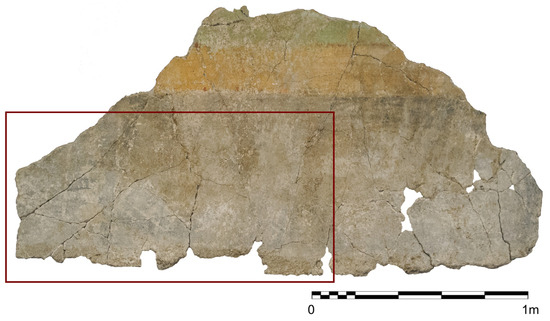
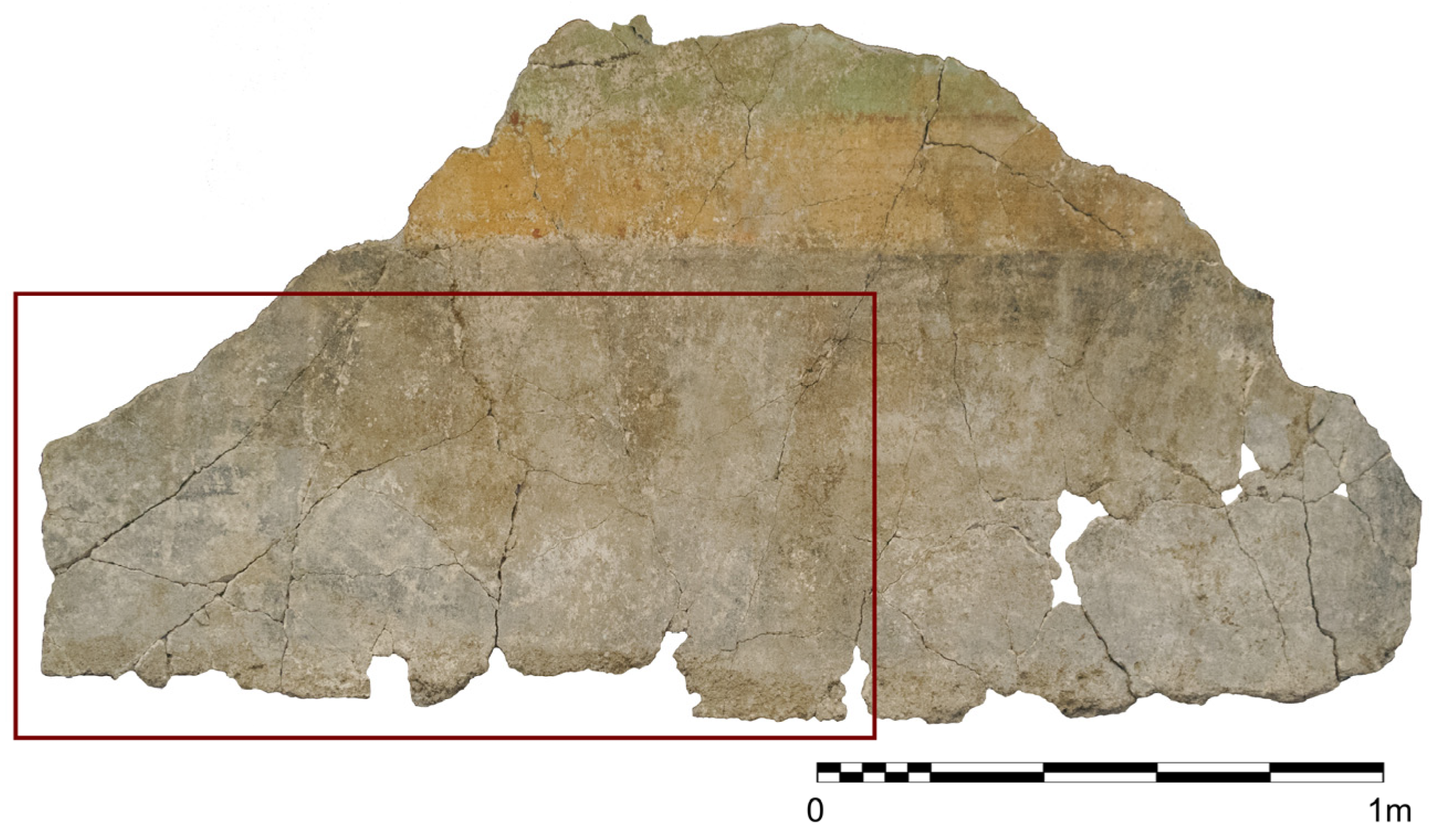
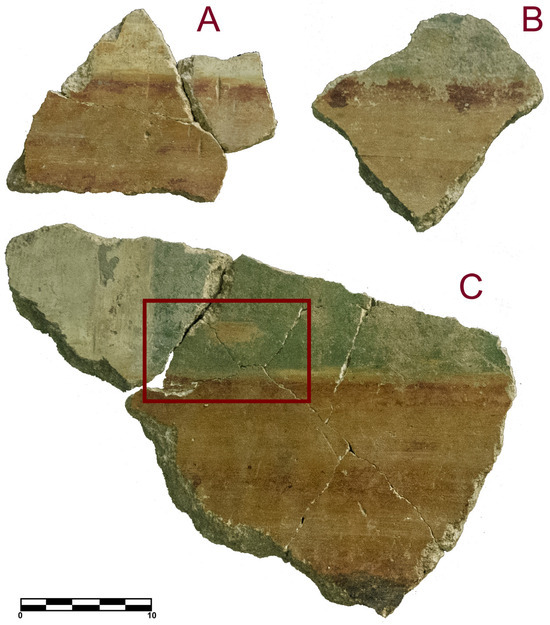
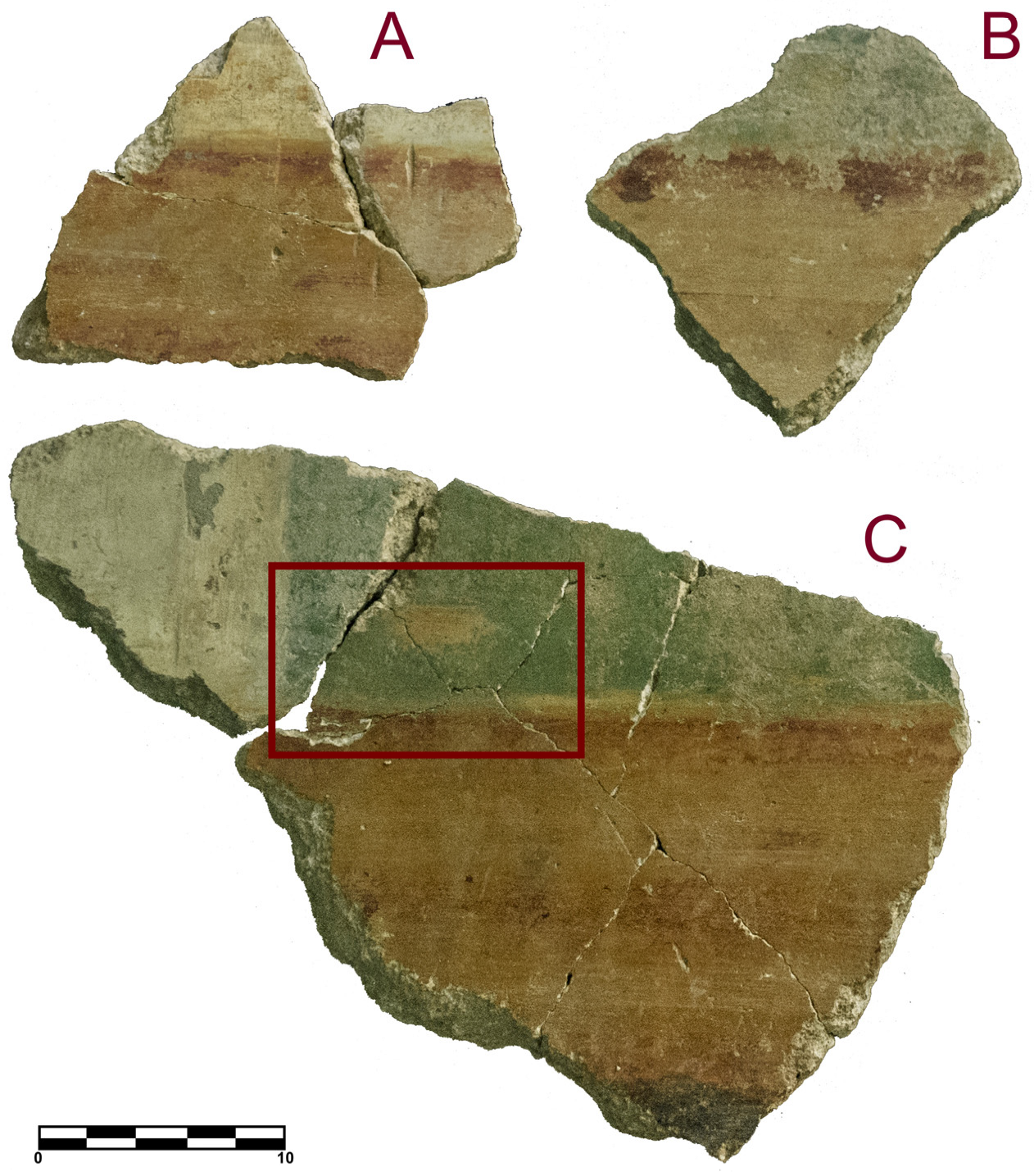
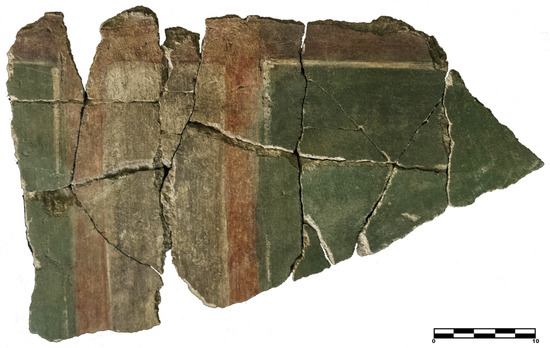
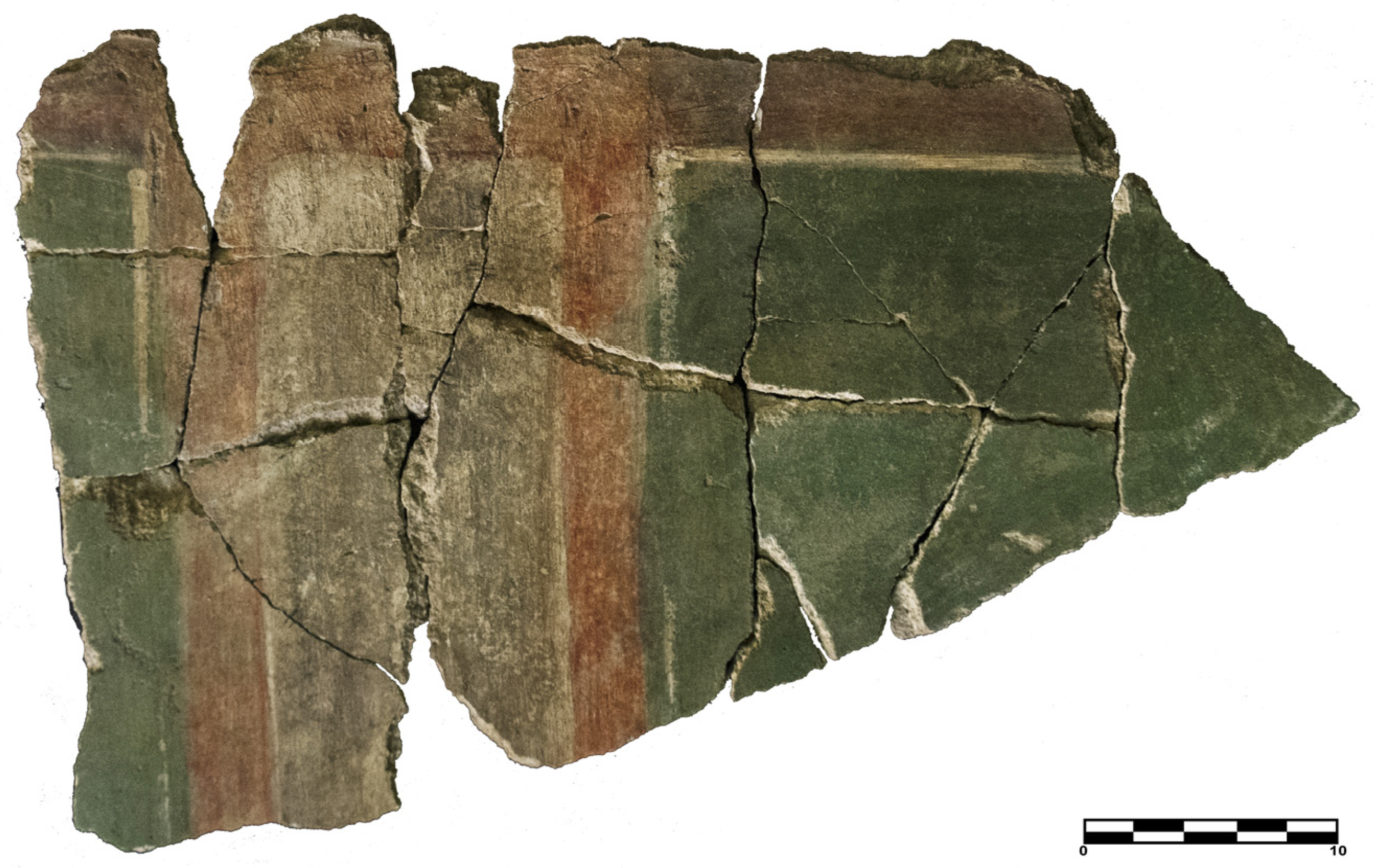
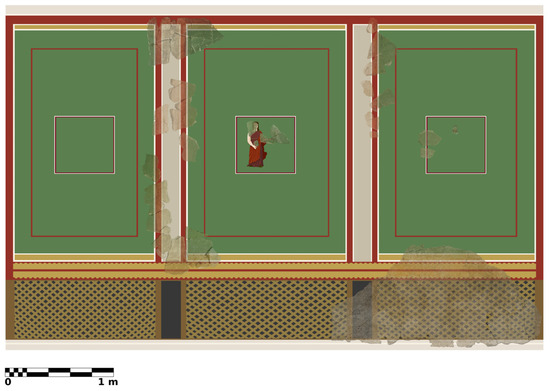
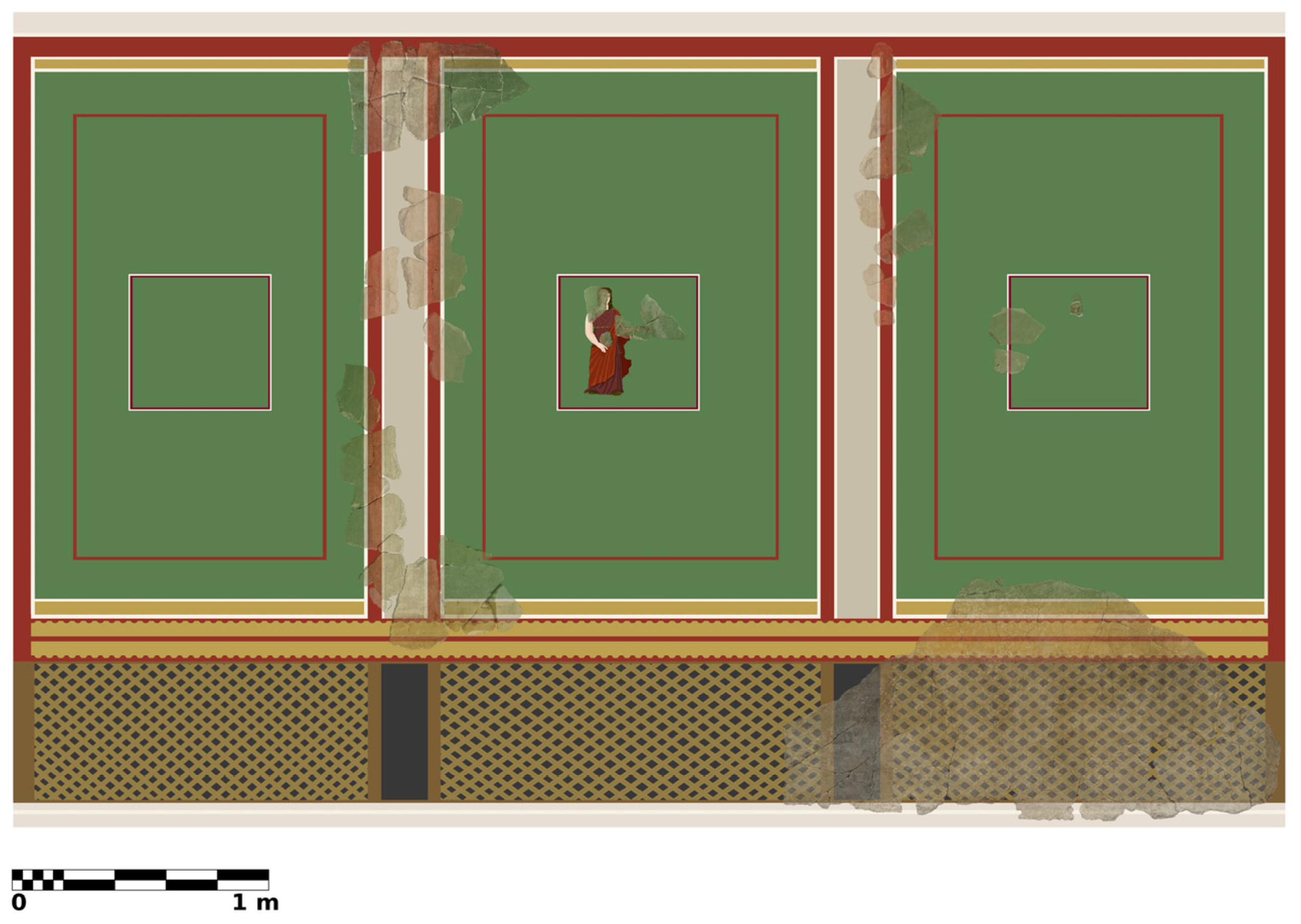
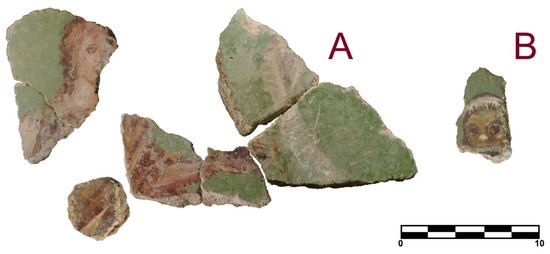
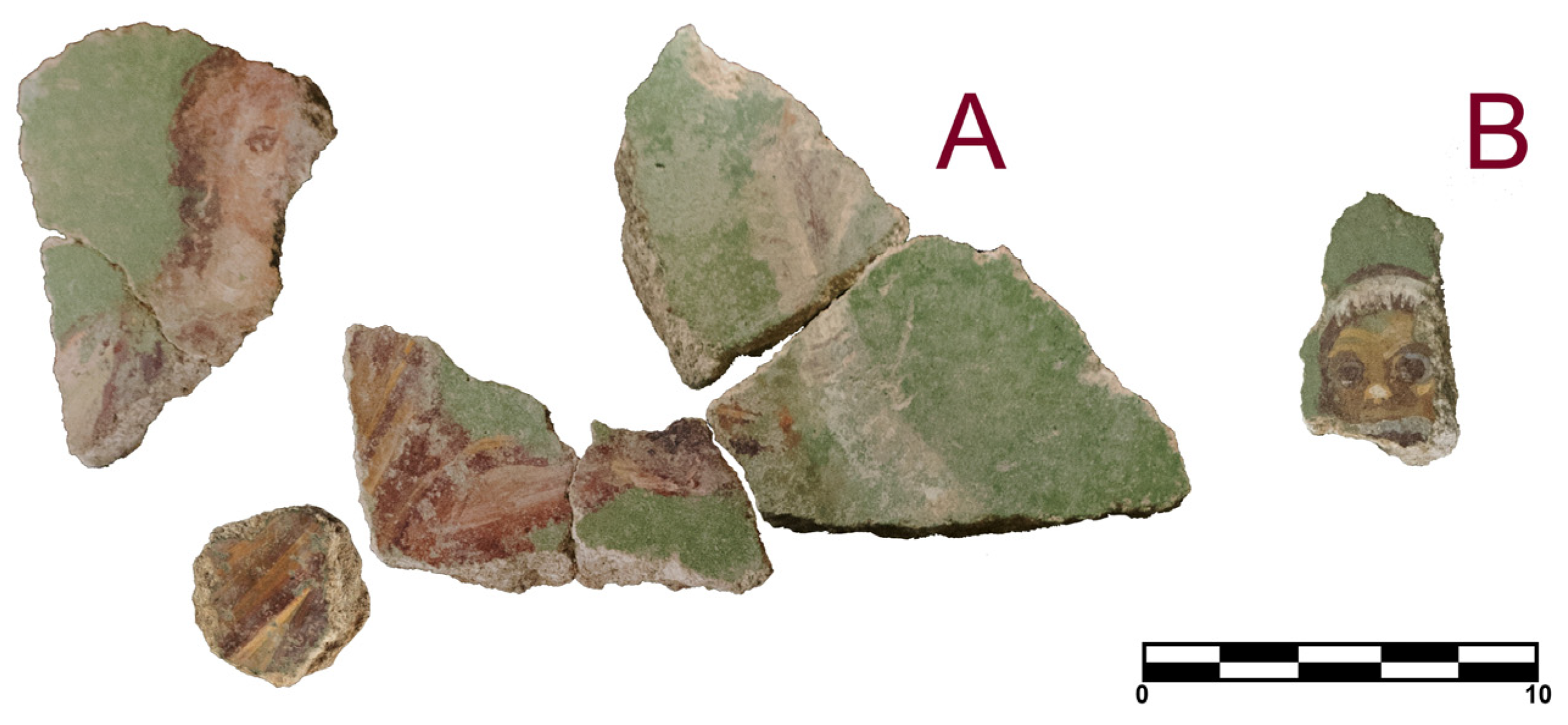
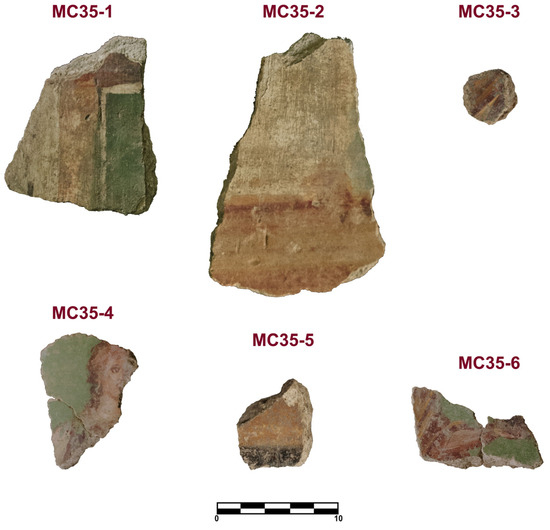
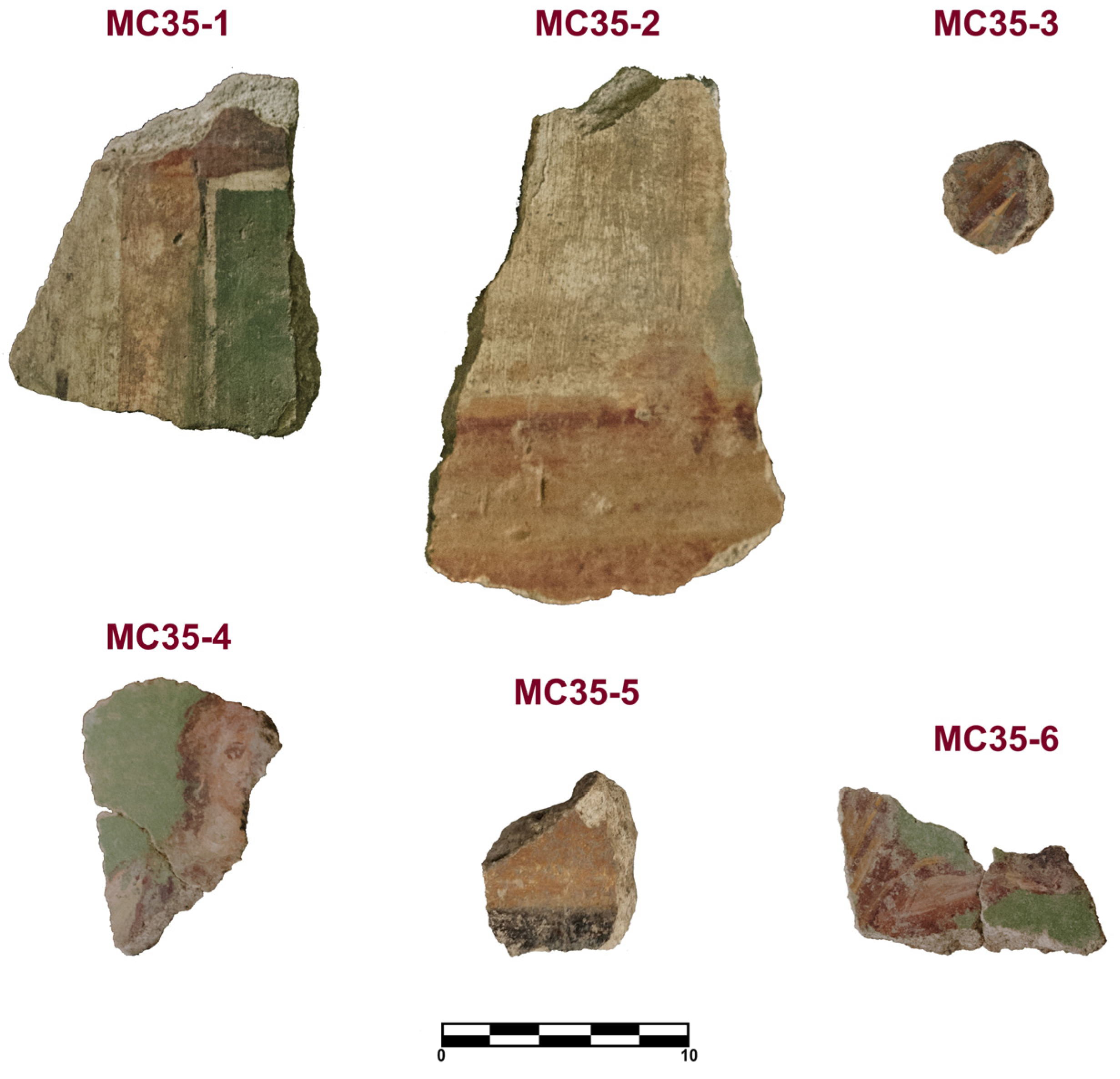
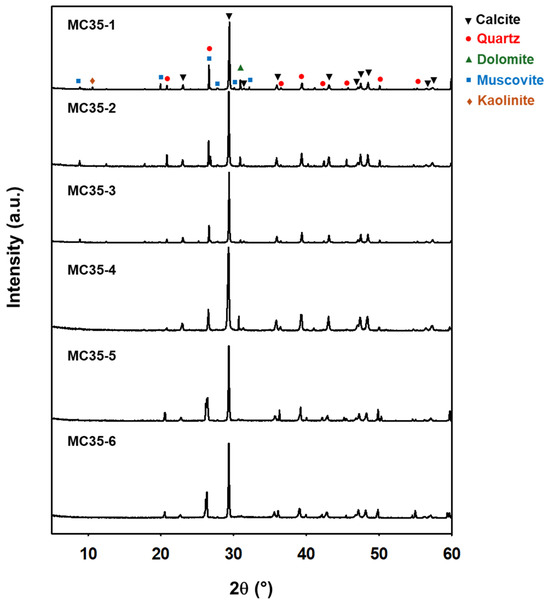
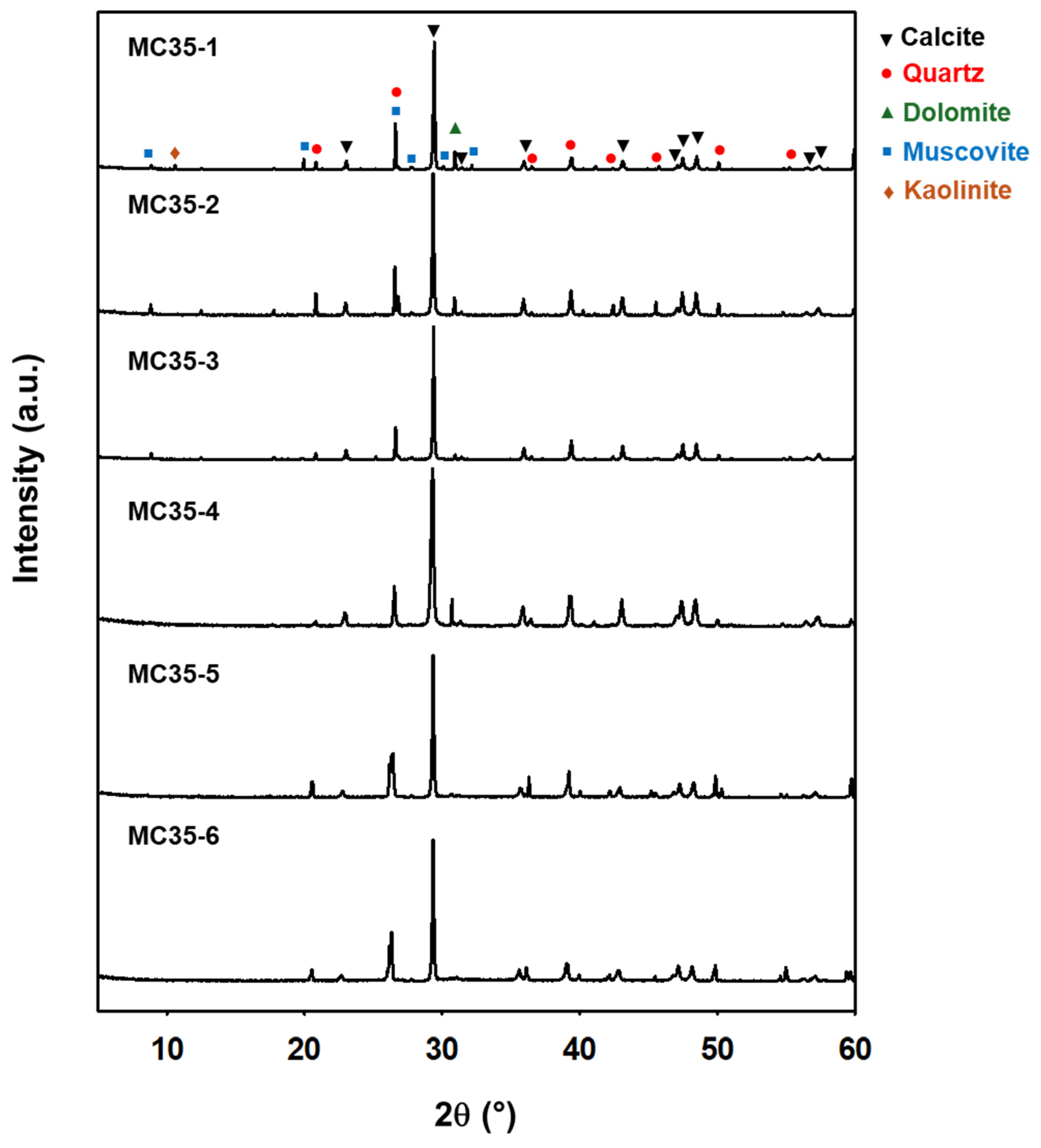
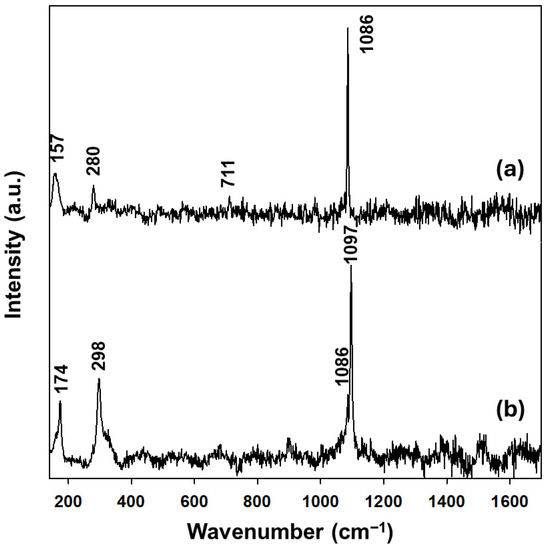
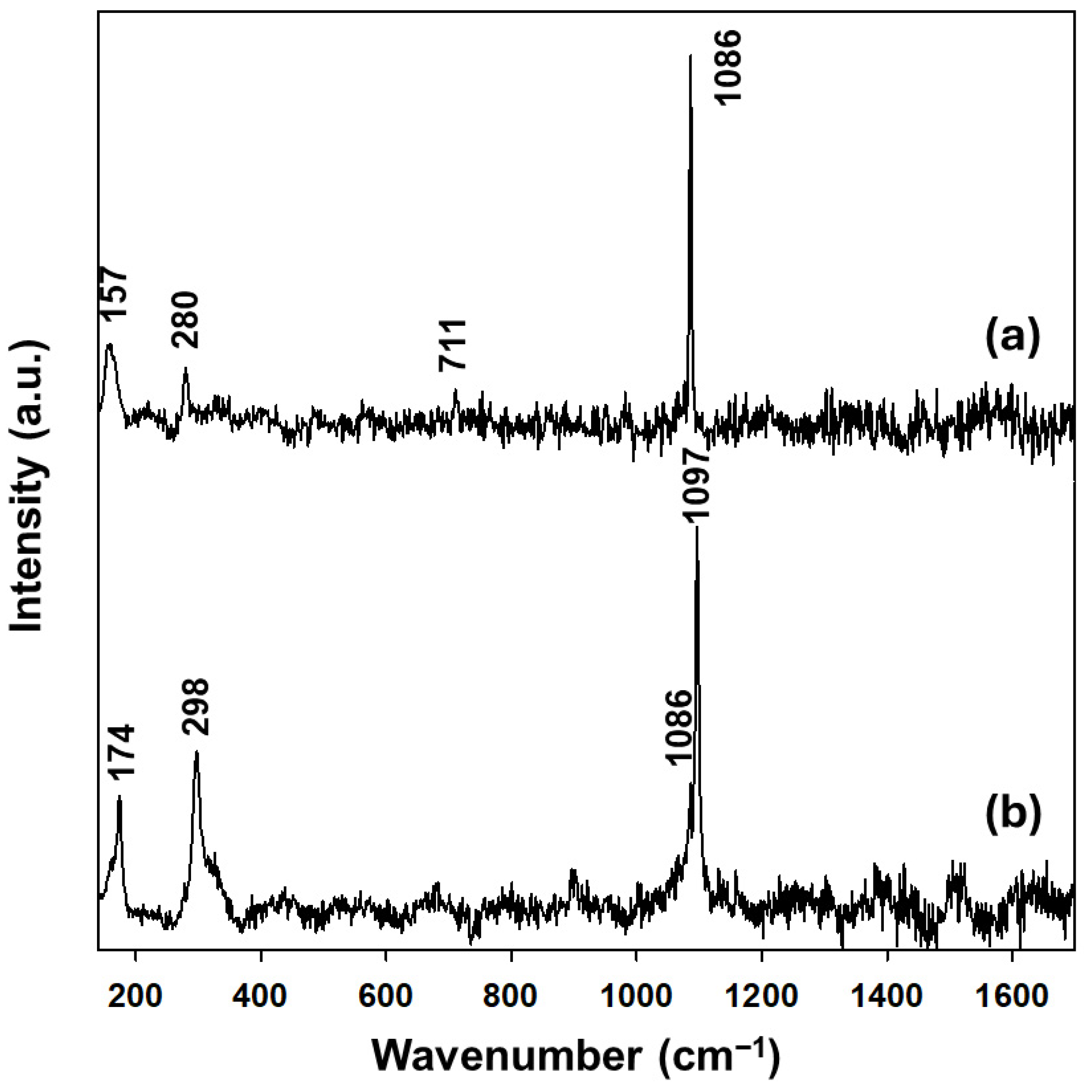
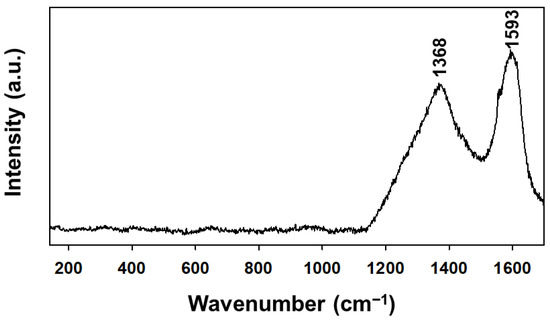
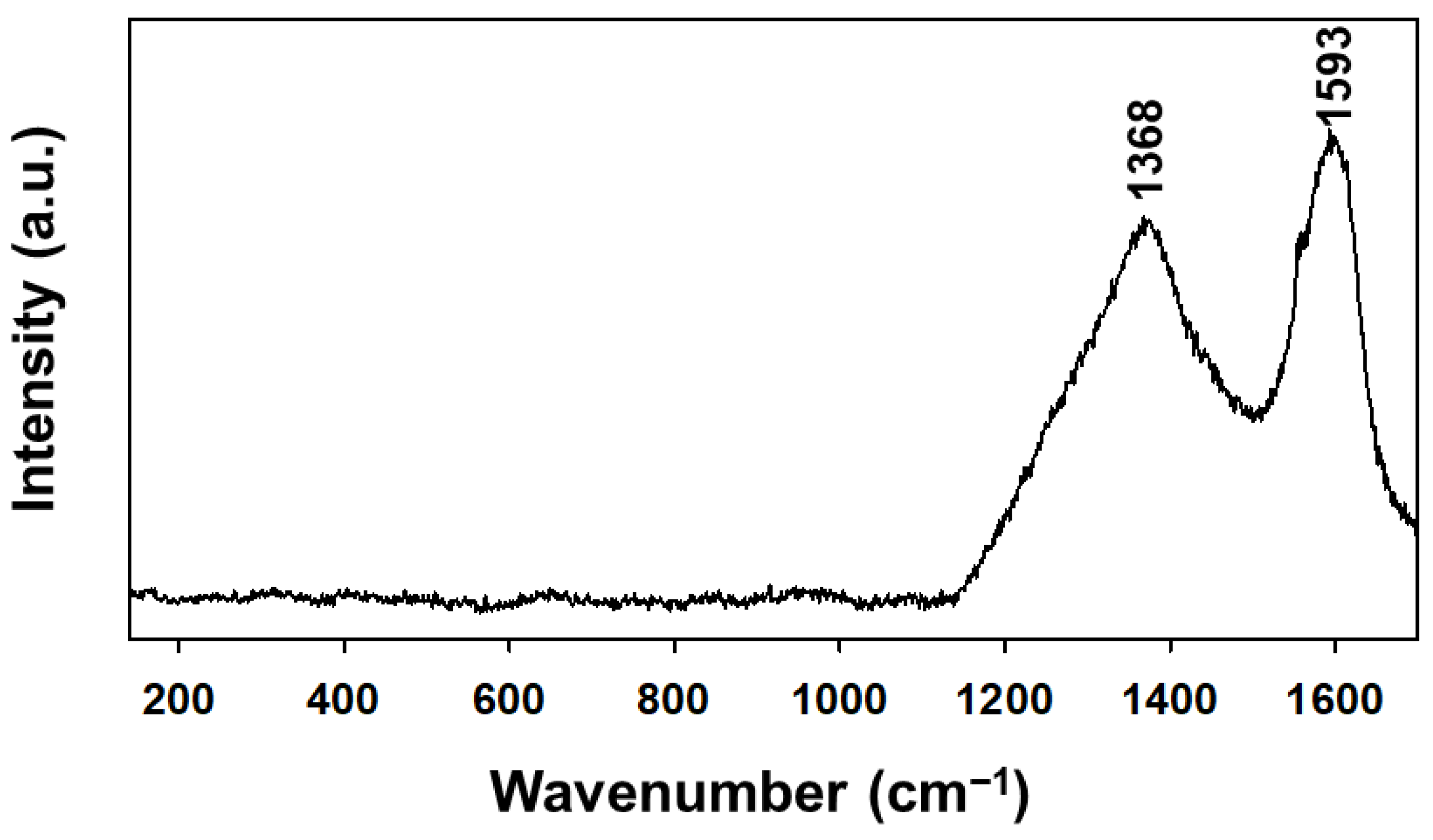
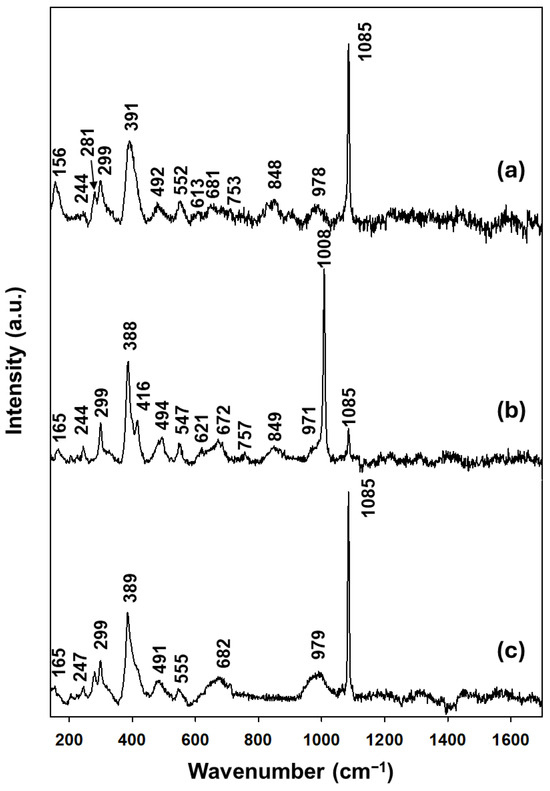
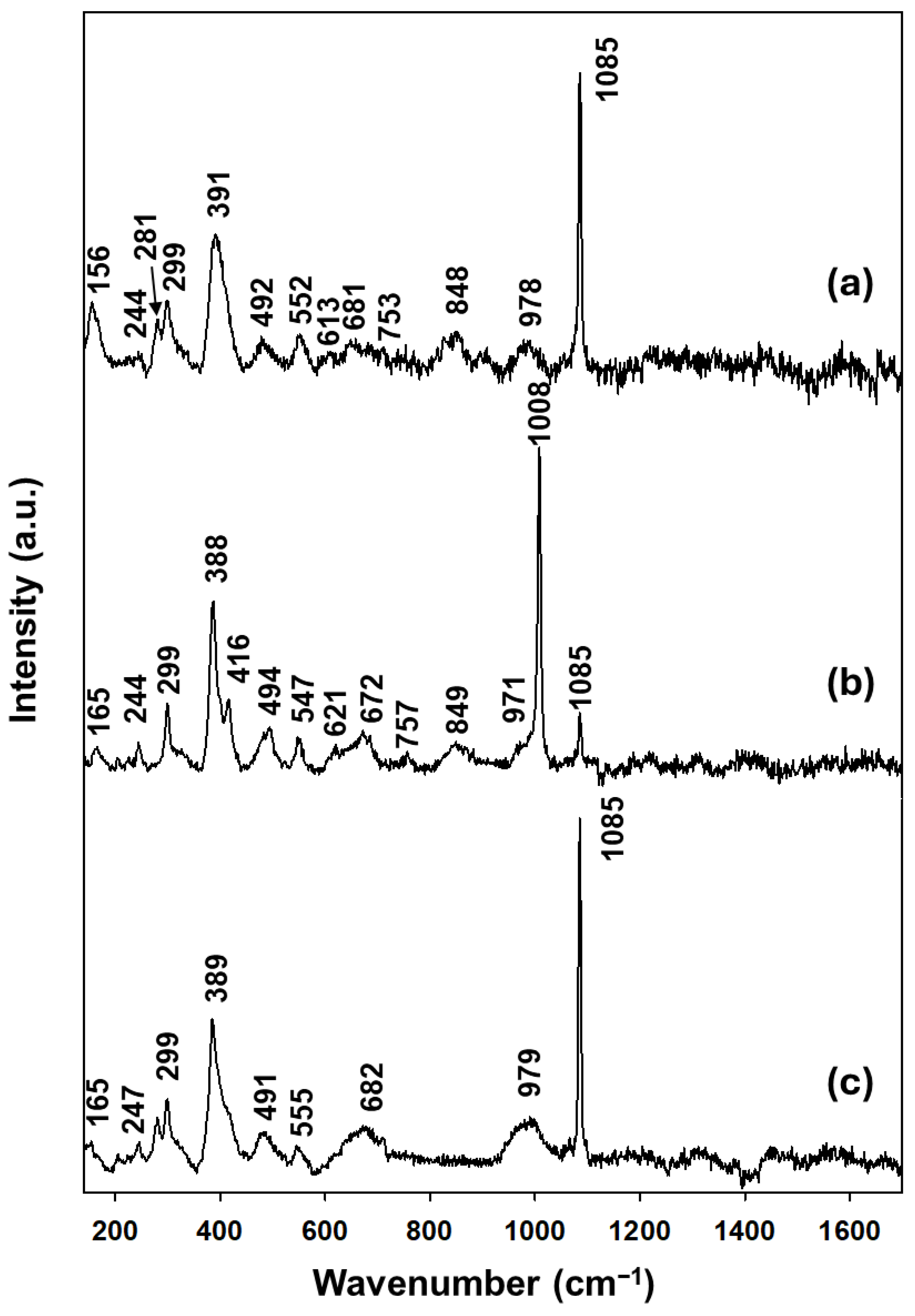
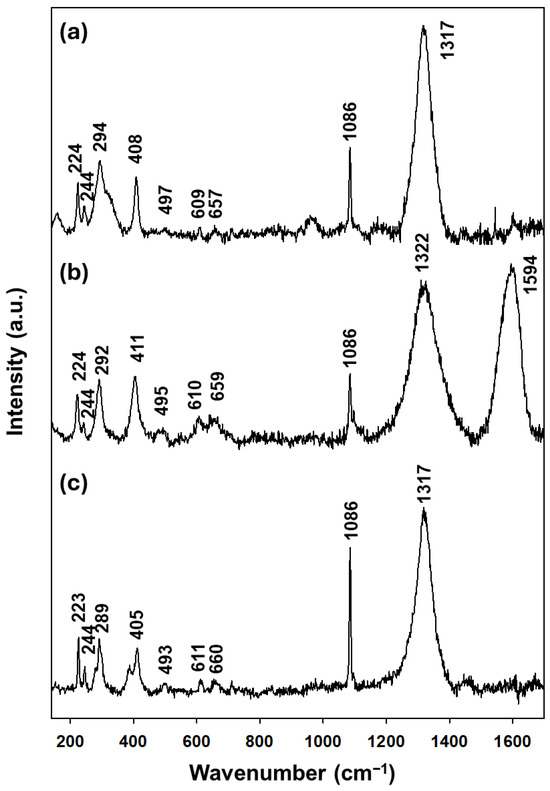
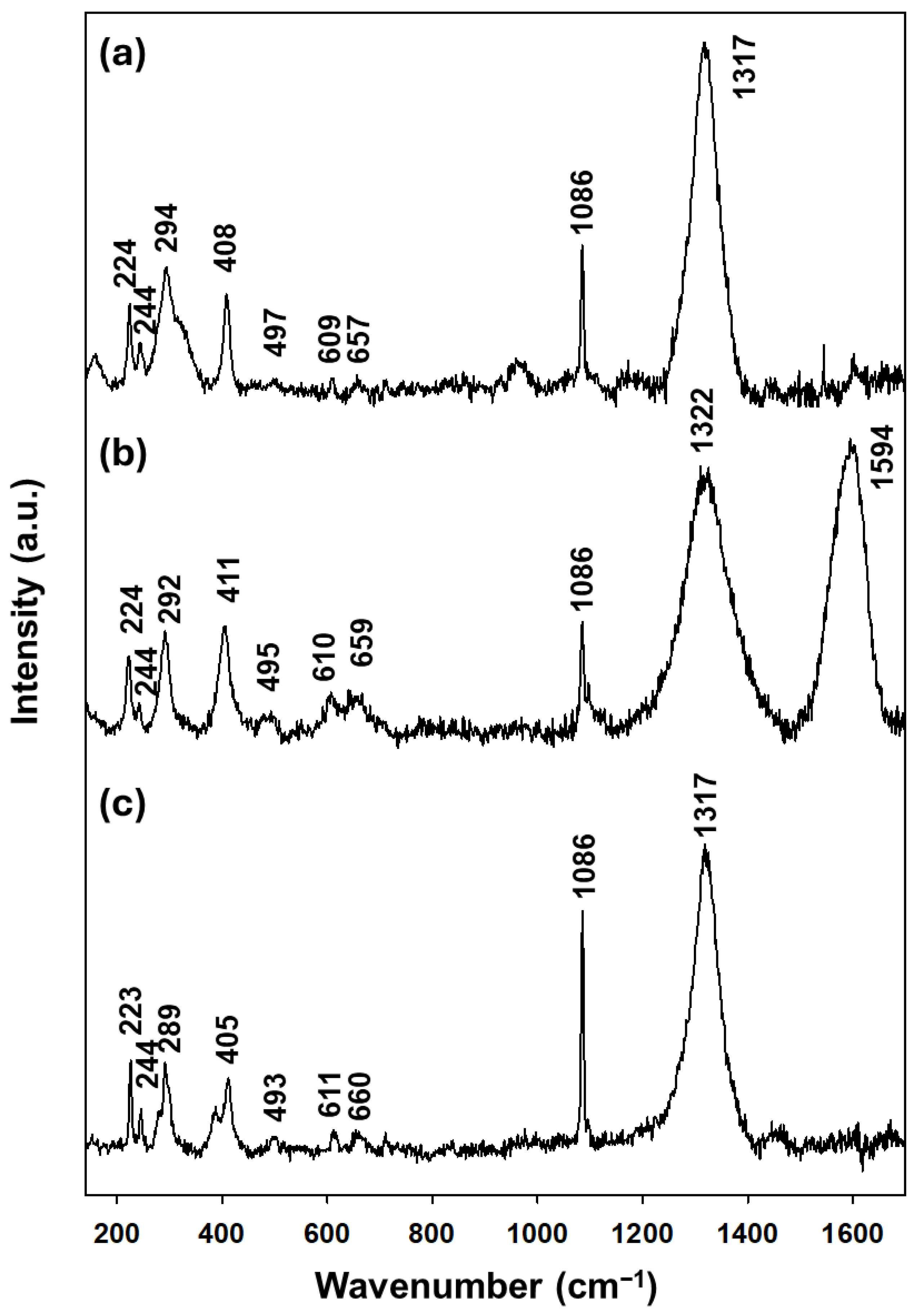
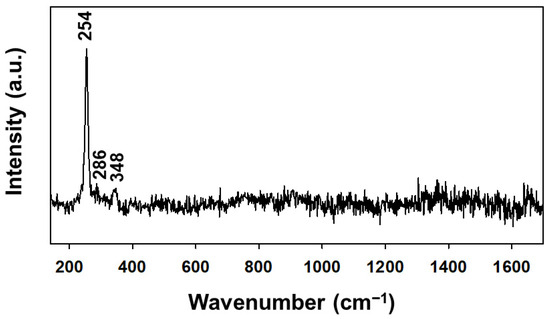
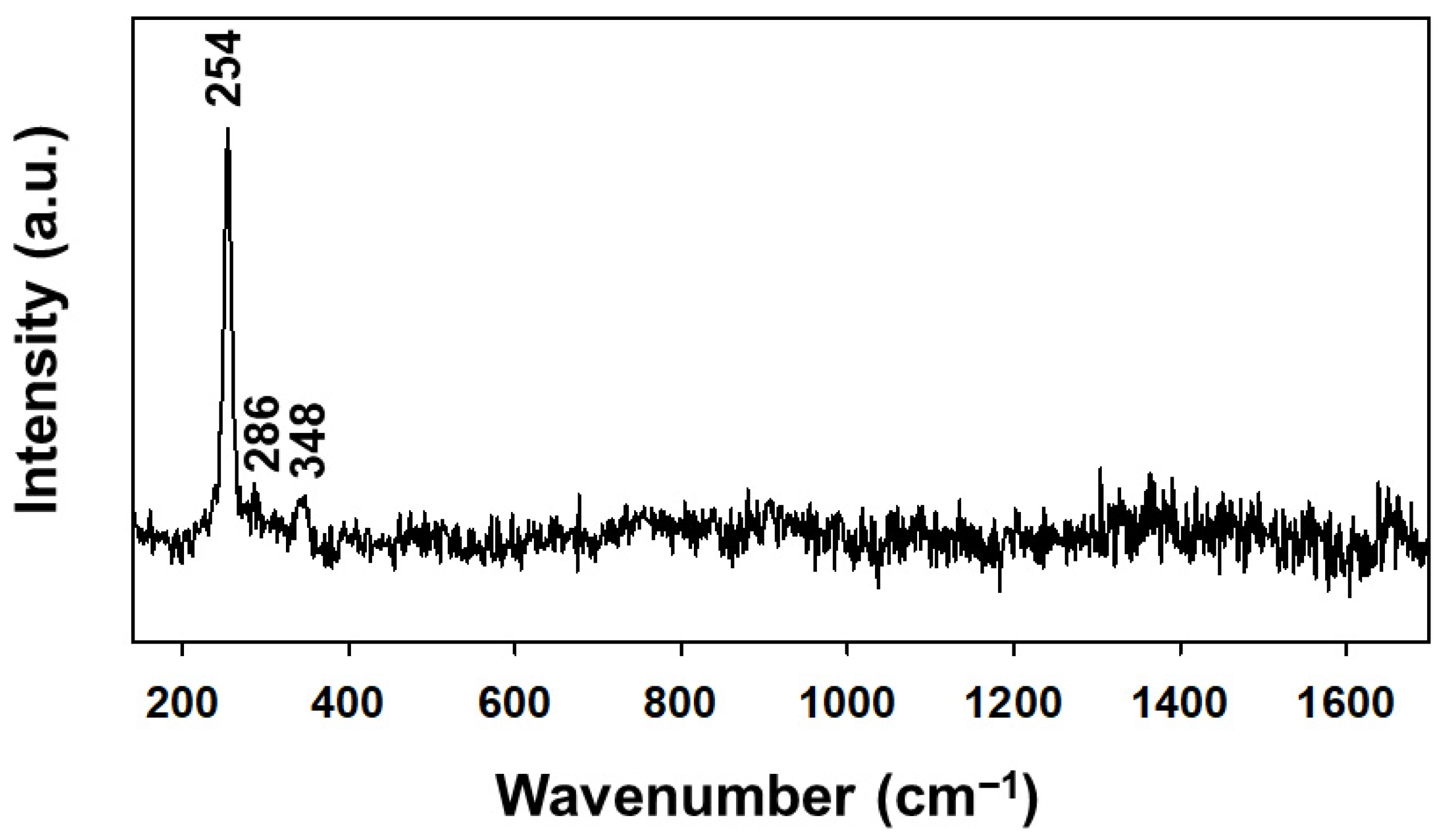
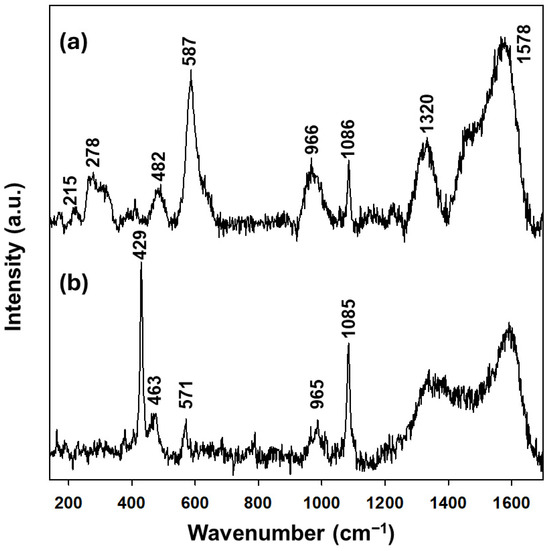
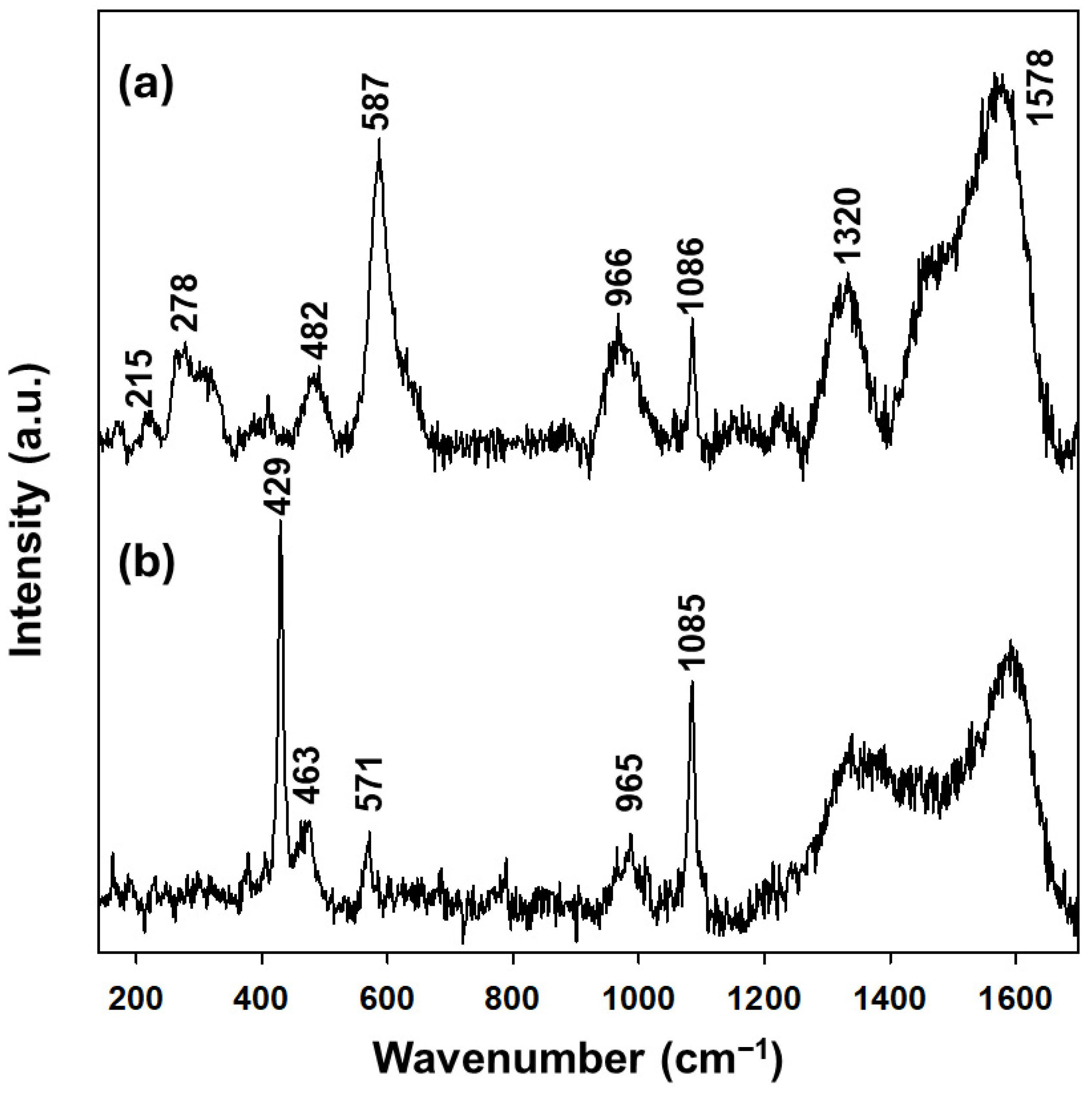

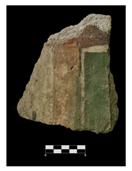
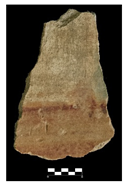
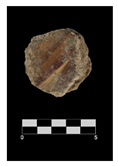
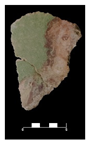
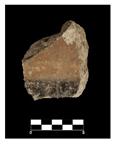
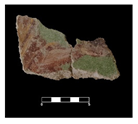
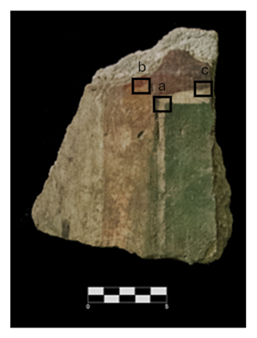
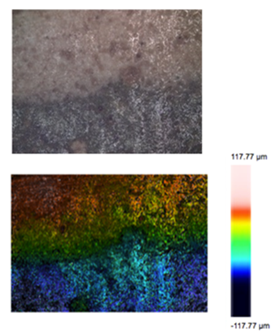
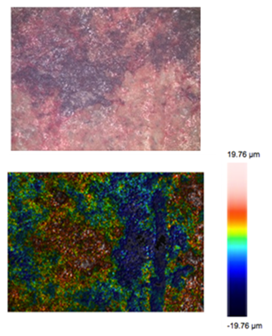
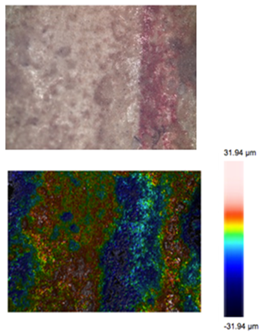
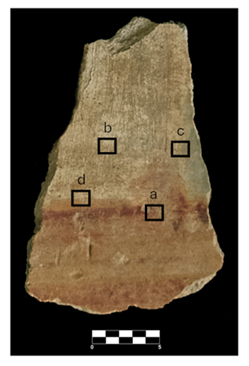
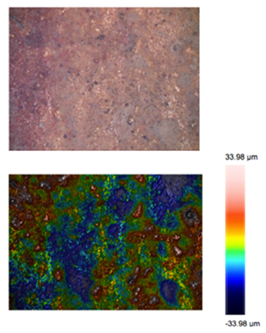
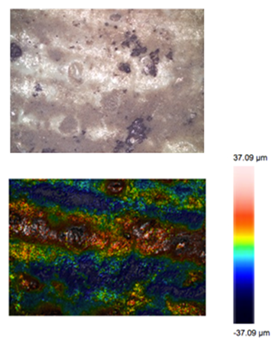
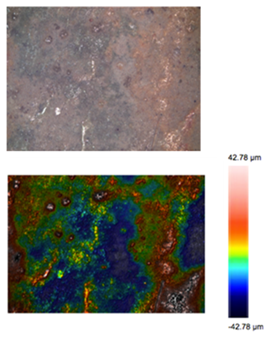
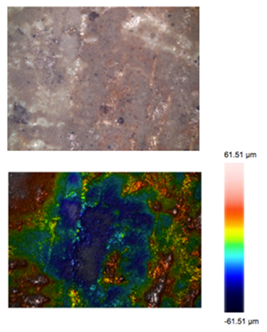
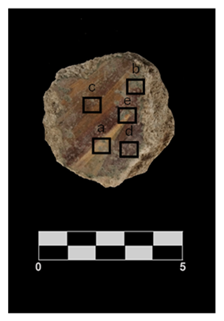
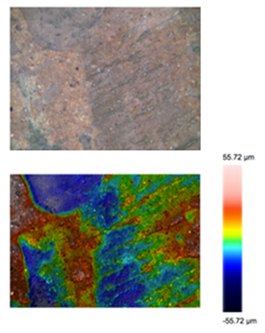
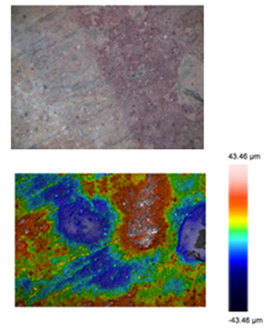
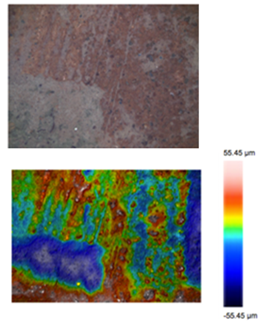
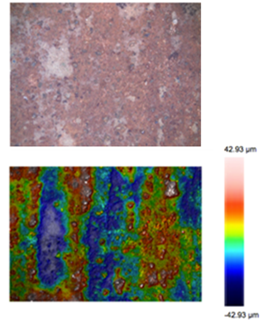
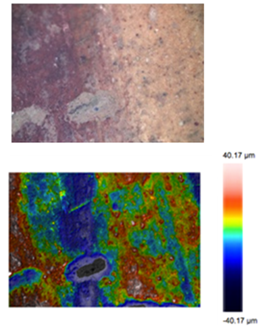
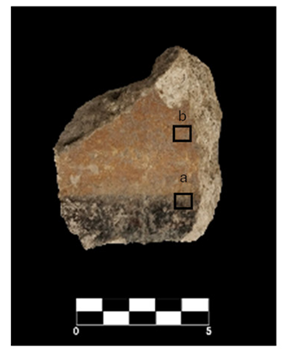
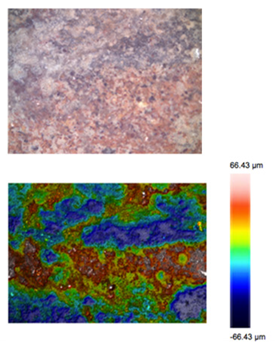
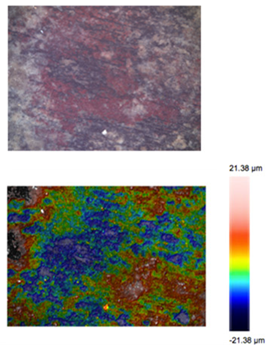
Disclaimer/Publisher’s Note: The statements, opinions and data contained in all publications are solely those of the individual author(s) and contributor(s) and not of MDPI and/or the editor(s). MDPI and/or the editor(s) disclaim responsibility for any injury to people or property resulting from any ideas, methods, instructions or products referred to in the content. |
© 2026 by the authors. Licensee MDPI, Basel, Switzerland. This article is an open access article distributed under the terms and conditions of the Creative Commons Attribution (CC BY) license.