1. Introduction
The rapid integration of artificial intelligence into tourism communication has fundamentally altered how destinations present themselves to prospective visitors [
1]. Rather than functioning solely as a technological tool for efficiency or information delivery, AI increasingly shapes the experiential and symbolic dimensions of destination representation. This shift is particularly consequential for cultural destinations, where meaning, heritage, and storytelling are not supplementary marketing elements but the core through which value is constructed and interpreted [
2,
3]. As cultural tourism competes in an environment saturated with digital content, the capacity to communicate culture through immersive and engaging narratives has become a strategic imperative rather than a creative option [
4,
5].
Storytelling has long been recognized as a powerful mechanism through which destinations translate abstract cultural attributes into emotionally resonant experiences [
6]. What distinguishes AI-enabled storytelling from traditional narrative practices is its ability to algorithmically curate, personalize, and adapt stories in real time, simulating experiential proximity before any physical encounter occurs [
7]. These capabilities allow tourists to imaginatively inhabit cultural spaces, encounter local traditions, and engage with heritage narratives in ways that static descriptions or visual representations rarely achieve [
8]. Yet, despite its growing adoption in destination marketing, the behavioral implications of AI-driven storytelling remain insufficiently theorized, particularly in relation to how such narratives influence tourists’ intentions to visit cultural destinations.
From a behavioral standpoint, visit intention in cultural tourism is rarely driven by rational evaluation alone [
9]. Instead, it emerges from a complex interplay of emotional engagement, symbolic meaning, and perceived experiential value [
10]. AI-enabled storytelling operates precisely within this domain, shaping how tourists feel, imagine, and interpret a destination rather than simply what they know about it [
11]. Through narrative structures that evoke emotion, curiosity, and identification, AI storytelling has the potential to influence two of the most decisive psychological constructs in cultural tourism decision-making: perceived authenticity and destination image [
12]. However, the mechanisms through which these effects unfold remain theoretically underdeveloped.
Perceived authenticity represents a particularly sensitive construct in this context. Cultural tourists are often motivated by the pursuit of experiences they perceive as genuine, meaningful, and rooted in local realities [
13]. Authenticity, however, is not an objective attribute embedded in destinations themselves but a subjective judgment formed through mediated representations, narratives, and prior expectations [
8]. While AI-enabled storytelling may enhance authenticity by presenting coherent, culturally grounded narratives, it simultaneously raises concerns regarding artificiality, commodification, and the dilution of cultural meaning [
14]. Existing tourism research has yet to adequately explain how algorithmically generated or curated narratives are cognitively processed by tourists and under what conditions they reinforce, rather than undermine, authenticity perceptions. While recent studies have begun to examine the influence of digital narratives and personalization technologies on tourist behavior, much of this work remains focused on outcome-level evaluations rather than on the underlying cognitive and experiential mechanisms through which authenticity judgments are formed. For example, Guan [
15] demonstrates that digitally mediated narratives and personalization technologies can reshape tourist consumption behavior by enhancing perceived authenticity; however, the study does not explicitly address how narrative immersion and cognitive transportation processes shape these authenticity evaluations in AI-driven contexts. As a result, the literature offers limited insight into whether algorithmically generated storytelling is experienced as culturally credible or perceived as artificial and commodified, particularly in pre-visit decision-making stages.
Similarly, research on destination image formation in digital tourism contexts has predominantly prioritized informational exposure, such as the provision of factual content, visual representations, and attribute-based descriptions, as key determinants of image development [
16,
17,
18]. Although these studies have contributed to understanding how knowledge and beliefs shape destination image, they often underemphasize the role of immersive narrative engagement in constructing integrated cognitive–affective place representations. Consequently, how destination images are formed through AI-mediated storytelling environments—where narratives dynamically adapt and emotionally engage users—remains insufficiently theorized.
Destination image constitutes a second critical pathway through which AI storytelling may shape behavioral intention [
19]. Image formation is inherently imaginative, relying on mental simulations that combine factual knowledge with emotional and symbolic associations [
12]. Narrative-based communication is uniquely suited to this process, as stories organize information into coherent and memorable mental representations [
20]. AI-driven storytelling intensifies this effect by tailoring narratives to individual users and enhancing sensory and emotional cues, potentially leading to richer and more vivid destination images [
21,
22]. Despite this, most studies examining destination image in digital contexts continue to privilege informational exposure over narrative immersion, leaving a gap in understanding how image formation operates within AI-mediated storytelling environments.
The theoretical challenge underlying these relationships lies in the limited application of narrative-based theories within the AI tourism literature. Much of the existing research implicitly assumes that tourists process AI-generated content through rational or utility-based mechanisms, emphasizing efficiency, convenience, or information quality, e.g., [
12,
23]. Such assumptions overlook the experiential nature of storytelling and its capacity to influence behavior through immersion rather than persuasion. Narrative Transportation Theory offers a compelling alternative explanatory lens by positing that individuals become mentally and emotionally absorbed into stories, temporarily suspending critical evaluation and internalizing narrative meanings [
24]. When applied to AI-enabled storytelling, this theory suggests that behavioral influence occurs not through direct argumentation but through experiential transportation into culturally constructed narrative worlds [
25].
Despite its relevance, Narrative Transportation Theory has rarely been systematically applied to AI-mediated tourism communication, particularly within cultural destination contexts. Prior storytelling studies have predominantly examined human-authored narratives, while AI research has focused on functional applications such as chatbots and recommendation systems, e.g., [
2,
26]. As a result, the literature lacks an integrative framework that explains how AI-generated or AI-curated narratives induce transportation, shape authenticity perceptions, construct destination image, and ultimately translate into visit intention. This fragmentation represents a critical theoretical gap, especially given the growing reliance on AI storytelling in cultural destination marketing.
These gaps are particularly salient in culturally dense destinations such as Egypt, where heritage tourism is deeply rooted in symbolic meaning, historical continuity, and narrative richness. Egypt’s cultural landscape—characterized by ancient civilizations, world-renowned heritage sites, and living traditions—provides a context in which authenticity and destination image are especially sensitive to how stories are told and experienced. In such settings, AI-enabled storytelling has the potential not only to communicate cultural information but also to shape tourists’ imaginative engagement with heritage narratives, making Egypt a theoretically and empirically appropriate context for examining narrative transportation, authenticity perception, and image formation.
In response to these unresolved issues, the present study investigates how AI-enabled storytelling influences tourists’ visit intention toward cultural destinations through the mediating roles of perceived authenticity and destination image, grounded explicitly in Narrative Transportation Theory. By conceptualizing AI storytelling as a narrative stimulus capable of inducing transportation rather than merely delivering information, the study seeks to clarify the psychological mechanisms through which AI-driven narratives affect tourist behavior. This approach allows for a more nuanced understanding of authenticity and image formation as experiential outcomes of narrative immersion rather than static evaluative judgments.
This study focuses on heritage sites in Egypt, whose rich cultural narratives provide an ideal context to examine how AI-enabled storytelling shapes tourists’ perceptions and visit intentions. While the study centers on visitor experiences, the heritage setting ensures that findings are grounded in culturally and historically significant environments. Also, it should be noted that this research examines AI’s influence on tourism experiences rather than on the preservation or transformation of heritage sites themselves.
The study makes several important contributions. Theoretically, it extends Narrative Transportation Theory into the emerging domain of AI-mediated tourism communication, addressing a notable gap in both storytelling and AI tourism research. By integrating perceived authenticity and destination image within a single narrative-based explanatory framework, the study advances understanding of how immersive narratives translate into behavioral intention in cultural tourism. Practically, the findings offer guidance for destination marketers and cultural stakeholders on how AI-driven storytelling can be strategically designed to enhance experiential value without compromising cultural credibility. In doing so, the research contributes to ongoing debates on the role of artificial intelligence in shaping meaningful, authentic, and intention-driving tourism experiences.
While this study investigates AI-enabled storytelling in heritage tourism settings, it primarily focuses on tourists’ experiences and perceptions, rather than advancing theoretical understanding of heritage itself. Thus, while the findings may inform heritage-related tourism strategies, they do not directly contribute to the development or testing of heritage theories.
2. Literature Review and Hypothesis Development
2.1. AI-Enabled Storytelling and Tourists’ Visit Intention
AI-enabled storytelling represents a distinctive form of destination communication that extends beyond informational influence to shape tourists’ behavioral orientation through experiential engagement [
27,
28]. In contrast to conventional promotional content, storytelling embeds destination attributes within narrative structures that invite imagination, emotional involvement, and personal meaning construction [
12]. When supported by artificial intelligence, storytelling becomes more adaptive and context-sensitive, enabling narratives to align closely with individual tourists’ preferences, cultural frames of reference, and experiential expectations [
29]. This alignment enhances the subjective relevance of destination narratives, making them more compelling as precursors to travel-related decision-making [
2]. From the perspective of Narrative Transportation Theory, behavioral intention does not emerge primarily from evaluative comparison of alternatives, but from immersive narrative engagement that alters how destinations are mentally represented [
12]. AI-enabled storytelling facilitates this process by drawing tourists into story worlds where cultural destinations are experienced imaginatively rather than assessed analytically [
14]. As tourists become absorbed in these narratives, they are more likely to envision themselves within the destination context, reducing psychological distance and fostering a sense of experiential readiness [
30]. Such narrative-induced involvement has been shown to influence intention by transforming abstract destinations into personally meaningful and attainable experiences [
31].
Within tourism contexts, visit intention often reflects a future-oriented orientation shaped by anticipation, emotional resonance, and perceived experiential value [
32]. AI-enabled storytelling contributes to this orientation by constructing vivid pre-visit experiences that simulate cultural encounters and reinforce desire for actual travel [
28]. Rather than persuading tourists through explicit arguments, AI-driven narratives operate indirectly by cultivating imaginative engagement and emotional alignment with the destination [
33]. This mechanism suggests that AI-enabled storytelling can exert a direct positive influence on tourists’ intention to visit, even prior to considering more specific evaluative judgments [
8]. Based on this theoretical reasoning, the following hypothesis is proposed:
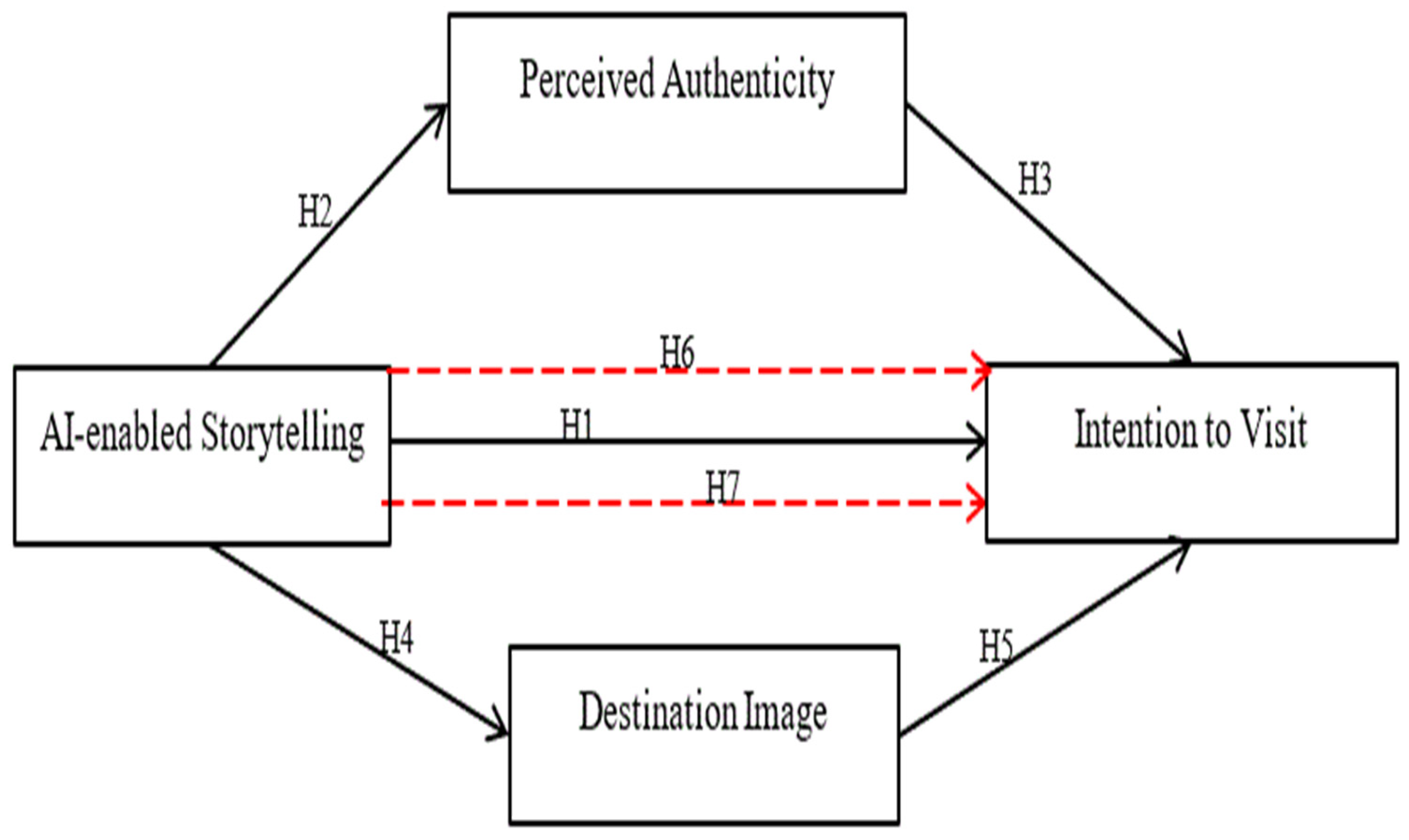
H1. AI-enabled storytelling positively influences tourists’ visit intention.
2.2. AI-Enabled Storytelling and Perceived Authenticity of the Cultural Destination
In cultural tourism research, authenticity is no longer approached as an inherent or objectively verifiable attribute of destinations, but rather as a perception formed through tourists’ interpretive engagement with mediated representations [
34]. Prior to visitation, tourists rely heavily on symbolic cues, narrative frames, and imagined meanings to evaluate whether a destination appears culturally genuine. These pre-visit interpretations are shaped through exposure to stories and representations that construct cultural practices as meaningful experiences rather than as isolated or staged displays [
8,
35]. Within this context, storytelling serves as a key mechanism through which cultural elements are contextualized, allowing tourists to perceive heritage and traditions as lived realities embedded in coherent cultural narratives [
13,
36]. The emergence of AI-enabled storytelling reshapes how authenticity perceptions are formed by introducing adaptive and personalized narrative structures. Unlike static storytelling formats, AI-driven narratives can selectively emphasize culturally salient details and align storylines with tourists’ cultural frames of reference, thereby enhancing narrative coherence and relevance [
28,
37]. From the standpoint of Narrative Transportation Theory, such narrative coherence is critical in facilitating immersive engagement, as it allows tourists to imaginatively enter the destination’s story world rather than remain detached observers [
38]. As immersion intensifies, attention shifts away from the technological medium itself toward the cultural meanings conveyed within the narrative, reinforcing the perceived authenticity of the destination experience [
2].
While technological mediation has often been portrayed as a potential threat to authenticity, this perspective overlooks the experiential logic underlying authenticity judgments. Narrative Transportation Theory offers an alternative explanation by suggesting that authenticity emerges through emotional and imaginative immersion, not through the absence of technological intervention [
12]. When AI-enabled storytelling successfully transports tourists into culturally grounded narratives, the narrative experience itself becomes a source of perceived genuineness. In such cases, authenticity is evaluated based on emotional credibility and narrative integrity rather than on whether the story is human- or algorithm-generated [
28,
39]. Given the centrality of authenticity in motivating cultural tourism behavior, AI-enabled storytelling can therefore operate as an authenticity-enhancing mechanism rather than a diminishing one, provided that narrative immersion is effectively achieved [
8]. By enabling tourists to imaginatively engage with local histories, traditions, and cultural identities, AI-driven narratives foster a sense of cultural proximity and experiential legitimacy before actual visitation occurs. This line of reasoning supports the expectation that AI-enabled storytelling contributes positively to tourists’ perceptions of authenticity within cultural destination contexts [
2,
14]. Accordingly, the following hypothesis is proposed:
H2. AI-enabled storytelling positively influences perceived authenticity of the cultural destination.
2.3. AI-Enabled Storytelling and Destination Image
Destination image does not emerge instantaneously, nor is it constructed from isolated pieces of information. Instead, it develops gradually as individuals synthesize diverse cues into an integrated mental representation of place [
40]. When direct experience is absent, tourists depend largely on mediated representations to envision how a destination appears, what emotions it evokes, and what meanings it conveys [
17]. Within this pre-visit stage, storytelling becomes especially influential because narratives connect otherwise fragmented destination attributes into coherent interpretive structures. Through narrative sequencing, destinations are transformed from collections of facts into imagined experiential environments that tourists can mentally inhabit [
6]. AI-enabled cultural storytelling strengthens this interpretive process by expanding the narrative capacity through which destination images are formed. By enabling adaptive storytelling, AI systems can dynamically reshape narrative emphasis, perspective, and contextual detail in response to individual users, increasing personal relevance and sustained cognitive engagement [
2]. This adaptability allows tourists to mentally simulate encounters with cultural spaces, social practices, and local traditions, fostering richer cognitive and affective impressions. Consequently, destination characteristics are not processed as abstract descriptors but internalized as elements of a unified narrative experience [
41].
Narrative Transportation Theory provides a useful lens for understanding why such narrative-based image formation is particularly effective. Immersive engagement enables tourists to imaginatively enter the story world, where emotional responses and sensory imagination jointly shape place perceptions [
38]. During this process, tourists experience the destination as if they were psychologically present within it, allowing narrative cues to guide how places are visualized and emotionally evaluated [
12]. AI-enabled storytelling facilitates this immersive state by narrowing psychological distance and encouraging identification with narrative elements linked to the destination, resulting in images that are vivid, coherent, and emotionally infused [
42,
43,
44]. Within cultural tourism settings, where destinations are valued for their symbolic meanings and emotional resonance, the capacity to shape destination image through storytelling becomes particularly salient [
8]. By embedding cultural elements within compelling narrative structures, AI-driven storytelling supports the formation of favorable and memorable images that guide tourists’ evaluations before visitation occurs. This line of theoretical reasoning supports the expectation that AI-enabled storytelling plays a significant role in shaping destination image in cultural tourism contexts [
45,
46]. Accordingly, the following hypothesis is proposed:
H3. AI-enabled cultural storytelling positively influences destination image.
2.4. Perceived Authenticity and Visit Intention
In cultural tourism, tourists’ intentions to visit destinations are rarely formed on the basis of factual accuracy alone. Instead, these intentions are shaped by broader judgments concerning whether a destination appears meaningful, credible, and experientially valuable. Perceived authenticity plays a fundamental role in this evaluative process, as it frames cultural destinations as sites capable of delivering enriching and symbolically significant experiences rather than superficial representations [
47,
48]. When tourists judge a destination to be authentic, they are more inclined to anticipate experiences that offer personal and cultural significance, which increases their readiness to consider actual travel behavior [
49]. At the decision-making stage preceding visitation, tourists face considerable uncertainty, particularly when evaluating destinations defined by intangible qualities. Cultural destinations are commonly associated with elements such as atmosphere, social interaction, and cultural immersion—attributes that cannot be directly assessed before travel takes place [
50,
51]. In this context, perceived authenticity functions as a stabilizing cue that reduces ambiguity by signaling experiential legitimacy and trust. As uncertainty diminishes, tourists’ confidence in the anticipated experience strengthens, making the formation of visit intentions more likely [
52].
Beyond its role in uncertainty reduction, perceived authenticity also shapes visit intention through its connection to emotional and identity-related processes. Tourists often pursue destinations that resonate with their values, self-concepts, and aspirations for meaningful engagement rather than purely functional consumption [
53]. Authentic destinations are more likely to evoke emotional attachment and symbolic alignment, positioning them as spaces where tourists can experience personal relevance and self-expression [
54]. Through this mechanism, authenticity moves beyond a passive evaluative judgment and becomes an active motivational force influencing travel-related intentions. Within cultural tourism settings—where experiential depth and symbolic meaning frequently outweigh utilitarian considerations—perceived authenticity therefore emerges as a decisive determinant of behavioral intention [
8]. Tourists who regard destinations as culturally genuine and experientially credible are more likely to move from favorable evaluation toward concrete travel planning. Taken together, these arguments support a positive association between perceived authenticity and visit intention [
55,
56]. Accordingly, the following hypothesis is proposed:
H4. Perceived authenticity positively influences visit intention.
2.5. Destination Image and Tourists’ Visit Intention
Tourists rarely approach destination choice as a process of collecting and evaluating objective facts. Instead, decision-making unfolds through mental representations that help individuals cope with uncertainty, especially when direct experience is absent. Destination image emerges from this process as a synthesized mental construct that brings together beliefs, impressions, and emotional responses into a usable representation of place [
18,
57]. Rather than functioning as a detailed assessment, destination image provides a working cognitive frame that allows tourists to imagine what a destination might offer and whether it is worth further consideration. When this image is favorable, it reduces informational overload and makes destination choice more cognitively manageable [
8]. The formation of visit intention is closely tied to how this mental representation supports behavioral commitment. Travel decisions involve anticipated investments of time, money, and personal effort, and tourists are more willing to justify such investments when the destination image conveys desirability and experiential promise [
58]. Positive emotional associations and coherent impressions embedded within destination image strengthen perceived experiential value, allowing tourists to feel more confident about the expected outcome of their choice [
59,
60]. In this way, destination image contributes to intention formation by legitimizing the decision to pursue travel rather than merely informing it.
Destination image further shapes intention through its role in comparative judgment. Tourists typically evaluate destinations relative to one another, especially in highly competitive tourism markets. Images that are vivid, emotionally engaging, and easily retrievable are more likely to remain salient during this comparison process [
61,
62]. A clearly articulated destination image provides a mental reference point against which alternative destinations are assessed, increasing the likelihood that the destination will be shortlisted and seriously considered [
62,
63]. In cultural tourism, the influence of destination image on visit intention is intensified by the symbolic and emotional dimensions through which destinations are evaluated. Cultural destinations are often sought not for functional utility but for the meanings, narratives, and emotional experiences they promise [
8]. When a destination image conveys cultural richness, emotional depth, and experiential engagement, it strengthens tourists’ readiness to translate evaluation into intention. Under these conditions, destination image acts not as a background perception but as a decisive factor guiding whether tourists perceive the destination as worthy of first-hand experience, reinforcing its direct role in shaping visit intention [
64,
65]. Accordingly, the following hypothesis is proposed:
H5. Destination image positively influences visit intention.
2.6. The Mediation Role of Perceived Authenticity
In cultural tourism settings, the influence of AI-enabled storytelling on visit intention cannot be adequately explained through direct persuasion alone. Decisions to visit cultural destinations are typically shaped by experiential meaning and symbolic interpretation rather than by immediate behavioral triggers [
66,
67]. Storytelling contributes to this process by activating psychological mechanisms that transform narrative engagement into motivational readiness, allowing tourists to evaluate destinations through experiential lenses instead of purely instrumental ones [
2]. Within this process, perceived authenticity emerges as a critical interpretive mechanism through which narrative exposure is translated into judgments about cultural credibility and genuineness [
68]. Narrative Transportation Theory provides a useful explanation for how this interpretive mechanism operates. When storytelling succeeds in immersing tourists within a narrative world that feels emotionally credible and experientially coherent, individuals are more likely to internalize the meanings embedded in the story [
12]. Under such conditions, tourists assess destination authenticity not by questioning the mediated nature of the narrative, but by evaluating the emotional realism and cultural consistency of the experience portrayed. Authenticity thus functions as an internal validation process through which narrative immersion reinforces confidence in the destination’s experiential value [
8]. Rather than exerting a direct influence on visit intention, AI-enabled storytelling shapes intention indirectly by cultivating authenticity perceptions that legitimize the idea of future visitation [
69].
The motivational role of perceived authenticity becomes evident in how it shapes tourists’ willingness to act upon narrative-induced interest. Cultural travel decisions are often accompanied by uncertainty regarding whether the anticipated experience will meet personal and cultural expectations. When authenticity is perceived, tourists are more likely to believe that the destination can deliver meaningful and culturally aligned experiences, thereby strengthening their motivational readiness to visit [
70,
71]. This process reinforces emotional alignment with the destination and increases the likelihood that engagement with storytelling content evolves into concrete travel intention [
54,
69]. Viewed as a process rather than a simple causal link, AI-enabled storytelling initiates experiential immersion, immersion shapes authenticity judgments, and these judgments condition whether visit intention is formed. Perceived authenticity therefore operates as a transmission mechanism that channels the influence of immersive storytelling into future-oriented travel decisions, explaining how narrative engagement is converted into behavioral intention within cultural destination contexts [
2,
24]. Accordingly, the following hypothesis is proposed:
H6. Perceived authenticity mediates the relationship between AI-enabled storytelling and visit intention.
2.7. The Mediation Role of Destination Image
Tourists’ intentions to visit destinations are often shaped long before any physical encounter takes place. In the absence of direct experience, decision-making relies heavily on how destinations are mentally envisioned rather than on firsthand knowledge [
16]. These mental representations operate as cognitive maps that organize expectations, evaluations, and future-oriented judgments about travel options. Within this pre-visit stage, AI-enabled storytelling plays an influential role by structuring destination attributes into coherent narratives that support the construction of such images, allowing destinations to be imagined as meaningful and experiential places rather than abstract locations [
12]. The relevance of Narrative Transportation Theory lies in its ability to explain how these mental representations emerge through immersive narrative engagement. When tourists engage with AI-driven stories, they do not simply receive destination-related information; instead, they imaginatively inhabit a narrative environment in which the destination acquires experiential depth and emotional presence [
8]. This immersive process enables the integration of cognitive beliefs with affective responses, resulting in a unified destination image formed through narrative immersion rather than rational evaluation alone [
72]. Consequently, the influence of AI-enabled storytelling on behavioral intention operates through these constructed mental representations, rather than through direct persuasive messaging [
73,
74].
Once established, destination image becomes a central mechanism guiding visit intention. A destination that is mentally represented as attractive, engaging, and experientially rewarding is more likely to be perceived as worth pursuing [
18]. Positive and vivid images reduce psychological distance, increase anticipated enjoyment, and reinforce confidence in travel-related decisions, thereby strengthening motivational readiness to visit [
75]. Through this process, destination image functions as a cognitive–affective conduit that translates narrative engagement into actionable intention [
76]. In the absence of a well-formed image, storytelling influence remains diffuse, lacking the structure necessary to support concrete decision-making. Viewed as a sequential experiential process, AI-enabled storytelling initiates narrative immersion, immersion enables destination image construction, and these images subsequently inform tourists’ future travel decisions [
8,
77,
78]. Destination image therefore operates as a key transmission mechanism through which storytelling effects are converted into visit intention, explaining how narrative engagement is transformed into purposeful behavioral orientation [
19]. Accordingly, the following hypothesis is proposed:
H7. Destination image mediates the relationship between AI-enabled storytelling and visit intention.
The theoretical framework of the study is illustrated below in
Figure 1.
3. Methodology
3.1. Scope and Focus of AI-Enabled Storytelling in the Study
AI-enabled storytelling encompasses a wide range of digital applications, including algorithmically generated narratives, immersive multimedia experiences, virtual guides, and personalized content delivery. In this study, the focus was specifically on AI-driven narrative tools that are employed to communicate and promote Egypt’s cultural and heritage sites, such as historical monuments, museums, and intangible cultural practices. These applications allow for the creation of engaging, context-sensitive stories that can enhance tourists’ perceived authenticity and destination image. By concentrating on Egypt—a destination with a particularly rich and diverse cultural heritage—this study aimed to examine how different forms of AI-enabled storytelling can shape visitors’ experiences and intentions, while accounting for variations in narrative type, technological platform, and tourist engagement.
3.2. Research Design and Survey Development
A quantitative, cross-sectional research design was adopted for this study. The primary data collection tool was a structured questionnaire divided into two main parts. The first section consisted of 27 items measuring the study’s latent constructs (see
Appendix A), while the second section gathered demographic information, including gender, age, education level, occupation, and familiarity with AI-enabled services.
AI-Enabled Cultural Storytelling: Drawing on Hernandez et al. [
79], who describe AI-enabled storytelling as an interactive, emotion-centered narrative system, this study conceptualizes AI-enabled cultural storytelling in terms of tourists’ perceived emotional engagement, personalization, and interactivity with AI-generated cultural content. A seven-item scale was used to measure this construct.
Intention to Visit: Tourists’ behavioral intentions were measured using a four-item scale adapted from Chen and Tsai [
80] and Prayag and Ryan [
81]. The scale assessed participants’ likelihood of revisiting the destination, recommending it to others, and allocating time and financial resources for future visits.
Perceived Authenticity: A six-item scale adapted from Chhabra et al. [
82] and Kolar and Žabkar [
83] captured both experiential and consumer-based perceptions of authenticity. Items evaluated historical, spiritual, and cultural genuineness, alongside visitors’ emotional and cognitive engagement with the site.
Destination Image: A ten-item scale adapted from Baloglu and McCleary [
84] and Pike and Ryan [
85] measured both cognitive and affective dimensions of destination image. The cognitive dimension focused on beliefs about the destination’s historical, cultural, and infrastructural attributes, while the affective dimension captured emotional responses associated with visiting the destination.
All items were rated on a five-point Likert scale, ranging from 1 (strongly disagree) to 5 (strongly agree).
3.3. Sampling Strategy and Data Collection
The study population comprised tourists who had experienced digital or AI-enabled storytelling related to Egyptian cultural and heritage destinations. Egypt was selected as the study context due to its rich cultural heritage and growing use of digital technologies in tourism promotion and visitor engagement.
A purposive, non-probability sampling approach was adopted to ensure participants had relevant experience with AI-enabled tourism services. Data were collected at key cultural and heritage sites, including museums, historical landmarks, and cultural attractions, as well as through online tourism platforms and travel-focused social media groups. To increase sample diversity, both in-person and online survey methods were employed.
Participation was voluntary, and an initial screening question confirmed respondents’ familiarity or interaction with AI-enabled storytelling or digital tourism services during their visit or trip planning. Data were collected at specific types of cultural and heritage sites in Egypt, including major museums (e.g., the Egyptian Museum in Cairo), historical landmarks (e.g., the Pyramids of Giza and Luxor Temple), and other cultural attractions. On-site data collection involved administering structured questionnaires to tourists present at these locations. Additionally, data were collected online through tourism platforms and travel-focused social media groups to capture the experiences of tourists engaging with AI-enabled storytelling in digital spaces. This approach allowed us to account for the variability in AI storytelling dynamics, as museum-based narratives, landmark storytelling, and online experiences each present different forms of interaction and engagement with visitors.
Ethical considerations were strictly maintained: participants were informed of the study’s academic purpose, assured of anonymity and confidentiality, and reminded of their right to withdraw at any time without consequence. Following data cleaning, 415 valid responses were retained, exceeding the minimum recommended sample size of 270 for structural equation modeling [
86], thereby ensuring sufficient statistical power.
3.4. Data Analysis
Partial Least Squares Structural Equation Modeling (PLS-SEM) using WarpPLS 8.0 was employed to evaluate both the measurement and structural models simultaneously. PLS-SEM was selected due to its robustness in handling complex models with multiple mediating relationships and its suitability for non-normal data distributions [
87].
The analysis followed a two-stage process:
Measurement Model Assessment: Reliability, convergent validity, and discriminant validity of the constructs were examined.
Structural Model Testing: Hypothesized relationships among constructs were evaluated.
To address potential common method variance (CMV), several diagnostic techniques were applied. Harman’s single-factor test indicated that no single factor accounted for more than 50% of total variance, suggesting minimal CMV. Additionally, all constructs had Variance Inflation Factor (VIF) values below 3.3, confirming the absence of multicollinearity. These procedures collectively enhance the reliability and robustness of the study’s findings.
4. Results
4.1. Participants’ Profile
Table 1 summarizes the demographic profile of 415 tourists, showing a nearly equal gender split, a predominance of young to middle-aged adults, generally high educational attainment, mostly employed participants, and widespread familiarity with AI-enabled services.
4.2. Measurement Model
Table 2 summarizes the psychometric evaluation of the study constructs, including indicator loadings, reliability, convergent validity, and collinearity diagnostics. For the construct of AI-enabled storytelling, all seven indicators demonstrate acceptable factor loadings, ranging from 0.641 to 0.838. The construct shows strong internal consistency, as reflected by a composite reliability (CR) value of 0.909 and a Cronbach’s alpha (CA) of 0.882. The average variance extracted (AVE) exceeds the recommended threshold at 0.588, indicating adequate convergent validity, while the variance inflation factor (VIF) value of 2.006 suggests no multicollinearity concerns.
Perceived authenticity is measured using six indicators with loadings between 0.649 and 0.813. The construct exhibits satisfactory reliability, with a CR of 0.877 and a CA of 0.831. Its AVE value of 0.545 confirms acceptable convergent validity. Although the VIF value (3.056) is higher than that of the other constructs, it remains within acceptable limits, indicating that collinearity is not problematic.
The destination image construct is assessed through ten indicators, all of which display moderate to strong loadings ranging from 0.687 to 0.780. High levels of internal consistency are evident, with CR and CA values of 0.909 and 0.889, respectively. The AVE of 0.519 meets the minimum criterion for convergent validity, and the VIF value of 2.501 indicates an acceptable level of collinearity.
Finally, intention to visit is measured by four indicators, showing strong factor loadings between 0.668 and 0.921. The construct demonstrates good reliability, with a CR of 0.905 and a CA of 0.856. The AVE value of 0.706 indicates strong convergent validity, and the VIF value of 2.372 confirms that multicollinearity is not a concern for this construct.
Table 3 presents the correlations among the latent constructs along with the square roots of the average variance extracted (AVE) on the diagonal, following the Fornell–Larcker criterion. This pattern confirms adequate discriminant validity among AI-enabled storytelling, perceived authenticity, destination image, and intention to visit, as each construct shares more variance with its own indicators than with other constructs.
Table 4 reports the discriminant validity assessment using the heterotrait–monotrait (HTMT) ratio. All HTMT ratios are below the established cut-off values, confirming that the constructs are empirically distinct from one another and that discriminant validity is satisfactorily established for the measurement model.
4.3. Model Fit
Appendix B presents the assessment of the model’s overall fit and quality indices based on the criteria proposed by Kock [
88]. The results indicate a satisfactory and well-fitting model across all evaluated measures. The average path coefficient (APC) is 0.496 and is statistically significant at
p < 0.001, confirming that the structural relationships in the model are meaningful. Similarly, both the average R-squared (ARS = 0.596) and the average adjusted R-squared (AARS = 0.595) are significant at
p < 0.001, demonstrating strong explanatory power of the model.
Collinearity diagnostics further support the robustness of the model. The average block variance inflation factor (AVIF = 2.628) and the average full collinearity VIF (AFVIF = 2.484) are well below the acceptable threshold of 5 and also meet the more stringent recommended level of 3.3, indicating that multicollinearity is not a concern. The Tenenhaus goodness-of-fit (GoF) value of 0.591 exceeds the criterion for a large effect size, suggesting an overall strong model fit.
In addition, all quality ratios achieve ideal or near-ideal values. The Sympson’s paradox ratio (SPR), R-squared contribution ratio (RSCR), statistical suppression ratio (SSR), and nonlinear bivariate causality direction ratio (NLBCDR) all equal 1.000, exceeding their respective minimum acceptable thresholds. Collectively, these results confirm that the proposed model demonstrates excellent fit, high explanatory capability, and strong methodological quality.
4.4. Structural Model and Hypotheses Testing
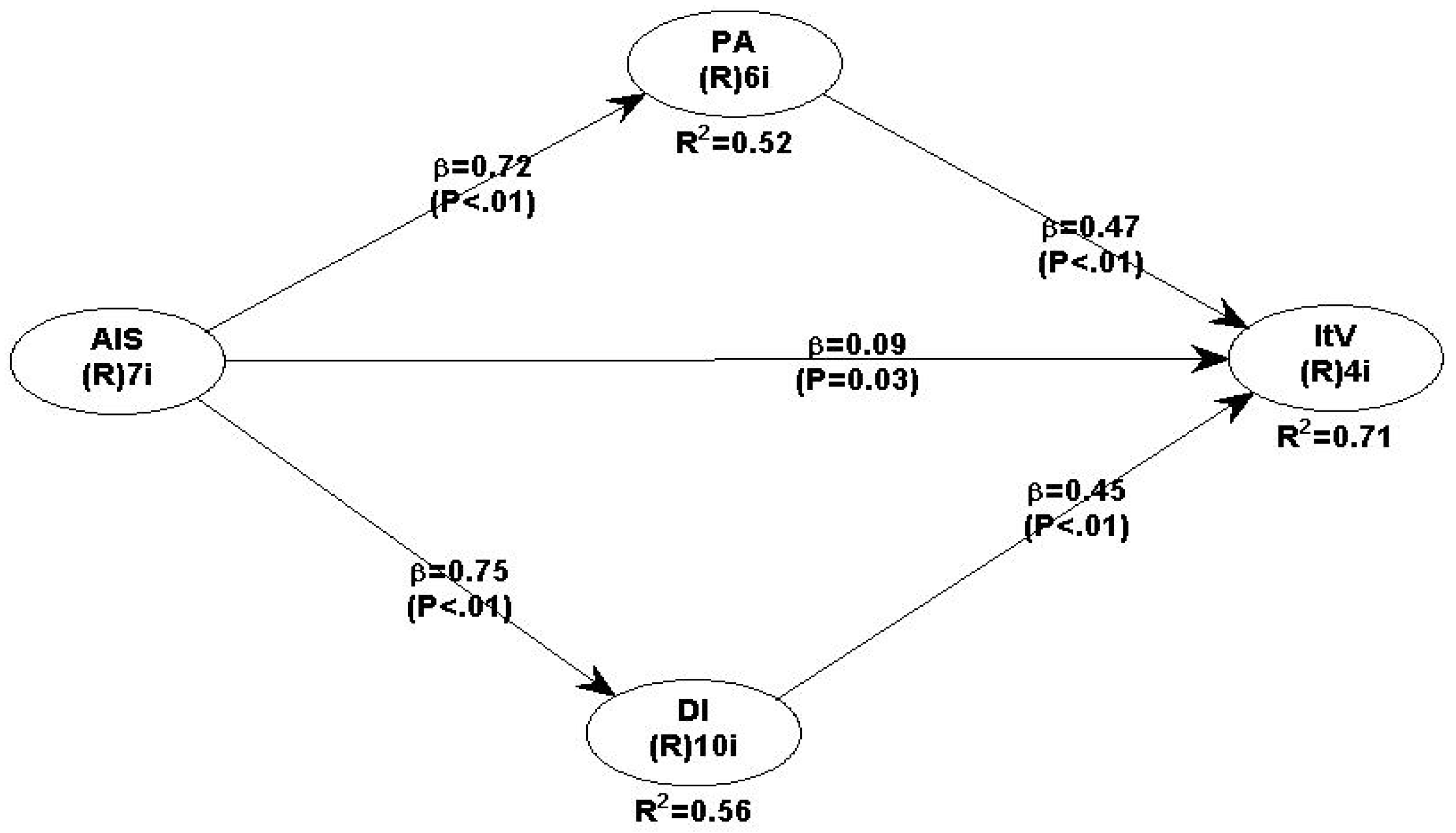
Table 5 and
Figure 2 summarize the results of the direct hypothesis testing and reveals significant relationships among the study constructs. AI-enabled storytelling has a positive and statistically significant effect on intention to visit (β = 0.09,
p = 0.03), although the associated effect size is relatively small (f
2 = 0.054), providing support for H1. In contrast, AI-enabled storytelling shows a strong influence on perceived authenticity (β = 0.72,
p < 0.01) with a large effect size (f
2 = 0.519), supporting H2. Similarly, a substantial and significant relationship is observed between AI-enabled storytelling and destination image (β = 0.75,
p < 0.01), with a large effect size (f
2 = 0.556), confirming H3.
Perceived authenticity has a significant positive impact on intention to visit (β = 0.47, p < 0.01), accompanied by a medium-to-large effect size (f2 = 0.339), thereby supporting H4. Destination image also exerts a strong and significant effect on intention to visit (β = 0.45, p < 0.01), with a comparable effect size (f2 = 0.319), lending support to H5. Regarding explanatory power, AI-enabled storytelling explains 52% of the variance in perceived authenticity (R2 = 0.52) and 56% of the variance in destination image (R2 = 0.56). Together, perceived authenticity and destination image, along with AI-enabled storytelling, account for a substantial proportion of variance in intention to visit (R2 = 0.71), indicating strong predictive capability of the model.
Table 6 reports the results of the mediation analysis conducted using the bootstrapping procedure proposed by Preacher and Hayes [
89]. The findings indicate that both perceived authenticity and destination image play significant mediating roles in the relationship between AI-enabled storytelling and intention to visit.
Specifically, perceived authenticity significantly mediates the effect of AI-enabled storytelling on intention to visit. The path from AI-enabled storytelling to perceived authenticity is strong (path a = 0.720), and the subsequent path from perceived authenticity to intention to visit is also substantial (path b = 0.470). The resulting indirect effect is 0.338, with a standard error of 0.045 and a t-value of 7.520. Importantly, the 95% bootstrapped confidence interval does not include zero (LL = 0.250, UL = 0.427), confirming the presence of a significant partial mediation effect and supporting H6.
Similarly, destination image is found to significantly mediate the relationship between AI-enabled storytelling and intention to visit. The effect of AI-enabled storytelling on destination image is strong (path a = 0.750), and destination image, in turn, positively influences intention to visit (path b = 0.450). The indirect effect is again 0.338, with a standard error of 0.045 and a t-value of 7.500. The corresponding 95% bootstrapped confidence interval ranges from 0.249 to 0.426, excluding zero and confirming a significant partial mediating effect. These results provide empirical support for H7 and demonstrate that AI-enabled storytelling indirectly enhances tourists’ intention to visit through both perceived authenticity and destination image.
5. Discussion
The present study enhances understanding of how AI-enabled cultural storytelling influences tourists’ psychological and behavioral responses, particularly within the context of Egypt’s rich cultural and heritage tourism landscape. In line with the proposed hypotheses, AI-enabled cultural storytelling exerts a significant influence on tourists’ visit intention, perceived authenticity, and destination image. These relationships are further strengthened through mediation mechanisms involving authenticity and destination image perceptions.
The findings indicate that AI-powered storytelling directly increases visit intention, supporting broader digital tourism research that emphasizes the role of AI-driven narrative content in shaping tourists’ decision-making processes. Prior studies demonstrate that AI-generated and personalized digital narratives enhance emotional engagement and stimulate intentions to visit or recommend destinations, highlighting the motivational capacity of technologically mediated storytelling to influence tourist behavior [
90]. Similarly, research in digital tourism communication suggests that high-quality, narrative-rich digital stimuli directly activate psychological responses that lead to stronger visit intentions. This evidence further validates the direct relationship observed in this study between AI-enabled storytelling and behavioral intentions within the Egyptian heritage tourism context [
91].
The positive effect of AI-enabled cultural storytelling on perceived authenticity underscores the evolving conceptualization of authenticity in the digital era. The findings align with emerging scholarship introducing the notion of AI-thenticity, wherein AI-generated content is perceived as authentic when it convincingly represents the cultural essence of a destination and meets tourists’ expectations [
92,
93]. Moreover, studies examining AI-generated visual content in tourism contexts reveal that perceived authenticity positively affects visitor trust and patronage intentions. These findings suggest that authenticity serves a dual function by influencing both cognitive evaluations and motivational outcomes, particularly through the linkage between AI-thenticity and trust-related behaviors [
92].
The mediating role of perceived authenticity between AI storytelling and visit intention identified in this study extends these insights by demonstrating that authenticity perceptions act as a key mechanism through which technologically mediated narratives translate into heightened travel motivation. This result is consistent with broader tourism literature emphasizing that authenticity—whether objective, constructive, or existential—remains a powerful determinant of tourist behavior, especially when individuals engage deeply with culturally rich narratives [
94].
Additionally, the findings reveal that destination image is significantly enhanced through AI-enabled storytelling and, in turn, exerts a strong positive influence on visit intention. This aligns with established tourism research indicating that compelling narrative and visual representations of destinations contribute to the formation of favorable cognitive and emotional images that motivate tourist behavior. For instance, historical storytelling has been shown to strengthen destination image and revisit intentions by enriching experiential perceptions [
95]. Furthermore, research on narrative transportation and personalized imagery in tourism marketing suggests that AI-enhanced visual storytelling intensifies both emotional and cognitive engagement, thereby reinforcing destination image and encouraging visitation [
95]. By empirically validating destination image as a mediating variable, this study contributes to the growing body of literature demonstrating that AI-enabled storytelling not only shapes tourists’ perceptual evaluations but also strategically leverages these perceptions to influence behavioral intentions.
It is important to note that the present study focuses on the pre-visit phase of destination image, capturing tourists’ perceptions formed before physically visiting the sites. This emphasis on pre-visit perceptions provides insights into how AI-enabled storytelling influences tourists’ expectations and intentions. However, destination image can evolve during and after the visit, as tourists experience the actual site, interact with local contexts, and compare their experiences with prior expectations. Therefore, while our findings demonstrate the influence of AI storytelling on pre-visit perceptions, they may not fully capture in situ or post-visit experiences, which could exhibit different dynamics.
6. Theoretical Implications
Building explicitly on Narrative Transportation Theory, this study makes several substantive theoretical contributions that extend the scope and explanatory depth of the theory within contemporary tourism research. First, the study advances Narrative Transportation Theory by demonstrating its applicability to AI-enabled storytelling contexts. Prior applications of the theory have largely focused on human-authored narratives, implicitly associating transportation with human creativity and intentional storytelling. By situating transportation within algorithmically curated narratives, this study challenges this implicit boundary and shows that transportation can emerge from technologically mediated storytelling, provided that narratives maintain coherence, emotional credibility, and cultural grounding. This extension broadens the theory’s relevance to digital and AI-driven communication environments that increasingly dominate tourism marketing.
Second, the study refines Narrative Transportation Theory by clarifying the experiential mechanisms through which narrative immersion translates into tourist-related outcomes. Rather than treating transportation as a general persuasive state, the findings conceptualize it as a process that restructures how destinations are mentally and emotionally constructed prior to visitation. Through transportation, tourists do not merely process destination information; they imaginatively experience cultural contexts, which reshapes their perceptual and evaluative orientation. This perspective deepens the theoretical understanding of transportation as a meaning-making mechanism rather than a simple attentional or affective response.
Third, the study extends Narrative Transportation Theory by reconceptualizing perceived authenticity as an experiential consequence of narrative immersion. Existing tourism research has often positioned authenticity as either an objective property of destinations or a subjective evaluation influenced by surface cues. By contrast, this study theorizes authenticity as emerging from transportation into culturally coherent narratives, where emotional engagement and narrative credibility generate a sense of genuineness independent of direct experience. This contribution refines the theory by specifying how transportation produces authenticity perceptions in mediated environments, particularly those involving advanced technologies such as artificial intelligence.
Fourth, the study contributes to the theory by explaining destination image formation as a narrative-based perceptual outcome of transportation. Within the logic of Narrative Transportation Theory, image formation is understood not as the accumulation of discrete informational cues, but as the integration of cognitive and affective elements within an immersive story world. The findings suggest that transportation facilitates the construction of vivid, coherent, and emotionally resonant mental representations of cultural destinations. By embedding destination image within the transportation process, the study extends the theory’s explanatory reach to include how imagined experiences shape place perceptions prior to physical visitation.
Finally, the study strengthens Narrative Transportation Theory by illustrating its capacity to explain complex, multi-pathway behavioral processes in tourism contexts. The parallel mediating roles of perceived authenticity and destination image highlight that transportation operates through multiple experiential channels rather than a single linear pathway. This insight extends the theory beyond simple attitude change models and positions it as a robust framework for explaining how immersive narratives influence future-oriented behavioral intentions in digitally mediated tourism environments. Collectively, these contributions reinforce Narrative Transportation Theory as a flexible and powerful explanatory lens for understanding tourist behavior in an era increasingly shaped by AI-driven storytelling.
7. Practical Implications
The findings of this study offer several actionable implications for destination managers, cultural tourism stakeholders, and digital marketing practitioners seeking to integrate artificial intelligence into storytelling strategies. First, the results underscore that the effectiveness of AI-enabled storytelling lies not in technological sophistication alone, but in its capacity to generate immersive narrative experiences. Practitioners should therefore shift strategic focus from deploying AI as an efficiency-enhancing tool toward designing storytelling systems that prioritize narrative coherence, emotional engagement, and cultural depth. Investments in AI storytelling should be evaluated based on their ability to transport tourists into meaningful story worlds rather than merely disseminate destination information.
Second, the mediating role of perceived authenticity highlights the importance of narrative credibility in AI-driven tourism communication. Destination managers should ensure that AI-generated or AI-curated stories are grounded in culturally accurate and locally resonant content. This can be operationalized by incorporating local voices, historical narratives, and community-based perspectives into AI storytelling systems, as well as by curating datasets that reflect genuine cultural practices rather than generic promotional themes. When authenticity is treated as an experiential outcome of storytelling rather than a static attribute, AI becomes a mechanism for reinforcing cultural legitimacy rather than undermining it.
Third, the study’s findings regarding destination image formation suggest that AI-enabled storytelling can be strategically used to shape how destinations are imagined prior to visitation. Marketing practitioners should leverage AI narratives to construct holistic destination images that integrate cognitive information with emotional and symbolic elements. Rather than fragmenting content across isolated messages, AI storytelling platforms can be designed to deliver interconnected narrative journeys that allow tourists to mentally simulate cultural experiences over time. Such narrative continuity strengthens image coherence and enhances the memorability of the destination within highly competitive tourism markets.
Fourth, the indirect influence of AI-enabled storytelling on visit intention through perceptual mechanisms implies that short-term performance metrics may underestimate its strategic value. Destination organizations should adopt evaluation frameworks that capture experiential and perceptual outcomes, such as narrative engagement, authenticity perception, and image vividness, in addition to conventional indicators like click-through rates or booking conversions. By aligning performance measurement with the experiential logic of narrative transportation, practitioners can more accurately assess the long-term behavioral impact of AI storytelling initiatives.
Finally, the findings carry implications for policymakers and cultural tourism planners concerned with balancing technological innovation and cultural preservation. AI-enabled storytelling, when strategically guided by narrative principles, can serve as a tool for amplifying cultural heritage rather than commodifying it. Policymakers may consider developing guidelines or best practices that encourage the responsible use of AI in cultural tourism communication, emphasizing narrative integrity, cultural sensitivity, and experiential value creation. In doing so, AI storytelling can be positioned not merely as a marketing instrument, but as a strategic medium for sustaining cultural meaning and enhancing tourists’ engagement with destinations before and beyond the point of visitation.
8. Limitations and Future Research
Despite its theoretical and empirical contributions, this study is subject to several limitations that open productive avenues for future research. First, the study relies on self-reported perceptions and behavioral intentions rather than observed travel behavior. While visit intention is a well-established predictor of tourism behavior, the translation of intention into actual visitation may be influenced by situational constraints beyond narrative influence. Future research could extend the present framework by incorporating behavioral indicators such as booking data, itinerary planning actions, or digital engagement trajectories to assess whether the effects of AI-enabled storytelling persist beyond attitudinal and intentional stages.
Second, although the study conceptualizes AI-enabled storytelling as a unified narrative stimulus, it does not differentiate between specific storytelling configurations. AI-driven narratives may vary substantially in terms of personalization intensity, interactivity, narrative agency, and multimodal richness. Future studies could disaggregate AI storytelling into distinct design dimensions and examine how these variations influence narrative transportation and its perceptual outcomes. Such work would refine understanding of how specific storytelling features shape experiential engagement within AI-mediated tourism communication.
An additional limitation concerns the exclusive focus on perceived authenticity and destination image as mediating mechanisms. While these constructs capture central experiential and perceptual pathways, Narrative Transportation Theory suggests that immersion may activate multiple psychological processes simultaneously. Future research could explore alternative mediators such as emotional arousal, perceived presence, narrative enjoyment, or identification with narrative characters to develop a more comprehensive account of how transportation translates into behavioral intention in AI-enabled storytelling contexts.
Relatedly, future research may extend the current model by examining serial mediation effects within the narrative transportation process. Rather than operating as parallel mechanisms, perceived authenticity and destination image may function sequentially, whereby immersive storytelling first enhances authenticity perceptions, which then contribute to the formation of a favorable destination image, ultimately shaping visit intention. Testing such serial mediation structures would allow scholars to unpack the layered psychological processes through which AI-enabled narratives influence tourist behavior, offering a more fine-grained understanding of experiential meaning construction prior to visitation.
Another limitation of this study is that it focuses on the effects of AI-enabled storytelling on tourists’ experiences and perceptions, rather than on how AI may influence the preservation, interpretation, or management of heritage itself. Future research could explore these aspects to provide a more comprehensive understanding of AI’s impact on heritage sites. In addition, a further limitation is that this study does not directly address theoretical developments within heritage studies. The research is designed to explore visitor experiences in heritage tourism contexts, and while it may offer insights relevant to heritage engagement, it does not examine changes in heritage theory, interpretation practices, or preservation approaches. Future studies could investigate how AI-enabled storytelling may influence heritage understanding and theory.
Furthermore, this study exclusively examined the pre-visit phase of destination image. As destination image may change during and after the visit, the results may not fully reflect in situ or post-visit perceptions. Future research could adopt longitudinal designs to investigate how AI-enabled storytelling impacts destination image across all phases of the tourist experience, providing a more comprehensive understanding of its effects.
Finally, this study empirical focuses on cultural destinations in Egypt. While Egypt provides a theoretically rich and appropriate setting due to its deep historical narratives and strong symbolic heritage, the intensity of cultural meaning and narrative density characterizing Egyptian destinations may shape how tourists experience narrative transportation, authenticity, and destination image. As a result, the strength and configuration of the observed relationships may differ in destinations where cultural symbolism is less pronounced. Future research could replicate the proposed model in other cultural and non-cultural destination contexts to assess the robustness and boundary conditions of narrative transportation processes across varying levels of narrative richness.




 ,
,