Article

Fortification Architecture in Argolis, Greece: Documentation, Analysis and Restoration Proposal of the Princess Tower


by
Konstantinos Dimitroulias
1,* and
Styliani Papatzani
2,*
1
Directorate of Studies and Conduction of Technical Works in Museums and Cultural Buildings, Hellenic Ministry of Culture, 12 Karytsi Square, 105 61 Athens, Greece
2
Department of Surveying and Geoinformatics Engineering, School of Engineering, University of West Attica, 28 Ag. Spyridonos Street, 122 43 Aigaleo, Greece
*
Authors to whom correspondence should be addressed.
Heritage 2026, 9(2), 71; https://doi.org/10.3390/heritage9020071
Submission received: 23 January 2026 / Revised: 9 February 2026 / Accepted: 10 February 2026 / Published: 12 February 2026
(This article belongs to the Special Issue Recent Progress in Cultural Heritage Diagnostics)

Abstract

This paper presents the typology of a freestanding Late/Post-Byzantine tower in the Peloponnese, a rare architectural type, as most comparable examples in the region have been lost due to abandonment, climatic degradation, and the absence of systematic conservation efforts. The architectural analysis and construction history of the Princess Tower (Πύργος Βασιλοπούλας) are examined phase by phase, while the current condition of the monument is documented through pathology assessment and diagnostic analysis. The study concludes with a comprehensive proposal outlining the necessary measures for the consolidation and restoration of the tower, aiming to render it accessible and comprehensible to visitors and researchers alike, not merely as a museum object but as a living monument. For the first time, a complete set of architectural drawings of the tower has been produced, providing essential documentation, particularly in view of the monument’s deteriorating condition and the imminent loss of significant architectural elements. This documentation also serves as a basis for formulating an appropriate restoration strategy. Through the presented case study, knowledge of fortification structures is expanded, the vulnerability of such monuments is recorded and analyzed, and mitigation measures are discussed. The survey constitutes the critical step toward the development of a restoration project, aimed at safeguarding a distinctive yet fragile monument—an important example of fortification architecture in the region and an integral component of its cultural heritage, which encompasses sites dating from prehistoric times to the modern era.

1. Introduction

Medieval towers and tower-houses have been extensively studied in Europe and special conferences and conventions have been dedicated to them [1,2,3,4,5,6,7,8,9,10]. Most of the published work focuses on the seismic retrofitting of towers [4,5,6,7,8], many of which comprise bell/clock towers, particularly in Italy [4,5,6,7], Belgium [8], or elsewhere.
In terms of fortification/military architecture, in the Middle Ages, fortress design was continually shaped by contemporary advances in fortification theory, siege tactics, and weapon technology. In fact, nowadays one can find peer-reviewed literature on fortifications of entire units, such as fortresses, their documentation and historical evolution throughout Europe. For example, the Venetian Tower of Durrës is a circular, 9 m in diameter and 9.6 m tall, 15th century masonry tower integrated into a Byzantine fortress. The tower was built atop Byzantine tower ruins to control and defend the harbor [7].
Another example is Nisida Tower in Naples, Italy, which, over the course of just a few years, although originally outside any formal fortification scheme, came to be integrated into it as a key strategic node. Initially, the Tower of Nisida functioned as a fortified pleasure residence, but its position was so strategically important that it could significantly strengthen the defenses of Naples. Consequently, during the 17th century, the tower was equipped with artillery and incorporated into newly designed fortification projects [8].
Few papers on fortification towers can be traced, such as the one on the main tower (the keep) of the fortress of San Felice sul Panaro, a town located near the city of Modena, Italy. Still, this tower is linked to adjacent structural elements of the fortress and, therefore, is not isolated [9]. Similarly, the Gabbia Tower in Mantua, Italy, a UNESCO heritage site used for military purposes as well, forms part of a complex, and, in structural terms, is “confined” by adjacent structures [10].
Apart from such complexes, however, it was typical since antiquity to find standalone towers as points of observation, also known as watchtowers. Very few of such towers have survived military actions and degradation over time and exposure.
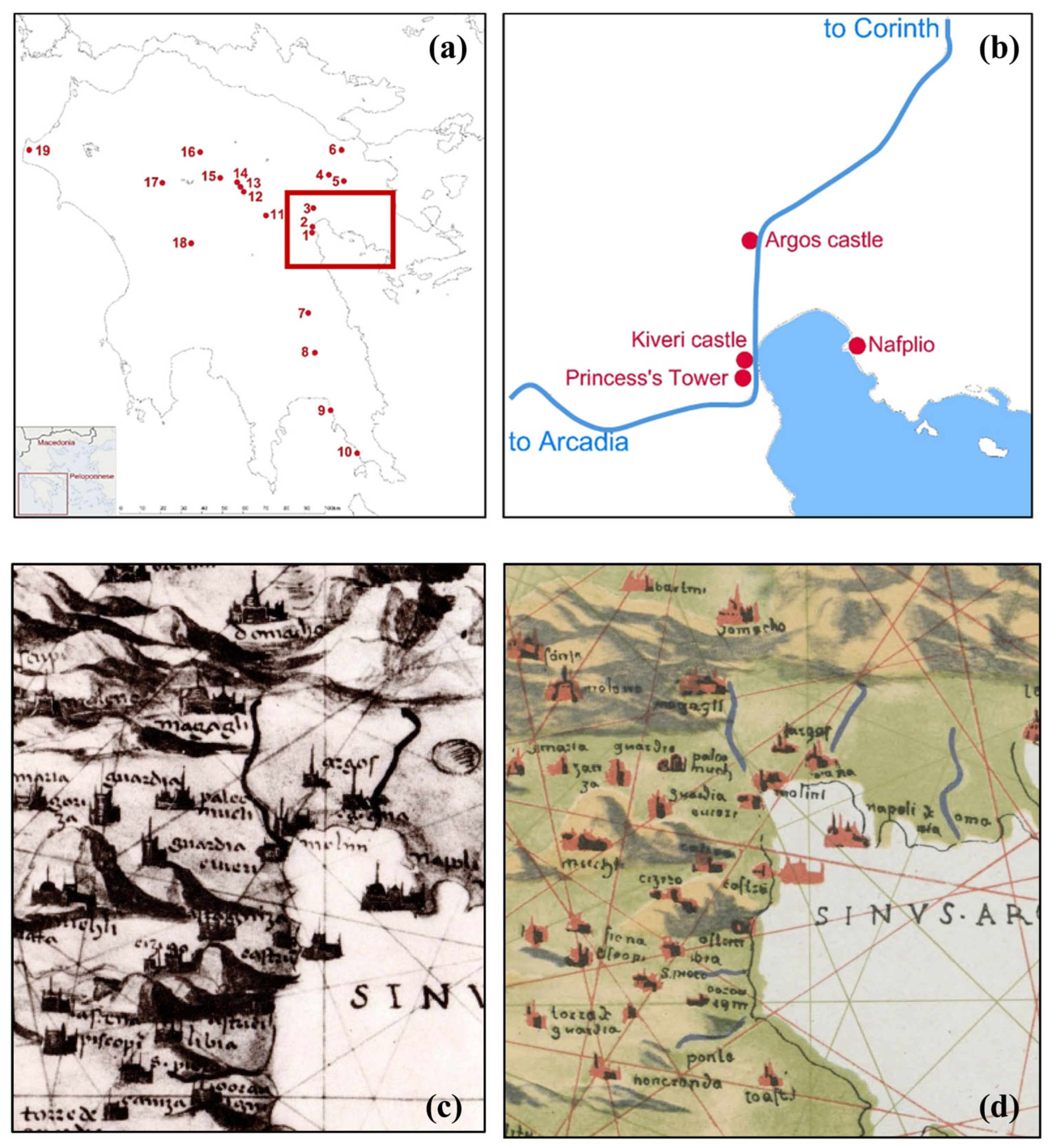
In Greece, the freestanding towers observed in the Peloponnese during the Late-Byzantine period can be classified into two categories, as they served different functions [11,12]. In the first category, the towers were strategically positioned, functioning in conjunction with nearby castles and serving as observation points, control stations, and message relay points in the event of a potential threat. These towers housed small garrisons and, thus, had a military function, forming part of a broader defensive network (e.g., Paleopyrgos Levidi, the towers of Nestani in Arcadia [11]). In the second category, the towers were associated with the agricultural exploitation of a region, serving as spaces for the collection and storage of products, while also providing accommodation for local lords (e.g., the towers of Roussi Orchomenos, Dara in Arcadia, Paleopyrgos Kleitoria in Achaea, etc. [11]) (Figure 1a).
In central Greece (Boeotia, Attica, etc.) and Evia Island [13,14,15,16,17], where a large number of towers have been preserved, these buildings are the result of the feudal system and housed the seats of smaller feudal lords, symbolizing their power. Due to their location and the limited visual communication between them, they did not contribute to an organized defense strategy (although some researchers have argued otherwise); instead, they controlled the immediate surrounding agricultural areas, where local production was collected. In contrast, in northern Greece (Macedonia) [18,19,20,21], the towers were part of an extensive defensive network consisting of cities, castles, and monasteries. They were located in cultivated lands, key passages, and communication routes, protecting the broader region from enemy raids.
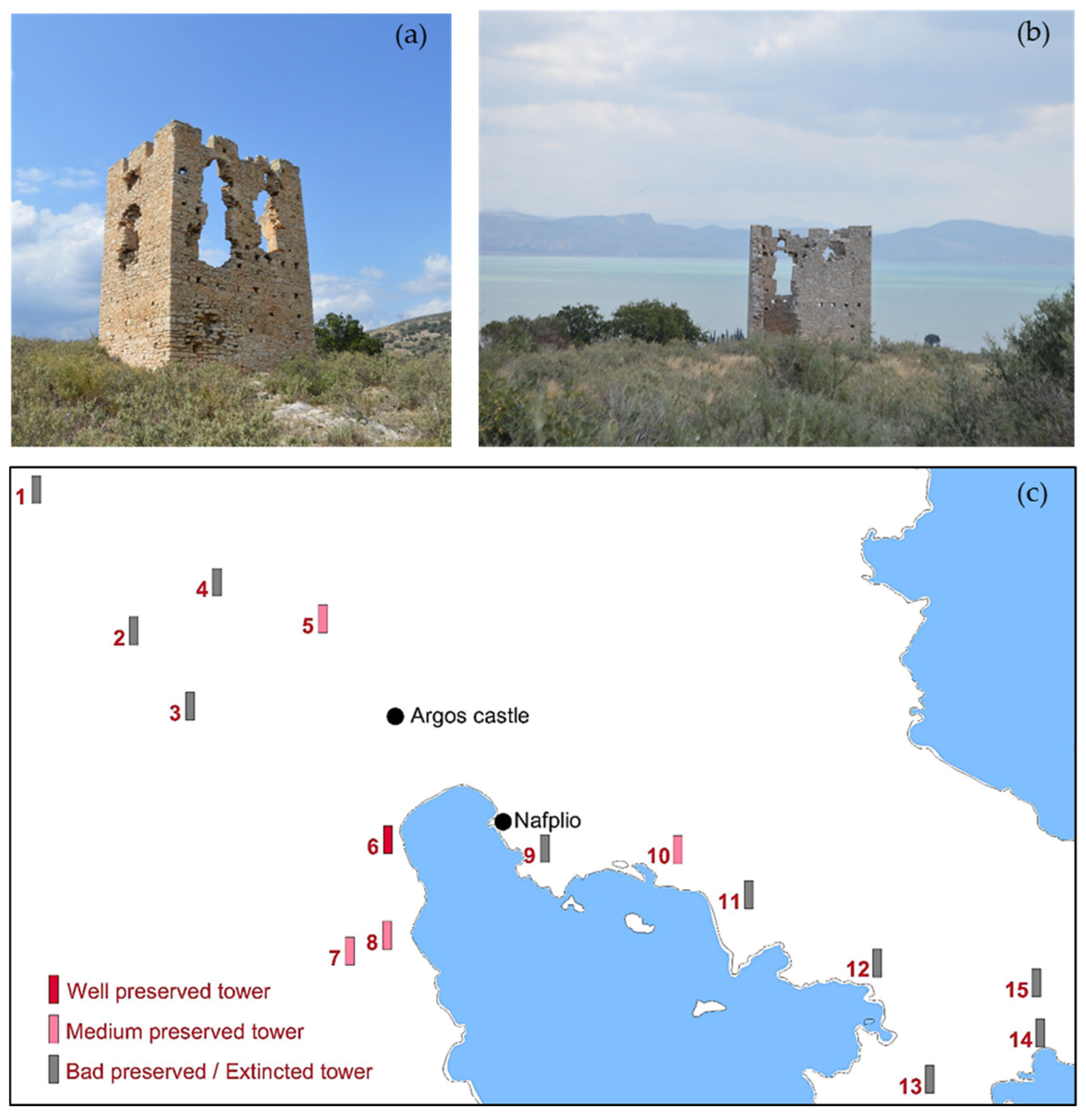
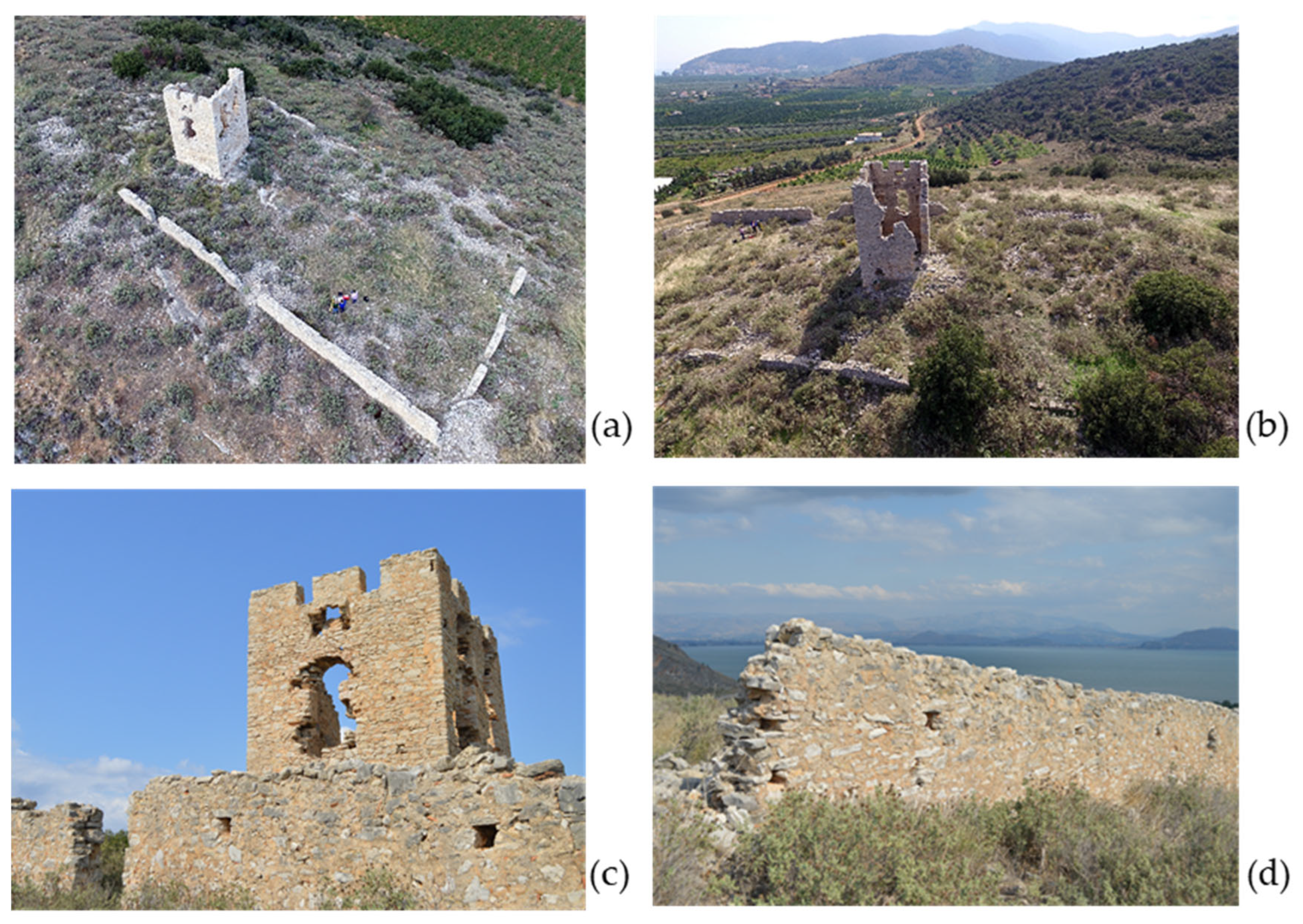
The monument of the current study comprises a distinctive and unique example of an individual tower, as there are no comparable structures in the Argolis region that preserve their original architectural and constructional elements to such an extent (Figure 2a–c).
It is associated with the agricultural production of the region, while at the same time it is situated in a strategic location at the passage linking Argolis with Arcadia and the rest of the Peloponnese.
This study focuses on documenting the current condition of the tower, the detailed history of its construction, the investigation and analysis of its pathology, and the formulation of a proposal for its restoration and consolidation, with the aim of its protection, enhancement, and promotion. To the best of the authors’ knowledge, there has been a very limited number of studies/publications on freestanding Late-Byzantine towers in Greece. The authors decided that, due to the rarity of the tower, it deserved to be thoroughly discussed, and for this, a detailed analysis is offered for both documentation and educational purposes.
Lastly, with the proposed consolidation and restoration outlined in this study, and the completion of the planned works, the tower could be made accessible in a manner that is legible and understandable to visitors, showcasing the values it embodies (historical, archaeological, authenticity, etc.). At the same time, the existing extensive network of points of interest in the region—comprising monuments spanning a wide chronological range, from prehistoric to modern times—would be enriched with a new, visitable attraction.

2. Historical Validation

2.1. The Evolution of Tower Architecture in the Peloponese

The tower, a construction used since antiquity, is either integrated into a fortification system or stands independently, serving as a watchtower and as part of an extensive network through which the control of key points or the transfer of important messages is carried out [22]. In medieval times, the tower was used to control and protect agricultural production and served as a last refuge for the inhabitants of a region, and therefore often formed the nucleus around which small settlements developed. It is often found in monastic complexes to meet their defensive needs, either integrated into the fortification or freestanding and isolated within the enclosure, as well as for the protection of their land property (see examples in northern Greece, especially the monasteries of Mount Athos in Macedonia [18,19,20,21]). Another example could be the monasteries of Epano Chrepa in Arcadia [23] and Taxiarches in Aegialia-Achaia, respectively, in the Peloponnese [24].
During the turbulent Late-Byzantine period (12th–15th century), due to the increased insecurity, towers proliferated, and they also hosted other functions, such as rooms for temporary residence, due to the security provided by their defensive character. With the conquest of the Peloponnese during the Fourth Crusade and the establishment of the Frankish Principality of Achaia, the new rulers built a large number of castles, towers, etc. to house and protect the numerous feudal lords from the local vassals, which functioned as centers of power and concentration of the wealth of the region they ruled. These fortified positions were soon occupied by the Byzantines, who, based in Mystra, began to expand from the mid-13th century in a final resurgence of the Byzantine Empire before the final advance and settlement of the Ottomans.
The centuries that followed the conquest of the Peloponnese by the Ottomans were characterized by the introduction of firearms, frequent wars between the Ottomans and the Venetians and a change in their rule. During the Venetian and Turkish occupation, a period of intense insecurity, the fortified residence (Πυργόσπιτο, tower-house) was established. In the Peloponnese, the number of these structures increased in the Post-Byzantine period, especially in the Second Ottoman period (1715–1821), as many characteristic examples are still preserved in the villages of Corinth, Achaia or Arcadia [25,26,27]. This is due to the general insecurity of the more prosperous conquerors towards the poorer subjects. These fortified residences secured their owners from raids or local rebellions, while, at the same time, they were directly related to the agricultural exploitation of the surrounding area, and for this reason, they were mainly found in the countryside. Later on, they may have been transformed into merely a summer residence for the wealthy, but they always enhanced the social prominence of their owners.
During the years of the revolution, in the 19th century, in the context of the Hellenic liberation struggle against the Ottoman Empire, the earlier fortifications were used, but even the individual towers acted as strongholds for the rebels.
Finally, in recent history, monuments from earlier historical periods were reused during the 20th century and the World Wars, mainly because of their location in key strategic positions and passages and the security they provided through the preserved fortifications.

2.2. Historical Background

The Argolis region, after the Peloponnese had been conquered by the Crusaders at the beginning of the 13th century, was conceded to Othon de la Roche, which contributed to the conquest of the country and passed successively to the families de Brienne and d’Enghien. The name of the tower is possibly related to Marie d’Enghien, the last heiress of Frankish origin to the castles of Argos, Nafplio and Kiveri, who sold her lands to Venice in 1388, as the Byzantine threat of the Despotate of Mystras was increasing [28].
The tower stands near the castle of Kiveri (Chamères or Chamires), a work of the Frankish period [28,29,30], located on the rocky Pontinos Hill, at an altitude of 179 m, overlooking the modern settlement of Myloi. Its arrangement with a hexagonal acropolis and an outer enclosure that concluded a settlement [29] reveals design application rather than a dynamic development of the fortifications. It has visual contact with the neighbouring castles of Argos and Nafplio, while controlling the Argolic Gulf and the southern entrance to the Argolic Plain.
This castle is mentioned as destroyed in the treaty signed between Venice and the Ottoman Empire in 1481, after the Venetian–Turkish war of 1463–1479, while it remained in Venetian hands on the condition that they did not proceed with repairs [28]. After the destruction of the castle, the settlement moved southwards, towards the coastal plain, which extends between the modern settlements Myloi and Kiveri. This new settlement, as well as the plain, came under the control of an Ottoman official–landowner, whose seat was possibly the examined tower. However, during the First Ottoman period (1460–1685), there was a second shift of Kiveri even further south, that is, to the southernmost point of the plain and at the foot of the mountain where it stands today, without the previous settlement being immediately eliminated. Thus, during the Second Venetian occupation (1685–1715), the two settlements coexisted, referred to in the sources as “Kiveri Apano” and “Catu” or “Civeri Pano-Catu”. This coexistence continued until the early post-revolution period, when a source from 1830 suggests that there were two “Kiveri”. However, towards the end of the 19th century, Miliarakis considered that one of the two had ceased to exist by then and subsequently defined its location as “Paleokiveri”. It is almost certain that this is none other than the second chronological settlement or “Pano Kiveri” of the Second Venetian period, of which no traces survive, while “Kato Kiveri” coincides with the third settlement in order, the present seaside settlement [29,31,32].
The tower is also marked in the map of Battista Agnese (1554) and in a Venetian one [33,34], which includes the Peloponnese (Figure 1c,d). On this map one can locate the cities of Argos (Argos) and Naflio (Napoli di Romania), the mills on the beach of the present-day settlement of Myloi, the castle of Kiveri (Paleocuveri), as well as the Princess Tower on a low hill marked as “Guardia Cuveri”. Other towers near the mills on the beach are also depicted bearing the same symbolism.
The tower under examination was further used in the 19th century, during the battle that took place there between the Greek revolutionary corps and Ibrahim’s Egyptian army, an ally of the Ottomans, as it is referred to in the historical sources and was depicted in a painting of this period in General Makrygiannis’ memoirs, as well as the nearby castles of Kiveri and Argos [35]. Almost simultaneously, the French Scientific Expedition traversing the Peloponnese, gathering data and compiling a map, noted the tower in question, as well as “Palaeo Kiveri” (“Pano Kiveri”), “Kiveri” (“Kato Kiveri”) to the south, and a second tower located near the first aforementioned settlement, traces of which cannot be identified nowadays [36].
During World War I and II, both the neighbouring castle of Argos and the tower under study were used either in the context of warfare or as important defensive positions. East of the tower, lower down the hill, there are trenches and a circular built plateau, which was used as a gun base for the control and protection of both the main road axis and the railway line.
The network of fortifications that is still preserved today on the tower’s hill and on the seashore, as well as the existence in the region of two animal stables for the needs of the Hellenic army post, indicate an organized plan and a particular interest in the control and defense of the wider area, while the craters observed near the tower and the castle of Kiveri document intense warfare during the turbulent years of the 20th century.

3. Description of Princess Tower

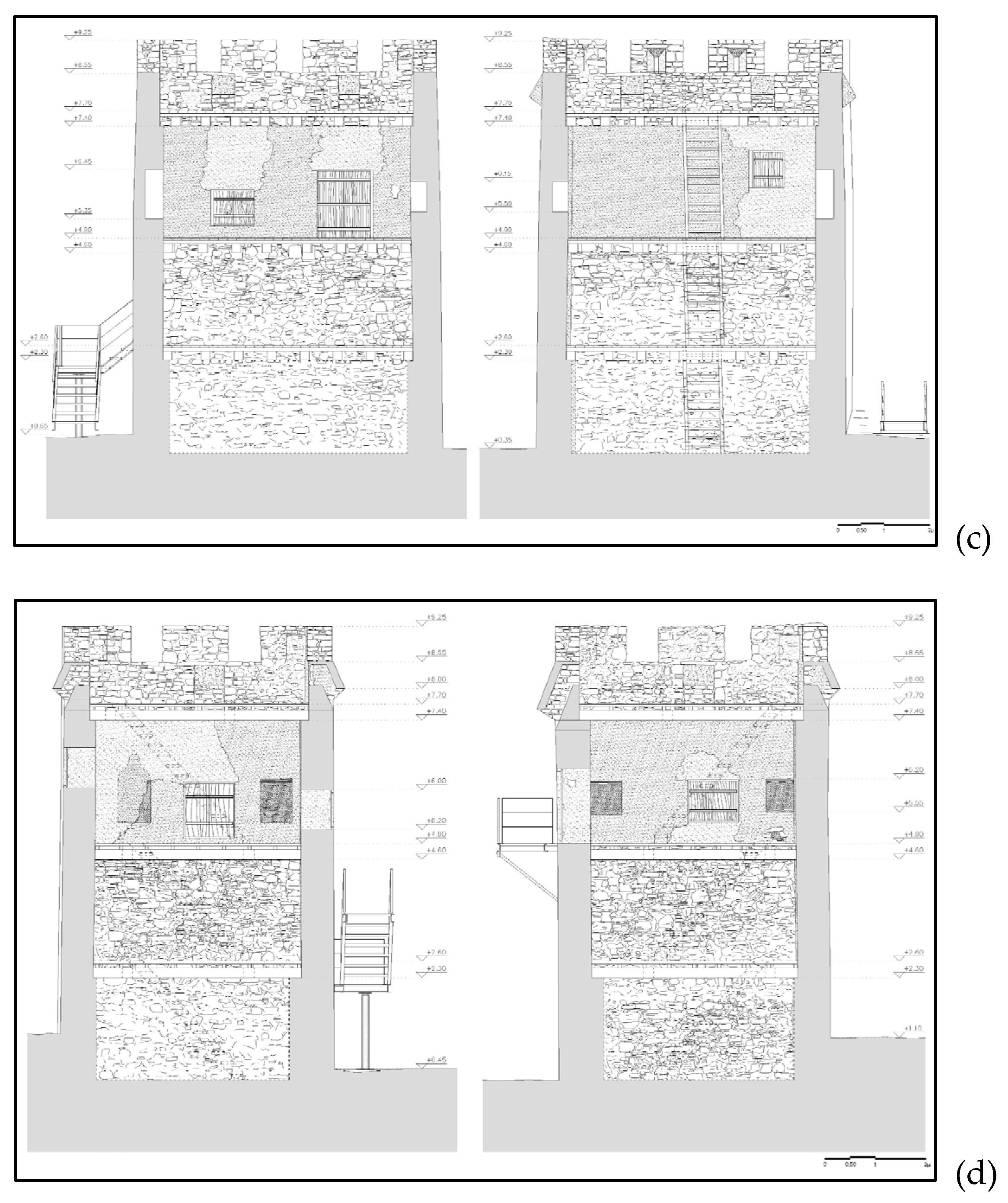
The current section presents the history behind the naming of the tower, the specific geographical characteristics which have affected the evolution of the monument and the usages of the structure and its internal spatial organization, as well as a thorough description of its defense elements and construction materials. The description of the subsections is reinforced with a number of technical drawings, which were conducted with the assistance of a licensed surveyor engineer. Topographic instruments (Total Station GPT3003 Topcon, Tokyo, Japan and a drone—UAV DGI Mavic mini2 (SZ DJI Technology Co., Ltd, Shenzhen, China) were employed to collect a large number of measurement points, ensuring the most accurate possible representation of the tower in computer-aided design software (Autocad Autodesk, 2024). Supplementary measurements were also conducted using leveling staffs and measuring tapes. Within the framework of the survey documentation, a complete series of sketches was produced and is made available in the current paper.

3.1. Naming of the Tower

According to a local myth, the name comes from a princess who lived there in the past. Because of her incredible beauty or, according to others, her untold ugliness, a hidden underground passage was built. This passage connected the tower to the coast, so that she could go down unnoticed for a swim in the sea. It is probable that this description refers to Marie d’Enghien, who sold the significant castles of the region to Venice in the late 14th century [28].

3.2. Geographical Characteristics

The tower is located on the top of a low hill of about 70 m in height, south of the settlement of Myloi, Argolis, and the castle of Kiveri, near the sea (Argolic Gulf), just opposite Nafplio. The hill is easily accessible from all sides and especially from the west where it joins with other low hills and the mountains of Arcadia. This vulnerable position is not considered to be particularly secure, and for this reason, the tower is surrounded by a low, almost rectangular enclosure to enhance its defensive capacity. This stone wall encloses secondary buildings, which housed auxiliary uses, as in the characteristic example of Lake Yliki Tower in Central Greece [37].
It dominates the area because of its size and position and has control over the plain that expands under the hill to the Argolic shore, and, in consequence, over the agricultural production of the region. It seems that it did not belong to the defensive network of the area, as its visibility to the north is limited; however, it does support the nearby Kiveri Castle. In addition, it controls the narrow passage between the Pontinos Hill and the sea, i.e., the passage to the city of Argos from the south, where the spring of Lerna gushes out, known from the “Twelve Labours of Hercules”. It was located on the main axis that connected Argolis (Argos) with Arcadia (Tripoli), which was controlled basically from Kiveri Castle, and passed through the present-day settlement of Myloi via the village of Achladokambos and continued to Mouchli and Tegea (Nykli) on the Arcadian plateau [38] (Figure 1a,b).
The continuous defensive organization of the hill indicates its great importance, mainly because of its proximity to the ancient and long-standing axis leading from Argolis to the central Peloponnese (Arcadia). This communication has been degraded only in recent years due to the construction of the new highway from Corinth to Tripoli, which bypasses Argos.

3.3. Use of the Structure

The criteria for selecting an appropriate location for a fortification project include a physically secure site, access to potable water and essential supplies, and the availability of necessary building materials. The archaeological evidence and the maintained traces show that these basic principles, which date back to antiquity and were consistently applied, were indeed followed in the selection of the site [12]. In particular, sites were chosen on isolated, naturally fortified rocky outcrops or hilltops, as in this case, on small peninsulas with narrow access to the mainland, but also on sites close to rivers, seas or streams.
The tower is characterized by simplicity in construction without morphological aspirations, a fact imposed by its defensive character, while it also housed the residence of the local lord, as will be discussed later (Figure 3a,b). In other examples, the towers also housed living quarters, such as the towers in the castle of Agionori in Corinth or other freestanding towers in neighbouring Arcadia [11,39].
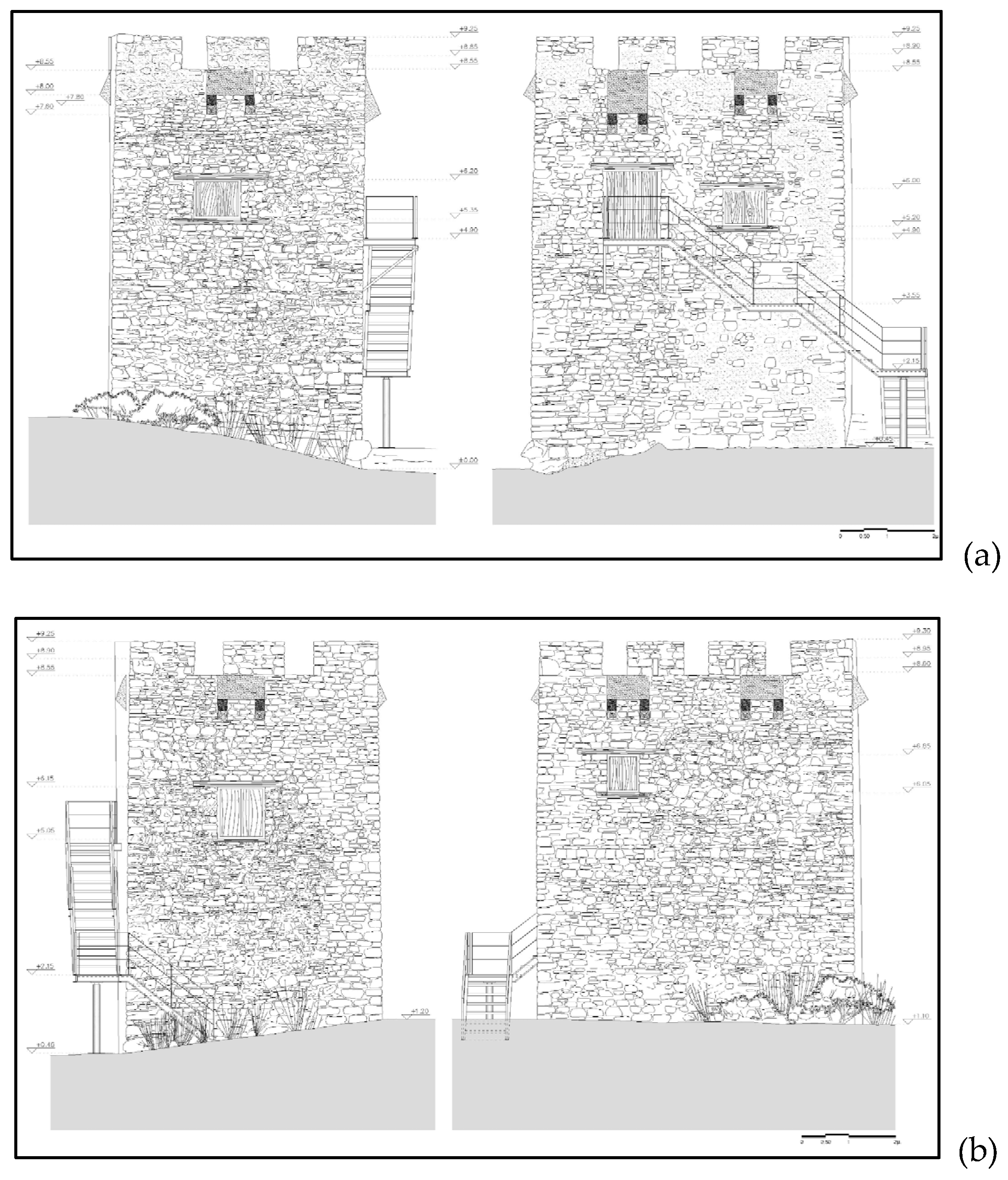
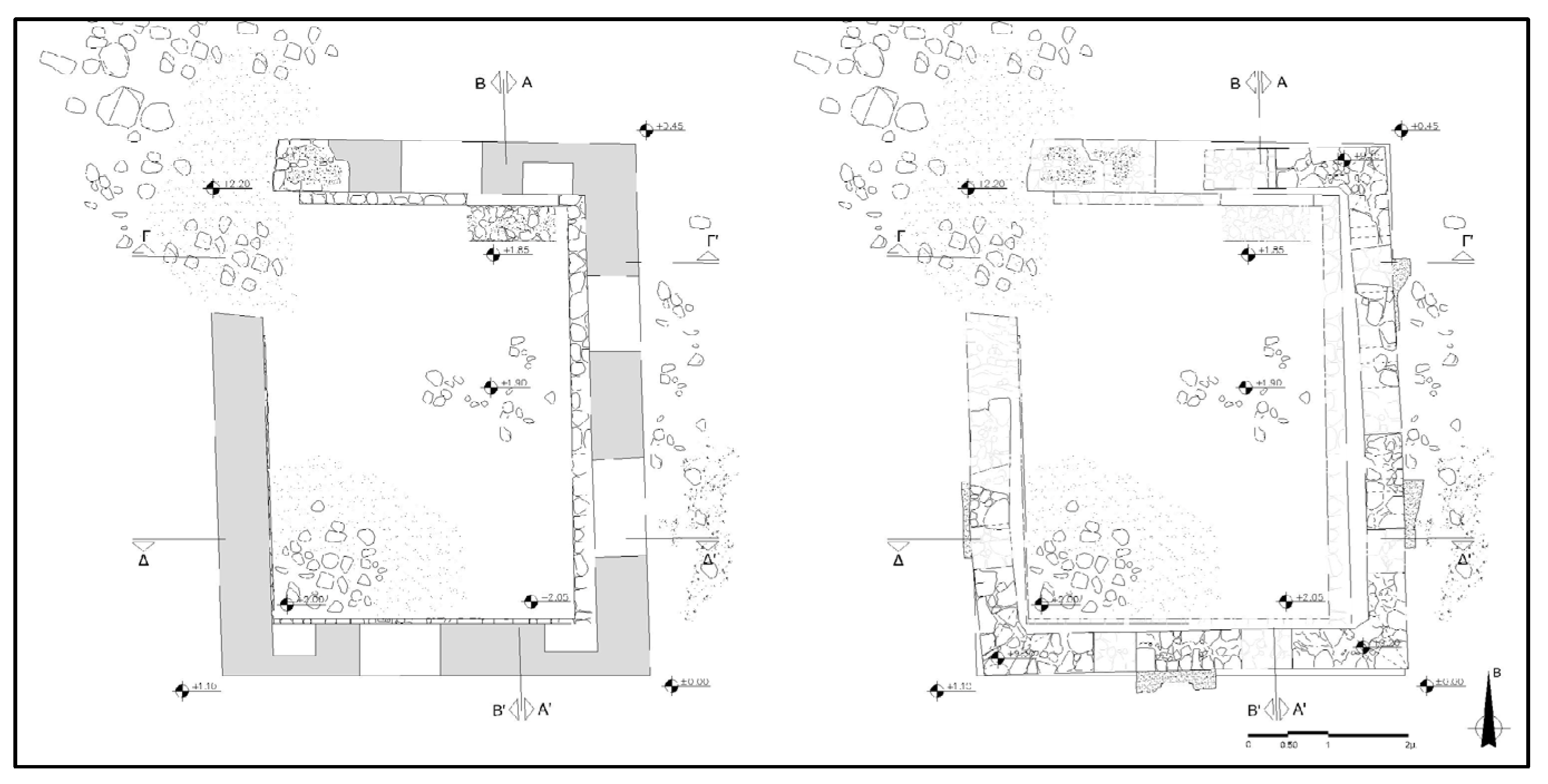
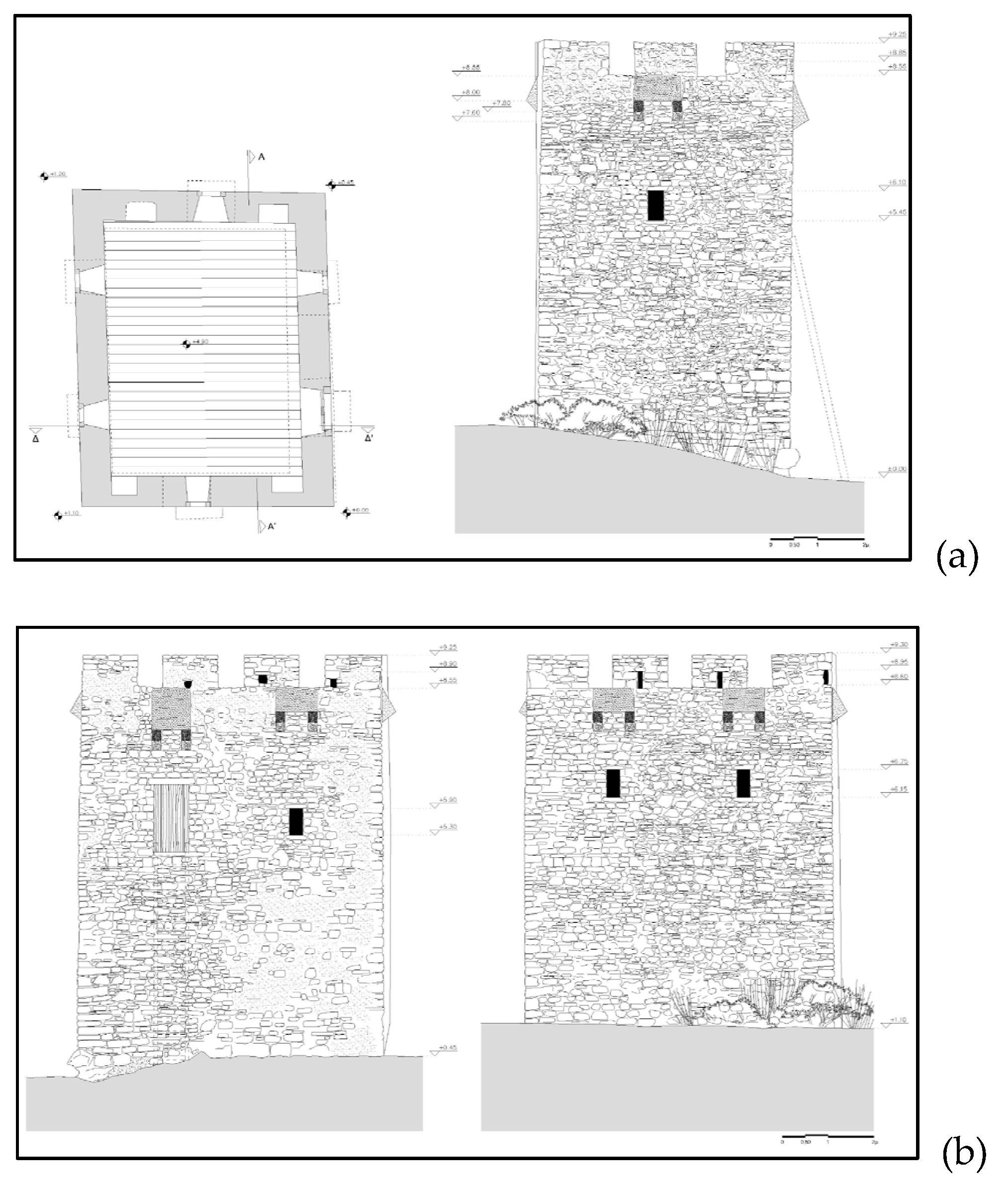
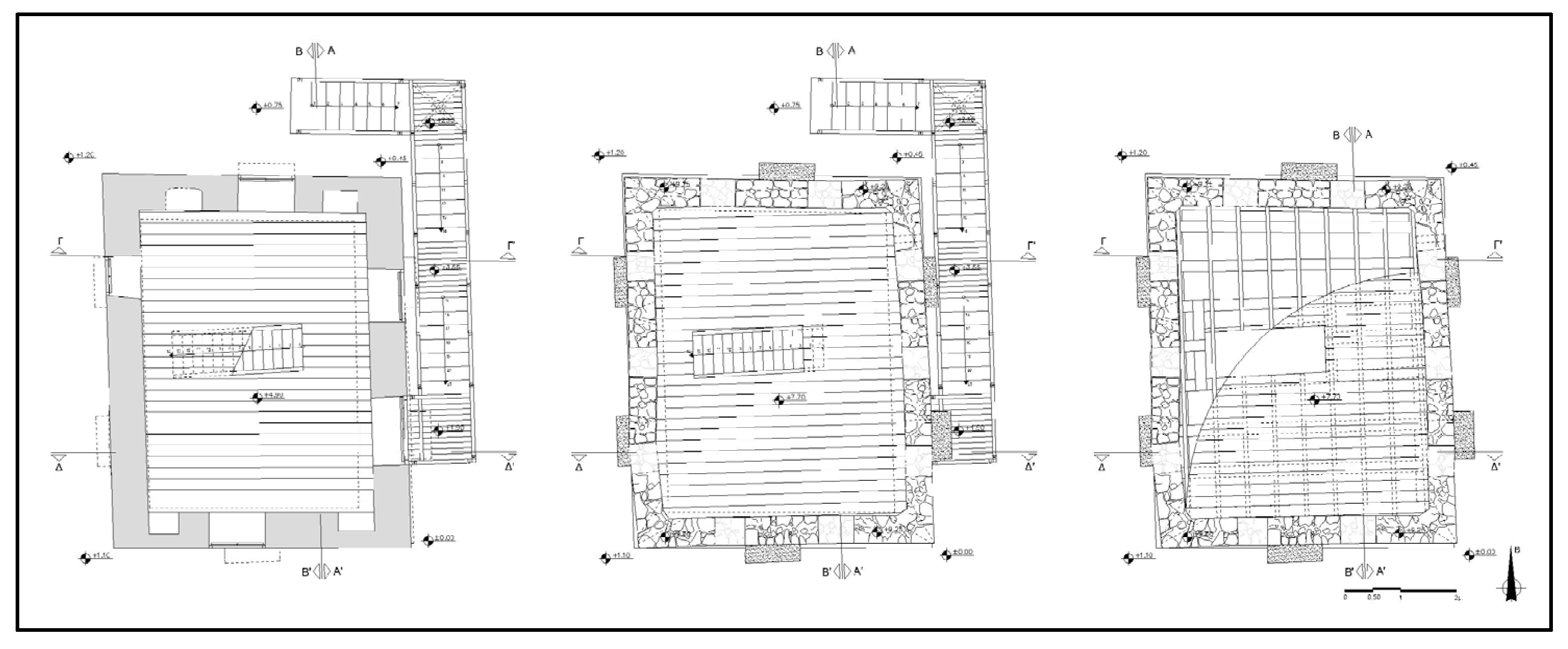
It demonstrates a rectangular floor plan (Figure 4) with maximum external dimensions of 5.45 × 6.75 m, internal 4.10 × 5.45 m, wall thickness of 0.65 m and maximum height of 9.20 m on its external eastern side. Its external dimensions are comparable to other examples, such as the tower in Paleopyrgos Levidi with dimensions of 6.00 × 8.00 m, the tower in Kalpaki, Orchomenos, with 7.00 × 10.00 m and the tower of Dara with 5.40 × 7.50 m, all buildings of the Late-Byzantine period (13th–15th century) in neighbouring Arcadia [11] (Figure 1a).

3.4. Interpreting the Internal Spatial Organization

One of the most striking characteristics of the Tower in question is that the preservation of its many elements does not allow for hypotheses. In fact, it provides a unique opportunity for experts to pass on the knowledge of interpreting the data that has survived to instill interest in the conservation of heritage monuments.
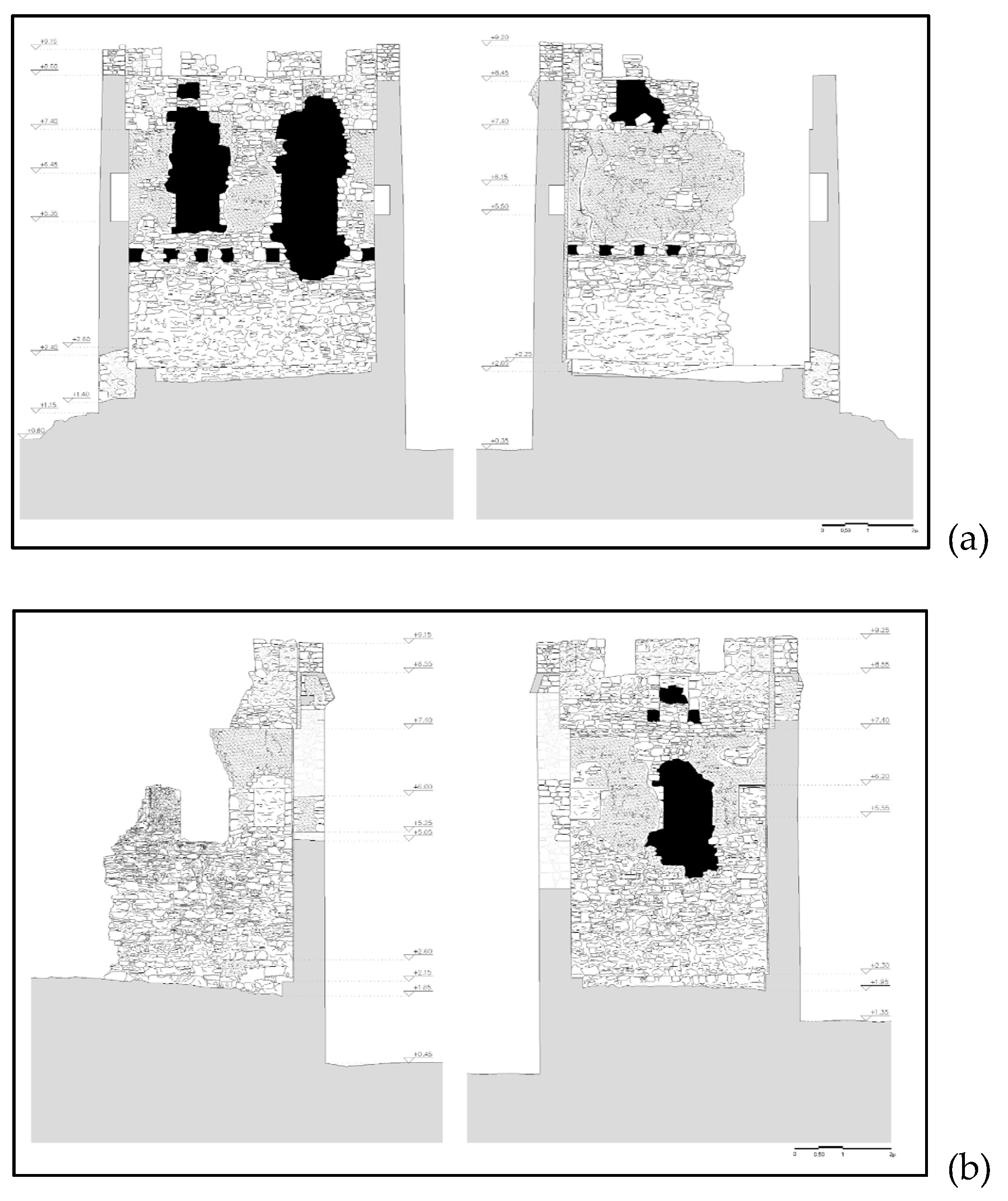
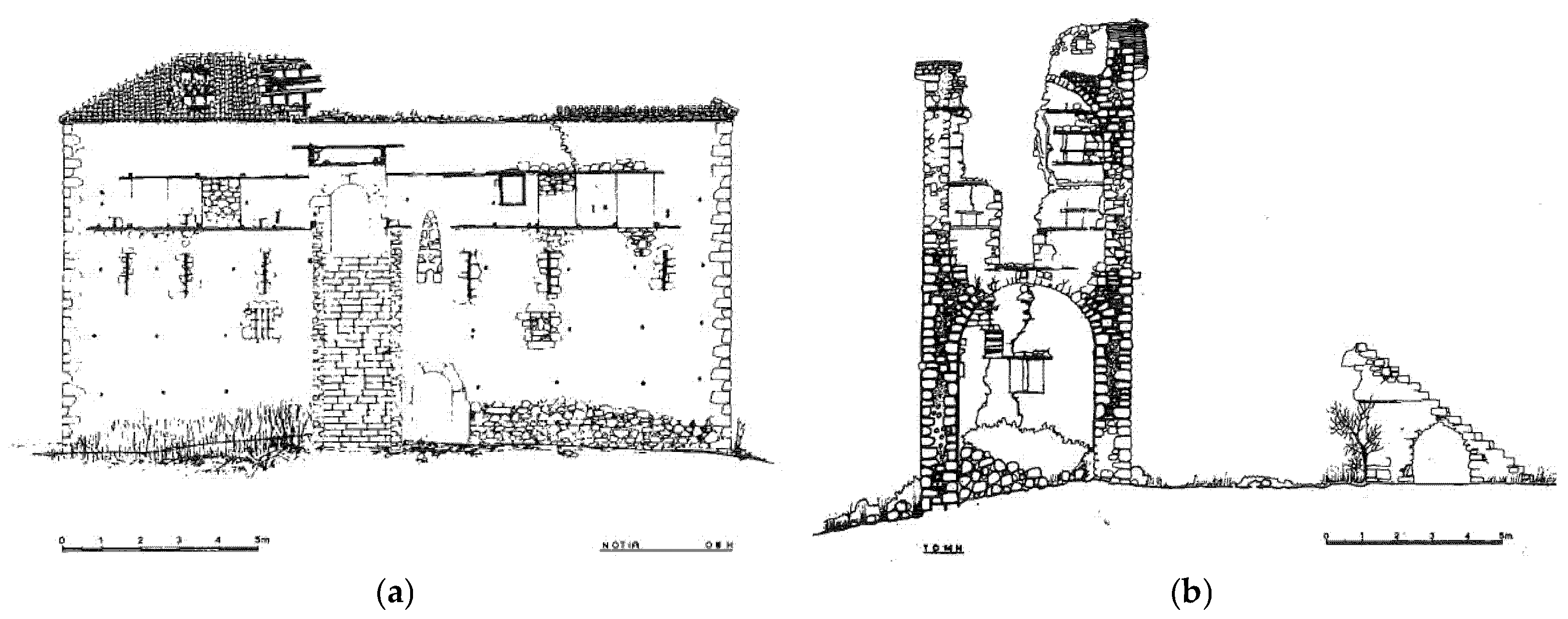
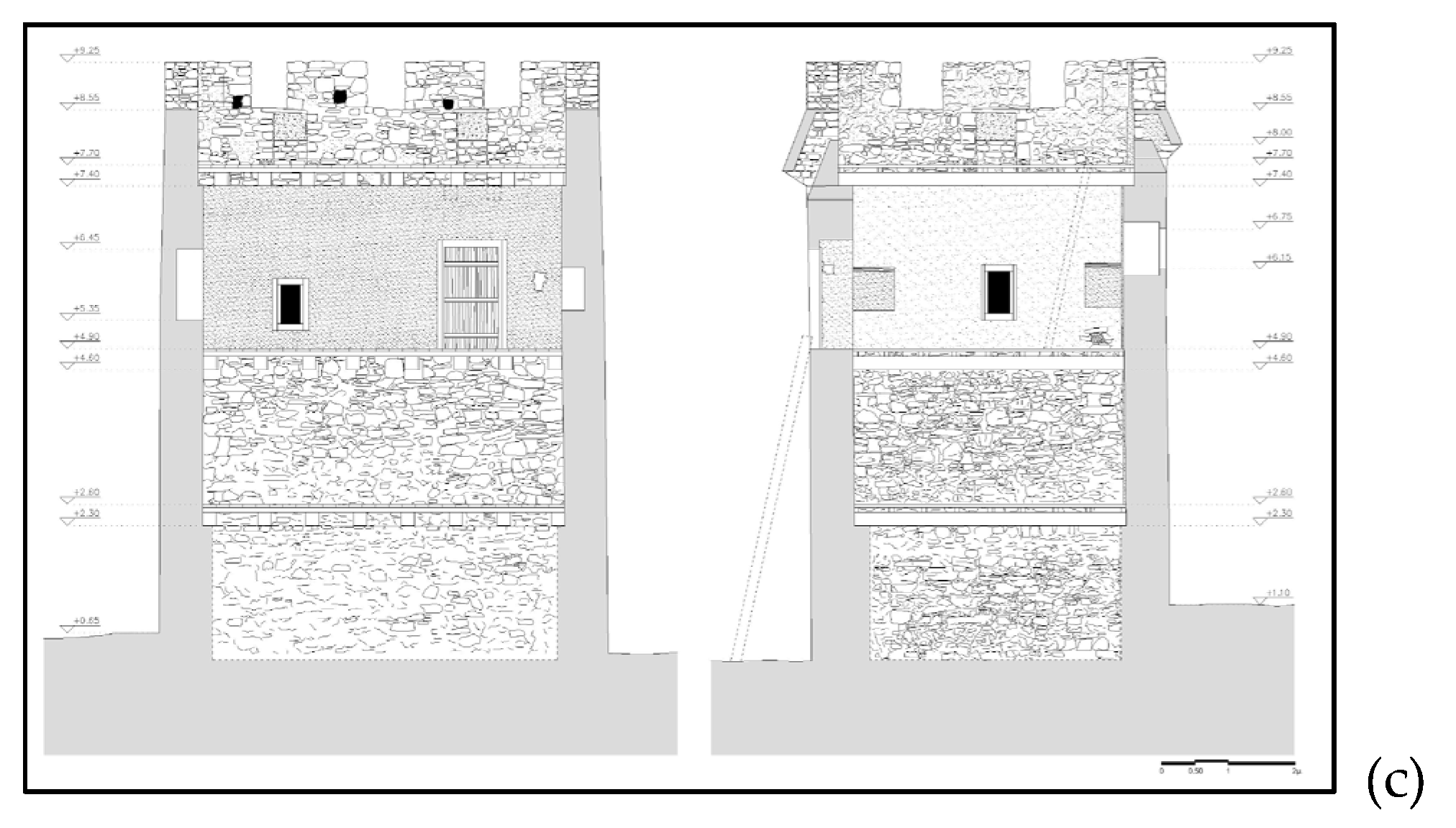
Although the timber floors of the tower are no longer preserved, one can easily perceive the organization of the interior, based on the surviving traces of the beam slots in the masonry and the recesses created. Taking into account the need to ensure the unhindered movements of the occupants–defenders (e.g., easy access to the openings, the arrow slits/loopholes, the merlons, etc.), the levels of the tower are depicted in Figure 5a,b.
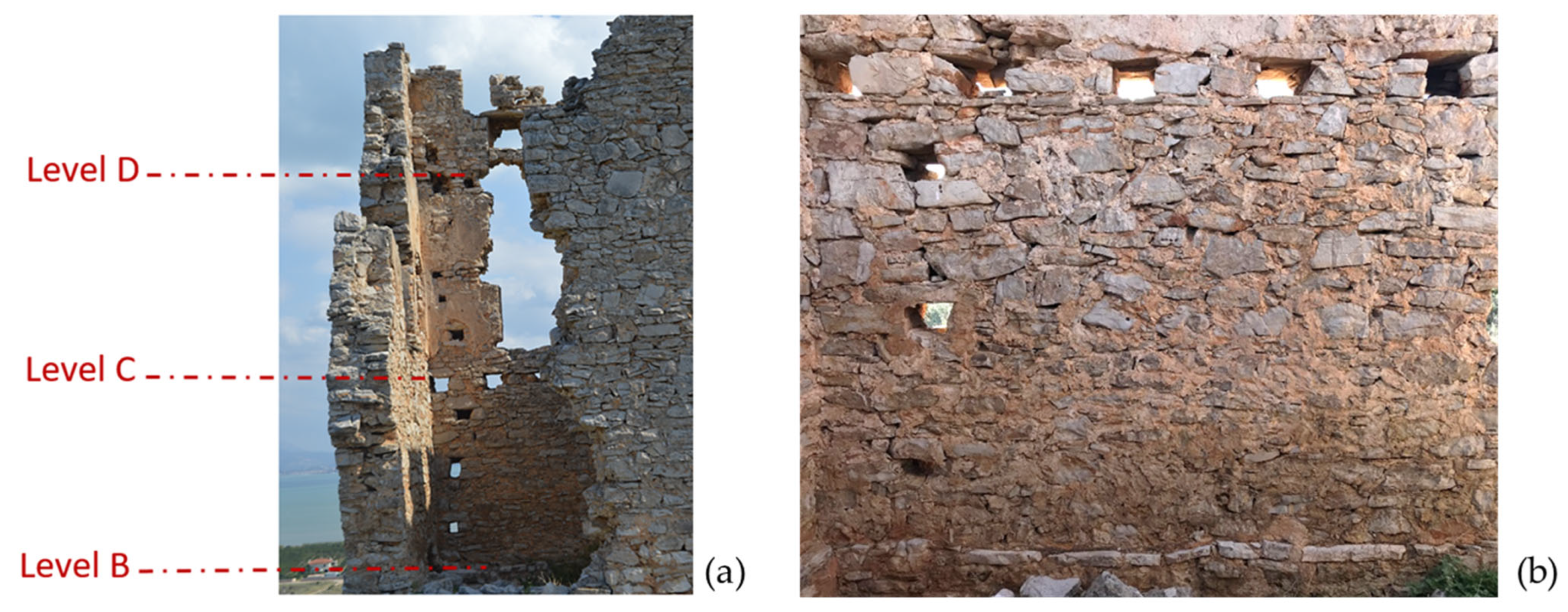
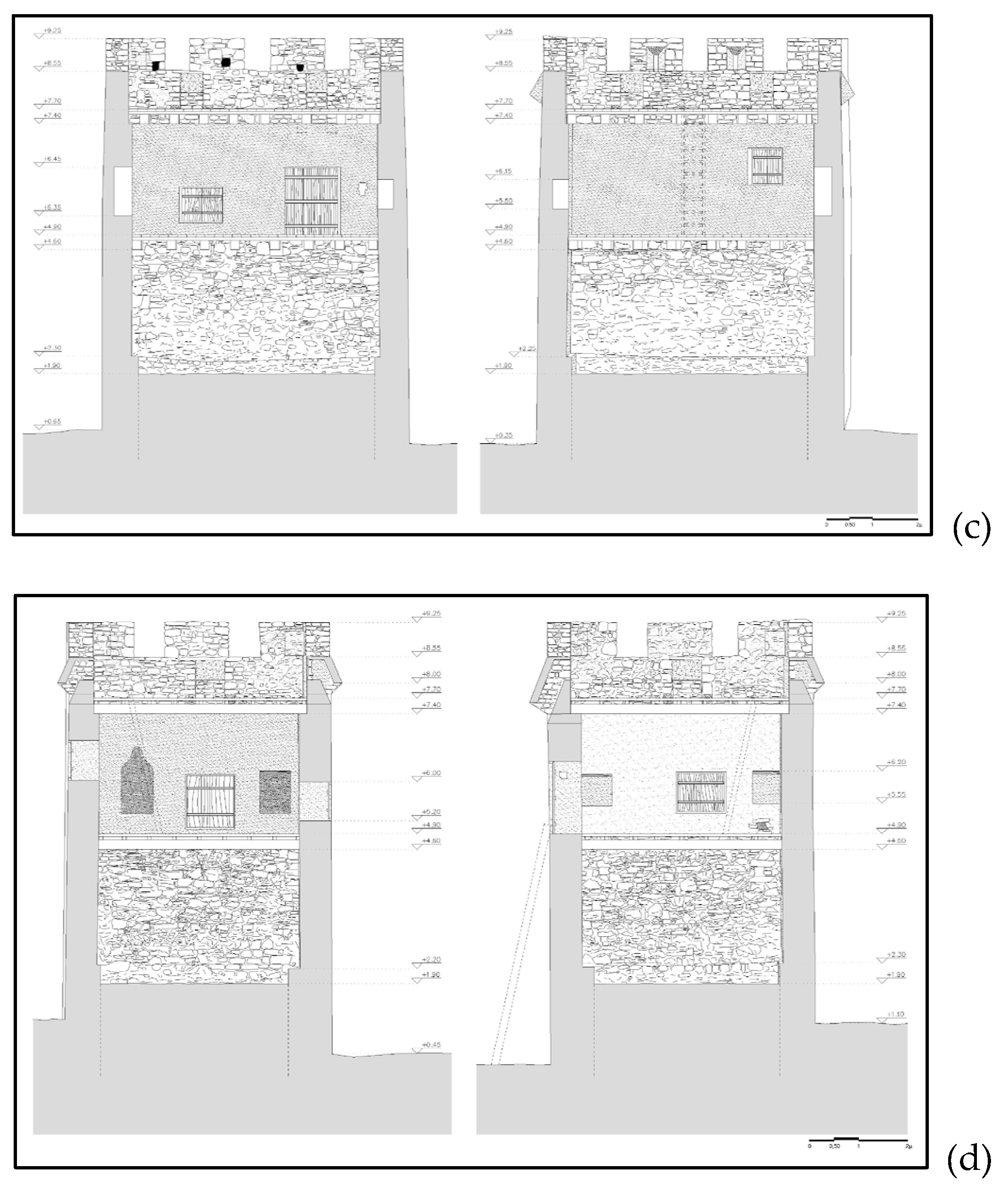
As can be seen from the rows of the surviving beam slots that penetrated the thickness of the wall, as well as from the gradual reduction in the thickness of the wall, it can be safely concluded that the tower had four levels (A, B, C and D levels) (Figure 6a,b). The lower level, A, which is now filled with rubble, has perimeter walls of greater thickness in relation to the upper levels B and C, as well as the thickness of the walls of the above-mentioned levels in comparison with level D, as shown by the recesses preserved inside the tower between levels A–B and C–D.
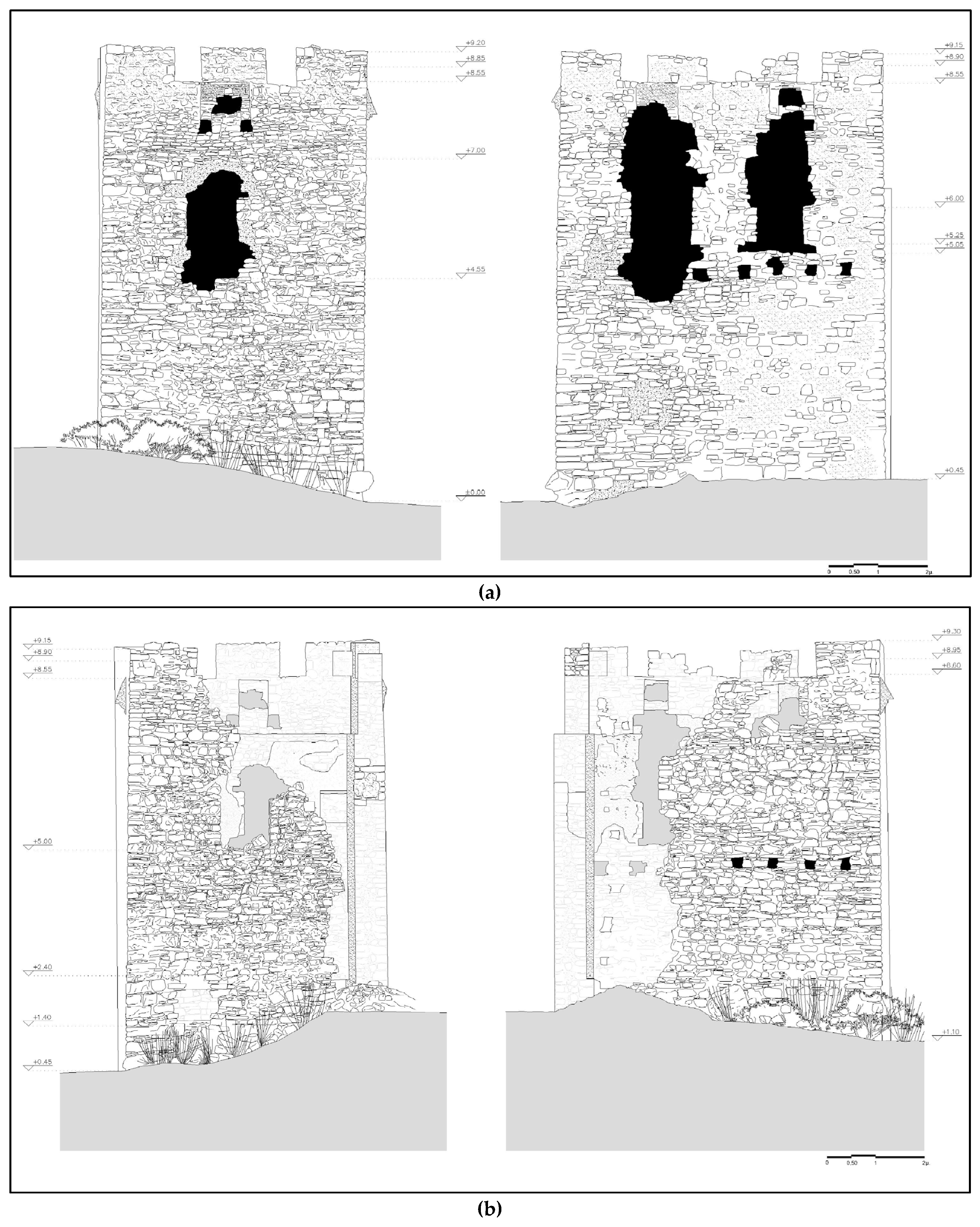
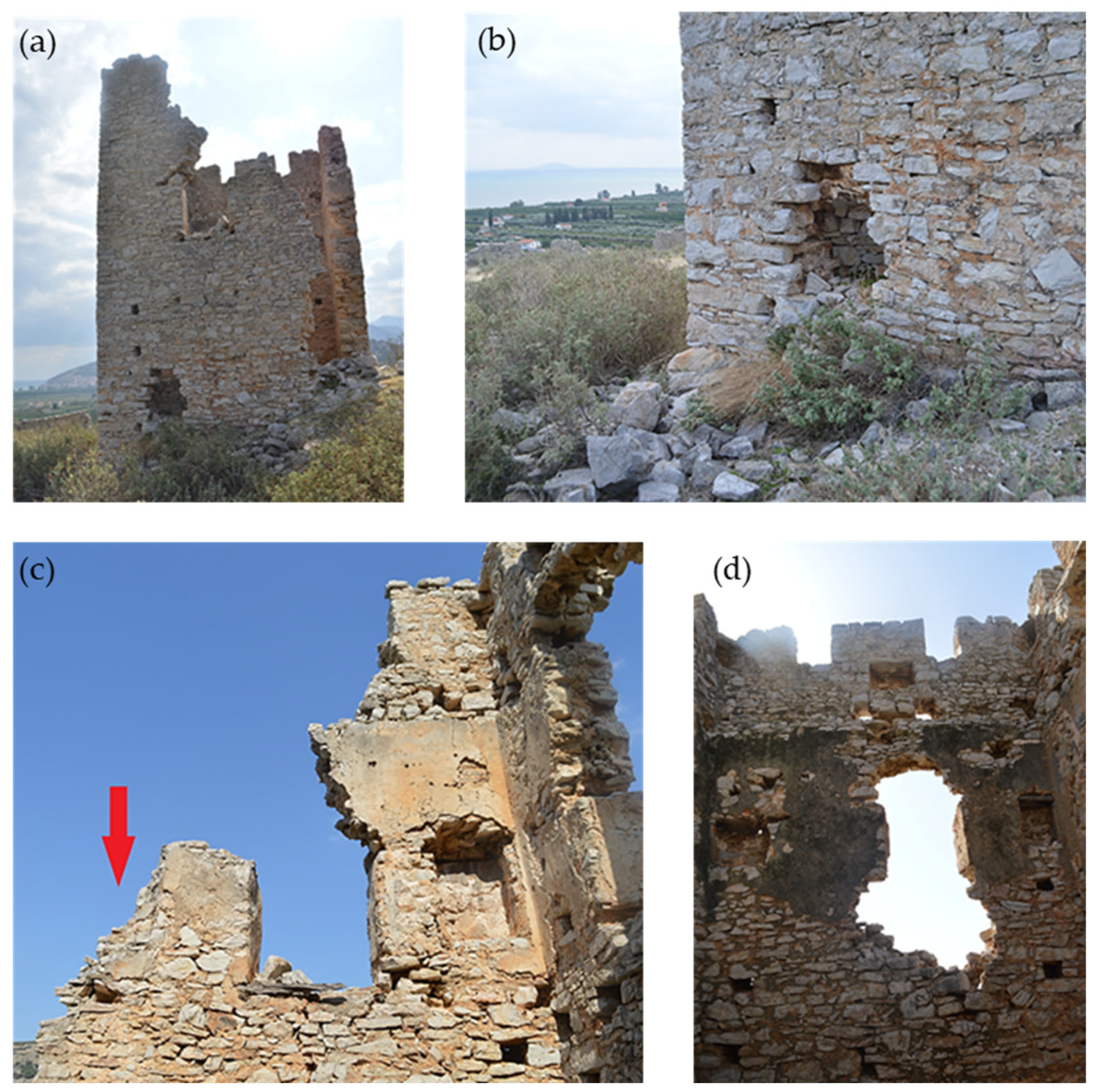
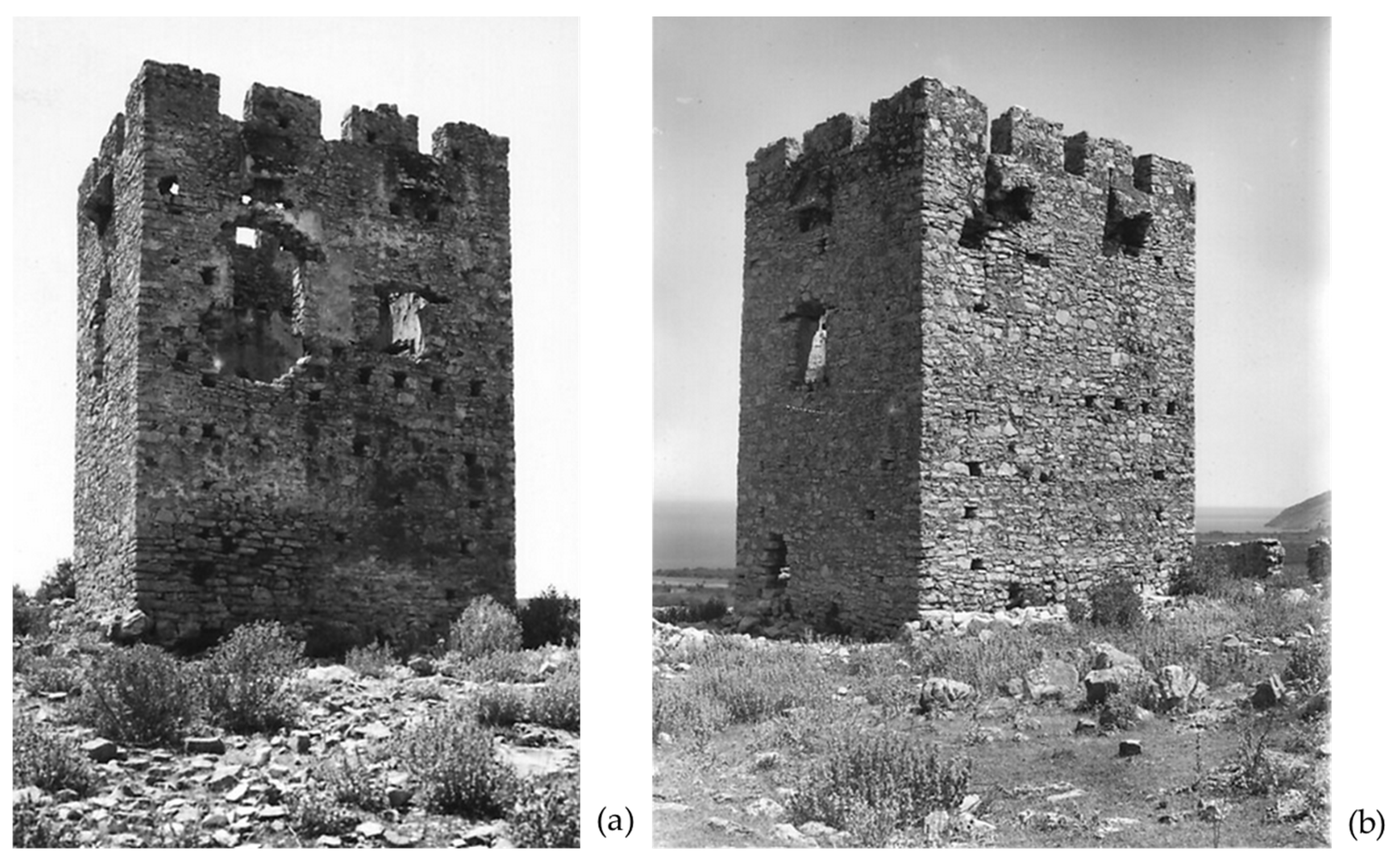
At the lower level of the towers, cisterns were usually formed, which were covered with vaults, the upper part of which exhibited a small opening for pumping water and providing access to the interior. Their inner surfaces were coated with suitable hydraulic mortar. Such spaces are preserved at the lower level of the south-eastern tower of Agionori Castle, in the tower of Paleopyrgos Levidi, in the tower of Madzouranogiannis of Karytaina, in Glyppia, and elsewhere [11,39,40] (Figure 2a). We do not know whether the tower of the current research had an underground tank at level A, as no traces of vaulting and visible coatings, necessary for the waterproofing of the interior surfaces, can be discerned. However, excavations are required to establish whether or not there was a cistern and, more generally, the use of the lower level. From the visibly preserved evidence, it is likely that this lower level was covered with timber flooring due to the presence of the recess created in the masonry between the two levels A and B, even though no beam slots are preserved in the peripheral walls. This recess, which is not wide enough for the floor beams, particularly on the western wall, is part of the initial construction phase of the tower and corresponds to the floor at level B, as we shall see below. The first two levels exhibited no openings for safety reasons and accommodated auxiliary uses (storage of water, supplies, etc.). The opening observed on the northern face of the first level (Figure 7a,b) was probably due to man-made causes, to accommodate the entrance to the interior of the tower before the collapse of its north-western corner. This collapse was documented by an old photograph discovered during the bibliographical research (old photographs in Woodhouse Photographic Archive of Nicholson Museum, now of Chau Chak Wing Museum at the University of Sydney, Australia) [41] (Figure 8a,b). It is unlikely to be an enlargement of an existing loophole, as only one and not four on the perimeter walls would constitute a complete defensive arrangement at that level; furthermore, openings at the lower levels for security reasons were not common. Level C housed living space indicated by the presence of elements that ensure adequate living conditions, such as the coating of plaster on the internal surfaces, cupboards in the thickness of the walls and, above all, openings on all four sides. Only the south jamb has survived from the west side opening, as the north-west corner of the tower has completely collapsed, while an old photograph from the Woodhouse Archive showing the north and west elevations indicates that the opening is blocked. Another element that suggests the use of the level as a dwelling is the traces of a hearth on the north side (Figure 7c,d). The upper level, D, comprises the roof, from which the defenders had access to the merlons.
According to McLeod, access to the interior was allowed through a doorway on the west side of the tower near its northern end, the exact location and level of which cannot be determined because of the collapse of the entire north-west corner of the tower [28]. This assumption is now proven to be incorrect, as the opening on the west side corresponds to a window and not to a doorway. The entrance door was located on the east side (Figure 9), where traces of two openings survive. From the surviving beam slots defining the level of the floor, the height of the jambs and the beam pockets indicating the wooden lintel, the southern one of the two openings is higher than the others and constituted the entrance door at level C of the tower. The elevated door opening ensured the independent operation of the tower and contributed to its effective defense.
Both the entrance to the interior and the vertical communication between the levels of the tower were achieved, for security and defense reasons, through mobile wooden ladders, which could be retracted and cut off access to the attackers. Communication between the interior levels was ensured by means of trapdoors. In the example of Agionori, the access doors of the south-western and south-eastern towers are 3.70 m and 3.20 m, respectively, higher than the ground level of the interior of the fortress [39]. In the tower under consideration, the doorway opens approximately 5.00 m above the natural ground level.

3.5. Description of Defense Structures and Defense Elements of the Tower

The tower, as mentioned, was located in the middle of a rectangular enclosure. Similar examples are found elsewhere, as in Arcadia, in the case of the tower at Paleopyrgos Levidi, which has an irregular dry-stone enclosure of great thickness (2.00 m), as well as in the tower at Kalpaki Orchomenos, where remains of enclosure foundations are found to its north and east [11] (Figure 1a).
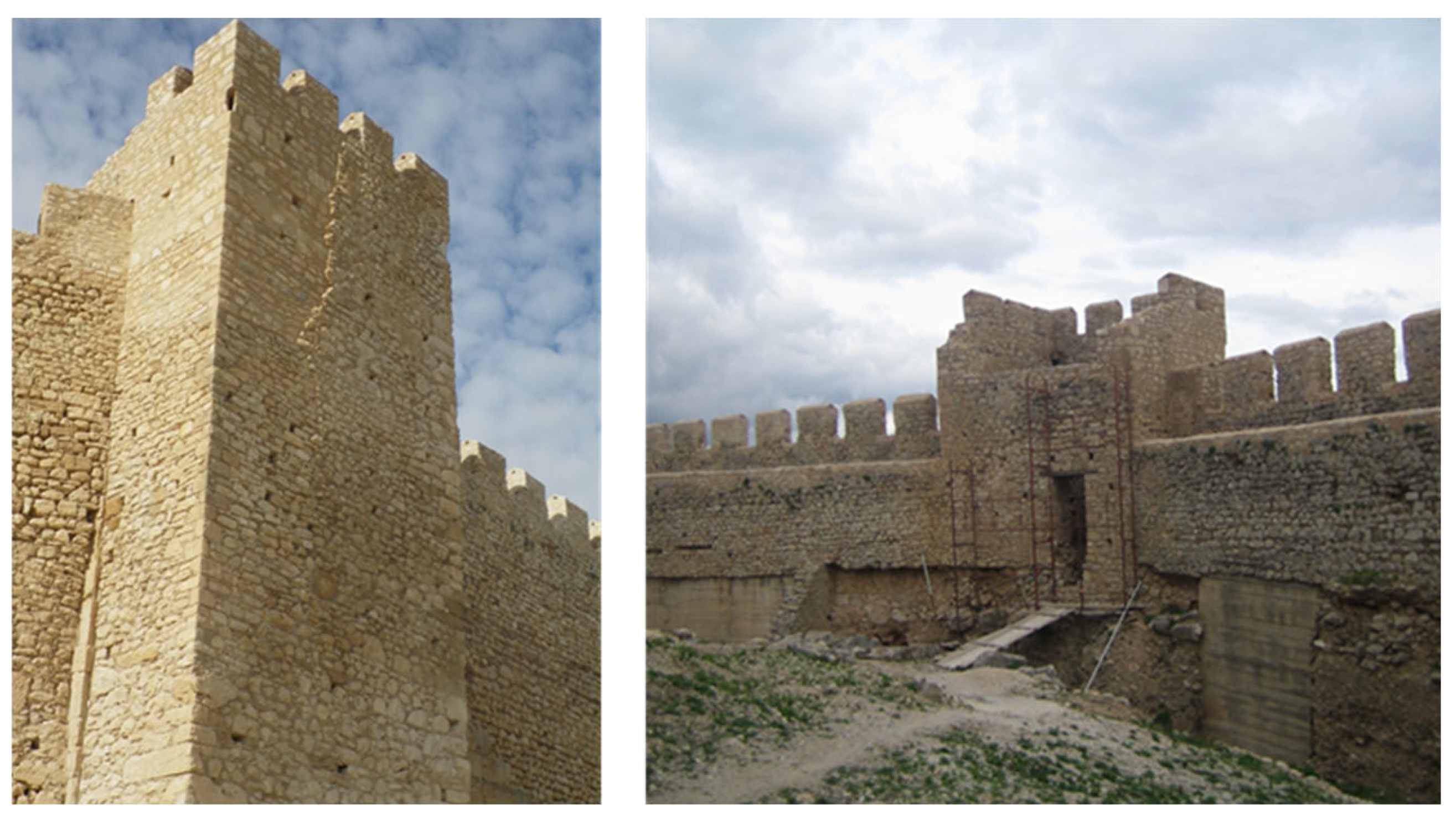
The tower’s enclosure (Figure 10a–d) shows an organized plan and does not have an irregular form, as in other examples, where it follows the terrain. The fortifications of the Peloponnese, during the Byzantine period and after the Crusader conquest (1204), generally followed the natural relief of the site. However, there were also examples which revealed design efforts, at least adapted to the location. The Frankish fortifications built according to the design are Chlemoutsi (Clermont), the citadels of Argos, Kiveri and Agionori Castles, which have a polygonal layout, and others [12] (Figure 1a).
The enclosure wall of the tower exhibits general dimensions of 20 × 60 m, a wall thickness of 55 and 60 cm and is developed in an east–west direction. The tower, which is placed approximately in the middle of the enclosure, is not parallel to its walls but has a slight displacement to the north. The enclosure would have a fully rectangular layout if it did not show the projections—indentations and various structures to the west and southwest, remnants of which still survive.
The complex layout of the western side of the enclosure, as well as the different, thicker walls, raises questions. Apparently, the south, east and north walls of the enclosure, 55 cm thick, which follow a regular rectangular arrangement, correspond to a different construction phase than the 60 cm thick wall of the west side, which possibly corresponds to various auxiliary structures. The original enclosure is likely to have been completed with a wall to the west, parallel to the corresponding wall to the east, and at some later stage its layout changed to include outbuildings, or the needs of the occupants for ancillary uses led to changes, additions or extensions of the enclosure on the west side, where space was available, while not obstructing the panoramic view of the plain and the road to the east. Thus, in the western part of the enclosure and in contact with it, as evidenced by the surviving traces—foundation walls—auxiliary buildings were constructed, which housed various storage areas or served the needs of animal stabling. Within the enclosure, wall foundations are also observed in the north-east corner, as well as north/north-east of the tower. In the first place, the large pile of stones does not allow us to draw firm conclusions, while in the second, a wall of “L” arrangement corresponds to a building. What is certain is that the outbuildings were located away from the tower for safety reasons.
The location of the enclosure gate cannot be determined, as clearing and excavation are required. It can be assumed that the entrance gate may be located on the north wall, north-west of the tower, because of the surviving traces outside the enclosure, such as low walls, parts of a cobblestone and carvings in the natural rock. These may comprise evidence of a path that led uphill and possibly also served to facilitate the communication between the tower and the neighbouring castle of Kiveri. Similar configurations can be observed inside the enclosure, where a low wall with a north/west–south/east direction leads to the tower, while parts of the cobblestone are preserved near it.
On the south wall of the enclosure, which is maintained at a higher height than the other sides, loopholes are formed for the needs of defense, which are fixed throughout the thickness of the wall, without any widening towards the interior. The height at which these slits are opened (measured heights of 0.90 m, 1.10 m and 1.15 m) cannot be determined precisely, as there is a pile of stones from the collapses of the superstructure at the base of this part of the southern wall of the enclosure. Similar slits are not observed in the eastern wall of the enclosure because of its low preserved height, but only two openings at the base, which may have served as the outflow for rainwater.
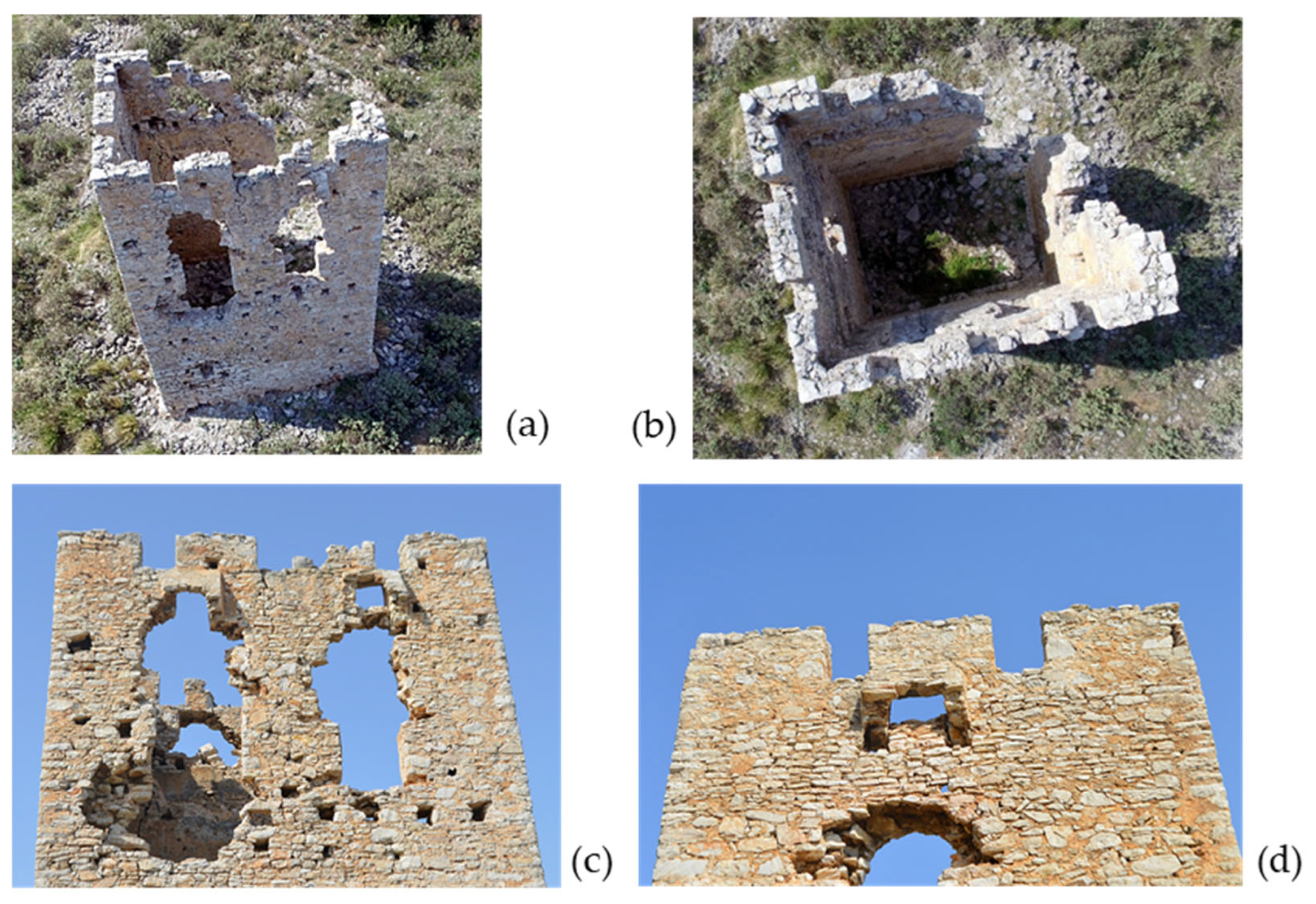
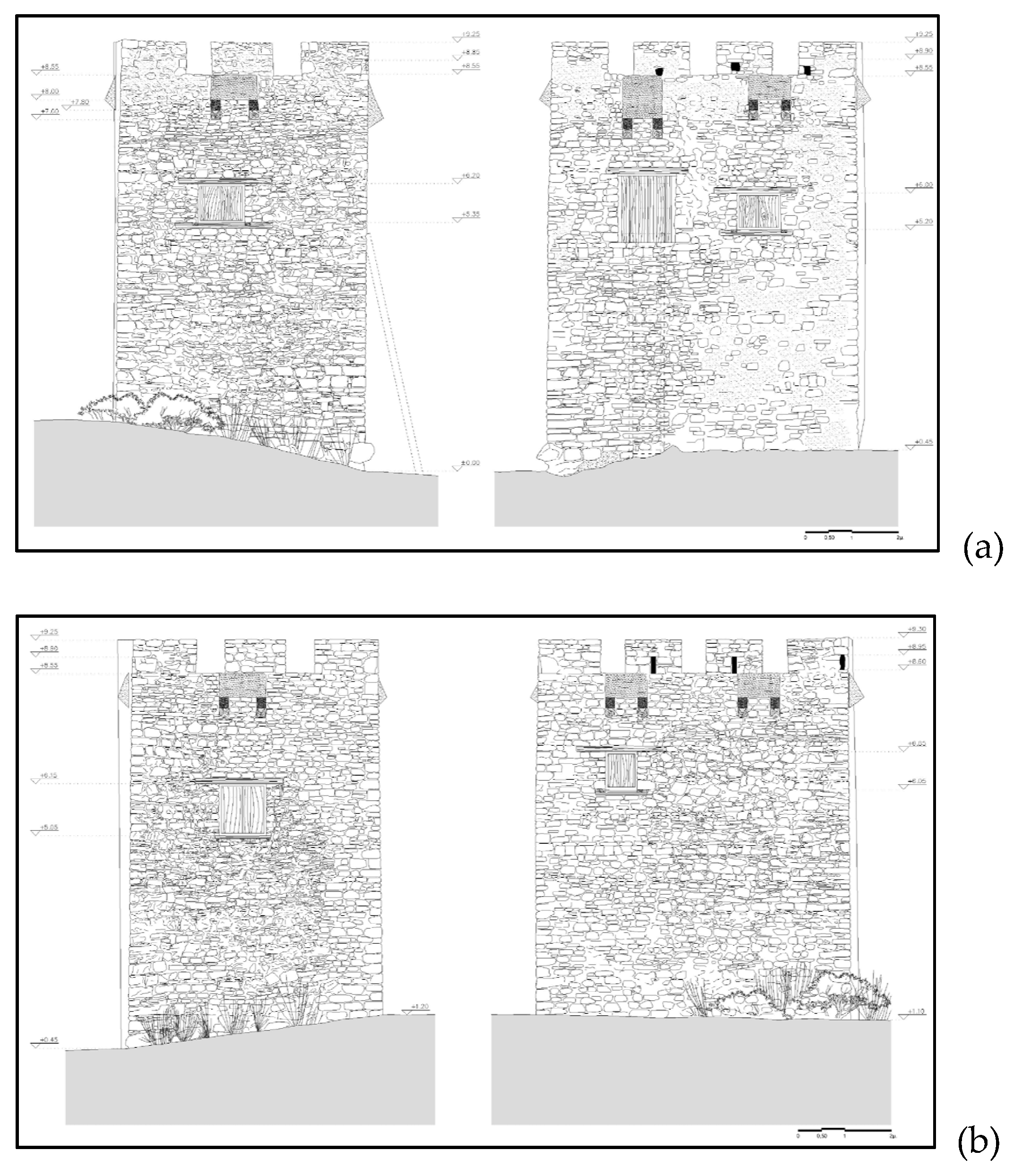
The tower had merlons on all four sides, which prevented the attacker from approaching, unlike in cases of towers integrated into the castle fortifications, as in the castle of Argos, whose inner face could not be crenellated but remained open. Thus, the tower has four merlons on the eastern and western sides and three on the northern and southern sides, of varying length (1.20–1.45 m), with an average width of 0.50 m, a height of 0.70 m and embrasures of approximately 0.55–0.65 m in length. They have a flat ending, unlike the neighbouring castle of Argos, in which the form is triangular and the embrasures were blocked with tilting wooden parapets. The corner merlons of the tower are treated as single ‘L’-shaped structures (Figure 11a–d).
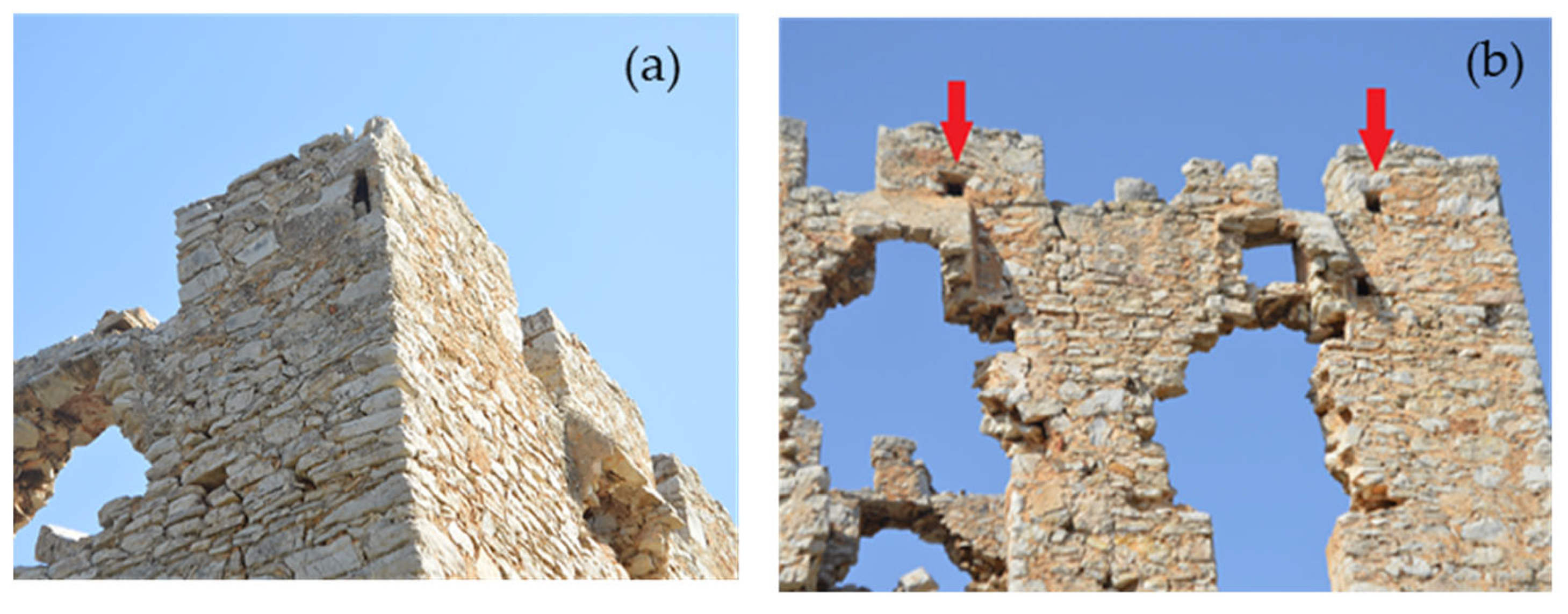
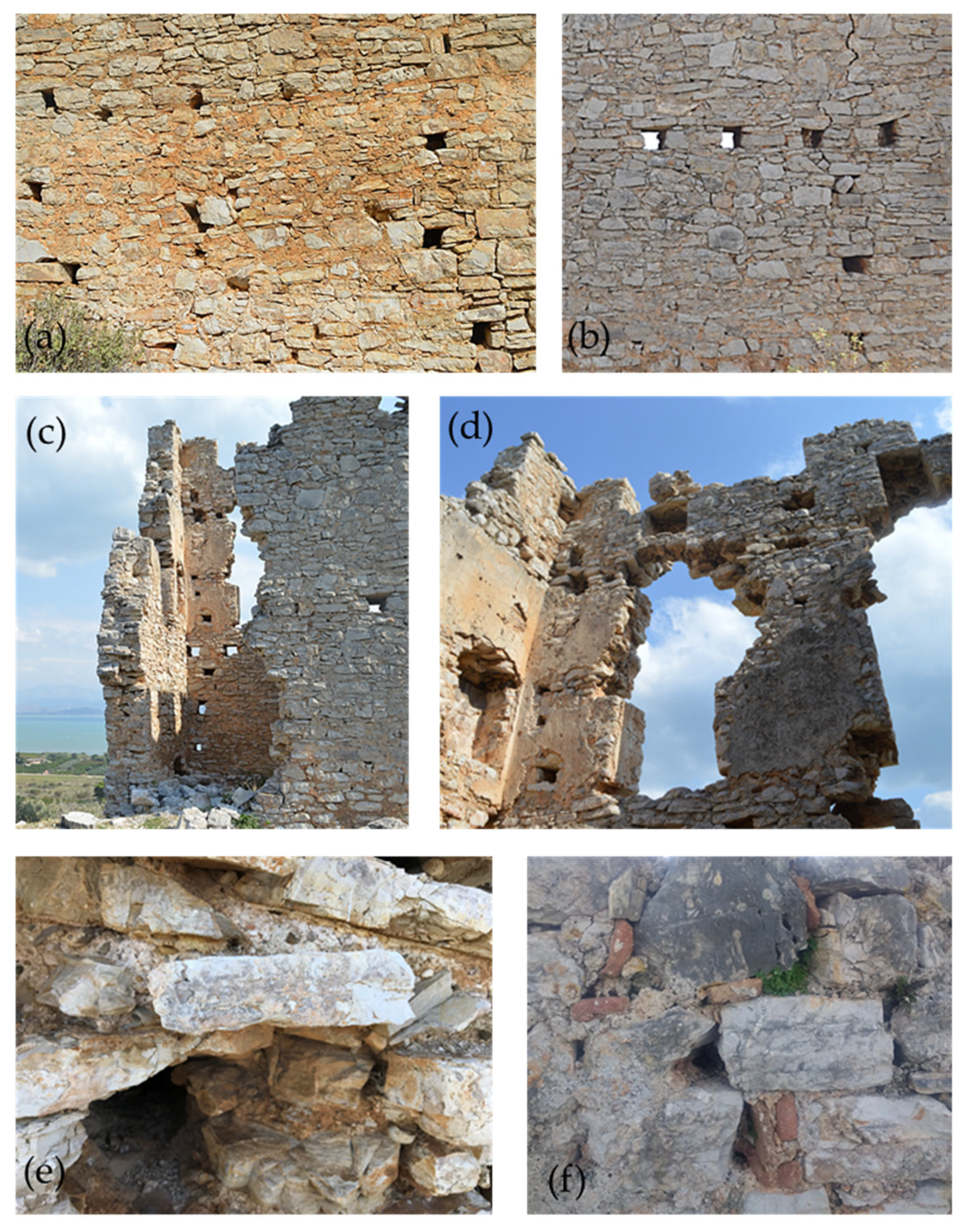
The aforementioned arrangement of the merlons creates four blind spots at the corners of the tower, which are covered by the formation at a lower level of four corner arrow slits/loopholes (Figure 12a), constructed near or at the edges of the walls. These slits are formed on the outside as rectangular openings of small width, which are widened towards the inside to facilitate the defender’s shots. The jambs of the external openings are formed either with masonry or with two vertically placed stones. The lintel of the opening is formed externally with a horizontally placed stone, and at the inner corners of the tower with a slab stone arranged diagonally. Similar defensive elements, of the same form, can be observed on the central rectangular tower of the eastern wall of the citadel in the castle of Argos [42].
Other elements of defense are small rectangular openings, the size of a beam slot, which open in the thickness of all the merlons of the eastern side, with the exception of the southern one (Figure 12b). From the old photographs in Woodhouse Archive, two small vertical arrow slits can be seen in both intermediate merlons of the west elevation. The openings of those slits were widened inwards to allow the defender to move freely. All the aforementioned loopholes were reached by the floor of the D level, from which the defender had access to them at a height of around 85 cm, approximately the same as the level of the parapet embrasures.
The absence of loopholes at other levels, for frontal fire, as observed in the towers of Agionori and Geraki castles [29,39] (Figure 1a), which are formed externally as small rectangular openings with a widening towards the interior to facilitate the movements of the defender, is impressive. Possibly, such a loophole was defined by the small rectangular opening near the southern jamb of the entrance door on the eastern side, which seems to have been shaped with such an inclination so as to cover and protect access to the interior of the tower.
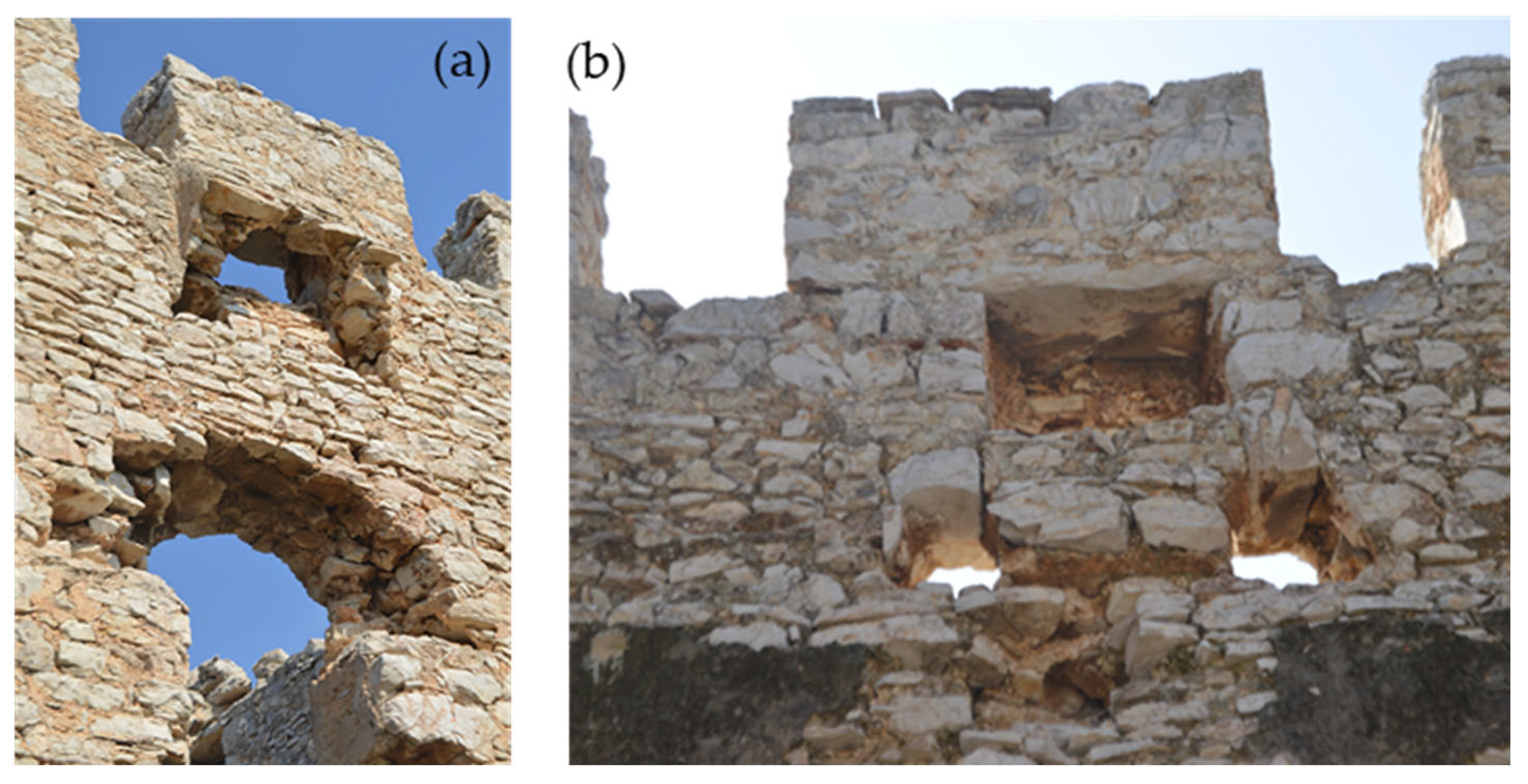
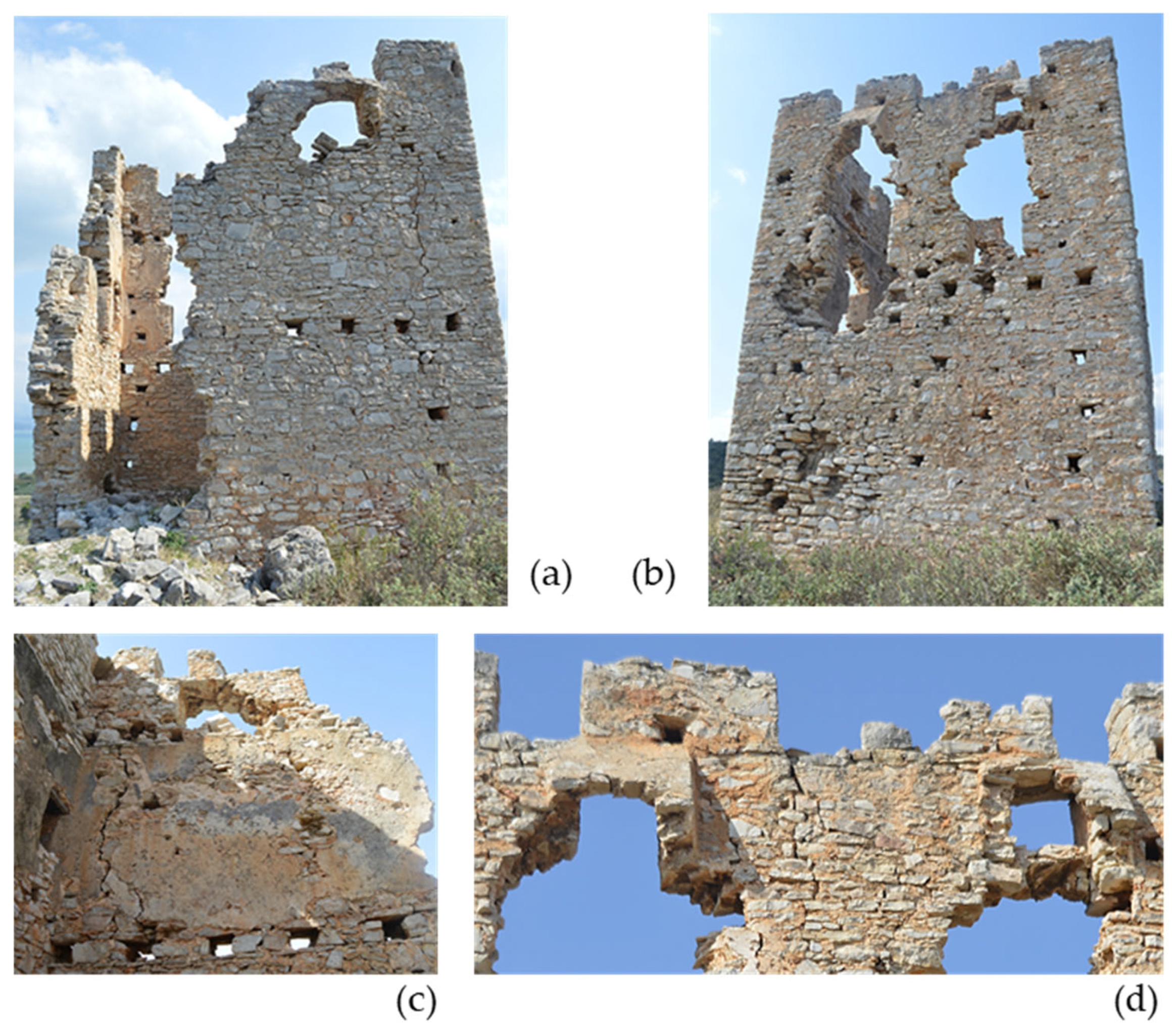
The reinforcement of the defense needs included machicolations, which served the vertical fire. These projections were placed in key locations, such as above entrances, and were supported by corbels, arches or buttresses. In the case of the tower in question, the machicolations covered the openings and the outer perimeter of the building in general and were formed at the level of the merlons. They are stone-built, triangular in section, with a gap both in their lower part and on their inner side, from which the defenders unleashed fire against the enemy (Figure 13a,b). On the east and west sides, their length measures up to 90 cm and they protrude by about 25 cm, while the one on the south side is 1.00 m long and has a 30 cm protrusion. The machicolation above the entrance door is 85 cm long, has a 35 cm protrusion and is located at a greater height than the ones on the windows. From the two holes, observed under the best-preserved structure on the south side and in all the others in the old photographic material, we conclude that two timber beams were placed throughout the thickness of the walls and held the overlying stones, which protruded gradually, projecting outwards. These stones formed the two lateral supports, and carried a horizontal slab, on which the triangular structure was gradually built, with an inclination towards the wall of the tower. The internal rectangular opening of the machicolations was formed about 40 cm above level D of the floor to about the base of the embrasures, and it was covered with a single slab stone. This opening was originally larger and extended to the floor, as shown by the construction joint, and was later reduced with masonry for safety reasons and further protection of the defenders. The outer surface of this filling masonry, which blocked the lower part of the opening, forms a corresponding inclination as that of the machicolation.
Nowadays, two survive on the eastern side, one on the southern side just above the openings, and one on the western side, which no longer corresponds to a window but probably covered one in an earlier phase. No traces of this opening can be seen even in the old photographic documents, and it is likely that much of the masonry on the west elevation had collapsed. Moreover, this is presumed from the way of building at this point without elaborate stones and joints, which suggests a hasty recovery of the masonry after damage caused to the tower. In addition, there were also machicolations above the surviving openings on the west and north elevations, which are no longer preserved due to collapses but are depicted in the old photographs found during documentation.
The existence of machicolations in the Peloponnesian fortifications is quite rare; however, they are found both in castles (Karytaina, Geraki) [29,40] and in individual towers (Koulentianos and Elaias Towers in the Malea Peninsula). With respect to these latter examples, it has been argued that they belong to the Post-Byzantine period (from 1453 onwards) [11] (Figure 1a).
In general, the tower follows the same principles as the central tower of the eastern wall of the Argos citadel (Figure 14) in terms of the configuration and organization of the defense elements, with minor differences such as the number of merlons, the existence of machicolations and elements to ensure adequate habitation conditions, etc. These differences arise from the distinct function of the two structures, the first being freestanding and independent, the second being part of composite fortifications.
The towers, as well as the fortifications, changed their form after modifications during the various historical phases (Frankish, Venetian and Ottoman periods) due to the urgent need to adapt them to new siege methods. From the middle of the 15th century onwards, they were modified mainly because of the major changes brought about by the use of firearms. This can be seen to a large extent in the neighbouring castle of Argos and elsewhere, where towers and walls were radically remodeled. The tower under consideration does not appear to have undergone any modifications to accommodate firearms. The presence of merlons on all four sides and the angled loopholes allowed the defenders to provide perimeter cover for both the tower and the area within the enclosure and present forms that correspond to earlier periods.

3.6. Description of Construction Materials

The tower is constructed with masonry of semi-carved limestone and grouting of lime mortar with coarse aggregates and small pebbles, with an earthy tint probably due to the addition of grated tile (Figure 15a,e). It is the same limestone from the neighbouring Pontinos Hill, which was also used in the construction of the castle of Kiveri. The mortar has been applied in such a way and quantity that it covers part of the surface of the stones, while smaller stones are often added to the joints. The use of tiles (Figure 15f) can be observed sporadically, for example, externally under the window on the south side and internally in the joints of the eastern masonry at the level of the parapets, above the two openings. Pieces of tile can also be found in the pile of stones in the base of the east façade of the tower, which have come from the upper parts of the masonry, now collapsed. Finally, no spolia have been used, which were usually incorporated into the façades of the masonry, as seen in other examples.
From the collapse of the north-west corner of the tower, one can observe the three-layered construction of the walls. That is to say, the masonry of the inner and outer sides and the filling of the empty space between them with small stones and mortar, also known as three-leaf masonry (Figure 15c). On large surfaces, as on the western façade, the partially mortar-coated stones and the configuration of both the horizontal and vertical joints, which have not been shaped according to the rules of stone construction (the joints are completely irregular), give the impression of rough work (Figure 15b). Exceptions are the carved cornerstones at the edges, the shaping and the jambs of the openings, the parapets, as well as the lower part of the south-eastern corner of the tower, where a more elaborate construction with larger and better-carved stones can be observed, while the joints are more correctly shaped both horizontally and vertically. In these elaborate sections of the east and south façade, there is a different composition of lime mortar in the joints compared to the predominant one, white in color with equally large aggregates, which indicates a different phase of construction (Figure 15e,f). Both in the section of the eastern façade, despite the great washing away of the mortar and the loss of stones, which has led to the revelation of the inner core of the masonry, and in the corresponding section of the southern façade, small squared stones are used in the horizontal and vertical joints instead of tiles. The same construction can be observed on the towers of the citadel in the neighbouring castle of Kiveri. The exceptions are some towers of the citadel, such as the north-western one, on the lower parts of which extensive pieces of tile have been used.
On the external façades of the tower, there are two horizontal zones, “friezes” of slab stones at levels C and D of the floors, possibly imposed for construction reasons by the need to flatten the walls at regular intervals due to the aforementioned rough construction of the stonework with irregular joints. Similar configurations can be observed in the towers of Kiveri Castle, as the slate nature of the stone used lends itself to the creation of thin slabs.
From observation of the thickness of the masonry in the north-west corner, where an extended collapse is observed, no traces of timbering could be discerned. In contrast, the system of timber reinforcement is clearly visible in the thickness of the wall high above the openings of the eastern inner side of the tower (Figure 15d). One of the two longitudinal wooden elements (joints) of the system runs invisibly through the eastern wall, parallel to its inner side (the second would be inside the wall, parallel to its outer side), while a transverse element connects them. Transverse elements are presumed to have been placed at regular intervals. The timber beams of the floor at level D were based on the wooden reinforcement of the building, completing the diaphragmatic function of the floor.
The floors of the towers were formed either with timber construction (as in the towers of Argos and Agionori Castles and in other Peloponnesian freestanding examples) [39,42] or with vaulting (as in the towers of Agionori, Glyppia and Monovyza Castle; the so-called Frankish donjon in the castle of Acrocorinth; the tower of Madzouranogiannis of Karytaina; or the towers Paleopyrgos Levidi and Dara in Arcadia, all examples of the Late-Byzantine period) [11,39,40,43,44,45] (Figure 1a). Small trapdoors provided access to the levels via removable wooden ladders.
In Princess Tower, the existence of vaults for the formation of the levels is not documented; only timber floors are present. According to Peppas [46], a timber construction formed the roof at level D of the tower, with a covering of mortar of about 0.40 m, as shown by the placement of small drainage holes in perimetric masonry. The final covering consisted of slabs placed on the mortar layering. The existence of the 40 cm thick coating over the timber floor and the stone slabs cannot be documented, as there are no traces of mortar along the internal side of the walls or other evidence. Holes that served as the drainage for rainwater are still preserved today (Figure 16a), such as the one observed in the southern part of the eastern side, above the opening of the entrance door of the tower. This particular hole is formed at the same height as the wall recess at level D, and preserves, within the thickness of the wall, a circular clay pipe with an outward inclination. Three additional holes, on the other sides of the tower, appear to have been opened, serving the same purpose and are placed at the same level as the aforementioned hole.
Regarding level C of the tower, where the entrance door was located, the floor was also made of main and secondary timber beams, perpendicular to each other, and wooden planks, as documented by the preserved beam slots of the western and eastern walls. These slots were originally blocked on their outer side, thus protecting the wooden elements. We assume that a similar timber floor construction existed at level B, at the recess created in the perimeter walls.
Concerning the openings of the tower at level C (Figure 16b), they were formed with jambs made of masonry, while the lintels and the window sills were wooden. This is indicated by the traces of the rectangular wooden elements in the preserved mortar and by the holes throughout the thickness of the walls. The wooden lintels remained visible on the external façades of the tower, in contrast to the eastern façade and the interior surfaces of the level, where plaster was applied.
Shallow beam pockets are formed on the outer face, about 1.00 m below the windows of the northern and southern sides (Figure 16c). This leads to the hypothesis that the system of the window sills protruded and formed balconies, while inclined beams supported the construction, based on the shallow holes. The possibility that these traces corresponded to roofed spaces located at the base of the tower should probably be excluded, as on both north and south sides the ground shows a steep slope to the east. In any case, these structures would have been built in a much later period, when security was assured and they were intended to meet the agricultural or livestock needs of the tower’s users.
The jambs and the threshold of the entrance door, which, as we have seen, corresponds to the southern opening of the eastern façade, are made of masonry, while the lintel is made of wooden elements placed horizontally in a row, as in the case of the windows. Despite the extensive collapse noted around the opening, the traces in the mortar of the external timber beam that formed the lintel can still be seen.
The existence of the wooden lintels of the openings leads to the conclusion that they were rectangular and not arched. This is also supported by the old photographs, taken in a period when the collapse was partial. The window frames should have been fitted with the outer face of the walls, as we can observe with the traces in the plaster across the width of the windows and the door jambs. This is further documented by the position of two holes in the thickness of the wall of the entrance, into which a horizontal wooden element, a locking bar behind the door, was placed. The report by Peppas [46] on the use of entire jambs made of single stones in the openings, which since have been detached, cannot be proved, as there are no evidence in the old photographs or among the piles of stones around the tower. It is possible that in the initial phase of the tower the openings were formed with stone pilasters, which were detached in a later phase, as we shall see below.
Inside the tower, in the thickness of the wall on level C, cupboards/niches were formed to cover storage needs (Figure 16d). The openings of these built-in cupboards were formed with a horizontal wooden lintel, as is evident from the surviving elements and from the preserved nests in the thickness of the wall. The surfaces of the cupboards were also plastered.
An interesting element is the existence of a niche, which probably corresponded to a hearth at the same level C, which housed a residence. The existence of a fireplace leads to the conclusion that the tower was not a summer residence of the local landlord but perhaps a permanent one. The niche was formed in the thickness of the north wall, west of the window, exhibited a curved form and was plastered, as were all the surfaces of the level. The earthy tint is due to the addition of ground tile in the synthesis of the plaster. Today, coatings can be observed on all four interior walls, with those on the north elevation and the northern part of the eastern wall being in better condition, while the other surfaces, which remain shaded for most of the day throughout the year, display a dark greyish tint due to moisture. On the plastered surfaces of the west wall, there are traces that indicate the use of a trowel during the application of the coating.
Another interesting element is the existence of coatings on the eastern external façade of the tower, as documented by old photographs, while coated parts are still preserved (above the entrance door, on the wall between the door and the window, as well as on the lintels and the jambs of the openings). This leads to the conclusion that the eastern façade of the tower, which was also the main façade, was plastered.
The enclosure of the tower is also constructed of roughly hewn limestone in a way that suggests a hasty construction, as in this case both horizontal and vertical joints are not properly formed, as is observed on the western and southern sides of the tower. The binding lime mortar is of the same composition as that of the tower and covers a large part of the stones of the façades. In the joints of the enclosure, pieces of tile have been incorporated, indicating the same date of construction as the corresponding parts of the tower’s masonry (e.g., above the openings on the internal eastern side, etc.), while smaller stones are also present. A special feature is the existence of a 40 cm widening at the base of the south wall of the enclosure, which probably corresponds to the foundation and requires excavation. Furthermore, in the places where collapses are observed and the thickness of the walls is visible, no traces of wooden reinforcement can be found, perhaps due to the low height of the enclosure.

4. Current Condition of Princess Tower—Pathology Diagnosis of the Structure

4.1. General Description

Although the tower is preserved in moderate condition, many of its elements have been largely preserved to bear testimony to the original design. Thus, elements of the upper level, such as the merlons, machicolations, etc., which are the most sensitive and among the first to deteriorate and be lost, are preserved to such an extent that one can gain a complete picture of the original form, construction and function of the tower.
The most pronounced problem, which is identified, is the collapse of the north-west corner of the tower, a fact which, in combination with the decay of the internal timber floors of the building, has led to the loss of the diaphragmatic function of the structure with an impact on its general stability. Furthermore, the deterioration of all timber floors rendered the tower inaccessible both to interested visitors and researchers, providing an obstacle for the organization of a maintenance intervention by the archaeological authorities.
Beyond the corner of the tower, collapse has progressed to the superstructure and crown of both the west and north elevations. Thus, on the west side, only the southern corner merlon and about half of the adjacent one are preserved, while on the north side, the collapse is more severe, so that only the eastern corner merlon is preserved. On the other sides, the parapets are preserved in good condition up to their crenellations, with the exception of the second merlon from the north on the eastern façade, the lower part of which is preserved, while another has tilted and is about to collapse.
In addition, on most of the external façades, cracks and loss of material (stones and mortar) are observed. On the eastern side, a vertical crack has formed in the masonry between the two openings, while low down in the southern part of the façade, where the most elaborate construction is found, there are local collapses resulting in the exposure of the inner core of the masonry. Furthermore, the entire south-eastern corner of the tower is characterized by the washing away of the mortar in the joints. The most severe cracking is on the western side, which is transverse and develops almost vertically. Finally, on the north elevation, cracking is observed under the west window sill.
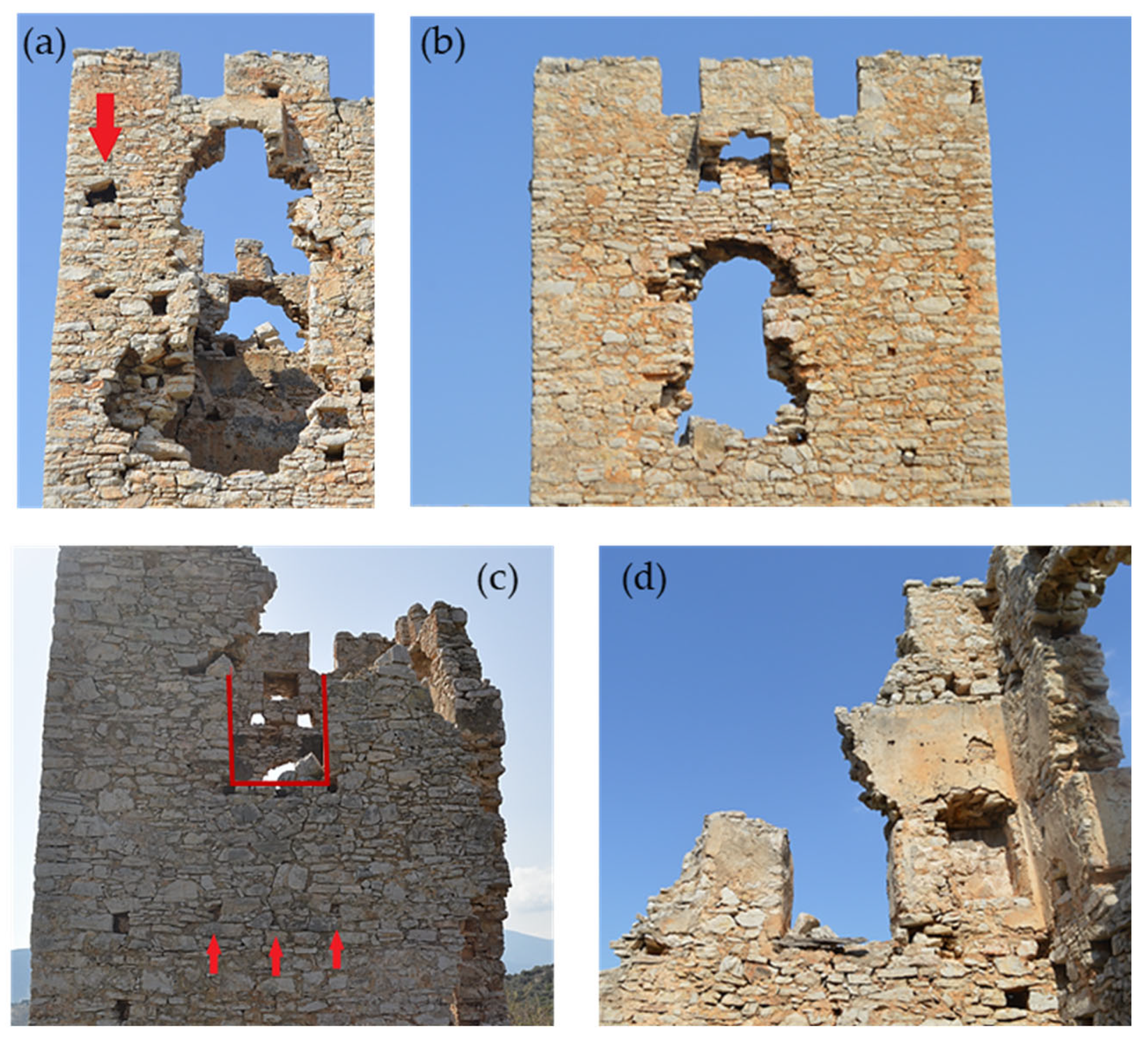
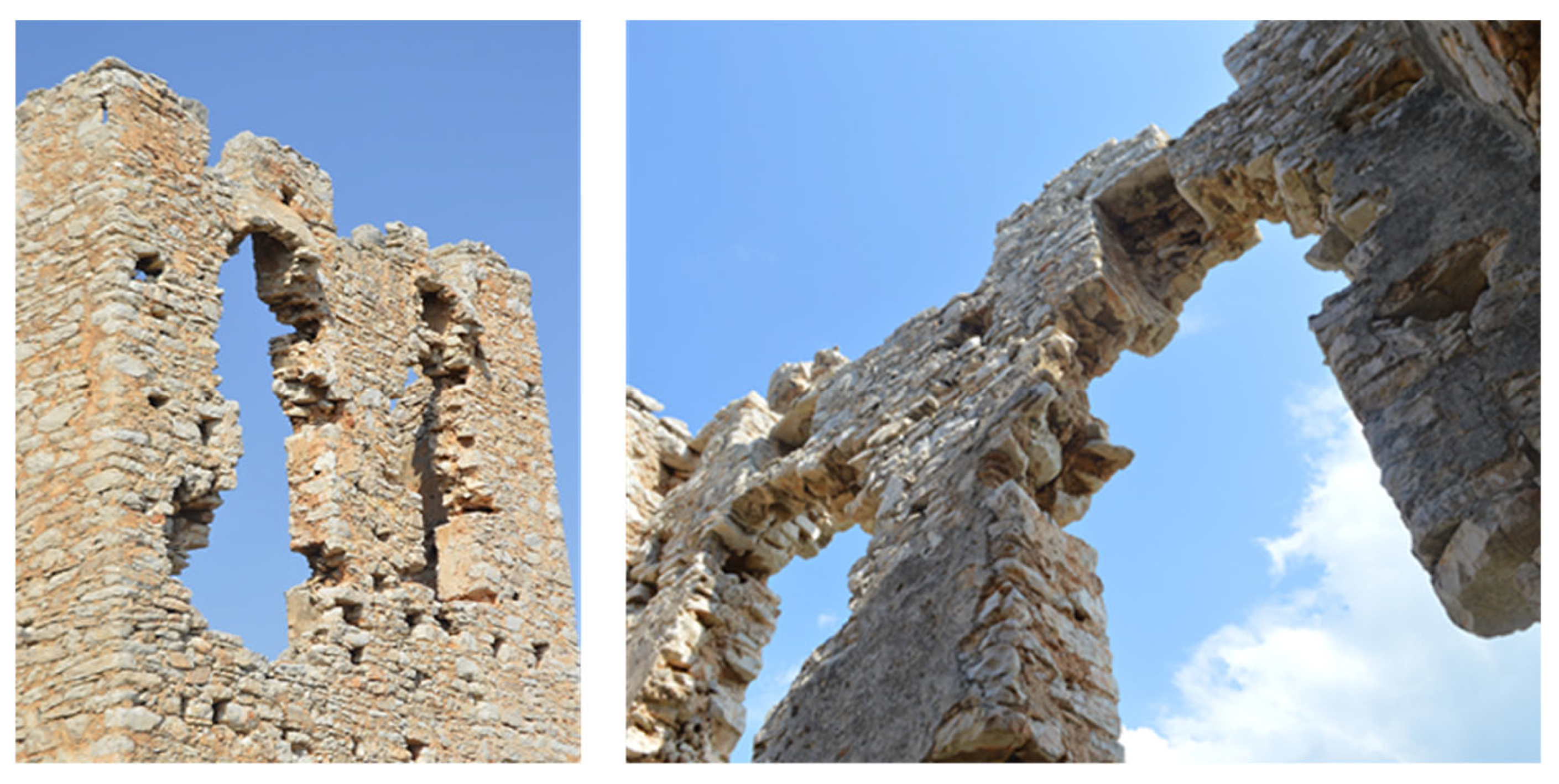
Completing the pathology of the monument on the exterior sides, the loss of the wooden elements of the door and windows has led to local collapses and the widening of the openings. The maintenance condition is also poor for the machicolations. In particular, the best-preserved is that of the south elevation, followed by those of the eastern façade. Lastly, the southern machicolation of the west side is preserved in poor condition, and the others on the same façade, as well as those on the northern one, have completely distinguished due to the collapse of the superstructure (Figure 17a–d).
Inside the tower, loss of material is observed, mainly of the timber/wooden elements of the construction (floors, lintels and sills of the windows, etc.), disorganization of the northern masonry due to cracks and local detachments of stones mainly under the window, detachments and cracks in the coatings of level C and moisture-related problems in the grouting. Finally, partial destruction of the wall of the tower low on the north side is observed at the point where the entrance to the interior was probably located, when the north-west corner was still preserved.
To date, no conservation work has been carried out on the monument, resulting in the risk of collapse of large parts of the tower, mainly the superstructure above the openings. There is an urgent need to shore up the monument in order to stabilize the existing situation, prevent further collapses and preserve its original elements until an initiative is taken to start the restoration and consolidation of this important monument.
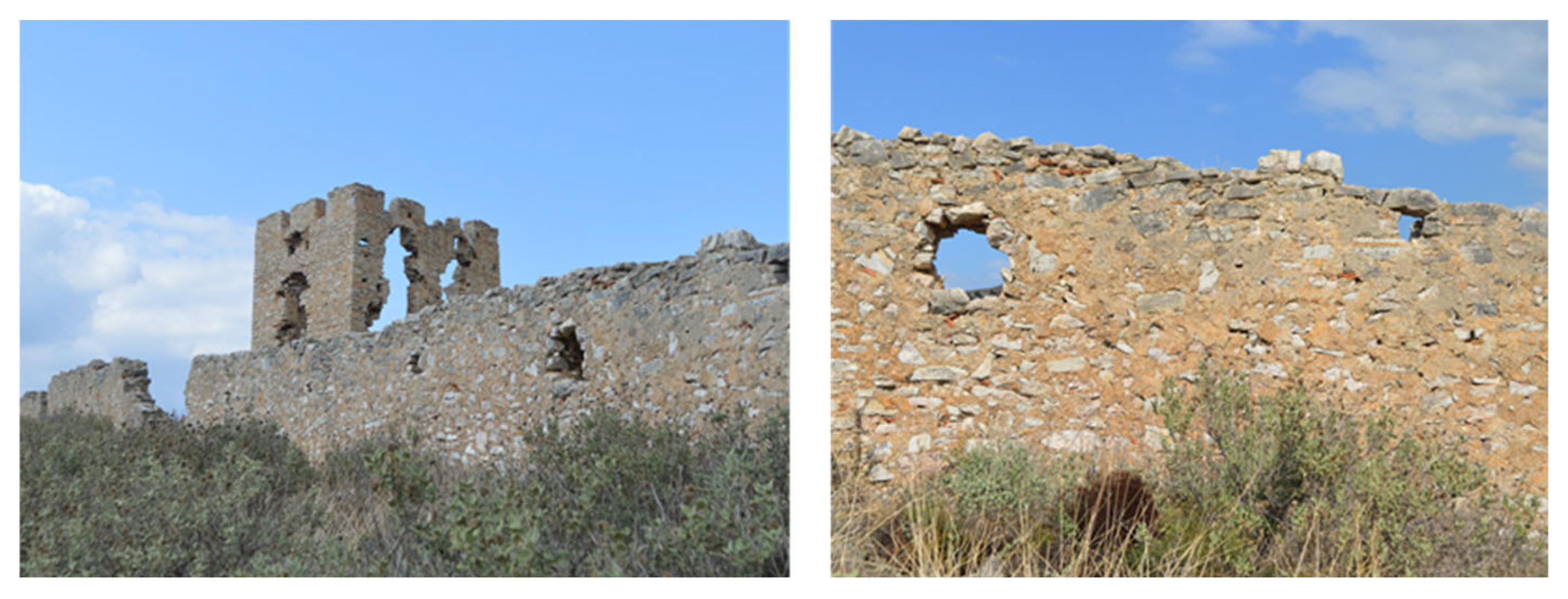
Finally, the enclosure of the tower is preserved in poor condition. The best-preserved parts are those of the eastern side, as well as the eastern part of the southern side, which survives at a satisfactory height of about 2.00–2.20 m (Figure 18). The remaining parts are damaged and only the lower courses still remain. The outbuildings of the settlement are in the same state of preservation, parts of the foundations of which are observed here and there, hardly legible among the piles of rubble and vegetation. Clearing and excavation are required in order to document the enclosure, to reveal its contours and to establish the position of the gateway and the annexes.

4.2. Discussion on the Recognition of Construction Phases

4.2.1. Introductory Elements

Examining the masonry of both the tower and the enclosure, one cannot draw any safe conclusions as to their dating, as the usual practice in all periods was the reuse or recycling of older building material, successive reconstructions and repairs and the use of similar building methods (roughly worked stones bonded with mortar and fragments of tiles, bricks or smaller stones) in all parts of the fortifications. Reproducing building methods makes the attribution to a particular conqueror or to an exact period problematic, while the form of a structure that may be considered obsolete and abandoned in one region could be preserved in another [47].
The collapse of the Byzantine Empire after the Fourth Crusade was followed by a subsequent alternation in the administration of the Peloponnese by various conquerors (Franks, Venetians, Ottomans, etc.). Additionally, the last recovery of the Byzantines with the Despotate of Mystras, the Late-Byzantine period, comprised a period of intense changes, transformations and processes, which is also reflected in the structures in such a way that it becomes difficult to recognize the historical phases of the constructions. At the same time, the building traditions of the Byzantines influenced the new conquerors, while the latter used predominantly local technicians and builders and the same available local building materials, which does not facilitate the differentiation of the building phases.
During the period of Frankish rule, the organization of the conquered territories was based on the feudal system. The crusaders occupied, in the majority of cases, sites in strategic natural spots that were already fortified, which became the base of the various local landlords, in order to serve defense and facilitate the supervision of the surrounding area [12]. For the construction of the fortifications, they mainly used the building material found in situ, usually hard limestone. In addition, stones from ancient structures were reused if they were preserved and available in the vicinity of the chosen site. The stones used are more or less carved, with the larger ones being placed at the base and edges of the structures, and the others forming the masonry. The binding mortar is quite strong, and pieces of brick are added to the joints. The Franks did not construct masonry with bricks to the same extent as the Byzantines, but they placed pieces of bricks in the joints without any regularity if they were available on site, or even small stones [29]. Even in cases where bricks are placed in horizontal rows, as, for example, at Chlemoutsi and Argos Castle (Figure 1a), they do not present the regularity and proportions of Middle-Byzantine masonry. Porous limestone, as an easily workable material, is mainly identified in the openings or in the vaultings. According to Bon, no wooden reinforcements are observed in the structures considered to be Frankish [29].
Subsequently, the turbulent period that followed, especially from the middle of the 13th century and during the 14th and 15th century, further complicated the situation in the Peloponnesian country with the frequent succession in dominance and the interaction between Byzantines, Franks, Venetians and Ottomans. The introduction and use of firearms, from the 15th century and thereafter, had a direct impact on the fortifications in terms of their general design and construction, so that they would meet the requirements of war technology and follow new developments. Despite this, the same building materials continued to be used, and variants of stone masonry are observed in numerous examples. There were no particular differences between Ottoman and Venetian structures concerning the main characteristics of the fortifications. On the other hand, unlike the Venetians, the Ottomans did not give priority to the construction of new fortifications; basically, they reconstructed or renewed existing fortifications [48].
Following the general observations, as discussed above, as well as the study of corresponding examples of the Late and Post-Byzantine periods preserved in the wider region, the identification of the construction phases of the monument and their dating is scrutinized below.

4.2.2. Discussion of the Identification of Construction Phases

According to McLeod [28], some researchers date the tower under examination to the Venetian period [49], and others even earlier to the Frankish period, but according to him, it dates to the Ottoman period, when those structures, called a “Kulas”, formed the base of a Sipahis (Ottoman horse-rider warrior) or an Agha. He describes it as an Ottoman diversionary project near the Venetian castle of Kiveri and adds that its small scale, simple design and thin walls make it unsuitable for a military installation in such a disadvantaged and exposed position. The Kulas were constructed in the more fertile areas of Greece, and they are mentioned by 19th century travelers, who often stayed in them as guests. The towers often exhibited a square plan, reaching up to a four-storey height. The entrance was formed by means of an externally built staircase and a drawbridge. The ground floor of the buildings, which did not communicate with the living quarters, was used for the stabling of domestic animals. Occasionally, neighbouring surviving antiquities provided useful building material [29].
When the Ottomans were driven out after the Greek War of Independence (1821), many of the towers were demolished. McLeod, in his description, referred to fortified dwellings/tower-houses, such as the examples in the villages of the Argolis region, Candia and Iria [50] (Figure 19a,b), and not to earlier towers, which had no built staircases or drawbridges and did not accommodate stables on the ground floor, as for safety reasons they had no openings at the lower levels. Ancillary uses (stables) were housed in adjacent outbuildings within an enclosure, as in the tower under consideration, while other secondary uses (storerooms, cisterns, etc.) were housed on the lower levels of the towers, with access to them only possible from the interior.
If one considers the defensive elements preserved in the tower, such as merlons, loopholes and machicolations, as well as the vulnerable position chosen for its construction, one must date it to the period before the use of firearms, i.e., before the mid-15th century, corresponding to the Late-Byzantine period (Frankish or later). In such a case, it coexisted with the neighbouring castle of Kiveri, which dates back to the Frankish rule [30] (Phase A) (Figure 20a–c). With its defensive elements and the warfare methods and weapons of the period, even without the existence of an outer enclosure, it could have withstood a possible attack for a long time, the only condition being the sufficiency of supplies (food, water and munitions). Moreover, the elaborate parts of the walls, particularly in the south-eastern corner of the tower, with their well-carved stones, the dense placement of smaller stones in the horizontal and vertical joints and the absence of tiles, are reminiscent of the walls of the towers in Kiveri Castle. Another example of the same period is the towers in Agionori Castle, which have similar construction features [39], with the exception of the pieces of bricks observed in the joints. This difference is probably due to the very nature of the slate limestone that was used in the construction of Kiveri Castle and Princess Tower, which allows the creation of slab-like thin pieces instead of bricks.
Moreover, in the lower part of some towers of the citadel of Kiveri Castle, such as the north-western one, there is extensive use of tile fragments, indicating an earlier construction phase. In the neighbouring castle of Agionori, the south-western and south-eastern towers predate the citadel enclosure, as the construction joints between the towers and the curtain wall show. In other words, they were built first on the vulnerable southern slope of the hill and were directly used as living quarters and storage areas. Later, they were incorporated and integrated into the fortification of the citadel [39].
A similar gradual fortification probably took place at Kiveri Castle, where the north-western tower, and possibly others existing at the top of the hill, were largely destroyed and later incorporated into the Frankish fortification plan, with the parallel recovery of its walls, preserving the earlier lower parts. In addition to the different construction method, the structural joints between the wall and the tower also contribute to the above hypothesis.
Apart from the elaborate masonry of the tower with the white-colored mortar, the original Phase A includes the recess in the masonry of the interior. It can be observed between the two lower levels, A and B, which no longer have sufficient width for the beams of the timber floor, while the slots that accommodated them are no longer visible. This recess corresponds to the floor of level B and fell into disuse in the next phase, when the beam slots were blocked and the rebuilding of the walls reduced the recess, particularly in the western wall, which, as we shall see below, exhibited the most significant damage. After the end of Phase A, the destroyed timber floor was most likely not reconstructed. What led to this conclusion is the fact that, due to the collapse, the first level was filled in, while the second level, B, was retained as an auxiliary space.
The elaborate parts of Phase A are probably what was preserved after the extended destruction of the tower during the Venetian–Turkish War of 1463–1479, which left the neighbouring castle of Kiveri in ruins. This was followed by the general reconstruction and adaptation of the fortifications of the region by the Ottomans, as observed in the castle of Larissa in Argos, with radical modifications and alterations. The central rectangular tower of the eastern wall of the acropolis of Argos, which has common elements of defense with the one under consideration, was raised, as was the curtain wall on either side of it, while at the same time the merlons of the previous phase were reproduced at a new, higher level [42]. In addition, the use of artillery weapons required the reconfiguration of the fortifications in order to adapt to the new conditions.
If the tower was in poor condition, the new rulers may have repaired it by preserving existing masonry and surviving defensive elements—either incorporating them into new construction or reconstructing/repairing them (merlons, corner loopholes, machicolations, etc.). This consists of Construction Phase B of the building history of the tower, which corresponds to the First Ottoman period (1460–1685). The urgent need to repair the tower, as well as its proximity to the Venetian base in Nafplio, may explain the hasty and crude construction observed on the façades, especially on the western one, with its irregular stones and joints, a quick intervention that reduced the recess of the walls at level B and even removed the southern one of the two window openings that originally existed there, which corresponded to the two machicolations. Due to the extensive collapse of the masonry, this opening was not preserved, unlike the northern one, and was not reproduced during the restoration of the masonry. Similar rough construction is also observed on either side of the opening on the south side, as already mentioned.
In addition, on both the eastern and southern sides, approximately 1.00 m below the floor at level C, a course of dressed stones is present, which seems to have belonged to Phase A with the elaborate masonry but was reused and placed in this position during the repair work of Phase B. After the introduction of artillery guns, it is likely that the solution chosen for the defensive reinforcement of the tower was the construction of the enclosure, which was equipped with loopholes or other elements of defense that do not survive, in order to prevent the approach of the enemy, especially on the western, easily accessible side of the hill. This is also indicated by the way in which the east and south sides of the enclosure were built, which resembles the rough masonry (west and south sides), while contradicting the more elaborate masonry of the first phase of the tower.
In a third construction phase, Phase C (Figure 21a–d), the remodeling of window openings took place, with the openings enlarged to improve living conditions, and also the addition of wooden balconies or ancillary spaces on the exterior southern and northern façades. This phase corresponds to a period during which conditions of security and peaceful living prevailed. This is also suggested by the formation of the windows, with the wooden lintels and sills extending beyond the openings on the façades, as well as the balconies with buttresses that were probably constructed on the north and south sidess, which recall the much later construction details of the so-called Greek traditional architecture.
Similarly, large openings are observed on the second floor of the fortified residence of Candia in Argolis, which dates to between the end of the 17th century and the beginning of the second Ottoman period (1715) [48,50]. In this example, the windows’ lintels and sills are formed by prominent horizontal wooden elements, which run the entire length of the façades and, together with the vertical ones, form the system of wooden reinforcement of the structure. In addition, there are other common elements, such as the construction of the lintels with horizontal wooden elements placed in a row covering the entire masonry width, the plastered jambs of the openings, the built-in cupboards and the circular niche, which corresponds to the existence of a fireplace [40]. Considering the above similarities, Phase C of the examined tower possibly corresponds to the Candia construction period, if not later. A hearth is also observed in earlier-dated examples, such as in the tower of Madzouranogiannis of Karytaina [40], on the western side of the interior of the level that housed the residential spaces, which covered the daily needs of the inhabitants.
During Phases A and B, due to the conditions of insecurity that prevailed, the tower had windows of limited opening, as we observe in other examples, in the towers of Argos, Agionori, Ag. Vasileios [29,33,39,42] and Geraki castles [29], and elsewhere (Figure 1a). These windows were estimated to have an opening of up to 30 cm, based on the dimensions of each machicolation, and were completely covered by them. It is possible that the openings were formed externally with stone frames and were widened towards the interior.
In Phase C, the openings are widened to provide better living conditions, losing meanwhile the correspondence with the machicolations that were formed higher above. During the reformations, some of the jambs of the original openings were preserved in their exact position, and others were displaced, so as to reduce the work required. As can be observed in the north window, both jambs are displaced in relation to the machicolation, or in the doorway opening, which was probably widened only to the north.
The coatings of the tower, which also covered the eastern façade, as well as the way they were applied, which left the stones partially visible and traces made by the trowel, remind us of corresponding elaborations in the towers of Argos castle. Such elaborations include the large circular donjon and others near the main gate that must be attributed to Ottoman works and interventions [51].
It should be noted that all drawings of the façades represent the exact stone-by-stone construction of the tower. However, the two distinct construction techniques (a more carefully and a more roughly executed one) following the two distinct construction phases (A and B) observed in the masonry of the tower are not entirely distinguishable, partly due to the applied plasters, which are still preserved. Lastly, the rougher masonry is mainly identified on the western façade and extends across its entire surface.
To summarize, following the preceding analysis, three construction phases can be distinguished:
Construction Phase A (Late-Byzantine period, 13th–15th century)
Most elaborated masonry
Small openings with stone frames and enlargement towards the interior
Four levels (A, B, C and D)
Construction Phase B (First Ottoman period, 1460–1685)
Retention of the majority of the elements of the previous phase
Repair/reconstruction of masonry in a rough manner (e.g., west side, on both sides of the south side opening, etc.)
Three levels (B, C and D), with cancellation of level A due to the filling
Retention of the openings (with the exception of the southern one on the west side)
Addition of external enclosure
Construction Phase C (Second Ottoman period, 1715–1821)
Widening of the openings
Possible aconstruction of wooden balconies/ancillary spaces (?)
Coating on the eastern façade

5. Restoration Proposal for the Structure

5.1. General Requirements

The restoration of Princess Tower aims to preserve the monument and enrich the cultural heritage of the Argolis region by creating an additional landmark, which, through the works presented in this study, will become fully accessible to visitors. In addition to its historical, archaeological, architectural and educational value, it is located in an excellent position from which one has a panoramic view and visual contact with other important points of interest in the area, such as the fortified sites at Kiveri, Acronaufplia, Palamidi, etc.
The monument can serve as a visiting reference point, fully accessible to the visitor, who would have the opportunity to experience the organization of one of the best-preserved towers of the region. The tower’s new function will serve as an information center dedicated to the region’s history, the tower’s own architecture, and the restoration works to be conducted. The spaces that could be used to accommodate the proposed exhibition include all levels, even that of the roof. In addition, as part of the restoration of the tower, all levels of Phase A are being reconstructed and highlighted. On the last level, D, signs can be placed to show the points of interest in the area, and a panoramic viewing installation could possibly be placed together with a telescope. The exhibition equipment of the tower (choice of materials, ways of hanging panels, etc.) is not the subject of this research project but should be resistant to environmental conditions.
Access to the interior of the tower is proposed to be provided by a new external metal staircase, leading to the entrance door of level C, which meets all modern standards and requirements for the service and safety of visitors. Emphasis has been placed on the comfortable movement of users, ensuring the minimum required anthropometric standards (tread, tread height, landing, smooth climbing line, etc.). The solution of a linear staircase with one part without a landing was not chosen, as in the two towers of the Agionori Castle, although this solution fully resembles and corresponds to the original steep access via a wooden ladder. A linear staircase would project out of the main eastern façade, which is the most visible, and would also be dangerous, as in the case of the examined tower, the height of the entrance reaches 5.00 m from the ground, while in the example of Agionori, the corresponding heights of the towers’ entrances are 3.20 m and 3.70 m.
Thus, the solution of comfortable and safe access was chosen: a metal staircase of “L” layout, which is a modern intervention fully discrete, consisting of a reversible feature, as it can be dismantled without impact on the monument. The visitor is led through it to level C, which comprises the main core of the tower, the residential space, from where there is an unobstructed and panoramic view of the wider area. From this floor, access to the other levels would be carried out via wooden linear staircases with no intermediate landings. This solution gives the visitor an idea of the original movement and circulation inside the tower, referring to the wooden retractable staircases, emphasizing its defensive character and the difficulty of access (Figure 22).

5.2. Suggested Restoration Works

The proposed interventions to the monument are, for the most part, reversible and distinguishable from the original parts of the structure. However, the reconstruction of the north-western corner of the tower, deemed necessary both for restoring its structural adequacy and for the reuse of the monument, may be considered non-reversible. Nevertheless, the location of these consolidation works, which remains invisible to most of the visitors, the material to be used—originating from the monument itself—and the benefits resulting from the intervention limit, if not minimize, any potential negative implications.
Before work begins, provision should be made to shore up the monument and remove the danger of certain crumbling parts of the tower in order to ensure the safety of the working personnel. The points to which particular attention should be paid are, for example, the openings above which the masonry is about to collapse, the lintels, the part of the second merlon from the north of the eastern façade, which is sloping, etc.
It is then necessary to carefully remove the stones that are lying on the ground both inside and around the tower and store them carefully near the tower so that they can be reused in the recovery operations. Subsequently, the fillings should be removed from the interior of the tower up to level A. Following the necessary excavation work to fully expose the lower part of the north-west corner and the entire height of the tower’s first level, the original covering method and flooring material (such as stone slabs) will be documented. Based on this evidence from excavation and cleaning, we propose restoring the floor to its original form (Figure 23a–d).
The north-west corner of the tower is proposed to be completely reconstructed primarily for the structural strengthening of the building. As part of the completions to secure the corner of the tower, which had collapsed, it is proposed to install three vertical reinforced concrete tie systems to connect the new walls to the maintained sections. These three elements are planned to be built invisibly at the height of the tower’s floors, at levels B, C and D. The new masonry is proposed to be formed with a small recess in relation to the original parts of the structure in order to be discernible at close range. At the same time, due to the reuse of the stones found in situ, the new interventions are smoothly integrated and consistent with the original ones, giving homogeneity to the whole structure.
In addition, recoveries are proposed locally, at the collapsed parts around the openings. The geometry of the openings is restored in accordance with the preceding documentation, with new masonry, and with the reconstruction of the lintels, sills, and threshold of the entrance door. The proposal would restore the tower openings as they were formed during the final Phase C, as this is the form in which they remain today.
The restoration of the merlons of the tower (geometric characteristics, relation between merlons and crenels, etc.) was based on the remaining traces, as well as on old photographic documentary material, in which they were depicted intact on all four sides. The geometric features of the two closest preserved ones, i.e., the northeastern and south-western merlons, will be used for the reconstruction of the north-western one. For the intermediate battlements on the west and north sides that are not preserved, data will be taken from the surviving parapets on the opposite sides. Thus, the two intermediate merlons on the west side will be constructed with a length of 1.20 m exactly like their counterparts on the east side, while the one on the north façade will be constructed with a length of 1.30 m exactly like that on the south side. During the reconstruction of the west façade’s corner and intermediate merlons, all the slits will be restored, and the preserved ones will be conserved, as well as those of the eastern façade, in accordance and in line with the preserved documents.
In order to increase the cohesion of the tower’s masonry, the cracks observed both internally and externally are to be sealed, and new grout is to be applied where the original has been washed away or disintegrated, after cleaning and washing the joints. The composition and color are to be chosen following analysis of the two historic grouts. New white grouts will be applied to the lower parts of the east and south faces and other earthy grouts to the remaining surfaces of the monument.
A chemical and mineralogical analysis is also proposed to be carried out to determine the composition of the coatings of the internal surfaces, while their restoration will be carried out by a specialized team of conservation technicians. After cleaning the surfaces of the loose coatings, an attempt will be made to stabilize the original material, and local additions will be applied with new ones. Coatings are proposed in the interior of level C and also on the machicolations. The eastern façade of the tower is proposed to be left uncoated, while the surviving coatings will be preserved.
In order to strengthen the monument and to ensure and restore its diaphragmatic function, it is proposed to reconstruct the floors at the levels that emerged during the documentation. The timber floors of levels B, C and D are rebuilt with new wooden elements, namely eight main timber beams, 20 × 20 cm in cross-section, with nine secondary timber beams, 7 × 7 cm, and floorboards, 5 cm thick. The main floor beams of levels C and D are placed in the existing beam slots, while to support the floor of level B, new slots are opened in the east and west masonry.
For the tower’s machicolations, restoration is proposed using locally sourced materials where original elements are preserved, and new construction where damage has occurred, consistent with the documentation followed. New timber beams will be placed within the thickness of the masonry at the bottom of each structure, where two beam pockets in the masonry are observed, in which the two side supports will be placed. These supports will be crafted from stones shaped to protrude gradually, supporting a slab-like stone from which the machicolation roof construction will begin, sloping inward. The internal parapet openings will be restored, with their lower sections bounded by stonework matching the form and slope of the preserved examples on the south elevation. A construction joint will be formed between the new masonry and the initial openings.
The new frames proposed for the tower’s openings are simple wooden nailed frames. Windows will feature double-leaf shutters without glazing, while the entrance will have a single-leaf door constructed from vertical boards.
The newly proposed ascending ladders cannot be mobile or retractable. During tower operation—and particularly in the event of an attack—they must remain fixed to prevent enemies from advancing to the upper levels. The external ladder, constructed of metal in an “L” configuration, is positioned 20 cm from the tower’s outer walls. It comprises three sections—two on the east elevation and one on the north—with seven steps each, separated by intermediate landings. The ladder begins on the north façade, then bends 90° toward the east façade to reach Level C and the entrance door. It is built using two UPN 160 metal beams supporting wooden steps. Structural support is provided by: (i) a reinforced concrete pad at the base, (ii) a Φ150 metal column at the first landing, and (iii) two UPN 160 beams embedded in the masonry and braced by buttresses at the entrance door level. The landing platform features a metal frame formed by perimeter UPN 160 beams and crosswise UPN 140 beams, founded on a reinforced concrete base.
The stair railing was designed to be unobtrusive while ensuring user safety. It consists of 90 cm high posts made from 4 × 0.5 cm steel plates, supporting an upper handrail plate and two rows of Φ5 stainless-steel wire rope. The posts are secured to the side metal beams via 6.5 × 6.5 cm plates. If the staircase is positioned closer to the tower, the inner-side safety parapet can be omitted. For internal circulation between the tower’s levels, constructing wooden staircases is proposed. From Level C—the main entry point—visitors can ascend to the D battlements level or descend to Levels B and A below. Exploring the tower’s interior levels offers insight into its original function, including residential spaces, secondary storage rooms, and defensive strategies during times of danger. The maximum number of simultaneous visitors must be strictly limited, as no dedicated emergency exit is provided. From the upper level, visitors enjoy a panoramic view encompassing key regional landmarks, including the castles of Kiveri, Akronafplia, and Palamidi, as well as the Lerna archaeological site.
The tower’s internal staircases are constructed of wood in a fixed configuration, featuring geometric elements that replicate their original form (steep ascent, limited width, etc.). This design enables visitors to experience and understand both the tower’s function and the challenges of accessing it. The steps consist of 5 cm thick wooden planks supported by two 6.5 × 22 cm wooden stringers. For visitor safety, a simple railing system is installed, comprising 6.5 × 6.5 cm wooden posts, a wooden handrail, and infill that also secures the gaps between floors. All materials (metal and wood) incorporated into the restoration project must comply with applicable technical specifications and meet minimum requirements for resistance to local environmental conditions to ensure maximum durability. Metal elements shall receive appropriate anti-corrosion protection and finish coatings, forming an integrated system for surface protection and coloration.
Similarly, for the wooden elements, the choice of the type of wood and the suitable elaboration will be based on resistance to environmental conditions and durability, as well as on the protection of insect infestation. After the cleaning and preparation of the surfaces, the intermediate and final coatings will be applied, while the wooden elements that penetrate the interior of the stone walls will be provided with appropriate coatings.
In summary, the proposed interventions include:
Reconstruction of the north-western corner of the tower
Reconstruction of the timber floors
Construction of new proposed ascending internal and external ladders
Restoration of the geometry of the openings, the merlons and the machicolations of the tower
Installation of new double-leaf opening window shutters
Sealing of the cracks appearing on the masonry
Application of new grouts and conservation of the remaining coatings
Conservation of the enclosure of the tower
All the proposed interventions in the context of restoration and conservation are grounded in the fundamental principles outlined in the Venice Charter for the Conservation and Restoration of Monuments and Sites. The present study constitutes an interdisciplinary approach to the monument, involving Architects, Civil Engineers, Archaeologists, and Surveyors, in accordance with Article 2 of the Venice Charter. The proposed intervention aims at the restitution and reuse of the monument by the local community, while simultaneously ensuring continuous care and maintenance, in line with the provisions of Articles 4 and 5. The study’s proposals were developed following thorough documentation and analysis of the monument, and the proposed restoration works are characterized by respect for all observed construction phases and for the authenticity of the structure. At the same time, the interventions are limited to those strictly necessary and reversible and are discernible only upon close inspection (e.g., the proposed reconstruction at the north-western corner, set back from the original fabric), in order to ensure the structural stability of the building and its aesthetic coherence, with the ultimate goal of highlighting the monument’s broader historical and aesthetic values, in accordance with Articles 9, 11, 12, and 16 of the Venice Charter [52].
Lastly, it should be noted that all main drawings supporting the current condition and restoration proposal are presented in exactly the same manner that will be expected to be submitted to and accepted by the highest authority in Greece that advises the Minister of Culture about all matters pertaining to the country’s cultural heritage: the Central Archeological Council [53,54].

6. Conclusions

In this research project, one of the best-preserved towers of Argolis was studied, which, with the proposed interventions, can be given to the public as a visitable place, considering that other monuments in the region have collapsed or are preserved in poor condition [55]. The Princess Tower, a monument with all its construction phases, modifications and alterations that have been recorded, is evidence of its continuous use throughout the centuries, as each ruler of the region left their own traces, while the construction was always in harmony with the needs and requirements of each period. Visitors will be able to enrich their experience in a didactic and educational way during their visit to the Princess Tower, to walk around inside and to understand how this fortification works, not just as a remote observer. Finally, the reuse of this tower, with the proposed restoration and conservation works, will give the area of Myloi, Argolis, a comparative advantage, which, in combination with the other points of interest of supra-local importance (Lerna archaeological site, Kiveri Castle, etc.), could become a pole of cultural attraction.

Author Contributions

Conceptualization, K.D. and S.P.; methodology, K.D. and S.P.; validation, K.D. and S.P.; formal analysis, K.D. and S.P.; investigation, K.D.; resources, K.D.; data curation, K.D. and S.P.; writing—original draft preparation, K.D. and S.P.; writing—review and editing, K.D. and S.P.; visualization, K.D. All authors have read and agreed to the published version of the manuscript.

Funding

This research received no external funding.

Data Availability Statement

The original contributions presented in this study are included in the article material. Further inquiries can be directed to the corresponding authors.

Acknowledgments

Special thanks are due to P. Koliatsi, archaeologist, for her contribution to the archaeological and historical documentation; to N. Maniadakis and to E. Tsiotras, for their contribution to both the topographic survey of the monument and the taking of aerial shooting, without whose voluntary contribution it would not have been possible to complete the drawings of the present study; to A. Papadimitriou, director of the Ephorate of Antiquities of Argolis, Hellenic Ministry of Culture, for providing the license for the survey of the monument; and to the engineers serving in the same Ephorate, K. Boudouris, for finding useful photographic material during the documentation, and C. Antoniadis, for his valuable help. Once again, the authors feel the need to thank The University of Sydney—Chau Chak Wing Museum, and especially Candace Richards, Assistant Curator of the Nicholson Collection, for providing permission to publish Figure 8a,b from the William Woodhouse Archive. Last but not least, the authors greatly appreciate the invitation from Heritage, MDPI, to submit this work as an invited paper.

Conflicts of Interest

The authors declare no conflicts of interest.

References

  1. De Minicis, E. (Ed.) Case e Torri Medievali IV Indagini Sui Centri Dell’italia Meridionale e Insulare (Sec. XI–XV) Campania, Basilicata, Puglia, Calabria, Sicilia e Sardegna, Atti del V Convegno Nazionale di Studi, Orte, Italy, 15–16 Marzo 2013; Edizioni Kappa: Rome, Italy, 2014. [Google Scholar]
  2. Russo, G.; Bergamo, O.; Damiani, L.; Lugato, D. Experimental analysis of the “Saint Andrea” Masonry Bell Tower in Venice. A new method for the determination of “Tower Global Young’s Modulus E”. Eng. Struct. 2010, 32, 353–360. [Google Scholar] [CrossRef]
  3. Casolo, S.; Milani, G.; Uva, G.; Alessandri, C. Comparative seismic vulnerability analysis on ten masonry towers in the coastal Po Valley in Italy. Eng. Struct. 2013, 49, 465–490. [Google Scholar] [CrossRef]
  4. Bartoli, G.; Betti, M.; Giordano, S. In situ static and dynamic investigations on the “Torre Grossa” masonry tower. Eng. Struct. 2013, 52, 718–733. [Google Scholar] [CrossRef]
  5. Saisi, A.; Gentile, C.; Ruccolo, A. Static and dynamic monitoring of a Cultural Heritage bell-tower in Monza, Italy. Procedia Eng. 2017, 199, 3356–3361. [Google Scholar] [CrossRef]
  6. Ramos, L.F.; Marques, L.; Lourenço, P.B.; De Roeck, G.; Campos-Costa, A.; Roque, J. Monitoring historical masonry structures with operational modal analysis: Two case studies. Mech. Syst. Signal Process. 2010, 24, 1291–1305. [Google Scholar] [CrossRef]
  7. Meniku, J.; Kortoçi, D.; Çapeli, L. Perspectives on Knowledge, Conservation and Assessment of Patrimonial Zones in Durres (Venetian Tower); Universitat Politecnica de Valencia: Valencia, Spain, 2024. [Google Scholar] [CrossRef]
  8. Gil-Crespo, I.J.; Cusano, C.; Cennamo, C. The Tower of Nisida as centre of 17th century fortified naples system. Front. Archit. Res. 2023, 12, 308–318. [Google Scholar] [CrossRef]
  9. Bartoli, G.; Betti, M.; Galano, L.; Zini, G. Numerical insights on the seismic risk of confined masonry towers. Eng. Struct. 2019, 180, 713–727. [Google Scholar] [CrossRef]
  10. Saisi, A.; Gentile, C. Post-earthquake diagnostic investigation of a historic masonry tower. J. Cult. Herit. 2015, 16, 602–609. [Google Scholar] [CrossRef]
  11. Dimitroulias, K. The Peloponnese after the Fourth Crusade: Spatial Organization, Defense, and the Architecture of Fortification Works, Part A. Ph.D. Thesis, National Technical University, Athens, Greece, 2025. (In Greek) [Google Scholar]
  12. Dimitroulias, K. The Peloponnese after the Fourth Crusade: Spatial Organization, Defense, and the Architecture of Fortification Works, Part B. Ph.D. Thesis, National Technical University, Athens, Greece, 2025. (In Greek) [Google Scholar]
  13. Lock, P. The Frankish Towers of Central Greece. Annu. Br. Sch. Athens 1986, 81, 101–123. [Google Scholar] [CrossRef]
  14. Langdon, M. The Mortared Towers of Central Greece: An Attic Supplement. Annu. Br. Sch. Athens 1995, 90, 475–503. [Google Scholar] [CrossRef]
  15. Bintliff, J.L. Frankish countryside in central Greece: The evidence from archaeological field survey. In The Archaeology of Medieval Greece; Lock, P., Sanders, G.D.R., Eds.; Oxbow Book: Oxford, UK, 1996; pp. 1–18. [Google Scholar]
  16. Vionis, A. The Archaeology of Landscape and Material Culture in Late Byzantine–Frankish Greece. Pharos J. Neth. Inst. Athens 2014, 20, 313–346. [Google Scholar]
  17. Loizou, C. The medieval towers of Euboea: Their dimension as domestic and landscape phenomena. In An Island Between Two Worlds, The Archaeology of Euboea from Prehistoric to Byzantine Times, Proceedings of the International Conference, Eretria, Greece, 12–14 July 2013; Norwegian Institute at Athens: Athens, Greece, 2017. [Google Scholar]
  18. Bogdanović, J. Life in a Late Byzantine Tower: Examples from Northern Greece. In Approaches to Byzantine Architecture and Its Decoration, Studies in Honor of Slobodan Ćurčić; Johnson, M., Ousterhout, R., Papalexandrou, A., Eds.; Ashgate: Farnham, UK, 2012; pp. 187–202. [Google Scholar]
  19. Androudis, P. Historical and archaeological evidence for the so-called “Tower of the Albanian” of the Monastery of Chilandar on Mount Athos. Byzantiaka 2002, 22, 219–245. (In Greek) [Google Scholar]
  20. Androudis, P. The Byzantine tower at the site “Pinaka” in Kassandra, Chalkidiki. Byzantiaka 2007, 26, 247–270. (In Greek) [Google Scholar]
  21. Androudis, P. The Byzantine towers of Chalkidiki: Historical and archaeological evidence. Byzantiaka 2019, 35, 281–323. (In Greek) [Google Scholar]
  22. Pikoulas, G. Towers: Network, function, issues and research questions. An approach based on data from Argolis, Arcadia, and Laconia. Horos 1990–1991, 8–9, 247–257. (In Greek) [Google Scholar]
  23. Karapanagiotou, A.V. Ephorate of Antiquities of Arcadia 2011–2019: Aspects of the excavation work. In Proceedings of the the Archaeological Work of the Ephorates of Antiquities during the Period 2011–2019, Athens, Greece, 25–28 November 2019. (In Greek) [Google Scholar]
  24. Kondis, I. Aigio—Aigialeia: Tourist Guide; Γραφικές Τέχνες Κ. Μιχαλάς A.Ε.: Athens, Greece, 1983; pp. 77–79. (In Greek) [Google Scholar]
  25. Chrysafi-Zografou, M. Greek Traditional Architecture. Peloponnese B—Central Greece; Filippidis, D., Ed.; Melissa Publishing House: Athens, Greece, 1987; Volume 5, pp. 9–42. (In Greek) [Google Scholar]
  26. Christopoulos, V. Achaia. In Greek Traditional Architecture; Peloponnese, A., Filippidis, D., Eds.; Melissa Publishing House: Athens, Greece, 1985; Volume 4, pp. 9–42. (In Greek) [Google Scholar]
  27. Sarantakis, P. Arcadia: Its Acropoleis, Castles, and Towers, Silent Ruins of a Glorious Land; Oiatis Editions: Athens, Greece, 2006; pp. 63, 101–108, 162–163, 171–180. (In Greek) [Google Scholar]
  28. McLeod, W. Kiveri and Thermisi. Hesperia J. Am. Sch. Class. Stud. Athens 1962, 31, 378–392. [Google Scholar] [CrossRef]
  29. Bon, A. La Morée Franque, Recherches Historiques, Topographiques et Archéologiques sur la Principauté d’ Achaïe (1205–1430); Texte; Éditions E. de Boccard: Paris, France, 1969; pp. 494, 636, 642–644, 659, 681. [Google Scholar]
  30. Varalis, I.; Tsekes, G.; Boudouris, K. The Latin castle of Chiveri at Myloi of Lerna. In Proceedings of the International Conference, Defensive Architecture in the Peloponnese (5th–15th century), Loutraki—Corinth Canal, Greece, 30 September–2 October 2011. (In Greek) [Google Scholar]
  31. Miliarakis, A. Political Geography, Modern and Ancient, of the Prefectures of Argolis and Corinthia, with a Geographical Map of the Prefecture; Hestia Publishers & Bookseller: Athens, Greece, 1886; pp. 41–42. (In Greek) [Google Scholar]
  32. Ntokos, K. Kiveri–Myloi–Skafidaki. In Argiaki Gi; Cultural Centre of the Municipality of Argos: Argos, Greece, 2004; Volume 2. (In Greek) [Google Scholar]
  33. Bon, A. La Morée Franque, Recherches Historiques, Topographiques et Archéologiques sur la Principauté d’ Achaïe (1205–1430); Album; Éditions E. de Boccard: Paris, France, 1969; pp. 8, 128–129. [Google Scholar]
  34. Sathas, C.N. Documents Inédits Relatifs à L’ Histoire de la Grèce au Moyen Âge Publiés Sous les Auspices de la Chambre des Débuteés de Grèce; Tome IX; J. Maisonneuve Libraire—Éditeur: Paris, France, 1890. [Google Scholar]
  35. Asdrahas, S.; Tsarouhis, G. Greek Painters: From the 19th to the 20th Century; Karakatsani, A., Lydakis, S., Eds.; Melissa Publishing House: Athens, Greece, 1974; Volume A, pp. 12–61. (In Greek) [Google Scholar]
  36. Bory de Saint-Vincent, J.B.G.M.; Le Puillon de Boblaye, É. French Scientific Expedition, Expédition Scientifique de Morée, 1832–1836, Map of the Peloponnese. Available online: https://gallica.bnf.fr/ark:/12148/bpt6k1519194v/f35.item.r=Expedition%20scientifique%20de%20Mor%C3%A9e (accessed on 15 December 2025).
  37. Sigalos, E. Housing in Medieval and Post-Medieval Greece; BAR Publishing: Oxford, UK, 2004; pp. 89–91, 293. [Google Scholar]
  38. Kofiniotis, I. History of Argos from the Most Ancient Times to the Present; Palamidis Printing: Athens, Greece, 1892; p. 123. (In Greek) [Google Scholar]
  39. Ministry of Culture and Sports—Ephorate of Antiquities of Corinth. Restoration of the Archaeological Site of the Castle of Agionori in Corinthia); Ministry of Culture and Sports—Ephorate of Antiquities of Corinth: Ancient Corinth, Greece, 2015. (In Greek)
  40. Ministry of Culture and Sports—25th Ephorate of Byzantine Antiquities—Ephorate of Antiquities of Messenia. Karytaina: Projects for the Enhancement of Its Monuments; Ministry of Culture and Sports—25th Ephorate of Byzantine Antiquities—Ephorate of Antiquities of Messenia: Kalamata, Greece; pp. 7–20. (In Greek)
  41. Woodhouse Photographic Archive of Nicholson Museum, Now of Chau Chak Wing Museum at the University of Sydney, Australia. Available online: https://www.flickr.com/photos/ccwm-woodhouse/34320976093/in/album-72157716834269768 (accessed on 15 December 2025).
  42. Dimitroulias, K. Architectural documentation of a rectangular defensive Tower in Argos Larissa castle. In Proceedings of the International Conference: Byzantine, Western and Post-Byzantine Towers (10th–16th Centuries), Online, 18–20 November 2022. [Google Scholar]
  43. Dimitroulias, K.; Koliatsi, P.; Alvanou, E. Architectural and historical documentation of the so-called “Castle of Monovyza” in Stavri, Gortynia. In Proceedings of the Third International Scientific Meeting, Archaeological Work in the Peloponnese (AWOP 3), Kalamata, Greece, 2–5 June 2021. (In Greek) [Google Scholar]
  44. Athanasoulis, D. The Castle of Acrocorinth and Its Enhancement, 2006–2009; Ministry of Culture and Sports—25th Ephorate of Byzantine Antiquities: Ancient Corinth, Greece, 2014; pp. 78–79. (In Greek)
  45. Ministry of Culture and Sports—Ephorate of Antiquities of Corinth. Stabilization and Restoration of the Southwestern (Frankish) Tower and Its Enceinte. Emergency Stabilization Works of the Upper Peirene Fountain at the Castle of Acrocorinth, Prefecture of Corinthia); Ministry of Culture and Sports—Ephorate of Antiquities of Corinth: Ancient Corinth, Greece, 2015; pp. 4–7. (In Greek)
  46. Peppas, I. Medieval Pages of Argolis, Arcadia, Corinthia, and Attica; Athens, Greece, 1990; pp. 166–168. (In Greek) [Google Scholar]
  47. Andrews, K. Castles of the Morea, 2nd ed.; Adolf M. Hakkert Publisher: Amsterdam, The Netherlands, 1978; p. 219. [Google Scholar]
  48. Available online: http://ecastles.culture.gr/architektonike (accessed on 15 December 2025).
  49. Sfikopoulos, I. The Medieval Castles of the Morea; E.N. Tsailanis Printing House: Athens, Greece, 1968; pp. 118–121. (In Greek) [Google Scholar]
  50. Zamenopoulou-Chronopoulou, N. Tower-Houses in Small Settlements of the Nafplio Region; Athens, Greece, 1977. (In Greek) [Google Scholar]
  51. Simou, X. Ottoman Fortifications of the Peloponnese During the First Ottoman Period (1458–1685), Part B—Monographs. Ph.D. Thesis, University of Patras, Patra, Greece, 2023. (In Greek) [Google Scholar]
  52. International Charter for the Conservation and Restoration of Monuments and Sites (Venice Charter 1964). Available online: https://www.icomos.org/charters-and-doctrinal-texts/ (accessed on 15 December 2025).
  53. Papatzani, S.; Pnevmatikos, N.; Dimitroulias, K.; Michail, G.; Sapiridis, G.; Flentzouris, V. Mount Athos: Restoration of an Almost Extinct Type of 18th–19th C. UNESCO Masonry OX Stable. Heritage 2021, 4, 1284–1303. [Google Scholar] [CrossRef]
  54. Papatzani, S.; Michail, G.; Tzamalis, G.; Skitsas, G. UNESCO Historic Centre (Chorá) of Patmos Island: Conservation and Reconstruction of a Collapsed Urban House. Heritage 2022, 5, 3100–3132. [Google Scholar] [CrossRef]
  55. Dimacopoulos, J. Scripta Minora, Architectural Investigations and Monument—Conservation Projects; Ministry of Culture: Athens, Greece, 2005; pp. 220–222, 287–290.
Figure 1. (a) Map of the Peloponnese with the fortified sites mentioned in the current survey (1: Princess Tower, 2: Kiveri, 3: Argos, 4: Ag. Vasileios, 5: Agionori, 6: Acrocorinth, 7: Glyppia, 8: Geraki, 9: Elaia Tower, 10: Koulentianos Tower, 11: Nestani, 12: Paleopyrgos Levidi, 13: Kalpaki Orchomenos, 14: Roussi Orchomenos, 15: Dara, 16: Paleopyrgos Kleitoria, 17: Monovyza Castle, 18: Karytaina and Madzouranogiannis Tower, 19: Chlemoutsi/Clermont); (b) Part of the Argolis region with Argos, Nafplio, and Kiveri Castles, Princess Tower and the main road leading to Arcadia; (c,d) Part of the Battista Agnese map (A. Bon) and the Argolis region on a Venetian map (K. Sathas).
Heritage 09 00071 g001
Figure 2. (a,b) Aspects of the tower from the south-east and west; (c) Map of the Argolis region with the Late-Byzantine and Post-Byzantine towers and their state of preservation (1: Katafygi-Kandyla, 2: Kefalovrysso, 3: Karya, 4: Sportiza, 5: Skala Malandreni, 6: Princess Tower, 7: Xylopyrgos, 8: Xiropigado, 9: Metamorfosi Asini tower, 10: Candia, 11: Iria, 12: Salanti, 13: Kranidi towers, 14: Dardiza, 15: Iliokastro).
Heritage 09 00071 g002
Figure 3. The current condition of the tower: (a) southern and eastern façades; (b) northern and western façades.
Heritage 09 00071 g003
Figure 4. The current condition of the tower: Plans of C and D levels.
Heritage 09 00071 g004
Figure 5. The current condition of the tower: (a,b) Sections of the building.
Heritage 09 00071 g005
Figure 6. (a) The levels of the tower and the lower one, which is filled with rubble; (b) the beam slots on the western wall of the interior.
Heritage 09 00071 g006
Figure 7. (a,b) The man-made opening observed on the northern façade; (c) traces of a hearth on level C, as they are indicated be the red arrow; (d) cupboards in the thickness of the wall and a window on the same level that ensure adequate living conditions.
Heritage 09 00071 g007
Figure 8. (a,b) Aspects of the tower from the south-east and north-west (Credits: (a) William Woodhouse, 1890–1922. NM2007.100.1 Chau Chak Wing Museum, The University of Sydney; and (b) William Woodhouse, 1890–1922, NM2007.44.1 Chau Chak Wing Museum, The University of Sydney, Australia).
Heritage 09 00071 g008
Figure 9. The entrance door located on the eastern façade (external and internal sides).
Heritage 09 00071 g009
Figure 10. The enclosure of the tower: (a,b) aerial views (N. Maniadakis); (c,d) aspects of the southern side.
Heritage 09 00071 g010
Figure 11. (a,b) Aerial views of the merlons of the tower (N. Maniadakis); (c,d) the merlons of the eastern and southern sides.
Heritage 09 00071 g011
Figure 12. Corner arrow slits (a) and others, which are formed in the merlons of the eastern side as they are indicated by the red arrows (b).
Heritage 09 00071 g012
Figure 13. External (a) and internal sides of a machicolation (b).
Heritage 09 00071 g013
Figure 14. Castle of Argos. External and internal façade of the rectangular tower of the eastern internal enclosure.
Heritage 09 00071 g014
Figure 15. (a) The masonry structure of the tower; (b) the rough construction on the western façade; (c) the three-layered construction of the wall, as observed in the north-west corner; (d) the traces of the wooden reinforcement in the thickness of the wall, high above the openings; (e) grouting of lime mortar with coarse aggregates and small pebbles; (f) sporadic use of tiles in the masonry.
Heritage 09 00071 g015
Figure 16. (a) Hole for the drainage of rainwater, as it is showed by the red arrow; (b) traces of the wooden lintel and sill of the opening on the southern façade; (c) shallow holes in which inclined beams were based, possibly supporting a wooden balcony (the survived opening is indicated by the open rectangle in red, while the red arrows show the exact position of the beam pockets); (d) cupboard/niche on level C, which covered storage needs.
Heritage 09 00071 g016
Figure 17. (a,b) The collapse of the north-west corner of the tower, cracks and loss of material resulting in the exposure of the inner core of the masonry, local collapses and widening of the openings; (c) the deterioration of all timber floors; (d) collapses observed in the merlons and the machicolations of the tower.
Heritage 09 00071 g017
Figure 18. Aspects of the eastern part of the southern side of the tower’s enclosure.
Heritage 09 00071 g018
Figure 19. Candia (a) and Iria (b) tower-houses (N. Zamenopoulou–Chronopoulou).
Heritage 09 00071 g019
Figure 20. Construction phase A. (a) Level C plan and the southern façade; (b) eastern and western façades; (c) sections of the building.
Heritage 09 00071 g020aHeritage 09 00071 g020b
Figure 21. Construction phase C. (a) Southern and eastern façades; (b) northern and western façades; (c,d) sections of the building.
Heritage 09 00071 g021aHeritage 09 00071 g021b
Figure 22. Restoration proposal. Level C and D plans and reconstruction of the timber floor (level C).
Heritage 09 00071 g022
Figure 23. Restoration proposal. (a) Southern and eastern façades; (b) northern and western façades; (c,d) sections of the building.
Heritage 09 00071 g023aHeritage 09 00071 g023b
Disclaimer/Publisher’s Note: The statements, opinions and data contained in all publications are solely those of the individual author(s) and contributor(s) and not of MDPI and/or the editor(s). MDPI and/or the editor(s) disclaim responsibility for any injury to people or property resulting from any ideas, methods, instructions or products referred to in the content.