1. Introduction
The Atlantic slave trade constitutes one of the most significant and traumatic global historical processes, where the role played by Spain, Portugal, and the territories of Latin America in the expansion and consolidation of slave systems between the sixteenth and nineteenth centuries was very strong [
1]. However, despite the fact that two-thirds of the 12.5 million enslaved Africans were transported to colonies of the Iberian empires, the historical memory and heritage associated with this phenomenon remain insufficiently visible in both countries. With respect to research on the public memory of Atlantic slavery through museum analysis, the most relevant precedent is the work of Schmieder (2021), who adopts a comparative perspective across Spanish, English, and French museums [
2].
Slavery and the Atlantic slave trade between the sixteenth and nineteenth centuries provide a key lens for understanding fundamental processes of the contemporary world [
3]. From an economic perspective, this system was crucial to the origins of globalisation, the development of modern capitalism, and the configuration of geographical inequalities on a global scale [
4]. The concept of “second slavery” has contributed decisively to renewing research on the interrelationship between economic systems and social relations based on slavery [
5]. This approach has allowed for a more detailed analysis of its adverse medium- and long-term effects in different American and African historical and geographical contexts [
6,
7].
Spain, Portugal and the territories of Latin America played a central role in the expansion of slavery through commercial networks and the exploitation of mining and agricultural labour in the colonies [
8,
9]. Politically, monarchies and state authorities legally legitimised the slave trade throughout the Early Modern period, even as revolutions and ideas of individual liberty were advancing in Europe [
10,
11]. Finally, from a social and cultural standpoint, the forced displacement of more than twelve million Africans generated intense cultural interconnections, although African influence has traditionally been marginalised by Eurocentric approaches [
12]. These connections are visible today in the music and identities of the American continent, as well as in processes of mestizaje, which require critical re-examination due to their historical links with violence and the inequality experienced by racialised women [
13]. Current research on slavery goes beyond the historical study of the phenomenon and focuses on its global dimensions, which are essential for understanding the configuration of our present [
14].
In recent decades, studies on slavery have underscored the need to address it from a connected and transnational perspective, taking into account the dynamics of slave trading, mestizaje, and the circulation of people between continents [
15]. In this sense, the southern Iberian Peninsula is configured as a key space for understanding the social, economic, and cultural articulation of slavery between the fifteenth and seventeenth centuries [
16]. Likewise, analysis of the Atlantic slave trade makes it possible to integrate the processes developed in Europe, Africa, and the Americas within a single long-term interpretative framework [
17].
The impact of Atlantic slavery on European societies has been discussed within academic circles, but it has difficulties to be integrated into national, regional, or local historical narratives, and into the history taught in schools. In countries such as France or England, public debate opened around the anniversaries of the abolition of slavery (France, 1998) or the prohibition of the slave trade (Great Britain, 2007). Museums and memorials were established, yet they coexist with monuments commemorating heroised historical figures and slave traders who continue to be presented as benefactors of their cities [
18]. These heritage dilemmas, or forms of anti-heritage, generate conflict and debate around hegemonic historical narratives and the domination of human bodies and territories, as exemplified by the institution of slavery [
19,
20]. In cities such as Bristol, Liverpool, and in Wales, these sites are configured as spaces of contested memory and ongoing negotiation linked to a slave-trading past that continues to shape urban identities [
21,
22,
23]. A number of studies offer key reflections on historical memory and collective responsibility in this context. Another example of such sites of memory—forming part of this difficult heritage and anti-heritage—can be found in the plantations of the southern United States, which constitute a historical, cultural, and identity-shaping legacy that continues to influence contemporary society [
24,
25].
Understanding how Atlantic slavery is commemorated therefore constitutes a matter of political and academic significance. In Spain and Portugal, the process of incorporating the memory of slavery has progressed more slowly, as reflected in Schmieder’s (2018) work on memorials understood as symbolic and ritualised spaces that reproduce contemporary relations of power, inclusion, and exclusion. This article focuses on sites of commemoration and on the silent traces of slavery [
26]. Certain narratives form a substantial part of the national histories taught to schoolchildren, despite never having been critically verified, while other well-documented histories remain invisible in the curriculum. These official historical narratives are reproduced in the media and commemorated through memory politics [
10]. Spain and Portugal’s role in the transatlantic trade of enslaved Africans, and their relationship with slavery, represents a specific example of public amnesia or historical erasure. In contrast to this silence in public memory, research over the last two decades has expanded the study of the interplay between memory and forgetting of slavery in public spaces [
27,
28]. Regarding the specific role of Spain and Portugal in this historical process, relevant studies have been conducted in Madrid, Seville and Lisbon analysing the presence of enslaved people in elite households and their links to the Atlantic trade [
29,
30,
31,
32].
Historical knowledge is often shaped by the concerns of the present, and in this regard the growing interest in the study of slavery is closely linked to increasing public sensitivity to contemporary cases of xenophobia and racism. The Council of Europe (2018) has stressed the role of education in promoting democratic culture, social justice, human rights, and sustainability as fundamental pillars for achieving the SDGs. From the perspective of history education, several authors argue for the need to integrate these perspectives into official curricula in a structural—rather than marginal—way, in order to provide a more inclusive and complex understanding of the past, while underscoring the role of school history in the construction of citizenship, social cohesion, and critical thinking [
33]. In this vein, the teaching of history within the British national curriculum has been critically examined, highlighting the limited presence of ethnic, cultural, and migratory diversity in school content.
Contested heritage can be employed as a didactic resource in history education to support the formation of critical and responsible eco-citizenship, enabling students to develop ethical awareness and civic competencies oriented towards a more just, peaceful, egalitarian, and sustainable society [
19,
34]. This context requires teacher education to incorporate a critical intersectional approach to the teaching of history, with the aim of strengthening students’ democratic culture competences. Integrating intersectionality into historical education—by recovering perspectives and historical narratives that have long been marginalised, such as the Atlantic slave trade in Spain and Portugal—opens the door to alternative accounts that prompt reflection on the inequalities structuring societies over centuries [
35,
36]. In history education, it is essential to demonstrate how identities are constructed and to address their complexities, generating an intersectional understanding that promotes inclusive, holistic, and democratic learning [
37]. Despite the importance of this approach, research on historical education within initial teacher training remains limited. Some studies have explored student teachers’ epistemological conceptions and their relationship with historical thinking and the aims of history education [
38].
However, there is a scarcity of research assessing the development of competences among pre-service teachers from the beginning of their teaching practice and examining the effectiveness of the training activities implemented [
39]. Concerning pre-service teachers’ perceptions of historical topics, several studies have analysed their recollections and narratives, offering insights into how these future professionals connect their understanding of the past with their identity and their interpretation of the world [
40]. Investigating these narratives is particularly significant, as they reveal how pre-service teachers interpret their worldviews, their understanding of history, and their sense of identity in the present [
38]. Several studies related to initial teacher education on contested heritage and museums in the Netherlands have reported significant and relevant findings. In particular, the use of tangible heritage objects has been shown to support history teachers in addressing and managing sensitive issues such as slavery [
41,
42].
Since the mid-twentieth century, museums have undergone a profound process of transformation, increasingly recognising their crucial role in education. As the Council of Europe has pointed out, changes in history teaching rest on one of their strongest pillars in the valorisation of non-formal education [
43]. In this context, the introduction of alternative narratives in museums has become highly relevant, particularly as nationalist or ethnographic interpretations in exhibitions are being critically reassessed [
44]. Museums, as public institutions responsible for preserving and interpreting the past and widely regarded by the public as especially trustworthy spaces, offer significant opportunities for reflection. For this reason, the involvement of museums in educational spheres is essential, as they enable critical review and reflection grounded in historical consciousness [
45].
The Nantes exhibition (2021–2022) offers a clear example of new museological approaches that seek to develop strategies for giving meaning to objects and making visible those subjects who were historically erased, such as enslaved people. In one of its rooms, audiovisual projections of the slave ship
La Marie-Séraphique are cast onto the floor and walls, creating an immersive experience that symbolically situates visitors within the Middle Passage. The intention is to construct a critical, reflective, and humanised interpretation of the history of slavery and the slave trade within the museum space [
46]. Another significant case can be found in the former “slave castles” along the coast of Ghana, where the exhibition spaces operate as landscapes of memory. These initiatives play a crucial role in narrating the history of the transatlantic slave trade and rendering visible in the present a past marked by profound tensions, presenting the narrative of the capture, confinement, and forced transportation of African people to plantation societies in the Americas [
47]. They also open up new perspectives on postcolonial spatiality, connecting the transoceanic Creole past (Atlantic–Indian Ocean) with contemporary realities [
48].
In recent years, a process of museum decolonisation has gained momentum, involving a commitment by museum professionals to engage in critical work that more accurately reflects the diversity of the communities they represent [
49]. Within this framework, action-research studies have been conducted with museum staff—combining interviews, observations, focus groups and documentary analysis—to recover the histories of enslaved communities, such as the project carried out at Magnolia Mound Plantation (Louisiana) [
50,
51]. Historical museums located on former plantations have frequently marginalised African American presence, and recovering the life trajectories of enslaved individuals not only transforms the interpretation of the past but also strengthens memory-based approaches. Developing a commemorative pedagogy for museums promotes multidimensional representations of historical actors and enables educators and visitors to engage more critically and reflectively with the emotional and historical complexity of slavery [
50].
Current processes of museum and archival decolonisation stress the need to re-examine sources, documents, and exhibited objects in order to recover alternative narratives. These narratives seek to include people and experiences that have been historically marginalised. Several studies have drawn attention to nineteenth-century scientific practices that had previously received little scrutiny, such as the presence of enslaved Africans in the National Museum of Brazil prior to the 2018 fire [
52]. Other research highlights the narratives developed through the exhibitions of the International Slavery Museum in Liverpool [
53]. A similar approach can be observed in professional forums, where archivists are encouraged not only to incorporate Afro-descendant experiences into archival collections, but also to ensure that these communities have genuine agency in shaping and interpreting their own archives [
54].
The experiences promoted in museums involve the processing of information, reflection, and problem-solving, all of which require the presentation of history and the construction of historical knowledge [
55]. In this way, museums position themselves as contributors to the development of historical consciousness and foster more democratic and reciprocal relationships between museums and their audiences [
56]. Working with historical and heritage education from this perspective—one that integrates alternative approaches to history teaching, the pedagogical use of museum spaces, and the construction of alternative narratives—can therefore support the development of democratic cultural competencies [
43].
In light of the issues outlined above, the main aim of this study is to examine how alternative, non-hegemonic narratives of the Atlantic slave trade are articulated in two key domains: the initial training of future history teachers and the public heritage spaces of Spain and Portugal. To this end, the study pursues the following specific objectives:
To analyse pre-service teachers’ perceptions of how the transatlantic slave trade was addressed in their university training, and to identify the didactic and heritage resources they consider useful for teaching these topics.
To evaluate the public memory of the transatlantic slave trade through the analysis of museum collections, exhibitions, monuments and memory sites in Spain and Portugal, complemented by interviews with museum educators and curators responsible for these narratives.
Based on the research objectives and the mixed-methods design adopted, the study was guided by the following exploratory hypotheses:
- H1.
Pre-service history teachers are expected to report an uneven treatment of the Atlantic slave trade during their university training, with a tendency for greater emphasis on early phases of exploration and colonisation than on later historical processes such as liberal revolutions, industrialisation, or abolitionist movements.
- H2.
Pre-service teachers are expected to perceive material, visual, and heritage-based resources—such as primary sources, museums, and sites of memory—as particularly suitable for teaching the Atlantic slave trade, compared to more traditional instructional materials.
- H3.
It is anticipated that differences may emerge between Spanish and Portuguese pre-service teachers in their perceptions of both university training and the didactic value attributed to heritage resources related to the Atlantic slave trade.
- H4.
Museum narratives and institutional practices regarding the Atlantic slave trade in Spain and Portugal are expected to display considerable variability, ranging from more explicit engagement to more limited or partial forms of representation.
- H5.
A potential gap is anticipated between the educational value attributed to museums by pre-service teachers and the extent to which museums articulate educational narratives addressing the Atlantic slave trade.
2. Materials and Methods
To address the objectives of the study, a mixed-methods design was adopted to examine how the Atlantic slave trade is incorporated into the training of future history teachers in Spain and Portugal, and how it is represented in museums whose collections relate to the research topics previously described. This methodological approach combined quantitative and qualitative strategies in order to capture both the educational experiences of pre-service teachers and the institutional perspectives of museum professionals.
2.1. Participants
The study involved two independent samples corresponding to the two sources of data: pre-service history teachers and museum professionals. Together, they provided a comprehensive view of both the educational preparation of future teachers and the institutional narratives shaping public memory of the Atlantic slave trade in Spain and Portugal.
Considering the above, on the one hand, a total of 138 pre-service teachers participated in the study. Of these, 74 were enrolled in Portuguese universities and 64 in Spanish universities. Data collection in Portugal took place at the University of Porto, University of Coimbra, University of Minho (Braga) and NOVA University of Lisbon, all of which offer degrees in History or Humanities. In the case of Spain, participants were recruited from the University of Murcia, University of Castilla-La Mancha, University of Almería, and University of Santiago de Compostela. These institutions offering similar training pathways. All participants were in the final stage of the postgraduate in Secondary Education, ensuring that they had completed the core history modules.
On the other hand, the second sample consisted of professionals working in museums whose collections and institutional missions relate to American history, colonisation, maritime expansion, anthropology, or the ethnographic study of African and Afro-descendant communities. A purposive sampling strategy was used to select twelve museums in Spain and Portugal whose collections were potentially relevant for examining how the Atlantic slave trade is represented in public heritage institutions. The professionals contacted were museum educators and staff responsible for permanent exhibitions and educational programmes, given their direct involvement in heritage interpretation and communication. To this aim, the museums contacted in Portugal were: Museu de Lagos—Rota da Escravatura (Lagos, Algarve), Museu da Marinha (Lisboa), Museu da Sociedade de Geografia de Lisboa (Lisboa), Museu dos Descobrimentos (Belmonte, Castelo Branco), Museu Nacional de Etnologia (Lisboa), Museu Nacional de História Natural e da Ciência (Lisboa). Likewise, the museums contacted in Spain were Museo de América (Madrid), Museo Nacional de Antropología (Madrid), Museo Nacional Thyssen-Bornemisza (Madrid), Museu Marítim de Barcelona (Barcelona), and Red Museística de Lugo (Lugo). Of these twelve institutions, seven museums returned completed written interviews.
2.2. Instrument
During the study, two complementary instruments were employed to examine, on the one hand, pre-service history teachers’ disciplinary training and their evaluation of heritage resources, and, on the other, the institutional perspectives of museums in Spain and Portugal. Accordingly, this section is organised into two subsections, each corresponding to one instrument and its respective sample.
2.2.1. Questionnaire for Pre-Service Teachers
To examine pre-service teachers’ academic training, their recollections of how the Atlantic slave trade was addressed, and their evaluation of heritage resources for teaching this topic in Secondary Education, a structured questionnaire was developed (see
Table 1). The instrument comprised sociodemographic items, two Likert-type scales, and an one open-ended question. All items are presented below according to their category and function within the questionnaire:
Sociodemographic and Academic Background (Categorial). This first block gathered basic contextual information regarding participants’ geographical and institutional background: (1) Autonomous Community of residence and (2) University where the degree was completed.
Recollections of University Training. This block examined how the Atlantic slave trade and enslaved people were addressed in participants’ degree programmes. To this aim, a Likert scale was used to measure the perceived emphasis placed on this topic during their university instruction. Participants rated the emphasis given to the Atlantic slave trade across five historical processes using a 5-point Likert scale (1 = Very little emphasis; 5 = A great deal of emphasis): (1) Role of the Atlantic slave trade and enslaved people in early voyages and exploration of the Americas, (2) Role of the Atlantic slave trade and enslaved people in the colonisation of the Americas and the economic structures of the Early Modern Iberian empires, (3) Presence of enslaved people in social conflicts, uprisings, and the crisis of the Ancien Régime, (4) Role of enslaved people and the Atlantic slave trade in the Industrial Revolution and (5) Role of abolitionist movements.
Evaluation of Didactic and Heritage Resources. To assess participants’ views on the usefulness of different materials for teaching this topic, the final part of the questionnaire included a second Likert scale measuring the perceived adequacy of various didactic and heritage resources for teaching the Atlantic slave trade in Secondary Education (5-point scale: 1 = Not adequate at all; 5 = Highly adequate). The resources evaluated were: textbooks, museums, cartography and Geographic Information Technologies, specialised websites, period engravings and paintings, literature (historical novels and period texts), films and series, monuments and sites of memory, and primary sources (e.g., sale contracts, travel records). An open-ended question was also included, inviting participants to name specific resources they considered particularly useful for teaching the Atlantic slave trade and the history of enslaved people in the Early Modern and nineteenth centuries.
2.2.2. Semi-Structured Interview for Museum Professionals
To examine the institutional perspectives of museums in Spain and Portugal, a semi-structured interview was developed and delivered to museum directors or educational staff (see
Table 2). This instrument aimed to gather qualitative information on the narratives, exhibitions and pedagogical approaches used in the museums in relation to the research topics. The interview consisted of four open-ended items, each addressing a different dimension of the museum’s interpretative and educational practices:
Objects or pieces related to the Atlantic slave trade. Museums professionals were asked to identify the pieces they considered most relevant for explaining the Atlantic slave trade and the lives of enslaved people, and to justify their selection. This question aimed to understand which resources are used, and the extent to which collections incorporate or omit this heritage.
Exhibitions and educational programmes. Participants were asked whether their institution had organised temporary or permanent exhibitions, educational programmes, or outreach activities relating to slavery, colonialism, or the African diaspora. They were also invited to describe these initiatives. It aimed to provide insight into institutional engagement with the topic and the pedagogical strategies employed.
Institutional support or resistance. A third question explored the internal reception of these proposals by museum leadership or management. Museums educators and professionals responsible for permanent exhibitions were asked to indicate whether such initiatives received support or raised concerns within the institution. This allowed the study to document organisational dynamics affecting the visibility of the Atlantic slave trade in museum discourses.
Public reception. Finally, those responsible for educational programmes and heritage mediation were asked about the reactions of visitors and the wider public to exhibitions or activities addressing the Atlantic slave trade or the history of enslaved people. The aim was to capture how contemporary audiences respond to these narratives in Spain and Portugal.
2.3. Procedure and Analysis
Data collection was conducted in two parallel phases corresponding to the two samples described above. In both cases, participation was voluntary, anonymous, and carried out in accordance with standard ethical guidelines for educational and social research, and with protocols validated by Ethical Committee of University of Murcia.
For the sample of pre-service teachers, the structured questionnaire was administered in on-line form at the final stage of their undergraduate studies. Lecturers at the participating universities in Spain and Portugal facilitated access to students, who completed the questionnaire in approximately 10–15 min. All responses were collected digitally using a designated online questionnaire in google forms. In the case of museum professionals, the semi-structured interview was distributed online via institutional email to directors, members of the educational staff and professionals responsible for permanent exhibitions at the twelve selected museums. Each institution received an information sheet outlining the purpose of the study and the voluntary nature of participation. The interview was completed in written form and returned electronically. Respondents completed the interview in writing and returned it electronically.
The analysis of the questionnaire completed by pre-service teachers began with an examination of the instrument’s dimensionality and psychometric soundness. Given that the questionnaire included two Likert-type scales, an Exploratory Factor Analysis (EFA) with promax rotation was conducted. Sampling adequacy was verified using the Kaiser–Meyer–Olkin (KMO) test and Bartlett’s test of sphericity. Following this exploratory phase, a Confirmatory Factor Analysis (CFA) was performed using maximum likelihood estimation to assess the fit of the factor model achieved. Model fit indices, including the chi-square test, the Comparative Fit Index (CFI), the Tucker–Lewis Index (TLI), the Root Mean Square Error of Approximation (RMSEA), and the Standardised Root Mean Square Residual (SRMR), were examined to determine the adequacy of the factorial structure. In addition, instrument reliability was assessed using several complementary indices to capture different aspects of internal consistency. In particular, Cronbach’s alpha, McDonald’s omega, Guttman’s lambda-2, and the split-half coefficient were calculated for each dimension and for the overall scale. This multi-indicator approach offered a more robust assessment than relying solely on alpha, particularly given the multidimensional structure of the instrument.
Once the psychometric properties of the Likert scales were established, descriptive results were examined for all items. Likert variables were examined through frequency tables. Cross-national differences between Spanish and Portuguese participants were analysed using independent-samples t-tests, with Brown–Forsythe corrections applied when homogeneity of variance was not met.
The qualitative data, comprising the open-ended responses from pre-service teachers and the written interviews completed by museum professionals, were analysed through an interpretative, data-driven approach. All responses were transcribed and examined through close reading to identify recurrent ideas, tensions and illustrative evidence relevant to the research questions. This procedure aligns with established qualitative traditions in heritage and memory studies that prioritise narrative coherence, contextual specificity and the analytical use of direct quotations.
2.4. Instrument Validation and Reliability
Firstly, both the questionnaire and the semi-structured interview were subjected to a qualitative expert validation process. Five experts in History Education, Atlantic slavery studies, and Secondary Education teaching reviewed the instruments to assess content validity, clarity of items, and alignment with the research objectives. This expert-based validation procedure is widely recommended in educational research to ensure conceptual coherence and relevance prior to large-scale data collection [
57,
58].
Then, it was necessary to verify the psychometric properties of the instrument. To this end, the two Likert-type scales included in the questionnaire were examined. Although conceptually distinct, both scales were analysed together within a single exploratory factorial procedure in order to assess the presence of multiple latent dimensions within the instrument. Reliability indices were subsequently calculated separately for each resulting factor.
Then, the EFA with promax rotation was first conducted. The KMO value confirmed the adequacy of the data for factor analysis (KMO = 0.737), and Bartlett’s test of sphericity was highly significant (
χ2(91) = 919.6,
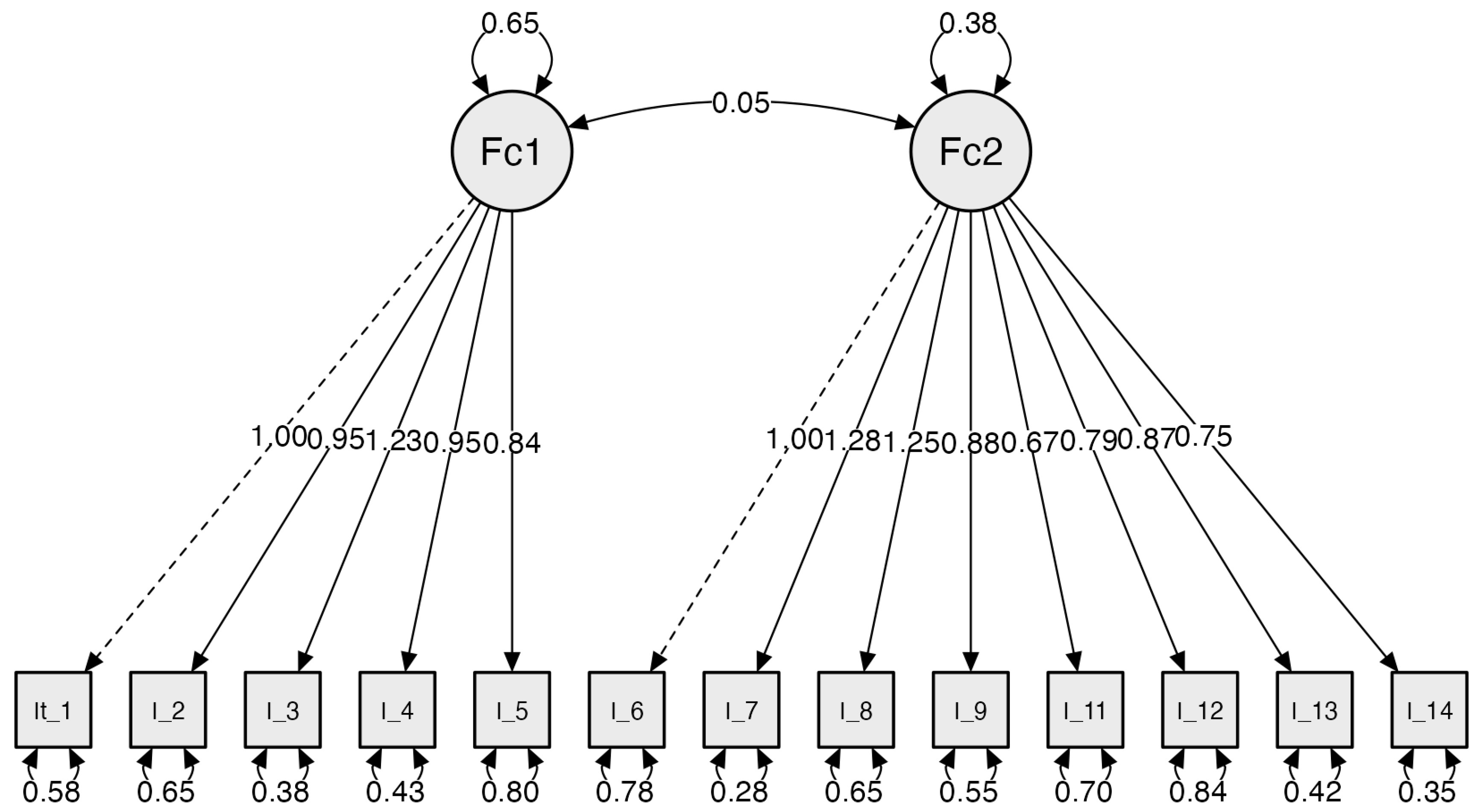
p < 0.001), confirming the suitability of the correlation matrix for factor extraction. The EFA yielded a two-factor solution explaining 46% of the total variance, consistent with the theoretical structure of the instrument. Factor 1 grouped all nine items evaluating didactic and heritage resources, whereas Factor 2 grouped the five items assessing the emphasis given to the Atlantic slave trade in different historical processes during university training.
Table 3 presents the most representative factor loadings. All items loaded clearly onto their respective dimension, and no cross-loadings of problematic magnitude were observed.
After that, the CFA using maximum likelihood estimation tested the adequacy of this two-factor model (
Figure 1). The chi-square test was significant (
χ2(71) = 300.103,
p < 0.001), and additional indices indicated a moderate but acceptable model fit for an exploratory cross-national educational study (CFI = 0.736; TLI = 0.662; RMSEA = 0.153; SRMR = 0.085). Similarly, the reliability indices demonstrated solid internal consistency, achieving consistent indices in the overall scale (
α = 0.809;
ω = 0.766;
λ2 = 0.832; split-half = 0.869 (95% CI = 0.825–0.913). All quantitative analyses were conducted following standard procedures in educational and social science research [
59].
Then, regarding how to analyse the information obtained by the museums, to ensure interpretative consistency, the authors conducted multiple rounds of comparative reading, refining the analysis and confirming the relevance of the selected excerpts. Given the absence of predefined categories, an inductive qualitative approach was adopted, allowing themes and patterns to emerge from the data itself rather than being imposed a priori [
60]. This process enabled a nuanced, evidence-based interpretation grounded in participants’ own words.
The synthesis reflects an exploratory and diagnostic qualitative approach rather than a formal coding-based analysis. This analytical decision is consistent with the aims of the study and with established approaches to exploratory qualitative research in heritage and education contexts.
3. Results
The results are organised into two main subsections according to the two samples included in the study. The first subsection presents the quantitative and qualitative findings derived from the questionnaire administered to pre-service history teachers. The second subsection outlines the qualitative findings obtained from the semi-structured interviews conducted with museum professionals in Spain and Portugal. Together, these two strands provide a comprehensive understanding of how this historical process is addressed in both educational and museum contexts across the Iberian Peninsula.
3.1. Results from Pre-Service Teachers
Once the psychometric robustness of the instrument had been established, the analysis proceeded to examine the participants’ responses through descriptive and inferential statistics. Firstly, regarding the five Likert-type items measuring the perceived emphasis placed on the Atlantic slave trade in different historical processes, the distribution of scores showed a heterogeneous pattern. As can be seen in
Table 4, these topics have not been widely emphasized during their training. The higher scores were concentrated in items related to the voyages of exploration and the colonisation and economic structures of the Early Modern Iberian empires. By contrast, lower scores predominated in items linked to the presence of enslaved people in liberal revolutions, in the crisis of the Ancien Régime, and in the Industrial Revolution, indicating that these areas received much less attention during university instruction.
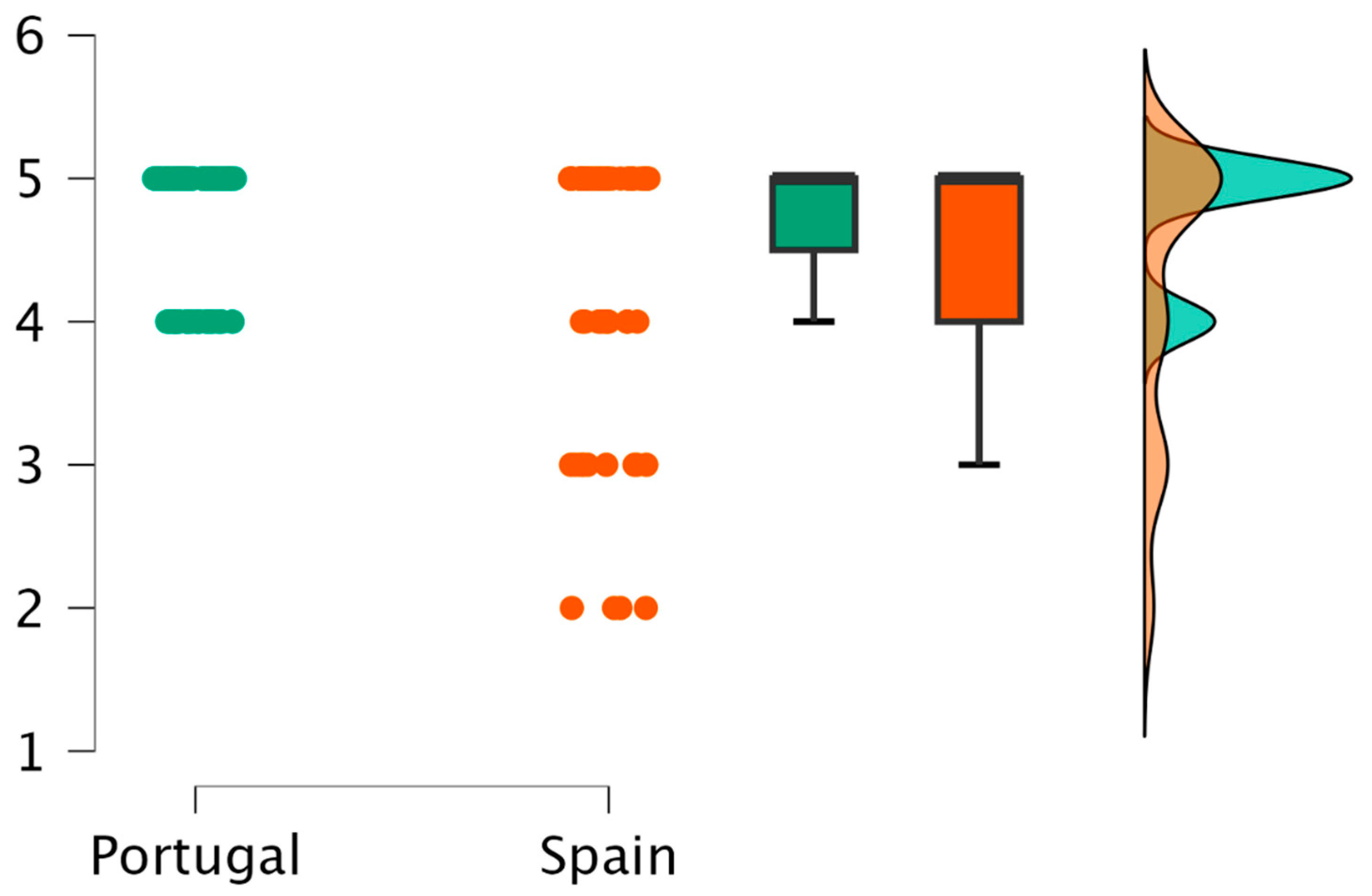
Similarly, the descriptive results for the adequacy of different didactic and heritage resources revealed a clear hierarchy in participants’ preferences. As shown in
Table 5, primary sources and period engravings or paintings were the most positively evaluated resources, with 64.7% and 48.9% of respondents, respectively, assigning the highest level of adequacy (5). Museums and monuments and memory sites also received very positive assessments, with most responses concentrated between categories 4 and 5. By contrast, evaluations of cartography/GIS and specialised webpages showed greater dispersion across the scale, although both were still viewed as generally adequate. More traditional materials such as textbooks, literature, and movies or TV shows received intermediate ratings, with the majority of responses falling between categories 3 and 4, suggesting that participants consider them useful but less impactful than material or visual heritage sources.
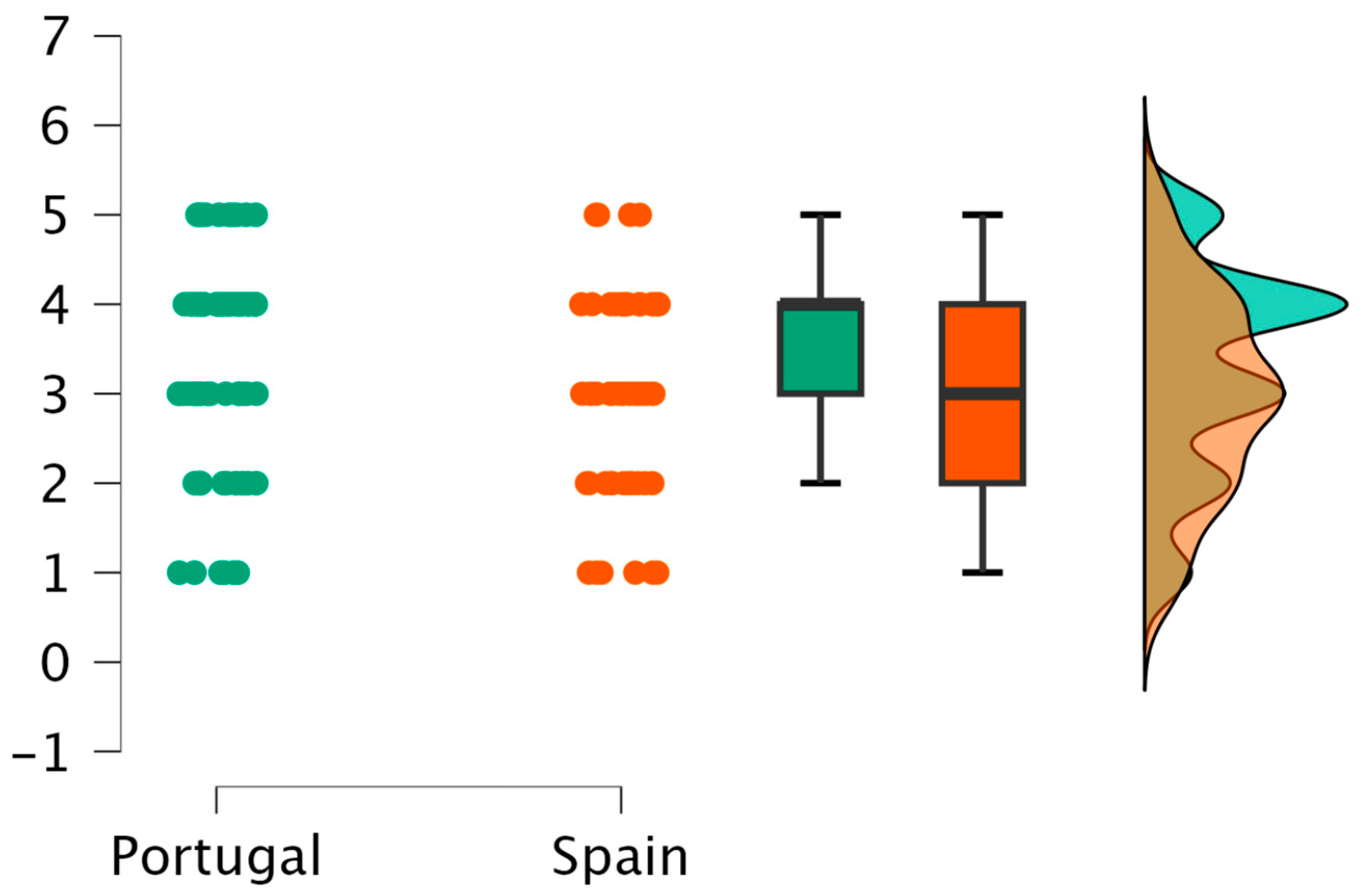
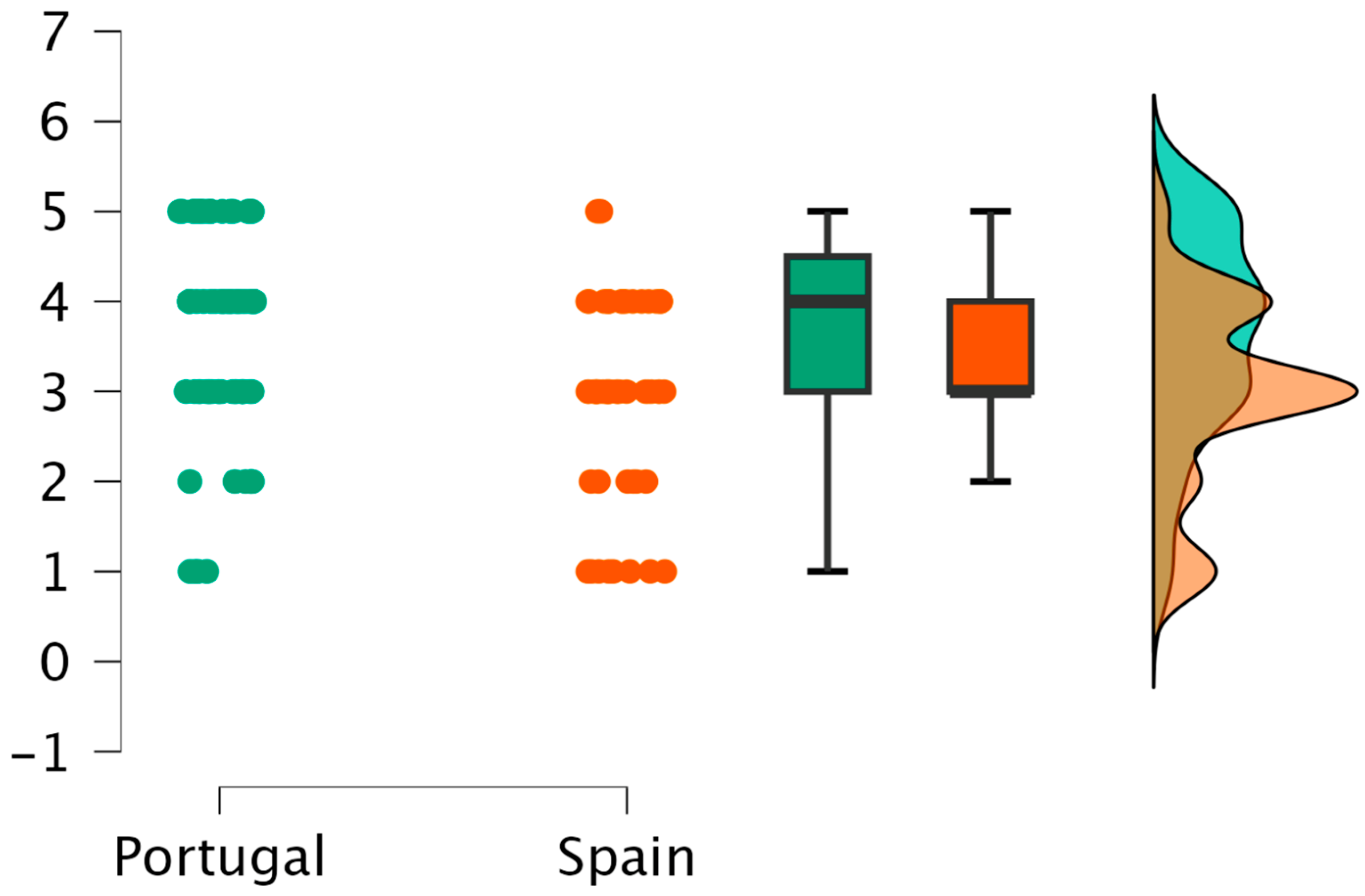
To examine potential differences between Spain and Portugal, independent-samples t-tests were conducted on all Likert items. Brown–Forsythe corrections were applied whenever the assumption of homogeneity of variances was violated. Regarding university training, Portuguese pre-service teachers reported significantly greater emphasis on the Atlantic slave trade in two key historical areas: voyages of exploration (
t(134) = −2.047,
p = 0.043) (
Figure 2) and colonisation and the economic structures of the Early Modern Iberian empires (
t(134) = −3.756,
p < 0.001) (
Figure 3). No significant differences were found between countries for the remaining training-related items, including the treatment of enslaved people in liberal revolts (
t(136) = −0.662,
p = 0.509), the Industrial Revolution (
t(136) = −0.787,
p = 0.433), or the abolitionist movements (
t(136) = −1.181,
p = 0.240).
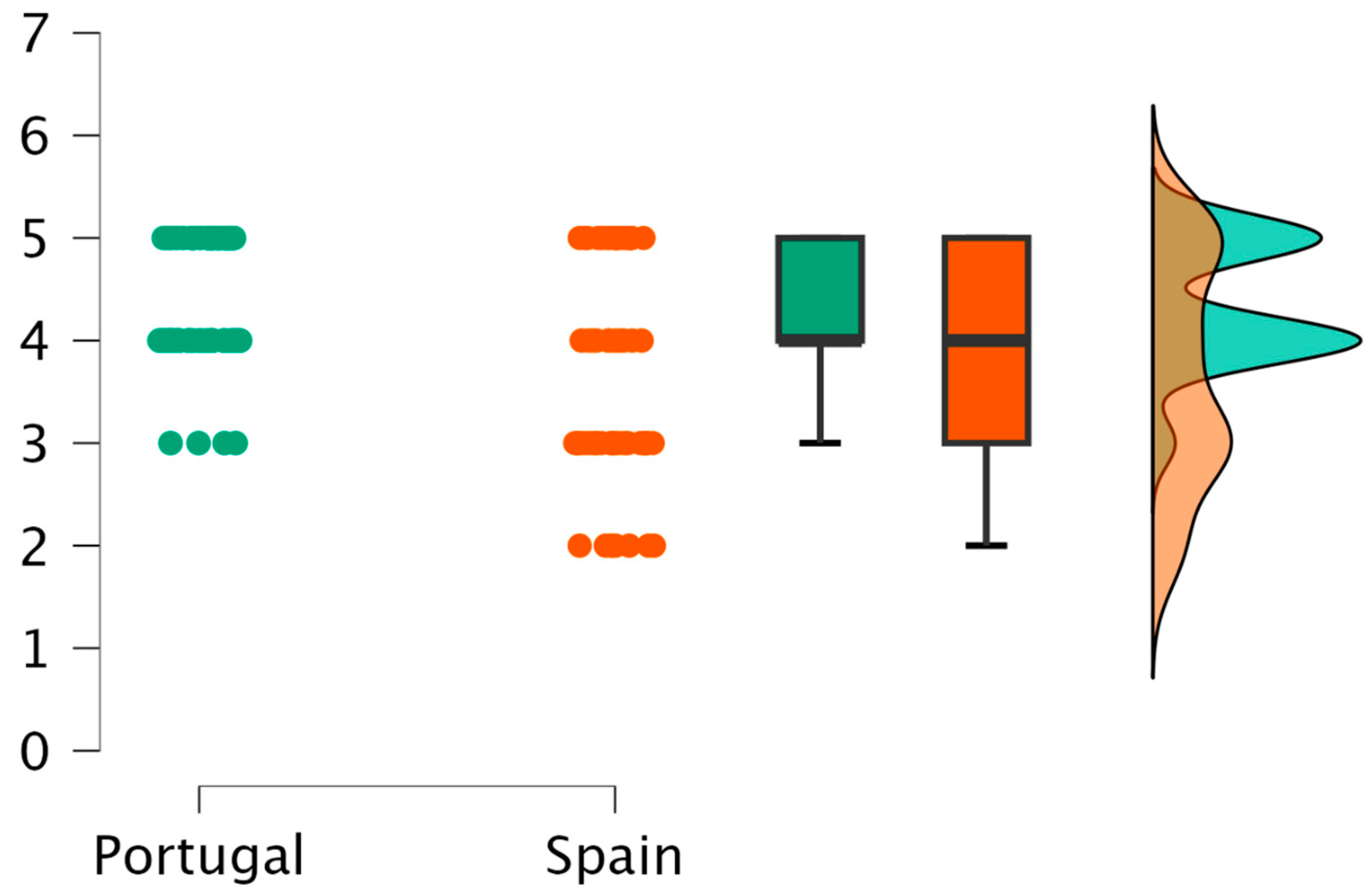
The analysis of perceived adequacy of didactic and heritage resources revealed additional cross-national differences. Portuguese participants rated several resources significantly higher than their Spanish counterparts. These included museums (
t(136) = −4.620,
p < 0.001) (
Figure 4), monuments and memory sites (
t(134) = −3.240,
p = 0.002), cartography and GIS (
t(136) = −2.192,
p = 0.030), engravings and paintings (t(134) = −2.115,
p = 0.036), and primary sources (
t(136) = −4.284,
p < 0.001) (
Figure 5). For these variables, Brown–Forsythe corrections confirmed violations of the equal variance assumption. By contrast, no significant differences emerged for textbooks (
t(136) = −1.436,
p = 0.153), specialised webpages (
t(134) = −1.808,
p = 0.073), literature (
t(136) = 0.881,
p = 0.380), or movies and TV series (
t(136) = −1.085,
p = 0.280). These results indicate that while both groups share similar perceptions of certain conventional teaching materials, Portuguese participants tended to value material, visual and heritage-based resources more positively.
In addition, the open-ended item invited participants to identify specific resources they considered useful for teaching the Atlantic slave trade and the history of enslaved people. The analysis revealed substantial gaps in pre-service teachers’ preparation: more than half of the respondents were unable to name a single resource, either leaving the item blank or explicitly stating that they did not know any. Among those who did provide suggestions, the most frequent references were to primary sources and archival materials, including manumission letters, shipping registers, lists of enslaved individuals with personal details, and records. These resources were valued for their capacity to “give a face” to enslaved people and counteract the abstraction with which slavery is often presented. A second group of responses pointed to digital resources, such as the SlaveVoyages database, video games (e.g., Assassin’s Creed), or films like Steven Spielberg’s Amistad. Several participants also highlighted the usefulness of adapted texts for secondary and upper-secondary students, which they associated with greater accessibility and pedagogical suitability. Finally, a smaller number of respondents mentioned heritage and local memory resources, including archaeological sites, toponymy linked to enslaved communities, or the “Lisboa Africana” route, emphasising their potential to connect the Atlantic slave trade with contemporary identities and urban landscapes.
3.2. Results from Museum Professionals
The interviews with museum professionals in Spain and Portugal reveal a diverse and uneven landscape in the ways heritage institutions address the Atlantic slave trade and the histories of Afro-descendant communities. A first group of museums, particularly the Museu de Lagos—Rota da Escravatura, the Museu Nacional de Etnologia (Lisbon), and the Museo Nacional de Antropología (Madrid), demonstrated a sustained and proactive engagement with this history. Among them, the Museu de Lagos stands out as the only institution explicitly dedicated to the topic. According to the respondent, the archaeological discovery of a mass burial site containing the remains of 158 enslaved Africans was a decisive moment that reshaped the museum’s orientation: “The discovery of this burial site moved everything; it made us rethink the entire museum project”. Since then, the museum has developed temporary exhibitions, educational activities for teachers and students, and collaborations with UNESCO’s Slave Route Project. These initiatives are framed by a broader civic commitment, as expressed by the museum educator: “Our commitment is to connect the history of slavery with the fight against contemporary forms of trafficking”.
In addition, the Museu Nacional de Etnologia (Portugal) reported the systematic use of specific objects, such as the “Prisão para escravos”, within structured activities that combine material culture, documentary analysis, and classroom-based tasks. As the respondent explained, “the object allows us to open a conversation about captivity, trade routes, and the human experience behind the artefact”. According to the educator, these activities are particularly well received by younger visitors, who tend to engage deeply with hands-on and narrative-based approaches. Similarly, the Museo Nacional de Antropología (Spain) provided a detailed account of its initiatives, highlighting artworks, ritual objects, and Afro-Caribbean collections that help contextualise slavery within broader cultural and historical frameworks. As noted by the professional interviewed, “our visitors respond very positively when slavery is linked to anthropological materials that show cultural resilience and creativity”. The museum further referred to a range of temporary exhibitions and publications, adding that these initiatives have consistently received institutional support: “The institution has always backed these projects; there has never been resistance”.
On the other hand, the Museo Nacional Thyssen-Bornemisza described more partial or emerging forms of engagement. The museum identified several artworks featuring enslaved or Afro-descendant figures and referred to its exhibition Memoria colonial, which was accompanied by an educational programme. However, the respondent noted that public reaction was sometimes subdued: “Visitors who are unfamiliar with the topic can feel uncomfortable or disconnected.” Although the institution expressed internal support for these initiatives, staff acknowledged that the topic “is still difficult to integrate into art-historical narratives,” reflecting broader challenges faced by art museums in addressing colonial histories.
By contrast, the last two museums reported minimal or no engagement with the subject. The Museu de Marinha indicated that although it holds a small number of objects related to the slave trade—such as shackles—it has not developed any exhibitions or educational activities specifically dedicated to slavery: “We have never developed an exhibition or programme specifically about slavery.” Similarly, the Red Museística de Lugo described limited actions, although a social museology initiative has recently begun to address the topic. According to the respondent, public reactions have been mixed: “Some visitors are surprised; others ask why this had never been addressed before.”
Table 6 presents a comparative synthesis of written interviews conducted with museum educators and professionals responsible for permanent exhibitions in Spain and Portugal.
4. Discussion and Conclusions
This section draws on the two complementary strands of evidence analysed in the study: the perceptions and academic preparation of pre-service history teachers, and the institutional perspectives provided by museum professionals in Spain and Portugal. By examining these two groups together, comparing them with existing literature, it aims to offer an integrated interpretation of how the Atlantic slave trade is addressed—both in the training of those who will teach it and in the heritage institutions responsible for shaping public memory of this past. In line with the research design, the discussion explicitly connects the findings derived from SO1 and SO2 in order to clarify their mutual implications and to strengthen the overall coherence of the study, particularly in relation to the educational treatment of controversial heritage in formal and informal contexts [
19,
34].
Starting with the results obtained from the pre-service teachers who participated in the study, the findings reveal notable weaknesses in the treatment of the Atlantic slave trade within their History degree trainings in Spain and Portugal. This pattern echoes previous research pointing to persistent silences in Iberian public memory and historiography [
1,
26]. The limited emphasis reported by future teachers, particularly regarding the presence of enslaved people in liberal revolutions, the crisis of the Ancien Régime, and the Industrial Revolution, aligns with broader patterns of historical marginalisation identified by Araujo [
27,
28] and Schmieder [
2], who argue that Iberian narratives have traditionally downplayed or omitted the structural role of slavery in early modern and modern state formation. Taken together, these results address SO1 and are consistent with Hypothesis 1, suggesting an uneven and partial integration of Atlantic slavery that may restrict future teachers’ opportunities to engage with this topic as a structurally relevant and controversial historical process.
The stronger association made by participants between the slave trade and the early phases of exploration and colonisation reflects a conventional Eurocentric framing that situates slavery primarily at the “beginning” of empire, rather than recognising its long-term economic, social, and political consequences [
3,
4,
5,
6,
7,
8]. This is consistent with analyses showing that national curricula and university syllabi tend to emphasise maritime expansion while overlooking the systems of coerced labour that sustained and enriched those empires [
8,
9,
31].
Cross-national patterns further reinforce these trends. Although Portuguese pre-service teachers recalled a greater emphasis on slavery in their degree programmes than their Spanish counterparts, both groups overwhelmingly reported feeling insufficiently prepared to teach the topic. This finding aligns with scholarship suggesting that institutional integration of slavery into university curricula across the Iberian Peninsula remains uneven and inconsistent [
26,
47,
48]. The higher value that Portuguese participants assigned to museums, memory sites, cartography/GIS, and visual heritage resources also reflects the more prominent role that heritage institutions play in Portugal’s public narratives of empire—particularly when compared to Spain, where the public memory of slavery remains more fragmented, contested, and politically sensitive [
26,
30].
The preferences expressed by pre-service teachers regarding didactic resources further illuminate these educational gaps. The predominance of primary sources and period engravings among the highest-rated materials aligns with international research emphasising the pedagogical importance of humanising enslaved individuals and counteracting decontextualised or purely structural narratives [
35,
36,
37]. In this sense, the results are in line with Hypothesis 2 and point to a clear recognition of the educational potential of heritage-based resources for addressing controversial pasts. However, as discussed below, this positive valuation does not necessarily translate into the ability to identify or use concrete resources in teaching practice.
At the same time, the relevance attributed to certain digital tools by some participants suggests an emerging awareness of the possibilities that digital and multimodal resources offer for supporting the teaching–learning process. In contrast, one of the most striking findings is that more than half of the respondents were unable to identify a single specific resource for teaching this topic. This evident absence mirrors the quantitative evidence of insufficient academic preparation and confirms a broader lack of familiarity with the materials required to teach slavery in a rigorous, historically grounded and culturally sensitive manner. Such gaps echo the broader phenomenon of historical erasure described in the literature, whereby the Atlantic slave trade has been systematically marginalised or excluded from national narratives, public heritage and educational frameworks [
10,
26,
27]. Overall, the results suggest that although pre-service teachers are open to innovative and humanising approaches to teaching slavery, they lack both the academic grounding and the curricular exposure needed to implement these approaches effectively [
38,
39,
40].
On the other hand, the results obtained from the museum professionals complement and extend the patterns identified among pre-service teachers, revealing that the silences surrounding the Atlantic slave trade are not confined to educational settings but also permeate the cultural and heritage sectors. The interviews show a markedly uneven landscape across Iberian museums, confirming what previous scholarship has described as an asymmetrical institutional engagement with the histories of slavery and Afro-descendant communities [
26,
27,
46]. While some institutions, most notably the Museu de Lagos, the Museu Nacional de Etnologia and the Museo Nacional de Antropología, have developed sustained initiatives grounded in archaeological evidence, anthropological collections and public-oriented programmes, others reported only minimal engagement or acknowledged a complete absence of action. In relation to SO
2, and in line with Hypotheses 4 and 5, the findings indicate a highly uneven landscape of institutional engagement with this historical process, ranging from more explicit and sustained initiatives to limited or partial forms of representation. This variation aligns with the findings of several authors (e.g., [
2,
27,
28]), who note that the integration of slavery into Iberian heritage narratives remains inconsistent, selective and often dependent on local circumstances or individual institutional leadership.
Taken together, the responses provided by museum professionals indicate that museums have the potential to offer valuable resources for the educational treatment of heritage through exhibitions, educational programmes, and object-based narratives that explicitly address the Atlantic slave trade and the history of enslaved people. These initiatives may function as repositories of didactic resources capable of supporting the teaching of this controversial past. However, the results also suggest that such resources are rarely incorporated into initial teacher education and tend to remain largely external to university training pathways. This limited articulation between formal teacher education and heritage institutions may help to explain why pre-service teachers consistently value museums as educational resources while simultaneously being unable to identify specific materials or initiatives for classroom use. Moreover, the uneven visibility and accessibility of these museum initiatives across national contexts resonates with Hypothesis 3, suggesting that cross-national differences in heritage engagement may further shape how future teachers perceive and integrate museum-based resources. In this sense, the persistence of educational silences surrounding Atlantic slavery appears not only as a curricular issue, but also as a consequence of a structural disconnection between the spheres of formal and informal historical education [
19,
26,
34].
In addition, the fact that several invited museums declined participation outright could illustrates the structural challenges involved in incorporating slavery into Iberian heritage narratives. This hesitation mirrors broader tendencies identified in the literature, whereby slavery is treated as a delicate or controversial subject, leading to avoidance, neutralisation or partial representation in public spaces [
26,
27,
30]. Then, the results obtained here highlight the limited institutionalisation of slavery within Iberian public memory, especially when compared to France, the UK or the United States, where national debates and commemorative initiatives have played a more visible role [
1,
9,
10,
53].
Limitations and Future Directions
All in all, the study has identified several hypotheses and areas for improvement that may guide future research. With regard to pre-service teachers, the reliance on self-reported questionnaires may have influenced participants’ recollections of their university training. Moreover, although the sample was geographically diverse across Spain and Portugal, its size and concentration in specific universities may limit the generalisability of the findings. The cross-sectional design also restricts the ability to identify changes over time or to evaluate the impact of recent curricular reforms. Similar limitations apply to the museum component. While the selected institutions represented a range of heritage sectors, the number of participating museums was modest, and the refusal of several institutions to take part further constrained the representativeness of the sample. Although follow-up contact attempts were made, no information was obtained regarding the reasons for non-participation, which made it impossible to identify systematic patterns across institutional profiles.
In addition, the qualitative information provided by museum professionals consisted of relatively brief written responses, which limited the possibility of conducting a systematic coding and categorization process or generating alternative qualitative visualisations using specialised qualitative analysis software. Future research should therefore adopt broader and more multi-method approaches. These may include longitudinal studies of teacher education programs, classroom-based interventions assessing the effectiveness of specific resources or pedagogical strategies, and more in-depth museum case studies based on extended qualitative accounts and richer data, combining interviews, participatory observation, and detailed analyses of exhibitions, catalogues, and educational materials. Future studies could also explicitly explore the reasons for institutional non-participation, such as time constraints, organisational priorities, or sensitivity surrounding the topic, in order to better understand structural barriers to museum engagement with the Atlantic slave trade. Likewise, future research could incorporate participatory and reflexive approaches, including collaboration with Afro-descendant associations and organisations working against racism, to examine different axes of public and collective memory.
Despite these limitations, the overall picture that emerges from the study is both striking and deeply revealing. The results point to a heritage sector marked by asymmetry, fragmentation and selective engagement, mirroring the same structural silences identified in the training of pre-service teachers. From a socio-educational perspective, the integrated consideration of formal (teacher education) and informal (museum heritage) contexts seeks to contribute to a more coherent understanding of how controversial heritage is addressed, and to highlight the importance of coordinated approaches capable of strengthening educational and social impact [
19,
34,
43]. Both spheres appear embedded within a wider Iberian pattern of historical erasure that continues to shape how slavery is taught, represented and collectively understood [
10,
26,
28]. This convergence underscores the need for coordinated and critically informed strategies that link teacher education, museum practices and public memory. Without such integrated efforts, attempts to foster historical understanding, democratic culture and intercultural competence will remain incomplete.
In this regard, the findings highlight the relevance of promoting cooperative lines of work and joint teams involving universities, schools, and museum professionals as a means of bridging the gap identified between the resources familiar to future teachers and the educational materials currently available to them, for example, through museum-based initiatives. Such collaborative approaches are consistent with the theoretical perspectives integrated in this study, including historical education, critical intersectionality, the development of critical cultural competencies, and the notion of shared or collective heritage.
Strengthening collaboration between universities, schools and museums could play an important role in addressing these silences. Ultimately, advancing more inclusive and critically engaged narratives of the Atlantic slave trade is not only a matter of historical accuracy but also an essential step towards cultivating a more reflexive, equitable and socially responsible public memory. In line with these conclusions, the authors of this study are currently involved in nationally funded research projects under development, which bring together researchers from several Spanish universities in collaboration with museum professionals. These initiatives are presented as examples of integrated efforts aimed at addressing controversial heritage and translating research findings into educational and heritage practices, without extending beyond the exploratory and diagnostic scope of the present study.