
Article

Reconstructing an Individual’s Life History by Using Multi-Analytical Approach: The Case of Sofia Kaštelančić née di Prata

1
Centre for Applied Bioanthropology, Institute for Anthropological Research, 10000 Zagreb, Croatia
2
Department of Archaeology and Heritage, Faculty of Humanities, University of Primorska, 6000 Koper, Slovenia
3
Mimara Museum, 10000 Zagreb, Croatia
4
Research Unit of Paleoradiology and Allied Science, LTS—SCIT—Giuliano Isontina University Health Authority (ASUGI), Ospedale Maggiore, 34100 Trieste, Italy
*
Author to whom correspondence should be addressed.
Heritage 2025, 8(12), 540; https://doi.org/10.3390/heritage8120540
Submission received: 19 November 2025 / Revised: 10 December 2025 / Accepted: 15 December 2025 / Published: 17 December 2025

Abstract

The study aims to reconstruct the life history of an individual whose skeleton was recovered during the excavation of the late medieval Pauline monastery of the Blessed Virgin Mary on Moslavina Mountain, Croatia. The monastery was one of the most important ecclesiastical centres in continental Croatia during the 14th/15th centuries CE and was abandoned between 1520 and 1544 due to fear of imminent Ottoman attacks. The inscription and coat of arms on the tombstone of a tomb located in the chancel, next to the main altar, indicate that the skeleton belongs to Sofia Kaštelančić née di Prata (di Pordenone), a member of Croatian late medieval high-ranking nobility. We conducted a conventional bioarchaeological study, carbon and nitrogen stable isotopes analysis, paleoradiological imaging (CT/CBCT scanning), and three-dimensional facial reconstruction. The skeleton belongs to a middle-aged woman between 40 and 50 years old with an estimated stature of about 161 cm. Numerous pathological changes, such as ante mortem tooth loss, caries, abscess, linear enamel hypoplasia, dysodontiasis, and osteophytosis were observed, with the most notable pathology being the fracture of the right ankle, a fact also confirmed by CT scanning. Carbon and nitrogen isotopic values are consistent with a terrestrial diet based on C3 plants with no marine input, and the consumption of large quantities of animal-based proteins. Three-dimensional facial reconstruction made it possible for the first time in over 500 years to obtain the approximate physical appearance of the individual. The presented results are consistent with the hypothesis that the skeleton probably belongs to Sofia Kaštelančić. Nevertheless, none of the observed osteological traits are individually or collectively diagnostic of Sofia, so, in the absence of individualising evidence, the identification remains hypothetical rather than demonstrative.

1. Introduction

Since it was initially proposed as a concept by Saul in 1972 [1], osteobiography has gained widespread acceptance in bioarchaeology, and today it is one of the most popular approaches in global bioarchaeological research. Saul’s original idea [2,3] was to incorporate all available analyses of a single skeleton from an archaeological context to form a narrative of that individual’s life, to reconstruct someone’s personal life history as told by their skeleton. In the last couple of years, this initial idea has been significantly broadened, and now it also includes various chemical and molecular analyses and extensive theoretical modelling, as proposed by Hosek and Robb [4]. In other words, ‘Osteobiography has the power to highlight an individual’s life, death, and burial, bringing the individuals whose lives were not part of the larger historical narrative to the forefront, and creating a touchstone to interact with the past’ [5]. Despite its global acceptance, the osteobiographical approach also suffers from several epistemological limitations, such as probabilistic reasoning and narrative construction, equifinality and interpretive ambiguity, limits of identity reconstruction, but also from certain ethical issues (for more details, see [6,7,8,9]).
Osteobiography uses paleopathology to build an individual’s life story from skeletal clues, revealing their unique biography, activity patterns, diet, health, and social context that written sources miss. The close connection between osteobiography and paleopathology allows us to turn anonymous skeletons into narratives of lived experience, showing how diseases, injuries, and stress markers paint a picture of daily life, challenges, and social standing. In other words, paleopathology provides the raw data that osteobiography interprets into a coherent, narrative life story, giving voice and humanity to individuals lost to history.
Although the osteobiography as a concept has been successfully used for several decades in various parts of the world, such an approach in Croatian bioarchaeology is quite recent, with only three studies published so far. The first one, by Mihanović and colleagues [10], deals with a multidisciplinary study of the mummified remains of the alleged body of Saint Paul the Confessor, the sixth bishop of Constantinople who died in 350/351 CE, and whose remains are kept in the church of St. Blaise in Vodnjan. The second one deals with the analysis of a skeleton belonging to a 2nd-century CE Roman soldier, probably legionary, from Resnik [11]. The third paper used an osteobiographical approach to reinterpret the lives of two neonates (twins) from the 1st/2nd CE Tragurium (Roman period Trogir) by applying archaeological, bioarchaeological, paleopathological, chemical and molecular methods [5].
In light of the presented information, our main aim is to use the combination of osteobiographical and paleopathological approaches in the analysis of the remains of an individual recovered from a tomb found in the monasterial church of the Annunciation of Mary of the Pauline monastery of the Blessed Virgin Mary in Moslavačka gora (Moslavina Mountain) in central Croatia. The inscription on the tombstone covering the grave says that Sofia, wife of Nicholas Kaštelančić, a member of Croatian high society during the 15th/16th centuries CE, was buried there. The main hypothesis is that the remains buried in the tomb belong to Sofia Kaštelančić, a known historical figure. Therefore, by applying multiple lines of inquiry, including the use of detailed archaeological context, written historic sources, conventional bioarchaeological and paleopathological methods, paleoradiological imaging and C/N stable isotopic analysis, we want to reconstruct the life history of this individual, but also to verify whether the skeleton in question really belongs to a historic figure, Sofia Kaštelančić.

2. Materials and Methods

2.1. Archaeological Context

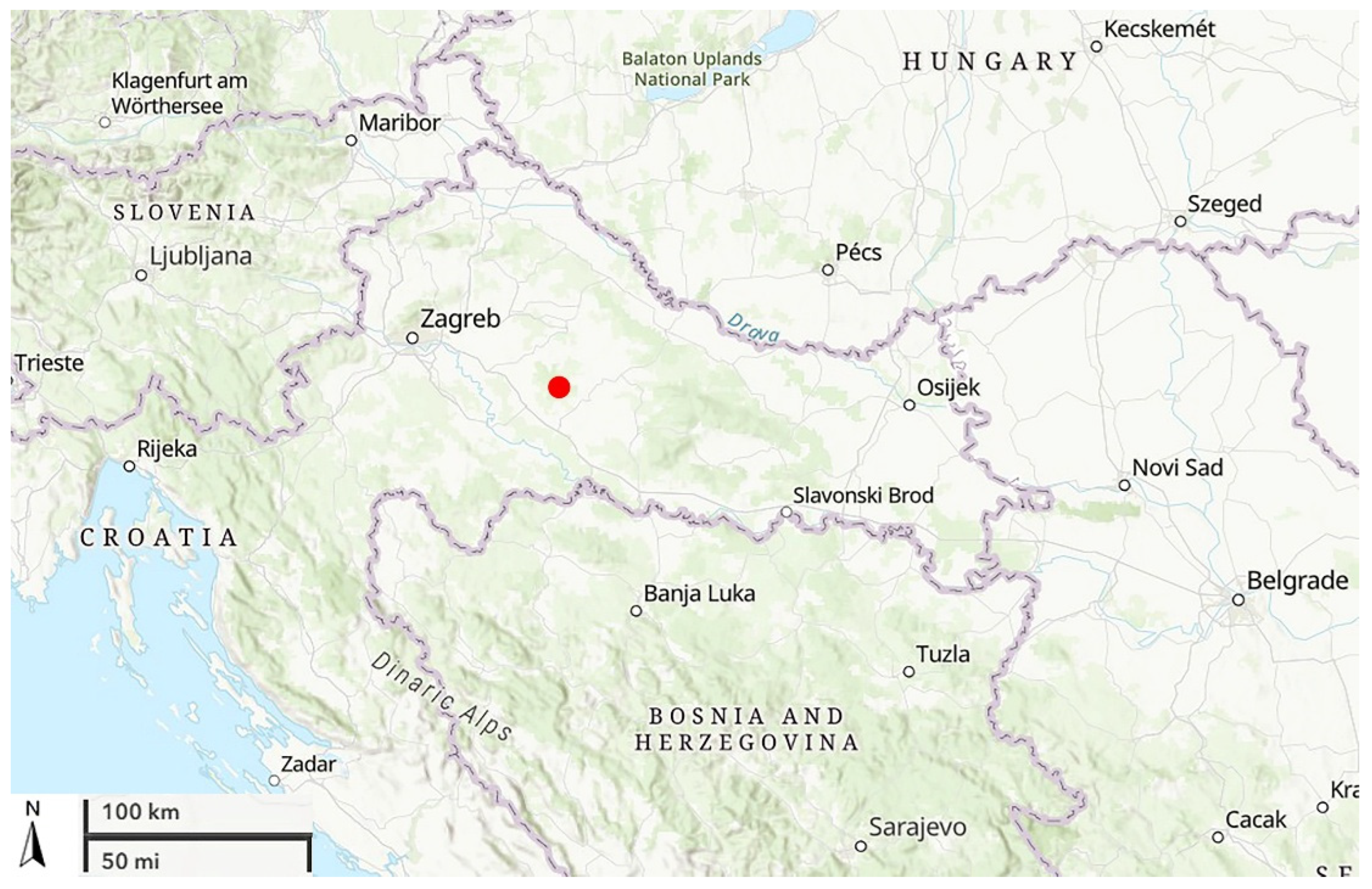
Monastery of the Blessed Virgin Mary on Moslavina Mountain near Garić Castle in central Croatia (Figure 1) was founded during the latter half of the 13th century CE by the endowment of magister Tiburcius. During the next few centuries, the monastery gained significant political influence because of its strong economic background. According to their archives, the Paulines also managed to gain many privileges and ensured that the monastery maintained the status of locus credibilis. The Paulines abandoned the monastery, never to return due to the pending peril of Ottoman incursions between 1520 and 1544 [12]. It cannot be ascertained who (if anyone) became the new owner of the Moslavina Mountain monastery’s estates. Consequently, the monastery was left to deteriorate in thick vegetation.
The first Pauline monastery in present-day Croatia was built on a small, rectangular plateau, defined by two mountain streams. Since the complex is situated in the very heart of the mountain, in a gorge that is quite difficult to reach by modern roads, after its abandonment, not a single stone was removed. Systematic archaeological excavations of the monastery began in 2009, and during the following years, the monastic church was explored, followed subsequently by the conservation works.
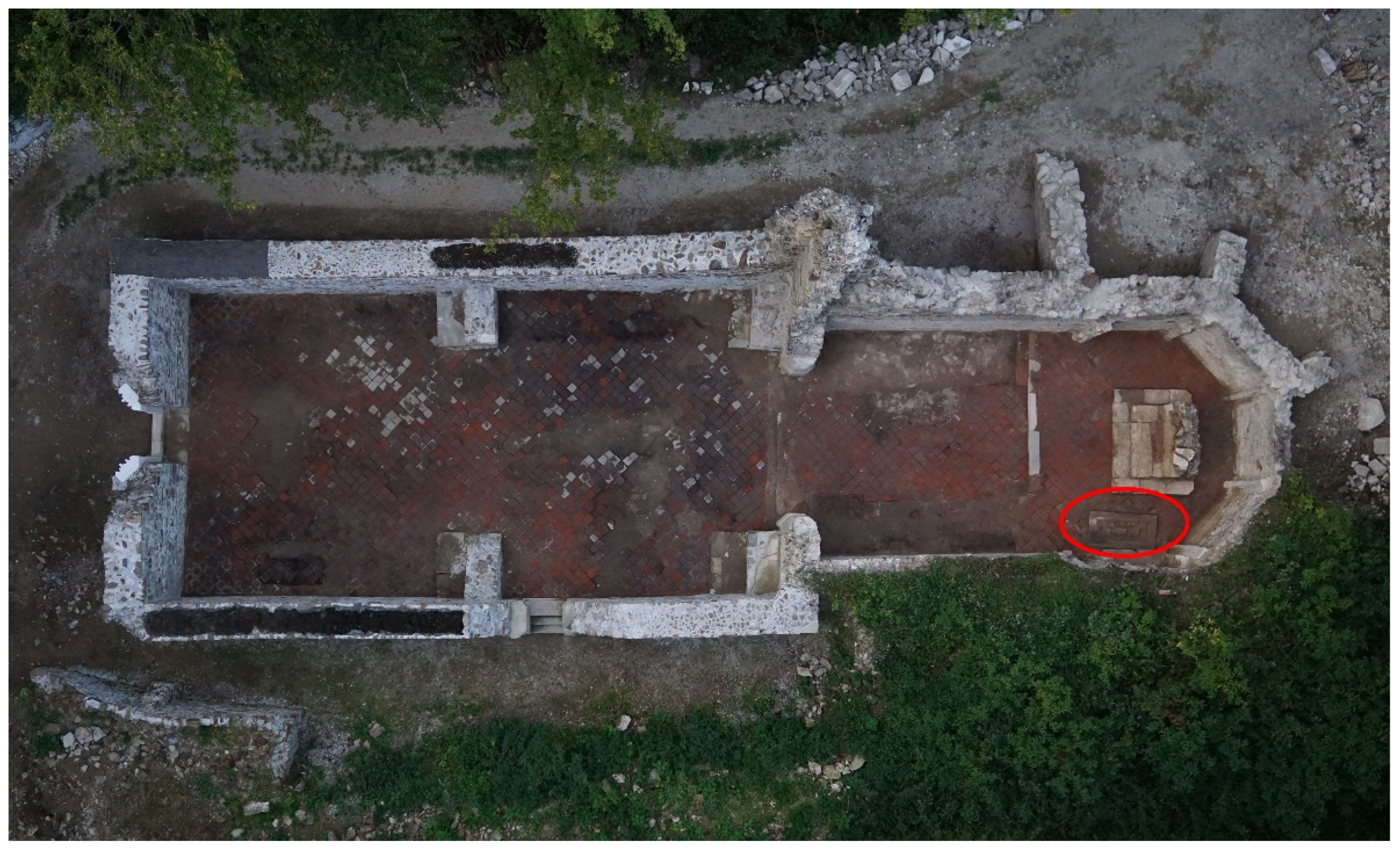
The monastic church is situated on the highest terrace, i.e., in the north-eastern part of the monastery (Figure 2). It was built as a single-nave building with a slightly smaller chancel enclosed by a polygonal apse in Late Romanesque style and rebuilt later in Late Gothic style. The floor of the church was made of clay tiles and was completely intact.
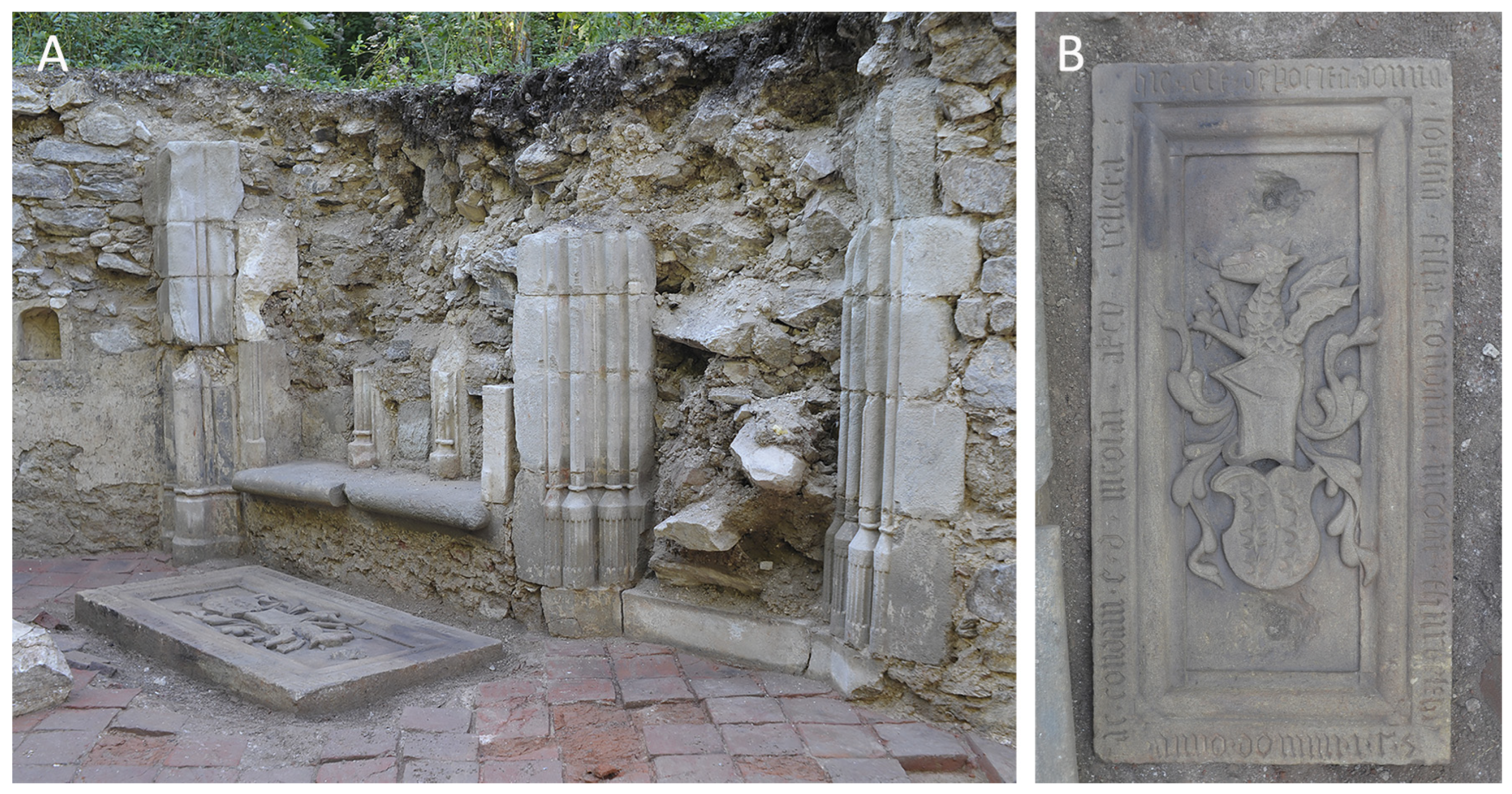
During the excavation of the main apse of the church in 2015, a tombstone (193 × 97 × c. 15 cm) with an inscription in Gothic minuscule (HIC · EST · DEPOSITA · DONNA · SOPHIA · FILIA · CONDAM · NICOLAI · THUB<O> ·ANNO · DOMINI · I · Ґ · 5 · AC · CONDAM · E[GREGII]· D[OMINI] · NICOLAI · AR[TI]CU · RELICTA) and a coat-of-arms in a shape of a dragon was discovered between the main altar and the sedilia on the southern wall (Figure 3A,B). The inscription on the tombstone mentioned that Sofia, daughter of Nicolas T(h)ulbert di Prata and wife of Nicholas Kaštelančić (Kastelanovic, Castellanffy, Kastellanffy), was buried there.
Due to the weight of the very dense limestone tombstone (c. 800 kg), its pristine condition (including the edges), and its exceptional position in the apse (and the absence of the other tombstones, although their positions are clearly visible as depressions in the otherwise intact floor tiles), it may be presumed that the grave was undisturbed. This hypothesis is supported by the correlation between the engraved year and the known decade when the Paulines abandoned the monastery.
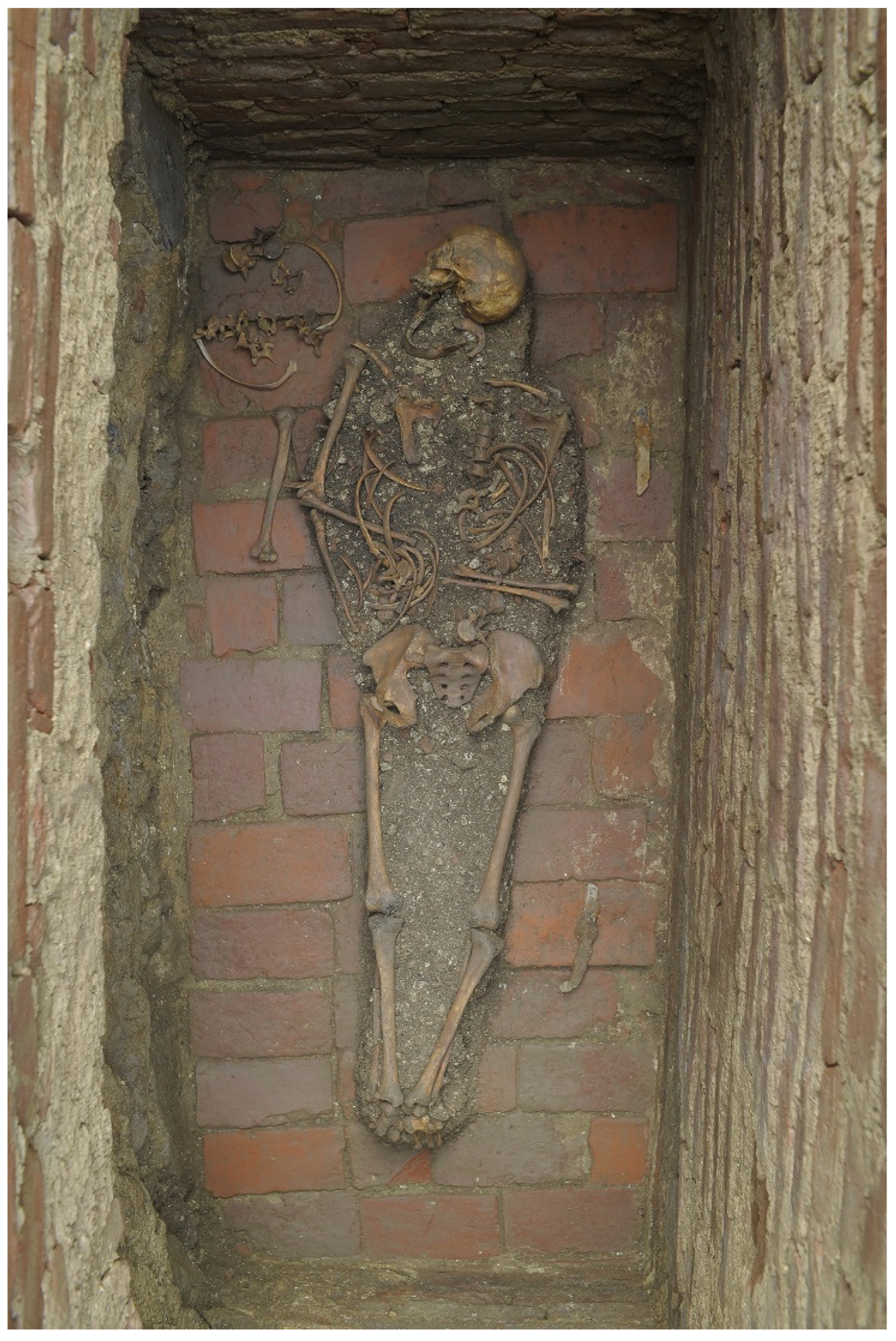
After the tombstone was removed and the brick-walled burial was investigated, the skeletal remains of a single individual were recovered (Figure 4). No artefacts were found during the excavation, apart from one, a still unidentified iron object. Most of the bones were still in situ, except the left humerus and some ribs and vertebrae that were moved to the right of the skeleton, most probably as a result of a generic post-depositional disturbance.

2.2. Analytical Methods

The skeleton was analysed at the Laboratory for Evolutionary Anthropology and Bioarchaeology of the Institute for Anthropological Research in Zagreb. During the analysis, conventional bioarchaeological methods were applied: reconstruction of biological sex and age-at-death, estimation of stature, and a comprehensive paleopathological study. The sex was estimated based on the morphological differences between male and female skeleton in the cranium (general size and robusticity, nuchal crest, mastoid process, supra-orbital margin, supra-orbital ridge (glabella) and mental eminence), and the pelvic region (general size and robusticity, sub-pubic concavity, ischio-pubic ramus, ventral arc, greater sciatic notch, preauricular sulcus) [13,14]. The age-at-death was established based on the morphology of the pubic symphysis, auricular surface and sternal rib ends, and the degree of wear of the occlusal teeth surfaces (for more details see [14]). The stature of the individual was reconstructed by using regression formulae proposed by Trotter (the maximum femur length) [15]. No other measurements (cranial or postcranial) were taken, apart from the maximum femur length. A comprehensive paleopathological study included dento-alveolar pathologies (caries, ante mortem tooth loss, alveolar abscesses, occlusal wear, and dental calculus), degenerative changes (osteophytosis and Schmorl’s nodes), subadult stress indicators (linear enamel hypoplasia), and fractures [16,17]. The timing of hypoplastic defects was reconstructed by using Reid and Dean’s methodology [18].
Carbon and nitrogen stable isotopes analysis from bone collagen of a rib sample (c. 5 g) was conducted at the School of Archaeological Sciences, University of Bradford, UK. Collagen was prepared using the modified Longin method [19]. The rib was specifically chosen as it has a fast bone turnover rate and, as such, is a good indicator of the diet of an individual during the last few years of their life [20]. The sample was measured in duplicate in the University of Bradford Stable Light Isotope Laboratory.
The entire skeleton was examined using computed tomography (Toshiba Aquilion 16-slice CT scanner, Otawara, Japan; 120 kVp, 100 mA; slice thickness 0.5 mm) at the Ospedale Maggiore, Trieste, Italy. The mandible and maxillary dental arch were further scanned using cone-beam computed tomography (CBCT) (Hyperion X5, BU Medical Equipment, Imola, Italy; 90 kVp, 9 mA; slice thickness 0.3 mm). The resulting scans were analysed and evaluated using DICOM 3.0visualisation and analysis software (SuitEstensa, Esaote S.p.A., Genoa, Italy). This extensive radiological assessment had several aims: to improve the diagnostic accuracy of any bone alterations by examining the osseous structure of the different segments, and to preserve a digital record of the skeletal remains. In particular, CBCT allowed detailed study of the dental arches with higher spatial resolution than conventional CT, as is well established in routine clinical imaging of living subjects [21,22].
The subsequent facial approximation was carried out with the aim of producing, within the well-known limitations highlighted in the current literature [23,24], a plausible representation of the subject’s face. We applied the reconstruction algorithm developed by our group and routinely used for forensic purposes [25].
CT scans of the skull and the mandible were used to generate three-dimensional reconstructions, which were exported as mesh objects (RadiAnt©, Medixant, Poznań, Poland). The skull and mandible models were then imported into a parametric CAD environment (3ds Max 2023©, Autodesk Media and Entertainment, Montreal, QC, Canada) and properly articulated.
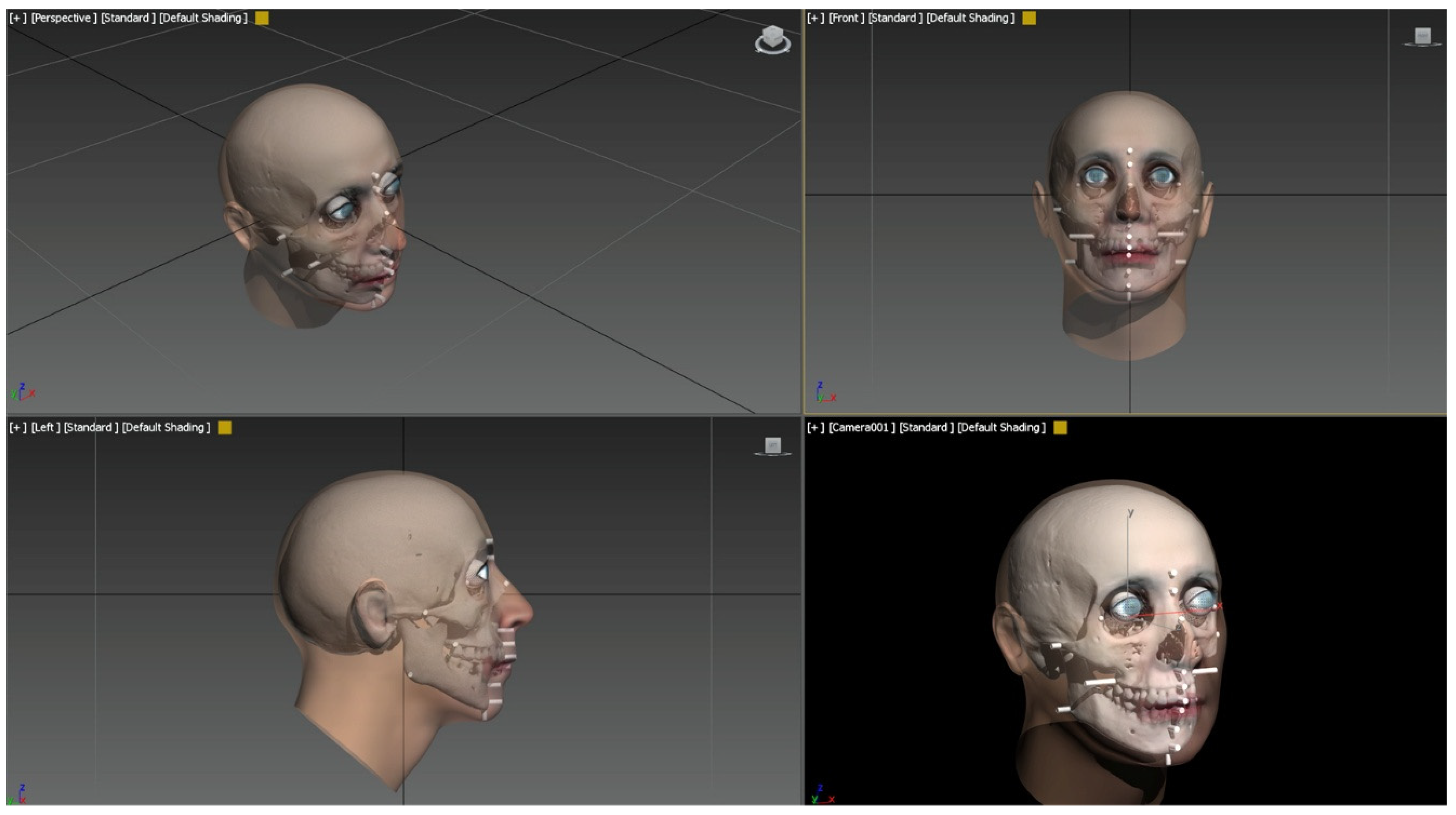
Twenty-five orthogonal cylinders were positioned on the virtual surface of the skull, corresponding to specific anatomical landmarks [26,27]. Each cylinder had a height proportional to the average soft-tissue thickness at that anatomical point. The positions of the eyeballs, nasal landmarks, and the two cheilions (i.e., the limits of mouth width) were determined according to published data [28,29,30]. From the three-dimensional model, frontal and right and left lateral views were rendered and exported into FaceGen Modeller Core 3.34 (Singular Inversion Inc., Toronto, ON, Canada) to generate a basic three-dimensional facial model whose outer boundaries corresponded to the thickness of the cylinders representing the soft tissues. Using the Photofit function, realistic textures were generated from reference images, while craniofacial morphology was guided by the anatomical landmarks [31]. The resulting textured 3D mesh was then aligned and superimposed onto the skull within the 3D modelling software, when necessary, adjusted using global geometric modifiers to achieve the best possible correspondence between the reconstructed face, the underlying bone profiles, and the soft-tissue thickness landmarks.

3. Results

The skeleton is excellently preserved and almost complete; only the right patella and most of the foot phalanges are missing. All studied bones have been preserved 100%; however, there is some post-mortem damage to the scapulae, fibulae and three cervical vertebrae (85% preservation of each bone), while light cortical erosion is present on the ribs and some long bones. All teeth, except those unerupted and lost ante mortem, were available for the study. Unfortunately, buccal surfaces of most of the maxillary teeth were covered with a hard deposit of ‘limescale’ that could not be removed mechanically.
The analysed skeleton is very gracile, belonging to a middle-aged woman between 40 and 50 years of age. More details on sex and age estimation are provided in Supplementary Table S1. Based on the maximum length of the right femur (421 mm), it is estimated that she was 161.608 ± 3.27 cm tall.
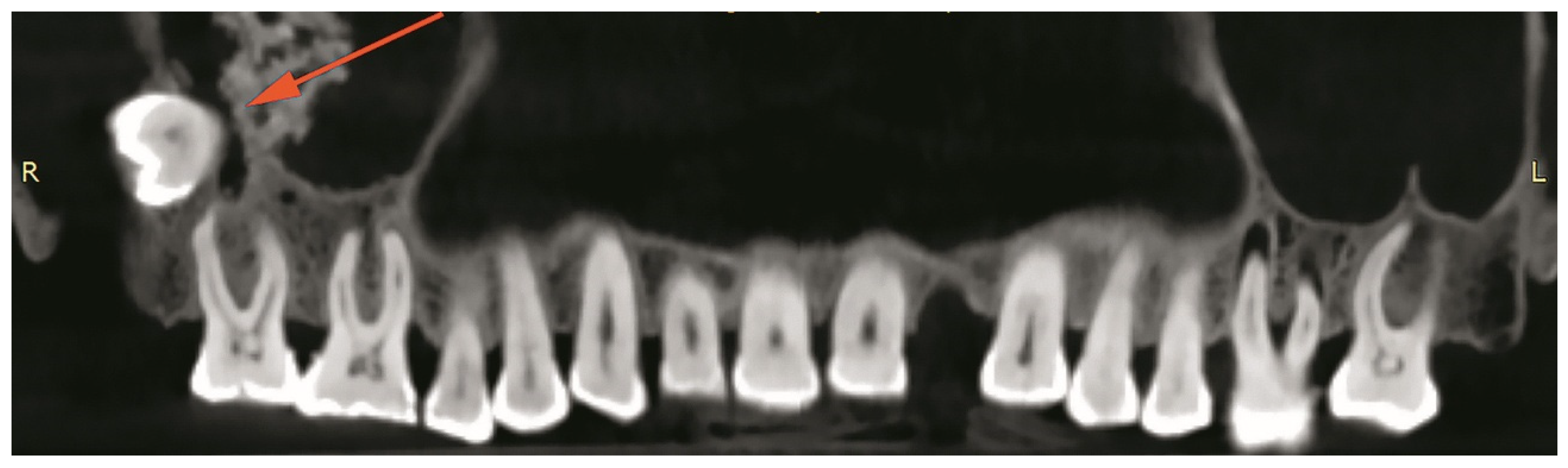
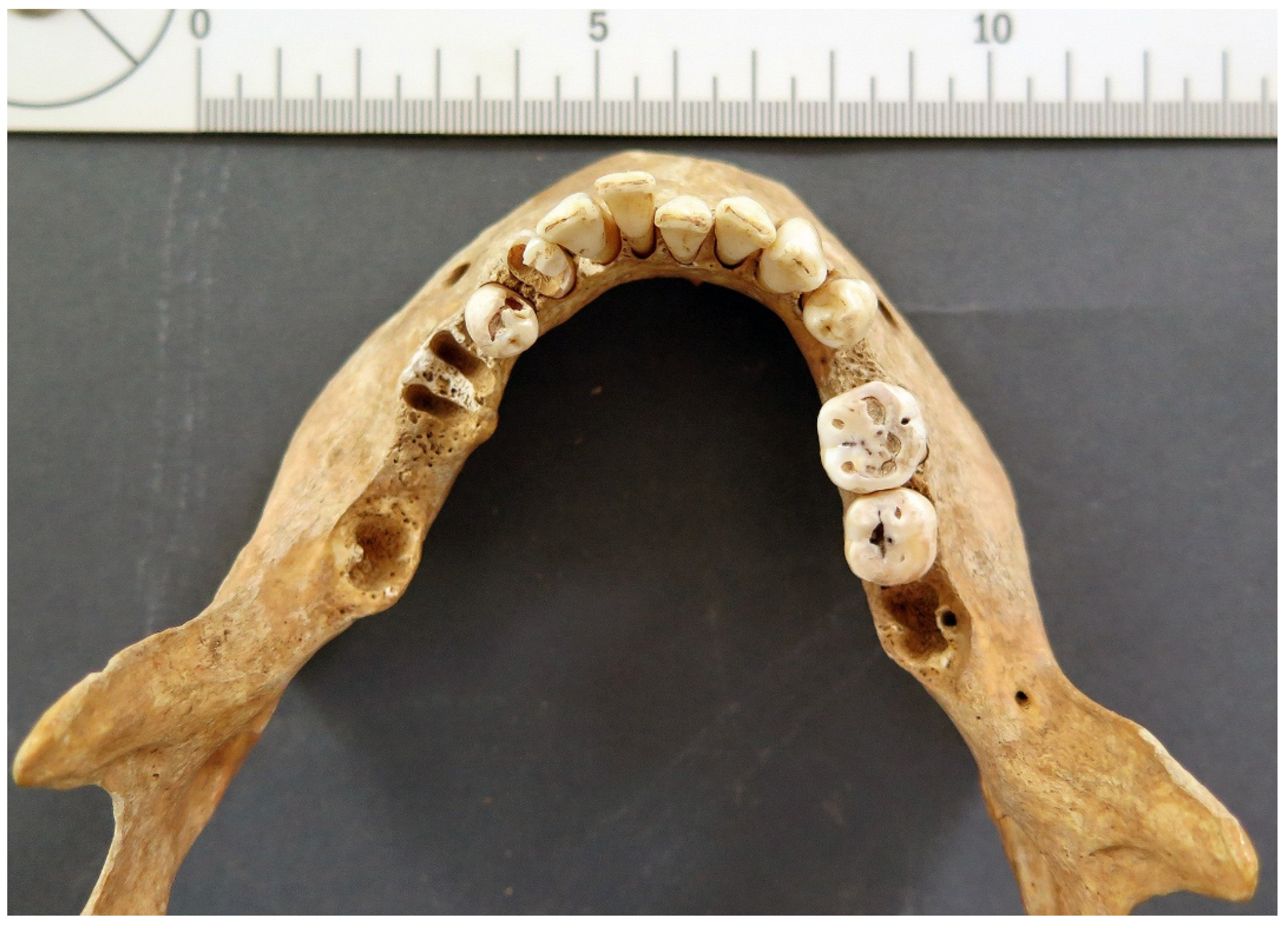
For the assessment of oral health of the studied individual, we used several different dento-alveolar pathologies (caries, abscess, ante mortem tooth loss, and occlusal wear). Three out of 27 analysed teeth were affected by carious lesions (left Man PM1, interproximal surface; left Man PM2, interproximal surface; right Man M2, occlusal surface) while three teeth were lost ante mortem (left Man M2; right Man PM2; left Max I2) (Figure 5 and Supplementary Table S2). Additionally, one alveolar abscess was registered on the mandible (left Max I2). The teeth are characterised by intermediate occlusal wear with slight calculus present on all anterior mandibular teeth and maxillary molars. Furthermore, linear enamel hypoplasia was observed on all mandibular incisors and the right canine. The hypoplastic defects occurred at three years of age. And finally, a CT scan revealed dysodontiasis of the third right maxillary molar (impacted tooth); the tooth is fully developed (both the crown and the root) and oriented horizontally with the crown located anterior, partially above the M2 (Figure 6). Since the tooth is still completely located in the alveolus, it was not visible to the naked eye.
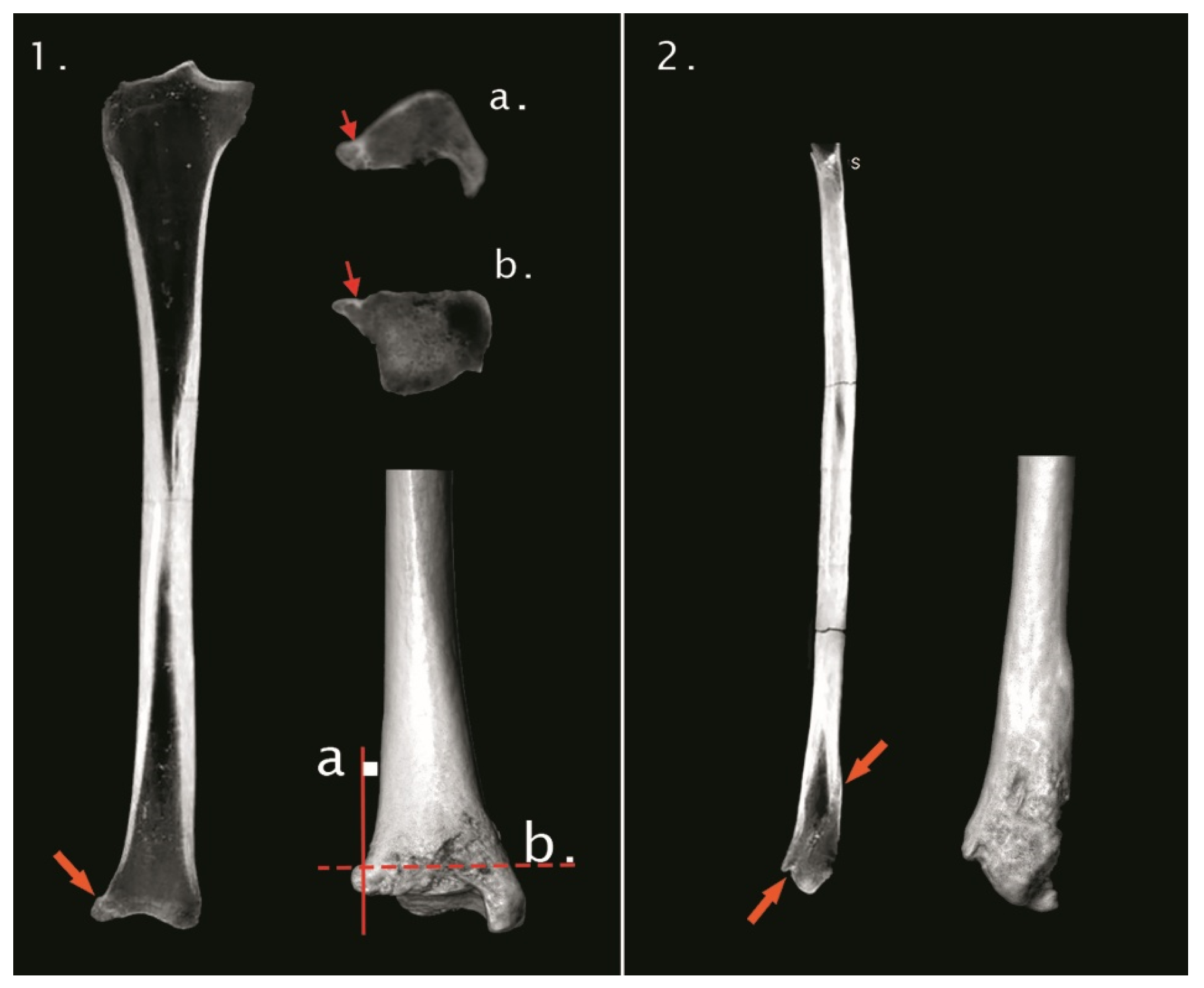
Besides dento-alveolar pathologies, other skeletal changes were also observed (see Supplementary Table S3). For example, a slight osteophytosis is present on both shoulders (scapular glenoid fossae) and the bodies of one thoracic (T4) and one lumbar (L3) vertebra. The most impressive pathological feature was registered on the right distal tibia and fibula, where changes corresponding to the ante mortem ankle sprain (fracture) are present. This injury is characterised by the formation of an elongated groove superior to the distal articular surface on the medial side of the right fibula, and the presence of irregular bone growths located on the anterior side of the distal tibio-fibular joint of the right tibia (Figure 7). These growths most probably represent a subsequent ossification of the torn anterior tibio-fibular ligament. No pathological or morphological modifications that could be related to the fracture were observed on any of the preserved foot bones. CT examination revealed a healed fracture of the lateral aspect of the distal tibia, with mild diastasis of the fracture fragments and consequent deformation of the distal tibial epiphysis. The articular surface, however, remains intact. An oblique metaphyseal–diaphyseal fracture of the ipsilateral fibula is also observed, showing complete and well-aligned healing (Figure 8).
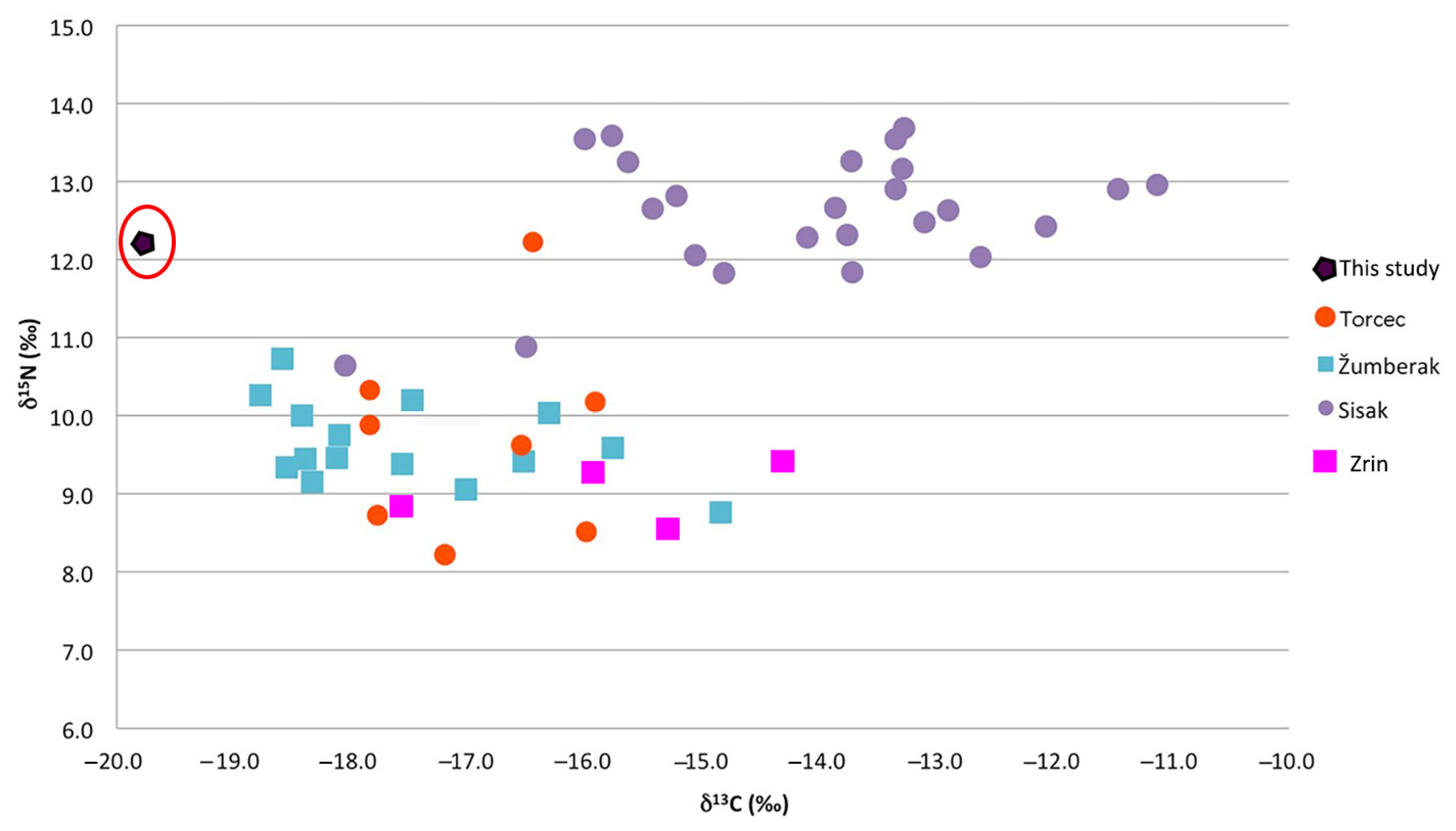
The sample for C/N stable isotopes analysis was taken from the left rib. The sample provided collagen of good quality with a C:N ratio of 3.2. Stable carbon and nitrogen isotope analysis gave the following results: for run A, the δ13C value is −19.8‰, and the δ15N value is 12.1‰, while for run B, the δ13C value is −19.7 ‰, and the δ15N value is 12.2‰. The recorded carbon value is consistent with a terrestrial diet based on C3 plants (cereals such as barley, wheat and/or oats, different types of vegetables) with no marine input. On the other hand, a very high nitrogen value indicates two possibilities: the consumption of omnivore protein, such as pigs, or a diet mostly based on freshwater fish.
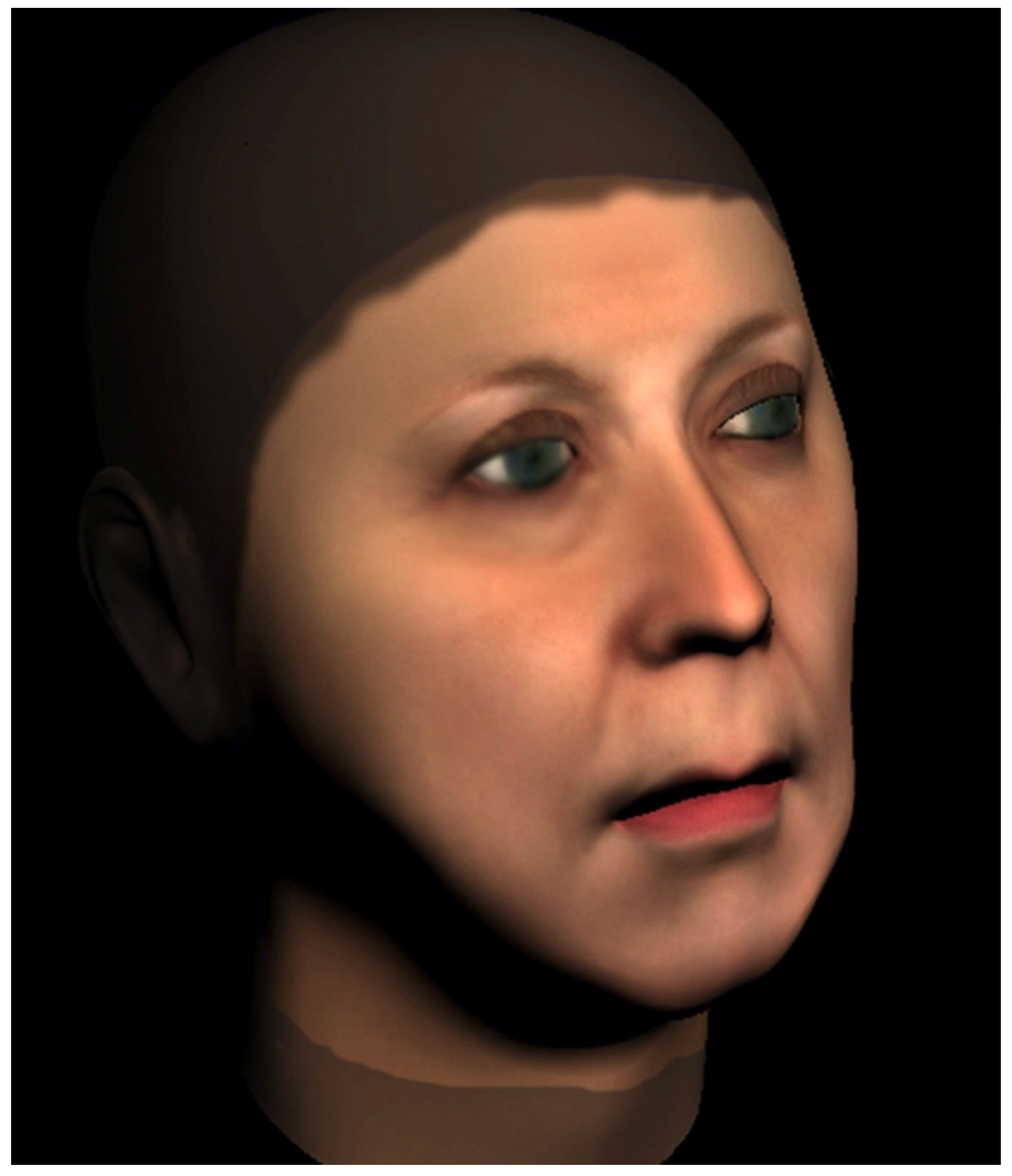
Apart from a comprehensive diet reconstruction based on isotopic values of bone collagen, we also conducted CT scanning of the whole skeleton with the primary aim of digital documentation and facial reconstruction. The skull exhibited slight asymmetry attributable to mild plagiocephaly, although without any significant impact on facial symmetry. In particular, the orbits and zygomatic arches were symmetrical (Figure 9). The occlusal plane was well preserved, allowing for correct mandibular articulation. The facial approximation yielded the face of a middle-aged woman, consistent with the age estimated from both historical and anthropological evidence (Figure 10).

4. Discussion

After the comprehensive analysis of the skeleton in question, what can we say about this individual? Can we attribute the skeleton to Sofia Kaštelančić née di Prata based on the available information? Unfortunately, no pictorial evidence of her has been preserved to date, so we know nothing about her physical appearance. Furthermore, contemporary written sources are quite scarce and tell us very little about her life and death, but also about her closest relatives. We know that she was a daughter of Nicholas Tulbertfi (di Prata) of Brštanovac (Berstyanóc, Berschanowch, Berschyanocz, modern-day Bršljanica), who was a knight in the court of king Albert, but was recorded in the charter as also having served king Sigismund [32]. The Di Pratas were a noble family from Pordenone in northern Italy who fled to Croatia in 1420, after the family castle at Prata had been occupied and destroyed by the Venetians, and they lost their ancestral lands in Friuli. After their arrival in Croatia, they received the castle of Berstyanóc in the county of Körös (modern-day Križevci) as their seat from king Sigismund [32]. Sofia had no brothers, but two sisters: Ursula and Catherine. The sources also mention that Sofia was married to Nicholas V Kaštelančić (c. 1470-1515/1516), who was a son of Akatius Kaštelančić, vicebanus of Slavonia [26,33], de facto a deputy viceroy for the region of medieval Slavonia within the Hungarian Kingdom [34]. Nicholas is mentioned in 1512 and 1515 as a castellan of Vasmegyericse for Clara Rozgonyi, widow of George Kanizsai. Furthermore, the tax lists of 1507 and 1513 mention that Nicholas was a landlord in Sirač, Hum and the surroundings of Virovitica, and those from 1520 list Sofia as a landlord in Ilova. Sofia is explicitly mentioned in archival sources as the wife of Nicholas in 1515, and as his widow in 1516, 1517, 1518, 1520, 1522, 1524, and in 1534. With the death of Nicholas V in 1515/1516, this branch of the Kaštelančić family became extinct since no children survived from his marriage with Sofia [32,33]. The exact date of Sofia’s death is not certain, but it probably happened sometime after 1524, maybe even after 1534. No details on her death and the final resting place have been recorded, but if we consider that the tomb at the Pauline monastery of Moslavina Mountain really belongs to her, then this is probably one of the last burials that took place at this site before it was permanently abandoned due to Ottoman attacks.
Research into the position and role of (highborn) women in the late medieval continental Croatia is, unfortunately, hampered by the relatively rare mention of women in contemporary written sources [35]. The differences in the position of noblewomen and noblemen in the Hungarian Kingdom were also conditioned by the very nature of the nobility. A nobleman was, above all, a warrior and his basic duty was military service to the king. The very fact that only men could perform military service reduced the importance of women and placed them in a subordinate position. The subordination of women is also seen in the understanding that “blue blood” is inherited only from one’s father, i.e., children born to a noble father and a non-noble mother were true nobles, while in the opposite instance, that was not the case [35]. Men and women were also distinguished by law and by the age at which they became adults. Men reached full adulthood (perfecta aetas) at the age of 24, and women at the age of 16. Both men and women reached legal adulthood (legitima aetas) at the age of 12. Men could appoint representatives at the age of 12, incur debts at the age of 16, and alienate movable property at the age of 18. Women could appoint representatives at the age of 12, but could incur debts and alienate movable property at the age of 14. At the age of 16, they could dispose of their maiden quarter (quarta puellaris), dowry, and other property rights [35]. However, while a man ceased to be under anyone’s guardianship upon reaching adulthood, women were under guardianship and paternal authority until marriage. Even after reaching adulthood, girls were not allowed to commit themselves to anything that could harm the interests of their heirs or relatives, and they could not be guardians of their younger brothers [35]. As for inheritance, hereditary property belonged to sons and their male descendants, and in the absence of these, to male relatives who were connected to the testator through the male line [35]. Although hereditary land belonged to male descendants, daughters still had a certain right to it because they had a maiden quarter, i.e., daughters inherited a quarter of their father’s hereditary property. In addition to hereditary rights, daughters also had the so-called ius capillare, i.e., the right to maintenance, upbringing and equipment from their father’s estate upon marriage or leaving for a monastery [35]. A widow also had the right to maintenance in accordance with her status until remarriage (the so-called ius viduale). In addition, the widow was entitled to a dowry (dos), which consisted of money and movable property, the value of which depended on the husband’s position. Dos was considered a reward for marital fidelity and was given from the husband’s estate. A woman lost her right to dos in the event of adultery or if she was convicted of violence before her husband’s death. Otherwise, they were free to dispose of the property they had acquired. If they did not make a will, it was inherited by their children or, if they did not have any, by their paternal relatives [35].
Unfortunately, no contemporary data on Sofia’s physical appearance and general health have been preserved, which makes the analysis of the remains from Moslavina Mountain the exclusive source of this type of information. According to the bioarchaeological analysis, this is a skeleton of a relatively healthy woman aged between 40 and 50 years and of a gracile build suffering from a few milder ailments. Her age-at-death and stature correspond well to the average age-at-death (around 40 years on average) and the average female stature (around 160 cm) recorded in other contemporary communities from continental Croatia, such as those from Ivankovo, Zrin, and Đakovo [36,37,38].
Her oral health, i.e., the occurrence of carious lesions, alveolar abscess, ante mortem tooth loss, dental calculus and the degree of occlusal wear, is consistent with her age. The occurrence of the mentioned dento-alveolar lesions in her skeleton again corresponds nicely to the occurrence of these pathologies in a range of contemporary sites from the region [36,37,38,39,40,41]. The high prevalence of these pathologies (especially caries and calculus) at these sites strongly suggests that the everyday diet of late medieval inhabitants of this part of Croatia was quite uniform, consisting mostly of carbohydrates (grains in various forms) with very low levels of animal proteins, a fact also confirmed by isotopic studies [36,42,43]. Nonetheless, it has to be mentioned that some other variables, such as oral hygiene practices, individual oral microbiome, abrasion patterns related to food processing and general health status, may also have played a significant role in the occurrence of the mentioned oral pathologies (for more details see [44]).
The anterior mandibular teeth display linear enamel hypoplasia, with the defects occurring at the age of three. Numerous studies have offered several explanations for the occurrence of LEH in past populations, with the most common being the childhood disease and malnutrition, and poor sanitary conditions [45,46,47], but also the effects of weaning [47,48] and a multifactorial model in which nutritional deficits and pathological stressors interact during growth [49]. Although the skeleton does not exhibit any macroscopic signs of infectious diseases, we cannot rule out the possibility that this individual suffered some physiological stresses during their early childhood caused by an outbreak of an infectious disease that did not leave any traces on their skeleton/dentition. Historic written sources from this period indicate that frequent outbreaks of plague, cholera, tuberculosis and pox in Slavonia had a significant impact on everyday life of the local population [50] while skeletal evidence confirms the existence of tuberculosis and treponematosis in the region [51,52,53]. It is also possible that the individual suffered from malnutrition sometimes in their childhood, but considering their probable elevated social status, such an explanation is less viable, but it cannot be completely discarded. As for the weaning hypothesis, we lack the information on the age of weaning during this period in continental Croatia, but written sources from late medieval towns in Dalmatia put this age between 12 and 24 months [54,55]. Ethnographic research in rural communities in central Croatia in the 19th century reveals that the duration of breastfeeding was somewhat long, from one year of age up to the birth of the second child, meaning up to two or three years on average [56]. Furthermore, carbon and nitrogen isotopic incremental analysis of dentin from the medieval site of Đurđevac-Sošice in central Croatia indicates weaning completion at 2.9 years [43], while the similar data for the early Modern period site of Prozorje, also in central Croatia, indicates the completion of weaning between 2.5 and 3.2 years of age [57]. The weaning hypothesis in this case seems plausible, but not exclusive, as one has to bear in mind diagnostic limits when discussing the health of ancient individuals. Finally, it is also possible that the reasons for the occurrence of LEH in this individual are multifactorial, for example, a combination of infectious/non-infectious diseases, anaemia, vitamin C deficiency, and malnutrition, as already proposed for several Croatian early medieval sites [58].
Impacted third molars, and impacted teeth in general, have been rarely reported in the bioarchaeological record [59,60,61], although some studies indicate that impaction of the third molar is occurring in up to 73% of young adults in Europe today [62]. In most cases, such teeth are characterised as teeth that fail to erupt into the dental arch within the expected time and/or those that are prevented from eruption due to a physical barrier within the path of eruption [63]. This condition can lead to complications like pericoronitis, which involves a partially erupted tooth covered by inflamed gum tissue, and may also cause pain, swelling, and fever. Today, the most common treatment is oral surgery to extract the problematic tooth, especially if it is a third molar [62,63]. Since we did not record any associated pathological changes, we cannot tell with certainty whether dysodontiasis of the third right maxillary molar had any effect on the quality of life of the studied individual.
Some other minor pathologies recorded on this skeleton include mild osteophytosis on both shoulders and two vertebrae. Such changes in Croatian late medieval skeletal assemblages are usually recorded in individuals over 40 years of age [36,37,38,41,64]. Considering the age of this individual, we may hypothesise that osteophytosis in her case is probably associated with the age, but some other factors, such as repetitive mechanical loading, and movement and genetic influences, cannot be ruled out [65]. This assumption is additionally strengthened by the fact that no skeletal indicators of intense physical activities, such as Schmorl’s nodes on vertebrae and/or enthesopathies on the upper arms, are present.
Probably the most striking pathological change observed in this skeleton is an ante mortem injury of the distal right tibia and fibula, i.e., the right ankle. The fracture has healed nicely and is barely visible to the naked eye, although CT scans clearly show the healed trauma of the lateral malleolus and syndesmosis joint. The fact that the fracture has completely healed and the bone is remodelled, and the uniform colour of the bone clearly indicates this was an ante mortem event [66,67]. The recorded bony growths represent a subsequent ossification of the torn anterior tibio-fibular ligament. This is a typical “high ankle sprain” or a “syndesmotic sprain”, an injury that occurs from a sudden and forceful external rotation of the lower leg and foot. In modern settings these injuries are usually associated with contact sports [68]. However, in this case, we cannot assess with certainty the exact cause of the injury, but it could be due to, for example, domestic activities, or it could be just an accidental trauma. When a syndesmotic lesion is associated with a fracture, this is usually a Weber type B or C fracture or a Maisonneuve fracture with or without concomitant ligamentous injury [69]. Here we have a typical example of a Weber B-type ankle fracture caused by an external rotation injury with a spiral fracture occurring near or at the level of the syndesmosis with torn ligaments [70]. Today, these injuries are treated either by using a conservative approach with immediate weightbearing and early joint mobilisation in a cast, orthosis or walker boot, or by using surgical treatment and fixation of the distal fibula with screws. If not properly immobilised, certain immediate complications, such as leg muscle atrophy, joint stiffness, and deep vein thrombosis, may occur, while long-term consequences involve persistent calf muscle weakness, gait abnormalities, and complex regional pain syndrome [71]. Unfortunately, it is not possible to precisely estimate when exactly the injury occurred. However, based on the state of healing and remodelling of the bone, we can assume that it happened at least a few years before her death. We also cannot ascertain whether the injury was immobilised and treated. Consequently, it is difficult to say if she was limping and for how long, but it is a possibility.
Carbon and nitrogen stable isotope analyses provide a direct insight into the dietary patterns and subsistence strategies of past populations. For example, carbon isotope values (δ13C) primarily reflect the types of plants consumed, distinguishing between C3 plants (e.g., wheat, barley) and C4 plants (e.g., millet) or can differentiate marine from terrestrial resources [72,73]. Nitrogen isotope values (δ15N) reveal trophic levels, and they are used to identify the relative contributions of protein sources in the diet [72,73]. Changes in δ13C and δ15N values over time within an individual’s tissues can signal shifts from local diets to new, distant food webs due to migration [72,73].
When we are talking about the everyday diet of the social elite during the Late Middle Ages in central Croatia, the available sources list white wheat bread, sweet water fish, pork, beef, lard, salt and other spices, vegetables such as cabbage, onion and garlic and some fruits as the main foods consumed [74]. This is also confirmed by zooarchaeological and archaeobotanical data [75,76,77,78]. Carbon and nitrogen stable isotopes analysis of bone collagen from the rib of the studied individual clearly show values consistent with: (i) a terrestrial diet based on C3 plants such as barley, wheat and/or oats, and different types of vegetables with no marine input, and (ii) a consumption of significant amounts of omnivore protein such as pigs or the diet mostly based on freshwater fish. The presented isotopic values show a well-balanced diet similar to the diet of high-status individuals from this period, consisting of high-quality foodstuffs rich in proteins, with some variations. On the other hand, these results significantly differ from isotopic values recorded in the samples belonging to the members of lower social strata from several contemporary sites in central Croatia (the only exception is Sisak, a town located on two large rivers rich with fish), indicating diet mostly based on C4 plants with a low intake of animal proteins [37,42] (Figure 11). Here we have to mention inherent limitations of single-sample dietary reconstruction (as used in our case), as such an approach only reflects one moment in a life on an individual and does not represent a long-term diet that might potentially lead to misinterpretation of their dietary habits. Additionally, some other confounding factors, such as the freshwater reservoir effect, might impact the interpretation of diet in ancient individuals [79].
The approximation of facial traits, despite its inherent limitations and the sensitive nature of facial reconstruction in forensic bioanthropology, has gained increasing recognition within archaeological and museological research [80]. These limitations arise not only from the fact that there is no single “true face” of an individual—but rather a mutable construct shaped by cultural and symbolic layers and functioning as a vital component of social interaction—but also from the probabilistic character of the method, the partial and population-dependent nature of the available soft-tissue data, and the inevitable role of interpretative choices in the modelling process. In this sense, the reconstruction presented here must be regarded as a plausible and explicitly hypothetical representation and should be interpreted with appropriate caution. In our view, recreating a face means reintegrating the deceased, even when anonymous, even when separated from us by centuries or millennia, into the broader human context to which they once belonged. This act symbolically restores a sense of human dignity, one that profoundly differs from the condition of the individual as a mere biological remain or artefact. Such was our intent in reconstructing the human and historical figure of the individual buried at the Pauline monastery on Moslavina Mountain.
We already mentioned that the osteobiographical approach, in combination with a comprehensive paleopathological study, has been rarely used in Croatian bioarchaeology, with this one being the first attempt to reconstruct the life course of a known historical person from the late medieval period. A similar approach was recently used in the neighbouring Hungary, where a skeleton allegedly belonging to Béla, Duke of Bosnia and Macsó (c. 1245–1272), was positively identified by using conventional bioarchaeology and forensic anthropology, direct radiocarbon dating, carbon, nitrogen and strontium isotopic analysis, dental calculus analysis and ancient DNA analysis [81]. Obviously, the combination of osteobiographic approach and the integration of various multidisciplinary methods clearly illustrates how such studies can confirm certain historical hypotheses, identify lesser-known historic persons, but also provide new details about their lives, previously unknown from historic sources, and place them in a wider historical context.

5. Conclusions

The archaeological context of the burial from the late medieval Pauline monastery of the Blessed Virgin Mary on Moslavina Mountain strongly implied that the analysed individual was most probably of an elevated social status, possibly a member of high-ranking nobility. The inscription on the monumental tombstone covering the grave indicated that Sofia Kaštelančić was buried there. A detailed bioarchaeological study of the remains and carbon and nitrogen stable isotopes analysis from bone collagen indicates that the studied individual’s lifestyle and diet were similar to those of late medieval nobility. She suffered from several minor ailments during her life, such as caries, alveolar abscess, and degenerative osteophytosis, all of which agree with her age. Furthermore, we cannot tell with certainty if dysodontiasis of the right third maxillary molar and the antemortem fracture of the right ankle had any lasting effect on her quality of life, but it is possible that they posed a certain limitation in conducting her everyday duties. And finally, facial reconstruction based made it possible for the first time in over 500 years to obtain her approximate physical appearance. Overall, the presented data support a probable attribution of the studied skeleton to Sofia Kaštelančić. However, it has to be acknowledged that none of the observed osteological traits are individually or collectively diagnostic of Sofia, so, in the absence of individualising evidence, the identification remains hypothetical rather than demonstrative. Future lines of inquiry, including ancient DNA analysis and strontium isotope analysis, should provide more definitive answers on the identity of the individual from the monastery on Moslavina Mountain.

Supplementary Materials

The following supporting information can be downloaded at https://www.mdpi.com/article/10.3390/heritage8120540/s1. Table S1. Sex/age-at-death information; Table S2. Dental inventory; Table S3. Recorded pathologies.

Author Contributions

Conceptualisation, M.N. and I.J.; methodology, M.N.; software, F.C.; validation, M.N., T.P., F.C. and I.J.; formal analysis, M.N., T.P., F.C. and I.J.; investigation, M.N., T.P., F.C. and I.J.; resources, M.N., T.P., F.C. and I.J.; data curation, M.N., T.P. and F.C.; writing—original draft preparation, M.N.; writing—review and editing, M.N., T.P., F.C. and I.J.; visualisation, M.N., T.P. and F.C.; supervision, M.N.; project administration, M.N.; funding acquisition, M.N., T.P., F.C. and I.J. All authors have read and agreed to the published version of the manuscript.

Funding

This research was funded by the European Union-NextGeneration EU (NPOO) grant number [IA-INT-2024-BioAntroPoP].

Data Availability Statement

The data that support the findings of this study are present in the main manuscript and Supplementary Materials.

Acknowledgments

The authors wish to thank Barbara Kriletić from the Institute for Anthropological Research for the photos of the skeleton.

Conflicts of Interest

The authors declare no conflicts of interest.

References

  1. Saul, F.P. The Human Skeletal Remains of Altar de Sacrificios: An Osteobiographic Analysis; Peabody Museum Press: Cambridge, MA, USA, 1972. [Google Scholar]
  2. Saul, F.P. Osteobiography: Life history recorded in bone. In The Measures of Man: Methodologies in Biological Anthropology; Giles, E.F., Scott, J., Eds.; Peabody Museum Press: Cambridge, MA, USA, 1976; pp. 372–382. [Google Scholar]
  3. Saul, F.P.; Saul, J.M. Osteobiography: A Maya example. In Reconstruction of Life from the Skeleton; İşcan, Y.K., Kenneth, A.R., Alan, R., Eds.; Liss: New York, NY, USA, 1989; pp. 287–302. [Google Scholar]
  4. Hosek, L.; Robb, J. Osteobiography: A platform for bioarchaeological research. Bioarch. Int. 2019, 3, 1–15. [Google Scholar] [CrossRef]
  5. Osterholtz, A.; Novak, M.; Carić, M.; Paraman, L. Death and burial of a set of fraternal twins from Tragurium: An osteobiographical approach. J. Archaeol. Sci. Rep. 2025, 62, 105071. [Google Scholar] [CrossRef]
  6. Agarwal, S.C.; Wesp, J.K. Exploring Sex and Gender in Bioarchaeology; University of New Mexico Press: Albuquerque, NM, USA, 2017. [Google Scholar]
  7. DeWitte, S.N. Stress, sex, and plague: Patterns of developmental stress and survival in pre- and post-Black Death London. Am. J. Hum. Biol. 2018, 30, e23073. [Google Scholar] [CrossRef] [PubMed]
  8. Geller, P.L. Identity and difference: Complicating gender in archaeology. Ann. Rev. Anthropol. 2009, 38, 65–81. [Google Scholar] [CrossRef]
  9. Geller, P.L. The bioethos of osteobiography. Bioarchaeol. Int. 2019, 3, 88–101. [Google Scholar] [CrossRef]
  10. Mihanović, F.; Jerković, I.; Kružić, I.; Anđelinović, Š.; Janković, S.; Bašić, Ž. From biography to osteobiography: An example of anthropological historical identification of the remains of St. Paul. Anat. Rec. 2017, 300, 1535–1546. [Google Scholar] [CrossRef] [PubMed]
  11. Šlaus, M.; Domić Kunić, A.; Pivac, T. Reconstructing the life of a Roman soldier buried in Resnik near Split, based on the anthropological analysis of his skeleton. Coll. Antropol. 2018, 42, 287–294. [Google Scholar]
  12. Pleše, T. Ordo Sancti Pauli Primi Eremitae: Monasteries and the shaping of the late medieval Slavonian landscape prior to the Battle of Mohács (1526). In Monastic Europe: Medieval Communities, Landscapes, and Settlements; Krasnodebska-D’Aughton, M., Bhreathnach, E., Smith, K., Eds.; Brepols: Turnhout, Belgium, 2019; pp. 383–406. [Google Scholar]
  13. Klales, A.R. Sex Estimation of the Human Skeleton: History, Methods, and Emerging Techniques; Academic Press: London, UK, 2020. [Google Scholar]
  14. Buikstra, J.E.; Ubelaker, D.H. Standards for Data Collection from Human Skeletal Remains; Arkansas Archaeological Survey: Fayetteville, NC, USA, 1994. [Google Scholar]
  15. Trotter, M.L. Estimation of stature from intact limb bones. In Personal Identification in Mass Disasters; Stewart, T.D., Ed.; Smithsonian Institution, National Museum of Natural History: Washington, DC, USA, 1970; pp. 71–83. [Google Scholar]
  16. Aufderheide, A.C.; Rodríguez-Martín, C. The Cambridge Encyclopaedia of Human Paleopathology; Cambridge University Press: Cambridge, UK, 1998. [Google Scholar]
  17. Ortner, D.J. Identification of Pathological Conditions in Human Skeletal Remains; Academic Press: London, UK, 2003. [Google Scholar]
  18. Reid, D.J.; Dean, M.C. The timing of linear hypoplasias on human anterior teeth. Am. J. Phys. Anthropol. 2000, 113, 135–139. [Google Scholar] [CrossRef]
  19. Longin, R. New method of collagen extraction for radiocarbon dating. Nature 1971, 230, 241–242. [Google Scholar] [CrossRef]
  20. Fahy, G.E.; Deter, C.; Pitfield, R.; Miszkiewicz, J.J.; Mahoney, P. Bone deep: Variation in stable isotope ratios and histomorphometric measurements of bone remodelling within adult humans. J. Archaeol. Sci. 2017, 87, 10–16. [Google Scholar] [CrossRef]
  21. MacDonald, D.; Telyakova, V. An overview of cone-beam computed tomography and dental panoramic radiography in dentistry in the community. Tomography 2024, 10, 1222–1237. [Google Scholar] [CrossRef]
  22. Kaasalainen, T.; Ekholm, M.; Siiskonen, T.; Kortesniemi, M. Dental cone beam CT: An updated review. Phys. Med. 2021, 88, 193–217. [Google Scholar] [CrossRef] [PubMed]
  23. Wilkinson, C. Forensic Facial Reconstruction; Cambridge University Press: Cambridge, UK, 2004. [Google Scholar]
  24. Wilkinson, C. Facial reconstruction—Anatomical art or artistic anatomy? J. Anat. 2010, 216, 235–250. [Google Scholar] [CrossRef]
  25. Cavalli, F. Postmortem CT and forensic identification: The role of facial approximation and craniofacial superimposition techniques. In Proceedings of the Abstracts Book of the 12th Annual Meeting of the International Society for Forensic Radiology and Imaging, Toulouse, France, 25–27 May 2023; International Society for Forensic Radiology and Imaging: Toulouse, France, 2023; p. 102. [Google Scholar]
  26. Stephan, C.N. Accuracies of facial soft tissue depth means for estimating ground truth skin surfaces in forensic craniofacial identification. Int. J. Legal Med. 2016, 129, 877–888. [Google Scholar] [CrossRef] [PubMed]
  27. Stephan, C.N. The application of the central limit theorem and the law of large numbers to facial soft tissue depths: T-table robustness and trends since 2008. J. Forensic Sci. 2014, 59, 454–462. [Google Scholar] [CrossRef]
  28. Stephan, C.N. Facial approximation: Globe projection guideline falsified by exophthalmometry literature. J. Forensic Sci. 2002, 47, 730–735. [Google Scholar] [CrossRef]
  29. Stephan, C.N. Facial approximation: An evaluation of mouth-width determination. Am. J. Phys. Anthropol. 2003, 121, 48–57. [Google Scholar] [CrossRef] [PubMed]
  30. Rynn, C.; Wilkinson, C.; Peters, H.L. Prediction of nasal morphology from the skull. Forensic Sci. Med. Pathol. 2010, 6, 20–34. [Google Scholar] [CrossRef] [PubMed]
  31. Blanz, V.; Vetter, T. A morphable model for the synthesis of 3D faces. In Proceedings of the 26th Annual Conference on Computer Graphics and Interactive Techniques, Los Angeles, CA, USA, 8–13 August 1999; Association for Computing Machinery: New York, NY, USA, 1999; p. 187. [Google Scholar]
  32. Pálosfalvi, T. The Noble Elite in the County of Körös (Križevci) 1400–1526; Institute of History, Hungarian Academy of Sciences: Budapest, Hungary, 2014. [Google Scholar]
  33. Maček, P.; Jurković, I. Rodoslov Plemića i Baruna Kaštelanovića od Svetog Huha (od 14. do 17. Stoljeća); Hrvatski Institut za Povijest, Podružnica za Povijest Slavonije, Srijema i Baranje: Slavonski Brod, Croatia, 2009. [Google Scholar]
  34. Heka, L. Hrvatski ban: Prava i ovlasti tijekom tisućgodišnje opstojnosti, mađarska ustavno-povijesna perspektiva. Zb. Pravnog fak. Sveučilišta Rijeci 2023, 44, 435–454. [Google Scholar] [CrossRef]
  35. Karbić, M. Položaj plemkinja u Slavoniji tijekom srednjeg vijeka. Hist. Zb. 2006, 59, 15–31. [Google Scholar]
  36. Krznar, S.; Hajdu, T. Late medieval/early modern population from Ivankovo, eastern Croatia: The results of the (bio)archaeological analysis. Pril. Instituta Arheol. Zagreb. 2020, 37, 165–194. [Google Scholar] [CrossRef]
  37. Novak, M.; Bedić, Ž.; Los, D.ž.; Premužić, Z. Bioarchaeological analysis of the 15th–17th century population from Zrin, continental Croatia. Arheol. Rad. Raspr. 2021, 20, 317–326. [Google Scholar]
  38. Kriletić, B.; Ivanušec, D.; Carić, M.; Novak, M. The usual suspects: Deciphering the epidemiology, variation of injuries and lifestyle in Late Medieval / Early Modern population from Đakovo. Arheol. Rad. Raspr. 2024, 22, 211–234. [Google Scholar]
  39. Šlaus, M.; Pećina-Hrnčević, A.; Jakovljević, G. Dental disease in the late Medieval population from Nova Rača, Croatia. Coll. Antropol. 1997, 21, 561–572. [Google Scholar]
  40. Novak, M.; Šlaus, M.; Vyroubal, V.; Bedić, Ž. Dental pathologies in rural medieaval populations from continental Croatia. Anthropol. Közlemények 2010, 51, 11–21. [Google Scholar]
  41. Novak, M.; Rimpf, A.; Bedić, Ž.; Krznar, S.; Janković, I. Reconstructing medieval lifestyles: An example from Ilok, eastern Croatia. Acta Musei Tiberiopolitani 2017, 2, 171–180. [Google Scholar]
  42. Novak, M.; Bedić, Ž.; Vyroubal, V.; Krznar, S.; Rimpf, A.; Janković, I.; Lightfoot, E.; Šlaus, M. The effects of the Little Ice Age on oral health and diet in populations from continental Croatia. In Proceedings of the Scientific Program (With Abstracts) of the 44th Annual North American Paleopathology Association Meet-ing; New Orleans, LA, USA: 17–20 April 2017; Paleopathology Association: New Orleans, LA, USA, 2017; p. 34. [Google Scholar]
  43. Cronkhite, C.; Temple, D.H.; Osterholtz, A.; Valent, I.; France, C.A.M. Interindividual variation in infant child feeding behavior at Đurđevac-Sošice medieval Croatia: Exploring life course through incremental analysis of dentin. J. Archaeol. Sci. 2025, 182, 106357. [Google Scholar] [CrossRef]
  44. Hillson, S. Dental pathology. In Biological Anthropology of the Human Skeleton; Katzenberg, A., Saunders, S.R., Eds.; Wiley-Liss: Hoboken, NJ, USA, 2008; pp. 301–340. [Google Scholar]
  45. Larsen, C.S. Bioarchaeology. Interpreting Behavior from the Human Skeleton; Cambridge University Press: Cambridge, UK, 1997. [Google Scholar]
  46. Roberts, C.A.; Manchester, K. Archaeology of Disease; Sutton Publishing: Stroud, UK, 2005. [Google Scholar]
  47. Łukasik, S.; Krenz-Niedbala, M. Age of linear enamel hypoplasia formation based on Massler and colleagues’ and Reid and Dean’s standards in a Polish sample dated to 13th–18th century CE. HOMO 2014, 65, 296–310. [Google Scholar] [CrossRef]
  48. Blakey, M.L.; Leslie, T.E.; Reidy, J.P. Frequency and chronological distribution of dental enamel hypoplasia in enslaved Americans: A test of the weaning hypothesis. Am. J. Phys. Anthropol. 1994, 95, 371–383. [Google Scholar] [CrossRef]
  49. Moro, C.; Biehler-Gomez, L.; Lanza Attisano, G.; Gibelli, D.M.; Boschi, F.; De Angelis, D.; Cattaneo, C. Investigating the etiology and demographic distribution of enamel hypoplasia. Heritage 2025, 8, 420. [Google Scholar] [CrossRef]
  50. Mlinarić, D.; Lazanin, S. Zarazne bolesti, prostorna mobilnost i prevencija u ranome novom vijeku: Povijesna iskustva Dalmacije i Slavonije. Povij. Pril. 2021, 40, 9–41. [Google Scholar] [CrossRef]
  51. Krznar, S.; Novak, M. A case of skeletal tuberculosis from St. John the Baptist site in Ivankovo near Vinkovci. Pril. Instituta arheol. Zagreb. 2013, 30, 93–106. [Google Scholar]
  52. Lauc, T.; Fornai, C.; Premužić, Z.; Vodanović, M.; Weber, G.W.; Mašić, B.; Rajić Šikanjić, P. Dental stigmata and enamel thickness in a probable case of congenital syphilis from XVI century Croatia. Arch. Oral. Biol. 2015, 60, 1554–1564. [Google Scholar] [CrossRef] [PubMed]
  53. Šlaus, M.; Novak, M. A case of venereal syphilis in the Modern Age horizon of graves near the church of St. Lawrence in Crkvari. Pril. Instituta Arheol. Zagreb. 2007, 24, 503–510. [Google Scholar]
  54. Kurtović, E. Najmljeno dojenje i odgoj malodobne djece u Dubrovniku i dubrovačkom zaleđu u razvijenom srednjem vijeku. In Žene u Srednjevjekovnoj Bosni—Zbornik Radova; Filipović, O.E., Ed.; Društvo za Proučavanje Srednjevjekovne Bosanske Istorije: Sarajevo, Bosnia and Herzegovina, 2015; pp. 225–242. [Google Scholar]
  55. Nikolić Jakus, Z. Profesija—Hraniteljica: Dojilje u dalmatinskim gradovima u srednjem vijeku. In IV Istarski povijesni biennale. Filii, Filiae ...: Položaj i Uloga Djece na Jadranskom Prostoru—Knjiga Sažetaka; Mogorović Crljenko, M., Ed.; Zavičajni Muzej Poreštine: Poreč, Croatia; Državni Arhiv u Pazinu: Pazin, Croatia; Sveučilište Jurja Dobrile u Puli: Poreč, Croatia, 2011; pp. 97–113. [Google Scholar]
  56. Čapo-Žmegač, J. Seoska društvenost. In Etnografija: Svagdan i Blagdan Hrvatskoga Puka; Čapo Žmegač, J., Muraj, A., Vitez, Z., Grbić, J., Belaj, V., Eds.; Matica Hrvatska: Zagreb, Croatia, 1998; pp. 251–295. [Google Scholar]
  57. Kokotović, T.; Carić, M.; Stingl, S.; Novak, M.; Belaj, J. Reconstructing life history of the 18th century priest from Prozorje, Croatia: Bioarchaeological and biochemical approaches. J. Archaeol. Sci. Rep. 2025, 66, 105294. [Google Scholar] [CrossRef]
  58. Novak, M.; Vyroubal, V.; Krnčević, Ž.; Petrinec, M.; Howcroft, R.; Pinhasi, R.; Šlaus, M. Assessing childhood stress in early mediaeval Croatia by using multiple lines of inquiry. Anthropol. Anz. 2018, 75, 155–167. [Google Scholar] [CrossRef]
  59. Capasso, L.; di Tota, G. Etruscan teeth and odontology. Dent. Anthropol. 1993, 8, 4–7. [Google Scholar] [CrossRef]
  60. Varotto, E.; Kurek, M.; Militello, P.M.; Platania, E.; Galassi, F.M. A case of impacted third molar from the prehistoric Hypogeum of Calaforno (Giarratana, Ragusa, Sicily): Reflections on the antiquity and evolutionary implications of this trait. Arch. Oral. Biol. 2025, 179, 106371. [Google Scholar] [CrossRef]
  61. Rajić Šikanjić, P.; Premužić, Z.; Meštrović, S. Hide and seek: Impacted maxillary and mandibular canines from the Roman period Croatia. Int. J. Paleopathol. 2019, 24, 89–93. [Google Scholar] [CrossRef]
  62. Peterson, L.J. Principles of management of impacted teeth. In Contemporary Oral and Maxillofacial Surgery; Peterson, L.J., Ellis, E., III, Hupp, J.R., Tuker, M.R., Eds.; Mosby: St. Louis, MA, USA, 1998; pp. 215–248. [Google Scholar]
  63. Juodzbalys, G.; Daugela, P. Mandibular third molar impaction: Review of literature and a proposal of a classification. J. Oral Maxillofac. Res. 2013, 4, e1. [Google Scholar]
  64. Šlaus, M.; Novak, M.; Bedić, Ž.; Vyroubal, V. Antropološka analiza kasnosrednjovjekovnog groblja kraj crkve Sv. Franje na Opatovini u Zagrebu. Arheol. Rad. Raspr. 2007, 15, 211–247. [Google Scholar]
  65. Novak, M.; Šlaus, M. Vertebral pathologies in two early Modern period (16th–19th century) populations from Croatia. Am. J. Phys. Anthropol. 2011, 145, 270–281. [Google Scholar] [CrossRef] [PubMed]
  66. Sauer, N.J. The timing of injuries and manner of death: Distinguishing among antemortem, perimortem and postmortem trauma. In Forensic Osteology: Advances in the Identification of Human Remains; Reichs, K.J., Ed.; C.C. Thomas: Springfield, IL, USA, 1998; pp. 321–332. [Google Scholar]
  67. Facchini, F.; Rastelli, E.; Belcastro, M.G. Peri mortem cranial injuries from a medieval grave in Saint Peter’s Cathedral, Bologna, Italy. Int. J. Osteoarchaeol. 2007, 18, 421–430. [Google Scholar] [CrossRef]
  68. Gerber, J.P.; Williams, G.N.; Scoville, C.R.; Arciero, R.A.; Taylor, D.C. Persistent disability associated with ankle sprains: A prospective examination of an athletic population. Foot Ankle Int. 1998, 19, 653–660. [Google Scholar] [CrossRef]
  69. Schnetzke, M.; Vetter, S.Y.; Beisemann, N.; Swartman, B.; Grützner, P.A.; Franke, J. Management of syndesmotic injuries: What is the evidence? World J. Orthop. 2016, 7, 718–725. [Google Scholar] [CrossRef] [PubMed]
  70. Hermena, S.; Slane, V.H. Ankle Fracture; StatPearls Publishing: Treasure Island, IL, USA, 2025. [Google Scholar]
  71. Nishikawa, D.R.C.; Duarte, F.A.; Saito, G.H.; Sorbini, E.S.; Sequim, V.; Pontin, P.A.; Fonseca, F.C.P.; Miranda, B.R.; Mendes, A.A.M.; Prado, M.P. Functional treatment of isolated stable Weber B fractures of the lateral malleolus with immediate weightbearing and joint mobilization. J. Foot Ankle. 2024, 18, 377–382. [Google Scholar] [CrossRef]
  72. Richards, M.P. Isotope analysis for diet studies. In Archaeological Science: An Introduction; Britton, K., Richards, M.P., Eds.; Cambridge University Press: Cambridge, UK, 2020; pp. 125–144. [Google Scholar]
  73. Lee-Thorp, A. On isotopes and old bones. Archaeometry 2008, 50, 925–950. [Google Scholar] [CrossRef]
  74. Stingl, S. Prehrana Kasnosrednjovjekovnih Elita na Primjeru na Primjeru Troškovnika Zagrebačkog Biskupa Osvalda Thuza iz 1481. i 1482. godine. PhD Thesis, Filozofski fakultet u Zagrebu, Zagreb, Croatia, 2022. [Google Scholar]
  75. Tkalčec, T.; Trbojević Vukičević, T. Archaeozoological evidence of dietary habits of small castle inhabitants in the medieval Slavonia. In Castrum Bene 16. Castrum and Economy; Pisk, S., Ed.; Muzej Moslavine: Kutina, Croatia; Povijesna udruga: Popovača, Croatia, 2021; pp. 124–152. [Google Scholar]
  76. Korpes, K.; Piplica, A.; Đuras, M.; Trbojević Vukičević, T.; Kolenc, M. Exploitation of pigs during the Late Medieval and Early Modern Period in Croatia. Heritage 2024, 7, 1014–1027. [Google Scholar] [CrossRef]
  77. Korpes, K.; Trbojević Vukičević, T.; Đuras, M.; Kolenc, M.; Piplica, A. Archaeozoological insights into the husbandry of domestic ruminants at monastic and noble sites in medieval Croatia. Quaternary 2025, 8, 51. [Google Scholar] [CrossRef]
  78. Reed, K.; Smuk, A.; Tkalčec, T.; Balen, J.; Mihaljević, M. Food and agriculture in Slavonia, Croatia, during the Late Middle Ages: The archaeobotanical evidence. Veget. Hist. Archaeobot. 2022, 31, 347–361. [Google Scholar] [CrossRef]
  79. Olsen, J.; Heinemeier, J.; Lübke, H.; Lüth, F.; Terberger, T. Dietary habits and freshwater reservoir effects in bones from a Neolithic NE German cemetery. Radiocarbon 2010, 52, 635–644. [Google Scholar] [CrossRef]
  80. Cavalli, F. Ricostruire il volto. Approssimazione dei tratti facciali in archeologia. In AAVV Storie dal Confine Orientale. Storie e Volti Dalla Tarda Antichità al Medioevo nel Friuli Venezia Giulia Storico; Edizioni dell’Accademia Jaufré Rudel: Gradisca d’Isonzo, Italy, 2025; pp. 13–39. [Google Scholar]
  81. Hajdu, T.; Borbély, B.; Bernert, Z.; Buzár, Á.; Szeniczey, T.; Major, I.; Cavazzuti, C.; Molnar, M.; Horvath, A.; Palcsu, L.; et al. Murder in cold blood? Forensic and bioarchaeological identification of the skeletal remains of Béla, Duke of Macsó (c. 1245–1272). Forens. Sci. Int. Genet. 2025, 81, 103381. [Google Scholar] [CrossRef] [PubMed]
Figure 1. The location of the monastery of the Blessed Virgin Mary on Moslavina Mountain (in red circle) (base map credit: USGS National Map Viewer, https://apps.nationalmap.gov/viewer/ (accessed on 3 November 2025)).
Heritage 08 00540 g001
Figure 2. The aerial view of the monastic church of the monastery of the Blessed Virgin Mary with the indicated position of the tomb (in red circle) (photo by: Vektra Ltd., Richmond, UK).
Heritage 08 00540 g002
Figure 3. The tombstone and sedilia in the southern part of the apse (A) (photo by: T. Pleše); the inscription in Gothic minuscule and a coat-of-arms in the shape of a dragon (B) (photo by: T. Pleše).
Heritage 08 00540 g003
Figure 4. The skeleton in the tomb after the excavation (photo by T. Pleše).
Heritage 08 00540 g004
Figure 5. Carious lesions and ante mortem tooth loss on the mandible (photo by: B. Kriletić).
Heritage 08 00540 g005
Figure 6. CBCT of the maxilla revealing dysodontiasis of the right third molar (red arrow) (CT scan by: F. Cavalli).
Heritage 08 00540 g006
Figure 7. Ante mortem fracture (Weber B type) of the right distal tibia and fibula (in red circle) (photo by: B. Kriletić).
Heritage 08 00540 g007
Figure 8. Computed tomography (CT) reconstructions using maximum intensity projection (MIP) and volume rendering (VR) techniques: (1) distal epiphyseal fracture of the tibia, at the anterior margin of the fibular articular surface, with minimal diastasis of the fragments, perfectly healed (a. coronal section, b. axial section) (red arrows); (2) oblique distal metaphyseal–epiphyseal fracture of the fibula, healed (CT scan by: F. Cavalli).
Heritage 08 00540 g008
Figure 9. Facial traits approximation: fine-tuning of face with facial thicknesses obtained using cylinders of known height positioned on cranial landmarks (illustration by F. Cavalli).
Heritage 08 00540 g009
Figure 10. Facial reconstruction of the studied individual; final result, with texture (illustration by: F. Cavalli).
Heritage 08 00540 g010
Figure 11. Carbon and nitrogen isotopic values of the studied individual (in red circle) in comparison to other contemporary individuals from continental Croatia; integrated dataset based on the poster presentation by Novak et al. [42] (illustration by: M. Novak).
Heritage 08 00540 g011
Disclaimer/Publisher’s Note: The statements, opinions and data contained in all publications are solely those of the individual author(s) and contributor(s) and not of MDPI and/or the editor(s). MDPI and/or the editor(s) disclaim responsibility for any injury to people or property resulting from any ideas, methods, instructions or products referred to in the content.